

A French tip can look sharp or clunky based on a line thin enough to measure in millimeters. That’s why white French tip ballerina nails keep earning their place in salon chairs and saved photo folders: the shape has edge, the color has discipline, and the finished set can make your hands look longer in one appointment.
The catch is that ballerina nails do not forgive sloppy design. A tip that is too thick can make the free edge look heavy. Sidewalls filed in too hard can turn a clean coffin shape into a duck shape fast. And a chalky white painted over the wrong nude base has that correction-fluid look nobody asks for.
I’ve always thought this nail style works best when the details stay under control. You want taper, but not a pinched point. You want a white line that looks intentional, not like it drifted upward while the tech was turning your hand. The nicest sets usually come down to four things: the right length for your nail bed, a base color that doesn’t fight your skin tone, a crisp smile line, and enough structure at the apex so the whole thing doesn’t flatten out after a week.
Small differences. Big effect.
The proportions that make a French ballerina set look expensive
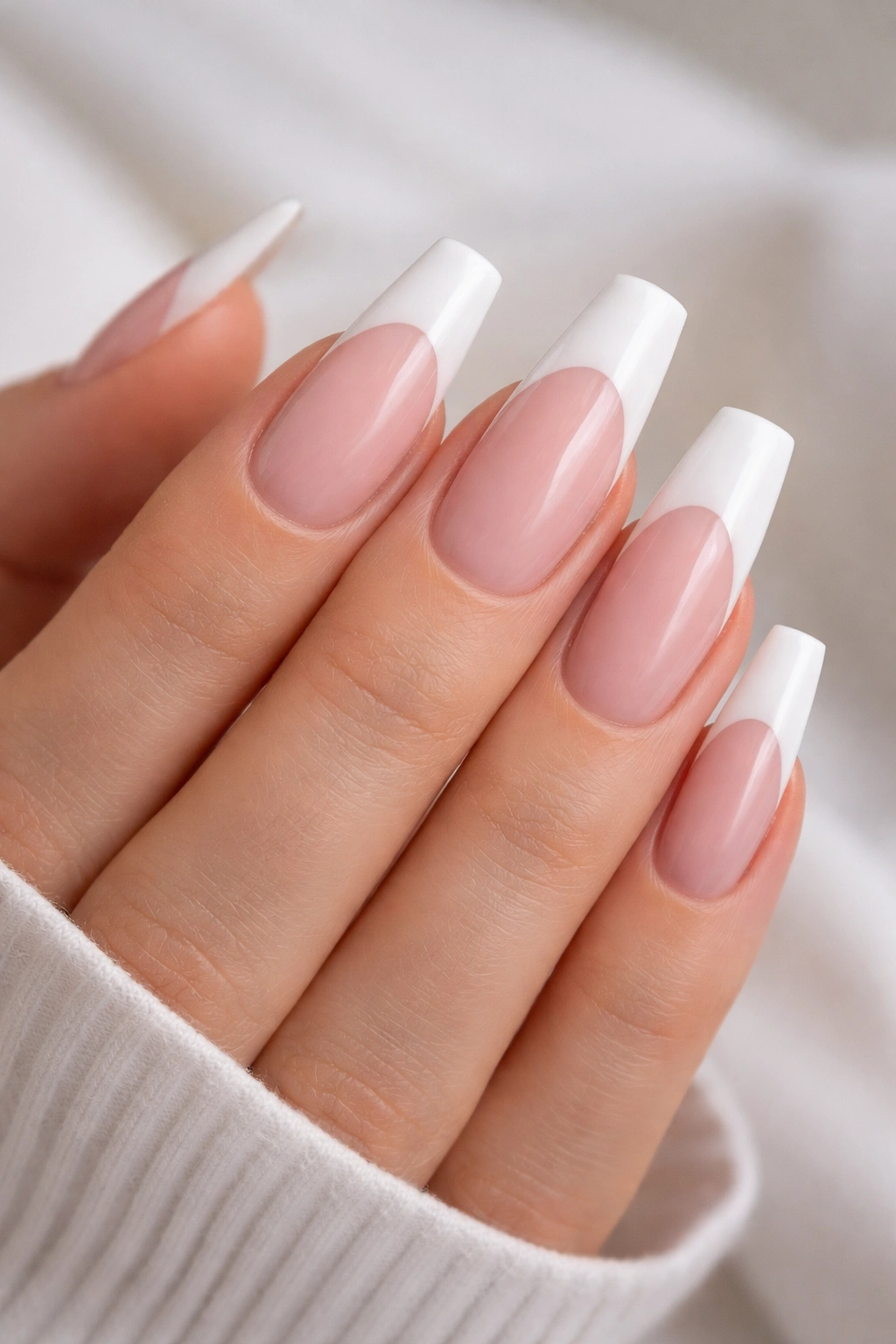
Ballerina nails need balance more than drama. That sounds backward, since the shape has more attitude than a round or squoval nail, but it’s true. The cleaner the shape, the better the white French tip reads. When the nail is over-filed on the sides or left too wide at the end, even clean art starts to look off.
Length matters first. On most hands, a ballerina shape starts looking intentional when the free edge extends at least 4 to 6 millimeters past the fingertip. Anything shorter can still work, though the shape needs a softer taper and a narrower flat edge. Long sets can handle bolder white placement. Shorter sets need restraint.
The base color does half the work. A sheer pink, rosy nude, beige nude, or milky neutral softens the white and keeps the manicure from looking harsh. Cooler skin usually looks best with a clean bright white over a pinker base. Warmer skin often looks richer with a creamy white over peach or beige nude. Tiny shift, better result.
A few design rules save headaches:
- Micro tips usually look best at 1.5 to 2.5 millimeters wide.
- Classic French tips often sit around 3 to 4 millimeters.
- On long ballerina nails, a deeper smile line can go 4 to 5 millimeters without swallowing the nail.
- A fresh top coat every 7 to 10 days keeps white polish from dulling.
- Fills usually look cleaner at 2.5 to 3 weeks, especially with bright white detail.
Ask for a crisp side profile too. If the apex is too flat, the nail can look broad from the front, and broad is the enemy of a clean ballerina French.
1. Classic White French Tip Ballerina Nails with a Slim Smile Line
Some nail sets do not need a twist.
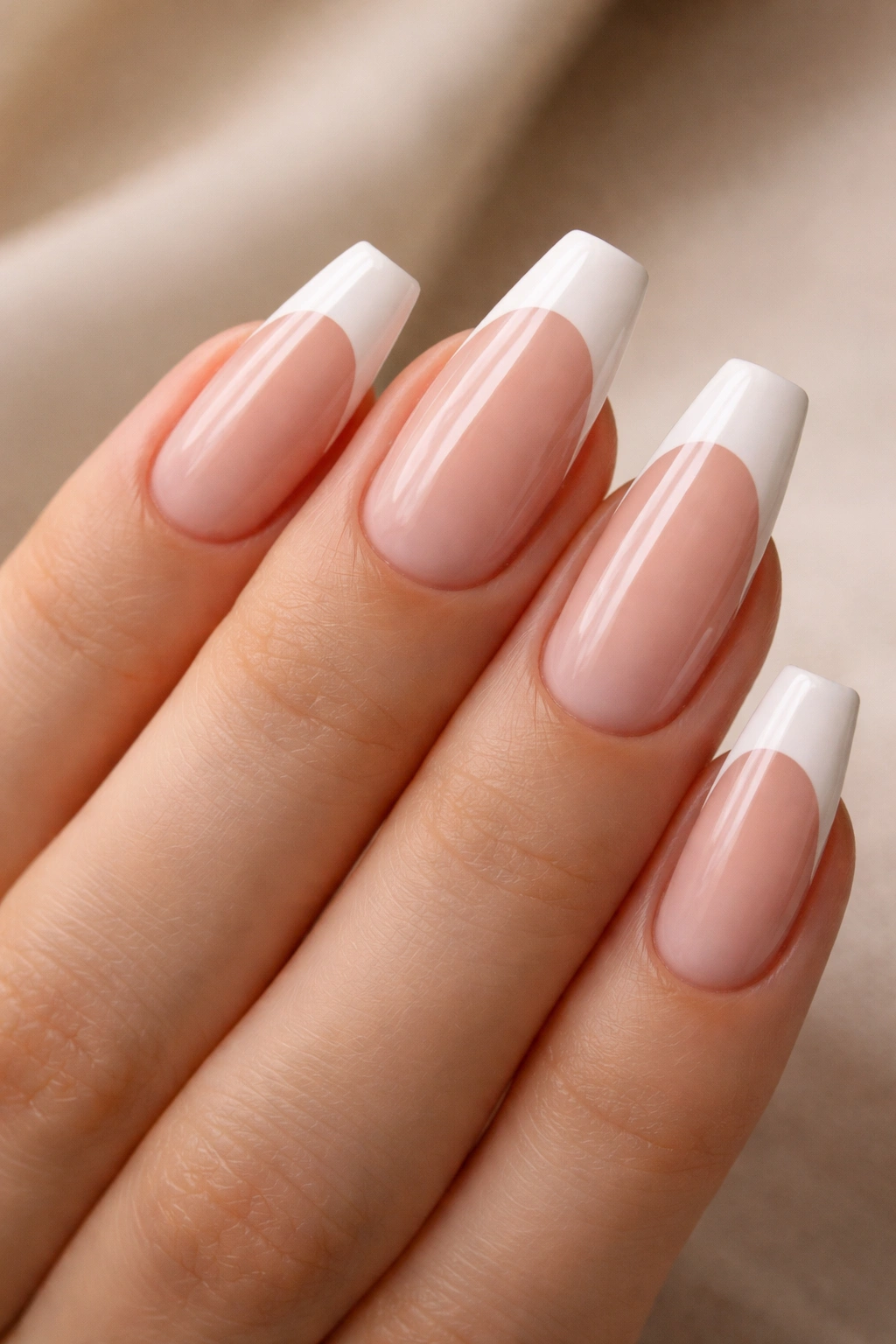
A classic slim French on a medium ballerina shape is still the one I’d suggest first if you want something you’ll wear again and again without getting tired of it. The reason is simple: the shape already gives you enough structure and attitude. You do not need a thick white band competing with it.
The best version uses a sheer pink or beige-pink base and a white tip that stays around 2 to 3 millimeters deep at the center. The smile line should curve up cleanly toward the sidewalls instead of running straight across. That curve makes the nail bed look longer, which is half the appeal of a French manicure on coffin or ballerina nails.
Why this one keeps working
A narrow smile line looks polished on almost every hand shape. Short fingers, long fingers, narrow nail beds, wider nail beds—it’s one of the safest places to start. You also get better grow-out because the design does not feel heavy once the natural nail starts to show near the cuticle.
Quick details that matter
- Choose medium length rather than extra-long if you want the look to stay easy to wear.
- Ask for a soft pink builder gel base if your natural nails have ridges.
- Keep the free edge flat but not wide; a 2 to 3 millimeter flat tip is usually enough.
- Pick a high-gloss top coat. Matte drains life from a classic French.
Best pick if you want one set that works with office clothes, wedding guest outfits, and a black turtleneck without needing a second thought.
2. Deep Curved White Tips on Long Nude Ballerina Nails
A deeper French can look better than a thin one—if the nail has enough length to hold it. That’s the rule people miss. They copy a long-nail design onto a short set, and the white takes over the whole nail.
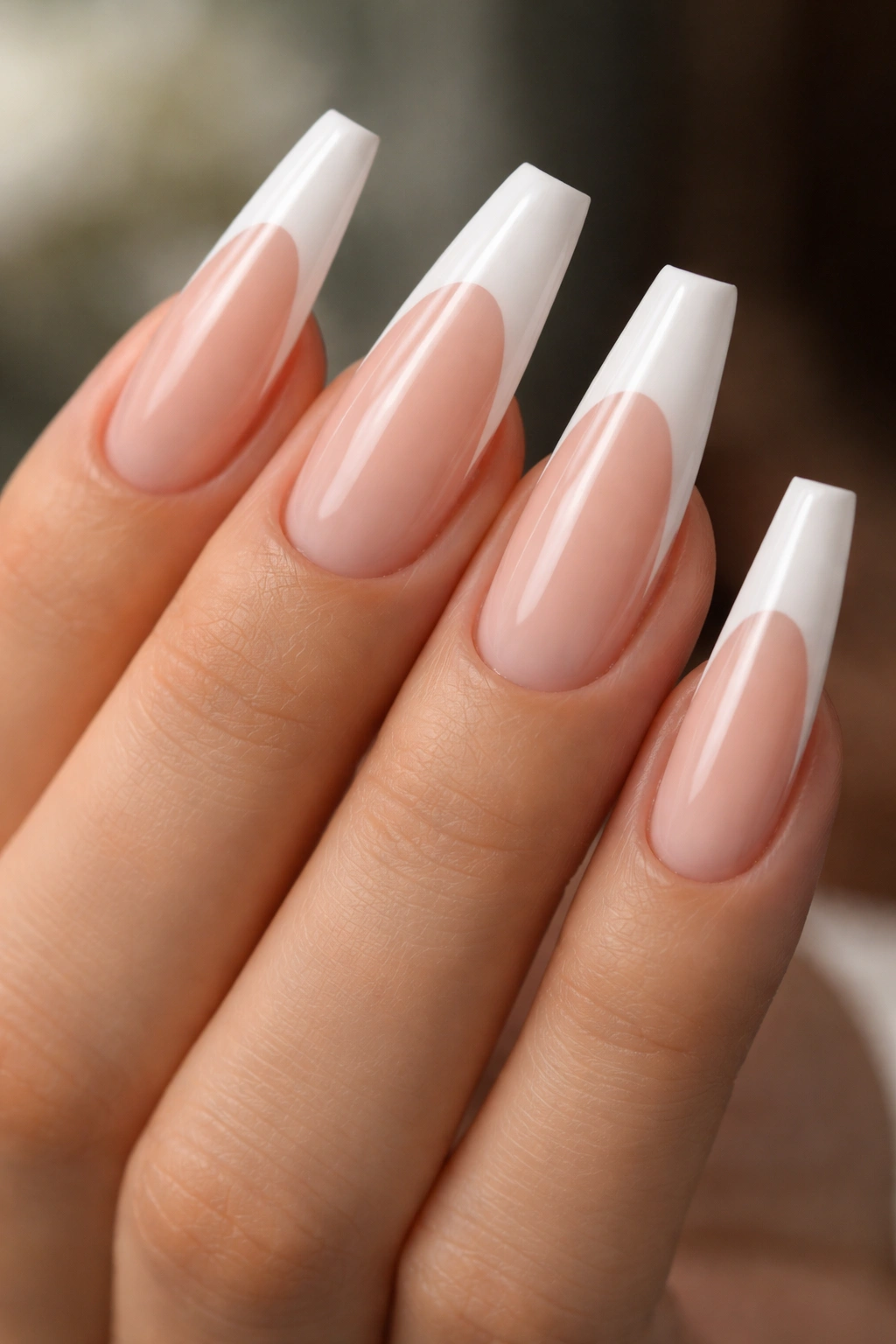
On a longer ballerina shape, though, a deeper white tip has real presence. You get more contrast, more shape, more of that crisp salon finish you can spot from a few feet away. The trick is the smile line. It needs to dip lower in the center and climb high on the sides, almost like a crescent, so the white still looks sculpted rather than blocky.
Picture a nail that extends 8 to 12 millimeters past the fingertip. On that length, a 4 to 5 millimeter white tip can look balanced. Pair it with a nude base that matches your skin rather than one that erases it. That matters. Too pale a nude can make the set look flat.
This style suits people who like their manicure to read as deliberate from across a room. It is not quiet. But it also is not messy or overloaded, which is why it keeps beating more complicated nail art in actual day-to-day wear.
Wear time depends on structure. A long ballerina shape with a deep tip needs a proper apex and sidewall strength—builder gel overlay or acrylic does that better than thin gel polish alone. Skip that support and you’ll see tip cracks sooner than you’d like.
3. Milky Base with Bright White Edges
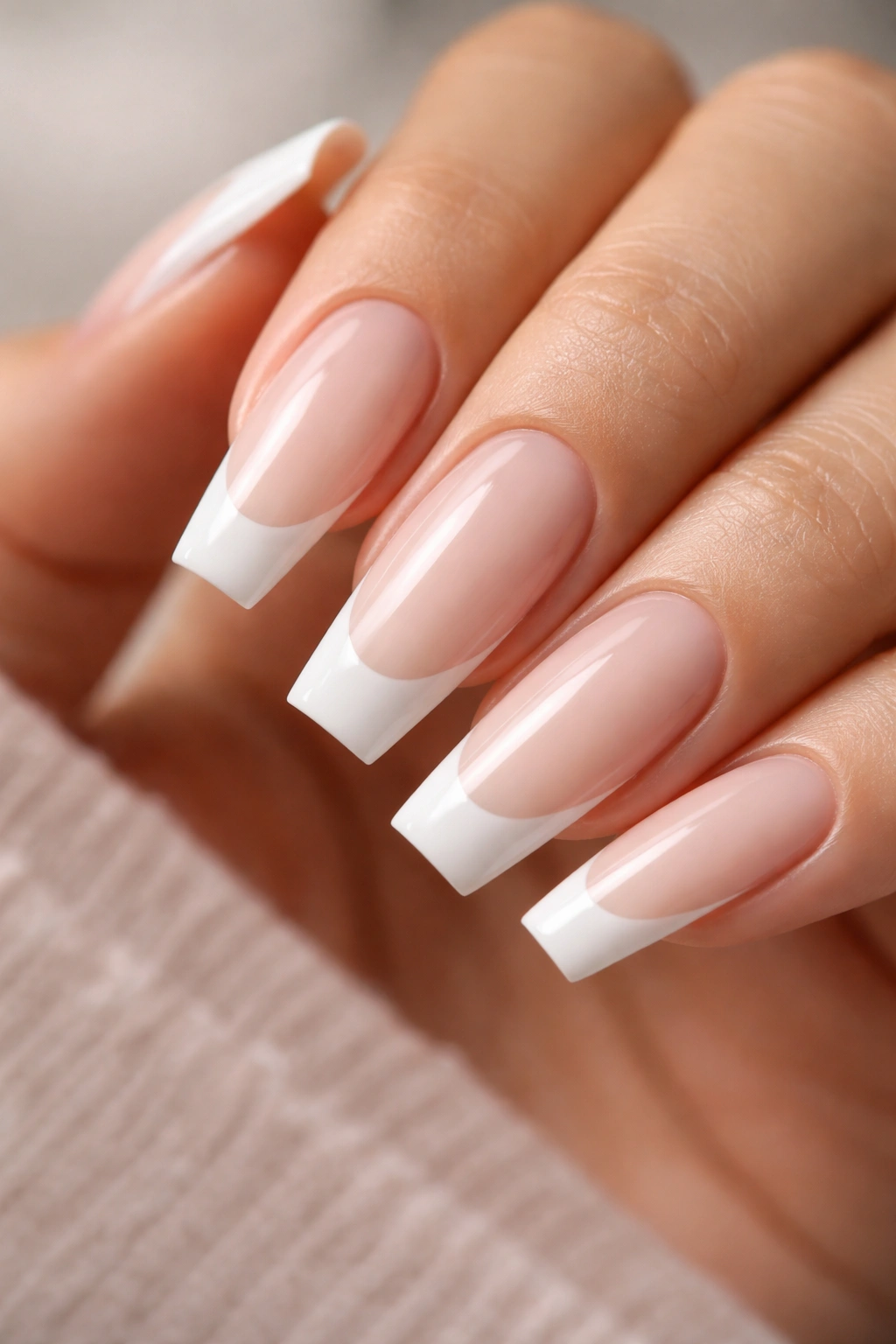
Fresh milk-glass nails and a bright white tip are a smart pairing. The base softens the line. The white still pops.
A milky nude base sits somewhere between sheer pink and opaque nude. It hides discoloration, blurs the natural nail line, and gives the French tip a smoother backdrop. If you have nail beds with strong redness, dark patches, or uneven color, this base usually looks cleaner than a sheer pink alone.
Why does this combo work so well on ballerina nails? Because the shape already has strong geometry. The milkier base keeps the whole design from turning severe. You still get definition at the edge, though the middle of the nail looks softer and more expensive.
How to wear it well
Ask for a base that is semi-opaque, not solid beige. You still want light to move through it a little. Then pair it with a cool white or neutral white tip, depending on your skin tone. A milky base with a creamy off-white can look rich and smooth. A milky base with a blue-white tip looks sharper and cleaner.
This is also one of the best routes if you love white French tip ballerina nails but hate how harsh some salon photos look in daylight. The milkier foundation fixes that problem without losing the French shape.
If I had to pick one bridal-friendly version that still feels wearable after the event, this would be high on the list.
4. Short Ballerina Nails with Thin White French Edges
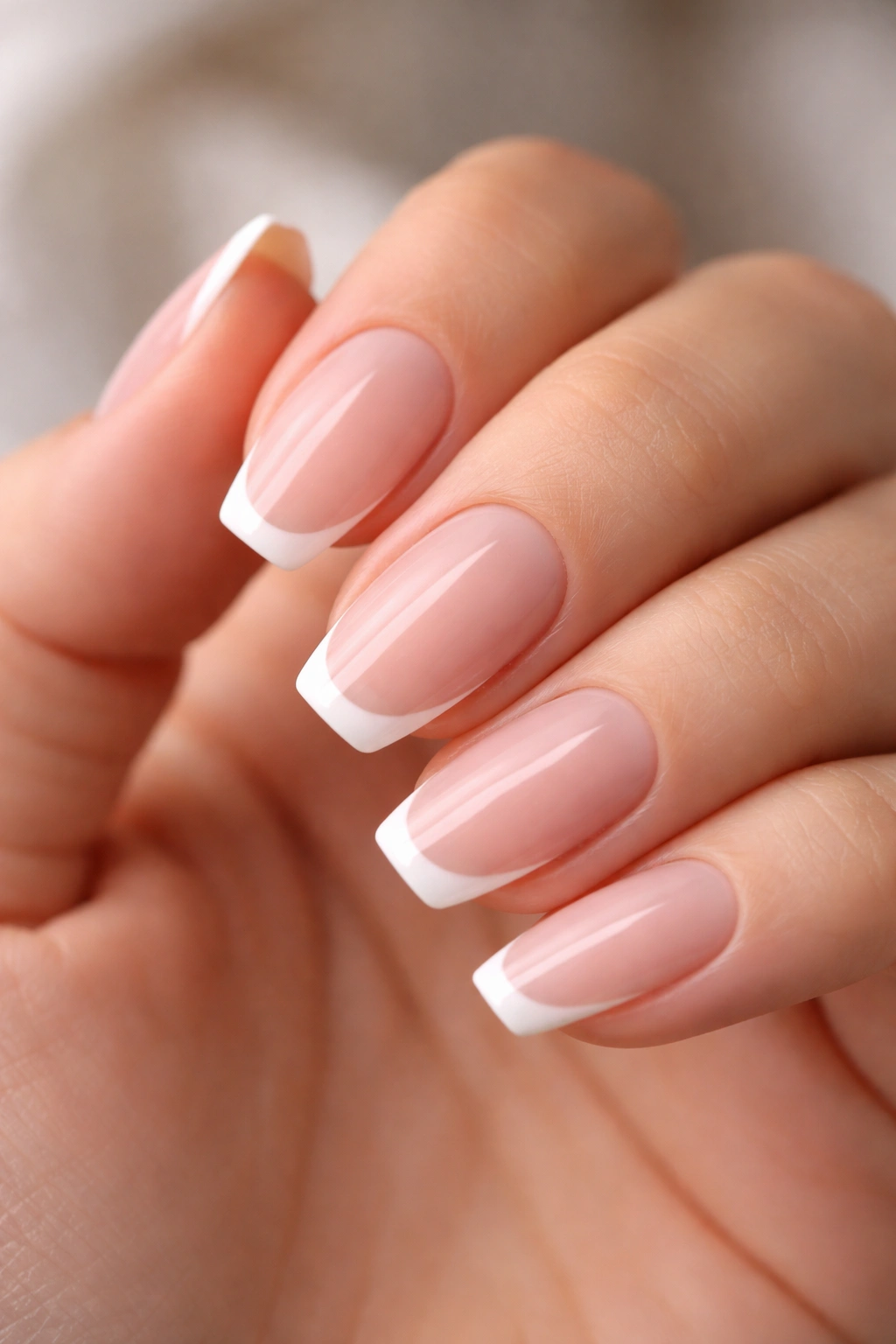
A lot of people assume ballerina nails need dramatic length. They don’t.
If your natural nails grow to 3 to 5 millimeters past the fingertip, or you prefer shorter extensions, you can still wear the shape. You just need to soften the taper and keep the white line narrow. Short ballerina nails with thin French edges look neat, modern, and easier to live with than a long set when you type all day, handle contacts, or spend half your life opening cans and packages.
The filing is what makes or breaks this one. Go too square and you lose the ballerina feel. Go too narrow and the tip looks cramped. I like a subtle taper with a small flat end, almost like a coffin shape dialed down by 20 percent.
What to ask for at the salon
- Soft ballerina or short coffin shape
- Free edge extending no more than 5 millimeters
- White tip kept to 1.5 to 2 millimeters
- Sheer pink or rosy nude base
- Slightly higher smile line to lengthen the nail bed
One more thing. On short sets, hand-filed French tips often look better than thick stamped tips because the artist can adjust the width nail by nail. That matters more than people think, especially if your nail beds are not all the same length.
This design is tidy without feeling plain. Good combo.
5. Matte Nude Base with Glossy White Tips
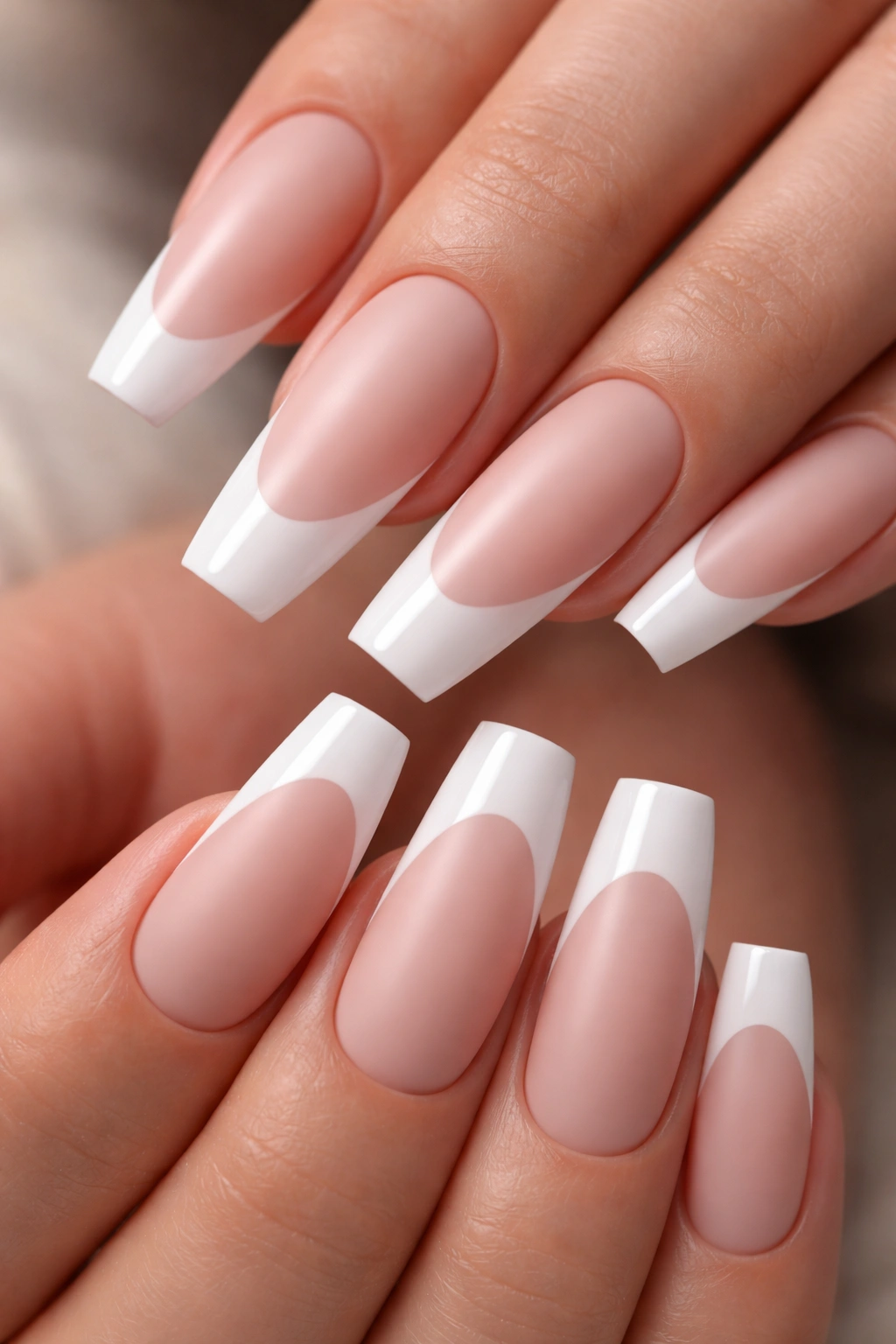
Most French manicures lean shiny from cuticle to tip. That works. But a matte nude base paired with a glossy white edge gives you contrast in texture, not only color, and that contrast reads clean in person.
Here’s why I like it: the matte finish quiets the center of the nail, while the glossy tip keeps the French shape alive. Light hits the white edge first. Your eye goes right to the shape, which makes the ballerina silhouette look more precise.
You need the right products for this one. A dead-flat matte top coat can make the nude look dusty, especially on deeper or olive skin. Ask for a velvet matte finish, the kind that still looks smooth, then have the tip sealed separately in gloss. Some techs paint the white after the matte top coat. Others top-coat the nude matte, repaint the tip, and seal only the edge in gloss. Either route can work if the line stays crisp.
There is a downside. Matte bases show makeup, self-tanner, and cuticle oil marks faster than gloss. If you use heavy hand cream or tinted sunscreen, you’ll wipe these nails more often.
Still, when this set is fresh, it has a fashion-editor feel without screaming for attention. The texture does the talking.
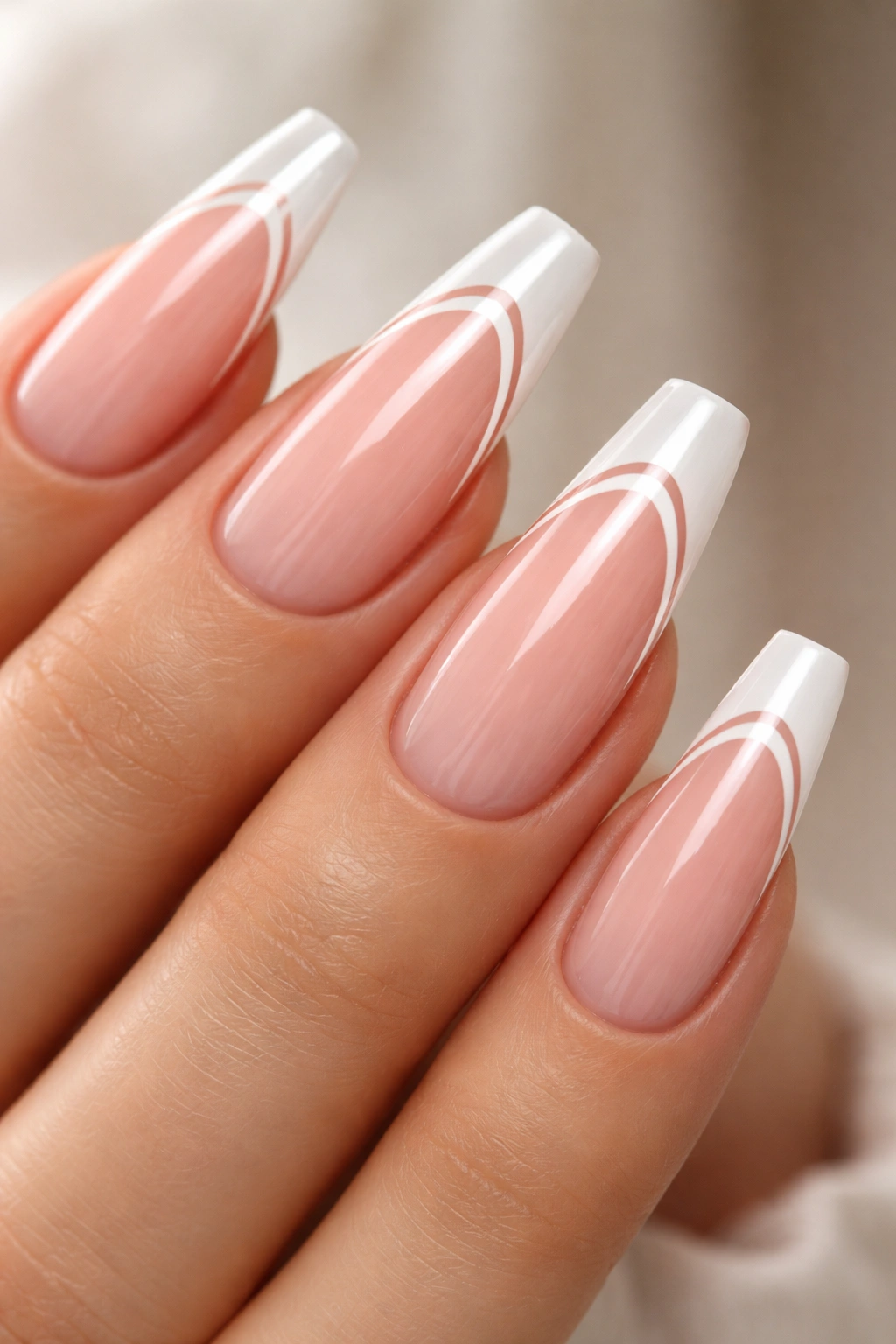
6. Double French Lines with a Fine Negative Space Gap
Unlike a standard French, a double-line version builds its interest through spacing. You get the classic white tip, then a thin second white line floating beneath it with a sliver of bare or nude base between the two. Tiny change. Strong payoff.
That strip of negative space keeps the design airy, which is useful on ballerina nails where the shape already adds weight. The second line should stay fine—about 0.5 to 1 millimeter. Any thicker and the nail starts to look crowded.
Who is this best for? Someone who wants a French manicure that looks intentional up close. From a distance, it still reads clean. When you hold a coffee cup or type on your phone, the second line appears and gives the set a little more depth.
Details that make it land
- Medium to long ballerina lengths handle this best.
- A milky pink base keeps the gap from looking stark.
- The upper white line should be the stronger one; the lower line is detail, not the star.
- Ask your tech to make the spacing match from nail to nail. Uneven gaps ruin the whole effect fast.
I’d skip chunky jewelry with this set if you want the nail art to stay crisp. Fine rings and clean cuffs suit it better.
7. Diagonal Side-French Tips on a Tapered Ballerina Shape
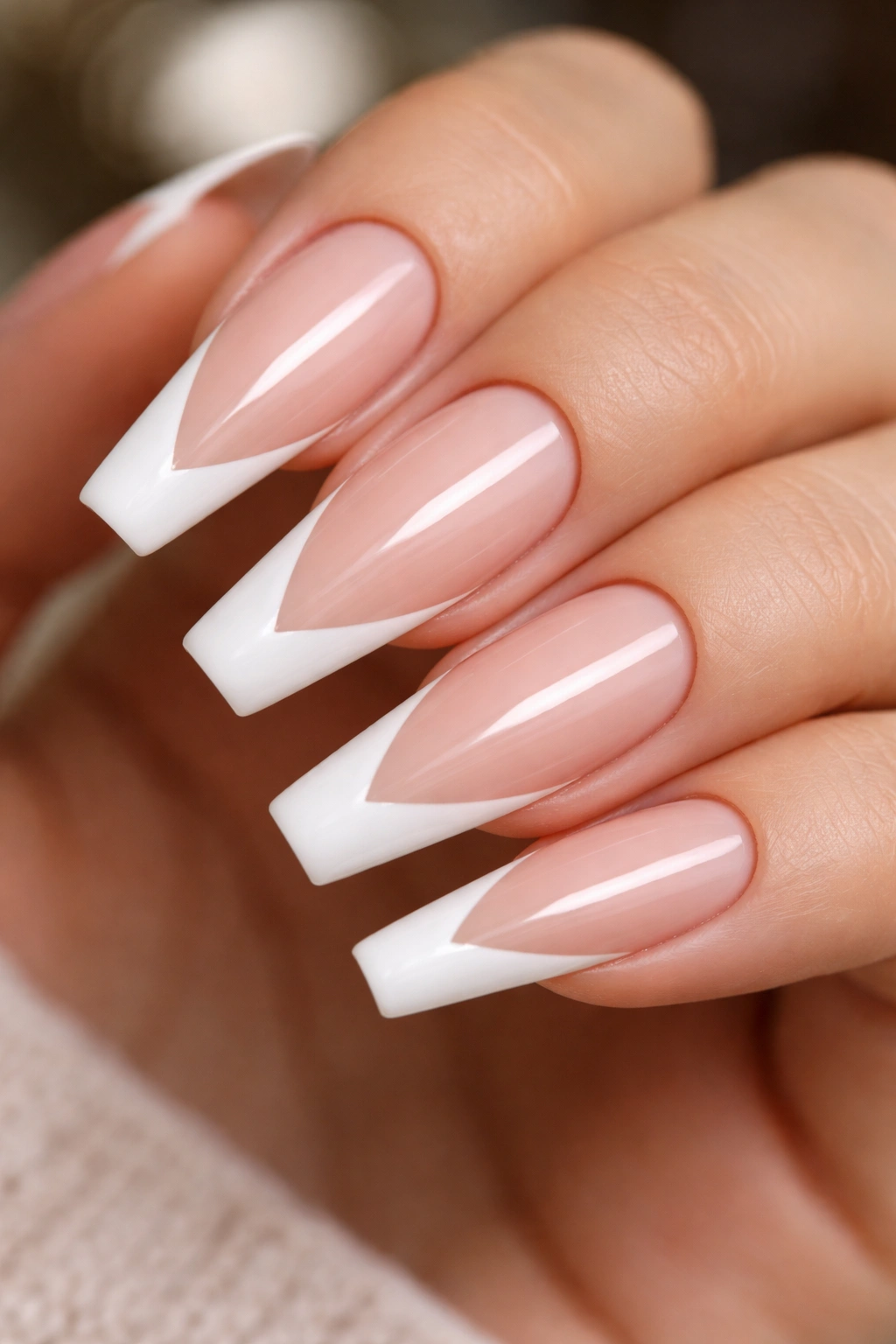
Straight across can feel predictable. A diagonal side-French changes the direction of the white, and that makes the ballerina shape look longer and sharper.
The design starts lower on one sidewall and sweeps upward toward the other corner. Done well, it creates movement without the busy look of full nail art. Done badly, it looks like a crooked French. Precision matters here more than in a basic tip.
A side-French is one of my favorite fixes for nail beds that are a little uneven. If one side of the free edge grows differently or one nail looks wider, the diagonal line can visually rebalance things. You still want symmetry across the hand, though. The sweep direction should stay consistent—either all angled the same way or mirrored deliberately.
Why the shape helps
Ballerina nails already narrow toward the end. A diagonal tip leans into that architecture. On almond nails, the same art can look softer. On ballerina, it reads cleaner and more graphic.
Use a soft nude base and keep the white fully opaque in two thin coats instead of one thick swipe. Thick white gel tends to bulge near the sidewalls, and bulges throw off the line.
If you want a French manicure that feels a little less expected without leaving classic territory, this one hits the mark.
8. Chevron V-French That Sharpens the Nail Bed
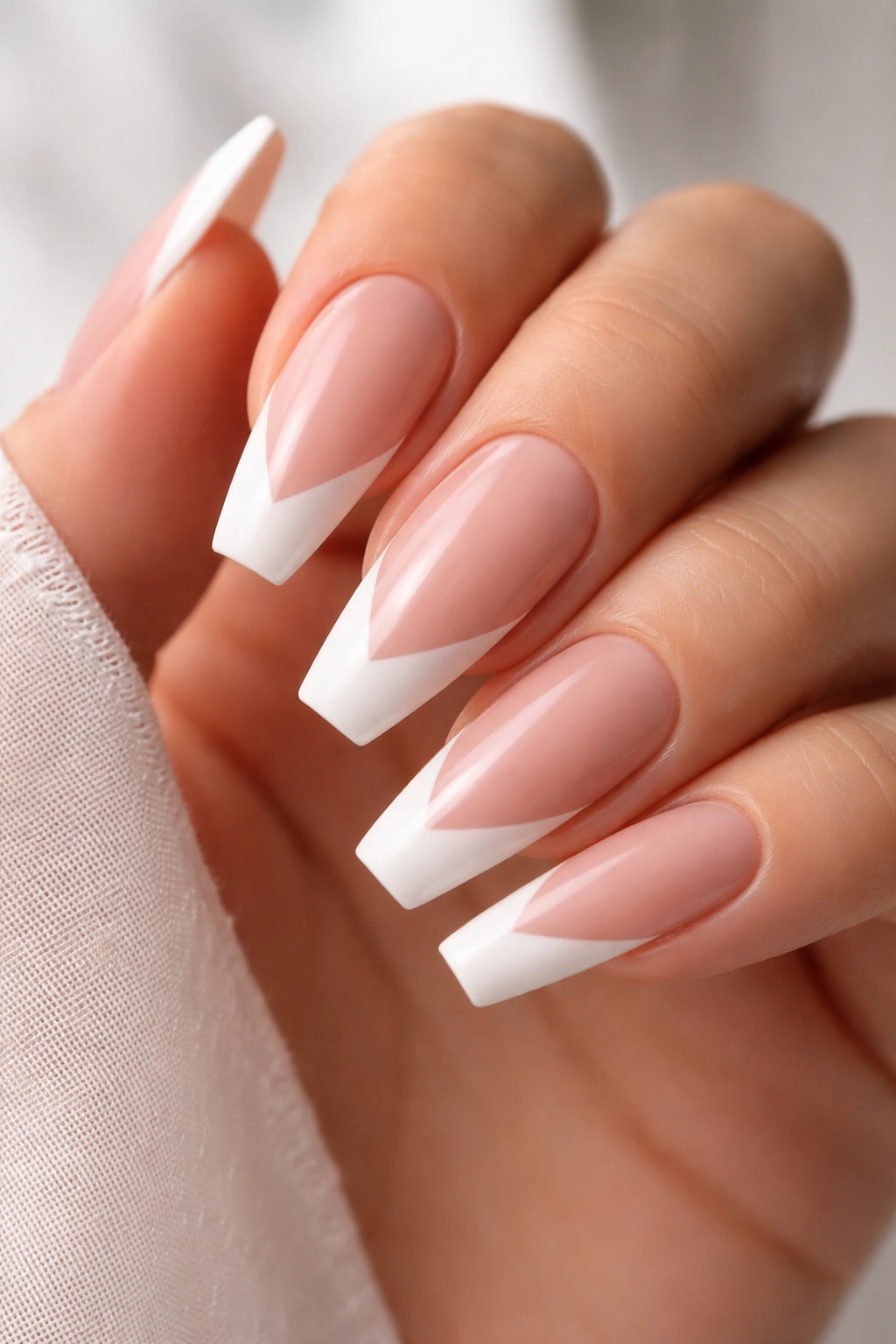
A V-tip is not the same thing as a standard French with a dramatic smile line. Different mood. Different effect.
The chevron V-French brings two white lines together at the center of the free edge, creating a pointed shape that echoes the taper of the ballerina nail. It can make short nail beds look longer because the eye follows the lines downward and inward before reaching the tip.
This design works best when the V stays soft, not knife-sharp. Too deep and the center point starts to look harsh. On medium ballerina nails, I like the lowest point of the V to sit 2 to 3 millimeters above the free edge center. Long nails can carry a deeper version.
A beige-pink or semi-sheer nude base keeps the design from turning high contrast in a bad way. And use the V with a crisp glossy top coat. Matte can make the center point look dry.
There’s a nice practical upside here too: because the white doesn’t span the tip in one thick horizontal band, chips can be less obvious in the early days of wear. You’ll still notice them, yes, but the break in the visual line helps.
Pick this one if you like sharper tailoring in clothes and jewelry. It has that same neat line.
9. White French Tip Ballerina Nails with a Soft Chrome Glaze
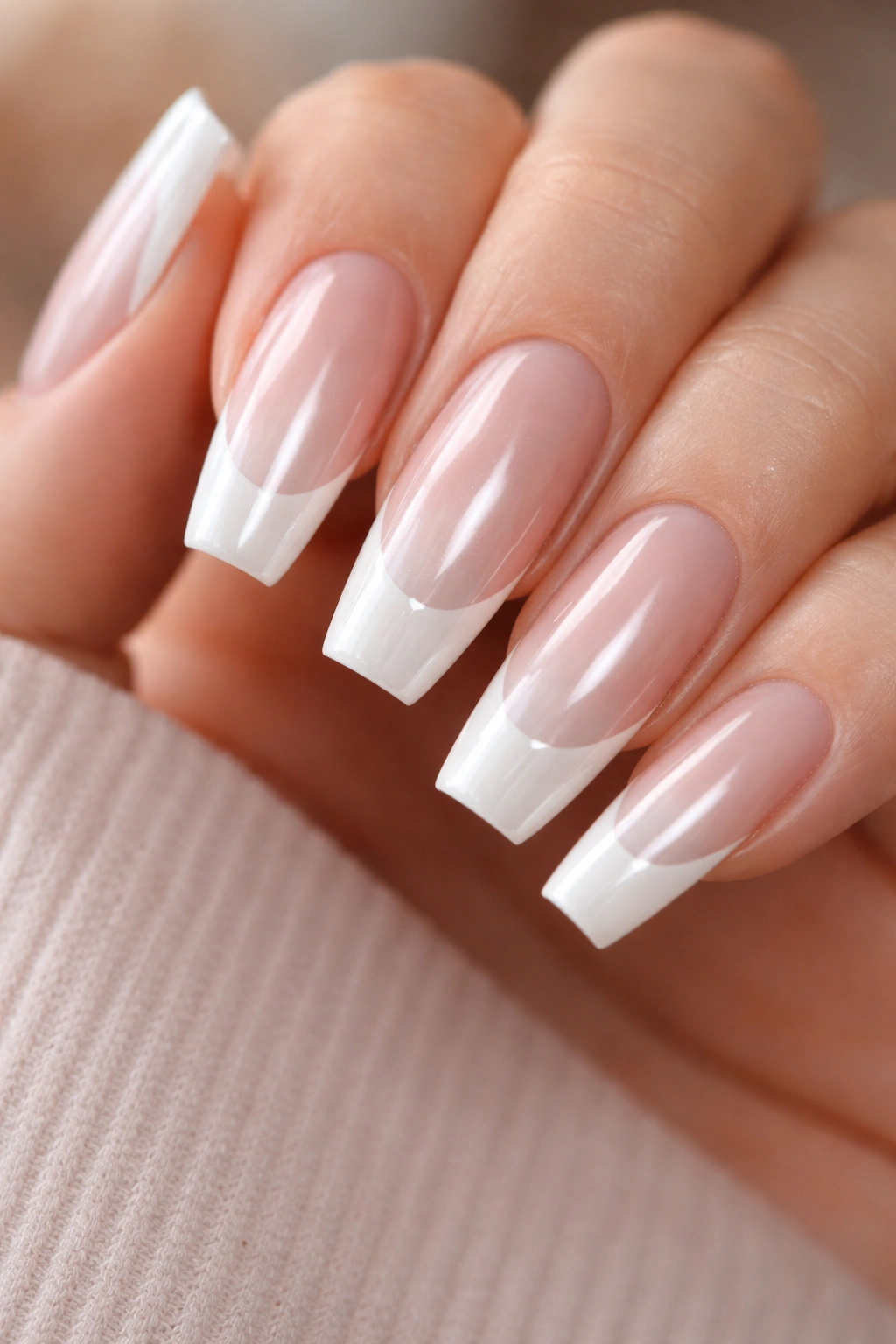
Chrome gets overdone fast. A whisper of chrome over a white French tip, though, can look polished instead of flashy.
The version that works keeps the base nude and the tip white, then adds a fine pearl or glazed chrome powder over the whole nail or only over the tip. You’re not chasing a mirror finish here. You want a soft sheen that shifts when your hand moves, almost like light on satin.
What makes it different from plain gloss
Gloss gives you shine. Chrome gives you dimension. The white edge still reads white, but it has a glazed surface that feels smoother and richer. On ballerina nails, that extra sheen helps the flat free edge look deliberate instead of blunt.
Best use cases
- Bridal sets that need a little more life than plain white
- Winter event nails where you want light reflection without glitter
- Medium and long ballerina lengths with a milky or pink-beige base
One warning: chrome shows dents and scratches more than a regular top coat. If you’re rough on your hands, have your tech cap the free edge well and seal the chrome under a strong non-wipe top coat. Otherwise the finish can lose its clean look before the shape grows out.
A little chrome is enough. More than that, and you’ve left French manicure territory.
10. Outline French with a Thin White Border Around the Tip
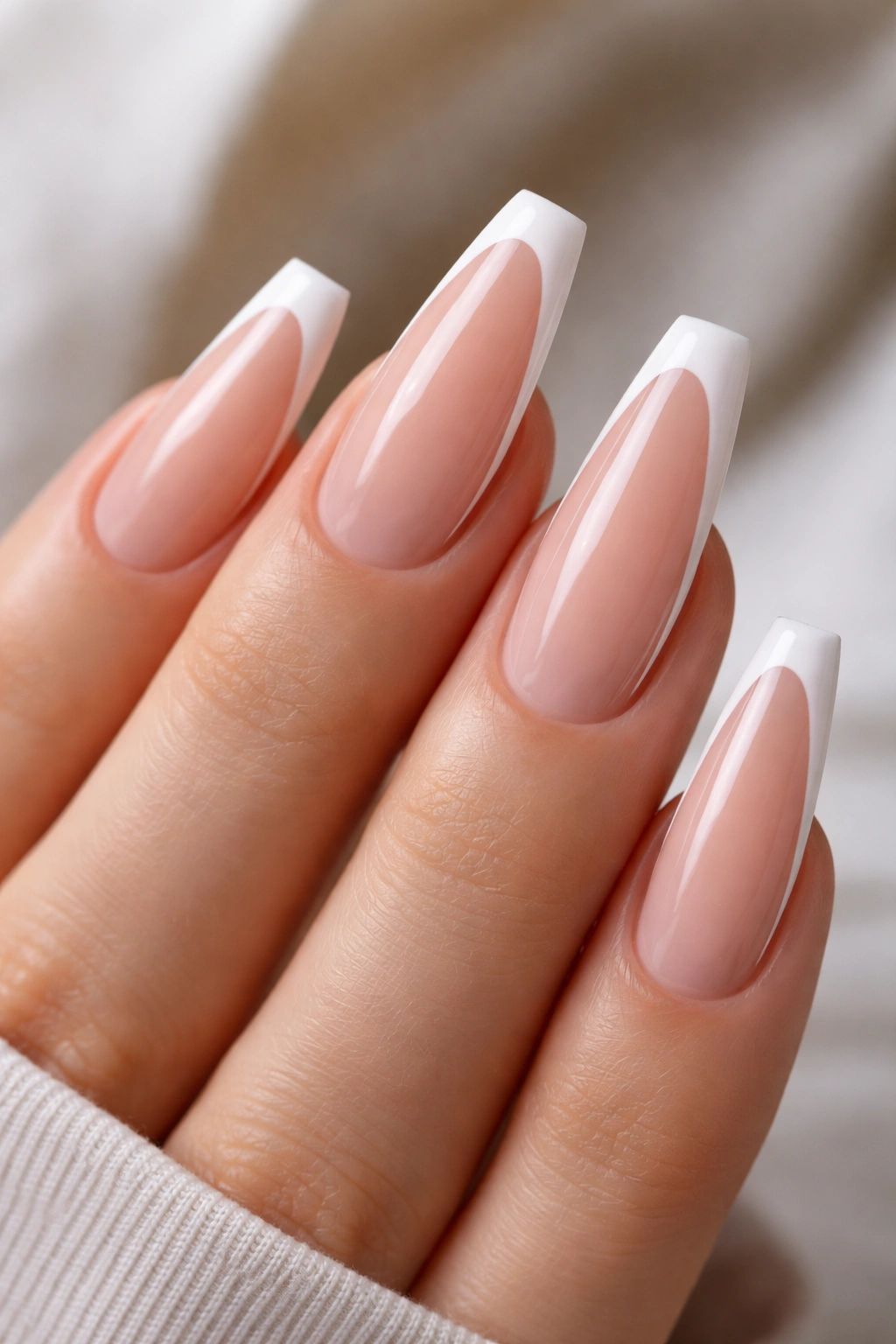
This one has a fashion-sketch quality I enjoy.
Instead of filling the whole tip in solid white, an outline French traces the smile line and outer edge in white, leaving part of the tip area nude or sheer. You get shape without a dense block of color. On ballerina nails, that can be a gift, especially if you like long extensions but want the design to stay light.
The white border needs a steady hand. Think 0.5 to 1 millimeter line work, not a chunky frame. Most techs get the cleanest result with a liner brush rather than the polish bottle brush, and I’d ask for that outright.
The reason this style works is visual weight. A full white tip can shorten the look of the nail if the placement is off. An outline tip keeps the edge defined while letting more nude show through. The nail looks longer, the shape looks leaner, and the whole hand has a lighter feel.
There is one catch: line work shows wobble. If your tech is stronger at classic French than detail painting, do not force this set. A regular French will look better than a shaky outline every time.
11. Chunky White Tips Balanced by Extra Length
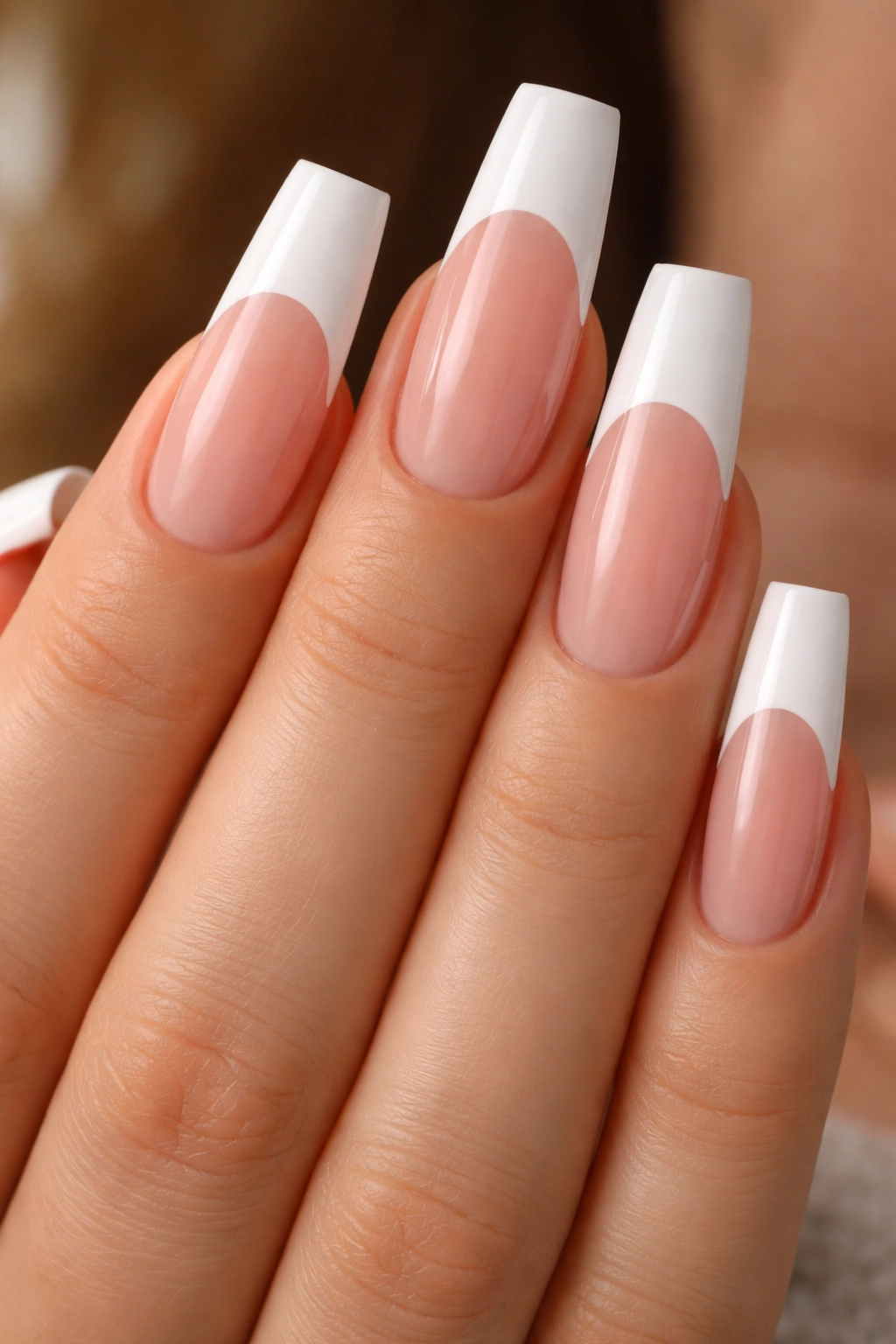
Let’s defend the thick white French tip for a minute.
People love to call chunky French tips dated, but on a long, well-built ballerina set, they can look bold in a good way. The key is proportion. Thick tips on short nails eat the nail bed. Thick tips on long nails can read clean, graphic, and unapologetic.
A chunky tip usually covers one-third of the visible nail length, sometimes a touch less. The white should be fully opaque and the smile line should still curve. Flat horizontal blocks make the design heavy. A curved smile line keeps the white from looking pasted on.
When this one looks strongest
Say you wear longer nails anyway, like your jewelry a little bigger, and want your manicure to be seen from a distance. A chunky white tip has that energy. It pairs well with gold hoops, tailored blazers, square-neck tops, and any outfit with strong lines.
Keep these details in check
- Use long ballerina extensions, not medium.
- Keep the sidewalls crisp so the width does not spread.
- Pair with a nude base that is at least semi-sheer; opaque beige can make the design too heavy.
- Refill on time. Grown-out chunky tips lose balance fast.
This is not the safe choice. But safe is not always the point.
12. Pearl-Accented French Tips for Bridal and Formal Looks
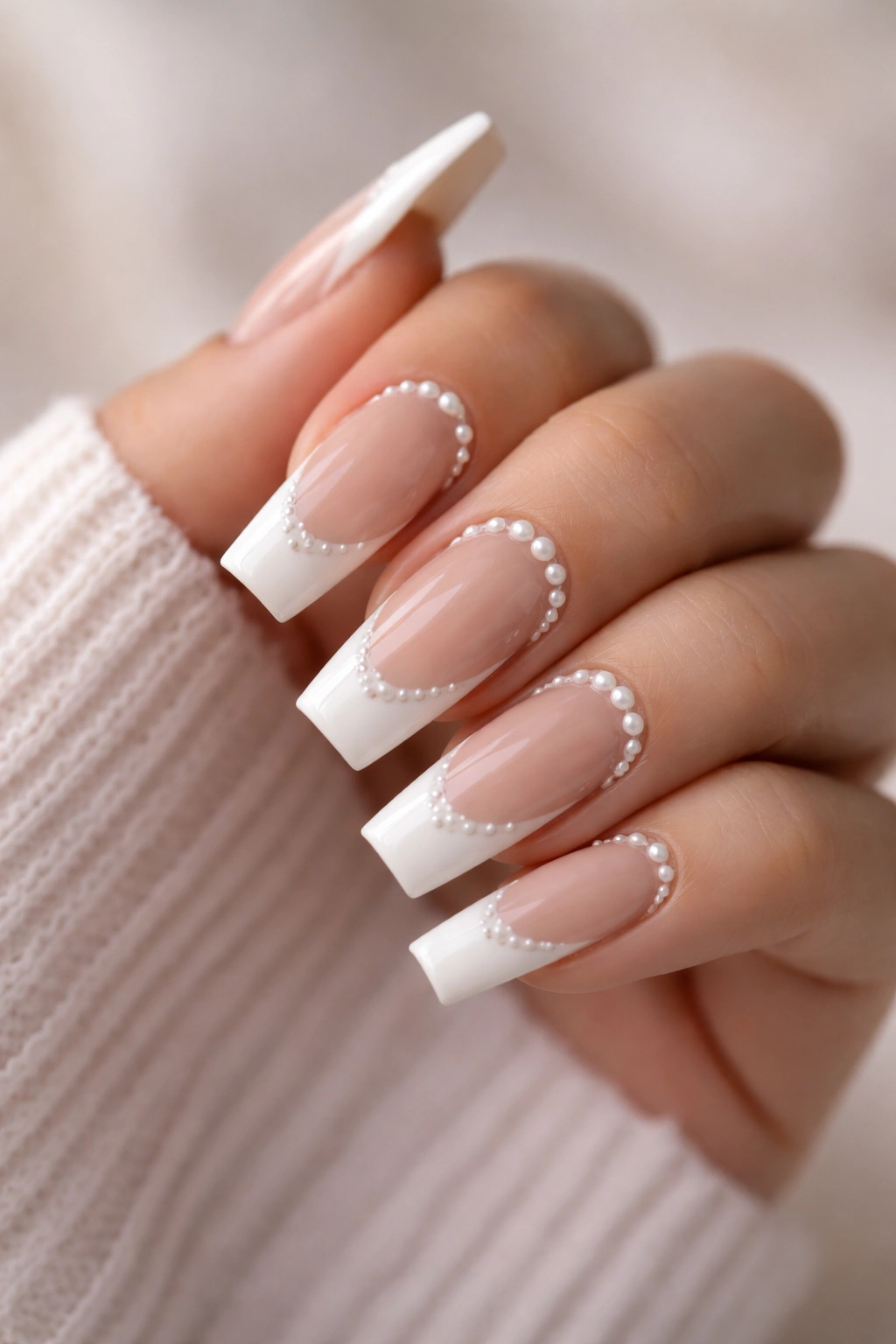
A single pearl can do more than a full glitter fade. That’s my view, and I’ll stand by it.
White French tip ballerina nails with tiny pearl accents work because the pearl adds texture without breaking the discipline of the French line. One pearl at the cuticle, a pair near the side of the smile line, or a tiny cluster on one accent nail is usually enough. The rest of the set should stay plain.
The pearls need to stay small—1.5 to 3 millimeters is the sweet spot for most hands. Oversized pearls turn cute into costume fast. Placement matters too. Keep them near the base or off to one side so they do not interrupt the tip shape.
Why pearls suit ballerina nails
The shape gives you the modern edge. Pearls bring in softness. That contrast is what makes the set feel dressed up rather than sugary. A round pearl against a flat free edge creates tension, and good nail design often lives in that tension.
Use this style for weddings, engagement parties, black-tie events, or any setting where plain French feels a little too plain. Skip it if you use your fingertips hard all day; raised embellishments can catch on tights, hair, and knitwear.
I’d keep the base milky and the white crisp here. Pearls already soften the set. You do not need extra blur.
13. Fine Silver Glitter Underlining Beneath the White Tip
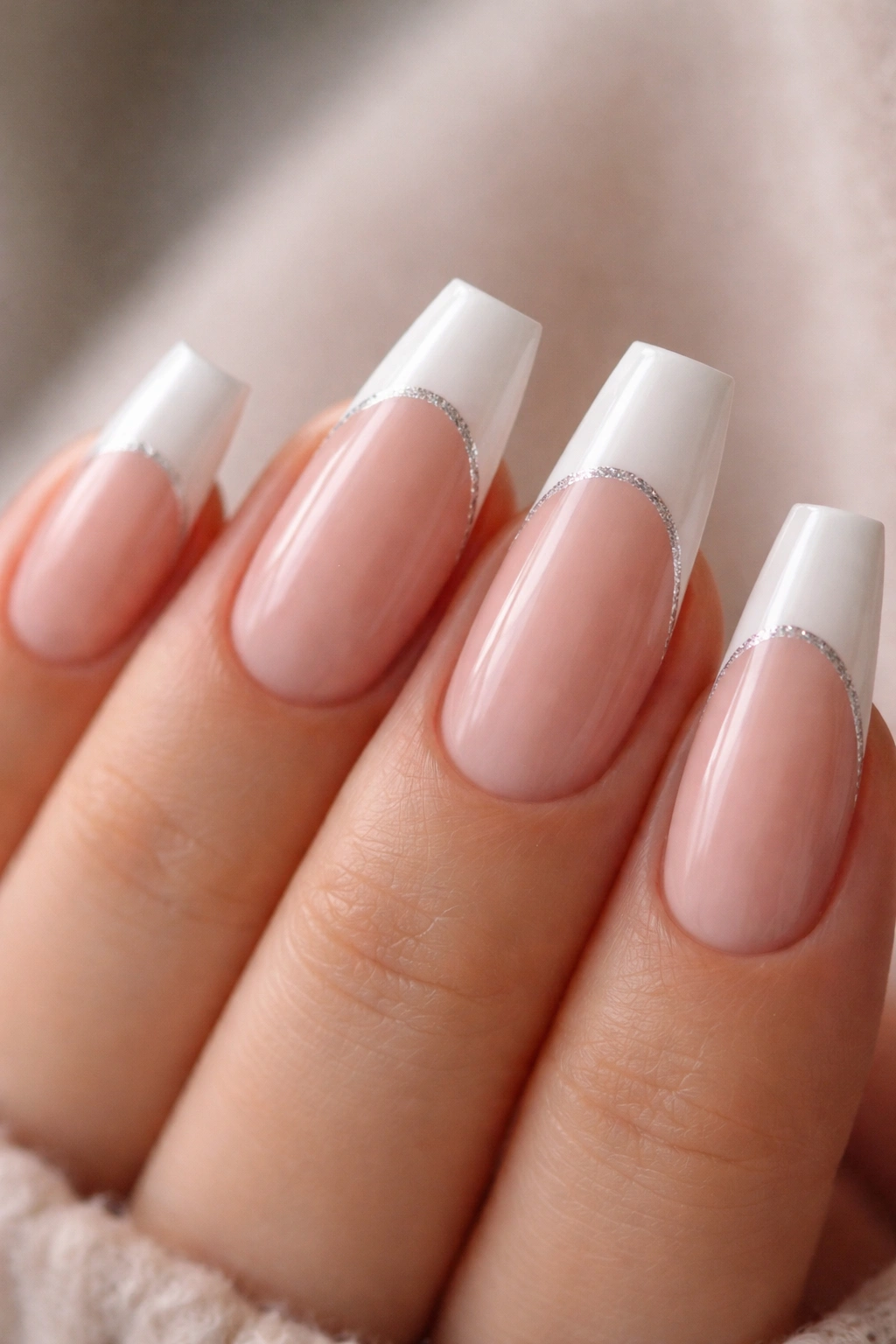
This is the French manicure for someone who wants light, not sparkle.
A fine silver or champagne glitter line placed right beneath the white tip adds brightness while keeping the design slim. The glitter should sit as an underline, not a full band, and the particles need to be fine enough to look almost metallic rather than chunky.
The reason it works is separation. White against nude can look stark on some hands. A glitter trace acts like a tiny buffer line. It softens the shift and adds a flash when your fingers move, especially under indoor lighting.
How to keep it tasteful
Use a line no thicker than 0.5 millimeter. That is narrow. Any wider and the glitter starts fighting the white. I also prefer champagne glitter on warmer skin and cool silver on pinker undertones. That little harmony matters more than people expect.
This set can carry medium or long ballerina lengths, though I think medium is stronger. Long nails plus glitter plus white plus embellishment is where people get into trouble. Restraint saves the look.
If you wear mostly neutral clothes but like one small detail that catches the eye, this one earns a look.
14. Baby Boomer Fade on a Ballerina Shape
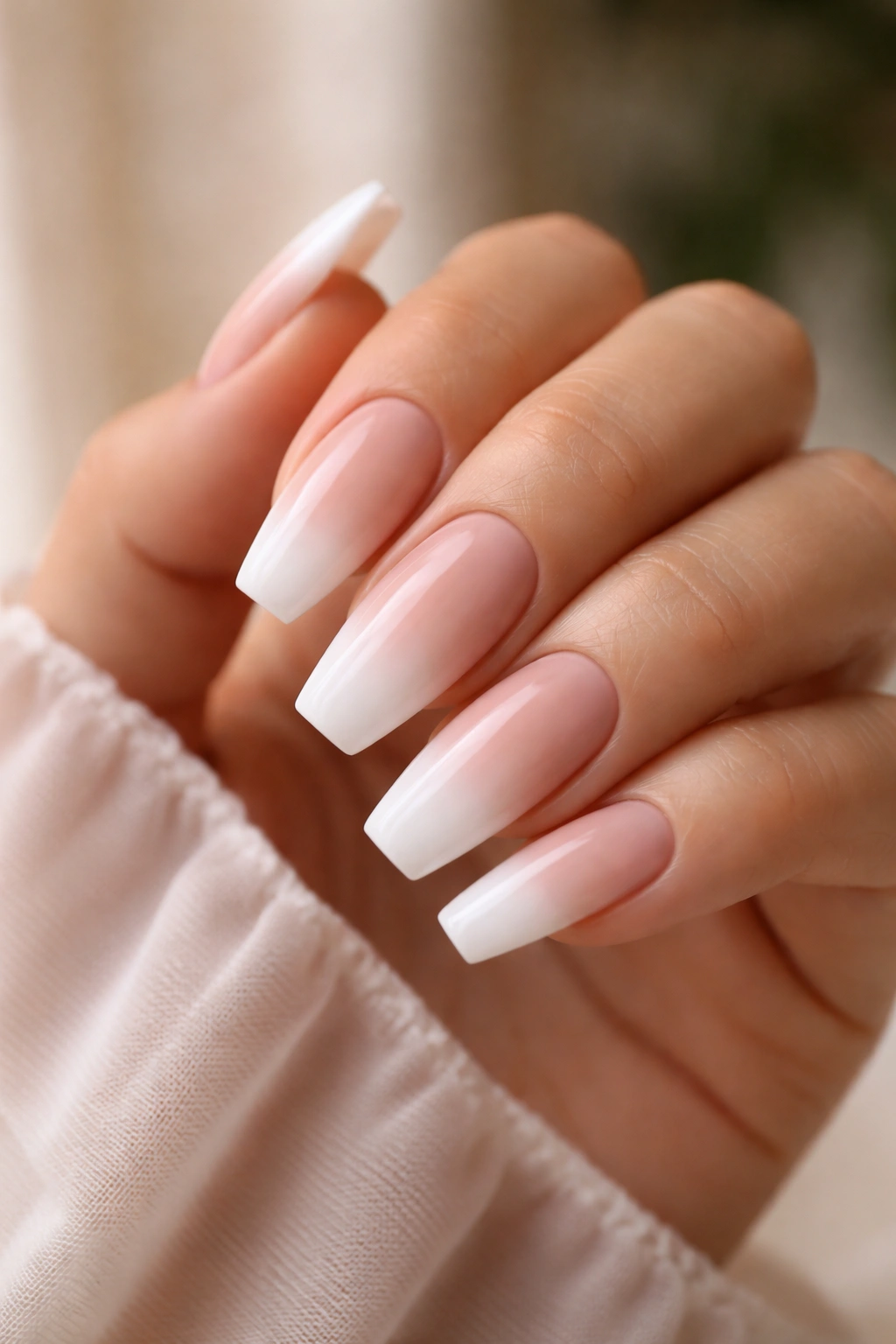
Not every white French tip needs a hard line. The baby boomer fade, where white melts into nude instead of sitting in a crisp band, gives you the French effect with softer edges.
This style is ideal if you love white at the tip but dislike how stark a painted French can look on your hands. The white starts at the free edge and diffuses upward with a sponge, airbrush effect, or soft gel blending technique. On ballerina nails, the fade looks sleek because the shape still gives structure even when the color line disappears.
A good baby boomer set should not look cloudy from cuticle to tip. You want a visible shift from nude to white, only blurred. The white is strongest at the edge, then fades through the center. A milky pink or nude base helps that blend look intentional.
There’s a practical reason people stay loyal to this look: grow-out is forgiving. Since there is no hard smile line to preserve, the set often stays presentable a little longer between fills. I would still book maintenance on schedule, though, because shape loss shows up before color loss on ballerina nails.
When people say they want French nails but softer, this is often what they mean.
15. White French Tip Ballerina Nails with Tiny Crystal Corners
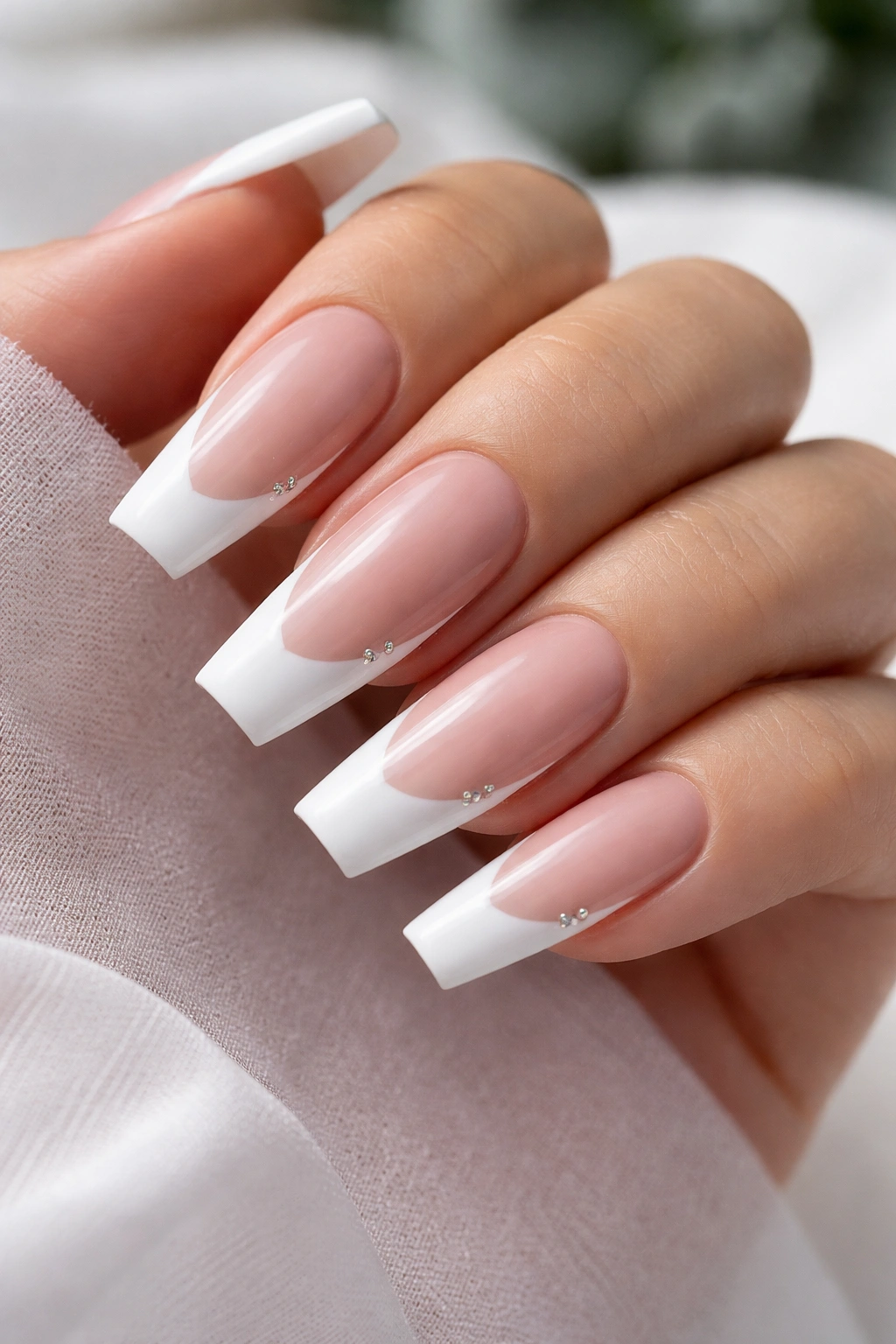
Crystals on French tips can go wrong in a hurry. Place them at the corners, keep them small, and the whole set stays sharp.
The design uses a classic white French tip, then adds one tiny crystal at one or both outer corners of the smile line or free edge. Not a full cluster. Not a scattered gradient. Just a pinpoint of shine that catches light when you move your hand.
Where this design earns its keep
A corner crystal draws attention to the line of the French without covering it. On ballerina nails, that helps frame the shape. You still get a clean white tip, though the tiny gem gives the manicure a little jewelry effect.
Placement rules I would not ignore
- Stick to SS3 to SS5 crystal size for most nails.
- Use one accent nail per hand if you want the safest version.
- Keep crystals away from the center of the tip; side placement looks cleaner.
- Seal around the stone well, but do not flood it with top coat or you’ll lose the sparkle.
This is one of those sets that photographs nicely but, more importantly, looks good while you’re doing normal life—reaching for your keys, holding a glass, waving across a table. Small detail. Smart detail.
Final Thoughts
If you want the safest bet, start with a slim classic French on a medium ballerina shape or a milky base with crisp white edges. Those two land on the sweet spot between polish and wearability, and they rarely feel like too much.
If you like a stronger manicure, go longer and lean into a deep smile line, a chunky tip, or a chevron V-French. The shape can handle it. What it cannot handle is sloppy proportion, weak structure, or white polish laid on too thick.
Bring your nail tech more than one photo if you can, but also bring words: say whether you want the tip 1.5 millimeters or 4 millimeters, whether the base should look sheer or milky, whether the finish needs gloss, matte, chrome, pearl, or none of the above. That level of detail is where good inspiration turns into a set you’ll still like two weeks later.