


Gold on a ballerina nail shape turns your hands into part manicure, part jewelry. That flat, tapered tip gives metallic polish a clean edge to stop on, and that small detail changes the whole look. On rounded nails, shimmer can wander. On gold ballerina nails, the shine looks framed.
I keep seeing the same mistake on salon mood boards: too much metal, too much glitter, too many accents fighting on one hand. Gold can look rich fast, but it can also tip into clutter even faster. A thin chrome French tip, a small foil break across a nude base, a neat cuticle cuff—those choices land harder than five loud ideas crammed into one set.
The shape helps more than people realize. Ballerina nails—often grouped with coffin nails, though ballerina usually has slightly softer corners—give you long sidewalls and a straight free edge. Marble veins look longer on that shape. French tips look sharper. Striping tape, foil, chrome powder, studs, and hand-painted lines all have room to sit where they belong.
Some gold sets are unapologetically bold. Some barely flash until your hand moves under light. Both can work. The difference comes down to placement, finish, and how much contrast you build into the design.
Why Gold Looks So Good on a Ballerina Shape
A ballerina nail has built-in structure. The sidewalls taper, the tip stays flat, and the whole silhouette pulls the eye forward. Gold loves structure. Metallic polish reflects best when it has a defined line to follow, which is why chrome tips and foil frames tend to look cleaner on ballerina nails than on a soft oval.
Length matters too.
You do not need extra-long extensions for this shape, though medium-length ballerina nails with a 6 to 10 mm free edge often give the nicest mix of wear and drama. Go shorter than that and the shape can start reading square. Go much longer and heavy gold art can make the set feel bulky unless the sidewalls stay slim.
Then there is the jewelry effect. A warm metallic finish already mimics bracelets, rings, and watch hardware, so the manicure feels tied into the rest of your look before you add a single stone or decal. That is why a plain nude base with one gold detail can look more expensive than a fully packed set.
One warning, though—gold shows mistakes. Uneven filing, a wobbly French line, ridgey polish, messy topcoat near the cuticle: metallic finishes highlight all of it. If you are doing your own nails, spend more time on prep than you think you need. If you are seeing a nail tech, ask for crisp sidewalls, smooth apex placement, and a sealed free edge.
Choosing the Right Gold Tone Before You Pick a Design
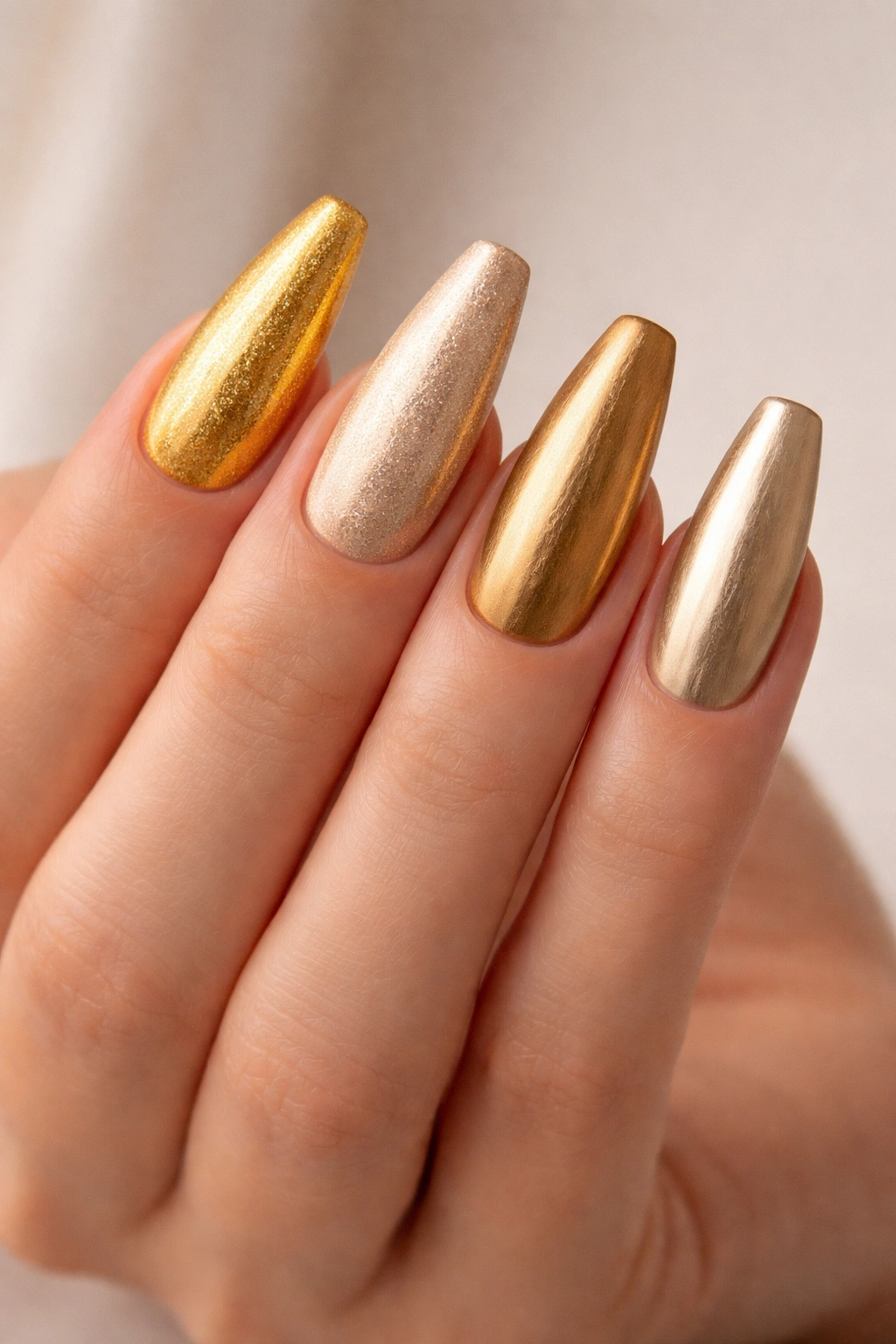
Not all gold reads the same on the hand. Bright yellow gold, soft champagne, antique gold, and brushed metallics each shift the mood of a set by a mile, even when the nail art layout stays identical.
If your skin has warm or olive undertones, rich yellow gold often looks easiest and most natural. It picks up warmth in the skin and ties in well with tan, camel, rust, chocolate, and emerald clothing. On cooler or pink undertones, champagne gold or pale metallic beige tends to look softer and less harsh against the fingers.
Finish matters as much as color.
Here is the quick way I think about it when choosing a gold manicure:
- Mirror chrome gold gives the strongest reflection and shows every tiny surface flaw, so it works best on smooth gel overlays or freshly built extensions.
- Gold foil has torn, irregular edges that hide small imperfections and look more relaxed than chrome.
- Fine gold glitter gives sparkle without a hard metallic line, which helps if you want a softer fade.
- Brushed or antique gold gel paint looks less flashy and pairs well with marble, tortoiseshell, and deep jewel tones.
- Gold studs or charms bring texture and shine, though they need proper placement so they do not snag hair or knitwear.
Look at your rings too. Matching them exactly is not required. Close is enough. A champagne gold nail next to a yellow gold ring still works if the base color links the whole hand together.
And if you are torn between two finishes, pick one dominant gold and one support gold at most. Three metallic finishes on a single set often turn into visual noise.
1. Nude Base With Molten Gold French Tips
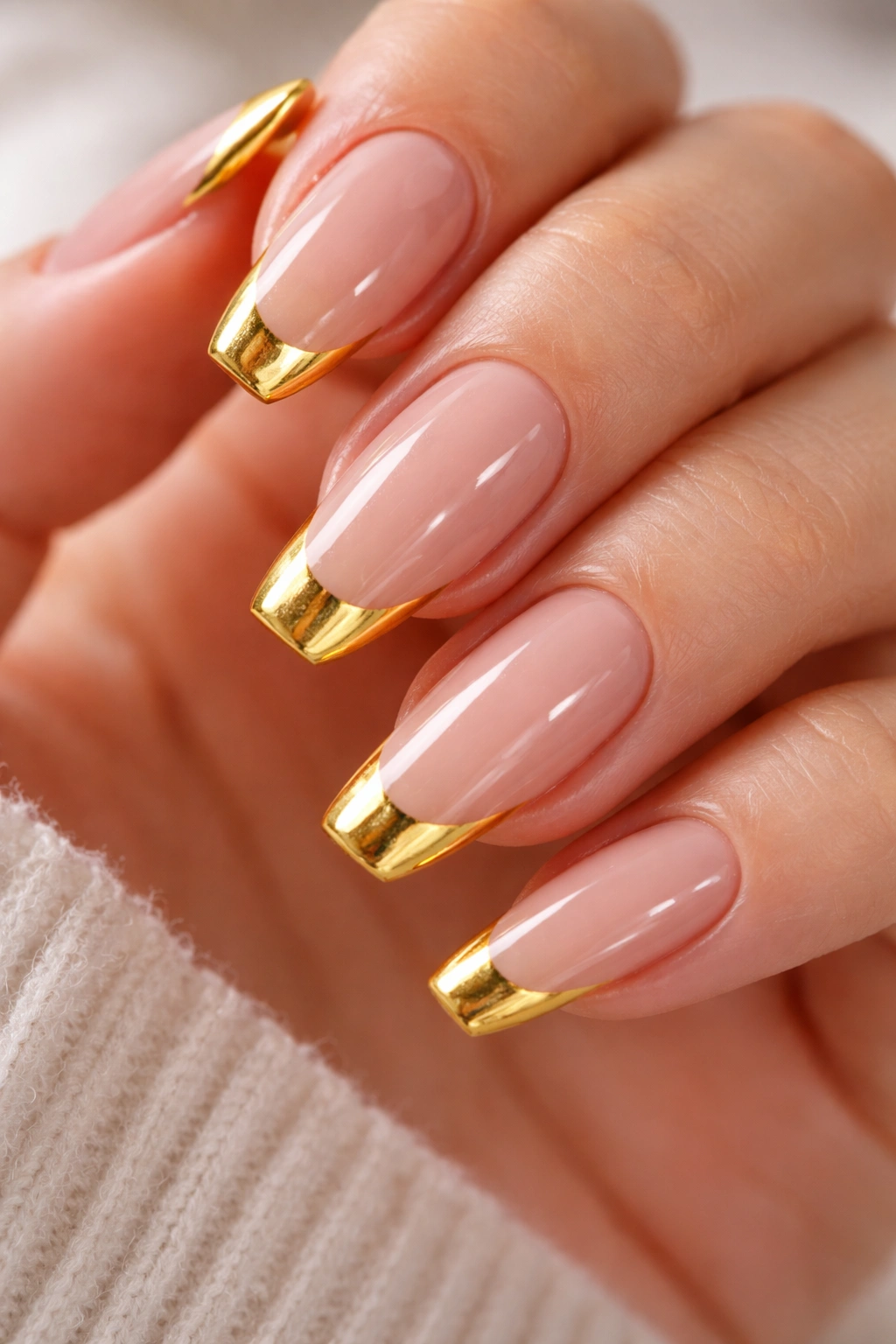
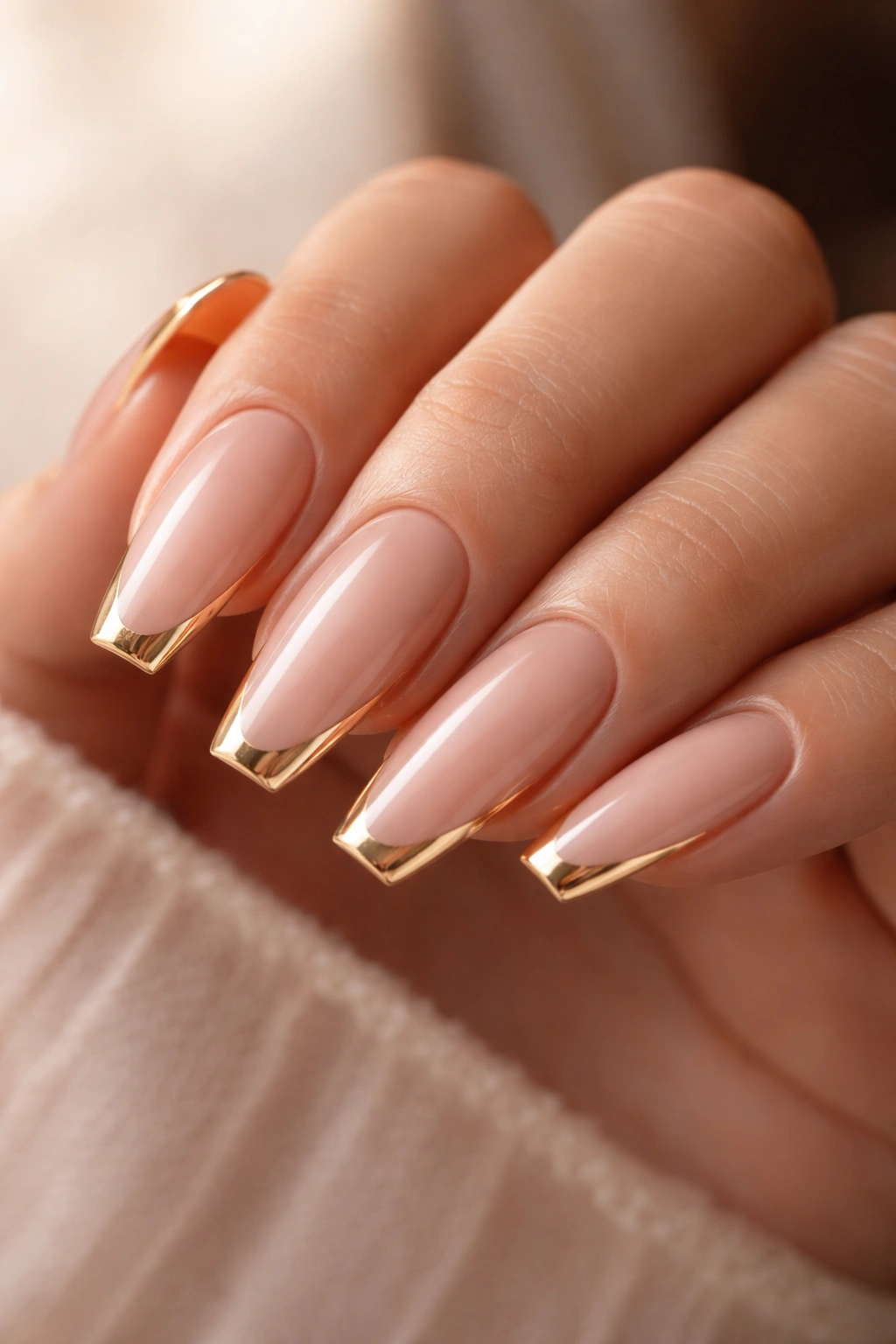
If you want a gold ballerina nail design that feels polished from every angle, start here. A sheer nude base with a molten gold French tip is the manicure I recommend most often because it gives you clean contrast, visible shape, and enough shine to feel dressed up without burying the nail under product.
The base should stay sheer, not opaque. Think milky beige, rosy nude, or a pink-toned builder gel that lets some natural nail tone show through. That little bit of transparency keeps the set light. Then the gold tip does the heavy lifting.
Why this layout works
The flat edge of a ballerina nail makes French tips look sharper than they do on almond or oval shapes. On a medium-length set, ask for a 2 to 3 mm metallic tip with a slightly curved smile line. Too wide, and the nails look shorter. Too thin, and the gold disappears from a normal viewing distance.
Details worth asking for
- Use chrome pigment over a no-wipe gel if you want a mirror finish.
- Pick foil gel and transfer foil if you want a more broken, molten look.
- Keep the nude base one shade deeper than your skin if you want the gold to pop more.
- Ask your tech to cap the free edge well; metallic tips chip first at the corners.
Best move: pair this design with short ring stacks or a slim watch. The manicure already carries enough shine.
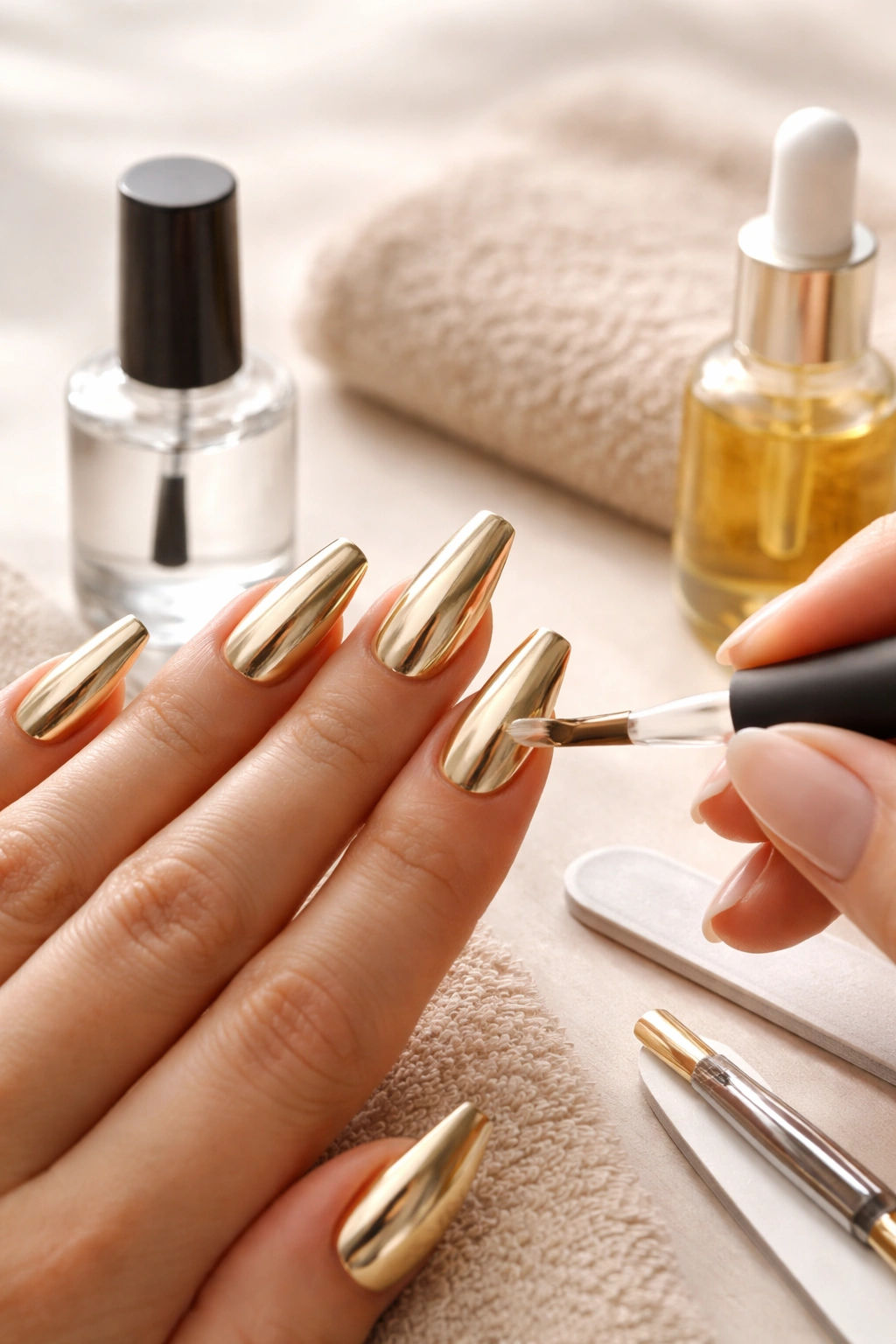
2. Full Mirror Gold Chrome on Long Ballerina Nails
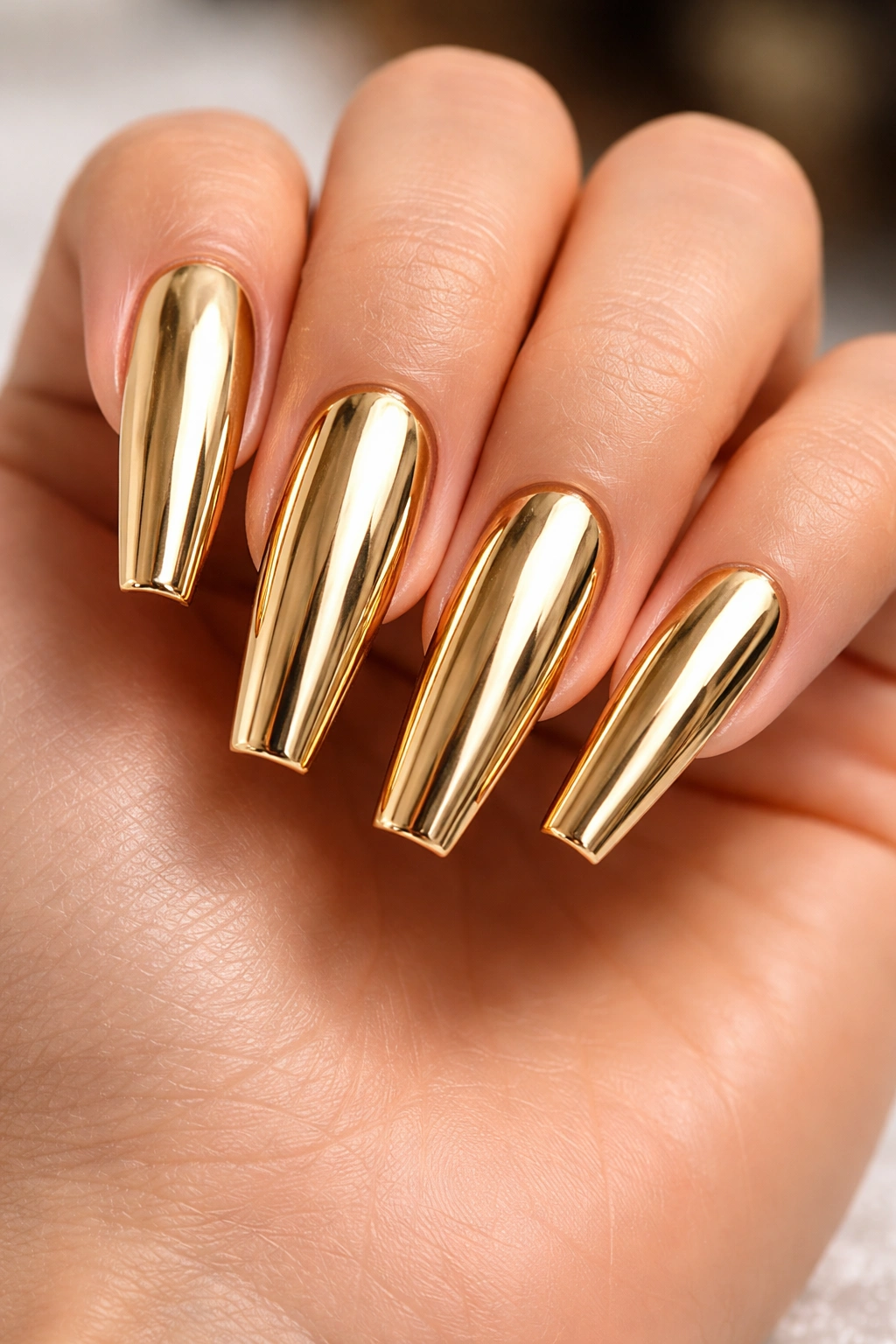
Full gold chrome is not subtle, and that is the point. When it is done well, the nails look almost liquid—hard, reflective, polished enough to throw light back across the room. When it is done badly, you see every ridge, dent, and sloppy sidewall in under ten seconds.
Preparation decides everything here. I would not put mirror chrome on a bumpy natural nail and hope for the best. A smooth builder gel overlay or a well-balanced acrylic base gives the powder something even to sit on, and that evenness is what makes the reflection look glassy instead of patchy. Your nail tech should file the surface smooth with a fine-grit buffer, apply color if needed, cure a no-wipe topcoat, then rub chrome pigment in with a silicone tool or sponge until the whole nail reflects evenly.
Length helps this design breathe. Long ballerina nails—around 12 to 16 mm free edge—give that sheet-metal effect people usually want from chrome. Shorter lengths can still work, though they read more compact and less dramatic.
There is a catch. Full chrome shows wear early. Tiny scratches, dull patches from cleaning products, and edge chipping all stand out fast. If you love the look but do rough work with your hands, save this set for an event or a week when you are not opening boxes, scrubbing pans, and living in hand sanitizer.
3. Sheer Milky Pink Nails With Gold Cuticle Cuffs
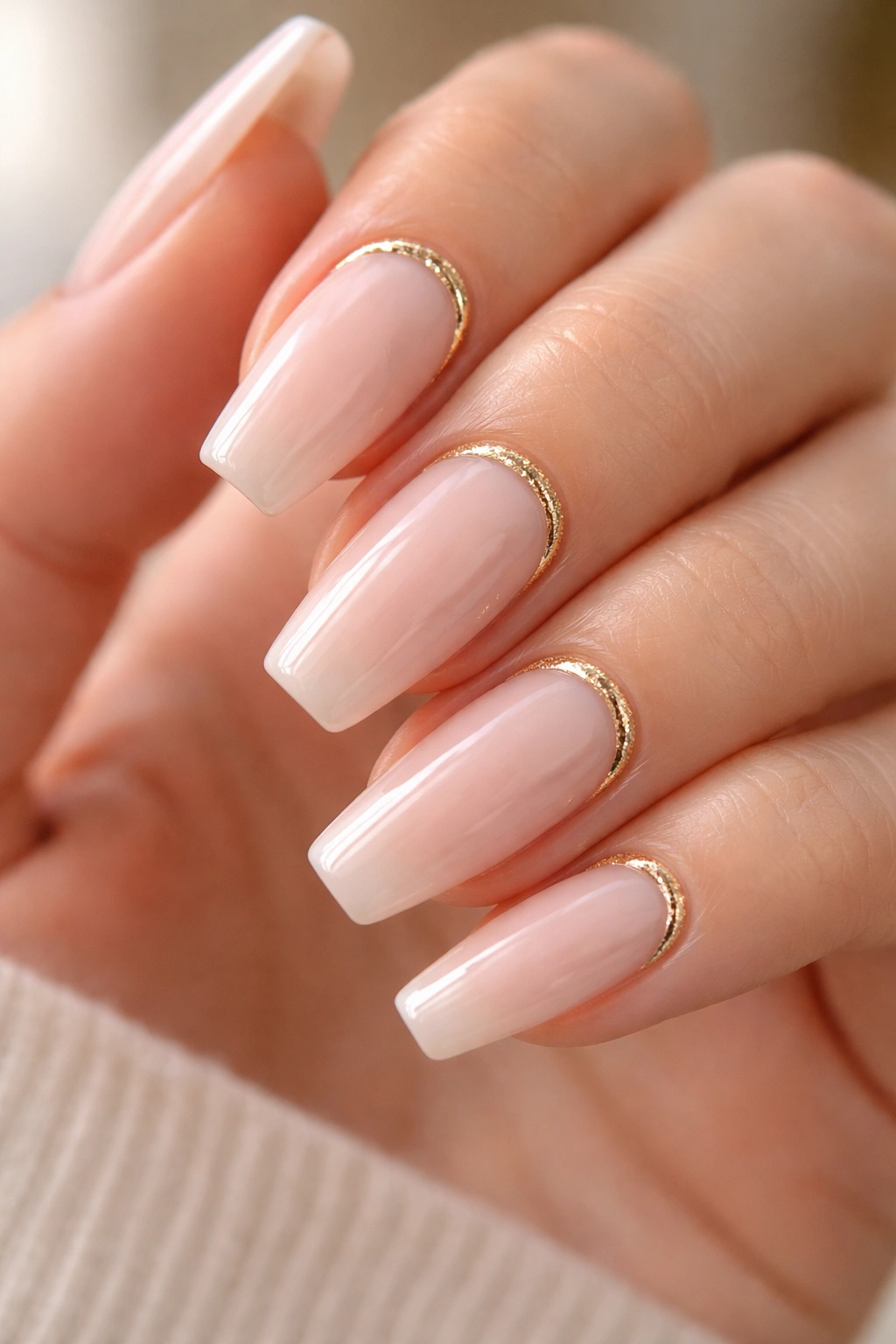
Why put the gold at the tip when the cuticle line can do the talking? A reverse-French cuticle cuff gives you shine in a spot most sets ignore, and it has one practical perk I wish more people mentioned: grow-out looks less harsh because the design already frames the base of the nail.
Use a milky pink, jelly nude, or soft blush gel for the main color. Then trace a fine gold arc about 1 mm away from the cuticle, not pressed right against it. That tiny gap keeps the manicure from looking cramped and gives the line room to stay clean as the nail grows.
What makes this one feel chic instead of fussy
A cuticle cuff works because the ballerina shape already stretches the nail lengthwise. When you echo that structure at the base, the whole set looks deliberate. Thin lines are the secret. A thick gold half-moon can start reading heavy, especially on shorter nail beds.
How I would wear it
I like this look on medium lengths with glossy topcoat and no extra crystals at all. Maybe one micro-stone on the ring finger if you insist, though I would skip it. The elegance sits in the spacing—the pink field, the little halo of gold, the long tapered sidewalls.
This one also suits people who talk with their hands. The glint sits right near the base, so you notice it when you reach for a glass or turn a page, not only when the tips catch light.
4. White Marble Ballerina Nails With Fine Gold Veining
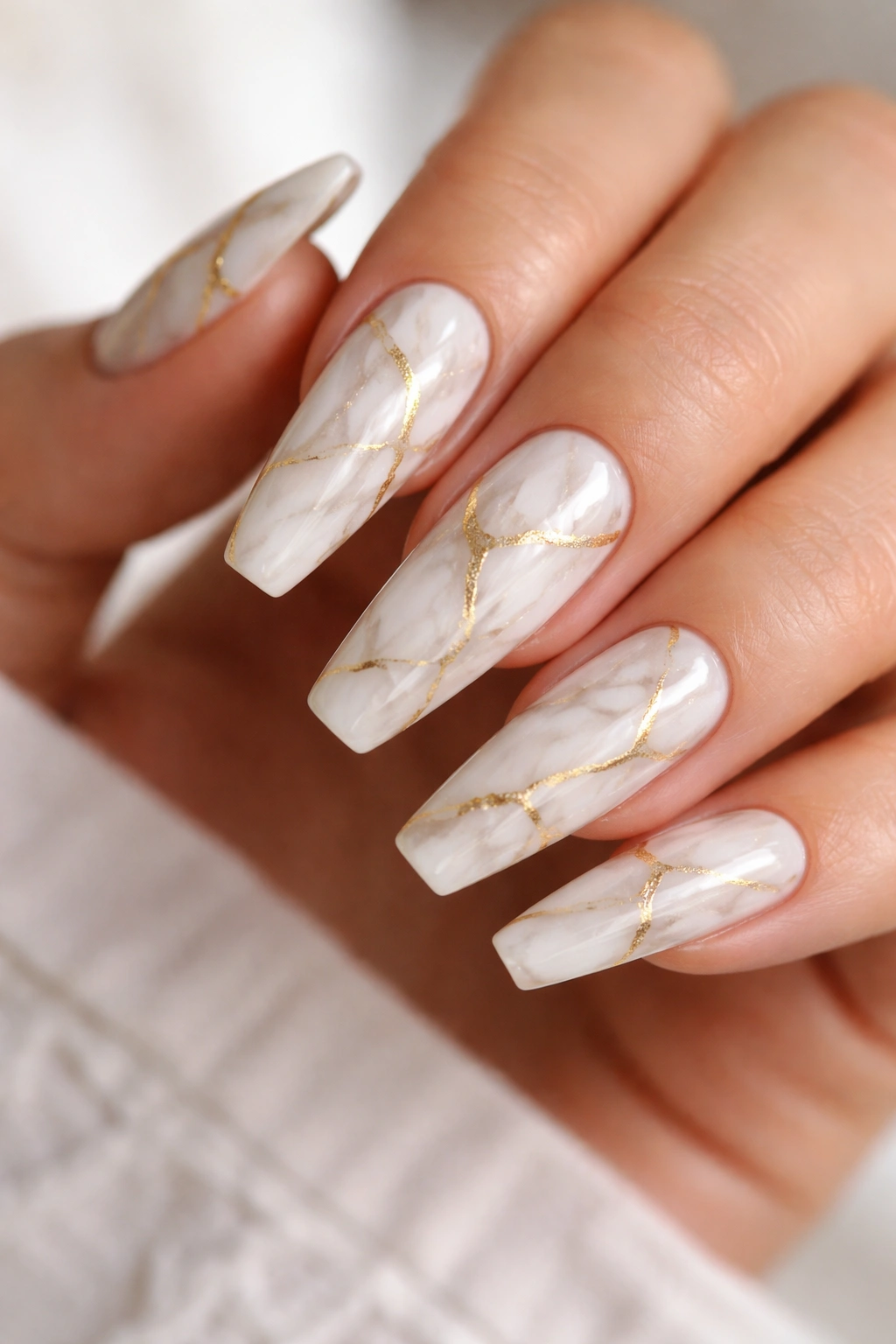
Picture a creamy white stone countertop, not a loud craft-store marble print. That is the lane to stay in here. The strongest white marble ballerina sets use soft gray veins, sheer milk-white patches, and thin gold traces that look painted into the nail rather than pasted on top.
A good nail tech usually starts with a semi-sheer white base, then drags diluted gray or taupe gel through it with a liner brush or alcohol ink technique. Gold comes last, and less is better. One or two metallic veins per nail is enough. More than that, and the nail loses the stone effect.
Try this layout if you want the details to read clean:
- Keep two or three full marble nails on each hand.
- Use solid nude, white, or soft beige on the others to stop the set from getting busy.
- Ask for hairline gold veining, not thick cracks.
- Choose glossy topcoat so the marble looks sealed under glass.
The reason this design keeps returning is simple: it mixes softness with edge. White keeps the hand fresh. Gold adds warmth. The tapered coffin shape gives the veins space to stretch out instead of bunching together at the tip.
I would skip oversized gems here. Marble already has movement. Piling rhinestones over it usually muddies the whole point.
5. Matte Beige Nails With Glossy Gold Foil Fragments
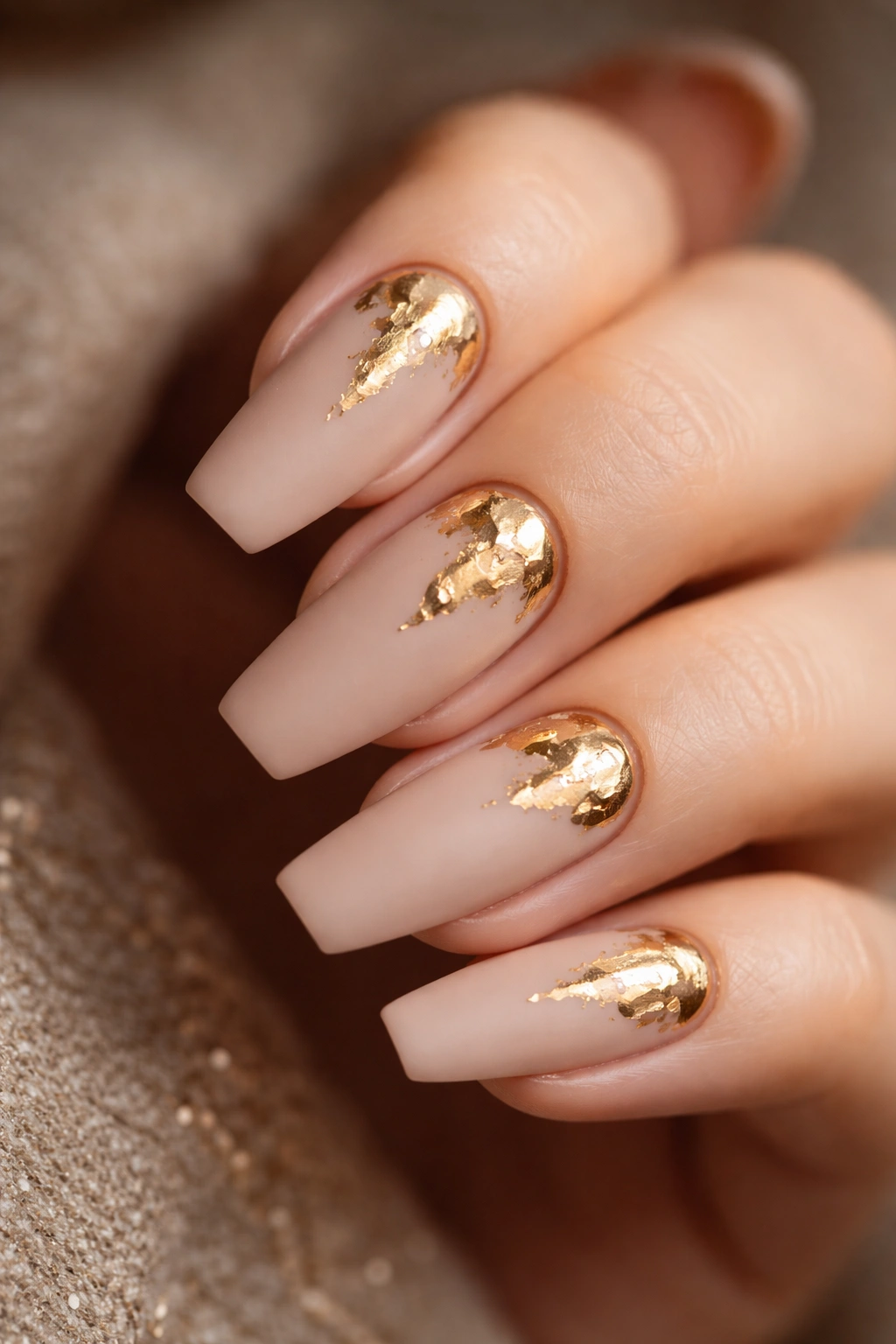
This one wins on texture. You are not relying on color contrast alone; you are letting matte beige and slick metallic foil push against each other, and that tension gives the set its mood.
A warm latte beige, mushroom nude, or soft camel base works well. Once the color cures, apply a velvet-matte topcoat. Then place broken foil pieces—small, uneven, and spaced out—on selected areas and seal only the foil so it stays glossy. Some techs do this by embedding foil under topcoat while leaving the rest matte. Others paint foil gel in tiny patches and topcoat the whole nail with a satin finish that still lets the foil flash. Both routes can work, though I prefer the stronger matte-versus-gloss contrast.
Placement matters more than people think. Scatter foil near one sidewall, drag a few pieces diagonally across the center, or cluster them near the tip. A full blanket of foil defeats the design. You want negative space around each metallic tear so the eye can read the shape.
The ballerina silhouette helps because the flat tip gives the irregular foil something strict to sit against. Soft nude. Broken gold. Clean geometry. Good combination.
And no, every nail does not need foil. Two feature nails per hand is often enough.
6. Clear Encapsulated Gold Flakes Over Nude Builder Gel
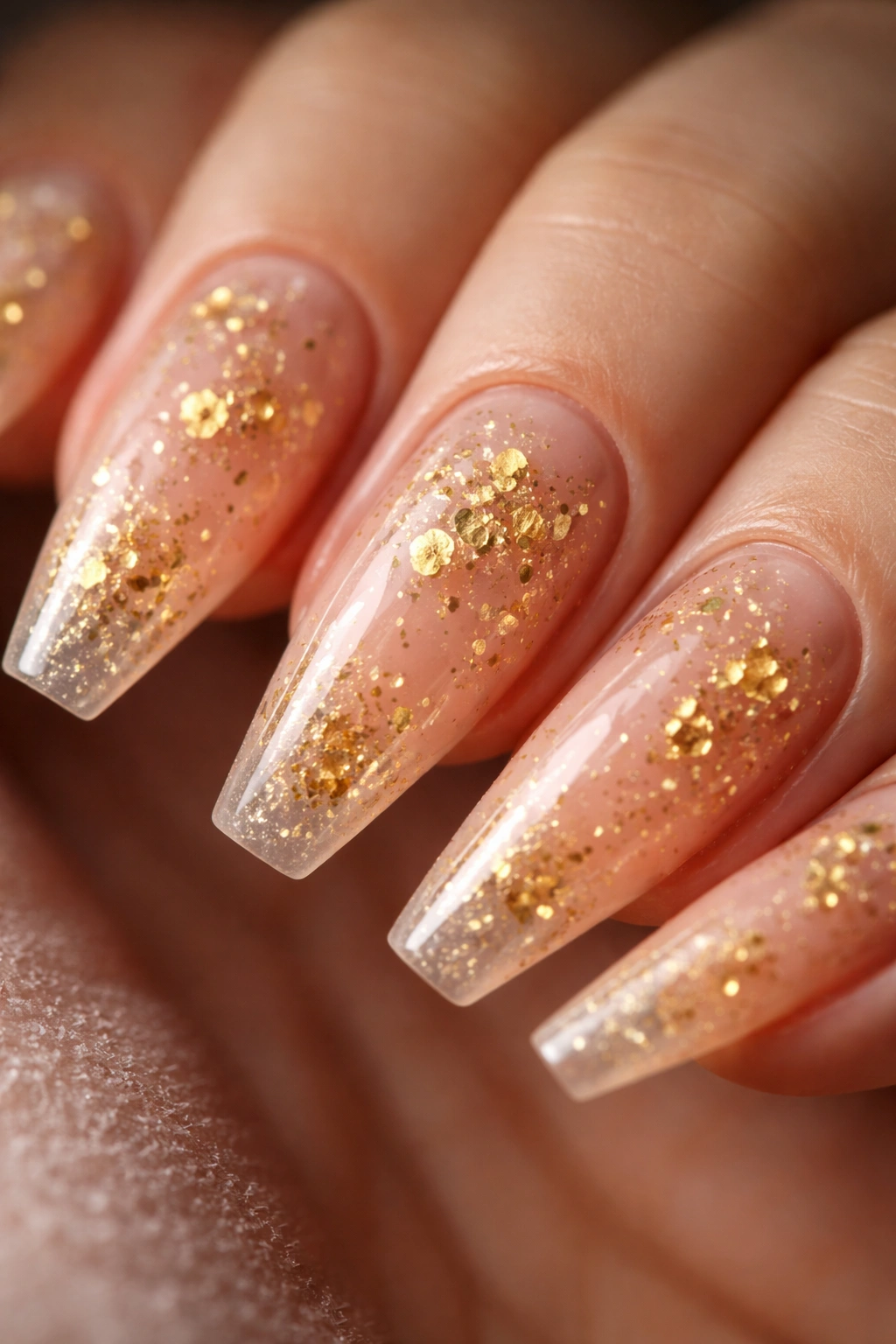
Unlike loose glitter on topcoat, encapsulated gold flakes have depth. They sit inside the nail rather than on it, which means the shine looks trapped under the surface, almost like shards in clear resin. On ballerina nails, that depth reads luxurious in a quiet way.
Start with a nude or pink-toned builder gel base. Then place irregular gold leaf or metallic flakes into a thin layer of clear gel, keeping them away from the cuticle by at least 1.5 mm so the regrowth area stays cleaner. Cap with another clear layer, refine the shape, and topcoat. The final nail should feel smooth when you run a fingertip across it. If you can feel the flakes, the encapsulation is too thin.
This design works best for people who want shine but do not want hard lines or obvious pattern work. It is softer than chrome, richer than glitter, and more forgiving than foil because the clear gel blurs harsh edges.
Who should pick it? Anyone who likes neutral nails yet gets bored by plain beige manicures after four days. You keep the wearability of nude nails, but each finger has small bursts of metal floating through it.
My preference: use flakes on three nails per hand, keep the others solid nude, and file the corners slightly softer than a coffin. It makes the set feel expensive, not crowded.
7. Black and Gold Geometric Ballerina Nails
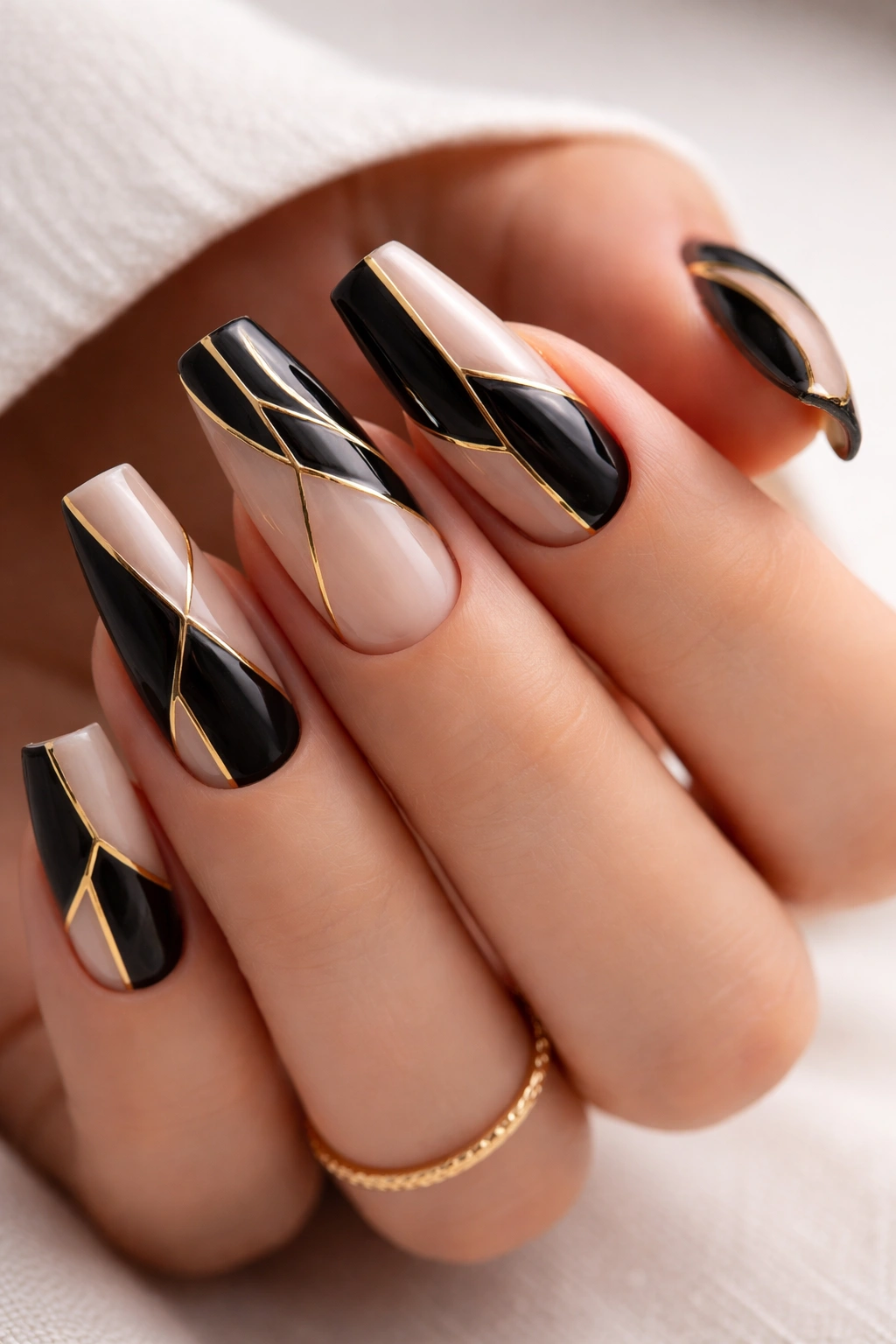
Black and gold can go wrong fast. Too many lines, too many triangles, too much glitter, and you get a set that looks like holiday wrapping paper. Kept sharp and sparse, though, geometric black-and-gold nails look crisp, editorial, and a little dangerous—in a good way.
The trick is restraint
Use black on no more than half the nails unless you want a fully dramatic set. Pair it with negative space, nude sections, or clear panels so the gold linework has room to breathe. A striping brush and gel paint will give the cleanest result. Think diagonal blocks, off-center rectangles, split nails, or one gold bar running down the sidewall.
Strong combinations inside this look
- Glossy black + thin gold tape line for a hard, graphic finish
- Nude base + black corner block + gold border for more lightness
- Clear center panel + black sides + gold frame if you want the shape to look longer
- Matte black + brushed gold accents for a lower-shine version
Ballerina nails suit geometry because the sidewalls already create lines your design can echo. Work with that shape. Do not fight it by dropping random curves all over the nail.
I like this set for evening wear, tailored outfits, and heavy rings. It is not the design I would pick for someone who wants soft, romantic glam. This one has teeth.
8. Soft Nude-to-Gold Glitter Fade
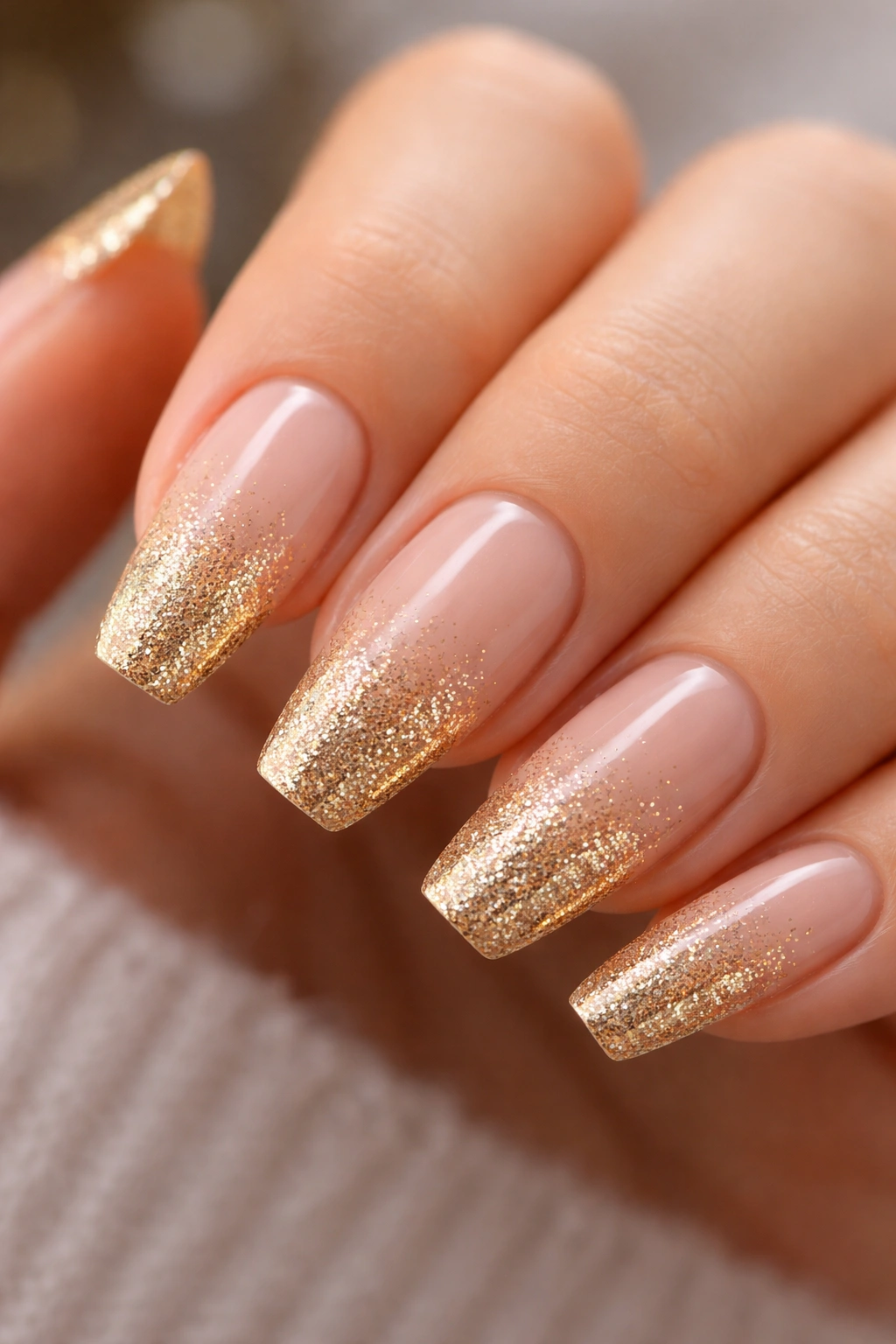
A glitter fade is easy to dismiss because it has been around forever. I still like it. The reason is practical: it flatters almost everyone, grows out well, and can be dialed up or down by changing the glitter size.
Use a sheer nude, pink-beige, or milky blush base. Pack the gold glitter at the tip, then thin it out as you move toward the center of the nail. The nicest fades use two particle sizes—a fine shimmer for the haze and a few medium glitter pieces for sparkle. If every piece is chunky, the gradient looks abrupt. If every piece is tiny, the set can look dusty instead of glowy.
A sponge can help for regular polish, though gel gives cleaner control. Some techs use an ombré brush to feather the particles down in short taps. Cure, inspect, add more concentration at the free edge, then seal with a leveling topcoat so the surface stays smooth.
Short note from experience: keep the fade below the halfway point. Once glitter crosses too far into the nail bed, the shape starts looking shorter and heavier.
This design earns its place because it is forgiving. Tiny chips disappear into the sparkle. Regrowth is softer than with a full metallic nail. And if you have an event coming up, the set works with satin, sequins, velvet, denim—almost anything in your closet.
9. Deep Burgundy Nails With Brushed Gold Details
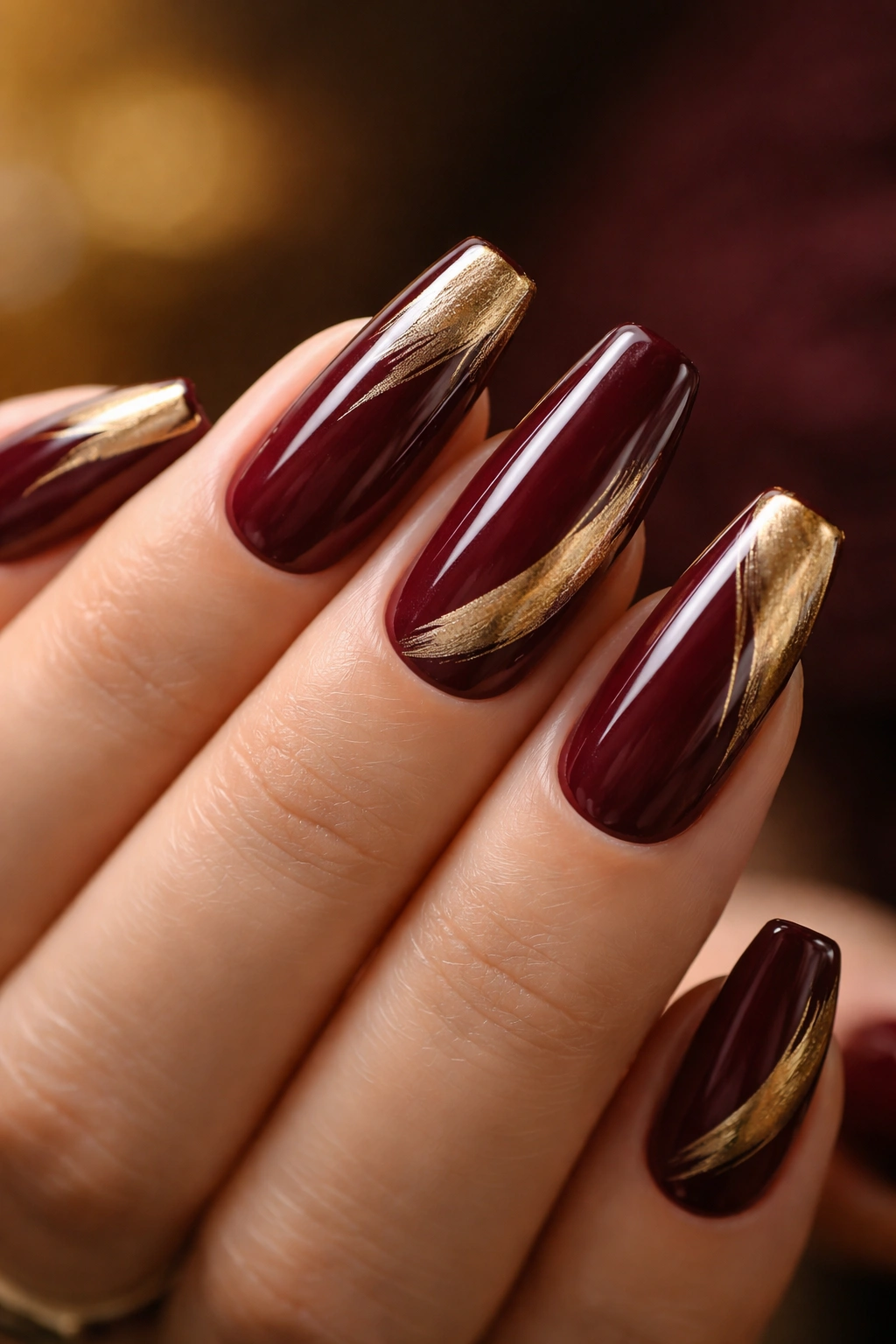
There is something richer about burgundy and gold than red and gold. Red can feel obvious. Burgundy has more depth, more shadow, more mood. On a ballerina shape, that darker base turns the gold into a highlight instead of the whole story.
I like a wine shade with brown undertones rather than a bright cherry tone. Then use brushed or antique gold gel paint for the accent work. The brushed finish matters. Mirror chrome can look too sharp against burgundy, while softer metallic paint gives the set a vintage-luxe feel that suits the color better.
You do not need a full pattern on every nail. One side-swept gold stroke, a small arc near the cuticle, or a thin vertical line off-center is enough. Hand-painted details beat stickers here because the little irregularities make the nail art feel warmer. Not messy—human.
This set also wears well with shorter medium ballerina lengths. The dark color already brings drama, so you do not need 15 mm tips to get impact. A 7 to 9 mm free edge is plenty.
If you wear gold jewelry with warm stones—garnet, amber, tiger’s eye—this manicure clicks into place fast.
10. Pearl White Ballerina Nails With Fine Gold Linework
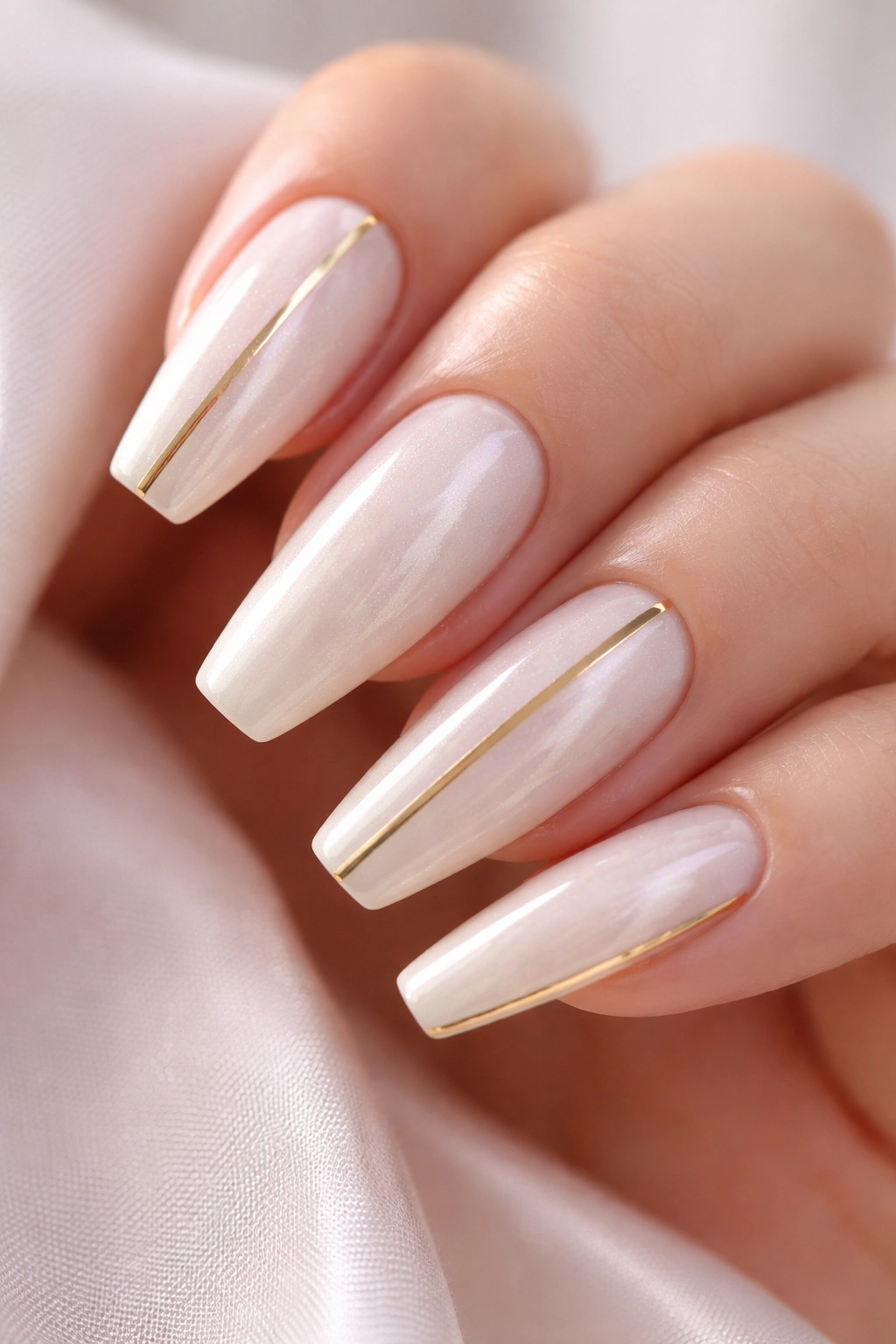
Pearl white can go chalky if the base color is wrong. What you want is not correction-fluid white. You want a soft white with a pearl sheen or a milky ivory undertone, then a fine gold line to sharpen it.
Why this one reads refined
The pearl finish already bounces light in a gentle way, so the gold linework does not need to scream. A single vertical stripe, a slim French outline, or a double line hugging one sidewall can make the whole nail look longer. On ballerina nails, linework has a built-in runway.
Good line placements to ask for
- A 0.5 mm gold outline around only the tip
- One off-center vertical line from cuticle to edge
- A split design with pearl on one side and negative space on the other
- Tiny intersecting lines near the ring finger for one accent nail
This is one of my favorite sets for formal wear because it feels bright without the hardness of silver. It also suits hands with shorter fingers; the pale base keeps things light, and the gold line pulls the eye lengthwise.
Skip thick glitter here. The pearl surface already has movement. Too many competing finishes turn a graceful set into a noisy one.
11. Tortoiseshell Ballerina Nails With Gold Framed Edges
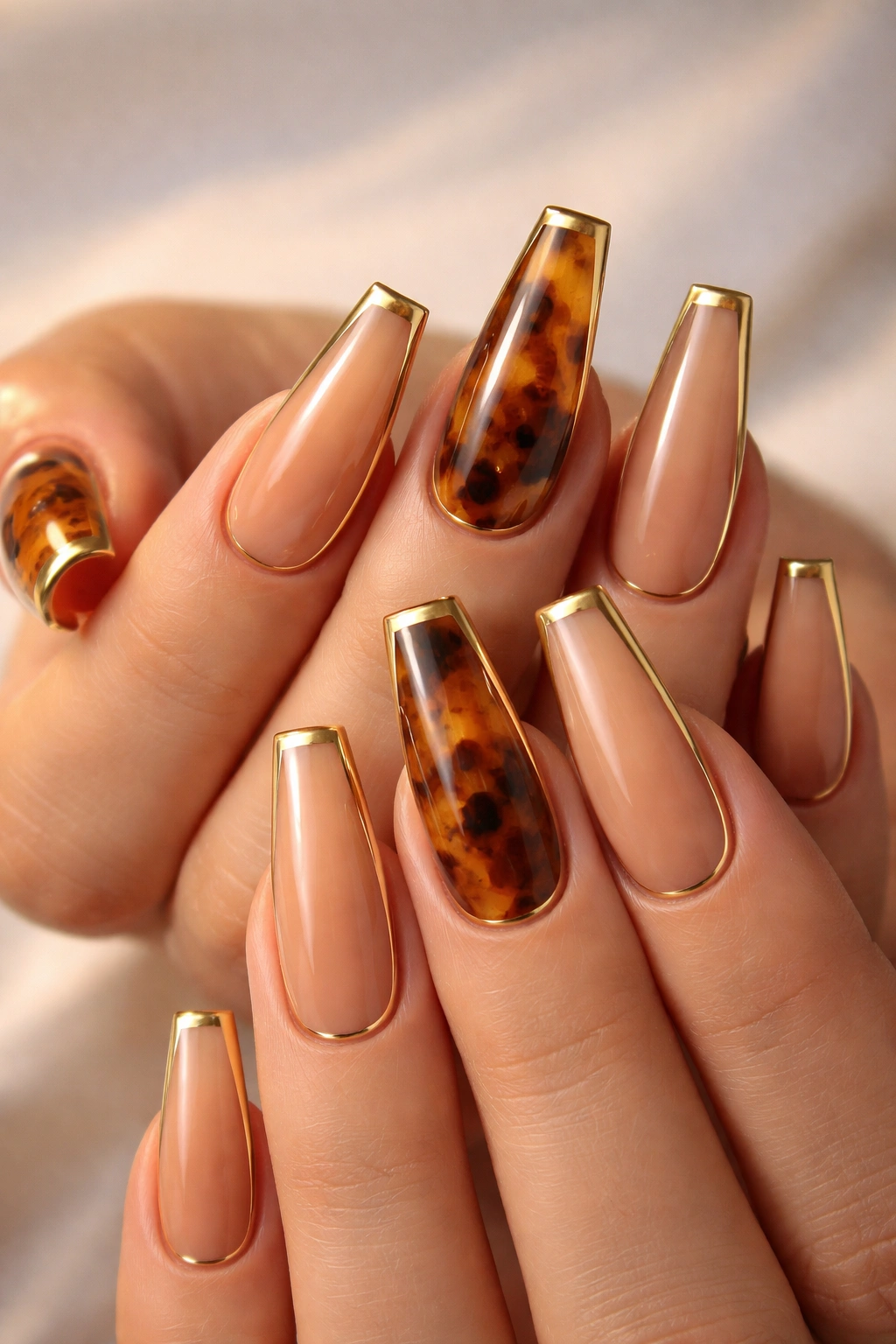
Tortoiseshell is one of those nail designs that can look deeply chic or completely muddy depending on color placement. Done right, you get those translucent caramel, amber, and espresso patches floating through a honey base. Add a slim gold frame near the tip or sidewall and the whole thing tightens up.
The layering process is what makes tortoiseshell believable. You need a jelly amber or caramel base, then irregular brown and near-black spots placed in thin layers so some edges blur and others stay crisp. If every patch is dark and opaque, the nail loses that lit-from-within effect that makes tortoiseshell worth doing at all.
Gold framing works best when it is partial. Outline one side, cap the tip, or border only the accent nails. Full gold borders on every tortoiseshell nail can feel heavy.
I would build this set like this:
- Two tortoiseshell nails per hand
- One nude or beige nail with gold detail
- One solid caramel or brown nail
- One negative-space or clear accent if you want more air
This color story looks strong with camel coats, dark denim, cream knits, and leather bags. It is fashion-forward without trying too hard—which, yes, sounds vague, but on the hand you can feel the difference.
12. Champagne Gold Aura Nails
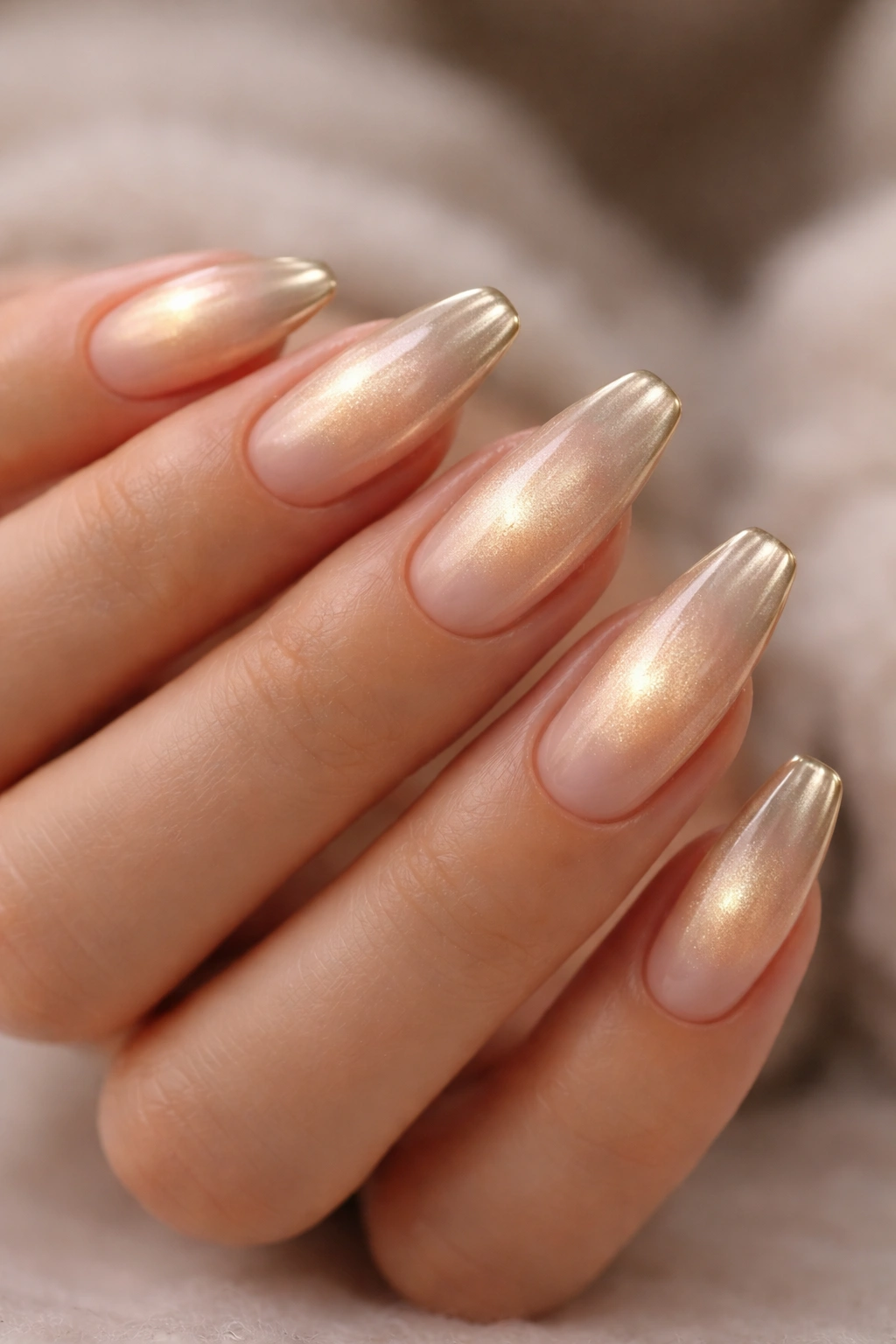
Aura nails are softer than chrome and more directional than glitter. Instead of coating the whole nail, you place a glow in the center or slightly above center, then blur it outward so the color seems to bloom from inside the nail. In champagne gold, that effect looks rich and warm rather than loud.
A nude, sheer pink, or translucent milky base works best. Then the tech airbrushes or sponges a soft circle of champagne metallic into the middle of the nail. The edges need to stay hazy. Sharp borders kill the aura effect. Some sets finish there. Others add a slim chrome edge at the tip or a tiny crystal near the cuticle. I lean toward the simpler version. The glow is the point.
This design suits people who want gold ballerina nails with glam but do not want classic French tips or heavy foil. It is also flattering on medium lengths because the center glow can make the nail bed look longer.
One caution: ask for champagne, not yellow-gold glitter piled in the middle. The former looks diffused. The latter can look like a patch of craft glitter landed on the nail and stayed there.
13. Emerald Green Accent Nails With Gold Leaf
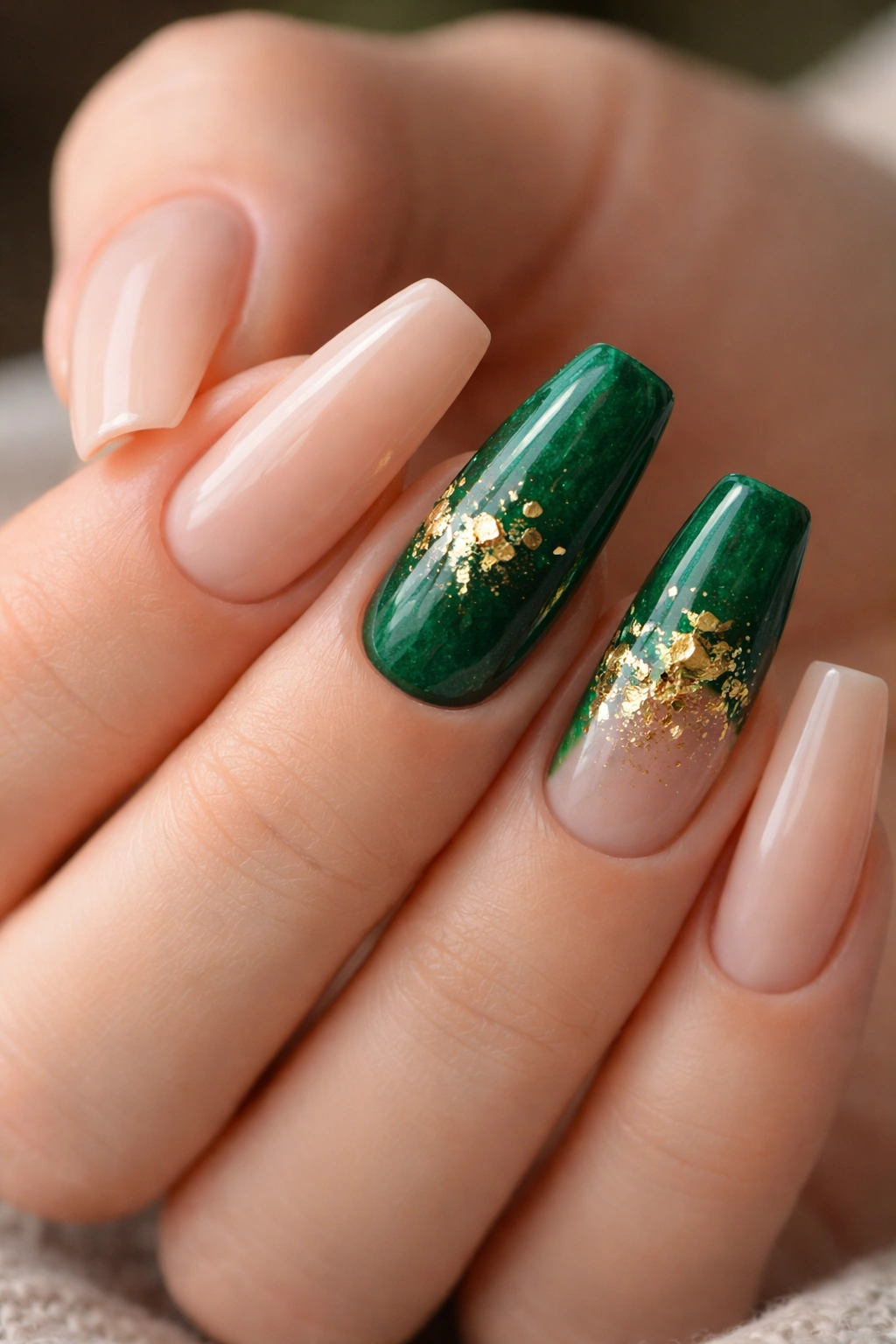
Gold next to emerald hits differently. The green deepens the metal, and the gold warms the green, so both shades end up looking richer than they would on their own. I would not do a full hand of emerald-and-gold unless you love maximal nail art. A smarter move is to keep two accent nails in emerald and let nude or sheer beige carry the rest.
Why this pairing works
Emerald already has depth, especially when the polish has a jelly or cat-eye quality. Gold leaf adds irregular flash that breaks up the darkness without flattening it. Black can do something similar, though green feels more jewel-box and less severe.
A layout that stays polished
- Ring finger: emerald base with broken gold leaf near the center
- Middle finger: nude or clear base with a slim gold French edge
- Index and pinky: solid nude or soft beige
- Thumb: emerald or nude, depending on how bold you want the hand to read
This is one of those sets that looks stronger in person than in a photo. When you move your hand, the green shifts, the gold catches, and the nude nails give your eye somewhere to rest.
It also pairs well with gold rings that have stones. Think green glass, malachite, peridot, or plain polished metal.
14. Minimalist Taupe Nails With Tiny Gold Studs
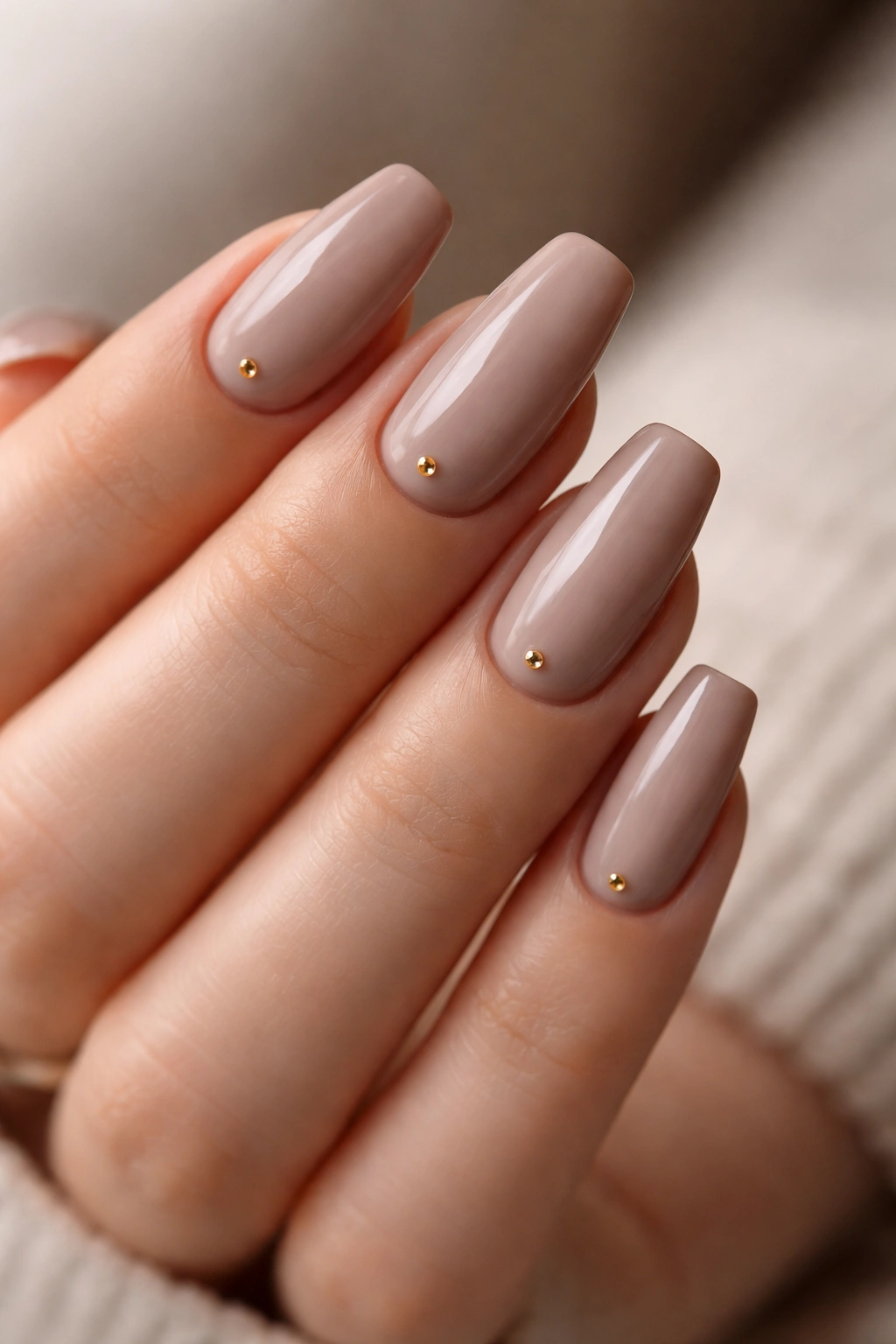
Not every glam manicure needs chrome, foil, and line art. Taupe ballerina nails with one or two tiny gold studs can look more expensive than a packed design because the restraint feels intentional.
Choose a taupe with either a rosy cast or a gray-beige base. Muddy shades can drain the hand, while cleaner taupes look polished and soft. Keep the finish glossy. Matte plus studs can work, though glossy taupe gives the metal more contrast.
Stud size matters. Use 1 mm to 1.5 mm metal beads or flat-back studs, not chunky domes. Place one at the cuticle center, two in a vertical line near one sidewall, or a small triangle on a single accent nail. More than three studs on one nail usually starts to look costume-like.
This design is practical too. Small embellishments sealed properly under a layer of clear builder or thick topcoat are less likely to snag. If your job involves typing, paperwork, or constant hand use, that matters more than Instagram drama.
I like this set when someone wants gold nails that still feel office-friendly, dinner-ready, and neat after a week of wear. It is understated, yes, but not boring.
15. Bridal Ivory Ballerina Nails With Gold Lace Detailing
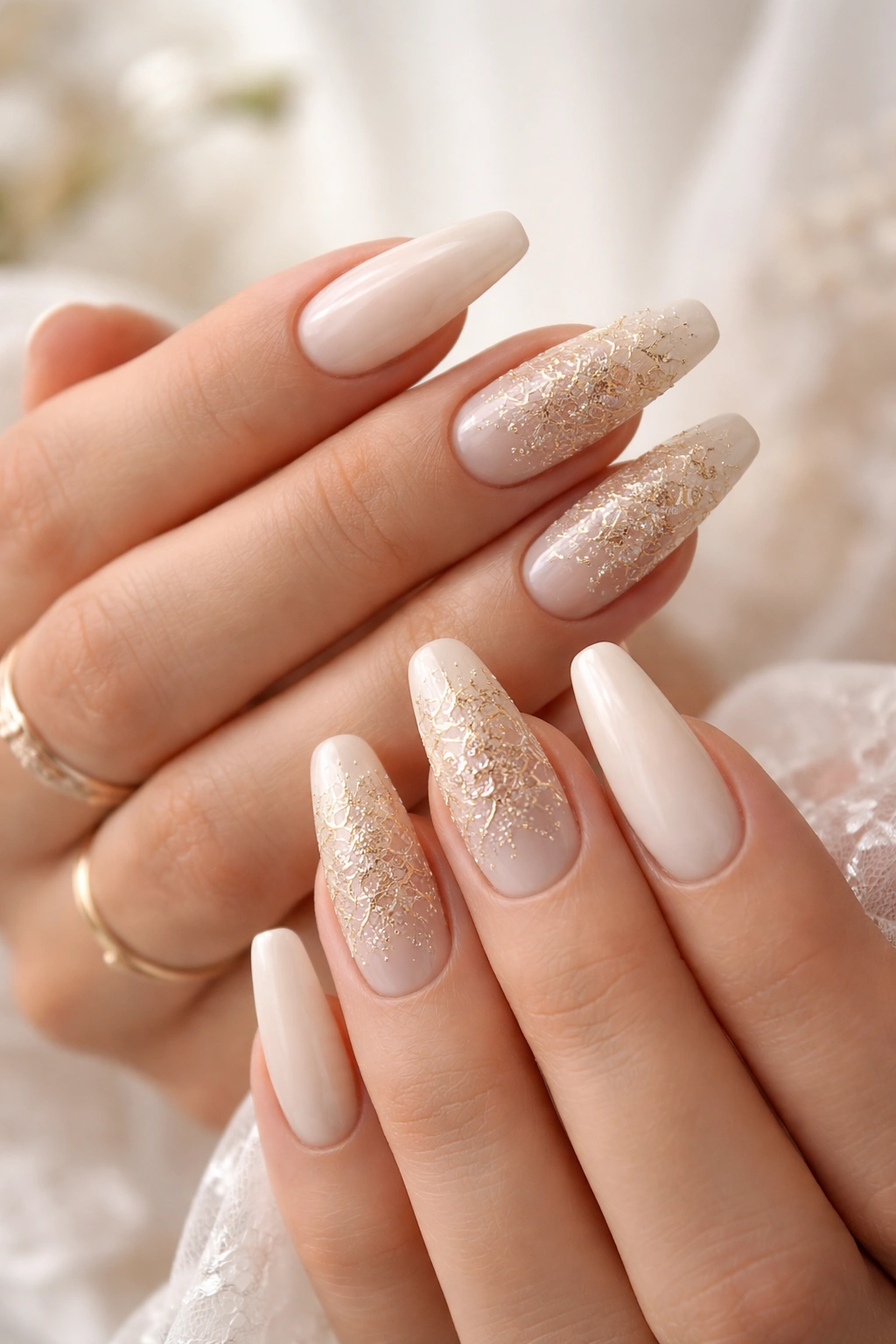
If there is a place for delicate gold detail, it is here. Bridal ivory on a ballerina shape already looks polished and elongated. Add fine gold lace-inspired painting, and the manicure starts feeling custom in the best possible way.
The base color should be soft ivory, not stark white. A sheer build is even better because it keeps the nail from looking thick. Then use a liner brush and metallic gel paint to create filigree at one corner, around the cuticle, or drifting diagonally across the nail. Think lace trim, not full wallpaper. Tiny loops, dots, and curved lines go farther than dense pattern work.
A few placement ideas that tend to look strong:
- Gold lace on two nails per hand, solid ivory on the others
- A micro-French tip paired with lace near the ring finger cuticle
- One pearl or crystal placed inside the lace on a single accent nail
- A faint shimmer topcoat over ivory if you want a candlelit glow
I would avoid chunky glitter for this look. The appeal comes from the hand-painted detail and the quiet warmth of gold against ivory. It suits weddings, engagement parties, formal dinners, and any setting where you want elegance with a little ornament.
And yes, this one photographs well—but more importantly, it looks graceful up close, which is what matters when people are actually holding your hand.
How to Keep Gold Nail Art Looking Sharp for Longer
Gold finishes lose their edge fast if you treat them like plain polish. Chrome dulls. Foil lifts at corners. Studs snag. Matte surfaces pick up oils from cuticle balm and hand cream. A little maintenance goes a long way here.
Wear gloves for dishwashing and long cleaning sessions. Water alone will not destroy a gel manicure, but hot water, detergent, and friction together shorten the life of metallic details. If you use hand sanitizer often, rub cuticle oil in at least once later in the day so the surrounding skin does not dry out and make the manicure look tired.
If you are booking salon time, ask for these three things:
- A sealed free edge, especially on metallic French tips
- Topcoat over linework and foil unless the design depends on exposed texture
- Stud placement away from the sidewalls so hair and fabric do not catch on them
Refills matter too. Most ballerina sets start losing their neat proportions after 2 to 3 weeks, especially if the nails are long. The growth gap changes where the design sits on the finger, and with cuticle cuffs or centered aura art, that shift becomes noticeable.
Gold is high-maintenance compared with plain nude polish. Worth it, though.
Final Thoughts
The best gold ballerina nails are not always the loudest set in the room. Often, the designs that look richest are the ones with one strong idea and enough empty space around it—mirror chrome on a clean shape, a fine French tip on a sheer base, a little gold cuff at the cuticle.
If you are choosing between two looks, use your day-to-day life as the tie-breaker. Full chrome and raised charms need more care. Nude bases, glitter fades, cuticle cuffs, and partial foil are easier to live with. There is no prize for picking the hardest manicure to maintain.
Gold likes confidence, but it also likes control. Keep the shape crisp, the metallic detail intentional, and the base color clean, and even a small flash of gold can carry the whole set.