

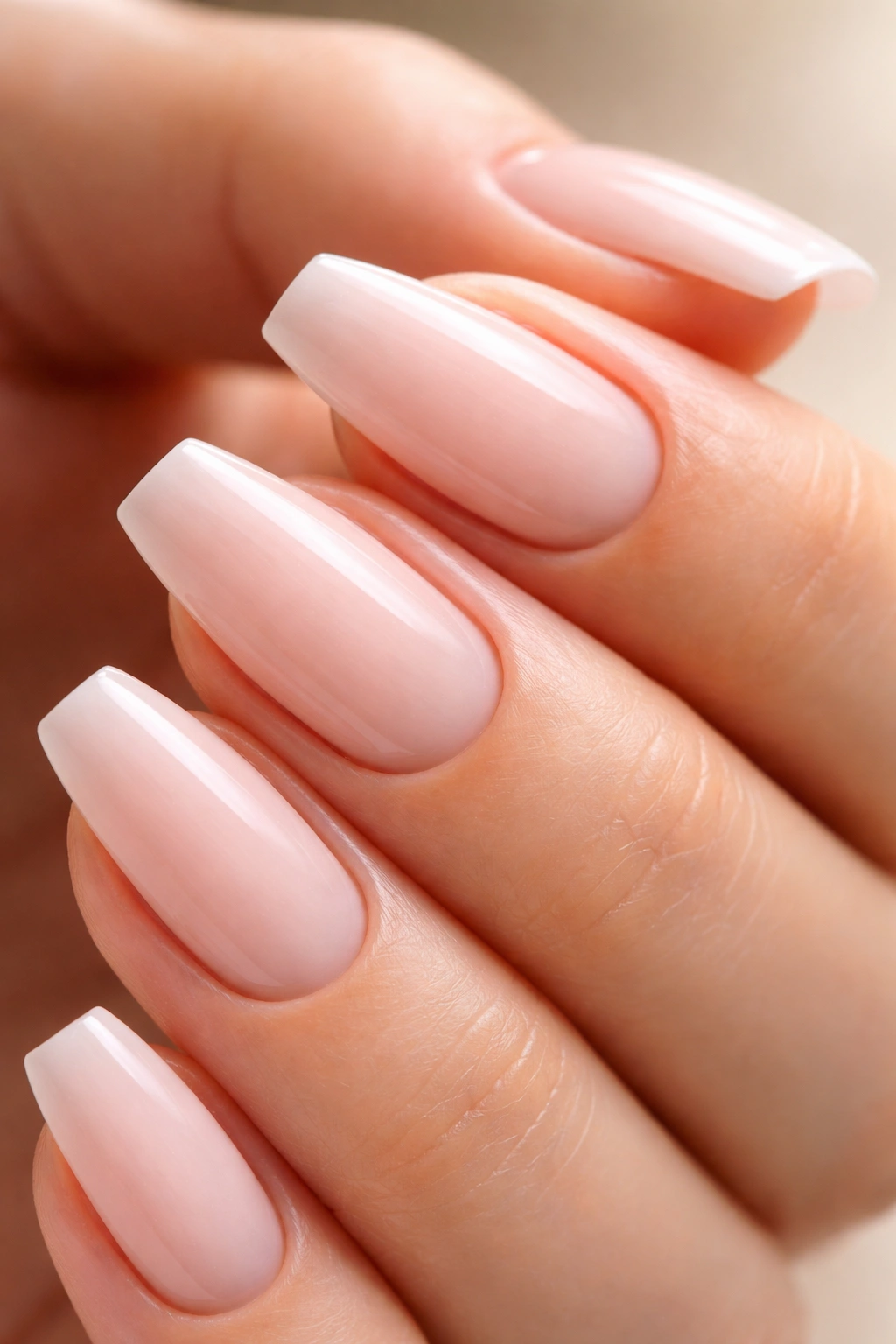
Light pink ballerina nails look easy. They are not. The line between soft and washed-out can be one coat too chalky, one tip too wide, or one pink that leans a little too blue against your skin.
Get it right, though, and this shape-color pairing does something few manicures can do. Light pink ballerina nails make the hand look longer, cleaner, and more refined without shouting for attention. The tapered sidewalls slim the finger. The flat tip adds structure. The pale pink keeps the whole thing gentle instead of severe.
I’ve learned this the slow way—testing pale shades on my own nails, fixing streaky salon manicures, and realizing that soft pink shows every flaw a dark red can hide. Ridges? You’ll see them. Dry cuticles? Instantly obvious. A lopsided tip? Pale polish puts a spotlight on it. That’s annoying, yes, but it also means a well-done pink ballerina set looks crisp in a way heavier nail art never quite does.
And not all soft pink manicures do the same job. Some look clean and creamy. Some feel airy and sheer. Some lean bridal. Some feel more everyday, more office-friendly, more “I wanted my hands to look polished and left it there.” That’s where the details start to matter.
Picking a Light Pink for Ballerina Nails That Flatters Your Hands
A light pink manicure lives or dies by undertone and opacity. If the polish is too white-based, it can make the nail look flat and powdery. If it’s too sheer, the set may read unfinished unless the natural nail line is clean and even.
Skin tone matters, but not in the stiff, rule-book way people talk about online. Cooler skin often looks good with rose milk, ballet-slipper pink, or a neutral blush that has a faint gray cast. Warmer skin tends to glow more under peach-pink, beige-blush, or a pink-nude mix. Deeper skin can wear pale pink beautifully too—often better with a semi-sheer milk pink or a soft rosy beige than a chalky pastel.
Length changes the equation.
A shorter ballerina shape, with about 4 to 6 mm of free edge, usually looks better in a jelly, milky, or softly translucent pink. A longer ballerina tip can handle a denser cream shade because the extra length gives the color room to breathe.
When I’m choosing between two similar polishes, I do one quick check: hold the bottle next to the fingertip, not the palm. If the shade makes the skin near the nail look dull or red, skip it. If it makes the fingertip look smoother and the nail bed look a touch cleaner, you’ve found the better option.
Nail Prep That Keeps Pale Pink Polish Smooth and Even
Soft pink is unforgiving, which means prep does half the design work before color even touches the nail. A rushed manicure can still survive with burgundy or black. Pale blush does not give you that mercy.
Start with the shape. A ballerina nail should taper through the sides, then end in a straight edge that is narrower than the base but not pinched. When the sidewalls are over-filed, the nail looks flimsy. When the tip stays too wide, the shape turns boxy and heavy.
A good prep routine looks like this:
- Use a 180-grit file to shape the sidewalls and free edge without shredding them.
- Push back cuticles after 2 to 3 minutes of cuticle remover or warm water exposure, not after a long soak that leaves the nail plate soft.
- Buff only where needed with a 240-grit buffer if ridges are high. Do not sand the whole nail flat.
- Apply a ridge-filling or smoothing base coat under regular polish.
- Use 2 to 3 thin coats, not one thick coat, because pale pink streaks when it pools.
- Cap the free edge with base, color, and top coat so the squared tip holds up longer.
Gel wearers need one extra step: a small apex. Not a hump. Just enough structure near the stress area that the corners of the ballerina tip do not snap off when you open cans, type hard, or knock the side of your hand into a countertop—which, if you wear medium-length nails, you will.
1. Milky Blush With a Glassy Top Coat
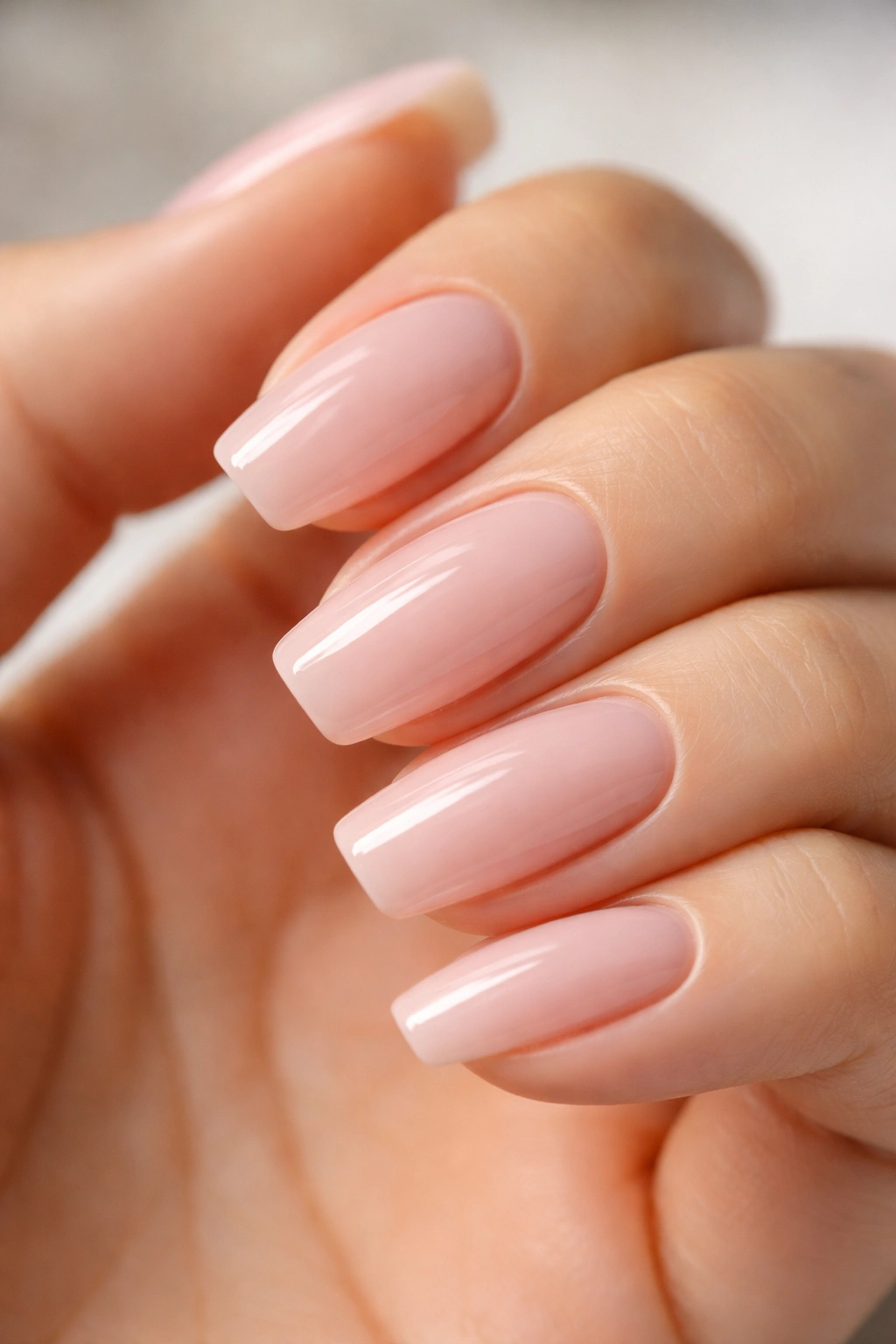
If you want the softest possible take on a ballerina manicure, start here. A milky blush pink with a wet-look shine has that clean, expensive feel that makes the nails look cared for instead of decorated.
The charm is in the opacity. You want enough pigment to blur the natural nail line, though not so much that the set turns chalky. Usually that means two sheer coats and one thin milky layer, or a builder gel shade that already has a milk-pink tint built in.
Why it works on ballerina shape
Ballerina nails have a strong outline. The tapered sides and flat tip can look sharp if the color is harsh. Milky blush softens those edges, so the shape reads elegant rather than severe.
It also hides small growth gaps better than a dense pastel. After a week or so, the regrowth still looks tidy because the color sits closer to the natural nail bed.
Quick details to ask for
- Ask for a neutral blush pink, not a baby-powder pastel.
- Keep the length at short-medium or medium so the finish still feels airy.
- Choose a high-gloss top coat instead of chrome or shimmer.
- If your nails have visible ridges, ask for a thin builder base under the color.
My tip: if the first coat looks streaky, that does not mean the shade is wrong. Milky pink often looks messy until the second or third pass levels it out.
2. Ballet Slipper Pink in a Soft Cream Finish
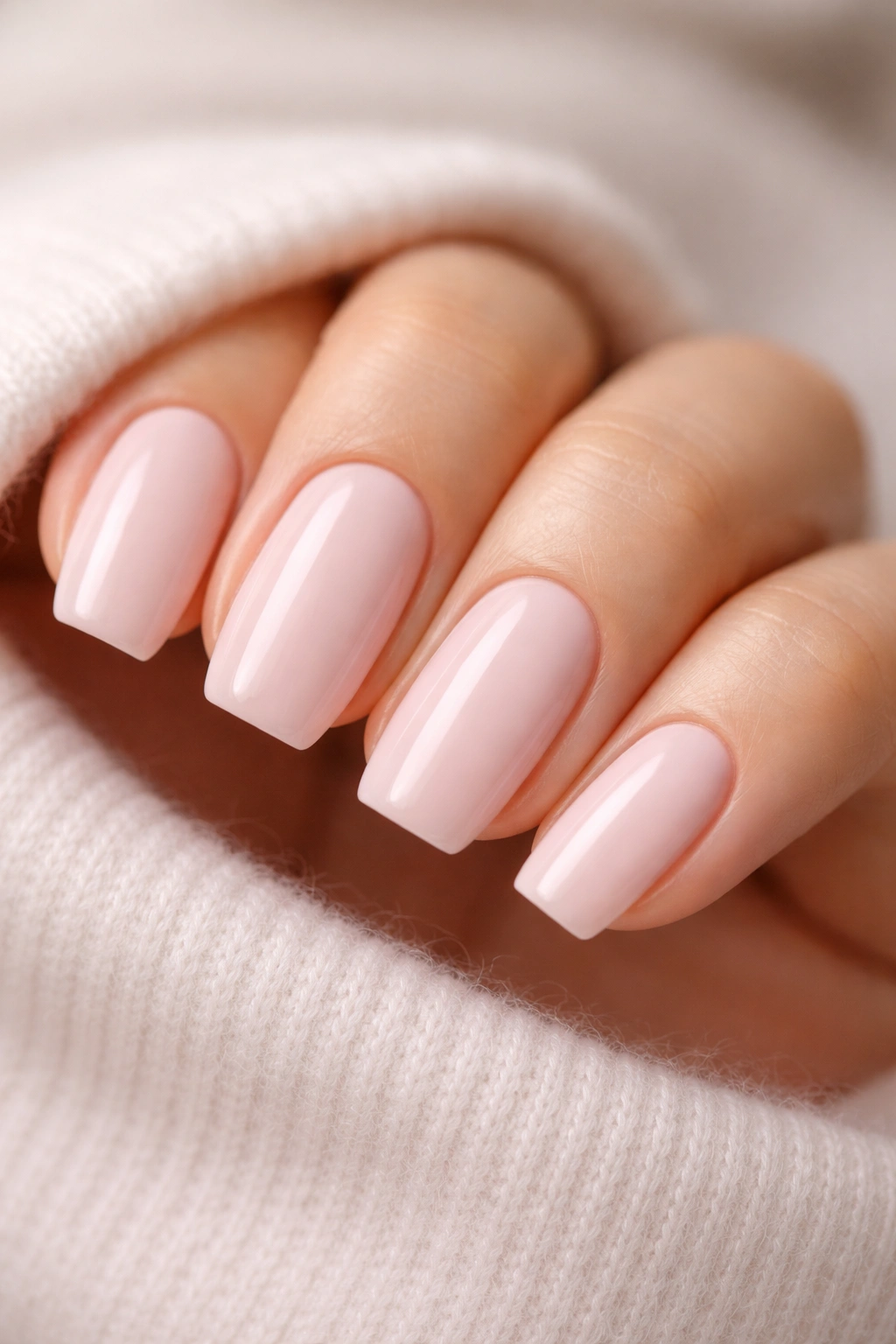
This is the pink people think they want when they say “something clean and feminine.” It sits between nude and pastel, and when the undertone is right, it gives the hands a gentle flush instead of a blank layer of color.
The trick is restraint. A ballet-slipper pink should have a creamy finish, though not total opacity. Once the polish turns solid and flat after one coat, it can start to look old-fashioned on a ballerina shape. I’d much rather see two medium-thin coats that still let a trace of natural depth show through.
Shorter fingers often look good in this shade because the color brightens the nail bed without pulling focus to the tip. It also pairs well with medium ballerina lengths, around 7 to 10 mm of free edge, where the shape has enough definition but still feels wearable for daily life.
Skip the urge to pair this one with heavy nail art. Creamy ballet pink looks best when the cuticle line is neat, the shape is balanced, and the shine is fresh. That’s the whole point. It’s a quiet manicure, but not a boring one.
3. Sheer Jelly Pink That Lets the Natural Nail Show Through
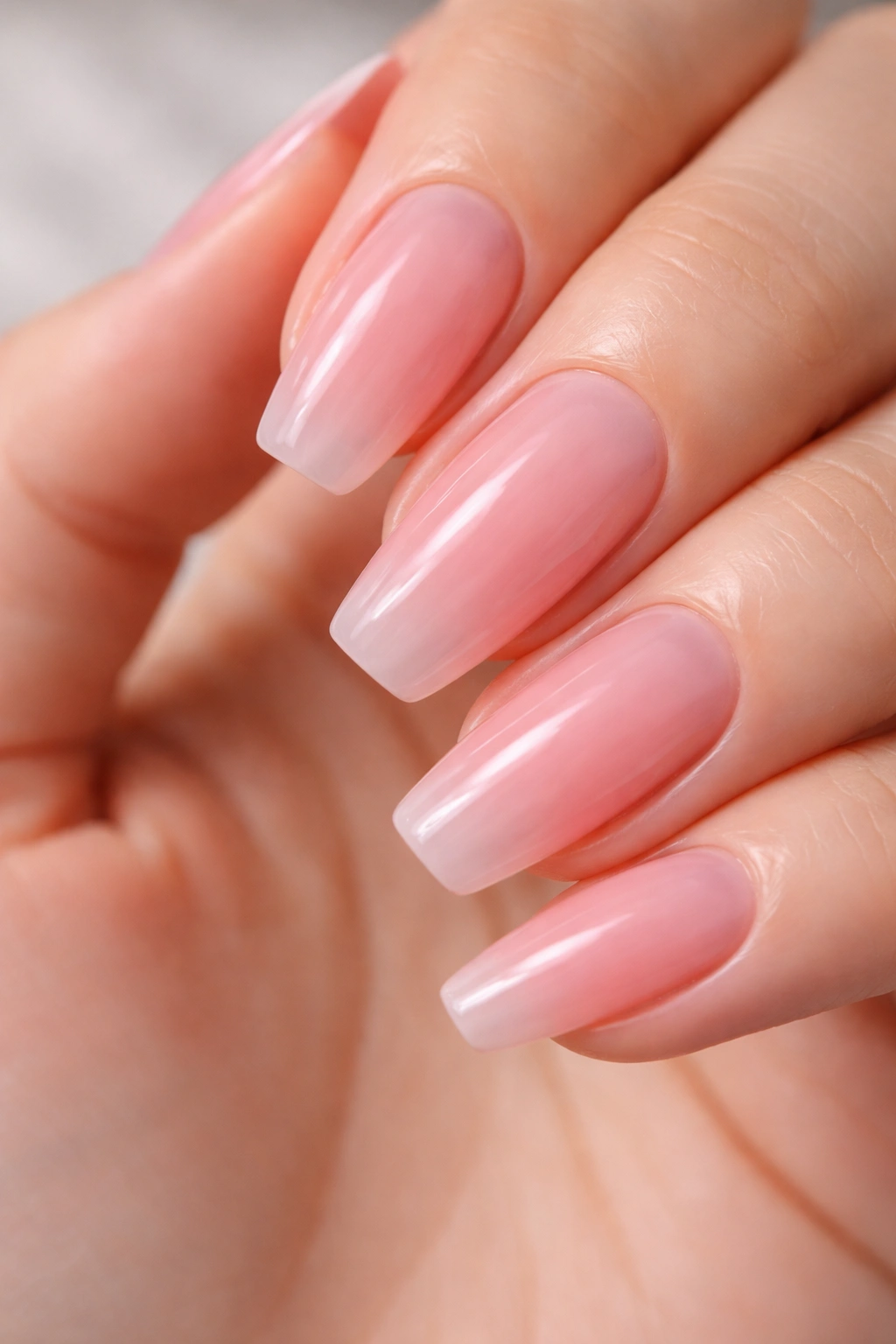
Want your manicure to look lighter than standard polish? A sheer jelly pink does that fast. Instead of covering the nail plate, it tints it, which gives the whole set a cleaner, more breathable look.
Jelly finishes are useful when you want light pink ballerina nails but hate the way pale cream shades can sit on top of the nail like correction fluid. A jelly formula moves the other way. It adds shine, tint, and depth, and the natural nail underneath becomes part of the design.
Two coats are usually enough. Three can still work if the formula stays translucent. Once it starts looking cloudy, the appeal fades.
How to wear it well
A jelly pink works best when the natural nail line is even and the extension underneath is smooth. If you wear tips or sculpted gel, ask for a clear or natural-toned base, then layer the jelly pink over that.
Try this look if you want:
- A manicure that grows out gracefully
- A shorter ballerina shape that still looks soft
- Nails that feel polished but not heavy
- A finish that chips less obviously than a pale cream
There’s another reason I like jelly pink. It has movement. Under daylight, the nail doesn’t look flat; it looks like the color is sitting inside the nail instead of on top.
4. Baby Pink Ombre Fading Into Milky White
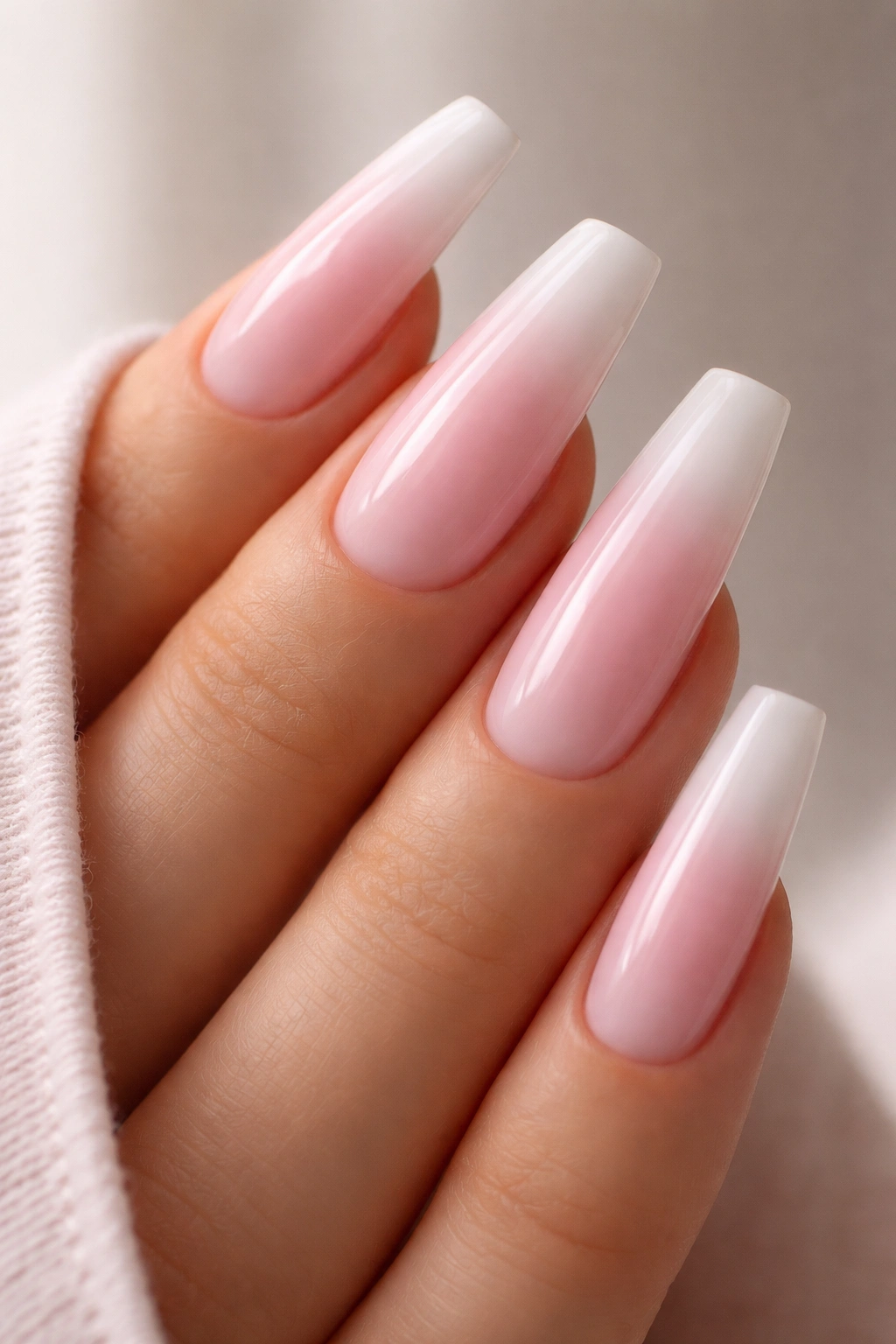
When someone cannot decide between a soft nude set and a French manicure, I usually point them toward a baby pink ombre. Salon menus often call it a baby boomer set, and when it’s done well, it makes ballerina nails look long, smooth, and almost filtered.
The blend matters more than the colors. A harsh fade kills the softness. You want the white concentrated near the tip, with the pink melting through the middle so there’s no clear line where one shade ends and the other begins.
A few details make this design better:
- Keep the white on the last third of the nail, not half the nail.
- Use milky white, not bright white, so the finish stays gentle.
- Ask for a rose or blush pink base instead of a beige nude if you want the look to read sweeter.
- Medium to longer ballerina lengths show the fade best.
This design suits weddings, formal events, and plain old everyday wear. It has structure, but it does not feel strict the way a crisp French sometimes can. And if your hands tend to look red after cold weather or lots of hand washing, the pink-to-white blend often softens that contrast better than a flat nude polish.
5. Light Pink Ballerina Nails With an Ivory Micro French
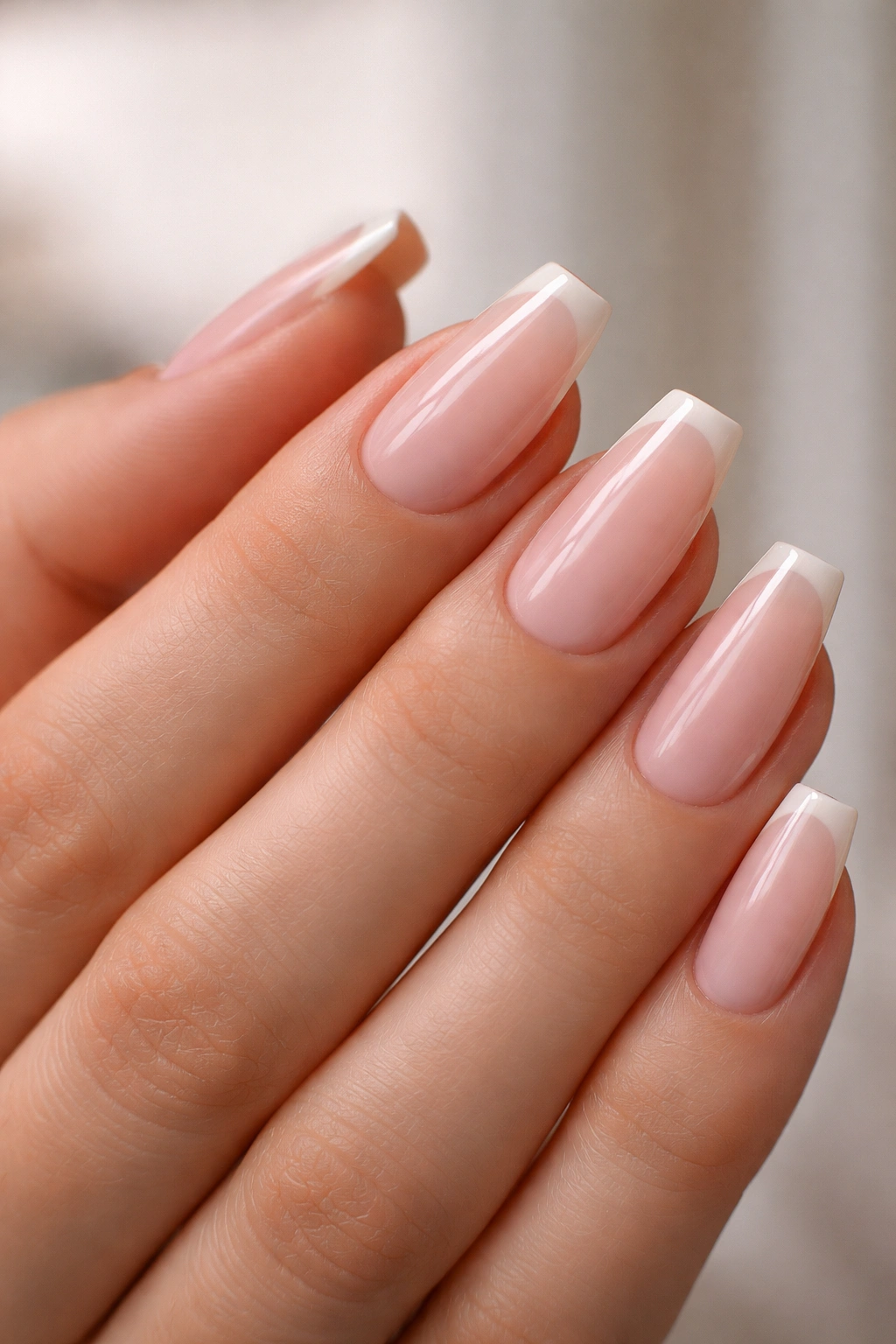
A micro French is one of the smartest ways to wear a soft manicure on a geometric nail shape. The ballerina tip already gives you a clean straight edge; adding an ivory line no thicker than 0.5 to 1 mm sharpens it without making the set feel stark.
Ivory matters here. Bright white can look too high-contrast against pale pink, especially on shorter nails. Ivory or milk-white gives you that tidy border while keeping the mood soft. Think candle wax, not printer paper.
I like this design most on short-medium ballerina nails because the slim tip line makes the nail look intentional without eating up space. If the free edge is only 5 or 6 mm long, a thick French tip can crowd the whole set. A micro tip fixes that.
Ask for the pink base to be either milky or semi-sheer. Dense cream polish under a micro French can look heavy fast. The cleaner option is a translucent blush base with a razor-thin ivory tip and a glossy seal.
This one takes a steady hand. If you’re doing it at home, use a fine liner brush and turn the finger—not the brush—as you paint the edge. That small change gives you a straighter line.
6. Beige-Blush Pink for a Nude-But-Better Look
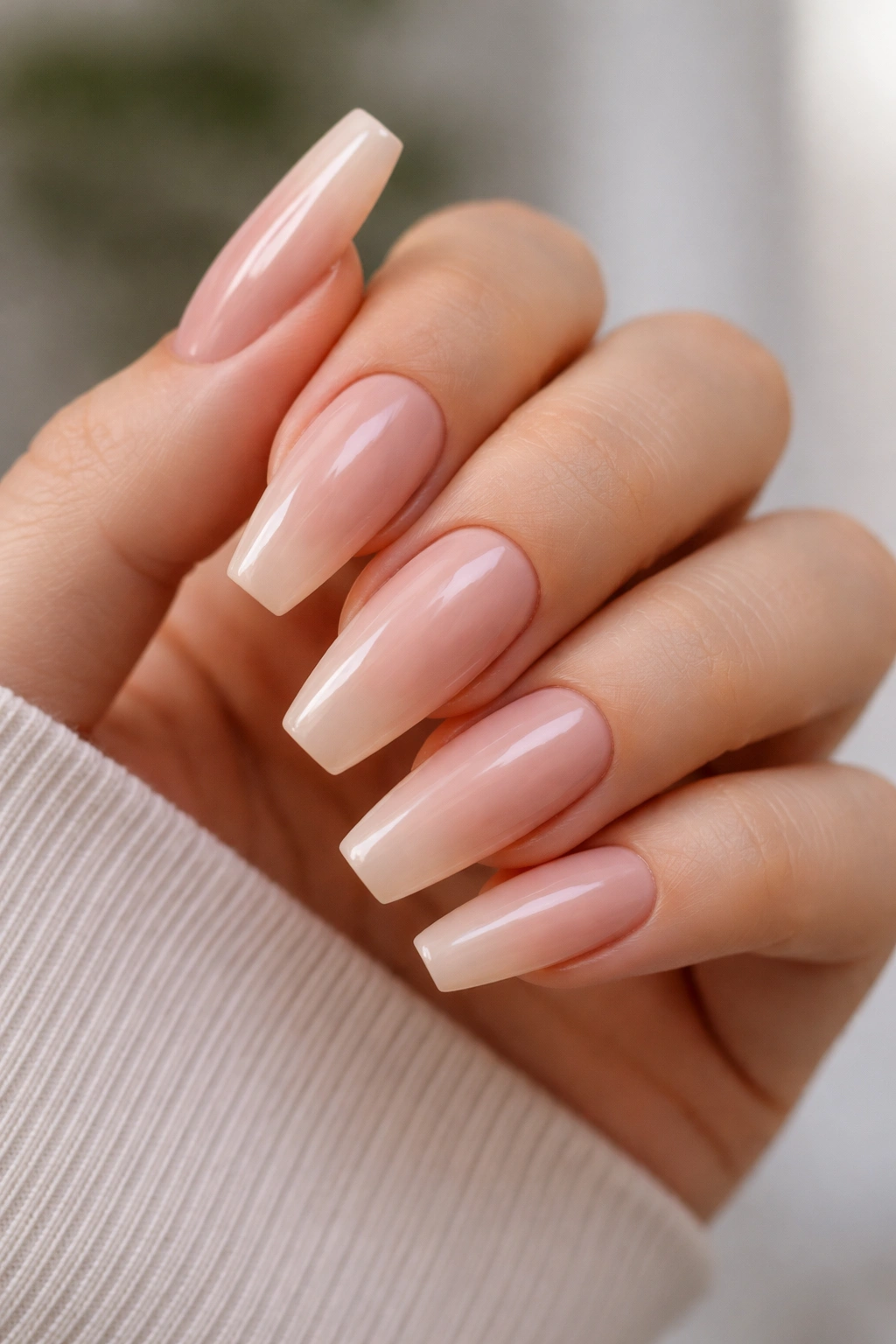
Unlike cooler ballet pinks, beige-blush pink melts into the hand a little more, which makes it one of my favorite options for people who want softness but not obvious “pink nails.”
This shade sits somewhere around seventy percent nude, thirty percent pink. That ratio gives the nail warmth, though it still looks clean and fresh under daylight. On olive, tan, or warm-toned skin, it often looks smoother than a baby pink because it does not fight the natural undertone of the fingertips.
Who it suits best
If your hands pick up redness, if your knuckles run golden or olive, or if pale cool pink tends to make your skin look dull, beige-blush is worth a try. It can read more polished than a true nude because there’s still enough pink to brighten the nail bed.
The nicest version of this look is not fully opaque. I’d ask for two thin coats of a pink-beige crème jelly hybrid or a tinted builder gel in that same family. That keeps the color from turning muddy.
Some people overlook this shade because it looks plain in the bottle. On the nail, it’s one of the most flattering options in the whole light-pink group. Plain bottle. Strong result. That happens more often than people think.
7. Light Pink Ballerina Nails With a Pearl Glaze
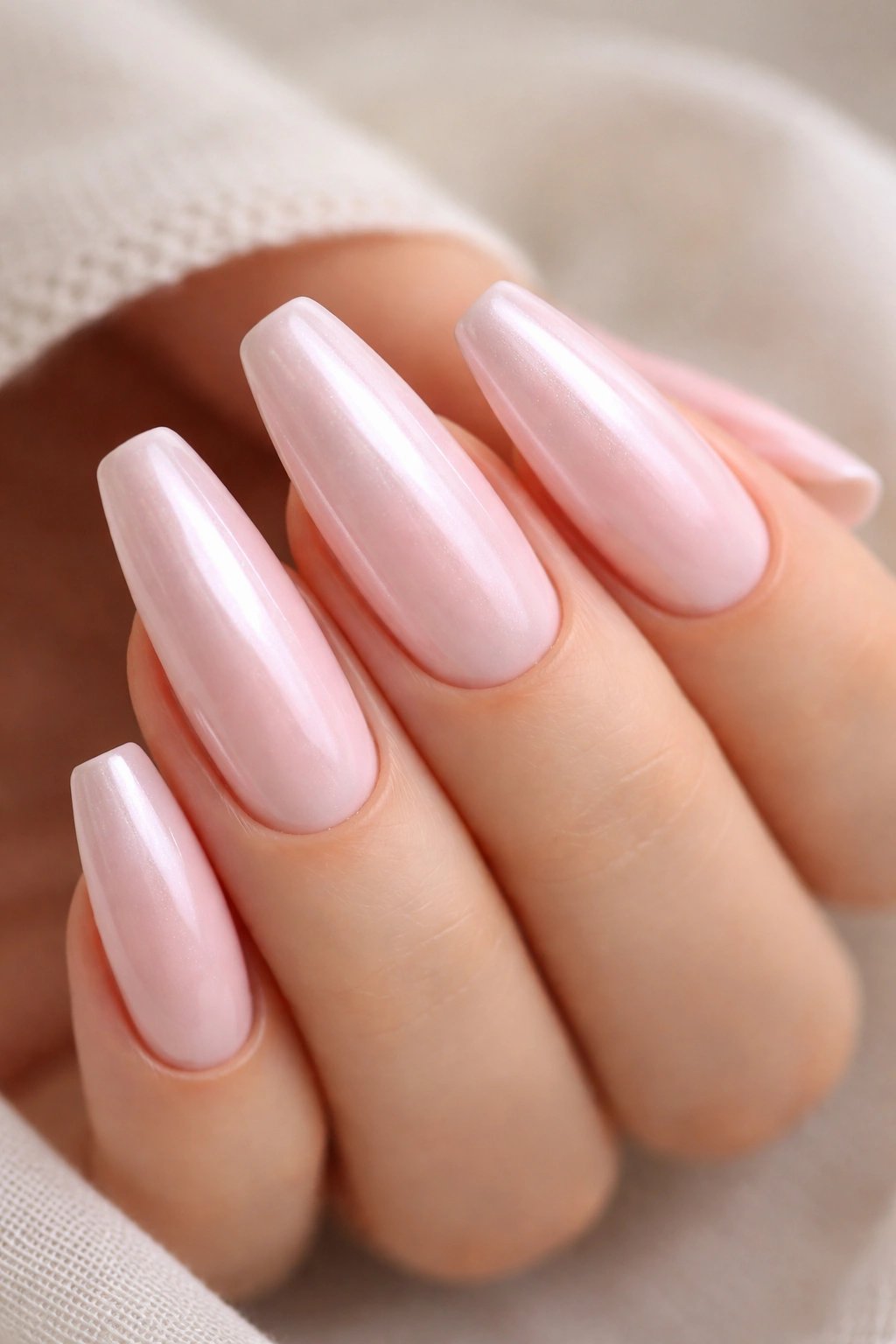
Chrome has a reputation for being loud. It doesn’t have to be. A pearl glaze over light pink ballerina nails can look almost cloudy, like a satin ribbon under soft light, if the base shade is right.
The base should be pale pink, not white. White under pearl powder pushes the finish icy and hard. Pale pink keeps the glaze warmer and smoother, which is the whole appeal here.
For salon wear, the process is straightforward: a pink gel base, a cured no-wipe top coat, then a fine pearl powder rubbed over the surface and sealed again. The powder should look pearly, not metallic. If the tech reaches for a mirror chrome, steer them back.
A few things to ask for:
- Pink pearl or opal powder, not silver chrome
- A thin glaze, not full mirror coverage
- Medium ballerina length if you want the effect to show clearly
- Clean cuticle work, because pearl finishes highlight rough edges
I like this look when you want something a touch dressier than plain gloss but still soft enough for daily wear. It has sheen, though it doesn’t feel flashy. Big difference.
8. Rose Quartz Veining Over a Sheer Pink Base
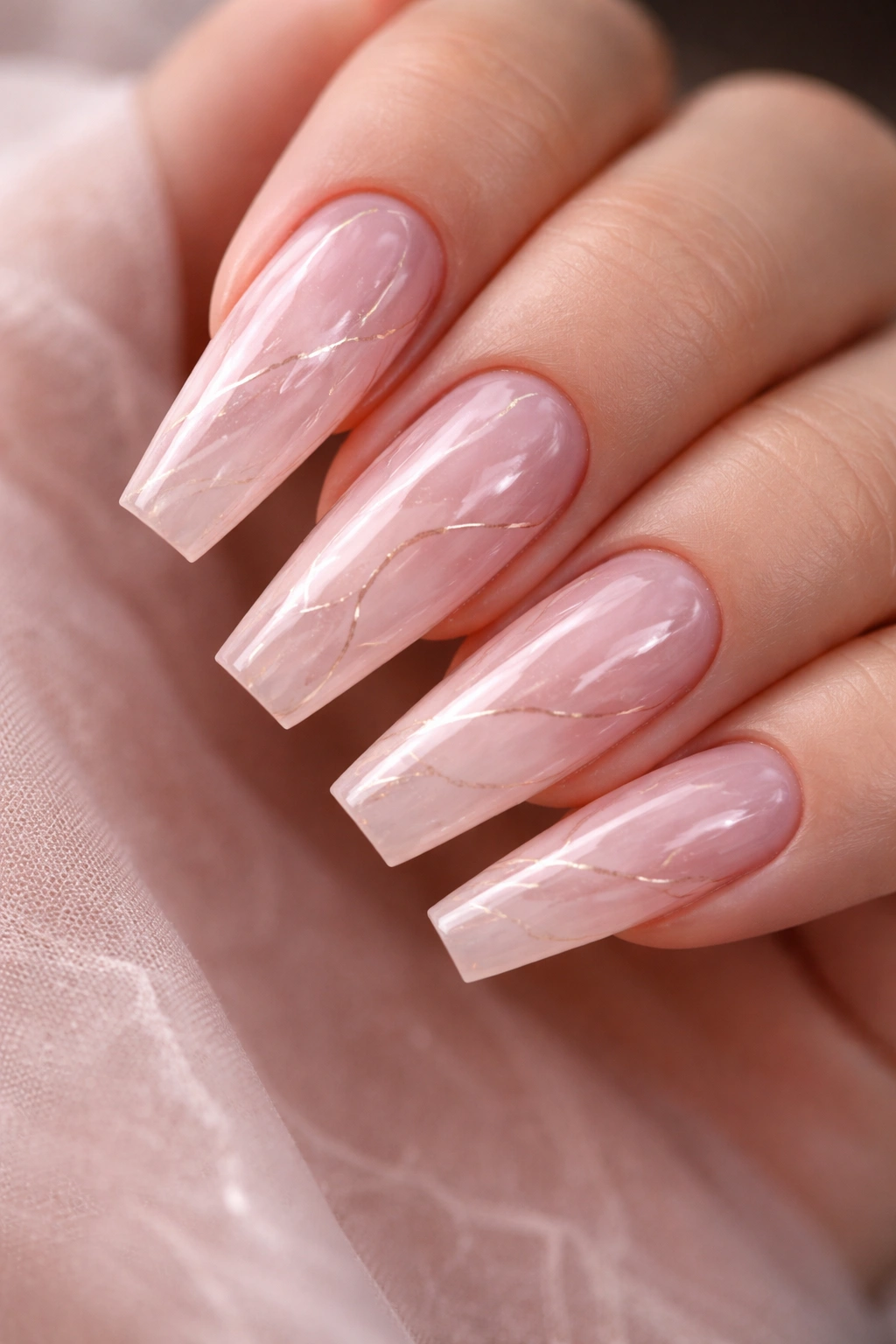
There’s a fine line between rose quartz nails and a manicure that looks like someone dragged white polish across pink and hoped for the best. The softer version is much better.
A good rose quartz design starts with a sheer pink base that still looks translucent. Over that, the artist paints whisper-thin veins in white, dusty rose, or a diluted mauve, then blurs them slightly so they look embedded in stone instead of sitting on top of the nail.
What makes it believable
The lines should be narrow, irregular, and sparse. Thick marble veining reads bold. Rose quartz needs more air than that. Two or three faint lines across each accent nail is usually enough.
I would not do this on every nail unless the set is long and the artist is careful with scale. On most medium ballerina shapes, two accent nails per hand keeps the look balanced. Ring finger and middle finger usually work best.
This is one of those designs that looks better close up than from across a room. You notice the depth, the little shifts in pink, the way the veins disappear near the edges. It feels crafted. And because the base stays sheer, the whole set still falls into that soft category instead of drifting into heavy marble territory.
9. Velvet-Matte Blush With Clean Sidewalls
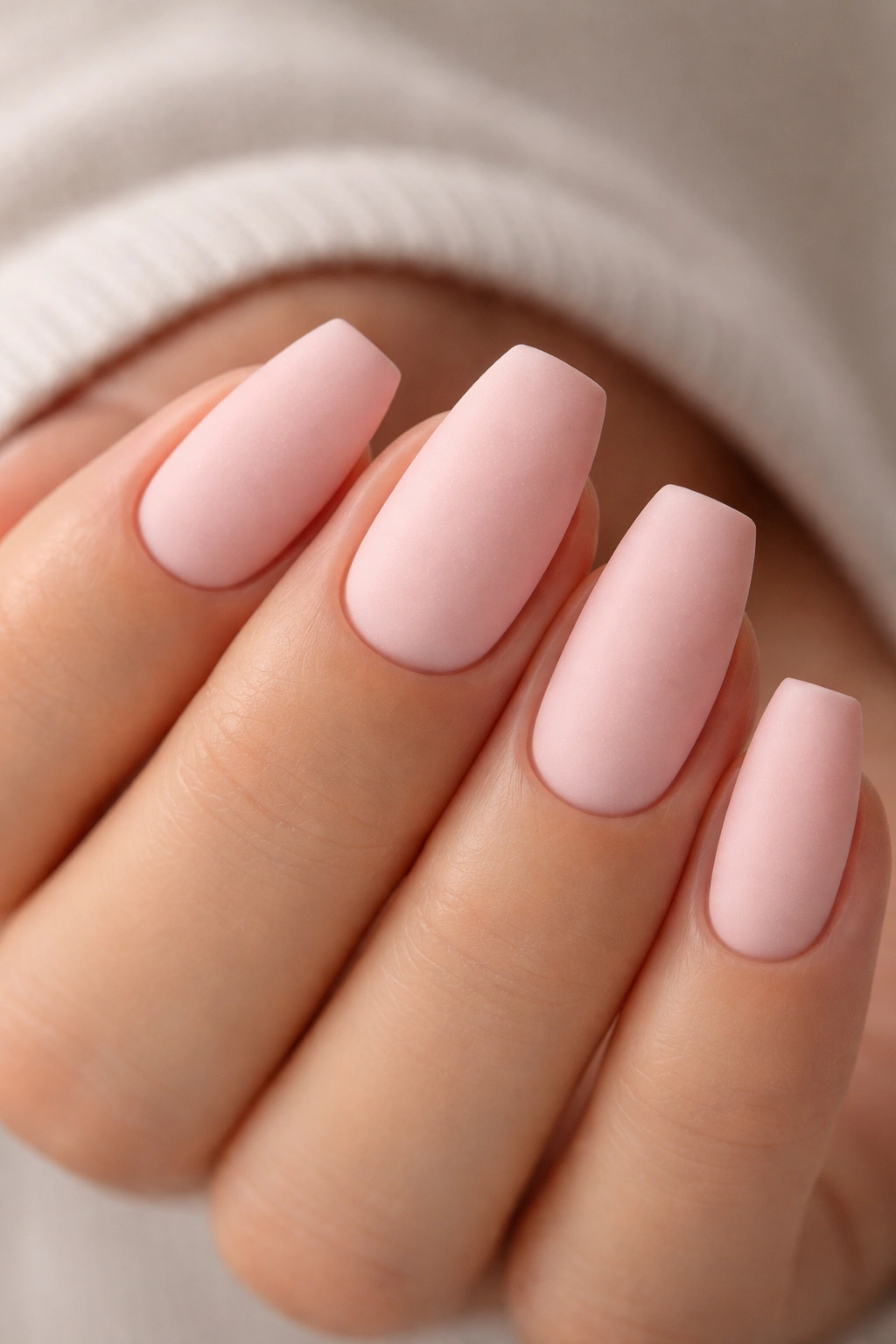
Matte gets blamed for making pale nails look dry. Sometimes that criticism is fair. A bad matte top coat can suck the life out of pink polish and leave the nails looking dusty.
But when the base shade has enough milk in it, a velvet-matte blush manicure can look like cashmere. Not fuzzy, not chalky—just softly blurred. The ballerina shape helps because the flat tip gives the matte finish a crisp end point.
This look needs immaculate prep. Matte top coat highlights every nick around the sidewalls and every crumbly bit of cuticle. If your hands are dry, do the manicure after a few days of consistent oiling, not right after peeling off old gel and hoping for the best.
Length matters too. I like matte blush on short-medium ballerina nails more than long ones. On extra-long nails, the absence of shine can make the shape feel heavy. On a shorter set, matte turns the pink into something quieter and a little more fashion-led.
One warning: keep cuticle oil off the nail surface if you want the matte finish to stay even. Oil around the skin, yes. Oil on top of the nail, no. It will create glossy patches by the end of the day.
10. Pink Builder Gel With a Barely-There Apex
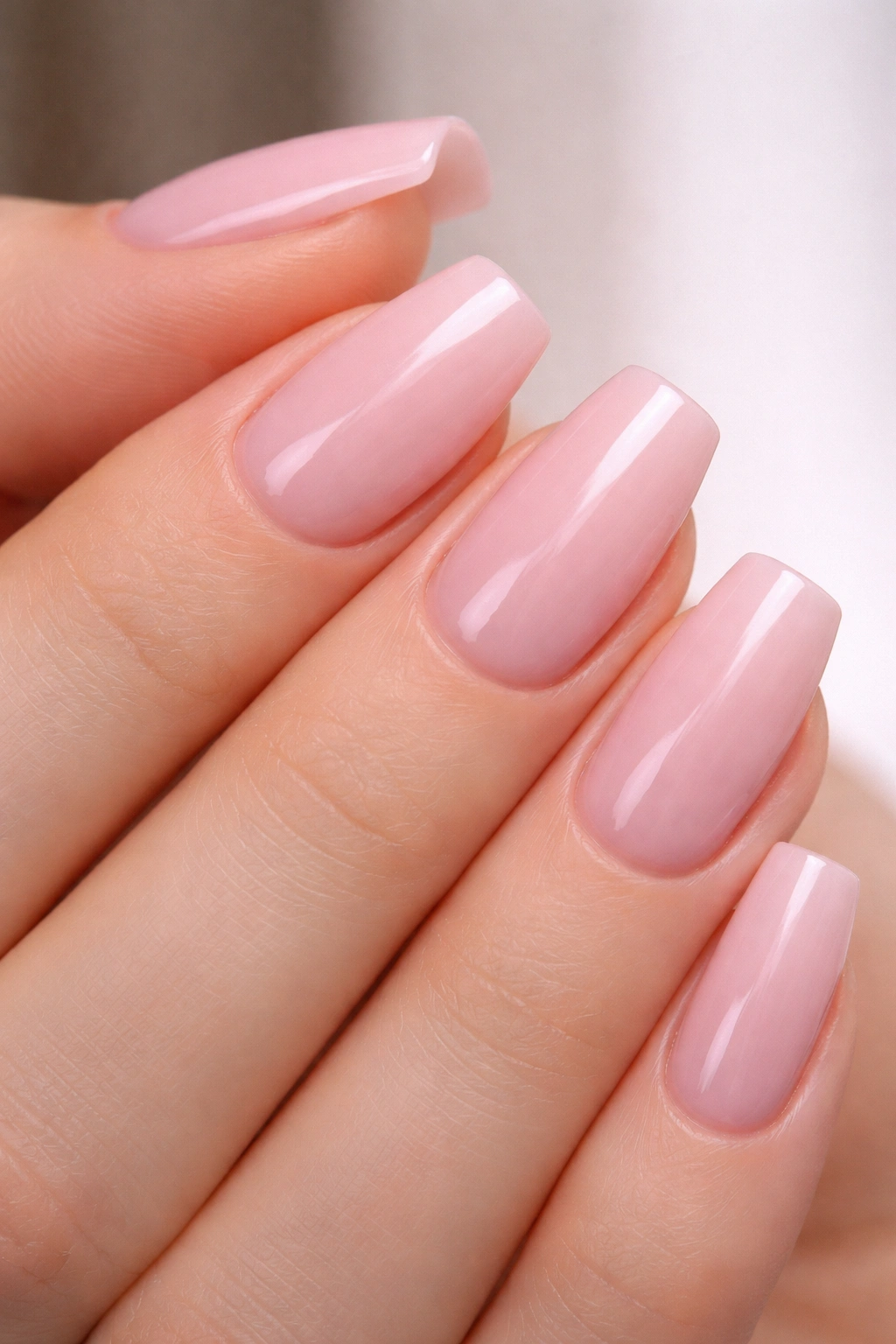
If you love the neat look of enhanced nails but hate seeing thick product from across the room, this is the set to ask for. A pink builder gel manicure with a small, balanced apex gives you structure, color, and softness in one layer system.
This is less about art and more about architecture. The nail should have enough product near the stress area to support the squared ballerina tip, while the sidewalls and free edge stay thin. When the structure is right, the pink looks like it belongs to the nail instead of sitting on top of it.
Ask for structure, not bulk
A good request sounds something like this:
- A soft pink builder in a bottle or hard gel with a milky tint
- A subtle apex placed near the center-to-upper third of the nail, depending on length
- A thin tip and sealed corners so the ballerina edge stays clean
- Minimal extra color if the builder shade already looks polished
This option is useful if your natural nails bend, peel, or crack at the corners. The color and support happen at once, so you skip extra polish layers that can make pale sets look thick. I keep coming back to this one because it solves a boring problem—durability—without losing the soft look that made you choose pink in the first place.
11. Soft White Swirls Over Translucent Pink
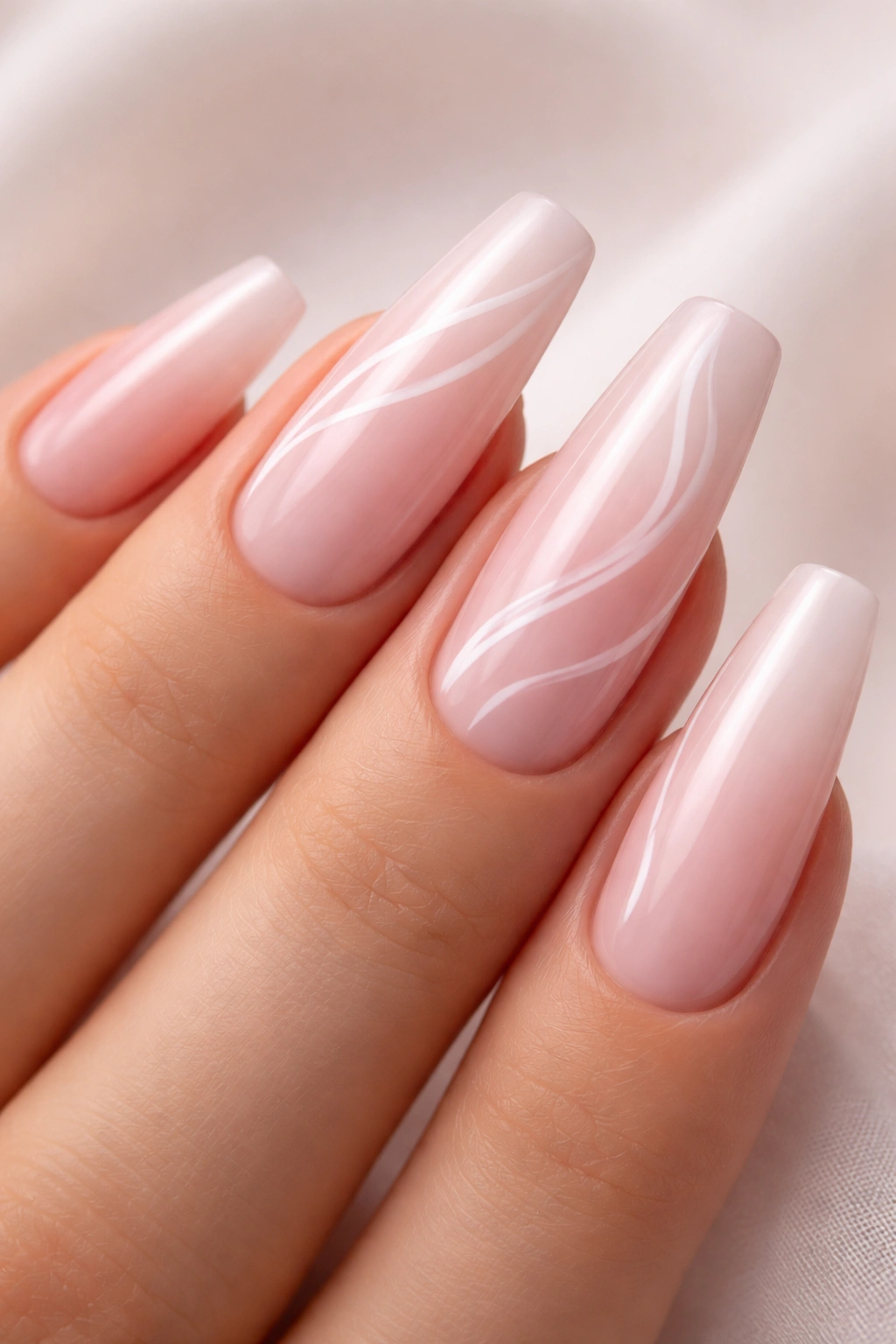
Swirl nails can go wrong fast. Too many lines, too much contrast, too much white, and the whole set starts feeling busy. The soft version keeps the background airy and the lines thin enough that the pink still leads.
Use a translucent pink base, then add one or two white swirls on each accent nail with a long liner brush—around 7 to 9 mm works well for control. The lines should curve, taper, and leave space. Empty space is doing part of the design work here.
I prefer this look with a glossy finish because shine helps the swirls sink into the base visually. Matte can make the art sit too flat. And don’t make every nail match exactly. Slightly different curves feel looser, which suits the softness of the color.
This is a strong pick if you want nail art but still need the set to feel wearable for office days, dinners, weekends, all of it. One or two swirl nails per hand is enough. Three can still work if the lines stay thin. Five full art nails can tip the manicure into a different mood entirely.
12. Light Pink Ballerina Nails With a Fine Glitter Fade
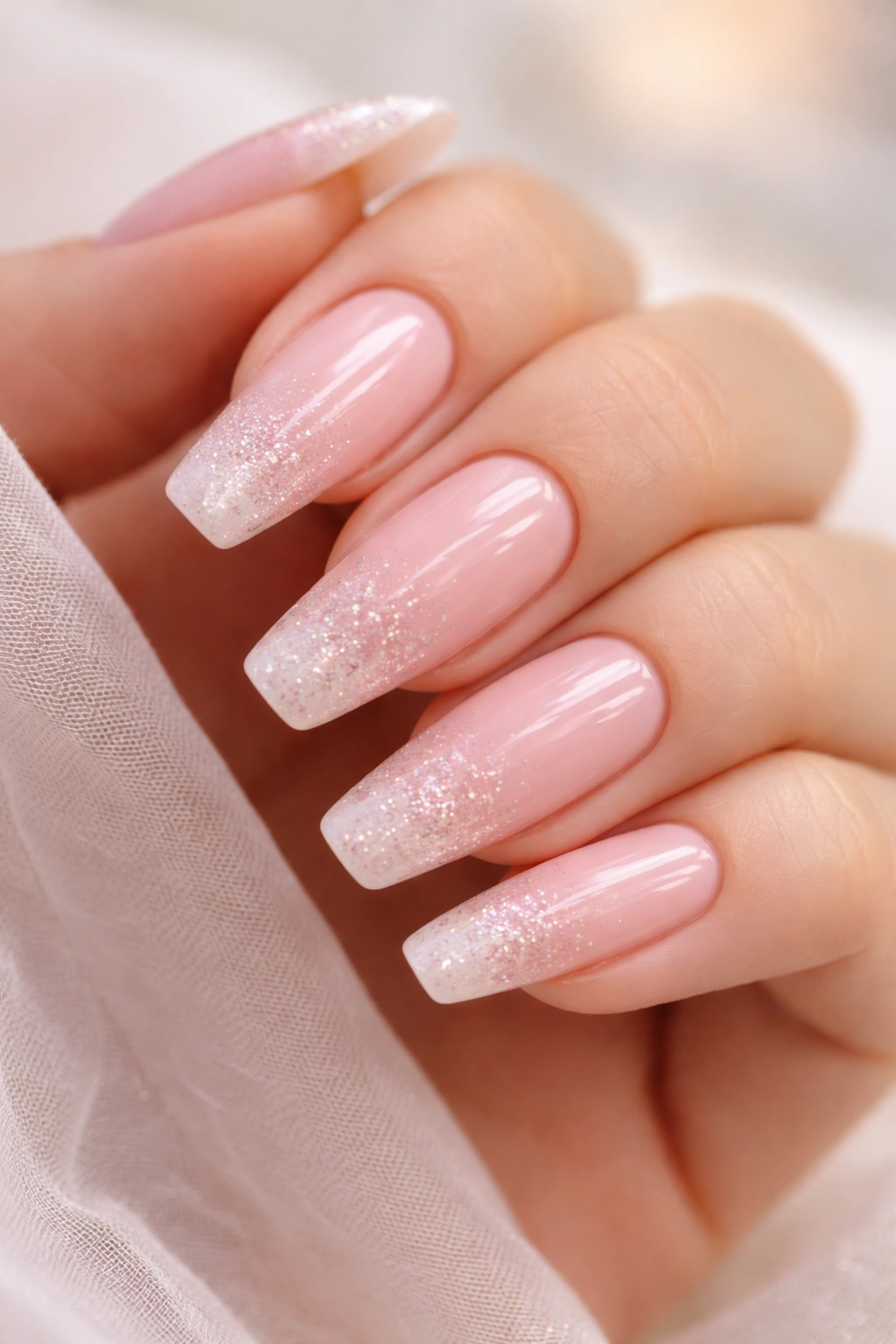
Can glitter still read soft? Yes—if the sparkle is tiny, the base stays sheer, and the placement is controlled. Chunky glitter has a different energy. A fine glitter fade looks more like light caught in the polish than decoration glued on top.
The easiest version starts with a milky pink or jelly blush base. Then a dusting of extra-fine pink, champagne, or opal glitter fades from the tip or the cuticle. Tip placement feels a little cleaner. Cuticle placement feels a touch dressier.
Where this design works best
I like a glitter fade most on:
- Holiday manicures that still need to look polished in daylight
- Bridal or event nails when you want sparkle without crystals
- Medium ballerina lengths where the fade has room to stretch
- Sets that need a little camouflage as they grow, since the scattered glitter softens wear
Keep the glitter tight and fine. Hex pieces, star glitter, and thick reflective flakes pull the set away from softness and into party territory. Nothing wrong with that mood, but it is a different mood.
Use one thin glitter layer first. You can always add more. Taking glitter back off a pale pink set is where regret tends to show up.
13. Single-Crystal Accent on a Milky Pink Base
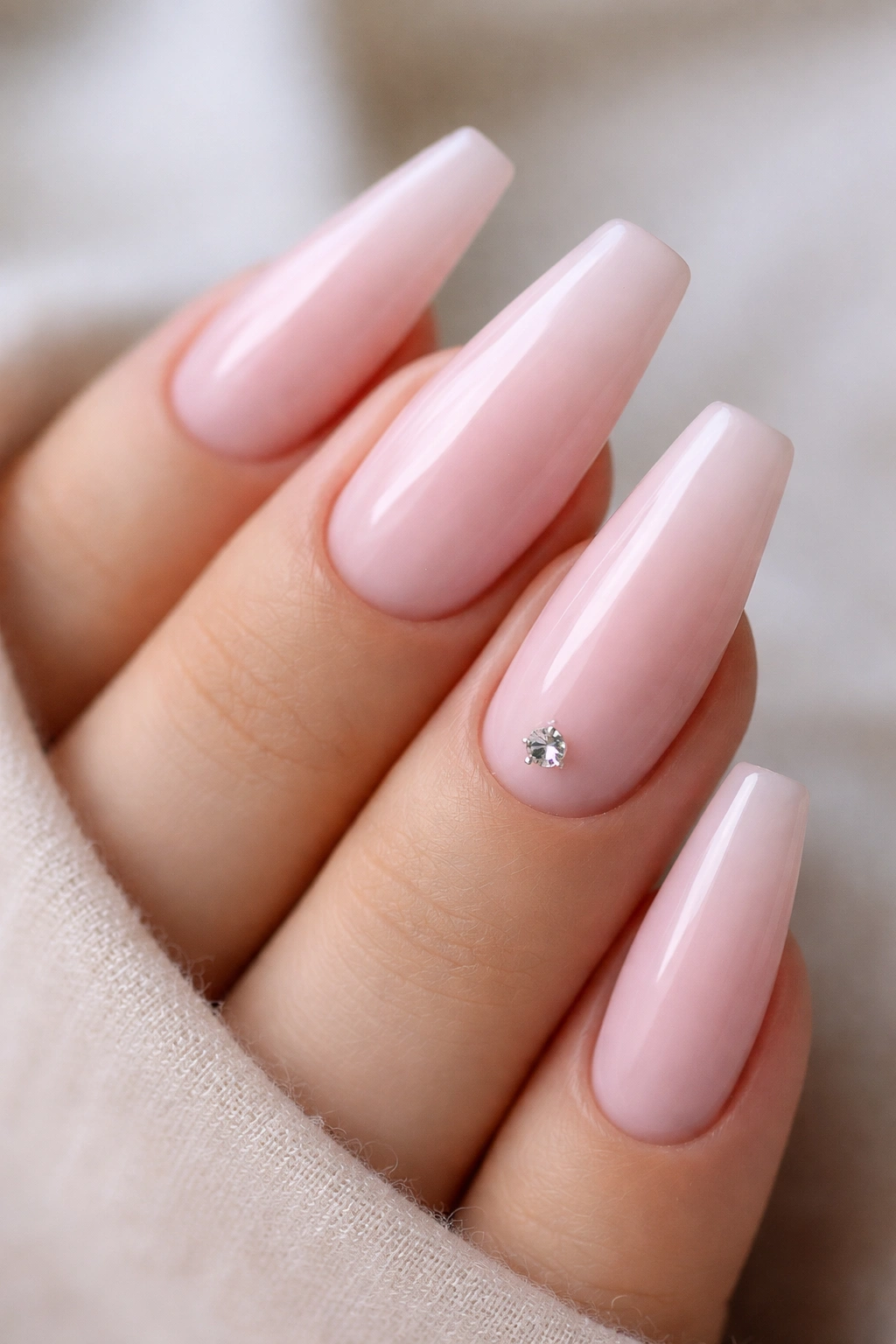
I have a soft spot for this one because it does almost nothing—and that is exactly why it works. A single small crystal placed with intention can turn a plain milky pink set into something that looks dressed, not overloaded.
Placement matters more than the stone itself. One crystal near the cuticle, off-center by a millimeter or two, usually looks cleaner than one dropped dead-center at the base. On ballerina nails, I like the accent on the ring finger or pinky, though a thumb crystal can look chic if the rest of the set stays plain.
Use small stones. Think SS3 to SS5 size, not large rhinestones that sit high and catch on sweaters, hair, tights, or anything else within reach.
A few smart rules help here:
- Keep it to one nail per hand for the softest effect
- Use clear or faint blush stones, not bright AB crystals
- Seal around the stone with gel resin or builder gel, though don’t flood over the top
- Pair it with a milky base, not a pearly or glitter base, so the accent stays the focus
Tiny details carry more weight on pale nails. That’s why restraint looks so much better than a full crystal cluster.
14. Reverse French Half-Moons in Blush and Nude
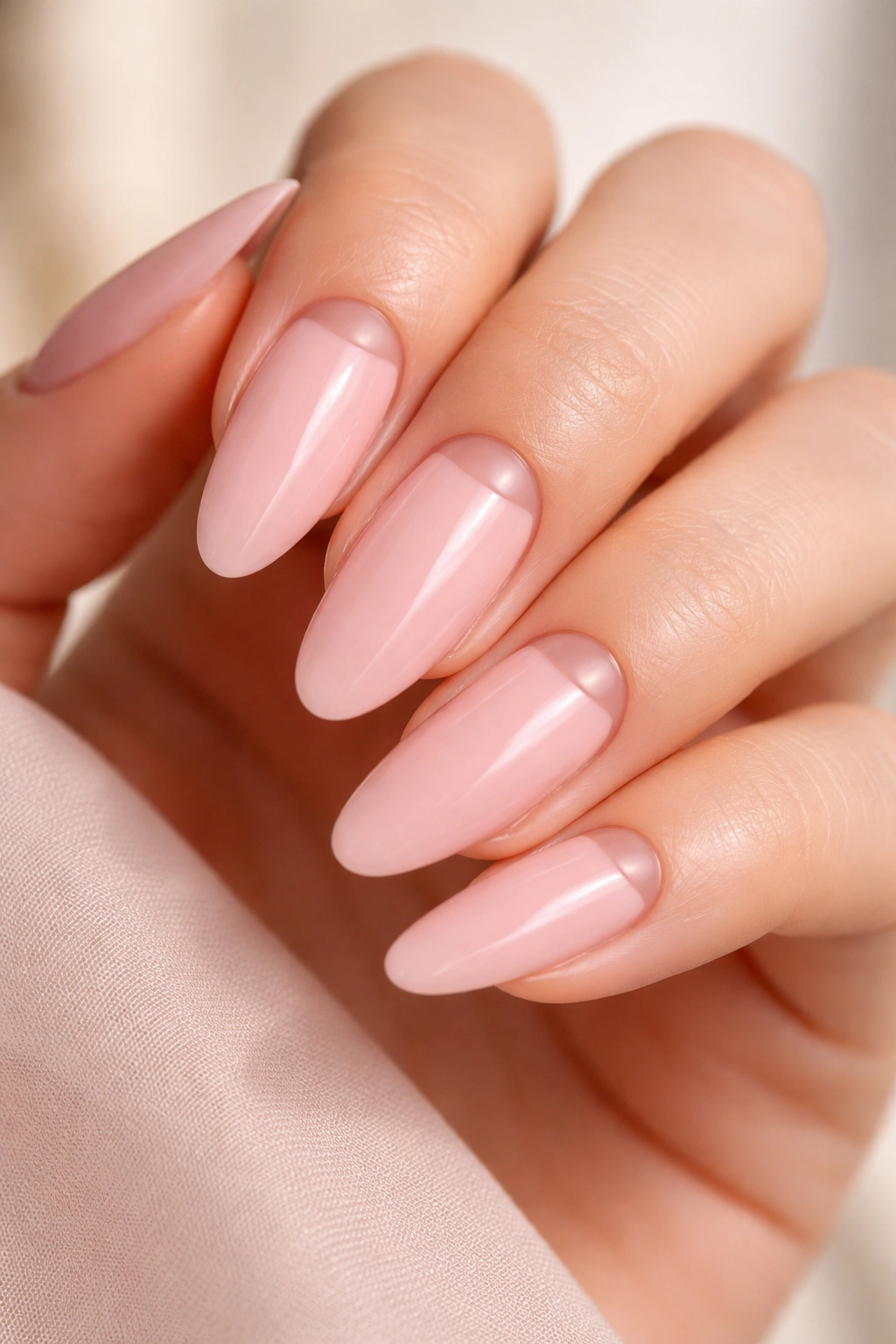
Classic French manicures put the focus on the tip. A reverse French shifts the eye to the base of the nail instead, which makes it feel softer and a little less expected on a ballerina shape.
The version I like most for this color story uses two close shades: a blush pink over most of the nail and a slightly deeper nude or pale beige tracing the half-moon area near the cuticle. The contrast should be low. If the colors are too far apart, the look gets graphic.
This design has one practical advantage I don’t hear mentioned enough: grow-out can look cleaner because the visual action sits near the base already. A razor-sharp half-moon still needs upkeep, yes, but the design doesn’t rely on a perfect bright tip the way a French does.
Ask your nail tech to keep the moon slim and follow the natural cuticle curve rather than drawing a wide crescent. A wide half-moon eats up space and can shorten the nail bed. A fine arc does the opposite. It frames the nail. On a medium ballerina shape, that framing effect is subtle and flattering.
15. Cool Rose Pink With Shorter Ballerina Tips
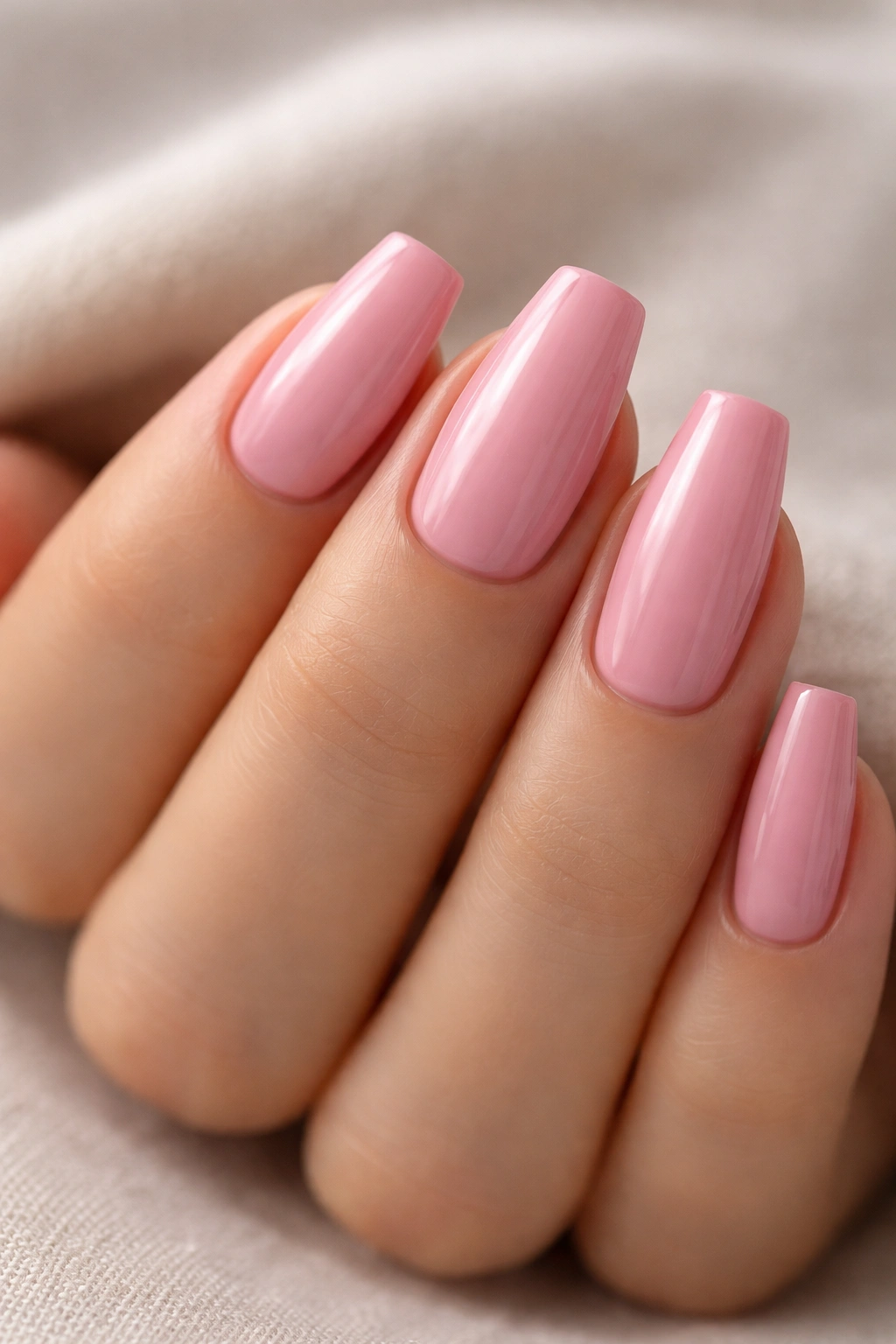
Not every ballerina manicure needs length to make sense. A shorter ballerina shape in cool rose pink can look neat, modern, and soft in a way longer sets sometimes miss.
This is a strong choice if you type all day, wear contacts, cook often, handle children, or want a shape with clean lines that still feels manageable. Keep the free edge around 4 to 5 mm, taper the sidewalls lightly, and flatten the tip without making it wide. That last part matters. Short ballerina nails go clunky fast when the tip is too broad.
Cool rose pink works here because the shorter length already reduces drama. The shade adds a little definition and freshness without asking for extra art. I’d choose a cream-jelly hybrid finish or a softly translucent gel, then top it with high gloss.
Some long nail lovers dismiss short ballerina as pointless. I don’t. When it’s shaped well, it looks sharp, tidy, and more grown-up than a plain square. On busy weeks, this is the set I’d reach for first.
Final Thoughts
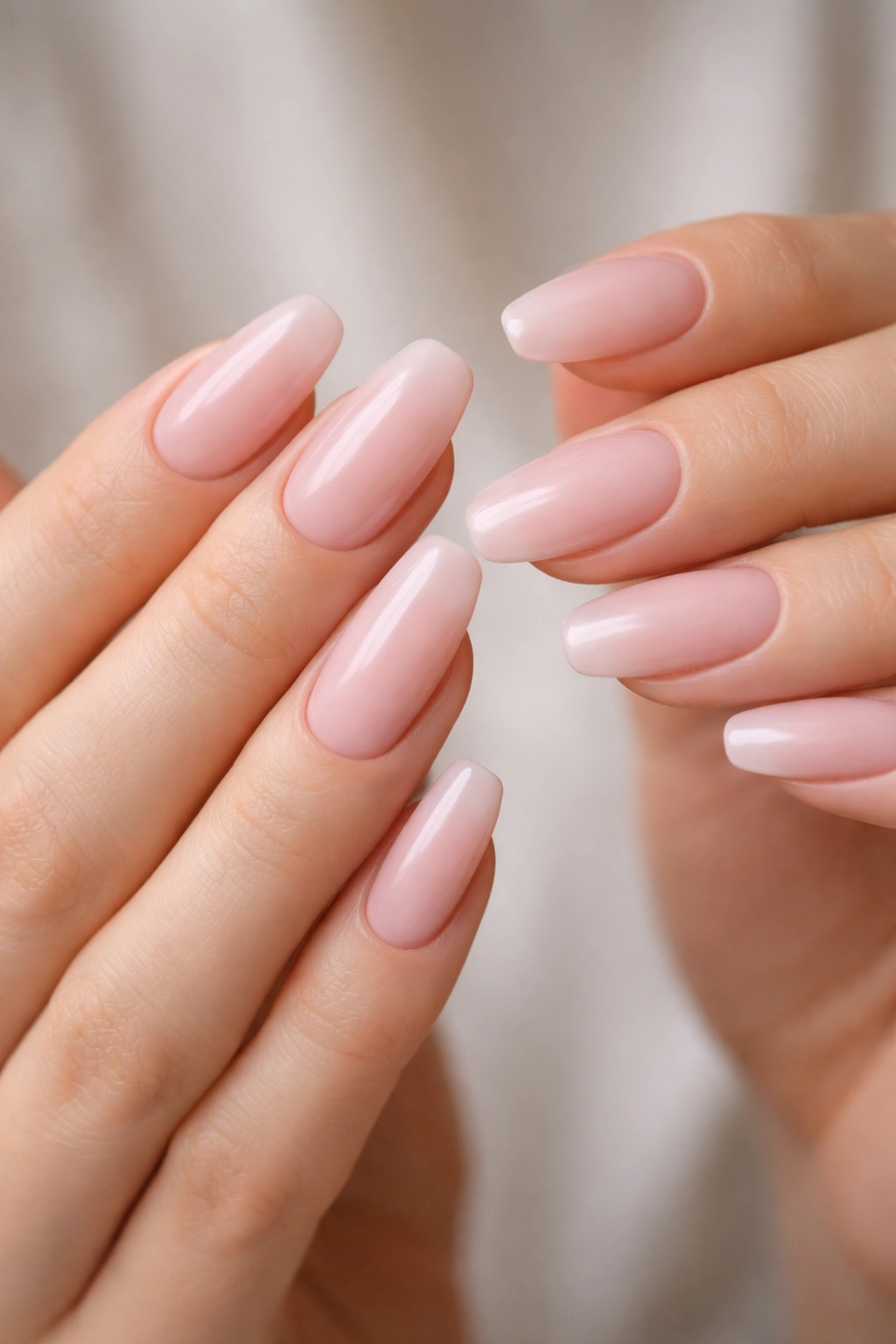
The softest manicures are usually the ones with the fewest moving parts. Good shape. Clean prep. A pink that suits the hand instead of fighting it. After that, small details do the talking.
If you’re taking ideas to a salon, bring two reference photos at most and write down the details you like: sheer or milky, cool or warm pink, glossy or matte, plain or accent. That saves a lot of back-and-forth once the swatch wheel comes out.
And if you’re doing your nails at home, test the shade on one nail before painting all ten. Light pink has a way of looking one way in the bottle and another way the second it hits the hand. The good news is that once you find your pink, you’ll use it again and again.