

Milky pink nails are unforgiving. Go too opaque and they turn chalky; stay too sheer and every ridge, patch, and uneven free edge shows through. Sheer pink ballerina nails land in that narrow middle ground where the color looks cloudy, soft, and clean, while the shape gives the finish enough length to read on the hand.
That balance is why this manicure keeps showing up everywhere from salon inspo boards to bridal sets to office-friendly gel fills. It looks polished without shouting. It also hides grow-out better than a dense nude, which matters if you stretch appointments past the two-week mark and do not want your nails announcing it.
The catch is technical. A milky look depends on opacity, undertone, and structure more than people expect. If the ballerina shape is too wide at the tip, the design turns blocky. If the pink leans gray, skin can look tired. If the overlay is lumpy, sheer polish puts every flaw under a spotlight.
Get those three things right, though, and sheer pink stops looking plain and starts looking intentional.
Why Sheer Pink Ballerina Nails Make the Milky Look Easier
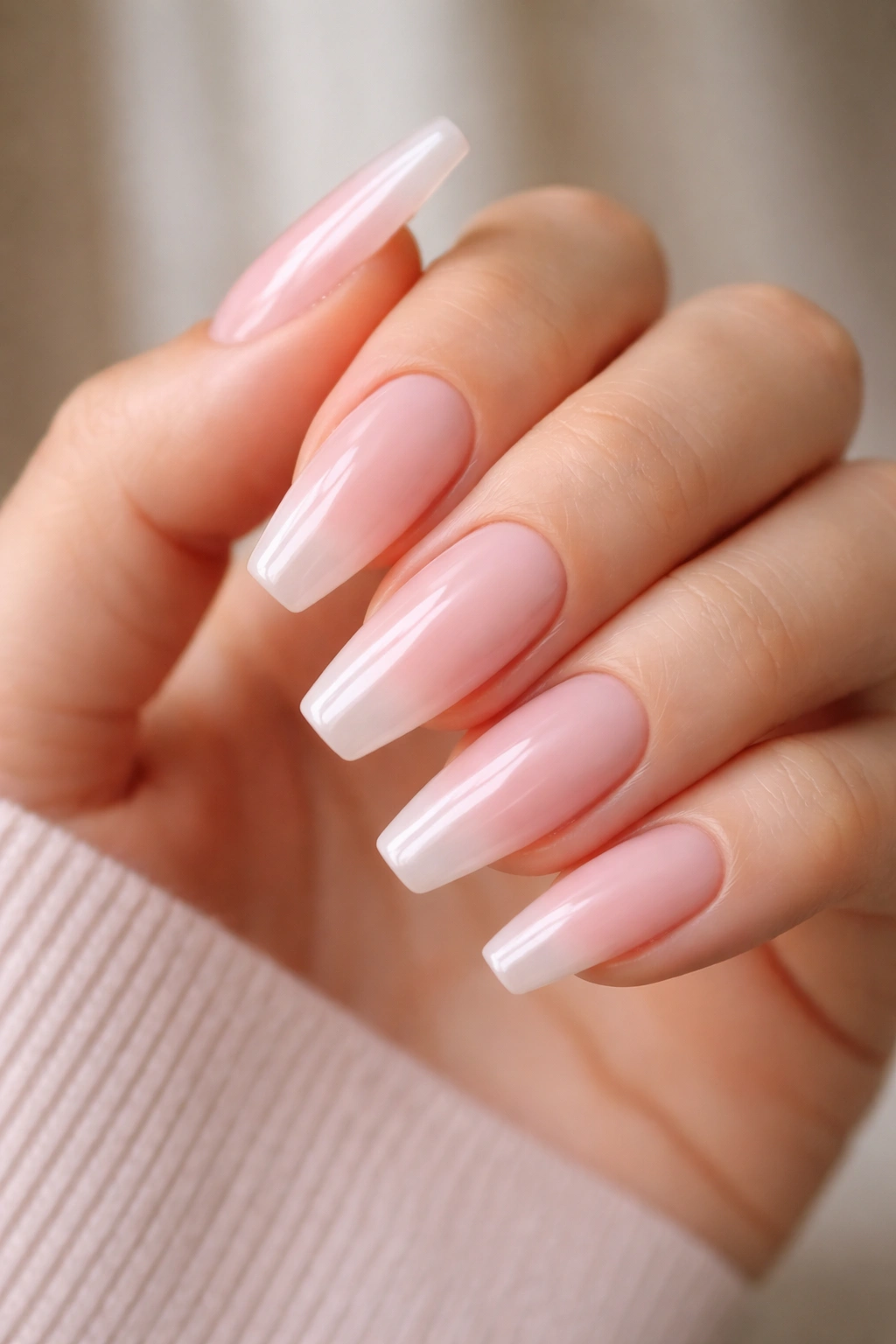
Shape does half the work. Ballerina nails have the long sidewalls of a coffin shape, but the softened, flattened tip keeps them from looking harsh. That matters with milky pink because the finish needs room to fade, blur, and soften. On a short square nail, the same color can look abrupt.
Length helps too. You do not need dramatic tips, but a free edge of 4 to 8 mm past the fingertip gives sheer pink enough surface area to build that cloudy wash. Shorter than that, and the manicure can read as plain nude polish. Longer than that, and the softness starts to compete with the shape.
There is also a structural reason nail techs like this pairing. A ballerina shape usually carries a gentle apex — that small high point near the stress area — and that slight arch helps milky gels look smoother because light reflects in one clean sweep instead of breaking over dips and bumps.
And yes, undertone shows more on this shape.
Straight sidewalls make cool pinks look cooler and warm pinks look warmer. That is useful once you know it. If your skin pulls olive, peachy, or golden, a beige-pink milk shade often looks calmer than a blue baby pink. Fair or cool skin can take a rose-milk tone without the nails looking heavy. Small detail. Huge difference.
How to Ask for Sheer Pink Ballerina Nails Without Getting Streaky Tips
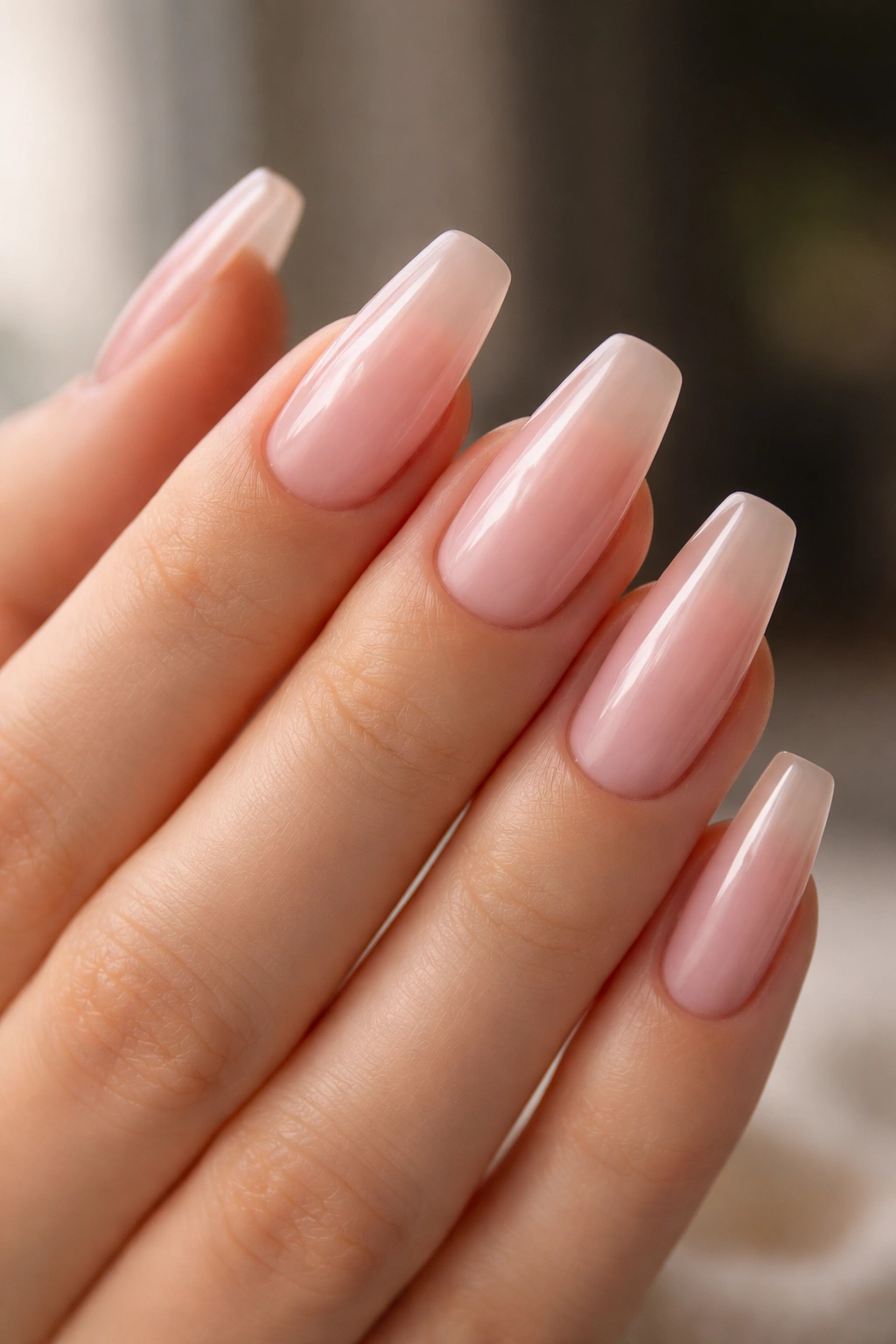
A good milky manicure is usually built, not painted in one thick coat. That is where a lot of sets go sideways.
Tell your nail tech you want sheer coverage with a cloudy finish, not solid pastel pink. Those are two different looks. “Milky” means the natural nail and free edge are still faintly visible through the color, especially in bright daylight.
Bring a photo, sure, but add words your tech can work with:
- Ask for 2 thin coats of a jelly pink, milky nude, or tinted builder base instead of 1 dense coat. Thick sheer gel tends to pool near the cuticle and turn patchy at the sides.
- Request a soft apex and a thin free edge. Sheer shades look cleaner when the tip is not bulky.
- Specify the undertone. Say cool milk pink, rosewater pink, beige-pink, or strawberry-milk rather than just “light pink.”
- Mention finish on purpose. A high-gloss top coat gives the classic milky look; satin pearl or matte shifts the whole mood.
- Ask for sidewalls that taper cleanly. Ballerina nails should narrow slightly before the tip. If the sides bow out, the manicure loses that crisp silhouette.
Quick salon note: if you are prone to lifting, a rubber base or builder gel under sheer color usually holds up better than standard gel polish alone. The milky look still reads the same, but the surface stays smoother through day-to-day wear.
One more thing. Check the color against your hand before the final top coat. Under the lamp, some pinks turn colder than they look in the bottle, and once the glossy layer goes on, the whole set looks a shade deeper.
1. Glossy Baby Pink With a Soft White Fade
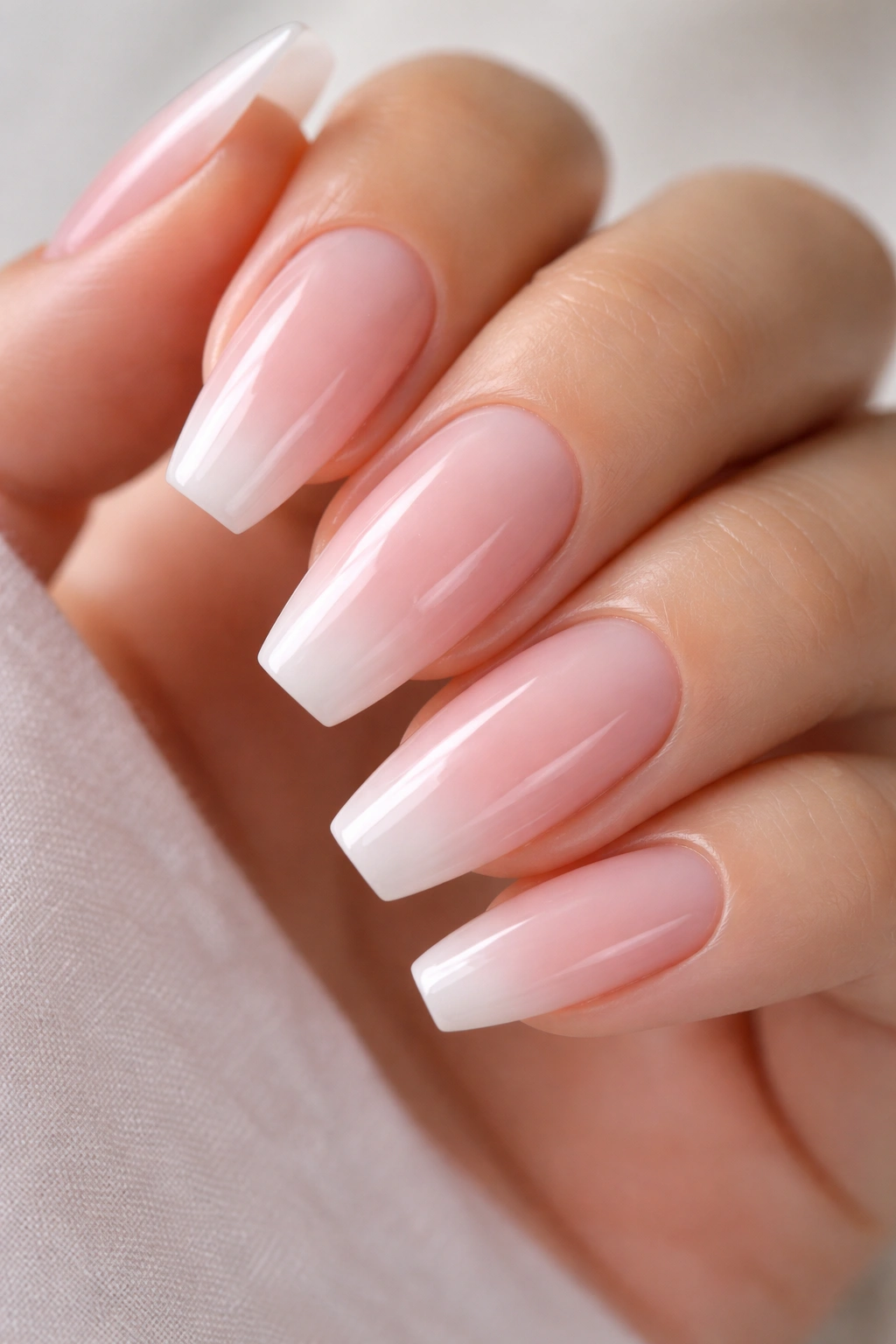
This is the version most people picture first, and for good reason. A baby pink base that melts into a soft white haze gives you that creamy, milk-bath look without drifting into full ombré territory. It reads sweet, clean, and a little dressy, even when the nails are kept at a wearable medium length.
Why It Works
The white fade does a useful job here: it blurs the free edge so the manicure looks smoother from cuticle to tip. On ballerina nails, that fade also stretches the shape and keeps the flat tip from looking blunt. You still see the structure, but the eye reads softness first.
What to Ask For
- Use a cool or neutral baby pink base with about 60 to 70 percent opacity.
- Fade sheer white through the top third of the nail, not the whole length. Too much white can turn the set chalky.
- Keep the tip edge thin. A bulky tip kills the airy look.
- Finish with a high-shine top coat and cap the free edge so the fade does not wear down early.
Best move: keep this set at medium ballerina length, around 6 mm past the fingertip, where the fade has room to show but still feels easy to live with.
2. Cool Milk Pink With a Skinny Micro French
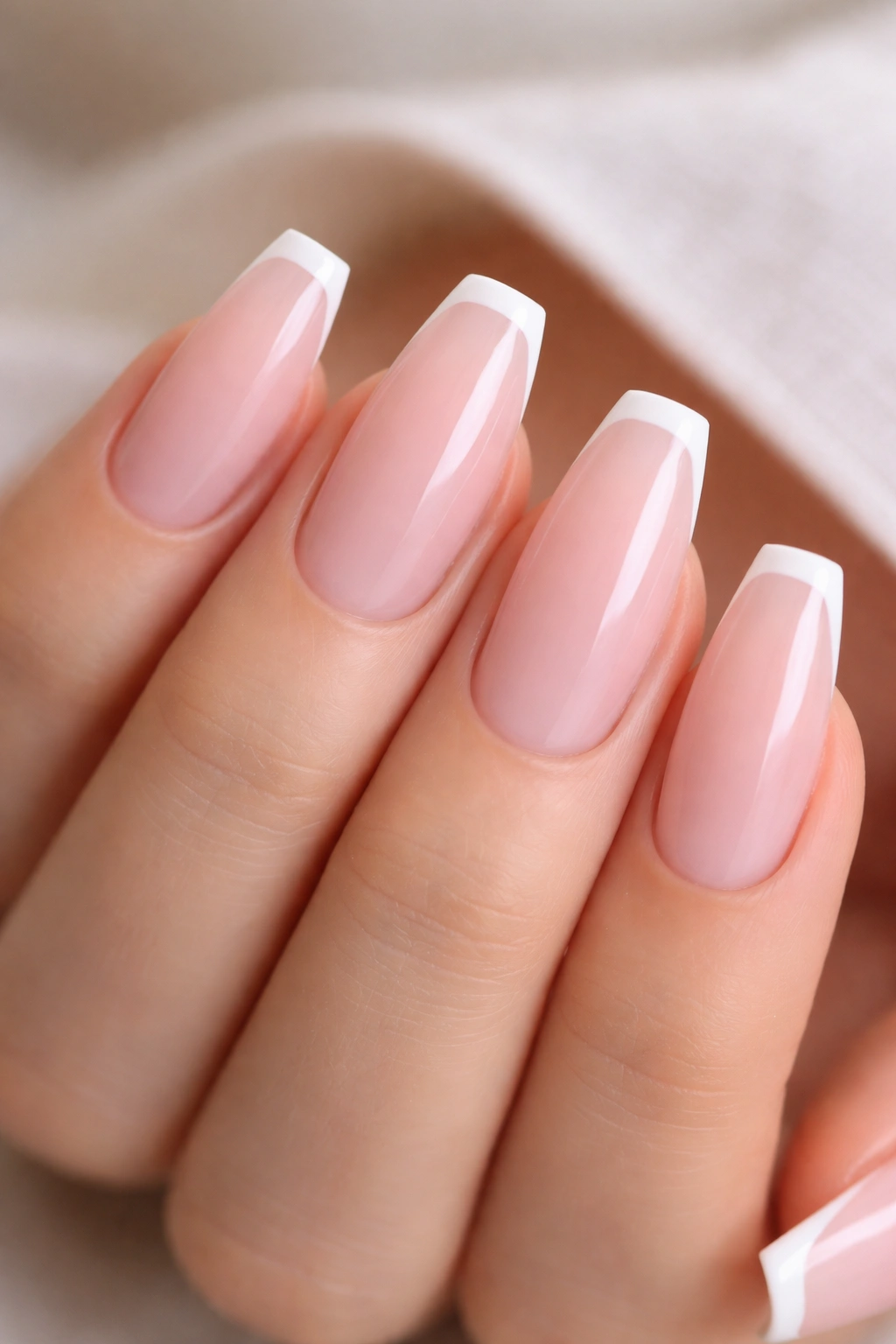
A micro French gives milky pink some backbone. Without that tiny line at the edge, cool milk shades can slip into “nice but forgettable.” Add a tip line that is 0.5 to 1 mm wide, and the whole shape sharpens up.
What makes this version good is restraint. The base stays cloudy and sheer, while the French tip is crisp enough to define the edge without overpowering the milkiness. On ballerina nails, that line looks cleaner than it does on almond because the flattened tip gives it a straight runway.
Pick a cool white or pale ivory for the French. Bright paper-white can look harsh against a delicate pink base, especially if your skin has any warmth to it. That softer white keeps the manicure polished instead of stark.
This one also wears well in real life. Chips at the tip show less when the French is hair-thin, and grow-out stays forgiving because the base remains translucent. If you have long nail beds, ask for the smile line to stay almost straight with only a small dip at the center. Deep curves can fight the ballerina shape.
3. Blush Pink With a Blurred Cuticle Bloom
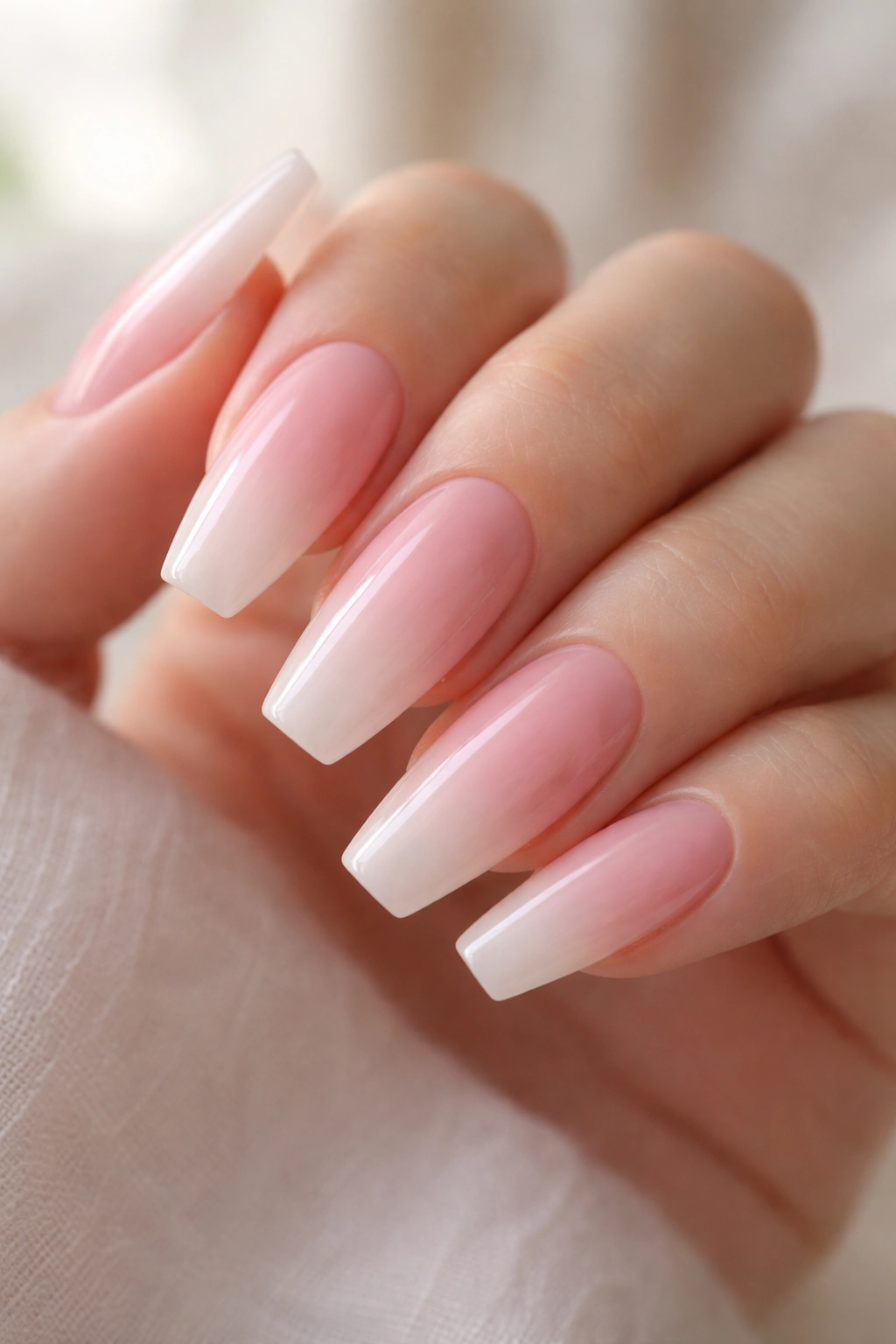
Why put the brighter detail near the cuticle instead of the tip? Because it makes the nail look freshly flushed, almost like the pink is coming from underneath the gel instead of sitting on top of it.
A blurred cuticle bloom starts with a sheer blush base, then adds a whisper of denser pink near the lunula area and feathers it outward. The center of the nail stays lighter. That soft concentration of color gives a milky manicure more depth, which is useful if you find plain sheer pink a little flat.
The trick is keeping the bloom diffused. Sharp circles start looking like aura nails, and that is a different mood. For the milky version, you want the color to fade by about one-third of the nail length, with no hard edge at all.
How to Wear It Well
This design looks strongest on medium to long ballerina nails with a glossy top coat and no extra art. Skip crystals, skip chrome, skip an outline. The bloom already gives the eye enough to follow.
If your cuticles run pink naturally, ask your tech to keep the blush shade cool-neutral so it blends into your hand. Warmer pinks can look too peachy right at the base.
4. Rosewater Sheer Pink With a High-Gloss Top Coat
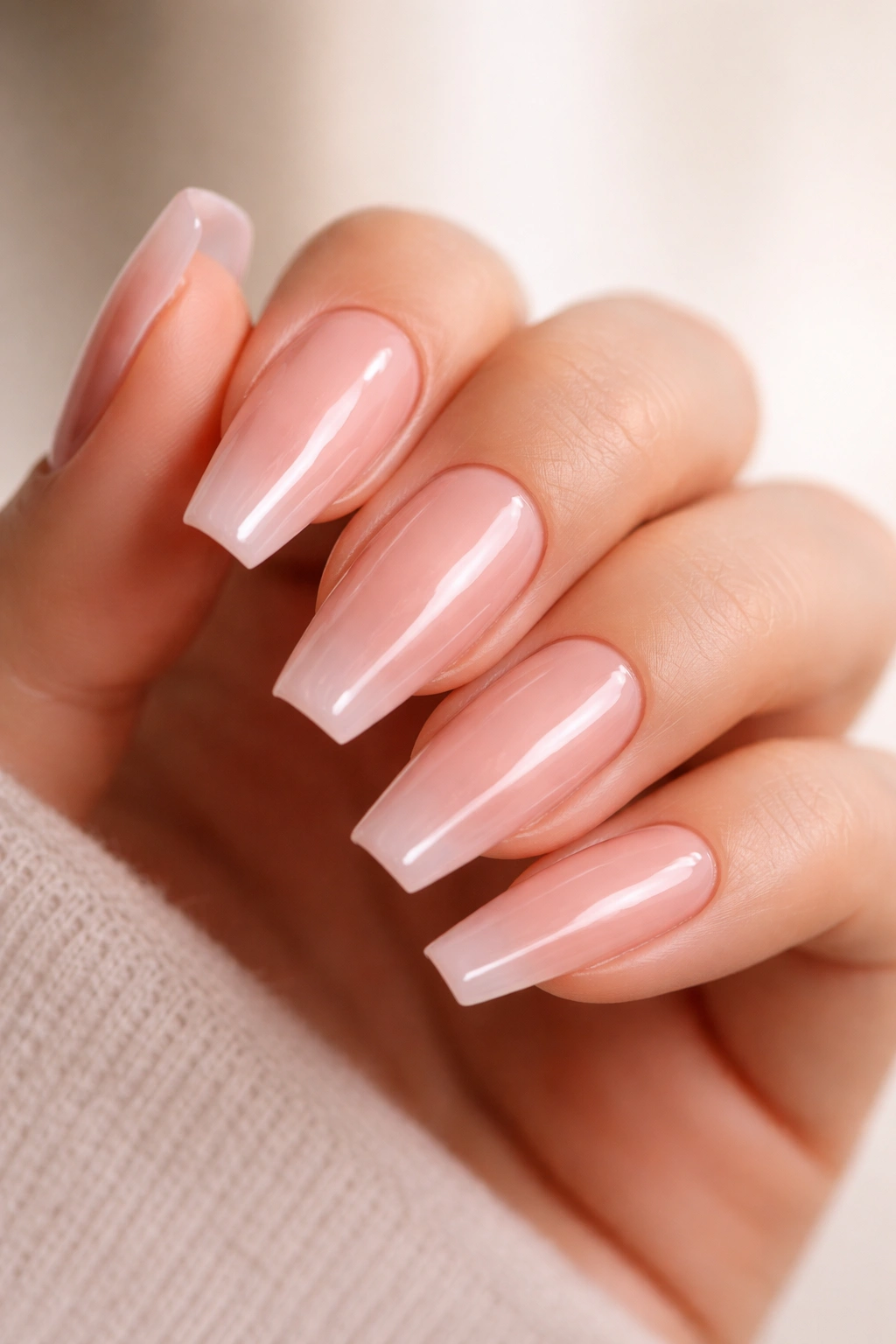
Under office lighting, rosewater pink does something plain beige cannot. It keeps the hand alive.
The color sits between soft rose and translucent nude, so you get that milk-cloud effect with a little more warmth in it. On ballerina nails, a rosewater sheer feels especially clean because the shape already brings some structure; the color can stay soft and fluid.
A lot of the impact comes from surface finish, not the polish alone. If the nail is not buffed smooth before color, gloss will magnify every ripple. Sheer shades are rude like that.
A solid version of this set usually has these specs:
- Two coats of rose-tinted jelly or tinted builder gel
- A 240-grit buffer pass before color, so the top coat reflects evenly
- No shimmer at all
- A glassy, non-wipe top coat with a full cure time so the shine does not dull after three days
What I like about this look is how little it needs. No tip line. No art. No accent nail. If you want a manicure that still feels soft under denim, tailoring, knitwear, satin — whatever you wear most — this is one of the safest bets on the list.
5. Milky Pink With Whisper-Thin Side Outlines
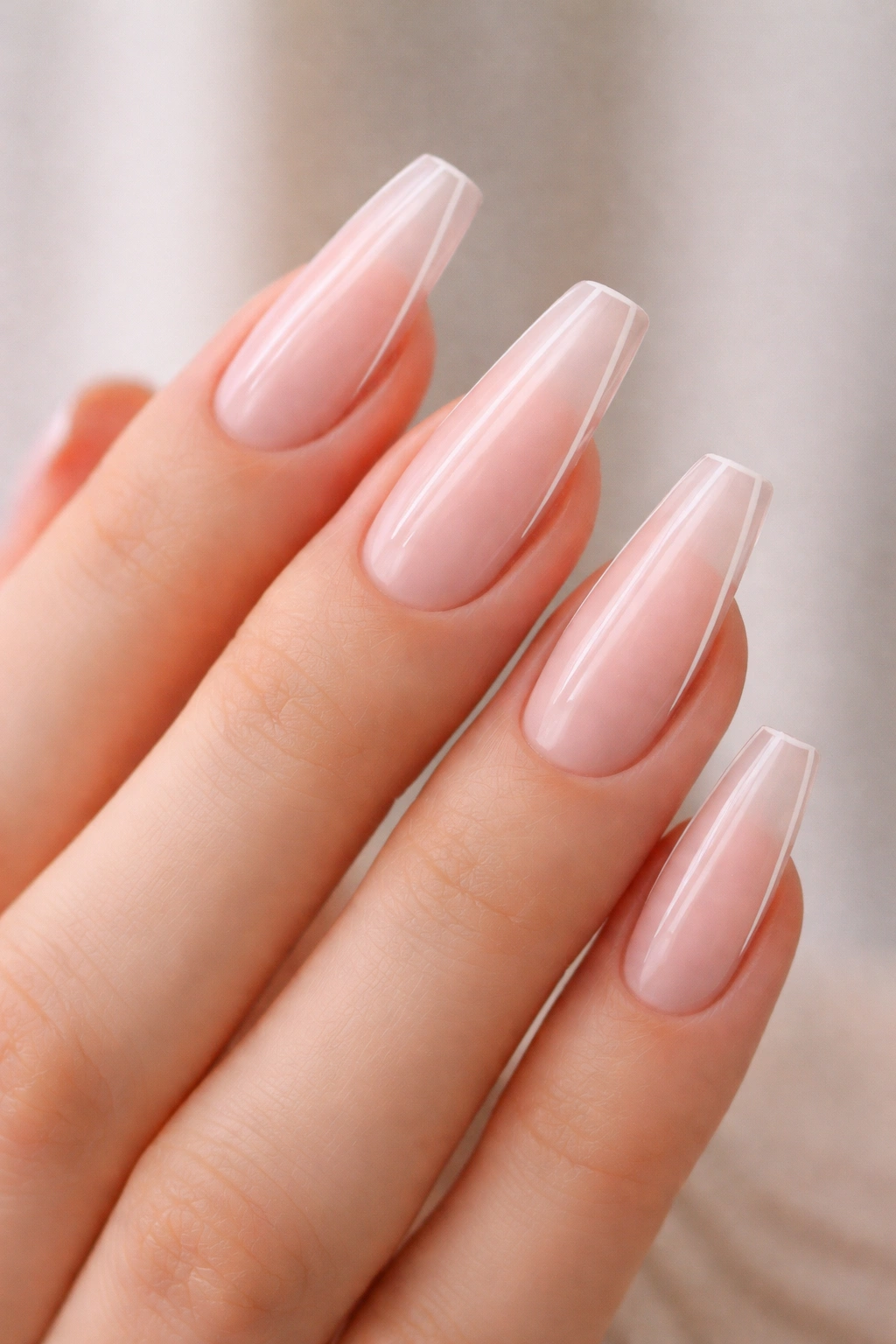
This one is a little smarter than it looks. A side outline, painted only along the sidewalls and barely skimming the tip corners, gives sheer pink ballerina nails more definition without turning them into graphic nail art.
The line has to stay thin. Think 0.3 to 0.5 mm, not a bold frame. White works, but pale taupe, soft cream, or a slightly deeper pink often looks more expensive because the contrast is lower. High contrast can make the nails look smaller.
What the outline does, visually, is tighten the shape. If your natural nails flare outward or your extensions tend to look wide, this trick pulls the eye inward and makes the taper look cleaner. It is almost like contouring, only for nail sidewalls.
Leave the center of the nail untouched. That open, milky middle is the whole point. Fill it with marbling or glitter and the effect disappears.
I would not put this on every hand, though. If your nail tech tends to draw heavy lines, skip it. A thick side frame ages the manicure fast because regrowth and tiny chips show sooner near the edges. Done with a fine liner brush and a steady hand, though, it is sharp in the best way.
6. Beige-Pink Milk Nails on a Short Ballerina Shape
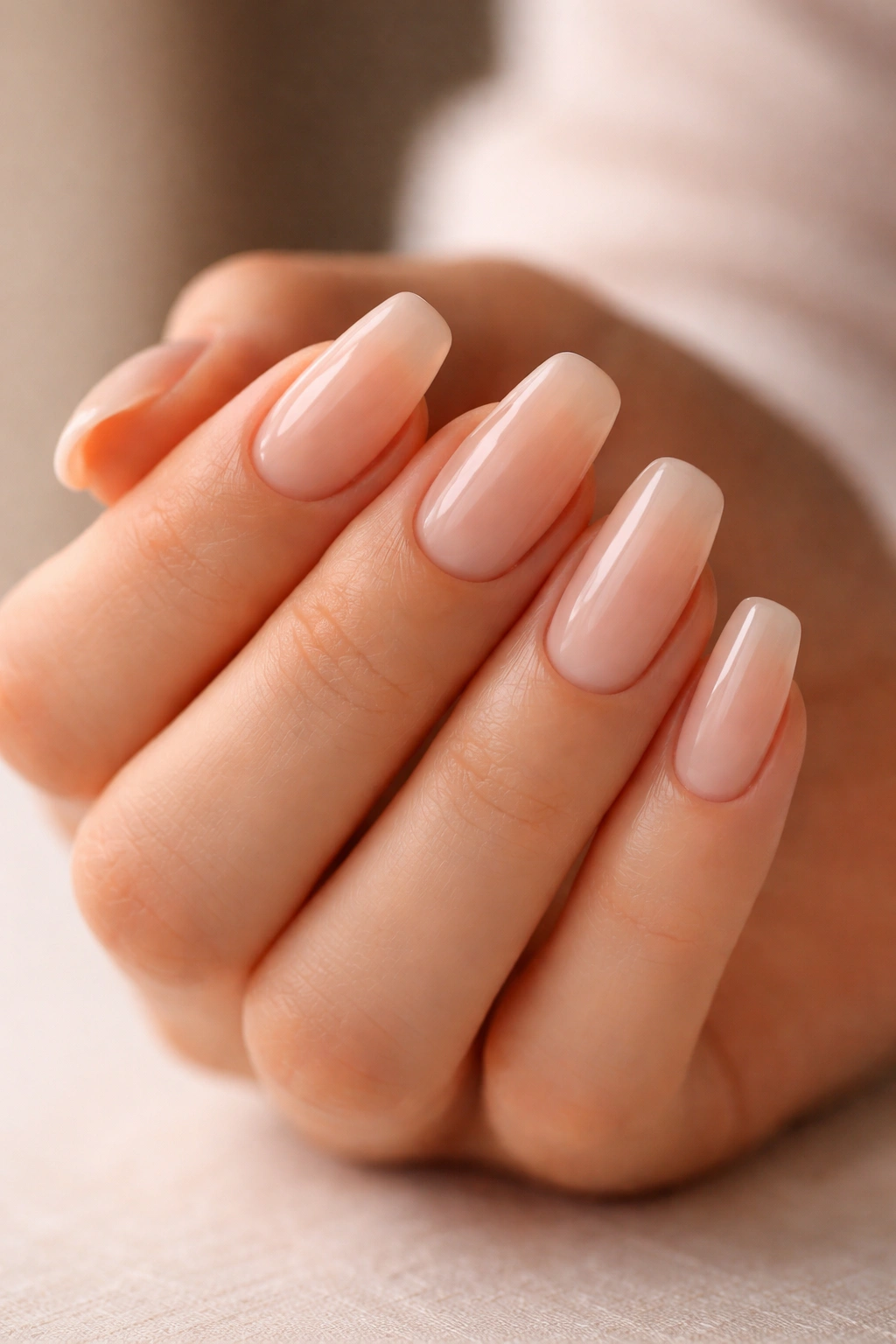
Unlike cool baby pink, beige-pink milk does not fight warmer skin. It settles into the hand and makes the milky finish look softer, almost creamier, especially on olive, tan, or golden undertones.
This shade choice matters even more when the ballerina shape is short. At 3 to 5 mm past the fingertip, you do not have much room for gradients, tip art, or long visual lines. Color has to do the lifting. A beige-pink wash keeps the look clean while the short ballerina edge adds enough geometry to stop it from reading as plain nude.
Short ballerina nails can go wrong fast if the tip is too wide. Ask for a gentle taper from the stress area down to a soft flat edge, and keep the corners slightly rounded so they do not snag. That shape pairs well with a milkier nude because both elements lean quiet.
Who is this best for? Anyone who wants a manicure that looks put together at keyboard length, survives day-to-day use, and does not need extra art to feel finished. If your workday includes typing, lifting boxes, opening cans, or too much cleaning, this version makes more sense than a longer, more delicate set.
7. Ballet Slipper Pink With a Satin Pearl Veil
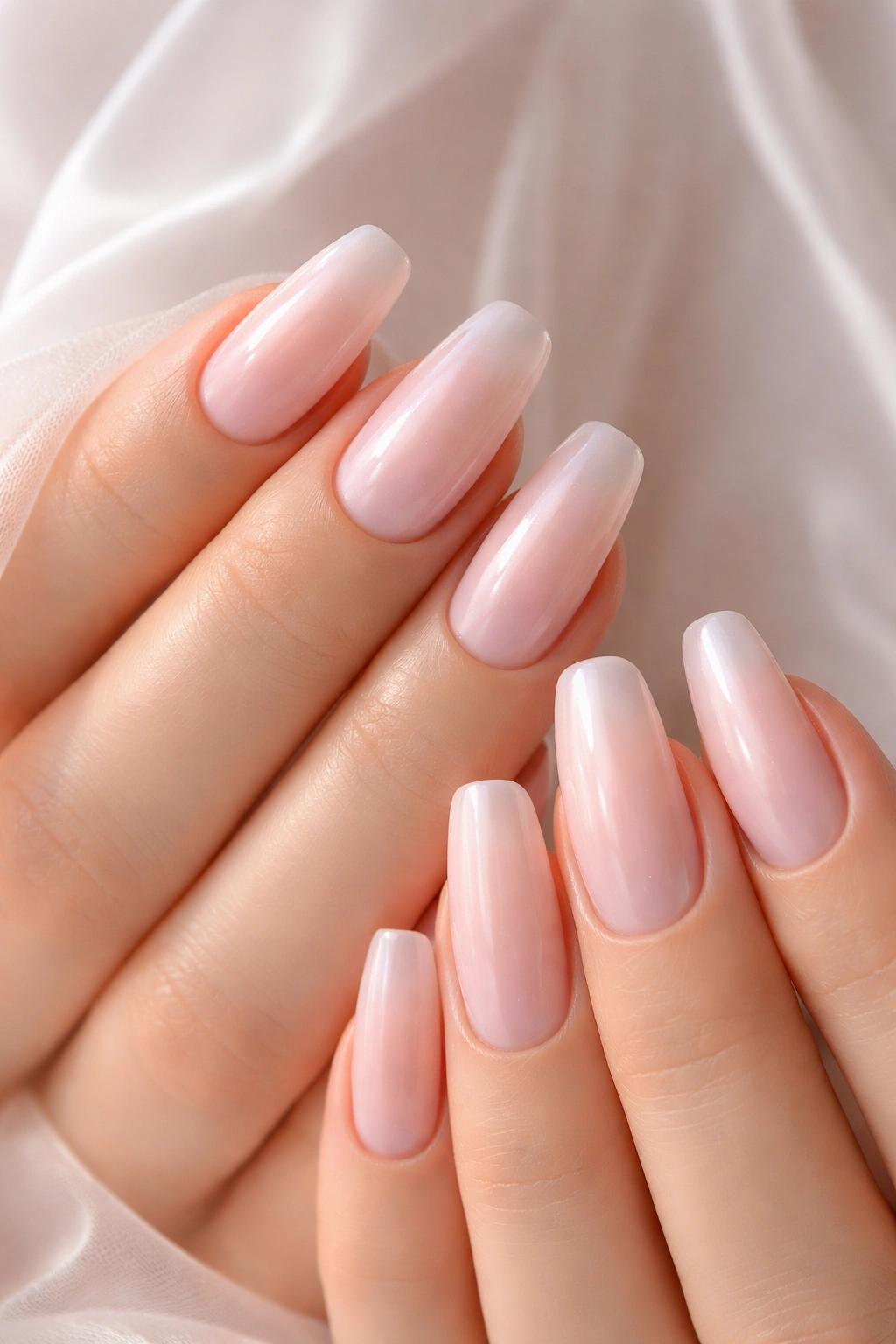
If chrome feels too hard for you, a satin pearl veil is the better move. It gives sheer pink a faint light shift without turning the manicure metallic.
The Finish That Makes It Work
Use a classic ballet-slipper pink as the base — soft, neutral, and a touch cooler than beige. Then add ultra-fine pearl powder or a pearl glaze over cured color. The effect should sit somewhere between gloss and silk. You want a glow, not a mirror.
What to Ask For
- Keep the pearl cool-neutral, not silver-blue. Overly icy pearl can make pink look gray.
- Use one light rub of powder, then seal it under top coat. Heavy pearl hides the sheer base.
- Stay away from chunky shimmer. Milky nails need a smooth surface.
- Choose medium length so the finish has room to show when the hand moves.
Small warning: pearl highlights surface flaws, so the overlay underneath needs to be clean. If you can feel ridges with your fingertip before color, you will see them after the glaze goes on.
8. Milky Ombré Pink With Clearer Tips
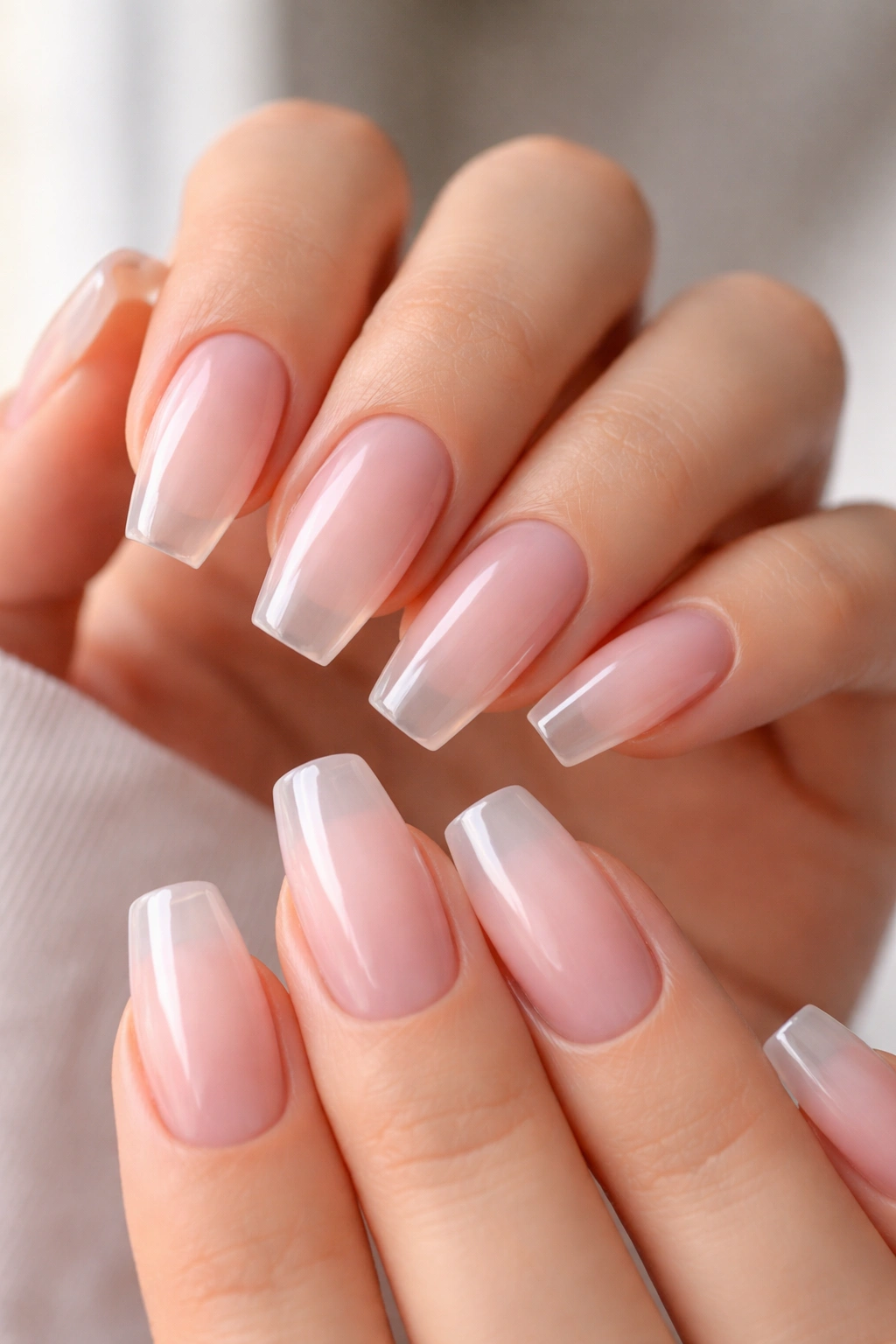
The cleanest milky manicure sometimes has less milk at the tip.
Most people expect milky pink to build denser toward the free edge, but a reverse approach can look fresher on ballerina nails. Keep the base and middle softly clouded, then let the top quarter of the nail turn more translucent. That little drop in opacity stops long tips from looking thick.
It is a smart choice if you wear builder gel overlays or hard gel extensions, where the free edge can start to look heavy under layered color. A clearer tip lightens the whole set. You still get the milk effect from the body of the nail, just not the chalky block at the end.
This design also flatters narrower hands because it keeps visual weight near the center of the nail instead of stacking pigment at the edge. Pair it with a neutral pink rather than a peach tone if you want the fade to stay crisp.
Do not combine this one with a French line. The tip is already doing enough. Any extra stripe at the edge usually makes the finish feel busy.
9. Pink Yogurt Tint With a Tiny Crystal Cuticle Accent
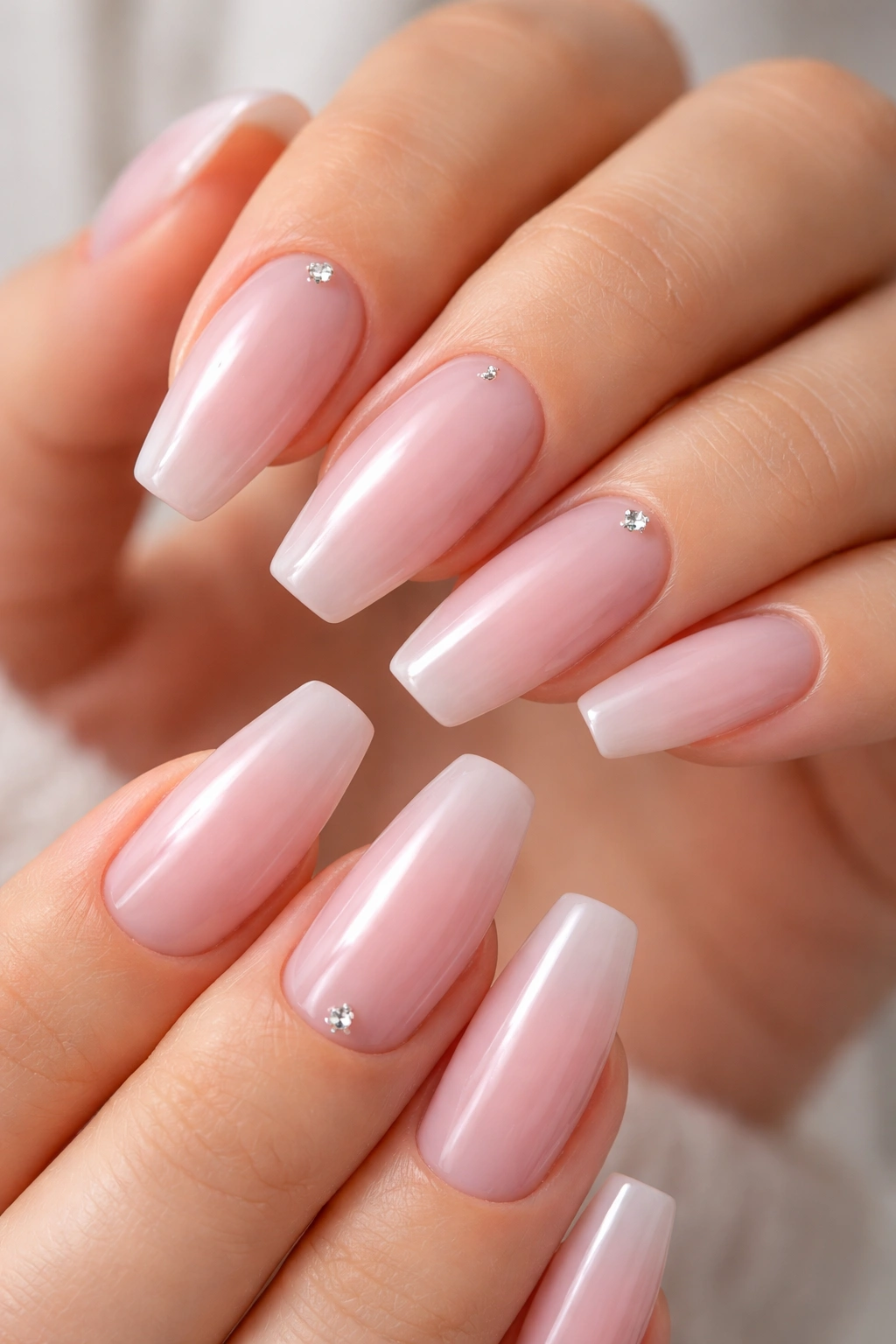
Can you add a little sparkle and still keep the manicure calm? Yes — if the sparkle is tiny and the placement is disciplined.
A pink yogurt tint is a touch denser and creamier than a rosewater sheer. It has that cultured-dairy color people ask for in salons when they want pink, but not bubblegum. Add one 1 to 1.5 mm crystal near the cuticle on one or two nails, and the set picks up a little jewelry effect without losing the milky mood.
Placement matters more than the stone itself. Put the crystal dead center and too close to the cuticle, and regrowth will crowd it fast. Set it slightly above the cuticle line, off-center by a hair, and the nail keeps breathing.
Placement Rules That Keep It Clean
Use this accent on the ring finger only, or on ring and thumb if you want a matched detail. More than that, and the eye stops reading “milky pink” and starts reading “embellished set.”
Skip large gems. Skip clusters. One tiny stone is enough to catch light and echo a ring stack without dragging the manicure into bridal cliché.
10. Semi-Sheer Pink With Fine White Marble Veins
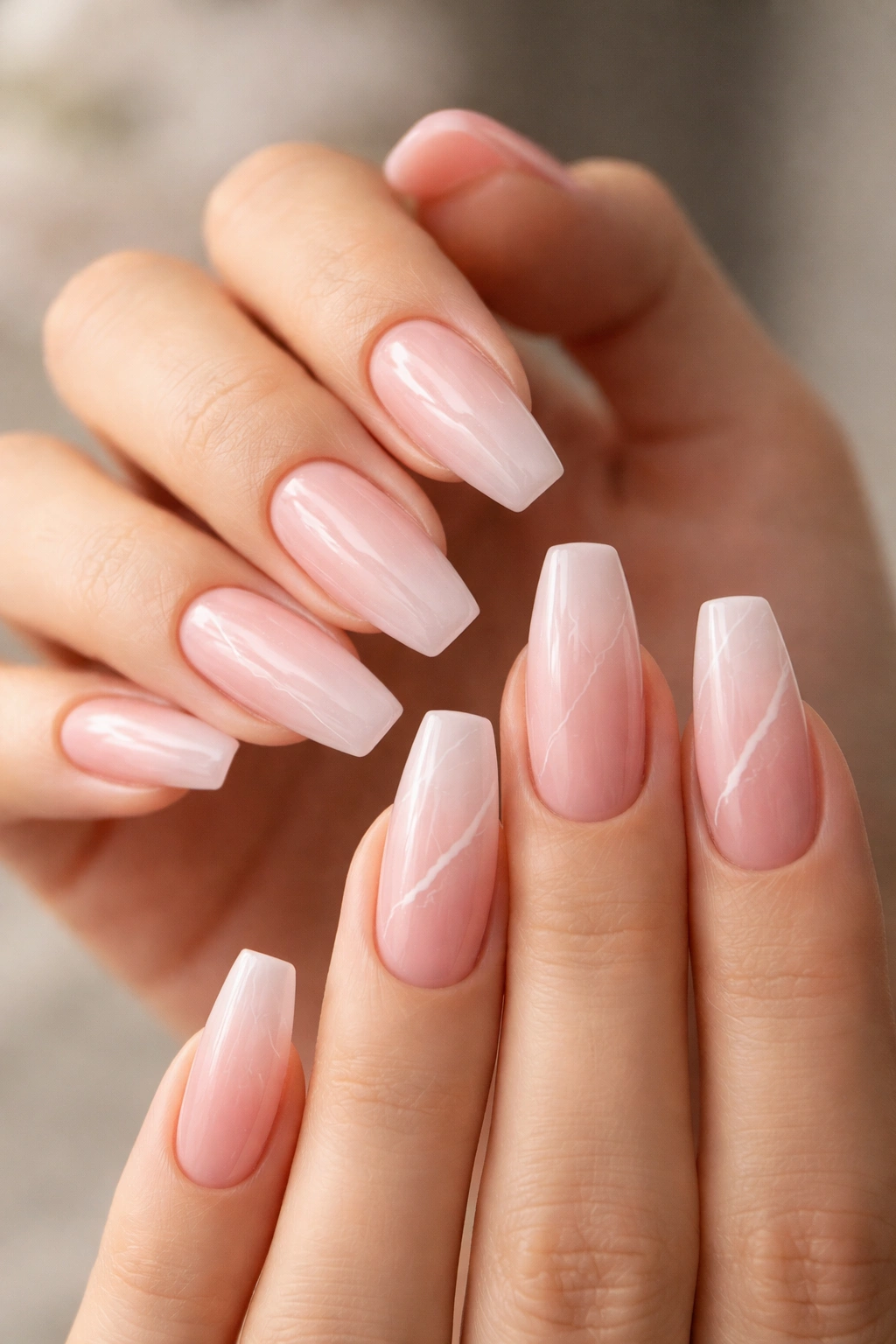
Marble sounds heavy, but on the right base it can read airy. The trick is treating the veins like smoke, not stone.
Start with a semi-sheer pink base that still lets some of the natural nail show through. Then add a few white veins so thin they look almost accidental. On ballerina nails, I would keep marble to two accent nails at most — ring fingers or one ring and one thumb — because the straight edges already give the manicure structure.
You do not want thick, gray-veined countertop marble here. You want movement.
A clean version usually follows a few rules:
- Use diluted white gel paint or white mixed into top gel so the lines stay soft
- Pull the veining diagonally, not horizontally, to lengthen the nail
- Blur one side of each vein with a detail brush before curing
- Leave open space so the milky pink base still shows
This design is good when you want texture without glitter. It has more going on than a plain sheer set, but it still feels polished enough for everyday wear. That middle ground is hard to get right. This one does it.
11. Clouded Petal Pink in a Velvet Matte Finish
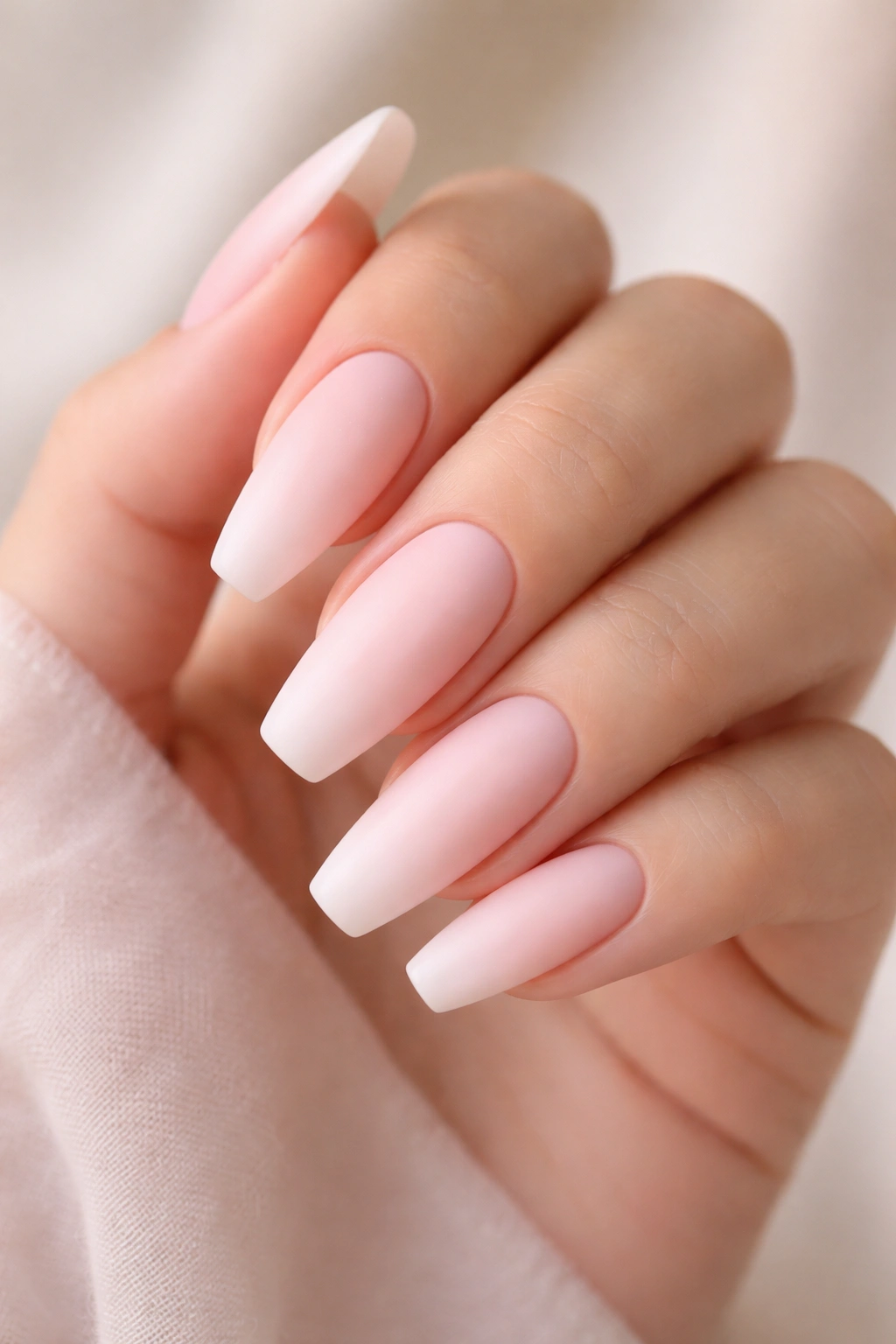
Gloss gets most of the attention with milky nails. I still think a soft matte top coat can be the better call when the pink is petal-toned and the shape is long enough to carry it.
The finish changes the manicure from glassy to velvety. Not fuzzy, not chalkboard dry — that is the bad version. A good matte top coat on a milky pink base looks cushioned, almost like the color is suspended under frosted glass. On ballerina nails, that muted surface also makes the shape look more editorial and less sweet.
There is a catch. Matte exposes flaws fast. Any bump in the overlay, any dust trapped under the top coat, any sidewall that is not filed clean — all of it shows. This is not the set to pick if your tech rushes prep.
Keep the color in the neutral petal family, not beige and not bright rose. You want enough pink to show through the matte veil. Pairing matte with a too-sheer nude often makes the nails look dull, and that is not the same thing as soft.
If you miss shine after a few days, add gloss only on the ring finger for contrast. That little mismatch can look surprisingly good.
12. Sheer Pink With a Raised Jelly French Edge
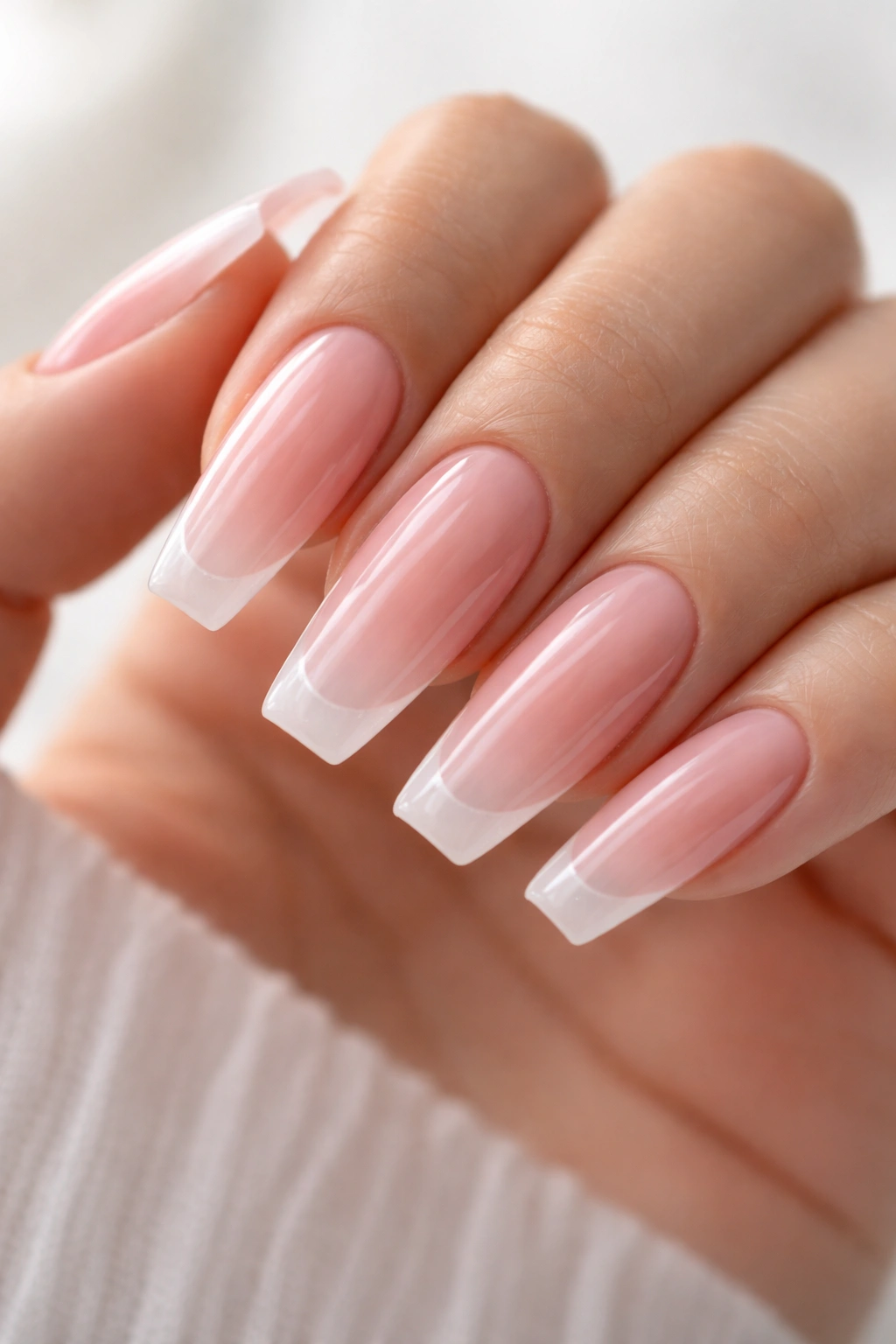
Unlike a painted French tip, a raised jelly edge adds dimension you can feel with your fingertip. Done badly, it is bulky. Done right, it gives milky pink a sculpted finish that still stays delicate.
This look starts with a sheer pink base, then a slightly denser translucent white or pale pink builder gel is used to build a subtle ridge along the free edge, usually no more than 0.5 mm high. That edge catches light, defines the ballerina tip, and gives the set a custom feel.
It suits longer nails best, where there is enough room for the raised detail to sit without crowding the nail bed. Short ballerina nails do not have the space. The ridge ends up looking accidental.
Who should try it? Anyone bored with a flat French but not interested in glitter, charms, or heavy art. The recommendation here is to keep the ridge narrow and keep the rest of the nail plain. One special detail is elegant. Three special details are clutter.
13. Strawberry-Milk Pink With Diagonal French Tips
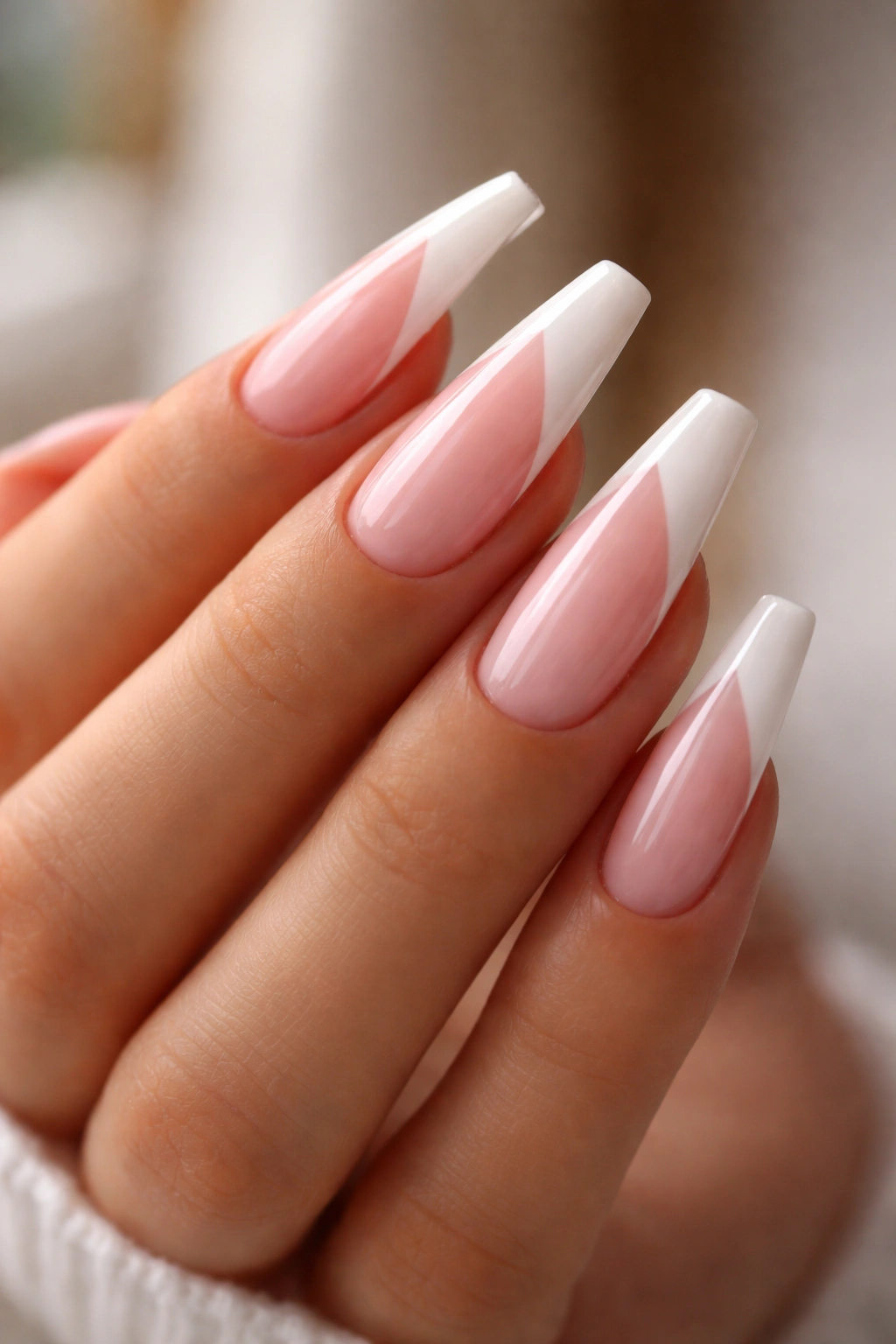
A diagonal French can rescue a milky pink set that feels too sweet. Cut the line at an angle, and the whole manicure gets sharper.
Why the Angle Helps
Straight tips emphasize width. Diagonal tips pull the eye across the nail, which can make wider nail beds look longer and slimmer. On ballerina shapes, that slant also echoes the taper of the sidewalls, so the whole set feels cohesive instead of decorated as an afterthought.
What to Ask For
- Choose a strawberry-milk base with a soft warm pink cast, not neon or candy pink.
- Keep the diagonal line thin and start it from one sidewall, not the center.
- Use soft white or pale cream for the tip, then blur the lower edge a touch so it does not look pasted on.
- Match the angle across all nails. Random direction changes make the set feel messy.
Best on: medium to long ballerina nails where the slant has enough room to read from a normal viewing distance, not only up close.
14. Barely-There Pink With Pearly Cuticle Half-Moons
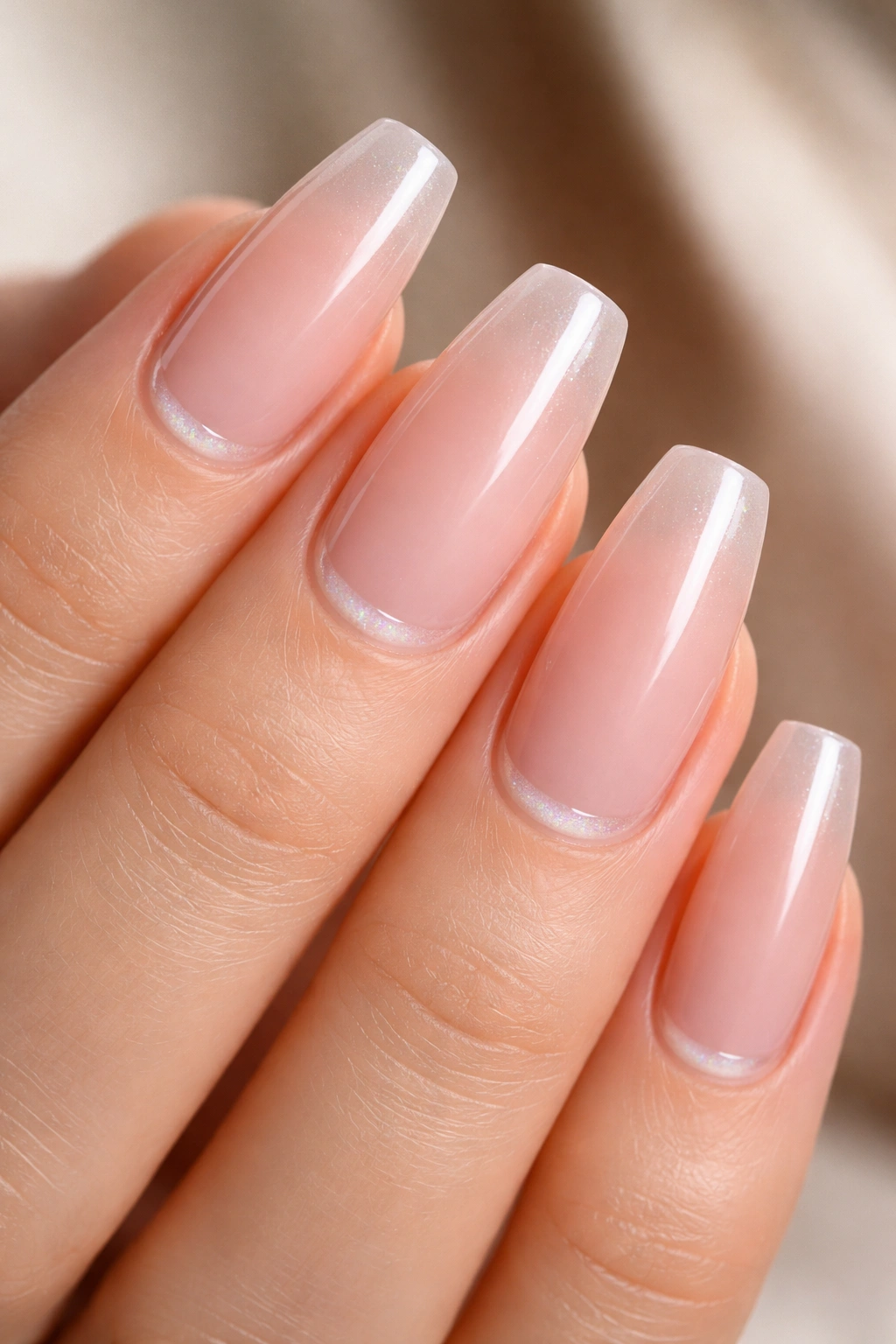
This one sounds old-fashioned on paper. It does not look old-fashioned when the half-moons are kept thin.
A barely-there pink base — think one step milkier than clear — lets a small pearly arc near the cuticle do all the talking. The half-moon should follow the natural lunula shape, stay narrow, and sit low enough that the rest of the nail still looks open. When that curve is too thick, it starts reading retro costume nail. Keep it delicate and it feels clean.
I like this design most on medium ballerina nails with tidy cuticles, because the art sits right where prep shows. Dry skin ruins the effect faster than chipping does. Cuticle oil twice a day helps more here than it does with almost any other design on this list.
Use pearl gel paint or a white mixed with a touch of shimmer, not chunky glitter. The point is a soft shift at the base of the nail, not a sparkle border. If you wear stacked rings or a watch every day, that little crescent ties in nicely without competing for attention.
15. Milky Sheer Pink With a Single Silver Thread Line
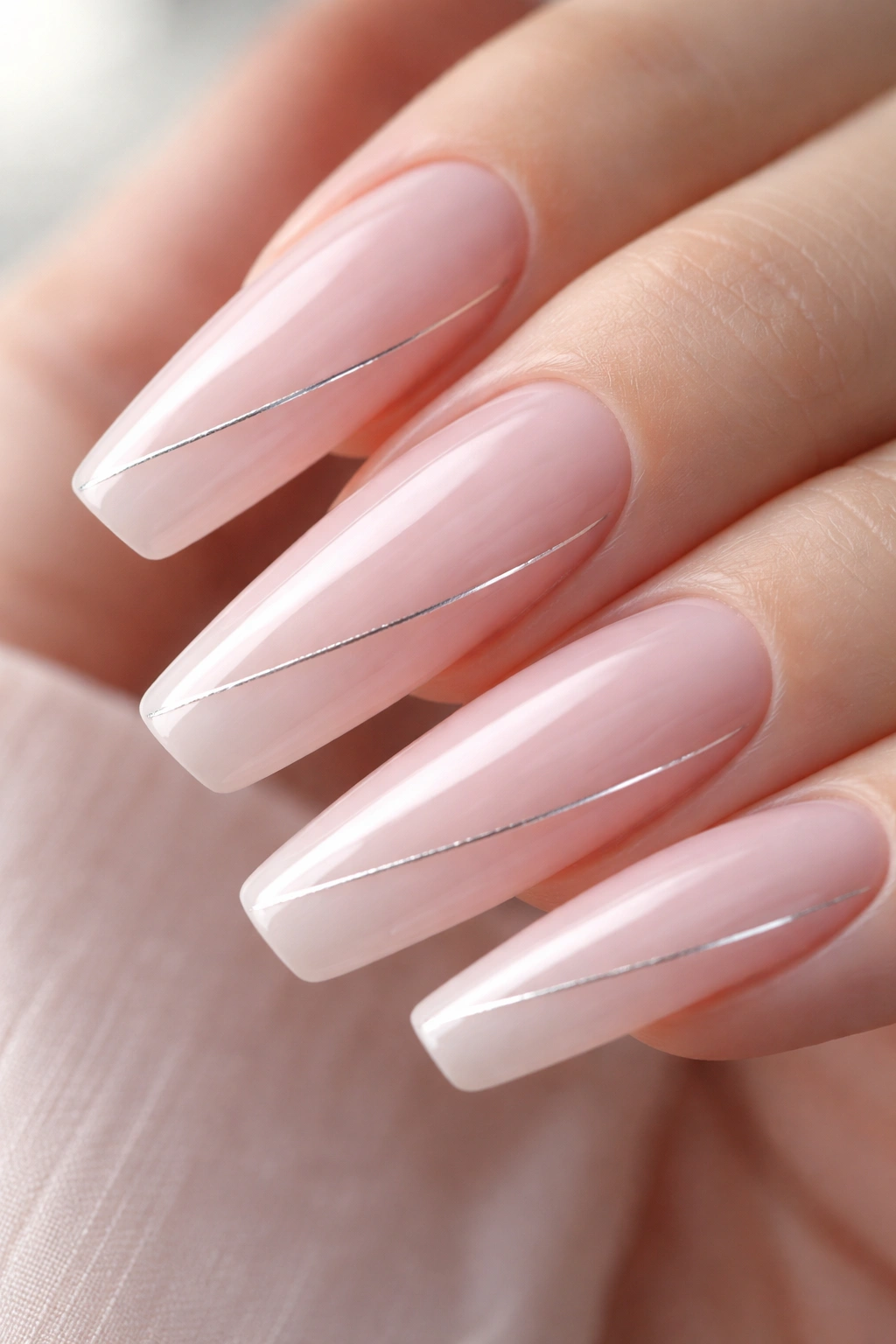
Do you need metallic detail on all ten nails? No. One fine line is enough.
A silver thread line over milky sheer pink can look sharp, almost architectural, when it is placed with restraint. Think 0.25 to 0.5 mm — thinner than standard striping tape — running either a few millimeters above the tip or diagonally through one side of the nail. On ballerina shapes, that line plays well with the straight edges and gives the soft base a cleaner finish.
Silver works better than chunky glitter because it stays crisp. Gold can be good too, though I prefer silver or platinum over cool and neutral pinks. Warm gold sits better on beige-pink or strawberry-milk bases.
How to Keep It Refined
Use the line on two nails only, then leave the other eight plain. Ring and middle finger is a good pairing. Full metallic sets pull focus away from the milky base, and once that happens, you might as well have chosen a different manicure.
If you are doing this at home, paint the striping line before the final top coat and float the gloss over it. That keeps the surface smooth instead of ridged.
Keeping Sheer Pink Ballerina Nails Glossy Between Appointments
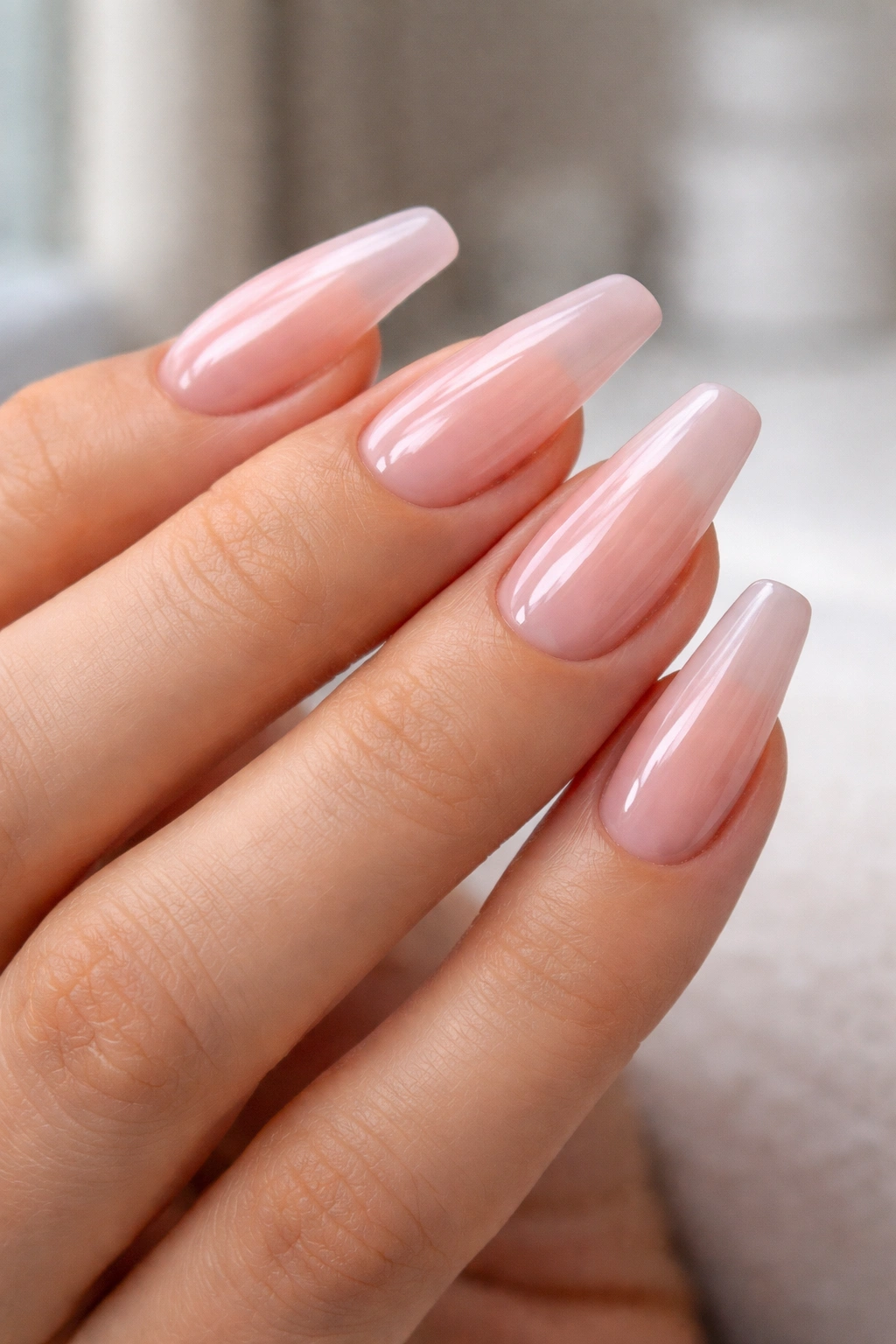
Milky sheer sets can hide grow-out better than solid pink, but they still show wear in their own way. The top coat dulls. The tip corners take hits. Cuticles dry out, and suddenly that clean clouded finish starts looking tired.
A little maintenance goes a long way:
- Use cuticle oil morning and night. Dry skin makes pale manicures look rough fast.
- File tiny snags with a 240-grit file instead of picking at them. Picking can crack gel at the sidewall.
- Wear gloves for dishwashing and harsh cleaners. Sheer shades lose their crisp look when the top coat gets scratched.
- Book fills at 2 to 3 weeks if you wear long ballerina shapes. Those tips take more impact than rounder nails.
- Do not use your nails as tools. Ballerina corners are stronger than a needle point, but they are still corners.
One small digression, because it matters: hand cream helps, but oil helps more. Cream sits on top and makes skin feel better for an hour. Oil gets into the dry ring around the cuticle where pale manicures start looking messy first.
Final Thoughts

The milky look lives or dies on restraint. A sheer pink base, a clean ballerina shape, and one controlled detail will almost always look better than piling on shimmer, art, and contrast all at once.
If I had to narrow this list to the safest three, I would start with rosewater sheer pink, baby pink with a soft white fade, and beige-pink milk on a short ballerina shape. Those cover most skin tones, most dress codes, and most tolerance levels for upkeep.
Pick the design that matches how you actually use your hands, not only the one that looks good in a close-up photo. That is where the good manicures separate themselves from the ones you are tired of after three days.