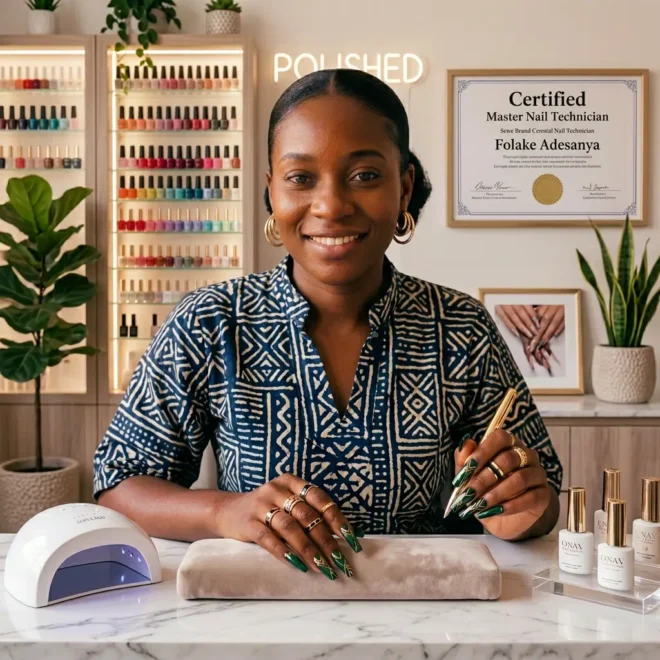


Dark green ballerina nails can look expensive in a way bright colors rarely do. The shade sits in that sweet spot between black polish and classic emerald: dark enough to feel dressed-up, alive enough to show color when your hands move. Put that on a ballerina shape—tapered sides, straight tip, a little lean and architectural—and the whole set starts giving off the kind of polish people usually read as money.
The catch is that deep green goes wrong fast. A thin, streaky formula can turn swampy. Too much yellow in the undertone can make the color look dull against the skin. Thick acrylic at the tip ruins the clean line that makes ballerina nails work in the first place. I keep coming back to the same point because it matters: dark green needs depth, crisp shaping, and a finish that looks intentional.
And yes, the shape matters more than people think. If your nail tech calls them coffin nails, that is the same family. On a strong set, the sidewalls taper evenly, the free edge stays straight, and the tip never looks pinched. When that structure is right, dark green ballerina nails hold color in a sleek, elongated way that square nails and almonds don’t quite pull off the same way.
Some sets whisper. Some show off a little. Both can look rich. The designs below range from glossy blackened emerald to croc texture, cat-eye velvet, malachite marble, and a few quieter ideas for anyone who wants depth without glitter shouting across the room.
Why Dark Green Ballerina Nails Feel Expensive
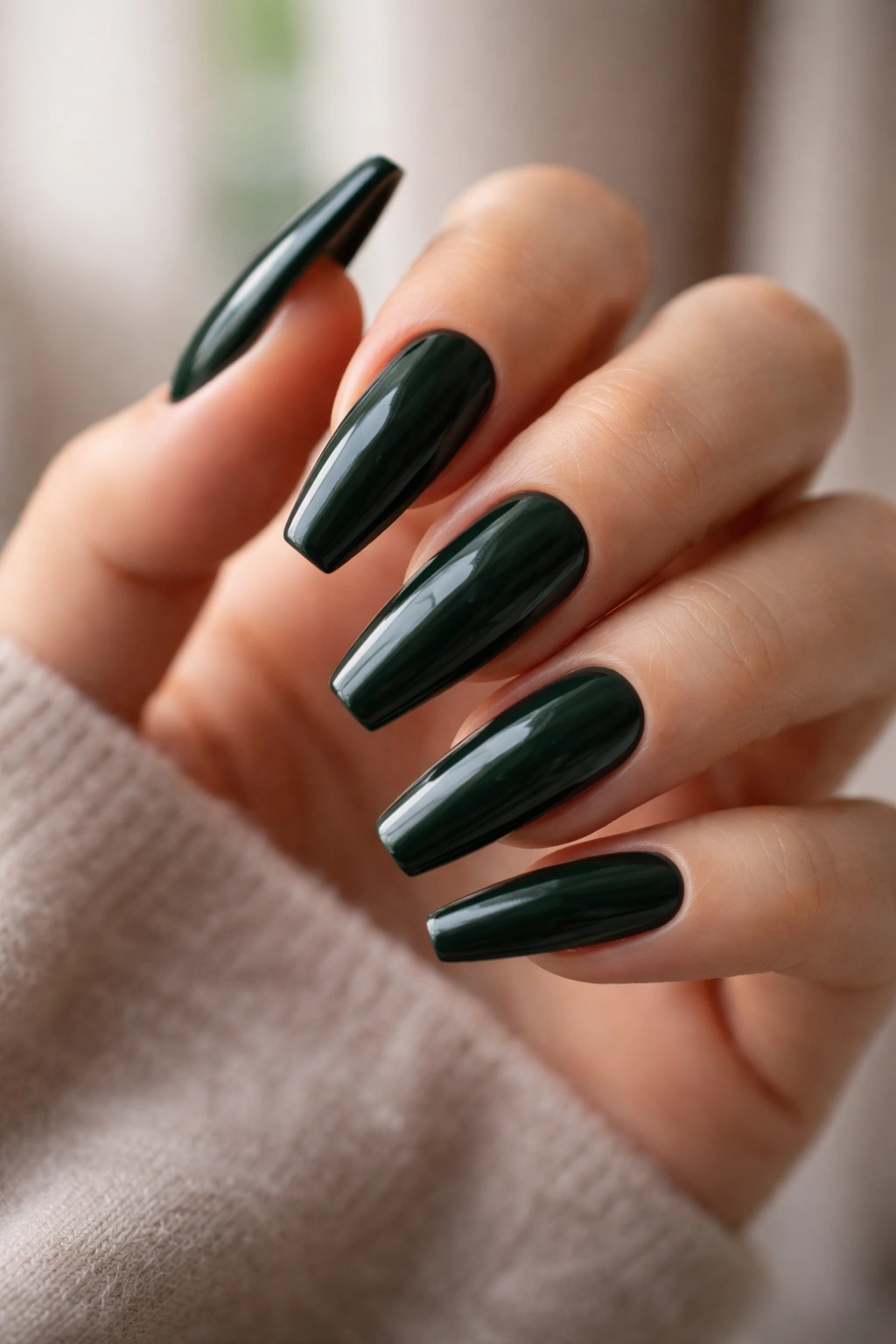
Dark green behaves almost like black from a distance, but it has more life up close. That’s a huge part of the appeal. In lower light, a blackened emerald or forest shade reads deep and controlled. Near a window or under warm indoor light, the color opens up and shows blue, olive, pine, or teal undertones. That small shift makes the manicure feel layered rather than flat.
Ballerina shape helps the illusion. The long side taper stretches color, and the flat tip gives the eye a hard stop. You get length, structure, and a cleaner silhouette than a rounded tip gives you. On shorter lengths, the shape still works, though you need at least a little free edge past the fingertip or the taper can look forced.
Undertone is where rich-looking green either lands or misses. Blue-based deep greens usually read sharper and cooler. Olive-heavy greens can look expensive too, though they need dense pigment or a jelly effect that looks deliberate.
A few things push dark green into the cheap-looking zone fast:
- Patchy opacity that shows darker streaks after two coats
- Bulky apex placement that makes the tip look thick from the side
- Cloudy top coat over dark pigment
- Oversized rhinestones that fight the color instead of supporting it
- Uneven cuticle prep, which shows more on dark shades than pale pinks ever will
The richest sets are usually edited. Clean lines. Good shine. Smart texture. Not chaos.
Nail Finishes That Give Deep Green More Depth
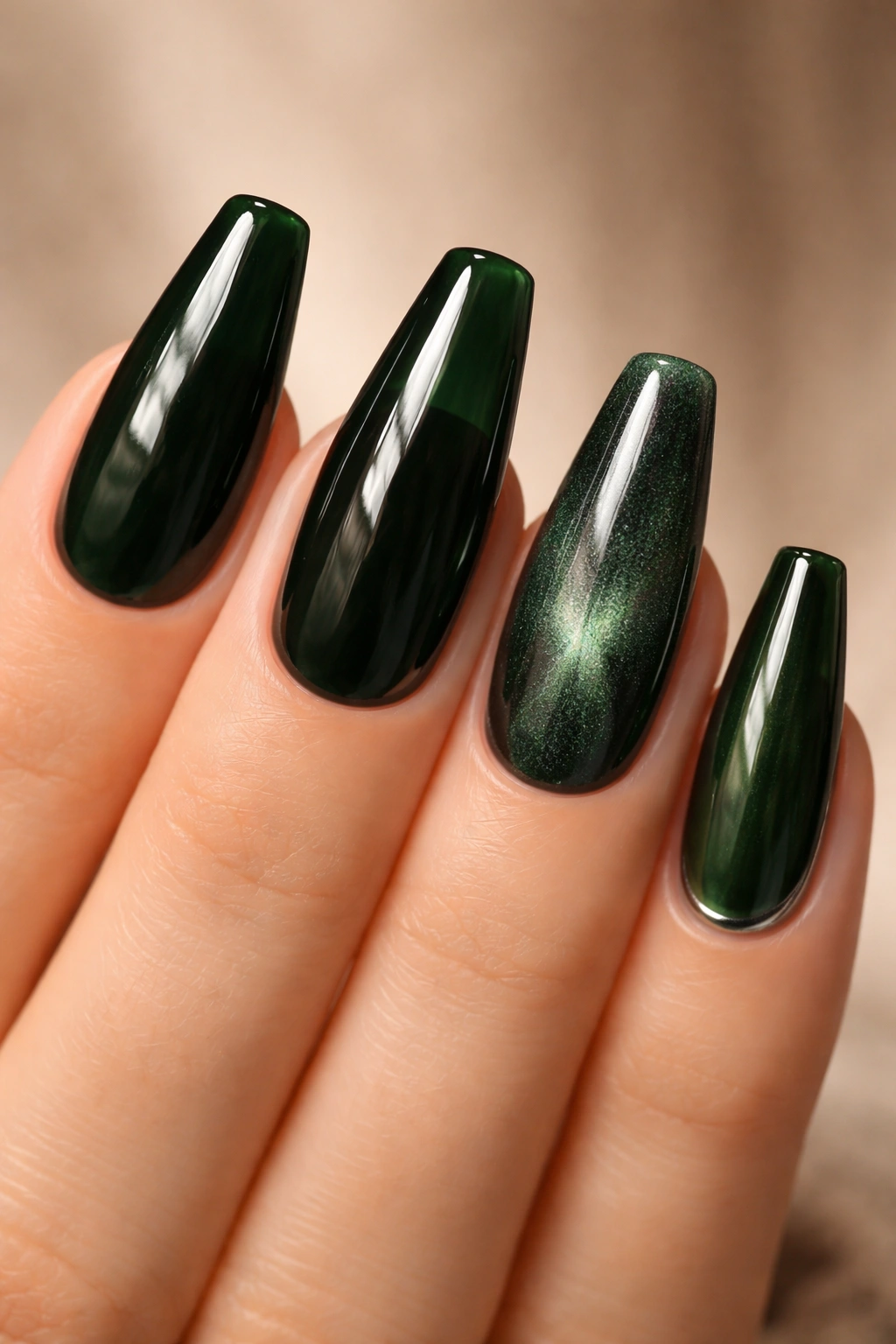
Gloss and color are doing half the work here, but finish is doing the other half.
A high-gloss top coat gives deep green that wet, lacquered look that reads expensive right away. Jelly finishes add depth because light moves through the color instead of bouncing off a flat layer. Magnetic polish can create a velvet stripe or floating glow that looks almost fabric-like when the particles sit in the right place. Chrome gives you a colder, sharper effect—more metal, less softness.
Matte can work too, though matte on dark green needs a plan. On its own, it can turn chalky. Pair it with a glossy edge, a raised croc panel, or a tiny metallic detail and it starts to feel finished.
What usually ruins the finish
Cheap-looking top coats are easy to spot once you know what to look for. The surface dents after a day. The shine goes hazy after hand washing. Chrome gets dull around the free edge. A good finish should stay smooth, reflect light in one clean line, and cap the tip so the dark color does not wear white at the edge by day three.
One more thing. Dark green shows every bump. If the base is lumpy, the color will tell on you.
1. Blackened Emerald With a Wet-Look Gloss
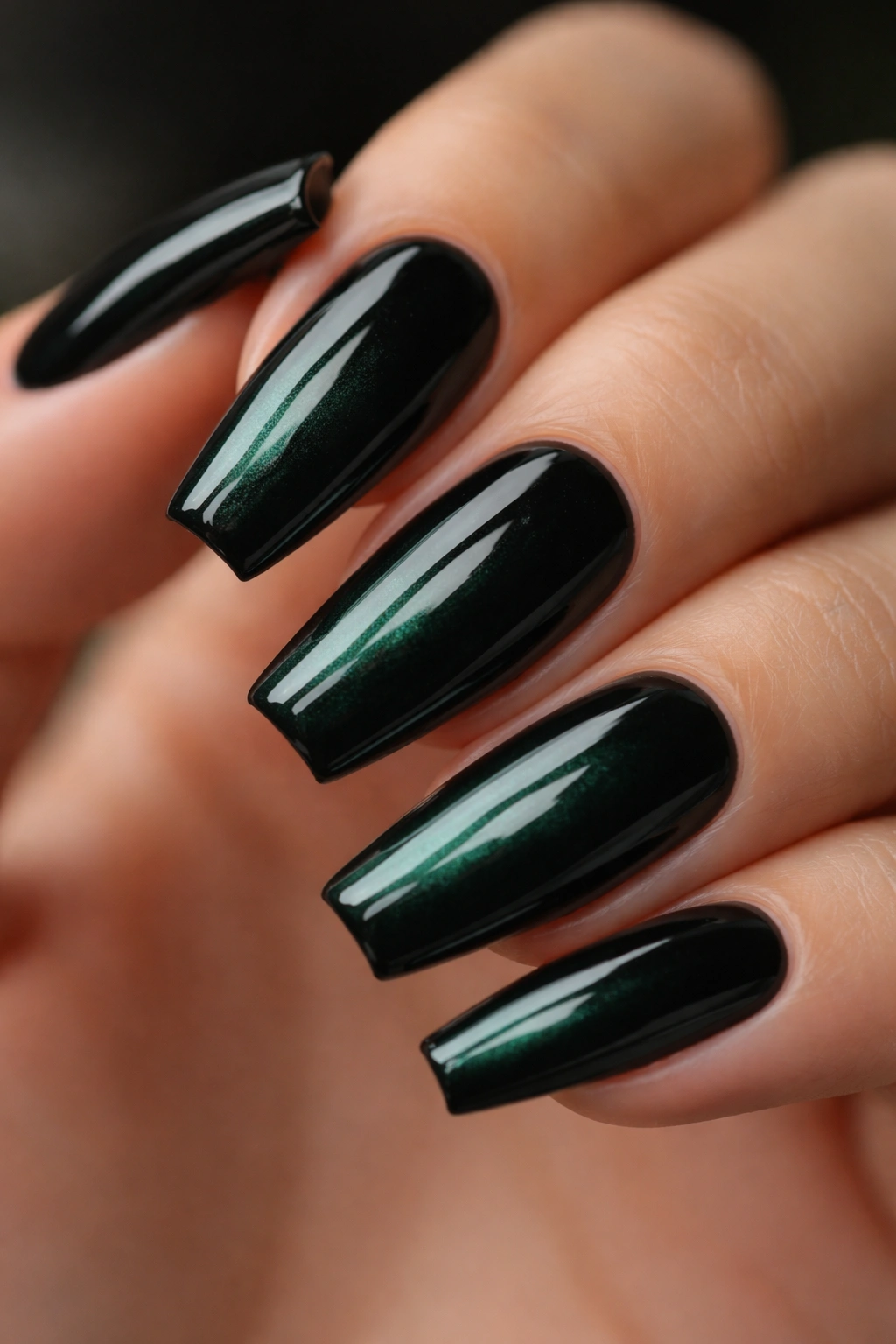
If you want the safest bet in the whole lineup, start here.
A blackened emerald is the manicure I recommend when someone says they want dark green ballerina nails that look rich but do not want nail art doing too much. The color should look close to black in shadow, then flash emerald when light hits the curve of the nail. That shift is where the money is.
What makes this one work is restraint. No crystals. No foil. No accent nail trying to steal the whole set. The drama comes from pigment density and a glassy top coat. Ask for two thin coats over a smooth gel base, then a self-leveling glossy top coat that seals the free edge. Thin coats matter because thick dark polish turns gummy around the sidewalls.
I also like this shade on medium-length ballerina nails, not only long ones. At medium length, the shape feels sharper and more wearable, and the deep color still gets that elongated effect.
Daylight is the test. If the green disappears and reads plain black in every setting, it misses the point. If it looks bright Christmas green, same problem. You want that in-between zone—dark, lush, and a little moody.
Best pairing: yellow gold rings, black tailoring, cream knits, dark denim.
2. Forest Green With a Fine Gold Cuticle Frame
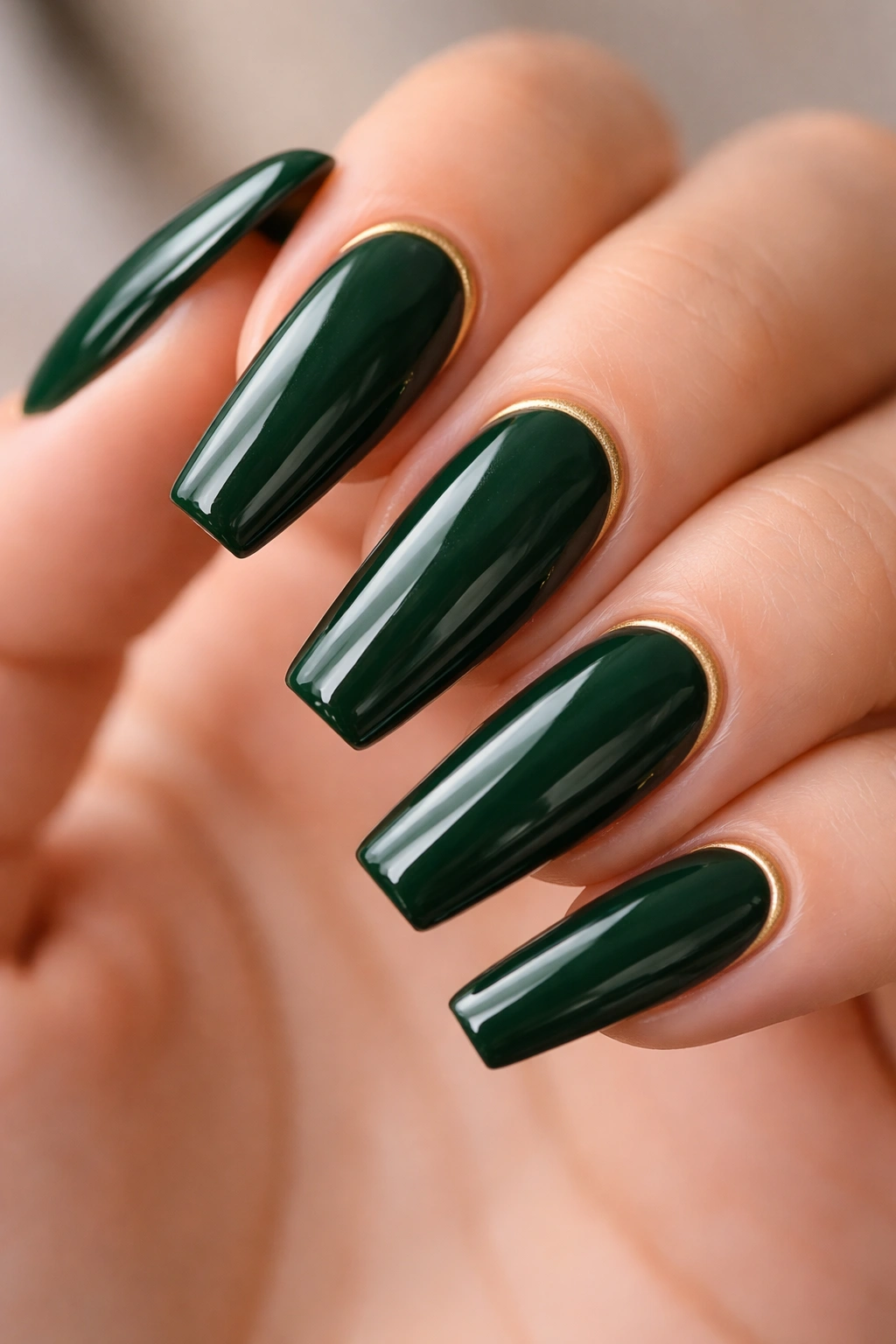
A thin line of gold near the cuticle can do more for a manicure than a full hand of glitter ever will.
Forest green already has depth, though the gold frame changes the whole mood. Instead of scattering shimmer across the nail, the detail sits where jewelry sits—right near the base, almost like a tiny cuff. On ballerina nails, that curved flash of metal makes the shape look cleaner and more deliberate.
Why the gold line works
Gold pulls warmth out of green without making the color lighter. The trick is scale. You want a line that looks hand-placed and slim, around 1 millimeter or less, not a chunky half-moon that eats the nail bed. I prefer this on all ten nails if the line is ultra-fine. If the line is thicker, keep it to two accent nails.
Quick design notes
- Use brushed metallic gel or chrome powder, not large foil flakes, for the cuticle frame.
- Choose forest green with a neutral-to-cool base so the gold does not push the set toward olive.
- Leave a hairline gap from the skin. Gold pressed into the cuticle area can look messy within two days.
- Keep the rest glossy and clean. The gold detail is enough.
Smart move: pair this design with plain jewelry. Stacked gemstone rings compete with that tiny gold arc and make the whole hand feel busy.
3. Deep Olive Jelly Over a Milky Base
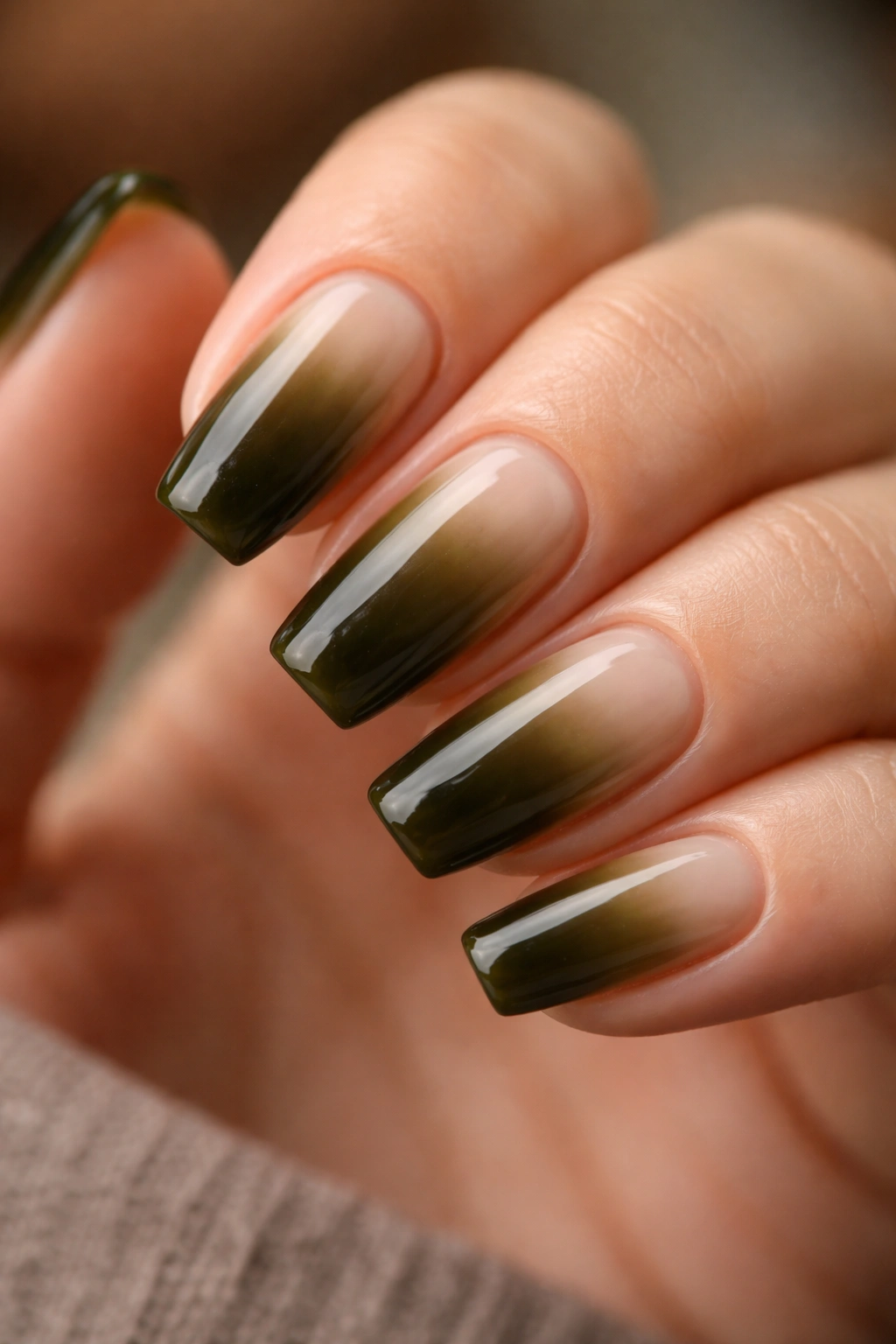
Can olive look expensive instead of muddy? Yes—but only when the transparency looks intentional.
A deep olive jelly over a milky nude or soft beige base gives the nail that layered, almost glass-bottle depth that flat cream polish cannot fake. You still get dark green, though it has a softer edge than blackened emerald or hunter green. Under warm light, the color can lean mossy. In cooler light, it pulls more khaki and smoke.
The base matters more than the green here. A milky builder gel smooths the nail plate and keeps the jelly from settling darker in ridges or low spots. Without that cushion underneath, olive jelly can look uneven in a hurry. Think stained glass, not sheer first coat that never got finished.
How to ask for it at the salon
Ask for a milky nude structured base with a dark olive jelly layered in two passes. The first pass should tint the nail. The second should deepen it. If your tech reaches for a single thick coat to save time, push back a little. Thick jelly can pool at the sidewalls and tip, and the color turns blotchy.
This one suits shorter ballerina nails better than people expect. The softness of the jelly finish keeps the shorter length from feeling heavy, and the shape still gives enough edge.
4. Velvet Pine Cat-Eye With a Diagonal Pull
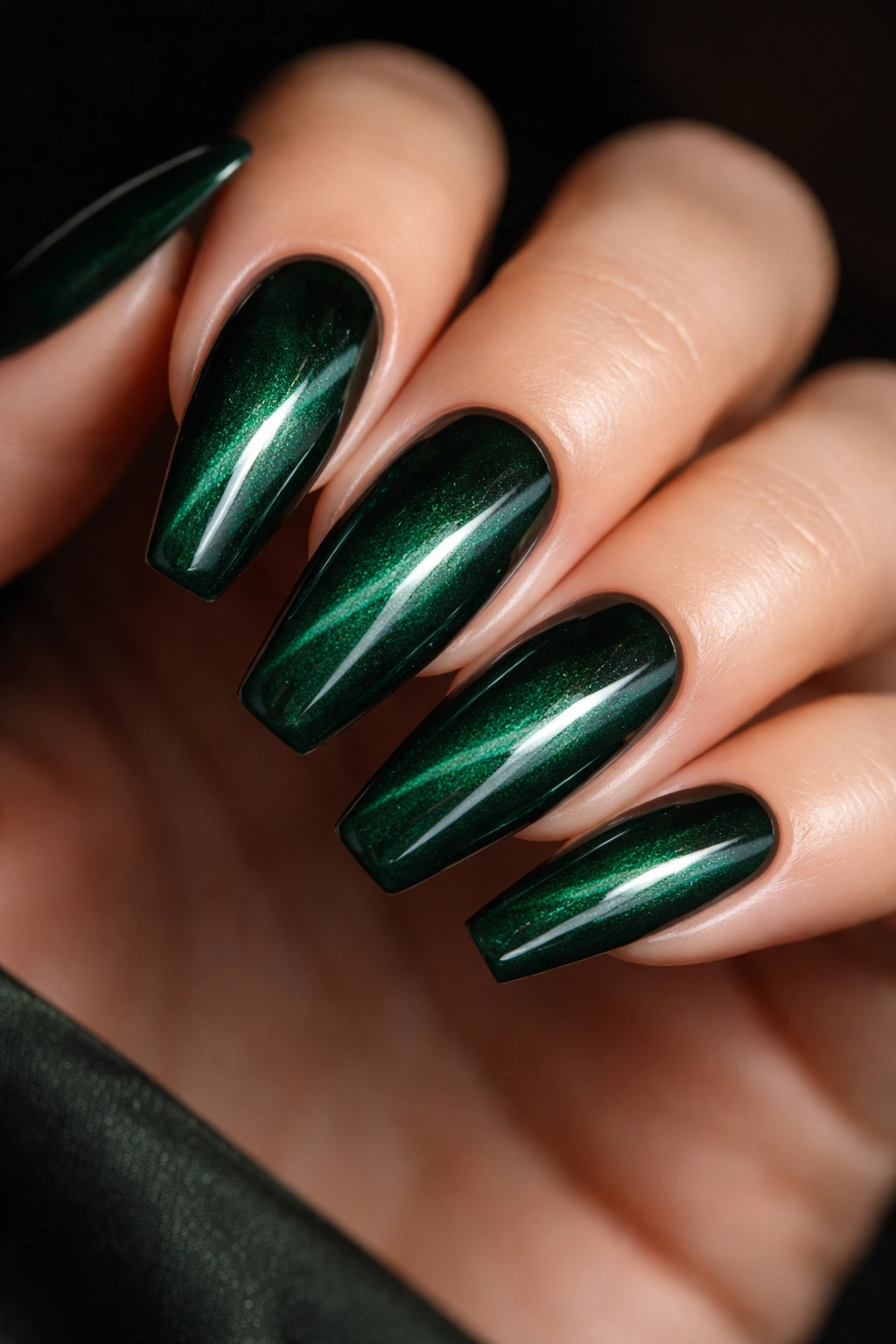
Under restaurant light, this design looks almost soft to the touch.
Magnetic velvet pine is one of the few nail finishes that can look plush instead of shiny. The trick is the magnet placement. A straight cat-eye stripe can feel dated if the line is too hard and obvious. A diagonal velvet pull across a dark pine base looks richer because the shimmer spreads like brushed fabric rather than a neon beam.
I would not do this over a bare nail color. Start with a black or black-green base so the magnetic particles sit on something dark and dense. That base creates contrast, and contrast is what makes the velvet line float.
- Best length: medium-long ballerina, where the diagonal pull has room to travel
- Best base shade: blackened pine, not bright emerald
- Best top coat: high-gloss, because matte kills the velvet illusion
- Placement tip: keep the magnetic highlight off-center so it moves as the hand turns
The appeal here is movement. You see one thing head-on, another from the side. That changing surface keeps the dark green from feeling heavy.
5. Nude Ballerina Nails With Dark Green French Tips
Unlike a classic white French, a dark green French on ballerina nails feels sharper, less bridal, more tailored.
The base should stay sheer and clean—milky pink, beige-nude, or a neutral gel that matches the nail bed. Then the dark green tip comes in with a crisp smile line or, if you want a more angular look, a deep V-shape that echoes the taper of the ballerina sidewalls. I lean toward a straighter French on this shape because the flat tip already gives you structure.
This is one of the strongest choices if you want dark green ballerina nails that look rich without coating the whole nail in color. More exposed nude keeps the set light. The deep tip still gives contrast, and that contrast makes hands look neat and a bit longer.
Who is this best for? Anyone who likes dark polish but hates how fast full-coverage shades show edge wear. With a green French, growth is softer and tip chips are easier to repair. Salon visits stretch a little farther.
Ask for the tip thickness to match nail length. Shorter ballerina nails need a narrower band, around 2 to 3 millimeters. Longer nails can take a deeper French. Too thick on a short nail and the design starts swallowing the base.
6. Hunter Green Croc-Texture Panels
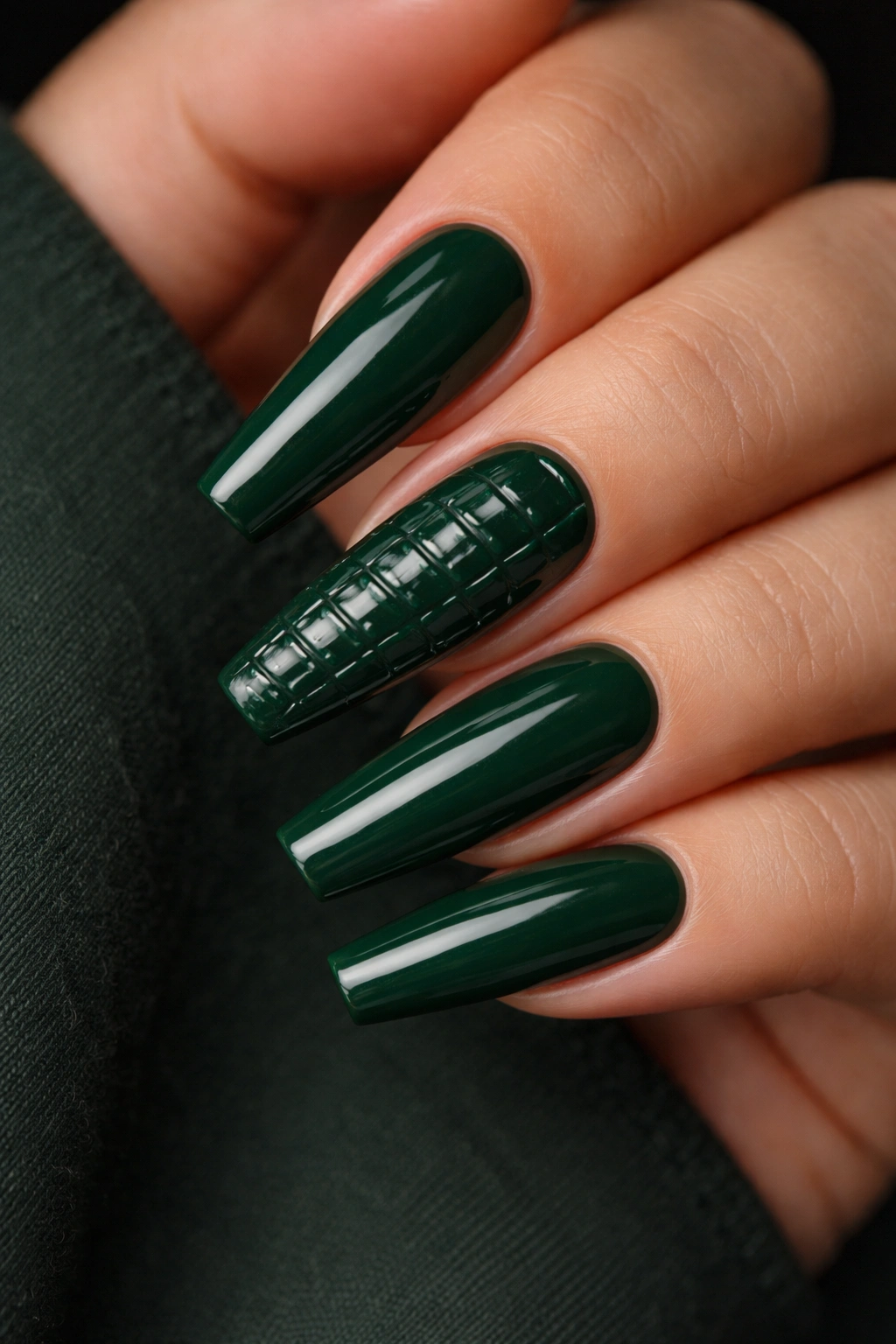
This one is unapologetic.
Croc texture on a hunter green base gives dark green a leathery, almost handbag-like feel that makes sense with the “rich” brief. The design works best when the texture is controlled and placed, not spread over every nail in the set. I like two accent nails with raised croc panels, then solid glossy hunter green on the rest. That keeps the texture from looking costume-y.
The finish matters more than the pattern. Raised croc over matte looks dusty. Raised croc under gloss looks embossed, which is the whole point. You want each cell of the pattern to catch light along the edges while the deeper areas stay darker. That little shadow gives the nail surface shape.
A skilled tech will build this with a clear sculpting gel or a thick art gel after the green color is cured. Then they will top coat selectively or all over, depending on how sharp they want the relief to stay. Messy croc pattern reads cheap fast, so spacing matters. Uneven cells and random bubbling can make the set look like a craft experiment.
I would skip giant charms here. The texture already brings enough. Pair it with a plain ring stack and let the surface do the work.
7. Dark Green Nails With Cracked Gold Foil Veins
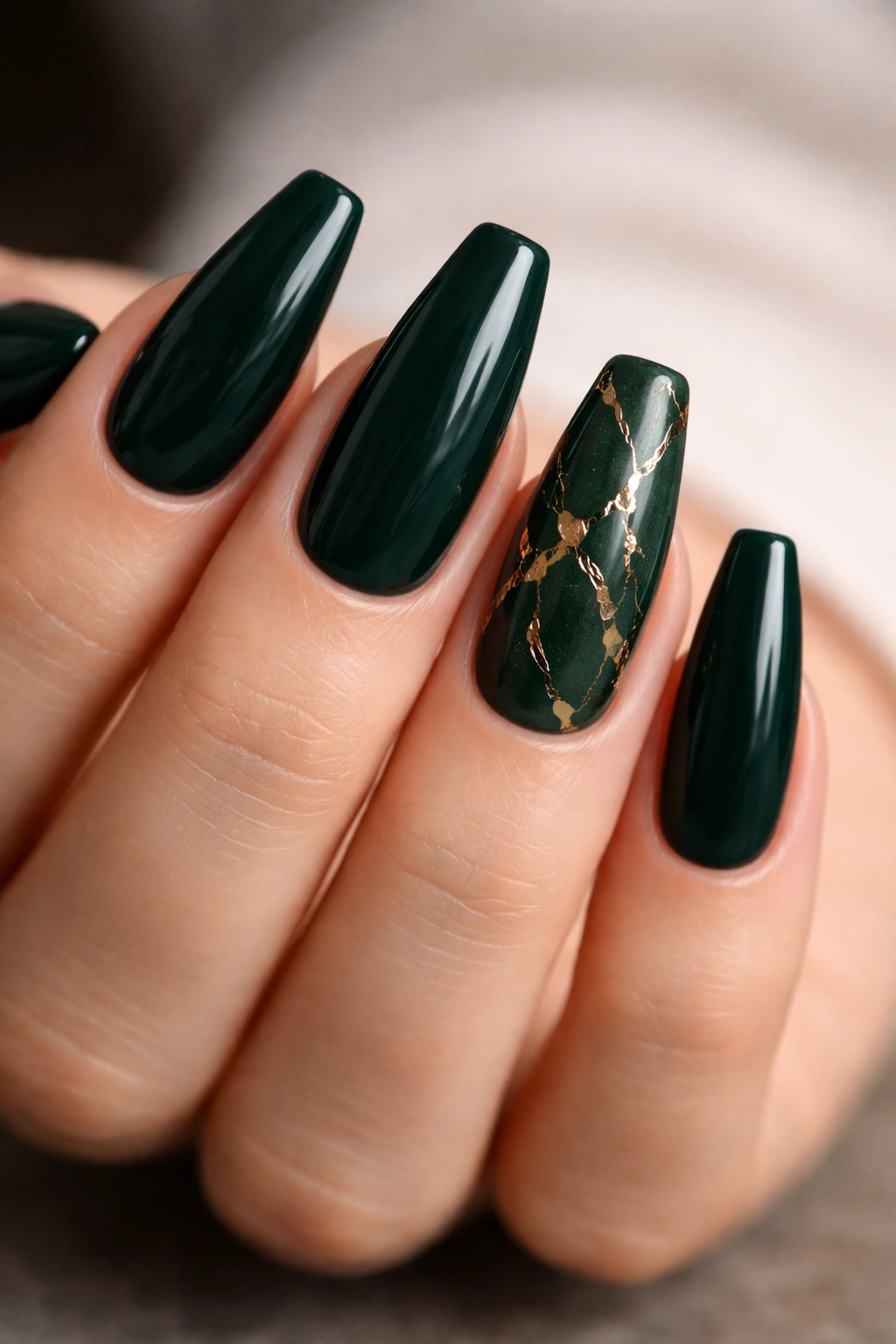
If you like stone textures but hate when marble nails start looking busy, cracked gold veining is the cleaner route.
The base should be a deep green—forest, emerald-black, or mossy bottle green. Over that, place irregular gold foil or metallic paint lines that mimic fine fractures rather than thick rivers. The best version looks a little like old lacquer furniture or kintsugi translated into green polish. The worst version looks like random gold scraps stuck in clear top coat.
Where this design earns its keep
The gold breaks up a dark surface without covering it. That’s why it feels richer than full glitter. Your eye still sees the green first. The metallic detail arrives second.
Placement rules that help
- Use veining on 2 or 3 nails, then keep the rest solid dark green.
- Keep each gold line thin and broken, not one wide stripe across the center.
- Angle the cracks differently from nail to nail so the set feels hand-done.
- Seal with enough top coat to smooth the foil edges. Raised foil catches hair and starts looking rough.
A small note from painful experience: too much gold turns this into holiday décor. Less reads sharper.
8. Matte Military Green With Glossy Sidewalls
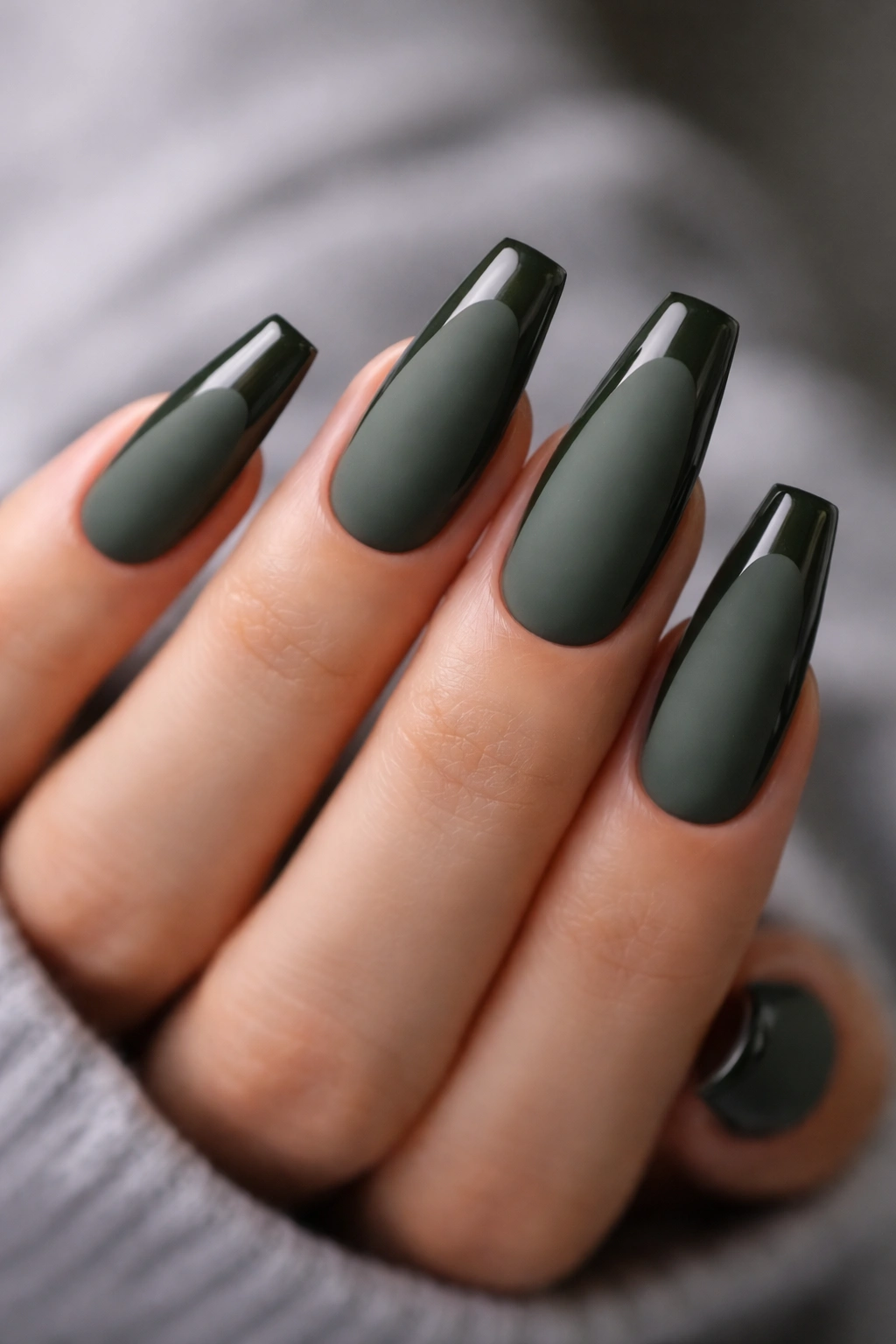
Contrast is doing the heavy lifting here. Not color contrast—finish contrast.
A military green base in matte can look flat if you leave it alone. Add glossy sidewalls or a glossy French edge, though, and the manicure wakes up. On ballerina nails, those reflective strips along the outer edges emphasize the taper and make the shape look carved rather than bulky.
You do need the right green. Pick one with some gray in it, not a bright camo shade. That gray cast keeps the base grounded and lets the glossy sections show up as shape, not as a second color.
There are two clean ways to wear it. One is a full matte nail with a slim glossy outline tracing the tip and side edges. The other is a matte base with a glossy diagonal block near one corner of the tip. I prefer the outline on medium lengths and the diagonal block on longer nails.
Good reasons to choose this set
- It reads modern without needing rhinestones or decals
- The mixed finish hides tiny scratches better than full chrome
- The sidewall gloss makes ballerina shaping look more intentional
- Photographs of the hand show the nail outline sharply
Blunt opinion: if your salon cannot do crisp finish separation, skip this idea. Smudged matte-to-gloss edges kill the whole effect.
9. Smoky Malachite Marble Across Two Accent Nails
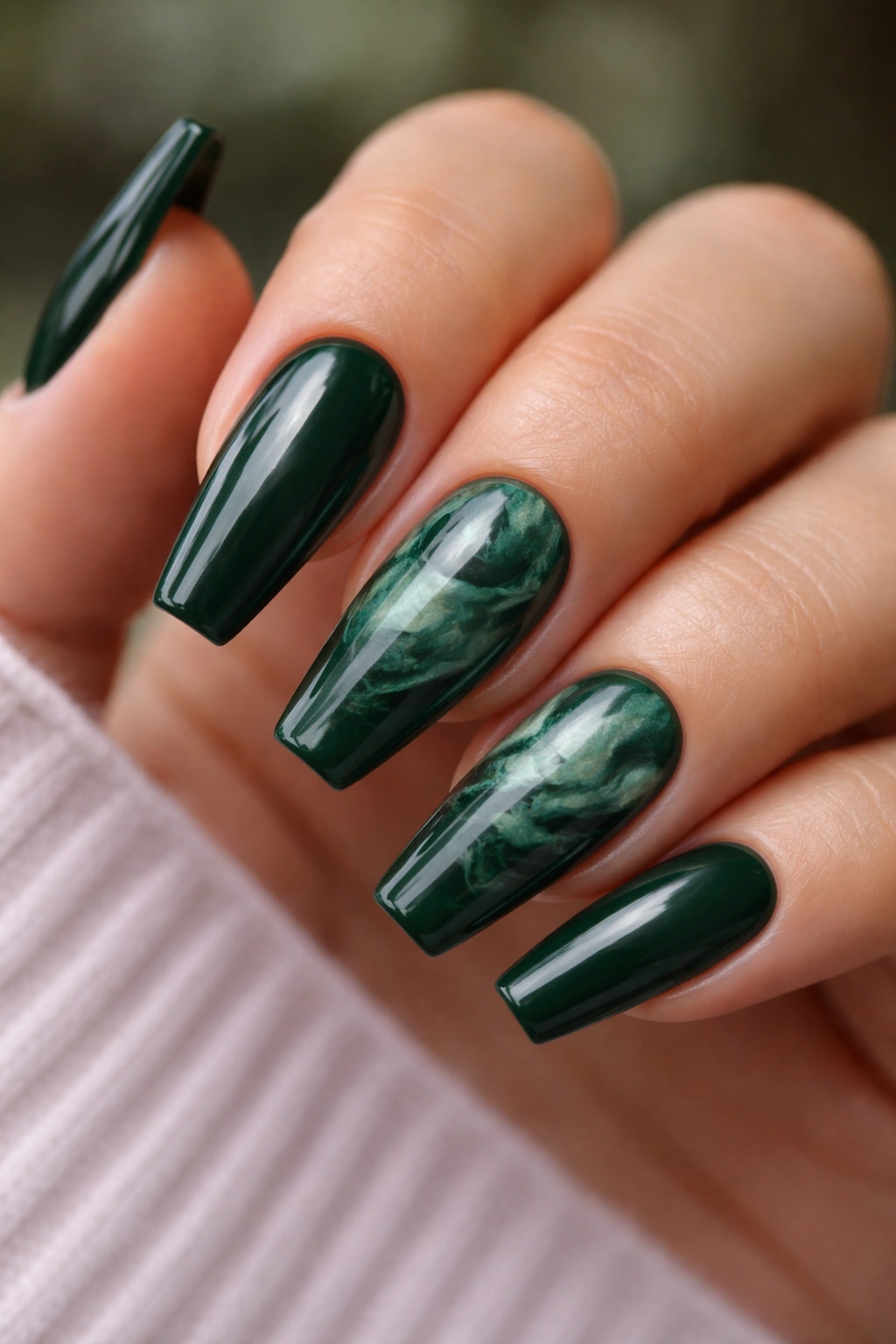
Stone-inspired nails usually get overworked. Too many swirls, too much white, too much black, then a slash of gold on top. Malachite can go down that road in a hurry.
A better version uses smoky green layering on two accent nails only, with the rest painted in one dense bottle-green shade. The marble itself should have curves, though they need to stay tight and controlled, almost like sliced stone. Think dark green, black-green, a little translucent emerald, maybe a hint of pale sage running through one ribbon. No hard zebra lines.
This design needs depth, so clear gel layers help. A nail tech can float a translucent green over thin curved lines, cure, add another ribbon, cure again, then top coat. That stacked method gives the “inside the stone” look. Painted-on marble with no layering tends to sit on top of the nail and loses the mineral feel.
I like this set when someone wants art but still wants the manicure to feel grown. Two marble nails are enough. Three can work. Ten is asking for trouble.
Gold can join the party, though lightly. One hair-thin vein inside one accent nail is plenty. More than that, and the eye stops reading malachite and starts reading decoration.
10. Deep Teal-Green Chrome Over Black Gel
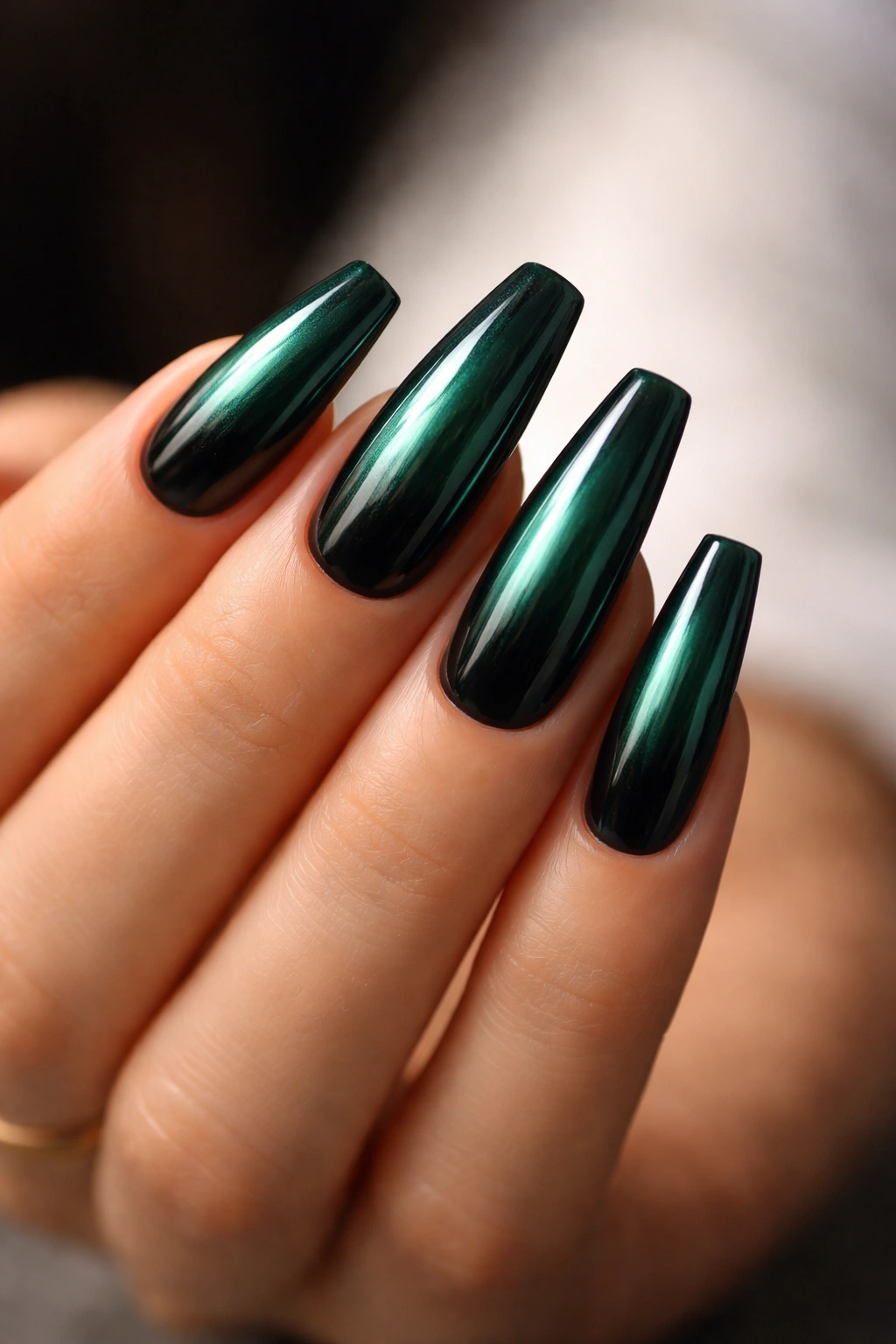
Chrome can look cheap. I’m saying it plainly because somebody has to.
The rich version uses a dark teal-green chrome over a black gel base, not a bright mirror finish over random color. That black underneath gives the chrome weight. Instead of screaming silver-green, the nail flashes oil-slick teal, pine, and a hint of graphite as your hand turns.
This is not the set for thick nails. Chrome shows bulk faster than cream polish does, so the structure underneath needs to stay slim and even. A smooth apex, flush sidewalls, and capped free edge make all the difference.
Who should wear this one? Anyone who likes a colder, sharper look and wears more silver, white gold, gunmetal, or black. Yellow gold can work, though teal chrome leans better with cooler metals.
The best version has no art layered on top. No gems. No decals. No stamped pattern. Chrome already gives motion and reflectivity. Anything extra starts muddying the point.
11. Moss-to-Black Ombre With Soft Tapered Edges
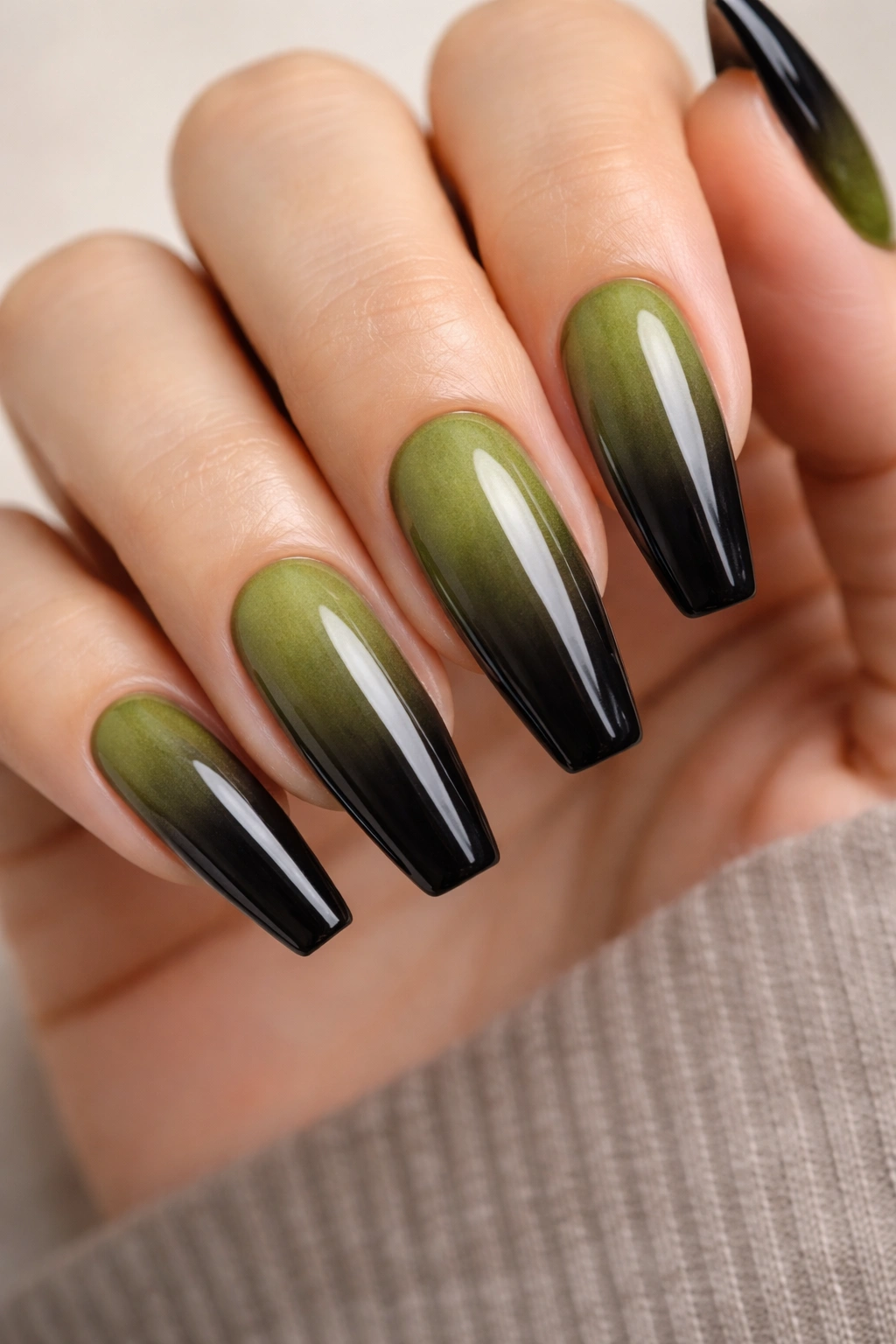
A good ombré on ballerina nails should fade like smoke, not like a sponge dab from a DIY kit.
Moss-to-black works because the green stays deep while the black anchors the tip. You can fade upward from black at the free edge into moss near the cuticle, or reverse it if you want a darker base. I prefer black at the tip, moss near the cuticle on ballerina nails. The taper makes the dark tip look sharp, and the lighter root area keeps the set from feeling too heavy.
Why this fade works better than bright ombré
Bright color fades often depend on contrast for drama. This one depends on texture and depth. The shift is quieter, and that’s why it can read more expensive. Up close, you see a smoky gradient. From a few feet away, the nail looks like one deep, custom-mixed shade.
What to ask for
Ask for an airbrushed or brush-blended fade with no visible line at the center. Sponge blending can work, though it often leaves a grainier middle unless the tech smooths it with a sheer tint coat. A final translucent green glaze over the blend can unify the fade and make it look deeper.
This set shines on long ballerina nails. The fade has room to travel, and the flat tip gives the black edge somewhere crisp to land.
12. Emerald Micro-Glitter Sealed Under Glass
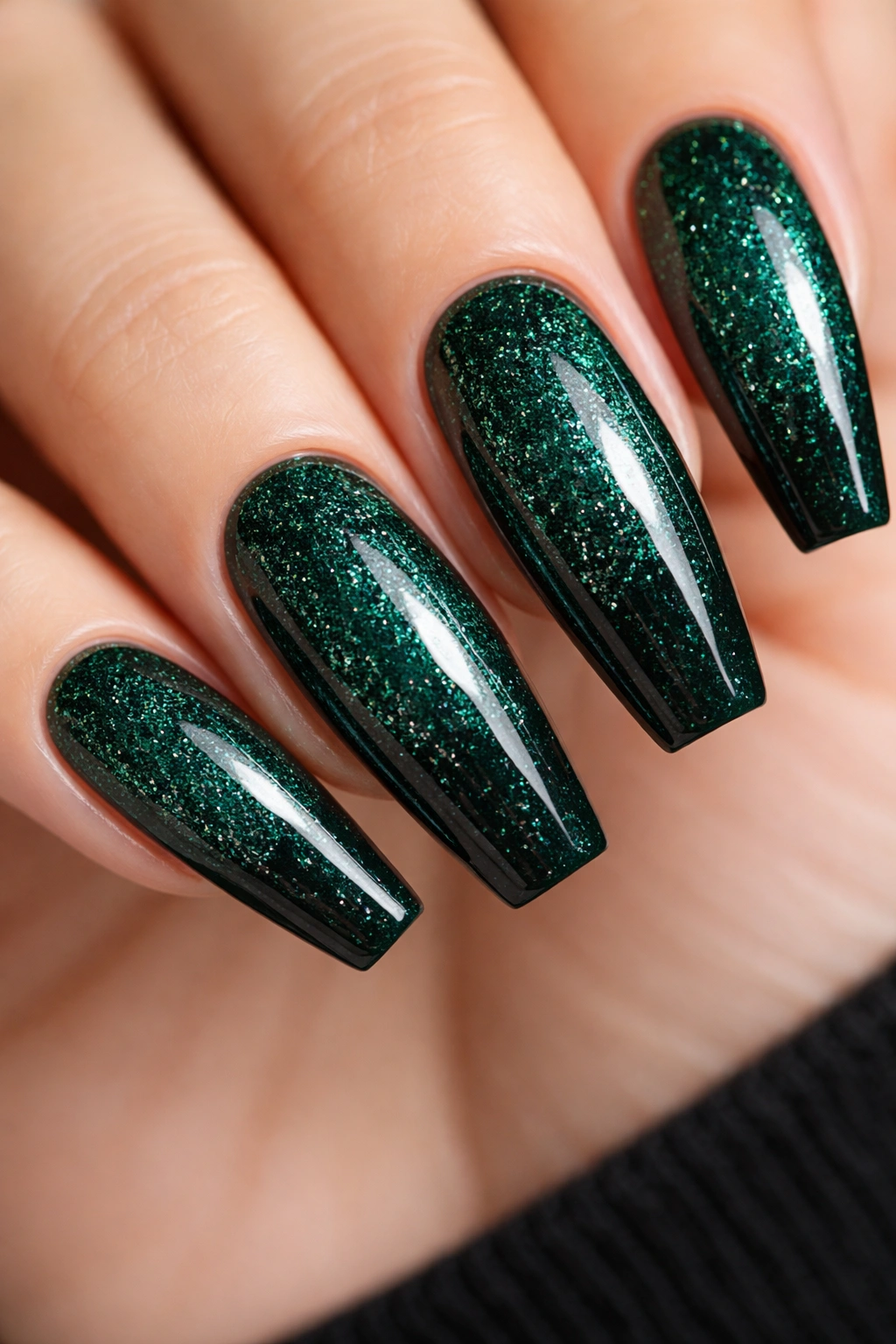
Chunky glitter can drag a manicure straight into party-store territory. Micro-glitter is a different animal.
An emerald micro-glitter suspended under a clear, high-shine top layer gives dark green nails a low, dense sparkle that reads more like mineral shimmer than craft glitter. The particles need to be tiny—think dust or fine sugar, not hex pieces you can count from across the table.
You can wear this design full coverage on every nail if the glitter is fine enough. Another route, which I like better, uses solid blackened green on most nails and micro-glitter on two. That keeps the set textured without turning noisy.
Small details that matter
- Choose glitter with one tone family: emerald, deep green, maybe a trace of gold, though not rainbow flecks.
- Use a dark base coat first so the sparkle looks buried inside the color.
- Add one leveling layer before the top coat if the glitter surface feels rough.
- Keep nail length medium or medium-long. Short nails can make dense shimmer look compressed.
Best worn when: you want some light play but still want the manicure to read dark from a distance.
13. Green Tortoiseshell Tips With a Solid Dark Base
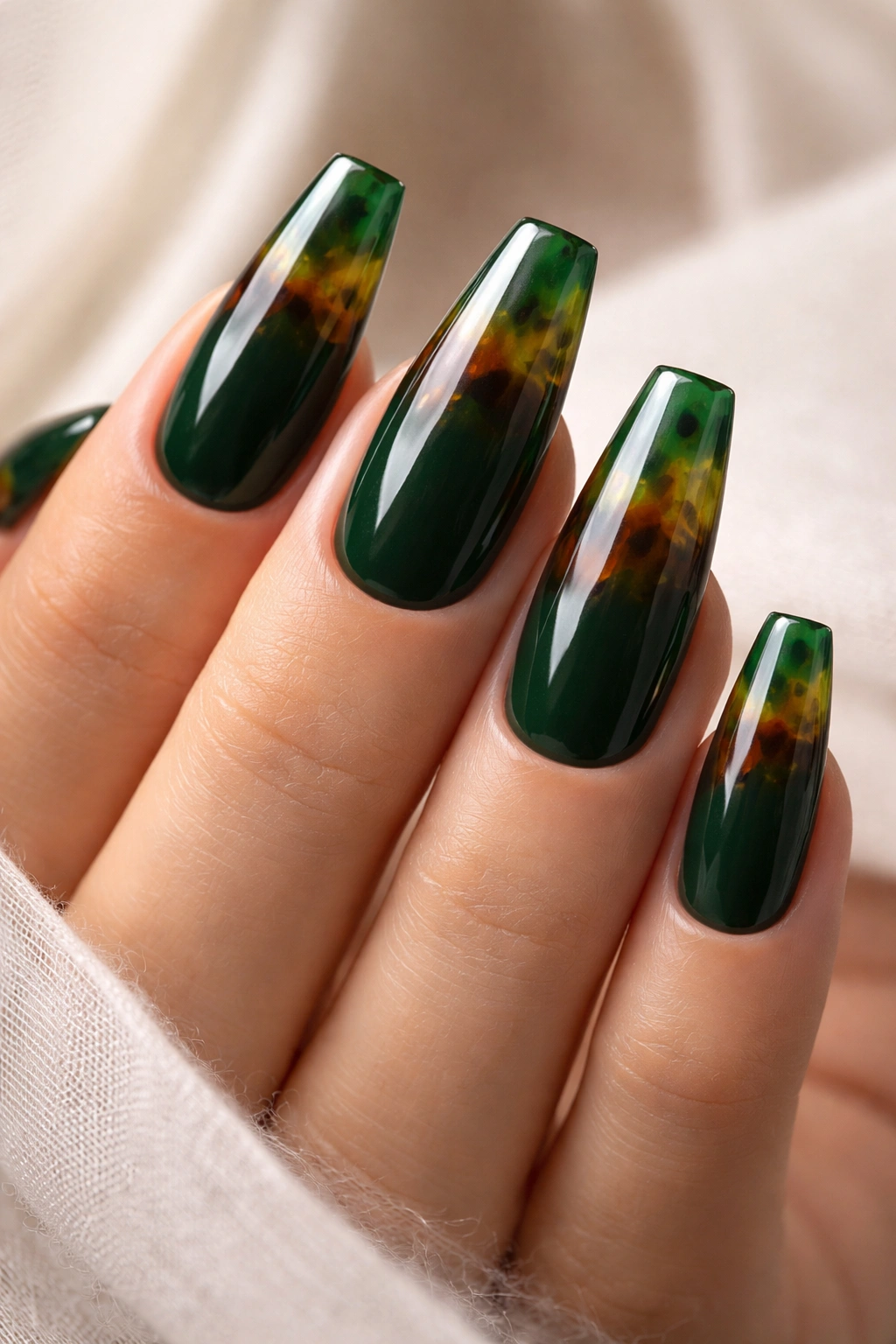
This one sounds odd until you see it done well.
Traditional tortoiseshell leans amber and brown, though green tortoiseshell shifts the palette into deep olive, moss, and smoky caramel. On ballerina nails, the smartest version uses tortoiseshell only on the tips or on two full accent nails, while the rest stay in one solid dark bottle-green shade. That balance keeps the set cohesive.
The pattern needs transparency to work. A tech will usually layer amber-brown, olive, and deeper green patches in jelly form, then blur them lightly before curing. After that, thin darker spots get added for depth. Hard outlines ruin tortoiseshell. You want softened edges, as if the color is suspended in resin.
- Best base color for the solid nails: bottle green or dark olive-black
- Best placement: tips on 4 nails plus 2 full accents, or 2 full accents alone
- Best finish: high-gloss, because tortoiseshell needs that resin look
- Best metal pairing: gold, bronze, or brushed brass
There’s a vintage quality to this design, though it does not feel old when the shape is kept clean and the color stays dark.
14. Dark Sage Suede With Tiny Gold Stud Accents
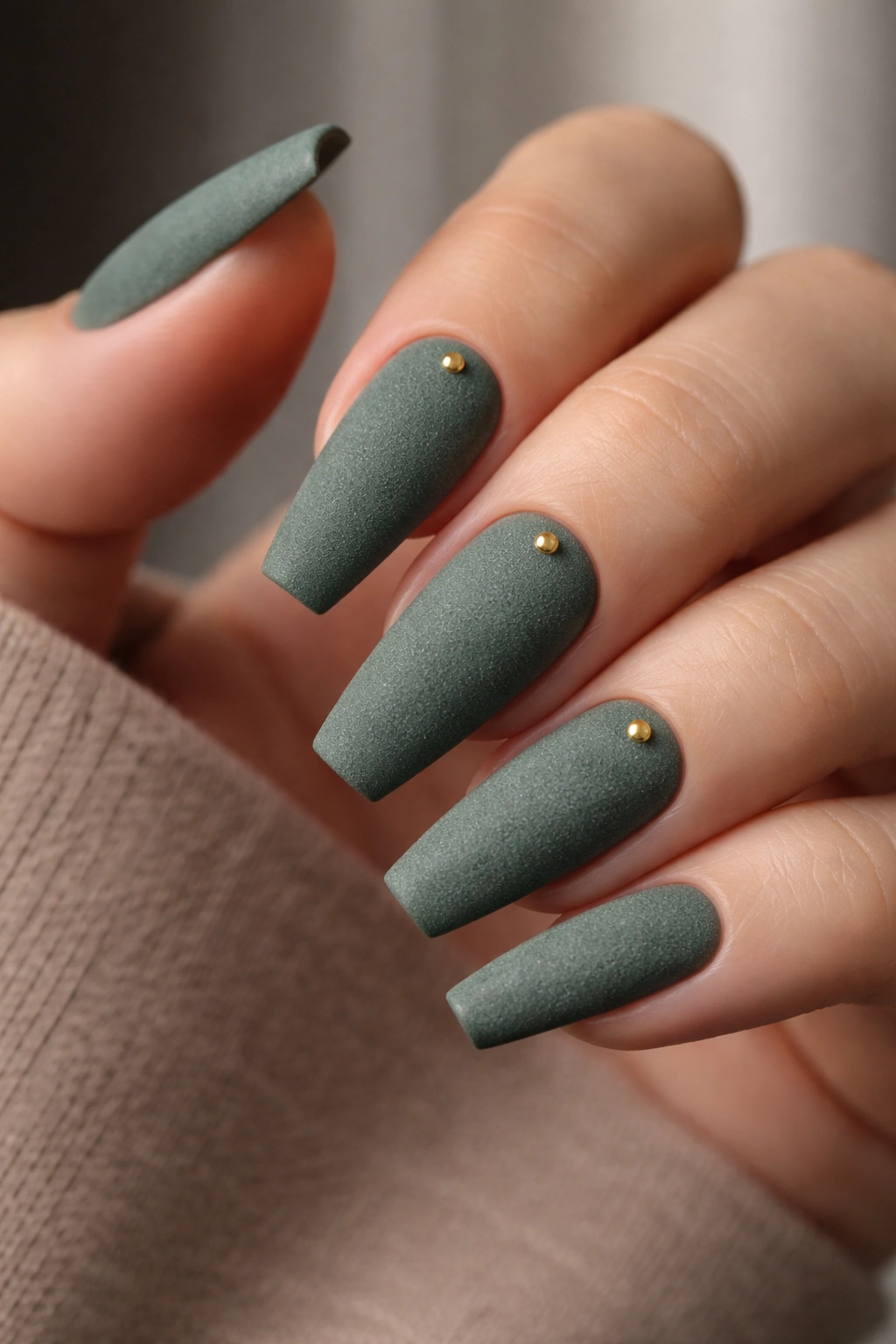
Not every rich-looking manicure has to be glossy.
A dark sage suede finish—more muted spruce than bright herb garden—can look expensive when the surface stays smooth and the embellishment stays microscopic. I’m talking about tiny gold studs, one or two per hand, placed near the cuticle or off to one side. Not full rows. Not domes the size of candy sprinkles.
The suede effect comes from a matte top coat over a dense green-gray base. Done right, it resembles brushed fabric or soft leather. Done badly, it looks chalked over. That’s why prep matters more than usual. Any dip or ridge under matte shows up. Any lint in the top coat shows up too, and matte seems to collect lint at the worst possible moment.
This set has a quiet confidence I like on shorter or mid-length ballerina nails. Long nails can wear it too, though the mood shifts from refined to more editorial. Both can work. I would keep the stud placement asymmetrical so the whole set does not feel stiff.
Gold is the right metal here. Silver can make the sage go cold and a little flat.
15. Black-Green Aura Centers on Long Ballerina Nails
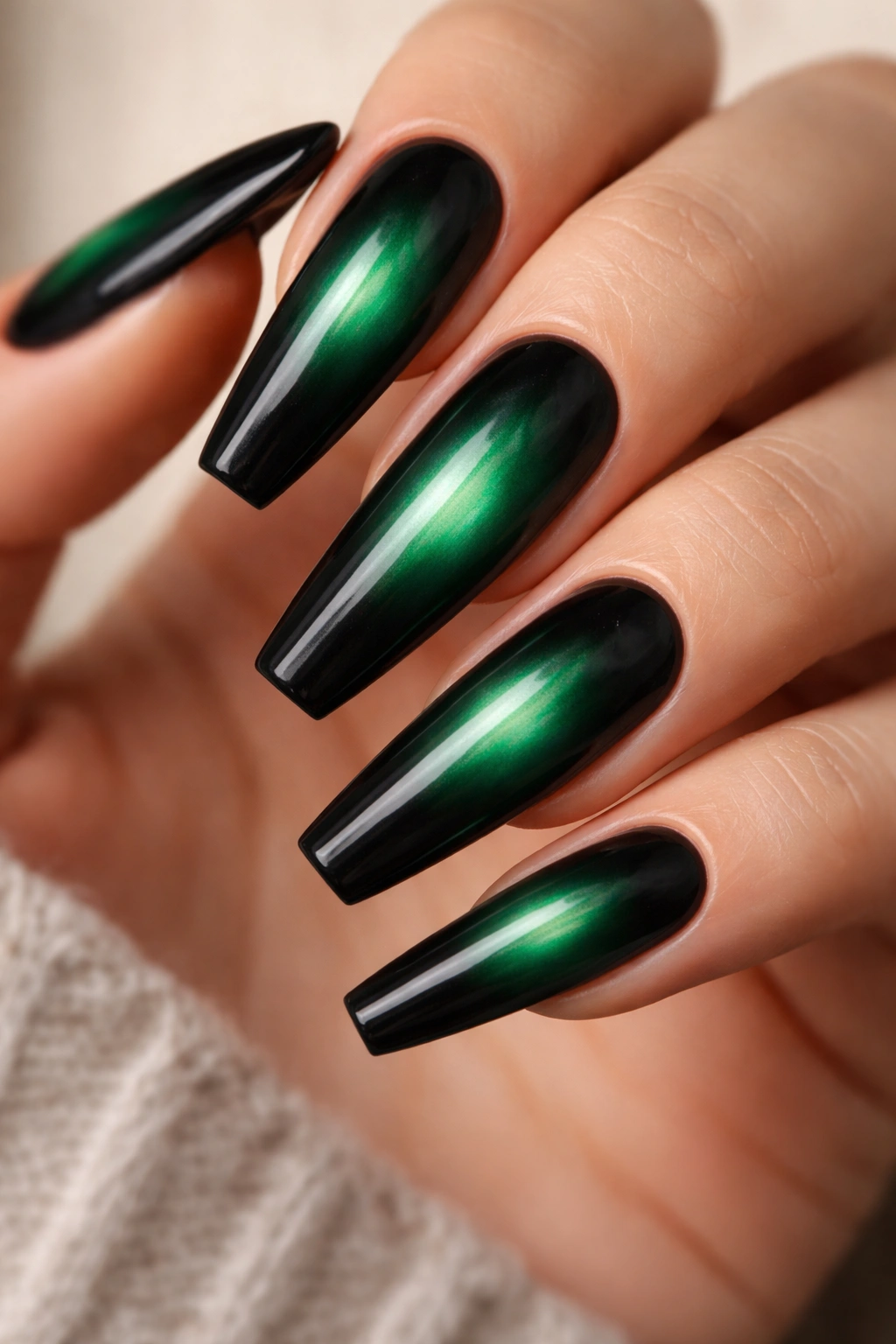
Aura nails get written off as soft, hazy, airbrushed color for almond shapes. They don’t have to be.
On a long ballerina nail, a black-green aura center can look dense, smoky, and expensive—more nightclub booth than candy cloud. The base should stay dark, either deep pine or near-black green. Then a hazy emerald glow sits in the center, diffused enough that there’s no hard ring around it. The tip and sidewalls stay darkest. That edge framing makes the center look lit from within.
Why the shape matters here
Aura on round or almond tips can feel dreamy. Aura on ballerina nails feels sharper because the straight tip boxes the glow in. You get softness in the middle and architecture around the edge. That contrast is what makes it work.
How to keep it from looking juvenile
Skip pastel centers. Skip neon lime. Keep the palette in the deep zone: black, pine, emerald, dark teal. A whisper of chrome powder over the aura center can work, though use a light hand. Too much and the look shifts away from smoky glow into full metallic.
If you like nail art but still want the manicure to feel grown, this is one of the better ways to get there.
How to Keep Dark Green Ballerina Nails Looking Glossy
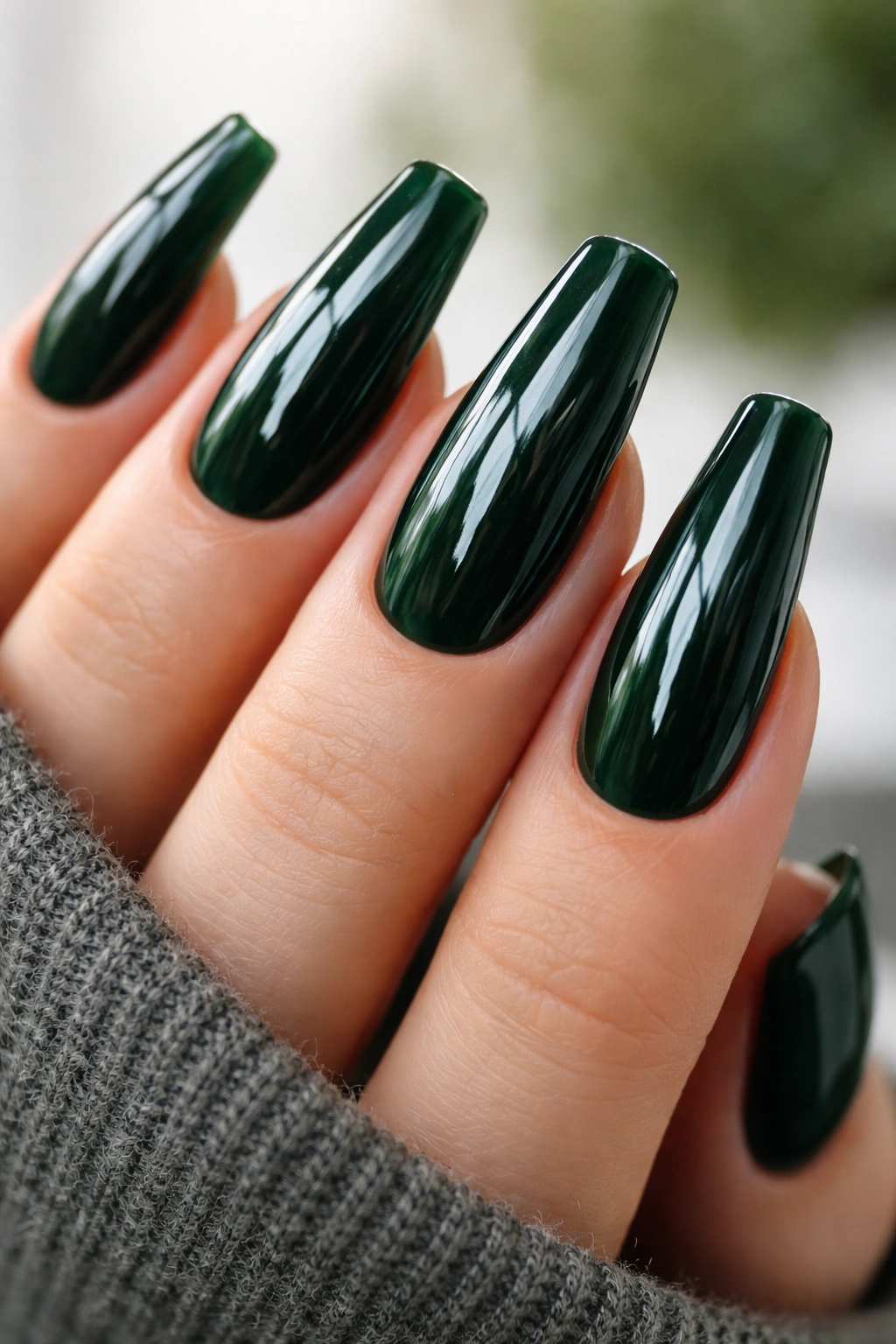
Dark shades show wear faster than sheer pinks. No way around that. The free edge turns dull first, the cuticle gap shows sooner, and chipped dark polish announces itself from across the room.
A few habits stretch the life of a deep green set:
Small maintenance moves that help
- Cap the free edge when your tech applies color and top coat. That tiny seal slows tip wear.
- Use cuticle oil twice a day, especially around builder gel or hard gel overlays. Dry skin makes dark polish look older.
- Wear gloves for dish soap and cleaning spray. Harsh cleaners dull shine and can lift chrome.
- Do not use your nails as tools for soda tabs, labels, or package tape. Ballerina tips are strong when built right, though the corners still take hits.
- Book fills before the apex grows out too far. On dark nails, balance changes become easier to spot.
Chrome, magnetic polish, and matte finishes each need slightly different care. Chrome hates rough handling. Matte hates oil sitting on the surface. Magnetic sets look best when the top coat stays scratch-free, because scratches break up that velvet effect.
Save your favorite design photo in daylight, not only under salon lamps. That one habit prevents a lot of disappointment.
Final Thoughts
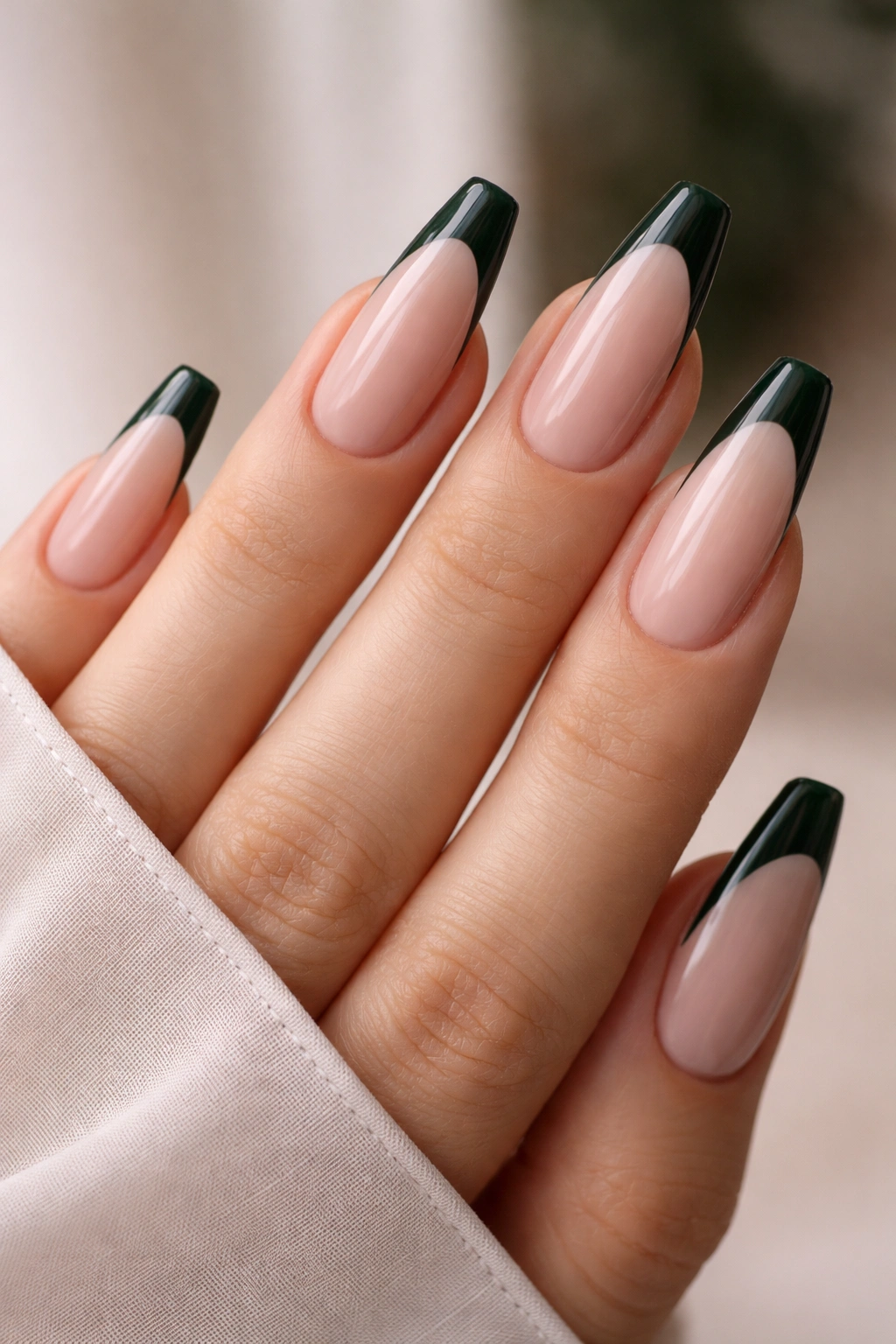
If I had to narrow these down to the three strongest picks, I’d start with blackened emerald gloss, velvet pine cat-eye, and dark green French tips on a nude base. Those three cover different moods, though each one keeps the same expensive-looking backbone: clean shaping, deep pigment, and restraint.
The biggest mistake with dark green ballerina nails is not the color. It’s overworking the set. Deep green already brings weight and presence. Give it one strong finish or one strong detail, and it usually does the rest on its own.
Bring your nail tech two reference photos instead of ten, check the shade in natural light, and pay attention to structure from the side view—not only the top. That’s where rich-looking nails usually win or lose.