

A French manicure can look crisp and expensive, or thick and clumsy, based on details so small most people do not notice them until the set is already finished. On a ballerina shape, those details matter even more. The tapered sidewalls and flat tip leave nowhere for sloppy lines to hide.
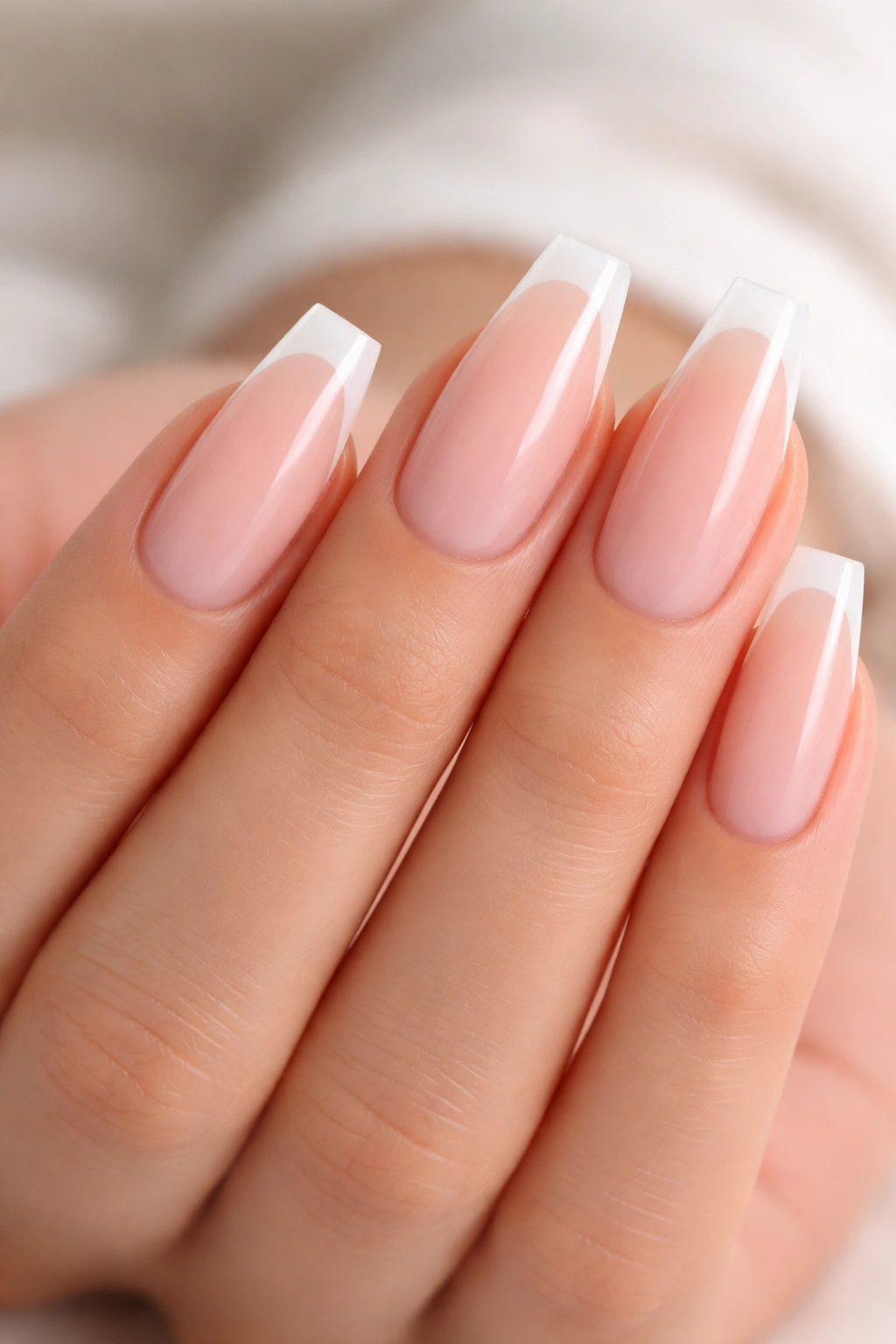
That is why French tip ballerina nails work so well when you want a clean look. You already have structure built into the shape: narrow sides, a soft squared-off edge, and enough length to make the nail bed look longer. Add the right French tip, and the whole set looks tidy, bright, and intentional without needing charms, heavy art, or five colors fighting each other.
Three things make or break this style. Tip thickness comes first; once the white edge gets wider than about 2 to 2.5 mm on most medium-length sets, the manicure starts to look heavier. Base color matters too. A sheer milky pink smooths the nail plate, a cool nude sharpens the white, and a beige base can soften the contrast if stark white feels harsh on your skin tone. Then there is the shape itself—ballerina nails need enough free edge to taper, usually at least 4 to 6 mm past the fingertip, or the whole thing can turn into a short square by accident.
And one more detail that nail photos do not always show: the smile line has to work with the taper. On square nails, a flat French can still look balanced. On ballerina nails, a weak curve at the corners can make the tips look blunt and wide. Get that proportion right, though, and even the plainest white French suddenly looks polished in the best way.
1. Soft White Micro Tips for French Tip Ballerina Nails
If you want the cleanest version of this look, start here. A micro French tip on a ballerina shape keeps the white edge narrow—usually around 0.5 to 1 mm—so the nude or pink base stays the star.
The effect is sharp, light, and grown-up. It works best on medium-length ballerina nails where the side taper is visible but not dramatic, because the thin white line follows the flat free edge without taking over the whole nail.
Why this one works so well
A milky pink base blurs ridges and discoloration, which matters more than people think. When the base looks cloudy and even, the white tip reads cleaner because there is no harsh line from your natural free edge showing underneath.
Best details to ask for
- Base color: sheer milky pink or translucent soft blush
- Tip width: 0.5 to 1 mm
- Finish: high-gloss top coat
- Best length: 4 to 7 mm past the fingertip
- Best product choice: gel paint for the tip, since regular white polish can look bulky at that width
My take: if you only save one photo before your salon appointment, make it a micro French on a milky base. It almost never misses.
2. Bright White Arched Tips on Medium Ballerina Nails
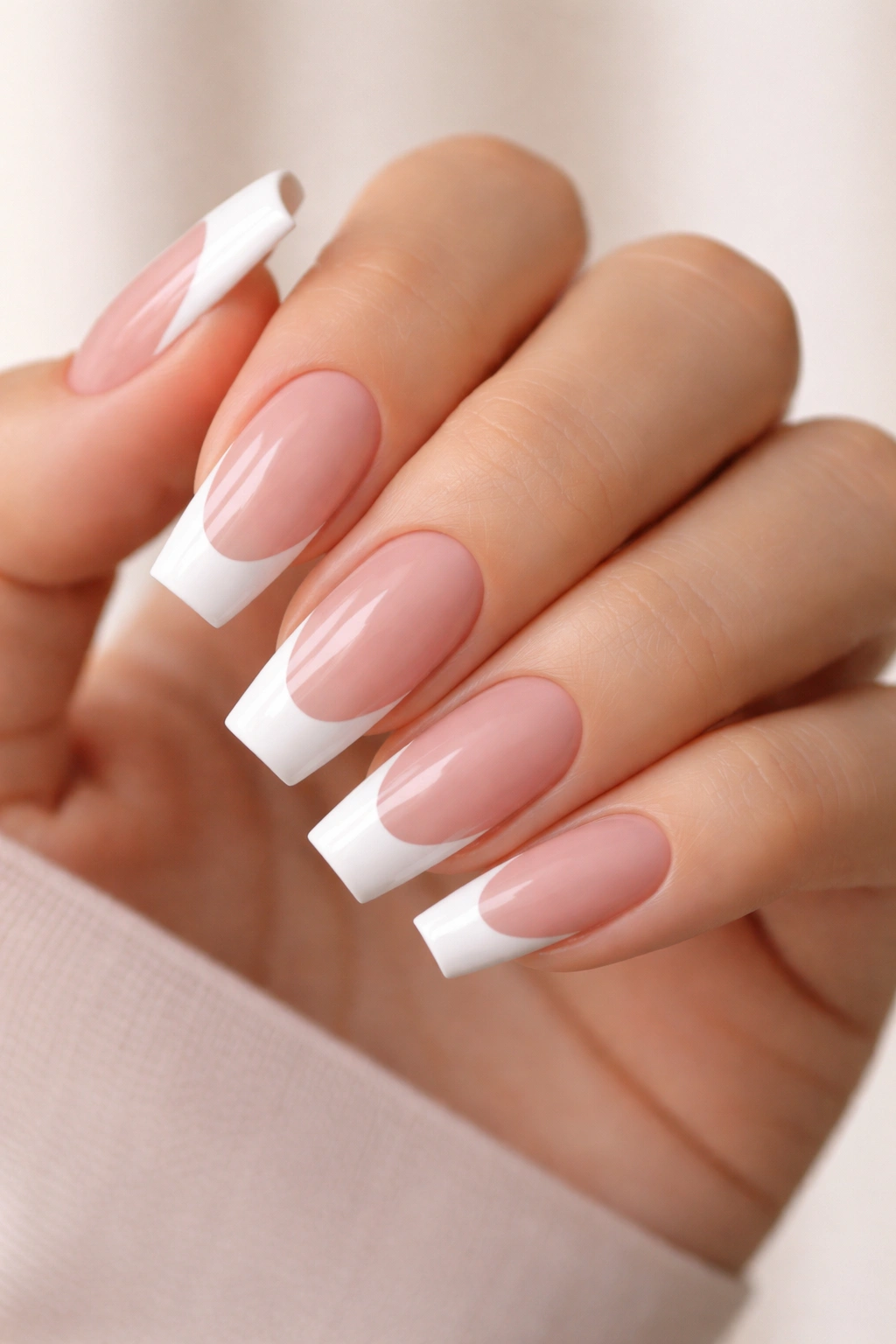
A crisp, bright white French works best when the arch is strong enough to lift the eye upward. Skip that detail and the same color can look flat.
Medium-length ballerina nails are the sweet spot for this design. You get enough room to show the shape, but not so much length that the manicure starts reading dramatic. A bright white tip on this length has a clean, fresh edge that looks good with office clothes, denim, or a black dress without feeling too precious about any of it.
The trick is contrast. Use a base that is nude rather than milky if you want the white to stand out. A beige-pink or neutral blush base gives you that classic French manicure split—soft body, bright edge—without looking chalky. I would keep the tip at around 1.5 mm here, maybe 2 mm if the nail bed is long.
One caution. Optical white can make short fingers look a touch wider if the tip stretches too deep at the sides. Ask for a slightly higher smile line instead of a straight bar across the nail. That one tweak changes the whole feel of the set.
3. Deep Smile Line French for Longer Nail Beds
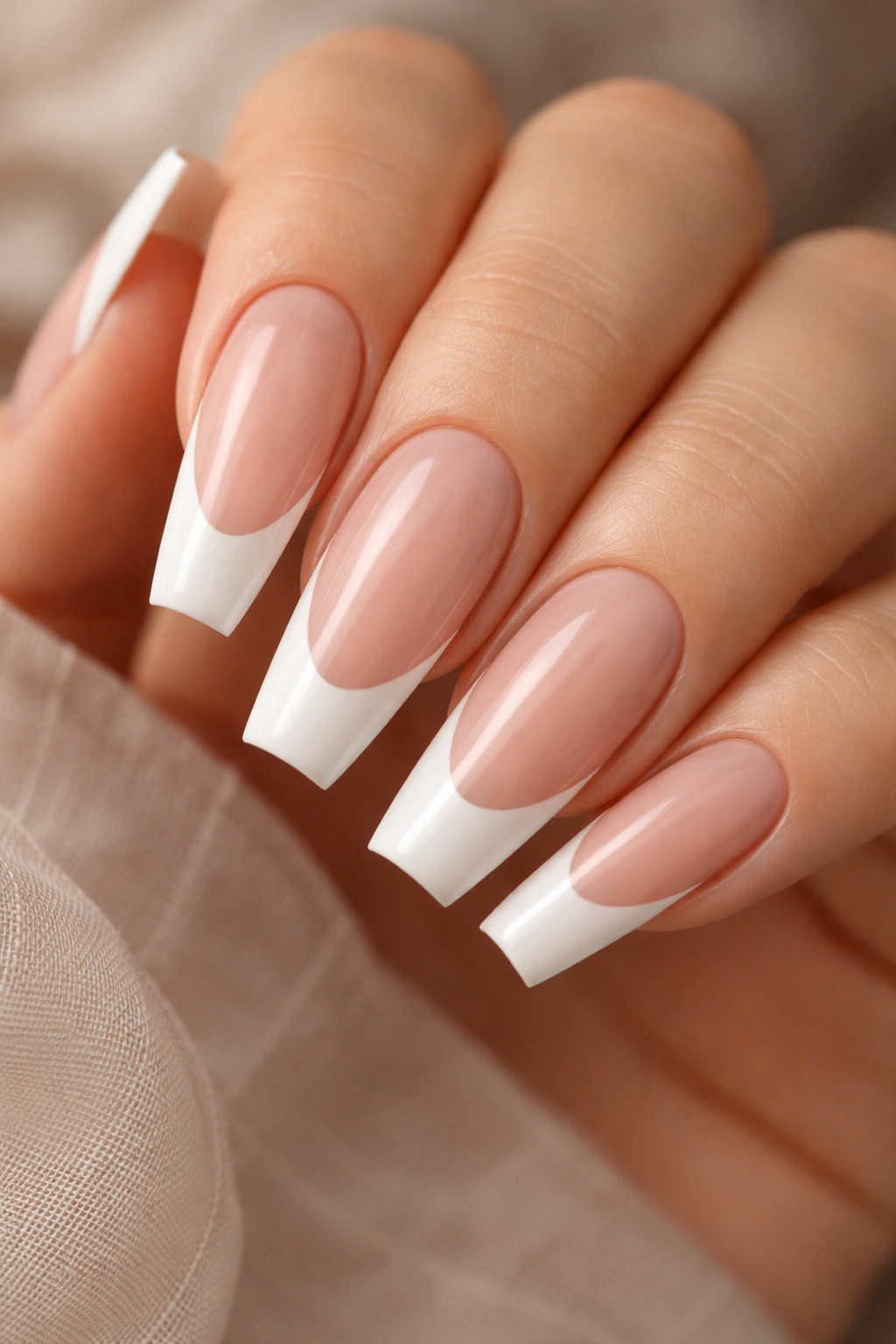
Why does a deep smile line make such a difference on ballerina nails?
Because the shape already narrows toward the end. When the French curve dips lower in the center and rises neatly at the sidewalls, it echoes that taper and makes the nails look slimmer. A shallow curve does the opposite. It can flatten the whole manicure and make the free edge seem broader than it is.
This design looks strongest on people with naturally longer nail beds or sculpted extensions that mimic that shape. The deeper arc gives the white tip more movement without needing extra width, so you get definition without bulk. That is the sweet spot if your goal is clean, not loud.
How to wear it well
Keep the base sheer and neutral. A transparent rosy nude is often enough. Then let the deep smile line do the work. If you add a strong pink base and a deep white curve and extra length, the set can start to feel dressy in a way some people do not want for everyday wear.
Ask your nail tech to paint the line with a fine liner brush rather than relying on the bottle brush. Precision shows here. One uneven side, and you will spot it every time you hold your coffee cup.
4. Short French Tip Ballerina Nails With a Flat Edge
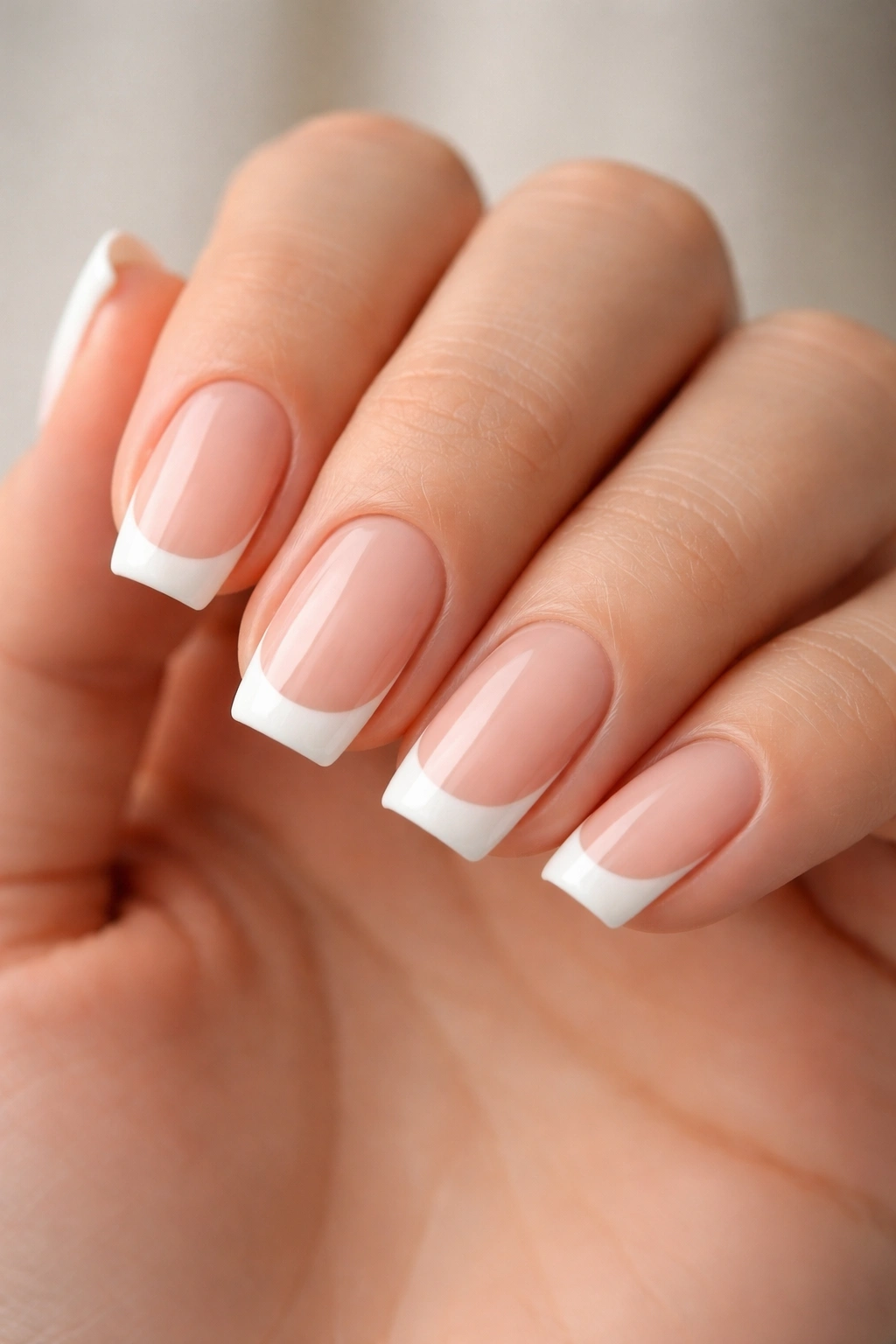
Short ballerina nails are harder than they look. There, I said it.
A lot of short sets called ballerina are really soft square nails with a slight taper, and that is fine—as long as the proportions still look clean. When the length is modest, the best French choice is a flat, narrow white edge with corners softened by a file, not a bulky curved tip that eats half the nail.
Picture a nail that extends only 3 to 4 mm past the fingertip. That nail does not have room for a dramatic smile line. What it does have room for is structure and discipline.
- Keep the sidewalls straight before the taper starts
- File the tip flat, then soften only the outer corners
- Limit the white edge to about 1 mm
- Pick a sheer nude base so growth is less obvious after 10 to 14 days
This is one of the best versions for people who type all day, handle boxes, or do not want long extensions tapping on every surface. You still get the French tip ballerina look, only in a tighter, cleaner format.
5. Cool Nude Base With Ivory Tips
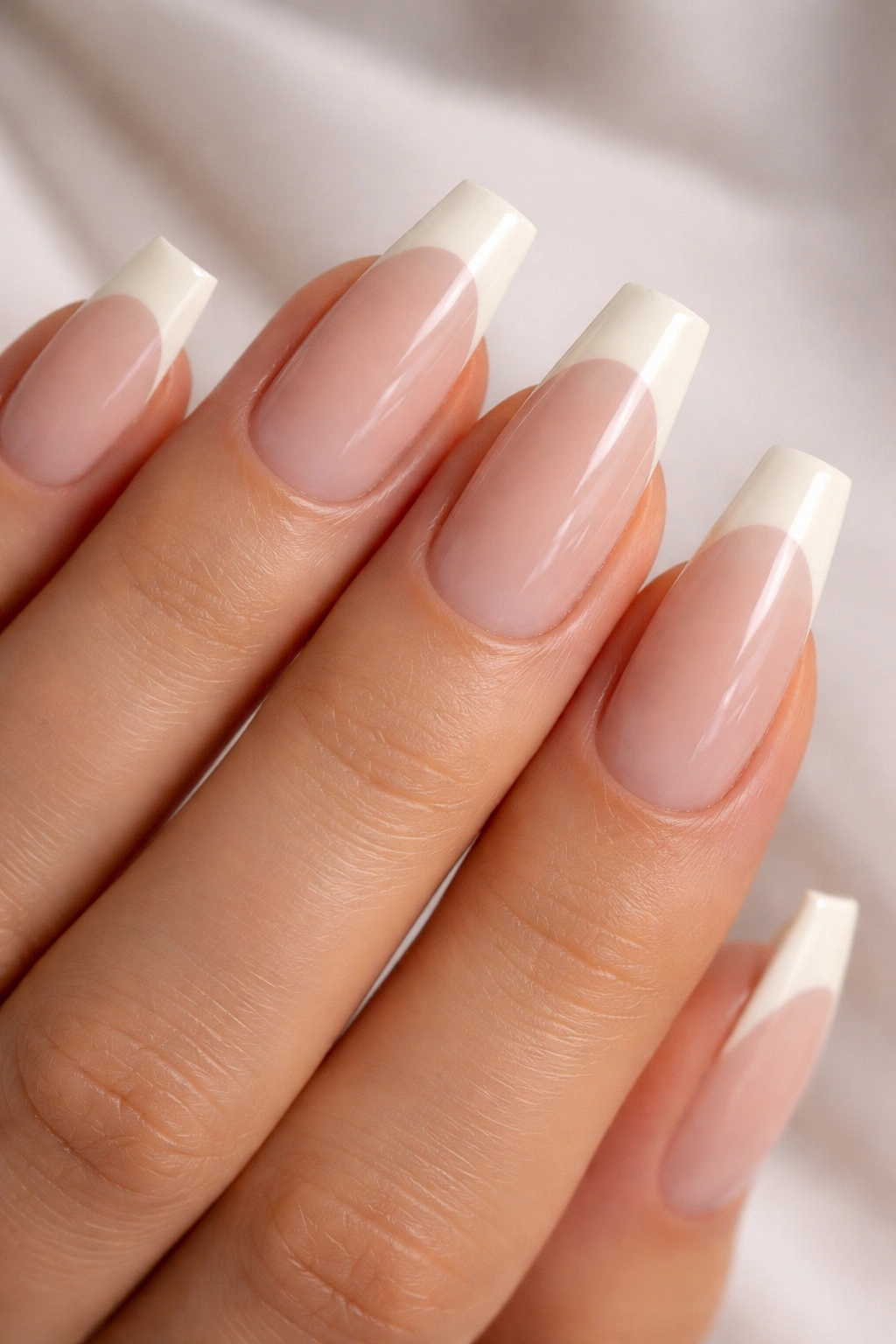
Not every French manicure needs a stark white line. On cooler skin tones, or on anyone who wants the look to feel softer, ivory tips over a cool nude base can be the better choice.
The difference sounds tiny. It does not look tiny once it is on the hand.
A cool nude base has a faint pink-beige or taupe cast, which keeps the nail body from turning peachy. Then the ivory tip—creamier than paper white, less yellow than soft beige—adds contrast without that bright correction-fluid effect some white polishes have. That matters on ballerina nails because the shape is already graphic. You do not need the color to shout too.
This version tends to look cleaner for everyday wear, especially under indoor lighting where bright white can throw a blue cast. If you wear silver jewelry more often than gold, or if standard nude polish always seems a touch orange on you, this combo is worth saving.
It is subtle. Not boring—subtle.
Keep the finish glossy, not matte. The shine gives the cream tone enough definition at the tip so it still reads as a French, not a faded neutral manicure.
6. Warm Beige Base With Cream French Ends
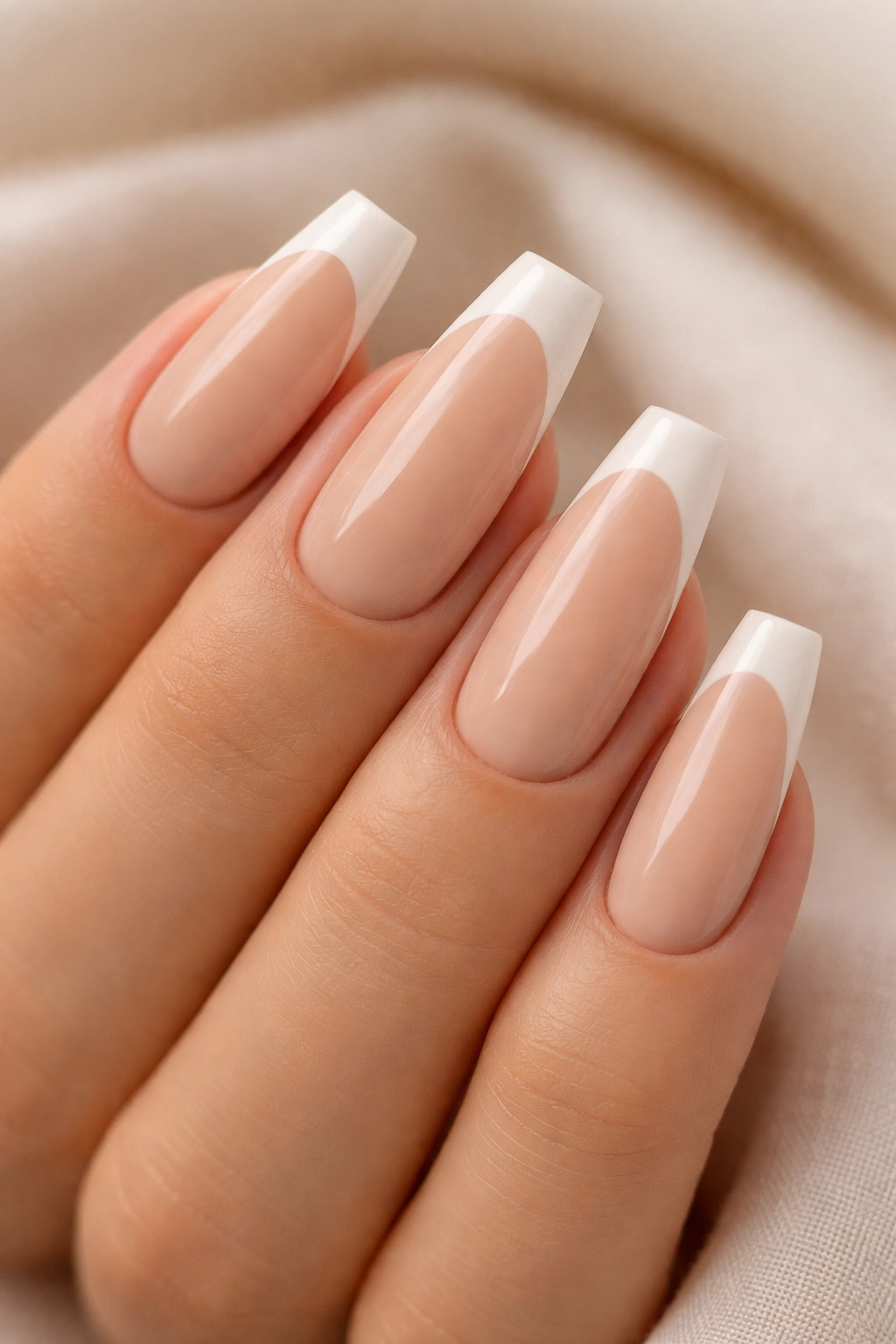
Unlike a cool nude base, a warm beige base softens the whole manicure and makes the French tip feel less sharp. That is useful if your skin has golden, olive, or deeper caramel tones and icy pinks tend to sit oddly on your hands.
A warm beige French looks polished in a quieter way. The white edge should shift with it, too. Go for cream white rather than stark white, and keep the contrast low enough that the tips look refined instead of pasted on. On medium to long ballerina nails, this combo can make the fingers look long and neat without the cold brightness of a classic salon white.
Who does this suit best? Anyone who likes neutral makeup, gold jewelry, camel or chocolate clothing, or low-contrast styling in general. The manicure blends better with that palette.
I would avoid heavy pink builder gel under this one. Warm beige needs a base with a little softness, not bubblegum undertones. Think café au lait, almond milk, pale caramel. Those shades make the French feel expensive, and yes, color temperature matters more than people expect.
7. Double-Line French Tips With a Sliver of Negative Space
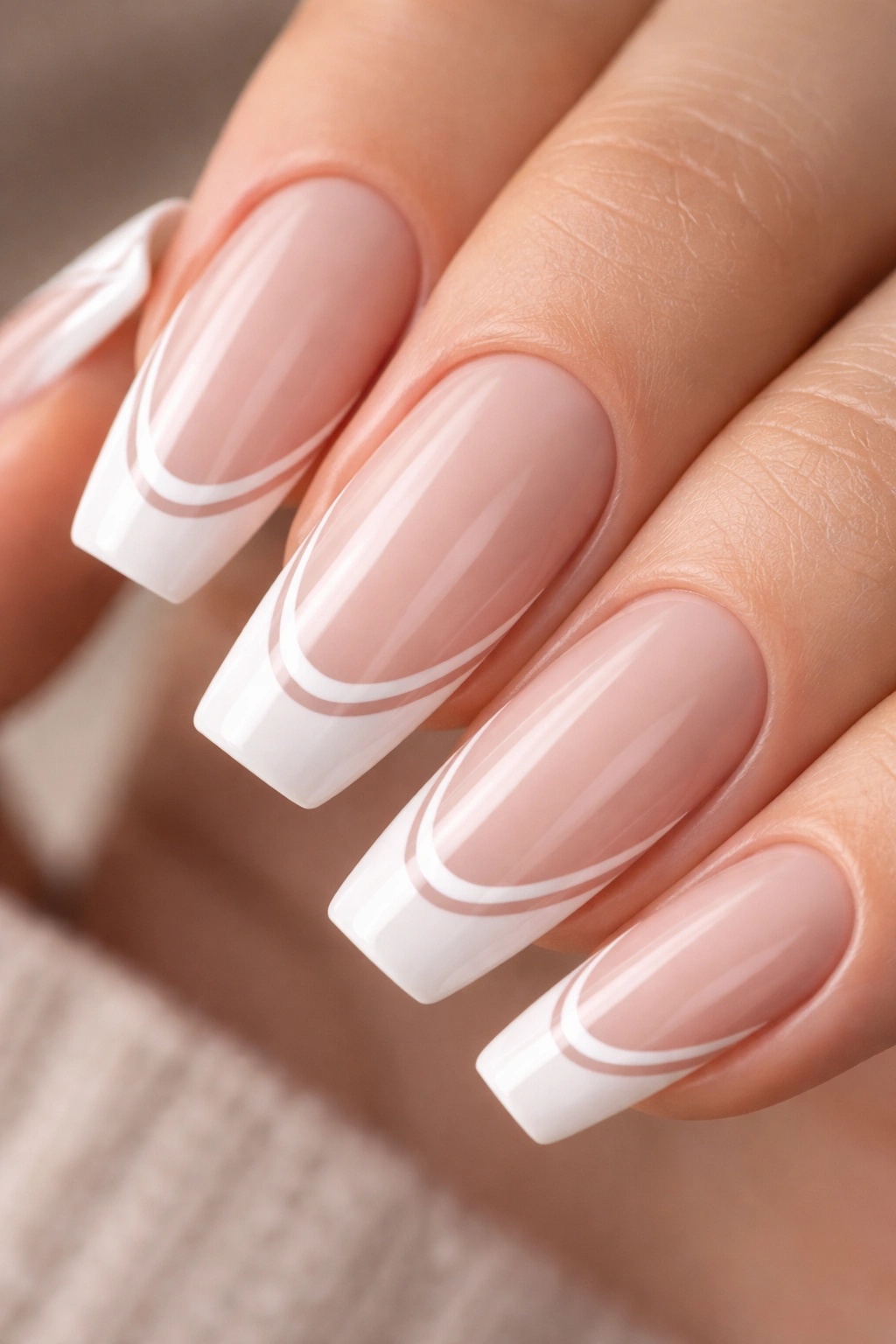
A double-line French can look busy on the wrong shape. On ballerina nails, done with restraint, it looks neat and architectural.
The cleanest version uses a regular white French edge, then adds a second ultra-thin white line about 1 mm above it, leaving a narrow strip of nude between the two lines. That tiny negative-space gap keeps the design airy. If the spacing gets wider than 1.5 mm, the manicure starts to lose the clean effect and can drift into graphic nail art.
What makes this design stand out
You still get the familiarity of a French tip, but the extra line gives the eye a second edge to follow. On long fingers, it can look almost tailored, like stitching at the hem of a crisp pair of trousers.
Best way to keep it tidy
- Use two thin lines, not one medium and one thick
- Pick a sheer base with low shimmer or none at all
- Stay with a glossy finish so the spacing looks sharp
- Keep accent nails out of it; this design already has enough going on
Small warning: this one shows regrowth sooner than a plain French if the upper line sits too close to the cuticle side of the nail. Placement matters.
8. Side-Swept French Tips That Start at One Corner
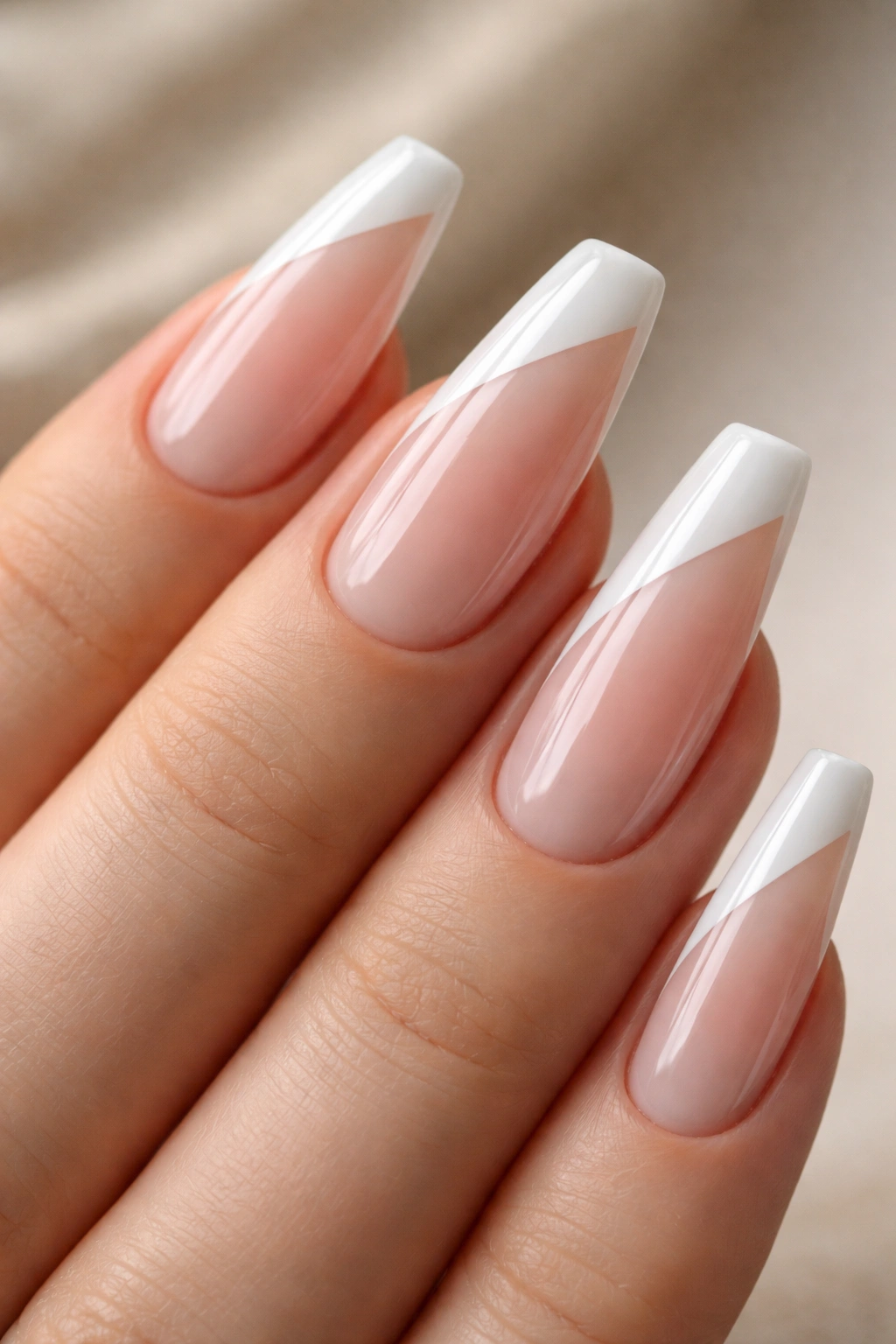
A side French is one of the easiest ways to make ballerina nails look longer without adding more length. It tricks the eye diagonally.
Instead of painting the tip straight across, the white line starts low on one sidewall and sweeps upward toward the opposite corner. On a ballerina shape, that diagonal works because the tip is flat enough to hold the line and tapered enough to keep it sleek. You get movement, but the manicure still feels sparse and clean.
This style is strongest when the line is thin and the base stays sheer. Go too bold with the diagonal and it can look sporty rather than polished. I like it best on medium-length sets with a translucent blush base, where the diagonal almost looks drawn on with a pen.
Left and right hand placement matters here. Some nail techs mirror the sweep so the lines angle inward; others keep the same direction across all ten nails. Mirrored placement usually looks more balanced in photos and in motion. Tiny detail, big payoff.
9. Matte Nude Base With Glossy White Tips
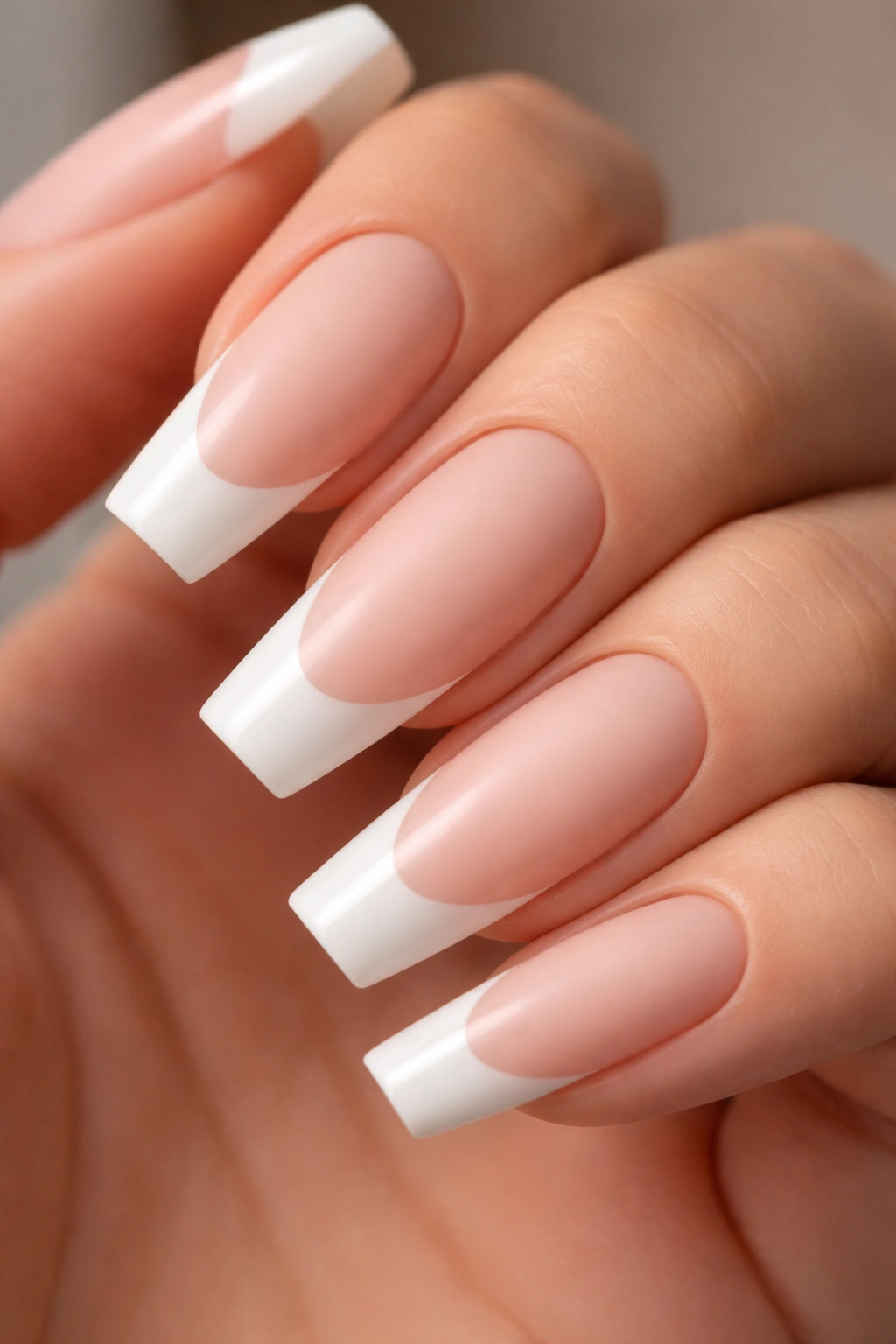
Can matte and glossy live on the same manicure without looking fussy? Yes—if the contrast is textural, not colorful.
This design keeps the nail bed in a soft matte nude while the French tip stays glossy white. Because the color palette barely shifts, the finish becomes the detail. On ballerina nails, that texture split can look sharp and clean, especially in neutral office light where shimmer or chrome would feel like too much.
Where this style works best
Use a nude base with full or medium coverage, not a sheer jelly. Matte top coat tends to magnify streaks and unevenness, so the underlying color needs to level well. Then paint the white edge after the matte layer and seal only the tip with gloss, or use a detail brush to place the glossy top coat exactly where you want it.
The catch? Matte surfaces show oil, makeup, and tiny scratches faster than glossy ones. If you use hand cream often or work with foundation, this one needs a little upkeep. Wipe the nails with alcohol every few days and the finish looks fresh again.
10. Airbrushed French Fade on a Ballerina Shape
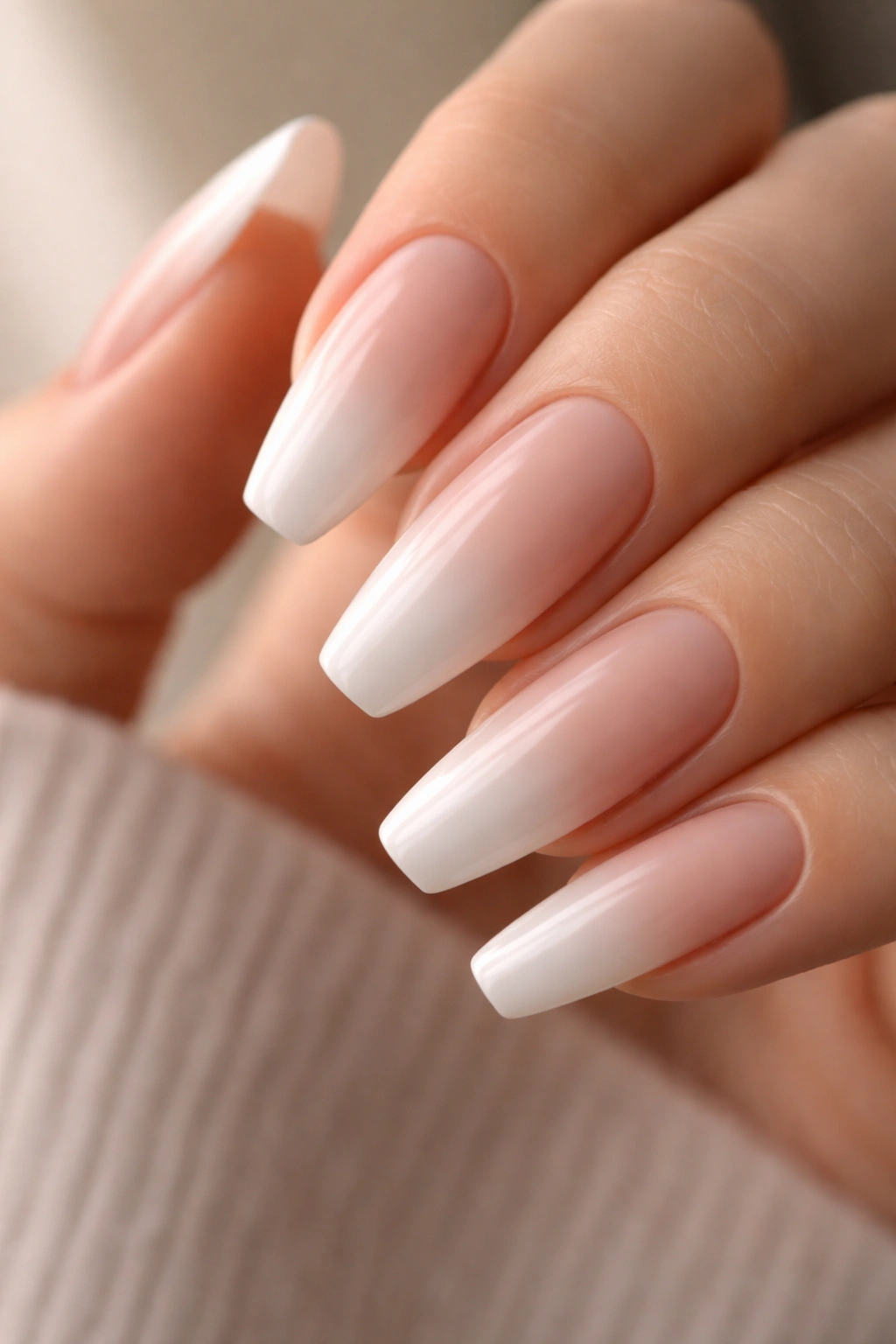
You know the look: the tip fades from soft white into nude with no hard smile line. On ballerina nails, that French fade can look cleaner than a classic painted edge when you want softness over sharp contrast.
The best version is not cloudy all over. The white should stay denser at the free edge, then blur upward over the top third of the nail. Once the fade creeps too far toward the cuticle, the nail loses structure and starts to look washed out. Keep the white concentrated near the tip and the taper of the ballerina shape still reads.
This is a good pick if your natural smile line is uneven or if you hate how harsh growth looks on a strong white French. A fade hides that issue better. Regrowth tends to blend in, especially with a sheer pink or beige base underneath.
- Ask for a soft fade, not full opaque baby boomer coverage
- Keep the nail length medium or longer so the fade has room
- Use builder gel if your tips chip easily; soft white gradients show breaks fast
- Skip glitter top coat unless you want the design to lean bridal
Quiet, soft, polished. That is the mood here.
11. Reverse French Half-Moon at the Cuticle
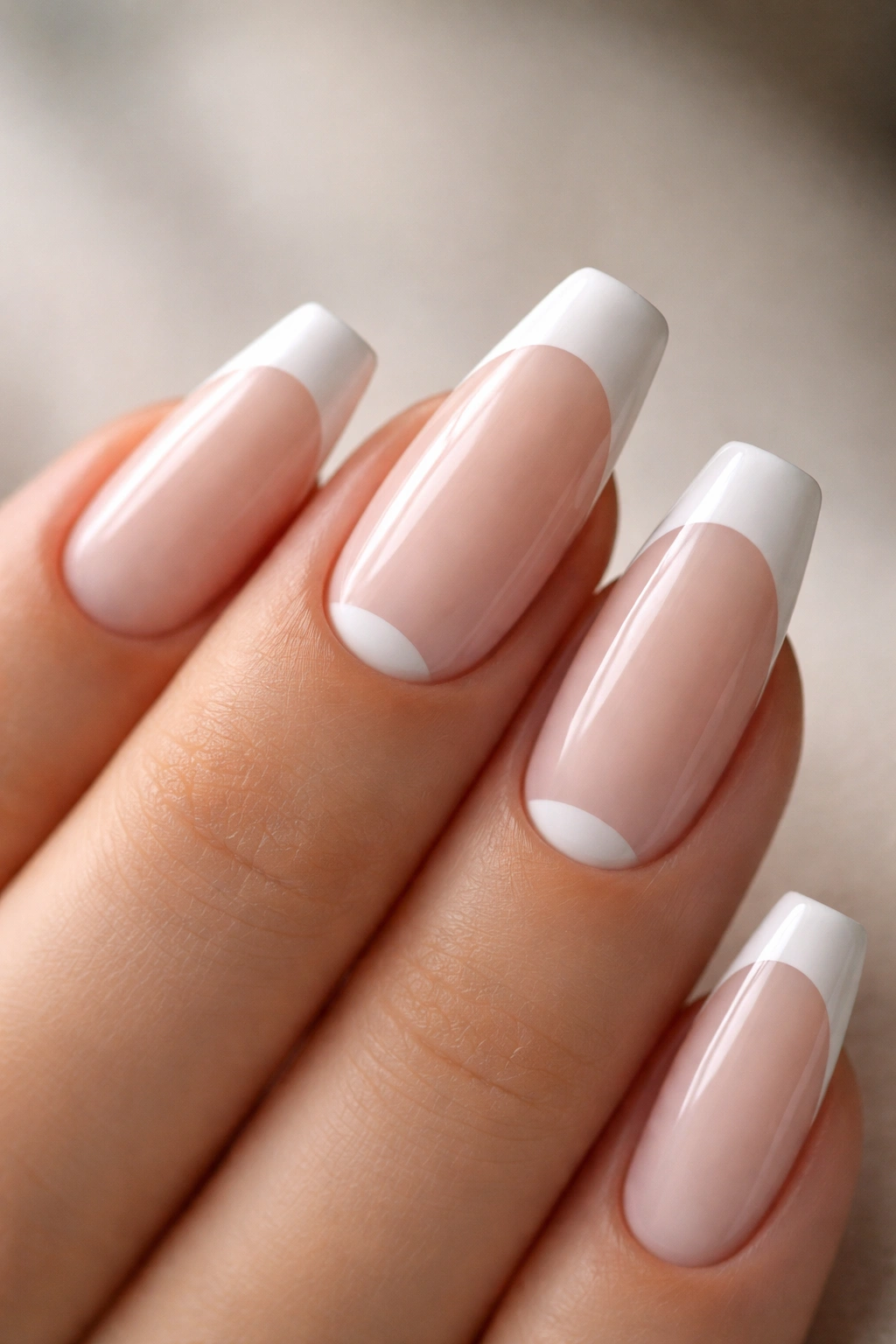
A reverse French flips the focus. Instead of putting the white detail at the tip alone, you add a thin white half-moon at the cuticle and keep the tip clean too—or, if you want more restraint, use the half-moon by itself on a nude base.
On ballerina nails, I prefer the version with a narrow classic tip and a much thinner cuticle crescent. The cuticle line should be delicate, around 0.5 mm. Any thicker, and the set starts to feel decorative rather than clean.
This design works because it frames the nail from both ends. The eye sees order. It sees symmetry. And on a tapered shape, that kind of framing can make each nail look longer and more deliberate.
Placement is not forgiving, though. If the cuticle line is too close to the skin or uneven from side to side, it will bug you all week. I would reserve this one for a nail tech with a steady hand and a fine art brush. The idea is minimal. The execution cannot be casual.
12. White Chrome French Edges Over a Sheer Base
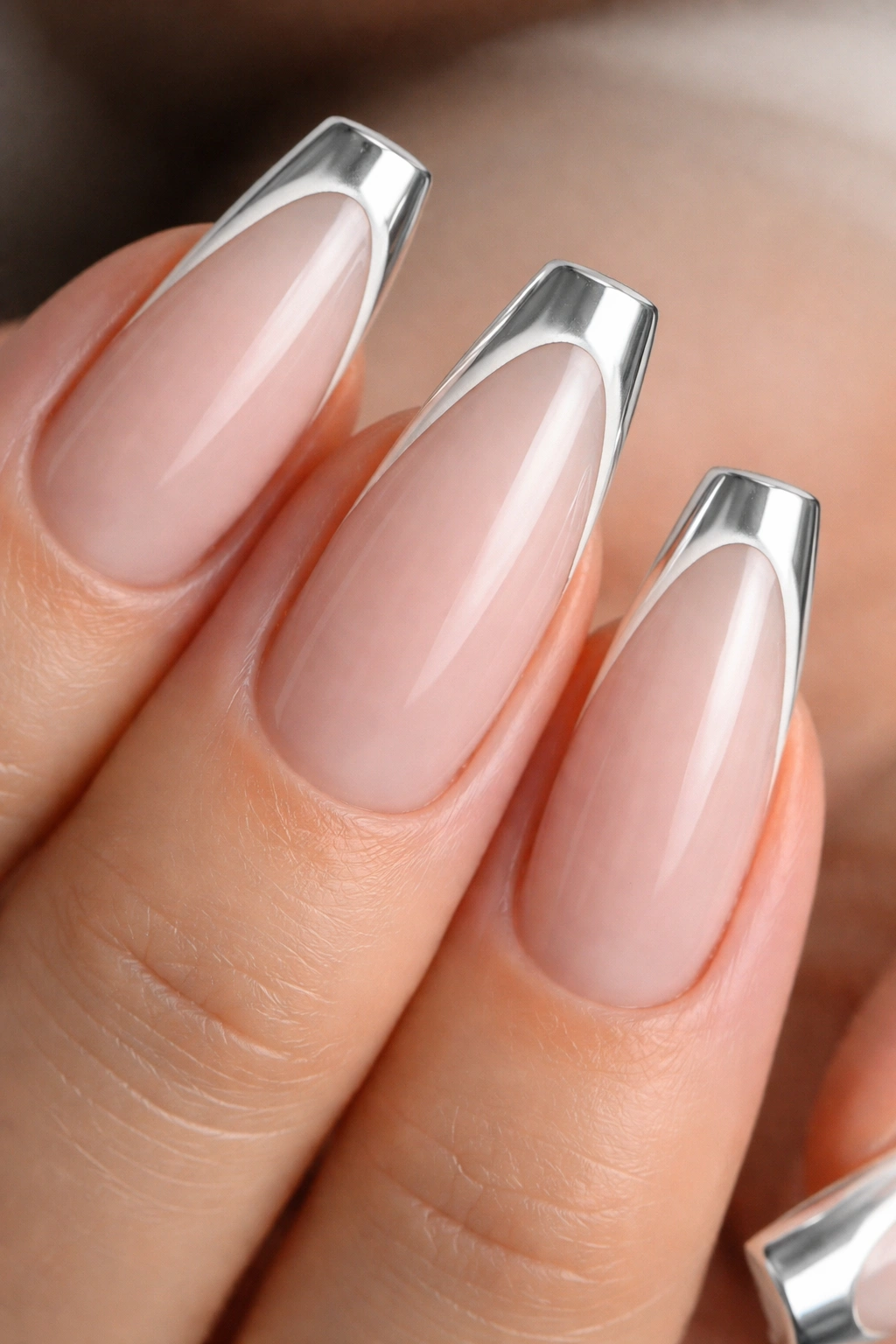
Unlike full chrome nails, a chrome French edge keeps the shine contained. You get that reflective finish only on the tip, which means the manicure still reads clean from a distance.
This looks best over a sheer base with no shimmer. Milky pink, translucent nude, or pale beige all work. The tip itself can be painted white first, then rubbed with pearl or mirror powder so the chrome has a bright foundation. On ballerina nails, the flat end helps the chrome line look intentional rather than scattered.
Who is this for? Anyone who likes a polished manicure but wants one detail that feels a bit sharper than plain white. Under daylight, the edge looks sleek. Under warm indoor light, it picks up a soft metallic cast without taking over the whole hand.
Length matters. I would keep this one medium to long, since the chrome edge looks better when there is enough free edge to reflect light cleanly. On short nails, the effect can disappear unless the tip is made wider, which hurts the clean look you were after in the first place.
13. Pearl Glaze French Tips With Soft Reflection
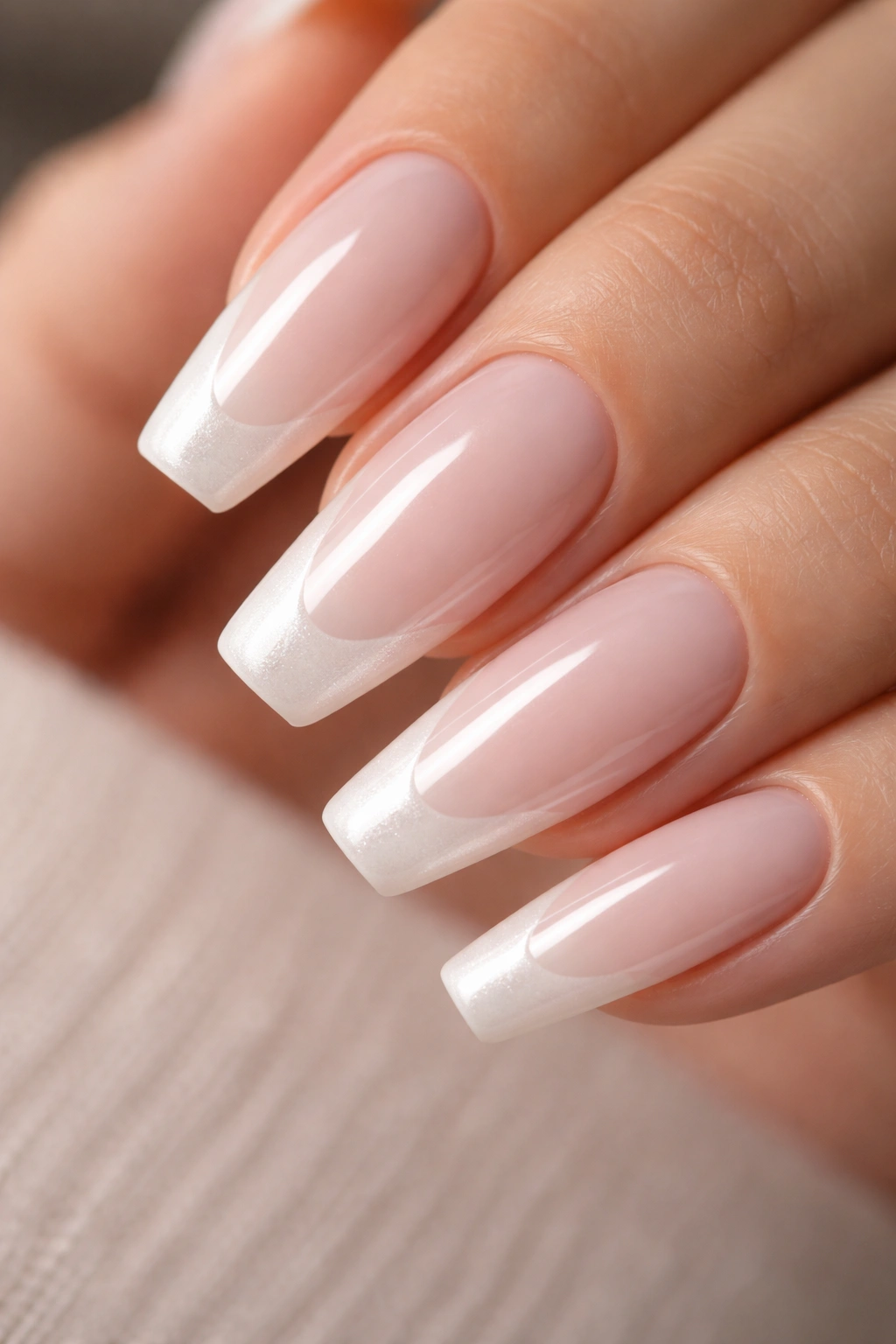
Pearl glaze is less mirror-like than chrome and less sugary than glitter. That middle ground is why it works so well on French tip ballerina nails.
The clean version uses a regular white French edge, then a thin pearl glaze over either the full nail or the tip alone. The finish should read like polished porcelain, not frosted candy. If the pearl shifts blue, purple, or green too strongly, the manicure stops feeling neat and starts feeling iridescent in a louder way.
Good polish choices for this look
- A milky pink or sheer almond base
- Opaque soft-white tips
- Fine pearl powder with a satin sheen, not chunky shimmer
- A smooth gel top coat with no visible brush ridges
This design has a dressier edge than plain French nails, though it still stays tidy. I like it for events, dinners, photos, and any moment when you want a little more finish without adding gems or line art.
The restraint matters. One pearl layer is enough. Two layers can make the nail look cloudy, and that ruins the crisp line you paid for.
14. Diagonal French Tips for Long, Lean Nails
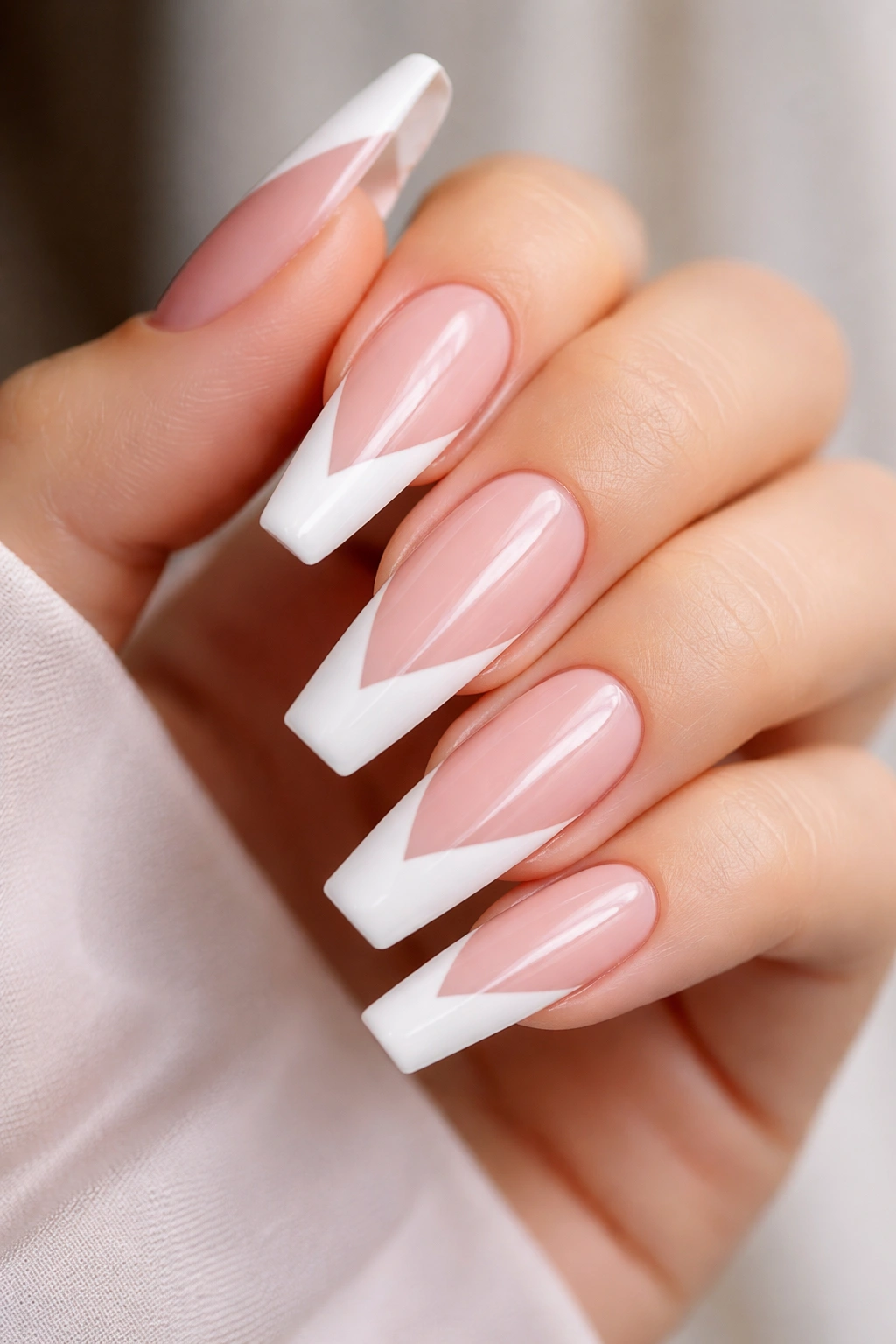
If your fingers are already long, diagonal French tips can make them look even more sculpted without piling on extra design. That is the appeal.
The line runs at an angle across the tip, but unlike the side-swept version, this one feels more graphic and deliberate. One corner stays deeper, the other rises higher, so the white becomes a clean slash rather than a soft sweep. On ballerina nails, that geometric line works because the shape has a flat edge strong enough to support it.
I would not use this on every client. Shorter fingers can look cut off if the angle is too steep, and short ballerina lengths do not give the design enough breathing room. Medium-long to long nails suit it best.
Keep the rest spare. Sheer nude base. No stones. No foil. Maybe a glossy top coat and nothing else. The diagonal does all the work on its own. You do need a sharp tech for it, though—crooked diagonal lines look wrong in a way your eye catches right away, even if you cannot explain why.
15. V-Cut French Tips With a Narrow Center Point
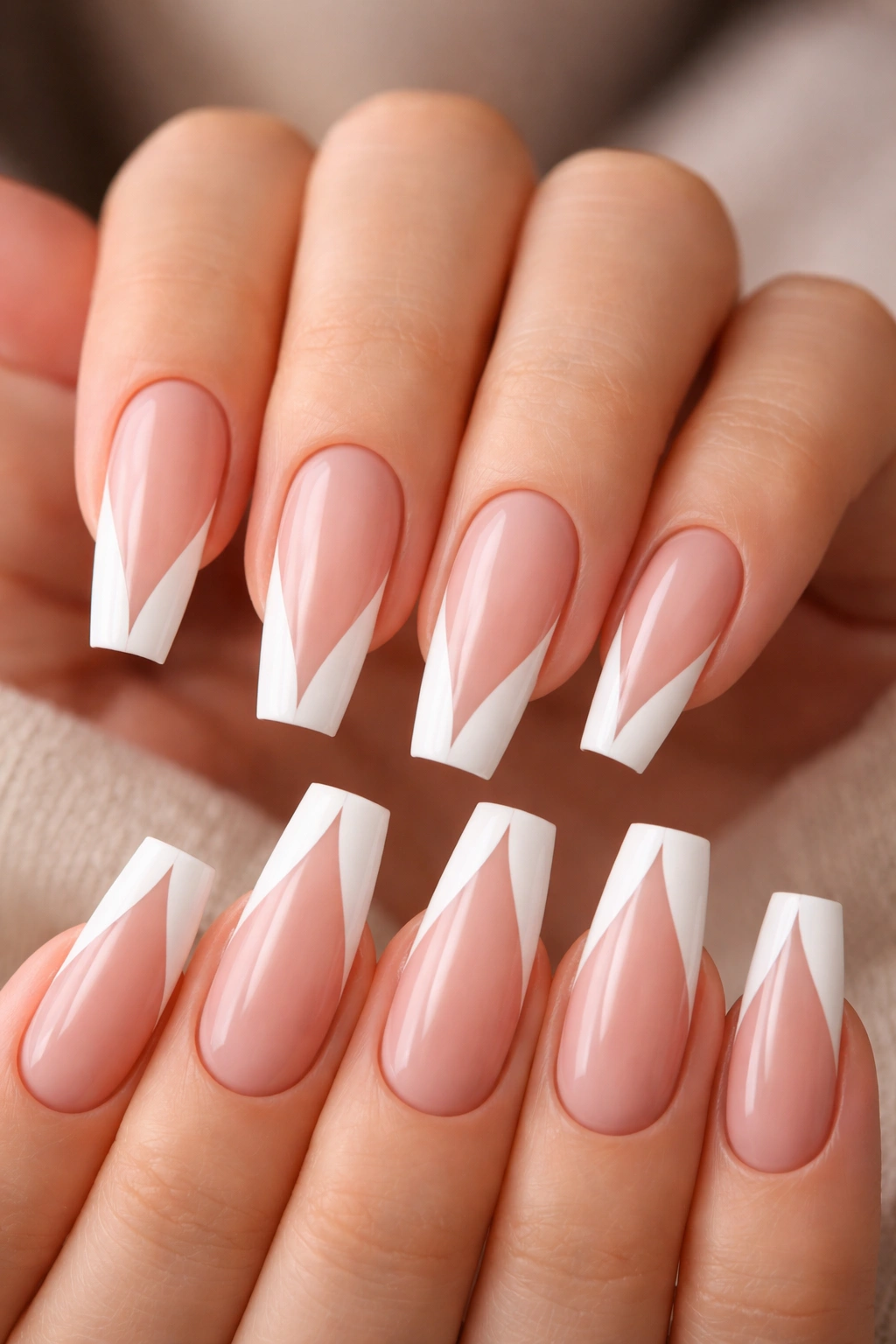
A V-cut French is more angular than a classic smile line, and on ballerina nails it can look sleek when the point is narrow and the sides stay thin. Go too wide, though, and it starts reading harsh.
Why choose this shape? It pulls the eye inward. That makes the nails seem slimmer, which is useful if your nail beds are wide or if blunt French tips usually feel heavy on your hands. The center point should stop well above the midpoint of the nail—usually in the upper third—so you keep the look sharp without swallowing the base color.
How to keep the V-cut clean
Start with a neutral, streak-free base. Any unevenness in the nude will show because the V directs attention toward the center of the nail. Then ask for slim side arms and a crisp center point, not a broad chevron.
One more note. This design looks best when all ten nails are near-identical in length. Even a 1 mm difference can make the V points look misaligned from finger to finger. File first, then paint. Not the other way around.
16. Outlined French Tips With a Whisper-Thin Border
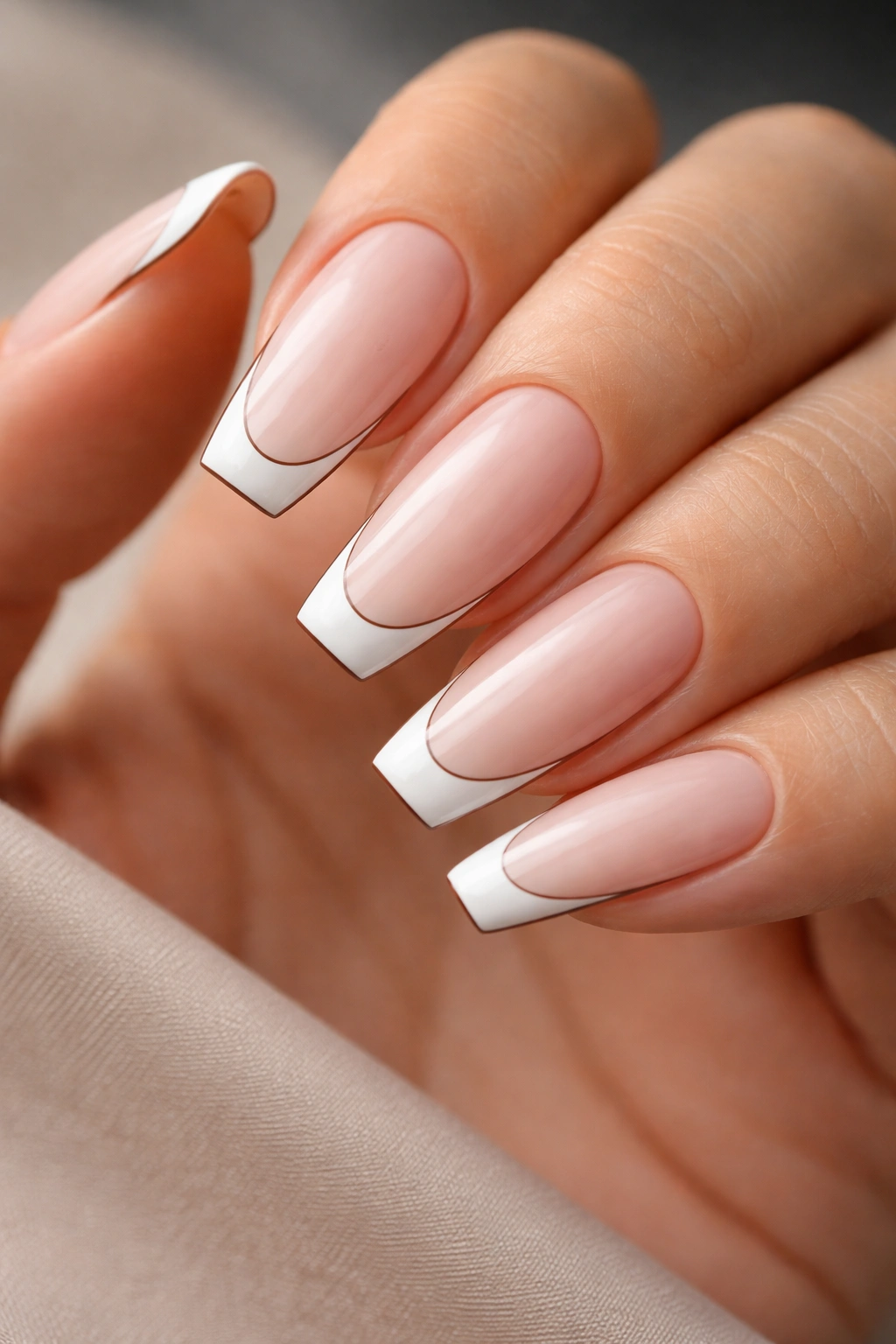
This one sounds risky. It usually works.
The idea is a classic white French tip traced with an extra line so thin it almost disappears unless you look closely. The outline can be black, soft brown, or even a nude one shade deeper than the base. On ballerina nails, that second border sharpens the tip and makes the white edge look more intentional.
- Best border width: about 0.25 to 0.5 mm
- Best outline color for a clean look: espresso brown or soft black
- Best tip shape: classic curve, not deep V
- Best nail length: medium or longer
A black outline gives more contrast and a slightly fashion-forward finish. Brown is quieter and easier to wear every day. I would skip bright colors here. Red, blue, neon—those take the set in a whole other direction.
Done right, this looks like a cleaner version of nail art rather than nail art for its own sake. Done badly, it can look like the white tip was drawn twice because the tech changed their mind mid-stroke. Precision decides everything.
17. Structured Builder Gel French Tip Ballerina Nails
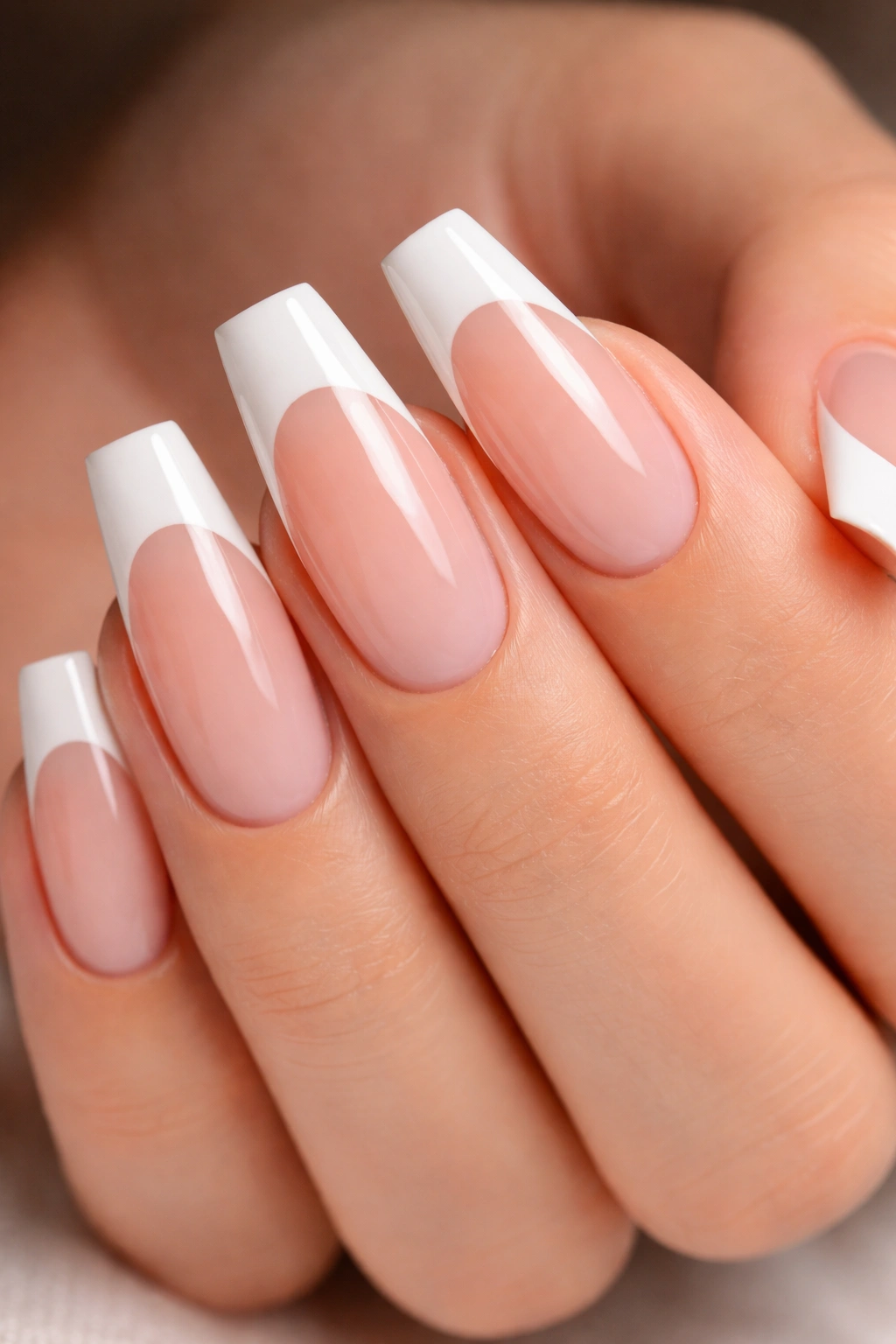
There is a reason structured sets look cleaner: the surface is smoother, the apex is better placed, and the free edge holds a sharper file line. You can spot it even before the color goes on.
If you love French tip ballerina nails but your natural nails flare, peel, or bend downward at the corners, builder gel or hard gel gives the shape a better foundation. The apex—usually placed around the stress area, a little past the cuticle zone—keeps the nail from looking flat. On a French manicure, that matters because a flat nail plate can make the tip line look wider and less refined.
The cleanest builder gel French uses a translucent pink or nude overlay with hand-painted tips on top. Pre-made white extension tips can work, but they often leave the smile line too generic for a ballerina shape. Custom painting gives the tech room to adjust each nail.
This is the set I would choose if you want 3 to 4 weeks of wear and do not want the corners chipping after a few days. It costs more in many salons. It is worth it when the structure is good.
18. Latte Nude Base With Soft Off-White Tips
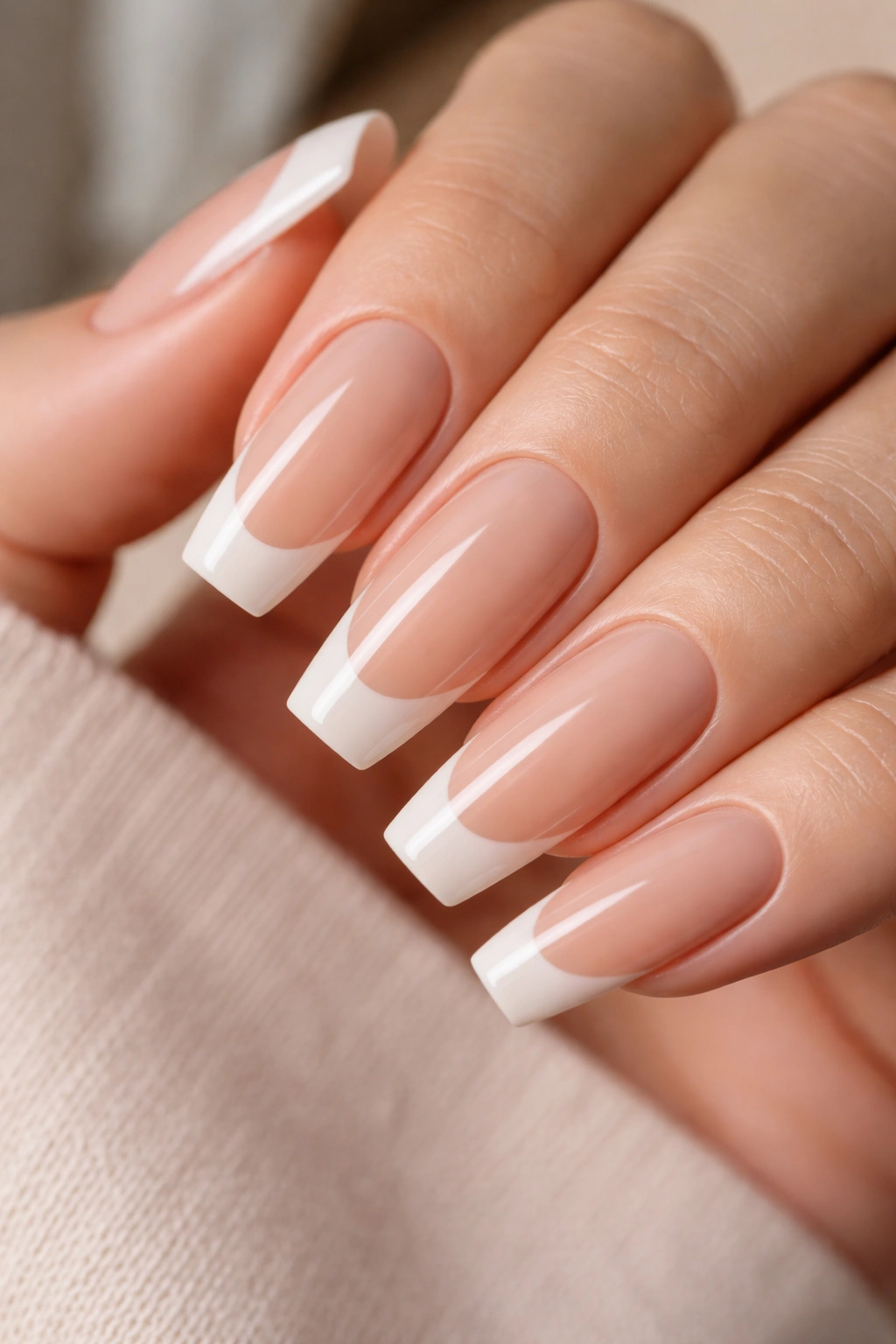
Latte nails and French tips belong together more often than people admit. The trick is keeping the latte tone sheer enough that the manicure still feels fresh.
A latte nude base sits between beige and taupe, often with a drop of milk-chocolate warmth. Add a soft off-white tip—not bright white, not yellow cream—and the result looks smooth, balanced, and expensive without trying too hard. This combo especially suits medium and deeper skin tones, where pale pinks can look ashy.
Unlike cooler French manicures, this one has warmth all the way through. That makes it a strong daily option if your wardrobe leans into tan, black, olive, espresso, or denim. The manicure does not jump out first; it supports everything around it.
I would keep the tip medium-thin and the shape precise. Warm colors can make a manicure feel fuller, so the filing has to stay tight at the sidewalls. Ask for a crisp ballerina taper with a flat tip no wider than the widest part of the nail bed. If the free edge flares, the softness of the colors will not save it.
19. Floating French Lines on a Clear Blush Base
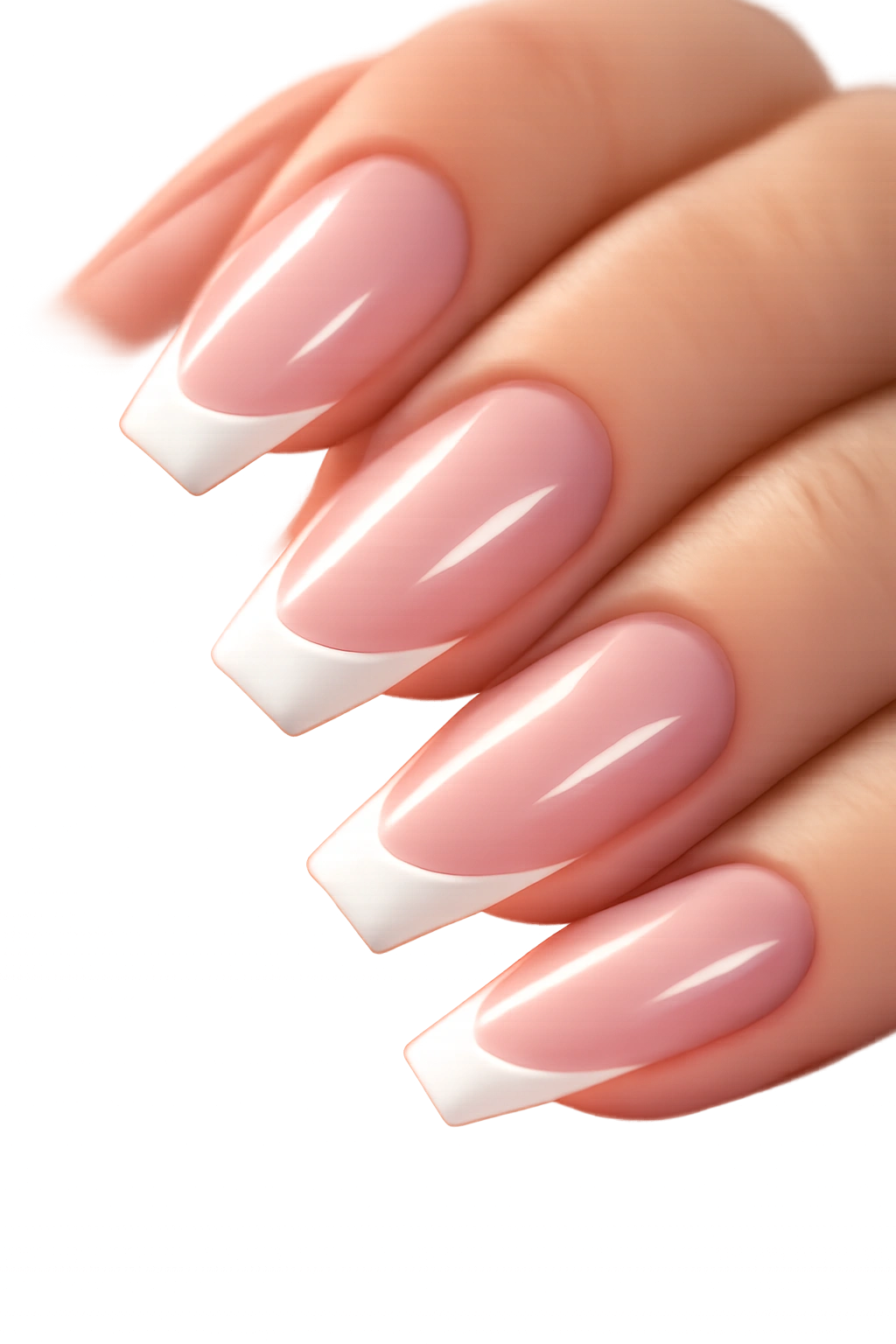
A floating French does not sit right on the free edge. Instead, the white line hovers a little above it, leaving a sliver of clear or sheer base between the line and the end of the nail. On ballerina nails, that gap can look strikingly clean because the flat tip stays visible.
Why this design feels so fresh
The line looks suspended. There is air around it. That small space changes the whole manicure from classic French to something leaner and more graphic, yet it still feels controlled because the color story barely shifts.
Details that make it work
- Keep the gap narrow—around 0.5 to 1 mm
- Use a clear blush or translucent pink base, not opaque nude
- File the free edge sharply; the exposed tip has to look neat
- Seal the edge well so the visible tip does not catch or stain
This one is not the most practical pick if your natural free edge tends to yellow or if you use self-tanner often, since the visible edge will show more. On a clean extension set, though, it looks crisp in a way few French variations do.
20. Soft Shadow French With Sheer White Tips
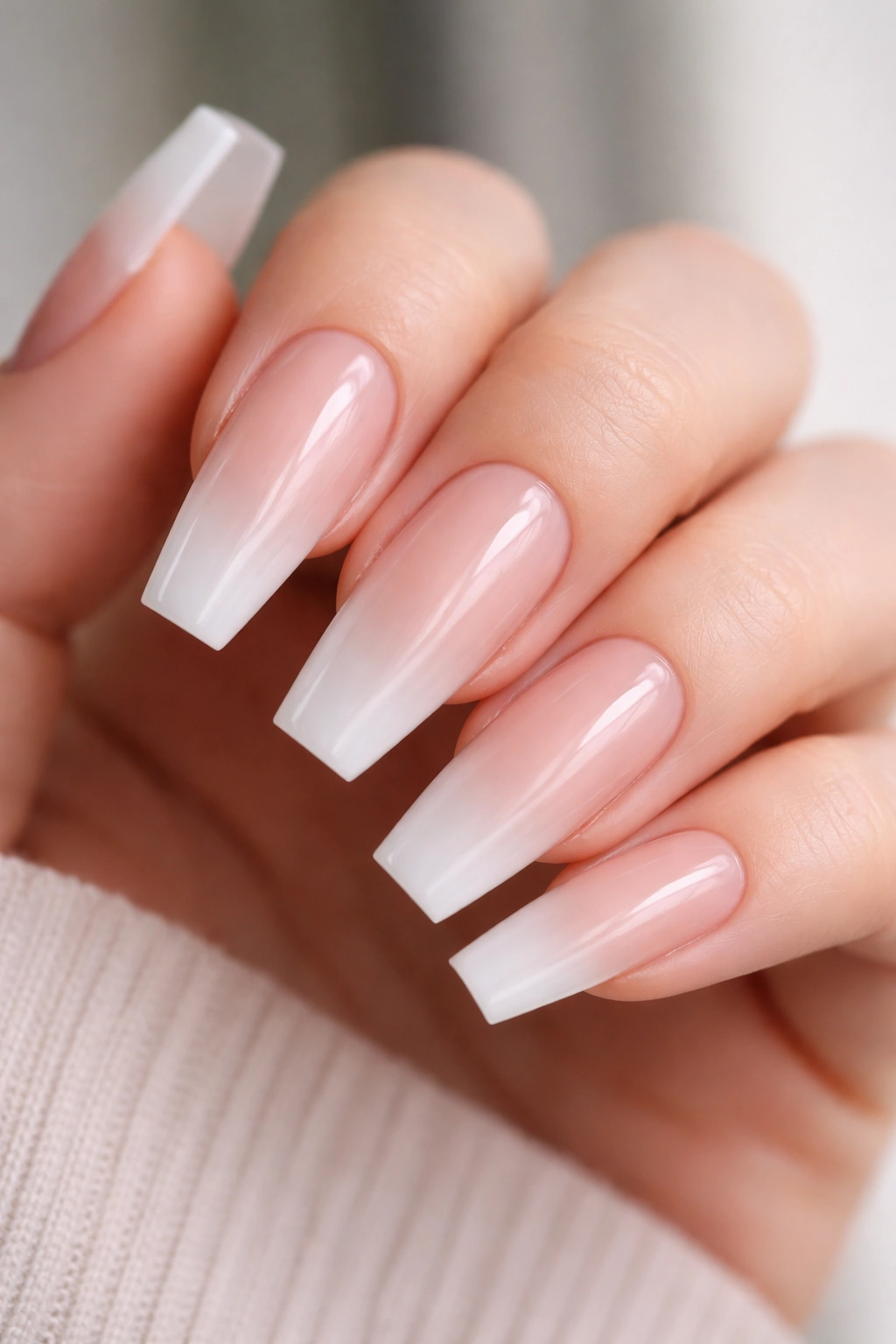
A soft shadow French is what I recommend when classic bright white feels too hard, but an ombré fade feels too blurred. It sits right in the middle.
The tip is painted with sheer white, not opaque white, so the edge still shows as a French but with a gauzy finish. You can usually still see a hint of the base underneath. On ballerina nails, that softness works well because the shape already brings enough definition. You do not need a heavy color line fighting the file shape.
This style is useful on shorter or medium-length ballerina sets where a bold white tip might shorten the look of the nail bed. Because the pigment is lighter, the white edge does not cut across the nail as strongly. The fingers look a little longer, the manicure a little softer.
Ask for one or two coats of milky white gel paint, not a packed opaque layer. Then seal it with high gloss. Matte would kill the airy effect. This design is quiet, polished, and easy to wear with almost anything—which, for a clean manicure, is usually the whole point.
Final Thoughts
The cleanest French tip ballerina nails are rarely the busiest ones. Shape comes first, then line work, then color. If the taper is off or the white is too thick, no top coat in the world is going to rescue the set.
If you want a safe bet, go with a micro French on a milky or nude base. If you want a little more personality while staying neat, a diagonal tip, floating line, pearl glaze, or outlined edge gives you room to move without losing that crisp feel.
And do not overlook tone. Bright white, ivory, cream, latte, cool nude, beige blush—those choices change the manicure more than people expect. Pick the base and tip colors that make your hands look rested and even, and the whole set lands better before anyone notices the design itself.