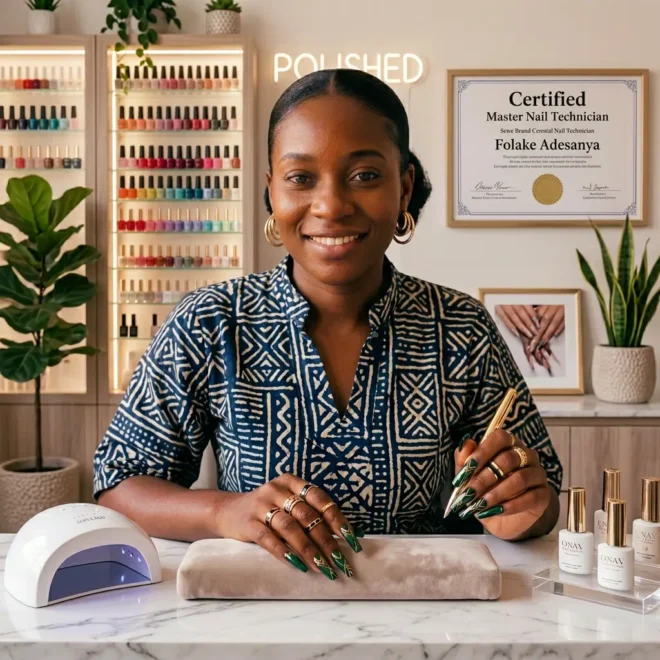


Neutral ballerina nails solve a problem that anyone with a standing salon appointment knows well: you want a manicure that looks polished with black trousers on Monday, blue denim on Saturday, and a dressier outfit without forcing the rest of your look to answer to your nail color. Loud shades have their place. I like a sharp red or an inky plum as much as anyone. But when you want your hands to look neat all the time, neutral ballerina nails are hard to beat.
The shape matters as much as the color. Ballerina nails—often called coffin nails in salons—have tapered sides and a flat, squared tip. Done well, they make fingers look longer and more tailored. Done badly, they turn bulky, wide, and a little clumsy. Neutral shades put that shape front and center, which is why prep, filing, and finish matter more here than they do with a glitter shade that hides half the flaws.
A good neutral also does something people rarely talk about: it changes how your skin tone reads. The wrong beige can make your hands look dull. A muted pink can make your nail beds look healthier. A soft greige can make both silver and gold jewelry make sense in the same outfit. Those are small details, sure, but they are the details you notice when you look down at your hands ten times a day.
And neutral does not mean boring. It means measured. The difference between a manicure that blends into your whole style and one that fights with every ring, blazer, sweater, and lipstick often comes down to undertone, opacity, and one tiny line at the tip.
What makes neutral ballerina nails look polished instead of plain
Shape does half the styling work. Neutral polish gets credit for being easy to wear, though the real reason these manicures look so put together is the structure underneath. A ballerina nail needs a straight sidewall, a clean taper, and a flat edge that is narrow enough to slim the finger without turning pinched. When the filing is off by even a little, sheer nude polish will show it.
Length plays a role too. On most hands, the sweet spot sits around 8 to 12 mm past the fingertip. Shorter than that, the ballerina shape can lose its identity and start reading as a soft square. Longer than that, neutral shades sometimes look heavy unless the apex is balanced and the free edge stays slim.
Opacity changes the mood. A jelly nude looks airy and forgiving, especially when you are trying to stretch time between fills. A cream nude reads sharper and more dressed. Matte finishes pull attention to the shape itself. Glossy finishes smooth everything out and make the surface look more even under indoor light.
If you are asking a nail tech for a neutral ballerina set, these details help more than vague words like “natural” or “classy”:
- Ask for a medium taper, not an aggressive coffin shape, if you want an everyday manicure.
- Keep the corners softened by about 1 mm so they do not snag on knitwear or hair.
- Choose two thin coats over one thick coat when using opaque nude polish; thick layers make neutral nails look chalky.
- Match finish to lifestyle: gloss hides minor surface wear better, while matte shows every dent and dry patch.
That last point gets ignored all the time.
How to choose a nude shade for neutral ballerina nails
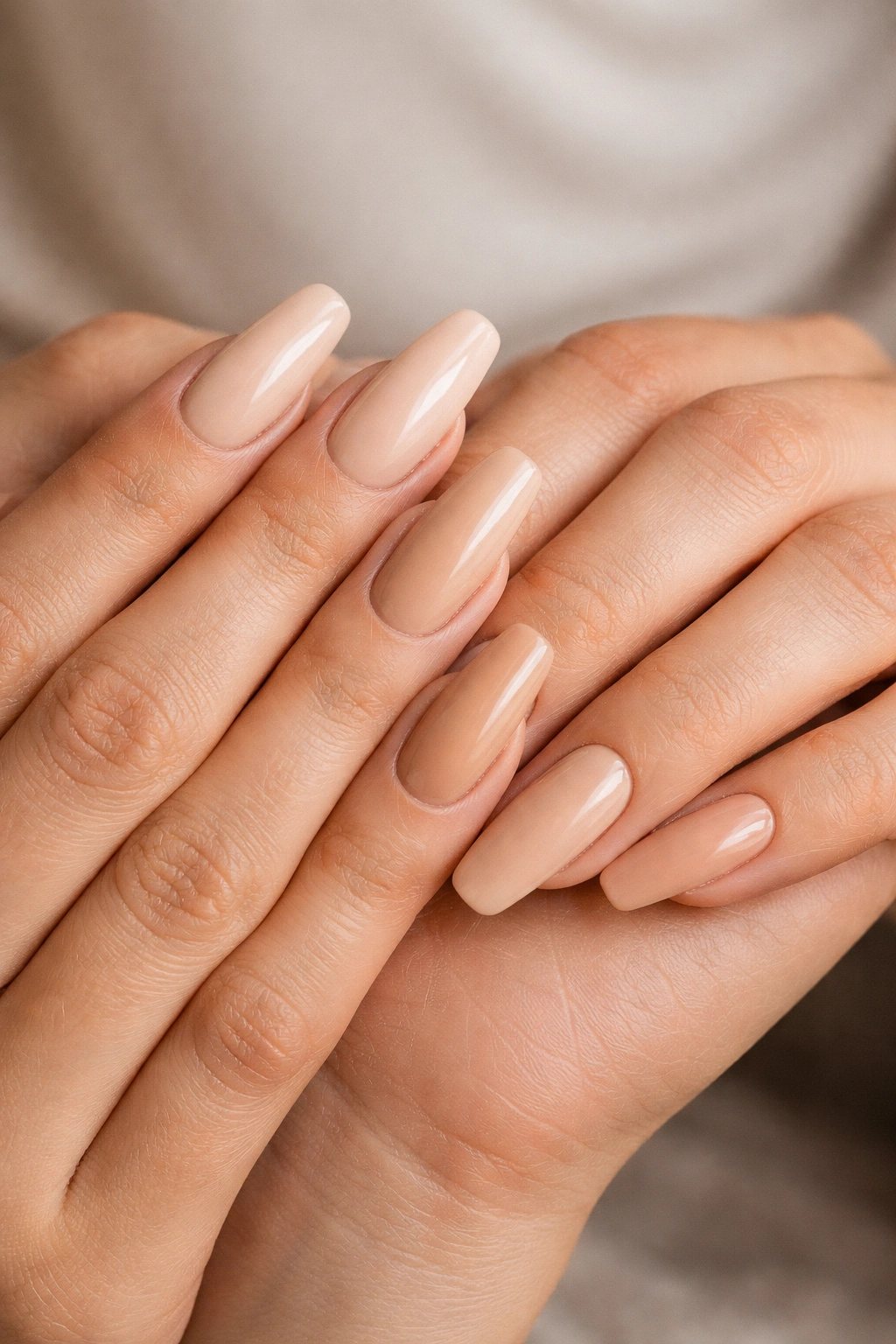
Why does one nude make your hands look fresh while another makes them look tired? Most people blame undertone first. I think depth matters even more.
Start by looking at how light or dark the shade sits against your knuckles, not your palm. Your palm is almost always lighter and warmer, so matching to it can send you straight toward a polish that looks off once it’s on the nail. A nude that is about one step lighter or one step deeper than your skin often looks more intentional than one that tries too hard to disappear.
Start with depth before undertone
If a beige is much lighter than your skin, it can turn chalky. If it is much darker, it stops reading as a nude and starts reading as brown polish. Neither is wrong. It is just a different look. For a manicure that goes with nearly anything, the easiest range sits close to your natural depth.
Then check undertone. Warm skin often sits well with peach-beige, caramel, latte, or sandy nudes. Cooler skin usually likes rosy beige, taupe, greige, and muted pinks. Balanced undertones can swing either way, which sounds like a luxury until you are staring at a wall of near-identical bottles under salon lights.
Use the two-finger test
Ask to swatch two shades on two different nails, then step near a window. Salon lighting lies. One polish may look smooth indoors and oddly flat in daylight. Another may seem dull under white LED light and then look exactly right once you see it next to your rings and jacket sleeve.
A quick cheat sheet helps:
- Hands look red around the cuticle: try a muted pink-beige or rosy nude
- Veins look more blue than green: start with taupe, greige, or cool beige
- Gold jewelry looks more natural on you: lean toward latte, peach-beige, caramel
- Silver feels easier: try putty, rosy nude, greige, or soft mushroom tones
You do not need a color theory lecture in the salon chair. You need one shade that flatters your hands and another backup shade that sits one step warmer or cooler.
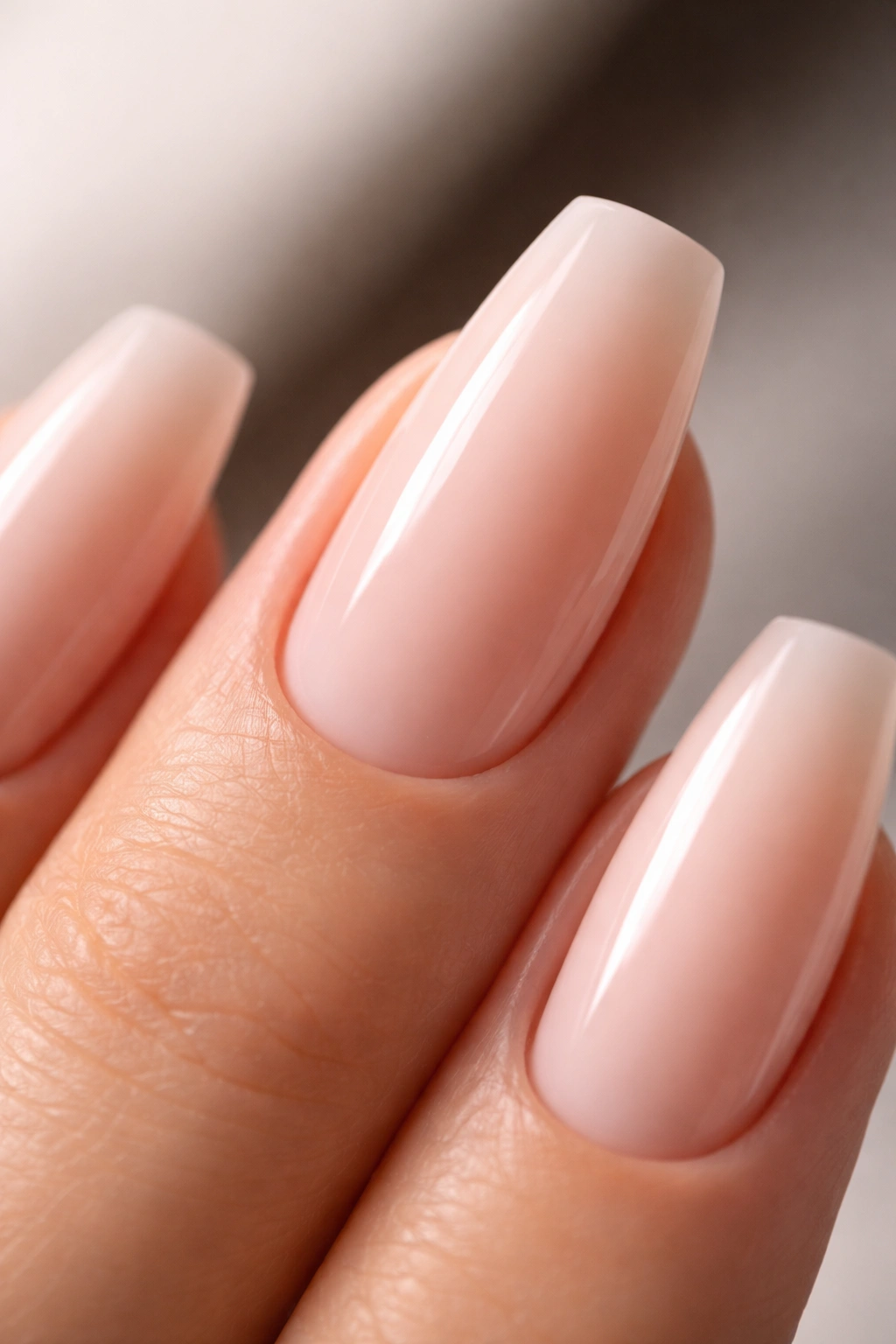
1. Milky Pink With a Glassy Top Coat
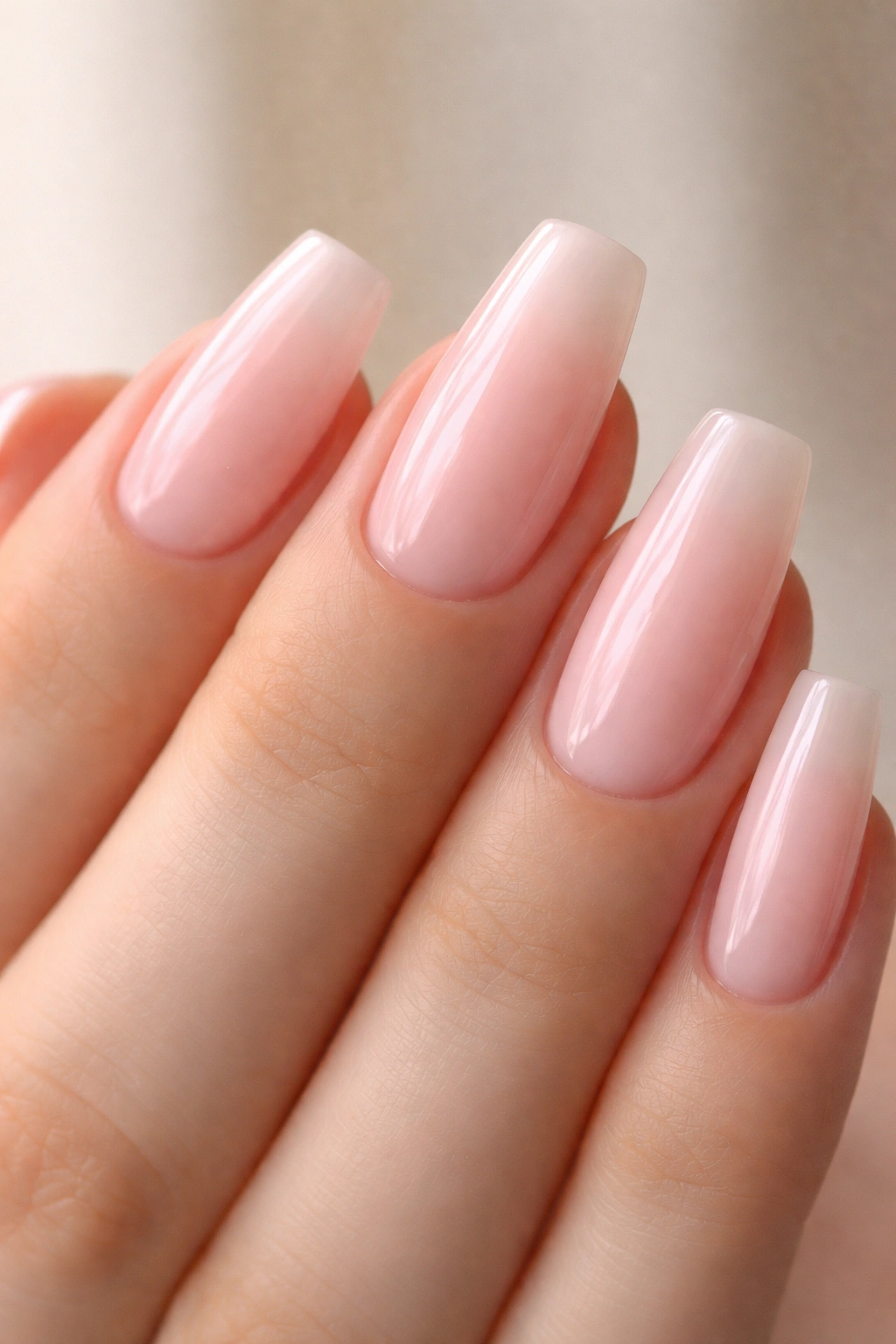
If you like the look of healthy natural nails but want more shape, milky pink ballerina nails are the place I would start. They have that fresh, just-buffered feel, only sharper. The color is soft enough to blend with almost any outfit, yet it still gives the nail bed a little life, which is why it flatters hands that go dull under flat beige.
Why the gloss matters
Milky pink works because it sits between sheer and opaque. It smooths out the nail plate, blurs minor ridges, and keeps the manicure from feeling bare. Add a high-gloss top coat and the surface looks cleaner and more even. Skip the gloss, and the same shade can drift into baby-pink territory fast.
This style suits medium-length ballerina nails best. On a long set, too much milkiness can make the tips look bulky unless the sidewalls are filed with care. On shorter lengths, it reads crisp and wearable.
Quick details that make it better
- Ask for one milky base coat plus one semi-sheer pink layer, not two dense pink coats.
- Keep the free edge narrow so the color stays airy.
- Pair it with a clear, non-yellowing top coat if you wear self-tanner or use dark hair products.
- Reapply cuticle oil twice a day; dry skin around a pale manicure shows up fast.
Best use: black knitwear, white shirts, soft gray tailoring, blue denim, and minimalist jewelry.
2. Soft Beige Cream on Medium-Length Ballerina Tips
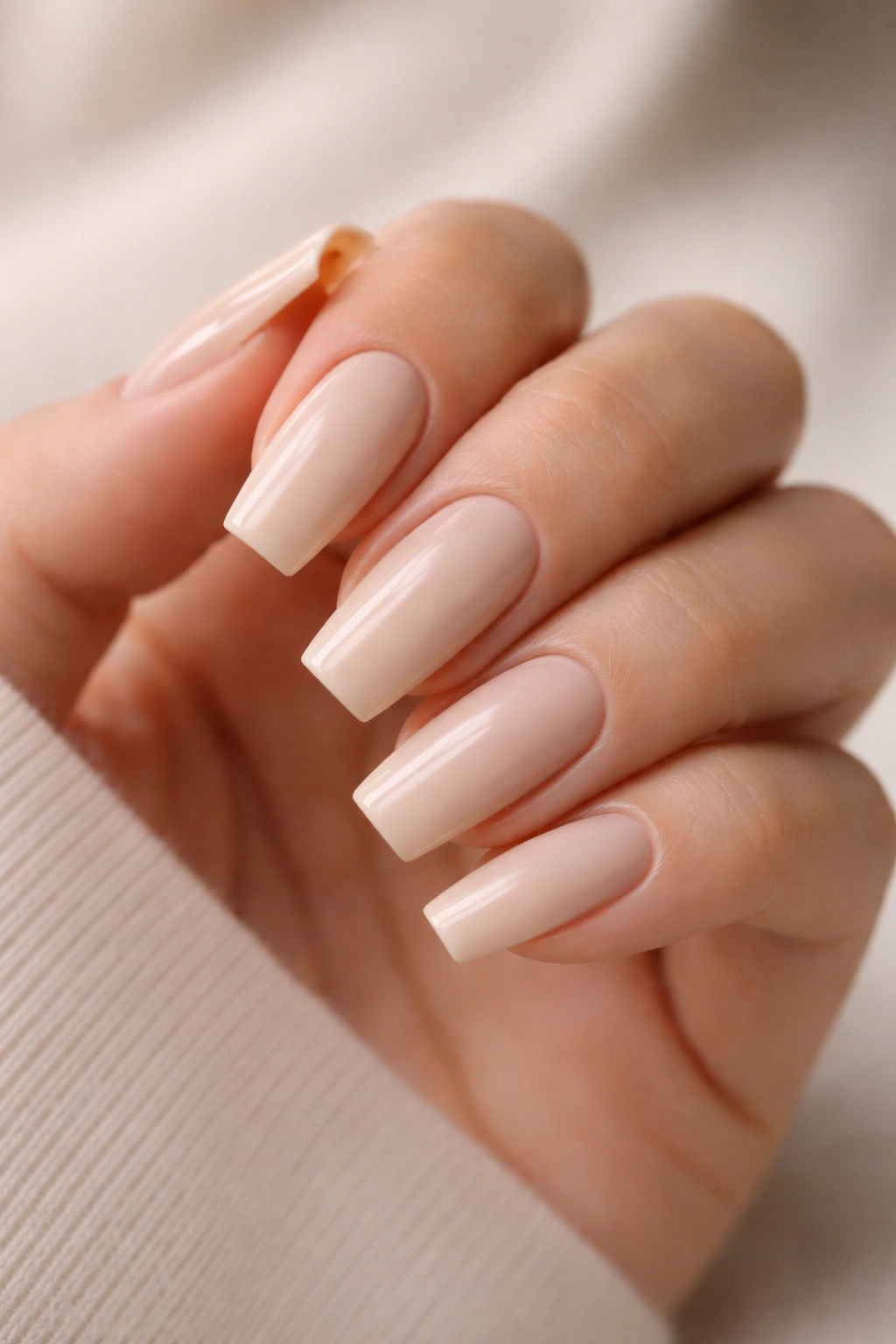
Soft beige cream is one of the sharpest office-friendly manicures you can wear. It looks finished from across the room, which is not always true of sheer nudes, and it has enough coverage to hide the uneven tone that natural nails often show near the tip.
I like this look most on a medium-length ballerina shape with a clean square edge. The structure gives the beige something to do. A short beige nail can look tidy, sure, but it does not have the same line. A longer one can start to feel blocky unless the taper stays slim, so restraint helps here.
What makes this shade useful is its quiet balance—beige cream does not pull hard pink, gray, or peach. It sits in the middle. That means it works with camel coats, navy suiting, charcoal knits, and crisp white cotton without pushing the rest of your styling in any one direction.
There is one trap. If the beige is too pale, your hands can look dusty. Ask for a tone that is close to your skin depth or one shade deeper, then keep the polish thin enough that the nail still looks like a nail, not a painted plastic tip. That small shift changes everything.
3. Rosy Nude That Mimics a Healthy Nail Bed
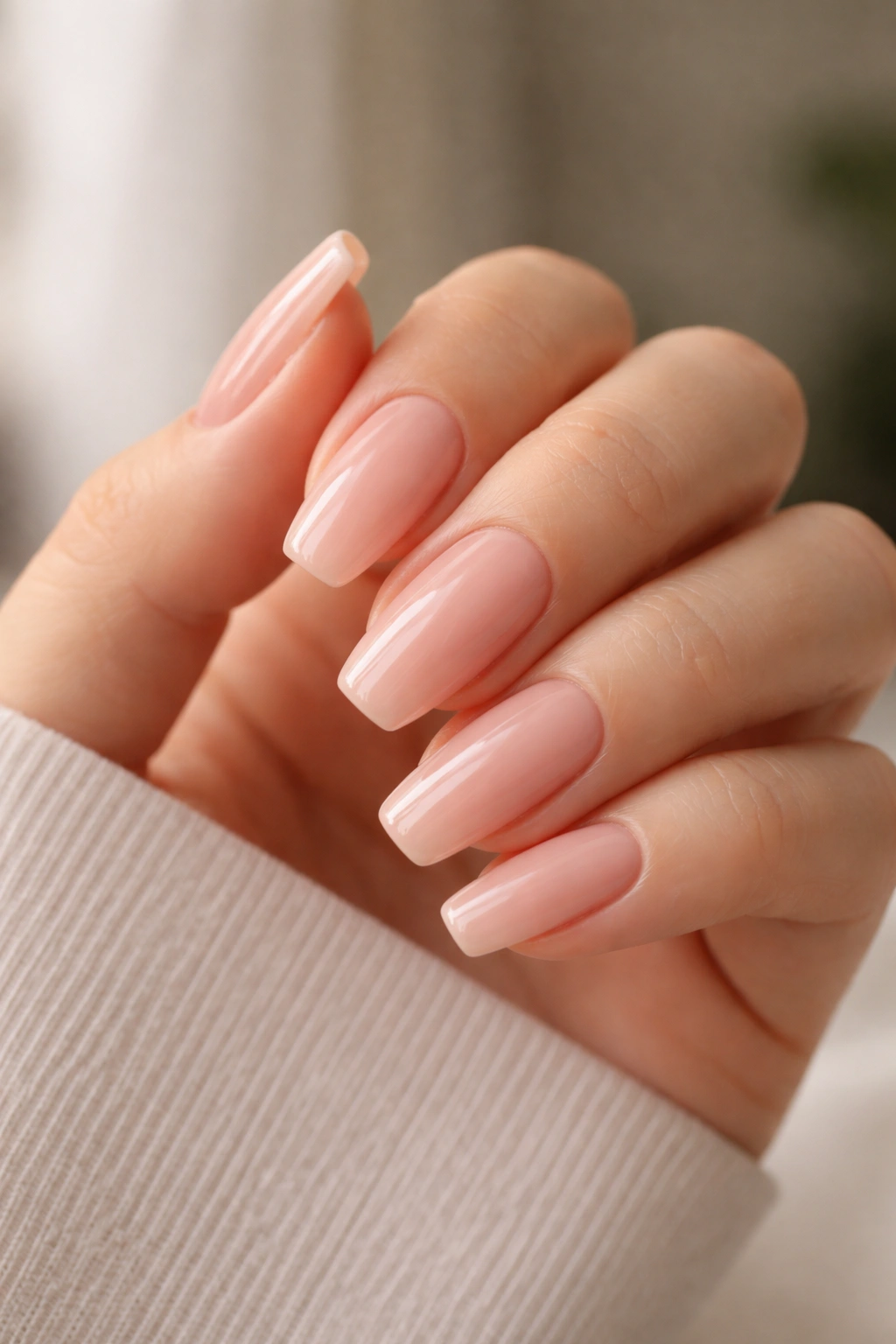
Why does rosy nude look more natural on some people than classic beige ever does? Because skin is not beige. Nail beds are not beige either. They carry red, pink, mauve, and a little brown, and a muted rosy nude echoes that mix better than a flat cream can.
Rosy nude is the manicure I reach for when someone wants neutral ballerina nails but keeps saying beige makes their hands look tired. A good rosy nude is not bubblegum pink and not bridal blush. It sits closer to dusty rose with a beige or taupe base underneath.
That balance matters. Too pink, and it stops being a neutral. Too brown, and you lose the healthy nail-bed effect that makes this shade so flattering in the first place.
How to wear it without drifting into pink polish
Choose a shade with low saturation—muted, a little smoky, almost skin-like. Two thin coats usually do the job. On medium or fair skin with cool undertones, glossy rosy nude can look seamless. On deeper skin, pick a rose-brown rather than a pale rose so the color still reads intentional.
I also like this shade with soft makeup and mixed metals. It makes hands look cared for without feeling dressed up. That is harder to pull off than it sounds.
4. Greige Nails With a Crisp Square Finish
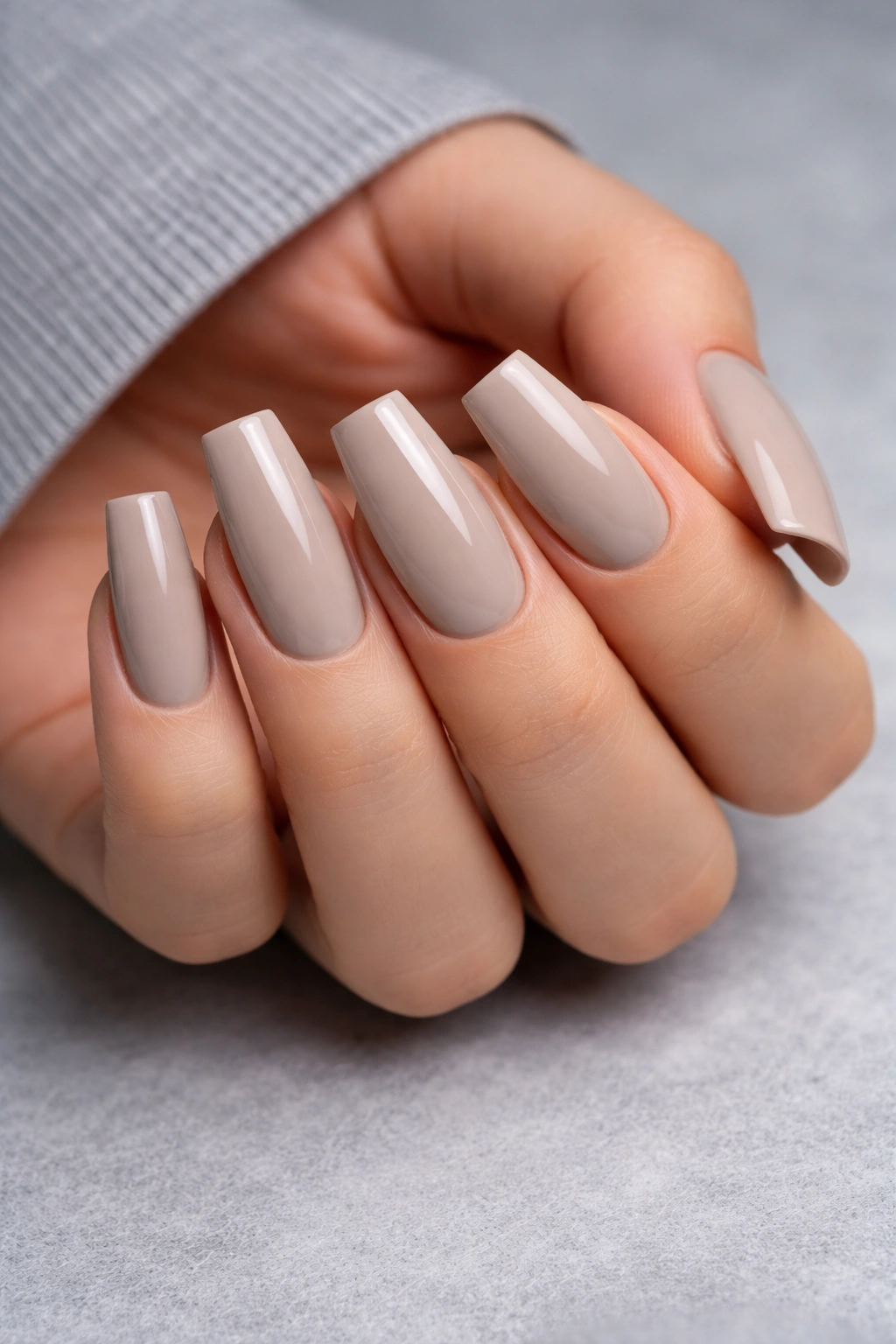
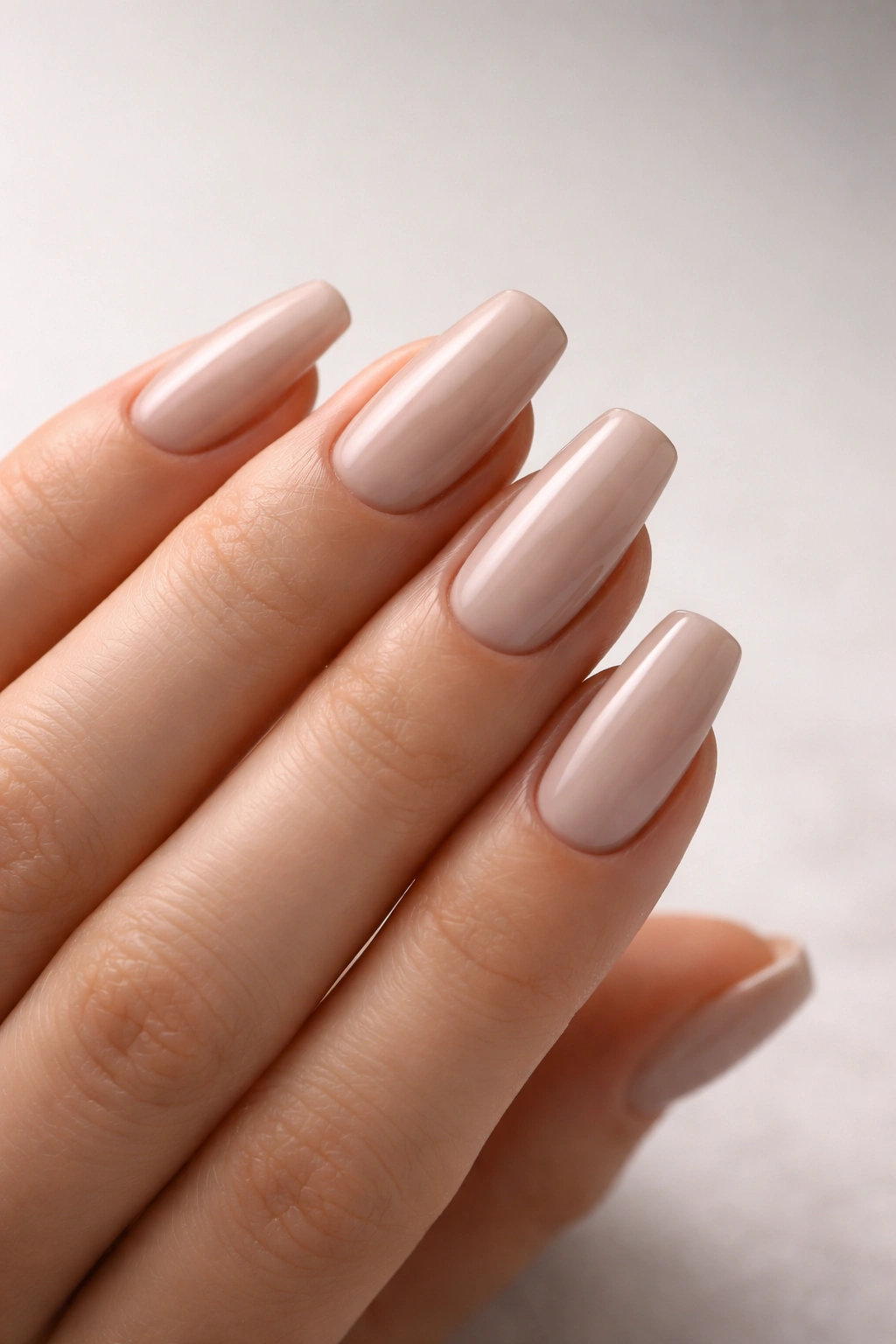
Picture a manicure next to charcoal trousers, a white shirt, a black belt, and silver hoops. Greige slides into that lineup without asking for attention. It is beige with a gray cast, and that gray cast is what makes it so wearable when your closet leans cool, monochrome, or tailored.
Greige has a cleaner, more architectural feel than warm nude. On ballerina nails, that matters. The tapered shape already has a graphic line, and greige underlines it instead of softening it. If beige cream feels too sweet and pink nude feels too soft, this is often the answer.
A crisp top edge helps. You want the square tip to look deliberate, not rounded into a squoval afterthought.
- Keep the finish glossy or soft satin; a dusty matte greige can make skin look flat.
- File the sidewalls straight, then taper only near the tip for a leaner profile.
- Use a medium-opacity formula so the shade looks smooth after two coats.
- Pair it with silver, gunmetal, black leather, slate blue, off-white, and stone.
I would skip greige if your hands are heavily sun-kissed and you want warmth. In that case, latte or caramel tends to do more for the skin.
5. Sheer Almond-Milk Jelly for a Barely-There Finish
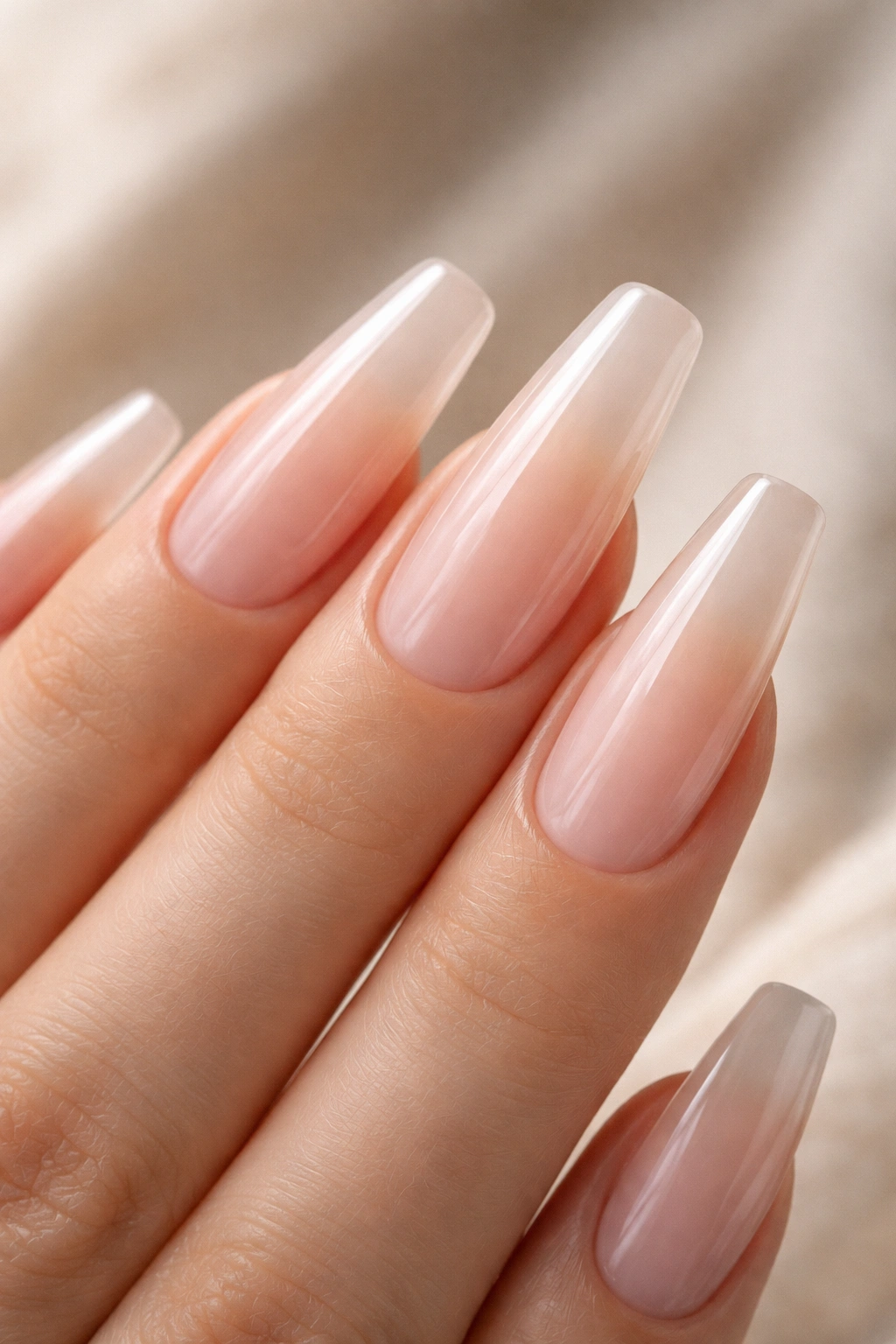
Some neutral ballerina nails work because they look polished. This one works because it almost does not look polished at all. A sheer almond-milk jelly sits right on the edge between manicure and natural nail, which makes it one of the easiest options to live with if you hate obvious grow-out.
The softness is the point. Instead of covering the nail bed, the color blurs it. You still see shape and a little translucency near the free edge. That tiny bit of transparency keeps the manicure from turning chalky, especially on longer ballerina tips.
I like almond-milk jelly on builder gel overlays because the tinted base adds strength while keeping the finish light. Acrylic can do it too, though the thickness has to stay under control. Heavy structure and sheer pale color are a bad mix; they can make the nails look toy-like from the side.
This is also one of the better choices if you use your hands hard—typing, opening packages, washing dishes more than you would like—because minor chips and lifting are less obvious than they are with dense cream polish. Give it a fresh top coat after four or five days and it still looks tidy.
The downside? If your nail prep is rough, sheer polish will show every ridge, every patch of leftover cuticle, every wonky sidewall. No hiding here.
6. Taupe Micro-French With a Hairline Tip
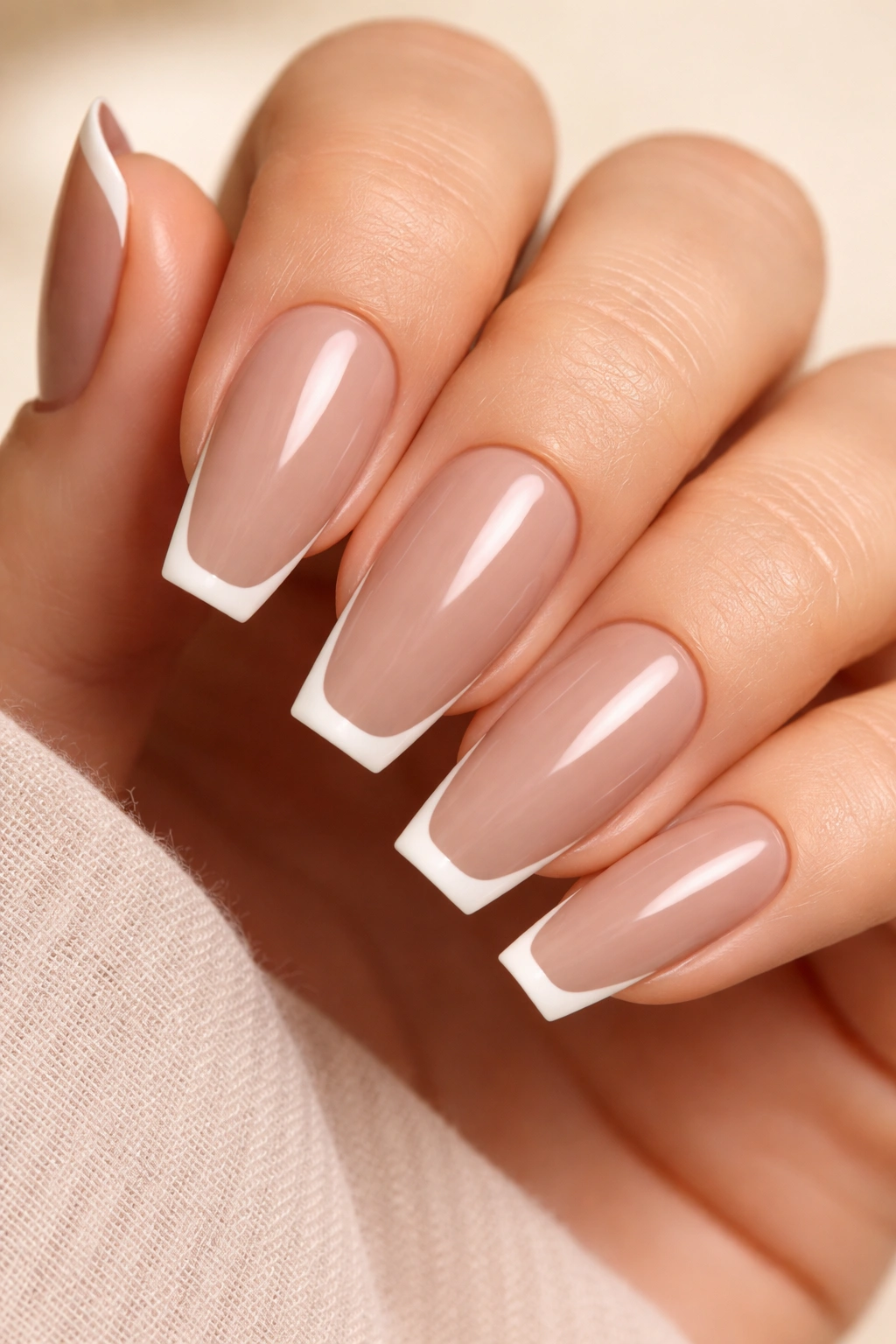
Unlike a bright white French, a taupe micro-French does not chop the nail in half. That is why it works so well on ballerina nails. The shape already brings definition through the squared tip; adding a thick white line can make the whole manicure feel heavy. A hairline taupe edge keeps the structure while staying neutral.
The line should be thin—about 0.5 to 1 mm at most. Anything wider and you lose the clean, expensive feel that makes this design useful in the first place. I prefer a warm taupe on beige or peach nudes, and a cooler mushroom taupe on rosy or greige bases.
This style suits people who like a little outline, a little edge, but do not want nail art that pulls focus from rings or sleeves. It also ages well between appointments because the base remains plain and the tip design is so lean.
Who should pick it? Anyone who finds full-color nude polish a bit flat, or anyone who wants a manicure that still has shape when seen from a distance. Ask your tech to keep the smile line shallow and straight enough to echo the ballerina tip rather than fighting it. That tiny detail makes the whole set look sharper.
7. Warm Latte Nude With Full Opacity
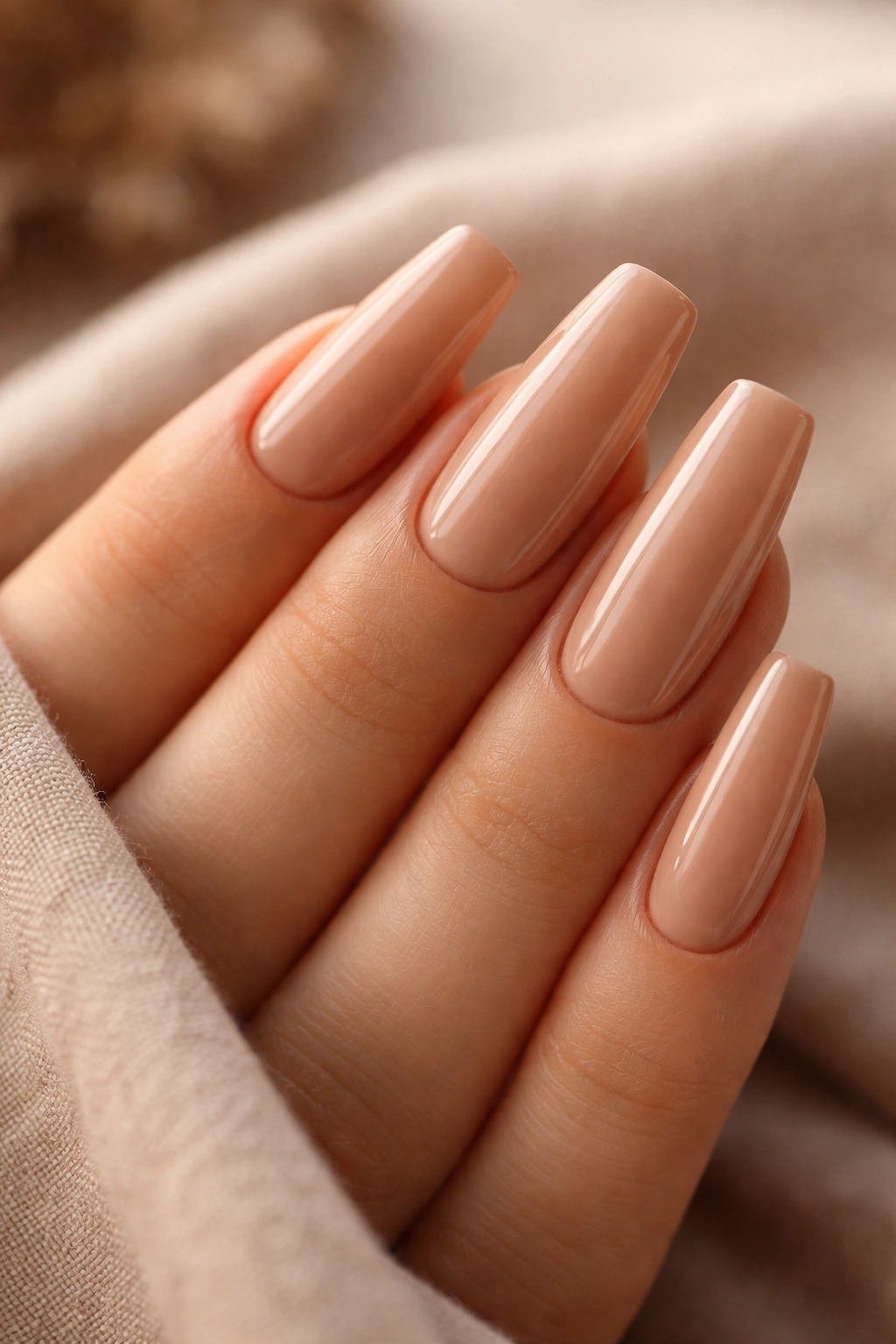
Warm latte nude has more body than beige cream. It carries a touch of coffee, a little caramel, a little sand, and that mix gives it depth without turning it into brown polish. On medium and deeper skin tones, latte often reads as a true nude in a way pale beige never can.
What gives this shade its richness
Opacity is part of the appeal. A full-coverage latte manicure looks sleek with the ballerina shape because the color creates one uninterrupted line from cuticle to tip. There is no visual break, no translucent edge, no milky haze. You get a clean block of tone that still sits inside the neutral family.
This shade is especially good with warm fabrics and textures—camel wool, tobacco leather, cream rib knits, olive jackets. Yet it does not fight blue denim or black tailoring, which is why it earns its place on a go-with-everything list.
Ask for these details
- A cream finish, not a frosted one
- Two thin coats over a smoothing base
- A taper that stays narrow through the last third of the nail
- A top coat with strong shine; latte can look flat under a dull finish
Good call if: pale nudes disappear on you, but deep chocolate feels like more color than you want day to day.
8. Putty Matte With Clean Sidewalls
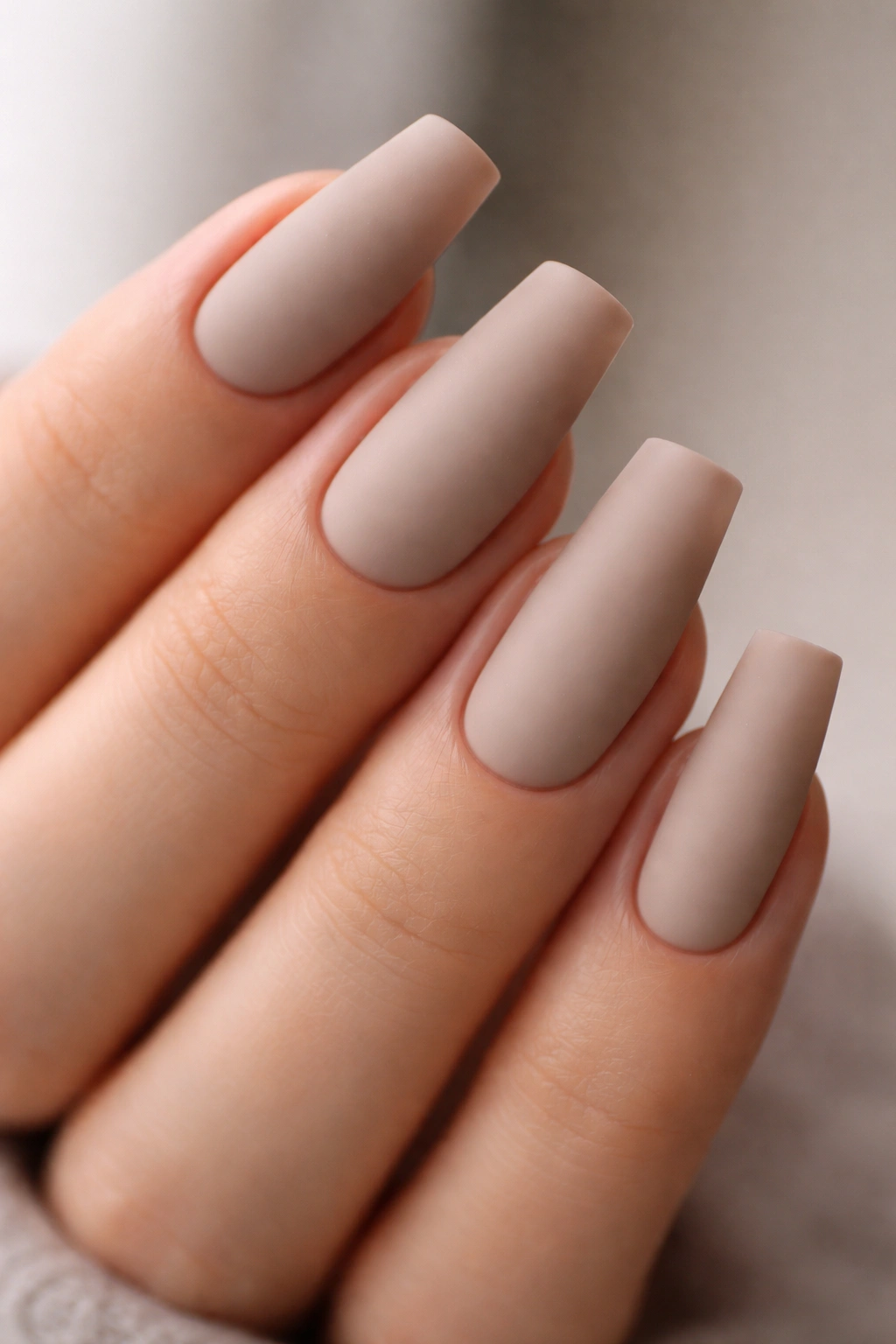
Putty matte is the manicure for people who want neutral nails with a little edge. Putty sits between taupe, gray, and beige. Matte takes away the reflective softness that makes nudes feel sweet. Put those two choices on a ballerina shape and the result feels tailored, pared back, and a touch sharper than the usual salon nude.
Matte is unforgiving, though. Every dent in the surface shows. Every bump from poor prep shows. If your overlay is thick at the tip or lumpy near the apex, matte will announce it. That is why I only recommend this look when the shape is crisp and the product application is clean from every angle.
The sidewalls matter more than people think. On a glossy nude, you can get away with a slightly uneven taper because shine distracts the eye. Matte putty has no such mercy. You want straight, lean sidewalls and a square tip that looks filed, not chewed away.
There is one practical catch: matte top coat tends to pick up makeup, pen marks, and cooking stains faster than gloss. If that sounds annoying, it is. Keep a little alcohol wipe nearby or choose satin instead. Still, when the manicure is fresh, few neutral ballerina nails look this controlled.
9. Blush-to-Nude Ombré That Softens the Taper
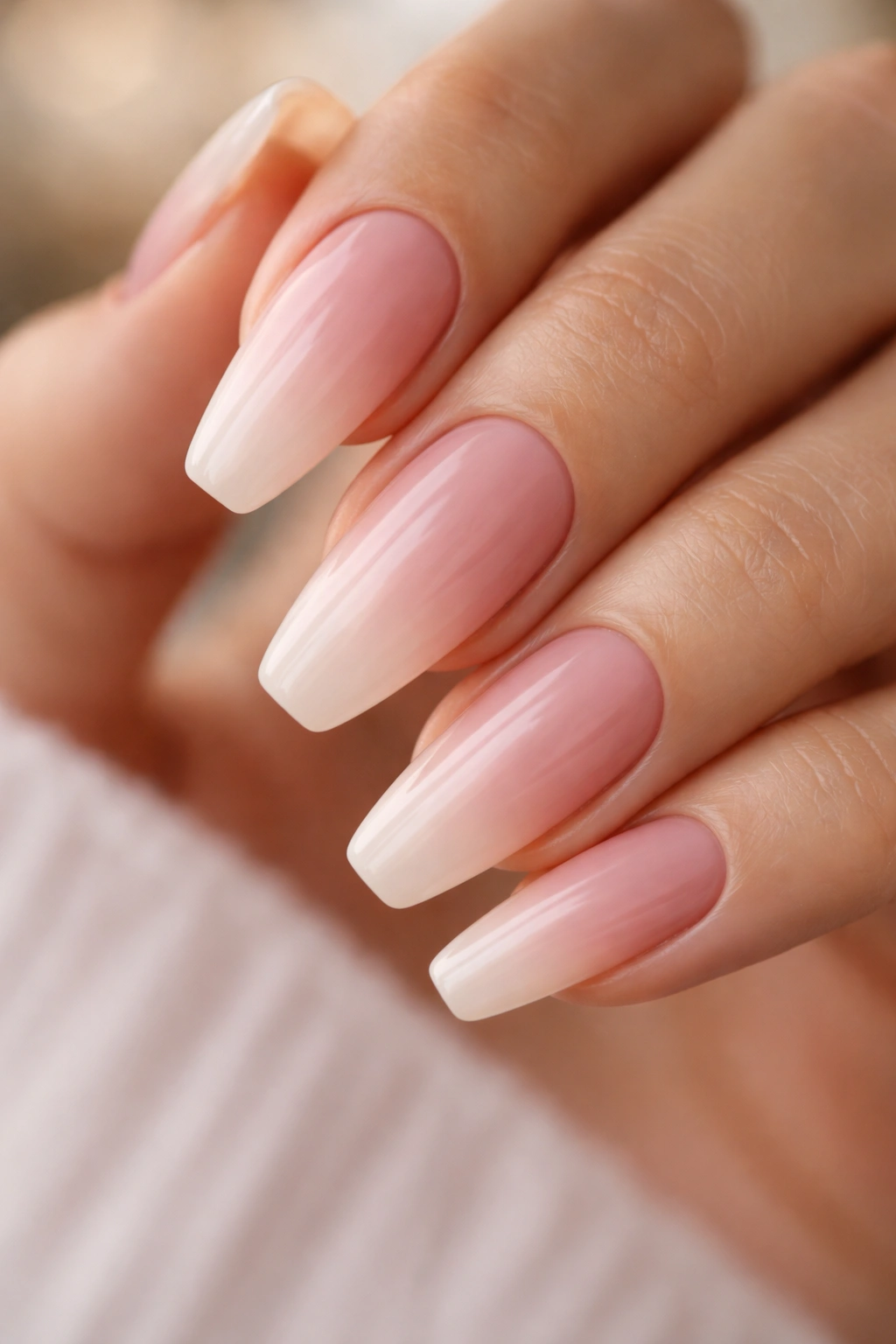
What if you want shape without a hard color line anywhere on the nail? A blush-to-nude ombré gives you that soft fade from cuticle to tip, and on ballerina nails it has a neat side effect: it makes the taper look longer and smoother.
The trick is keeping the fade subtle. You are not looking for a sharp baby boomer effect with stark white at the end. The better version starts with a muted blush or rosy beige near the cuticle and melts into a nude cream or milky beige toward the tip. Think softness, not contrast.
This design is handy if you are hard on your manicures. Grow-out is less obvious because there is no solid block of color sitting against the cuticle. A two-and-a-half-week old ombré usually looks better than a two-and-a-half-week old opaque pale nude.
Where the fade should start
Start the blend around the upper third of the nail bed, not halfway down the nail. That keeps the base looking natural and avoids the cloudy middle that can make ombré sets look dated. On longer nails, ask for a gradual blend with an airbrush effect or a sponge fade sealed under gel.
If you want a bridal-ish manicure without going full bridal, this is one of the stronger options.
10. Oatmeal Satin Nails With a Soft Surface Glow
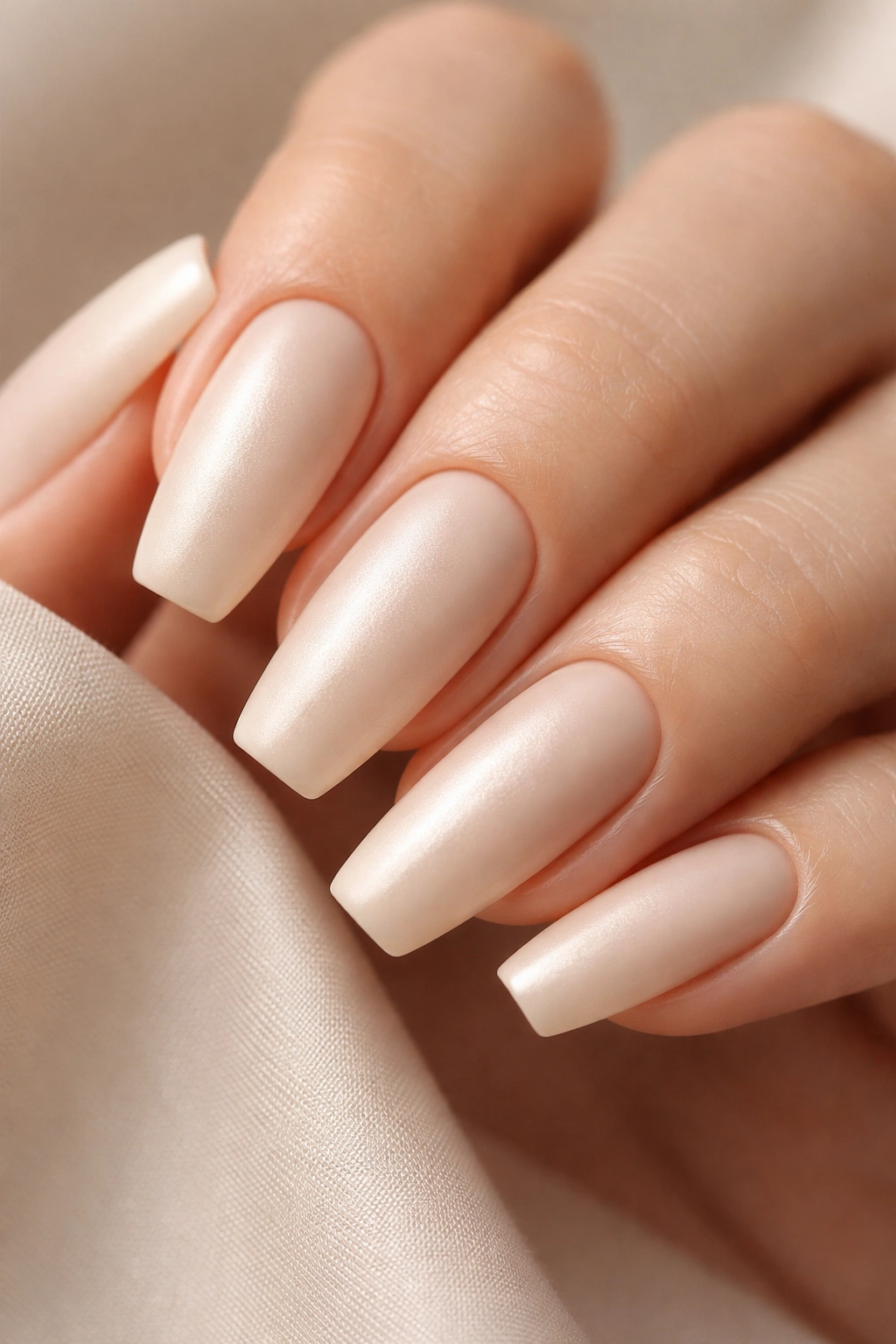
Imagine the color of oat milk in a ceramic mug, not bright white, not beige, just a warm off-cream with a little grain to it. That is the feeling of oatmeal satin nails. They sit in a middle ground between glossy and matte, and that finish changes the whole mood of the manicure.
Gloss can make pale neutrals look slick. Matte can make them look dry. Satin gives a gentler surface that still reflects a little light, which suits soft neutral shades far better than people expect.
- Keep the shade slightly warm, or the finish can look chalky.
- Use a satin top coat over a smooth gel base; uneven surfaces show up fast.
- Stay at a short-to-medium ballerina length for the cleanest result.
- Refresh the top coat every 3 to 4 days if you are wearing regular polish; satin wears patchy sooner than gloss.
I like oatmeal satin with linen, brushed cotton, knitwear, and understated makeup. It feels quieter than a glossy nude but not flat. And yes, I know that sounds like splitting hairs. Nails are all split hairs at this level.
11. Peach-Beige Nails With a Warm Finish
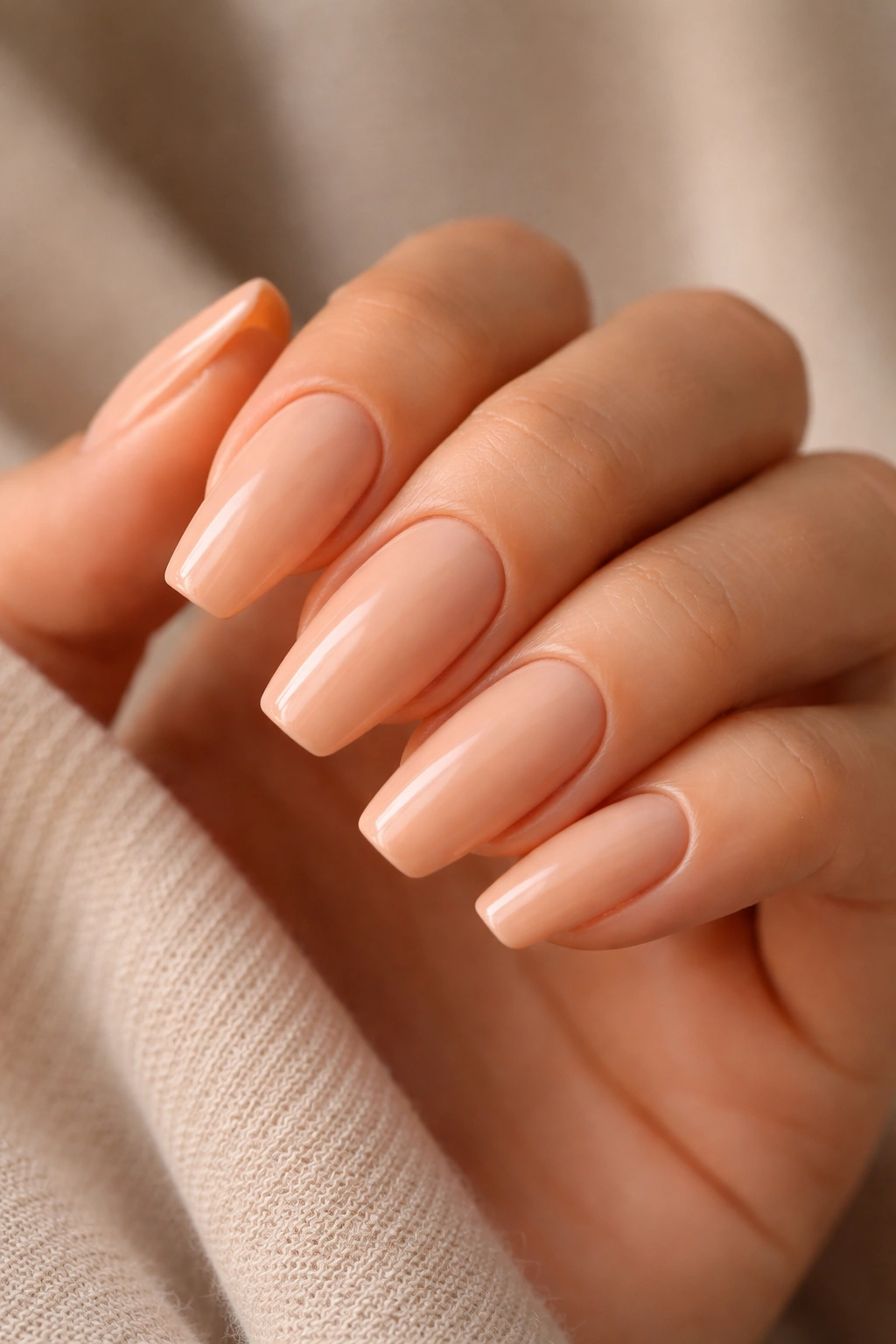
Peach-beige is one of those shades people overlook because it sounds too warm on paper. On the hand, though, it can be a smart fix when standard nude makes your skin look gray. The peach adds blood and warmth back into the picture, while the beige keeps it grounded enough to stay neutral.
This color has a sunny, skin-friendly quality without turning coral. That distinction matters. A strong peach reads like color. A good peach-beige stays muted and creamy, which is why it works with tan leather bags, gold jewelry, cream blazers, and washed denim without feeling fussy.
I like this option most on glossy ballerina nails with a medium taper. The warmth softens the shape a touch, which can help if your hands are slim and the coffin outline starts to look too severe in cooler tones. It also photographs better than pale beige on deeper or olive skin because the nail does not disappear into the hand.
Do not go too orange. If the bottle looks like sherbet, walk away. You want the color of cappuccino foam with one drop of apricot in it—small shift, big payoff.
12. Mocha Outline French on a Nude Base
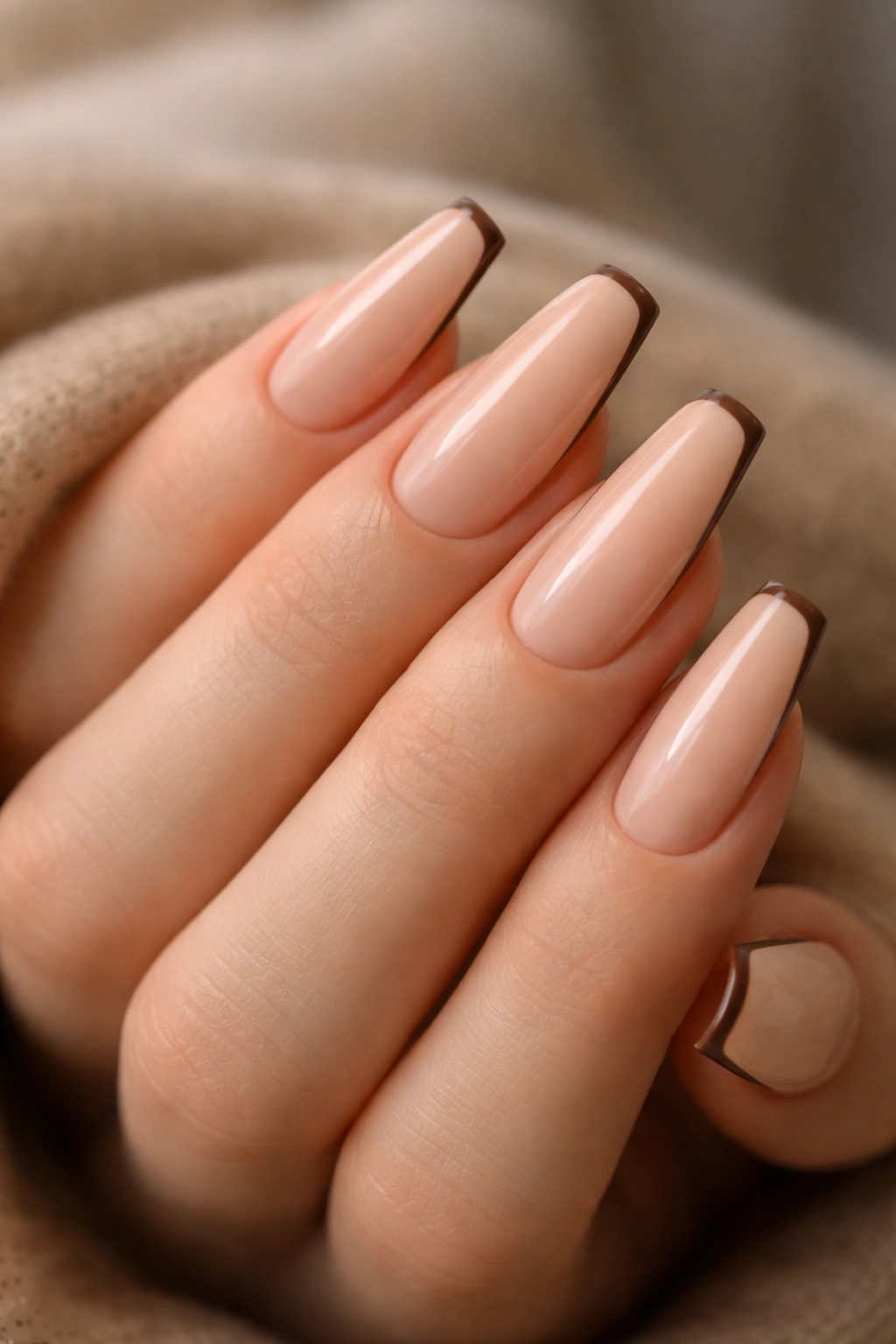
Unlike a standard French manicure, which puts all the contrast at the tip, a mocha outline French traces the shape of the nail itself. A thin brown line follows the free edge and sometimes the sidewalls, sitting over a nude or sheer beige base. On ballerina nails, that outline makes the architecture of the shape look intentional.
This is one of the more graphic options on the list, though it still reads neutral because the contrast stays in the brown family. I prefer mocha over black here. Black can turn the manicure harsh fast, while mocha keeps some softness and sits better with both warm and cool clothing.
Who is it for? Someone who likes a little design but gets bored with plain cream nudes after a week. It is also a strong pick if your wardrobe lives in tailored neutrals—black, camel, stone, navy—because the outline reads like a deliberate accessory rather than decoration.
Keep the line fine. About 1 mm is enough. Any thicker and the edges look cartoonish, which ruins the effect. If your tech outlines the entire nail, make sure the cuticle curve stays soft and narrow. Too much brown near the base can crowd the nail bed.
13. Sandstone Pearl Nails With Fine Sheen
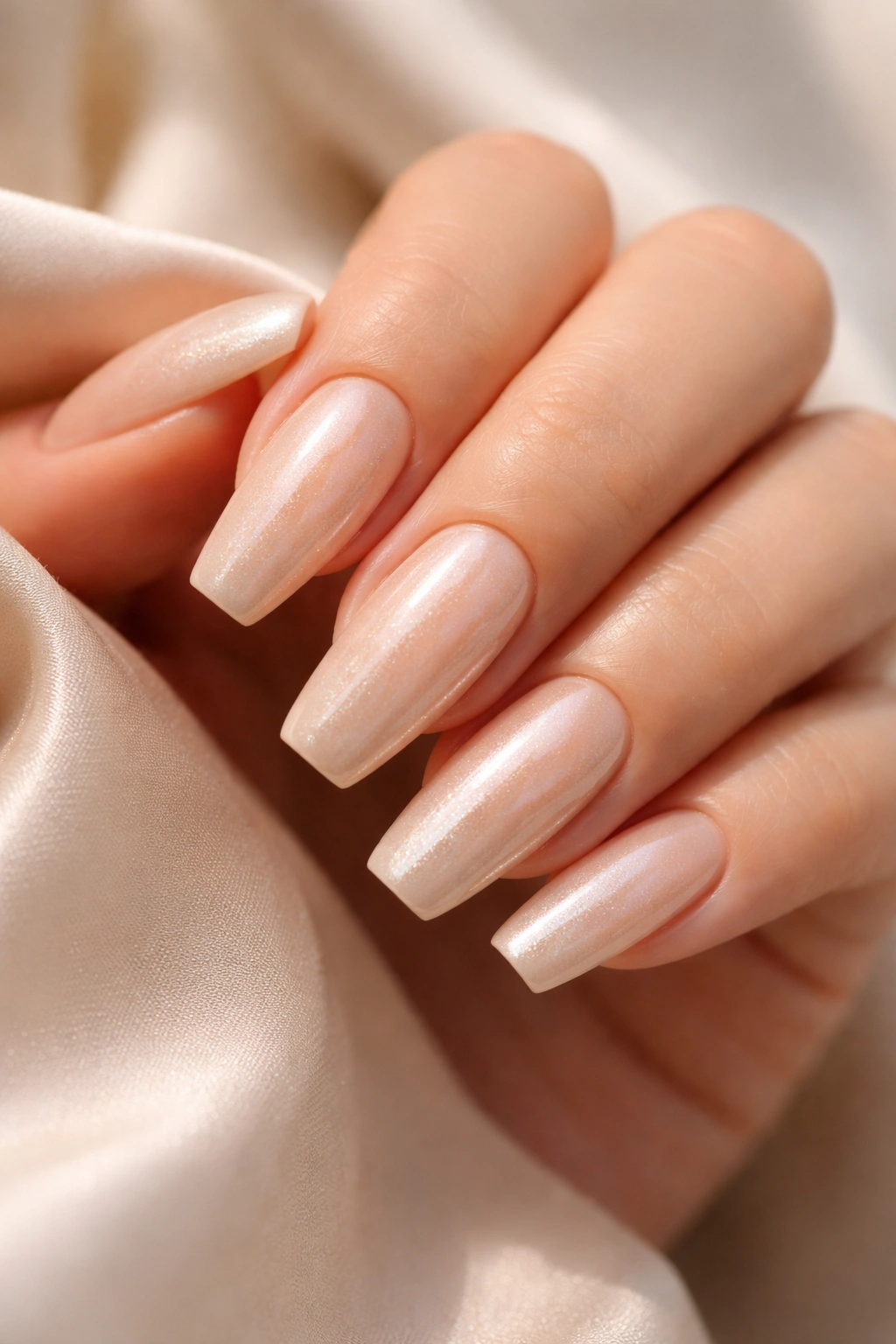
A touch of pearl dust can do more for neutral ballerina nails than chunky glitter ever could. The key word is fine. You want a sandstone base—somewhere between beige, warm taupe, and light tan—with a sheer pearl sheen laid over the top so the finish reads smooth, not sparkly.
What makes the sheen useful
Fine pearl gives movement to a neutral manicure. Under daylight, it adds a soft lift. Under indoor light, it helps the nail surface look smoother. Because the shimmer is diffused rather than chunky, it still pairs well with everyday clothes and does not hijack your rings.
This design is one I would save for people who find plain nudes a little dead on their hands but do not want obvious art. It keeps the restraint of a nude set and adds a light surface shift that makes the color feel less flat.
Keep it refined
- Choose a pearl powder that looks like haze, not visible specks
- Use a warm beige or sandstone base, not silver-gray, unless you want a cooler effect
- Keep the nail length moderate so the sheen stays subtle
- Skip extra crystals, decals, or chrome tips; the pearl already did its job
Small warning: pearl finishes can show scratches more than plain gloss, so top coat quality matters here.
14. Caramel Nude With a Clean Cuticle Line
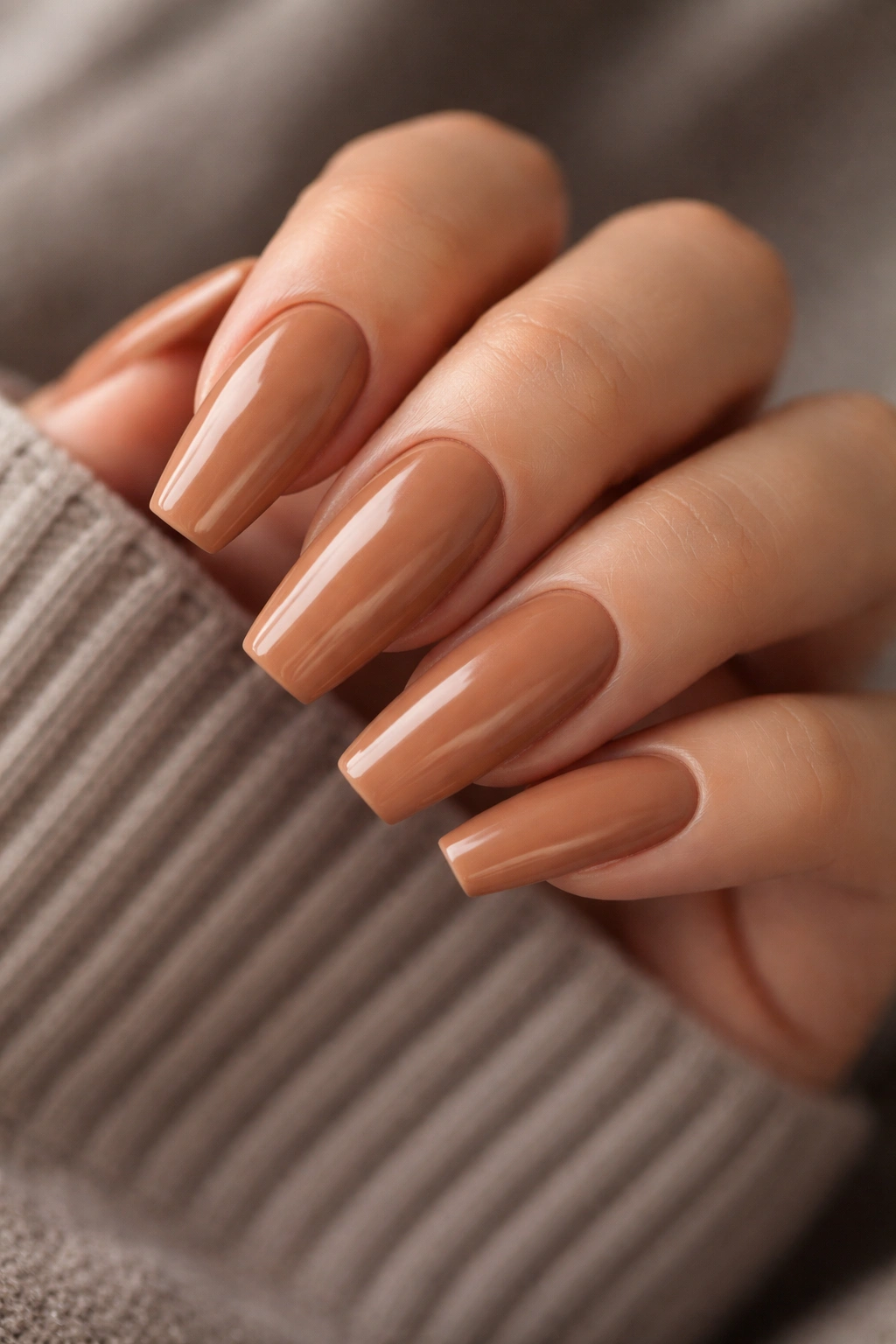
Caramel nude is one of the strongest neutral choices for medium-to-deep skin tones, and I wish more people treated it like the staple it is. Too often, “nude” in salons still leans pale beige. On deeper hands, that can look ashy fast. Caramel solves that by meeting the skin with warmth and depth instead of fighting it.
The appeal is not only color match. Caramel also makes the ballerina shape look rich and smooth without drifting into dark brown territory. You still get a neutral manicure, yet the nails hold their own against gold jewelry, black clothing, cream knits, and warm leather accessories.
A precise cuticle line matters here. Rich nude shades look expensive when the polish hugs the cuticle neatly and the sidewalls stay tidy. Sloppy prep shows faster with caramel than it does with a milky sheer. Ask for close cuticle work, but not flooded product. One tiny overflow and the whole set looks heavier.
I like caramel in glossy gel or acrylic with a lean taper and a flat tip. Keep the corners lightly softened so the shape stays wearable. Richer nudes can turn severe if the edge is too blunt.
15. Cocoa Fade Tips on a Sheer Beige Base
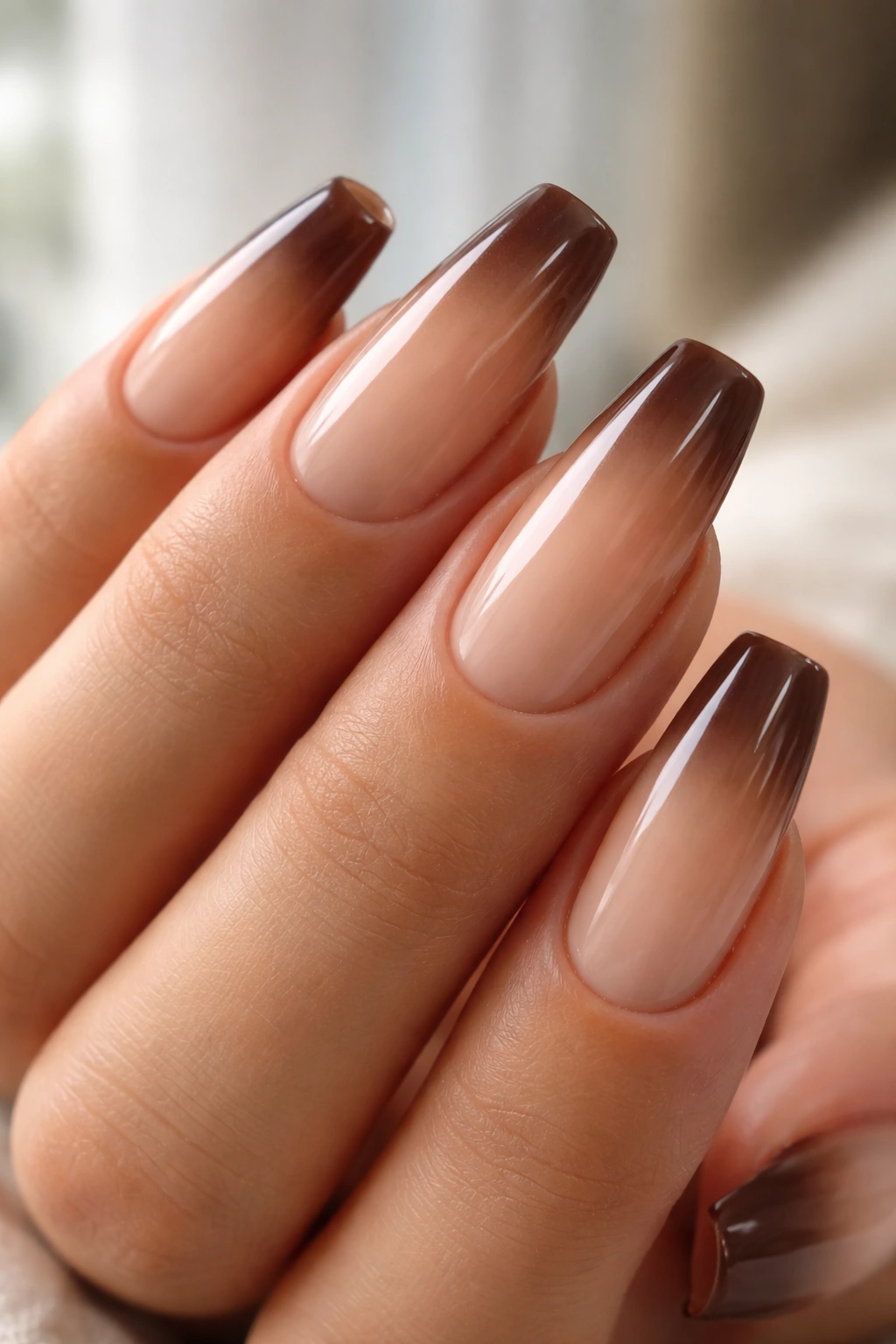
Cocoa fade tips are the neutral answer to wanting a little depth at the end of the nail without committing to a full brown manicure. The base stays sheer beige or almond nude. The tip fades into soft cocoa, usually airbrushed or sponged so there is no harsh line.
The effect is more grounded than ombré blush and softer than a brown French. On ballerina nails, that matters because the square tip already creates a stopping point for the eye. A fade lets you keep that structure without making the tip feel heavy.
I like this look when plain nude feels too safe but bold nail art would clash with your wardrobe. The cocoa adds enough contrast to show shape from across the table, not so much that it starts competing with lipstick, rings, or the rest of your styling. It also wears well. Because the darkest color sits at the tip, grow-out near the cuticle stays discreet.
Ask for a muted brown, not espresso black-brown. You want cocoa powder in warm milk, not marker ink. Keep the fade shallow—last third of the nail is enough. Go too high and the manicure stops reading neutral.
How to keep neutral ballerina nails crisp between appointments
Fresh neutral nails look easy. Keeping them that way takes a little routine. The upside is that the routine is not hard, and it pays off fast because pale nudes, taupes, and rosy beiges show dry skin, worn corners, and scratched top coat sooner than deep colors do.
A few habits make a big difference:
- Use cuticle oil twice a day. Morning and before bed is enough for most people.
- Wear gloves for dishwashing and cleaning. Hot water and detergent dull top coat and dry out surrounding skin.
- File snags in one direction with a fine-grit file instead of picking at them.
- Add clear top coat every 4 to 5 days if you wear regular polish.
- Book fills around the 2.5- to 3-week mark for extensions or overlays; longer than that, the apex shifts and the shape starts to look off-balance.
One more thing. Neutral ballerina nails look better when the underside of the free edge is clean. Sounds fussy, I know. Still true. A quick swipe with a soft brush and soap keeps pale shades from looking tired.
And if you are choosing between gel, acrylic, or a builder-gel overlay, think about how rough you are on your hands. Builder gel often gives neutral manicures the prettiest profile because it can stay slim while still protecting the corners. Acrylic gives durability, though thick acrylic and sheer nude polish can look bulky from the side. That tradeoff is worth considering before you settle into the chair.
Final Thoughts
The nicest thing about neutral ballerina nails is that they do not ask you to build the rest of your look around them. They sit with tailoring, denim, knitwear, soft dresses, bold rings, bare hands—whatever you are doing that week. The catch is that neutrality has to be chosen well. Undertone, depth, finish, and shape all matter more than people think.
If I were narrowing this list to a short rotation, I would keep three lanes in mind: a sheer option for low-maintenance weeks, a cream nude for polished days, and one design with a fine detail—micro-French, outline French, or pearl sheen—when plain color feels flat. That small wardrobe of nail looks covers a lot of ground.
Pick the shade that makes your hands look awake, keep the taper lean, and do not let anyone talk you into a chalky beige that dies under daylight. Neutral is supposed to make life easier. It should.