

Bad nude polish can make a careful manicure look chalky in ten seconds. On long oval nails, that problem shows up even faster, because the extra length gives a color more room to go flat, peachy in the wrong way, or oddly gray against your skin.
That is why shade family matters more than whatever the bottle calls “universal.” Long oval tips stretch the fingers, soften the hand, and make polish read with more intention than it does on a short squoval shape. They also expose weak color choices. A beige that looked harmless on a swatch wheel can turn dull once it sits across a full oval nail bed and free edge.
The good news is less glamorous than nail-caption language makes it sound: you do not need one mythical shade that looks identical on everyone. You need colors with enough translucency, warmth, coolness, or depth to shift with different undertones. Nail techs see this right away. If a nude melts into the cuticle area and the sidewalls still look fresh, you are close. If it turns ashy at the edges, the shade is off.
And some of the most forgiving options are not strict nudes at all. A thin cherry red, a glazed pearl, or a blackberry jelly often travels across skin tones better than a beige that misses by half a step.
Why Long Oval Nails Work on More Hands Than Most Shapes
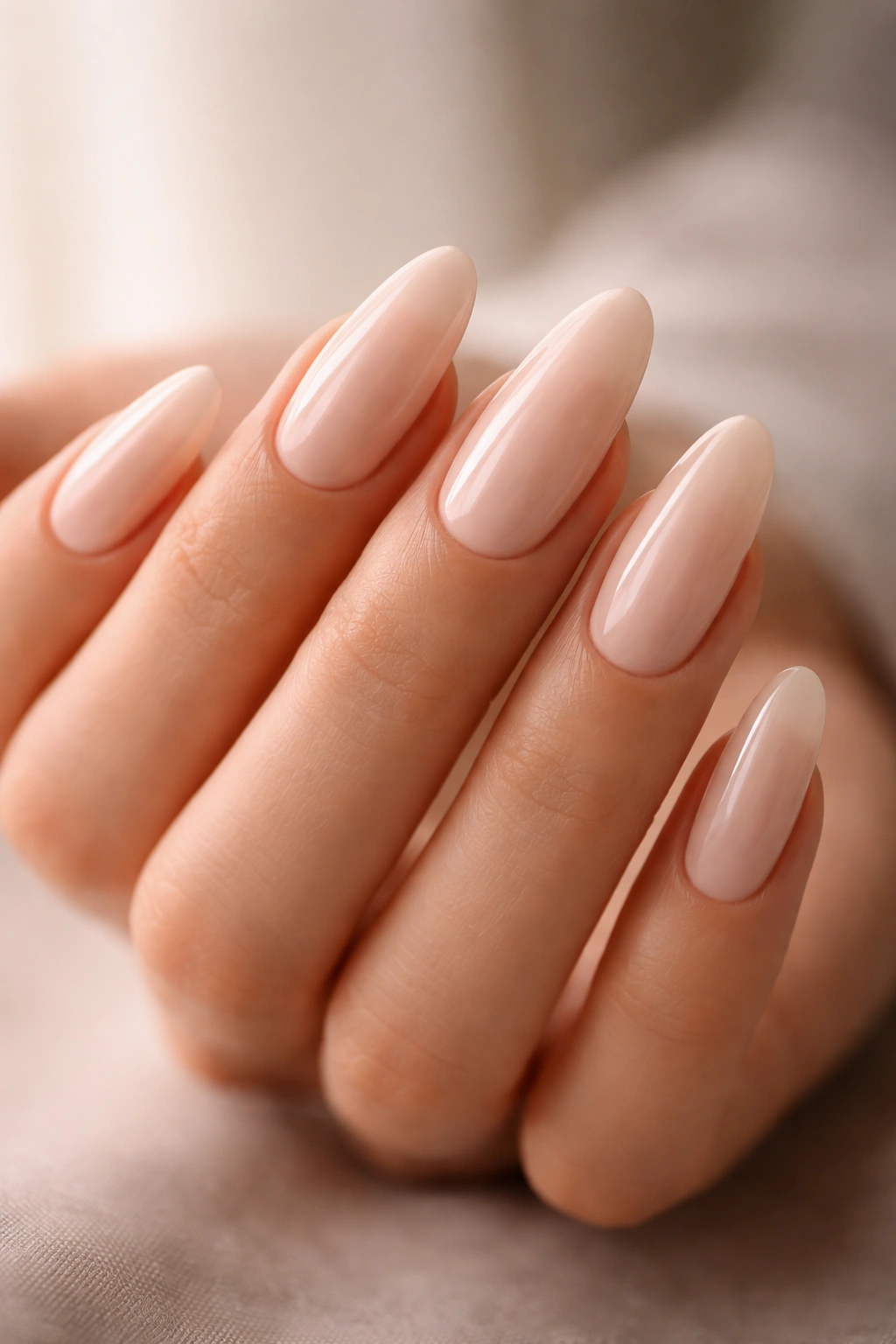
Oval is kinder than square. That is the shortest way I can put it.
A long oval shape follows the line of the fingertip instead of cutting across it. Because the sidewalls taper softly and the tip stays rounded, the eye reads length first, width second. That helps short fingers look leaner, helps wide nail beds look less blocky, and gives bold or dark colors a softer landing.
There is a structural reason nail techs keep coming back to this shape. On a free edge that extends about 5 to 10 millimeters past the fingertip, oval keeps enough width through the center of the nail to stay wearable, but it does not flare out at the corners the way a square tip can. Almond goes sharper. Coffin needs more width and more commitment. Oval sits in the sweet spot.
Color behaves differently on it too. A milky pink on a square tip can look prim. On a long oval, the same pink looks cleaner and more expensive because the shape adds movement. Deep shades benefit even more. Black cherry, espresso, brick red—those colors still feel polished, not heavy, because the rounded edge breaks up the density.
If you like rings, this shape plays well with them.
The Daylight Check for Warm, Cool, Neutral, and Olive Undertones
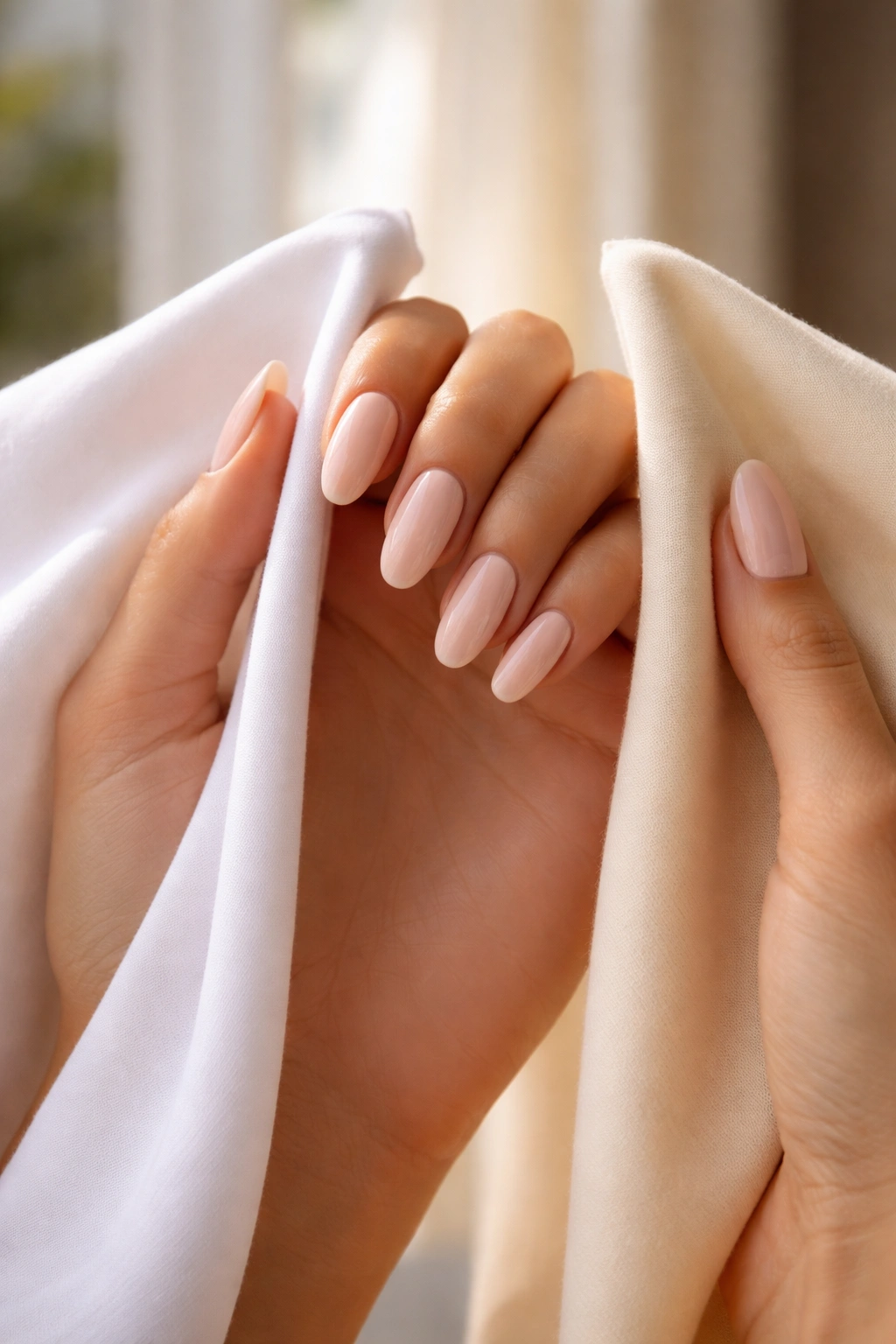
Forget the old “look at your veins and decide in five seconds” trick. It can help, but it misses too often, especially on olive skin and deeper complexions where surface tone and undertone do not line up neatly.
A better test takes two minutes and a window. Hold up a clean white fabric and a cream fabric near your bare hand in daylight. If crisp white makes your skin look awake and cream makes it go sallow, your undertone leans cool. If cream brings warmth and white feels stark, you likely lean warm. If both work, neutral sits somewhere in the middle. Olive skin adds a green-gray cast that can make both tests look half-right, which is why olive undertones get misread so often in nail salons.
Jewelry checks can help, though I would not build a manicure around them alone. Gold that brightens the skin often points warm; silver that sharpens the skin often points cool. Olive skin can wear both and still look best in shades with muted warmth—think tea, fig, brick, sage, cocoa.
A few practical clues make nail shopping easier:
- Warm undertones usually handle caramel, peach, cinnamon, terracotta, and golden beige with less effort.
- Cool undertones tend to light up around blue-red, rosy mauve, berry, and milky pinks with a neutral base.
- Neutral undertones can wear almost any family, but finish matters more than color temperature.
- Olive undertones often look strongest in shades that are slightly muted rather than bright and sugary.
One more thing. The skin on your hands can be one or two steps deeper than your face. Match polish to your hands, not to your foundation bottle.
Sheer Gloss, Soft Cream, and Chrome Shift the Same Color
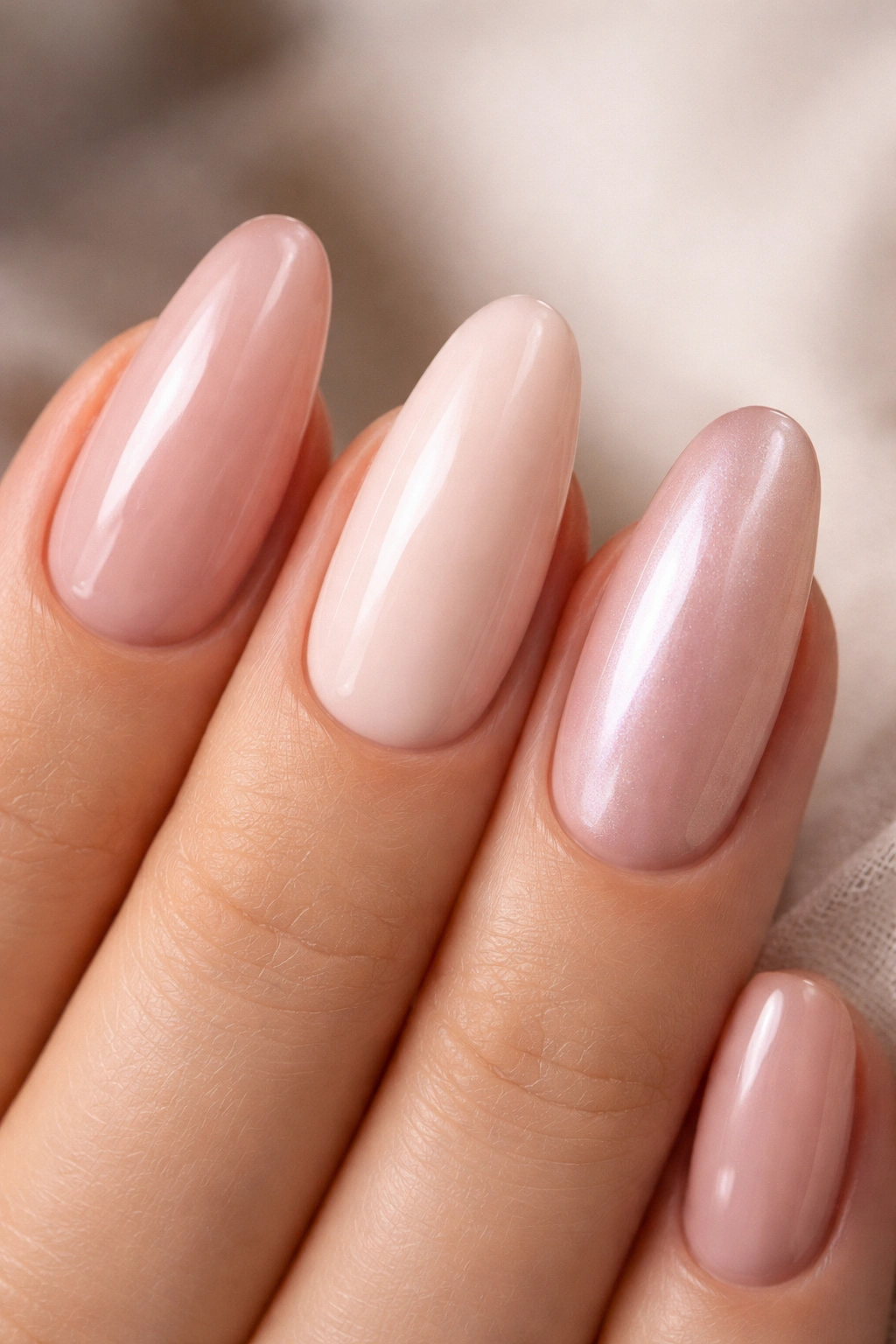
Picture three versions of the same pink: one sheer, one fully creamy, one topped with pearl chrome. They will not read like the same manicure.
Finish changes skin contrast as much as color does. Sheer formulas let your nail bed show through, which makes them forgiving across fair, medium, tan, deep, and olive skin. Cream formulas look cleaner and stronger, but they expose a bad undertone match faster. Chrome and pearl finishes bounce surrounding color back into the nail, which is one reason glazed shades adapt so well across different complexions.
That is why a translucent beige can flatter more people than an opaque “nude” sold as a one-size-fits-all answer. Sheerness gives the manicure room to breathe. You still see your nail underneath, so the polish borrows some of your natural tone instead of fighting it.
Coverage level matters on long oval nails because the eye follows the full curve from cuticle to tip. With dense color, every undertone choice looks louder. With jelly and semi-sheer finishes, the line softens.
When a shade feels close but not quite right, changing the finish often fixes it faster than changing the color family.
1. Milky Sheer Pink for Long Oval Nails
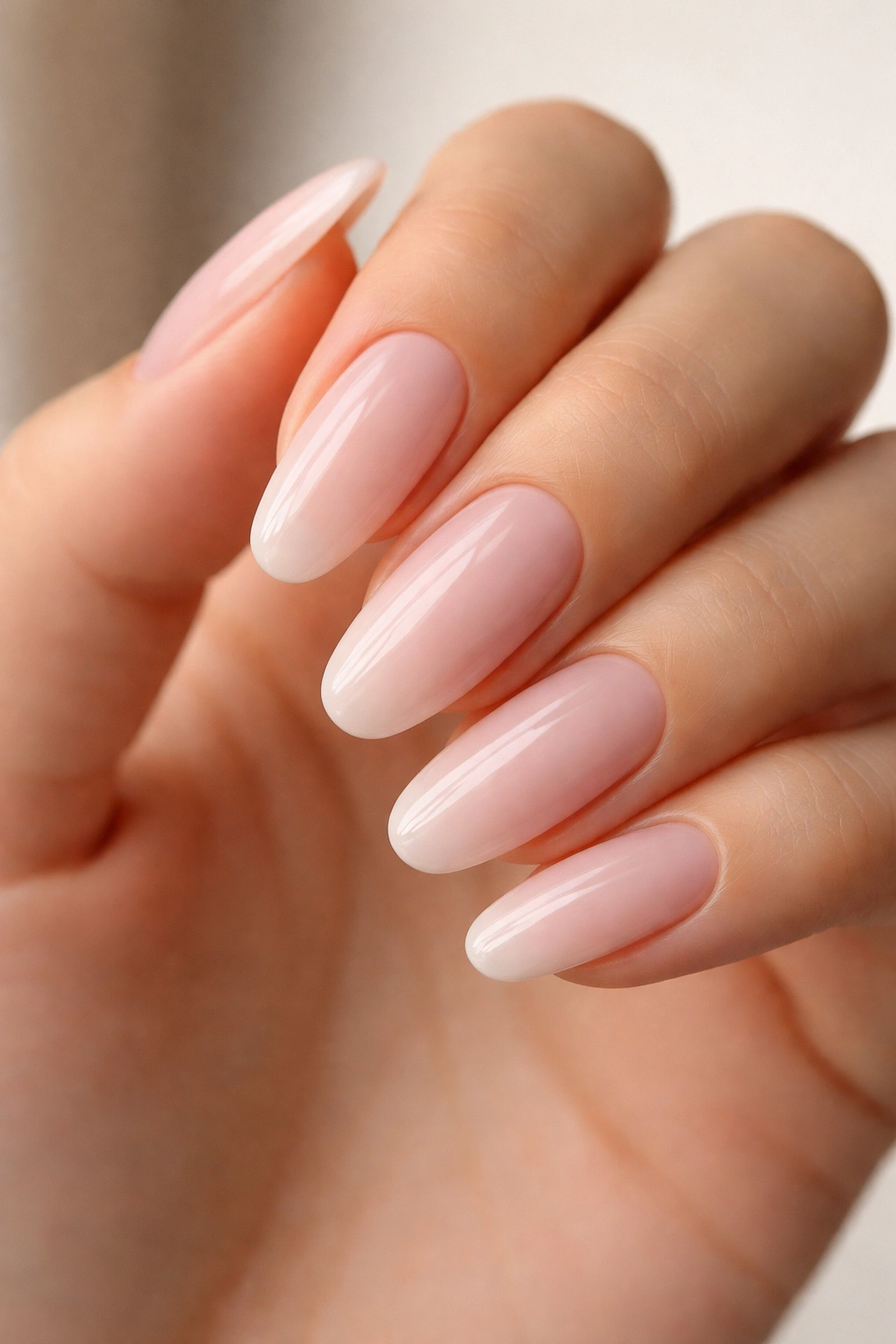
If you freeze every time you face a polish wall, start here. Milky sheer pink is the safest long oval manicure I know that still looks like an intentional choice, not a placeholder.
The reason it works is straightforward: translucency saves it. A pale pink with some milkiness blurs ridges, softens the free edge, and lets enough of the natural nail bed show through that it adjusts itself to fair, tan, deep, warm, cool, and olive skin. A hard pastel pink can look chalky. A sheer one rarely does.
Why it flatters so many hands
A good milky pink sits between clear and creamy. You want 2 to 3 thin coats, not one thick layer. That small detail matters because long oval nails show streaks and pooling at the cuticle more than short nails do. When the polish stays thin, the curve of the nail still shows underneath, and that makes the color look cleaner.
What to ask for at the salon
- Choose a pink with a beige or neutral base, not a candy-baby blue base.
- Ask for a high-gloss top coat; matte kills the softness that makes this shade work.
- Keep the shape elongated, with the apex centered, so the nail does not start looking egg-shaped.
- If your nails have yellow staining, use one blurring base coat under the pink.
Best move: stop at two coats if the third coat turns the shade opaque. The charm is in the transparency.
2. Soft Beige Nude With a Jelly Finish
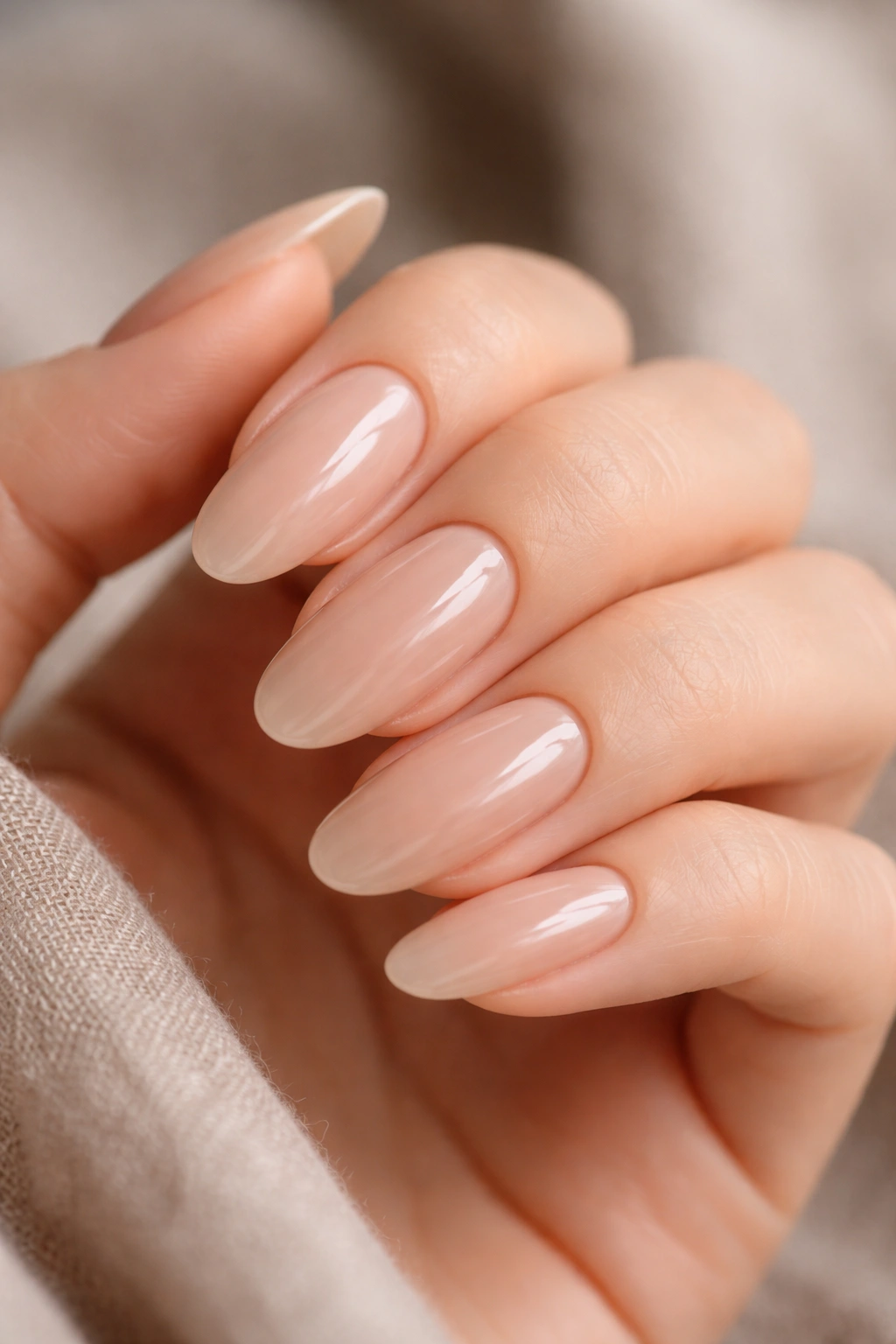
Opaque beige is where a lot of nude manicures go wrong. A translucent beige, though, can look polished on almost anyone.
The difference sounds small. It is not. Full-coverage beige often sits on top of the nail like correction fluid with better branding. On fair skin it can read muddy. On deep skin it can go flat and gray. On olive skin it may pull oddly yellow. A jelly beige avoids all of that because your natural nail tone still peeks through.
I like this option most on long oval nails that extend 6 to 8 millimeters beyond the fingertip. That length gives the beige enough surface to show depth, while the rounded shape stops it from looking harsh. If the nail is longer than that, ask for the first coat to be feathered lightly near the cuticle so the grow-out stays soft.
There is one catch: beige needs a little intention. Choose a shade that is either one step lighter than your skin with warmth in it or one step deeper with a tea-colored cast. An exact skin match sounds smart, but it can make the manicure disappear in a dull way. You want harmony, not camouflage.
Wear it with gold rings, silver rings, no rings—it holds up.
3. Peach-Tea Nude
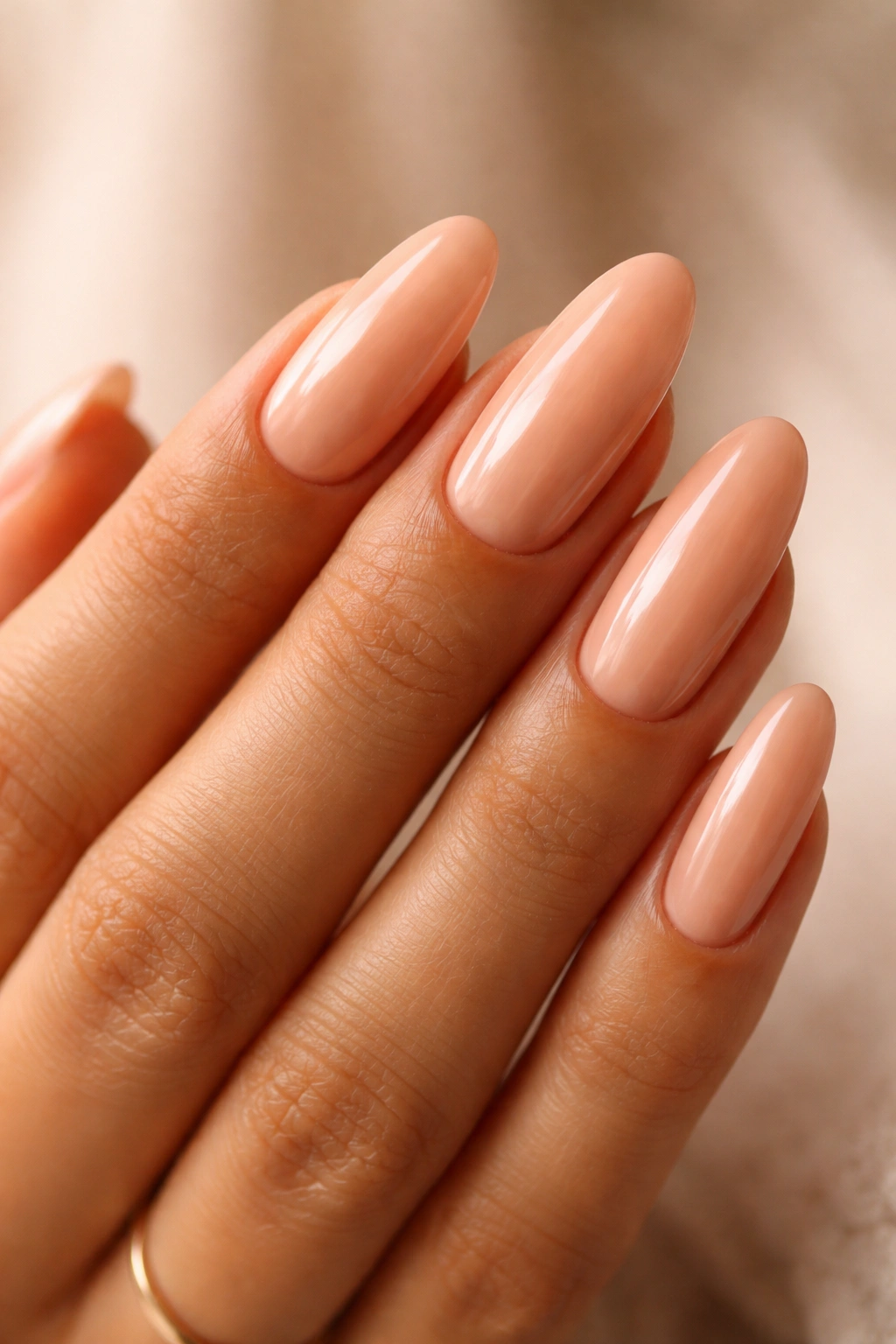
Why does a hint of peach rescue so many “boring” nude manicures? Because peach carries enough red and yellow to cancel the gray cast that ruins pale beiges.
That matters most on olive, golden, and neutral skin, where flat nude polishes can turn dusty fast. A peach-tea nude brings life back without looking loud. On fair cool skin, it reads warmer and healthier. On medium and deep skin, it adds contrast without looking disconnected from the hand.
The tea part matters as much as the peach. If the polish leans too orange, the manicure starts looking dated. If it has a brewed-tea softness—a touch of brown, a touch of amber—it settles into the nail instead of jumping off it.
How to wear it so it stays modern
Keep the finish glossy and the shape clean. Peach-tea looks best with a slightly longer oval, around 7 to 10 millimeters of free edge, because the color has room to show its warmth. A short nail can make it look like plain beige with extra effort.
If you want detail, add a thin gold line at the cuticle or a single accent dot near the base. Do not pile on art. This shade earns its keep by looking smooth, warm, and expensive without much decoration.
4. Rosy Mauve Gloss
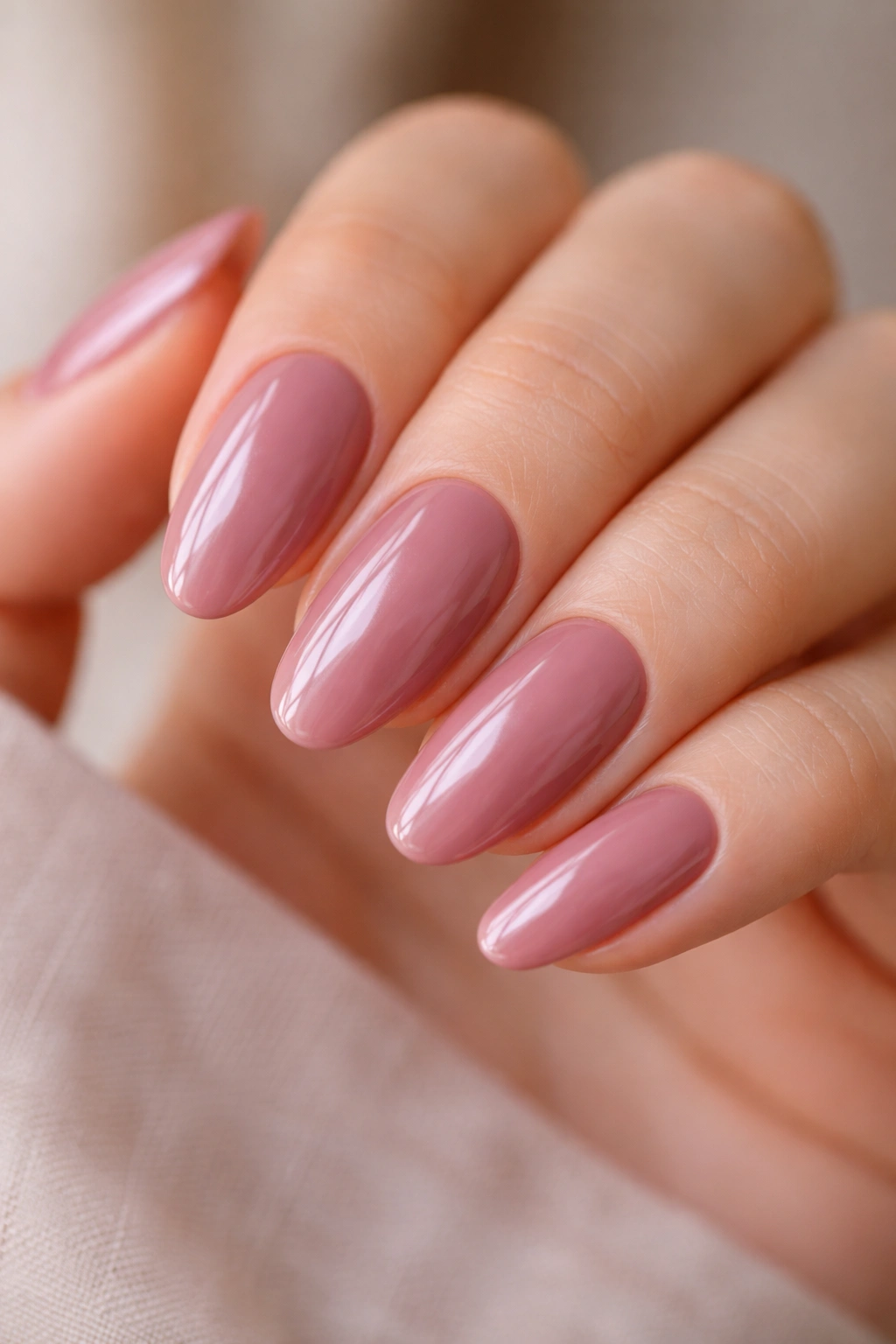
A mauve manicure often looks wrong in the bottle and right on the hand. That is part of its charm.
Rosy mauve sits between pink, berry, taupe, and a whisper of brown. Because it is not fully warm and not fully cool, it bridges undertones better than people expect. Fair skin gets definition without the washed-out look of pale nude. Medium and tan skin get enough rose to feel lively. Deep skin gets softness without losing depth.
The trick is picking the right mauve. Purple-heavy mauves can go bruised. Dusty mauves with a brown base look grown-up and much easier to wear on long oval nails.
A few details make a big difference:
- Look for a mauve described as rose-taupe, dusty berry, or pink-brown.
- Skip frosty versions; cream or syrup-gloss finishes look cleaner.
- Ask for the sidewalls to stay narrow and smooth, because darkened mauve will show any bulky filing.
- If your cuticles run dry, use oil before photos. Mauve highlights rough edges.
Rosy mauve is the shade I point people toward when they want something softer than berry but less sleepy than nude.
5. Caramel Latte Ombré
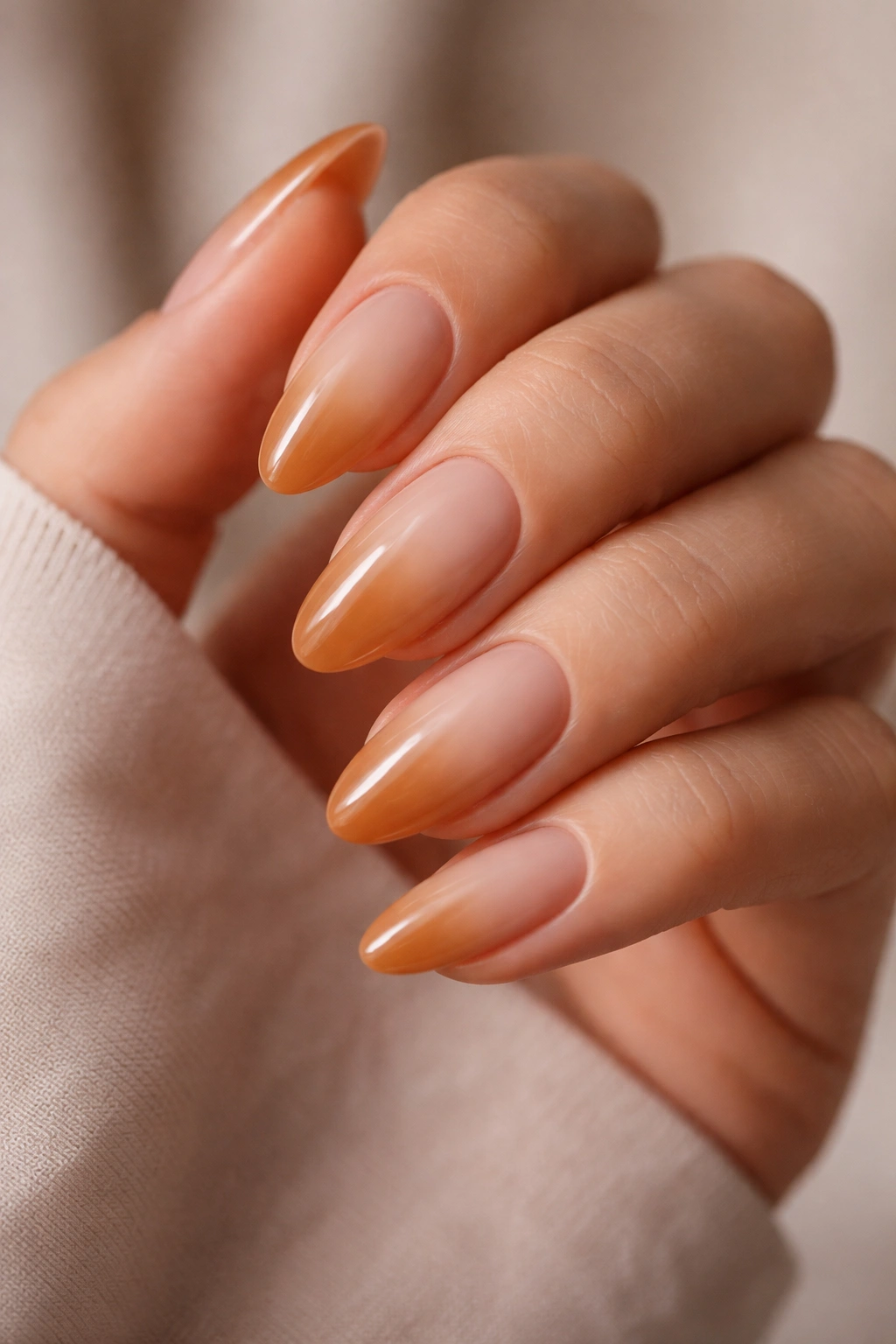
Flat nudes are not your only route to a wearable manicure. A caramel latte ombré—sheer beige near the cuticle fading into honeyed caramel at the tip—solves one of the oldest nail-color problems: abrupt contrast.
Because the depth builds gradually, the shade does not have to match every part of your hand at once. The lighter base keeps the cuticle area fresh. The richer tip adds shape and movement. On fair skin, the fade looks warm and elongating. On medium and tan skin, it feels seamless. On deep skin, a deeper caramel tip adds polish without that chalky nude effect that salons still push far too often.
Long oval nails are made for this look. The curve gives the fade more runway, and the rounded tip stops the darker end from feeling heavy. A square tip can make the same ombré look blocky. Oval lets it melt.
Technique matters here more than with a single-color manicure. A sponge fade can work, though it often leaves a grainy texture that needs extra top coat. A brush-blended gel fade looks smoother, especially on nails longer than 8 millimeters past the fingertip. If you are doing it at home with regular lacquer, keep the transition narrow and soft rather than trying to build a dramatic three-color blend.
This is the manicure for someone who wants nude-adjacent without looking half-finished.
6. Cinnamon Rose
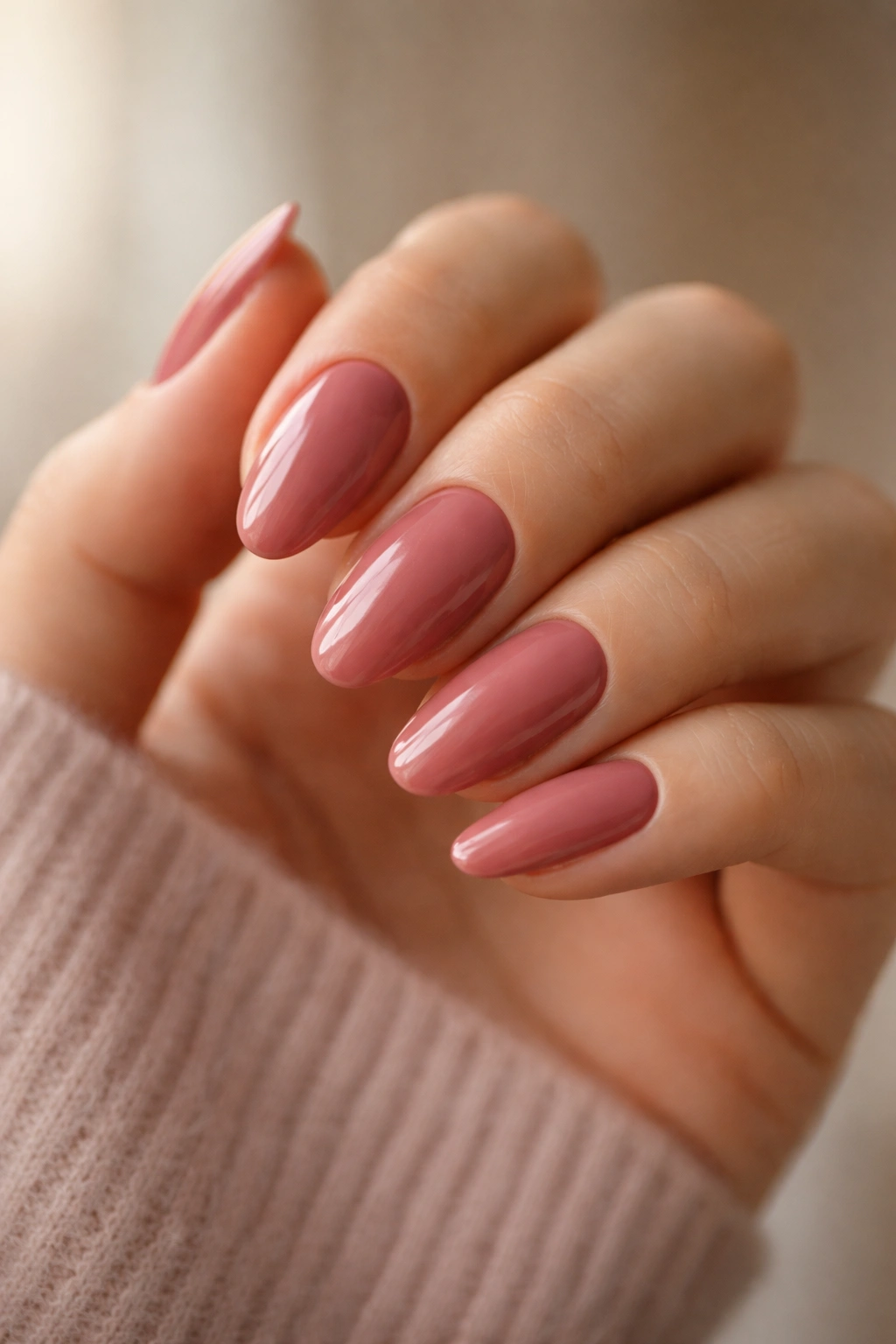
Unlike pale pink, which can turn sugary, and unlike brown nude, which can go flat, cinnamon rose lands in a sweet spot that feels richer and smarter on long oval nails.
Think of it as rose with spice in it. There is pink, yes, but also terracotta, muted brown, and a little warmth that keeps the shade from drifting into salon-standard dusty rose. That blend is why it travels well across skin tones. On warm and olive skin, it echoes natural warmth without disappearing. On cool skin, the rose note keeps it from looking orange. On deep skin, it reads soft but not timid.
I like cinnamon rose for readers who want a manicure that works with both black clothes and cream knitwear, both gold jewelry and bare hands. It has more personality than beige, but it does not demand attention the way a bright red does.
Keep it medium opacity. Too sheer and the brown note gets muddy. Too opaque and you lose the rose that makes the shade flexible. If you are buying polish online, look for words like spiced rose, clay pink, rosewood, or cinnamon tea. Skip anything described as bubblegum, petal, or candy rose. Wrong family.
7. Blue-Red Cherry Cream
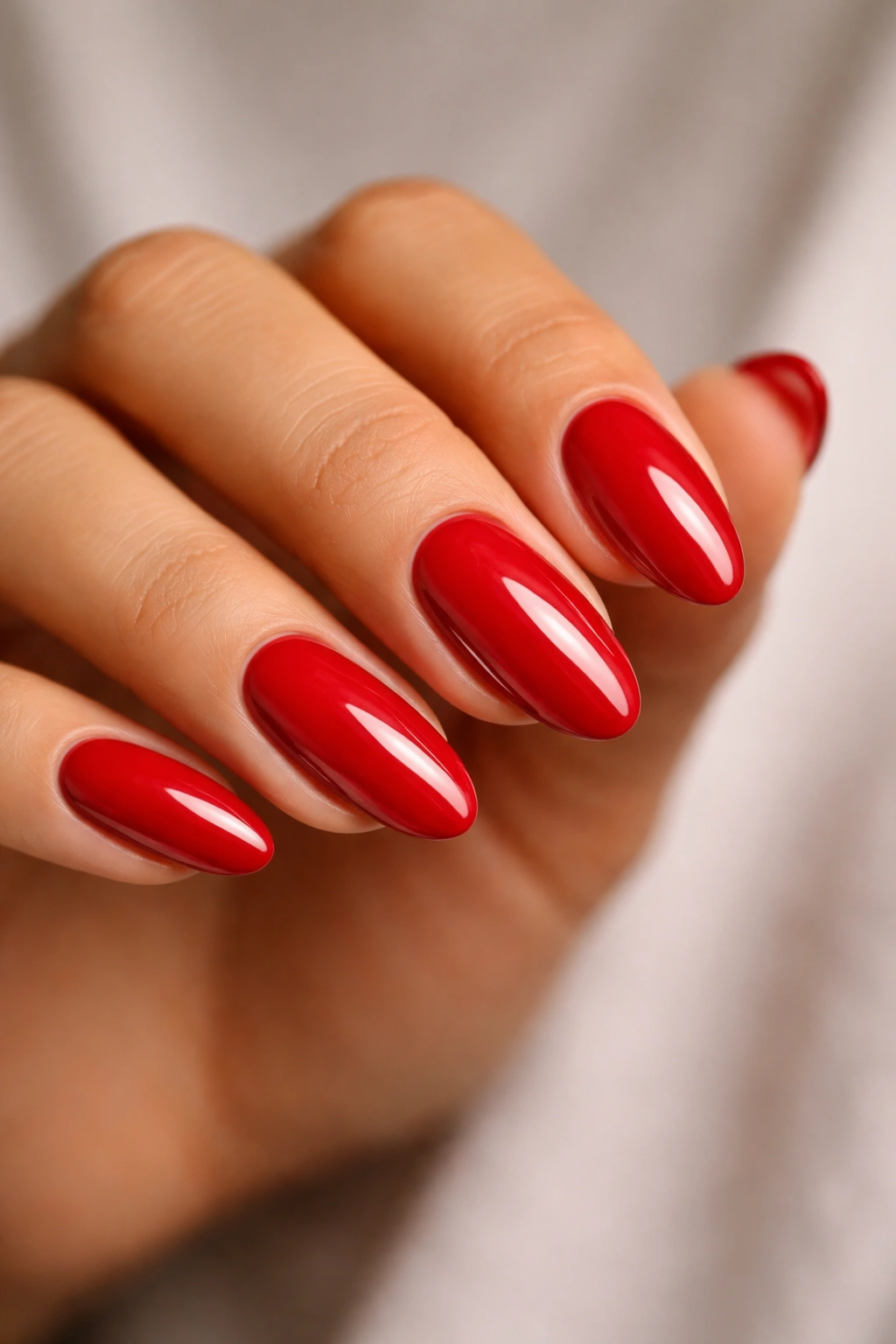
Red is often easier than nude. I will keep saying that because too many people still treat red as “bold” and beige as “safe,” when the opposite can be true on actual hands.
A blue-red cherry cream flatters across skin tones because it gives contrast without a weird undertone fight. Fair cool skin looks brighter against it. Warm and olive skin gets a clean, crisp counterpoint. Deep skin gains saturation and depth instead of the color vanishing into the hand.
What makes this red different
Orange-red can look sharp and summery in a way that does not suit everyone. Cherry red with a blue base is cleaner. It also makes long oval nails look elegant rather than theatrical, because the rounded tip softens the strength of the color.
Quick application notes
- Ask for a true cherry or blue-red, not tomato red.
- Use one ridge-filling base coat so the cream finish stays glassy.
- Cap the free edge carefully; reds show tip wear fast.
- Keep the cuticle line tight and neat. Red exposes sloppy prep.
My take: if you own one statement color for long oval nails, make it cherry red. It is less limiting than half the so-called neutrals.
8. Brick Terracotta
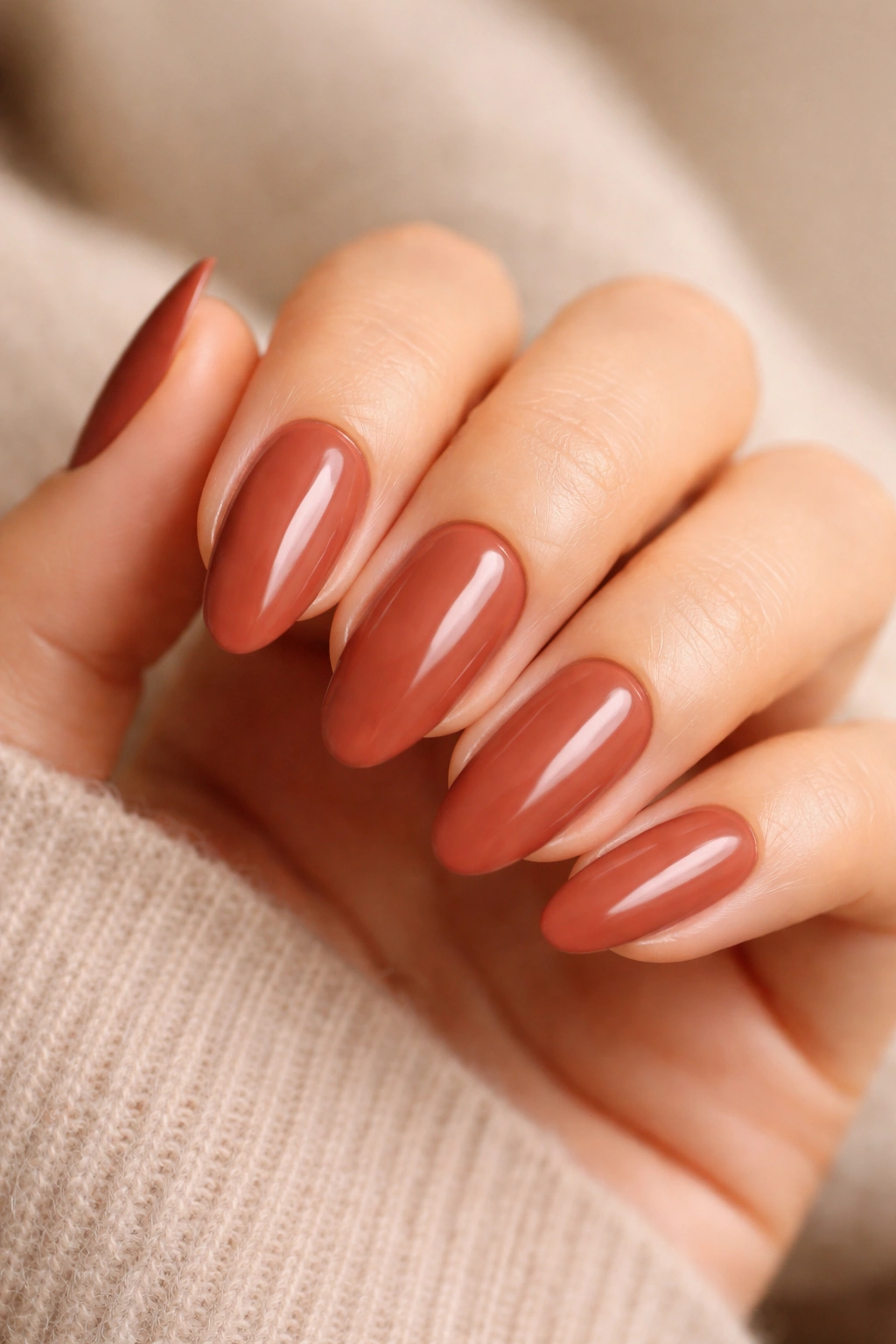
Orange can get messy. Brick terracotta does not.
That muted red-brown base is what saves it. Instead of shouting warmth, brick terracotta grounds it. The shade holds enough earthiness to flatter golden and olive skin, enough red to wake up cool skin, and enough depth to show up on deeper tones without looking dusty.
I prefer brick terracotta in cream rather than shimmer. Shimmer can push it toward bronze, and bronze on long oval nails is a different mood entirely. Cream keeps the color dense, modern, and easier to pair with everyday clothes. White shirt, dark blazer, washed denim, camel coat—it works with all of them without stealing the whole outfit.
There is also a seasonal myth around terracotta that annoys me. People file it under one weather mood and ignore it the rest of the time. Nonsense. On a glossy long oval nail, brick reads grounded and chic any month, any room, any light.
How to keep it flattering
Choose a brick with brown under it, not pumpkin orange. If the swatch looks like a traffic cone, walk away. On fair skin, one slightly sheerer coat can look better than full opacity. On deep skin, full cream coverage usually looks stronger and richer.
9. Soft Micro-French Tips on Long Oval Nails
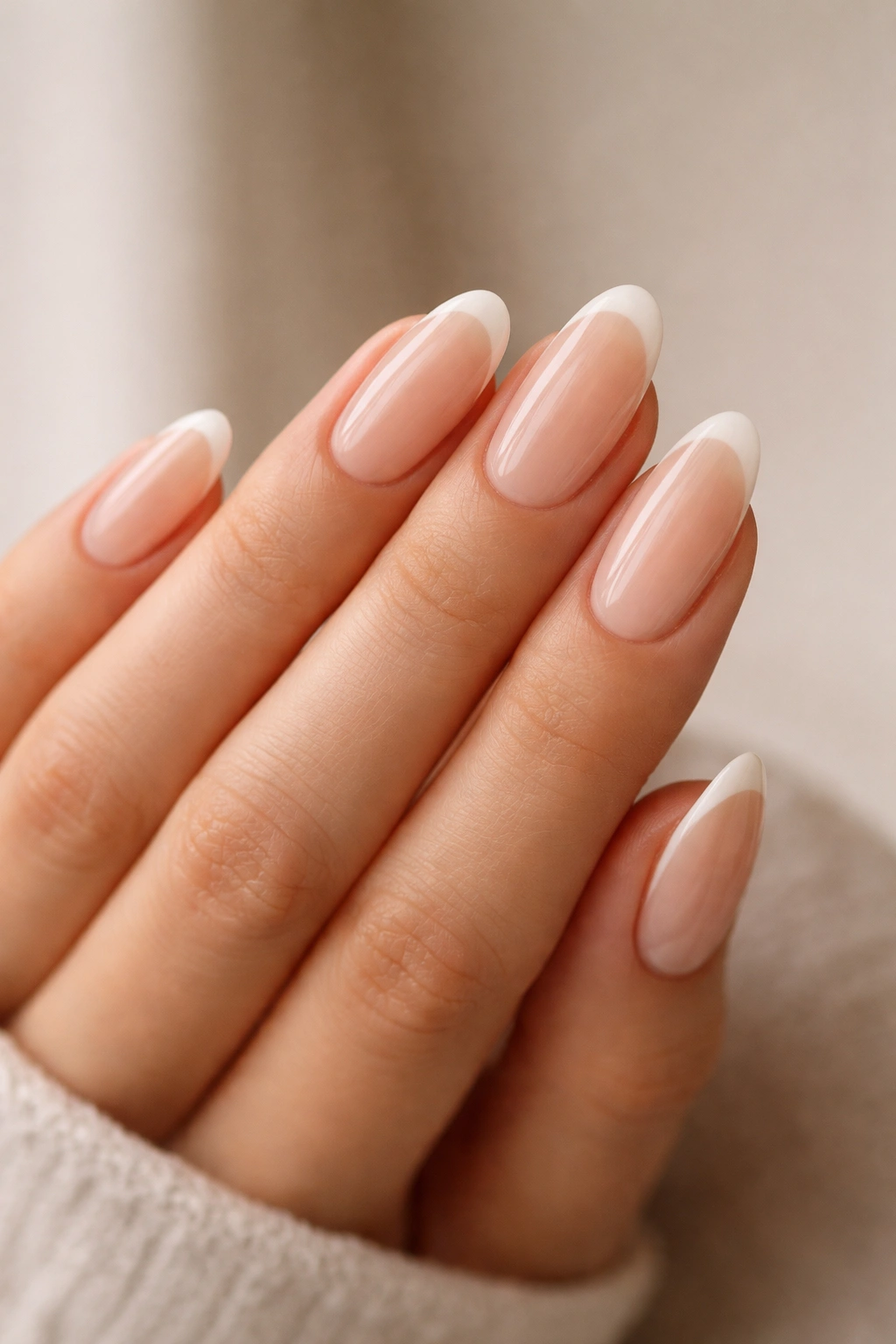
A classic French manicure does suit every skin tone—if the base is handled properly. That “if” is doing a lot of work.
Most bad French manicures fail for one reason: the nude base is too pale and too pink for the person wearing it. On deeper skin, that can look dusty. On olive skin, it can turn gray. On fair skin, it may look cold and artificial. The fix is not abandoning the French. The fix is choosing a sheer beige, rosy beige, or tea-toned base that matches the nail bed better.
Long oval nails make the French look fresher because the curved free edge mirrors the smile line. Keep the white tip narrow—about 1 to 2 millimeters. That is the “micro” part. Thick white bands can swallow the elegance of the shape and start veering into retro territory in a way that not everyone wants.
If bright white feels too stark, ask for soft white, milk white, or porcelain white instead. Tiny difference. Big payoff. The softer white blends more naturally across skin tones and keeps the manicure from looking severe.
This is one of those styles where precision matters. If the smile line is lopsided or the tip too thick at the corners, long oval nails will show it immediately.
10. Opal Glazed Pearl
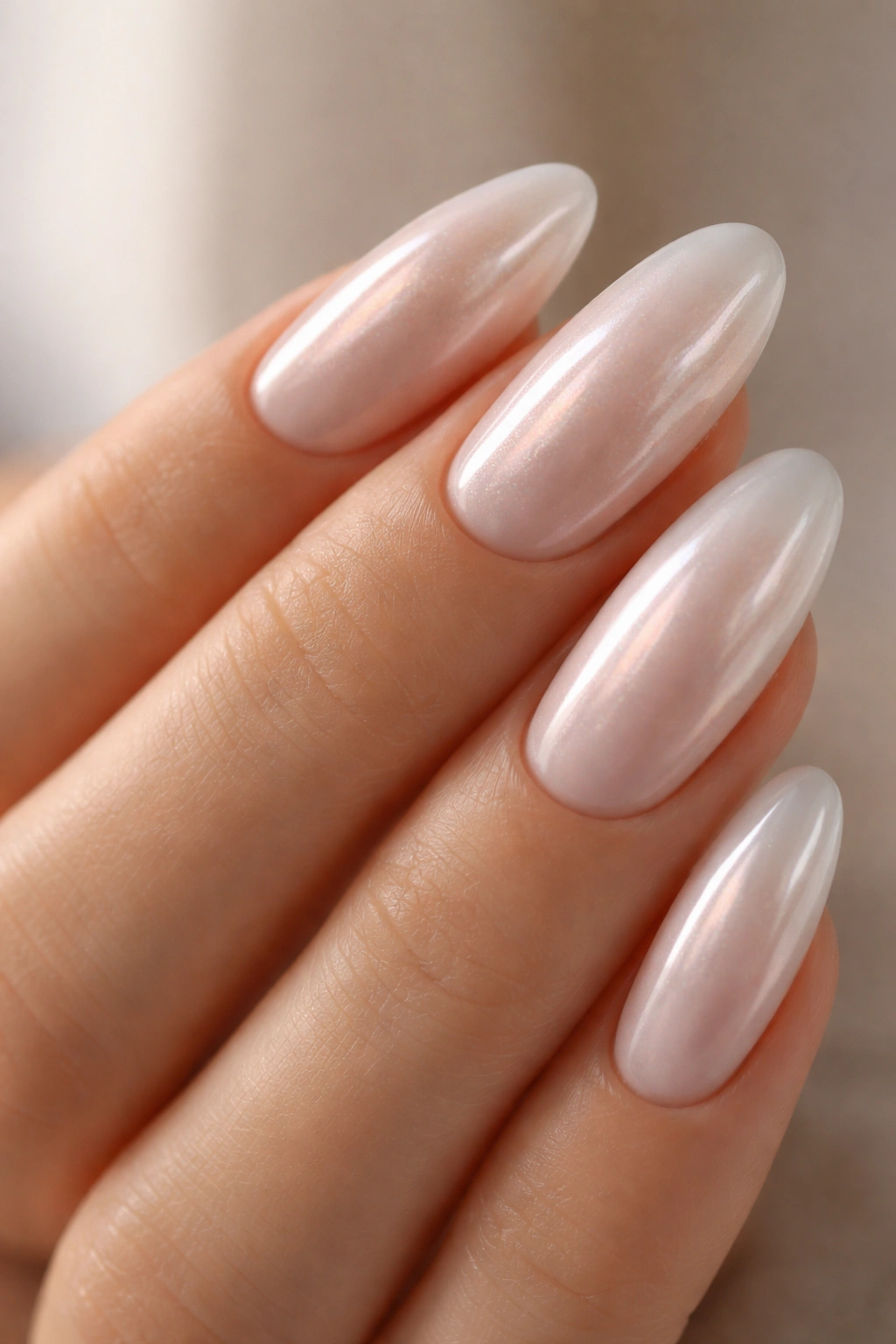
Under indoor light, this shade can look like milk glass. Near daylight, it picks up cooler flashes. Against deeper skin, it glows warmer. That shift is exactly why glazed pearl works on so many people.
The base should be sheer—milky nude, soft pink, or translucent beige. Over that, a fine pearl or opal chrome powder adds reflection without turning the nail metallic. Thick silver chrome is harsher and less forgiving. Fine pearl reads cleaner and borrows color from the skin around it, which helps it adapt.
A few guidelines keep it from drifting into frosty territory:
- Use a translucent base, never a flat opaque white.
- Choose pearl chrome with pink or champagne reflect, not mirror silver.
- Keep the nail surface smooth; chrome magnifies bumps.
- Finish with a glossy top coat and a sealed free edge.
The longer the oval nail, the better this effect looks. The light has room to travel across the curve, and the finish shows that subtle shift from base to tip. If you want a manicure that feels polished but not dull, this is a strong pick—especially when plain nude feels tired.
11. Blackberry Jelly
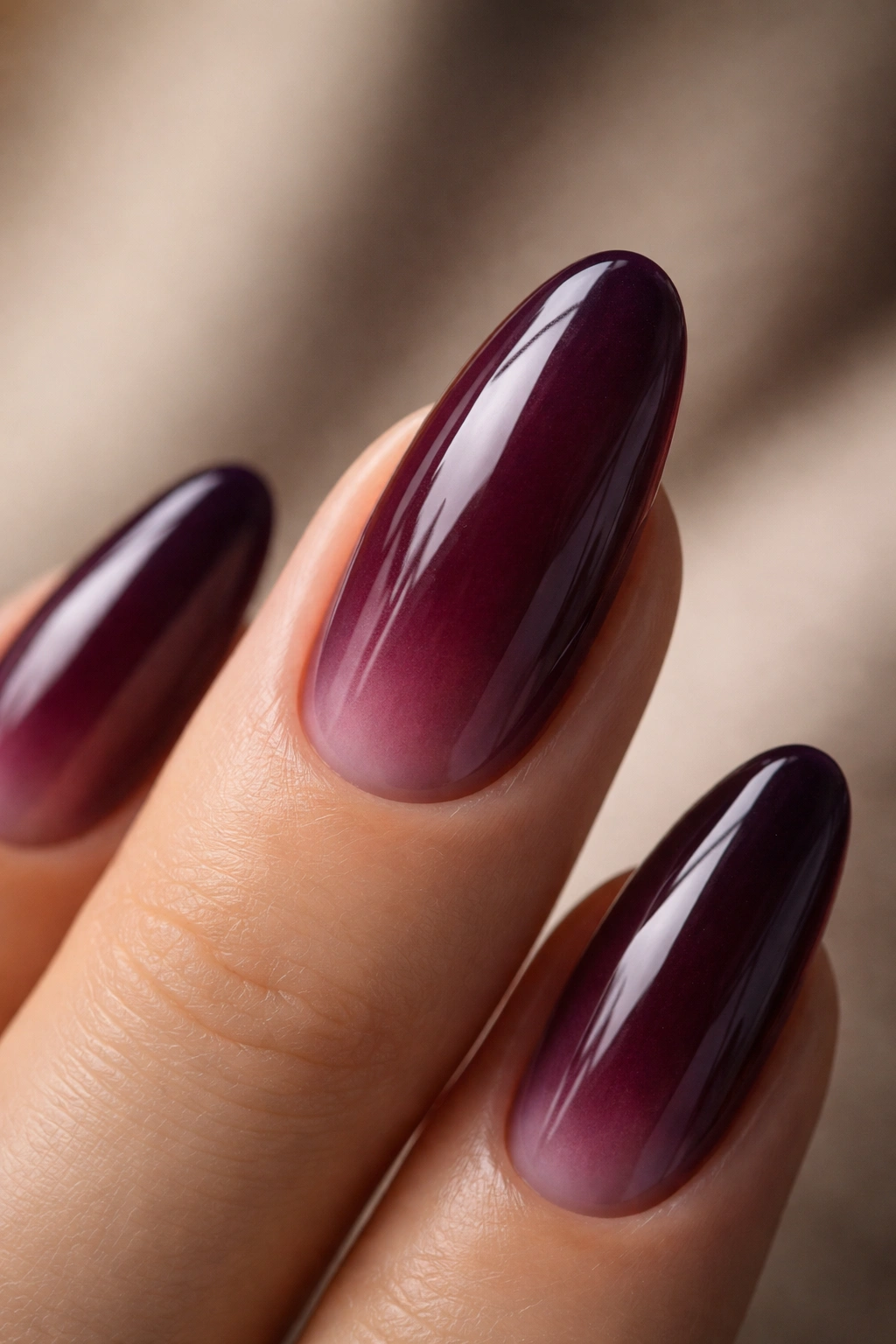
Dark nails scare people who have been told to stay “light” if they want universal flattery. I do not buy that rule. A blackberry jelly is one of the smartest dark shades for long oval nails because it keeps depth without going flat.
Jelly matters here. Opaque plum can be heavy. A translucent blackberry lets light pass through the polish, so the color looks like stained glass rather than a slab. On fair skin, the contrast looks deliberate and crisp. On medium and olive skin, the berry note brings life. On deep skin, the undertone still shows, which keeps the manicure from disappearing into pure darkness.
The shape does part of the work. Long oval nails soften dark shades by rounding the edge and carrying the color along a curve rather than a blunt wall. That is why blackberry looks refined here and harsher on a square tip of the same length.
When to pick it
Reach for blackberry jelly when you want something moodier than red but less stark than black. Two thin coats usually give the right depth. Three can work if the formula stays translucent. If coat three turns it into dense purple-black, you have lost the point.
12. Espresso French Fade
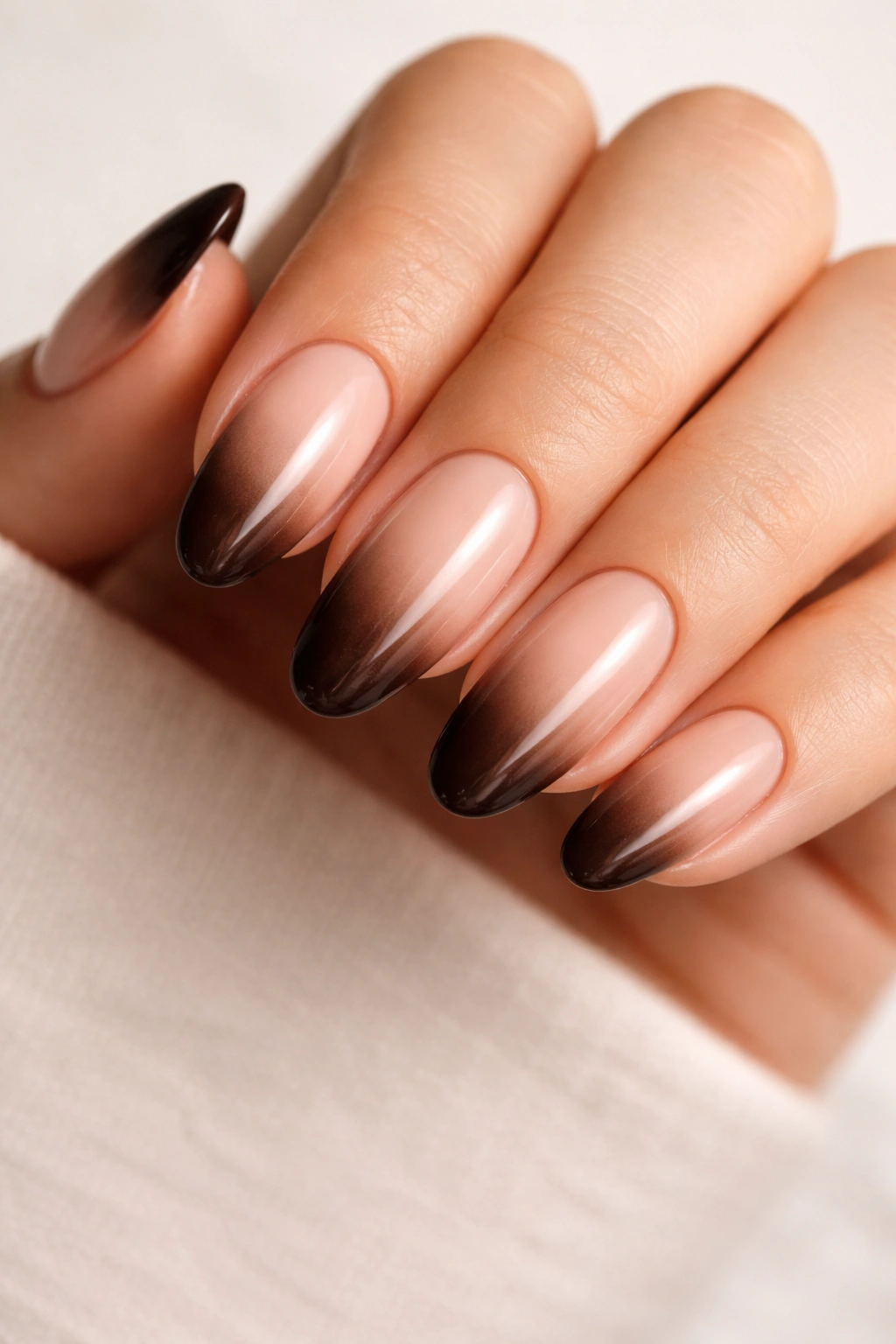
If full brown nails feel too solid, an espresso French fade gives you the same richness with better movement. The idea is simple: a clean nude or sheer pink base, then soft espresso concentrated at the tips and feathered downward.
That gradient is why it flatters so widely. The depth lives where the nail already tapers away from the skin, so it does not fight the cuticle area. Fair skin gets drama without feeling overwhelmed. Tan and deep skin get contrast without a chalky base. Olive undertones love brown when the brown is muted and smoky rather than orange.
I would choose this over a standard brown French line on most long oval sets. The fade looks smoother, more expensive, and kinder to grow-out. Harsh tip lines can chip visibly after a few days. A soft airbrushed or sponge-blended fade hides wear better, which matters if your hands are busy and your manicure has to survive dish soap, keyboards, grocery bags, all the unglamorous stuff.
Go deeper than latte but stop short of black coffee. Espresso with warmth is the lane. If the brown goes gray, the manicure loses its softness.
13. Dusty Sage Gray
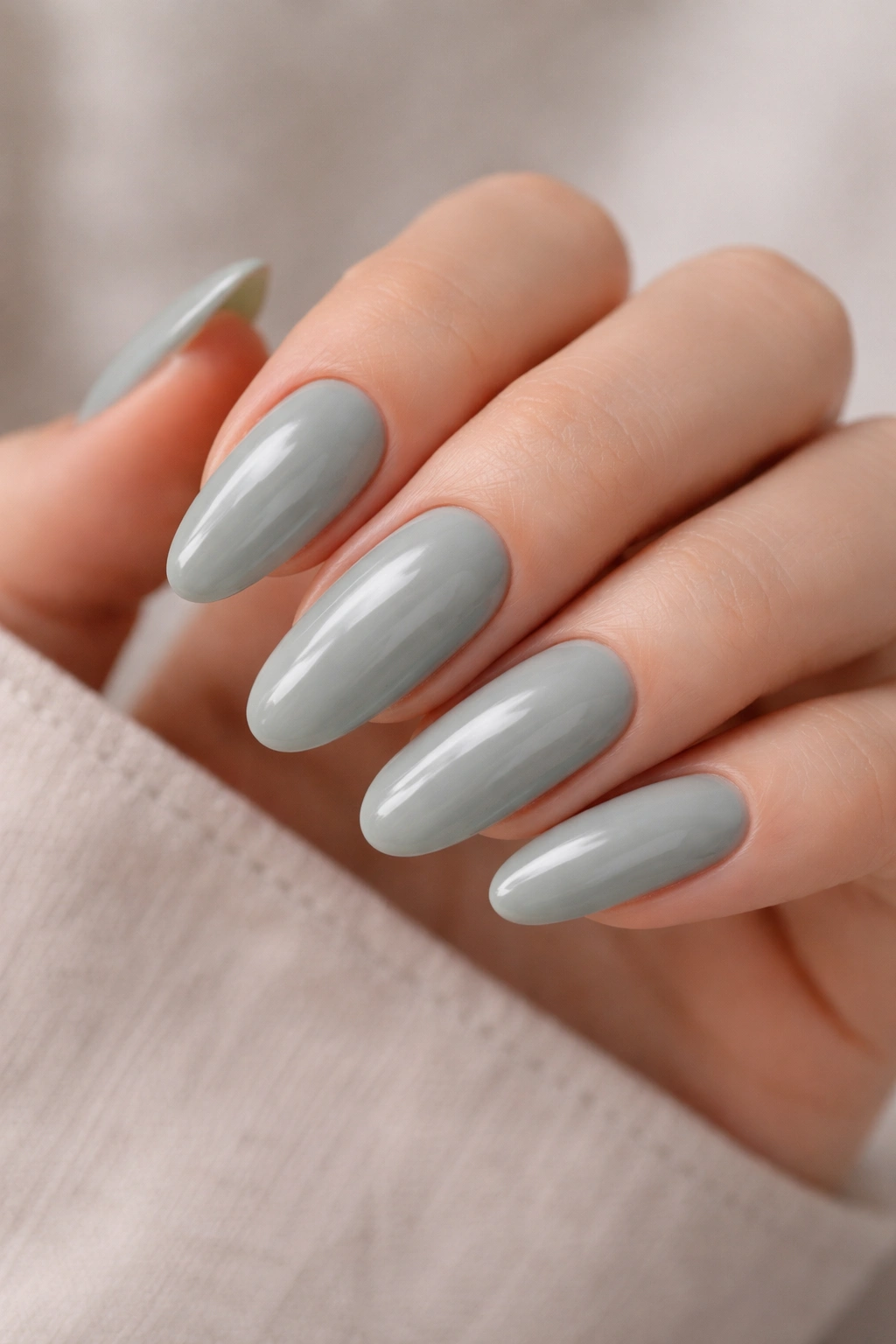
This one surprises people. Green sounds risky. A muted dusty sage gray is not.
Because sage sits between green, gray, and a little earthiness, it avoids the candy-bright quality that makes some unusual shades clash with skin. On warm and olive tones, it picks up the natural muted depth in the skin. On cool fair skin, the gray note keeps it calm. On deeper skin, the contrast looks crisp without turning neon or chalky.
I like dusty sage best when the polish has a soft cream finish and a slightly milky base. That milkiness matters. Pure green-gray can read cold and dead. A drop of softness keeps it wearable.
Three quick rules keep it strong:
- Choose sage with gray under it, not mint.
- Keep the nail glossy; matte can make the shade look dusty in the bad way.
- Pair it with minimal art, maybe a thin gold stripe or no art at all.
If you are bored by pinks and browns, this is the left turn worth taking.
14. Black Cherry Gloss on Long Oval Nails
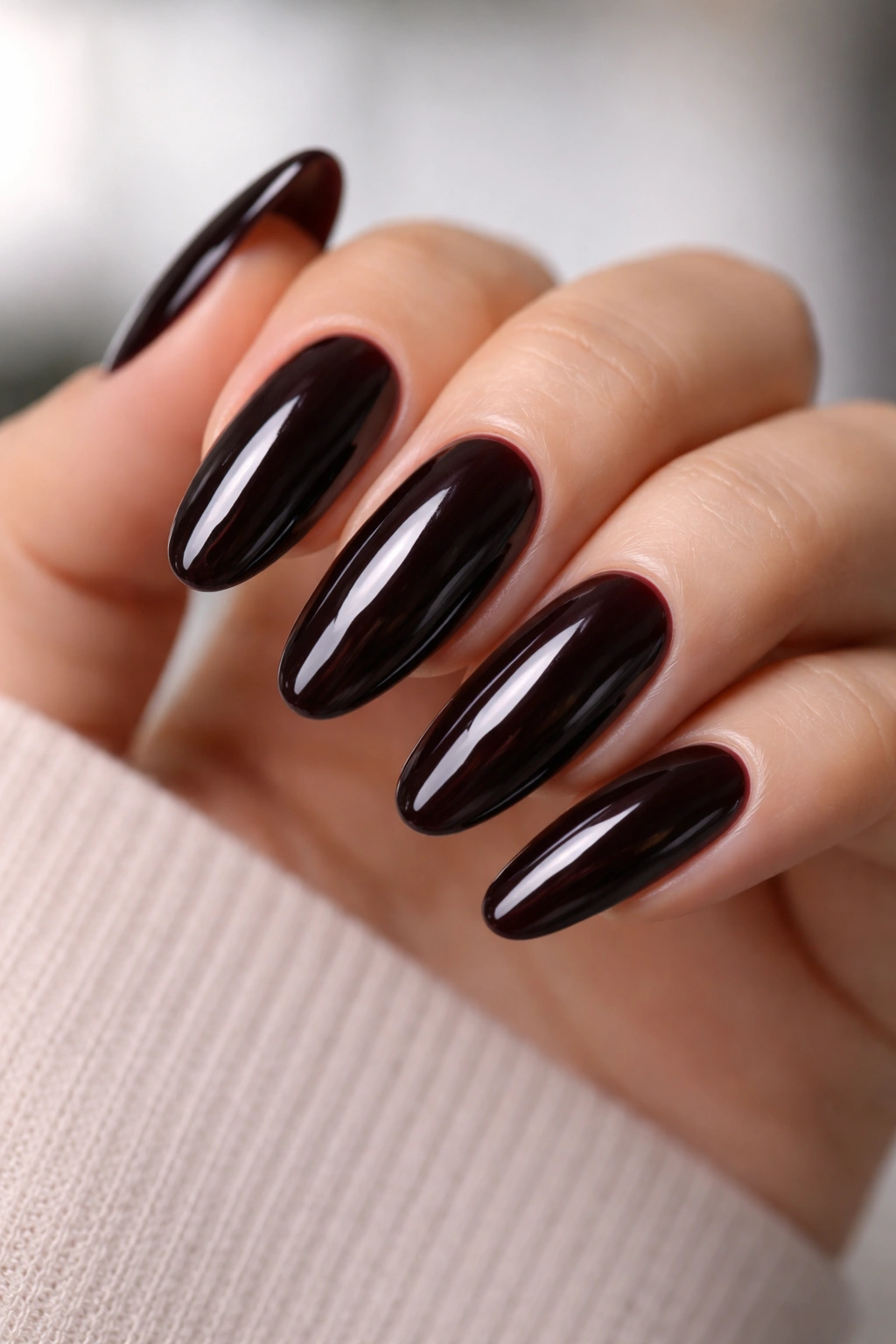
Almost-black shades can look severe on some shapes. On long oval nails, black cherry gloss sidesteps that problem because the red undertone keeps the depth alive.
In one light, it reads like a deep wine. In another, almost black. That shift is why it flatters such a wide range of skin tones. Fair skin gets contrast with richness, not harshness. Medium and tan skin get drama without muddiness. Deep skin gets a dark manicure that still has visible color inside it.
A plain black polish can deaden the hand if the finish is flat or the cuticle work is rough. Black cherry is more forgiving. There is still shadow and intensity, but the red base keeps blood in the color, if that makes sense. It looks intentional, glossy, and a little moody without turning costume-like.
I would keep this one short on nail art and heavy on shine. Two coats are often enough. If the formula is thin, go to three. Make sure the sidewalls are filed clean and the tip is capped well, because dark glassy shades show wear fast. On a long oval, though, few colors look as sleek.
Final Thoughts
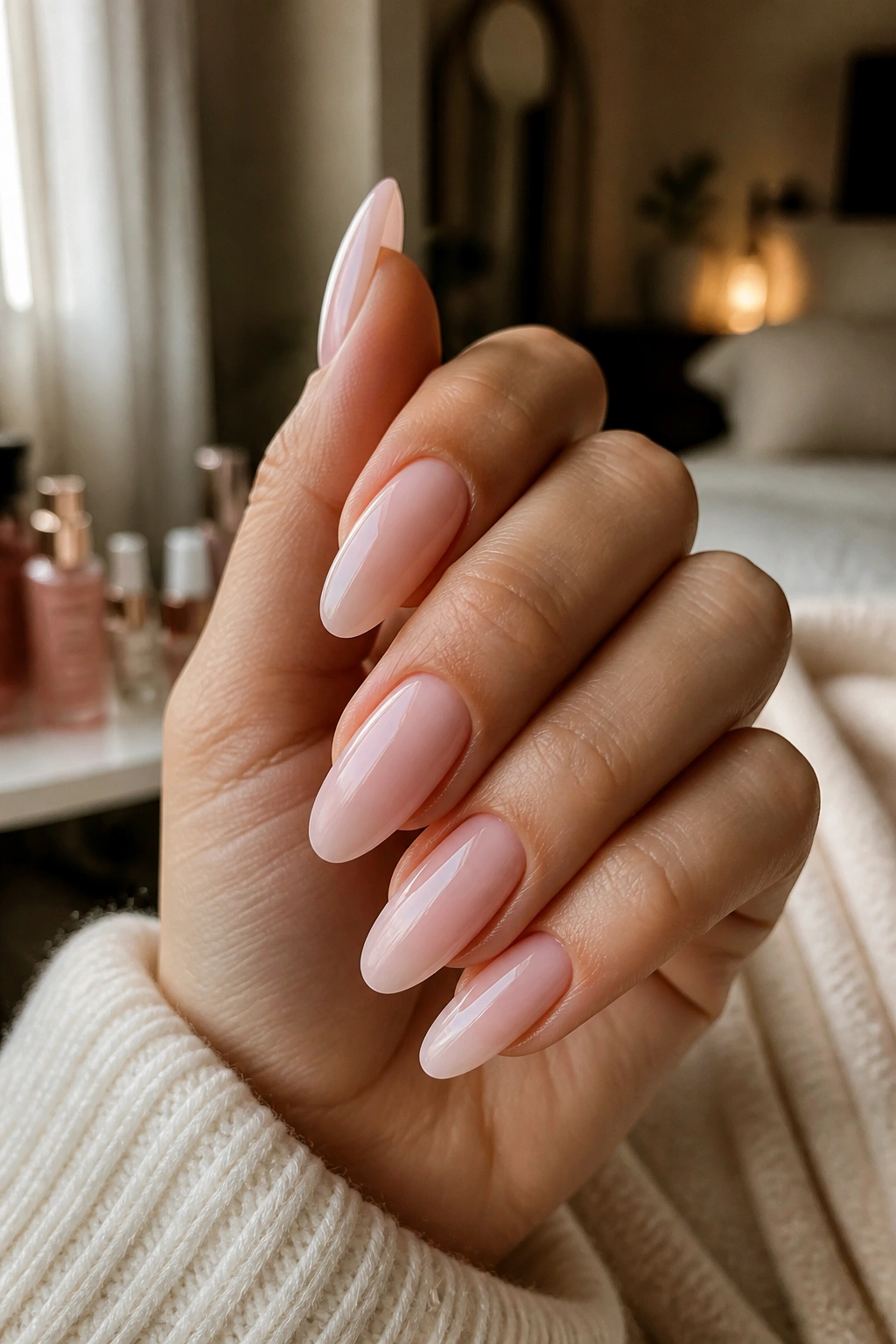
The shade that suits every skin tone is rarely the bottle screaming “universal nude.” More often, it is a color with some transparency, a smart undertone, or enough depth to move with the hand instead of sitting on top of it.
That is why long oval nails handle this range so well. The shape softens strong colors, gives sheers more elegance, and makes gradients, glazed finishes, and micro-French details look cleaner than they often do on sharper tips.
If you are choosing one manicure from this list, I would start with milky sheer pink, jelly beige, cherry red, or black cherry gloss. Those four cover the widest ground and give you room to adjust depth, coverage, and finish without losing the point.
And if a nude keeps making your hands look tired, stop blaming your skin tone. It is usually the polish.