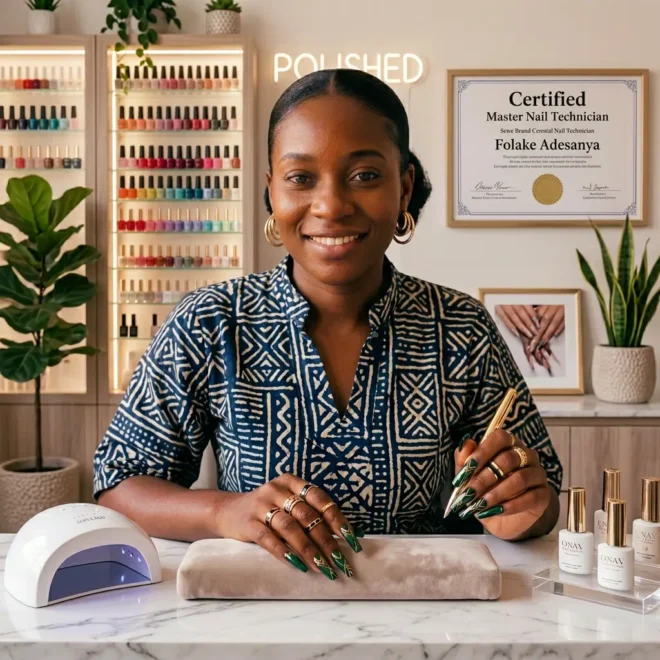


Red polish is supposed to be the easy choice, until the shade that looked rich in the bottle turns pink, orange, or flat once it lands on your hands. Red ballerina nails make that mismatch louder because the tapered sides and blunt tip frame color with almost no mercy. If the undertone is off, you see it fast.
I’ve watched this happen in salons more times than I can count. Someone asks for “a classic red,” gets a color that looked good on a plastic swatch, then spends the next week wondering why their hands look dull, gray, or oddly tired. The shape plays a part. Ballerina nails stretch the eye, so red reads cleaner, sharper, and a little stricter than it does on a short rounded manicure.
Red also isn’t one shade. A blue-red can make fair skin look clearer. A brick red can pull warmth out of olive skin in the best way. Candy apple red can make medium neutral hands look awake, while oxblood can turn heavy if the tip is too wide or the length runs long.
Once you start reading red by undertone instead of by whatever name is printed on the bottle, the misses drop hard.
Why Red Ballerina Nails Look Different on Every Hand
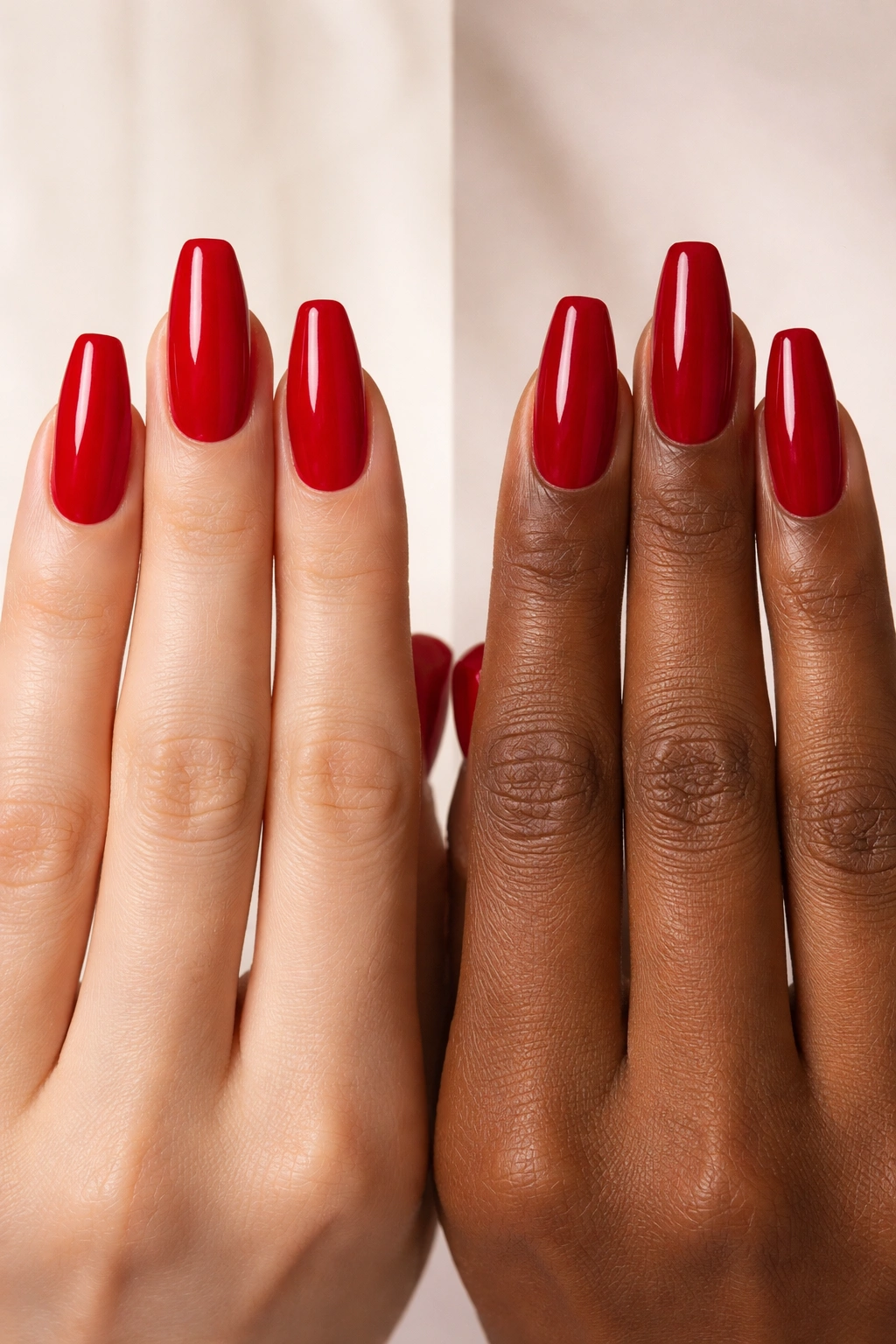
A ballerina nail is less forgiving than a rounded square. The sidewalls taper in, the tip cuts flat, and the whole shape acts like an arrow pointing at the color. Pale beige can hide a sloppy file line. Red will not.
The blunt tip acts like a frame
That flat edge matters more than people think. On a soft pink manicure, a tip that is 1 millimeter too wide barely shows. On bright red, the same tip can make the whole nail look bulky. If you want the shape to stay elegant rather than heavy, ask for side taper that starts after the stress point, not right at the cuticle, with a tip width that stays narrow but still wearable.
Length changes the mood, too. At 3 to 5 millimeters of free edge, ballerina nails look clean and easy to wear. At 8 to 12 millimeters, red starts to feel dressier. Push longer than that, and darker reds move into dramatic territory fast.
Red exposes every filing mistake
A wobbly sidewall. Uneven apex. Polish pooling into the cuticle. Red shows all of it.
That is why I almost always prefer two thin coats over one thick coat, especially with cream reds. Thick red polish shrinks as it cures and can leave pale gaps along the sidewalls. On a ballerina shape, those gaps look bigger than they are.
If your natural nails flare at the ends, builder gel or acrylic usually gives a cleaner result than regular polish alone. Not glamorous advice, I know. Still true.
How to Match Red Ballerina Nails to Your Skin’s Undertone
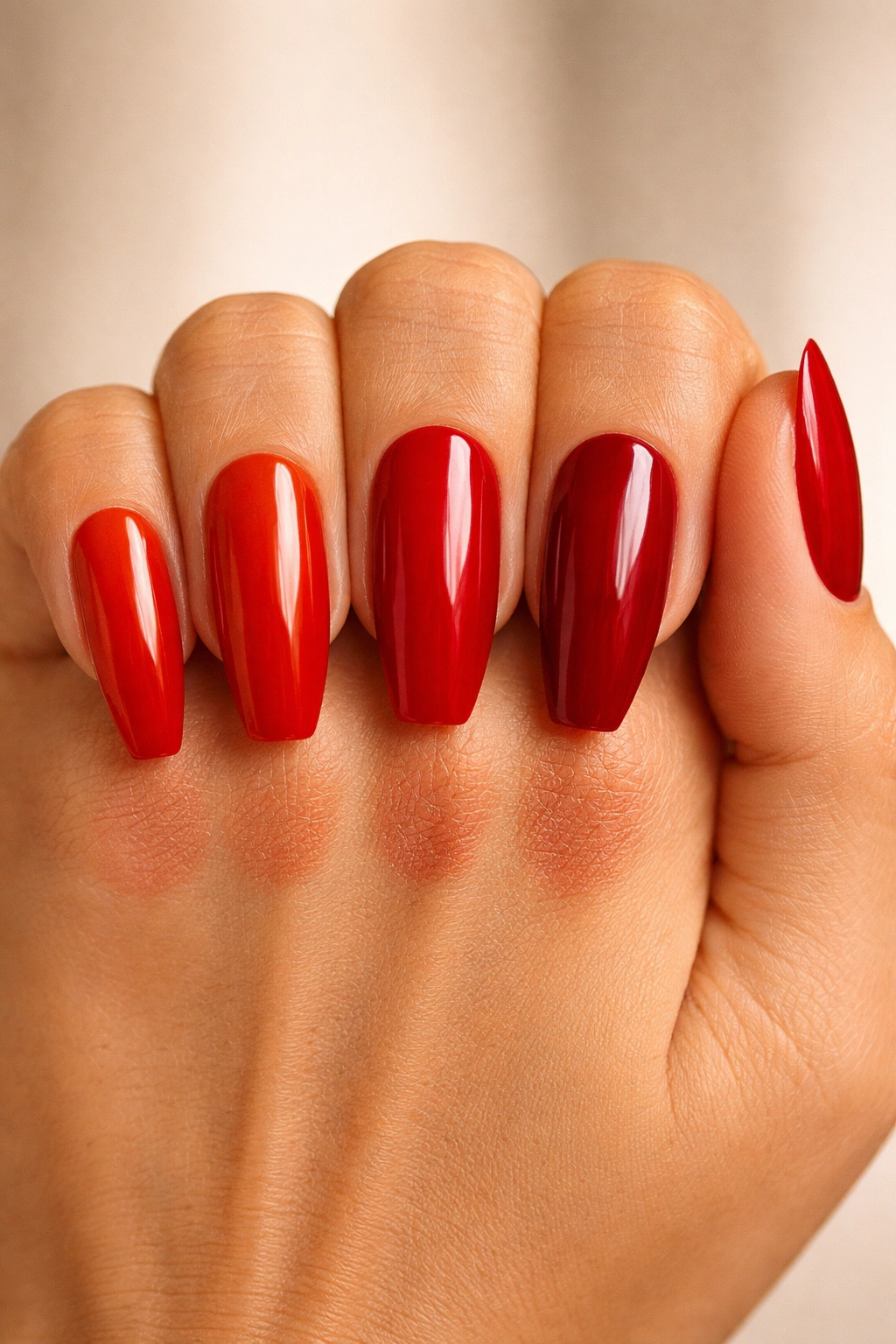
Why does one red look clean and expensive on your hand while another looks harsh, orange, or muddy? Undertone. Skin depth matters too, though undertone does more of the heavy lifting than people think.
A quick way to sort it out is to look at your hand, not your face. Your hands often run deeper, pinker, or more olive than your face because of sun exposure and circulation. Test red against your fingers and knuckles. That’s where the manicure lives.
Here’s the short version I come back to again and again:
- Fair skin with cool or pink undertones usually looks strongest in blue-red, cranberry, cherry, and cool ruby.
- Fair to medium skin with warm or peach undertones often suits tomato red, poppy, coral-red, and cinnamon red-brown.
- Neutral medium skin can wear almost the whole red family, though candy apple, true scarlet, and garnet tend to be the easiest wins.
- Olive skin often lights up with brick red, brown-red, black cherry, and wine shades that have a muted base.
- Deep and rich skin tones carry ruby, oxblood, bright scarlet, merlot, and black cherry with almost no effort, especially when the finish is glossy.
Finish changes the read, too. Cream polish shows undertone most clearly. Jelly looks softer. Matte mutes contrast. Chrome pushes the color colder and stronger. Same red family, different effect.
One more thing. If you’re choosing from a salon ring, remember that the base underneath matters. A jelly red over a milky builder gel looks softer than the same jelly over a clear extension. Small detail. Big shift.
1. Classic Blue-Red Cream
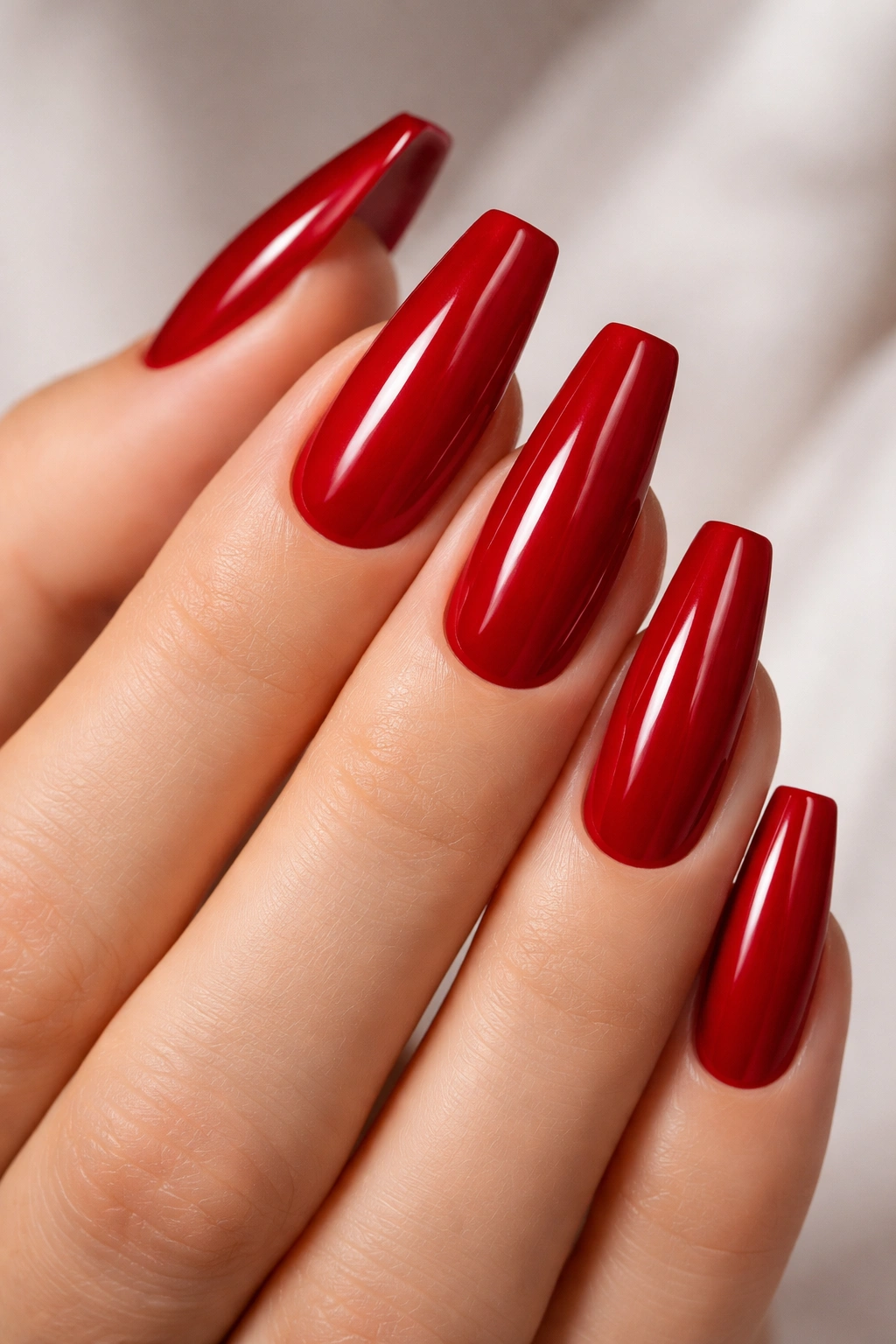
If I had to pick one blind-buy red for the widest range of skin tones, this would be it. A true blue-red cream has enough cool depth to sharpen fair skin, enough clarity to flatter neutral skin, and enough saturation to hold its own on deep skin without looking weak.
What makes it so dependable is balance. It doesn’t pull orange, so warm indoor lighting won’t turn it tomato. It doesn’t go burgundy, so it still reads red from a distance. On ballerina nails, that clean middle ground looks crisp because the shape already adds drama.
Why it lands so well on different hands
Blue-red creates contrast without turning chalky. Fair cool skin gets that bright, polished effect. Medium neutral skin gets a clean, classic red. Deep cool skin gets definition rather than a dark block of color.
Quick salon notes
- Ask for a true cream finish, not shimmer and not jelly.
- Two thin coats usually look cleaner than one heavy coat.
- This shade looks sharpest on medium ballerina length, around 6 to 10 millimeters past the fingertip.
- A glossy top coat keeps the blue base looking alive; matte can flatten it.
Best move: keep nail art off this one. Blue-red cream already does the job.
2. Cherry Jelly Red
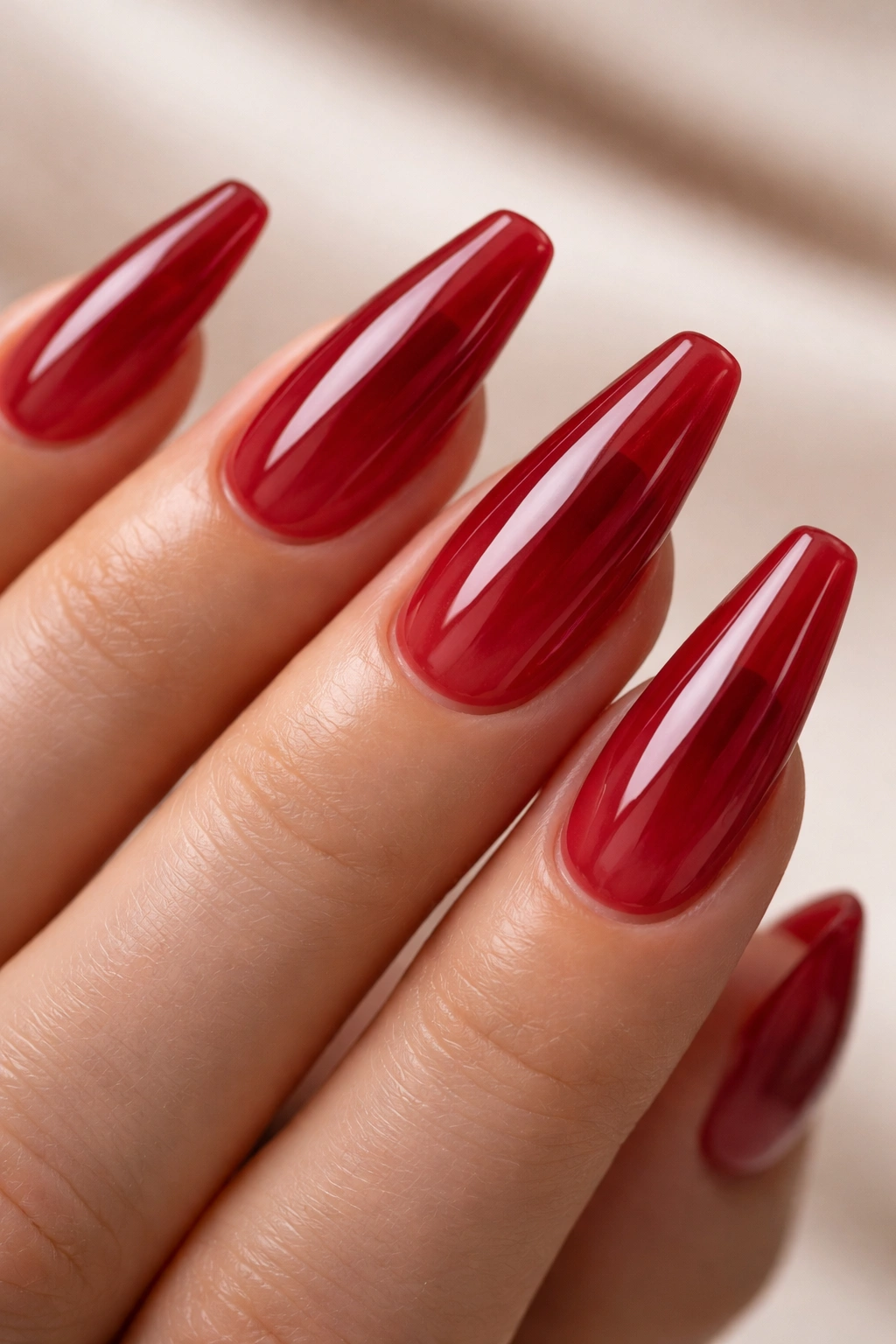
Jelly red makes grown-out nails look softer than opaque cream polish does. That alone earns it a place on this list.
A cherry jelly has a see-through, syrupy look that lets light pass through the layers. On ballerina nails, that softness offsets the harder geometry of the shape. You still get red, though the finish feels lighter and less severe than a solid cream.
Medium neutral, tan, and deep skin tones usually wear this shade with ease because the sheer finish lets some of the natural nail or base color peek through. The result looks integrated rather than painted on top. Fair skin can wear it too, though I’d choose one coat over a milky pink base instead of stacking three coats. Too much depth can turn cherry jelly patchy on lighter hands.
This is one of those manicures that looks better after a tech takes an extra minute near the cuticle. Jelly polish floods fast, and any pooling shows through all the layers. Ask for thin applications and full sidewall coverage.
The payoff is worth it. Cherry jelly red feels a little younger, a little easier, and far less rigid than the usual salon red.
3. Brick Red Soft Matte
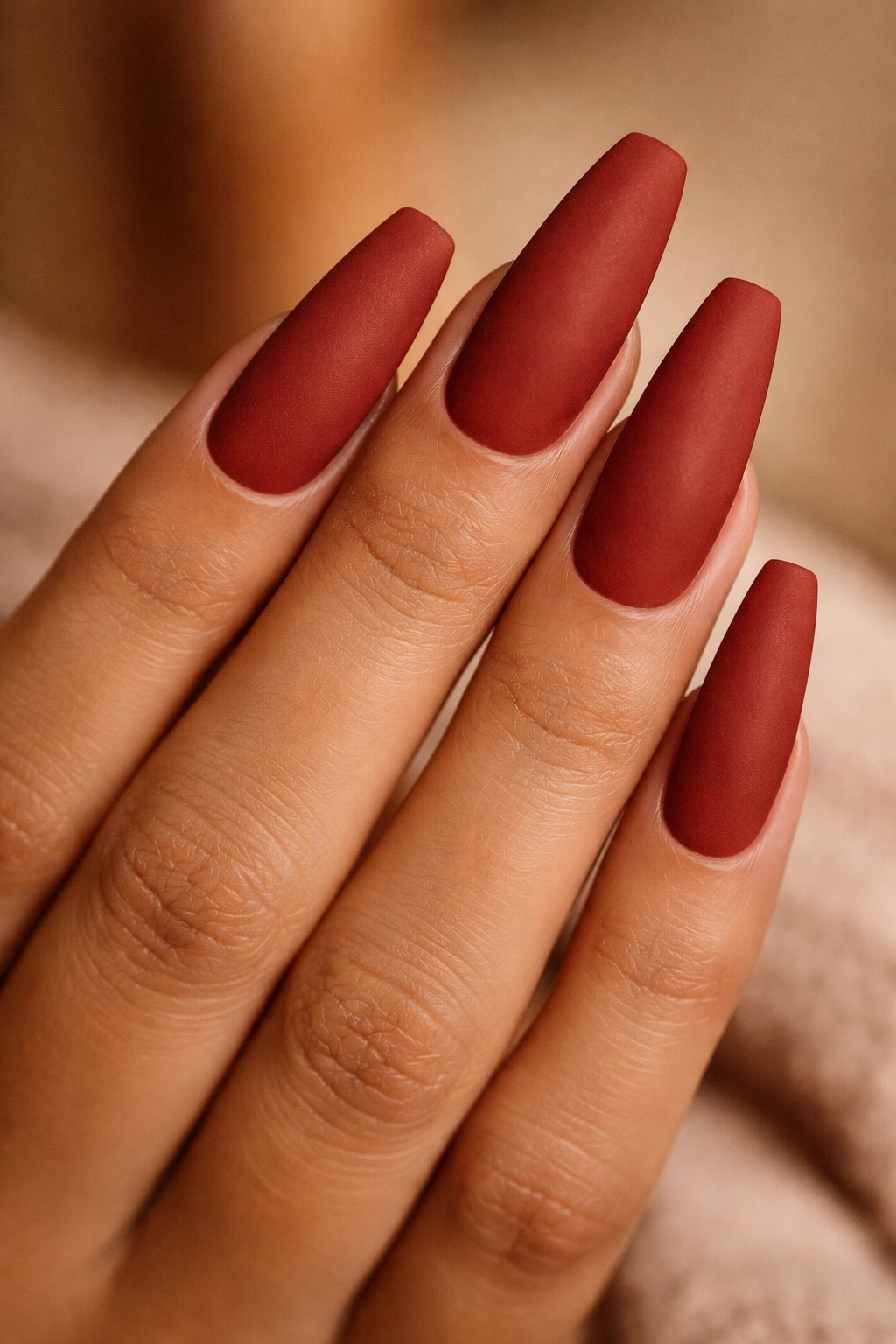
Why does brick red look so good on olive skin? Because it already carries a muted brown cast, which means it sits beside green and golden undertones instead of fighting them.
Brick red is the shade I reach for when bright scarlet looks too loud and wine looks too dark. It has enough earth in it to feel grounded, though it still reads red across the room. On tan, olive, and medium neutral skin, that dusty warmth can make the whole hand look richer.
Matte top coat changes the mood again. Glossy brick reads warmer and more classic. Soft matte makes it look editorial, almost like suede. I would not choose a chalk-dry matte here; that finish can make red look flat and dusty in the wrong way.
How to wear it without making it look heavy
Keep the ballerina length moderate. Brick red on a long, wide tip can start to feel dense. Around 5 to 8 millimeters of free edge usually keeps it balanced.
A clean cuticle line matters more with matte. Scratches, dents, and dust show fast, so this shade holds up best in gel or dip rather than standard polish. If you wear regular lacquer, give it at least 20 to 30 minutes before matte top coat. Rush that step and the surface marks too easily.
4. Tomato Red Micro-French Ballerina
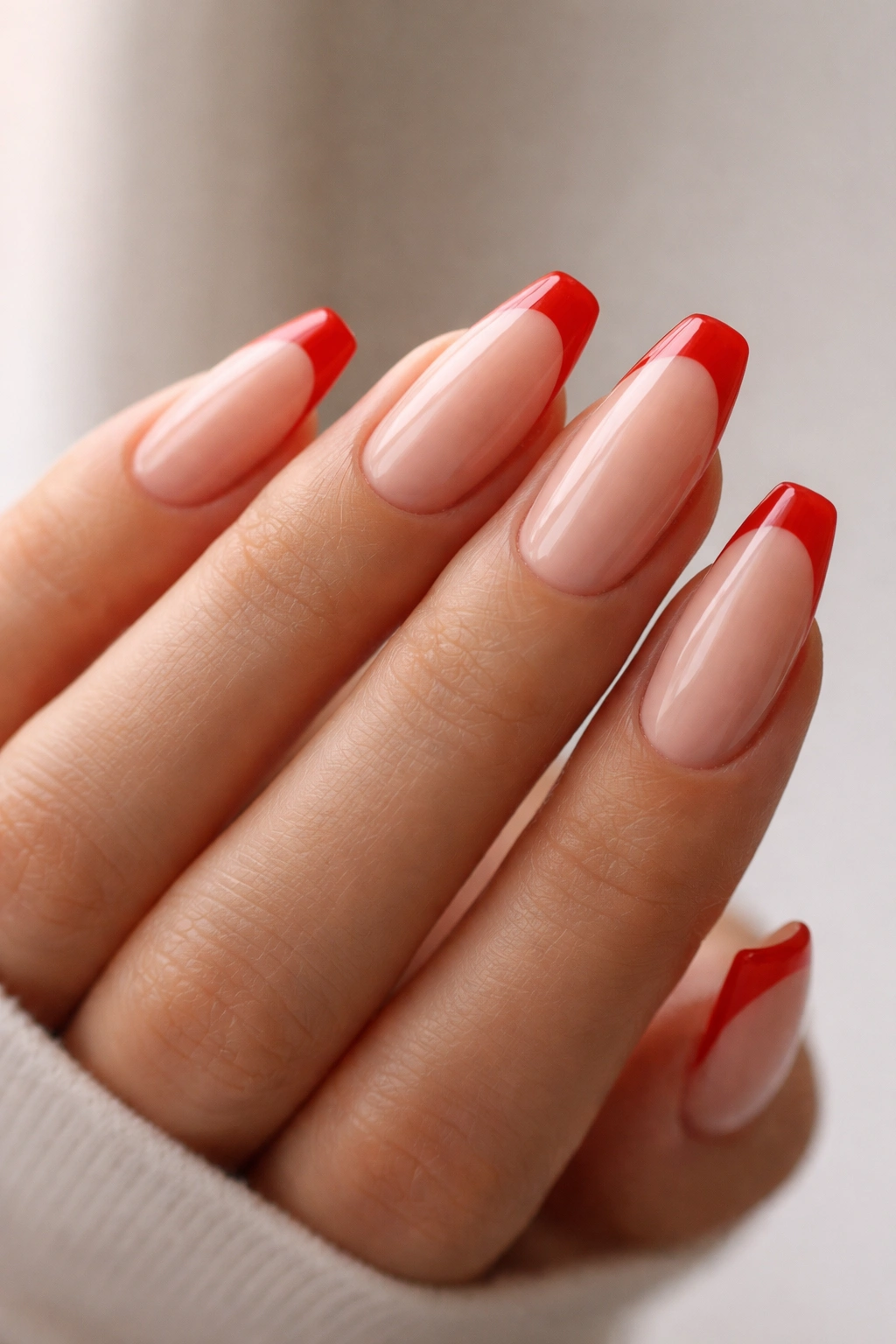
I like full red nails, but some hands look better with a little breathing room near the cuticle. That’s where a tomato red micro-French earns its spot.
Picture a sheer beige or pink-beige base on a ballerina shape, then a 1.5 to 2 millimeter tomato-red tip riding across the flat edge. The look is cleaner than a full coat, warmer than a white French, and easier on skin tones that can get overwhelmed by dense red all over the nail.
Warm fair skin, golden medium skin, and tan skin tend to shine in this shade because tomato red has a lively orange note. The nude base also makes the design more forgiving if your fingers are short or your nail beds are broad.
A few details make or break it:
- Keep the tip thin. Once it gets thick, the nail looks shorter.
- Choose a sheer base close to your nail bed, not a stark pink.
- Ask for the smile line to stay soft and slightly straight, not deeply curved.
- On shorter ballerina nails, this design often looks cleaner than full-color red.
One warning: tomato red can pull too sharp on skin with strong surface redness around the knuckles. In that case, go a hair deeper—poppy or cinnabar usually solves it.
5. Cranberry Red With a Milky Base
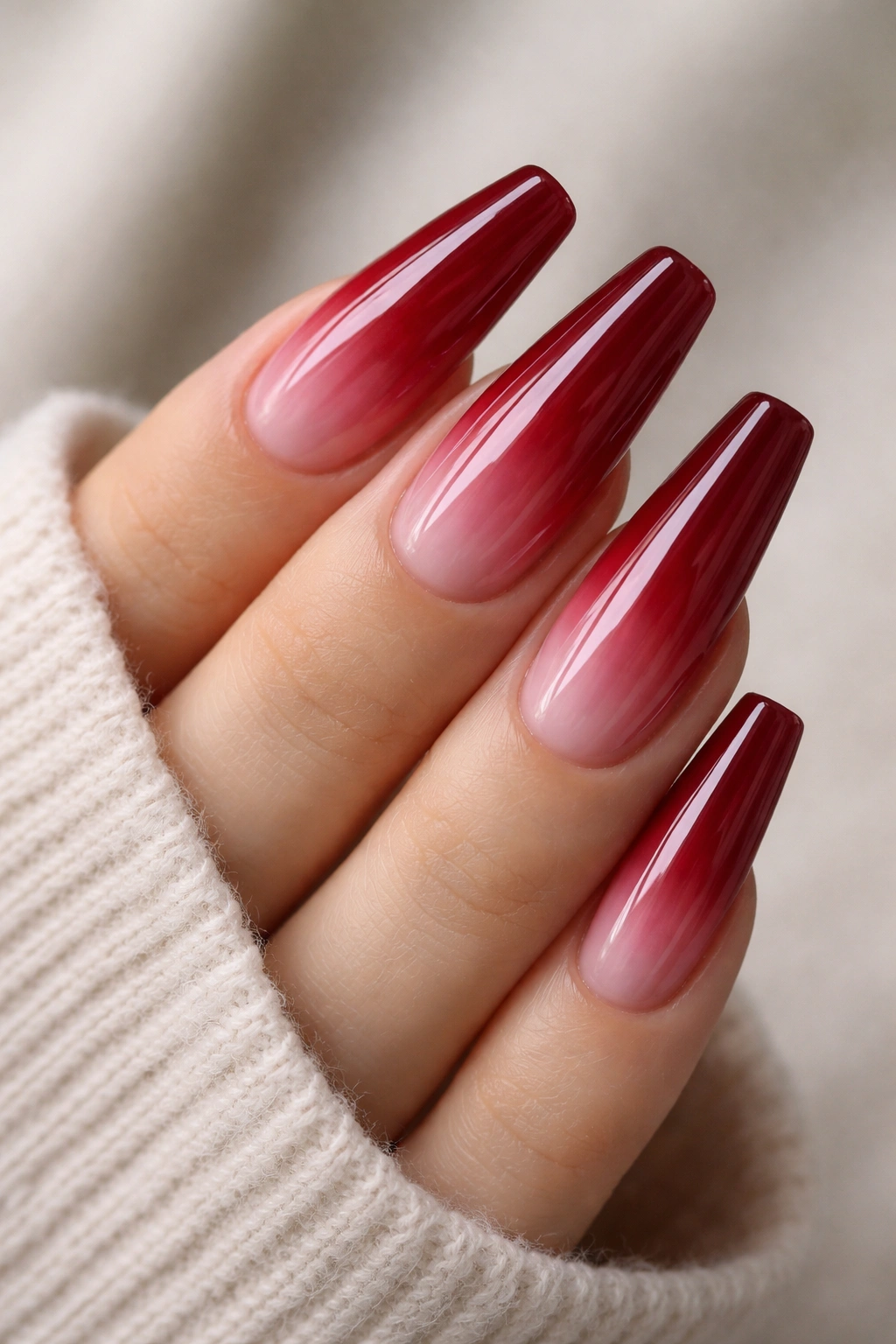
Soft contrast wins.
Cranberry red over a milky base has a stained-glass look that feels gentler than an opaque manicure, though it still gives enough color to read as deliberate. On fair skin, especially cool or neutral fair skin, this is one of the easiest ways to wear red without making the hands look raw.
The trick is layering. Start with a milky pink or beige-pink base, then float one or two thin coats of cranberry on top. You want depth, not opacity. The color should look like it sits inside the nail rather than on top of it.
On ballerina nails, this layered finish softens the flat tip. A hard, fully opaque red can make short tapered nails look severe. Cranberry with milk underneath keeps the outline elegant and a little less stern.
I also like this shade for people who want red but hate chips. Minor wear at the free edge is harder to spot because the color has some translucency. Not invisible, no manicure is, though less obvious.
Skip chunky glitter here. It ruins the stained look.
6. Ruby Red High-Gloss Gel
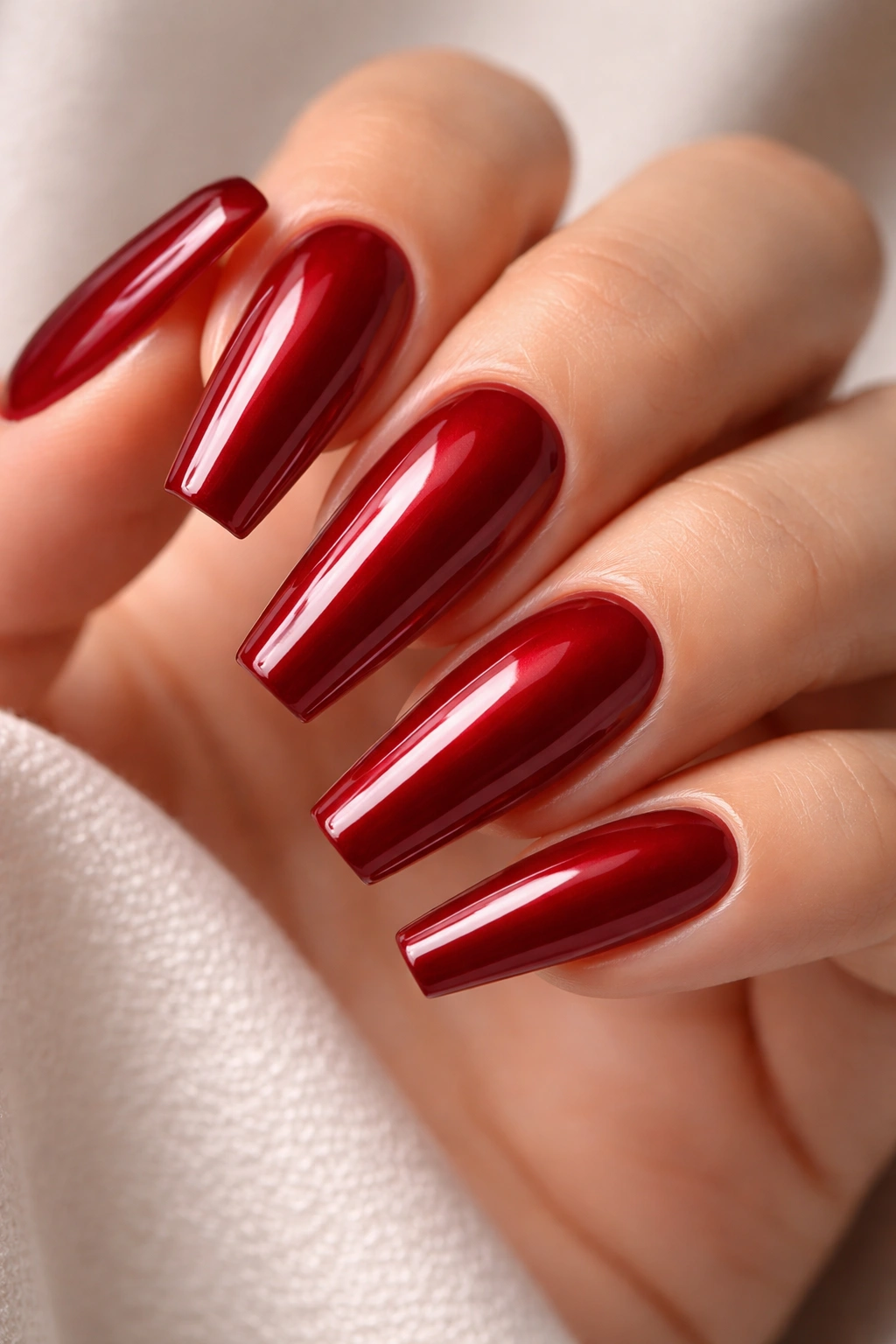
Unlike oxblood, ruby keeps light in the color. That matters on deeper skin tones, where muddy reds can disappear into a dark block from a few feet away.
Ruby red has jewel depth without crossing into brown. On rich deep skin, it looks vivid. On fair neutral skin, it reads polished and dressy. On medium skin with cool undertones, it can look sharper than cherry without going vampy.
This shade needs a glossy finish. Matte ruby loses the gemstone effect and can start to look flat. A high-shine gel top coat gives it that glassy density that makes the color feel alive. If your nail tech offers tinted builder gel underneath, choose a neutral or soft pink base rather than a beige-heavy base. Beige can warm ruby too much.
Who gets the most from it? People who want a deeper red manicure that still looks unmistakably red in dim light.
I’d file the tip a touch narrower here than I would with bright scarlet. Dark jewel tones carry visual weight, and a slimmed-down flat tip keeps the shape long rather than blocky. Think 2 to 3 millimeters across the tip, depending on nail bed width.
7. Cinnamon Red-Brown Cream
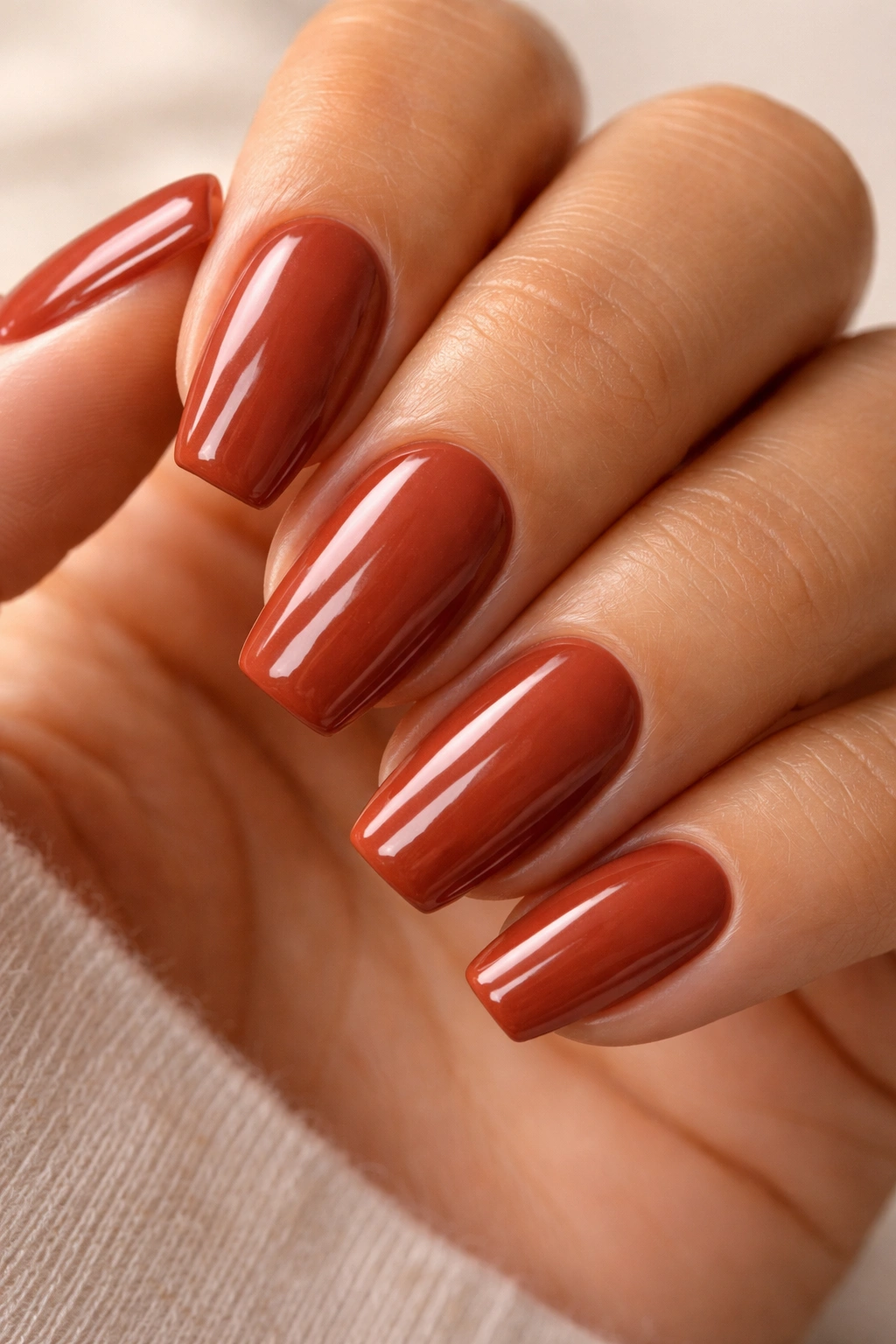
I wish more people tried cinnamon red. It sits between rusty red and brown-red, and it makes golden skin look expensive in a way that bright red sometimes cannot manage.
This is a smart pick for olive, honey, and medium warm skin tones because the brown note settles the color down. Orange-red can look loud. Burgundy can look too cool. Cinnamon lands in the middle, with warmth that feels rich instead of flashy.
What makes it different from brick red
Brick red is dustier and more muted. Cinnamon red-brown has more glow in it. You still get that grounded, earthy feel, though the finish reads smoother and less chalky.
Fast notes before you book it
- Choose a cream or soft gloss finish.
- Ask for two thin coats over a neutral base, not yellow-beige.
- This shade handles shorter ballerina lengths well, even around 4 to 6 millimeters past the fingertip.
- Gold rings usually make it look better; silver can cool it down too much.
Worth knowing: if the color starts looking brown in the bottle, ask to see it swatched in two coats. Many cinnamon reds wake up only after the second coat.
8. Candy Apple Red Ballerina Nails With Glassy Top Coat
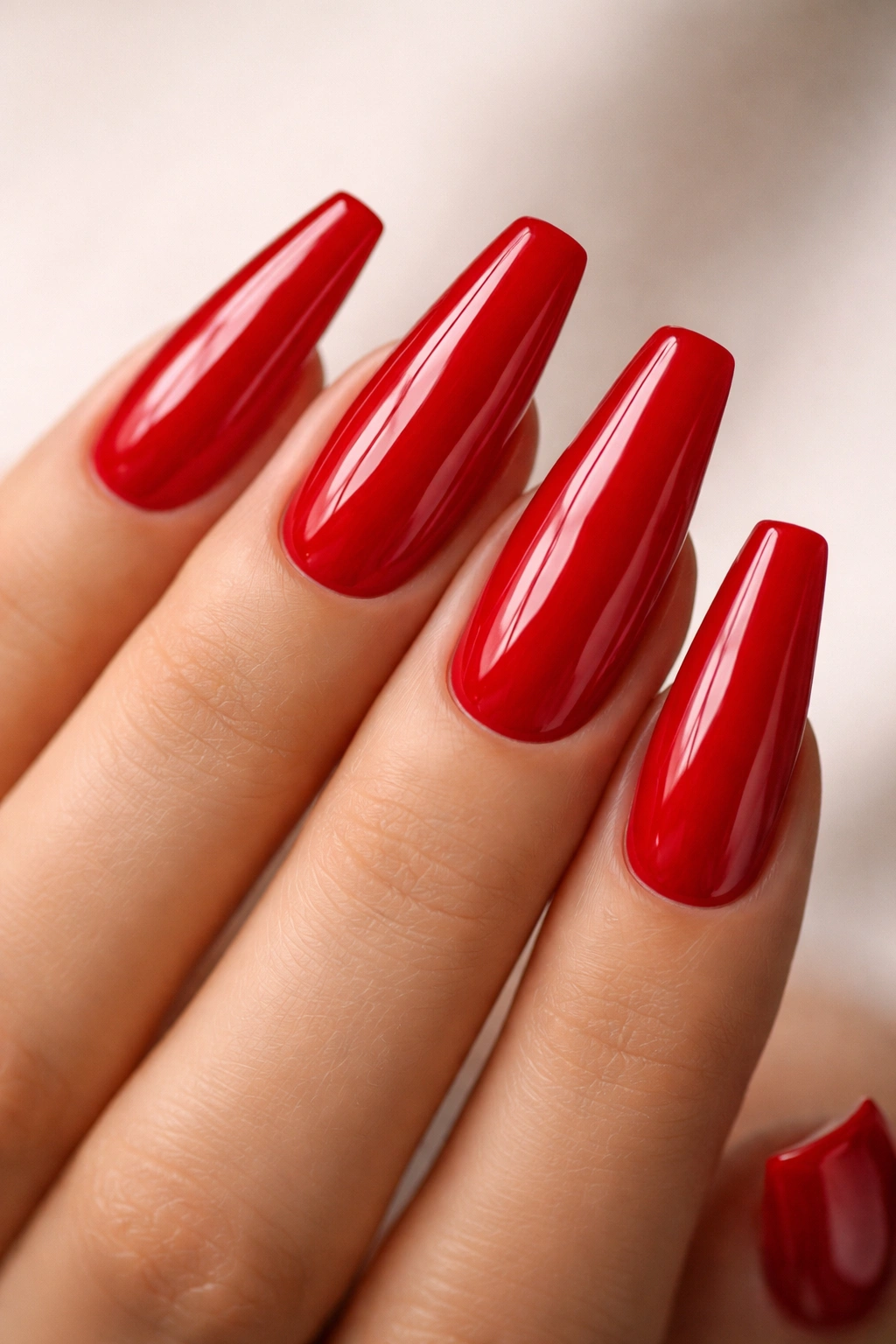
Bright red can go wrong fast. When it’s too orange, it looks sharp in a bad way. When it’s too cool, it can read plastic. Candy apple red avoids both problems when the balance is right.
This version of red ballerina nails suits more skin tones than people expect because it sits near the center of the red family. Fair neutral, medium neutral, tan, and deep skin can all wear it, though the exact base matters. On warm skin, candy apple looks clean and lively. On cool skin, it looks bold without turning pink.
The finish is half the manicure. Candy apple needs a glassy top coat with no ripples, dents, or cloudy patches. If the surface texture is off, the color loses its crispness and starts to look cheap. I’m blunt about this because it matters.
For shape, I’d keep the taper smooth and even, with no sudden narrowing near the tip. Candy apple is bright enough that any filing error stands out. A good tech will cap the free edge, clean the sidewalls, and check the nails from the front, not only from above.
If you want the red manicure people notice across a table, not only up close, this is the one.
9. Oxblood With a Sharp Square Tip
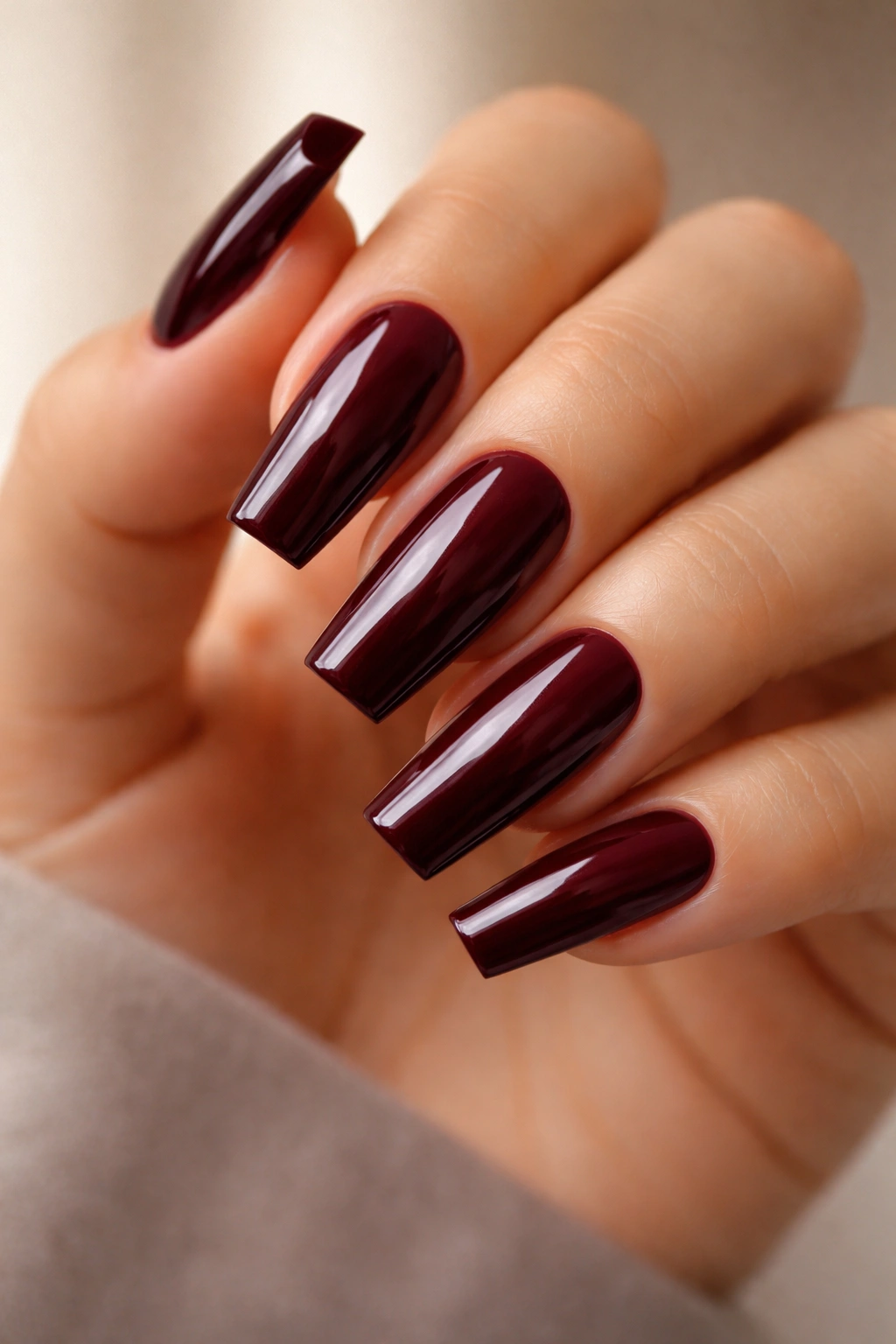
Oxblood looks almost brown in the bottle, then gives you that deep wine-red flash once it hits the light. It’s moody without going black, which is why it looks strong on ballerina nails.
This shade flatters deep cool skin, deep neutral skin, olive skin, and fair skin that likes contrast. It is less forgiving on warm fair skin, where it can age the hand if the base turns too brown. In that case, ruby or merlot usually feels fresher.
A few details matter here more than usual:
- Keep the tip clean and flat, not rounded off.
- Narrow the shape enough to lengthen the finger, though do not pinch the sidewalls.
- Stay around 6 to 10 millimeters of free edge unless you want a dramatic look.
- Use cuticle oil daily; dry skin beside dark red shows up fast.
Oxblood can drift into costume if the nails go too long and the surface goes matte. Gloss keeps it grown-up. Also, if your wardrobe runs black, gray, navy, and camel, oxblood does the job of a neutral while still giving you red.
10. Poppy Red With a Tiny Gold Stud Accent
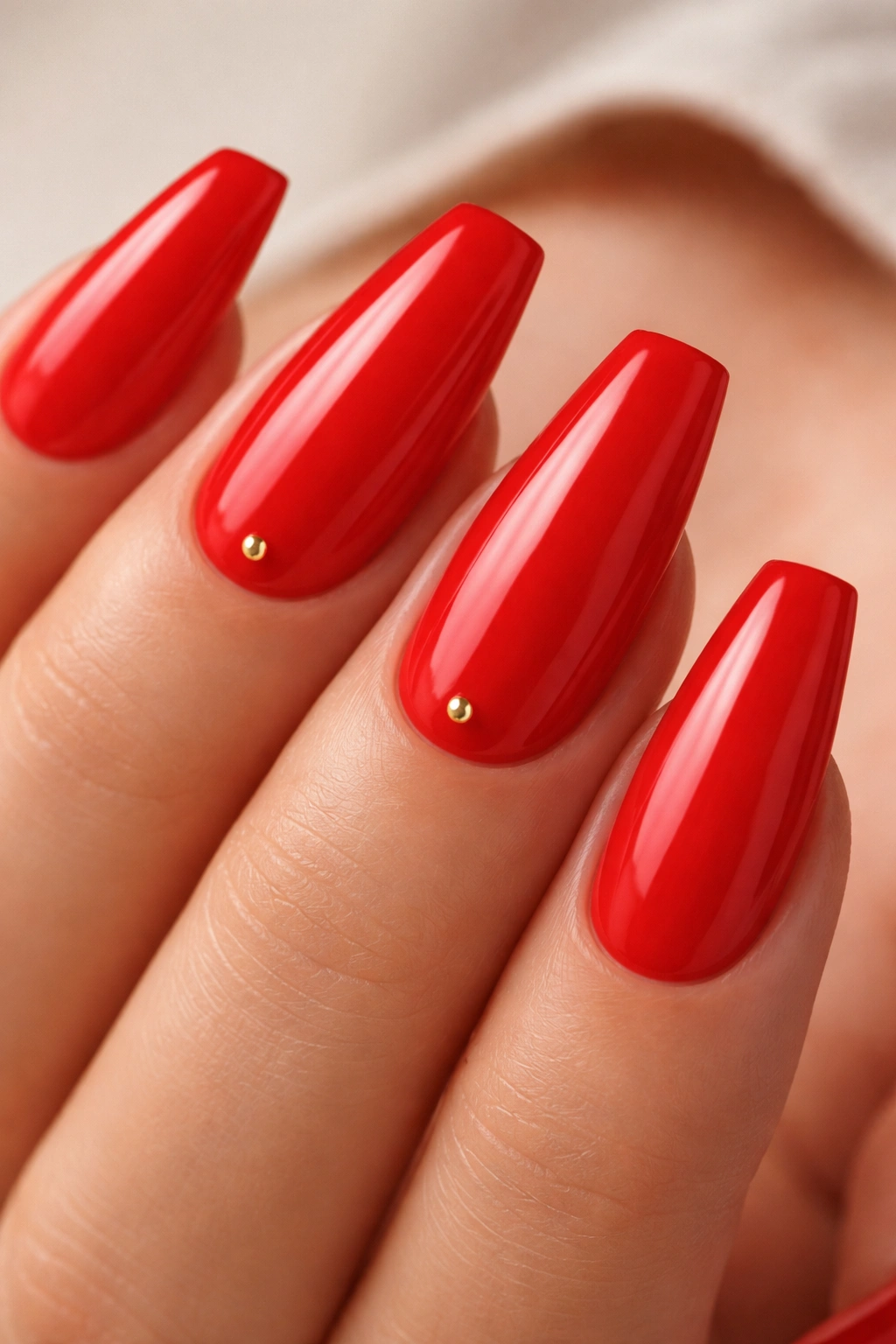
A tiny metal accent changes the whole manicure.
Poppy red has more brightness than blue-red and more clarity than brick. It suits warm undertones, golden medium skin, and tan skin because it carries a sunny kick without turning orange-heavy. On deeper skin, it pops hard—in a good way—especially when the nail length stays moderate.
Add a single 1 to 1.5 millimeter gold stud near the cuticle on one or two accent nails, and the color feels more intentional. I do not mean a cluster of charms, pearls, chains, and whatever else the salon tries to sell you. One tiny stud. Maybe two nails. Done.
Where the accent should sit
Place it low and centered, close to the cuticle line but not touching the skin. That keeps the nail looking long. If you place metal in the middle of the nail plate, the shape looks cut in half.
You can also skip the stud and use a painted metallic dot if you want less bulk. That’s my preference on shorter ballerina nails, where raised hardware can snag hair and knitwear. Small annoyance. Big annoyance, actually, once you notice it.
11. Black Cherry Chrome
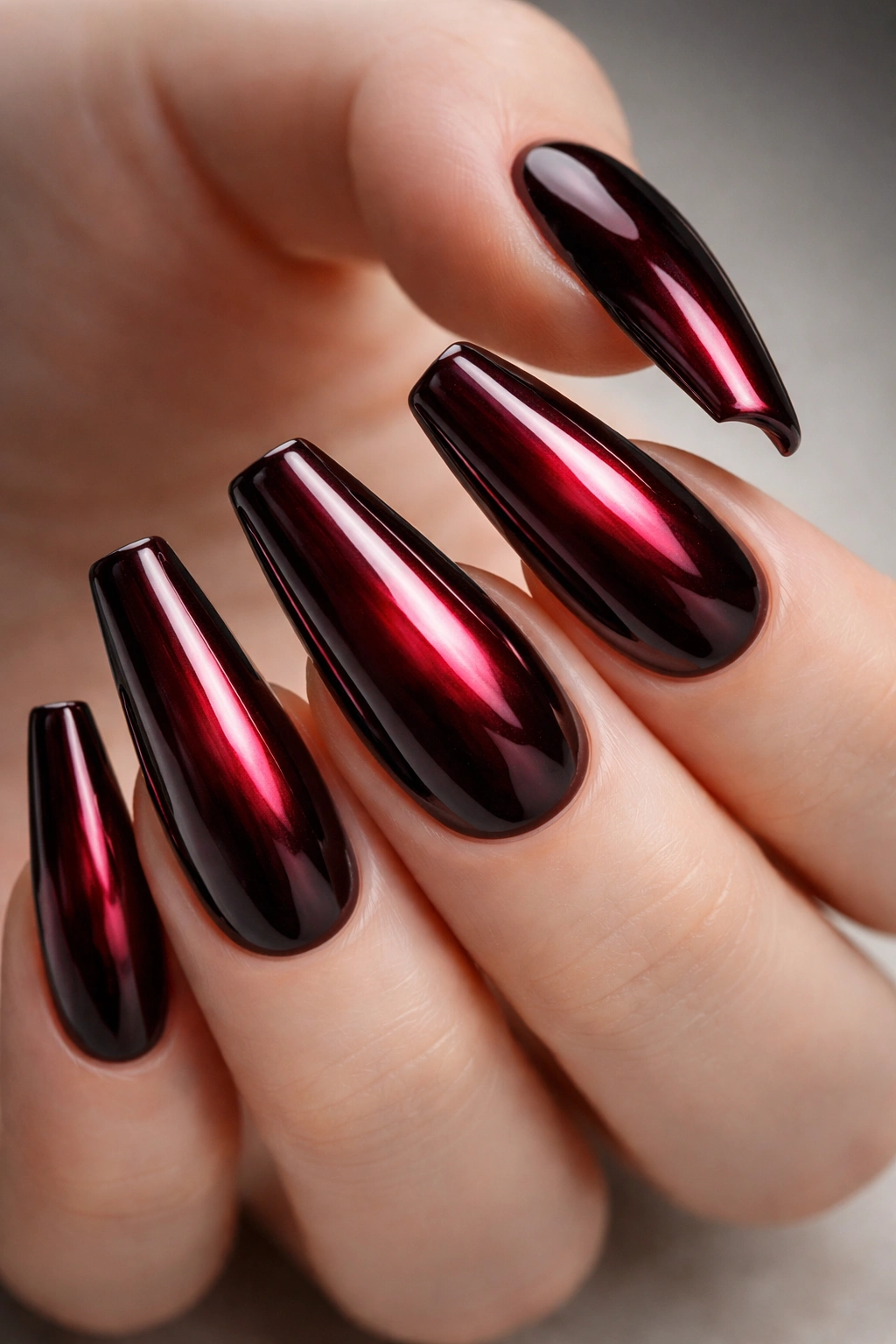
Black cherry chrome is not subtle, and that is the point.
This shade works by layering darkness and reflection at the same time. The base sits in that near-black cherry zone—deeper than merlot, cooler than oxblood—then chrome powder shifts the surface so the red peeks through under movement and light. On olive and deep skin, it looks rich. On fair cool skin, it turns dramatic in a sharp, fashion-heavy way.
The reason I like it on ballerina nails is structure. Almond can make black cherry chrome look a little too fluid, almost smoky. Ballerina keeps it architectural. The flat tip gives the finish somewhere to land.
Ask for a smooth builder base with no lumps because chrome highlights every bump. Then ask for a dark cherry base, not black. Some salons reach for black gel under chrome, and you lose the red entirely except under direct light. That’s a different manicure.
Silver chrome can pull the whole look purple. A smoked red or gunmetal chrome usually keeps more warmth in it, which helps the manicure stay in the red family instead of drifting plum.
12. Scarlet French Fade
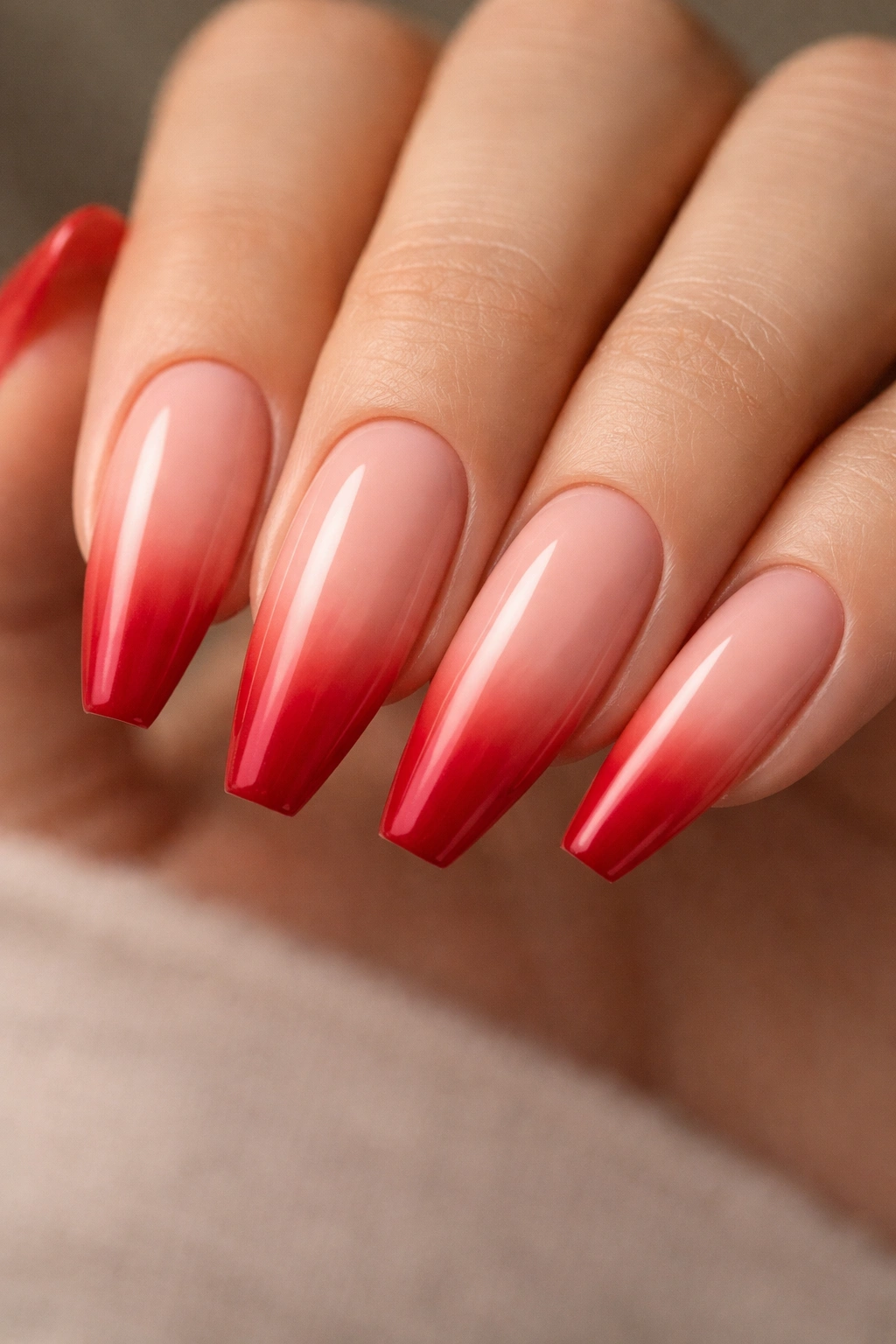
Do you want red without the full commitment of a solid red nail? A scarlet French fade is often the answer.
This look starts with a nude or milky base, then blends scarlet from the tip downward so the color diffuses into the middle of the nail. Because the cuticle area stays lighter, the manicure works on almost every skin tone. The red still shows, though it doesn’t hit the hand with one solid block of color.
Why this design is so forgiving
The fade softens contrast. Broad nail beds look slimmer. Short fingers look longer. Regrowth also hides better than it does with an opaque red fill.
What to ask for at the salon
- A soft beige-pink or neutral pink base, matched close to your nail bed
- Scarlet concentrated on the top third of the nail
- A blend done with an ombré brush, sponge, or airbrush
- Clean sidewalls with no muddy overspray
I like this choice for people who wear red lipstick once in a while but feel odd in solid red nails. The fade gives you the color hit near the tip, where ballerina shape already draws the eye, and leaves the rest of the nail lighter and easier.
13. Burnt Coral Red for Shorter Ballerina Lengths
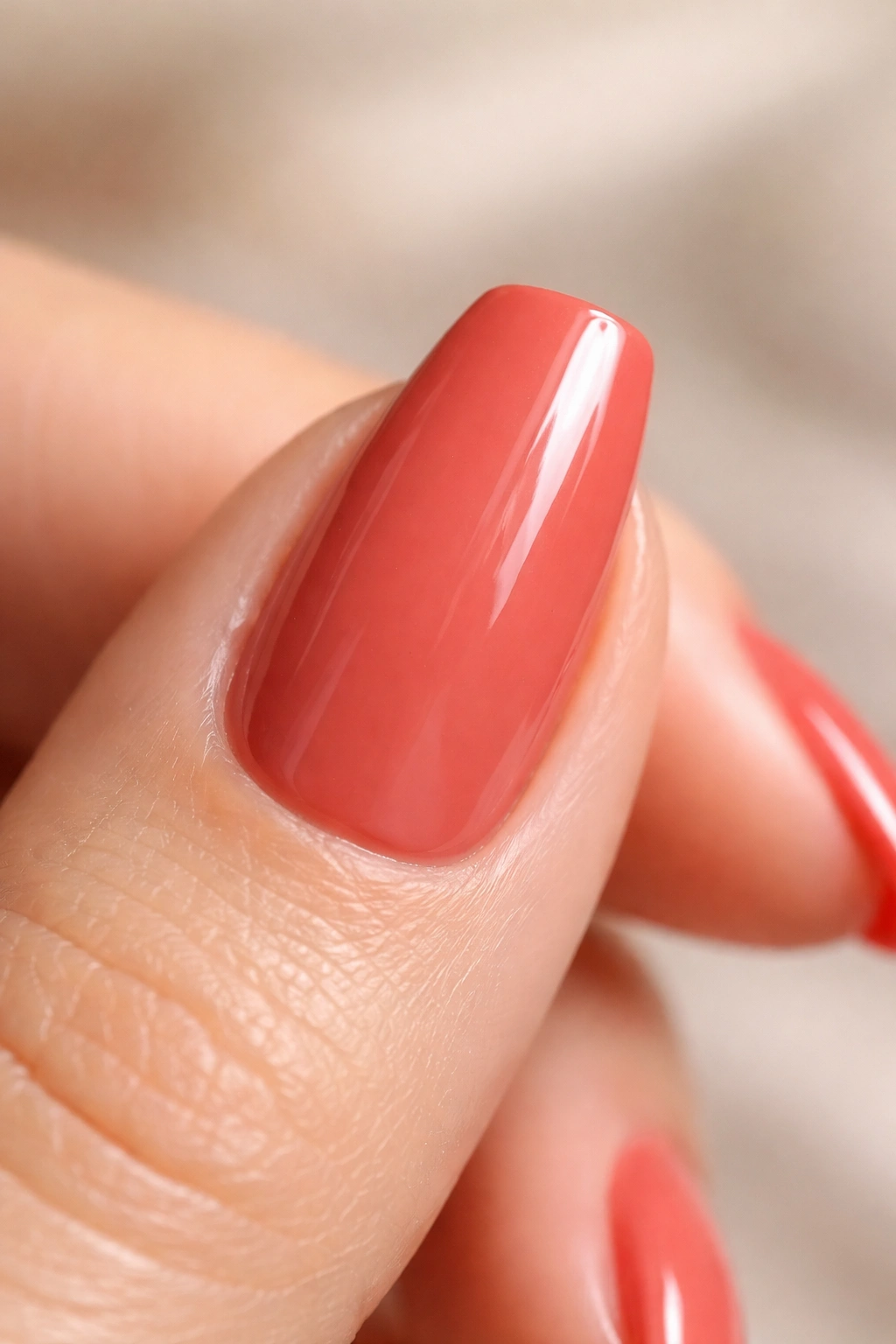
Short ballerina nails need a shade with some light in it. Burnt coral red does that job better than deep wine or dense oxblood.
Unlike tomato red, burnt coral carries a muted base—less sharp orange, more softened red with a trace of clay. That makes it easier on warm fair skin, medium golden skin, and light olive skin. It still looks cheerful, though it won’t shout across the room the way bright poppy does.
This is also one of the few reds I like on 3 to 5 millimeters of free edge. On short ballerina lengths, dark shades can make the flat tip look stubby. Burnt coral keeps the shape lively. If your natural nails are short and you’re easing into ballerina shape without full extensions, this is an easy place to start.
Choose a cream finish, not shimmer. Sparkle muddies the color. A high-gloss top coat keeps the clay note from looking dull, and a thin cuticle margin stops the red from crowding the nail bed.
If your hands tan deeper than your face, burnt coral can look better than you’d expect from the bottle. Try it on the nail, not on the cap.
14. Garnet Red With a Fine Glitter Veil
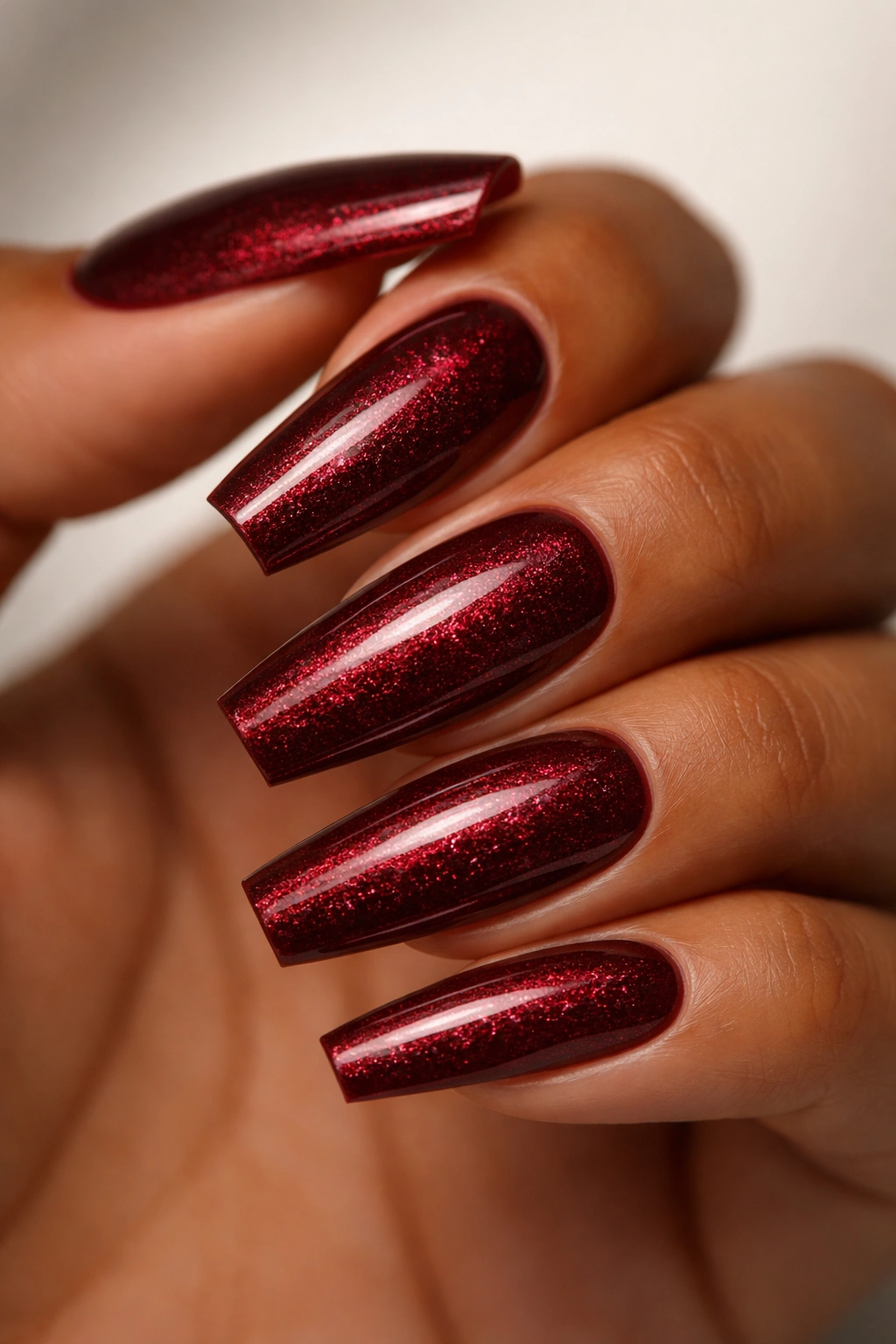
Glitter is where many red manicures go off the rails. Too chunky, and the nail looks craft-store fast. Too silver, and the shade turns pink or purple.
Garnet red with a fine glitter veil avoids both problems. The base stays deep red with a wine edge, then a micro-shimmer layer adds light without breaking up the color. On medium neutral, deep, and cool skin tones, this can look rich and festive without getting loud.
A few rules help:
- Pick micro shimmer or ultra-fine glitter, not large hex pieces.
- Keep the glitter tone close to the base—deep red, warm gold-red, or copper-red.
- Use two top coats if the finish feels rough.
- Keep embellishment off the nail if the shimmer is already doing the work.
I like this manicure on medium-length ballerina nails because the shape gives the shimmer a strong outline. On long lengths, the look can drift a little pageant if the glitter gets too bright. On short lengths, micro-shimmer still works, though the effect reads more polished than dramatic.
One thin shimmer veil is enough. More than that, and you lose garnet.
15. Merlot Marble With Nude Negative Space
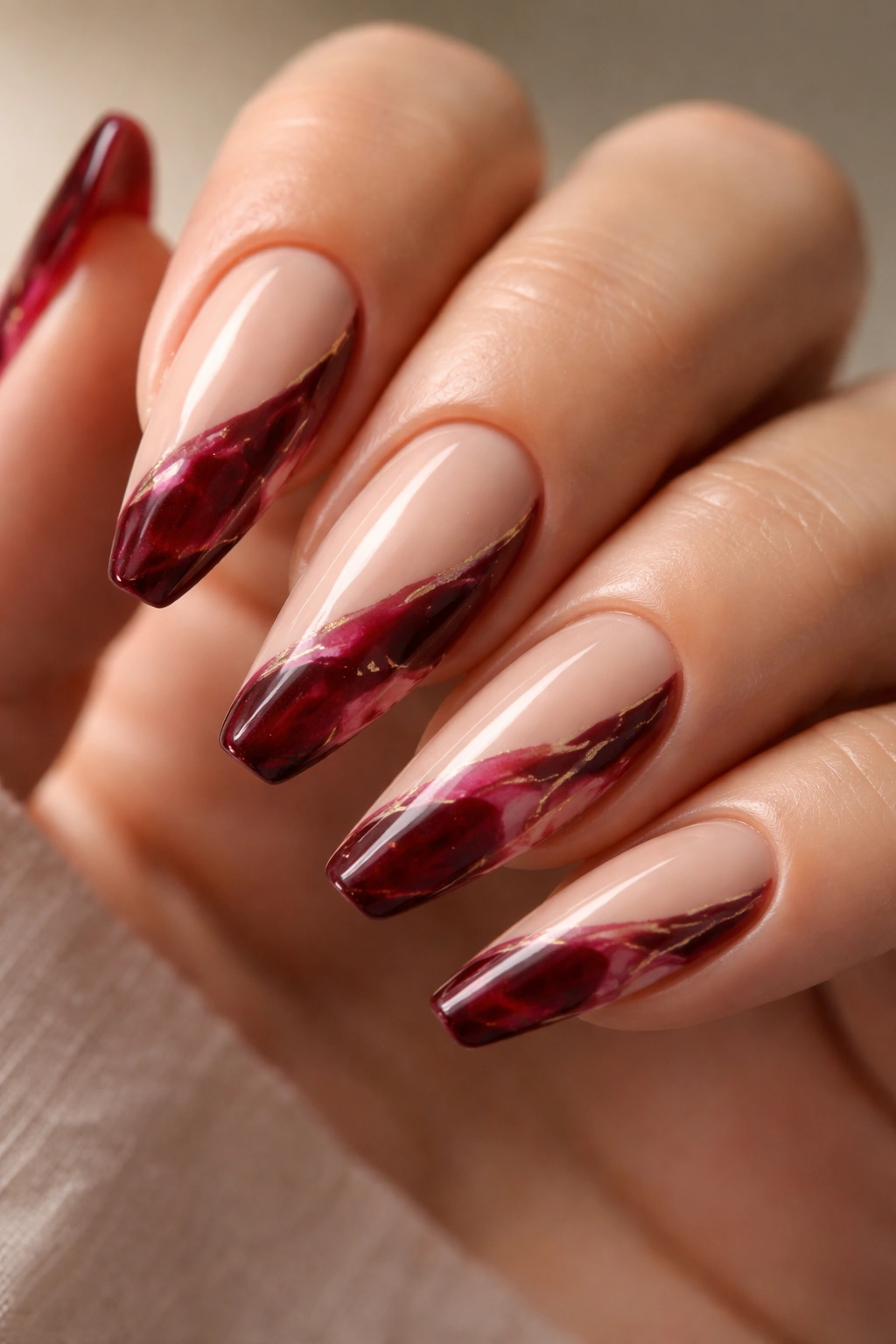
If solid red feels heavy on your hands, break it up. Merlot marble with nude negative space is one of the smartest ways to wear deep red across skin tones because the bare or softly nude sections lower the contrast.
This design usually starts with a neutral nude base, then merlot gel is swirled in thin veins or cloudy patches, leaving pockets of the base visible. On ballerina nails, the elongated shape keeps the marble pattern looking sleek rather than busy. I like it most when the negative space sits along one sidewall or near the cuticle instead of dead center.
Why does that matter? Because placement changes the shape. Negative space along the side can slim a broad nail bed. Nude near the cuticle can make regrowth less obvious. Small layout choices change the whole manicure.
Merlot itself suits medium neutral, olive, and deep skin with ease, though fair cool skin can wear it too if the nude base is light enough to keep the design airy. Ask your tech to keep the marble soft and uneven. Symmetrical swirls look fake fast.
This is the artsier option on the list, though it still wears like a grown-up manicure rather than novelty nail art.
How to Keep Red Ballerina Nails Sharp Between Fills
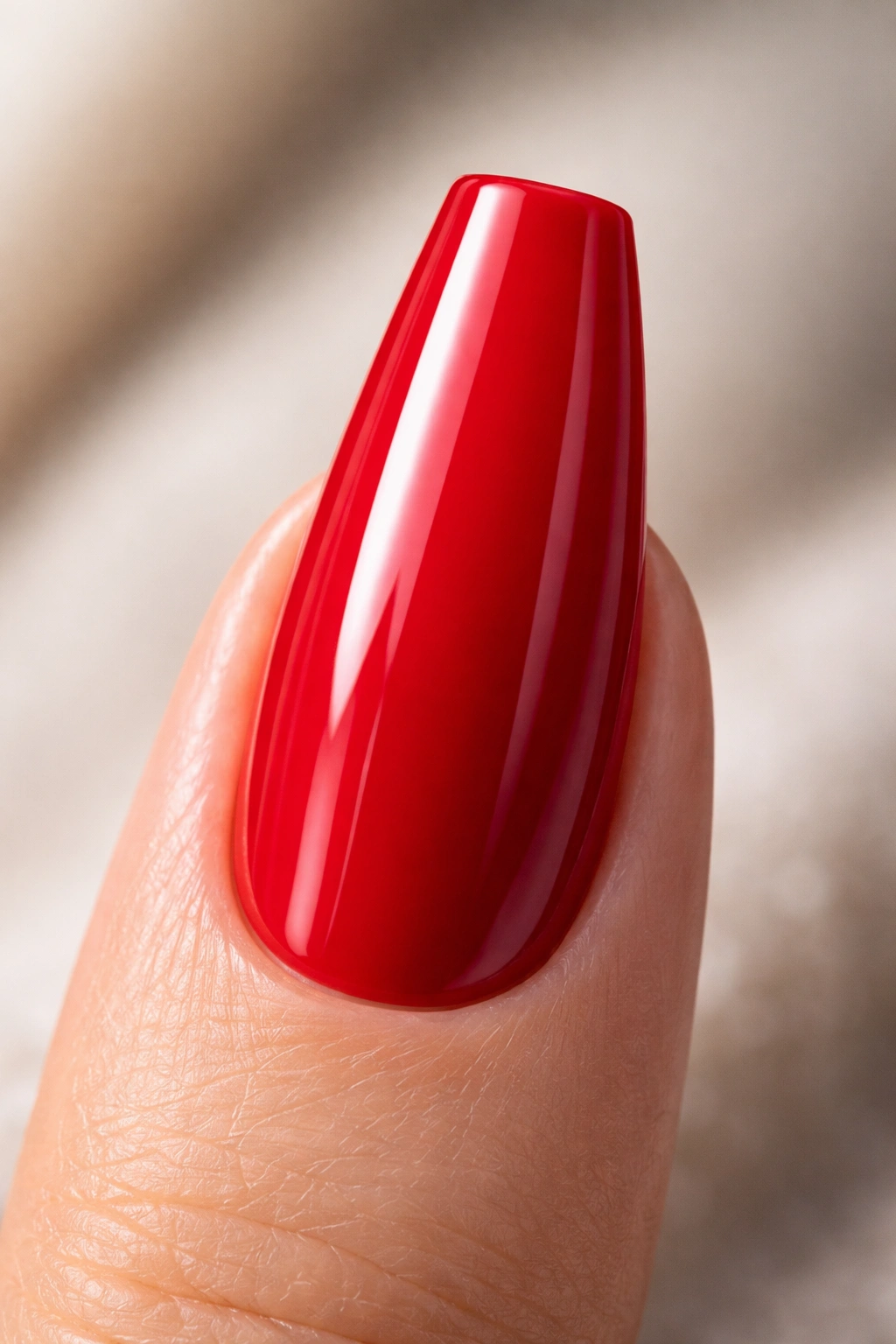
Red chips show faster than beige, and ballerina corners take more abuse than almond tips. That’s the trade-off. The shape looks clean, though it needs a little respect between appointments.
A few habits make a bigger difference than people expect:
- Apply cuticle oil once or twice a day, especially with dark reds.
- File snags with a 180-grit file in one direction rather than clipping corners.
- Wear gloves for dishwashing and heavy cleaning; hot water dulls top coat fast.
- Book fills around 2 to 3 weeks if you wear extensions. Past that point, the shape starts to drift.
- If red stains the skin near the cuticle, a tiny bit of oil on a wood stick lifts it more safely than scraping.
Also, do not use your nails as tools. I know. Everyone says that. Still, ballerina corners are the first thing to catch when you pry open a can, peel a label, or dig through a key ring.
If you want the red to stay crisp, ask your tech to cap the free edge every time. On bright and deep reds alike, that little seal buys extra wear.
Final Thoughts
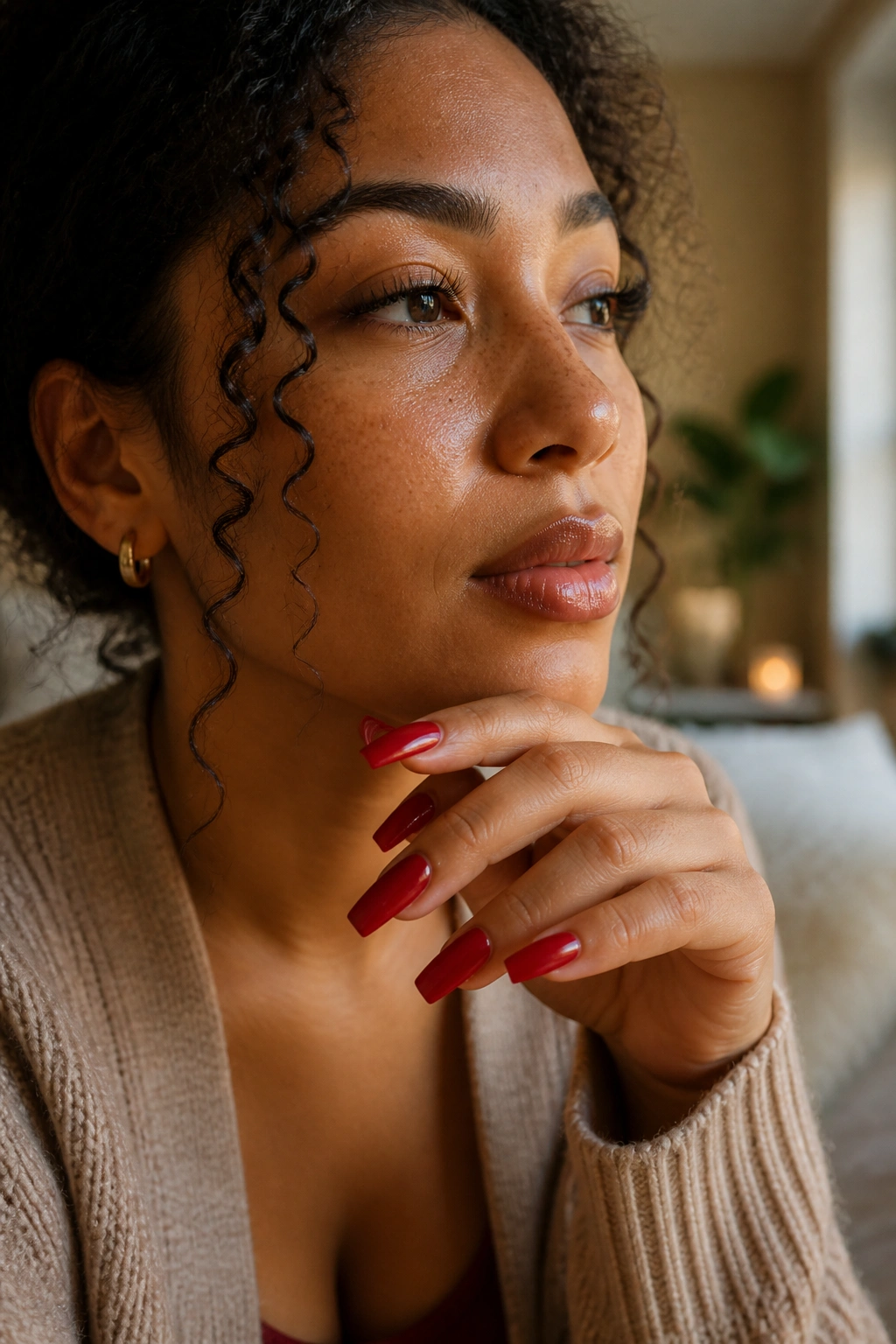
Red doesn’t fail because red is hard. It fails because people treat it like one color when it’s a whole family of colors, and ballerina shape makes every undertone decision more visible.
If you’re stuck between two options, start with blue-red cream for a clean classic look or scarlet French fade if you want something easier to wear. Those two cover a lot of ground without much risk.
And when a salon swatch still leaves you unsure, ask to see the shade in two coats over the base you’ll actually wear. That tiny test saves more bad red manicures than any trend board ever will.