
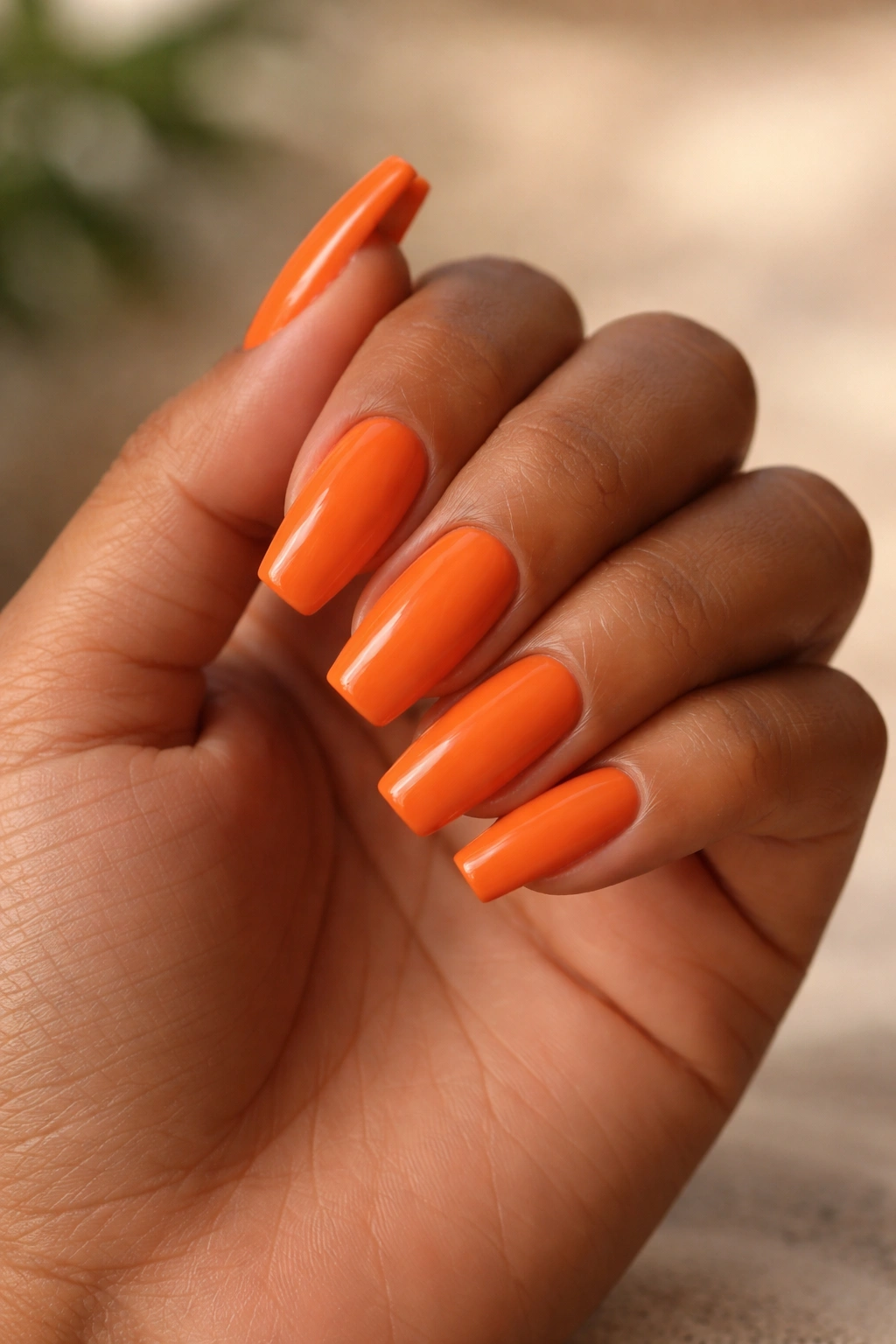
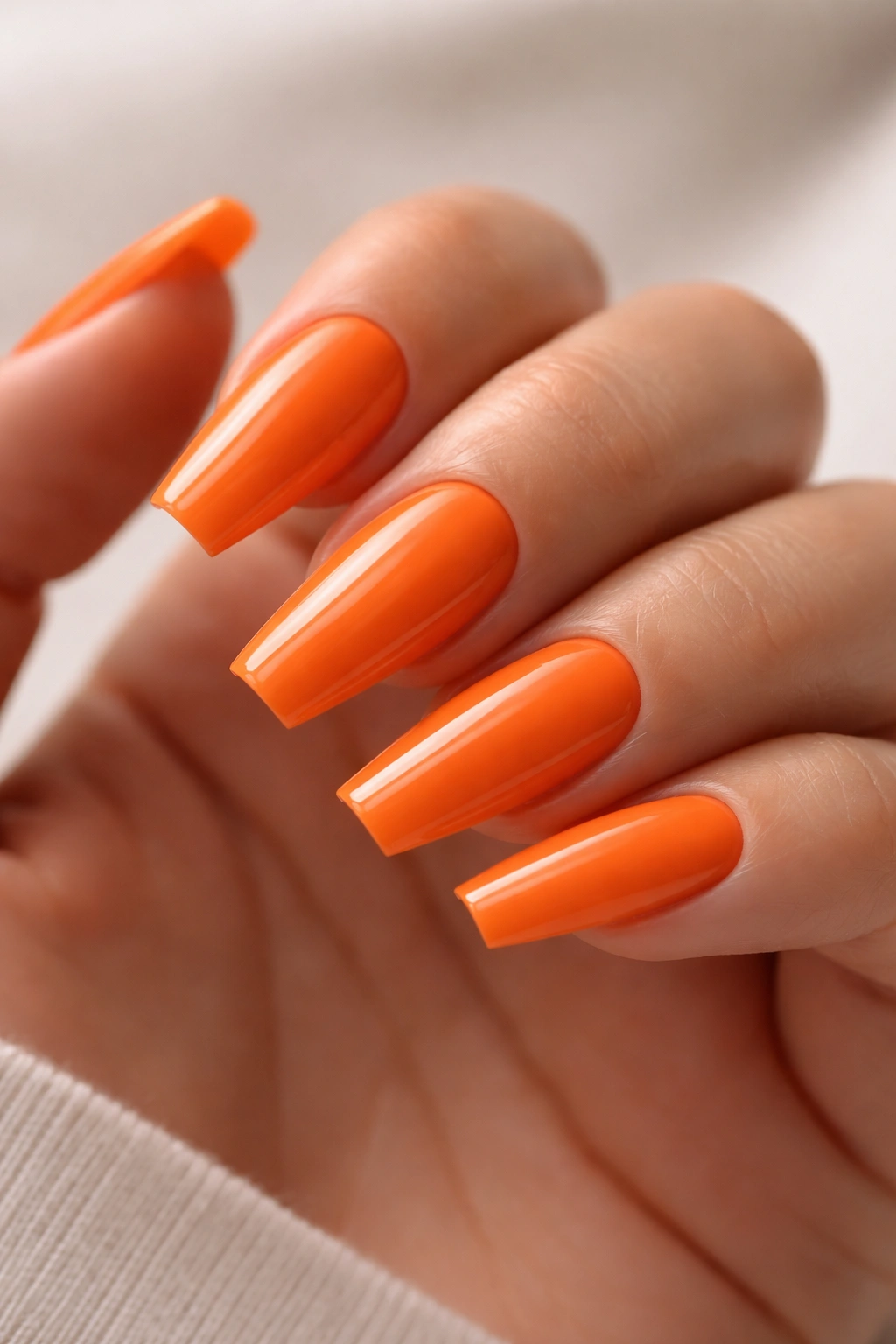
Orange polish has nowhere to hide. If the shape is off, the sidewalls are crooked, or the color choice fights your skin tone, you’ll see it fast. That’s exactly why orange ballerina nails can look so good when they’re done right: the tapered sides and flat tip give bright color a clean edge, and orange brings enough heat that even a simple set feels deliberate.
I’ve always thought orange is one of the most unfairly pigeonholed nail colors. People either treat it like a novelty shade or save it for one narrow vibe, when it actually runs from soft apricot to brick rust to almost-electric neon. On a ballerina shape, that range matters. The same hand can wear a sheer creamsicle wash one month and a blood-orange chrome the next, and both make sense.
Shape does some heavy lifting here. A ballerina nail needs straight sidewalls, a crisp free edge, and corners softened just enough that they do not read boxy. When your nail tech files too much from the center, orange starts to exaggerate every mistake. When the structure is right, though, the color looks expensive instead of loud.
Some of these ideas are bold on purpose. Some are softer than they sound. All 15 work because they respect the shape rather than fighting it.
Why the Ballerina Shape Makes Orange Look Sharper
Ballerina nails give bright color structure. That’s the short version.
Round nails can make orange feel playful. Almond nails soften it. Square nails turn it graphic. Ballerina sits in a sweet spot between sharp and wearable, especially if you keep a medium length with about 8 to 12 mm of free edge past the fingertip. That extra length gives orange room to read as design rather than a block of color.
There’s also a small naming issue worth clearing up. Some salons use coffin and ballerina as the same thing. In practice, ballerina nails usually have slightly softer corners and a less severe taper. That tiny difference matters with orange, because sharp corners plus a blazing shade can look harsh on smaller hands.
Orange also highlights surface texture more than beige, pink, or taupe. If the builder gel is lumpy, if the apex is flat, if the side profile dips near the stress point, a bright orange polish will point all of it out. Good prep, clean cuticle work, and a top coat that actually levels are not optional here.
How to Match Orange to Your Skin Tone and Nail Length
Picking the right orange is less about rules and more about undertone, depth, and how much contrast you want against your hand. Still, a few guidelines save time.
Warm, neutral, and red-based oranges
If your skin has a warm or olive cast, terracotta, pumpkin, rust, and mandarin usually look easy right away. They echo the warmth already in your skin, so the manicure feels connected instead of pasted on.
Cooler or pink-leaning skin often looks better with apricot, coral-orange, or red-orange rather than straight traffic-cone orange. A little peach or red in the mix keeps the color from making the hand look gray.
Medium length versus long length
Long ballerina nails can handle saturated shades with fewer distractions. Neon orange, chrome, cat-eye, thick French tips—they all have space to breathe.
Shorter ballerina sets benefit from cleaner placement:
- Micro French lines instead of full coverage
- Ombré fades instead of hard color blocks
- Milky overlays instead of opaque creams
- One or two accent nails when the design is busy
One more thing. If you’re unsure, ask for the orange swatch to be held against your palm, not just the back of your hand. The palm shows whether the shade pulls too yellow or too red, and it’s a better test than looking at the bottle in salon lighting.
1. Bright Tangerine Gloss
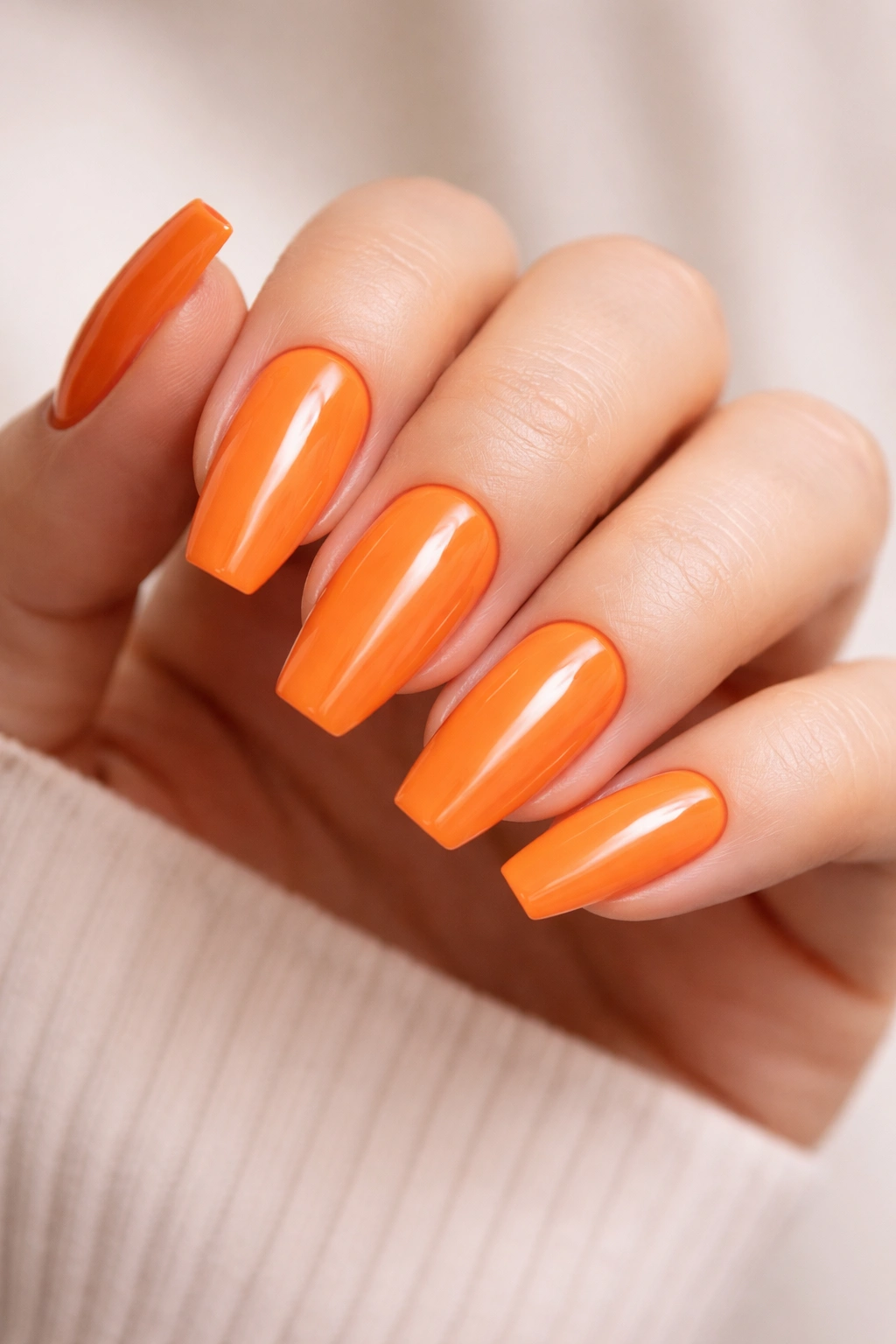
Nothing beats a clean, high-shine tangerine full set when you want orange to do all the talking. No glitter. No charms. No marble. Just a saturated cream with a glassy top coat and a ballerina shape filed sharp enough to look intentional from three feet away.
Why this shade works so well on ballerina nails
Tangerine sits in that sweet middle zone between coral and neon. It’s bright, but it does not have the almost-radioactive cast of a true fluorescent orange. On a ballerina shape, that means you get punch without losing polish—literally and visually.
The finish matters. A glossy top coat smooths out the color and makes the flat tip look crisp. Matte can work too, but tangerine earns its keep through shine. If the surface reflects light evenly, the manicure looks cleaner and more expensive.
Quick details worth asking for
- Ask for two thin color coats and one float coat rather than two thick coats, because orange cream polish can streak when it’s overloaded.
- A medium length works best here; around 10 mm past the fingertip keeps the look bold without drifting costume-like.
- Pair it with a thin cuticle line cleanup. Orange against messy edges looks sloppy fast.
Best salon note: ask your tech to cap the free edge carefully. Bright creams show tip wear sooner than sheer shades.
2. Burnt Orange Velvet Matte
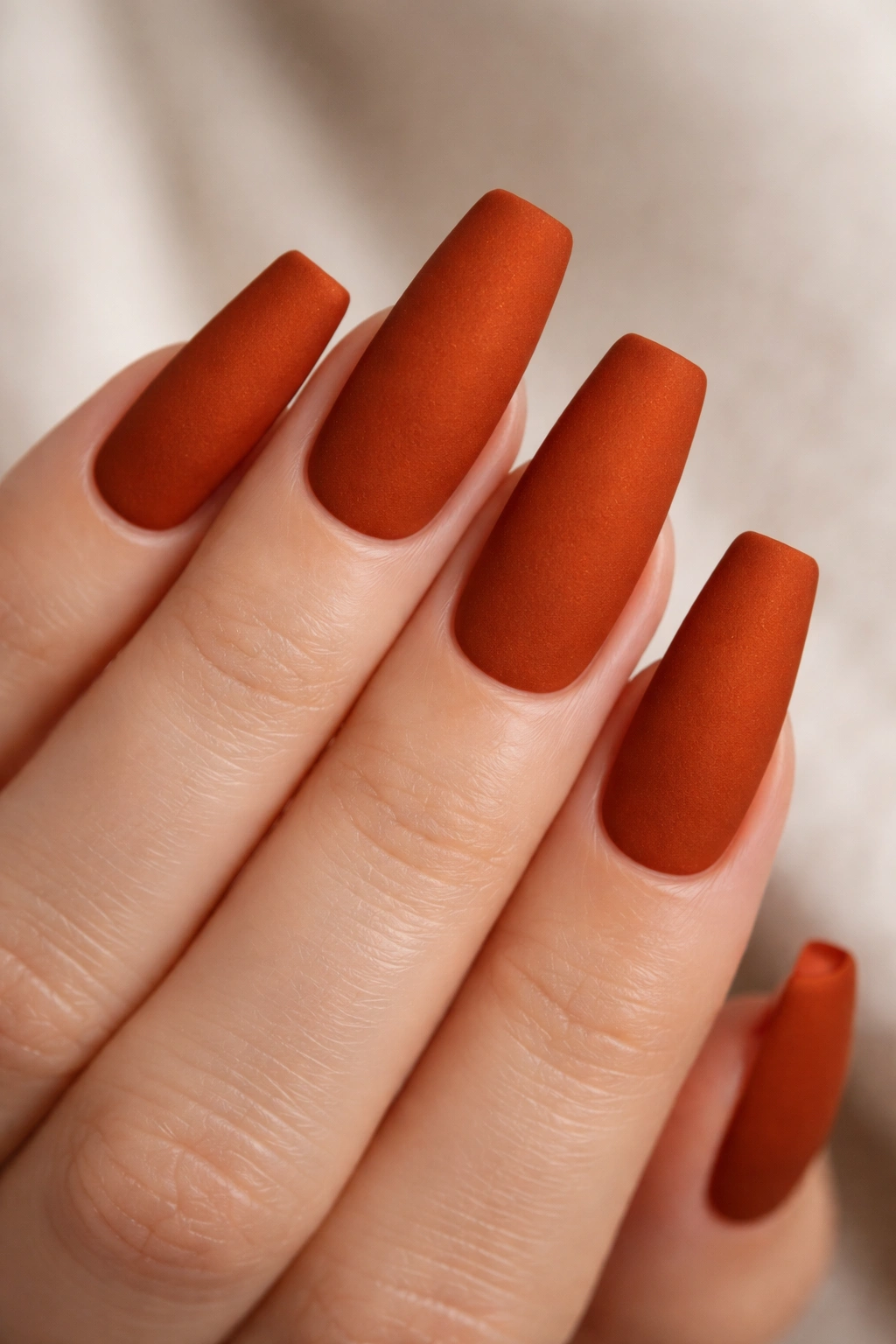
Burnt orange is the grown-up answer to bright orange. It has depth, a little brown underneath, and enough softness that even a full set feels grounded.
Matte is what pushes it over the line from standard to memorable. Not chalky matte—skip that—but a velvety finish that looks almost like suede when you turn your hand. On medium to long ballerina nails, the flat tip gives the color a tailored look, almost like the manicure is wearing a structured coat.
This is also one of the easiest orange looks to wear if you spend your day typing, holding a mug, reaching for your phone, doing normal life. Burnt orange does not scream from across the room. It sits there with confidence and lets the shape do half the work.
There is a catch. Matte top coats pick up wear at the very tip, especially after 5 to 7 days if you’re rough on your hands. If you want the same soft look to last longer, ask for a rubber base or builder overlay underneath, then refresh the matte top coat halfway through the set. That small maintenance step makes a difference.
3. Neon Orange Micro French
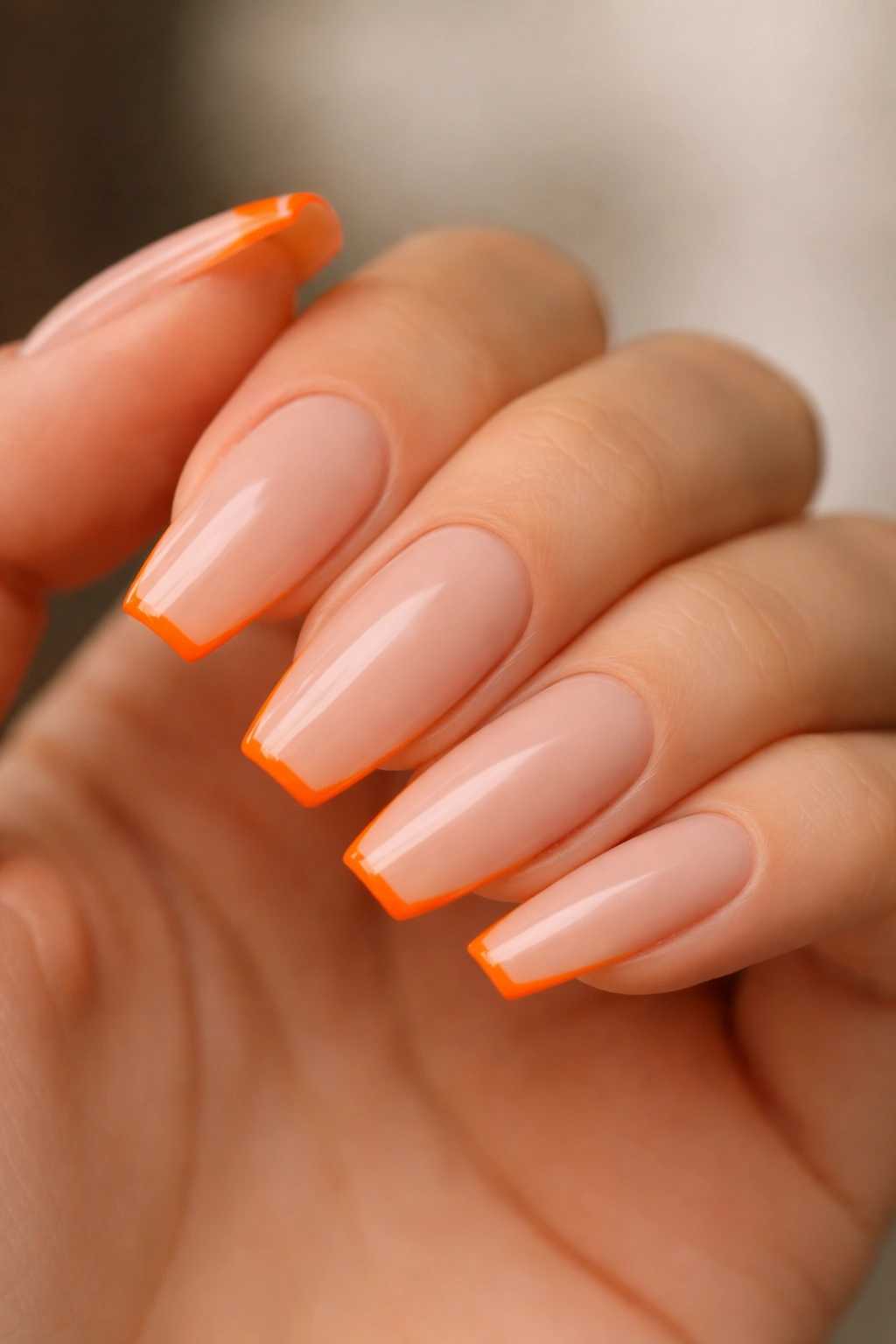
Want orange without committing to a full solid set? A neon orange micro French is where I’d start.
The trick is scale. On ballerina nails, the tip should stay 1 to 2 mm thick, maybe 2.5 mm if the nail is long. Any wider and the line starts to eat the shape. Keep the base sheer nude, milky pink, or soft beige, and let the neon edge do the work.
Why does this hit so hard? Contrast. The nude base keeps the nail bed looking long and clean, while the razor-thin fluorescent tip puts a bright stripe right at the squared edge. From the side, it sharpens the whole silhouette.
Ask for these details at the salon
Tell your tech you want:
- a deep smile line, not a flat one
- a sheer base with one coat of coverage, not an opaque nude
- the tip painted with gel liner or striping gel for precision
- the free edge filed after structure, before color, so the line stays even from nail to nail
A white underpaint beneath neon can make the tip glow harder. Some people love that. Some hate it. If you want the orange to look bright but still wearable, skip the white layer and let the neon sit on its own.
4. Apricot Nude Fade Ombré
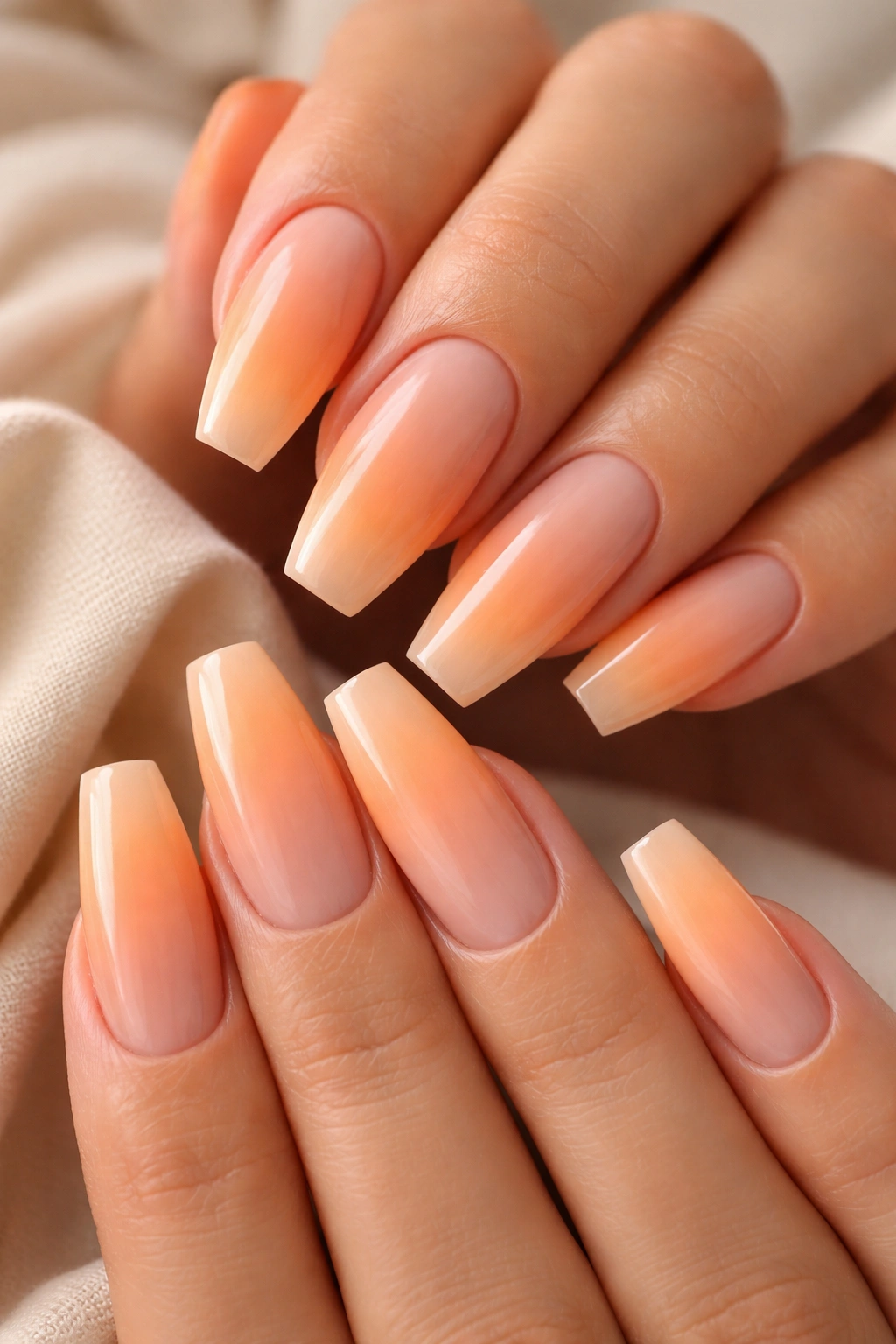
If you like orange in theory but keep backing away from the bottle, this is the one that tends to win people over. Apricot ombré on a nude base feels softer, lighter, and much easier to wear every day than a full opaque orange.
Picture the color starting strongest at the tip, then dissolving toward the cuticle until it melts into the natural nail bed. On a ballerina shape, that fade also stretches the hand visually because there’s no hard line chopping the nail in half.
A good tech usually builds this with a sponge blend, a soft-brush fade, or airbrush if the salon offers it. The nicest version is not a dramatic sunset effect. It’s a low-contrast melt where the apricot looks almost powdered into the nude.
A few details make this one look polished instead of patchy:
- Keep the orange sheer to medium opacity
- Use a warm nude base if your skin leans golden
- Ask for the deepest color to sit in the top third of the nail, not halfway down
- Seal with gloss, not matte, because shine hides the blend line better
The finished set feels easy on the hand. That matters if you want a manicure you’ll still enjoy on day ten.
5. Blood Orange Chrome
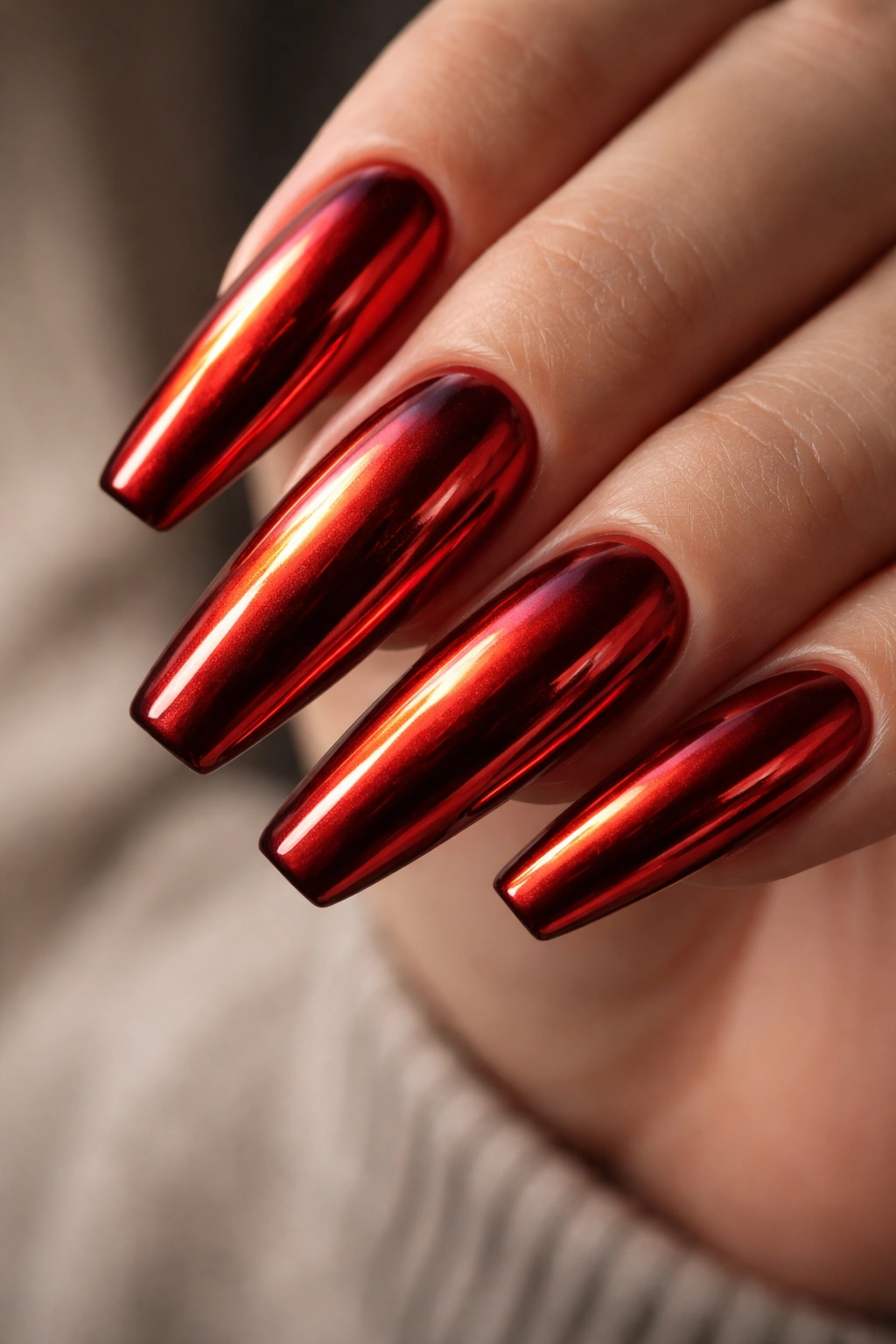
Blood orange chrome is moody in the best way. It’s darker than tangerine, richer than coral, and when the chrome powder catches light, it throws off flashes of red, copper, and molten orange instead of one flat note.
This look only works on a smooth surface. Chrome magnifies every ridge, tiny bump, and uneven sidewall. If your overlay is not level, skip it. A builder-gel base with a clean apex makes all the difference here, because the reflective finish will show your nail shape from every angle.
I like blood orange chrome most on longer ballerina nails—something around 12 to 16 mm past the fingertip. The extra length lets that metal-like reflection travel across the nail. Short sets can still wear it, but the effect reads more like shimmer than mirror.
Application matters more than color choice with this design. Most techs will paint a deep orange or reddish base, cure it, apply a no-wipe top coat, buff in the chrome powder, then seal the edge carefully. If that final seal is too thin, the free edge starts wearing away early, and chrome wear looks rough fast.
One warning. If you work with cleaning products or wash your hands constantly, plan on a little earlier maintenance. Chrome is gorgeous, but it asks for care in return.
6. Terracotta Swirl Marble
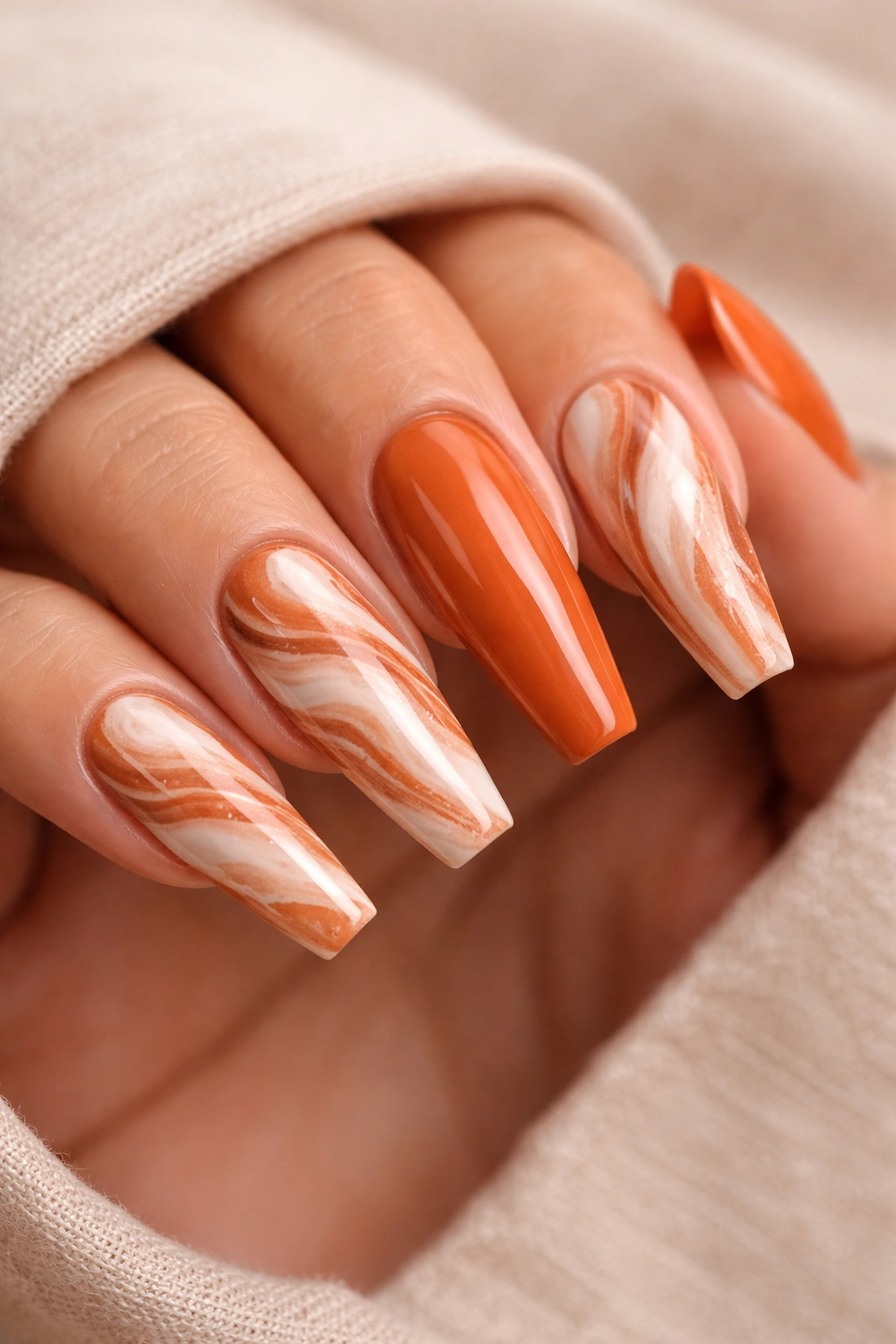
Unlike neon orange, terracotta marble has texture built into the color story. That makes it forgiving, and it’s one reason I keep recommending it to people who want orange but hate anything that feels loud.
The base is usually a soft clay, cinnamon, caramel, or beige. Through that, your tech threads thin swirls of terracotta, milk white, or brown to mimic stone. On ballerina nails, those lines look best when they follow the length of the nail rather than cutting straight across it.
Where this design stands out
Terracotta marble works well if you want:
- a set with movement instead of sparkle
- orange tones that feel earthy rather than bright
- nail art that hides small wear marks better than a flat cream color
- one or two accent nails mixed into a simpler set
You do not need all ten nails marbled. I’d argue most sets look stronger with 4 to 6 marble nails and the rest in a matching solid terracotta. Too much veining can get muddy, especially on shorter lengths.
Ask for thin swirls, not chunky blobs. The best marble work looks accidental in a controlled way—yes, that sounds contradictory, but any good tech knows the difference.
7. Mandarin Jelly Nails
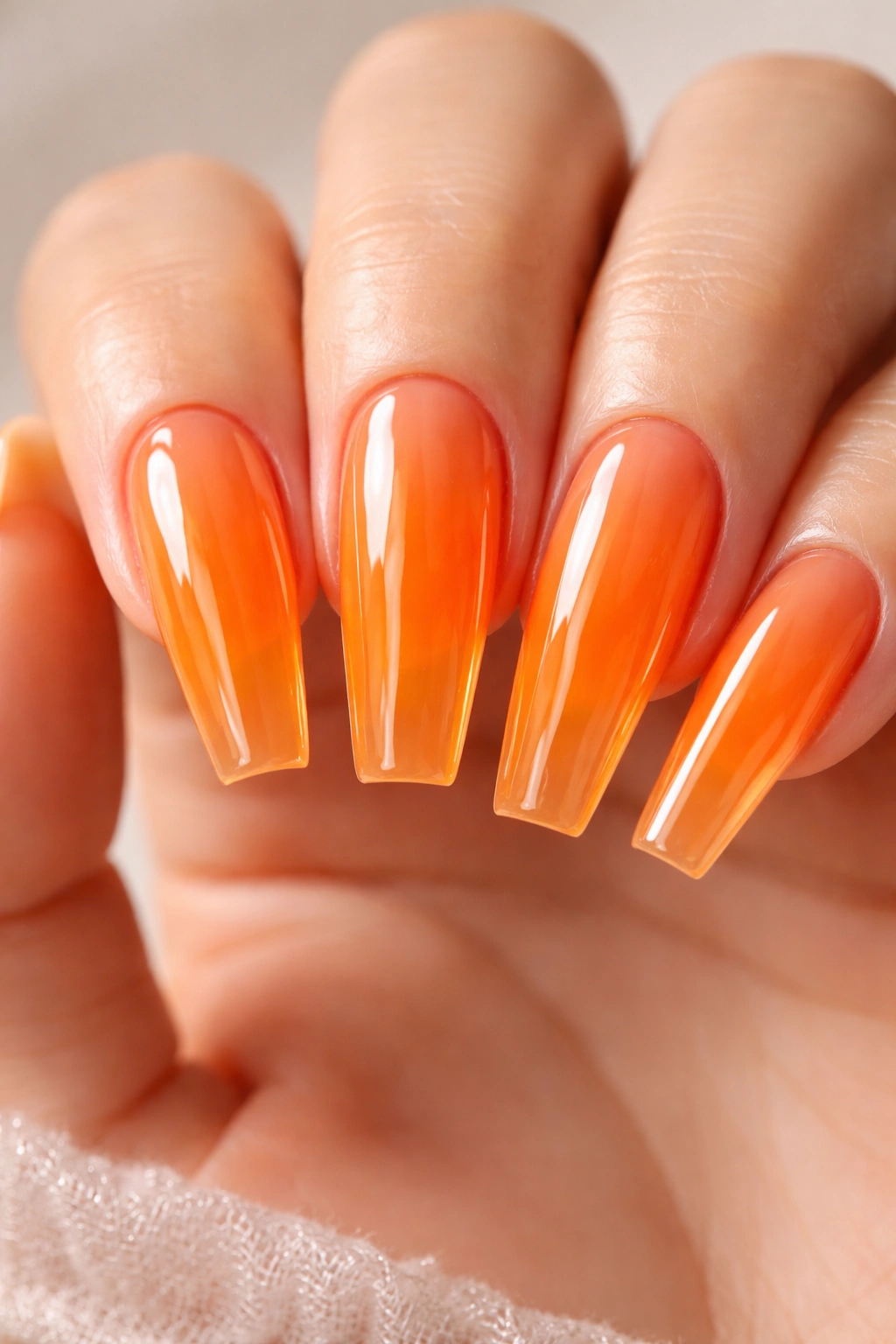
Jelly nails have that syrupy, see-through finish that makes color look suspended inside the nail rather than painted on top. In mandarin orange, the effect is playful, glossy, and a little nostalgic without feeling childish.
Why jelly polish changes the whole mood
A standard cream orange reads solid and graphic. A jelly orange lets light pass through, so the set looks lighter on the hand. That shift is small, but you notice it right away, especially outdoors or near a window.
Ballerina shape helps because the flat tip gives the transparent color a hard stop. Without that edge, jelly nails can drift too soft. With it, they stay neat.
What to ask for so they don’t look patchy
- Request 2 to 3 syrup-thin coats instead of one heavy coat.
- If you want extra depth, ask for a glass base overlay underneath.
- Keep embellishments minimal; one tiny crystal near the cuticle is enough.
- Use a high-gloss top coat and refresh it after a week if possible.
Good to know: jelly orange often looks darker in the bottle than on the nail. Ask to see a cured swatch, not an uncured blob of gel.
8. Pumpkin Spice Tortoiseshell Accent
Some designs are better in small doses. This is one of them.
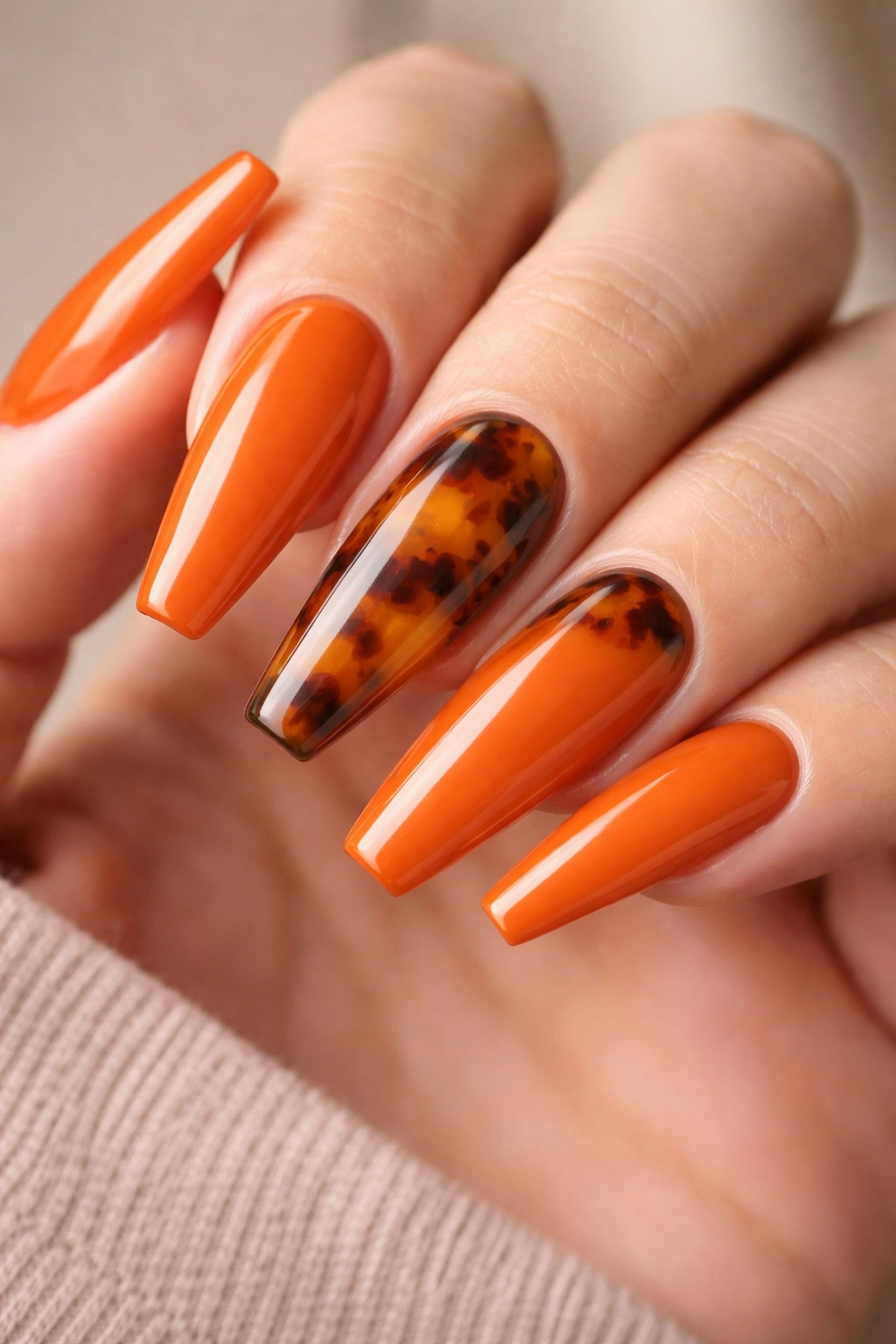
A full ten-finger tortoiseshell set can get busy on a ballerina shape, especially when orange is in the mix. But one or two tortoiseshell accent nails paired with pumpkin or caramel solids? That looks considered. The pattern brings in amber, honey, and brown while the solid orange keeps the manicure from turning muddy.
Real tortoiseshell nail art is layered. Your tech builds a translucent amber base, then drops in irregular brown and near-black patches, softens the edges, and seals everything under gloss so the spots look buried under glass. If the design is too flat, it loses that warm depth that makes tortoiseshell worth doing.
This is also one of the smartest choices if you want orange with a little pattern but do not want floral art, flames, stars, or anything too theme-heavy. Tortoiseshell feels richer and more restrained. It gives the set texture without stealing the whole manicure.
Keep the accent nails on the ring finger and thumb or middle and ring finger. That spacing looks cleaner than putting the pattern on every other nail.
9. Orange Creamsicle Aura Nails
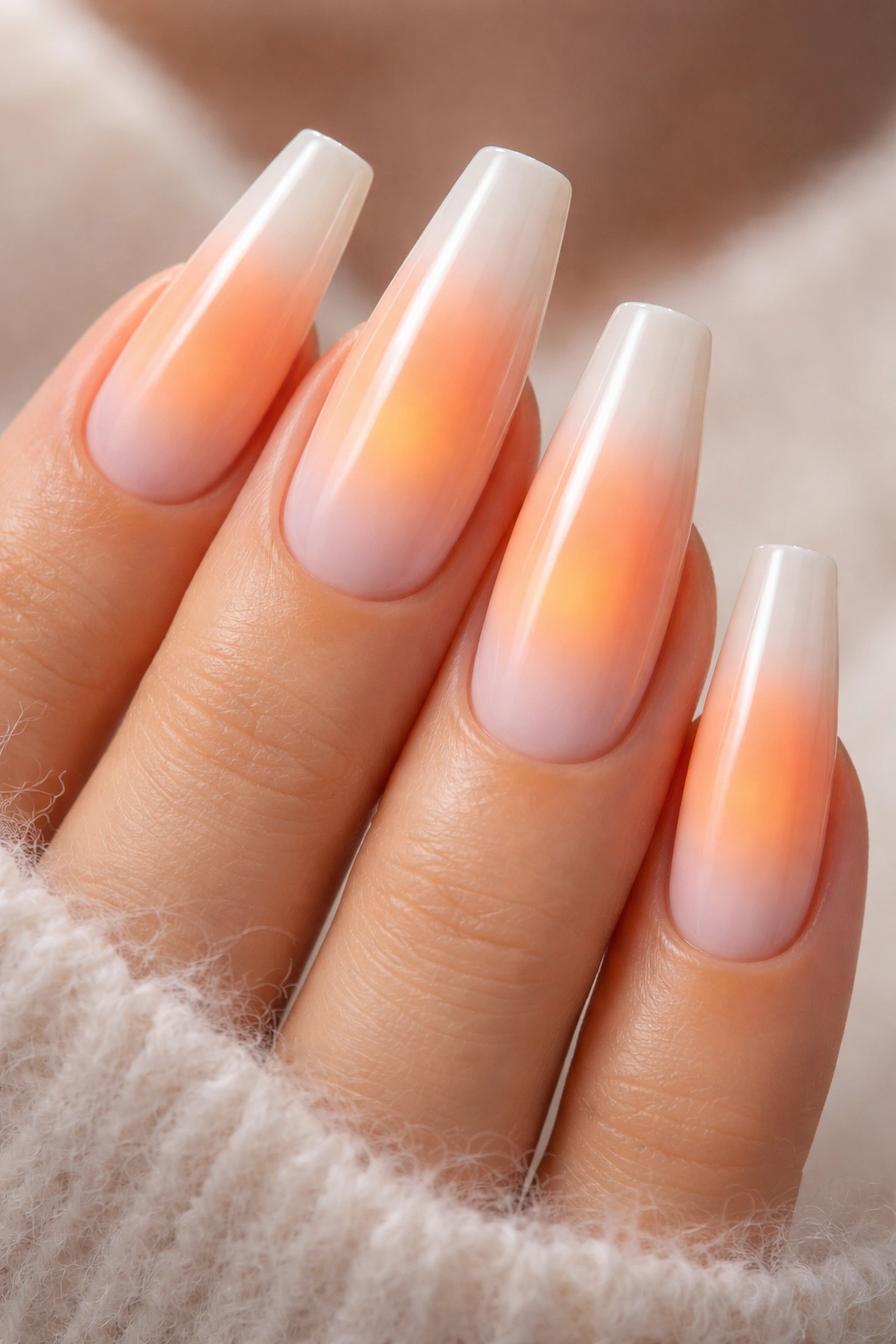
Aura nails can go wrong fast. When the center color is too harsh or the blend is too small, the manicure starts to look like a target. Done well, though, orange creamsicle aura nails have a soft glow that works beautifully on ballerina tips.
The base should stay milky. Think pale peach milk, sheer nude, or soft ivory, then a hazy burst of creamsicle orange diffused in the center. Airbrush gives the cleanest halo, but a sponge blend can still look good if the edges are blurred enough.
The best way to build the glow
Start with a pale base that has enough opacity to smooth the nail bed. Then place the orange cloud slightly above the center—not all the way at the cuticle, not jammed against the tip. That placement keeps the shape looking long and stops the design from feeling crowded.
Gloss is usually the better finish here. Matte takes away the soft, lit-from-within effect that makes aura nails worth the extra work.
If you want more detail, add tiny chrome stars, one pearl, or a whisper-thin outline. Keep it restrained. Aura nails already have a focal point, and piling on too much decoration can make the set feel confused.
10. Coral-Orange Glitter Fade
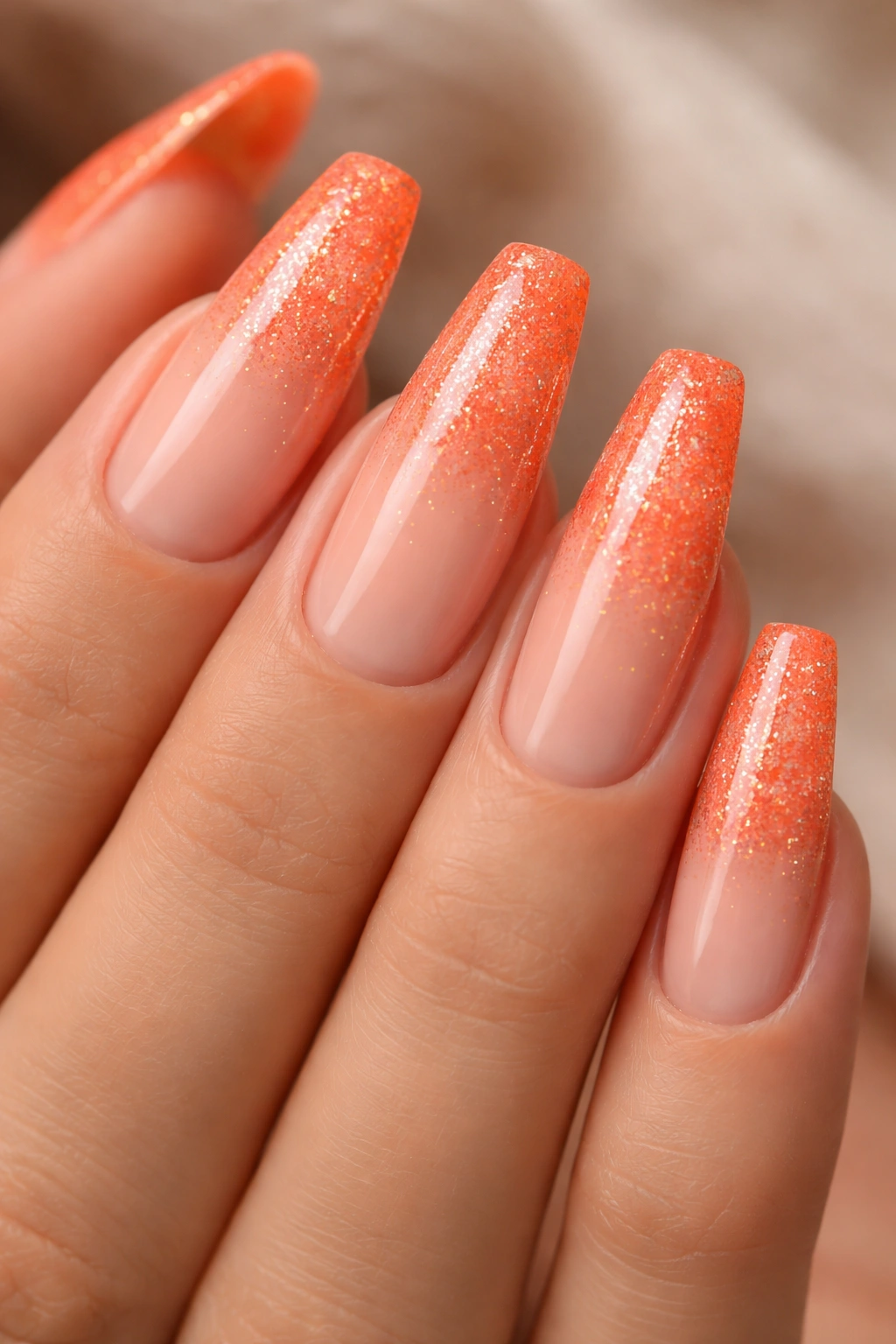
Maybe you want shine, but not the mirror finish of chrome and not the sweetness of a jelly set. A coral-orange glitter fade lands right in the middle.
I like this design most when the base stays sheer nude and the glitter is concentrated at the tip, then feathered downward in smaller and smaller particles. On ballerina nails, that fade follows the shape naturally because the widest point of sparkle sits right where the nail ends. It’s flattering and low-fuss.
There are two ways to build it. One uses fine reflective glitter for a smoother finish. The other mixes fine glitter with a few medium hex pieces for more texture. I’d pick the first on shorter lengths and save chunkier mixes for longer sets.
A glitter fade also hides growth better than a full metallic orange. That matters if you stretch your fills.
Here’s where it works best:
- dinners and events where you want polish that catches low light
- vacations or weekends when you do not want to baby your manicure
- sets that need one eye-catching detail without nail art on every finger
Pair it with a coral-leaning orange, not traffic-cone orange. The warmth plays nicer with glitter and keeps the sparkle from looking craft-store harsh.
11. Peachy Orange Milky Overlay
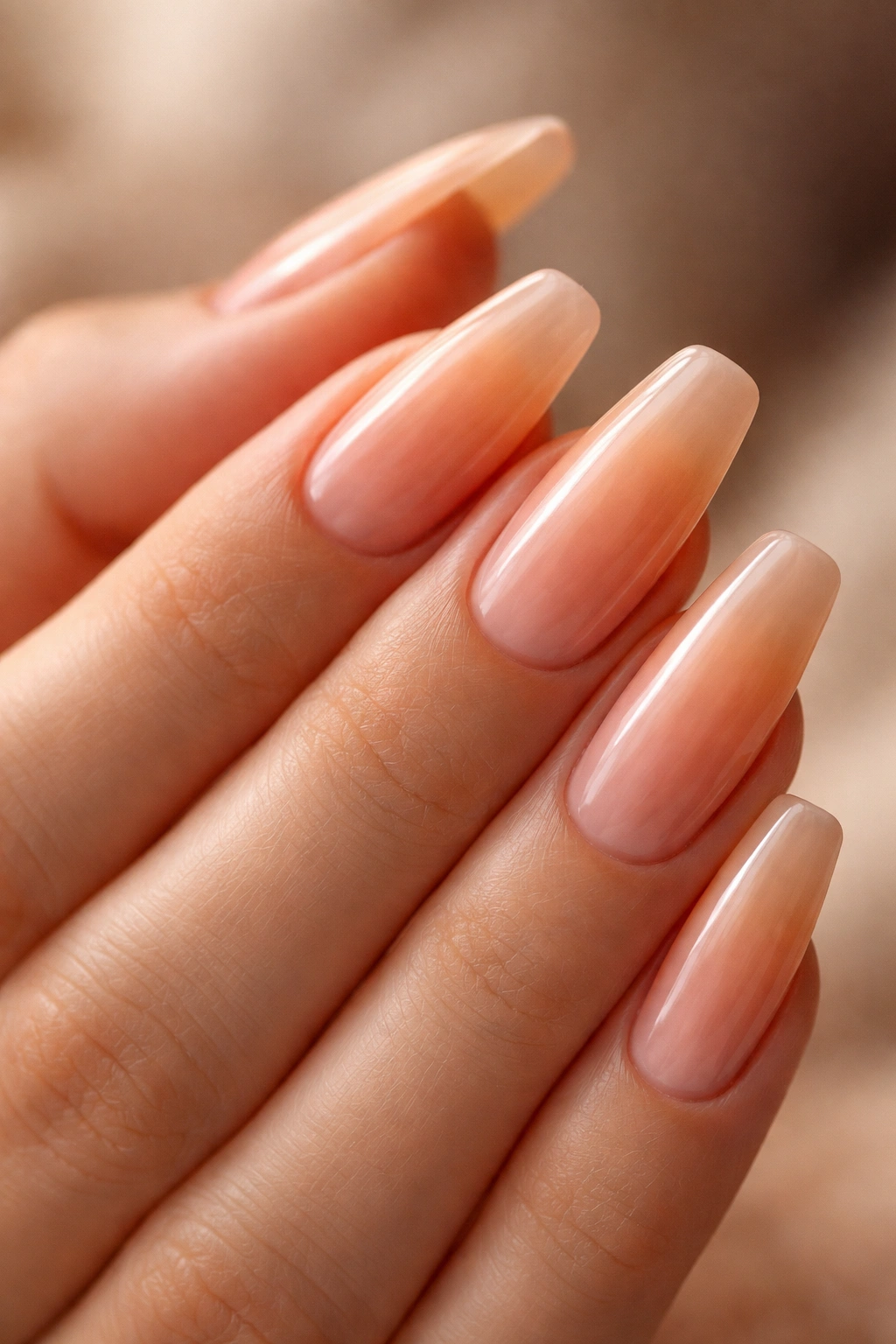
This is the quietest orange on the list, and that’s why I like it. Not every manicure needs to announce itself from across the room.
A peachy orange milky overlay looks almost like your natural nail tint was upgraded by two degrees. The color is sheer, creamy, and soft enough that the ballerina shape becomes the main event. If you work in a setting where a full neon set would feel like too much, this is an easy middle ground.
The trick is opacity. You want about 50 to 70 percent coverage, not a solid cream. That lets some natural depth show through the nail bed while still warming up the whole hand. Done over builder gel, the color can look almost candlelit.
This design also ages well between appointments. Chips are less obvious, regrowth is softer, and tiny scratches do not jump out the way they do on dark chrome or matte rust. If you are rough on your hands, that alone may make this your best orange option.
Skip heavy art here. One ultra-fine gold line or one tiny crystal can work. More than that, and you lose the clean point of the set.
12. Sunset Ombré With Gold Foil
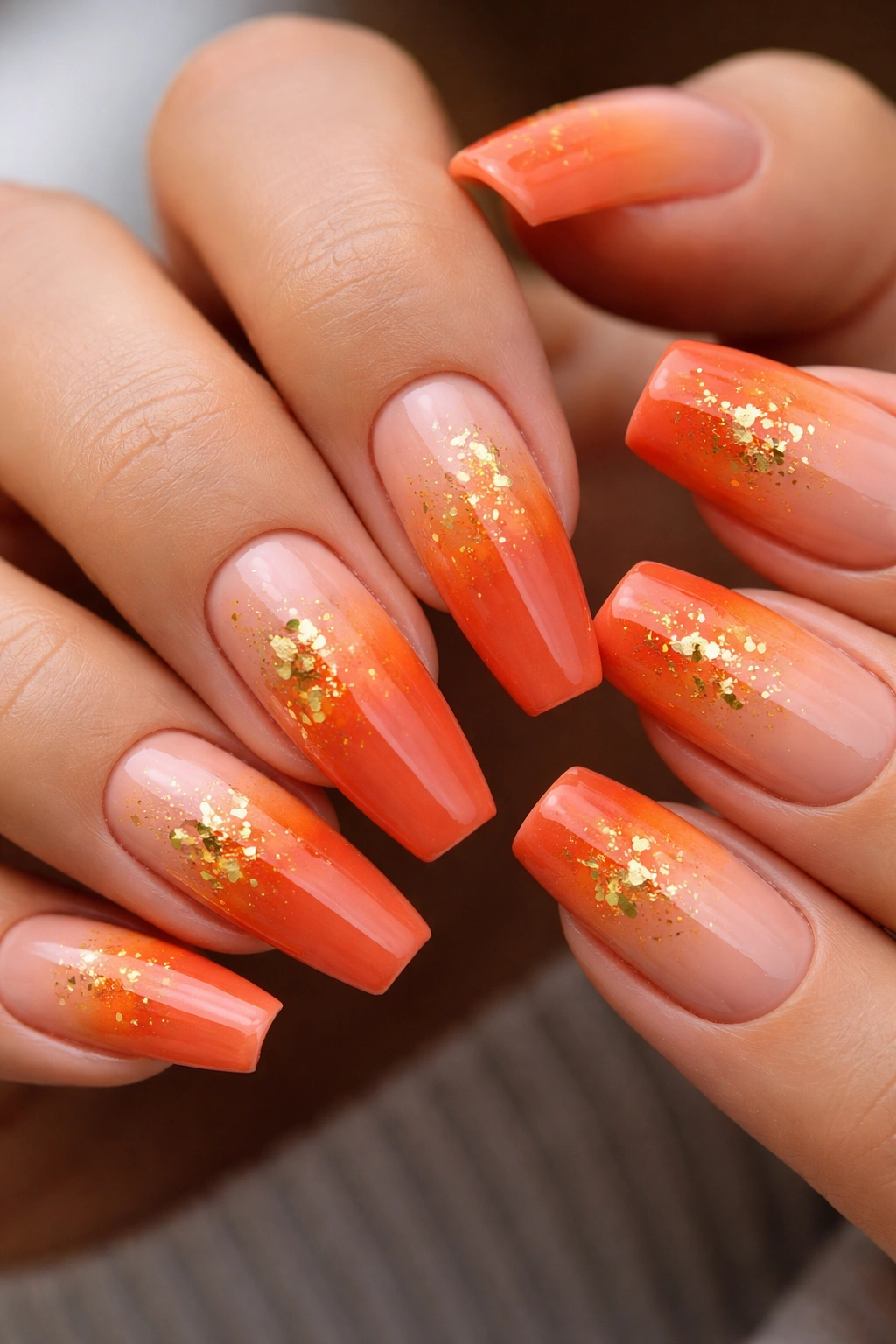
Sunset ombré sounds louder than it needs to be. The strongest version is not a five-color rainbow packed onto each nail. It’s a controlled blend of peach, orange, and a little reddish amber, then a touch of gold foil placed where the color shift already has movement.
Unlike a standard two-tone fade, this one gives the nail more depth from base to tip. Ballerina shape helps keep it looking intentional because the straight sides hold the gradient in place. On almond nails, the same blend can drift too soft.
Placement makes or breaks this design
Gold foil should not be scattered everywhere. Ask for:
- foil clustered near the middle or upper third
- small torn flakes, not large flat sheets
- no more than 2 to 4 foil placements per nail
- a builder or thick top coat to bury the edges so the foil does not lift
You can wear this on all ten nails, though I still like one or two quieter nails mixed in. A plain amber or soft apricot nail between the ombré nails gives the set room to breathe.
The finished manicure has movement even when your hand is still. That’s the charm of it.
13. Matte Rust With Black Line Art
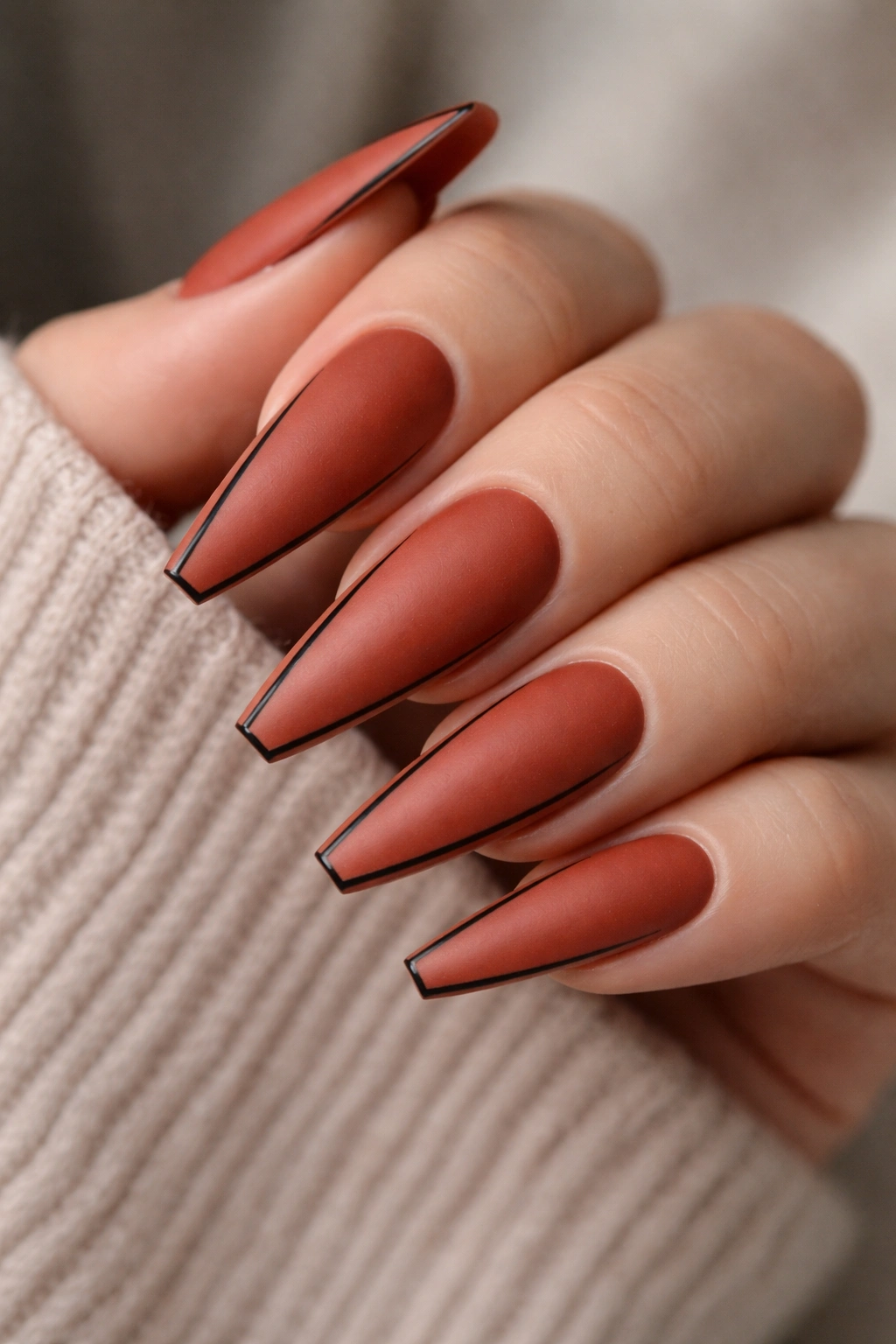
Picture a rust-orange base—dry, velvety, and a little smoky—with one thin black line tracing the side of the nail or curving across the tip. That contrast is why this design works. The base is warm and muted. The line is cool, sharp, and spare.
You do not need much art here. One line, maybe two. Abstract faces, tiny arcs, side-swept geometry, off-center half moons—all of that can look strong on ballerina nails because the flat tip gives the line art a clean ending point. If the design gets too detailed, the manicure starts fighting itself.
This set suits medium to long nails best because the line needs room to travel. On short ballerina shapes, keep the art closer to the tip or one sidewall so it does not crowd the nail bed.
A common mistake is using a black gel liner that’s too thick. It should sit like ink, not rope. Ask for hairline-thin detail work and a matte top coat that does not cloud the rust base.
One upside of this design: it looks expensive without needing rhinestones, chrome, or heavy texture.
14. Clementine Cat-Eye Nails
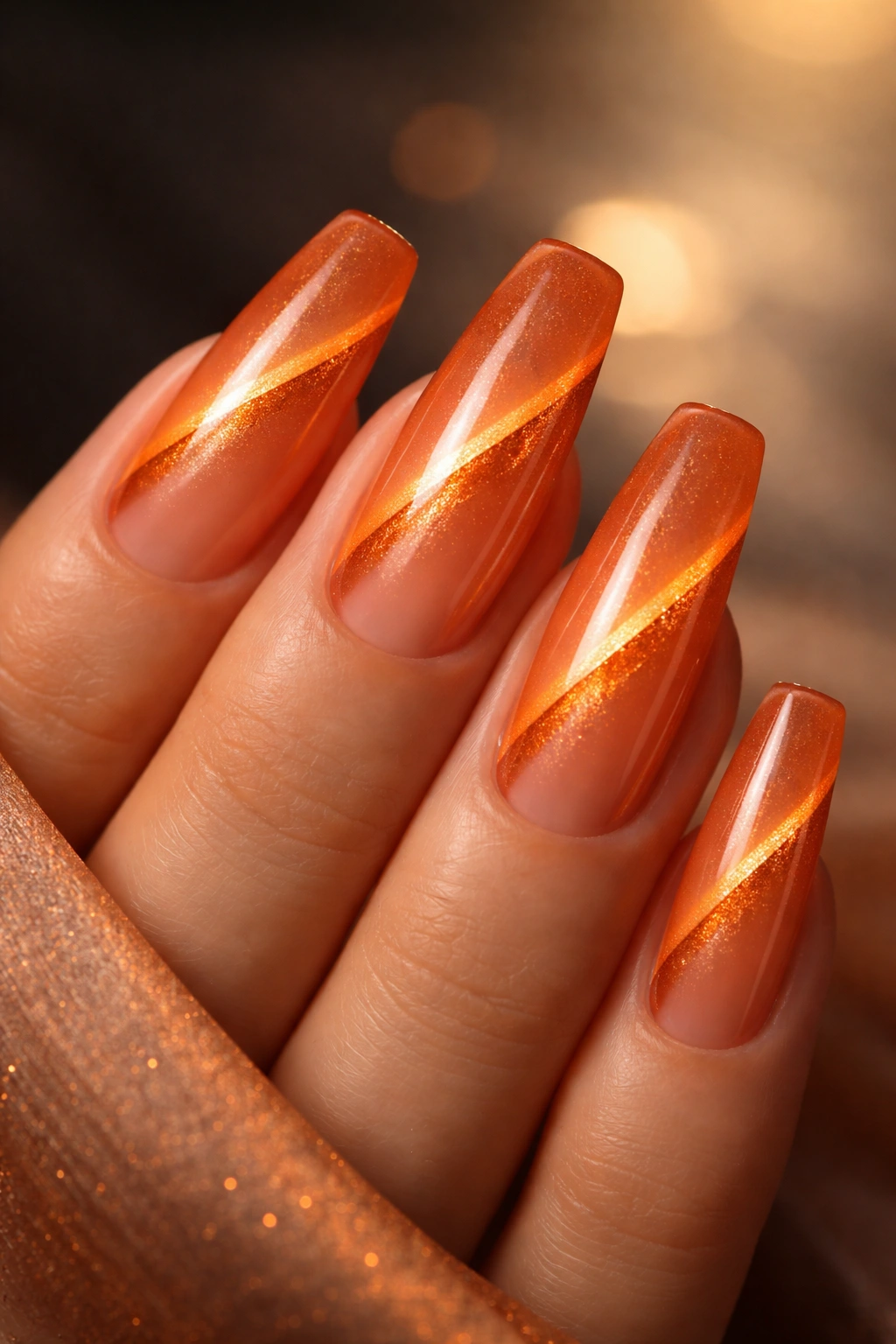
Under dim light, cat-eye orange can look almost ordinary. Then you move your hand, and a bright magnetic stripe slides across the nail like liquid metal. Clementine cat-eye gives you that motion without the darkness of green, navy, or plum magnetic gels.
Why this effect is different from shimmer
Regular shimmer sparkles all over. Cat-eye polish pulls metal particles into a concentrated band with a magnet held over the uncured gel for about 5 to 8 seconds. That creates one beam of light instead of scattered glitter, which reads sharper on a ballerina shape.
The best clementine cat-eye shades have a translucent orange base with copper-gold magnetic pigment inside. Too opaque, and the stripe disappears. Too sheer, and it looks washed out.
Small choices that improve the final look
- Use a dark apricot or orange base coat under the magnetic gel if you want more depth.
- Ask the tech to keep the magnetic line slightly diagonal for a longer-looking nail.
- Medium-long nails show the shift best.
- Seal with gloss only; matte kills the moving-light effect.
This one is pure fun. No point pretending otherwise.
15. Orange French With Nude Base and Chunky Tips
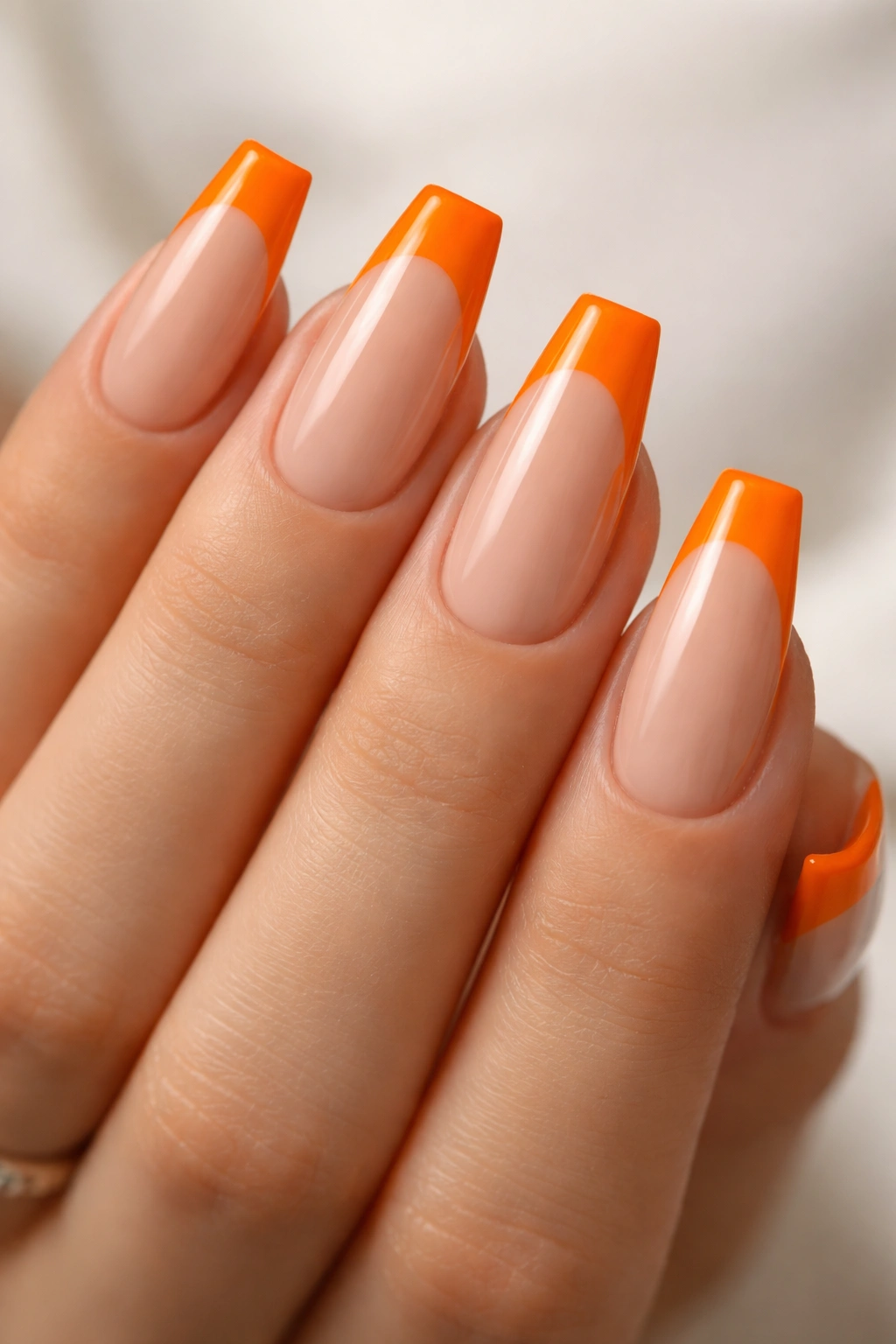
Thin French tips get all the attention, but on ballerina nails, chunkier orange tips often look better. The flat edge can carry more color, and that extra width makes the shape look deliberate rather than timid.
The key is proportion. I like the orange taking up roughly 20 to 30 percent of the nail length. Less than that can disappear. More than that starts looking like a half-dipped manicure unless the set is long enough to support it.
A nude base keeps the design balanced. Go too pink and the orange can fight it. A beige-nude or peach-nude usually sits better under orange, especially if the tips lean tangerine or carrot rather than red-orange.
You can sharpen this look with a double French line, a thin gold border where the nude meets the orange, or one accent nail in full solid color. Still, the cleanest version is often the strongest: nude base, bold orange tip, glossy finish, crisp ballerina file.
If you want something graphic but not too busy, this is a smart place to land.
Keeping Orange Ballerina Nails Looking Fresh Longer
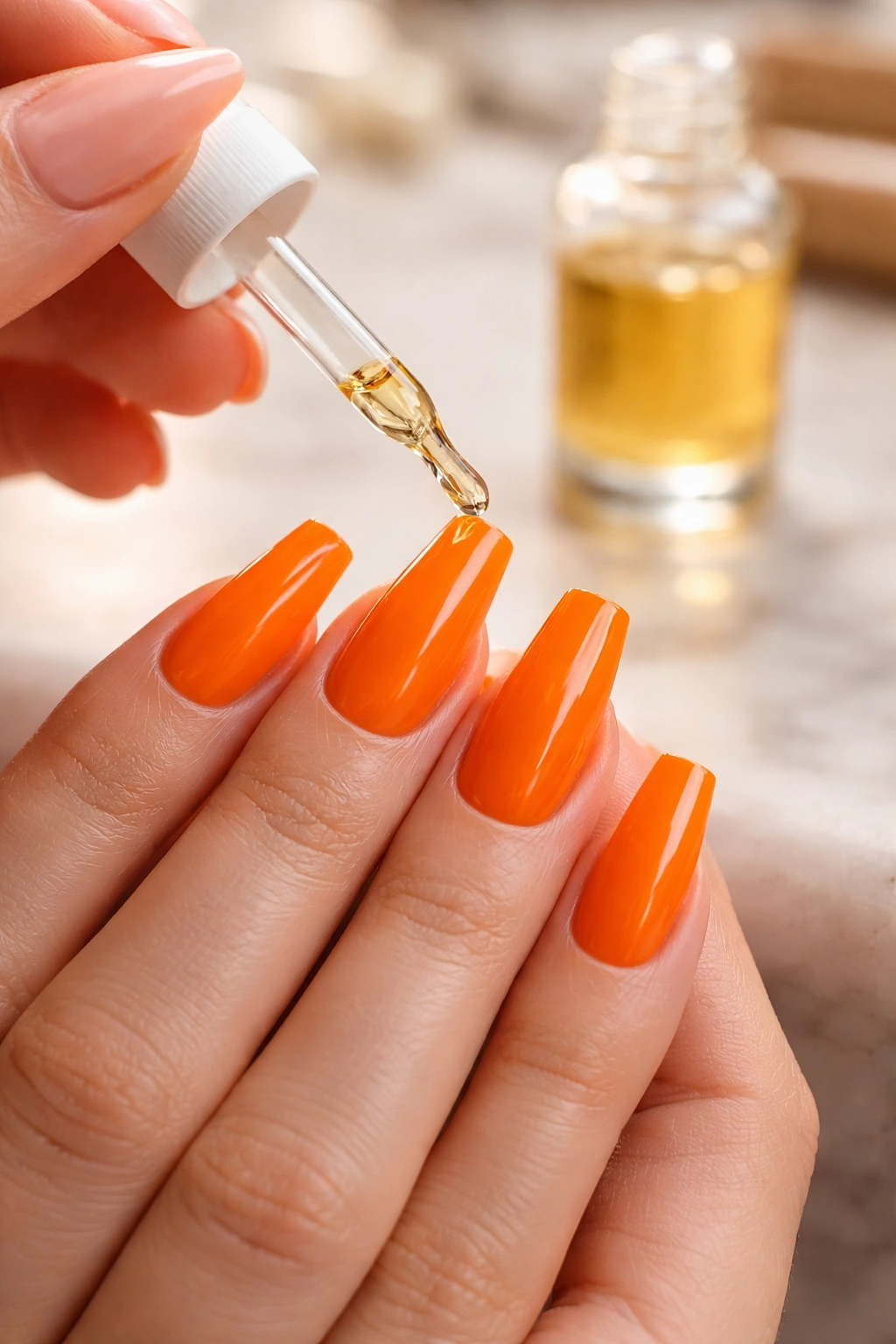
Orange is less forgiving than milk bath pinks and soft nudes, so wear shows sooner. That does not mean the manicure is high drama to maintain. It just needs a little attention.
Cuticle oil helps more than people think. A drop twice a day keeps the skin neat, and neat skin makes the color look newer. If you’re wearing matte, avoid thick hand creams right before photos or events because residue can leave shiny spots on the finish.
A few practical habits stretch the life of the set:
- wear gloves for dishwashing and cleaning
- use the side of your finger, not the tip of the nail, to open cans or peel labels
- book fills around 2 to 3 weeks if you wear medium-long structured nails
- refresh the top coat if the shine starts to dull before the set is due off
Also, be honest about your lifestyle. If you’re hard on your hands, pick terracotta marble, milky peach orange, or glitter fades over chrome. They hide wear better. That’s not less stylish. It’s smarter.
Final Thoughts
Orange works best when you stop treating it like one color. Tangerine, rust, terracotta, apricot, clementine, pumpkin, blood orange—they all behave differently on the nail, and the ballerina shape gives each one a cleaner frame.
If you want the safest first step, go with the apricot nude fade ombré or the peachy orange milky overlay. If you want the manicure to speak first when you lift your hand, blood orange chrome, bright tangerine gloss, and clementine cat-eye are hard to beat.
One last opinion before you book the appointment: orange exposes lazy prep. Spend the extra time on shaping, structure, and cuticle cleanup, and even the simplest orange set will look sharper than a complicated design built on a weak foundation.