


The wrong green manicure can look flat the moment you leave the salon. Sage green ballerina nails dodge that problem because the color carries enough grey to stay soft, while the tapered, squared-off shape keeps the set crisp. You still get color. You do not get noise.
That balance is why this pairing keeps showing up on mood boards, salon chairs, and hands that need to look polished from Monday morning through dinner out. Sage sits in a sweet spot between earthy and clean. The ballerina shape—if your nail tech calls it coffin, that is the same family—adds structure, so the shade never slips into “washed out” territory.
Tiny shifts make a big difference here. A sage with too much yellow can drift into army green. One with too much white can turn chalky, especially under cool salon lights. And matte top coat, which I love on muted greens, will show every ridge if the base is not smooth.
The good sets all share one thing: the finish, the shape, and the accent work in the same direction. Start there, and even the quietest green can feel sharp.
Why Sage Green Works So Well on Ballerina Nails
Muted green needs shape. That is the whole game.
On a round or squoval nail, sage can look soft in a nice way, though it sometimes loses definition at the tip. Ballerina nails fix that by narrowing the sidewalls and ending in a flat edge. You get a cleaner outline, which makes dusty greens look intentional instead of sleepy. If you wear neutral clothes, silver jewelry, camel coats, cream knits, or black basics, this color family slips right in.
Undertone matters more than nail art. Cooler sage shades carry more grey and look sleek with silver, gunmetal, and white accents. Warmer sage shades lean olive and sit better next to gold, tortoiseshell, brown marble, or beige. Hold the swatch against your palm, not the plastic display tip alone. Your skin changes the shade.
Finish comes next.
A glossy top coat makes sage look deeper and a touch richer. Matte gives it that chalky, velvety surface people usually mean when they say they want a “muted tone.” Jelly finishes make it lighter and more airy. Chrome turns it silky. Same color family, different mood.
A few salon notes make life easier:
- Ask for a greyed-out sage, not mint, if you want the softest result.
- Keep the taper narrow but not pinched; the tip should look balanced, not claw-like.
- Medium length shows this shade best, usually with about 8 to 14 mm of free edge.
- Cap the edge with top coat so dark or matte sage does not wear pale at the corners.
- Use a ridge-filling base under matte finishes, because muted colors tell on every bump.
Get those choices right first. The design details land better after that.
1. Dusty Matte Sage With Crisp Ballerina Edges
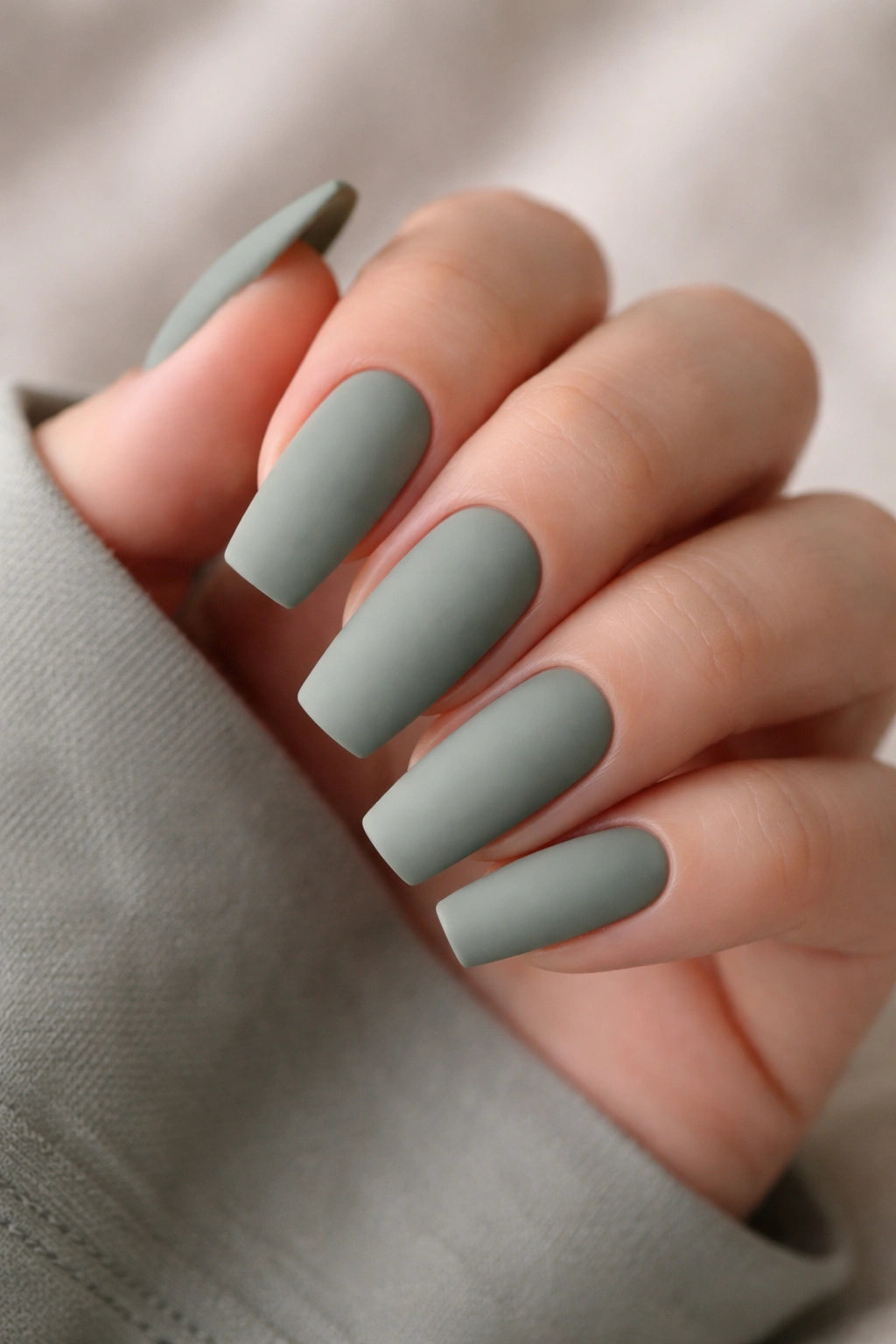
Matte sage has a dry, velvety look that makes the nail shape do most of the talking. On ballerina nails, that works in your favor. The flat tip reads neat and deliberate, while the dusty green keeps the set calm.
This is the one I reach for when someone wants color but hates anything flashy. There is no shimmer distracting from the outline, no art pulling the eye around. You notice the silhouette first, then the shade. That order matters on a muted manicure.
Ask for a Tight, Clean Shape
The shape needs discipline here. Tell your nail tech you want a medium ballerina with a straight free edge and softly tapered sides, not a dramatic long coffin. Too much length makes dusty sage feel heavy; too little taper makes the whole set look blunt.
A matte set also needs smoother prep than people expect. Buff the surface, use a leveling base, then seal with a matte top coat that does not dry cloudy.
Salon Details That Make This Set Better
- Keep the length around 10 to 12 mm past the fingertip for the cleanest line.
- Pick a sage with more grey than olive so the matte finish stays soft.
- Skip chunky rings on the same hand if you want the manicure to feel spare and sharp.
- Reapply cuticle oil at night; matte polish can make dry skin stand out.
Best move: pair this set with one thin silver band and nothing else.
2. Glossy Sage Green With Glass-Like Shine
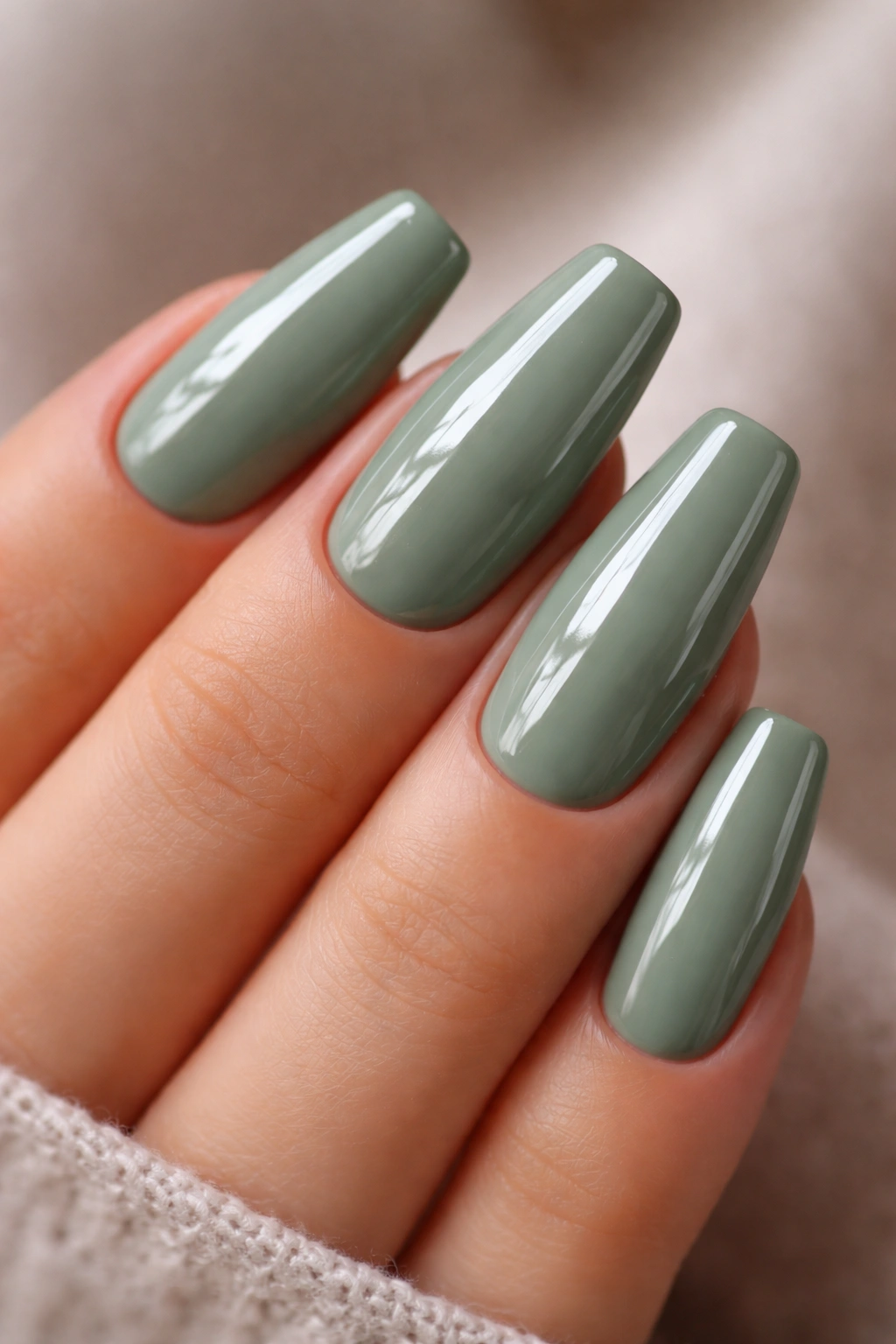
Want sage to look deeper without going darker? Use gloss.
A high-shine top coat gives muted green more life because light moves across the surface instead of getting absorbed by it. That sounds like a tiny switch. On the hand, it is not. Gloss makes even a quiet green look fresher, and it helps the color stay clear under indoor lighting, where matte shades can turn a little dusty in the wrong way.
This version also wears better for people who use their hands hard. Scratches show faster on matte top coats. Gloss hides fine surface wear longer, especially on medium ballerina nails where the flat tip catches light every time you reach for a cup, tap a screen, or turn a key.
There is also something smart about putting a shiny finish on a muted color. Bright shades with heavy gloss can feel loud. Sage does not. It stays grounded, though the shine stops it from falling flat. If you have ever loved a salon swatch and then felt underwhelmed two days later, this finish shift is often the fix.
Use cuticle oil twice a day with this one. Glossy sage looks best against tidy skin, and the contrast between dry cuticles and mirror shine is harsher than people expect.
3. Milky Sage Ombré That Fades From Nude to Green
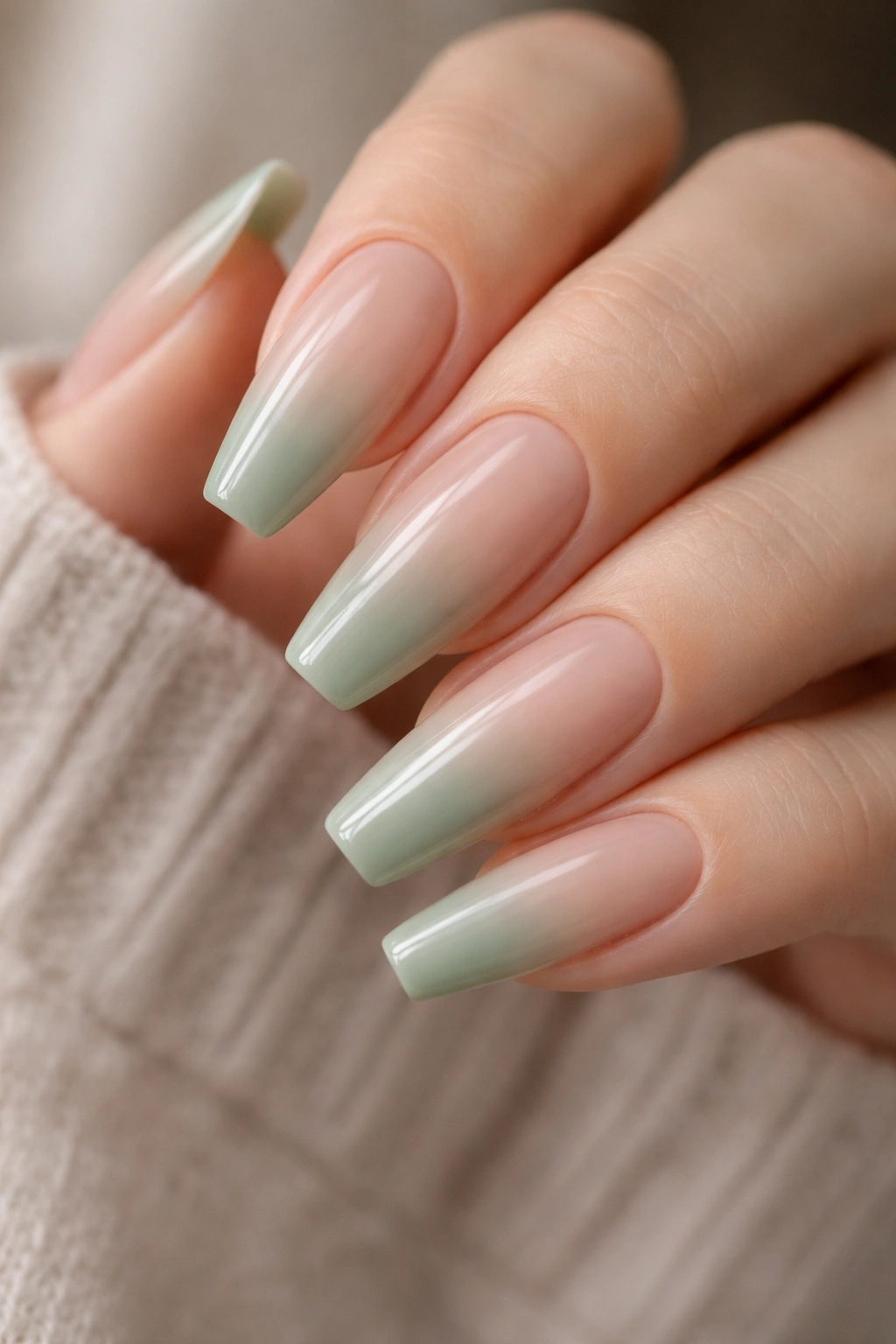
Why does a soft ombré often look more expensive than a full solid color set? Because the fade softens every hard line—color, growth, even the tip width.
A milky sage ombré starts with a sheer pink, beige, or milky nude near the cuticle and drifts into sage toward the free edge. On ballerina nails, that gradient makes the taper look longer and slimmer. It is one of the nicest options for anyone who wants a gentle green manicure that still feels a bit dressed.
Growth is kinder here too. A solid sage near the cuticle shows regrowth fast. A nude-to-green fade buys you more time before the set looks tired.
Ask for a Cloudy Blend, Not a Hard Color Melt
The pretty version of this design is hazy. The bad version has a stripe in the middle. Ask your tech to sponge or airbrush the green so the color shift happens gradually over half the nail length, not in a narrow band.
Keep the sage muted, and keep the base sheer. If both ends are opaque, the fade loses its softness.
This set shines on medium to long ballerina nails where the blend has room to breathe. On shorter nails, ask for the green to sit closer to the tip only, with the top two-thirds kept translucent.
4. Sage French Tips on a Sheer Pink Base
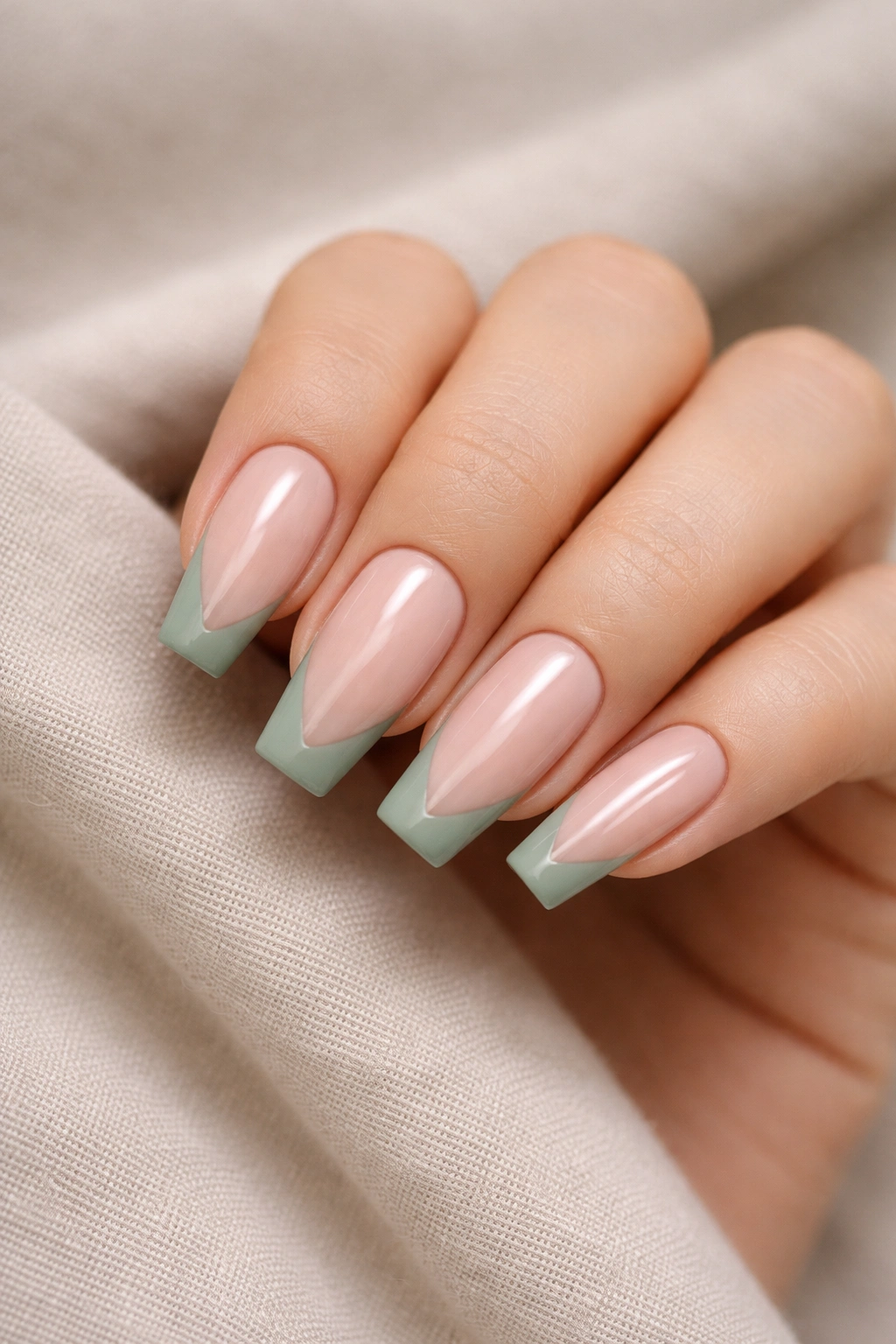
If you work in a place where neon nails would feel silly, sage French tips are a strong answer. You still get design. You still get shape. Yet most of the nail stays soft and clean.
The trick is scale. A skinny French line can disappear on ballerina nails, especially once the sides taper in. A fuller tip—about 3 to 4 mm deep on a medium-length nail—frames the squared edge better and shows the green enough to matter.
I also like this design because it survives grow-out with less drama than a full-color set. The base stays close to your natural nail tone, so the eye goes to the tip first.
A few details keep it sharp:
- Use a sheer pink or beige base, not an opaque nude that looks thick.
- Match the smile line to the shape; a too-round smile line fights the flat tip.
- Keep the green solid and creamy, not glittered.
- Ask for slightly thicker side corners so the French does not look pinched.
You can leave it there, or add one tiny accent—a dot, a sliver of gold, a thin line on the ring finger. I would not stack more than that. This design wins because it stays clean.
5. Deep Sage With a Thin Gold Cuticle Line
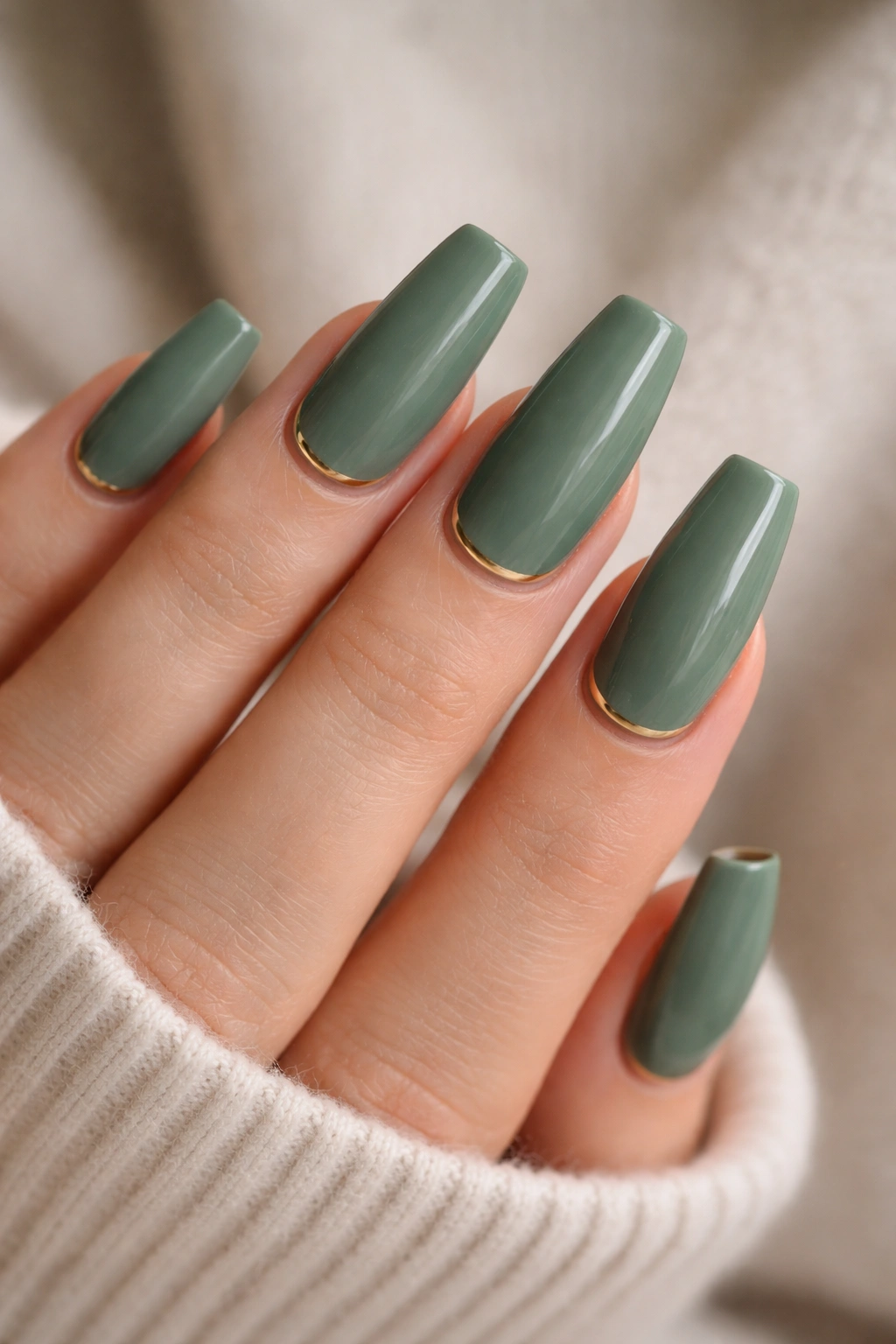
Unlike a full metallic accent nail, a thin gold cuticle line gives sage some warmth without hijacking the set. That small flash at the base catches the eye for a second, then the green takes over again.
This design works best with a richer sage—something one step deeper than the pale, chalky versions. The extra depth gives the gold a place to sit. Pale green with gold can slip sweet. Deep sage with gold feels tighter and more dressed.
Use restraint. A line that is too thick starts reading holiday or costume. The sweet spot is around 0.5 to 1 mm, painted with a striping brush or applied as fine metallic gel. I like it on every nail if the line stays tiny. If you want less shine, place it only on the middle and ring fingers.
Warm jewelry helps this set make sense. Gold hoops, a slim watch, or stacked brass rings tie it together fast. Silver can still work, though it changes the mood and cools the whole thing down.
This is one of those designs that looks best when the hands are moving—reaching, typing, holding a glass. The flash sits low on the nail, so it feels subtle until the light hits.
6. Grey-Sage Chrome With a Soft Pearl Veil
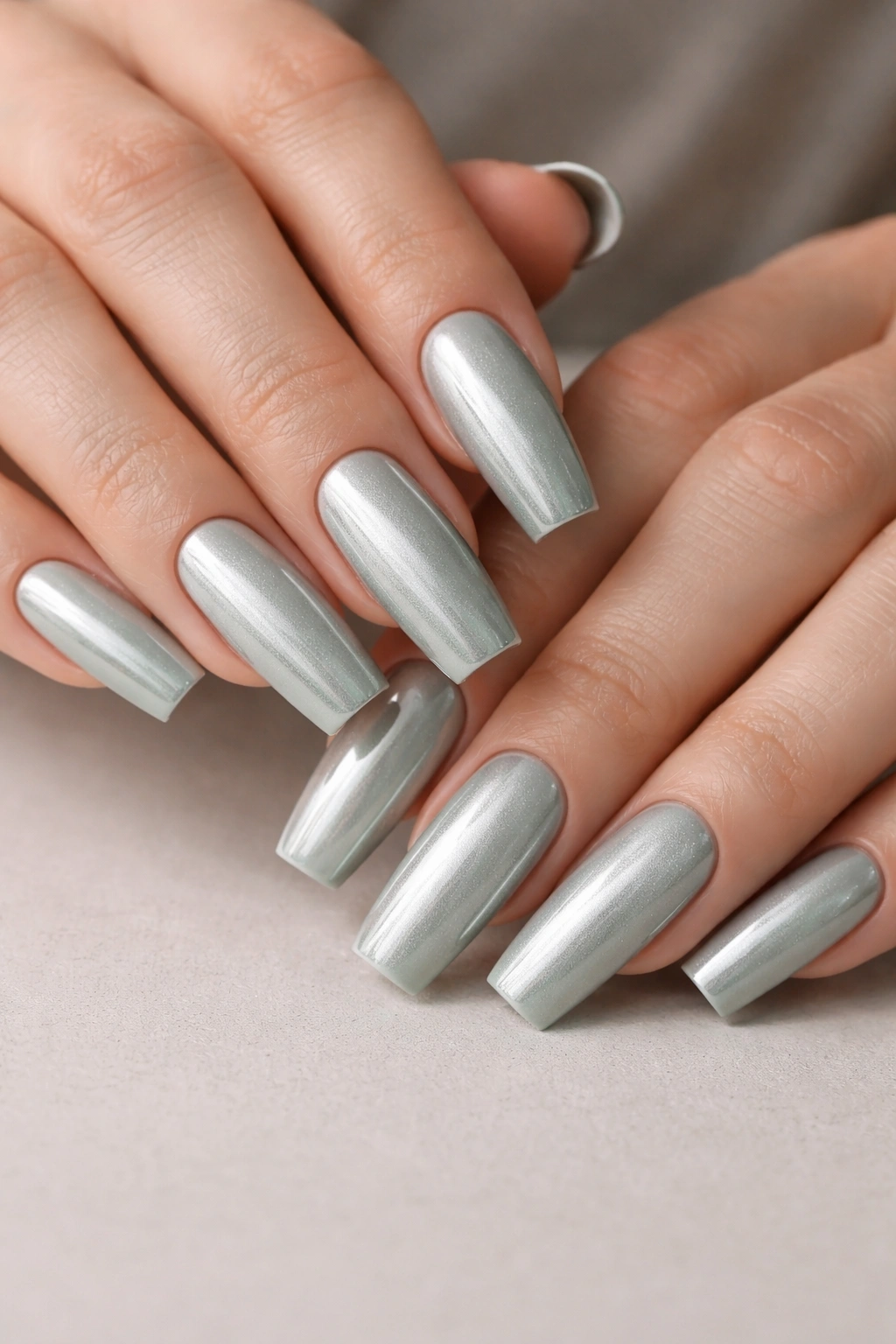
Chrome does not have to be loud. A grey-sage base with a pearl chrome veil is proof.
Forget mirror-finish silver nails. That is not the move here. The finish you want is sheer and silky, almost like a fine dusting of pearl rubbed over muted green. The result looks cooler, smoother, and a bit sharper than plain cream polish, though it still stays in the muted lane.
What makes this set work is the base color. If the green leans mint, chrome can push it icy. If the green leans too warm, pearl rub starts turning beige. A grey-heavy sage sits right in the middle and holds the shine better. The ballerina shape helps too. That flat tip gives the reflected light a clean line to travel across.
Application matters more than people think. Chrome shows dents, lint, and uneven top coat in a heartbeat. Ask for a smooth builder or gel base, then a no-wipe top coat before the chrome rub goes on. Seal the free edge well. If not, the finish can wear thin at the corners.
I like this set most in cooler weather and under low light. It picks up a soft glow instead of a hard glare, which keeps the manicure polished rather than flashy.
7. Sage Green With Tiny White Daisy Accents
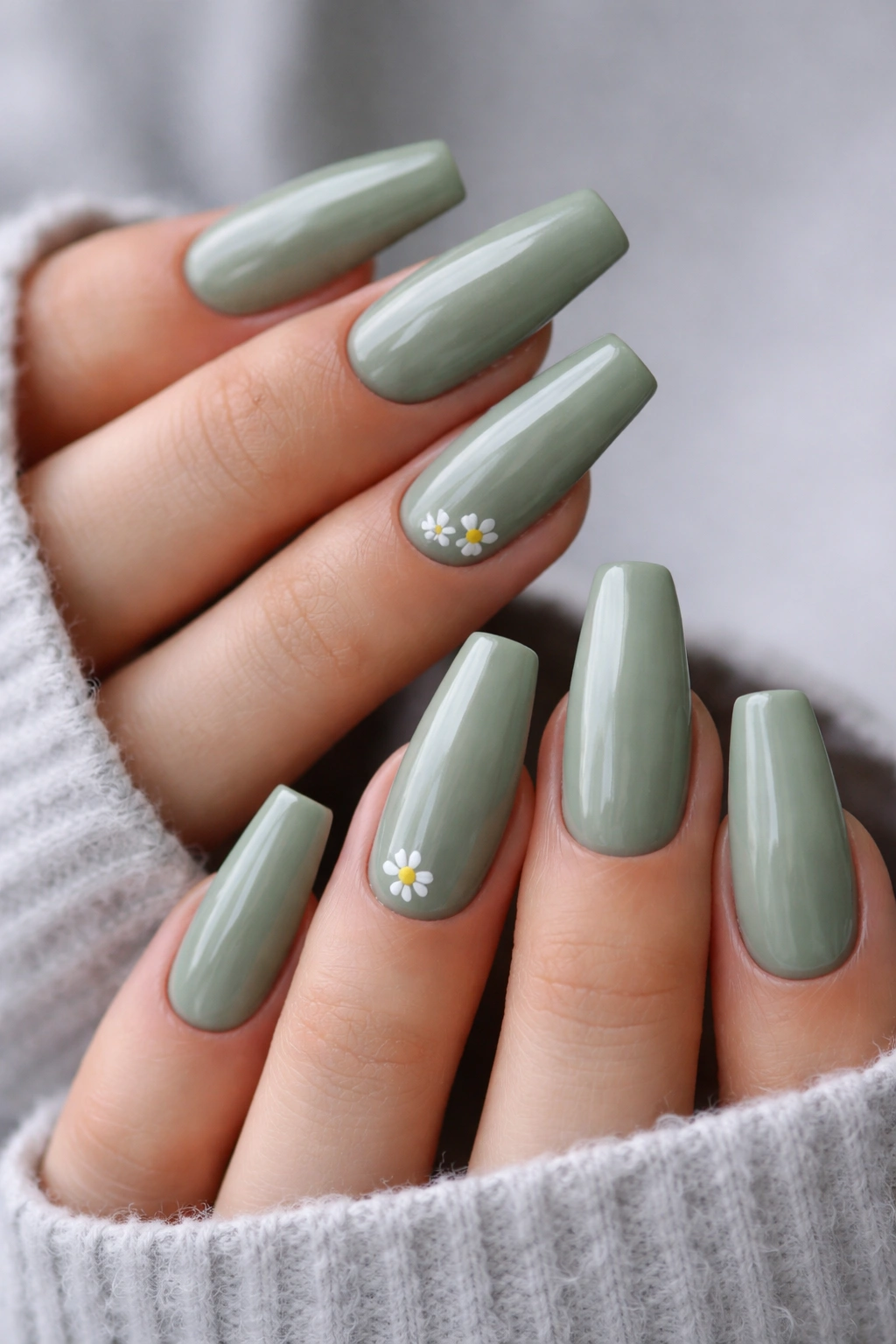
A floral manicure can go childish fast. The fix is size.
On sage ballerina nails, tiny white daisies work when they stay small enough to feel like a print, not a cartoon. Think two flowers on one nail, maybe three dots of yellow at the center across the whole hand. That is plenty. Bigger petals steal the clean line that makes this nail shape good in the first place.
Keep the Flowers Small and a Little Off-Center
Place the daisies near one sidewall, close to the cuticle, or trailing from a corner of the tip. A centered flower on every nail starts to look stiff. A few off-center blooms feel lighter and leave room for the sage base to breathe.
The best version of this set uses solid sage on eight or nine nails and floral art on one or two accents only. Ring finger and thumb is a nice pairing. Middle finger can work too if the flowers are tiny.
Quick placement ideas:
- One daisy cluster near the left cuticle corner
- Two mini blooms drifting up from the right sidewall
- A single flower touching the tip edge on one accent nail
- White petals with a soft butter-yellow center, not neon yellow
Skip glossy 3D petals here. Flat painted art suits a muted manicure far better.
8. Olive-Sage Marble With Cream Veins
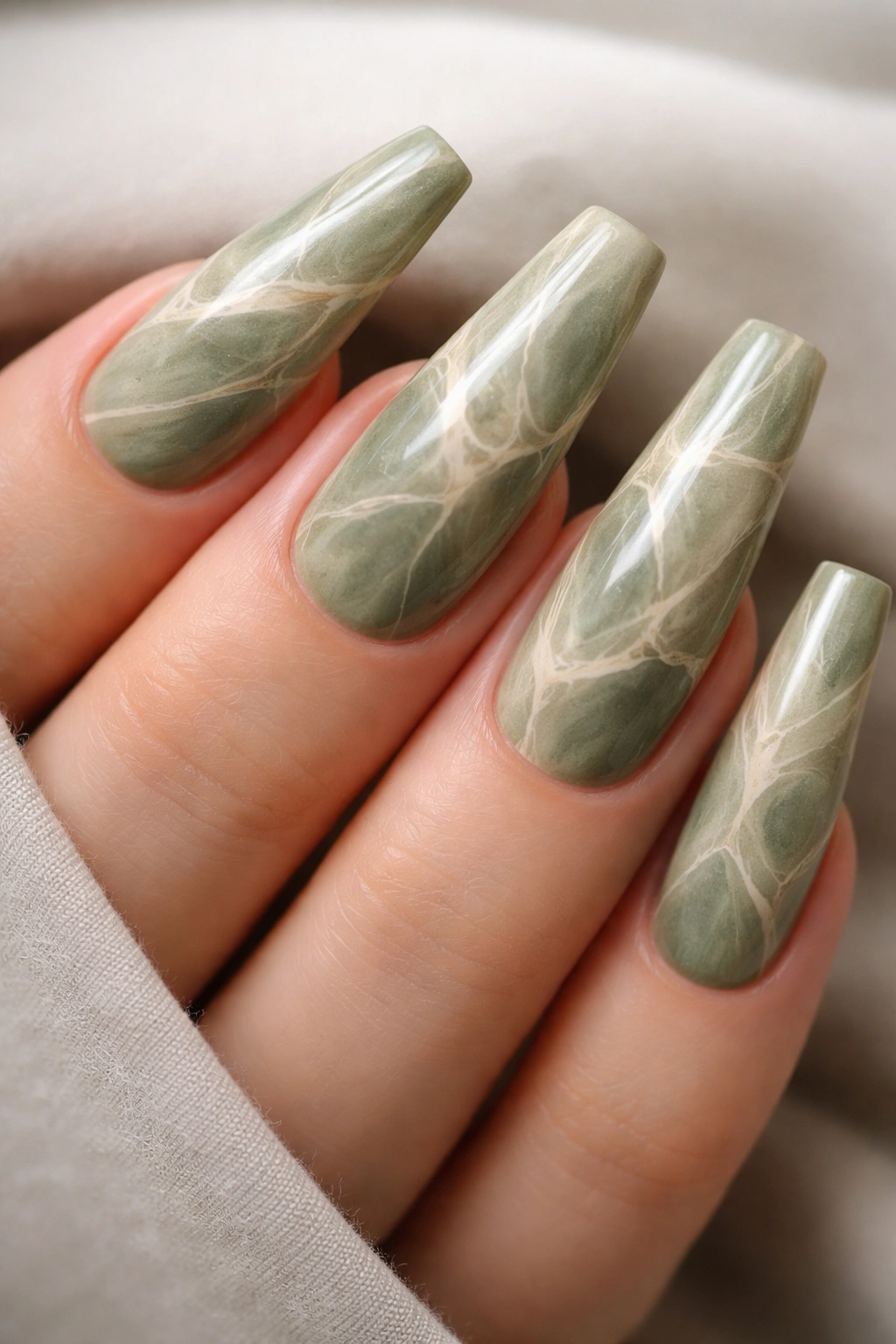
Marble nails can turn muddy in a hurry, and green is one of the easiest colors to overwork. That is why this version needs a tight palette: olive-sage, cream, and a trace of taupe or smoky brown. No more than that.
The payoff is good, though. The swirled pattern breaks up the flatness of a single-color green set, and ballerina nails give the marble enough surface area to stretch out. Long, tapered sides make the veining look more fluid. Short round nails do not give this design the same grace.
Where Marble Usually Goes Wrong
Too many swirls. Too much contrast. And dark lines drawn around every vein, which makes the nails look printed instead of stone-like.
Keep the veins thin and broken. Let cream do some of the lifting so the green stays muted. A touch of translucent gel helps the colors feather into each other rather than sit in stripes.
A strong way to wear this design is to marble two or three nails only and keep the rest in solid olive-sage. Full marble on every finger can start to feel busy, especially if your jewelry already has texture.
If your nail tech uses a blooming gel for marble, ask to see one test tip first. Some blooming formulas spread fast, and that extra movement can erase the soft detail you want.
9. Translucent Sage Jelly on Medium-Length Ballerina Nails
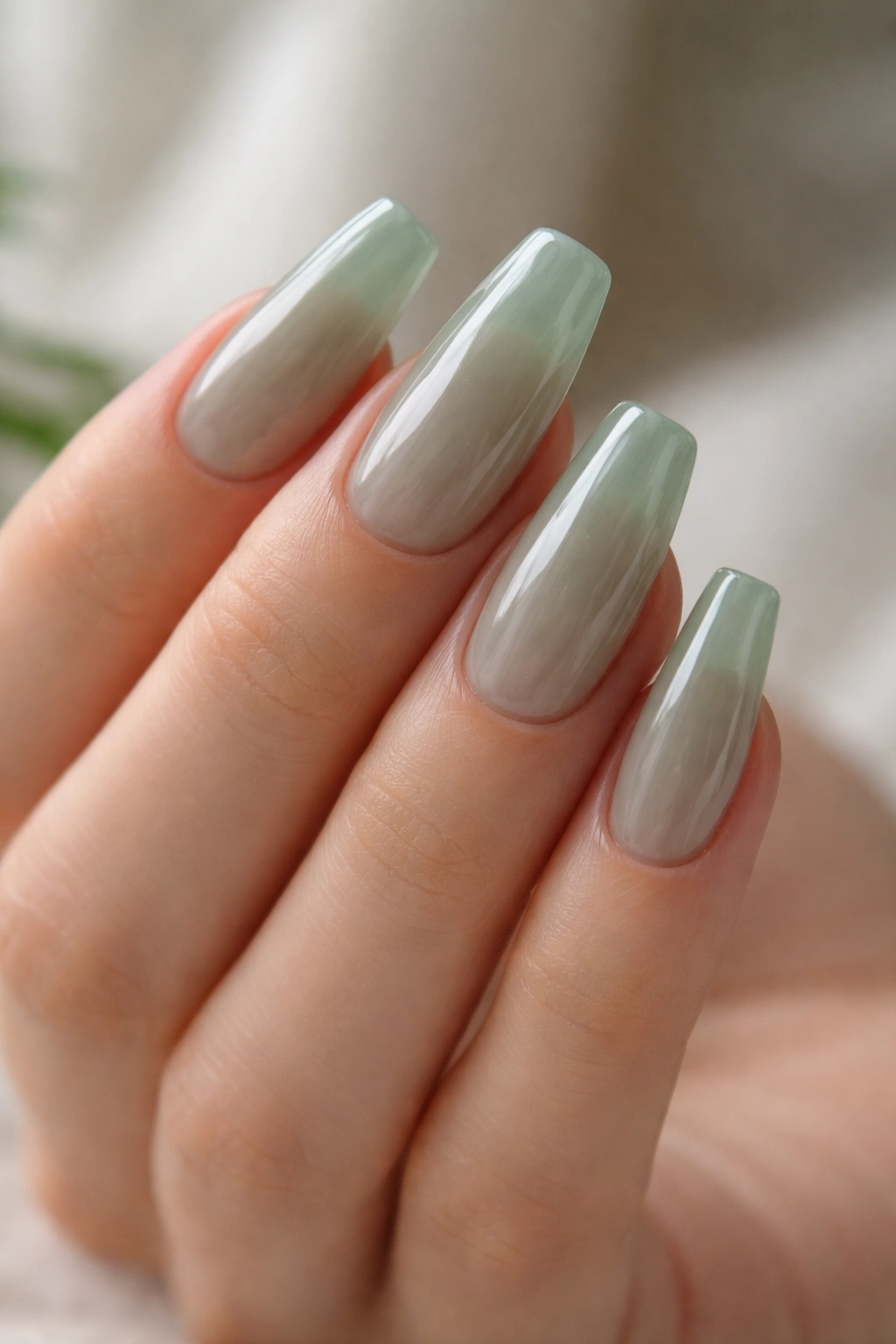
Sheer color changes everything.
A sage jelly manicure lets light pass through the polish, which gives the green a fresh, glassy look that cream formulas cannot copy. On ballerina nails, the translucence softens the shape a little, so the tapered tip feels less severe.
This design works best when the color is built in two or three thin coats instead of one thick layer. You want to see depth, not streaks. A milky sage jelly has more softness. A clearer olive-sage jelly shows the natural edge under the polish, which can look cool if the nail length is tidy and even across both hands.
Builder gel often gives the nicest version because it smooths the apex and keeps the sidewalls crisp. Regular jelly polish can still look good, though surface prep matters a lot more. Any dip, dent, or old ridge will show through the translucence.
I would choose this over solid matte sage if you want something lighter on the hand. It has a cleaner, more airy feel, and it catches window light in a way cream polish never does.
10. Sage and Cream Diagonal Color Blocks
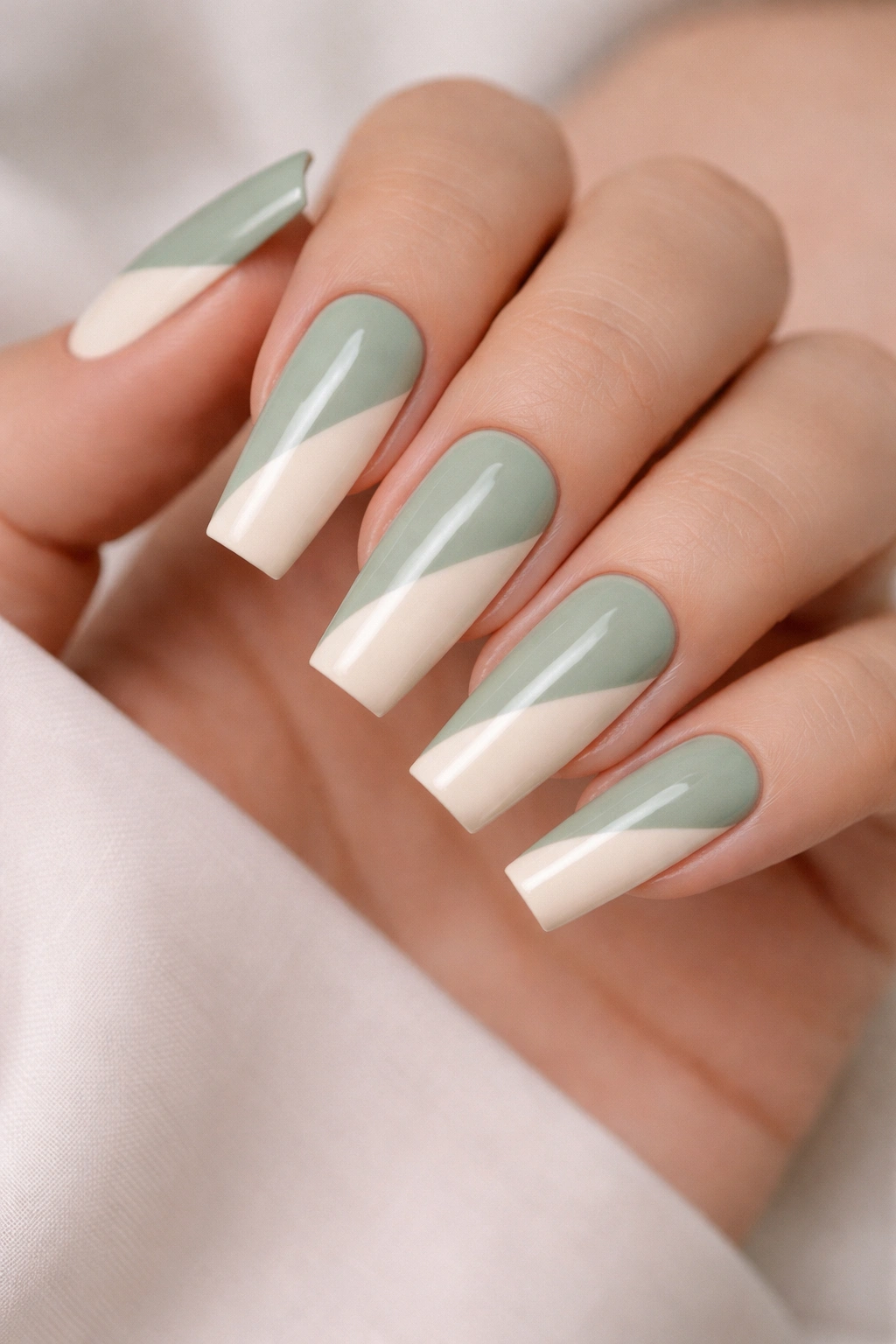
Straight lines and ballerina nails get along for one simple reason: they speak the same language. Both are clean, graphic, and a little strict. Diagonal color blocking takes that idea and gives sage green a sharper frame.
Use sage on one half of the nail and cream, milky beige, or soft oatmeal on the other. A diagonal split from one side of the cuticle to the opposite corner of the tip usually flatters the shape best. It lengthens the nail and keeps the flat edge visible.
Here is where precision matters:
- Aim for a diagonal line around 35 to 45 degrees, not a near-horizontal split.
- Use cream, not bright white, if you want the set to stay muted.
- Keep the polish finish the same on both colors—both glossy or both matte.
- Ask for thin liner-brush edges rather than sticker-thick borders.
This design has more structure than a French tip and less fuss than marble. It also hides tiny chips better than you might expect because the eye reads the full line first, not one small flaw near the tip.
I like it on medium-length ballerina nails with one accent direction per hand. Flip the diagonal on one or two nails if you want movement, though do not alternate every finger unless you want a busier look.
11. Matte Sage With One Tortoiseshell Accent Nail
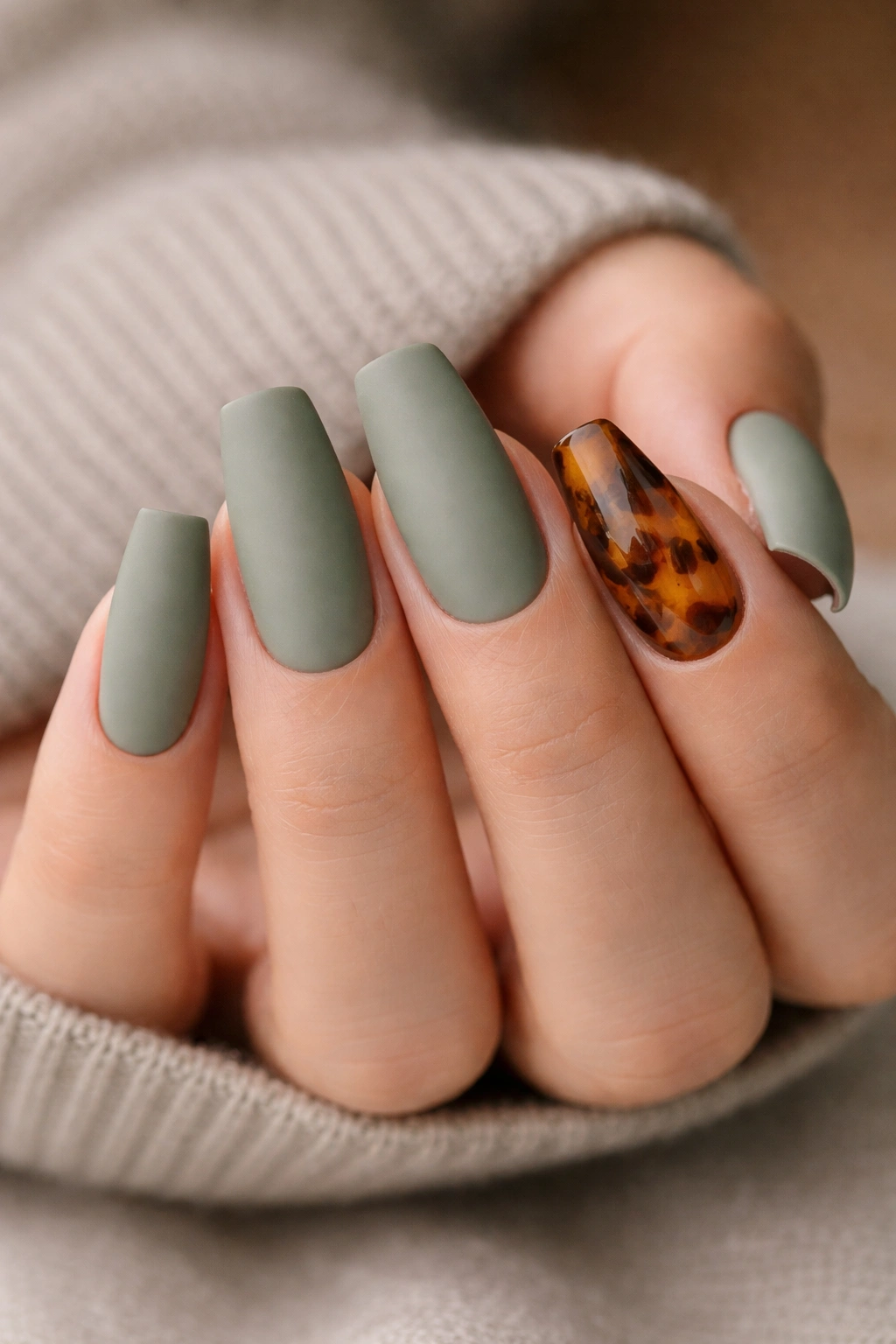
I like this more than full tortoiseshell and green mixed across every finger. Too much pattern can flatten sage instead of helping it.
One tortoiseshell accent nail—usually the ring finger or thumb—brings warmth, depth, and that amber-brown glow that muted green likes sitting next to. Keep the other nails in matte sage, and the contrast between soft, dry color and glossy translucent pattern does the heavy lifting. You do not need extra art, foil, or rhinestones.
The tortoiseshell itself should stay slightly transparent. Look for layers of honey, caramel, espresso, and a little black, floated in gel so the spots sit at different depths. Thick, opaque blobs miss the point. The pattern should look like it has space inside it.
Placement matters. If both hands have the accent on the same finger, the set feels balanced. Put tortoiseshell on two fingers per hand and the manicure starts pulling away from the quiet mood that made sage useful to begin with.
This one has a fashion-editor edge to it, though it still wears well with plain clothes. Cream sweater, brown coat, gold ring, matte sage nails, one amber accent—done.
12. Smoky Sage Aura With a Hazy Center Glow
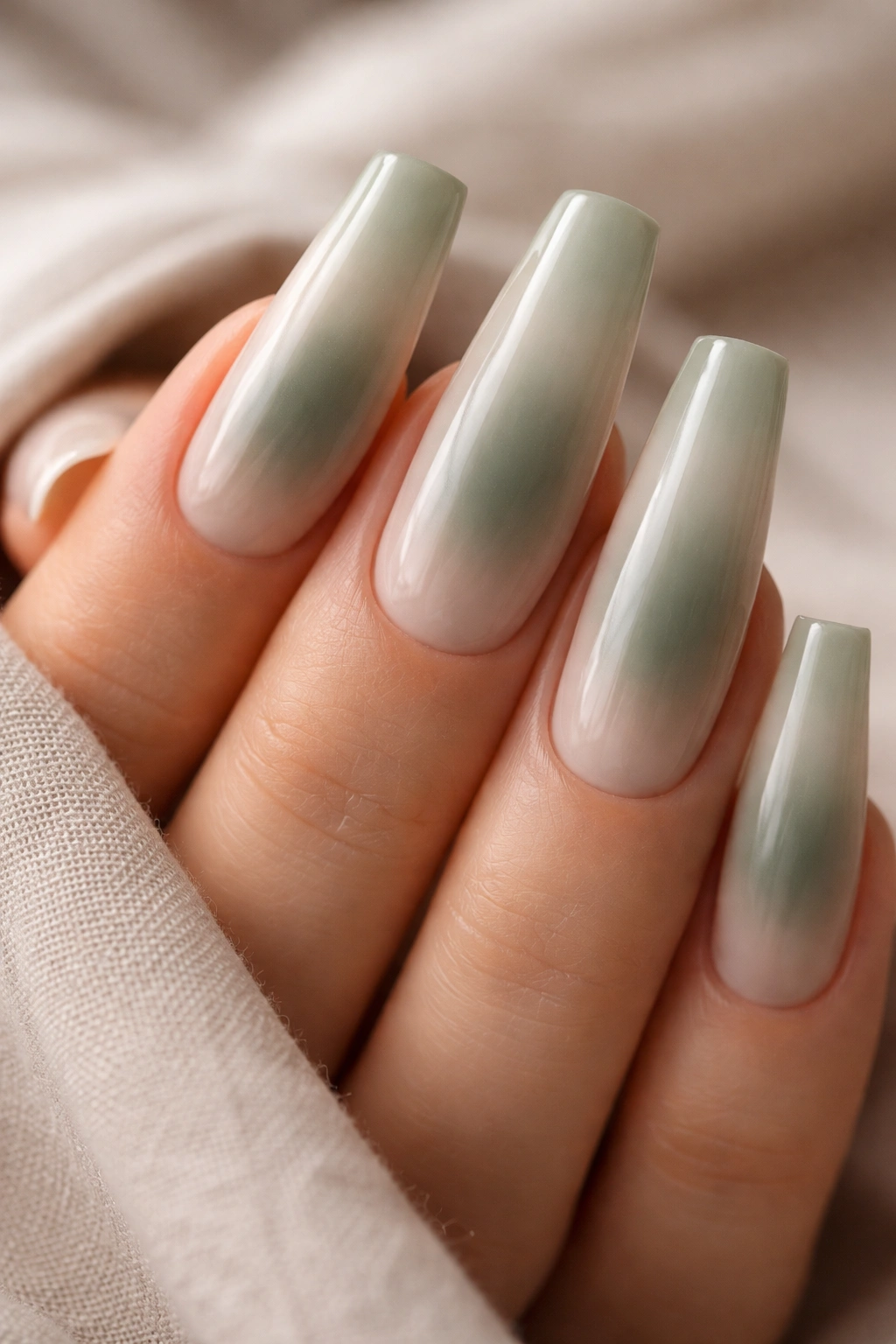
Two soft layers can make a muted manicure look far more thoughtful than a flat solid color. That is the charm of smoky sage aura nails.
The idea is a pale base—milky nude, soft beige, or diluted sage—with a deeper green haze at the center of each nail. On ballerina nails, that centered blur draws the eye inward, which makes the shape look longer and more tapered. It is subtle, though you do notice it.
Keep the Halo Blurry
Aura nails fall apart when the center spot is hard-edged. Ask for an airbrushed or softly sponged blend, with the darker sage fading out well before the sidewalls. You want a cloud, not a bullseye.
A nice formula is:
- Milky nude base
- Dusty sage center
- A whisper of grey or olive around the deepest part for depth
- Gloss top coat to keep the blend smooth
This design suits medium and long ballerina nails best. Short nails can still wear it, though the aura needs to stay small or it will swallow the whole surface. I also prefer this set in gloss rather than matte. Matte can mute the blur too much and flatten the little shifts that make aura nails good.
13. Fine Botanical Line Art Over Sage Green
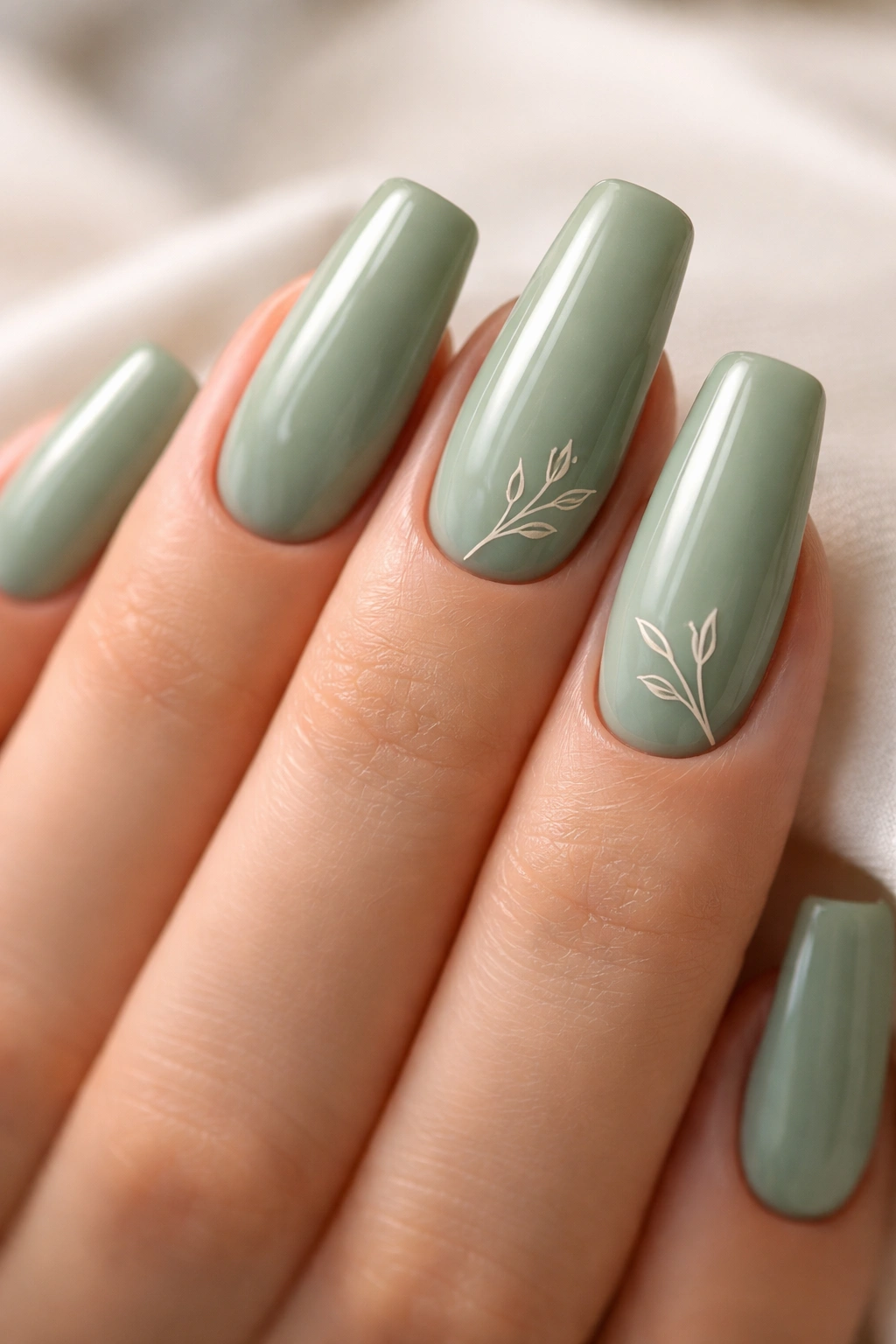
Leaf art goes wrong when it gets fussy. Too many stems, too many curves, too many nails carrying the same drawing, and the whole set starts looking themed instead of refined.
A better route is one slim botanical detail over a sage base. Think a single branch, two tiny leaves, a curved stem crossing one corner of the nail, or a thin vine placed along one sidewall. Keep the lines hair-fine. Keep the drawing spare.
You have a few good color choices here. Cream line art feels soft and blends into the muted mood. Dark moss or espresso line art gives more contrast and makes the art easier to see from a normal distance. Gold can work, though I prefer it only if the jewelry on your hand already leans warm.
Good placements for this style:
- A single stem rising from the cuticle corner
- Two leaves crossing the lower third of the nail
- One curved line following the left sidewall
- Art on two accent nails only, with the rest left solid
One more thing. Leave negative space inside the drawing. Filled-in leaves make the art heavy. Fine outline work keeps the manicure light on the hand.
14. Short Sage Green Ballerina Nails With a Clean Gloss Finish
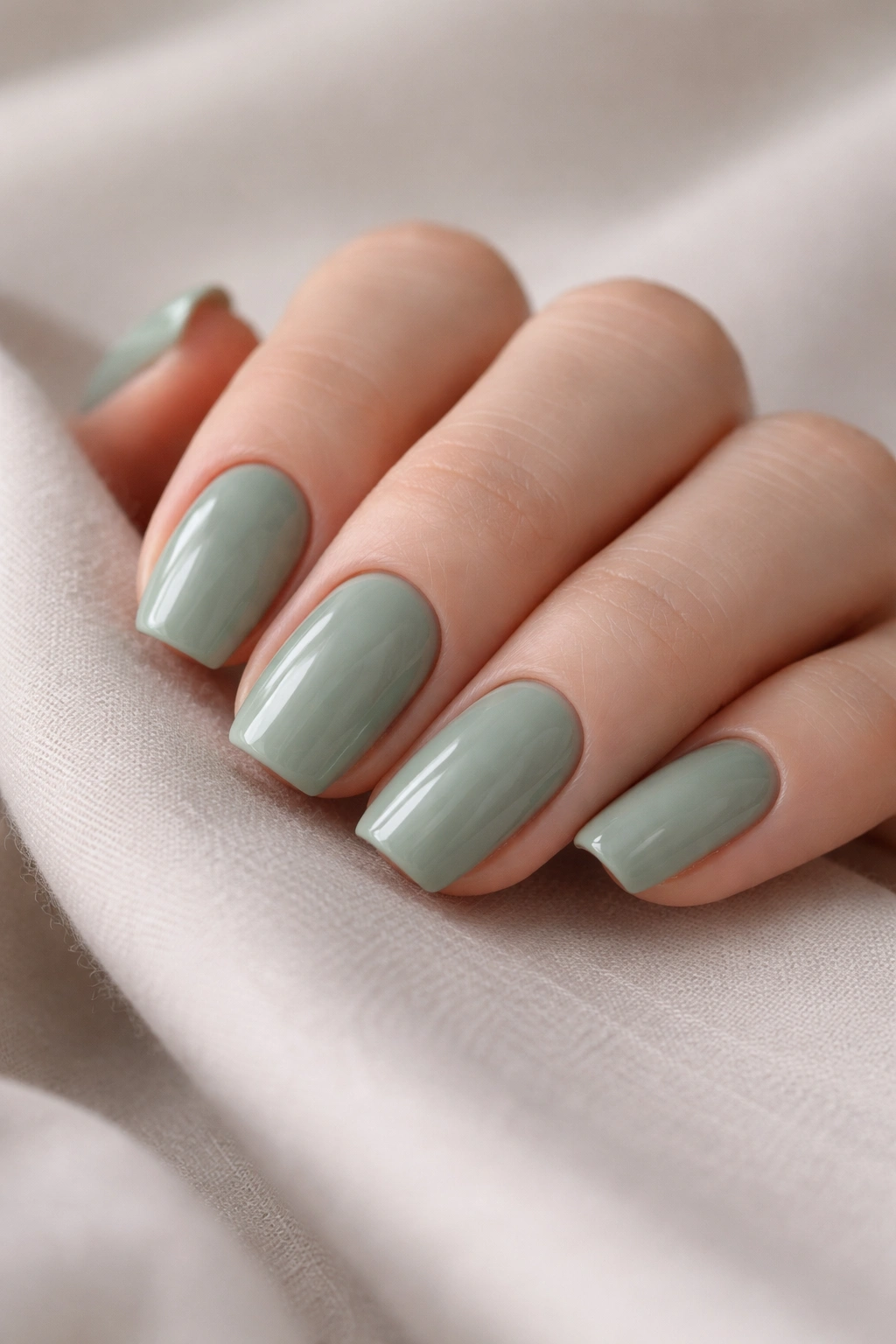
Not everyone wants long nails clicking on every keyboard, tapping against every mug, and getting caught in a zip pocket. Short ballerina nails are the practical answer—and yes, they can still look crisp.
The trick is proportion. On a short set, the taper has to be gentle or the nail looks squeezed. Ask for 5 to 7 mm of free edge with a flat tip that is slightly narrower than the nail bed, not dramatically slimmer. That keeps the ballerina look intact while staying easy to wear day to day.
Gloss helps here more than matte. Short muted nails can fade into the hand if the finish is too dry. Shine gives the green enough energy to stand out, and it makes the shape more visible from a normal speaking distance.
Who This Shape Suits Best
If you type all day, lift weights, work with gloves, or simply hate babying your manicure, this length is often the sweet spot. You still get the clean outline of ballerina nails, though you lose the snagging and the extra leverage that causes breaks on long corners.
I would skip heavy art on a short set like this. Let the shape and the color do the work. A full cream sage, one glossy top coat, tidy cuticles, and maybe one tiny dot or line accent if you need something extra.
15. Tonal Sage-to-Khaki Mismatched Ballerina Set
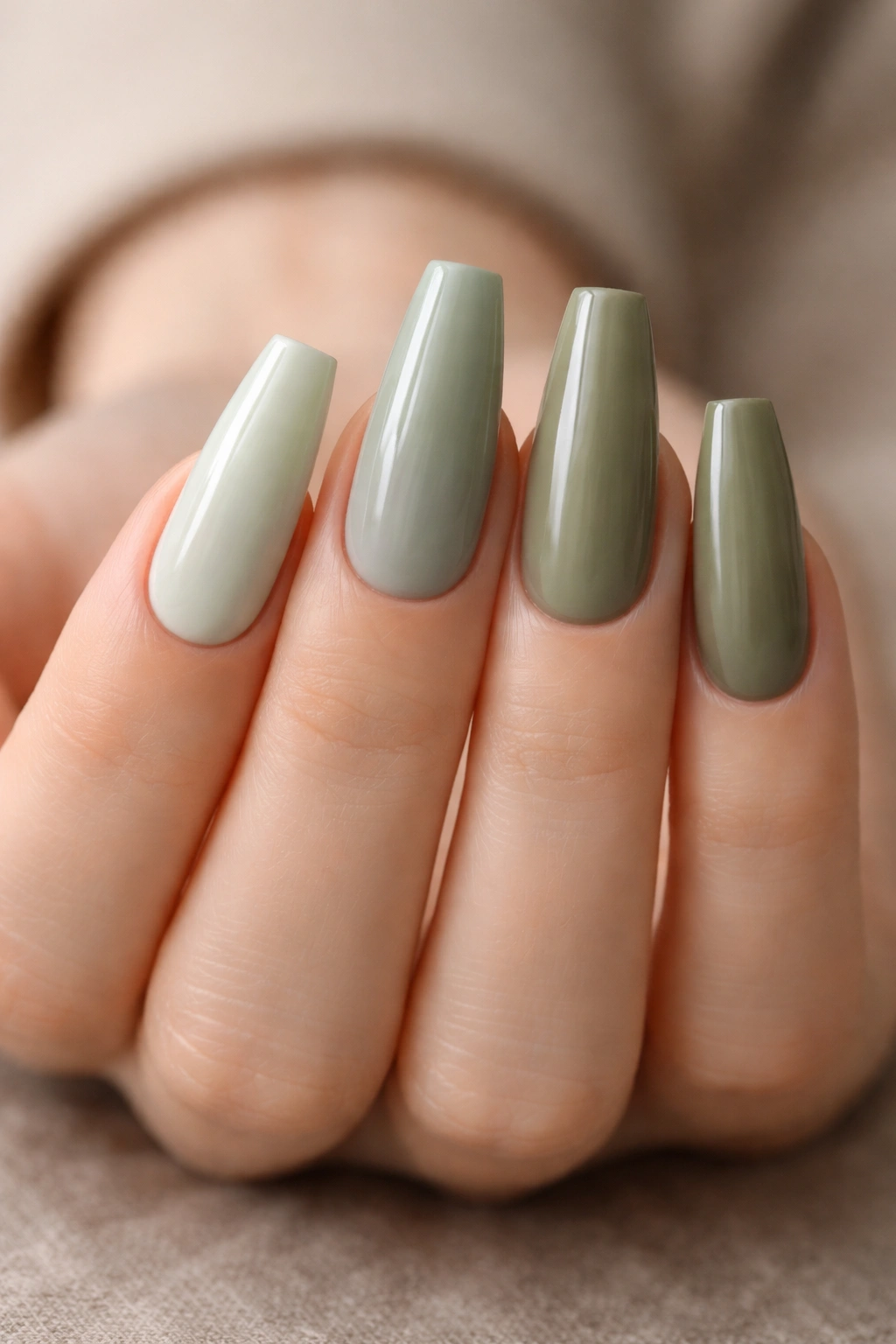
If you cannot settle on one sage, do not force it. A tonal mismatched set may be the smartest option in the bunch.
This manicure uses a slightly different muted green on each nail, moving from pale sage to grey-green, khaki, moss-sage, or dusty olive. The trick is keeping every color in the same soft family so the hand still reads as one idea. Think of it like paint chips from the same strip, not five random greens.
The effect is quiet but not boring. Each finger catches the eye a little differently, and the ballerina shape ties the shades together.
A good palette might look like this:
- Thumb: pale celadon-sage
- Index: classic dusty sage
- Middle: grey-heavy eucalyptus green
- Ring: khaki sage
- Pinky: muted olive-moss
You can flip the order on the other hand or mirror it exactly. I prefer mirroring. It looks cleaner when both hands are side by side.
This is also one of the easier custom salon sets because you are not asking for difficult art, only careful shade selection. Pull four or five swatches first. If one looks too mint or too forest-deep, swap it out before the polish hits your nails.
Final Thoughts
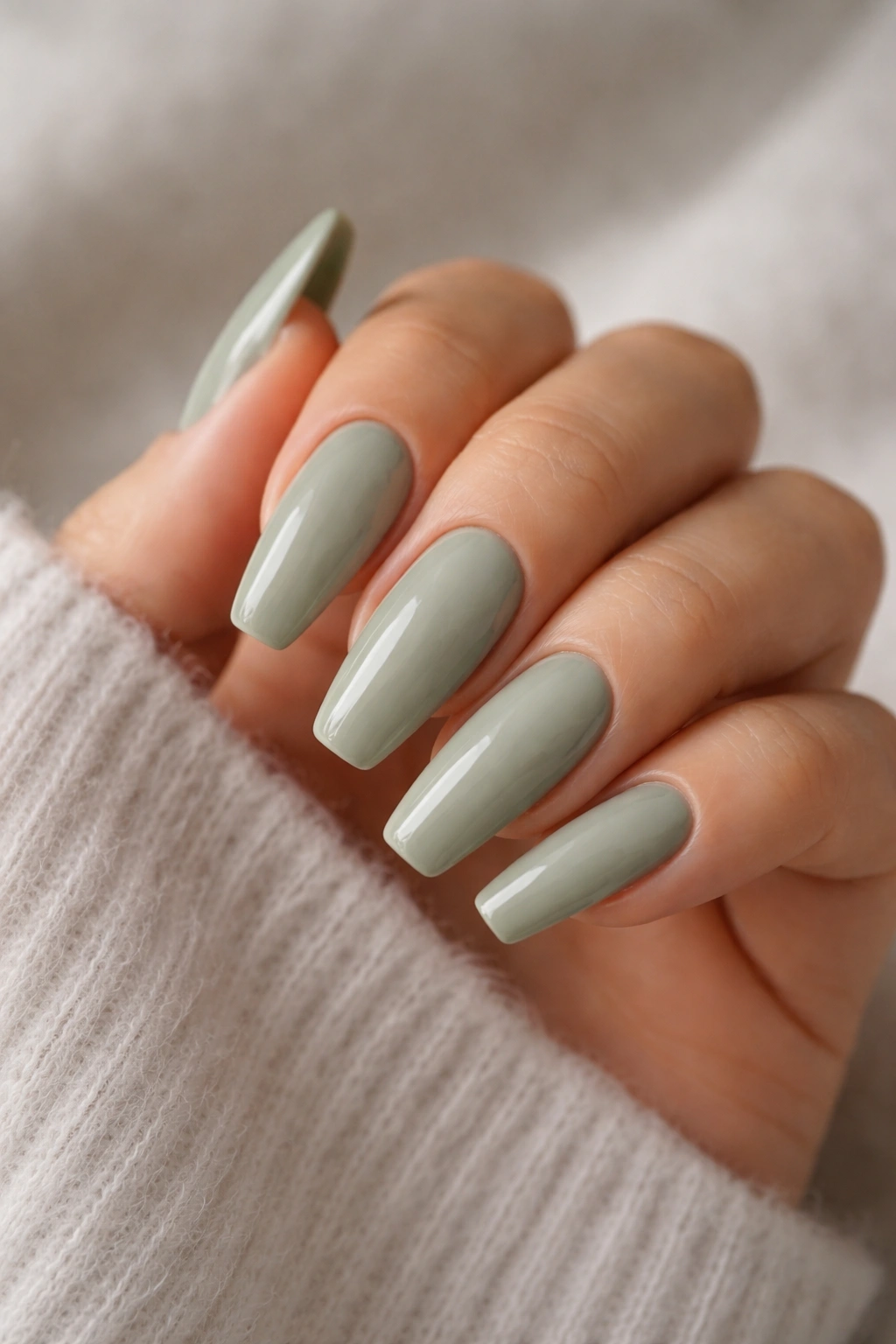
Muted green works best when you stop treating it like a background color. Sage green ballerina nails need intention—clean shape, the right undertone, and a finish that supports the mood you want. Matte reads dry and editorial. Gloss reads richer. Jelly and aura give the color air.
If you are choosing between these designs, pick the finish first and the art second. That single choice narrows everything fast. A matte base wants cleaner accents. A glossy base can carry marble, chrome, or an ombré fade with more ease.
Bring two screenshots to the salon, not twelve. One should show the shape. The other should show the color or art detail you care about most. That small bit of clarity usually gets you a better set—and a muted sage manicure that looks like you meant every inch of it.