

A blunt ballerina tip can look a little hard when the color is hard too. That’s why pink ombre ballerina nails keep showing up on mood boards, salon chairs, and the hands of people who want length without that sharp, overworked look. The fade softens the shape. The shape sharpens the fade. It’s a smart pairing.
I like this style because it does something a flat wash of pink cannot: it gives the nail movement. On a good set, your eye doesn’t stop at one stripe of color. It travels from the cuticle to the tip, and that makes even a medium length nail look longer, cleaner, and more polished.
There’s also a practical reason people keep asking for pink ombre nails in a ballerina shape. Regrowth tends to look less abrupt than it does with a solid bright color, especially when the base is milky nude or sheer blush. If your appointment slips by four or five days, the set still looks intentional instead of neglected.
The trick, though, is getting the blend right. A fade that stops too suddenly near the apex can make the nail look blocky, while a pink that’s too chalky can flatten the whole hand. The good sets get those details right, and the fifteen ideas below are the ones I’d actually bring to a salon.
Why Pink Ombre Works on the Ballerina Nail Shape
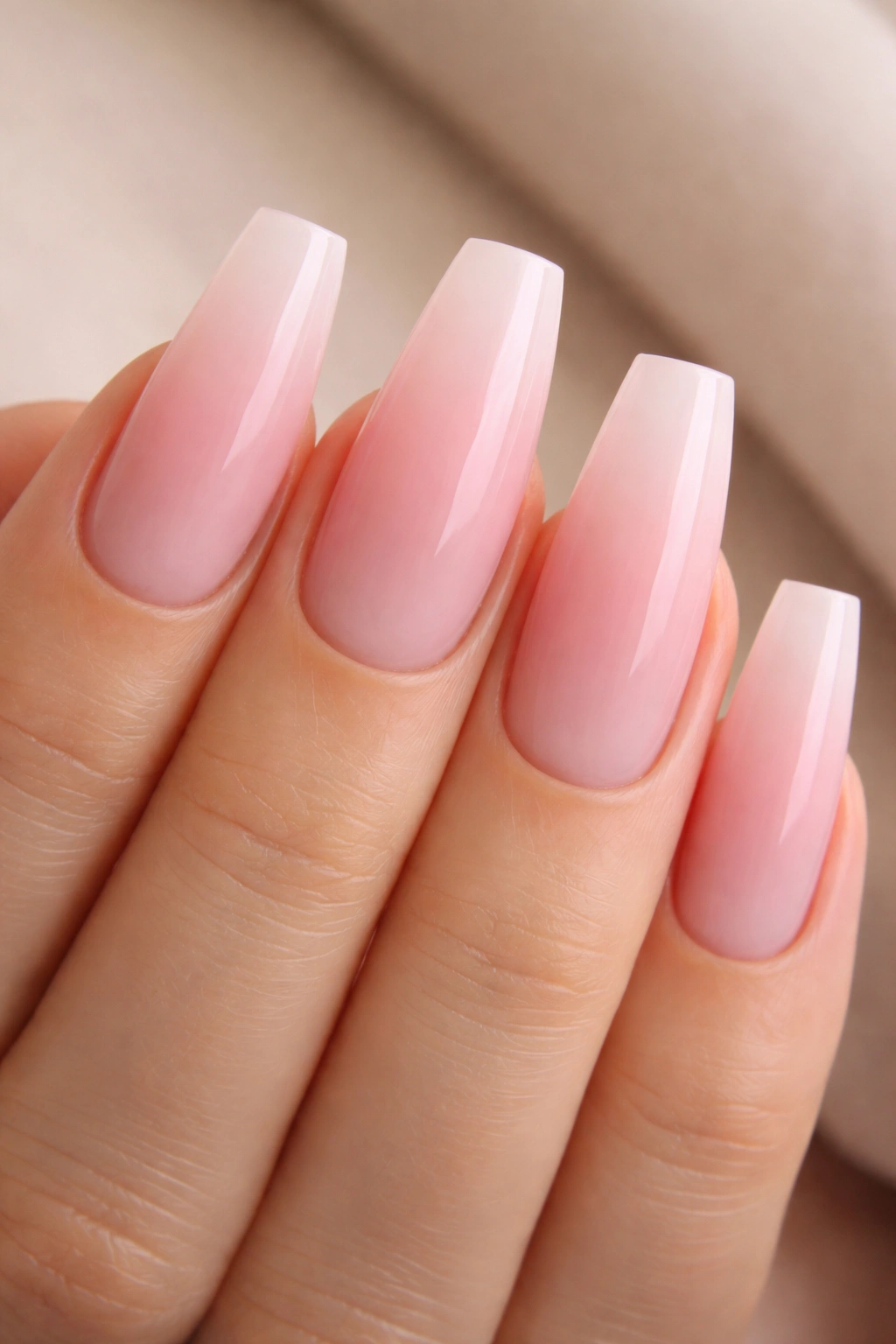
The ballerina shape already has built-in drama: long sidewalls, a tapered body, and a squared-off tip that looks cleaner than a stiletto and less heavy than a full coffin. When you add a soft pink fade, the shape stops feeling severe.
That matters more than people think.
A straight-across tip can make a solid shade look dense, especially if the color is opaque from cuticle to free edge. Ombre breaks up that block of color. Your eye reads the nail in stages, not as one slab. On hands with shorter fingers, that visual stretch can make a real difference.
There’s a structural reason this shape takes ombre well too. The broader surface through the middle of the nail gives your tech enough room to melt one color into another without the fade looking cramped. Almond nails can do ombre, sure, but ballerina nails give the gradient more space to breathe.
And if you’re wondering about ballerina vs coffin, salons often use the names interchangeably. In practice, ballerina usually means the tip is a touch softer and the taper is less aggressive. That tiny difference helps with pinks. A pale pink fade looks smoother on a softened square edge than it does on a harsh, flat tip.
Choosing a Pink That Doesn’t Wash Out Your Hands
Not every pink is doing the same job.
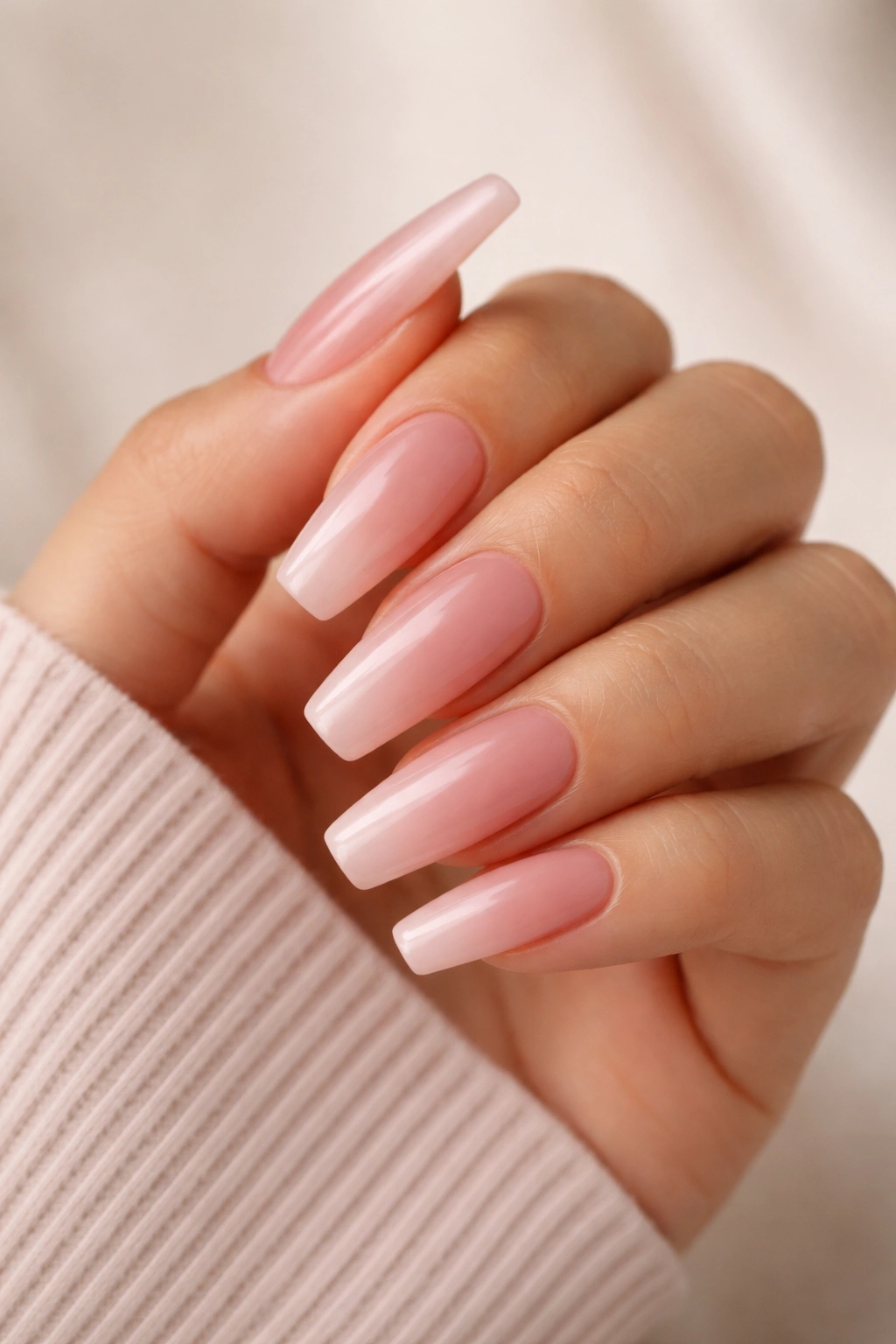
Some pinks are blue-based and crisp. Some lean peach. Some have that milky marshmallow cast that looks dreamy in photos but can turn chalky on the wrong skin tone. If you want a soft blend that flatters your hands, undertone matters more than the exact shade name on the gel bottle.
If your skin has more warmth—golden, olive, peach, or tan undertones—look at rose beige, peach-pink, warm blush, and translucent ballet pink. Those shades melt into the nail bed instead of sitting on top of it. They also hide regrowth better because the base color reads closer to skin.
Cooler skin tones tend to carry baby pink, cool rose, blue-pink, mauve-pink, and soft petal shades well. The key is keeping enough transparency in the fade. A fully opaque cool pink can start to read as correction fluid if the white content is too high. Not cute.
One salon mistake shows up again and again: using the same pale pink on every client. Ask to see the shade dabbed on a clear swatch and held near your fingertip, not against a white paper background. White paper lies. Your hand doesn’t.
If you want the safest route, ask for a milky neutral base with pink layered over it, rather than one thick baby pink from the start. Thin layers look richer, and they give the fade that airbrushed feel people are actually after.
What to Ask for at the Salon Before the Color Goes On
You do not need to speak like a nail tech, but a few specific phrases help.
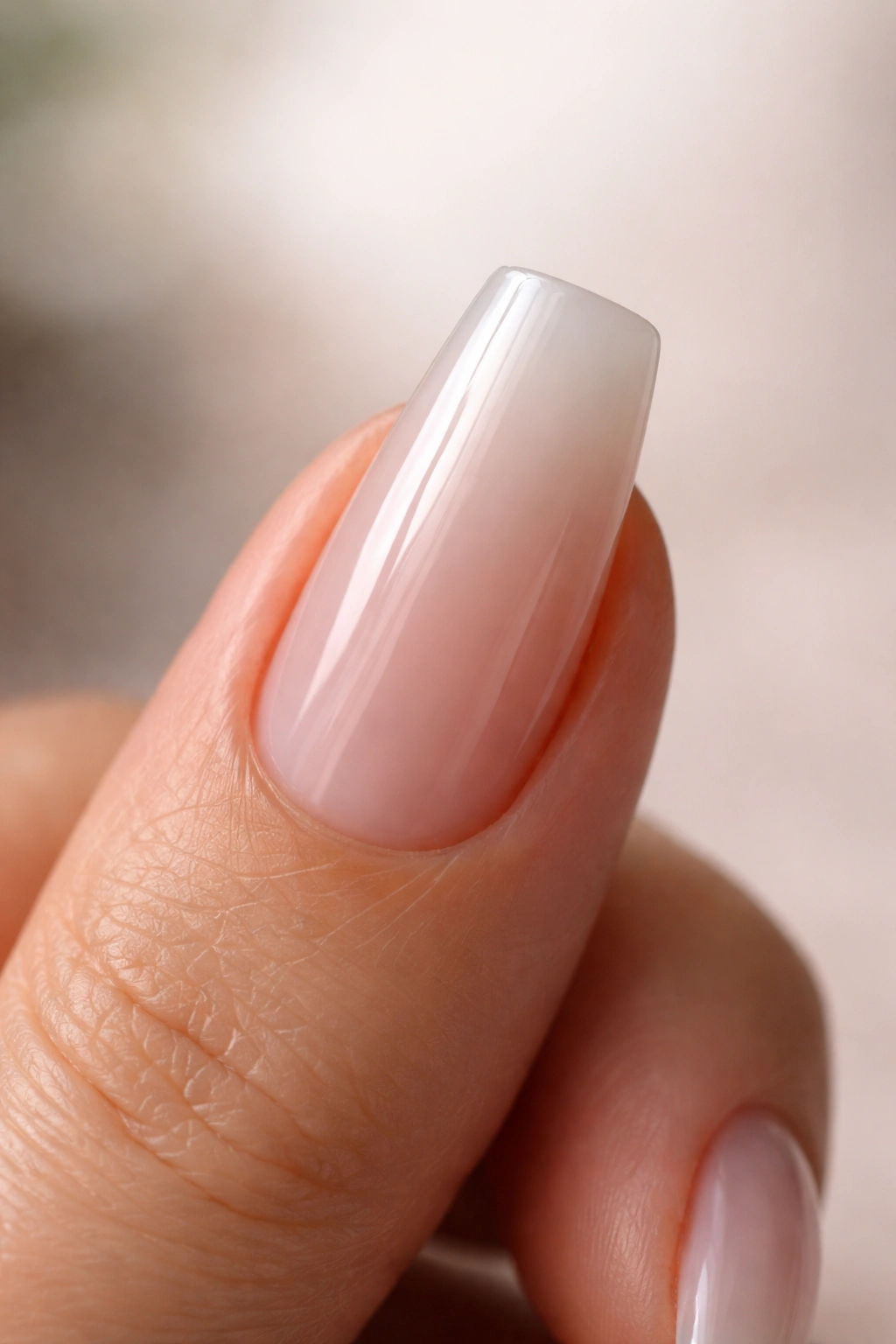
Start with the shape. Ask for a ballerina shape with straight sidewalls and a softened square tip, not a wide coffin. If the tip gets too broad, pale ombre shades can make the nail look heavy. If it gets too narrow, the fade loses that satin ribbon effect.
Then ask how they create ombre. The answer tells you a lot.
A good question to ask
“Do you do the fade with an airbrush, sponge, or gel blending brush?”
Each method can work, though the finish changes a little:
- Airbrush ombre gives the softest misted fade and works well for baby pink to white blends.
- Sponge ombre creates a denser gradient and can look good with deeper rose tones.
- Brush-blended gel ombre gives a smoother, creamier fade when the tech has a light hand.
- Pigment or chrome over a fade base works best for glazed or pearl designs.
Details worth settling before they start
Do not wait until the top coat is on to mention finish, length, or accent nails.
Ask about:
- Base opacity: sheer nude, milky pink, or full-coverage blush
- Tip finish: glossy, matte, glazed, shimmer, sugar, velvet
- Length: short ballerina, medium, or long; even 2 to 3 millimeters changes the whole look
- Accent nails: one per hand, two total, or a full matching set
- Fill plan: whether the fade can be refreshed at the fill or needs a full rebalance
One more thing. If you want a soft blend, say soft blend. That wording matters. “Pink ombre” can mean a lot of different things depending on the salon. “Soft blend with no harsh line” gets you closer to what you pictured.
1. Milky Baby Pink Fading Into Bare Nude
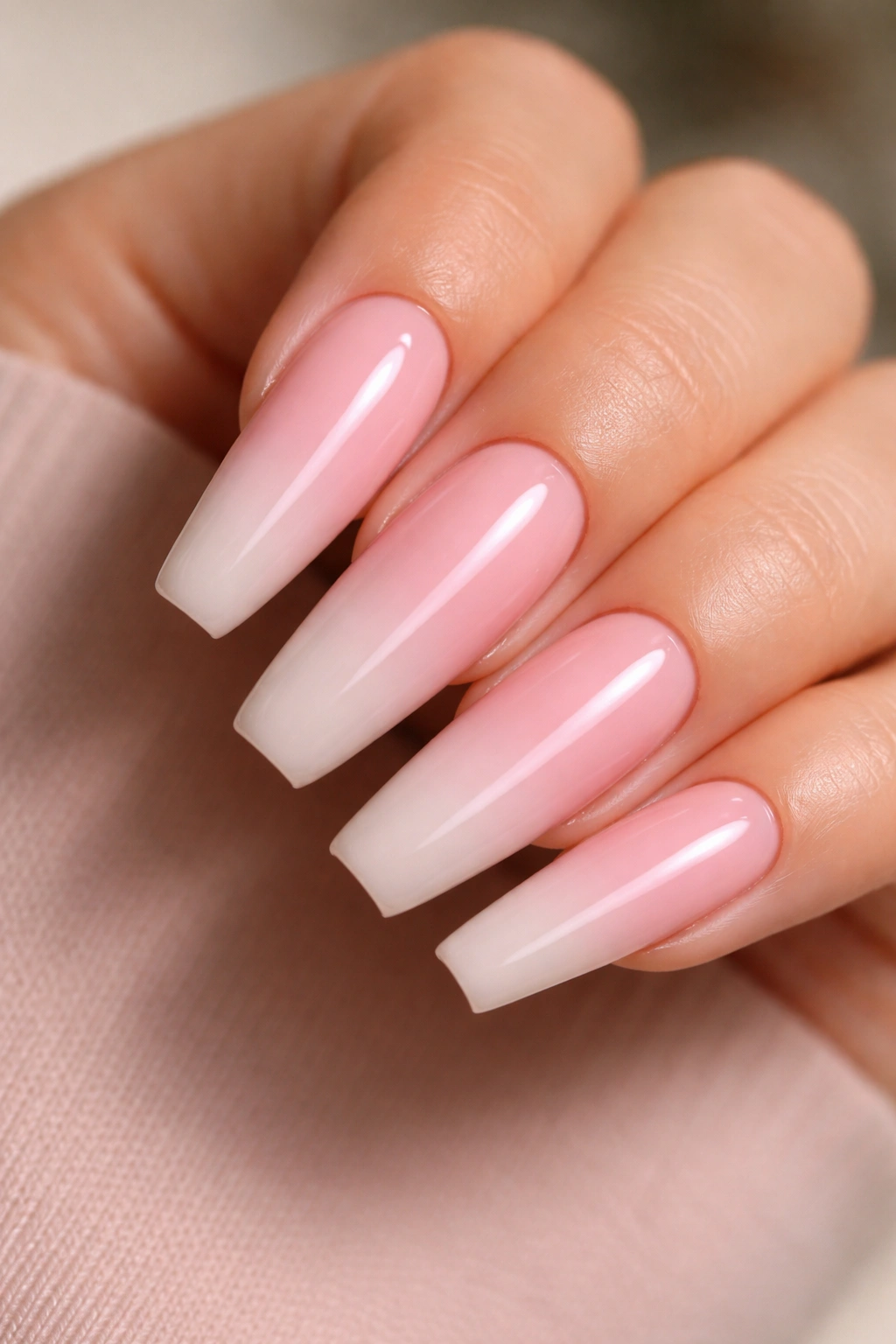
This is the set I recommend when someone wants pink ombre ballerina nails for the first time and doesn’t want to gamble. It’s clean, forgiving, and flattering on almost every length from a short 8-millimeter free edge to a longer sculpted set.
The reason it works is the restraint. You’re not asking the pink to scream. You’re asking it to whisper a little more near the middle of the nail, then disappear toward the cuticle into a nude that looks close to your natural nail bed. On a ballerina shape, that makes the sides look slim and the tip look neat.
Why this fade looks expensive
Milky pink diffuses light better than a flat, opaque pink. Under gloss, it has that cloudy, semi-sheer look that hides tiny ridges and doesn’t show every speck of dust the way a dense pastel does.
Quick details that matter
- Ask for two thin coats of milky nude before the pink goes on.
- Keep the strongest pink in the lower half to middle third of the nail.
- A high-gloss top coat gives the cleanest finish; matte can make the blend look powdery.
- This set grows out well for about 18 to 21 days before the base gap starts to show.
Salon note: If the nude base is too beige, the pink can look dirty. If it’s too white, the hand loses warmth.
2. Rosy Pink Ombre With a Glazed Chrome Finish
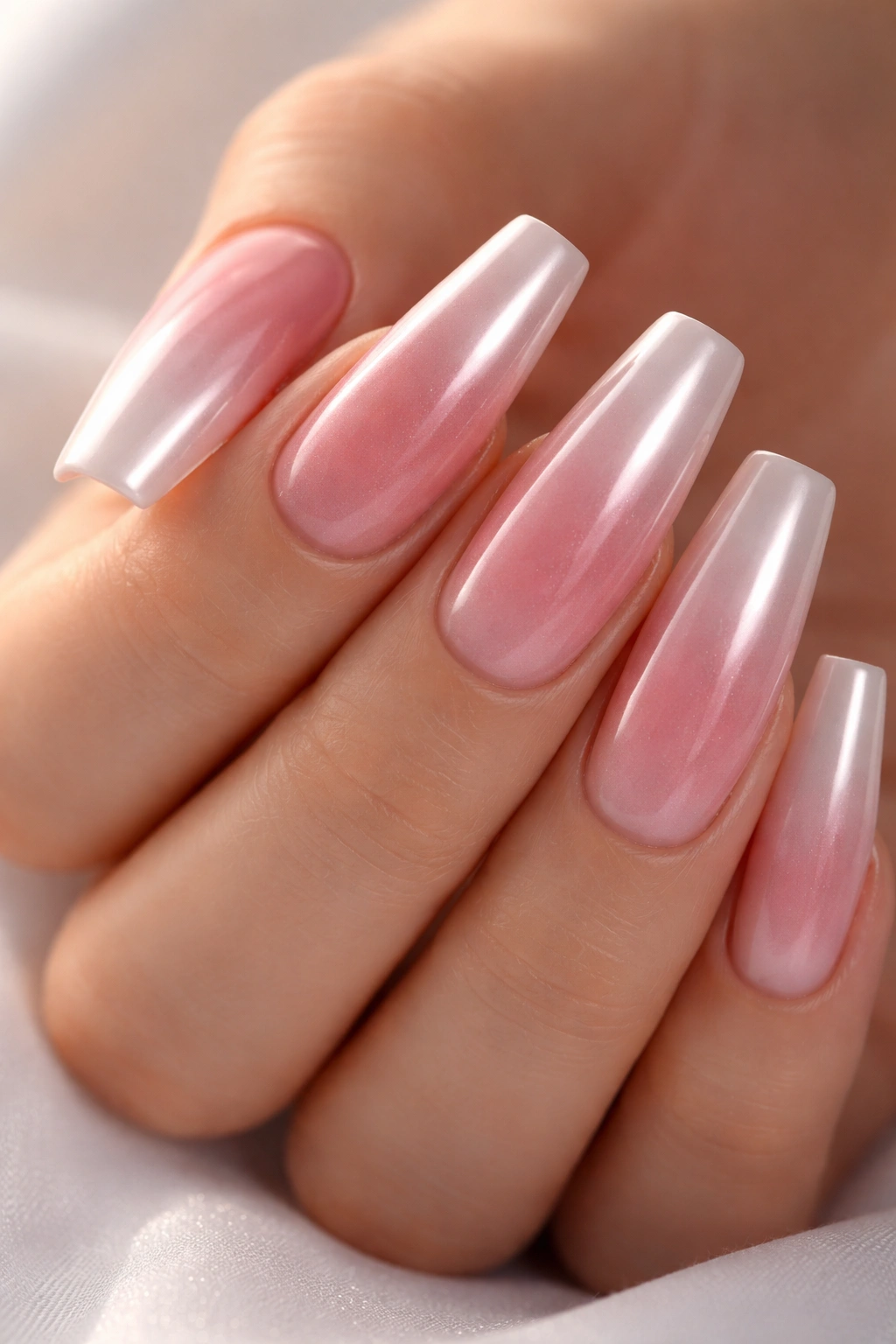
A soft chrome top coat can make an ordinary fade look ten times richer without adding a single rhinestone.
That’s what I like here. The base design stays quiet: rosy pink concentrated near the tip, melting into a milky blush base. Then a pearl or glazed chrome powder goes over the cured top layer, and suddenly the nails catch a silvery-pink sheen when you turn your hand. Not glitter. Not foil. More like a fine shell surface.
Long ballerina nails wear this especially well because the flat tip gives the chrome a broader flash line. On shorter lengths, you still get the effect, though it reads more creamy than reflective. I’d skip thick white chrome here. Ask for pink pearl, soft champagne pearl, or ice glaze. Those shades keep the blend visible underneath.
There is one catch. Chrome shows surface flaws. If the acrylic or builder gel underneath isn’t smooth, the powder will highlight every bump near the apex and sidewalls. A good tech will spend the extra time refining before the powder goes on.
Wear this when you want a dressier pink set without stepping into full glitter territory. It looks good with silver rings, pale gold, or no jewelry at all—which, in my view, is usually the sign that a nail design is doing its job.
3. Blush Pink With White Baby Boomer Tips
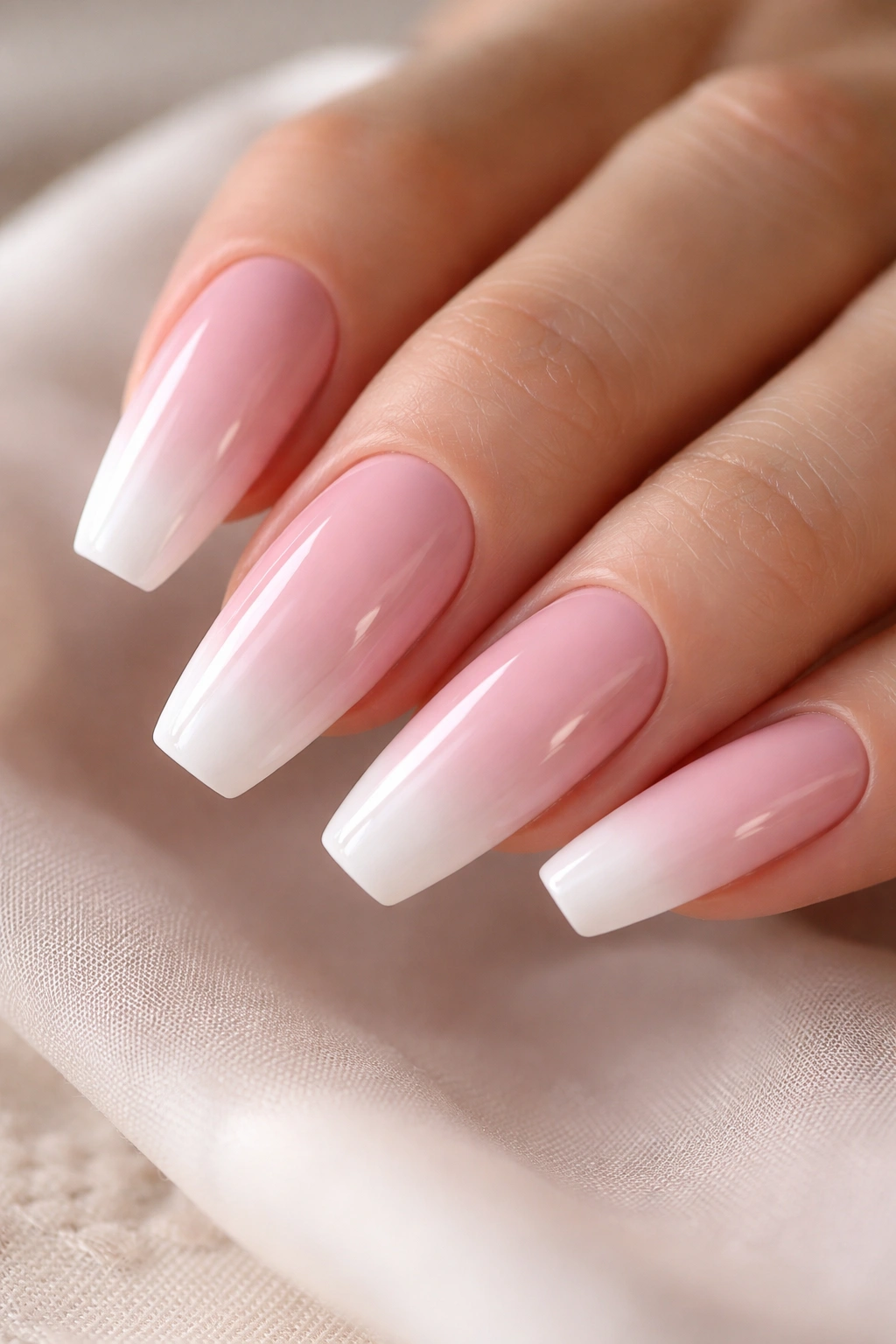
Why has the baby boomer fade stayed around for so long? Because it flatters the hand in a way harsh French lines often don’t.
A white smile line on ballerina nails can look crisp and sharp, which is fine if that’s the goal. But a blush-to-white ombre softens the entire finish. The white lives near the tip and feathering area instead of slicing straight across the nail. You still get that clean tip effect, only smoother.
The pink matters here. A cool, sugary baby pink can work, though I usually prefer a muted blush or soft rose base so the white doesn’t look detached. If the pink is too saturated, the fade line becomes harder to blur. That ruins the point.
How I’d ask for it
Tell your tech you want:
- a baby boomer ombre
- a sheer blush base
- soft white concentrated at the top third
- no hard French line
- gloss top coat, unless you want a bridal matte finish
This is one of those sets that can lean bridal, office-clean, or weekend-polished depending on length. At 10 to 12 millimeters, it looks refined. Push it past that and it starts to feel more dramatic, which can be fun if the shape stays slim.
4. Cool Rose Fading Into Translucent Jelly Ends
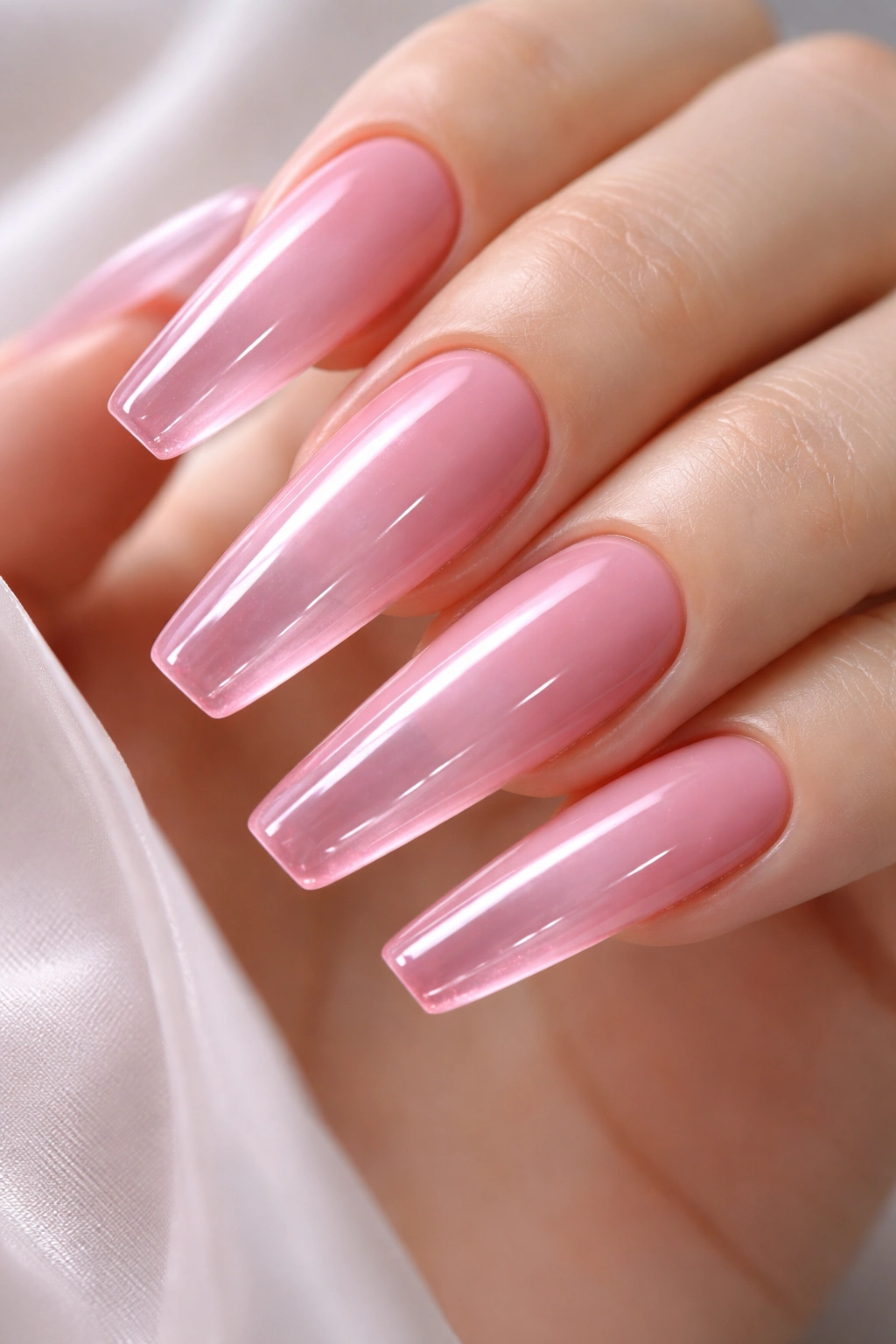
I saw a version of this on a medium ballerina set and had to stop scrolling. The base was a cool rose, the tips had that glassy jelly look, and the whole thing looked lighter than solid color even though the pink itself wasn’t pale.
That’s the trick. Instead of fading from pink into nude, you fade from cream rose into a translucent pink tip. The end result has depth because the color doesn’t disappear; it becomes see-through. On longer nails, that creates a stained-glass effect near the free edge.
You need the right products for this. A regular opaque gel won’t fake a jelly tip. Your tech needs either a sheer pink builder, a jelly tint, or a translucent syrup gel to get that watery finish.
A few specifics help keep it from turning messy:
- Keep the jelly area to the last 4 to 6 millimeters of the tip
- Use a cool rose or mauve-pink, not peach, for a cleaner contrast
- Stick with high shine; matte kills the glass effect
- Pair it with medium or long ballerina nails so the transparent tip has enough room to show
This one feels a little more editorial than the milky nude fades, though it’s still wearable. If plain pink ombre feels too safe to you, start here.
5. Dusty Mauve-Pink Ombre With a Matte Surface
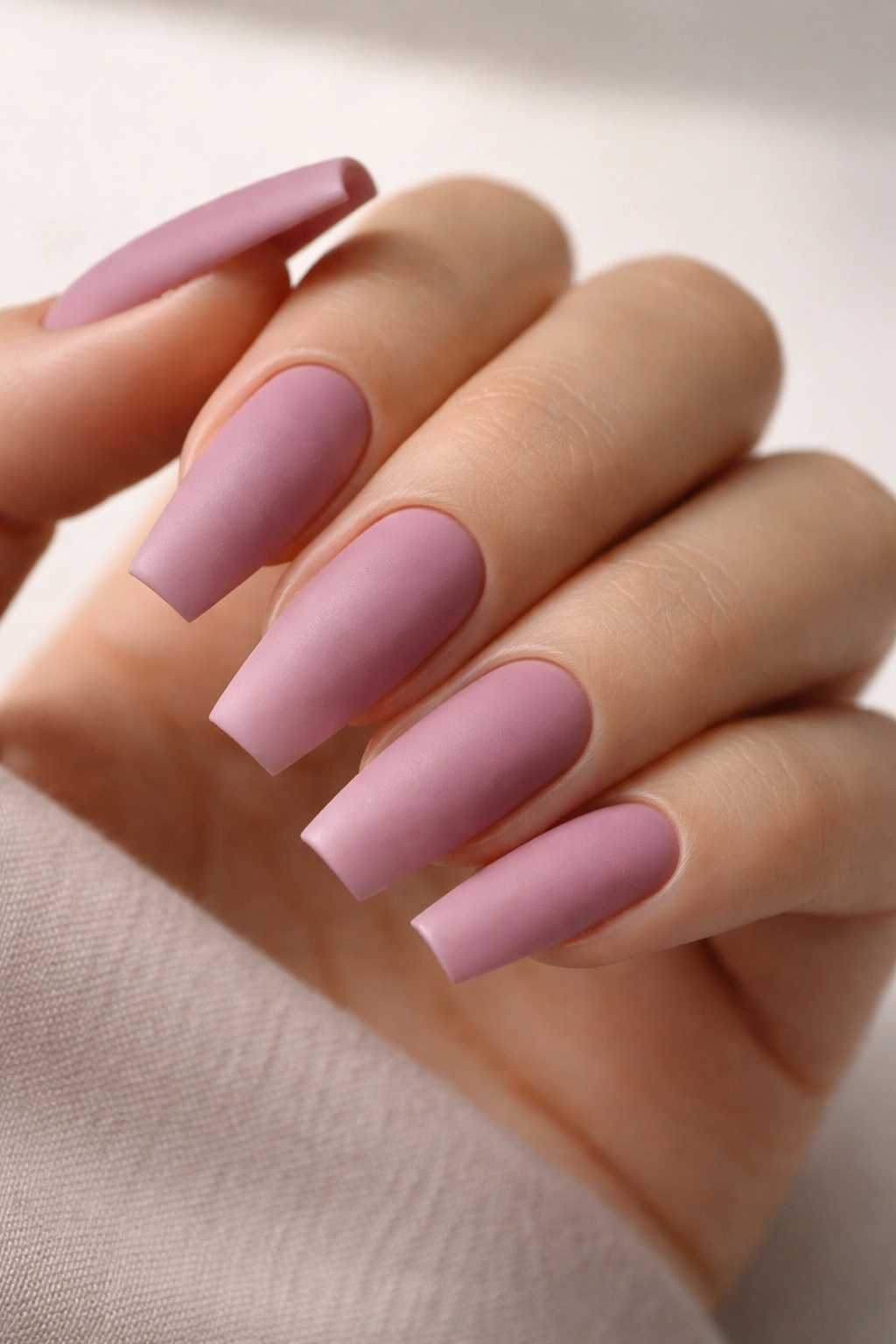
Matte finishes can go wrong fast. They make bad filing show, they trap lint, and some of them turn a nice pink into a flat chalk block by day three.
But when the color is right—dusty mauve with enough brown and rose in it—matte ombre on ballerina nails looks sharp in a quieter way than gloss. The fade becomes more obvious because light isn’t bouncing around on the top coat. You notice the color transition first.
I like this design on medium lengths, especially if your wardrobe leans toward taupe, charcoal, soft cream, denim, or black. Dusty mauve has more edge than baby pink, and the ballerina shape gives it structure without making it look severe. There’s something a little grown-up about it. Not stiff. Just less sugary.
The shape work has to be clean, though. Matte acts like a spotlight on filing. A sidewall that flares even a millimeter too wide will show. Same with a lumpy apex. If your tech is strong at sculpting, this set looks sleek. If they rush prep, matte will expose them.
I also would not do a full velvet matte on every nail if your hands run dry. A soft-touch matte top coat tends to hold up better and looks less dusty at the edges after hand cream. That small product choice changes the whole wear experience.
6. Peach-Pink Ombre With an Ultra-Thin French Edge
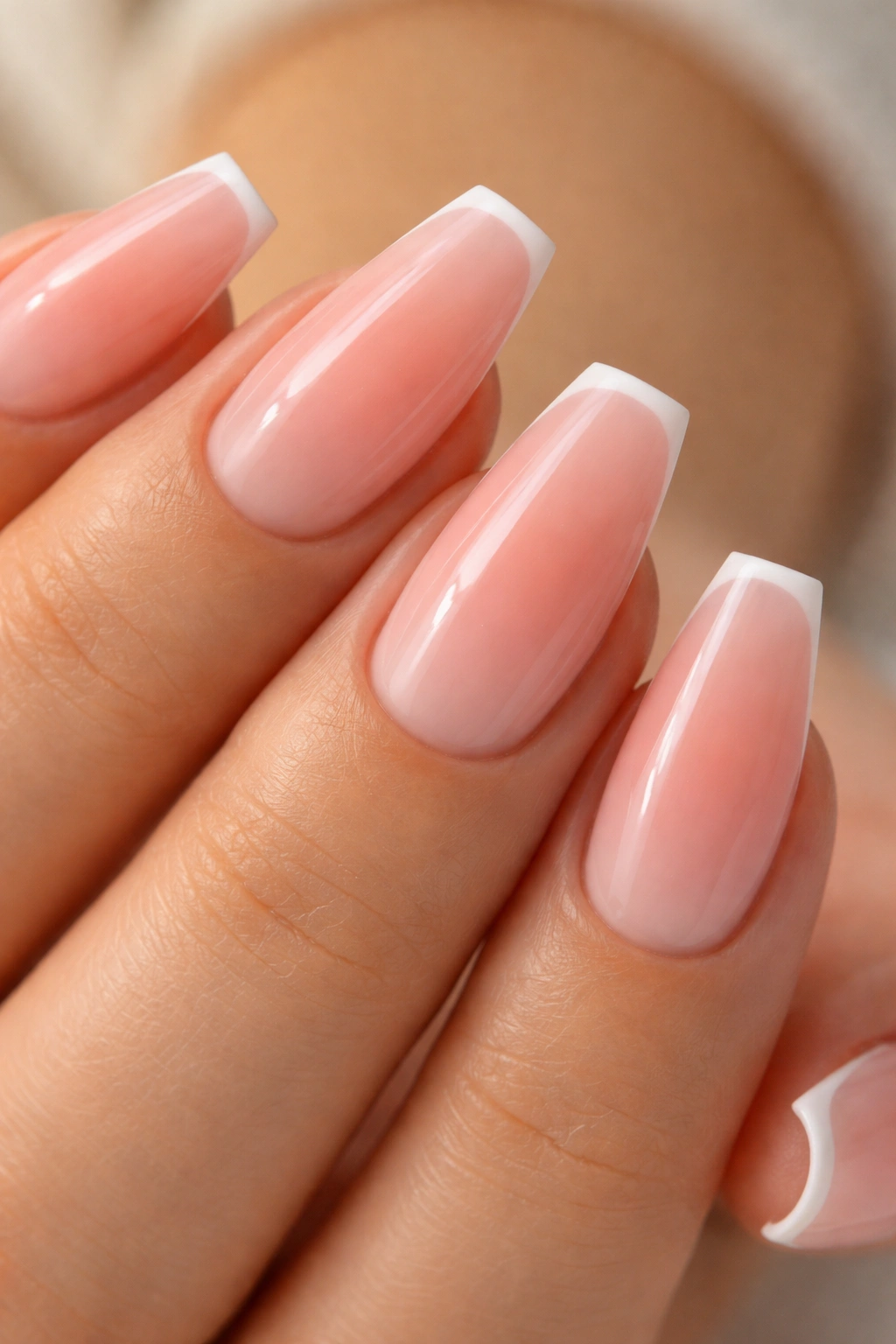
Unlike a full baby boomer set, this design lets the ombre do most of the work and uses the French tip as a finishing line, not the main event. I’m a fan of that balance.
Picture a peach-pink fade that melts from the middle of the nail down into a nude base. Then, right on the flat edge of the ballerina tip, your tech paints a hairline French border, around 0.5 to 1 millimeter thick. The result is crisp but not harsh.
That thin edge matters. A thicker French line competes with the gradient. A narrow one frames it.
Who suits this best? Warmer skin tones, shorter to medium ballerina lengths, and anyone who likes classic nails but finds a full white French too stark. Peach-pink has more warmth than cool rose, so the set feels softer and a little sunnier.
I would ask for soft ivory rather than bright paper-white on the edge. Bright white can chop the tip visually. Ivory keeps the line there without pulling all the focus upward.
And yes, this is a maintenance-heavy look if the edge chips. That’s the trade-off. On the other hand, when the line is done well and sealed under a strong top coat, the nails look precise from every angle—not an easy thing to pull off with pale colors.
7. Cotton-Candy Pink With a Fine Shimmer Veil
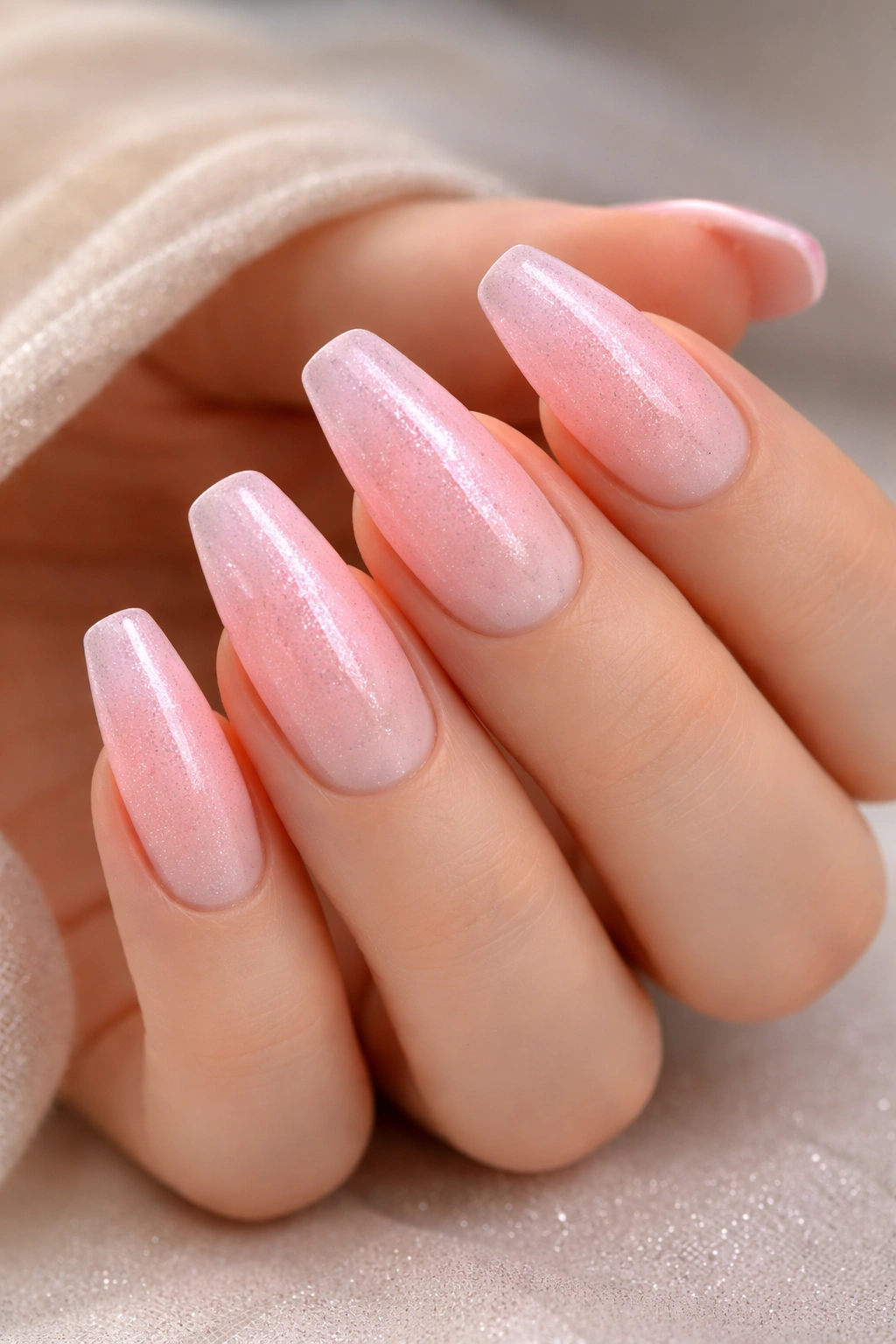
A little shimmer can hide a multitude of sins. Tiny surface scratches. Faint dulling near the tip. Even slight differences in blend density from nail to nail. That’s why this look earns its place.
The base is soft cotton-candy pink fading into a milky or sheer blush base. Over that, your tech adds a micro-fine shimmer top layer—not chunky glitter, not holographic flakes, and definitely not craft-store sparkle. Think sugar dust, pearl frost, or an almost invisible silver-pink sheen.
What makes it work
The shimmer should read only when your hand moves. If you can see obvious glitter pieces from arm’s length, it’s too much for a soft blend manicure. Fine shimmer keeps the ombre visible.
Best ways to wear it
- Choose cool baby pink or petal pink for a sweeter finish
- Use silver-pink shimmer if your jewelry is mostly silver
- Use champagne-pink shimmer if you wear warm metals
- Keep accents to one layer; two layers can blur the fade
I like this on people who want some sparkle but hate bulky gems or textured art. It’s low-profile. It also photographs better in low light than plain gloss because the shimmer gives the camera something to catch without flattening the pink.
8. Reverse Pink Ombre From Cuticle to Pale Tip
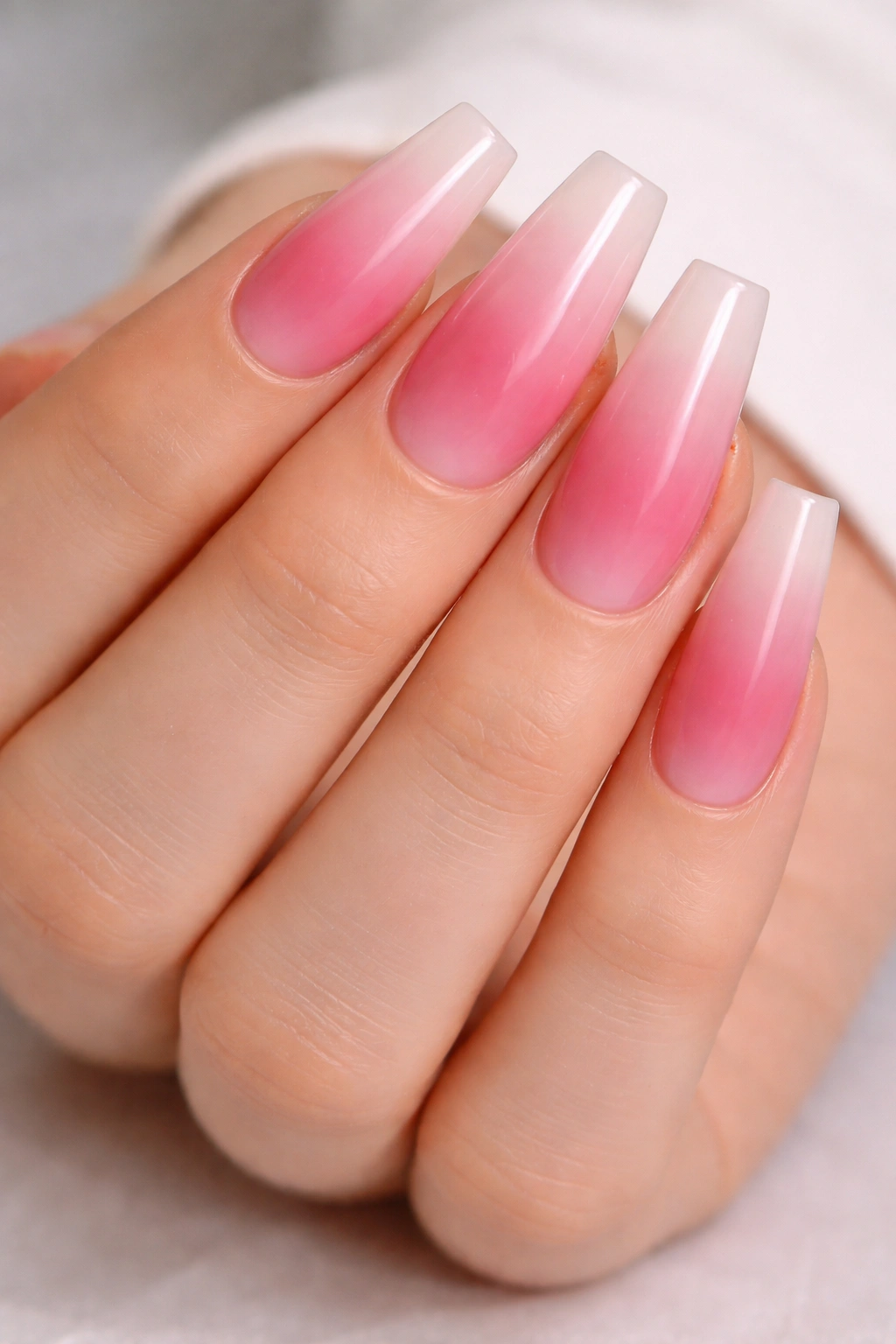
Most ombre sets build color at the tip and fade toward the cuticle. Reverse ombre flips that. The strongest pink sits near the base of the nail, then softens as it moves toward a pale or semi-sheer tip.
That changes the whole mood.
A reverse fade draws the eye upward first, which can make the cuticle area look cleaner and the nail bed look longer. On ballerina nails, it also softens the flat tip because the palest area lands where the shape is most angular. If you’ve ever liked the silhouette of ballerina nails but felt the tip looked too abrupt in pale colors, this is a clever fix.
Your tech needs a light hand near the cuticle. A thick ring of color there can make the grow-out line look rough much sooner. Ask for the deepest pink to sit one or two millimeters away from the cuticle edge, then feather outward. That tiny gap keeps the set airy.
This design suits medium and longer lengths best. On very short ballerina nails, there often isn’t enough room for the reverse gradient to read clearly. The pink ends up looking like a solid base with a pale cap, which loses the effect.
I also think this set looks strongest in rose, tea pink, or mauve-pink, not candy pink. The deeper tones give the reversed fade a little weight, which helps it feel deliberate instead of accidental.
9. Rose Quartz Ombre With Two Marble Accent Nails
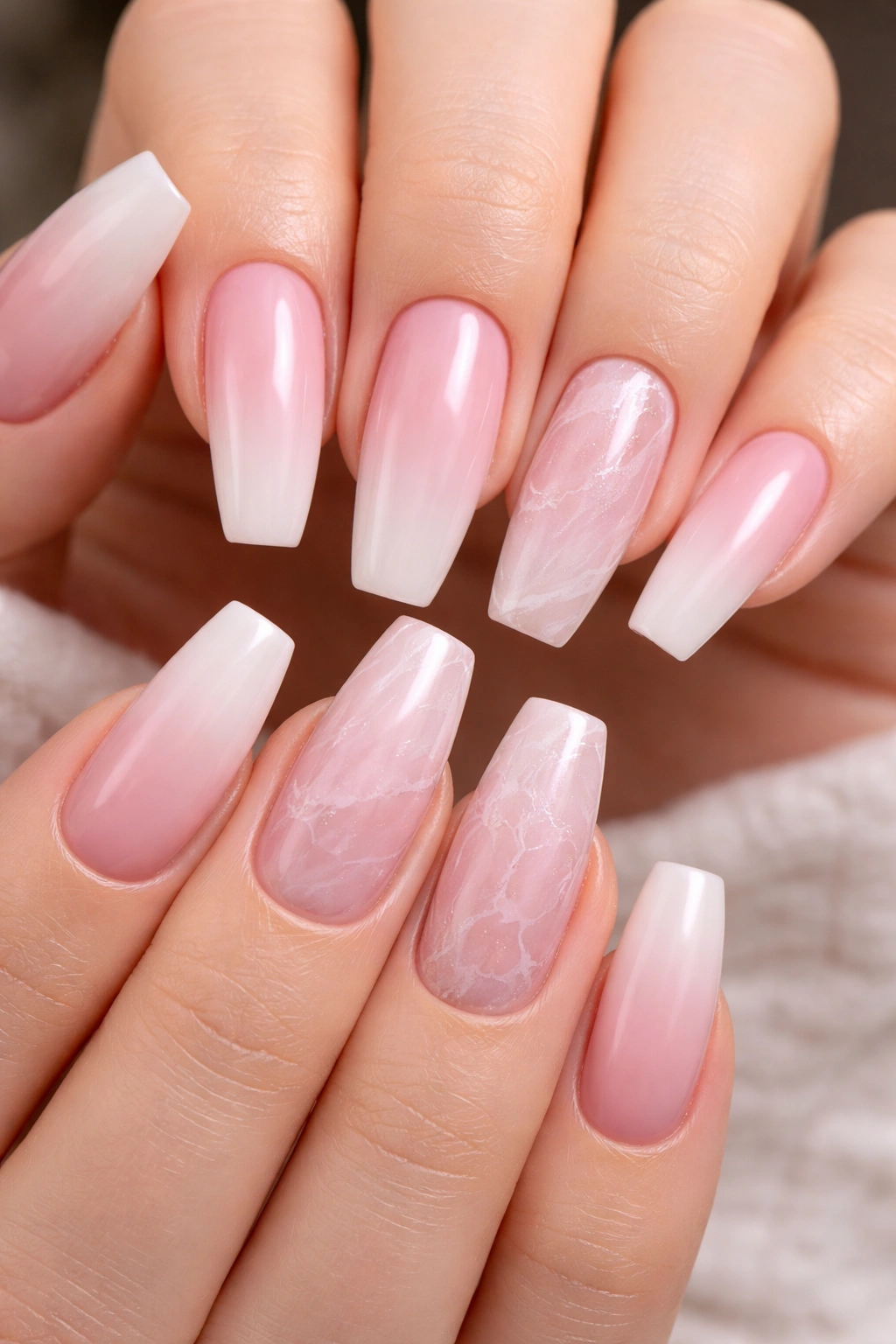
A full marble set can get busy fast. Two accent nails, though, can make a pink ombre manicure feel custom without tipping into clutter.
Here’s the layout I’d choose: ten ballerina nails shaped clean and straight, eight done in a rosy pink ombre, and two accent nails with rose quartz-style veining over a translucent blush base. Usually ring fingers work best, though a middle-finger accent can look stronger on longer hands.
The marble should stay soft. Thin white veining, a wash of pale pink, maybe a touch of sheer milky layering so the lines look buried under the surface. No thick black veins. No gold foil slabs. Rose quartz art only works when it still reads as stone, not a sticker.
The details that keep it tasteful
- Use one or two vein lines per nail, not five
- Keep the base semi-sheer, never opaque pastel
- Ask for soft white and diluted blush in the marble
- Seal with gloss so the stone effect looks layered
This is the set I’d pick for an event when you want something more than a plain fade but still want the manicure to go with silk, tailoring, denim, or a simple knit. The accents add texture. The ombre keeps the rest of the hand calm.
10. Milky Pink Fade With Tiny Crystal Cuticles
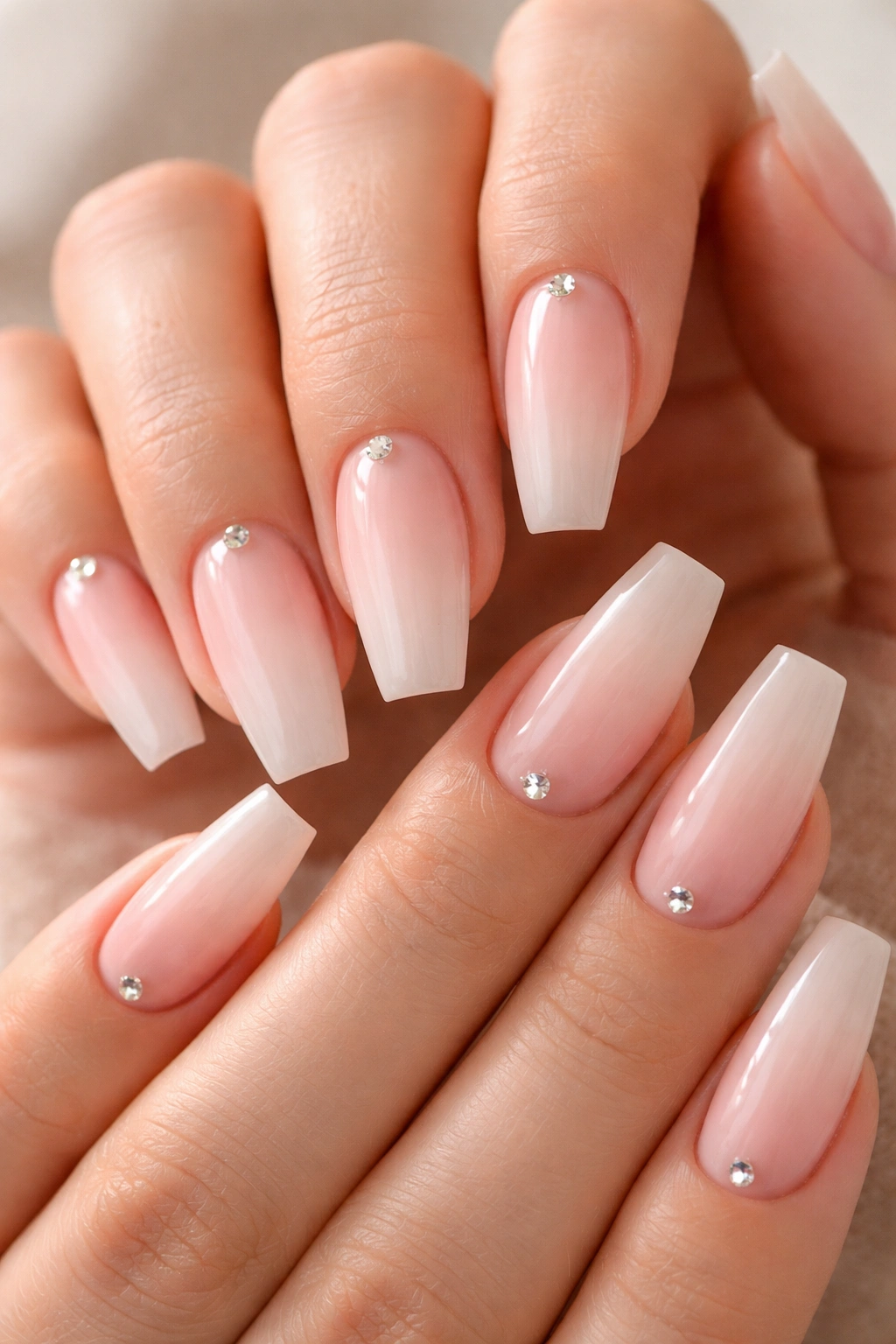
A few crystals placed well can look refined. A strip of chunky stones across every nail usually looks like the nail is wearing costume jewelry. There’s a line. This design stays on the right side of it.
Start with a milky pink ombre—soft, sheer, glossy. Then place one tiny crystal or two micro crystals near the cuticle on selected nails. I’d do thumb, ring, and pinky at most, and even that is pushing it for some people. One crystal per ring finger is often enough.
The scale is everything. Ask for ss3 or ss4 stones, not larger gems. You want a point of light, not a knob. Clear crystals work best. AB stones can throw rainbow flashes that pull focus away from the fade.
This set is useful when you like a clean manicure but want a little dress-up for a dinner, wedding guest look, party, or photo-heavy weekend. You still get the soft blend at a glance. The crystals only show themselves up close, which is where small details are supposed to live.
One warning worth saying out loud: crystal placement too close to the skin can snag. A good tech leaves the tiniest breathing room and caps the edges with gel so hair doesn’t catch when you shower or pull on a sweater.
11. Sheer Ballet Pink With a White Airbrushed Center
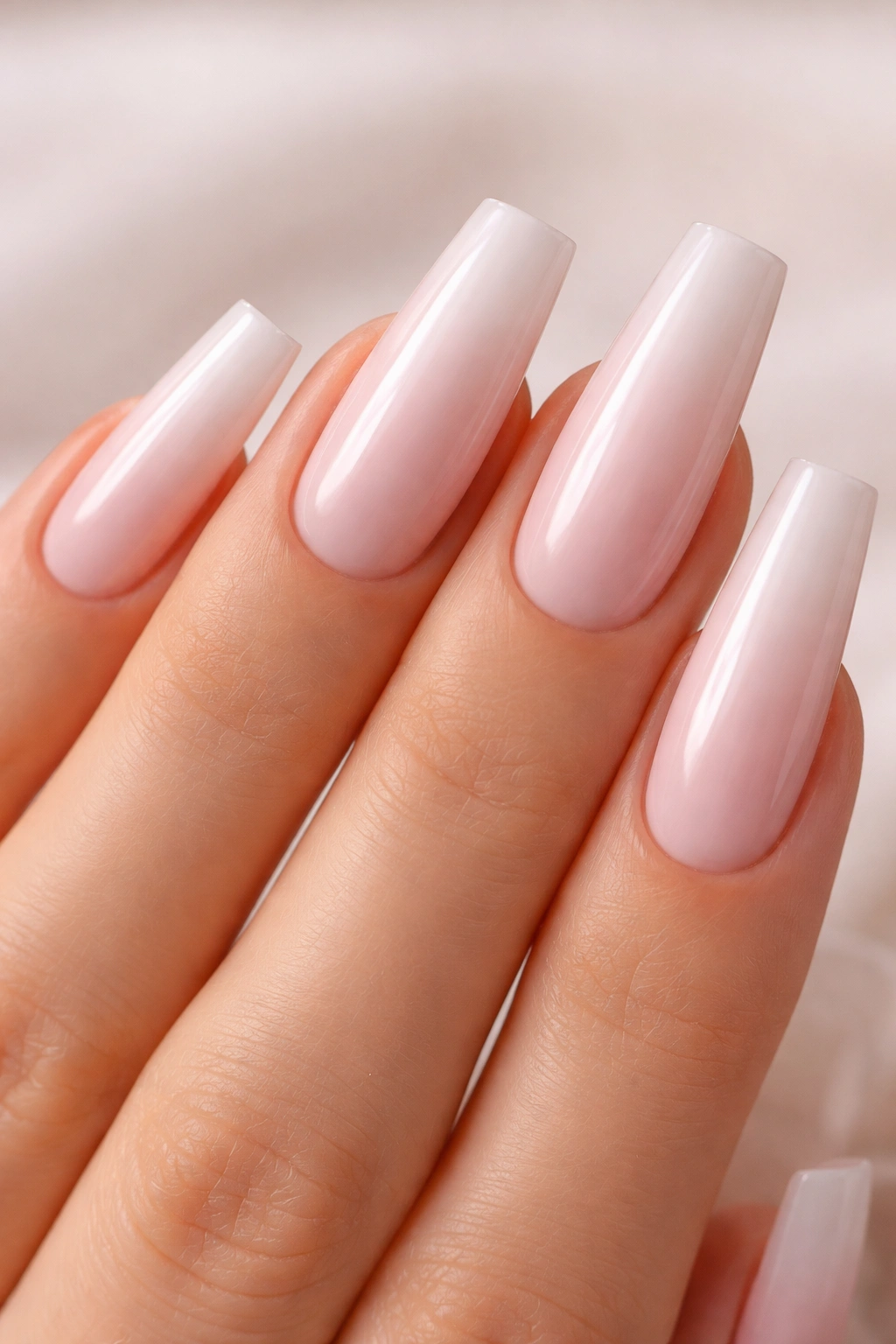
Most ombre designs move from cuticle to tip. This one glows from the middle.
A white airbrushed center over a sheer ballet pink base creates a soft halo effect across the nail plate, and on a ballerina shape that central glow makes the nail look smoother and more sculpted. It’s subtle from far away. Up close, you see the depth.
This style works best with airbrush or a good pigment mist. A sponge can do a rough version, though it rarely gets that cloud-like center. The white should stay sheer enough that the pink still shows through; otherwise the nail turns blotchy.
Why this design feels different
Instead of reading as “pink tips” or “pink base,” the nail looks softly lit through the center. That changes the whole impression of the manicure. It feels airy, clean, and a little cooler in tone.
Best pairing notes
- Keep the base to one or two sheer coats of ballet pink
- Use white concentrated at the center third of the nail
- Finish with gloss or pearl glaze
- Skip heavy art on top; it defeats the point
This one is quieter than chrome and more unusual than a standard baby boomer. I like it for people who want something salon-photo worthy without needing gems, decals, or hand-painted flowers.
12. Warm Nude-Pink Ombre on Short Ballerina Nails
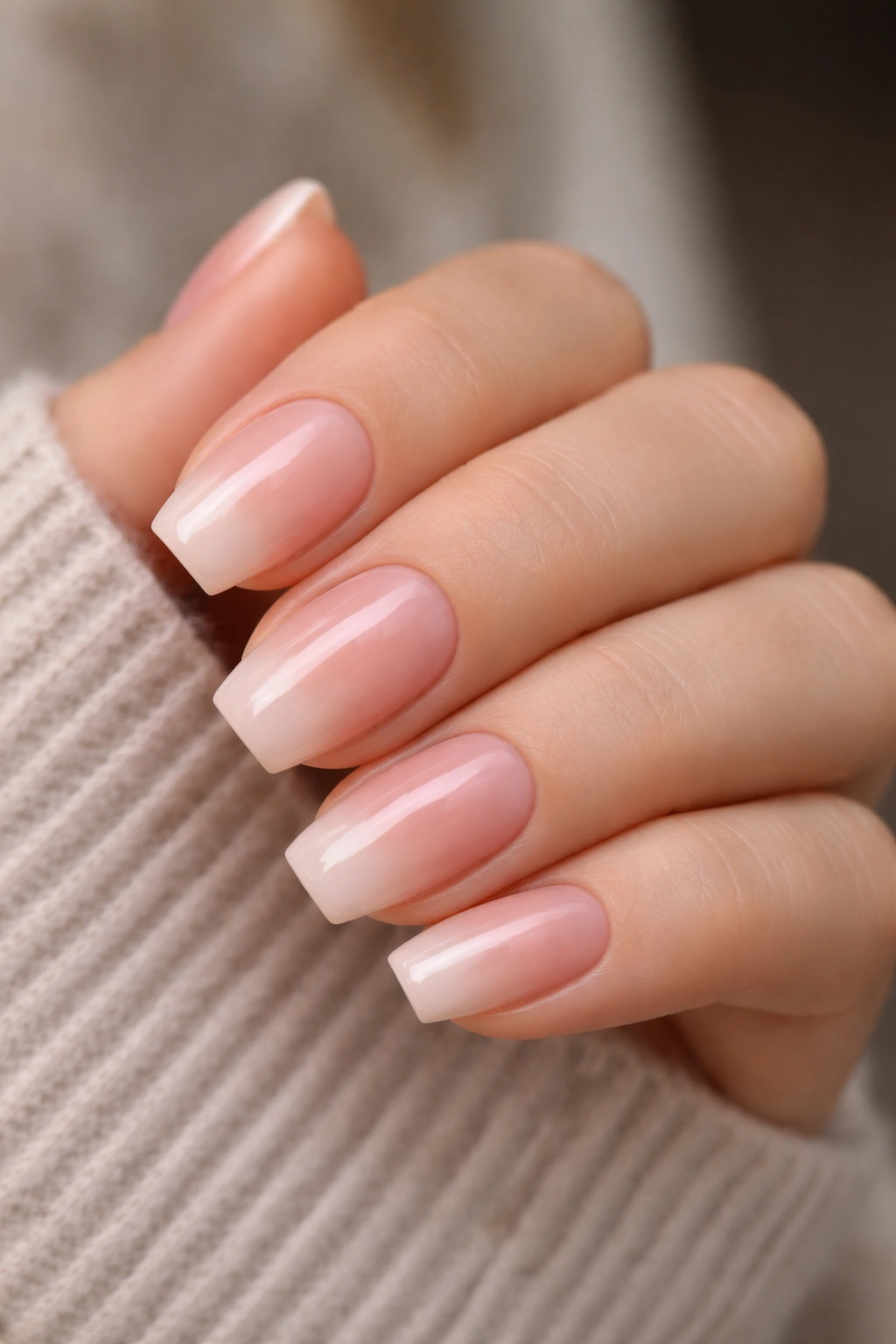
Not every ballerina nail has to be long enough to tap a wineglass two rooms away. A short ballerina shape—with a straight tip, trimmed sidewalls, and only 5 to 8 millimeters of free edge—can look cleaner for daily wear, and warm nude-pink ombre is one of the best color choices for it.
Here’s why. Short ballerina nails have less space for a dramatic gradient, so you need tones that blend easily and don’t demand a big color jump. Warm nude and soft pink sit close enough together that the fade still reads, even on a smaller surface.
This style is ideal if you type a lot, cook a lot, carry boxes, button jeans with long nails as little as possible—real life stuff. The shape still gives you that straight-edged finish people like about ballerina nails, but the shorter length makes it less fussy. I’ve recommended this exact look to more than one friend who wanted to stop cracking long acrylic corners and still keep the silhouette.
Ask for a warm beige-nude base and a muted pink haze through the top half rather than a bright tip. Bright pink on a short ballerina can make the nail look cropped. Soft warmth lengthens it.
No extra art needed. On this length, restraint is not boring. It’s the reason the shape works.
13. Pink Ombre With a Velvet Cat-Eye Glow
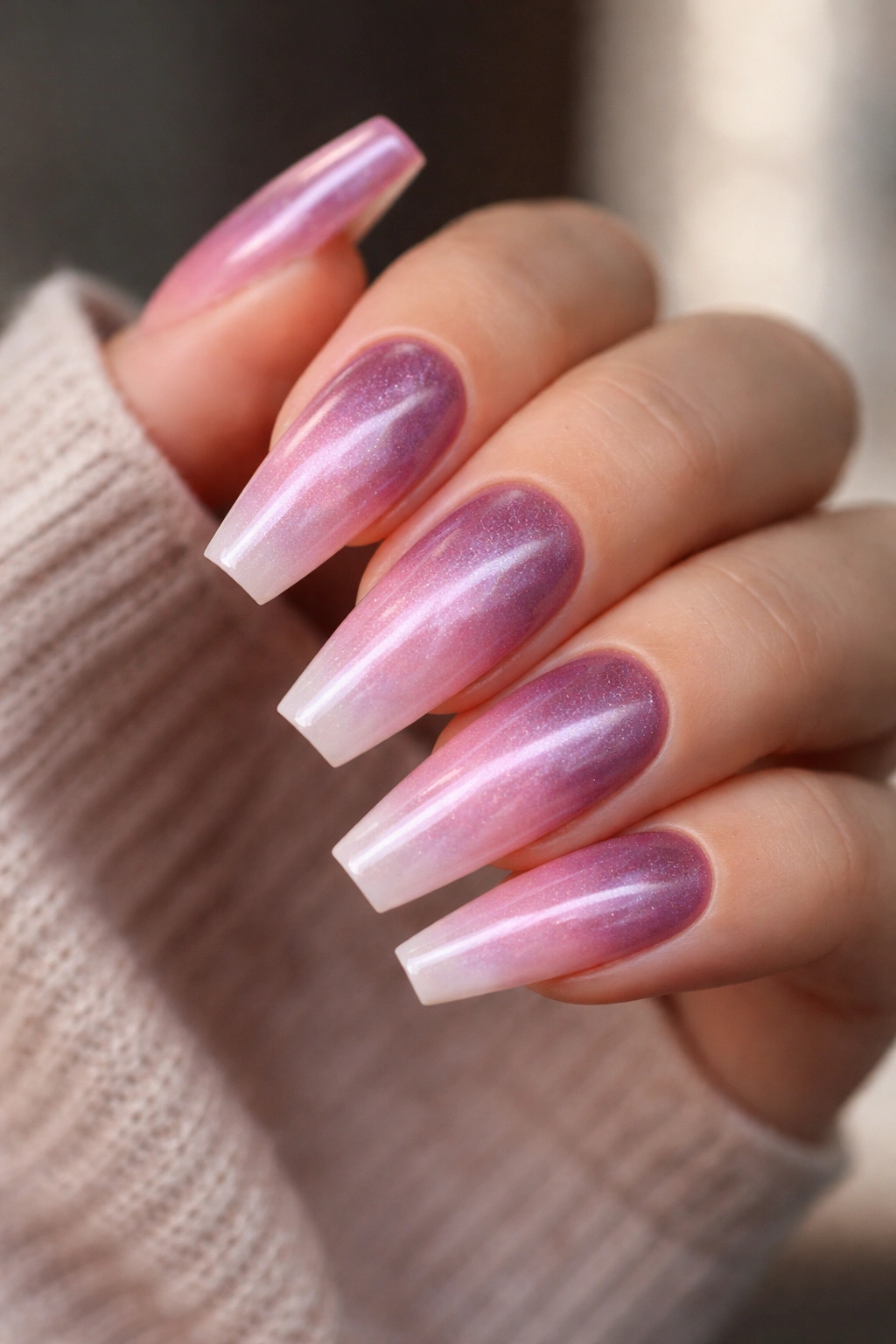
This is where soft blend nails get moodier.
A velvet cat-eye finish over pink ombre gives the nail a moving band of light that shifts when you tilt your hand. On a ballerina shape, that reflective pull looks especially good because the flat tip and straight sidewalls keep the glow from scattering too much.
You need magnetic gel here, and not every salon does it well. Ask whether they can create a velvet effect, not a single diagonal stripe. The velvet style pulls shimmer inward from multiple directions so the center of the nail looks softly lit. Over a pink gradient, that can look almost like satin fabric.
I’d choose rose-pink, mauve-pink, or dusty blush as the base fade under the cat-eye layer. Pale baby pink can work, though the magnetic shimmer shows more clearly on a slightly deeper base.
A few things make this set sing:
- medium to long ballerina length
- fine magnetic particles, not chunky glitter
- one magnetic pass per nail before curing
- a darker room, where the light shift shows best
This is less office-clean than a milky nude fade, and that’s the point. It has a little drama without needing extra charms or line work. If you like your manicure soft and a touch moody, few designs do both as well as this one.
14. Cotton Pink Ombre With Sugar Accent Ring Fingers
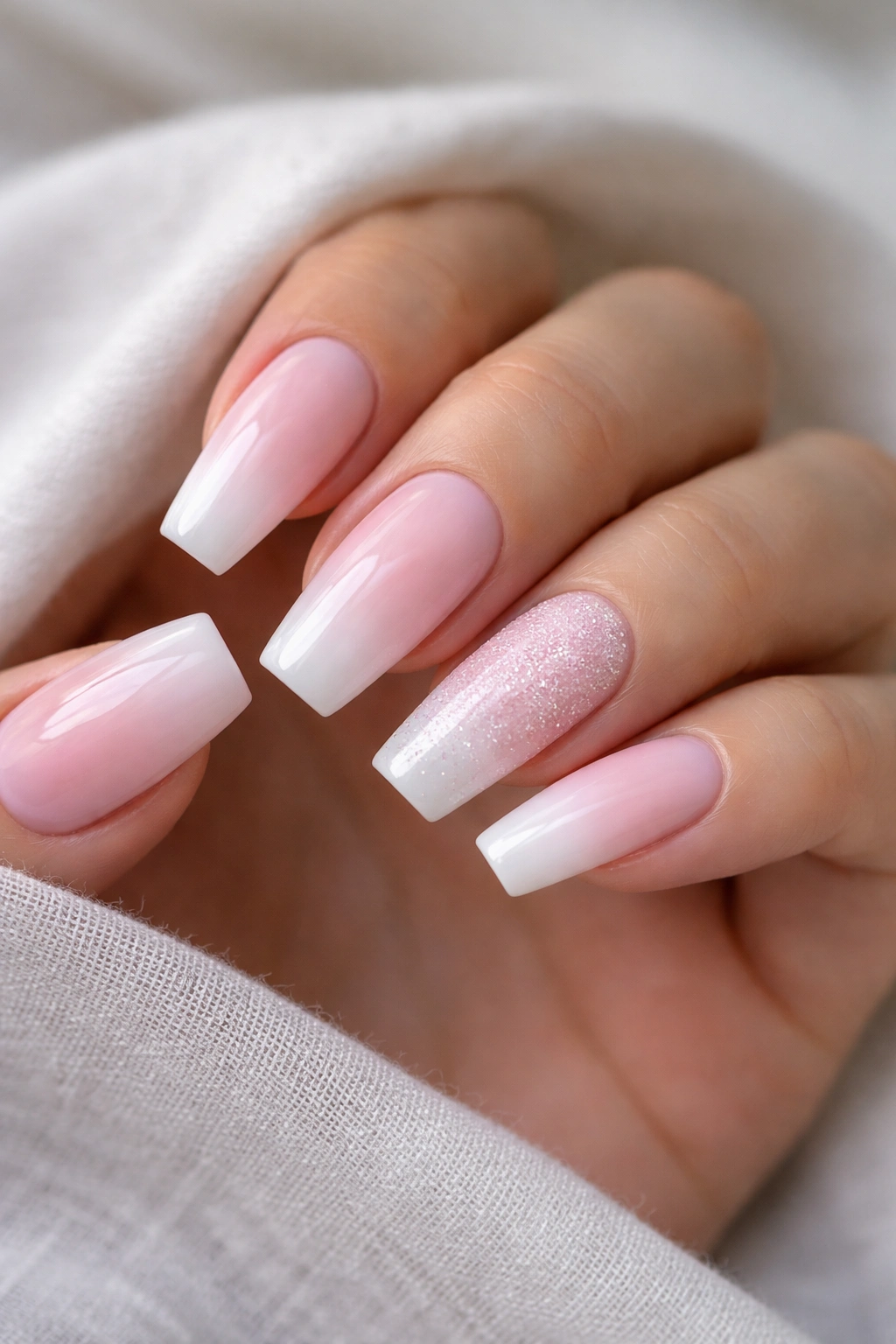
Textured sugar nails are easy to overdo. Cover all ten nails and the set can start to look heavy, especially on a long ballerina shape. Use the texture only on the ring fingers, though, and the contrast can be smart.
The base set should stay soft: cotton pink ombre into a nude or milky blush base on eight nails. On the two ring fingers, apply a matching pink fade and finish with fine sugar powder or crystal dust over uncured top or gel, depending on the product your tech uses. The grain should be fine enough to look frosted, not pebbled.
This design works because you get two finishes in the same color family. Glossy nails around the textured accents keep the hand from feeling flat. The textured nails, meanwhile, break up the shine and give the set a tactile element you notice when you hold a mug or run a fingertip across the surface.
I do think this look has a shorter wear window. Sugar texture can pick up makeup, denim dye, and hand cream residue faster than a sealed gloss top. For that reason, I like it for a trip, event weekend, or a period when you want the set to feel a little more playful and don’t mind that the ring fingers may lose their crispness first.
It’s cute. There, I said it. Not childish. Just cute in a clean way.
15. Berry Pink Melting Into Soft Blush on Long Ballerina Nails
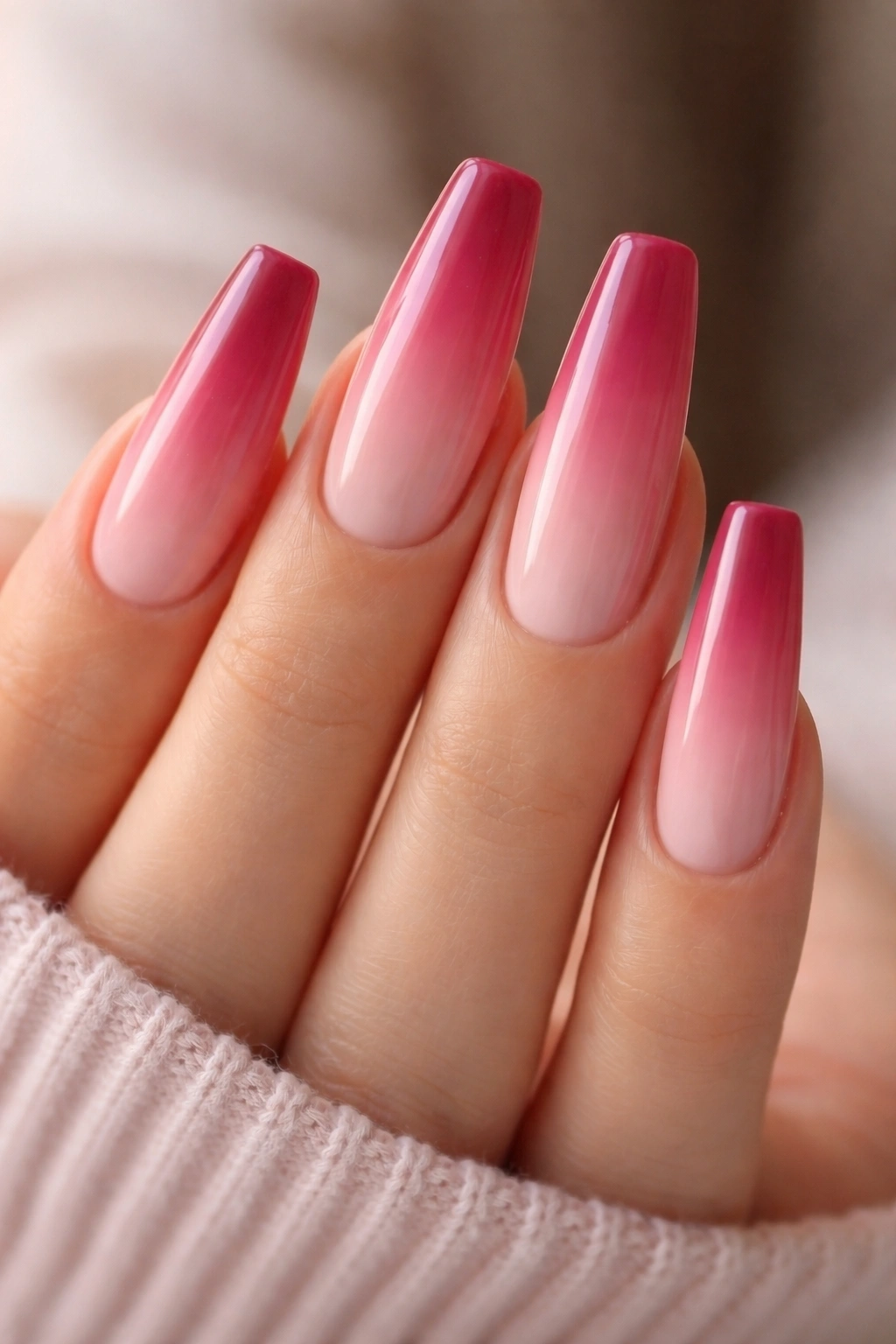
If most pink ombre nail ideas you see feel too pale, this is the answer. Start with a berry-rose or deep pink base near the tip, then blend it down into soft blush or milky nude through the middle and cuticle area. On long ballerina nails, the contrast has room to stretch out, so it looks rich rather than abrupt.
The color choice makes all the difference. You want depth, not neon. Think berry yogurt, dried rose, raspberry milk, muted fuchsia with gray in it. Those shades fade well because they have body without that electric brightness that can fight the soft-blend effect.
Long length matters here. A deeper shade needs space to graduate. On a short nail, berry pink can swallow the whole design. On a ballerina extension with 12 to 16 millimeters of free edge, the fade has enough runway to move from saturated tip to soft base.
I also like this set for colder months—though honestly it works anytime you want pink with more presence. Pair it with gloss if you want depth, matte if you want the color to feel suede-like. I’d skip busy art. The fade itself is already doing enough.
When someone says they want pink ombre but not “baby pink,” this is the version I pull up first.
How to Keep a Pink Ombre Ballerina Set Looking Fresh
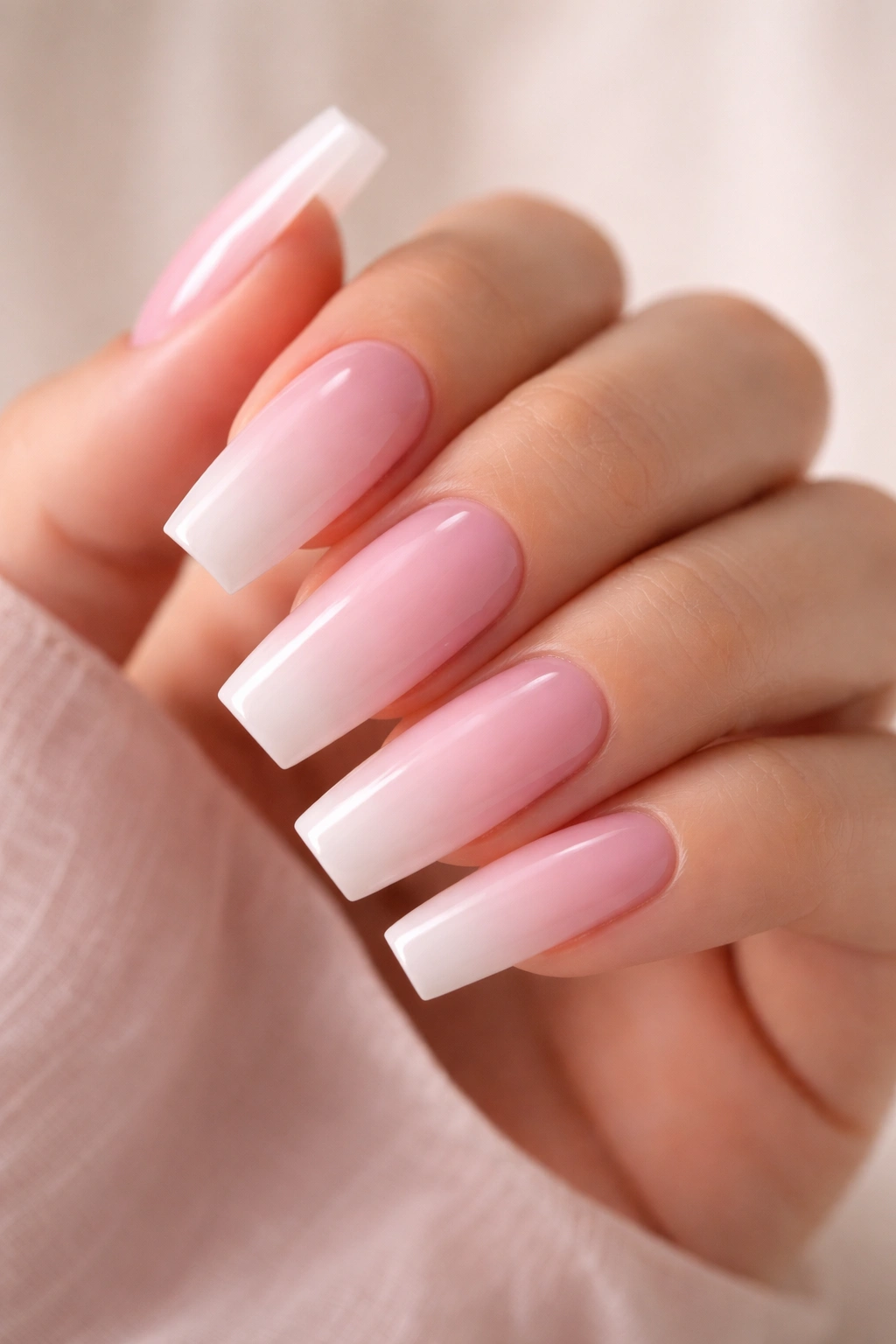
The fastest way to make a soft fade look rough is to let the shape wear down at the corners. Ballerina nails lose their clean line when the free edge chips or rounds off, and pale colors make that wear easier to spot. File the tip lightly with a 180-grit file if you catch a nick early. One or two strokes per side. Don’t reshape the whole nail in your car at a stoplight.
Cuticle oil helps more than people give it credit for. A small drop twice a day keeps the skin around the nail from going dry and flaky, which matters because pink ombre designs draw attention to the base area. Dry skin can make a fresh fill look older than it is.
A few habits make a big difference:
- wear gloves for dishwashing and cleaning sprays
- avoid using nail tips to pry cans, scrape labels, or pop staples
- book fills around day 16 to day 21 for most gel or acrylic sets
- ask for a top-coat refresh if the fade is fine but the shine is dull
If you picked chrome, sugar, crystals, or velvet cat-eye, maintenance shifts a little. Chrome needs a smooth top surface. Crystals need edge checks. Sugar accents stain faster. Velvet cat-eye can lose some visual punch if the top coat gets scratched. None of that means skip those finishes. It means know what you’re signing up for.
Final Thoughts
The nicest pink ombre ballerina nails usually aren’t the busiest ones. They’re the sets where the color placement makes sense, the shape is clean, and the finish matches the mood—gloss for crispness, matte for softness, chrome for sheen, texture when you want contrast.
If I had to narrow the field, I’d point most people toward milky baby pink to bare nude, blush baby boomer tips, or warm nude-pink on short ballerina nails. Those three are the safest bets and still look polished after the novelty wears off.
Then again, nails are allowed to be a little extra. If your taste leans toward velvet glow, jelly tips, or a deeper berry fade, go there. Soft doesn’t have to mean timid, and ballerina nails prove that better than most shapes do.