

Black ballerina nails for short nails solve a problem that square and almond shapes never quite fix. You get that crisp, tapered outline people like in a coffin silhouette, yet your nails still feel usable when you type, wash dishes, open a soda can, or wrestle with a necklace clasp. On short length, that balance matters more than people admit.
The shape does need restraint. On a nail with only 2 to 4 mm of free edge, too much taper turns the tip into a triangle fast, and too little taper makes the whole thing look like a softened square. A good short ballerina shape keeps the sidewalls neat, narrows them a touch, then finishes with a flat tip that still has enough width to look intentional.
Black polish raises the stakes. Every bump, every uneven sidewall, every bulky top coat shows up. But when the prep is clean, black does something few shades can do: it sharpens the whole hand. Even a tiny nail looks deliberate in black.
That’s why this shape-and-color pairing keeps coming back. There’s room for matte, chrome, sheer finishes, tiny accents, and smarter placement tricks that make short nails look longer than they are.
Why Black Ballerina Nails Suit Short Nails So Well
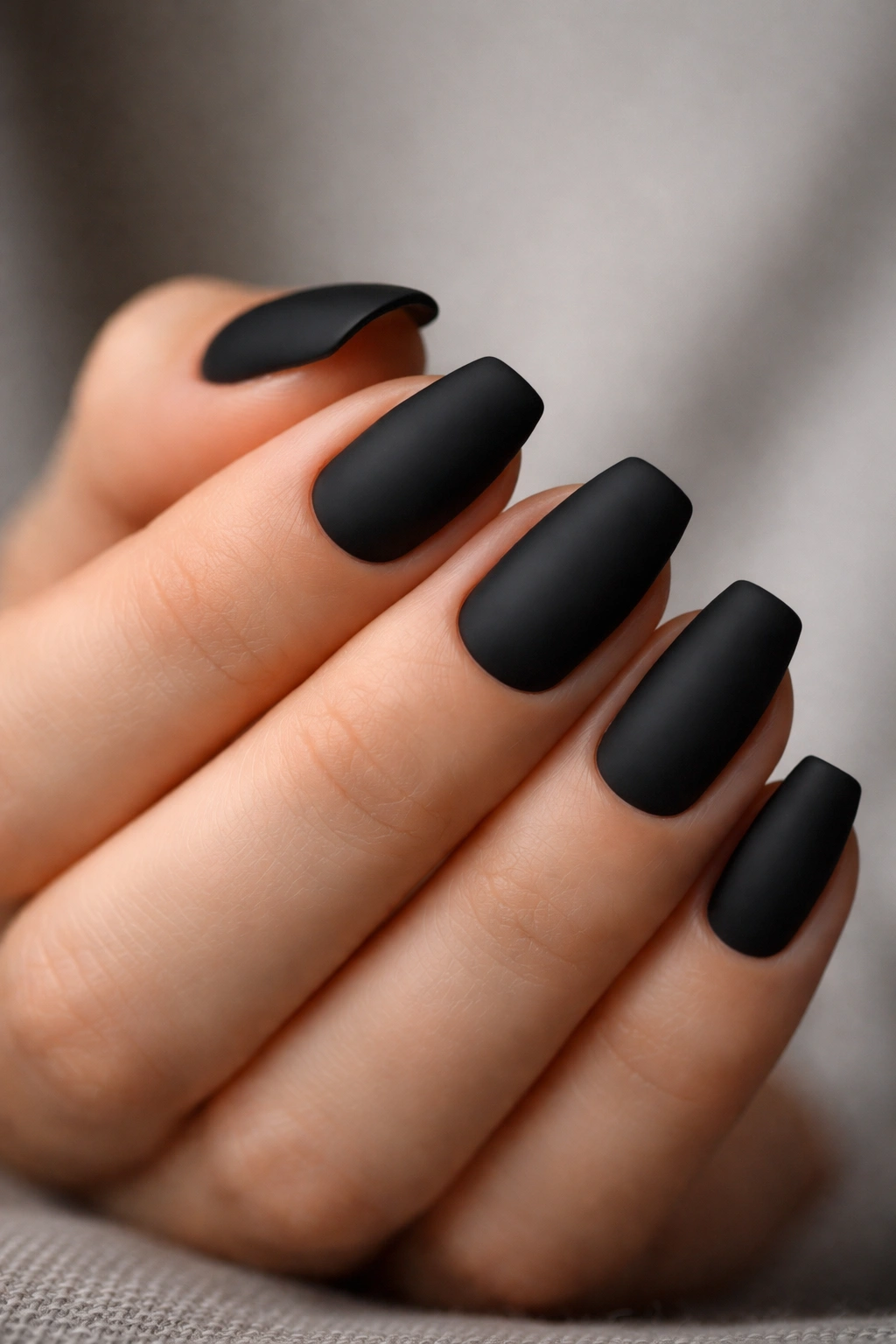
Short ballerina nails look best when the shape does most of the work. Black helps because it creates a clean outline. Your eye notices the silhouette first, which is exactly what you want when the nail length is modest.
A square short nail can look blunt. A short almond can lose its point before it has enough room to taper. Ballerina sits in the middle. The sides slim down enough to lengthen the nail visually, while the flat tip keeps the shape grounded.
Black adds contrast, which matters on shorter lengths. Lighter shades can blur the edge of the nail, especially on wide nail beds. A black manicure draws a firmer border around each nail, and that can make the fingers look sleeker without adding actual length.
There’s a practical side too. On short nails, black grows out more gracefully than some people expect, especially with designs that leave a little negative space near the cuticle. Chips still show—black never hides damage—but a well-shaped short ballerina set tends to wear more evenly than a long one because you’re putting less pressure on the tips.
If your nail beds are wider, ask for a soft taper, not an aggressive one. About 1 mm of narrowing on each side is often enough. More than that, and the shape starts to fight the width of the natural nail instead of flattering it.
What to Ask for When You Want a Short Ballerina Shape
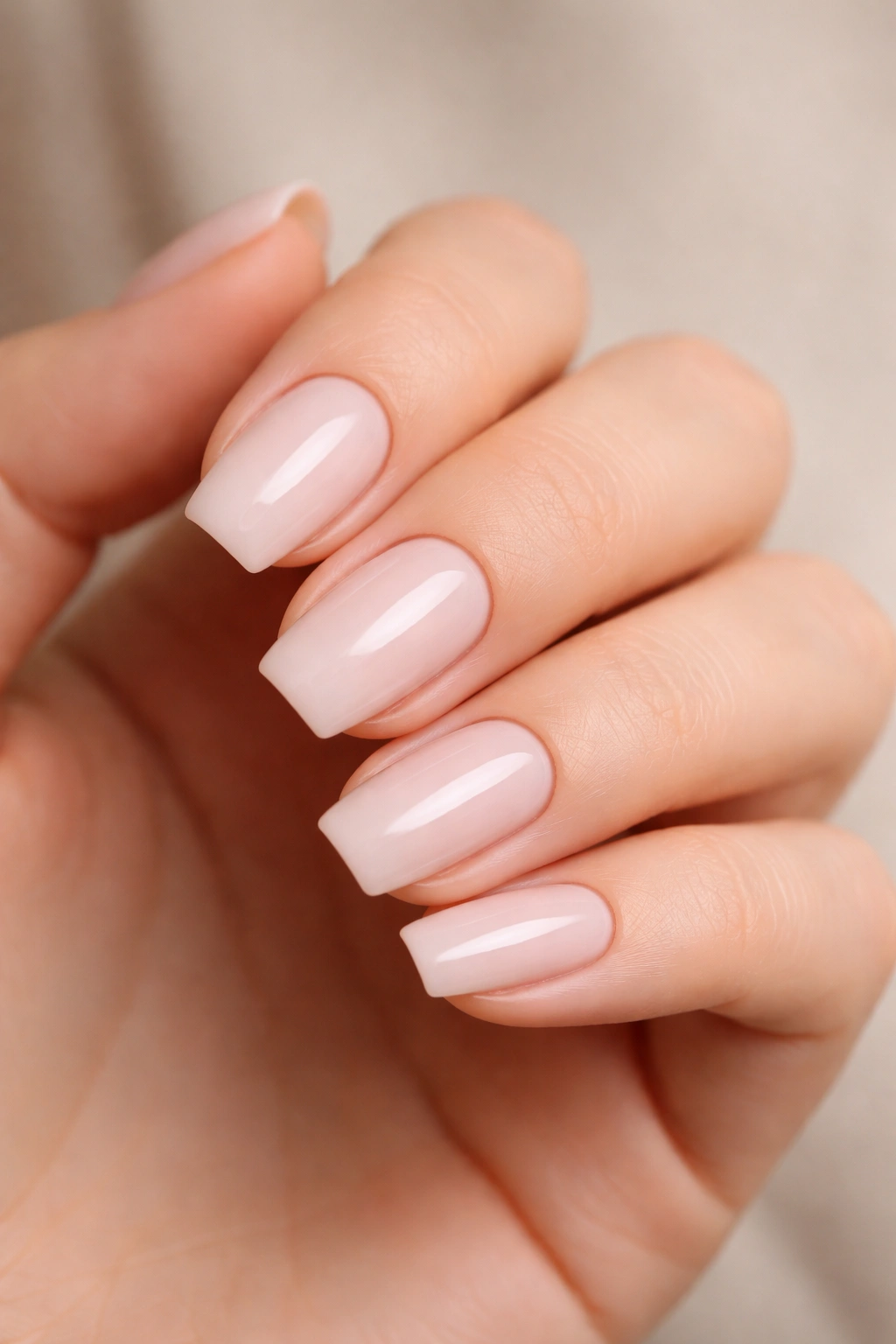
A salon photo helps, but the wording helps more.
Say you want a short ballerina or short coffin shape with a soft taper and a flat tip. If your natural nails are short, mention the free edge too: around 2 to 4 mm past the fingertip usually gives your nail tech enough space to build the silhouette without making the nails feel cumbersome.
Three details are worth saying out loud:
- Keep the sidewalls straight before tapering in. If the narrowing starts too early, the nail can look pinched.
- Leave the tip flat and slightly narrower than the base, not needle-thin. A short ballerina still needs some width at the end.
- Build a light apex if you’re using gel or acrylic. Black polish shows bulk, so the structure needs support without looking puffy.
Natural nails can wear this shape, though builder gel overlay gives better durability if your corners peel or split. Short ballerina tips rely on those corners staying intact. Once one corner breaks, the whole shape starts reading squoval.
DIY people, file from the side toward the center in short strokes with a 180-grit file. Stop every few strokes and look straight down the nail. Head-on views catch crooked taper lines faster than side angles do.
1. Soft Matte Black with a Clean Flat Tip
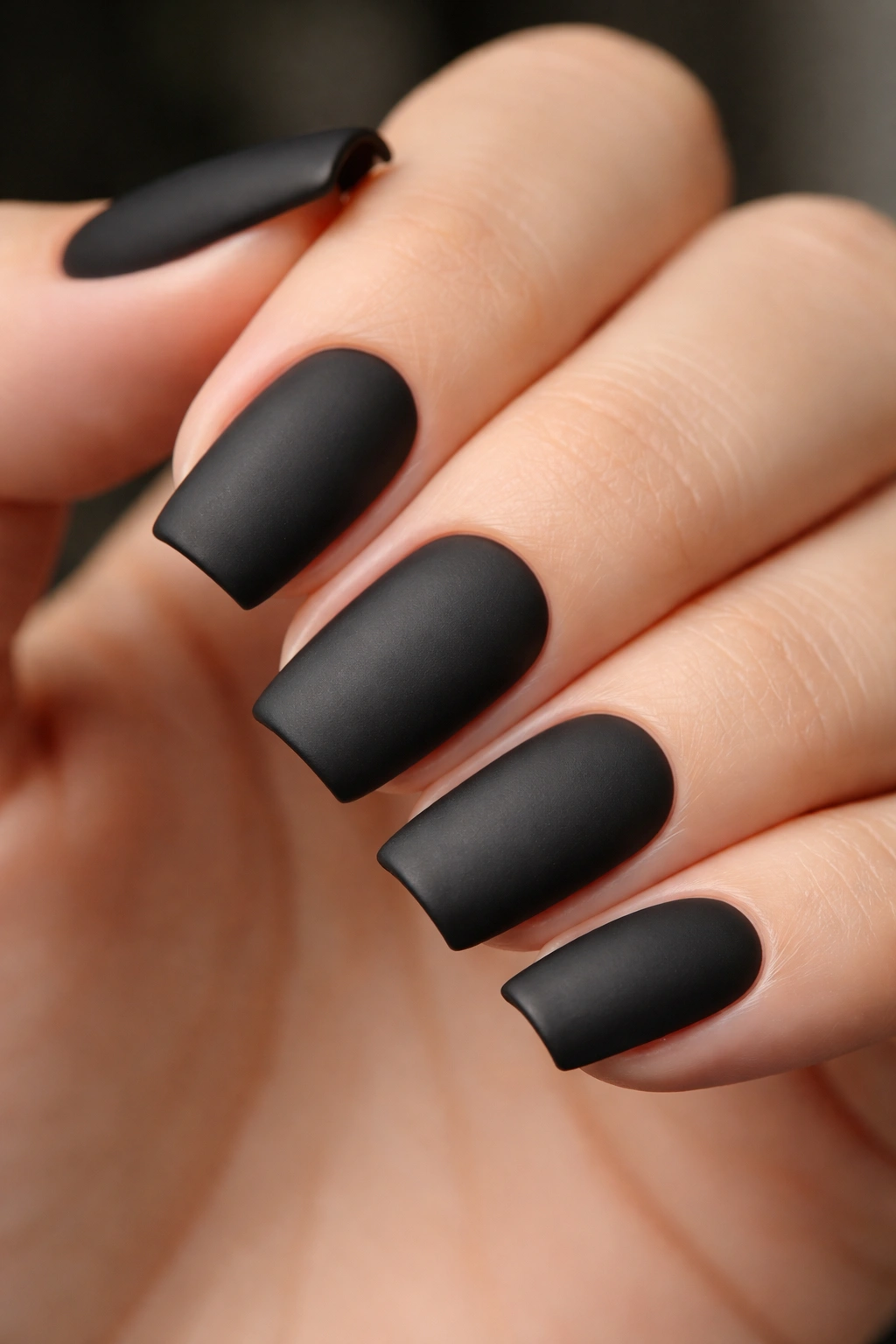
If you want the design that makes the least fuss and still looks deliberate, start here. Matte black on a short ballerina shape turns the nail into pure silhouette. No sparkle. No line work. Shape first, color second.
Why it works on short nails
Matte removes glare, so the eye tracks the edges instead of the reflection. That’s useful on short nails because it makes the taper stand out more. The shape looks planned, not accidental.
There’s another reason I like this one: it hides minor ripples better than gloss. If your natural nails have faint ridges and you do not want a thick builder layer, a matte top coat is more forgiving than a shiny one.
Quick details that make it better
- Keep the free edge at 2 to 3 mm for the cleanest look.
- Use a ridge-filling base coat under dark polish, even with gel.
- Choose a velvet-matte top coat, not a chalky one. Cheap matte can make black look gray.
- Wipe cuticle oil off the nail plate before photos; matte shows every smudge.
Salon note: ask your tech to seal the tip well. Matte black chips at the corners faster than glossy black because the finish has less slip.
2. Glossy Piano-Black Short Ballerina Nails
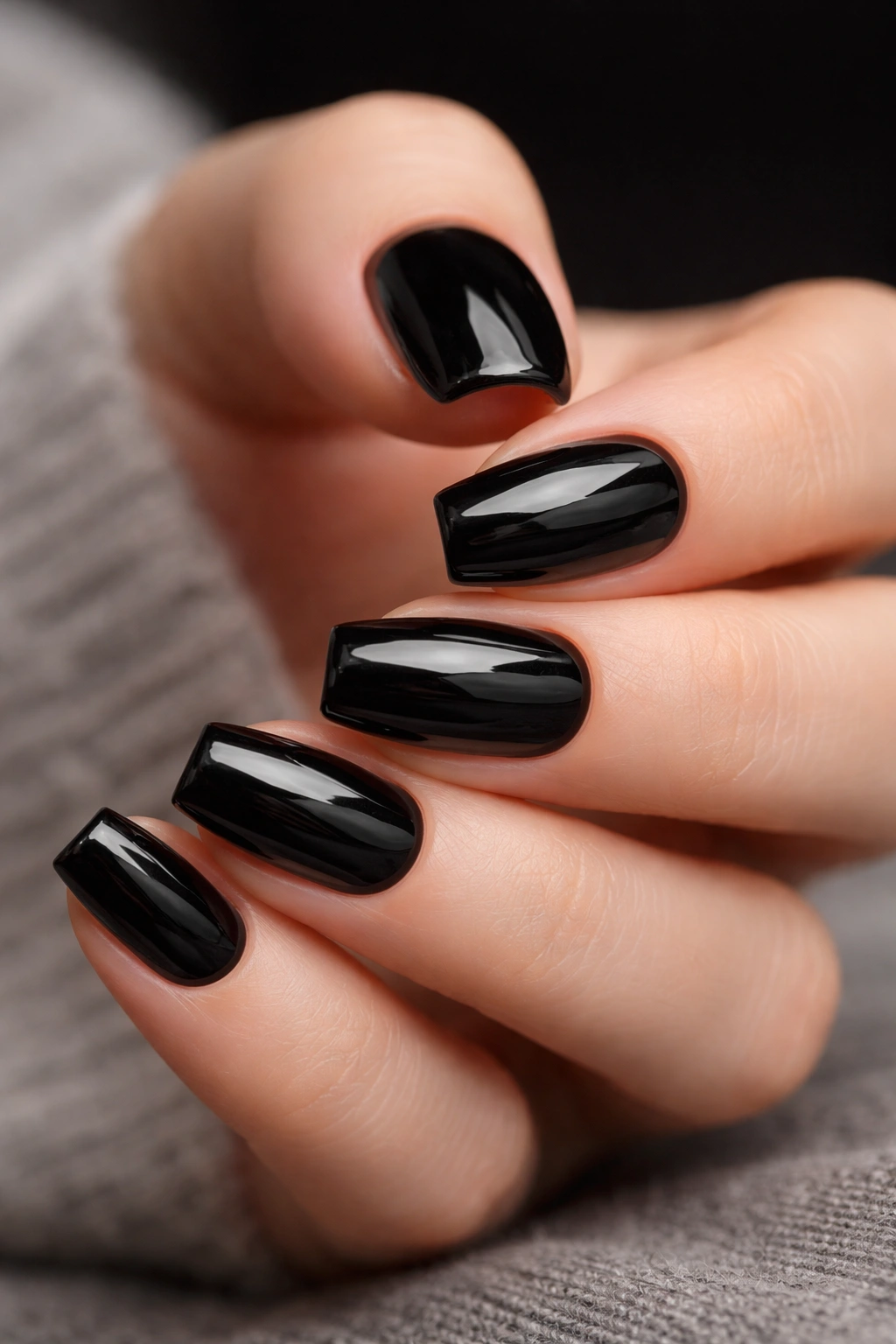
Glossy black is less forgiving, and that’s part of the appeal. It shows whether the shape is good. It shows whether the surface is smooth. It shows whether your tech understood the assignment.
On short ballerina nails, a high-shine black finish feels crisp in a way matte never does. The reflection bouncing across the flat tip makes the shape look sharper, almost lacquered, like polished piano wood. If you like clean, hard lines, this is the one.
Prep matters more here than art. A glossy black manicure needs an even surface, tidy cuticles, and sidewalls that match from nail to nail. One lumpy apex will stand out across the room. So will a thick free edge.
I’d pick this design for anyone who wants black nails with no decoration but still wants a more dressed-up finish than matte. Gel polish usually looks better than regular lacquer in this style because the shine lasts longer and the corners stay sealed longer.
One catch: glossy black highlights scratches after a few days of keys, countertops, and handbags. A fresh top coat at home can buy you extra wear, though if you see lifting at the corners, file the snag first. Do not paint over a lifted edge and hope it behaves.
3. Black Micro French on a Sheer Nude Base
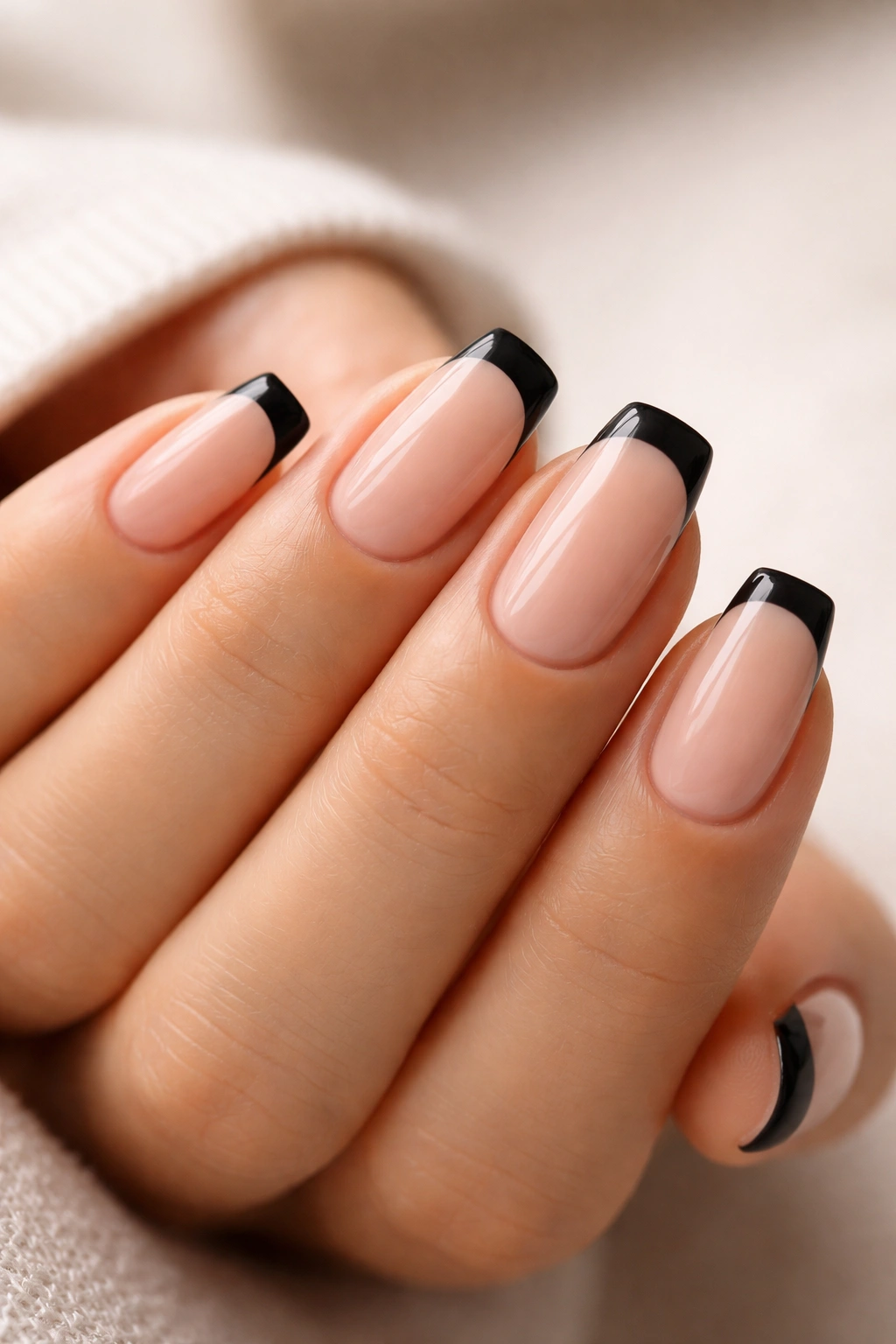
Want black ballerina nails for short nails without making the whole nail look dense? A micro French is the smartest move in the bunch.
Instead of coating the full nail in black, you leave the base sheer—milky nude, pink-beige, or a translucent blush—and add a 1 mm to 2 mm black tip across the flat ballerina edge. That tiny strip is enough to highlight the shape.
Why the tiny tip matters
A thick black French can eat up half a short nail. Then the design starts looking blocky. A micro line does the opposite. It frames the end of the nail, keeps the base airy, and makes the fingers look longer.
This is also one of the easier black designs to grow out. The cuticle area stays soft and natural-looking, so the manicure does not shout at you the second your nails grow.
How to ask for it
Ask for:
- a sheer nude base, not opaque beige
- a hairline black tip
- a straight or softly curved smile line
- a flat ballerina edge, not rounded off
If you’re painting it yourself, use a liner brush and turn the finger—not the brush—while you draw the tip. That trick helps keep the line level across the hand.
4. Diagonal Black Side French with a Tapered Slash
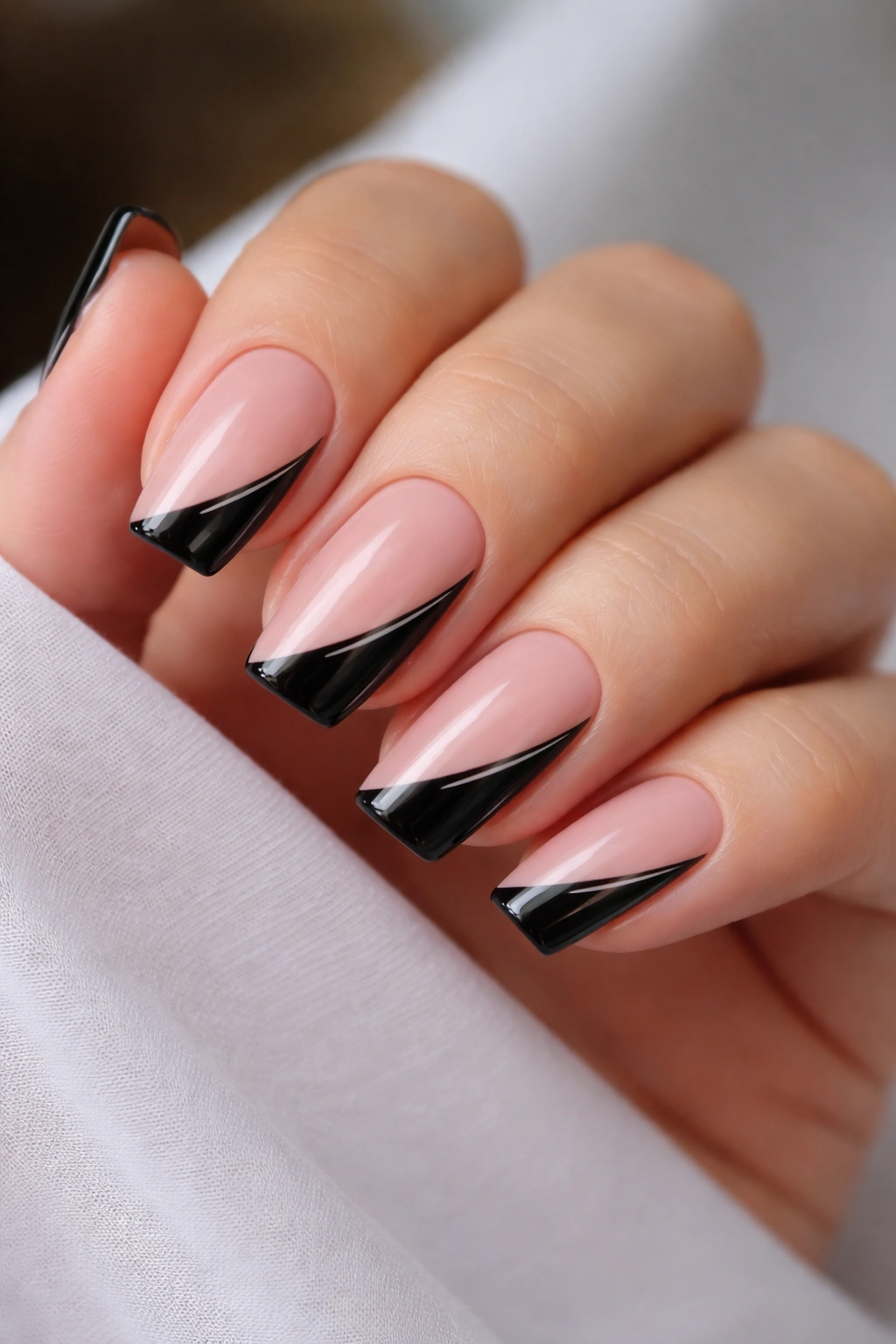
This one has more attitude. Instead of running the black line straight across the tip, the color sweeps in from one side on a diagonal, creating a slanted French edge. On short ballerina nails, that angled line can make the nail look longer than a standard tip does.
Picture a sheer nude base with the black starting near one sidewall and slicing toward the center of the free edge. It feels cleaner than heavy nail art, yet less expected than a classic French.
A diagonal design also helps if your natural smile lines are uneven. You’re no longer trying to mirror the same curve on every nail. The line becomes an intentional graphic element.
Placement tips:
- Keep the diagonal thin on short nails. Thick color blocks can crowd the nail plate.
- Angle the slash the same way on every nail for a cleaner set.
- Use this on all ten nails, or pair it with one or two full-black accent nails.
- Ask your tech to keep the nude base sheer enough that the design still feels light.
This is one of those sets that looks expensive because the line placement has to be precise. Messy diagonal French tips look homemade in the wrong way.
5. Black Reverse Crescent Near the Cuticle
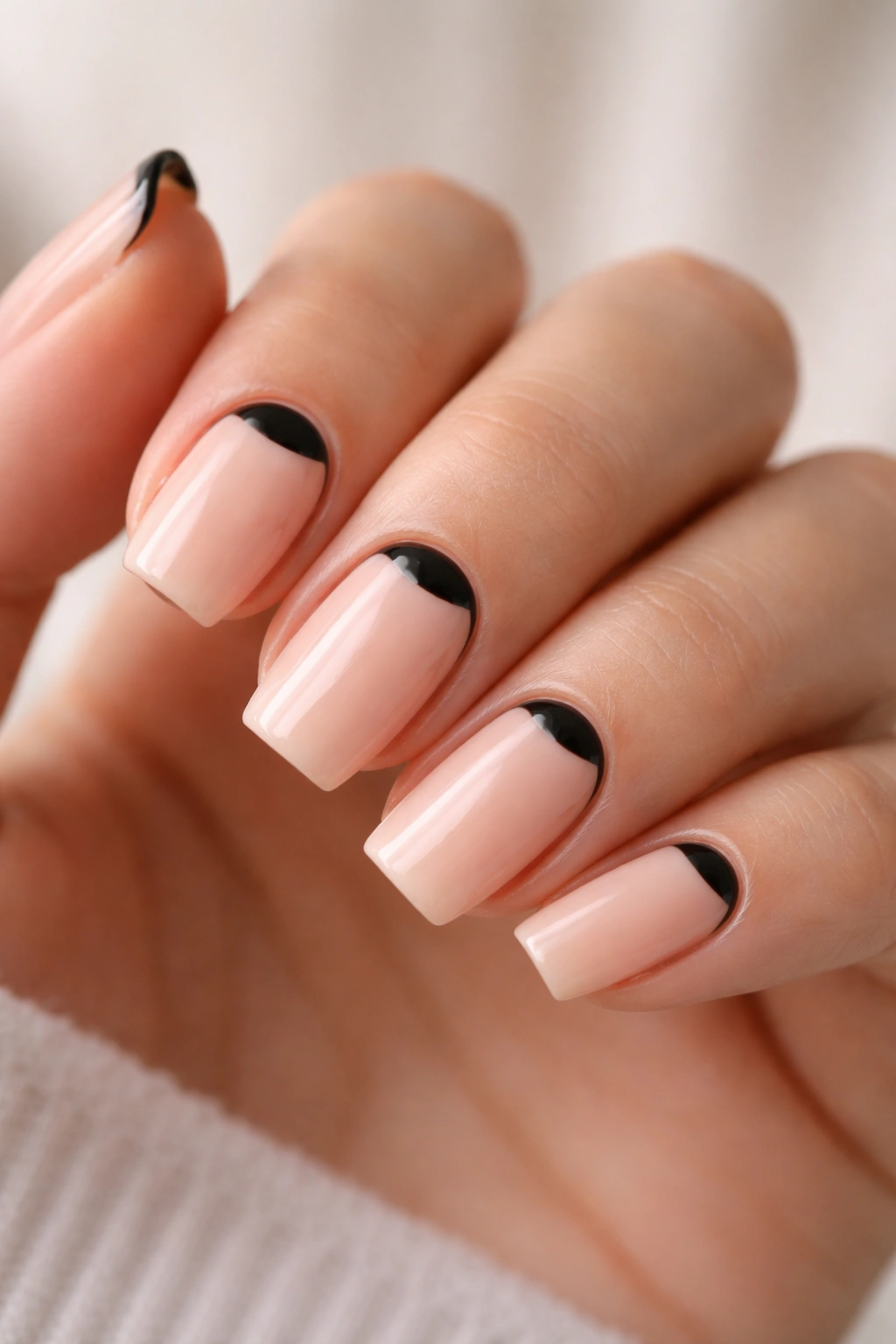
A reverse crescent flips the focus from the tip to the base of the nail. You leave a tiny half-moon of nude at the cuticle or outline that area in black, then fill the rest of the nail with color. On short ballerina nails, that little crescent can create breathing room without making the design feel unfinished.
I like this style for black because it softens the harshness of a full dark nail. The cuticle area stays lighter, which keeps the manicure from looking heavy on short lengths. There’s also a practical bonus: grow-out is less obvious, especially if the bare crescent is small and neat.
Shape matters here. The crescent should echo the cuticle line and stay thin—around 1.5 to 2 mm works on short nails. Any larger and it can start stealing too much space from the black.
You can go two ways. One is a naked half-moon with glossy black over the rest of the nail. The other is a black outline tracing the cuticle on a nude base. The first reads more dramatic. The second feels lighter and a little art-school in the best way.
If your cuticles are ragged, skip this design until they’re cleaned up. Reverse crescent styles pull the eye straight to that area.
6. Black Chrome Mirror Over a Short Ballerina Shape
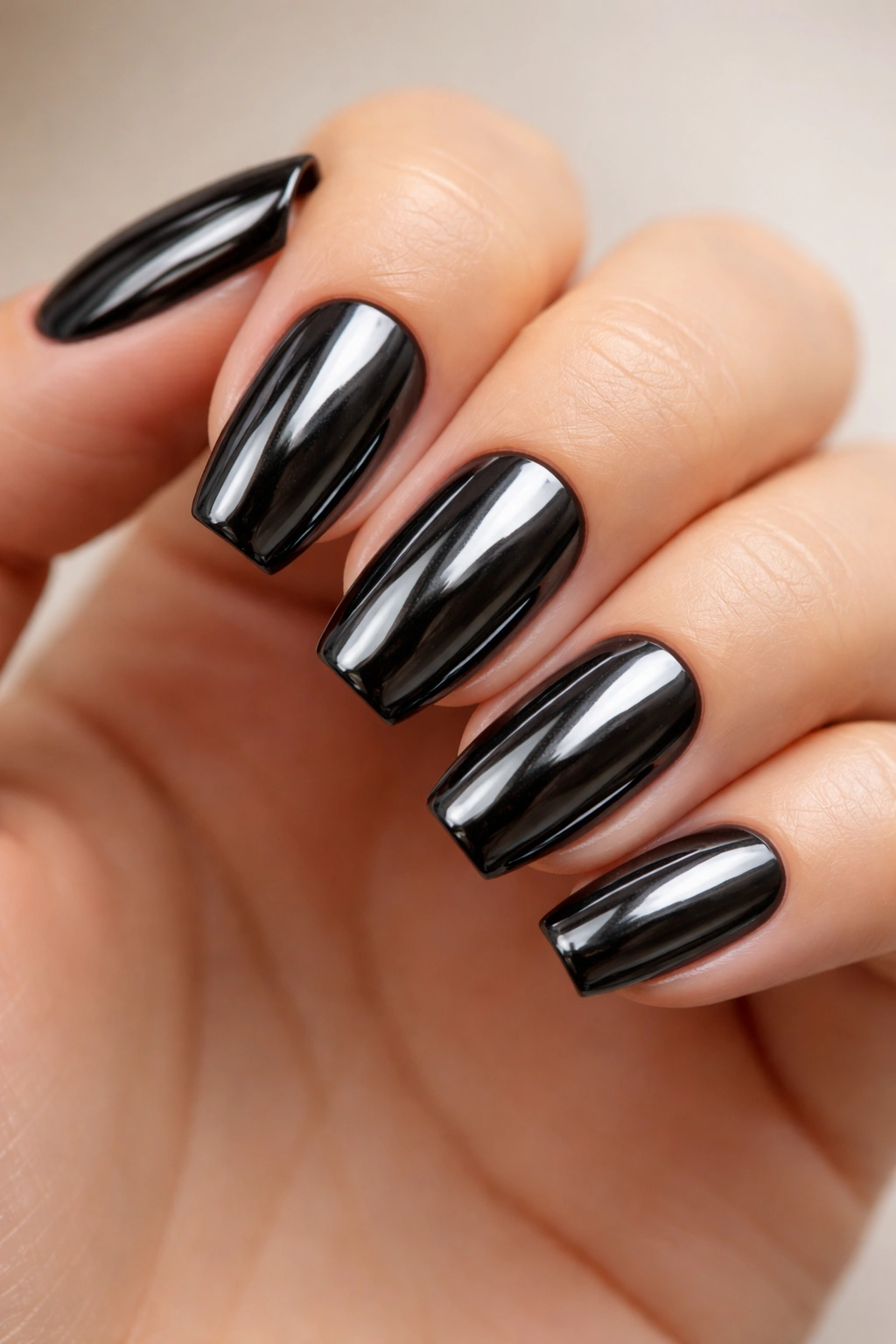
Unlike plain gloss, chrome black bounces light in a harder, more metallic way, and that changes the whole mood of the manicure. The shape still reads short ballerina, though the finish gives it a sharper, almost armored feel.
Chrome works best over a smooth black gel base with a no-wipe top coat. Then the pigment gets rubbed in and sealed. On short nails, that smoothness matters even more because there is less surface area to distract from bumps.
Who is this best for? Someone who wants black nails that do more than sit there. Chrome moves when your hands move. Under indoor light it can look steel-gray at the center, then swing back to ink black at the edges.
There is a downside. Chips and scratches show early if the top coat is thin or the tips were not capped well. I would not pick this for heavy manual work unless you’re using a solid gel structure underneath.
If you want the effect without full-metal drama, use chrome on two accent nails per hand and keep the rest glossy black. That split keeps the set sharp without turning every nail into a mirror.
7. Smoked Black Ombre That Fades from Tip to Base
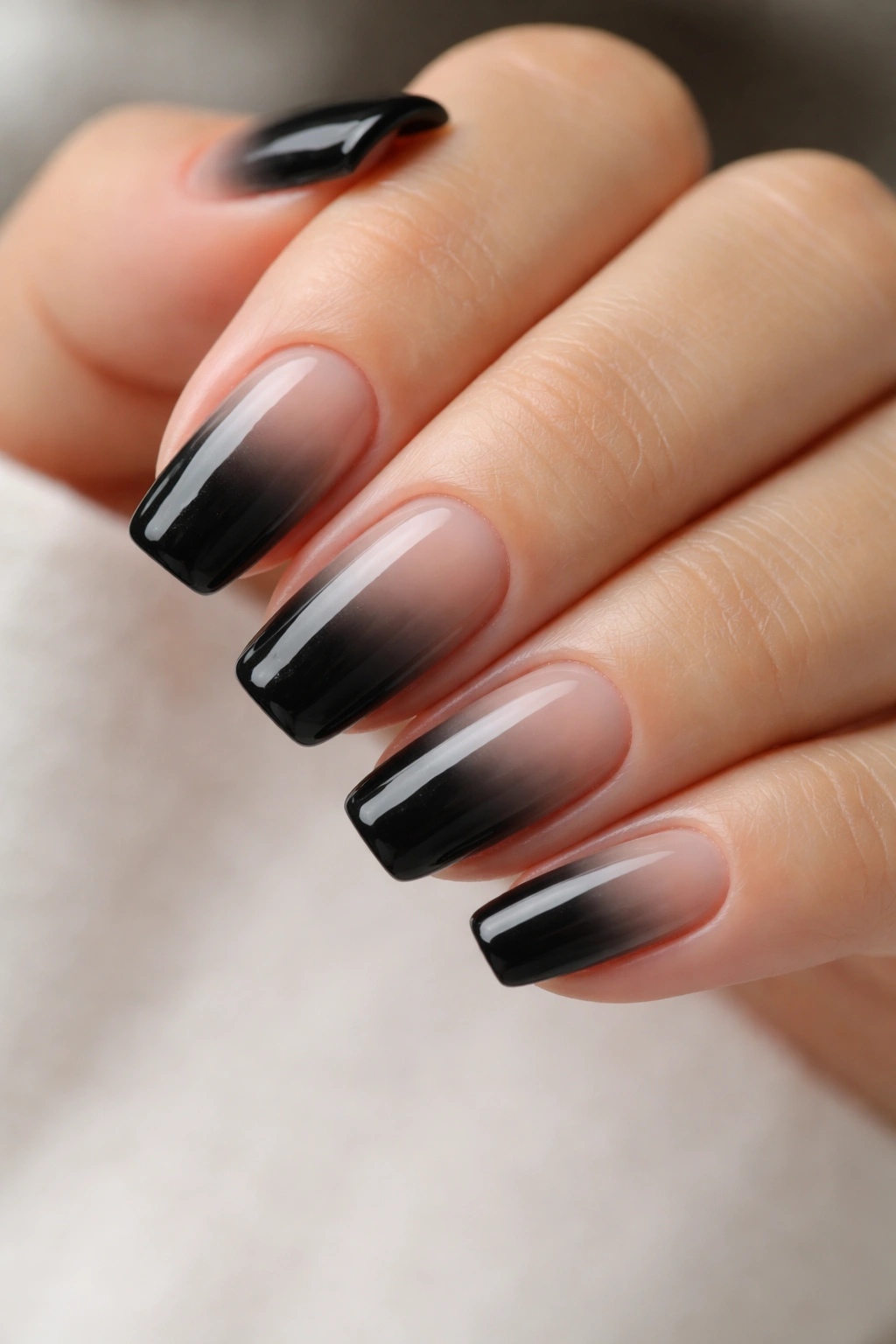
A good ombre can rescue a short nail from looking stubby. Darkest color at the tip, softer haze toward the base—that placement stretches the nail visually because your eye follows the fade upward.
Black ombre looks best when it is not harsh. You want smoke, not a stripe. On a short ballerina shape, the fade usually needs to happen within half the nail length, so airbrush or sponge work has to stay controlled.
Where the fade should sit
Keep the densest black at the flat tip and side corners. Let it soften by the middle of the nail, then melt into sheer charcoal or nude near the cuticle. If the dark shade reaches the base at full strength, the whole point is lost.
Best finish choices
- Gloss top coat if you want depth, like smoke under glass
- Soft matte top coat if you want the shape to stand out more
- Tiny silver foil flecks on one accent nail if the set needs more edge
This design is a strong pick for wider nail beds because the darker tip narrows the eye line. It also grows out well, which matters if you don’t want salon visits too close together.
8. Sheer Black Jelly with a Glassy Finish
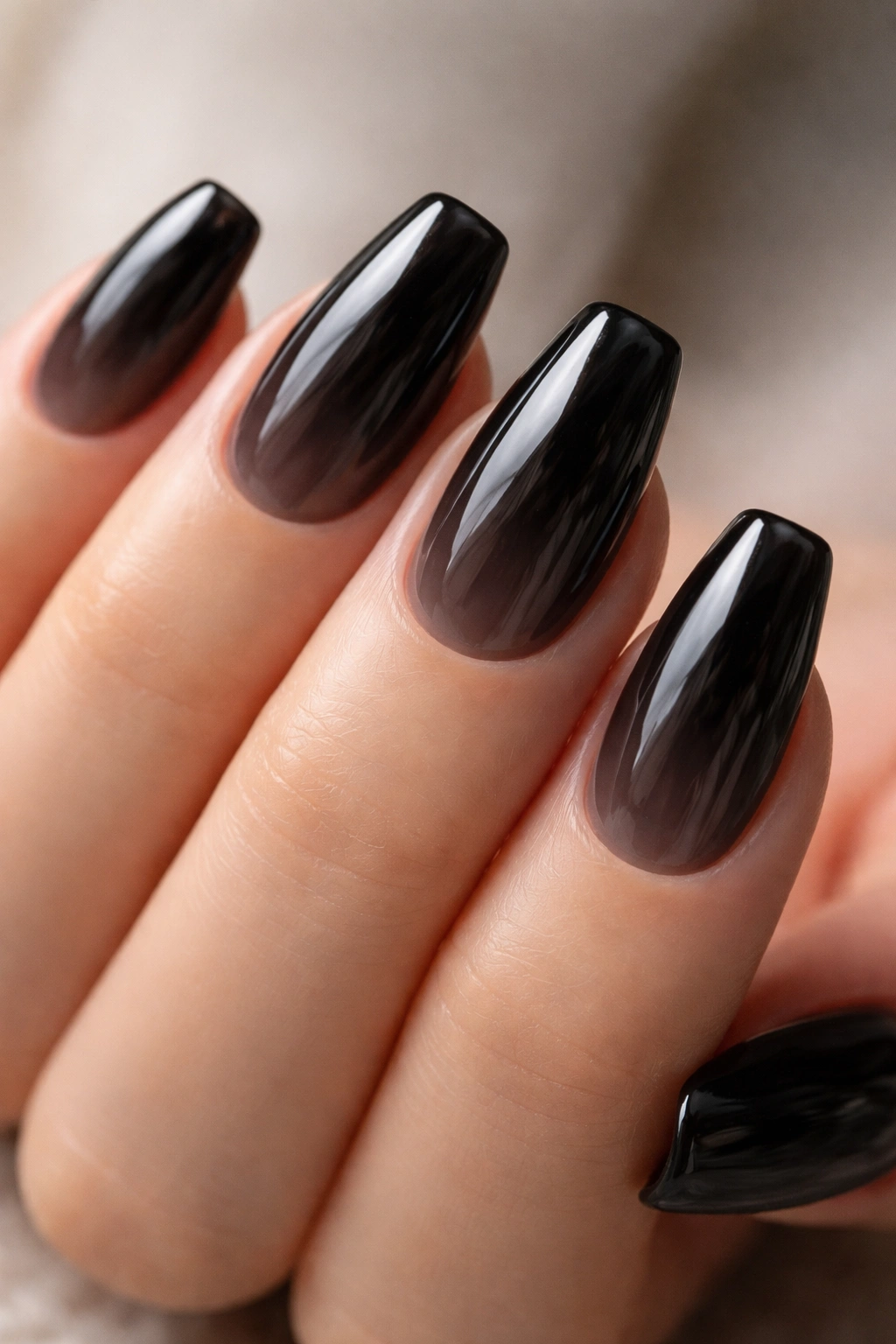
Here’s the contrarian pick: sheer black often flatters short nails better than opaque black does. Not always. But often enough that it deserves a spot high on the list.
A black jelly manicure looks like smoked glass. You can still see a hint of the natural nail underneath, which keeps the set from feeling dense. On a short ballerina shape, that transparency adds depth without bulk.
The trick is layering. One coat looks patchy. Two coats start to show the effect. Three thin coats usually hit the sweet spot, where the nail reads black but still lets light move through it. Thick coats ruin it. You lose the jelly effect and gain wrinkling around the sidewalls.
This finish pairs well with builder gel because a smooth, slightly structured base makes the translucence look intentional. On bare natural nails, jelly black can emphasize peeling or white spots near the free edge.
I’d choose this if you like dark nails but hate how heavy full pigment can look on shorter fingers. It feels lighter, a little moodier, and more dimensional than a standard cream black polish.
9. Black Velvet Cat-Eye with a Centered Magnet Pull
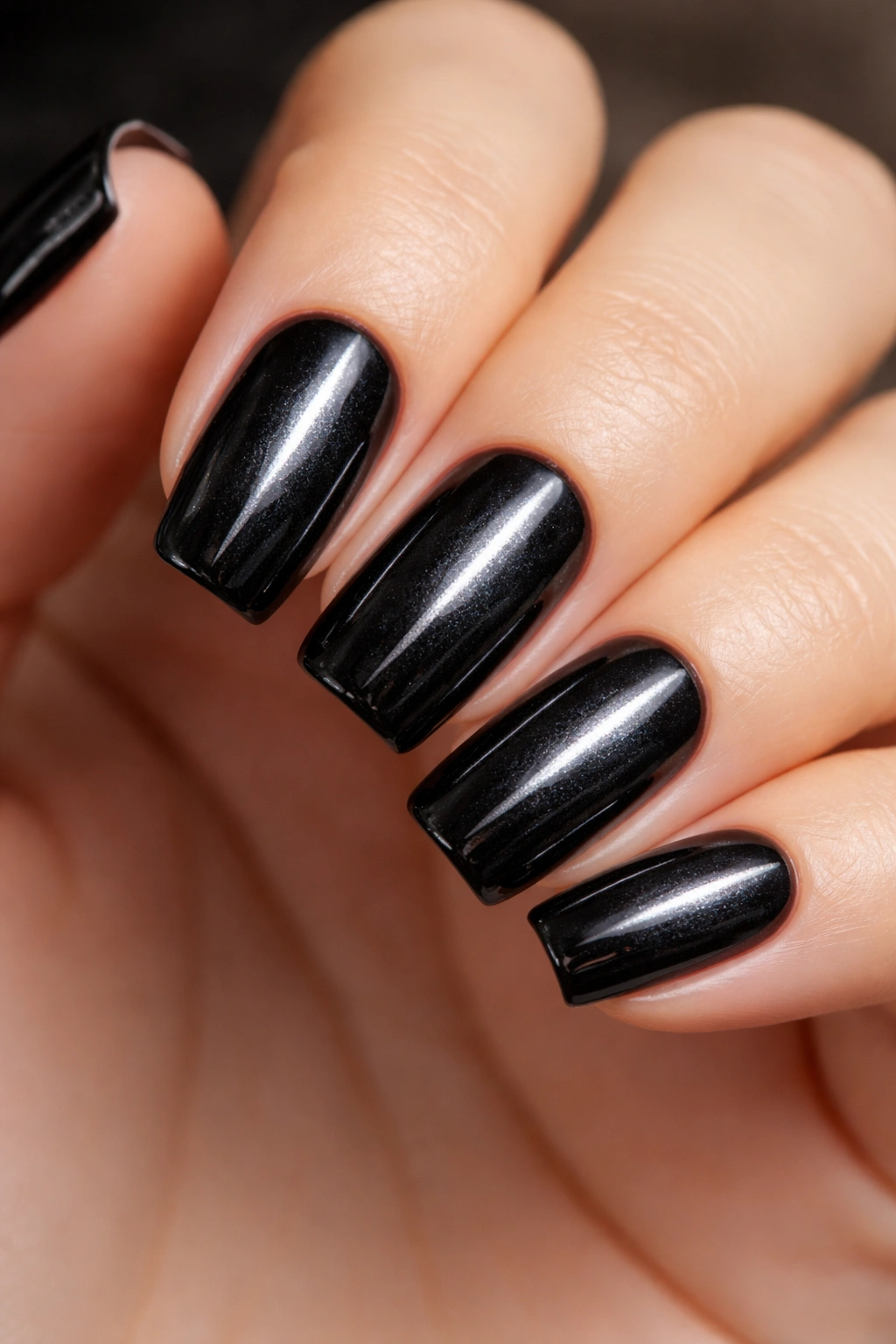
Cat-eye polish can go messy in a hurry, though when the magnetic line is placed well, it looks almost liquid. On short ballerina nails, the best version is a centered pull, not a dramatic diagonal wave.
That centered shimmer gives the nail a narrow beam of light from cuticle to tip. The beam acts like a visual spine, which can make short nails look longer and straighter.
You need patience for this one. The magnet should stay over each nail for around 10 to 15 seconds before curing if you want a crisp line. Rush it and the shimmer spreads out into a cloudy patch.
What makes this design work:
- A black magnetic gel, not charcoal, so the background stays deep
- A thin first coat, then a second coat to move the particles
- The magnetic line placed slightly off dead center if your nail curves more on one side
- A glossy top coat to keep the shimmer crisp
This style suits people who want movement without rhinestones or foil. It has enough drama on its own. Add too many extras and the short length starts looking busy.
10. Black Marble with Hairline White Veins
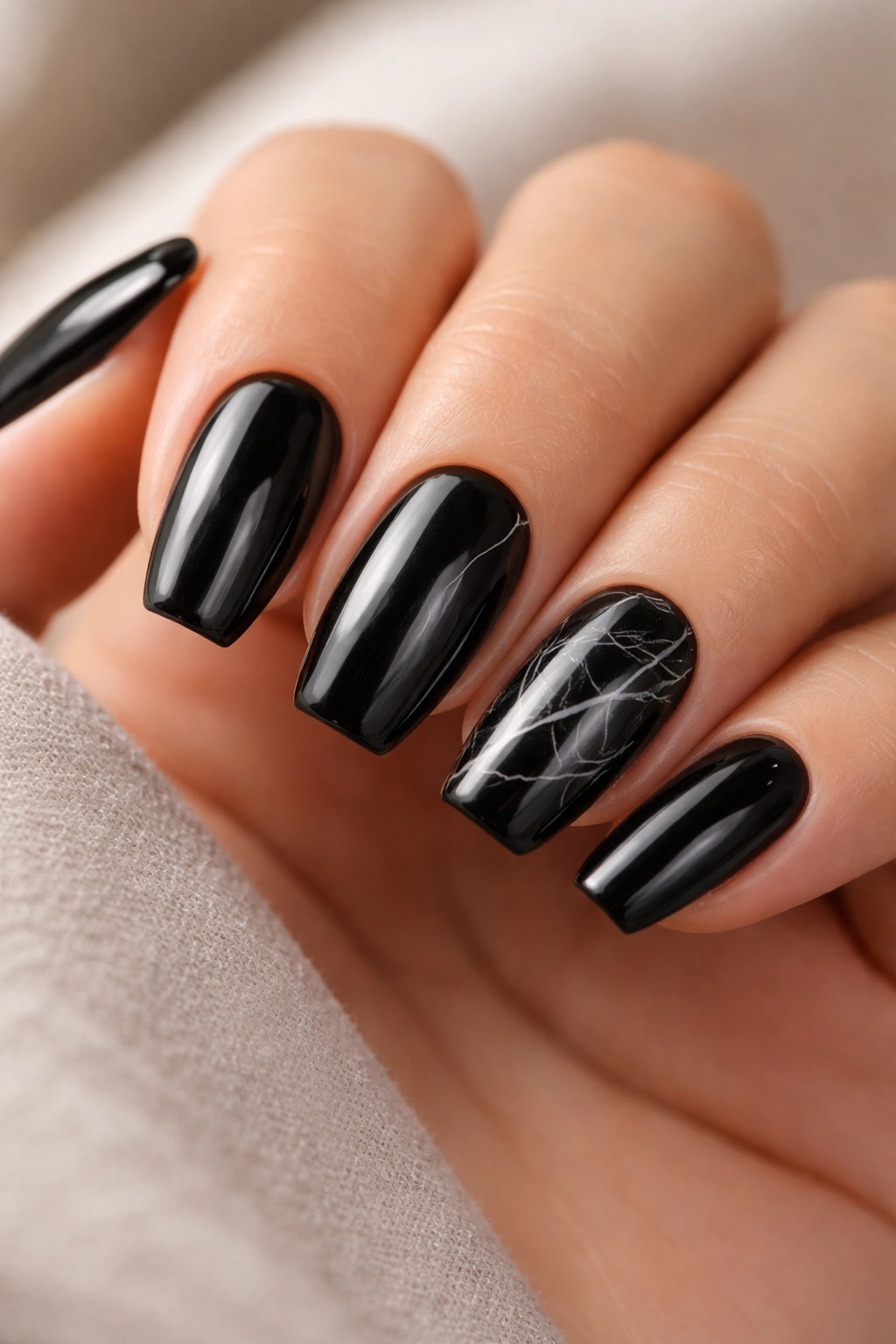
Marble can look clumsy on short nails if the pattern is too bold. Thick white streaks, too much gray, heavy blooming gel puddles—those things eat space fast. The fix is restraint.
A black marble set for short ballerina nails should use fine, broken white veins, maybe one soft gray blur, and a mostly dark base. Think stone slab cut thin, not abstract painting. You want the pattern to read in a second.
I would keep this to two or four accent nails. On all ten, short nails can start looking crowded, especially if the nail beds are narrow. Pair black marble accents with solid glossy black nails and the whole set feels more expensive.
The best marble nails have uneven lines. Not sloppy. Uneven. Real stone does not form identical zigzags on each finger. One vein can start near the sidewall and fade out by the center; another can split in two near the tip. Those quirks are what make the design convincing.
If your tech uses blooming gel, ask for a light hand. Black spreads fast. Once the white lines thicken too much, the marble effect turns cloudy.
11. Black Glitter Fade Concentrated at the Tips
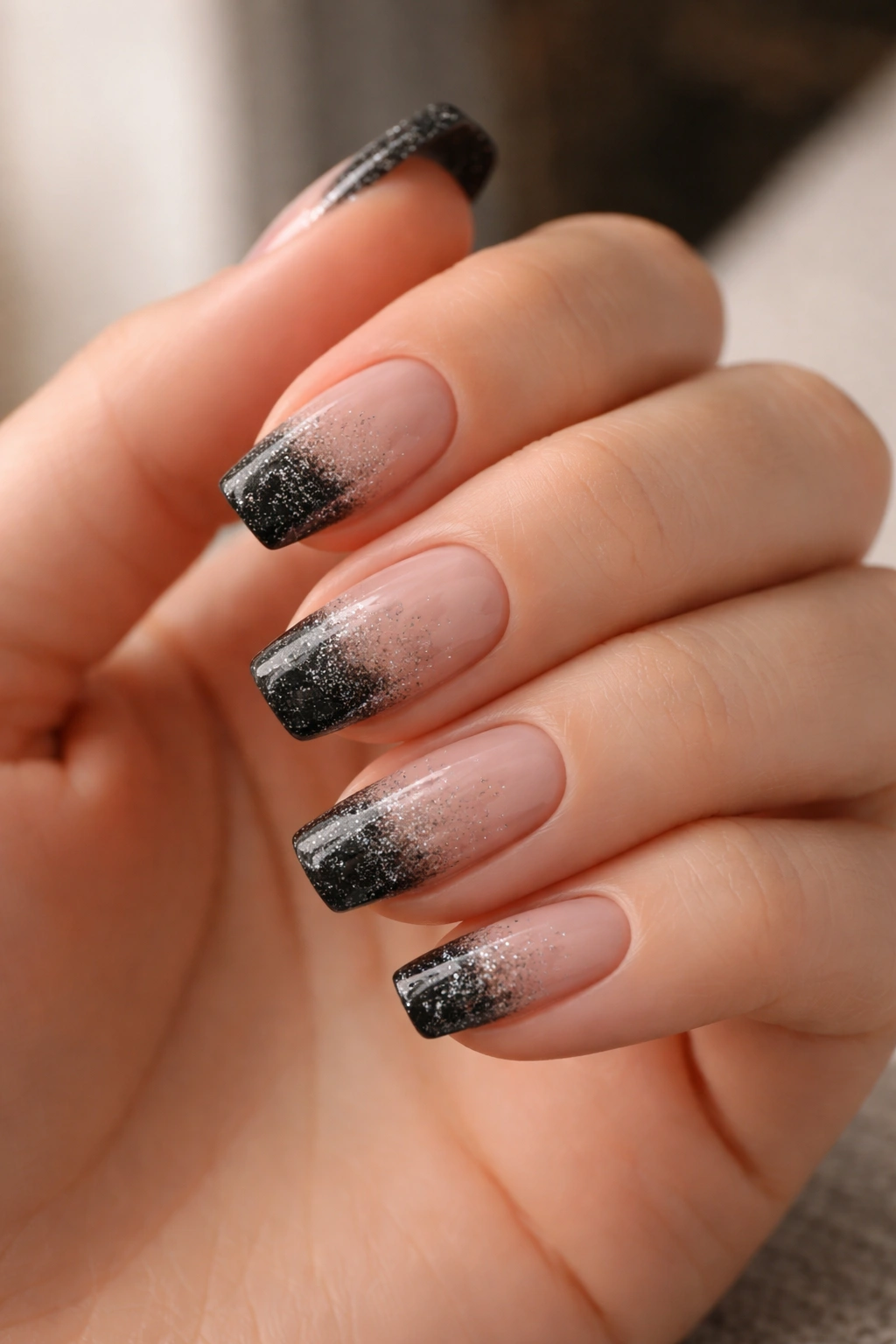
Chunky glitter on short nails is often a mistake. It adds bulk, catches on knit fabric, and can make the nail look wider. A fine glitter fade at the tips is a different story.
Start with a black or deep charcoal base, then pack micro-glitter or gunmetal sparkle at the tip and let it taper toward the middle. On a short ballerina shape, that placement keeps the flat edge crisp while still giving you texture.
Why tip placement matters
Tip-heavy glitter has the same visual trick as an ombre. The eye lands at the end of the nail first, which helps extend the line of the finger. Scatter glitter from cuticle to tip and the shape loses that lift.
Best glitter choices
- Fine black holographic
- Gunmetal shimmer
- Silver micro-glitter mixed into black gel
- No large hex pieces on short nails
Quick call: a glitter fade looks better under gloss than matte. Matte mutes the sparkle and can make the nail look dusty instead of polished.
12. Black Croc Texture on Accent Nails Only
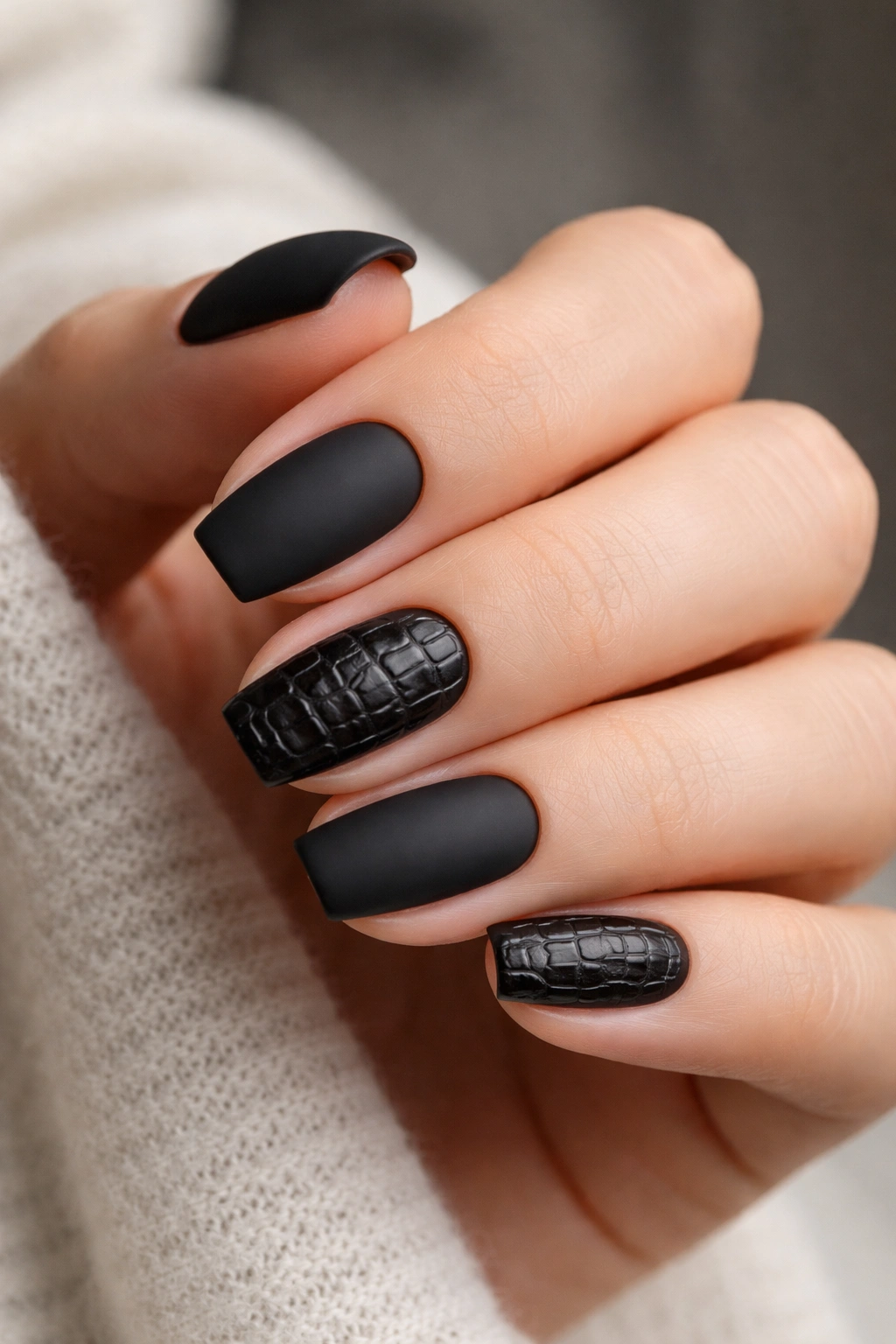
Texture can be fun. It can also get heavy fast.
Croc or reptile-style black nail art usually uses blooming gel, gel paint, or a raised top layer to create scaled patches. On long nails, you can coat the whole set and let the texture be the star. On short ballerina nails, I’d pull back and use it on one or two accent nails per hand.
That balance matters because the shape itself is already graphic. Add raised black texture to every nail and your hands start carrying too much visual weight. One accent nail on the ring finger and one on the thumb, though, looks sharp.
The finish changes the mood. Matte croc reads dry, almost leather-like. Gloss croc has more bite because the raised pattern reflects light off the ridges. If the base nails are plain matte black, glossy croc accents create strong contrast without adding extra colors.
This set suits people who want nail art with texture but do not want rhinestones, decals, or obvious patterns. It’s darker, a little tougher, and better in small doses.
13. Black Nails with Tiny Silver Stud Placements
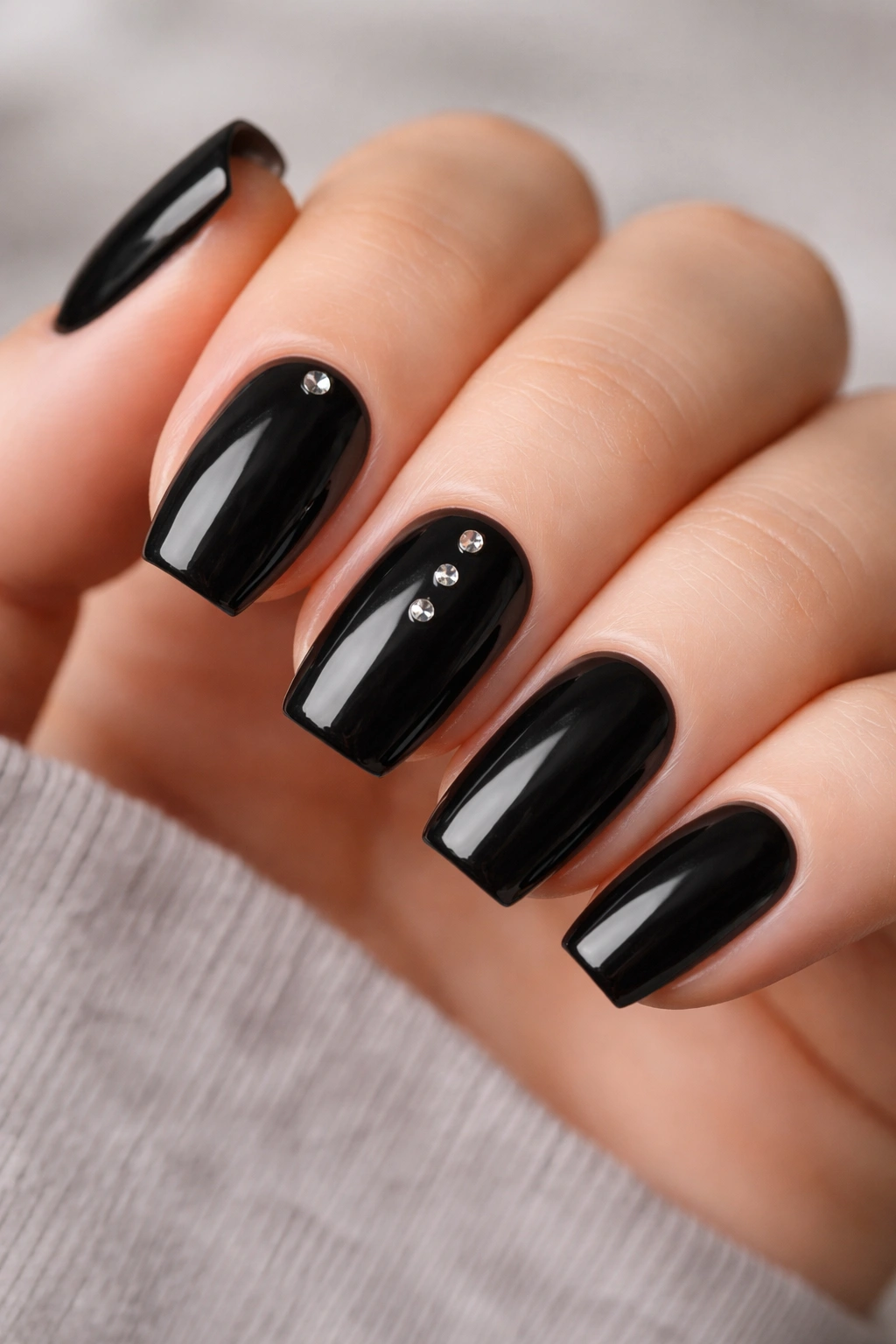
A tiny metal stud can change a black manicure more than a full glitter top coat can. Placement is the whole story here. A stud that is 1 mm to 1.5 mm wide looks crisp on short nails. Bigger than that, and it starts taking over the nail plate.
You do not need many. One stud near the cuticle on each ring finger. Three studs in a vertical line down the center of one accent nail. A single stud placed off-center near the sidewall. Those small choices keep the shape visible.
Here are the placements I like most on short ballerina nails:
- Single cuticle stud on one accent nail
- Vertical trio down the center of the nail
- Tiny stud at each side corner of the tip for a framed effect
- One silver dot on a black micro French for a sharper graphic look
If you wear gloves often or dig through bags all day, ask for the studs to be sealed carefully. Flat-backed pieces last longer than domed ones because they snag less.
This design leans more rock-and-roll than romantic, though a tiny stud can also act like jewelry for people who keep the rest of the manicure plain.
14. Black Heart Negative Space on a Short Ballerina Base
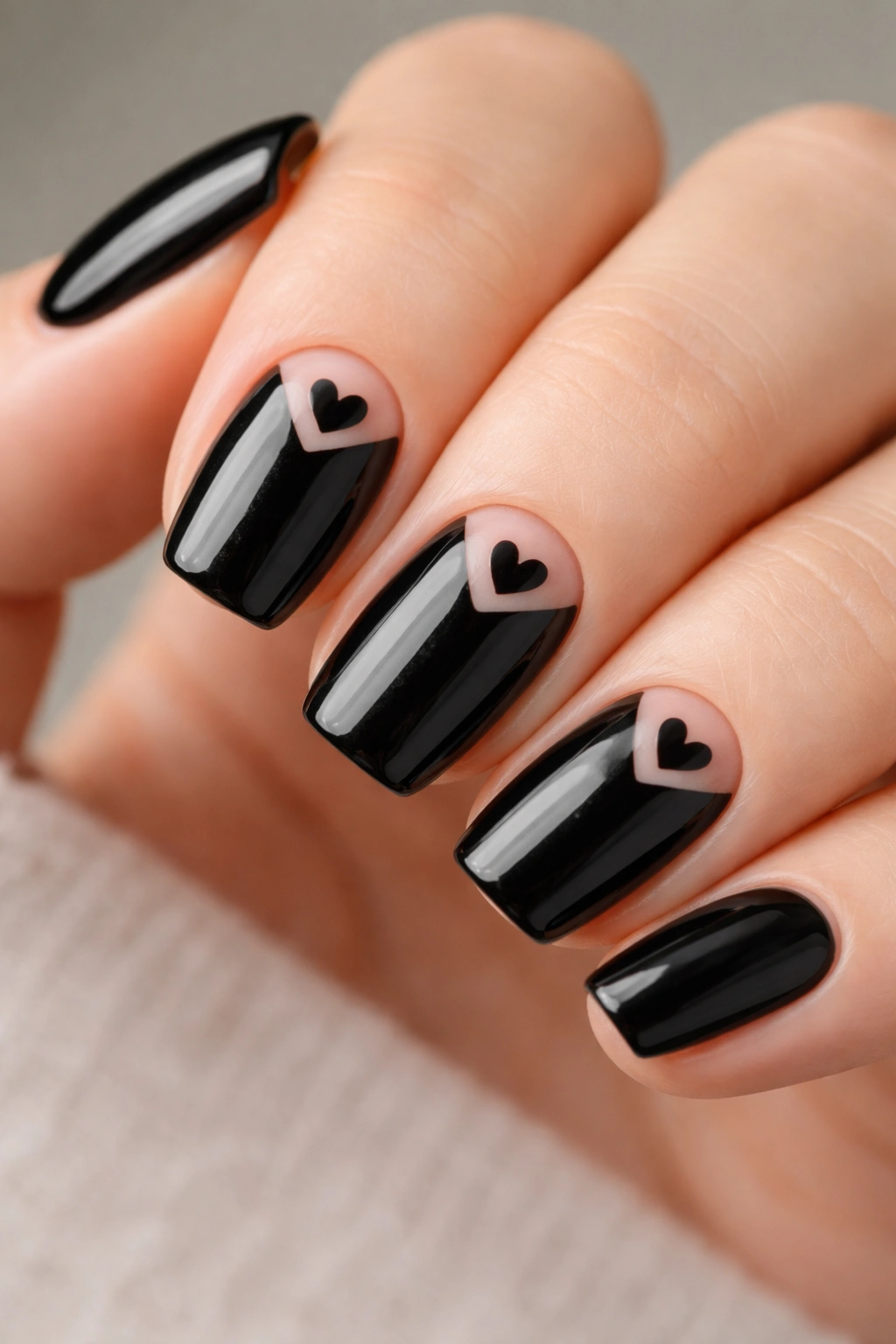
Hearts can go juvenile fast. The grown-up version is a small negative-space heart cut from a black base, not a big red decal dropped on top.
A tiny heart near the cuticle or slightly off-center near one sidewall gives the manicure a playful edge without turning the whole set sugary. On short ballerina nails, scale is the make-or-break detail. Keep the heart around 3 to 5 mm wide. Larger than that, and it starts eating the design.
This works best on a glossy black base because the negative space looks cleaner against shine. A matte finish can soften the contrast too much unless the heart outline is razor sharp.
You can choose one heart on each ring finger and leave the rest plain black, or mix one heart accent with a micro French on the other nails. That pairing feels balanced because one design is graphic and the other is minimal.
If you want something moodier, place the heart near the tip instead of the cuticle. It shifts the vibe from cute to a little sly. Same symbol. Different energy.
15. Black Satin Finish with Tonal Gloss Outlines
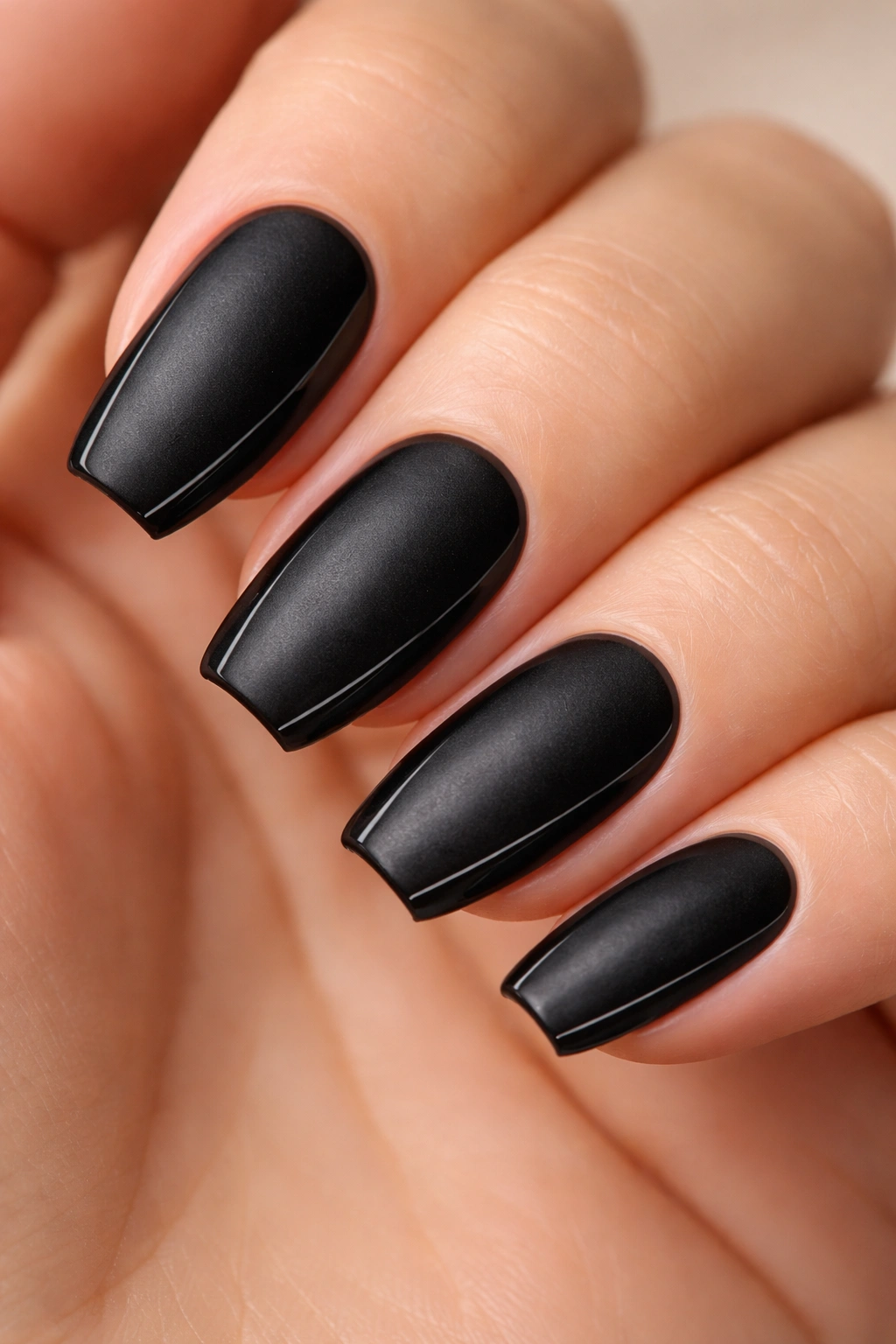
This is the design I’d point to if you want detail that only reveals itself at close range. The base gets a satin black top coat—not fully matte, not high gloss—then a glossy black line traces the French tip, sidewalls, or cuticle arc. Black on black. Subtle, though not dull.
Satin has more depth than flat matte. It keeps the color rich and inky while muting the reflection enough that the glossy lines can stand out. On short ballerina nails, those tonal outlines act like a map of the shape. They frame the flat tip and make the taper easier to read.
The line work has to stay thin. Think liner-brush thin, not thick borders. Heavy outlines can make a short nail look boxed in. Fine gloss tracing, especially across the tip and slightly down the sides, gives structure without crowding the plate.
This style is for people who like black nails but want a second look. From a few feet away, it reads as a clean satin manicure. Up close, the gloss lines show up and the whole set gets more interesting.
How to Make Black Ballerina Nails for Short Nails Last Longer
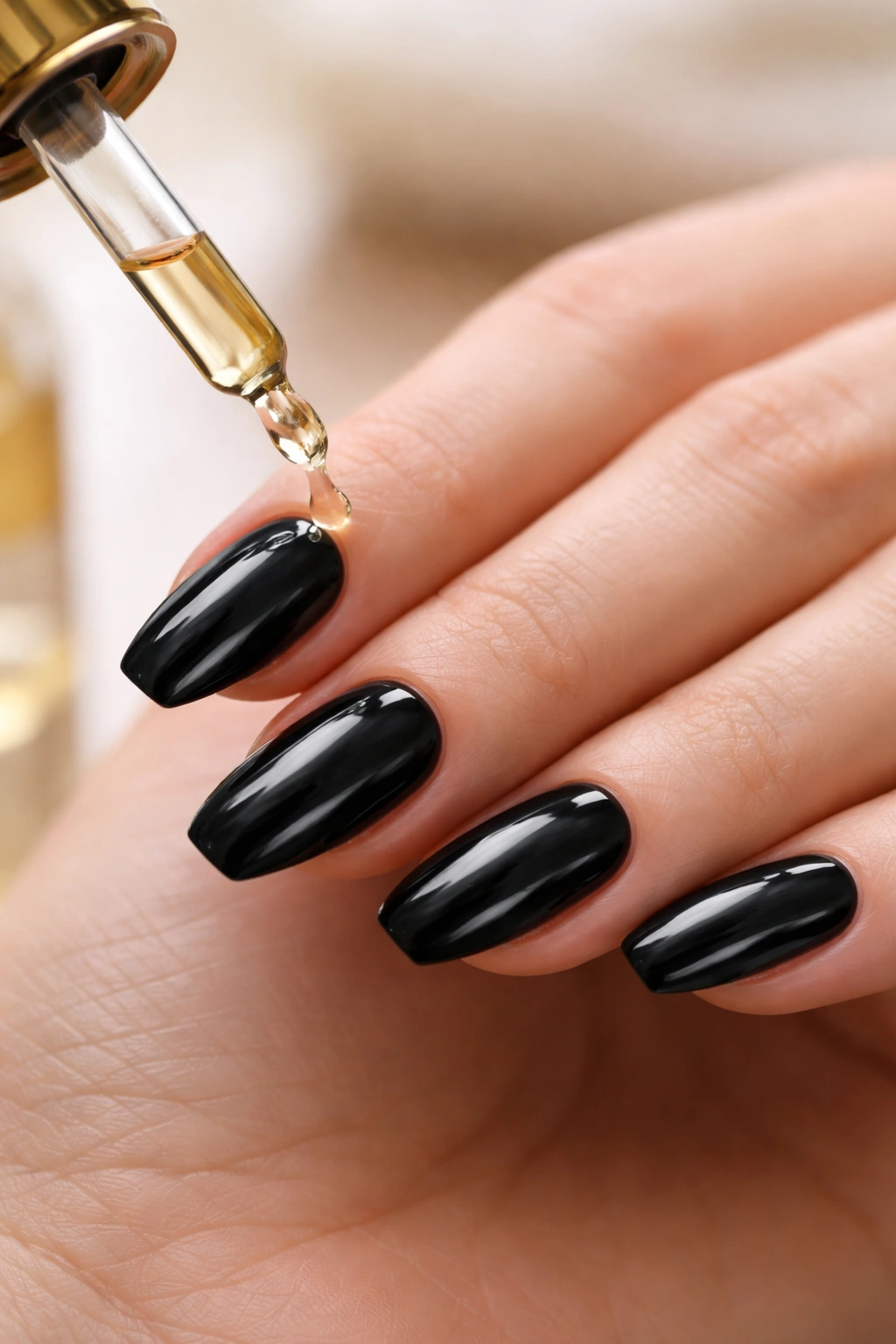
Black polish punishes sloppy upkeep. Tiny chips stand out. Bent corners show. A good maintenance routine keeps the manicure sharp longer, and it does not need to be complicated.
First, oil the cuticles twice a day. Dry skin makes a black manicure look tired before the polish has even worn out. Jojoba-based cuticle oil sinks in fast and keeps the edges from looking papery.
Second, file snags as soon as you feel them. Use a 180- or 240-grit file and smooth the corner in one direction. Waiting until the corner catches on a sweater is how short ballerina nails turn back into squoval.
A few habits help more than people expect:
- Wear gloves when cleaning with bleach or hot soapy water for long stretches.
- Add a fresh top coat every 3 to 4 days if you’re wearing regular polish.
- Avoid using your nail tips to pry can tabs, peel labels, or scrape stickers.
- Book fills or overlays before the corners start lifting if you wear gel, acrylic, or hard gel.
Short ballerina nails also last longer when the shape is honest. If your natural nails flare outward at the sides, forcing a severe taper weakens the corners. A softer ballerina shape will wear better and still give you the same mood.
And one more thing: dark shades look best on a clean underside too. A quick swipe under the free edge with a nail brush makes black manicures look newer. Tiny detail. Big difference.
Final Thoughts
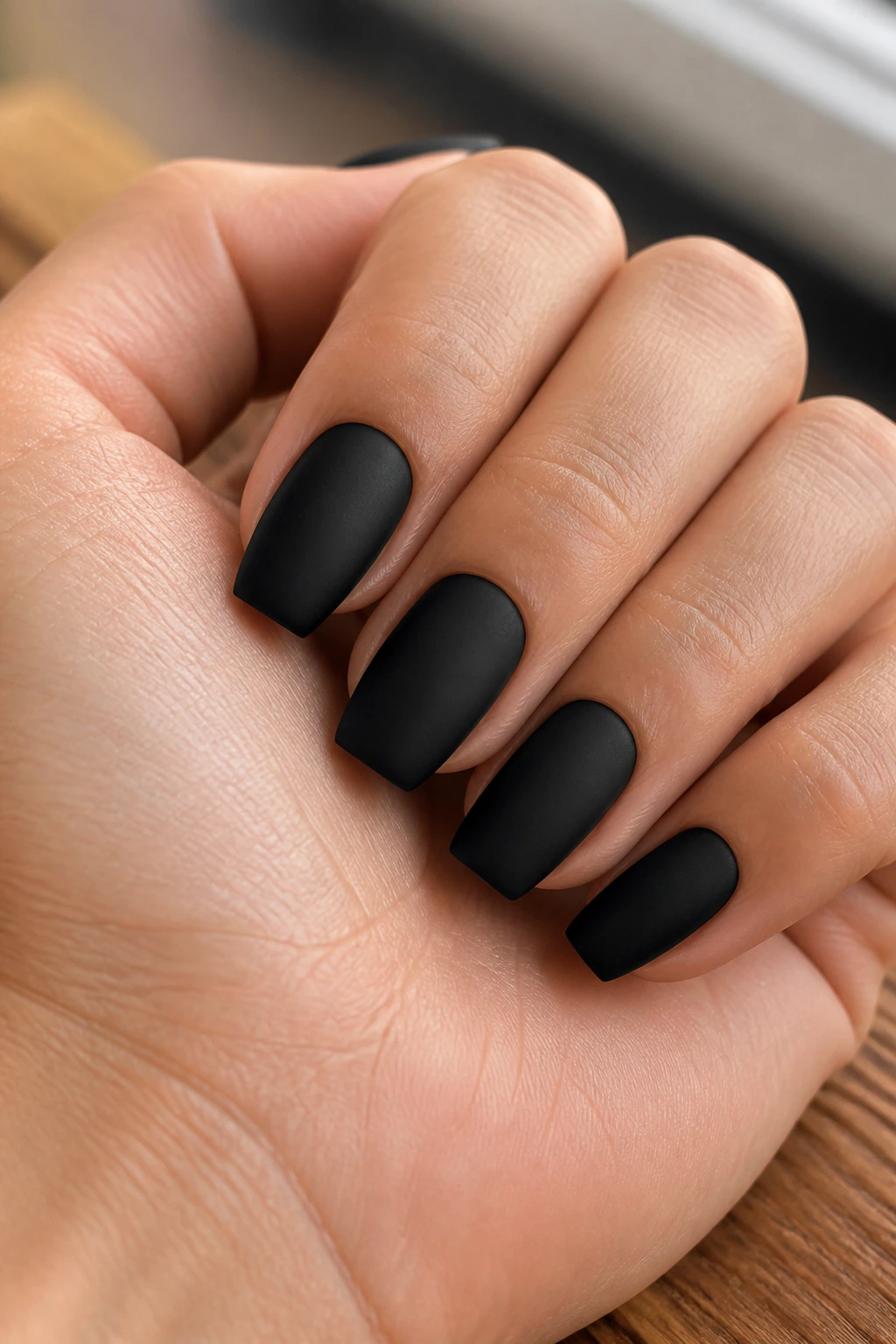
If I had to narrow these down to the safest bets, I’d start with soft matte black, black micro French, and smoked black ombre. Those three flatter short lengths, grow out well, and do not ask much from the nail plate.
If you want more edge, chrome, velvet cat-eye, and croc accents bring more personality without demanding extra length. That’s the part people miss. Short nails do not need to be plain. They need sharp choices.
The best black ballerina nails for short nails always come back to the same two things: a clean taper and design placement that respects the space you have. Get those right, and even the shortest set can look deliberate, polished, and far more expensive than it was.