

Purple ballerina nails do something few other manicures can pull off. On the same tapered, squared-off shape, soft lilac looks airy and clean, while deep plum turns the whole set moodier, sharper, and more dressed up. That spread—from pale milk-lavender to dark wine-purple—is why this color family keeps showing up on ballerina and coffin nails.
The shape matters more than people think. A ballerina nail has straight sidewalls, a narrowed body, and a flat tip, so color doesn’t sit on it the way it does on round or almond nails. Pale purple can make the tip look wider if the taper starts too low. Dark purple can make the nail look shorter if the free edge is too blunt. Even top coat choice changes the result: glossy reads juicy, matte reads soft and powdery, and chrome pulls your eye straight to that crisp tip.
Tiny details decide whether a purple manicure feels polished or clunky.
There’s another reason this palette works so well: purple has real range. Lilac leans fresh. Lavender feels calm. Orchid has more punch. Mauve softens the whole hand. Plum, berry, eggplant, black cherry—those shades bring depth without going straight to black. If you want a manicure that gives you room to move between sweet, clean, edgy, and dramatic, purple ballerina nails are one of the smartest places to start.
Why Purple Works So Well on the Ballerina Shape
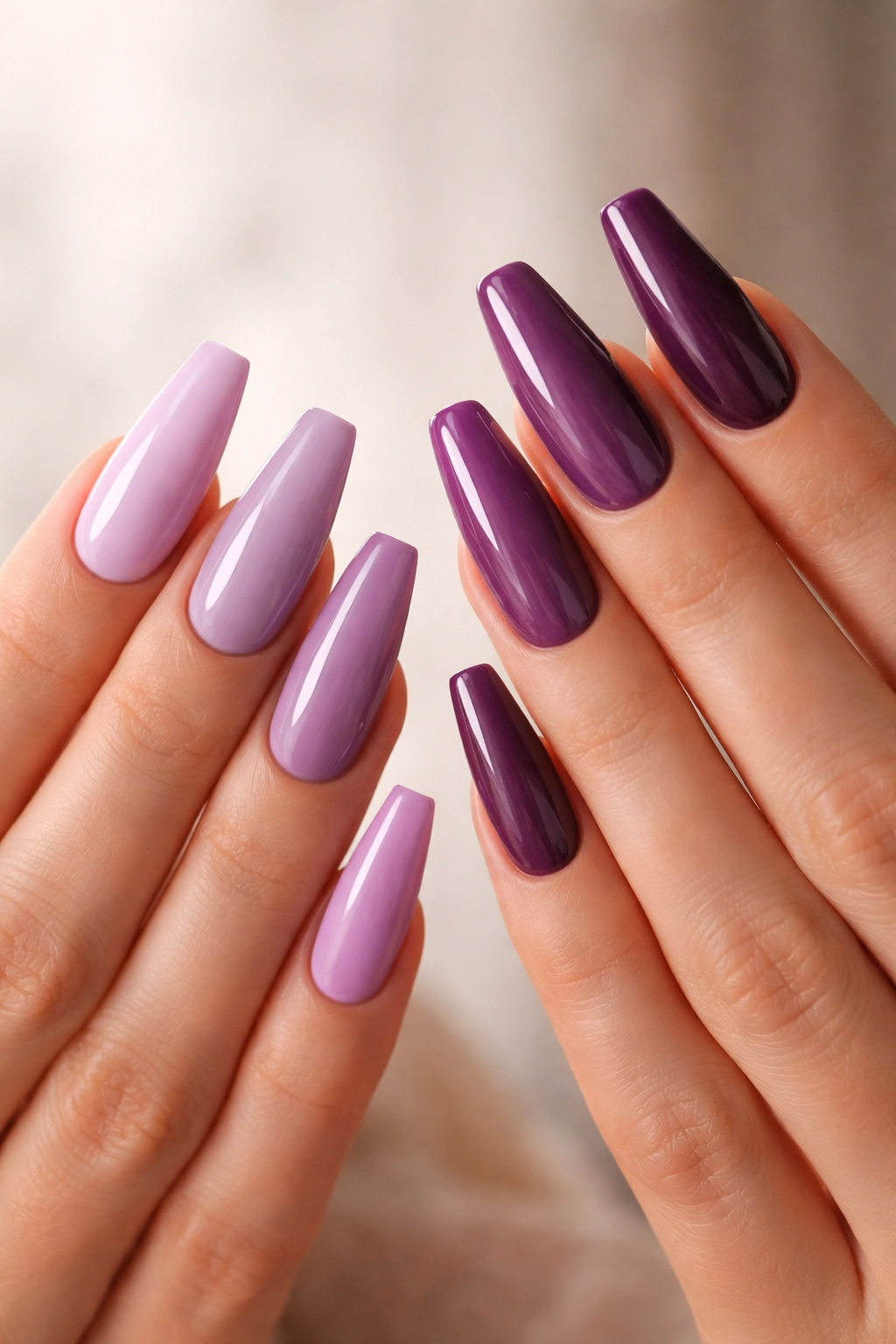
Ballerina nails already have built-in structure. The sides pull inward, the tip stays flat, and the whole nail has a long, lean line that looks neat even before polish goes on. Purple helps that shape read with more intention because it covers such a wide value scale. Light shades soften the geometry. Mid-tone violets make the taper stand out. Dark plums sharpen every edge.
Some colors fight the shape. Neon yellow can make the flat tip look blocky. Dense white can highlight every filing flaw. Purple is more forgiving because it sits between cool and warm, soft and rich, sweet and severe. A pink-lilac can blur harsh lines. A blue-violet can make the whole manicure look cleaner and crisper.
If you are picking a set for day-to-day wear, purple also gives you more control over mood than red or black. Mauve and dusty violet can look restrained enough for work, while berry and plum still feel dressy at night. Same silhouette. Different energy.
And if your nail tech is strong with art, purple takes texture well. Chrome, jelly layers, marble veining, cat-eye magnetics, velvet finishes, and aura blends all show up clearly in this color family without turning muddy.
Picking the Right Purple Finish Before You Choose a Design
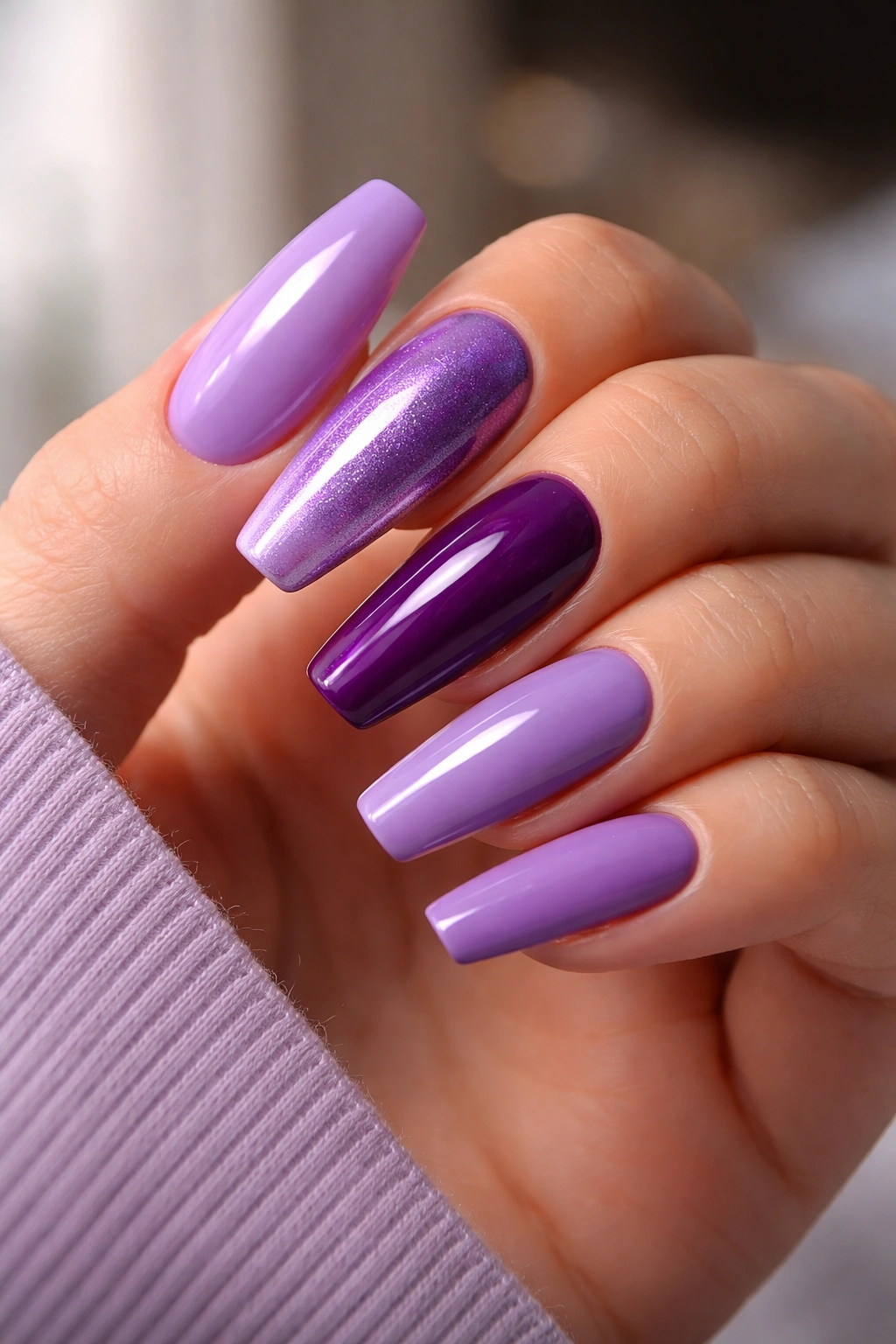
A good purple manicure starts before the art starts. Shade is one decision. Finish is the other.
How much length you need for a true ballerina shape
Short ballerina nails can look good, but they need enough free edge to show the taper. Aim for at least 3 to 5 mm past the fingertip. Anything shorter often turns into a soft square with a purple polish on top. Medium length gives nail art more room, especially ombré, French tips, cat-eye pulls, and aura placement.
Longer sets carry dark plum and black cherry shades better because the color has space to deepen before it hits the flat tip. On short nails, those same shades can look heavy unless the finish is translucent or the design breaks up the surface.
Finish changes the mood fast
Here’s the quick read:
- Glossy purple looks smoother, wetter, and more glass-like.
- Matte purple softens shimmer and makes dark shades look velvety.
- Chrome over purple gives a cool metallic sheen that shifts under indoor light.
- Jelly purple lets light pass through the color, so the nail looks syrupy instead of flat.
- Magnetic velvet or cat-eye finishes create a moving highlight that makes ballerina nails look longer.
Undertone matters more than people expect
Lilac, periwinkle-purple, iris, and cool plum lean blue. Mauve, berry, and black cherry pull red or wine. Cool purples tend to look crisp against pink or olive skin, while warmer plums can make deeper or golden skin look richer. That’s not a hard rule. It’s a useful starting point.
One more thing. If your nail beds are shorter or wider, skip chalky, opaque lavender unless the sidewalls are filed clean and narrow. A milky or sheer version will usually look lighter on the hand.
1. Sheer Lilac Milk Nails
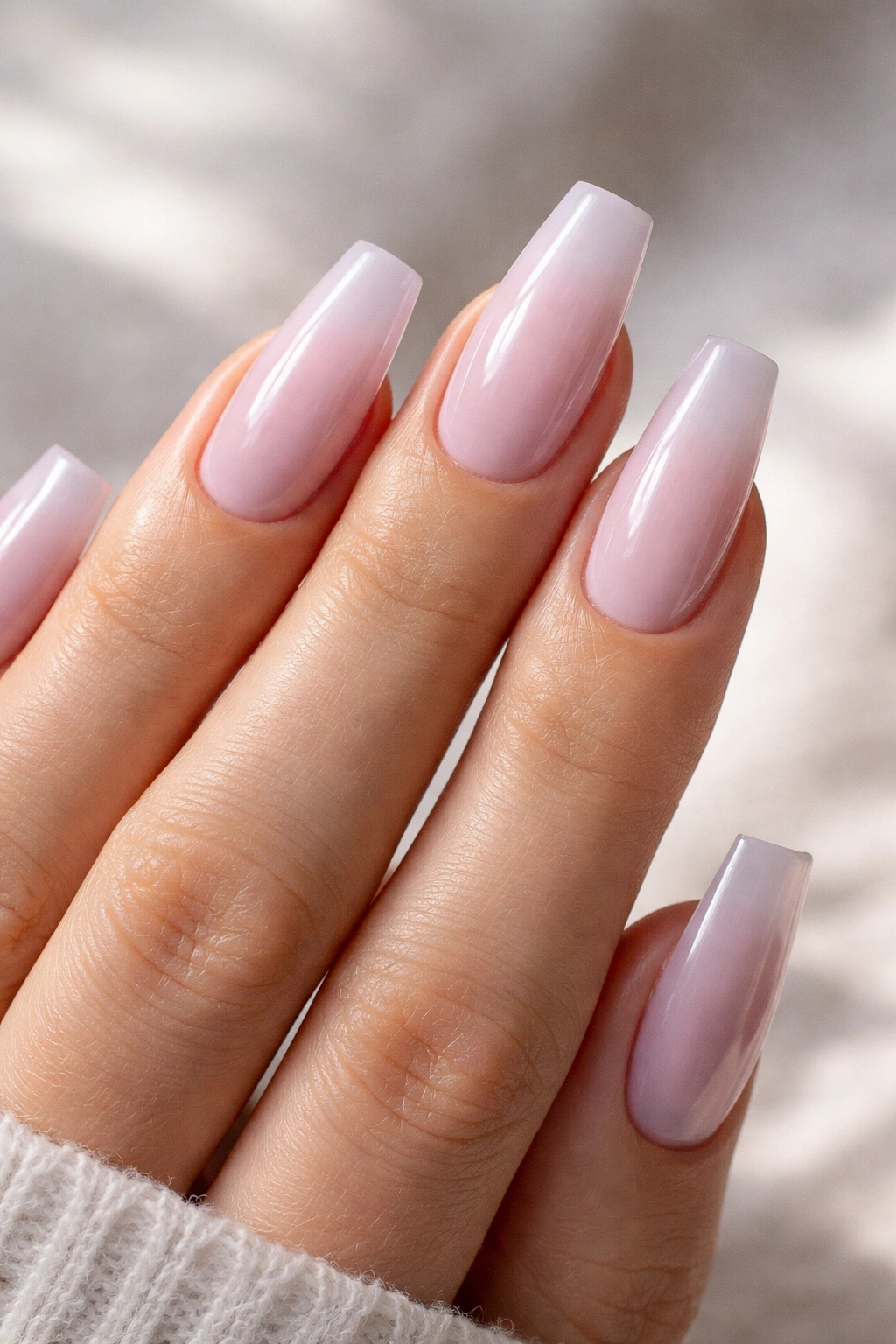
If you want the softest entry point into purple ballerina nails, start here. Sheer lilac milk nails look like lavender mixed with a drop of cream, which keeps the color airy instead of candy-bright. On a ballerina shape, that slight transparency helps the nail stay slim.
This design works best with builder gel or a structured base underneath, then two thin coats of milky lilac rather than one thick coat. Thick pastel can streak, pool near the cuticle, and flatten the shape. Thin layers keep the sidewalls clean and let a little natural depth show through.
Why this shade works on coffin and ballerina nails
The color softens the flat tip without hiding it. That matters. You still see the architecture of the shape, but the manicure doesn’t look hard or aggressive. If your style leans clean, minimal, and polished, this is an easy fit.
What to ask for at the salon
- A cool or neutral lilac, not chalk white with purple mixed in
- A high-gloss top coat to keep the finish smooth
- Medium-short ballerina length if you want an everyday set
- A soft apex so the nail does not look bulky through the center
Best for: someone who wants purple without committing to a loud manicure.
2. Lavender French Tips with a Nude Base
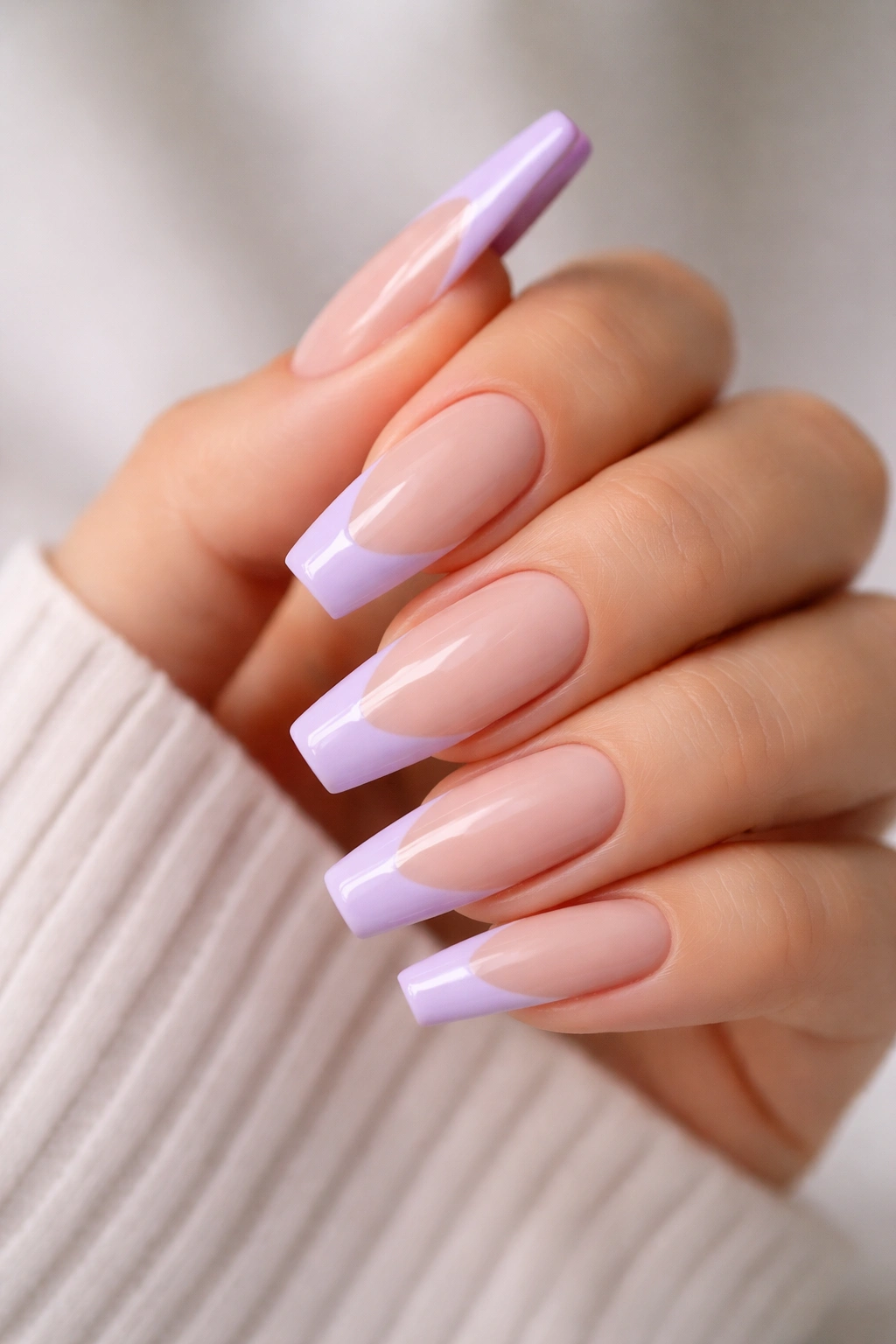
This is one of the cleanest ways to wear purple without coating the whole nail. A nude or pink-beige base keeps the hand looking neat, while lavender tips give the ballerina shape a crisp edge that feels fresher than white French tips.
The trick is proportion. On ballerina nails, the smile line should sit a little deeper than it would on a square nail, because the sidewalls taper inward. If the tip line is too shallow, the nail can look top-heavy. A deeper curve pulls the eye down the nail and makes the shape read longer.
Pick a nude base that matches the undertone of the lavender. Cool lavender with a peachy nude can clash. A sheer pink-beige, mauve nude, or neutral blush usually sits better under purple tips. Gloss is the safer finish here; matte can make the French edge look dusty unless the tech has a sharp hand.
This set earns its place because it wears well across work, dinners, weekends, and events where you want color but not a full statement. Lavender French tips also grow out more gracefully than solid dark polish, which matters if you stretch fills past the two-week mark.
3. Glossy Orchid Ombré
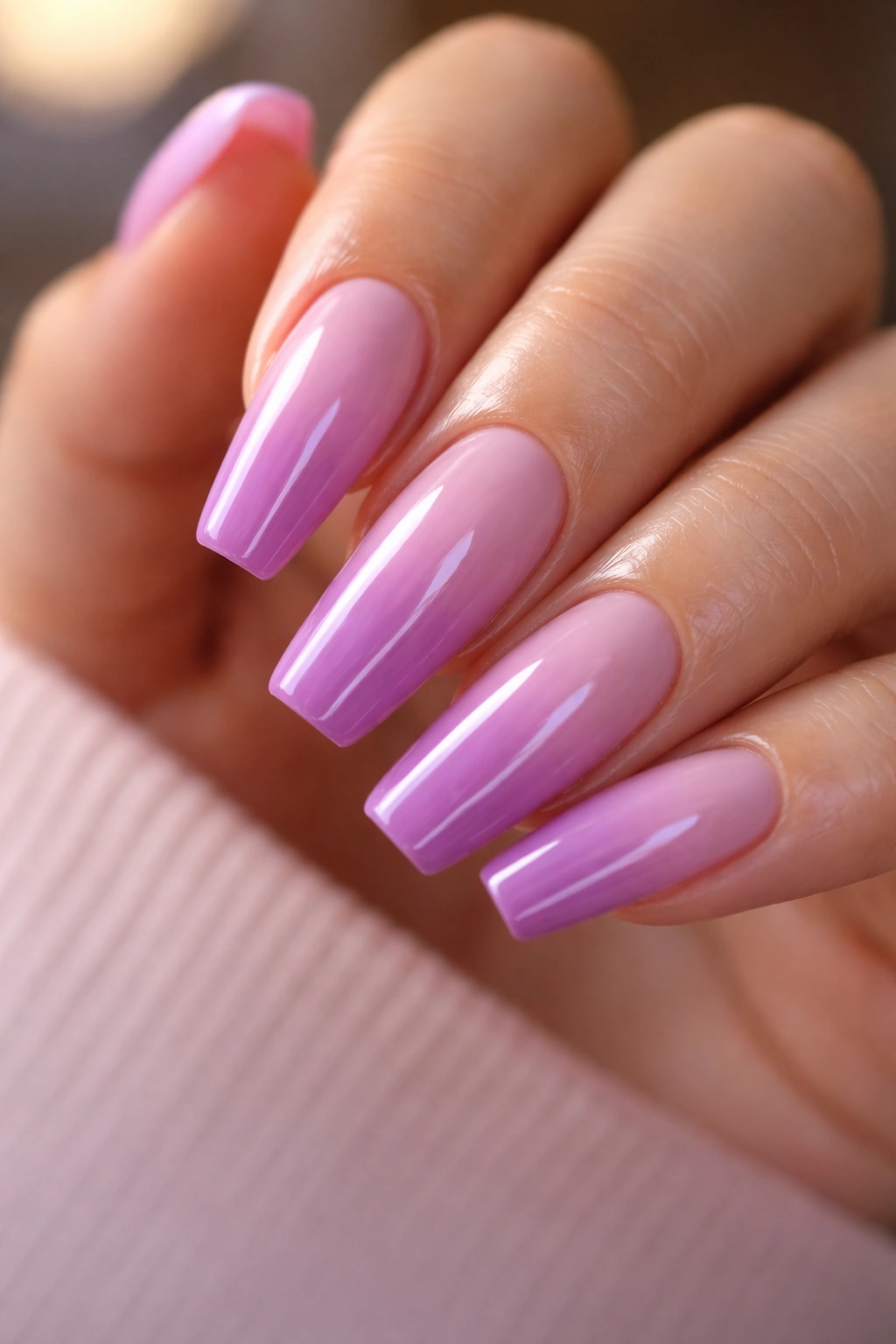
Why does this one feel so smooth on a ballerina shape? Because orchid ombré follows the line of the nail instead of fighting it. The color starts soft near the cuticle and grows richer toward the tip, which matches the way ballerina nails narrow and flatten at the end.
Orchid sits between pink and purple, so it brings more energy than lilac without going harsh. With a glossy finish, it looks almost syrupy—especially under warm indoor light, where the deeper end of the fade picks up a richer magenta cast.
A good ombré needs a clean blend. Airbrushing gives the softest fade, but a sponge blend or blooming gel can also work if the color is built in thin passes. One pass rarely does it. Two to three controlled layers make the gradient look smooth instead of patchy.
How to make orchid ombré look expensive
Ask for the lightest color near the cuticle, then let the orchid deepen through the middle third and gather at the flat tip. That placement lengthens the nail. A reverse fade—dark near the cuticle, light at the tip—can look heavy on shorter ballerina shapes.
If you want a little extra without crowding the design, one accent nail with a chrome powder over the orchid fade can lift the whole set.
4. Soft Violet Chrome
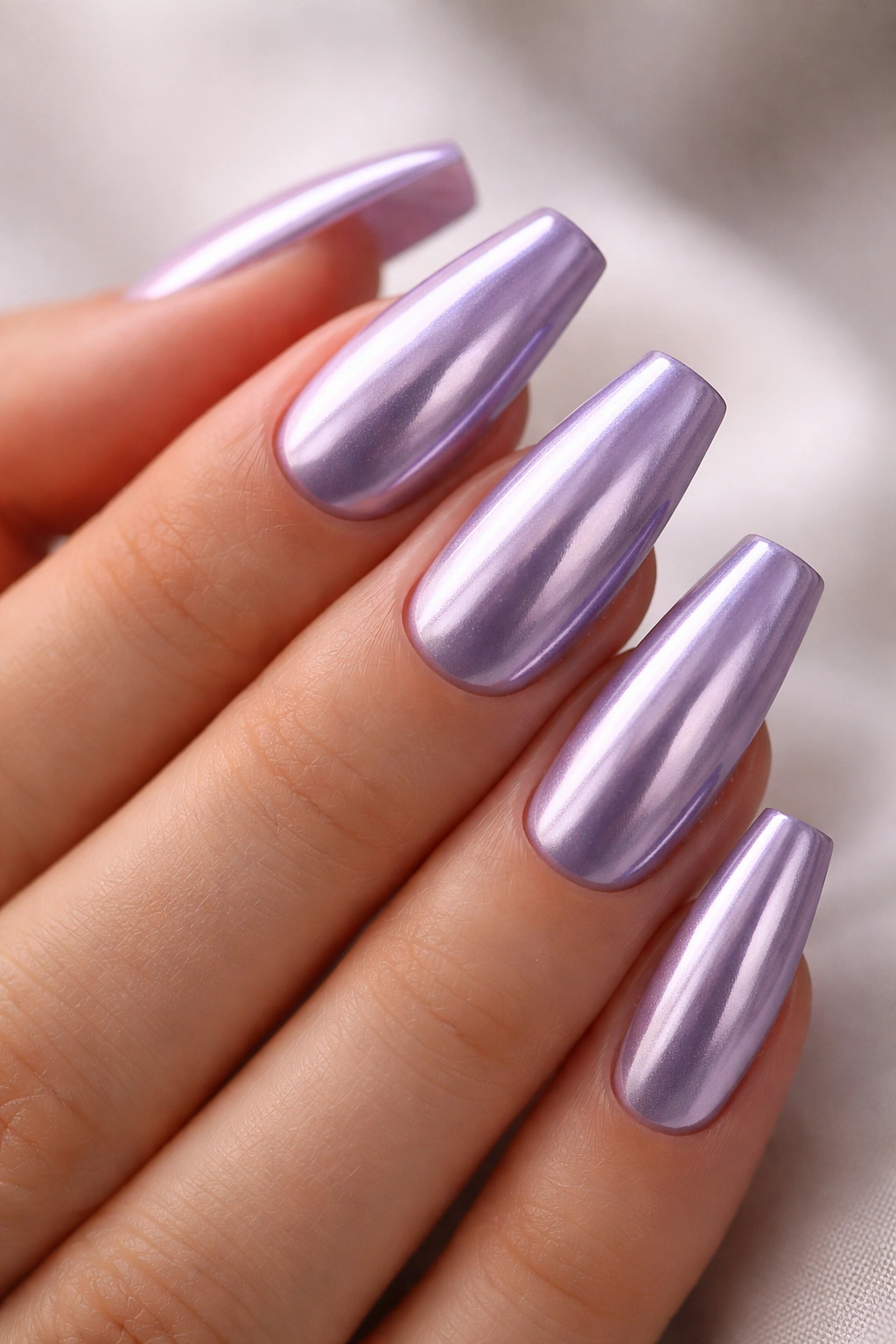
Picture a cool violet base under silver-lilac chrome. Indoors, it reads sleek and metallic. Step into daylight and the finish shifts—more pearl on one angle, more lavender on another. That moving surface makes ballerina nails look sharper than plain cream polish ever will.
Chrome can go wrong fast, though. On a lumpy base, it shows every ridge. On a shape that is filed unevenly, it highlights the crooked side more than the straight one. So the prep has to be tidy: smooth builder layer, sealed edges, and a no-wipe top coat before the chrome powder goes on.
You do not need a thick purple underneath. In many cases, a pale violet or cool lavender base gives the best chrome result, because it keeps the finish from turning gray. Deep purple under chrome can look heavy unless the nails are long.
Key details that make this set work:
- Best length: medium to long ballerina
- Best finish pairing: mirror chrome or pearl chrome, not chunky glitter
- Best base shades: soft violet, muted lavender, cool mauve-purple
- What to avoid: thick chrome on a wide, short tip
Soft violet chrome is a good pick when you want shine with structure, not glitter.
5. Dusty Mauve with Micro-Shimmer
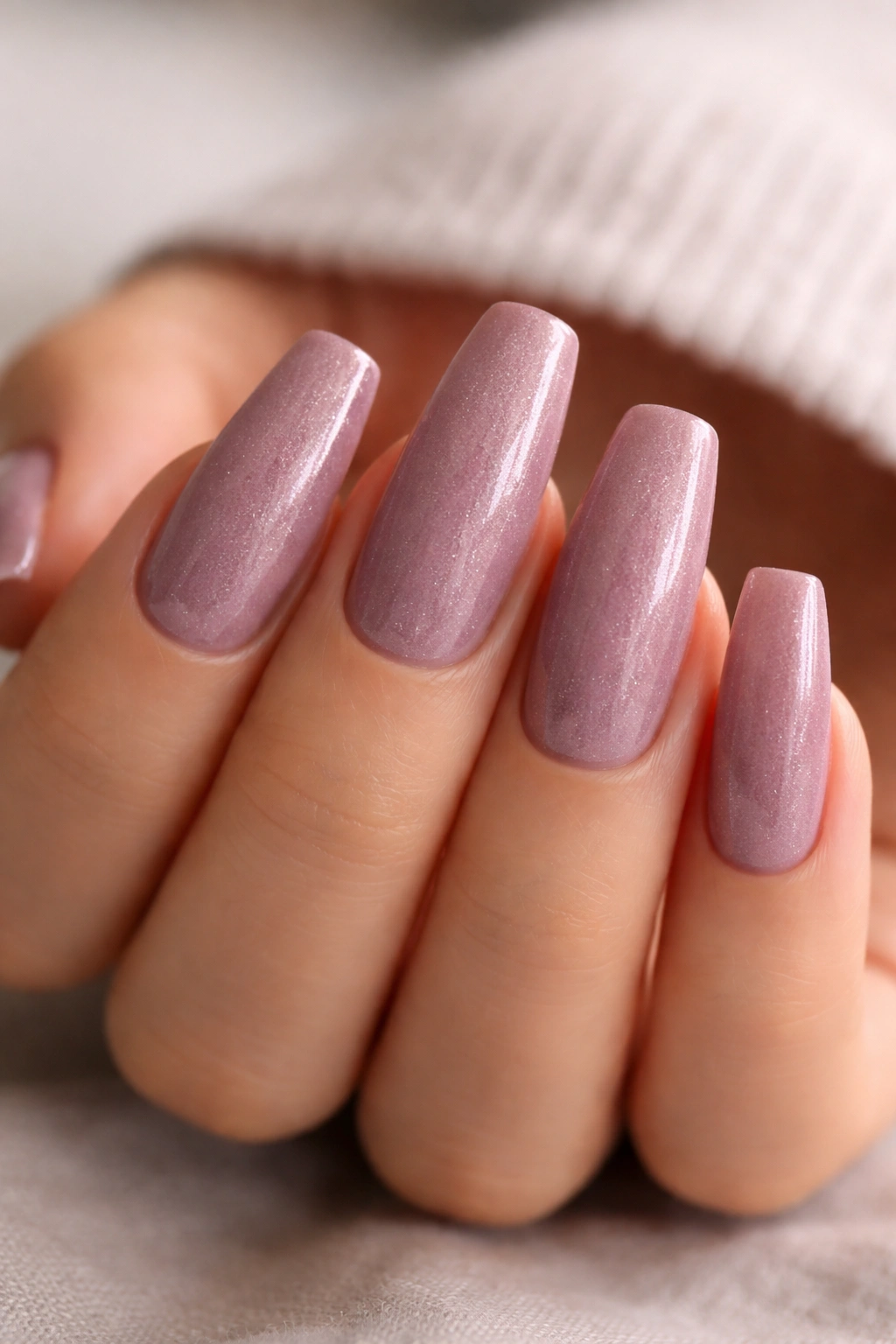
Not every purple manicure needs art, foil, lines, or a magnetic trick. Dusty mauve with micro-shimmer proves that a quiet shade can still hold a ballerina shape beautifully. The color sits between rose, taupe, and purple, which makes it easier to wear than brighter violet or dark plum.
The word that matters here is micro. You want shimmer that looks like fine light inside the polish, not glitter sitting on top of it. Chunky sparkle can fight the clean geometry of the shape. Fine shimmer moves more like satin. It catches the eye when your hand turns, then settles back down.
This shade does a good job on medium and shorter ballerina lengths because it doesn’t crowd the nail. Darker purple often asks for more space. Mauve doesn’t. It keeps the manicure soft around the cuticle and clean at the tip, which is a good balance if you want color without visual weight.
A matte top coat can kill the point of this design, so stick with gloss or a soft satin finish. And if your skin tone pulls warm, dusty mauve often looks smoother than blue-toned lavender, which can sometimes read too icy against the hand.
6. Matte Wisteria with Glossy Tips
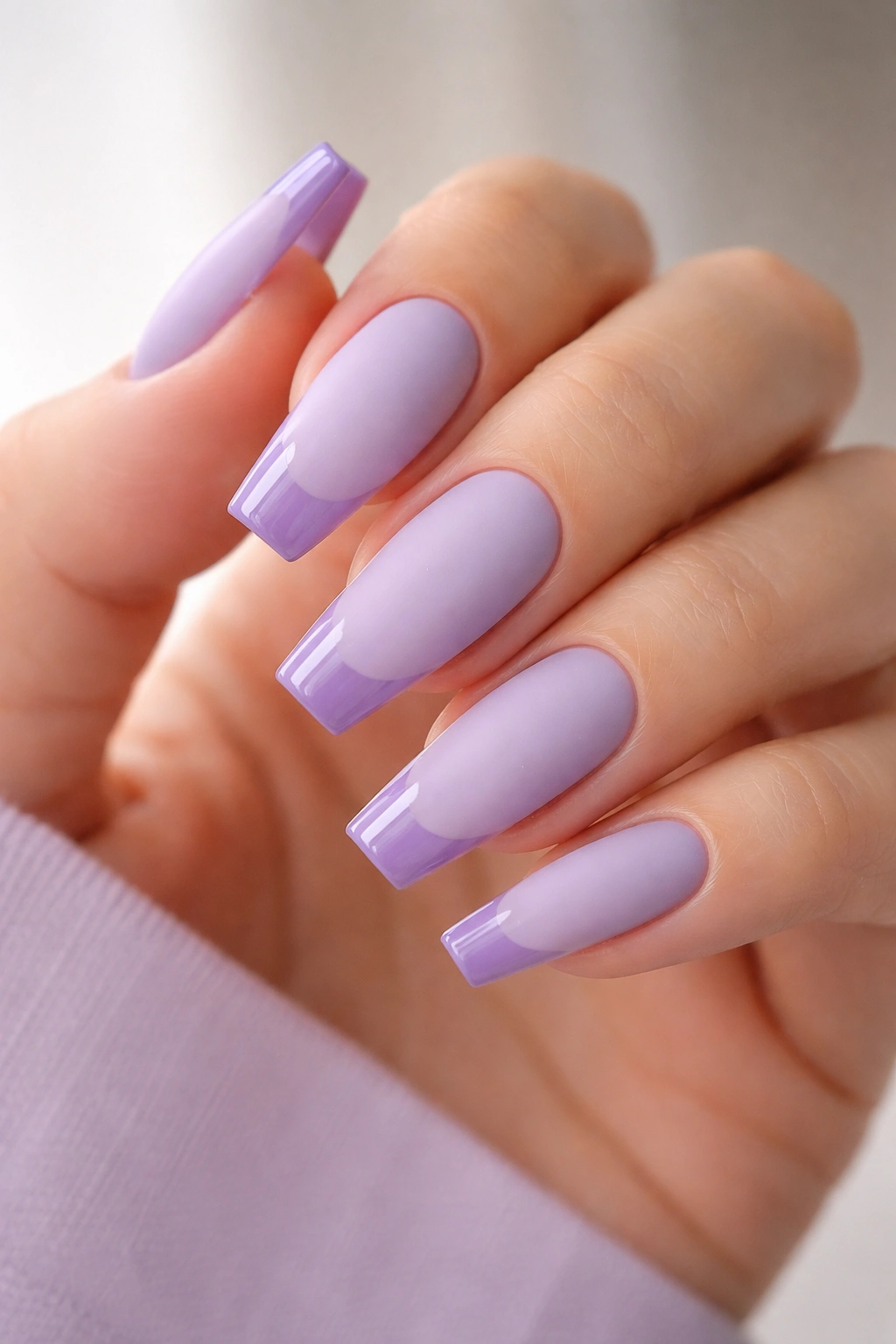
Unlike a full matte set, matte wisteria with glossy tips uses texture to define the ballerina shape. The body of the nail looks soft and almost powdery. The flat tip catches the light. That contrast makes the silhouette stand out from across the room.
Wisteria sits in that hazy space between lavender and violet. It feels lighter than grape or plum, but it has more depth than lilac milk. On a matte base, the color turns calm and velvety. Paint a narrow glossy French tip over that surface and the nail suddenly looks more structured.
This one is best on medium length. Too short, and the glossy edge can look accidental. Too long, and the matte surface needs flawless prep because dust, dents, and top-coat drag marks become easier to spot.
Who is it for? Someone who wants a purple set with a little design interest but no stones, foil, or hand-painted art. The payoff comes from finish contrast alone, and when that line is crisp, it looks deliberate in a way that plain matte polish sometimes doesn’t.
7. Grape Jelly Translucent Nails
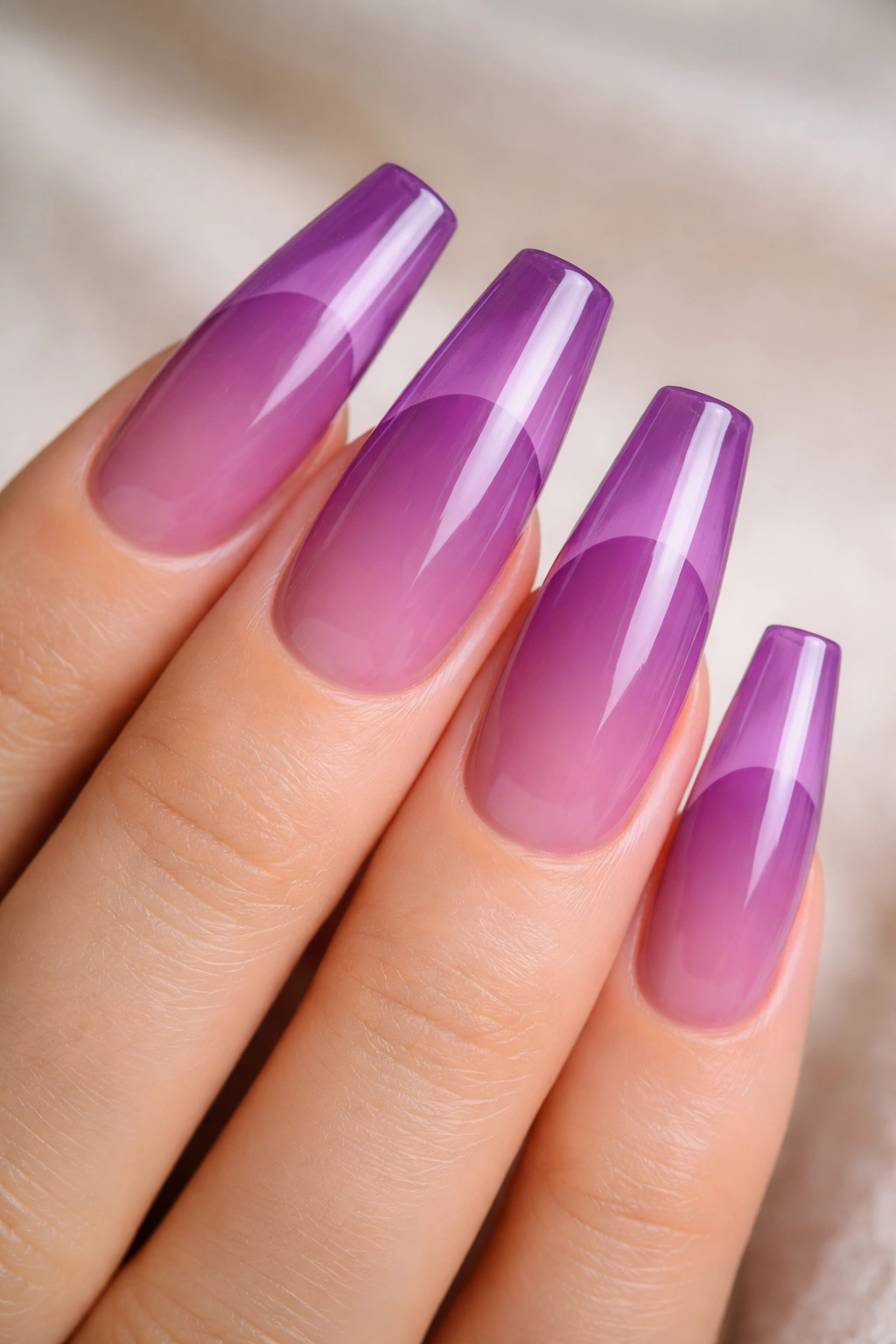
Grape jelly nails have that stained-glass look people keep chasing with syrupy gel colors. On ballerina nails, the translucent purple makes the shape look lighter than an opaque grape cream would, which is why this design works so well even when the color gets richer.
A jelly finish needs the right base. If the free edge is uneven, the transparency will show it. If the extension color underneath is too warm, the purple can turn muddy. Clear or cool-toned overlays usually give the cleanest result.
What gives jelly purple its depth
The color should build in layers. One coat looks washed out. Three thin coats often hit the sweet spot. You want enough pigment to read grape, but still enough light passing through that the nail does not look painted shut.
Quick guide before you book it
- Choose gloss, never matte
- Ask for stained-glass or syrup gel, not regular cream polish
- Best on medium length or longer, where the transparency has space to show
- A subtle darker edge at the tip can make the color look deeper without losing that jelly effect
If opaque dark nails feel too blunt on your hands, grape jelly is a smart middle ground.
8. Amethyst Marble with White Veining
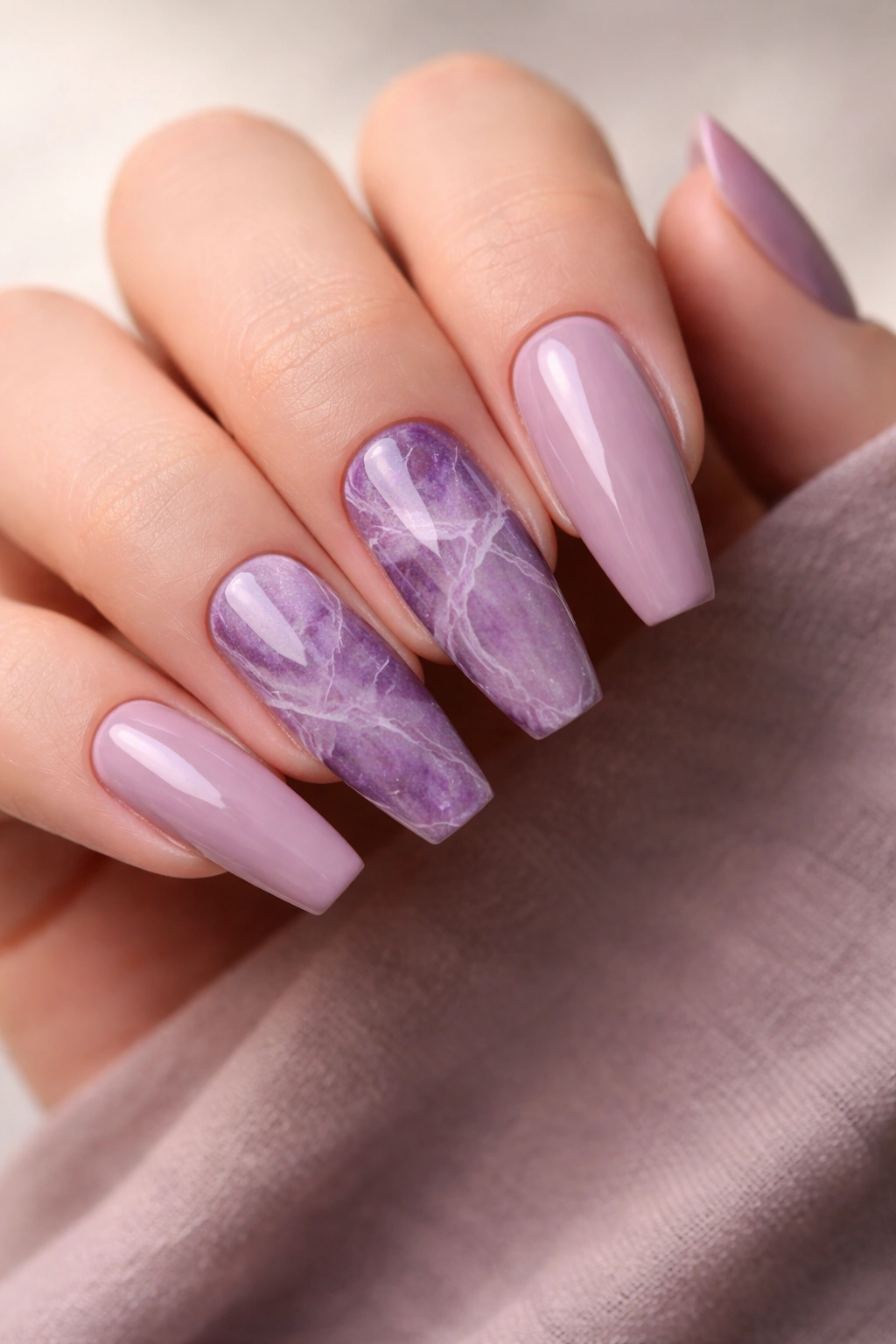
Marble can look messy in a hurry. That’s the risk. But when it is done with restraint, amethyst marble on ballerina nails has a cut-stone feel that suits the flat tip and tapered sides better than it suits round shapes.
The key is editing. Do not marble every nail unless you want a loud set. Two or three feature nails are usually enough, with the rest in a matching cream or sheer mauve-purple. That spacing gives your eye somewhere to rest and keeps the art from swallowing the shape.
A strong amethyst marble uses at least three values of purple: a pale lavender base, a mid-tone violet wash, and a deeper grape or plum thread. Thin white veining breaks up the purple and gives the pattern that mineral look. Gold veining can work too, though it shifts the set warmer and dressier.
Placement matters here. Diagonal veining flatters ballerina nails because it follows the taper. Horizontal swirls can make the nail look wider. And if the tech floods the design with too many dark lines, the marble stops reading like stone and starts looking bruised.
9. Periwinkle-Lilac Aura Nails
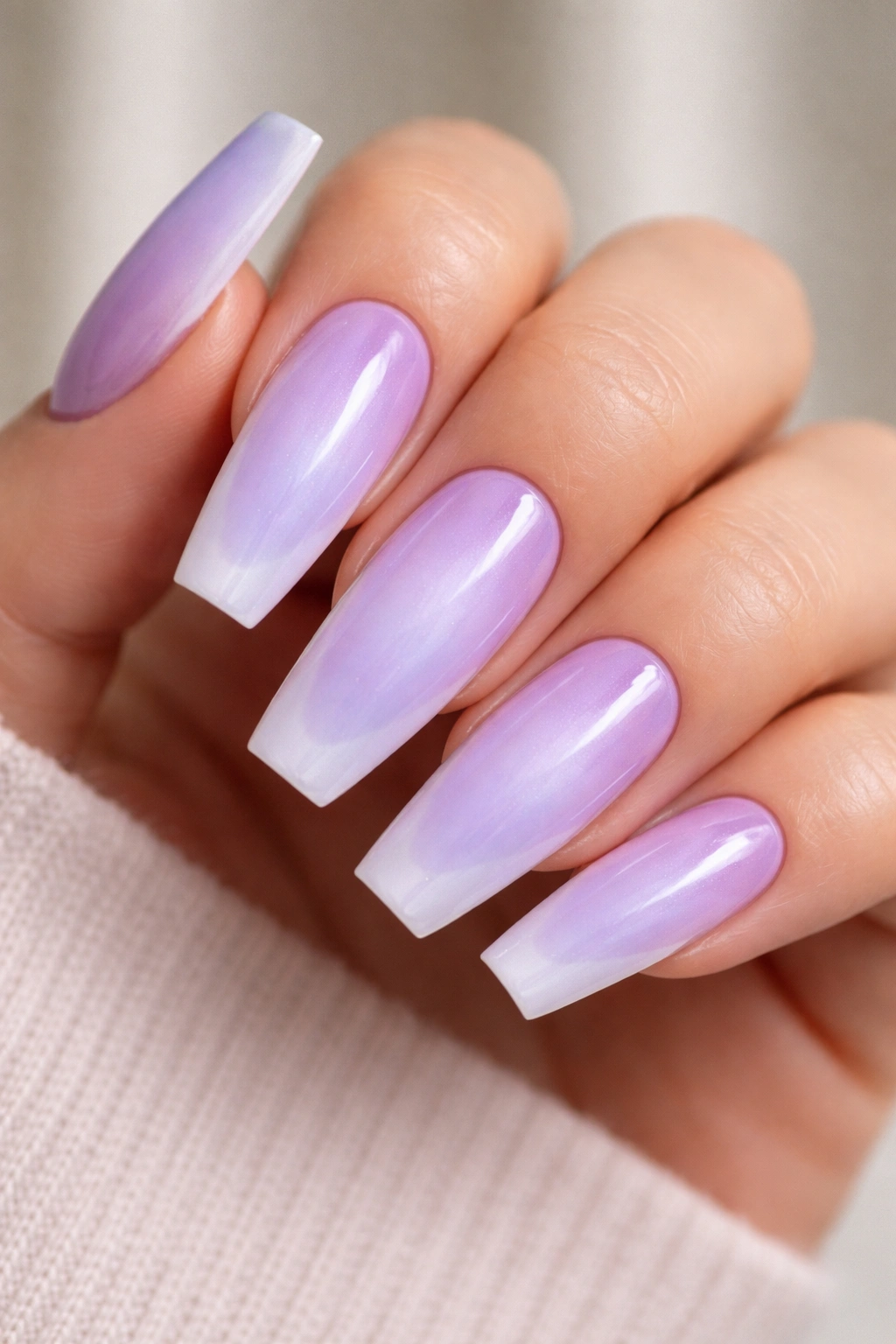
Aura nails look soft by nature, yet on a ballerina shape they can still feel structured if the color placement is right. Periwinkle-lilac aura nails use a hazy center glow—often airbrushed or blended with blooming gel—surrounded by a lighter or clearer outer edge.
That center bloom should not sit too low. If it pools near the cuticle, the nail can look shorter. Put the brightest point through the middle third of the nail, and the whole shape reads longer. Small move. Big difference.
Why periwinkle changes the mood
Lilac alone can read sweet. Periwinkle brings in a blue cast that cools the whole set and makes it feel cleaner, less sugary. If you want pastel purple with more edge, this is a stronger option than plain lavender cream.
A soft-gloss top coat usually suits aura nails better than a hard mirror gloss. The slight blur in the finish helps the center glow look diffused instead of graphic. You can add chrome dust over the aura, but use a light hand. Too much and the bloom disappears.
This design earns extra points on medium ballerina lengths where the center fade has space to breathe.
10. Deep Iris Cat-Eye Nails
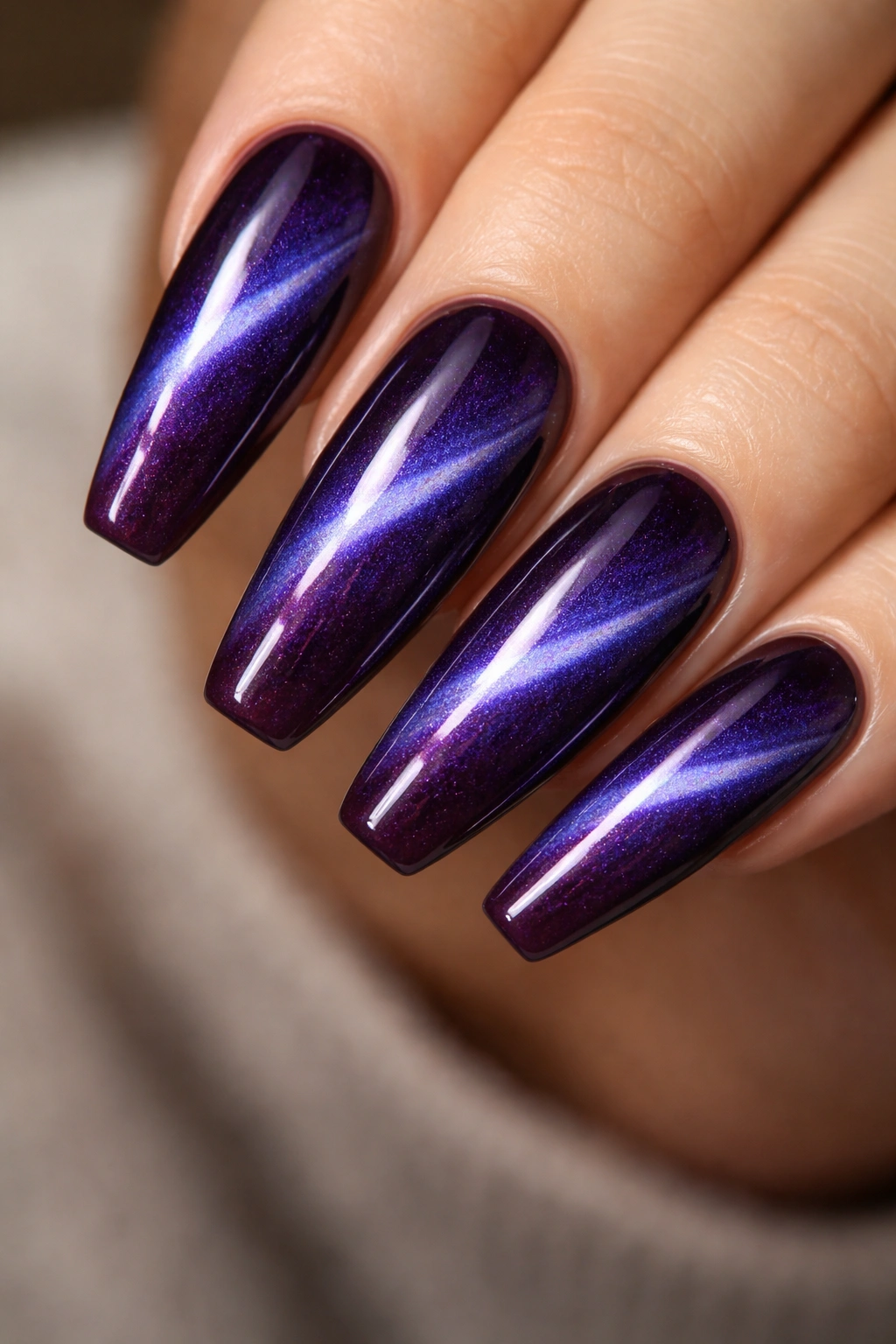
Dark magnetic purple is where ballerina nails start to look dramatic in a controlled way. Deep iris cat-eye nails use a saturated violet base with magnetic shimmer pulled into a narrow line, curve, or off-center glow. The finish moves when your hand moves, which gives the flat tip more life than a plain dark cream.
Iris is a good shade here because it sits between royal purple and indigo. It looks deeper than grape, cooler than berry, and less brown than eggplant. Under low light, it can read almost midnight. Under direct light, the magnetic stripe flashes blue-violet or silver-purple.
A diagonal magnetic pull often looks best on ballerina nails because it echoes the taper. Straight horizontal lines can cut the nail in half. Centered vertical pulls can work too, though they feel more classic and less moody. If your tech offers a velvet magnet finish instead of a single line, that softer glow can make the set look richer.
Do not crowd this design with rhinestones. The shimmer is already doing the heavy lifting.
11. Berry Purple with Minimal Gold Foil
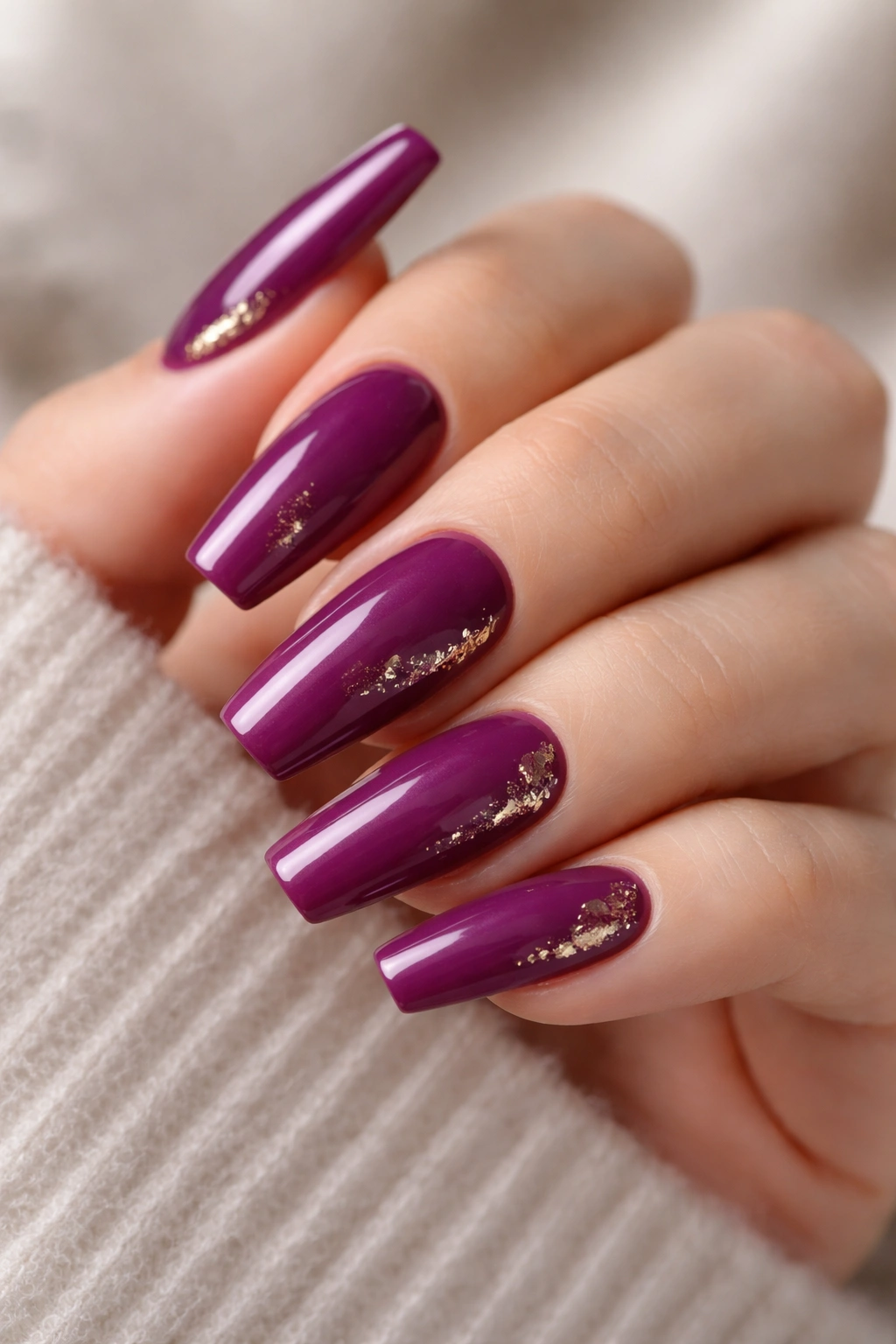
A little gold foil goes a long way. On berry-purple ballerina nails, two or three small foil breaks near the sidewall or cuticle can warm the whole manicure without making it look busy. That restraint is what keeps the set polished instead of craft-like.
Berry purple has more red in it than iris or grape. It feels juicy, slightly warmer, and easier to pair with gold than cool lavender or periwinkle. If you wear gold jewelry often, this shade tends to sit more naturally with rings and bracelets than blue-toned violet does.
Try this layout:
- Solid berry cream on most nails
- One or two foil accents per hand, not full foil coverage
- Foil pressed into uncured gel, then sealed under builder or top coat
- Almond-sized foil chunks trimmed down to rice-grain pieces for a cleaner look
You can place the foil in a cuticle crescent, a side sweep, or a broken diagonal near the tip. Dense scattered flakes across the whole nail usually look messy on ballerina shapes because the eye loses the silhouette. Sparse placement keeps the geometry intact.
12. Eggplant French Fade
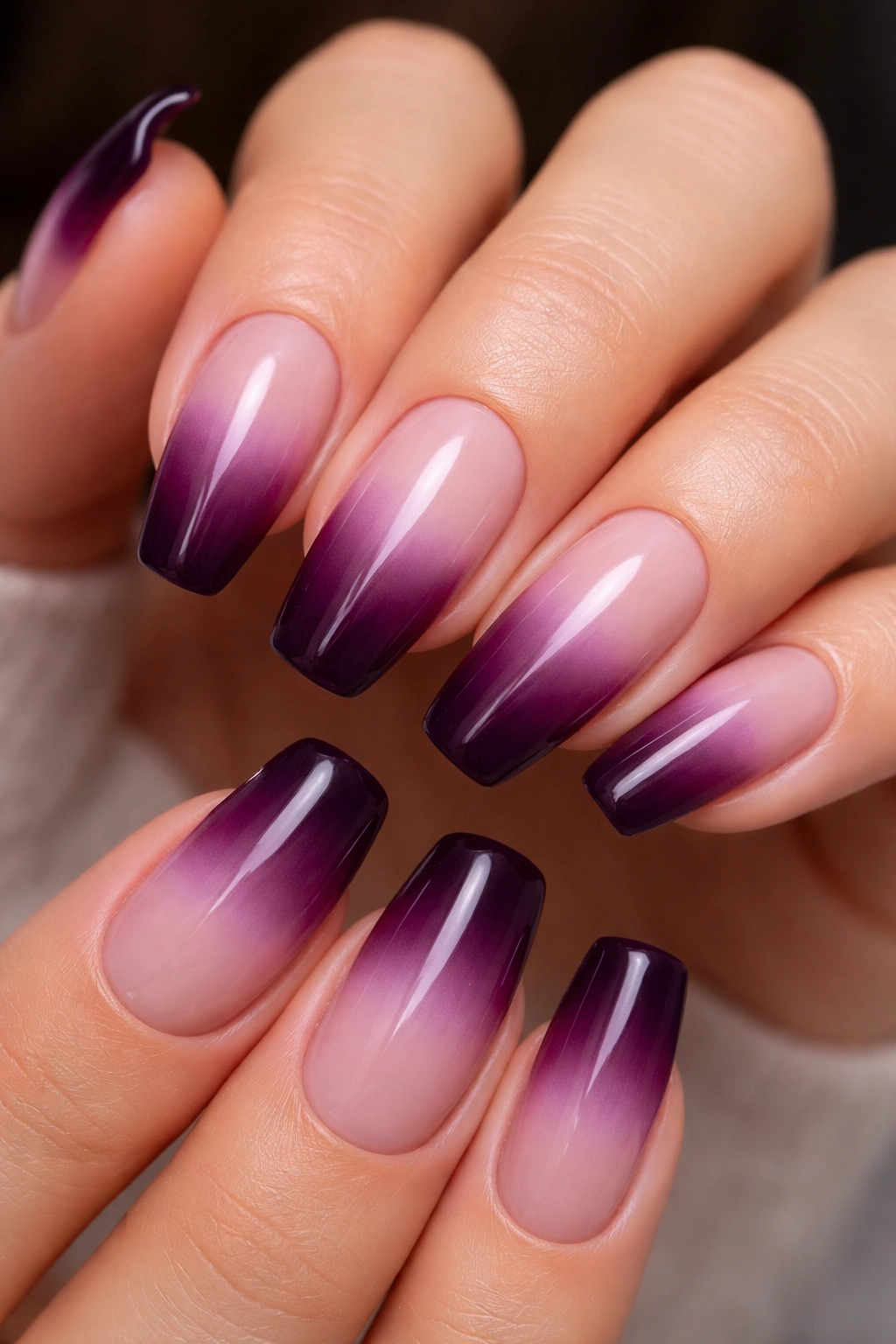
Unlike a standard white French or a nude baby-boomer blend, eggplant French fade starts dark at the tip and melts downward into a sheer or milky base. That reversal gives you the drama of dark purple without coating the whole nail from cuticle to free edge.
Eggplant is useful because it has depth without the flatness that can come with black. You still get richness, but there’s a bit more warmth and life in the color. On medium and long ballerina nails, the fade makes the tip look crisp while the cuticle area stays lighter and cleaner.
This design needs a soft hand. A harsh line between the dark tip and pale base kills the effect. Airbrush, sponge blending, or a fine ombré brush all work if the pigment is built gradually. The darkest band should sit across the final third of the nail, not halfway down, or the manicure can look chopped.
If you want a dark set that grows out more gracefully than full eggplant cream, French fade is one of the better routes.
13. Smoky Plum Matte Nails
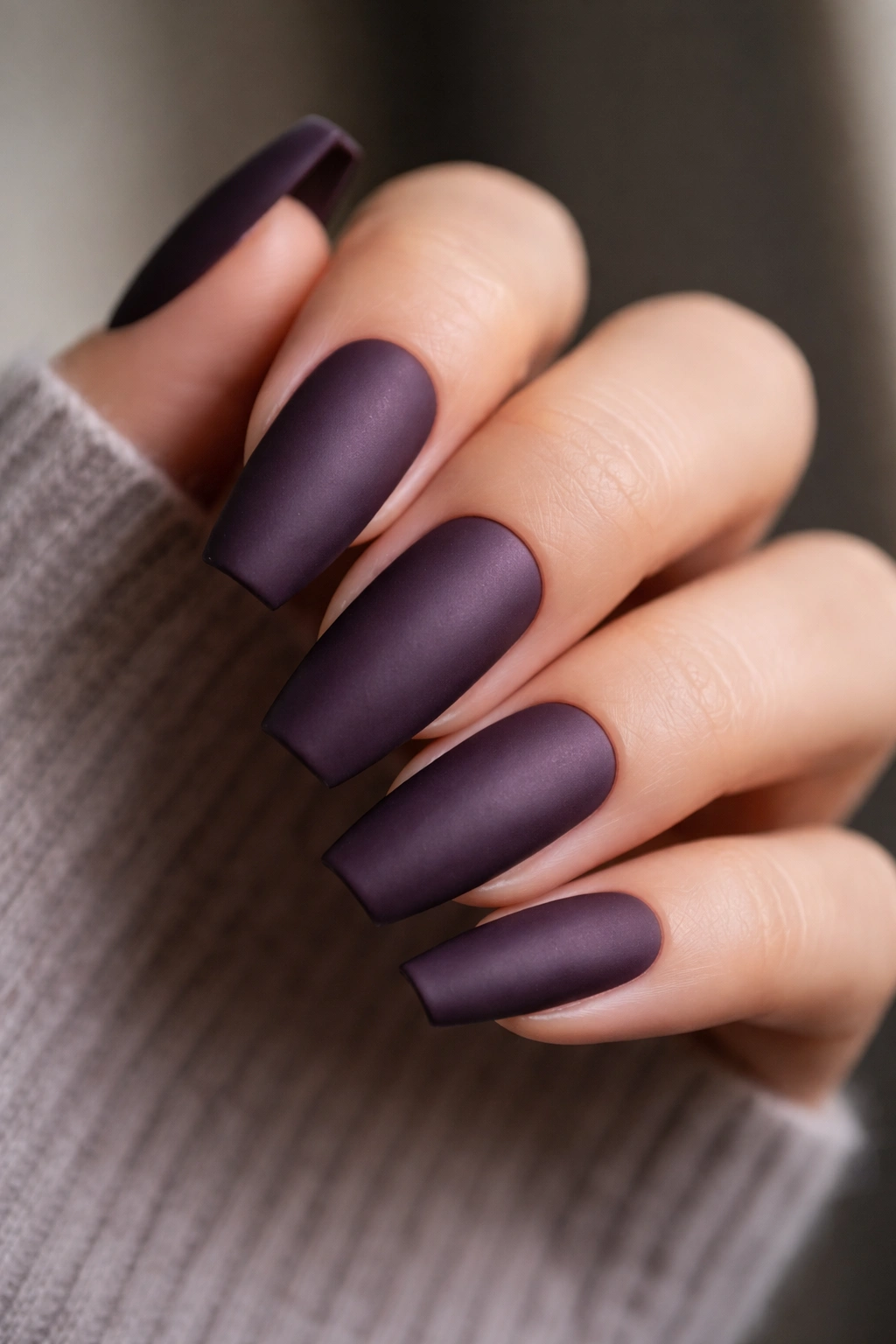
Want dark purple without shine? This is the move. Smoky plum matte nails trade syrupy gloss for a dry, velvet-like surface that makes the color look deeper and a touch moodier.
The shade matters. Plum alone can lean bright if it pulls too red. Add a smoky, muted cast and the manicure settles down. That muted depth makes the ballerina shape feel clean and adult instead of loud. It also hides minor surface reflection, which means the eye goes to the form of the nail first.
Matte shows prep flaws, though—every nick, cuticle crumb, and uneven sidewall gets easier to spot. So this is not the set for rushed appointments or rough filing. You want crisp corners at the tip, smooth side taper, and a good seal at the free edge.
One accent nail with gloss can work, but I would keep this look mostly matte. The whole appeal is that quiet, dense surface. Add too many glossy details and you lose the smoky effect that made the color work in the first place.
14. Black Cherry-Purple Glass Nails
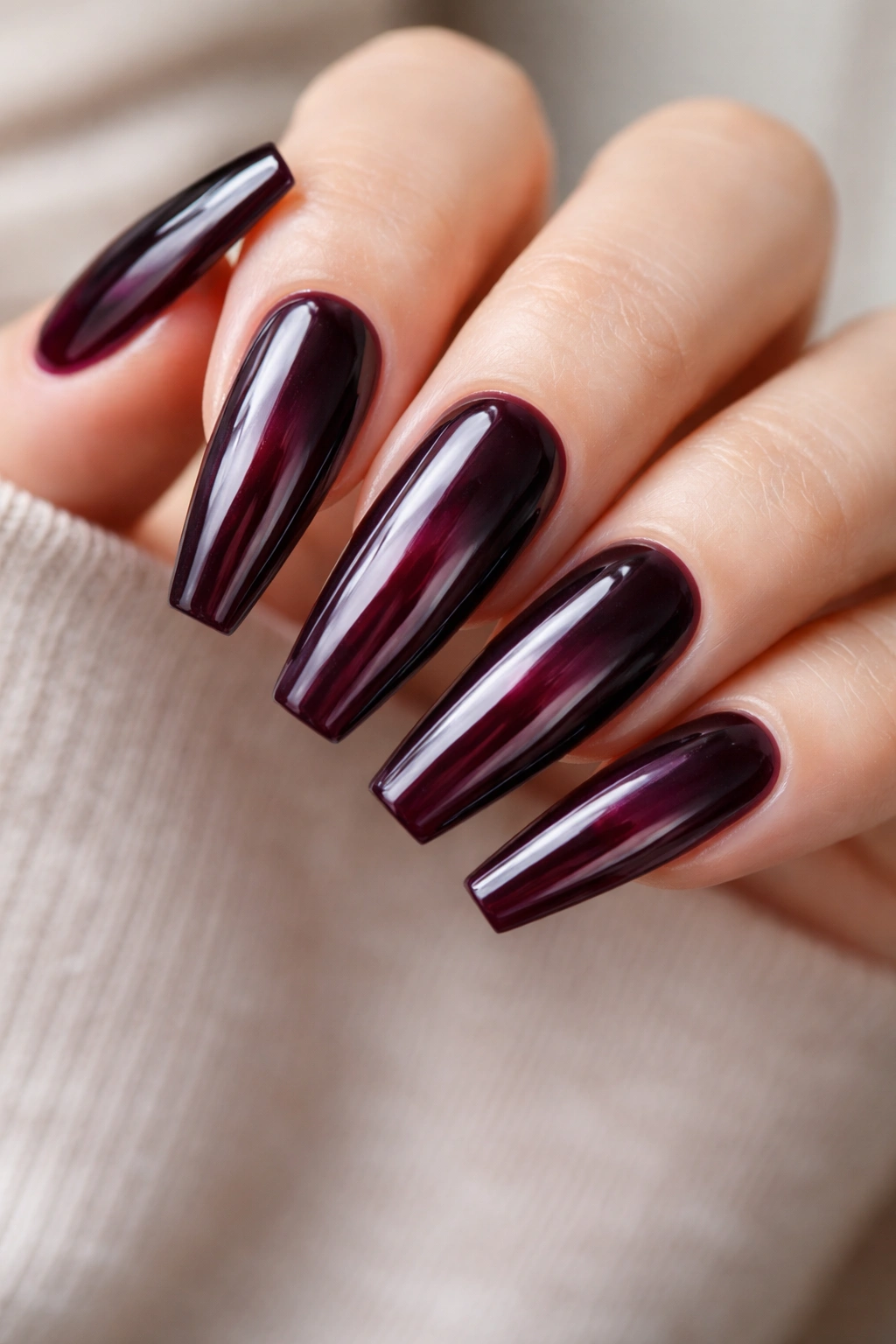
Black cherry-purple glass nails sit near the dark end of the spectrum, but they do not feel flat. They look like tinted candy or stained glass held up to light, which gives the manicure depth that opaque wine polish cannot match.
This is one of the stronger choices for longer ballerina nails because the transparency has space to show off. On a short set, the color can still look good, but you lose part of that layered effect. Medium length is the safer minimum.
What makes “glass” different from “jelly”
Glass nails usually look deeper, darker, and more polished than a playful grape jelly set. The color is often built over a darkened transparent base, sometimes with a thin reflective or syrup top layer that gives the surface more depth.
Ask for these details
- Black cherry or wine-purple translucent gel
- High-shine top coat
- A slightly darker tip edge to create more depth
- No chunky glitter underneath, which can muddy the glass effect
If you like dark nails but hate when they look solid and blunt, this design gives you depth without losing richness.
15. Rich Plum Velvet Ballerina Nails
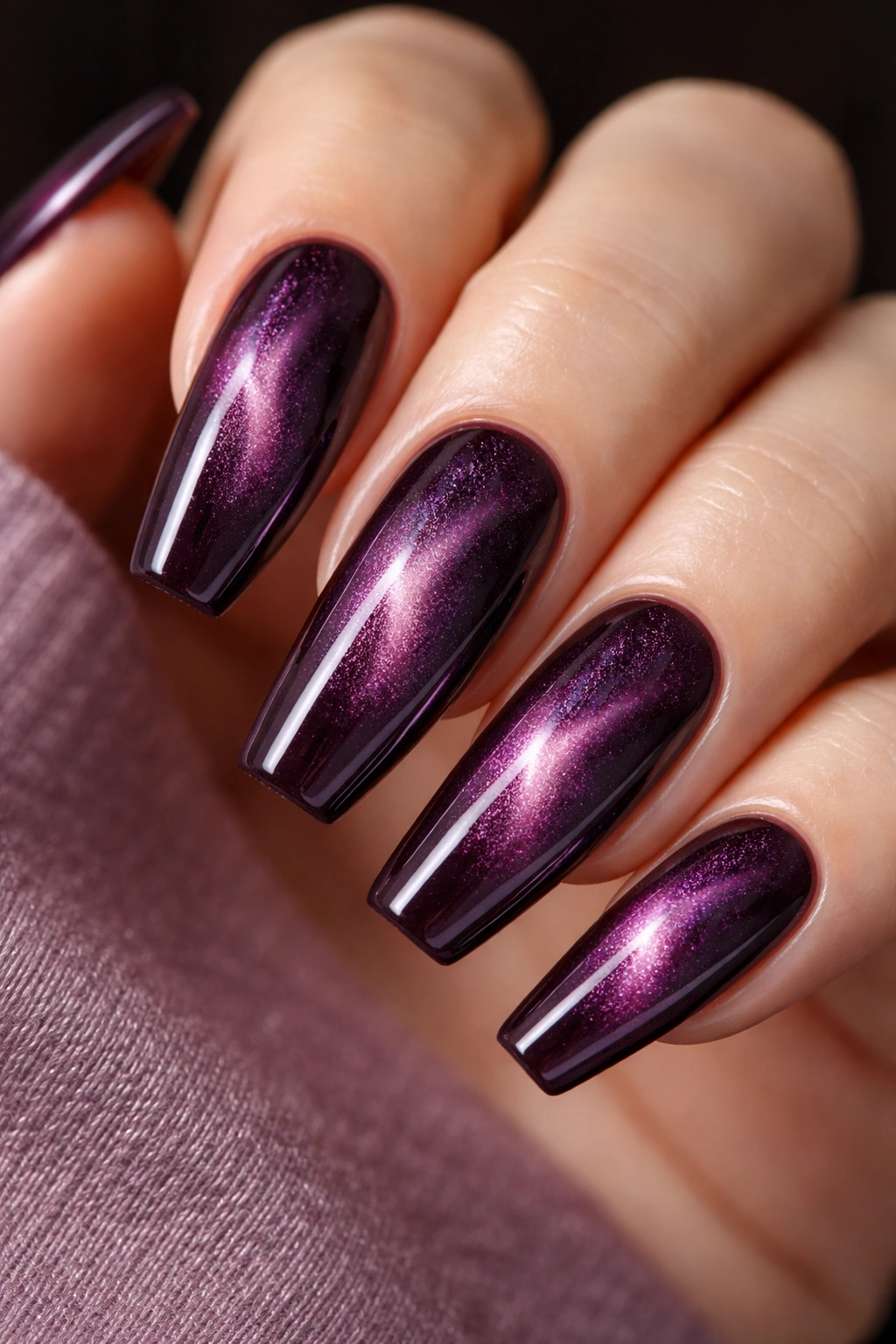
This is the darkest, richest stop on the purple scale, and it suits the ballerina shape almost suspiciously well. Rich plum velvet nails use magnetic pigment to create a soft, glowing center that looks plush rather than glittery. Under direct light, the finish flashes. In shadow, it turns dense and wine-dark.
Velvet magnetic polish works because the shimmer is diffused. A standard cat-eye line gives you one bright streak. Velvet gives you a spread of light that sits across the nail like fabric nap. On a ballerina shape, that glow makes the center look fuller while the sidewalls stay dark, so the taper appears cleaner.
Go too red and the set starts reading burgundy. Go too black and the purple gets lost. The sweet spot is a plum base with enough violet in it that the color still reads purple across the room. Ask for a magnetized finish pulled into a soft center or diagonal haze rather than a hard stripe.
If you want one purple set that feels dressy, moody, and high impact without rhinestones or heavy art, this is the one I’d put at the top of the list.
Keeping Purple Ballerina Nails Looking Sharp
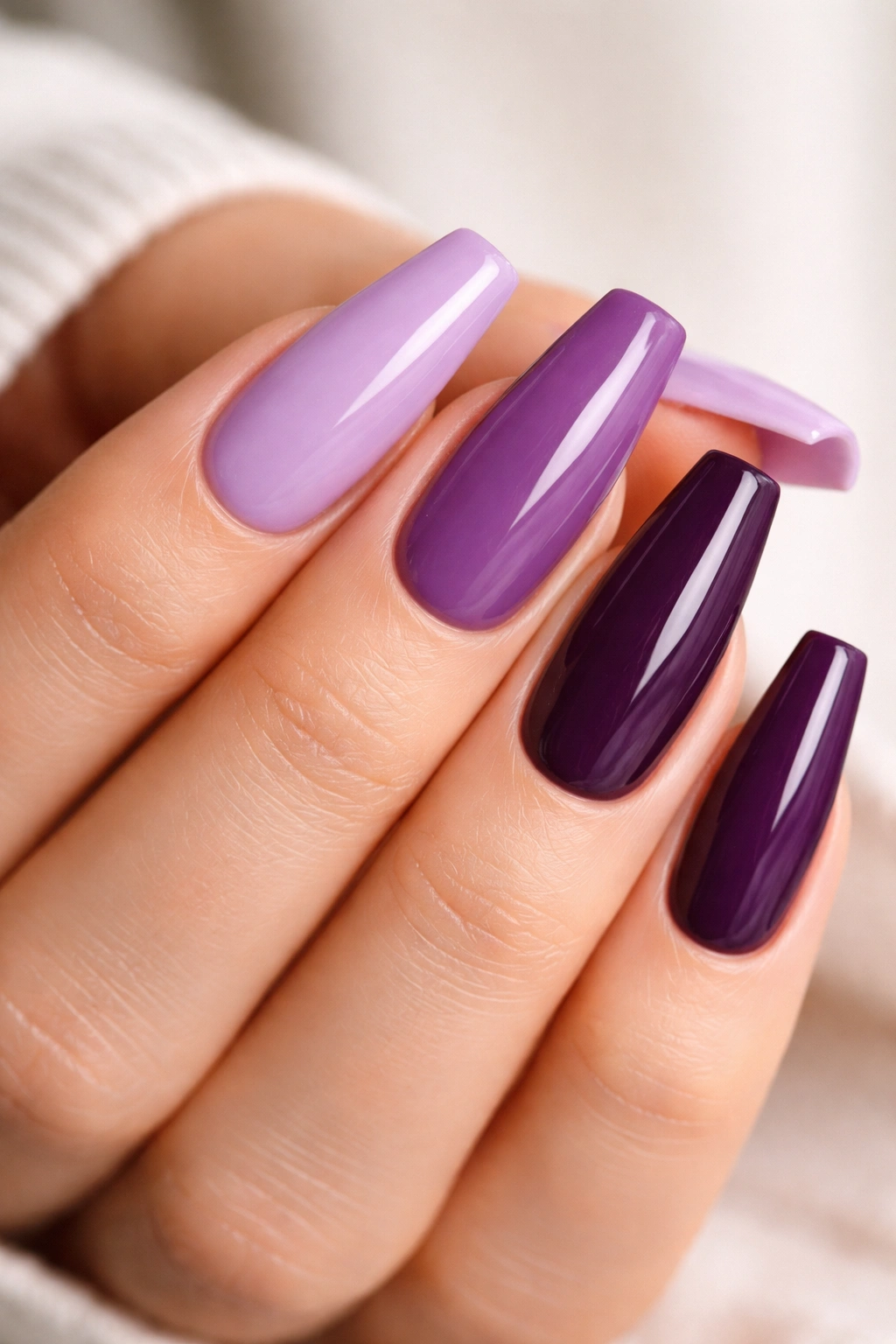
Purple polish, gel, and art finishes can lose their edge faster than neutral manicures if the maintenance is sloppy. Dark shades show lifting sooner. Pale lilac shows staining and tip wear sooner. Ballerina shape adds another issue: those flat corners can get dull or catch on fabric if you treat them like round nails.
A few habits make a big difference:
- Use cuticle oil twice a day, especially on matte sets that make dry skin stand out
- Wear gloves for dishwashing and strong cleaners, since dark purple and chrome finishes can lose top-coat shine early
- File snags in one direction with a fine 180-grit file, not back and forth, which can widen the tip
- Book fills every 2 to 3 weeks for medium and long sets, since the apex shifts as the nail grows
- Avoid peeling off chrome, foil, or jelly layers when lifting starts; purple pigments can stain the nail plate underneath
If you wear sheer lilac, milky lavender, or nude-based French designs, keep a stain-removing hand scrub around and clean under the free edge often. Those pale shades show everything.
Dark plum, black cherry, and magnetic purple need another kind of care. Top coat dullness shows up first at the tip, so a refresh gloss at the salon can buy you extra wear without a full new set.
Final Thoughts
The smart thing about purple ballerina nails is not the color alone. It’s the spread. You can go soft with lilac milk, clean with lavender French tips, glassy with black cherry, or dense and moody with velvet plum—and the same nail shape still makes sense across all of them.
If you are torn between two looks, pick by finish first and shade second. Gloss, matte, chrome, jelly, marble, magnetic velvet—those choices change the mood faster than people expect. After that, move from light lilac through mauve, berry, eggplant, and plum until the set feels right for the way you dress and use your hands.
A good purple manicure should make the ballerina shape look intentional, not hidden. When the filing is clean and the color is matched to the length, that flat tip stops feeling trendy and starts feeling precise.