

Brown ballerina nails can go wrong in two ways: the color turns flat, or the shape turns harsh. When both happen at once, the manicure feels heavy, almost chalky, and the blunt tip starts looking wider than it should. Warm brown shades fix a lot of that. They bring in the soft heat of cinnamon, caramel, cedar, coffee, and worn leather, which makes the tapered ballerina shape feel longer and smoother on the hand.
That shape matters more than people think. Ballerina nails—some techs call them coffin nails—have straight sidewalls and a squared-off tip, so any color you put on them gets a clean, graphic frame. Cool dark browns can look sharp in a way that borders on severe. Warm undertones soften the edges and keep the manicure from reading gray under indoor light, which is a problem I’ve seen more than once with “chocolate” shades that lean too blue.
Finish changes the mood too. A syrupy gloss makes chestnut and maple shades look deeper, while matte top coat pulls out the clay side of terracotta or cocoa. Even tiny details matter: a French tip that’s 2 millimeters too thick can shorten the nail, and a glitter fade with chunky particles can make a sleek shape look clumsy fast.
If you’re screenshotting ideas for your next appointment, tell your nail tech which kind of brown you want—red-brown, caramel-brown, amber-brown, or deep wine-brown. That one extra word saves a lot of back-and-forth at the polish rack.
1. Cinnamon Latte Brown Ballerina Nails With a Glassy Finish
Cinnamon latte is the shade I reach for when I want brown ballerina nails to feel warm from the first glance. It sits in that sweet spot between milk chocolate and soft auburn, so it has enough red to look alive but not so much that it starts reading rust. On a ballerina shape, that matters. The color stretches across the flat tip in a smooth way and keeps the silhouette polished instead of blunt.
The best version of this set is plain. No foil. No art. No swirl lines trying to do too much. A clean full-color coat in a warm cinnamon-brown with a high-gloss top coat already gives you the look most people want when they say they want something cozy and pulled together.
Why the gloss matters
A thick, self-leveling glossy top coat gives this shade a liquid finish, almost like the surface of coffee right after cream has been stirred in. Matte would make it drier and dustier. Gloss turns it into something softer and fuller, which suits the ballerina shape far better.
Nail tech notes that make a difference
- Ask for a medium length, around 4 to 6 millimeters past the fingertip, so the blunt tip stays elegant instead of bulky.
- Pick a brown with red or amber undertones, not gray undertones, or the warmth disappears under salon LED lamps.
- Use two thin coats instead of one thick coat. Warm creams show drag marks when the polish is laid on too heavy.
- Cap the free edge well. Darker browns show tip wear faster than pale nudes.
Best move: pair this shade with short gold rings or a camel knit sleeve, and leave the nails clean and glossy.
2. Caramel Mocha Ombre
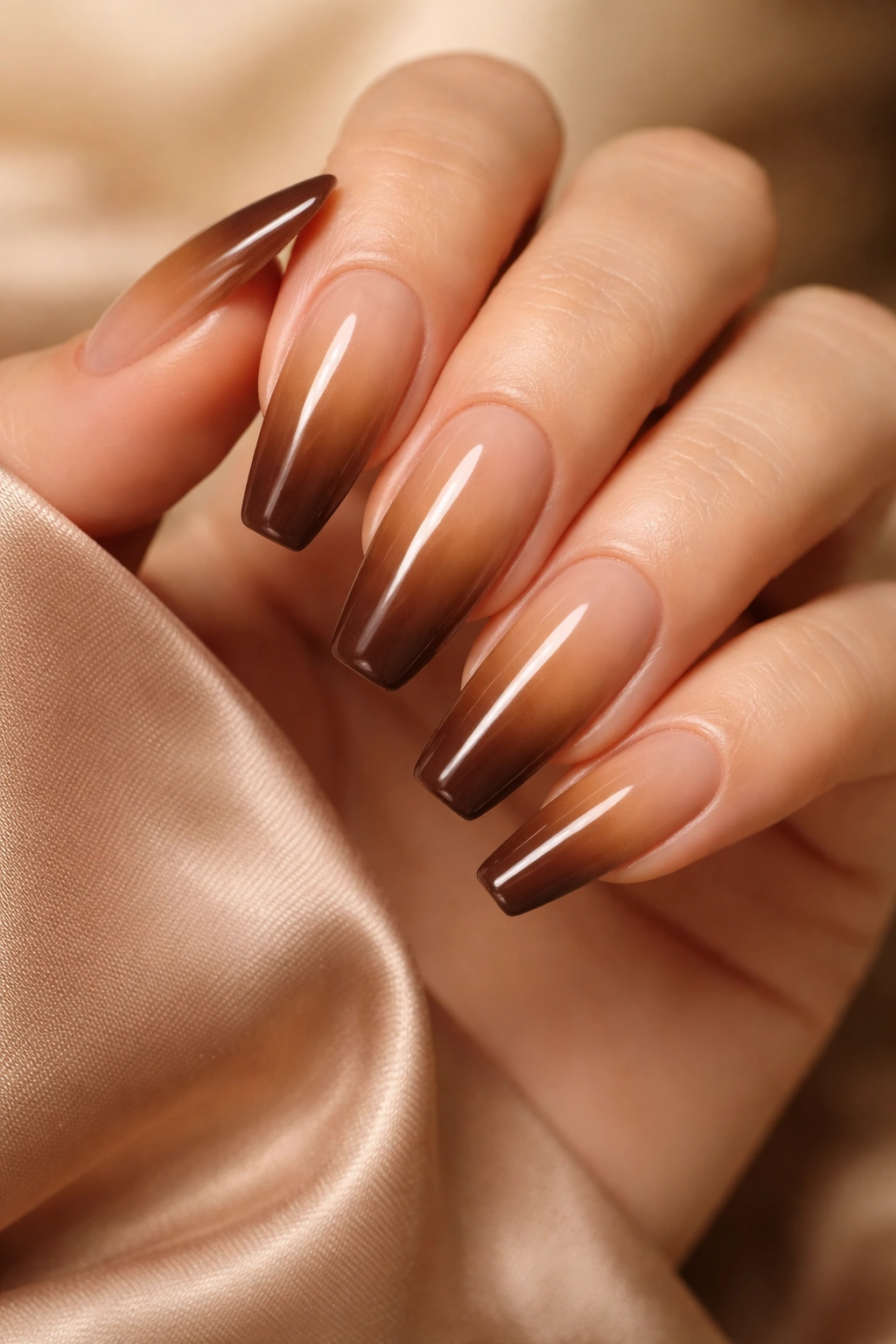
If you want warmth with a softer grow-out line, ombre beats a full solid color. A caramel mocha fade starts lighter near the cuticle and deepens toward the tip, which suits ballerina nails for a simple reason: the eye follows the darker color outward, so the shape looks longer.
The prettiest version uses buttery caramel at the base and medium mocha at the tip. Keep the blend slow and airy. A hard line between the two ruins the whole effect. You want that cloudy melt that looks like steamed milk disappearing into coffee, not a two-tone color block.
This design is also kinder to regrowth. After a week or so, a solid dark brown starts showing a clear gap near the cuticle. With ombre, that line stays softer because the lightest shade already sits close to the nail bed. That’s a small detail, though it matters if you stretch appointments.
Salon method matters here. Airbrushed ombre gives the smoothest fade, but a sponge blend can still look good if the polish layers stay thin and the nail tech cleans the sidewalls between passes. Too much product piles up fast—then the nail looks thick from the side, and the ballerina shape loses its clean edge.
I’d keep the finish glossy, not matte. Caramel can turn powdery under matte top coat, and mocha can lose that melted feel you want from a warm gradient.
3. Chestnut French Tips on a Milky Nude Base
Why do chestnut French tips look richer than a plain nude manicure on the same shape?
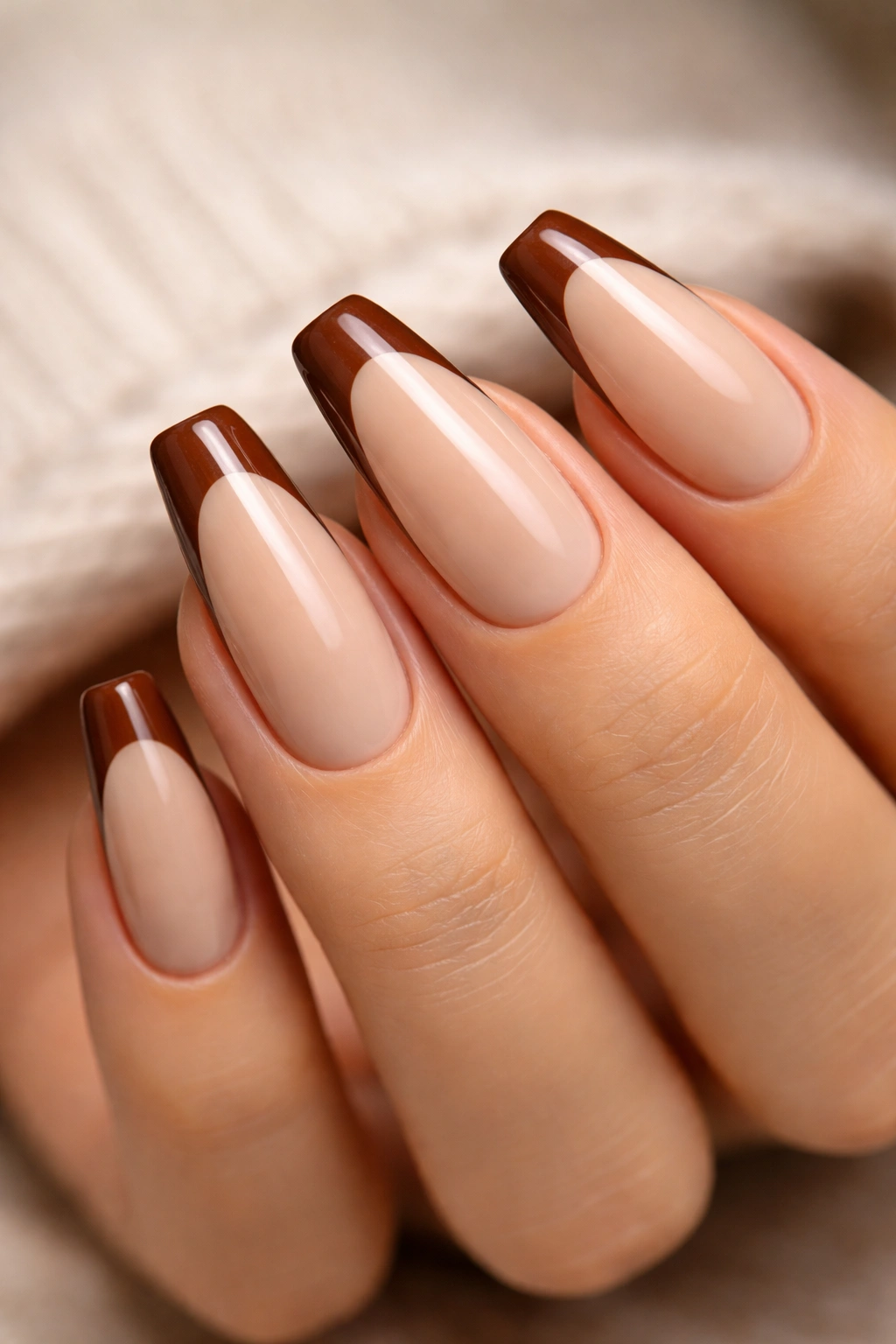
Because the ballerina tip gives the French line a flat little stage, and warm chestnut across that edge looks crisp without the cold contrast of white. A white French tip can feel bright, bridal, or sharp. Chestnut feels softer, a little more dressed-in, and far more wearable with fall-toned clothes, brown leather, and gold jewelry throughout the year.
The base matters as much as the tip. Pick a milky nude with a beige or peach cast, not a pink-leaning nude. Pink and chestnut can fight each other. Beige and chestnut melt together better, and the tip stands out in a smoother way.
How to ask for this set
Ask for a deep smile line and a tip thickness of about 2 to 3 millimeters. On ballerina nails, thick French tips eat up the whole free edge and make the nail look short. A slim chestnut band keeps the shape sleek.
You can leave all ten nails the same, or add one tiny accent—maybe a micro-gold stripe where the tip meets the base. I’d skip rhinestones here. They pull the design into a different mood.
Small details that keep it polished
- A sheer milky base hides ridges and keeps the grow-out line less obvious.
- Chestnut, not espresso, gives the warmth. Espresso can read close to black on shorter nails.
- A thin liner brush gives a cleaner smile line than the bottle brush.
- Squared tips need symmetry. If one sidewall is filed shorter, you’ll notice it fast with a French set.
Ask for the tip to mirror the shape of the free edge exactly. That one detail is the difference between neat and slightly off.
4. Cocoa Brown With Tiny Gold Foil Flecks
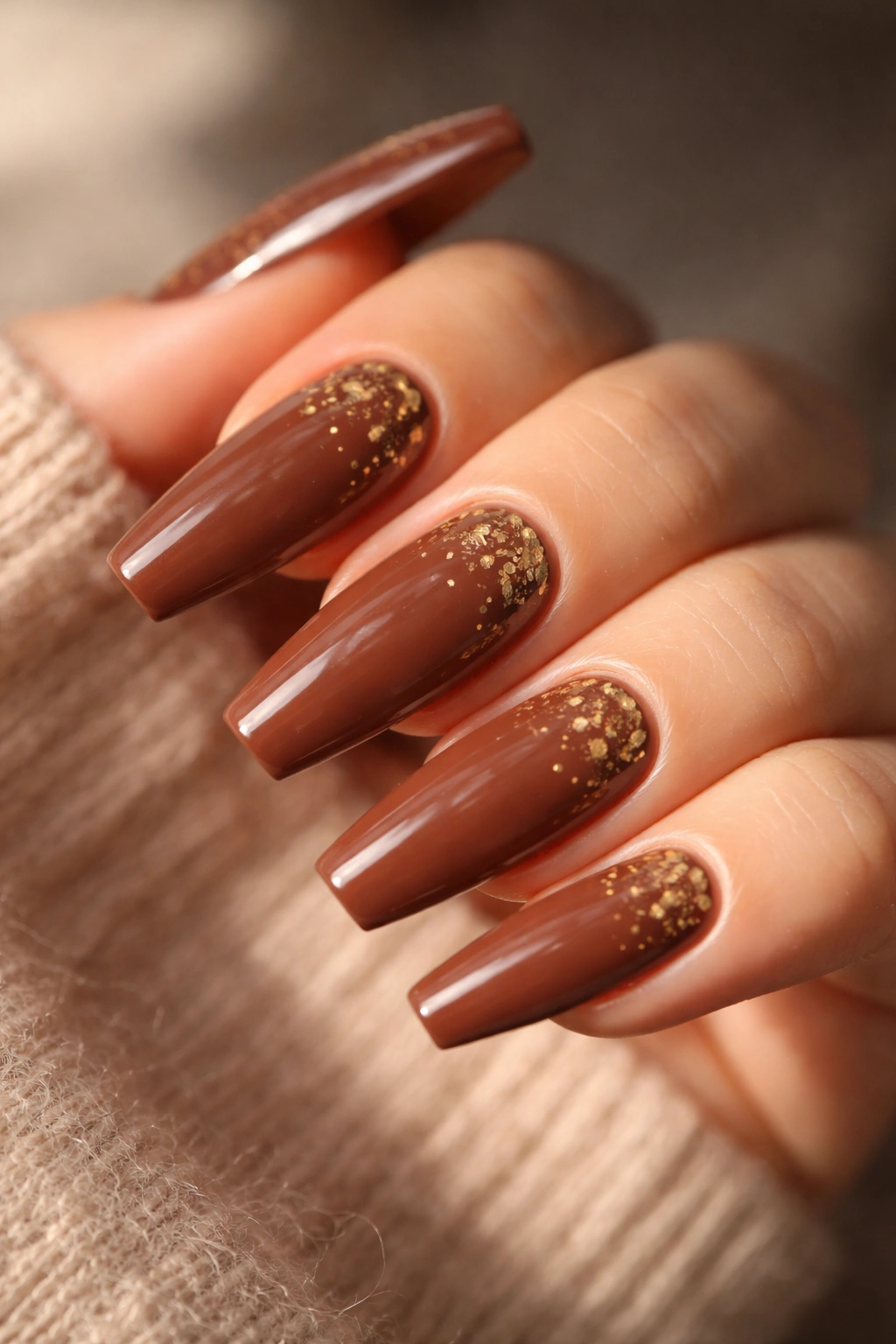
Picture this set under low restaurant lighting: soft cocoa polish with pinhead-size gold foil scattered near the cuticle or drifting through the center of the nail. It catches enough light to feel dressed up, though it still reads brown first. That balance is hard to get right, and it’s why I like this design more than full glitter on a ballerina shape.
Gold foil needs restraint. Big foil chunks can look messy on a tapered square nail because the edges of the pieces compete with the straight tip. Tiny flakes—smaller than a sesame seed—blend into the polish and give the manicure a warm spark, almost like a metallic dusting suspended in the color.
Placement changes the mood. Cuticle-heavy foil feels cleaner and grows out better. Scattered foil through the middle looks softer and more organic, though it takes a steadier hand to place well.
Keep these details in mind
- Start with a medium cocoa base, not a dark chocolate base, so the foil still shows.
- Use warm gold, not pale silver-gold, or the whole look cools off.
- Seal with two layers of top coat if the foil edges lift.
- Keep the foil on 2 to 4 nails if you want the shape to stay sleek.
A little flash goes a long way here. More than that, and the clean ballerina line gets buried.
5. Maple Toffee Marble
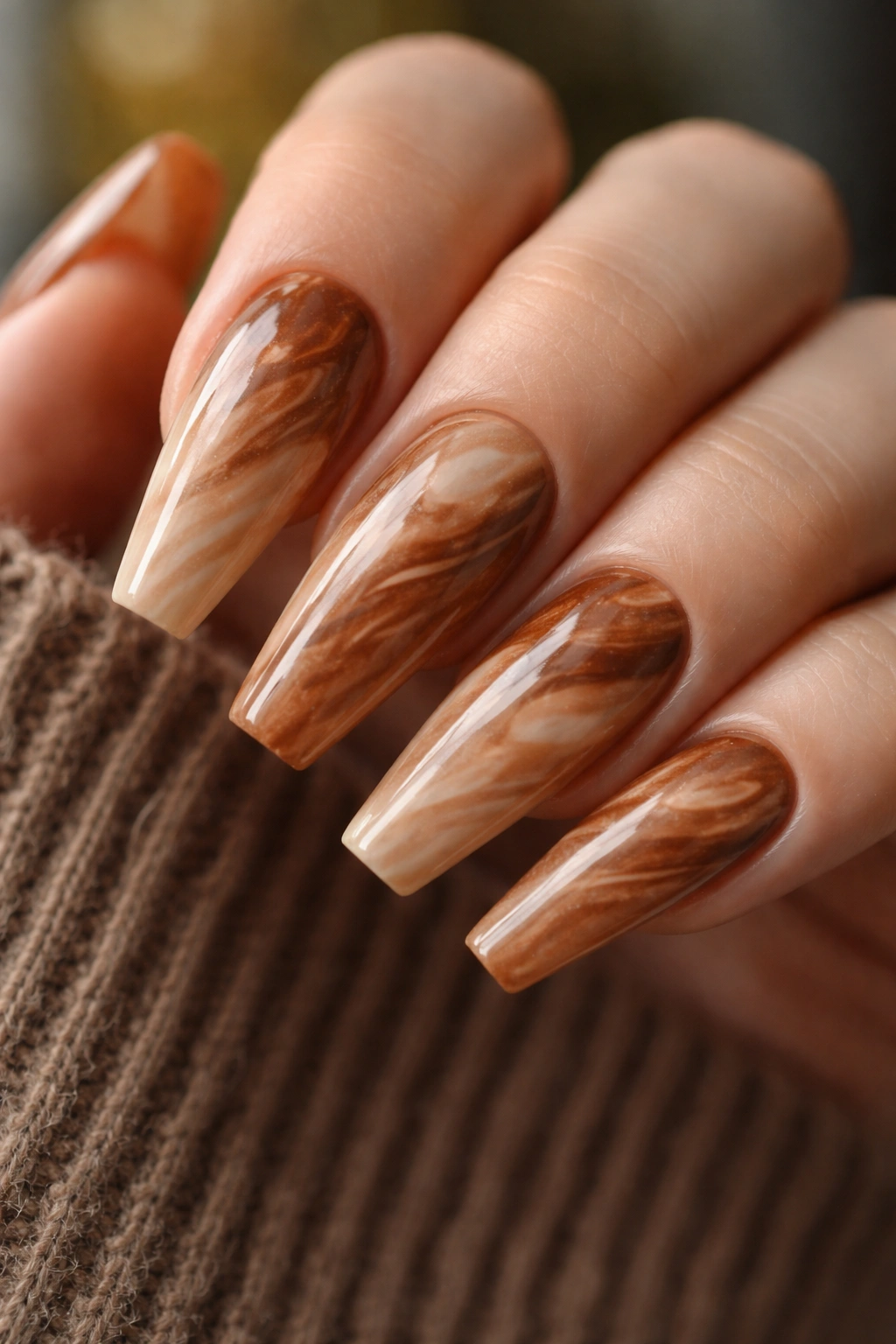
Marble can go muddy fast.
That’s the risk with any brown nail art, and it gets worse when four close shades are swirled together with no plan. The warm version that actually works uses three tones max: a creamy beige, a maple brown, and a darker toffee thread. That’s enough contrast to see the pattern and enough warmth to keep it soft.
The trick is to let one shade lead. Maple should take up most of the nail, with the cream opening up lighter pockets and the toffee added in thin veins. When every color gets equal space, the nail starts looking noisy. Ballerina nails already have structure from the shape alone. They don’t need busy marbling piled on top.
I also think this design looks better as a partial set. Two marbled accent nails on each hand, with the rest painted in a matching maple or cinnamon cream, gives you the swirl effect without crowding the whole manicure. Full marble can work, though it needs tight editing and a nail tech who knows when to stop dragging the brush.
Under gloss, the marbled lines look like warm stone or melted candy. Under matte, they lose some of that layered look. I’d keep the shine.
Bring a reference photo taken in daylight if you can. Brown marble under salon lights often looks warmer in person than it does on a phone screen, and that small mismatch leads to the “this isn’t quite it” feeling.
6. Espresso-to-Taupe Gradient
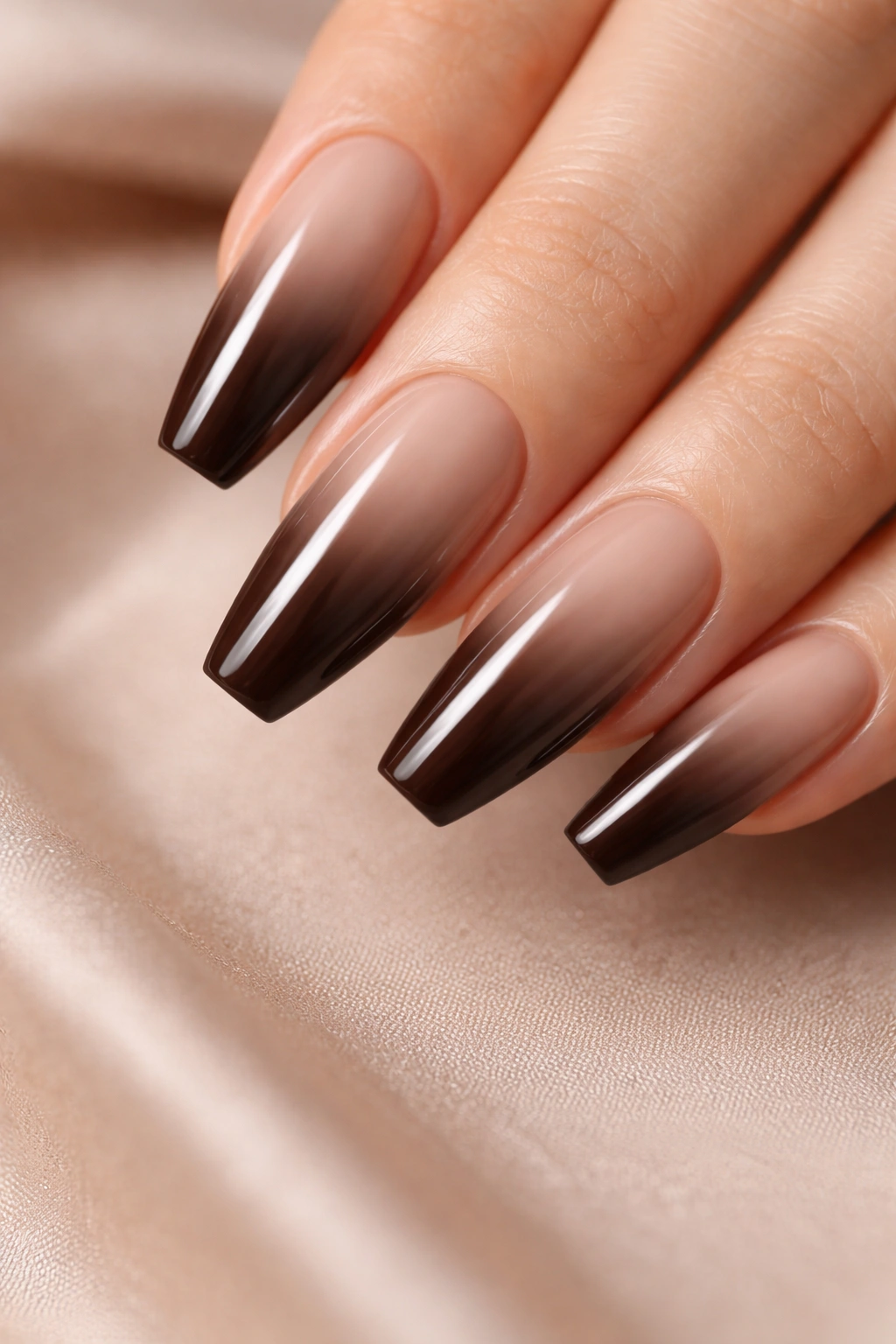
Unlike a full coat of dark espresso, an espresso-to-taupe gradient keeps the depth at the tip and the softness near the cuticle. That’s why it wears so well on ballerina nails. You still get the drama of a dark brown manicure, but the hand doesn’t look weighed down by one block of color.
Think of this as the moodier cousin of caramel ombre. Taupe sits closer to the natural nail tone, while espresso gives you that dark, roasted finish at the end. The gradient should move lengthwise, not side to side. A horizontal fade chops the nail in half. A vertical fade pulls it outward.
This design is best for anyone who likes dark polish but doesn’t want black. Black can look hard on a tapered square shape, especially if the length is long and the corners are filed sharp. Espresso keeps the intensity, though the brown base still feels warmer and easier on the eye.
The nicest version uses a cooler taupe only in a small amount, with warmer espresso carrying most of the nail. Too much gray taupe drains the set. Too much espresso wipes out the gradient.
If you wear your nails for two or three weeks between fills, this one earns its place. Regrowth is softer, and small chips near the cuticle are less obvious than they are on a deep full-color set.
7. Terracotta Brown With a Soft Matte Finish
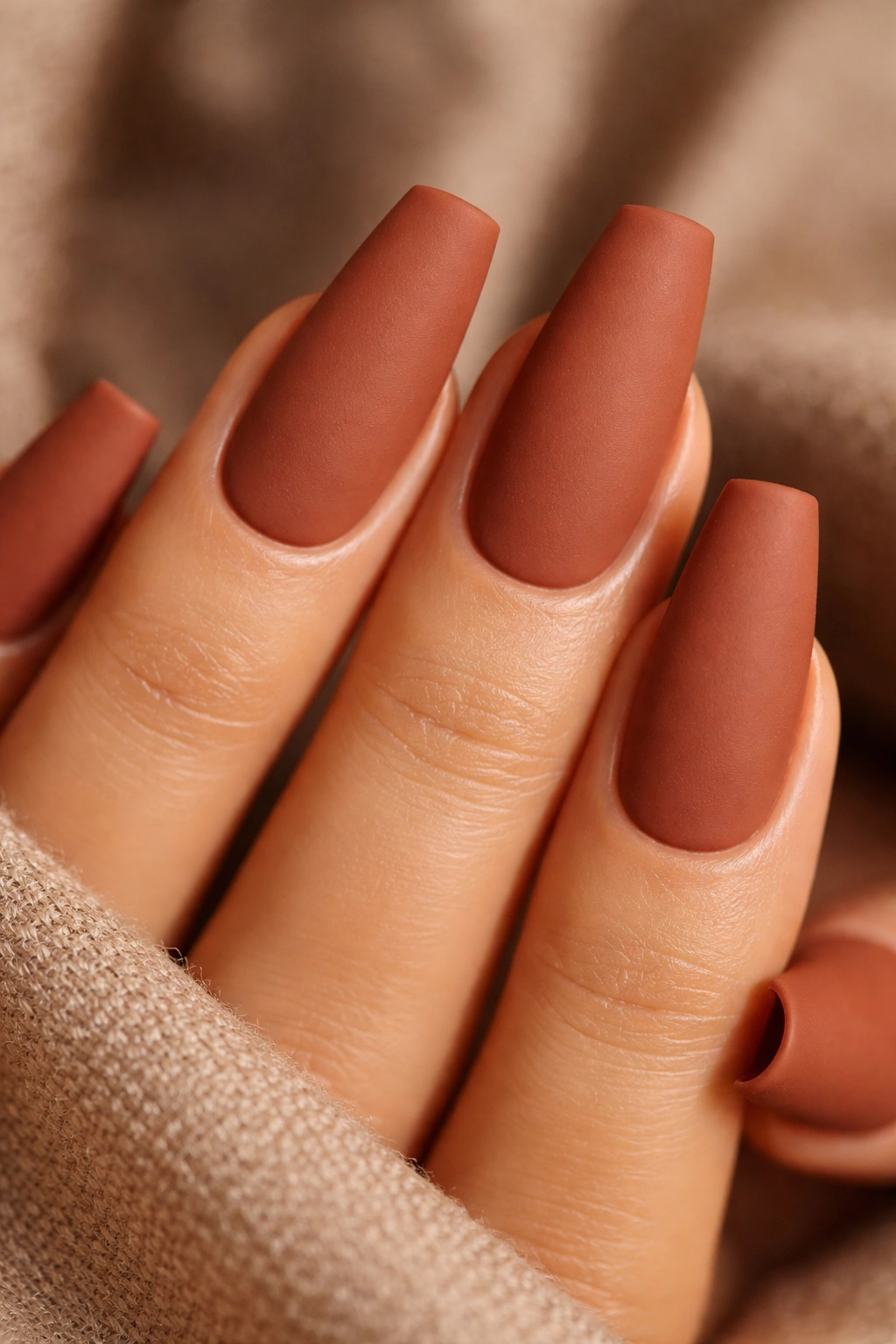
Terracotta matte has that dry clay look that makes your hands look sun-warmed even indoors. It’s one of the few matte brown looks I’d call worth the upkeep, because matte top coat does show scratches faster than gloss. Still, on the right shade, it has real character.
Warm terracotta sits closer to brick, cinnamon, and baked clay than to classic chocolate. That means it carries more orange-red heat, which keeps the manicure lively on shorter or medium ballerina nails. Dark matte browns can look flat. Terracotta keeps some movement in the color even when the shine is gone.
Where matte helps this shade
Matte turns terracotta into something chalkier and more tactile—almost like soft pottery. That texture suits minimalist nail sets, especially if you don’t want art, chrome, or foil.
What to watch for
- Buff the nail surface well before color. Matte shows ridges more than gloss.
- Keep the shape neat at the sidewalls. Matte doesn’t hide filing mistakes.
- Ask for a warm terracotta, not a burnt orange. Too much orange starts reading pumpkin.
- Refresh the top coat after 7 to 10 days if the finish starts looking shiny at the tips.
This one looks best when the length stays modest. Too long, and matte terracotta can drift from chic into costume territory.
8. Brown Sugar Chrome Brown Ballerina Nails
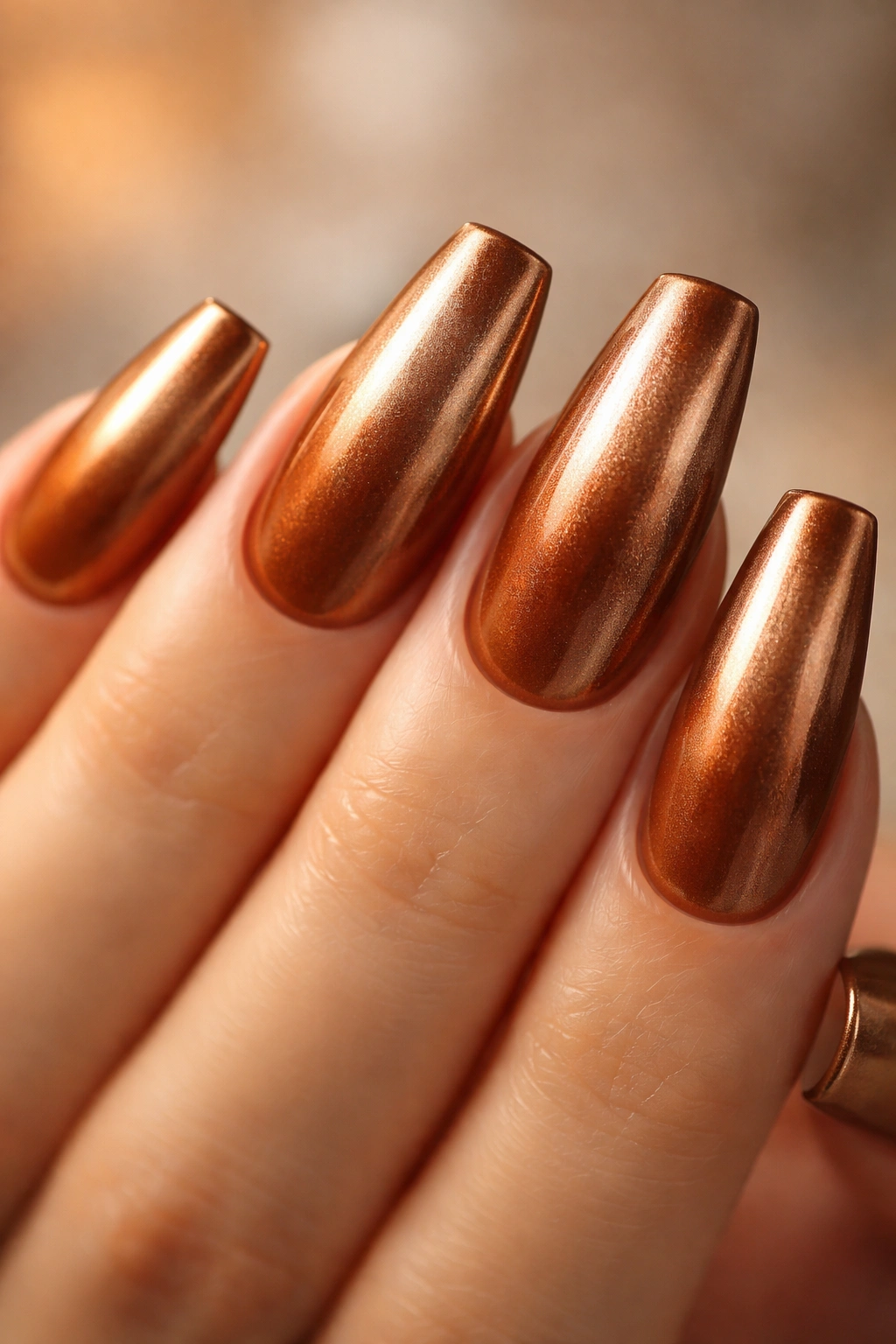
Chrome gets dismissed too fast in brown manicures. People picture icy silver mirror nails and stop there, though warm chrome over a brown sugar base is a different thing altogether. It looks bronzed, almost glazed, and the ballerina shape gives it a clean panel to reflect light across.
The base color should sit in the amber-caramel family, then the chrome powder should lean champagne bronze, not silver. That pairing matters. Silver chrome over brown can turn the whole manicure steely. Bronze chrome keeps the warmth and lets the brown peek through under the flash.
This design is sharpest when the nails are filed with a crisp tip and clean side lines. Chrome highlights shape mistakes in seconds. Any lump in the apex, any dip in the free edge, any crooked sidewall—you’ll see it. That sounds harsh, though it’s useful to know before booking the set.
I like full chrome on medium-long ballerina nails, but a softer version also works: chrome on two accent nails and solid caramel-brown on the rest. If you wear gold jewelry every day, that mix tends to tie in well.
Skip chunky gems. The chrome already does the visual heavy lifting.
9. Coffee Swirl Lines Over an Almond-Milk Base
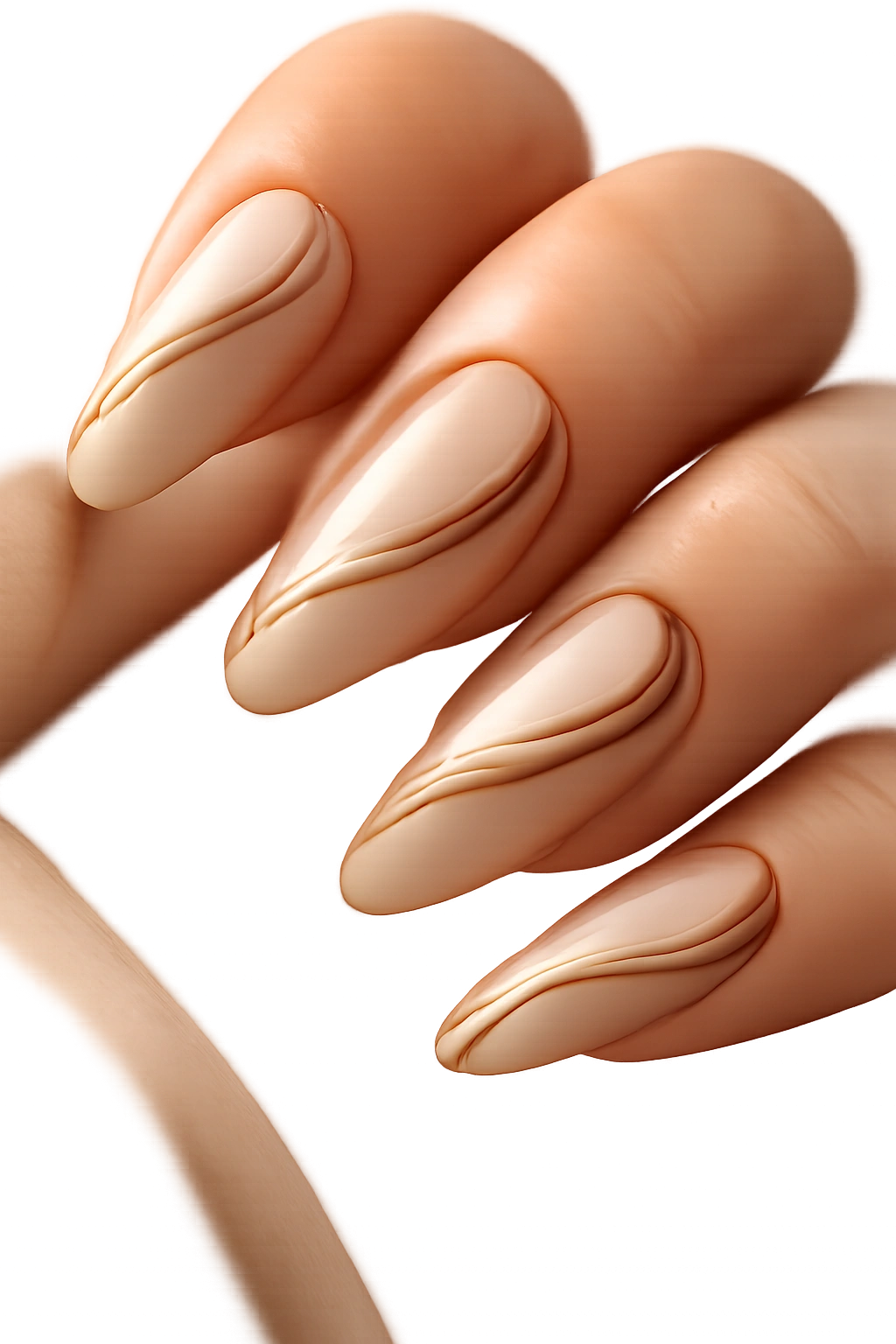
Why does this design stay fresh when so many line-art nails start feeling stale after a week?
Because the best coffee swirl set uses the shape of the nail itself as the guide. The lines follow the taper, bend with the sidewalls, and leave open space so the background still shows. On an almond-milk beige base, warm brown line work feels airy instead of crowded.
You want two brown tones, not five: one medium latte shade and one darker coffee shade. The lighter line softens the look, while the darker line gives the pattern enough contrast to read from a normal distance. If both lines are dark, the manicure gets heavy. If both are pale, it disappears.
How to place the lines
Keep the swirls long and curved, running from cuticle area toward the tip in 2 to 3 sweeping motions per nail. Tiny loops or scribbles fight the ballerina shape. A flat tip wants cleaner movement than that.
This is one of those designs that can be DIY-friendly on paper and frustrating in real life. Long liner brushes help, though gel gives you more working time than regular polish. If the first line goes crooked, wipe it and start again before stacking a second one on top.
The background should stay sheer enough to mimic coffee with cream. Opaque beige kills the softness.
10. Walnut Tortoiseshell Panels
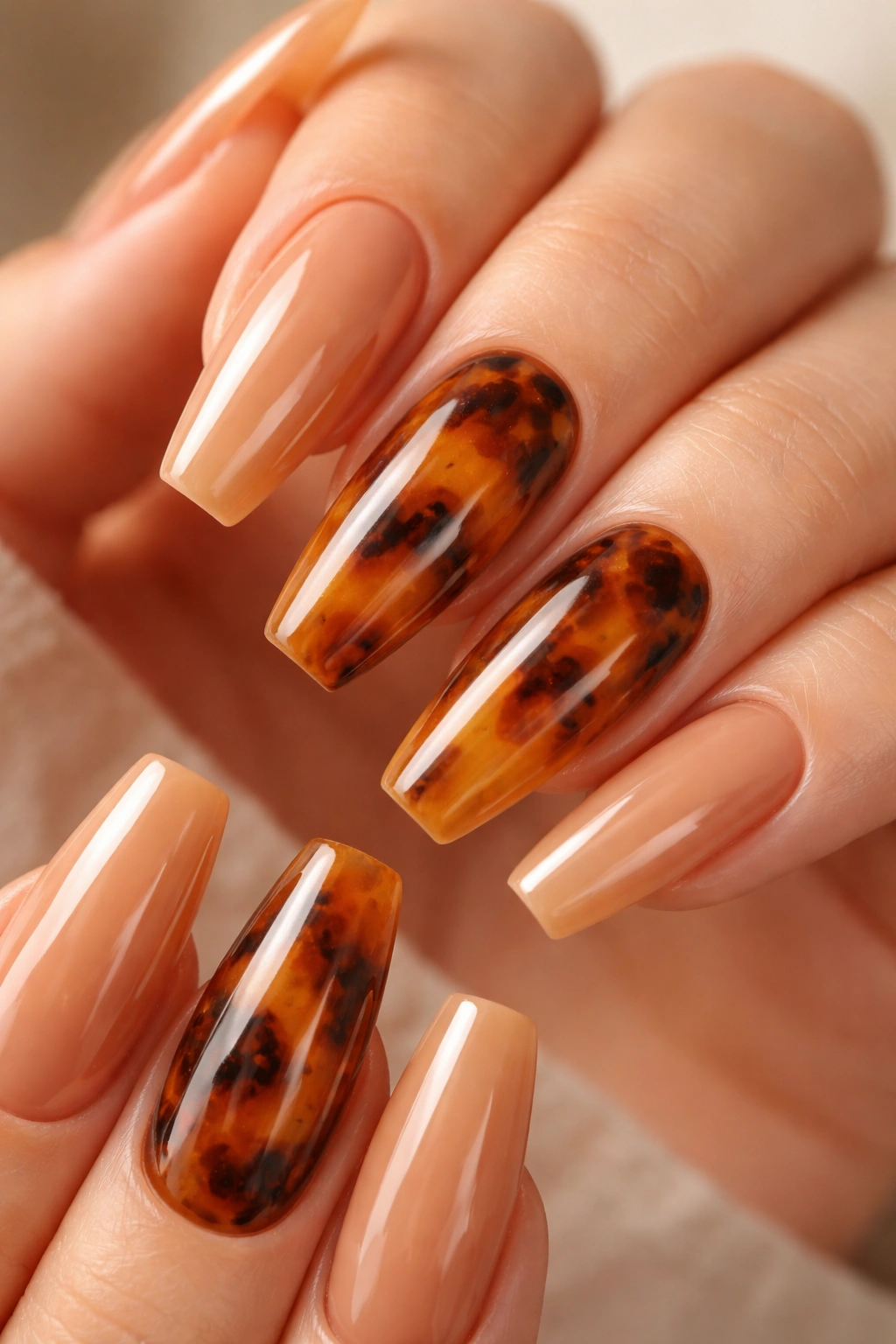
I still think tortoiseshell looks best when it’s treated like an accent, not a full costume. On ballerina nails, that usually means walnut tortoiseshell panels—two or three nails with the layered pattern, the rest in a matching warm brown or amber nude.
A good tortoiseshell nail is built in stages. First comes a translucent amber or honey-brown base. Then soft walnut patches get dabbed in with a blurred edge. After that, a deeper brown—sometimes almost black-brown—drops into the center of a few patches to create the mottled look. Seal it under gloss, and the layers start reading like resin.
The details that keep it from looking busy
- Use jelly polish for the amber base if you can. The see-through layer gives the depth.
- Keep the dark patches uneven and organic, not perfectly round.
- Leave open amber space between patches so the pattern can breathe.
- Limit tortoiseshell to 2 to 4 nails on a full set.
This design has more going on than a plain brown manicure, no question. Still, when the tones stay warm—amber, walnut, cognac—it feels grown-up rather than loud. That’s a fine line, and tortoiseshell crosses it fast if the black pieces take over.
11. Soft Mocha With Cream Half-Moons
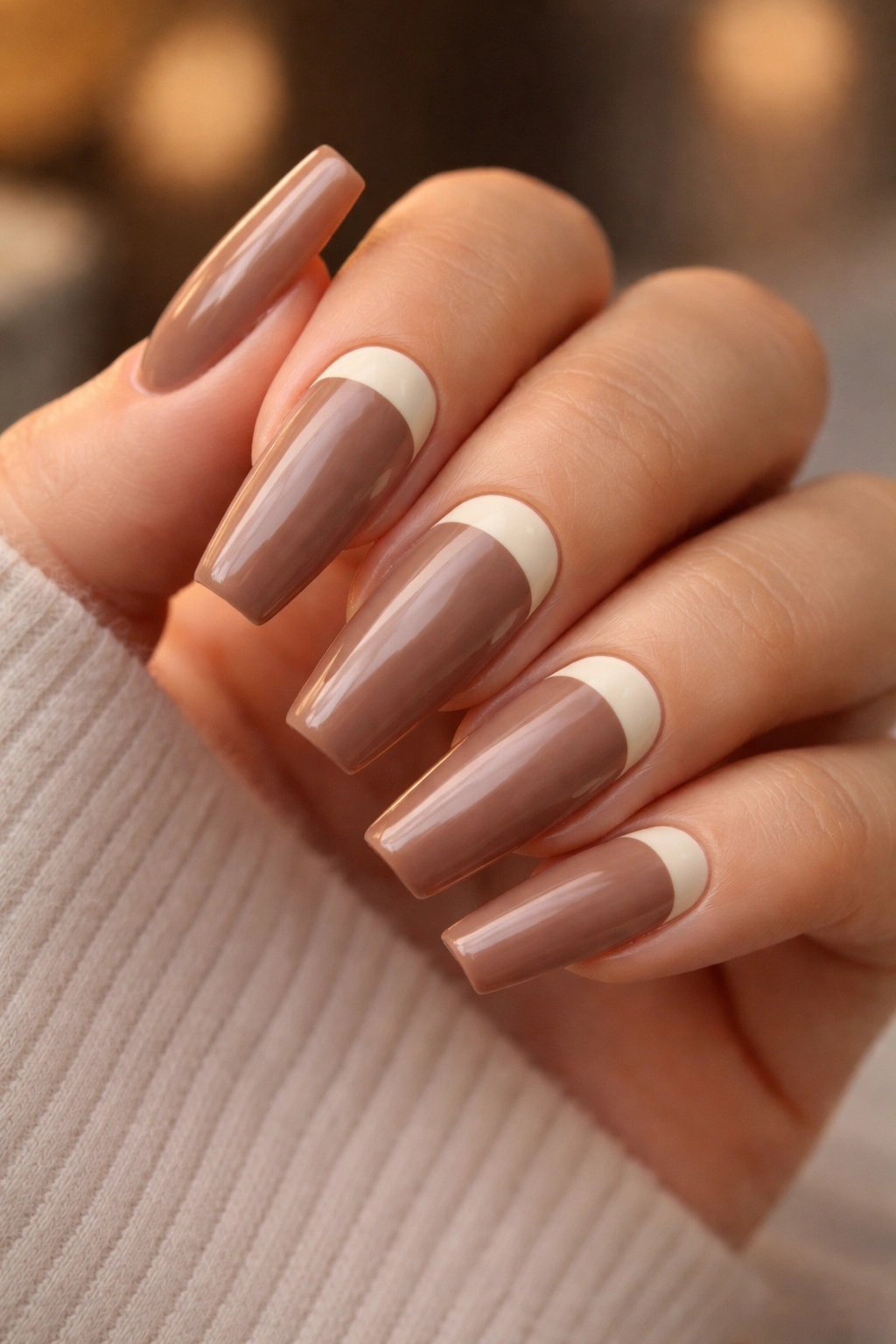
Not every warm brown manicure needs shine, foil, swirls, or a cat-eye stripe. A soft mocha base with cream half-moons at the cuticle has enough contrast on its own, and the retro shape detail makes the whole set feel thought through.
The half-moon should be cream, not stark white. White can look cold against brown and pull too much focus to the cuticle area. Cream keeps the warmth intact. Mocha should stay in the middle ground too—not beige, not dark chocolate. You want a shade that lets the half-moon show while still reading as brown from across the table.
One reason I like this design on ballerina nails is the growth pattern. Since the lighter detail already sits at the base, regrowth blends in better than it would on a full solid dark manicure. If you’re rough on your nails or tend to push appointments, that matters more than any trend label ever could.
There’s also something quietly tailored about it. The blunt tip gives structure. The curved cuticle moon softens the bottom edge. You get geometry at both ends of the nail, and the hand looks tidy even with no extra decoration.
A striping brush and guide stickers can help if you’re painting it at home. Still, symmetry near the cuticle is trickier than it looks—one wobble there shows up fast.
12. Burnt Caramel Velvet Nails
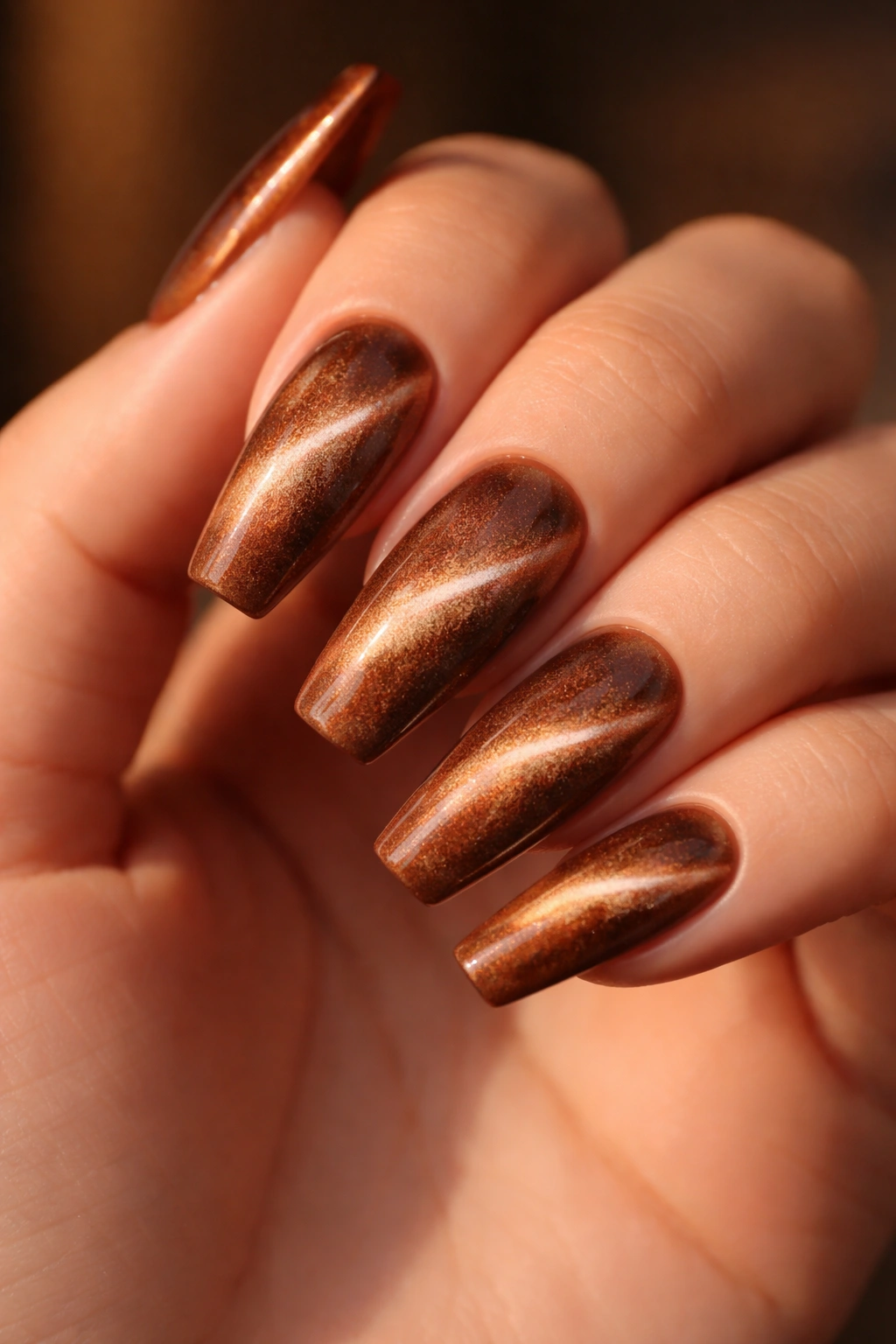
Chrome throws a hard mirror flash. Velvet doesn’t. Velvet nails use magnetic gel to pull shimmer into a soft, moving band, and when that shimmer sits over burnt caramel brown, the result feels warmer and deeper than standard metallic polish.
This is one of the few nail effects that shifts every time you move your hand. Under warm indoor light, burnt caramel velvet looks like glowing syrup. In daylight, the brown base comes forward and the shimmer tucks underneath. That changing surface suits ballerina nails because the long flat plane gives the magnetic line room to travel.
Who is this best for? Anyone who wants a dressier brown manicure but doesn’t want glitter chunks or mirror chrome. It feels polished, though it still has movement.
Technique matters a lot. Ask for a cat-eye gel in a caramel-brown base and a magnet hold of about 5 to 10 seconds per nail before curing. A diagonal pull often flatters ballerina shapes more than a straight center stripe because it echoes the taper. If the magnetic pigment is silver-heavy, the warmth drops. Gold or bronze shimmer keeps the brown alive.
It’s not the fastest salon set, and DIY versions can be frustrating until you get a feel for the magnet angle. Worth it, though, when the color shifts across the tip.
13. Truffle Brown With a Fine Copper Glitter Fade
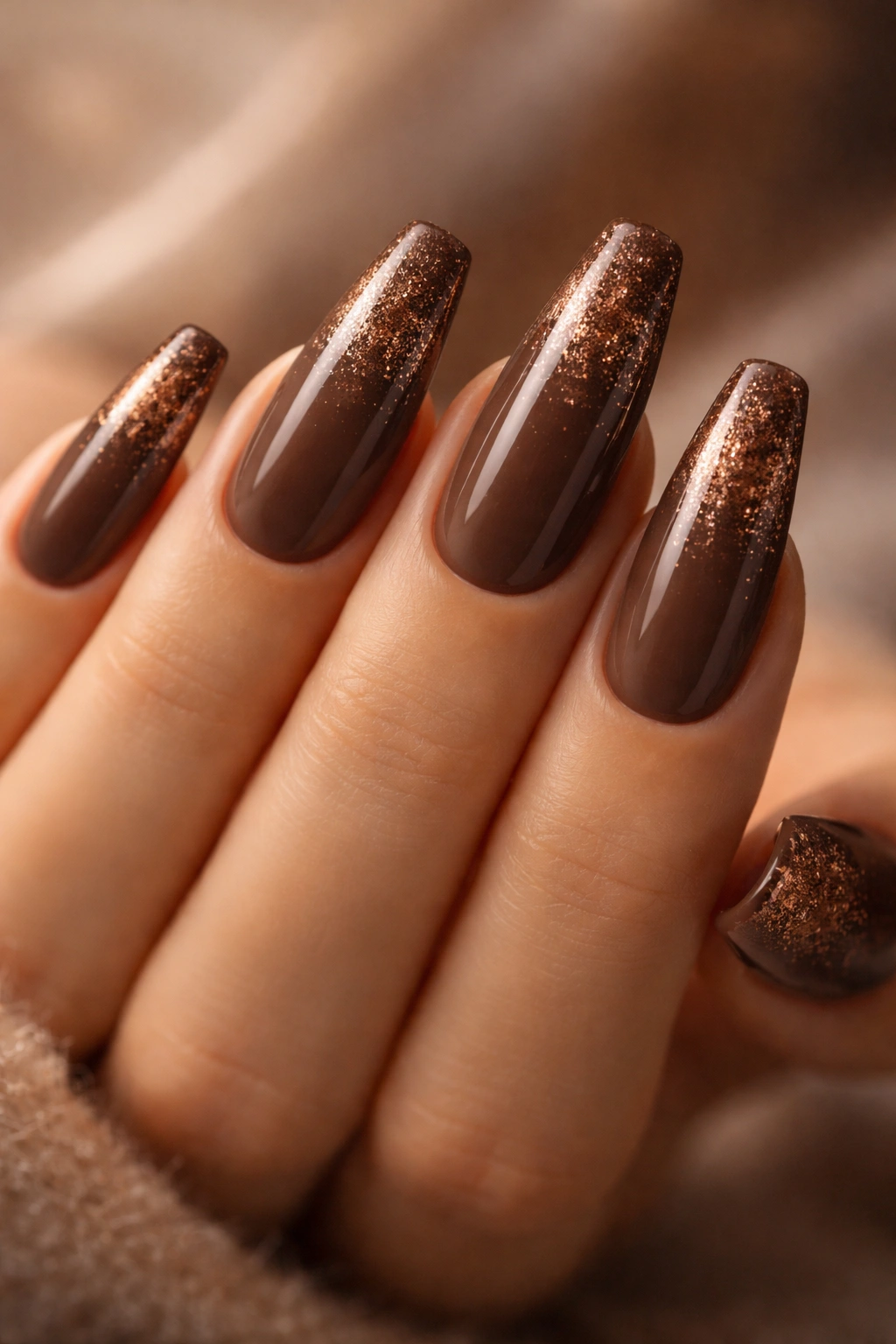
Copper glitter at the tips can look cheap if the particles are too chunky. With fine copper dust over a truffle-brown base, though, the effect is softer—more like warm light sitting on the ends of the nails than craft glitter glued on top.
Truffle brown works well here because it has enough depth to anchor the glitter but still shows brown under the sparkle. A near-black brown makes the glitter feel stark. A light mocha makes it look too sweet. Truffle lands in the middle.
Where the fade should sit
On ballerina nails, I like the glitter concentrated on the top third of the nail, feathered downward toward the center. A cuticle fade can work too, though tip fades echo the flat free edge and frame the shape better.
Keep the fade refined
- Use micro-fine glitter, not hex pieces.
- Pack the sparkle densest at the edge, then thin it out toward the middle.
- Choose copper or bronze, not rose gold, if you want a toastier brown look.
- Seal with a thicker top coat so the surface stays smooth.
This set earns its place for evening events, dinners, and holiday gatherings, though I’d still keep two or three nails plain if you want the manicure to read chic on Monday morning too.
14. Hazelnut Aura Nails
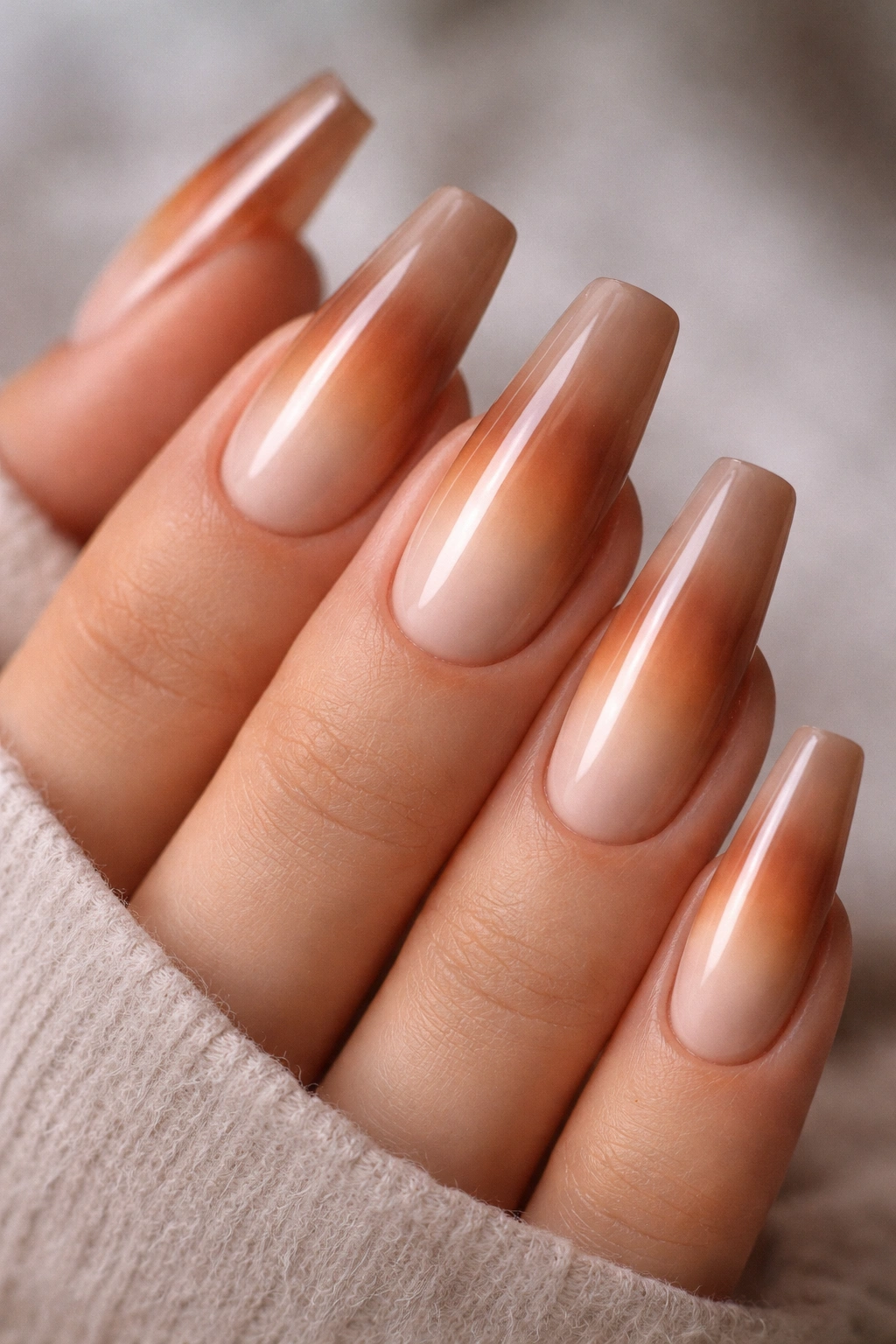
A hazelnut aura set looks like warm light diffused through the center of each nail. Done well, it feels soft and modern. Done badly, it looks like a blurry bruise. The difference is all in the color placement.
Start with a hazelnut beige base, then airbrush or sponge a cinnamon or amber-brown halo into the middle, keeping the edges hazy. The center should sit slightly above the true middle of the nail—closer to the cuticle than the tip—so the longer ballerina shape still looks stretched. Dead-center placement can make the nail look shorter.
I’d keep the aura small, around one-third of the nail width, with the color fading gently into the base. Huge circles swallow the whole manicure. Tiny circles look accidental. There’s a sweet spot here, and your tech either knows it or doesn’t.
This design suits people who like brown nails but want something lighter than a full deep set. You still get warmth, though the base stays airy. Gloss helps the fade look smoother. Matte can turn the halo cloudy.
If you want a small extra detail, a thin espresso outline near the tip can sharpen the whole design. I wouldn’t add stones or foil. Aura nails need breathing room.
15. Deep Mahogany Brown Ballerina Nails With Sharp Gloss
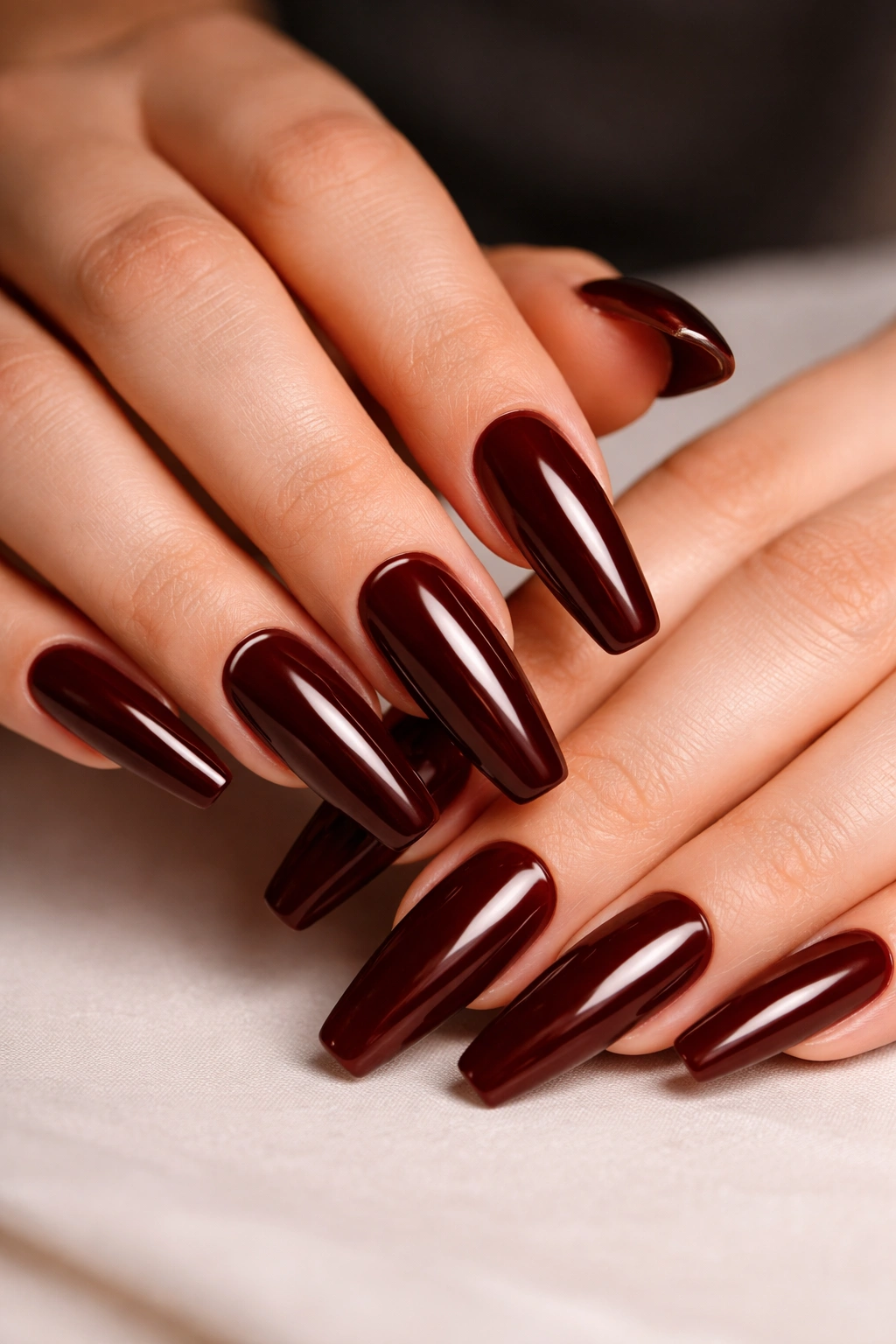
When I want brown ballerina nails to feel dressed up, I keep coming back to mahogany. Not chocolate. Not burgundy. Mahogany. It has that dark red-brown depth that looks almost black in dim light, then shows its warmth the second you step outside or hold a coffee cup near a window.
The reason it suits ballerina nails so well is contrast. The color is dark enough to make the shape look deliberate, and the red-brown base keeps the manicure from feeling cold. On a long almond nail, mahogany can fade into the background a little. On a ballerina shape, the flat tip gives it presence.
This set needs a clean file and a strong apex. Dark gloss highlights every structural issue, and mahogany is unforgiving in the best way. I’d keep the corners softened by about 1 millimeter rather than filing them razor-sharp. That tiny adjustment makes the shape look expensive instead of severe.
No art is needed here. No accent finger either, unless you add a single thin gold line near the cuticle on one hand. Even then, I’m not convinced it improves the set. Full-color mahogany with high gloss already says enough.
If your skin has olive or golden tones, this shade often looks especially good because the red undertone in the polish echoes the warmth in the hand rather than fighting it.
Final Thoughts
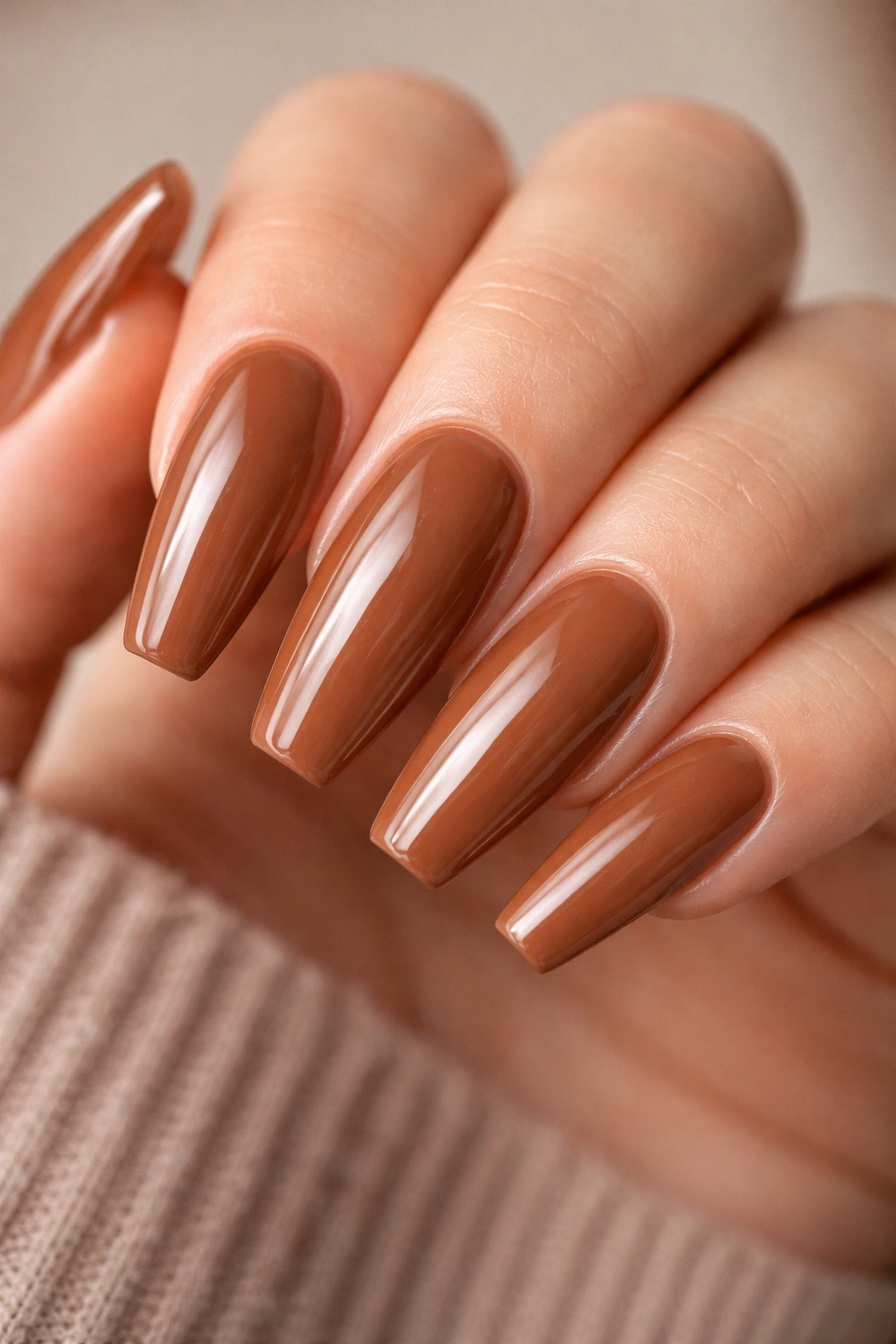
Warm brown nails are easy to underestimate. On the wrong shape, they can feel heavy. On ballerina nails, with the right undertone and a clean file, they look polished, cozy, and sharper than plain nude ever manages.
If I had to narrow the list down, I’d point to cinnamon latte gloss for everyday wear, chestnut French tips for a neat salon look, and mahogany gloss when you want depth. If you like art, tortoiseshell panels and hazelnut aura nails give you more personality without losing the warmth that makes brown shades so wearable.
Bring more than one reference photo to your appointment—one in daylight, one indoors. Brown polish changes a lot with lighting, and those shifts are exactly what make these manicures feel alive on the hand.