

Under bright salon lights, some coffin-shaped manicures can start looking sharper than you meant them to. Pastel ballerina nails fix that fast. The tapered sides still give you that long, neat silhouette, but washed-out pinks, lilacs, blues, and greens keep the whole set calm instead of harsh.
That mix of structure and softness is why the shape works so well when you want your nails to look polished without feeling heavy. Ballerina nails have a flat tip, so they read crisp from across the room. Put the wrong pale shade on them, though, and every ridge, wobble, and bulky sidewall shows up right away.
I’ve always thought soft colors ask more from a manicure than deep shades do. A syrupy burgundy can hide small flaws. Milky butter yellow cannot. If the apex sits too high or the sidewalls flare even a little, pale polish tells on the whole set.
Get the shape clean first, and pastel nail ideas open up in a big way—from whisper-thin French lines to jelly layers and muted skittle sets that still look easy on the eyes after a full week of wear.
Why Pastel Ballerina Nails Look Softer Than You’d Expect
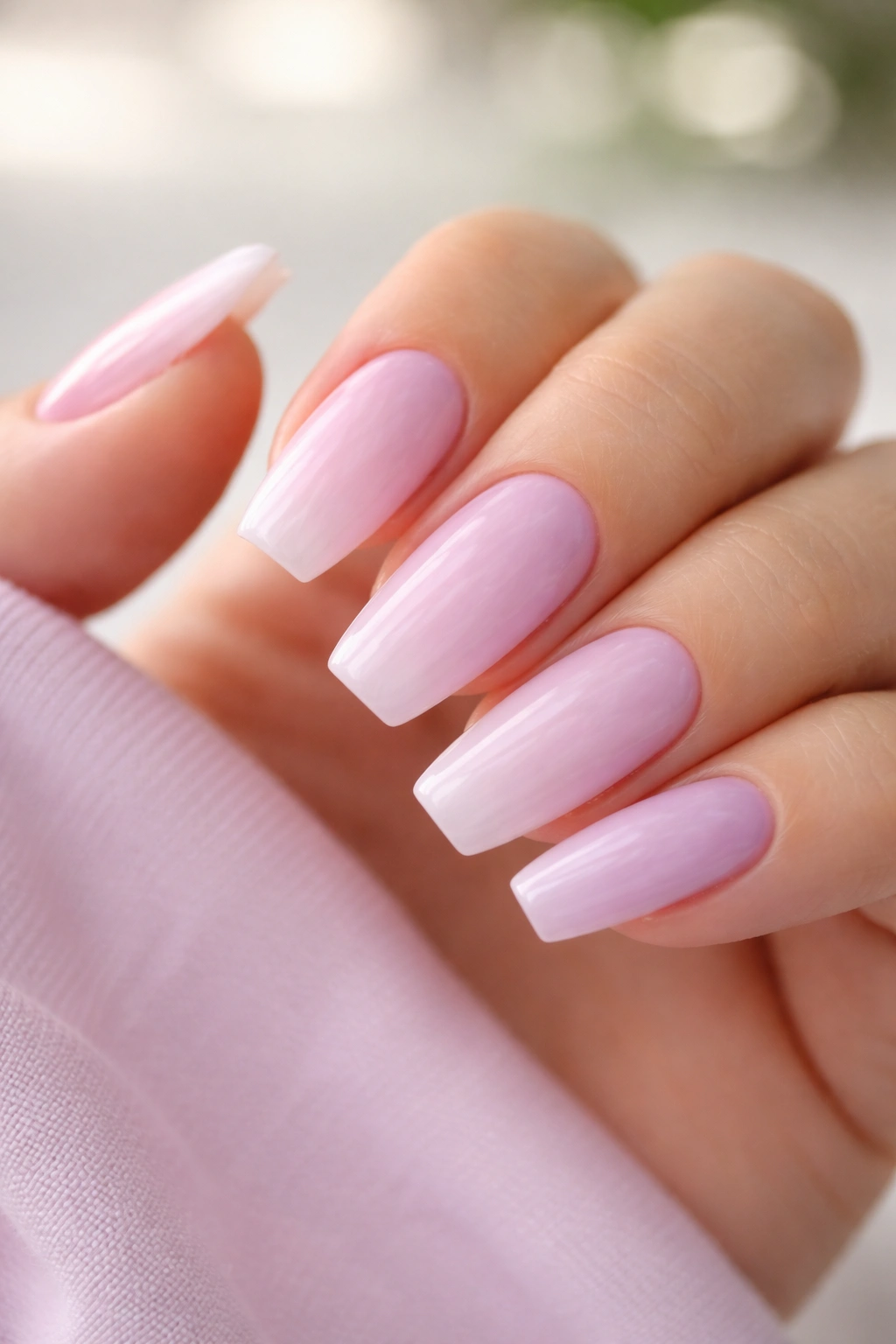
The ballerina shape is more forgiving than people think. A lot of that comes down to proportion. The slight taper on each side narrows the nail visually, while the flat free edge keeps it tidy, so even a longer set can still look controlled.
The filed tip does half the styling work
A square tip on a wide nail can look blunt. An almond tip can lean delicate in a different way, almost too delicate if you want some edge. Ballerina sits in the middle. You get the clean line of a square and the lengthening effect of a taper, which is why pastel shades land so well on it.
Length matters here.
Once the free edge goes past about 8 to 10 millimeters, a chalky pastel can start looking more dramatic than soft. Medium length—closer to 4 to 7 millimeters past the fingertip—usually gives the nicest balance for this color family.
Pale pigment changes the mood
Dark polish makes every shape look firmer. Pastels do the opposite, especially when they have a milky base instead of a hard white base. That little bit of translucency takes the edge off the flat tip and makes the manicure feel smoother from cuticle to end.
You can see it most with pink, peach, lilac, and dusty blue. Those shades blur the line between nail bed and color in a flattering way. Mint, butter yellow, and pistachio can do it too, though they need a cleaner base coat under them or they can go streaky fast.
Choosing the Best Colors for Pastel Ballerina Nails
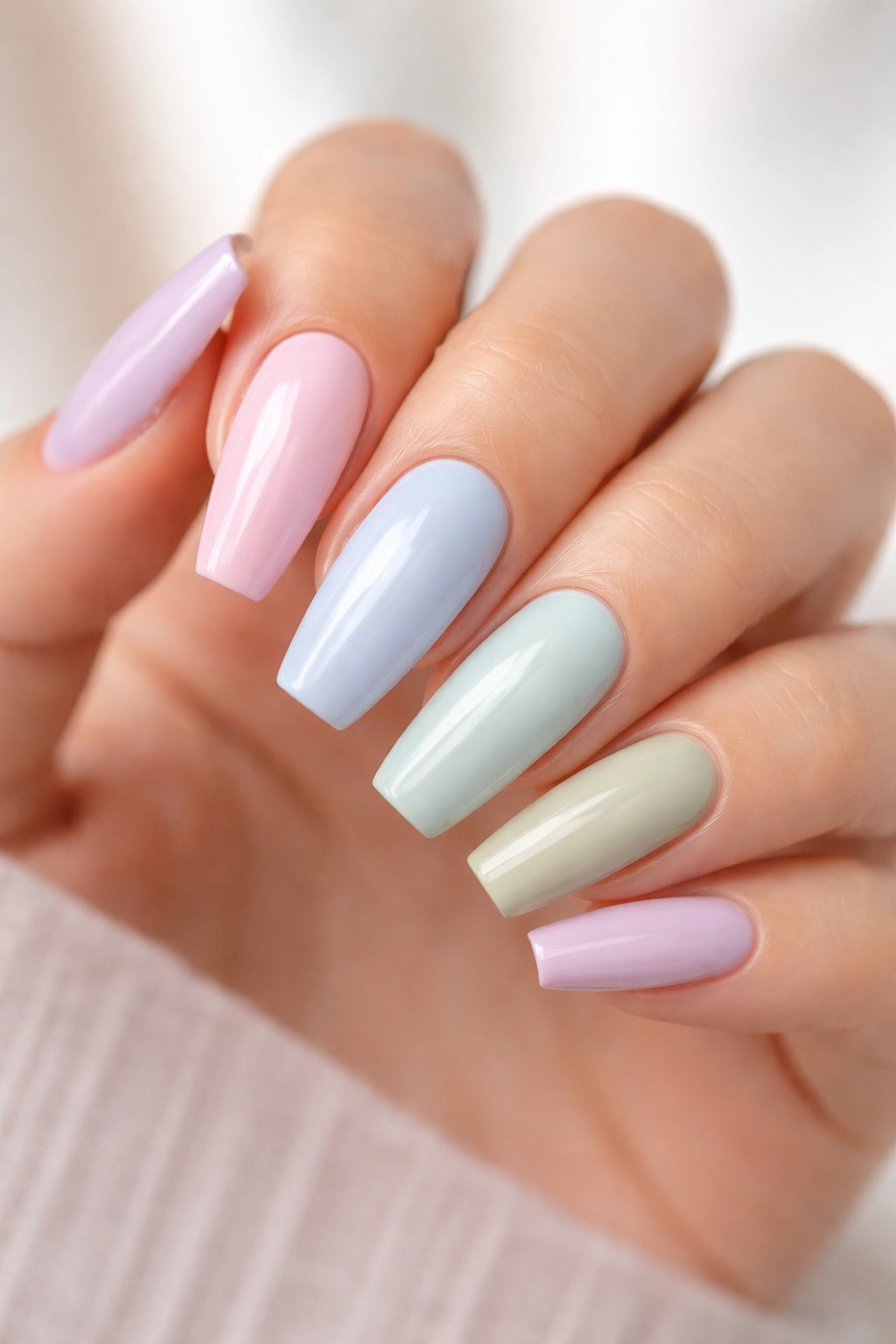
Not every pastel reads the same on every hand. Undertone changes everything, and so does nail length. A baby blue that looks airy on one person can look icy on someone else, while apricot can either warm up the hand or pull orange if the mix is off.
Shades that usually work best by undertone
- Cool or pink undertones: lilac, icy rose, baby blue, periwinkle, soft mauve
- Warm or golden undertones: peach, apricot, butter yellow, creamy coral
- Neutral or olive undertones: sage, pistachio, dusty lavender, milky blush
Those are starting points, not rules carved in stone. Still, they save time.
If your hands run red, skip harsh pastel white and go for a milky pastel instead. If your nail beds are short, choose colors with a sheer or jelly finish so the set doesn’t look blocky. And if you like longer ballerina nails, cooler shades often keep them looking fresh rather than heavy.
Length changes how pastel polish reads
Shorter ballerina nails do best with shades that have some warmth or transparency—rosewater pink, peach milk, dusty mauve. Longer shapes can carry cooler colors like lilac, blue, and mint without looking too flat.
Finish matters too. Gloss makes pale shades look juicier. Matte softens them but can expose texture, so the nail underneath needs to be smooth.
Nail Prep That Keeps Pastel Ballerina Nails Clean and Smooth
Chalky pastels are unforgiving.
Before color even touches the nail, the shape needs to be balanced from both sidewalls, not just straight from the top view. I’ve seen sets that looked fine head-on and bulky from a slight angle, and pale polish always makes that problem louder.
What the base should look like before color
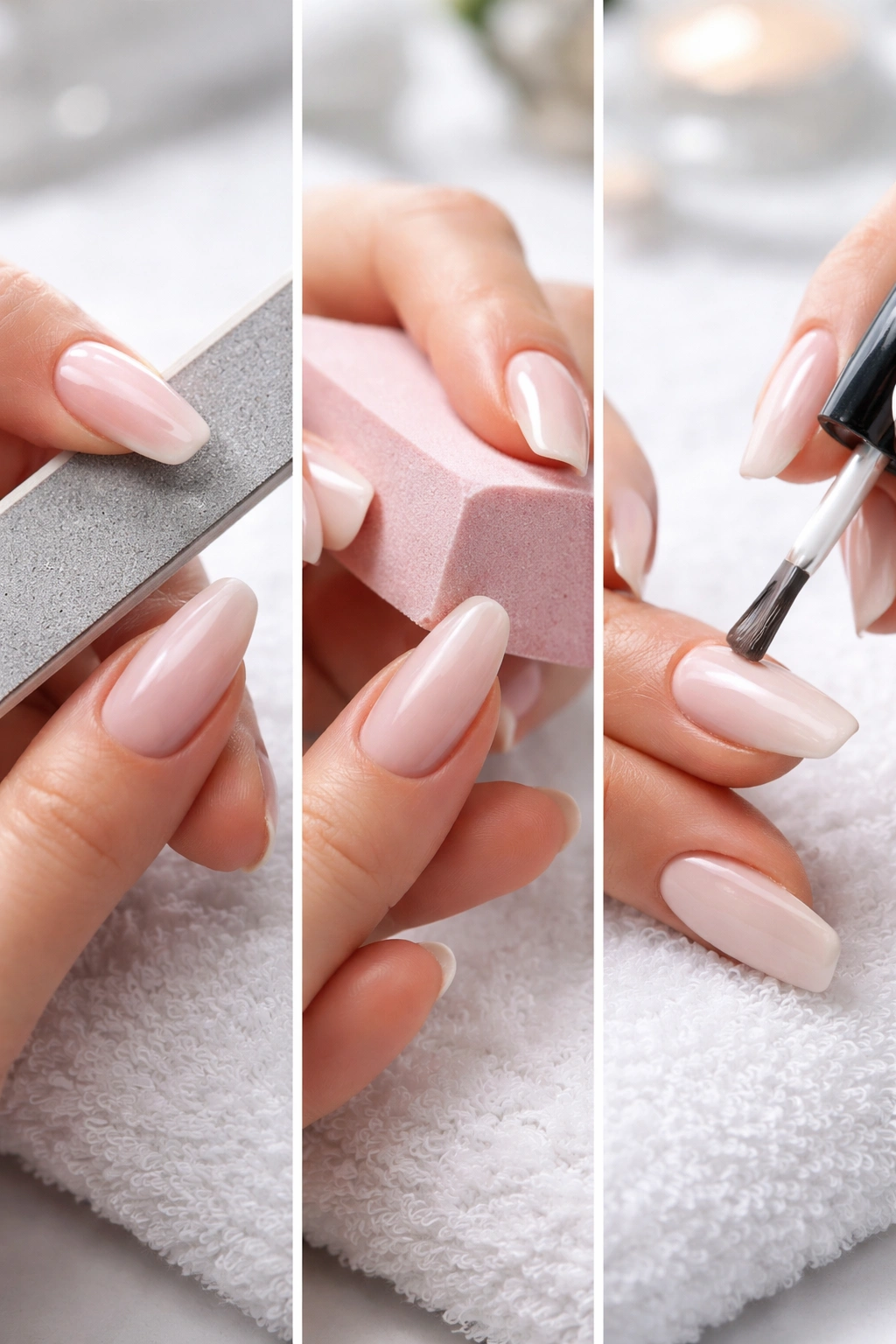
A clean pastel set usually starts with three boring steps that are worth every extra minute:
- File with a 180-grit file to set the taper first, then flatten the tip.
- Buff lightly with a 240-grit buffer so ridges don’t show through thin color.
- Use a ridge-filling or builder base if the natural nail has dips, peeling, or uneven growth lines.
Skip that builder layer on a pale manicure and you’ll notice it by day two.
Thin coats win every time
Two or three thin coats almost always beat one thick coat, especially with butter yellow, mint, peach, and pale blue. Thick pastel polish can wrinkle near the center, flood the cuticle, and leave the tip looking bulky. Thin layers self-level better and keep the ballerina shape sharp.
Cap the flat edge.
That one move helps stop tip wear, which matters on ballerina nails because the free edge is more visible than it is on almond or oval shapes.
1. Powder Blue with Milky Gloss
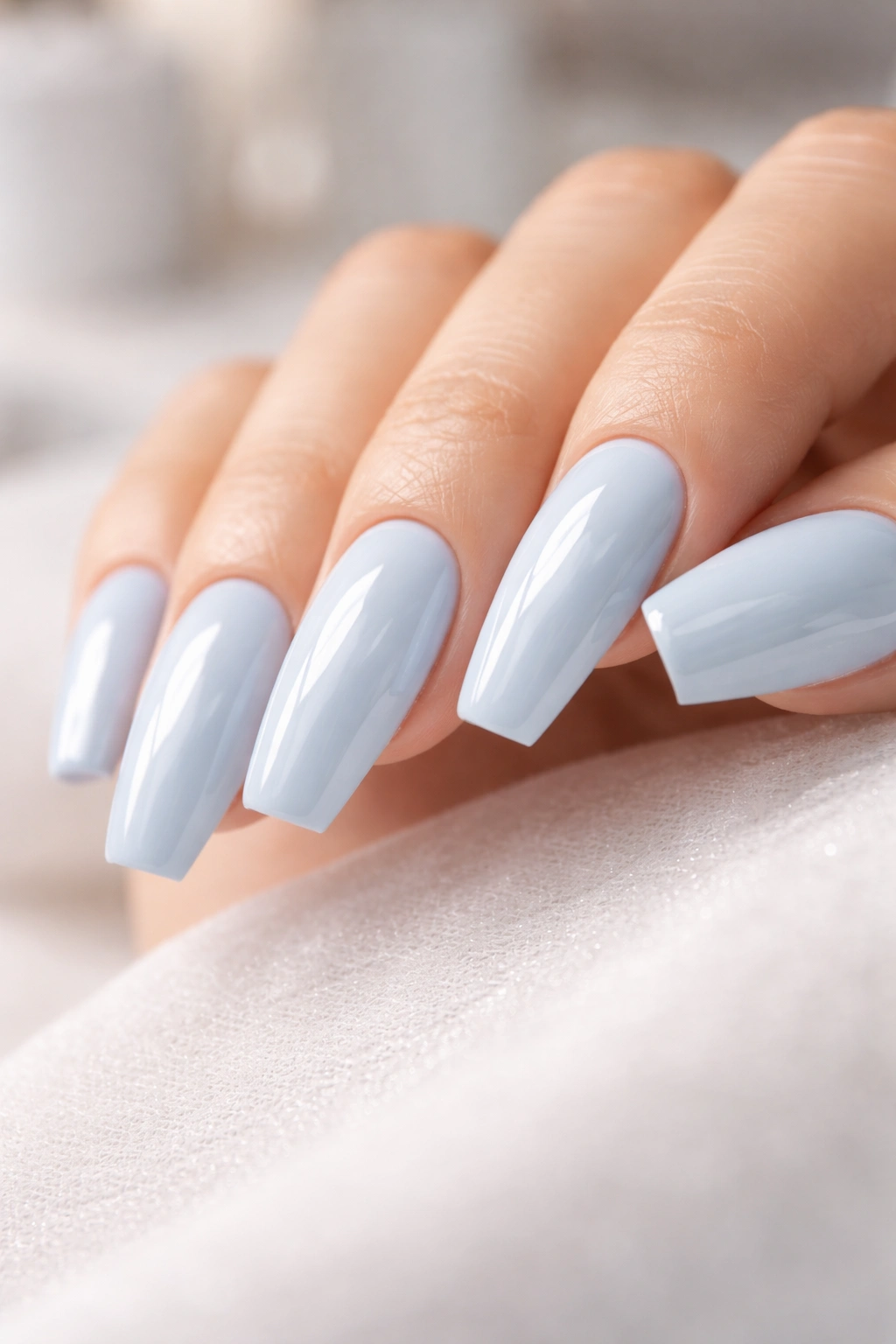
Powder blue is one of the cleanest pastel choices for a ballerina shape because it cools down the silhouette without making it feel severe. The trick is picking a blue with a drop of white and a touch of gray, not a bright sky blue that reads loud from across the room.
Why this shade works on the ballerina shape
That soft, cloudy blue smooths out the hard stop at the flat tip. On medium-length nails, it looks crisp and airy in the same breath. I like it best when the color is fully opaque but still a little creamy, almost like blue stirred into milk.
Best details to request
- Ask for a milky nude base under the blue if your natural nail has visible staining.
- Keep the length around 4 to 6 millimeters past the fingertip for the softest effect.
- Use a high-gloss topcoat rather than matte; gloss gives pale blue more depth.
- File the sidewalls narrow, because wide powder-blue nails can read blocky.
My tip: keep this one plain on all ten nails. Powder blue already has enough character without added art fighting for space.
2. Lavender Cream with Micro French Tips
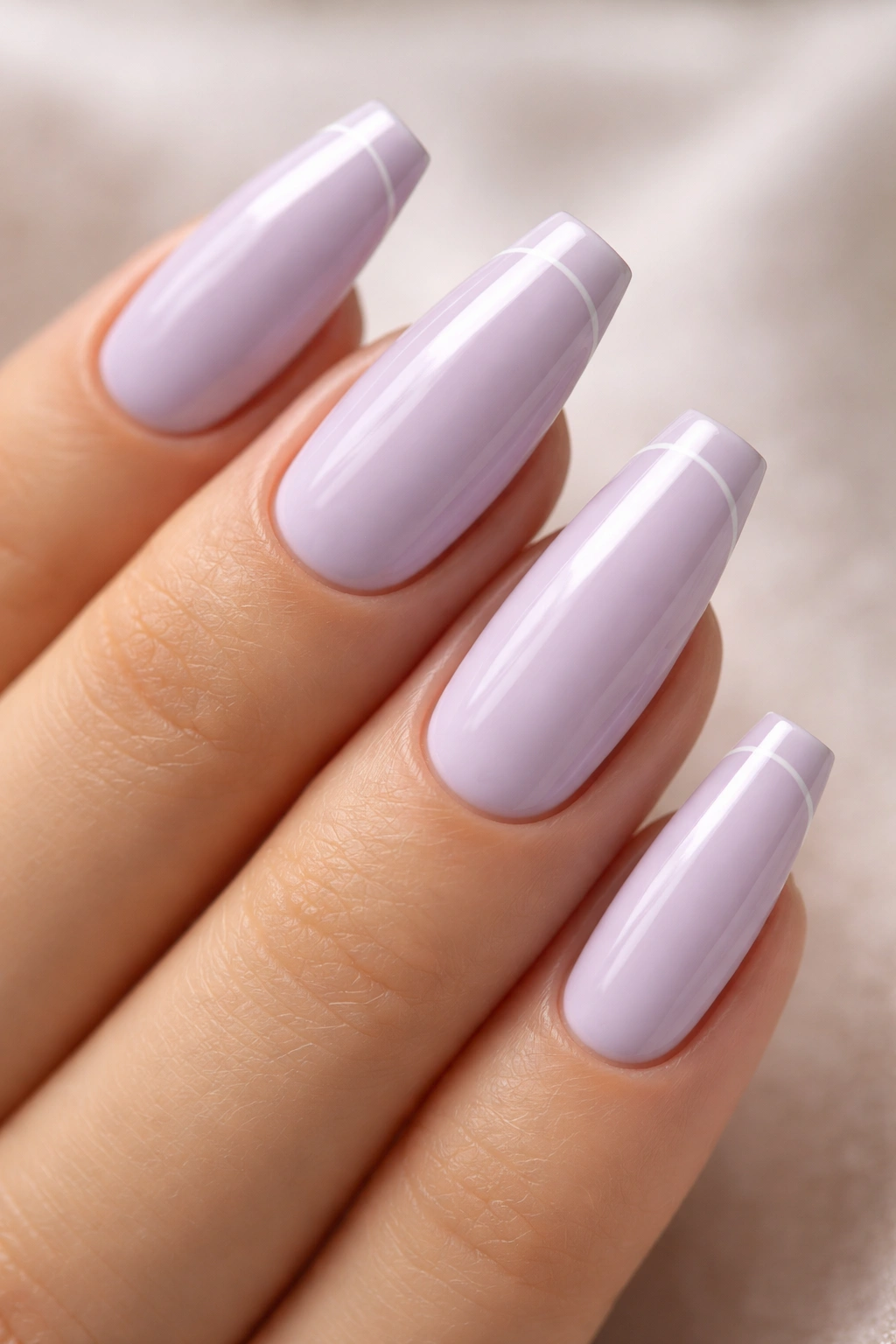
A lavender base can look cleaner than pale pink on a ballerina nail. That surprises people until they see it in person. The cool undertone sharpens the shape a little, and the tiny French tip gives the manicure definition without the harder contrast of a full classic French.
The tip needs to stay tiny—around 0.5 to 1 millimeter. Anything thicker starts pulling the set out of soft territory and into something more graphic. White works, though I like a slightly deeper lavender tip even more because it keeps the color story tight.
This is a smart pick if you want nail art that still feels quiet. You get a little line at the edge, a little extra detail, but none of the visual weight that comes with a bold smile line.
Ask your nail tech to keep the base creamy, not sheer. Too sheer, and the French line floats. Too opaque, and the whole look gets chalky.
3. Peach Sorbet Ombre
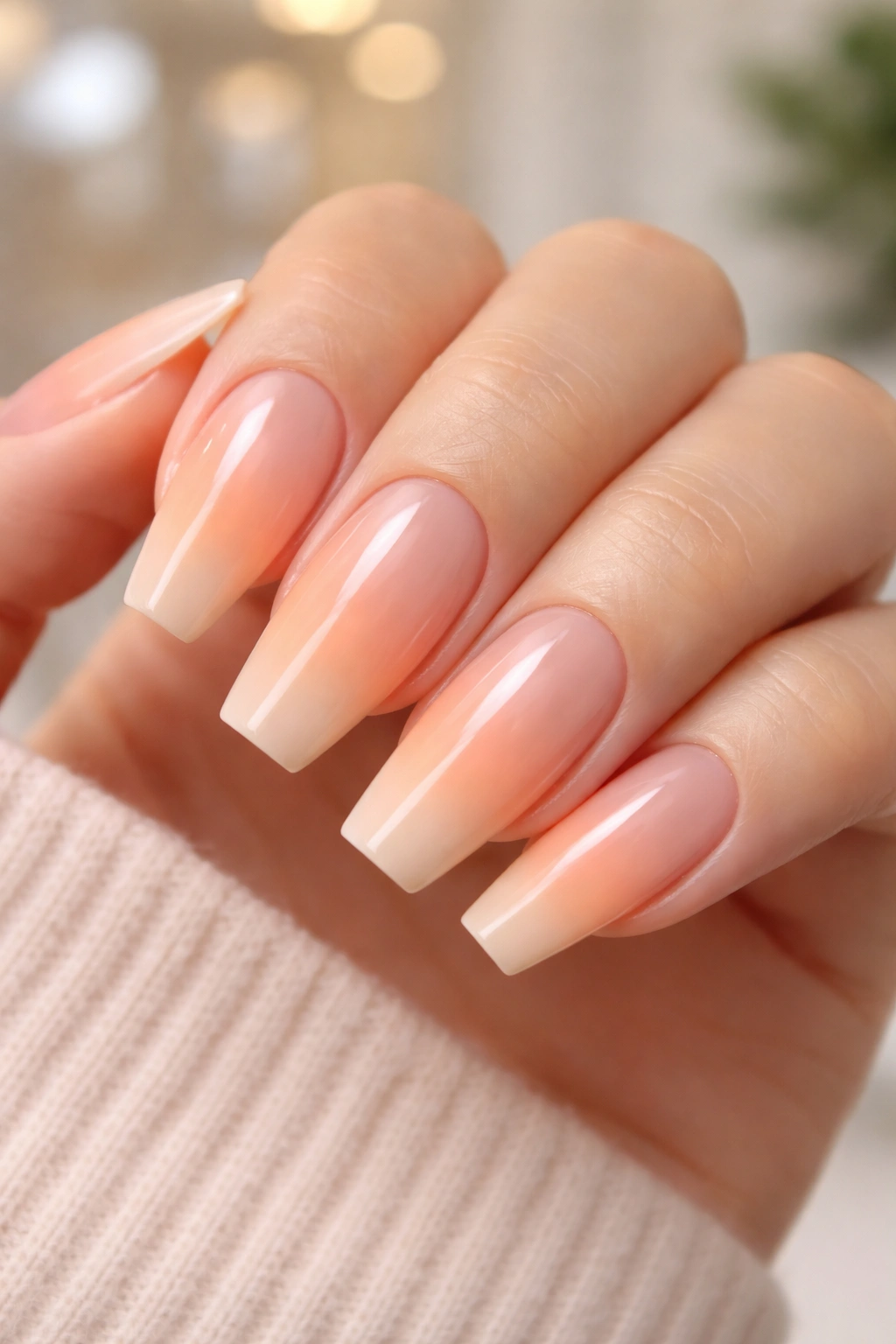
Why does peach ombré flatter so many hands? Because it mimics warmth that already exists in the skin. A nude-to-peach fade looks soft instead of painted-on, which matters on a shape with a straight tip.
When the fade starts near a sheer pink or beige at the cuticle and deepens toward a sorbet peach at the end, the nail looks longer without screaming for attention. The color shift is doing the work, not extra art.
A two-tone fade is enough. Three colors usually turn busy on this shape.
How to ask for it at the salon
Request a sheer nude or milky pink base with peach concentrated on the outer half of the nail. Airbrushing gives the smoothest finish, though a sponge blend can still look good if the tech keeps the pigment light and seals it with a glossy topcoat.
4. Pistachio Half-Moon Negative Space
Some nail designs look thoughtful on day one and cluttered by day four. This isn’t one of them. A pistachio manicure with a bare or nude half-moon near the cuticle grows out in a cleaner way because that open space softens the regrowth line.
The shape helps too. On ballerina nails, the curved half-moon at the bottom plays against the flat edge at the top, so the whole set feels balanced instead of stiff.
Key details that keep it looking refined
- Keep the half-moon around 2 to 3 millimeters deep at the center.
- Choose a muted pistachio, not bright green.
- Use a liner brush for the curve so both hands match.
- Finish with gloss; matte can make the negative space look dusty.
I like this design most on short-to-medium ballerina nails. On long sets, the contrast between open cuticle space and full color can start looking more editorial than soft.
5. Butter Yellow with a Thin White Edge
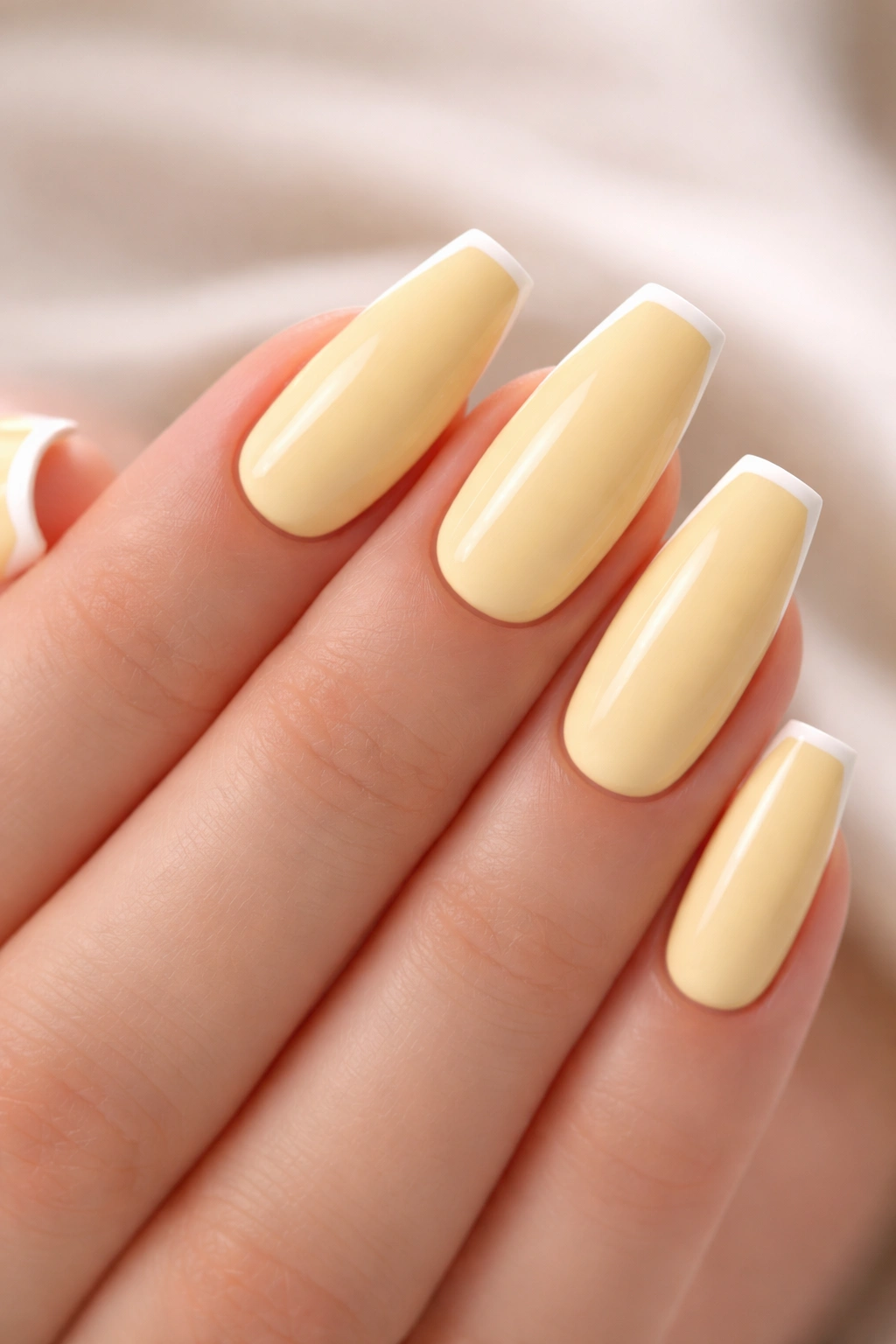
Butter yellow is one of those shades that can go charming or awkward with almost no warning. Get the tone right, though, and it looks fresh on a ballerina shape. The shade should lean creamy and slightly beige, not neon and not chalk-white.
That tiny white edge matters more than you’d think. A line at the tip, kept thin and even, gives the shape a crisp finish while the yellow keeps the mood light. It’s almost like a softened French manicure.
I would not make this one too long. Medium length is better. The more extension you add, the more the yellow starts reading costume-y rather than clean.
Use a ridge-filling base under this color every time. Butter yellow shows every dip in the nail plate, and it also tends to go patchy if the first coat is too heavy. Two thin coats, then the tip line, then a glossy topcoat. That order gives the smoothest result.
6. Blush Pink with a Sheer Chrome Veil
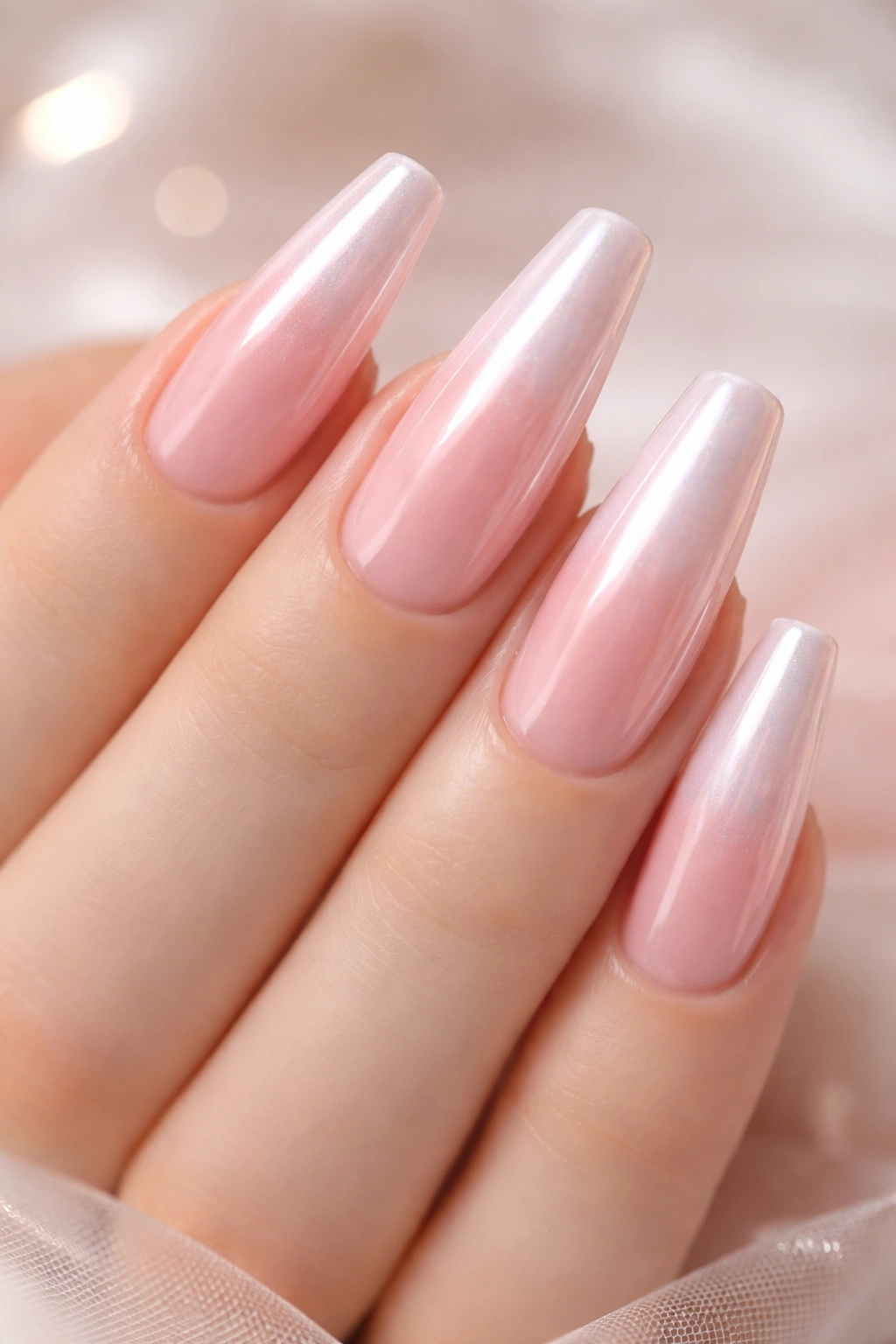
Unlike a full mirror chrome, a sheer pearl chrome over blush pink does not flatten the softness of the manicure. It gives the nail a glazed surface and a little shift when your hand moves, but the base color still reads first.
That difference matters. Full chrome can make ballerina nails look harder, colder, and more metallic than the shape wants. A whisper-thin pearl rub keeps the nail creamy.
This is the set I’d pick for a wedding guest, a work event, or any day when you want polish without obvious nail art. It catches the eye at close range, then settles down from a distance.
Use a pink-toned pearl powder, not a silver-blue one. The colder versions can turn blush into something almost gray. One soft pass of chrome on cured topcoat is enough; rub too much and you lose the delicate finish that makes this design work.
7. Lilac Marble with Soft White Veins
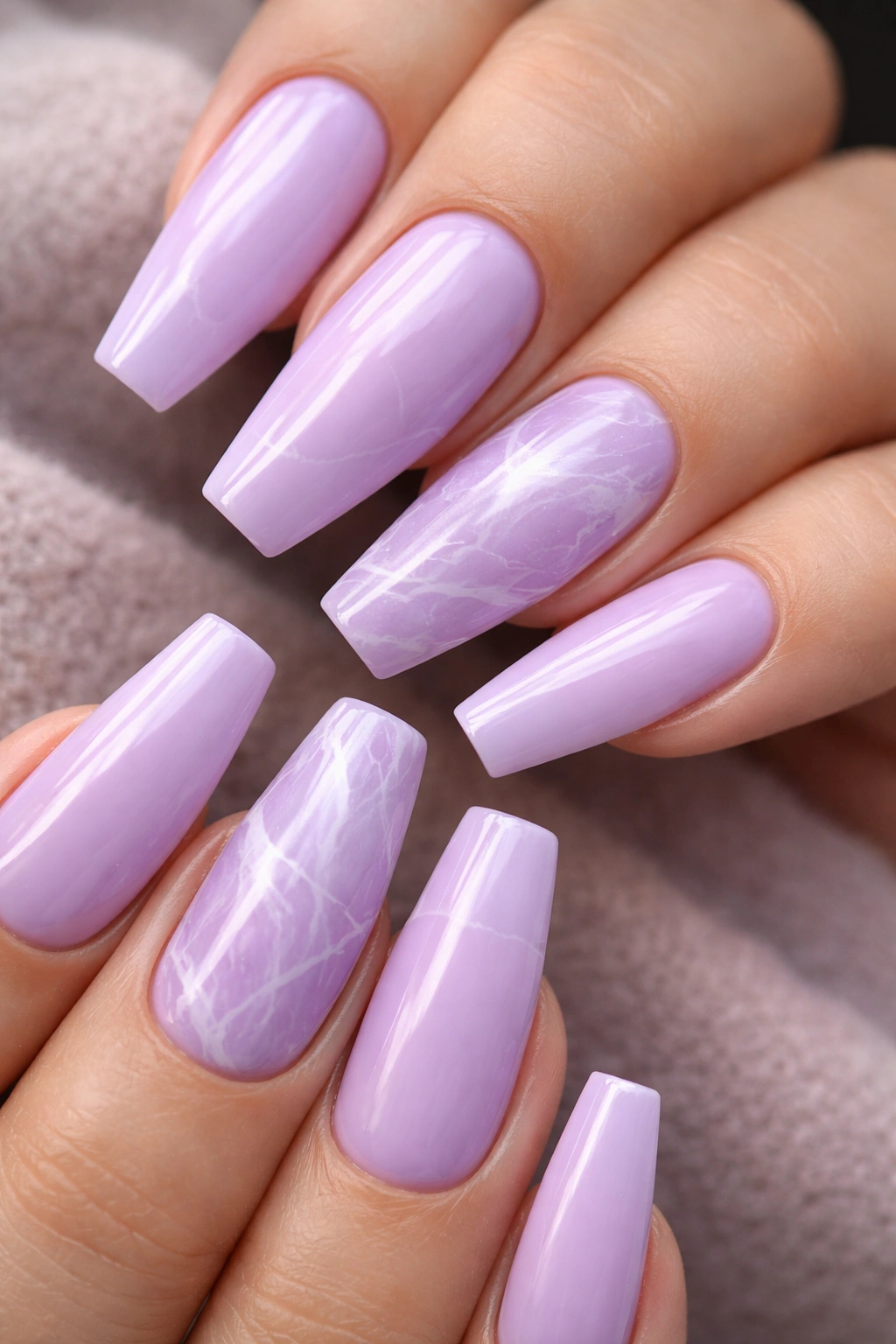
Lilac marble has more movement than a plain pastel set, but it can still stay soft if the contrast stays low. The goal is watercolor stone, not sharp countertop lines. That means pale lilac, thin white veining, and space for the color to breathe.
Where the texture should sit
I wouldn’t put full marble on all ten nails unless you want the design to lead the whole look. Two accent nails—ring finger and thumb, or ring finger and middle finger—usually feel lighter and more expensive.
Keep the pattern under control
- Use a blooming gel or wet-gel method so the lines feather slightly.
- Keep the white veins hair-thin, not painted like lightning bolts.
- Pair the marble nails with solid lilac nails on the rest of the hand.
- Choose gloss, since marble needs some depth to read well.
Small but important: ask for white with a touch of sheer milky top gel over it. That softens the veins and keeps them from jumping off the nail.
8. Mint Green with Tiny Daisy Accents
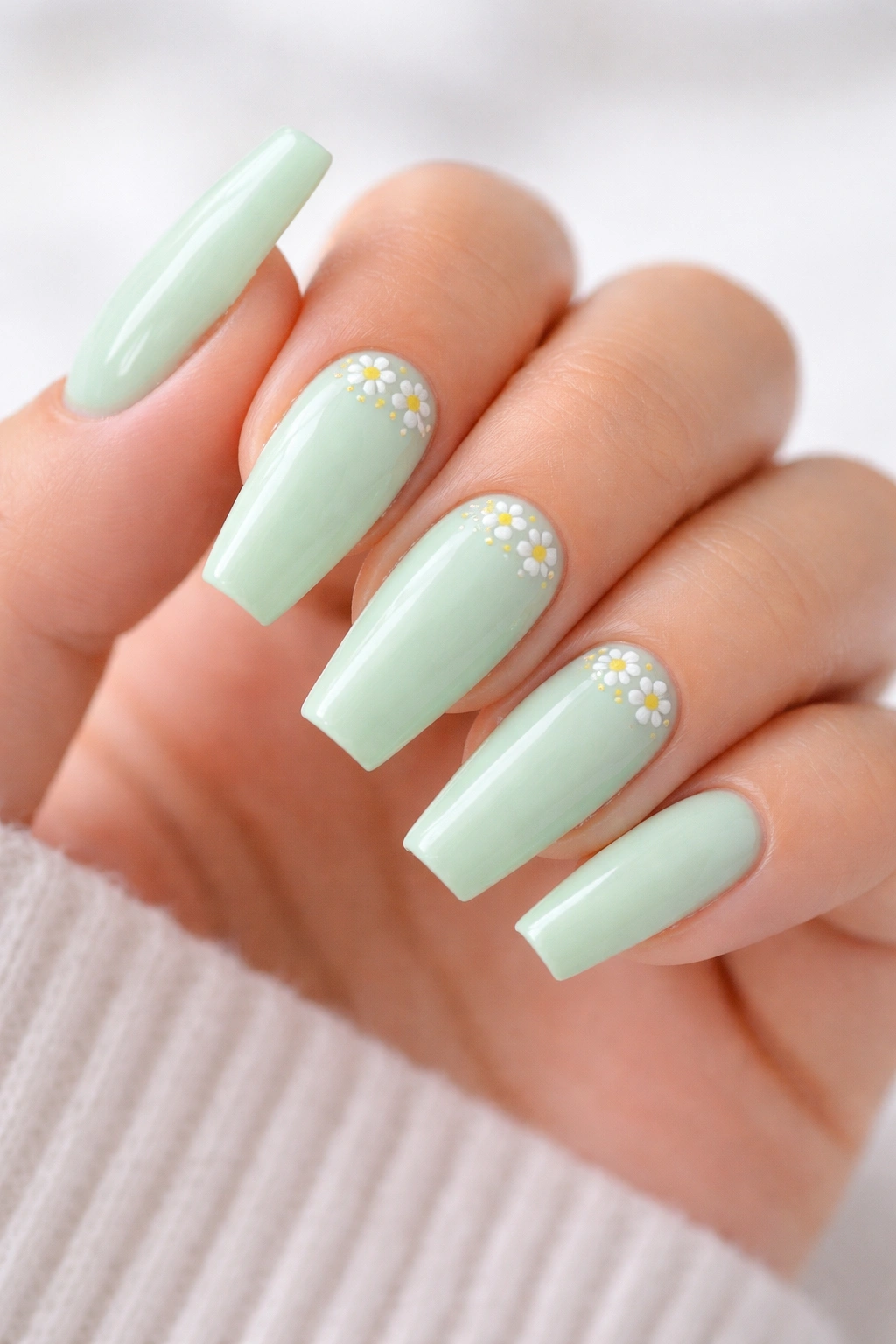
Mint can go childish fast if the shade is too bright. Pull it back into softer territory with a milkier base and tiny daisy accents placed with restraint. That last part matters. A full garden across every nail is cute for about five minutes, then it starts feeling loud.
One or two daisies on two nails is enough. I like them best near the side of the nail or tucked close to the cuticle rather than sitting dead center. That placement leaves negative space, which keeps the design lighter.
The flowers themselves should be small—five dots and a center, nothing raised, nothing chunky. A dotting tool works, though a fine liner brush gives a neater petal edge if your tech has a steady hand.
Leave the rest of the nails solid mint. That contrast is what makes the accent nails land.
9. Baby Blue Aura Fade
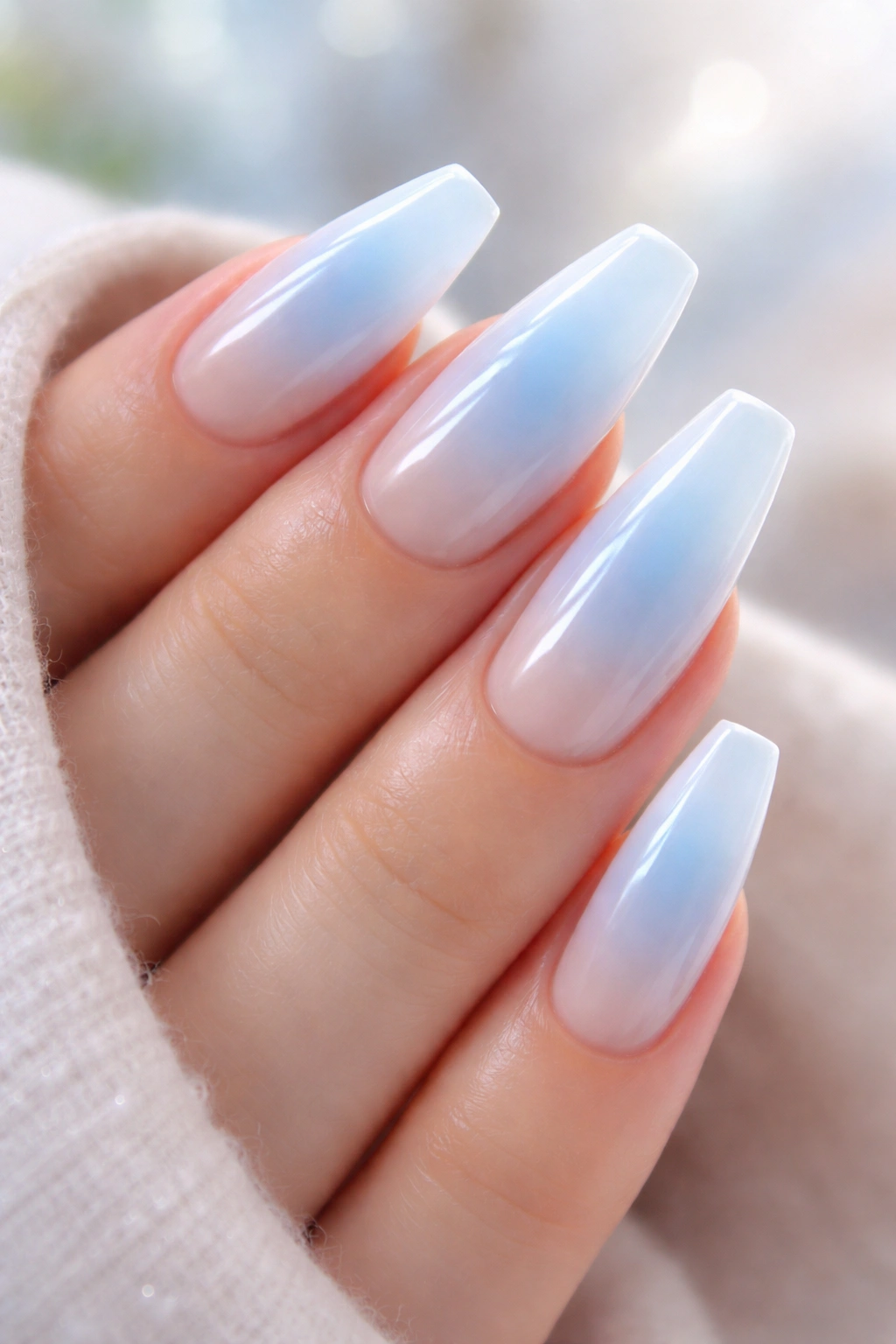
Why does an aura design look softer than solid polish, even when the color is the same? Because the deeper pigment sits in the center and melts outward, which gives the nail a rounded glow instead of a flat block of color.
On ballerina nails, that rounded center is useful. It offsets the straight tip and makes the whole nail look more dimensional without heavy art, gems, or foil. Baby blue does this especially well because it stays airy even when concentrated.
You want the outer edge of the nail to stay sheer or milky nude. A dark ring around the color kills the effect.
Placement makes the difference
Ask for a soft blue haze in the center third of the nail, with the cuticle area and sidewalls kept pale. Airbrush gives the smoothest result. Sponged pigment can work too, though it needs a soft topcoat layer to blur any graininess.
10. Soft Coral Matte
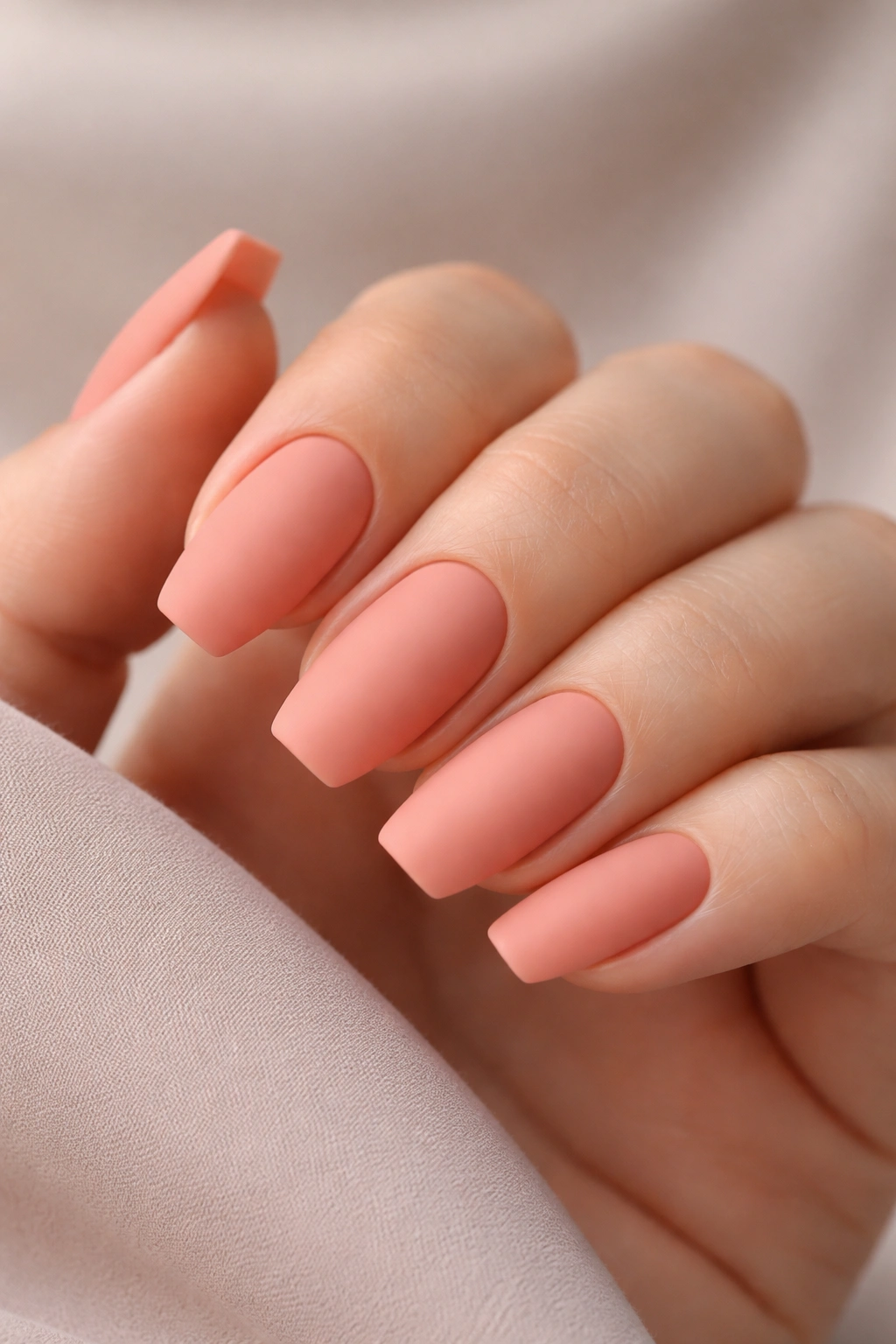
Picture a coral manicure under a matte topcoat and you’ll understand why this one works. Glossy coral can look juicy and bright. Matte coral turns velvety, almost chalk pastel, which calms the ballerina shape right down.
The color needs to be muted. Think coral mixed with cream, not orange mixed with neon. On a sharp shape, that softer formula matters more than the color family itself.
What keeps this one from looking flat
- Choose a dusty coral, not candy coral.
- Keep the nail surface extra smooth before color; matte shows texture fast.
- Stay around short to medium ballerina length.
- Massage cuticle oil in daily, because matte topcoat can make dry skin stand out.
I like this design when everything else is plain—no gems, no lines, no glitter. Matte already changes the whole mood. Piling more on top usually muddies it.
11. Milky Pink and Apricot Diagonal Color Block
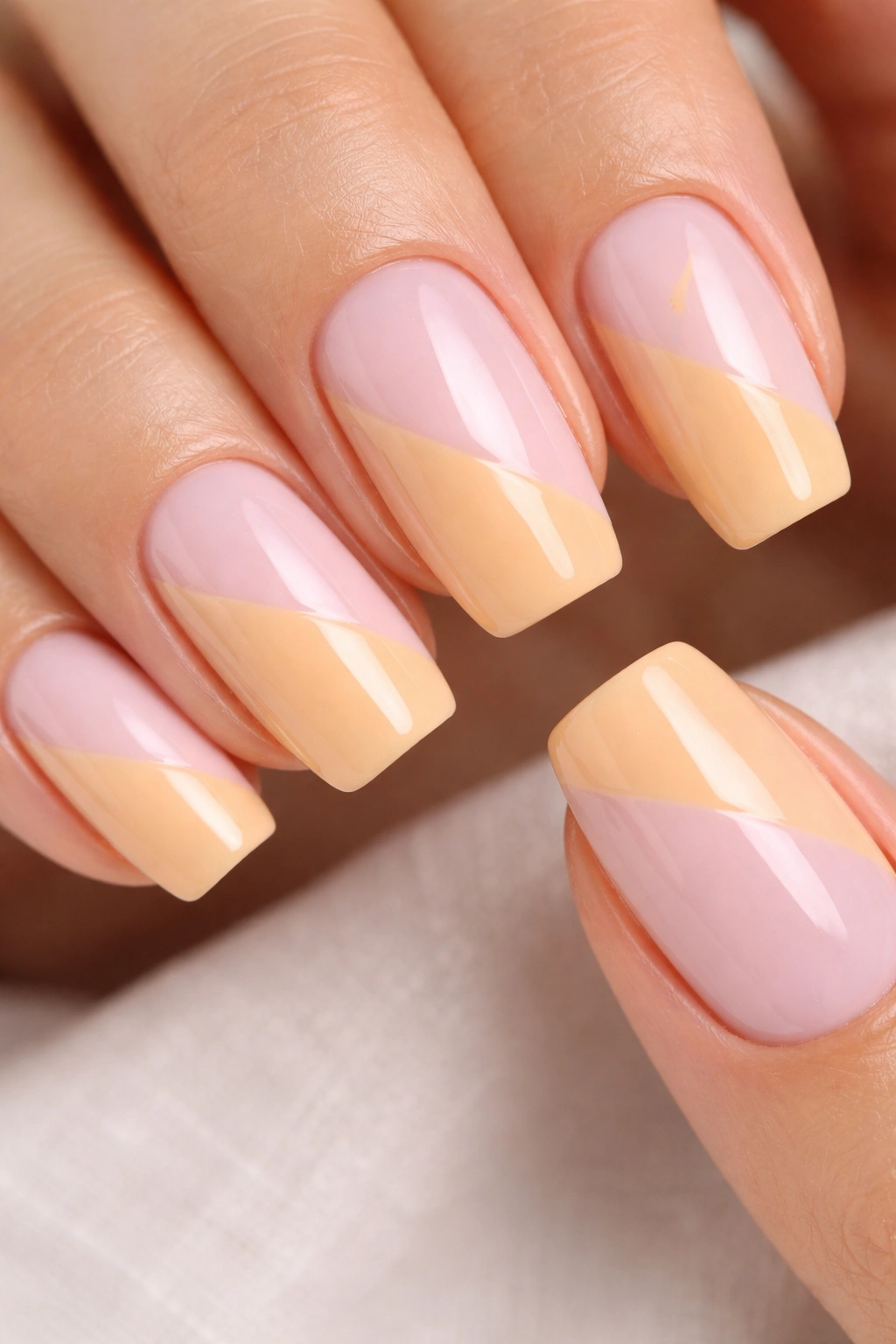
A straight color split across the center can chop the nail in half. A diagonal split does the opposite. It pulls the eye from one sidewall toward the tip, which lengthens the look of a ballerina shape and keeps the manicure feeling slim.
This one works best when both shades belong to the same softness level. Milky pink and apricot do. Pink and hard white do not. The closer the finishes match, the smoother the effect.
I’d keep the diagonal line clean and narrow, not outlined. Outlines start dragging the design into graphic territory, and this idea works because it still feels easy at a glance.
Medium length is the sweet spot here. On very short nails, the diagonal doesn’t have enough room to stretch. On long nails, use a gentler angle so the color blocks don’t feel too harsh.
12. Lemon and Lavender Mismatch Set
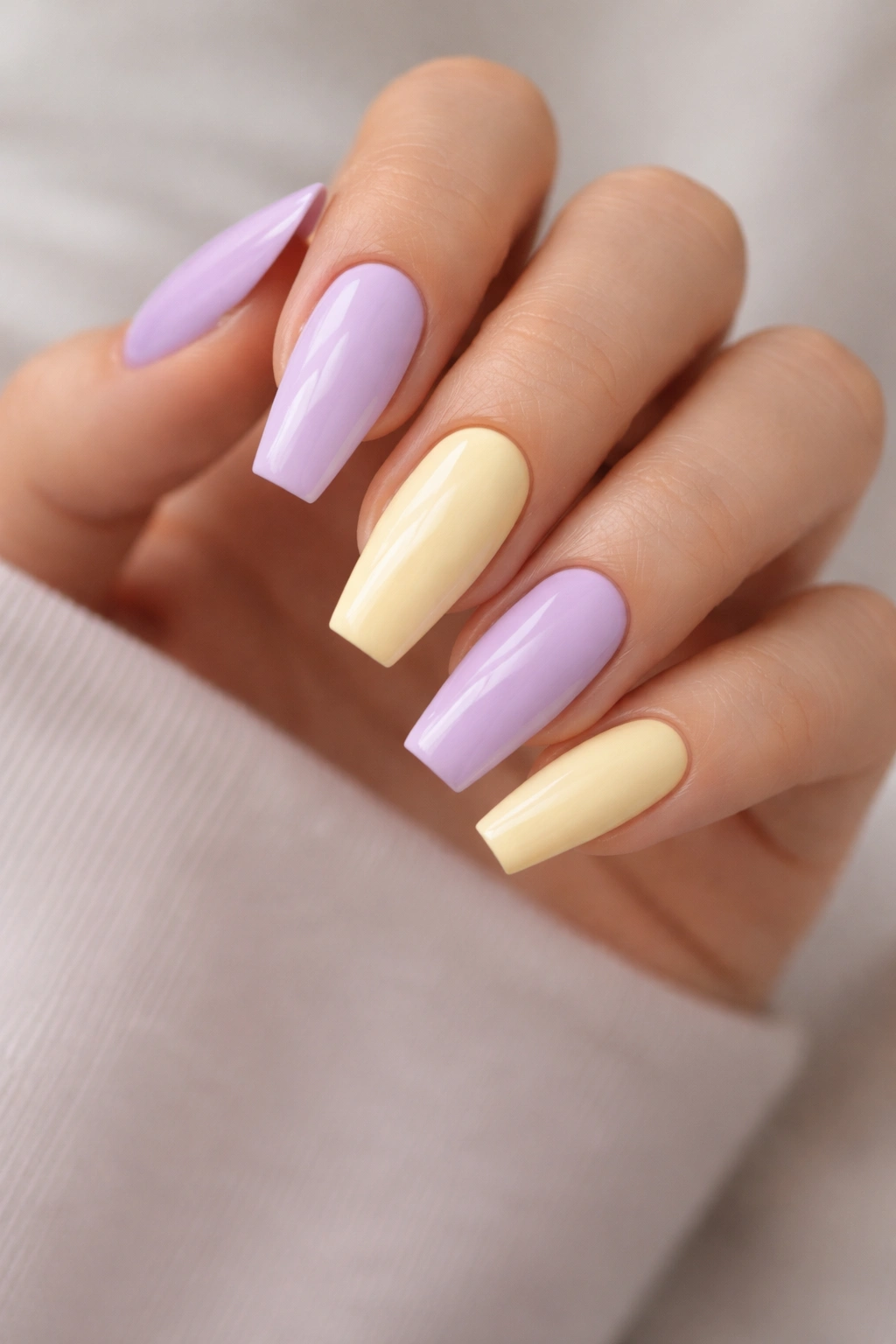
Unlike a full rainbow manicure, a two-color mismatch set feels organized. Lemon on one nail, lavender on the next, repeated across the hand, gives you color play without the busyness that can come with five separate shades.
These two tones work well together because one is warm and one is cool, yet both can stay soft if they’re mixed with enough white. The hand ends up looking bright but not noisy.
This is a strong choice if you want something more playful than one solid color but don’t want art on every nail. It also photographs nicely from a distance because the pattern reads fast.
Keep the finish identical across all nails—either all glossy or all satin-matte. If one shade is cream and the other is jelly, the balance falls apart. I’d also keep the lemon toned down; think custard, not highlighter.
13. Nude-Peach with Tiny Pearls at the Cuticle
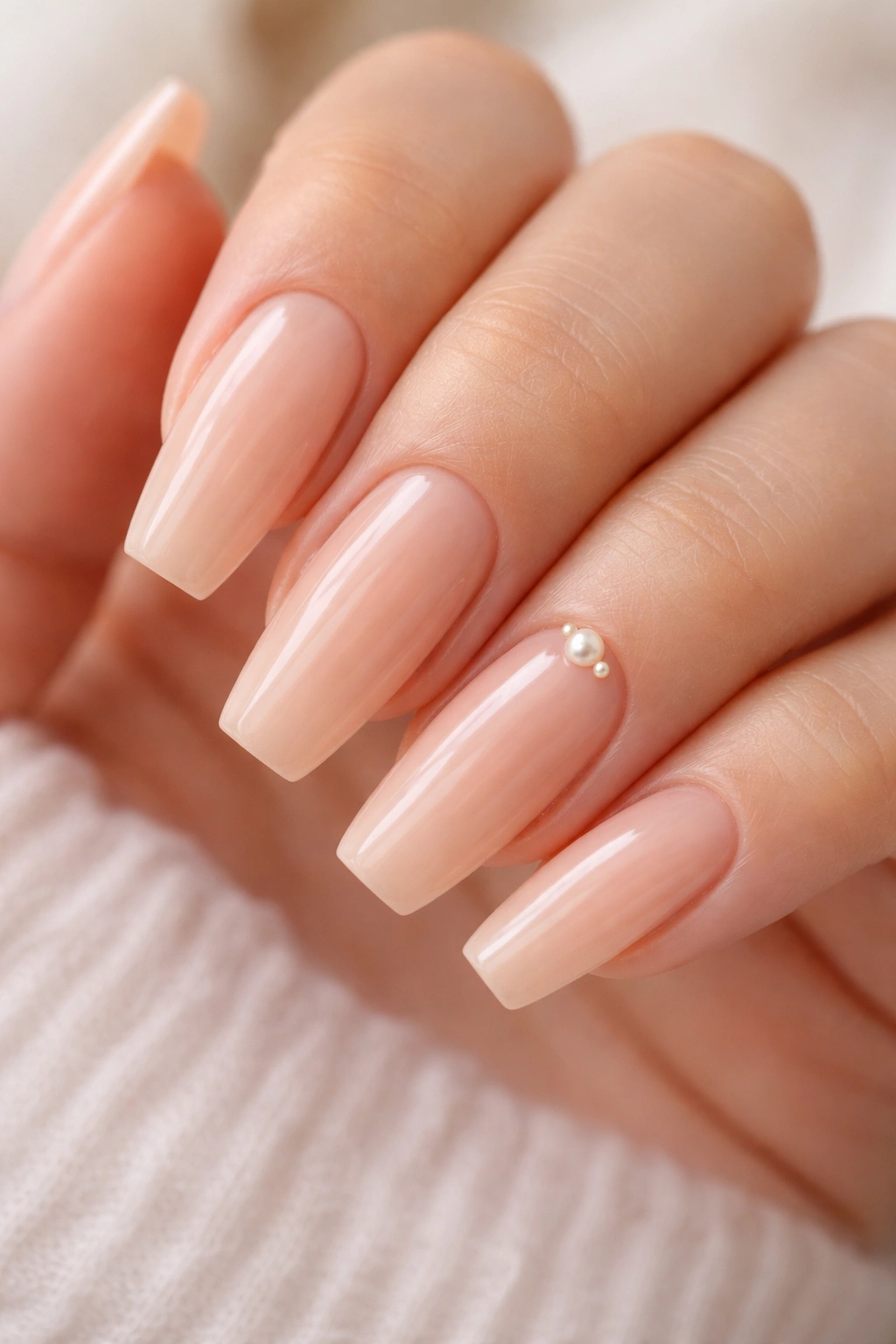
A nude-peach base already looks soft on its own. Add one or two tiny flat-back pearls near the cuticle, and the set gets a dressier feel without turning fussy.
Why the pearl placement matters
Pearls placed at the center of the nail can look costume-like on pastel polish. Set them low, close to the cuticle curve, and they act more like jewelry detail than full decoration. The base stays the star.
Best ways to keep it wearable
- Stick to 1.5 to 2 millimeter flat-back pearls.
- Use them on two accent nails per hand, not all ten.
- Seal carefully around the edges with builder gel so hair doesn’t catch.
- Choose a nude-peach base, because stark pink can make the pearls look too formal.
One honest warning: if you type hard all day or pull on knitwear often, keep the pearls tiny. Bigger embellishments snag more than most salon photos admit.
14. Sage Green with a Whisper-Thin Gold Line
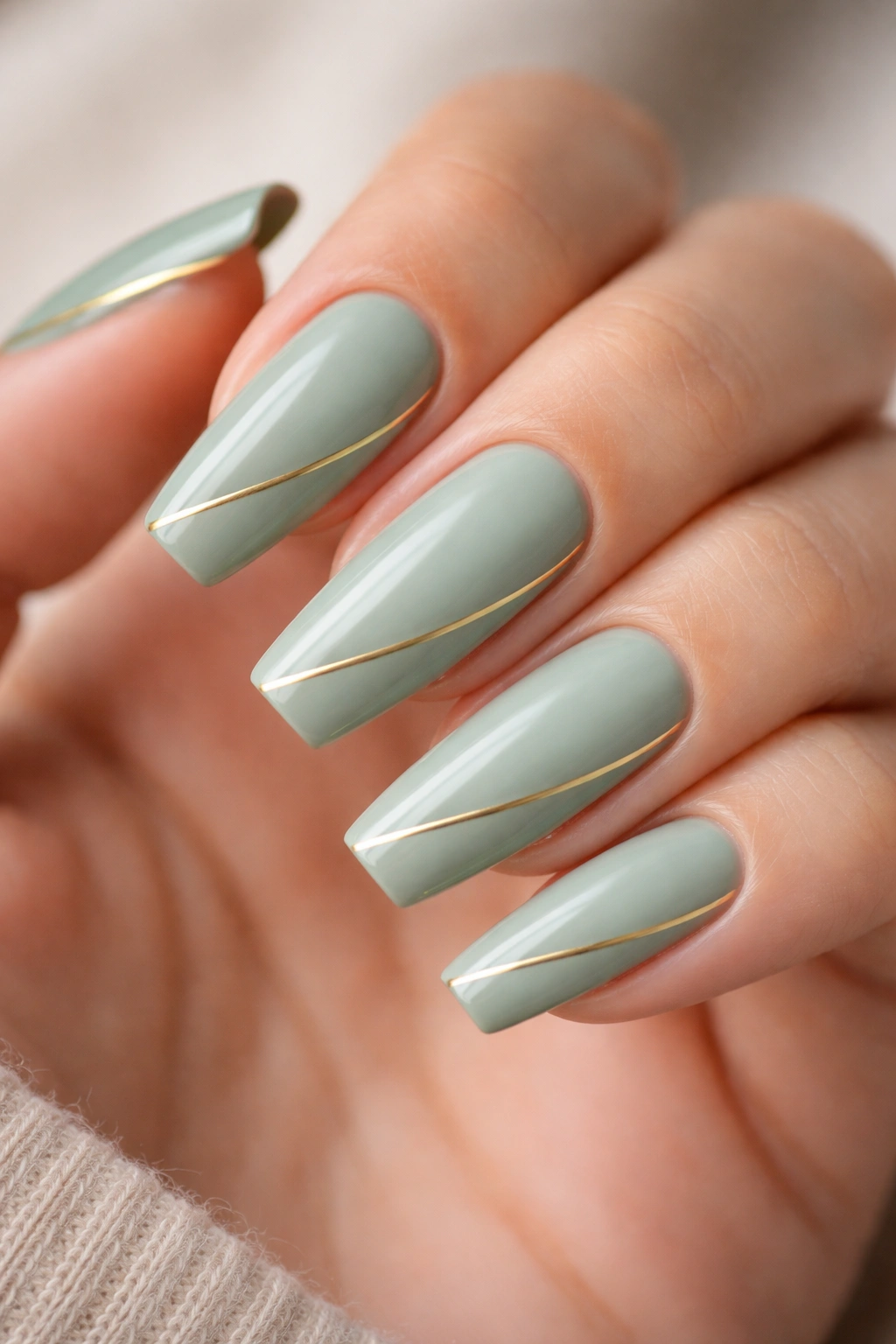
Sage behaves almost like a neutral on the nail. That’s why it looks so calm on a ballerina shape. It has color, yet it doesn’t jump forward the way mint or blue can.
The gold line should stay whisper-thin. Painted gold gel works better than chunky foil because foil catches every bit of light and can overpower the softness of the base. I like the line placed diagonally across one side of the nail or right where the taper begins.
This set suits medium and deeper skin tones especially well, though the shade can look clean on lighter skin too if it has enough gray in it. Bright grassy green is not the move here.
Use the gold on two or three nails, then leave the rest solid sage. Restraint is doing most of the heavy lifting.
15. Icy Lavender Jelly Layers
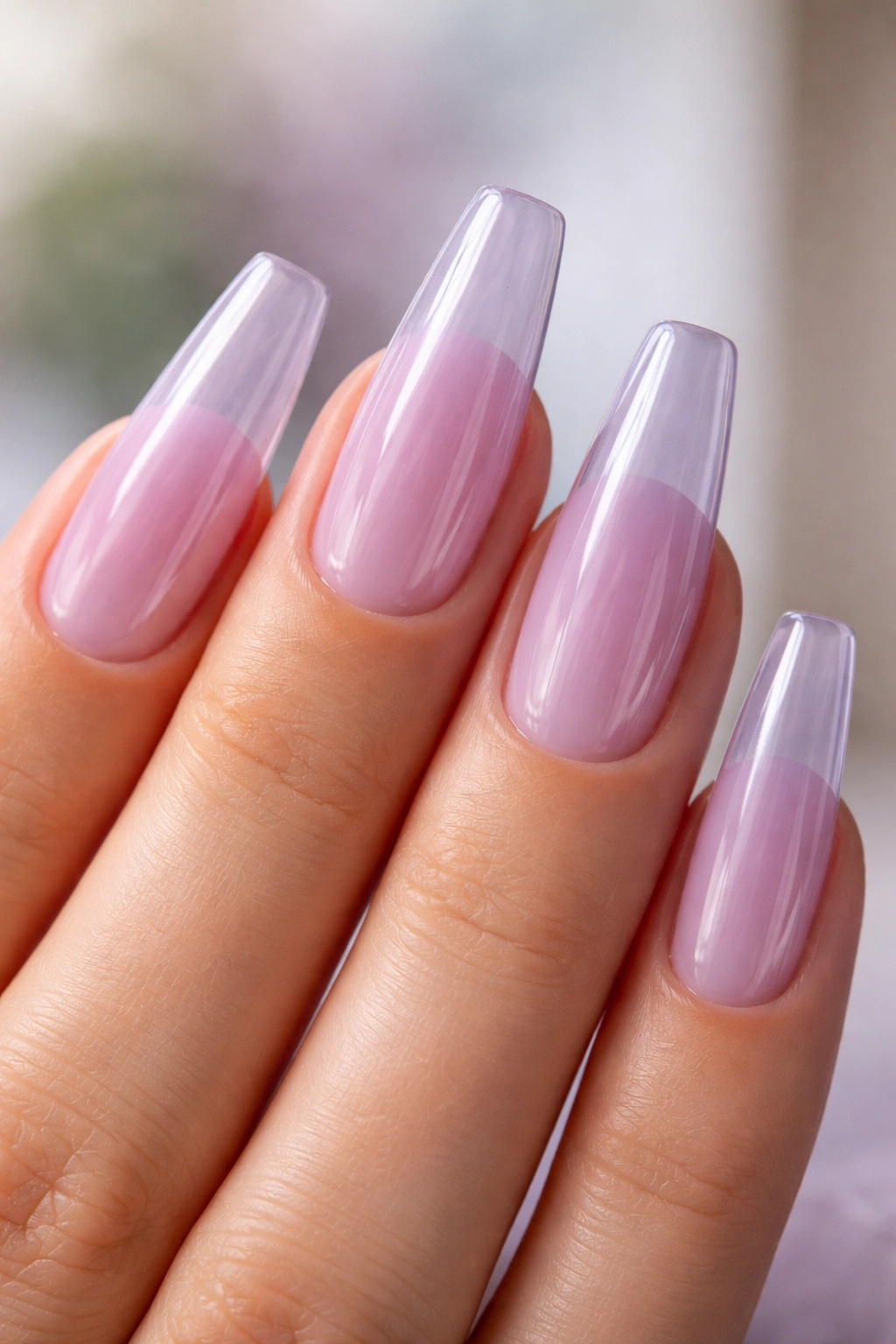
Why choose a jelly finish when cream polish covers faster? Because translucent pastel has depth. A jelly lavender manicure lets a little light pass through the color, which keeps long ballerina nails from looking chalky or heavy.
That airy look comes from layering. One coat looks patchy. Three thin coats can look like colored glass. The effect is soft, glossy, and a little syrupy in the best way.
This style also hides minor regrowth better than hard opaque color because the cuticle line never looks as sharp. On a ballerina shape, that means the manicure stays fresh-looking longer.
What to request if your salon only stocks cream pastels
Ask if they can mix clear gel with lavender cream to create a jelly effect, then build the color in thin layers. The nail should still look translucent at the edge when you hold it to the light.
16. Cloudy White Base with Pastel Swirls
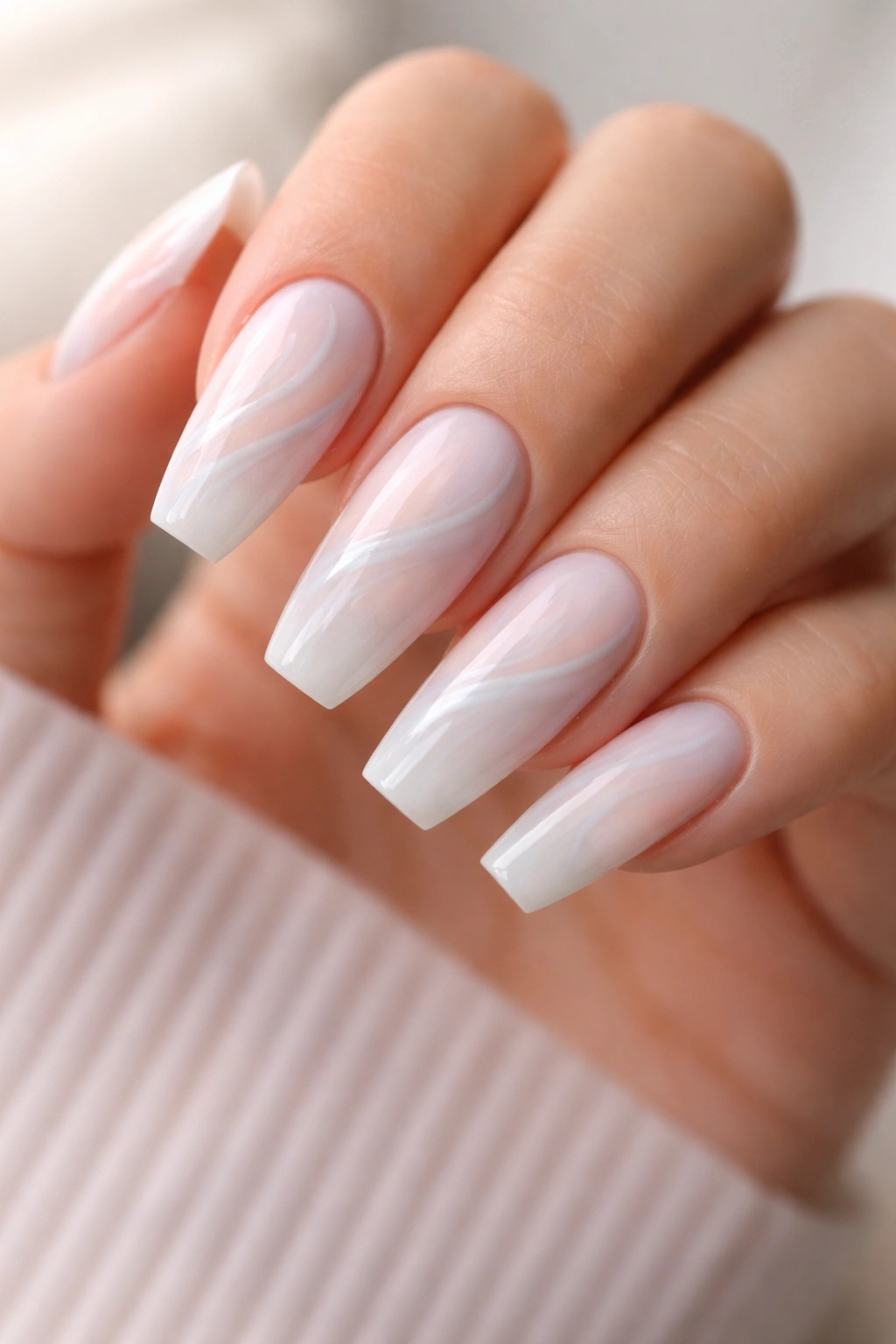
Some swirl nails look busy before the topcoat even goes on. The softer version starts with a cloudy milky white base and keeps the lines loose, thin, and sparse. Think one or two curved ribbons on each nail, not a full map of crossing lines.
The milky white matters because it gives every swirl color the same quiet background. Peach, lilac, and pale blue all look gentler over white milk than they do over a nude base.
The design works best with a few limits
- Use no more than three pastel shades in the swirl work.
- Keep each line thin and flowing, almost like a ribbon.
- Leave some nails with just one swirl.
- Avoid glitter outlines or rhinestones; they change the whole mood.
I like this one when you want nail art that still feels hand-drawn and easy. It has motion, but it doesn’t demand constant attention.
17. Rosewater Pink with a Side French Sweep
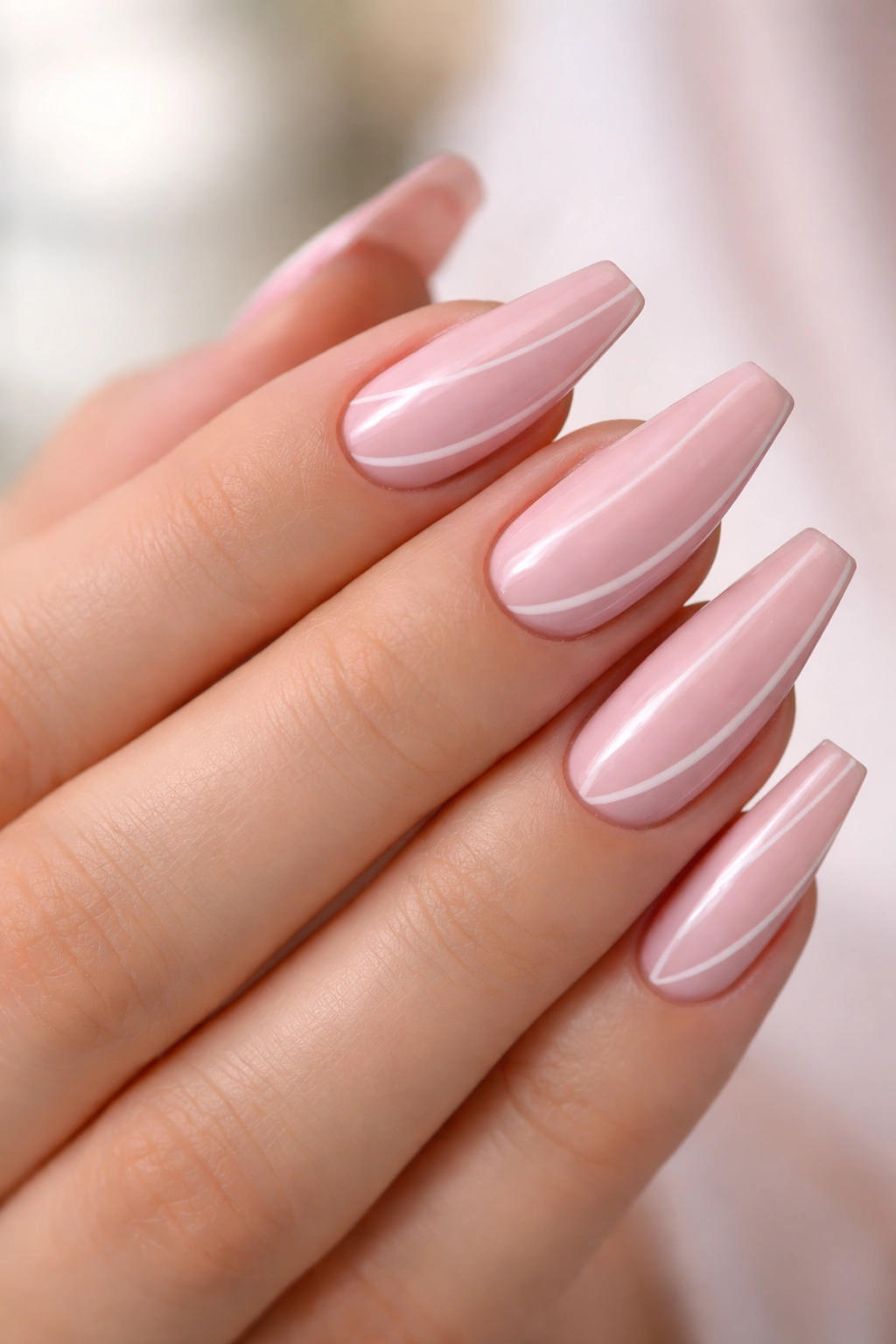
Rosewater pink is softer than bubblegum and warmer than ballet-slipper pink. On a ballerina shape, that muted rosy base already does a lot. Add a side-swept French line—starting low on one sidewall and gliding up toward the tip—and the nail looks longer in a subtle way.
I’m fond of this design because it doesn’t rely on symmetry in the usual sense. The line is off-center, which makes the manicure feel less formal than a classic French, yet it still looks polished.
Keep the sweep thin. Keep it clean. Use white if you want more definition or a slightly deeper rose-mauve if you want the effect to stay soft from every angle.
This one shines on medium-to-long ballerina nails. Short sets can still wear it, though the curve needs to start higher so it doesn’t crowd the nail bed.
18. Pistachio French Fade
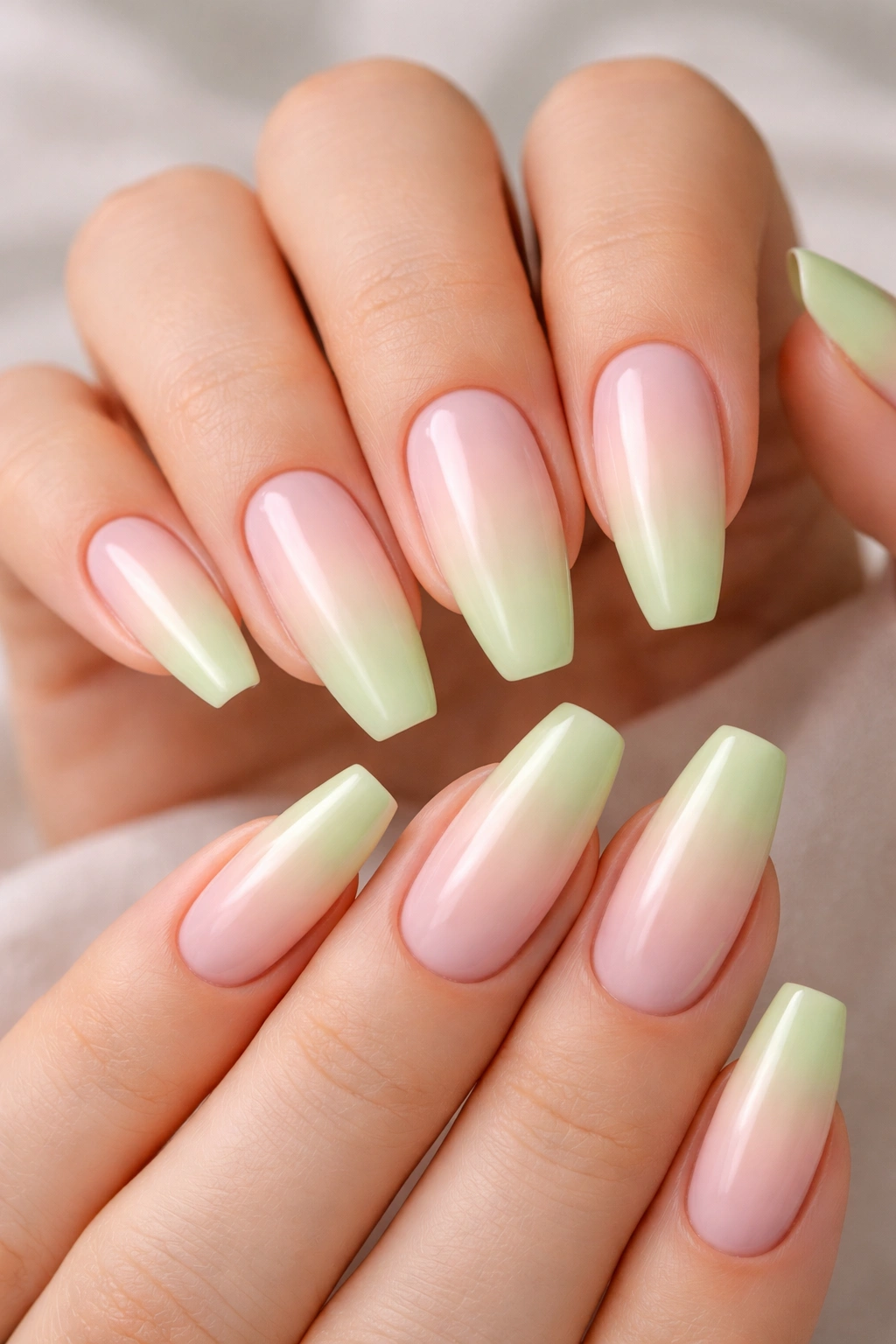
Unlike a crisp French tip, a French fade melts the color into the base. That makes it one of the easiest ways to wear green on a ballerina nail without the design looking hard or sporty.
Pistachio is the right green for the job because it already has softness built in. Blend it from the free edge into a milky beige or pink base, and the result feels clean, light, and low-pressure.
This is a smart pick if you care about grow-out. Hard smile lines show regrowth fast. Blended tips do not. The nail still looks tidy after more days because the color transition is already soft.
Keep the pistachio concentrated at the tip and lighter than you think. If the fade reaches too far down the nail, the whole manicure starts reading green instead of pastel-neutral.
19. Skittle Pastel Ballerina Nails in One Tone Family
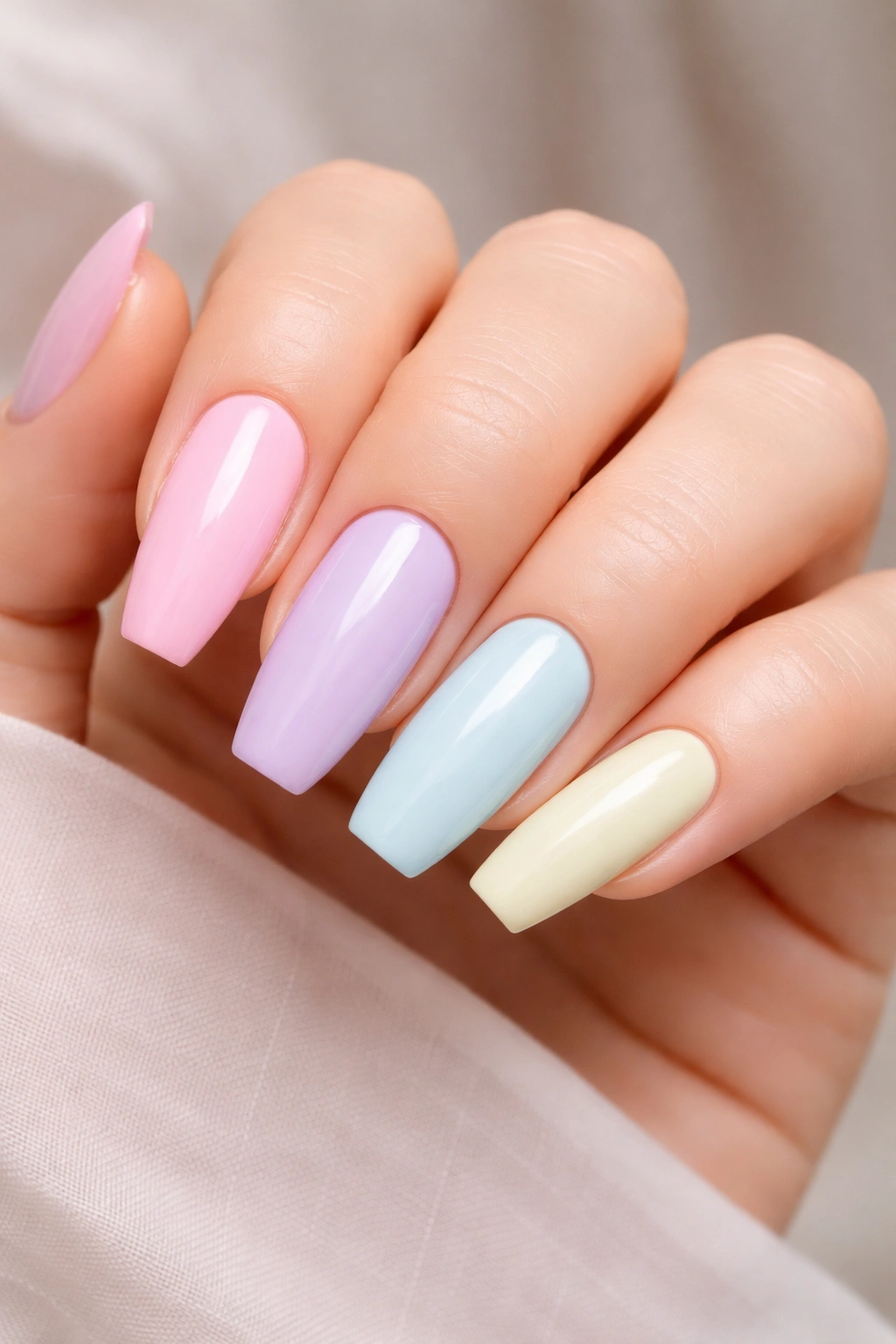
Skittle nails can go messy when every shade fights the next one. Keep them in one tone family and they look far more considered. Cool family? Try baby blue, lilac, dusty periwinkle, icy pink, and soft mauve. Warm family? Go apricot, peach milk, butter yellow, blush beige, and creamy coral.
How to keep the color mix quiet
The key is not picking five random pastels. Pick five shades with the same softness level and a similar amount of white mixed in. That keeps the hand looking coordinated rather than busy.
Good combinations to show your nail tech
- Cool set: baby blue, lilac, pale mauve, cloudy pink, soft periwinkle
- Warm set: peach, apricot, butter cream, blush nude, muted coral
- Green-leaning set: pistachio, sage, pale mint, dusty aqua, milk-white
My tip: use the same finish on every nail. Skittle sets fall apart fast when one nail is glossy, another is matte, and another has chrome.
20. Dusty Mauve with a Satin Topcoat
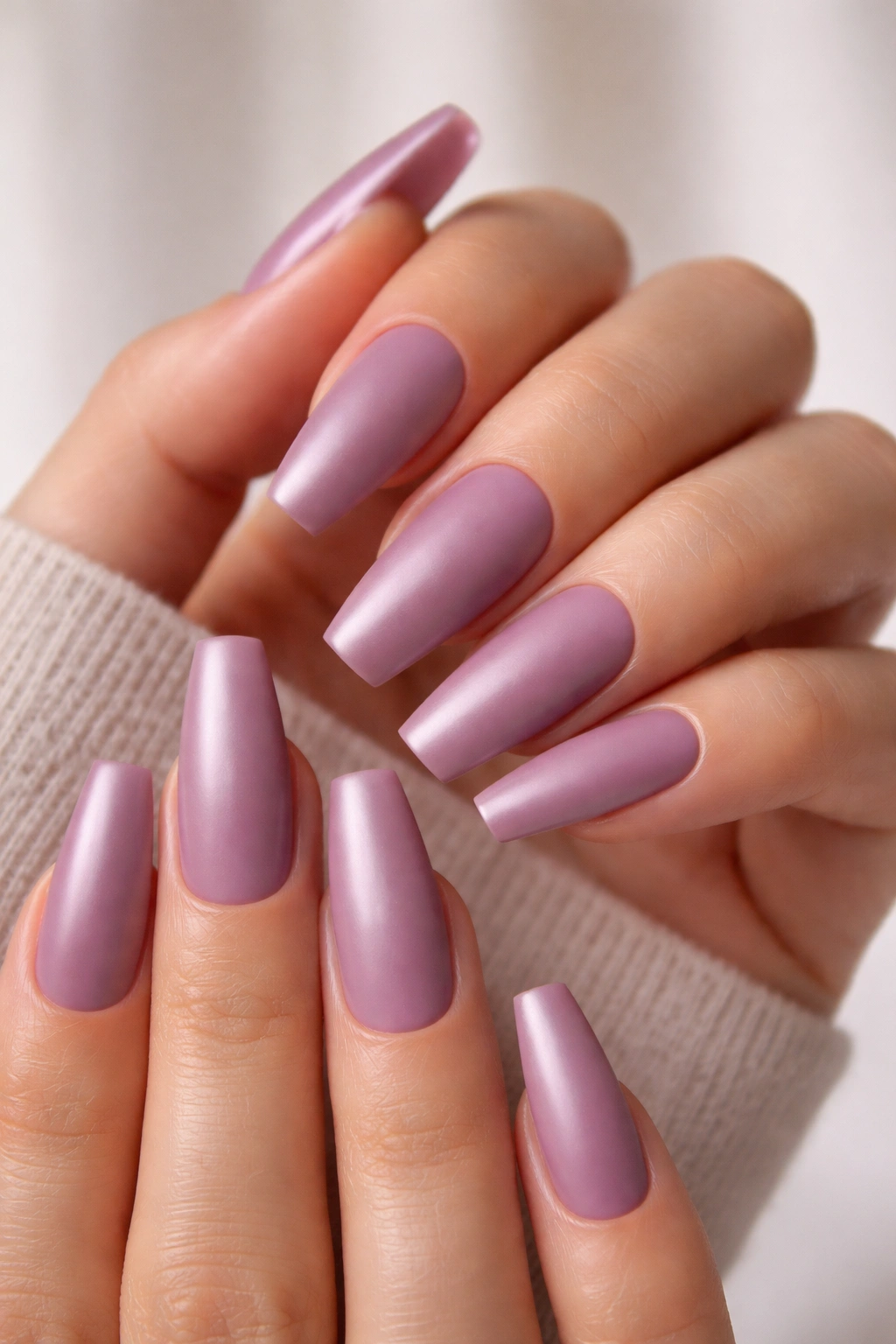
Dusty mauve is the grown-up pastel that rarely disappoints. It has enough gray to stay calm, enough pink to feel soft, and enough depth to hide tiny chips better than pale blue, yellow, or mint.
The satin topcoat is what makes this one interesting. It sits between gloss and matte, so the nail looks smooth and velvety without that dry, powdery look some matte finishes get after a few days. On ballerina nails, satin keeps the shape elegant but not sharp.
I reach for this idea when someone wants a pastel manicure that still feels grounded. It works for short office-friendly lengths, medium salon sets, and longer structured ballerina nails with a proper apex.
Ask for a mauve that still reads pastel in daylight. Some shades drift too far into purple-brown and lose the airy effect that makes this design worth doing.
Final Thoughts
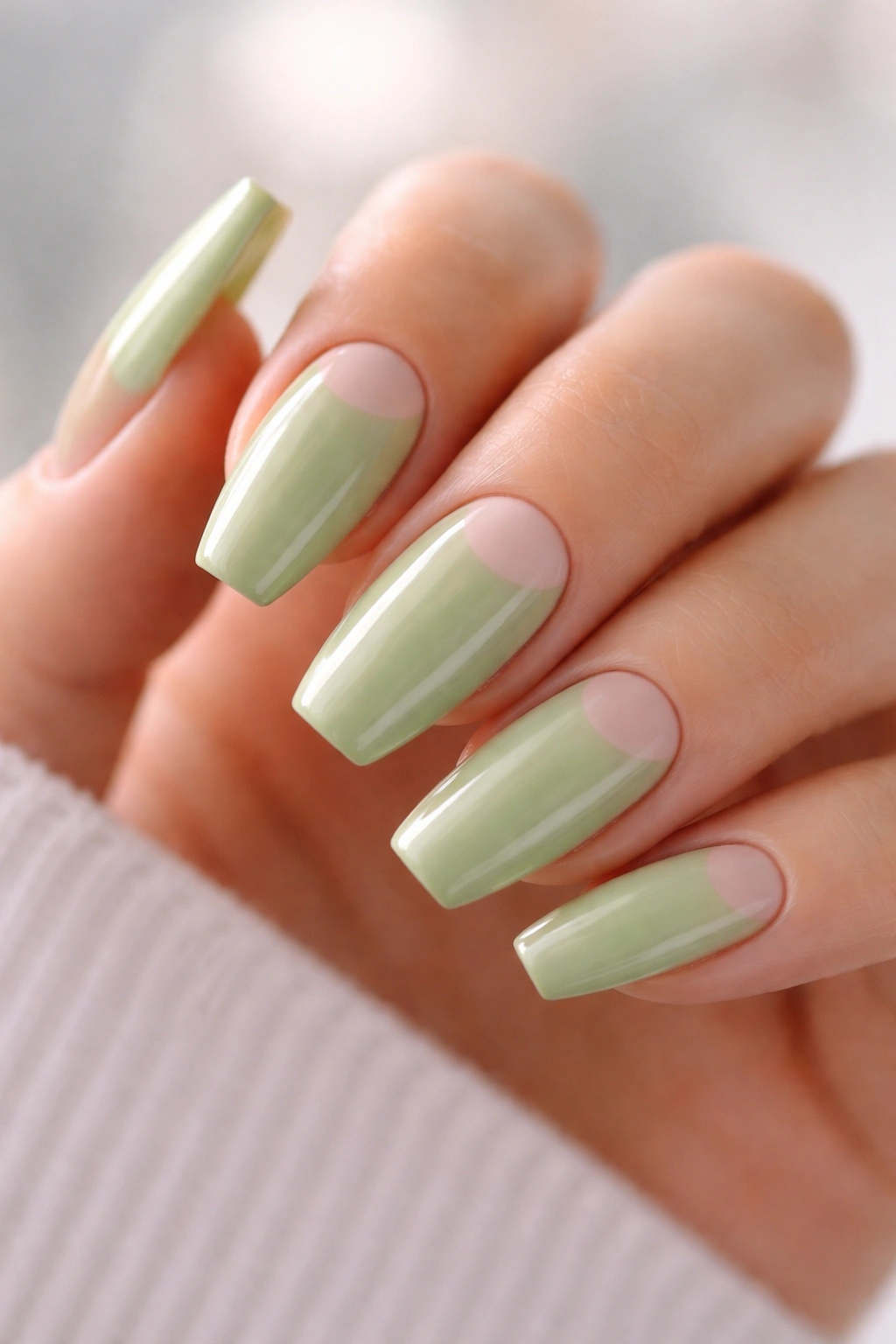
The nicest pastel ballerina nails usually come down to two things: a clean file shape and the right kind of softness in the color. Not every pale shade has that softness. The best ones have a little milkiness, a little gray, or a sheer layer that takes the edge off the flat tip.
If you’re torn between a few ideas, start narrower than you think. Pick one base color, one finish, and at most one small accent detail. Pastel nails don’t need much help.
And if you’re heading to the salon, bring photos that match your real nail length—not dramatic extra-long references when you want a medium set. That one small decision saves a surprising amount of back-and-forth and gets you much closer to the soft look you were after.