

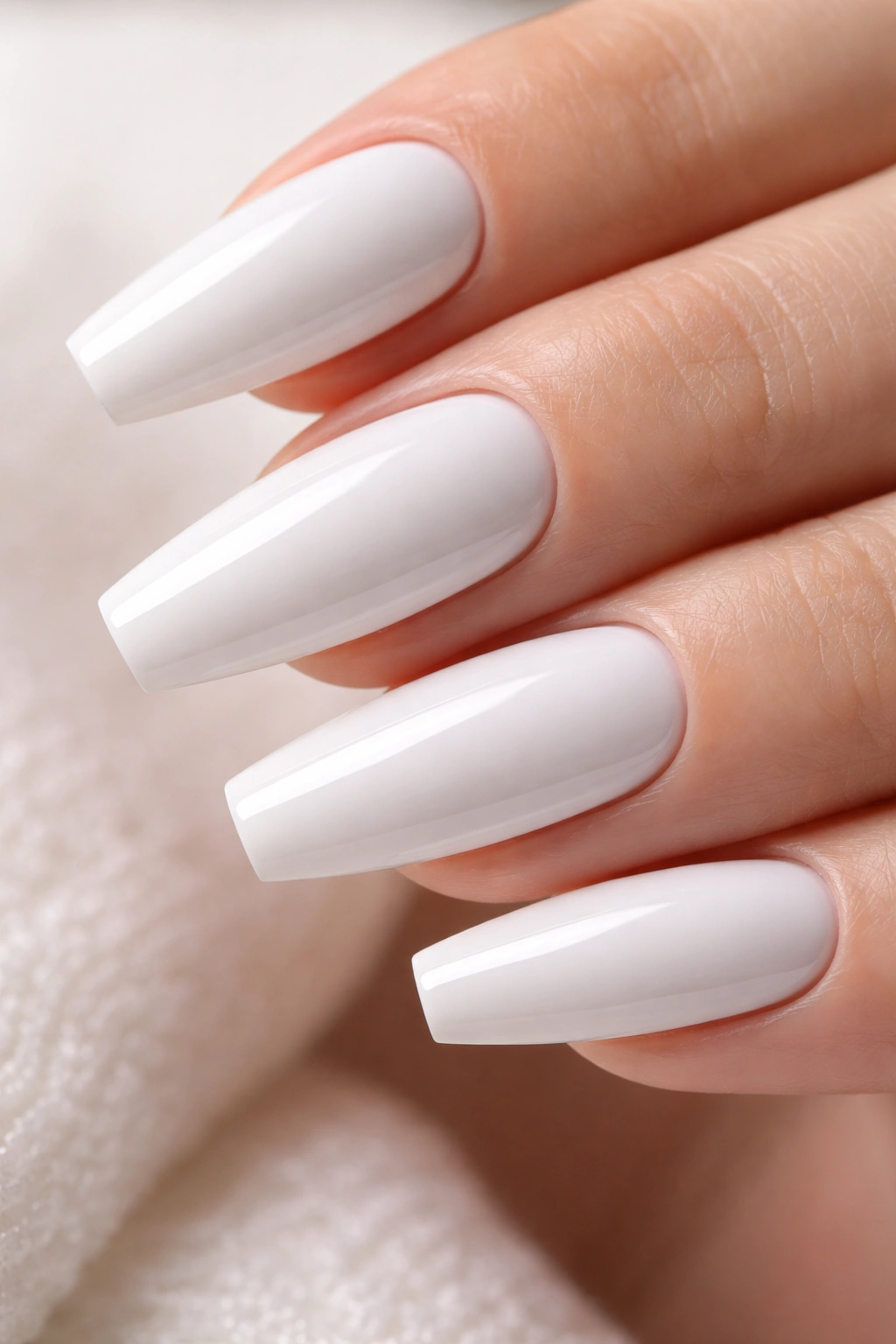
A bright white manicure can go from crisp to grubby in about two days if the shade is too flat and the shape is too blunt. White ballerina nails get blamed for that all the time, but the color is only half the story. The wrong white looks like correction fluid, shows every tiny scratch, and picks up makeup, self-tanner, and dishwater shadows around the edges. The right white—milky, sealed, and paired with a smart design—holds up far better.
That’s the part a lot of salon photos leave out. A nail can look icy and clean under studio lights, then turn dull once you’ve opened a soda can, rubbed in body lotion, and dug through a black tote bag for your keys. Ballerina nails add one more factor: those tapered sidewalls and straight tips can either stay sleek or become little ledges for lint and gray marks, depending on how the set is built.
I’m picky about white polish for one reason: it tells on everything. If the gel is chalky, you’ll see it. If the top coat is too soft, you’ll see it faster. If the underside isn’t capped, the free edge starts looking shadowy by day three. A milky white overlay with a hard glossy seal, though, can keep that fresh salon look much longer than people expect.
So if you love the clean look of coffin-shaped nails but hate when white starts looking tired, these are the styles worth saving.
What Makes White Ballerina Nails Look Cleaner for Longer
Glossy, slightly translucent white beats flat opaque white almost every time. That’s my rule, and I stick to it unless someone wants a stark editorial look and accepts the upkeep that comes with it.
White nail color usually gets its solid look from pigments like titanium dioxide. When a formula packs in too much opacity, the surface can read chalky, and tiny scuffs show up faster. A milky white, an ivory white, or a white with pearl reflection hides those marks better because light bounces off the nail instead of stopping dead on a flat surface.
Shape matters too. Ballerina nails look best when the taper is clean but not extreme. Once the sidewalls pinch in too much, the corners catch fabric, hair, and lint, which makes the tips look dirty even when the color itself is fine. A free edge around 12 to 16 mm past the fingertip tends to be the sweet spot for a wearable ballerina set.
A few details make a bigger difference than the nail art:
- A capped free edge helps stop gray shadowing at the tip.
- Hard gel or builder gel under white polish keeps the surface smoother than thin soft gel alone.
- High-gloss top coat resists visible staining better than matte.
- Encapsulated art stays cleaner than raised texture or fuzzy finishes.
- Soft white or off-white tones hide wear better than bright blue-white.
One more thing. Matte white looks cool for about five minutes and then starts collecting proof of your entire day. If staying clean is the goal, skip it.
Prep Tricks That Stop White Gel From Looking Yellow or Gray
Want the boring truth? White nails stay clean longer when the prep is sharp.
Clean the nail plate like you mean it
Any leftover oil, lotion, or dust under white gel shows up fast because the color reflects light so harshly. I like a lint-free wipe and cleanser, then a careful pass around the sidewalls with a small flat brush. If powder from shaping is tucked near the cuticle, it can muddy the base before the manicure has even left the table.
Ask for color under the edge
This tiny detail changes everything. When the underside of the tip is left raw, the free edge can look smoky from normal wear. A thin clear seal under the edge—or a careful wrap of color and top coat—keeps that gray line from creeping in.
Protect white nails from known stain trouble
Some products stain white faster than people expect. Hair dye is an obvious one. Self-tanner is another. So are turmeric-heavy foods, dark denim transfer, and benzoyl peroxide acne products if they sit on the nails long enough.
Try this routine if you want your set to last:
- Use gloves when applying self-tanner, hair color, or strong cleaners.
- Brush under the tips with warm water and a soft nail brush every few days.
- Wipe surface marks quickly with a little alcohol on a cotton swab.
- Refresh top coat after 7 to 10 days if you wear your nails hard.
None of that is glamorous. It works anyway.
1. Milky Soap White Ballerina Nails
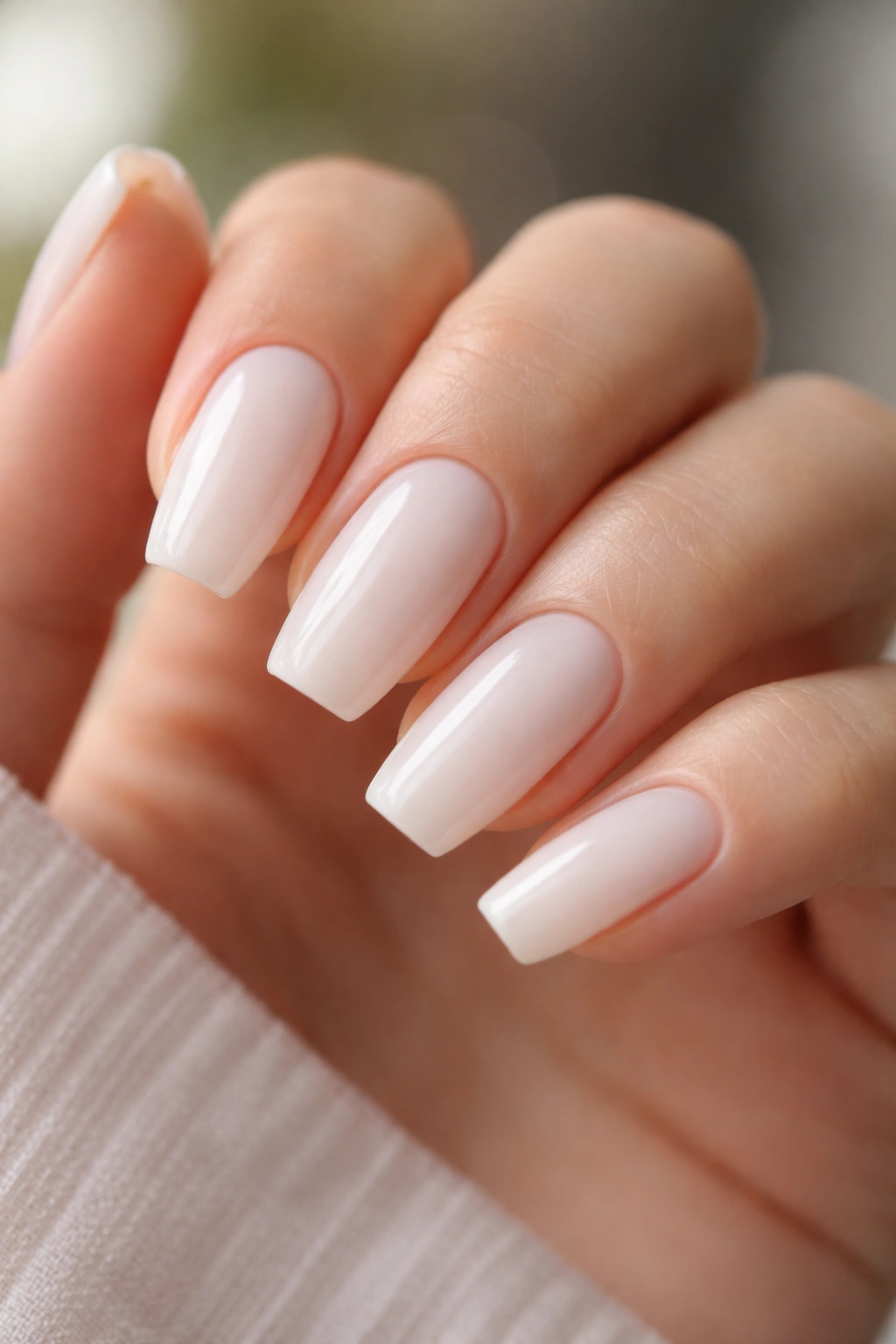
Fresh, soft, and forgiving—that’s why this style stays near the top of my list. A milky soap white has enough translucency to blur the natural nail underneath, but not so much opacity that every scratch screams for attention.
Why this shade wears better
That cloudy, creamy look hides tiny dents and surface dust better than a solid paper-white gel. It also makes regrowth less sharp around the cuticle, which matters on ballerina nails because the shape already draws the eye to the length.
Ask for a white that looks a bit like skim milk rather than wall paint. The finish should be glossy and smooth, with no powdery cast.
- Best length: short to medium ballerina
- Best finish: glass-like top coat
- Best base: builder gel overlay
- Wear issue it hides well: free-edge shadow and fine scratches
Pro tip: keep the apex slim and the tip sealed; bulky milky nails can start looking cloudy in the wrong way.
2. Soft Ivory Ballerina Nails With a Creamy Base
Stark white is not the cleanest white. That sounds backward until you wear both side by side.
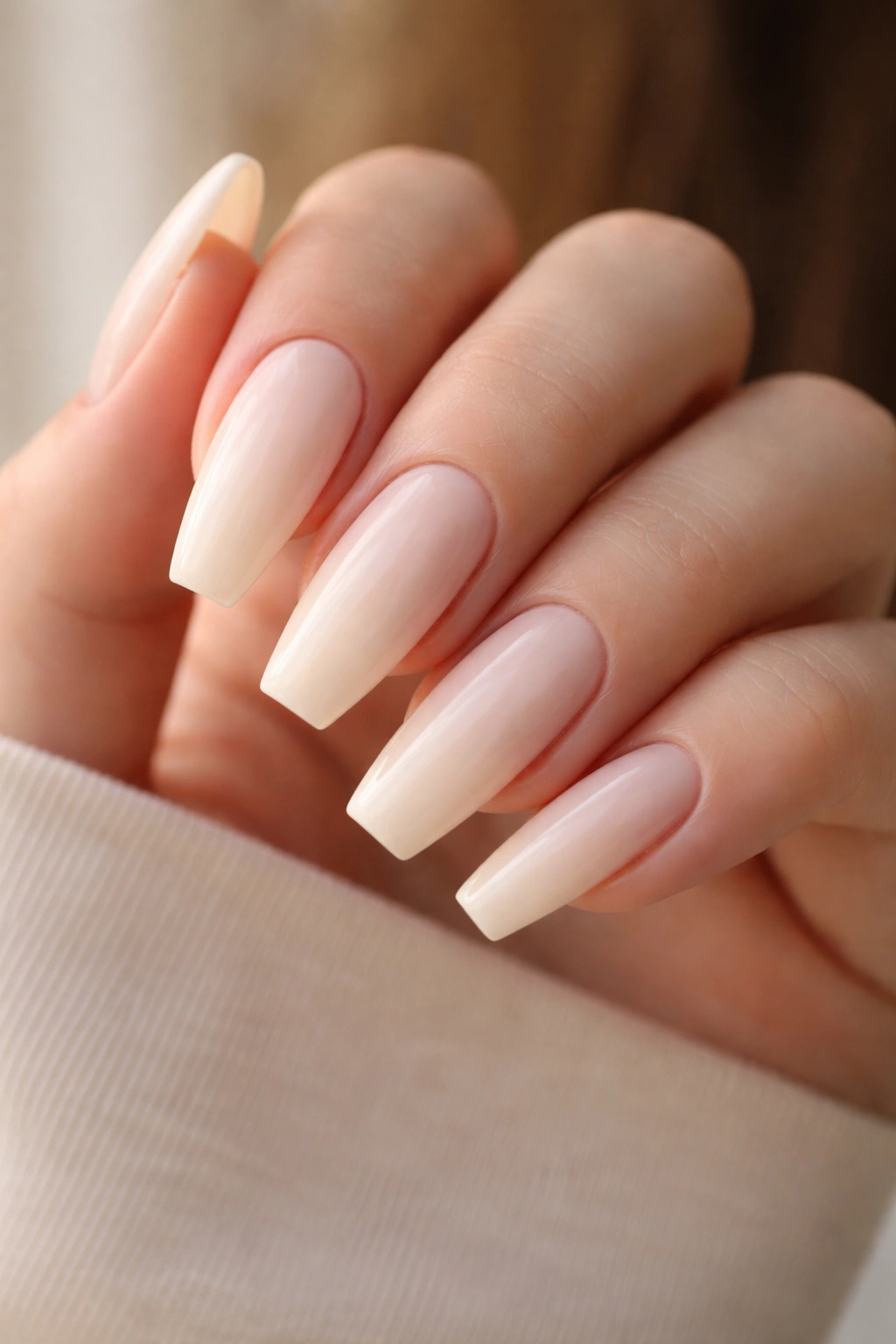
A soft ivory reads polished without shouting. Because it carries a touch of warmth, it does not turn gray the second a little wear shows up near the sidewalls. On medium, olive, deep, and warm-toned skin, ivory also blends with the hand more naturally, so the manicure looks fresh even when the cuticle line has grown out a bit.
I like ivory for people who cook a lot, type hard, or don’t want to baby their nails. It gives you that neat white ballerina shape without the frozen, almost blue cast that can make chips and scuffs look darker than they are.
There is a catch. If the ivory leans too yellow, the set can look aged before it even leaves the salon. You want cream, not butter. The difference is small in the bottle and obvious on the hand.
3. Baby Boomer White Fade on a Ballerina Shape
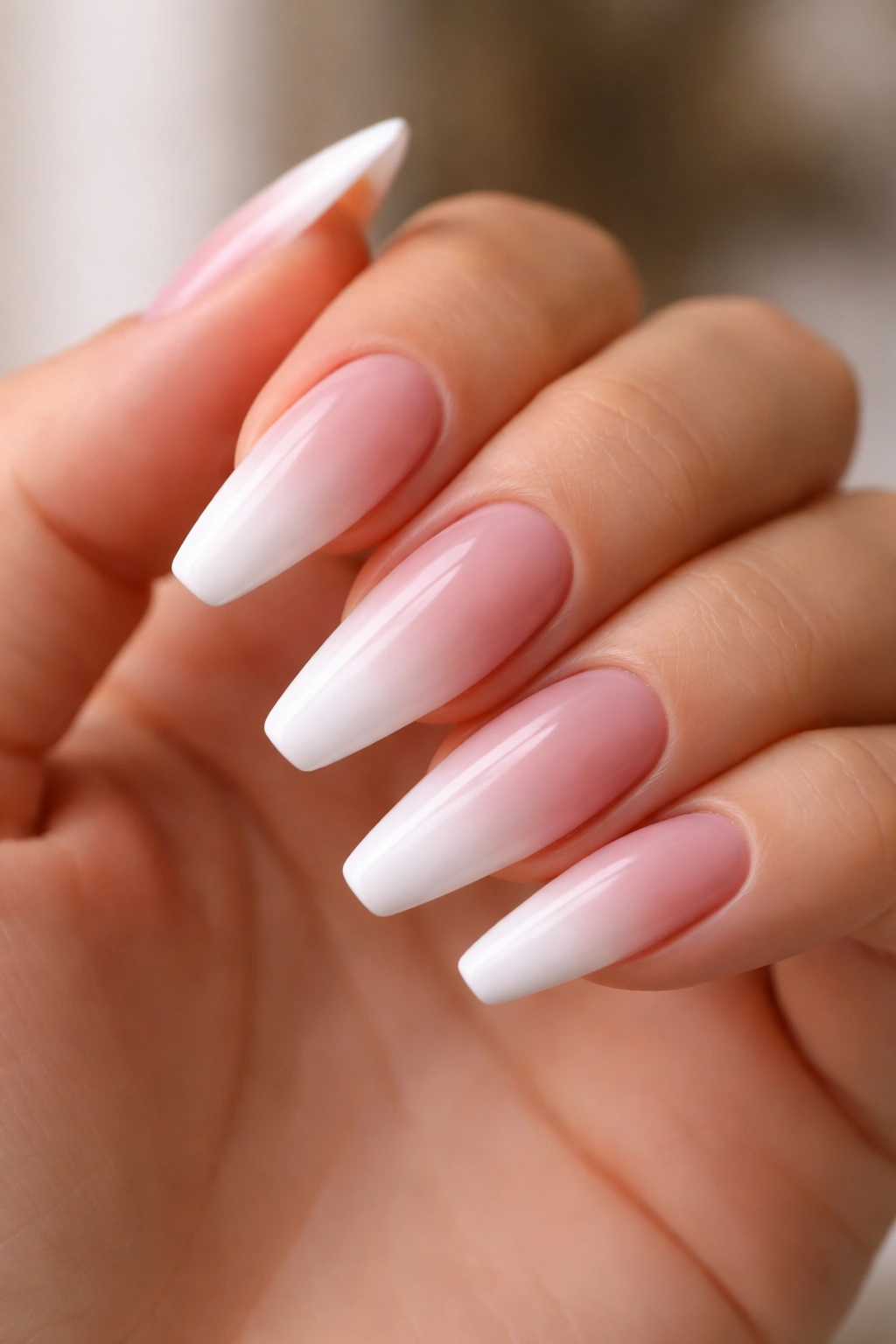
Why does this style seem to last forever? Because the white is concentrated where nails take the most visual wear—the tip—while the base melts into a nude or pink builder layer.
That soft fade, often called a baby boomer look, is one of the smartest choices if you want white ballerina nails that do not show grow-out right away. The ombré effect blurs the regrowth line, and the bright white at the tip keeps the overall set looking crisp.
How to ask for the cleanest version
Go for a milky white fade, not a dense opaque stripe. The blend should start around the middle of the nail, then soften upward so there is no hard smile line. On ballerina nails, that gradient also flatters the shape by making the tip look more refined and less blocky.
A soft pink base works well if you like a natural nail bed look. A beige-nude base looks cleaner on hands that pick up redness in cooler weather or after washing dishes.
4. Micro French White Tips on a Nude Ballerina Base
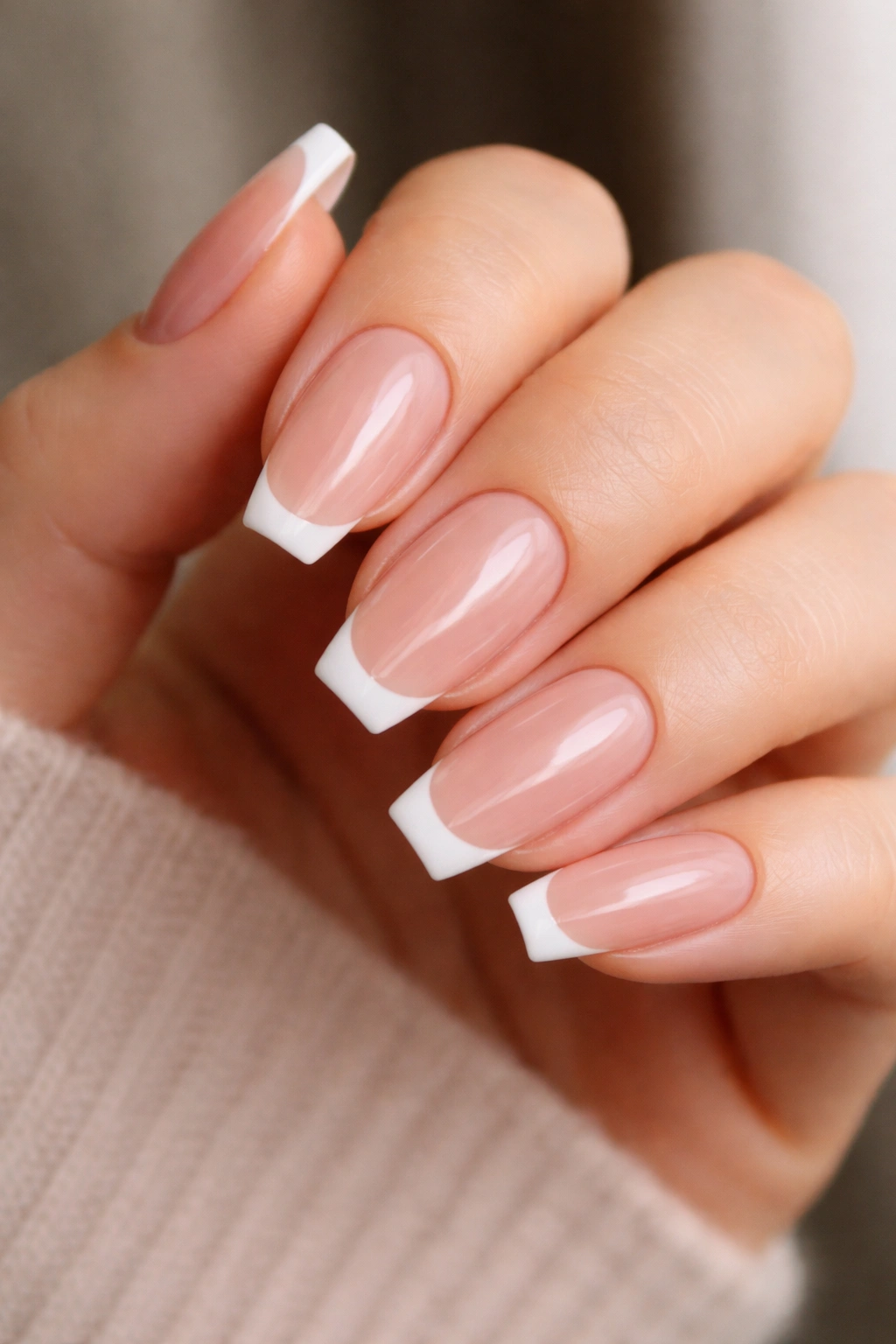
I love a micro French for one practical reason: there’s less white to stain.
Picture a glossy nude or sheer pink ballerina nail with a thin white edge, about 1 to 2 mm wide. That tiny tip gives you the crisp feel of white without covering the whole nail plate, which means lotion streaks, powder, foundation, and little surface smudges have far less room to show.
The style also handles grow-out well. Since the base stays neutral, the manicure still looks tidy after the cuticle area has moved down.
A good micro French needs sharp placement:
- The line should follow the ballerina tip, not dip too round.
- The corners need to be capped so the white does not wear off first.
- The nude base should match your nail bed, not fight it.
Small design. Big payoff.
5. Double French White Lines With Clear Space
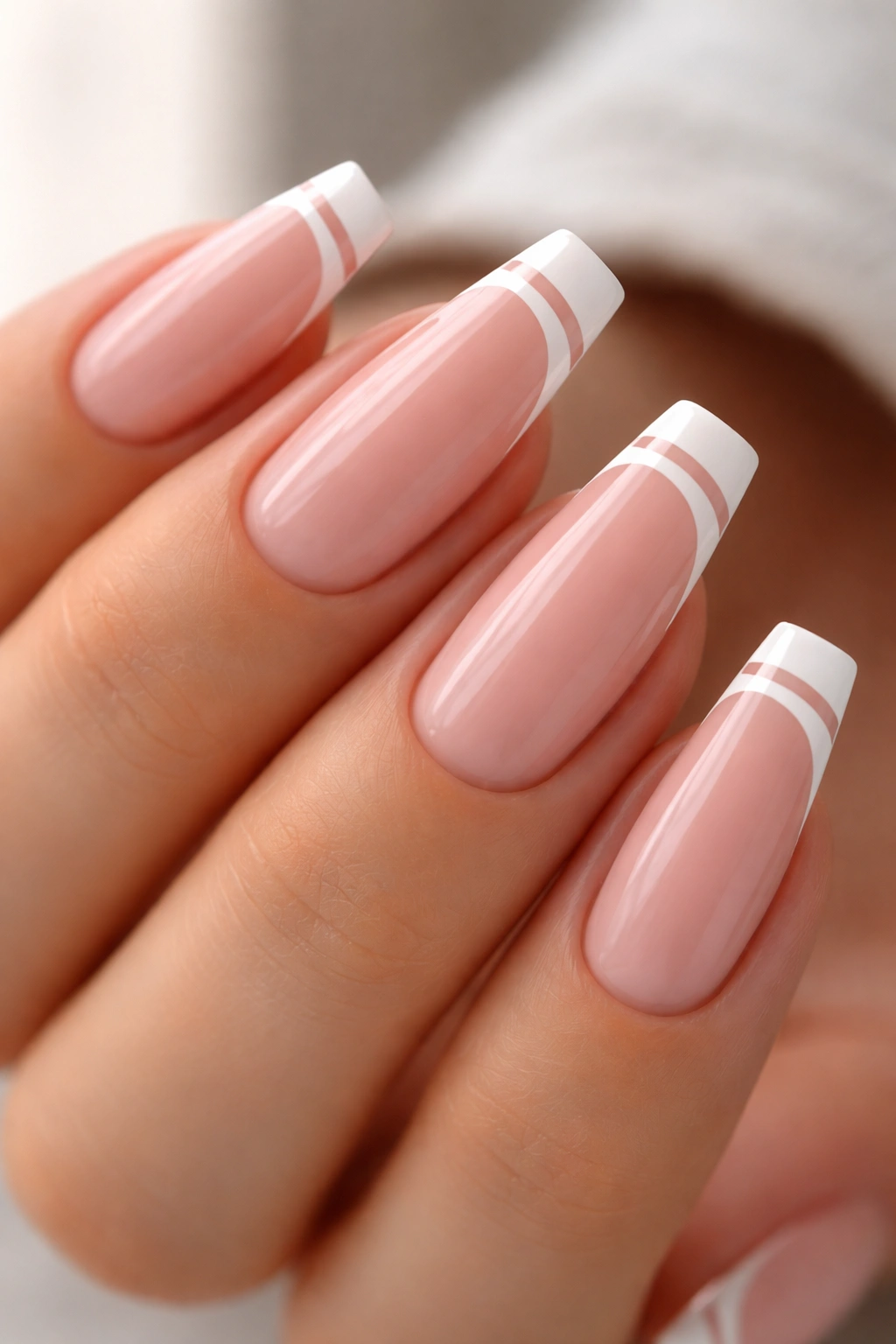
This one feels dressier without becoming high maintenance. Instead of one thick tip, you get two thin white lines—often one at the edge and one slightly above it—with a sliver of clear or nude space between them.
That gap matters. Visually, it breaks up the white, so the eye reads the design before it notices wear. A fully painted white tip can show dullness across the whole end of the nail. A double French doesn’t have that problem in the same way because the negative space interrupts it.
I also like how this style keeps ballerina nails looking long without making the tips heavy. Thick French tips can make a coffin shape seem squat. Thin double lines keep the structure lean.
Use a hard, glossy top coat here. If the lines are done with soft gel and left too exposed, the edges can fray. When they’re sealed flat, they stay neat for much longer than people expect.
6. Side-Swept White French Ballerina Nails
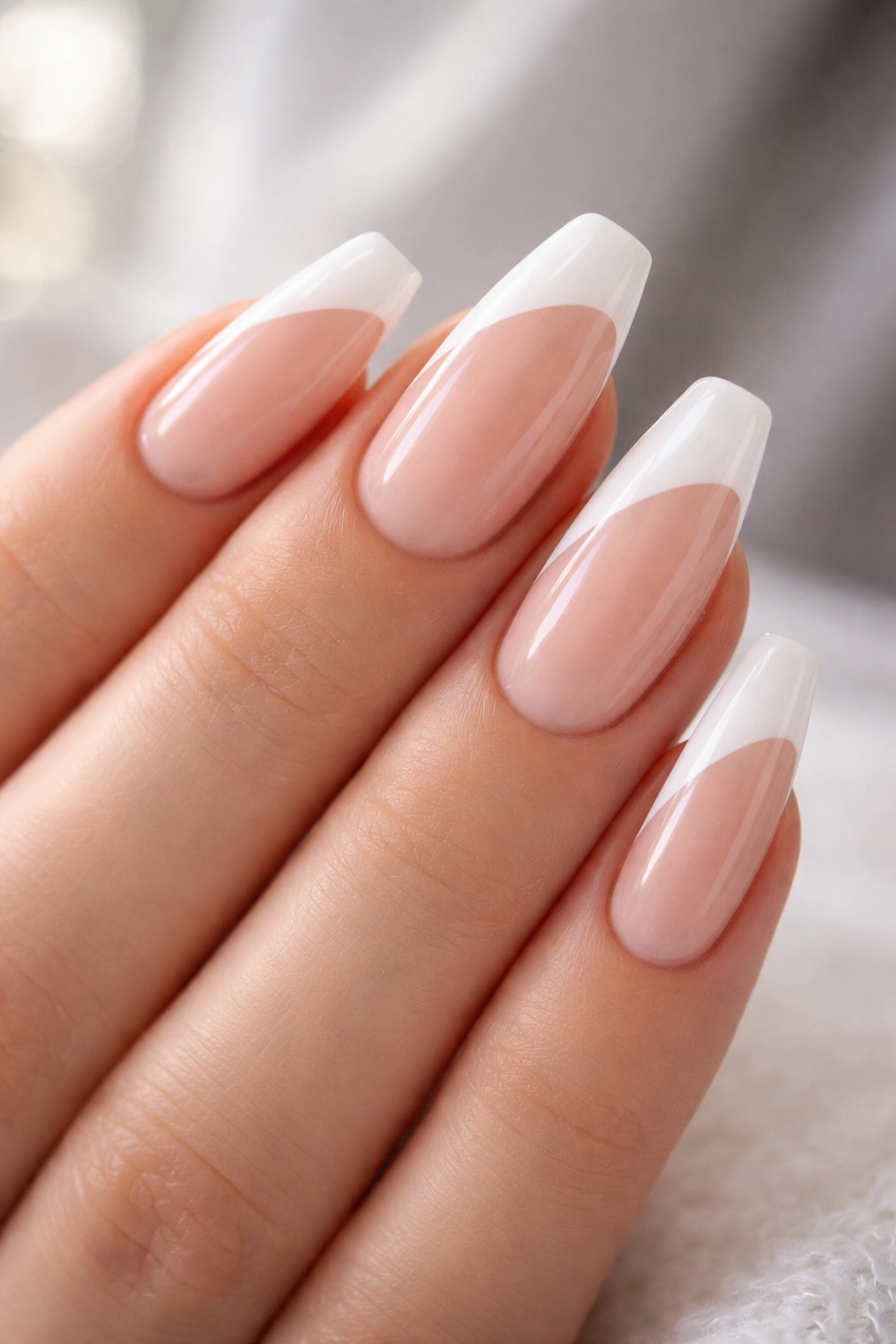
Unlike a straight-across French, a side-swept white tip cuts diagonally across the nail. That one shift changes the whole feel.
The diagonal line draws attention along the length of the ballerina shape, not straight to the free edge where dirt and wear usually show first. Because the white is concentrated on one side and trails off on the other, minor scuffs are less obvious than they are on a full-width white tip.
This style is especially good if you’re hard on one hand—usually the dominant one. A diagonal tip can disguise uneven wear because the design already looks directional instead of perfectly symmetrical.
Who gets the most out of it? People who want something cleaner than full nail art but less expected than a standard French. Keep the white bright, the base sheer, and the diagonal line crisp enough that it looks intentional from arm’s length, not fuzzy.
7. Reverse French White Half-Moons at the Cuticle
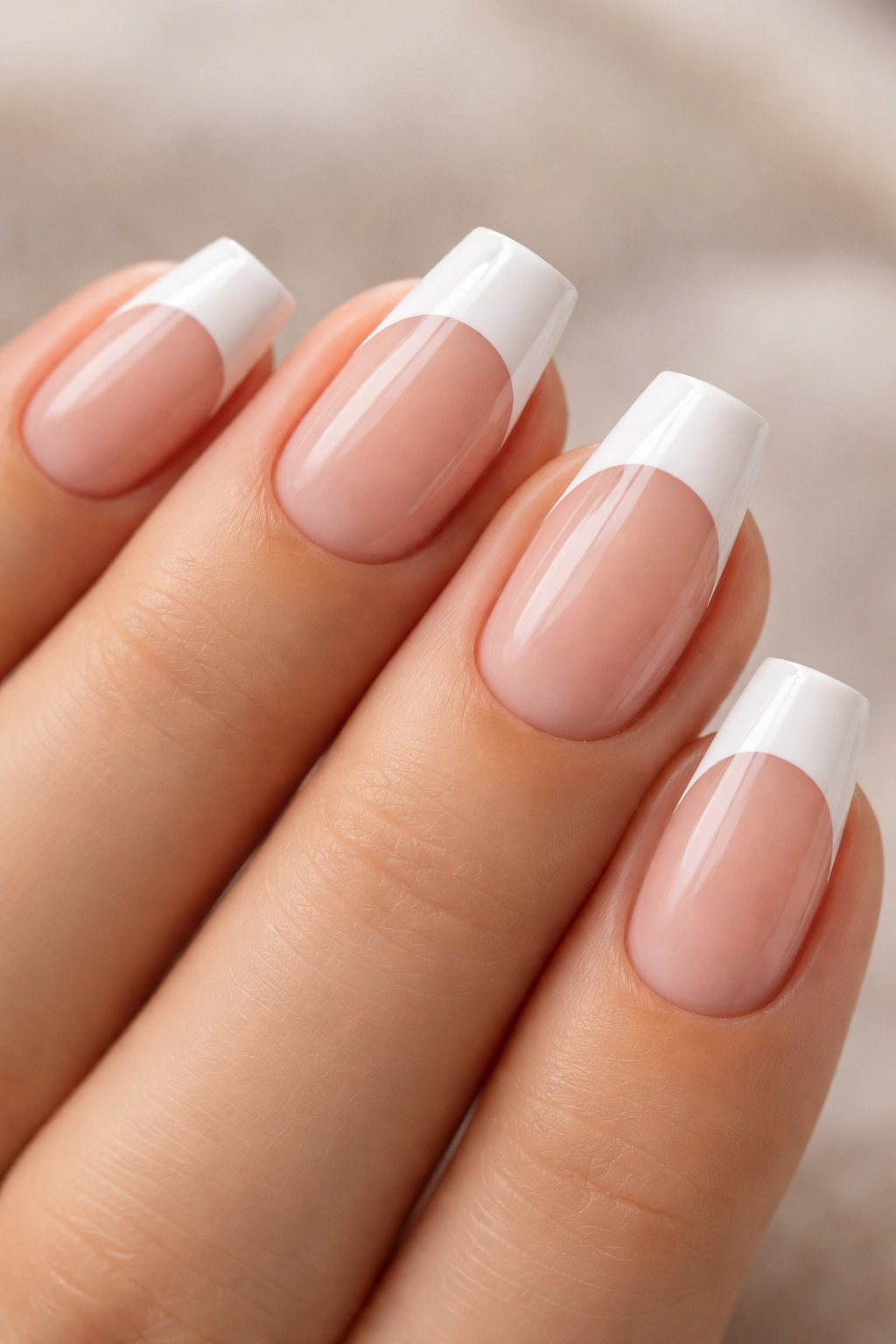
This is the rare white design that puts the color where nails take the least abuse. A reverse French leaves the main body of the nail nude, then places a white crescent at the cuticle.
What makes it last
Tips are where white most often gets banged up, shadowed, or dulled. Moving the design down to the nail base sidesteps that. The white area stays cleaner because it is not scraping keyboards, cans, or zippers all day.
You do need a steady hand from the tech, since a messy half-moon looks off fast. On ballerina nails, I like a slim crescent that mirrors the natural cuticle line.
- Best on: short and medium lengths
- Best base shade: sheer beige or soft pink
- Best finish: high gloss
- Wear issue it avoids: tip staining
Pro tip: keep the moon thin. A thick white half-circle can shorten the look of the nail.
8. White Outline Frame Ballerina Nails
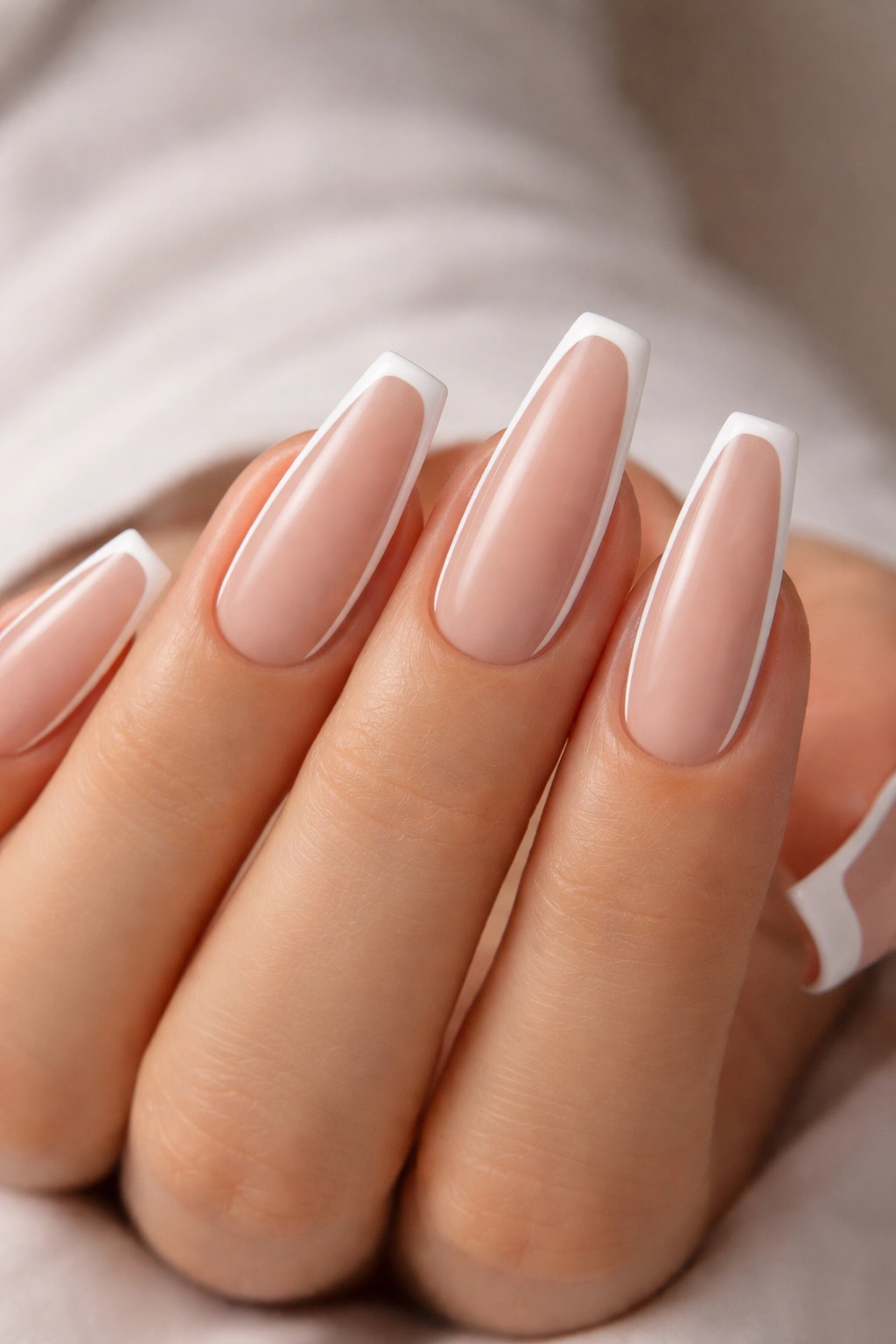
A framed nail can do something solid white polish cannot: it gives structure without needing full coverage. Think of a nude or sheer center with a thin white border following the sidewalls and tip.
That outline acts like a visual edge cleaner. Because the border is narrow, it doesn’t collect the same visible wear as a fully painted nail. The center stays neutral, so surface smudges aren’t as obvious either.
This design works well on medium and long ballerina sets because it emphasizes the shape. The white lines should be narrow—usually under 1.5 mm—and sealed flat under top coat. Raised liner gel looks cute for a day, then starts trapping grime around the ridges.
There’s also a nice bonus here: if your sidewalls grow out a little unevenly, the frame still makes the set look sharp. It’s a small optical trick, but it works.
9. Pearl-Glazed Milky White Ballerina Nails
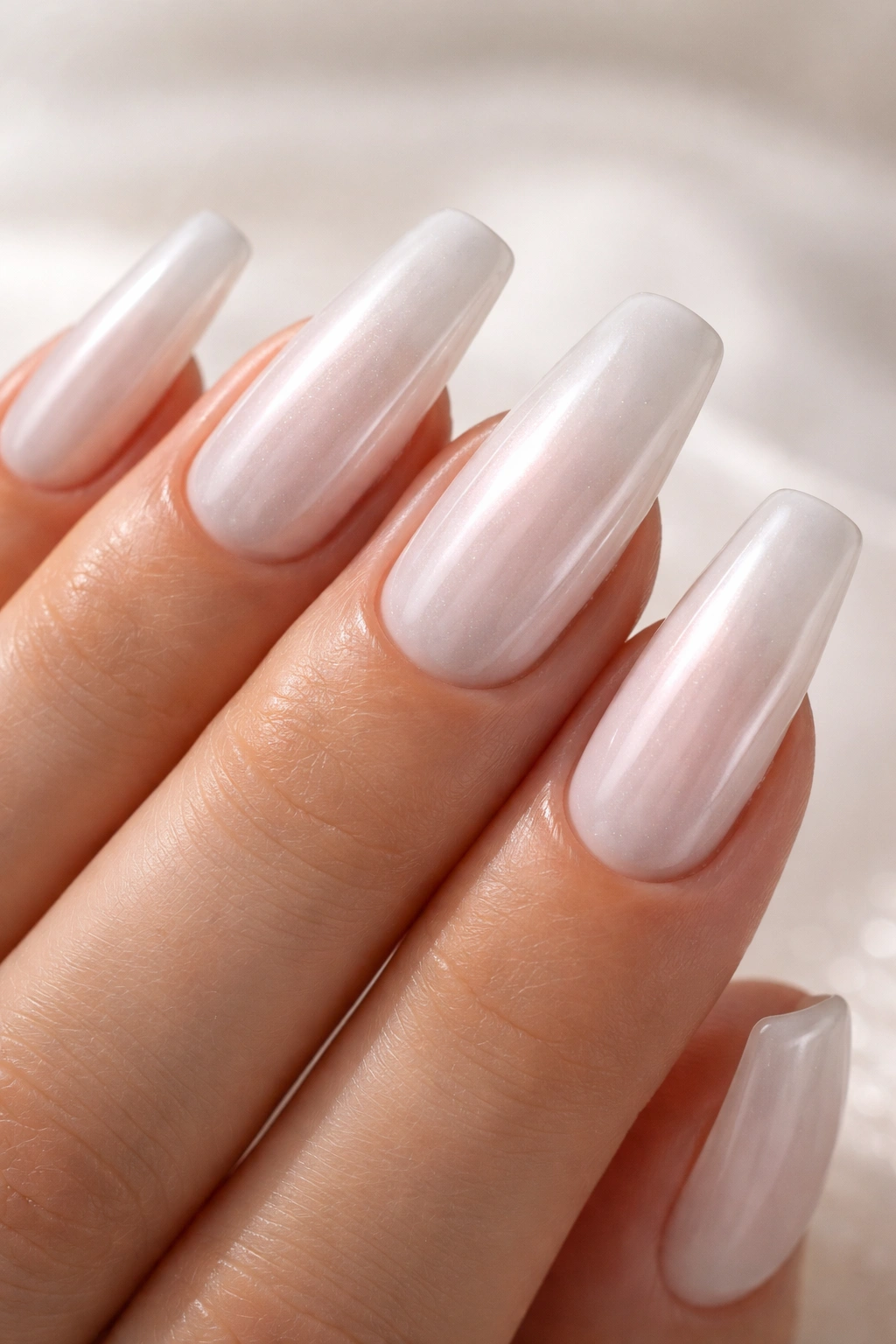
Want white nails that reflect light without looking metallic? Go for a pearl glaze over a milky base.
Why does this stay cleaner? The fine pearly finish softens the eye’s focus. Tiny marks that would stand out on flat white blend into that shell-like sheen instead. A sealed pearl glaze also creates a slick surface, so makeup powder and dust are easier to wipe off before they settle into scratches.
How to get the effect right
Start with a translucent white or soft ivory base. Then add a pearl powder or pearl top layer that gives off a gentle sheen, not a hard chrome mirror. You want the nail to look smooth and creamy, almost like mother-of-pearl, with no grainy texture.
Avoid a thick white base under pearl. Once the base gets too opaque, the effect turns heavy and the manicure loses that fresh, easy look that makes it wear so well.
10. Satin White Chrome on a Sheer Base
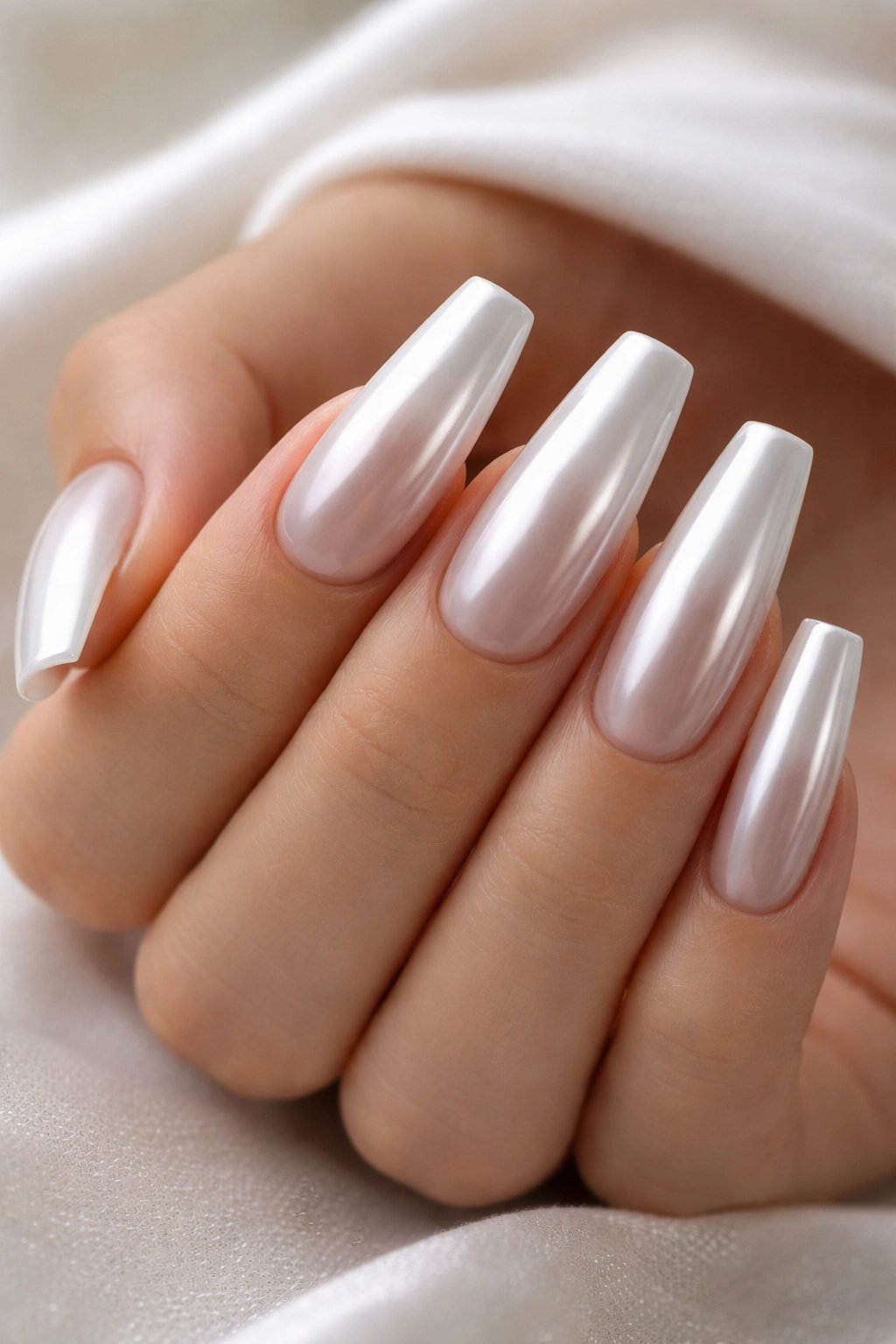
There’s a version of chrome that behaves well, and a version that does not. The one worth your time is satin white chrome, buffed over a sheer base and sealed until it feels glassy.
A full mirror chrome can show tiny scratches because the reflection is so sharp. Satin white chrome softens that shine. You still get movement across the surface, but the finish is blurred enough to hide daily wear better.
I’d pick this for someone who wants white ballerina nails with a little edge and does not want rhinestones, charms, or 3D pieces. The nail looks dressed up, yet the maintenance stays sane.
Ask for a sealed surface with no powder residue at the sidewalls. That part matters. Unsealed chrome catches dirt around the edges and dulls fast. A clean satin chrome set feels slick when you run a finger across it—no grit, no drag, no dusty finish left behind.
11. White Quartz Marble Ballerina Nails
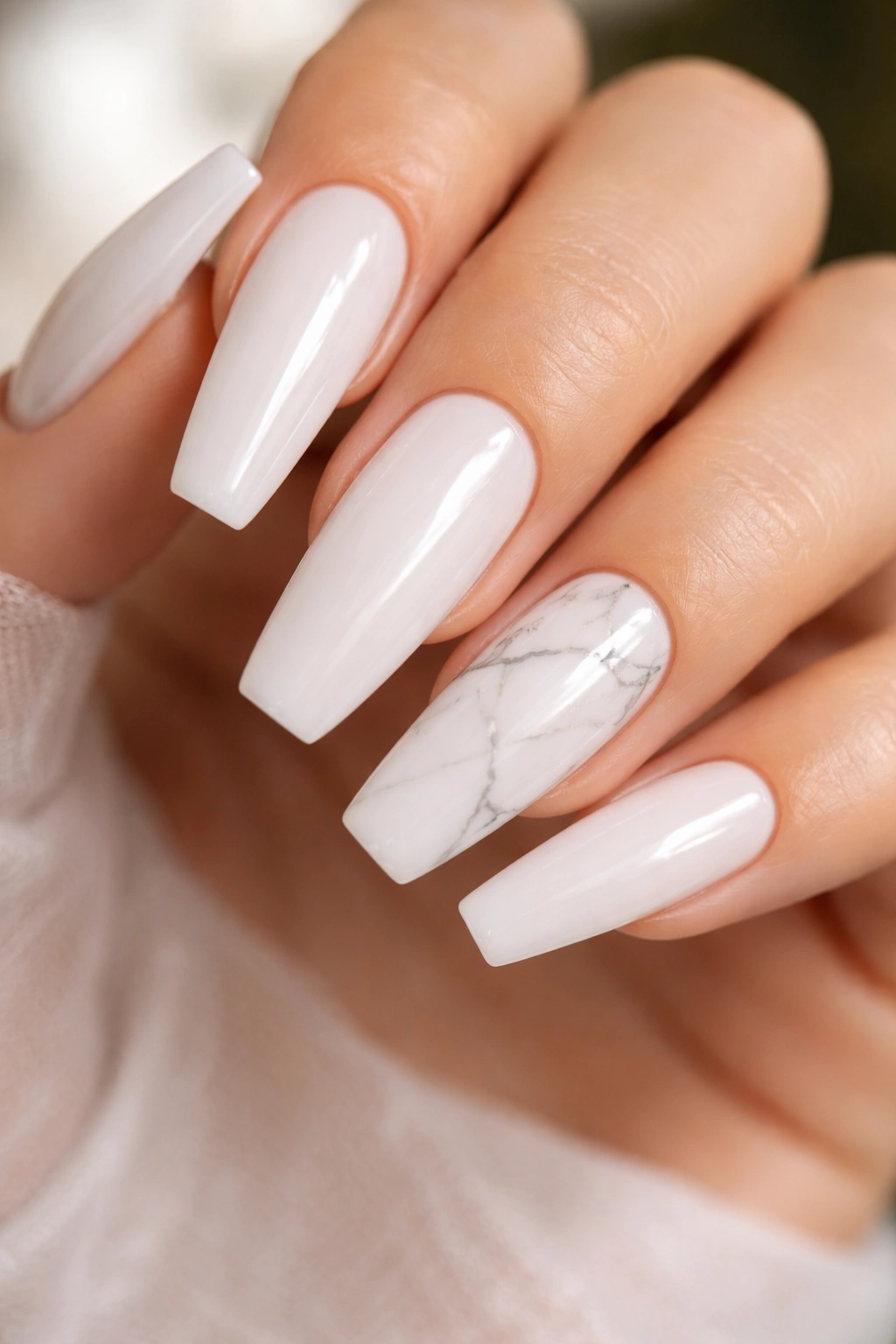
The trick with marble is restraint. Thin gray veining, soft white base, glossy seal. Done that way, white quartz marble is one of the smartest “white but not too white” looks you can wear.
Those faint lines break up the color field, so the eye does not lock onto every little surface mark. If you get a tiny scratch or a little wear near the tip, it blends into the movement of the design instead of sitting there alone on a blank white background.
I prefer marble on two to four accent nails, with the rest in milky white or ivory. A full set of heavy marble can start looking busy, and strong dark veining defeats the clean effect. Keep the lines whisper-thin and a shade or two softer than charcoal.
Ballerina shape helps here because the straight tip gives the marble room to stretch out. Short square nails can make veining look cramped. On a tapered nail, it looks airy.
12. White Aura Fade at the Center
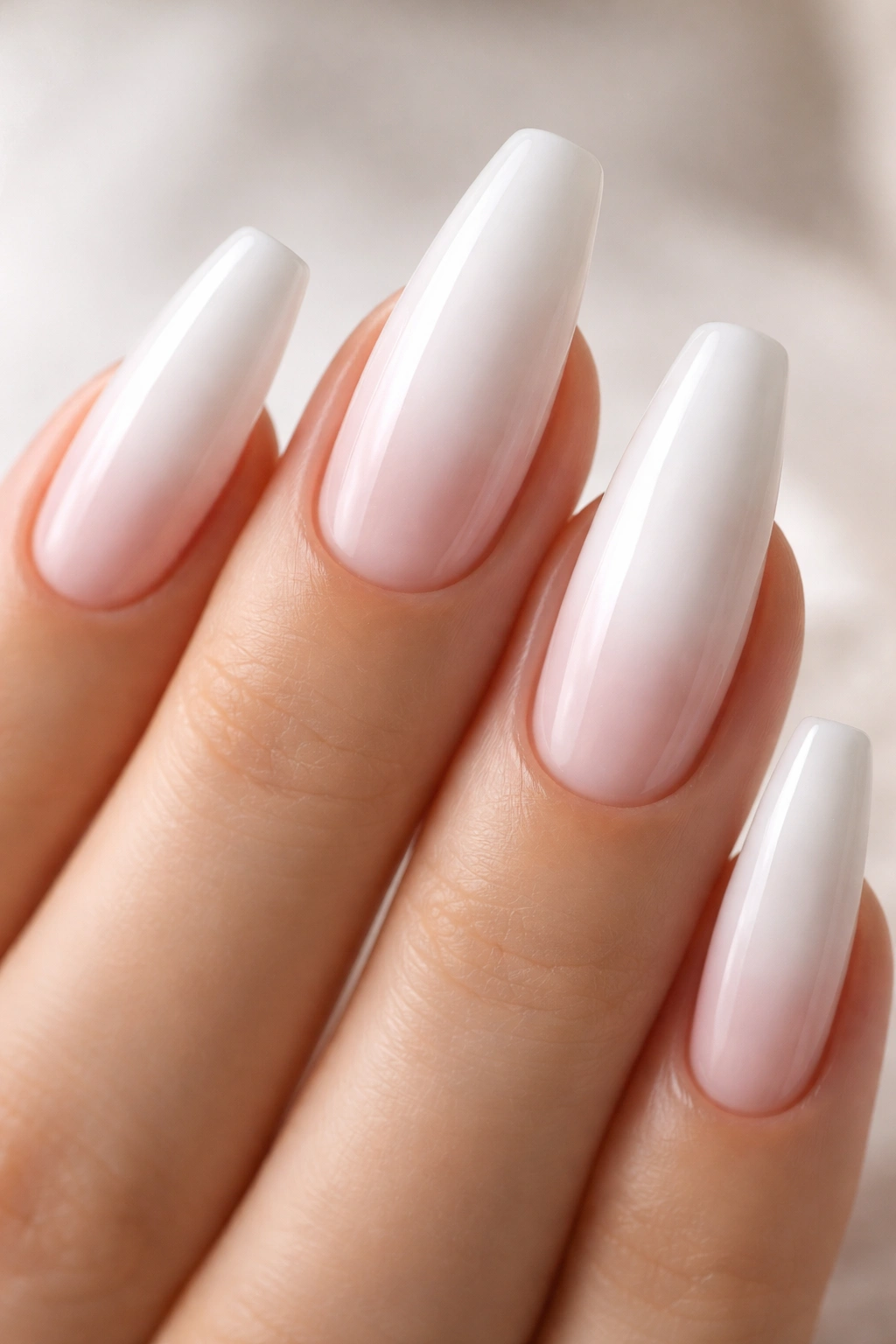
This look places a soft white glow in the middle of the nail and leaves the outer edges more translucent. It sounds subtle because it is.
Unlike a full white nail, a center aura fade leaves the sidewalls and cuticle area lighter in coverage. That means less harsh contrast when your nails grow, and fewer obvious marks at the edges where wear usually starts. The bright center still gives the manicure a fresh, clean feel from a few feet away.
It also flatters ballerina nails in a sneaky way. Because the middle is lighter, the nail reads longer and slimmer. That can help if you love the coffin shape but do not want your set too sharp or severe.
Best pairing? A glossy finish and a cool milk-white center. If the airbrushed effect turns patchy, the whole design falls apart. Clean blending matters more here than extra decoration.
13. White Jelly Ballerina Nails
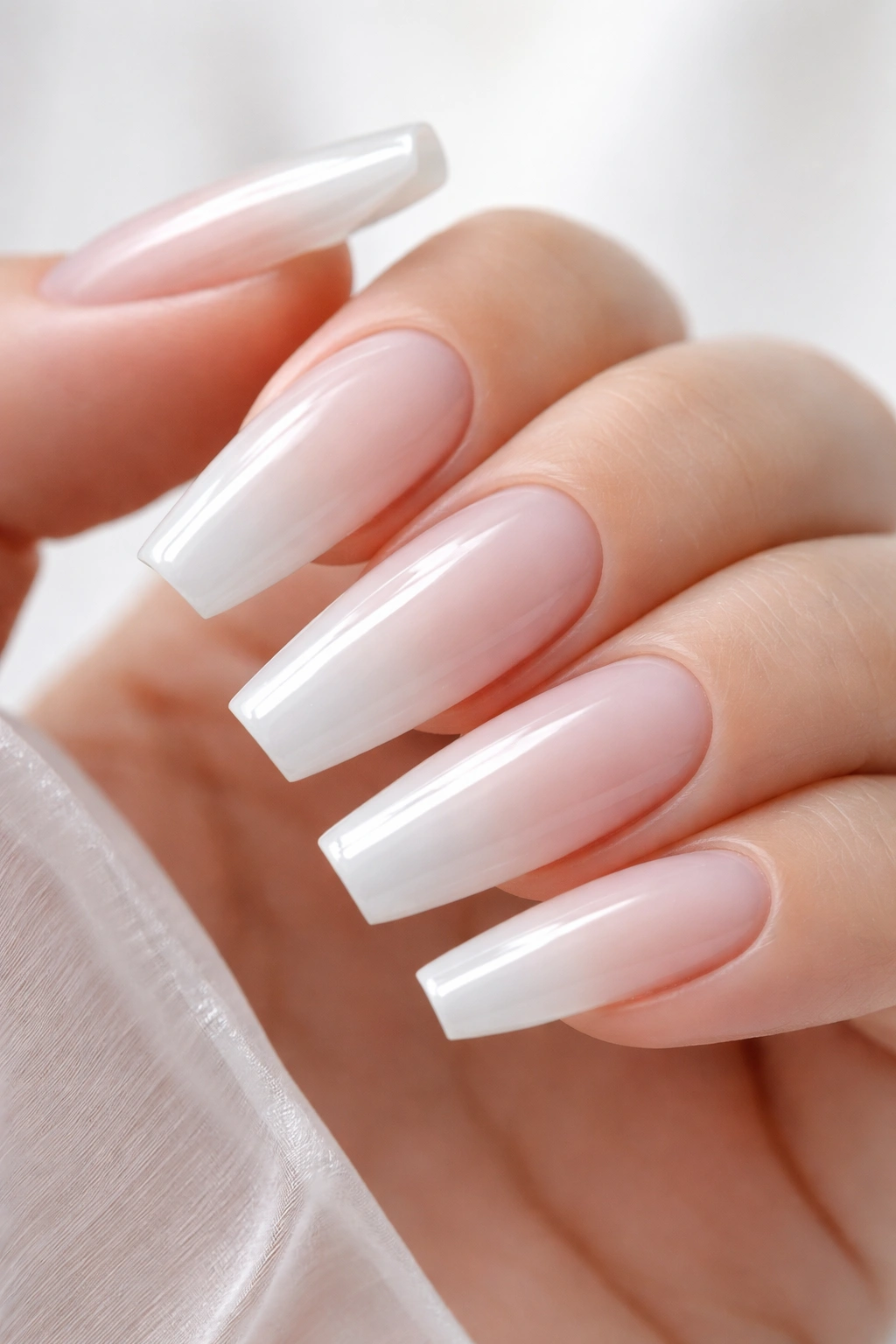
A white jelly manicure is what I recommend when someone says, “I want white, but I don’t want it to look heavy.” Fair.
Why jelly works
Jelly white is translucent enough to let light pass through the nail, so scratches and dust don’t sit on the surface visually the way they do on an opaque block of color. The result feels cleaner for longer, especially on medium-length ballerina nails.
You can build it in thin coats until it reaches that washed-glass look. One coat often reads too sheer. Three can start drifting toward solid. Two well-leveled coats is often the sweet spot.
- Best effect: cool milk-glass finish
- Best top coat: non-yellowing high gloss
- Best length: medium
- Avoid if: you hate seeing any natural nail line
Pro tip: jelly white looks best when the natural nail underneath is neatly prepped and even-toned, since a translucent finish reveals more than a cream polish does.
14. Coconut Milk White With Nude Sidewalls
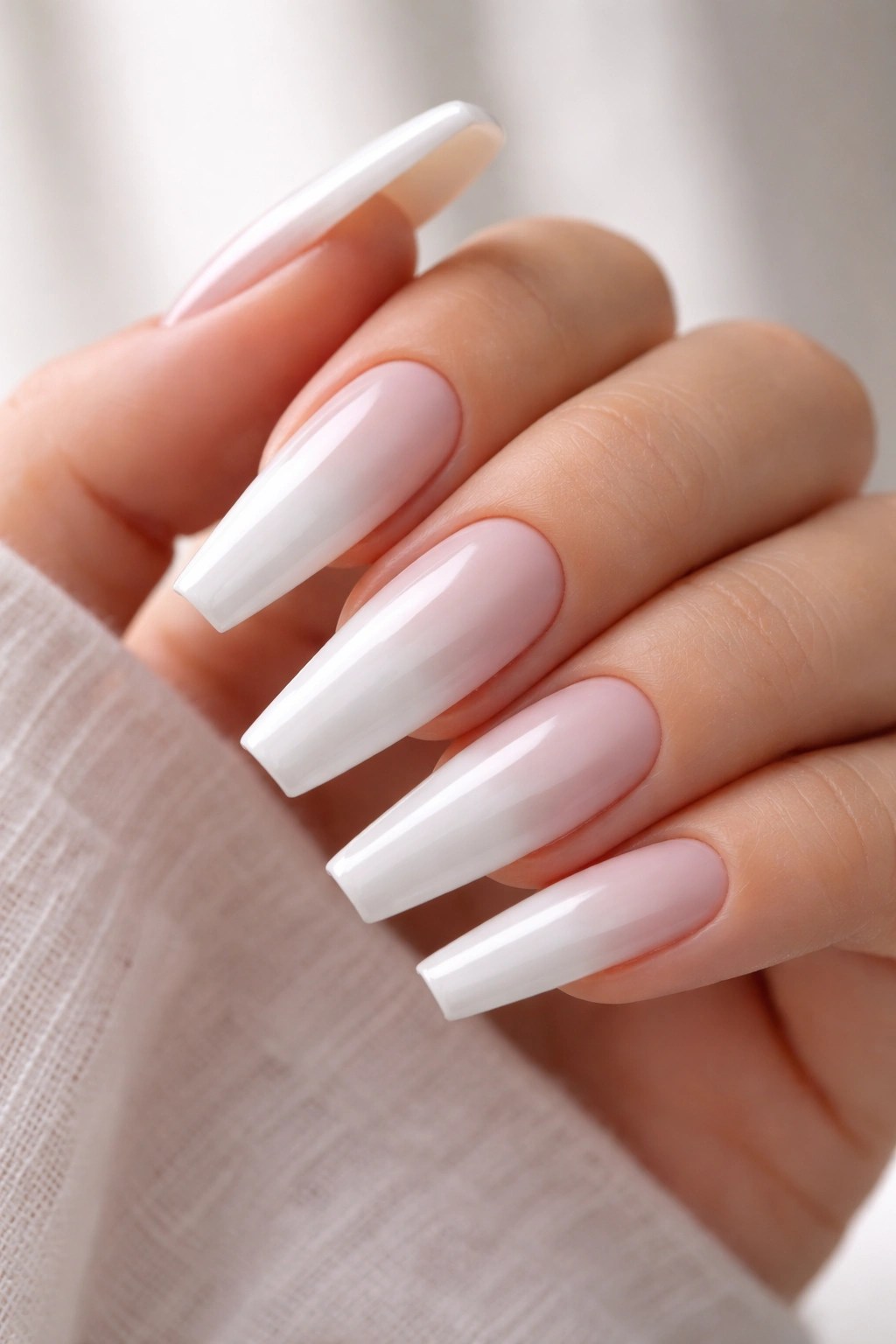
This design keeps the center and tip softly white while leaving the side edges a touch more translucent or nude. Small detail. Huge difference.
The sidewalls are where white nails often look tired first. That’s where lint clings, where the color can look thicker, and where tiny bumps from grow-out show. By softening those edges with nude or sheer coverage, coconut milk white with nude sidewalls stays cleaner-looking far longer than a fully boxed-in white nail.
I like this style on long ballerina sets because it slims the nail. It also reduces that chalky slab effect that can happen when a long coffin nail is painted in opaque white from wall to wall.
If you ask for it, mention that you want the center brightest and the edges feathered—not a harsh stripe. A hard line between the white center and nude sides can look dated and a little costume-like.
15. Porcelain White With an Ultra-Gloss Seal
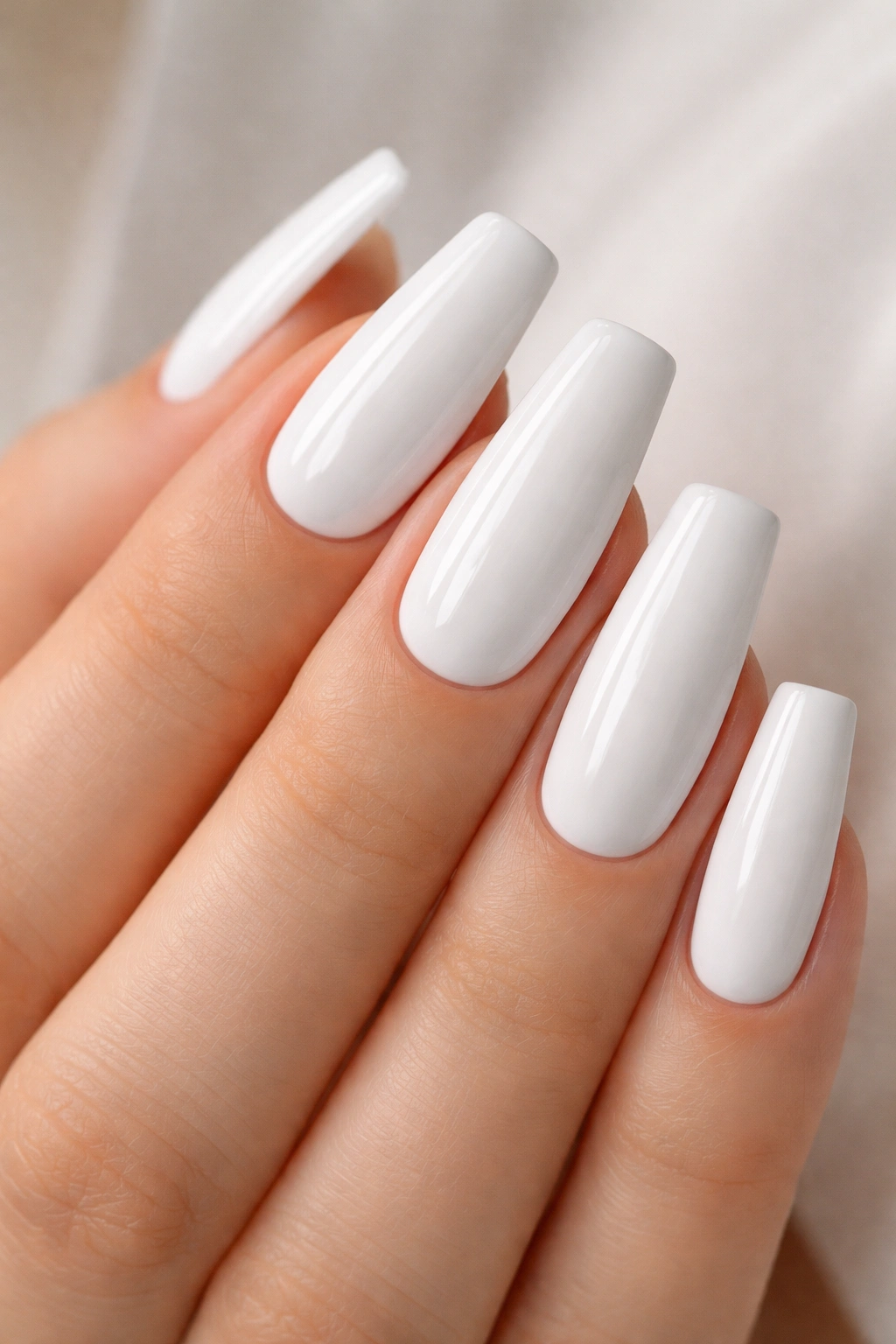
Sometimes you do want the full opaque white. No fade, no shimmer, no nude break. Just clean porcelain white from cuticle to tip.
If that’s your lane, the finish is what saves you. Porcelain white only works when the surface is leveled well and sealed with a hard, slick top coat. Any lump, ripple, or thin spot shows. That sounds harsh because it is. Flat white is unforgiving.
Make this one work in real life
Choose a white with a cool porcelain cast instead of a blue neon white. The cool porcelain look feels cleaner and less plastic. Then keep the shape tidy: straight tip, softened corners, no over-thick sidewalls. On ballerina nails, thickness is what turns a polished set into a clunky one.
Plan on touch-ups sooner with this style than with milky whites or fades. It’s worth it if you love that sharp, pure look. Just do not expect it to hide your habits.
16. Fine Pearl Shimmer White Ballerina Nails
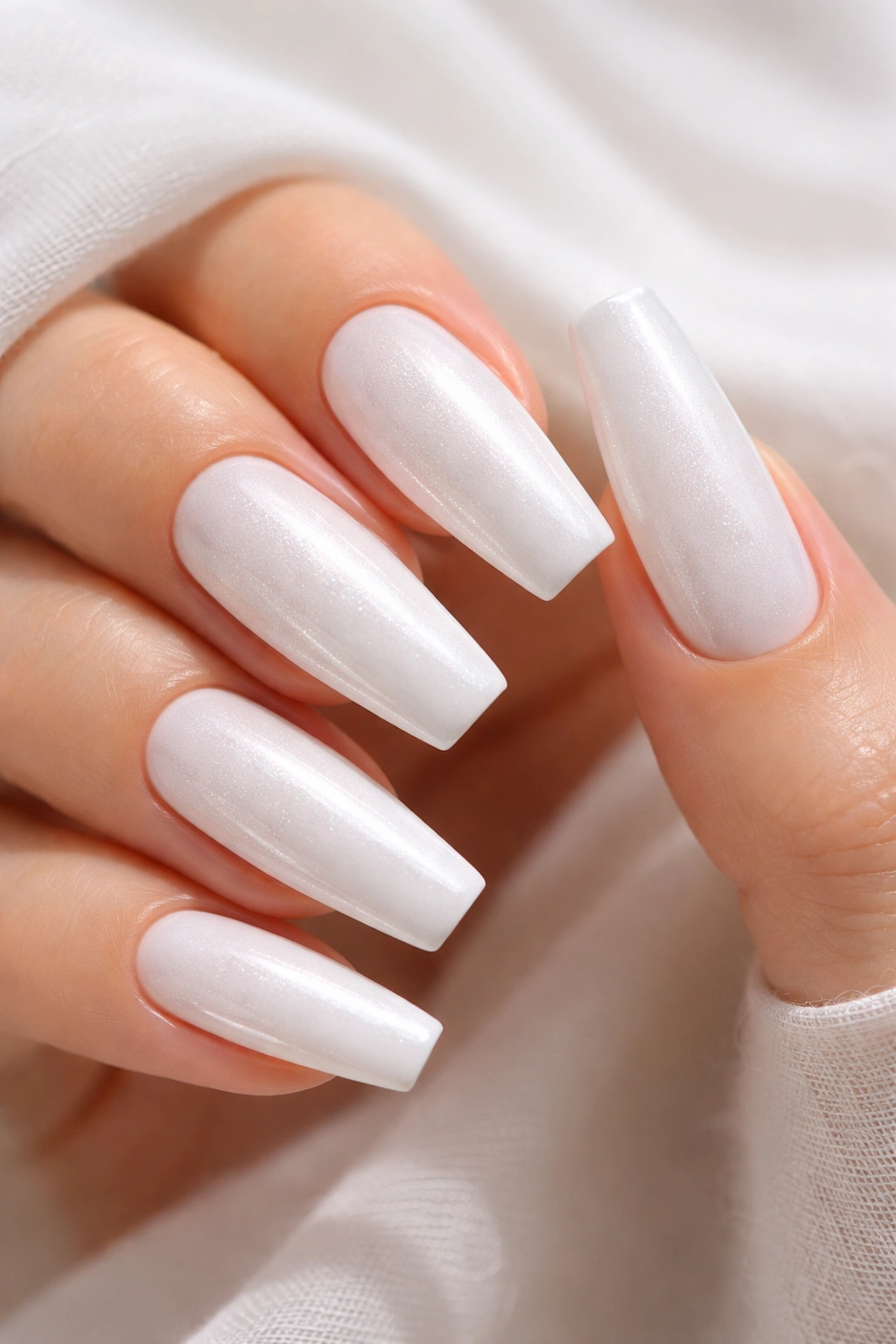
Picture tiny pearl dust suspended in white gel—not chunky glitter, not frosted polish, just a fine shimmer you notice when the hand moves. That finish earns its keep.
A delicate shimmer scatters light across the nail, which helps blur hairline scratches and the faint dullness that comes from day-to-day wear. Flat white goes dead fast. Pearl shimmer keeps moving.
This style is also one of the better choices for winter hands, when skin can look drier and a solid white manicure feels too stark against it. The pearl softens the contrast.
Look for these details if you want it done well:
- The shimmer should be micro-fine, not sparkly.
- The base should still read white first, pearl second.
- The top coat needs to stay smooth; rough shimmer finishes look dusty.
- Two thin shimmer coats usually beat one thick coat.
That’s the whole charm of it. Nothing loud. Nothing fussy. Just a white set that keeps its polish longer.
17. White Opal Layered Gel Nails
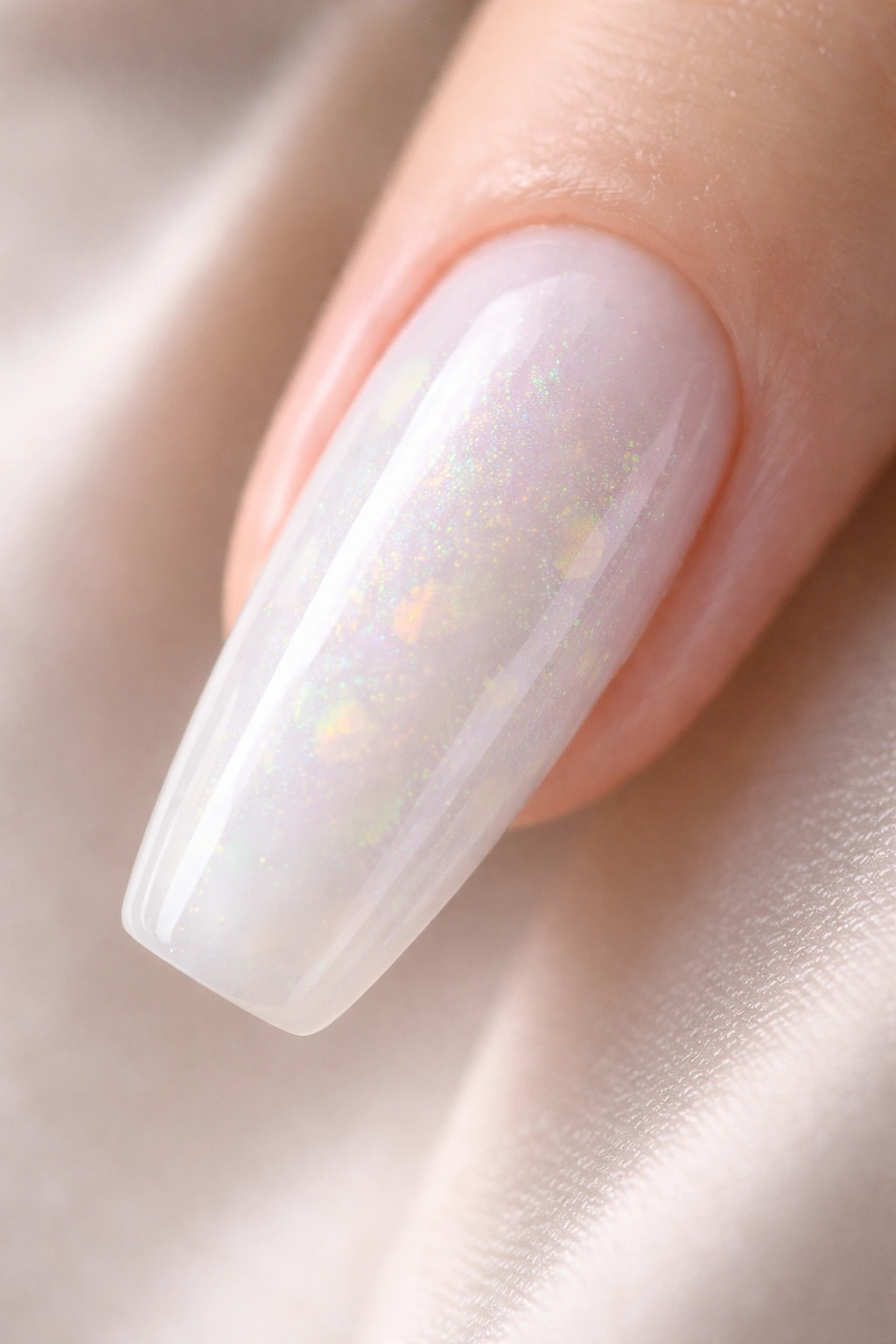
White opal nails have that soft flash you see in certain stones—pink one second, pale blue the next, then back to creamy white. Because the color shift is tucked under clear gel, the surface stays flat and easy to wipe clean.
I like opal effects for people who want a little more personality but cannot stand bulky nail art. Charms catch on things. Raised chrome lines can get dull around the edges. Encapsulated opal film or flake sits under the top layer, so the nail still feels sleek.
On ballerina shapes, use the opal effect sparingly. Too much foil can make the nail look busy and cheap. A sheer white base with scattered opal pieces near the center or tip looks cleaner and wears better.
The reason it holds up visually is simple: the eye sees movement and depth before it sees small imperfections. That matters more on white than on almost any other color.
18. Snow White Tips With a Silver Micro Pinstripe
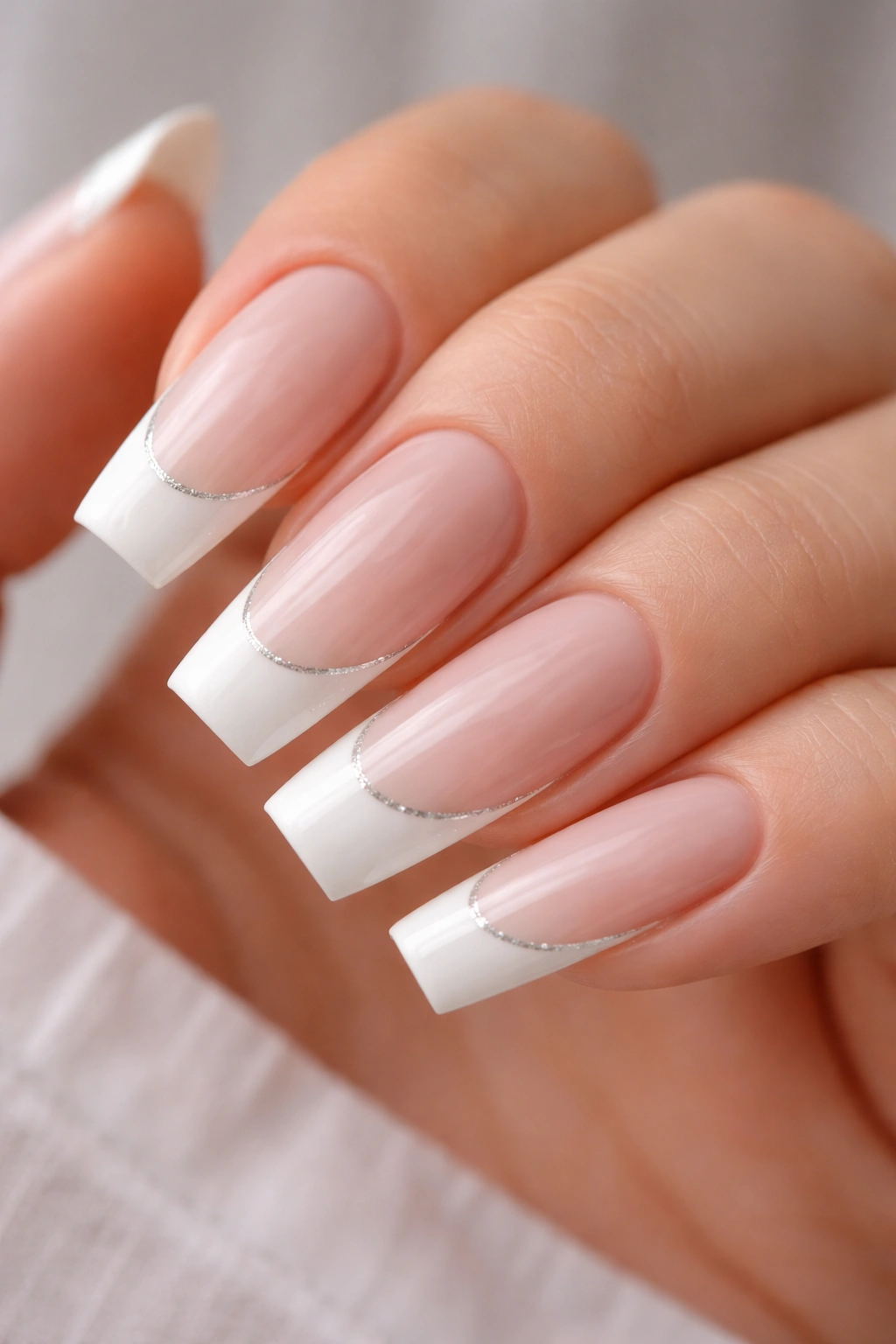
Unlike a plain French, this look adds a thin silver line where the white tip meets the nude base. It sounds small. It changes the manicure more than you’d think.
That metallic strip acts like a divider, which helps the white tip look cleaner because the eye reads the outline first. If the white loses a little brightness after a week, the design still looks crisp thanks to that neat separation line.
This works best with a restrained hand. The silver should be hair-thin, almost like jewelry for the nail, not a glitter band. A reflective stripe around 0.5 to 1 mm is enough.
Who should skip it? Anyone who hates precision maintenance. A crooked pinstripe ruins the whole effect. Done well, though, it gives you the freshness of white tips with a built-in visual cleaner between colors.
19. Diagonal White Color-Block Ballerina Nails
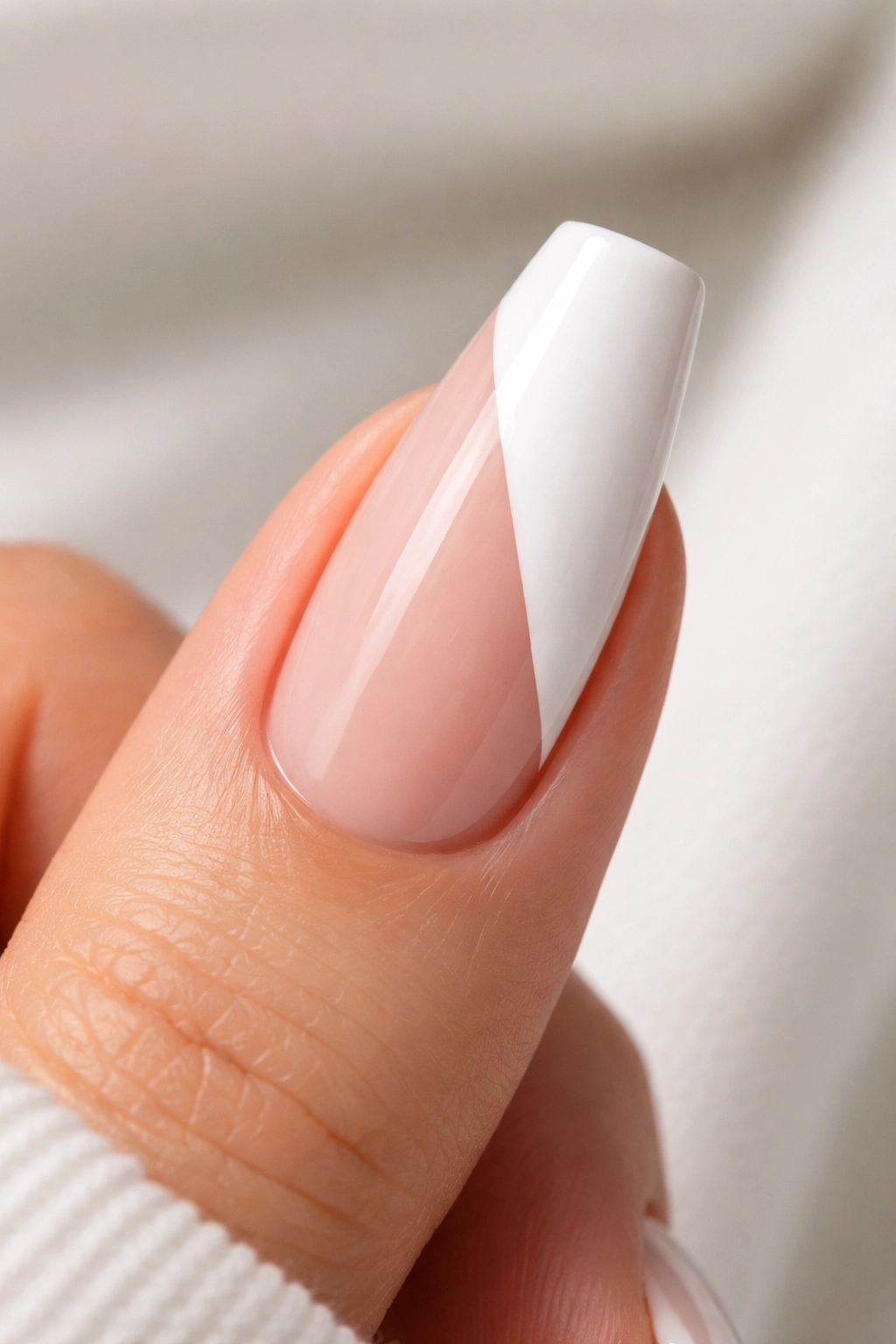
A diagonal color-block uses white on one section of the nail and clear, nude, or pale blush on the other. It is one of the smartest design tricks for keeping white from looking tired too fast.
What makes it different
Because the white sits in a distinct panel rather than covering the whole nail, wear is localized. That means a little dullness near the tip does not drag down the entire manicure. The angled split also makes the ballerina shape look longer and more tailored.
There are a few ways to wear it:
- White at the tip with a nude lower half
- White along one side with a sheer opposite side
- White corner block with a clear negative-space triangle
- Alternating diagonal direction across the hands
Pro tip: keep the lines crisp and the panels large enough to read at a glance. Tiny geometric sections on white nails can start looking cluttered.
20. White Smoke Swirl Nails on a Clear Ballerina Base
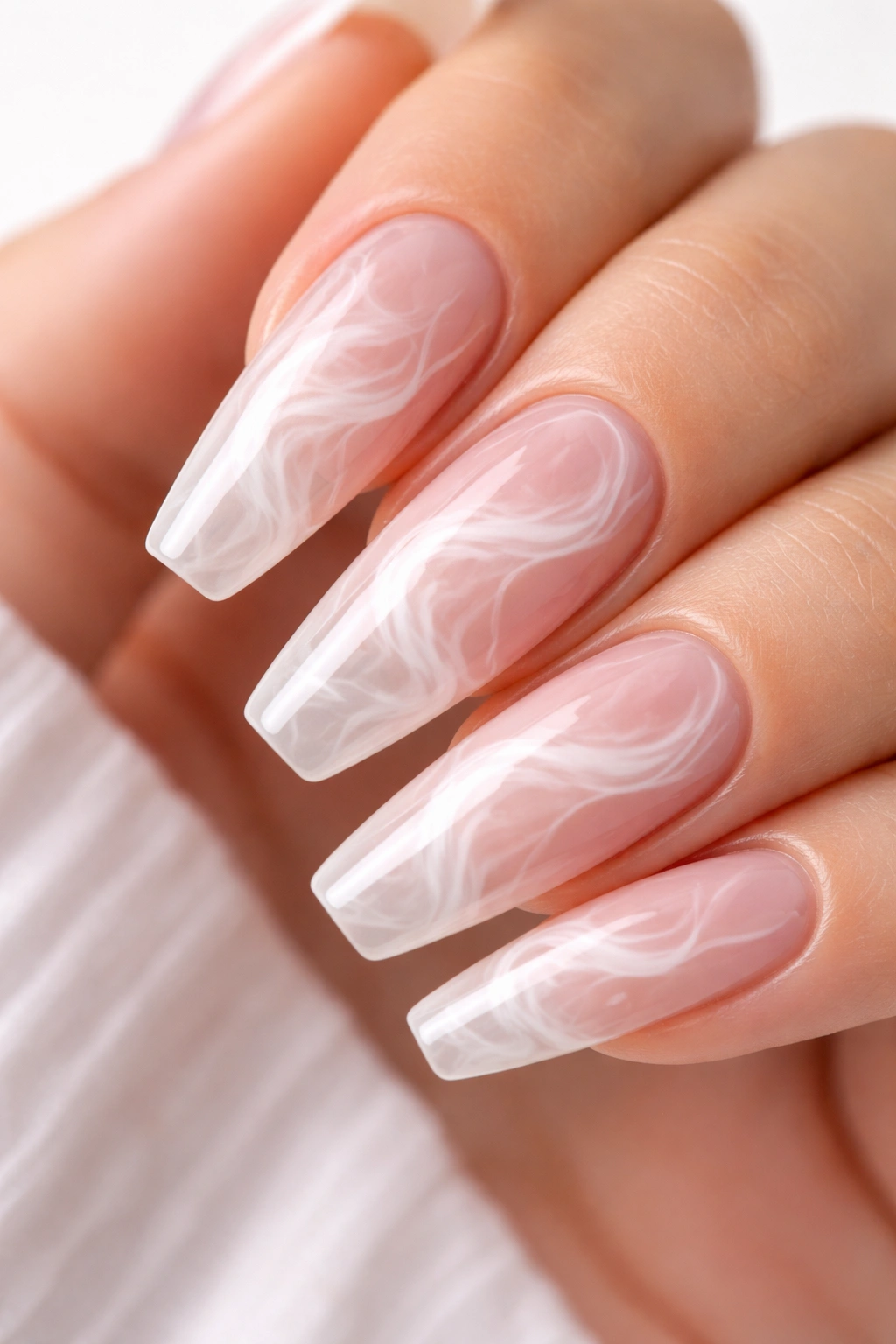
If you want white ballerina nails that hide wear without giving up the airy feel of clear gel, white smoke swirls are hard to beat. The design uses wispy white ribbons over a transparent or sheer pink base, sealed flat under gloss.
The reason it stays looking clean is almost unfair. Since there is no solid white block, surface marks have nothing blank to sit against. The swirls create movement, and the clear base keeps the manicure light around the sidewalls and cuticle area.
I’d pick this over heavy white abstract art every time. Big painted blobs can start looking messy fast. Soft smoke lines stay sharp if they’re thin and well-spaced.
Ask for white lines with some transparency, not hard opaque scribbles. The prettiest version looks like the white was pulled through clear gel with a fine brush, then frozen there under a glassy top layer. On a tapered ballerina shape, that little bit of flow looks elegant without asking for much upkeep.
Final Thoughts
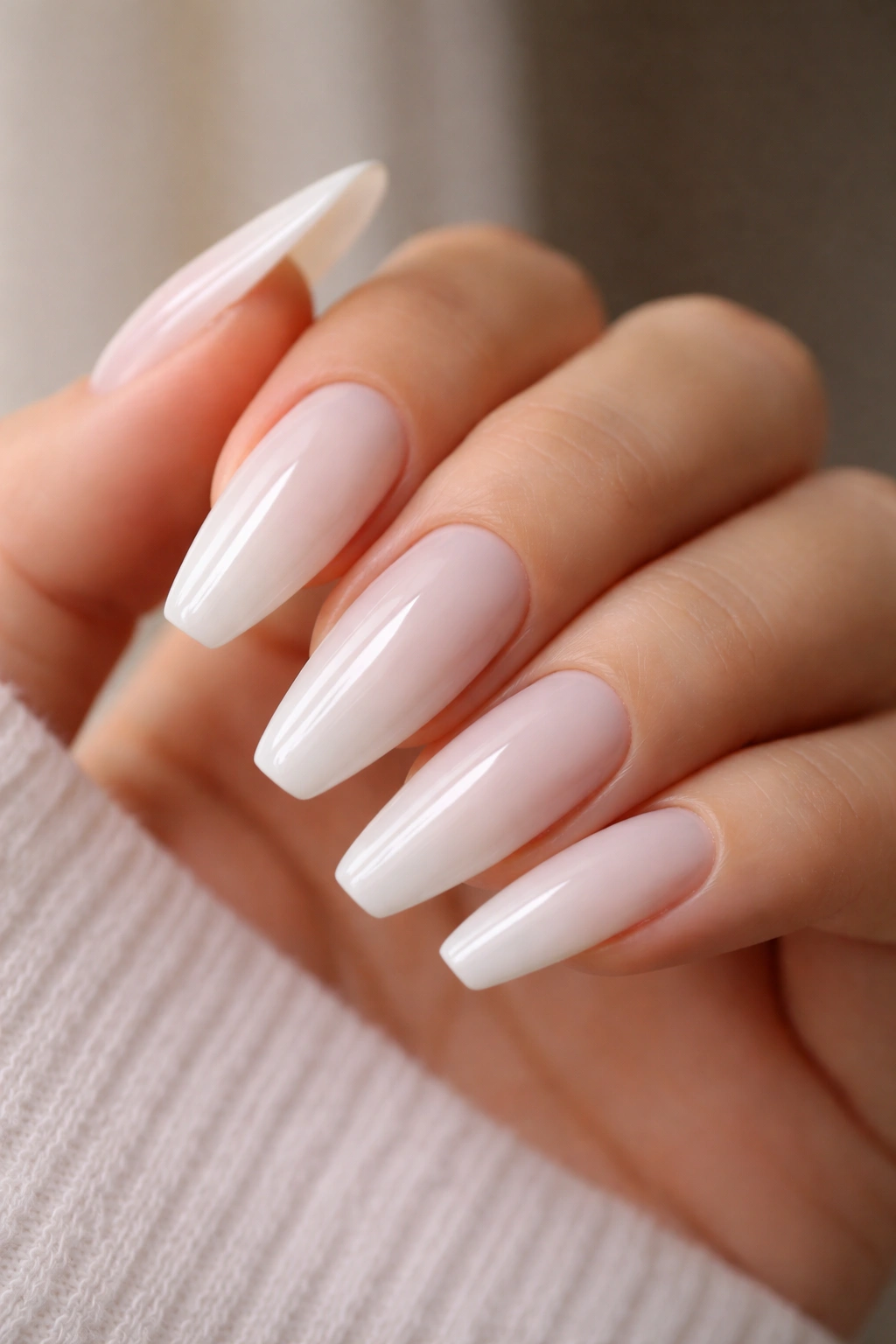
If your goal is white nails that still look neat after real life gets on them, milky finishes, strategic negative space, and a hard glossy seal are doing most of the work. The shape matters, yes, but the finish matters more. A chalky white ballerina set will show every flaw. A soft soap white, baby boomer fade, or micro French gives you much more breathing room.
I’d narrow it down this way. If you want the easiest upkeep, go with milky soap white, baby boomer fade, or white jelly. If you want sharper contrast, choose micro French, double French, or silver-pinstriped tips. If you like a little shine, pearl glaze and satin chrome keep white from looking flat.
Pick the version that matches your habits, not the one that only looks good for one photo. White can stay fresh. You just have to choose the kind of white that knows how to live on actual hands.