
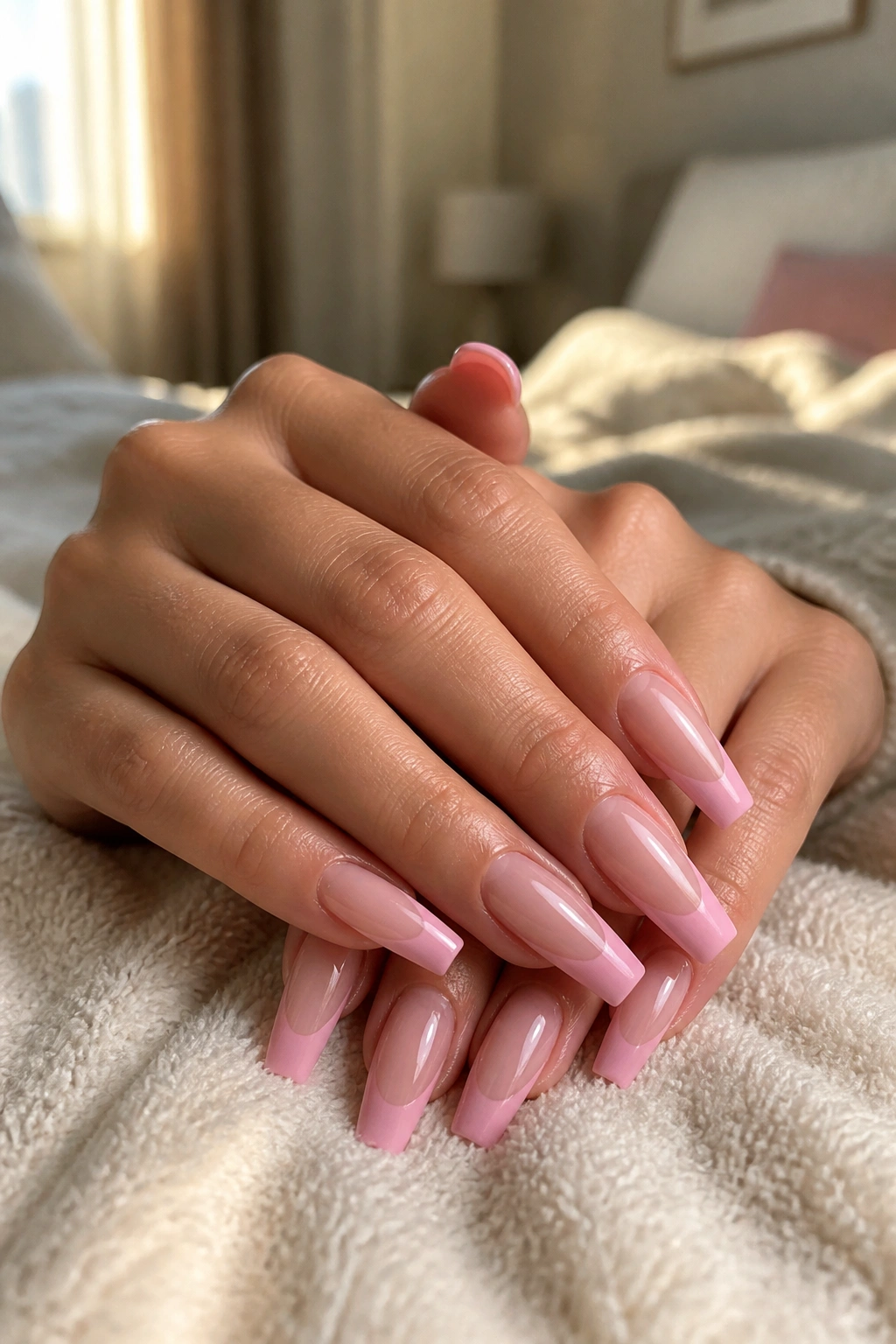
A pink French tip ballerina nail set can look polished or oddly bulky, and the gap between those two outcomes is smaller than most people think. Tip width, base color, and filing angle decide almost everything. When pink French tip ballerina nails hit the mark, they feel soft, neat, and a little flirty without sliding into toy-like territory.
That “sweet” look is harder to get than people admit. A white French tip is blunt. Pink is fussier. If the base is too beige, the tip can disappear. If the tip is too cool, deeper skin can read it as chalky. If the ballerina shape is too wide at the free edge, the whole set starts looking heavy, especially once you add length.
I keep coming back to one detail: the smile line. Nail techs know this already, but clients do not always realize how much that curved line under the tip changes the mood of the manicure. A shallow smile line feels modern and clean. A deeper one looks more delicate and dressy. On ballerina nails—also called coffin nails in plenty of salons—that curve matters even more because the squared-off end gives you a longer, flatter canvas.
And that is where the fun starts.
Why the Ballerina Shape Makes Pink French Tips Look Softer
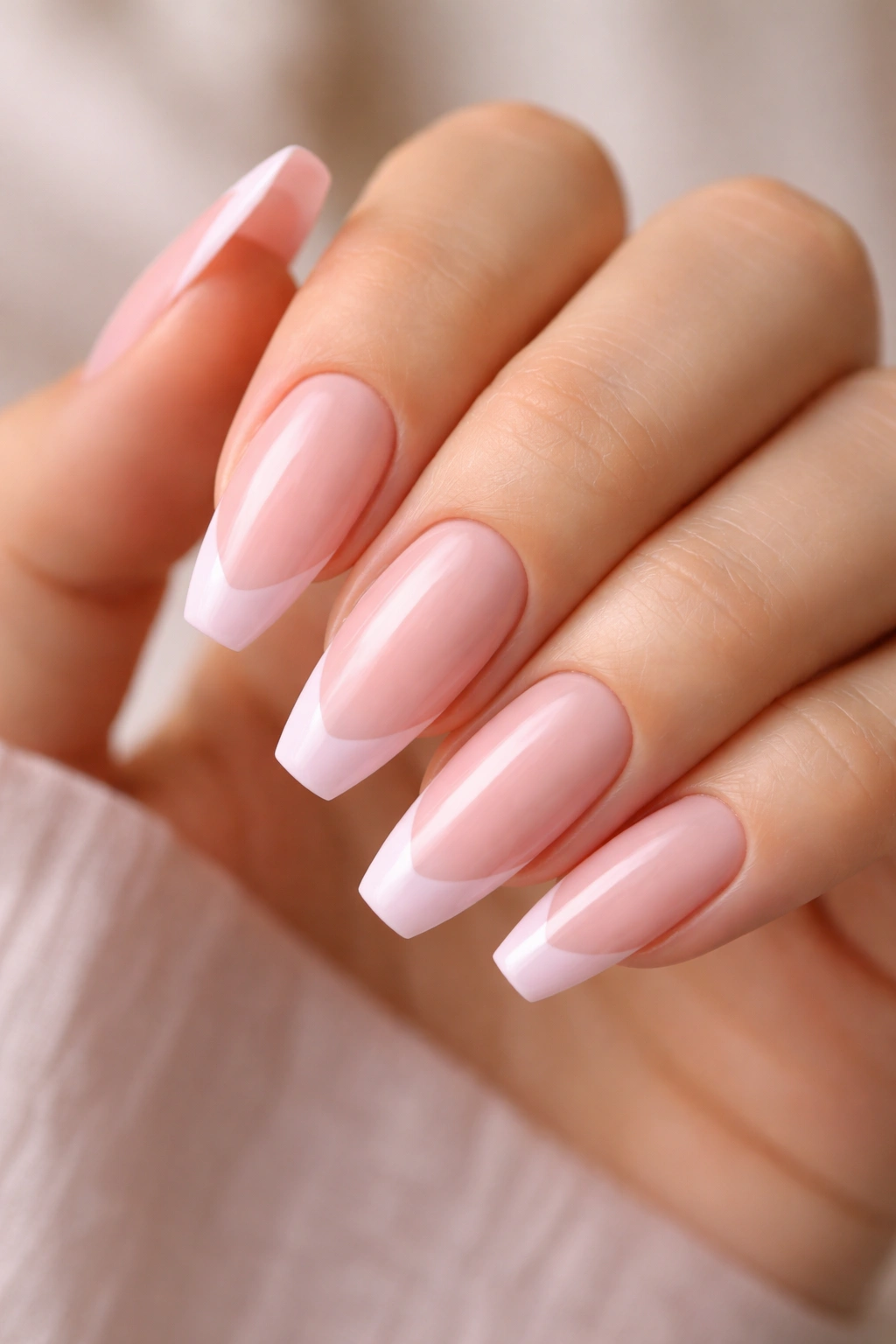
Ballerina nails have a built-in advantage. The sidewalls taper in, then the tip cuts off straight, which gives you length without the sharpness of a stiletto. That taper creates a cleaner frame for French tips, especially when the color is pink instead of bright white.
Short square nails can make a French tip look blunt. Almond nails make the same design look more romantic. Ballerina lands in the middle. You get a crisp edge for color blocking, but the narrowing sides keep the set from looking boxy.
Length matters, though. If the nails stop right at the fingertip, the shape can lose its ballerina look and read more like a softened square. On the other end, long extensions can make a sweet pink tip feel severe if the taper is too dramatic. The best sweet spot for most hands sits around 4 to 8 millimeters beyond the fingertip. Long enough to show the shape, short enough that the manicure still feels wearable when you’re typing, opening cans, or digging around in a tote bag.
One more thing. If you want the set to feel soft, ask for slightly softened corners rather than a hard, flat coffin edge. Tiny change. Big difference.
What Makes Pink French Tip Ballerina Nails Look Sweet, Not Harsh
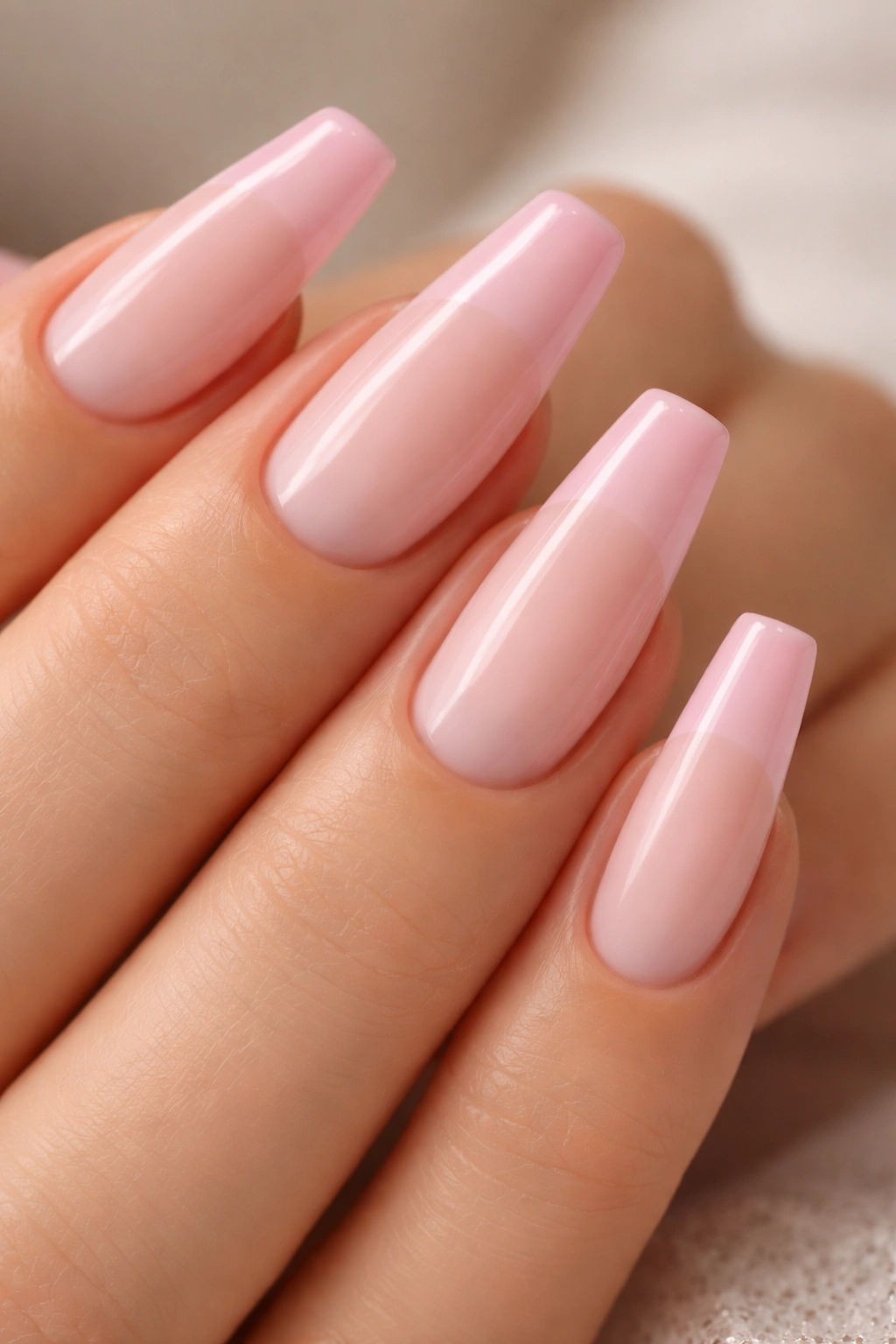
Color does half the work. Finish does the other half.
A sweet pink French manicure usually leans on one of three base styles:
Sheer jelly pink
This gives the nail a glassy, translucent look. It works well when you want the tip color to stand out and the whole set to feel fresh.
Milky blush pink
My personal favorite for most people. It blurs ridges, softens the natural nail line, and makes the tip look cleaner because the base has a cloudy, creamy cast.
Rosy nude pink
This is the safer salon choice if your skin has warmth or depth and you do not want the manicure to go pale. The pink still shows, but it sits closer to your natural tone.
Then there is the tip itself.
- Micro tips usually look best at 1 to 1.5 millimeters thick.
- Classic French tips sit closer to 2 to 3 millimeters.
- Bold tips can push to 4 millimeters, but only if the nail has enough length.
- High-gloss top coat makes pink read brighter and cleaner.
- Satin or pearl top coat makes the same shade feel softer, almost like ballet slippers or old silk ribbon.
If you’re booking a salon visit and want the tech to understand the assignment fast, ask for something close to this: medium ballerina shape, milky pink base, thin French tip, softened corners, high shine. That sentence alone will save you ten minutes of confused back-and-forth over the color rack.
1. Milky Blush Base With a Whisper-Thin Baby Pink Tip
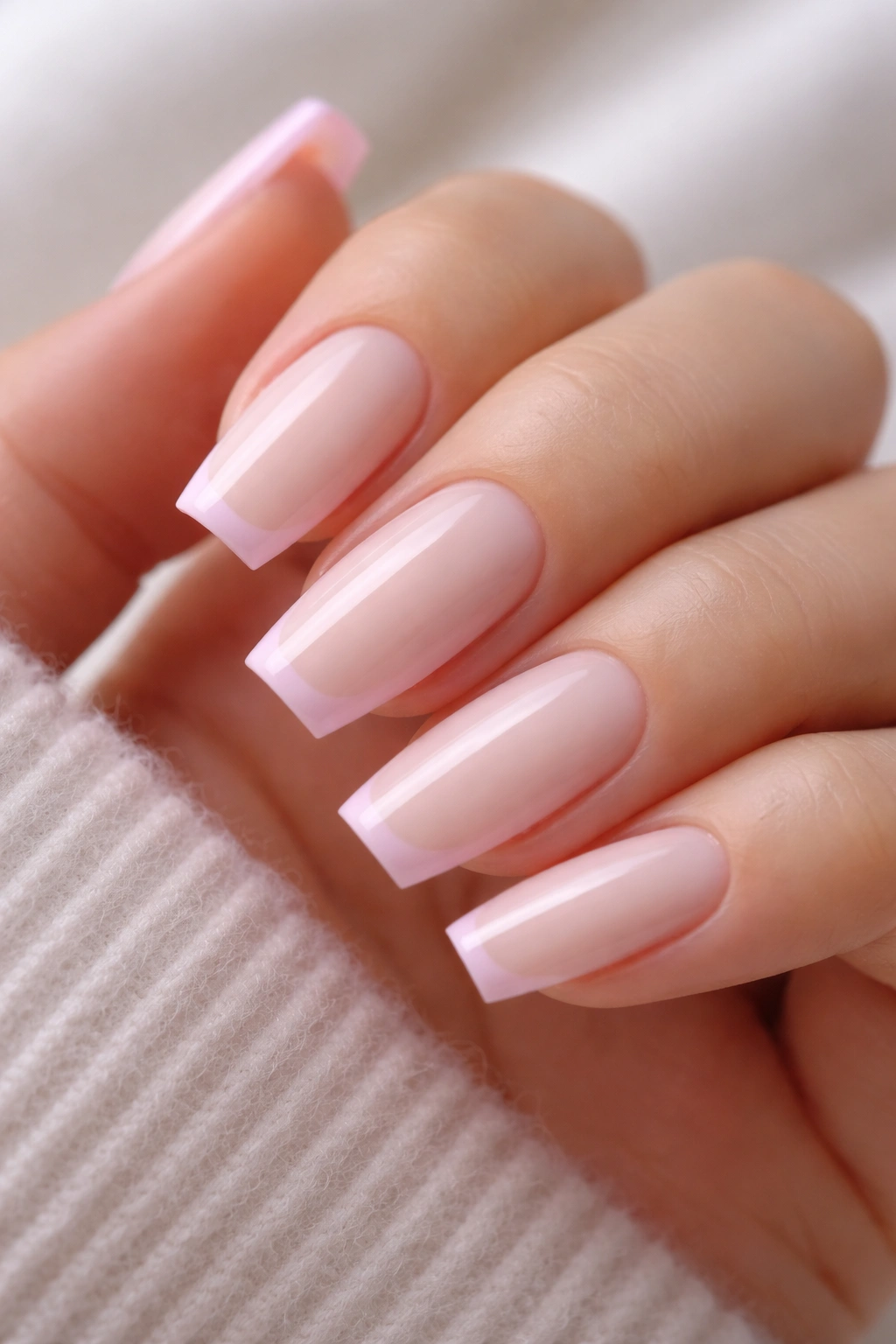
The quickest route to a sweet manicure is restraint. A milky blush base with a baby pink micro tip does not shout, and that is exactly why it looks so good on ballerina nails.
This style works because the base has a cloudy finish that hides the natural nail line without turning opaque. Then the tip adds a clean ribbon of pink—usually around 1 millimeter thick—that traces the squared edge without overwhelming it. On medium-length nails, the whole set feels crisp and soft at once.
Why this one lands so well
The milky base creates contrast without going stark. That matters on ballerina shapes, where the flat tip gives color more surface area to sit on. A bright white tip can look hard. A baby pink tip keeps the edge defined but gentler.
Best details to ask for
- A semi-sheer blush builder gel rather than a beige nude
- Tip thickness between 1 and 1.5 millimeters
- A high-gloss top coat to keep the design clean
- Slightly tapered sidewalls, not knife-sharp
If you want a first pink French set and do not know where to start, start here.
Small note: this one looks best when the cuticles are clean and the surface is smooth, because the design is so pared back that every little bump shows.
2. Jelly Pink Base With a Bubblegum Edge
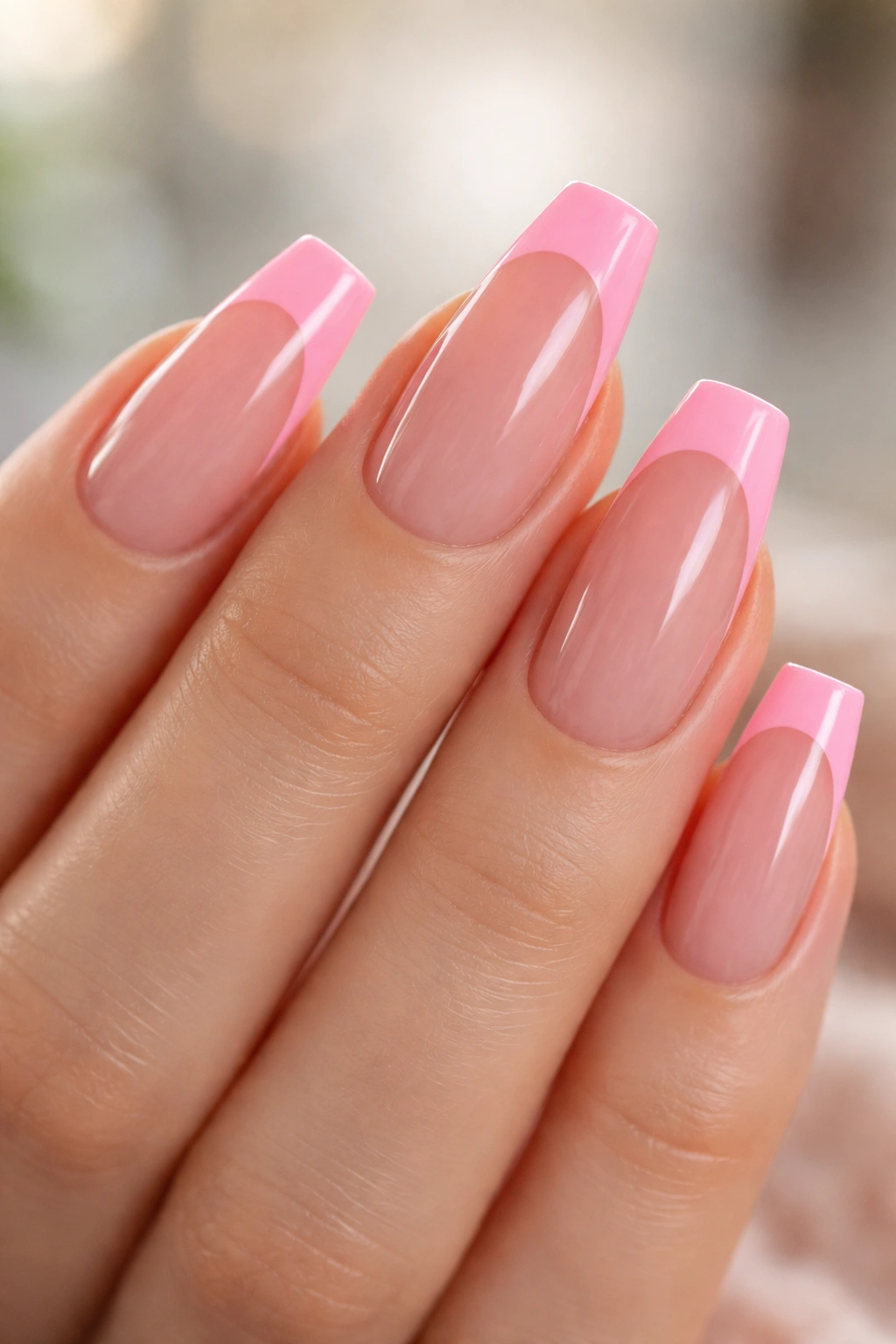
This version has more personality than the milky micro tip, but it still reads sweet instead of loud. The trick is the translucent base. A jelly pink layer lets light pass through the nail, so even a brighter bubblegum French edge keeps some softness.
I like this look on medium to longer ballerina nails, where the transparency can stretch down the nail plate and make the fingers look leaner. It has that glossy candy look—think pink hard-shell sweets, not frosted cupcake. There’s a difference, and you can see it.
The tip should stay sharp and opaque. If both the base and the tip are sheer, the design loses shape. Ask for a sheer jelly pink base in two thin coats and a fully opaque bubblegum tip around 2 millimeters wide. That gives you contrast.
There is one catch. Jelly bases show growth a little faster because the nail underneath is more visible. If your nails grow quickly, you may want a fill at around two weeks instead of stretching it longer.
This is the set I’d pick for a weekend trip, a birthday dinner, or any outfit with denim and white sneakers. It feels playful without trying too hard.
3. Classic Pink French Tip Ballerina Nails With a Deep Smile Line
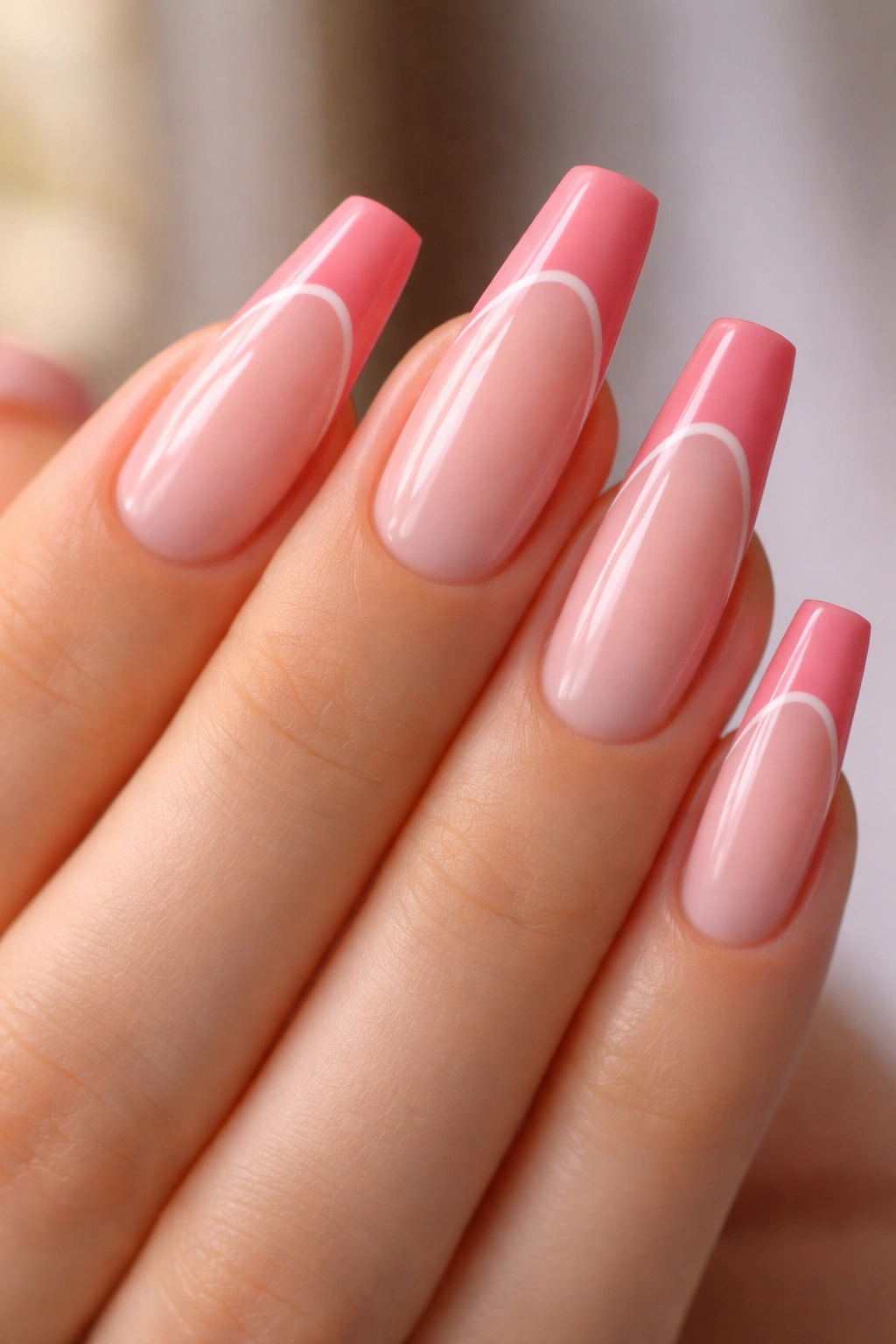
Why does a deep smile line change the whole feel of a French manicure?
Because it adds shape inside the shape. On classic pink French tip ballerina nails, that curved line tucked under the tip breaks up the long flat edge and gives the design more movement. Instead of one straight stripe across the top, you get a swoop that makes the nail look longer and more refined.
A deep smile line asks more from the nail tech. The curve has to be even on both sides, and the center cannot dip too low or the tip starts to look like a chevron. Done right, though, it is one of the nicest upgrades you can make to a basic French design. It feels dressier, cleaner, and a bit more intentional.
How to wear it well
Choose a soft rosy pink base and keep the tip in the medium-pink family, not neon. The deeper smile line already adds drama. You do not need louder color on top of that.
This is also one of the few sweet French styles that looks strong on longer extensions. A 3-millimeter tip with a pronounced smile line holds its own on a longer ballerina shape where a tiny micro tip might disappear. Bridal nails, engagement photos, dinner events, even office wear—it can do all of that without looking sleepy.
4. Pink-on-Pink Double French Lines
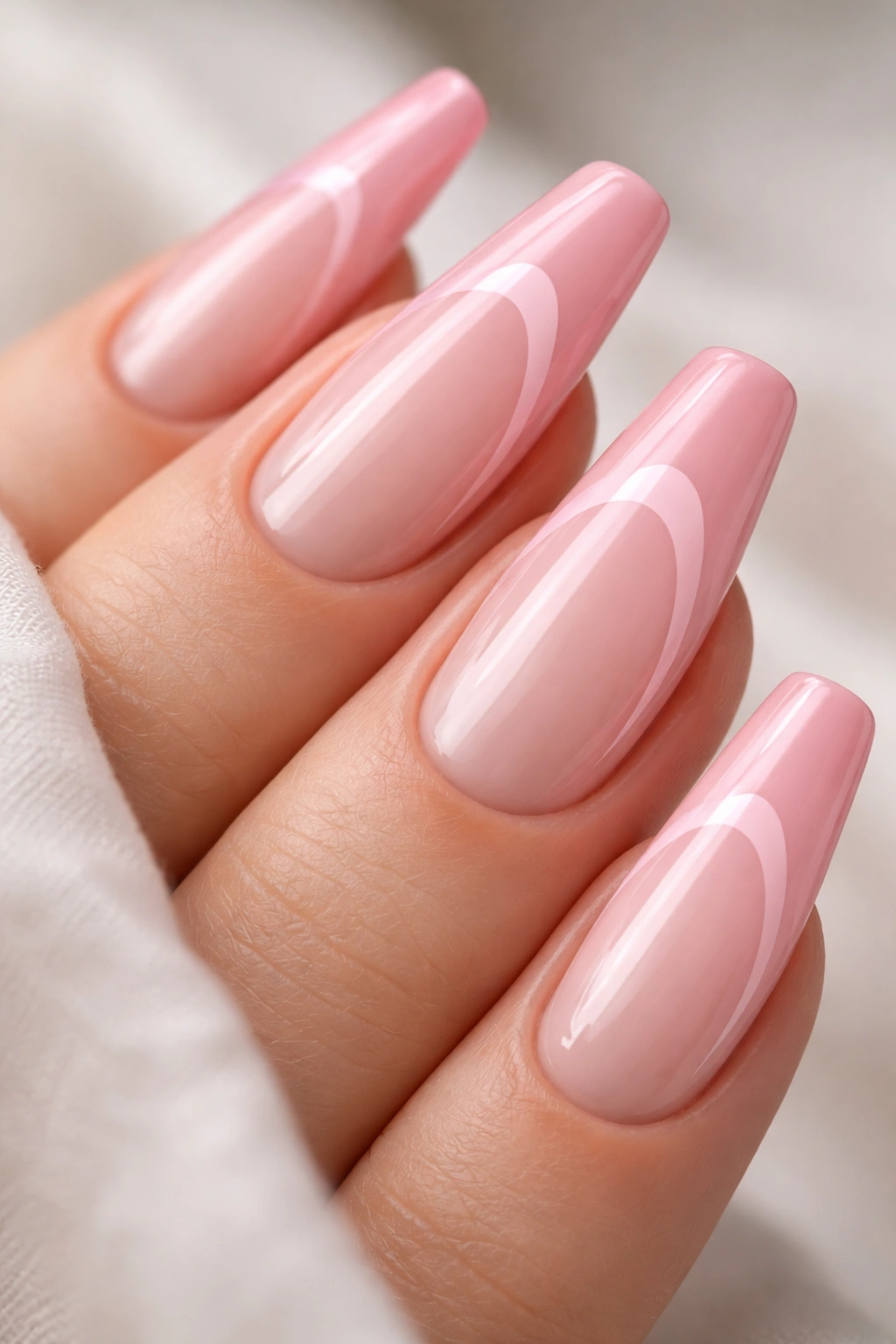
Picture a standard French tip, then add a second thin arc just below it in a lighter or deeper pink. That double-line detail gives the manicure a graphic edge without losing the soft color story.
It’s one of those designs that looks complicated from arm’s length but is easy to wear because the palette stays tight. You are not adding rhinestones, flowers, chrome powder, and two extra colors. You are using two pink lines, often one at 2 millimeters and one at 0.5 millimeter. Clean. Sharp. Enough.
A double French works best when the lines are not the same shade. If both pinks match too closely, the extra line gets muddy. My favorite version uses a milky rose base, a medium pink main tip, and a pale ballet pink echo line just beneath the smile line.
Quick details that make this design look polished:
- Keep the second line hair-thin
- Leave a sliver of negative space between the two arcs
- Skip extra art on more than one accent nail
- Use a glossy top coat, not matte
This is a strong choice if you like neat nail art but hate when a manicure starts to feel crowded.
5. Strawberry Milk Ombre French Tips
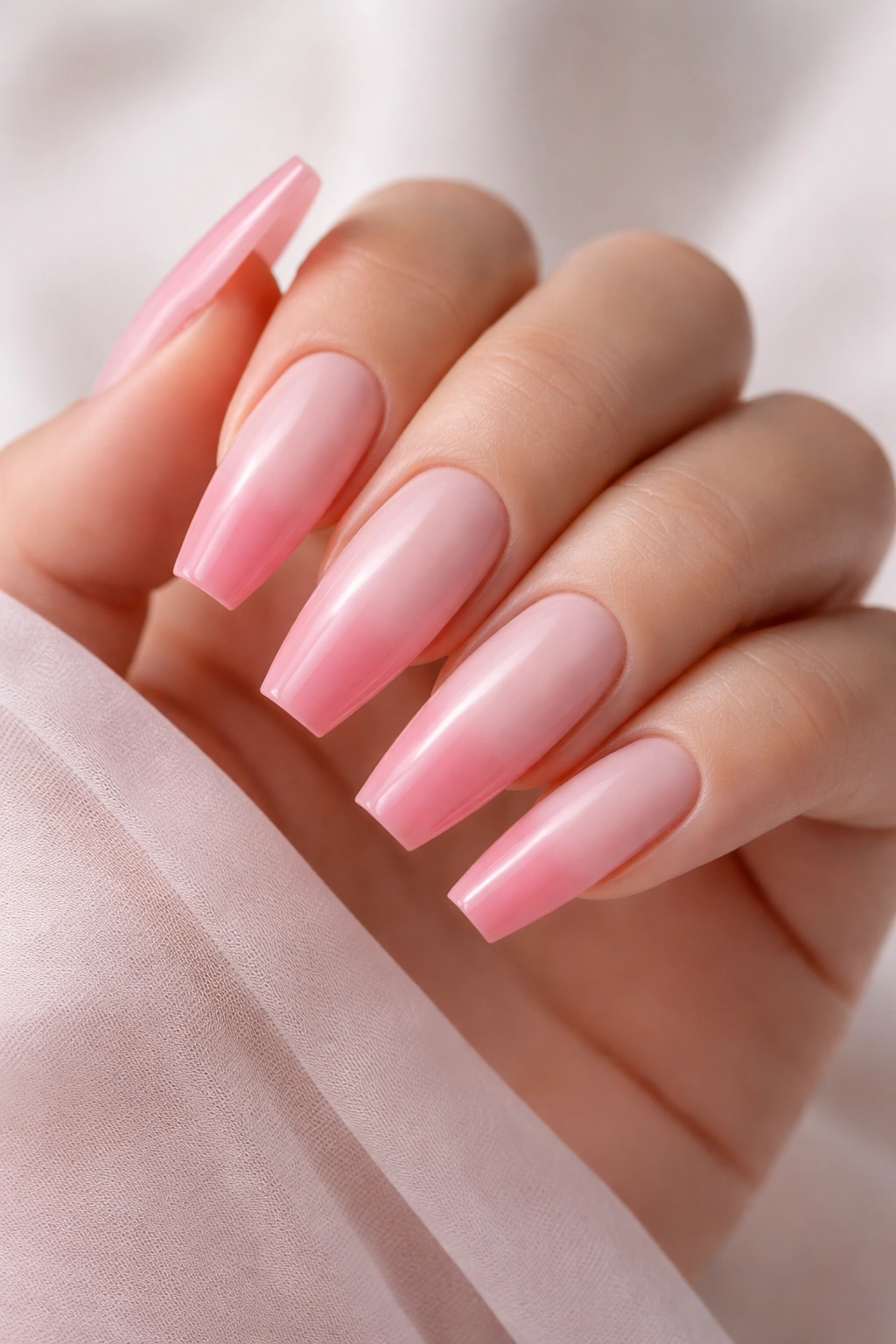
Some French manicures need a ruler. This one needs a soft hand.
A strawberry milk ombré French tip melts the pink upward from the edge instead of drawing a hard line across it. On ballerina nails, that fade can look surprisingly elegant because the tapered shape keeps the gradient from turning mushy. The nail still has structure. The color just drifts.
The base should be pale and creamy, like milk with a drop of strawberry syrup stirred in. Then the tip darkens by a shade or two, fading toward the center. If you want the design to stay sweet, keep the contrast close. Think one or two steps deeper than the base—not six. Once the tip goes fuchsia against a pale base, the softness is gone.
This set looks better in person than it does on a sample stick. A hard French line photographs clearly. Ombré looks softer to the eye, where you can catch the color change as you move your hands. It also hides grow-out a bit better, which makes it handy if you hate seeing that regrowth line near the cuticle after ten days.
And yes, it takes longer in the chair. A sponge fade or airbrushed fade needs patience. But when it’s done cleanly, the effect is almost creamy, like the pink is suspended inside the nail rather than painted on top. I have a hard time saying no to that one.
6. Soft Pearl Pink Tips With a Satin Sheen
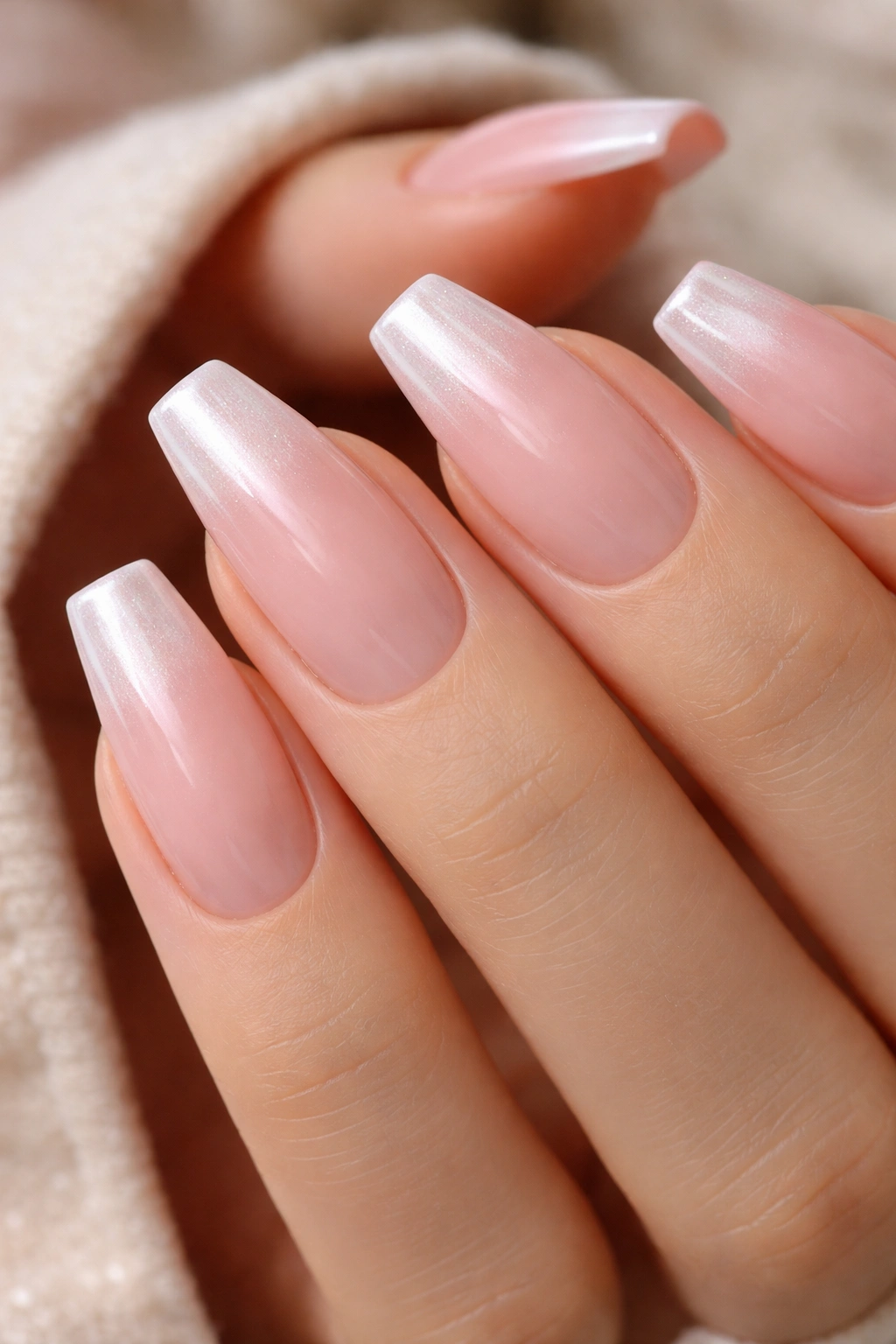
Unlike a glassy top coat, a satin pearl finish turns pink French tips into something more powdery and soft. Not matte. Not glossy. Somewhere in between, with a gentle pearl cast that shifts when your hands move.
This is the manicure I recommend when someone wants sweet nails but does not want them to read sugary. The pearl finish gives the set a grown-up feel. It also works well with cool pinks, where plain gloss can sometimes make the shade look a little plastic.
Who does it suit best? People who like delicate details and do not mind a touch more upkeep. Satin finishes can show wear faster on the free edge than high-shine top coat, especially if you work with your hands.
Here’s how I’d order it at the salon:
- Medium ballerina shape
- Sheer pink base with one layer of pearl powder
- Opaque French tip in cool ballet pink
- Satin top coat or buffed pearl finish
One warning, though—the pearl should stay subtle. If the powder is packed on too heavily, the manicure starts leaning chrome, and that changes the mood fast.
7. Baby Pink Micro French on a Shorter Ballerina Length
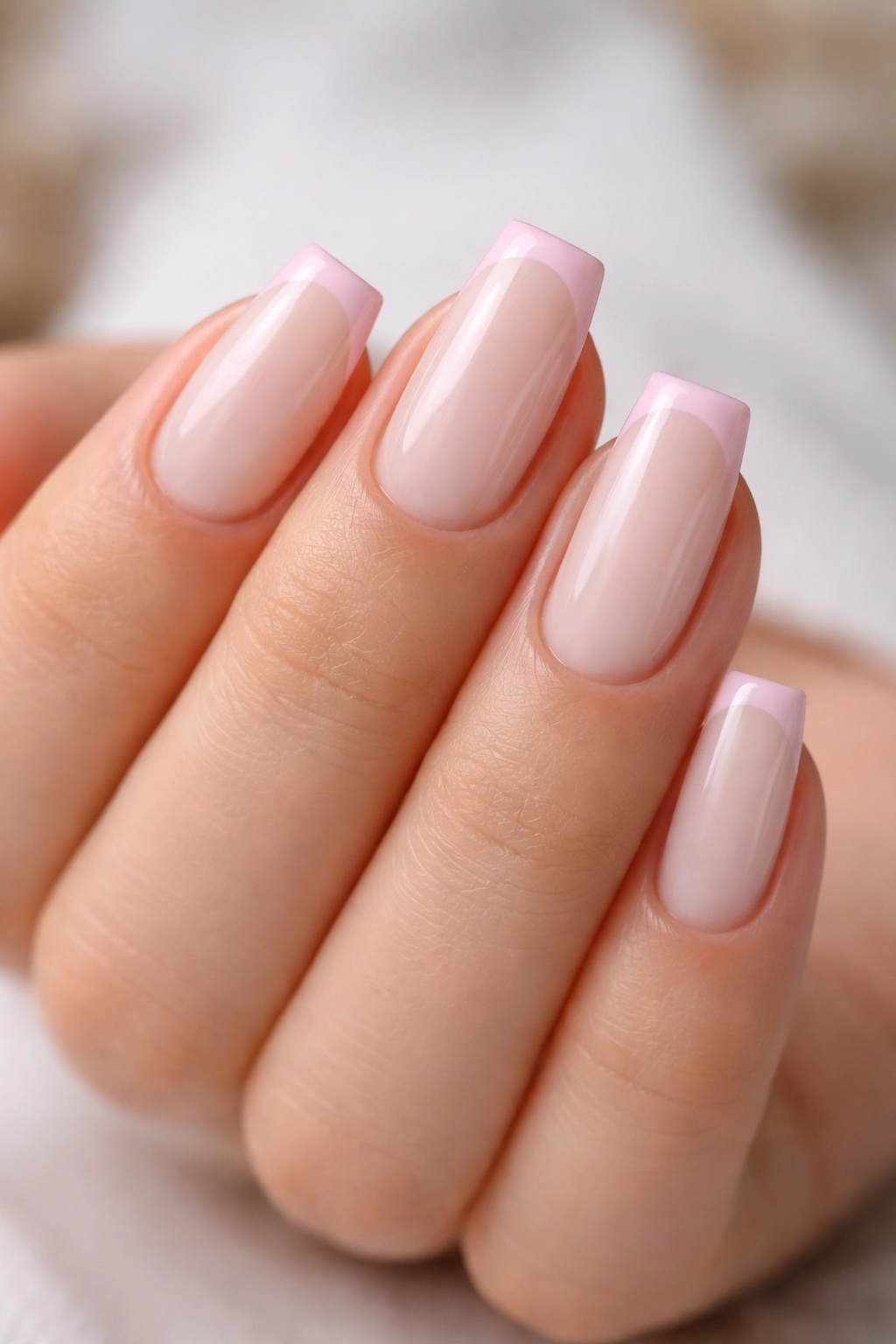
Not everyone wants long coffin nails. Fair enough. A shorter ballerina shape with a baby pink micro French can still look sweet, clean, and intentional if the side taper is there.
The key is proportion. Once the nail gets shorter, the tip has to shrink too. A 1-millimeter line is usually enough. Push past 2 millimeters on a short nail and the French starts swallowing the nail plate, which defeats the point of the design.
What makes this shorter set work
The baby pink tip acts almost like an outline rather than a full block of color. That lets the ballerina shape stay visible even when the free edge is modest. If the tech files the sidewalls too straight, ask for a touch more taper.
Good add-ons for this style
- One tiny crystal on the ring finger
- A milky base instead of a sheer clear pink
- Extra cuticle cleanup so the set looks crisp
- Builder gel overlay for strength on natural nails
This is one of the best office-friendly pink French ideas in the bunch. You can button a shirt, use your phone, wash your hair, open a soda can—small things, but they matter—without feeling like you’re carrying around decorative spoons on your fingertips.
8. Hot Pink Outline French Tip Ballerina Nails
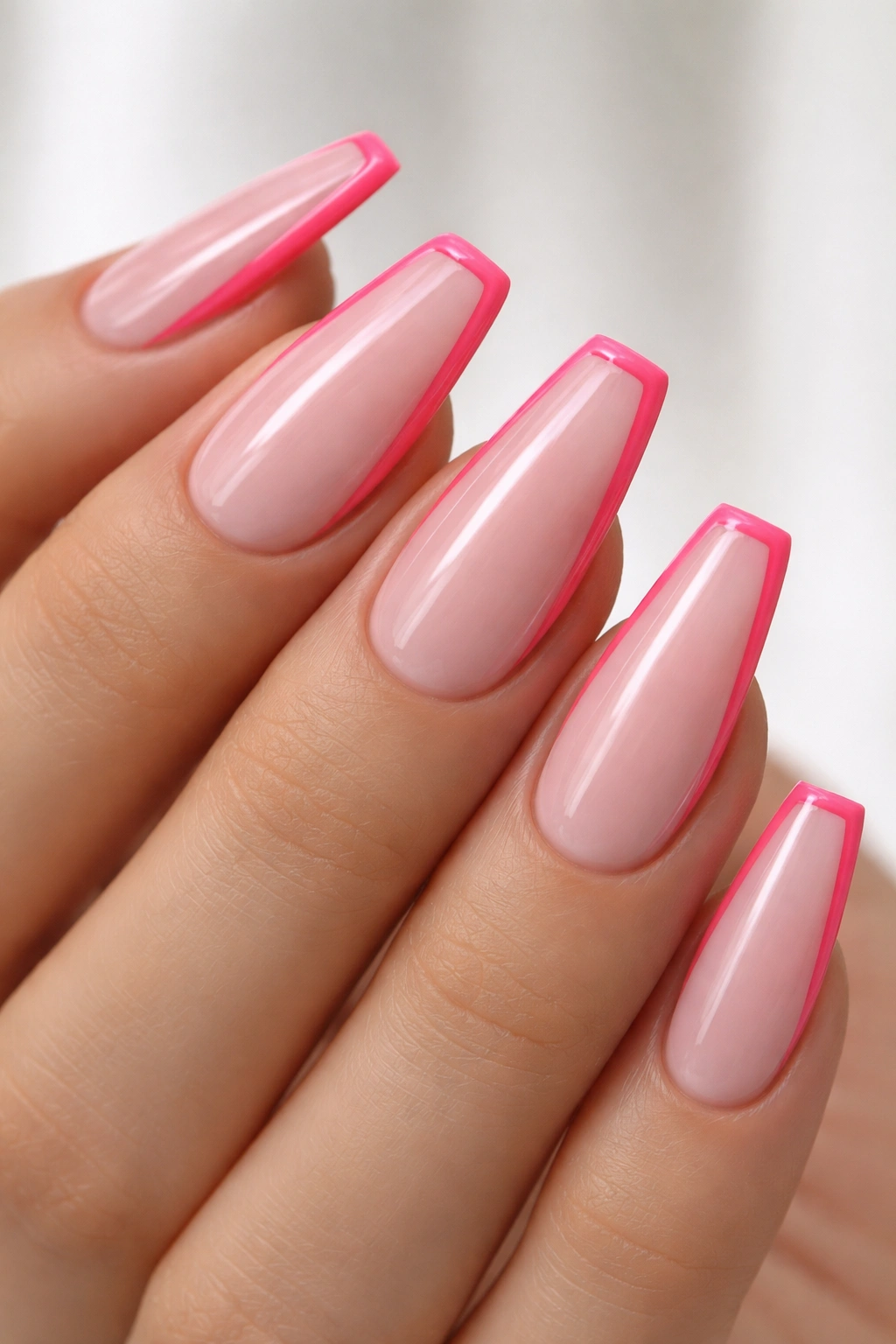
A full hot pink French tip can turn bold fast. An outline French is smarter.
Instead of filling the entire tip, the color traces the perimeter of the ballerina edge in a fine hot pink border, leaving the center pale or sheer. That empty space keeps the manicure airy, while the stronger pink gives it energy.
This style suits medium and long nails because the outline needs room to read. On short nails, it can look accidental, like the color missed the middle. On a longer ballerina shape, though, it feels graphic and fresh. I like it with a glossy translucent base and a slightly deeper pink around the edges—something between watermelon and raspberry rather than neon marker pink.
The nicest version uses line variation. Make the top edge a touch thicker than the side lines, maybe 1.5 millimeters across the free edge and 0.5 millimeter down the sides. That keeps the shape sharp without boxing it in.
You do need a steady hand for this one. At-home attempts can wobble, and outline designs show every uneven stroke. In a salon, ask for a liner brush finish rather than stickers or pre-made guides. It looks cleaner.
There is a little attitude here, which I enjoy. Still sweet. Not timid.
9. Angled Side French in Dusty Rose
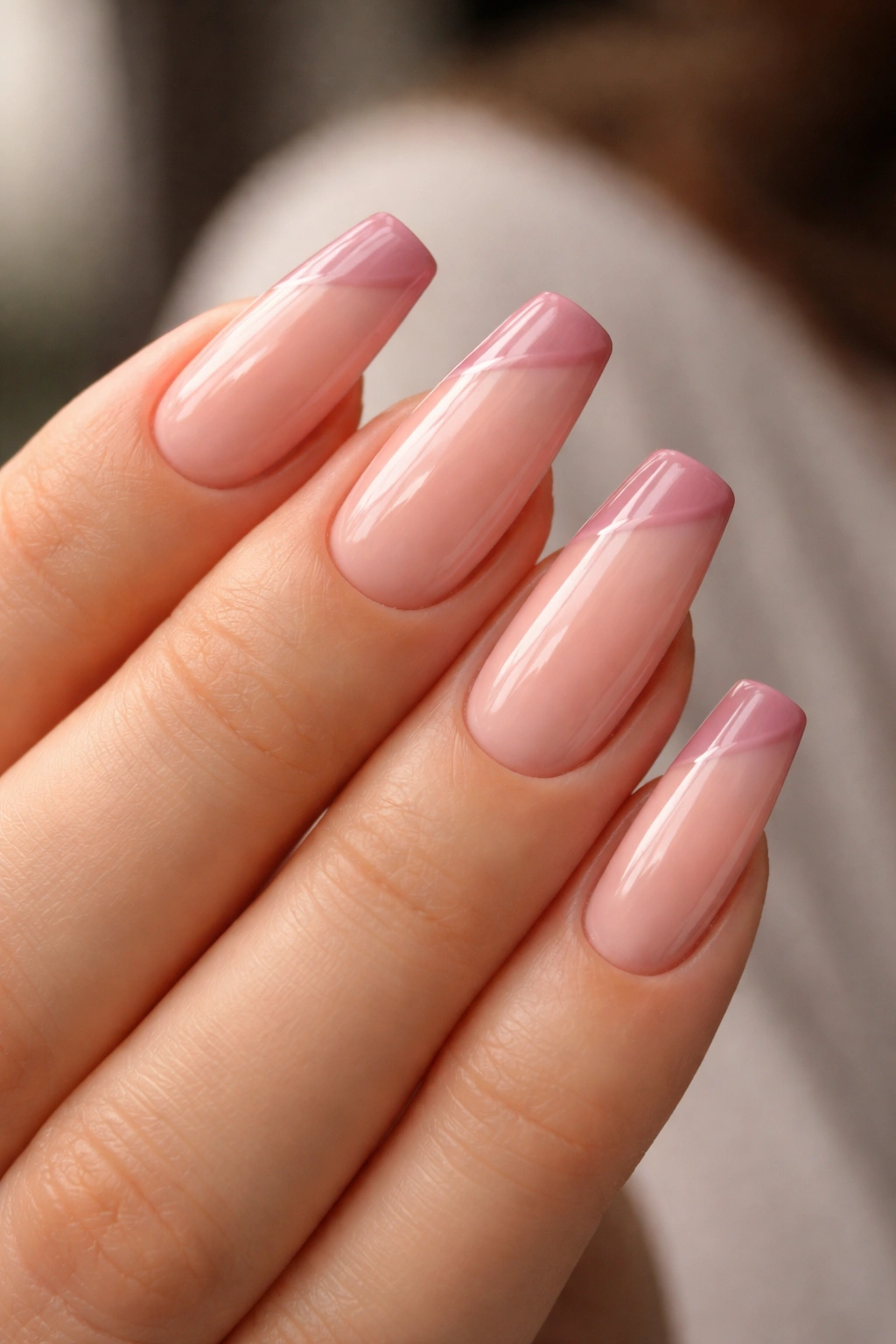
French tips do not have to run straight across.
An angled side French starts at one sidewall, sweeps diagonally across the tip, and lands lower on the opposite side. On ballerina nails, that slant can make the fingers look longer because the eye follows the diagonal line rather than the width of the tip. Dusty rose keeps the design soft, where a brighter pink might feel too sporty.
This works best with medium opacity. If the pink is too pale, the angle disappears. If it is too dark, the set starts reading color-blocked instead of French. Dusty rose sits in a useful middle space.
How to keep the angle elegant
Pick one direction and keep it consistent across all ten nails. Mixed directions can look busy unless the art is part of a bigger abstract set. Also, keep the diagonal gentle. A sharp slash across the nail can feel harsh, which fights the sweet mood.
I like this design when someone wants something different but not fussy. It has enough movement to stand out in photos and enough structure to look tidy from close up. Add a glossy rosy nude base, skip the crystals, and you have a manicure that feels fresh without needing an entire speech to explain it.
10. Glitter-Dipped Pink French Tips
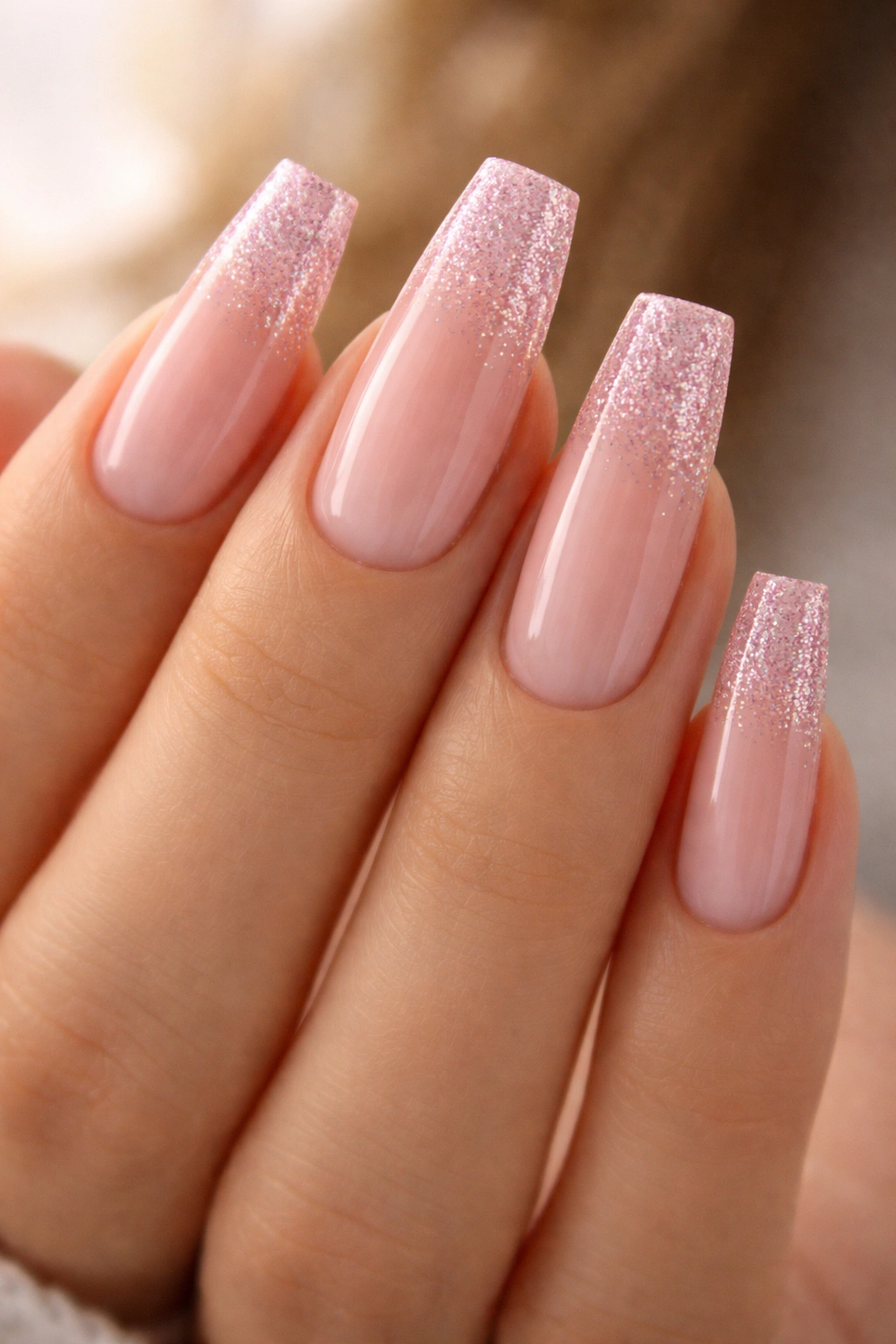
There is a version of glitter French that looks cheap. This is not that version.
A glitter-dipped pink French tip uses fine shimmer suspended in pink gel rather than chunky craft-store sparkle stacked over the edge. The difference matters. Fine glitter catches light in a smoother way and keeps the tip from looking gritty or heavy.
The nicest take on this style starts with a soft pink base and a French edge made from sheer rosy glitter gel, packed more densely at the free edge and fading slightly downward. You still get a French shape, but the finish has more texture and shine than plain cream color.
Use it when you want sweetness with a little ceremony. Parties, dinners, weddings, any excuse to hold a glass by the stem and admire your own hand for a second longer than usual.
Key choices that keep the set clean:
- Use micro-fine glitter, not chunky hex pieces
- Keep the tip no thicker than 3 millimeters
- Limit extra gems to one or two nails at most
- Seal well with top coat so the surface stays smooth
The downside is obvious. Glitter grow-out is more visible, and repairs can be annoying if one tip chips. Still worth it if you want sparkle without full-blown disco nails.
11. Tiny Heart Accent French Tips
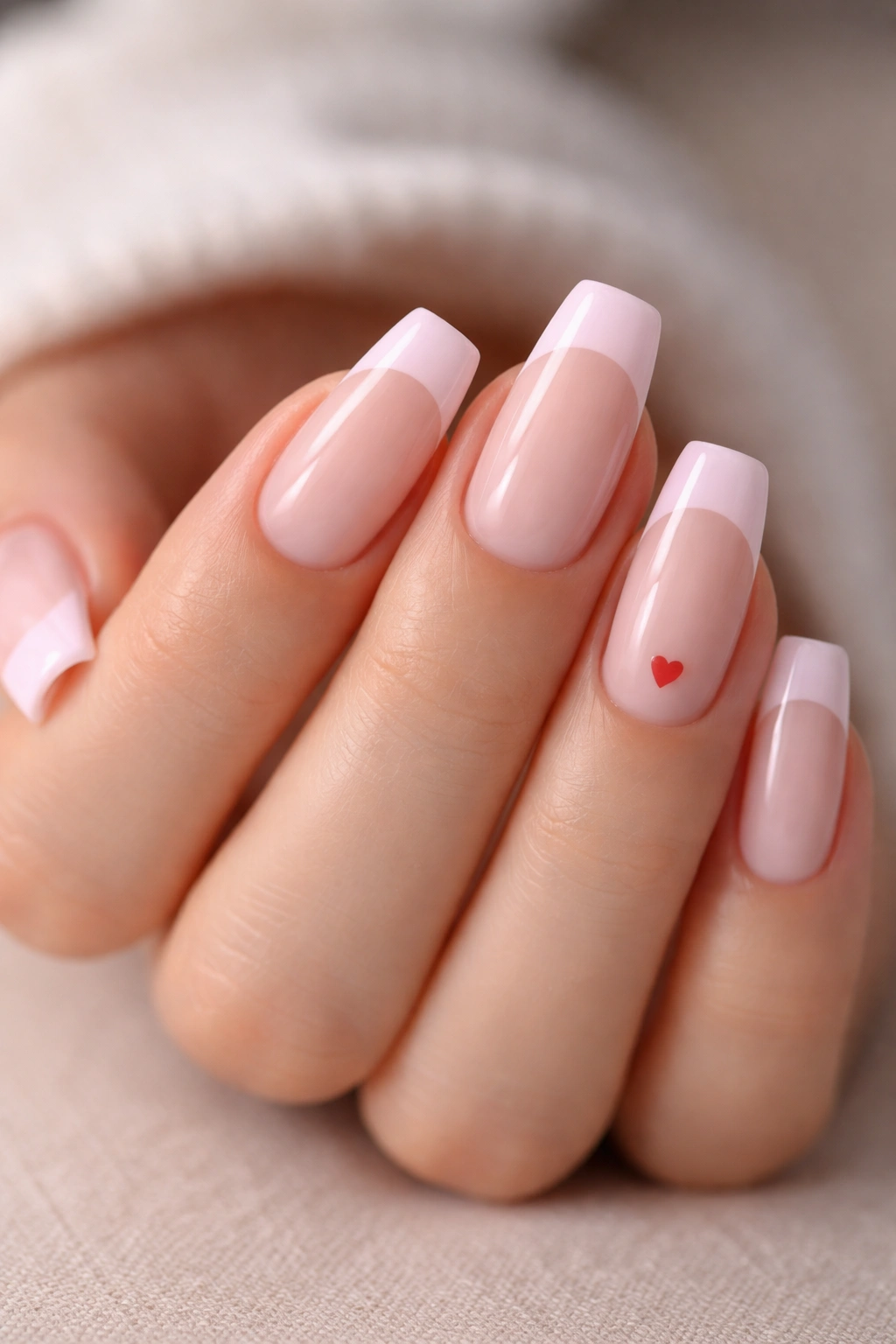
This one can go wrong fast, which is part of why I like it when it is done well.
A sweet pink French ballerina set with one tiny heart accent—one, not five—hits a playful note without making the manicure look juvenile. Placement matters more than people think. A heart at the center of every nail is too much. A heart tucked near the smile line on the ring finger or pinky feels lighter.
The French tip itself should stay classic. Use a sheer or milky base, then paint a thin baby pink or rose pink tip. After that, add a heart no bigger than 2 or 3 millimeters on one accent nail. You can outline it in white, fill it in with deeper pink, or leave it as a negative-space shape with a tiny border.
There is a reason this works. The ballerina shape already has strong geometry. A tiny curved symbol softens it. That little contrast is enough.
I would skip rhinestones here. The heart is the point. If you stack crystals, bows, chrome, and hearts onto the same set, the sweet mood disappears and the manicure starts competing with itself. Keep it edited. It pays off.
12. Chrome-Edged Pink French Tip Ballerina Nails
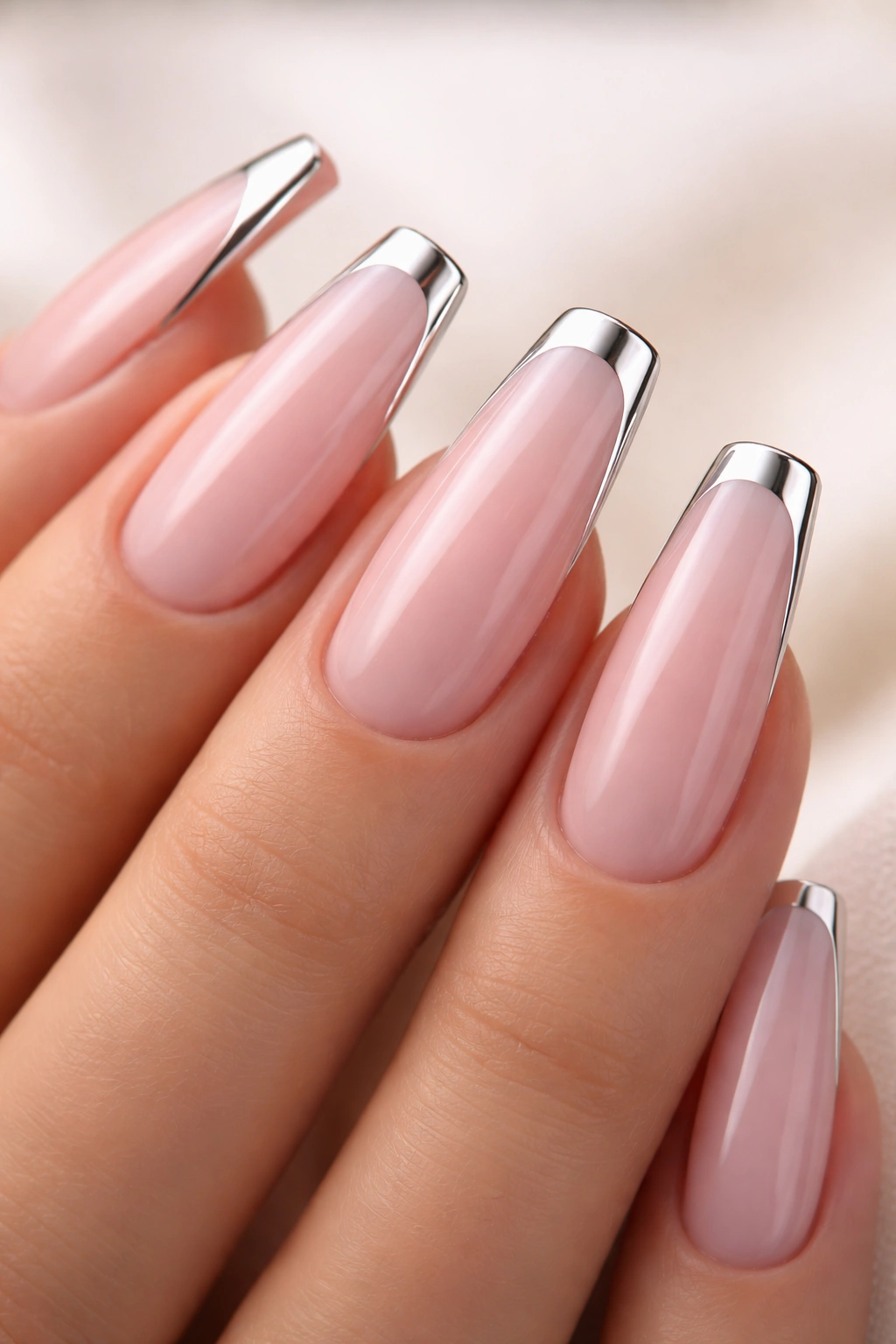
Chrome does not have to mean mirror-finish silver talons. On chrome-edged pink French tip ballerina nails, the metal effect can stay whisper-light—just a thin reflective border skimming the pink edge.
That tiny line changes the set in a smart way. It sharpens the tip, catches light at the corners, and makes even a pale French manicure look more finished. You still get softness from the pink, but the chrome edge adds definition, the way a narrow frame makes watercolor art look cleaner.
The nicest version pairs a milky rose base, a soft pink French tip, and a chrome line around 0.5 millimeter wide along the top edge only. Running chrome all the way down the sides can make the design too hard unless the nails are long and narrow.
This is one of those manicures that feels dressier than it is. From far away, people clock a clean pink French. Up close, they catch the metallic edge and realize there is more going on. I like that kind of design—quiet at first glance, sharper on the second look.
Only issue: chrome edges show chips faster than plain cream polish. If you’re rough on your hands, go with gel and plan on top-coat refresh sooner rather than later.
13. Rose Quartz Marble French Tips
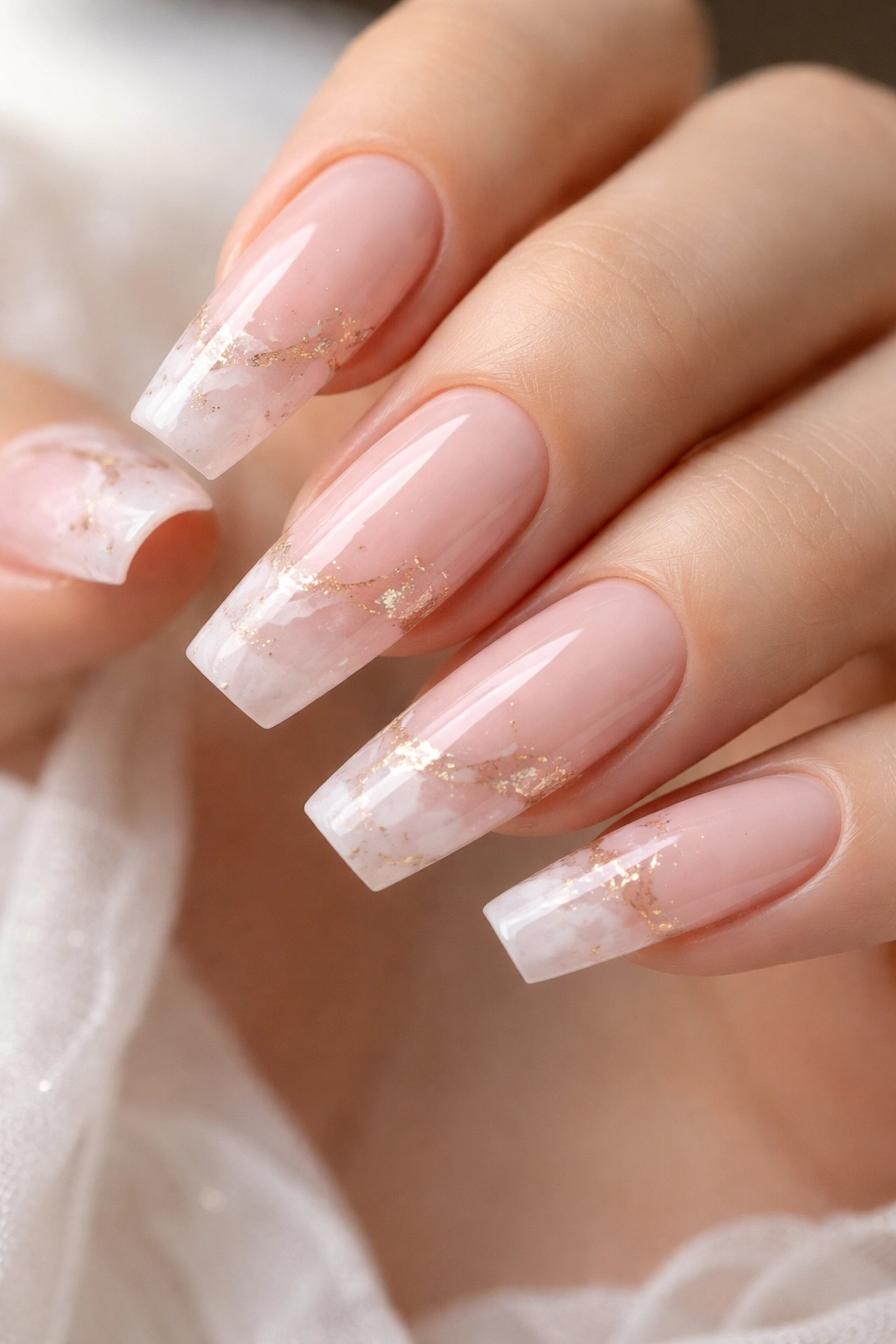
If you want nail art that still reads soft, marble is a better move than people think. Rose quartz French tips use wispy white and pink veining inside the French edge, so the art stays contained rather than taking over the full nail.
A good rose quartz tip does not look busy. The lines should be thin, irregular, and slightly blurred, almost like faint cracks inside polished stone. On ballerina nails, that little panel of marbling across the top edge looks polished because the squared tip gives the pattern room to show.
What to ask for
Request a sheer rosy base, then a French tip built in translucent pink with a few white and deeper rose veins pulled through it. A touch of gold foil can work, but use it sparingly—tiny flecks, not strips.
Why it still feels sweet
The color family stays gentle. You are adding texture, not contrast. The eye sees pink first and detail second.
Good rose quartz nail art needs a tech who can keep their hand loose. If the veins look too uniform, the stone effect disappears and the tip starts looking scribbled. When it’s done right, though, it has that polished-mineral feel without losing the softness that makes pink French tips appealing in the first place.
14. 3D Bow Accent Pink French Tips
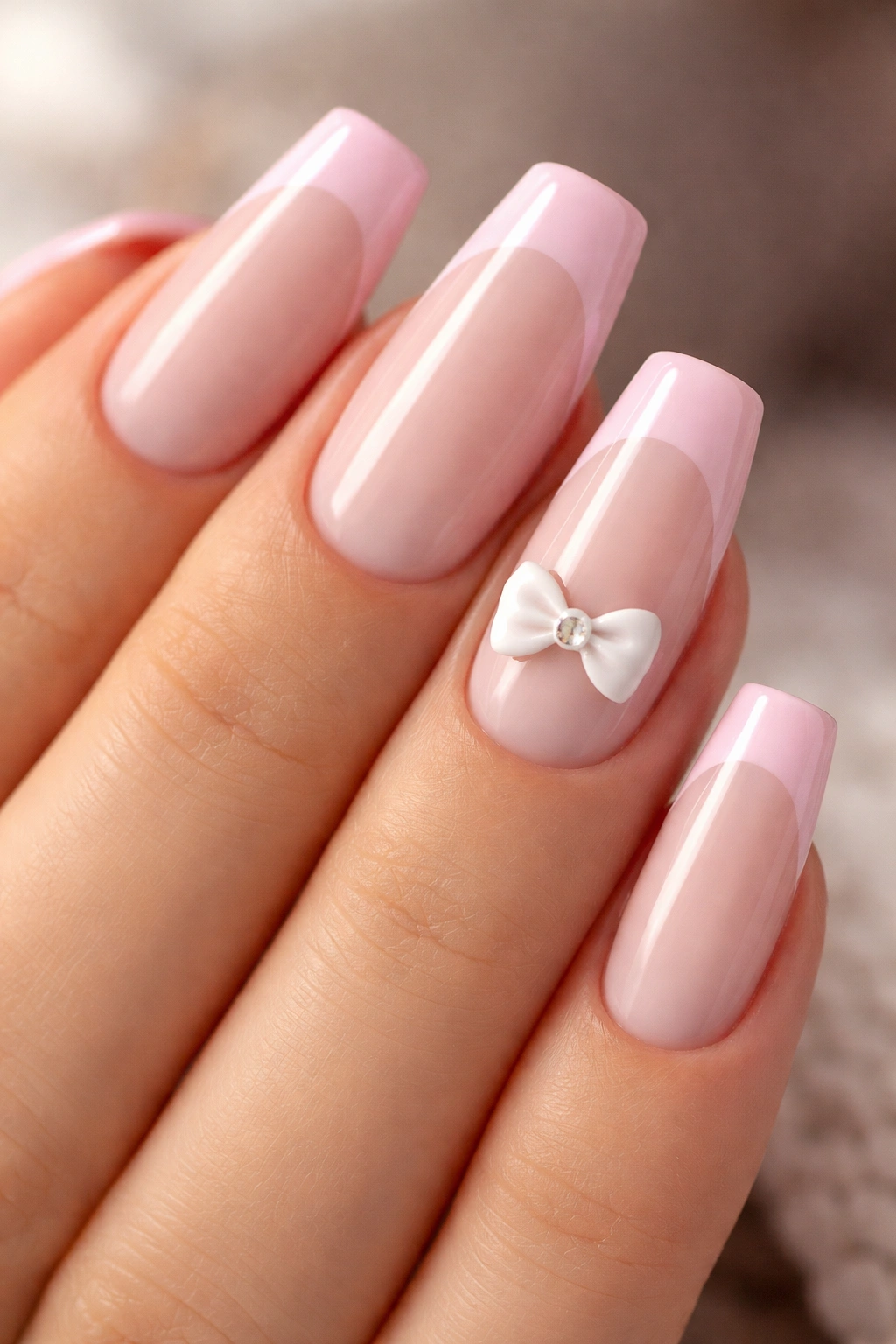
Bows are cute. Too many bows are a costume.
A pink French ballerina set with one small 3D bow accent can look charming, especially if the rest of the manicure stays restrained. I prefer this on medium-length nails with a milky base and a classic baby pink French tip. Then add a single bow on one ring finger or one thumb, placed near the cuticle or sitting low on the nail plate so it does not crowd the tip.
The bow should be small enough that it doesn’t snag every knit sweater you own. That is not a joke. Oversized charms look fun for photos and then spend the next week hooking onto your hair, cardigan, seatbelt, and probably your own bedsheets. Keep it flat-backed and modest.
There is also a texture question. If you add a bow, skip extra pearl clusters, chunky glitter, and heavy chrome. The 3D element already changes the silhouette of the nail. Give it room.
This design leans a little more playful than the others here, but the French base keeps it grounded. Sweet, yes. Sugar overload, no.
15. Floral Pink French Tips With Tiny Petal Art
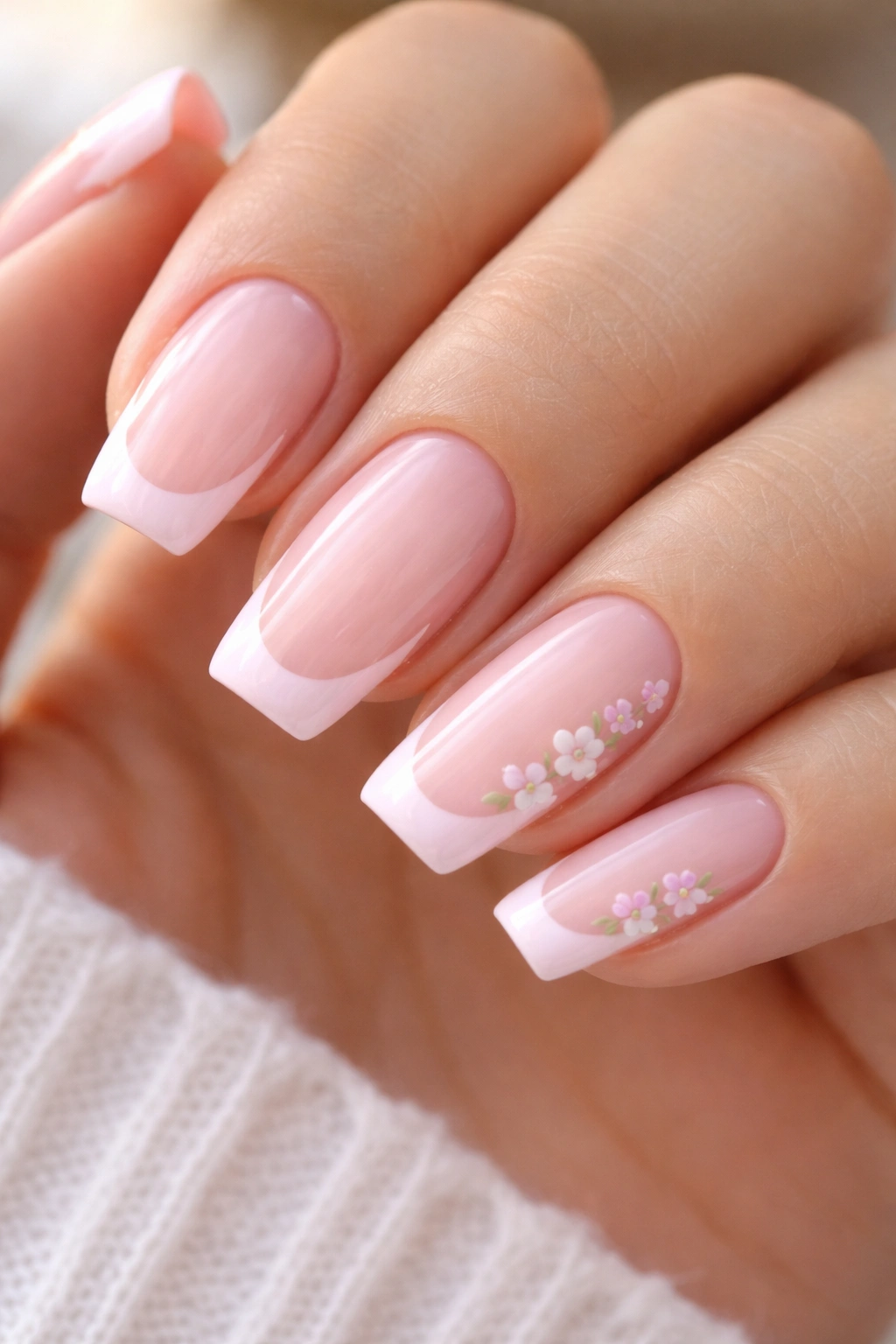
Tiny floral art on a pink French tip can be lovely when the flowers are treated like detail, not wallpaper. Think two or three miniature petals on one or two nails, not a garden across all ten.
What makes this design sing on ballerina nails is the contrast between the straight tip and the curved little petals. A slim pink French edge gives the flowers structure. Without that frame, floral art can drift and start looking random.
I like daisies less here than abstract petals. Tiny five-dot flowers can read a bit juvenile unless the rest of the set is stripped back. Hand-painted petals in soft rose, pale blush, and a dot of white look fresher. Place them near one corner of the nail or let them peek from the smile line so the French tip still leads the design.
You can go two ways with the base: sheer jelly for a lighter, fresher look, or milky pink for a softer one. I’d choose milky if you want the flowers to feel romantic and jelly if you want them to feel airy.
This style takes patience and a fine brush. It also takes restraint, which matters more. Tiny floral art is sweetest when it looks like someone noticed it up close—not when the whole room notices it from ten feet away.
How to Keep Pink French Tips Crisp Between Appointments
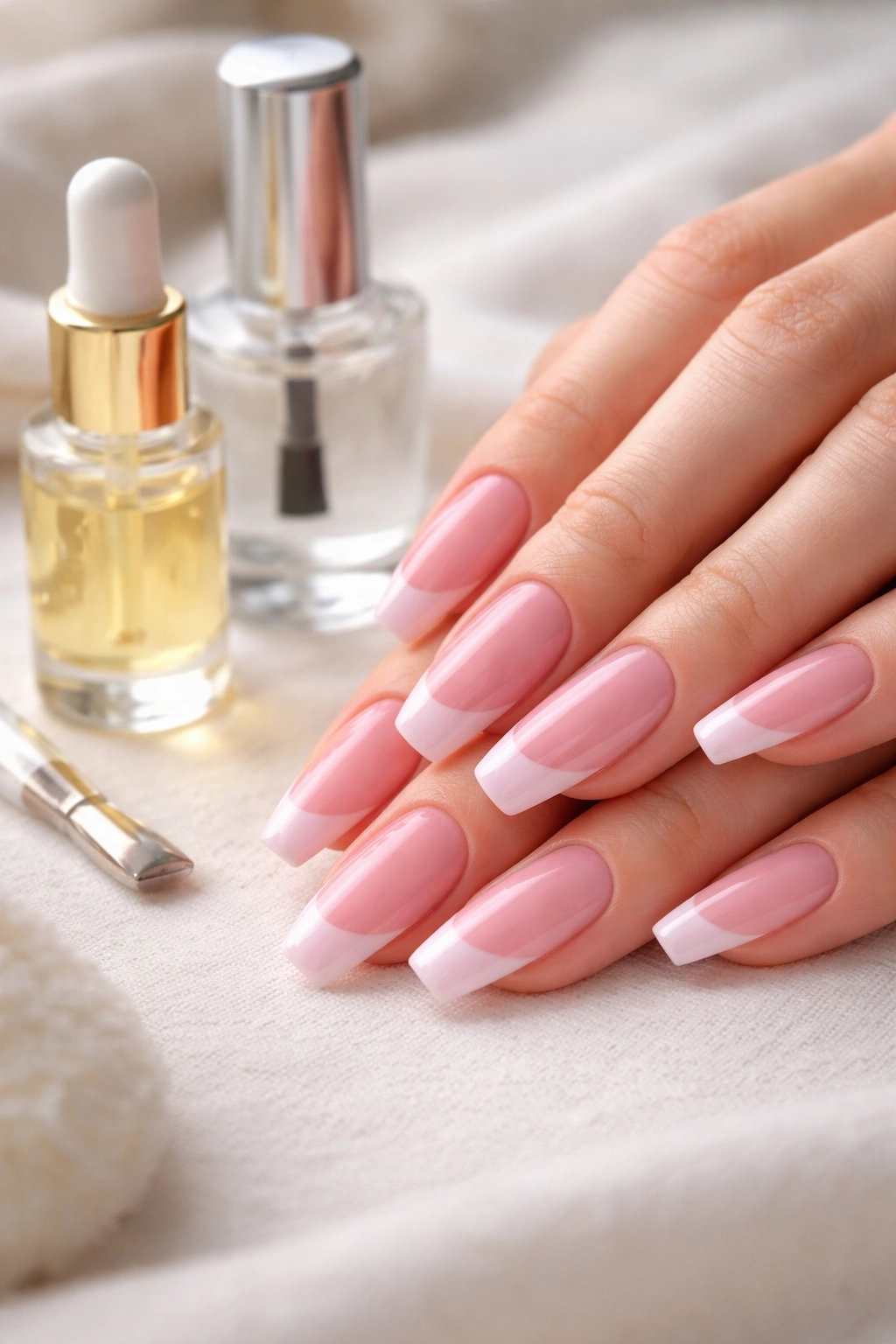
The first enemy is not chipping. It is dullness.
Pink French manicures lose their charm when the top coat goes cloudy, the cuticles get ragged, and the underside of the free edge starts picking up makeup, dye, or whatever else your day throws at it. A drop of cuticle oil twice a day does more for the finished look than most people expect. Jojoba-based oil sinks in fast and keeps the skin around the nail from looking dry and dusty.
Then there is cleaning. Use a soft nail brush and a little soap under the free edge. Do not attack the underside with anything sharp. That is how you end up lifting product or scratching the skin. If you wear self-tanner, dark hair dye, or heavy foundation, this step matters even more because pale pink tips can stain.
A few habits help the set last:
- Wear gloves for long dishwashing sessions
- Use the pad of your finger, not the nail edge, to open cans or scrape labels
- Add a clear top coat refresh around day 7 or 8 if you’re wearing regular polish
- Book gel fills around 2 to 3 weeks, depending on growth
- File tiny snags early so they do not turn into chips
And yes, short breaks from extensions can help if your natural nails feel thin. Not every manicure needs to be a months-long marathon.
Final Thoughts
The sweet spot with pink French tip ballerina nails is usually smaller and cleaner than people expect. Thin tips, the right pink, and a well-filed shape beat extra decoration almost every time. Once those three things are right, even a tiny add-on—a chrome edge, a bow, a floral accent—has room to shine.
If I had to narrow the list down for sheer wearability, I’d keep coming back to the milky micro tip, the deep smile line, and the dusty rose angled French. Those three cover a lot of ground without feeling repetitive.
Bring reference photos if you want. Better yet, bring the right words: milky base, baby pink tip, medium ballerina, softened corners. Nail techs can do a lot with that.