

A weak pink manicure can make ballerina nails look flat, chalky, or a little too sweet. Pink ballerina nails, when they’re done well, do the opposite. The tapered sidewalls and slim, squared-off tip give pink polish some edge, so even soft shades land with more shape, more structure, and a cleaner line through the fingers.
That shape matters more than most people think. A ballerina nail needs enough length to show the taper — usually at least 6 to 10 millimeters of free edge — or the silhouette loses its whole point. File too straight and it turns boxy. File too narrow and the corners get weak, which is where cracks love to start.
Pink also isn’t one thing. Milky pink hides grow-out. Jelly pink shows every layer under it. Chrome pink throws back light like metal. Dusty rose matte can feel sharper than a glossy baby pink, which still surprises people the first time they try it.
I’ve gone through enough salon photos and enough actual sets to know that the small details decide whether a design looks sharp on day one and still looks good ten days later.
1. Milky Ballet-Slipper Pink Ballerina Nails
If you only try one version, make it this one. Milky ballet-slipper pink has that soft, cloudy finish that smooths the nail bed without making the color look opaque and heavy. On a ballerina shape, that haze keeps the set looking long and clean instead of candy-like.
The reason it works is technical, not magical. A milky pink filters the natural nail line, so you don’t get the hard contrast that can make sheer shades look streaky. It also makes regrowth less obvious than a dense bubblegum polish, which means the set usually stays neat for longer between fills.
Why the milky finish works
A good milky pink sits somewhere between sheer and cream. Ask for two thin coats over a rubber base or builder gel in a soft nude-pink. One coat can look patchy. Three can turn chalky, and that’s where this design loses its charm.
Quick salon notes
- Best length: medium to long ballerina, with a visible taper but not needle-thin sidewalls.
- Best finish: high gloss, sealed right to the free edge so the tip doesn’t dull after a few days.
- Best base: a smoothing builder layer helps more than people expect, since milky shades show bumps fast.
- Best upkeep: fills every 2 to 3 weeks keep the color looking deliberate rather than grown out.
Small call: keep the cuticle line crisp and rounded. A messy cuticle area ruins this look faster than a chipped tip.
2. Crisp Pink Micro French
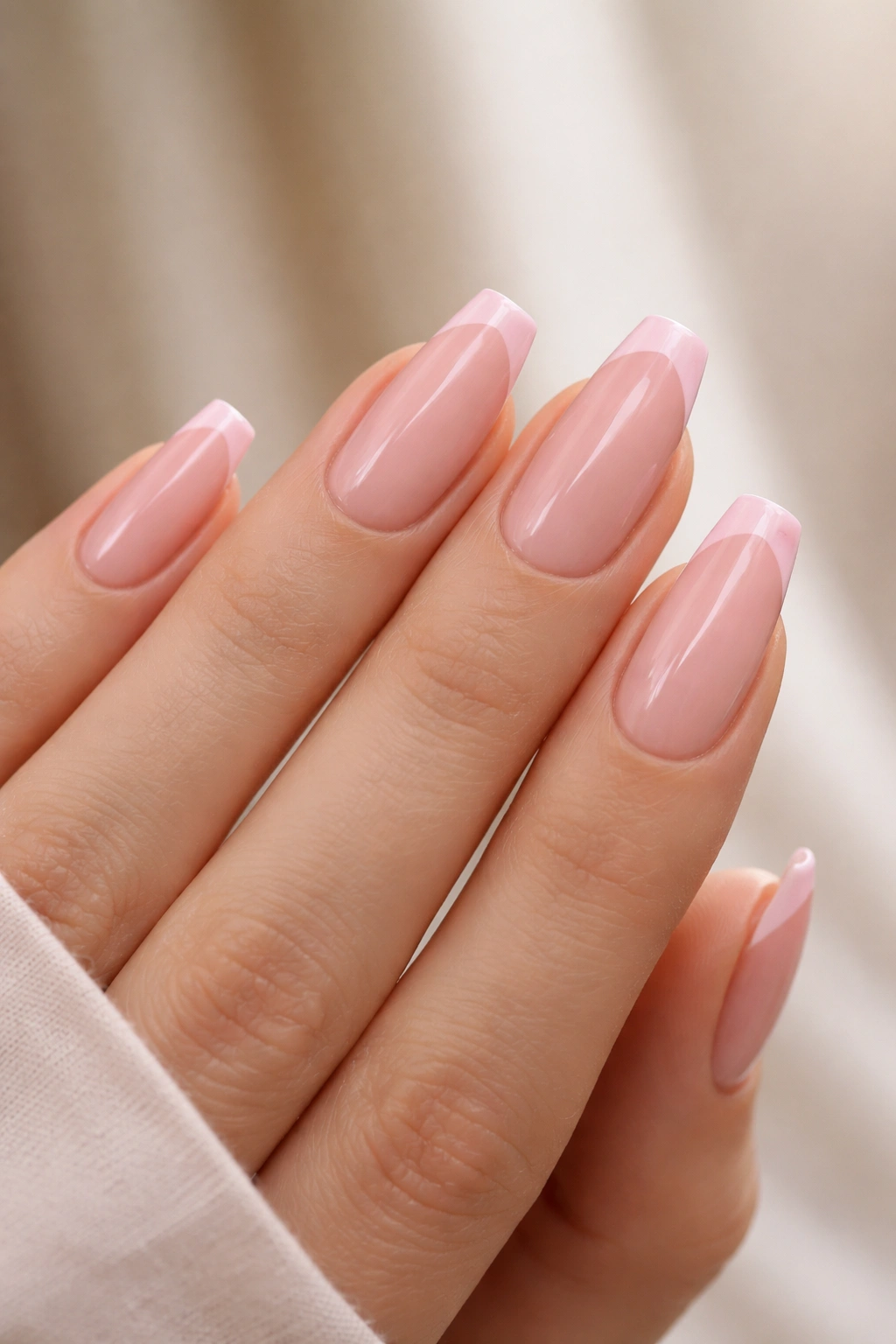
A pink micro French is one of the cleanest ways to wear ballerina nails without covering the whole nail in color. That tiny line at the tip — usually 1 to 2 millimeters wide — gives the shape definition, which is exactly what this silhouette likes.
What I like here is the restraint. A thick French tip can eat up the front half of a ballerina nail and make the shape feel heavier. A micro tip does the opposite. It traces the flat edge, sharpens the profile, and still leaves enough neutral base to keep the hand looking light.
Try a cool rose tip over a sheer beige-pink base if you want the line to read crisp. Go warmer with a peach-pink base if your skin has more gold in it. Either way, tell your nail tech you want the sidewalls filed straight before the tip goes on; if the shape is off by even a little, the French line will show it.
There’s another plus here. Regrowth is far less annoying than it is with a full-coverage neon or cream, which makes this a smart salon choice if you stretch appointments past two weeks.
3. Baby Pink to Nude Ombré
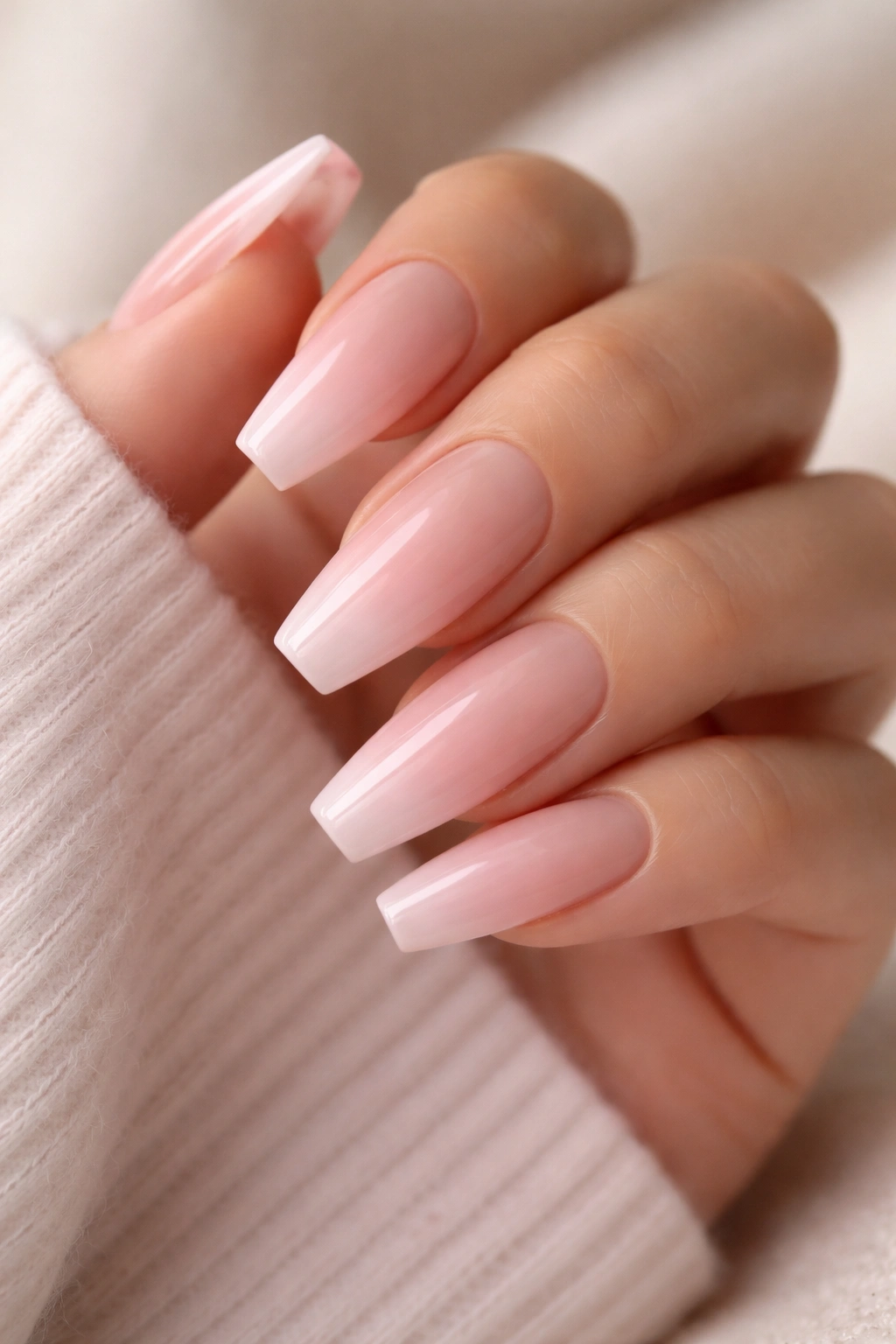
Why does a soft fade look so expensive on this shape? Because ombré blurs the break between base and tip, so the eye reads length first and color second.
A baby pink to nude fade is one of those designs that seems easy until you see a bad one. The bad version has a visible stripe through the middle, or the pink starts too low and makes the nail bed look short. The good version keeps the densest color near the tip and lets it thin out through the center.
Airbrush gives the smoothest finish, though a sponge blend can still work if the layers stay thin. I’d keep the base semi-sheer and the pink soft, not chalk-white and not sugary. Ballerina nails already have strong geometry; the fade should soften that shape, not fight it.
How to ask for the fade
Ask for a nude-pink base with baby pink concentrated on the top third of the nail, feathered down with no visible band. If you wear medium-length ballerina nails, keep the fade shorter. On long sets, the blend can stretch farther without swallowing the nail bed.
One more thing: glossy top coat wins here. Matte ombré can turn powdery, and that defeats the whole point.
4. Rose Quartz Marble Pink
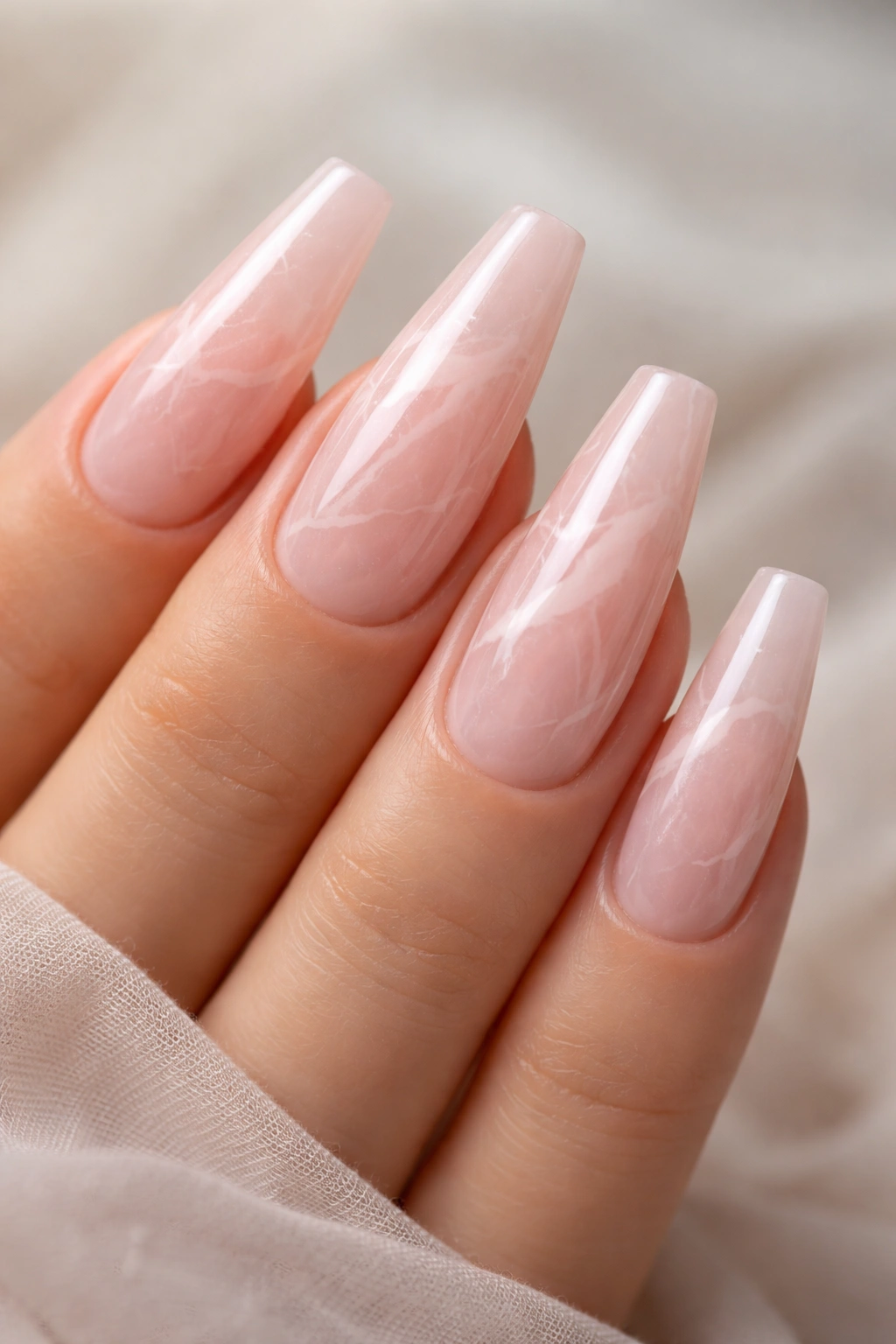
On a long ballerina set, rose quartz marble can look rich or messy, and the line between those two outcomes is thin. The trick is keeping the veining sparse. Too many white squiggles and it stops looking like stone and starts looking like someone panicked with a detail brush.
Rose quartz nails work best with translucent layers. A wash of blush pink, a touch of milky white, then a few fine veins pulled with a liner brush while the gel is still workable. Some techs use blooming gel for this; some drag a bit of acetone through uncured color. Either route can work if the pressure stays light.
Use marble on all ten nails if your style runs louder, though I think it lands harder on two accent nails per hand with the rest in a solid rosy pink. That keeps the set from looking overloaded.
A few details matter:
- Vein color: soft white or pale beige, not bright silver.
- Placement: let the veins drift diagonally, never in identical patterns from nail to nail.
- Top coat: high gloss only. Stone effects fall flat under matte.
- Length sweet spot: long ballerina gives the marble room to stretch.
I’d skip rhinestones here. Marble already has enough movement.
5. Soft Pink Chrome Mirror
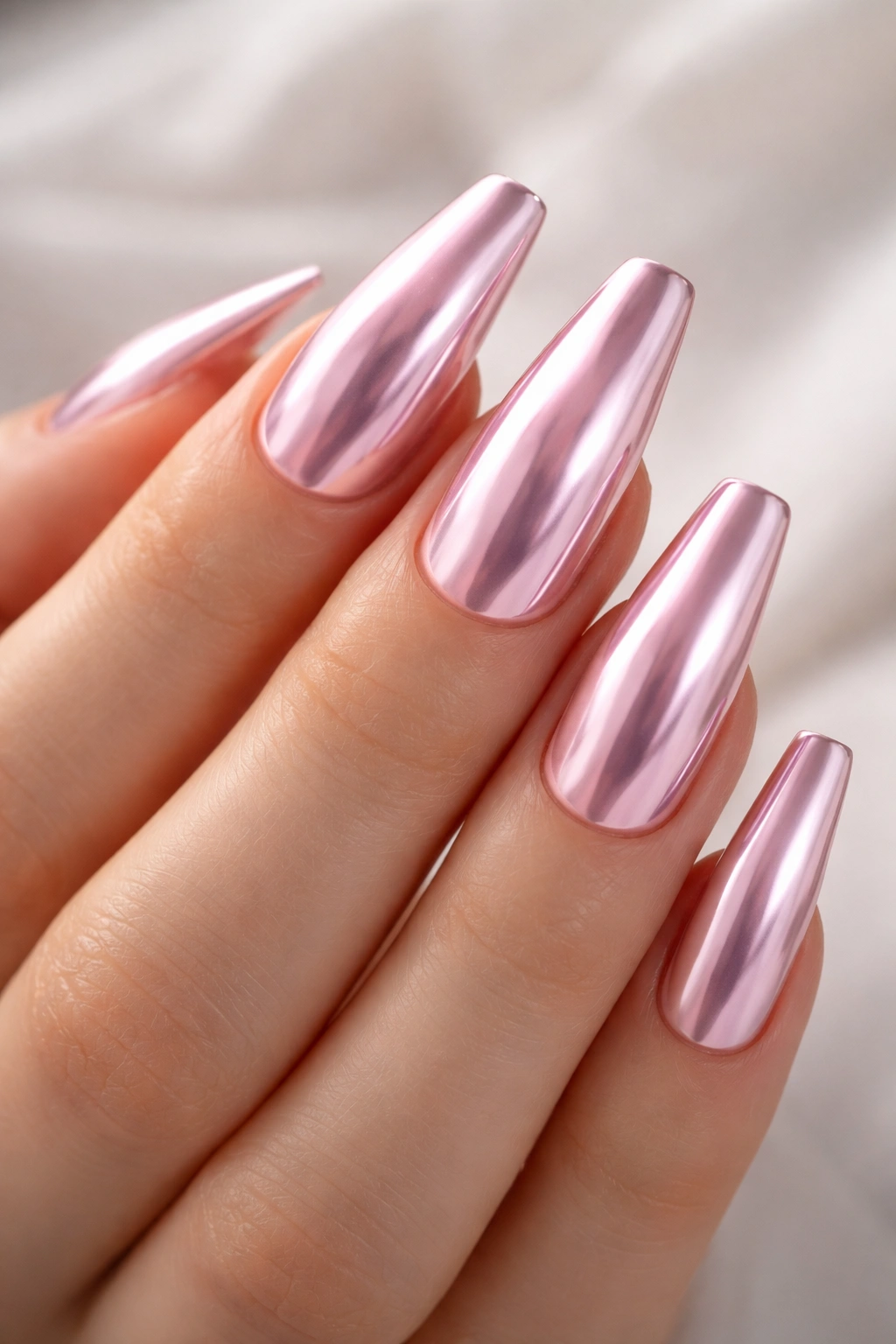
First time you see a soft pink chrome set under direct light, you get why people stay hooked on it. The surface throws a smooth reflection, almost like polished metal laid over candy-pink glass, and the ballerina shape gives that shine a straight edge to bounce from.
Chrome is less forgiving than it looks in photos. Any ridge in the nail plate, any lumpy builder layer, any cuticle work that isn’t neat — chrome will show it. That’s why the prep has to be solid. A leveled base, fully cured color, and a no-wipe top coat buffed with chrome powder at the right point in the cure cycle. Rush any of that and the finish turns patchy.
Color choice matters too. A pale pink chrome over a white base can lean icy, almost silver. Over a mauve-pink base, the reflection stays softer and richer. I tend to like cool pink chrome over a neutral rosy base because it reads cleaner from arm’s length.
Wear-wise, this one asks more from you. Harsh cleaning products can dull the top coat, and once the surface loses that glassy seal, the mirror effect drops fast. Still worth it, if you want nails that look sharp under office lights, restaurant lights, and direct sun without changing the whole design language of pink.
6. Cashmere Pink Matte
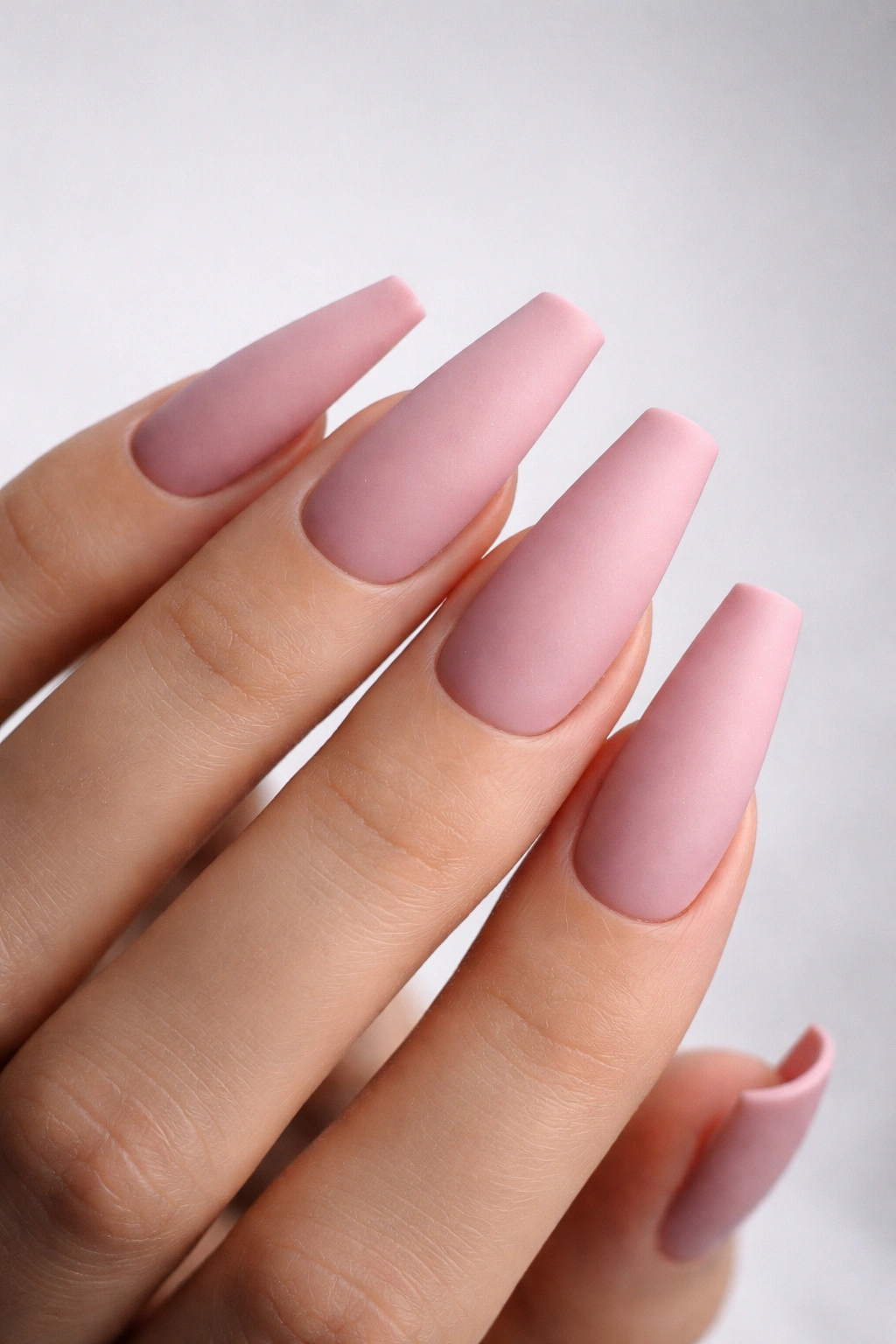
Unlike chrome or glitter, matte dusty pink leans on shape and color alone, which is why it looks so controlled on ballerina nails. There’s nowhere for the design to hide. If the filing is good, matte makes that obvious. If the filing is sloppy, it makes that obvious too.
I’d pick a muted rose, dusty mauve, or pink-beige instead of a sugary pastel here. Those drier shades suit the suede-like finish of a matte top coat. Bubblegum can work, though it often reads younger than the ballerina shape wants.
This set also changes the mood of pink. Glossy baby pink feels playful. Matte dusty pink feels tailored, almost like a clean wool coat or a lipstick bullet with a velvety finish. Same color family, different attitude.
Who should wear it? Anyone who likes a quieter manicure but still wants length. If your job or wardrobe already runs clean and structured, this one slips right in. My one warning: matte top coats show oil and makeup marks faster than gloss. Wipe the nails with alcohol after hand cream, and expect the tips to need a fresh top coat sooner than a glossy set.
7. Sheer Jelly Pink
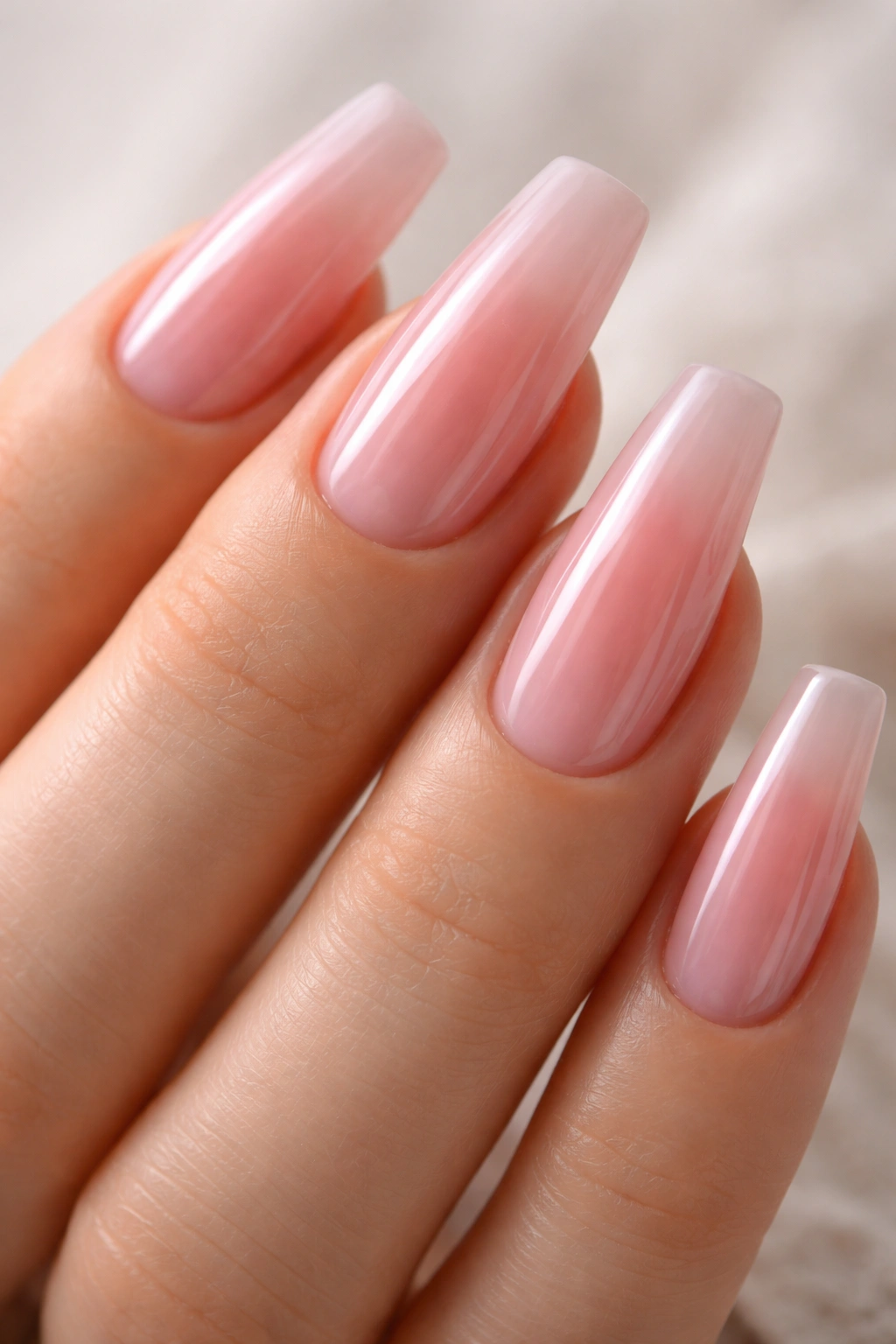
Jelly pink has that syrupy, translucent look that makes the nail seem deeper than it is. You can see light through the color, and on ballerina nails that depth plays nicely with the long taper.
This design works best when the pink stays sheer on purpose. Don’t chase full coverage. The whole point is that stained-glass effect, where the natural base or a sheer builder underneath still whispers through the color.
What makes the jelly finish different
A cream polish sits on top of the nail. A jelly shade looks like it has layers inside it. That’s why two thin coats usually beat one thick coat. Each layer adds color without killing the transparency.
Useful details to bring to the salon
- Shade direction: strawberry pink, rosewater, and cool candy pink all work. Neon jelly can push the look too far.
- Base choice: a clear or pale pink builder keeps the effect bright.
- Good add-on: tiny encapsulated glitter flakes can sit under the jelly if you want more depth.
- Fill note: because the color is sheer, grow-out stays softer than with cream polish.
My preference: medium-length ballerina nails, not extra-long. Jelly pink already has enough presence.
8. Diagonal Pink French Tips
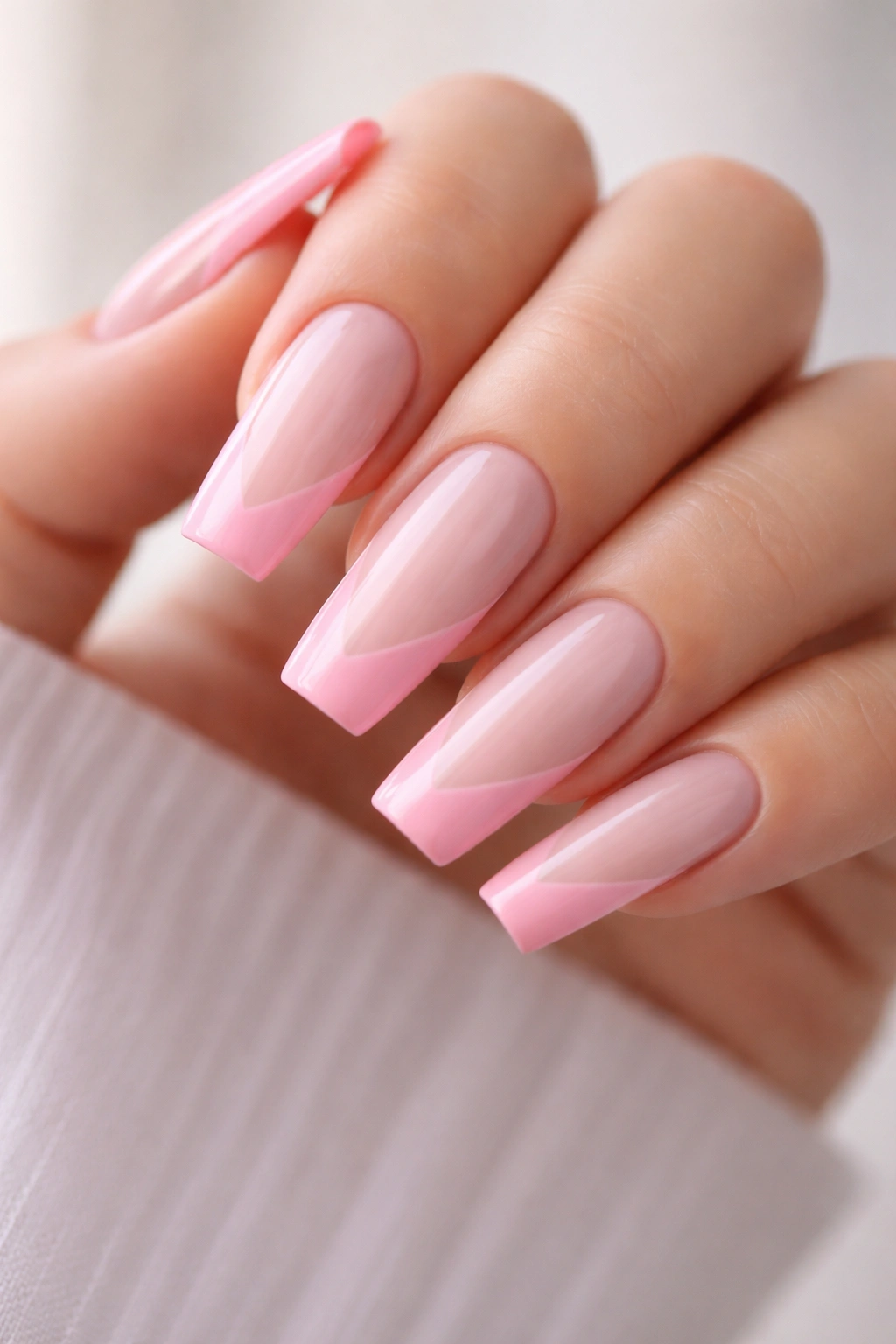
A diagonal French tip fixes a problem some people never know how to name: wide nail beds can look wider under a straight horizontal tip. Cut the smile line on an angle, and the eye follows the slant instead of the width.
That shift is small on paper. On the hand, it changes everything.
Run the color from one sidewall upward to the opposite corner of the tip, then keep the base sheer and clean. Pale blush works if you want a softer angle. Hotter pink turns it into a graphic design. I like using two close pink tones here — one for the diagonal tip, one ultra-sheer shade for the base — because that keeps the contrast crisp without feeling harsh.
You can also flip the angle across the hand. Thumb and middle finger one direction, ring finger the other, pinky straight. I know, that sounds fussy. On the nails, it looks intentional when the lines stay thin and the color family stays tight.
Skip thick glitter borders. The diagonal line already does enough work.
9. Airbrushed Pink Aura Center
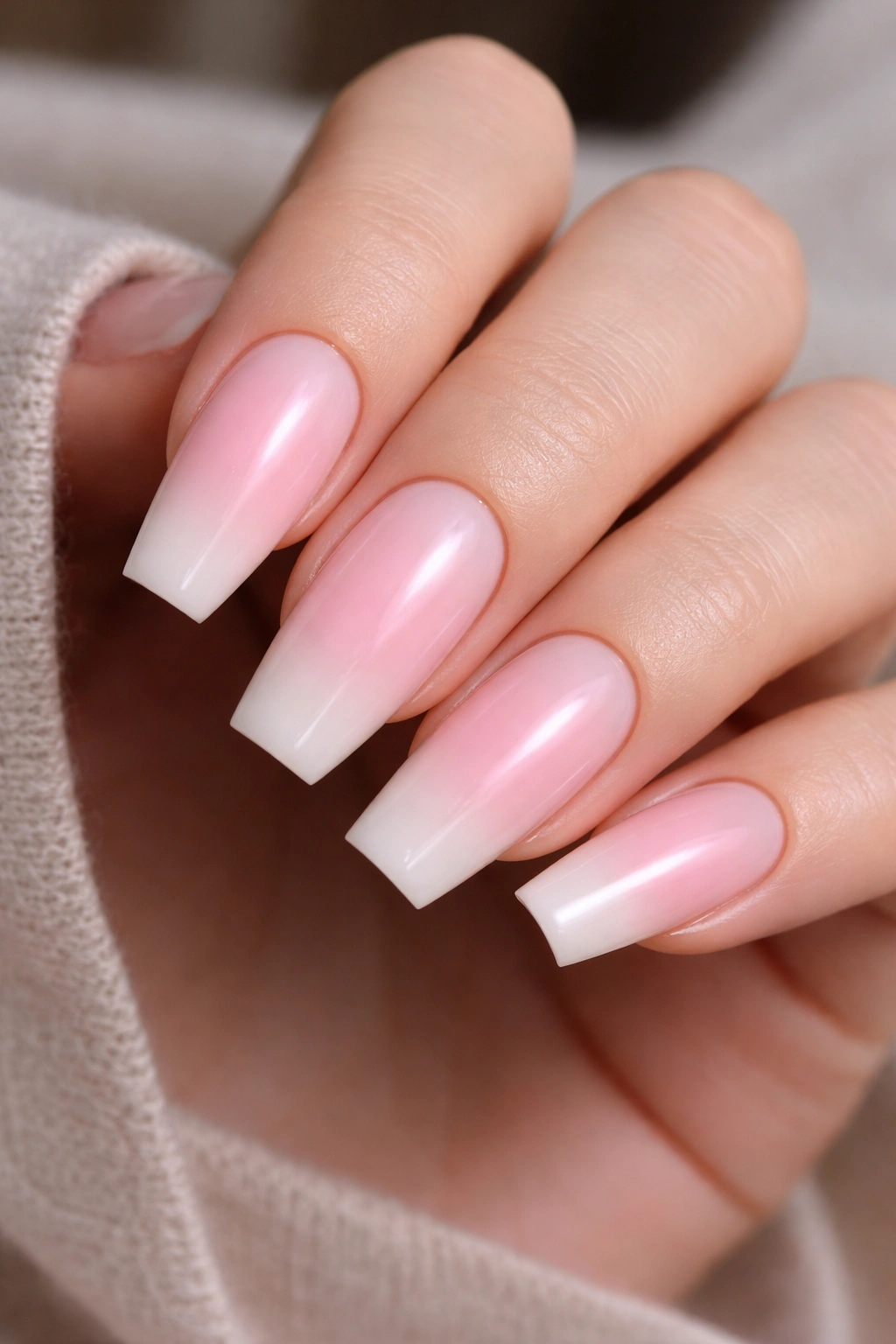
Why does the aura look suit ballerina nails when the shape is already sharp? Because the soft center glow takes some bite out of the edges. You get contrast on purpose — a clean, geometric outline with a diffused pop in the middle.
A good pink aura manicure usually starts with a milky or sheer nude base. Then a deeper pink gets airbrushed or softly sponged into the center, with the color fading before it reaches the sidewalls. If the pink touches every edge, it stops being aura and turns into a rough ombré.
Small scale is the key. I’ve seen aura nails where the glow fills eighty percent of the plate, and the whole effect goes muddy. Keep the bright spot tighter — around the center third of the nail — and the design reads cleaner.
Keep the halo small
On medium ballerina nails, the aura should sit like a blurred oval in the middle, not a giant cloud from cuticle to tip. If you want extra contrast, use a baby pink base and a raspberry center. If you want a softer set, try blush over milky nude.
This one tends to photograph well, sure, but it also holds up in person, which matters more.
10. Blush Pink with Silver Micro Glitter
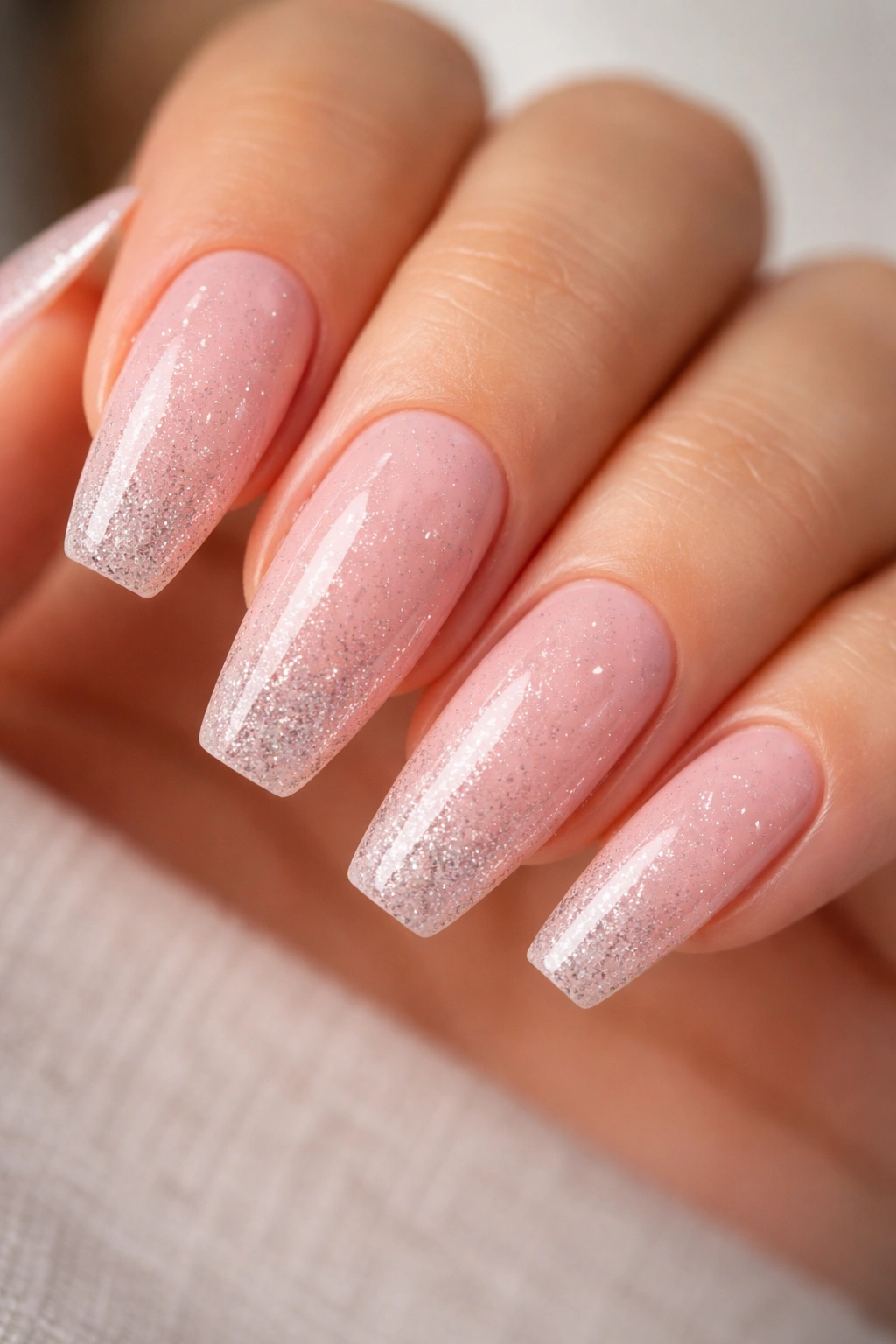
Most glitter manicures go wrong for one reason: the glitter is too chunky. Micro glitter fixes that. Instead of looking craft-store flashy, the nail gets a fine silver twinkle that moves when your hands move and stays smooth under top coat.
On a blush pink ballerina set, that shimmer can sit in two ways. You can scatter it through the whole nail for a sugar-dust effect, or keep it concentrated near the tip and let it thin toward the cuticle. I lean toward the second option because it keeps the base cleaner.
The texture has to stay flat. If the glitter pieces are large enough to make the surface bumpy after top coat, the set looks cheaper and snags faster on knit sleeves, hair, and half the other things you touch in a day.
A few better choices here:
- Particle size: think fine shimmer, not hex glitter.
- Base color: blush, beige-pink, or pale rose all work with silver.
- Accent plan: all-over shimmer on ten nails, or glitter fade on two nails with solids on the rest.
- Top coat: two thin layers beat one thick dome.
This is a good option when you want sparkle without turning the manicure into jewelry.
11. Neon Hot Pink Outline
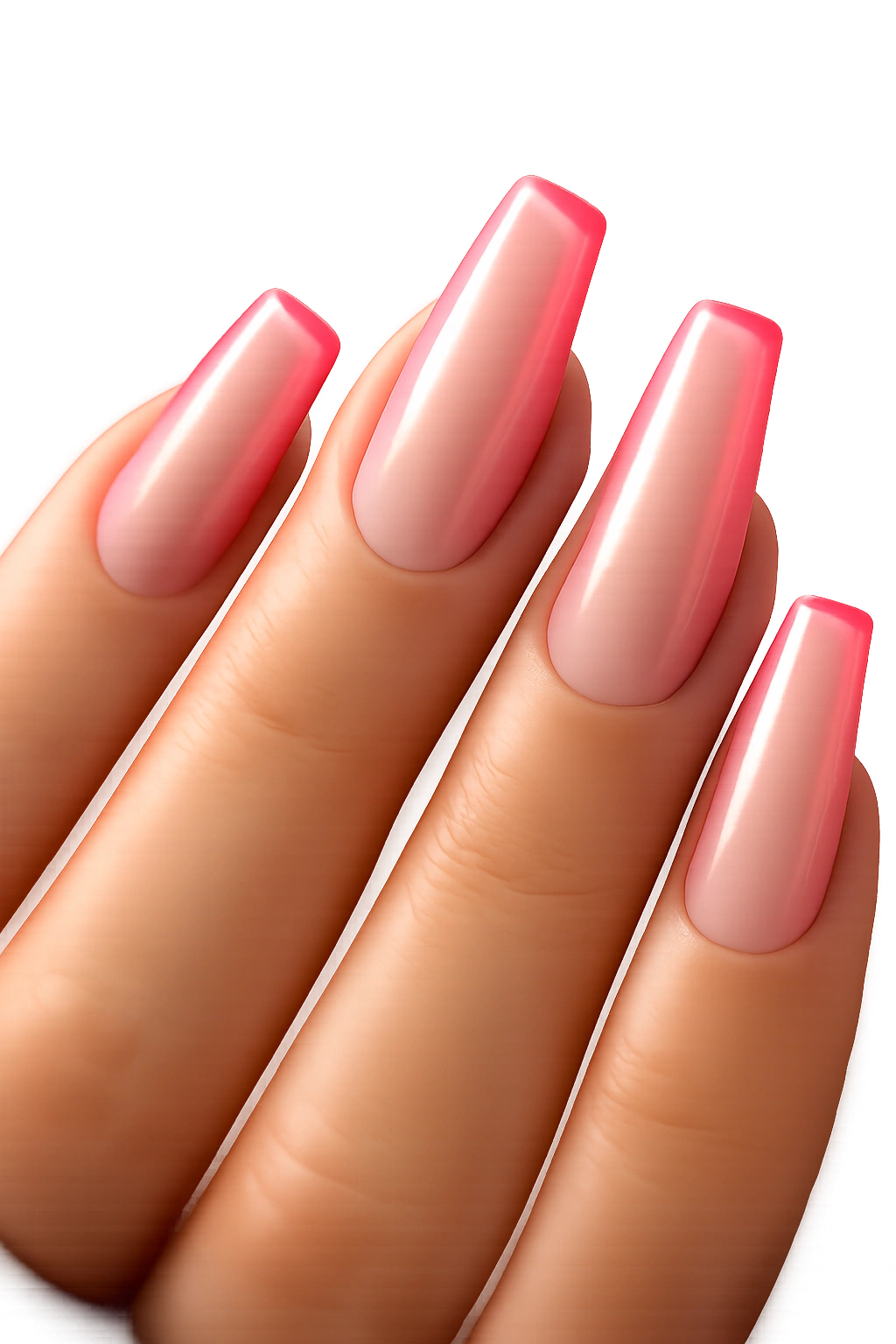
Soft pink gets most of the attention in this shape. I get why. Still, a neon pink outline on a nude or sheer base is one of the sharpest ballerina designs around.
Picture the nail mostly bare, with a hot pink line tracing the sidewalls and the flat tip like a frame. Because the color sits at the edges, it exaggerates the ballerina silhouette instead of covering it. That means the filing has to be exact. A crooked sidewall will show through the outline within seconds.
There’s also a balance issue. Keep the line slim — around 1 millimeter — or the frame starts eating into the nail bed. One nail with a double outline can look cool. Ten of them often feels busy. I’d rather see a clean single frame on most nails and one accent nail with a slightly thicker edge or tiny negative-space cutout.
If you want a loud pink set that still has breathing room, this is one of the smartest routes. Neon full coverage can feel heavy on long ballerina tips. An outline gives you the same punch with less weight.
12. Velvet Pink Cat-Eye
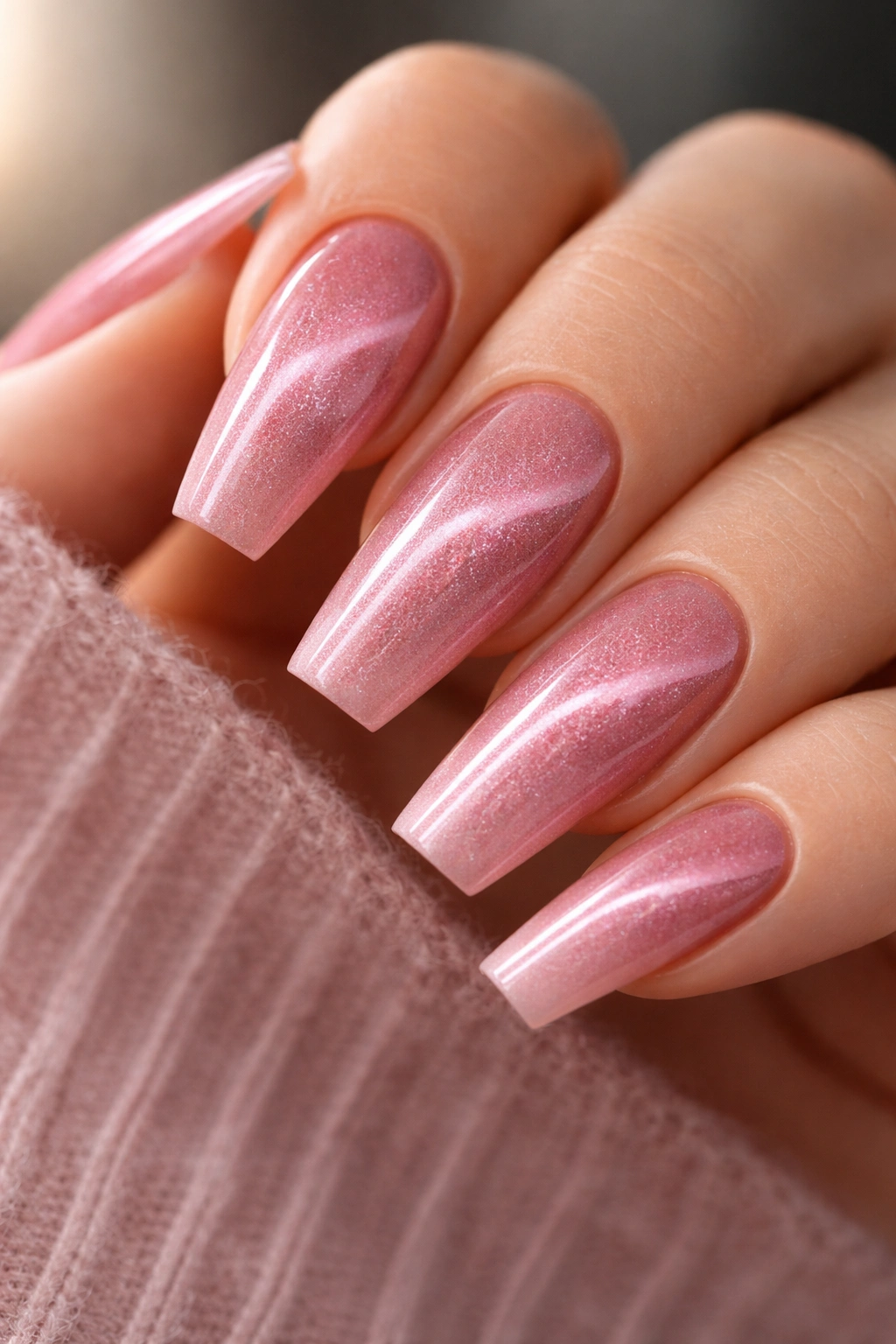
Unlike chrome, which throws a hard reflection, cat-eye gel gives pink a moving band of light that shifts when the hand turns. On ballerina nails, that movement feels richer because the long tapered shape gives the magnetic stripe more room to travel.
You need the right shade under the effect. Pale baby pink can be too faint for cat-eye powder or gel to show much depth. A mid-tone rose, dusty berry, or mauve-pink tends to work better. Pull the magnet diagonally for a slim slash of light, or keep it centered for a softer velvet look.
Who is this good for? People who want shine without mirror chrome and who don’t mind a little drama. Cat-eye nails are moodier. They read deeper, especially indoors.
My recommendation is one cat-eye color on all ten nails with no extra art at all. No stones, no decals, no foil. The magnetic finish is already doing enough, and piling more on top usually muddies the set.
13. Pink 3D Bow Accent
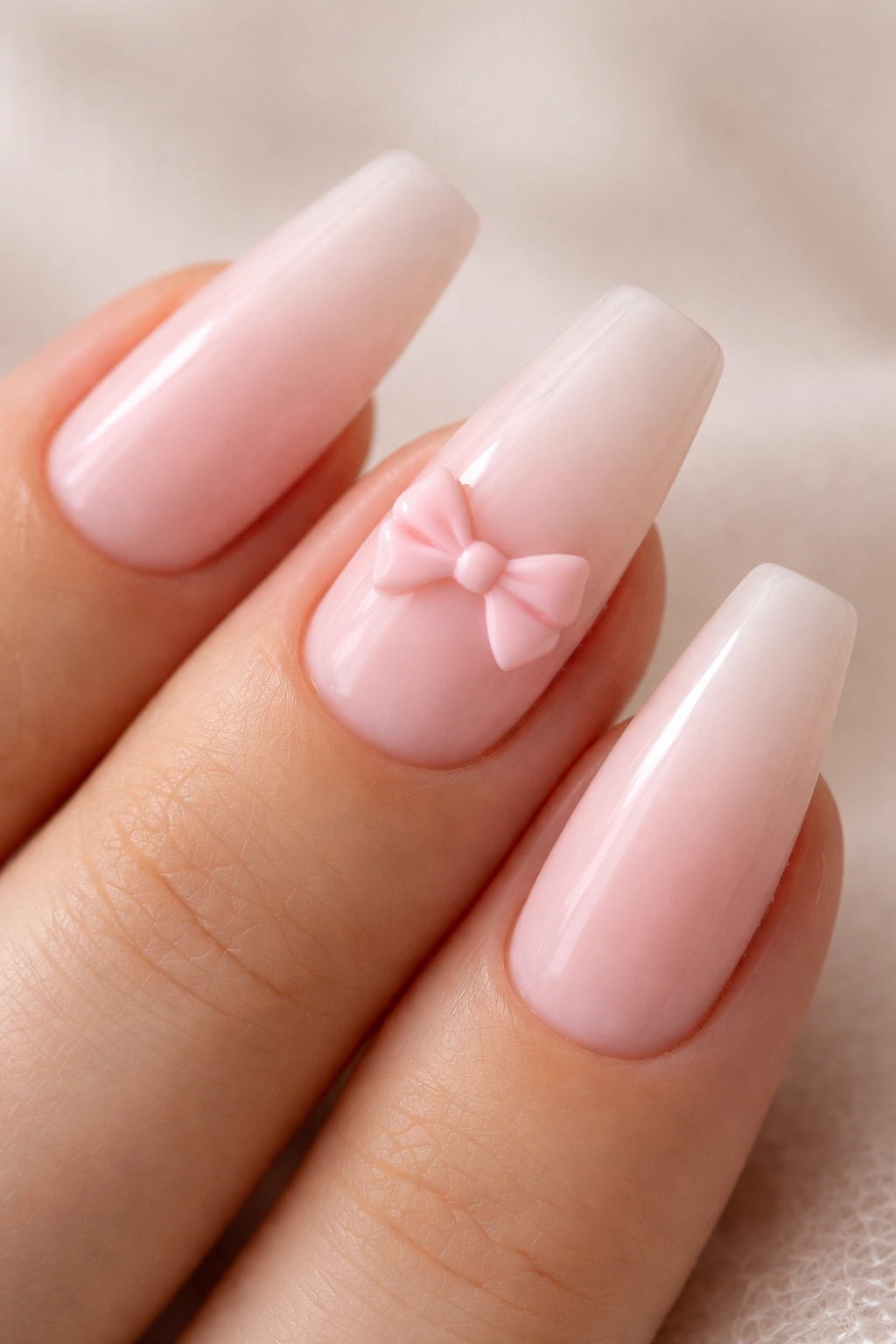
A 3D bow can go tacky in a hurry. One bow, though — placed well, sized right, on the right base — can make a pink ballerina set feel playful without tipping into costume.
The base should stay quiet. Think sheer baby pink, milky nude, or pale rose. Let the bow carry the extra detail. I’d use it on one ring finger or one thumb per hand, not across four nails at once. That’s where this design keeps its charm.
Placement makes or breaks it
A bow near the cuticle looks cleaner than one sitting in the center of the nail, where it can catch on everything. Keep it low-profile too. Hard-gel sculpted bows tend to wear better than chunky plastic charms glued on top.
Better ways to wear the bow
- Base color: milky pink or jelly pink keeps the look light.
- Accent count: one or two bows max across the full set.
- Extra detail: tiny pearl center, if you want it, and nothing more.
- Length note: medium ballerina usually handles 3D accents better than extra-long sets.
Practical truth: if you type all day, go smaller than you think.
14. Peach-Pink Gold Foil
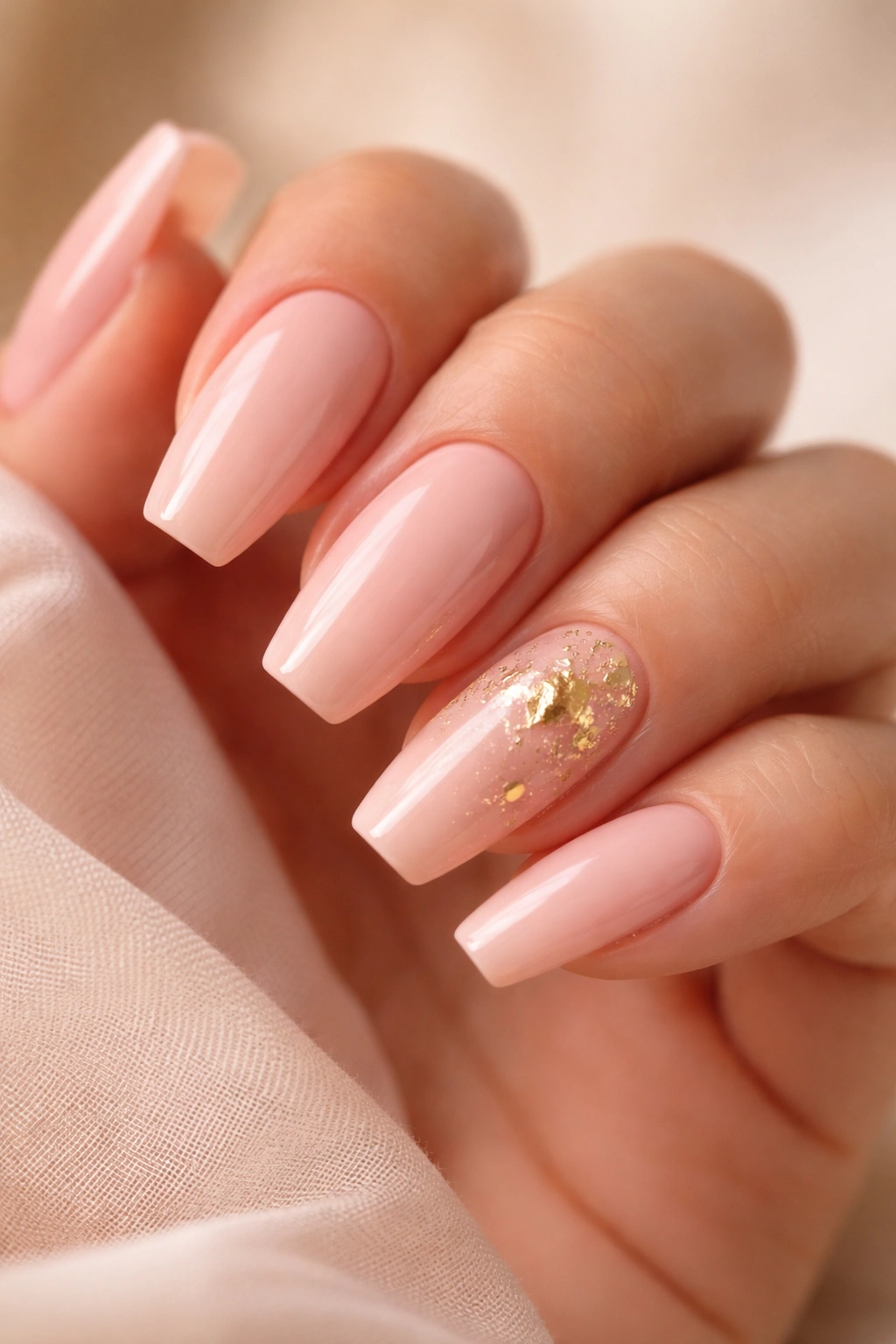
Gold foil and peach-pink belong together. Not because they’re flashy, but because warm foil softens into the base instead of fighting it. The result feels less icy than silver and less sweet than straight peach polish.
The best version uses torn foil pieces, not neat geometric squares. Press a few flakes into uncured color or tacky gel near the sidewalls and tip, then seal the whole thing under a leveled top coat. Space matters. Leave open areas of pink so the foil looks scattered, not pasted on.
I like this set most on almond and ballerina shapes, though ballerina gets a bit more edge from the flat tip. It also works well when your jewelry leans yellow gold, since the manicure won’t feel disconnected from the rest of your hand.
Restraint helps. One foil-heavy accent nail paired with solid peach-pink nails can look cleaner than ten fully foiled nails. Or go full foil, but keep the flakes tiny and irregular. Large sheets of transfer foil can crease at the edges, and once that happens, the manicure starts looking tired fast.
15. Strawberry Milk Hearts
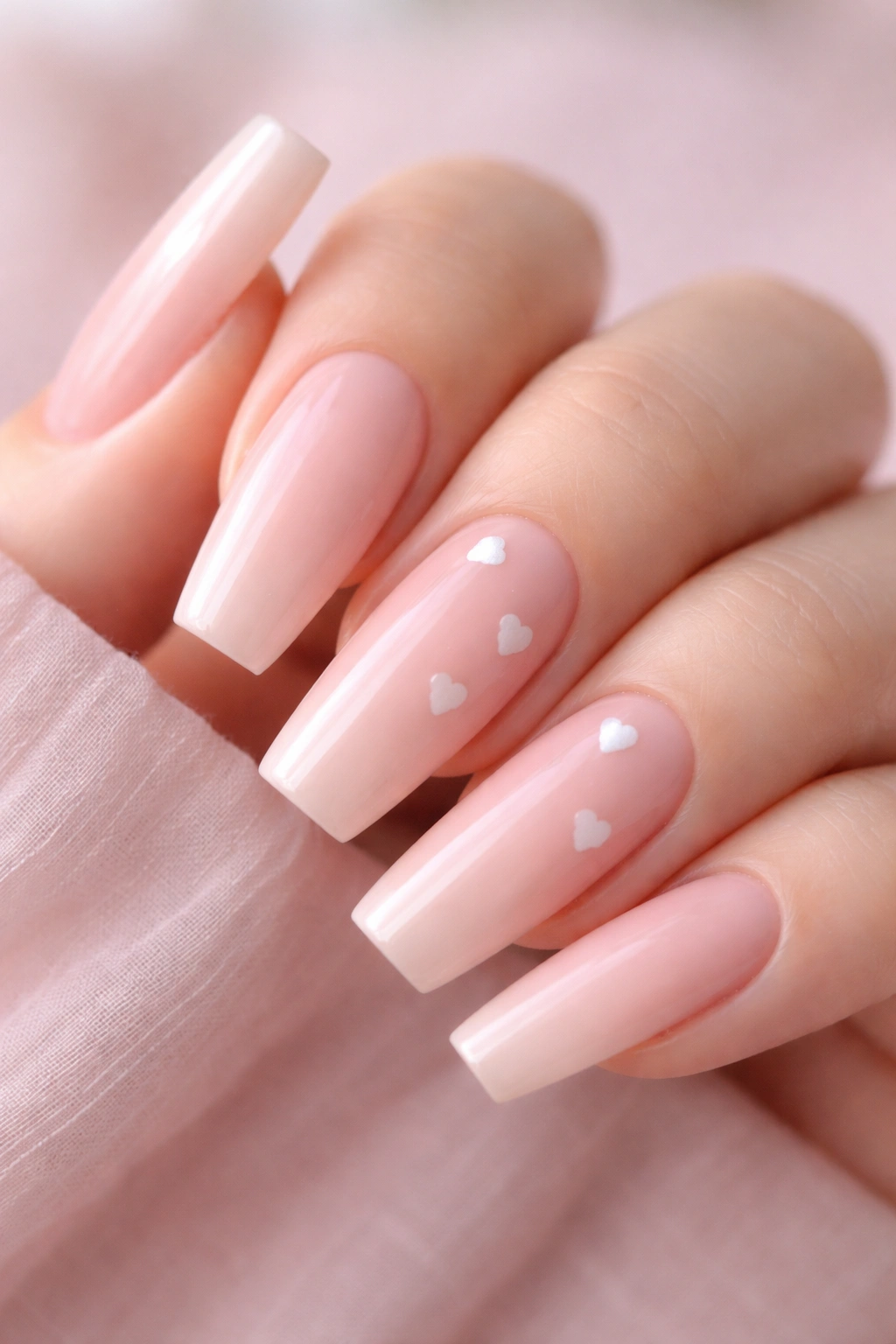
Why do tiny hearts sometimes look polished and sometimes look like a middle-school notebook? Scale. The smaller the heart, the cleaner the manicure.
A strawberry milk base — that creamy pink-white shade that looks like a drop of strawberry syrup in milk — gives hearts a soft backdrop without turning the whole set sugary. Keep the hearts crisp, small, and sparse. One near the tip, one near the cuticle, maybe a pair on accent nails. Ten nails covered in hearts is too much for this shape.
This design also benefits from contrast. A deeper pink or red-pink heart reads better than a heart that matches the base too closely. If the outline disappears from two feet away, the art stops earning its place.
How to keep it sharp
Use dotting-tool hearts or tiny brush-drawn hearts no larger than 3 to 4 millimeters. Put them on two or three nails, then leave the rest solid or sheer. A glossy top coat keeps the whole thing from feeling powdery.
There’s something charming about this one when it stays disciplined. Lose that discipline and it falls apart fast.
16. Dusty Mauve with Tortoiseshell Accent
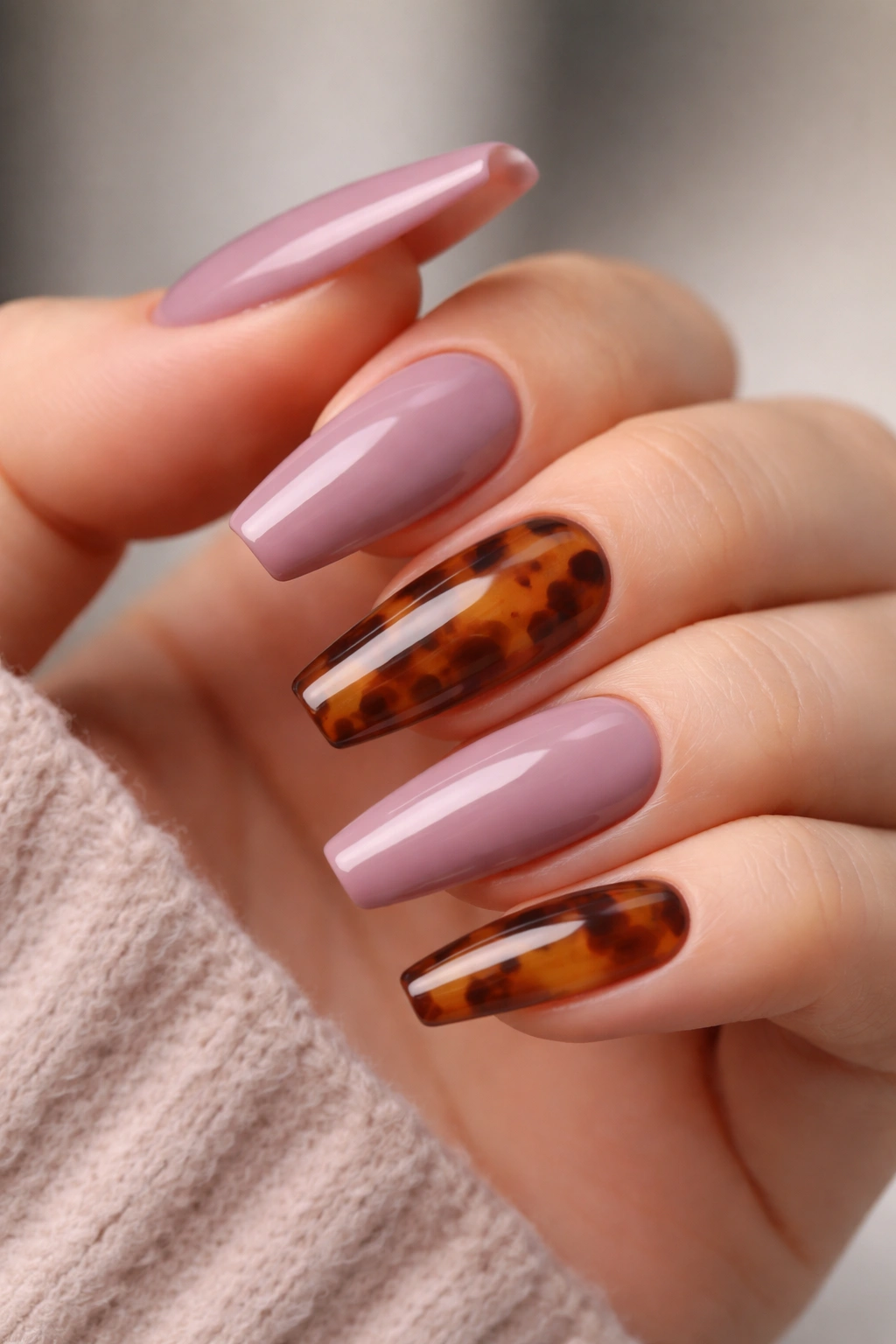
This is for the person who likes pink but gets bored by sweet pink. Dusty mauve gives the hand a calmer base, and a tortoiseshell accent adds heat, depth, and a little bite without throwing you out of the pink family.
The pairing works because mauve has some brown and gray folded into it already. Tortoiseshell — amber, honey, dark brown, maybe a touch of black — echoes that depth. Put tortoiseshell on one or two nails per hand, then leave the rest solid mauve, and the whole set feels thought-out without trying too hard.
You need translucency in the tortoiseshell for it to read correctly. Flat brown blobs won’t do it. A layered jelly amber with irregular dark patches gives that resin-like look people are usually after.
A few guardrails:
- Accent count: one or two nails per hand.
- Best placement: ring finger and thumb usually carry tortoiseshell well.
- Finish: glossy, always.
- Pink shade: stick to mauve, dusty rose, or taupe-pink rather than candy pink.
This one doesn’t shout. That’s why it works.
17. Glazed Pearl Pink Ballerina Nails
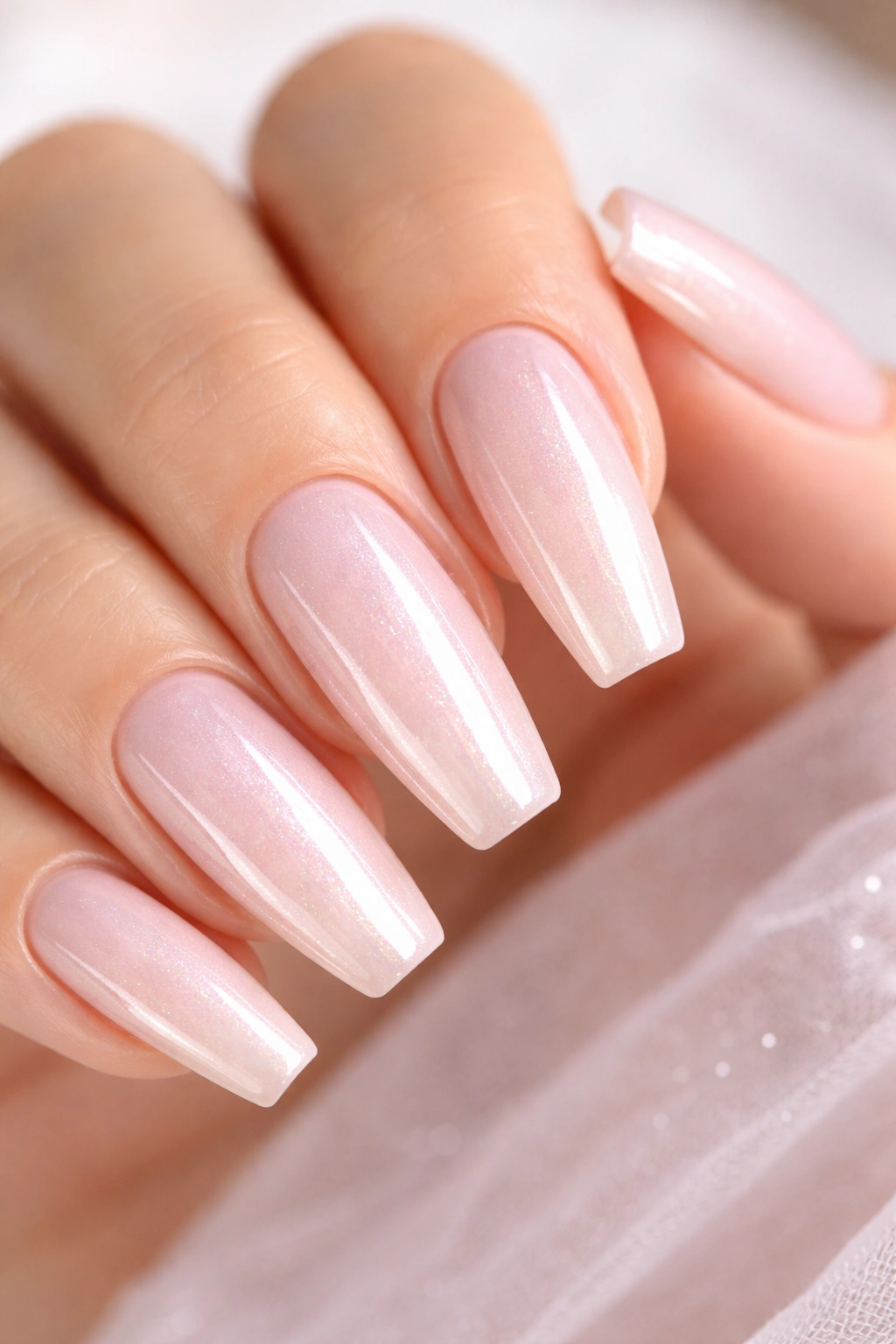
I dragged my feet on glazed finishes for a while because too many sets looked frosty and flat. Then I saw one done over a soft rosy nude with a thin pearl rub, and that changed my mind. Glazed pearl pink ballerina nails don’t need much color to look polished; the shine does the heavy lifting.
The difference between glazed and chrome matters. Chrome gives a mirror. Glazed pearl gives a slick, almost wet shell finish, with a softer reflection and a faint veil of white or pink over the base. On a ballerina shape, that coating makes the flat tip look cleaner and the tapered sides more intentional.
Base color decides the mood. Over milky pink, the glaze looks airy. Over mauve-nude, it gets moodier and richer. I’d skip a stark white base unless you want the manicure to lean icy.
One caution: keep the pearl layer thin. Too much powder and the nail can turn cloudy, which kills the sleekness that makes glazed finishes worth wearing in the first place.
18. Raspberry Ombré with High Gloss
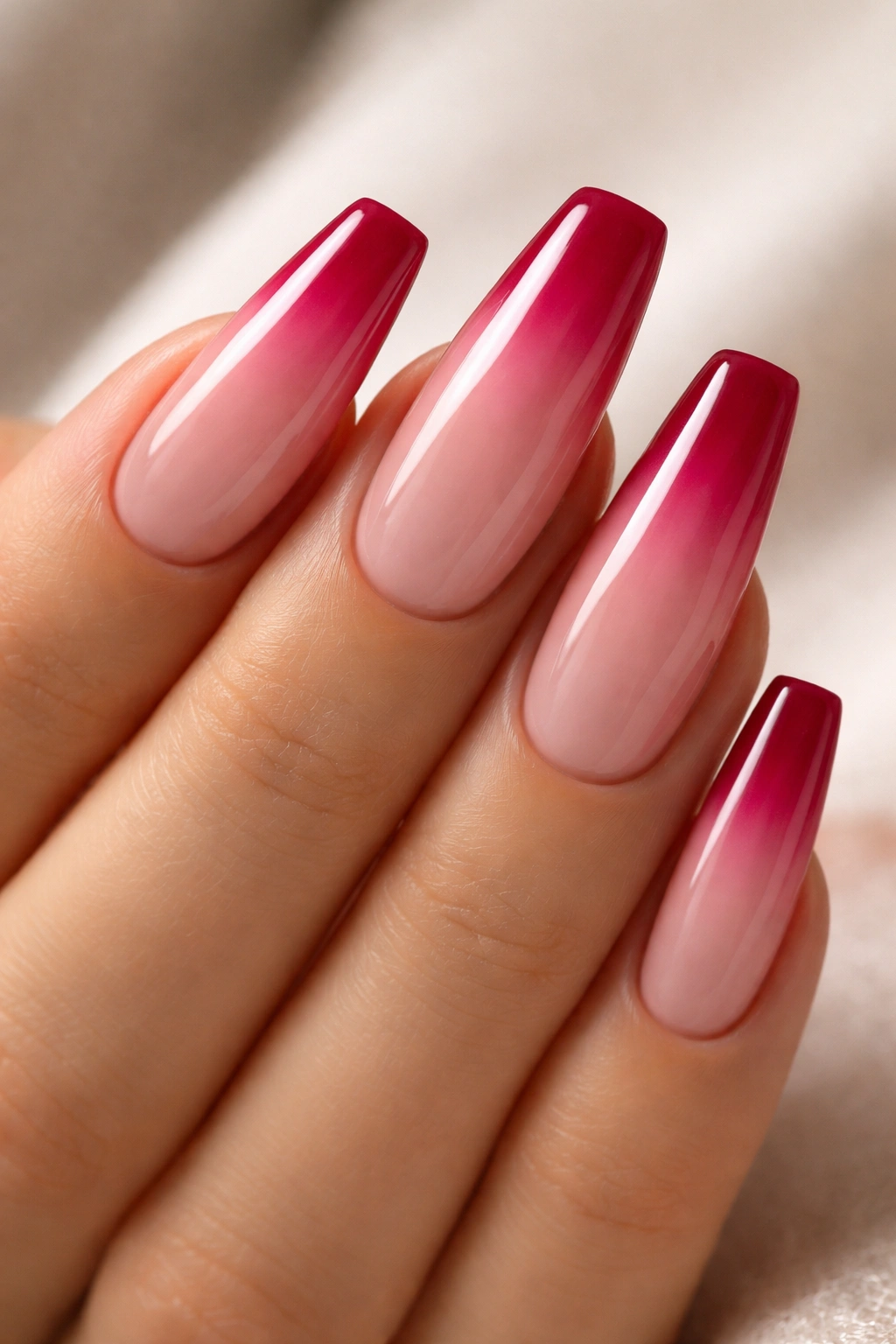
Unlike pale blush shades, raspberry at the tip gives ballerina nails more punch without covering the whole nail bed in dark color. That balance matters if you like stronger pinks but still want the hand to look lengthened.
This design works like a bolder cousin of the baby pink fade. Start with a nude or sheer rosy base, then pack raspberry into the final third of the nail and feather it downward. Keep the darkest pigment on the flat edge and outer corners so the ballerina shape stays crisp.
Who should pick this? Anyone who finds pale pink too quiet or too bridal. Raspberry ombré feels sharper, more evening-friendly, and a bit less expected. It’s also handy if your natural nail bed has more warmth or visible redness, since the stronger tip color gives the whole manicure a clearer focal point.
My recommendation is a glass-like top coat with no glitter at all. Raspberry already has enough body. Add shimmer and the fade can start looking muddy instead of rich.
19. Pink Side-French Negative Space
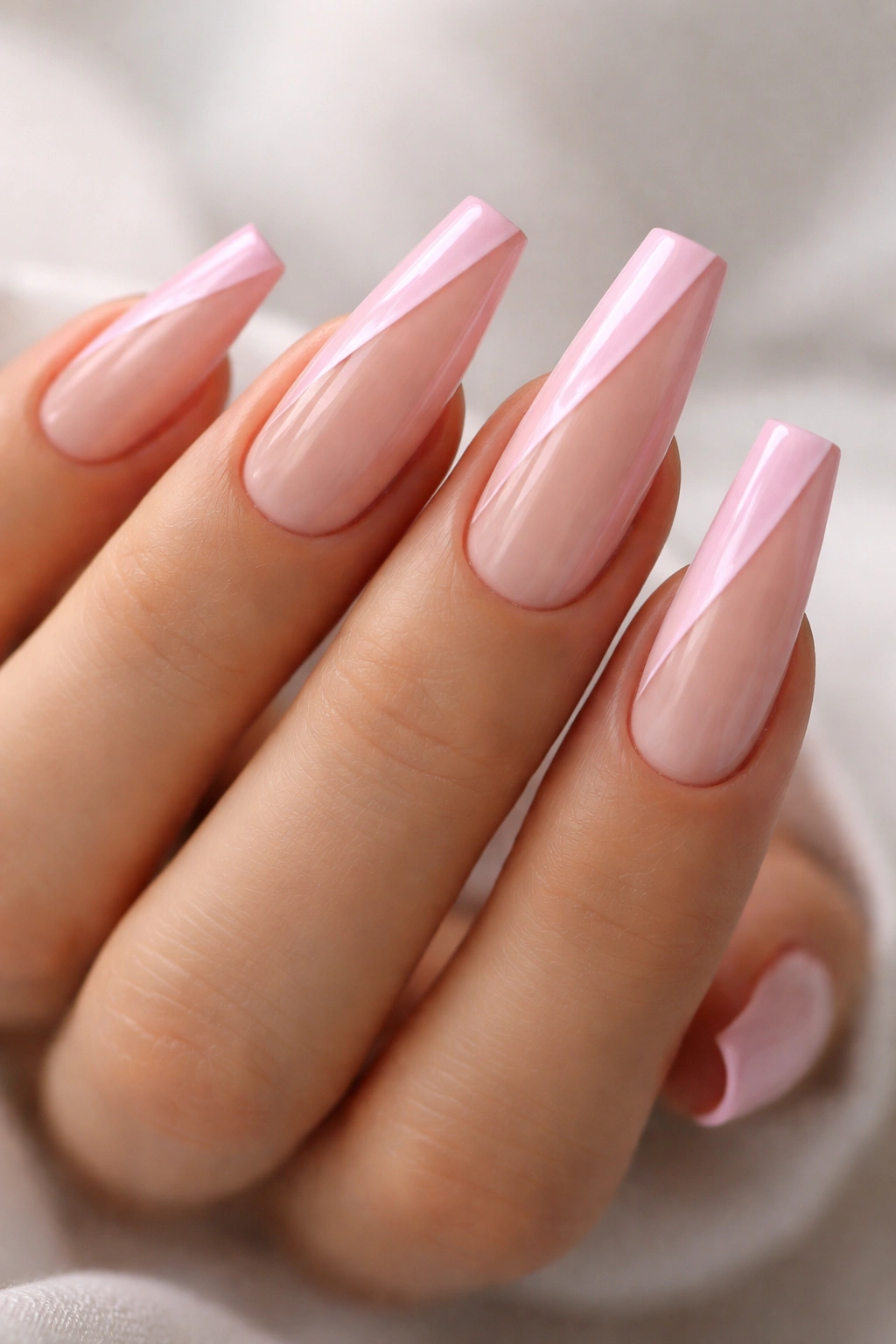
A side-French is one of those nail designs that looks hard and wears easy. Instead of painting the tip straight across, you run a curved pink band along one side of the nail, leaving the rest sheer. That little strip changes the shape more than you’d think.
It slims the nail visually because the color pulls the eye sideways and upward. On ballerina nails, that feels fresh because the shape already has clean geometry built in. The side-French gives you asymmetry without losing order.
Why this shape likes the side-French
A squoval nail can make a side-French look casual. A ballerina nail gives it structure. The straight sidewalls and flat tip make the off-center line feel planned rather than random.
Fast guide for getting it right
- Band width: keep it narrow, around 2 to 3 millimeters.
- Color choice: rose pink, bubblegum, or dusty pink all work if the base stays sheer.
- Placement: same side on every nail for a cleaner set, or alternate hands for more edge.
- Top coat: high gloss keeps the negative space looking deliberate.
Ask for a fine liner brush, not a polish brush dragged freehand. Precision is the whole design.
20. Monochrome Pink Color-Block Ballerina
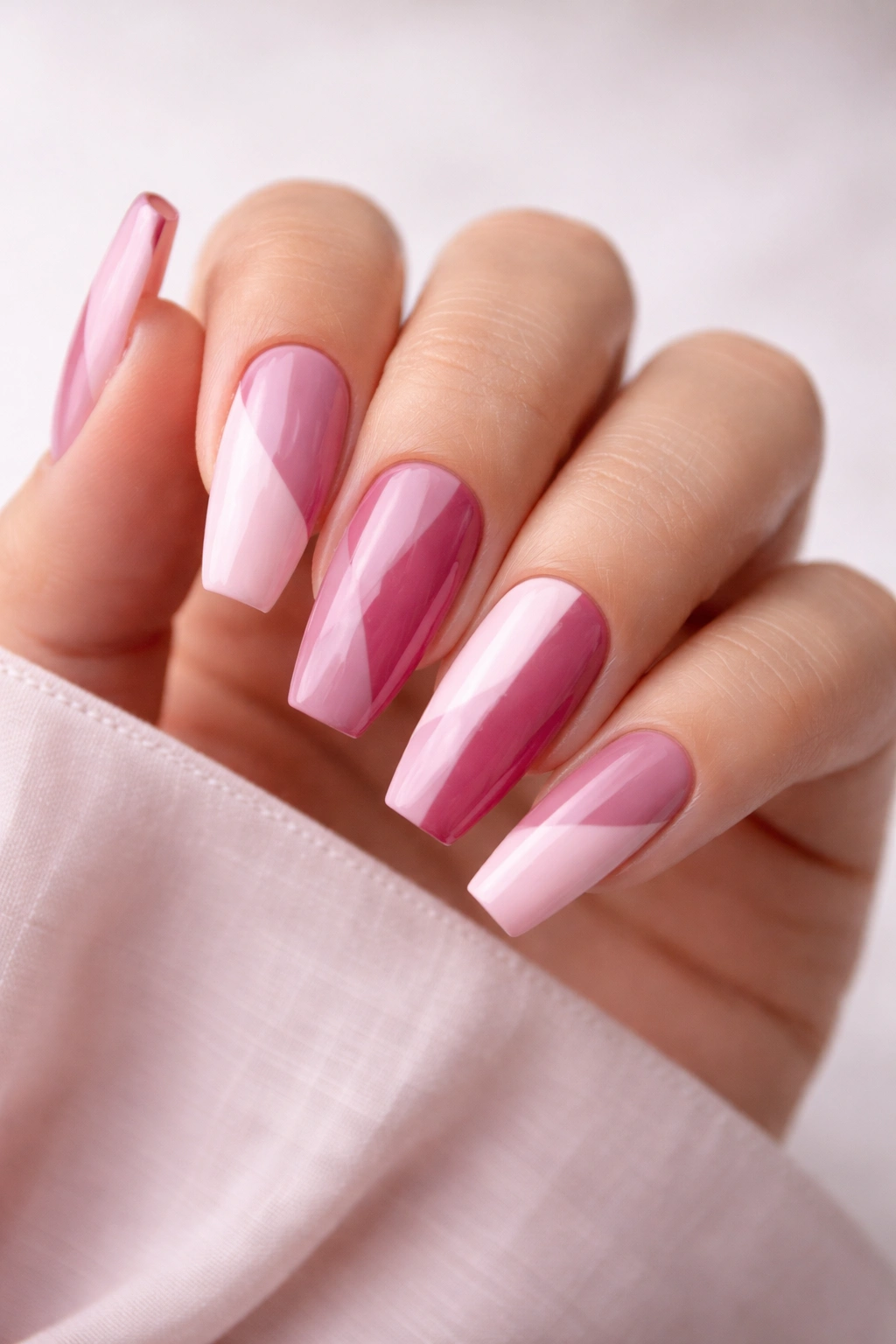
Using three pinks in one set can look cleaner than using one, if the shades are separated with intention. That’s the whole idea behind monochrome color-block ballerina nails.
You can split each nail diagonally with two pinks, run one shade on the base and another on the tip, or map different pink families across the hand. My favorite version uses milky pink, dusty rose, and a deeper berry-pink, with each nail carrying two of the three shades in simple blocks. No glitter, no stones, no decals. The clean edges do enough.
The reason this works on ballerina nails and can flop on rounder shapes comes down to lines. Ballerina nails already have built-in angles. Color-blocking echoes those angles, so the design feels tied to the shape rather than pasted on top.
One warning, though. Pick shades that are separated by at least a step or two in depth. Three pinks that all sit in the same middle zone can blur together and look accidental. When the contrast is clear, the set looks edited and sharp.
Final Thoughts
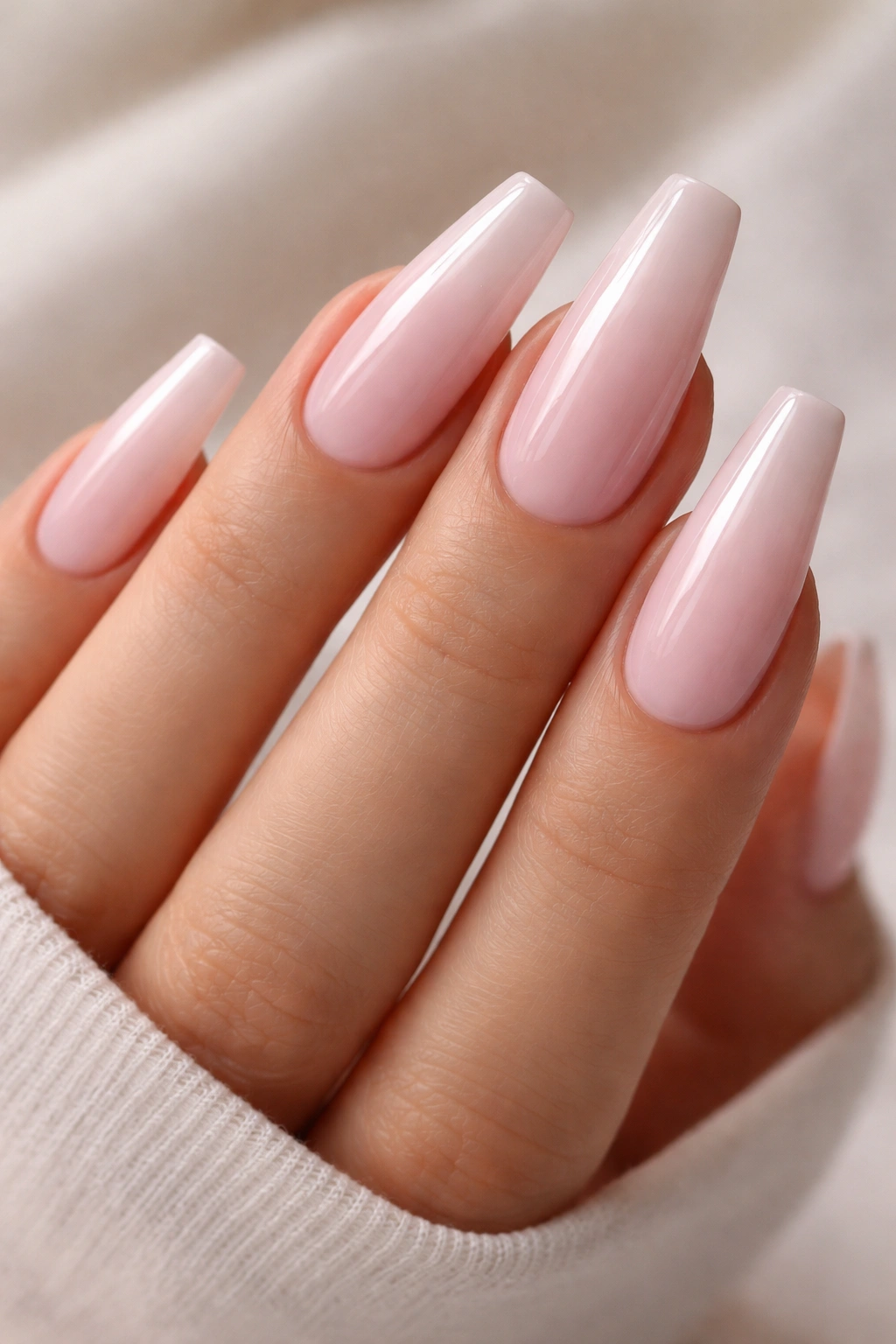
The best pink ballerina nails don’t depend on pink alone. Shape, finish, and placement carry as much weight as color. A milky pink can look cleaner than neon. A thin outline can hit harder than full coverage. One tiny bow can do more than ten crystals.
If I had to narrow the field, I’d keep coming back to milky ballet-slipper pink, the micro French, glazed pearl, and raspberry ombré. Those four cover a lot of ground without asking you to babysit the manicure every hour.
Bring reference photos to the salon, sure. Then talk about the details in plain language: how long you want the free edge, whether you want the pink sheer or opaque, and how often you’re willing to come back for fills. That part decides more than the color swatch ever will.