
Yellow ballerina nails get dismissed for two reasons: people think the shade will wash them out, and they remember those streaky swatches on a salon wall that looked like school-bus paint. Both reactions make sense. Yellow can go chalky fast, especially when the first coat lands straight on the natural nail with no blurring base underneath.
The shape changes the whole mood. Ballerina nails—flat at the tip, tapered along the sides, close cousin to the coffin shape—give yellow room to stretch out instead of sitting there like a blunt block of color. When the free edge extends about 6 to 12 mm past the fingertip, pale shades look cleaner and deeper yellows look sharper. Below that length, the silhouette can start to feel squat, and yellow loses some of its charm.
Finish matters as much as shade. A sheer jelly yellow lets light pass through, which keeps the manicure from looking heavy. A soft matte topcoat turns sunflower tones velvety. Chrome powder can rescue a plain custard polish from looking flat under indoor bulbs. Even the base coat shifts the result: a milky pink or beige underlayer often fixes the streaky, poster-paint problem in two thin coats.
One more salon truth before the fun part: bring a photo. “Butter,” “lemon,” “mustard,” and “neon” sound clear enough in your head, then you sit down under cool LED lights and realize the bottle in front of you is greener, flatter, or louder than you wanted. Yellow has range. These 15 looks prove it.
1. Buttercream Yellow Ballerina Nails
Buttercream is the yellow I point people toward when they swear they “can’t wear yellow.” It’s soft, creamy, slightly muted, and it doesn’t fight the shape. On a ballerina nail, that pale warmth reads polished rather than sugary, which is a harder balance to hit than people think.
The trick is the base. If you paint butter yellow straight onto a bare nail or a clear builder layer, the color can look patchy around the sidewalls. Put down a sheer milky nude first, though, and the whole set smooths out. The yellow suddenly looks expensive instead of chalky.
Why this shade suits the ballerina shape
Ballerina nails already have a dressy outline, so a quieter yellow keeps the set from tipping into costume territory. Buttercream also makes the tapered sides look narrower, which helps the nail appear longer. If your hands run cool-toned, pick a butter shade with a whisper of beige. If your skin has golden or olive tones, a creamier pastel with more warmth lands better.
Quick design notes
- Best length: Medium to long, with at least 8 mm of free edge, so the shape stays slim.
- Best finish: High gloss. Matte can make pale yellow look dusty.
- Best pairing: A thin gold ring stack or a soft white outfit keeps the manicure clean, not fussy.
- Best maintenance plan: Reapply cuticle oil twice a day; pale shades make dry edges stand out faster.
If you want yellow without the shout, start here.
2. Lemon Sorbet French Tips
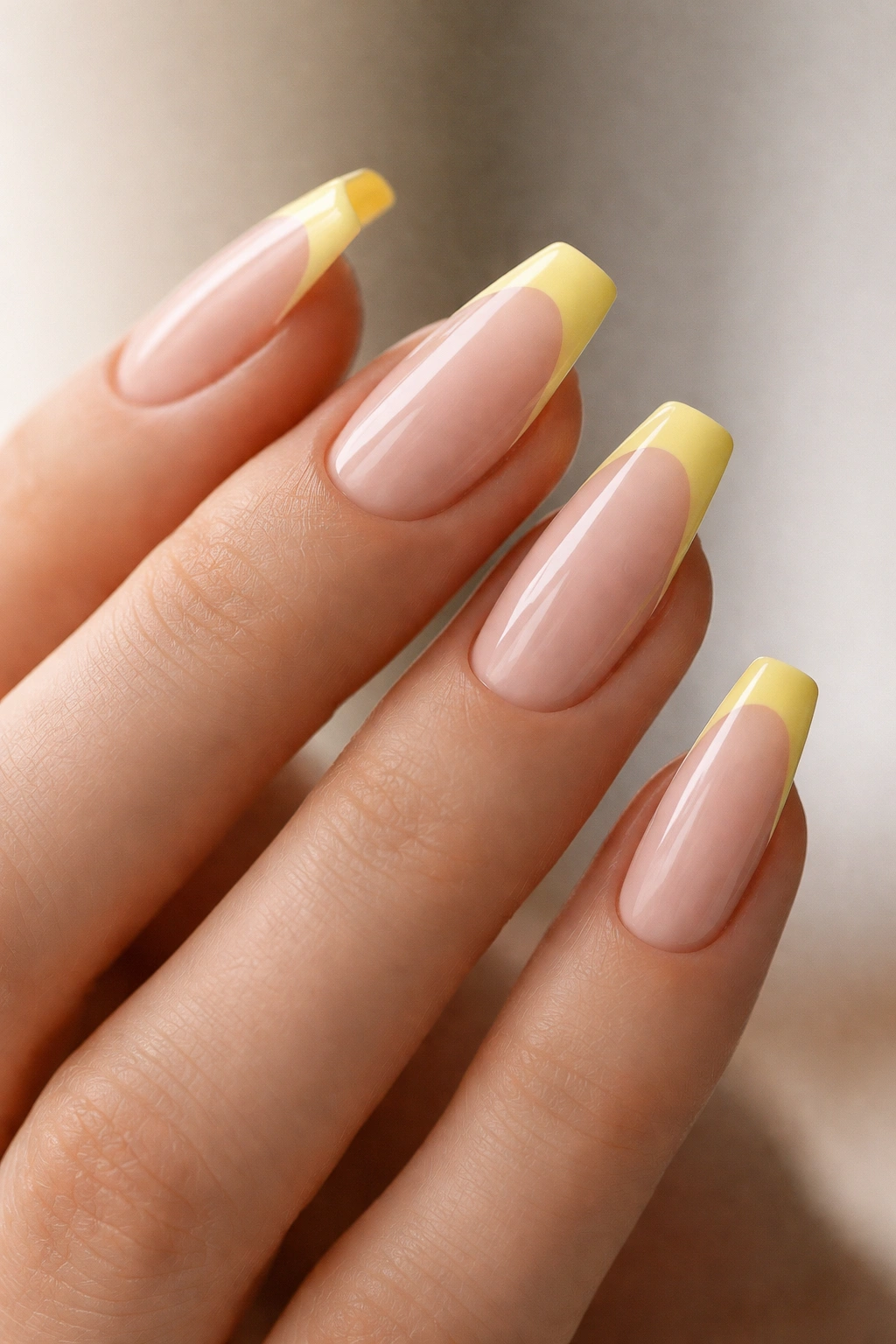
A lemon French tip is the safest route into yellow, and I mean that as praise. You still get the hit of color, yet the nude base leaves enough open space that the manicure feels light. On ballerina nails, that straight free edge gives the tip a crisp, graphic line that square nails can’t quite match.
Keep the yellow band narrow—around 2 to 4 mm on a medium-length set. Once the tip gets too deep, the design stops looking like a French and starts reading like a half-painted nail. That can work, though it becomes a different idea entirely. A thin sorbet-yellow edge with a sheer pink or peach base has a cleaner finish.
There’s also a practical upside. Growth is less obvious when most of the nail stays nude, so this style often buys you a few extra days before a fill. Anyone who hates seeing a dark gap near the cuticle tends to like this one.
If you want the look to feel sharper, ask for a flat smile line that mirrors the ballerina tip. If you want it softer, go with a gentle curve. Both work. The width is what matters most.
3. Matte Sunflower Yellow
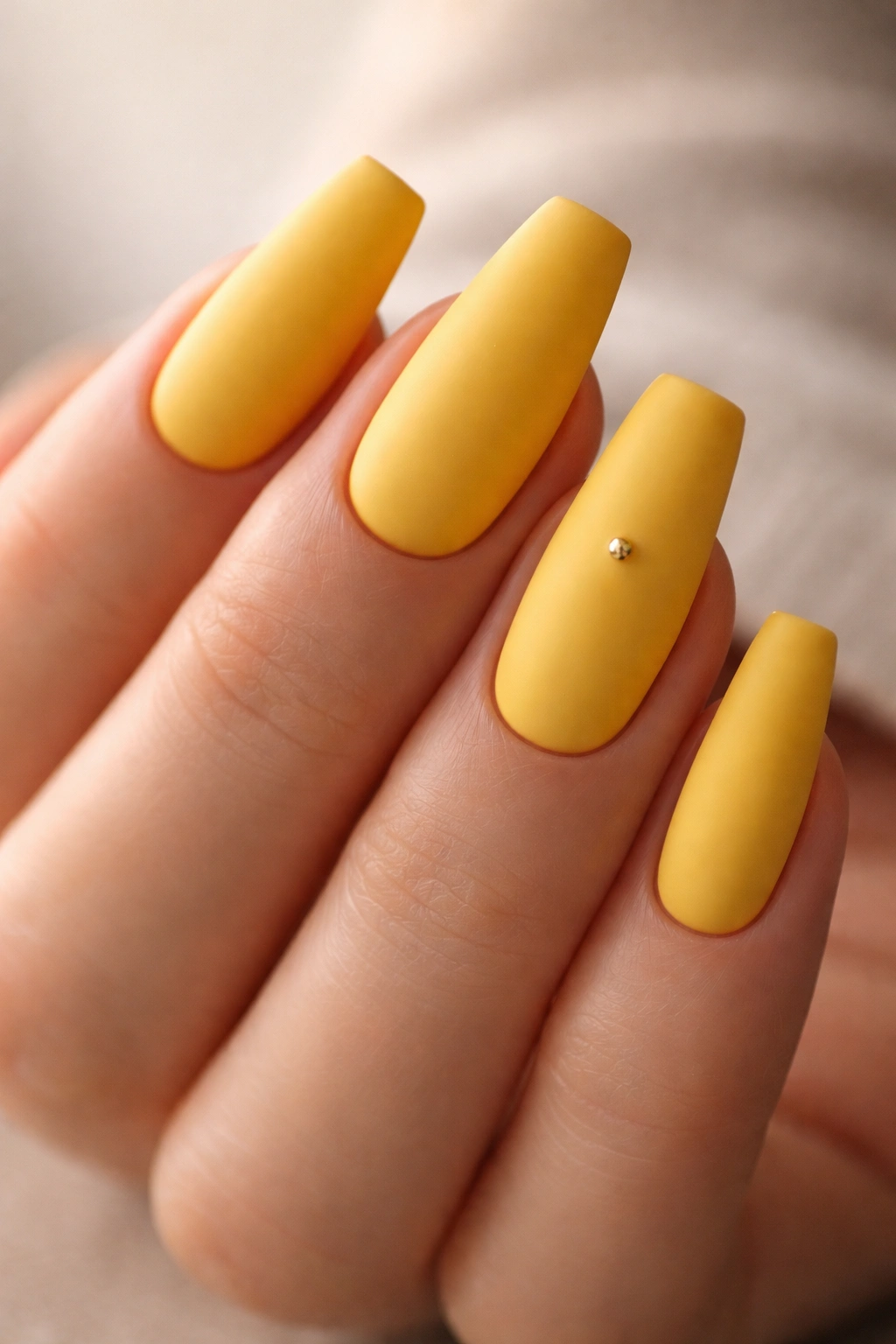
Why does matte sunflower yellow look richer than glossy pastel yellow?
Shine pulls your eye toward every brushstroke and ridge. Matte scatters that light, so the color reads as denser and a little moodier. A sunflower yellow with a hint of ochre can look almost like suede on a well-filed ballerina nail. It’s one of those finishes that feels more grown-up the second the topcoat cures.
You do need a smooth surface first. Matte is forgiving with streaks, yet brutal with lumps. If the builder layer is uneven near the apex or sidewalls, the topcoat will freeze every bump in place. Buff until the surface feels flat under a fingertip, wipe off the dust, then seal.
How to wear it without flattening the shape
Keep the side taper crisp. Matte can make wide nails look wider, so the file work matters more here than with a glossy set. I also like this shade best on solid-color nails with one accent, maybe a tiny metallic stud near the cuticle on one hand only. Too much extra art can muddy that velvety finish.
A final note: matte topcoats wear down at the tips before the rest of the nail. After about a week and a half, the free edge may look a shade shinier. That is normal. If it bothers you, a quick fresh layer of matte topcoat fixes it.
4. Canary Yellow with Micro Daisies
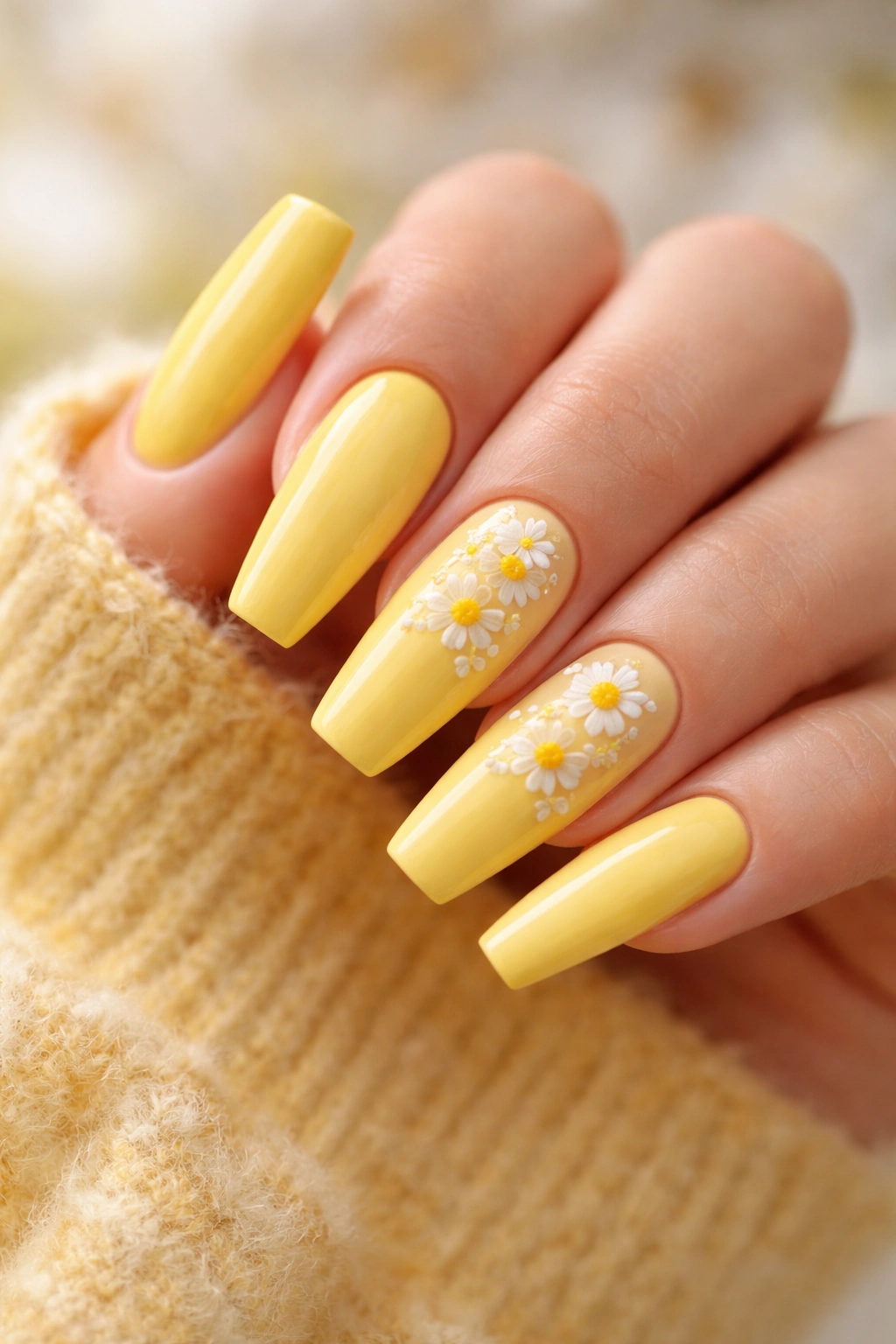
Picture a bright canary base with one tiny white daisy tucked off-center on the ring finger and another partial bloom drifting onto the thumb. That placement matters. Full floral coverage across all ten nails can look busy on a long tapered shape, while micro daisies on two or three nails keep the design airy.
Canary yellow has more punch than butter or sorbet shades. It’s cleaner, brighter, and less creamy, so the white petals pop without needing black outlines. The ballerina silhouette helps here by giving the flower a neat little stage. You’ve got enough width for detail, though not so much that the art turns chunky.
Small floral art also hides minor wear. Chips near a petal edge are less obvious than chips across a flat block of color, especially when the base is glossy.
- Keep the daisies tiny—about 3 to 5 mm wide—so they read as detail, not decal.
- Use a soft white, not paper white, if you want the look to stay fresh.
- Add a yellow or gold dot center only on one flower per hand; repeating it everywhere feels too planned.
- Leave at least five nails clean if the set is medium length.
This one has spring energy without forcing you into a full flower garden.
5. Soft Yellow Aura Fade
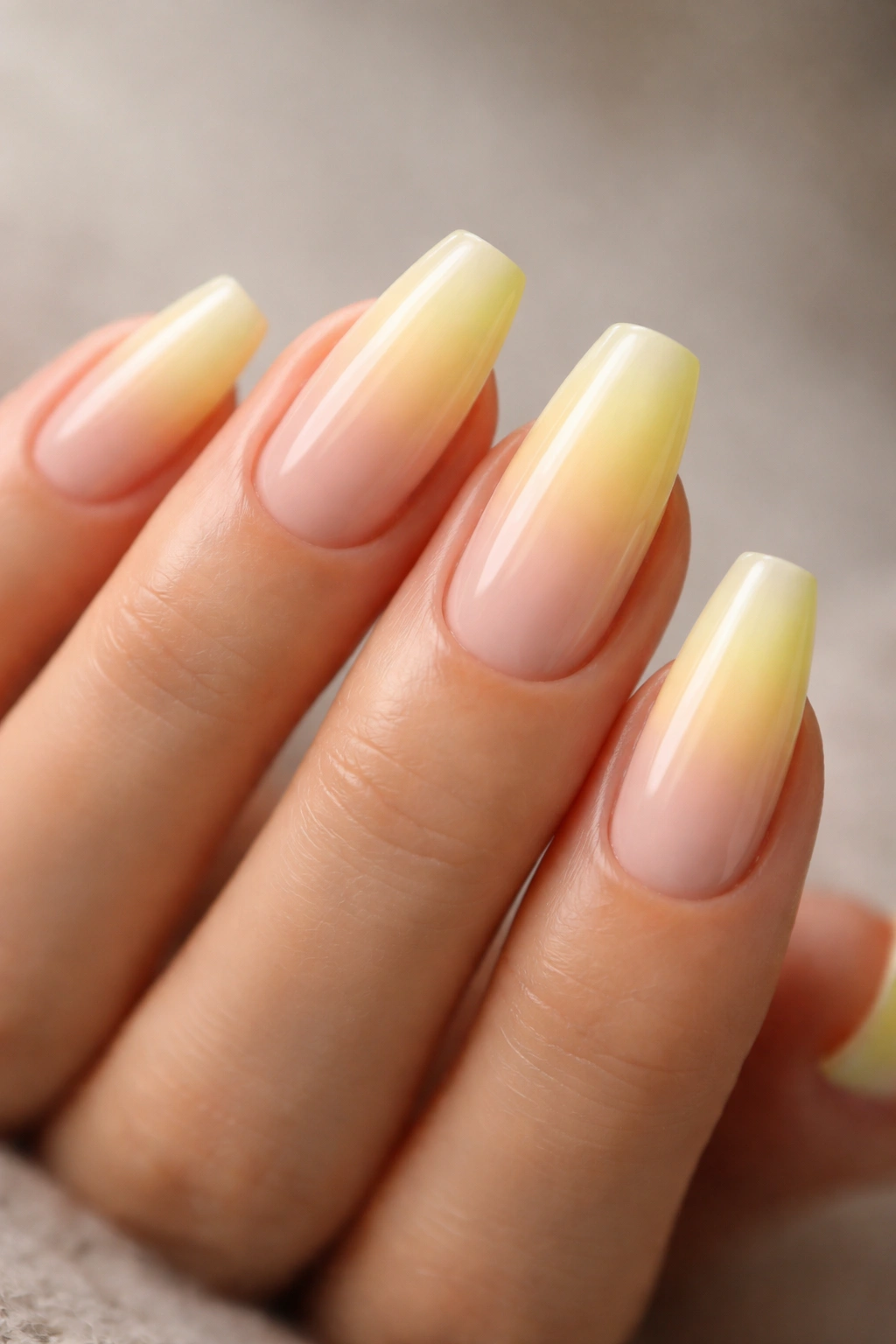
A yellow aura set looks like someone held a drop of sunlight at the center of each nail and let it blur outward. On a ballerina shape, that glow sits beautifully through the middle panel of the nail, where the tapered sides frame it without cutting the effect short.
The best versions start with a sheer beige, pink-beige, or translucent milky base, not full coverage. That transparency gives the yellow room to bloom. If the background is too opaque, the aura can look stamped on. You want a fade, not a sticker.
Airbrushing gives the smoothest finish, though a makeup sponge can get close when the color is built in thin layers. Usually two soft passes are enough. More than that, and the center turns into a hard circle. The whole point is diffusion.
This design flatters shorter ballerina sets too, which isn’t true of every yellow manicure. Because the color sits in the middle rather than stretching wall to wall, the nail still looks slim even if you don’t wear a long extension.
And here’s the part people miss: a yellow aura doesn’t need to be bright. A pale butter center over a rose-nude base can look quiet from a distance, then show its warmth when your hands move. That little delayed reveal is half the appeal.
6. Golden Jelly Coffin Shape
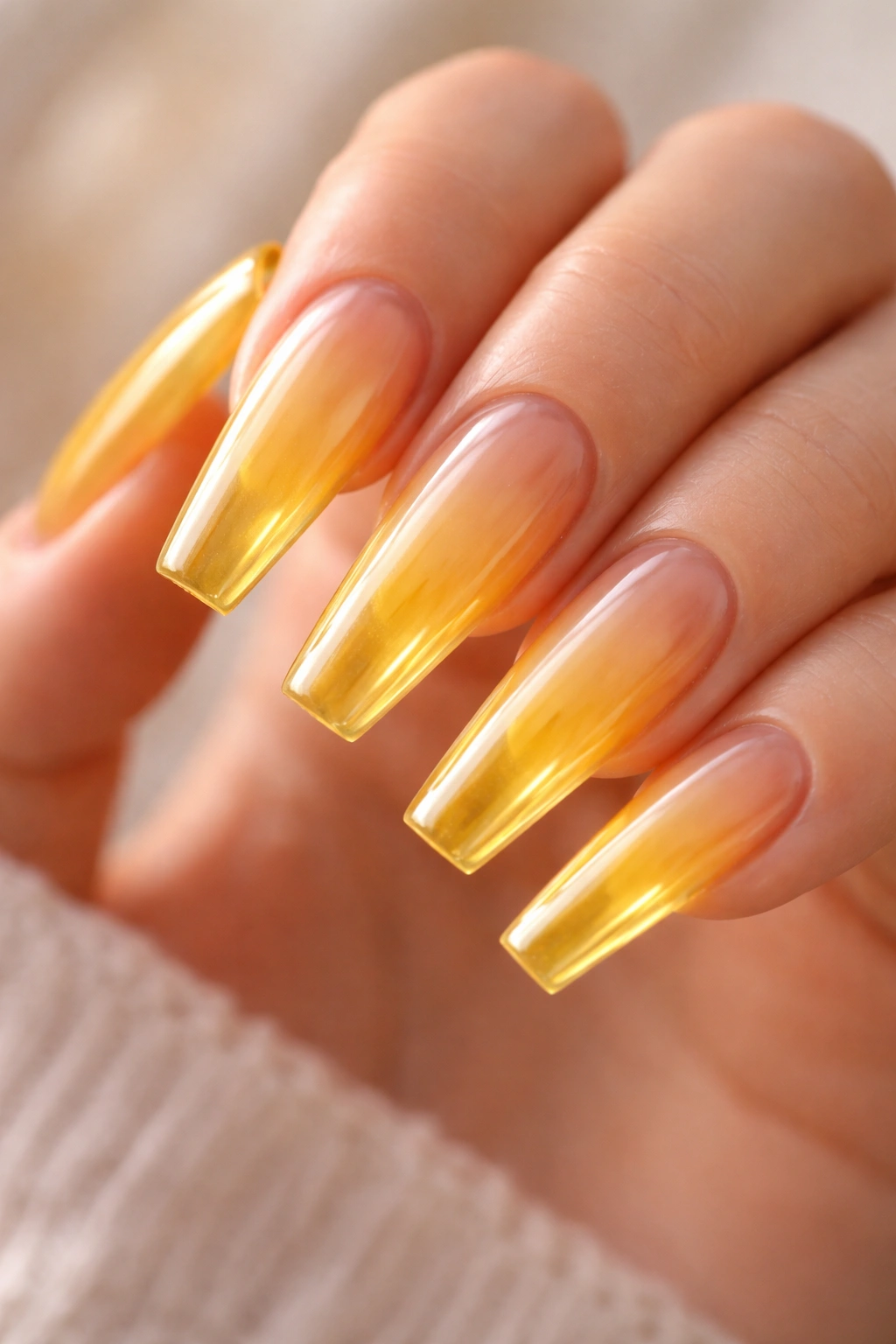
Unlike opaque pastel yellow, a jelly finish has depth because light passes through it. You can still catch a hint of the nail underneath, especially near the free edge, which makes the color feel juicy instead of blocky. On a ballerina or coffin shape, that transparency gives the long tip a glassy look I like more than flat neon nine times out of ten.
Application matters here. Jelly polish needs three thin coats, not two thick ones. Pile it on too fast and the middle of the nail turns muddy while the edges stay sheer. A smooth builder-gel base helps because every dip shows through translucent color.
This is also one of the few yellow looks that pairs well with a visible apex. In opaque shades, a pronounced apex can catch the light in a distracting way. In jelly, that curve adds dimension. You notice shape, color, and shine all at once.
Who is this best for? Anyone who wants yellow to feel glossy and fresh rather than powdery. If you love lip-gloss shine, glass skin, or syrupy candy colors, this one fits right in. If you prefer dry, matte, editorial finishes, skip it and head toward mustard or sunflower shades instead.
7. Honey Marble Swirls
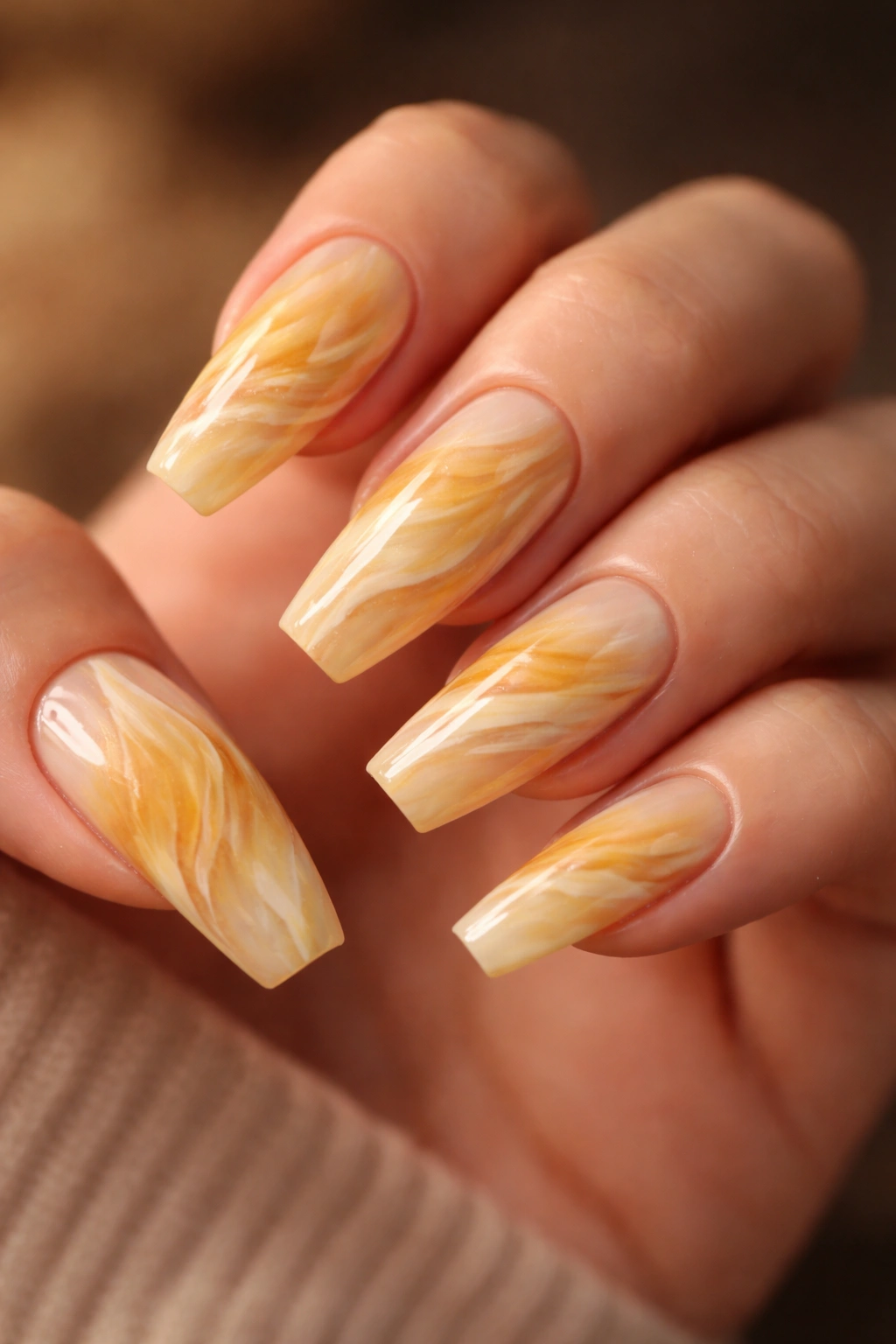
Honey marble lands in that lovely middle ground between neutral nails and art nails. You’re still working with yellow, yet the color is cut with cream, amber, caramel, or a sheer nude base, so it never feels flat. The finished set looks warm, layered, and a little expensive.
The swirl placement that keeps it clean
Marble gets messy fast when every nail carries the same amount of movement. A better route is to pick two full marble nails, then echo the colors on the others with smaller ribbon swirls or solid honey polish. That rhythm gives your eye a place to rest.
The pattern itself should stay loose. Tight zigzags read harsh on a ballerina shape. Soft, drifting lines mimic the way real honey pulls and folds when you lift a spoon.
Best details to request
- Use three tones at most: a honey yellow, a creamy off-white, and one amber or nude accent.
- Keep at least one nail nearly solid so the design does not turn cloudy.
- Ask for the swirls to run diagonally, not straight across, which helps the nail look longer.
- Finish with high gloss; marble needs shine to show its layers.
A marble set gives yellow more texture, which is handy if plain bright color feels too bare on your hands.
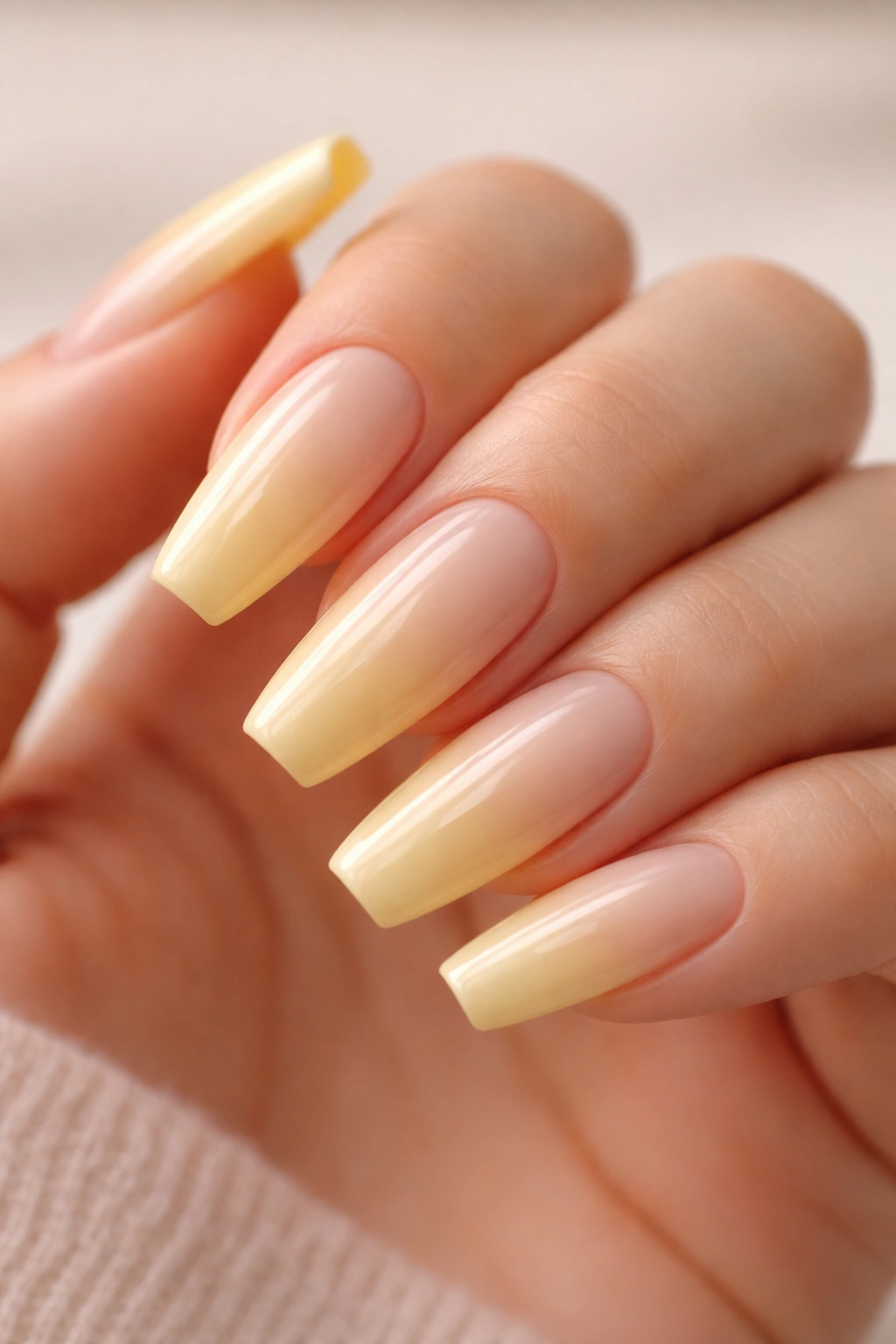
8. Nude-to-Yellow Ombré
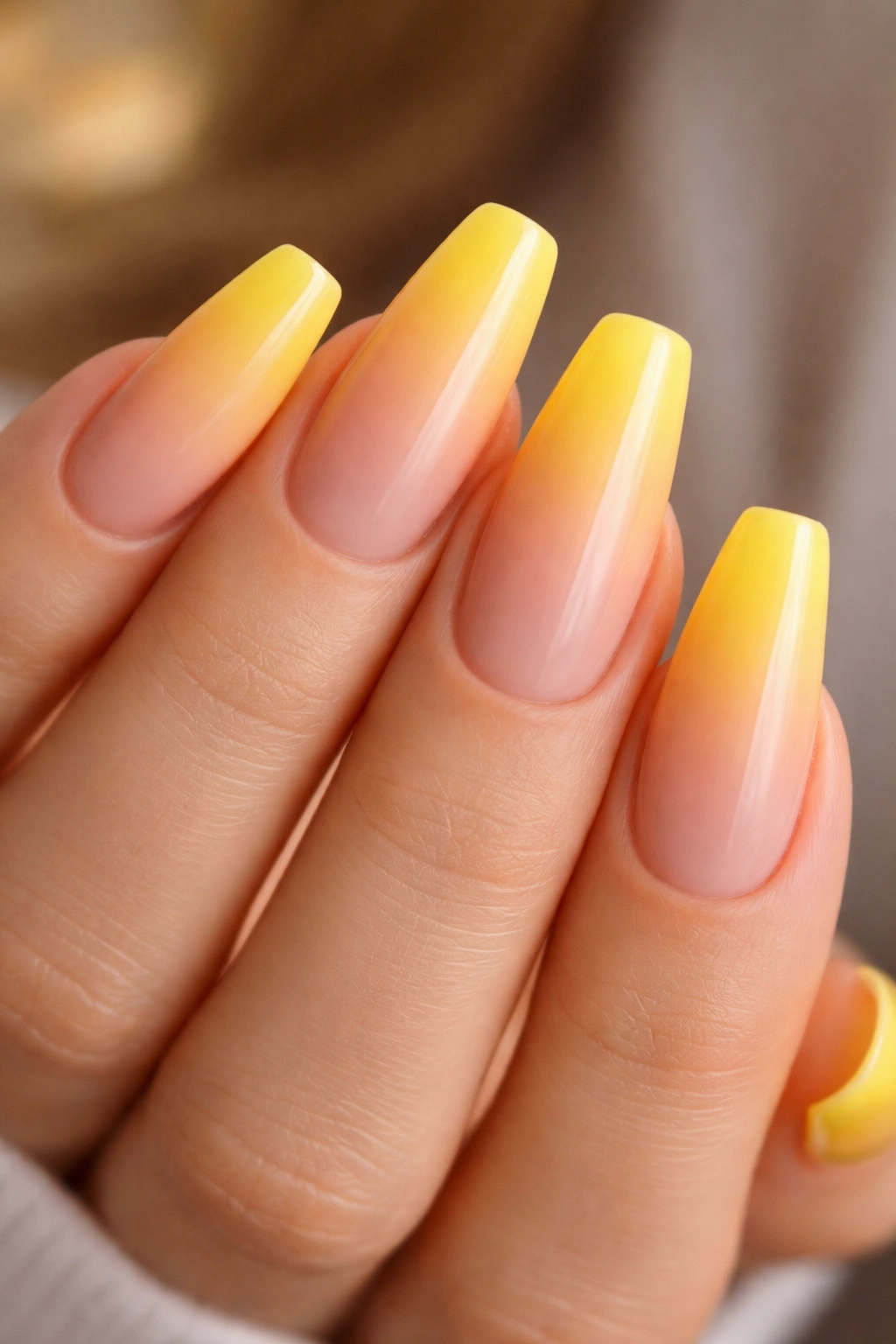
A good ombré can do something solid yellow can’t: it softens regrowth. When the color starts nude at the cuticle and fades into yellow through the upper half of the nail, the grow-out line stays far less obvious. That makes this design one of the smarter choices for anyone who stretches fills past the neat two-week mark.
The blend needs time. Fast sponge work can leave a grainy band where the nude and yellow meet, and graininess shows on light shades. Airbrush fades look smoother, though a patient hand with two sponge passes and a thin clear leveling coat can get there too.
Pastel yellow is the easiest version. Neon fades are sharper and more graphic, which can be fun, though they demand a cleaner blend or the transition line jumps out. For most people, a warm nude base with a lemon or butter tip gives the nicest balance.
Longer ballerina nails show the gradient best because you have more real estate to stretch the fade. Still, even a medium set can pull it off if the yellow starts around the mid-nail instead of right above the cuticle. Placement is everything here.
9. Taxi Yellow with Black Line Art
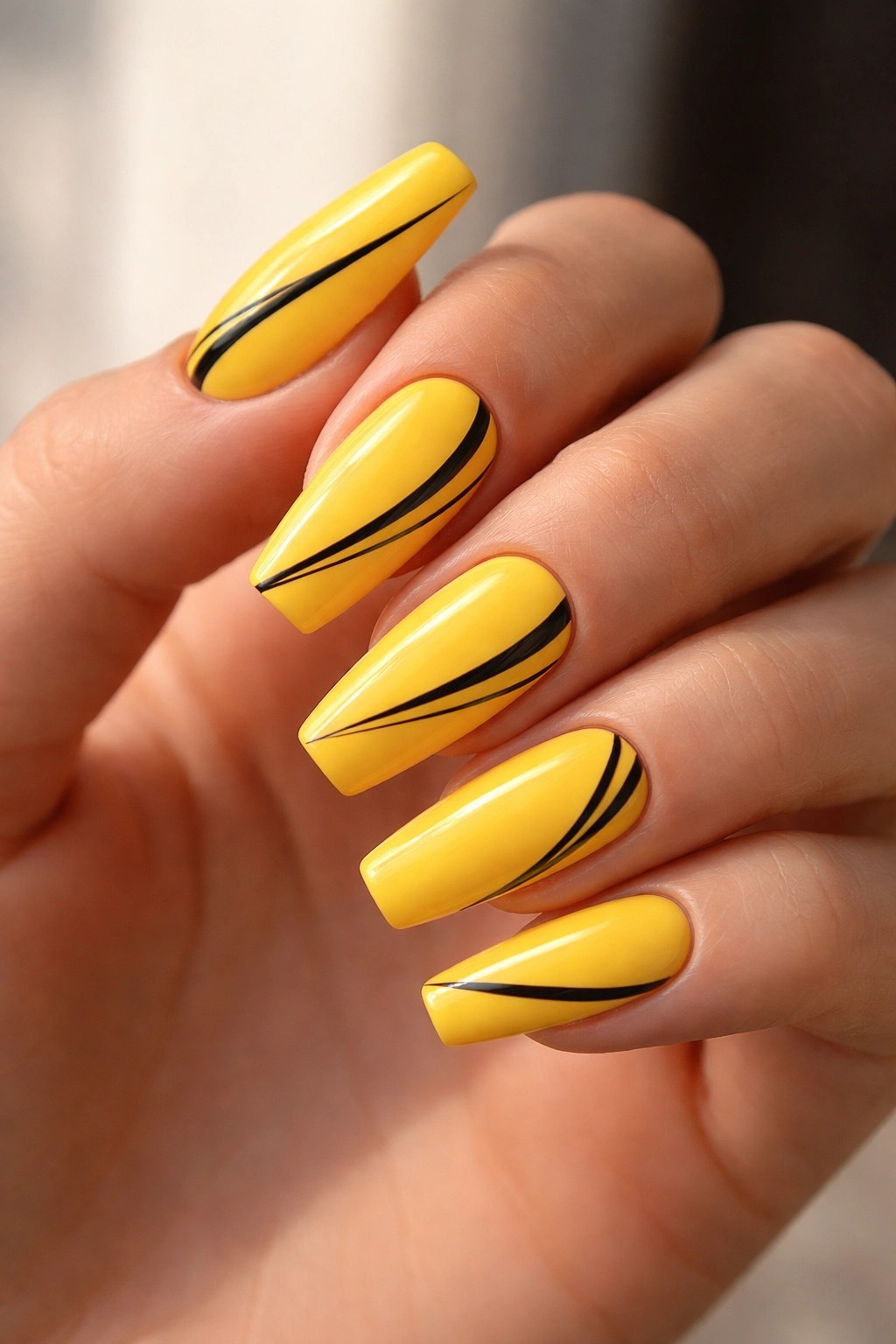
Can yellow look sharp instead of sweet? Yes—pair it with black.
Taxi yellow has that unmistakable urban punch: bright, saturated, a touch industrial. On its own, it can lean playful. Add a single black line, though, and the whole manicure shifts. Suddenly it feels graphic, fashion-forward, and cleaner than you expected from yellow.
The black detail needs restraint. One thin vertical stripe near the sidewall, a curved line tracing the cuticle on two nails, or a corner frame on the thumb can all work. Cover every nail with black swirls and you lose the tension that makes the set interesting. Yellow and black already carry contrast; they do not need much help.
Where the black detail lands best
Place black where it works with the ballerina shape rather than against it. Vertical or diagonal lines make the nail look longer. Heavy horizontal bars cut the shape in half. I also like one matte black accent over a glossy yellow base because the finish contrast does some of the design work without adding extra patterns.
This is the yellow set for someone who wears crisp shirts, silver jewelry, and dark sunglasses—not because those are rules, but because the manicure already has that clean, graphic attitude built in.
10. Chrome-Glazed Yellow Ballerina Nails
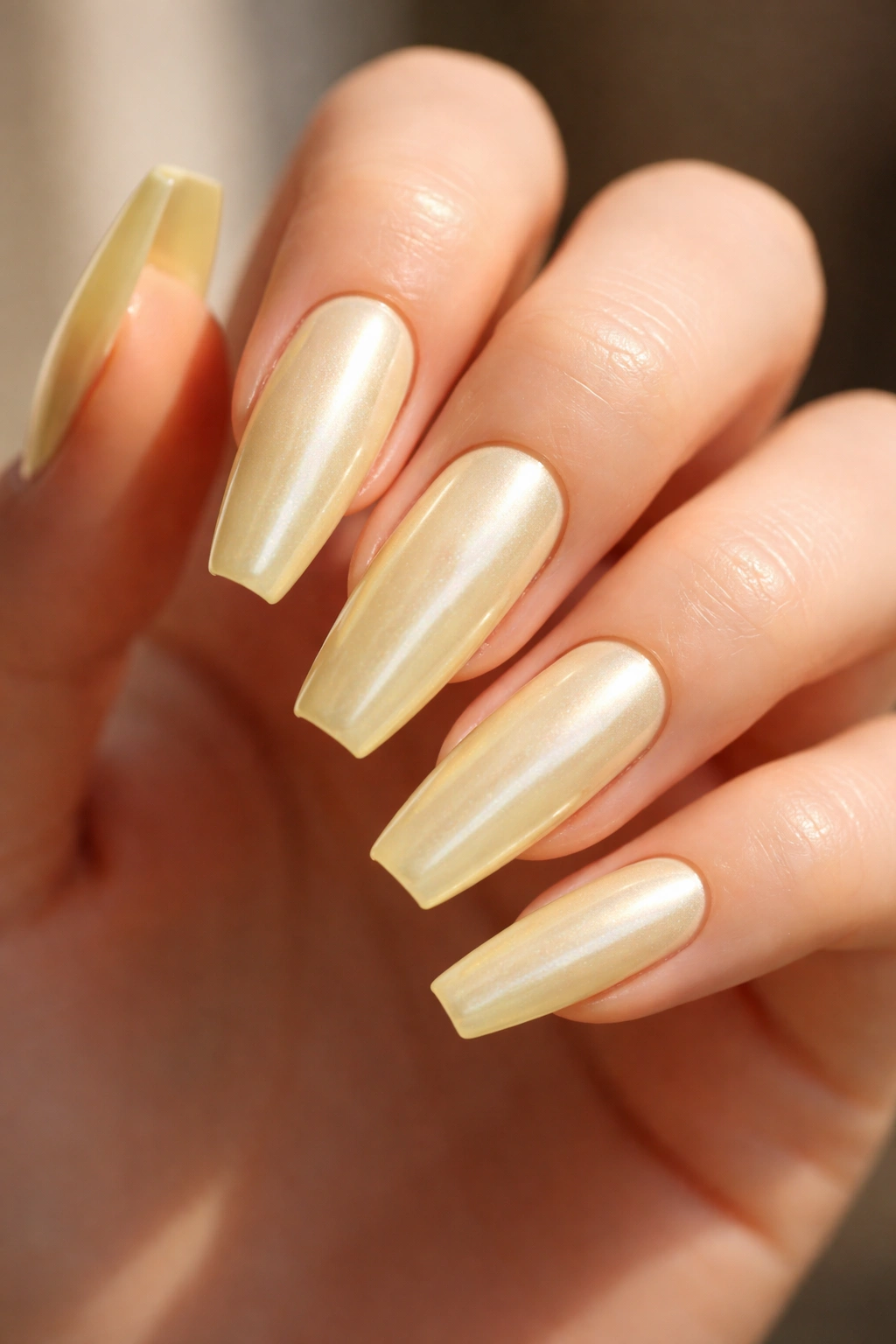
You notice this one when the light shifts. Under indoor bulbs, chrome-glazed yellow can look soft and pearly. Step outside or tilt your hand near a window, and the surface flashes with a slick, almost liquid sheen that plain cream polish never gets close to.
The base color matters more than the chrome itself. A custard, butter, or pale lemon base works best because the reflective powder adds depth without swallowing the yellow. Neon under chrome can push the whole look toward a plastic finish, which some people enjoy, though it loses the gentler glow that makes glazed nails fun.
A thin chrome layer is enough. Too much powder and the nail turns silver-white with a yellow cast instead of yellow with a reflective veil.
- Use a no-wipe gel topcoat before the chrome powder so the surface stays smooth.
- Keep the chrome pearl-toned rather than mirror-metallic if you want the yellow to remain visible.
- Medium to long ballerina lengths show the glaze best because the flat tip catches light at a clean angle.
- Seal the free edge well; chrome wear shows first at the tip.
There’s a reason this look keeps sticking around. It makes yellow feel polished without muting it.
11. Mustard Yellow with Gold Foil
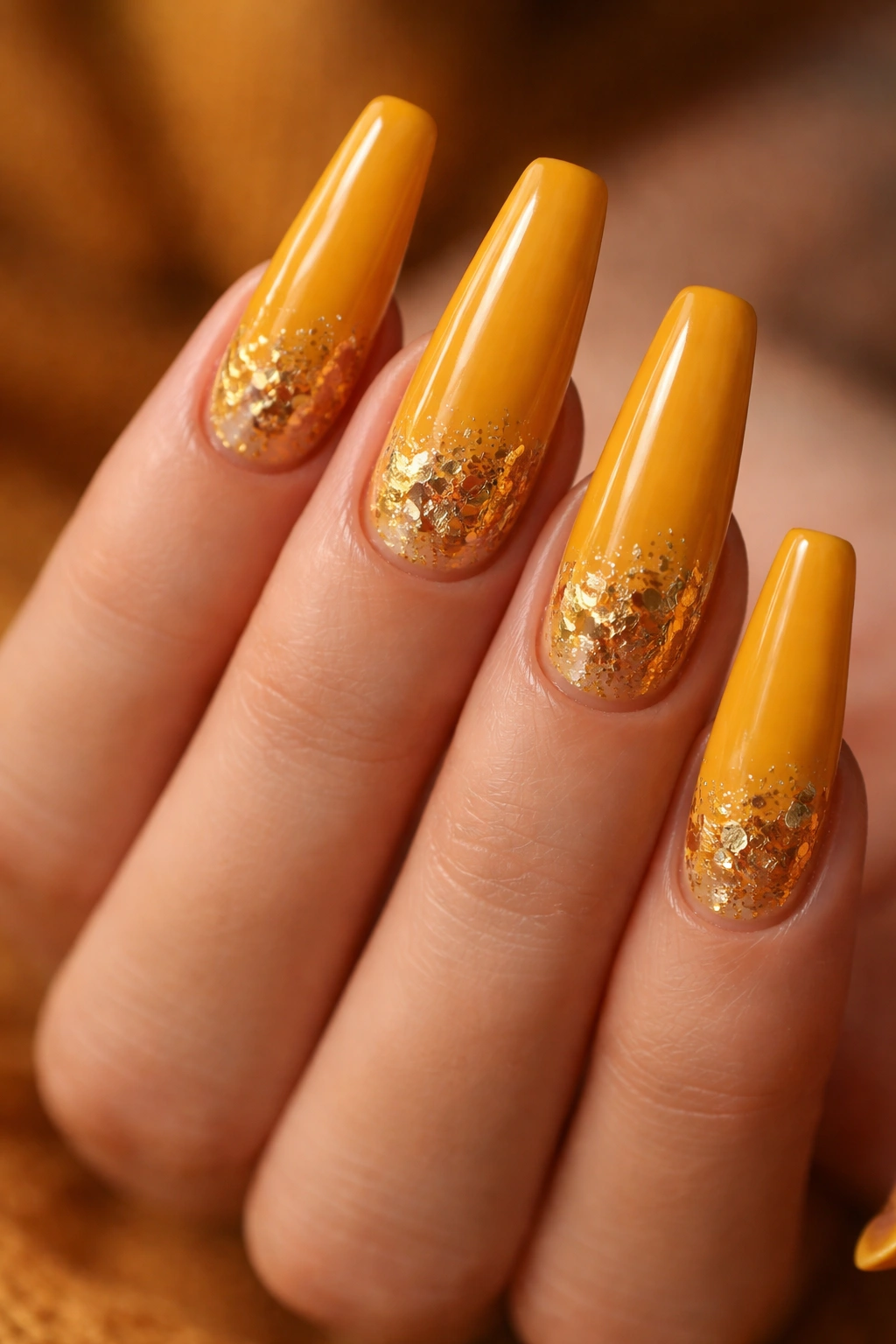
Mustard is the yellow people forget about until they see it on a long tapered nail and suddenly get it. It carries more brown and ochre, so it feels grounded. Less candy, more spice cabinet. On a ballerina shape, that depth can look lean and editorial rather than bright and sunny.
Gold foil is the right partner because it echoes the warmth without matching the polish too closely. Scatter tiny foil fragments near the cuticle on two nails, or drag a few irregular pieces through one side of the nail for a broken-metal effect. Big foil sheets can overpower mustard. Small torn flakes look smarter.
I like mustard best with a glossy topcoat, though matte can work if the foil sits under the surface and the nail has enough length. Shorter mustard nails can veer muddy, which is why the ballerina shape helps so much here; it keeps the color looking deliberate.
This set also ages well over a week or two. Tiny scratches and dust don’t shout the way they do on neon or pearl finishes. If you use your hands hard—typing, opening boxes, cleaning, all the boring daily stuff—mustard forgives more than pale pastel ever will.
12. Yellow and White Color-Block Tips
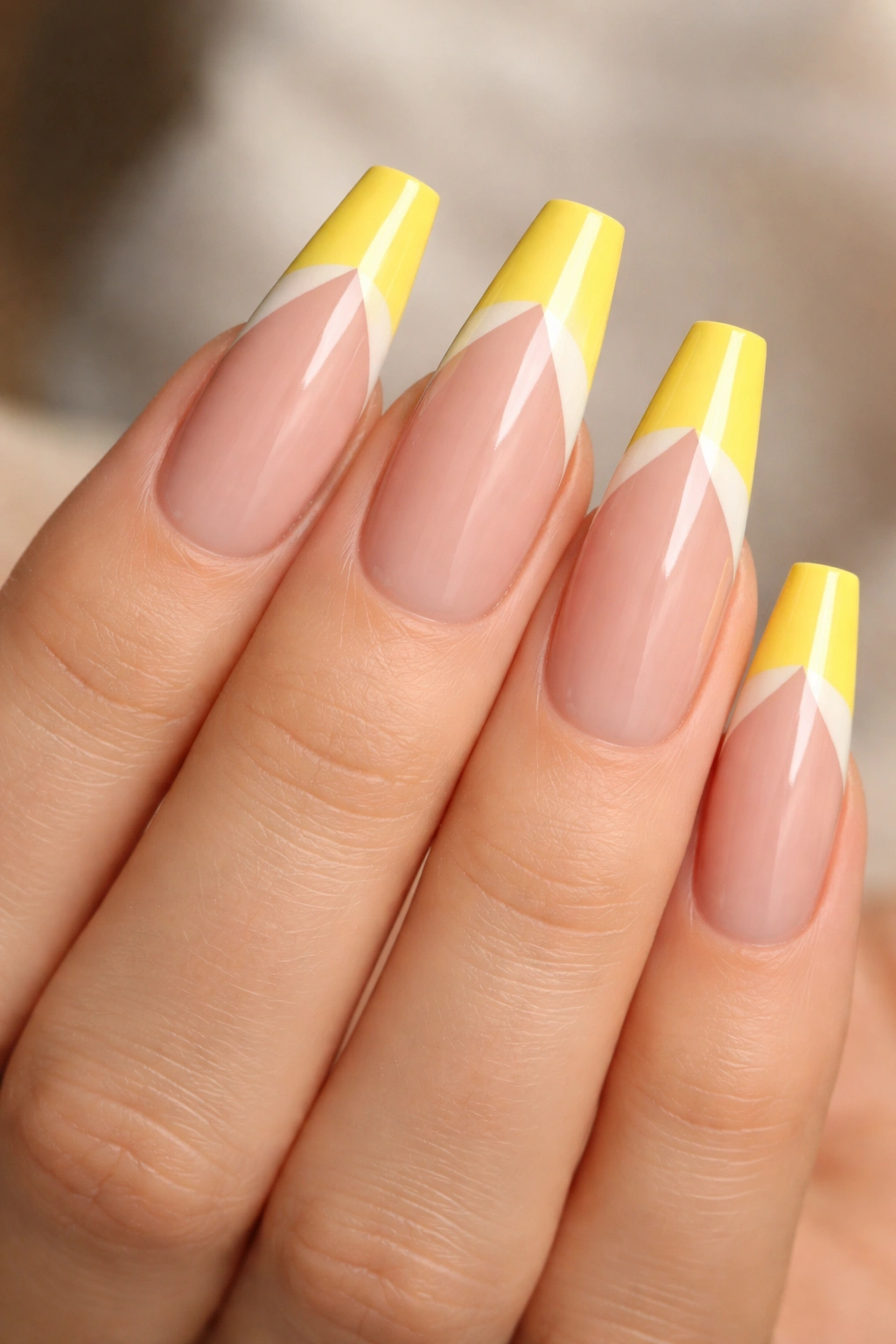
Unlike a French tip, a color-block set uses panels. Think diagonal slices, off-center rectangles, or stacked blocks of white and lemon yellow across the top third of the nail. The ballerina shape is ideal for this because the flat tip gives you a clean end point, while the taper keeps the geometry from feeling too chunky.
Crisp edges are non-negotiable. If the line between yellow and white wobbles, the whole design goes soft in the wrong way. Striping tape, a fine liner brush, or pre-mapped gel guides help. Even salon techs who can hand-paint florals with ease will sometimes outline the blocks before filling them, and that’s smart, not timid.
This look suits people who like polish with structure. It feels organized, graphic, and tidy. You can wear it with neutral clothes and let the nails do the work, or echo the white-yellow split in a sneaker, bag strap, or earring if you enjoy that sort of visual callback.
Long nails show the blocks best, though medium lengths can still carry a diagonal tip split. Keep the blocks at the top half of the nail. Drag them too low and the design starts to crowd the apex.
13. Neon Yellow Negative Space
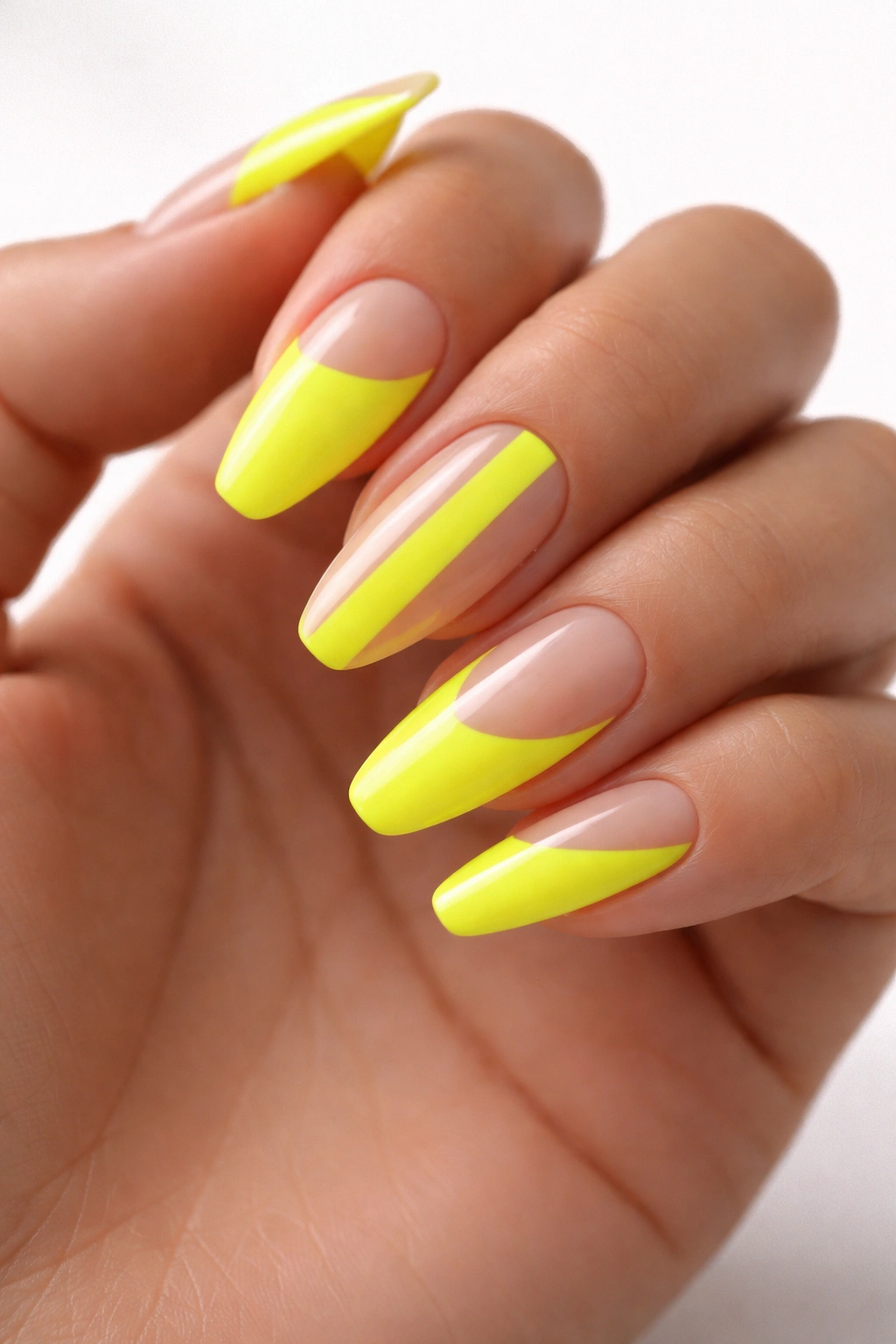
Neon yellow has one big problem: wall-to-wall coverage can feel loud in about thirty seconds. Negative space fixes that. Leave part of the nail sheer—half moons, side cutouts, a center stripe, even a slim bare crescent near the cuticle—and the brightness has room to breathe.
Why negative space saves neon
The clear or nude gap breaks the color into shapes your eye can process fast. Instead of seeing one blast of highlighter yellow, you see design. That change sounds small. It is not. It turns a hard-to-wear polish into something with edge and intention.
Placement matters. Side-swept negative space tends to flatter ballerina nails because it follows the taper. A straight bare strip down the middle can work too, though it needs symmetry. Crooked center gaps are impossible to ignore.
Best ways to keep it sharp
- Use builder gel or a ridge-filling base first; bare sections show every flaw.
- Limit neon to half or two-thirds of the nail for the cleanest balance.
- Outline one edge with a hair-thin silver or white line if you want extra definition.
- Refresh topcoat every 5 to 7 days; neon loses its bite when the surface goes dull.
If full neon feels like too much, this is the version that still gives you the rush without the overload.
14. Pearl-Washed Pastel Yellow Ballerina Nails
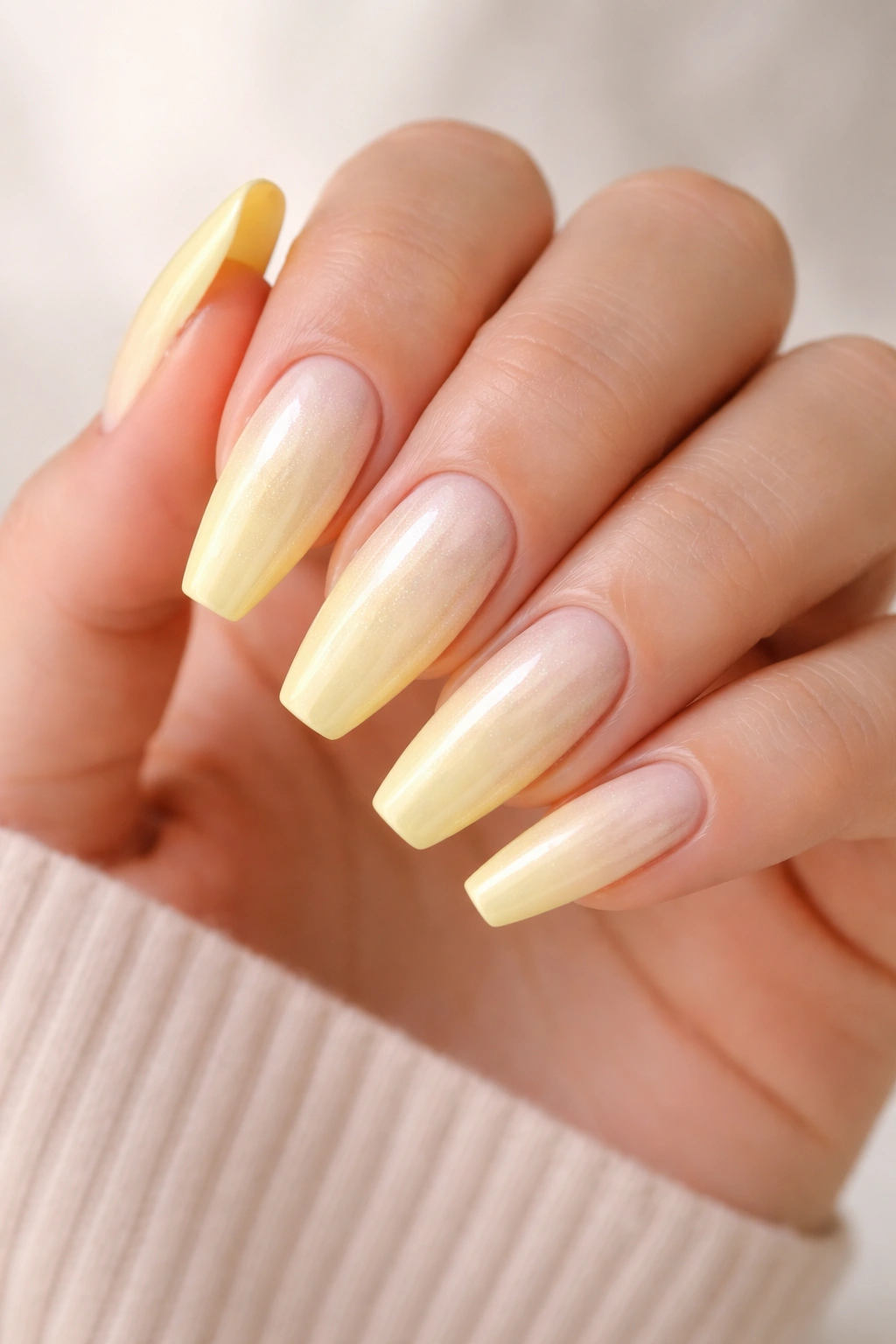
Pearl topcoat can make pale yellow look softer, richer, and less flat in one pass. That sounds like a tiny adjustment, though it changes the whole manicure. A plain pastel can sit on the nail like chalk. Add a fine ivory pearl wash and the shade picks up movement.
I like this over custard yellow, baby chick yellow, or pale butter shades, not bright lemon. Stronger yellows tend to fight the pearl. Softer tones let the shimmer hover over the color instead of swallowing it. You still read yellow first; the pearl comes in when the hand turns.
This is a smart option if chrome feels too slick for your taste but plain cream polish feels unfinished. Pearl sits in the middle. It has glow, though not a hard mirror flash. Think soft luster rather than metal.
Pair it with short crystals if you want, though I’d keep those to one nail per hand and place them low near the cuticle. The pearl finish already brings texture. More than a little hardware can tip the set from polished to crowded.
15. Yellow 3D Flower Accent Set
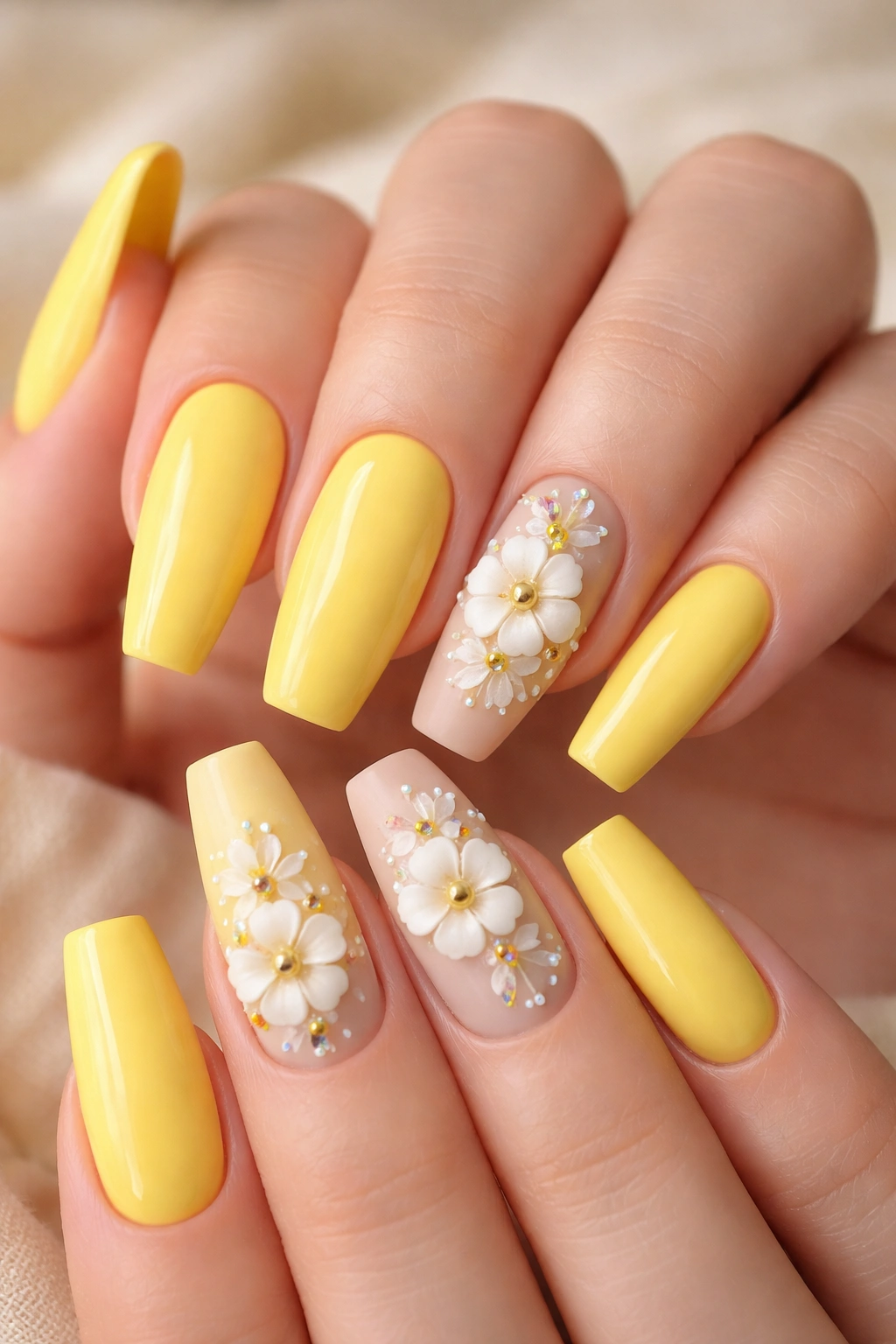
A 3D flower set can go wrong fast. Too many petals, too much height, too much happening on too many nails, and the manicure starts looking like a craft project. Keep the structure tight, though, and yellow becomes one of the best colors for dimensional art because it already carries warmth and light.
The cleanest version uses solid yellow on six or seven nails, then low-profile flowers on two accent nails and maybe one tiny sculpted bloom on a thumb. Low-profile matters. Petals that rise about 1 to 1.5 mm off the nail still give texture without catching on knitwear, hair, or pockets every five minutes.
Ballerina nails help because the flat tip gives the flower more grounding than a pointed stiletto would. You can place the bloom off to one side, leave negative space around it, and let the rest of the nail stay calm. That empty space is doing work, even if nobody says so out loud.
I’d keep the flowers in white, creamy ivory, or translucent gel rather than yellow-on-yellow. A monochrome 3D set can blur into itself. Contrast lets the sculpting show.
Wear this one when you want your nails to be part of the outfit, not an afterthought. There’s no point pretending otherwise.
Final Thoughts
Yellow gets labeled tricky, though the color is rarely the real problem. The issue is finish, undertone, or placement. Put the wrong yellow on the wrong base and it looks flat. Pair the right yellow with a ballerina shape, and the whole thing sharpens up.
If you’re torn between two designs, start by choosing the mood first. Butter, pearl, and ombré feel softer. Taxi yellow, neon negative space, and black line art hit harder. Jelly, chrome, and aura sit in that fun middle ground where the light changes the manicure as much as the color does.
And if you only take one practical note from the whole bunch, make it this: yellow needs a good foundation. A smoothed builder layer, a blurring nude base, and two thin coats beat one thick slap of color every single time. That’s where the clean finish lives.