

Blue ballerina nails can look expensive or cheap based on two tiny things: the width of the tip and the undertone of the blue. Get either one wrong, and that clean tapered shape starts reading heavy, while the color can swing from crisp to chalky in a single coat.
That’s why blue is such a fun nail color to work with. It isn’t one look. Baby blue with a sheer base feels airy and light. Cornflower turns playful without looking juvenile. Navy, especially with a glassy top coat, has that ink-deep finish that makes the whole hand look sharper.
I’ve learned—after more screenshot-to-salon translation mishaps than I’d like to admit—that ballerina nails ask for more precision than almond nails. The sidewalls need to stay straighter for longer, the flat tip cannot be too wide, and dark shades show every ripple in the surface. A deep navy manicure on a bumpy nail bed will tell on itself fast.
Get those details right, though, and blue ballerina nails cover a bigger range than almost any other color family. Soft, cloudy, icy, denim, electric, inky. There’s a version for quiet days, dressed-up nights, and every mood in between.
Why Blue Ballerina Nails Look So Good on a Tapered Shape
Blue does two jobs at once. It gives you color, obviously, but it also changes how the shape reads from a distance. Pale blues make ballerina nails look cleaner and lighter. Dark blues sharpen the outline and make the flat tip stand out more.
That matters because ballerina nails already have strong geometry. The sides taper inward, but not as tightly as stiletto nails, and the squared-off end keeps them looking polished instead of pointy. Blue plays nicely with that structure. A warm beige can blur the edges. Blue, especially cooler blue, makes them look deliberate.
Finish changes the whole story too. A cream baby blue feels soft. A chrome overlay turns that same shade icy and futuristic. Matte navy swallows light and gives the shape a velvety block of color, while a jelly sapphire lets light pass through so the nail looks deeper, almost like tinted glass.
A few combinations keep winning because they work with the shape instead of fighting it:
- Milky light blue softens long ballerina nails so they don’t feel harsh.
- Medium blues like cornflower and periwinkle show off nail art without making the hand look too busy.
- Deep navy and midnight tones make the flat tip stand out in the best way.
- Chrome, cat-eye, and jelly finishes add movement, which helps blue look richer instead of flat.
Shape comes first. But once the structure is right, blue is one of the few color families that can feel delicate at one end and dramatic at the other without changing the nail shape at all.
What to Decide Before You Book a Blue Ballerina Manicure
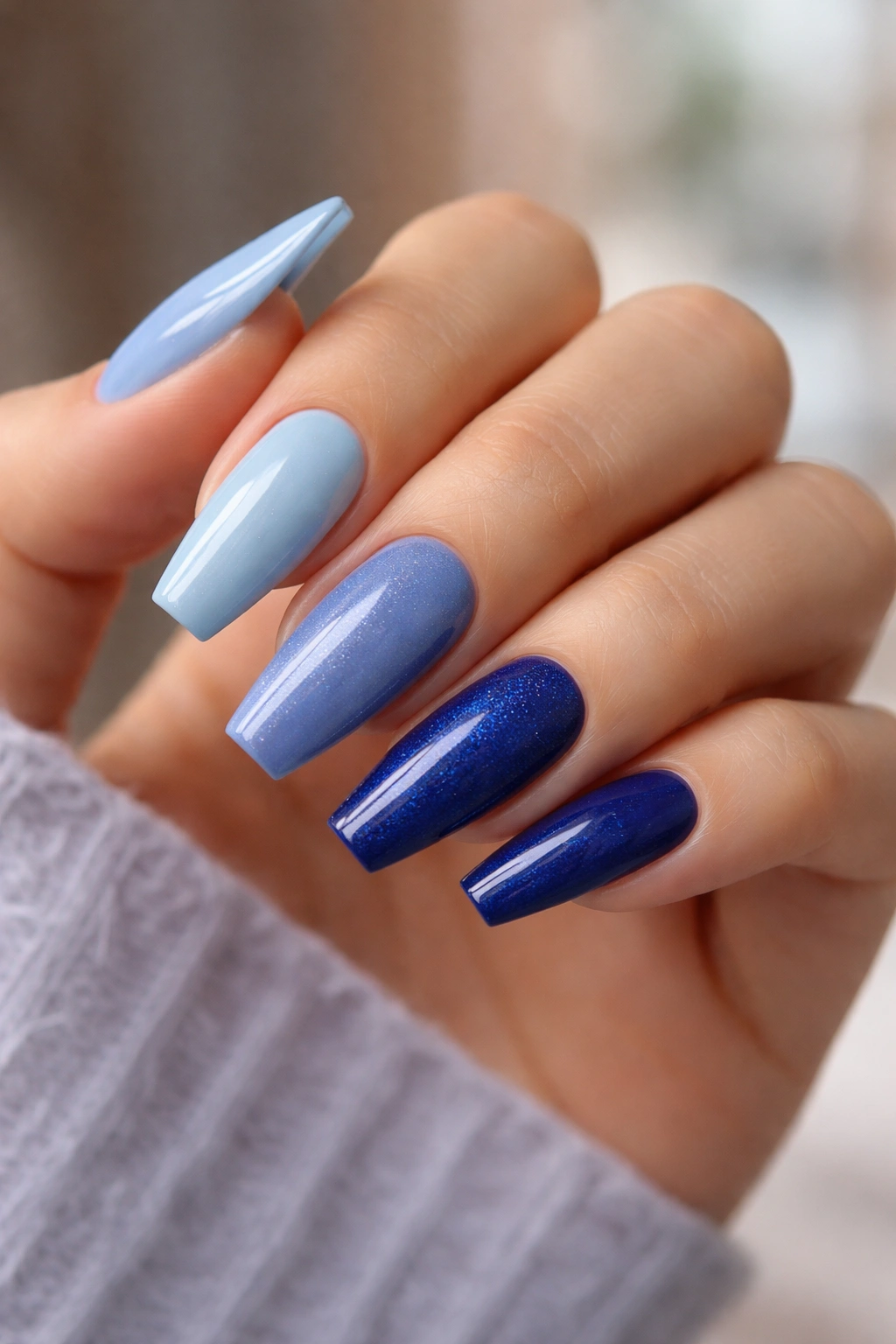
Walking into the salon with “blue ballerina nails” saved on your phone is a start, not a plan. Blue shifts under salon lights, phone flash, daylight, and matte top coat. A shade that looks creamy online can turn gray on your hand if the undertone is off.
Pick the length before the color
Short ballerina nails need a softer approach. If the free edge is only 3 to 5 mm long, pale blue, micro-French tips, and sheerer finishes usually look better than heavy art. Longer lengths—closer to 8 to 12 mm past the fingertip—can handle navy blocks, marble, chrome, and diagonal designs because there’s room for the eye to travel.
Match the blue to your skin, not the bottle
Cool pink undertones often look sharp with baby blue, cobalt, and true navy. Olive and golden skin can carry dusty blue, turquoise, and denim especially well. If your hands pull red, a milky base under the blue can smooth things out. Tiny tweak, big payoff.
Ask how the color will be built
Some looks need solid cream gel. Others need a sheer wash, sponge blend, chrome powder, or a magnetic layer. If you want a jelly sapphire finish and your tech reaches for a full-coverage cream polish, stop there and clarify. Those are two different manicures.
And one more thing: some nail techs use ballerina and coffin like they mean the same shape. Usually, they do. If you like a softer taper, say that. If you want a sharper sidewall with a flatter tip, say that too. Dark blue does not forgive shape confusion.
1. Powdery Baby Blue With Gloss Finish
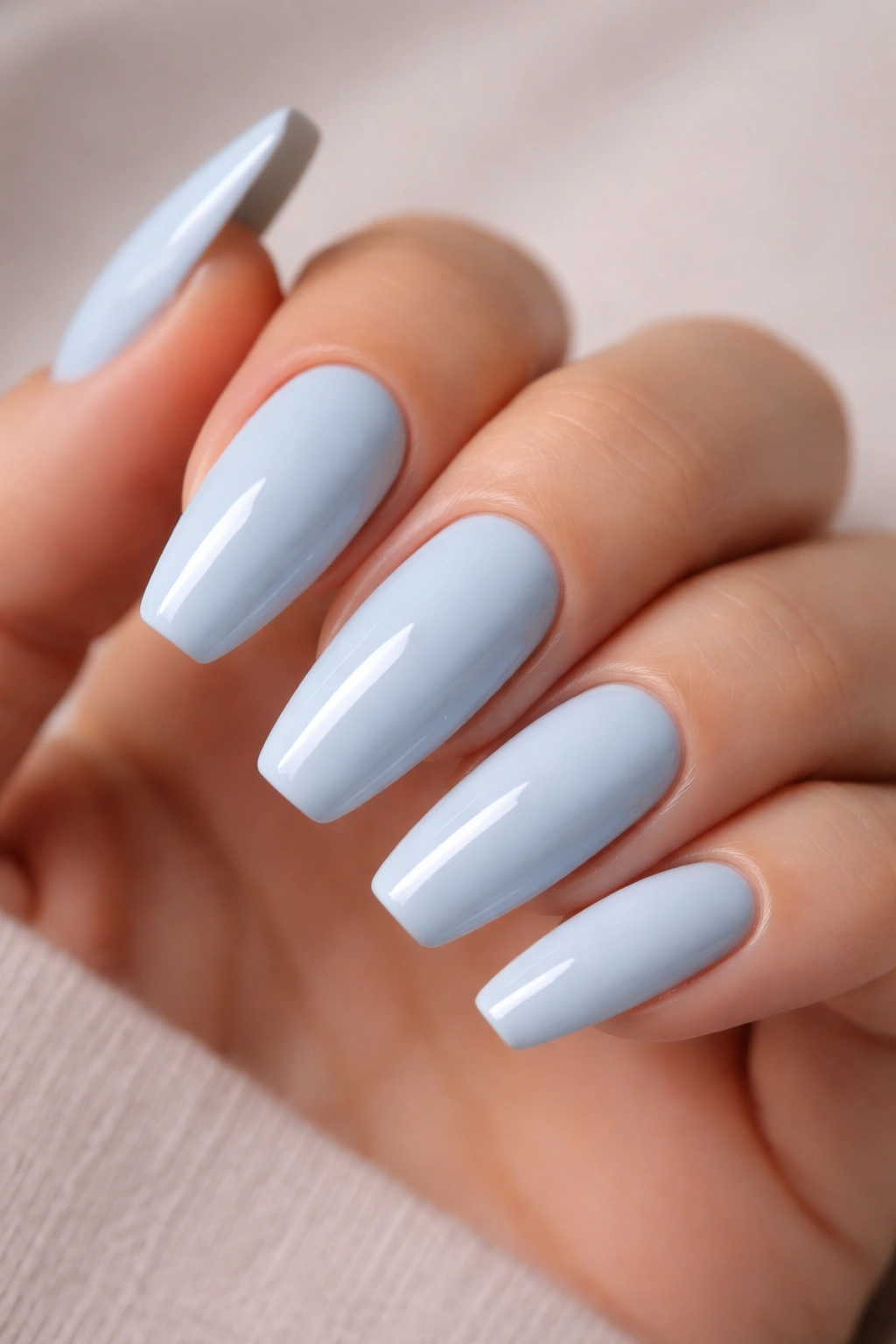
A soft baby blue is the easiest way into this color family, and I still think it’s one of the prettiest. On a ballerina shape, that pale powdery tone keeps the flat tip from looking severe. You get definition, but the whole manicure still feels light.
Why it works
The best version isn’t stark pastel with a white cast. You want a baby blue with a drop of gray or milkiness in it, because that extra softness helps the color sit flatter on the nail instead of shouting from across the room. Two thin coats over a smoothing base usually look better than one thick coat, which can streak around the sidewalls.
Quick details to ask for
- Keep the length short to medium if you want the color to stay clean and airy.
- Ask for a high-gloss top coat, not matte; the shine gives the pale blue depth.
- Request a slim taper so the nail doesn’t look wide at the tip.
- If your natural nail bed has ridges, use builder gel or a ridge-filling base first.
Best move: pair powdery baby blue with minimal jewelry and let the color carry the look. It does not need glitter to feel finished.
2. Milky Blue French Tips on a Nude Base
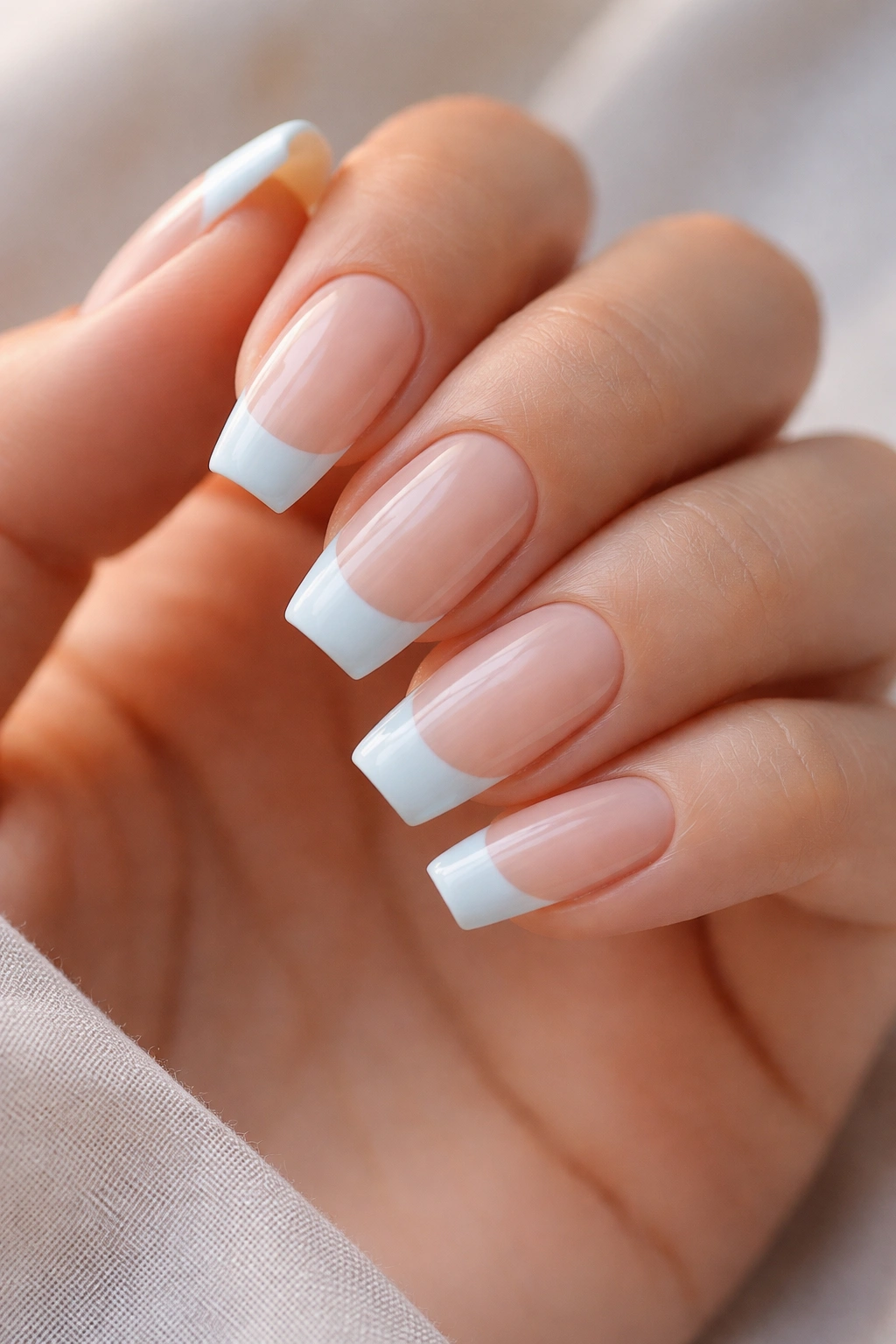
If you want blue without wearing a full blue manicure, start here. A milky blue French tip on a nude or sheer pink base feels cleaner than a solid pastel set, and it grows out far more gracefully.
The trick is scale. A good blue French on a ballerina nail usually looks best when the tip sits around 2 to 4 mm deep, depending on nail length. Too shallow, and it disappears. Too thick, and it starts looking like a color-block nail instead of a French.
I like this look on medium-length ballerina nails because the flat edge gives the smile line a crisp frame. Ask for a soft square tip with straight sidewalls, then a cool nude base that matches your nail bed instead of fighting it. A sheer peachy base can make pale blue look oddly green. Annoying, but true.
This is also one of the smartest options if you type all day, handle paperwork, or want something polished that doesn’t beg for attention. Blue stays at the edge, the center stays quiet, and chips near the cuticle are barely an issue.
3. Robin’s Egg Blue With a Shorter Ballerina Shape
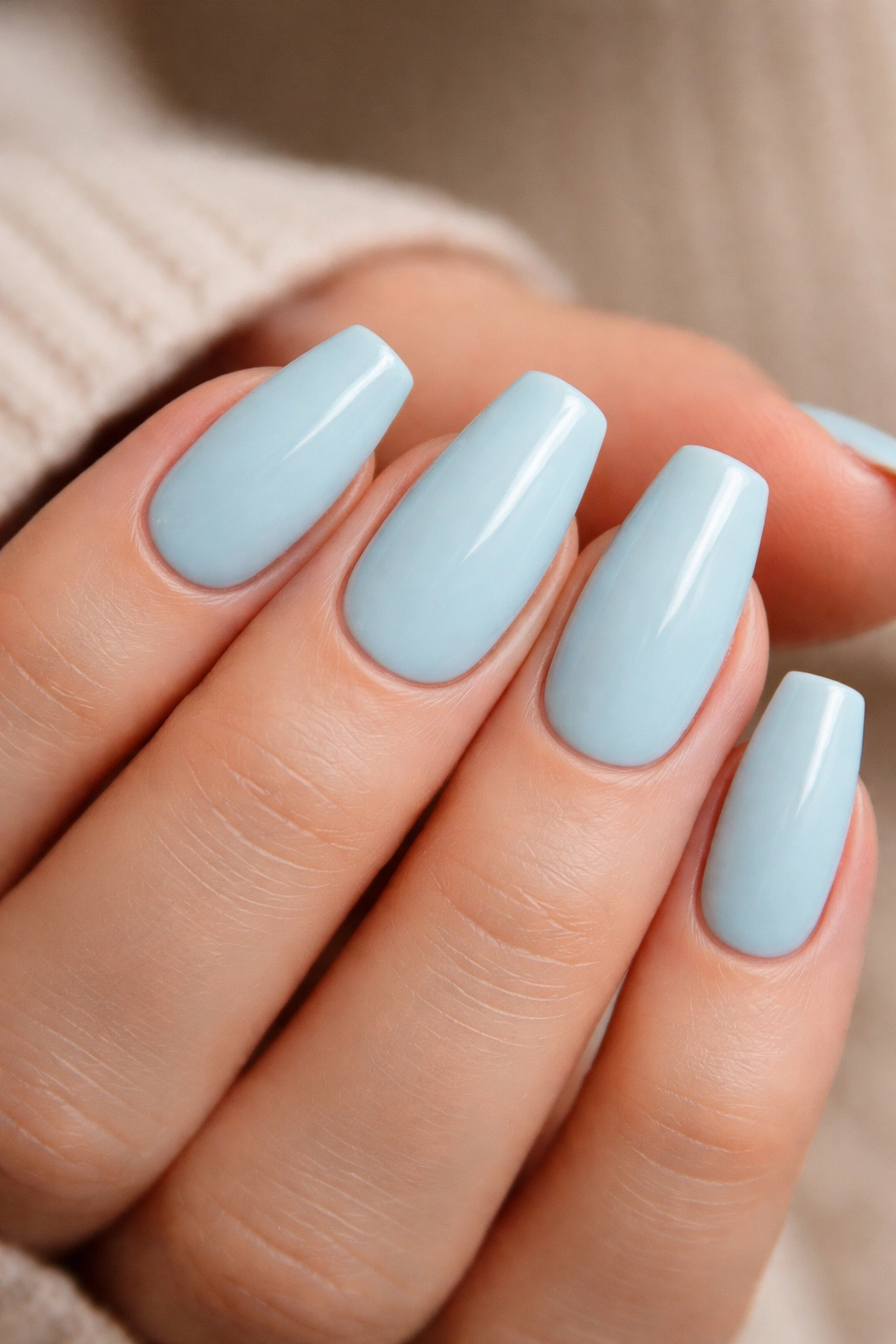
Can ballerina nails still look right when they aren’t long? Yes—and robin’s egg blue is one of the shades that proves it.
Shorter ballerina nails can go boxy if the color is too dark and the taper is too blunt. Robin’s egg blue solves some of that because it has enough color to show the shape, yet it stays bright enough to keep the hand looking fresh. I’d keep the free edge around 4 to 6 mm here. That gives you the ballerina outline without veering into stubby square territory.
This shade has a little more life than baby blue. It leans cheerful, but not sugary. On medium and deeper skin tones, it pops. On fair skin, it still works, though I’d ask for a creamy formula instead of one with a chalky white base.
How to ask for it
Tell your nail tech you want a short coffin or ballerina shape with a softened taper, not a square nail with clipped corners. Then ask for robin’s egg blue in a cream finish and a rounded cuticle area for balance. That last part matters more than people think; a sharp sidewall with a soft cuticle keeps shorter nails from looking blocky.
4. Blue-White Ombré That Looks Like Porcelain
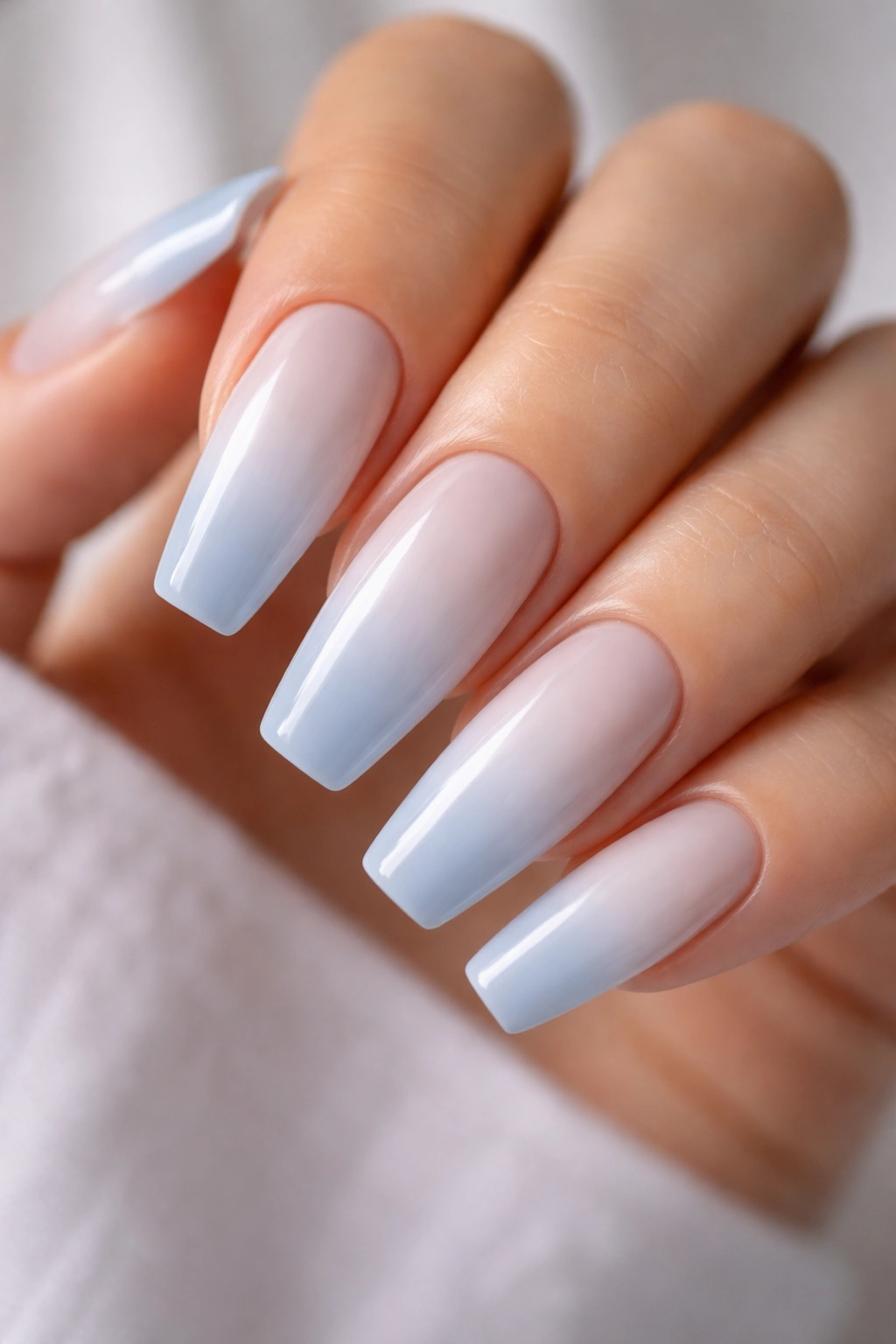
I love this one on days when solid color feels too blunt. A blue-white ombré can look airy, almost porcelain-like, if the blend is smooth and the shades stay in the same cool family.
The best version fades from a milky white or sheer nude at the cuticle into a pale blue tip. On ballerina nails, that gradient stretches the finger because the eye keeps moving toward the end of the nail instead of stopping at one hard color line.
A few details make or break it:
- Use two close tones, not a white and a random bright blue.
- Ask for the blend to start around the middle third of the nail, not right at the cuticle.
- Keep the top coat glossy so the fade looks seamless.
- Skip chunky glitter over the ombré unless you want the design to lose that porcelain feel.
There’s something calm about this manicure. It reads neat. Quiet. More polished than playful. If your wardrobe leans crisp—white shirts, denim, silver jewelry, navy knits—this one slips right in.
5. Icy Blue Chrome Over Ballerina Nails
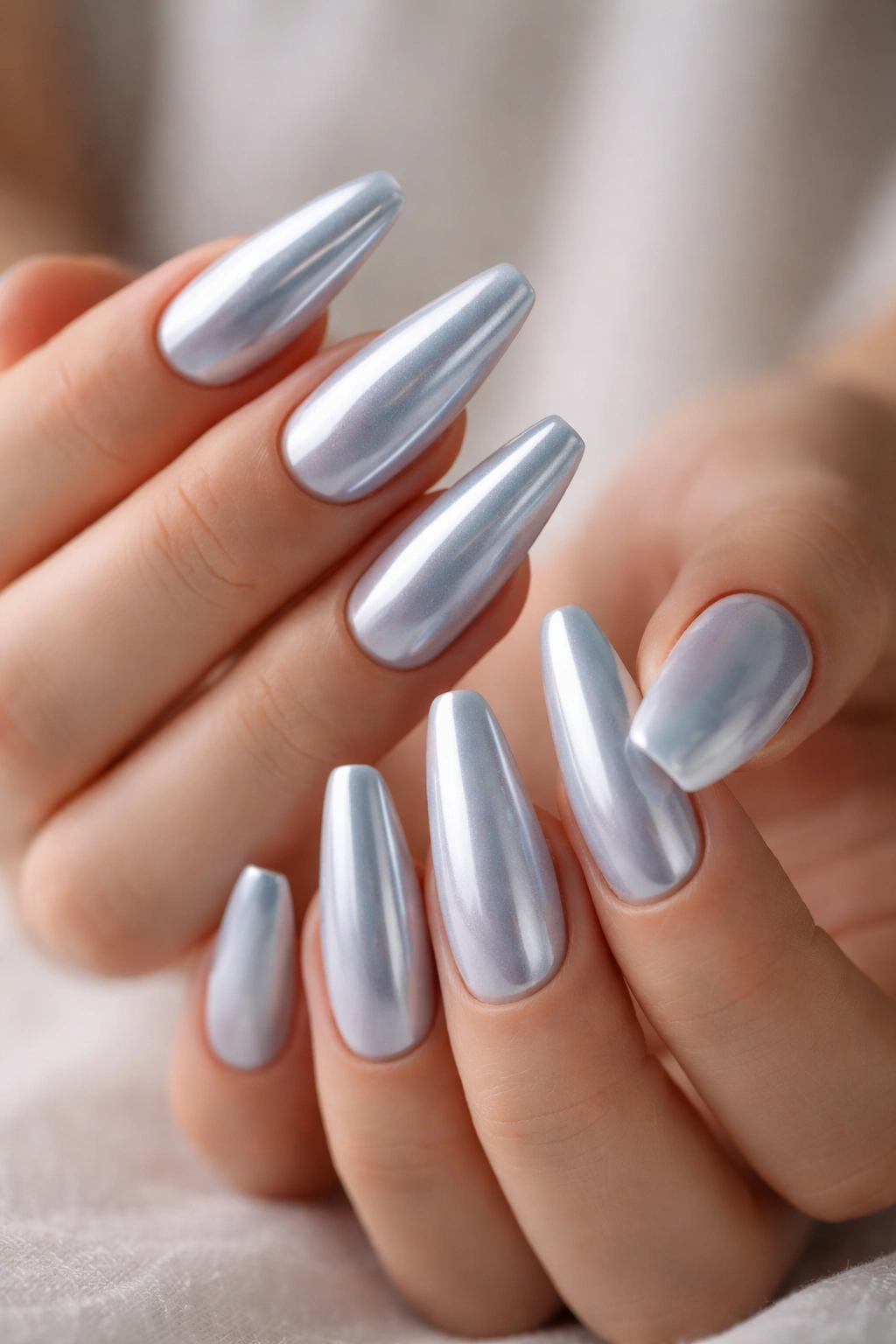
Chrome can go tacky fast. I said it. But icy blue chrome on a clean ballerina shape is one of the finishes that still feels sharp when it’s done with restraint.
You want a pale, cool blue underneath—almost frosted—then a fine chrome powder buffed over the cured surface. The powder matters. A chunky metallic finish can look grainy, while a fine chrome gives that sleek mirror wash that shifts when your hands move. Silver flash. Blue base. Glassy top.
Longer ballerina nails handle this look best because the reflective surface needs room. Around 10 to 14 mm past the fingertip gives the chrome enough space to show its gradient. On shorter nails it can still work, though it reads more sporty than elegant.
I’d also keep everything else minimal. No crystals. No extra stripes. No random accent finger. Chrome already gives you motion and brightness, and piling more design on top usually muddies the effect.
One practical note: chrome shows surface flaws. If the builder base is lumpy or the side profile is uneven, the reflection will spotlight it. Ask for extra smoothing before color goes on. Worth it.
6. Cornflower Blue With Fine Silver Lines
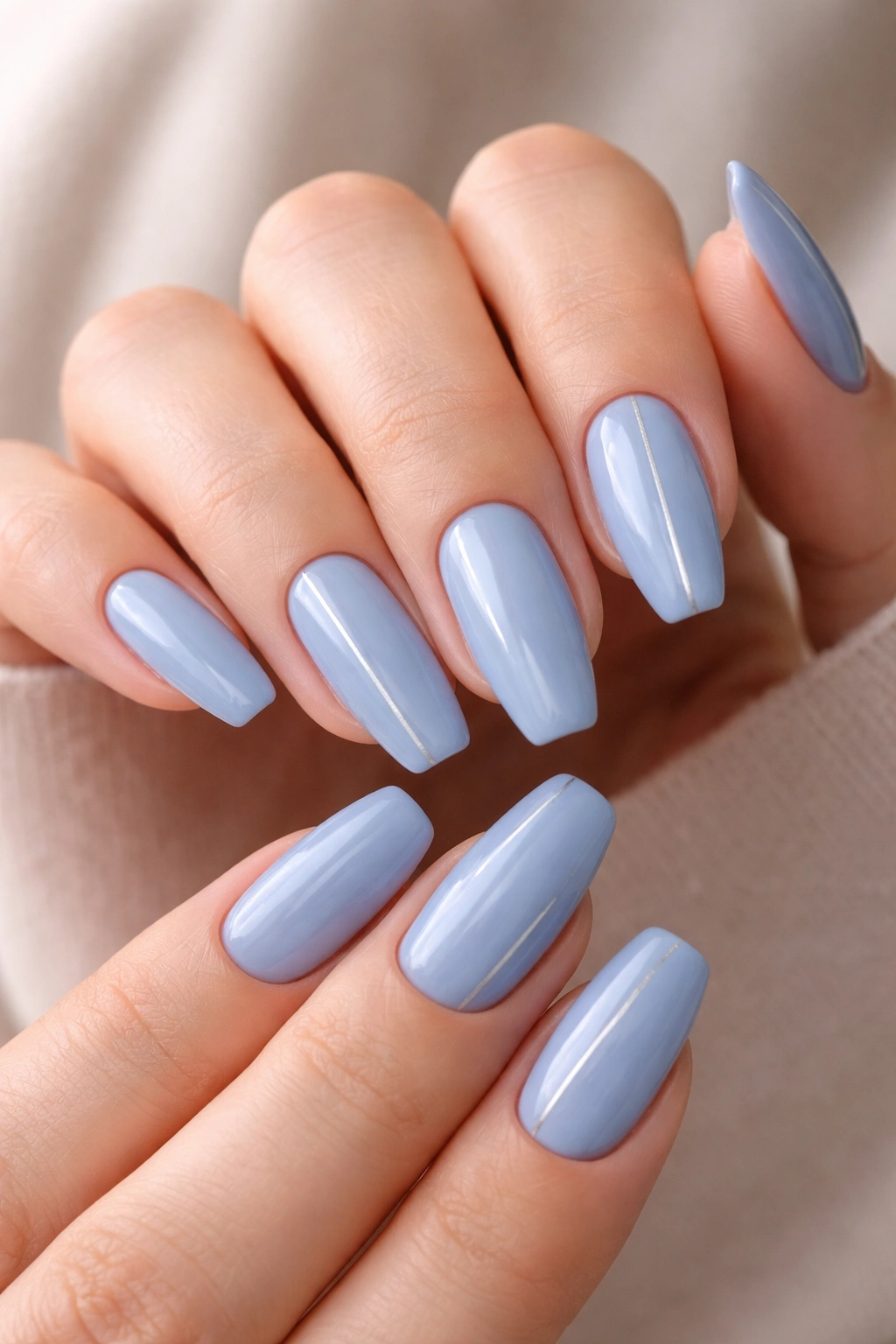
Unlike full glitter nails, cornflower blue with hair-thin silver lines gives you light without making the manicure feel busy. That’s the beauty of it. The silver acts like jewelry, not decoration.
Cornflower sits in a sweet middle zone between pastel and bright blue. It has enough color to stand out, but it doesn’t carry the weight of cobalt or navy. On ballerina nails, that means you can add design without losing the clean architecture of the shape.
I’d use silver line work in one of three ways: a single vertical stripe near one sidewall, a diagonal slash across two accent nails, or a micro-outline around the tip. Keep those lines thin—about 1 mm or less—or they start looking clunky.
Who is this best for? Anyone who likes blue but wants a little edge. It works well on medium lengths, especially if you wear silver rings or watches most days. Gold can work too, though I think silver speaks more clearly against cornflower.
My pick: do the silver on two nails per hand, not all ten. The eye needs somewhere to rest.
7. Periwinkle Marble With Soft White Veining
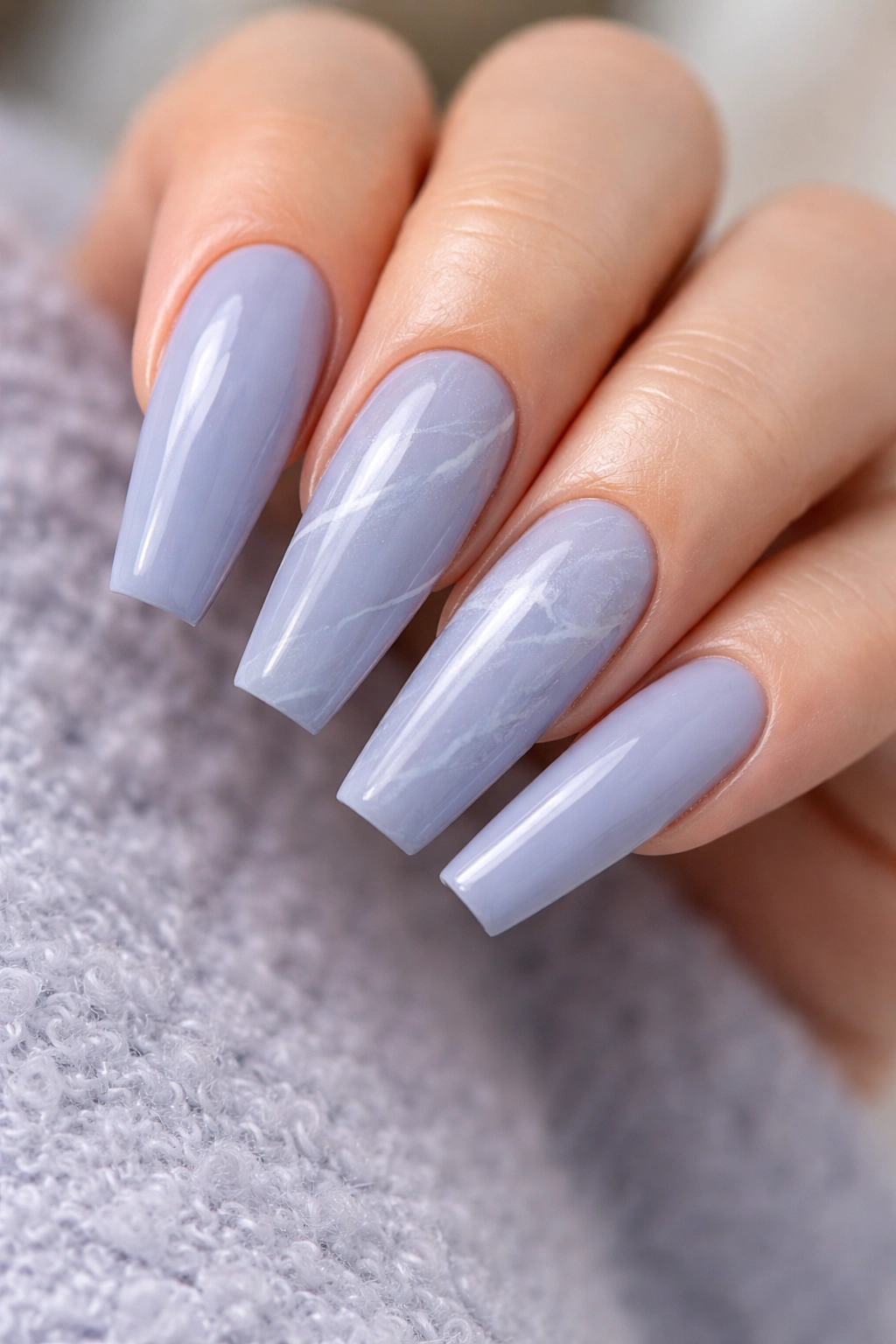
Periwinkle is one of those shades that’s easy to underestimate on a swatch wheel. On the nail, especially with a marble finish, it has more depth than plain pastel blue and more softness than royal blue. Good middle ground.
The marble pattern that stays clean
Marble can look muddy when the colors are overworked. The cleaner version uses a sheer or creamy periwinkle base with only a few white veins, maybe one whisper of gray if you want extra stone-like depth. Less swirling, more intention.
A nail tech can create this with blooming gel, a liner brush, or even a dragged detail brush through uncured gel. The key is spacing. One or two veins per nail is usually enough. If every nail has five thick lines, the design loses that polished stone effect and starts looking hectic.
Smart ways to wear it
- Put the full marble on 2 to 4 nails, then keep the rest solid periwinkle.
- Use a gloss top coat so the veins look embedded rather than dusty.
- Medium or long ballerina lengths show the pattern best.
- Pair it with silver foil only if the marble is sparse.
Periwinkle marble has more personality than plain blue, but it still feels grown-up. That balance is hard to get right. This one gets there.
8. Dusty Blue Matte With Minimal Gold Studs
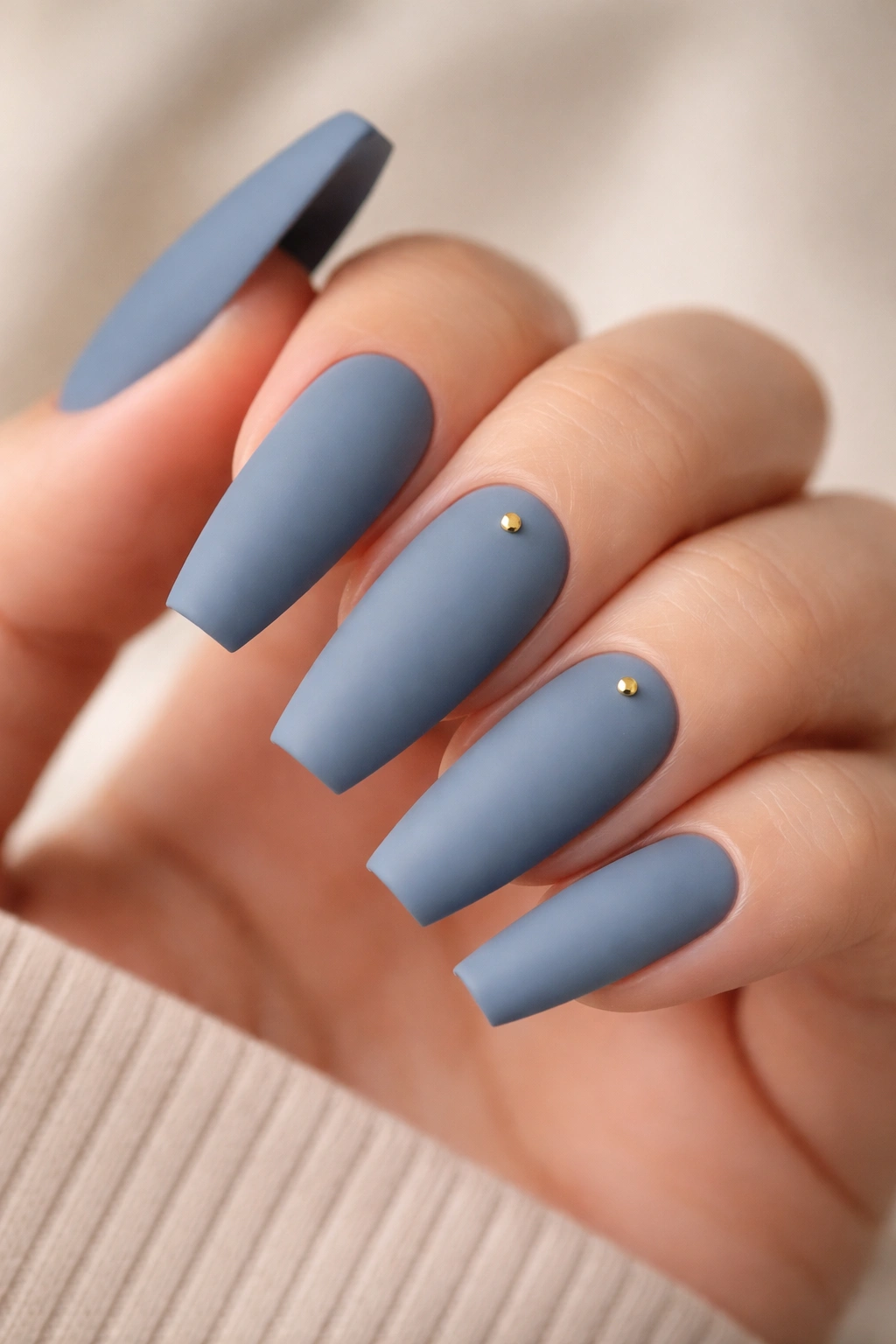
Matte dusty blue has a dry, velvety look that makes ballerina nails feel more tailored. It’s one of my favorite choices when glossy pastel feels too sweet.
Dusty blue sits slightly muted, which means it doesn’t glare under light the way brighter blues can. Add a matte top coat and the color turns almost fabric-like—think brushed suede, not candy shell. On a tapered square shape, that texture shift makes the manicure look a bit stricter and more fashion-forward.
Gold studs work here, but the word is minimal. One tiny dome at the cuticle of two accent nails is enough. Maybe a pair of micro studs in a vertical line on one ring finger if you want more. Cover every nail in hardware and the look gets heavy in a hurry.
This shade is also kind to hands that pull red. The gray in dusty blue cools things down. If your skin leans olive, it looks especially good against matte gold jewelry. If your skin is fair and pink, ask for a dusty blue that does not lean too purple.
Small details matter here. Matte top coat can dull over time, so I’d avoid thick hand cream right before photos.
9. Denim Blue Micro-French on Long Blue Ballerina Nails
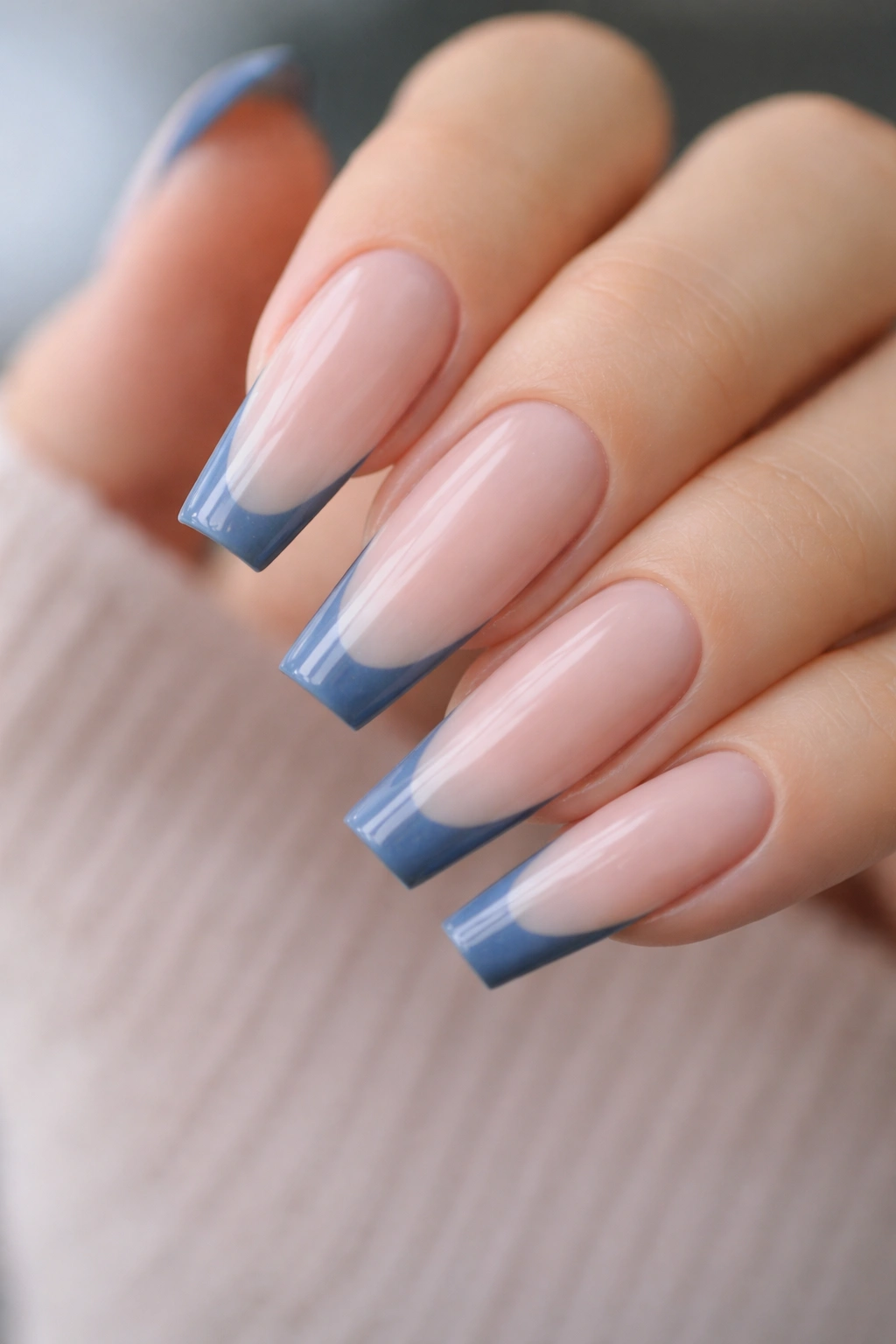
A denim blue micro-French has a different energy than pale blue tips. It’s cooler, a little more casual, and sharper on longer nails. Think washed indigo rather than bright navy.
Why does it work so well on long ballerina nails? Because the micro tip—around 1 to 2 mm—echoes the flat edge of the shape without overpowering it. You still see the nude or sheer base, which keeps the length from looking too intense.
I’d use a neutral pink-beige base here, not peach. Denim blue already has a slight softness, and a peach base can make the whole thing feel off-balance. If you want extra detail, a tiny double-line French works well: denim edge, then a whisper of white under it. Thin, clean, done.
What to watch for
Ask your tech to keep the free edge crisp and the sidewalls narrow. Long ballerina nails can flare at the ends if they’re over-filed, and dark-ish micro-French tips highlight that problem straight away. A clean taper is what makes this manicure look expensive.
10. Slate Blue Aura Nails With Blurred Centers
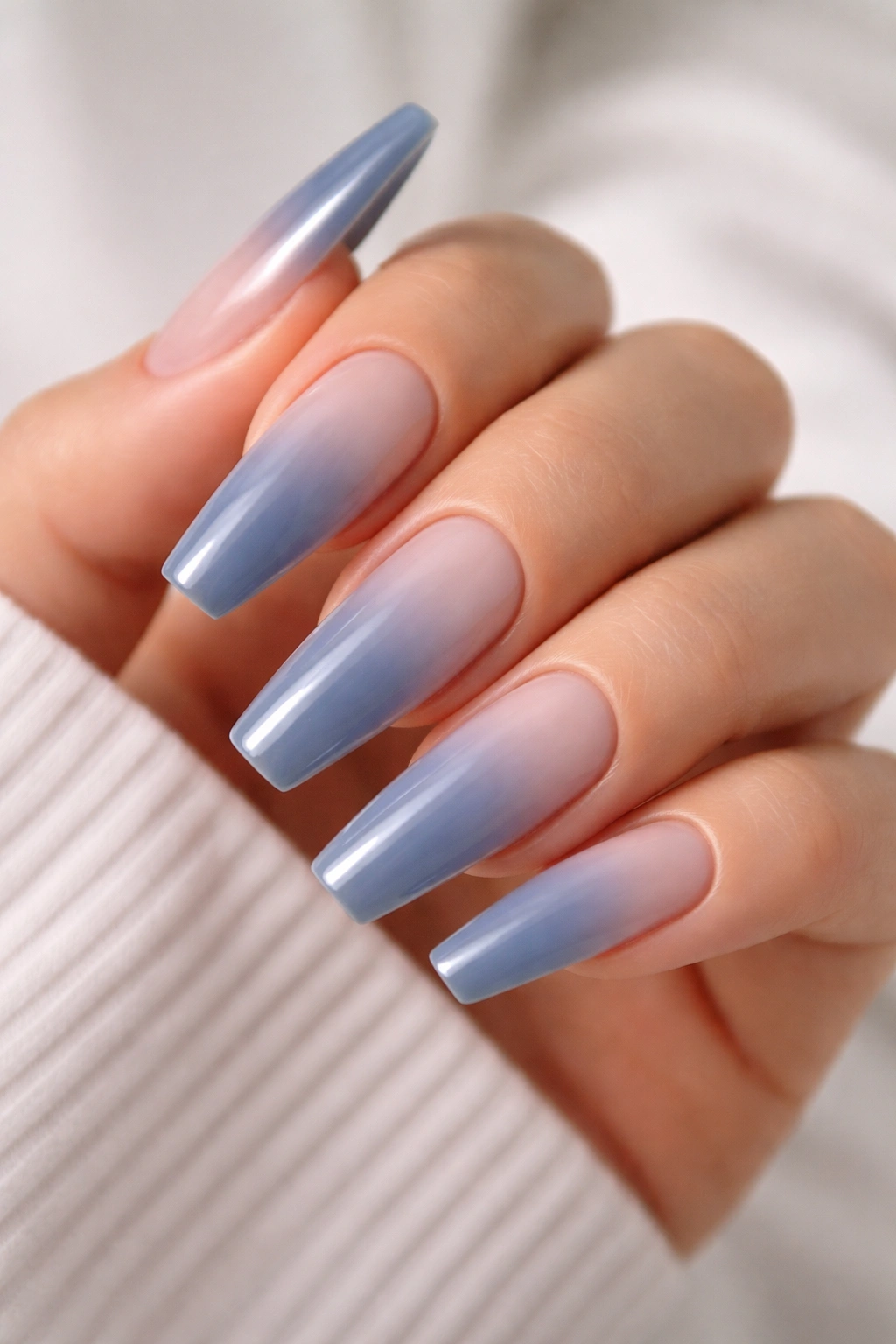
Aura nails can look dreamy or they can look like a rushed airbrush practice sheet. Slate blue is one of the shades that helps the design land on the right side of that line.
Instead of using a harsh bright center, ask for a soft slate blue haze over a sheer nude, smoky gray, or milky base. The center should look diffused, like the color is glowing through the nail rather than sitting on top of it. On ballerina nails, that blurred center softens the strong tip shape and creates contrast in a good way.
A few placement notes help:
- Keep the color cloud centered but slightly higher than dead middle if the nails are long.
- Stick to one blue family; mixing teal haze with slate edges gets messy.
- Use gloss, not matte, unless you want the aura effect to flatten.
- Skip heavy crystals. They interrupt the softness.
This design suits people who want nail art without obvious line work. No French edge. No marble veins. Just color diffusing into itself. It feels softer than cobalt and moodier than baby blue, which is a nice lane to sit in.
11. Turquoise Blue With Glossy Water-Drop Art
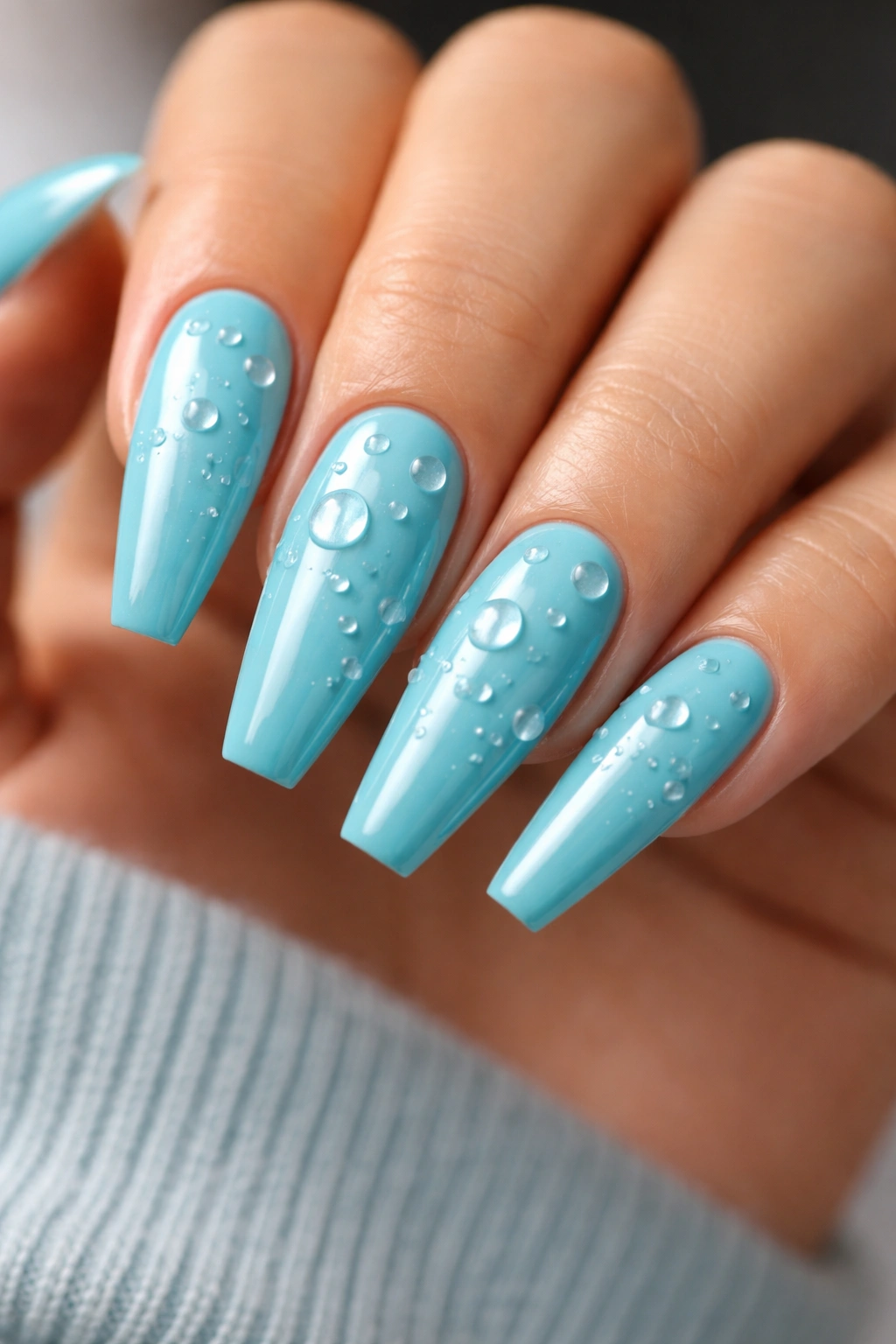
Turquoise already has movement in it. Add glossy water-drop art over the top, and the nails look almost wet—like sunlight hitting a pool tile. Yes, that sounds dramatic. It also happens to be accurate when the finish is done well.
The base can be solid turquoise, sheer aqua, or a two-tone blend between the two. Then clear gel droplets get placed on top and cured in raised little domes. On a ballerina shape, those droplets look best when they’re scattered unevenly. Nature isn’t symmetrical, and fake water beads lined up like soldiers look odd.
This is one of the more playful blue ballerina nail ideas on the list, but it still benefits from restraint. Use the droplet texture on 4 to 6 nails, not every finger, unless you want a full statement set. A clear high-gloss top coat under the droplets helps the whole surface look juicy rather than bumpy.
You’ll want medium to long length here. Short ballerina nails do not leave much room for raised art, and droplets can crowd the shape fast. Also, if you wear contact lenses or do a lot of detailed handwork, ask for flatter droplets so they don’t catch.
12. Cobalt Blue Color Block With Negative Space
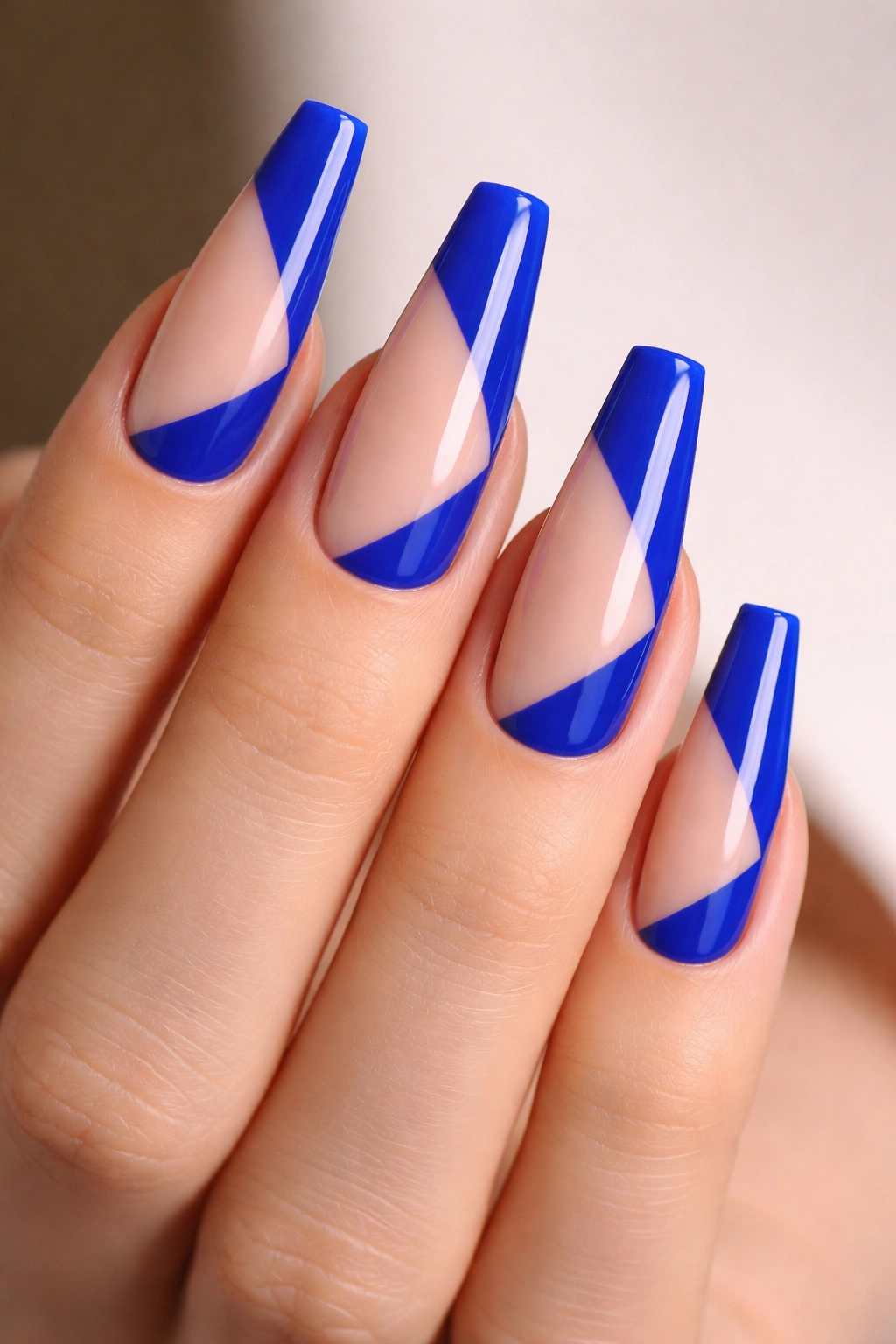
Unlike softer blues, cobalt doesn’t need help getting noticed. The smartest way to use it on ballerina nails is to give it breathing room.
That’s where negative space comes in. A diagonal split, side panel, half-moon cutout, or off-center stripe keeps the manicure graphic instead of heavy. Full-coverage cobalt on long ballerina nails can look dense if the nail plate is wide. Breaking the color with sheer base sections solves that problem.
I’d keep the lines sharp and the shapes geometric. Cobalt likes precision. Soft swirls can work, but straight edges, diagonals, and boxed-off blocks suit the shade better. It pairs especially well with clear sections framed by a milky nude base so the bare space looks intentional, not unfinished.
This is a strong look. Better for someone who enjoys a manicure that reads from across the room. If that’s you, ask for cobalt on 3 to 5 nails and negative-space art on the rest, or a consistent block pattern across all ten if you want full graphic impact. Skip glitter. Cobalt doesn’t need backup.
13. Sapphire Jelly Ballerina Nails
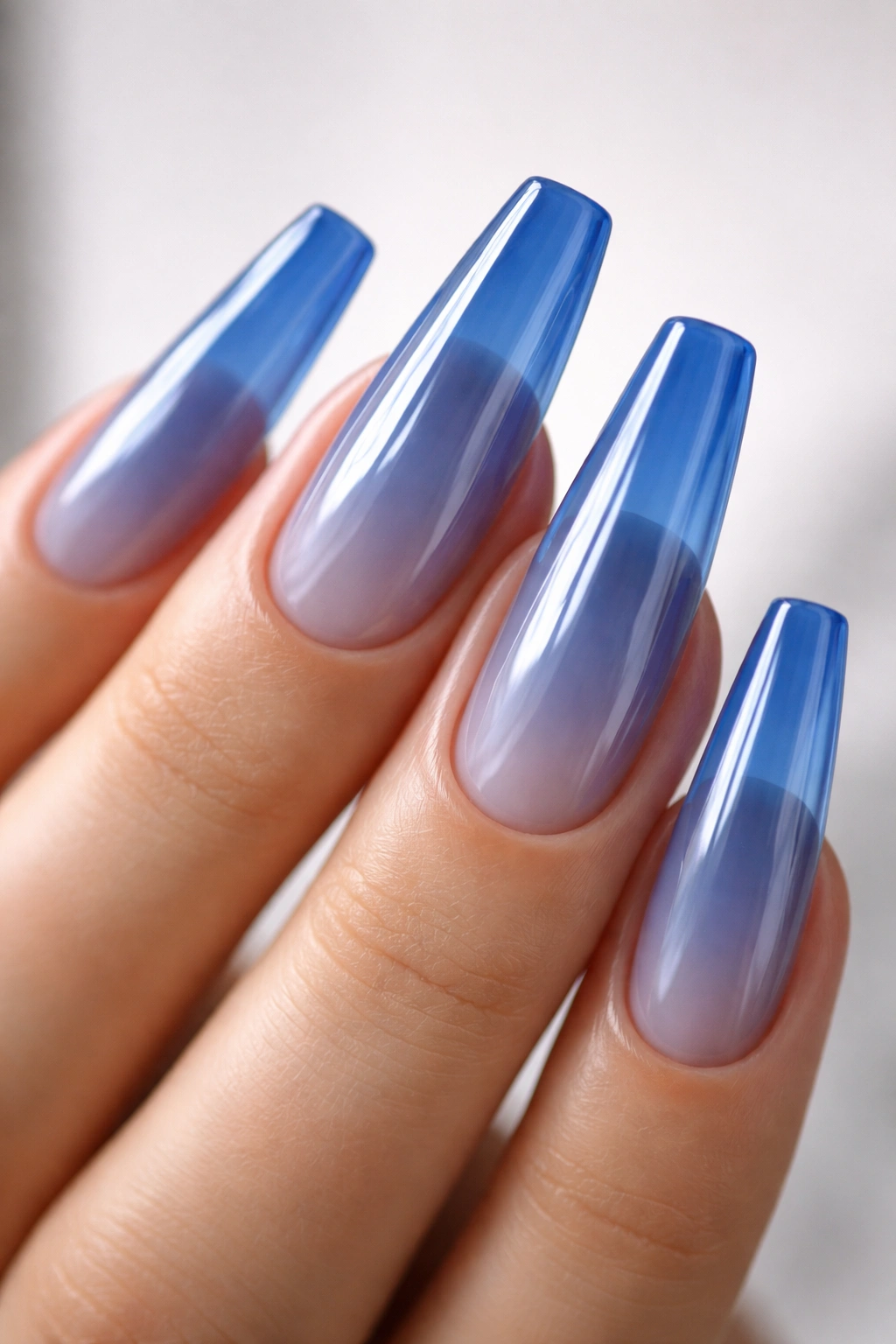
Jelly nails have a built-in depth that cream polish can’t fake. Sapphire jelly, when it’s done with a true translucent blue, looks like stained glass on a ballerina shape.
The finish matters more than the exact shade here. You want see-through color in two or three layers, not a solid sapphire cream with glossy top coat. Light should pass through the free edge a little. That’s the giveaway.
This look works especially well on structured gel extensions because the nail stays smooth and clear under the tint. Natural nails can still wear it, though I’d suggest a builder layer first to even out the surface. Jellies magnify ridges less than chrome, but they do show unevenness near the tip.
How to keep it rich, not childish
Use a sapphire blue with a hint of depth, not a candy-bright royal. Keep nail art off it. No decals. No glitter flakes. Maybe one small silver star on a single accent nail if you insist, but even that feels optional. Jelly is the event.
Longer lengths make the effect stronger because you can actually see the transparency near the edge. On short nails, the color still looks nice—it just reads more like gloss than glass.
14. Midnight Blue Velvet Cat-Eye Finish
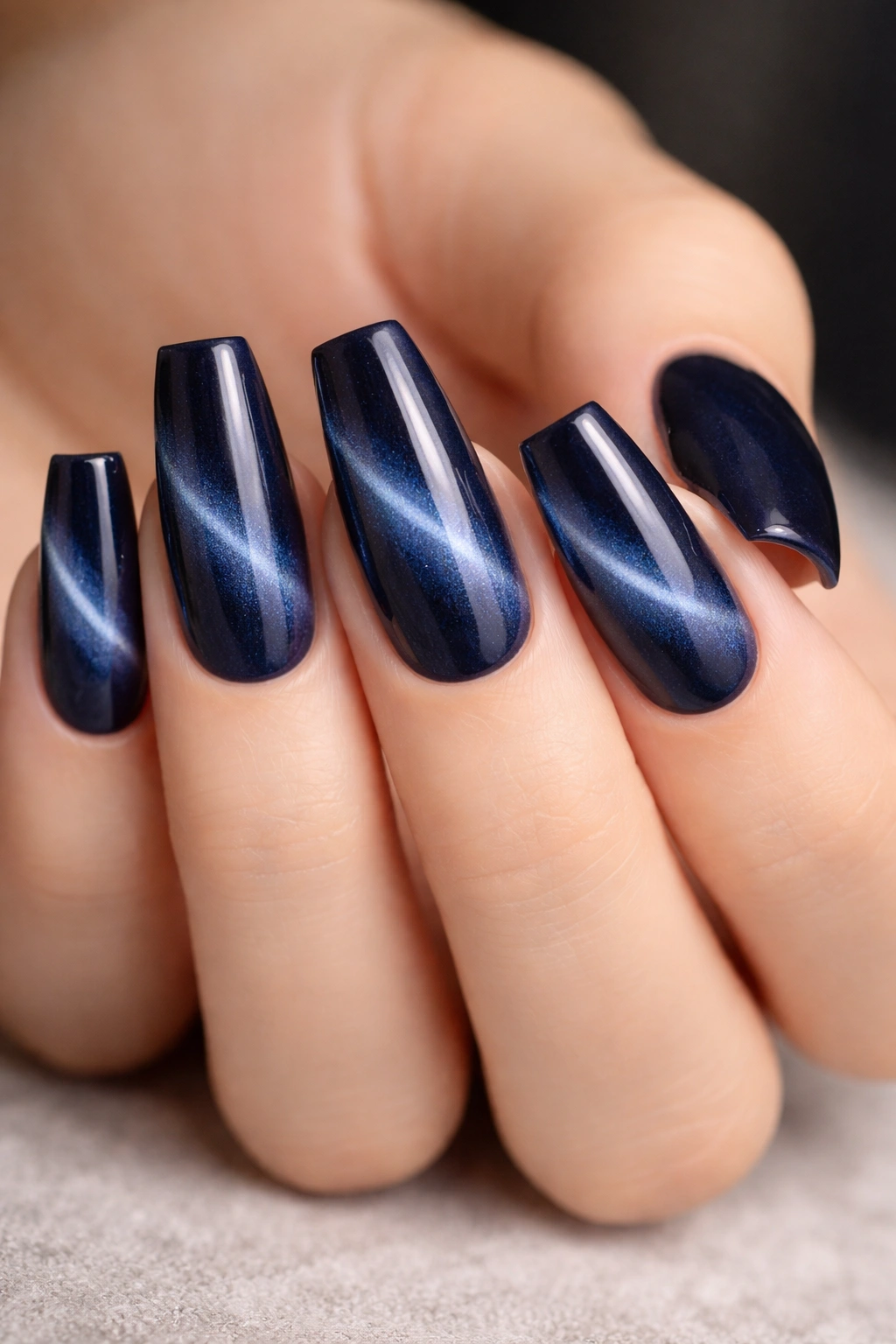
This one has drama. Not loud drama. The kind that shows up when your hand moves and the light stripe shifts across the nail like fabric being brushed the other way.
Midnight blue cat-eye polish uses magnetic particles suspended in gel. When the magnet pulls those particles into place before curing, you get a soft reflective band or a diffused glow. Over a ballerina shape, that movement makes the flat tip feel sleek instead of blunt.
I like midnight blue here more than plain black because black cat-eye can lose its detail unless the light hits it just right. Midnight blue keeps that inky mood while still showing the magnetic shimmer. Ask for the effect to sit slightly off-center or diagonally if you want more dimension. Straight vertical can work too, though it looks stricter.
A practical note: the nail has to be smooth before the magnetic layer goes on. Cat-eye polish catches dips and lumps. Also, this look pairs better with length. Medium is good. Long is better. Tiny short ballerina nails don’t give the magnetic stripe enough room to breathe.
No extra art needed. Truly. The velvet effect is the whole point.
15. Navy and Nude Diagonal French Mix
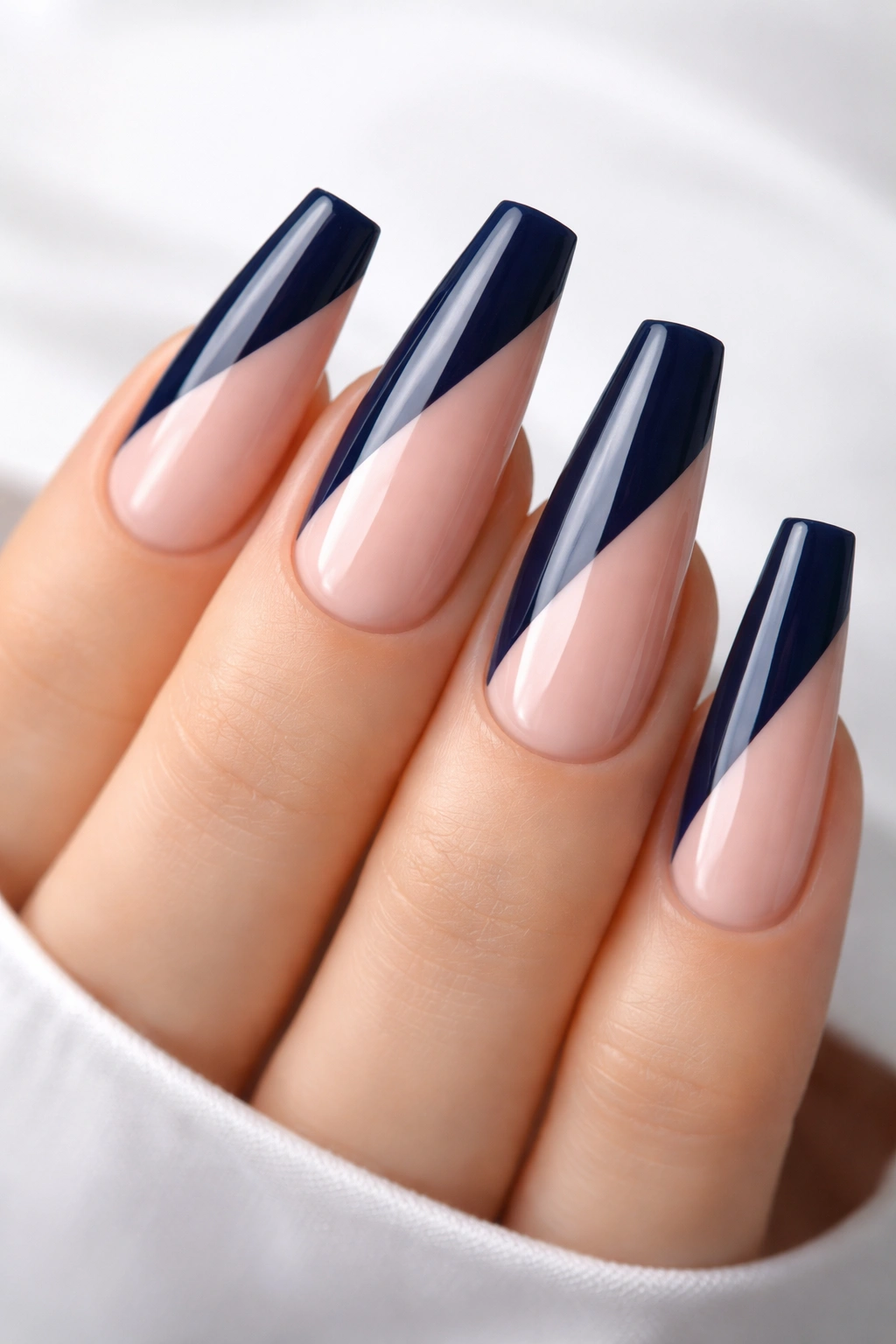
If classic French tips feel too expected and full navy feels too heavy, a diagonal French split is a smart middle lane. Part of the nail stays nude or sheer pink; the other section gets filled with navy at a slant. Clean, graphic, easy to wear.
The angle matters more than people think. A diagonal line that starts near one side of the cuticle and ends at the opposite tip can lengthen the finger, while a shallow diagonal can make the nail look wider. On ballerina shapes, a steeper line usually flatters more because it works with the taper.
I’d keep the navy deep and glossy, then use a neutral nude base that matches the nail bed. The contrast should look intentional, not like the polish chipped off halfway through. Thin metallic striping tape can separate the two colors if you want extra crispness, though I usually prefer a painted line because it wears better.
This style also grows out nicely. Since part of the nail stays bare-looking, regrowth near the cuticle is less obvious than with a full navy set.
16. Deep Navy With Tiny Starburst Details
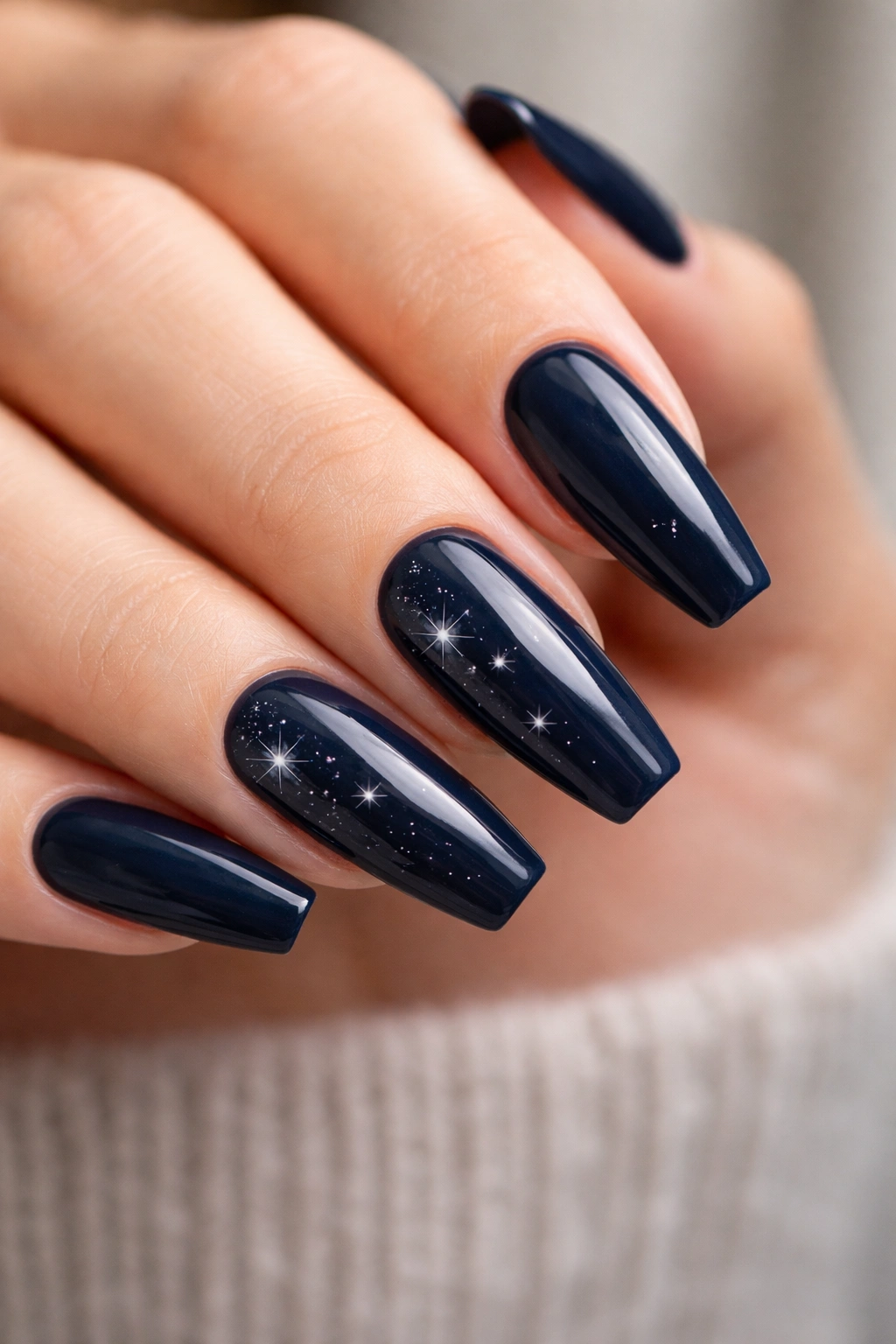
There’s a sweet spot between plain navy and full celestial nail art. Tiny starbursts hit it.
Start with a glossy or satin deep navy base—something almost black until the light catches the blue. Then add small starburst details with a liner brush, silver chrome paint, or fine white line work. Keep them tiny. Think pinprick center with 4 to 8 short rays, not giant fireworks.
Placement is where this manicure wins or loses:
- Put starbursts on 1 to 3 nails per hand, tops.
- Leave some nails solid navy for contrast.
- Place the stars slightly off-center rather than dead middle on every nail.
- Use one larger burst and a couple of micro dots if you want a scattered-sky effect.
The reason I like this look on ballerina nails is that the flat tip gives the dark base a strong canvas, while the starbursts break up the depth without cluttering it. It feels dressy, but not costume-like. Keep the art sparse and the manicure stays elegant instead of themed.
17. Blue Floral Accent Nails on a Sheer Base
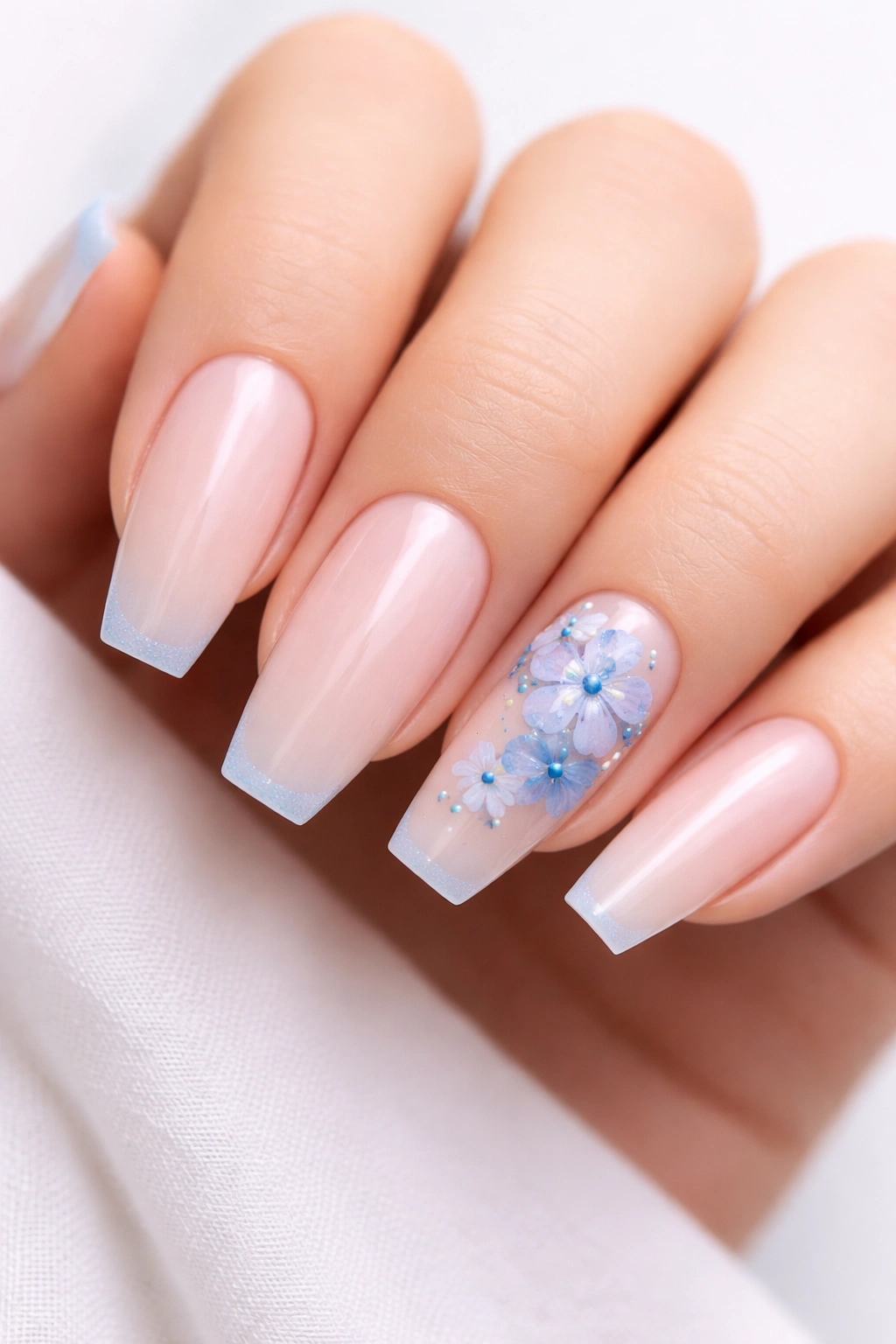
Floral nails can get twee in a hurry. The fix is scale and spacing. On ballerina nails, blue floral accents look best when the flowers are small, airy, and painted over a sheer nude or milky base, not a heavy opaque background.
I prefer a mix of soft blue petals—baby blue, cornflower, maybe one dusty accent—with tiny white highlights and a dot center. Keep the flowers clustered on two accent nails, then leave the rest sheer or add a micro-blue tip to tie everything together. If every nail gets a full bouquet, the shape starts fighting the art.
This style is especially nice if you want something feminine without leaning sugary. The tapered square edge gives the florals structure, which is why they work better here than people expect. A rounded almond can make them feel softer. Ballerina keeps them neat.
You can also push this design in two directions. Use pale blues and negative space if you want it light. Use navy petals with fine white outlines if you want more contrast. Both work. The important part is not overpacking the nail.
18. Ocean Gradient From Sky Blue to Deep Sea
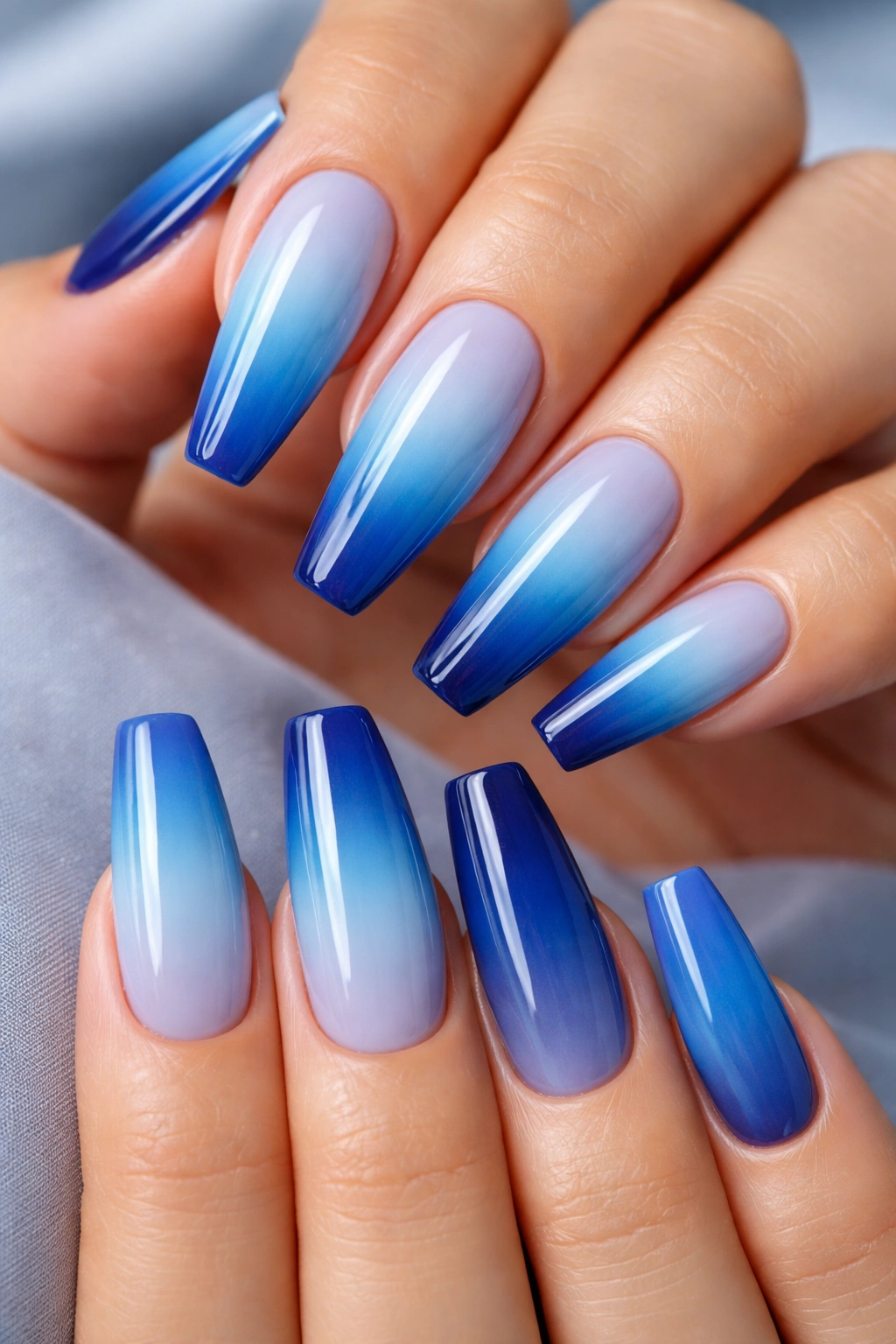
An ocean gradient has more range than a standard ombré because you can either blend one nail from light to dark or spread the color story across all ten nails. I usually prefer the second option on ballerina shapes: start with sky blue on the thumb, move through aqua and cobalt, then end in navy or deep teal on the pinky.
That nail-to-nail fade works because the shape stays consistent while the color shifts. It gives the set movement without needing line work, glitter, or decals. If you want the gradient on each nail instead, keep the blend vertical from cuticle to tip so the taper still reads cleanly.
Good ways to build it
- Use 4 to 5 related blues, not random shades that clash.
- Keep all finishes the same—gloss with gloss, jelly with jelly.
- Make sure the darkest blue still has a little life; flat black-blue can kill the gradient.
- Add one silver chrome shell line or tiny pearl only if the base stays simple.
This style has range. It can lean beachy, moody, clean, even a little artsy depending on the exact shades you choose. And if you’re indecisive about blue—which, fair enough—this lets you wear half the family at once.
19. Matte Navy Croc Texture for Extra Depth
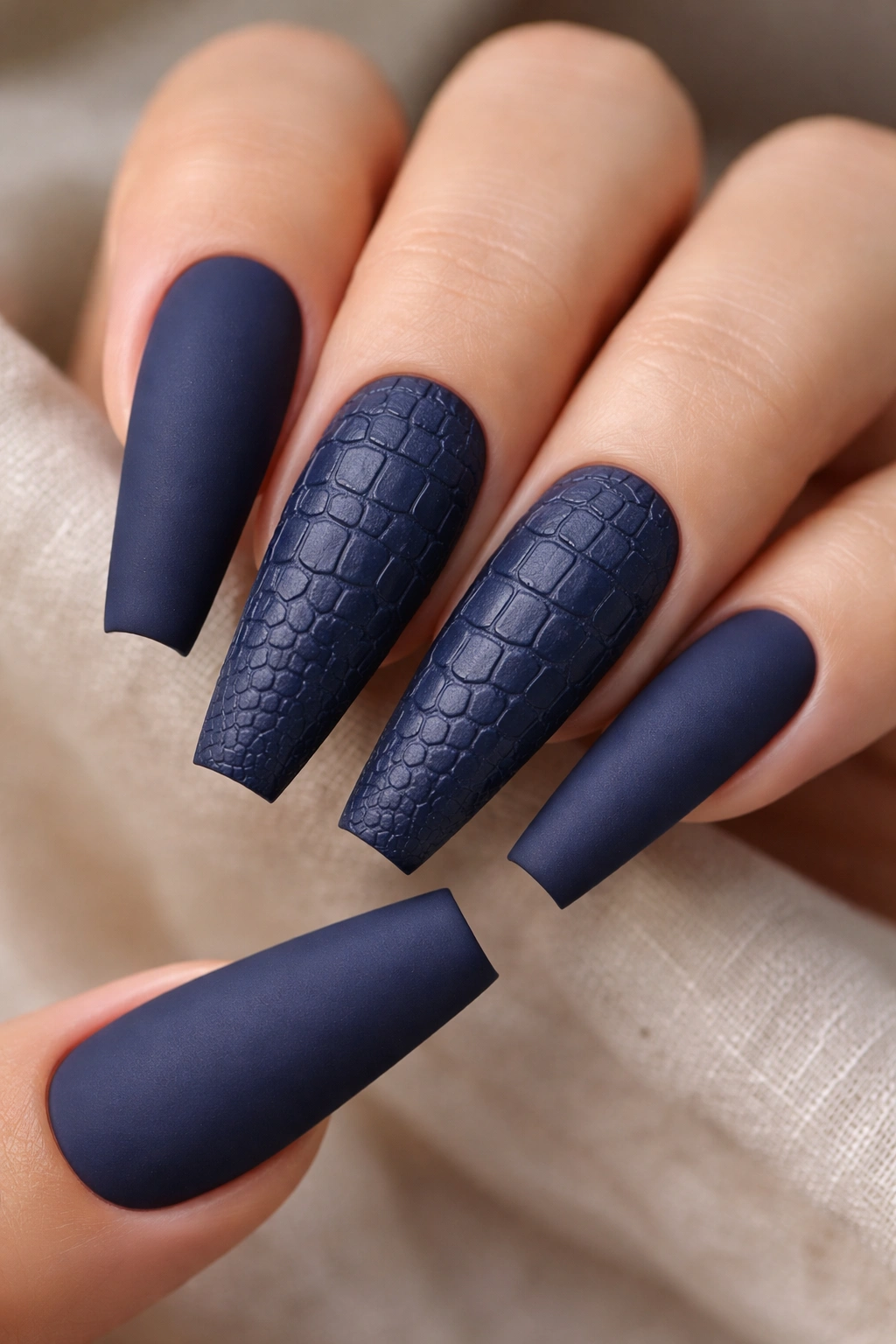
This is the one I’d pick when plain navy feels too flat and shiny navy feels too predictable. A matte croc texture adds dimension without needing a second color.
The look usually comes from a gel technique that creates a raised reptile-like pattern, then gets sealed with matte top coat. Navy is perfect for it because the texture shows in shadow rather than through contrast. You see the pattern as light slides across the surface, not because it’s painted in white on top. Much better.
It suits longer ballerina nails best. Short nails don’t leave enough room for the pattern to read. Medium can work, though I’d keep the texture to 2 or 4 accent nails and leave the rest solid matte navy. Full croc on all ten can look too heavy unless you want a strong fashion set.
Ask for the pattern to stay scaled to the nail. Oversized cells look clumsy on narrow tapered tips. Smaller texture near the cuticle, slightly larger toward the center, then tapering again near the tip tends to look more natural.
And yes, this is a higher-maintenance salon design. It’s worth it if you want texture. It is not the set I’d choose for a quick appointment.
20. Inky Blue With High-Shine Glass Finish
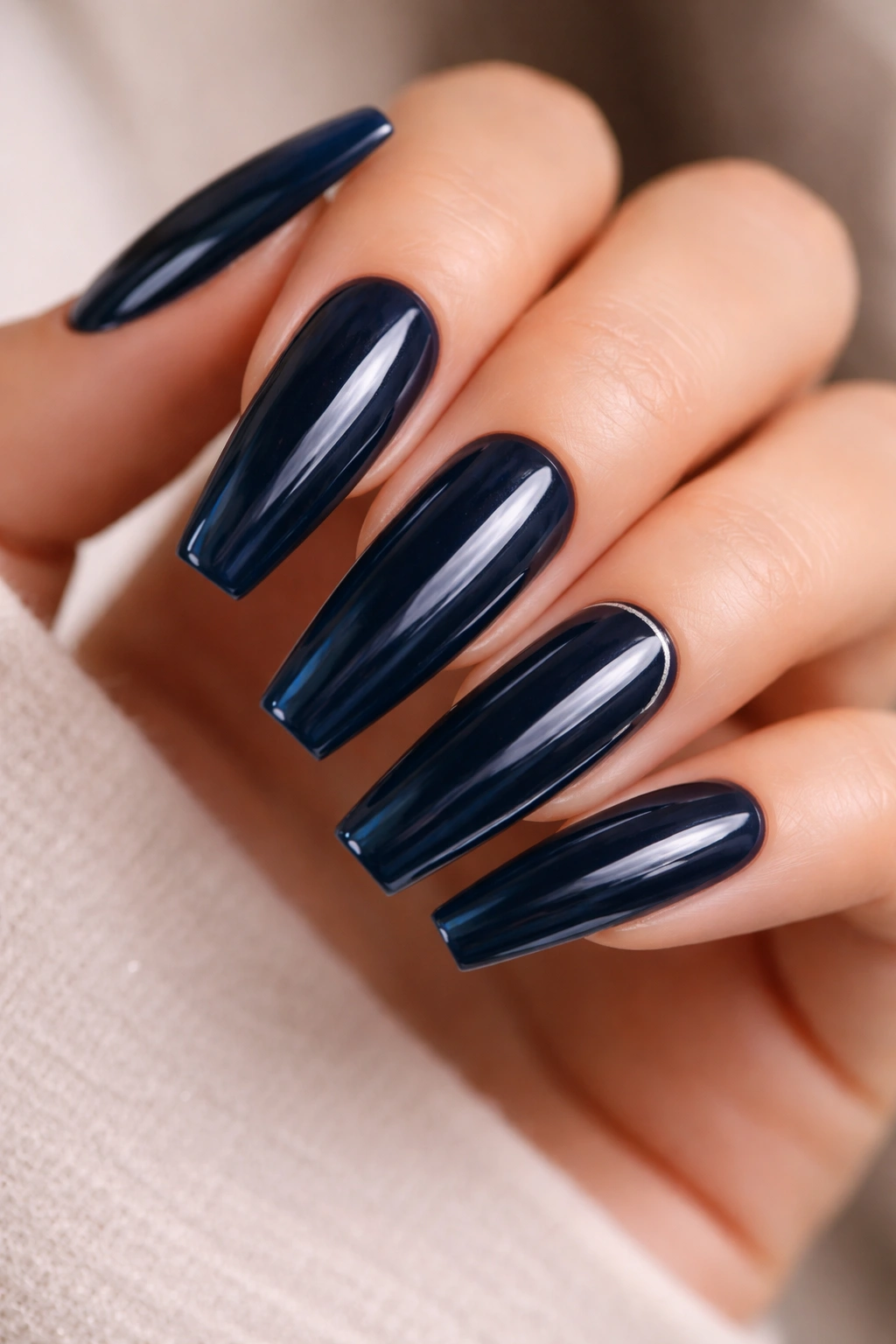
If I had to pick one dark blue look that almost always lands, it would be this. Inky blue with a glass finish has depth, shine, and enough softness to feel richer than plain navy.
The shade should look like fountain-pen ink or blue-black watercolor pooled on paper—dark, but still unmistakably blue when the light hits. A high-shine top coat is what makes the look. Not regular gloss. I mean that almost wet, reflective finish that makes the color look sealed under glass.
You can wear it plain, and honestly, I think that is the best call. Long ballerina nails in inky blue don’t need art. The color carries enough drama on its own, while the flat tip keeps the silhouette crisp. If you want a detail, a single ultra-thin silver outline on one accent nail is plenty.
This manicure also tends to age well over a week or two because the shade is deep enough to hide small marks better than pastel blue, while the blue undertone keeps it from reading as harsh as black. Dark blue tells on shape issues, yes—but when the shape is right, few colors look cleaner.
Final Thoughts
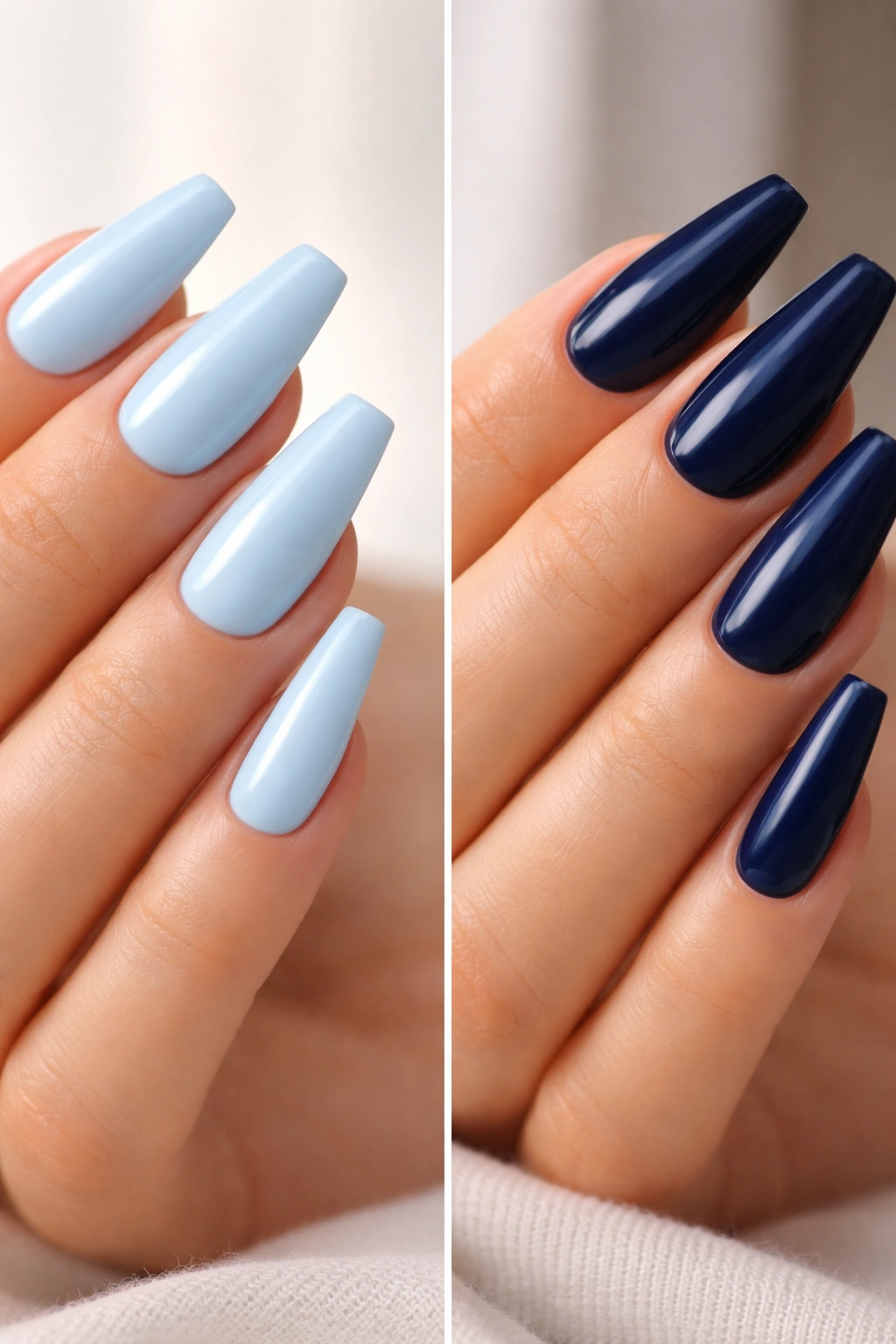
Blue has range that a lot of nail colors don’t. It can look airy, sporty, polished, moody, glossy, velvety, sheer, metallic—sometimes all within the same shade family. That’s why blue ballerina nails keep working. You’re not locked into one personality.
If you’re torn, start with the finish before the exact color. Glossy baby blue, matte dusty blue, jelly sapphire, velvet midnight, glassy ink—those feel like different manicures even when the colors sit close together on a swatch chart.
And if you only keep one practical note from all of this, keep this one: ask for the shape first, then the blue. A clean taper and a flat, balanced tip make every shade look better. The polish matters. The filing matters more.