


Black polish can look dead flat on the wrong nail shape. Put that same color on a long ballerina tip, though, and it starts to look sharper, colder, and far more deliberate. That’s why goth ballerina nails work so well when you want a manicure that feels dark without sliding into costume territory.
Shape does a lot of the heavy lifting.
The squared-off tip gives dark shades a frame. The tapered sides keep the nail from looking blocky. And when the tech gets the sidewalls clean—this part matters more than most people realize—black, oxblood, gunmetal, smoke gray, and deep plum all look richer because the shape gives them structure.
A weak goth set usually misses on contrast, not color. Too many heavy charms. No change in finish. Thick acrylic at the tip. Bright purple where a bruised plum would have looked better. You can spot the difference from two feet away, even if you can’t explain it right away. The strong sets mix darkness with texture: matte against gloss, sheer against opaque, metal against velvet, sharp lines against smoky fades.
Some of these looks are blunt and graphic. Others lean romantic, cathedral-dark, or grungy in a worn-in way. The good news is that ballerina nails give all 15 designs enough flat surface and edge definition to show their details properly.
Why Goth Ballerina Nails Need a Cleaner Taper Than You Think
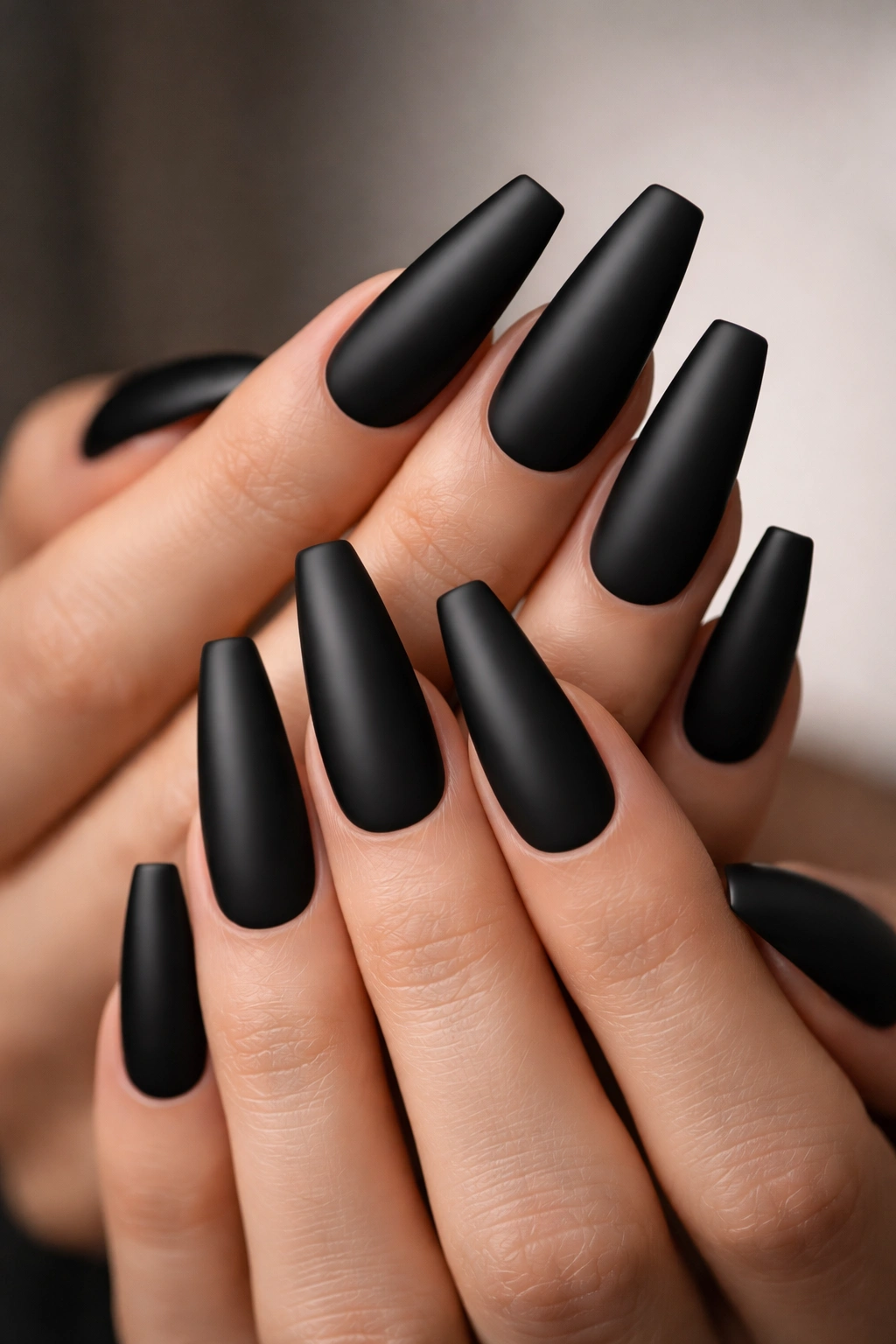
Call it a coffin shape if you want—most salons do. The two names overlap so much that plenty of nail techs use them the same way. What matters is the silhouette: tapered sidewalls, straight free edge, no rounded point.
If the taper is too soft, dark polish starts to look heavy. If the taper is too aggressive, the nail loses that ballerina balance and starts drifting toward stiletto. The sweet spot sits right in the middle, where the nail narrows enough to feel sleek but still ends in a flat tip you can actually see.
The length sweet spot
For most goth ballerina nails, the shape starts reading properly once the free edge extends 6 to 10 millimeters past the fingertip. Shorter than that, and many dark designs lose the long, structured effect that makes this shape worth choosing in the first place. Longer sets—around 12 to 16 millimeters of free edge—give you more room for ombré fades, lace detail, moon phases, and transparent tips.
Bring these notes to your appointment if you want the shape to land right:
- Ask for straight sidewalls before the taper begins.
- Check the nail from the side, not only from above.
- Ask for a flat, crisp tip, not a softened square.
- Make sure each nail matches in width, especially the middle and ring fingers.
Tiny differences show up fast in black polish. That’s the catch with dark sets: they do not hide shape problems.
Nail Thickness and Apex Placement Matter More Than Nail Art
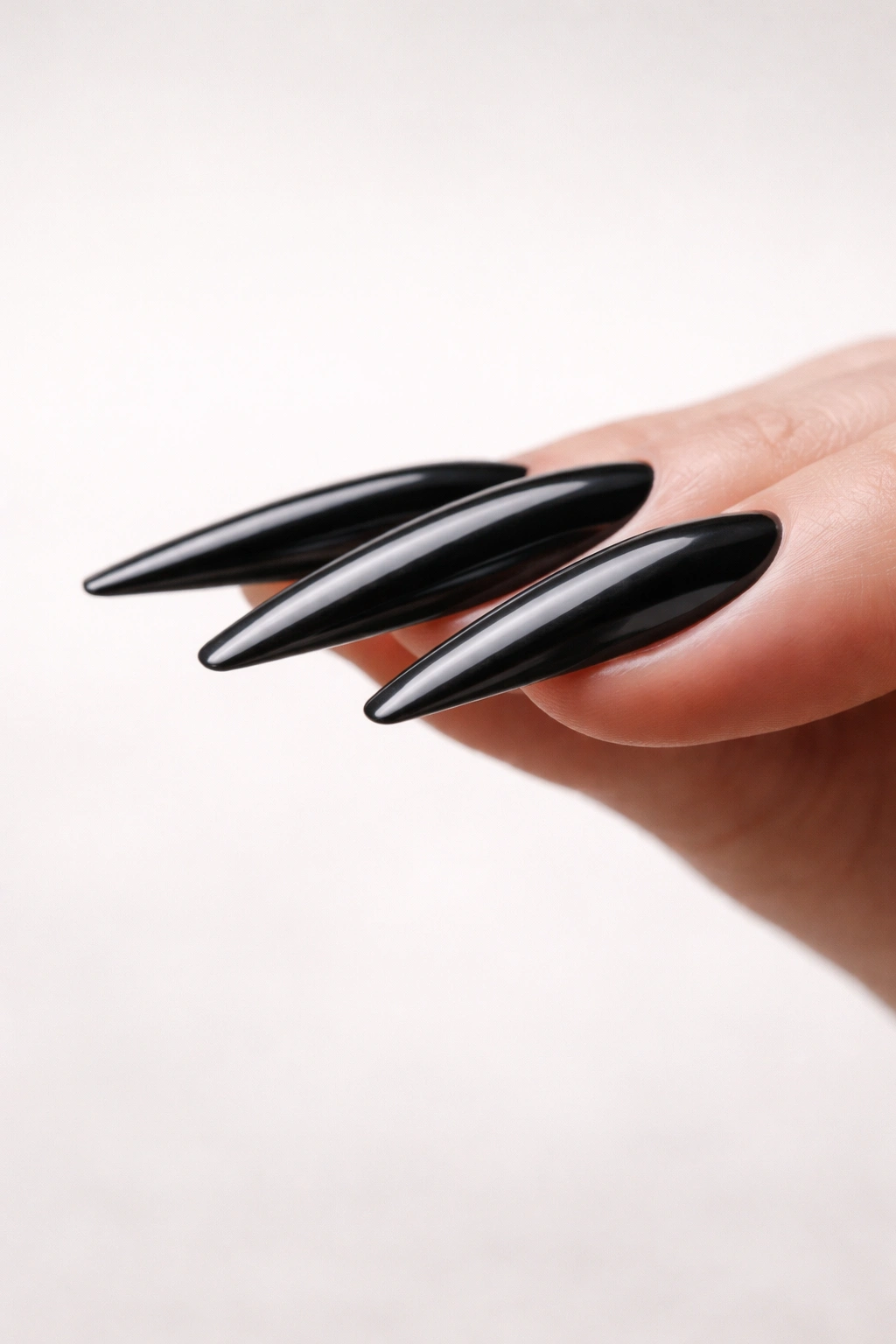
Why do some dark sets look sleek from the front but chunky from the side? Usually it comes down to structure, not design. A bulky ballerina nail makes even clean black gel look clumsy.
The apex—the highest point of the nail—should sit a little behind the center, then slope down toward the tip in a smooth line. On medium and long sets, that keeps the nail strong without giving it a hump. A free edge around 1 to 1.5 millimeters thick usually looks cleaner than a fat tip, especially once you add top coat.
Watch the profile when your tech is filing. From the side, the nail should look balanced, not domed. From the front, the tip should not flare wider than the nail bed unless the design calls for a blunt, exaggerated shape—which goth ballerina nails rarely do.
A few salon phrases help more than a folder full of screenshots:
- “Can you slim the sidewalls a bit?”
- “I want the tip thinner.”
- “Please check the shape from every angle.”
- “I want a lower-profile apex.”
That language gets you closer to the result than saying “edgy but classy” ever will.
Matte, Gloss, Chrome, and Velvet Finishes Change the Whole Mood
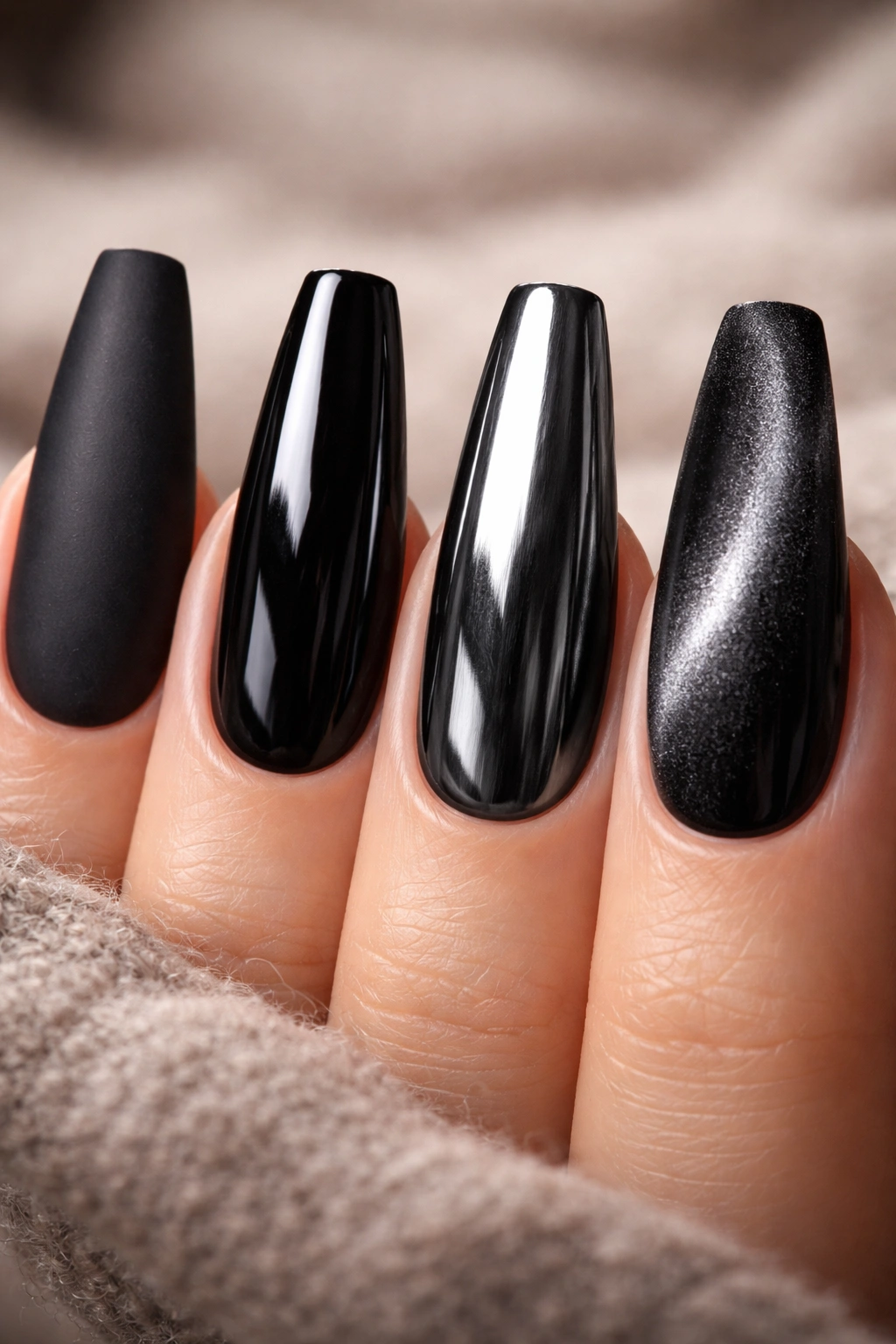
Matte black looks like soot, chalk, or worn velvet. Glossy black looks like patent leather. Chrome reads colder, harder, more industrial. Magnetic velvet gives you movement, which can make a dark shade feel alive instead of flat.
Finish is not a small choice here. It can shift the same color from gothic-romantic to club-night metallic in one top coat.
Matte
Use matte when you want a design to look dry, smoky, or stone-like. It works well with charcoal bases, marble effects, ink splatter, and lace overlays. A matte top coat also hides tiny scratches better than mirror gloss.
Gloss
Gloss is sharper. Cleaner, too. It makes black look deeper and wine shades look wet. Glossy finishes also help sheer black jelly, red glass tips, and French details stand out from a distance.
Chrome and magnetic effects
Chrome works best when the rest of the design stays controlled. One full gunmetal set can be strong. A chrome accent on every nail plus chains plus crosses plus gems? Too much. Magnetic velvet is easier to wear because the flash only shows when the light hits at an angle.
Choose the finish before you choose the symbols. That one decision shapes the whole set.
1. Matte Black Coffin Nails With Glossy French Tips
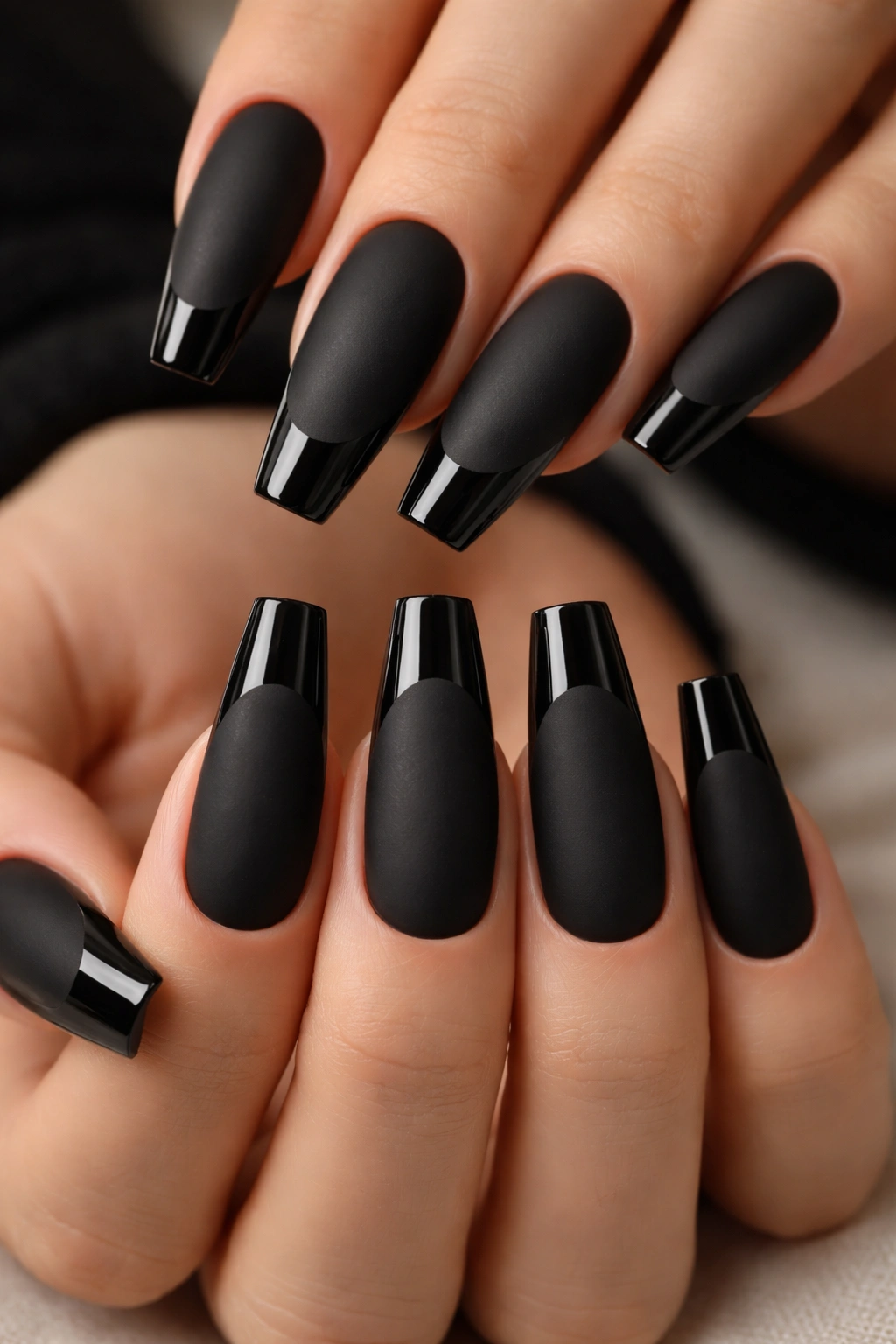
Contrast beats extra decoration. If you want a dark edgy look without loading every nail with charms, this design gets there with finish alone. The base stays matte black, while the French tip gets sealed in a glassy black top coat that catches light at the edge.
The effect is subtle from far away. Up close, it looks precise and expensive because the shine sits exactly where the ballerina shape ends. That straight tip matters here; on a rounded nail, the design loses half its bite.
Why the double finish works
A full matte black set can look a little flat under dim light. A full glossy black set can feel plain if the shape is not immaculate. Putting gloss only on the tip fixes both problems at once. You keep the dark, velvety base, then add a sharp reflective line where the eye naturally lands.
Ask for a tip depth of 2 to 3 millimeters on medium nails and 3 to 4 millimeters on longer ones. Too thin, and the contrast disappears. Too thick, and it starts reading like a standard black French manicure.
- Best on: medium to long ballerina nails
- Base color: true black, not charcoal
- Finish mix: matte top on the nail bed, high-shine top on the tip
- Extra detail: one silver stud at the cuticle on each ring finger if you want a small accent
Best move: keep the rest of the set clean and let the finish do the talking.
2. Oxblood Ombre That Melts Into Black
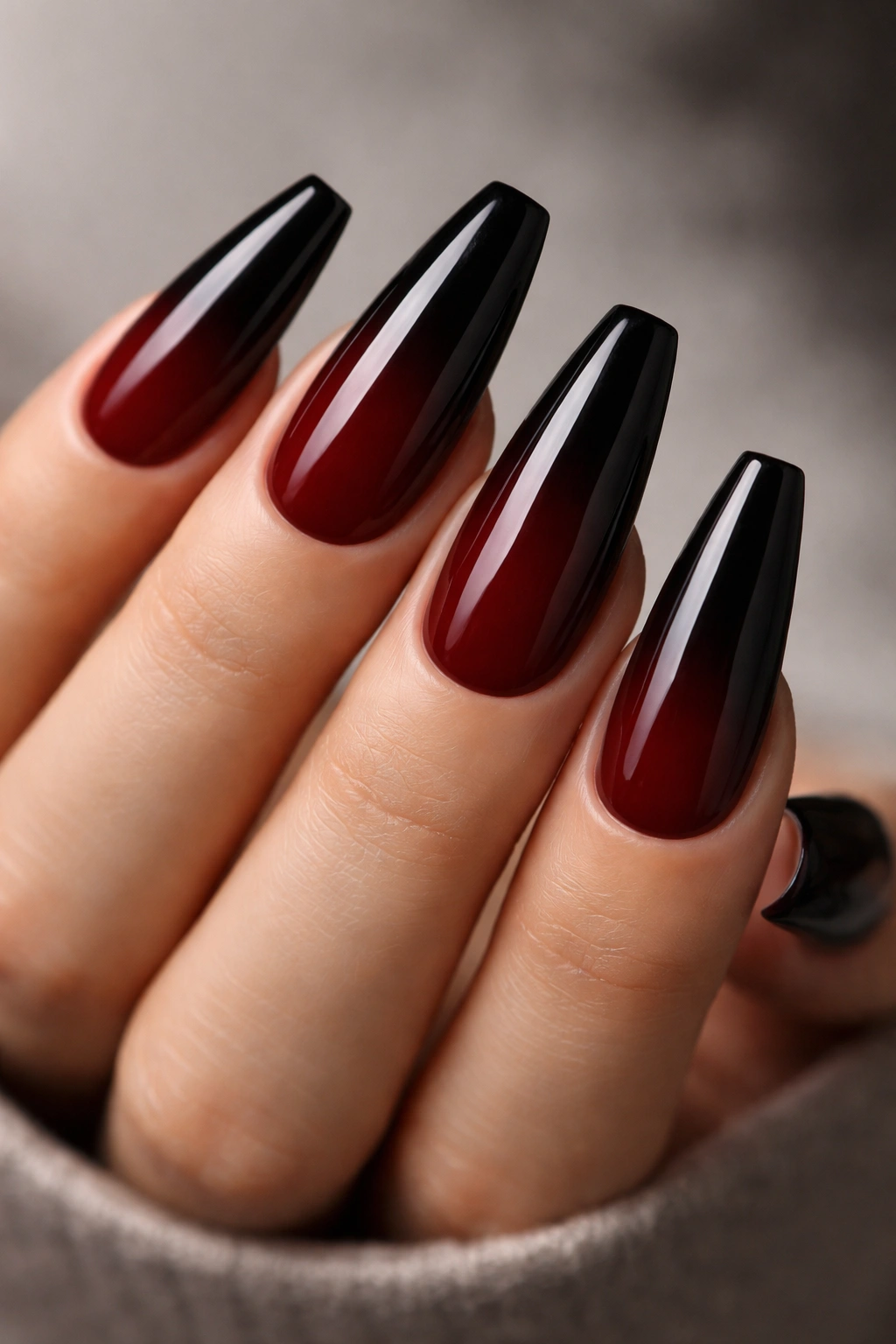
Under low light, oxblood can read almost black. Then your hand moves, the color shifts, and that red-brown depth shows up like old wine in a heavy glass. That’s what makes this design better than flat burgundy.
The fade works best when the deeper black sits near the cuticle and the oxblood rises toward the tip, though a reverse fade can work on extra-long nails. On ballerina shapes, I lean toward black at the base, oxblood at the edge because it stretches the nail visually and keeps the dark root clean.
A sponge fade works for DIY sets, but an airbrushed blend or soft gel ombré gives a smoother transition. You want the colors to blur into each other, not sit in separate stripes. Semi-gloss or full gloss suits this look more than matte, since shine helps the red undertone show through.
Skip bright cherry reds. They break the mood. A bruised wine tone, dried-rose red, or brown-red shade keeps the manicure dark and grown-up. Add one tiny silver cross decal on a single accent nail if you need detail, but this design already carries enough drama on color alone.
3. Sheer Nude Ballerina Nails With Black Lace Veils
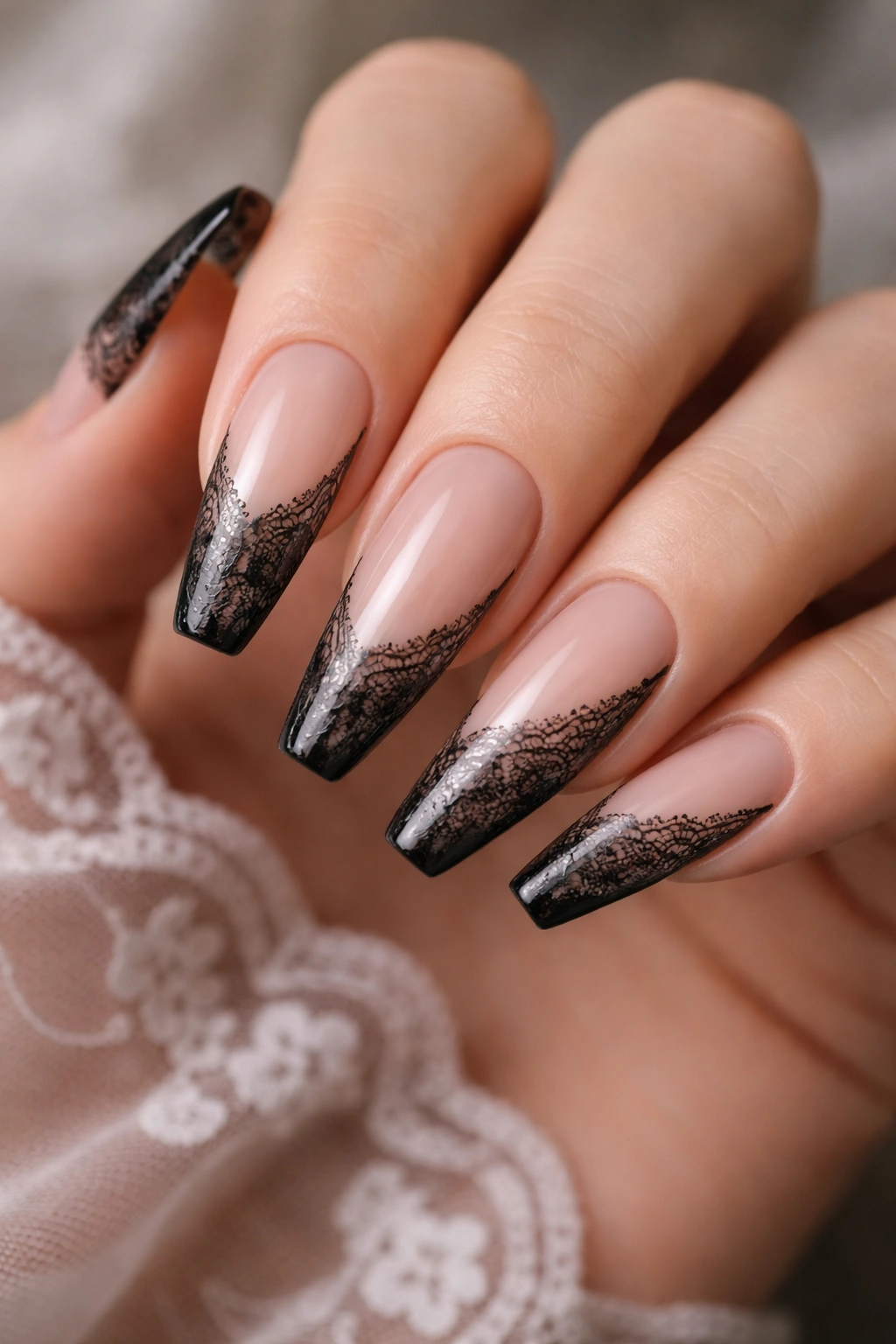
Can lace work on a dark manicure without drifting into wedding territory? It can, though the base color decides everything. A cool taupe nude, smoky beige, or gray-leaning sheer pink keeps the look gothic. A peachy nude turns it soft in the wrong way.
The lace itself should look airy, not packed solid. Think fine net, floral filigree, or thin scalloped loops painted near the sidewall, cuticle, or tip rather than a full dense stamp on every nail. Negative space is what gives this one its tension.
Keep the lace dark and spare
A strong version of this set usually uses black gel paint or a crisp stamping plate with tiny pattern lines. Two full lace nails per hand is enough. On the others, use partial lace corners, sheer smoky French tips, or a tiny black bow detail no wider than 4 millimeters.
If you want it to read goth instead of delicate, try these adjustments:
- Use a cool-toned nude base
- Add a matte top coat
- Keep the lace fine-lined, not thick and cartoonish
- Pair it with silver rings, not pastel accents
This design has an old-clothing, antique-lingerie mood to it. Done well, it looks eerie in the best way.
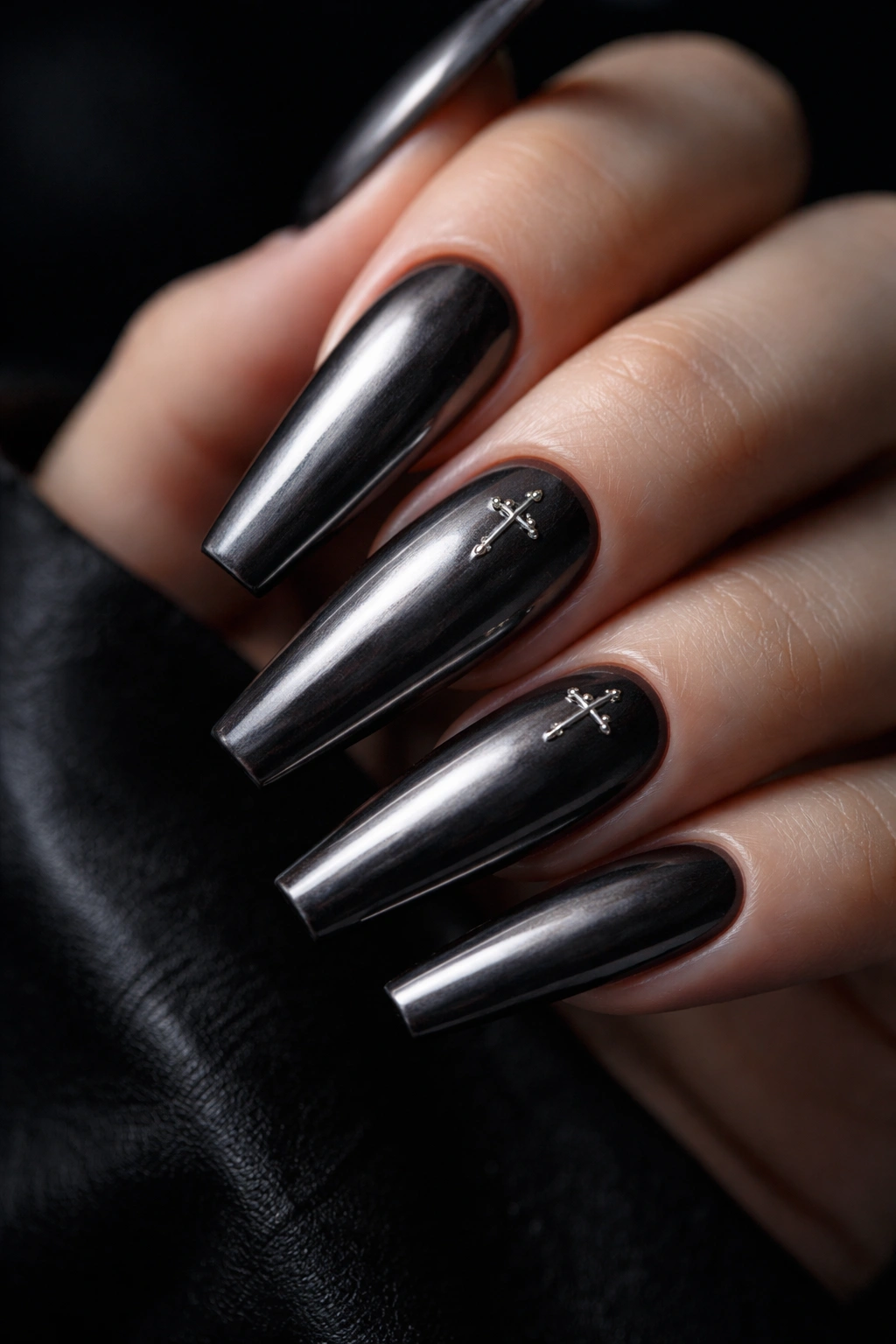
4. Gunmetal Chrome Nails With Tiny Silver Cross Accents
Picture brushed metal under a streetlight. That’s the mood here—not mirror-silver flash, not disco chrome, but a colder gunmetal finish with enough darkness to stay inside the goth lane.
Chrome powders can go cheap-looking fast if the base shade is too bright or the top coat is too thick. Start with a black or graphite gel, rub in a smoked silver chrome powder, then seal it smoothly so the surface stays flat. The ballerina shape helps the metal effect look blade-like rather than round and toy-like.
One tiny cross accent on each hand is plenty. Keep it flat if possible. Raised charms can look clunky, and they snag on sleeves. A decal, foil, or painted cross in pale silver usually sits better.
Ask for these details
- Gunmetal, pewter, or graphite chrome instead of bright mirror silver
- Accent placement on one or two nails only
- Short cross motifs, around 5 to 7 millimeters tall
- No rhinestone clusters unless you want a heavier, club-oriented finish
This set works well with black tailoring, leather, mesh, and heavy hardware jewelry. It has edge without piling on too many symbols.
5. Matte Charcoal Nails With Deep Red Drip Art
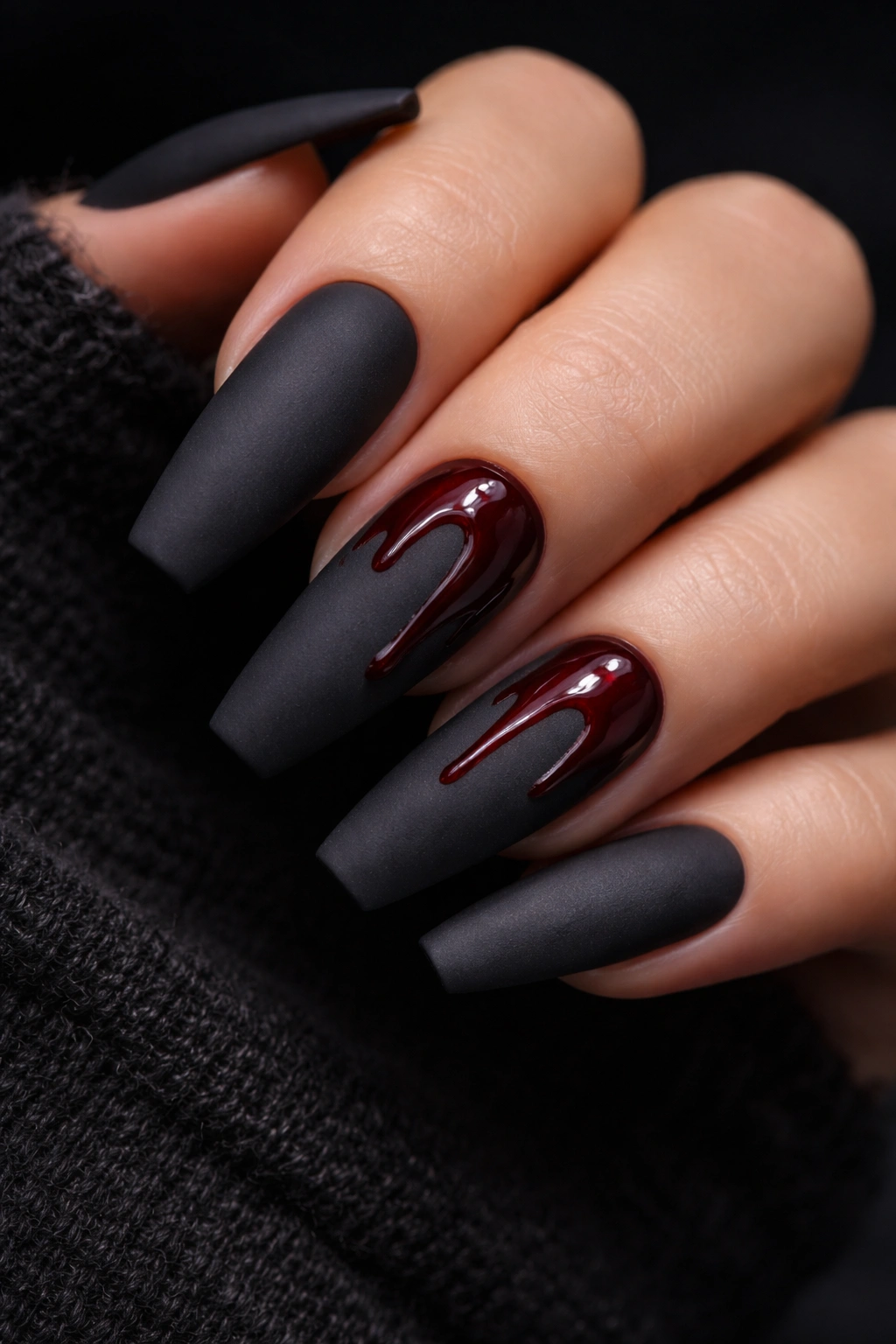
Red drip nails go wrong fast. The problem is not the idea. The problem is scale. Big cartoon drips on every nail look costume-shop cheap, especially on longer ballerina tips.
A better version starts with a soft matte charcoal base, not jet black. That gives the red something to sit against. Then the drip art gets painted in a dark jelly crimson, blood red, or blackened cherry with narrow trails that taper naturally. Uneven lengths help. Real liquid does not drip in neat, matching lines.
Two accent nails are enough.
Put the drips on the middle and ring finger, or run them along the tips like melted lacquer rather than from the cuticle. A glossy top coat on the drips alone creates a wet effect against the matte base, which is where the tension comes from. You need that finish contrast or the design falls flat.
Skip bright scarlet. Skip thick blobs. And keep the rest of the manicure plain. This is one of those sets where restraint makes it land harder.
6. Smoky Aura Ballerina Nails With Black Burnt Edges
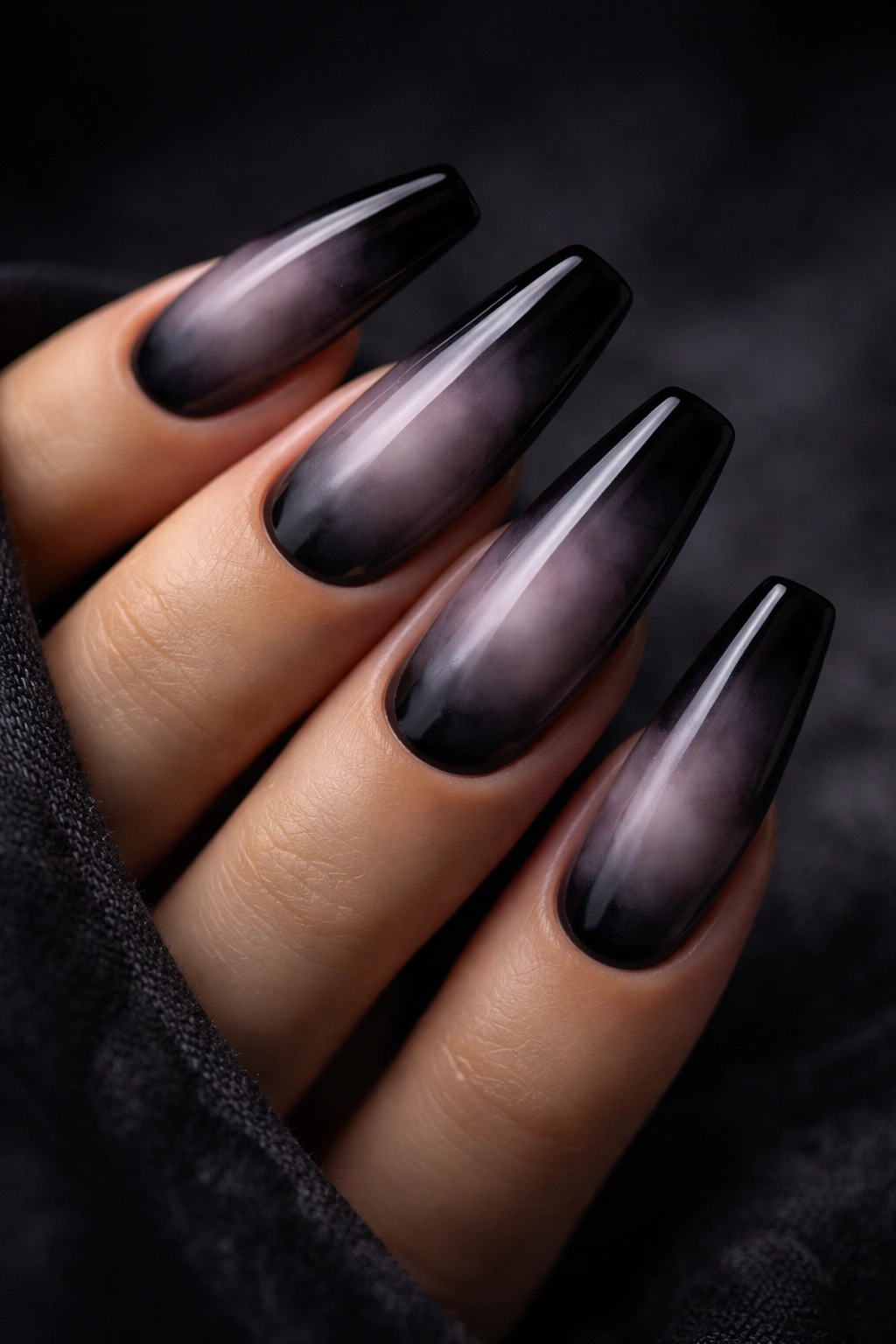
Unlike candy-colored aura nails, a goth version should look singed. The center glow wants to be muted—smoke gray, faded plum, dead rose, dusty mauve—while the perimeter darkens into black or deep charcoal.
The shape does good work here. Because ballerina nails have both length and a straight tip, the aura haze has room to bloom in the center before the black edge frames it. On short square nails, this same design can look cramped.
A soft airbrush blend gives the cleanest result, though sponge blending can still work if the colors stay smoky. You do not want a sharp circle in the middle. You want a cloud. Think bruise tones, candle smoke, old velvet. Gloss suits this design because it deepens the edge and makes the fade look smoother.
Who should wear it? Anyone who wants a dark manicure without the usual crosses, skulls, moons, or spiderwebs. This one feels moodier and less literal, which often makes it easier to wear with everyday clothes.
7. Black Marble Nails With Thin White Veins
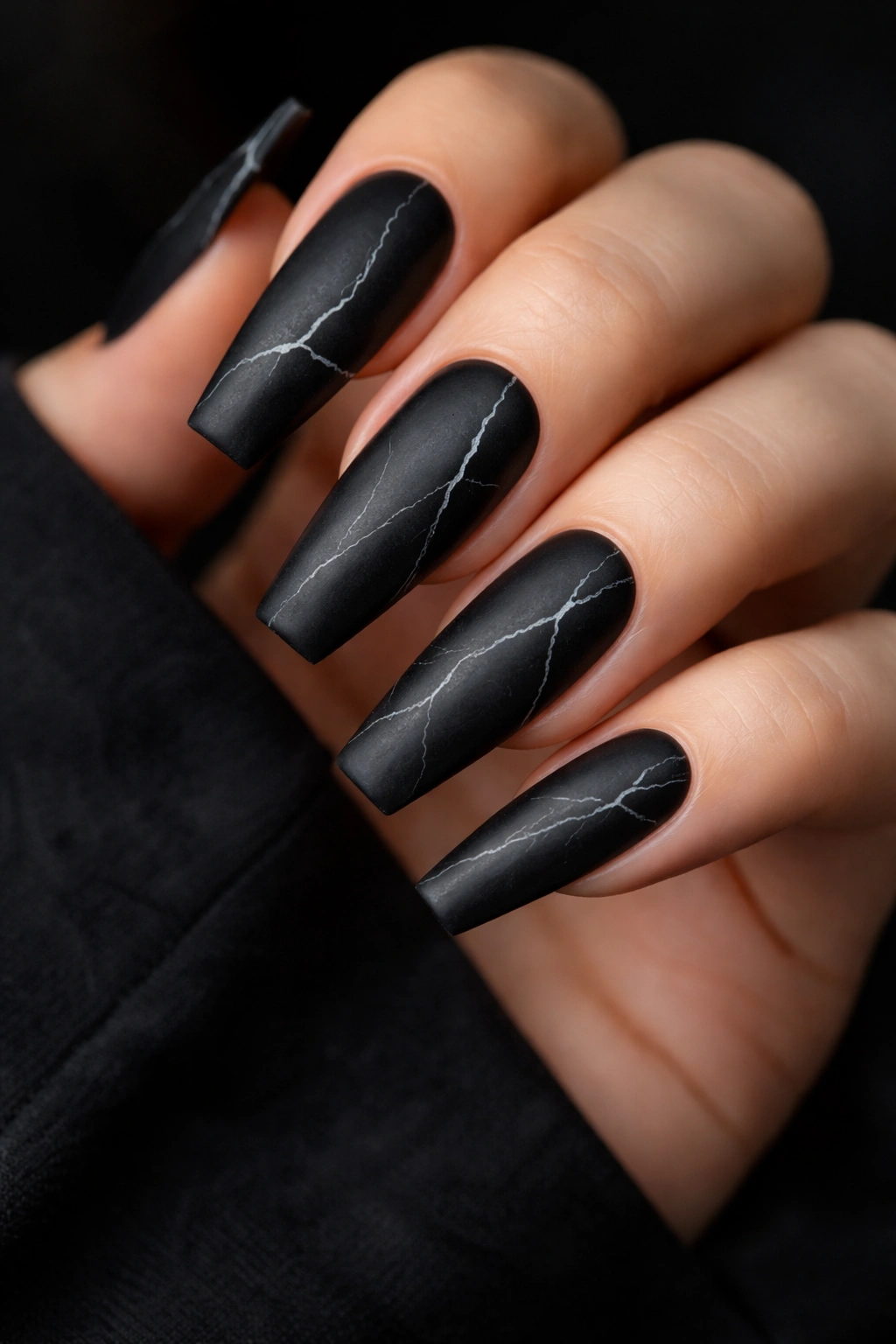
A stone texture can make black nails feel older, colder, and more severe. That’s the appeal here. Instead of a flat color block, you get movement through thin white, gray, or smoke-colored veins that cut across the nail like cracked slate.
The key is scale. Thick white marbling looks busy on ballerina nails and can start reading countertop instead of gothic stone. Fine lines work better—especially if you drag a tiny liner brush through wet gel to soften some edges and leave others crisp.
What gives this look its bite
Use a black or charcoal base, then add 2 to 4 main veins per nail with a few ghost lines branching off. A satin or matte top coat makes the surface feel more mineral and less glossy-salon generic. If you want extra depth, add faint gray blooming gel around one section of the line so the pattern looks embedded, not pasted on.
Quick design notes:
- Best finish: matte or soft satin
- Best accent color: off-white, pale gray, or silver-white
- Best length: medium to long
- Best extra detail: one foil crack in silver on a single accent nail
This one pairs well with silver jewelry and dark fabrics that have texture—wool, leather, ribbed knits, lace.
8. Midnight Green Velvet Cat-Eye Nails
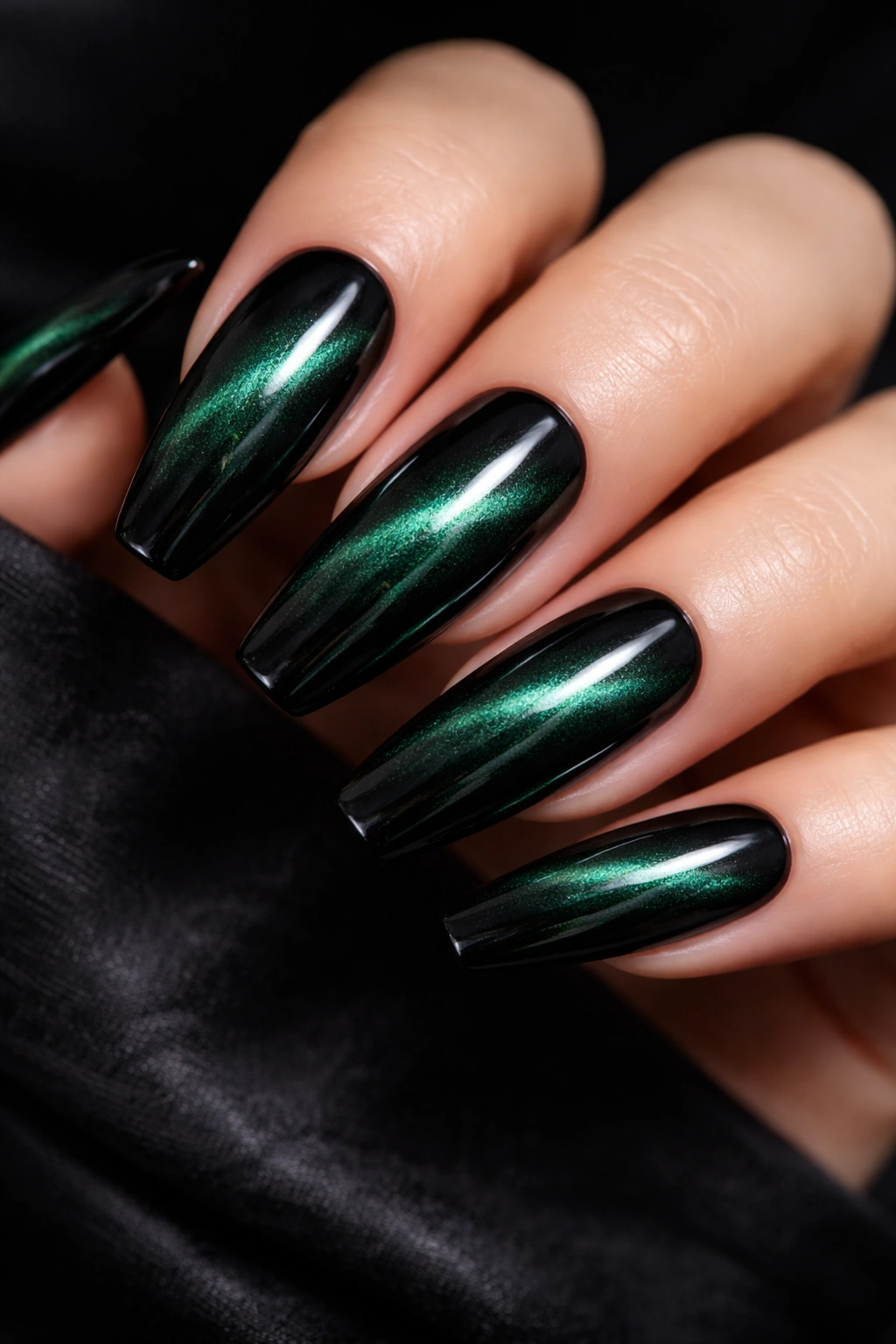
One magnet can change the whole set.
Midnight green cat-eye polish is one of the smartest choices if you want dark nails that still move. Straight on, the polish can look nearly black. Tilt your hand, though, and a green flash shows up—deep forest, bottle glass, oxidized metal, depending on the base.
That hidden shift is what makes it feel gothic rather than flashy. Blue can go icy. Purple can skew theatrical. Blackened green feels older and stranger, almost like tarnished copper seen in the dark.
What to ask for at the salon
You want a black or dark green base layer, then a magnetic gel pulled into either a diagonal streak, centered glow, or velvet bloom. On ballerina nails, the diagonal pull often looks longest because it travels across the full shape.
- Use one magnet pattern across the whole set
- Choose green-black, not bright emerald
- Keep the nails glossy
- Add chrome stars only if they are tiny and sparse
The color does enough already. Heavy decals would only fight it.
9. Black French Tips With Fine Barbed-Wire Line Work
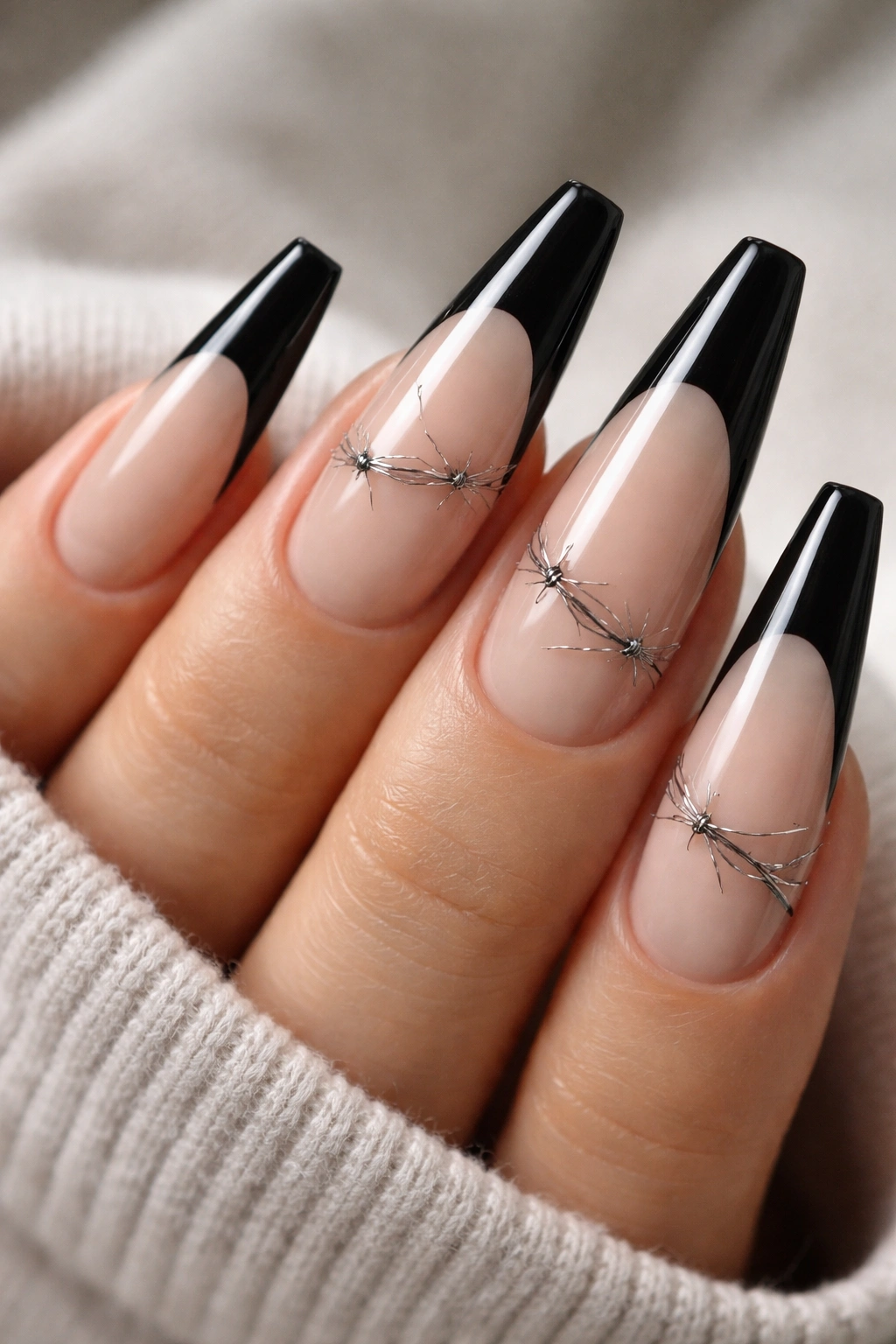
Can a French manicure look hostile? Yes. This is how.
Start with a cool translucent nude base—the same gray-beige family that works under lace—then paint a crisp black French tip that follows the straight ballerina edge. Over that, add ultra-fine silver or charcoal line work that twists like barbed wire across one side of the smile line or wraps diagonally over two accent nails.
The barbs need to stay thin. If they’re thick, the design turns cartoonish. A detail brush and gel paint work better than chunky stickers because you can control the spacing. Aim for wire strands around 1 millimeter wide with tiny thorn marks placed every 4 to 6 millimeters.
How to wear it without crowding the set
Use the wire on two or three nails total, then let the rest stay as plain black French tips. Matte base with glossy tips can work here, though a full gloss finish gives the wire art a cleaner line. If you want one extra accent, add a single silver stud where the wire ends on the ring finger.
This design hits a sweet spot between minimal and aggressive. Sharp, graphic, and easy to read from a distance.
10. Victorian Cameo Accent Nails in Black and Bone
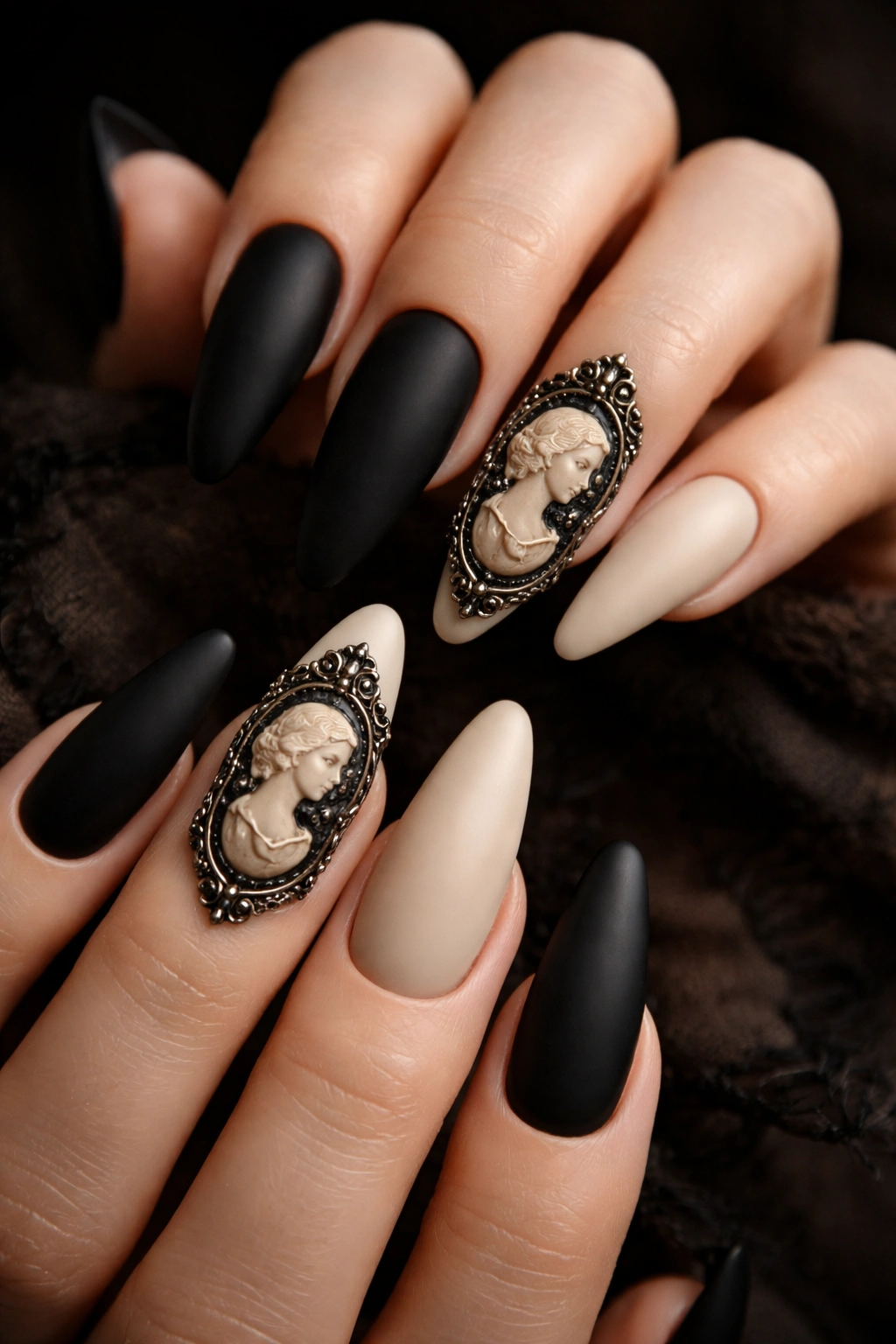
If your taste runs more cathedral than punk, cameo nails are worth a look. The trick is keeping them lean. One sculpted cameo on every finger is too much weight, too much texture, too much everything.
A cleaner set uses one cameo accent nail per hand, usually on the ring finger, with the rest of the manicure staying matte black, smoky nude, or black French. Bone, ivory, or old-paper beige works better than bright white because it feels aged. The frame can be oval or round, though an oval cameo often fits a ballerina nail better since it echoes the nail’s length without fighting the square tip.
Raised art should stay low-profile. You want texture, not a doorknob glued to the nail. Flat sculpted gel, 3D gel with a shallow relief, or a cameo decal under builder gel usually wears better.
A good set follows three rules:
- Limit the cameos
- Keep the relief low
- Choose aged ivory over clean white
Done right, this one feels moody and old-world instead of costume-party loud.
11. Black Jelly Nails With Embedded Silver Stars
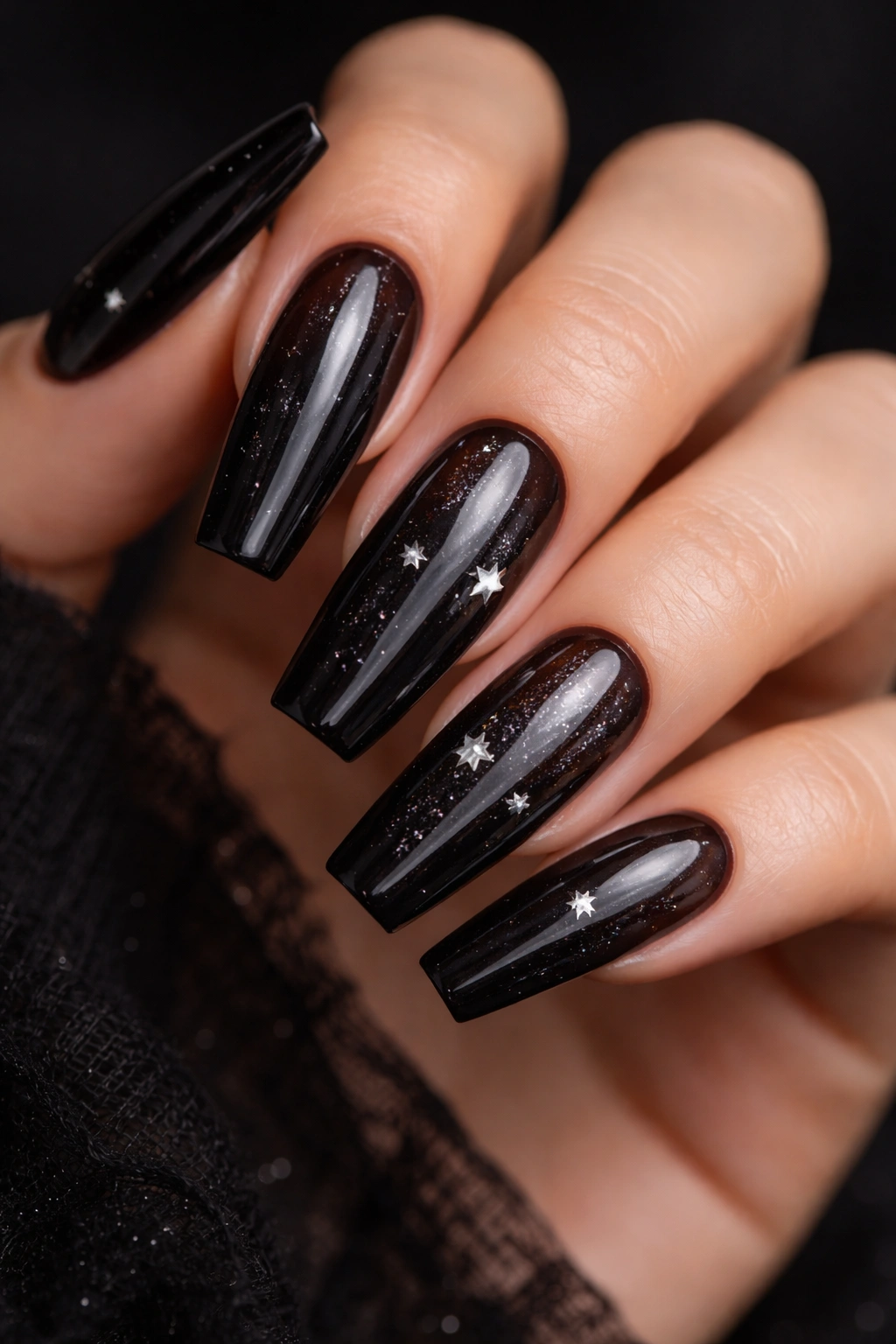
See-through black is underrated. It softens the heaviness that opaque black can bring to a long ballerina set, and it lets tiny details float inside the nail instead of sitting on top of it.
That’s where embedded silver stars come in. A smoky black jelly base layered over mini metallic stars, foil flecks, or cutout shapes creates depth because the details look suspended. It feels more like looking through tinted glass than looking at surface art.
Restraint matters here—again, yes, I’m circling back to restraint, because this style rewards it. Use three to five tiny stars on accent nails and maybe one or two on the others. Pack the whole nail with glitter and the look shifts into holiday territory, which is not the goal.
Gloss is the right finish. You want that wet, glassy depth. This design also works well on slightly shorter ballerina nails since the transparency keeps the shape from feeling too blunt. If you like celestial nail art but hate obvious moon-and-stars sets, this is the smarter route.
12. Matte Black Nails With Fine Silver Chain Details
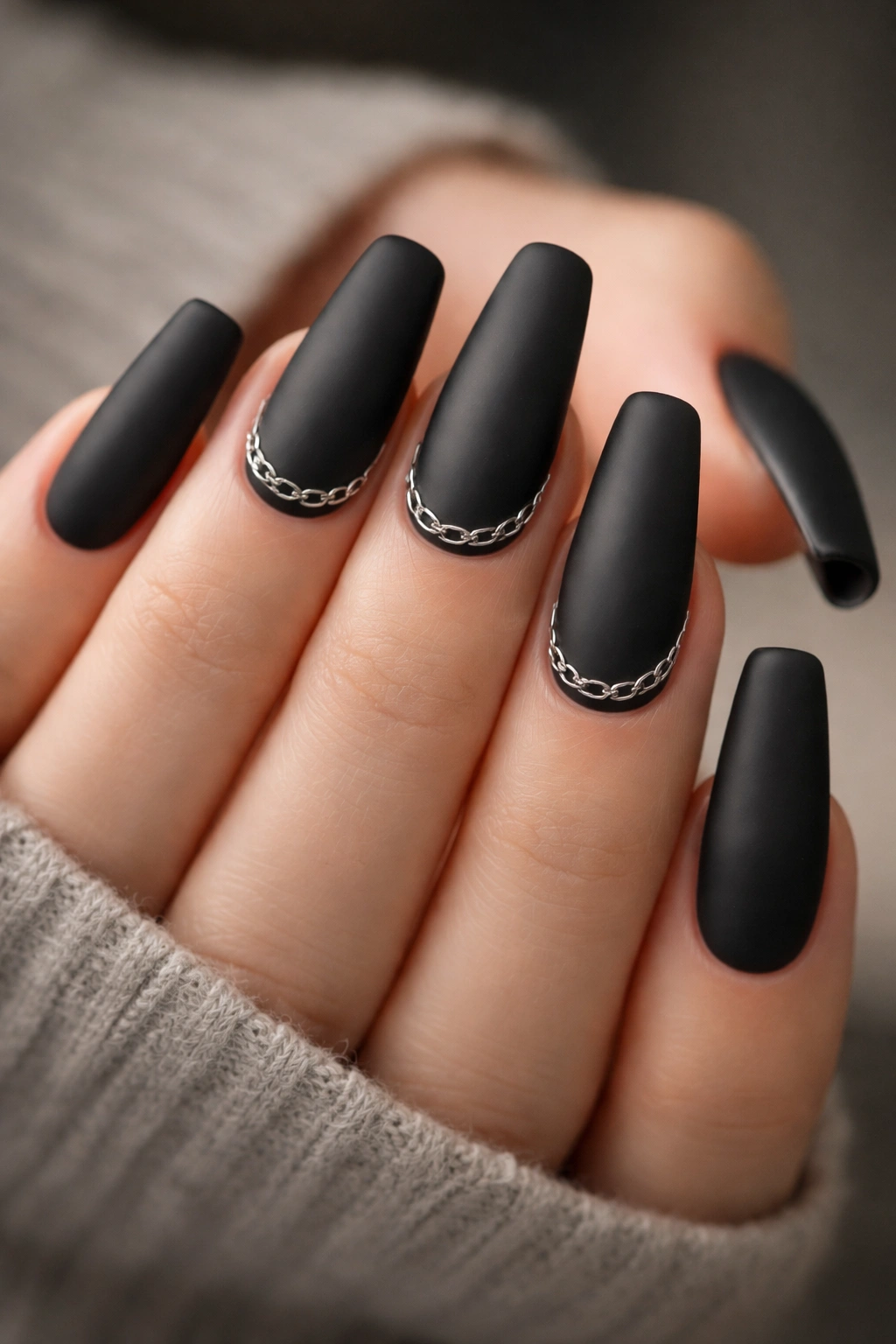
Charms can make a dark manicure look clunky when they sit too high. Fine chain does the opposite when it’s used with discipline. It adds metal, movement, and hardware energy without turning the nail into a keychain.
There are two clean ways to wear it. One is encapsulated chain, where a thin silver chain sits under builder gel so the surface stays smooth. The other is surface-applied micro chain secured along the cuticle arc, sidewall, or down the center of one accent nail. Encapsulation lasts longer. Surface chain looks harsher and more industrial.
The design works best when the base is matte black or matte graphite, since the dull surface makes the metal stand out more. Two chain nails per hand is usually the ceiling. More than that starts to feel overloaded.
Best placements for chain
- Along the cuticle curve
- Straight down the center line
- Diagonally from upper sidewall to tip
- Framing a single black French edge
This is one of the few goth ballerina nails that looks sharper the plainer your clothes are. A black tee and silver rings are enough.
13. Plum-to-Black Gradient Nails With Tiny Moon Phases
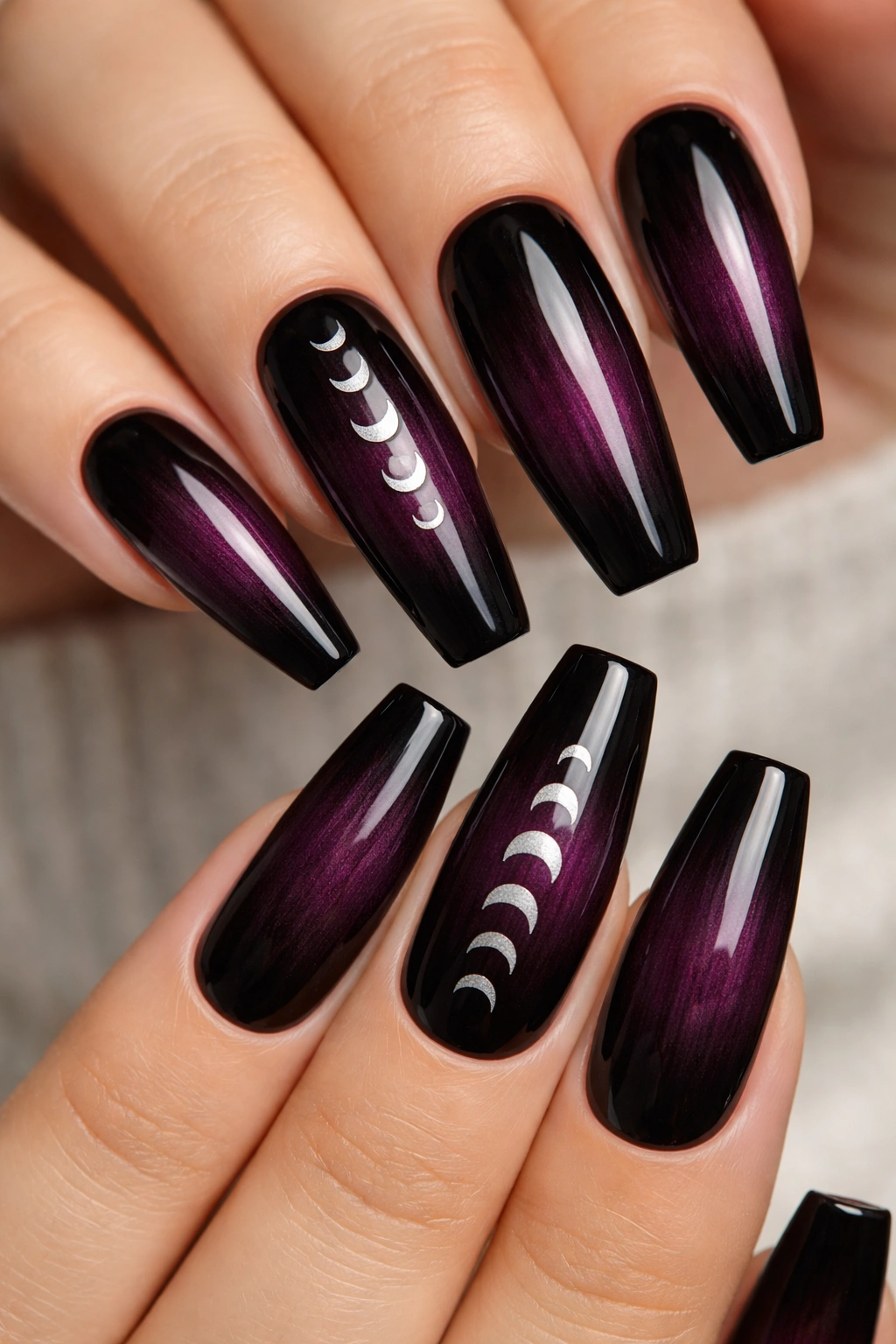
Purple can wreck a goth set when it’s too bright. Swap that loud violet for a blackened plum, though, and the whole idea changes. It starts to look bruised, nocturnal, and richer.
A plum-to-black gradient works best when the purple sits in the midsection of the nail and darkens toward either the cuticle or tip. That placement keeps the color from shouting. It reads as shadow first, color second.
Keep the moons thin
Moon phases belong on one nail, maybe two. Paint them in silver, pewter, or muted ivory using a detail brush or decals trimmed small enough to fit the nail length. The symbols should sit in a vertical line no wider than 3 to 4 millimeters, which keeps them elegant and stops them from taking over the whole design.
A few smart choices make this set stronger:
- Use dusty plum, not grape
- Keep the moons small and evenly spaced
- Pair with gloss or satin, not chunky glitter
- Let at least six or seven nails stay mostly plain
That last point matters. The gradient already gives you atmosphere. The moon phases are garnish, not the meal.
14. Distressed Ink-Splatter Grunge Nails
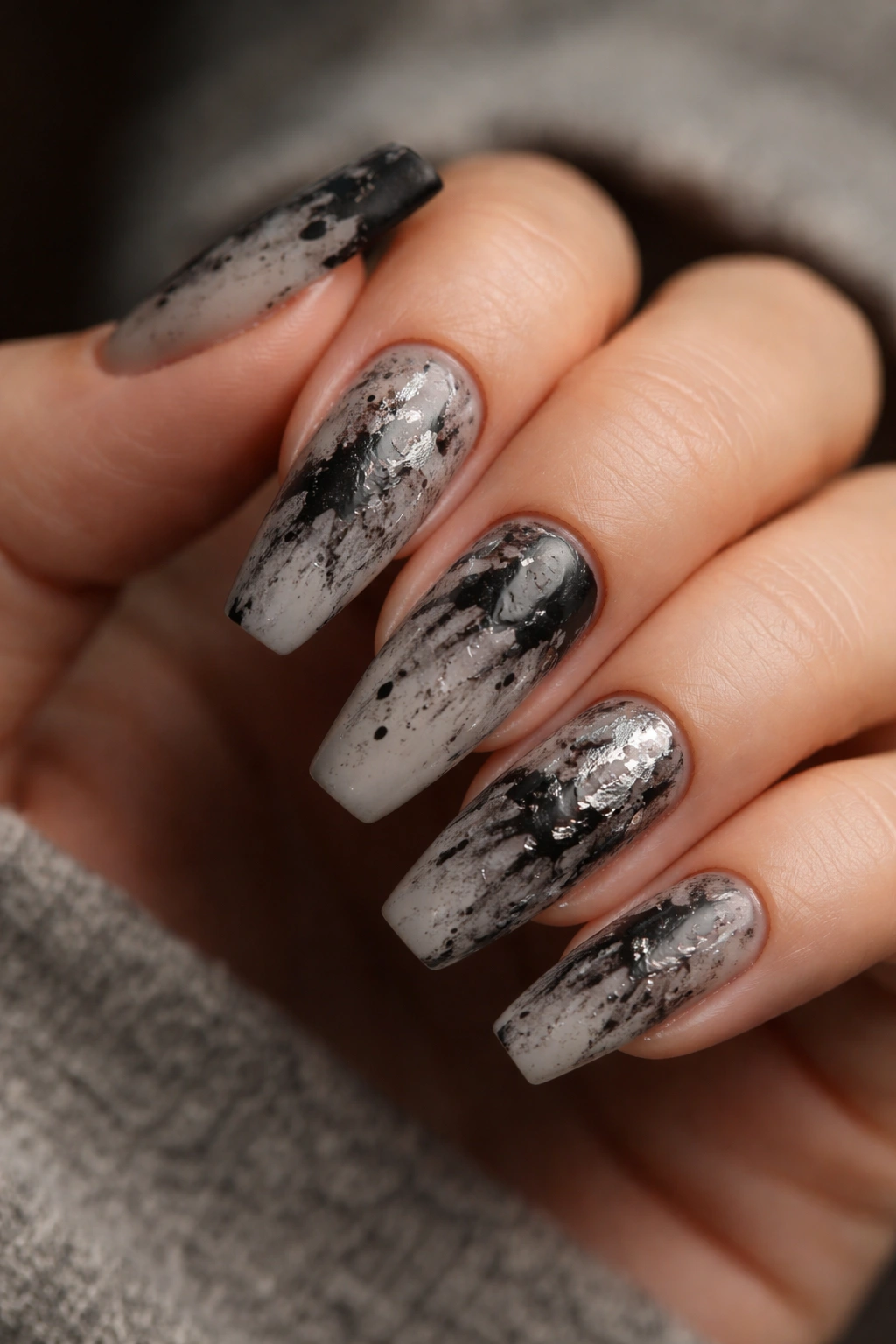
Messy, but not random.
That’s the line with grunge splatter nails. The strongest version starts with a dirty neutral base—smoky gray, parchment beige, washed taupe, even a faded olive-gray—then layers black ink splatter, rubbed charcoal edges, and maybe one streak of silver foil that looks torn rather than polished.
A toothbrush flick can work for DIY splatter if the polish is thinned enough. Gel paint tapped from a liner brush gives better control. You want variation in droplet size: some tiny specks, one or two larger marks, maybe a dragged smear on an accent nail. If every nail has the same dot pattern, the whole thing looks printed.
What makes it feel grunge instead of abstract
- Smudged edges near the sidewalls
- Uneven splatter density
- A matte top coat
- Muted base colors, never bright white
This one suits shorter and medium ballerina nails better than extra-long sets. Too much length can make the distressed finish feel theatrical. On a modest length, it looks worn, rough, almost like ink-stained paper or old concrete. That mood is the whole point.
15. Patent Black Nails With Translucent Red Glass Tips
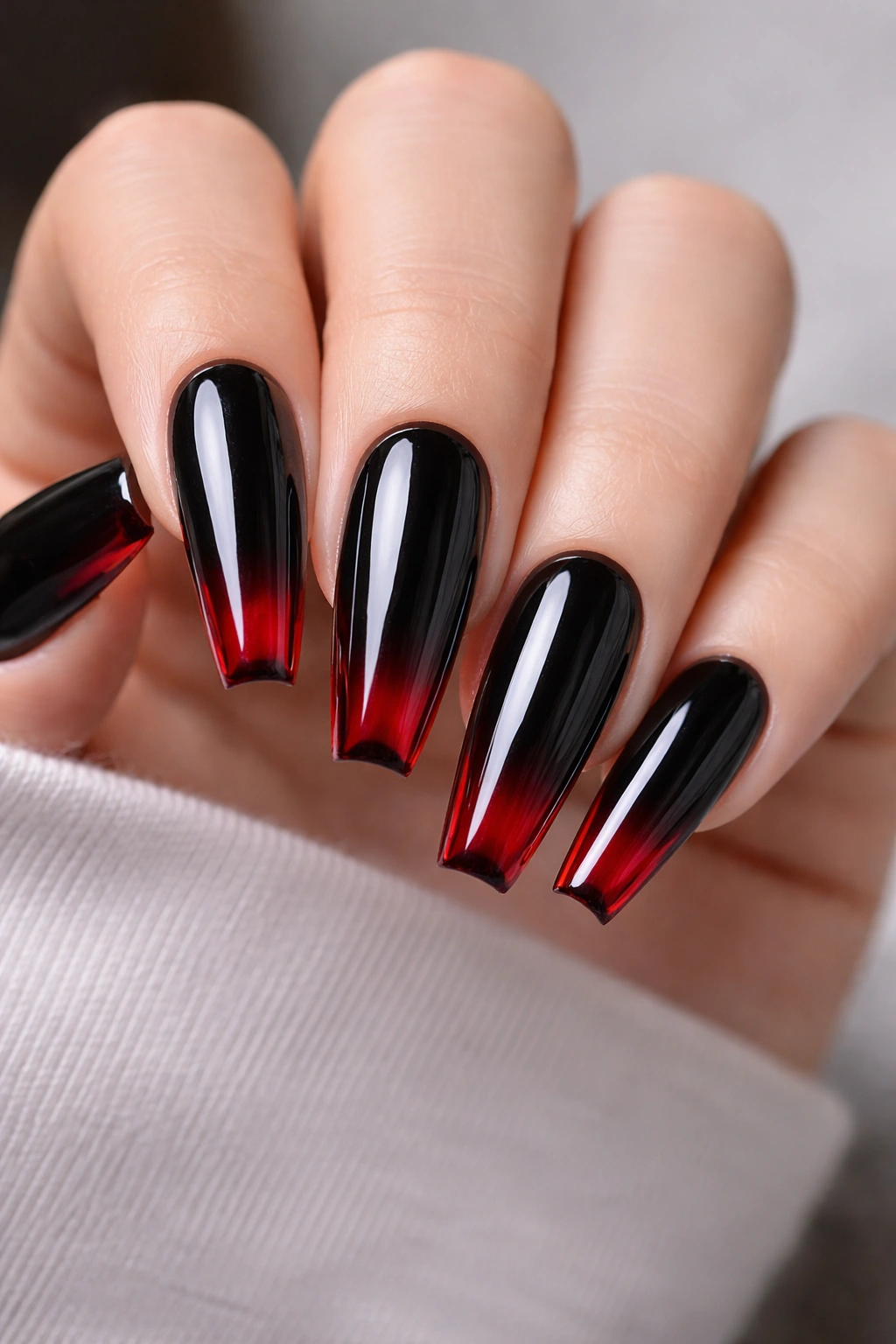
A sheer red tip over black looks like stained glass dipped in wine. It’s dark, glossy, and a little sharp without relying on decals or 3D pieces at all.
The base of the nail stays opaque black—high shine, smooth, almost mirror-like. The free edge gets built or painted in a translucent red jelly, leaving enough clarity for light to pass through at the tips. Because ballerina nails have that straight cutoff edge, the color shift reads cleanly from the front.
This works best on medium-long and long nails. You need enough tip depth to show the transparency. About 4 to 6 millimeters of red glass edge is a strong range; thinner than that, and the effect gets lost. Pair it with silver rings rather than gold, since silver keeps the whole thing colder.
Best finish for this look
Gloss. No debate here. Matte would kill the glass effect, and satin would mute the red. Ask your tech for a crisp line where the black meets the jelly tip, not a blended fade. That sharp split is what makes the set feel deliberate.
Final Thoughts
The strongest dark manicures rarely come from piling on more symbols. Shape, finish, and control do more for goth ballerina nails than six extra charms ever will. Get the taper right, keep the thickness slim, and choose one main visual idea per set.
If you’re taking inspiration photos to the salon, bring three kinds: one for shape, one for finish, one for the art detail you want. That saves a lot of back-and-forth in the chair, and it keeps the final set from turning into a mash-up of conflicting ideas.
My own bias here is easy to state: the moodiest sets are often the cleanest ones. A matte black base with glossy tips, a smoky aura edge, a red glass tip—those designs let the ballerina shape do its job. And when the shape is this good, it deserves the spotlight.