


Grey ballerina nails solve a style problem that pink nudes never quite fix. They look clean, sharp, and polished, but they do not lean sugary or obvious. If you want a manicure that works with silver jewelry, black knits, washed denim, soft tailoring, and a plain white tee, this shape-and-color pairing has a calm edge that is hard to beat.
The shape does half the work. Ballerina nails taper through the sides, then finish with a flat tip, so even a quiet shade gets more presence than it would on a short square or rounded nail. A pale dove grey can look airy and crisp here. A deep charcoal can feel almost architectural.
Shade choice matters more than most people think. Grey can turn blue, mauve, taupe, or even a little green depending on the base color, your skin tone, and the top coat. I have seen salon swatches that looked soft in the bottle turn dull once they were stretched across a long coffin silhouette, and I have seen a basic mid-grey come alive the second a glossy top coat hit it.
That is why the strongest grey ballerina nails are not only about color. Finish, opacity, nail length, accent placement, and the tiny details at the tip all change the mood.
Why Grey Ballerina Nails Work So Well on This Shape
Grey gets more personality on a ballerina nail than it does on almost any other shape. On a short natural nail, grey can read plain if the formula is flat or the undertone is off. On a longer tapered shape, the same color suddenly has line, drama, and a bit of intent.
Part of that comes from contrast. Ballerina nails have a narrow sidewall and a blunt tip, so they mix softness and structure in one silhouette. Grey does the same thing. It sits between white and black, soft and hard, casual and dressed. Put them together and the look feels balanced in a way that beige often does not.
There is also a practical reason this combo keeps showing up in salon chairs. Grey hides minor wear better than pure white, while still looking cleaner than a dark wine or navy once the edges start to grow out. Chips still matter, yes, but the shade is forgiving.
And grey plays well with finish.
Matte top coat makes a medium grey look like brushed stone or cashmere. A glassy top coat turns charcoal into something almost liquid. Chrome powder over a cool grey base can shift the whole manicure into icy metal territory without crossing into disco-ball territory.
If you wear mostly cool neutrals, this color family slips into your wardrobe with almost no friction. If you wear warmer tones, a mushroom or greige-leaning grey bridges the gap. That flexibility is a big reason people keep coming back to it, refill after refill.
Choosing the Right Undertone, Length, and Finish Before You Book
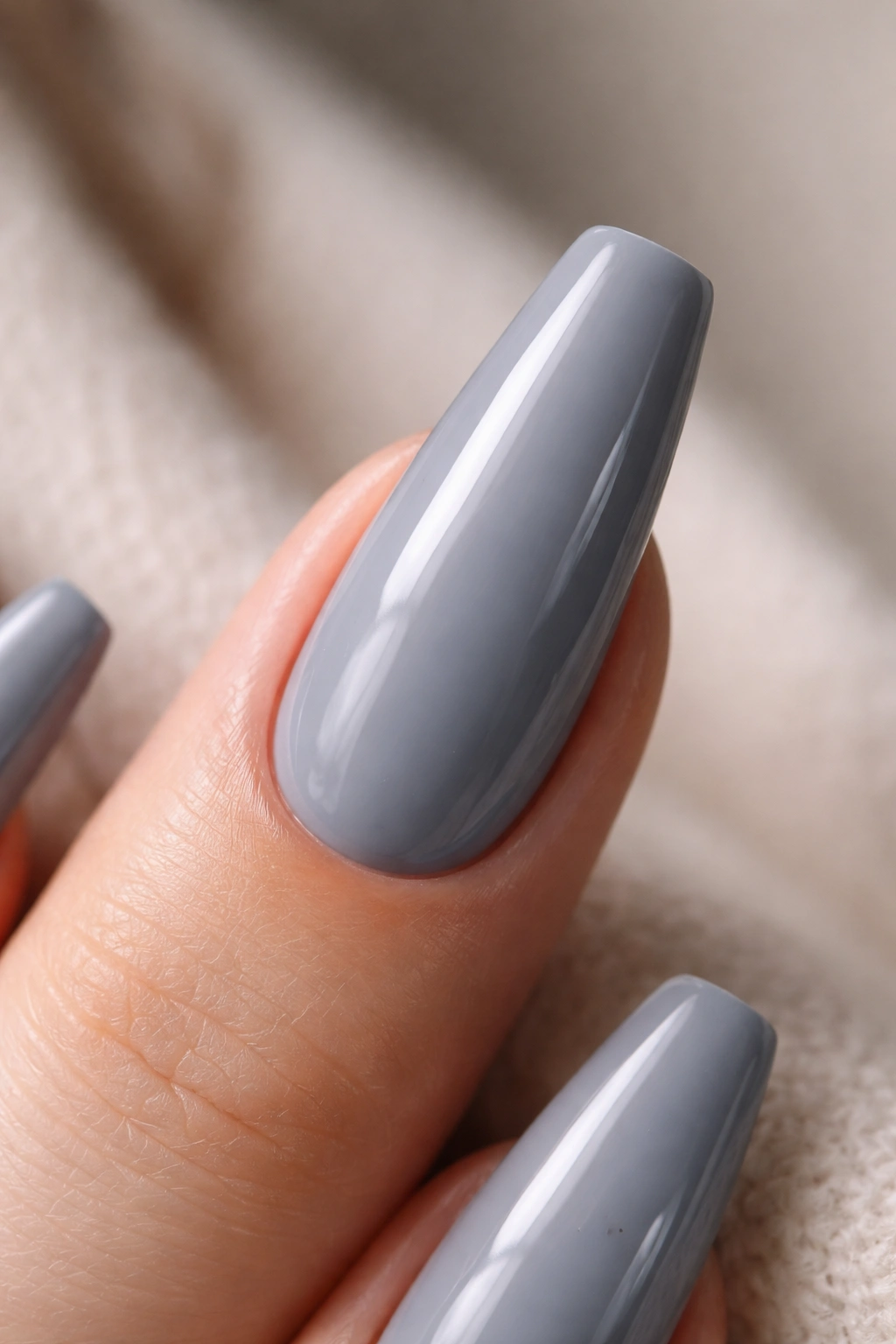
Walk into a salon and ask for “grey,” and you may get five different swatches that barely belong in the same family. One will lean blue. One will pull brown. Another will look lavender under indoor light. You want to narrow that down before the file even comes out.
Pick the undertone first
Cool skin often looks cleanest with blue-grey, slate, or silver-grey shades. Neutral skin can usually handle the widest range, from dove to pewter. If your skin has more warmth, a taupe-grey or mushroom-grey tends to look smoother than a steel shade that can pull chalky.
Match the depth to the nail length
Longer ballerina nails carry dark colors well because the tapered shape keeps them from looking blocky. Shorter ballerina sets often look better in light to medium greys, especially if the nail bed is not long. A deep charcoal on a short wide nail can look heavy fast.
Think about finish before art
Ask yourself what you want the manicure to say.
- Glossy grey looks sleek and crisp.
- Matte grey feels softer and a little more fashion-forward.
- Sheer grey reads airy and less strict.
- Chrome or magnetic finishes bring movement, which helps if you find flat grey too quiet.
- Milky bases with grey detail grow out more gently than a full opaque set.
One more salon note, because it matters: ballerina nails need structure. If you want length, ask your tech about builder gel or a hard-gel overlay with a proper apex. A long flat nail with no support tends to snap right where the side tapers in. Pretty for two days. Then annoying.
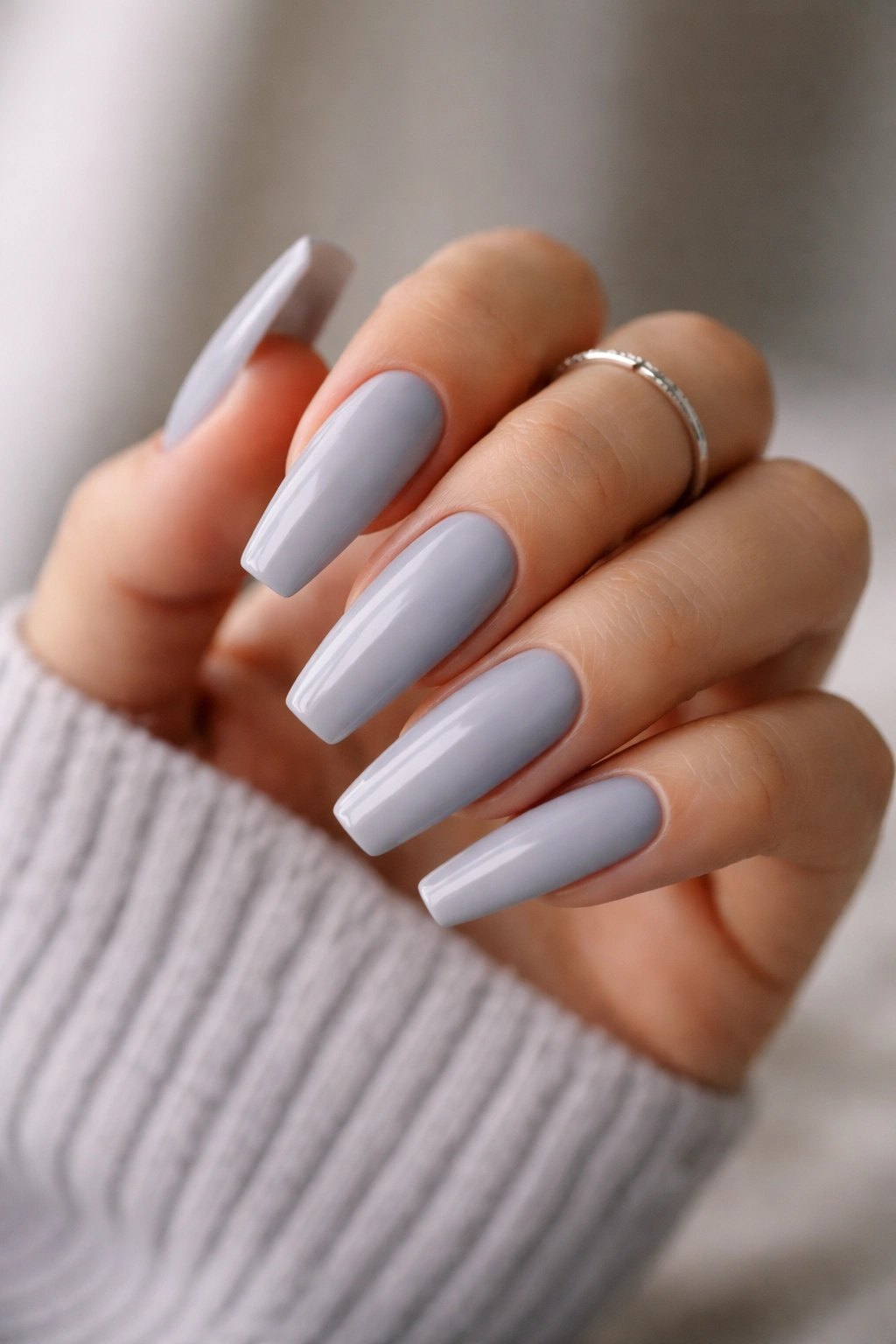
1. Dove Grey Cream on Long Ballerina Nails
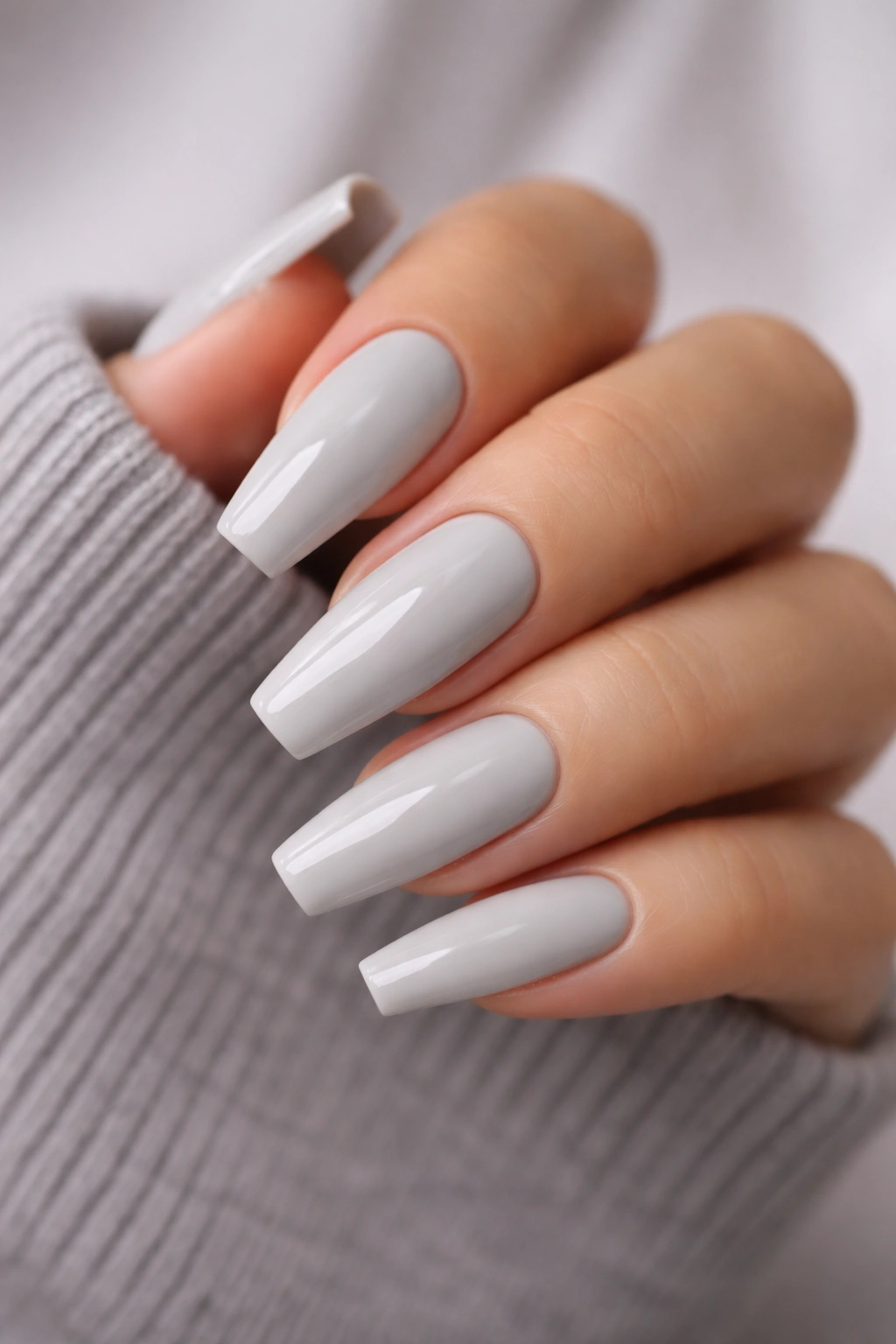
There is a reason this version keeps getting saved to inspiration boards. A soft dove grey cream is the cleanest entry point into grey ballerina nails because it does not need art, rhinestones, foil, or anything flashy to look finished.
The shade should sit somewhere between pale concrete and storm-cloud light. Too white, and it starts reading chalky. Too dark, and you lose the airy feel that makes dove grey work. On a ballerina shape, that middle zone looks crisp from every angle.
Why this shade earns its place
Dove grey works because it lets the shape carry the manicure. The flat tip looks sharper against a pale cool color, and the tapered sides feel longer without screaming for attention. If your wardrobe leans black, charcoal, cream, navy, or pale blue, this shade slots right in.
Salon notes that make a difference
- Ask for two thin coats of an opaque cream, not one heavy coat. Thick pale polish streaks more easily.
- A high-gloss top coat keeps the color from looking powdery.
- If your nail plate has ridges, use a ridge-filling base under regular polish or a smoothing gel base under color.
- File the tip perfectly straight. A crooked pale tip is easier to spot than a crooked dark one.
Best use: office-friendly, wedding guest, everyday city manicure, or any week when you want your hands to look expensive with almost no extra effort.
2. Matte Concrete Grey With a Soft-Edge Finish
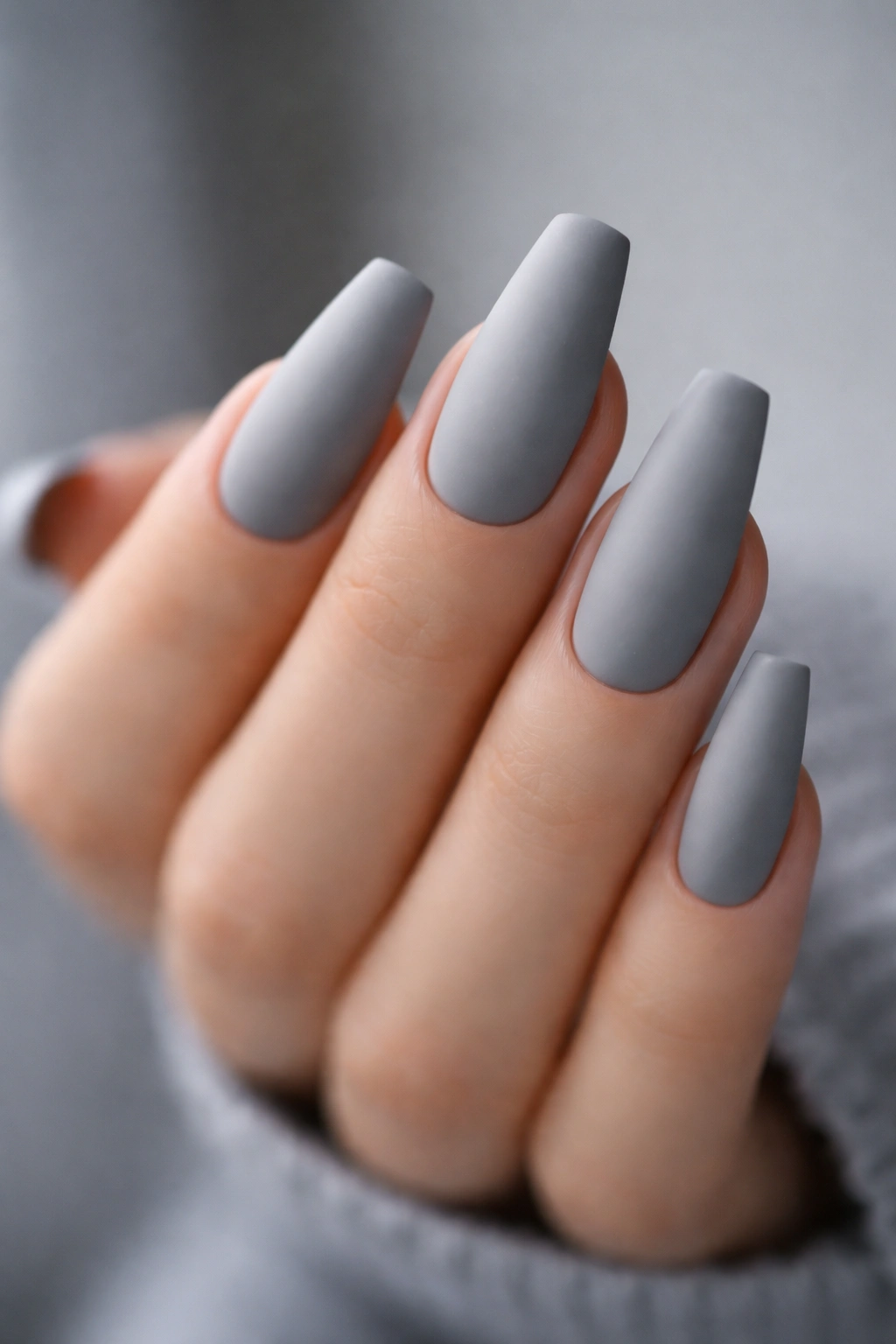
If glossy manicures feel too polished for your taste, matte concrete grey is where things get interesting in the best way. It has grit. Not literal grit—please do not ask your tech for texture you cannot clean properly—but a visual weight that reads modern and grounded.
Concrete grey sits in the medium range. It is deeper than dove, lighter than charcoal, and it often carries a touch of warmth or stone-like neutrality that keeps it from looking icy. Once you put a matte top coat over it, the whole set looks more like material than color. That is the appeal.
This finish is strong on longer ballerina nails because the shape already has a sculpted look. Matte makes that structure more obvious. Every sidewall, every crisp tip, every clean line shows up more clearly, which is why sloppy prep gets punished here. Your cuticles need to be neat. The sidewalls need to be even. There is nowhere to hide.
Wear-wise, matte top coats pick up oil from hand cream and natural skin contact, so the nails may look darker at the center after a few days. A quick wipe with alcohol usually brings the finish back. If that maintenance sounds annoying, skip matte and stay glossy. No shame in that.
This style suits people who like neutrals with a little bite. Think sharp coat, silver ring stack, dark jeans, maybe a grey cashmere scarf if that is your thing. Quiet? Yes. Forgettable? Not even close.
3. Sheer Base With Grey Micro-French Tips
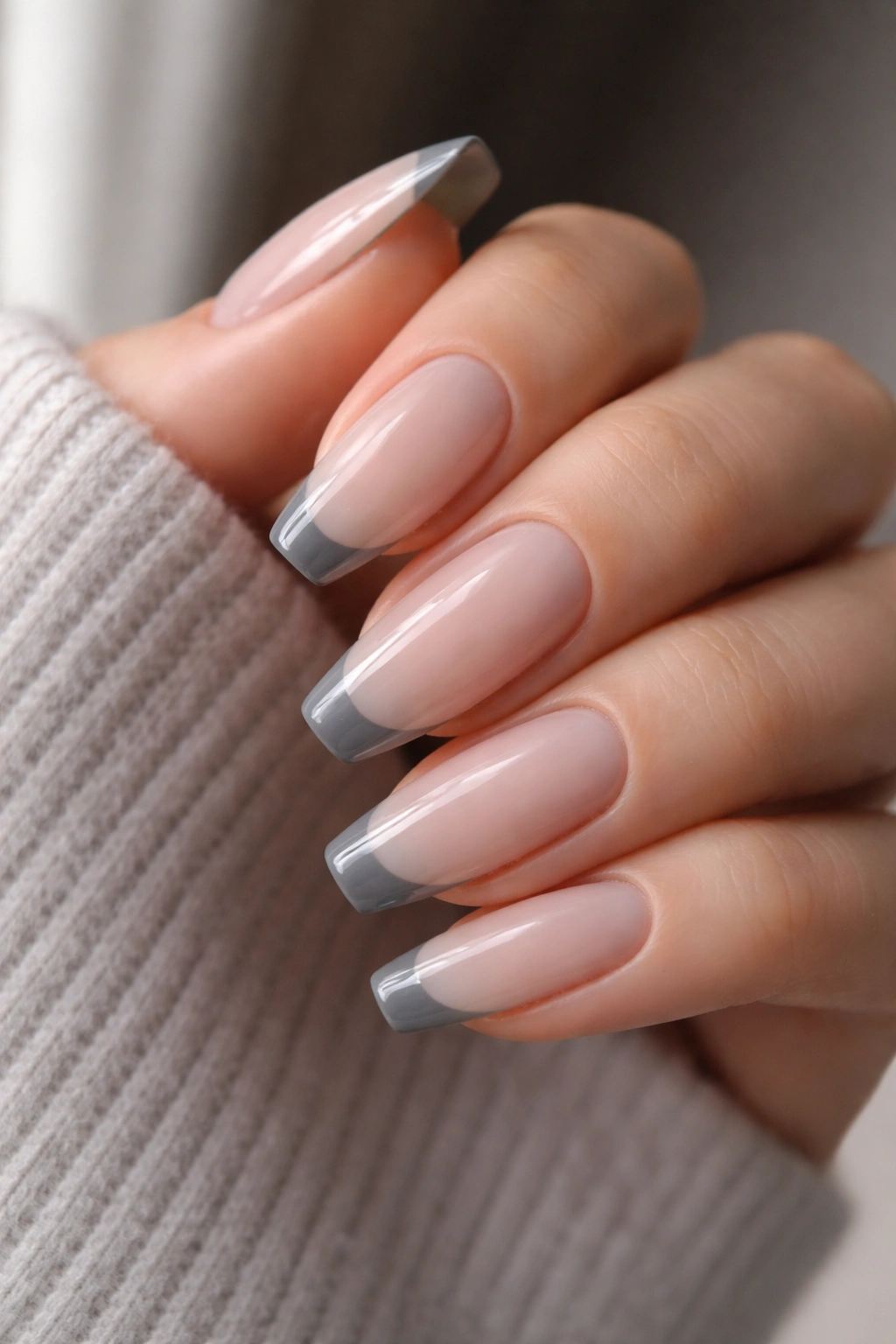
Why does this look so expensive? Because it uses restraint where most French sets go broad and obvious. A grey micro-French on a sheer pink-beige or milky nude base gives you the ballerina outline without covering the whole nail in color.
The trick is scale. On a ballerina shape, a French tip that is 2 to 3 millimeters deep usually feels clean. Go much thicker and it starts to shorten the nail visually. Grey is also easier to wear than stark white here. White tips can look severe on a blunt tapered shape. Grey softens the line.
The base matters just as much as the tip. Ask for a sheer cool nude, milky beige, or soft blush base that lets a little of the natural nail show through. That transparency keeps the set from feeling heavy.
What to ask your nail tech for
Ask for a sharply filed ballerina shape with a fine cool-grey smile line across the edge. If you want a cleaner grown-out look, request the tip in slate, dove, or pewter rather than near-black charcoal. Medium grey hides regrowth better and feels less stark once the nails are a week or two in.
This is one of my favorite choices for people who are grey-curious but not ready for a full opaque set. It still reads neutral. It still looks intentional. And from a conversational distance, it has that polished “your nails always look good” effect.
4. Smoky Grey Ombre That Fades Toward the Cuticle
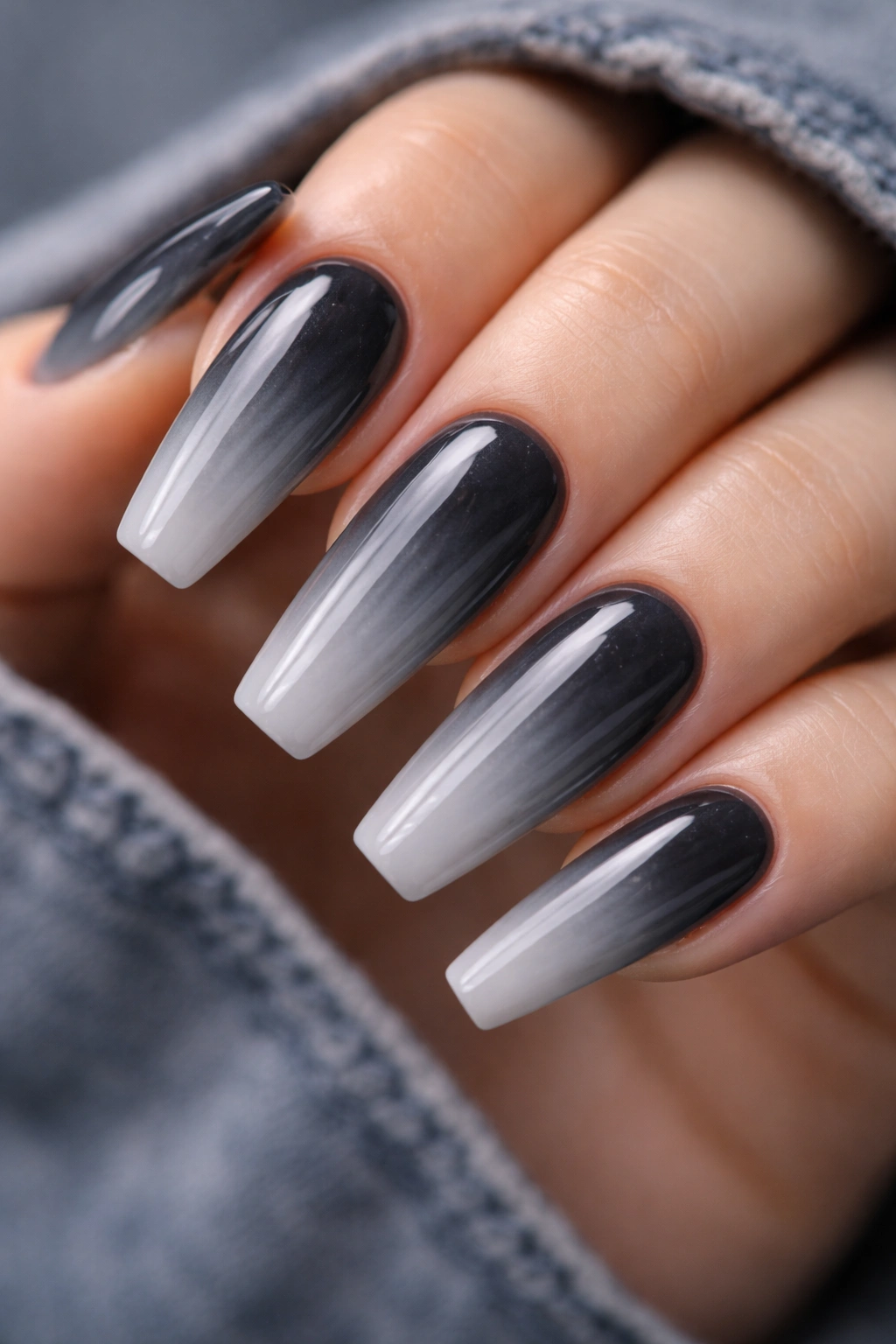
Picture a full charcoal manicure after it has been softened by fog. That is the mood here. A smoky grey ombre starts deeper at the tip and fades into a lighter grey or a sheer nude near the cuticle, which makes long ballerina nails look even longer.
The gradient matters because grey can go flat when it is one solid block, especially if the polish has no shimmer and the nail is long. Ombre fixes that by creating movement. Your eye travels from dark tip to lighter base, and the shape gets more dimension.
A good blend should look airbrushed, not striped. Gel sponging can work. Airbrush systems work better if the tech knows what they are doing. The seam between colors should disappear by the time the top coat goes on.
A few details make this design land.
- A charcoal-to-milky-nude fade looks cleaner than charcoal-to-white.
- A glossy top coat makes the blend look smoother than matte.
- Darker color at the tip helps disguise wear along the free edge.
- Medium-long lengths show the fade better than short ballerina sets.
This one has range. It can read soft with dove and sheer blush. It can feel moodier with steel and charcoal. If you like grey but want more depth than a basic single-color manicure gives you, ombre is a smart move.
5. Glossy Charcoal Full Set With No Extras
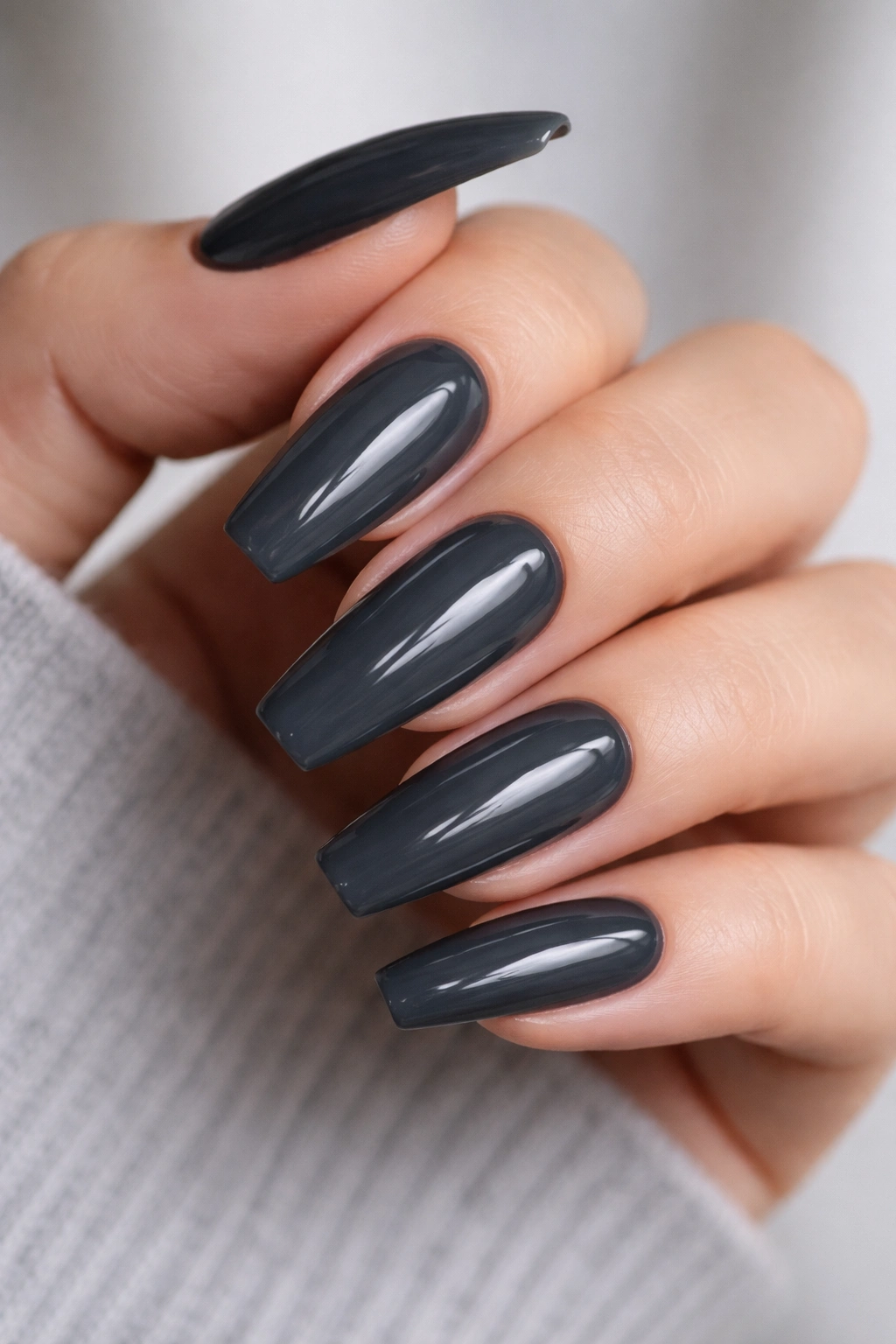
No nail art. No accent finger. No chrome dust, no foil, no line work. Just deep charcoal on a clean ballerina shape with a glassy top coat.
That sounds simple because it is simple. It is also one of the hardest grey manicures to fake well. Dark glossy polish shows everything: surface bumps, messy sidewalls, a lopsided tip, tiny gaps near the cuticle. When it is done right, though, it looks sleek in a way lighter greys cannot quite match.
Charcoal works on ballerina nails because the shape stops it from feeling dull. A square dark nail can read heavy. A stiletto can feel too sharp for people who want a neutral. Ballerina lands in the middle. You get edge without the drama of a point.
I like this style for anyone who wears black often but does not want a black manicure. Grey gives you the same depth with a little more softness. Under daylight, you still see the color. Under indoor light, it can look almost ink-like.
Pick a polish with a cool base and no muddy brown cast. If the salon swatch looks murky in the bottle, trust that instinct and move on. Charcoal should feel deep and clean, not dirty.
One more thing. Use cuticle oil daily with this look. Dark glossy nails pull the eye straight to the nail frame, and dry cuticles ruin the effect faster than a chip does.
6. Greige Marble With Fine White Veining
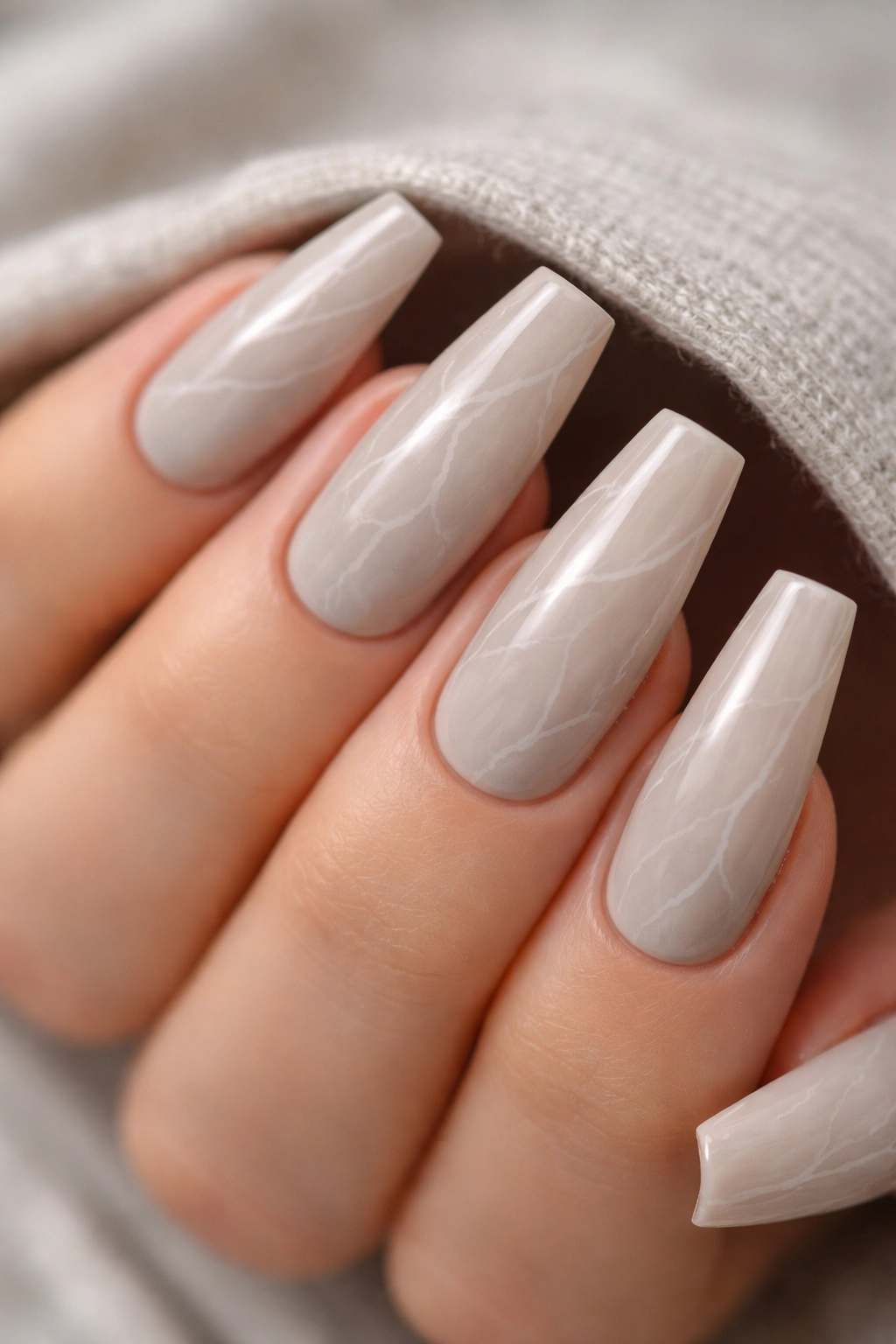
Unlike high-contrast white marble nails, which can read loud on a long shape, greige marble keeps the pattern softer and more wearable. You still get movement and texture, but the look stays in the neutral lane.
The base here should be a light taupe-grey or mushroom-grey rather than a cold silver grey. That little hint of warmth gives the marble body. Then the veining can come in with thin white or off-white lines, plus maybe a whisper of deeper grey for depth. Heavy black veining makes the design harsher than it needs to be.
This design works well when you want nail art that still behaves like a neutral. It has enough detail to feel considered, though it does not fight with rings, sleeves, or textured fabrics. That balance matters on ballerina nails, where the shape already gives you a strong outline.
Who does it suit best? People who find flat cream manicures a bit plain but still want something they can wear for two or three weeks without getting tired of looking at it. Marble has movement, so it keeps catching your eye in small ways.
Ask your tech to keep the veining fine and irregular, almost like hairline cracks in stone. Thick swirly marble lines can start looking cartoonish fast. And if you want a cleaner result, use the marble on all ten nails in a restrained pattern, or on two accent nails with a matching greige cream on the others. Both approaches work. The loud version rarely does.
7. Icy Grey Chrome Over a Milky Base
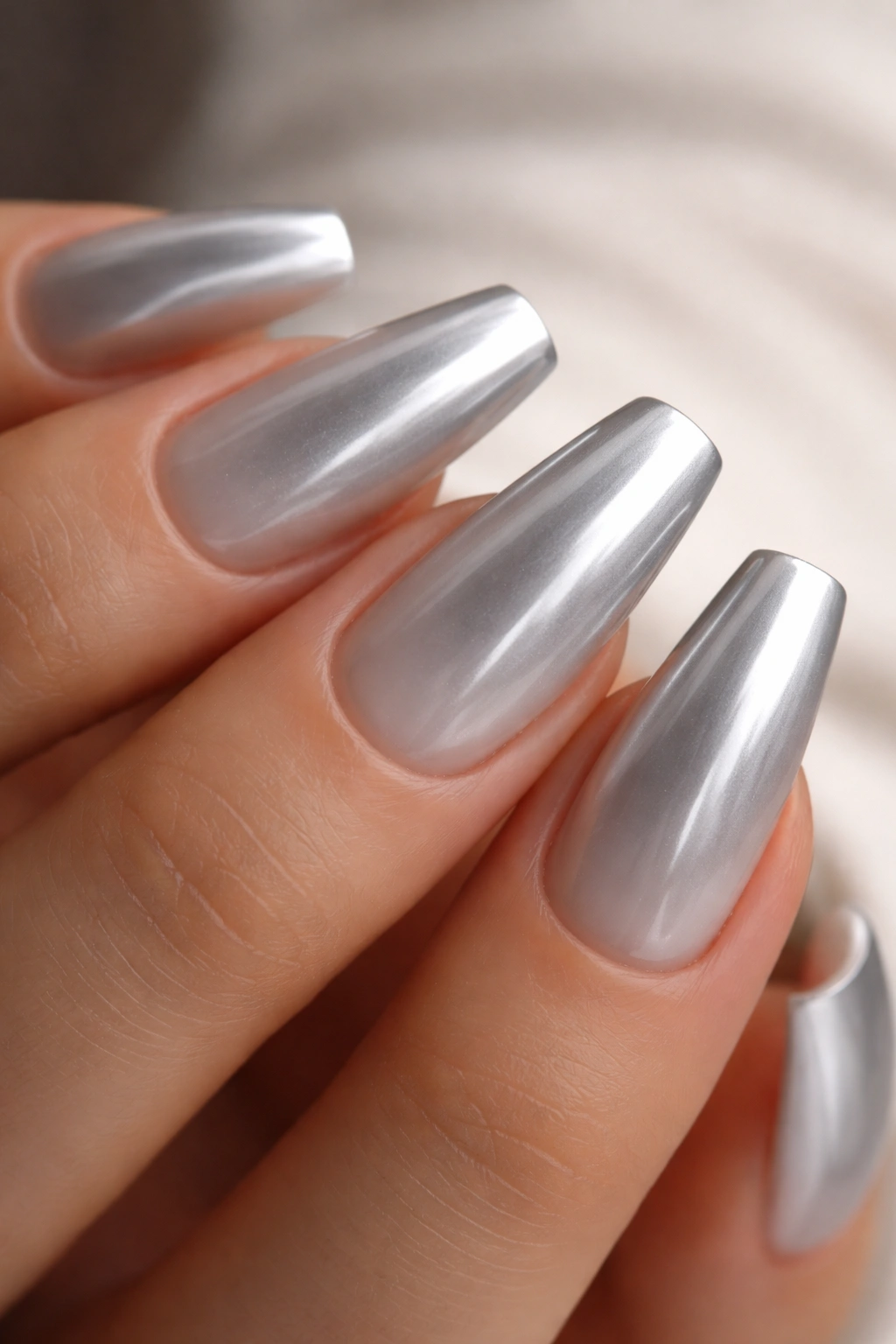
Chrome can go wrong fast. Too mirror-like, and it starts reading costume. Too dark, and it loses that cold silvery flash that makes people stop mid-scroll. Icy grey chrome over a milky base fixes both problems.
The base should not be black. That is the mistake. A black base makes silver chrome feel hard and almost robotic. Start with a milky grey, pale steel, or cool beige-grey gel, then rub chrome powder over a no-wipe top coat. The result is softer and more expensive-looking.
Why the milky base matters
A milky base lets light bounce through the chrome instead of slamming into a dark wall of color. On ballerina nails, that gives the flat tips a reflective edge and keeps the side taper from looking too severe.
Ask for these details
- Cool silver or pearl-grey chrome powder, not warm champagne chrome
- A smooth builder base, because chrome highlights every dent
- Medium to long ballerina length for the cleanest reflection
- A well-sealed free edge, since chrome can wear off at the tip if it is not capped properly
This is the grey manicure for people who want neutral nails with a sharper fashion feel. Under daylight, it flashes silver. Under softer indoor light, it settles back into a cool metallic grey. That shift is half the charm.
8. Slate Grey Nails With Tiny Negative-Space Half Moons
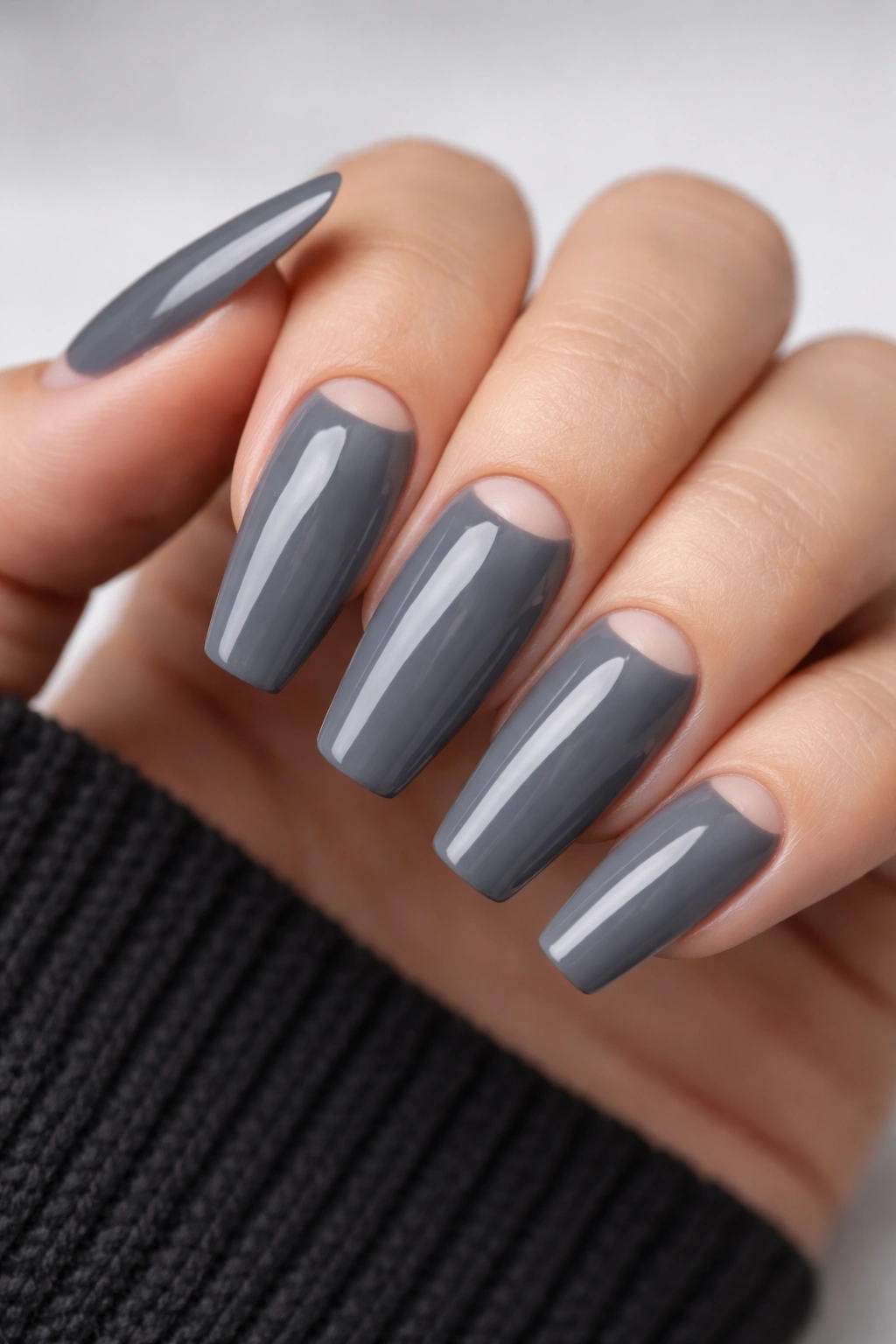
Small negative-space half moons can make a full-color manicure feel lighter without taking away its punch. On a slate grey ballerina set, leaving a tiny crescent bare at the base gives the eye a clean break and makes the grow-out look a little less abrupt.
Slate is one of the most useful greys in nail color. It has more depth than dove, less heaviness than charcoal, and enough coolness to look crisp without drifting into blue. Add the negative-space cuticle detail and the whole manicure feels more custom.
Precision matters here. The half moon should be neat, slim, and placed consistently across all nails. A shaky crescent reads like an accident, not design. Gel polish helps because the lines stay sharper, though a steady hand with regular polish can still pull it off.
I like this set for people who want something cleaner than marble and more interesting than a one-color manicure. The bare sliver near the base gives the nails breathing room. It also draws attention to the shape of the cuticle, which means your prep has to be solid. Dry skin, hangnails, rough edges—those show up.
Pair this one with glossy finish, not matte. The shine helps the negative-space detail look intentional and keeps slate grey from turning flat.
9. Sheer Nude Nails With Soft Grey Swirl Lines
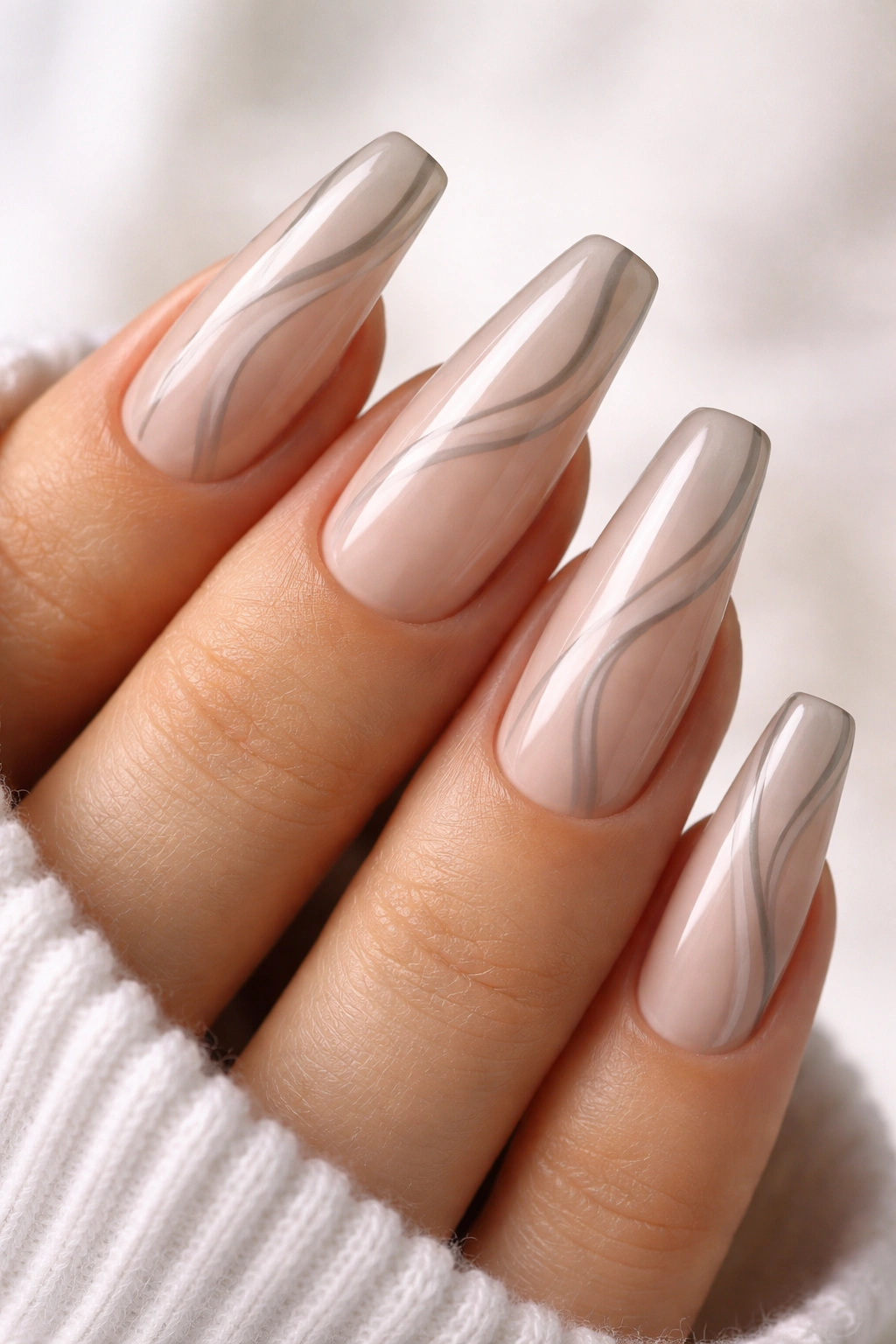
Why do these look softer than abstract black line nails? Because grey does not shout. A sheer nude ballerina base with flowing grey swirl lines gives you movement and pattern, though the manicure still reads neutral from a few feet away.
The swirl placement is what makes or breaks it. You want fine, deliberate curves that follow the shape of the nail instead of fighting it. A line that starts near one sidewall, bends through the center, and tapers near the tip tends to flatter ballerina nails. Thick random loops do not.
Use a base that is sheer enough to keep the nail airy. Milky pink-beige, cool nude, or semi-transparent blush all work. Then choose a line color in dove, slate, or smoke grey depending on how visible you want the art to be.
How this design wears best
This style looks strongest when the swirls are not identical on every nail. You want a family resemblance, not ten carbon copies. One nail can have two lines. Another can have one long curve. Another can stay plain. That slight imbalance makes the set feel designed by a person, not printed by a machine.
If you want grey nail art that still behaves in daily life—meetings, errands, dinner, repeat—this one does the job. It gives the manicure movement, and movement keeps a neutral set from slipping into boring territory.
10. Cashmere Matte Grey With One Sweater-Texture Accent Nail
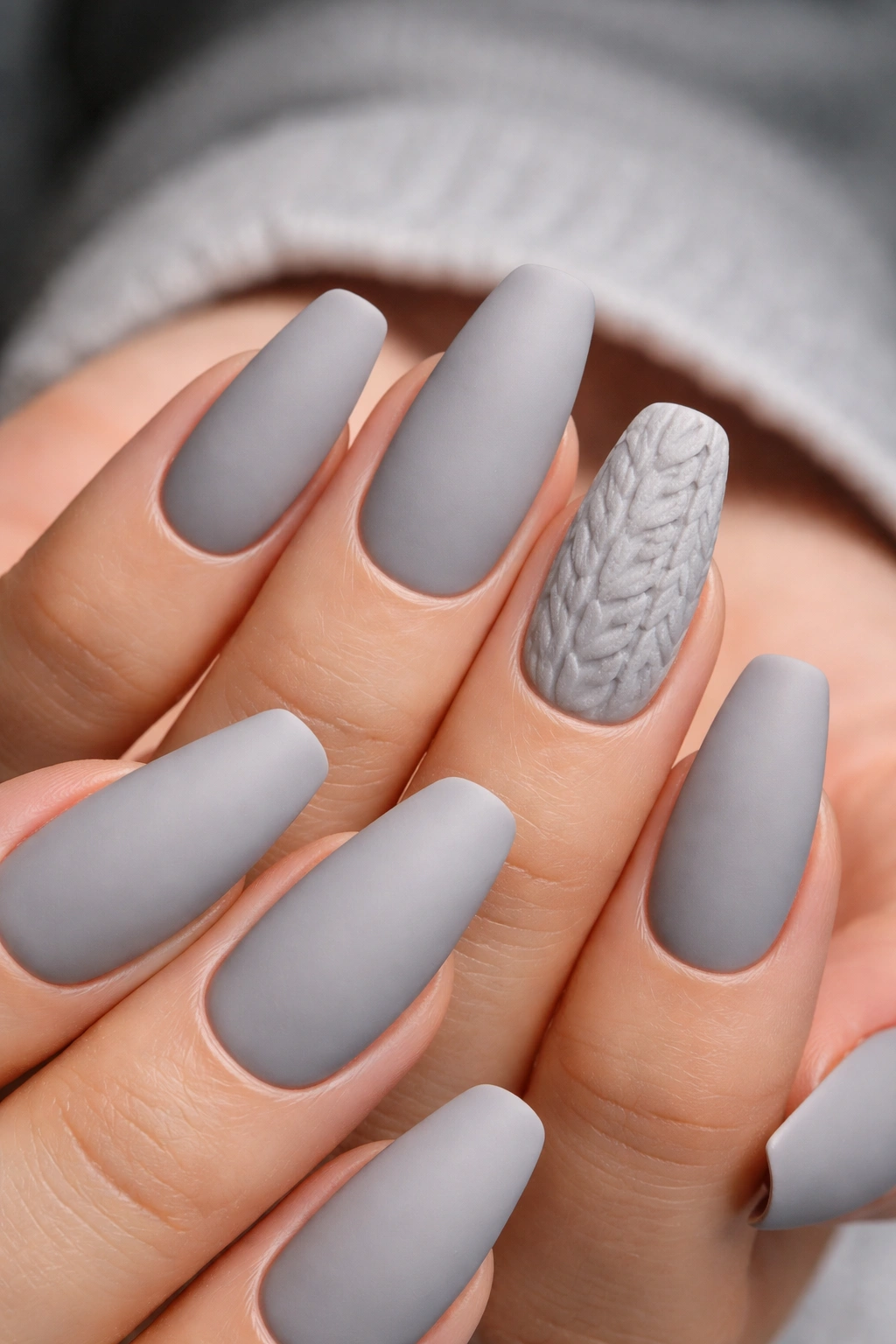
There is something slightly cozy about this design, and I mean that as a compliment. Cashmere grey matte nails with one raised sweater-knit accent have enough texture to feel tactile, but they stay cleaner than rhinestones or heavy decals.
The main color should be a soft medium-light grey, almost the shade of a heathered knit. Matte top coat turns that color velvety. Then one accent nail—usually ring finger or middle finger—gets a raised cable or knit pattern built with thicker gel.
The reason this works on ballerina nails is proportion. The long tapered shape keeps the texture from looking chunky. On a short rounded nail, sweater patterns can feel cute in a way some people do not want. On ballerina, the shape sharpens the whole idea.
If you go for this set, restraint helps.
- Keep the textured design to one nail per hand, maybe two at most
- Use the same grey family across the whole set
- Skip crystals and foil on top of the knit pattern
- Ask for matte on every nail, even the raised accent, so the set feels cohesive
You do need to know the downside: raised gel catches lint more than a flat manicure does. Not constantly, not disastrously, but enough that you should know going in. If that sounds irritating, pick a printed knit pattern under top coat instead of a 3D one.
11. Stormy Grey Cat-Eye With Diagonal Light Pull
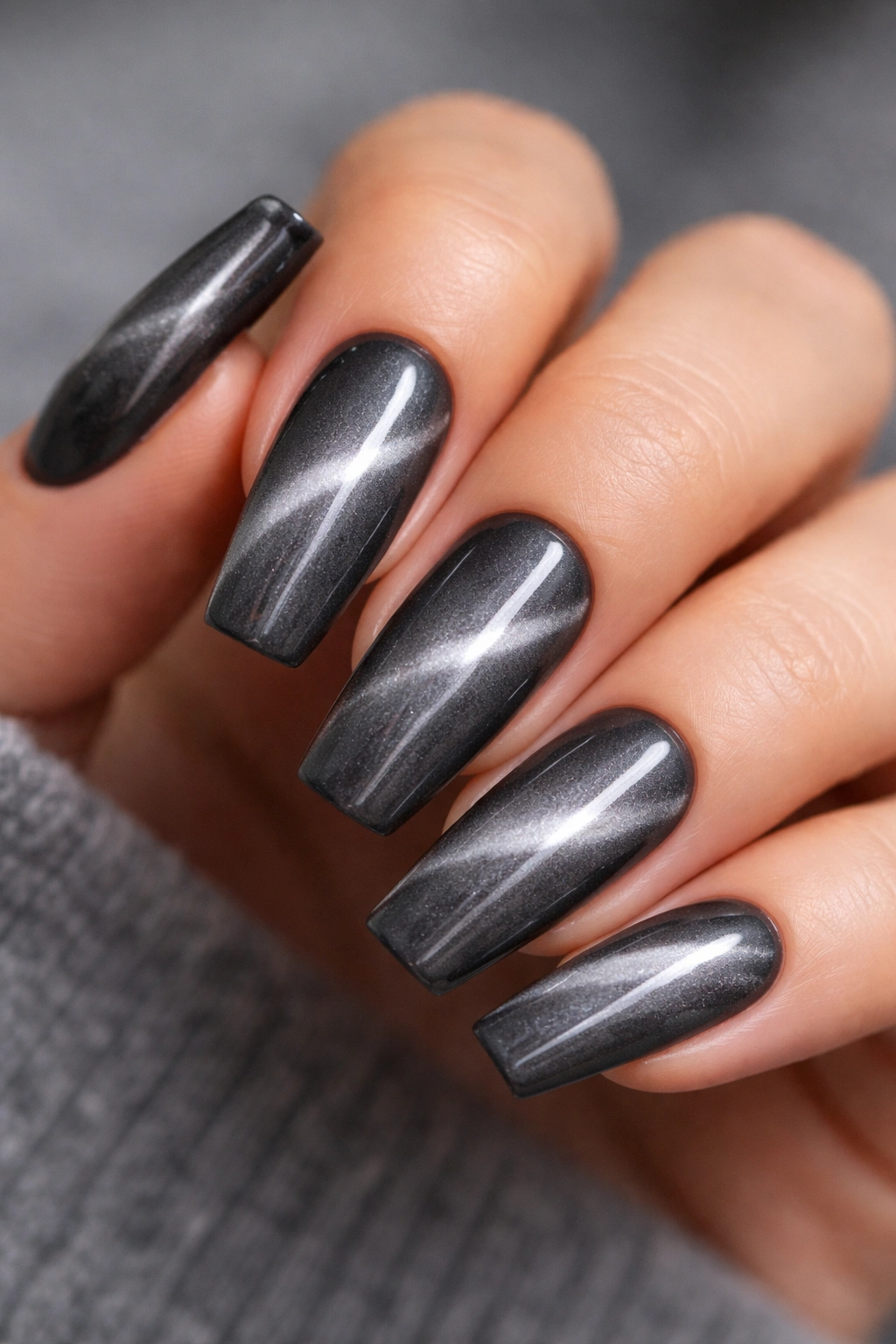
Magnetic polish has a reputation for being flashy, and some of it is. Stormy grey cat-eye can be far moodier than loud, especially when the color sits between steel and charcoal and the magnetic pull is angled across the nail instead of centered like a stripe.
The effect is subtle movement. As your hand shifts, a lighter band slides across the surface, almost like light moving over wet stone. On ballerina nails, that diagonal pull complements the taper and makes the nail look slimmer.
This design needs a dark enough base to show contrast, though not so dark that it reads black. A smoky steel, gunmetal grey, or deep graphite tends to work well. Ask your tech to pull the magnet slightly off-center or diagonally. Straight centered lines can look dated on this shape.
You do not need accent art here. The magnetic finish is the art. Leave it alone and let the polish do its job.
This is a strong pick if you want a manicure that reveals itself slowly. Across a table, it looks like glossy dark grey. Up close, the magnetic line catches and shifts. There is something satisfying about that restraint. It rewards a second look instead of begging for one.
12. Ash Grey Jelly Ballerina Nails
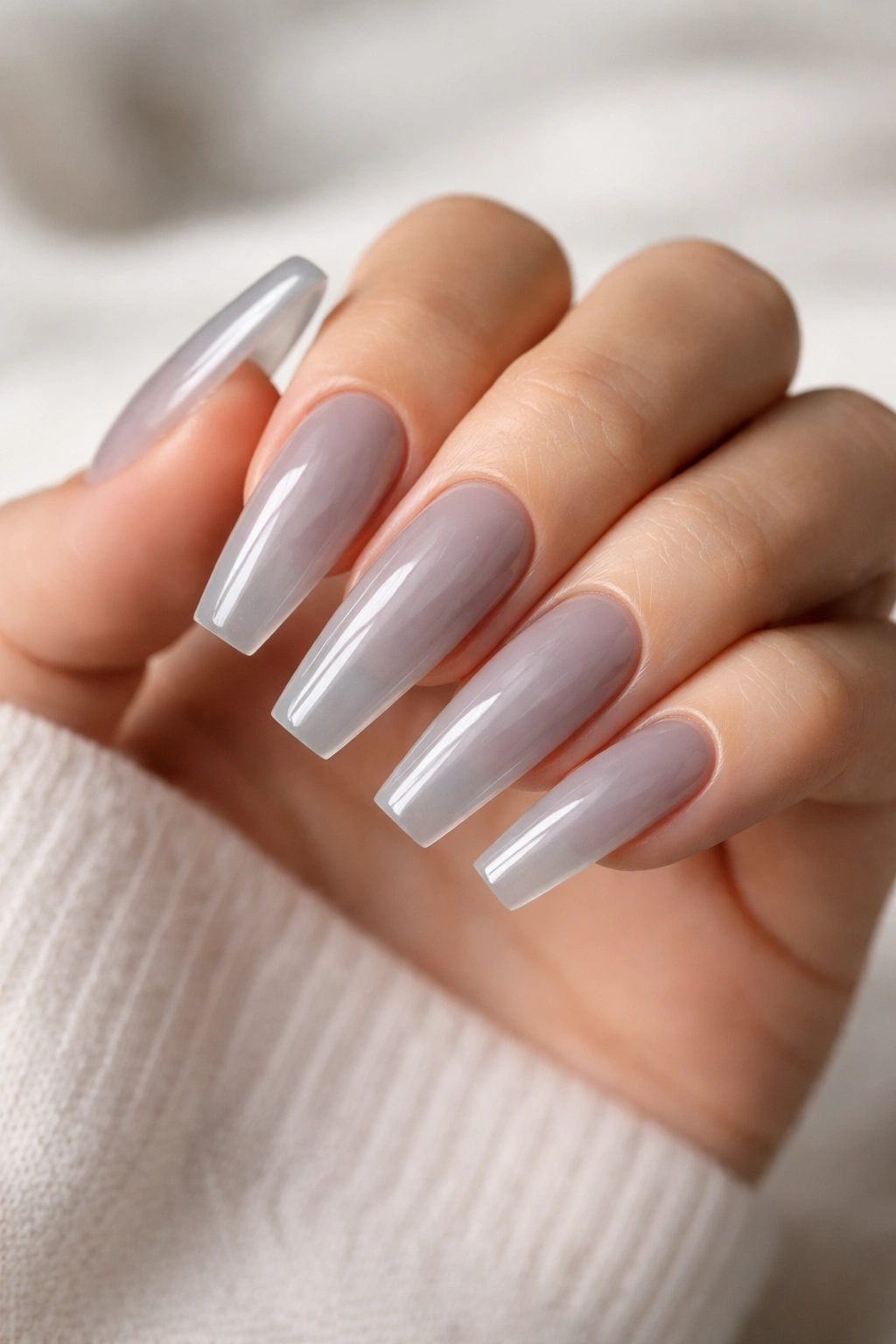
Unlike opaque cream grey, ash grey jelly keeps a bit of transparency, which changes the whole feel of the manicure. It looks lighter, glassier, and less blocky on a long nail.
Jelly finishes are good when you like color but hate visual heaviness. The nail still has shape and polish, though you can often see some light pass through the edge. On ballerina nails, that transparency softens the blunt tip and gives the set a cleaner, more modern feel.
You need the right grey for this. Too dark, and the jelly effect disappears. Too pale, and it can look washed out. Soft smoke, cool ash, and diluted slate are the sweet spot. Most techs build the look with two to three sheer coats rather than one opaque coat.
Who should pick this set? Anyone who likes neutrals with a little more lightness. It also works well if you want a grey manicure that feels less severe against bare skin.
A few practical notes help:
- Use a high-shine top coat. Jelly without shine loses the point.
- Ask for even opacity across all nails, because patchy jelly polish looks unfinished.
- If your natural nails are discolored, a milky base layer can smooth the look before the grey goes on.
This style feels fresh and airy while staying fully in the neutral family. Hard to complain about that.
13. Pewter Nails With Silver Foil Fragments Near the Tips
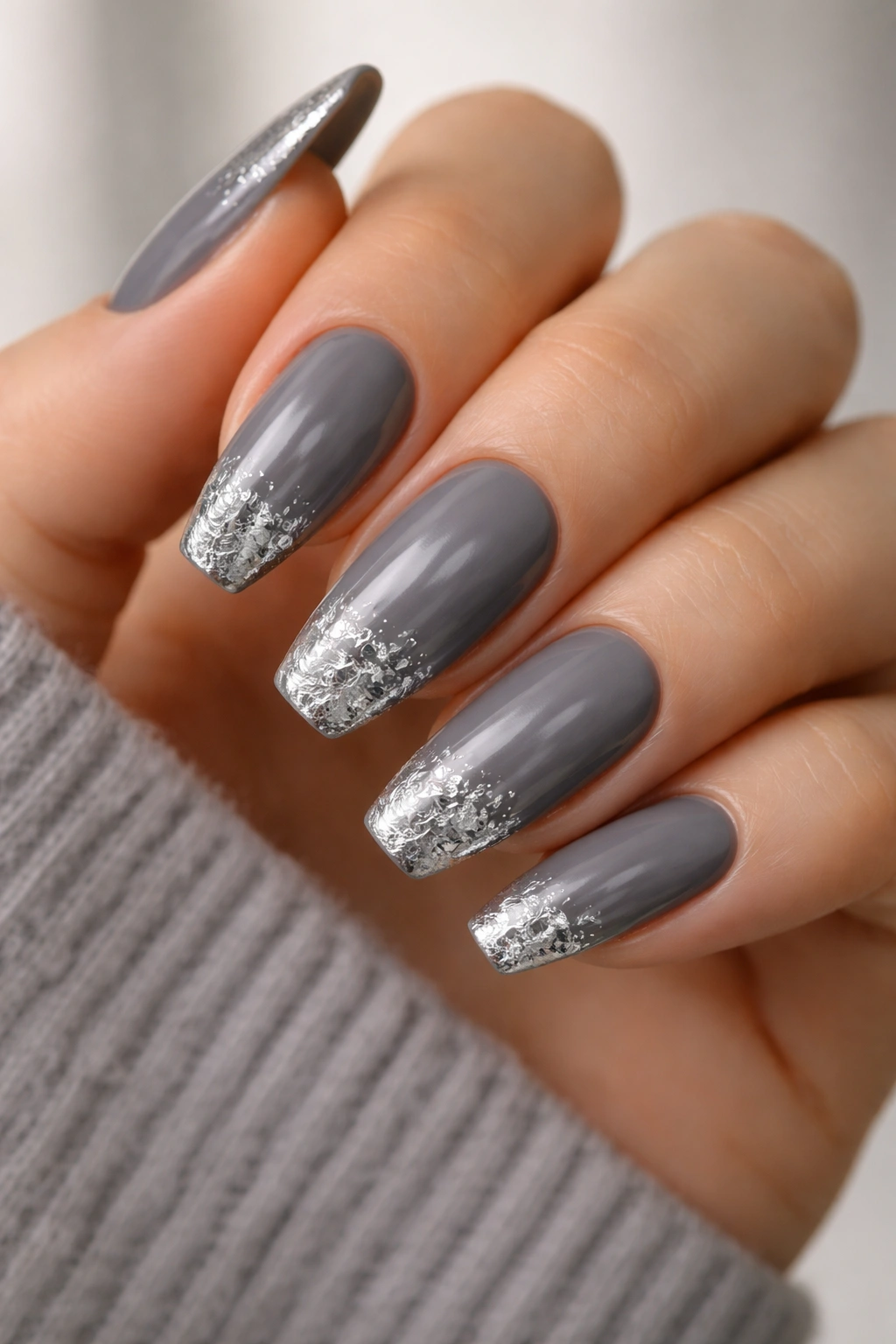
Pewter sits in a useful middle ground. It has the depth of grey, a hint of metal, and enough softness to stay wearable day after day. Add tiny silver foil fragments near the tips, and the manicure gets texture without turning into glitter.
The foil placement is what keeps this elegant. Scatter a few broken pieces near the upper third of the nail, not wall-to-wall coverage. You want the foil to look like light catching on stone or metal, not like craft glitter sealed under gel.
Why pewter works better than plain silver here
Pewter has a dirtier, smokier cast than chrome silver, which makes it easier to wear as a neutral. It sits comfortably beside black coats, grey knits, navy wool, and white shirts. Pure silver can feel colder and more high-shine than some people want from an everyday set.
Best way to wear it
- Choose a soft metallic pewter base, not chunky shimmer
- Keep foil pieces small and irregular
- Concentrate the foil on two to four nails, or use a light scatter on all ten
- Finish with gloss, so the foil looks embedded rather than rough
My take: if you want sparkle but dislike glitter polish, this is the smarter route. You get flash in small hits, and the grey base keeps the manicure grounded.
14. Two-Tone Grey French With Dark Sidewalls and Pale Tips
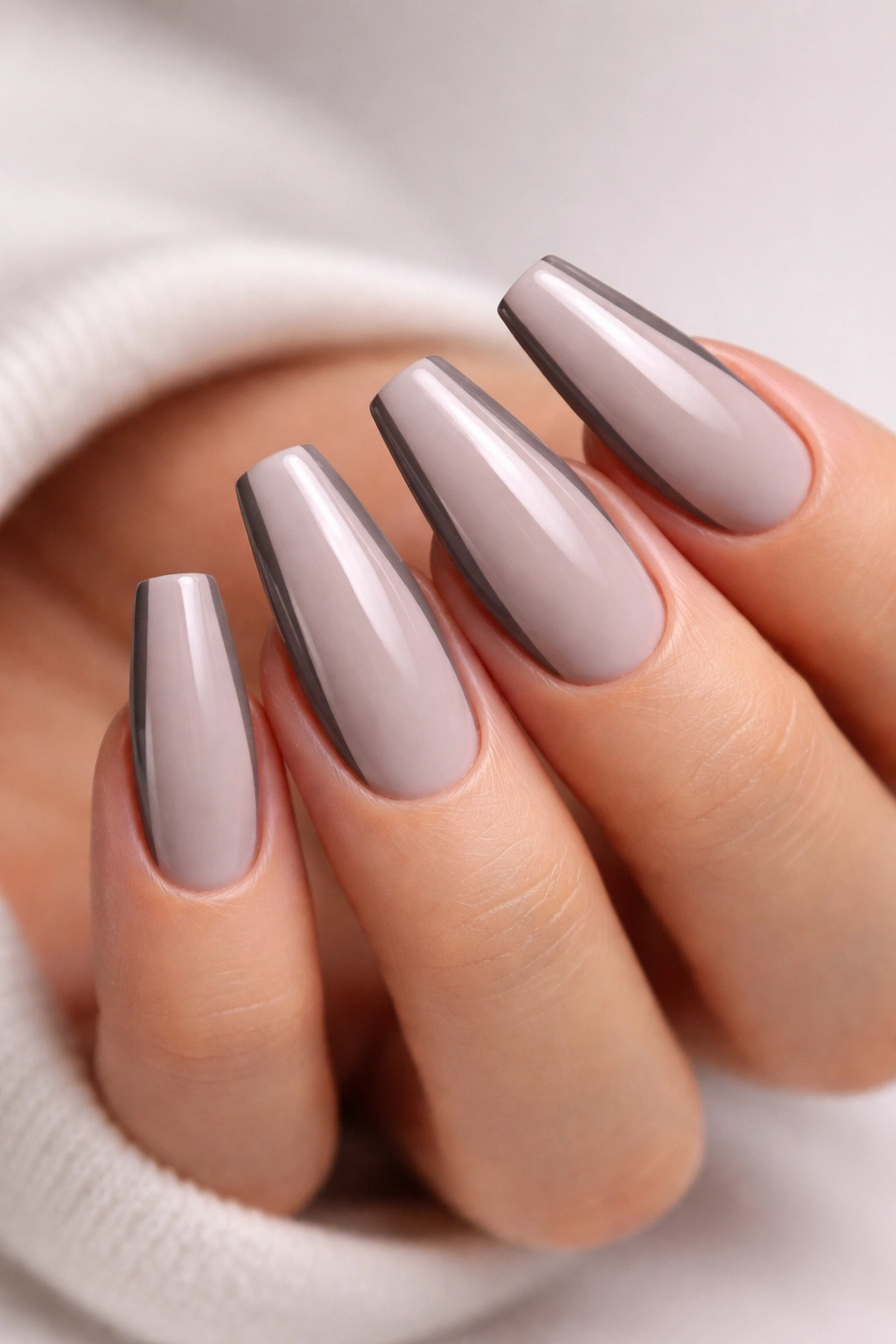
A standard French manicure draws attention to the tip. This version shifts some of that focus to the sides. Two-tone grey French ballerina nails use a deeper grey along the sidewalls or base frame, then a paler grey across the tip, which gives the shape a more sculpted look.
This design is more graphic than a micro-French, though it can still stay neutral if the contrast is controlled. Think slate paired with dove, or charcoal paired with smoke grey. You want difference, not a jump from white to black.
The clever part is what it does to the nail shape. Darker side framing can make the nail look slimmer. Paler tips keep the blunt edge visible. On a ballerina silhouette, that combination feels tailored—clean lines, clear edges, no wasted detail.
Precision is the whole job here. If the side framing is uneven, the nail looks crooked. If the pale tip is too deep, the design gets heavy. This is not the set to book with someone who struggles with symmetry.
Wear it glossy. Matte can flatten the contrast too much unless the color difference is strong. And if you want the effect to stay chic rather than costume-like, keep the rest of the manicure free of extra art. No rhinestones. No marble accent. The line work is already doing enough.
15. Charcoal Aura Fade With a Soft Smoky Center
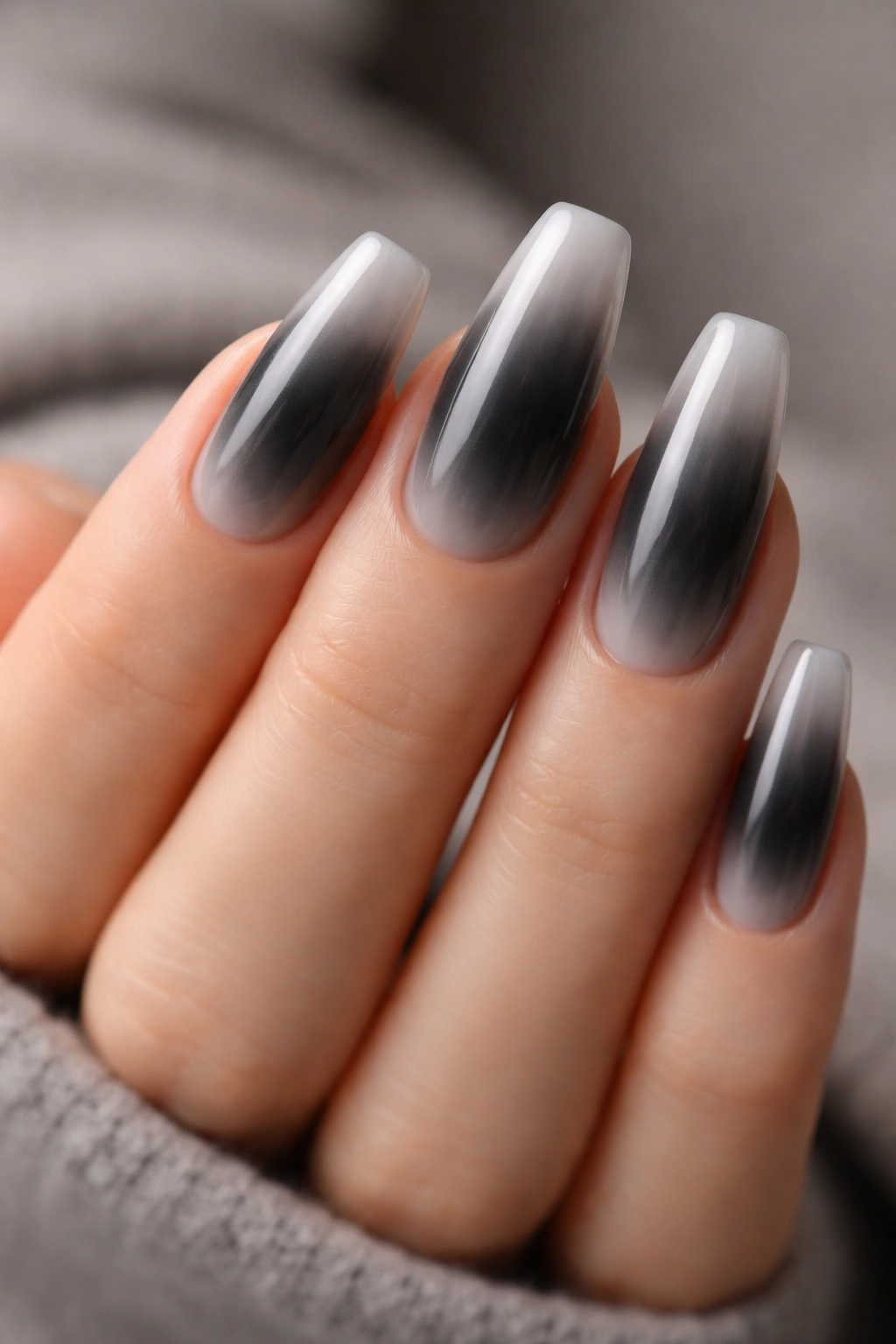
Aura nails can get bright and fuzzy in a hurry, which is not the brief here. A charcoal aura fade on ballerina nails keeps the effect muted by using a deeper smoky center over a lighter grey or sheer base.
Think of it less like a neon aura and more like a shadow blooming through the middle of the nail. The center can be charcoal, deep slate, or graphite. The outer edge stays pale enough to keep the shape light. That contrast gives the design depth while still reading neutral.
This style works best when the blend is soft and rounded, not sharply stamped. Airbrush gives the smoothest finish, though careful sponge blending can still get close. The key is avoiding a harsh ring around the dark center.
I like this design on medium-long ballerina sets where the fade has room to breathe. Too short, and the aura effect gets cramped. Too dark across the whole nail, and you lose the floating center.
There is also a wardrobe reason to like it. This manicure pairs easily with other cool neutrals, though it has more personality than a plain full-color set. It feels a bit moody, a bit fashion-forward, and still calm enough to wear every day. That is a useful lane to occupy.
Final Thoughts
Grey has range. That is the whole point. It can look soft and clean in a dove cream, sharp and urban in matte concrete, or quietly dramatic in charcoal cat-eye or chrome. Ballerina shape gives every one of those shades more structure, which is why the pairing works so well.
If you are choosing between designs, start with finish and depth before you think about art. Light glossy greys feel airy. Mid-tone mattes feel grounded. Deep glossy greys feel sleek. Once you know which mood you want, the design choice gets easier.
And do not ignore the shape itself. A beautifully chosen grey cannot save a crooked tip or weak structure. File lines, apex, sidewalls, cuticle prep—boring details, maybe, but they are the difference between a manicure that looks expensive for two weeks and one that looks off by day three.
Pick the version that fits your clothes, your jewelry, and your tolerance for upkeep, then let the color do its quiet work.