

Cool pink polish can make warm skin look flat in one bad manicure. Blush ballerina nails fix that problem when the color leans peach, rosy beige, caramel, apricot, or terracotta instead of icy baby pink. Same nail shape, same glossy top coat, totally different effect on the hand.
A lot of people know they like soft pink nails, yet they keep ending up with a shade that looks chalky near the cuticle or strangely gray in daylight. That usually comes down to undertone. Warm skin tends to glow next to polish with a hint of yellow, coral, brown, or gold tucked into the pink, while blue-based blush can pull the life out of the whole manicure.
The shape matters too. Ballerina nails—close cousin to coffin nails, though usually a touch softer at the tip—stretch the finger visually and give pale shades more presence. On a rounded short nail, blush can disappear. On a tapered ballerina shape, the same color reads clean, deliberate, and a little dressier.
Daylight is the test.
A polish that looks soft under salon lamps can shift the second you step outside, and warm blush shades tend to hold up better across indoor light, flash photography, and plain old afternoon sun. Get the base color right, and every design choice after that gets easier.
The Blush Shades That Make Warm Skin Look More Alive
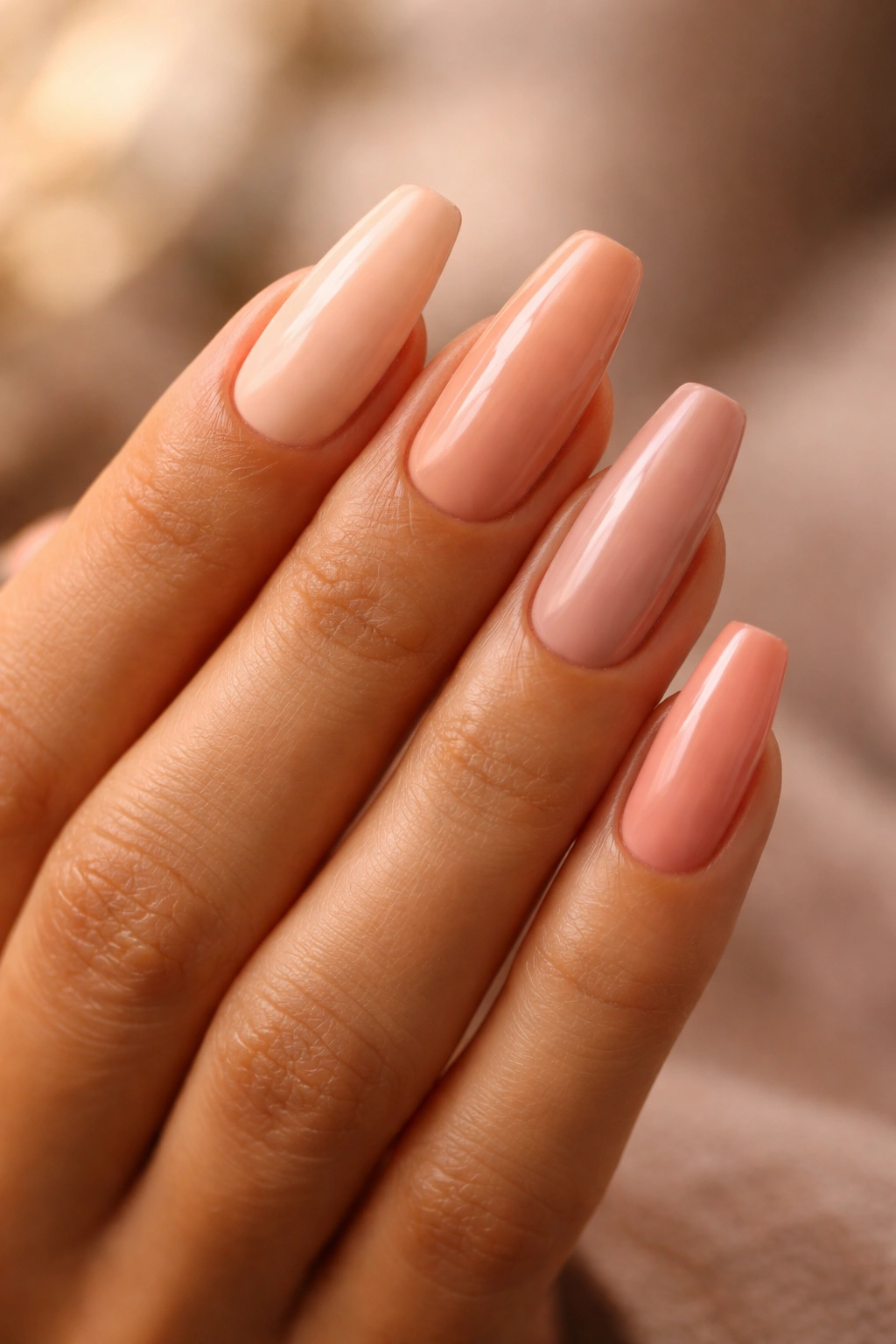
Warm undertones don’t need loud color. They need the right kind of softness. The best blush shades for warm skin usually sit somewhere between pink and nude, with a peach, honey, cinnamon, coral, or beige thread running through them. If a polish looks like rose petals mixed with a drop of milk and a drop of caramel, you’re usually in good shape.
Gold jewelry is a useful clue. If gold tends to melt into your skin while silver sits on top of it, warm blush tones usually make more sense than cool ballet pinks. The same logic applies if peach lipstick, terracotta blush, or creamy nude gloss tend to flatter your face better than blue-red lipstick or lavender-pink makeup.
Here’s the quick shade map I keep coming back to:
- Light warm skin: peach milk, apricot nude, rosy beige, soft melon pink
- Medium warm skin: toasted blush, coral beige, cinnamon rose, honey pink
- Olive skin: dusty rose with brown in it, muted salmon, tea rose, spiced nude
- Deep warm skin: terracotta blush, cocoa rose, copper pink, rosewood nude
Opacity changes everything. A sheer polish with a warm undertone can look expensive and clean, while a thick, opaque cool pink in the same family can look heavy. Two thin coats usually flatter better than one thick one or three cloudy ones—especially on ballerina nails, where streaks and bulk show fast along the sidewalls.
And skip the old idea that blush has to mean pale baby pink. It doesn’t. Warm blush is broader than that, and thank goodness, because pale cool pink isn’t doing every hand any favors.
Why Ballerina Shape Gives Blush Nails More Presence
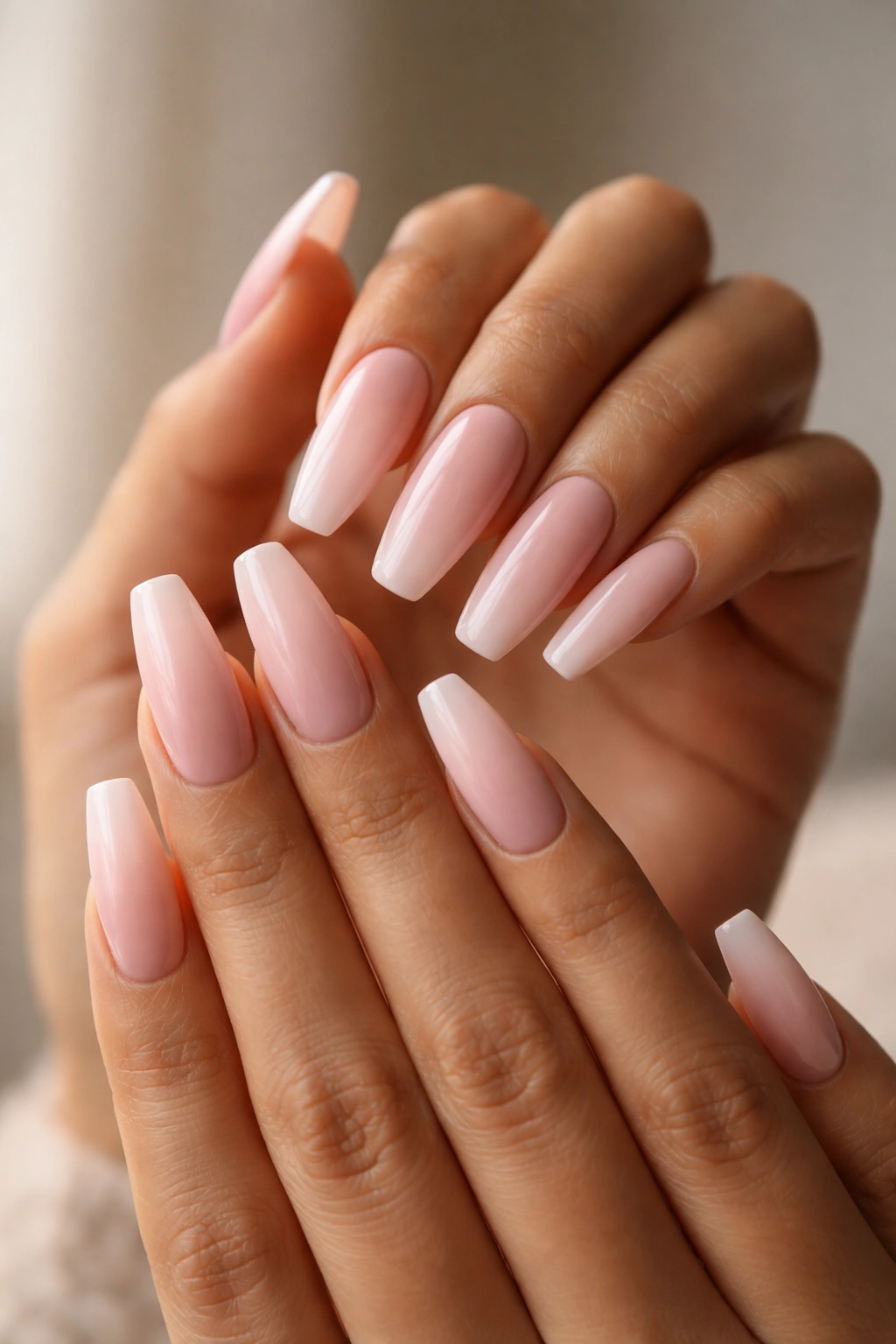
Here’s the part people underestimate: shape can rescue a soft color. Ballerina nails have straight sidewalls and a flattened tip, but the end is less boxy than a hard square and less pointed than a stiletto. That taper gives blush shades a longer canvas, which helps them look intentional instead of washed out.
Short ballerina nails can work, though they need enough length past the fingertip to show the silhouette. Around 4 to 6 millimeters of free edge is where the shape starts to read clearly. Any shorter, and the effect slips toward squoval. That is not a disaster, but it is a different look.
The file shape that keeps them elegant
The cleanest ballerina shape comes from filing the sidewalls straight first, then softening the corners at the tip. If the tip gets too narrow, the nail starts reading almond. If it stays too wide, the whole design looks blunt. Nail techs who know the shape well usually leave a flat edge around 2 to 4 millimeters wide, depending on nail width and overall length.
Why soft colors need crisp edges
Blush polish doesn’t hide sloppy structure. Deep burgundy can cover a small wobble in the file line. Milky peach cannot. On a warm-toned blush set, the sidewalls need to match, the apex needs to sit in the right spot, and the cuticle application needs to be neat because every little imbalance shows.
A glossy finish helps. Matte has its place—I’ll get to that—but if you want your first warm blush ballerina set to look polished in every light, a high-shine gel top coat is the safer move.
Extensions often hold this shape better than thin natural nails.
Builder gel, soft gel tips, or acrylic give the sidewalls enough strength to keep that tapered look from cracking at the corners. Natural nails can still wear ballerina, though a shorter version is smarter if your nail plate bends or peels.
1. Peach Milk Blush with High Gloss
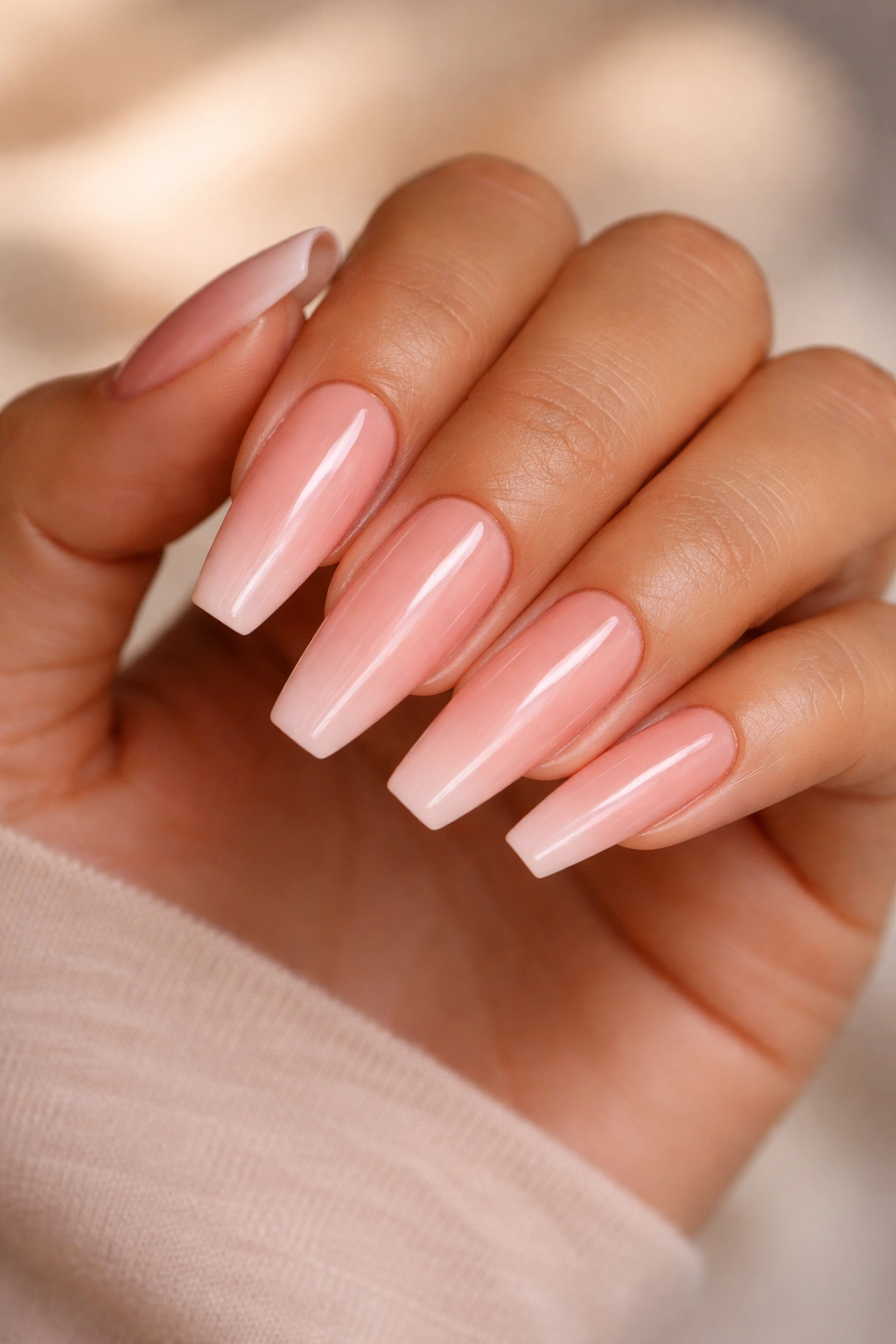
If you want one design that almost never fights a warm undertone, start here. Peach milk blush sits between nude, pink, and apricot, which gives the hand a healthy warmth without drifting into orange. On ballerina nails, it looks smooth, clean, and expensive in a quiet way.
Why this shade lands so well on warm skin
Cool baby pink can throw a gray cast onto warm hands. Peach milk doesn’t do that because the base has a creamy yellow-peach note under the pink. You still get that soft blush look, but the skin around it looks brighter, not flatter. On light to medium warm skin, it reads polished. On deeper warm skin, it works best as a semi-sheer wash rather than a fully opaque cream.
Quick details that matter
- Ask for two thin milky coats, not one heavy coat, so the color self-levels cleanly.
- Keep the free edge medium length—around 6 to 8 millimeters past the fingertip gives the shape room.
- Use a high-gloss top coat rather than pearl or shimmer; the shine does enough on its own.
- A warm-toned nude liner under the free edge helps the manicure look sharper from the side.
My take: if you’re torn between five blush shades, the one with a drop of peach is usually the safer bet.
2. Rosy Beige Ombré Fade
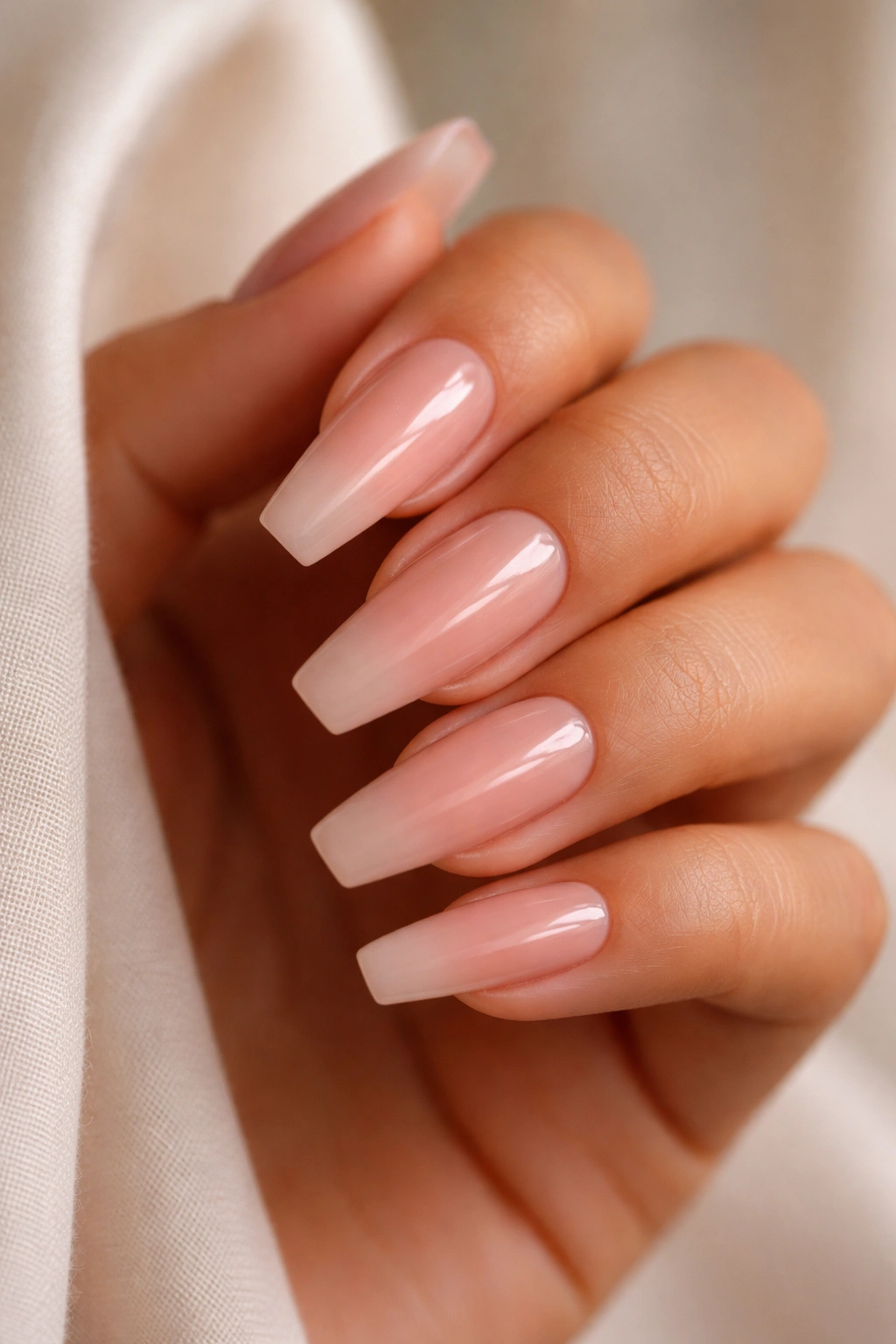
A rosy beige ombré hides grow-out better than a solid block of color. It also gives ballerina nails more depth, which matters when you’re working with soft neutrals. The nicest version starts sheer and beige near the cuticle, then deepens into a muted blush at the tip.
The reason this style works so well on warm skin is balance. Beige keeps the base grounded. Pink brings life. Blend the two, and you get a manicure that looks softer than a French tip but still has shape and movement across the nail. On medium and olive skin, this mix tends to look more natural than plain pale pink because the beige echoes the warmth already in the hand.
Application matters more than people think. A sponge can work, though a brush-blended gel ombré gives a smoother fade on ballerina nails because the sides stay cleaner. The blend should start around the middle third of the nail, not right at the cuticle. If the darker blush sits too low, the nail bed can look shorter.
I also like this design for practical reasons. When the cuticle area stays sheer and warm beige, regrowth is less obvious than it is with a dense opaque manicure. You buy yourself a little grace before fill day, which is never a bad thing.
3. Apricot French Tips on a Sheer Nude Base
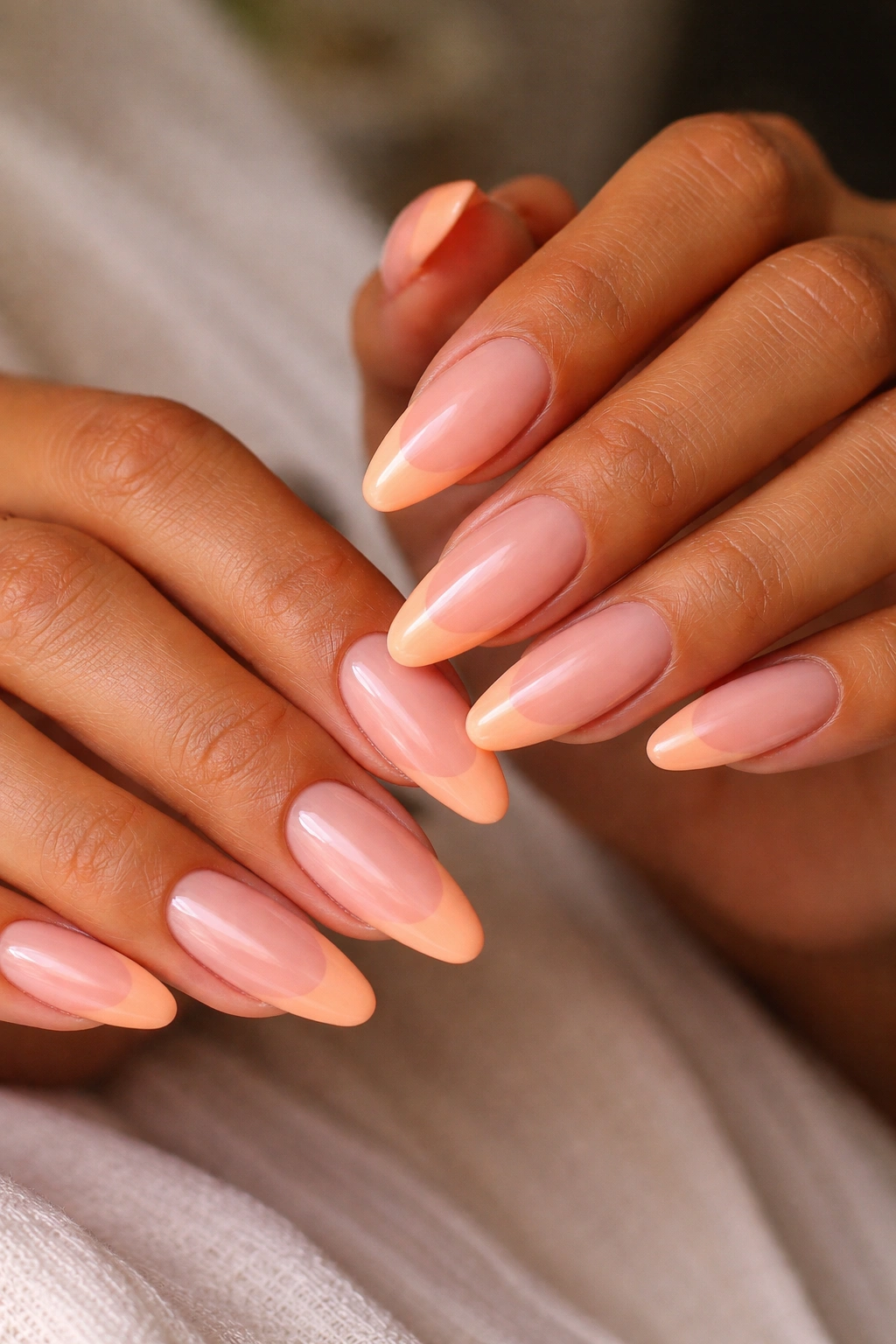
Why use apricot instead of white? Because white French tips can look sharp in the wrong way on warm skin, especially when the base is pink-beige and the tip is stark chalk white. Apricot keeps the contrast softer and more flattering, while still giving you that crisp tip line ballerina nails wear so well.
A sheer nude base is the anchor here. You want enough coverage to blur the nail plate, not enough to erase it. Then the tip comes in as a warm crescent—thin, neat, and slightly curved to match the tapered edge. On a ballerina shape, a French line that is too deep can make the nail look shorter, so keep the smile line modest.
How to keep the tip elegant
Try a tip width around 2 to 3 millimeters on medium-length nails. Any thicker and the design starts to crowd the nail. Apricot can lean more peach for lighter warm skin or more coral-nude for deeper skin. If you like a sharper finish, outline the smile line with a fine liner brush after placing the color, rather than trying to get it all in one pass.
I’ll say it bluntly: warm French tips often look richer than white ones on warm hands. Not trendier. Not louder. Richer. The harmony is better, and you can see it from arm’s length.
4. Caramel Blush with Micro Gold Foil
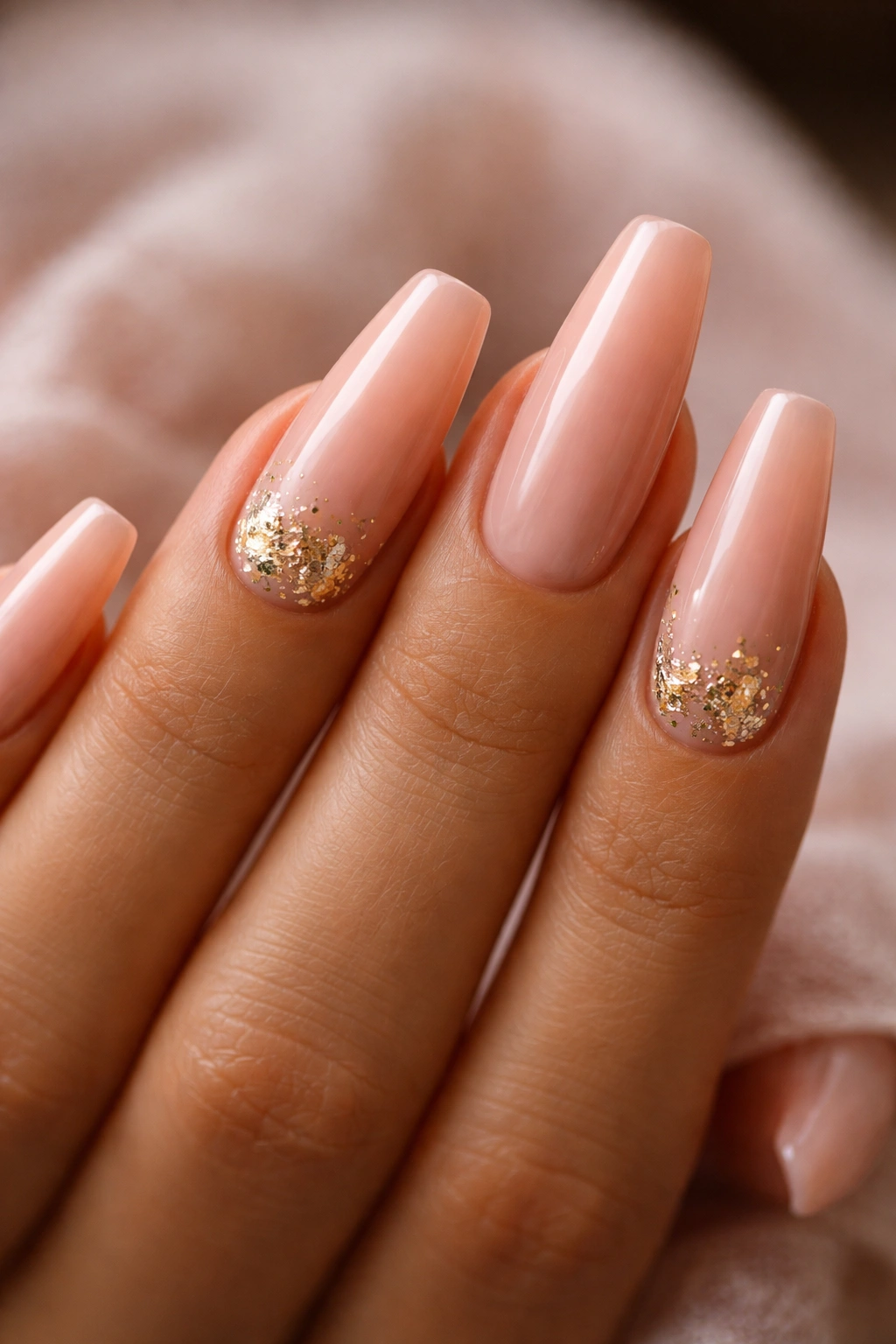
Picture a caramel-pink base with tiny torn pieces of gold foil pressed near the cuticle and scattered across one or two nails. Not full-on metallic. Not glitter packed from side to side. Small flashes of gold against a warm blush base.
That pairing works because the foil picks up the golden or olive cast in the skin instead of fighting it. Silver can look clean, though gold foil on peachy or caramel blush has a softer flow across the hand. It feels warmer under indoor light, too, where cool metallics sometimes turn harsh.
A few details make this design look grown-up rather than busy:
- Use micro foil fragments, not large sheets, so the nail still reads as blush first.
- Keep foil on 2 to 4 nails max unless you want a much louder set.
- Pick a base color with a hint of beige or tan in it; plain pink can make the gold look disconnected.
- Seal with a thicker top coat so the foil edges do not catch.
One accent cluster near the cuticle on the ring finger and thumb is often enough. Ballerina nails already give you shape. The foil should act like jewelry, not wallpaper.
5. Dusty Rose and Cinnamon Marble
This one has more mood. Dusty rose marble works on warm skin when the rose is muted and the veining leans cinnamon, mocha, or soft terracotta instead of gray. If you’ve seen marble nails that looked cold and stony, that usually came from black or blue-gray lines. Warm marble is a different animal.
I like this design best when it’s restrained. Use the marble effect on two nails, then keep the rest in a creamy dusty blush. That way the set still reads cohesive from a distance. On all ten nails, marble can start to feel busy fast—especially on longer ballerina tips, where the pattern has more room to spread.
The prettiest version has a little transparency in it. Lay down a milky rose base, float in thin ribbons of cinnamon and beige with a liner brush, then soften the edges before they fully set. Some lines should stay sharp. Some should blur. Real stone never looks evenly drawn, and nails shouldn’t either.
Medium and deep warm skin wear this look especially well because the cinnamon notes echo the warmth in the hand. Lighter skin can still wear it, though the base usually needs more peach and less brown to keep the whole thing from looking heavy.
There’s a fine line here. Too much brown, and the manicure loses its blush identity. Too much pink, and the marble starts looking cold. Hit the middle, and it has depth without feeling dark.
6. Nude Blush Chrome with a Champagne Sheen
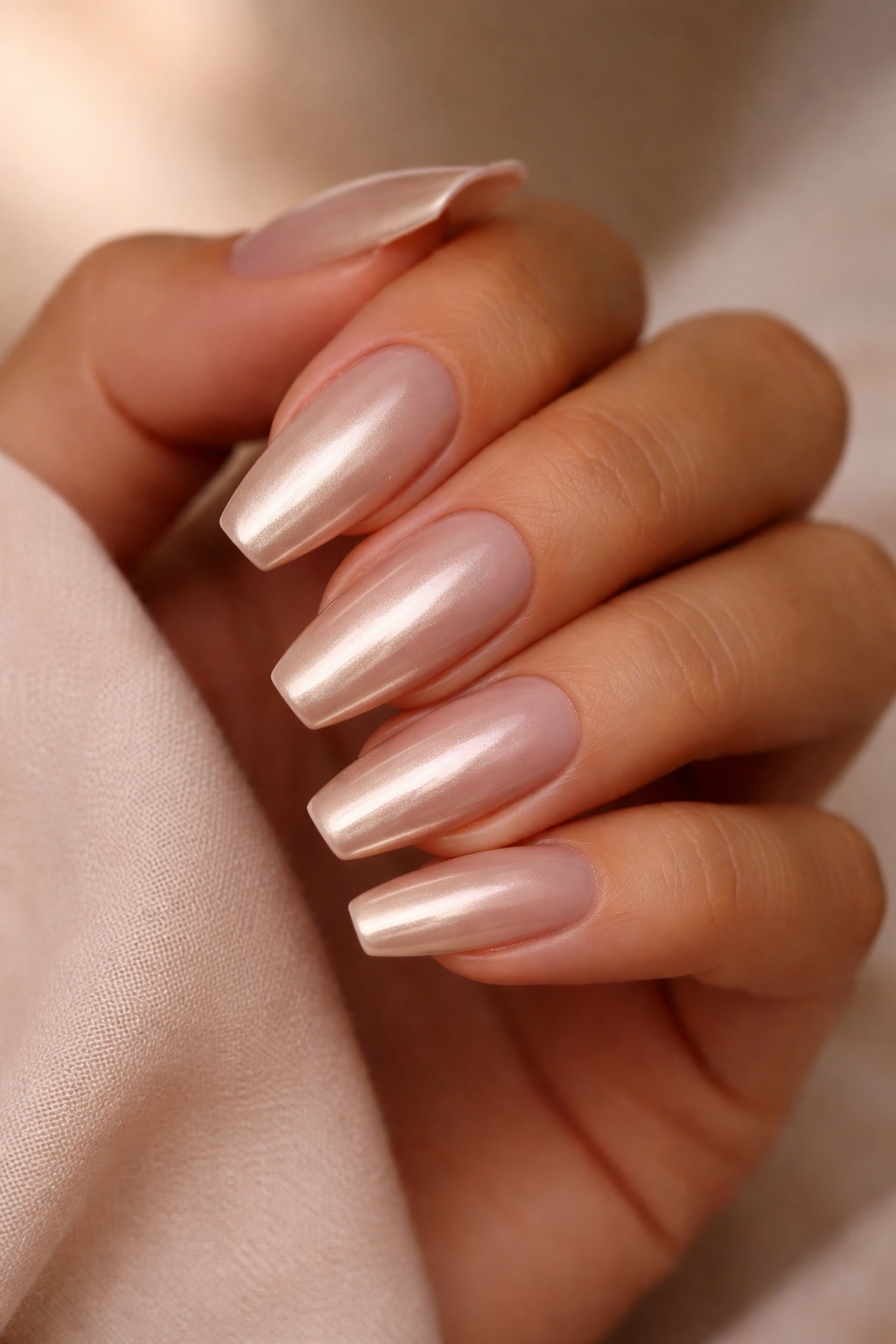
Unlike silver chrome, which can turn a blush base icy in a hurry, champagne chrome keeps the warmth intact. You still get that reflective finish, though it lands closer to satin jewelry than mirror-metal fantasy. On ballerina nails, that softer gleam makes sense.
The base should start as a warm nude blush—something between peach pink and beige rose. Over that, a no-wipe top coat gives you the surface for chrome powder. The powder matters. Ask for champagne, pearl gold, or a beige-pink chrome rather than cool pearl white. The wrong powder can wipe out all the warmth you built into the base.
Who is this good for? Anyone who likes minimal nails but still wants movement when the hand turns in the light. Chrome keeps a plain blush manicure from feeling flat, and it does it without extra line work, charms, or stones. On medium-length ballerina nails, the reflection stretches the nail even more.
One caution. If your skin has strong olive tones, keep the base slightly deeper. A pale nude chrome can blend too closely into the hand and lose definition. A blush-beige underlayer gives the sheen something to bounce off.
7. Blush Jelly Layers with Tapered Edges
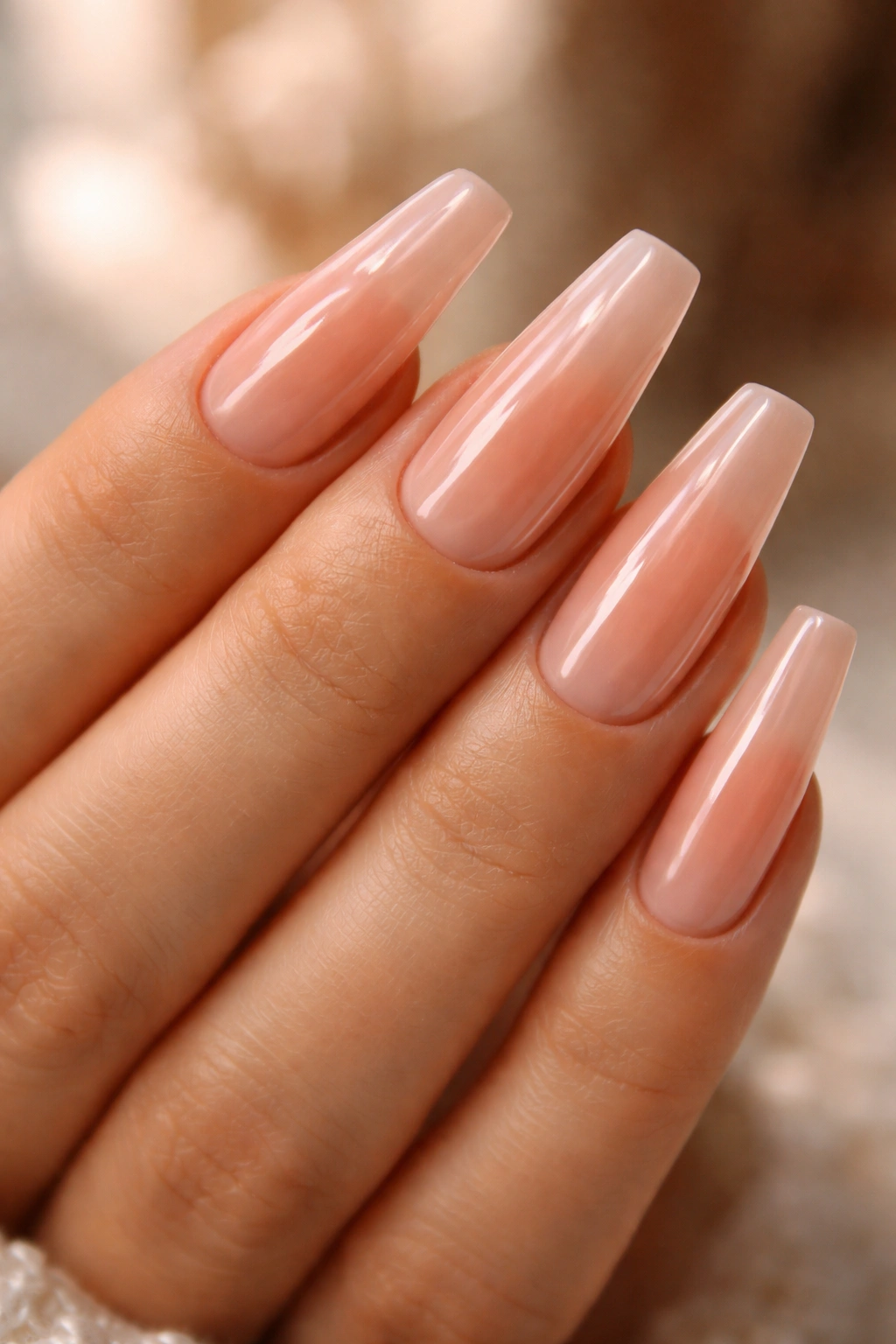
Some manicures look better because they show a little depth under the surface. Blush jelly layers do that. Instead of one opaque coat, you build the color in sheer washes, which gives the nail a soft stained-glass feel. On a ballerina shape, that translucency looks sleek rather than sugary.
Why jelly polish works on warm tones
Warm undertones often look better with blush that has light moving through it. Jelly formulas let the natural nail or extension structure peek through, which keeps the color from turning chalky. Peachy jelly, rose-beige jelly, and coral-nude jelly all tend to flatter warm skin more than translucent cool pink.
What to ask for at the salon
- A clear or milky base first, so the jelly color doesn’t streak.
- Two to three sheer coats instead of one dense coat.
- A color family like apricot blush, tea rose, or salmon nude.
- A glassy top coat, because jelly nails need reflection to show their depth.
One smart move: keep the edges crisp and the center slightly richer. That subtle gradient makes the tapered shape read even cleaner.
8. Soft Terracotta Blush with Velvet Matte
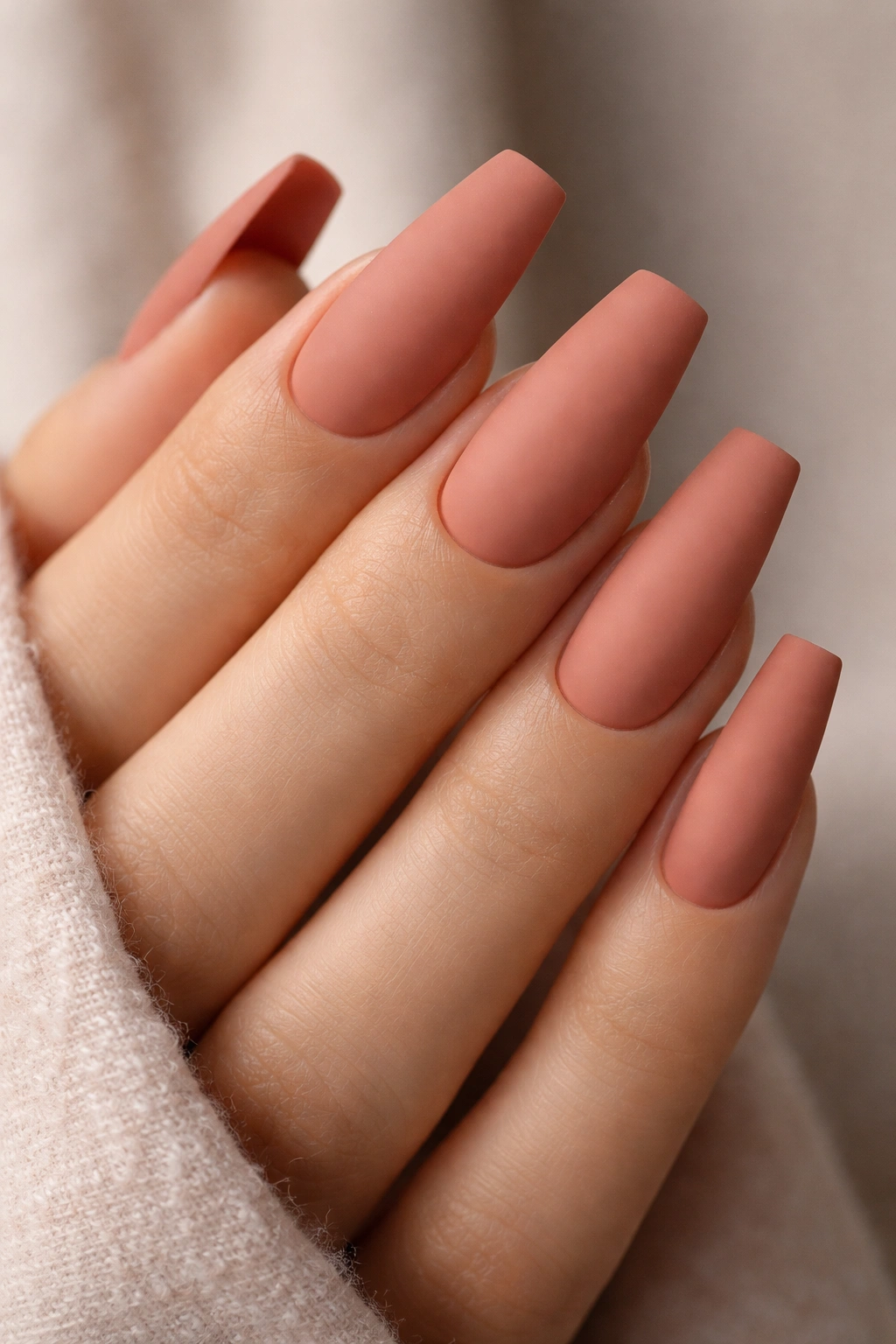
Matte only flatters warm blush nails when the color has enough body. Put a matte top coat over a pale cool pink and the result can look dry, flat, even dusty. Soft terracotta blush avoids that because it already has warmth and depth built into it.
Terracotta sounds darker than it needs to be. In this case, think blush pink mixed with clay, not burnt orange. The finish should feel velvety, almost like powdered makeup on the nail. On medium, tan, and deep warm skin, that effect can look striking without shouting. Light warm skin can wear it too, though a milkier terracotta usually lands better than a saturated rust.
Cuticle care becomes part of the design here. Matte top coat throws attention toward texture, so dry skin around the nail will show up fast. A thin layer of cuticle oil applied at least 20 minutes after the matte top coat cures helps the skin look supple without turning the nail shiny.
This is one of those looks that does not need art. No crystals. No swirls. No tiny decals. The color and finish carry the whole set, and I like that restraint.
9. Blush Base with Mocha Half-Moons
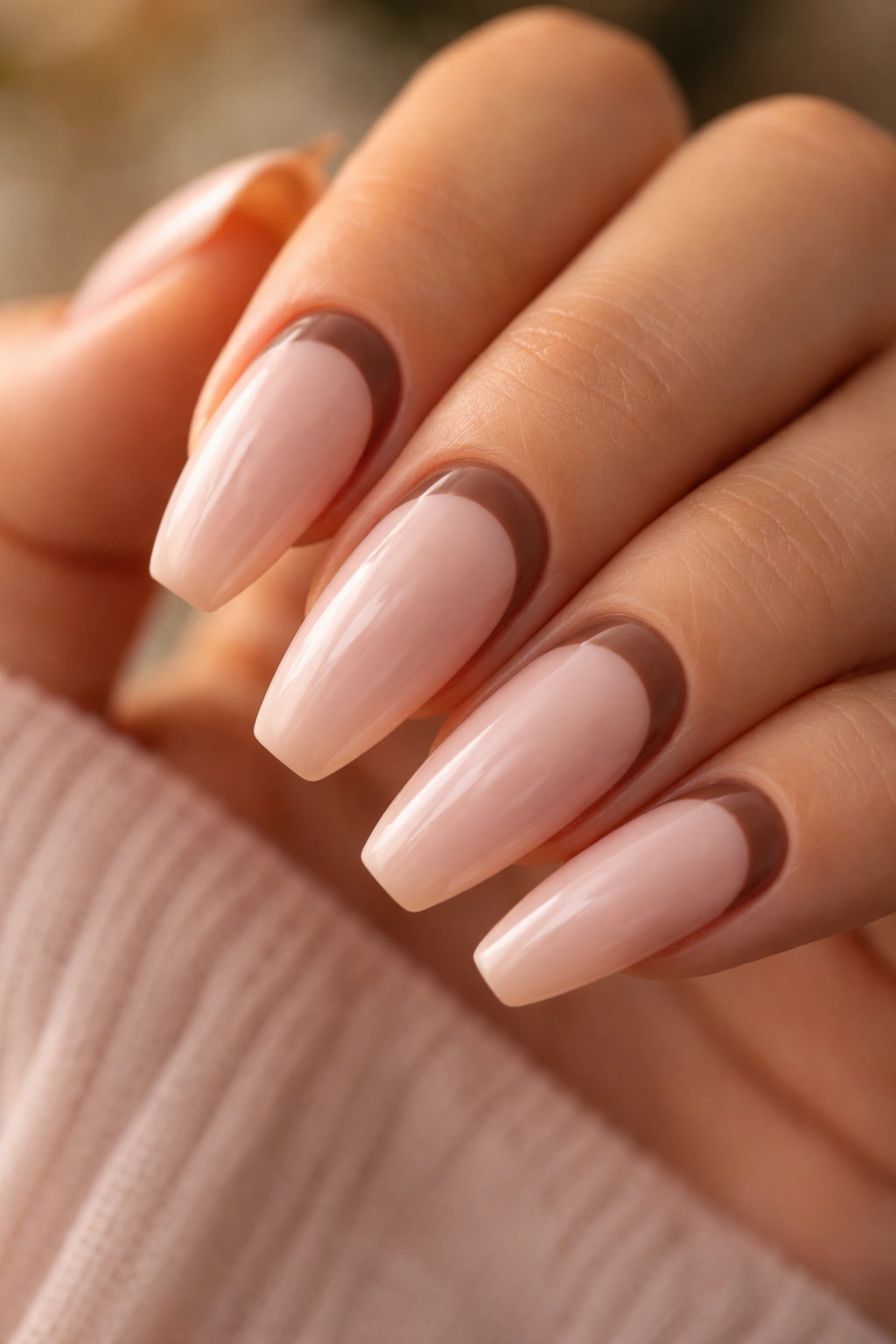
Why bring in a half-moon detail? Because a mocha half-moon frames the cuticle and makes the blush base look warmer by contrast. It also gives the manicure a little architecture without covering the whole nail in design work.
The base here should stay soft—rosy beige, peach nude, or a milky caramel blush. Then the half-moon sits at the base of the nail in mocha, cocoa, or cinnamon brown. On ballerina nails, that curved accent can balance the flat tip in a way that looks sharp and deliberate. If the brown is too dark, though, it can overpower the blush. Keep it closer to coffee with milk than near-black espresso.
Placement makes or breaks it
The half-moon should hug the natural curve of the cuticle and stay narrow, around 2 to 4 millimeters high depending on nail length. Too tall, and it shortens the nail bed. Too wide, and the detail starts looking retro in a costume way rather than clean and current. A fine brush matters here. So does symmetry from nail to nail.
I like this design for readers who want something different from swirls and chrome but still want a neutral set. It has personality. It also wears well with gold rings, tortoiseshell accessories, and warm makeup without feeling matched to death.
10. Sheer Coral Blush with Tiny White Florals
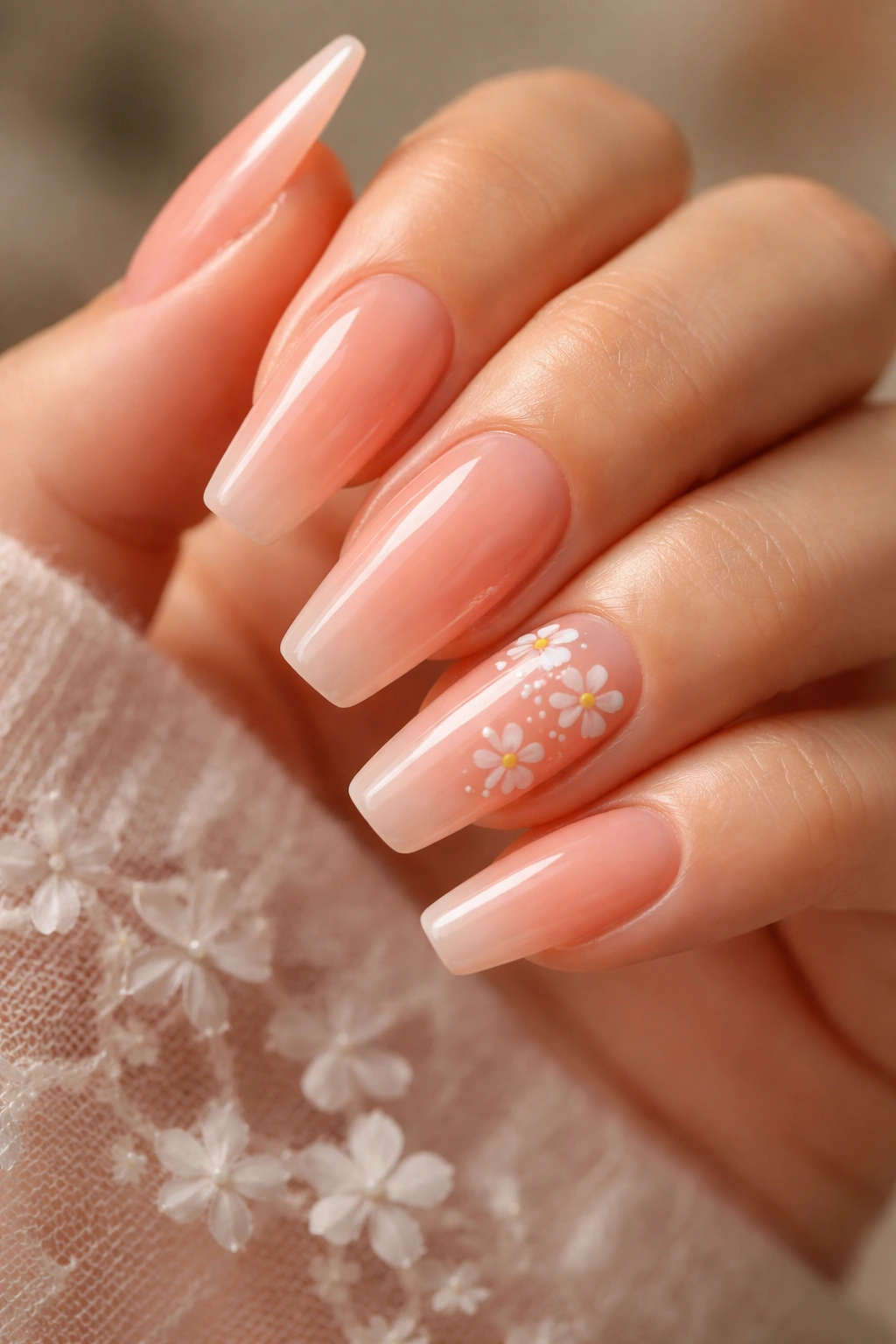
Think of a sheer coral-blush base with small five-petal flowers painted on one or two nails, each flower no bigger than 2 to 3 millimeters across. The trick is scale. Keep the flowers tiny and the base sheer, and the set feels light. Make the blooms large and the white bright, and you lose the warmth.
Warm skin can handle white accents, but the white should lean creamy rather than stark paper white. A milky off-white flower sits more naturally against coral blush. Tiny dot centers in honey gold or muted yellow help too. Those little choices matter. They stop the flowers from looking pasted on.
A good layout is one floral cluster near the side of the ring finger and maybe a second, smaller bloom on the middle finger. Leave the other nails plain. Ballerina nails already carry enough visual interest through shape alone, so the art works better when it has room to breathe.
- Keep the base translucent, not opaque.
- Use one accent hand if you like asymmetry.
- Pick creamy white, not icy white.
- Finish with glossy top coat so the tiny petals don’t look chalky.
This one has a softer mood than the foil or chrome sets, though it still reads polished rather than sweet.
11. Rosewood Blush with a Tortoiseshell Accent
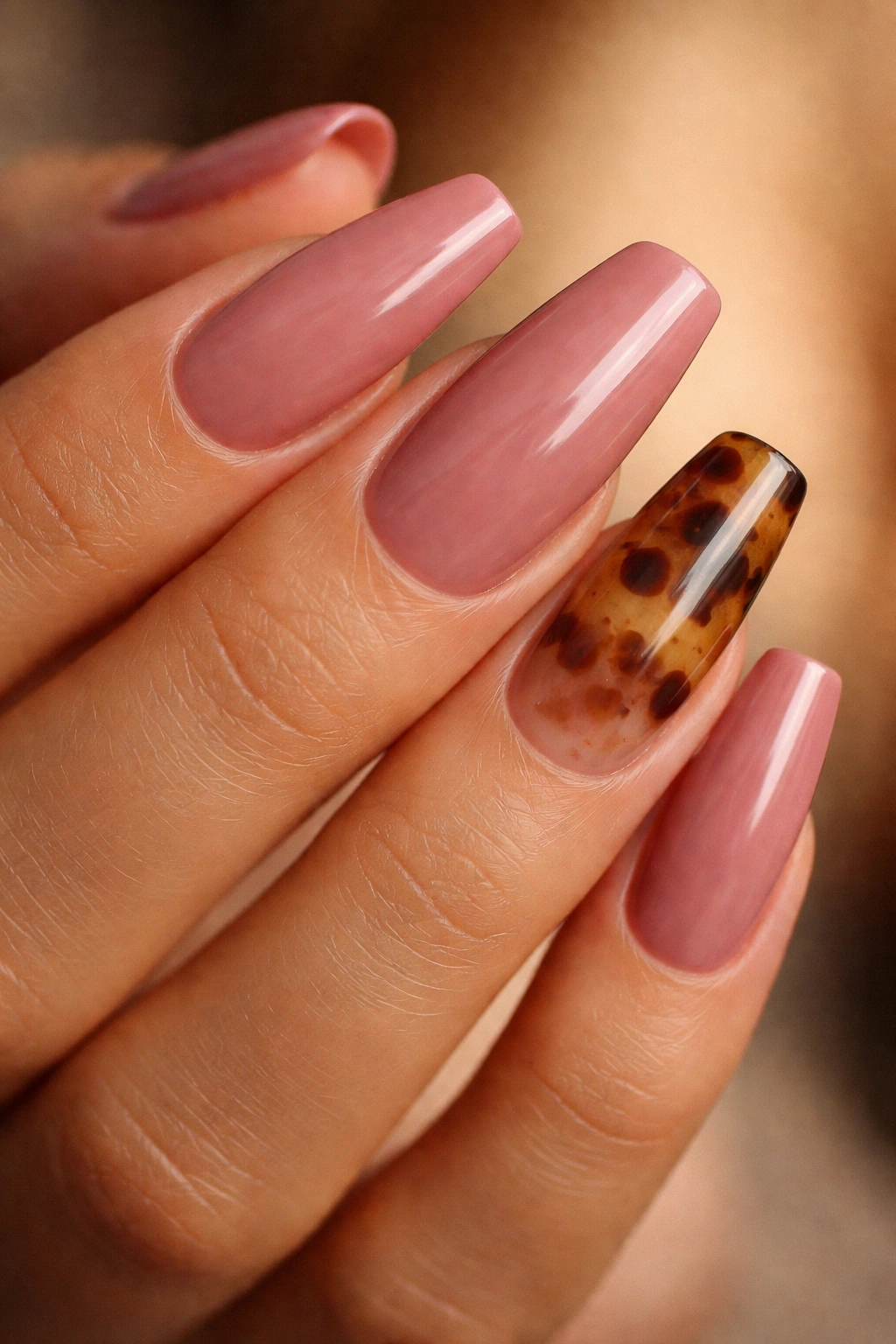
Rosewood blush sits deeper than classic blush pink. It has brown, muted red, and dusty rose woven together, which makes it a strong choice for warm and olive skin that swallows pale pink whole. On ballerina nails, rosewood has enough weight to hold the shape without feeling dark.
Now add one tortoiseshell accent nail. That’s where the set gets smart. Tortoiseshell already lives in the warm spectrum—amber, honey, caramel, chestnut—so it slips naturally beside rosewood blush. You don’t need five accent nails. One, maybe two, is plenty. Ring finger only works. Thumb and ring finger works. Anything beyond that can start looking themed.
The accent should stay translucent. A solid painted tortoiseshell block misses the point. The good version layers sheer amber, brown, and black-brown patches with gaps in between, then finishes with enough gloss to make the pattern look deep under the surface. Ballerina nails give that effect extra room, which is why this combo lands better on them than on short rounded nails.
I like this set when someone wants blush, but not the airy bridal kind. Rosewood blush has more bite. It still reads soft from afar, yet close up there’s more richness in it, more shadow, more shape.
12. Warm Pink Aura Center on a Beige Base
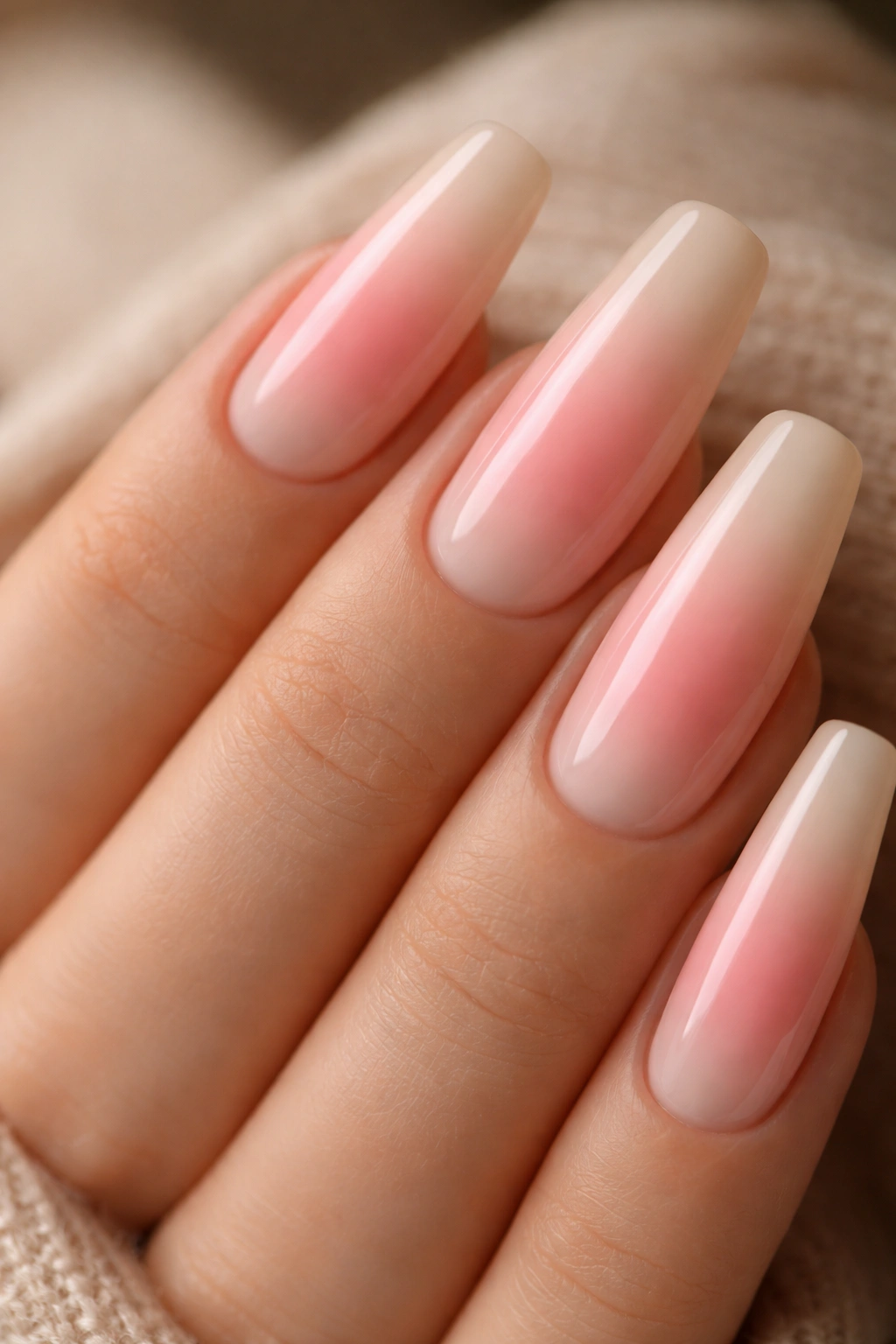
Unlike cool pink aura nails, which can drift into a frosty airbrushed look, a warm pink aura center feels like a flush under the surface. That’s the whole appeal. The base starts beige-nude, and the center bloom comes in salmon pink, peach rose, or muted coral.
This design needs some space, so medium to longer ballerina nails wear it best. The soft halo should sit in the middle third of the nail and fade outward with no hard edge. Airbrush gives the smoothest result, but a sponge can work if the layers stay thin and the color is built slowly. The center should not reach all the way to the cuticle or free edge. Leave a soft border of nude around it, roughly 3 to 5 millimeters, depending on nail length.
Who should pick this? Anyone who likes blush nails but wants them to look a little more designed without going heavy on line art. Aura nails still read soft, but they have movement. Warm skin picks up that center glow well because the halo carries coral or peach instead of icy violet-pink.
The wrong base can ruin it. If the nude underlayer is too pale and chalky, the aura floats on top instead of blending in. Beige with a warm undertone keeps the whole nail grounded.
13. Blush Quartz Veining with Honey Lines
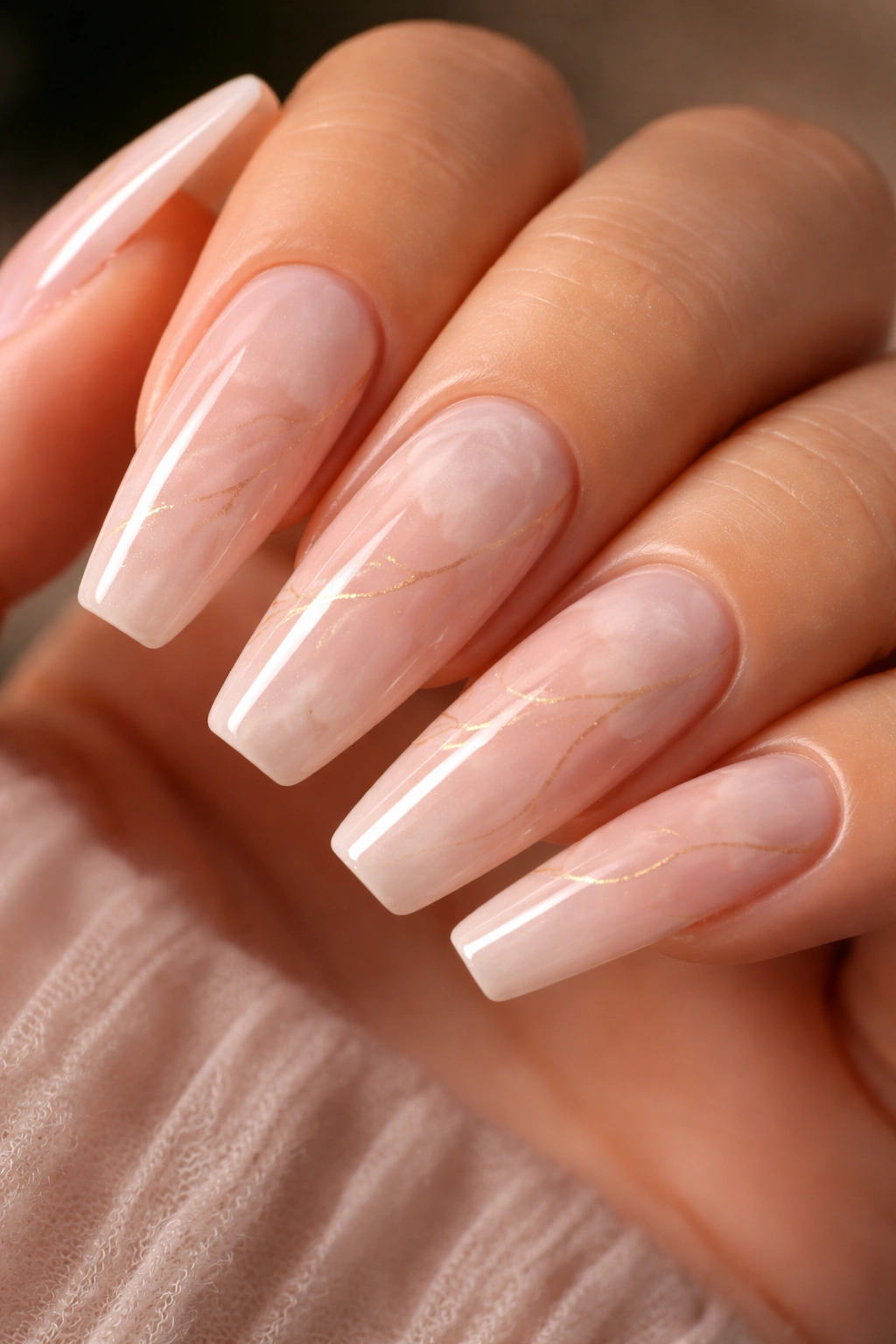
Blush quartz nails can go wrong fast. Done badly, they look like pink scribbles under top coat. Done with a light hand, they mimic rose quartz with warmth, which suits ballerina nails and warm skin far better than cold white stone effects.
How to build the stone look without bulky nails
Start with a milky blush base. Then add sheer, cloud-like patches of warmer pink and soft nude, leaving some space between them. The veining should come next in whisper-thin lines—honey beige, pale caramel, maybe one thread of muted gold. A liner brush helps, though the pressure has to stay light. Press too hard and the veins look drawn, not natural.
Quick design notes
- Keep the veining to 2 or 3 nails and leave the rest solid blush.
- Use warm beige or honey lines instead of silver-gray.
- Add one or two broken lines, not a web across the whole nail.
- Cap with a glossy top coat thick enough to blur the layers together.
Best choice for this look: medium-length ballerina nails with a narrow taper, because the stone effect needs a little space but still benefits from a refined silhouette.
14. Milky Blush with Thin Cocoa Outlines
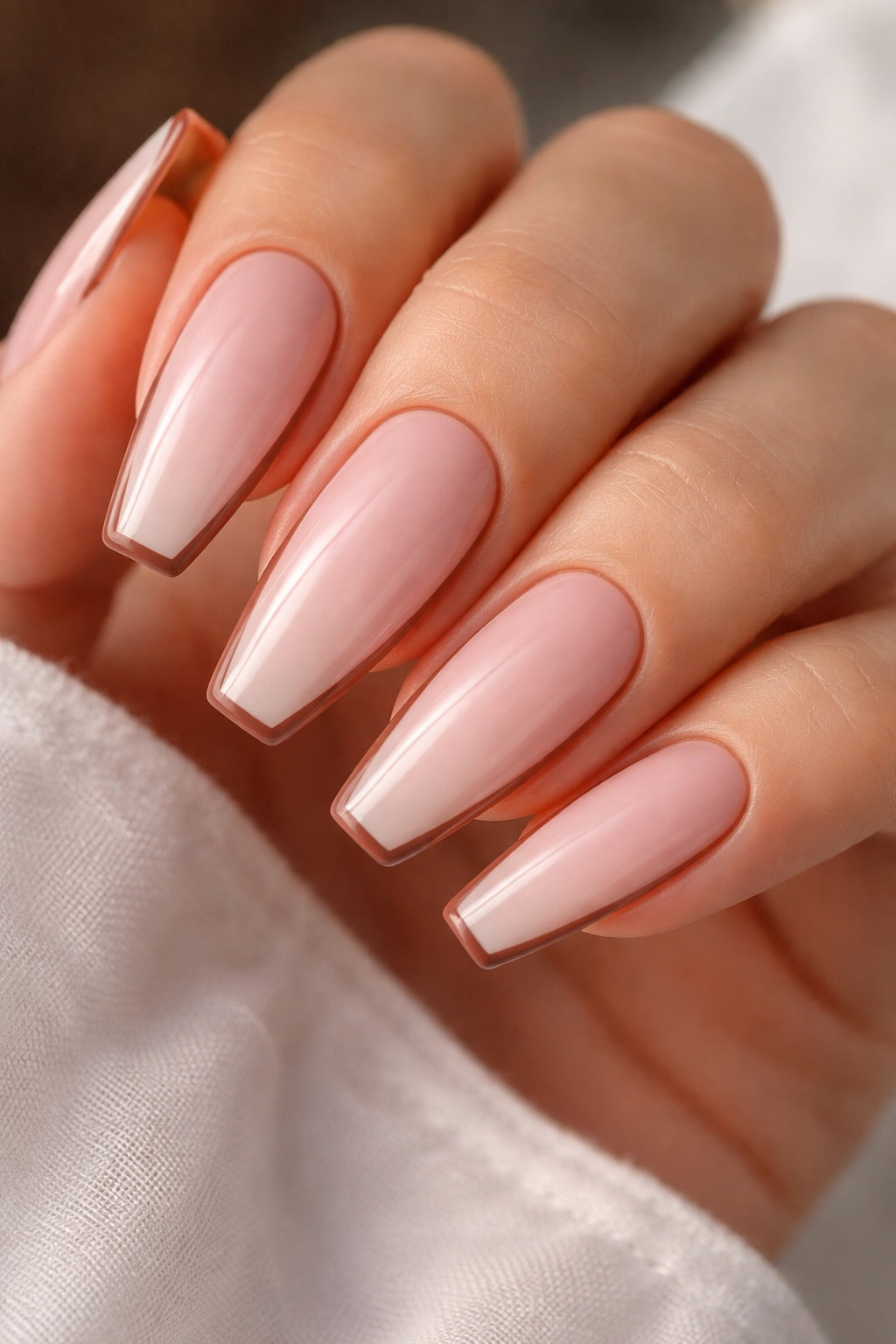
Outline nails are easy to overdo. A thick border can make the nail look boxed in, and black outlines on a soft blush base can feel harsh on warm skin. Cocoa fixes that. It still defines the shape, but the warmth keeps the contrast under control.
The base should stay milky and semi-sheer. Then a cocoa liner—around 0.5 to 1 millimeter thick—traces the sidewalls and tip. You can leave the cuticle area open or trace the entire nail if the line is delicate enough. On ballerina nails, that outline sharpens the silhouette in a way that shorter round nails can’t quite match. It makes the shape the star.
This design looks best when the line quality is clean. No shaky edges. No thick corners. It’s a precision set, which means it often turns out better in gel than in regular polish because the tech can pause and refine before curing. If you’re doing it at home, a striping brush and slow dry time help more than a standard polish brush ever will.
I tend to like this one on medium and deep warm skin the most, where the cocoa line has enough contrast to show clearly. On light warm skin, a cinnamon outline can soften the effect if cocoa feels too strong.
15. Peach Nude with a Burnished Copper Glitter Fade
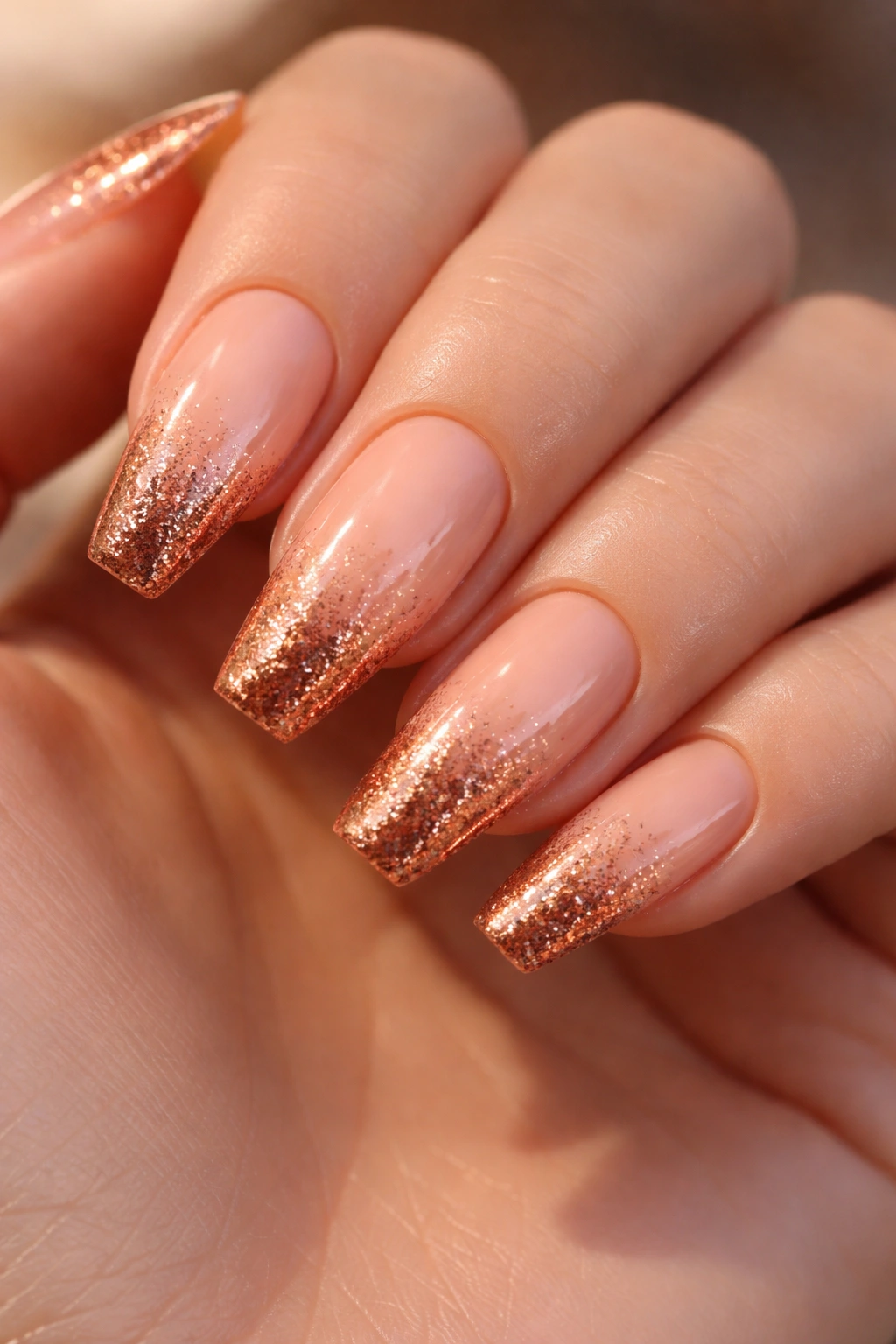
Some glitter nails look fun for two days and tiring by day four. This one doesn’t have to. A burnished copper fade over peach nude keeps the sparkle concentrated where it belongs and lets the warm base do half the work.
The nicest version uses ultra-fine glitter or reflective shimmer packed near the tip, then feathered downward no more than one-third of the nail. Chunky glitter can make ballerina tips look thick, and thick tips ruin the line of the shape. Copper works better than silver here because it echoes warm skin and keeps the manicure from turning cold under flash. Rose gold can work too, though I prefer copper when the blush base already has peach in it.
This design earns its keep during evenings out, weddings, dinners, holiday events, and any time you want soft nails with a little more light. Still, it doesn’t need an occasion. Keep the fade shallow and the glitter fine, and the set reads polished enough for ordinary weekdays too.
One extra thought. Copper glitter catches on rough edges if it isn’t sealed properly, so ask for a smoothing layer before the final top coat. The surface should feel glassy from cuticle to tip. If you can feel texture, you’ll see it, and once you see it, you won’t stop.
Final Thoughts
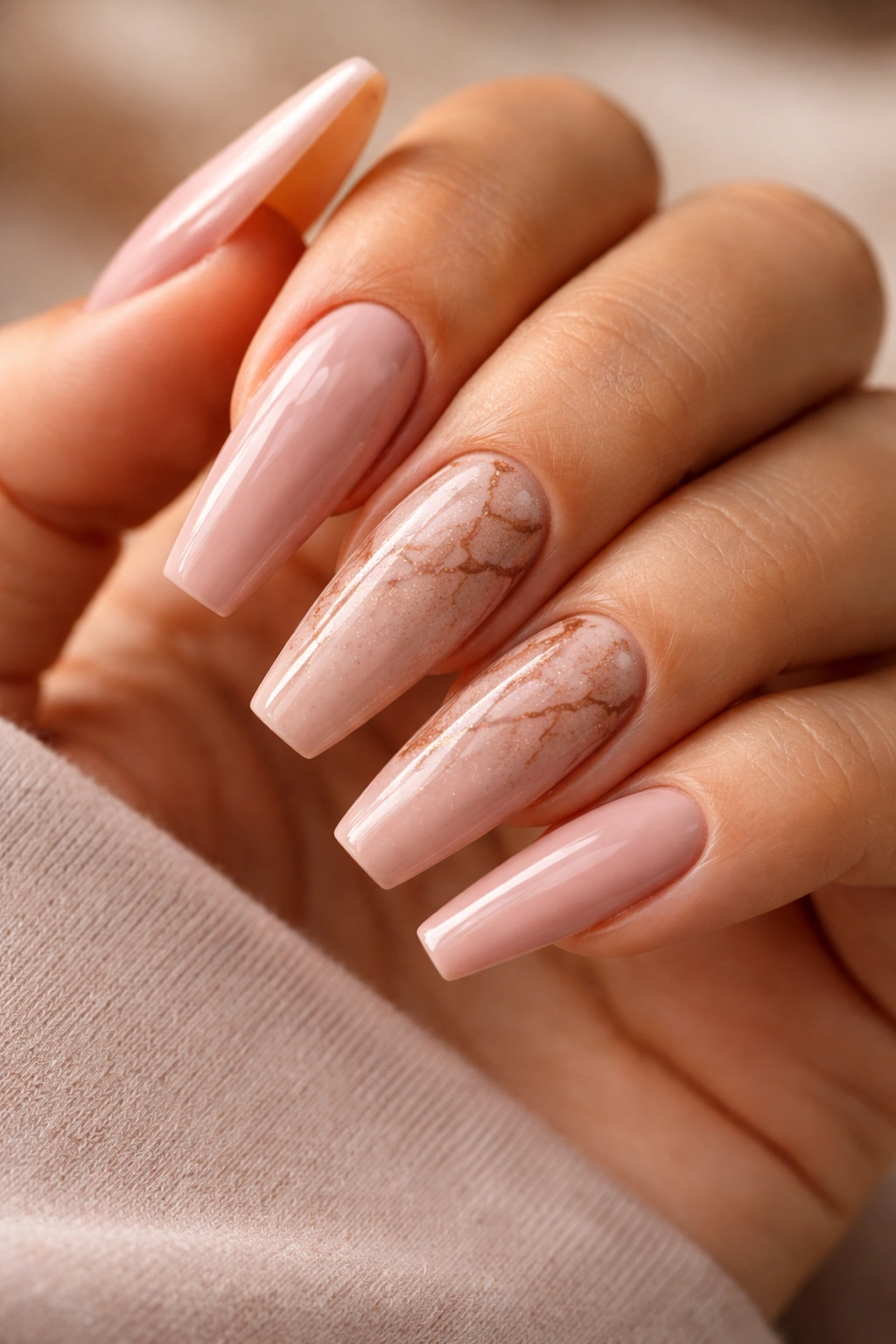
Warm-toned blush nails look best when the pink carries a little earth in it—peach, beige, cinnamon, caramel, copper. That’s the thread tying all fifteen of these looks together. The shape gives you structure; the warmth keeps the color from washing out your hands.
If you’re choosing between two similar shades, pick the one that looks better next to gold jewelry and natural daylight. That tiny test saves people from a lot of chalky manicures. I’d also keep the design level matched to the color depth: the softer the blush, the cleaner the art should stay.
Ballerina nails already have presence. Give them a warm blush that respects your undertone, and they don’t need much help after that.