

The fastest way to make ballerina nails look expensive is not crystals, chrome, or a packed Pinterest mood board. It’s restraint.
Minimalist ballerina nails have a strange advantage over louder sets: they show every good decision. The file shape looks sharper. The cuticle work looks cleaner. A sheer nude or a thin white line has nowhere to hide, which means the manicure either feels crisp and polished—or it falls apart fast.
Shape matters more here than most people think. Ballerina nails, which sit in the same family as coffin nails, need straight sidewalls, a soft taper, and a flat tip that doesn’t flare. If the free edge gets too wide, the whole look turns heavy. If the taper gets too aggressive, the nail starts reading more stiletto than ballerina, and that soft clean effect disappears.
The other half of the look comes from surface finish. On a minimalist set, ridgey base coats, flooded cuticles, and bulky gel at the tip stand out right away. Smooth structure, thin product near the sidewalls, and a color choice that sits close to your skin tone do more work than any extra art ever will.
Once the shape is right, a tiny detail can carry the whole manicure.
1. Milky Nude Minimalist Ballerina Nails With a Glassy Finish
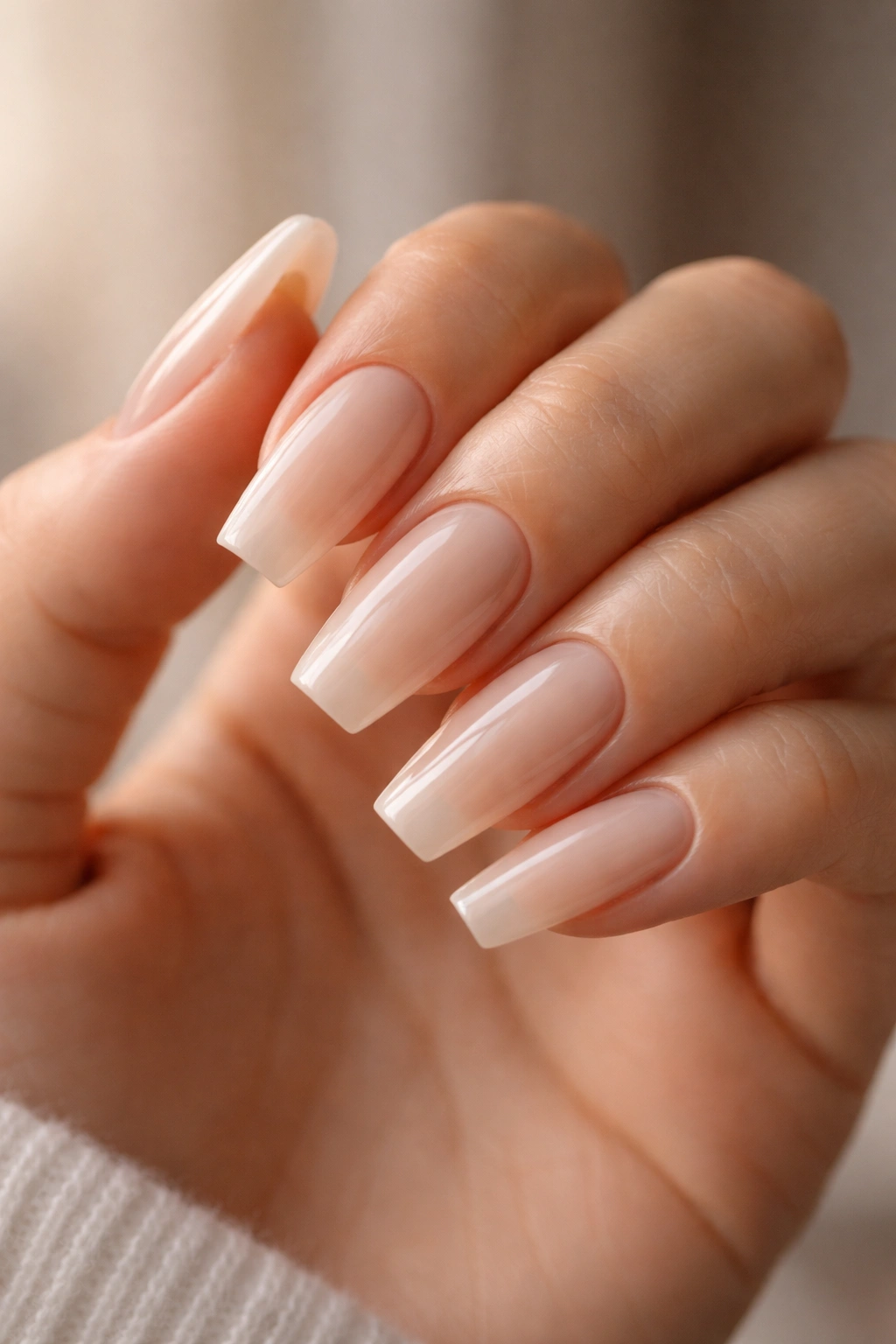
If you only save one idea from this list, save this one. A milky nude ballerina set with a high-gloss top coat is the clean manicure people keep trying to describe when they say they want something “natural, but better.”
The reason it works is easy to see once it’s on the nail. A semi-sheer nude softens the visible nail line, blurs small discoloration, and makes the ballerina shape look more refined instead of stark. You still get definition at the flat tip, though the overall effect stays soft.
That balance matters.
What makes this shade family work
A good milky nude is not fully opaque. You want 70 to 85 percent coverage, enough to smooth the nail bed without creating that flat painted-out look that can make neutral nails feel thick. Builder gel in a pink-beige or beige-ivory tone usually gives the nicest finish because it self-levels better than many regular polishes.
Ask for these details
- Length: A free edge around 10 to 14 millimeters keeps the ballerina shape visible without turning it into a dramatic long set.
- Color: Pick a nude that sits half a shade lighter or deeper than your nail bed, not an exact match, so the manicure still has shape.
- Finish: Choose a high-shine gel top coat rather than a soft satin top. Gloss makes sheer color look cleaner.
- Structure: Keep the apex subtle and centered. Too much bulk near the tip ruins the whole point.
Best move: if your skin has more warmth, lean beige-peach; if your skin reads cooler, ask for a nude with a faint rosy or taupe cast. That one adjustment keeps the set from looking chalky.
2. Sheer Pink Ballerina Nails That Look Barely Touched
Want your manicure to look like your natural nails somehow got better lighting? Go with a sheer pink veil.
This one is quieter than milky nude and a little fresher on the hand, especially if you like the look of healthy nail beds more than visible polish. A translucent pink catches the eye in a softer way. It doesn’t announce itself from across the room, though up close it gives the nail plate a smooth, hydrated look.
The trick is staying sheer. Two thin coats usually look cleaner than three, and a rubber base underneath helps if your natural nails have ridges or small white marks. Pile on too much pink and it starts reading like standard baby-pink polish, which is a different mood entirely.
Shorter ballerina lengths wear this shade well. Somewhere around 8 to 12 millimeters of free edge keeps it tidy and lets the pink do what it does best—make the shape feel polished, not theatrical.
And yes, cuticle oil matters here more than with darker polish. On a sheer pink set, dry skin around the nail can undo the whole effect in a day.
3. Micro French Ballerina Nails With 1-Millimeter White Tips
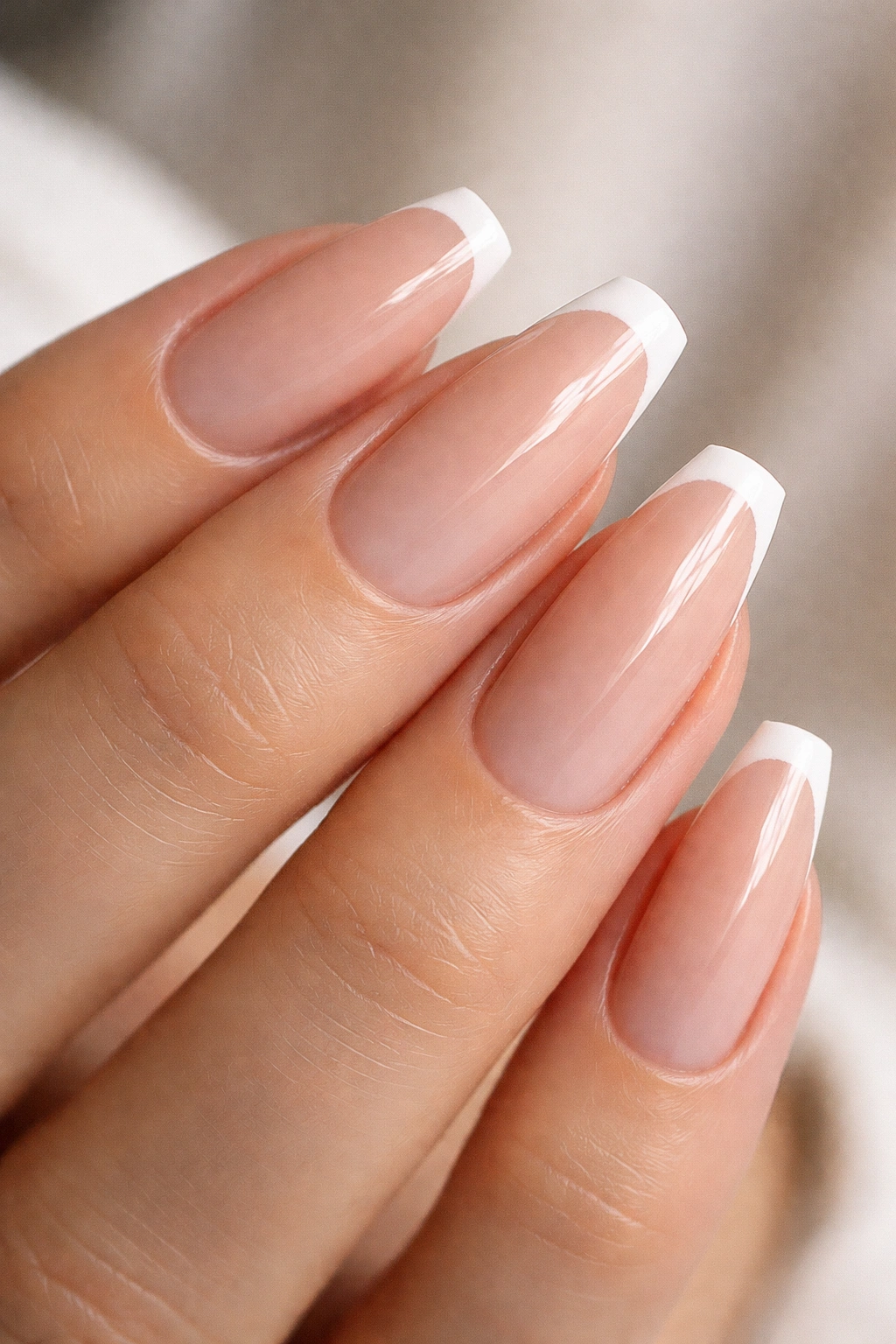
Unlike a classic French manicure, which can look a little sharp on a coffin shape, a micro French keeps the tip line narrow enough that the ballerina silhouette still feels light.
That thin edge changes everything. A standard French tip often eats up too much space on the nail plate, especially on medium-length nails. A line closer to 1 millimeter gives you definition at the tip without chopping the nail into two big blocks of color.
Why the scale matters
Ballerina nails already have a visible flat tip. You do not need a thick smile line to show it off. A micro French works because it follows the geometry that is already there. The result looks precise, almost architectural, though still easy on the eye.
What to tell your nail tech
- Keep the tip line thin and crisp, around 1 millimeter across most nails.
- Use a soft white or ivory, not a bright correction-fluid white, if you want the set to stay minimal.
- Pair it with a sheer nude base, not a fully opaque pink.
- Let the smile line stay a little straighter than on almond nails. Ballerina tips look better when the curve respects the flat edge.
One warning, though: if the sidewalls are even slightly uneven, the micro French will expose it. This is not the design to pick if the shaping stage was rushed.
4. Nude-to-Cream Baby Ombre on a Tapered Ballerina Shape
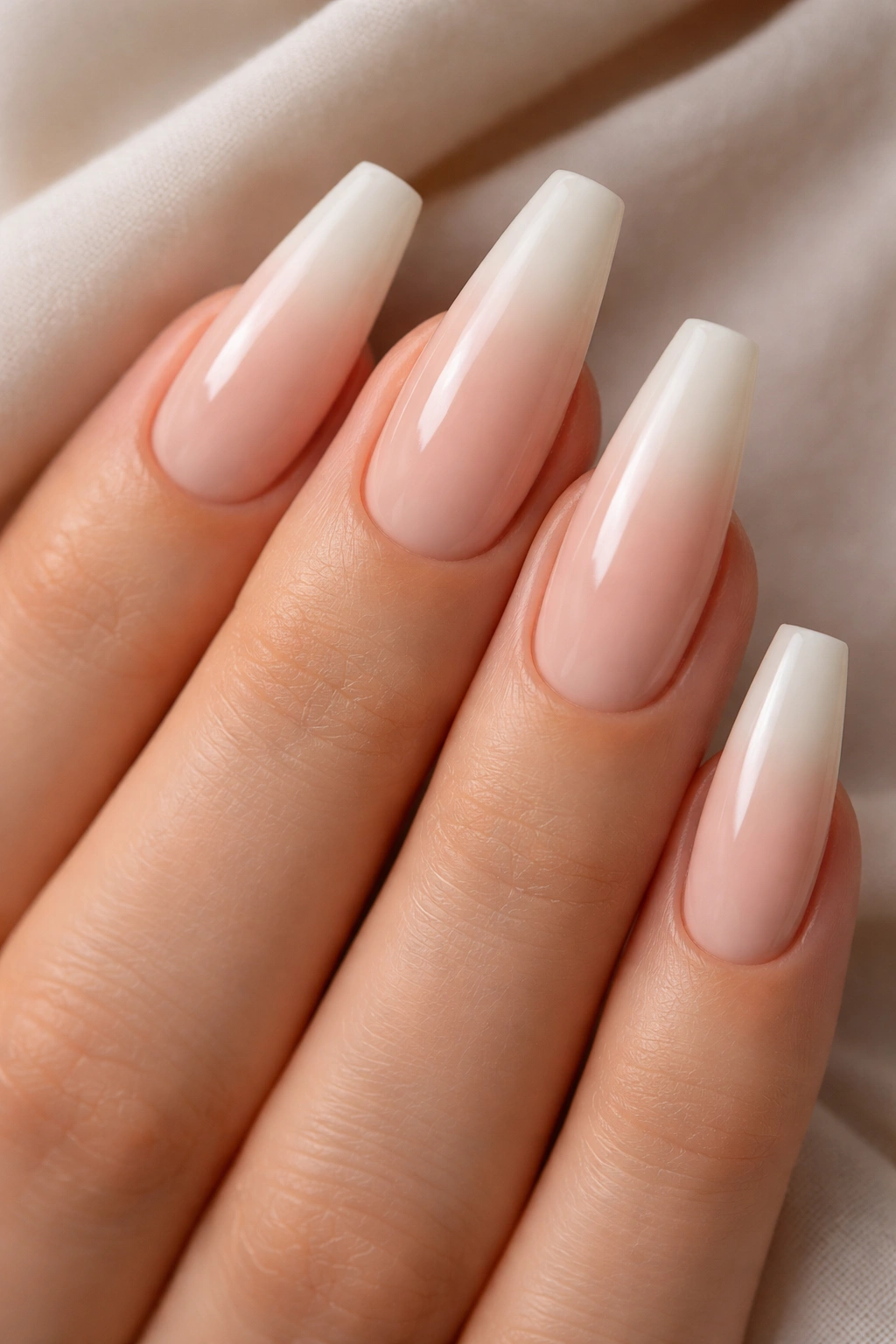
Picture a nude base that fades into soft cream at the tip with no hard line anywhere. That’s the baby ombre version of ballerina nails, and when it’s done with restraint, it looks cleaner than a traditional French.
The fade should start late. That is the part people get wrong. If the white or cream begins halfway down the nail, the look turns bridal in a big, formal way. Keep the transition in the top third of the nail, and the set stays airy and modern.
Application matters here more than color choice. A sponge can work for regular polish, though gel gives a finer result when the blend is brushed, airbrushed, or feathered with a soft ombre brush. You want no visible banding. None.
Cream is often better than bright white for this look. It softens the tip and keeps the finish from reading cold. On a medium beige or pink-nude base, cream gives you enough lift without creating a sharp contrast line.
The nicest version of this manicure has a slight haze to it, almost like a filtered French. Clean from arm’s length. Soft up close. That’s the sweet spot.
5. Crisp White Half-Moons at the Cuticle
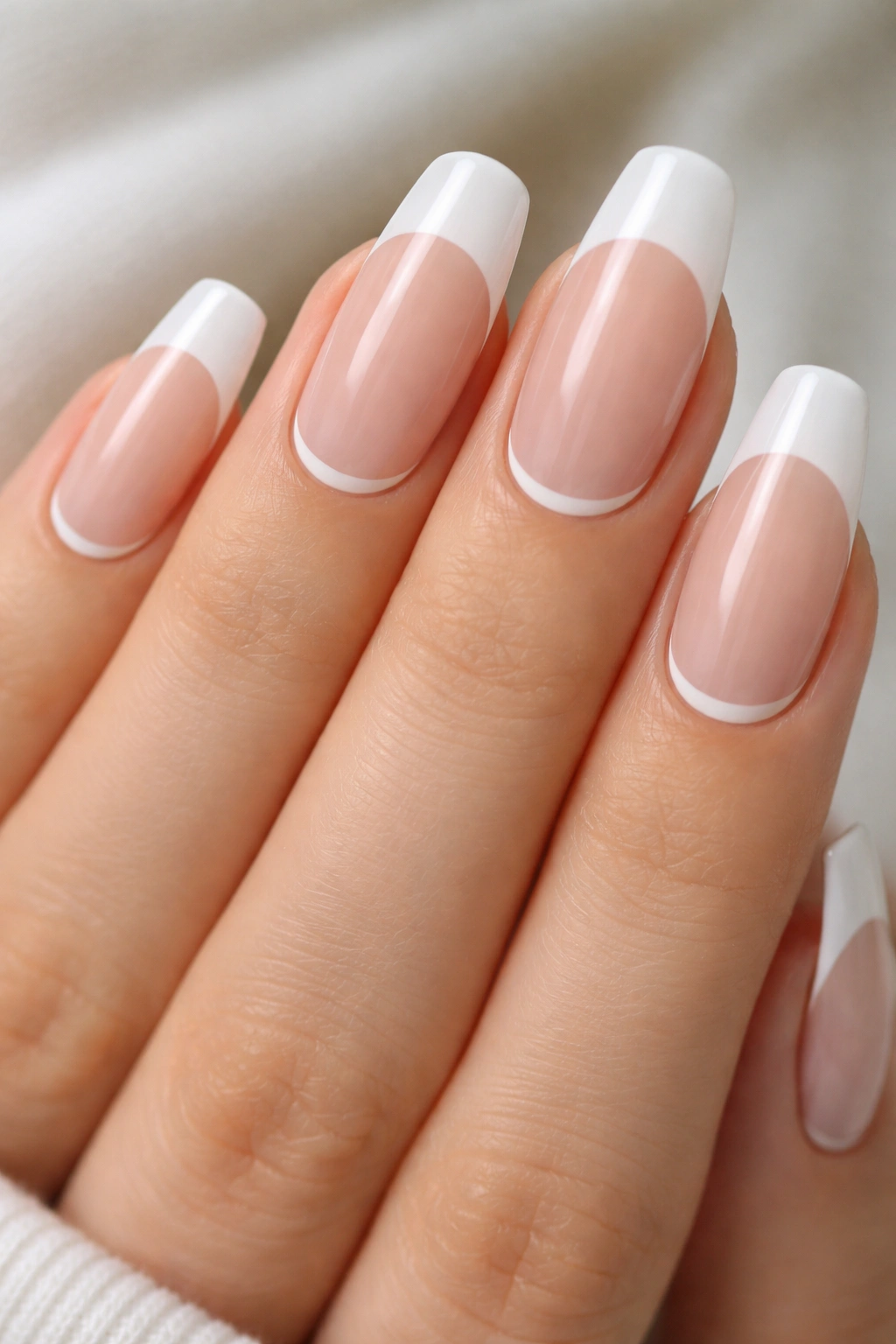
French tips are not the only clean line worth wearing. A half-moon at the cuticle can look even smarter on ballerina nails because it balances the flat tip with a curved detail at the base.
Why does this work so well? The eye reads both ends of the nail at once. You get structure from the squared tip and softness from the crescent near the cuticle, which keeps the shape from feeling too severe.
Placement decides whether it looks polished or awkward
Leave a hairline gap between the painted half-moon and the cuticle—about 0.5 millimeter is enough. If the white touches skin or floods into the sidewall, the design starts to look accidental. A small detail, yes, though minimalist sets live or die on small details.
Use a sheer nude or clear pink base and reserve the half-moon for all ten nails or maybe only the index and ring fingers if you want the effect toned down. Full coverage works best when the crescents are narrow and identical.
A reverse design like this also grows out more kindly than you might expect. New growth appears above the moon rather than breaking up a tip line, so the manicure keeps its shape longer between fills.
6. Matte Taupe Ballerina Nails With Soft Stone Tones
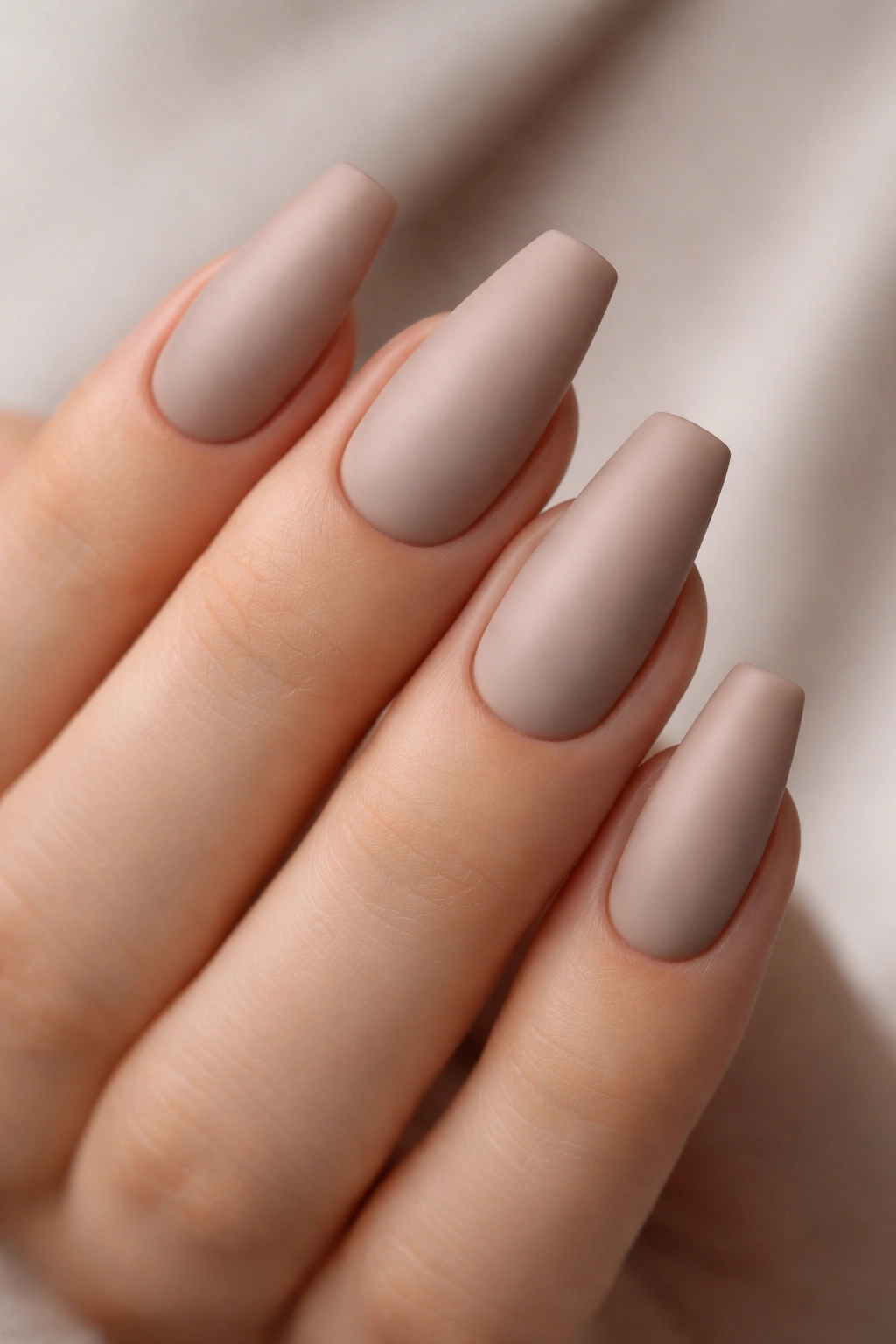
Taupe matte nails have a dry, velvety look that can be beautiful on ballerina shapes—if the color is right.
A chalky taupe dies on the hand. A stone taupe with a little brown or gray depth looks deliberate, grown-up, and clean in a way glossy beige cannot always match. The flat tip of the ballerina shape gives matte polish a wide surface to show off that suede-like finish.
Where matte taupe works best
- On medium-length ballerina nails, around 10 to 13 millimeters, where the shape is visible but still neat
- With a softly structured gel overlay, since matte highlights dents and lumps
- In shades that sit closer to mushroom, greige, or wet clay than pale chalk
- With tight cuticle prep, because matte top coat draws attention to dry skin
Matte also changes how the shape reads. Gloss reflects light and can blur edges a little. Matte sharpens them. That means your sidewalls need to be clean, your apex needs to be balanced, and the tip has to stay perfectly flat.
Skip heavy art here. One color is enough. The finish is the design.
7. Single Vertical Stripe Down the Center of a Nude Nail
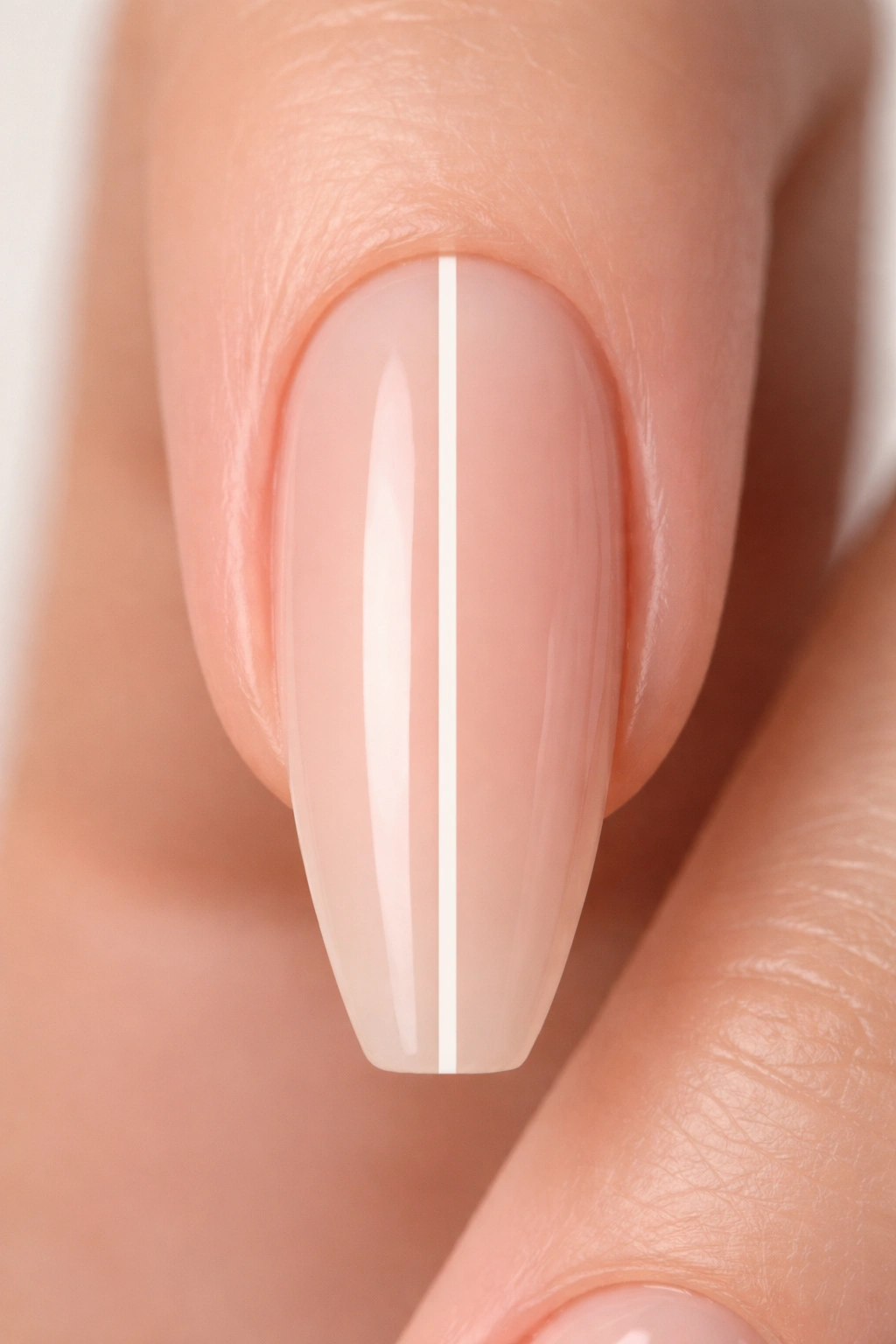
One line.
That’s all this set needs. A single vertical stripe running down the center of a nude ballerina nail makes the finger look longer and gives the manicure a graphic edge without dragging it into full nail-art territory.
The line should be narrow—0.5 to 1 millimeter—and it works best in white, soft mocha, charcoal, or muted gold foil gel if you want a hint of shine. Place it dead center from cuticle area to tip. Off-center can work too, though that becomes a different design with more attitude.
Why it looks so clean
Ballerina nails already have strong geometry. A centered vertical line echoes that length and keeps the eye moving upward, which makes the shape feel slimmer. On square nails the same stripe can feel blocky. On ballerina nails, it has room to breathe.
You can wear it on every nail for a graphic uniform look, or limit it to two accent nails per hand if you want more empty space. Both work. What does not work is mixing stripe thickness from finger to finger. Minimal art needs consistency.
Use a glossy top coat if you want the stripe to look sharp. Matte softens it too much and steals the whole point.
8. Soap-Finish Minimalist Ballerina Nails
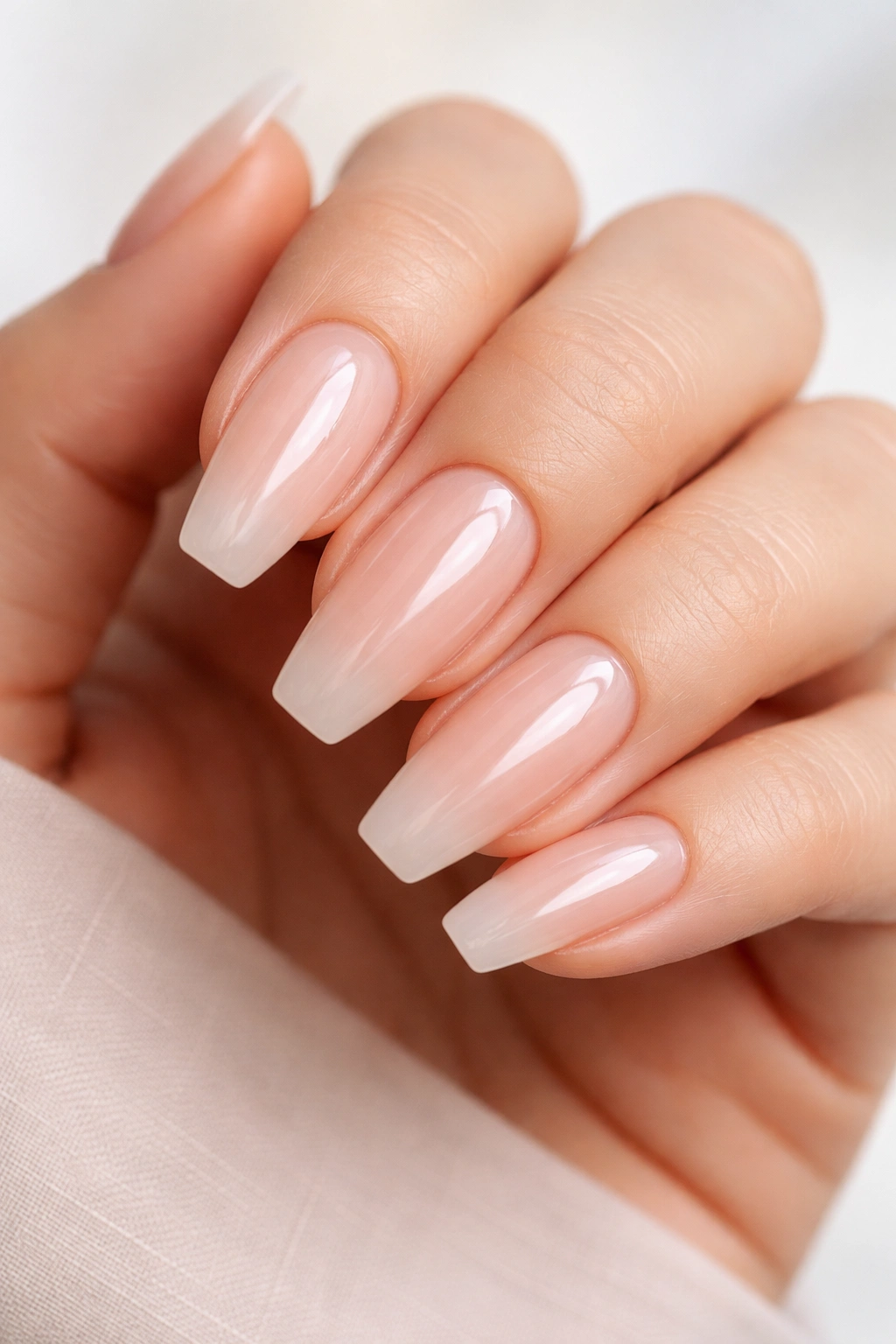
Two thin coats beat one cloudy coat here.
The soap-nail finish sits between bare nails and sheer polish. Think translucent pink-beige, a wet-looking top coat, and enough clarity that the natural nail still shows through. On a ballerina shape, that finish makes the edges look refined without adding visual weight.
Surface prep is doing most of the work. A soap-finish manicure needs a smooth nail plate, a clean buffer pass, and a base that cancels yellowing without making the nail look painted. A sheer pink with a drop of beige usually lands better than a blue pink, which can look cold on longer shapes.
This style suits people who hate feeling like they are “wearing polish.” It looks closer to healthy natural nails, though with more even tone and more gloss. If your nails have ridges, a ridge-filling base or builder-in-a-bottle layer helps keep that glassy effect from breaking up in the light.
Growth is easy with this one. Chips show less. Small scratches hide better. For anyone who wants minimalist ballerina nails that stay clean-looking for longer than a week, soap finish is one of the smartest choices on the board.
9. Short Ballerina Nails in a Soft Peach Nude
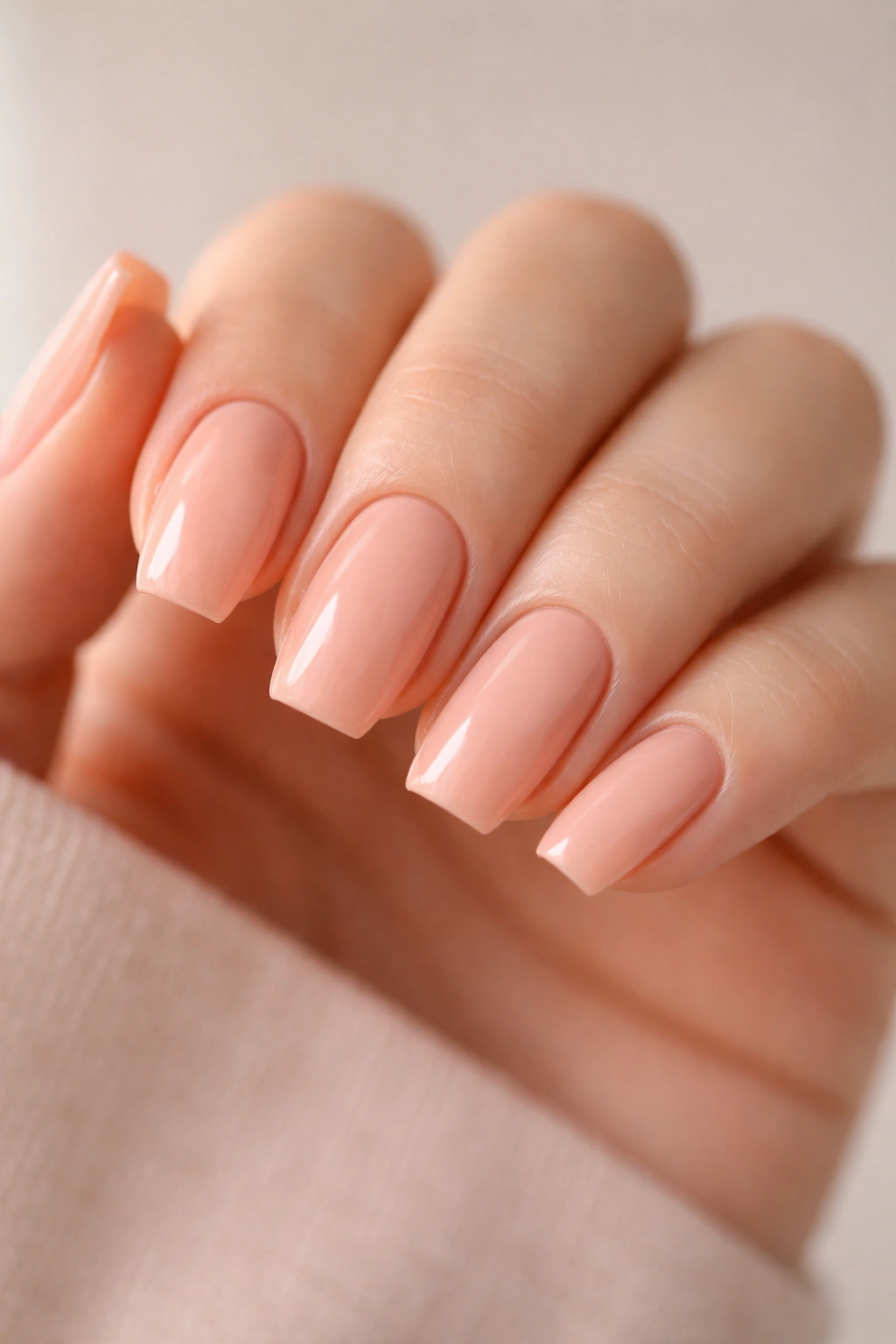
I like short ballerina nails more than many people do, especially when the goal is a clean everyday manicure instead of a dramatic set.
A shorter length changes the whole attitude of the shape. You still get the tapered sidewalls and flat tip, though the nail feels more practical for typing, lifting weights, buttoning jeans, opening delivery boxes—the daily stuff that wrecks long corners. Keep the free edge around 6 to 8 millimeters, and the shape stays clear without looking wide.
Soft peach nude is the right partner for this version because it adds a little life to the nail. Beige alone can wash short nails out. Pink alone can look too polished. Peach sits in the middle and gives the hand some warmth.
There is one catch. On short ballerina nails, width control matters even more than on longer ones. If the file line does not taper enough, the shape slips into square. Ask for a narrow sidewall and a flat tip that is still visible from the front, not rounded off at the corners.
This is the set I’d point toward for someone who wants neat nails that still survive normal life.
10. Greige Ballerina Nails With One Tiny Dot Accent
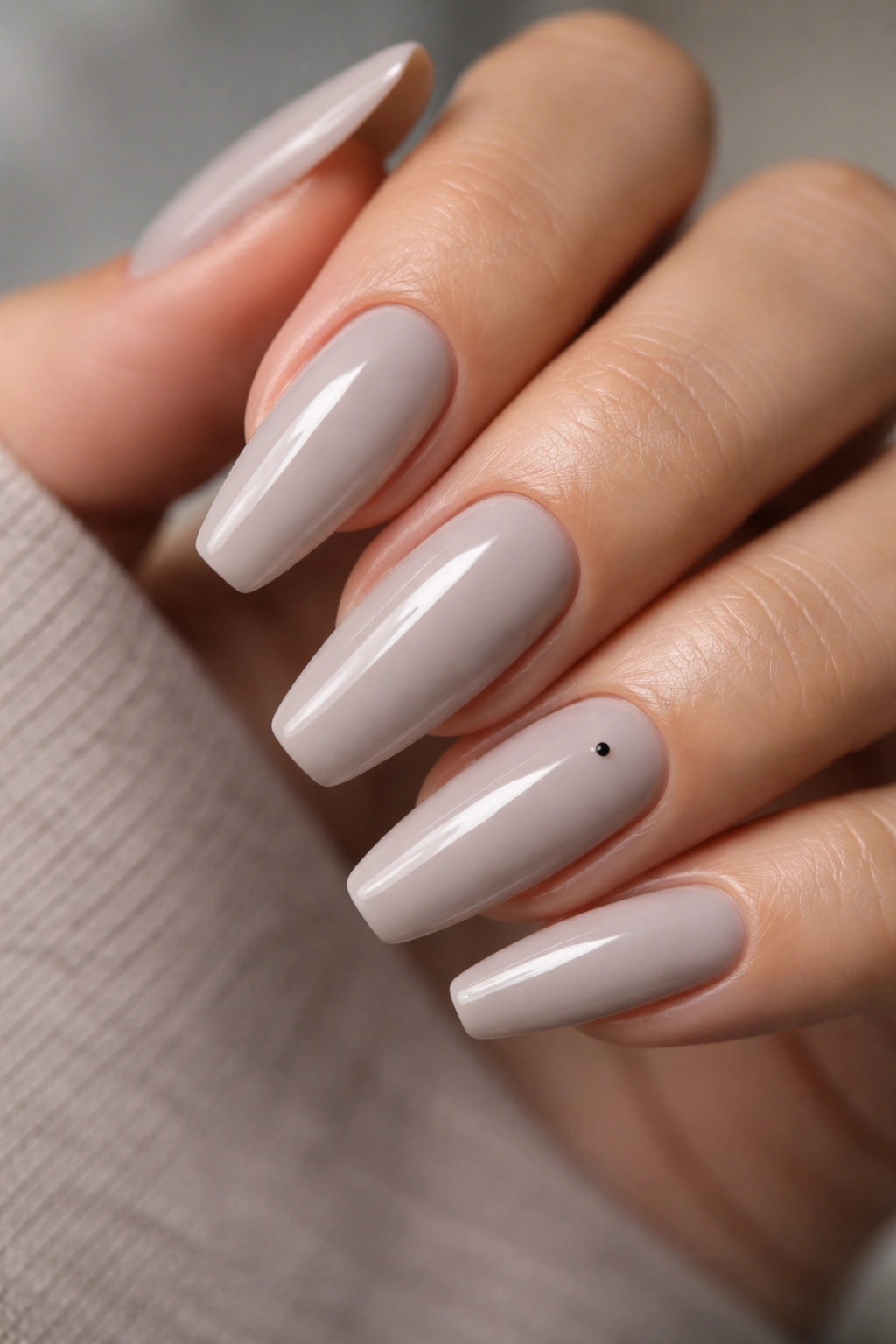
How little nail art can you get away with before it disappears? A single dot is about the limit, and that is why it works.
Greige—a mix of gray and beige—has a calm, cool tone that keeps the manicure grounded. Add one tiny dot, around 1 to 2 millimeters wide, and the design gains focus without losing the pared-back feel. Think of it like punctuation for your nails.
The dot placement matters
- Place it near the cuticle center on one accent nail for the quietest look.
- Put it slightly above the cuticle on all ten nails if you want a uniform, modern pattern.
- Use white, espresso, or black for contrast. Metallic dots pull more attention.
- Keep the dots identical in size. One larger dot can make the whole set look off-balance.
A toothpick can do this at home, though a dotting tool gives a cleaner circle. Seal the dot under a glossy top coat so it looks embedded instead of sitting on top like an afterthought.
Greige also hides tiny surface flaws better than pale nude shades, which makes this a useful pick if your nails are not perfectly smooth.
11. Blurred French Fade With a Milky Base
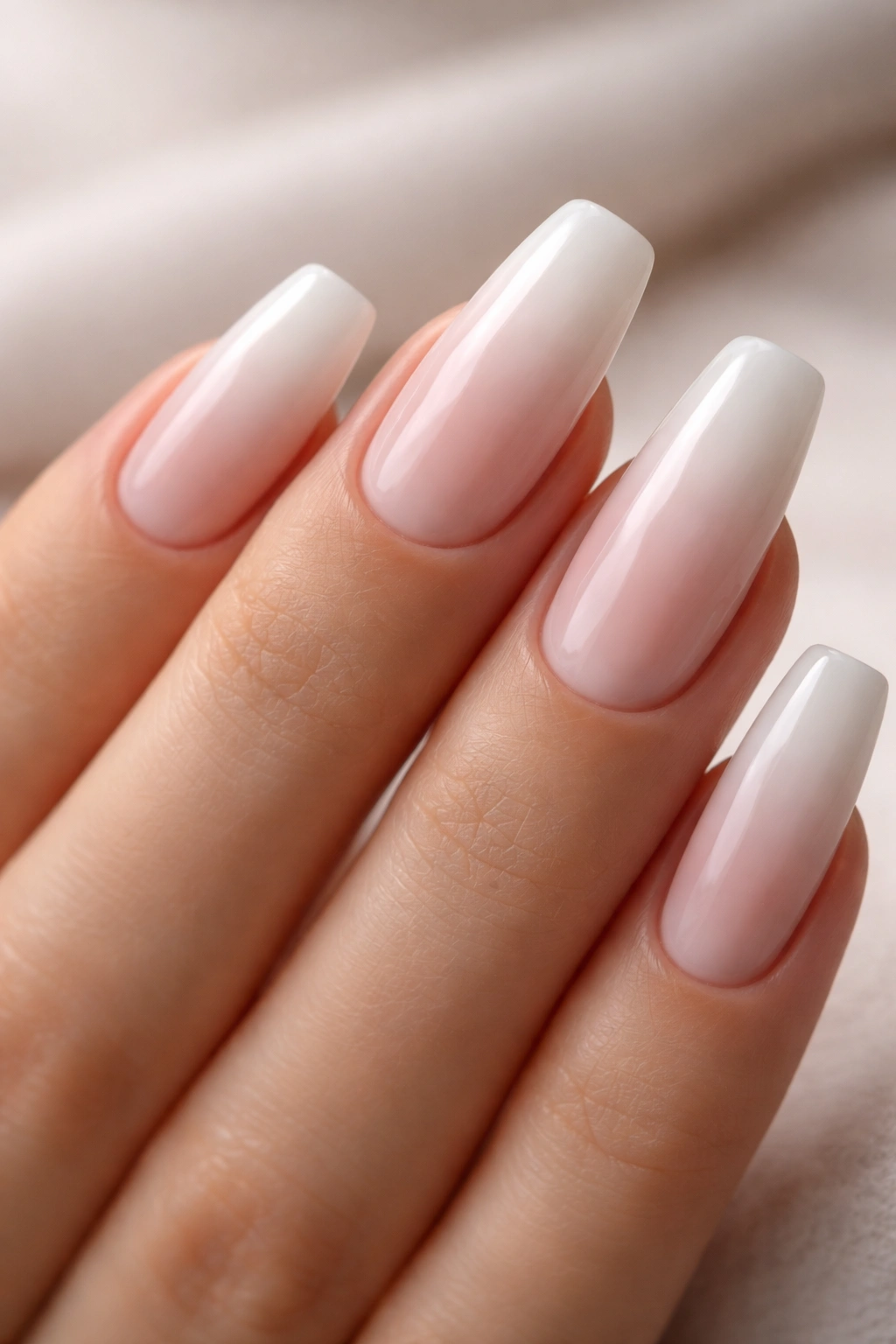
A French manicure can look softer than bare polish if the smile line melts instead of snapping into place.
That blurred French fade starts with a milky base and a whisper of white feathered over the tip. Not a full baby boomer gradient. Not a heavy bridal white. More like the nail has brighter ends and cleaner structure than nature handed you.
Keep the white sheer. That point is worth repeating because it changes the whole manicure. Once the tip turns opaque, the set becomes formal and a little stiff. Leave some translucency in the blend, and it stays in minimalist territory.
This style is handy if you like French nails but hate seeing harsh grow-out. A hard smile line shows every millimeter of new growth. A fade buys you more visual breathing room, especially on medium-length ballerina nails where the tip has enough space for the blend to look intentional.
Pair it with cuticle cleanup that is almost obsessive. Blurred tips and messy cuticles cancel each other out in the worst way.
12. Cool Mocha Outline Along the Sidewalls
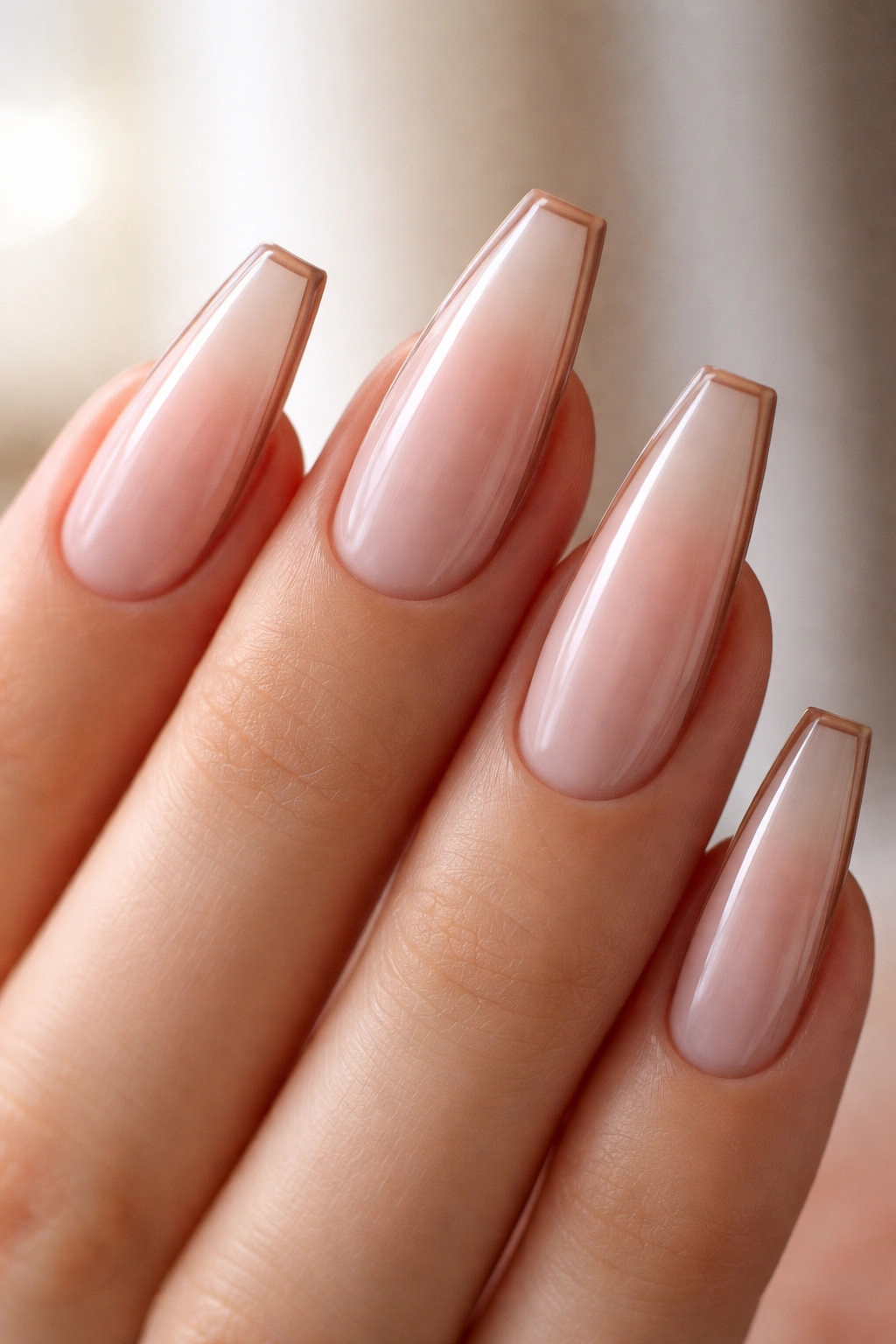
Seen from arm’s length, this manicure looks nude. Up close, a fine mocha outline along the sidewalls and tip gives the shape a quiet frame.
The line needs a steady hand and a light touch. You are not tracing the whole nail in thick color. You are sketching the architecture—about 0.5 millimeter of cool mocha gel paint along each side, then pulling it across the flat tip to connect the frame. Leave the cuticle area open.
Why this one feels sharper than a standard outline
A full outline around the cuticle can look harsh on neutral nails. Sidewall framing keeps the attention on the ballerina shape itself. It also makes the nail appear narrower, which helps if your natural nail beds are wider and you want a leaner silhouette.
Ask for these specifics
- Use a cool mocha or mushroom brown, not warm chocolate
- Keep the base sheer beige or pink-beige
- Make the outline even on both sidewalls
- Finish with high gloss, since shine helps the line look cleaner
Small detail, big payoff: this design photographs best from a slight angle, where the frame catches the edge of the nail without turning graphic and heavy.
13. Clear Negative Space With an Ivory Tip Block
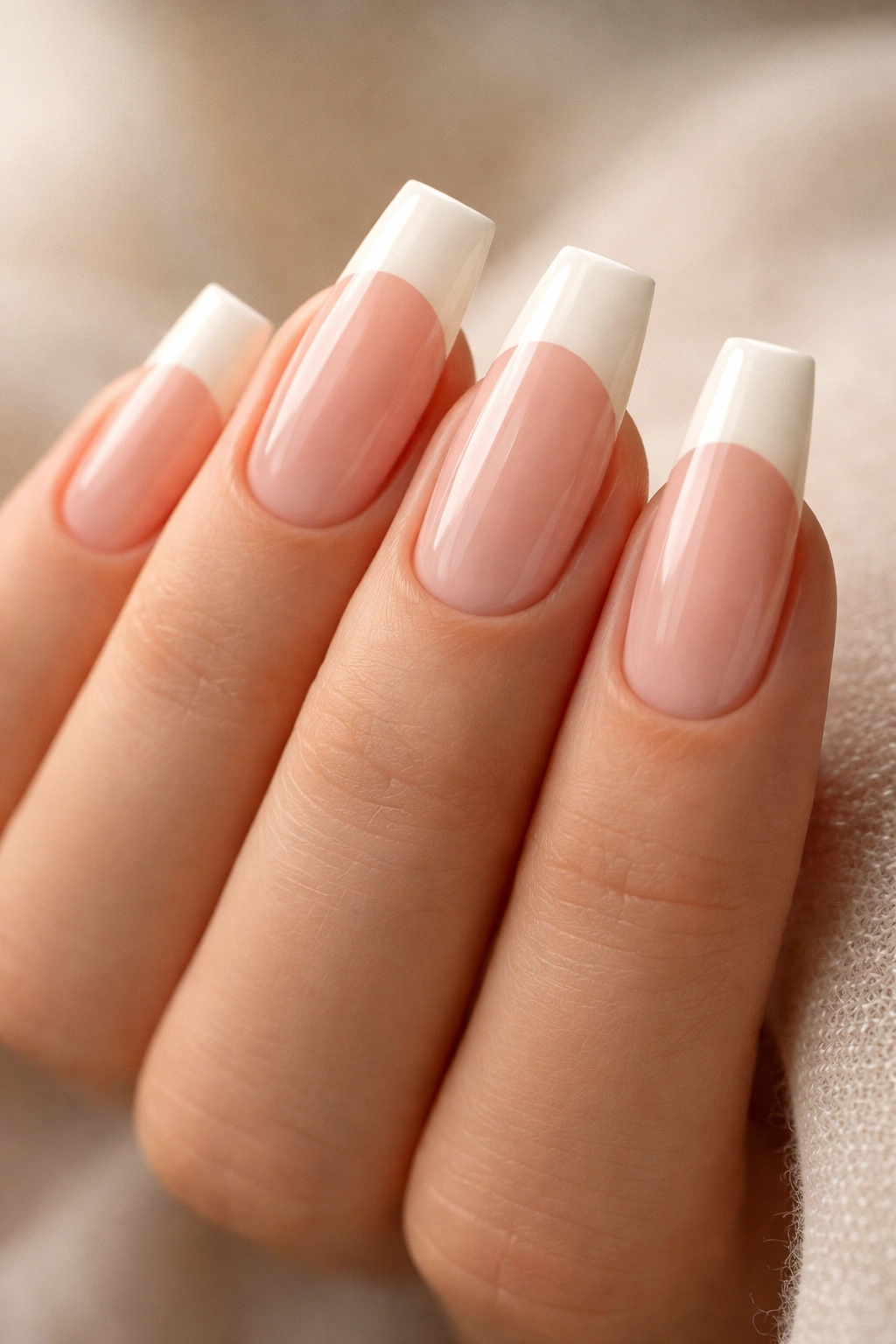
Negative space looks sharper on ballerina nails than on rounded shapes. The flat tip gives the empty areas a clear boundary, and that makes the whole manicure feel crisp instead of unfinished.
An ivory tip block is one of the cleanest ways to use that space. Leave the lower two-thirds of the nail sheer or nearly clear, then paint a soft ivory block across the tip, following the flat edge. The line where clear meets ivory should stay straight or only gently curved.
Why the geometry matters
Rounded negative-space designs can drift into playful territory. Ballerina nails keep them structured. You get a little contrast, a lot of clean area, and a manicure that feels designed rather than decorated.
Builder gel helps here because it gives the clear portion a smoother, glass-like surface. If the transparent area is lumpy, every bit of light reflects that texture. Ivory also tends to look better than bright white because it softens the break between painted and unpainted sections.
This one grows out nicely, though the clear lower half means your natural nail health shows. Staining, peeling, or visible ridges will be more obvious than they would under a milky nude. Healthy prep pays off.
14. Sand-Colored Ballerina Nails With Matte Bases and Glossy Tips
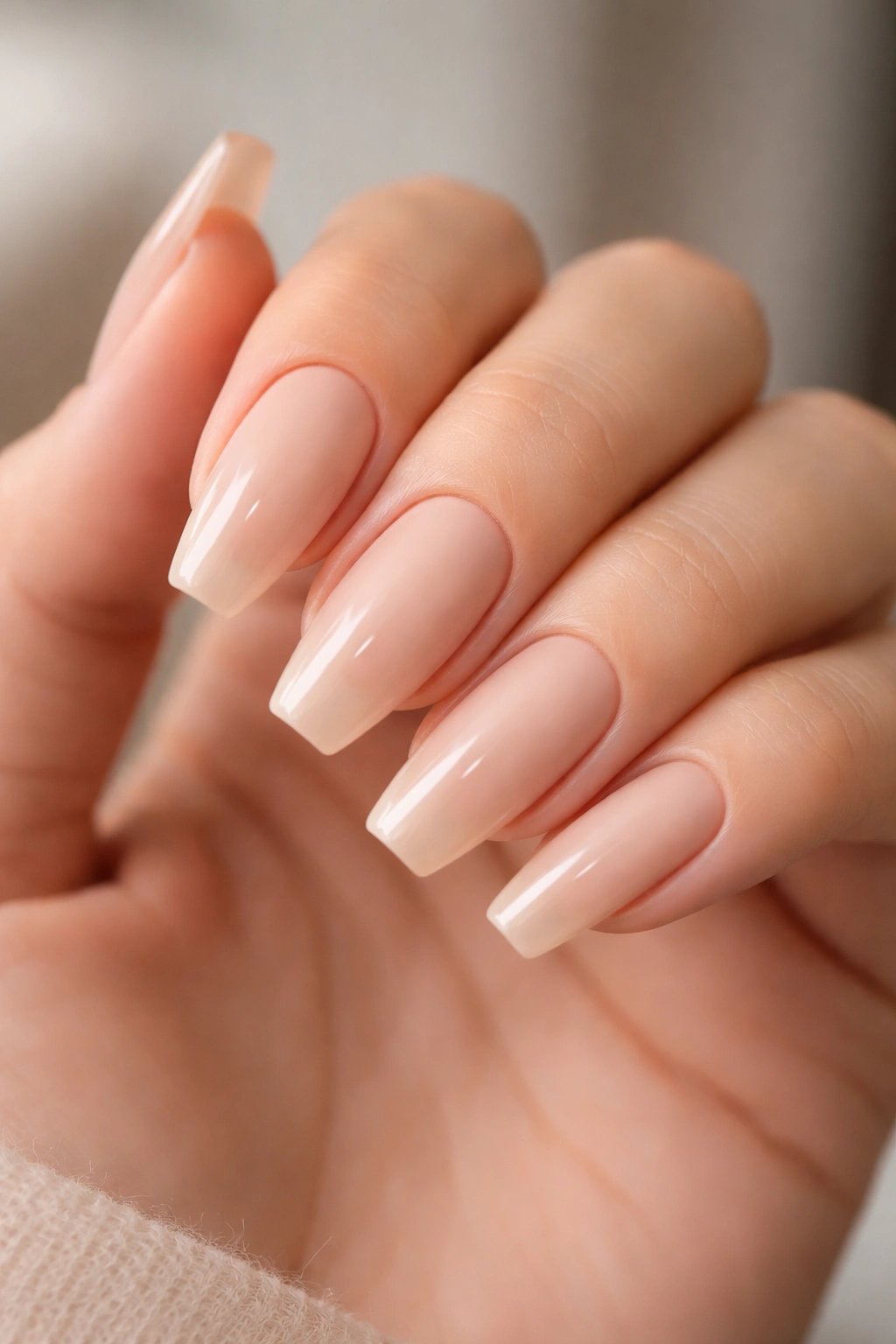
Under lamp light, the difference is subtle. In daylight, you catch it right away—a velvety sand-colored base with a glossy tip made from the exact same shade.
That finish contrast is smarter than adding a second color. You keep the manicure neutral and clean, though the tip still reads as a design choice. On ballerina nails, the flat end gives the glossy section a clear stopping point, so the texture change looks precise.
The split usually looks best when the glossy tip covers the top 20 to 25 percent of the nail. Too much shine and it starts reading like color blocking. Too little and the effect gets lost after a top coat settles. A makeup sponge matte top plus a wipe-clean gloss tip can help keep the edge neat if you are doing it at home.
Sand is a useful color here because it has enough warmth to keep matte from looking dusty. Pale gray-beige can go dead under matte top coat. Sand keeps a little life in the nail, which matters on longer tapered shapes.
There is also a practical upside. Matte tips tend to show wear first. Putting gloss on the tip and matte on the base hides that pattern better over time.
15. Beige Minimalist Ballerina Nails With an Ultra-Thin Side French
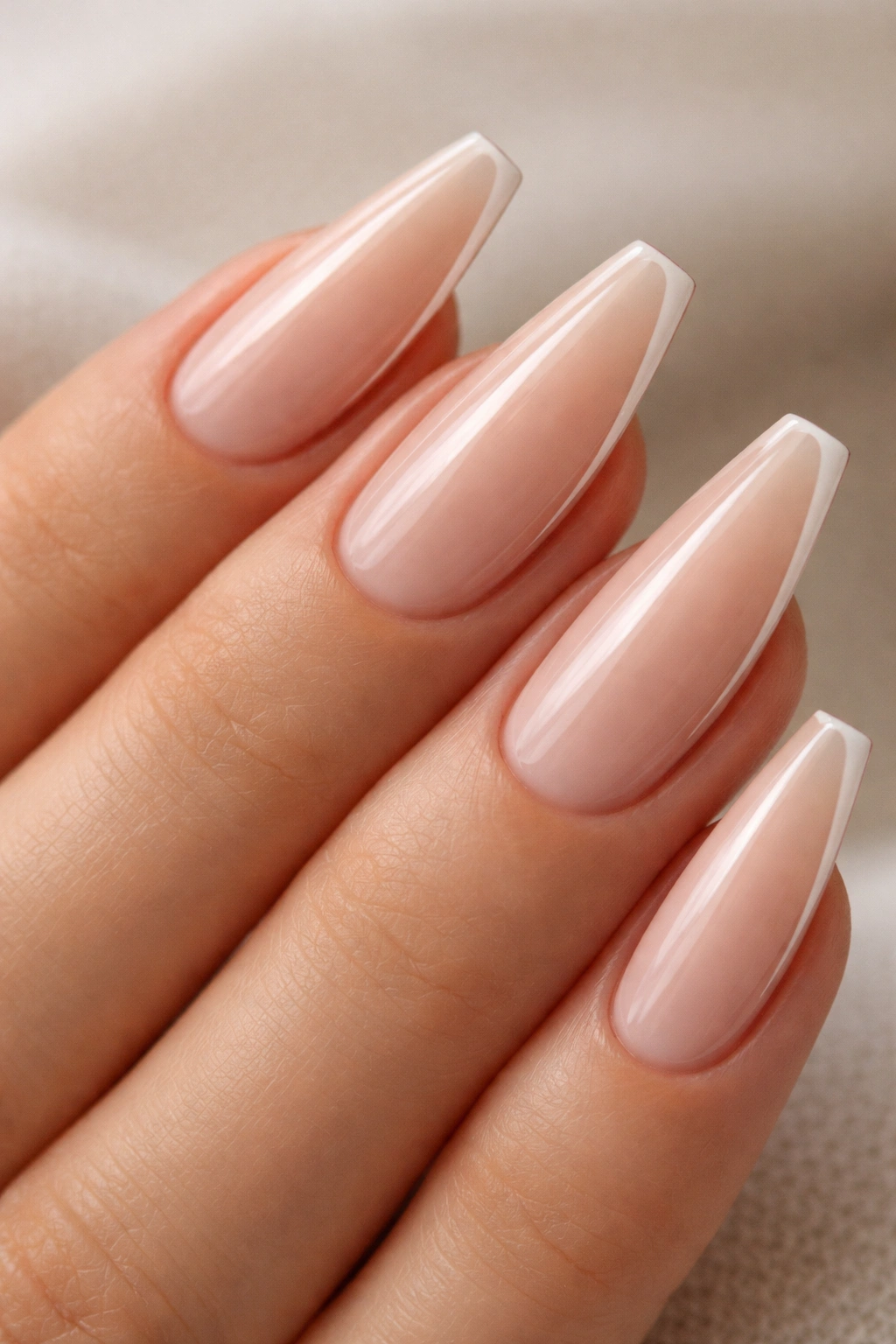
Skip the standard tip and slide the color to one side.
A side French traces one edge of the nail rather than the whole flat tip, and on a ballerina shape it looks lean, modern, and a little sharper than a center smile line. Beige as the base keeps it grounded. A thin white, ivory, or mocha side accent gives enough contrast to define the design.
The line should start near one sidewall and sweep lightly across the tip, staying around 1 millimeter wide. You can keep it on the same side of every nail for a uniform look, or mirror it from hand to hand. What you do not want is random placement finger by finger. That reads messy fast.
Why this works on ballerina nails
The tapered edges give the side French somewhere to travel. On a square nail it can look abrupt. On an almond nail it can disappear. Ballerina nails offer both edge and length, which makes the line feel intentional.
Quick order notes for the salon
- Ask for a sheer beige base, not opaque tan
- Keep the side French ultra-thin
- Choose ivory or soft white for a clean look, mocha for more depth
- Use medium length, around 9 to 12 millimeters, so the line has space to show
If you want minimalist ballerina nails with a little tension in them—not loud, not flat, not boring—this is a strong place to end.
Final Thoughts
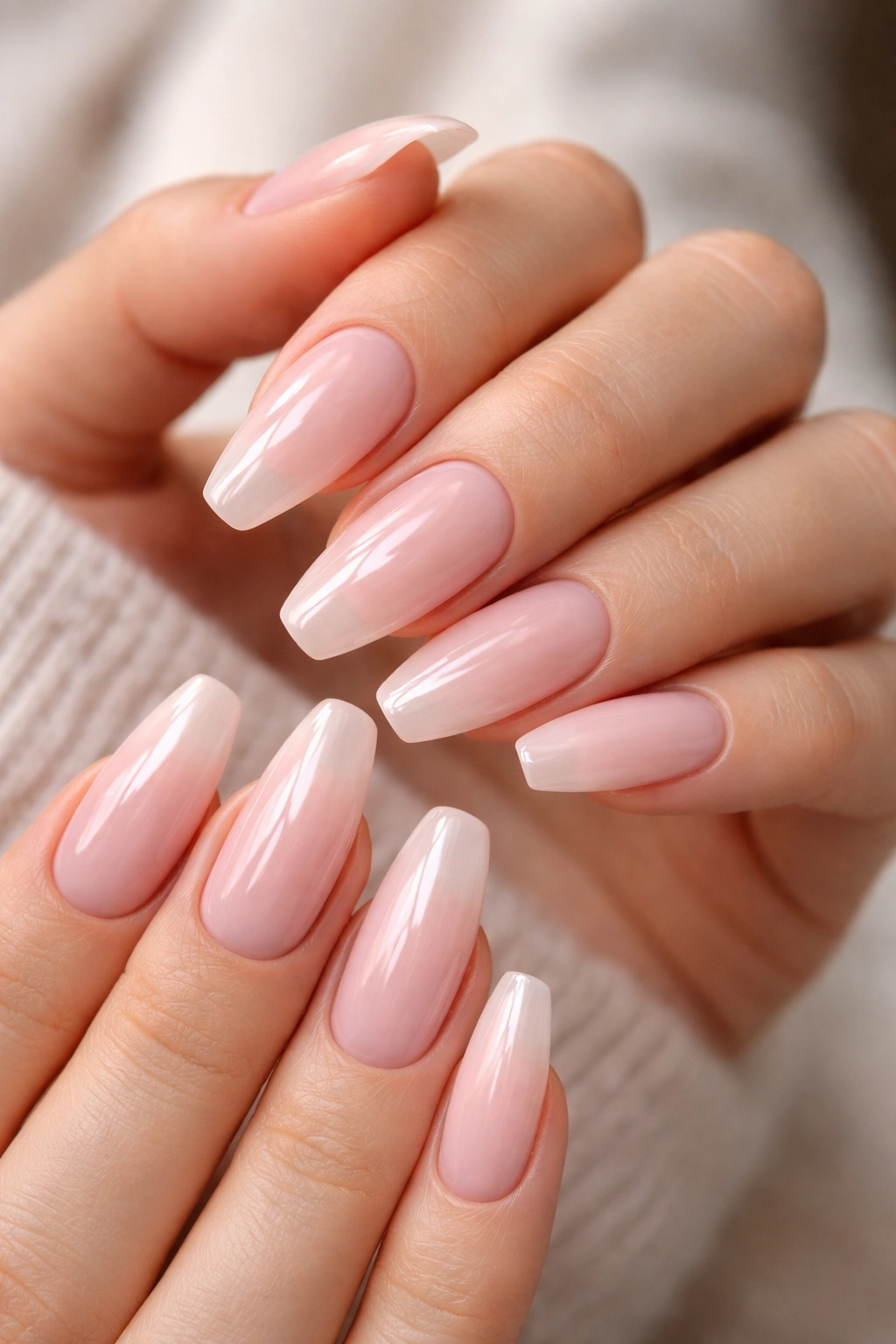
Clean nails are rarely about doing more. They’re about filing better, placing color with more care, and knowing when to stop.
The ballerina shape already carries enough structure on its own, which is why the smallest design choices matter so much here. A one-millimeter line, a sheer wash of pink, a tip finished in gloss instead of matte—that’s often all it takes when the base is smooth and the shape is balanced.
One last practical note: bring reference photos in neutral daylight, and ask to see the shaping from the front before color goes on. From above, almost any set can look fine. Front view tells the truth. When that angle looks clean, the manicure usually does too.