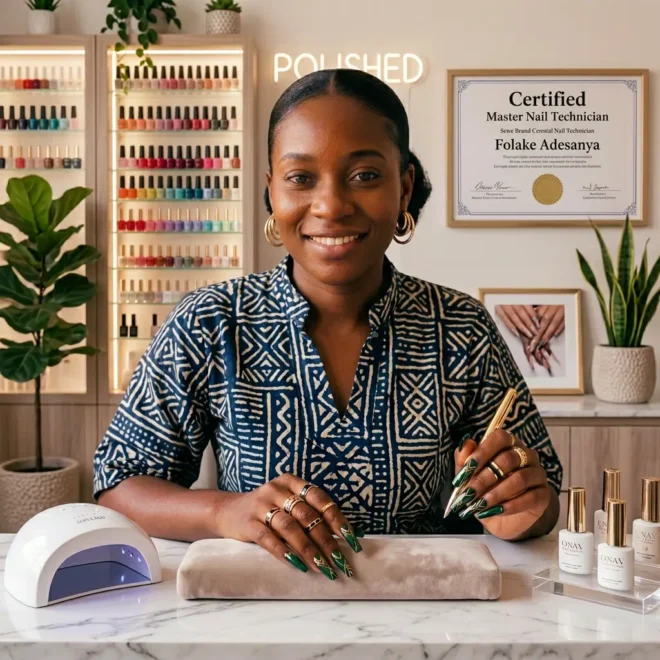


Nude ballerina nails for medium length look easy on paper, yet they’re one of the quickest ways to end up with a manicure that makes your hands look flat, chalky, or oddly wide. The shape has a narrow taper and a blunt tip, so color reads differently on it than it does on an oval or almond. Miss the shade by even half a step, and the whole set can drift from polished to tired.
That’s also why medium length matters so much. With about 6 to 10 millimeters of free edge past the fingertip, you get enough room for the ballerina silhouette without the constant snagging that comes with long extensions. You can still type, text, unzip a bag, and pick up coins from a counter without using your knuckles like tiny shovels.
I’ll say this plainly: nude nails are harder than red nails. Bold colors announce themselves and hide small flaws. Nude shades do the opposite. They show every uneven sidewall, every dry cuticle, every top coat ripple, every choice your nail tech made in the lamp.
When nude medium-length ballerina nails are done well, though, they make your fingers look longer, your jewelry sharper, and your whole hand more put together. Some of these designs barely whisper. Some have a little shimmer, a slim outline, or a small flash of gold. All of them keep the shape front and center, which is where ballerina nails look their best.
Why Medium-Length Ballerina Nails Hold Nude Shades Better
This shape needs breathing room. A ballerina nail that’s too short loses its identity fast; it starts looking like a square with slightly nervous sidewalls. Give it a bit of length, though, and the taper can do what it’s supposed to do—slim the nail visually, then stop with a flat tip that looks crisp instead of chunky.
The sweet spot sits around 6 to 10 millimeters past the fingertip. Shorter than that, the flat tip doesn’t have enough space to read clearly. Longer than that, you get more drama, sure, but you also get corners that knock into drawers, keyboard keys, and seat belts. Medium length keeps the silhouette intentional without turning daily life into a small obstacle course.
Nude shades benefit from that balance because they don’t distract from the architecture. A deep burgundy or black can hide minor filing issues. Nude cannot. If the left sidewall is a touch wider than the right, you’ll see it. If the apex is too flat, you’ll see that too.
That’s why the file work matters almost as much as the polish. Ask for a soft taper from the sidewalls with a tip width of about 2 to 4 millimeters, depending on the width of your nail bed. Too narrow and the corners weaken. Too wide and the ballerina shape starts reading square.
One more thing. Medium length gives nude designs enough surface area for details—a cuticle crescent, a side French, a chrome wash—without making those details look crowded.
Choosing a Nude Shade That Works With Your Hands
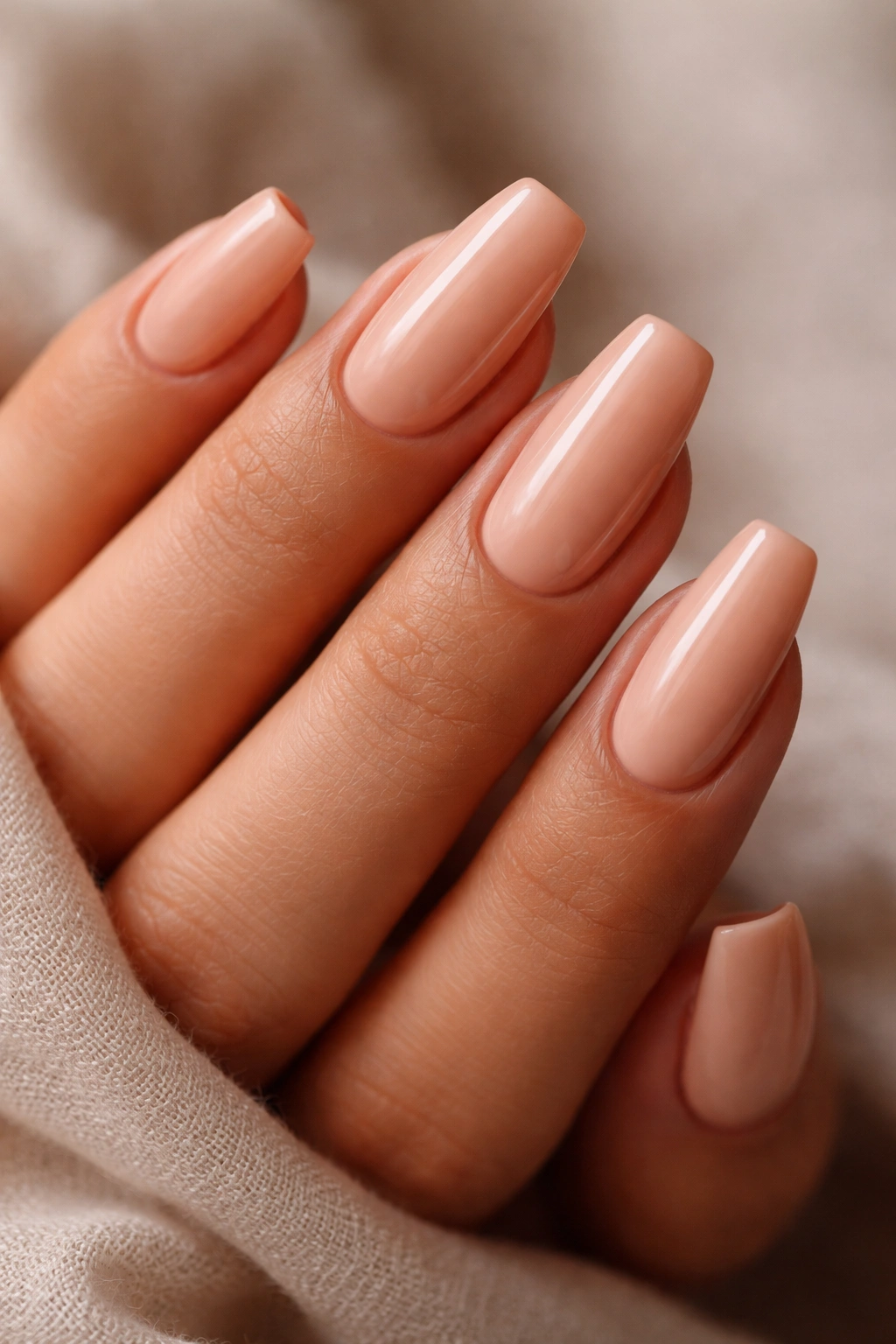
Which nude should you wear? Not the one with the prettiest bottle name. Bottle names lie all the time. “Nude beige” on a swatch wheel can turn pink on one hand, gray on another, and orange under warm indoor light.
Start with your undertone, not the label
Look at your hand, not your face makeup. Your nail color sits next to your knuckles, cuticles, veins, rings, and often a bit of redness around the fingertips, so that’s the area that matters.
A few fast clues help:
- If gold jewelry looks calmer on your skin, start with peach-beige, caramel, honey, toffee, or warm sand.
- If silver looks cleaner, look at rosy beige, taupe, cool beige, mushroom, or pink-beige.
- If both metals look fine, milky latte, soft greige, and balanced beige shades give you the most room to play.
- If your knuckles are deeper than your palms, a nude that’s half a tone warmer usually looks more natural than one that matches the lightest part of your skin.
Opacity changes the whole mood
A sheer nude and an opaque nude do different jobs. Sheer shades make the nail look groomed. Opaque shades make the nail look designed. Neither is better. They just send different signals.
If you want a quieter manicure, ask for two translucent coats or a jelly finish. If you want the ballerina shape to stand out more, go for full-coverage builder gel or gel polish with a creamy finish. Matte, chrome, pearl, and gloss then change the mood again.
Finish matters more than most people expect
Gloss reflects light and smooths small bumps. Matte sharpens every edge. Pearl can soften a plain beige. Chrome can make beige go cool if the base color is wrong. I keep circling back to finish because people often focus on shade first, then get surprised when the final set looks nothing like the swatch.
Pick the shade, yes. Then pick the surface.
1. Milky Beige With a Glassy Top Coat
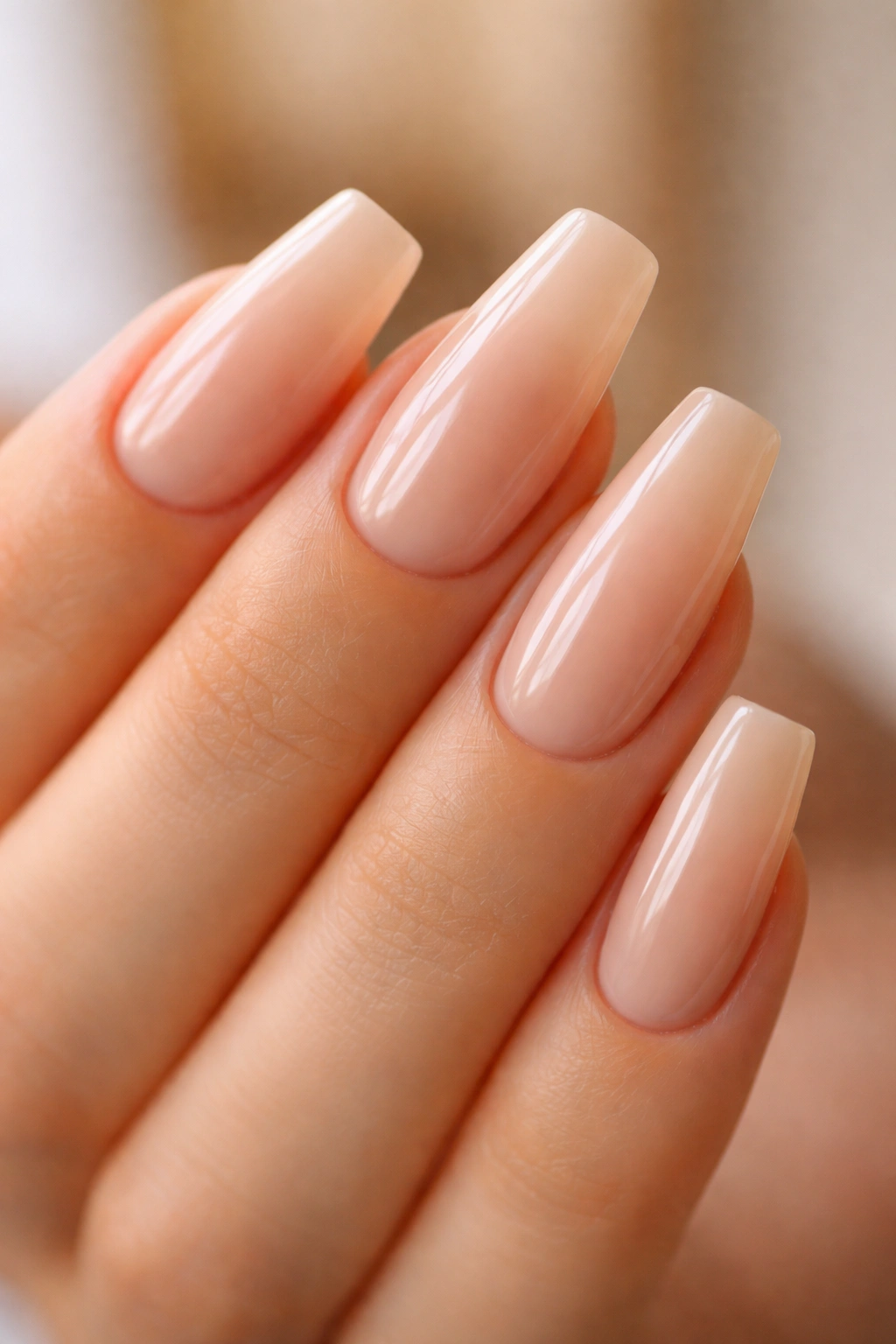
Some nude sets don’t need artwork at all. Milky beige with a high-shine top coat is the cleanest place to start if you want medium-length ballerina nails that look polished without trying too hard.
The reason it works is balance. A milky beige still lets a bit of natural nail warmth show through, which keeps the color from looking chalky. On a ballerina shape, that slight transparency softens the flat tip and keeps the manicure from feeling blocky.
Why this one flatters medium length
Because the shade is soft, the file work gets to do the heavy lifting. Medium length gives the nail enough room to taper, while the gloss catches the straight edge at the tip and makes it look intentional. On shorter square shapes, this same shade can look plain. On a medium ballerina, it looks neat and expensive.
Quick details worth asking for
- Ask for two thin coats of milky beige, not one thick coat that pools near the sidewalls.
- A rubber base or builder base helps smooth ridges, which matters with pale shades.
- Keep the tip slightly softened at the corners so the shape looks elegant, not harsh.
- Use a non-yellowing top coat, especially if you’re around self-tanner, strong spices, or hair color products.
Best move: carry cuticle oil and use one drop per hand after washing. On a glossy nude set, dry cuticles pull the eye faster than a chip.
2. Pink-Beige With an Ultra-Thin French Outline
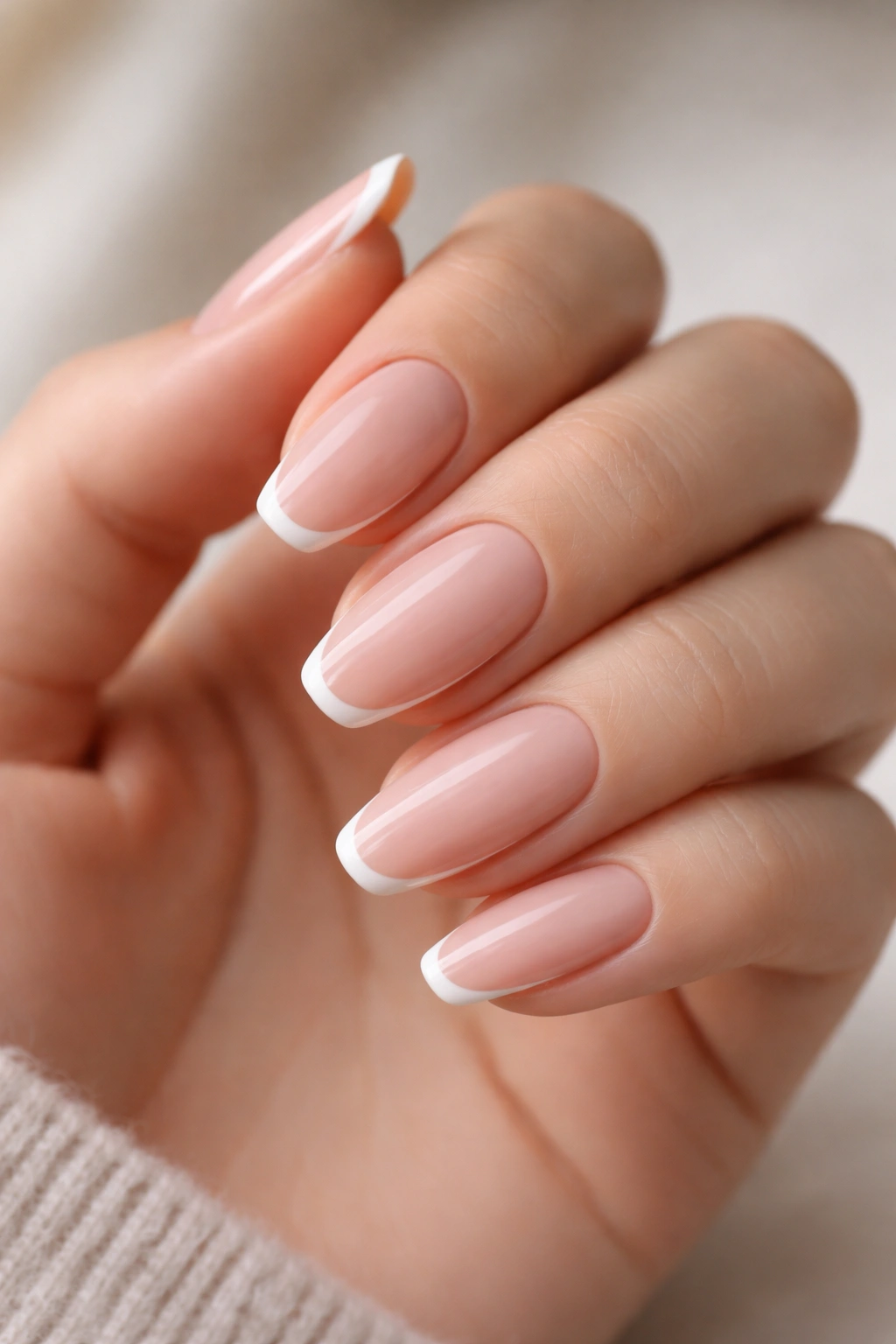
A full white French tip can make medium ballerina nails look wider than they are. A pink-beige base with an ultra-thin outline fixes that. You still get the crispness of a French manicure, yet the line sits lighter and narrower, more like a frame than a block of color.
I like this look for people who want structure without contrast. A 1-millimeter ivory, soft white, or pale rose line around the flat tip sharpens the shape and makes the free edge look tidy. Because the base stays close to the nail bed, grow-out is less obvious than with a heavy French.
Office wear, wedding guest nails, everyday neutral sets—this one slides into all of those without feeling stiff. The trick is restraint. Once that tip line gets thick, the whole point disappears and the nail starts reading short.
Ask your nail tech to keep the base semi-sheer rather than fully opaque. That tiny bit of transparency helps the manicure blend with your hand instead of sitting on top of it like correction fluid. If you want a touch more definition, a micro line along the sidewalls can slim the nail even more, though I’d only do that on two or three fingers.
There’s no room for shaky line work here. Thin means thin. If your tech has a light hand with a liner brush, this is one of the smartest nude ballerina looks you can wear.
3. Sheer Caramel Ombré Fade
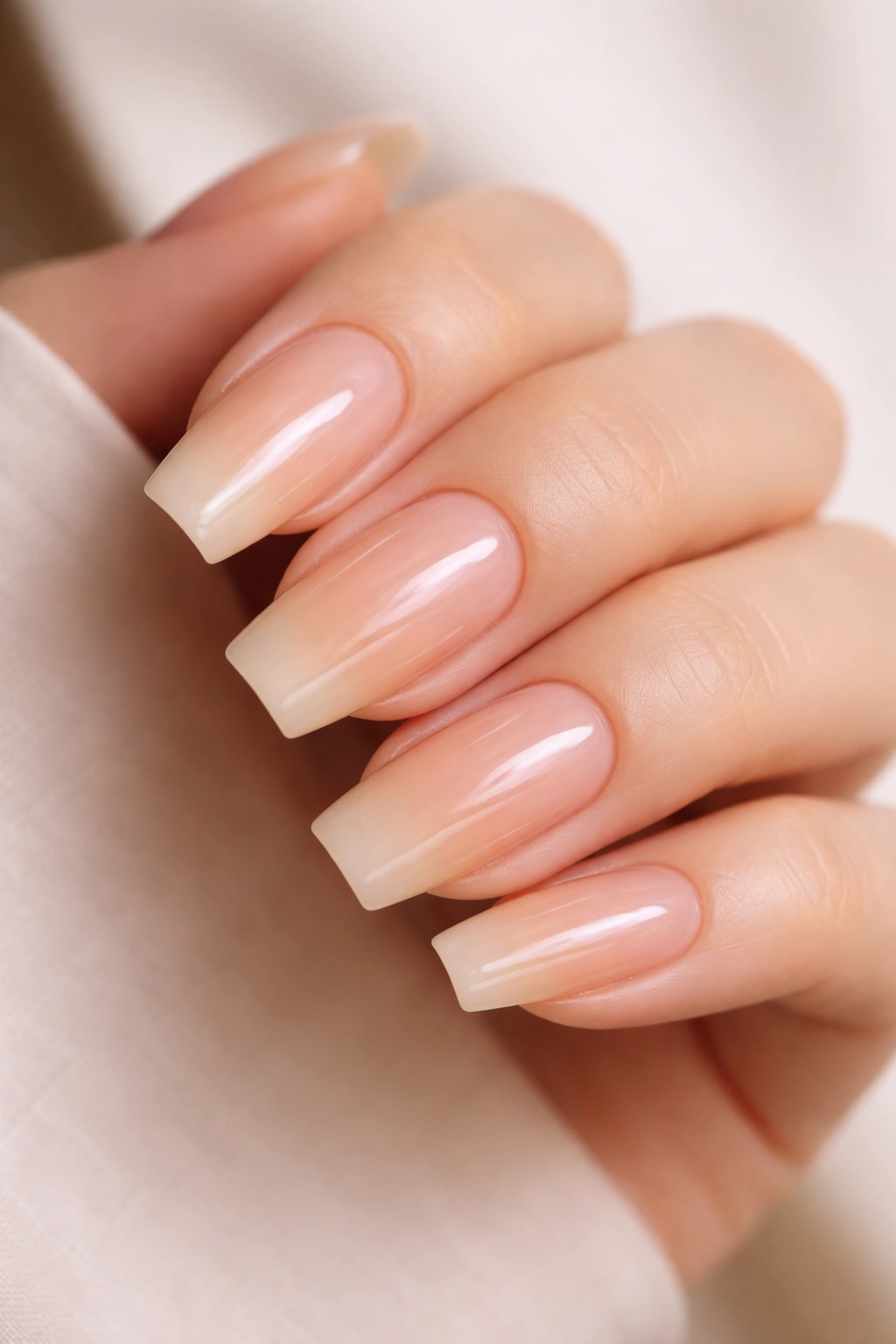
Why do some nude ombré sets look rich and soft while others end up dusty? Usually it comes down to the starting point near the cuticle. The fade has to begin sheer, not heavy, or the whole nail loses its lift.
A sheer caramel ombré works especially well on medium-length ballerina nails because the shape already narrows toward the tip. When the color deepens as it moves outward, that taper feels even smoother. It’s a small visual trick, but your eye catches it.
Keep the contrast tight. I’m not talking about a pale pink cuticle fading into dark brown. That’s a different style. For this look, stay within two or three neighboring nude tones—something like soft beige into caramel, or warm sand into toffee. The shift should feel airbrushed.
How to ask for it at the salon
Tell your tech you want a transparent cuticle area, a soft fade through the center, and the deepest color near the tip without a hard line. Sponge blending works. Airbrush works. A good hand with a gel brush also works. What you do not want is a stripe that looks rubbed back and forth until the color got tired.
Medium length is key here. On longer nails, the fade can start looking theatrical. On shorter ones, there isn’t enough runway for the color change to feel soft.
This is also one of the easier nude designs to wear with mixed metals and layered rings. The color shift gives the hand a little movement even when the base palette stays quiet.
4. Taupe Nude With a Velvet Matte Surface
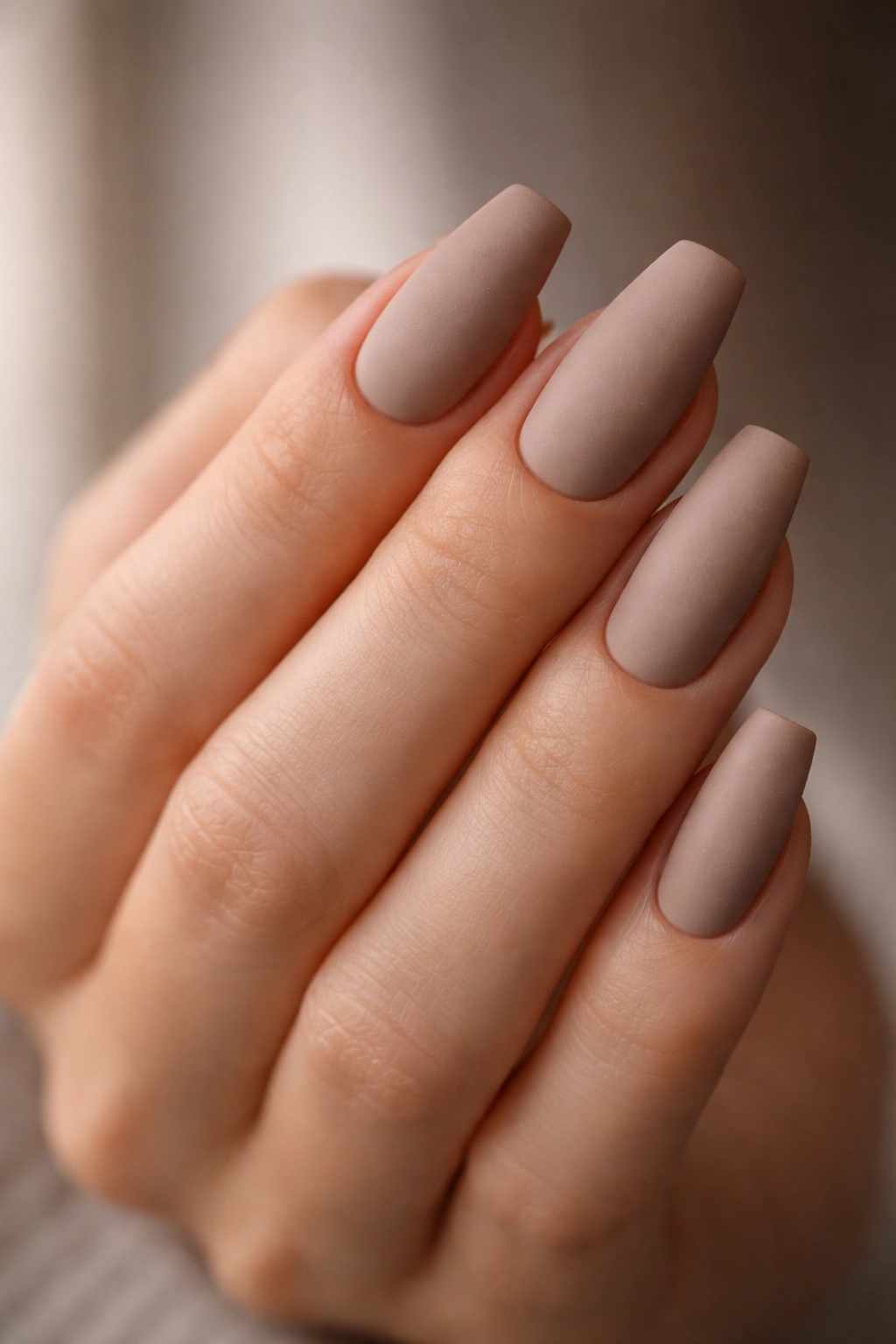
Under café lighting or late-afternoon window light, matte taupe looks almost like stone or suede. That’s the appeal. It turns a soft nude into something leaner and more graphic.
Matte also changes the shape. Gloss rounds things out; matte sharpens them. On a medium-length ballerina, that means the sidewalls look cleaner and the blunt tip reads with more authority. If you like your neutral nails with a little edge, taupe matte is hard to beat.
A few details matter more here than they do with gloss:
- Keep the surface smooth before the matte top coat goes on, because matte shows every bump.
- Use a shade with brown and gray in balance; too much gray can make the hands look drained.
- Stay near medium length, not long, unless you want the set to feel more dramatic.
- Prep your cuticles. Matte makes dryness loud.
I wouldn’t put this look on someone whose hands are cracked from cleaning products or cold weather unless they’re ready to use oil twice a day. Matte has no mercy. But when the prep is solid, it gives nude nails a tailored feel that gloss can’t copy.
5. Peach Nude With Fine Pearl Shimmer
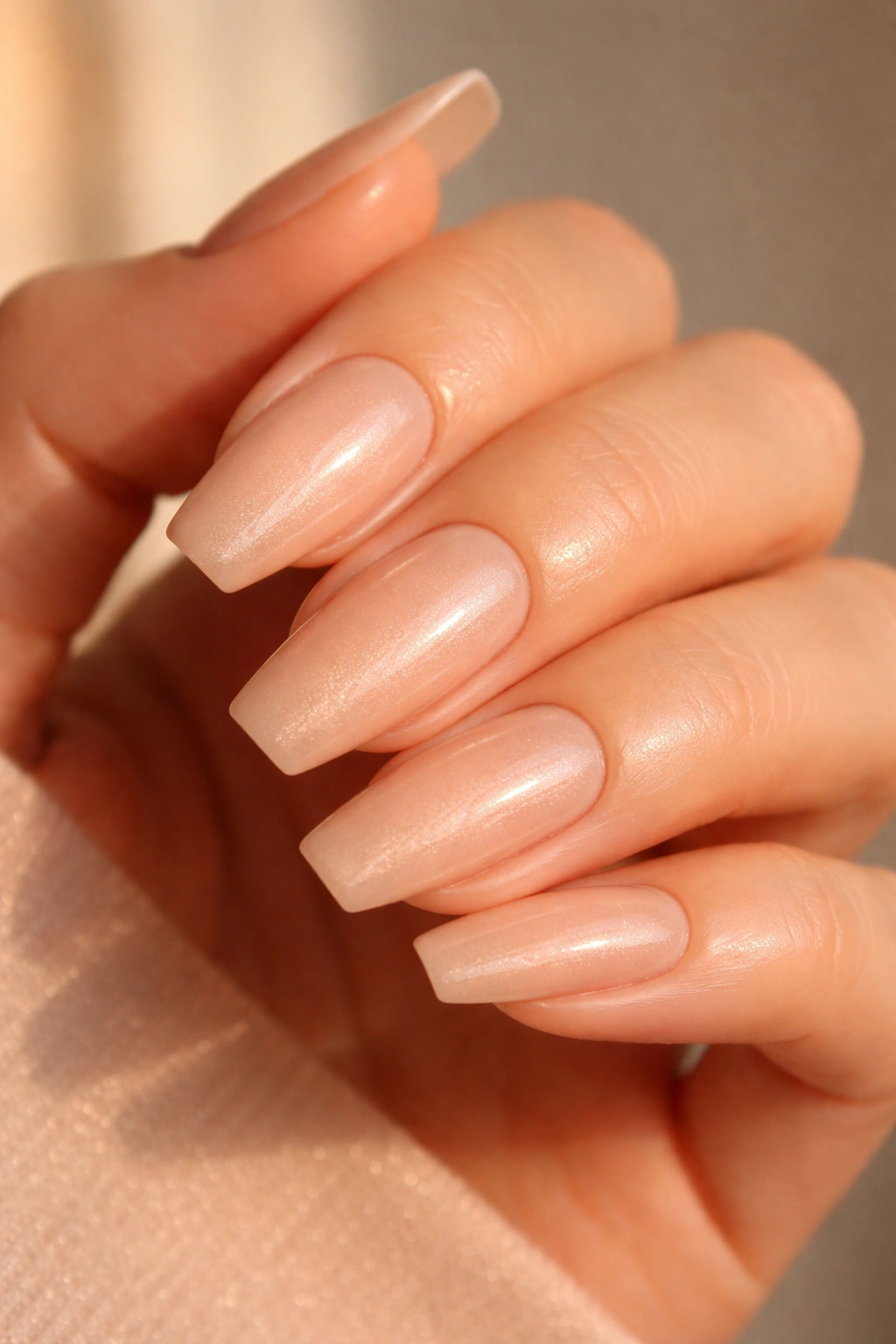
Some nude manicures need a little warmth or they disappear. Peach nude with a fine pearl shimmer solves that without turning the nail sparkly in a loud way. Think candlelight, not disco ball.
The base should lean soft apricot or warm beige-peach, then pick up a pearl finish that flashes cream, champagne, or pale shell. No chunky glitter. No visible flakes. You want a smooth sheen that shifts when you move your hand, almost like satin fabric stretched over the nail.
This style is especially kind to medium-length ballerina nails because the shimmer takes the flat tip and softens it. Instead of reading blunt, the end of the nail catches light more gently. Hands that pull dry or a little dull often look fresher in peach tones than in straight beige.
I’d choose this over plain pink nude if your skin has golden or olive tones. Pink can fight that warmth. Peach sits into it more naturally. If your skin runs cool, keep the peach muted and add a bit more beige so it doesn’t drift orange.
Pearl shimmer also hides small surface flaws better than crème nude does. A tiny ridge, a slightly uneven light reflection, a hairline scratch in the top coat—those things show less. Not gone. Just less obvious.
The catch is application. Too much pearl powder and the set stops looking nude and starts reading frosted. A thin wash is enough. Medium-length ballerina nails don’t need much help to stand out.
6. Mocha Nude With Tonal Swirl Lines
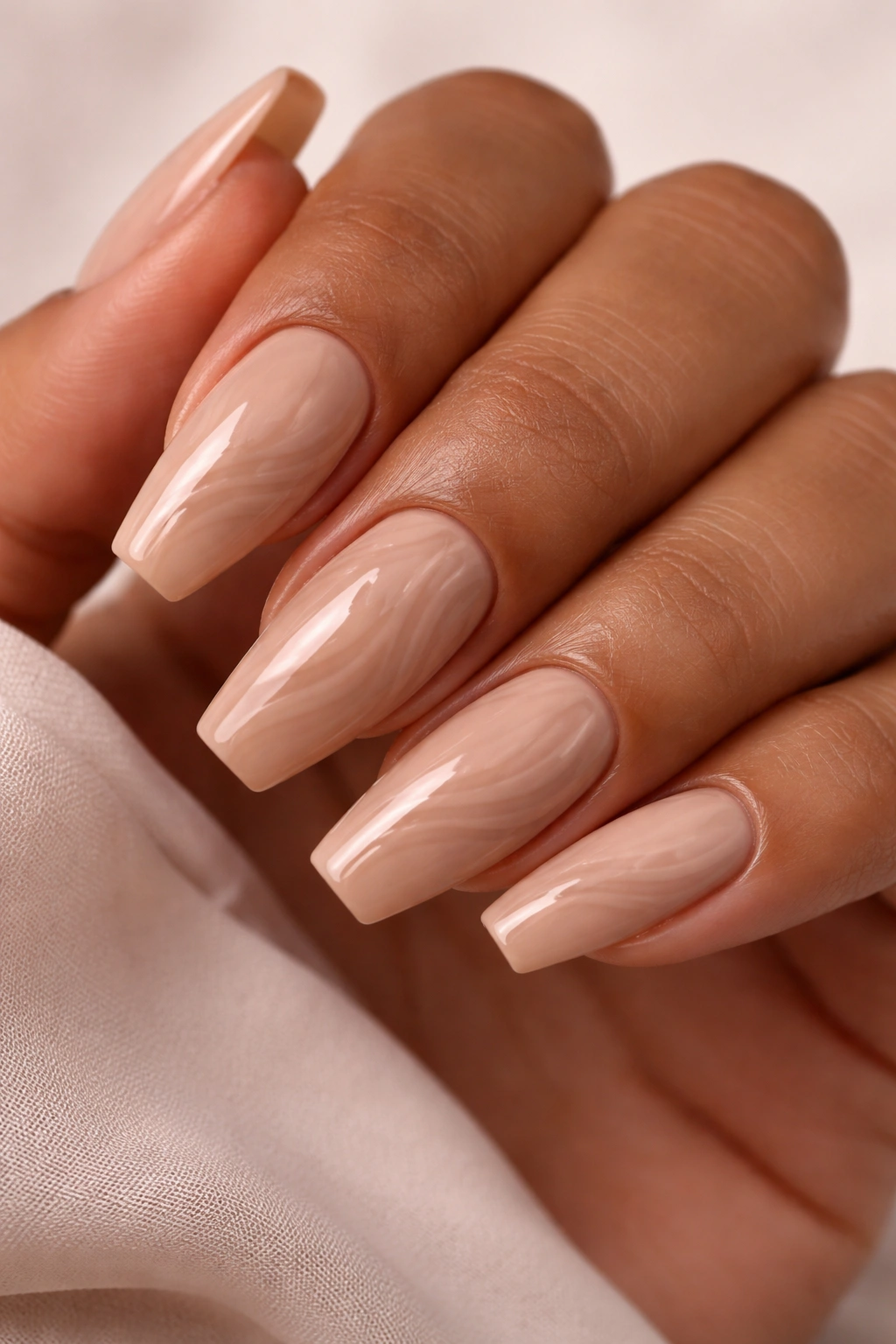
Unlike black abstract line work, tonal swirls on a mocha nude base keep the manicure quiet while still giving the eye something to follow. You get movement, but not harsh contrast.
I like this look when someone wants nail art without leaving the neutral lane. Use a mocha, latte, or cocoa base, then paint the swirls in a shade that’s one or two tones deeper. That little color shift matters. If the lines are identical to the base, they vanish. If they’re too dark, the set starts feeling graphic in a heavier way.
Who does this suit best? People with medium or deep skin tones wear it especially well, though lighter skin can pull it off with a softer beige-brown base. It also flatters wider nail beds because the curved lines draw the eye inward and along the length of the nail rather than straight across the tip.
My preference: keep the art on two to four nails, not all ten. Full coverage swirls on every finger can crowd a medium-length ballerina shape. One accent on the ring finger, one on the middle finger, maybe one thumb. That’s enough.
Ask for ultra-fine lines with a liner brush, sealed under a glossy top coat. Matte can work too, but gloss makes tonal art easier to read. If you want a nude design that feels a bit more dressed without using stones, chrome, or foil, this one earns its place.
7. Rosy Nude With a Reverse Cuticle Crescent
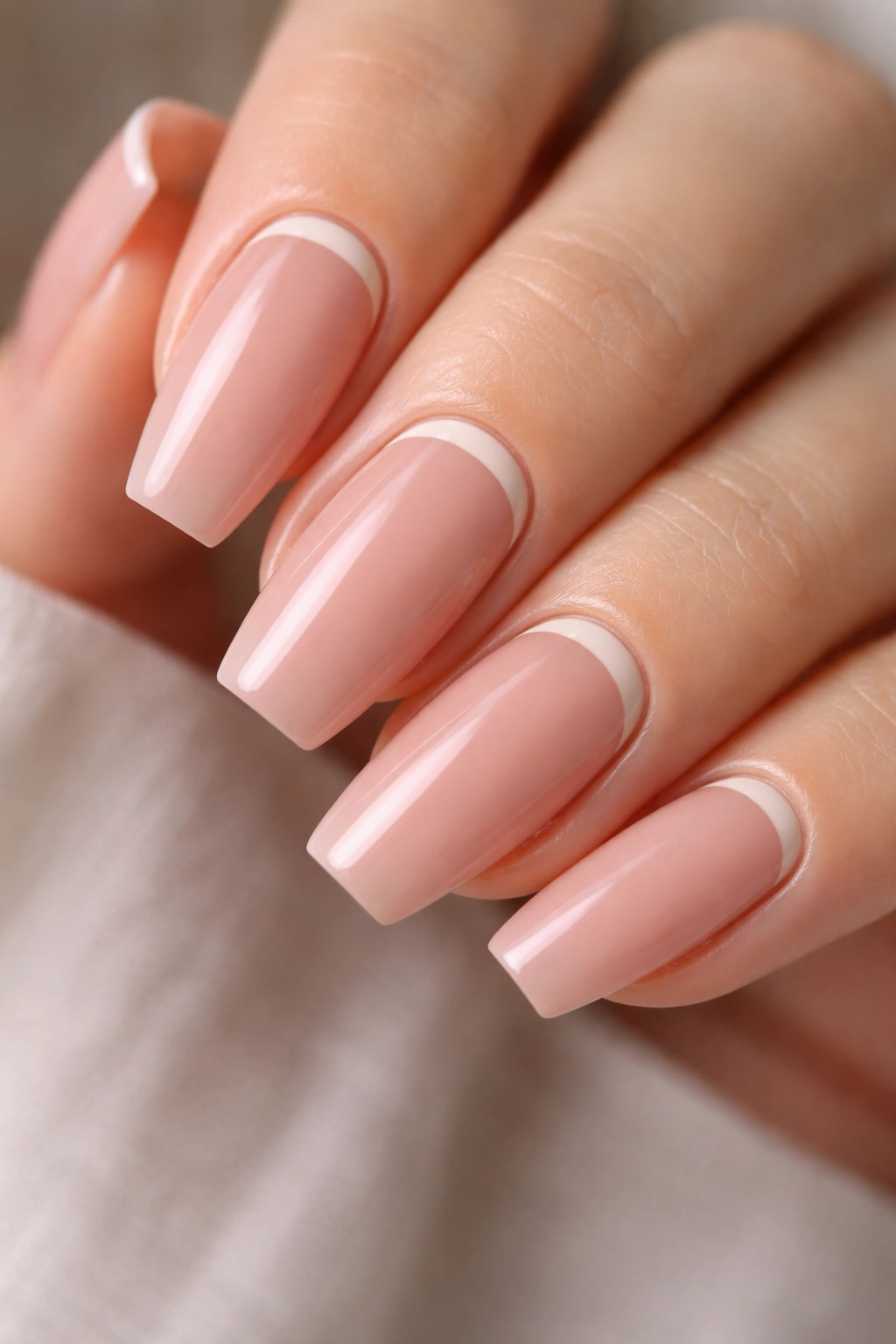
A small detail near the cuticle can change the whole set. The reverse cuticle crescent does that by drawing attention to the base of the nail instead of the tip, which gives medium ballerina nails a lighter, cleaner look.
The idea is simple: use a rosy nude as the main color, then create a thin crescent at the cuticle in a slightly sheerer or lighter shade. It can be half a moon, a slim halo, or a tight curved line that follows the cuticle shape. The effect is subtle, yet it makes the manicure look deliberate.
Why the cuticle area matters so much
On nude nails, the cuticle area is part of the design whether you plan for it or not. If that area looks bulky, flooded, or uneven, the whole manicure loses polish. A reverse crescent forces care at the base and gives the grow-out line a softer start.
Details that make this one work
- Keep the crescent 1 to 2 millimeters wide.
- Choose shades that are close cousins, not opposites.
- Rosy nude suits hands with pink, neutral, or cool undertones.
- A high gloss top coat helps the crescent blend rather than sit like a sticker.
Extra note: this design is especially good if your nail beds are on the shorter side. The open-looking cuticle area makes the nail seem longer without using a darker tip.
8. Sand Nude With Scattered Gold Leaf
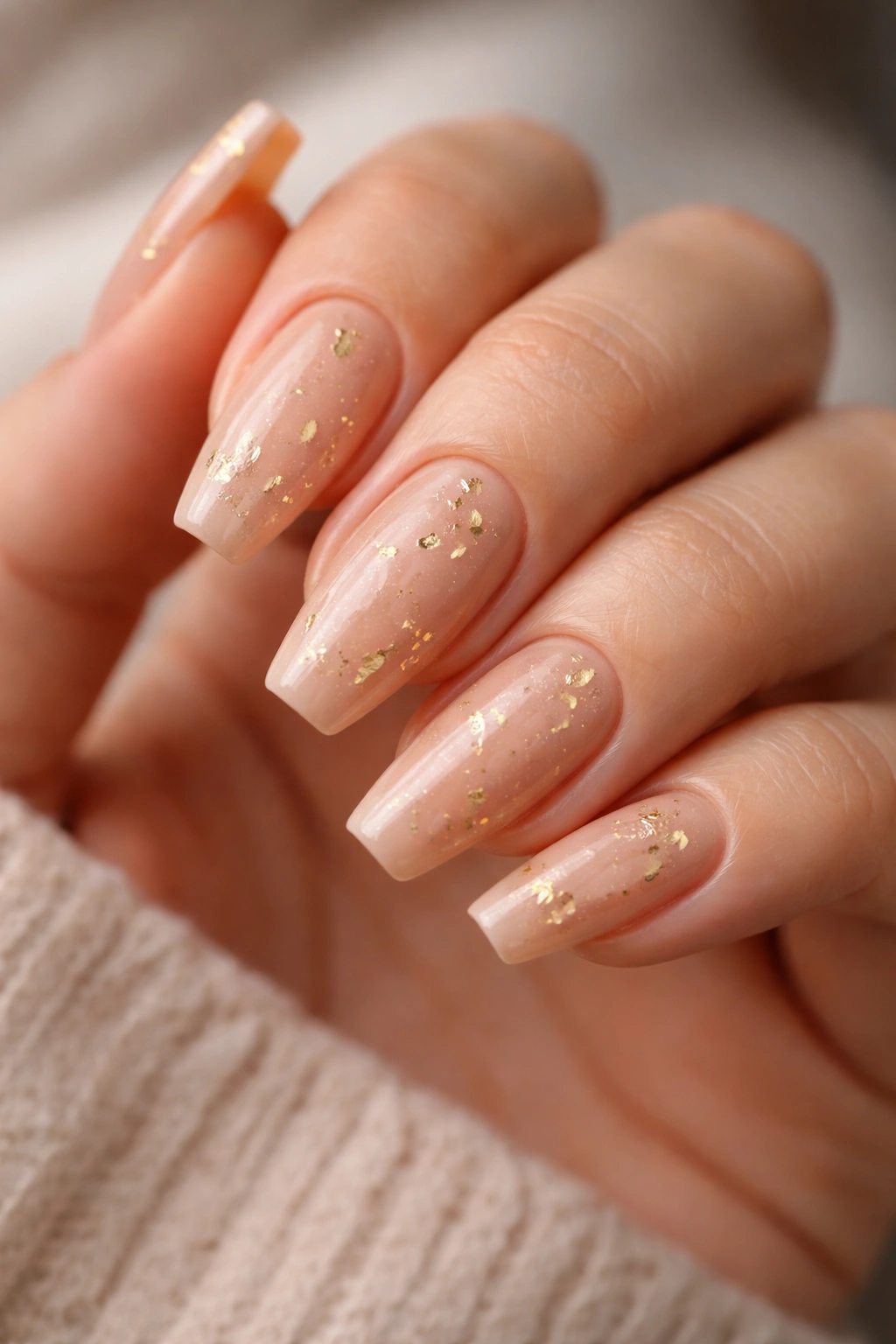
Gold leaf on nude nails can go wrong fast. Use too much and the set starts looking busy, almost costume-like. Use a light hand, though, and sand nude with scattered gold leaf gives medium ballerina nails just enough warmth and texture.
I’d place the foil in small broken flecks, not big solid patches. One near the sidewall, one near the tip, maybe a light cluster on a single accent nail. That irregular spacing feels more natural than trying to mirror the same pattern on every finger. Don’t chase symmetry here; it usually looks forced.
The base matters too. Sand nude should have a little warmth and a little gray, sitting between beige and soft tan. That muted base keeps the gold from shouting. A bright peach nude under gold can tip too flashy. A pale cool beige can make the foil feel disconnected.
This is one of the few nude ballerina designs that works well for dressier events without needing gems. Rings look sharper next to it. Clutches, silk blouses, satin heels—it all clicks. Yet the design still makes sense with jeans and a plain knit if the foil stays sparse.
And sparse is the point. Think five to seven tiny foil placements on the whole hand, not five to seven on each nail. Medium-length ballerina nails already give you a strong shape. The gold should support that, not fight it.
9. Almond-Latte With a Soft Glazed Chrome Finish
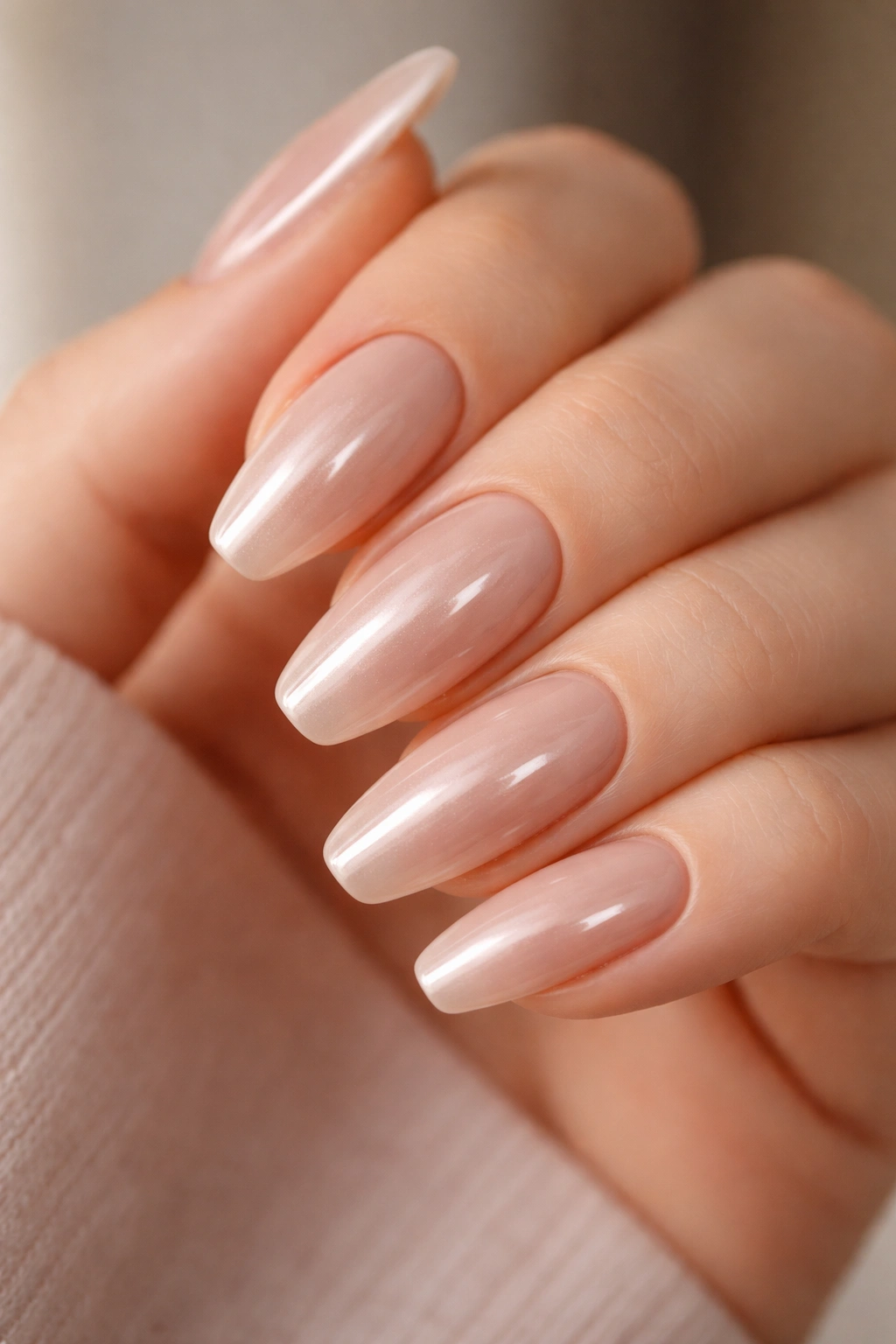
Can chrome look quiet? Yes—if the base stays warm and the powder stays sheer. Almond-latte glazed chrome gives nude ballerina nails a pearly skin-like sheen instead of a hard mirror effect.
This works because the underlying color is doing most of the job. Start with an almond-latte nude, which sits between beige and pale brown with a touch of cream. Then rub in a fine pearl chrome powder after the top coat reaches the right tack or after a no-wipe layer cures, depending on the system your tech uses. The powder should be buffed thin enough that you still see the nude underneath.
A cooler base turns this icy. Some people want that. If you don’t, ask for warm beige, oat, biscuit, or latte tones, not pink-gray or mushroom. Warm nude plus pearl chrome gives you that clean glazed effect without making the nails look silver.
How to keep the chrome from taking over
Ask for one soft rub of powder, then stop. Two heavy passes can tip the set from nude to metallic. Also make sure the tips are capped well. Chrome wear shows first at the free edge, and medium ballerina tips put that area front and center.
I like this design when someone wants a neutral manicure that doesn’t feel flat in dim light. It has movement, but the mood stays calm.
10. Cool Beige With a Side French Sweep
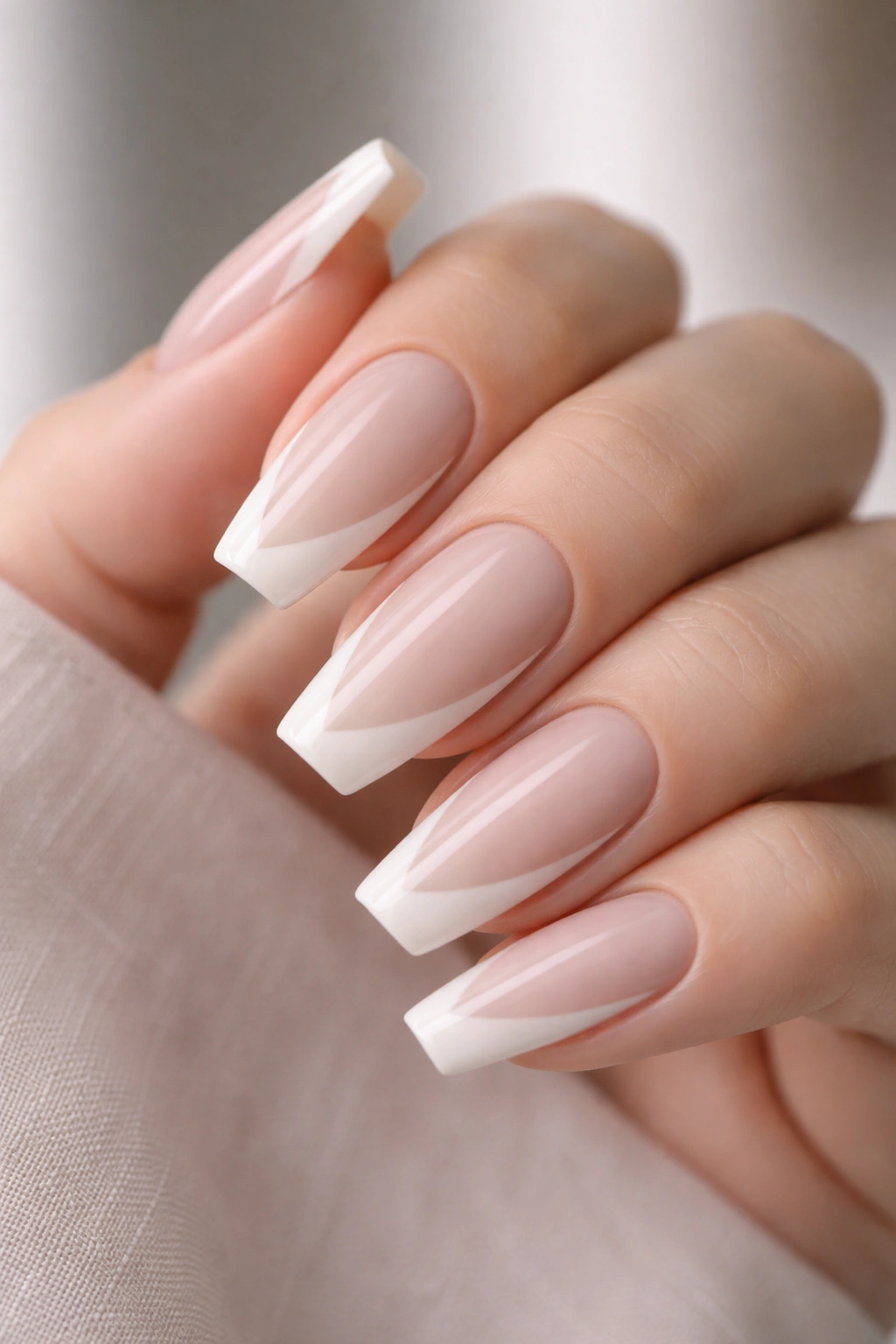
A classic French tip draws a line straight across the nail. On some medium ballerina sets, that line makes the tip look broader than it is. A side French sweep fixes that by pulling the eye diagonally across the tip.
Picture a cool beige base, then a slim ivory or soft cream line beginning near one sidewall and gliding across the tip at a slight angle. The nail looks longer. The shape looks narrower. It’s a neat little cheat, and on medium length it works fast.
A few practical details help:
- Keep the line around 1.5 to 2 millimeters thick.
- Use a cool ivory, not bright white, so the contrast stays soft.
- Don’t mirror the same angle on every nail if your fingers naturally curve; let the sweep follow the hand a bit.
- Seal the side edge well. Diagonal art can chip there first.
I’d pick this design over a standard French when the nail bed is wide or the fingertip itself is short. The angled sweep breaks up that width without using dark color. It also gives the set a bit of motion, which suits the ballerina shape nicely. Small change. Big payoff.
11. Toffee Nude With One Tortoiseshell Accent
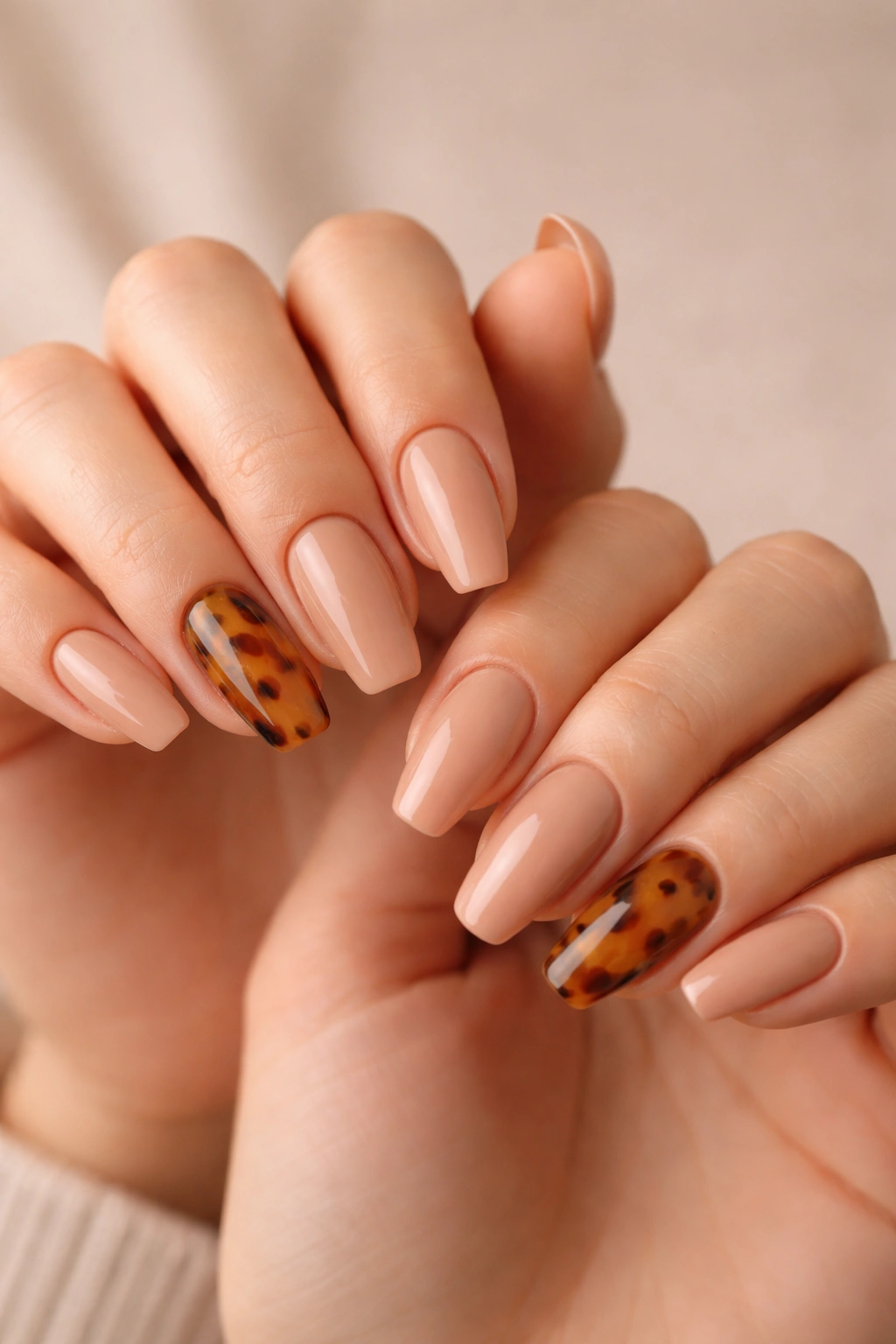
This one has more personality than the quieter nudes, yet it still stays grounded. A toffee nude base with one tortoiseshell accent nail gives medium-length ballerina nails warmth and depth without turning the whole set into pattern overload.
The accent should be restrained. One ring finger per hand is enough. Two fingers if you keep the tortoiseshell light and airy. Go beyond that and the pattern starts taking over, which can fight the clean lines of the shape.
Good tortoiseshell isn’t painted in opaque blobs. It needs translucent amber, caramel, and espresso spots layered through jelly brown or tea-colored gel. Blooming gel helps spread the edges so the patches look suspended rather than stamped on. That little blur is what makes tortoiseshell look rich instead of cartoonish.
Toffee nude is the right partner because it carries the same warmth as the accent without copying it. A cooler nude beside tortoiseshell can look disconnected. Too pale a nude can make the accent seem heavy. Toffee bridges the gap.
I especially like this set on medium or deeper skin tones, though lighter hands can wear it if the base stays softly caramel rather than orange-brown. Use gloss, not matte. Tortoiseshell needs that glassy finish to look alive.
If you want a nude manicure with a bit more mood—something that still reads neutral from a distance—this is one of the smartest ways to do it.
12. Soft Greige With Fine White Line Art
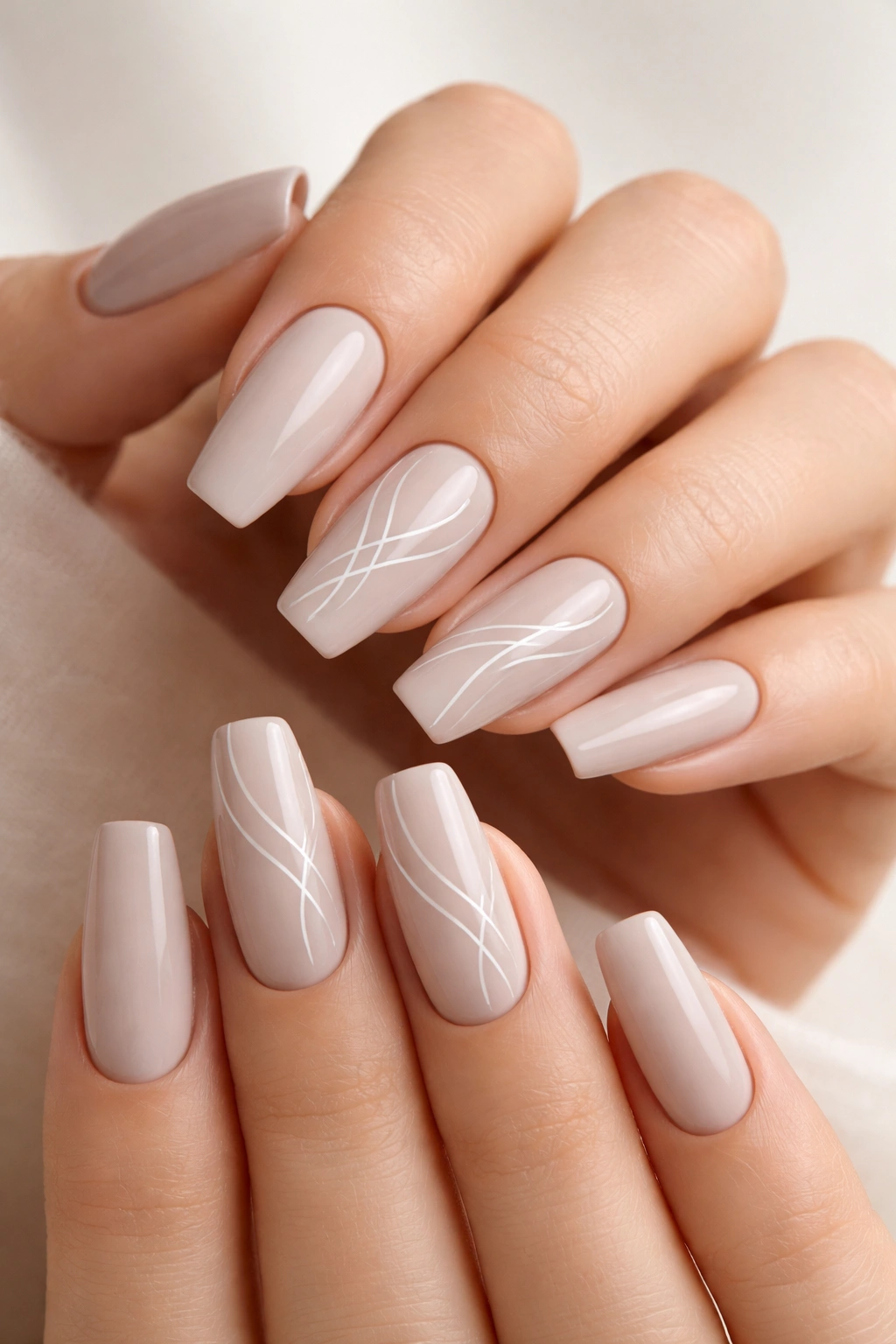
Unlike black line art, which can turn a nude set severe in a hurry, fine white lines on a soft greige base feel lighter and more architectural. The design still looks intentional, yet the contrast doesn’t slap you in the face.
Greige is useful here because it sits between beige and gray, giving white lines a calm background. A warmer beige can make white look too sharp. A cool gray can make the manicure feel cold. Soft greige lands in a sweet middle ground, especially on medium-length ballerina nails where you want the design to support the shape, not dominate it.
Who should try this? Anyone who likes minimalist art, wears silver jewelry often, or wants a neutral manicure that still has a touch of structure. The line work can be curved, diagonal, or even a tiny double outline near the tip. I’d keep it to two accent nails per hand unless the lines are hair-thin.
My strong opinion here: keep the brush lines under half a millimeter. Once white art gets thick, it stops looking refined and starts reading doodled on. Negative space helps too. Let some of the greige show through so the nail can breathe.
This design also ages well over the wear period. Small chips and grow-out are less jarring than they are with dense artwork. For a nude ballerina manicure that feels crisp without using glitter, this one has real staying power.
13. Barely-There Nude Jelly Finish
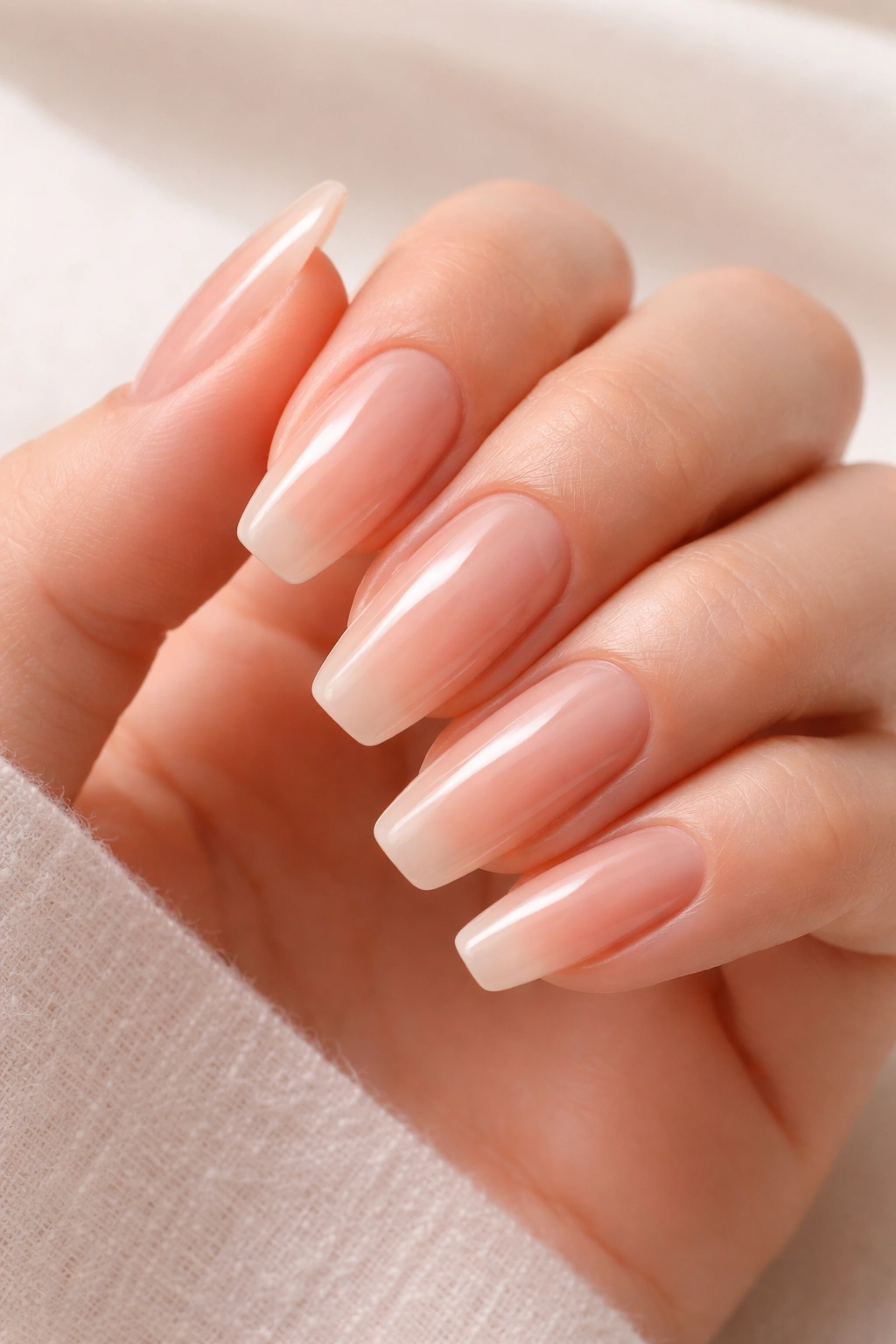
If you want your nails to look groomed rather than painted, a nude jelly finish is hard to beat. The color sits sheer and glossy, letting the natural nail peek through while still evening out the tone.
Jelly finishes look especially good on medium-length ballerina nails because the shape gives them structure. On a rounded short nail, a jelly nude can look too casual. On a ballerina shape, the same transparency looks intentional. That flat tip carries the style.
Why jelly works so well on this shape
The sheer color keeps the manicure light, while the ballerina outline provides the definition. You get softness from the shade and discipline from the shape. It’s a good mix.
What to ask for
- A builder-in-a-bottle base if you need a little strength.
- Two to three translucent coats, not one cloudy coat.
- A nude jelly that matches your undertone—pink-beige, honey, latte, or soft cocoa.
- Careful capping at the tip, because sheer shades show wear at the edge fast.
My tip: this is one of the best choices if you stretch fills closer to 2½ to 3 weeks. Grow-out blends better than it does with opaque nude polish.
14. Warm Nude With a Soft Aura Center
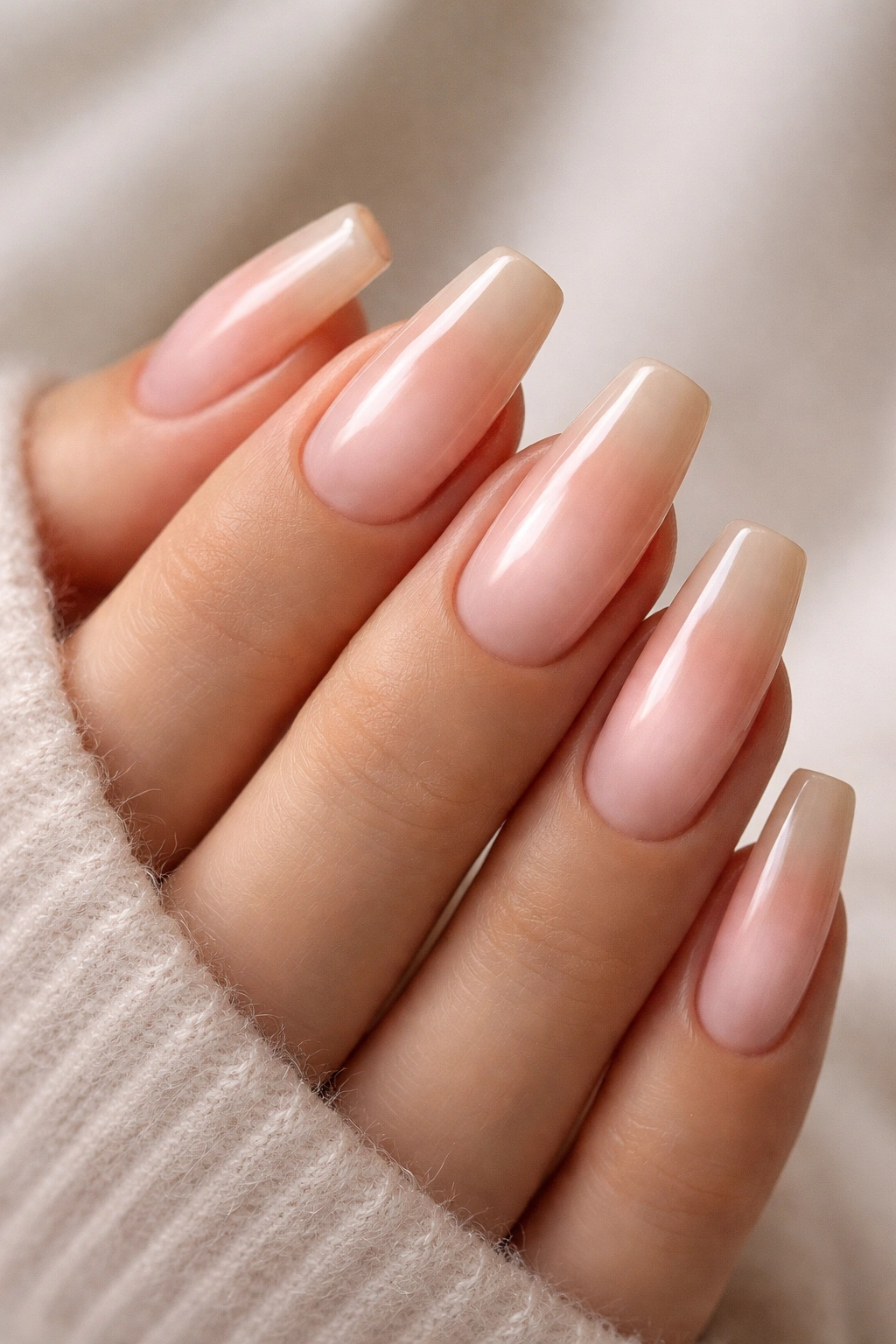
Aura nails don’t need neon circles. A tonal aura done in warm nude shades can look airy, subtle, and far more wearable on medium-length ballerina nails than the louder versions that flood social feeds.
Start with a warm nude base—think biscuit, caramel-beige, or soft honey—then diffuse a slightly lighter or rosier tone through the center of the nail. The edges stay nude. The middle glows. Airbrush gives the smoothest result, though sponge blending can work when the colors sit close enough together.
What I like here is how the center wash changes the mood of the nail without relying on hard lines. It gives the eye a focal point, which helps the manicure feel designed even though the palette stays neutral. On a flat ballerina tip, that soft center keeps the nail from reading too blocky.
Use restraint with color contrast. Stay within one or two tones of the base. Once the center gets too bright, you lose the nude effect and the manicure turns into a different category. That’s fine if that’s what you want, but it’s not this set.
This design suits medium length because there’s enough room to place the glow without crowding it. On shorter nails, the aura can collapse into a dot. On longer nails, it can stretch too far and start feeling theatrical. Here, it sits in the middle and does its job.
15. Deep Cocoa Nude With Glossy Edge Framing
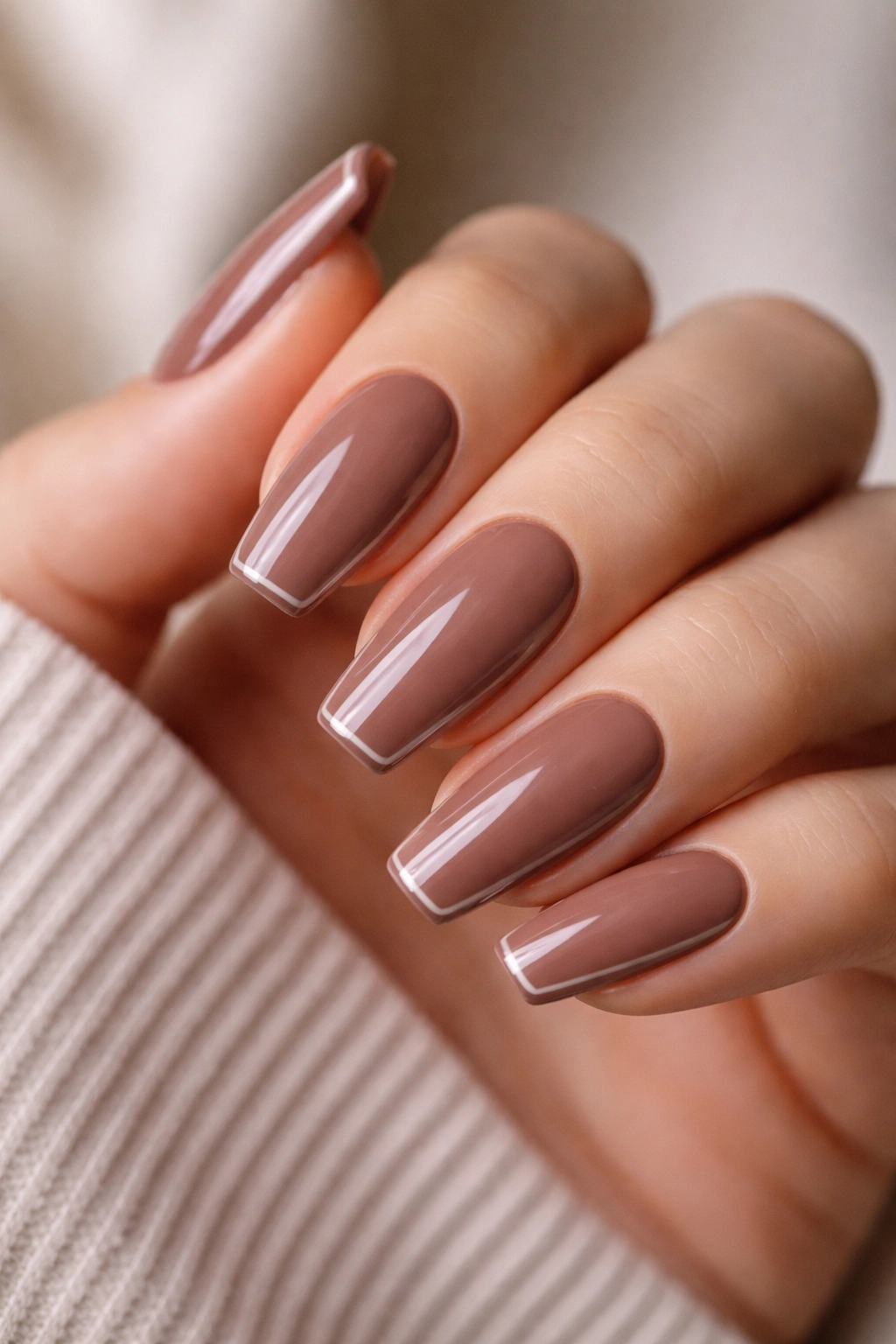
If pale nude shades wash you out, stop forcing them. A deeper cocoa can still count as nude when it sits close to your skin tone or works in the same family as your hands.
This design starts with a creamy cocoa or espresso-milk base, then uses a slightly darker glossy outline along the tip and outer edge of the nail. Not a full dark border. Not comic-book lines. Think of it as subtle framing that makes the ballerina shape look sharper.
Darker nudes are especially strong on medium and deep skin tones, where soft beige can disappear or turn ashy. But lighter skin can wear cocoa too if the finish stays creamy and the edge frame is fine. The contrast should feel deliberate, not severe.
How to wear it without making it heavy
Keep the framing thin—about 1 millimeter or less—and use gloss across the whole nail so the deeper edge catches light in a controlled way. You can also limit the frame to the tip and one sidewall if a full outline feels like too much.
This is the moodier end of nude ballerina nails, and I mean that as praise. It still fits neutral wardrobes, gold jewelry, dark coats, soft knits, and tailored basics. But it doesn’t disappear. It owns the shape.
Cuticle Oil, Refill Timing, and Top Coat Matter More With Nude Nails
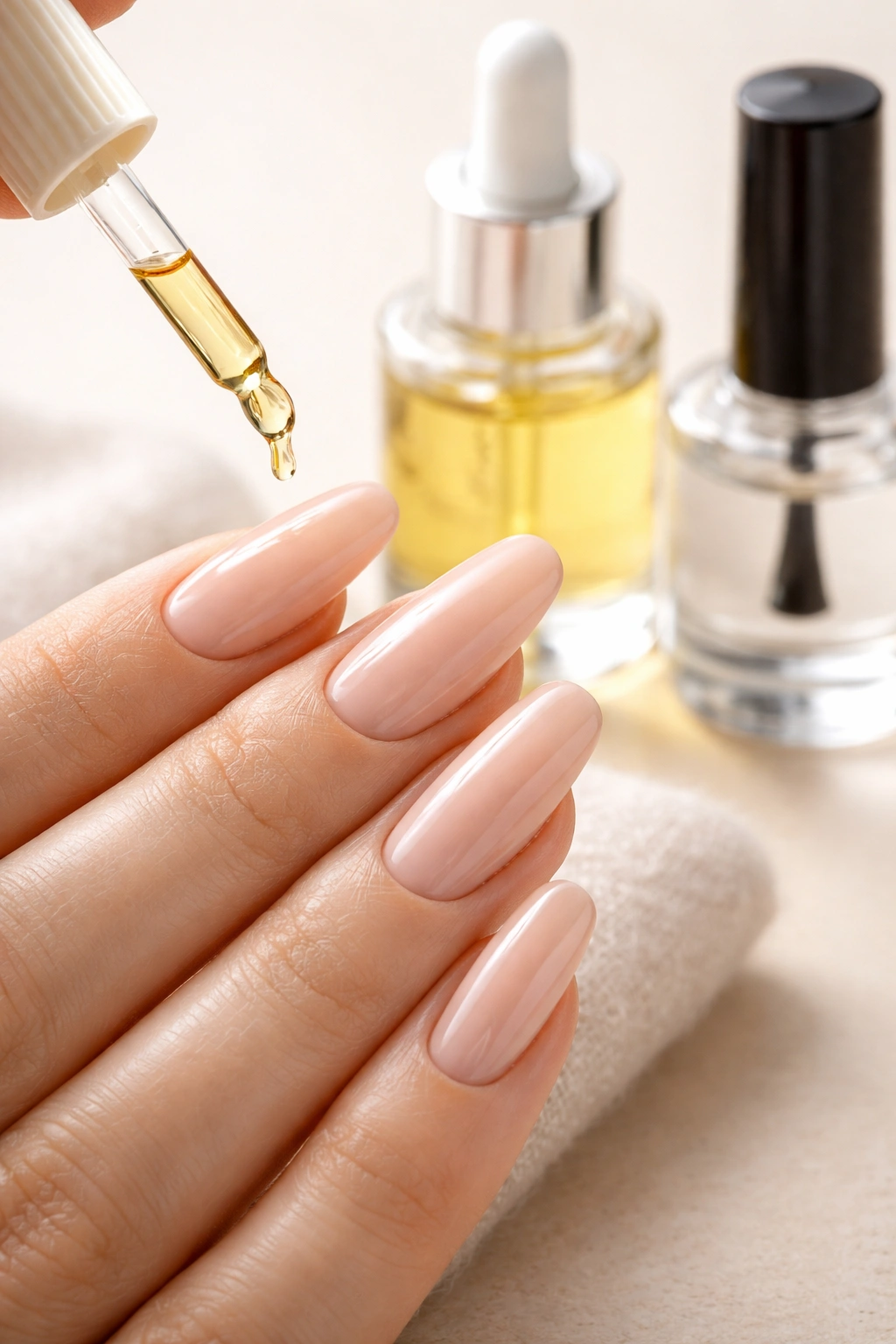
Nude manicures ask for better upkeep than dark ones. That isn’t a sales pitch from salons; it’s just the truth of pale color. Dry skin, lifted edges, surface scratches, and grown-out cuticles show faster when the polish sits close to your natural tone.
A short routine helps a lot:
- Use jojoba-based cuticle oil twice a day, one drop per hand.
- Wear gloves when washing dishes or cleaning with bleach sprays.
- If your top coat loses shine after a week, add a thin layer of clear gloss top coat at home if your system allows it.
- Book a fill around 2½ to 3 weeks for medium-length ballerina nails, especially if you type hard or use your hands at work.
Matte sets need extra attention. Chrome sets need good edge sealing. Jelly nudes need a cleaner free edge. Each finish has its weak point.
One practical salon tip before you go: bring two or three reference photos, not ten. Mark what you like in each one—the base shade from one, the line work from another, the finish from a third. Nail techs can do more with that than with a random camera roll dump and the vague instruction to “make it nude but different.”
Final Thoughts
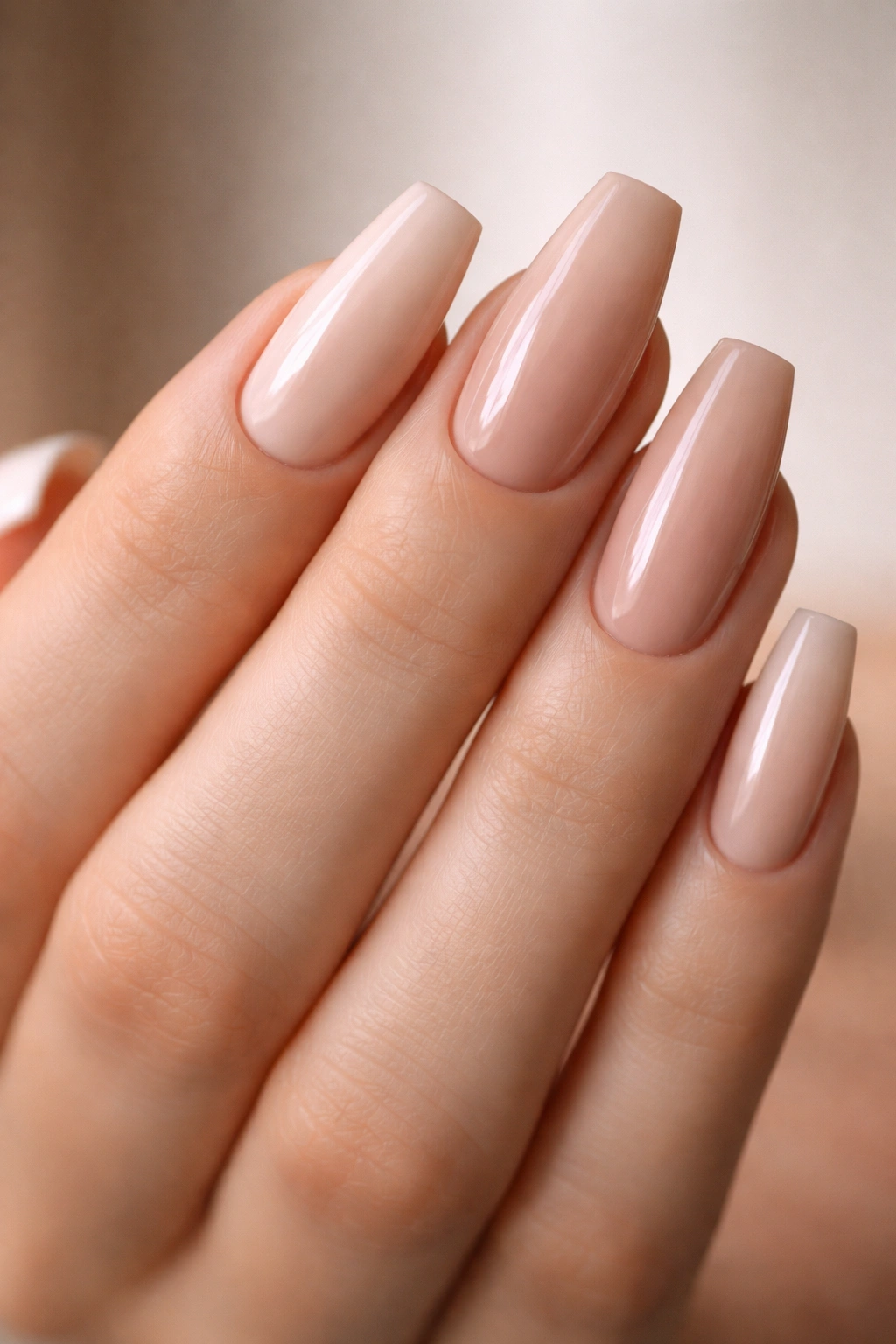
The best nude ballerina nails for medium length don’t come from picking the palest beige on the wall. They come from matching shape, undertone, opacity, and finish so the manicure looks like it belongs on your hand.
If you want the safest entry point, start with milky beige gloss, nude jelly, or a thin side French. If you want more personality, go toward tonal swirls, tortoiseshell accents, gold leaf, or a soft aura center. Medium length gives you room for both camps.
And if you remember one thing, make it this: nude is not one color. It’s a family of shades. Once you treat it that way, your next ballerina set has a much better chance of still looking intentional on day ten, not just fresh on day one.