

A harsh ombré ruins a ballerina nail faster than almost anything else. On a tapered tip, every line shows. If the fade jumps from nude to white in a blunt stripe, the whole set can look stiff no matter how nice the shape is.
Ombre ballerina nails work because the shape gives color room to melt. The sidewalls narrow, the free edge stays flat, and that little stretch of length lets one shade blur into the next instead of crashing into it. A short square nail can wear ombré too, sure, but the ballerina shape gives the gradient more runway.
I’ve always had a soft spot for this combo. A hard French can look crisp, but a smooth fade often makes the nail look longer and cleaner, especially when the base is a sheer pink, beige, or milk-nude instead of a heavy opaque cream. Gloss hides a few sins. Matte tells on everything.
And that’s the whole game: pick a blend that respects the shape. Some color pairs need a milky buffer layer. Some need an airbrush instead of a sponge. Some look stronger under salon lights than they do in daylight. The sets below are the ones I keep coming back to because they hold up both close-up and from across the table.
Why the Ballerina Shape Makes Ombre Look Longer
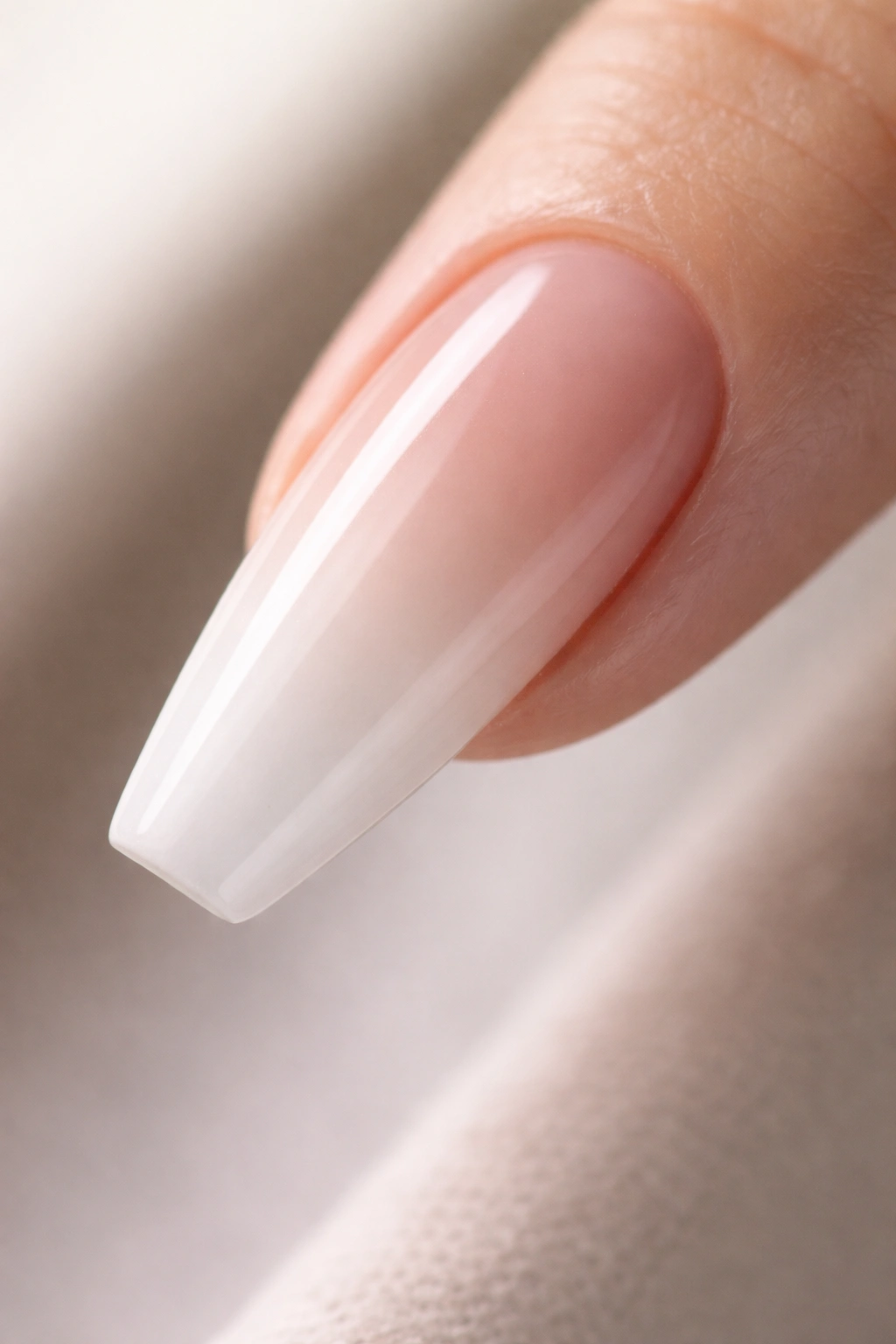
The ballerina shape does half the work before color even touches the nail. That flat tip gives the eye a stopping point, while the tapered sides pull attention inward. Put a gradient on top of that, and the nail starts to look stretched out without feeling sharp in the way a stiletto does.
A lot of salons use coffin and ballerina like they mean the same thing. Close enough. When I say ballerina, I usually mean a coffin-style nail with a slightly softer taper and a tip that isn’t cut too wide. That little difference matters because a soft taper makes the fade look smoother.
Length matters.
Give a tech about 12 to 16 millimeters of free edge and the ombré has space to breathe. On a shorter set, high contrast can look abrupt, which is why sheer nudes, milk tones, and smoke fades often look better than hard black-to-white blends on shorter ballerina nails.
There’s another bonus most people don’t think about: grow-out looks softer. A sharp French line will always show the second the nail starts moving away from the cuticle. A blurred fade is more forgiving, especially if the base color matches the natural nail bed instead of fighting it.
What Gives Ombre Ballerina Nails a Smooth Blend
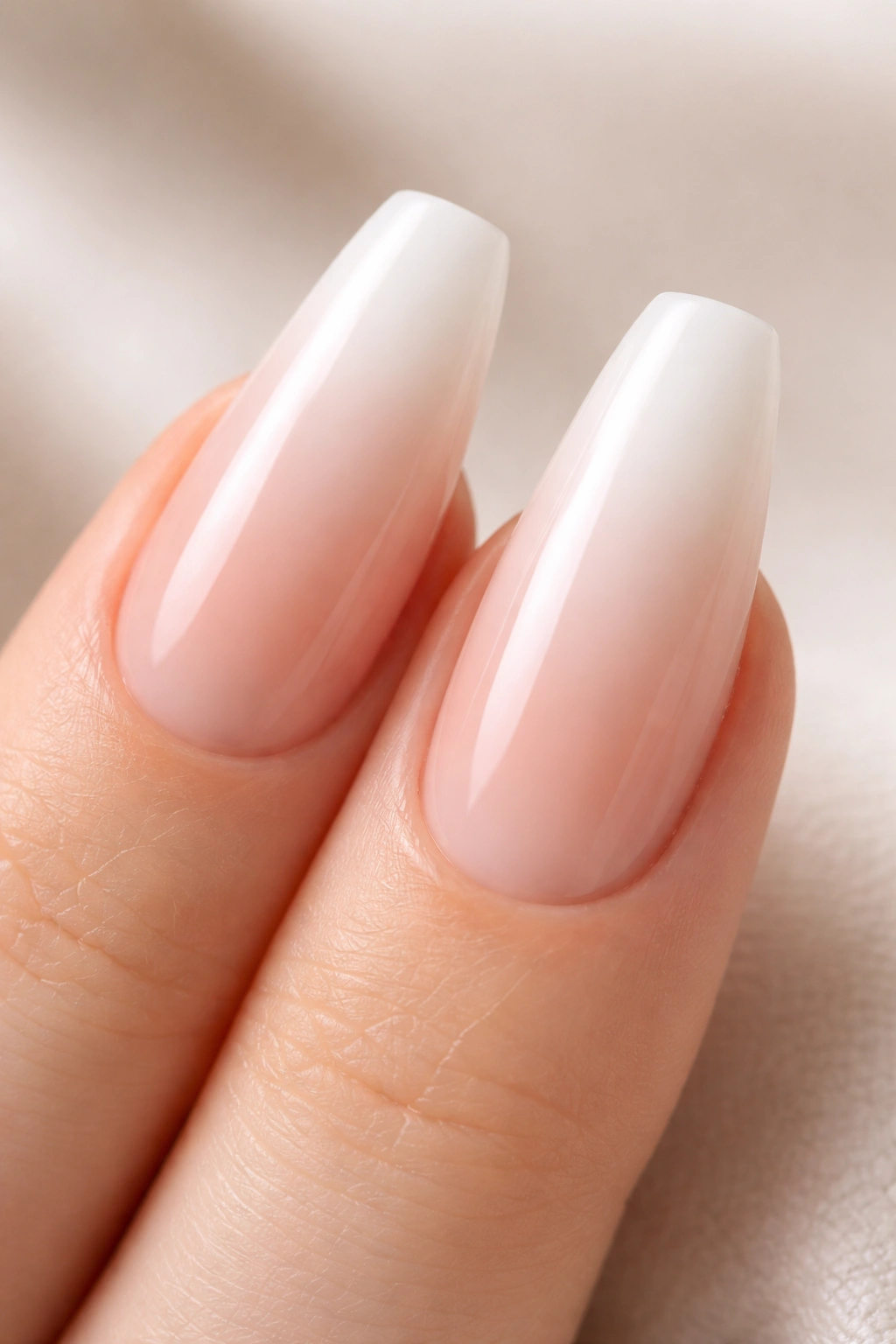
Patchy ombré usually comes from one of three things: too much pigment, too little transparency, or the fade starting in the wrong spot. That’s it. The shape is rarely the problem.
Where the gradient should start
On a medium ballerina nail, the fade usually looks cleanest when the second color begins around the last third to last half of the nail. Push it too high toward the cuticle and the nail can look squat. Keep it too low and the tip looks dipped instead of blended.
White is the shade that gets people in trouble. Stark white can turn chalky fast, especially over acrylic. A milky white gel or a softened ivory gives you a blur instead of a stripe.
Techniques that give the cleanest fade
Most techs get the smoothest result with one of these methods:
- Airbrush application, which lays down a thin mist instead of a thick band of color
- Sponge blending, good for soft creams and nudes when it’s done in thin layers
- Dry-brush pull-down, where the tech drags color into the base before it sets
- Sheer builder overlay, which softens the whole blend after the gradient is in place
I’ve watched a rough fade get rescued by a thin milky builder gel more than once. It softens the jump between colors and adds that glassy finish people often think came from better polish alone.
Mistakes that show up fast
Matte top coat exposes everything. So do chunky glitters dropped into the middle of a blend. Heavy cuticle flooding can also make even a nice fade look clumsy because the eye goes straight to the thick edge.
A clean ombré set usually comes down to thin coats, a sheer base, and patience between layers. Fast work leaves marks.
How to Choose the Right Fade for Skin Tone and Nail Length
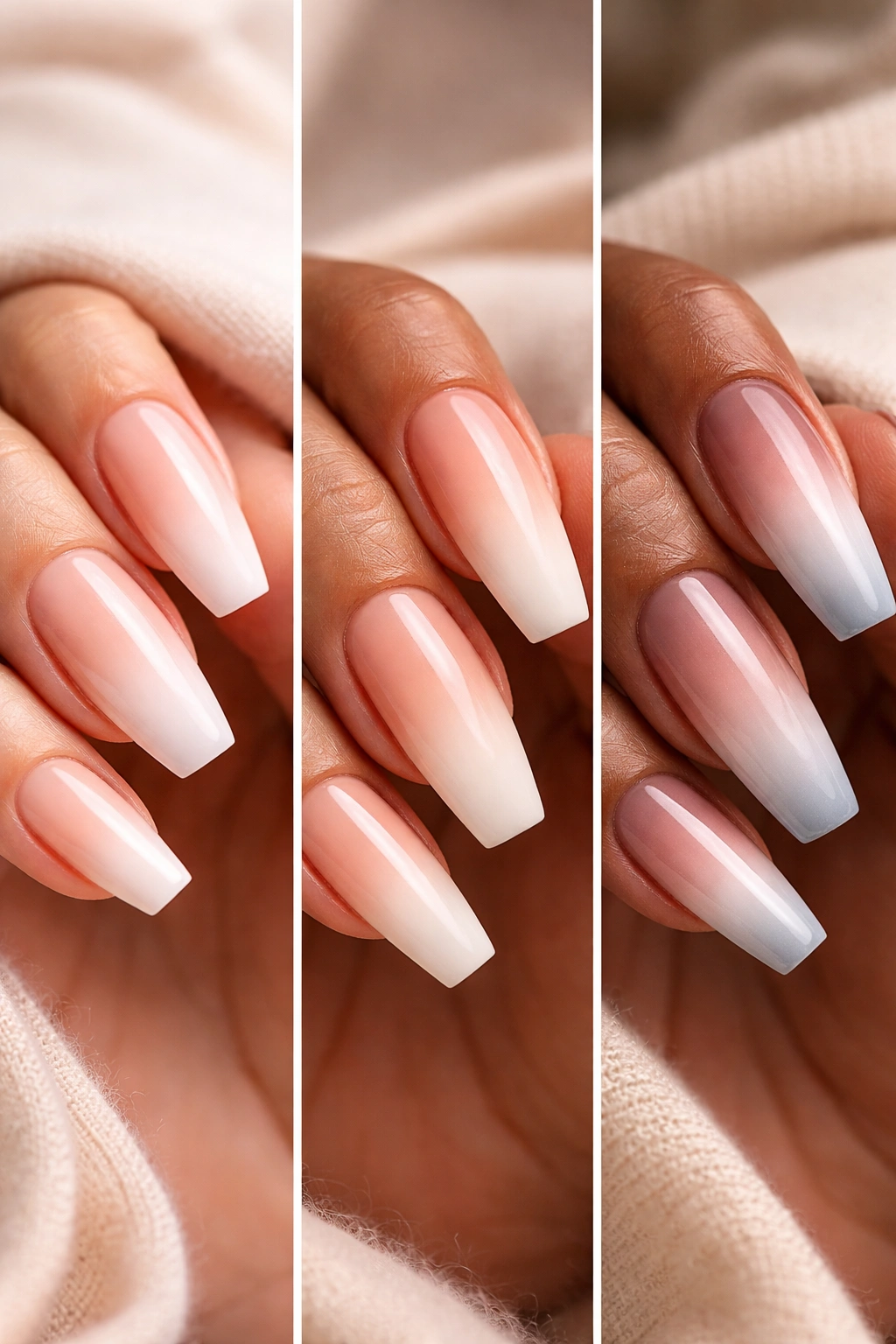
If you only take one bit of shade advice, take this: the stronger the contrast, the more length you need. Short ballerina nails handle nude-to-milk, beige-to-cream, or smoke-to-rose better than jet black to bare nude.
Warm hands usually look richer with peach, terracotta, caramel, cocoa, and champagne blends. Cooler undertones tend to sit better with mauve, lilac, blue-gray, smoky pink, and soft berry. Neutral undertones can wear almost anything, which is annoying for the rest of us.
Match the fade depth to the nail length
- Short ballerina: keep the colors close in depth, like nude to soft white
- Medium ballerina: this is the sweet spot for baby boomer fades, browns, mauves, and soft metallic tips
- Long ballerina: you can push into stronger contrast, deeper berries, smoke fades, and more obvious chrome shifts
There’s also the jewelry test. Gold jewelry tends to flatter caramel, beige, terracotta, and peach ombré sets. Silver and white gold sit well with mauve, icy lavender, blue-gray, and pearl-white blends. It is not a rule carved in stone, though it does help when you’re stuck between two swatches.
Photos lie a little.
A color that looks soft under a warm ring light can turn muddy in daylight, so if you’re choosing from inspiration pictures, try to look at two or three images of the same shade family in different lighting before you commit.
How to Ask Your Tech for Ombre Ballerina Nails at the Salon
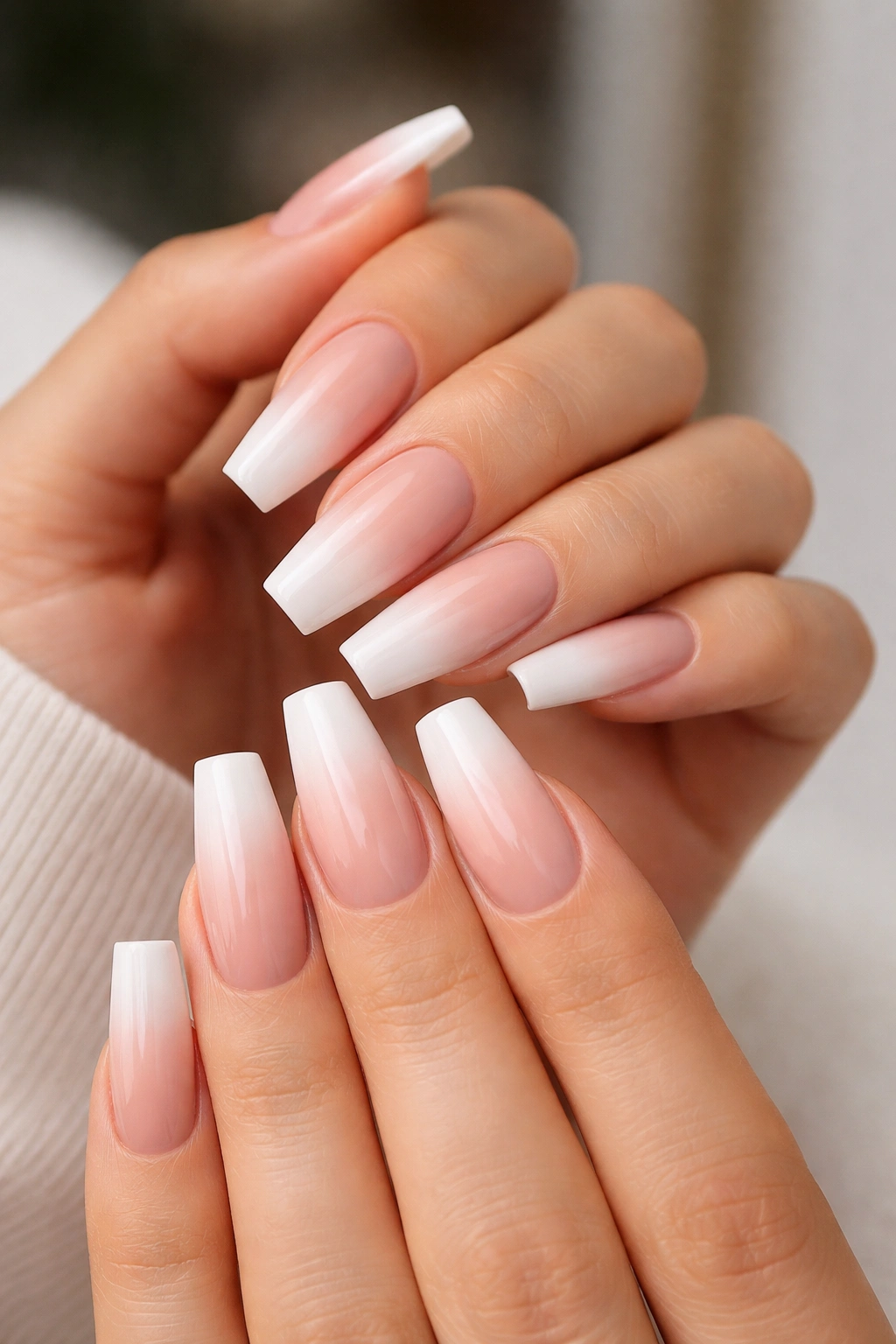
You do not need fancy nail words to get a cleaner set. You need precise ones.
Ask for these details up front:
- A sheer or semi-sheer base, not a fully opaque nude, unless you want a dense look
- A soft white, milk white, or ivory tip instead of a bright paper-white
- A blurred fade with no visible band line when the hand is held at arm’s length
- A finish choice before color starts — matte, gloss, or chrome changes how the blend should be built
- Photos of the exact fade direction you want, because dark-at-tip and dark-at-cuticle read differently
If you want the set to look expensive, ask for one accent idea at most. One chrome nail, one tiny gem cluster, one pearl detail. Ballerina shape already has presence. It does not need five extra design ideas piled on top.
I also like telling a tech where I want the color to sit: “keep the deepest shade on the last third,” or “make the cuticle soft and transparent.” Those small directions save a lot of back-and-forth.
1. Milky Pink to Cloud White French Fade
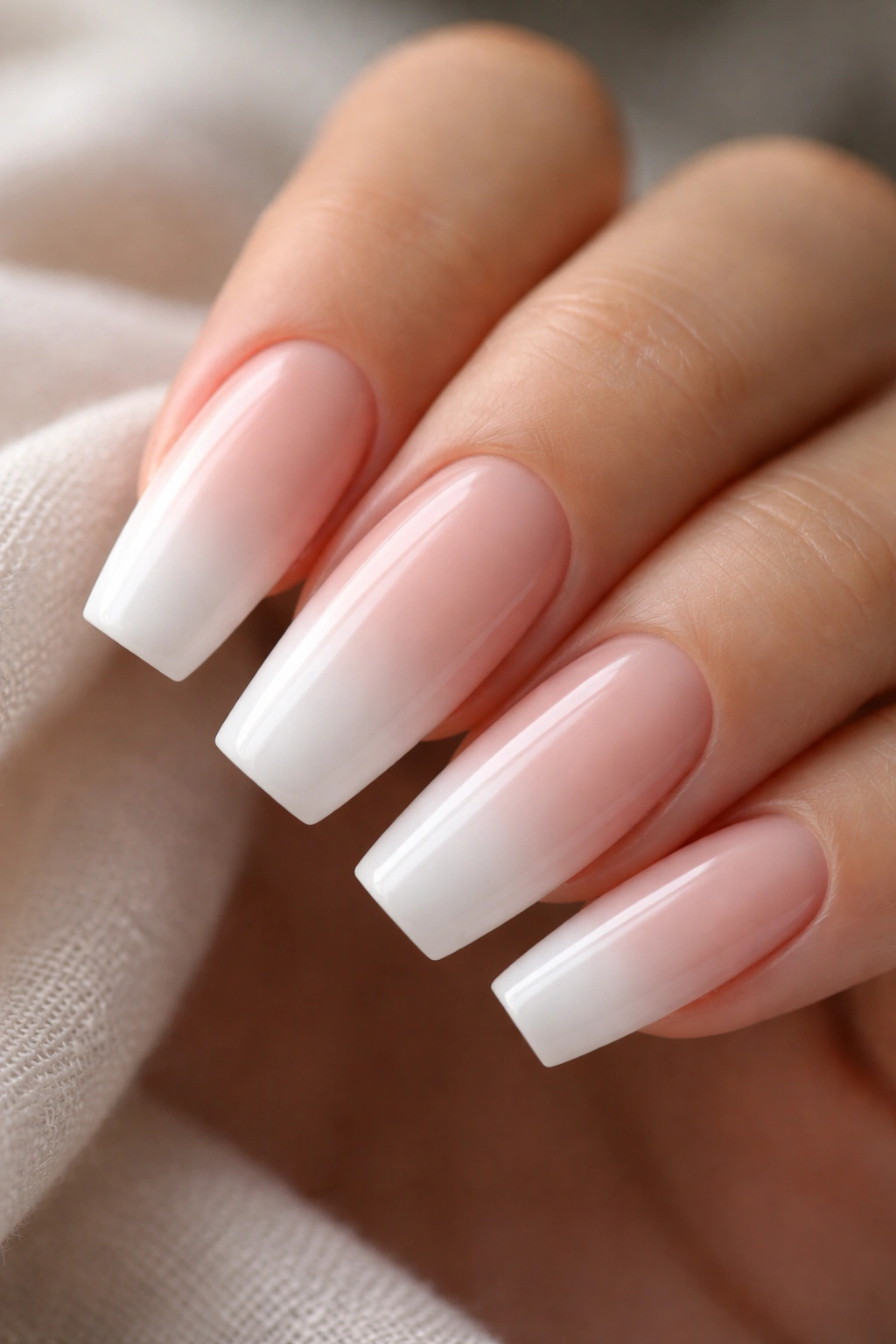
If you want one shade combo that almost never lets the ballerina shape down, start here. Milky pink to cloud white is the baby boomer manicure for people who want softness instead of a hard French smile line, and it flatters the flat tip of a ballerina nail better than almost any other fade I know.
Why this one stays clean-looking
The trick is the white. Not bright correction-fluid white. Not chalk. Ask for a cloudy, milk-white tip layered over a sheer pink or rosy nude base, and the whole thing looks lighter and smoother. The fade should begin around the last third of the nail, then blur upward in two or three thin passes.
This is also one of the smarter options if you care about grow-out. Because the cuticle area stays soft and translucent, the fill line doesn’t scream at you after ten days.
Quick salon notes
- Use a sheer cover pink, milky pink builder, or jelly blush base
- Keep the white focused on the free edge and tip corners
- Choose gloss top coat if the sponge texture needs softening
- Add shimmer only if it’s micro-fine, not chunky glitter
- Medium ballerina length shows this fade best, around 12 to 15 millimeters of free edge
If you cannot decide, get this one. It is the safest bet on the list, and there is nothing boring about a well-done baby boomer set.
2. Bare Beige to Soft Vanilla Ombre
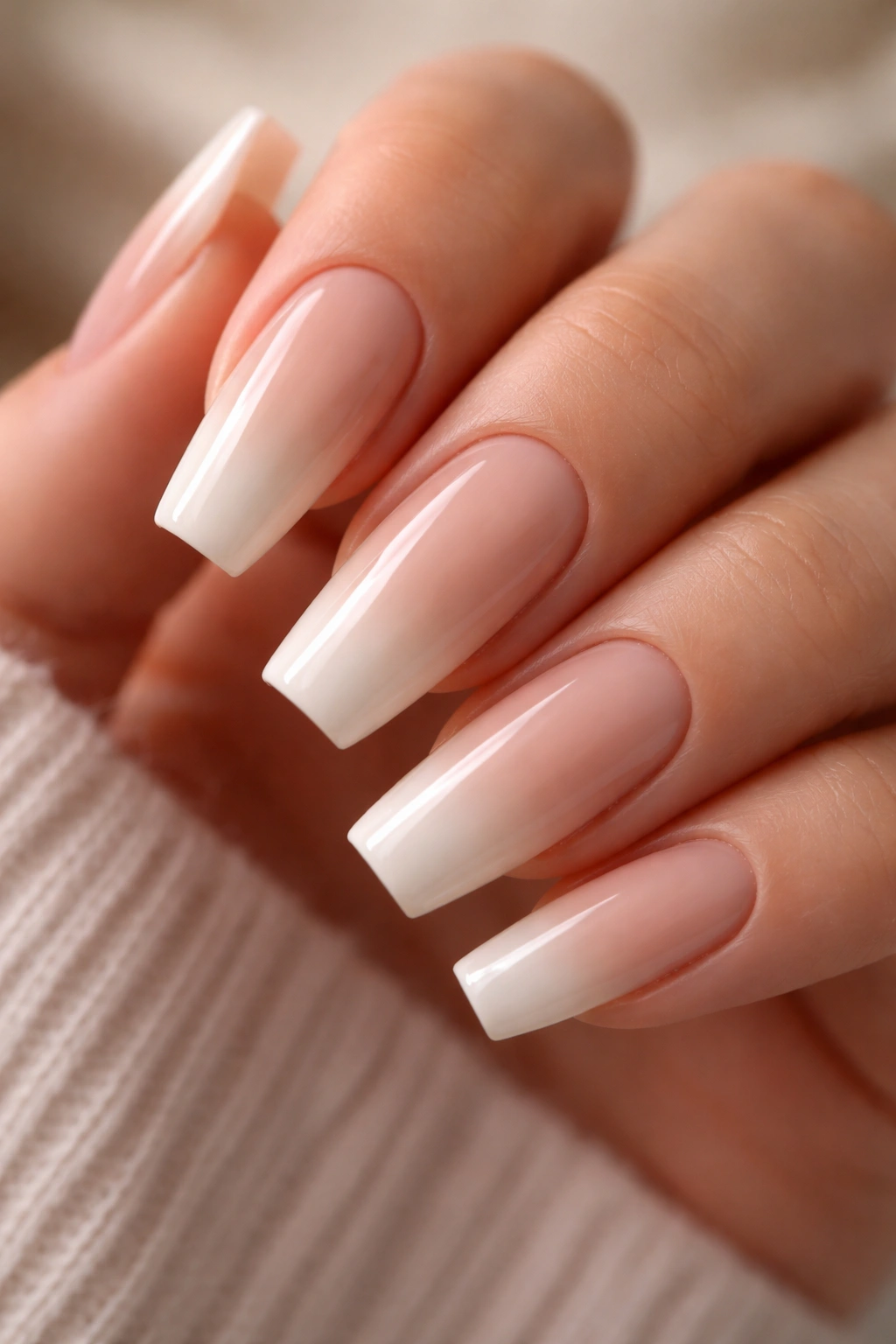
Beige-to-vanilla ombré is a smart move when pink-and-white makes your hands look flat. Beige brings a little depth back into the nail bed, while vanilla lifts the tip without the stark jump that bright white creates.
I like this set on medium ballerina nails with a glossy top coat and a slim apex. It looks polished in a low-key way, especially if the beige has a hint of camel rather than a gray undertone. Gray-beige can work, though it can also drain warmth from the hands if the shade is off by even half a step.
Gold rings sit nicely against this blend. Cream sweaters, tan coats, espresso cups, dark denim — this shade family gets along with all of it, which is probably why it keeps lasting longer than louder nude trends.
Skip heavy gems here. They interrupt the softness. If you want detail, use one thin chrome line at the cuticle or a single pearl on one finger and stop there.
3. Peach Nude to Apricot Cream Fade
Why does peach look fresher than standard nude on some hands? Because a soft peach base can cancel that dull gray cast that plain beige sometimes leaves behind, especially on medium and deeper skin with warm or olive tones.
The ballerina shape helps this fade because peach can turn sweet fast on shorter rounded nails. With a flatter tip, it looks cleaner and more tailored. I’d keep the peach sheer near the cuticle, then blend into an apricot cream tip instead of a pure white one. White can cut the warmth in half.
Where the color should sit
Let the peach carry through about 60 to 70 percent of the nail, then fade the apricot cream over the free edge. That placement keeps the set looking long. If the cream starts too high, the nail can lose that stretched look and start reading stubby.
Gloss works better than matte here. Peach shades in matte can look powdery, and powdery is not the point. You want the finish to look smooth, almost syrupy, with the color melting into the next shade instead of sitting on top of it.
4. Rose Quartz to Sheer Blush Ombre
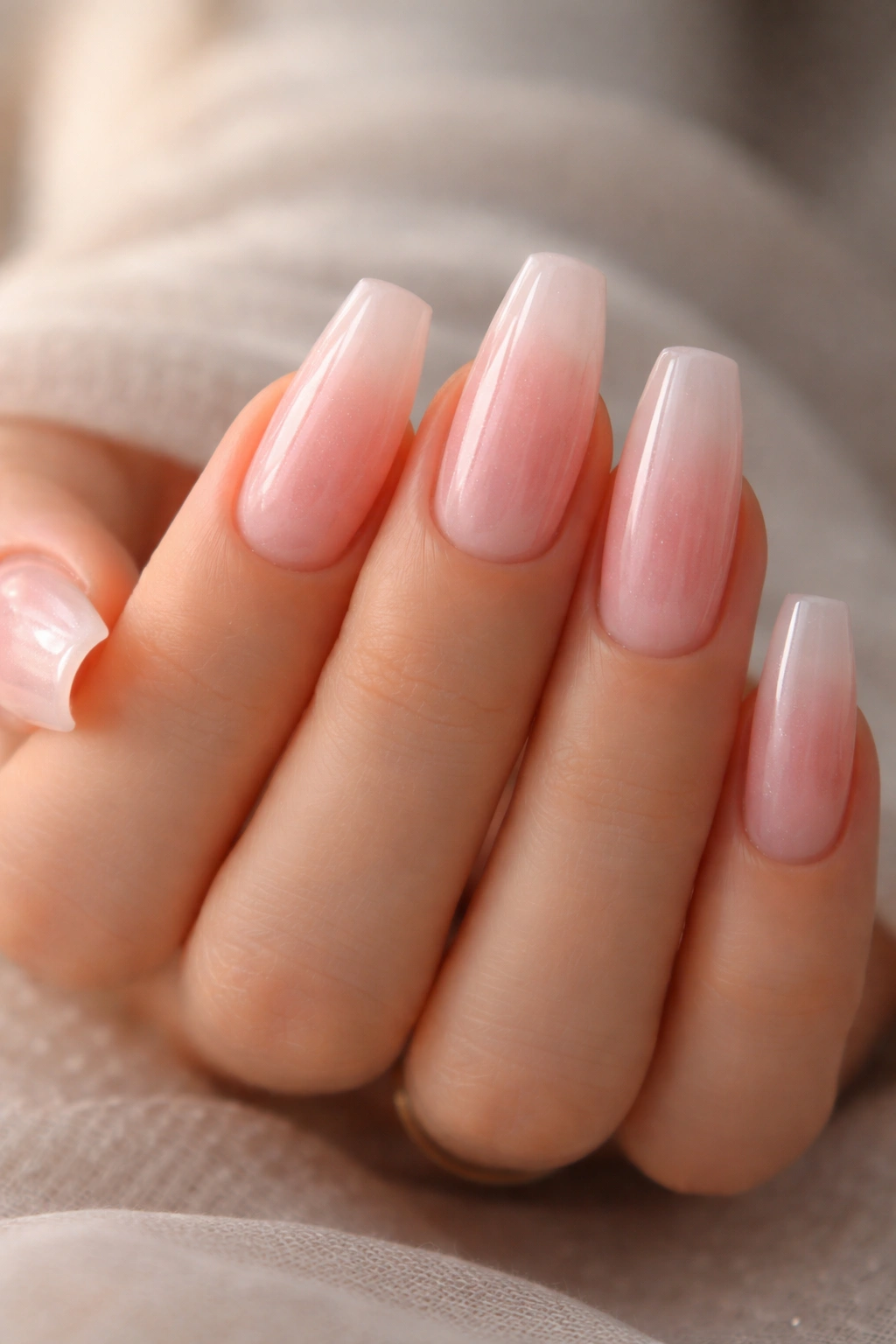
I saw this shade done under cold salon lights once and thought it was too pink. Outside, it relaxed into the softest rose haze. That’s the thing with rose quartz to blush ombré: it shifts with light, so it never looks flat when the blend is thin enough.
This one is less bridal than people assume. Done right, it feels airy, not sugary. The base should sit somewhere between transparent pink and pale stone-rose, then fade into a lighter blush or milk-rose tip.
A few details make the difference:
- Use a translucent rose base, not a solid bubblegum pink
- Add micro-pearl shimmer only if you want a little light play when the hand moves
- Keep the tip softer than the base by one to two shade steps, not five
- Pair it with a rounded ballerina taper, not an extra-wide coffin tip
- Refill around 2 to 3 weeks to keep the sheer cuticle zone clean
What I like most here is the softness at the sidewalls. The color doesn’t fight the taper. It follows it.
5. Mocha Latte to Caramel Ombre
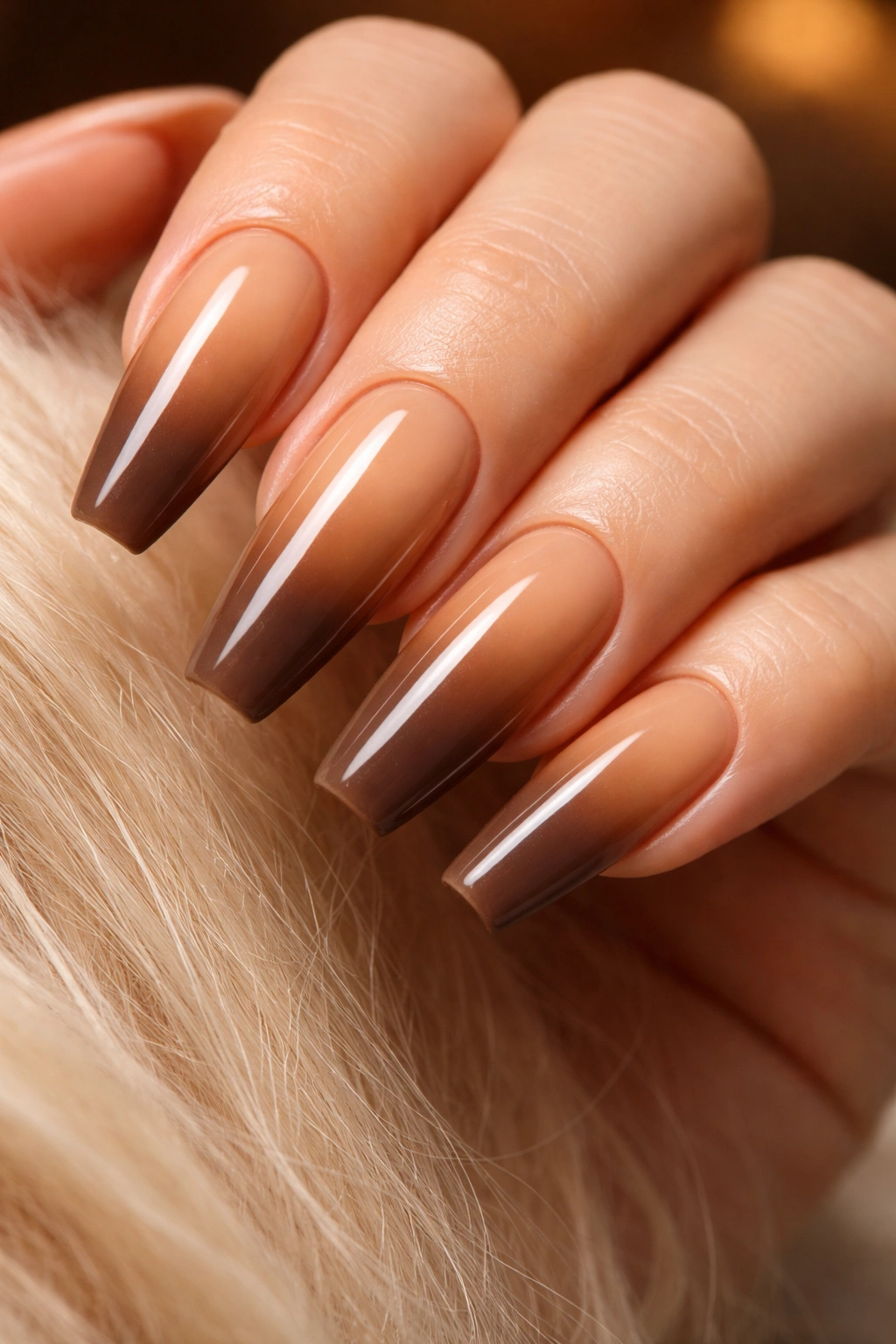
This is where ombré starts to feel richer. Mocha and caramel have enough contrast to look deliberate, though they stay in the same family, so the fade still reads smooth instead of theatrical.
I prefer this blend with the caramel sitting nearer the cuticle and the mocha deepening toward the tip. Darker tips ground the ballerina shape and make the flat edge feel neat instead of blunt. Done the other way around, the darker cuticle can shorten the look of the nail unless the set is long.
Gloss is the move here. Matte can strip the caramel of its warmth and make the whole thing look dusty. A shiny top coat keeps both tones alive, almost like coffee with cream swirling through it before it settles.
One warning: ask for browns with a little red or golden base, not ash-brown. Ash can turn these shades muddy. When the undertone is right, this set looks expensive in the least try-hard way possible.
And yes, it grows out better than a solid dark brown manicure.
6. Cocoa Brown to Almond Beige Matte Ombre
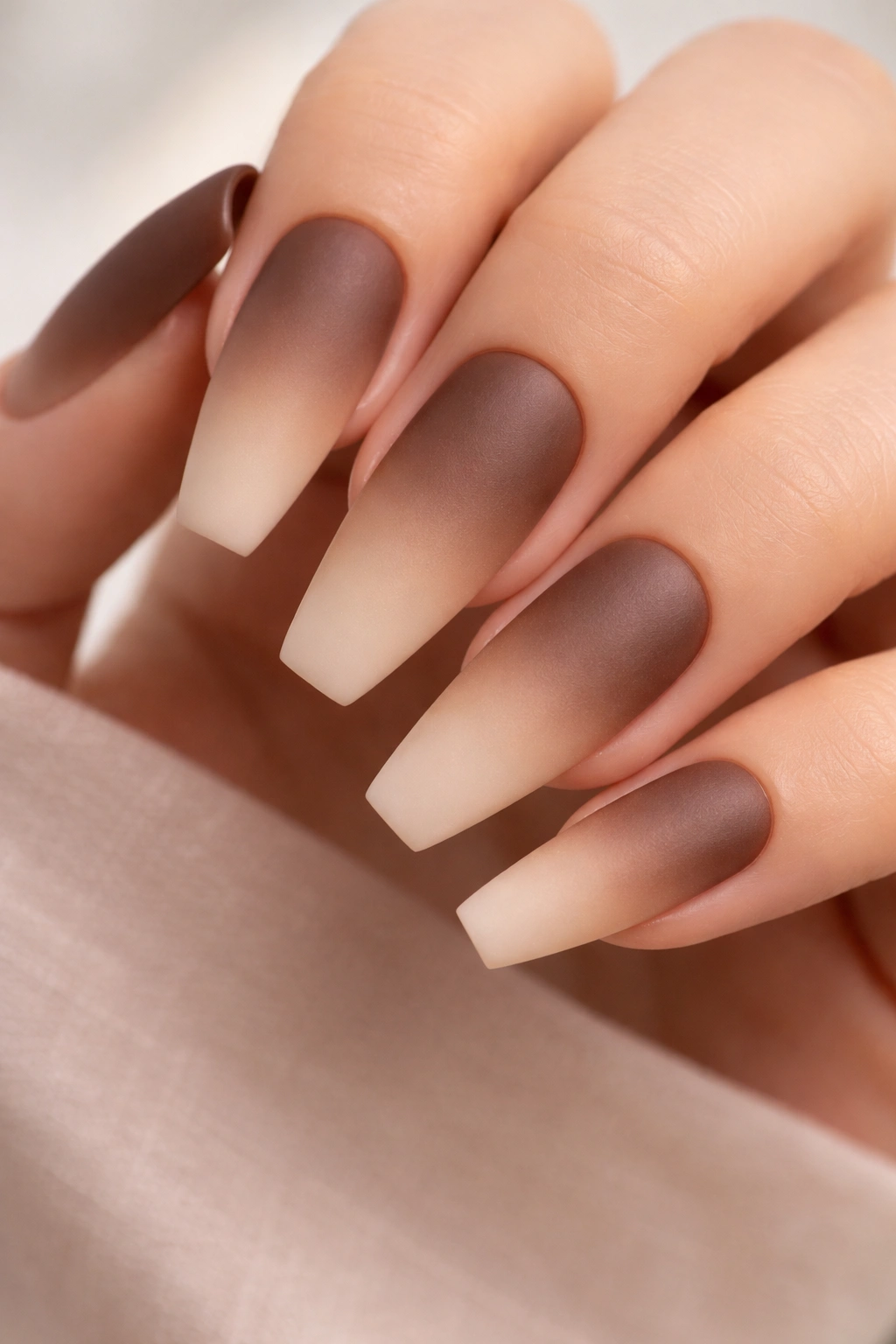
Unlike high-contrast brown-and-white sets, cocoa to almond beige doesn’t ask for attention from across the room. It wins because the colors stay close enough to blur into each other, and the matte finish turns the whole nail into something that looks almost velvety.
Matte has zero mercy, though. Every ridge, every patch, every heavy-handed sponge stamp will show. That means the blend underneath has to be cleaner than it would need to be under gloss. If your tech’s ombré work is shaky, choose gloss instead.
Who does this suit best? Someone who wants a neutral set with weight to it. It looks sharp with wool, leather, dark denim, and clean gold jewelry. I especially like it on medium-long ballerina nails because the tapered sides stop the brown from feeling heavy.
My recommendation: skip stones, skip foil, skip decals. Let the surface do the talking.
7. Dusty Mauve to Ballet Pink Blend
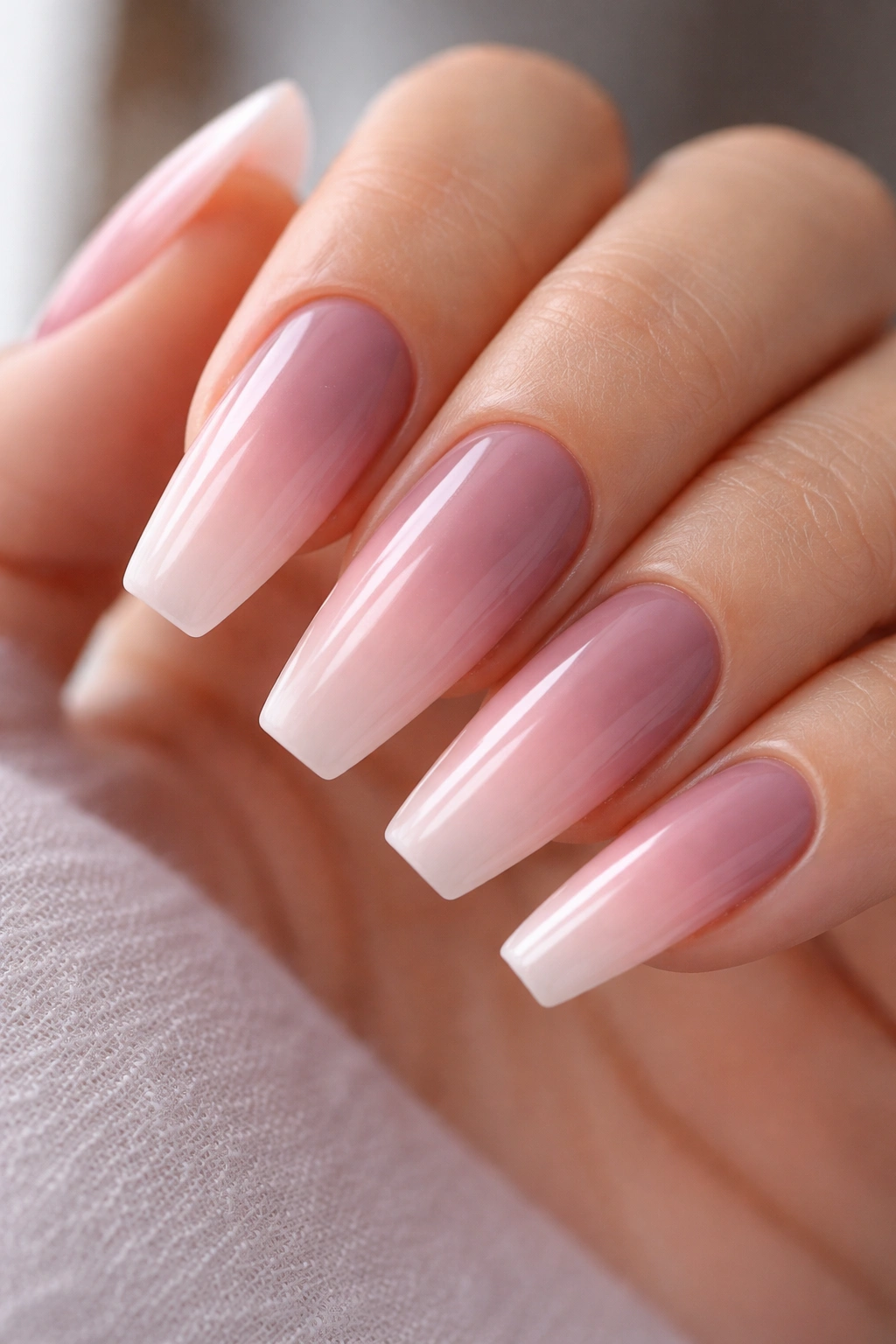
There’s something a little more polished about mauve than plain pink. It has shadow in it. Dusty mauve to ballet pink gives you a romantic fade without slipping into sugary territory, which is a hard line to walk on a ballerina shape.
Why mauve lifts the whole set
Mauve carries a touch of gray or berry depending on the formula, and that extra depth keeps the cuticle area from disappearing into the skin. When it fades into a lighter ballet pink tip, the nail still looks airy, though it doesn’t go blank.
I’d wear this with a gloss top coat and a slightly thinner free edge than usual. Thick tips can make cool pinks feel bulky.
Details worth asking for
- A semi-sheer mauve base, not a full opaque mauve cream
- A soft pink tip instead of white
- A fade that starts around the final 40 percent of the nail
- Fine shimmer only on one accent finger, if any
- Sidewalls filed tight so the taper looks clean
This is one of my favorite office-safe pinks. It has enough mood to keep it from feeling generic.
8. Lilac Haze to Milky Lavender Fade
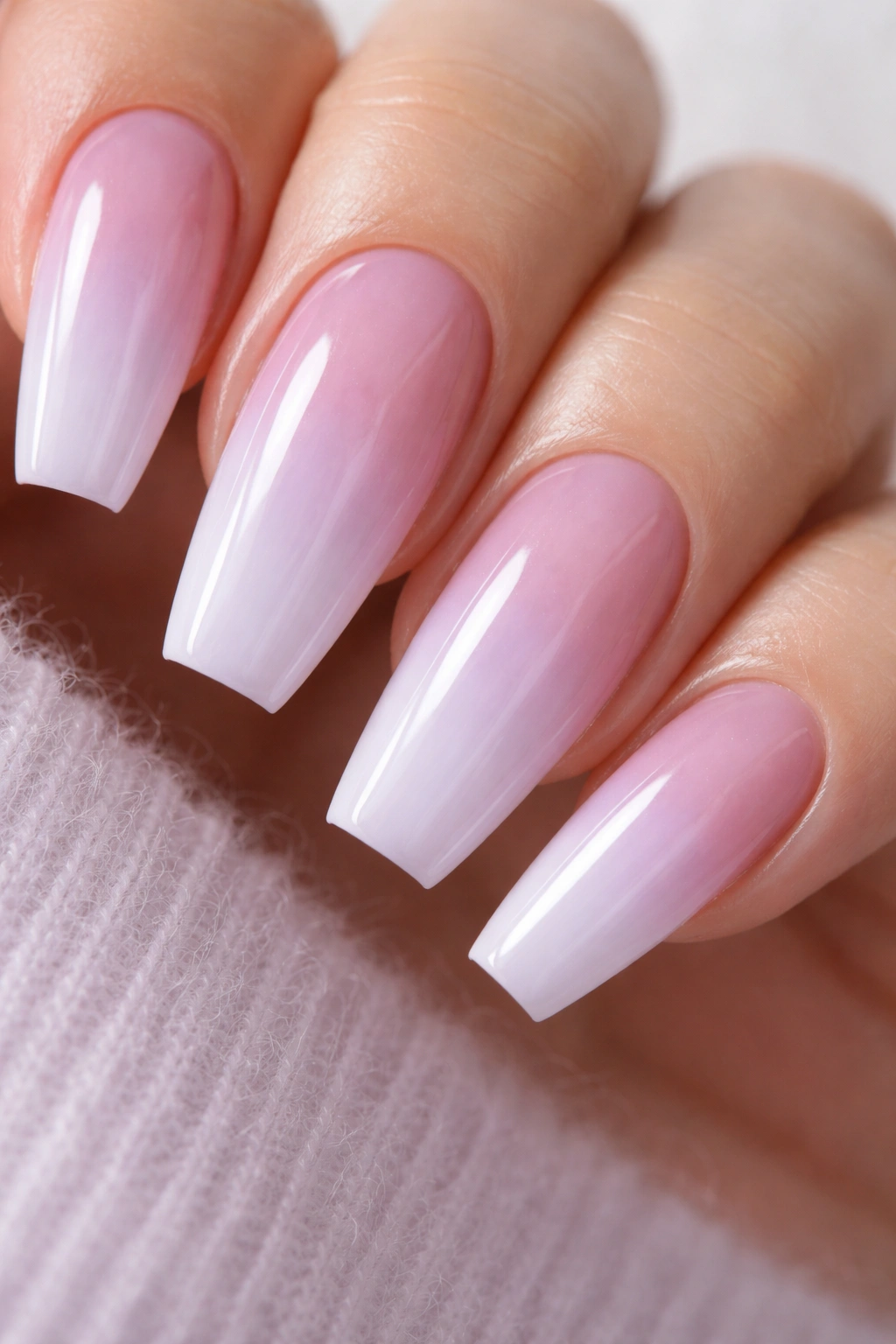
Under a glossy top coat, this color pairing can look almost like tinted glass. Lilac haze to milky lavender works when both shades stay sheer enough to let light move through them a little. Make them opaque, and the whole set gets heavy in a hurry.
I don’t love this look with hard white mixed in. White flattens the lilac and turns the fade chalky. A better route is a jelly lilac base with a milked-out lavender tip, then one clear leveling layer over everything to soften the join.
Silver jewelry has a natural connection here, though chrome powder can be too much unless it’s dusted on lightly at the free edge. The color already has mood. It doesn’t need extra drama piled on top.
Choose this one if you want a cool-toned set that still feels soft. It has edge, though it never crosses into harsh.
9. Sage Mist to Bare Nude Ombre
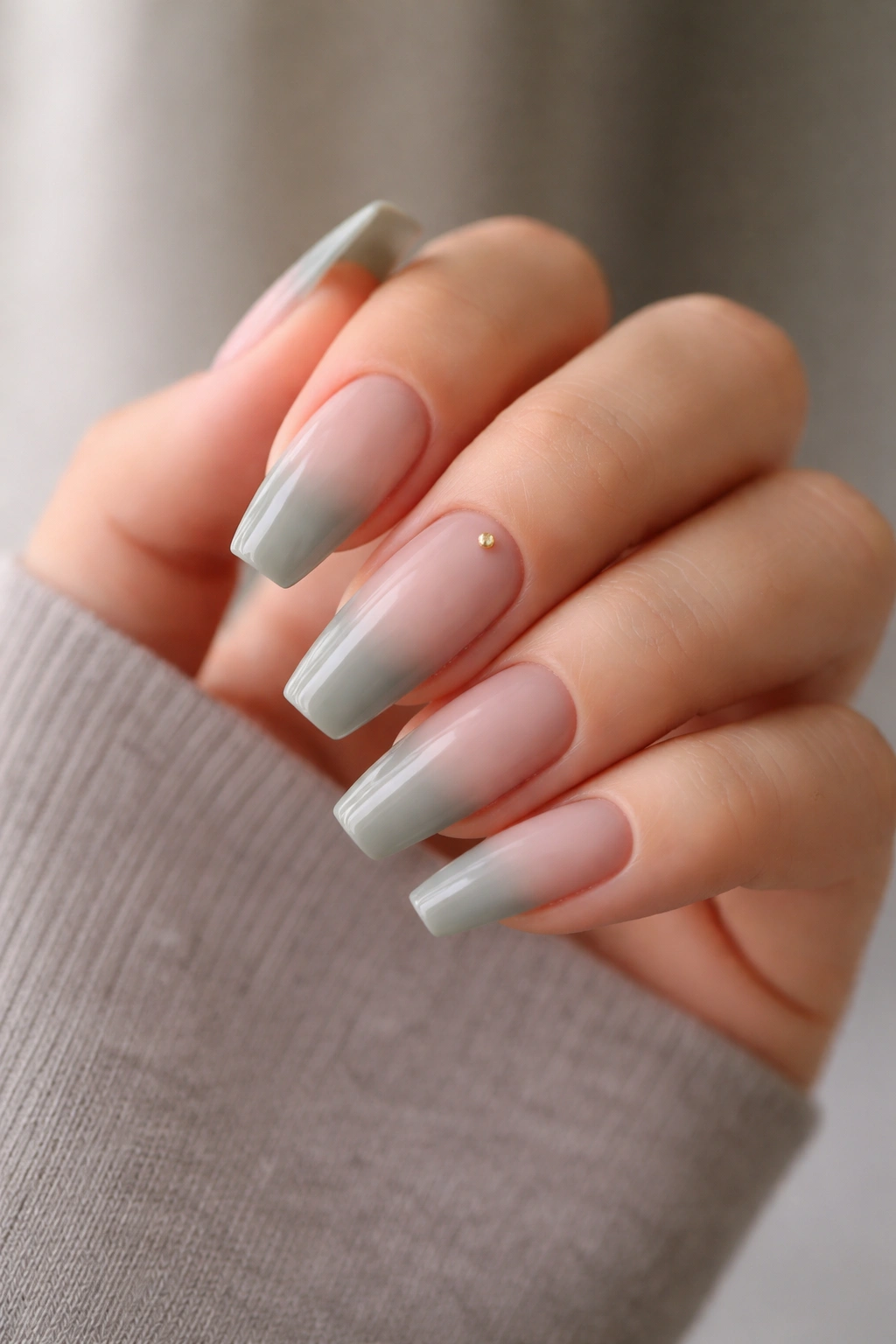
Can green look clean on a ballerina shape? Yes — if the green is muted and the nude stays translucent. Loud leafy green with a beige block underneath can look costume-ish. Gray-sage melted into a bare nude is a different story.
The sage should sit toward the tip, not the cuticle, unless the nails are long. A soft nude near the base keeps the grow-out low-stress and lets the green read as a wash of color instead of a full statement manicure.
How to keep this from looking fussy
Pick a sage with a little gray in it and skip botanical art on top. No leaves, no vines, no tiny florals. The ombré already gives enough shape and movement. If you want one detail, a single gold stud near one cuticle is plenty.
This is one of those shades that looks better on the hand than on a swatch stick. On the swatch it can seem flat. Once it’s stretched along a ballerina nail, the fade starts making sense.
10. Blue-Gray to Icy Silver Fade
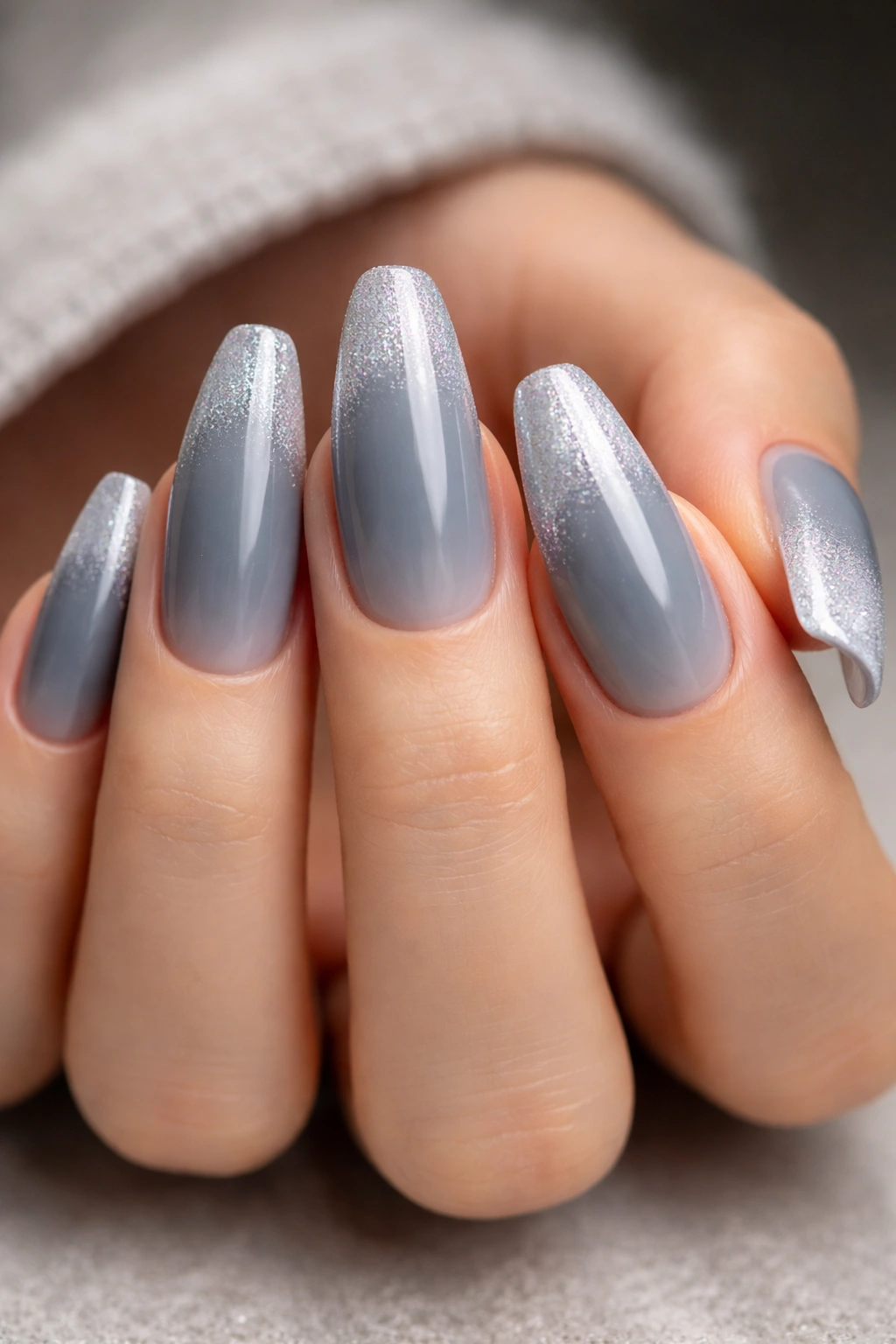
The first bad version of this set I saw looked like silver foil had been mashed onto the tips. The good version was a lesson in restraint. Blue-gray to icy silver needs thin application, or it goes from sleek to clunky fast.
Blue-gray makes a strong base because it already has that smoky, chilly tone built in. Then the silver comes in softly at the free edge — almost a frost, not a wall of chrome.
A few rules make this one work:
- Keep the silver on the last 20 to 25 percent of the nail
- Use chrome dust or fine metallic pigment, not chunky glitter
- Choose a smoky slate-blue base, not a bright denim blue
- Seal with high-gloss top coat so the silver looks smooth
- Medium or long ballerina length shows the gradient better than short
I like this set when the rest of the look is quiet: black knitwear, gray coat, silver hoops, clean skin. It has presence. It doesn’t need help.
11. Terracotta to Desert Sand Ombre
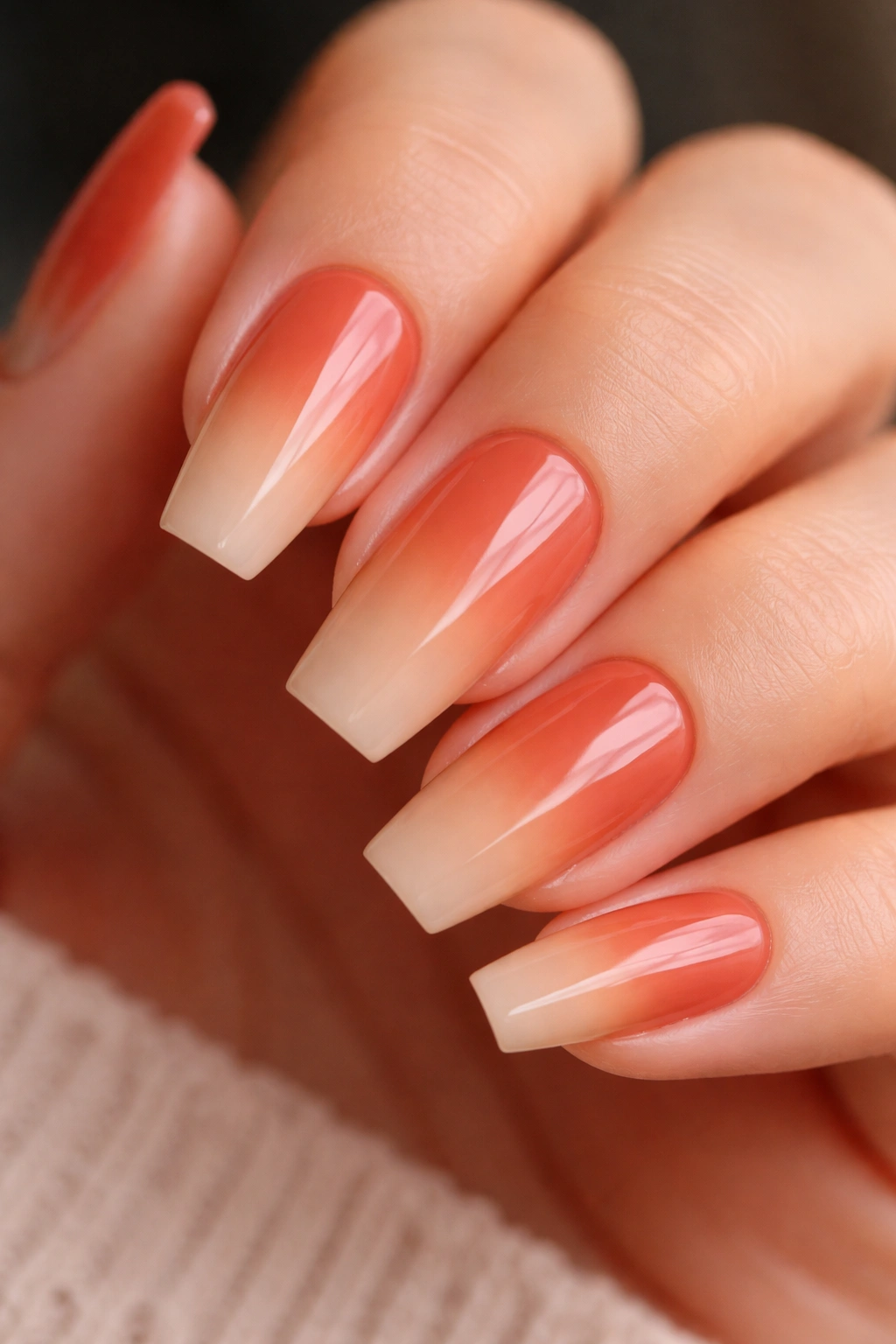
Warm earth tones can look flat on nail charts and then come alive once they’re on the hand. Terracotta to desert sand is one of those combinations. The reddish clay note near the tip or mid-length gives the set body, while the sand tone near the base keeps it wearable.
This blend shines on medium ballerina nails with a softly glossy finish. Full matte can make the terracotta look chalk-dry. Full wet gloss can push it too orange. Somewhere in the middle — a smooth top coat that reflects light, though not like patent leather — tends to look cleaner.
There’s also a practical benefit here: terracotta hides the tiny scuffs and dust that lighter beige sets show around the tip. If you type all day, open boxes, wash dishes, grab bags from the car, you’ll appreciate that.
I would not pair this with loud white linework. Black detail can work, though only in small doses. A single thin swirl on one finger is enough.
The color story carries the set on its own.
12. Blush Nude to Champagne Chrome Fade
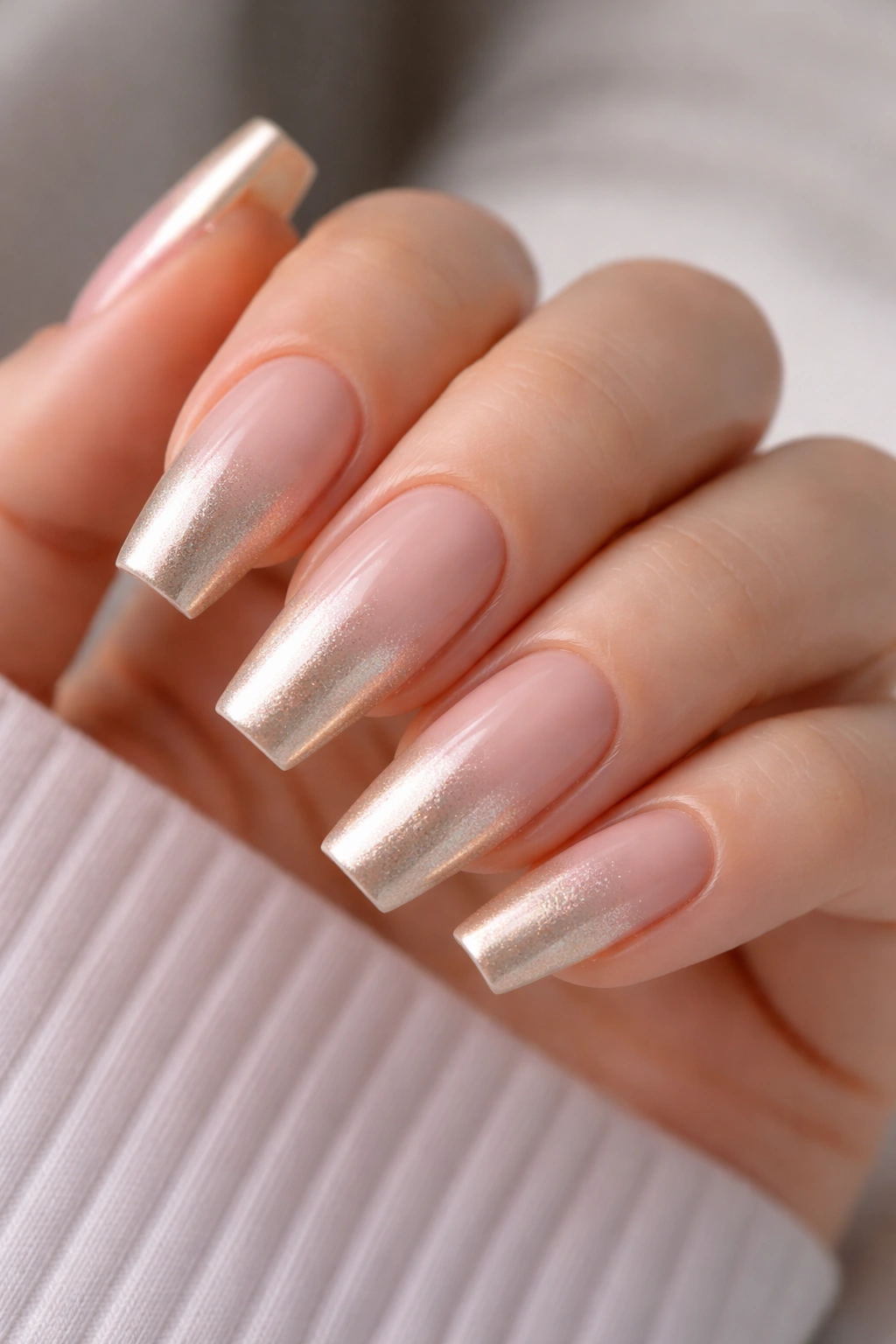
Unlike full chrome nails, which can feel like armor on a ballerina shape, blush nude to champagne chrome keeps the metallic effect where it helps most: at the tip, where the shape already wants a little edge.
Start with a blush nude base that still shows some transparency, then fade champagne chrome or fine metallic pigment over the final third of the nail. If the tech powders chrome over the whole surface, the ombré disappears. You want a soft metallic drift, not a full mirror.
Who is this for? Anyone who wants a dressier set but does not want rhinestones, glitter chunks, or heavy nail art. It’s strong enough for an event, though calm enough for daily wear.
My pick would be a medium ballerina length with almond-champagne chrome, not bright yellow gold. Yellow gold can make the finish look brassy. Champagne stays smoother and more expensive-looking.
13. Jelly Nude to White Airbrushed Tips
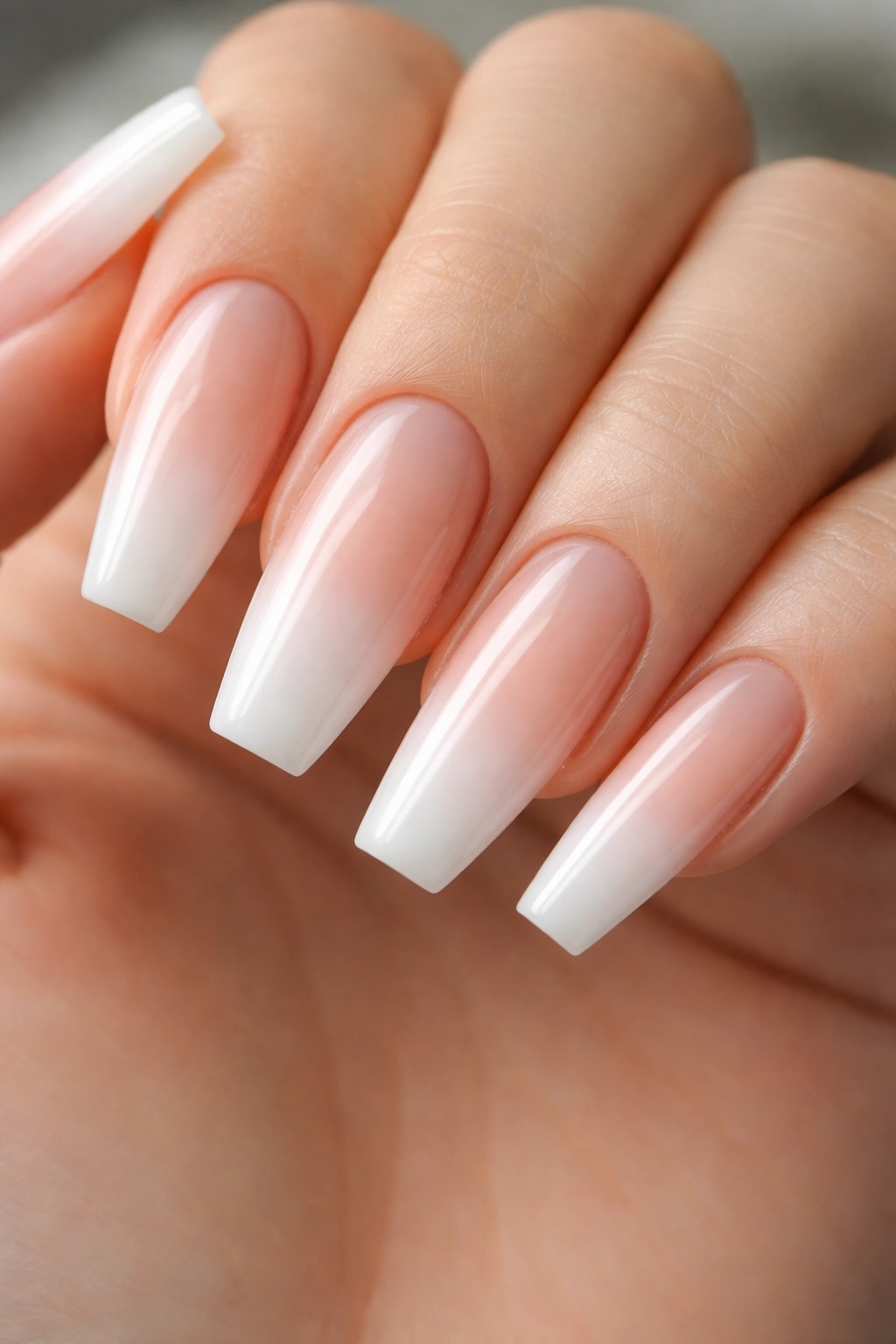
Airbrushed ombré has a softness sponge blends rarely match. Jelly nude to white airbrushed tips are proof. The color lands in a mist instead of a stamp, so the edge disappears more naturally, especially on that flat ballerina tip where harsh lines stand out fast.
Why airbrush makes such a difference
A sponge can leave a grainy pattern if too much gel sits on the surface. Airbrush lays color in whisper-thin passes, which means the gradient builds slowly and evenly. The result looks cleaner under both gloss and matte, though I still prefer gloss for this design.
This is the set I’d choose if I wanted classic baby boomer energy with a sharper salon finish.
Ask for these details
- A jelly nude or sheer cover pink base
- Two to three light airbrush passes of soft white, not one heavy blast
- A leveled builder or clear gel overlay to smooth the surface
- Tapered sidewalls and a flat, narrow tip
- No glitter mixed into the fade line
If your salon offers airbrush and the tech knows how to use it, this style is worth the extra few minutes.
14. Black Cherry to Smoky Rosé Ombre
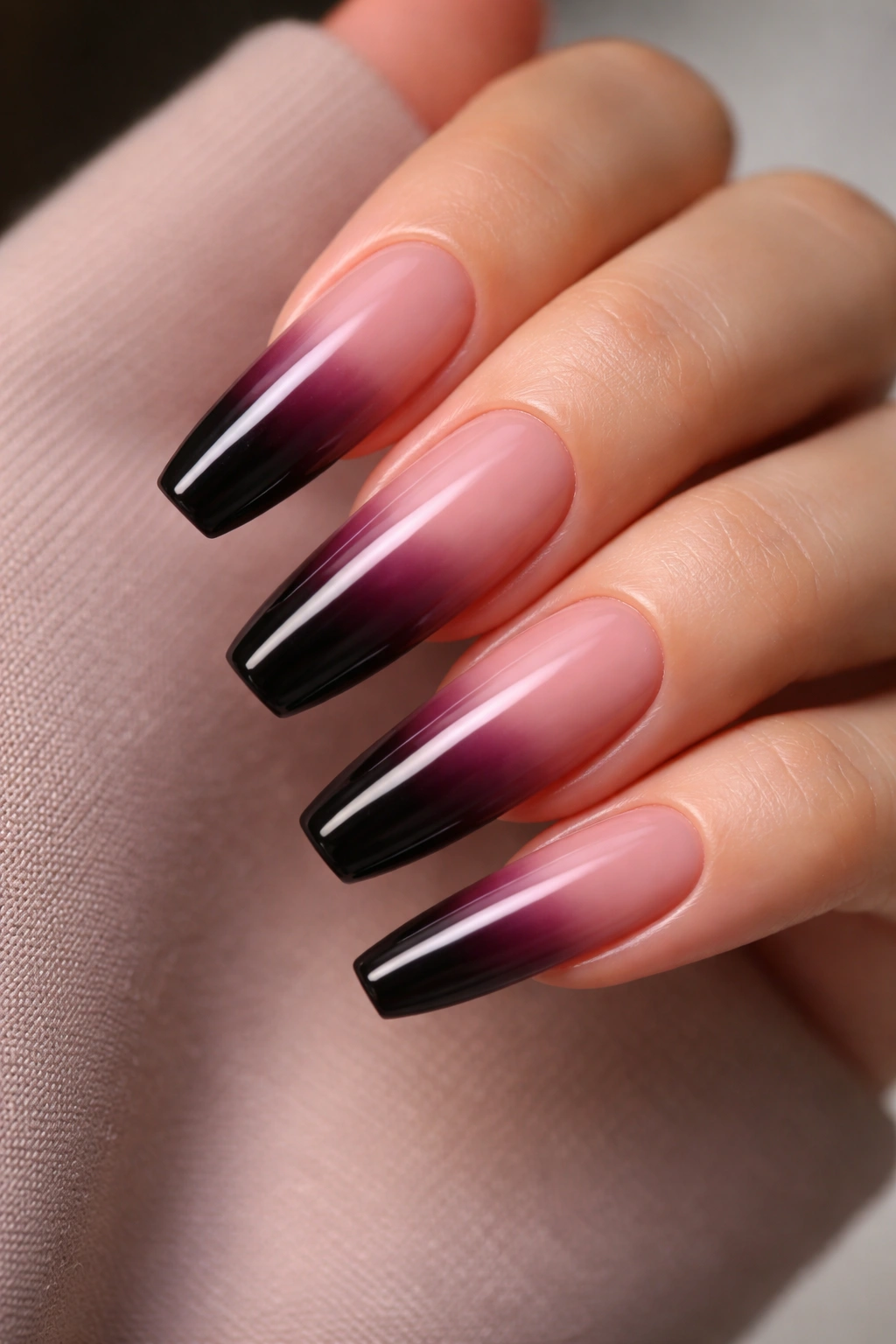
Dark ombré can look refined, though only when the deepest shade has depth instead of reading flat black. Black cherry to smoky rosé gets that balance right. The berry tone brings warmth and shadow, and the rosé keeps the base from going dead.
I like the darker color concentrated on the tip and side edges, melting upward into a muted rose near the cuticle. That layout keeps the set sleek. Put the deep berry at the base and the nail can start looking shorter unless you’re wearing full long-length ballerina extensions.
Gloss matters here. Dark berries under matte can lose their richness and turn dusty. Under gloss, the shade shows those wine-red undertones that make it feel grown-up rather than gothic.
This is not a busy design. Skip decals. Skip gems. Maybe one tiny silver accent if you insist. The color fade is the design.
15. Pearl Nude to Opal White Glazed Ombre
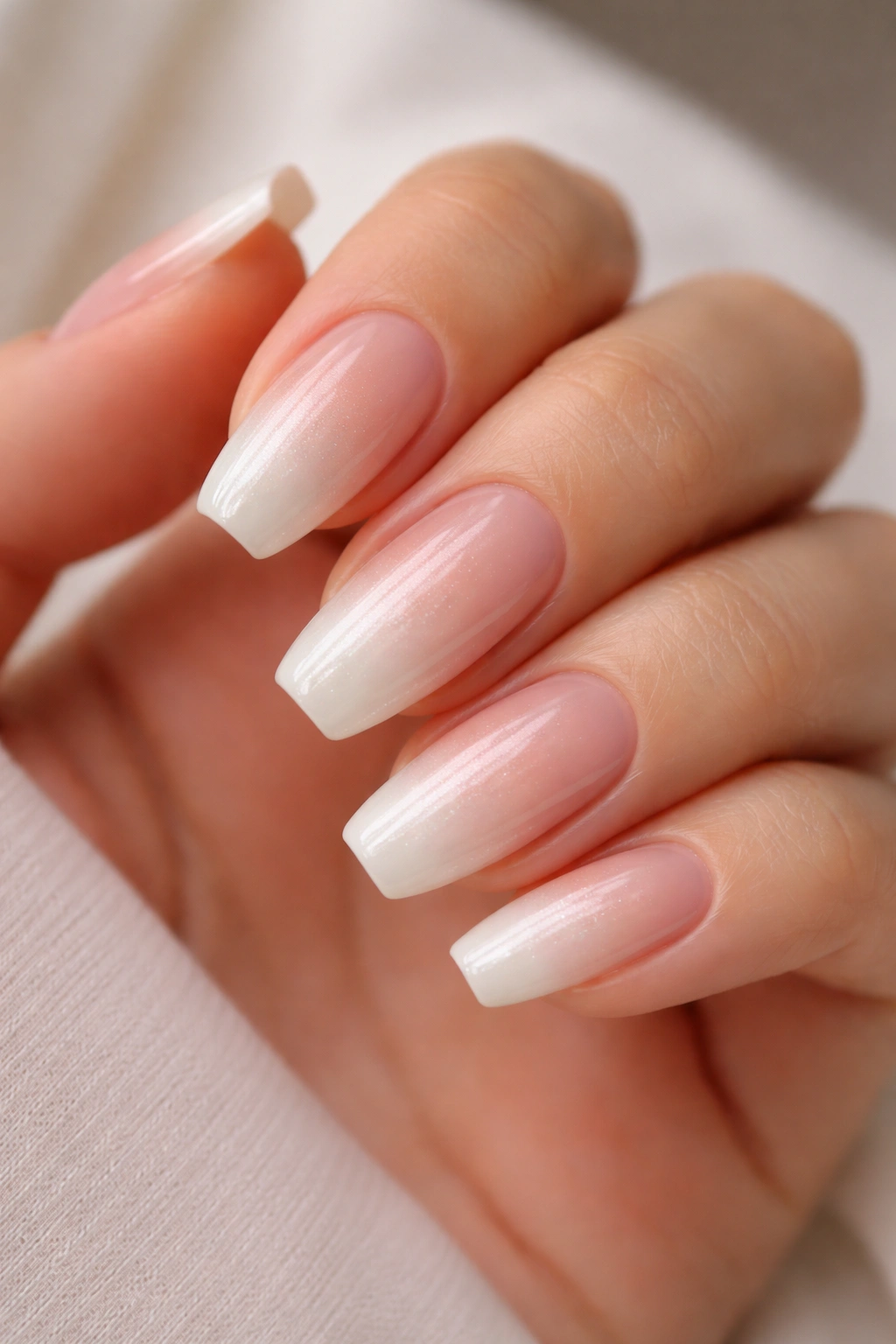
If you want something soft with a little movement when the hand turns, pearl nude to opal white is a smart finish. Not chrome. Not glitter. More like a milky ombré with a sheer glaze over the top that flashes pearl, pink, and a little blue depending on the light.
The base should stay nude enough to keep the nail grounded. Then the opal-white fade takes over toward the tip, and a fine pearl glaze goes on top in a thin coat. Too much glaze turns the whole nail frosty. A light hand keeps it airy.
I’d choose this on a medium ballerina shape with clean cuticles and no extra art. Pearls, bows, and crystals can crowd it. The shift is the whole point, and it’s subtle enough that you notice it in motion rather than all at once.
It also photographs better than dense shimmer fades because the surface stays smooth. More importantly, it looks good in person, which is not always the same thing.
Final Thoughts
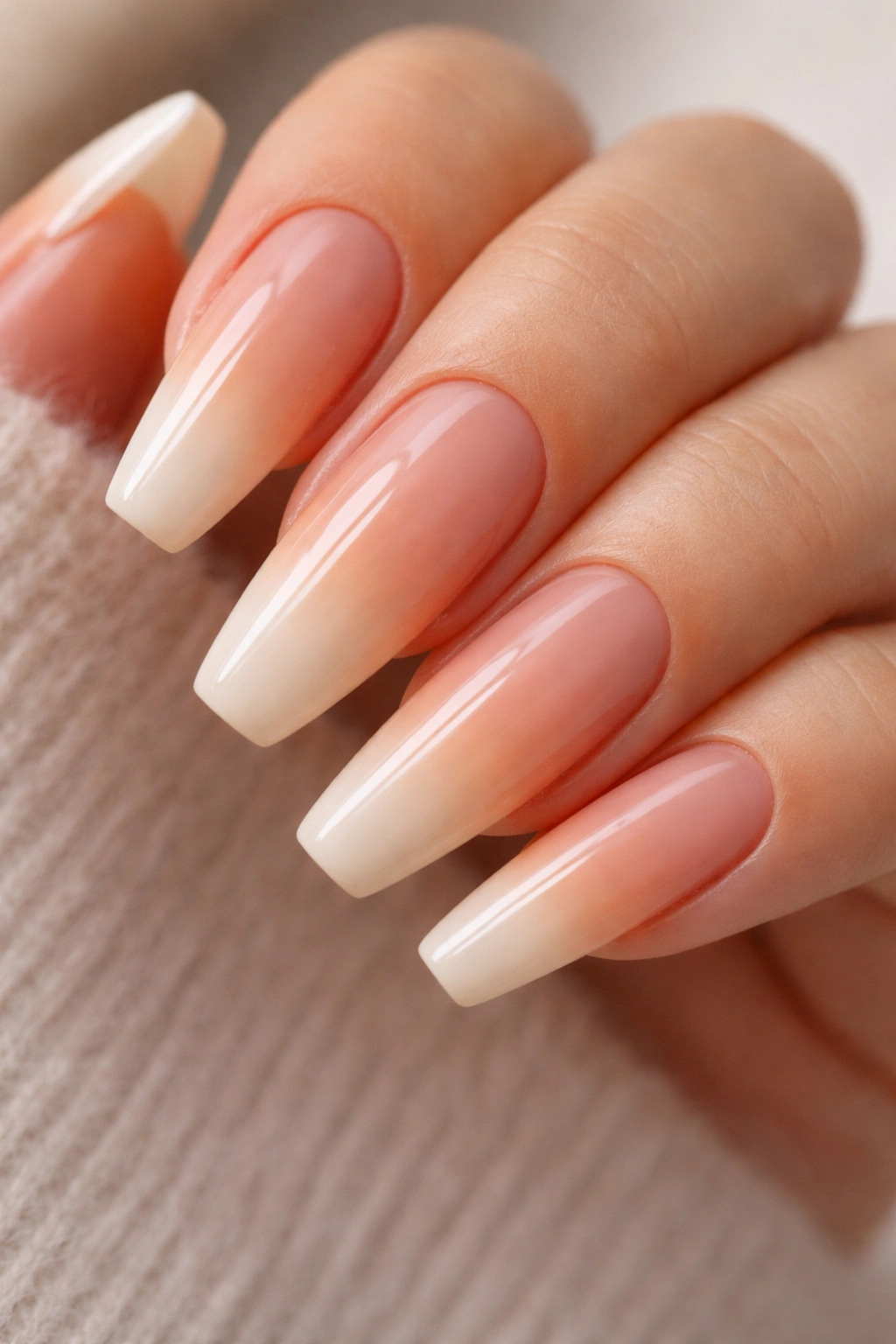
The smoothness of the fade matters more than the color family. A clean beige-to-vanilla ombré will outclass a messy chrome set every time. If the blend is thin, soft, and placed in the right part of the nail, the ballerina shape does the rest.
If you’re choosing blind, go with milky pink to cloud white, bare beige to soft vanilla, or jelly nude to white airbrushed tips. Those three have the widest margin for error and still give that long, polished look people usually want from ombre ballerina nails.
One last thing: bring reference photos shot in similar lighting, decide on the finish before the first coat goes on, and do not overload the set with extras. A ballerina nail with a smooth blend already has enough shape, enough color movement, and enough attitude on its own.