




Most nude manicures miss by a hair. The polish looks fine in the bottle, then it lands on a ballerina shape and turns chalky, flat, or a little too mannequin-like. Nude ballerina nails only look natural when three things line up at once: the undertone, the opacity, and the shape.
That’s the part people don’t say enough. A nude that looks clean on a short round nail can look heavy on a tapered coffin tip, because the wider flat edge pulls more attention than you expect. Add one coat too many, and the color stops looking like your nails—just smoother and longer—and starts looking like painted plastic.
I’ve always thought the best natural nude nails have a tiny bit of life in them. A hint of pink. A whisper of beige. Sometimes a sheer caramel wash on deeper skin. You want that soft, skin-adjacent effect where the nail bed still looks believable, the free edge doesn’t glow bright white, and the shine looks like healthy keratin instead of a thick candy shell.
The good news is that the ballerina nail shape can do this better than people give it credit for. File it too hard and it turns severe. Keep the taper soft, the apex slim, and the color choice smart, and it becomes one of the cleanest, most wearable looks in the salon.
Why Some Nude Ballerina Nails Look Skin-Like and Others Look Chalky
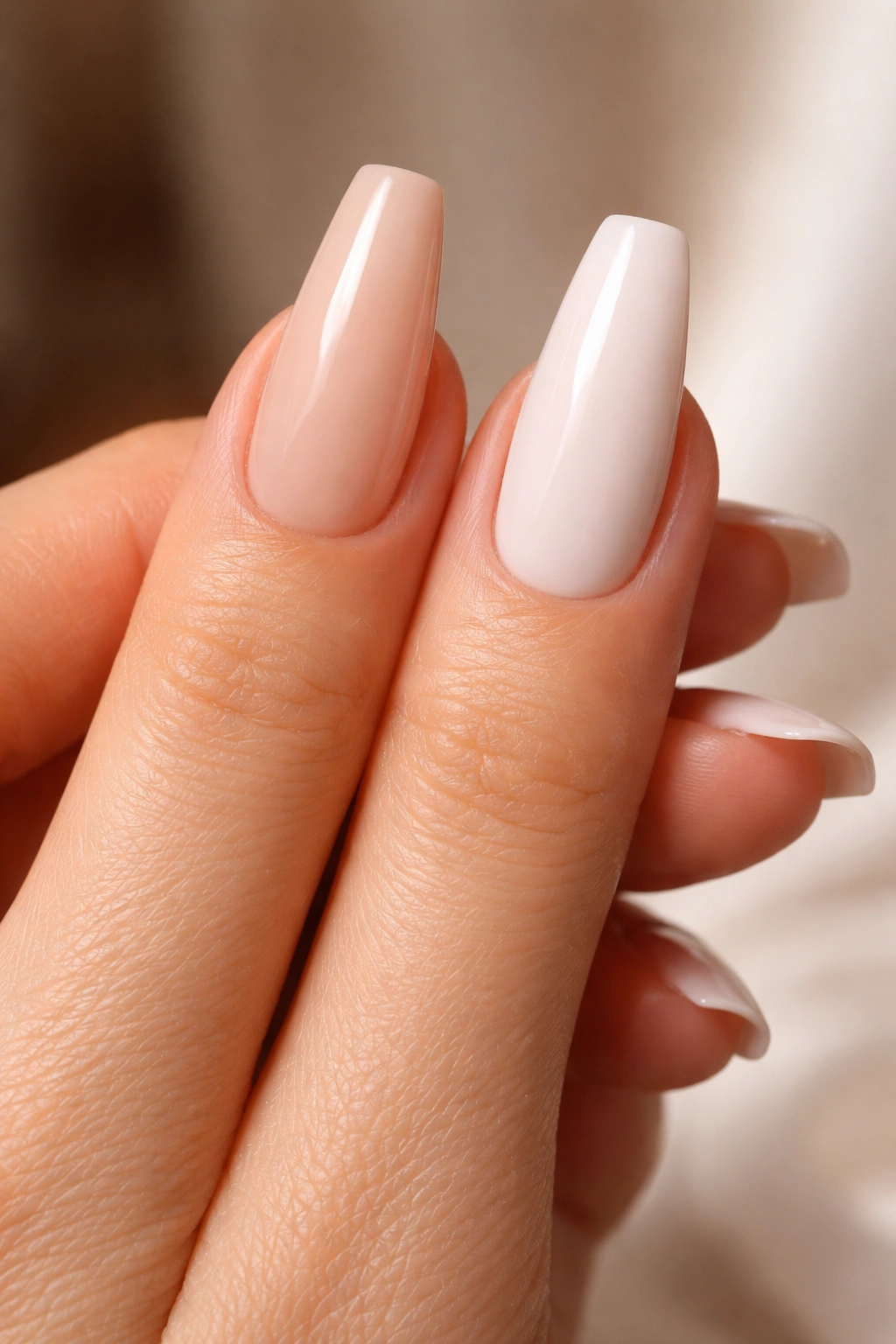
A natural-looking nude manicure is not about finding a color labeled nude. That label means almost nothing. What matters is how the polish behaves on the nail once it’s stretched over a longer, tapered shape.
Opacity is the first deal-breaker. Dense cream nudes can hide every bit of the natural nail underneath, which sounds nice until the result looks flat from cuticle to tip. Most believable nude ballerina nails use sheer to medium opacity, usually built in two thin coats instead of one thick one.
Undertone comes next. If your skin has warmth and the nude is too pink-gray, your hands can look a little drained. Go too yellow on cool-toned skin and the manicure starts fighting the rest of your hand. The best match does not disappear completely—it blends while still giving the nail some definition.
Shape matters more than color charts admit. On ballerina nails, the squared tip creates a visual line at the end of the finger, so bulky product and stark shade contrast show up fast.
A few quick signs that a nude shade will read natural:
- The cuticle area looks soft, not sharply outlined by a dense block of color.
- The free edge does not flash bright white under the polish unless you want a milky look.
- The sidewalls stay slim, without thick gel flooding the edges.
- The tip width is narrow enough to lengthen the finger, but not pinched.
That last one gets overlooked all the time.
Choosing a Nude Ballerina Nail Shade by Undertone
If you’ve ever held two beige polishes side by side and thought they looked almost identical, then watched one look clean and the other look wrong on your hand, undertone is why.
Warm undertones and golden skin
Skin with golden, peach, honey, or olive warmth usually looks best in beige, caramel, sand, toffee, cinnamon, and peach-nude tones. A warm nude doesn’t need to be dark. It just needs a little yellow, gold, or peach under the surface so the manicure sits comfortably against your skin instead of looking dusty.
Cool undertones and pink skin
When your skin leans rosy, porcelain, or blue-pink, cooler nudes tend to look more believable. Think milky pink, rose beige, mauve nude, soft taupe, and muted blush. Skip heavy yellow-beige shades here. They can make the fingertips look off, especially in daylight.
Neutral undertones that can swing either way
Neutral skin has the easiest time, though “easy” is not the same as “anything goes.” Balanced shades—pink-beige, putty, almond milk, neutral latte, light mocha—usually work best. If you’re between two shades, pick the one with a little translucency. Sheer color forgives small undertone misses better than opaque cream polish does.
One more thing. Hands are often a shade deeper or pinker than the face, and knuckles can pull cooler than the wrist. Test nude nail colors against your fingers, not the inside of your arm. That tiny detail saves bad salon choices.
The Shorter Length and Softer Taper That Keep Ballerina Nails Natural
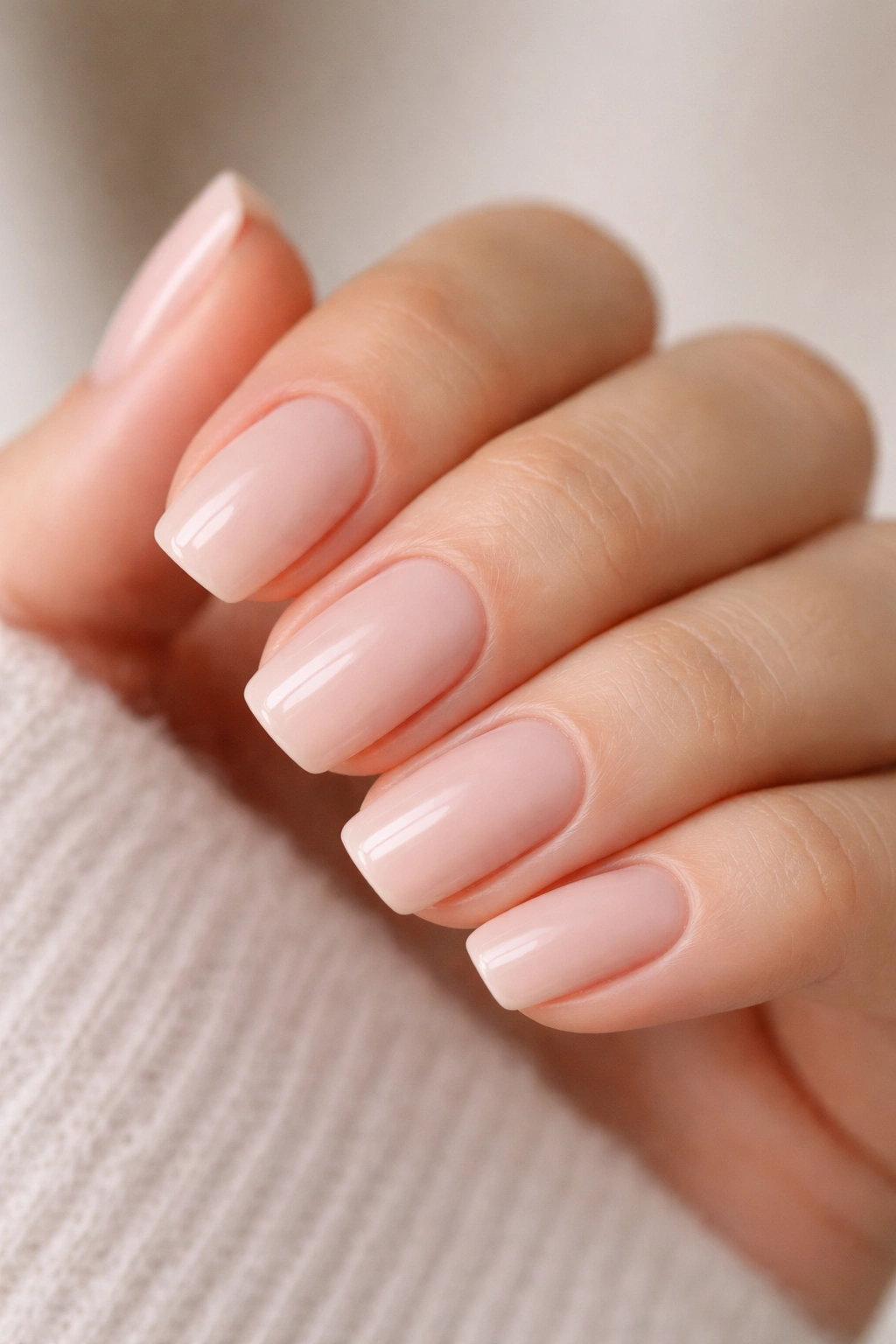
Long ballerina nails can look sharp and editorial. That’s a different mood. If your goal is a natural finish, keep the length under control.
For most hands, the sweet spot is 3 to 6 millimeters past the fingertip. That gives you the ballerina shape—the tapered sides and flat end—without drifting into dramatic coffin territory. Short ballerina nails also make nude polish look more believable because there’s less surface area for one color to sit on.
A soft taper helps even more. You want the sidewalls to narrow slightly as they move toward the tip, then finish in a flat edge that is straight but not wide. Over-filed tips can make nude shades look harsh, almost like press-ons from far away.
Product thickness matters here too. A natural nude ballerina manicure should have a subtle apex, usually around the stress area, and the tip should stay lean. If the free edge feels chunky when you tap it against your thumb, it’s too much.
Skip the “longer is prettier” idea if it doesn’t match the look you want. For natural nude coffin nails, shorter usually wins.
1. Soft Beige Nude Ballerina Nails
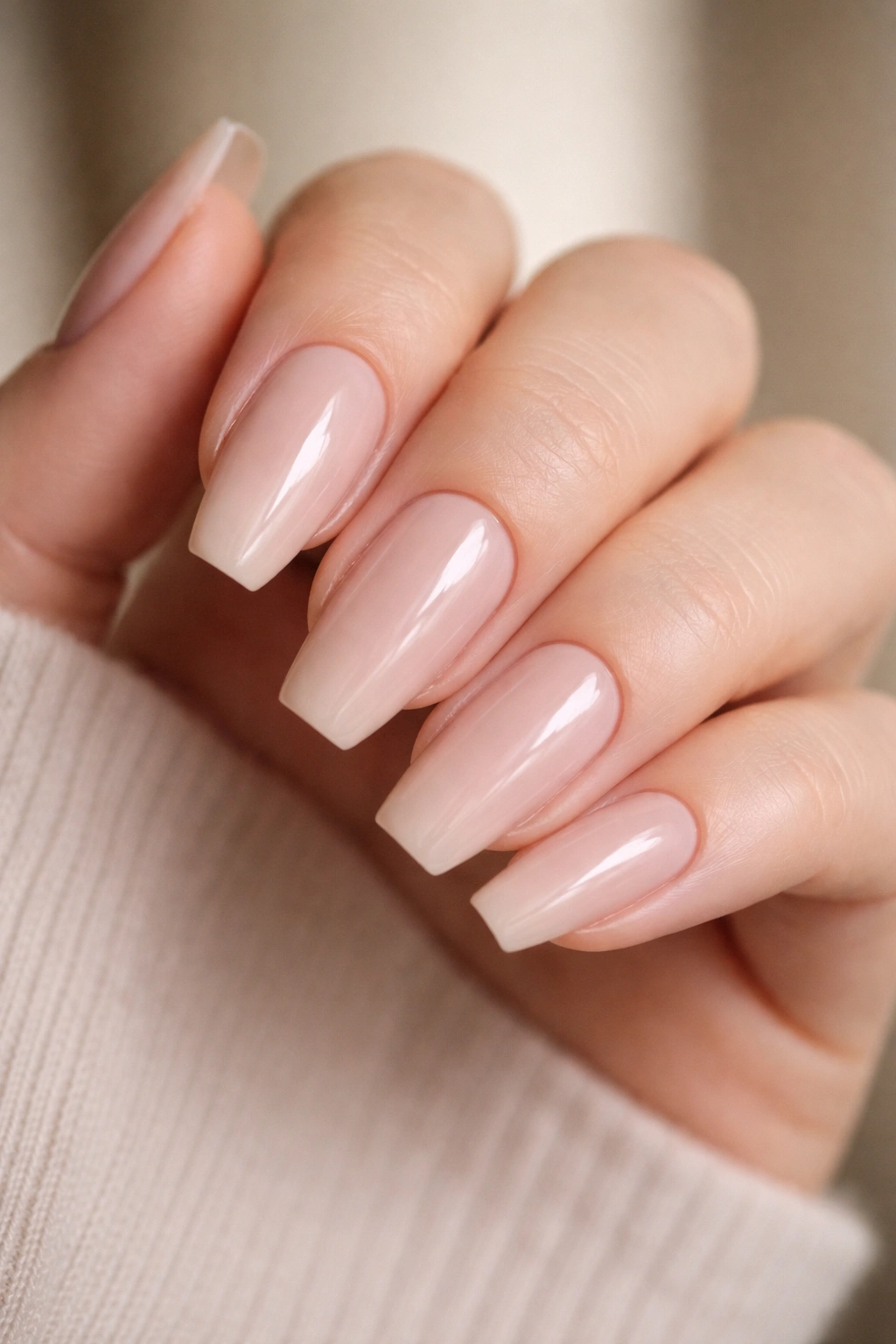
A soft beige nude is the one I’d hand to almost anyone as a starting point. It sits between pink and tan, which keeps it from reading sugary or muddy, and on a ballerina shape it gives that clean salon finish without shouting for attention.
Why this shade looks believable
The trick is muted beige with a drop of pink, not yellow concealer beige and not gray putty. When the color lands in that middle zone, it echoes the way healthy nail beds look once you add a little polish and shine. Two thin coats tend to do the job better than one heavy pass.
Ask for a soft-gloss top coat rather than a thick gel dome. Beige can go lifeless under bulky product.
Quick details that help:
- Best length: short to medium, about 4 millimeters past the fingertip
- Best finish: glossy, not glassy-thick
- Best skin match: light, medium, and neutral-leaning olive tones
- What to avoid: chalky beige with too much white pigment
My take: if you only save one reference photo for nude ballerina nails, make it this kind of beige.
2. Peach-Blush Nude with High Gloss
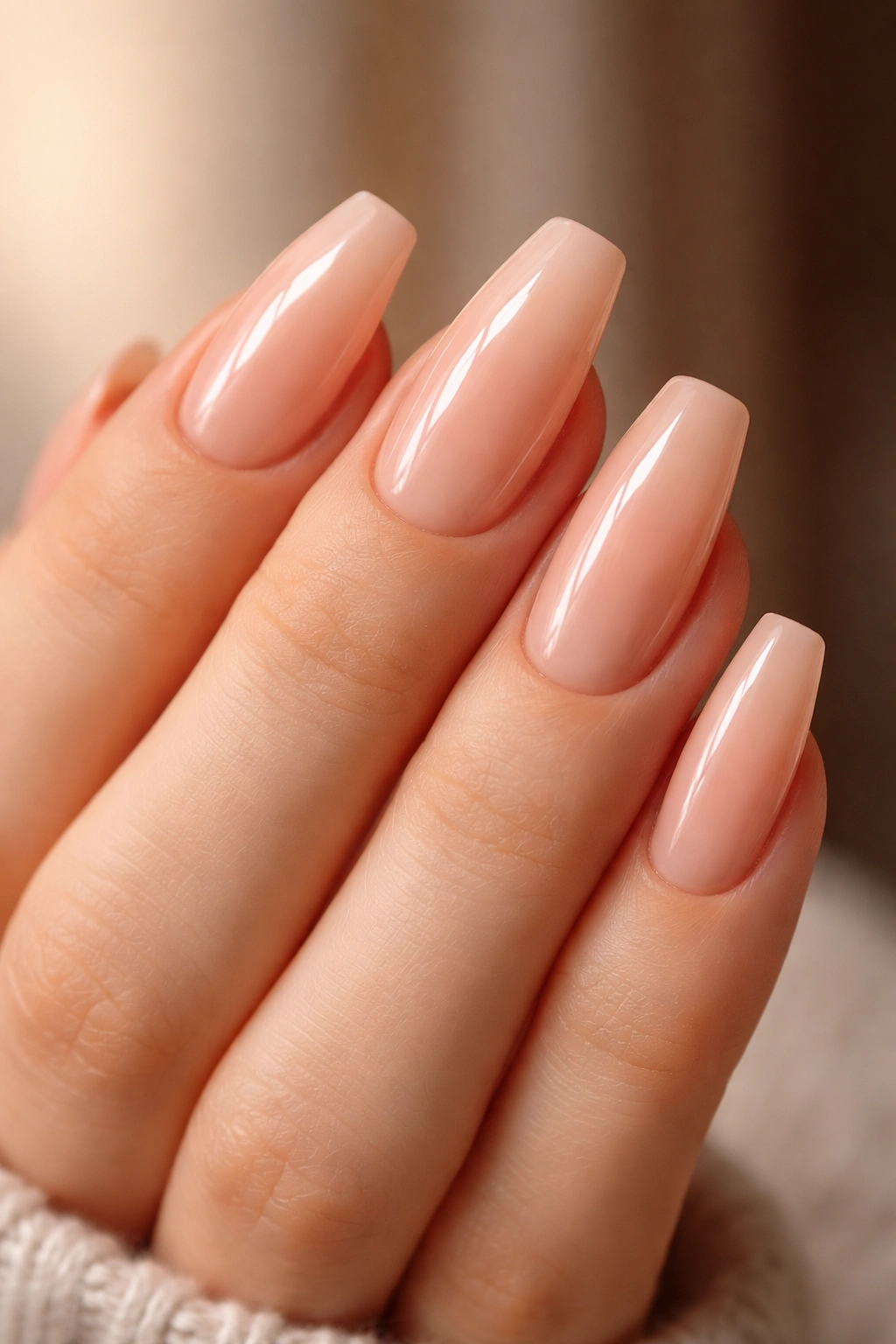
Peach-blush is kinder to the hands than flat pink-beige, especially when your skin has warmth in it. That small peach shift wakes the manicure up. Fingers look less dull. Knuckles look smoother. The whole hand reads healthier, which is half the battle with natural nude nails.
On ballerina tips, peach-blush works because it softens the straight free edge. A squared tip can turn cold if the color is too pale or too gray. Peach puts a little blood flow back into the look. It does not need glitter, art, or chrome to feel finished. A slick high-gloss top coat is enough.
This is one of those shades that can go wrong fast if the pigment is too orange. You want a blushy peach with a beige base, not coral. Think tea with milk, not sherbet. If the salon swatch looks lively in the bottle, hold it against your fingertip before you commit.
I like this look most on short ballerina nails. It feels fresh, polished, and low-maintenance in the way people usually mean when they ask for “my nails but better.”
3. Milky Pink Nude Ballerina Nails
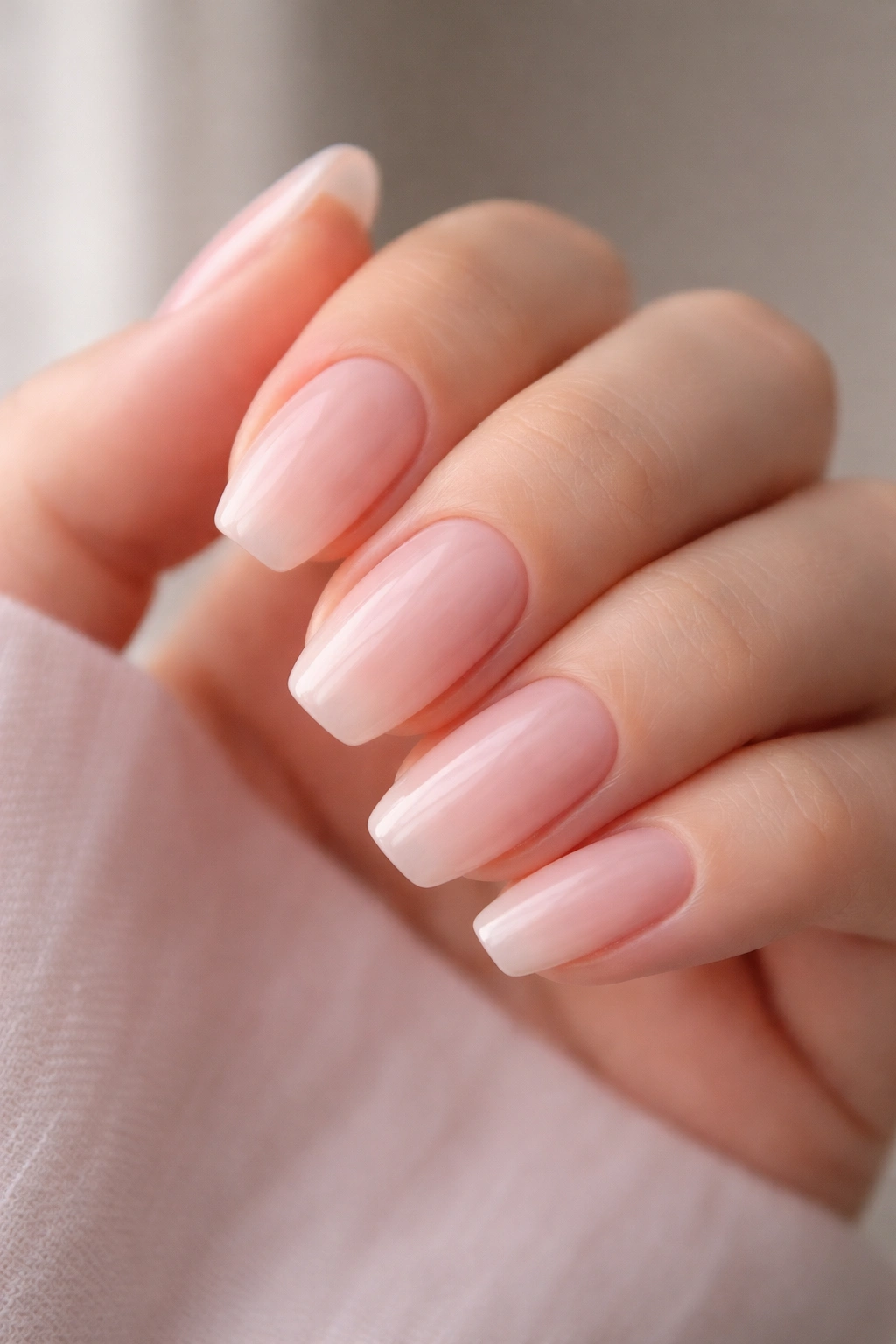
Why do milky pink nails make hands look cleaner? Because they blur the line between your natural nail and the polish without erasing it.
A sheer milky pink lets some of the nail bed show through, which keeps the manicure alive. You still get brightness, but not that hard white cast that can happen with denser baby-pink shades. On a ballerina shape, that softness matters. The tip is already geometric; the color needs to do some softening.
One catch: milky pink can turn streaky if the nail tech tries to force coverage in one pass. Thin, floated coats work better, especially with builder gel or a self-leveling sheer polish. The second layer should even things out while leaving a faint translucency near the sidewalls.
How I’d wear it
Keep the length modest and the tip slim. A touch of cool pink in the formula looks clean on fair skin, while a warmer milk-pink suits light-medium and peachy skin better. If your natural free edge is strong and white, ask for a slightly creamier base so it does not peek through in stripes.
Milky pink is quiet. That’s why it works.
4. Rosy Taupe with a Thin Free Edge
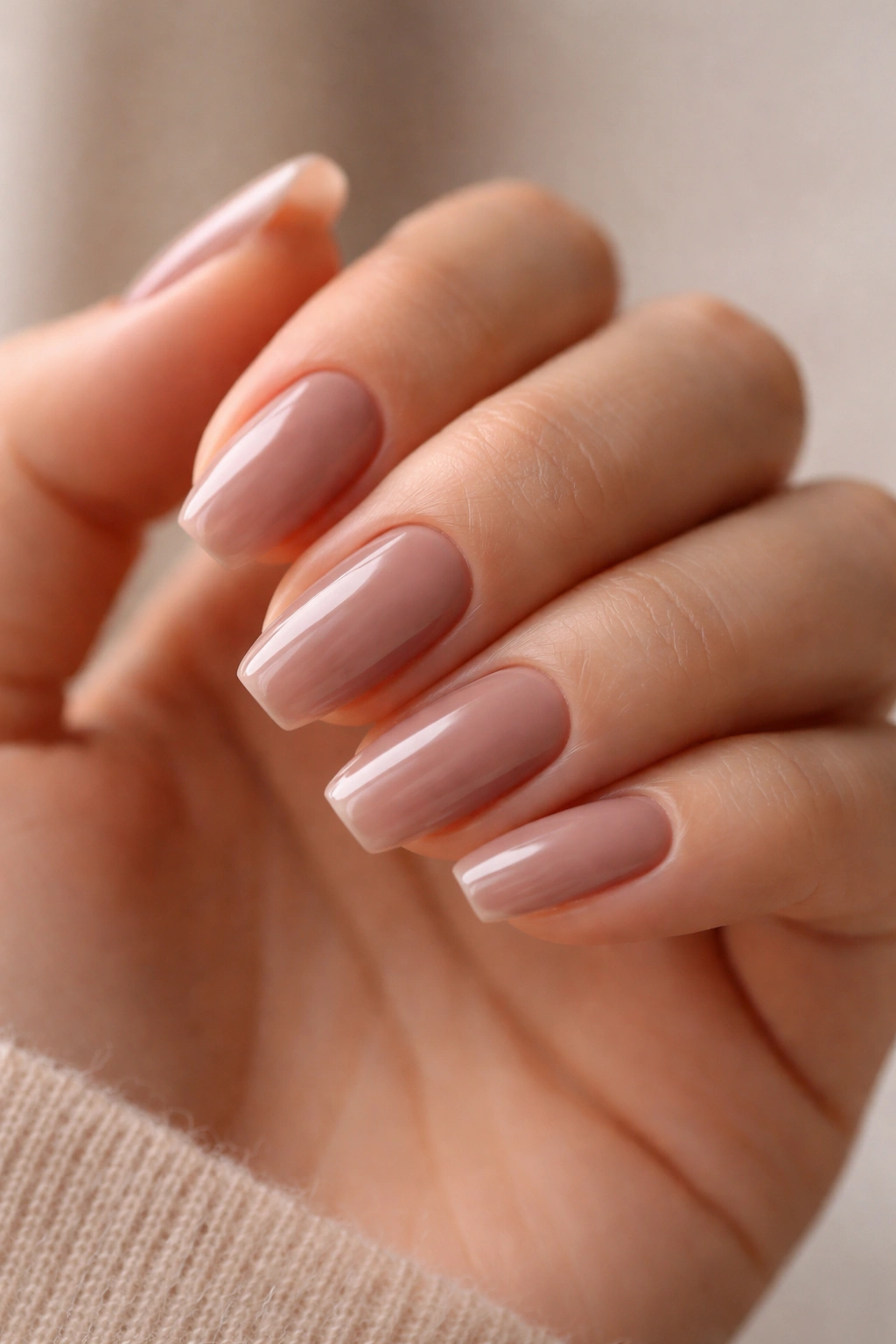
I’ve seen rosy taupe rescue more “I want nude but not boring” appointments than almost any other shade. Under office lights, plain beige can flatten out. Under warmer light, cool pink can drift sweet. Rosy taupe lands in that useful middle ground where the manicure still looks natural but carries a little depth.
The shade works best when the free edge stays thin. Ballerina nails already give you a neat horizontal line at the tip, and taupe has more visual weight than milky pink or jelly beige. If the tip gets bulky, the manicure starts looking heavier than it needs to.
A good rosy taupe should have:
- a muted rose undertone, not plum
- a brown-beige base, not gray cement
- medium opacity, built in two coats
- a soft square tip with gentle taper
This is a smart pick when you want nude ballerina nails that can move from bare-faced daytime to dressed-up evening without needing nail art. It reads grown-up. Not severe. Not sugary either.
5. Almond-Milk Ombré Fade
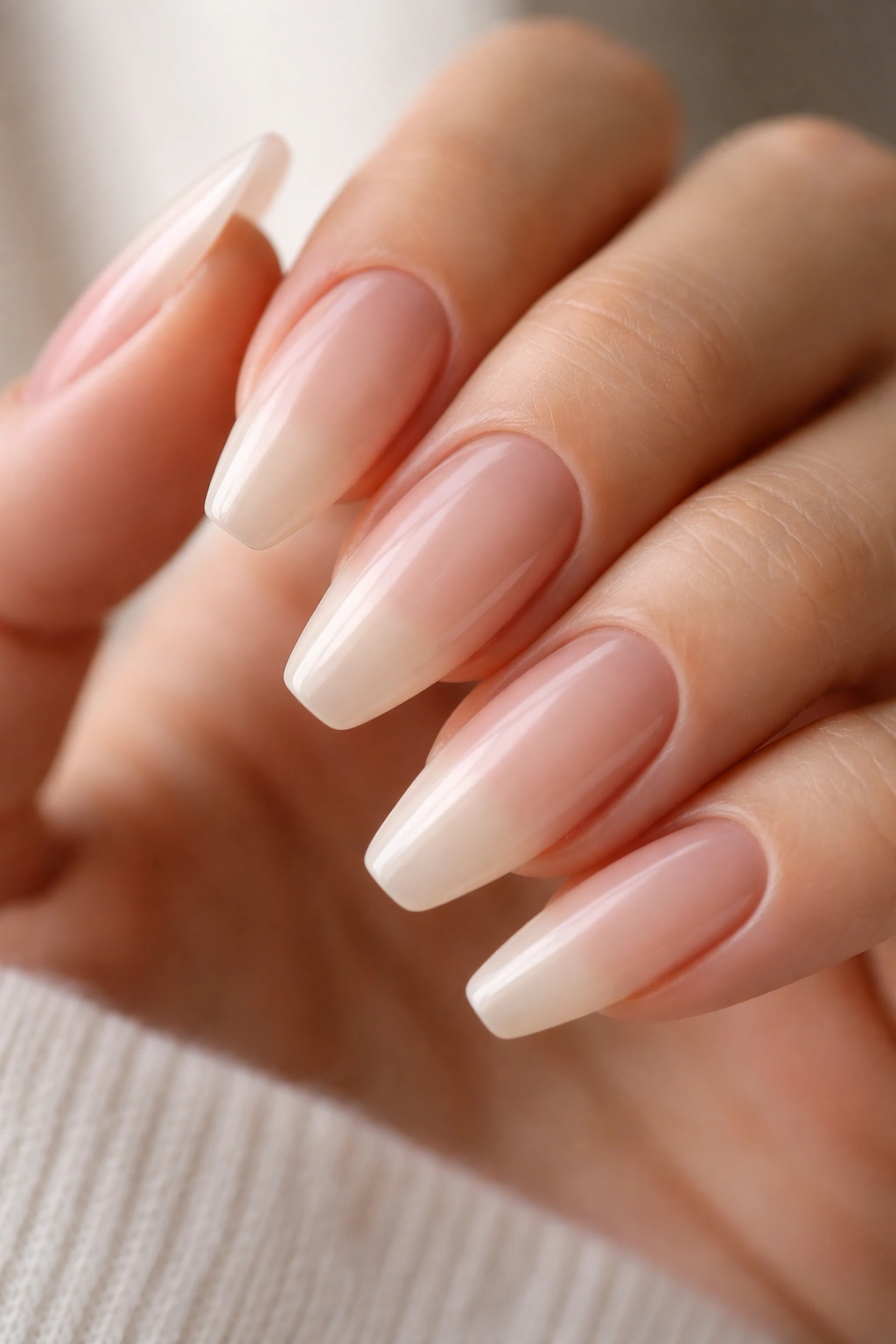
If you like nude nails but hate the harsh line where regrowth starts showing, almond-milk ombré is hard to beat. The fade at the cuticle buys you a softer grow-out, and on ballerina nails it keeps the shape looking airy instead of blocked in.
The color should start sheerest near the cuticle, then drift into a creamy almond-milk tone through the center, with a touch more density toward the tip. Nothing dramatic. You are not aiming for a white baby boomer here. You want a beige-pink haze that feels natural from arm’s length and clean up close.
Application makes or breaks it. A sponge dab can work for regular polish, though gel usually gives a smoother fade because the tech can feather the transition before curing. If the blend line sits too low on the nail, the ombré looks obvious. Push the softest part toward the cuticle and keep the color change gradual.
I like this on medium-length ballerina nails because the shape has enough room to show the fade without turning flashy. It also helps if your natural nail beds vary a little from finger to finger—some pinker, some more beige—since the blur hides small differences.
No art needed. The fade is the design.
6. Sheer Caramel Nude on Short Ballerina Nails
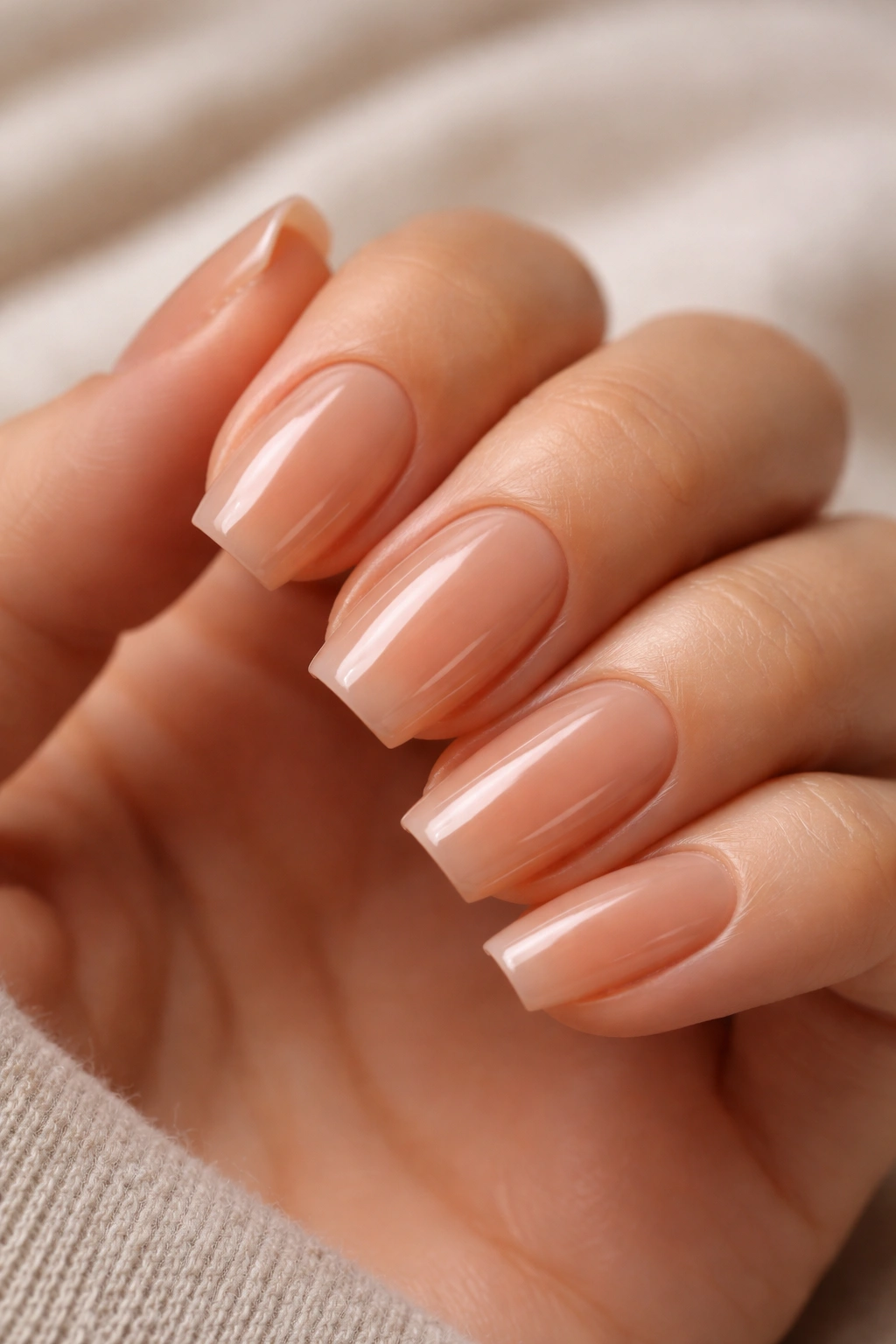
Unlike pale beige nudes, which can wash medium and deep skin out, sheer caramel keeps warmth in the manicure. That’s the whole point. You still get a neutral look, though the color has enough richness to match the hand instead of sitting on top of it.
Short ballerina shape is key here. A long caramel coffin nail can look polished and dressy, which is fine if that’s your goal. Shorter length turns the same shade into something easier and more believable—more like your natural nail tone has been cleaned up and glossed.
The best versions use translucent caramel, not dense tan cream. Light should still move through the color a bit. One coat may look too bare; three often look heavy. Two thin coats usually hit the mark, especially with a high-shine finish.
Who is this strongest on? Medium, tan, rich olive, caramel, and deep skin tones with golden or neutral warmth. If your undertone runs cooler, shift toward cocoa-rose or mauve-brown instead of straight caramel.
This is one of my favorite natural nude coffin nail ideas because it respects skin depth instead of treating “nude” like one pale beige.
7. Pink-Beige Jelly Finish
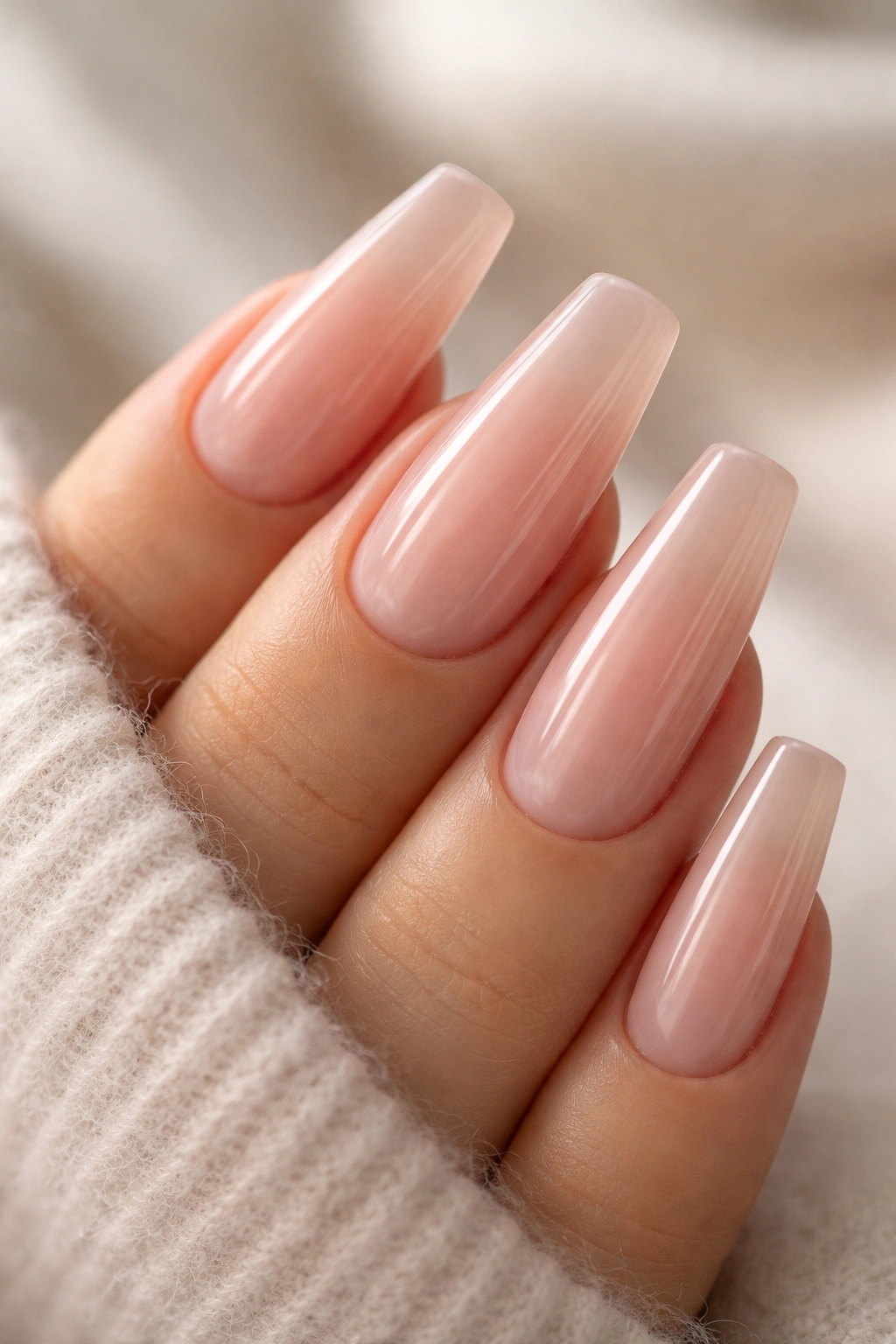
Jelly polish has a transparency that cream polish can’t fake. With pink-beige jelly, the nail still looks like a nail—not a painted tip—and that’s why it works so well when you want a natural finish.
What gives jelly polish that soft look
The shine comes from the surface, while the color stays light and see-through underneath. That combo creates depth without needing shimmer or art. On ballerina nails, which can lean angular, jelly texture puts some softness back into the shape.
A pink-beige jelly looks best when the layers are controlled. Too sheer, and the free edge can look patchy. Too dense, and you lose the whole point.
A nail tech should aim for:
- 2 to 3 thin layers, floated evenly
- a balanced pink-beige tone, not candy pink
- tight cuticle work, since transparency shows messy prep
- a slim side profile, because thick jelly still looks thick
One small warning: jelly shades show uneven nail color underneath, so a stain-correcting base can help if your nails have yellowing.
8. Micro-French Nude Ballerina Nails
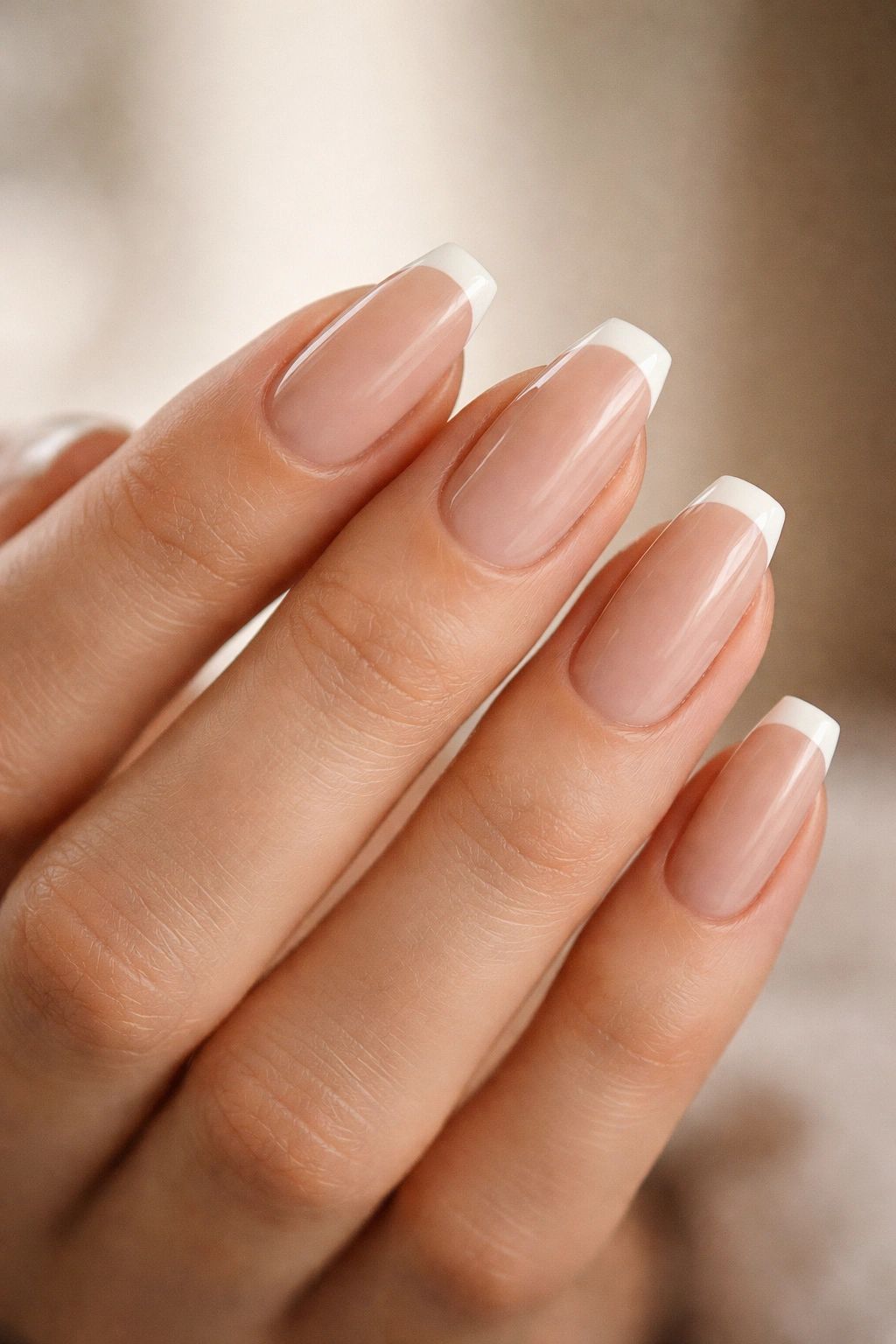
A French tip can look natural on ballerina nails—if the line is tiny and the base color carries the whole manicure. Most French sets look louder because the smile line is too wide, too white, or too crisp for the rest of the hand.
The fix is a nude base that already looks finished on its own. Then you add a micro-tip no wider than 0.5 to 1 millimeter, usually in soft ivory or warm milk rather than sharp paper-white. From a normal distance, people register “clean nails” before they register “French manicure.”
I like a pink-beige, rosy nude, or almond-milk base under this kind of tip. Cool pale pink can work too, though stark contrast is the enemy here. Keep the edge narrow and follow the natural width of the ballerina tip instead of painting a chunky smile line.
No gems. No glitter line. No extra detail on the ring finger. Those additions pull the design away from natural nude ballerina nails and into a different lane. If you want quiet polish with one little crisp detail, micro-French is hard to beat.
9. Blush Builder Gel with Barely-There Apex
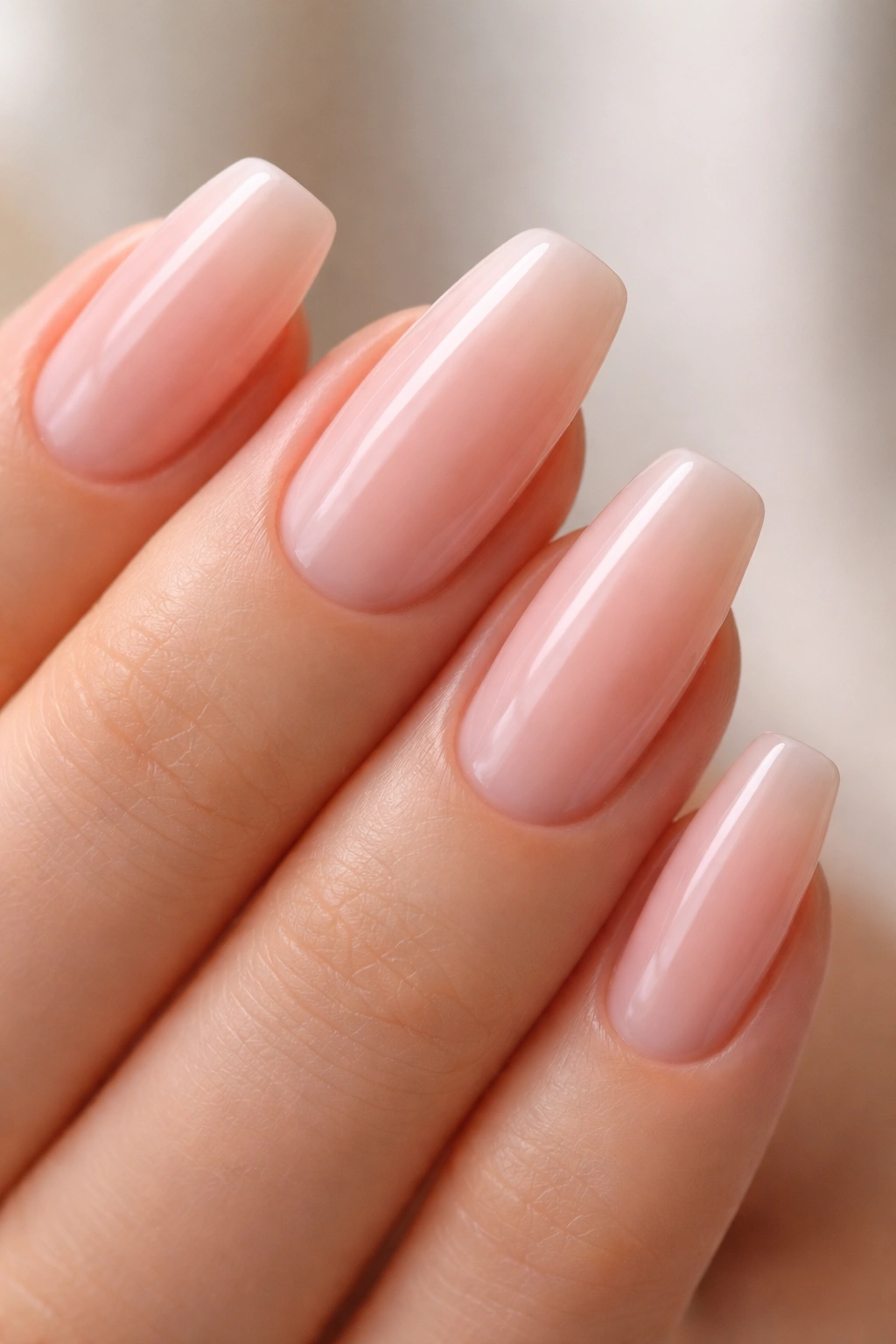
Can structured nails still look natural? Yes—if the structure is doing support work instead of trying to be seen.
Builder gel in a soft blush nude is one of the cleanest ways to get a healthy-looking manicure on ballerina nails, especially if your natural nails bend, peel, or break at the corners. The shape lasts longer, the surface stays smooth, and the color has that translucent, plump look people often try to get with three coats of polish and never quite reach.
The phrase that matters here is barely-there apex. You need enough product around the stress area to protect the nail, yet not so much that the side profile turns bulbous. On a natural set, the apex usually sits around one-third of the way down from the cuticle and melts toward the tip.
What to ask for at the salon
Ask for a blush or pink-beige builder gel with medium transparency, short-to-medium ballerina shaping, and a refined finish file underneath the free edge. If you tap the tip on a hard surface and it sounds thick, ask for more refining before top coat.
Structured does not have to look artificial. Done well, it looks expensive and quiet.
10. Warm Sand Matte Ballerina Nails
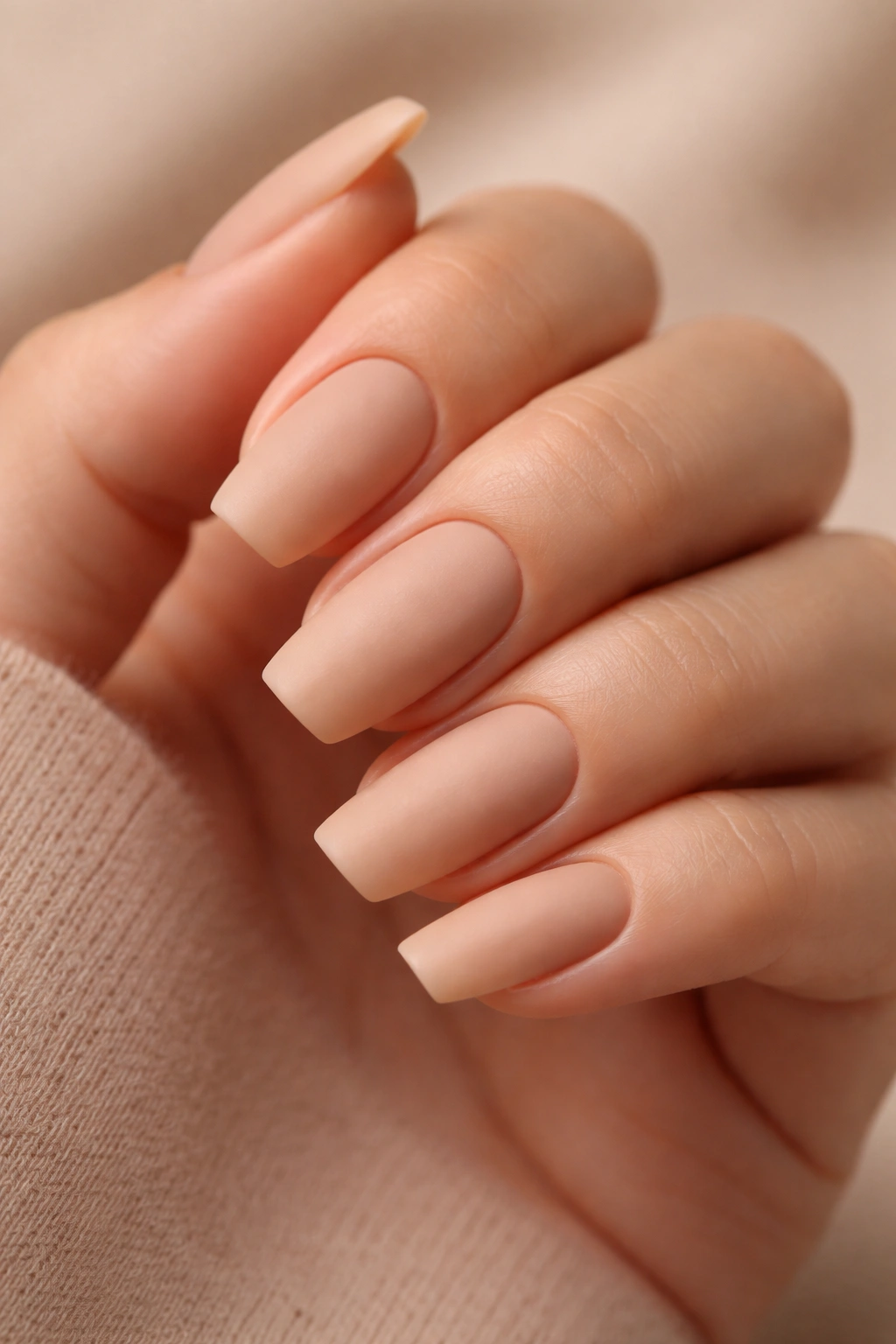
A friend once showed me a matte sand nude manicure and said, “Why do these look more like skin than polish?” That’s the appeal. Gloss reflects light and calls attention to the surface. Matte diffuses it.
Warm sand is the right shade for this because it sits between beige and light tan, with a soft warmth that still reads neutral. On ballerina nails, a velvety matte top coat can make the shape feel less dressy and more grounded. Think smooth suede, not chalkboard.
A few details decide whether matte sand looks refined or dry:
- keep the color one step deeper than your lightest skin tone
- use short ballerina length, since long matte tips can read severe
- file the tip dead straight, then soften the corners a touch
- moisturize cuticles daily, because matte shows dryness fast
I would not choose this for a first nude manicure if your skin runs cool pink. Warm sand can skew yellow there. On warm or neutral hands, though, it has a calm, tailored feel that glossy nudes do not. Different mood. Same clean finish.
11. Toffee Nude with Soft Ombré Cuticle
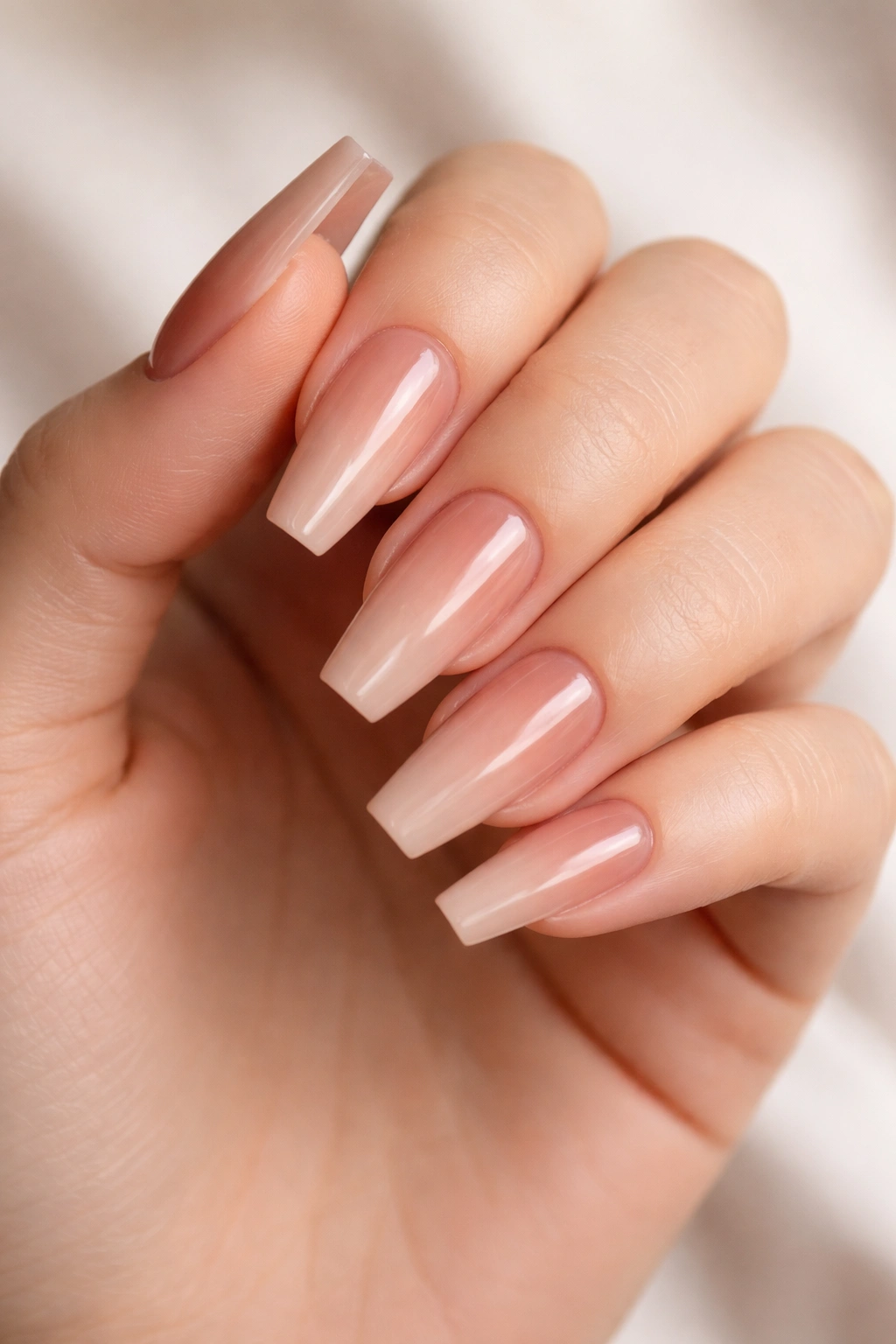
Toffee nude has more body than caramel and more warmth than taupe, which makes it a strong option for medium to deep skin tones that swallow pale beige whole. The ombré cuticle keeps it light enough to stay natural.
Instead of placing full opacity from cuticle to tip, the color should appear to bloom out from the nail plate. The cuticle area stays sheer, almost blurred, then the toffee deepens through the middle and tip. That soft start matters because darker nudes can look abrupt when the base is packed with pigment.
This kind of fade also helps with grow-out. Straight cream toffee polish can leave a hard line after a week or two. A diffused cuticle edge is easier on the eye, especially on a ballerina shape where the long sidewalls already add structure.
I like toffee most in a glossy finish. Matte can flatten it. A little shine gives the brown warmth some movement and keeps the manicure from looking too dense. If you’re deciding between caramel and toffee, caramel is lighter and more golden; toffee brings in a deeper toasted note that can match richer skin tones better.
That subtle shift matters more than people think.
12. Cool Nude Mauve for Fair and Olive Skin
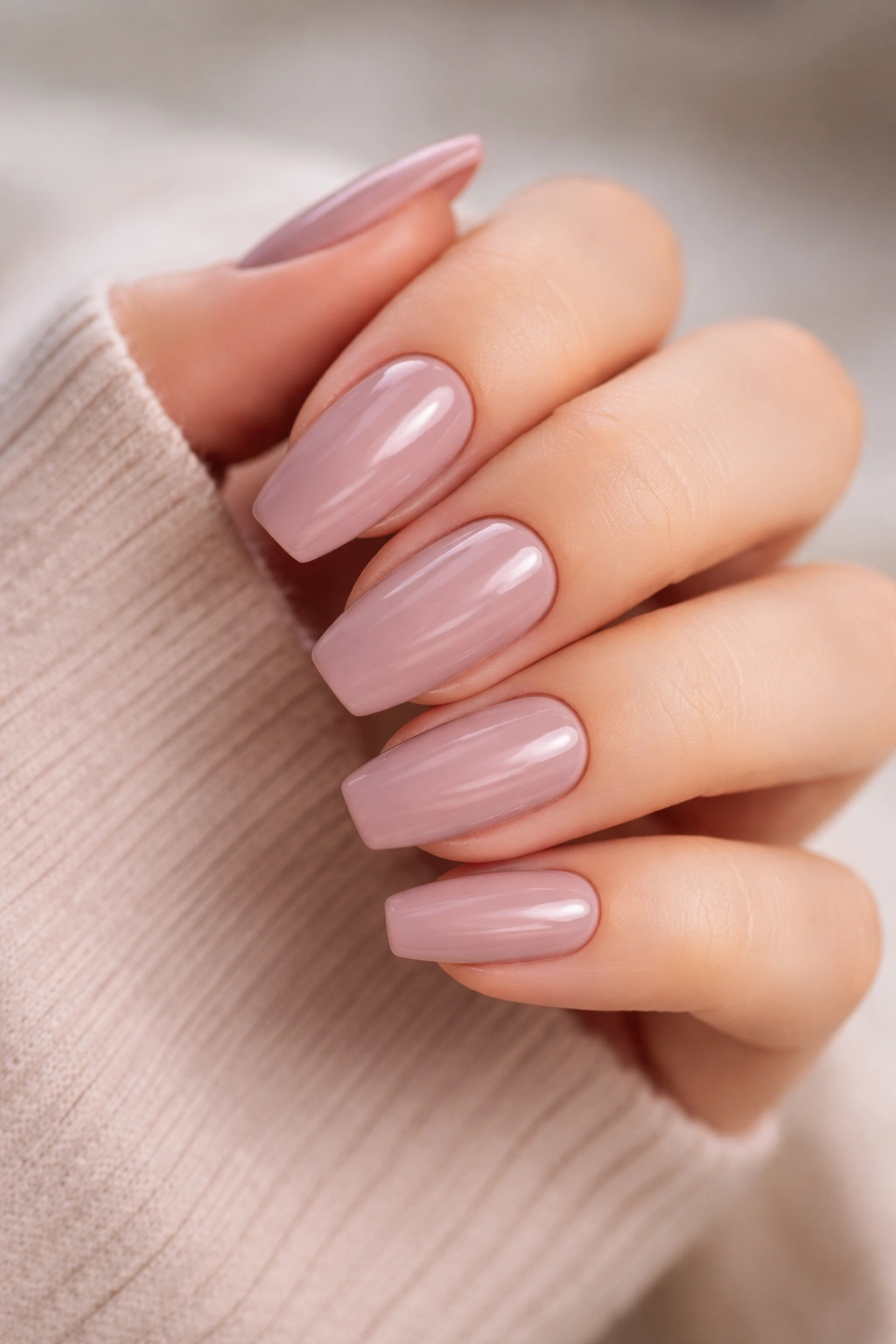
Unlike peachy nudes, which can make cool skin look yellow, a muted mauve nude sits neatly against pink or olive undertones. There’s enough rose and taupe in it to feel like skin, though not enough purple to turn the manicure moody.
Fair skin often benefits from this balance because plain beige can look stark. Olive skin can wear it well too, especially when the olive leans cooler or slightly gray-green. Mauve fills the gap between rosy pink and taupe-beige in a way few nude shades do.
The color needs restraint. You want dusty mauve-beige, not berry, not lilac. On ballerina nails, medium opacity works best so the shape still feels soft. A full-coverage dark mauve can look polished and chic, though it stops looking natural fast.
I’d pair this with a tidy, shorter ballerina tip and a clean glossy finish. No chrome. No art. The point is that whisper of cool depth that makes the hand look pulled together without looking painted from across the room.
If beige nudes always disappoint you, try this lane next.
13. Translucent Putty Nude with Glass Shine
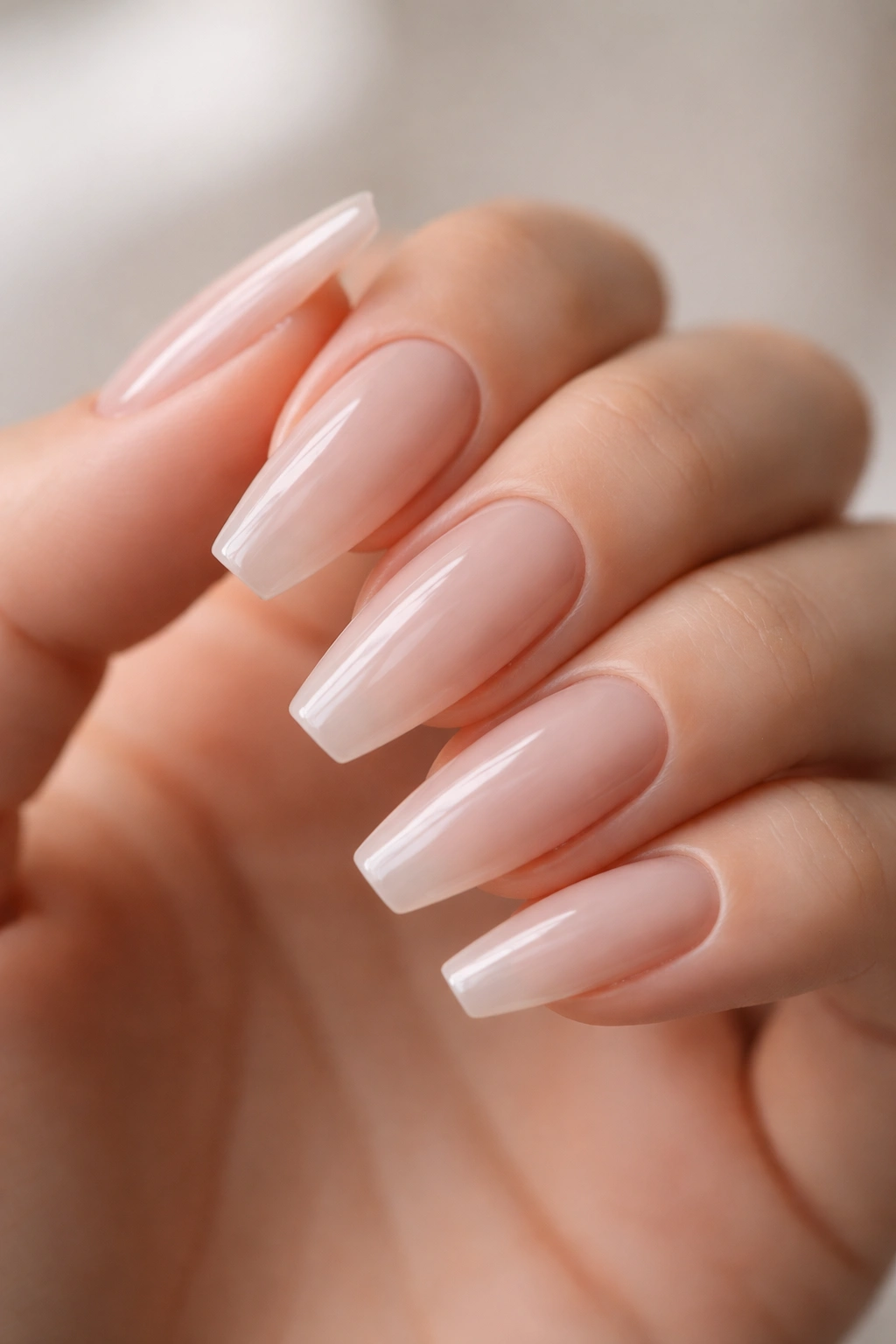
Putty nude sounds dull on paper. On nails, it can be one of the smartest neutral choices you can make.
Why this one feels modern without looking flashy
A translucent putty shade mixes beige, gray, and pink in tiny amounts, so it lands in a balanced neutral zone. That balance is what makes it useful. It doesn’t run peach. It doesn’t run chalk-white. It doesn’t swing too rosy either. On ballerina nails, that means the shape gets to stay the main silhouette while the color quietly supports it.
The finish matters as much as the shade here. Putty needs glass-like shine, not a rubbery thick gloss. When the top coat is smooth and thin, the translucent color looks expensive and clean.
Helpful specs:
- Opacity: sheer-medium
- Best on: neutral skin, olive skin, and anyone who hates pinky nudes
- Length: short or medium
- Avoid: dense gray-beige, which can turn flat and lifeless
Worth knowing: if your hands are heavily tanned or richly deep, choose a deeper putty version with mocha underneath so the shade doesn’t disappear into ash.
14. Soft Mocha Nude for Medium and Deep Skin
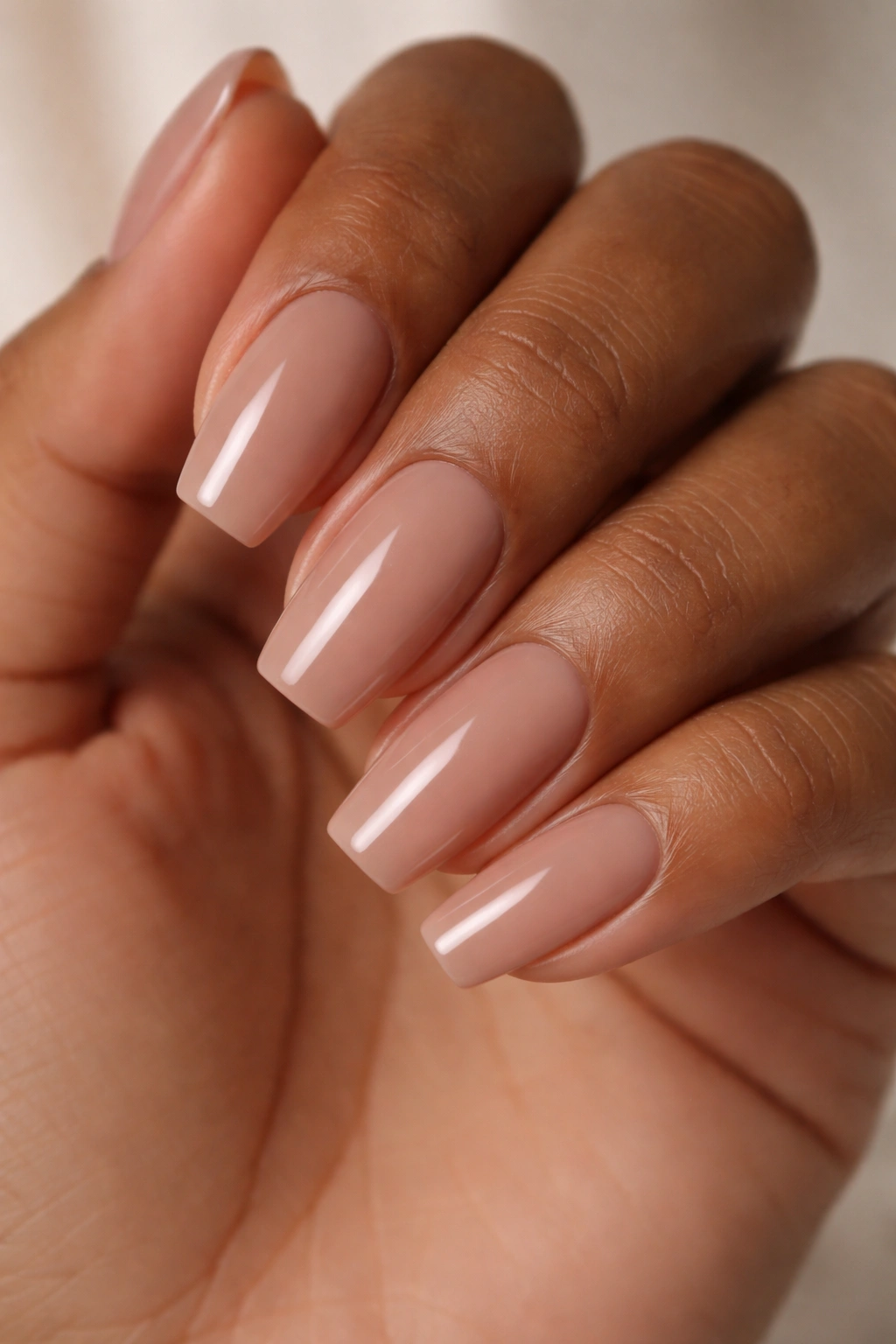
Soft mocha is where nude stops pretending pale beige works for everyone. It has enough depth to belong on medium-deep and dark skin, though it still reads neutral because the brown is softened with beige or rose.
What I like about mocha on ballerina nails is the shape contrast. The straight tip feels neat; the shade brings warmth and richness. If you keep the mocha too opaque, the manicure can drift polished-business rather than natural. A semi-sheer formula gives you better range. Light moves through it, and the nail still looks like part of the hand.
Gloss suits mocha best. A shiny top coat shows off the undertone shifts—brown, milk, a touch of rose—while matte can make the color feel powdery. Ask for a slim silhouette too. Deep nude shades show thickness fast, especially at the sidewalls.
For people with tan, bronze, rich brown, or espresso skin, soft mocha often looks more “barely done” than beige ever will. That’s the whole point of a nude manicure: not one standard shade, but the one that melts into your skin and still flatters the nail shape.
15. Barely-Visible Pearl Veil Nude
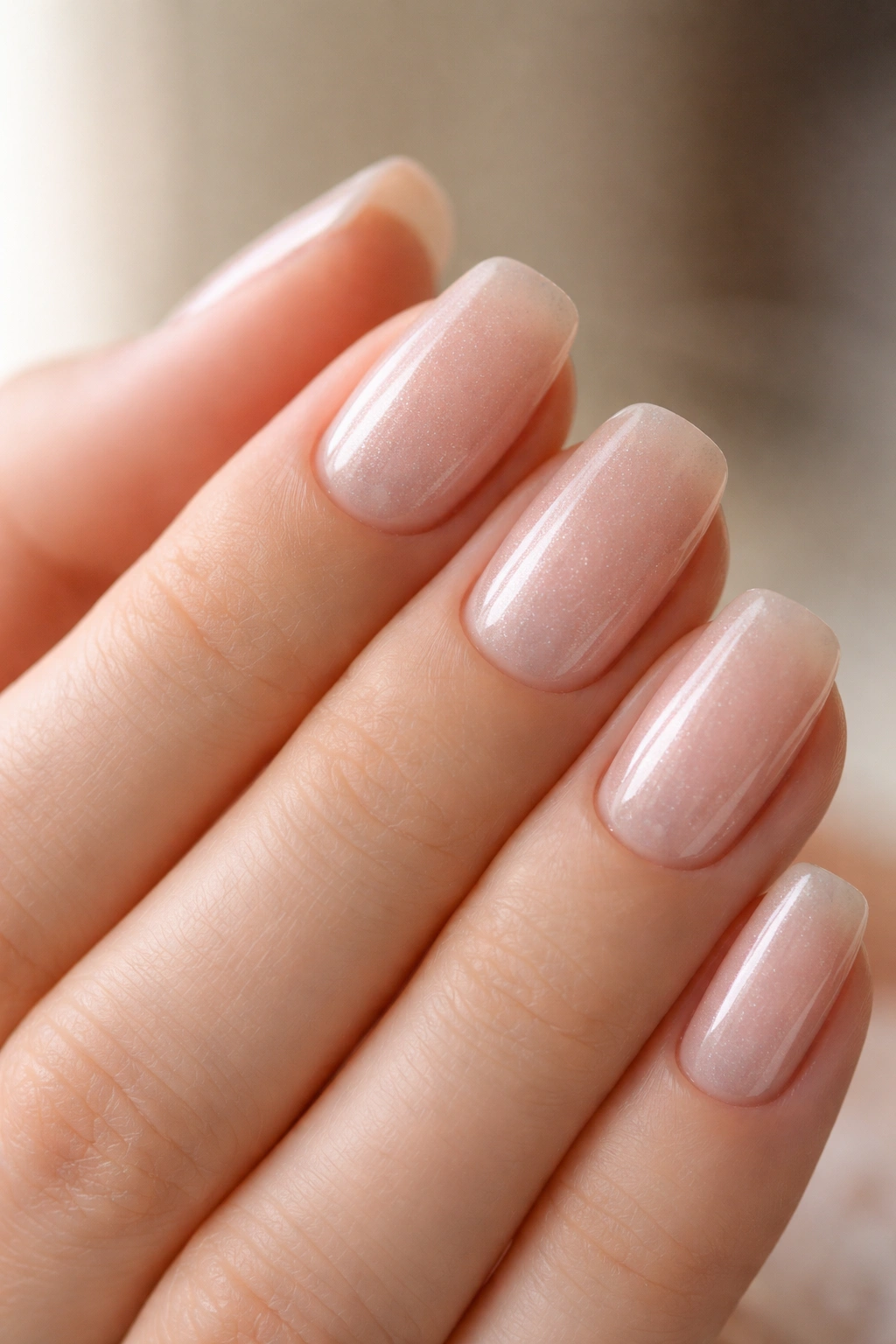
Why add shimmer at all if you want a natural manicure? Because the right shimmer does not read as shimmer. It reads as light.
A pearl veil nude uses micro-fine pearly pigment, usually suspended in a pink-beige, milky nude, or sheer champagne base. Not glitter. Not frost. If you can spot individual sparkle pieces from arm’s length, it’s too much for this look. What you want is a soft reflective wash that makes the nail surface look healthy and a little luminous.
This works best on shorter ballerina nails. Longer tips give pearl more space to announce itself. Short length keeps the effect close to natural nail sheen, only smoother and cleaner.
How to keep it subtle
Choose a base color first, then add the pearl as a veil—not the other way around. One coat of shimmer over a nude base often looks better than a fully pearled formula. Warm skin pairs nicely with champagne-pearl. Cooler skin tends to look cleaner in soft pink-pearl or neutral opal.
Done right, this style shows up when your hands move, then disappears again. That little flicker is enough.
16. Soap-Nail Nude Ballerina Finish
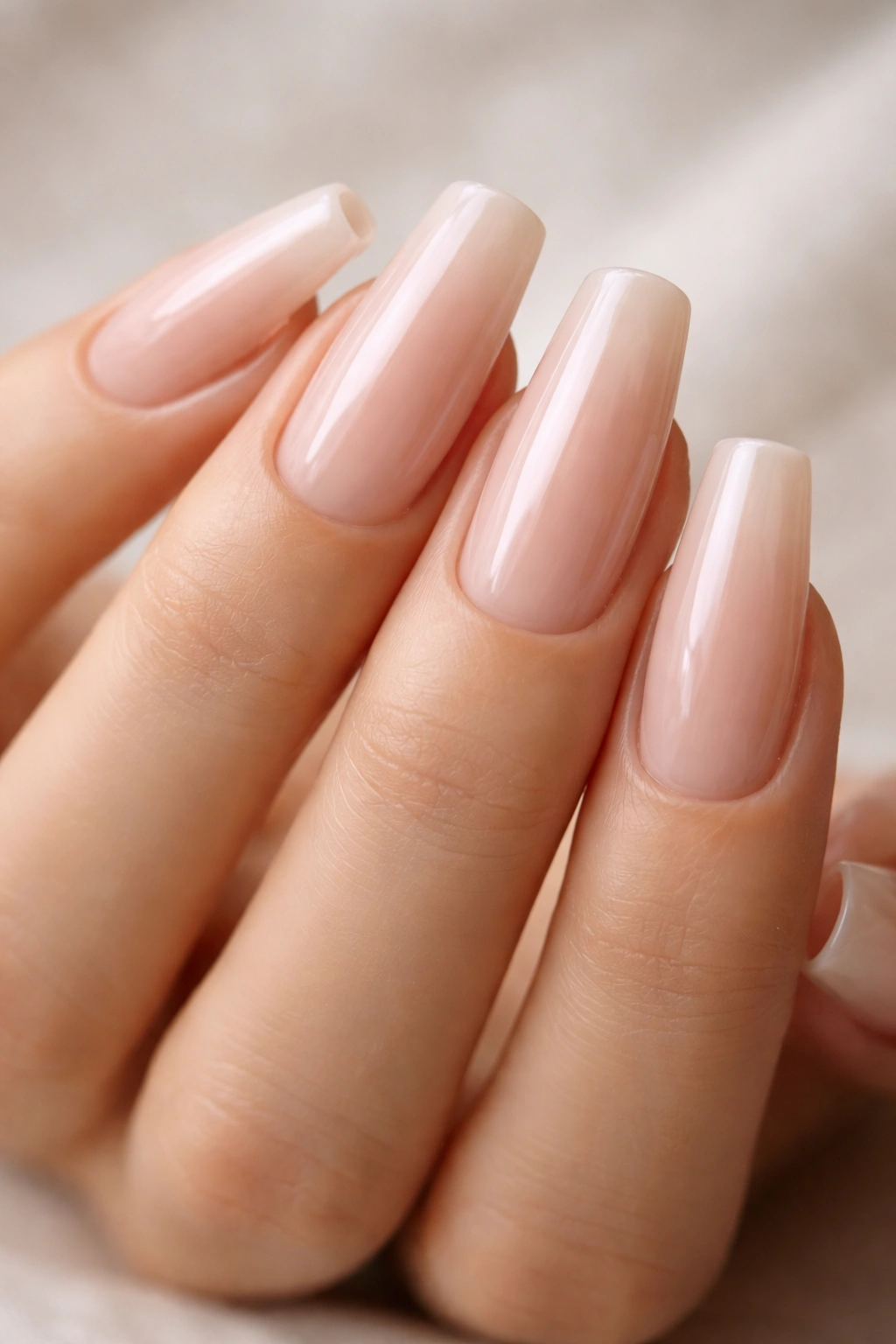
I’ll say it plainly: soap nails earned their place. The look is clean, semi-sheer, glossy, and faintly pink-beige—the manicure version of fresh skin after moisturizer.
On a ballerina shape, soap-nail nude works because it lightens the geometry. The tip is flat, the sides taper in, and the color keeps all that from looking hard. You still see a little nail bed. You still get shine. Yet nothing feels overbuilt.
For a true soap-nail finish, focus on these points:
- the base should be translucent blush, pink-beige, or milky beige
- the surface should look wet and smooth, not thick
- cuticles need to be neat, since the style relies on cleanliness
- the free edge should stay slim and crisp
This look falls apart with bulky overlays or streaky coverage. It needs precision. I also think it looks best when the shade is a half-step warmer than plain baby pink. That tiny warmth makes the manicure read like skin and nail together, not polish laid on top.
17. Linen Beige with Soft Sidewall Taper
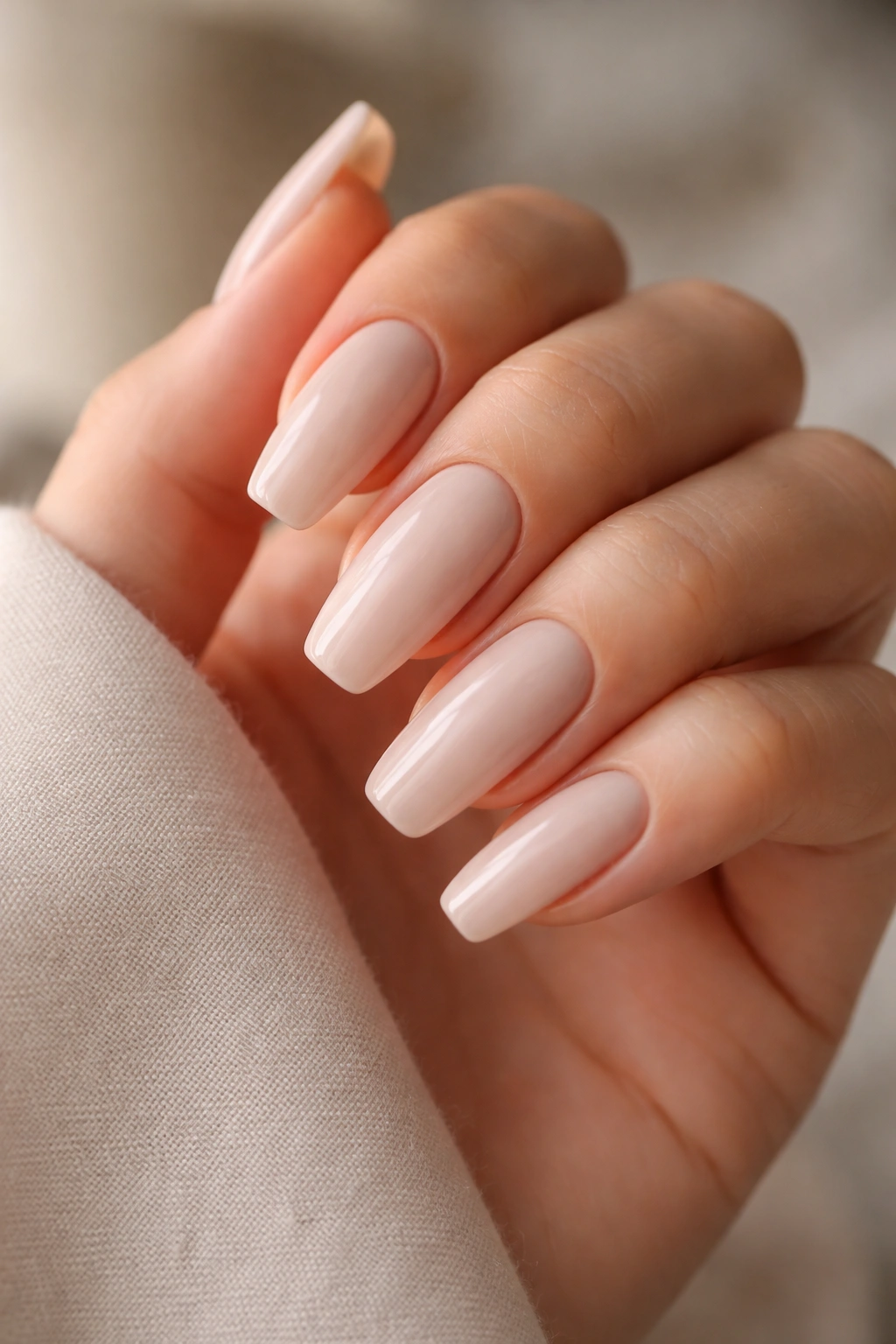
Linen beige is what I reach for when beige sounds right but standard nude still feels too polished. It has a dry, cloth-like neutrality to it—beige with a breath of gray and cream—that works beautifully on a softly tapered ballerina shape.
The sidewall shape is a big part of why this manicure looks natural. If the nail narrows too aggressively, linen beige can seem sharp and cool. Keep the taper gentler, almost halfway between square and ballerina, and the shade starts to feel more wearable. The finger looks longer. The nail still looks believable.
I’d skip high drama here. No chrome layer, no French line, no rhinestone accent. Linen beige shines when it’s left alone with a clean top coat and tidy cuticle work. You can wear it to work, to dinner, on a weekend with no makeup—it doesn’t ask the rest of your style to change.
One small caution. Linen beige can read a touch gray on skin with strong golden warmth. If that’s you, add a little peach or sand to the family and you’ll get the same quiet effect without the cool cast.
18. Rosewood Nude with Squared-Off Tips
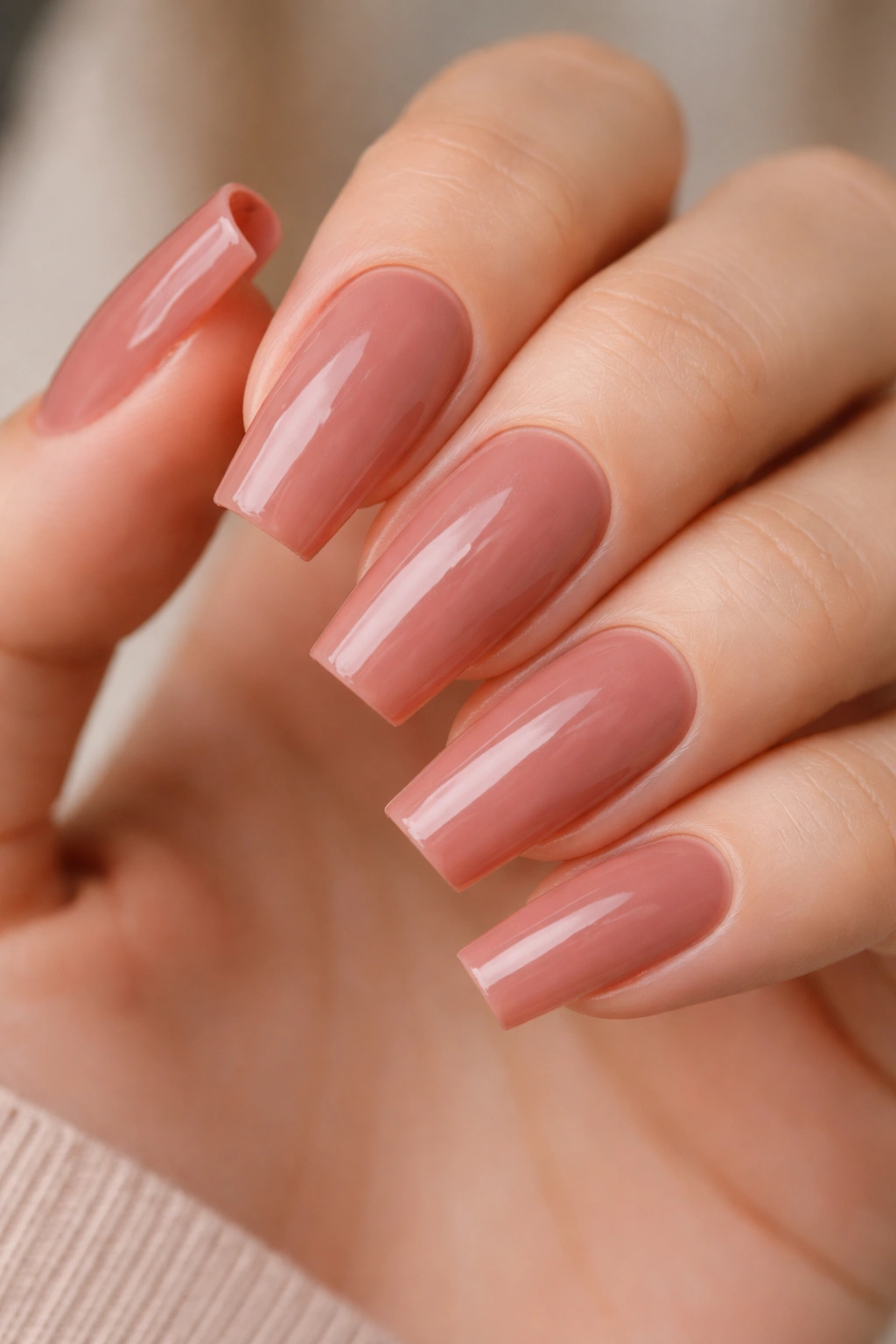
Unlike soft pink nudes, which can look sweet, rosewood brings a drier, deeper rose tone that feels more grounded. It’s still nude-adjacent, though the added brown-red gives the manicure shape and depth.
This shade shines on medium and deep skin, and on lighter skin that has a strong rosy undertone. The ballerina tip should stay clearly squared off here. Rosewood has enough color presence that a mushy shape can make the whole manicure look a little undecided. Crisp tip, slim profile, clean cuticle line—that’s the formula.
Rosewood needs balance. If it turns too red, it stops being nude. If it turns too brown, it can look heavy. The best versions sit in the middle with a muted wood-rose tone and medium translucency.
I like this one when beige feels too safe. You still get a natural look, though with a little more mood and a little more contrast around the fingers. Not dramatic. More like the manicure equivalent of a rose-brown lip balm instead of clear balm.
That tiny bump in depth can be enough.
19. Cinnamon Nude with Sheer Layers
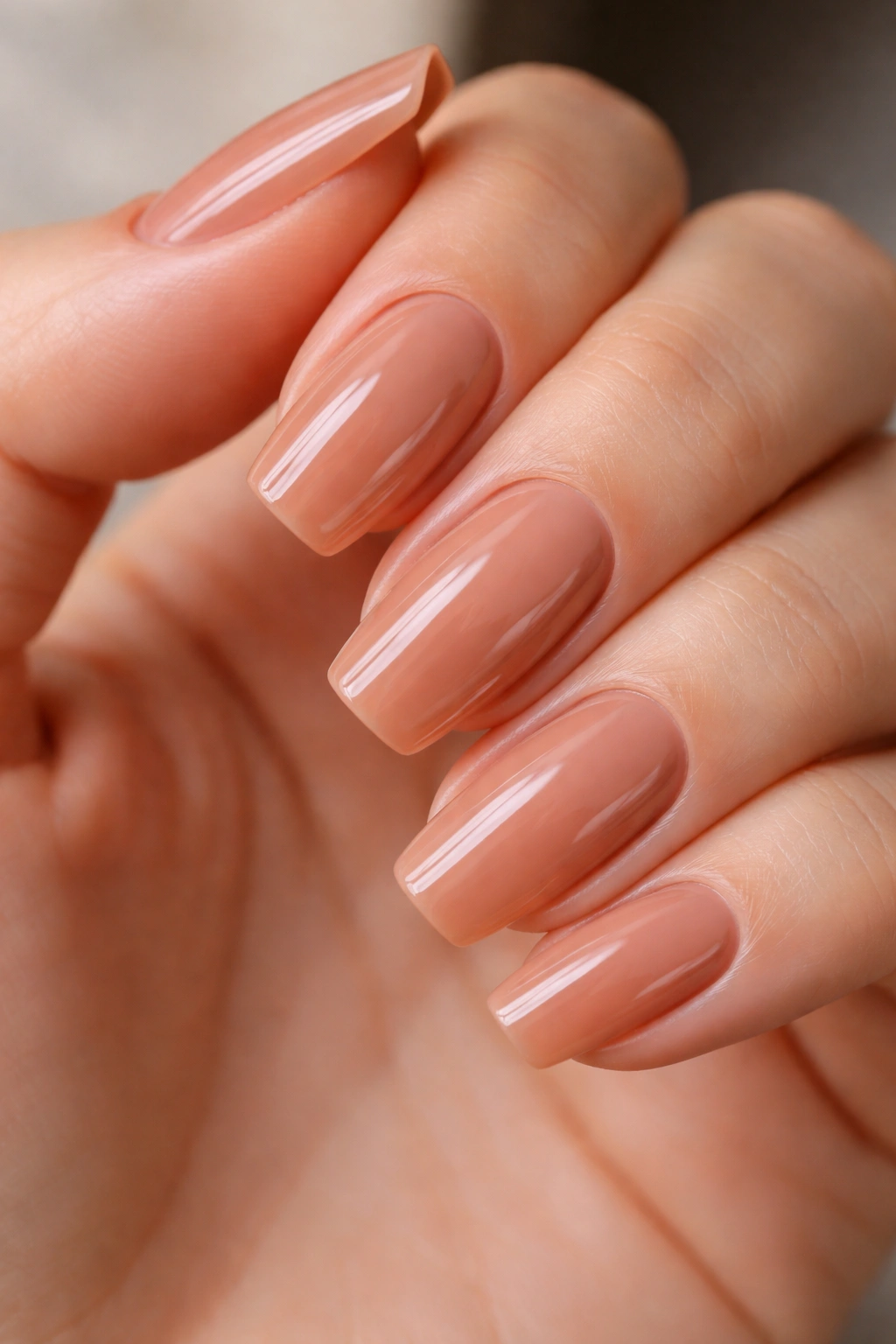
Cinnamon nude is one of those shades that surprises people. In the bottle it can look warm and almost too rich. On the nail, when applied in sheer layers, it turns into a soft spiced nude that flatters tan, brown, and deep skin in a way pale beige rarely can.
Why layering matters more here than color alone
One thick cinnamon coat usually looks too solid for a natural manicure. Two sheer layers let the warmth breathe. The nail bed still shows through slightly, and the brown-red spice note settles into the hand instead of sitting on top of it.
This is also a strong choice for cooler months, when people tend to want a little more depth without moving fully into chocolate or burgundy. The ballerina shape keeps it neat and tailored.
Useful details:
- Best finish: cream-gloss
- Best length: short to medium
- Works well on: golden tan, chestnut, brown, and deep neutral skin
- Skip if: you want a pale “bare nail” effect
My opinion: cinnamon is one of the most underused nude ballerina nail colors for deeper skin tones.
20. Creamy Neutral Nude with No Art at All
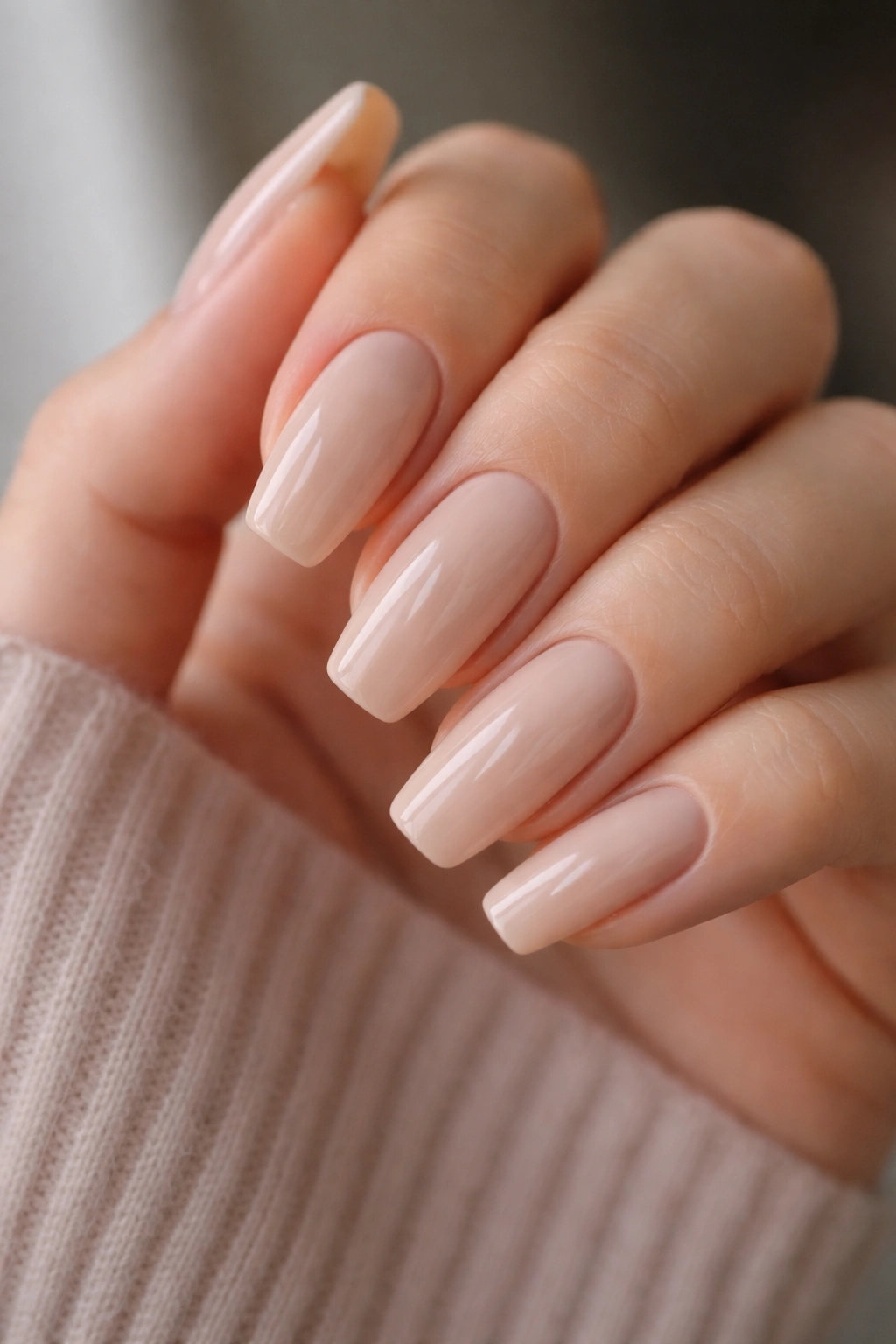
Sometimes the most natural nude ballerina nails are the ones you stop decorating. No shimmer, no French line, no chrome dust, no accent nail—only a creamy neutral tone matched well to the skin and shaped with care.
There’s nowhere to hide with this look, which is why I respect it. Prep has to be clean. The sidewalls need to be even. The tip has to sit straight. And the color has to land right in that narrow band between pink and beige, or between mocha and taupe, depending on your skin tone. When it all comes together, the manicure reads expensive in a quiet way.
I’d choose medium opacity for this style. Sheer can look unfinished if the natural nail has ridges or color variation. Full-coverage cream can look heavy. A creamy neutral with some softness in the formula gives the best balance.
This is the set I’d wear if I wanted my hands to look polished every day without ever thinking about matching my nails to jewelry, makeup, or clothes. It goes with everything because it’s not trying to be a look on its own. It’s doing a simpler job than that—making the hands look neat, healthy, and well kept.
Final Thoughts
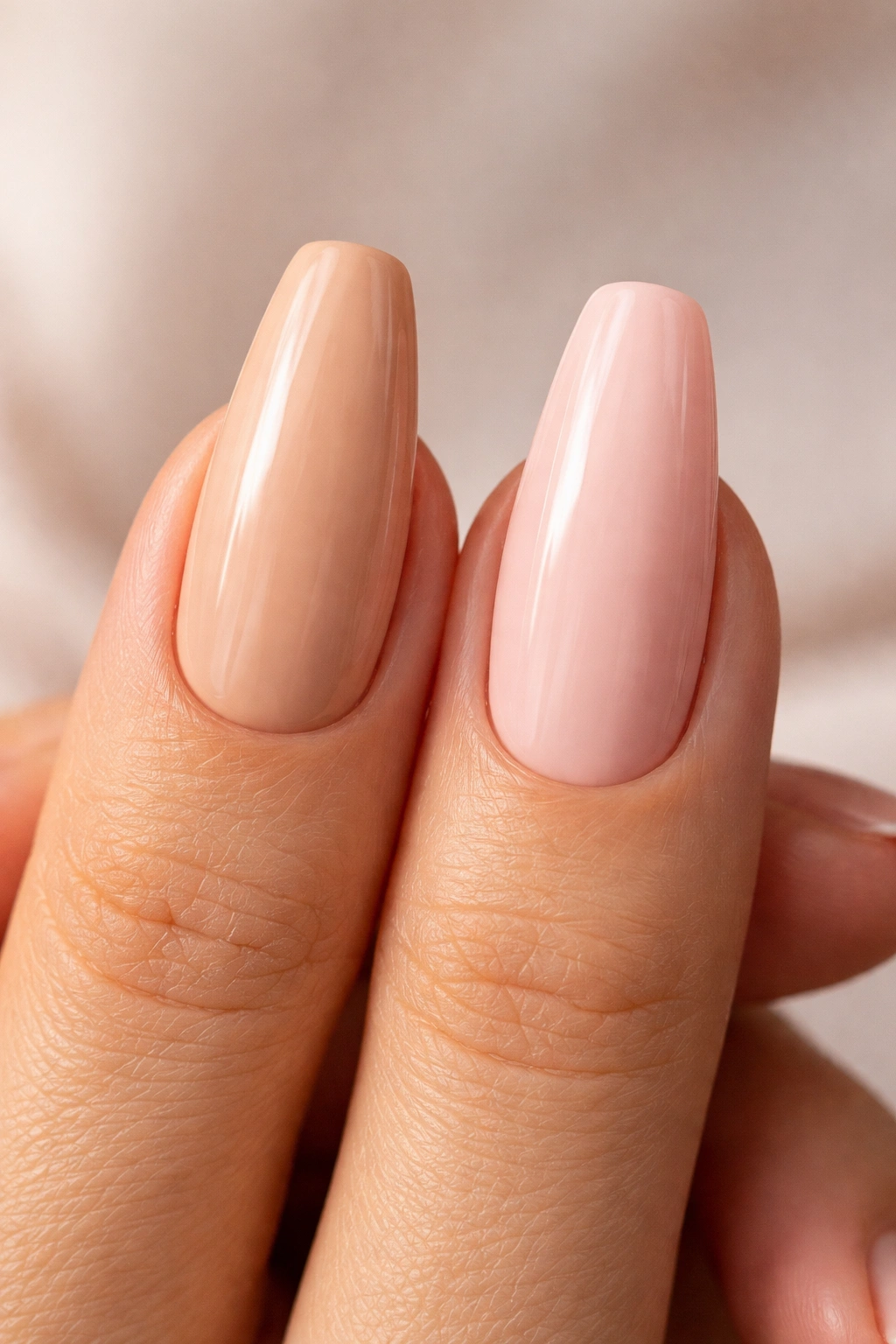
Natural-looking nude ballerina nails live or die on nuance. The right undertone matters more than the trendiest shade name, and the right opacity matters more than how the bottle looks under salon lights. If the shape stays slim and the product stays refined, even a squared ballerina tip can look soft.
If you’re stuck, start with one of the safer middle-ground options: soft beige, milky pink, rosy taupe, or a skin-matched mocha if your tone runs deeper. Those shades leave less room for the chalky, overbuilt effect that ruins a nude manicure.
And if you want the shortest route to a better result, bring your nail tech two reference photos instead of ten—one for color, one for shape. That keeps the appointment focused, and your nude ballerina nails will usually come out cleaner because of it.
