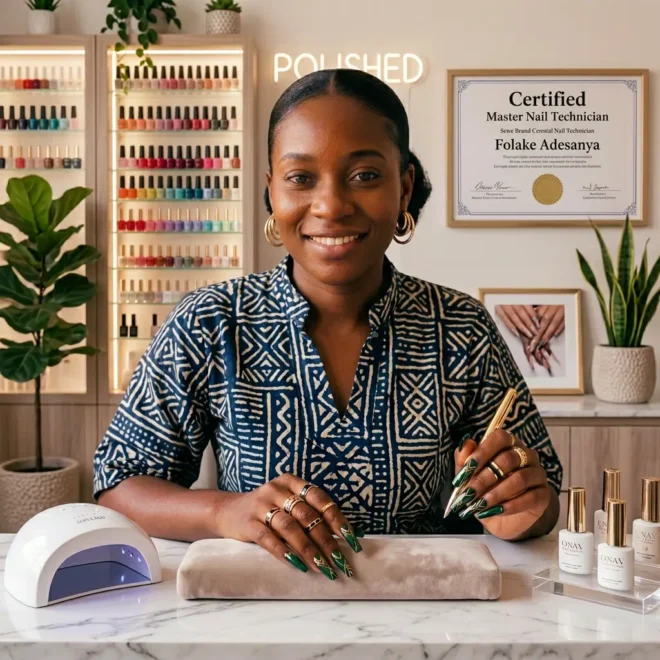


Short nails do not cancel the ballerina shape. They just punish bad filing faster than long nails do.
That is why simple ballerina nails for short nails keep showing up in salons, on mood boards, and on people who use their hands all day. When the sidewalls stay straight, the tip is filed flat instead of wide, and the color choice respects the smaller nail plate, short ballerina nails look neat, sharp, and far more polished than people expect.
The hard part is restraint. On a short nail, taking off even 1 millimeter too much from the side can turn a ballerina into a weak triangle, and piling on thick charms or chunky French tips can make the whole manicure look stubby. A strong short ballerina set usually keeps 2 to 4 millimeters of free edge and uses details with a light hand.
I keep coming back to pared-down looks for this shape because they survive real life: typing, dishwashing, opening boxes, pulling jeans on, all the boring daily stuff that wrecks fussy nail art. Get the structure right, then the quiet designs start doing the heavy lifting.
Why Short Ballerina Nails Need a Lighter Taper
Short ballerina nails usually fail at the file, not in the polish. Long coffin nails can handle a dramatic inward taper because they have more length to balance the shape. Short nails do not have that extra runway, so the sidewalls need to stay straighter and the tip needs a softer, flatter finish.
A good rule I use is simple: keep the sidewalls almost parallel for most of the nail, then narrow them only slightly in the last third. File the free edge straight across, then soften the corners with two or three light passes of the file. If you keep chasing a sharper taper, the nail starts looking pinched fast.
The minimum length that still works
You do not need long extensions for this shape, but you do need some edge to file. About 2 millimeters of free edge is the point where a short ballerina starts to look deliberate instead of accidental. Natural nails can get there. A soft gel overlay or builder base makes the shape hold longer, especially if your corners peel.
Strength matters here more than people think. Dermatologists at the American Academy of Dermatology have pointed out that repeated acetone soaks, cuticle picking, and harsh scraping can dry the nail plate and leave it weaker. On a short tapered shape, that weakness shows up first at the corners.
Nail Colors and Finishes That Make Short Ballerina Nails Look Longer
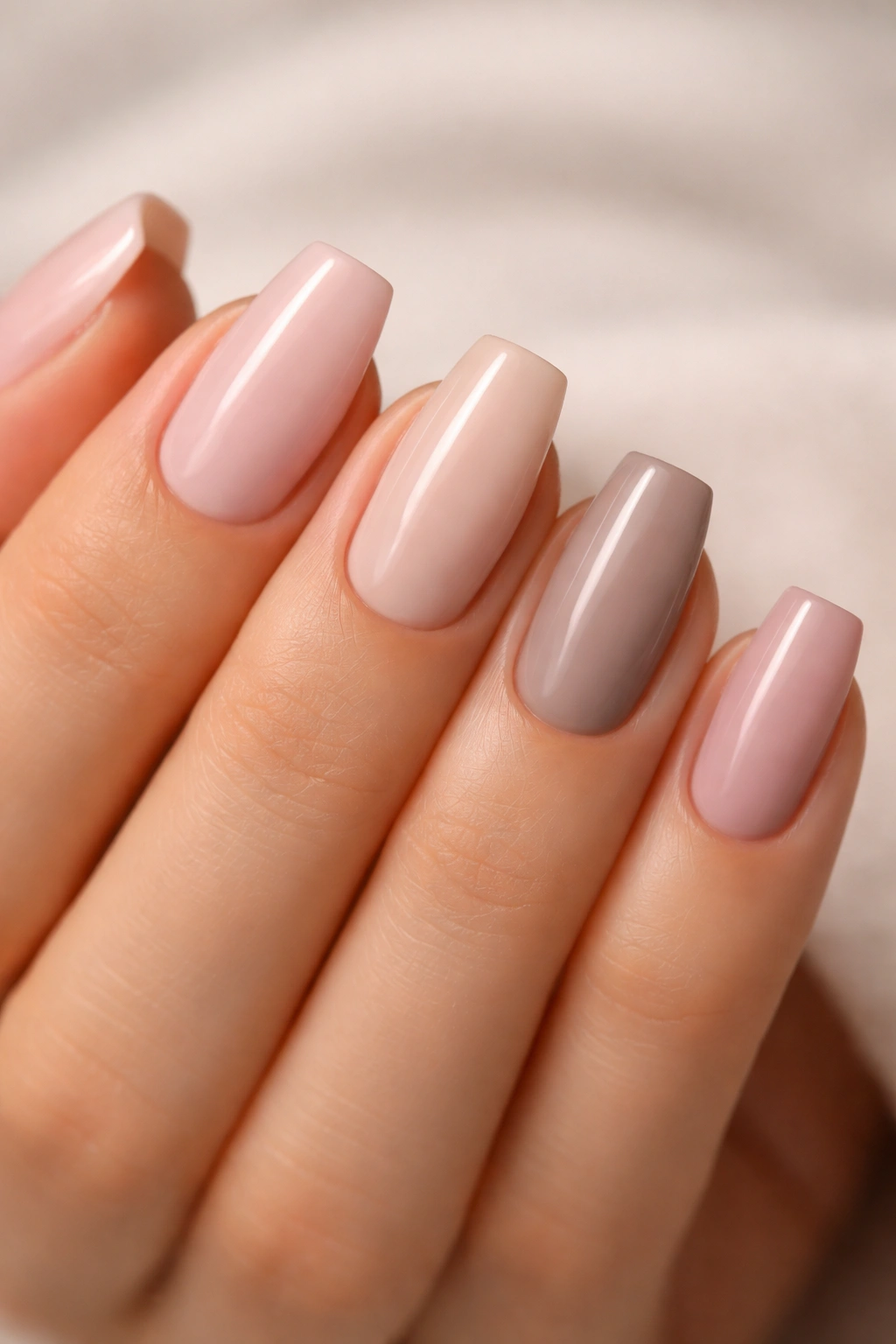
Want short ballerina nails to look cleaner right away? Pick shades that stretch the eye from cuticle to tip.
Milky pinks, sheer nudes, soft taupes, syrup browns, and muted mauves do that job well because they do not create a thick visual stop at the tip. Dense glitter, heavy contrast, and bulky 3D pieces can cut the nail in half. There is a place for bold art, sure, but short ballerina nails look best when the shape stays the main event.
A few design rules help more than any fancy tool:
- Keep French lines under 1 millimeter if your nails are short.
- If you use gems or pearls, stay around 1.5 to 2 millimeters wide.
- A glossy top coat makes the flat tip look crisper than a cloudy one.
- Matte finishes work better with dusty shades than with bright, chalky pastels.
- Thin vertical or diagonal details usually lengthen the look more than horizontal bands.
One more thing. If your cuticles are dry, even the cleanest manicure can look unfinished. A drop of jojoba oil at night does more for the final look than an extra sticker ever will.
1. Soft Milky Pink Short Ballerina Nails
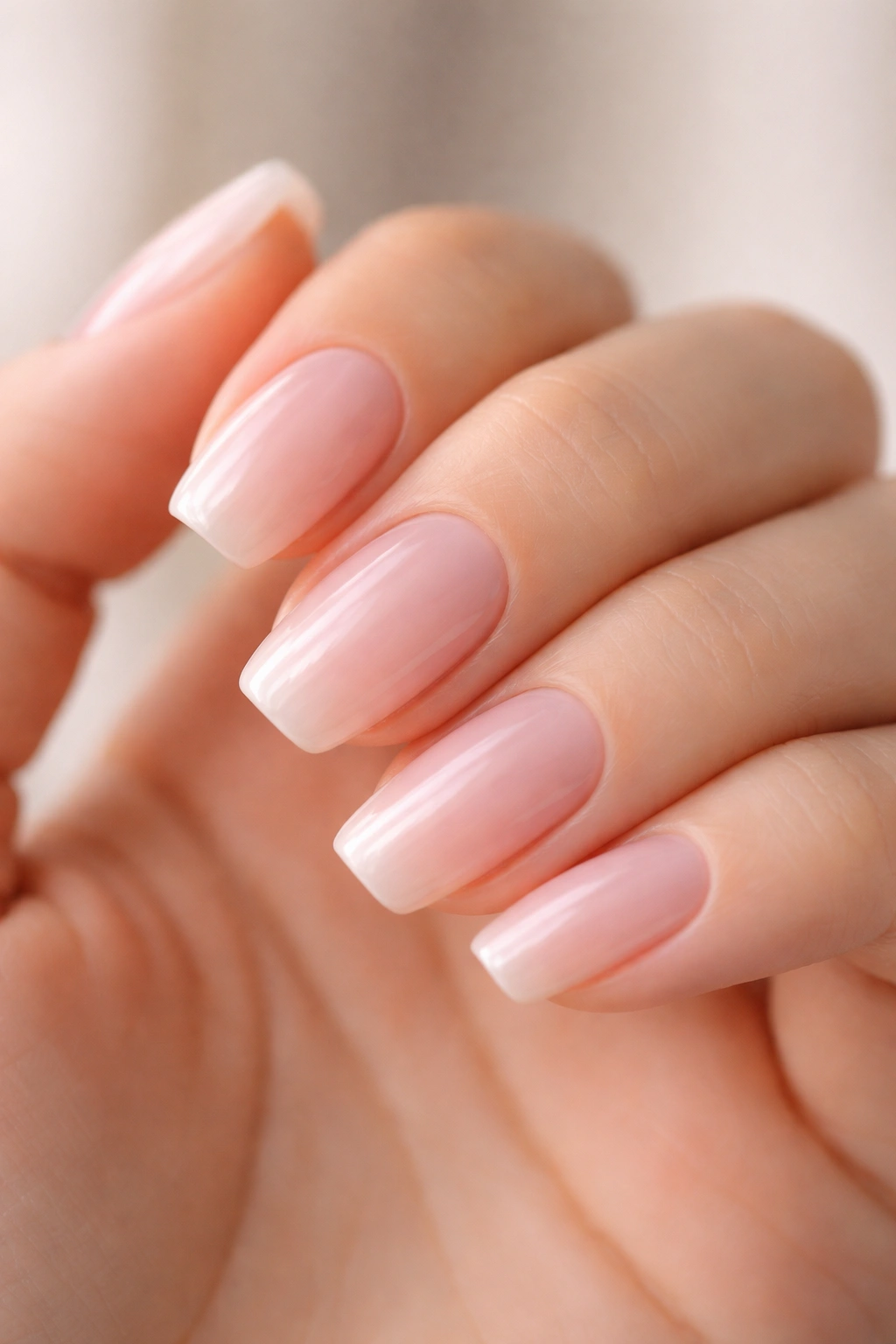
Milky pink is the manicure version of clean skin and fresh lip balm. It does not scream for attention, and that is exactly the point.
On short ballerina nails, a semi-sheer milky pink smooths out ridges, softens the flat tip, and keeps the shape from looking severe. The best versions are not chalk-white and not bubblegum pink. You want a jelly base with a cloudy wash over it, the kind of color that still lets a little natural nail show through.
Why this shade works on a shorter shape
Opaque pale pink can make a short ballerina look heavy, especially if the nail bed is small. Milky pink avoids that problem because it blurs the line between nail plate and free edge. The shape still reads as tapered, but the finish stays light.
It is also forgiving. Tiny chips at the corners are harder to spot, and grow-out near the cuticle does not announce itself after four days.
Quick details that matter
- Ask for two thin coats, not one thick coat, so the polish cures or dries evenly.
- A shade with cool or neutral undertones usually looks cleaner than one with peachy frosting.
- If your nails bend, add a rubber base or builder gel under the color for support.
- Reapply top coat every 3 to 4 days if you want that smooth, glassy look to last.
Best move: cap the flat tip with polish and top coat, or the corners wear down first.
2. Glossy Sheer Nude Ballerina Nails
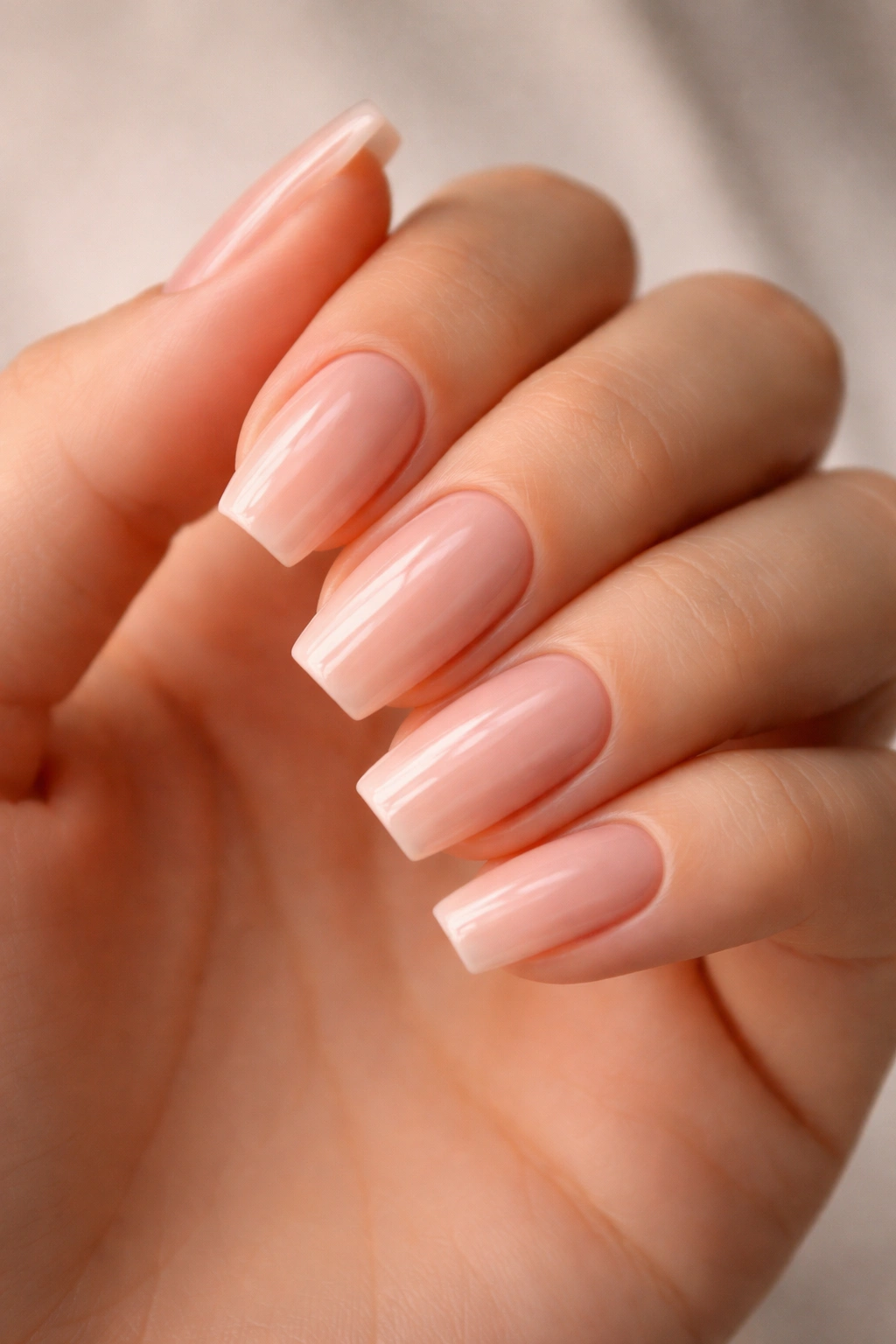
A sheer nude is harder to mess up than nail art, and that is why it belongs near the top of the list. Short ballerina nails already have shape going on. They do not need extra noise.
The trick is tone. Pick a nude that sits about one shade deeper or lighter than your nail bed, not four shades off. If it matches too closely, the manicure can disappear. If it is too pale, the flat tip starts looking blunt. I lean toward beige-rose, soft caramel, or warm sand because those shades keep enough contrast to show the shape.
Gloss does half the work here. A high-shine top coat makes the straight tip look clean and intentional, while a dull finish can flatten the whole manicure. And yes, I know some people love a muted look. On this shape, shine usually wins.
Daily wear is where this design earns its keep. It hides short regrowth, it pairs with office clothes, gym clothes, and whatever random hoodie you grabbed off the chair. If you want one manicure that does not demand thought every morning, this is it.
3. Micro French White Tips
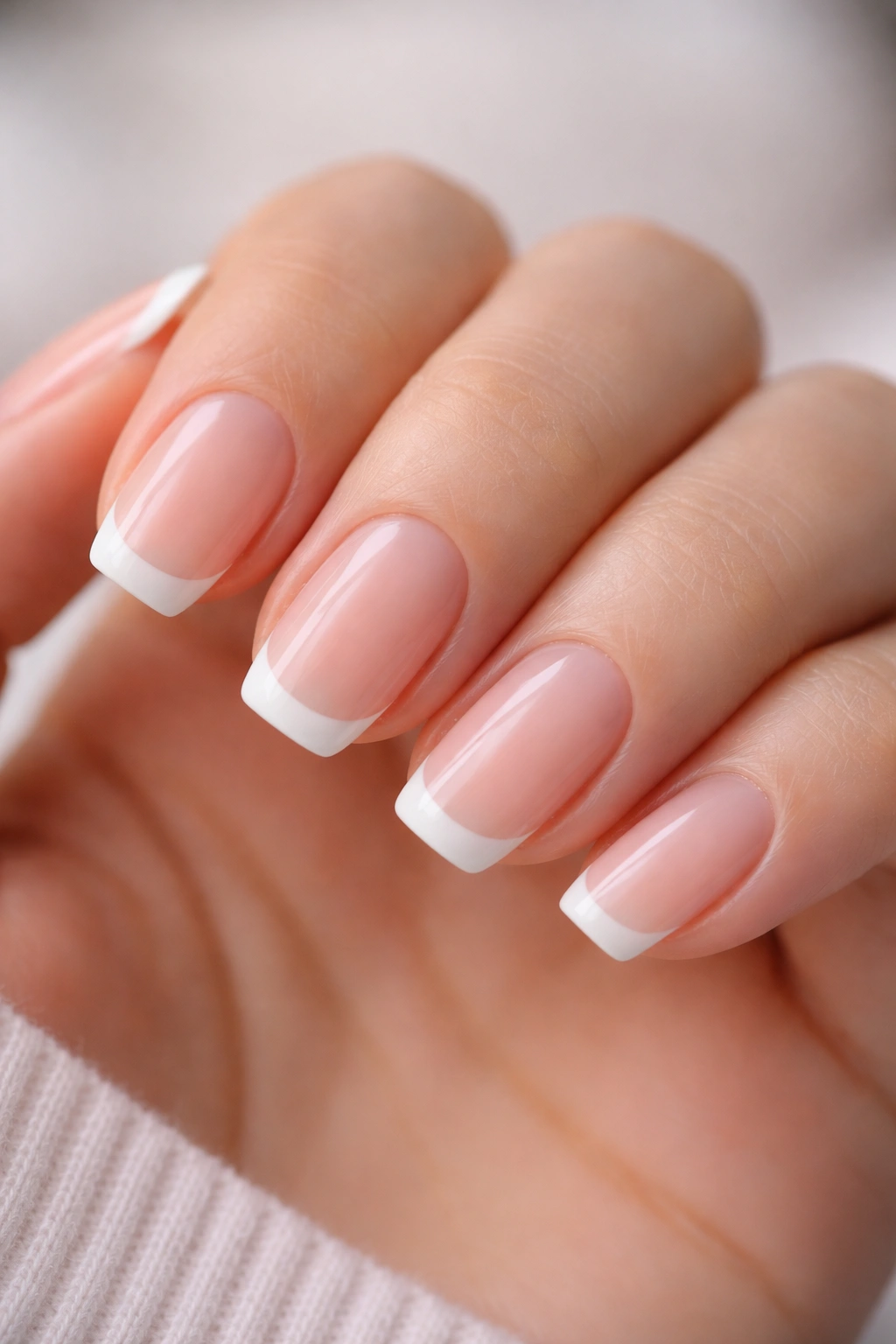
Why does a micro French work on short nails when a thick French can make them look shorter? The answer is simple: proportion.
A chunky white tip takes up too much of the nail plate. On a short ballerina, that heavy block of white can swallow the taper. A micro French keeps the line whisper-thin, so you still get that crisp edge without chopping the nail in half.
Short ballerina nails look best when the white line sits right on the free edge or slightly overlaps it by 0.5 to 1 millimeter. The smile line should be soft, not a deep curve. If you make it too dramatic, the center of the nail looks narrow and the corners look wide.
How to keep the tip fine instead of bulky
Use a liner brush with a small amount of gel polish, then turn the finger—not the brush—as you trace the edge. If you are doing it at home with regular polish, a French guide sticker can help, though I still think freehand looks cleaner once you get the angle down.
Skip bright correction-fluid white if it feels harsh on your skin tone. Soft white or ivory often looks cleaner on short nails, especially under indoor lighting where stark white can look a little cold.
4. Matte Taupe Short Ballerina Nails
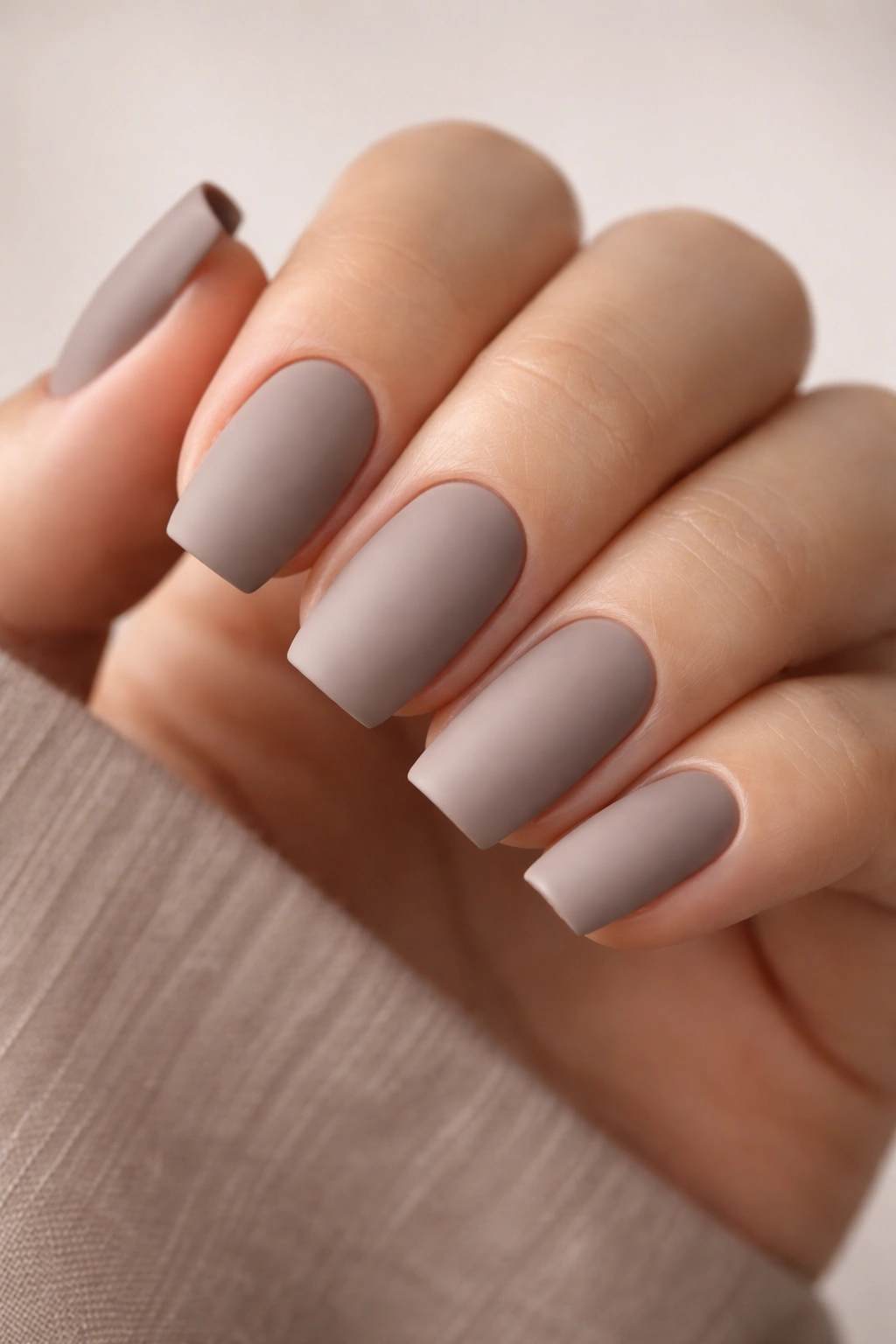
If your closet is full of black knits, denim, crisp shirts, and one good leather bag, matte taupe makes immediate sense. It feels calm without slipping into “barely there.”
Taupe works well on short ballerina nails because it has enough depth to define the shape. Matte changes the mood again. The flat tip looks softer, the taper looks more tailored, and fingerprints or tiny surface marks are less obvious than they are on dark glossy polish.
There is one catch—matte top coat highlights rough prep. Any leftover cuticle or uneven filing will show more. Buff lightly, clean the plate well, and do not flood the sidewalls.
A few specifics help:
- Choose a grey-brown taupe, not a muddy tan with yellow pull.
- Keep the length short to medium-short; matte can make extra-short nails look wider.
- Refresh matte top coat around day 4 or 5 if the finish starts turning satin.
- If your skin has cool undertones, taupe with a mauve base usually sits better.
This is one of those manicures that looks better from three feet away than people expect. Quiet, crisp, no fuss.
5. Blush Ombré Fade
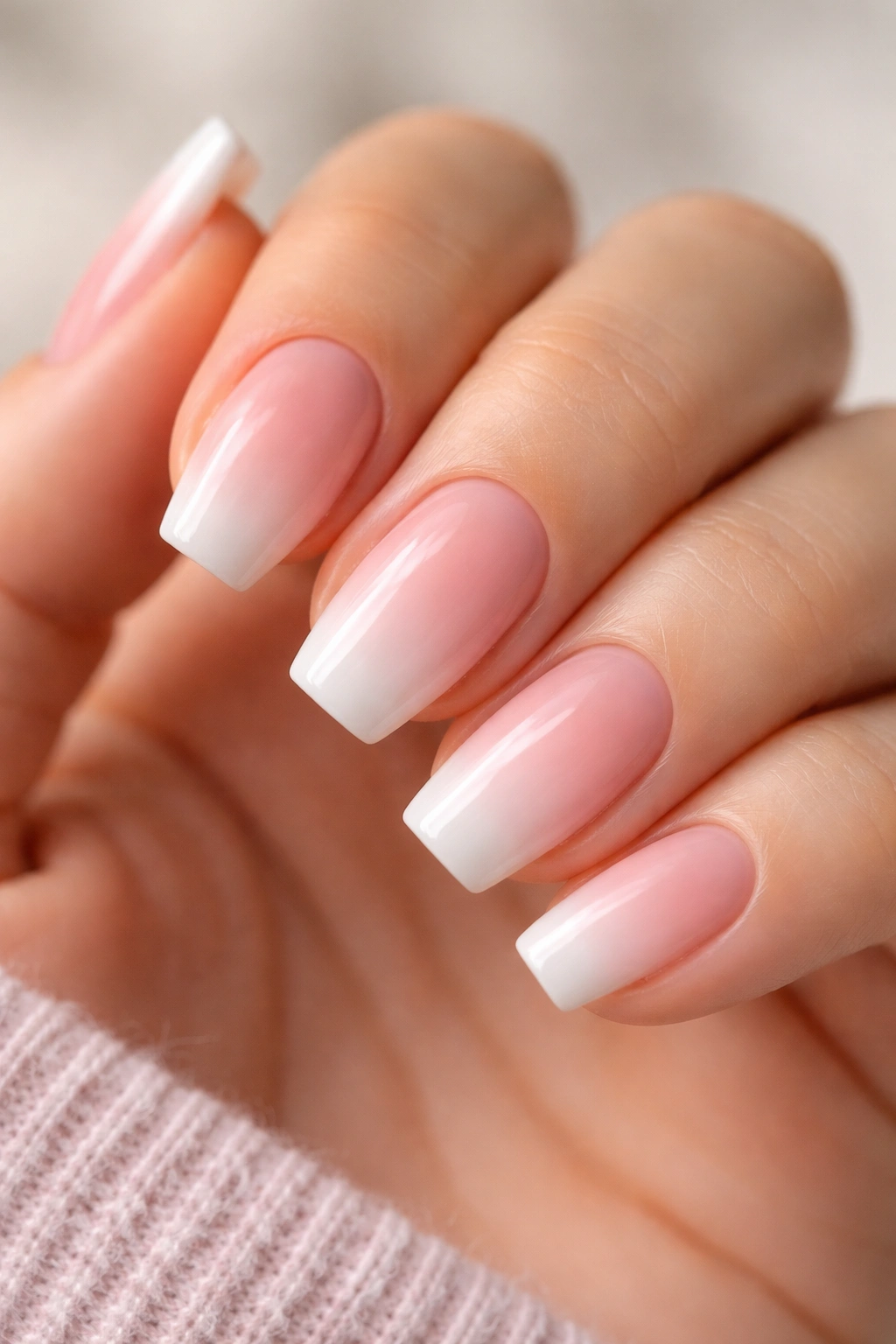
Blush ombré on a short ballerina can look softer than a full nude set and sharper than plain pink. That mix is why I like it.
The version that flatters shorter nails best is the baby boomer style fade: pink or nude near the cuticle, then a gentle drift into a milky or soft white tip. The fade should start late, not halfway up the nail. If the white climbs too high, the shape loses length.
Application matters more than the color here. With gel, I prefer a sponge blend or a soft brush feathering motion in thin layers. One thick fade looks cloudy. Two or three transparent layers look cleaner and give the gradient room to melt into itself.
You also want the colors close in value. Blush pink into soft milk works. Dusty nude into cream works. Hot pink into sharp white usually fights the short shape.
A short ballerina set with a good ombré has a smooth, almost airbrushed look—like the nail is naturally cleaner and brighter from cuticle to tip. That effect is flattering on smaller nail beds, and it stays wearable even when the rest of your style changes from polished to lazy in a single afternoon.
6. Peach Nude with a Single White Dot
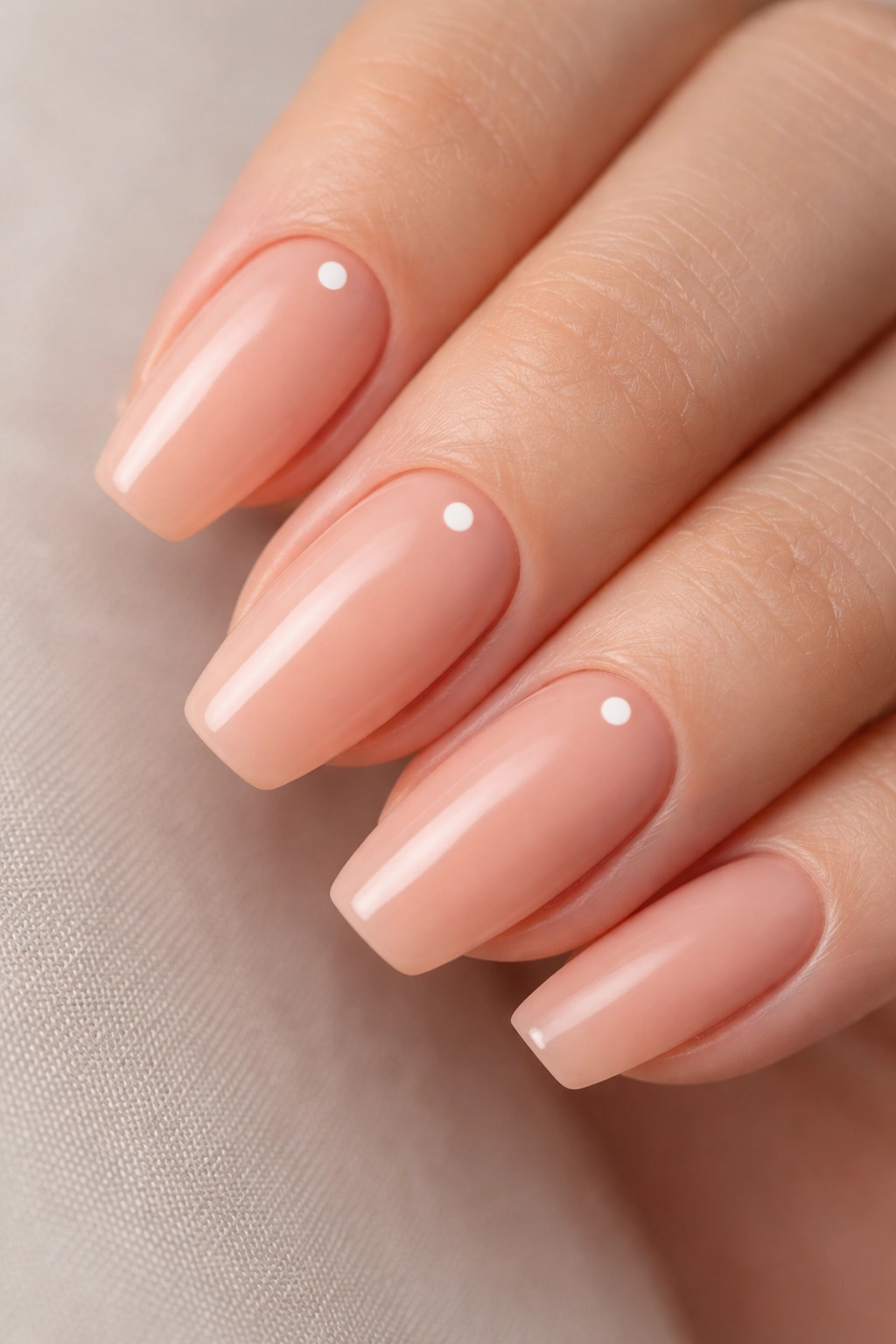
Unlike floral decals, stamped lace, or a full accent nail, one tiny white dot gives you decoration without crowding the shape. That is the whole appeal.
Start with a peachy nude base, then place a single dot using a dotting tool, the tip of a bobby pin, or a toothpick. I like the dot near the cuticle on the ring finger and thumb, though placing it slightly off-center on every nail can look clean too. Keep it small—about 1 to 1.5 millimeters wide. Bigger than that, and it starts reading like a polka dot set.
Peach nude is warmer than beige, so it brings a little life to the hand without looking loud. On short ballerina nails, that warmth pairs nicely with the flat tip because the manicure feels soft instead of severe. If your skin runs cool, switch the base to blush beige and keep the white dot.
Who is this best for? People who want a tiny design but do not want to explain their nails every time someone grabs their coffee cup. It is quiet, fast, and easy to maintain.
7. Nude Short Ballerina Nails with a Tiny Heart
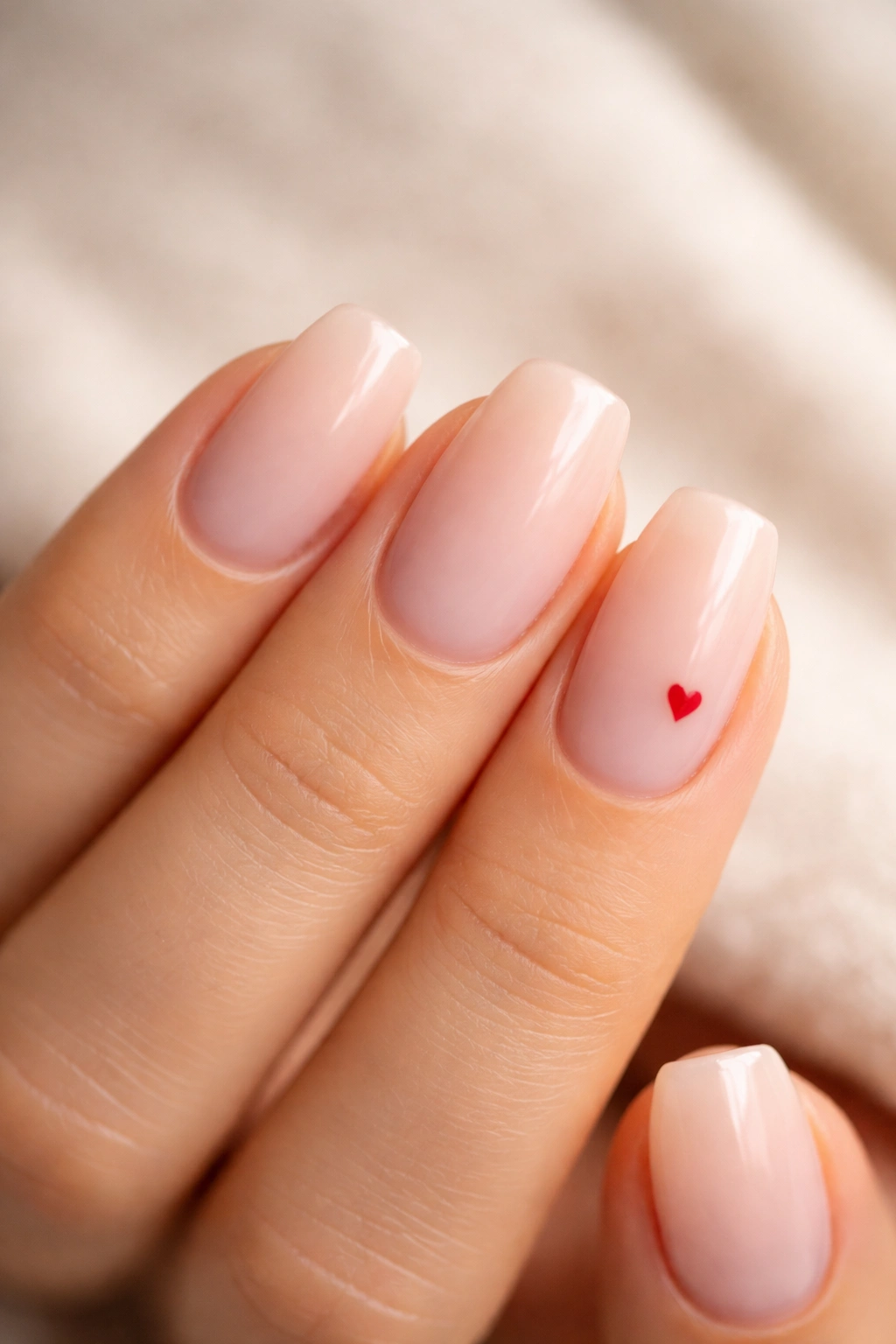
A micro heart can go wrong fast. Too big, and it starts looking cartoonish. Too centered, and it fights the taper. Kept small, though, it is one of the easiest ways to make nude short ballerina nails feel playful.
I like this look best on one accent nail per hand—usually the ring finger—or on the thumbs if you want the detail to show only when you are holding something. Paint a sheer nude or milky beige base, then use a detail brush or dotting tool to build a heart no wider than 2 to 3 millimeters.
Placement does the heavy lifting
Low near the cuticle keeps the nail looking longer. A heart floating in the middle can shorten the look because it pulls the eye to the widest part of the nail. If you want a cleaner finish, tilt the heart slightly toward one side instead of centering it dead-on.
Small choices that keep it from getting cheesy
- Use one color for the heart—white, burgundy, soft red, or black all work.
- Leave the rest of the manicure plain.
- Stick to one or two hearts total across both hands.
- Seal with a thick enough top coat to smooth the raised edges from the detail brush.
A tiny heart is a wink, not a billboard. Keep it that way.
8. Dusty Rose with a Fine Glitter Stripe
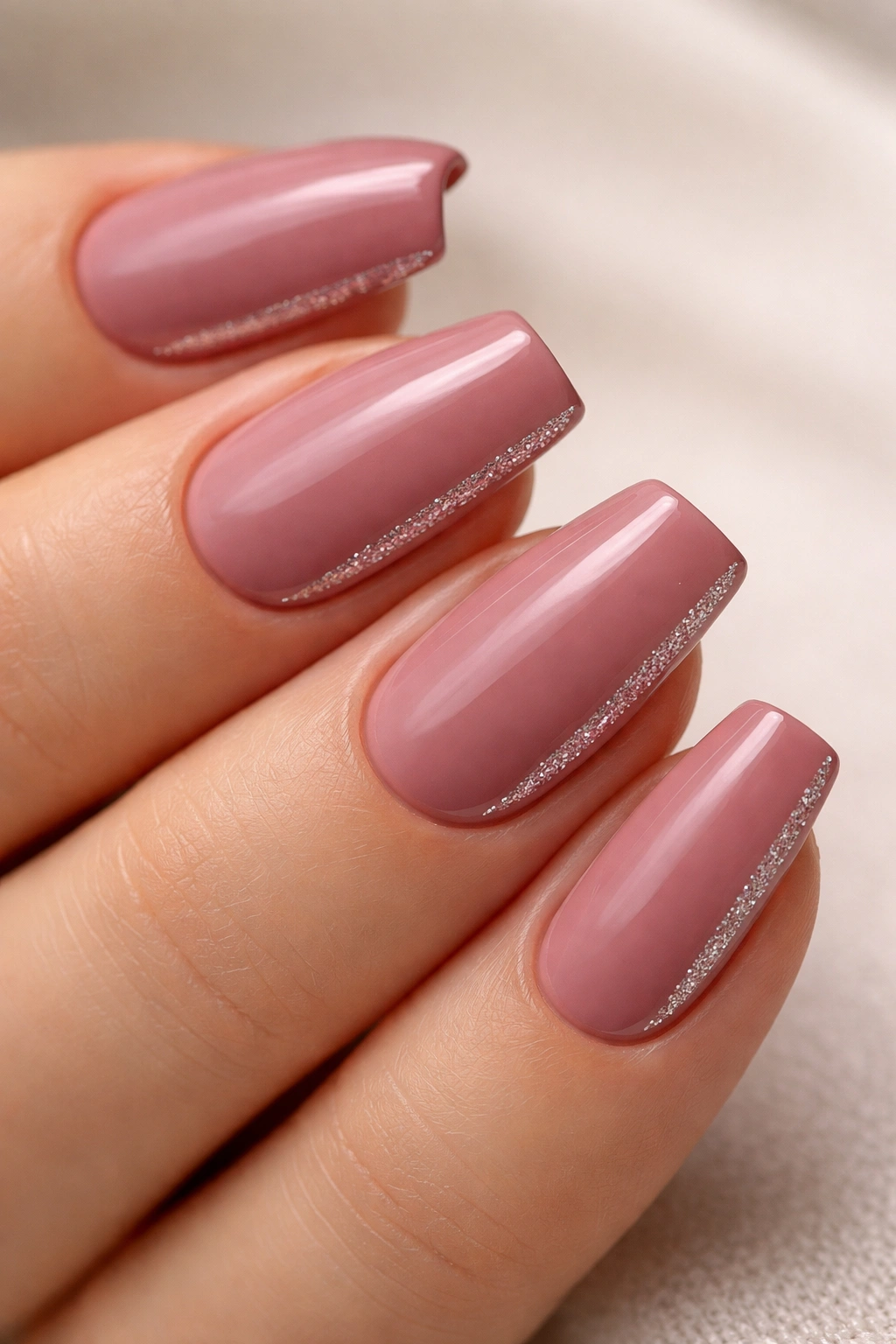
Most glitter manicures look heavier on short ballerina nails than people expect. A fine stripe solves that problem.
Dusty rose has enough pigment to show the shape, but it stays soft on the hand. Add a slim line of silver, champagne, or rose-gold glitter and the manicure gets a little light without turning into a disco ball. I prefer placing the stripe near one sidewall rather than straight down the center. That off-center line can make the nail look longer because the eye travels diagonally.
Paint the glitter stripe with a liner brush instead of relying on chunky glitter top coat. You want a controlled line, about 1 millimeter wide, not random sparkle blobs. If you are doing this at home, dip the brush into glitter polish, wipe off the excess, then draw the line in one pass.
This design earns extra points for grow-out. Dusty rose fades gracefully, and a thin glitter line does not chip in an obvious way unless the manicure is already overdue. For short nails that need to look put together through work and weekend wear, that matters more than people admit.
9. Milky Beige with a Side French Line
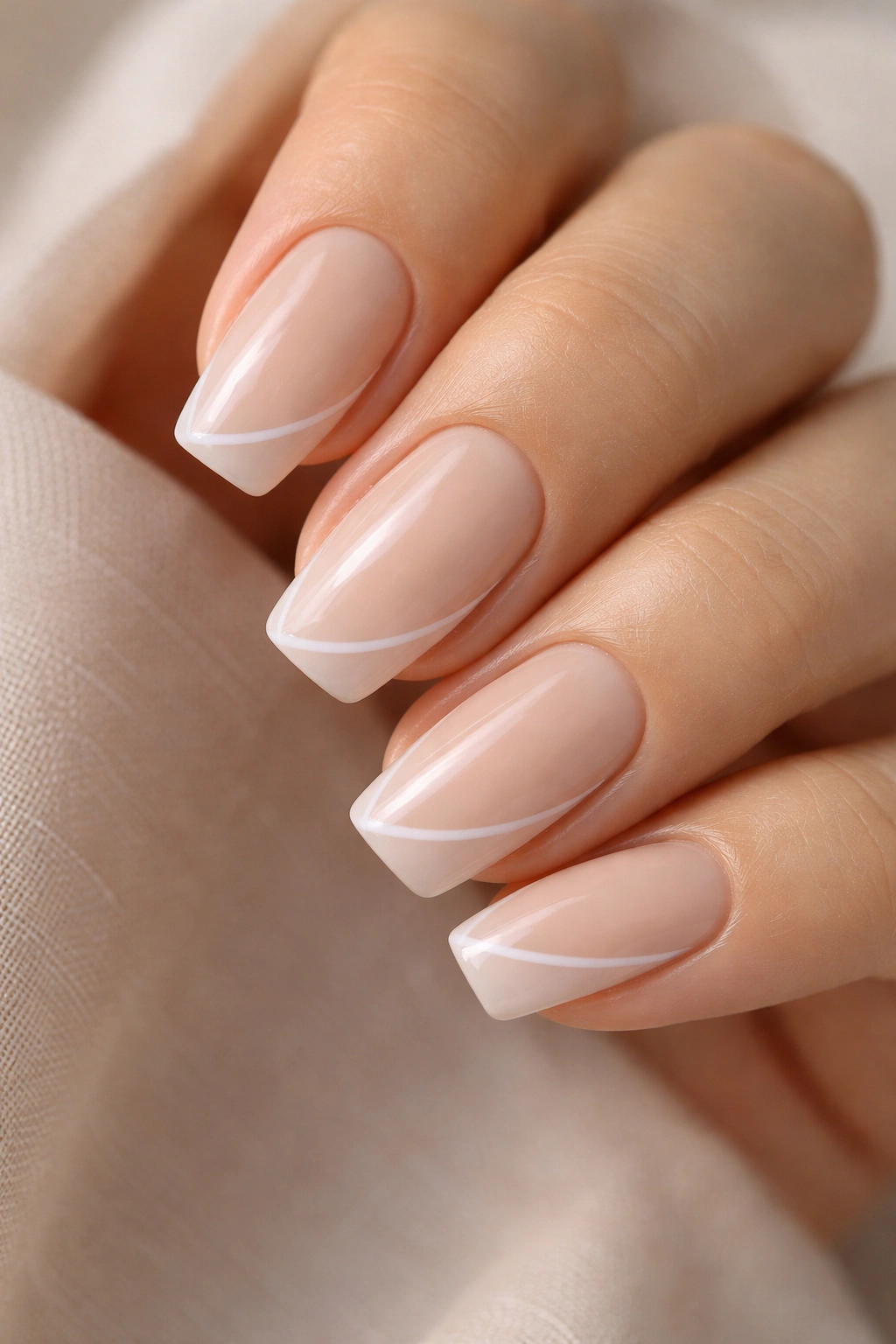
Why use a side French instead of a standard French tip? Because a diagonal edge can stretch the look of a short nail better than a horizontal band can.
Start with a milky beige base. Then draw a slim French line from one sidewall near the tip, sweeping it across at an angle instead of following the whole smile line. You can use white, ivory, soft brown, or even muted gold if the line stays thin.
The shape does two things at once. It keeps the flat ballerina tip visible, and it pushes the eye across the nail in a longer line. That makes this one of my favorite tricks when the nail bed is short but you still want something graphic.
Where to place the line
Keep the diagonal in the outer third of the nail, not across the middle. If it cuts too low, the nail looks divided. If it sits too close to the very edge, you lose the design once the free edge grows or wears down.
A fine art brush helps, though striping tape can work in a pinch. Remove the tape while the polish is still tacky so the edge stays sharp.
10. Soft Gray with a Glassy Top Coat
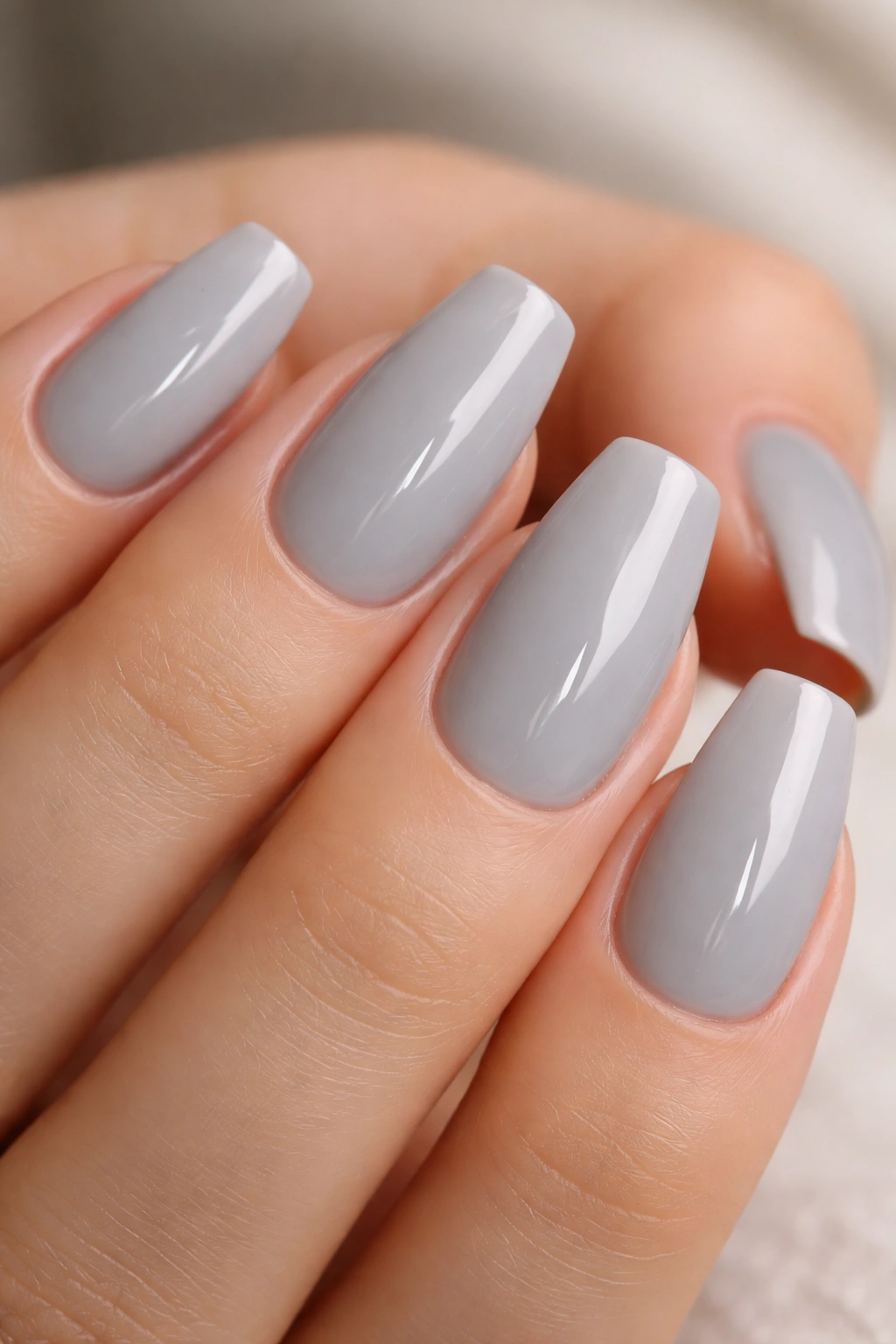
Picture a rainy-day neutral—not flat cement gray, more like pale dove with a hint of blue. On short ballerina nails, that color looks cool and clean without turning harsh.
Gray is useful when pinks and nudes feel tired but black feels too heavy. The ballerina shape gives it structure, and the glassy top coat keeps the color from looking dusty. I would not skip the shine here. Without it, pale gray can drift toward chalk.
Short nails also benefit from gray because it covers the free edge better than a sheer nude does, which means the flat tip looks crisp right away. Pick a soft gray with enough white in it to stay gentle on the hand.
A few notes if you try it:
- Keep the polish in the dove-gray family, not deep charcoal.
- Two thin coats usually look cleaner than one thick coat.
- A blue-gray flatters cooler skin, while a greige-gray sits better on warmer skin.
- Clean top coat from the sidewalls before curing or drying, since gray makes overflow easier to spot.
This one has a quiet confidence to it. Still sharp. Just less expected.
11. Clear Pink with Thin Black Tips
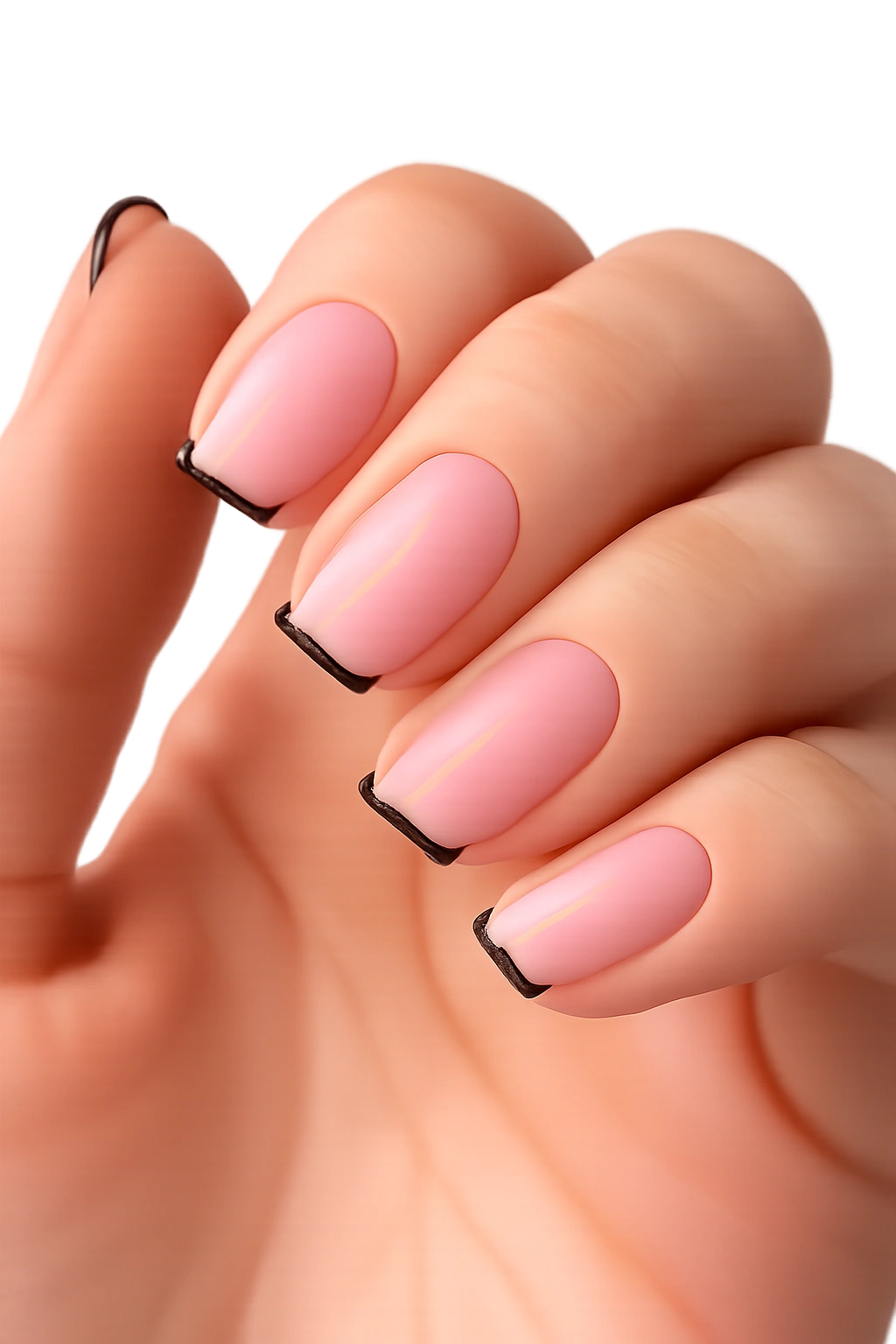
Black French tips scare people off, which I understand. Done thick, they can look heavy. Done fine on a clear pink base, they look crisp in a way white tips sometimes do not.
The key is transparency. Use a clear pink or jelly rose base so the nail still feels light, then paint a black edge no thicker than 0.5 millimeter. On short ballerina nails, that tiny dark line frames the flat tip and makes the shape look sharper. It is almost like eyeliner for the nail.
I like this design when someone wants a neutral manicure with a little bite. It pairs well with silver jewelry, black clothing, sharp tailoring, and cleaner makeup looks. It can also rescue a short ballerina shape that feels a little too sweet in plain pink.
You do need a steady hand. Black shows every wobble. If you are doing it yourself, use gel or a fine art liner instead of the brush that comes in the bottle. And keep the base clear enough that the manicure still breathes. Dense pink plus black tips is where this look starts getting too heavy.
12. Caramel Nails with a Fine Gold Cuticle Line
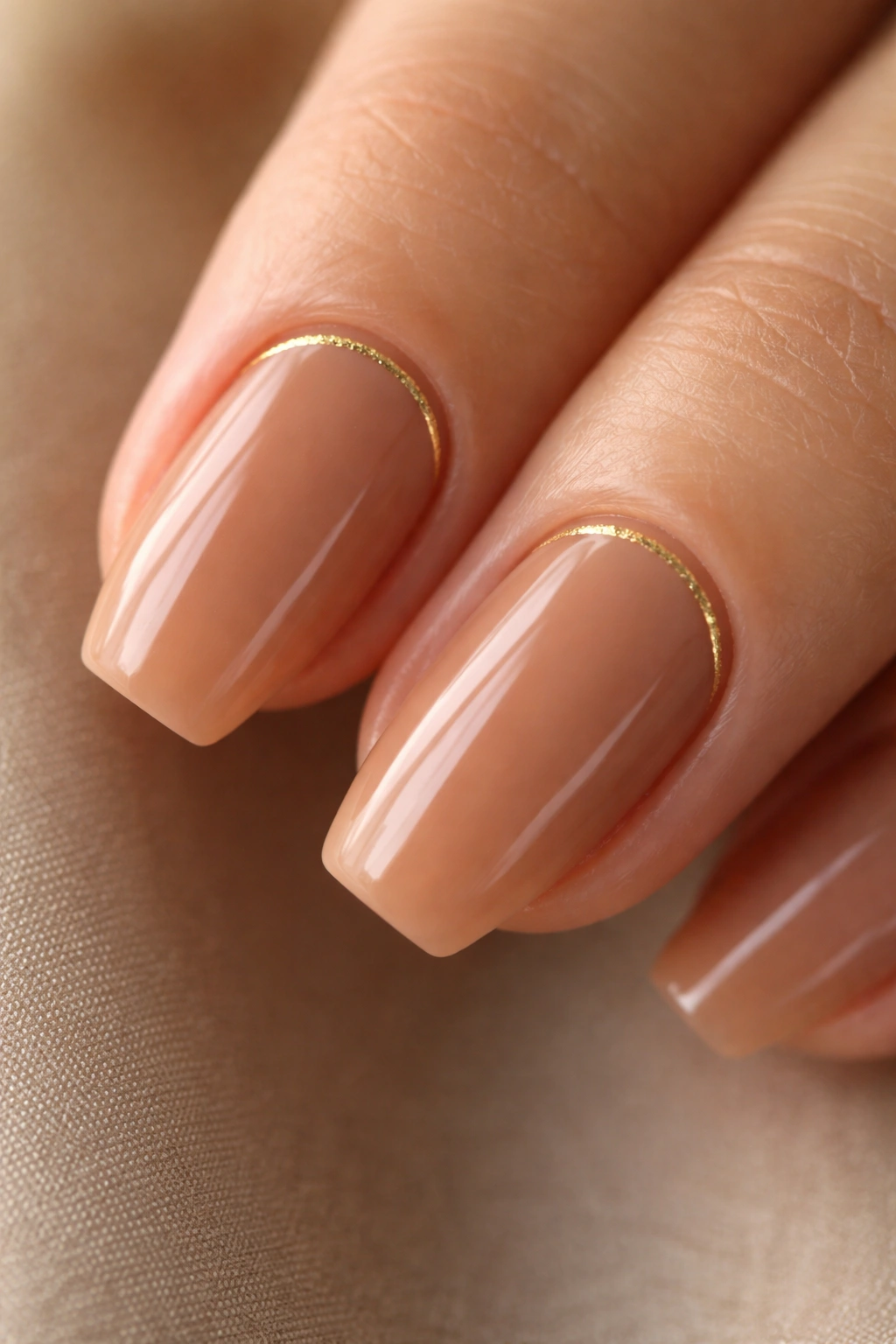
Unlike full chrome or metallic foil all over the nail, a gold cuticle line gives warmth and shine without thickening the whole design. That is why it works so well on short ballerina nails.
Caramel polish brings richness to the shape, especially on medium to deep skin tones or anyone who finds beige nudes a little washed out. The gold line sits right at the base of the nail, following the cuticle in a thin arc. Keep it slim—under 1 millimeter—and make it clean. A jagged gold line looks messy fast.
You do not need the detail on every nail. Two accent nails per hand are enough if you want a lighter look, and that is the route I would suggest for DIY. Gold striping gel, a detail brush, and patience beat metallic stickers here because the curve needs to hug the cuticle closely.
Who does this suit best? Anyone who wants a manicure that still feels neutral but has a dressier edge. It is also a strong choice if your nails are short from breakage and you want attention pulled toward the base rather than the free edge.
13. Ivory Short Ballerina Nails with a Diagonal Tip
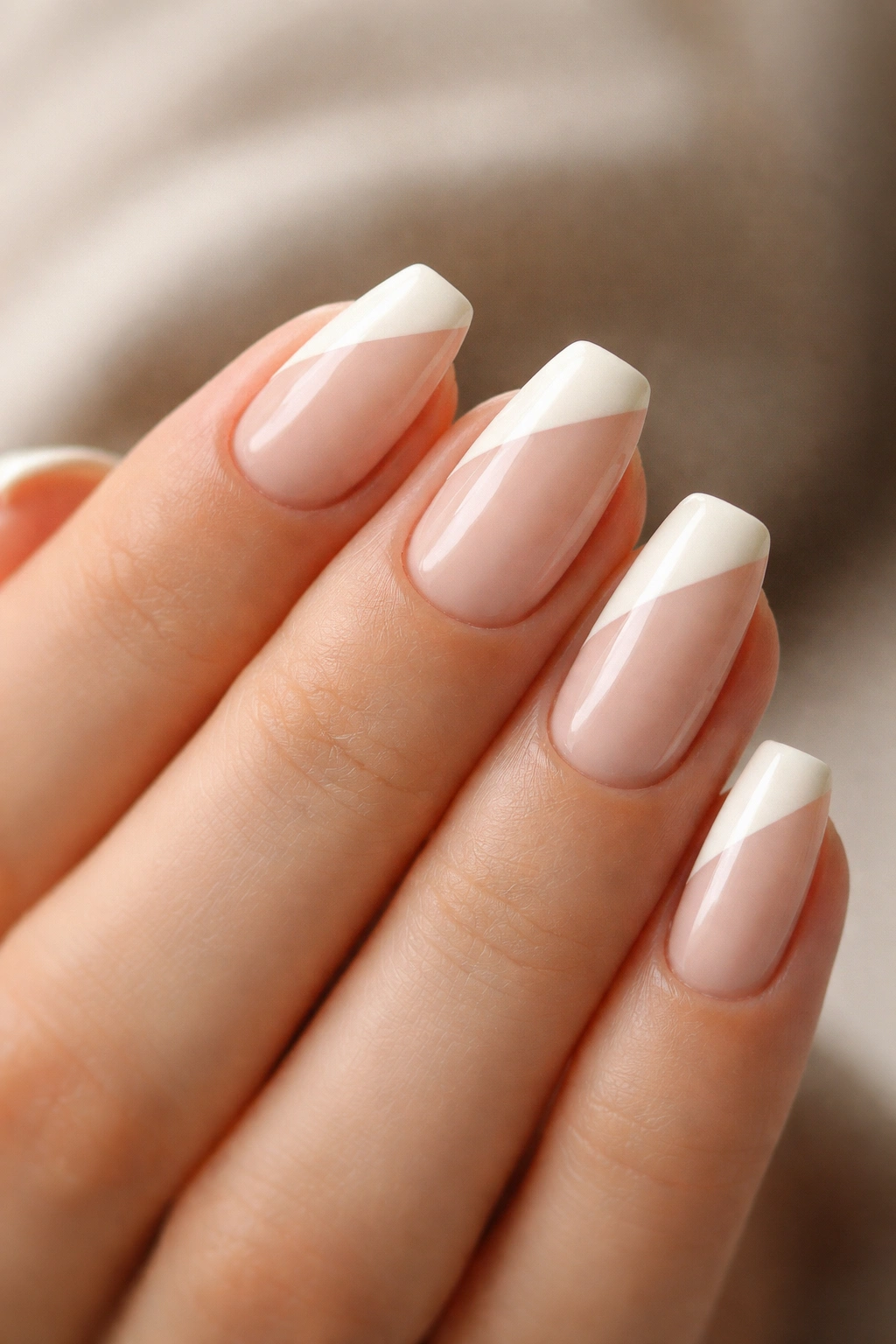
Ivory is softer than bright white, which makes it easier to wear on short nails. Pair it with a diagonal tip and the whole manicure feels cleaner and longer.
Use a sheer pink, nude, or milky beige base, then draw an ivory diagonal across the tip of each nail. Think of it like a French tip that has been tilted. The line should start near one sidewall and rise toward the opposite corner without cutting the nail in half.
What keeps this design sharp
The best diagonal tips stay narrow. If the ivory section covers more than the top quarter of the nail, the design starts feeling blocky. Use striping tape or a thin angled brush, and remove any excess polish from the edge before it dries.
Details worth paying attention to
- Pick creamy ivory, not paper white.
- Make the diagonal consistent across both hands, even if it is not mathematically exact.
- A glossy top coat helps the angled line look smoother.
- If your nails flare outward at the tip, file first and paint second—never the other way around.
This is a clean bridal-adjacent look, though I would wear it far beyond that kind of occasion.
14. Mauve Nails with One Tiny Pearl
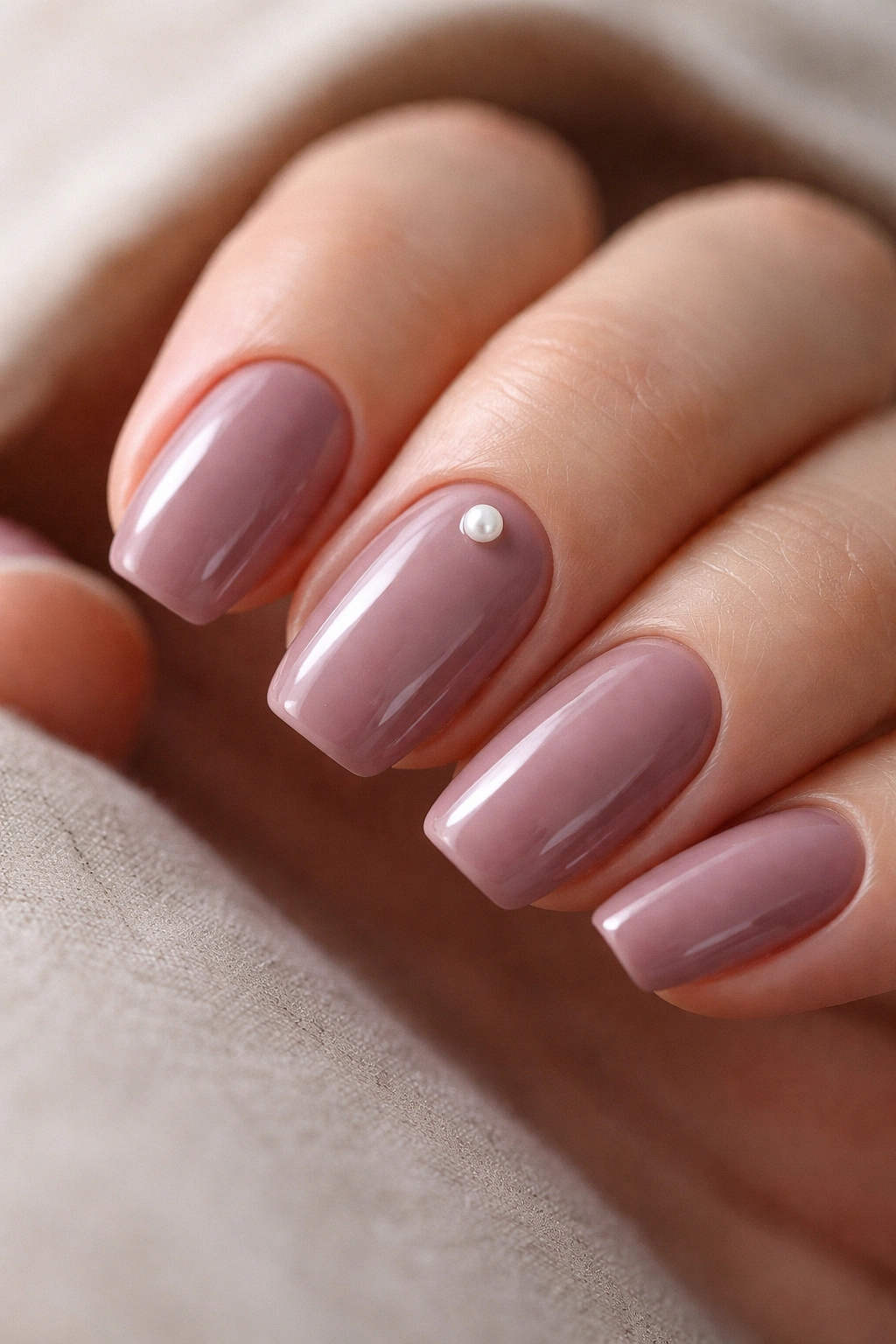
Pearls go from chic to fussy in about three seconds on a short nail. The fix is scale.
A dusty mauve base gives enough body to support a pearl accent, and the pearl adds one point of texture without turning the manicure bulky. Use a flat-back pearl around 1.5 to 2 millimeters wide and place it low near the cuticle on one or two nails only. Ring finger placement is the safe choice. Thumb placement is a little cooler if you want the detail to peek out only when you move your hands.
Do not bury the pearl under top coat. That dulls the finish and can make the edges lift oddly. Instead, secure it with a small bead of builder gel or gem glue, cure it, then float top coat around the base to seal the area.
Mauve helps because it sits between pink, taupe, and plum. It gives the manicure a little mood without making the pearl feel costume-y. If your style leans soft, polished, and low drama, this one earns its place.
15. Syrup Brown Jelly Ballerina Nails
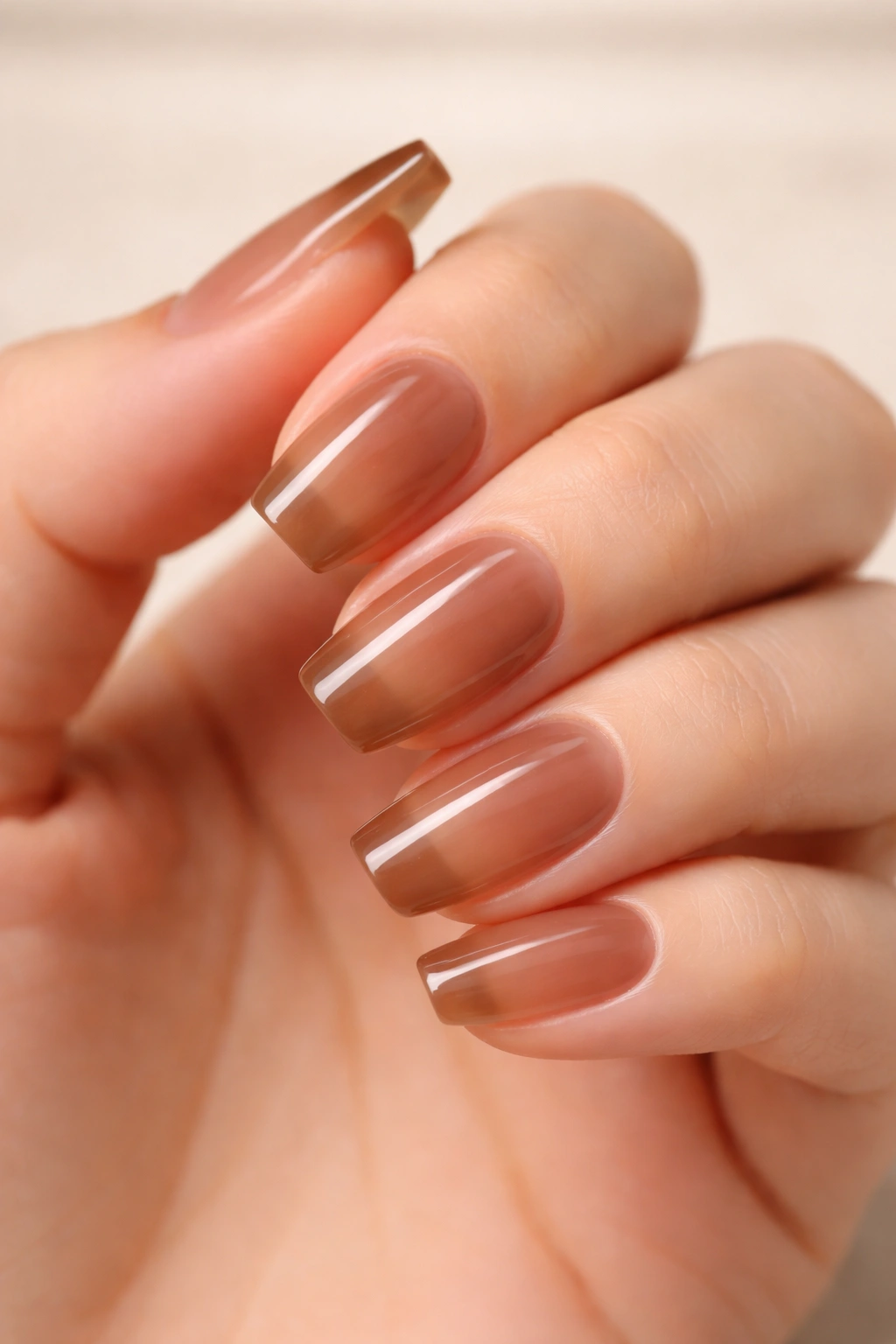
Syrup brown is one of my favorite shades on short ballerina nails because it gives depth without the hard stop that comes with opaque espresso or black. You still get richness, but the transparency keeps the manicure light.
Look for a tea-brown or cocoa jelly polish and build it in two or three thin coats. One coat often looks patchy. Four coats usually kills the syrup effect. The sweet spot is that middle zone where the nail still catches light through the color and the free edge is softened, not erased.
Brown jelly polish also flatters the ballerina shape in a sneaky way. The color deepens toward the tip as the layers stack, which makes the flat edge look defined while the body of the nail stays airy. On shorter nails, that little gradient-like effect helps the shape look more deliberate.
I reach for this design when plain nude feels dull but full dark polish feels too severe for the week ahead. It pairs well with gold jewelry, tortoiseshell accessories, cream knits, black coats, denim, and bare makeup. Low effort. Good payoff.
Final Thoughts
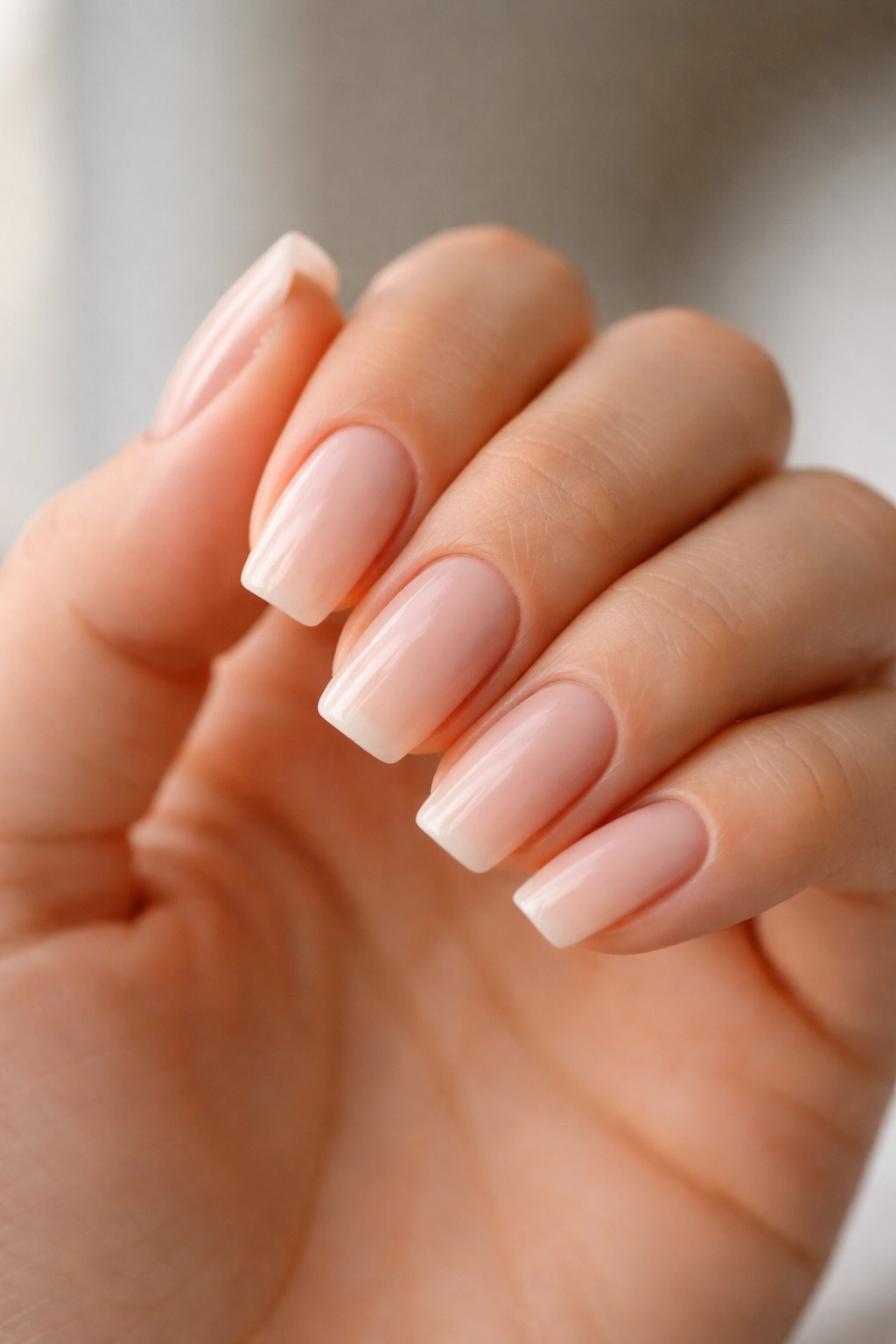
Short ballerina nails look their best when the shape stays clean and the design stays disciplined. Straight sidewalls, a soft flat tip, and light-handed detail matter more than how fancy the polish is.
If I had to narrow this list down for daily wear, I would start with milky pink, glossy sheer nude, micro French, dusty rose with a thin stripe, and syrup brown jelly. Those five cover a lot of moods without asking much from your nails.
One last practical note: if your corners keep breaking, do not blame the shape first. Check the file work, the thickness at the free edge, and whether your nails need a builder base before you taper them again. Short ballerina nails can look sharp for days—you just have to give them a little structure.