

A pale blue manicure can go wrong faster than people think. If the shade leans gray, your hands can look tired. If it leans too white, the polish turns chalky. Baby blue ballerina nails sit in the sweet spot where a cool pastel still feels soft, clean, and polished without looking flat.
The shape matters as much as the color. Ballerina nails—often called coffin nails in salon chairs—have tapered sides and a flat tip, so they already carry a little structure. Put a harsh color on that silhouette and the whole set can read sharp. Put baby blue on it, especially with a milky base or a translucent finish, and the edges calm down.
That balance is what most photo roundups miss. A baby blue gel can look creamy in daylight, icy under cool indoor bulbs, and almost white if the nail tech packs on thick coats. Length changes the mood too. A medium ballerina shape with 4 to 6 mm past the fingertip feels soft; push it much longer, and the same pastel starts reading more dramatic.
Some designs stay airy and bare. Some add a little pearl, a chrome wash, or thin line work. The ones worth saving are the sets that keep the color light and make the shape look intentional.
Why Baby Blue Ballerina Nails Soften a Tapered Shape
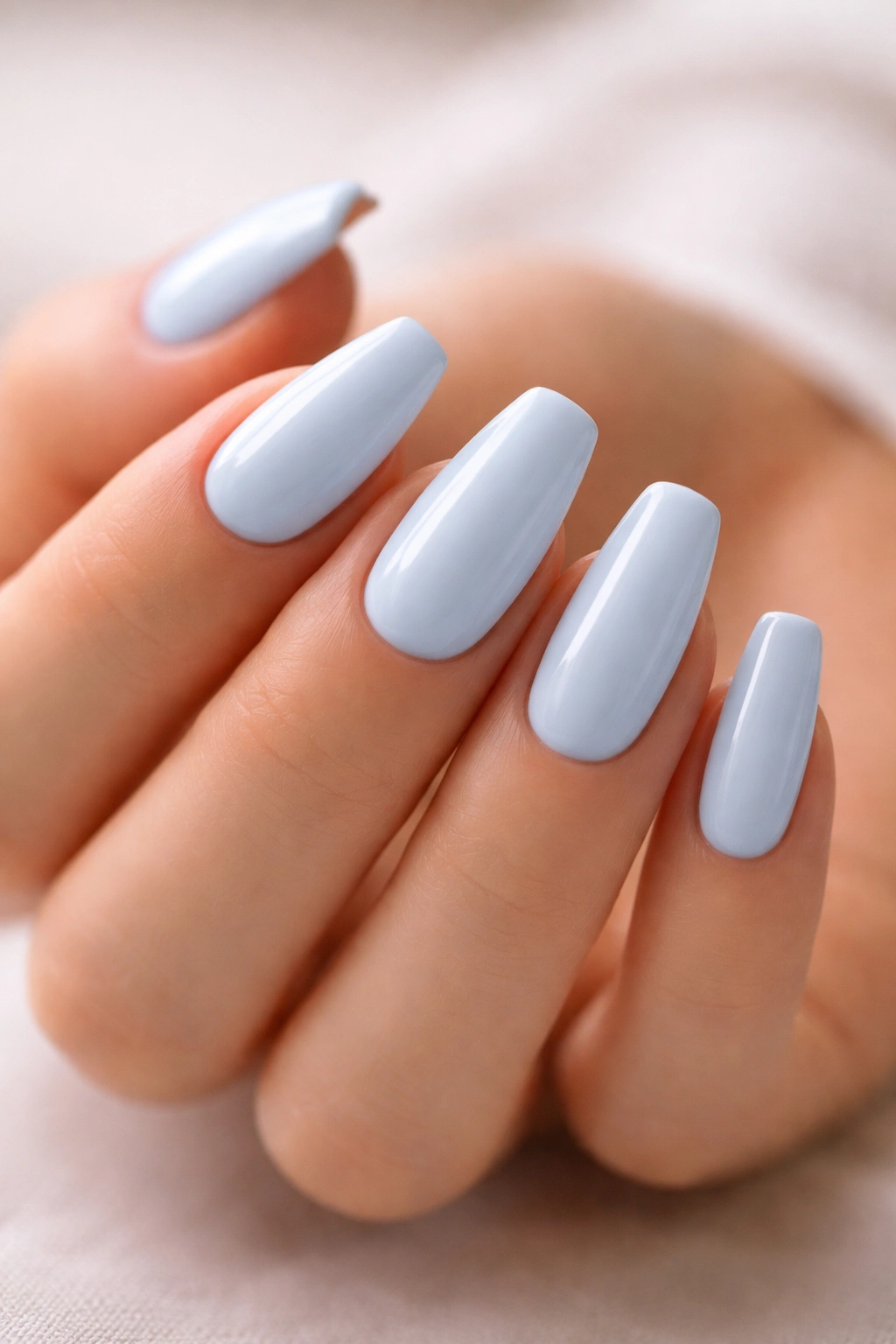
The ballerina shape has edge, even when the color is gentle. That flat tip creates a crisp finish, and the narrow sidewalls pull the eye inward, which makes fingers look longer. Baby blue acts like a visual softener. It takes that firm outline and gives it a lighter mood.
You can see it best on medium-length sets. On short nails, baby blue reads neat and understated. On medium coffin nails, it starts to look graceful. Long sets still work, though I’d keep the color sheer or milky there, because full-coverage opaque pastel on extra-long tips can feel heavy.
There’s also a skin contrast piece here. Pale blue sits cooler than blush pink or beige, so it gives the hand a clean cast that can make the nail shape stand out without screaming for attention. That’s why baby blue ballerina nails work so well for wedding guest nails, office nails, and dressier sets where you want shape, but not a dark color blocking the whole look.
How to Keep Baby Blue Ballerina Nails From Looking Chalky
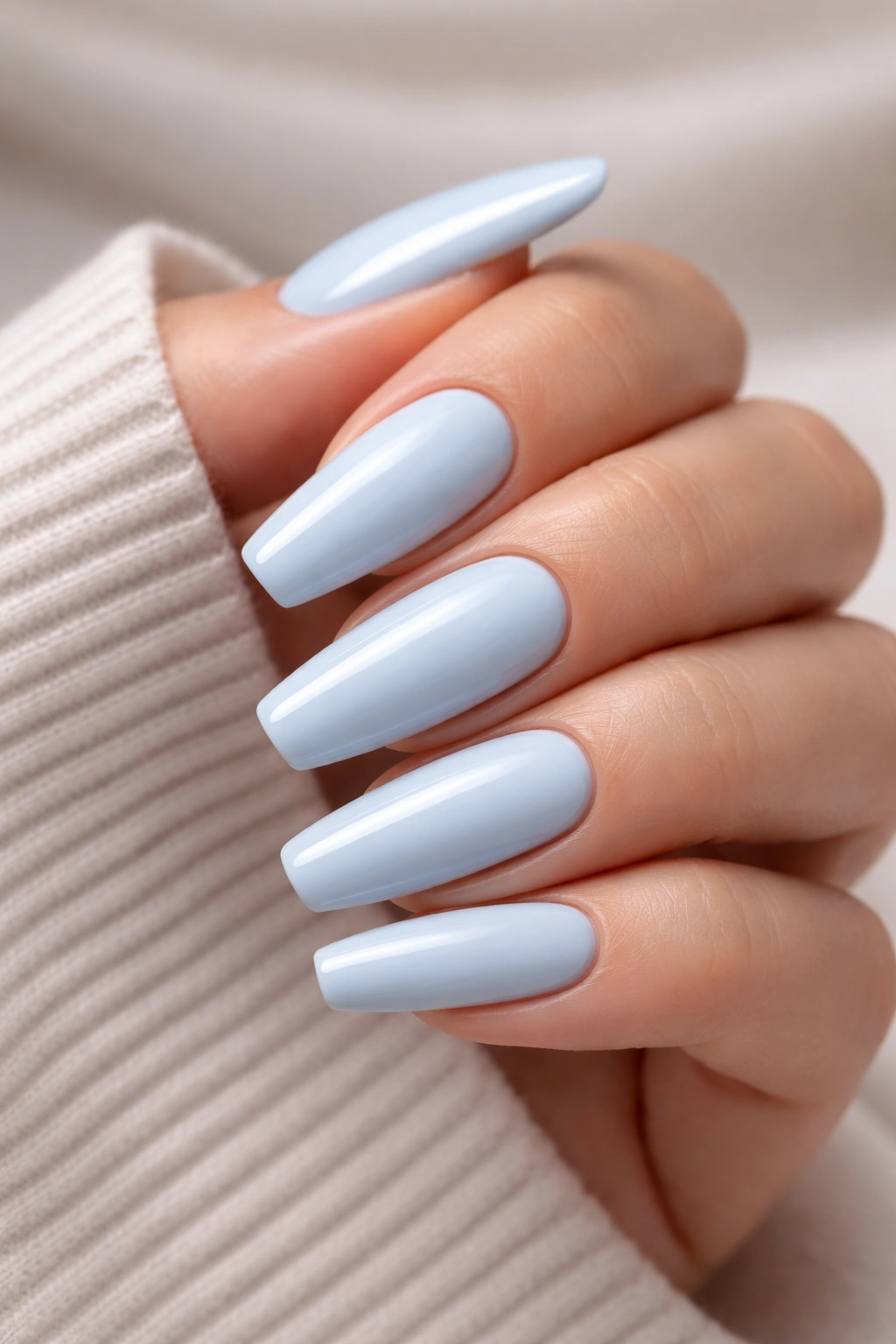
Not every pale blue belongs on every hand. Undertone decides whether the manicure looks creamy or dusty, and that one choice changes the whole result.
A few shade rules help:
- Pink or neutral skin usually looks best with a baby blue that has a drop of sky blue in it rather than heavy white pigment.
- Golden or olive skin often suits a baby blue with a hint of gray, periwinkle, or soft lilac underneath.
- Deeper skin tones can carry brighter milk-blue shades with ease, especially if the base is glossy and not matte.
- If your cuticles run red, ask for a milky blue instead of an icy blue. The contrast looks smoother.
Opacity matters too. Two thin coats almost always beat one thick coat. Thick pastel polish tends to pool near the cuticle and leaves ridges on the sidewalls, which is where that chalky look starts showing up.
Photos can lie a little here. A salon swatch under white LED lights may look crisp, but outside it can turn almost baby-powder pale. If you’re between two shades, pick the one with a touch more blue.
Gloss, Jelly, and Matte Finishes Change the Whole Mood
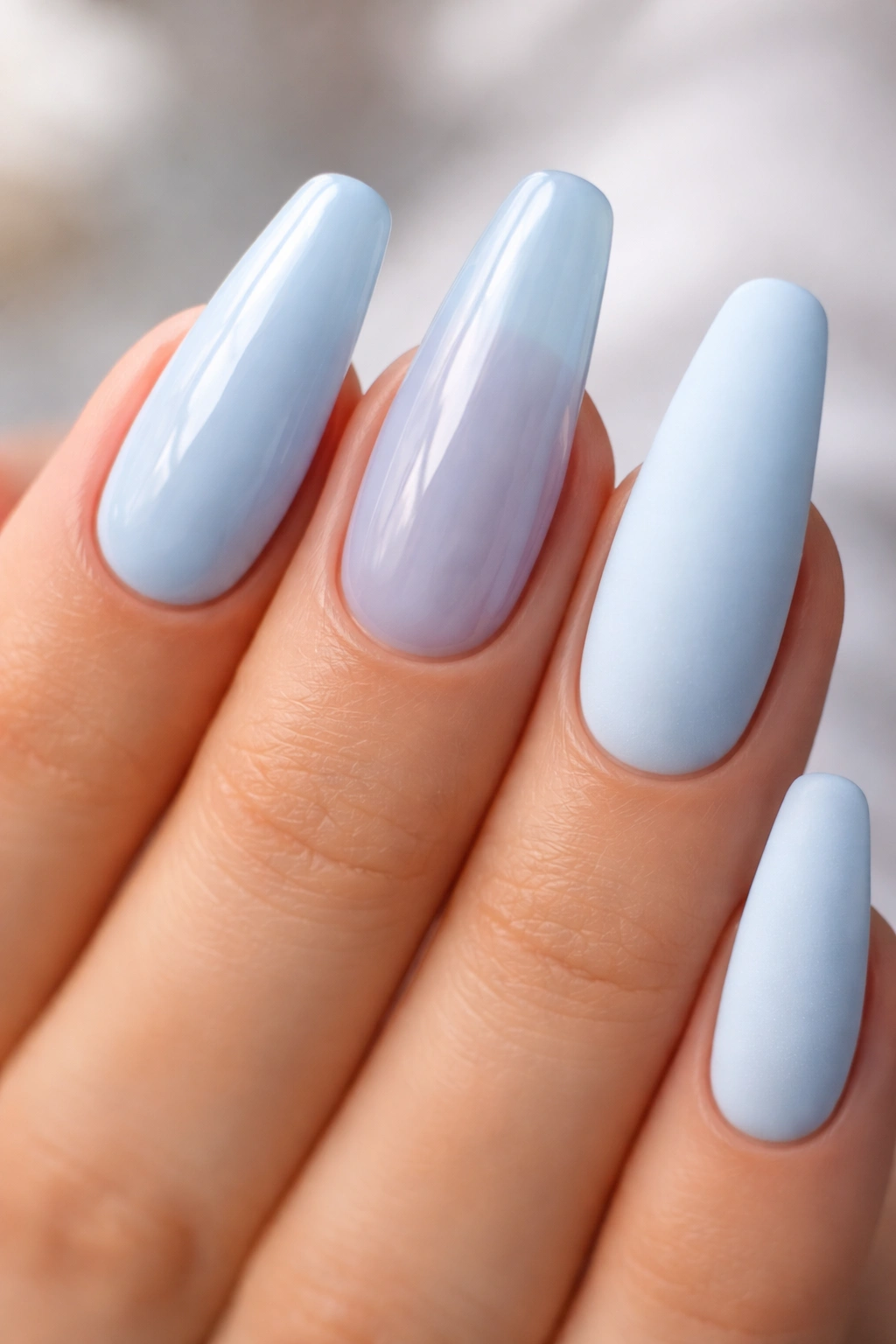
A baby blue manicure isn’t one look. The top finish can swing it from glassy to powdery in a single layer.
Glossy gel keeps the color fresh
High-shine topcoat makes pale blue look deeper and cleaner. It also helps hide tiny surface marks that matte topcoats love to show. If you want the softest version of a full-color set, glossy is the safe move.
Jelly blue looks lighter than it is
Translucent blue gives the nail a candy-glass feel without going loud. You still get the pastel tone, though the natural nail peeks through a little. On ballerina nails, that see-through effect can keep longer lengths from feeling too dense.
Matte adds fabric-like softness
Matte baby blue has that powder-room, cashmere, porcelain kind of mood. It’s lovely when it’s done right. It also shows dents, makeup transfer, and even a little pocket lint more than gloss does, so you need to want the look enough to deal with the upkeep.
Short version: if you are unsure, go glossy first.
What to Ask for Before Your Nail Tech Starts Shaping
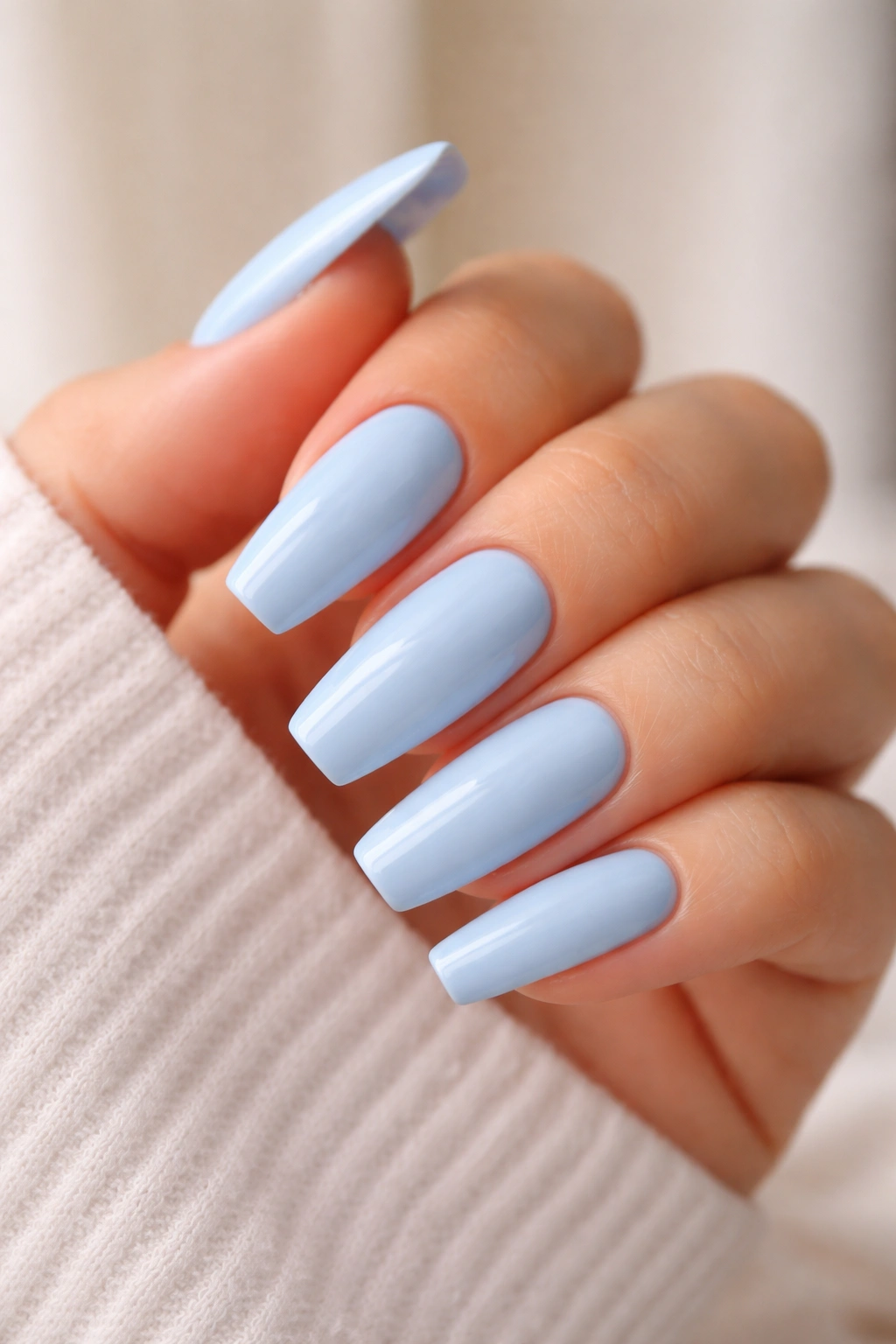
Most soft blue sets go wrong before the color even comes out. Shape, apex, and base tone all need a quick conversation up front.
Bring a reference photo, but say what you like about it. Maybe it’s the milkiness. Maybe it’s the shorter tapered tip. Maybe you only want the pearl detail from one photo and the color from another. Nail techs can work with that.
Ask about these details before filing starts:
- Length: medium ballerina is the easiest place to keep baby blue looking soft.
- Apex height: too flat, and the shape can feel wide; too bulky, and pale colors look thick.
- Sidewall taper: a slim taper flatters the hand, but over-filing makes the nails look pinched.
- Base color: nude, sheer pink, milky white, or full blue all change the result.
- Art method: hand-painted details usually look finer than thick decals on a pastel base.
One small salon note that saves regret: look at the color after one coat. Pastels often surprise you at that stage. If it already looks too white, it will not get better after the second coat.
1. Milky Baby Blue Glass Nails
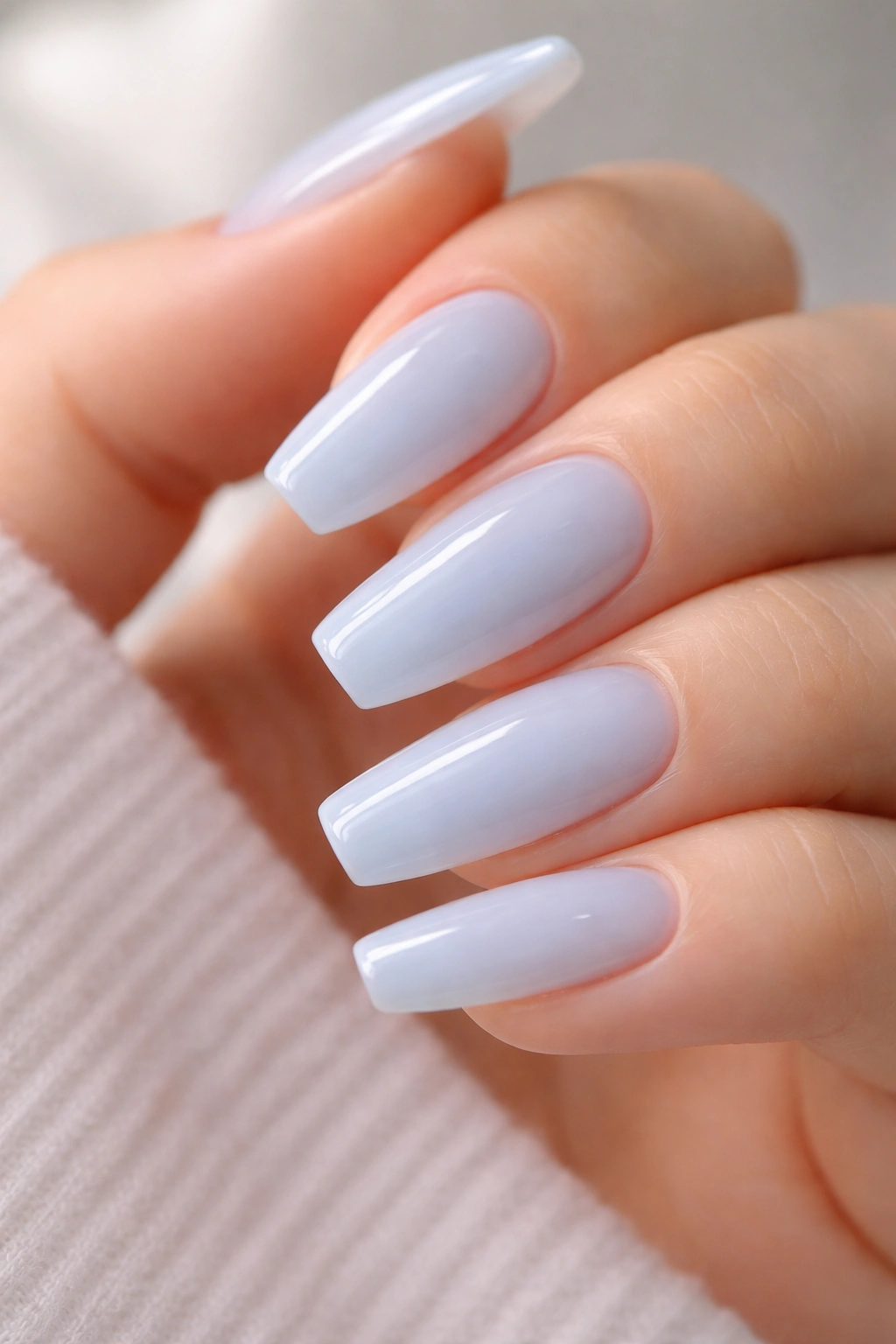
If you want a set that looks soft from every angle, start here. Milky baby blue with a glassy topcoat is the cleanest version of the trend, and it flatters the ballerina shape without making the tips look heavy.
The magic is in the base. A true milk-blue shade has enough white to blur the nail line, but not so much that it turns into correction-fluid pastel. On a builder-gel base, two thin coats create that creamy depth that looks smooth in daylight and richer under warmer indoor light.
Why the milky base matters
A sheer pastel can look streaky on coffin nails because the flat tip shows every patch. Milky formulas hide those weak spots. They also soften the corners of the ballerina shape, which is the whole point of choosing this color family in the first place.
Quick salon details
- Ask for medium-length ballerina nails with a softly tapered sidewall, not an extreme coffin.
- Request two thin color coats rather than one thick coat.
- Pair it with a high-shine no-wipe gel topcoat for that smooth glass finish.
- If your natural nail line is dark, a milky nude builder base under the blue helps even things out.
Best pick for: first-timers, office wear, and anyone who wants one set that works with denim, cream knits, and dressier outfits.
2. Baby Blue Micro-French Ballerina
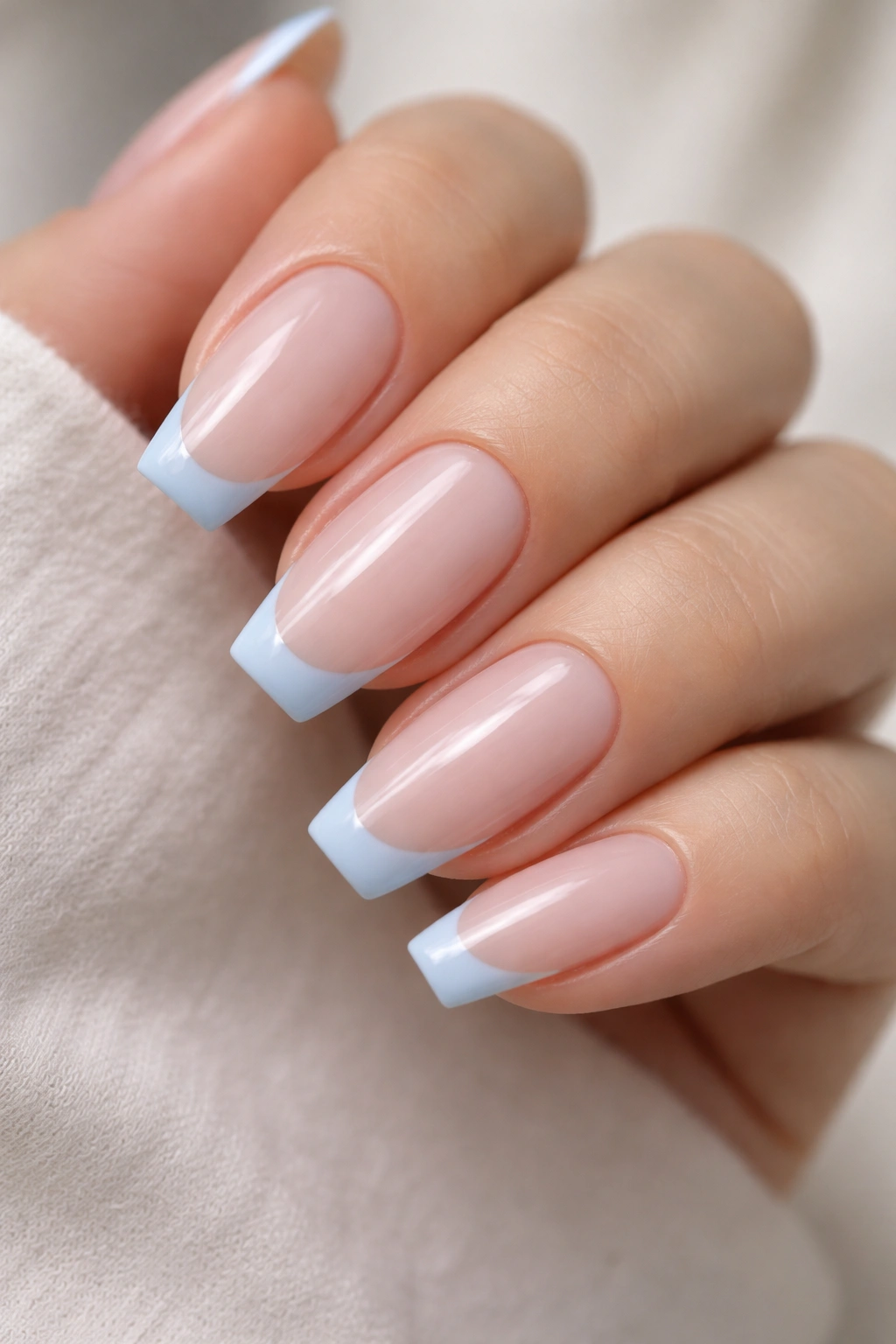
This is the set for people who want pastel blue without committing to full coverage. A micro-French keeps most of the nail bed nude or sheer pink, then traces the ballerina tip with a slim baby blue edge.
That narrow line matters. Once the tip gets wider than 2 mm, the look starts drifting away from soft and toward graphic. Keep it crisp and fine, and the shape looks tidy, expensive, and a touch sharper than a full blue nail.
I like this design most on medium-short ballerina nails because the ratio looks right. Too long, and the nude section can feel stretched. Medium length gives the blue enough room to show while keeping the whole set airy.
There’s a practical upside too. Grow-out is less obvious than on a full pastel manicure, which means the set stays neat longer. If you type all day or use your hands at work, that matters more than people admit.
Ask for a sheer pink or neutral base instead of clear. A little wash of color under the blue keeps the manicure from looking unfinished.
3. Icy Baby Blue Pearl Chrome
Why does chrome sometimes look hard instead of soft? Because most people picture a mirror finish. A pearl chrome over baby blue is different—it gives a low, satiny glow rather than a silver flash.
The trick is pressure. A heavy hand with chrome powder turns the surface metallic. A light dusting over cured pale blue leaves that shell-like sheen you see on pearls and seashell interiors. On ballerina nails, that glow runs along the tapered sides and makes the shape look sleek, not cold.
I’d skip a dark base here. Baby blue works because it lets the chrome stay airy. A white-blue base can work too, though it needs a careful topcoat so the surface stays even.
How to keep chrome soft, not mirror-bright
Use a pearl or aurora powder, not a full silver chrome. Ask your nail tech to burnish a thin layer over a sealed pale blue base, then cap it with a glossy topcoat. The effect should read as luminous, not reflective enough to act like a tiny mirror.
This one shines most on evening sets, bridal events, or whenever you want a soft manicure that still catches light under dim restaurant lamps.
4. White Daisy Accent on Baby Blue Base
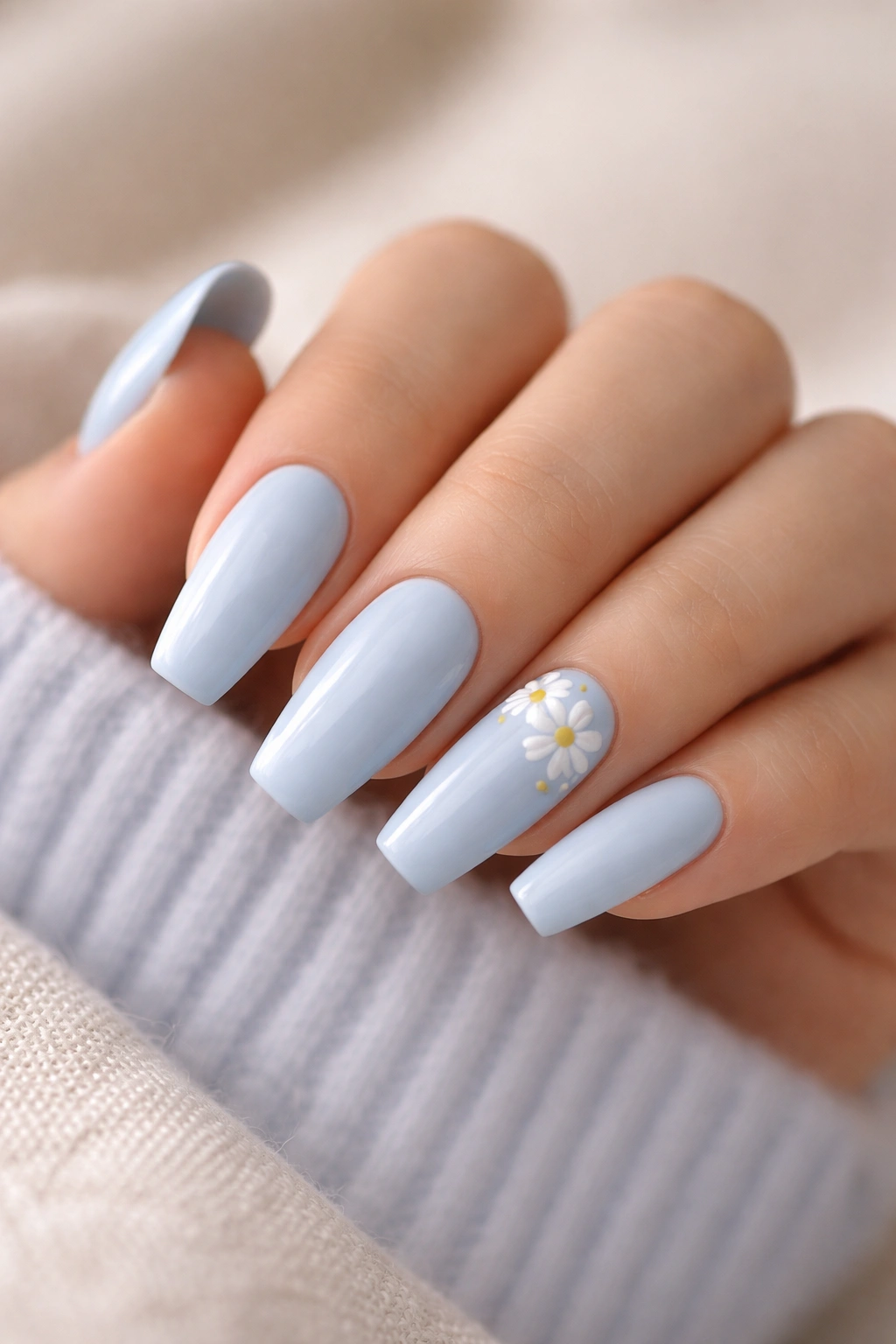
Picture a full baby blue set, then one or two nails with tiny white daisies placed near the tip or off to one side. That’s enough. Anything busier and the softness disappears.
Daisy nail art works because the flower shape is round and open, which offsets the straight ballerina tip. You get a little contrast—structured nail shape, gentle floral detail—without crowding the nail plate.
A few details keep it tasteful:
- Use small daisies with 5 rounded petals, not oversized flowers that take over the whole nail.
- Keep the flower centers soft yellow, silver, or even baby blue for a quieter look.
- Place florals on 1 to 3 accent nails, not all ten.
- Leave space around the art so the base color can breathe.
Hand-painted flowers look better than chunky decals on this style, mostly because the petals can stay thin. And thin is the whole game here.
This is the set I’d pick for brunch, a garden party, or a baby shower where you want something sweet without going full novelty.
5. Nude-to-Blue Ombre Fade
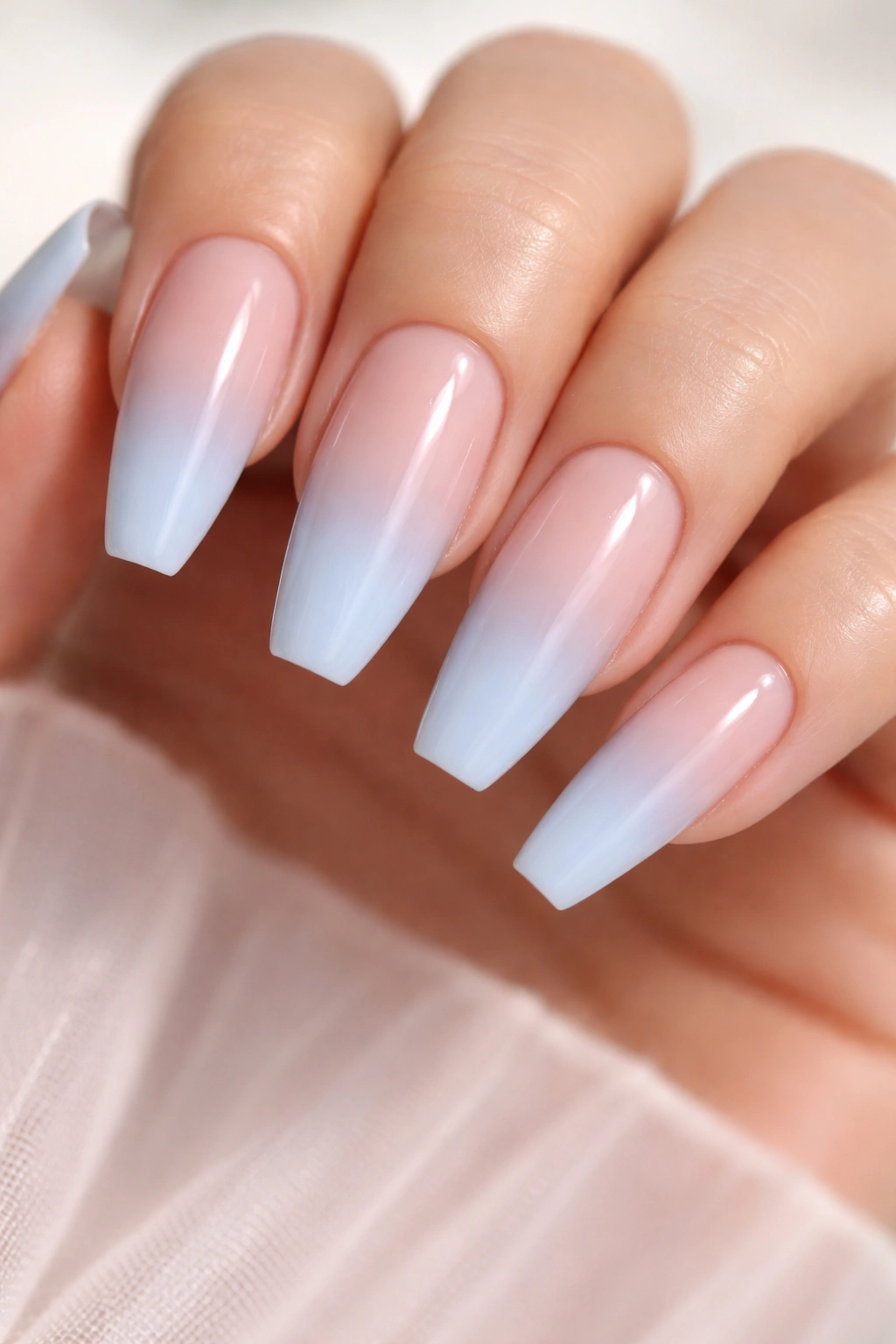
A good baby blue ombre has no hard line. None. The color should start near the tip, then blur into the base so softly that you almost miss where one shade ends and the next begins.
That soft fade works especially well on ballerina nails because it follows the shape’s natural movement. The nude or blush base keeps the cuticle area light, and the deeper blue toward the tip anchors the flat end of the nail. Fingers look longer. The manicure looks airy.
Airbrush ombre gives the smoothest result, though a sponge blend or a dry-brush fade can still look polished if the layers are thin. I would ask for the blue to begin around the top third of the nail rather than halfway down. Lower than that, and the look turns more dramatic.
Gloss suits this design best. Matte can flatten the gradient and make the blend look dusty. A shiny topcoat lets the fade melt into itself.
One more thing: choose a nude base that matches your skin a little better than you think it needs to. If the base is too pink or too beige for your hand, the ombre looks disconnected.
6. Matte Baby Blue with Glossy French Tips
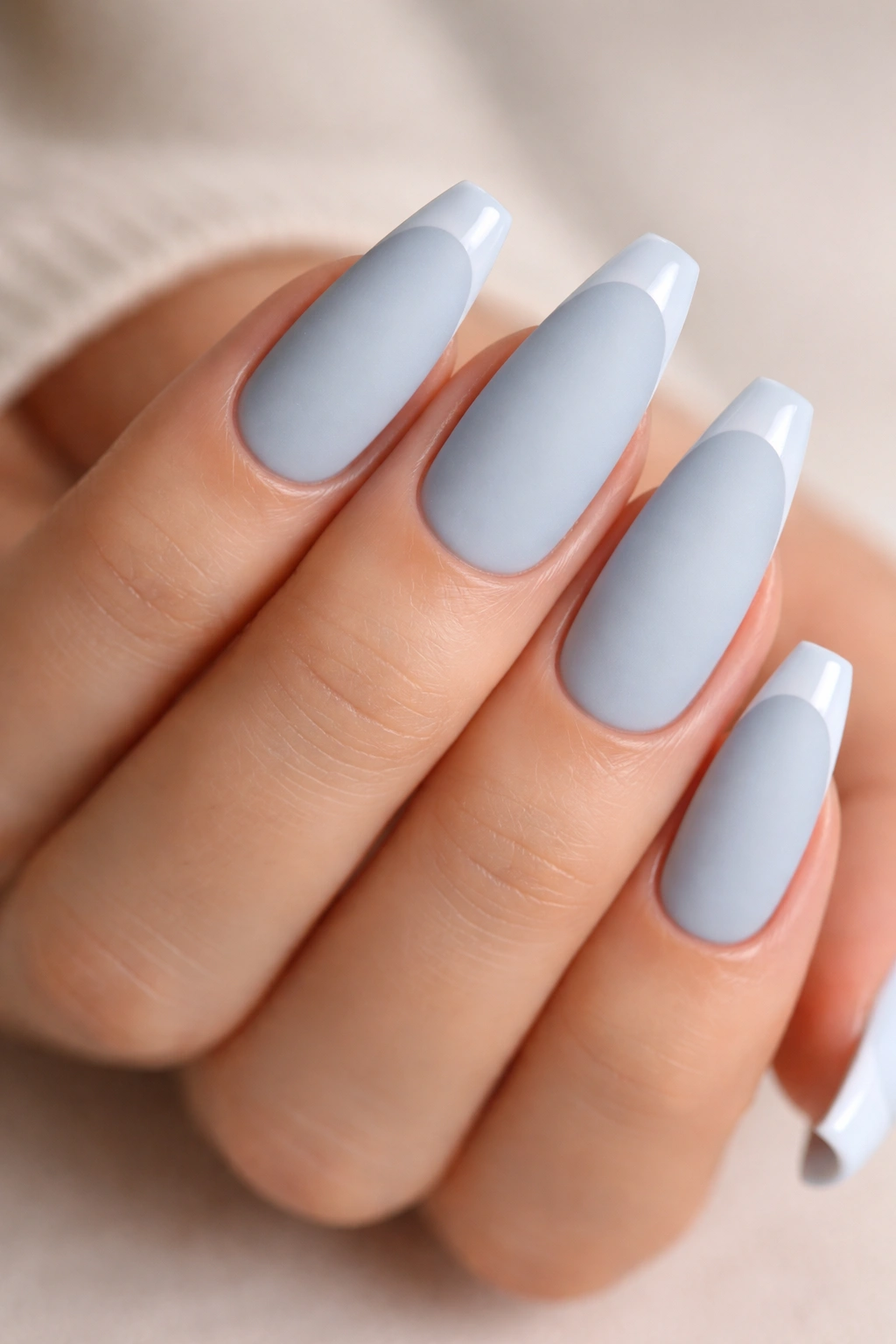
Unlike a full matte manicure, this design uses contrast to keep pale blue from falling flat. The nail bed and main body stay soft and velvety, while the French tip gets a glossy seal that catches light in a narrow line.
That shift in texture is subtle, which is why it works. You still see baby blue across the whole nail, but the shine at the edge outlines the ballerina tip in a cleaner way than color alone. It’s almost a contour trick for nails.
Who should get this? Anyone who likes matte polish but hates how it can make pastels look powdery after a few days. The glossy tip gives the set more structure and hides wear at the edge better than full matte.
I’d keep the tip depth shallow—around 2 to 3 mm. Wider than that, and the design starts pulling toward a standard French with a matte base rather than that soft textural mix.
For salon instructions, ask for the same baby blue shade in two finishes, not two different blues. Matching color is what keeps the look calm.
7. Baby Blue Nails with a Thin Silver Cuticle Line
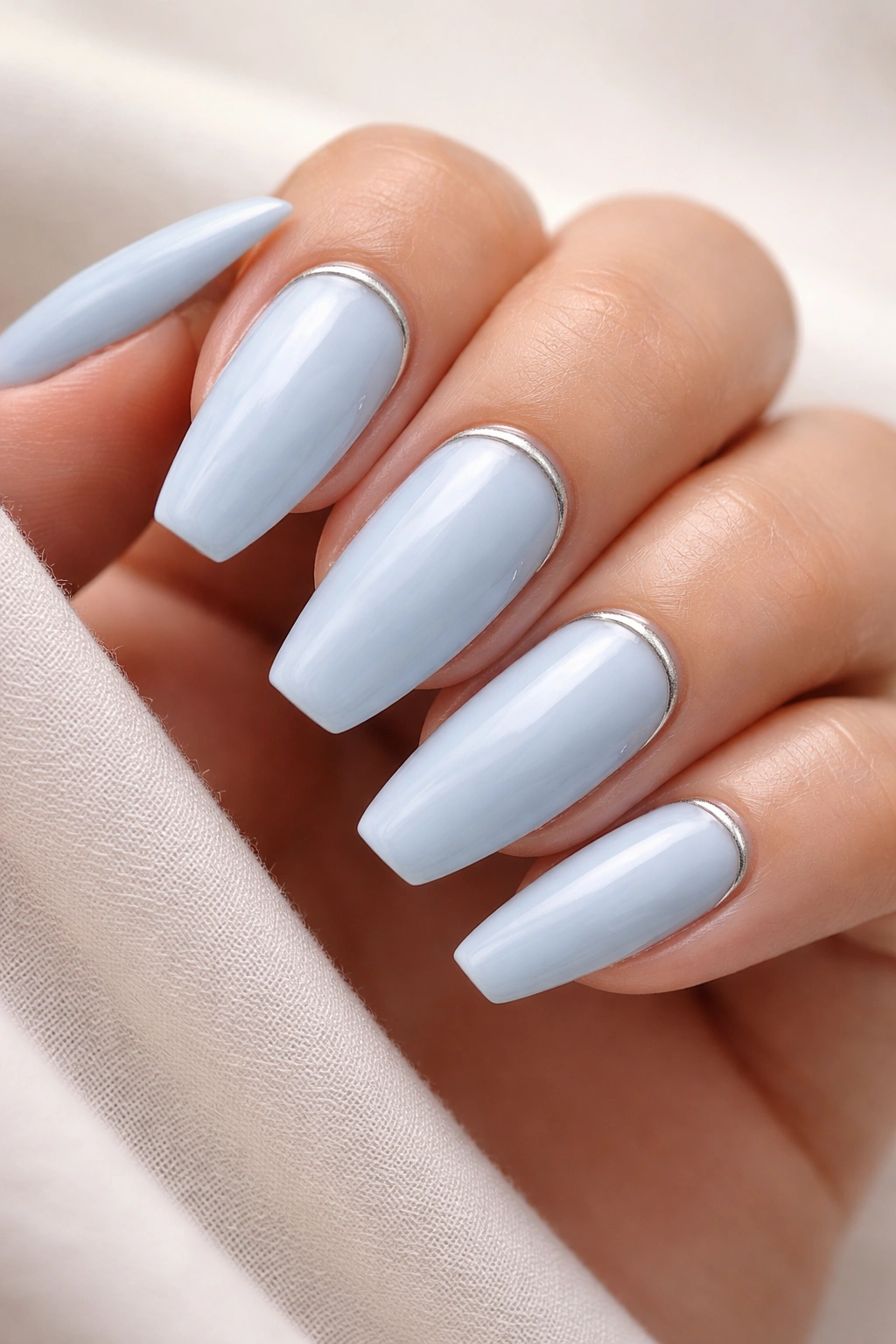
Some accents belong at the tip. This one belongs at the base. A hairline silver arc at the cuticle can make a soft blue manicure look dressed up without covering the nail in glitter.
Placement matters more than sparkle here. A line that hugs the moon of the nail draws attention to the clean shape and fresh cuticle work. It also adds a jewelry effect that feels neat rather than flashy.
Best way to keep it refined
The silver line should stay under 1 mm wide. Ask for a gel-paint striping line or ultra-fine foil detail rather than chunky glitter polish. Thick glitter at the base can look heavy against pastel blue, and it ages the design fast.
Quick details that help
- Pair the silver with a glossy baby blue base, not matte.
- Use the accent on all ten nails if the line is whisper-thin, or on two feature nails if it is brighter.
- A cool silver suits baby blue better than warm gold in most cases.
- Seal the line carefully so it does not catch hair or fabric.
Best pick for: engagement parties, dinner events, and anyone who wants a soft set with one polished metallic detail.
8. Sheer Blue Cloud Art
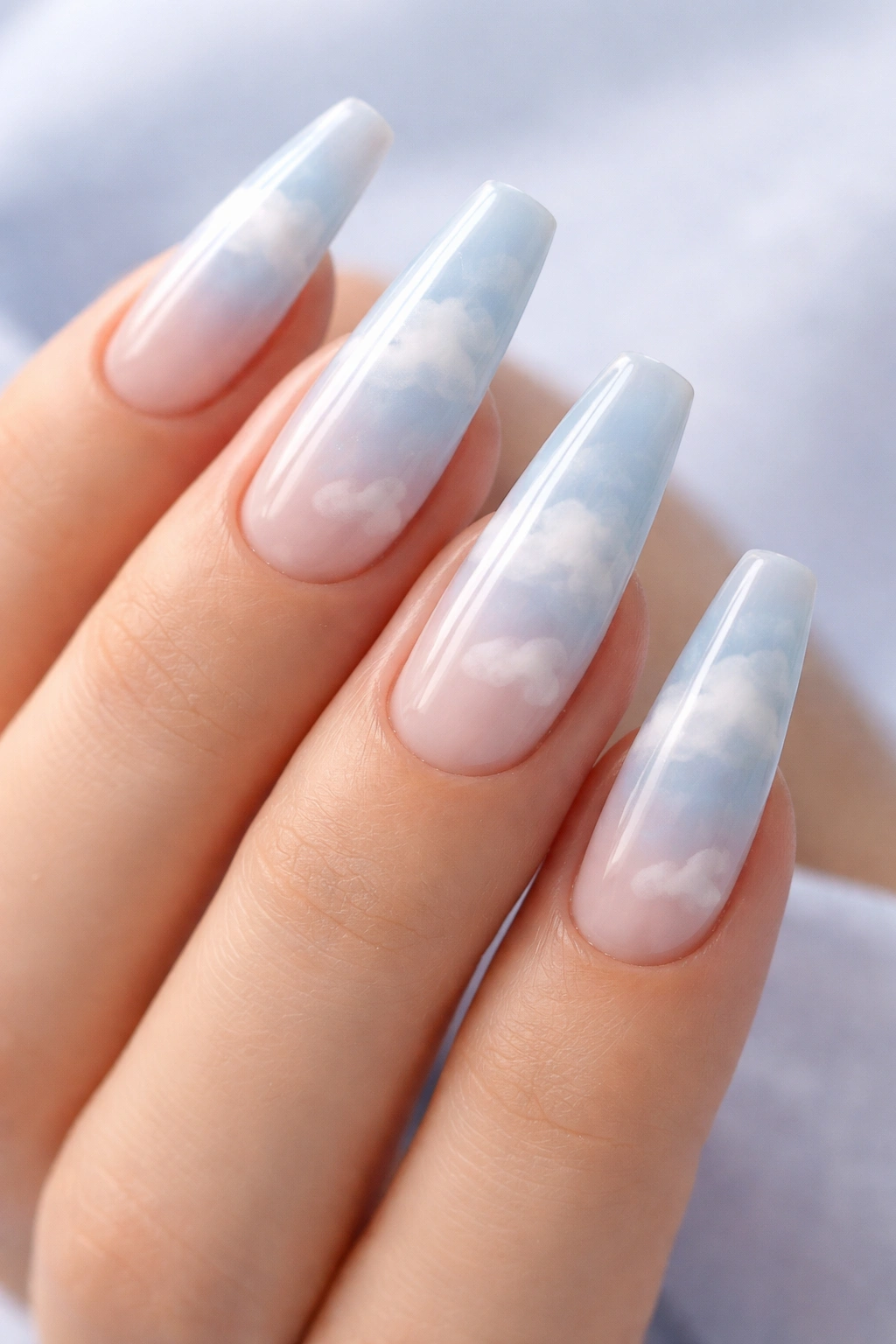
The trick with cloud nails is restraint. Done with a translucent blue wash and soft white edges, cloud art looks dreamy. Done with thick white blobs, it looks like a cartoon.
I keep coming back to this design because it uses empty space well. On a ballerina shape, the flat tip gives the clouds a clean frame, while the sheer blue background keeps the whole thing from turning busy. You do not need a sky scene on every finger. Two cloud nails mixed with solid baby blue usually lands better.
Brush technique matters. Good cloud art has feathered edges, not stamped circles. Tiny overlapping puffs with a little transparency at the outer edge look more believable and more grown-up.
This set also looks better when the base blue is sheer. Opaque baby blue with white clouds can feel thick, especially on long nails. A jelly wash leaves room for the art to float.
If you wear silver rings or white gold, this one ties in nicely. There’s a fresh, airy feel to it—less floral, more open sky.
9. Powder Blue and White Marble Swirls
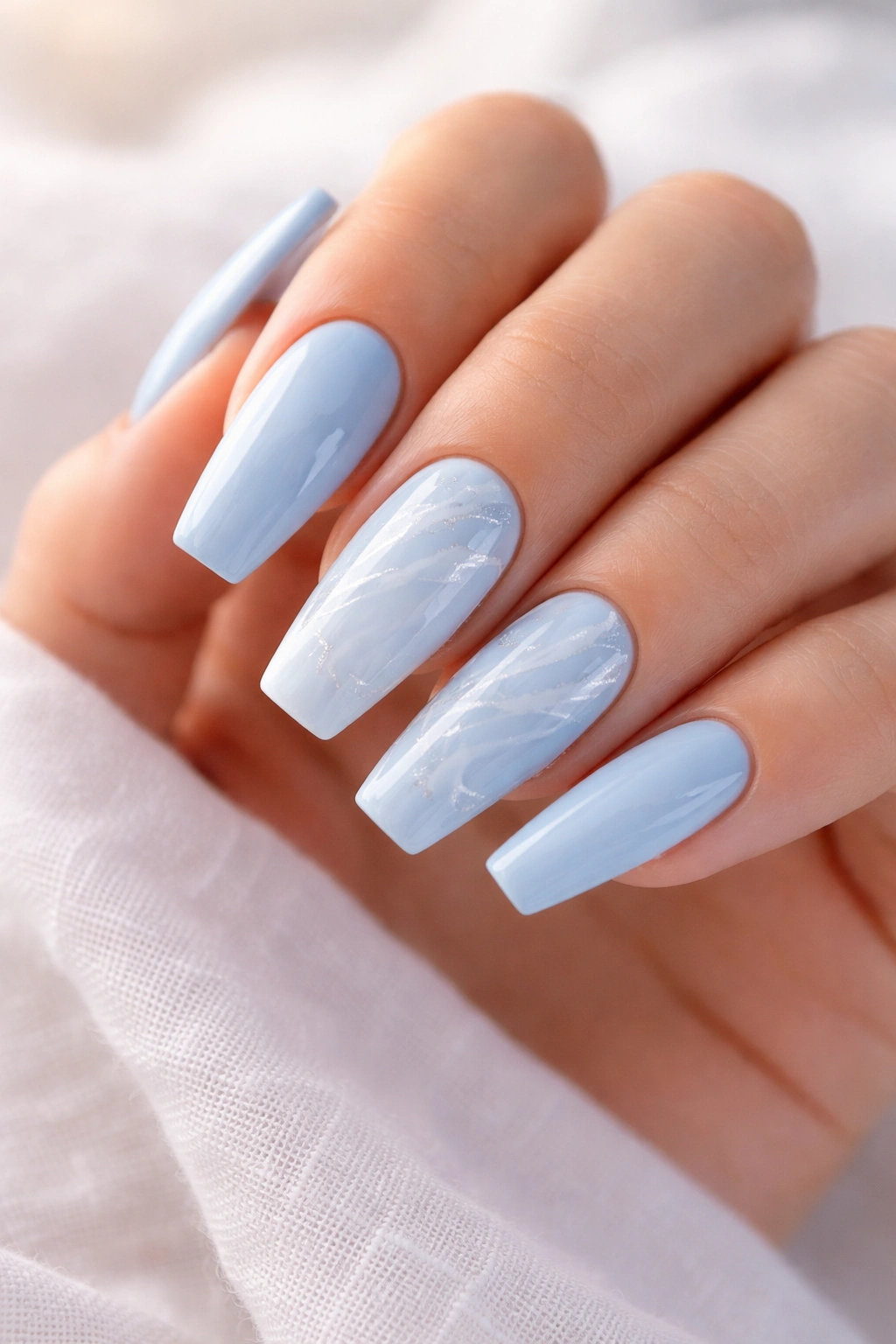
Why do some marble nails lose their softness? Usually because the veining is too dark, too thick, or too spread across every nail. Soft marble needs restraint and scale.
Baby blue marble works best when the base is powdery and the white swirls stay thin, almost like milk stirred into tea. Add one faint silver line if you want, though I’d skip harsh black or charcoal veining here. Dark contrast kills the gentle mood fast.
On ballerina nails, marble looks strongest when used on 2 to 4 fingers with solid blue nails beside it. Full marble across all ten nails can start feeling cold. A mixed set keeps the eye moving without turning the manicure into wallpaper.
Keep the veining light
Ask for fine gel-paint veining pulled with a liner brush while the base stays slightly wet, or a blooming-gel technique that lets the white spread on its own. The lines should look organic, not striped.
This design does well in glossy finish because shine adds depth to the swirls. Matte tends to mute the layered effect too much.
10. Baby Blue Aura Glow
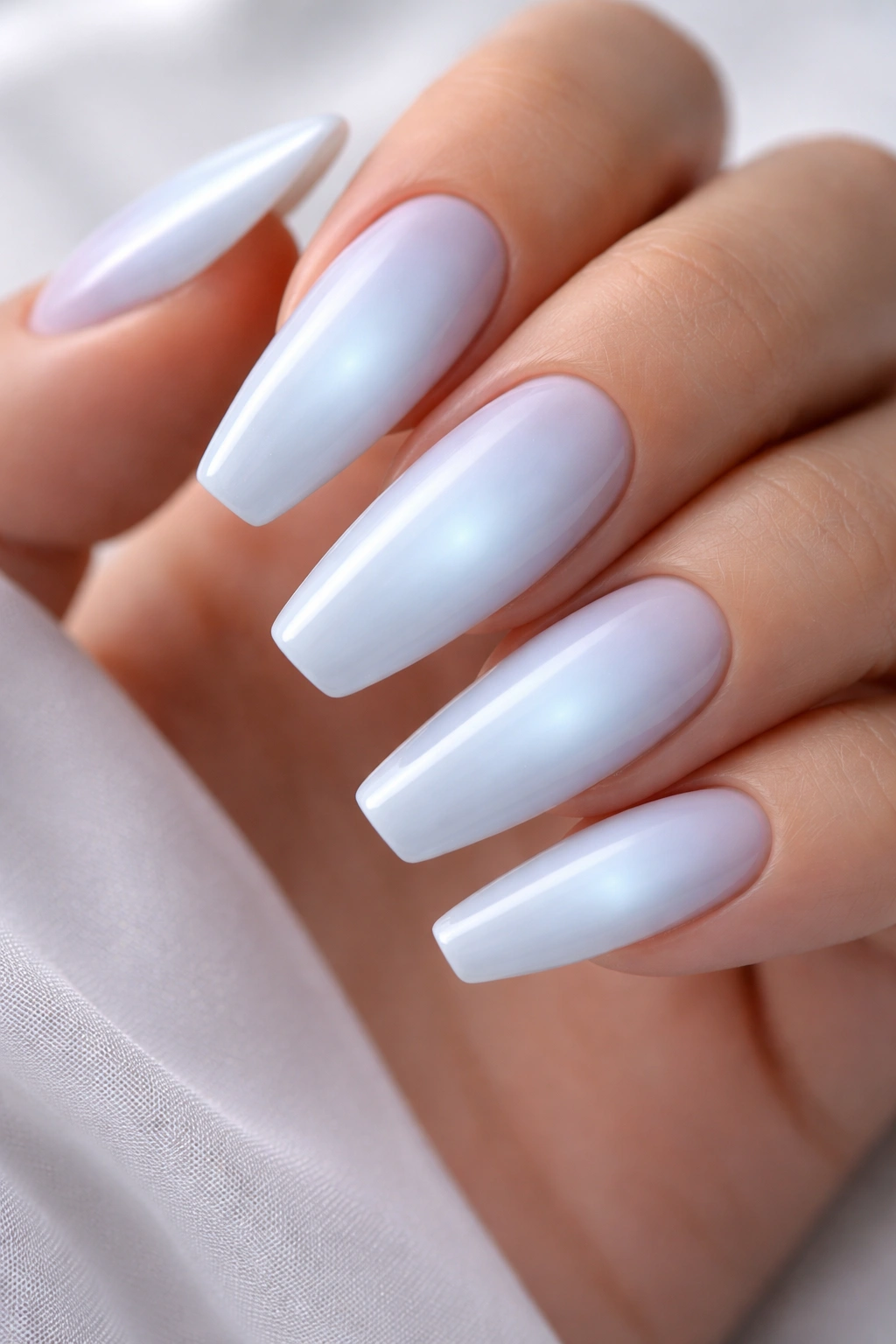
Aura nails can lean neon fast, which is not what we want here. On a baby blue ballerina set, the aura should feel like a cloud of color in the center of the nail, not a bright target.
A soft aura starts with a milky nude or pale blue base. Then a slightly brighter blue is airbrushed or sponged into the center, leaving the edges lighter. That reverse shading gives the nail depth while keeping the outline clean.
A few things make this design look better on the ballerina shape than on square nails. The tapered sides keep the glow from spreading too wide, and the flat tip adds a clean end point. The color sits in the middle and looks almost lit from underneath.
Helpful guidelines:
- Choose a blue only one or two shades deeper than the base.
- Keep the center glow diffused, not sharply round.
- Use aura on all ten nails for a misty set, or combine it with solids for a calmer look.
- Finish with gloss, since shine helps the fade melt.
This is a smart choice if you want something more artistic than a plain pastel, though still soft enough for everyday wear.
11. Translucent Baby Blue Jelly Ballerina
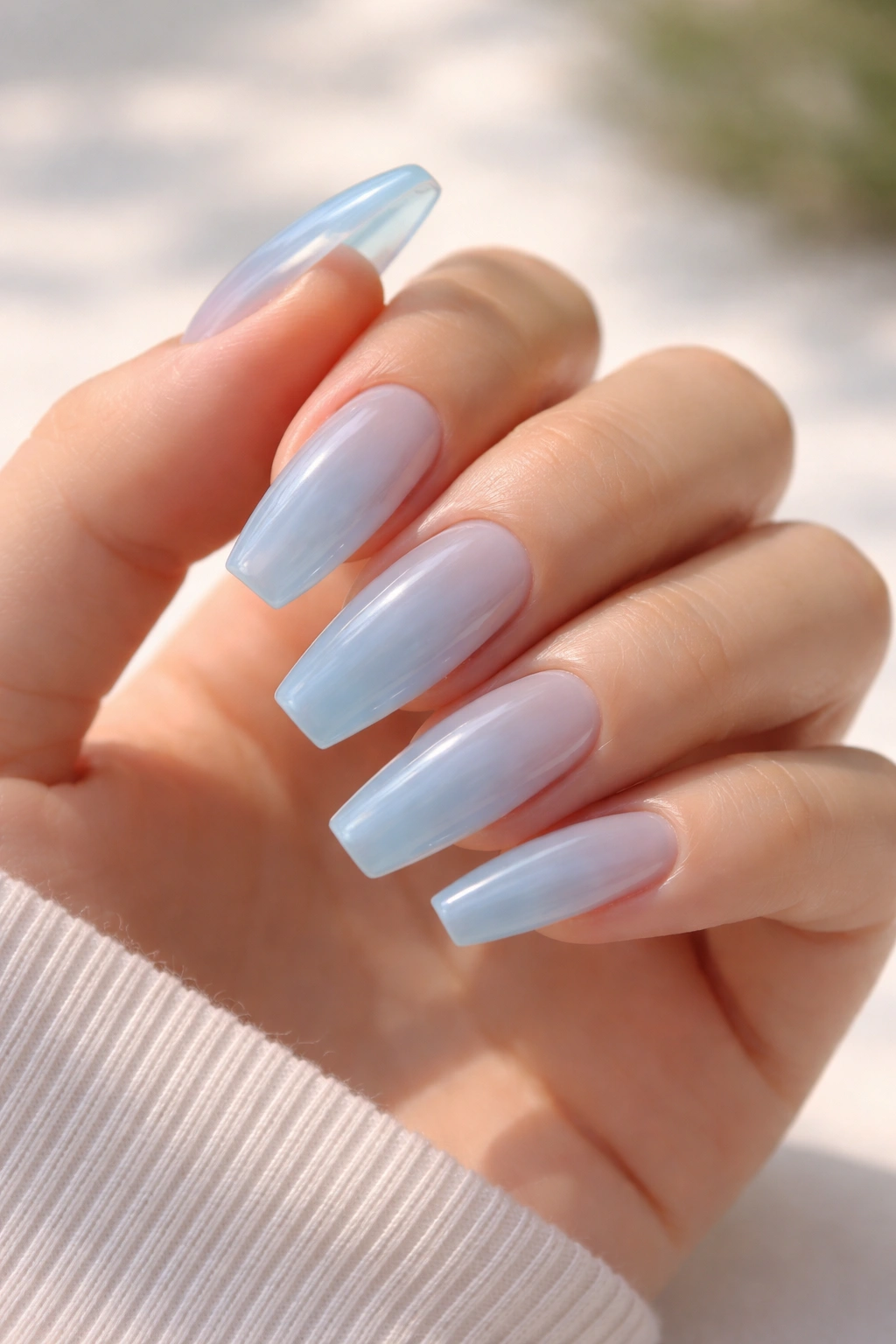
Jelly nails have a different kind of softness. They don’t blur the nail like a milk shade does; they let light pass through. That transparency gives baby blue a fresh, glass-candy look that feels light even on longer ballerina nails.
You do need a clean foundation. If the free edge is uneven or the extension underneath looks cloudy, jelly polish shows everything. A clear or softly tinted builder base helps keep the nail bed smooth, and shaping has to be neat because the sides stay visible under the translucent color.
This is one of those designs that looks best in sunlight. The blue deepens at the apex, thins near the sidewalls, and picks up a little glow near the tip. Photos don’t always catch that. In person, it feels airy.
I would skip heavy crystals, chunky decals, or thick white line art here. Jelly nails already have enough going on. A single chrome star or one tiny gem can work, though more than that tends to muddy the clean look.
If you like the idea of baby blue but hate opaque pastel streaks, jelly might be your fix.
12. Cashmere Matte with Fine Pearl Shimmer
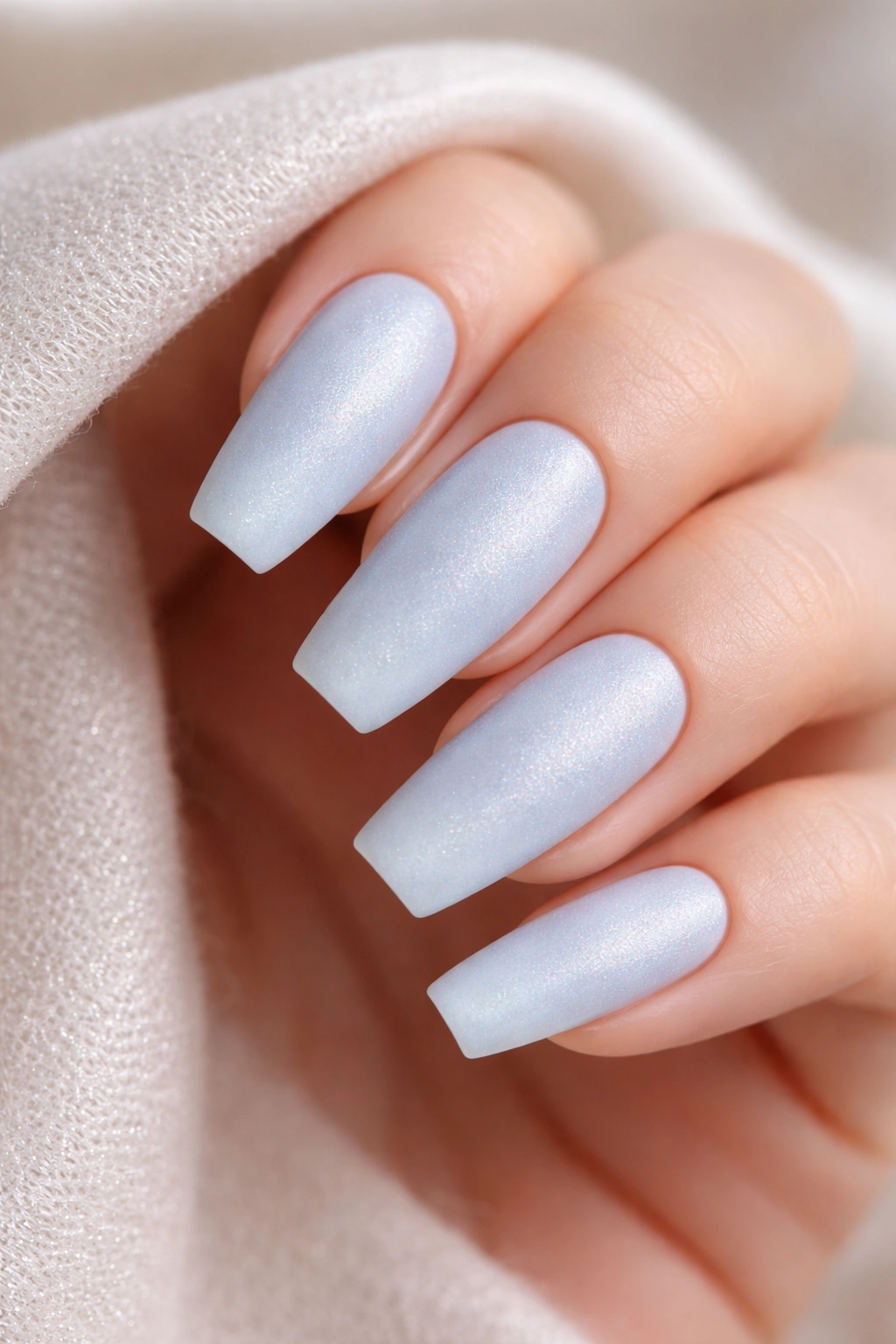
Unlike pearl chrome, which sits on the surface, fine pearl shimmer under a matte topcoat gives baby blue a soft fabric look. Think cashmere, not metal. That difference is why this design feels so calm.
The shimmer should be tiny—micro-fine, almost dust-like. Big glitter pieces break the softness and make the nail look gritty. Under matte, a subtle pearl catches a little light through the top layer and keeps the blue from reading flat.
This set suits medium length best. Short nails can carry it, though the texture reads more fully once the nail has enough room for the finish to show. Extra-long nails can still wear it, though I’d keep the shape slim and the blue a touch sheer so the look stays light.
Who is this for? Anyone who wants matte, but doesn’t want the chalk-box effect that some pale pastels get. The hidden shimmer adds depth without turning the manicure shiny.
Ask for one coat of pearlized baby blue or a pearl pigment mixed into the color gel, then a velvet-matte topcoat. Different salons call it different things, so the photo reference matters here.
13. Tiny Pearl Accent on a Baby Blue Set
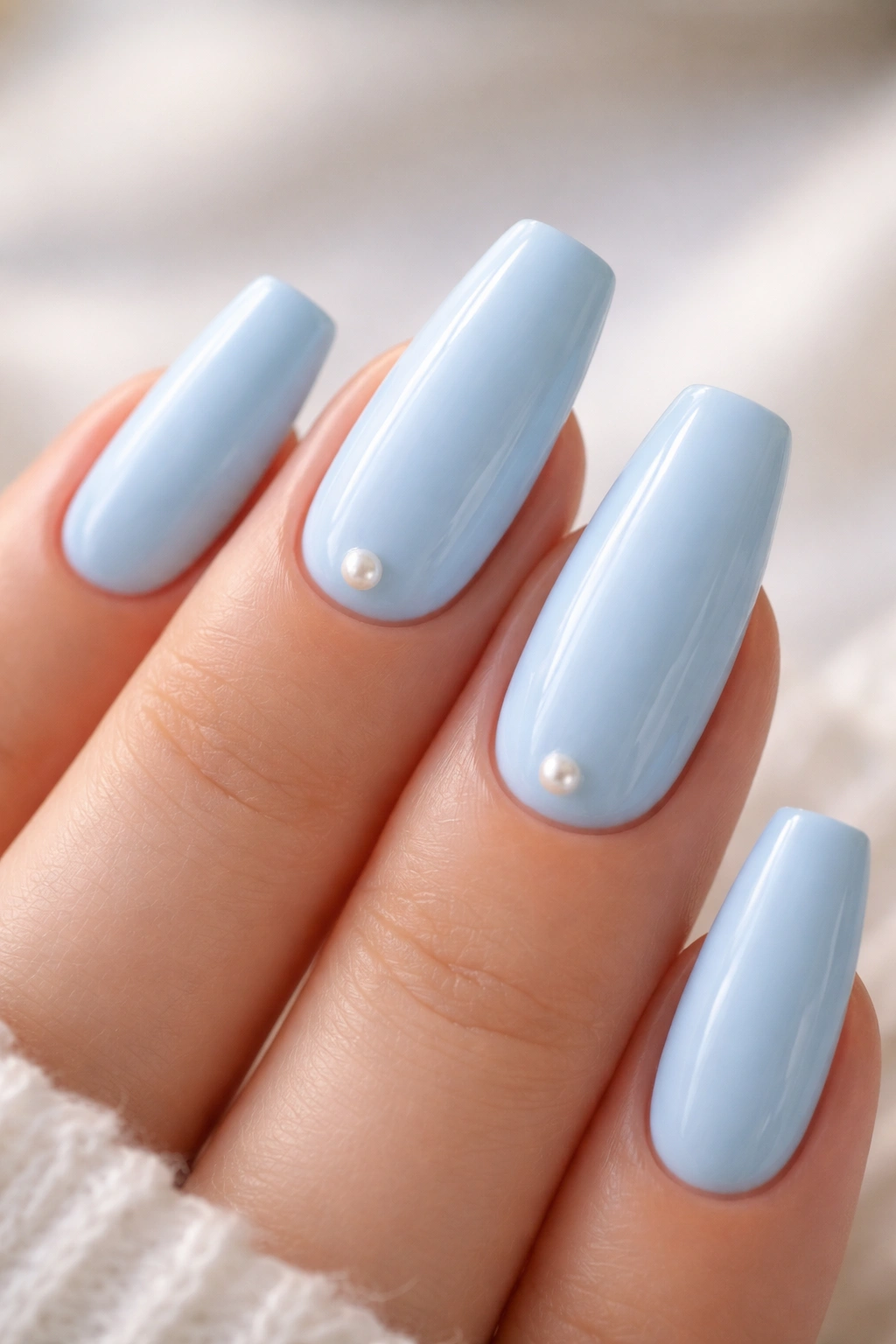
Pearls and baby blue make sense together. Both have that soft, polished feel, and both can turn fussy if you add too much. The sweet spot is a small pearl accent on one or two nails, not a full bead arrangement across the whole hand.
A single half-pearl near the cuticle looks clean. Three micro pearls placed in a narrow vertical line can look lovely too, especially on the ring finger. Once the pearls get larger than about 2 mm, the manicure starts pulling focus away from the color and shape.
Where pearl accents work best
The nicest placement is near the cuticle or off to one side at the lower third of the nail. Center placement near the tip can interfere with the ballerina silhouette, and it also catches on more things during the day.
Quick style notes
- Use flat-back pearls so the profile stays low.
- Pair them with a glossy or satin baby blue base.
- Keep accents to 1 or 2 nails per hand.
- A tiny silver bead beside a pearl can look neat; full rhinestone clusters usually feel too heavy.
Best pick for: bridal events, soft formal nails, and anyone who likes nail art that reads more like jewelry than illustration.
14. Baby Blue Side-Swoop Negative Space
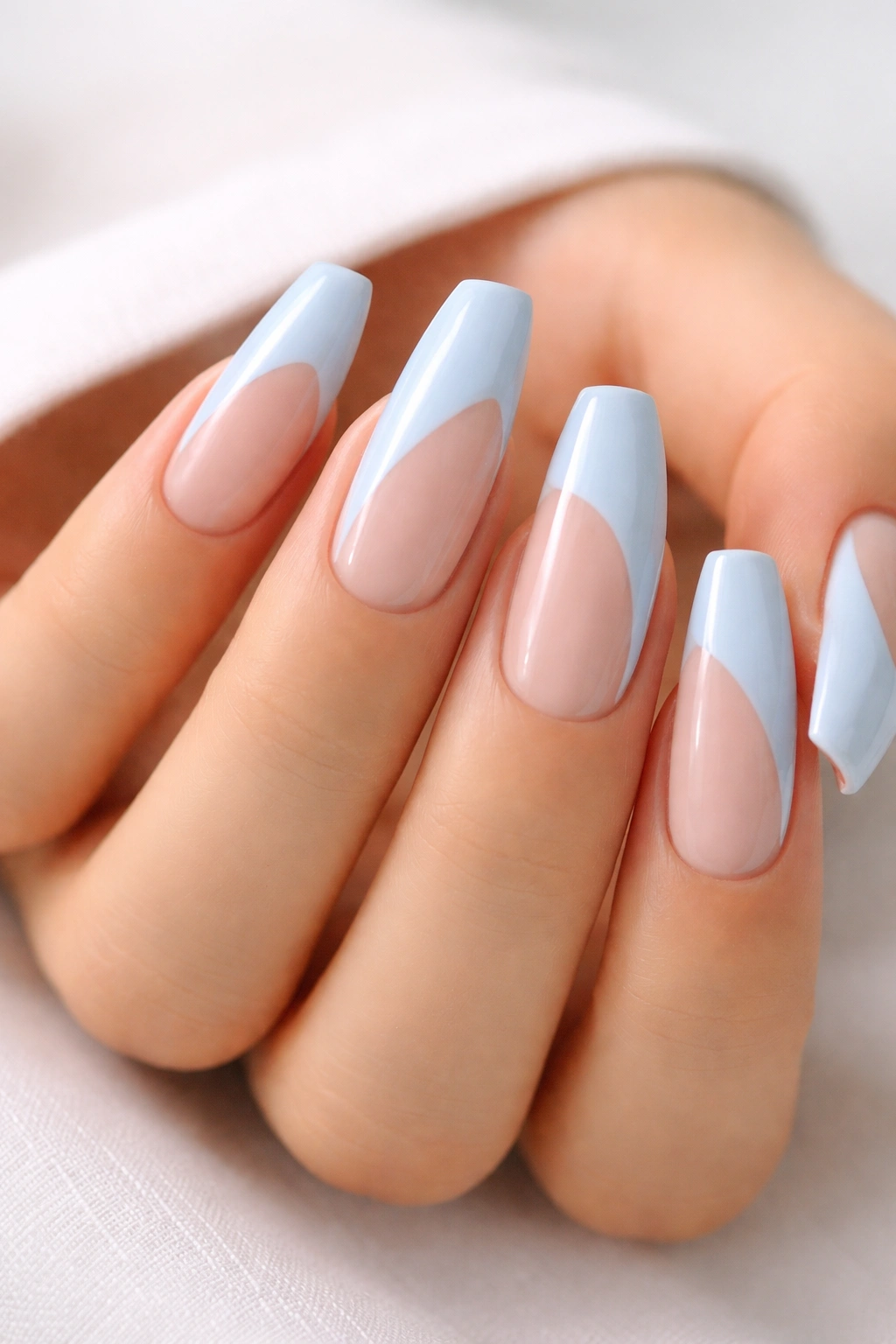
This one has more edge, but it still lands soft when the linework stays fluid. A side-swoop design leaves part of the nail nude or sheer, while a curve of baby blue sweeps diagonally across the nail plate.
That negative space does two jobs at once. It lightens the manicure—since not every inch is colored—and it flatters shorter nail beds by drawing the eye upward on a slant. On ballerina nails, the diagonal line also works with the taper instead of fighting it.
I prefer this design with a milky nude base rather than clear. A sheer base gives the negative space a finished look and helps the blue curve stand out in a soft way. Harsh white-blue against bare nail can feel too stark.
You can keep it minimal with one curved blue section, or add a whisper-thin silver outline where the blue meets the nude. I would stop there. Extra striping lines, glitter fills, or color blocking can push the set out of the soft category.
This is a smart choice if you like clean nail art that still feels modern and not too sweet.
15. Blue Floral Lace Over a Sheer Nude Base
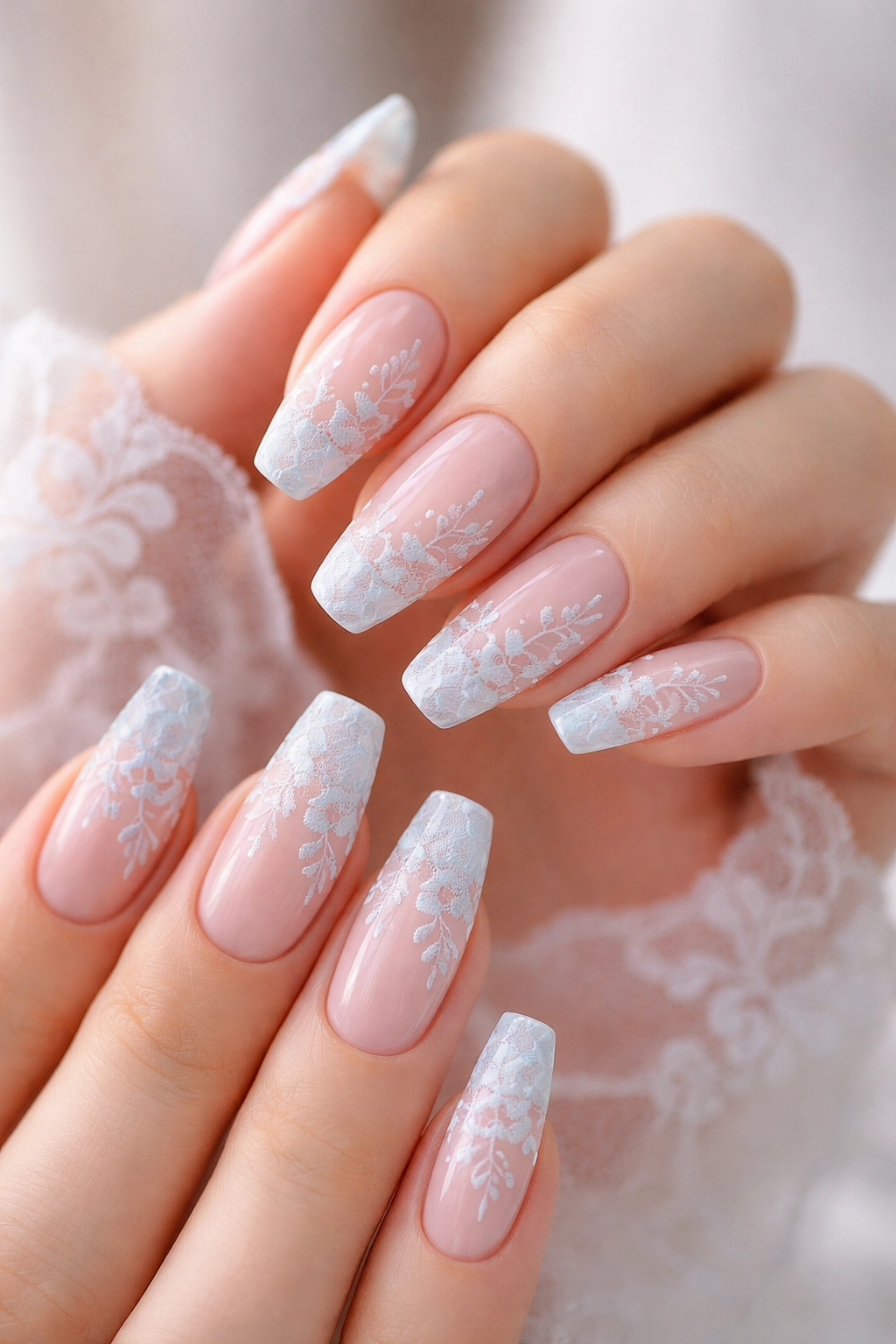
There’s a fine line between romantic nail art and crowded nail art. Blue floral lace stays on the right side of that line when it is thin, airy, and placed with intention.
The base should be sheer nude, soft pink, or a whisper of milky white. Then the baby blue floral pattern gets painted on top with tiny petals, curved stems, and lace-like loops. Full coverage is too much. Corner placement, side placement, or one framed accent nail is where this design shines.
I’d keep the flowers small and the line thickness tight. A liner brush does the work here. Thick stamped patterns can look bulky on the tapered ballerina shape, while fine hand-painted lace lets the nail still feel light.
Good ways to wear it:
- Floral lace on 2 accent nails with solid baby blue on the rest
- A French-lace corner at the tip of each nail
- Tiny blue blooms with negative space left around them
- A gloss finish to keep the detail crisp
This is the softest option for someone who loves detail and does not want plain color. It reads romantic, polished, and a little dressy without tipping into costume territory.
Keeping Baby Blue Ballerina Nails Clean Between Fills
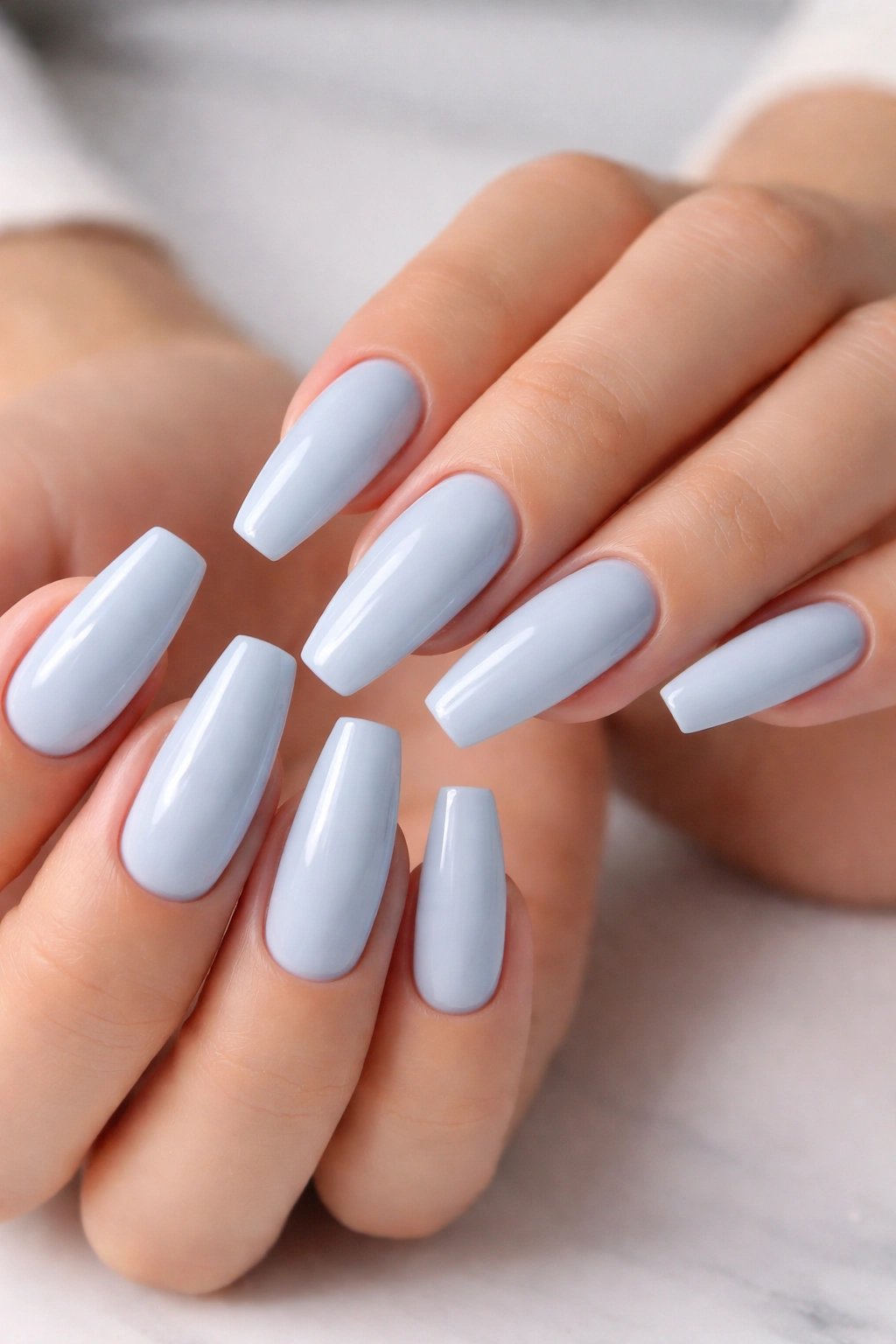
Pastel blue looks fresh when the surface stays clean and the shape stays crisp. Chips show sooner on pale colors than on navy, burgundy, or black. That doesn’t mean baby blue wears badly. It means sloppiness shows faster.
Cuticle oil helps more than people think. A drop rubbed in twice a day keeps the skin around the nail smooth, which makes pale polish look cleaner. Dry, peeling cuticles can make even a fresh set look older than it is.
Matte sets need extra care. Makeup, self-tanner, and denim dye can leave a faint cast on pale matte nails, especially near the sidewalls. A little rubbing alcohol on a lint-free pad can lift surface marks, though do not scrub the life out of the topcoat.
Watch the corners of the ballerina tip. That flat edge can catch if the nails are too long for how you use your hands—opening cans, lifting boxes, typing hard, all of it. If you tend to be rough on your nails, ask for the corners to be ever so slightly softened rather than cut dead straight.
And yes, gloves matter. Cleaning products can dull topcoat, dry your skin, and loosen small charms or pearls over time.
Final Thoughts
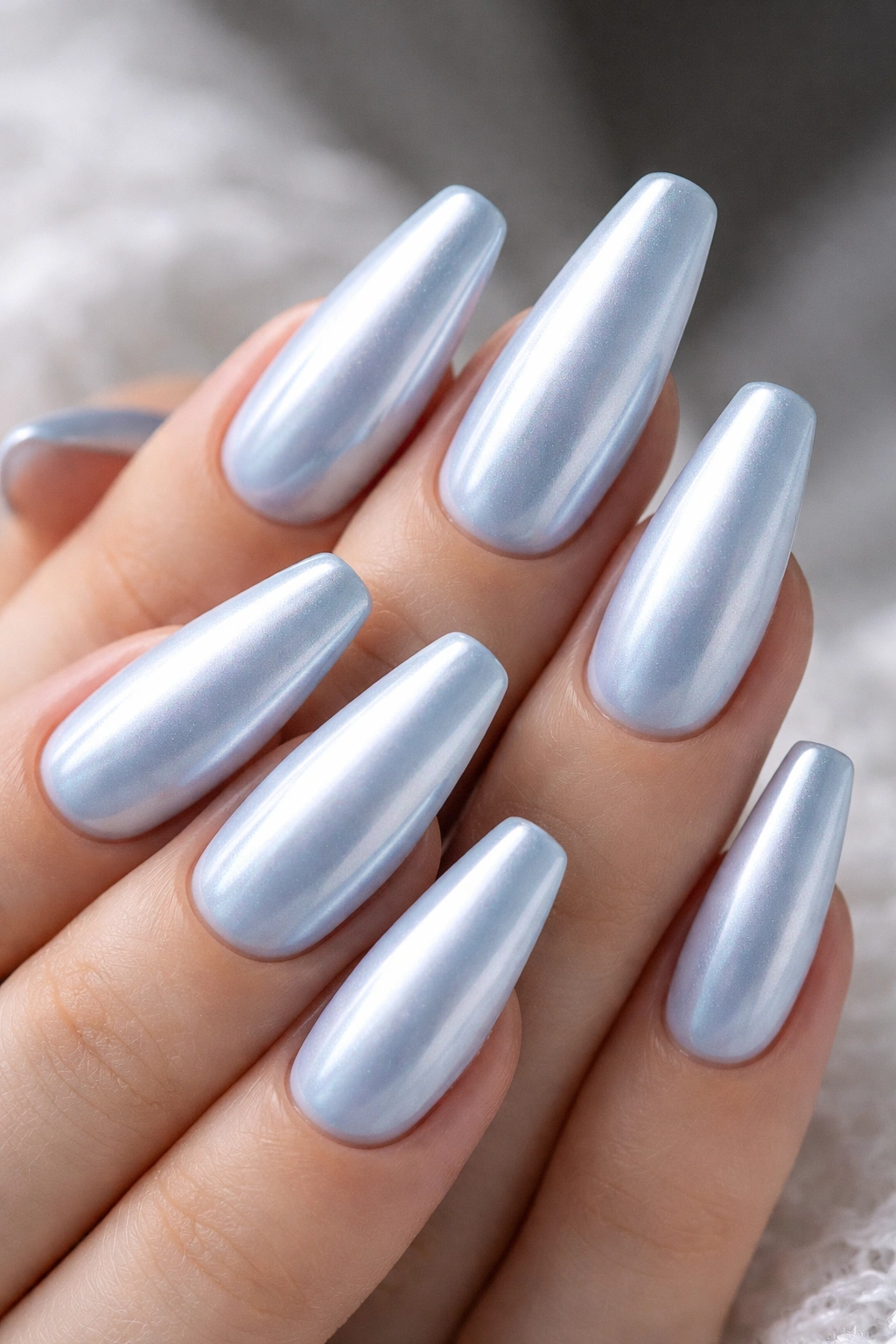
The softest baby blue ballerina nails all have the same three things in common: the right undertone, a shape that isn’t over-filed, and nail art that knows when to stop. Get those right, and even a simple set looks polished.
If you want the safest pick, go with the milky glass finish or the baby blue micro-French. If you want more personality, the cloud art, aura glow, and pearl accents bring extra detail without weighing the look down.
Save two or three favorites before your appointment, not fifteen. Baby blue gives you room to play, though the best sets are usually the ones that leave a little empty space and let the color do its job.