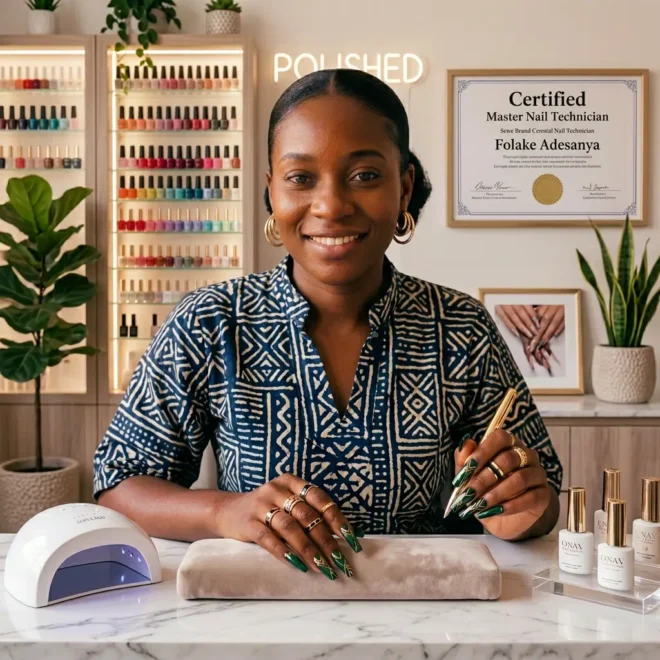


Long nails are undeniably beautiful. There’s something deeply satisfying about growing them out, painting them in that perfect shade, and feeling the polished confidence that comes with a pristine manicure. But there’s also a nagging reality that long nail enthusiasts know all too well: they break. A lot. Often at the worst possible moment — right before an important event, when you’ve finally gotten them to your desired length, or just as you’ve applied the nail art you’ve been envisioning. The frustration is real, and it’s completely valid.
Here’s what most people don’t realize: breaking long nails isn’t inevitable. It’s not a trade-off you have to accept. With the right combination of protective strategies, strengthening treatments, and daily habits, you can absolutely grow strong, beautiful long nails that stay intact. The trick is understanding why long nails break in the first place, and then systematically addressing each of those vulnerabilities. This isn’t about perfect genetics or spending hours on your nails — it’s about working smarter, not harder.
The difference between people with chronically broken nails and those who maintain stunning long nails for months is usually just knowledge and consistency. You’re going to learn exactly what that is.
Why Long Nails Are So Prone to Breaking
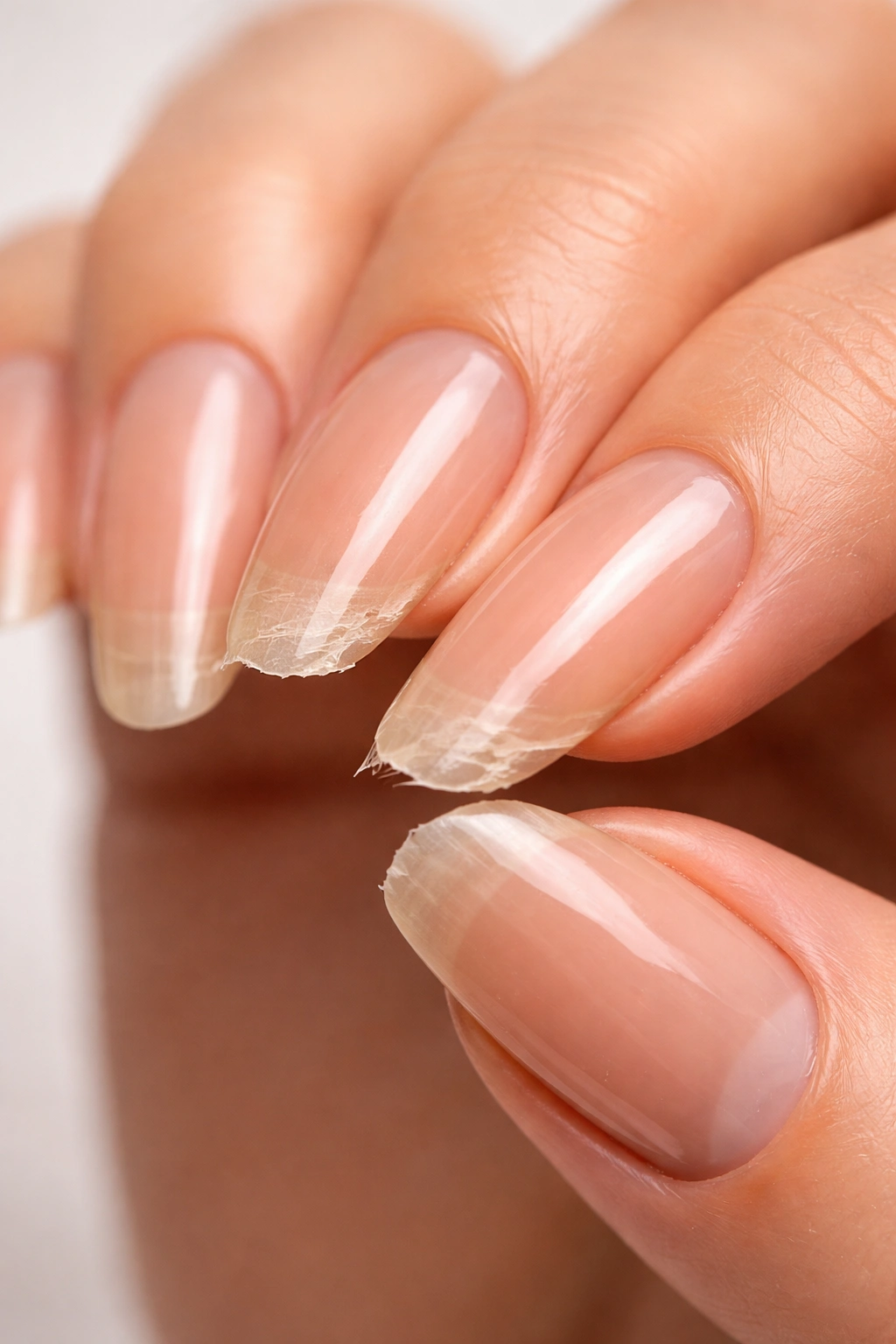
Long nails are fundamentally more fragile than short ones because they extend further from the nail bed, which means they experience greater stress and leverage every single time you use your hands. Physics works against you here. When your nail is short, it’s supported by a sturdy base. But as it grows longer, the unsupported portion becomes increasingly vulnerable to the repeated stress of daily life.
The structure of the nail itself matters too. Nails are made up of layers of keratin proteins stacked and bonded together. When these layers are properly hydrated and sealed, they hold together beautifully. But when they dry out — which happens constantly due to water exposure, heat, chemicals, and environmental stress — those layers start to separate. This is called delamination, and it’s usually what causes that heartbreaking peeling or splitting that seems to come out of nowhere. Long nails are especially susceptible because the longer the nail, the further that water loss travels down the nail plate, weakening more of the structure.
Your long nails also experience more trauma than you probably realize. Every time you pick up a pen, open a package, scratch an itch, or grip something, that long nail is absorbing impact and pressure. Short nails can absorb these small impacts without incident. Long nails distribute that same force across a longer, thinner structure, which means higher risk of fracture.
Then there’s the edge. The free edge of a long nail — the part that extends past your fingertip — is the most vulnerable part of the entire nail. It has no support underneath it and it’s exposed to every bump, scratch, and environmental hazard. If you’ve ever had a long nail catch on fabric, get bumped against a hard surface, or simply take the impact of your hand touching something unexpectedly, you know how quickly that free edge can crack or shatter.
Keep Them Moisturized Daily with the Right Products
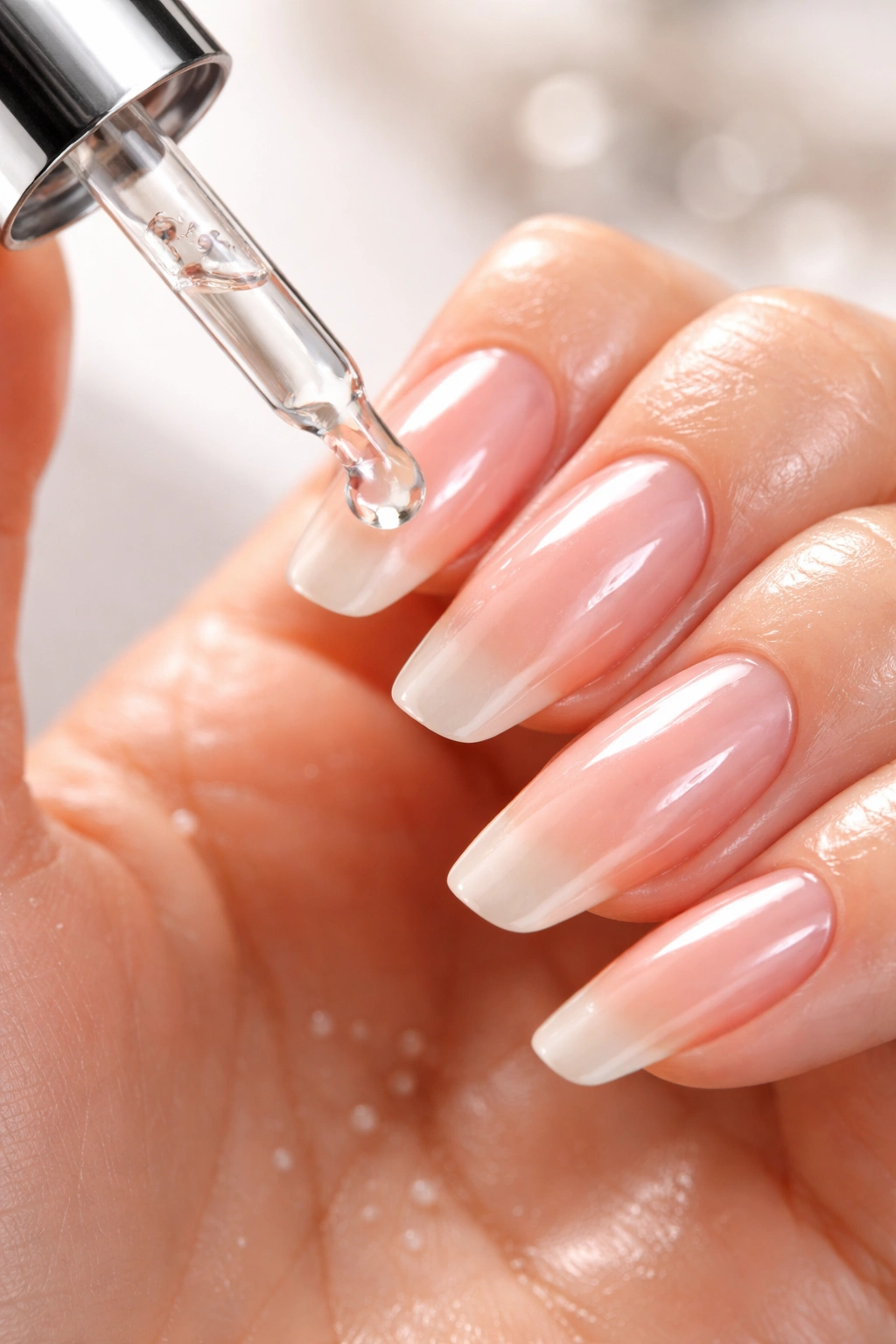
This is the single most important thing you can do for long nail health, and it’s surprisingly simple. Your nails need hydration the same way your skin does. Dry nails are brittle nails, and brittle nails break.
The key is using products that actually penetrate the nail plate. Thick creams and oils are nice, but they sit on top of your nails — they don’t necessarily get into them. Instead, look for nail serums and treatments that contain humectants like glycerin or hyaluronic acid, which actively draw moisture into the nail plate and help it stay there. Apply these to clean, slightly damp nails — the dampness helps these ingredients penetrate more effectively. This takes literally 30 seconds.
Do this morning and night without fail. Make it part of your routine, like brushing your teeth. Morning application protects your nails throughout the day. Evening application gives them intensive treatment while you sleep. If you can only do one, make it nighttime, because that’s when your nails will absorb and retain moisture most effectively.
In between these formal treatments, use cuticle oil throughout the day — especially after hand washing, which strips moisture from nails. Keep a small bottle at your desk, in your bag, or on your nightstand. A quick 10-second application after washing your hands makes an enormous difference over weeks and months. The cuticle oil seals in whatever moisture is currently in the nail and prevents it from evaporating.
Be honest about your water exposure. If your job, hobby, or daily routine involves a lot of water contact — washing dishes, frequent hand washing, swimming, showering — your nails are losing moisture constantly. In these cases, consider applying oil even more frequently, or wearing gloves when practical. This single change can prevent the chronic delamination that happens with constant wet-and-dry cycling.
Master the Proper Filing Technique
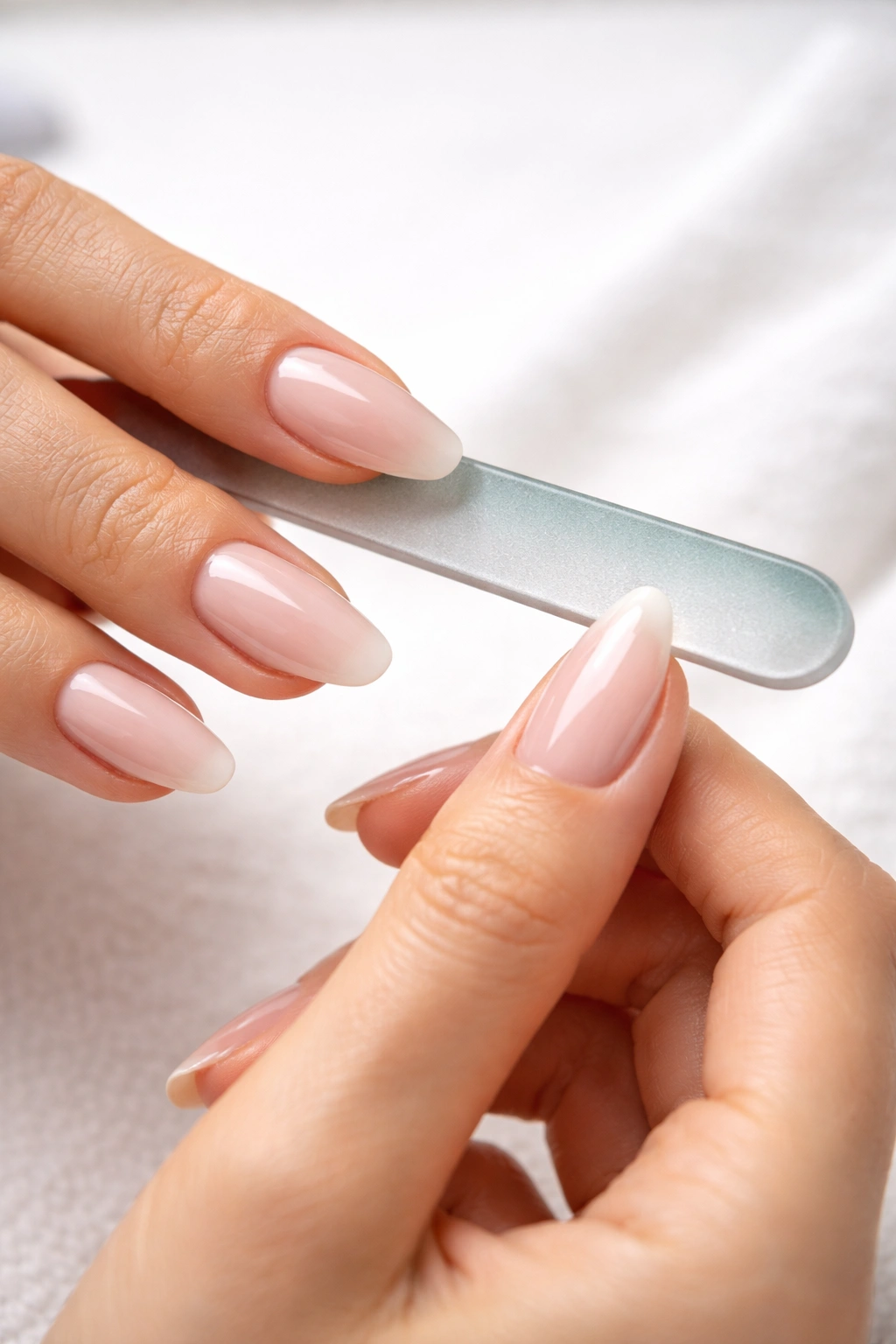
How you file your nails matters vastly more than most people realize. Wrong filing technique can create micro-damage that travels up the nail and causes breaks days or weeks later.
The cardinal rule: file in one direction only. Sawing back and forth — which is what most people do — creates fractures in the keratin layers at the edge of the nail. These fractures start small, but they spread as the nail grows and gets bumped around. File gently from the outside edge toward the center of the nail, always moving in one direction. Then do the same on the other side of the nail to create the shape you want. One direction per side. That’s it.
Use a high-quality file made from glass, ceramic, or a fine crystal material. Metal files and cheap emery boards create rough, jagged edges that are destined to break. Spend a little money here — a good file lasts for years and genuinely prevents damage. Glass files are excellent; they seal the edge of the keratin and create a smooth surface that’s much less prone to chipping and peeling.
File when your nails are dry, not wet. Wet nails are softer and more prone to peeling when you file them. Dry nails file cleanly without the keratin layers splitting apart. File gently, with light pressure. You’re not trying to file through the nail in one pass. It takes 20-30 strokes to properly shape a nail. Speed and pressure actually cause more damage.
Shape matters too. Rounded or soft-squared edges are significantly less likely to break than sharp corners or heavily pointed shapes. Those sharp, angular shapes create stress points where breaks naturally initiate. Keep your edges slightly curved or gently squared off. This small detail has a huge impact on longevity.
The Importance of a Strong Base Layer
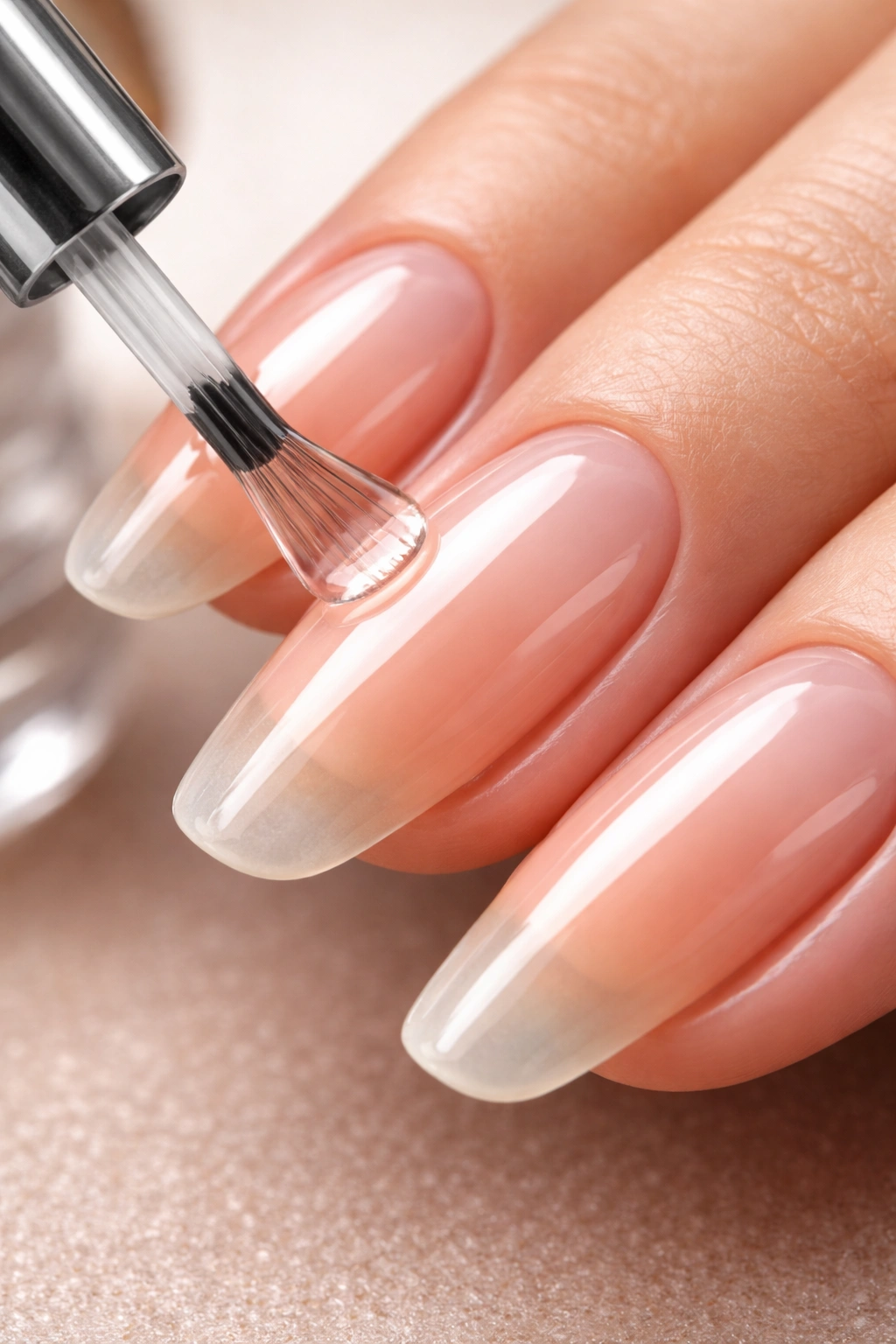
Think of a strong base as insurance for your long nails. Your natural nail plate is just the foundation — what you put on top of it makes a real difference in protection and durability.
A good base coat does so much more than just protect your nail polish. It seals your nails, creates a smooth surface that keeps moisture in, and provides a protective barrier against stains and damage. Don’t skip this step, and don’t cheap out on the base coat. A quality base coat typically contains strengthening ingredients like nylon, calcium, or proteins that actually reinforce the nail surface.
Apply it to clean, dry nails every single time you polish. Even if you’re just applying nail polish for color, that base coat underneath is doing protective work. It prevents polish staining (especially important with darker colors), and it creates a non-stick surface that makes it easier to remove polish without damaging your nails.
If you’re not wearing colored polish, use a clear strengthening base coat anyway. These formulas are specifically designed to harden nails and provide protective coverage. Wear it as you would wear polish — reapply every few days or as needed. The constant protective layer is genuinely transformative for nail strength over weeks and months.
Many base coats now include calcium, nylon fibers, or keratin — ingredients that deposit right into your nail and build strength over repeated applications. These are worth specifically looking for. They’re not magic, but the cumulative effect of wearing a reinforced base coat regularly is very real.
Protective Routines for Everyday Wear
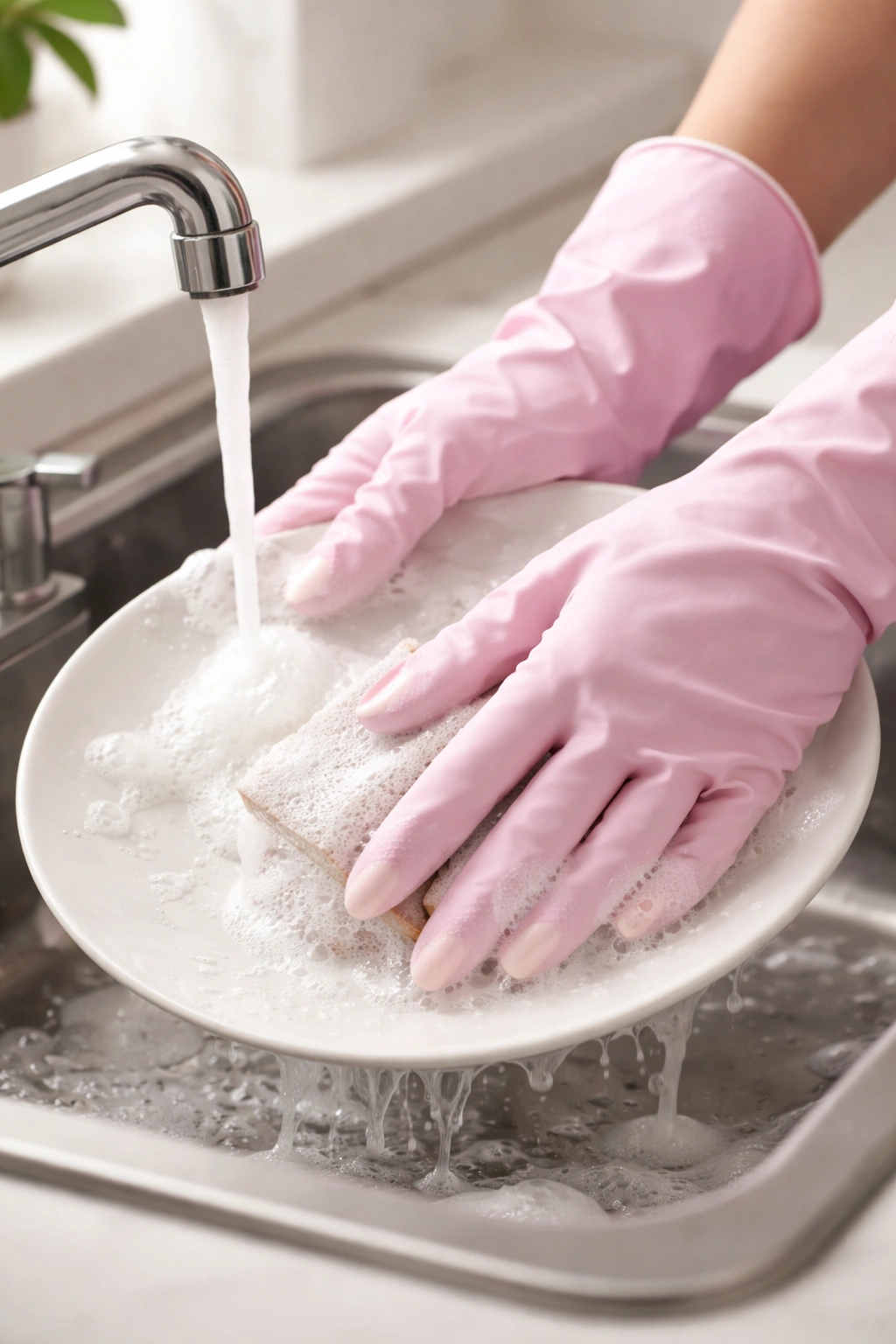
Your daily habits either protect your long nails or damage them. Most people don’t even realize where the damage is coming from.
Start with gloves for wet work. Every time your hands are in water — washing dishes, cleaning, doing laundry, even gardening with a hose — your nails are absorbing water and swelling. Then they dry out and shrink. That constant expansion and contraction weakens the nail structure. Wear gloves during these activities. This is non-negotiable if you want long nails. Vinyl, latex, nitrile, or cotton-lined gloves all work fine. Just put them on before your hands touch water.
Be conscious about how you use your nails as tools. Your nails are not bottle openers, paint scrapers, labels lifters, or tape pullers. Every time you use your nail this way, you’re putting leverage stress on the weakest part of the nail structure. Use actual tools instead. Keep a small multi-tool or a couple of simple tools near areas where you’d be tempted to use your nails. Use your fingertips or knuckles instead of nails for pressing buttons, typing, or opening things.
Protect your nails from impact during sleep by wearing cotton gloves at night if you tend to sleep on your hands or curl your hands into fists. Even gentle pressure during sleep can crack or bend long nails over time. Many people don’t even realize they do this. A soft pair of cotton gloves prevents accidental damage while you sleep.
Keep your nails properly trimmed and shaped so they’re not catching on things. Long nails that are too long for your lifestyle are destined to break. Establish a realistic length for what you actually do — consider your job, hobbies, and whether you have kids or pets. A nail that’s slightly shorter but strong and intact is infinitely better than a slightly longer nail that snaps off constantly.
What to Avoid: Common Nail Damage Habits
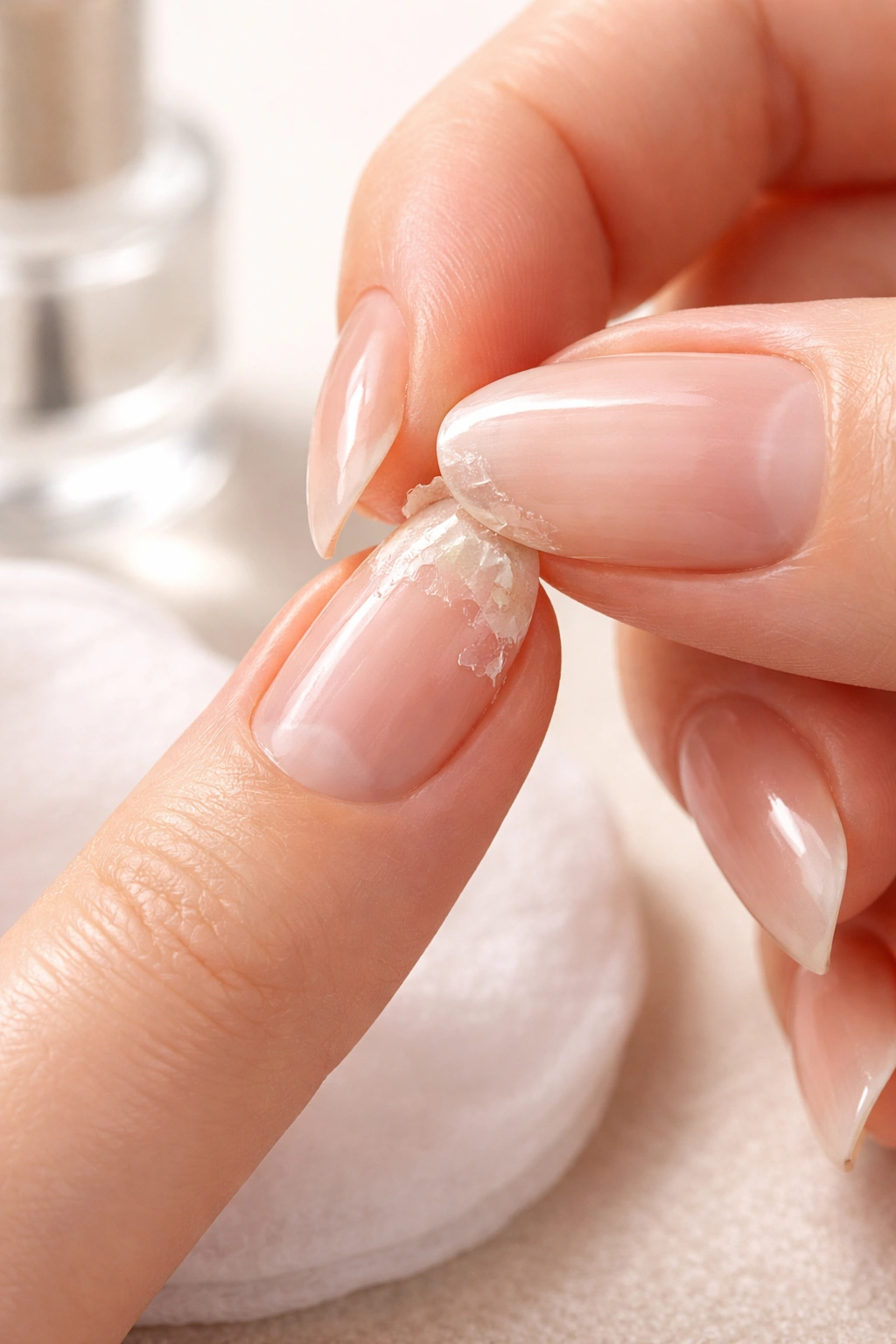
Some habits seem harmless but are actually slowly destroying your long nails. Identifying and stopping these is often the fastest way to see improvement.
Stop picking at or peeling off nail polish. Yes, it’s satisfying, and yes, you’re probably doing it without thinking. But every time you peel polish, you’re taking layers of the nail with it. Use actual nail polish remover instead — soaked on a cotton pad for 10-15 seconds, then gently rubbed off. This removes polish cleanly without trauma to the nail. The 30 extra seconds is absolutely worth it.
Avoid harsh chemical exposure. Cleaning products, bleach, acetone, alcohol-based hand sanitizers — these all dry out nails severely. Wear gloves for cleaning. If you use hand sanitizer frequently, apply cuticle oil immediately afterward to counter the drying effect.
Don’t get gel manicures or acrylics back-to-back without breaks. If you love these nail enhancements, give your natural nails a break every 4-6 weeks to recover. The removal process is inherently traumatic to nails, even when done properly. Your nails need recovery time. During these breaks, commit to intensive strengthening treatments.
Be extremely careful about what you use to push back cuticles. Overly aggressive cuticle work damages the cuticle and the proximal nail fold (the tissue at the base of the nail), which can cause permanent damage to nail growth. Use a soft cuticle pusher, or better yet, soften cuticles with oil first and only gently push back the loosened skin. Never cut living tissue — only remove dead skin if you do any cuticle care at all.
Stop using your nails for scratching — on yourself, on objects, or getting into tight places. This creates tiny fractures and puts enormous stress on the free edge. Scratching can be an unconscious habit, so pay attention if this is something you do. Find alternative ways to scratch an itch (use a soft tool, your knuckle, the back of your hand) and replace the habit.
Strengthen Nails from the Inside Out with Nutrition
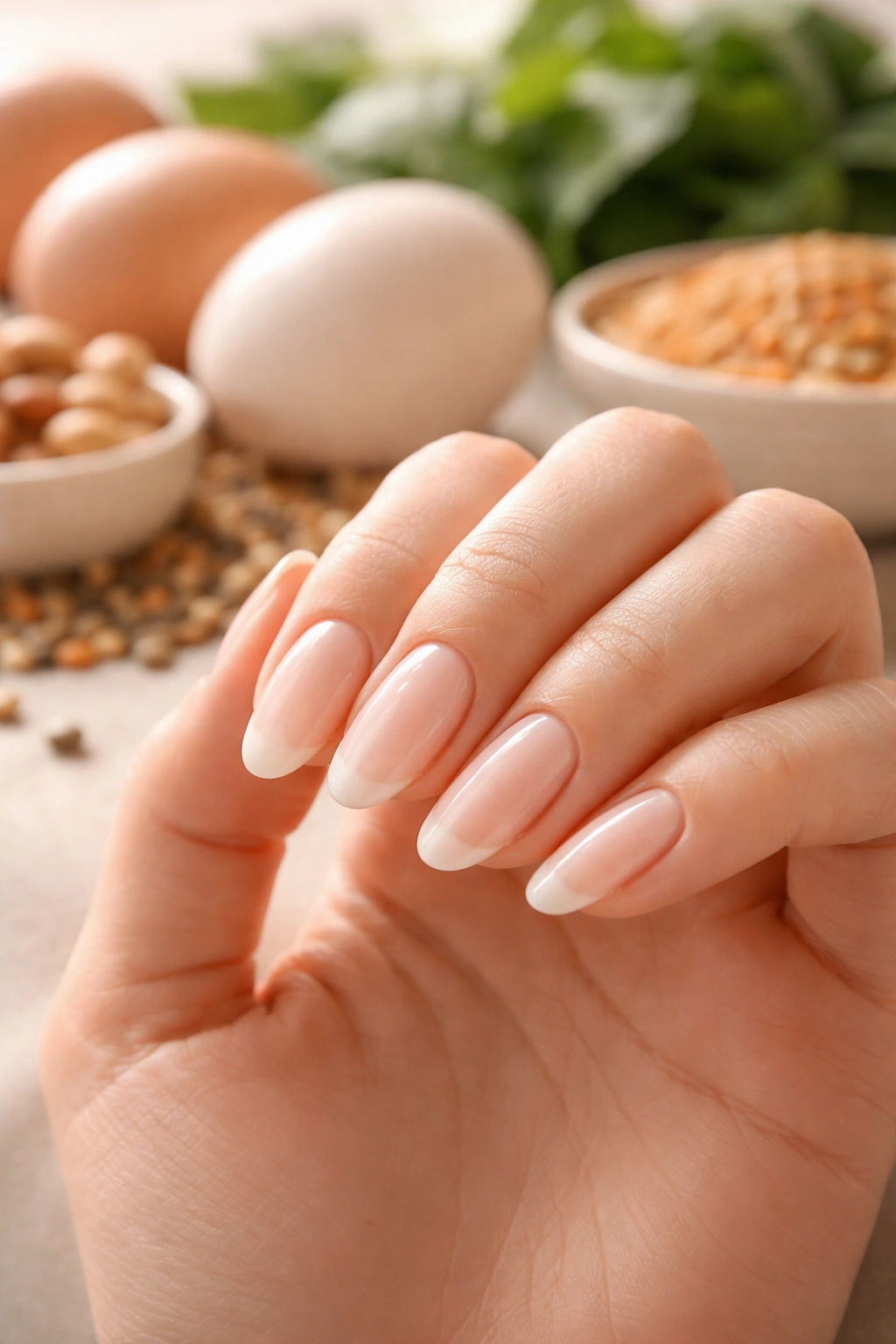
Long, strong nails aren’t just a surface thing — they’re built from inside your body. Nutritional deficiencies show up dramatically in nail health.
Nails are primarily made of protein, so eating adequate protein is fundamental. Aim for protein at every meal — chicken, fish, eggs, legumes, dairy, or plant-based sources. If you’ve been dieting or restricting protein intake, your nails will likely suffer. You’ll often see thin, peeling nails within weeks of reduced protein intake, and it takes months to recover once you increase it again.
Biotin (also called vitamin B7) is probably the most well-researched supplement for nail health. Studies consistently show that supplementing with biotin improves nail thickness and reduces brittleness. Standard dosing is 2.5 mg per day, and you typically see results after 4-6 months of consistent supplementation. This is a long game, but it works.
Iron deficiency causes thin, spoon-shaped nails and general nail weakness. If you have heavy periods, are vegetarian, or have other reasons to suspect iron deficiency, get tested. Iron supplementation or dietary improvement can be transformative.
Zinc, B vitamins, and vitamin D all play roles in nail health. You don’t need megadoses of these — they’re in a standard multivitamin. But if your diet is particularly poor or you have absorption issues, supplementing makes sense.
Stay hydrated. Dehydration affects your entire body, including nails. Drink enough water throughout the day — the amount varies per person, but aiming for clear urine as a general marker is a reasonable target. Hydration starts from the inside; you can’t fully compensate for dehydration with topical treatments alone.
Avoid extreme diets or rapid weight loss. The stress on your body shows up in nails quickly. Sudden hair loss, nail brittleness, and slowed nail growth are common signs that you’re pushing too hard. Give your body adequate nutrition and allow yourself time to reach health goals.
Choose the Right Nail Length for Your Lifestyle
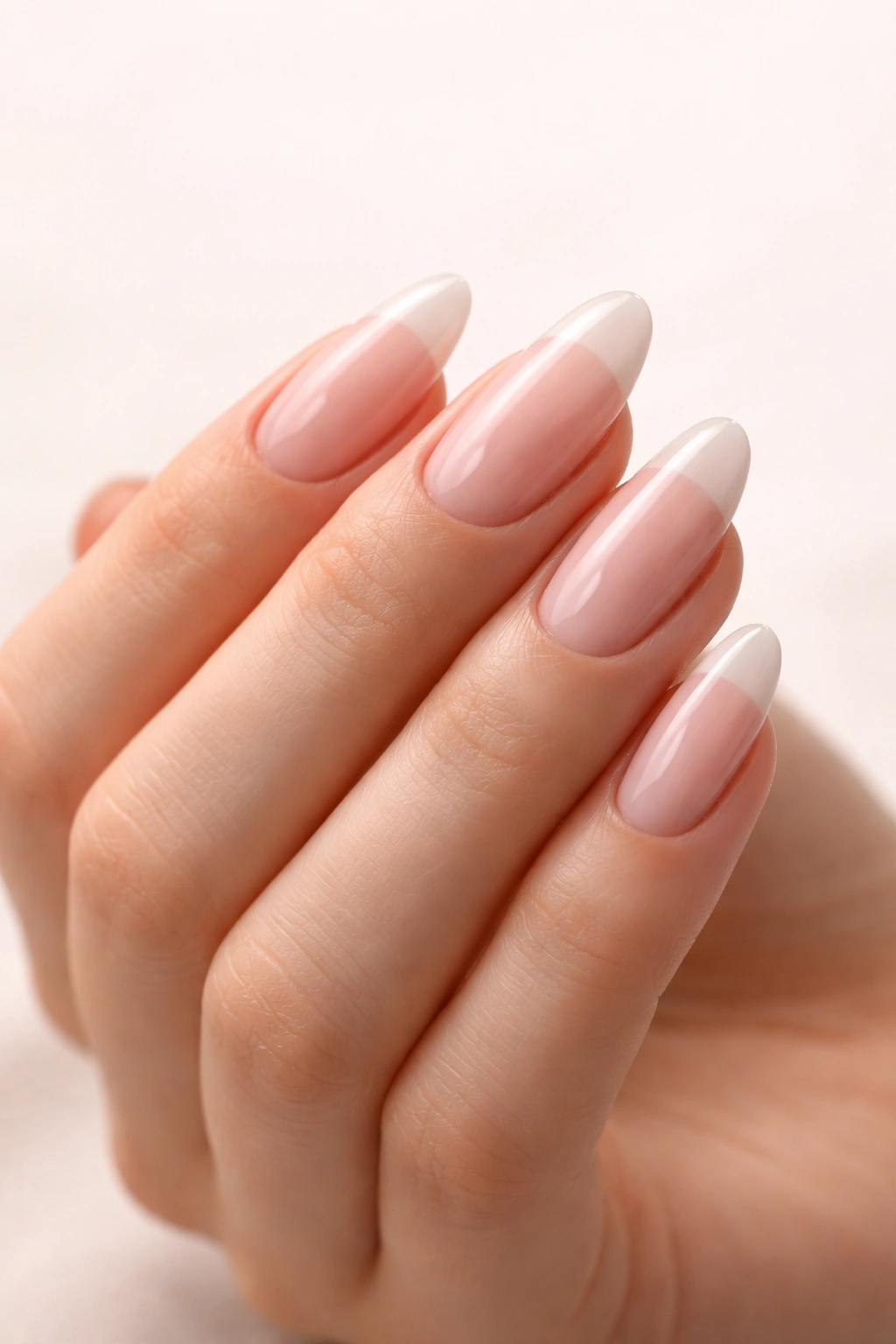
This is uncomfortable to say, but it’s necessary: not every lifestyle supports extremely long nails without constant breakage. This doesn’t mean you can’t have long nails — it means you need to find the sweet spot for your life.
If you have a job with high hand trauma — construction, healthcare, physical labor, kids’ activities — then extremely long nails might be fighting a losing battle. That doesn’t mean short nails only. It might mean nails that are long enough to feel substantial and beautiful but not so long that they’re constantly breaking. Many people find that “medium-long” nails (somewhere around 1/4 to 1/2 inch of free edge) strikes the perfect balance.
Consider your hobbies. If you garden, do sports, play instruments, or do other activity-heavy pursuits, your nails need to match that reality. Have a realistic conversation with yourself about what length you can actually maintain without constant frustration.
The benefit of finding your sustainable length is that you can then focus on keeping them at that length with minimal breakage, rather than constantly fighting to grow them and re-growing them after breaks. Strong nails at a sustainable length beat long nails that shatter constantly.
Your sustainable length might be longer than you think if you start protecting your nails properly. You might discover that with good habits and proper care, you can maintain longer nails than you initially thought possible.
Protect Long Nails While You Sleep
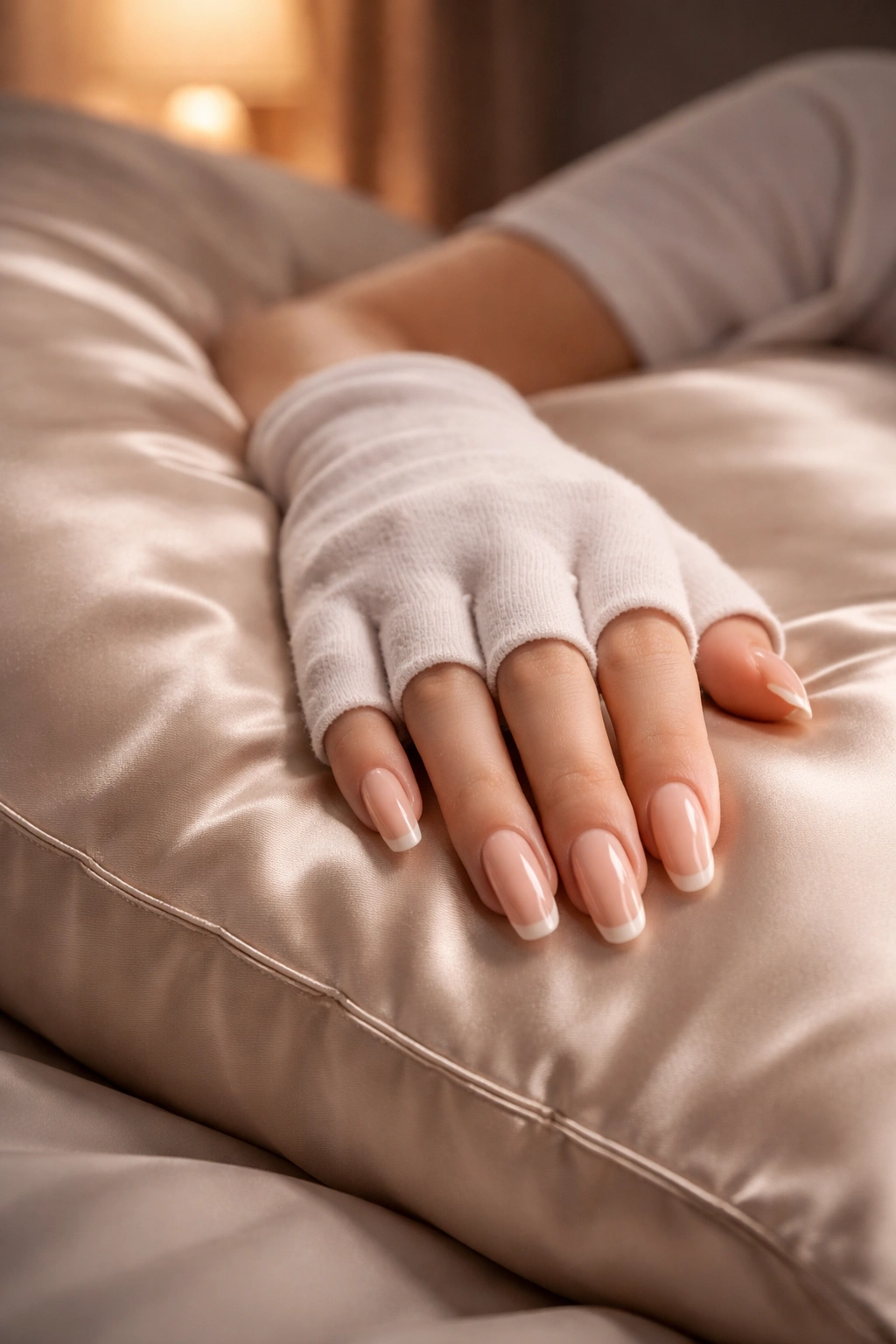
You spend roughly a third of your life asleep, which means your nails are vulnerable for a third of their life. What happens during those hours matters.
Many people unconsciously curl their hands into fists while sleeping or press their nails against the pillow. This creates pressure that can bend, crack, or break long nails. Wearing soft cotton gloves to bed is one of the simplest and most effective protective measures you can take. They don’t have to be tight or uncomfortable — just a loose layer of protection that prevents your nails from taking pressure.
Keep your hands in a relaxed position while you sleep if possible. Avoid sleeping on your hands or in positions where your nails get compressed. This might seem paranoid, but if you have delicate long nails, this matters.
Consider sleeping on a silk or satin pillowcase. Cotton pillowcases create friction that can rough up nails and cause micro-damage. Silk or satin is gentler on both hair and nails. It’s a small detail, but small details add up.
Apply an intensive overnight treatment before bed — a rich cuticle oil, a nail serum, or a specialized overnight treatment formula. Your nails will absorb this while you sleep and you’ll wake with noticeably more hydrated, supple nails.
The Power of Regular Maintenance and Trimming
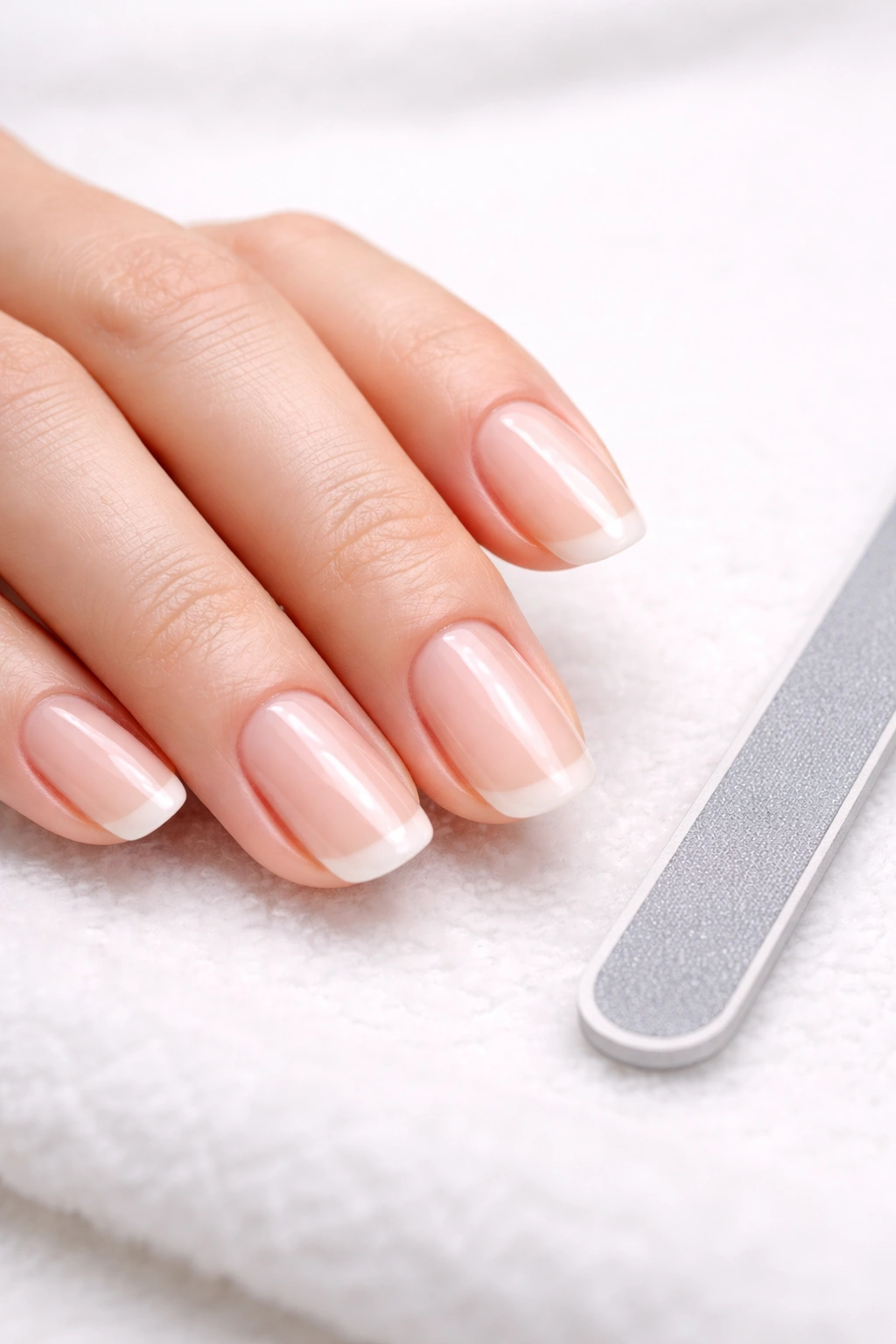
Trimming your nails regularly seems counterintuitive when your goal is to grow them long. But regular, strategic trimming is actually what allows you to grow them long successfully.
Trim off broken or peeling edges immediately rather than letting them continue to split and damage more of the nail. This takes discipline, but it prevents a tiny break from becoming a complete nail failure. Use a sharp nail clipper or nail file. If you file off the damaged edge, do it gently and carefully, supporting the nail from underneath to prevent cracking.
Every 1-2 weeks, spend 5 minutes doing a maintenance trim. This isn’t cutting your nails shorter overall — it’s keeping the edge healthy. Trim off any white tips that are starting to show damage, rough up, or separate from the nail bed. File any edges that feel weak or uneven. This small regular maintenance prevents the cascade of breakage that happens when you ignore small problems.
Set a realistic trimming schedule. If your nails can healthily grow 1/4 inch per week, and you want a 1/2-inch free edge, then you only need to trim every 2 weeks to maintain that length. Some people’s nails grow faster, so they’ll need more frequent trimming. Figure out your nail growth rate and schedule accordingly.
Use proper nail clippers — ones that are sharp and in good condition. Dull clippers crush the nail instead of cutting cleanly, which causes damage that leads to splitting. Replace your clippers if they’re no longer cutting cleanly.
Strengthen with Nail Treatments and Serums
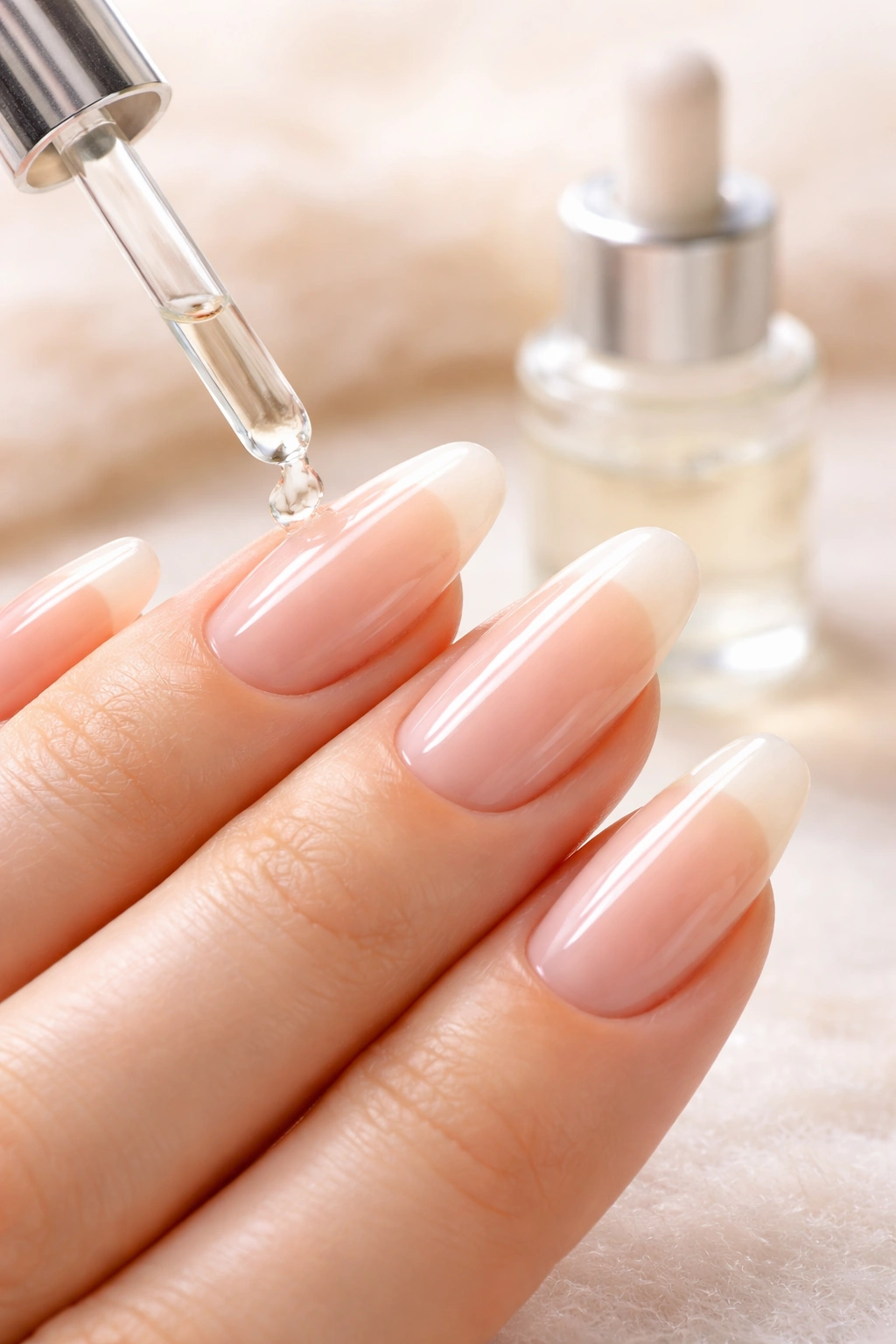
Beyond basic moisturizing, specialized nail strengthening treatments are worth investing in, especially if your nails are already damaged or weak.
Look for treatments containing calcium, nylon fibers, proteins, or keratin. These don’t just sit on the surface — they deposit into the nail and strengthen it. Use these as you would use a base coat, or as a dedicated treatment under your polish.
Nail hardener products come in different types. Some work by creating a protective surface layer. Others actually condition and strengthen the nail itself. The conditioning-type hardeners are generally better — look for ones that are labeled as hydrating or moisturizing in addition to hardening. A hardener that dries you out is going in the wrong direction.
Apply strengthening treatments consistently. This isn’t something you do once and see results. Use them as part of your regular routine — every day for a week, then evaluate. Many people see noticeable improvement in nail texture and durability within 3-4 weeks of consistent use.
Specialized overnight nail treatments are luxurious and effective. These thick, rich formulas are designed to be applied before bed and absorbed overnight. Use them 2-3 times per week. They’re often expensive, so you don’t need to use them daily, but the intensive hydration and strengthening is worth it.
Avoid treatments marketed as “extreme hardeners” that make nails brittle. You want nails that are strong but also flexible enough to bend slightly without snapping. A nail that’s too rigid will break when it gets pressure that a slightly flexible nail would absorb.
Healing Long Nails That Are Already Damaged
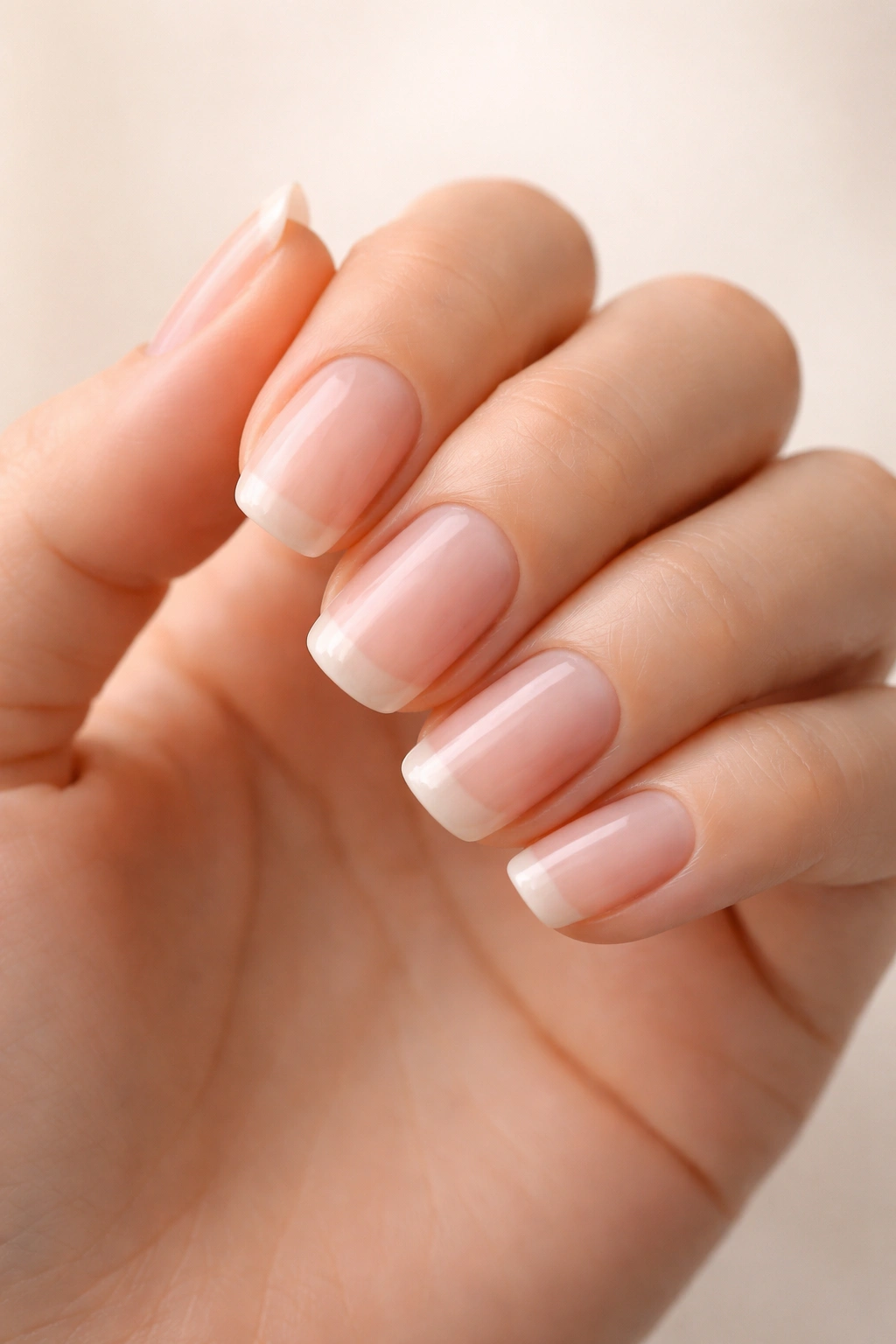
If your nails are already in bad shape — peeling, splitting, weak, or breaking constantly — you need a more aggressive rehabilitation approach.
First, cut them back. Yes, this sucks. But trying to maintain long nails when they’re already damaged is like trying to outrun an injury instead of resting it. Cut them back to a length where they’re strong and healthy. Usually this means cutting off all visible damage and starting fresh. The good news: nails grow about 1/4 inch per month, so you’ll be back to a decent length within 2-3 months if you protect them well during that regrowth.
During the regrowth phase, use all protective measures simultaneously. Moisturize morning and night with serums and oils. Wear gloves for wet work. Avoid using nails as tools. Protect them while sleeping. Trim carefully to remove any weakness before it spreads. Don’t polish them if possible — let them breathe and recover. If you must have polish, use only a gentle base coat without harsh chemicals.
Add a daily biotin supplement during the regrowth phase. Even though it takes months to see full results, it works faster when you’re starting from a weak baseline.
Consider your diet. If you’ve been dieting or have been under stress, your nails are suffering from that. During nail rehabilitation, eat enough protein, stay hydrated, and avoid unnecessary stress on your body. This is serious medicine for your nails.
Most importantly, be patient. Nails take time. The nail you see today was formed several months ago. What you do today won’t show results on your current nails — it will show on the new nail that grows in. This is why consistency matters so much. You have to maintain the protective routine for 3-6 months to see substantial, dramatic improvement.
The Best Tools for Long Nail Care
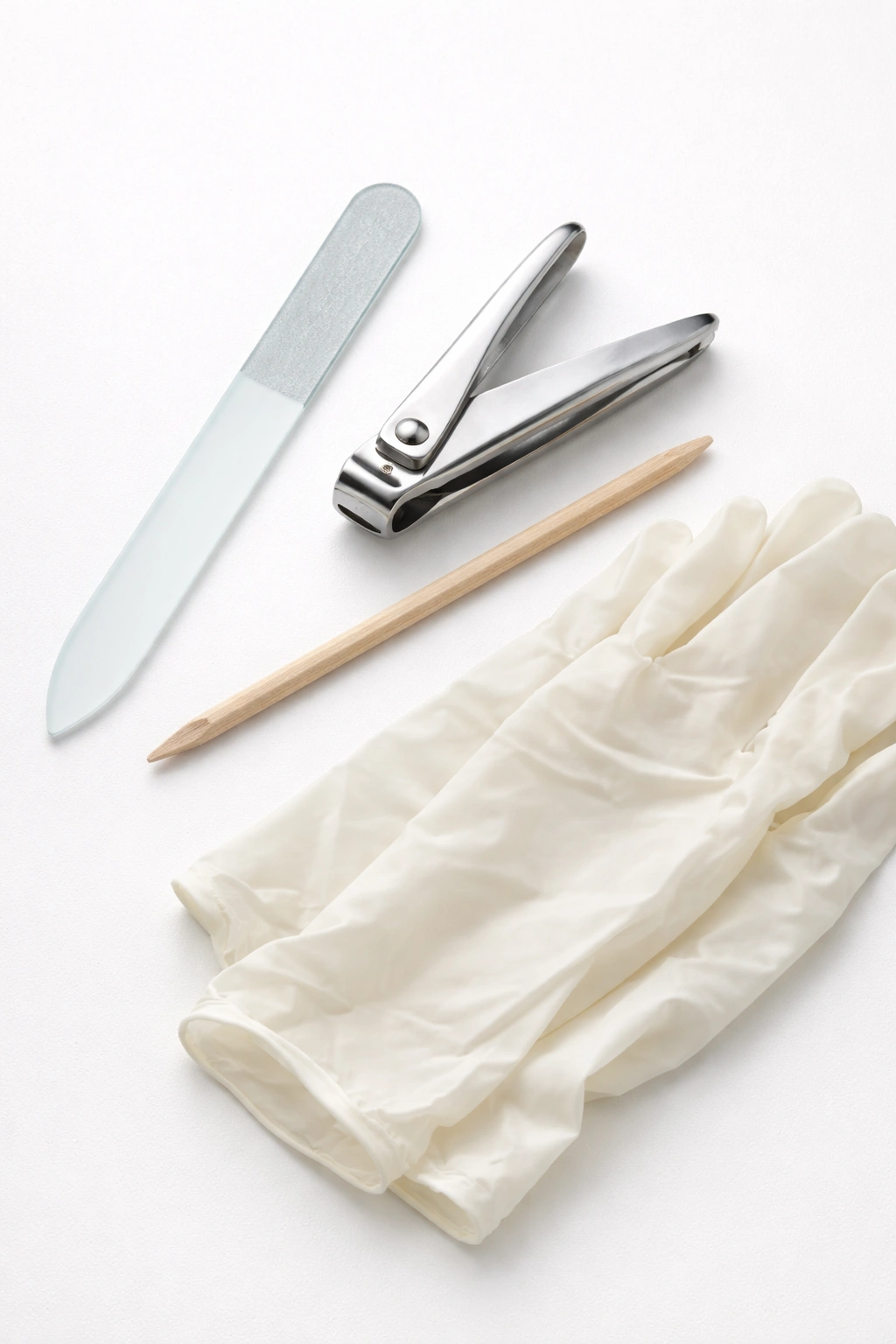
Having the right tools makes consistent nail care infinitely easier and more effective.
A high-quality glass or crystal file is non-negotiable. Cheap metal files and emery boards are the enemy of long nail health. Glass files cost $10-20 and last years. They create smooth edges that don’t split and peel. This is genuinely one of the best investments you can make.
Nail clippers matter. Get a good-quality set made of stainless steel that actually cuts cleanly rather than crushing the nail. Cheap clippers are a false economy — you’ll spend more in nail damage than you save on cost.
A cuticle pusher that’s gentle and rounded is useful. Avoid anything sharp or metal if you’re pushing back cuticles. A soft wooden or plastic pusher is safest. Or skip cuticle pushing altogether and just use oil to soften and care for cuticles.
Invest in quality gloves for wet work and sleeping. These don’t have to be expensive, but they should feel soft and comfortable so you’ll actually wear them. Vinyl, nitrile, or latex for wet work. Soft cotton for sleeping. Having multiple pairs means you can always have a clean pair available.
Keep cuticle oil, nail serum, and a strengthening base coat at your fingertips. Store these in accessible places — on your nightstand, in your bag, at your desk. The more convenient they are, the more consistently you’ll use them.
A silk or satin pillowcase is a small luxury that protects your nails (and hair) beautifully.
Styling and Design Without Compromising Strength
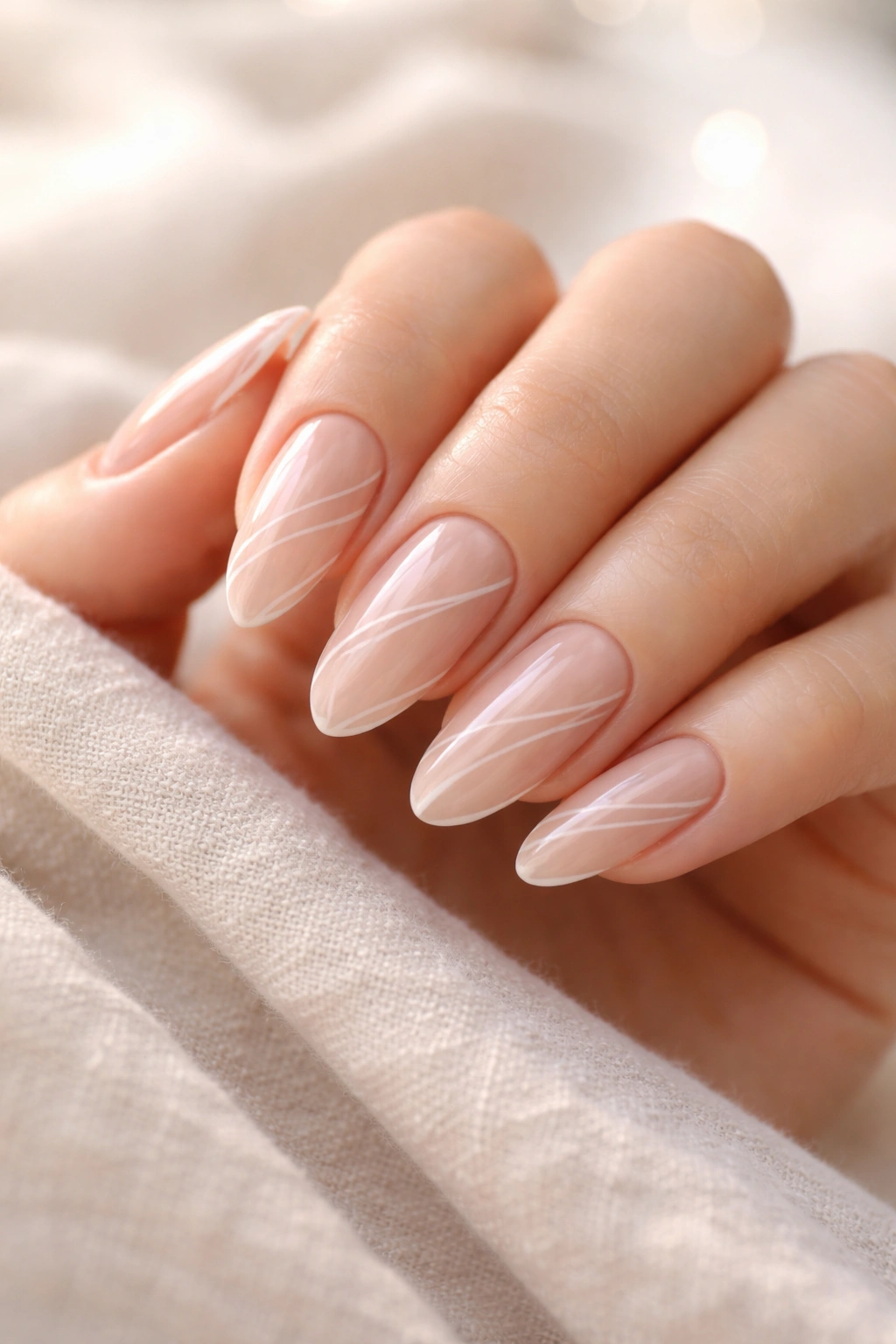
You can absolutely have beautiful nail designs and styling while keeping your nails strong. It’s all about choosing wisely.
Gel polish is stronger and more durable than regular polish if you get it done properly. It protects your nail underneath and lasts longer, which means less frequent removal and re-application. The key is finding a skilled technician who removes gel gently and properly, and giving your nails breaks between applications. If you love gel, do gel — just rotate with breaks and maintain the protective routine.
Nail art and designs don’t have to compromise strength. Delicate designs, solid colors, and patterns all work fine. Avoid heavy embellishments, thick 3D decorations, or designs that require rough handling. Simple is often more elegant anyway.
Nail length and shape affect design options. A rounded or soft-square shape shows designs beautifully without the vulnerability of sharp corners. Medium to long length is ideal for intricate designs. If you want extreme length, keep designs simpler so the focus stays on the length and shape.
Polish color choices don’t affect strength, but they might hide early signs of damage. Very light or nude colors show peeling and damage more quickly, which is actually helpful for maintenance. Darker colors hide problems, which might make you less likely to catch and fix damage early.
Skip press-on nails or stick-on designs if you have long natural nails — they interfere with the natural nail and increase breakage. Stick with real polish or gel if you want designs.
Final Thoughts
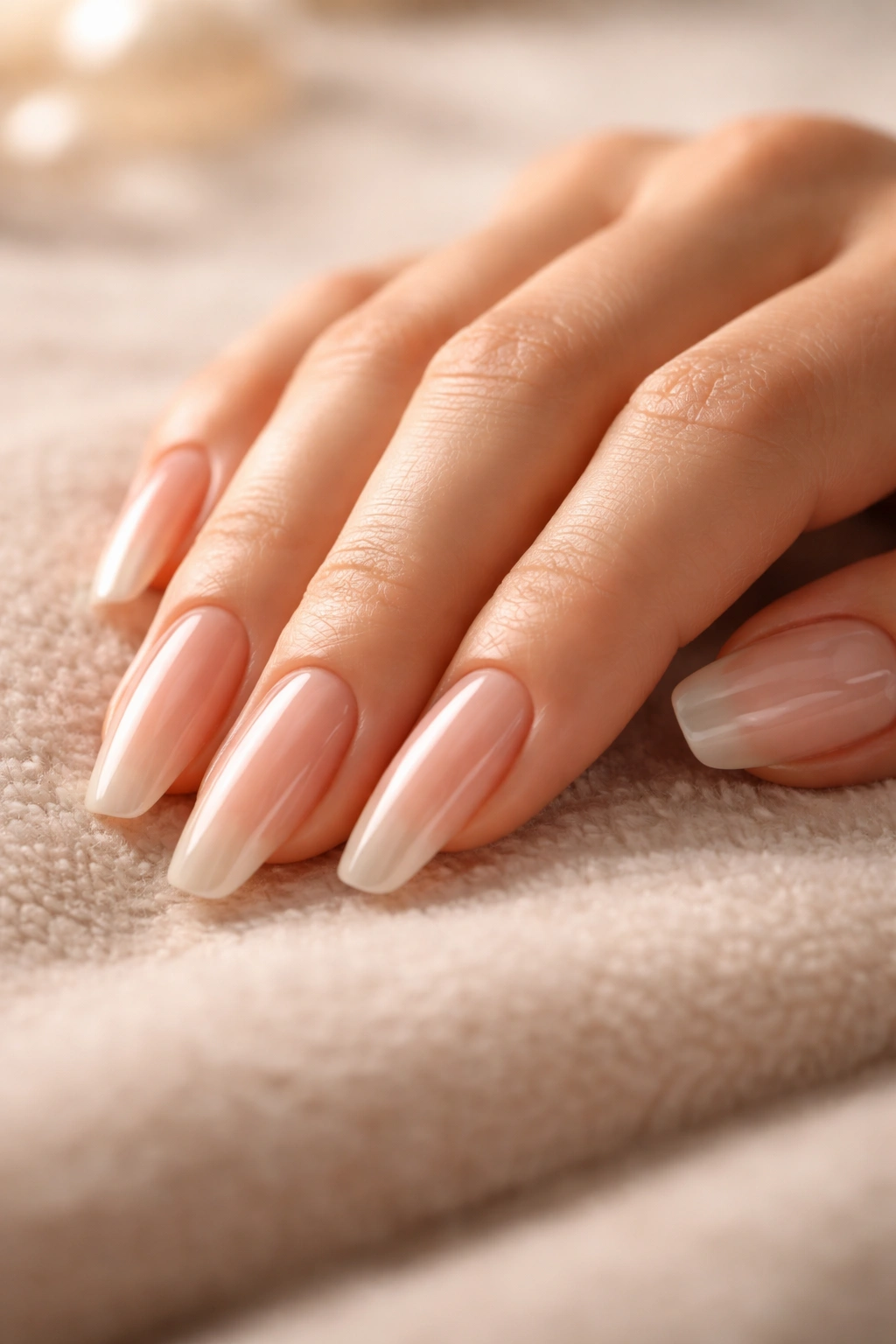
Long, strong nails are absolutely achievable for most people. It’s not about having special genetics or being willing to sacrifice practicality. It’s about understanding the real vulnerabilities of long nails and systematically addressing each one.
Start with the foundation: moisturize consistently, file gently, protect from water and impact, and use a strong base coat. Add strategic nutrition and internal support. Protect while sleeping. Trim regularly to prevent small damage from becoming big problems. Do all of this consistently for 3-6 months and you’ll see transformation that makes all the effort absolutely worth it.
The hardest part isn’t the cost or the time — it’s the consistency. Long nails reward the people who show up every single day with the protective routine, even on days when nothing visible has changed. The small daily habits compound into results that feel almost miraculous when you finally look at your nails and realize they’re actually staying intact.
Your beautiful, unbroken long nails are waiting. It’s just a matter of deciding they’re worth protecting.