


Black and red ombre stiletto nails represent the intersection of edgy sophistication and pure glamour. This striking color combination works for virtually any occasion—whether you’re dressing for a night out, a professional event where you want subtle edge, or simply because you love nails that make a statement. The beauty of the black-and-red ombre effect is that it offers endless creative possibilities, from soft, blended gradients to bold, high-contrast transitions. The stiletto shape itself amplifies the drama, giving you an elongated canvas that showcases color transitions beautifully.
What makes this color combination so versatile is that black grounds the design while red adds warmth and intrigue. Red reads as confident and sensual; black adds mystery and polish. Together, they create a look that’s sophisticated enough for boardrooms yet edgy enough for evenings. Whether you prefer a subtle fade or a dramatic contrast, there’s a black-and-red ombre stiletto nail design that matches your personal style and the occasion at hand.
1. Classic Black and Red Gradient
The timeless black-to-red gradient is where many nail enthusiasts start with this color combination, and for good reason—it’s stunning in its simplicity. This design features a solid black base that gradually fades into deep crimson red at the tips, creating a seamless color transition that looks both refined and modern.
Why This Design Works So Well
The gradient style requires blending that creates depth without looking busy or overwrought. A true gradient ombre relies on careful sponging or airbrushing techniques that allow the colors to merge smoothly rather than creating a harsh line. The black-to-red transition feels natural because it follows a warm-to-cool visual pattern that’s inherently pleasing to the eye. Stiletto nails provide the perfect elongated surface for showcasing this gradient, making the transition feel luxurious and intentional.
Essential Details for Perfect Results
- Start with a high-quality base coat to prevent staining from the darker pigments
- Use a makeup sponge or soft brush to blend the colors where they meet
- Apply thin, layered coats rather than one thick application for smoother blending
- Seal with a glossy topcoat to create that signature shine that makes gradients pop
- Consider adding a matte topcoat instead for a more modern, sophisticated finish
Pro tip: If you’re sponging the gradient at home, practice on paper first—get comfortable with the pressure and blending motion before applying it to your nails.
2. Deep Red Fade to Black
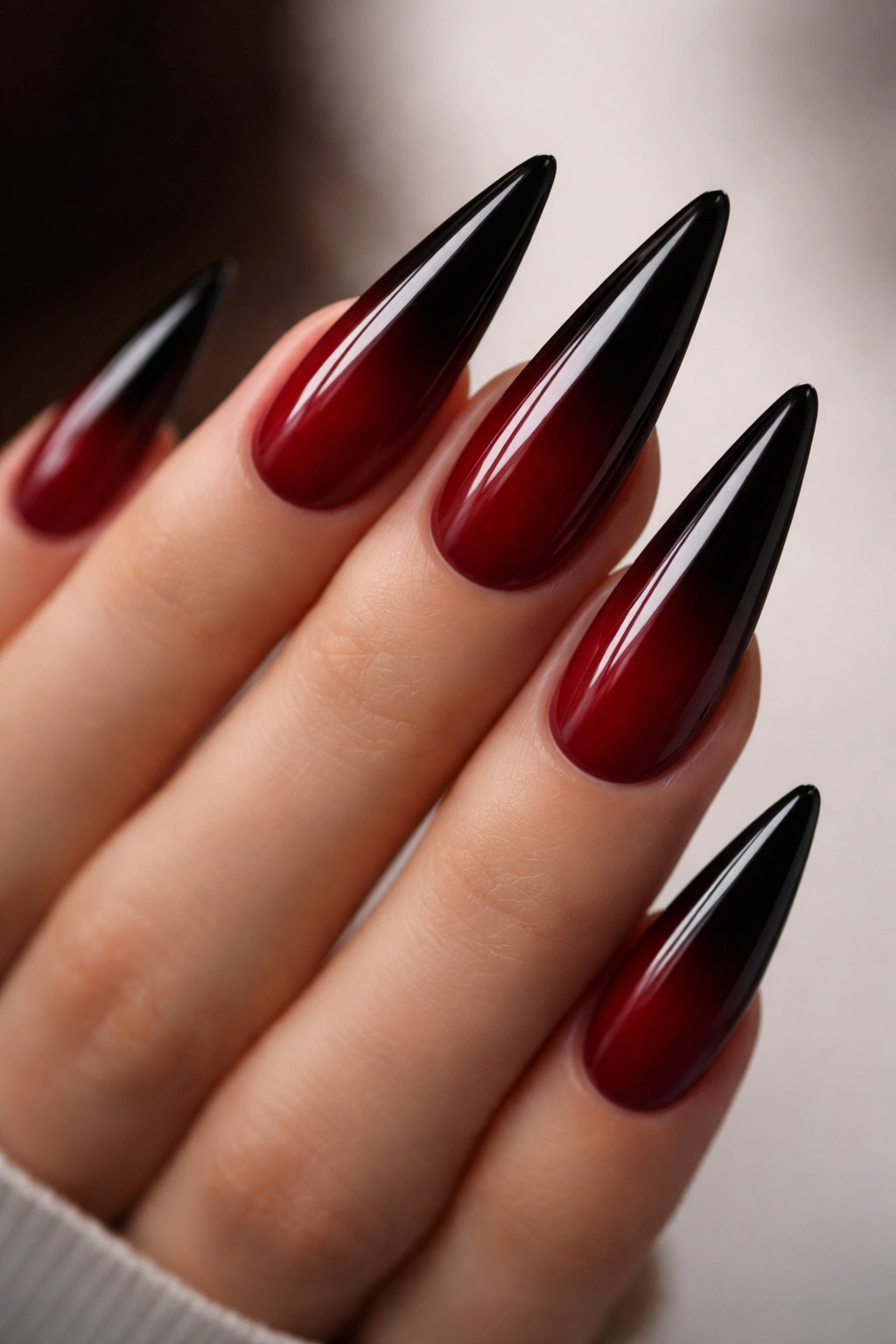
This reverse take on the classic gradient starts with a deep burgundy or wine red at the base and transitions into pure black at the tips. It’s an unconventional approach that feels equally striking and perhaps even more dramatic than its inverse.
The Psychology of Reverse Gradients
Beginning with warmth (red) and moving toward darkness (black) creates a visual journey that feels both sensual and mysterious. This direction works particularly well for stiletto nails because the black tips create a sharp, definitive point that feels intentional rather than accidental. The deep red base catches light and draws attention to the nail bed, while the black tips create silhouette and definition. This combination is especially flattering on longer stiletto shapes where the length can really showcase the color transition.
How to Execute This Design
- Apply your deep red shade as the base color and let it cure completely
- Create a thin line of black gel at the tip area using a detail brush
- Use a soft sponge or blending brush to soften the line where red and black meet
- Work in small areas and build the gradient gradually—rushing this step ruins the effect
- Finish with a quality topcoat that brings out the richness of both colors
Worth knowing: Deep burgundy and black blend more naturally together than bright red and black, so if you want the smoothest gradient, choose a deeper red shade.
3. Glitter Ombre Transition
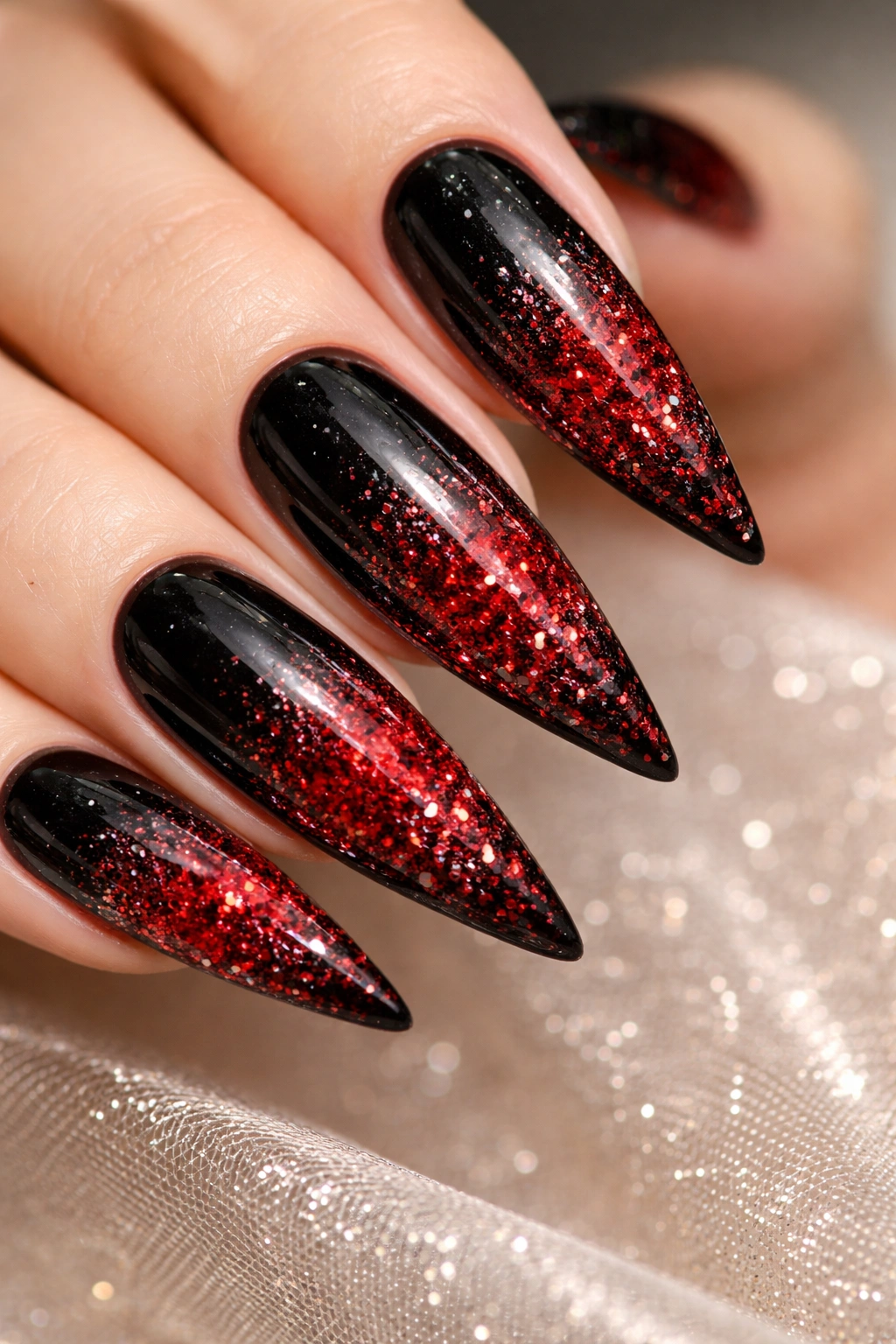
Layer sparkle into your black-and-red ombre by incorporating glitter that gradually intensifies as it moves from black to red (or vice versa). This design adds texture, dimension, and a celebratory feel while maintaining the sophisticated ombre aesthetic.
Making Glitter Work in an Ombre
The key to glitter ombre is strategic placement—start with micro glitter suspended in the black base, gradually increase glitter density in the midtone area, and finish with chunky or holographic glitter at the red tips. This creates visual movement and catches light beautifully as you move your hands. The glitter draws the eye to the transition zone, making the color blend feel more dynamic and intentional. On stiletto nails, scattered glitter across the gradient becomes a focal point that’s visible from any angle.
Specific Application Method
- Apply your base black color and let it cure
- Apply a thin layer of clear gel mixed with tiny glitter flecks to the lower portion
- Layer progressively larger glitter particles toward the tip using a glitter gel or regular nail polish mixed with glitter
- Use a topcoat with built-in sparkle or a translucent glitter topcoat to add extra shimmer
- Seal everything with a thick layer of clear topcoat for safety and longevity
Pro tip: Use an ombre sponge lightly over the glitter layers to blend the glitter colors and create a cohesive gradient rather than obvious sections.
4. Marble Black and Red
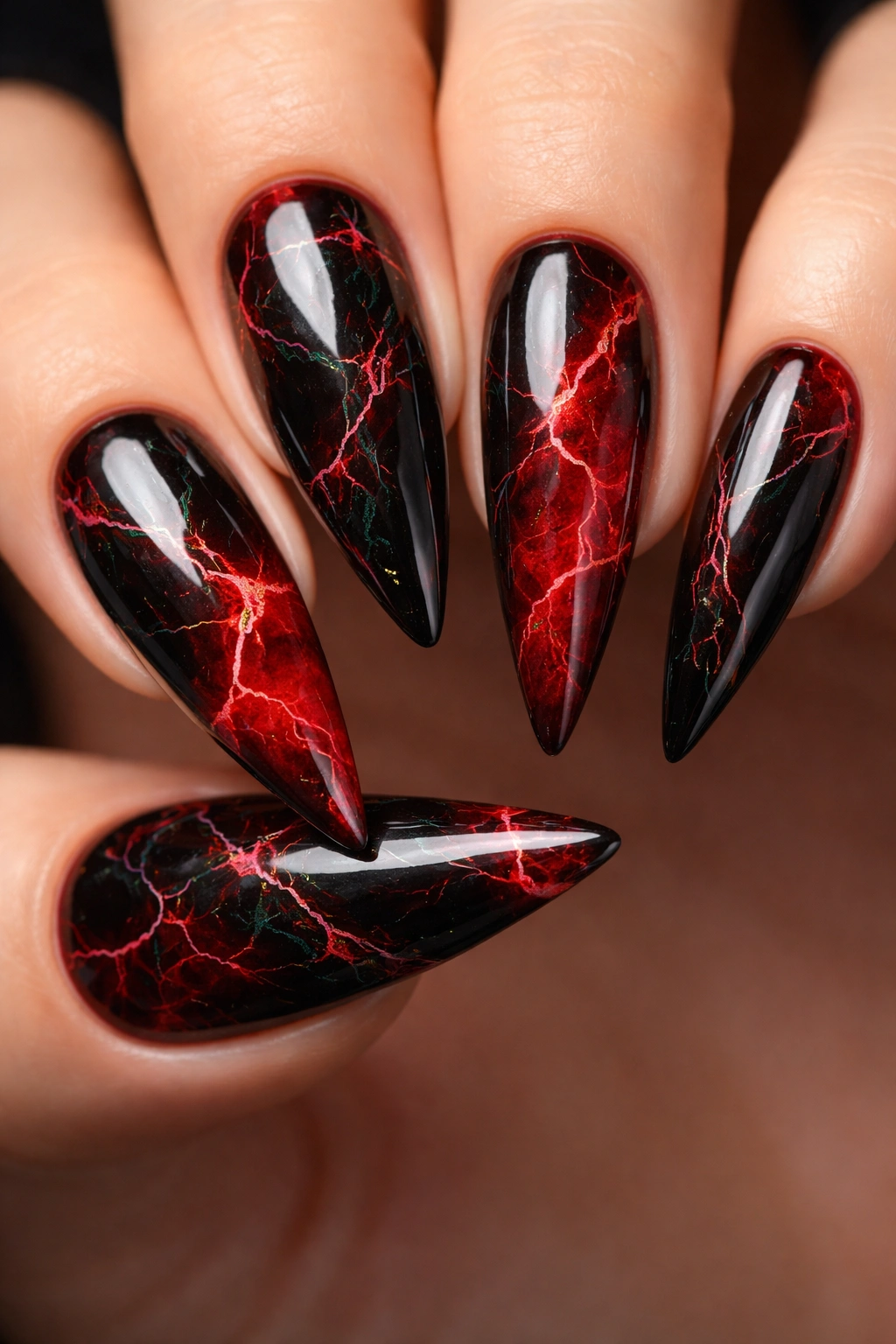
Combine the bold geometry of marble patterns with your black-and-red color palette by creating an organic, veined effect that flows across each stiletto nail. This design feels artistic, modern, and unexpectedly wearable despite its intricate appearance.
The Marble Technique Explained
Marble nail art uses random veining patterns that mimic natural stone, typically created by dripping one color onto another and then using a thin brush or needle to drag the colors together. With black and red, you can create a base of black with fine red veining, or alternate—red base with black veins. The key is keeping the veins irregular and organic rather than perfectly symmetrical. On stiletto nails, marble patterns create a luxurious, mineral-like quality that photographs beautifully and looks different from every angle.
Creating Your Marble Design
- Start with a base color—either solid black or solid red
- Drop thin lines of the contrasting color across the base using a thin brush
- Use a clean needle or toothpick to drag through the colors, creating veins
- Avoid overworking the pattern—a few strategically placed veins feel more elegant than heavy coverage
- Apply topcoat to seal and create shine that enhances the marble effect
- Consider keeping some nails more heavily veined and others with just subtle hints for varied interest
Insider note: If your first attempt looks too busy, apply a semi-transparent layer of your base color to tone down the veins and create a more subtle marble effect.
5. Geometric Ombre Design
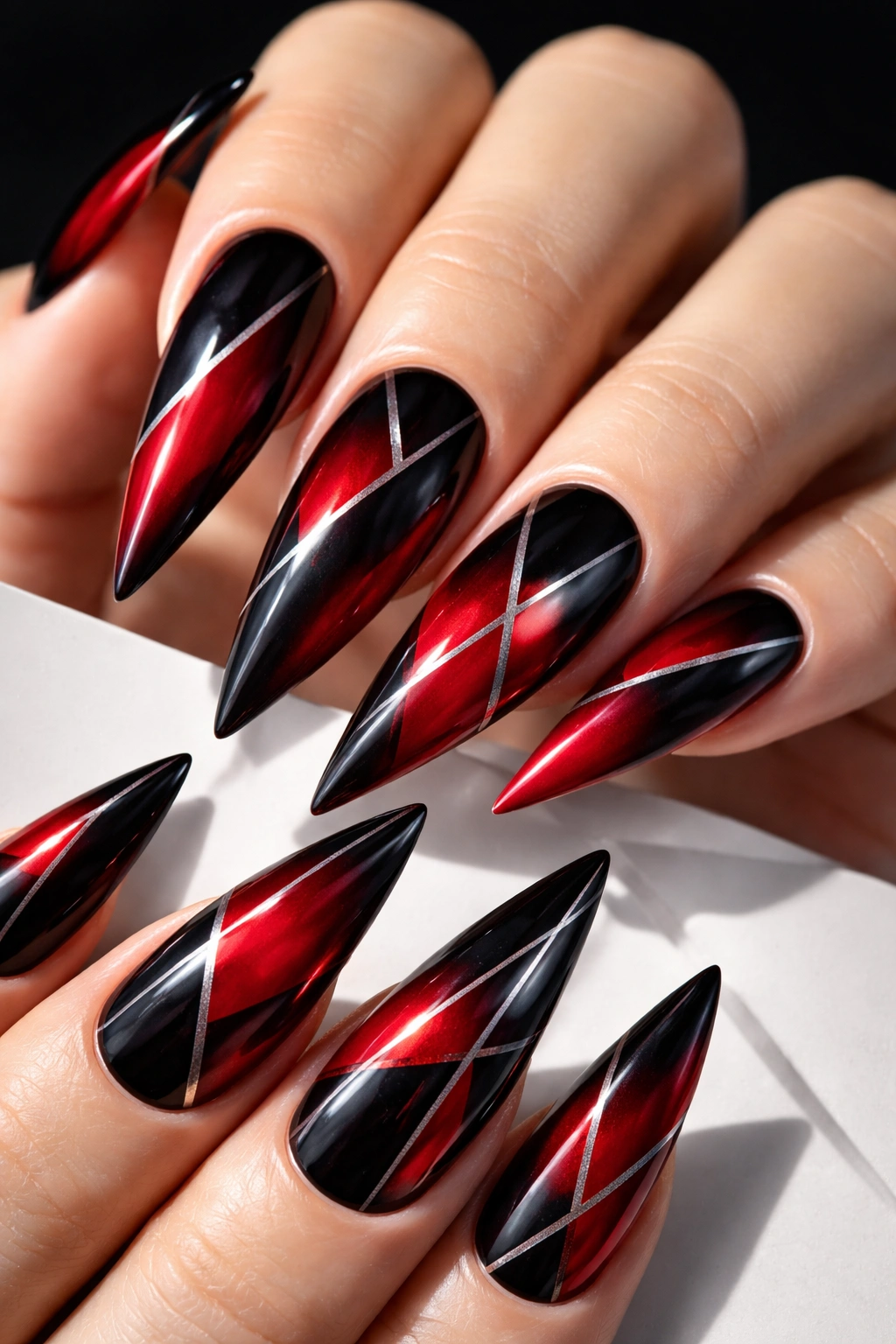
Layer clean geometric shapes—triangles, horizontal stripes, or abstract blocks—into your ombre gradient for a design that feels contemporary and intentionally artistic. This bridges the gap between abstract ombre and structured nail art.
Why Geometry Elevates Ombre
Pure color gradients can sometimes read as simple; adding geometric elements shows intention and creativity. Clean lines, sharp angles, and structured shapes add visual interest while maintaining the polished feel of a gradient ombre. On stiletto nails, geometric shapes naturally follow the elongated shape, creating lines that enhance the nail’s length and make the overall look feel purposeful and editorial.
Design Approaches to Try
- Horizontal stripes of red and black separated by thin black lines
- Triangular sections that alternate between red and black
- A gradient that flows diagonally from one corner to the opposite corner
- Abstract shapes or color-blocking that creates movement across the nail
- Negative space designs where the black base shows through geometric cutouts
What to watch for: Use a steady hand or nail art stickers to keep your geometric lines crisp and clean—wobbly lines read as accidental rather than intentional.
6. Metallic Red to Black
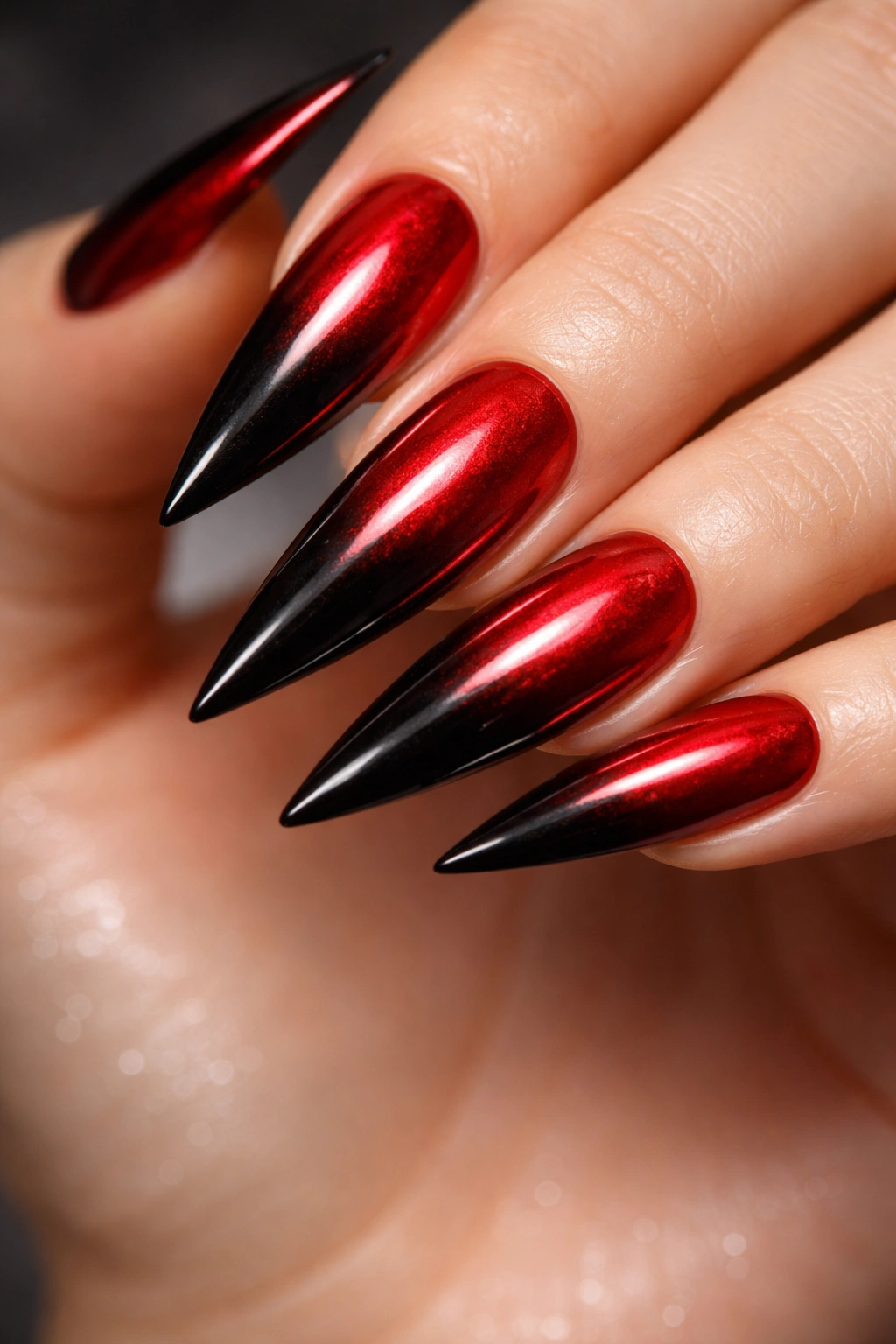
Introduce metallic finish to your black-and-red ombre using chrome powder, foil, or metallic gels that shift between shades as light hits them. This design feels especially luxe and catches attention with its reflective qualities.
The Magic of Metallic Polish
Metallic finishes add dimension that solid colors can’t achieve—they appear to shift and change as you move your hands and catch different light sources. A red metallic that fades into black metallic feels more dimensional and expensive than flat color alone. The reflective quality of metallics makes your nails appear more sculptural and three-dimensional, which works gorgeously on the elongated surface of stiletto nails.
Achieving a Flawless Metallic Ombre
- Use metallic gel or chrome powder specifically formulated for ombre application
- Apply your red metallic shade first using thin, even coats
- Transition to black metallic by sponging the colors together where they meet
- Use a lint-free wipe and alcohol to remove the tacky layer before topcoat
- Seal with a thick glossy topcoat to lock in the metallic effect and create mirror-like shine
- Avoid matte topcoats with metallic designs—the shine is essential to the appeal
Pro tip: Metallic powders look best when applied to a slightly sticky gel layer; apply your ombre, then use a rubbing alcohol wipe to remove the tack layer, then apply chrome powder to tacky areas, then wipe again and topcoat.
7. Velvet Texture Ombre
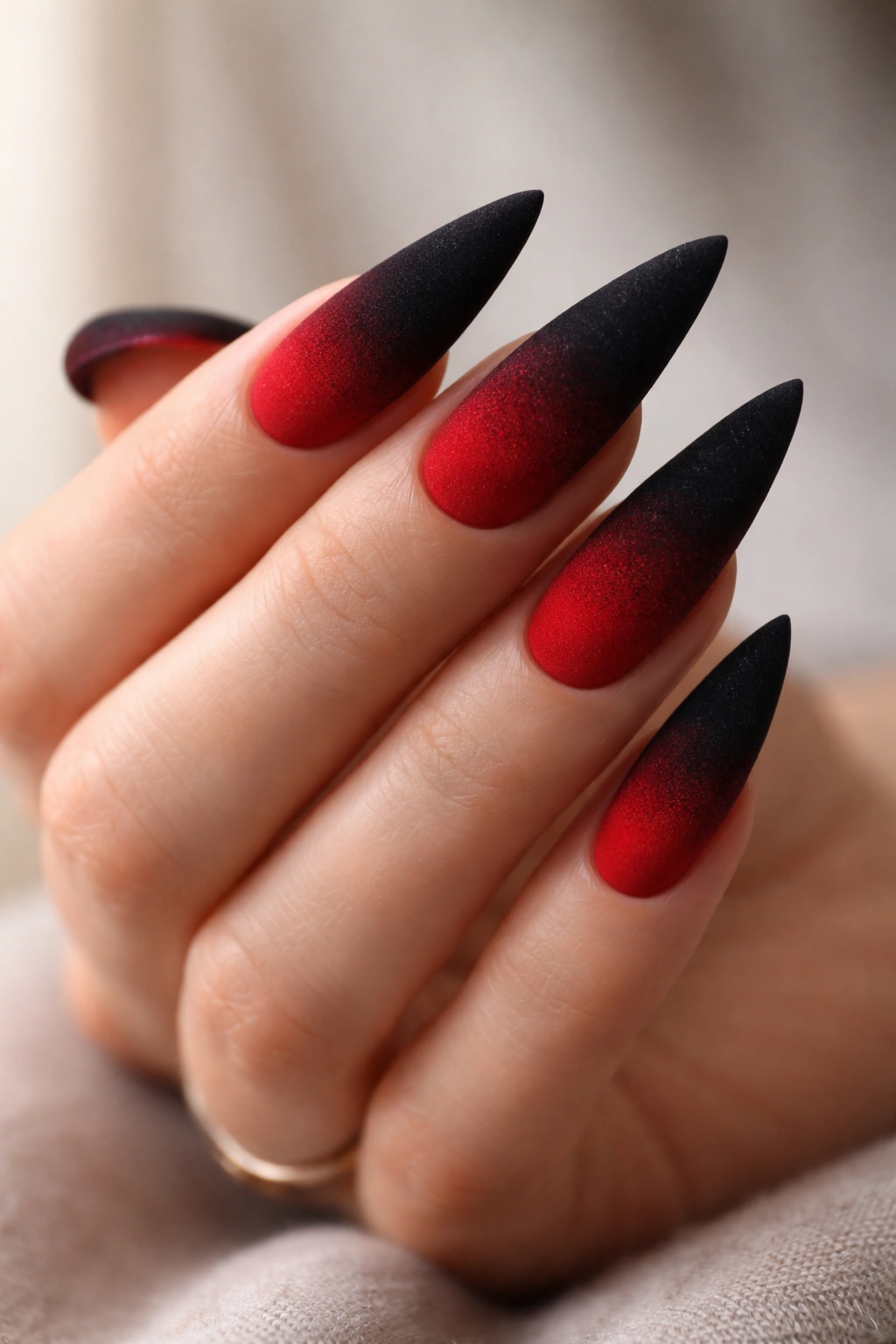
Create a luxurious velvet-matte finish on your black-and-red ombre nails by using a velvet powder that creates a soft, plush appearance across the color gradient. This design feels tactile and modern, offering an unexpected finish choice.
The Velvet Texture Advantage
Velvet finishes feel softer and more wearable than high-gloss because they’re less reflective and more understated. A black-and-red velvet ombre feels sophisticated and slightly edgy without being overly dramatic. The matte, velvety surface is gentler on the eyes than glossy finishes, making it ideal for professional environments or daytime wear. On stiletto nails, the velvet texture adds softness that balances the sharp tip shape.
Applying Velvet Powder to Your Ombre
- Create your black-to-red (or red-to-black) ombre gradient using regular gel polish
- While the topcoat layer is still tacky, apply velvet powder by pressing it gently onto the surface
- Use a soft brush to blend the velvet powder evenly across the ombre
- Dust away excess powder with a soft, dry brush
- Seal with a matte topcoat specifically designed for velvet powder adhesion
- Avoid using glossy topcoat—it will cover the velvet effect and create an uneven finish
Worth knowing: Velvet finishes require more delicate handling and may not last as long as glossy finishes, so plan for more frequent touch-ups.
8. Burgundy to Black Stiletto
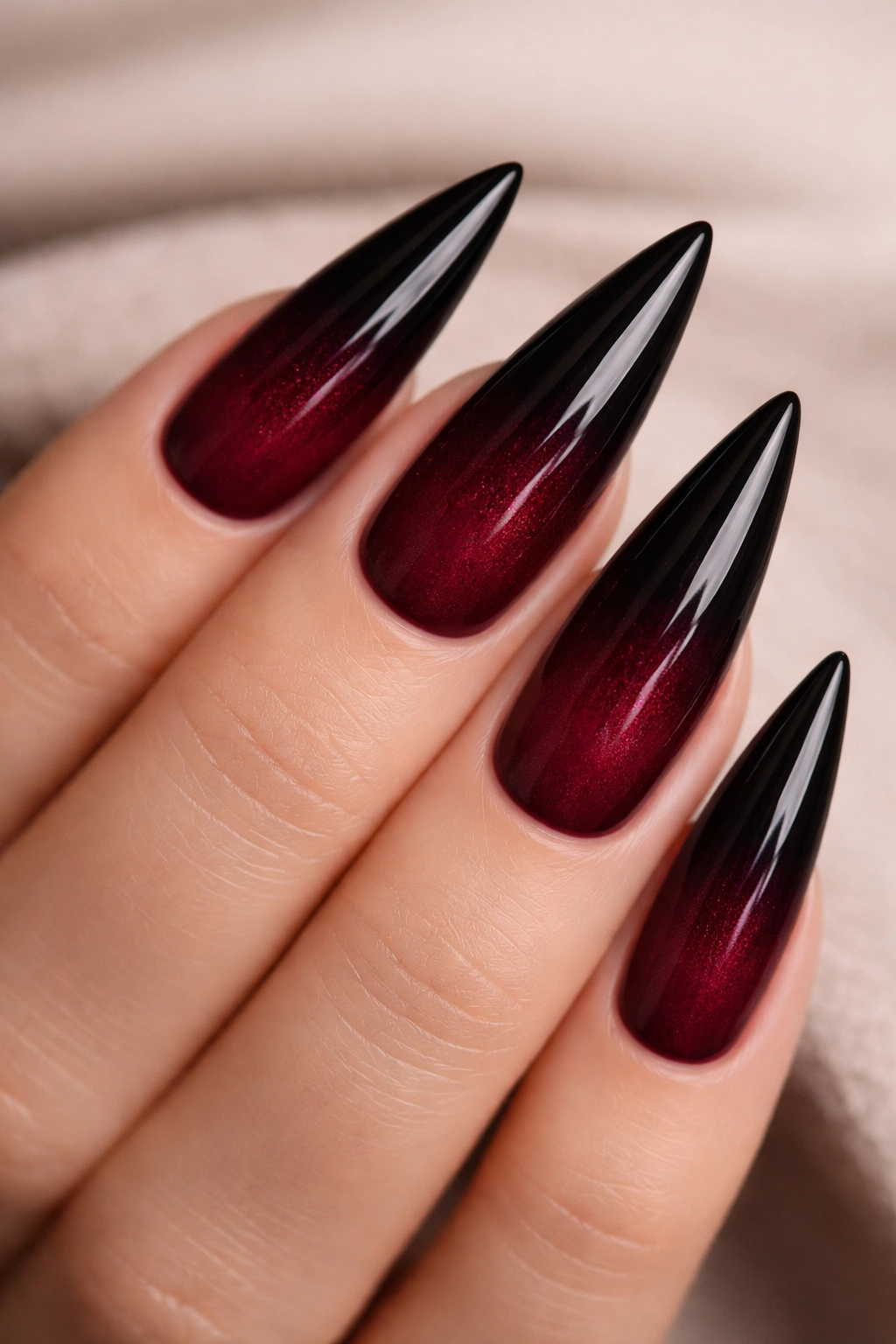
Choose a deep, wine-toned burgundy as your starting color and fade it into true black for a more muted, sophisticated version of the classic red-and-black ombre. This combination feels refined and works for both casual and formal occasions.
Why Burgundy Changes the Dynamic
While bright red reads as bold and dramatic, burgundy feels grown-up and moody. The warmth of burgundy creates a gentler transition into black, making the overall look feel less harsh and more wearable. Burgundy-to-black works particularly well for autumn and winter wear, but the timeless color combination stays relevant year-round. On stiletto nails, burgundy-to-black creates visual interest without feeling costume-like or overly trendy.
Getting the Burgundy Shade Right
- Choose a burgundy that leans slightly toward brown (warm burgundy) rather than pink (cool burgundy)
- Test your chosen shade on one nail first to ensure it photographs the way you want
- Apply your burgundy base and allow it to cure completely
- Use a sponge to create the transition into black at the tip
- Consider adding a subtle shimmer to the burgundy to make it catch light
- Seal with glossy topcoat for classic elegance or matte for modern sophistication
Pro tip: If your burgundy looks too brown, add a tiny drop of red gel to brighten it before applying to your nails.
9. Chrome and Ombre Mix
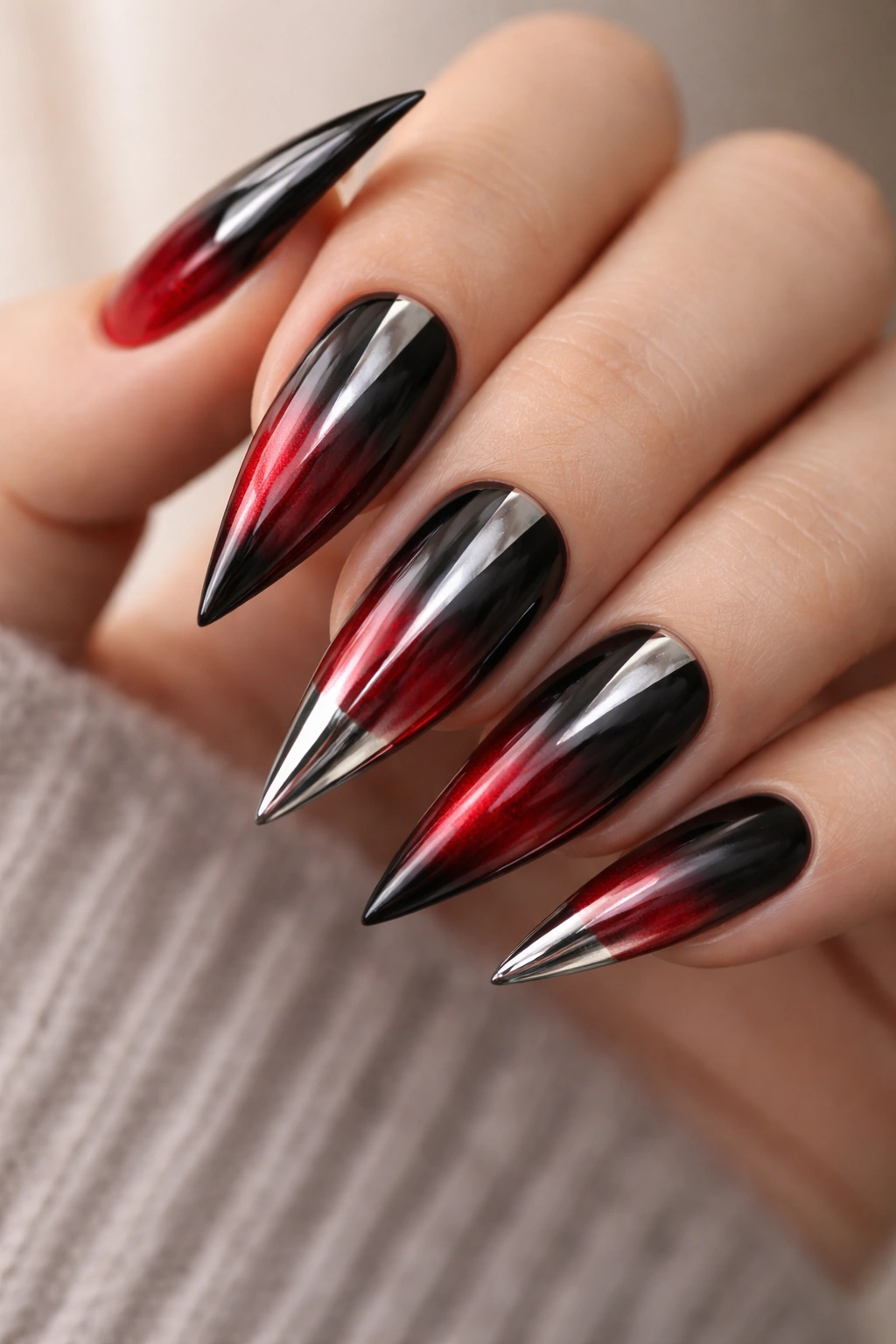
Combine the mirrored, reflective quality of chrome powder with your black-and-red ombre for a futuristic design that feels cutting-edge and luxury. This design works best when chrome accents specific areas rather than covering the entire nail.
Strategic Chrome Placement
Rather than applying chrome across the entire ombre, use chrome powder to accent specific zones—the very tip, a centered stripe, or geometric sections. This creates contrast between the reflective chrome and the gradient ombre, making both elements more visually striking. On stiletto nails, chrome accents at the sharp tip create an extra-sharp, almost metallic point that feels intentional and fierce.
Creating a Chrome and Ombre Hybrid
- Build your black-and-red ombre gradient using your preferred technique
- Allow the ombre to cure completely
- Determine where you want chrome accents—tip, stripe, geometric section, or scattered placement
- Apply a thin layer of clear gel to the chrome placement areas while keeping other areas untouched
- Press chrome powder onto the tacky gel areas
- Dust away excess and seal with topcoat
- The contrast between matte ombre and reflective chrome creates dimension
Insider note: Keep chrome applications relatively small on stiletto nails—too much chrome can overwhelm the design and make hands look too matchy-matchy.
10. Red Tip Black Base French Style
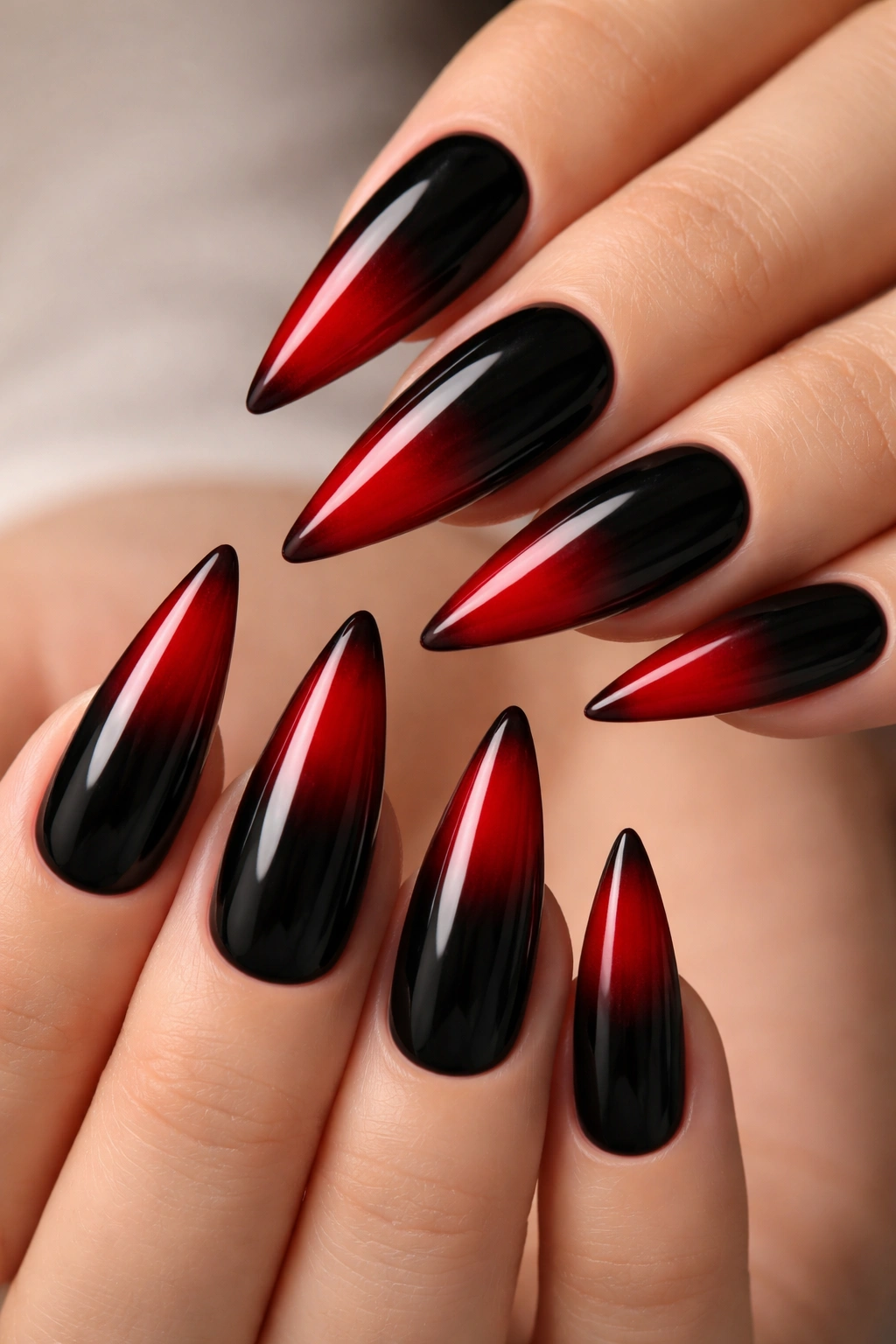
Reinterpret the classic French manicure by using your black-and-red ombre colors in a French-tip style, with a solid black base and a red-to-black ombre tip. This design feels elegant, graphic, and references timeless nail styling.
Modern French Meets Ombre
The French manicure’s clean lines and elongated tips align perfectly with stiletto nails, and substituting red for the traditional white creates a bolder, edgier look. By adding an ombre transition within the red tip area (fading from bright red to darker red to black), you get the structure of a French manicure with the visual interest of an ombre. This design reads as intentional and polished rather than trendy.
Executing a Black-Base French-Red Ombre Tip
- Apply solid black gel as your base color across the entire nail—two coats for opacity
- Create a French manicure line about one-quarter to one-third from the tip using a thin brush
- Apply red gel above this line and extend it to the very tip
- Use a sponge to create an ombre fade from the red toward the black line
- Consider making the tip ultra-red and gradually blending black upward for extra drama
- Seal with glossy topcoat for shine and definition
What to watch for: The line between black and red should be clean if you want a graphic French-manicure feel, or softly blended if you prefer a softer ombre transition.
11. Stripes and Ombre Blend
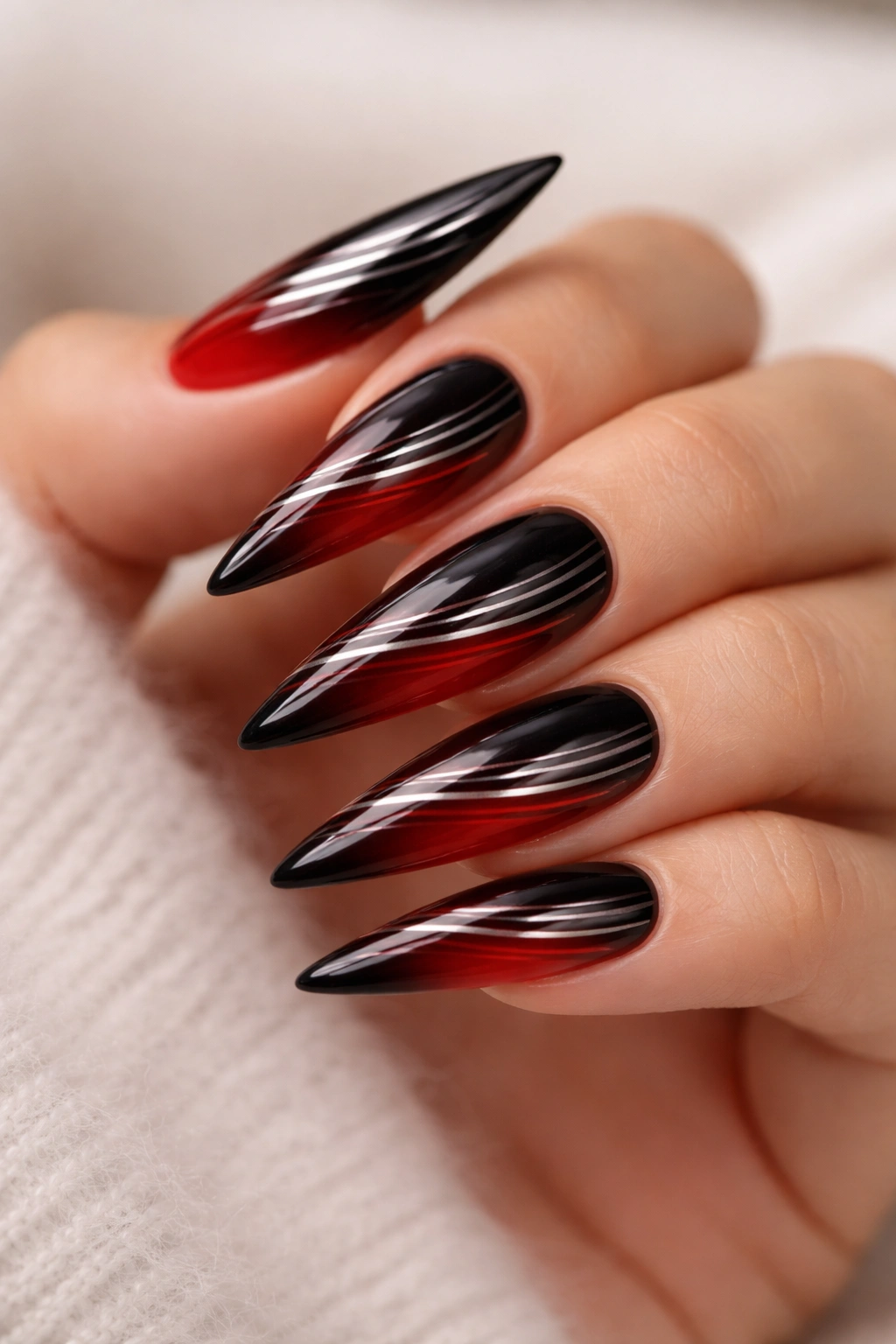
Combine thin horizontal or vertical stripes with your black-and-red ombre gradient, creating a design that feels contemporary and artistic. The stripes add structure and visual interest to the smooth ombre transition.
Balancing Stripes with Gradient
The key to making stripes and ombre work together is proportion—don’t let stripes overwhelm the gradient. Instead, think of stripes as accents that highlight the ombre rather than compete with it. Thin stripes in white, metallic, or even the opposite color create visual movement without disrupting the flow of the gradient. On stiletto nails, vertical stripes naturally emphasize length, while horizontal stripes create visual breaks that can make nails appear broader.
Design Ideas for Stripes Plus Ombre
- Thin white stripes running vertically through your black-to-red gradient
- Metallic stripes that separate the ombre into distinct color zones
- One or two thick stripes in the opposite color that cross through the gradient
- Stripes only in the transition area where black and red meet
- Negative space stripes that show the nail color through thin lines
- Rainbow stripes layered subtly over a muted black-and-red ombre
Pro tip: Use striping tape or a thin brush to create clean, straight lines—wobbly stripes read as imperfect rather than intentional.
12. Holographic Red and Black
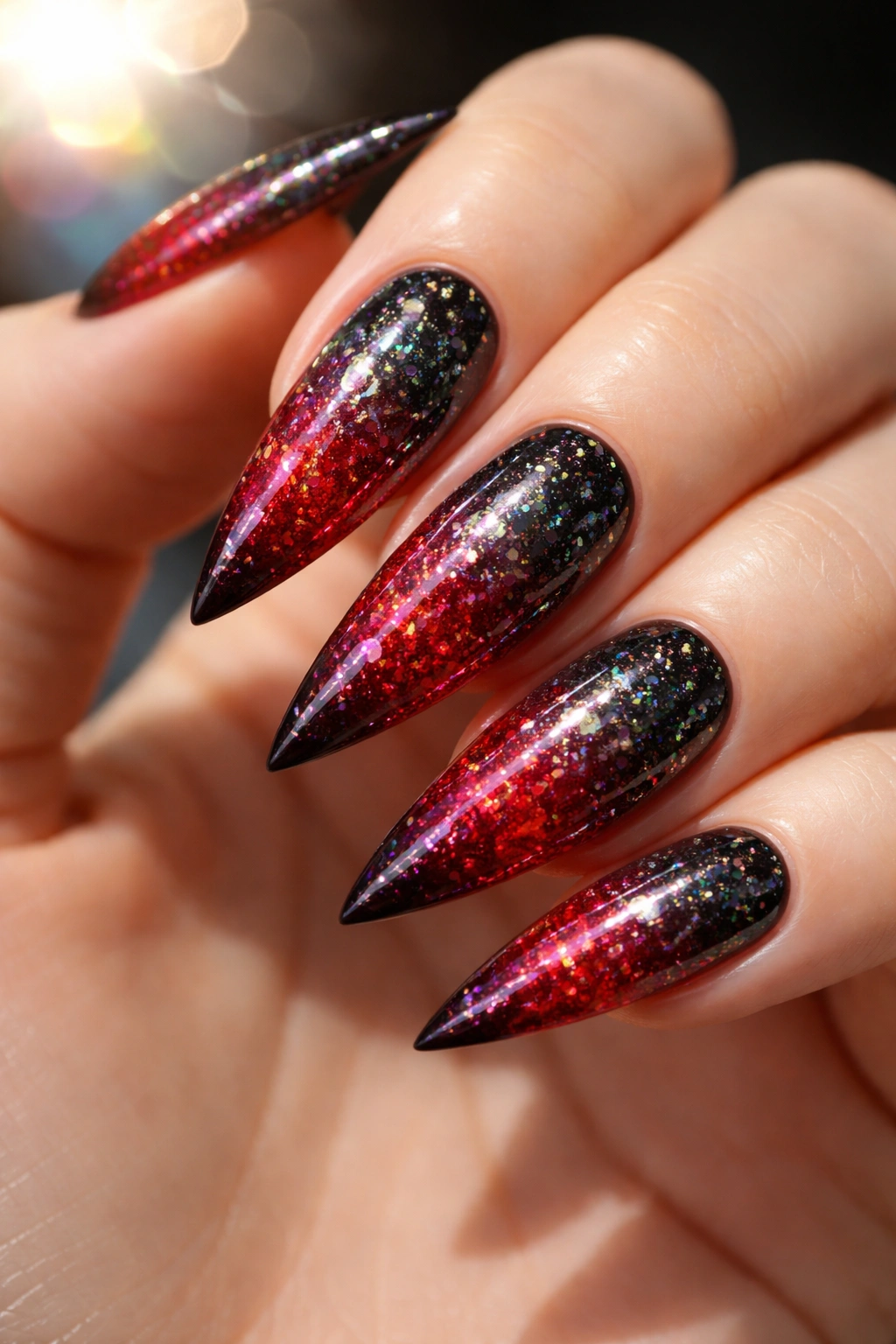
Use holographic or multichromatic glitter to create dimension and color-shifting effects within your black-and-red ombre. As light hits the holographic particles, they reflect rainbow hues that add intrigue to the classic red-and-black combination.
Why Holographic Finishes Elevate Black and Red
Red and black can feel heavy or dark depending on lighting and formulation. Layering holographic glitter or powder adds lightness, sparkle, and an unexpected color dimension that makes the design feel fresher and more interesting. Holographic effects catch light beautifully on stiletto nails, creating a look that appears different depending on where you are and what light surrounds you.
Incorporating Holographic Elements
- Create your black-and-red ombre base using standard gel or polish
- Layer a holographic glitter topcoat over the entire design, or apply holographic powder to specific areas
- Consider using a clear gel mixed with holographic flakes applied only to the transition area
- Alternatively, use a holographic ombre effect where the colors shift between red, black, and iridescent hues
- Seal with clear topcoat to lock in the holographic particles and protect your design
- The holographic effect shows best in natural light and under UV/LED light
Worth knowing: Holographic finishes can look subtle indoors and dramatic in direct sunlight, so test in different lighting before committing to a full set.
13. Matte Black to Glossy Red
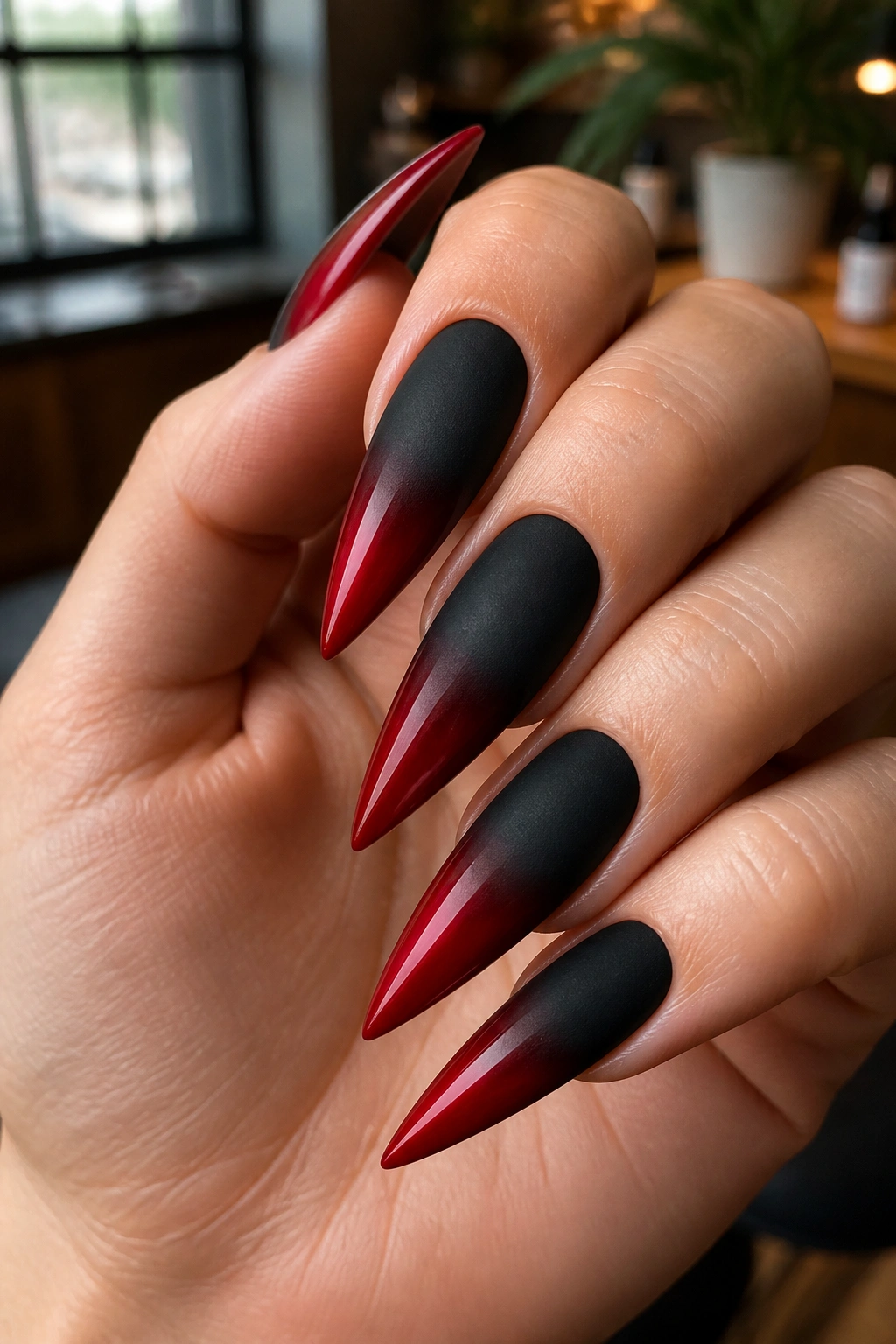
Create striking visual contrast by combining a matte black base with a glossy red ombre transition, mixing finishes for a design that’s both modern and tactilely interesting. This design plays with texture as much as color.
The Finish Contrast Strategy
Combining different finishes (matte and glossy) on the same nail creates visual interest and feels more intentional than a single finish throughout. The matte black appears softer and less reflective, while the glossy red pops with shine and vibrancy. This contrast makes the ombre transition feel sharper and more defined. On stiletto nails, the contrast between matte and glossy creates an almost sculptural quality that’s stunning from any angle.
Application for Matte-to-Glossy Transition
- Apply your black gel base and finish with a matte topcoat
- In the transition area (where you want matte to shift to glossy), apply glossy topcoat only to the red portion
- This creates a natural line where matte black gradually becomes glossy red as it fades
- Alternatively, apply glossy topcoat across the entire red tip and matte topcoat across the entire black base
- Use a soft brush or sponge to slightly blend where the finishes meet for a gradual transition
- Avoid matte topcoat in the transition zone if you want the contrast to feel sharp and intentional
Pro tip: Matte finishes show dust and oil more readily than glossy, so plan for slightly more frequent maintenance if you choose matte ombre designs.
14. Valentine’s Day Ombre
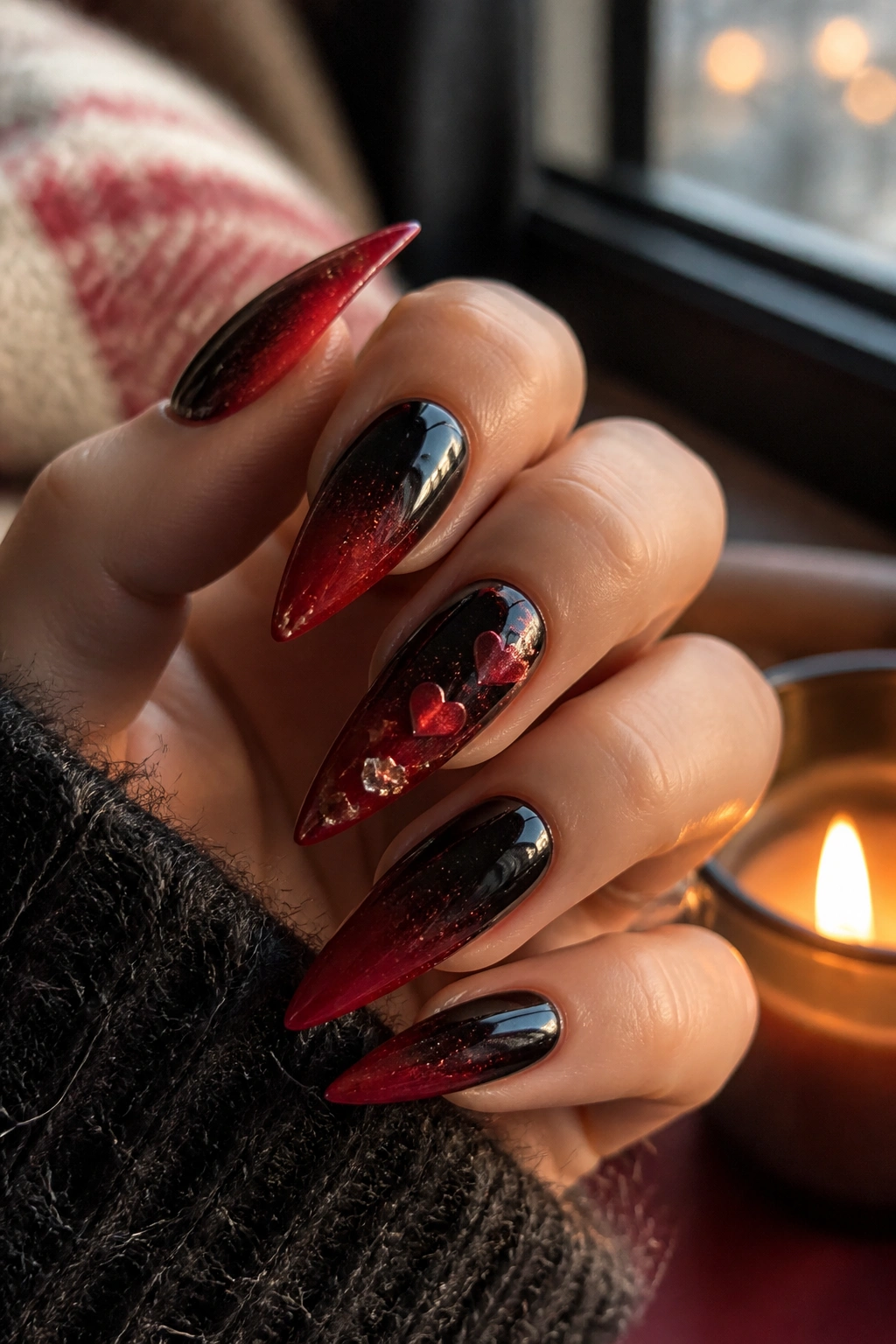
Create a romantic, occasion-specific black-and-red ombre by adding subtle heart accents, rose gold details, or sparkle elements that elevate the design for special dates and celebrations. This design feels celebratory without being over-the-top.
Adding Romance to Edge
Black and red already carries romantic energy, but layering in delicate details amplifies that feeling. Small gold or rose gold accents add luxury, while scattered sparkle adds celebration. Tiny hearts, delicate rose details, or romantic French lace patterns integrate seamlessly with the ombre gradient. On stiletto nails, these details shine beautifully when sized appropriately—large elements look childish, while small, tasteful accents look sophisticated and intentional.
Valentine-Inspired Details to Add
- Rose gold foil accents at the tip of each nail
- Tiny hand-painted hearts scattered across the gradient
- Delicate rose or peony silhouettes integrated into the design
- Cupid-inspired gold leaf or metallic elements
- Subtle sparkle or confetti glitter concentrated in the transition zone
- Romantic lace patterns stamped over the ombre using thin brushes
What to watch for: Keep accent details small and tasteful—Valentine’s designs can easily feel tacky if you layer too many romantic elements.
15. Minimalist Ombre Lines
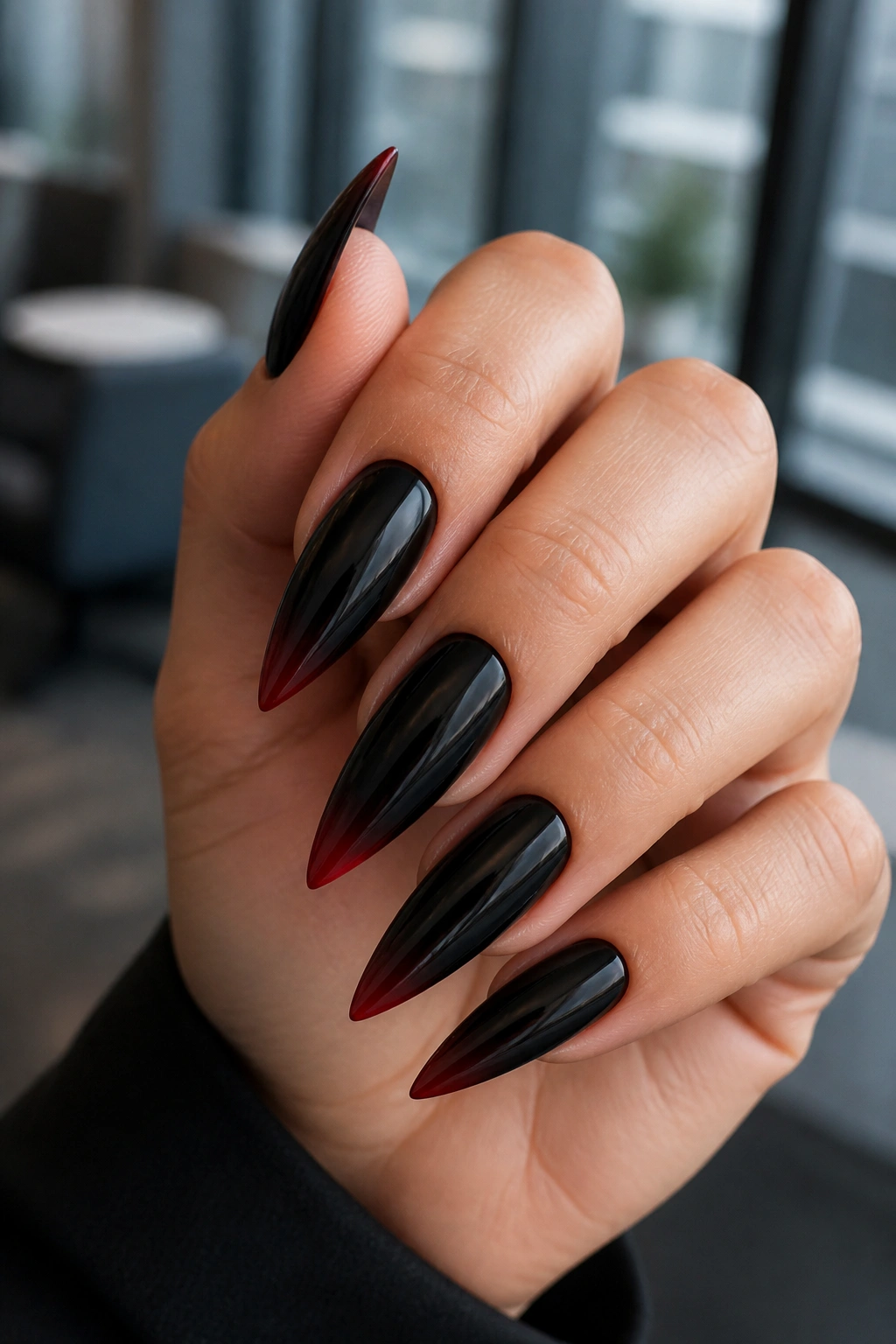
Create a clean, understated version of black-and-red ombre by using thin lines or a subtle color gradient that feels more whisper than shout. This design works beautifully for professional environments while maintaining the striking color combination.
The Power of Subtle Ombre
Not every design needs to be bold and in-your-face. A minimalist ombre uses the same color combination but applies it with restraint—perhaps just a thin line of red at the very tip fading almost imperceptibly into black, or a color gradient so subtle that it reads almost like a single color at first glance. On stiletto nails, minimalist approaches feel elegant, sophisticated, and surprisingly modern. This design lets the nail shape itself be the statement.
Creating Minimalist Ombre
- Use a very pale or sheer red shade for a softer gradient
- Apply only a tiny amount of red at the tip, blending extensively into the black base
- Consider using a nude or skin-tone color at the base instead of pure black for an even subtler look
- Create an ombre that’s visible only in certain lighting—it’s there but not obvious
- Use a thin, delicate sponge to create a gradual, barely-there transition
- Seal with matte topcoat for an understated, professional appearance
Pro tip: Minimalist designs look best with impeccable nail care—any chips or imperfections will stand out since there’s no heavy design to distract.
16. Red Jewels on Black Fade
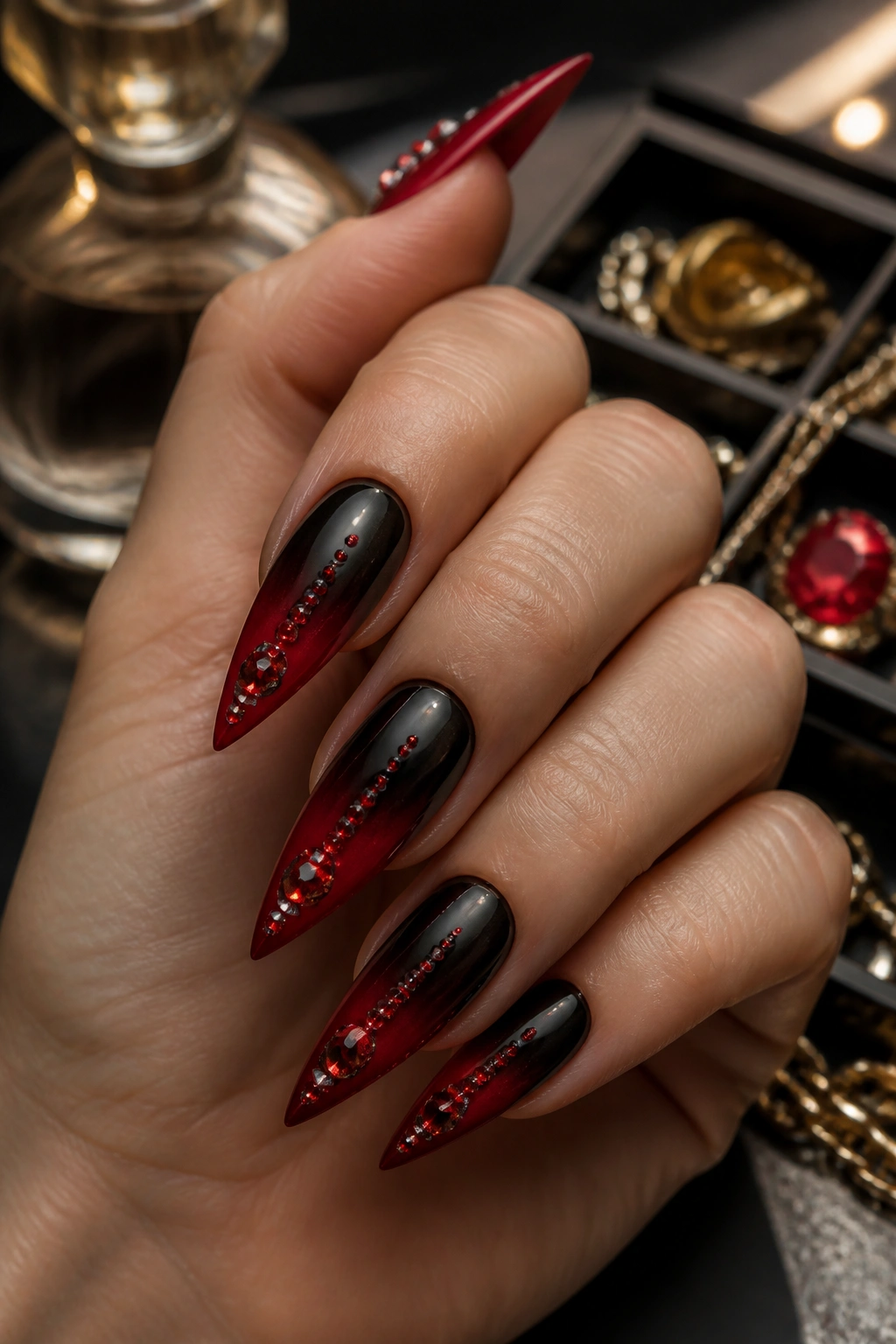
Layer red and black ombre with strategic jewel placement—using crystals, rhinestones, or metallic studs positioned along the nail to add glamour and dimension. This design elevates a gradient from simple to statement-making.
Strategic Jewel Placement
Placing crystals and jewels thoughtfully rather than randomly creates a high-end, intentional look. Consider positioning larger stones at the tip where they catch light, or creating a thin line of graduated crystals that follow the ombre gradient. Using jewels in colors that complement the ombre—rose gold, clear crystal, or black diamond—ensures they enhance rather than distract from the gradient.
Adding Jewels to Your Ombre Design
- Complete your black-to-red ombre gradient and seal with topcoat
- While the topcoat is still slightly tacky, apply jewels using a jewel picker tool
- Position one larger statement stone at the tip of each nail
- Create a line of smaller stones along the ombre transition area
- Alternatively, create a ombre-gradient of jewels using different sizes
- Once jewels are placed, seal with a thick topcoat to lock them in place securely
Worth knowing: Jeweled nails are beautiful but less practical for everyday wear—reserve this design for special occasions when you won’t be typing extensively.
17. Sunset Ombre (Orange-Red to Black)
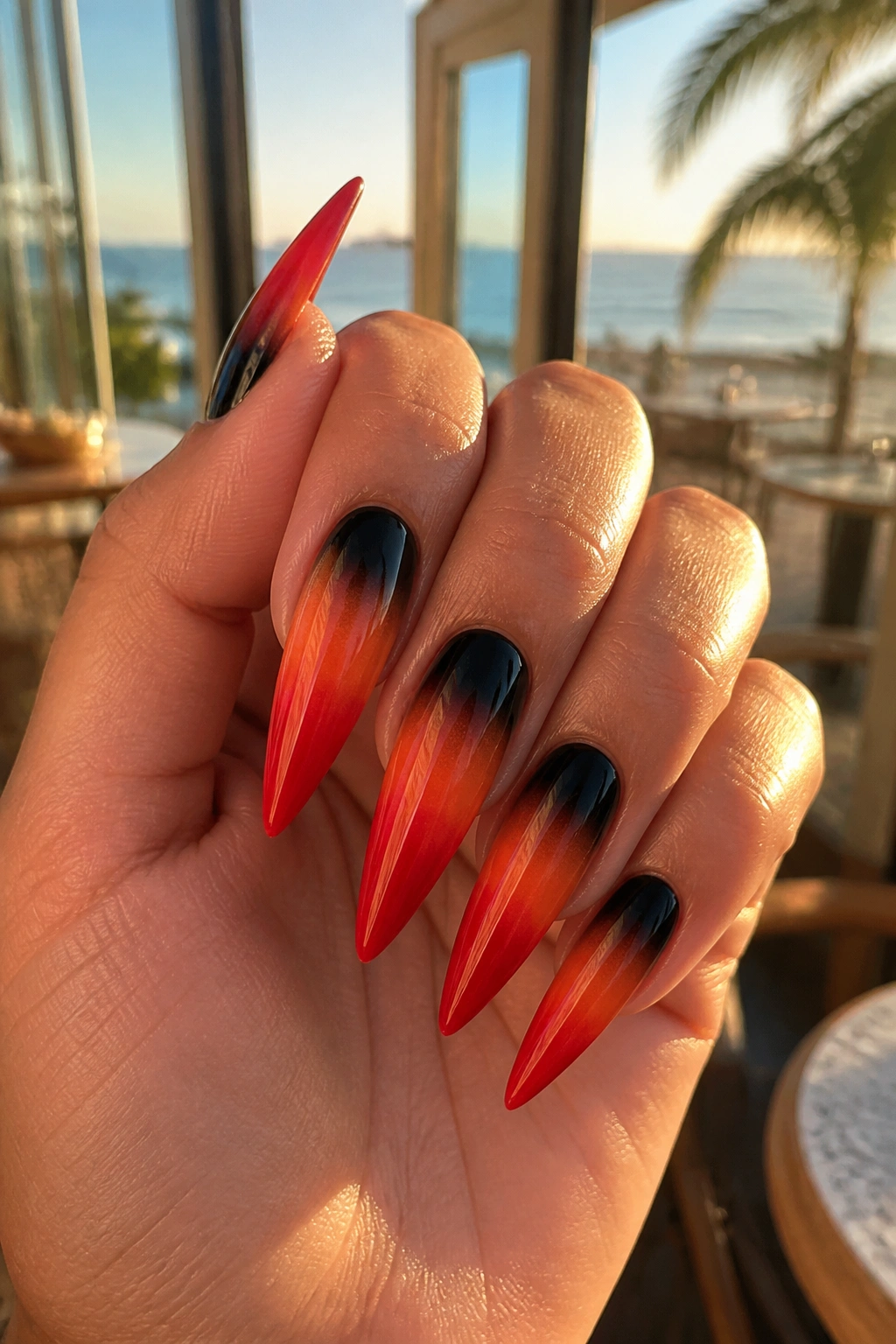
Expand your black-and-red palette slightly by introducing warm orange tones between the red and black, creating a sunset-inspired gradient that reads as more sophisticated than pure red-and-black. This design captures the warmth of a sunset while maintaining edge.
Why Sunset Ombre Feels Fresh
By introducing a third color—warm orange or coral—into the black-and-red combination, you create a more complex gradient that feels dynamic and intentional. The orange acts as a bridge between the warmth of red and the coolness of black, creating visual flow and subtle color interest. This design works year-round but feels particularly fresh during warmer months.
Building a Sunset Ombre Gradient
- Start with a black base color
- Create a transition zone using a warm coral or tangerine shade in the middle area
- Layer your red shade at the tip
- Use a sponge to blend all three colors together, creating smooth transitions from black to coral to red
- Avoid harsh lines between colors—the gradient should feel like a natural sunset
- Consider adding a subtle warm shimmer to enhance the sunset feeling
- Seal with glossy topcoat to make the gradient glow
Pro tip: Keep your orange shade warm and muted rather than bright and neon—this ensures the gradient feels cohesive and sunset-like rather than rainbow-like.
18. Reverse Ombre (Black to Red)
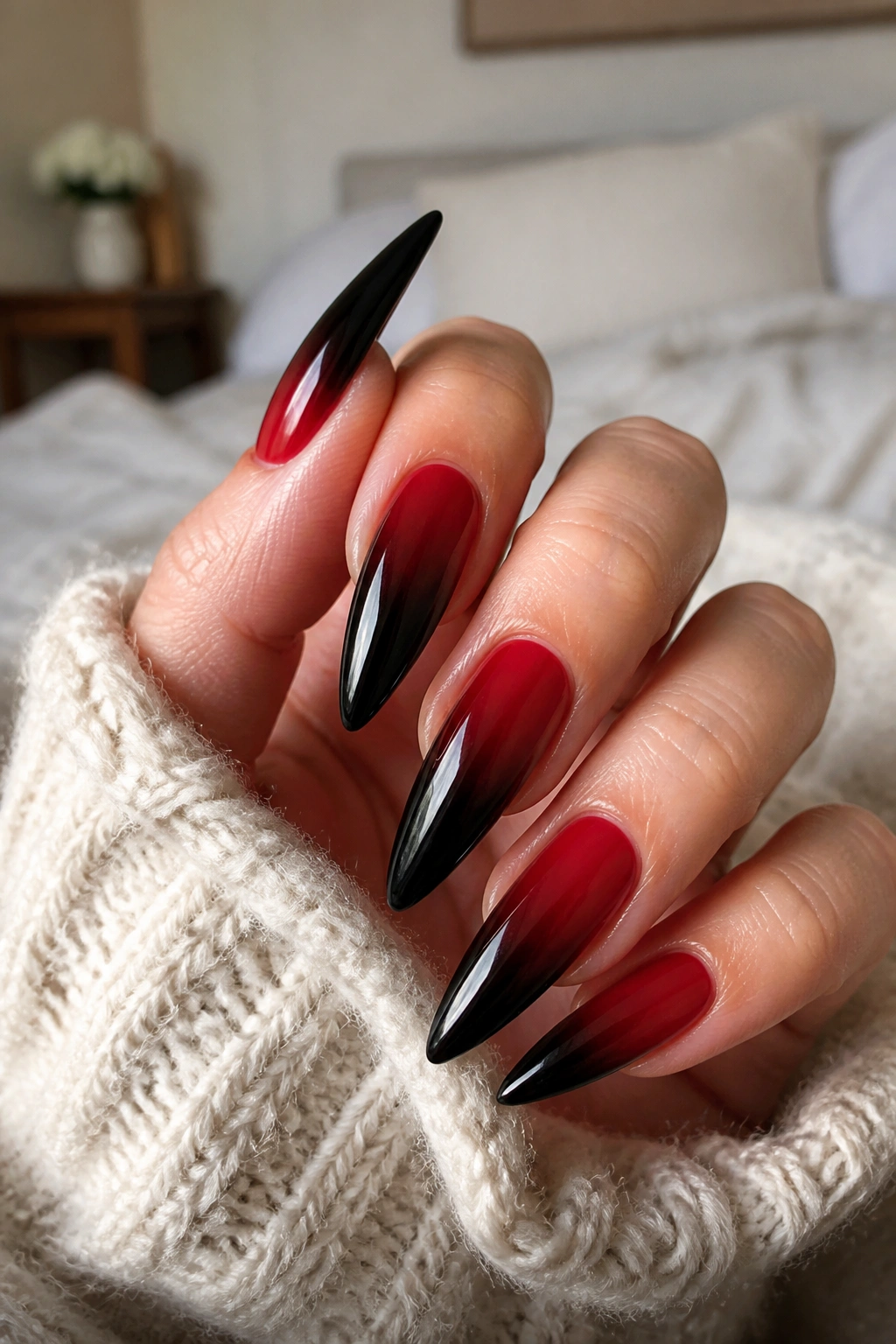
Complete your exploration of black-and-red combinations with a reverse ombre where black dominates the base and gradually intensifies the red as you move toward the cuticle—the opposite of typical ombre direction. This unconventional approach creates surprising visual interest.
Breaking Ombre Rules Intentionally
Traditional ombre gradients typically get lighter or shift color toward the tips. A reverse ombre that gets more vibrant or darker toward the base challenges expectations and feels intentional and artistic. Red-at-the-base can feel grounding and warm, with black tips creating a sharp, graphic finish. On stiletto nails, reverse ombre makes the nail bed feel more substantial while the sharp black tips create definition.
Creating a Reverse Ombre
- Apply your black shade at the tip of each nail—this is your anchor color
- Transition into a deep burgundy or wine shade in the middle area
- Move into a brighter red as you approach the cuticle area
- Use a sponge to blend all three shades together smoothly
- Alternatively, create a two-color reverse ombre: solid black at tips, fading to red at the base
- The gradient should feel intentional rather than accidental—practice your blending
- Seal with topcoat to lock in your reverse ombre design
Insider note: Reverse ombre works beautifully with matte topcoat—it creates an almost artistic, gallery-like quality that highlights the color gradient rather than shiny reflections.
Final Thoughts
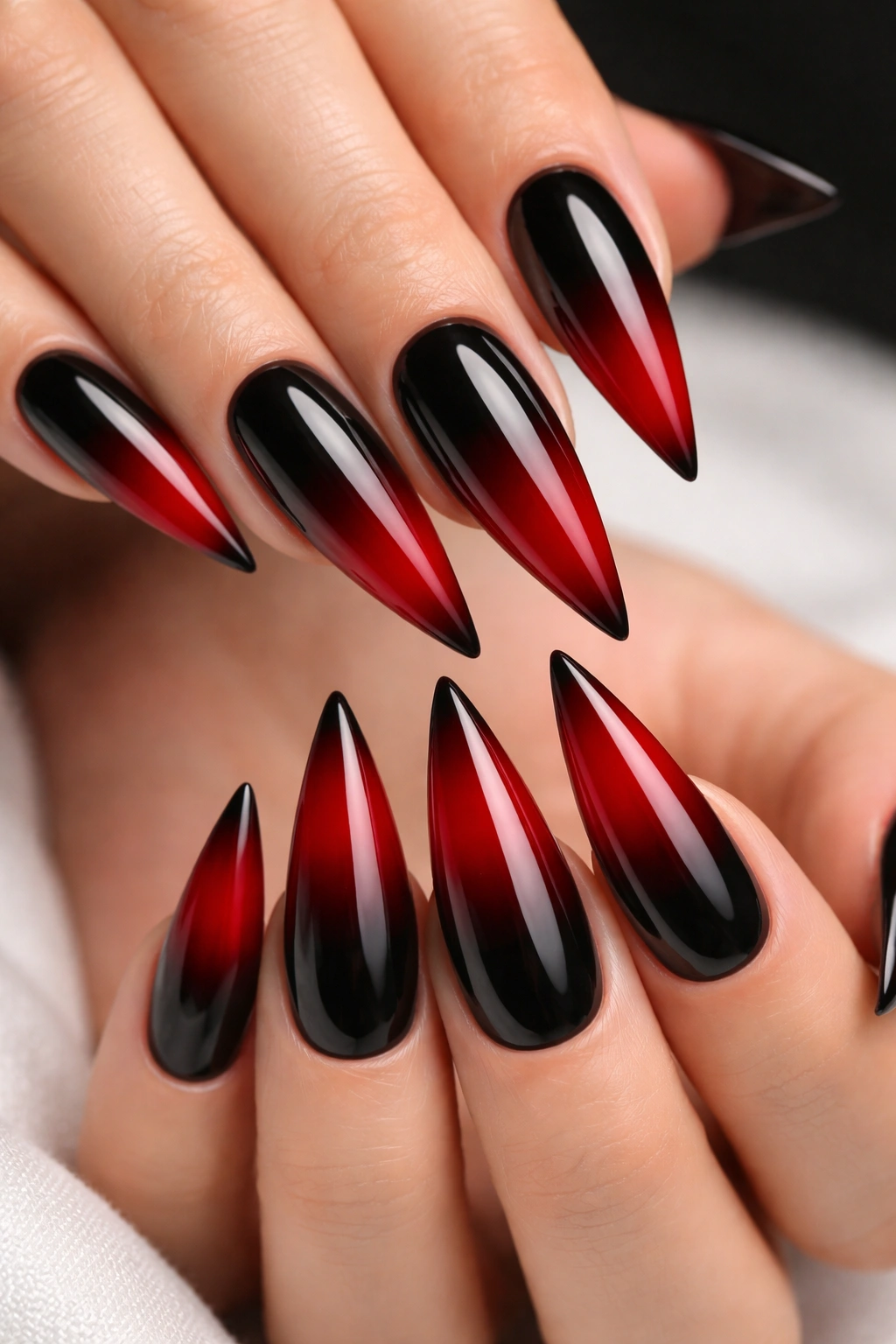
Black and red ombre stiletto nails offer endless creative possibilities that range from minimalist and professional to bold, statement-making designs. Whether you prefer subtle gradients that whisper sophistication or dramatic color transitions that demand attention, there’s a black-and-red ombre approach that matches your personal style and lifestyle. The key to success is choosing quality products, practicing your blending technique, and maintaining your nails with regular touch-ups since ombre designs show growth more visibly than solid colors.
The beauty of this color combination is its versatility across seasons, occasions, and personal aesthetics. A burgundy-to-black ombre reads differently than a bright red-to-black gradient, yet both use the same essential colors. Experiment with different shades of red—from bright cherry to deep wine—different finishes like matte and glossy, and different accent elements like glitter, stripes, or jewels. Your nails become a canvas for expressing which version of bold sophistication resonates most with you right now.