


Duck nails have become one of the most iconic nail shapes in modern nail art, and there’s a surprisingly sophisticated reason why nude tones work so beautifully with this bold silhouette. The duck nail — characterized by its distinctive curved, upswept edges that resemble a duck’s bill — can feel edgy and statement-making, but when you pair it with nude shades, something magical happens. The neutral palette brings restraint and elegance to the shape, making it feel intentional rather than costume-like. Nude duck nails occupy a sweet spot where you get the visual interest and architectural drama of the shape without sacrificing the timeless versatility that makes nude nails a staple of refined manicures.
What makes nude nails particularly tricky to execute well is that the success of the entire look hinges on finding the exact nude shade that complements your specific undertone, the height and curve of your duck nail extension, and the finish you choose — matte, glossy, shimmer, or hybrid. A nude that’s too yellow can make fair skin look sallow; one that’s too pink can read as costume-y; one that’s too brown can overwhelm. The good news is that within the universe of nude duck nails, there are dozens of approaches, textures, artistic touches, and color variations that allow you to find something that feels authentically yours.
Whether you’re drawn to a barely-there whisper of color, a rich warm tone with dimensional depth, or a nude with unexpected metallic or textural elements, nude duck nails offer a way to embrace a bold nail shape without abandoning the sophistication of neutral tones. The following twelve designs showcase the range and possibility within this category — each one demonstrates a different interpretation of what nude duck nails can be.
1. Soft Nude with Gossamer Finish
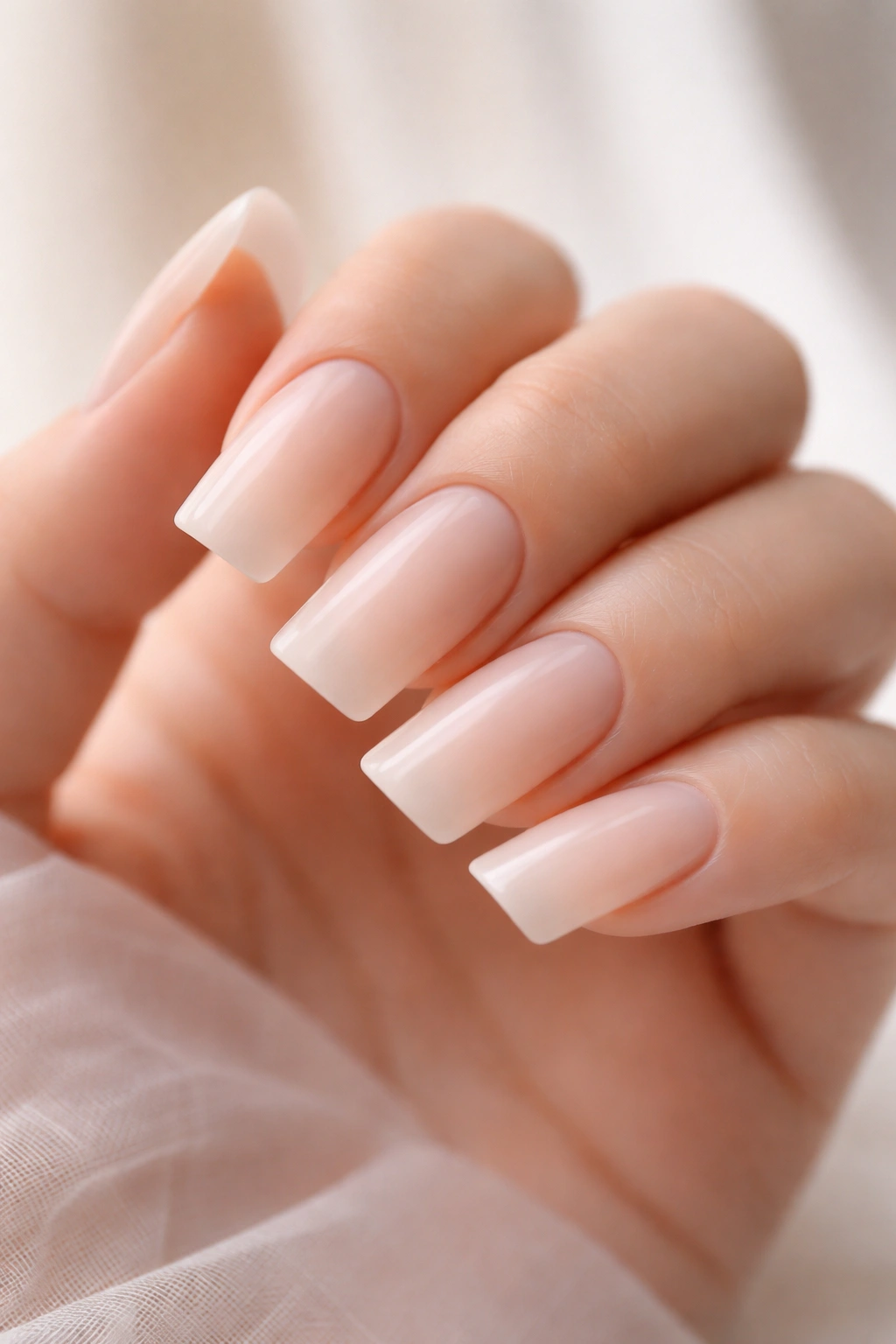
This is the most minimalist approach to nude duck nails, and it’s deceptively elegant in its restraint. Picture a pale, barely-there nude — almost the exact shade of your skin when you look at the nail bed without any pigment — applied in a thin, translucent formula that allows the nail surface to show through. The magic isn’t in color saturation; it’s in the finish.
Why This Design Works So Well
A gossamer or sheer matte finish creates an almost ethereal, glass-like quality that softens the structural boldness of the duck nail shape. Instead of a stark silhouette, the nail becomes a subtle architectural element that draws the eye through refinement rather than contrast. This finish also works beautifully across all undertones — cool, warm, or neutral — because the nude is so pale that undertone becomes nearly irrelevant. The translucent formula allows your natural nail bed, the slight pink undertone of healthy skin, and the subtle variations in your nail surface to become part of the visual composition.
Application and Longevity
- Use a sheer nude base coat or a semi-transparent nude gel polish formula designed for a thin, buildable coverage
- Apply in 2-3 ultra-thin layers rather than one thick coat — this prevents the look from becoming muddy and maintains that gossamer quality
- Finish with a matte top coat for a velvety, skin-like texture that feels contemporary
- The thinness of the pigment means this design lasts beautifully for 3-4 weeks with minimal yellowing or chipping
- Perfect for everyday wear, professional settings, and anyone who wants the duck nail shape without a bold color statement
2. Warm Taupe Duck Nails with Glazed Tips
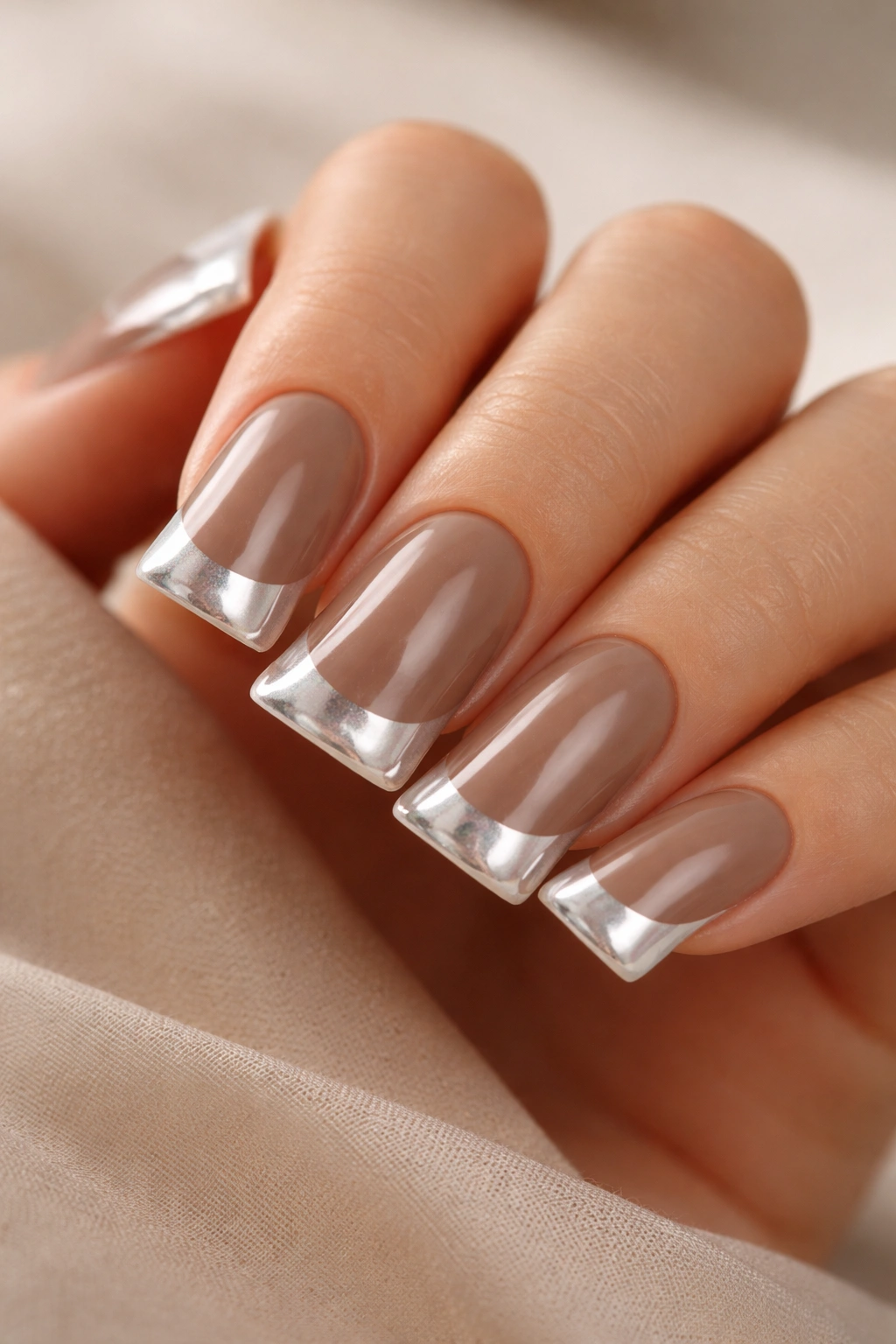
Taupe is often overlooked in favor of pinker or yellower nudes, but it’s one of the most sophisticated nude options available — warm taupe specifically bridges warm and cool undertones with an earthy, slightly grey-tinged quality. When you apply a warm taupe across a duck nail and finish it with a glazed, glossy-matte hybrid top coat, the result feels both contemporary and timeless.
What Makes Taupe the Unexpected Powerhouse
Warm taupe has natural depth without being dark, and it photographs stunningly in both natural and artificial light. Unlike peachy or pink nudes that can feel flat under fluorescent lighting, taupe maintains dimension and appears to have built-in shadow. The slight grey undertone also creates visual contrast with the nail edge, making the duck nail shape read more distinctly without requiring a contrasting color. For people with olive, golden, or warm undertones, taupe is often the nude shade that finally makes their skin look luminous rather than washed out.
Building the Glazed Effect
- Start with a warm taupe base — this should be opaque in 2 coats but have a subtle warmth rather than appearing dull or ashy
- Apply a clear gloss base as your first top coat layer
- Finish with a semi-matte or satin top coat for that glazed, lacquered appearance where the finish is glossy but slightly diffused
- This hybrid finish catches light in a sophisticated way and makes the taupe appear to have more depth and movement
- The glaze makes the color feel modern and high-fashion compared to a standard matte or glossy finish
3. Cool Beige with Pearl Gradient
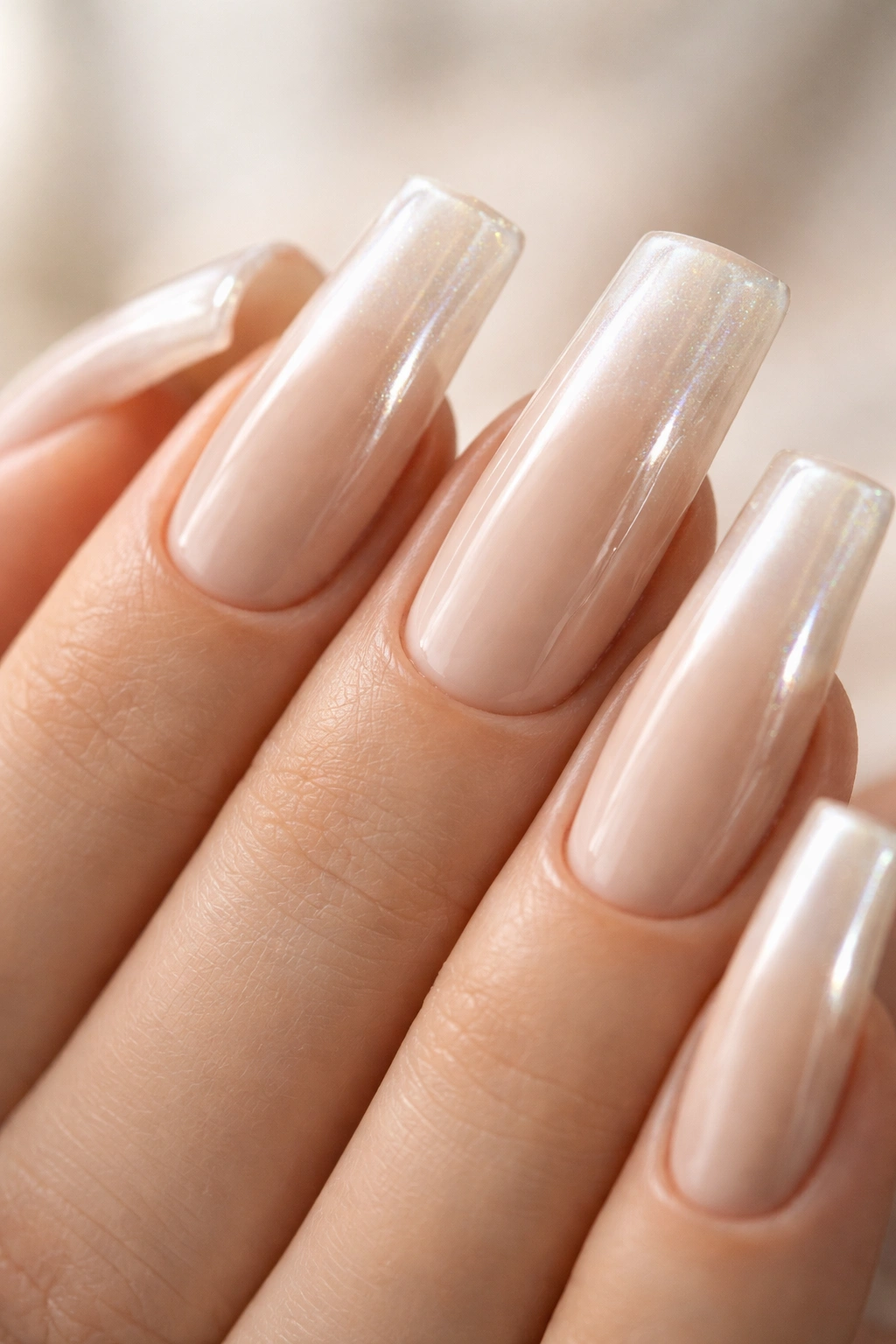
This design combines a cool-toned beige base with an ultra-subtle pearl gradient that builds from almost invisible at the base to more visible shimmer at the tip and along the duck nail’s curved edges. The pearl gradient isn’t about creating a traditional gradient or ombre; it’s about strategically placing pearl pigment where light naturally catches the duck nail’s structural angles.
The Strategy Behind the Gradient Placement
Cool beige is often the hardest nude to pull off — too much grey and it reads sickly; too much pink and it becomes too obviously a neutral. The key is selecting a true cool beige with just a whisper of pink undertone, almost like a pale greige. The pearl shimmer serves two functions: it catches light on the highest points of the duck nail shape (the tip and the curved edges), making those architectural elements visually pop, and it adds dimension to what could otherwise feel flat. The gradient is so subtle that from certain angles it’s nearly invisible, but in natural light or when you move your hands, the pearl catches and creates a luminous quality.
Creating the Pearl Gradient Effect
- Choose a cool beige base that leans slightly pink or grey, not warm or yellow
- Apply the beige as your full base color in 2 opaque coats
- Mix a clear gel or building gel with pearl powder (finely milled, not chunky) to create a shimmery translucent mixture
- Apply this mixture only to the tip and the curved outer edges of each duck nail using a small detail brush
- The gradient should blend subtly into the base — avoid hard lines
- Seal with a glossy top coat that makes the pearl shimmer more visible without making the overall look costume-y
4. Creamy Caramel Ombre Duck Nails
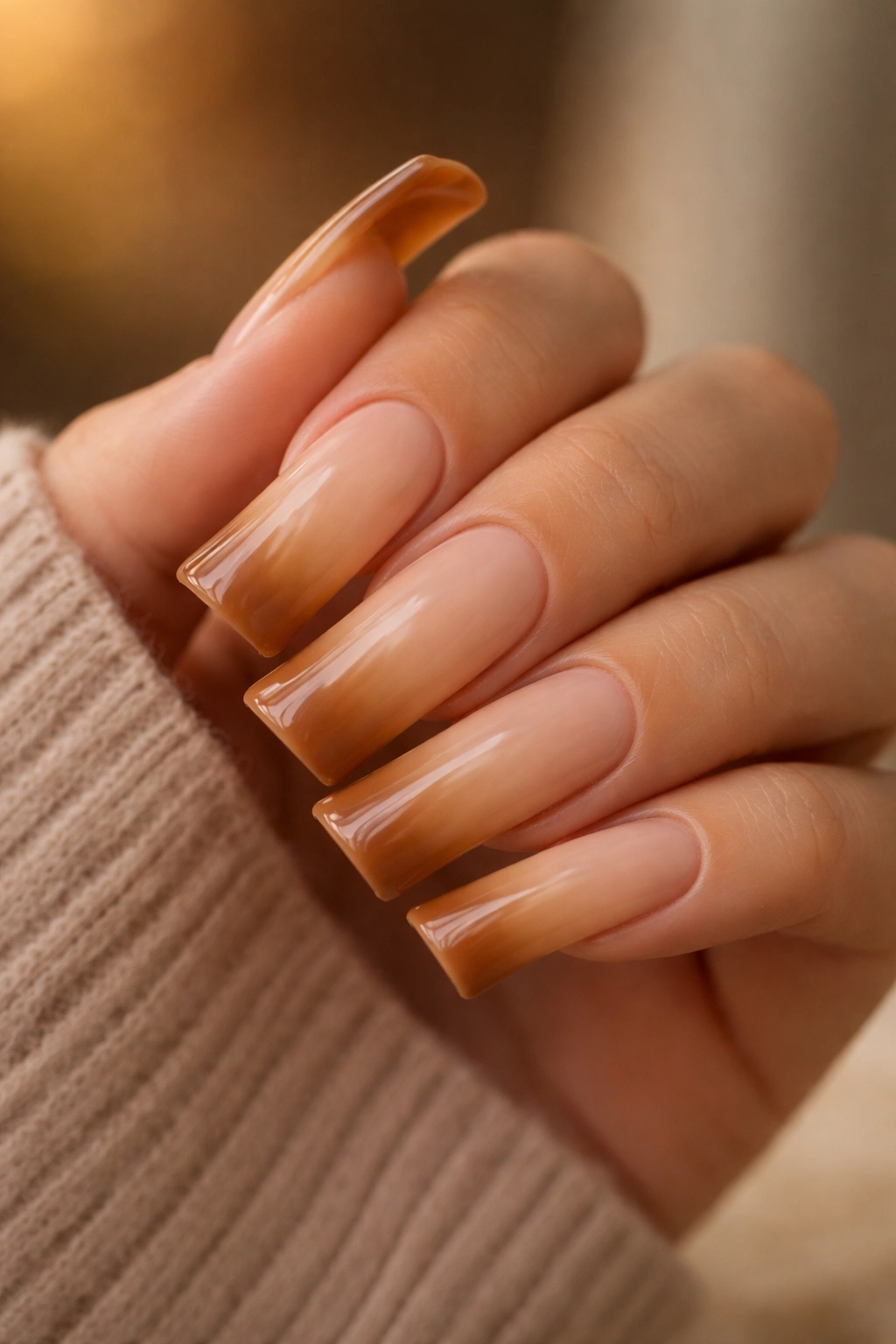
Caramel is a warm nude that hovers between beige and light brown, and it’s one of the most flattering shades across different skin tones. An ombre effect where the color graduates from a creamy, pale caramel at the base to a deeper, richer caramel at the tip and especially along the curved duck nail edges creates dimension and visual movement that makes the shape feel less stark.
Why Ombre Works With Duck Nails
The duck nail’s distinctive silhouette can sometimes feel heavy or architectural, especially if it’s covered in a solid color. An ombre that darkens toward the edges and tip naturally draws the eye outward and upward, emphasizing the shape’s elegant curve rather than making it feel blocky. The caramel progression also creates an illusion of greater length — darker color at the tip recedes slightly while lighter color at the base appears to advance, stretching the visual line of the nail.
Executing a Flawless Caramel Ombre
- Select two shades of caramel: a creamy, pale shade for the base and a noticeably deeper caramel (almost toffee-like) for the tip
- Apply the lighter caramel in 2 full coats across the entire nail
- Create the ombre by applying the darker caramel only to the tip and curved edges, blending the transition zone with a damp sponge or soft brush
- The blend should take up roughly the middle third of each nail, with a gradual transition rather than a hard line
- Use a glossy top coat that makes both caramel shades appear warm and luminous
- The ombre should be visible in most lighting but not so extreme that the two colors feel completely separate
5. Dusty Rose Nude with Dimensional Art
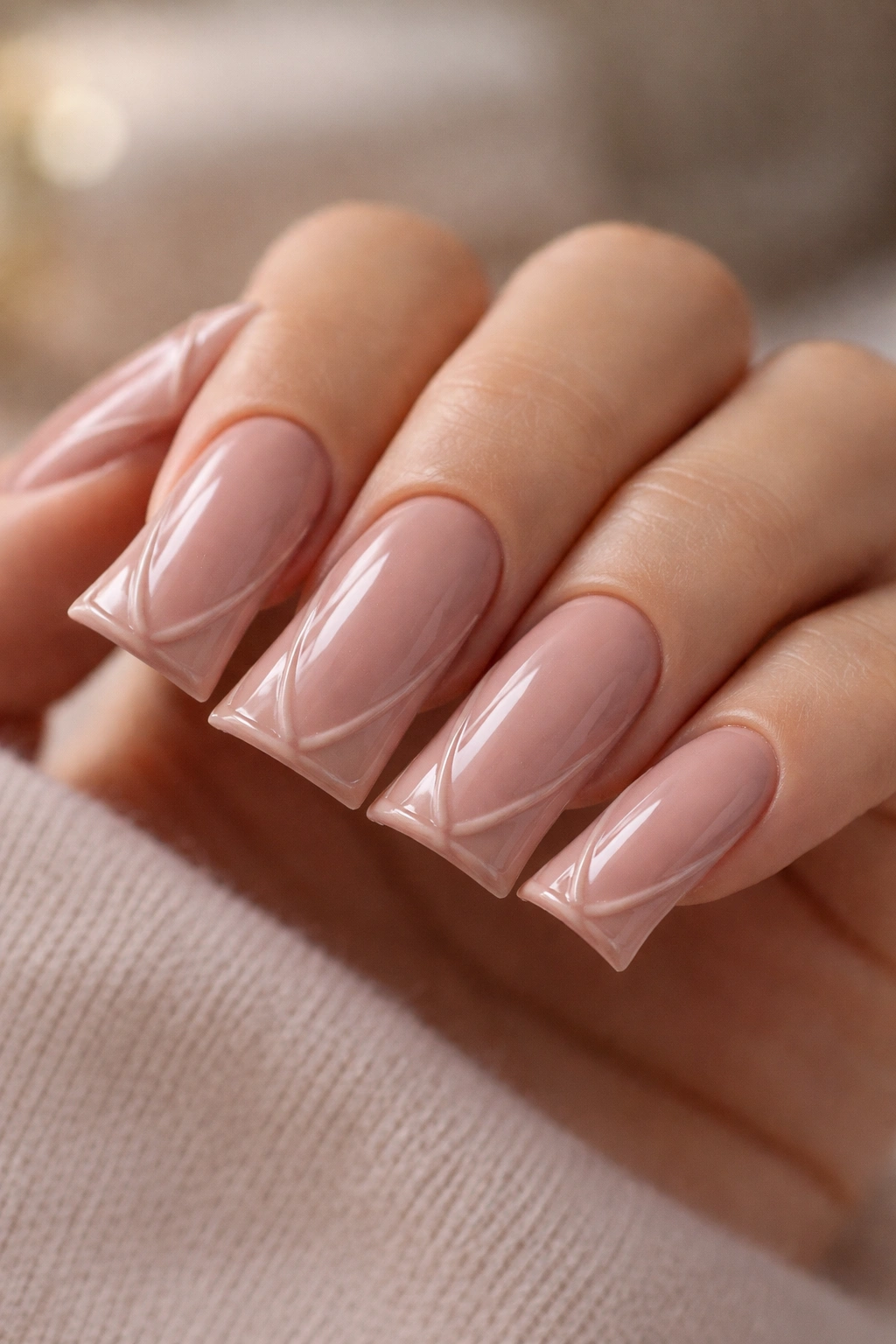
Dusty rose is a muted mauve-pink that walks the line between cool and warm, and it’s increasingly recognized as one of the most flattering nude options for cooler undertones. Rather than leaving the nail bare, this design adds subtle dimensional nail art — thin line work, negative space elements, or minimalist geometric shapes — that creates visual interest without overwhelming the nude base.
The Art of Restraint With Nude Nails
Adding art to a nude nail requires a light touch. You’re not trying to create bold graphic designs or cartoon characters; you’re enhancing the sophistication of the base color by adding small architectural or organic elements that play with the nail’s shape and size. On duck nails, art can trace the curved edges, fill the tip area with negative space to create an inverse shape, or run along the sides to emphasize the dimensional structure of the shape itself. The art should feel like it’s part of the design concept, not like decoration added on top.
Design Ideas for Dusty Rose Duck Nails
- Use a crisp white or nude shade one level lighter than your base to create thin, flowing line work along the curved edges
- Create a negative space “swoosh” on the tip of each duck nail, leaving just the dusty rose outline while the nail bed underneath shows through
- Add minimal geometric elements (small triangles, parallel lines, or abstract shapes) only on 1-2 accent nails, leaving the others solid
- Draw delicate wavy lines or organic shapes that enhance the duck nail’s natural curves rather than fighting against them
- Keep any art confined to the outer third of the nail, never covering the entire surface with pattern
- Use a very thin brush and steady hand — imperfection reads as intentional in minimalist nail art, but sloppiness reads as lazy
6. Champagne Shimmer Duck Nails
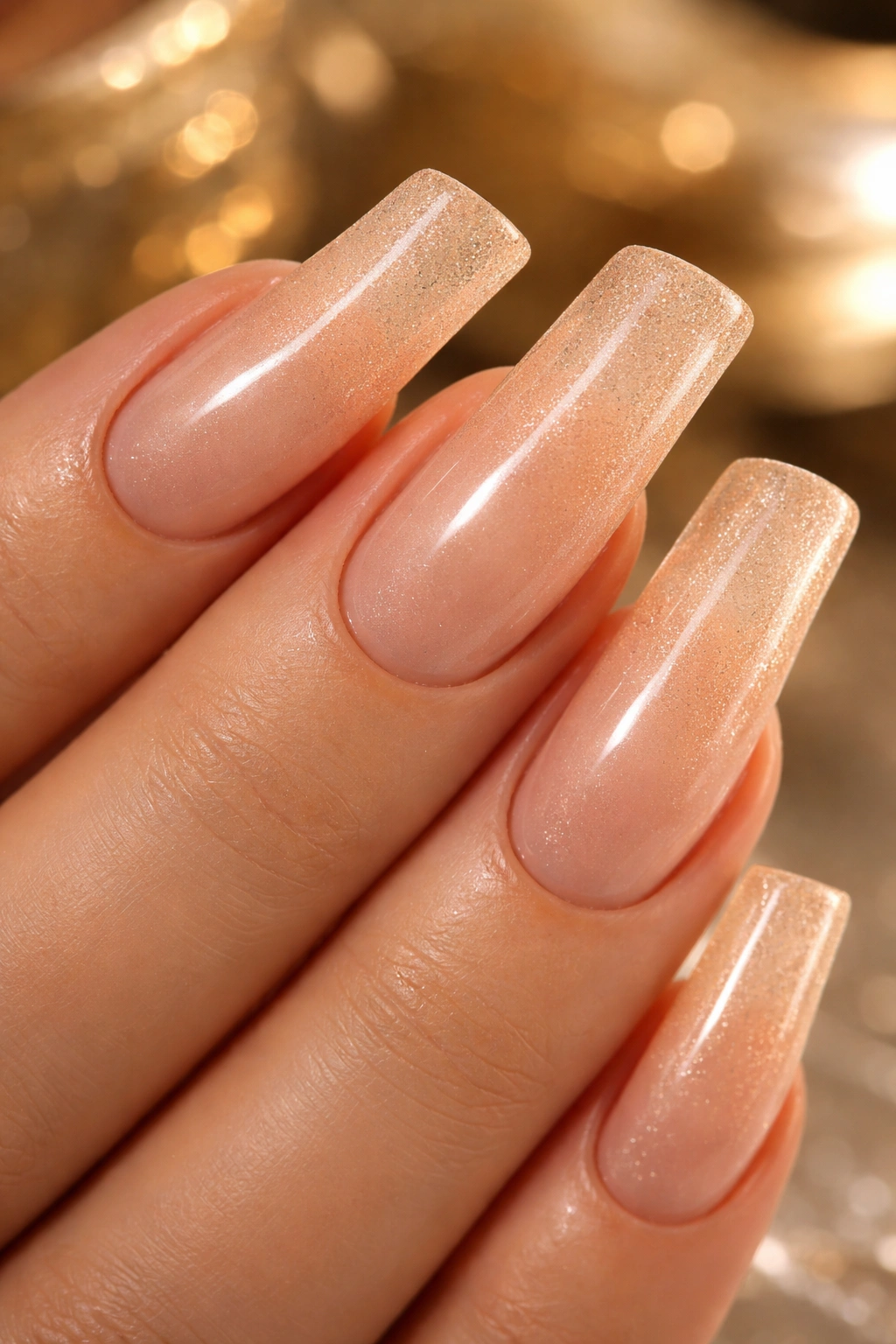
Champagne is the nude that leans golden and celebratory without ever feeling costume-y or over-the-top. When applied as a base with warm, fine-milled shimmer suspended throughout, champagne creates a softly luminous effect that’s sophisticated rather than sparkly. The warmth of champagne also makes it incredibly forgiving across different skin tones — it catches light beautifully on most complexions.
Why Shimmer Elevates Nude Duck Nails
Shimmer is often dismissed as less professional or less sophisticated than solid matte or glossy finishes, but the right shimmer applied thoughtfully does the opposite. A champagne shimmer catches light and adds visual depth to a single-color nail, making the nail appear more three-dimensional. On duck nails, shimmer is particularly effective because it emphasizes the architectural structure — light catches on the tip and curves, making the shape feel more intentional and artistic. The shimmer also moves and changes as you move your hands, adding visual interest that a flat nude would lack.
Choosing and Applying Champagne Shimmer
- Select a champagne base — typically a pale golden-beige or warm nude
- Look for shimmer formulas where the sparkle is fine, uniform, and dispersed evenly throughout the polish, not chunky or glittery
- Apply the base in 2-3 thin coats, allowing each layer to dry fully so the shimmer distributes evenly and doesn’t look muddy
- Use a glossy top coat that makes the shimmer more luminous and vibrant without making it feel costume-y
- The finished look should read as sophisticated and intentional, not like you’ve accidentally applied craft glitter
- This design works beautifully for both everyday wear and special occasions — it’s fancy enough for an event but wearable enough for work
7. Warm Sand with Metallic Accents
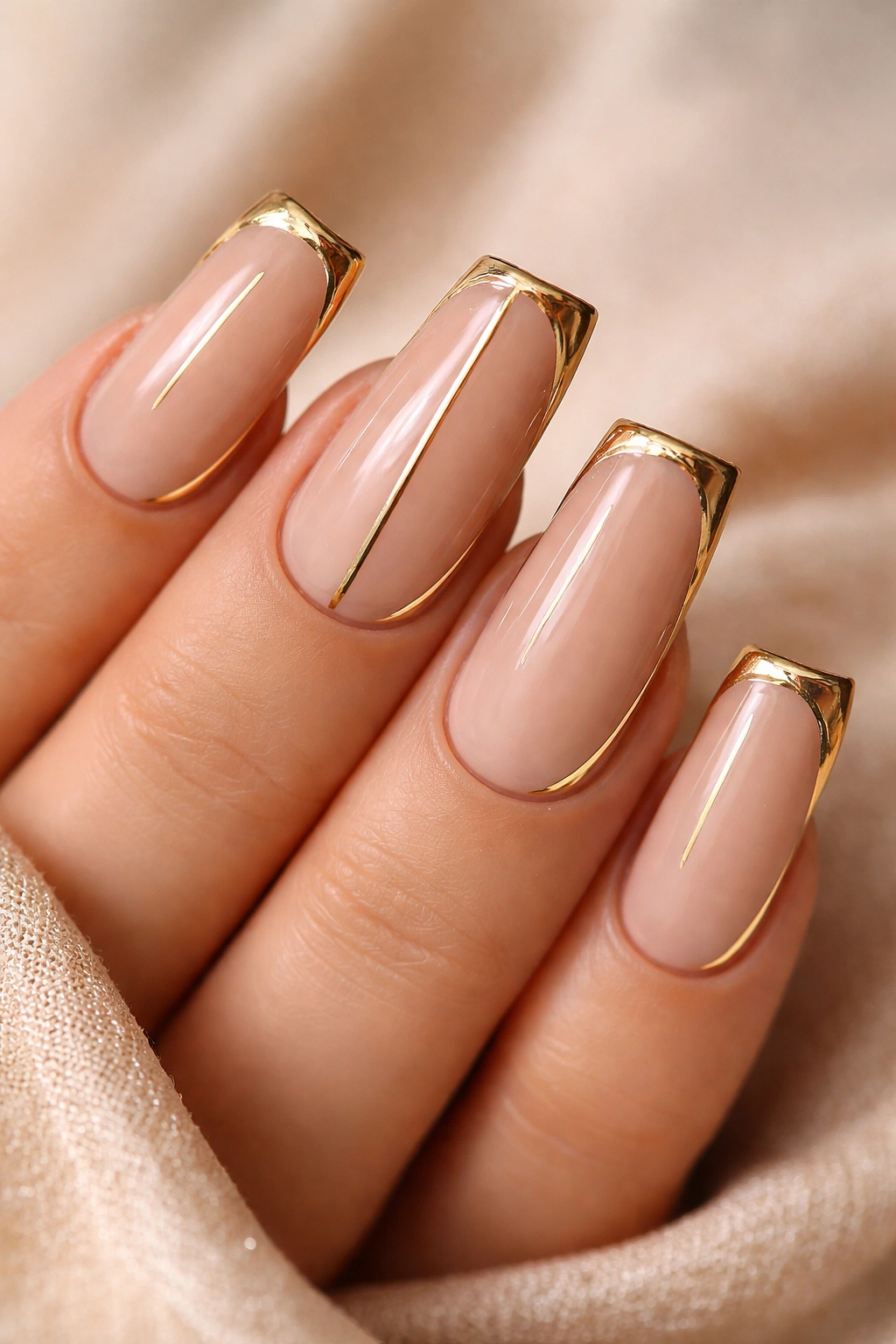
Warm sand is a neutral nude with genuine warmth and slight depth — it’s the shade of actual sand on a beach, not the paler, more muted beige. Paired with strategic metallic accents (gold, rose gold, or copper), this design becomes sophisticated and modern without straying far from the nude category. The metallic elements emphasize the duck nail’s shape while keeping the overall palette warm and cohesive.
Strategic Placement of Metallic Details
Metallics on nude nails shouldn’t feel random or chaotic. Instead, they should highlight specific structural elements of the duck nail or follow a clear design intention. This might mean applying metallic foil or powder only to the curved edges, creating a thin metallic line down the center of each nail, filling the tip area with a metallic gradient, or creating a negative space element where metallic shows through from underneath. The key is that the metallic feels architectural and purposeful rather than purely decorative.
Creating a Cohesive Metallic-and-Nude Design
- Choose a metallic shade that complements your warm sand base — gold and rose gold work beautifully; copper adds richness
- Apply your warm sand base in 2 full coats
- Use metallic foil, powder, or a metallic gel to create your chosen design element — whether that’s edge accents, a center line, or a geometric fill
- If using foil, apply a thin layer of clear builder gel where you want the foil to stick, press the foil gently, and seal with a top coat
- If using metallic powder, mix it with a clear builder or gel formula and apply it with precision to avoid muddiness
- Seal everything with a glossy top coat that makes both the warm sand and the metallic elements luminous
- The metallic should feel like a complementary accent, not the main event
8. Pale Mauve Nude with Texture
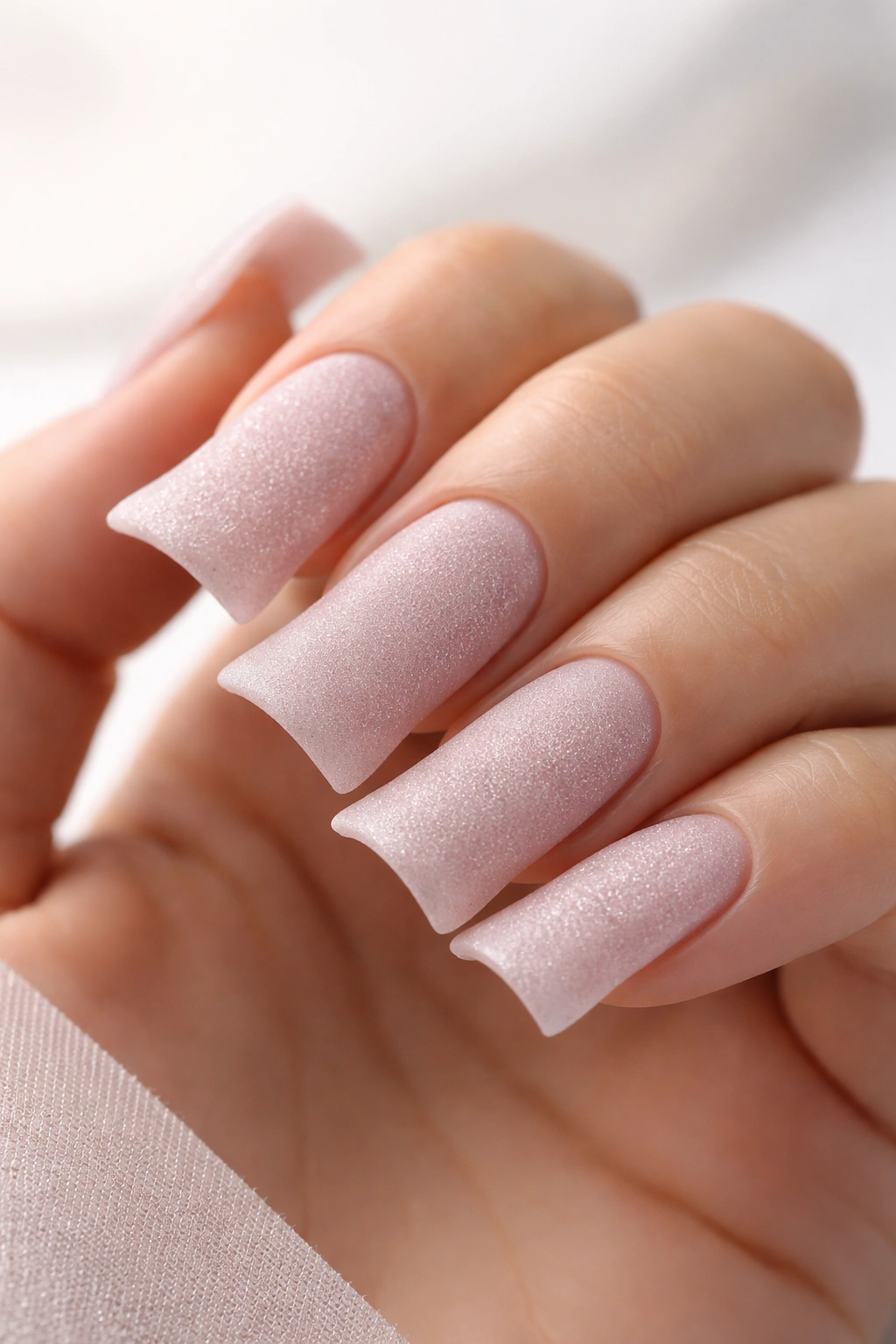
Mauve is one of the most elegant nude undertones available, especially for people with cool undertones, and it’s criminally underused in manicures. A pale mauve — so light it’s barely distinguishable from nude, with just the subtlest purple undertone — becomes even more interesting when combined with texture. This might be a sugared matte finish, a rubber-textured top coat, or a subtle dimpled or pebbled effect that creates visual and tactile dimension.
The Role of Texture in Nude Nails
Texture transforms what could be a flat, one-note nude into something sophisticated and modern. A matte or textured finish also makes the duck nail shape feel less glossy and architectural, and more organic and artistic. The texture catches light differently than a smooth surface, creating subtle shadows and highlights that add depth. For duck nails specifically, texture emphasizes the dimensional quality of the shape — light interacts differently with the curved areas and the flat surfaces, making the shape appear even more striking.
Texture Options for Mauve Duck Nails
- Sugared matte: Apply a pale mauve gel base, then sprinkle clear or tinted sugar-like granules while the gel is still uncured. Cure, then seal with a matte or satin top coat. The result feels velvety and luxurious.
- Rubber texture: Use a rubber-textured gel formula in your pale mauve shade. These often have a crackled or subtle dimpled appearance and feel slightly grippy to the touch.
- Pebbled finish: Some gel formulas are designed to cure with a naturally pebbled or orange-peel-like texture. These require no additional steps and look modern and intentional.
- Built-in dimples: Layer a clear gel with small embedded particles or beads that create a subtle textured surface while remaining smooth enough to be practical for daily wear
- Choose a texture that feels intentional to your overall aesthetic — if you prefer refined minimalism, sugared or subtle pebbled finishes work better than bold textures
9. Honey Blonde Duck Nails
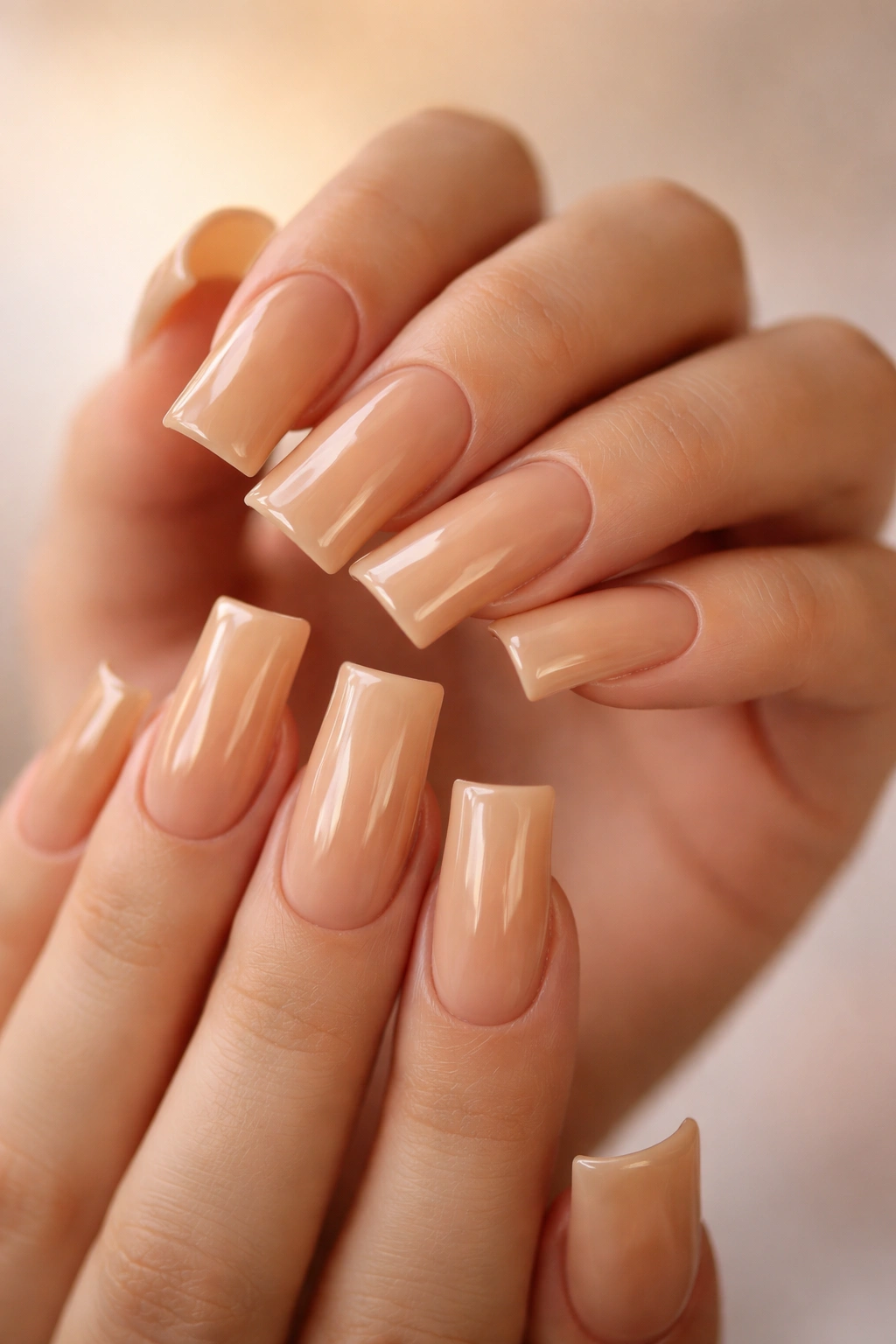
Honey blonde is a warm, golden nude that has genuine richness and depth without being brown. It’s one of the most universally flattering shades, works across all skin tones (fair skin reads it as golden, deeper skin tones read it as warm and rich), and photographs beautifully in all lighting conditions. Honey blonde on duck nails creates a look that feels intentional and artistic without requiring additional art or embellishment.
The Versatility of Honey Blonde
Honey blonde exists in that sweet spot where it’s warm enough to feel sophisticated but not so dark that it reads as brown. It also has surprising natural luminosity — when you coat it with a glossy top coat, honey blonde appears to glow from within. This makes it an excellent choice for longer duck nails where you want the shape to feel intentional and beautiful, not heavy or overwhelming. The warmth of the shade also complements the architectural curves of the duck nail, creating a cohesive visual experience rather than a stark contrast.
Formulation and Finish for Honey Blonde
- Look for a honey blonde shade that has genuine golden warmth rather than appearing orange or muddy
- The opacity should be full coverage in 2 coats — you want the color to read clearly without appearing flat
- A glossy finish makes honey blonde appear most luminous and warm
- A satin or semi-matte finish softens the warmth and creates a more contemporary, fashion-forward appearance
- For maximum impact, ensure you have genuine length on your duck nails so the shape is visually striking — honey blonde is rich enough that it shows off the shape beautifully
- This design works perfectly paired with simple styling or with understated jewelry; the nails make the statement on their own
10. Greige Nude with Minimalist Line Art
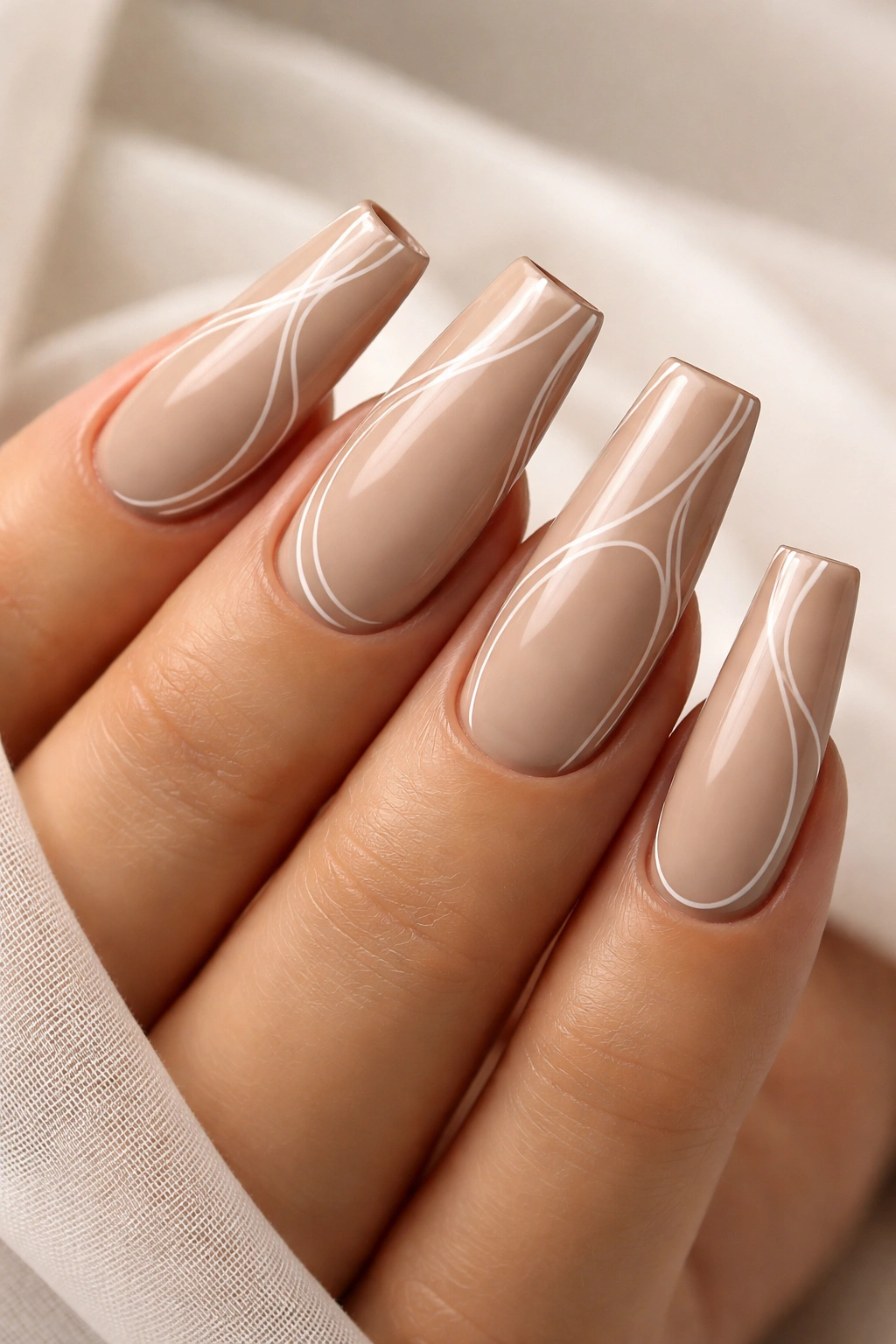
Greige is technically a grey-beige hybrid, but what makes it such a sophisticated nude choice is that it’s inherently contemporary and fashion-forward. It doesn’t read as “basic beige” because of that grey undertone. When paired with minimalist line art — perhaps single thin lines, abstract geometric shapes, or understated symbols — greige duck nails become an intentional design statement that feels curated rather than accidental.
Why Greige Is the Millennial Nude
Greige avoids the pinkness of traditional nudes and the warmth of peachy or golden shades. Instead, it reads as thoughtful and intentional, which is why it’s become a favorite in high-fashion nail design. It’s cool enough to feel modern but warm enough to remain wearable. Pairing it with line art amplifies this effect — minimalist line work is inherently sophisticated and suggests intentionality and artistic choice.
Line Art Ideas for Greige Duck Nails
- Draw thin, delicate lines using white or a darker greige shade that trace the outer edges of each duck nail, emphasizing the shape’s distinctive curves
- Create abstract geometric shapes (triangles, hexagons, or irregular polygons) in the center of each nail using fine white lines
- Use one long flowing line that travels from the base of the nail to the tip, creating an organic abstract shape
- Draw tiny minimalist symbols (moon phases, sun, small abstract marks) only on accent nails, leaving others solid
- Create a negative space effect where you outline a shape (a circle, triangle, or organic form) leaving the nail bed visible inside the outline
- Keep the line weight consistent and thin — thick lines feel less sophisticated and more cartoon-like
- Use a steady hand and fine-detail brush; imperfection in line work reads as artistic rather than sloppy when kept subtle
11. Ivory Cream with Micro Diamonds
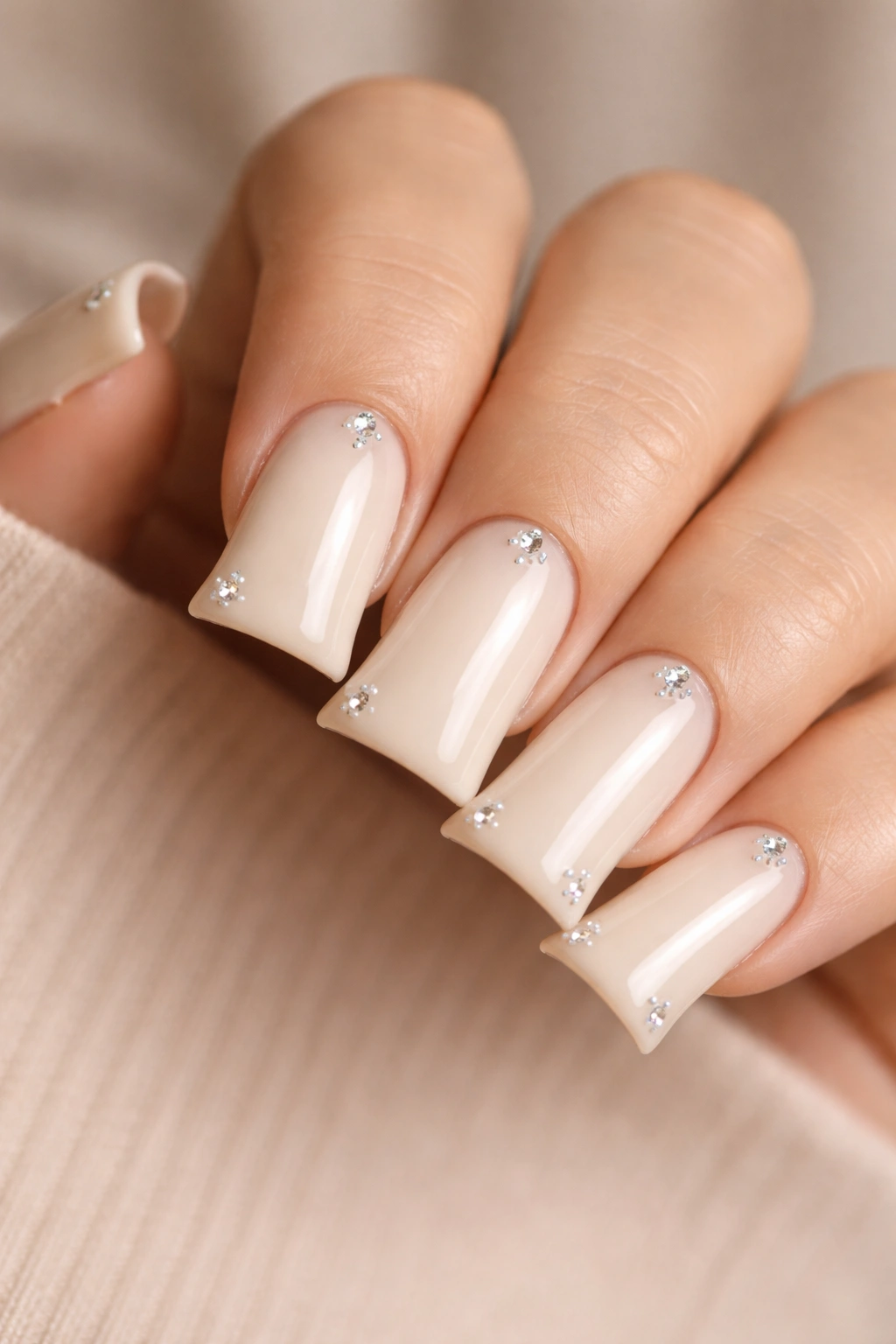
Ivory cream is almost entirely devoid of color — it’s as close to “nothing” as you can get while still technically wearing polish. This makes it perfect for showcasing embellishment. Micro diamonds or Swarovski crystals strategically placed create sparkle and dimension without the over-the-top feeling of a heavily bedazzled nail. This design works beautifully for special occasions while remaining elegant and refined.
The Luxury of Micro Details
When you’re working with such a pale, neutral base, even tiny details become visually significant. A few well-placed micro diamonds catch light and create focal points without overwhelming the overall aesthetic. On duck nails, this approach is particularly elegant because the shape itself provides visual interest — you’re not trying to create drama through color, but rather highlighting the architectural beauty of the shape with subtle sparkle. The ivory cream becomes almost invisible, leaving the focus entirely on the shape and the sparkle.
Placing Micro Diamonds for Maximum Impact
- Apply ivory cream as your full base in 2 opaque coats
- Select micro diamonds or small crystals — these should be genuinely tiny, not chunky or obvious
- Place diamonds strategically: along the curved edges of each duck nail, scattered along the tip area, or in a small scattered pattern on the base
- Use a nail-safe adhesive (crystal glue, builder gel, or sticky top coat) to secure each diamond
- Apply diamonds before you seal with your top coat so they’re truly sealed and won’t shed
- Less is more — 3-5 diamonds per nail is elegantly sparkly; more than that starts to feel costume-y
- The finished look should catch light beautifully but maintain an air of refined simplicity
- Perfect for weddings, formal events, or anyone who wants understated luxury
12. Warm Linen with Matte and Gloss Mix
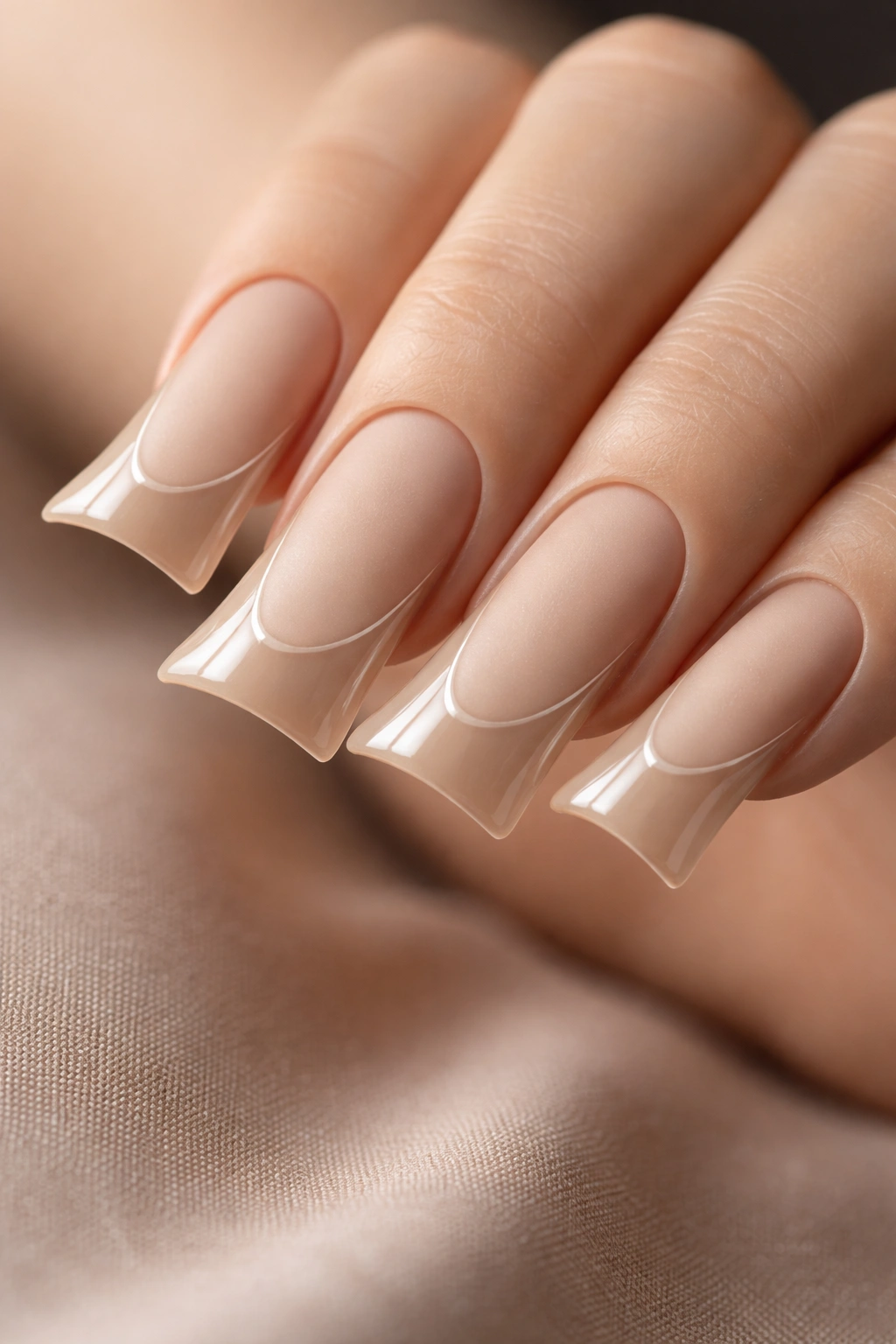
This final design combines two different finishes on the same nail, creating visual sophistication and movement. Warm linen — a soft, fabric-like warm beige that actually evokes the look of linen cloth — is applied across the base in a matte finish. Strategic areas (perhaps the tip, the edges, or geometric sections) are then sealed with glossy top coat, creating contrast between matte and glossy surfaces.
The Design Power of Mixed Finishes
A dual-finish approach creates visual and tactile interest without requiring a second color or embellishment. The contrast between matte and glossy catches light differently, making the nail appear more three-dimensional and designed. On duck nails, this approach is particularly striking because the glossy areas catch light and emphasize the shape’s curves, while the matte areas recede slightly, creating depth. The overall effect reads as intentional and contemporary without feeling like a trend — mixed finishes have become a hallmark of thoughtful, design-forward nail art.
Creating a Cohesive Matte-and-Gloss Design
- Apply warm linen as your full base in 2 coats with a matte top coat to seal
- Decide your pattern: this might be the tip and edges glossy with the base matte, a geometric split down the middle, a diamond or triangle shape in glossy on a matte background, or abstract areas of gloss on matte
- Using a top coat with glossy finish, carefully apply only to your chosen areas — use a fine brush or careful application to avoid blending into the matte sections
- The transition between matte and glossy should be relatively clean but doesn’t need to be perfectly sharp — a slightly soft edge actually looks more sophisticated than a razor-sharp line
- Allow the glossy areas to cure fully if using gel, then optionally seal everything with a matte top coat for a unified finish (though this will dull the glossy contrast)
- The matte finish makes warm linen feel more refined and textile-like; the glossy areas add polish and shine
- This design works beautifully for both professional settings and creative styling — it’s striking enough to be intentional but subtle enough to be workplace-appropriate
Final Thoughts
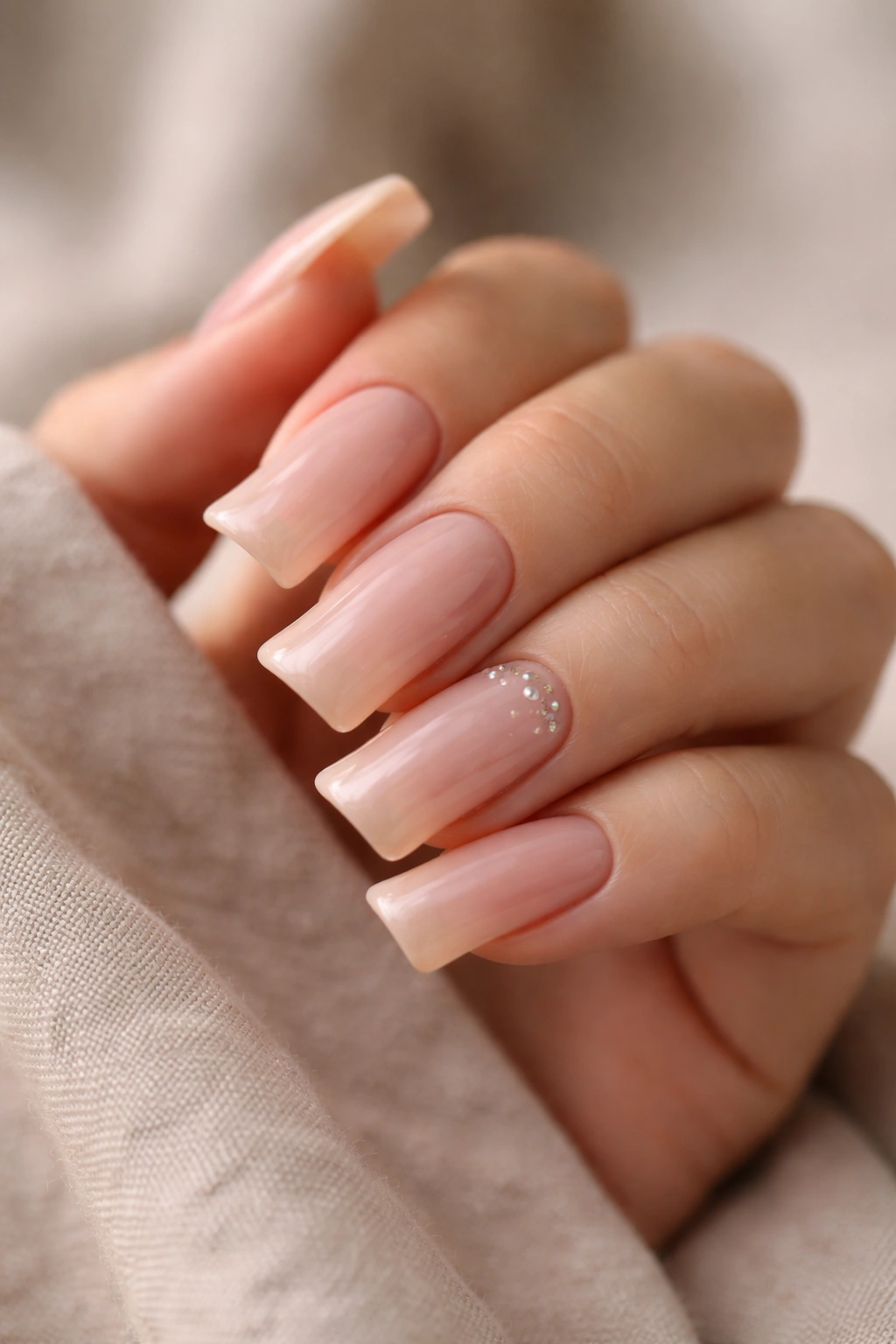
Nude duck nails represent a beautiful intersection between bold shape and timeless color — they prove that you don’t have to choose between making a statement and maintaining sophistication. The key to finding your perfect nude duck nail design is understanding what makes your skin tone and undertone feel luminous, then layering in finishes, textures, or subtle art that speaks to your personal aesthetic.
Whether you gravitate toward barely-there translucent nudes, warm creamy shades, cool mauve undertones, or designs elevated with shimmer, metallics, or mixed finishes, there’s a nude duck nail approach that will feel authentically yours. The beauty of this category is the range — you can express your personality and style without ever straying from the sophisticated, wearable palette of nudes.
When you’re getting your next set designed or painting at home, start by identifying the nude shade that makes you feel most confident and beautiful. That shade is your foundation. From there, you can explore finishes, textures, and subtle details that add dimension and intention. The duck nail shape does the heavy lifting in terms of visual drama, so your nude base can afford to be understated and refined. That restraint is exactly what makes these designs feel elegant rather than costume-y — and it’s why nude duck nails have staying power as a timeless manicure choice.