


Duck nails have taken over the nail art world, and if you’re working with deeper, richer skin tones, you’ve got some seriously gorgeous opportunities to make this trend absolutely stunning. The flat, wide nail bed that extends like a duck’s bill at the tip creates the perfect canvas for bold designs, intricate details, and color combinations that other nail shapes just can’t pull off quite the same way. The beauty of short duck nails specifically is that they’re practical enough for everyday life while still delivering that unmistakable statement aesthetic that turns heads.
What makes duck nails so magnetic on darker complexions is the way deeper skin tones amplify color depth and saturation. Colors that might look muddled on lighter skin bloom with richness and dimension on deeper tones — jewel tones pop harder, metallics gleam brighter, and contrasting designs create serious visual impact. Plus, short duck nails sidestep the fragility issues of longer styles while maintaining all the dramatic flair. You’re getting the artistic silhouette without sacrificing durability or functionality.
The real advantage of exploring short duck nail designs is that you can experiment with themes, finishes, and color stories that feel bold without feeling over-the-top. Whether you’re drawn to minimalist geometric patterns, rich ombré gradients, or ornate embellishments, this guide walks you through ten distinct approaches that genuinely work with dark skin tones. Each design accounts for contrast, color harmony, and the specific way deeper complexions interact with nail finishes.
1. Deep Plum with Gold Geometric Details
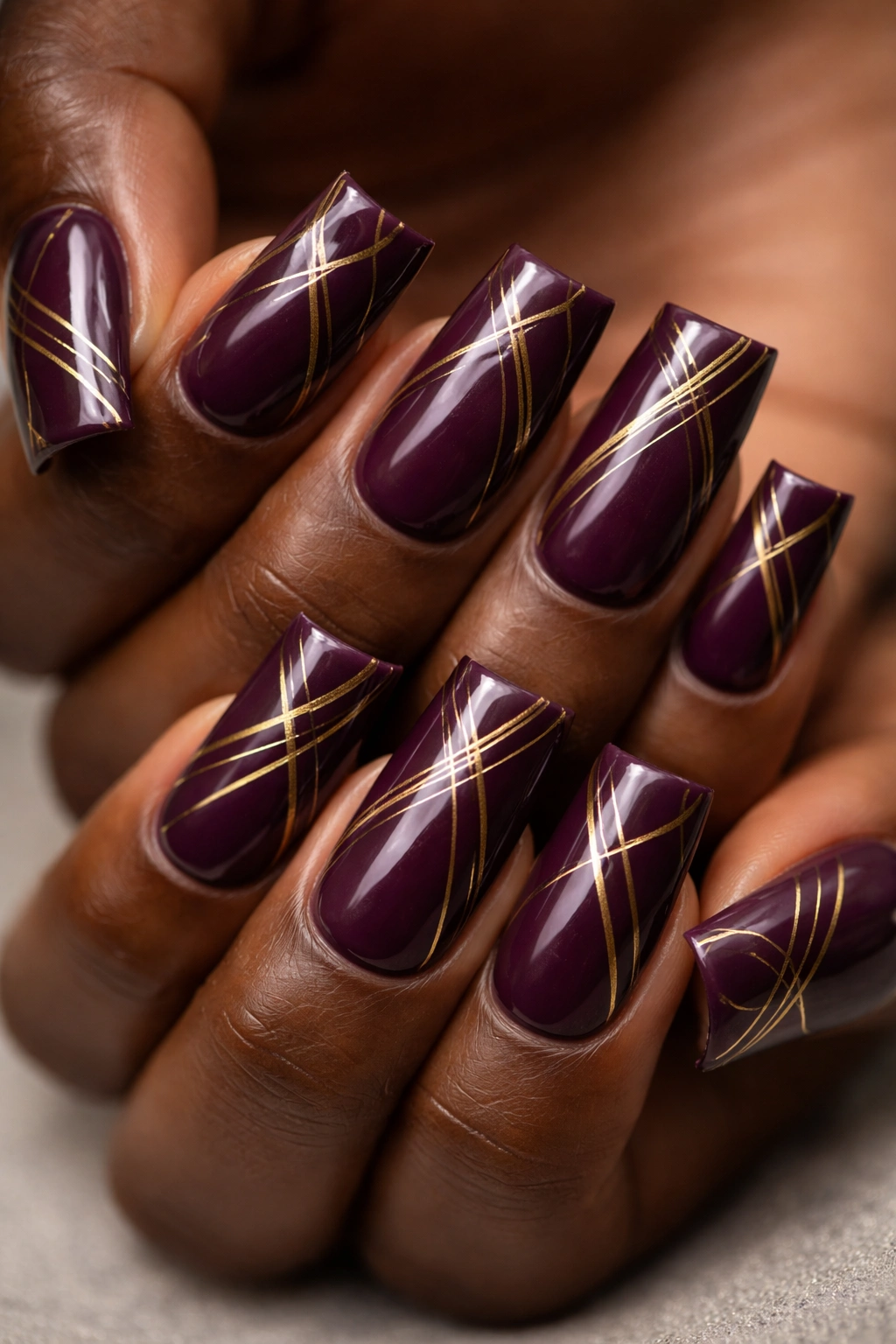
A rich, jewel-toned plum base becomes absolutely mesmerizing against darker skin tones because the color’s depth creates a sophisticated backdrop for metallic contrast. Apply a deep plum gel or polish as your foundation — think eggplant or wine-dark purple, something with enough saturation to feel luxurious. Once this base is completely cured (or dried, depending on your nail product), add fine lines of gold foil or metallic gel in geometric patterns: thin triangles pointing downward, angular lines crossing the nail bed, or minimalist architectural designs that feel modern and intentional.
Why This Design Pops on Dark Skin
The plum-and-gold combination works brilliantly because gold naturally complements warmer and deeper undertones in darker complexions. The warmth of the gold catches light in a way that brightens without washing you out, while the plum base grounds the design with richness and elegance. The contrast between the matte or glossy plum finish and the reflective gold creates dimensional depth that photographs beautifully and catches the eye during movement.
How to Apply It Flawlessly
Use a thin detail brush or a gold foil specifically designed for nail art — foil adheres best to a sticky gel base layer. If you’re working with regular polish, apply a clear topcoat first and press the foil gently into place before the topcoat fully sets. Seal everything with a glossy topcoat to lock in the design and protect the gold from chipping. The straight-line designs are forgiving because slight imperfections read as intentional minimalism rather than mistakes.
2. Burgundy Ombre with Gradient Fade
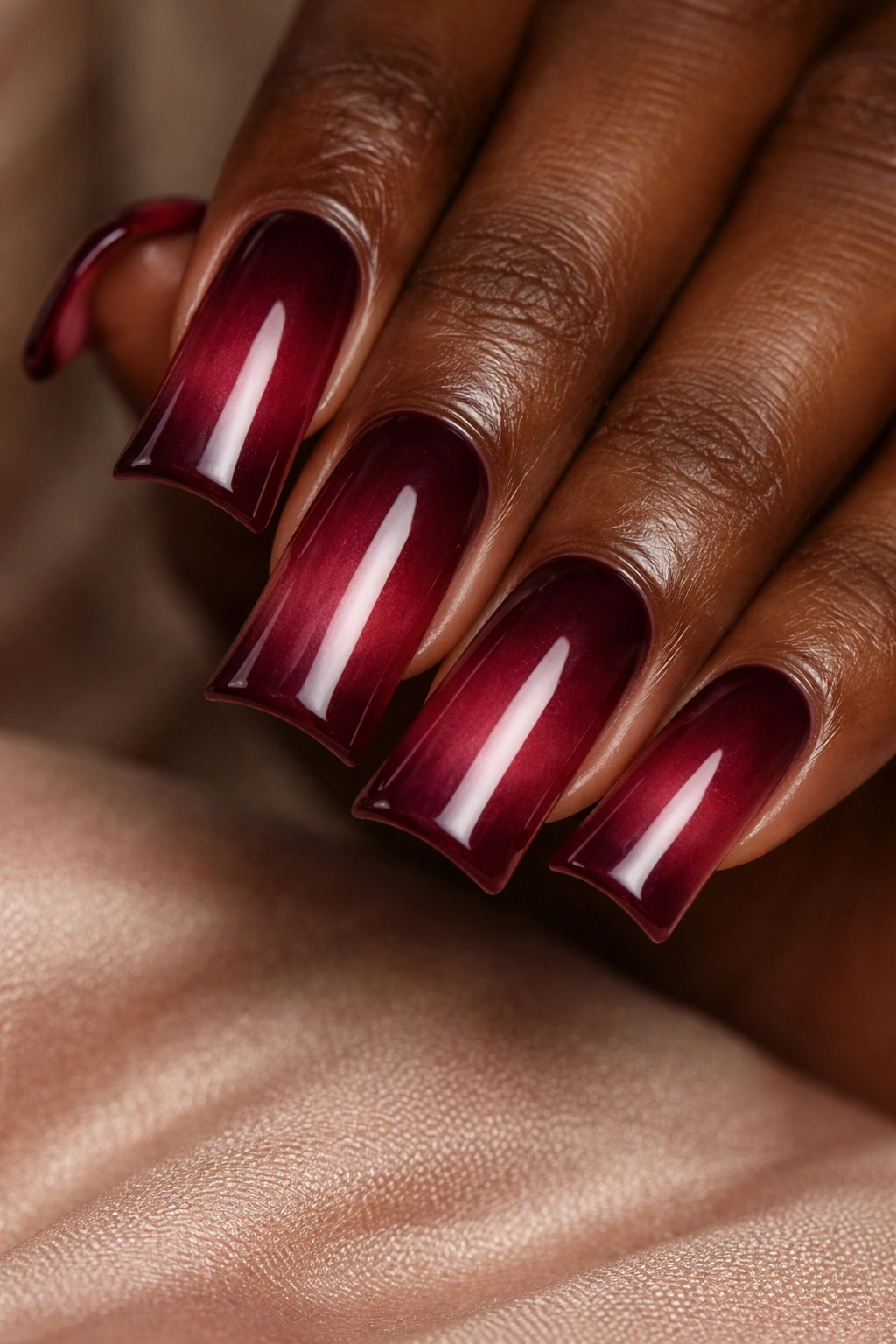
Ombré effects reign supreme on dark skin tones because the gradient creates visual depth and movement that makes the nails feel dynamic. Start with a deep burgundy or oxblood shade at the cuticle — the richer, the better — and gradually blend it toward a lighter wine or mauve tone at the tip of the duck nail. The extended tip of the duck nail shape gives you extra real estate to play with the gradient, so the color shift feels gradual and intentional rather than abrupt.
The Science of Why This Works
Darker complexions naturally have more melanin, which means they reflect light differently than lighter skin. This actually works in your favor with ombré designs because the gradient reads more clearly against the darker backdrop of your skin. The burgundy-to-wine progression creates a visual journey that feels cohesive and elegant, and because both shades are warm-toned, they harmonize with most undertones.
Pro Application Technique
Use a makeup sponge or a special ombré gradient tool to create the blend. Apply your deepest burgundy to one side of the sponge, the lighter shade to the other side, and dab the sponge repeatedly onto the nail, rotating as you move toward the tip. You’ll want multiple thin layers rather than one heavy application — this creates a smoother, more refined gradient. Seal with a glossy topcoat to blend the application and lock in the color.
3. Emerald Green with Nude Reverse Accent
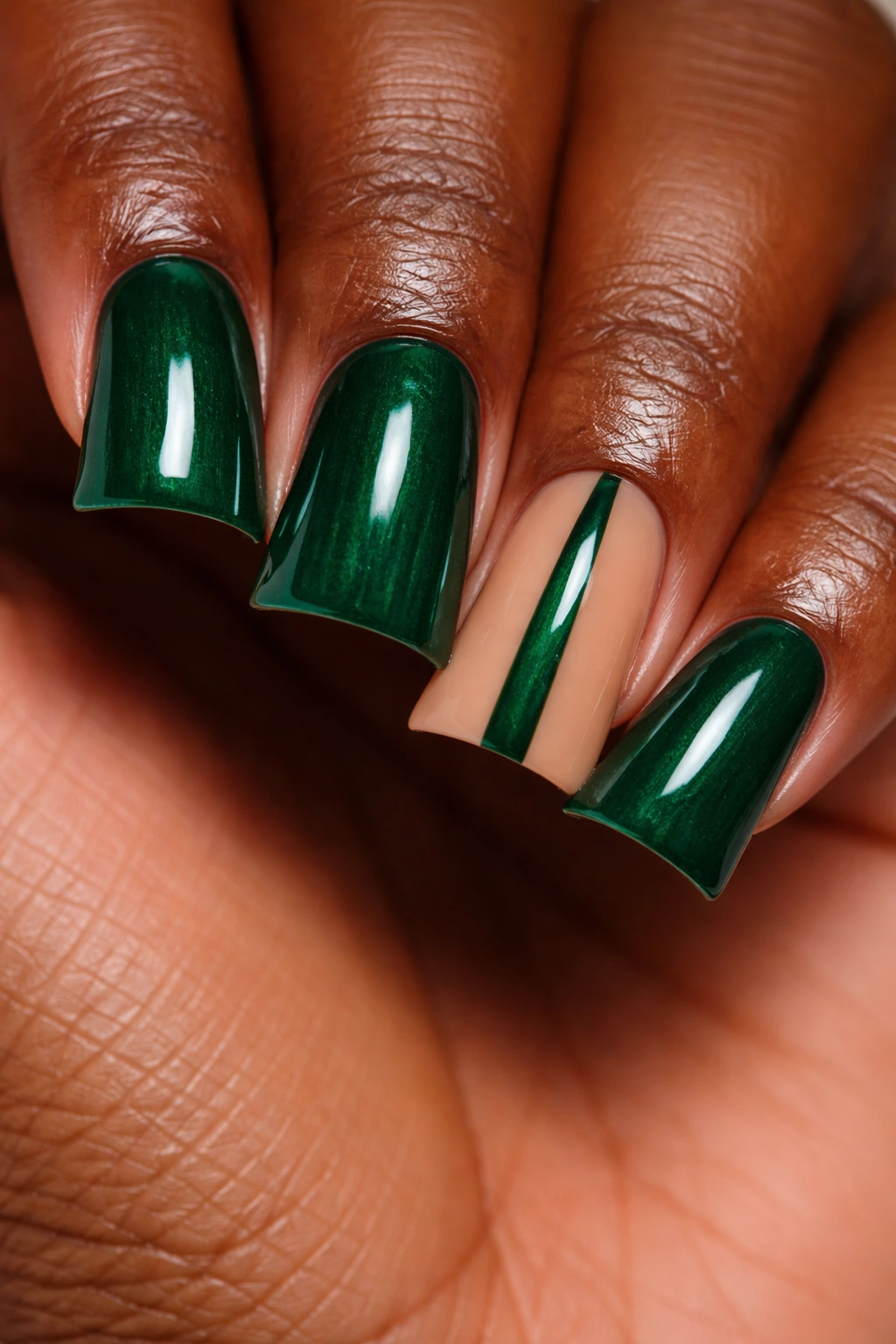
Emerald green is one of the most show-stopping colors for dark skin tones because it creates stunning visual contrast while feeling sophisticated rather than jarring. Paint your duck nails in a deep, rich emerald — think forest or jewel-box green with excellent pigmentation and depth. Then, on your reverse nail (usually the accent nail), do the opposite: a warm nude or caramel shade that matches your skin tone, with a thin emerald stripe or chevron in the center for visual connection.
Why Emerald Complements Dark Skin Specifically
Emerald green against darker skin creates a color contrast that feels both bold and harmonious. The cool tones of emerald actually make darker skin look more luminous by comparison, and the depth of the color prevents it from looking washed out or flat. This is the kind of color combination that reads as intentionally sophisticated, not accidental.
Achieving the Right Shade Match for Nude
The nude accent nail works best when it’s nearly a perfect match to your skin tone — not a generic peachy nude, but your actual undertone. Test the shade on your inner wrist first to make sure it photographs the way you want it to. If your complexion is deeper, go for warm caramel, chocolate, or bronze rather than pale pink. The contrast between the emerald and a true skin-tone match becomes the visual anchor of the design.
4. Black with Pearl or Chrome Accents
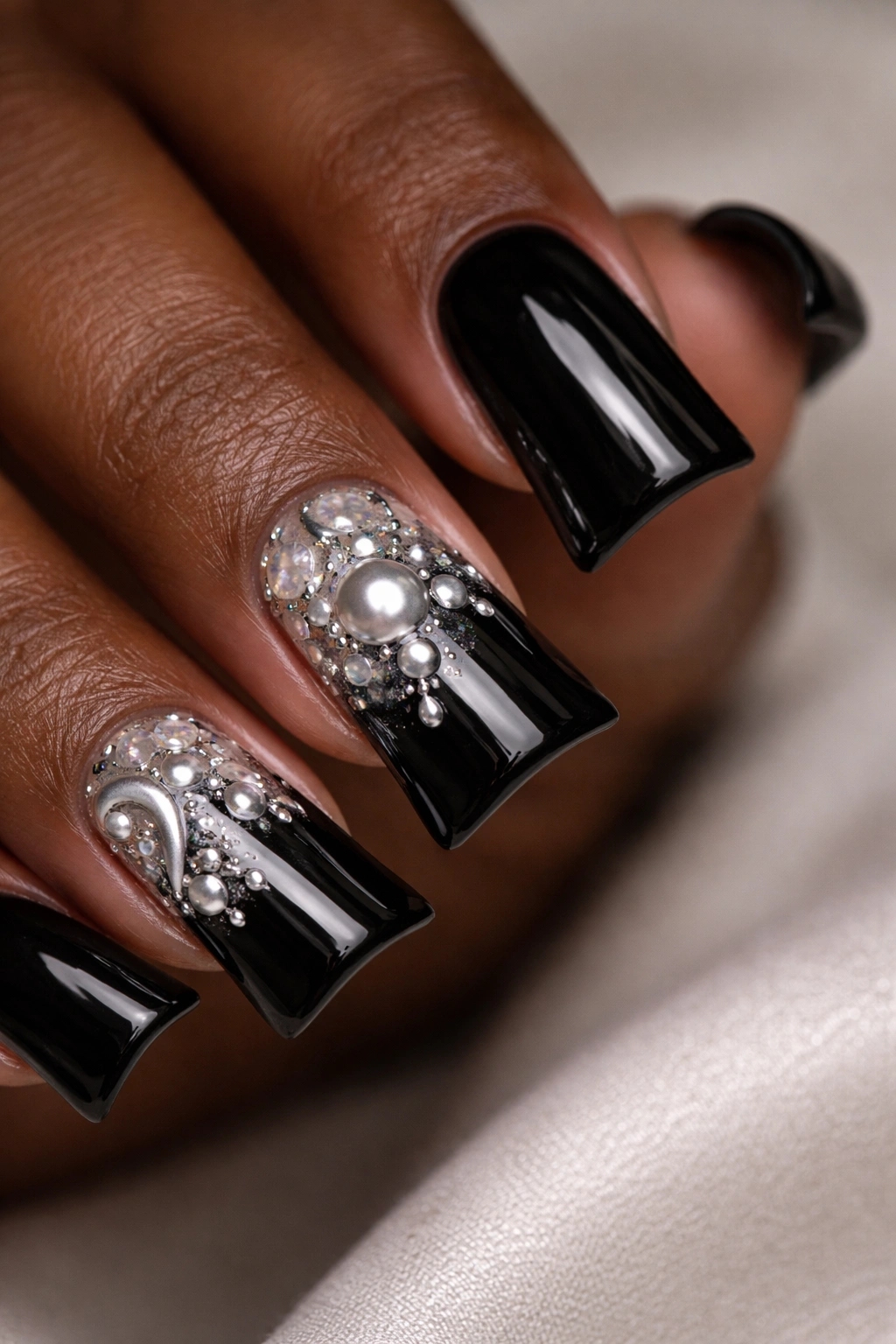
Black is the ultimate statement base on dark skin tones because it creates a clean, high-contrast canvas without competing for attention. A glossy black or matte black polish provides a professional, bold foundation that allows metallic accents to genuinely shine. Add pearl flakes, chrome powder, or metallic confetti to two or three nails — scattered across the duck nail tip creates texture and glamour without overwhelming the design.
The Elegance of Minimalist Black Design
What makes this approach work so well is its restraint. Black nails with minimal accents feel intentional and high-fashion rather than everyday. The pearl or chrome additions catch light in a way that draws the eye and adds dimension without being loud. This is the design you wear when you want people to notice your nails in a subtle, “wow, that’s sophisticated” way.
Application and Longevity
Black polish can sometimes feel heavy, so using a gel formula ensures the color stays true and glossy without yellowing or chipping. Apply thin, even coats to avoid the polish pooling at the edges. For pearl or chrome accents, sprinkle them onto the tacky gel layer before curing, or press them in with a topcoat. Chrome powder requires a special bonding base, so follow the product instructions carefully for the best finish.
5. Coral with Geometric Black Outlines
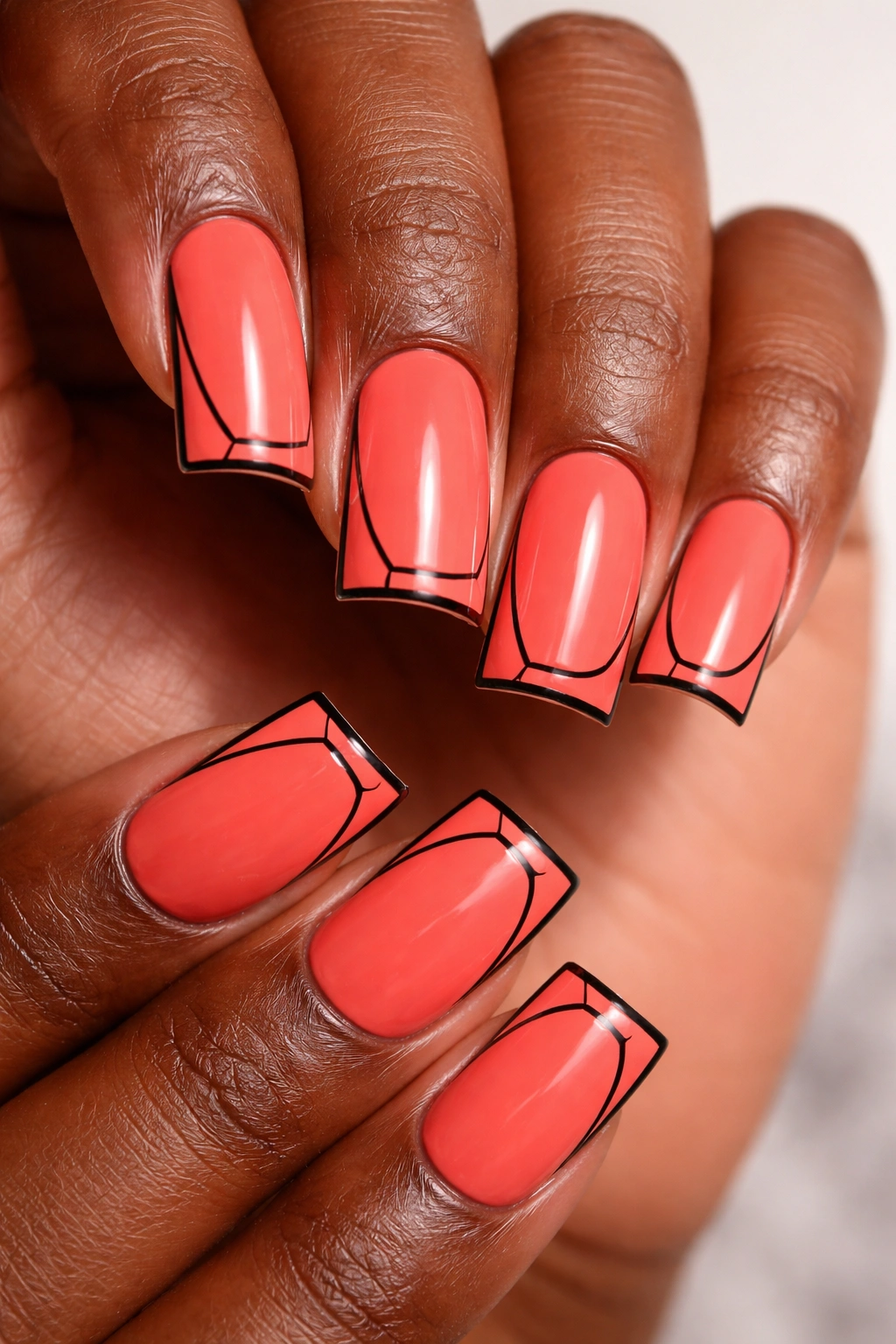
Coral shades that lean warm and saturated look absolutely radiant against deeper complexions because the warmth bounces off your skin and creates a glow-from-within effect. Choose a coral that has enough depth to feel luxurious rather than pale or washed out. Use thin black lines to create geometric patterns: angular stripes, abstract shapes, or structured designs that give the coral a modern, artistic edge. The black outlines make the coral feel intentional and designed rather than plain.
Why Warm Coral Works on Dark Skin
Coral has peachy and orange undertones that harmonize beautifully with warmer skin tones while creating visual brightness through contrast. The black lines add sophistication and structure to a color that might otherwise feel casual. Together, they create a design that feels beachy and playful without sacrificing elegance.
Creating Sharp Black Lines
Use a thin detail brush or a gel pen designed for nail art — these give you more control than regular polish. If you’re less steady-handed, apply the lines to the black base first, then fill in the coral around them, or use nail stickers to define the pattern. Seal everything with a topcoat to prevent the black lines from smudging into the coral.
6. Terracotta with Gold Leaf and Speckles
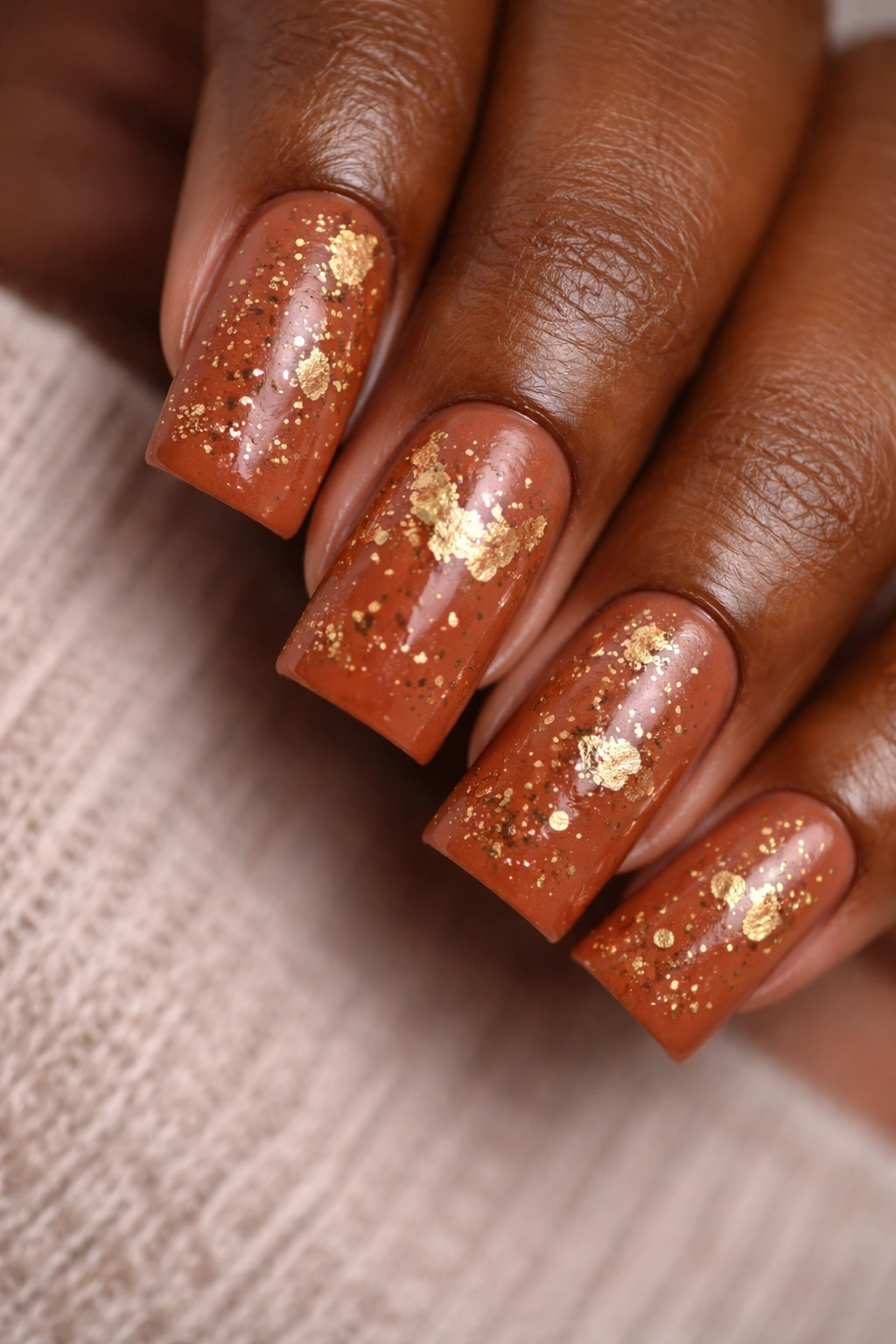
Terracotta is an earth-tone powerhouse on dark skin because it bridges warm and cool, creating a richness that feels both grounded and luxurious. Paint your nails in a warm, medium terracotta shade — not too orange, not too brown, but that perfect russet tone. Add random gold leaf pieces and tiny gold speckles scattered across the nails for texture and light-catching dimension. The gold picks up on the warmth in the terracotta while adding glamour.
The Earthy Elegance Factor
Terracotta taps into natural color harmony when paired with gold because both shades echo earth and natural light. Against darker skin, this combination feels warm, rich, and grounded without being heavy. The addition of gold elevates it from “natural” to “intentionally designed,” which makes this perfect for someone who wants color without high contrast.
Applying Leaf and Speckles Properly
Use tweezers to place gold leaf pieces onto a sticky base layer or before the topcoat fully sets. For speckles, dab a thin brush or the end of a dotting tool into metallic gel, then lightly touch it to the nail in random spots — consistency isn’t the goal; organic randomness is. Seal with a glossy topcoat that will hold the leaf and speckles in place while evening out the texture.
7. Navy Blue with White French Duck-Tip Accent
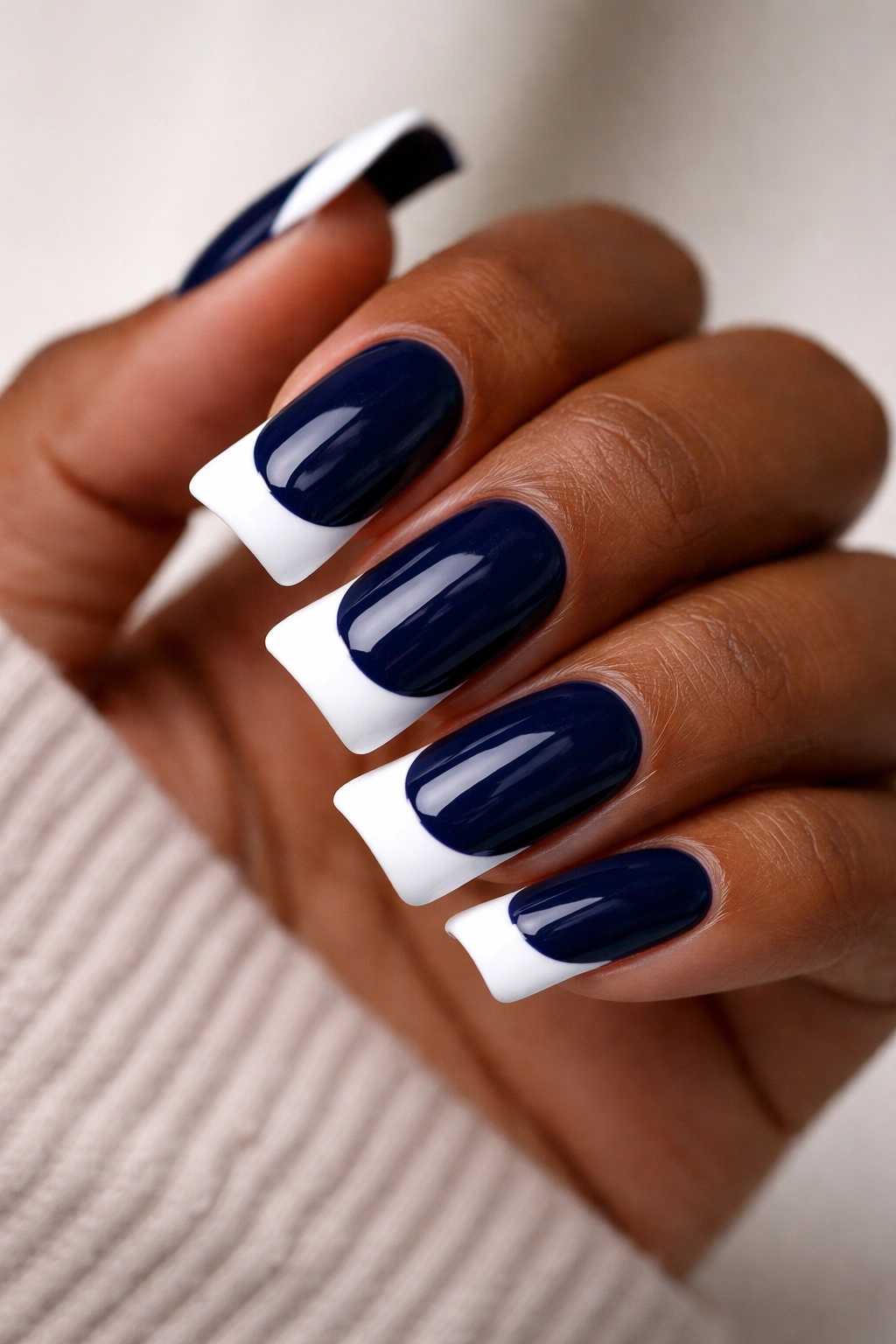
Navy blue is a sophisticated alternative to black that feels slightly softer while still delivering serious impact on dark skin tones. Paint your nails in a rich, saturated navy — deep enough to feel luxe but true enough to read as navy rather than muddy blue. Then paint the extended duck-tip portion in a crisp white or cream, creating a statement French-tip variation that draws attention to the nail shape itself. The contrast between navy and white is striking without feeling aggressive.
Why Navy Reads Differently Than Black
Navy blue has a slightly warmer quality than black while maintaining excellent contrast and sophistication. It feels less stark and severe, which makes it perfect if you want dramatic color without going full black. The white duck-tip accent makes the nail shape the design’s focal point, which is especially effective because duck nails have such a distinctive silhouette.
Achieving a Clean White-Navy Border
The transition line between navy and white should be clean and deliberate. Use a thin brush and a steady hand, or use painter’s tape to create a crisp border before painting the white. Let the navy fully cure before applying the white to prevent color bleed. A glossy topcoat seals everything and gives the design a high-fashion finish.
8. Burgundy Velvet Finish with Diamond Accents
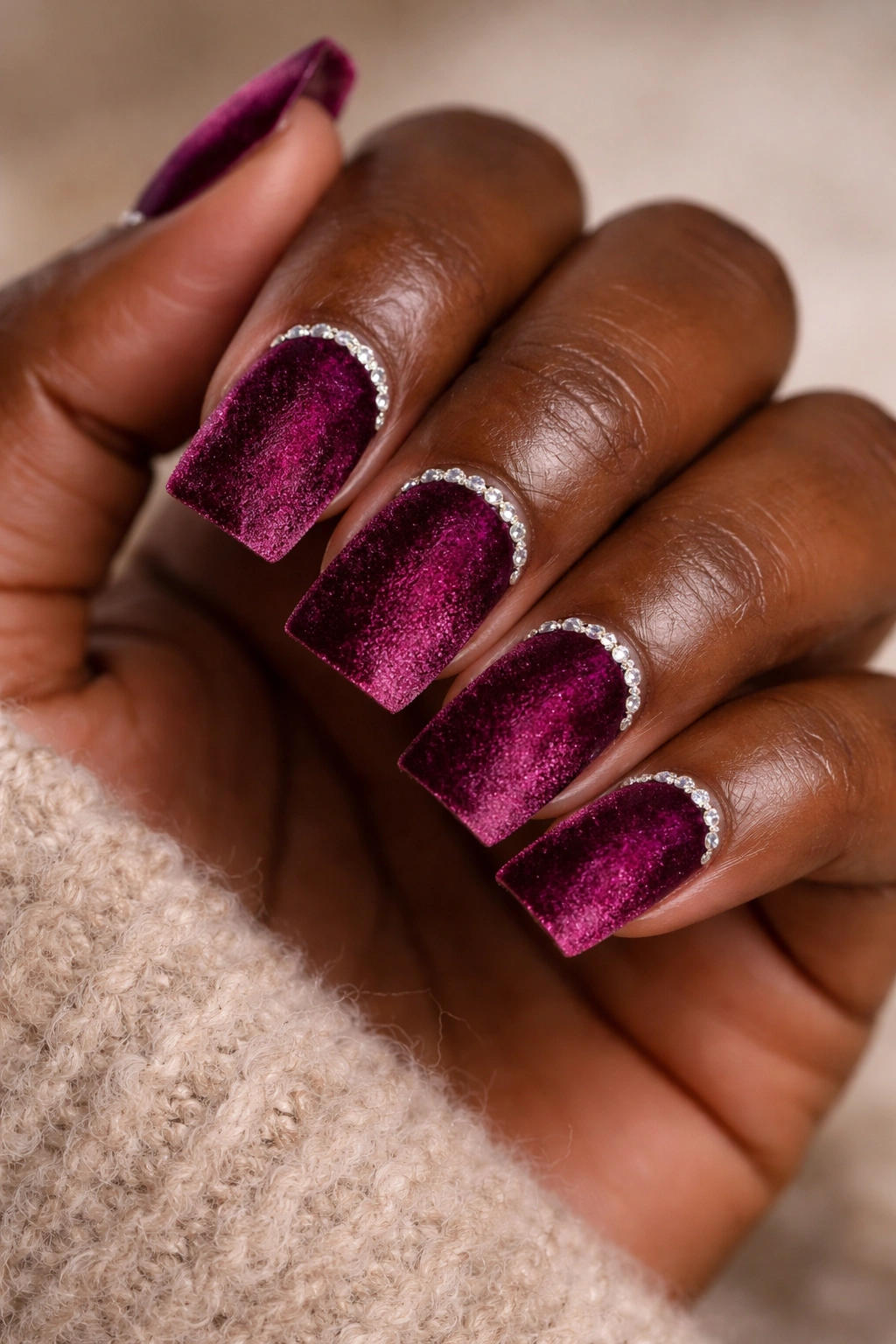
Velvet gel finishes are having a major moment, and they look absolutely stunning on short duck nails over deeper skin tones. A burgundy velvet formula creates a soft, velvety texture that catches light differently than standard glossy or matte finishes. Add tiny diamond or crystal accents along the cuticle line or scattered across the nail — the contrast between the soft velvet texture and the hard sparkle of diamonds creates luxurious dimension.
The Texture Story Behind Velvet Finishes
Velvet finishes work beautifully on dark skin because the soft, matte texture creates a sophisticated canvas that allows the diamonds to truly stand out. The burgundy base is rich enough to feel expensive and intentional, and the tactile quality of velvet adds a level of luxury that glossy finishes sometimes miss. This is the design that feels as good as it looks.
Applying Velvet Gel and Securing Crystals
Velvet gel applies just like regular gel but cures to a soft, flocked texture. Once cured, you can apply rhinestones or diamonds using a sticky topcoat or special rhinestone adhesive. Place them while the adhesive is still slightly tacky so they catch light. A final topcoat seals everything while maintaining the velvet texture around the stones.
9. Deep Plum with Holographic Shimmer
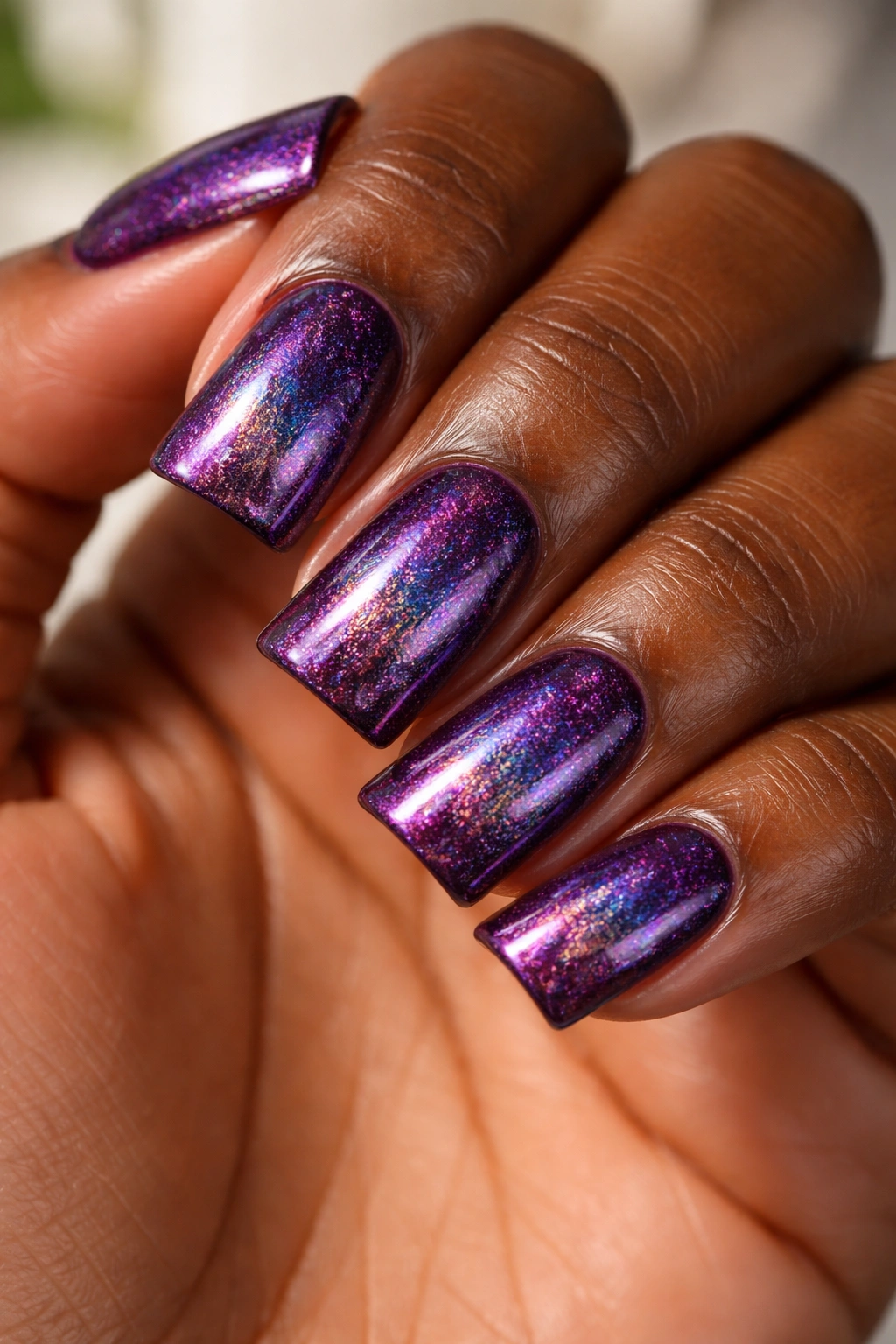
Holographic finishes create rainbow light-play effects that look utterly magical on dark skin tones. Start with a deep plum base, then layer a holographic shimmer on top — the result is a color that shifts and gleams with iridescent movement. The plum provides richness and depth while the holographic layer adds playfulness and light. This design works beautifully in both indoor and outdoor light, constantly showing different facets of color.
The Light-Play Advantage on Deeper Complexions
Holographic effects are visible and impressive against darker skin because there’s more contrast between the skin tone and the reflective light. The shimmer reads as intentional sparkle rather than accidental glitter, and because the base is a serious jewel tone, the whole design feels elevated rather than casual.
Getting Holographic Effects to Last
Holographic powders and shimmers adhere best to a sticky gel base. Apply your plum gel base, cure it, then either sprinkle holographic powder onto the tacky layer before the final cure, or apply a holographic gel directly over the base. A non-sticky topcoat maintains the effect while protecting the nails. Note that holographic finishes sometimes look less intense under certain lighting, so this is a design that genuinely performs differently depending on your environment.
10. Chocolate Brown with Rose Gold Accents
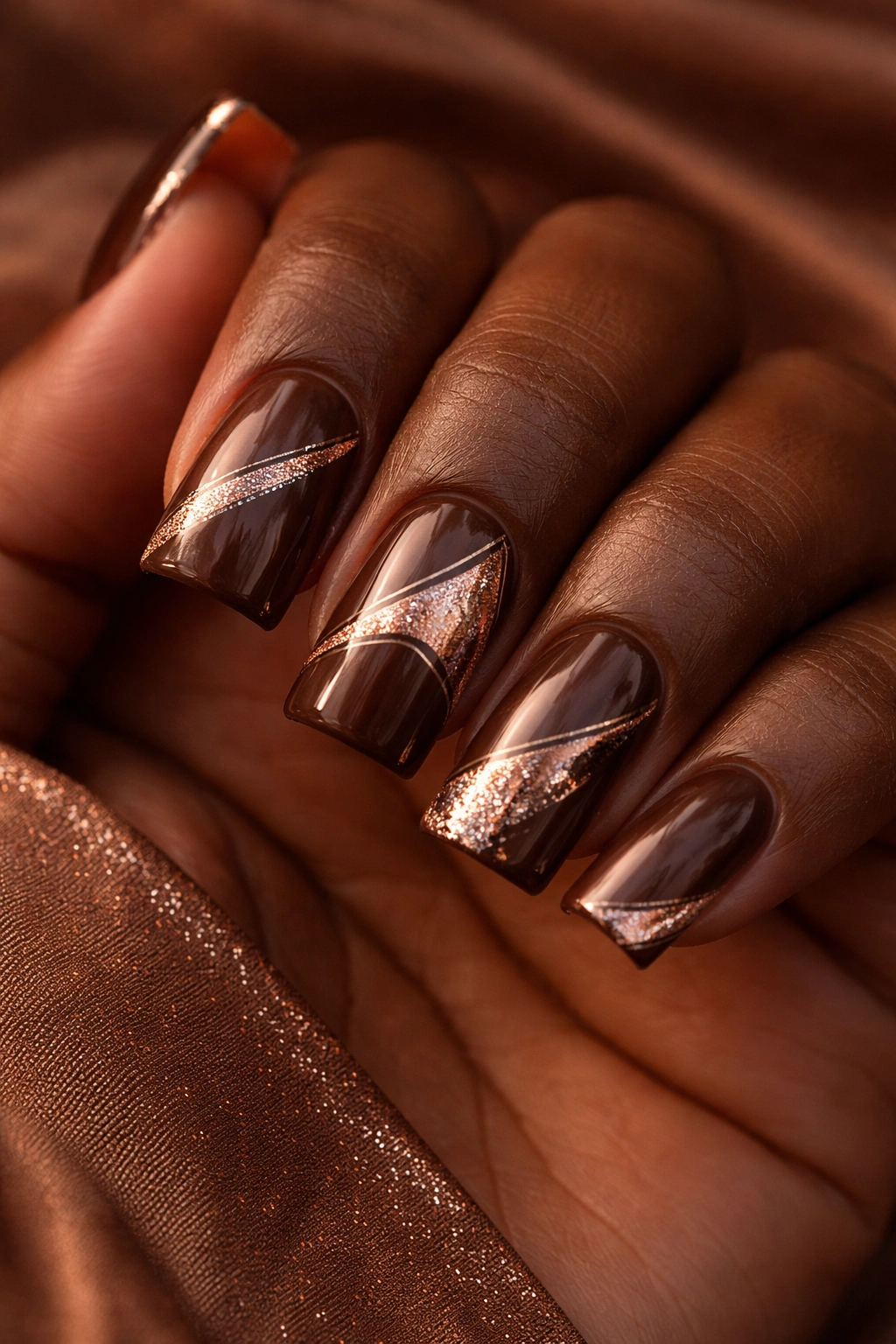
Chocolate brown feels warm and grounded on dark skin — it’s almost a cousin to your natural skin tone, but richer and more luxurious. Paint your nails in a warm, medium chocolate brown that has enough depth to feel like a deliberate design choice rather than a basic shade. Add rose gold accents: a rose gold foil stripe, rose gold geometric details, or a full rose gold duck-tip accent that transitions from the brown base.
Why Brown and Rose Gold Create Warmth
This combination works because both shades have warm undertones that complement each other without clashing. The rose gold brings brightness and luxury to the chocolate brown, creating a design that feels both earthy and glamorous. Against dark skin, this warm-on-warm combination creates sophisticated harmony and depth.
Creating a Harmonious Brown-Rose Gold Blend
If you’re doing a transition between brown and rose gold, use a sponge or gradient tool to blend them slightly so the shift feels intentional rather than abrupt. Alternatively, keep the colors separate with a clean line between them — geometric separation feels intentional and modern. Either approach works beautifully because both shades are warm and naturally complementary.
Final Thoughts
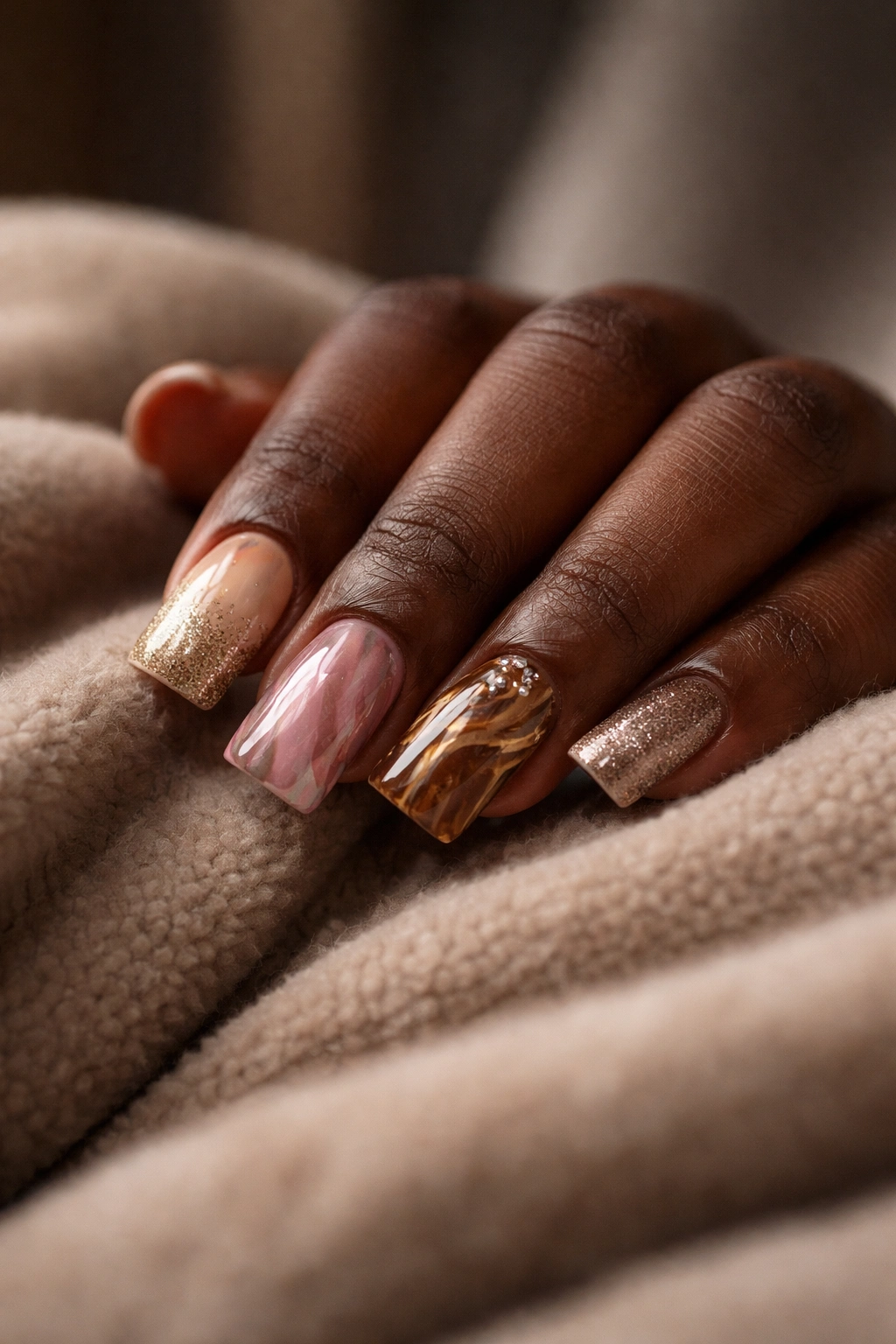
Short duck nails give you the best of both worlds: the dramatic, distinctive shape that makes a statement, combined with the practicality and durability of a shorter length. When you’re choosing designs specifically for dark skin tones, you’re working with an incredible advantage — deeper complexions make colors appear more saturated, metallics more luminous, and contrasts more striking. This means the design possibilities are genuinely unlimited.
The ten designs here represent different approaches to color, finish, and embellishment, but they all share one thing: they take advantage of what makes dark skin tones so stunning with nail art. Whether you’re drawn to jewel tones, warm earth shades, or bold color combinations, there’s real depth and sophistication available to you. Start with whichever design speaks to you most, but don’t stop there — once you understand how certain colors and finishes perform against your skin tone, you’ll start seeing design possibilities everywhere.