


Leopard print nails have transcended trend status to become a genuinely timeless design choice that works across seasons, occasions, and personal styles. Whether you’re drawn to bold, maximalist aesthetics or prefer understated elegance, this animal print pattern offers something for everyone. The beauty of leopard nails lies in their versatility—you can interpret them in neutral tones for a sophisticated office-appropriate look, or push them in unexpected directions with vibrant colors, metallic accents, or texture finishes that make a statement.
What makes leopard print such a reliable design choice is its natural ability to pair well with nearly every base color and nail shape. From short, practical nails to dramatic stilettos, from creamy nudes to electric brights, leopard spots adapt beautifully. It’s a pattern that reads as both daring and wearable, which explains why nail artists and enthusiasts keep returning to it year after year. The pattern itself requires no special technique beyond basic dotting tools and a steady hand—or even nail art strips if you prefer a shortcut—making it accessible for DIY manicurists and professional nail technicians alike.
This guide walks you through twelve distinct interpretations of leopard print nails, each with its own personality and practical approach. You’ll find classic approaches that honor the pattern’s timeless roots, as well as creative twists that blend leopard with complementary designs, textures, and color palettes. Whether you’re preparing for your next salon visit or planning a DIY manicure at home, these ideas will give you the specific visual direction and technical guidance you need to achieve salon-quality results.
1. Classic Leopard on Neutral Base
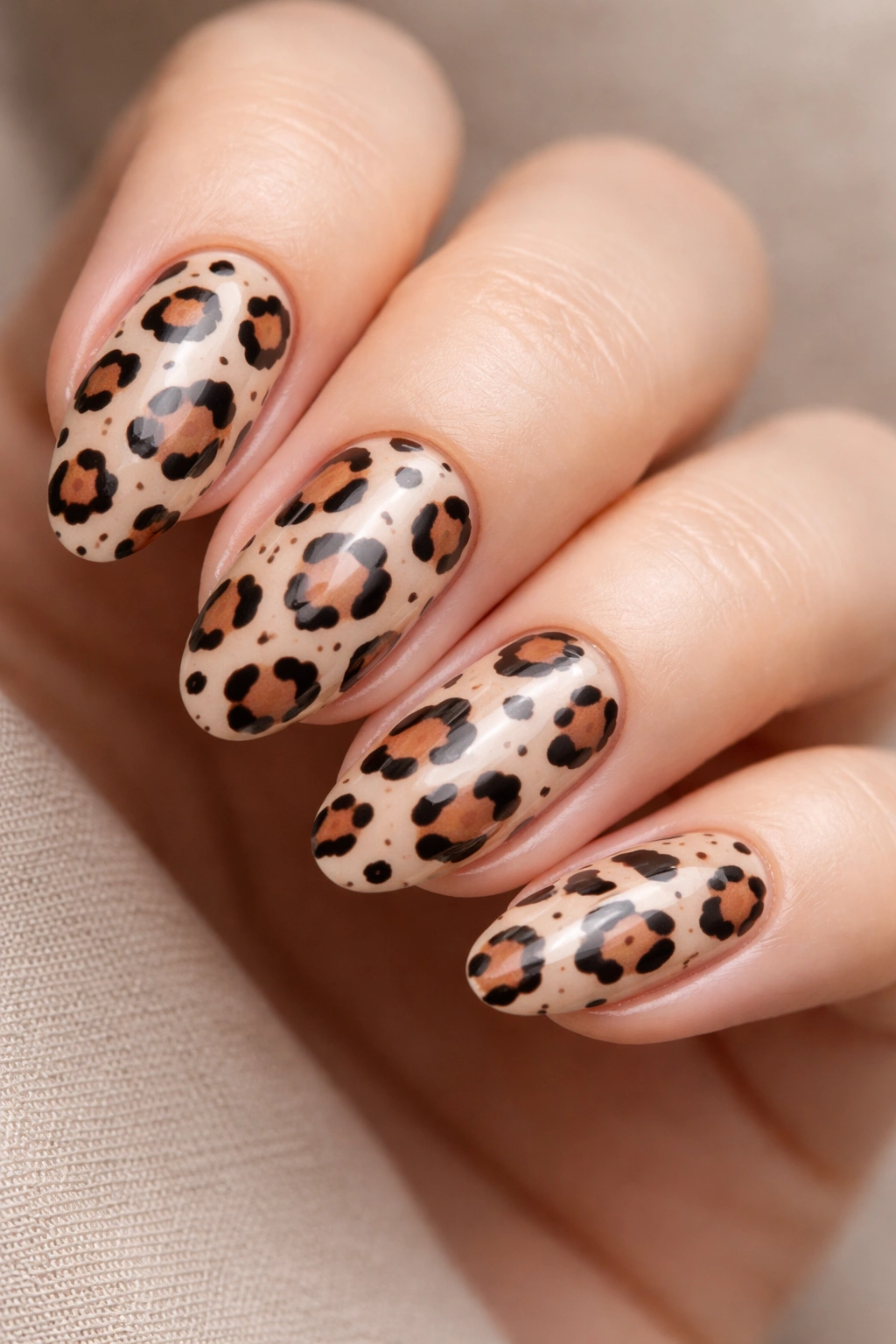
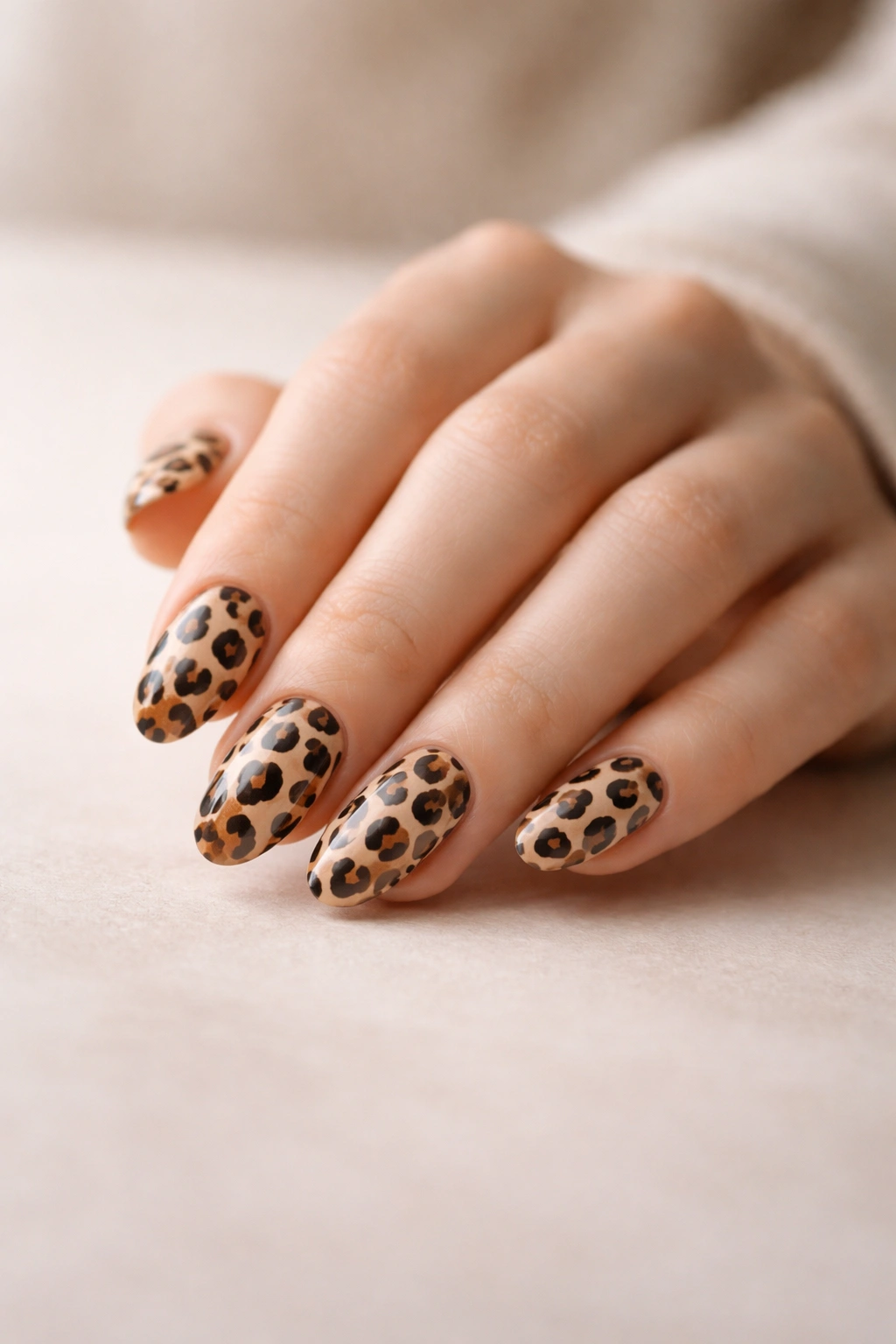
The foundation of leopard print nail design rests on this timeless combination: a soft, neutral base paired with dark spots that mimic the natural pattern of an actual leopard’s coat. This approach uses a pale beige, cream, or soft nude polish as your base—colors that complement most skin tones and work in any setting. Over this neutral foundation, you create irregular oval-shaped spots using black or deep brown gel polish and a thin dotting tool, varying the size and spacing of each spot for authenticity.
Why This Design Works Everywhere
Neutral leopard nails strike the perfect balance between bold pattern and professional restraint. The soft base color ensures the design reads as elegant rather than aggressive, while the distinctive spots provide visual interest and personality. This combination works beautifully in corporate environments, casual settings, or formal occasions because it respects the “less is more” principle while still making a clear style statement. You’re essentially wearing a pattern that’s confident without being overwhelming.
How to Achieve Perfect Spots
Start with two thin coats of your chosen nude or beige polish, ensuring the surface is completely smooth and dry. Using a dotting tool dipped in black gel polish, create spots of varying sizes—think small ovals, medium circles, and a few larger irregular shapes. The key is avoiding symmetry; real leopards don’t have evenly spaced, uniform spots, so neither should your nails. Leave visible negative space between spots rather than trying to cover the entire nail surface. Cure under UV light, then seal with a high-shine top coat for a polished finish that catches light beautifully.
Pro tip: If freehand dotting feels intimidating, start with just a few larger spots on each nail rather than attempting a densely spotted design. Three to five well-placed spots often look more sophisticated than a nail crowded with small dots.
2. Leopard Print French Tips
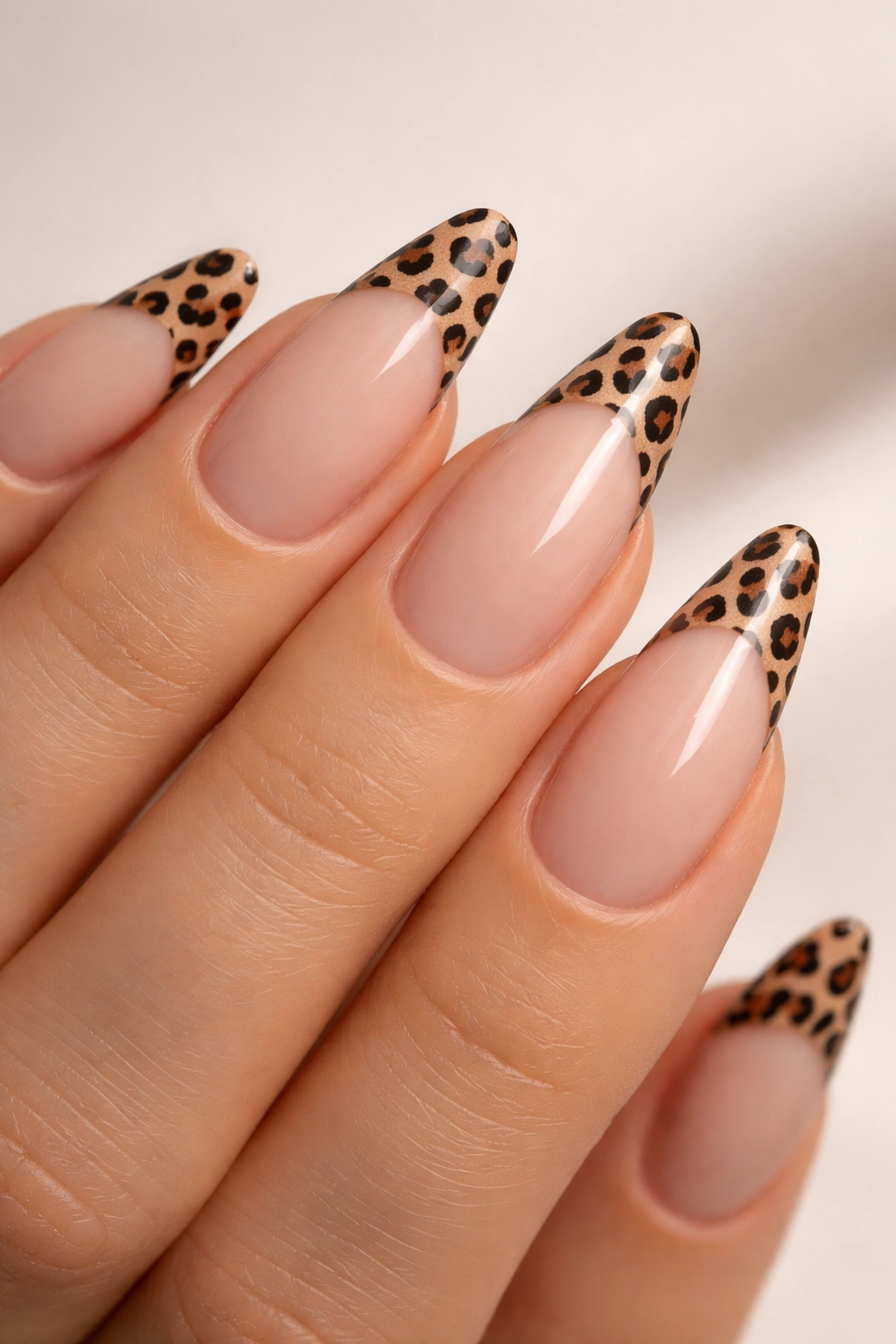
Transform the classic French manicure by replacing the traditional white tips with leopard print spots. This hybrid design combines the clean, timeless appeal of French nails with the playful edge of animal print, creating something that feels both professional and fashion-forward. The base of each nail remains nude or pale pink, while the tips feature either full leopard print coverage or scattered spots that extend slightly beyond the traditional French line.
The Appeal of Mixing Two Classics
French tips and leopard print are individually iconic designs, so combining them creates immediate visual impact. The geometric precision of the French tip line contrasts beautifully with the organic, irregular nature of leopard spots, giving your manicure visual complexity and sophistication. This design works particularly well on longer nails and almond or oval shapes, where the extended tip area provides enough space to showcase the leopard pattern clearly without looking crowded.
Step-by-Step Application Method
Paint your base color (nude, soft pink, or pale peach work best) across the entire nail surface in two thin coats. Once fully cured, use a thin brush or nail guide strip to create a precise French tip line—this gives you a clean edge to work within. Fill the tip area with a slightly darker shade as your secondary base for the leopard spots, then use a dotting tool to apply black or dark brown spots throughout the tip area. Consider creating a gradient effect where spots are denser at the very tip and gradually decrease in number as they approach the French line.
Pro tip: Use a thin angled brush instead of a dotting tool for more controlled, slightly elongated spots that echo the shape of actual leopard markings. This technique creates a more realistic, refined appearance than uniform circular dots.
3. Leopard Accent Nail Design
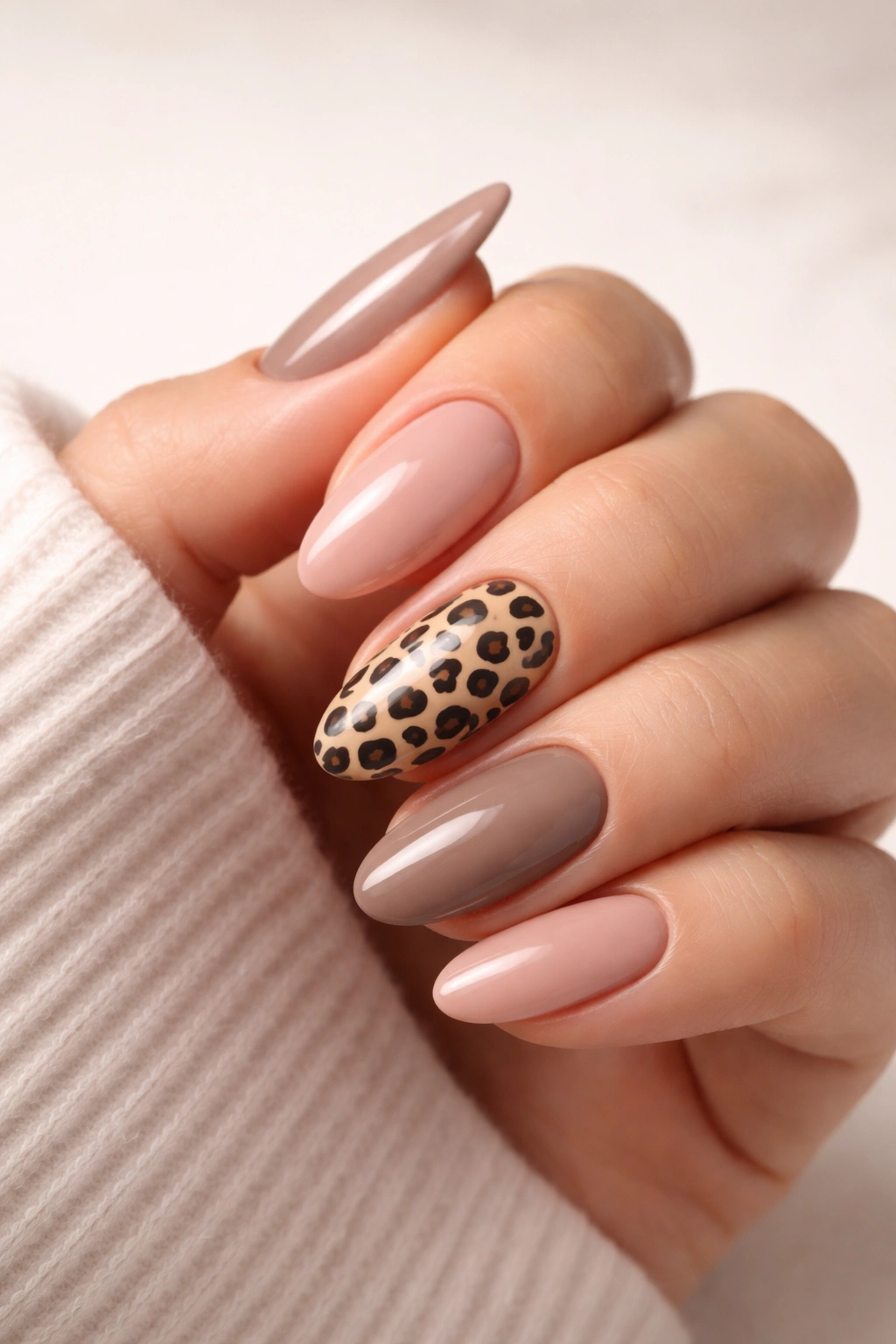
Not ready to commit to full leopard print coverage on all ten nails? An accent nail approach lets you enjoy the design while keeping the overall look more subtle and refined. Choose one or two accent nails (typically the ring finger or middle finger) to feature full leopard print, while the remaining nails display a solid color that coordinates with your leopard base. This asymmetrical approach creates visual interest without overwhelming your appearance.
Why Accent Nails Offer Design Freedom
Limiting the pattern to one or two nails gives you psychological permission to go bolder with color choices or more intricate detailing. A single nail can feature a leopard print design with added embellishments—like tiny rhinestones scattered within the spots or metallic leaf accents—that might feel excessive if applied to all ten fingers. This design also works beautifully when you’re transitioning between nail trends or aren’t quite ready for a full commitment to animal print.
Planning Your Accent Nail Strategy
Decide whether you want the accent nail to match the pattern and colors on your other nails or provide a subtle contrast. One popular approach uses the same base color across all nails while one or two feature the leopard spots, creating cohesion with a touch of surprise. Alternatively, make your accent nail stand out by using a different base color entirely—a burgundy or emerald green leopard accent against nude or pale pink nails makes a striking statement. Apply the solid color to nine nails, then devote extra time and care to creating your focal-point leopard design on the accent nail.
Pro tip: If you’re working with short nails, choose just one accent nail rather than two. The reduced real estate makes one statement nail feel intentional rather than scattered.
4. Two-Tone Leopard with Metallic Details
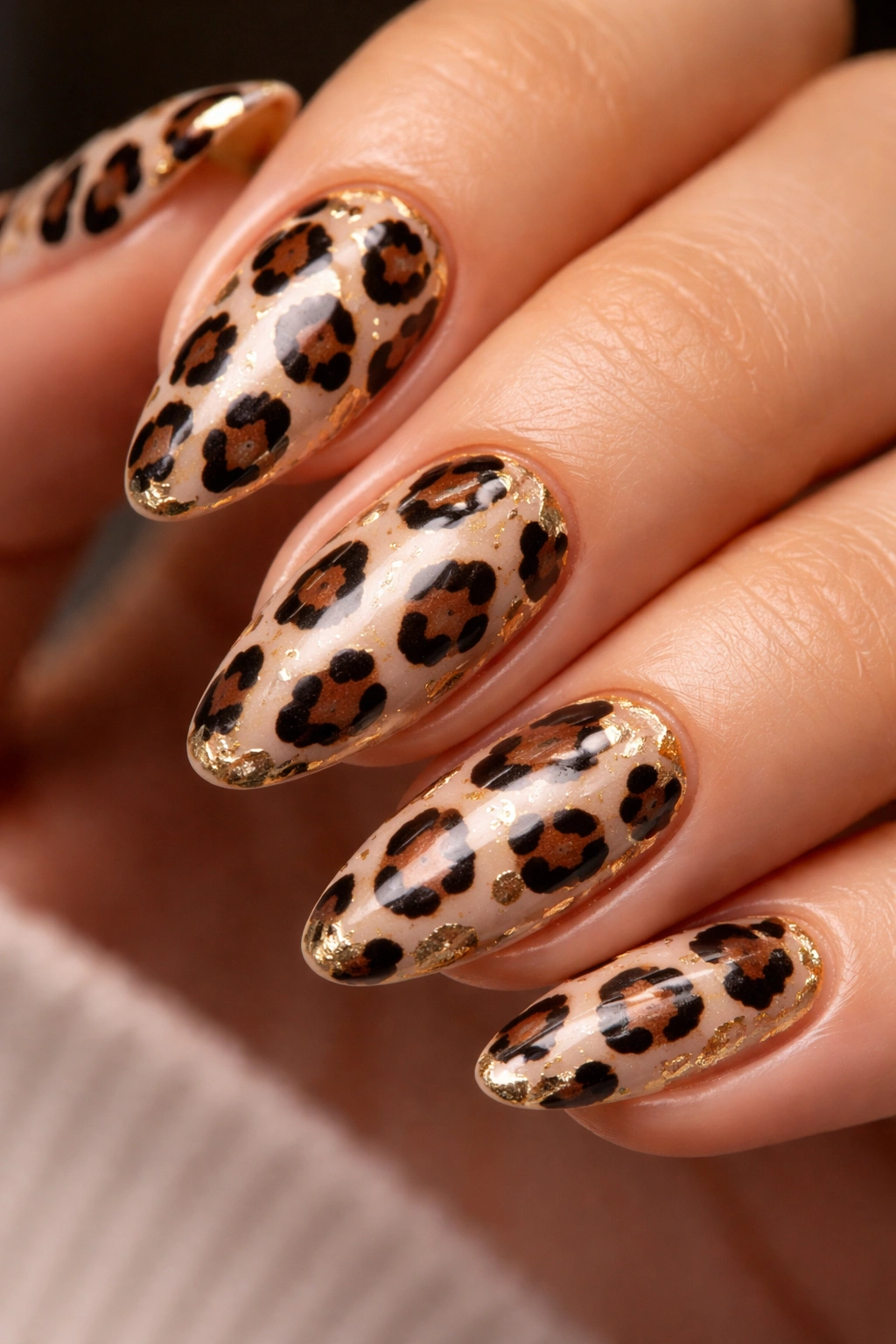
Elevate the classic leopard print by introducing a second color within the spots themselves, plus subtle metallic accents that catch light. This technique starts with your nude or pale base, then uses two distinct colors—typically black and deep brown, or black and charcoal—to create dimension within each spot. Add tiny touches of gold or silver foil to the outer edge of select spots for a luxe, high-fashion finish.
Creating Visual Depth and Dimension
The addition of multiple colors within the leopard design transforms it from a flat pattern into something with noticeable depth and movement. While the classic version uses solid-colored spots, introducing a second hue—either filling part of the spot or outlining it—makes the design feel more realistic and significantly more sophisticated. Metallic accents elevate the look further, adding glamour that works beautifully for evening events or special occasions without tipping into costume territory.
Application Technique for Layered Color
Begin with your base color and allow it to cure completely. Using a thin dotting tool, create the outline or larger shape of your leopard spots in the first color (typically black). Before this cures, dip your tool into the second color and fill a portion of that spot or create a secondary shape within it—perhaps filling just the left half of the spot or creating a crescent moon shape inside. Once these layers cure, use an even tinier dotting tool or the end of a thin brush dipped in gold or silver foil polish to add final accents. The key is restraint; a few well-placed metallic touches create elegance, while overdoing it can look cluttered.
Pro tip: Practice your two-color spotting technique on a nail wheel or practice tips first, since timing matters—you want the first color set enough to hold shape but not fully cured, so the second color adheres properly.
5. Matte Leopard Print for Edgy Elegance
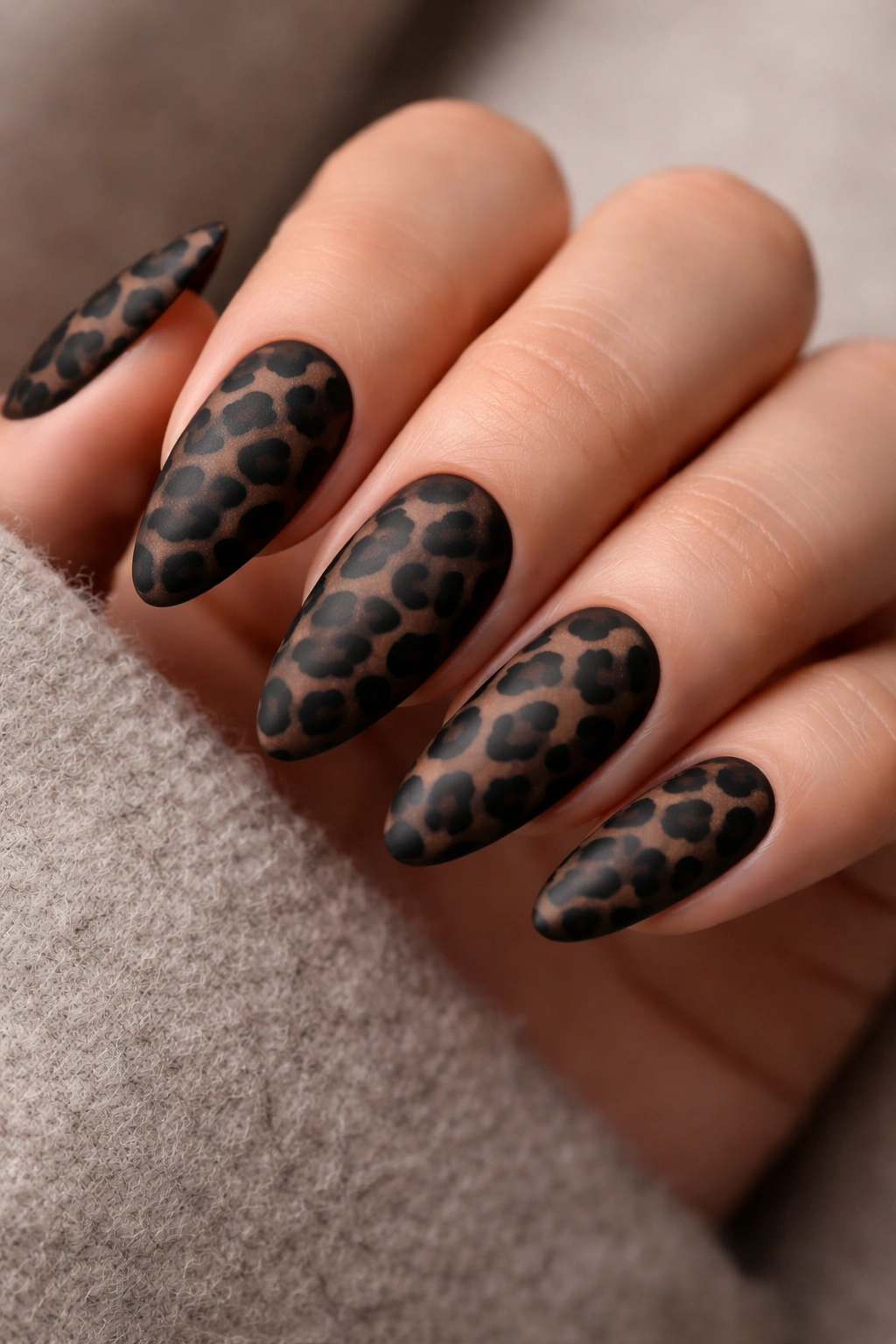
Switch your top coat from glossy to matte and suddenly the entire mood of your leopard manicure shifts toward something more modern and edgy. A matte finish softens the appearance of the pattern slightly while giving the overall design a velvety, sophisticated quality. This approach works especially well with deeper base colors—think matte espresso brown with black spots, or matte wine red with leopard print throughout.
How Matte Changes the Perception of Pattern
Glossy finishes make leopard print feel classic and polished, while matte finishes lend an understated, contemporary edge. The texture of a matte top coat actually changes how light interacts with your nail, reducing shine in a way that makes the pattern feel less “costume-y” and more organically integrated into your overall aesthetic. Matte finishes also hide minor imperfections better than high-gloss formulas, making them forgiving for DIY applications where your spotting might not be perfectly uniform.
Selecting the Right Base Color for Matte Leopard
Matte finishes pair most beautifully with deeper, richer base colors rather than pale neutrals. Consider warm, earthy tones like chocolate brown, caramel, or warm taupe; jewel tones like emerald or sapphire; or even bold colors like burgundy or rust. Create your leopard spots using black or a contrasting dark shade, keeping the design simpler and less dense than you might on a pale base—too many spots on a dark matte background can create visual heaviness. The reduced reflectivity of matte polish means every spot you add is visually prominent, so restraint becomes essential.
Pro tip: If you love the matte look but worry about durability, use a matte top coat over a glossy finish rather than choosing matte gel polish. This hybrid approach gives you the aesthetic you want with slightly better longevity.
6. Leopard Print with Cherry or Floral Accents
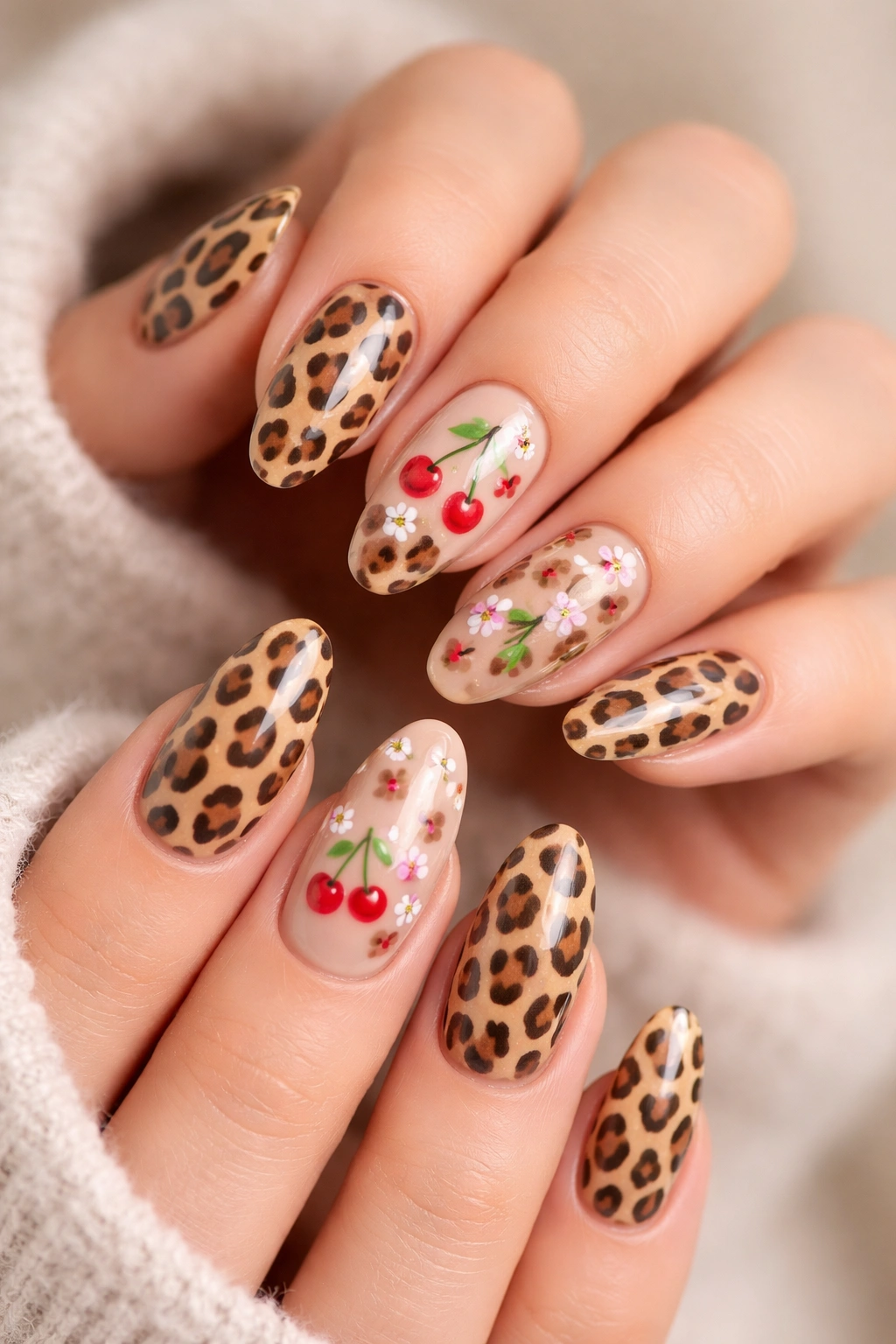
Blend leopard print with other decorative elements—small cherry designs, daisy flowers, or delicate leaf patterns—to create a manicure that feels both wild and romantic. This fusion approach works best on longer nails where you have enough space to showcase multiple design elements without creating visual chaos. Choose one or two nails to feature the combined design, allowing other nails to display either solid color or simple leopard print.
Why Combining Patterns Works Here
While mixing multiple patterns can feel risky, pairing organic, curvilinear designs (like flowers or fruit) with angular, spotted animal print creates pleasing visual contrast. The different design languages complement each other by keeping the eye moving across your nails. This approach also adds personality and warmth to the design; pure leopard print reads as bold and edgy, while adding floral or fruit elements softens that impression into something more playful and fashion-forward.
Execution Strategy for Multi-Element Design
Establish your base color first, then decide which nail (or nails) will feature the combined design. Apply your leopard spots using your standard dotting technique. Once these cure, carefully paint small cherry clusters, daisy flowers, or leaf designs using an even thinner brush or toothpick and contrasting gel polish. Work slowly and deliberately—the additional design elements require more precision than spotting alone. Consider placing the secondary design element alongside rather than on top of leopard spots to avoid visual confusion.
Pro tip: Use a reference image of actual leopards alongside inspiration photos showing the secondary design you want to incorporate. This keeps both design elements grounded in authenticity rather than becoming purely abstract.
7. Short Nail Leopard Print
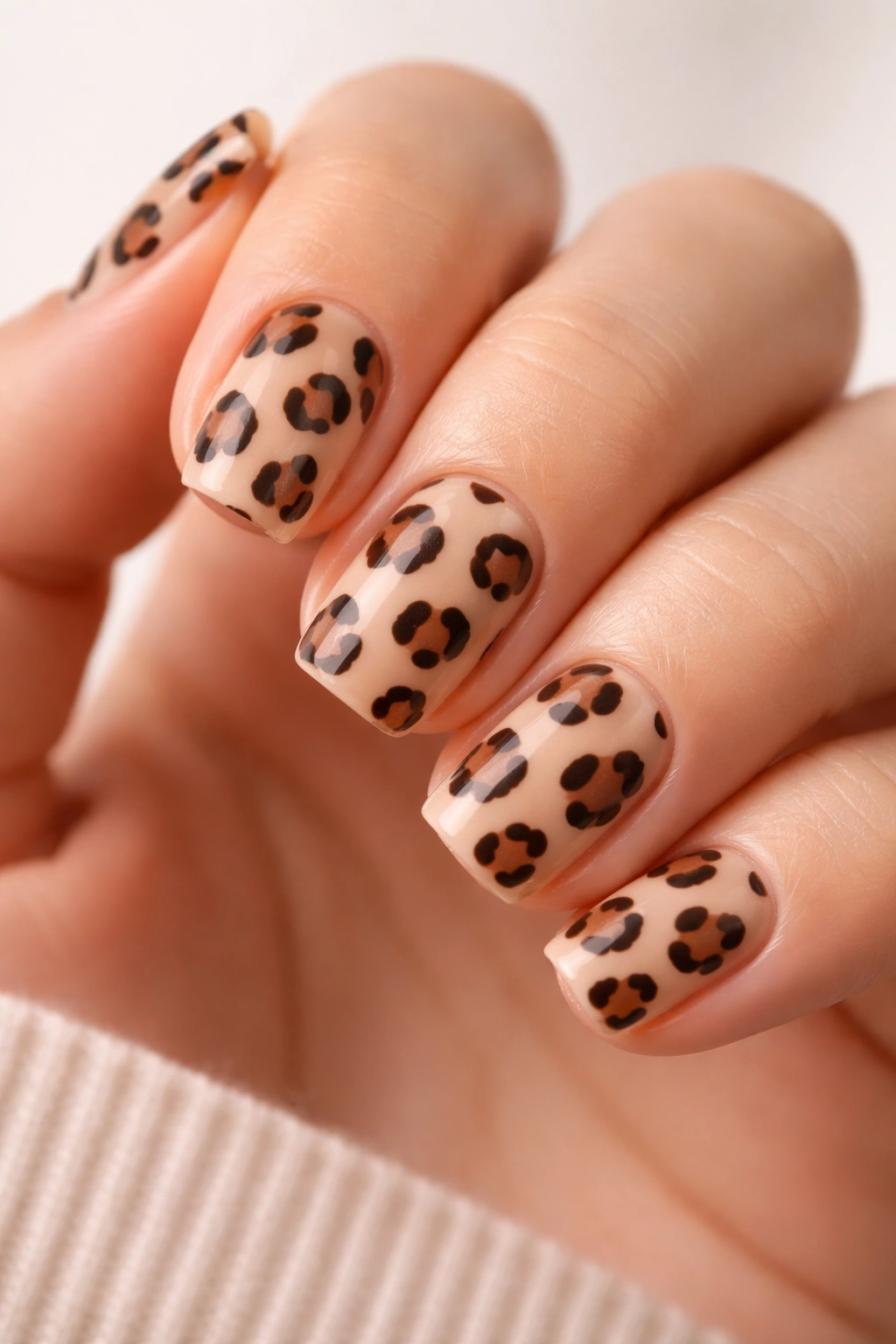
Prove that leopard print works beautifully on short nails by applying the pattern to a practical, low-maintenance nail length. Short, square, or slightly rounded nails offer less surface area for the pattern, which actually forces a cleaner, more refined design approach. Use larger, more deliberately spaced spots rather than attempting to cram many small spots into limited space.
The Sophistication of Leopard on Short Nails
Short nails often get overlooked in nail art conversations, but they’re actually an ideal canvas for leopard print. The reduced size means every spot is proportionally more visible and impactful. A short nail with just five or six well-placed leopard spots reads as sophisticated and intentional, while too many spots in that same space would feel cluttered. This length also transitions seamlessly from casual to professional settings and requires minimal maintenance compared to longer styles.
Adapting Your Technique for Limited Space
With short nails, resist the impulse to recreate the exact number of spots you’d use on longer nails. Instead, aim for a design that’s actually more minimal and refined. Create larger, slightly more irregular oval shapes and space them generously across the nail surface. You might apply three spots to one nail and four to another, creating asymmetry that feels intentional rather than sparse. The positioning matters more on short nails; place spots across different areas of the nail surface to maximize visual interest.
Pro tip: Short leopard nails look especially striking with a matte finish and perhaps a single metallic accent nail to create dimension without adding visual weight to the design.
8. Ombre Leopard Fade Effect
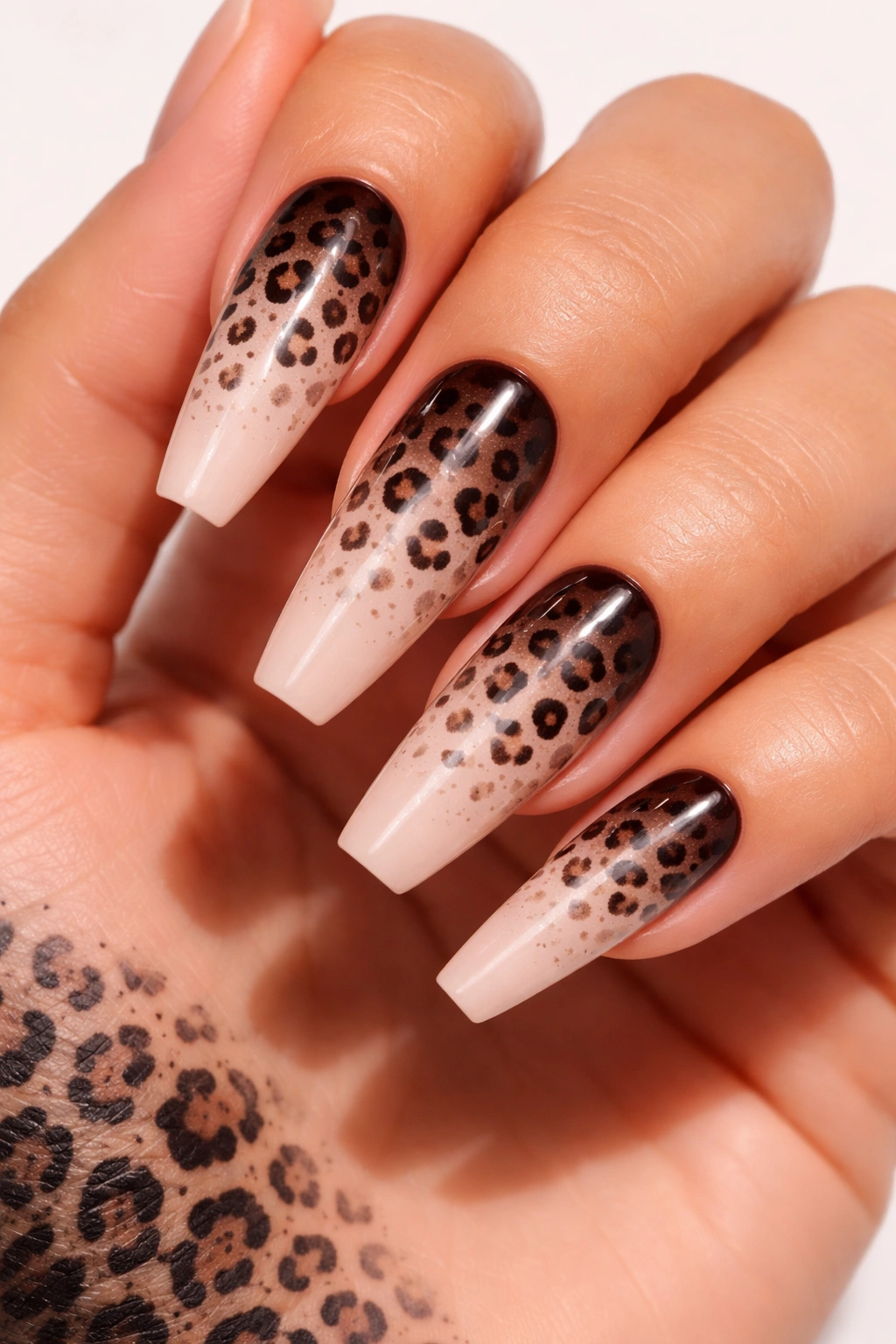
Create visual interest by applying leopard print over a subtle color gradient, where the base transitions from a darker shade at the nail base to a lighter shade at the tip. The leopard spots appear across this gradient background, and if you want to be extra precise, you can make the spots darker near the base and fade them in opacity toward the tip to echo the background gradient.
The Modern Appeal of Gradient-Based Designs
Ombre effects feel contemporary and sophisticated while providing a subtle backdrop that makes leopard print feel less stark. The gradient creates dimension that a solid background alone cannot achieve, giving the overall manicure depth and visual complexity. This approach works especially well on longer nails where the gradient has space to fully develop, and it’s an excellent option when you want leopard print to feel special and intentional rather than a basic pattern choice.
Creating the Gradient Foundation
Use two colors that coordinate beautifully—perhaps a deep mocha fading to pale latte, or burgundy fading to blush pink. Apply the darker color to the base of your nail and the lighter color to the tip, then use a sponge to blend them together in the middle by pressing and dabbing repeatedly. This technique takes practice but creates the softest, most seamless transitions. Once your gradient is fully cured and sealed, apply your leopard print spots in a medium-tone shade that shows up clearly against both the light and dark portions of the gradient background.
Pro tip: If blending a gradient feels overwhelming, try a reverse approach: use nail polish pens or thin brush strokes to apply color in gentle bands of progressively lighter or darker tones rather than attempting to achieve a perfectly smooth fade.
9. Leopard Print with 3D Textured Details
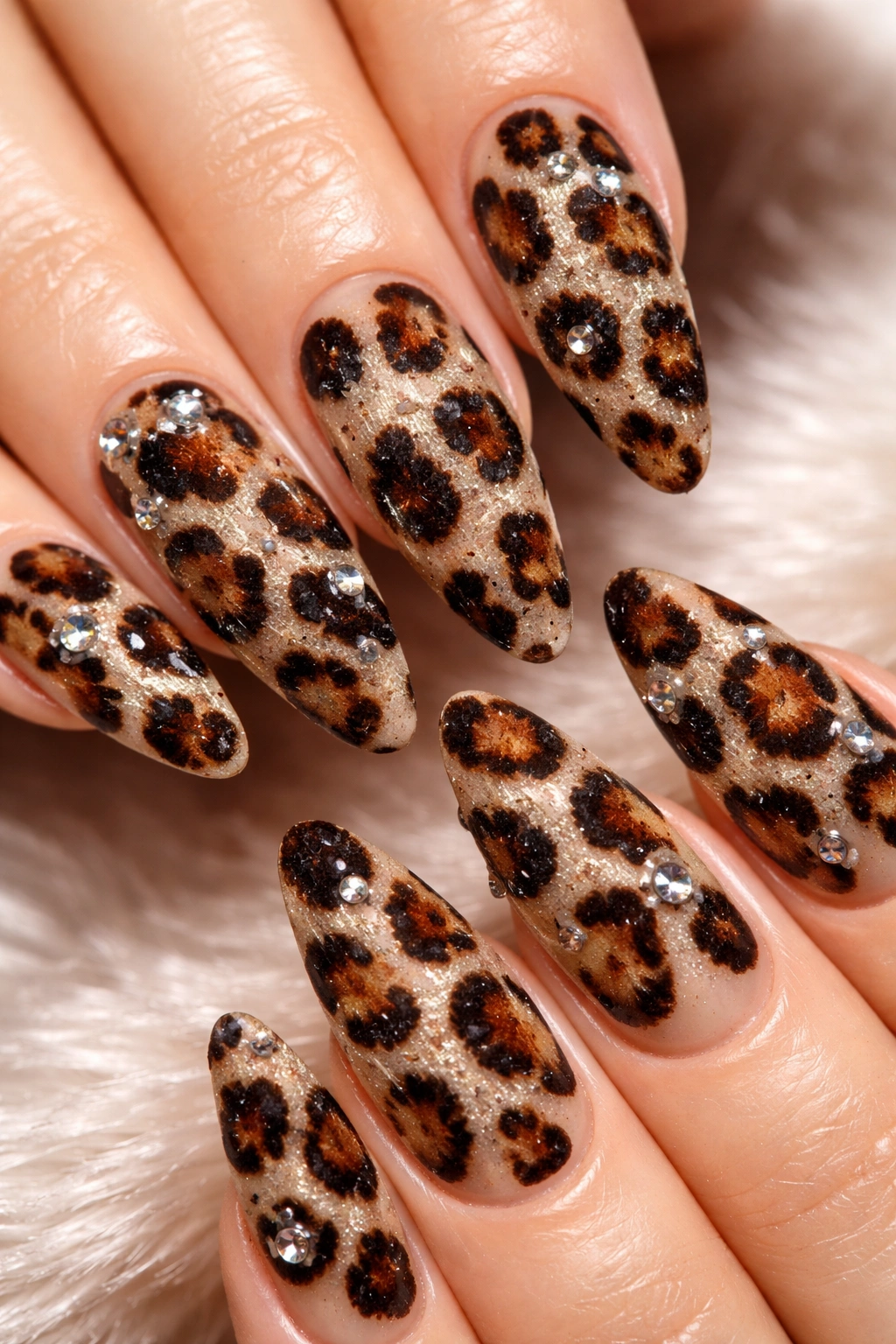
Add tactile dimension to your leopard manicure by incorporating 3D elements like tiny velvet powder applications, texture-creating builder gels, or even microscopic rhinestones embedded within the spot design. This approach transforms leopard print from purely visual to something you can actually feel, adding luxury and intrigue to your nails.
Why Texture Elevates the Design
A flat leopard print design reads as attractive and stylish, but adding textural elements moves it into special-occasion or high-fashion territory. Velvet effects make spots feel fur-like and tactile; rhinestones catch light from different angles throughout the day; textured gels create actual dimension you can see and feel. These additions communicate that you’ve invested time and thought into your manicure, elevating it from casual trend to intentional artistic expression.
Practical Application Methods
For a velvet effect, apply your leopard spots as usual, then before the top coat, dip specific spots into fine velvet powder and gently tap off excess. Seal with a matte top coat to blend the powder. For rhinestone accents, place individual crystals or tiny rhinestones within spots using a sticky gel medium and a tiny grabber tool, positioning them precisely before curing. For texture using builder gel, pipe small amounts of thick gel into your spots rather than painting flat layers, creating actual raised areas on your nail surface.
Pro tip: Start with just one or two textured elements per nail rather than adding texture to every spot; this restraint keeps the design wearable and prevents it from feeling costume-like.
10. Leopard Print French Manicure with Reversed Coloring
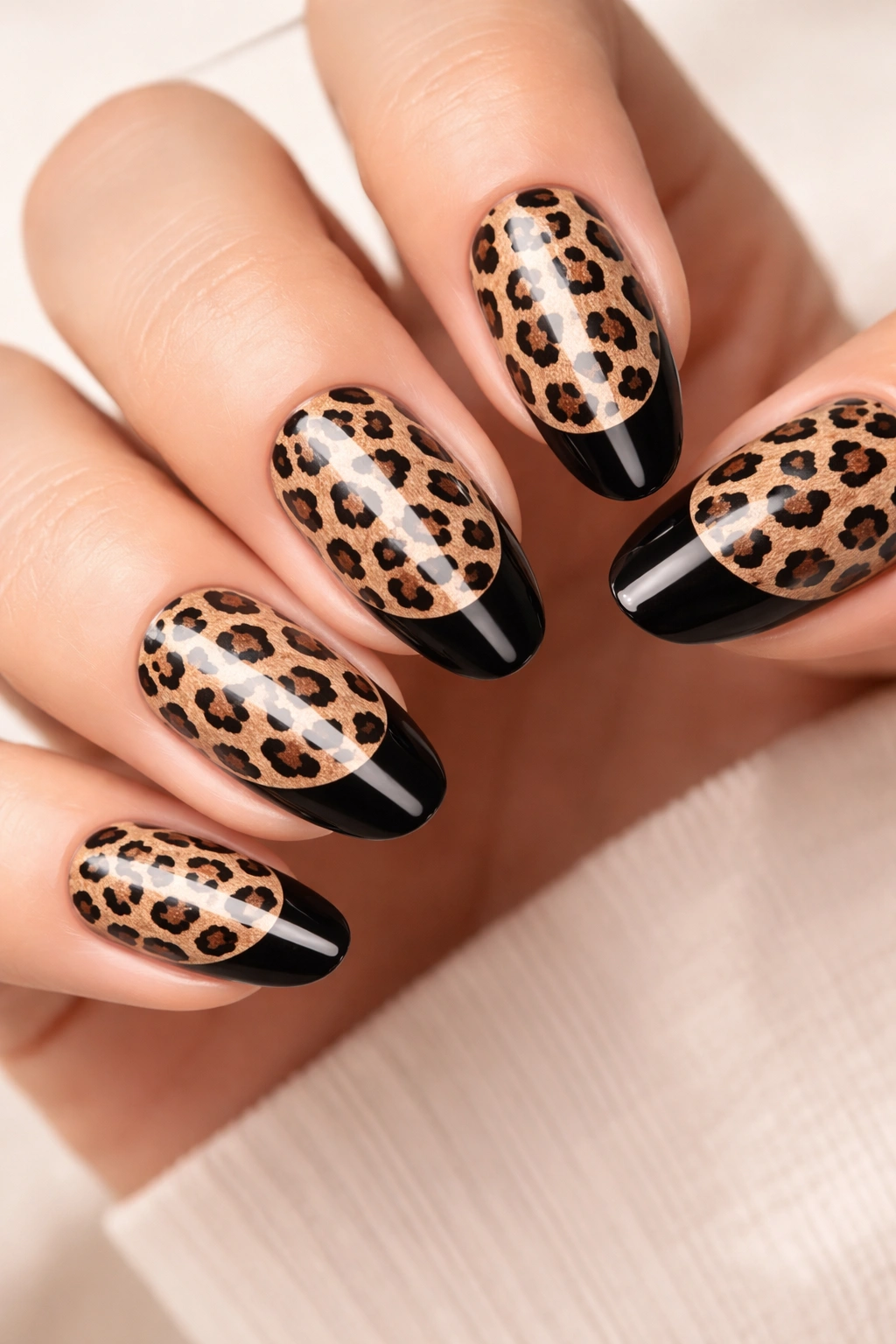
Flip the traditional French manicure script by reversing the coloring: use leopard print as your base color and solid, contrasting color for the tips. This modern interpretation feels fresh while maintaining the structural elegance of classic French nail design. The reverse French approach works beautifully when you want maximum visual impact with refined execution.
The Modern Innovation of Reversed French
Reverse or inverted French manicures have become increasingly popular as people seek to honor nail design classics while putting contemporary spins on them. Using leopard print as the dominant design while the solid tip color frames and finishes the look creates a visual balance that feels intentional and fashion-forward. This approach allows you to pair unexpected color combinations—like leopard spots on a pale base with a deep, jewel-toned tip—that might feel overwhelming if applied to the entire nail.
Execution Method for Reverse French Leopard
Create your leopard print across the entire nail surface using your standard spotting technique. Once this is fully cured, use a thin brush or nail guide to create a precise line where your solid tip color will begin. Paint the tip area in your chosen contrast color—this could be a deep burgundy, forest green, classic black, or any shade that provides clear contrast against your leopard base. The tip should extend roughly the same distance as a traditional French tip, approximately one-fifth to one-quarter of the nail length.
Pro tip: This design looks especially striking on almond or coffin-shaped nails where the tip area is naturally more prominent and provides a larger canvas for your contrast color.
11. Colorful Leopard Print Beyond Neutrals
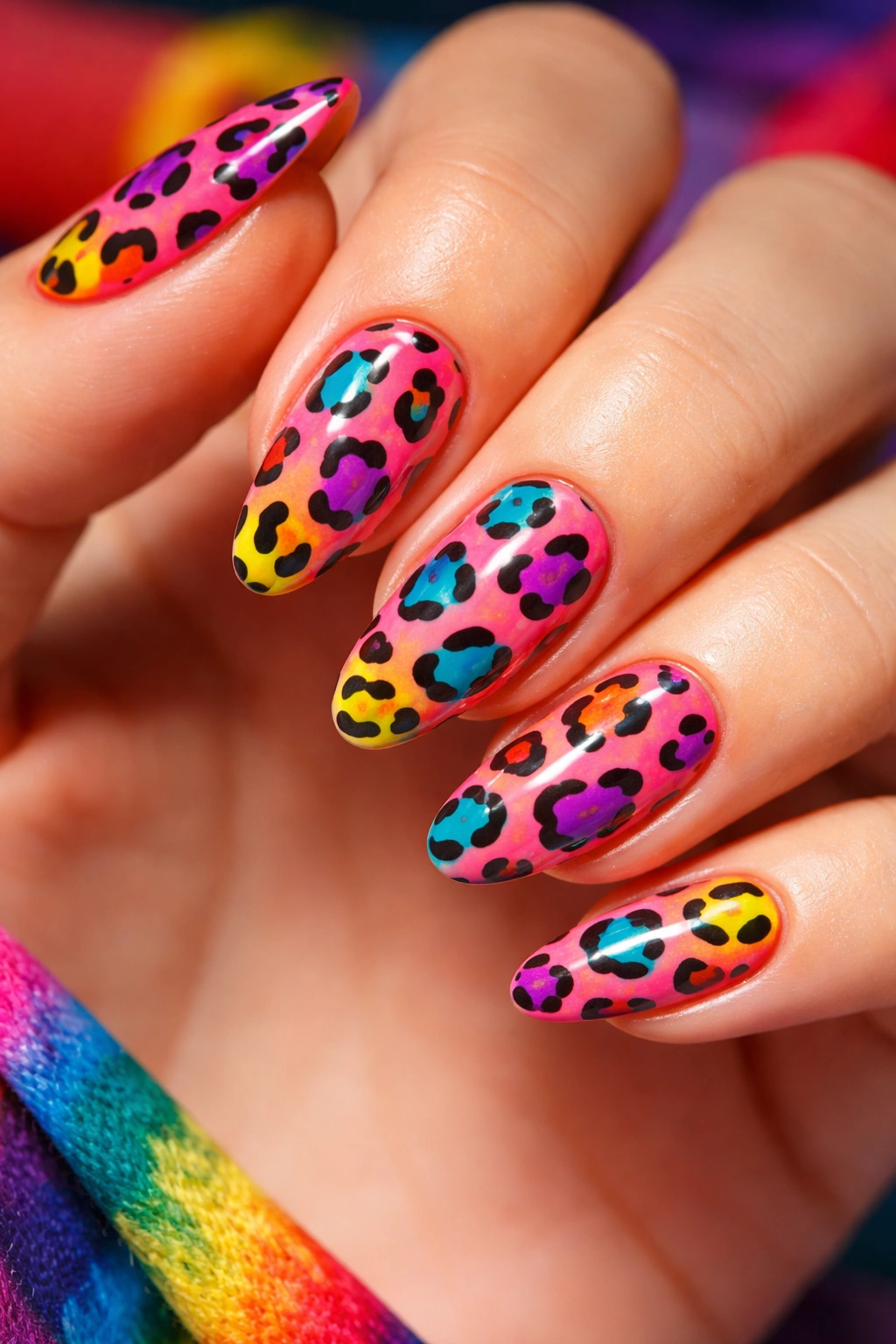
Break free from traditional leopard color palettes by reinterpreting the pattern in unexpected hues. Instead of black spots on beige, try deep teal spots on soft coral, or forest green leopard spots on lavender, or sunset orange spots on pale yellow. This creative approach maintains the recognizable leopard print silhouette while infusing the design with personal color preferences and style.
When Colored Leopard Print Works Best
Colorful leopard patterns feel playful, fashion-forward, and distinctly personal in a way that classic neutral versions don’t. They’re perfect for people who want animal print pattern without the traditional aesthetic, or who want their nails to coordinate with a specific outfit, mood, or seasonal palette. This approach also works beautifully on darker base colors—a rich emerald green base with pink leopard spots, or deep navy with golden-orange spots, feels sophisticated and intentional rather than random.
Choosing Your Color Combination
The key to successful colorful leopard print is ensuring sufficient contrast between your base and spot colors; if they’re too similar in value, the pattern disappears. Use a color wheel as your reference: complementary colors (opposite on the wheel) create striking contrast, while analogous colors (neighbors on the wheel) create harmony. Try pairing warm bases with cool spot colors, or vice versa. Test your chosen combination on a practice nail tip before committing to all ten nails.
Pro tip: Colorful leopard print pairs beautifully with matte top coats, which reduce shine and make bold color combinations feel more wearable and less costume-like.
12. Leopard Print with Geometric Elements
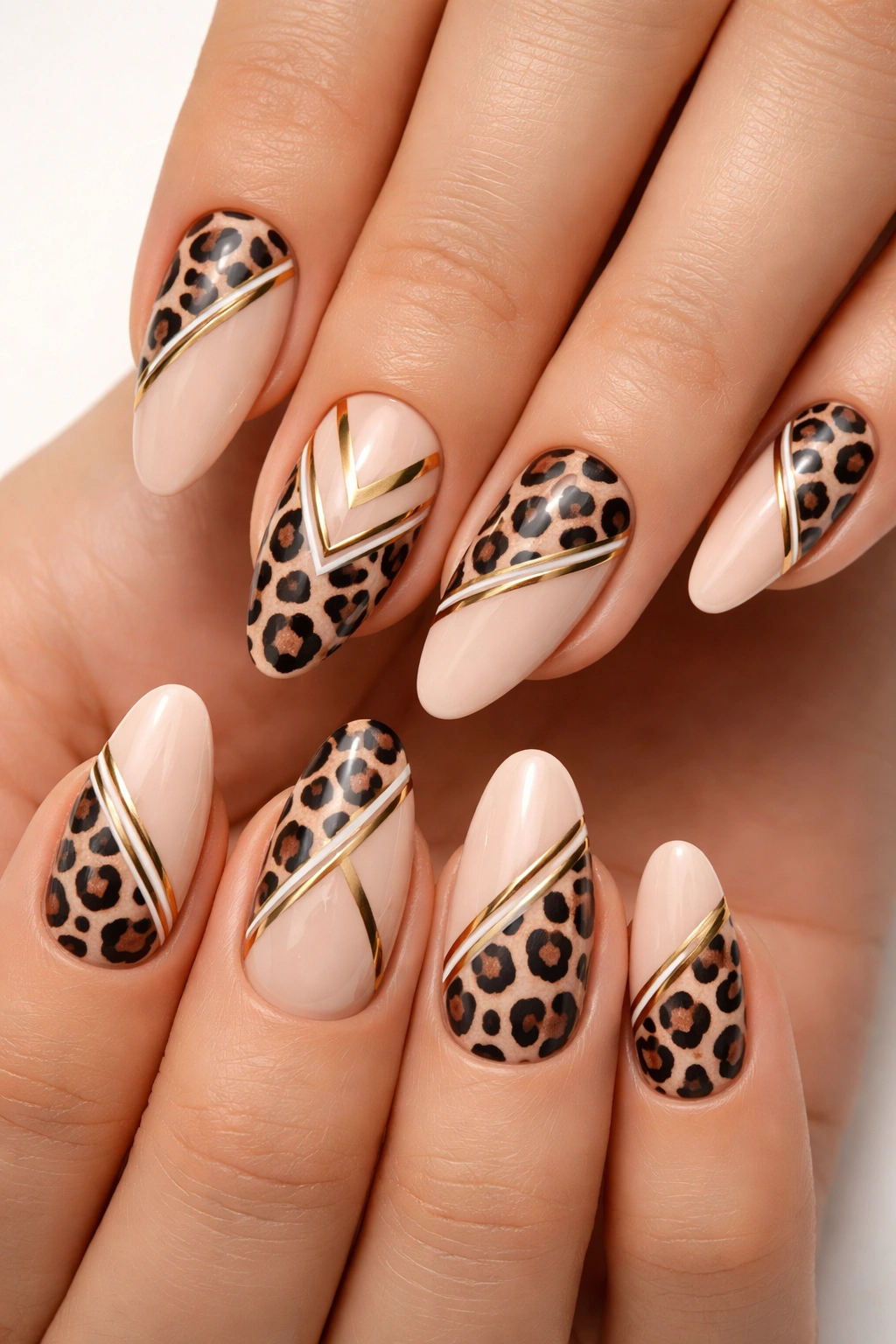
Combine leopard spots with geometric shapes—tiny triangles, thin lines, chevrons, or minimalist linear designs—to create a manicure that feels both wild and structured. This fusion approach appeals to people who appreciate both organic pattern and mathematical precision, resulting in designs that are visually interesting without being overly busy.
The Visual Balance of Organic Plus Geometric
Leopard print is inherently organic and irregular, making it pair beautifully with the precision of geometric elements. Thin gold or silver lines creating a grid pattern with leopard spots at intersections; tiny triangles filling alternate nails with leopard spots filling others; minimalist dot patterns combined with leopard spots—these combinations create visual interest through contrast and variety. The structured geometric elements ground the organic nature of the leopard pattern, resulting in designs that feel artistic and intentional.
Design Application Strategy
Sketch your geometric element plan before beginning: will you alternate geometric and leopard nails, combine both on each nail, or create geometric elements as an overlay across your leopard spots? Simple geometric elements work best—thin lines, small triangles, or basic dot grids—rather than overly complex patterns that compete with the leopard spots for attention. Apply the geometric elements first if they’re separate from leopard spots, or add them as a final layer if they’ll overlay the pattern. Use a thin brush or nail art pen for precise, clean lines.
Pro tip: Metallic geometric elements (gold or silver) add sophistication and luxury to this design without increasing visual chaos, and they coordinate beautifully with both neutral and colorful leopard bases.
Final Thoughts
Leopard print nails offer remarkable versatility, adapting gracefully to any personal style, occasion, and skill level. Whether you gravitate toward timeless classics or creative interpretations, the patterns and techniques covered here provide specific, actionable guidance for achieving salon-quality results. The core of leopard print nail success rests on understanding the pattern’s rhythm—irregular spacing, varied spot sizes, and thoughtful color contrasts that make the design feel intentional rather than haphazard.
The twelve approaches here span from minimalist subtlety to maximum visual impact, giving you options that work for quiet confidence or bold self-expression. You might discover that a single design becomes your signature style, returning to it again and again with slight variations. Alternatively, you might use this guide as a reference, selecting different approaches based on occasion, season, or mood. The beauty of leopard print is its fundamental flexibility—each variation works, and each tells a slightly different story about who you are and how you want to present yourself to the world.
As you experiment with these designs, remember that practice and precision matter far more than perfection. Your spotting technique will improve with repetition, your color combinations will become more intuitive, and your sense of which designs work best with your personal style will develop naturally. Start with designs that excite you, build foundational skills through the simpler approaches, then progress toward more complex variations as your confidence grows. Leopard print nails aren’t about flawlessly replicating nature; they’re about claiming a design you love and making it unmistakably yours.