




Red nails have that undeniable power to make any hand look polished, confident, and put-together — but there’s something especially striking about red duck nails. The bold, flared silhouette of duck nails transforms a classic red into a statement-making nail look that turns heads. The challenge? Making duck nails work when you’re not starting with a lot of length. Short nails require a different approach to pull off the duck shape successfully, but when done right, they’re absolutely stunning and way more wearable than their longer counterparts.
Duck nails started gaining serious traction in the nail art world over the past several years, and they’ve remained a favorite for people who want something bold and editorial. The flared, wide tip creates a modern, almost futuristic aesthetic that photographs beautifully and catches the light in unique ways. Red is the perfect canvas for this shape because it’s timeless, versatile, and commands attention without needing elaborate designs. Whether you prefer your red rich and dramatic, soft and sophisticated, or playful and bright, there’s a red duck nail style that fits your vibe.
The key to making duck nails look amazing on shorter nails is understanding proportion and balance. When you have less natural length to work with, the flare of the duck tip becomes even more dramatic in proportion to the nail bed. This actually works in your favor — you can create a striking look without needing extreme length, and the result tends to feel more practical and less costume-like. Short duck nails work beautifully for people who want the trend without committing to super long nails, or for anyone whose lifestyle (work, sports, daily activities) makes extreme length impractical.
Here are ten show-stopping red duck nail designs that look absolutely gorgeous on short nails, from timeless classics to modern twists that’ll have everyone asking for your nail inspo.
1. Classic Crimson Duck Nails
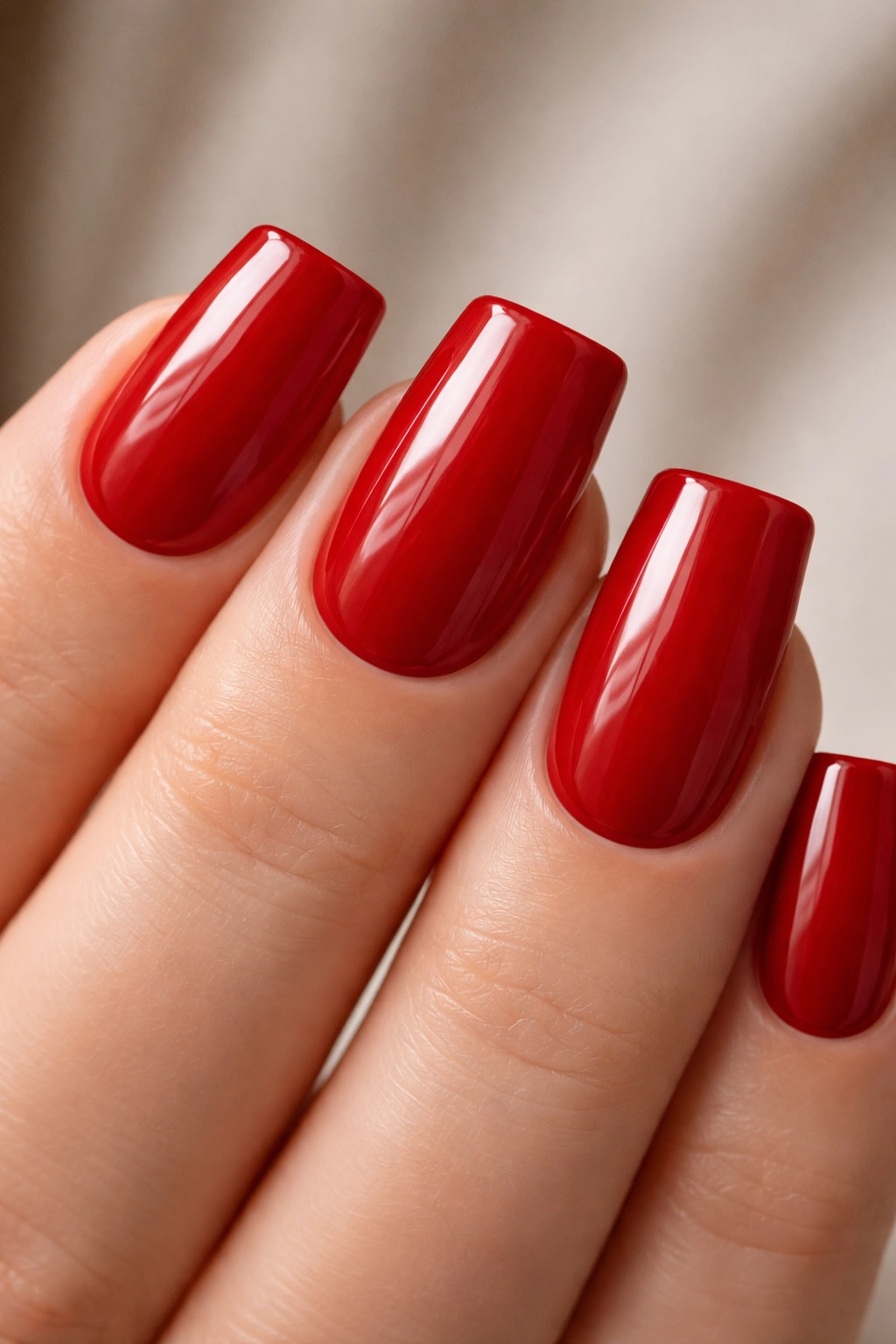
Nothing says elegance like a true, true red — the kind that sits right in the middle of the color spectrum, not veering toward orange or purple. Classic crimson duck nails are the foundation of this whole trend, and they’re iconic for a reason. On short nails, this simple, single-color approach actually becomes even more striking because all the focus lands on the shape itself. The flare of the duck creates natural dimension and visual interest without needing any additional embellishment.
Why This Design Stays Timeless
A pure crimson red has been a symbol of sophistication and power for decades, and it never goes out of style. The reason this works so well on duck nails is that the shape is visually complex enough on its own — the curves, the flare, the proportion — that a clean, solid color actually complements the geometry rather than competing with it. When you’re working with shorter nails, this simplicity becomes an advantage. The eye reads the shape clearly without distraction, making the overall effect both modern and refined.
How to Achieve This Look
Use a high-quality, pigmented red polish that covers in two coats. Look for a formula that’s creamy rather than sheer — you want full opacity and a rich finish. Paint a base coat first, then apply two even coats of your red, allowing each coat to dry completely before applying the next. For the duck shape on short nails, use a nail file to create a soft square base (shorter than you might think — aim for the length of a typical manicure), then gently file the sides inward and flare the free edge outward using downward, sweeping motions. Seal everything with a glossy top coat that enhances the depth of the red.
Pro Tip
If your natural nails are strong, you can create duck nails entirely on your natural nail bed without extensions. For shorter nails, this often looks more balanced than extensions would. If you do use extensions, keep them slightly shorter than you normally would for other shapes — the flare is what creates the drama, not the length.
2. Burgundy Ombre Duck Nails
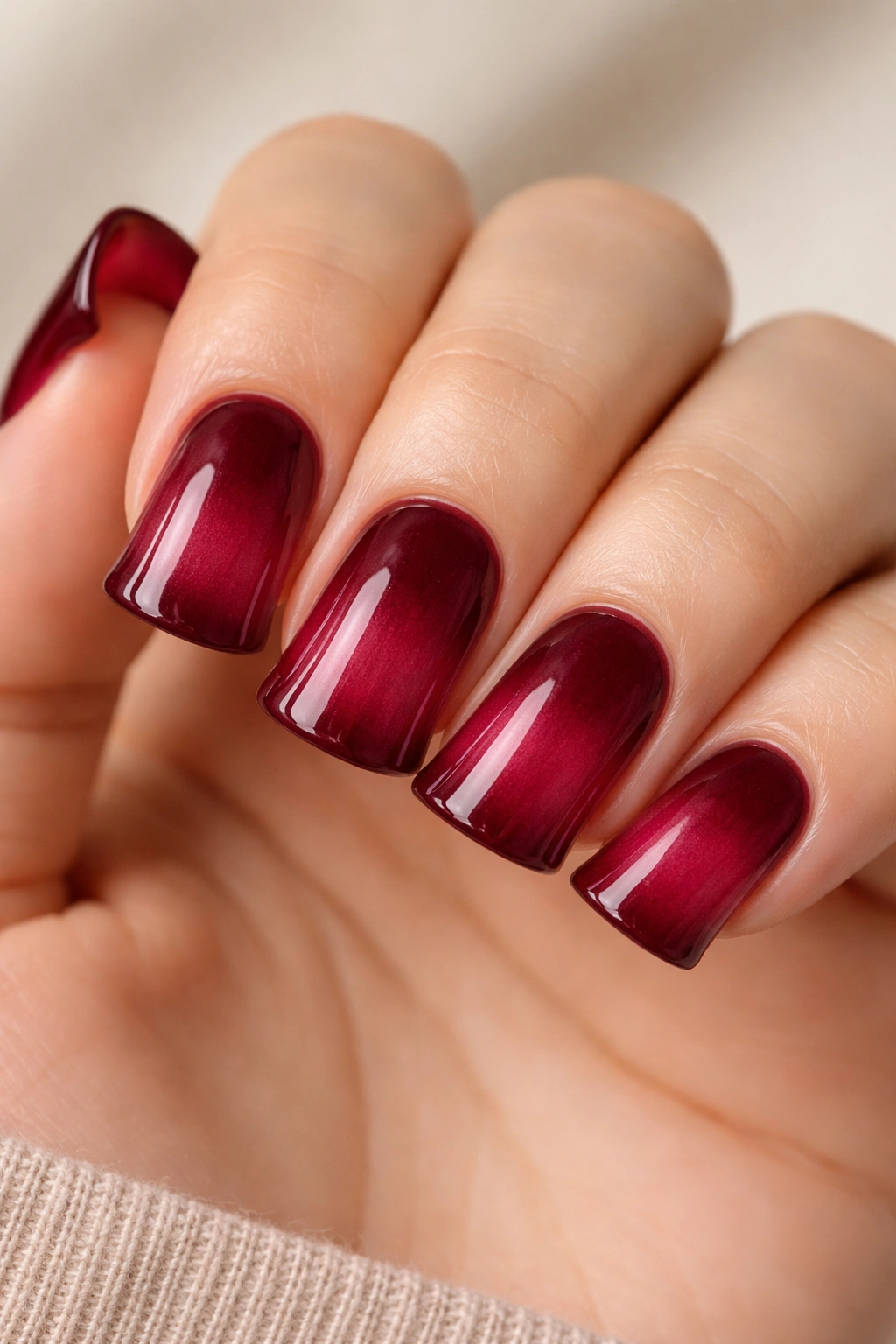
Burgundy ombre duck nails blend a deep, wine-toned base that gradually transitions to a lighter red or burgundy at the tip. On short nails, this gradient effect adds visual length and creates a sophisticated, almost three-dimensional appearance. The ombre technique works beautifully on duck nails because the flared tip is exactly where you want the lighter, more prominent color to sit.
The Appeal of Burgundy Ombre
Ombre techniques have staying power in nail art because they’re visually interesting without being loud. The burgundy color palette — deeper, more wine-like than pure red — reads as very grown-up and elegant. When you apply ombre to duck nails specifically, you’re leveraging the shape to showcase the gradient effect. The flare naturally creates a wider surface at the tip, which is where your lighter shade sits, making the color transition feel intentional and polished.
Building the Ombre Effect
Start with a burgundy base and paint two full coats. Once dry, apply your lighter red or rose shade to a makeup sponge, focusing the color on the outer edge of the sponge. Dab the sponge gently onto the tip of your nail, working the color back toward the middle in light, repeated motions. You want a soft, blended transition rather than a sharp line. Seal with a glossy top coat. The key with short nails is making sure your gradient is proportional to your nail length — a subtle, gradual transition looks best rather than a steep color shift.
Variation Worth Trying
For a more dramatic version, add a thin line of gold or champagne shimmer where the colors meet. This adds extra dimension without overwhelming the design on shorter nails.
3. Red Glitter Duck Nails
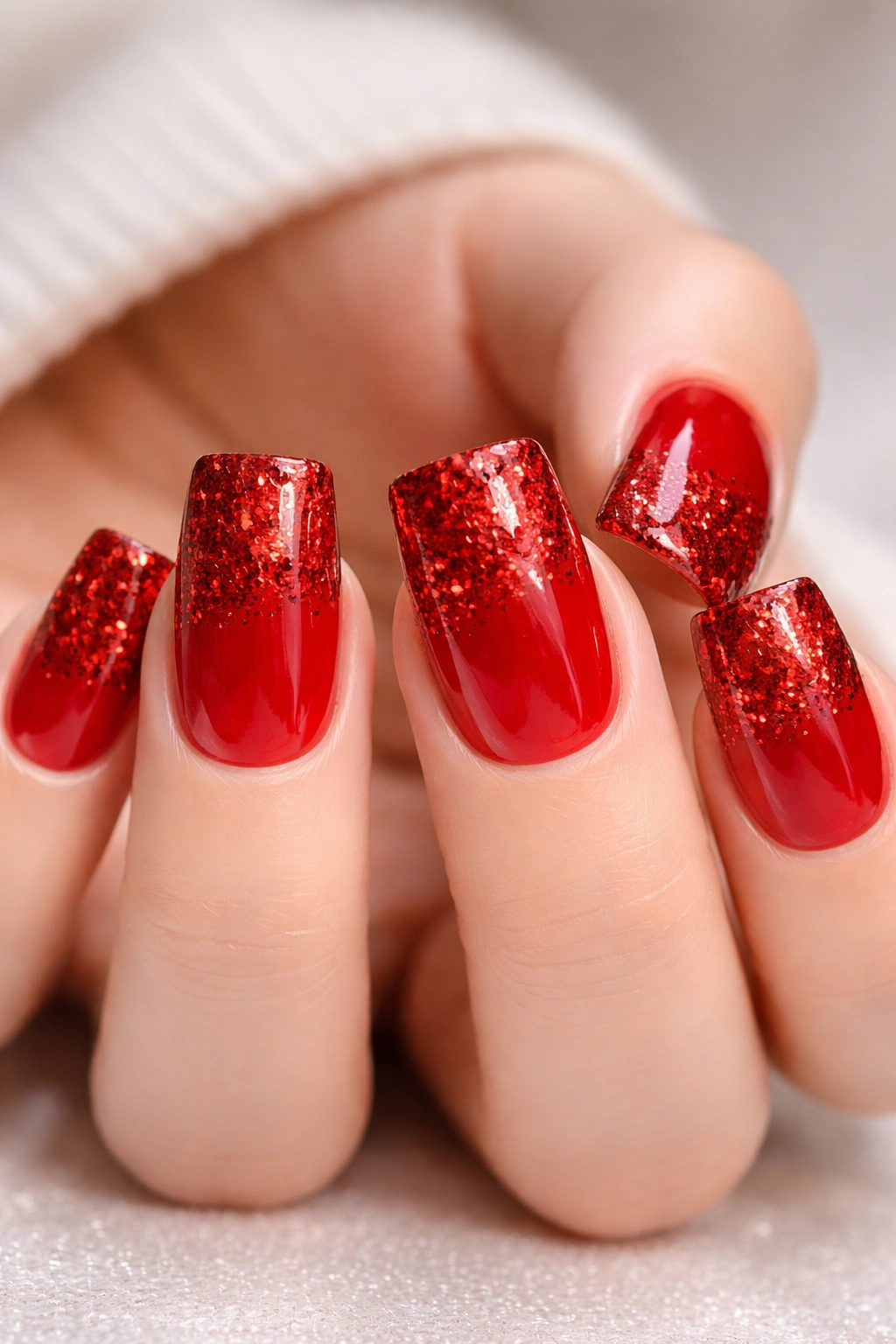
Glitter duck nails bring playfulness and sparkle to the bold red palette. There are different approaches: full glitter coverage, a gradient of glitter that’s more concentrated at the tip, or a glitter-dipped effect where only the flared portion catches the sparkle. On short nails, less-is-more usually works best with glitter, so strategic placement creates more impact than total coverage.
Making Glitter Work on Short Nails
The risk with glitter on short nails is that it can look overwhelming or costume-like if applied too heavily. The solution is to use what’s called a glitter gradient or a glitter dip, where the sparkle is most concentrated at the tip and fades back toward the nail bed. This creates a shape-flattering effect that draws the eye to the flare of your duck nails without making them feel costume-y. Choose fine or medium-cut glitter in gold, champagne, or ruby tones — chunky glitter can look odd in proportion to shorter nails.
Application Technique
Paint your base red. While the final coat is still tacky (before it dries completely), take a makeup sponge or a specialized glitter gradient tool, dab it into loose glitter, and gently press it onto the tip half of your nail, gradually reducing pressure as you move toward the center. This creates a naturally fading effect. Alternatively, paint a thin layer of clear or slightly translucent glitter polish over just the bottom third of your nail for a more refined, subtle sparkle. Finish with a thick top coat to seal everything and add shine.
Material Recommendation
Cosmetic-grade glitter is safest for nails. It won’t shed as easily as craft glitter, and it won’t damage your nails during removal. Gel-based glitter polishes also work beautifully and last longer than traditional glitter mixed with polish.
4. Matte Red Duck Nails
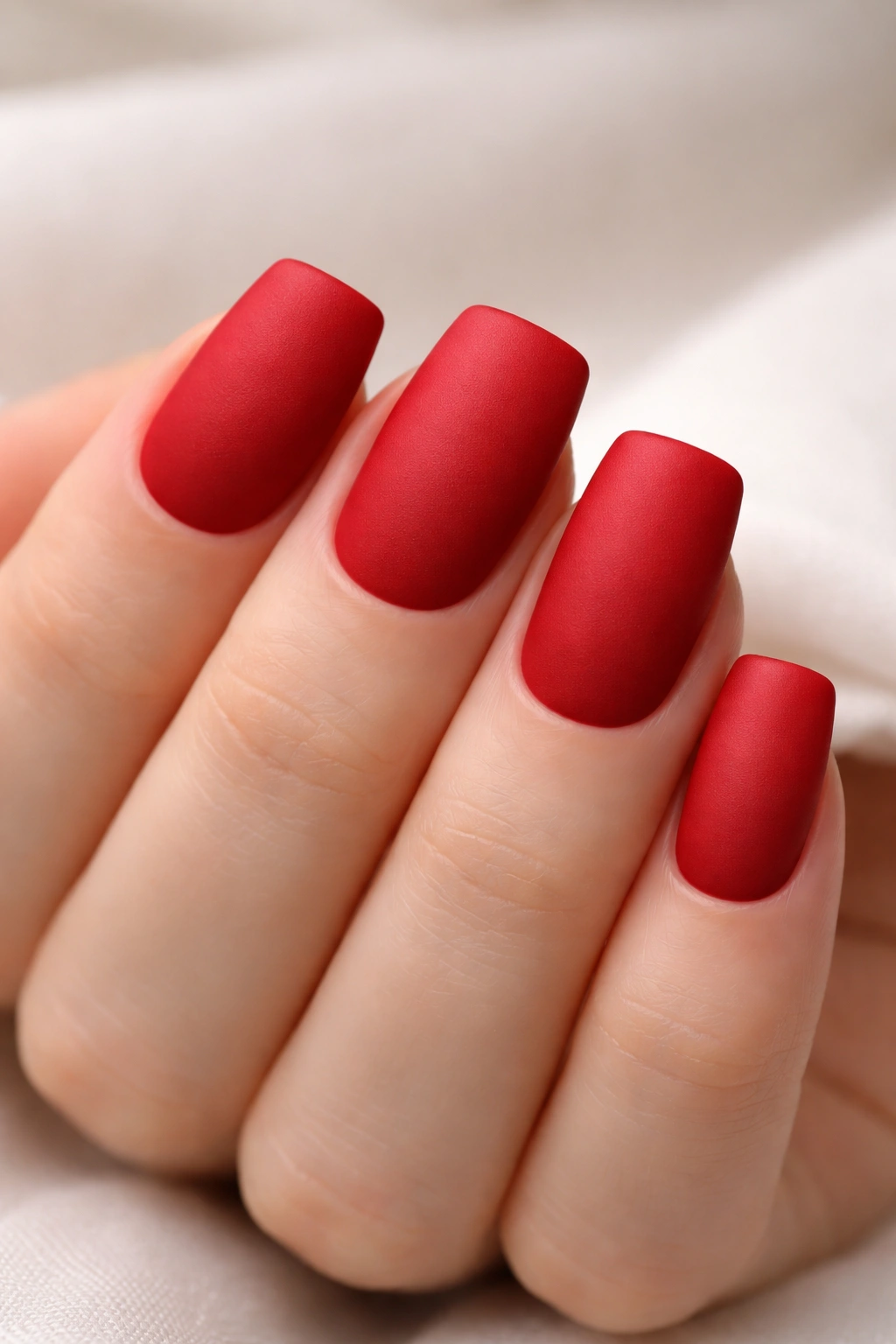
Matte red duck nails have a velvety, sophisticated finish that feels incredibly current and editorial. There’s something about the flat, non-reflective surface that makes the shape of the nail even more visually pronounced. On short duck nails, matte finish actually makes them appear slightly longer because the eye reads the shape differently without the reflective gloss competing for attention.
Why Matte Finishes Suit Duck Nails
Glossy finishes catch and reflect light, which can sometimes make shorter shapes feel even shorter by drawing the eye to the width. Matte finishes, by contrast, allow the eye to follow the outline of the shape — the flare, the curves, the silhouette — more clearly. This enhanced shape-reading is exactly what you want with duck nails. The geometric interest of the design becomes the star rather than the shininess of the polish.
Achieving Matte Perfection
Apply two coats of a quality red polish, allowing proper drying time between coats. Once fully dry, apply a matte top coat over the entire nail. Some people prefer using a matte topcoat over a glossy red base, which gives you richness in the color while creating the matte finish. If you want the deepest, most velvety matte finish possible, look for matte polishes specifically formulated with matte pigments rather than applying a matte coat over a glossy base. The difference in depth and texture is noticeable.
Matte + Texture Combinations
Consider combining matte with a subtle texture — velvet powder, a very fine shimmer, or a pearlescent matte — for added dimension without losing the matte aesthetic. These hybrid finishes photograph beautifully and feel luxurious while maintaining that modern, editorial quality.
5. Red Velvet Texture Duck Nails
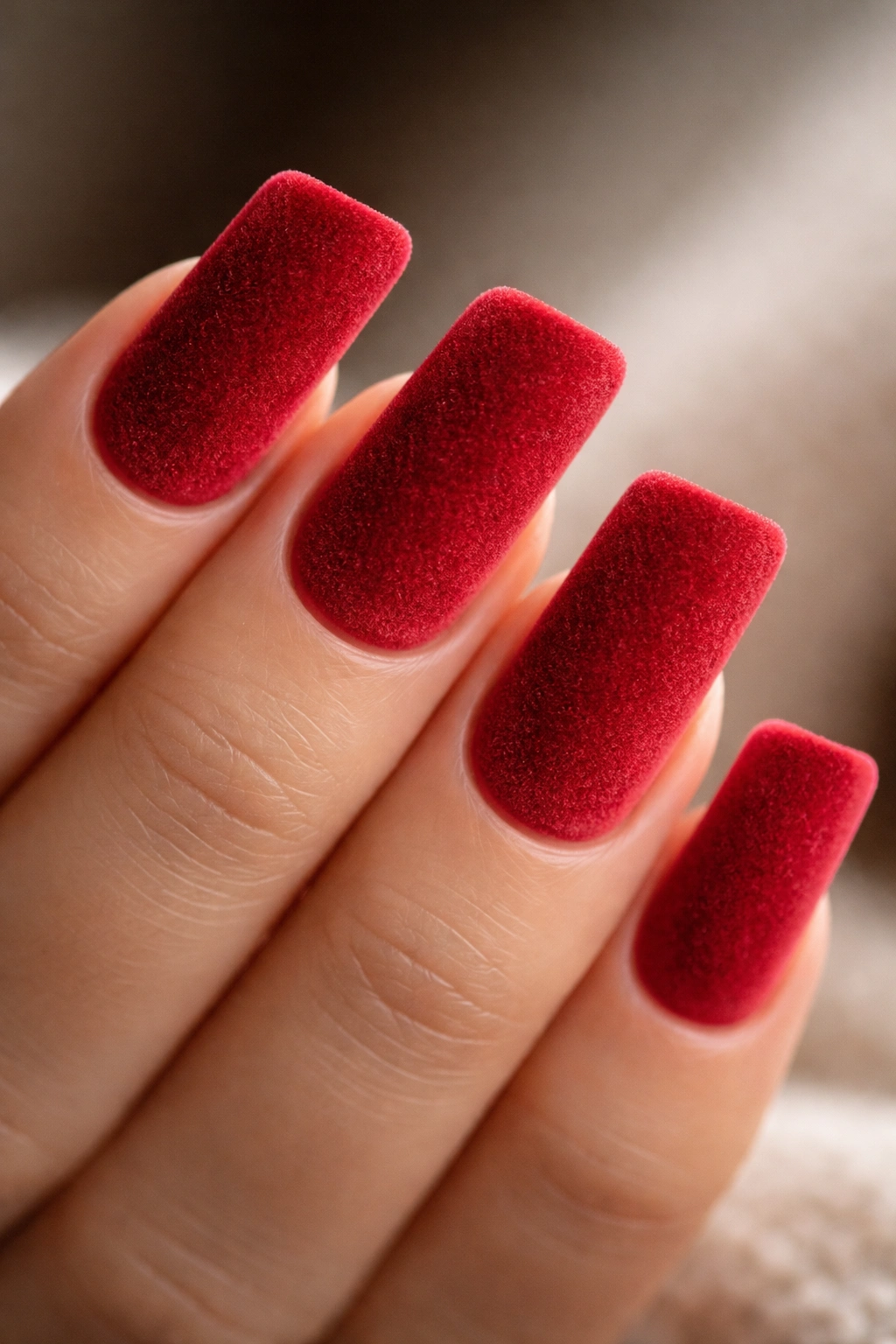
Red velvet nails have an actual textured finish that feels like soft fabric — it’s tactile, luxurious, and absolutely striking on duck nails. The texture sits somewhere between a matte and a sugar finish, creating a one-of-a-kind look that’s more eye-catching than a standard matte polish. On short nails, texture adds dimension that makes the nails feel more substantial and interesting.
What Red Velvet Texture Feels Like
Velvet powder is specially formulated tiny particles that adhere to wet polish and create an ultra-soft, suede-like finish. You can actually feel the difference when you touch your nails — they feel like butter or velvet rather than like shiny polish or completely matte polish. This tactile element makes the look feel more special and intentional. For duck nails specifically, the texture draws attention to the contours of the shape because it interacts with light differently across the curved surfaces.
Building the Velvet Look
Apply two coats of your red base polish. While the second coat is still wet (just barely set but not completely dry), use a velvet powder applicator or a soft brush to gently apply the powder over the entire nail surface in light, sweeping motions. You’ll see it adhere to the wet polish. Allow to dry fully — usually 1-2 minutes. Apply a clear or slightly matte top coat to seal, though some people prefer leaving velvet powder unsealed for the full tactile effect (just be aware that unsealed velvet will eventually wear and shed more easily).
Customizing Your Velvet
Not all red velvet powders are identical. Some lean more burgundy, some more tomato-red, some more scarlet. Test a few options to find which undertone complements your skin tone best. The texture is already eye-catching, so you’re mainly varying the depth and tone of the red itself.
6. Red with Gold Accent Duck Nails
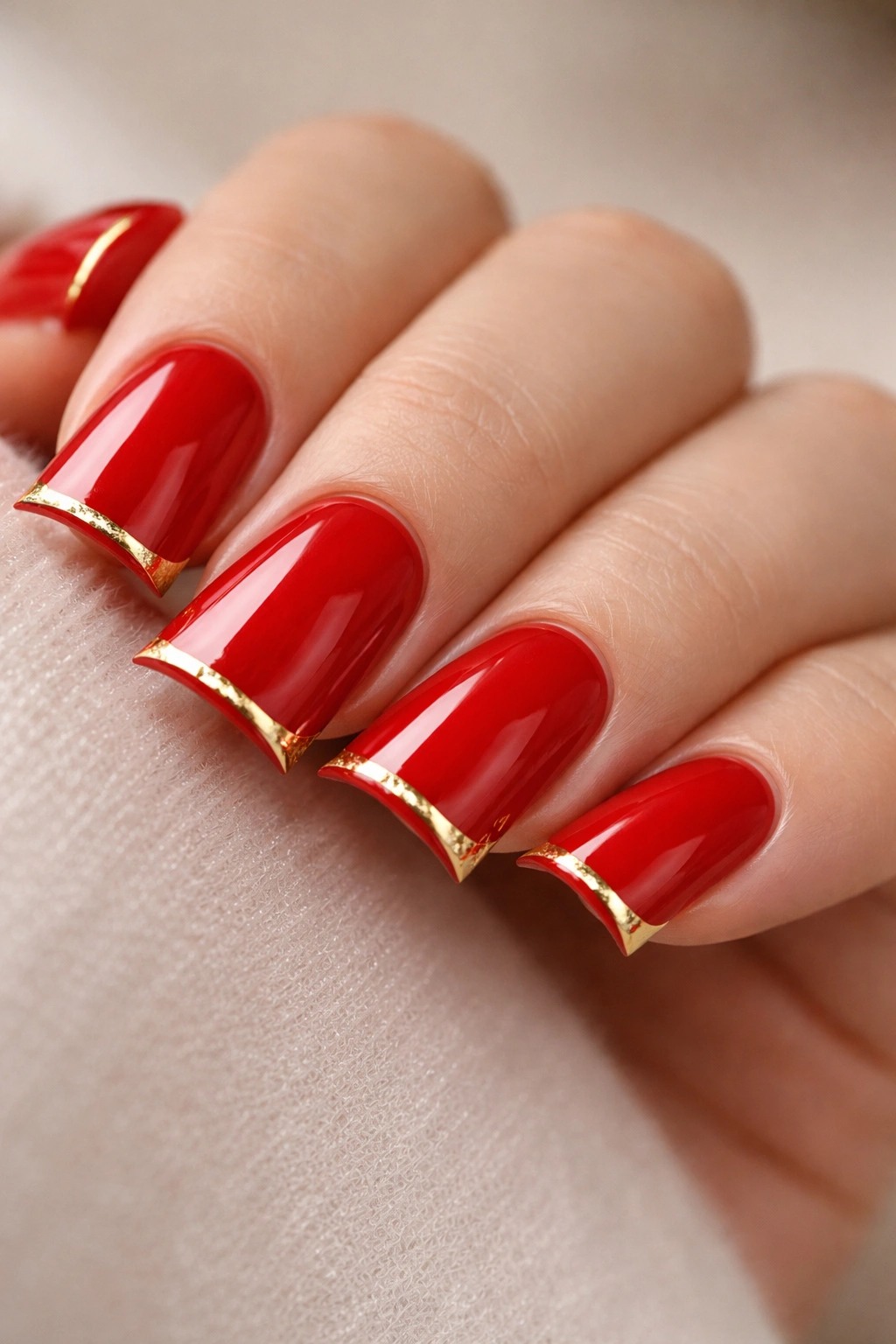
Red and gold is a classic, luxurious combination that feels timeless and expensive. On duck nails, you can incorporate the gold in various ways: a thin striped accent, a geometric shape, or a foil application. For short nails, accent placement is key — a well-placed gold detail catches the eye and adds sophistication without overwhelming the shape.
Where to Place the Gold
The most flattering placement for gold accents on short duck nails is along the sides of the flare or as a thin line at the edge where the flare begins. This draws the eye horizontally, which is flattering to shorter nail proportions. You could also try a single gold vertical line down the center of the nail, which is grounding and elegant. A geometric accent in one corner of the tip also works beautifully without taking over the whole nail.
Technique Options
For a thin gold line, use a thin striping brush or a detail brush with metallic gold polish. For foil accents, apply a foil transfer after your red base is dry — foil gives an almost 3D, mirror-like effect that’s stunning. For a geometric shape, use tape to mask off your design area, apply the gold, let dry, and carefully remove the tape. Each method creates a different feel, so choose based on how refined or bold you want the overall look.
Color Coordination
Bright, sunny golds pair beautifully with a true crimson red. Cooler metallics like rose gold or champagne work better with burgundy or wine-toned reds. Warm golds are versatile with most red undertones — experiment to see what feels most cohesive with your duck nail color.
7. Red Marble Duck Nails
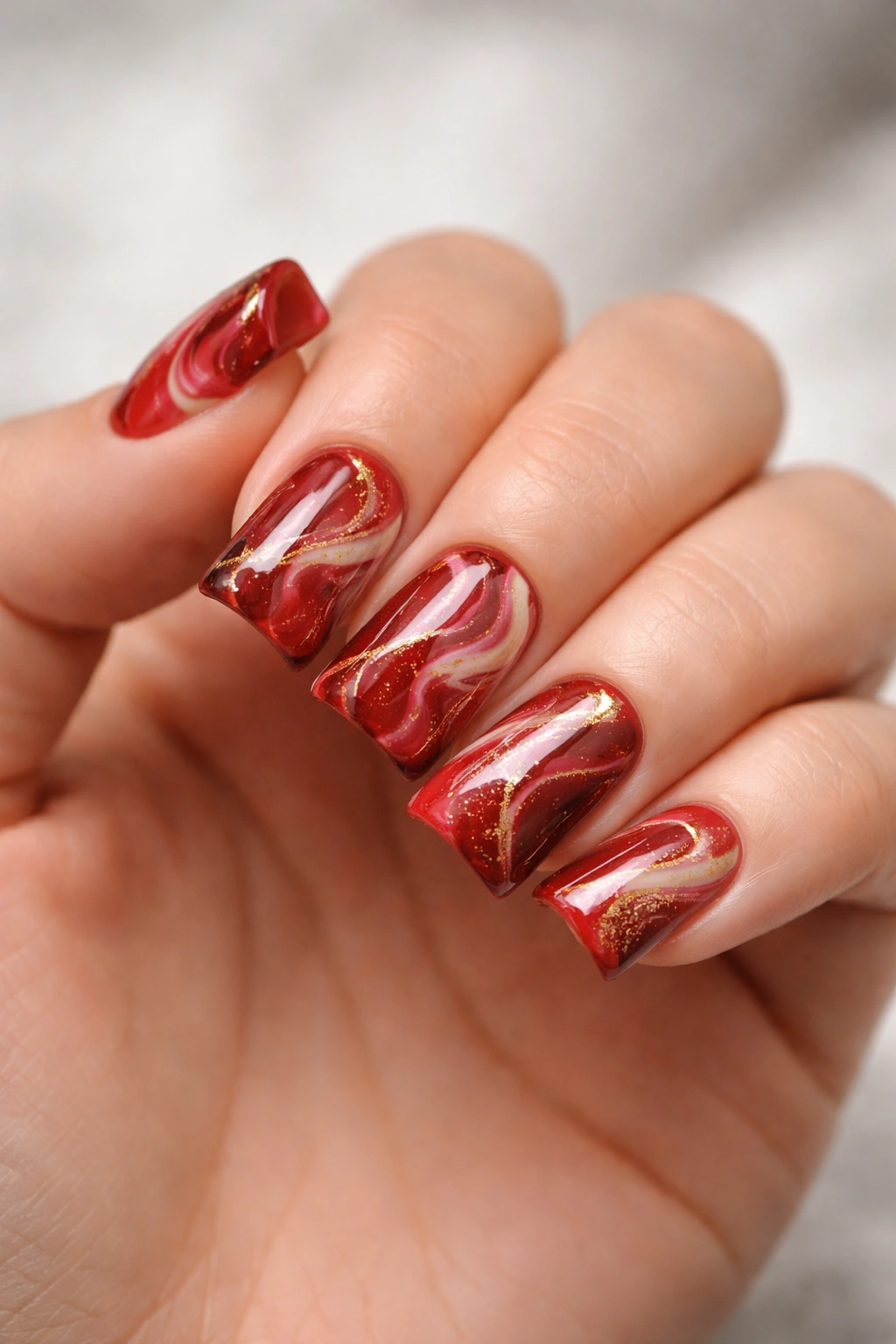
Marble nail art creates the illusion of natural stone patterns across your nails. On red duck nails, a marble design in shades of red, burgundy, and white (or red with gold and white) creates a sophisticated, artistic look that’s both complex and elegant. The swirling pattern particularly flatters duck nails because it draws the eye across the entire shape rather than focusing on the length.
How Marble Works on Short Nails
Because marble is an all-over pattern rather than a focused design, it actually works beautifully on shorter nails. The eye follows the swirling pattern and is distracted from analyzing the length. The flare of the duck nail provides interesting surfaces for the marble pattern to land on — the curves and planes catch the different colors in a way that looks painterly and intentional.
Creating Marble Patterns
There are two main approaches: water marble (an old-school technique involving dropping polish into water and swirling) and freehand marble using thin detail brushes. For most people, freehand is more accessible and achievable. Use a base coat of your primary red. Once dry, use a thin detail brush with a contrasting shade (white, burgundy, gold) to create thin, organic lines across the nail. Swirl the lines gently into each other using a clean, slightly damp brush. The key is not to blend completely — you want distinct colors with soft transitions, not a totally blended effect.
Pattern Variation
Experiment with different color combinations: deep burgundy with white and gold, crimson with nude and silver, wine-red with white and rose gold. The best marble looks feature three to four colors with good contrast between them.
8. Deep Wine Red Duck Nails
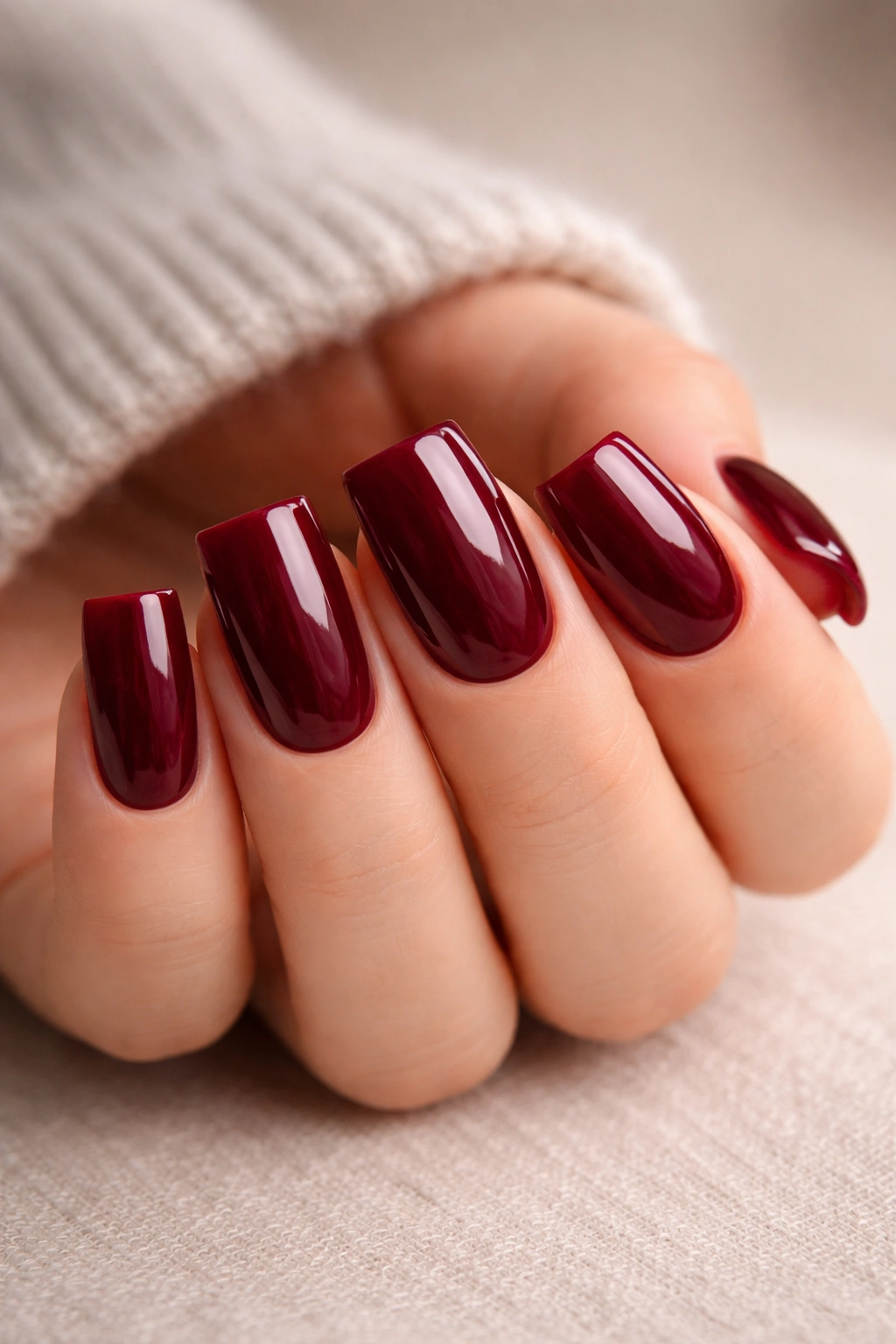
Wine-red duck nails skew darker and more sophisticated than traditional reds. This shade sits deeper in the spectrum, often with burgundy or plum undertones. On short nails, wine red is incredibly flattering because the depth of the color makes the nails appear more substantial. It’s a color that reads as elegant and intentional rather than just “bright red.”
The Psychology of Wine Red
Wine red occupies an interesting space — it’s bold enough to feel editorial and fashion-forward, but it’s also conservative enough to feel appropriate for professional or formal settings. On duck nails specifically, the darker shade creates beautiful contrast with skin tone, making the shape even more visually striking. Because it’s deeper, the flare feels more dramatic in proportion to the color saturation.
Choosing Your Wine Shade
Wine reds vary widely. Some lean more toward burgundy (more red-brown), some toward eggplant (more red-purple), some toward oxblood (more red-black). Test a few options to find the one that complements your skin’s undertones best. Generally, people with warmer skin tones gravitate toward burgundy-leaning wine reds, while people with cooler skin tones often prefer purple-leaning wine reds.
Building the Base
Use a good base coat, then apply two coats of your wine red polish. Wine red shades often have great pigmentation and can sometimes appear slightly sheer, so ensure you’re getting full opacity. A thick, creamy formula applies more evenly than a thin, runny one. Finish with a high-shine top coat to let the depth of the color really glow.
9. Coral-Red Duck Nails
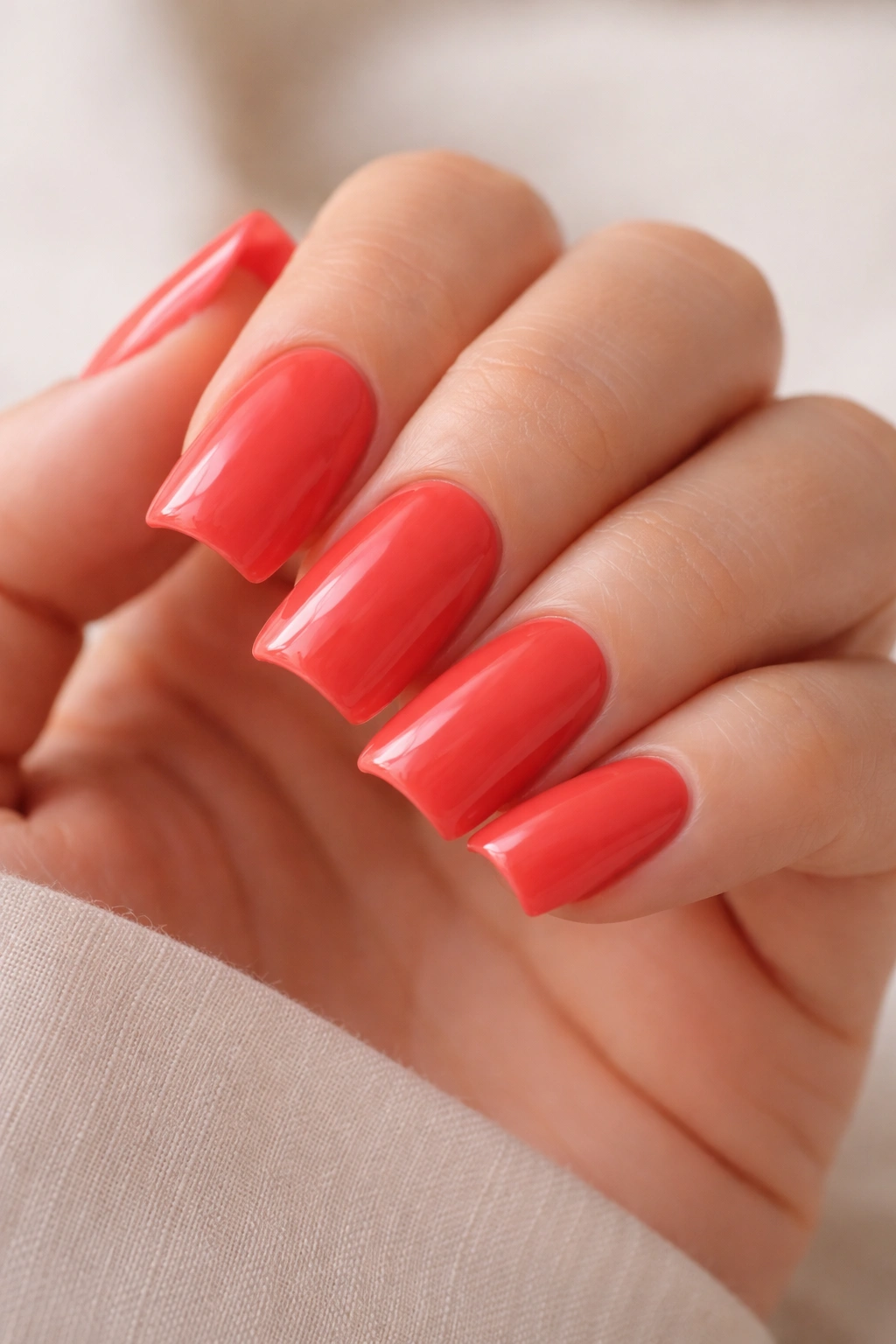
Coral-red duck nails blend the warmth and playfulness of coral with the boldness and timelessness of red. This is a joyful, energetic color choice that’s slightly less serious than pure red while still feeling sophisticated. On short nails, coral-red is especially flattering because the warmth and brightness of the shade make the nails feel longer and more substantial than the actual length would suggest.
Why Coral-Red Flatters Short Nails
Brighter, warmer shades of red-coral create the optical illusion of making nails appear slightly longer because the eye reads brightness and is drawn to bright areas. Combining coral (which is inherently warm and light-transmitting) with red (which is bold and substantial) creates a color that’s both eye-catching and flattering. It photographs beautifully under various lighting conditions and works across many skin tones.
Finding Your Coral-Red
Coral-red sits between true coral (which leans more peachy-orange) and true red (which leans pure). You want something that’s unmistakably red but has warm, coral undertones. Test swatches on your nail or on a nail wheel before committing. Some coral-reds lean more toward tomato-red with coral warmth, others toward coral with red saturation. The best choice depends on your specific skin tone and personal preference.
Finishing Options
Coral-red looks stunning with a glossy top coat that lets the color shine and glow. It also looks beautiful with a semi-matte finish, which makes the warmth of the color even more apparent. A subtle shimmer or light metallic sheen also complements coral-red beautifully without overwhelming it. Experiment with different finishes to see what resonates with you.
10. Red Chrome Duck Nails
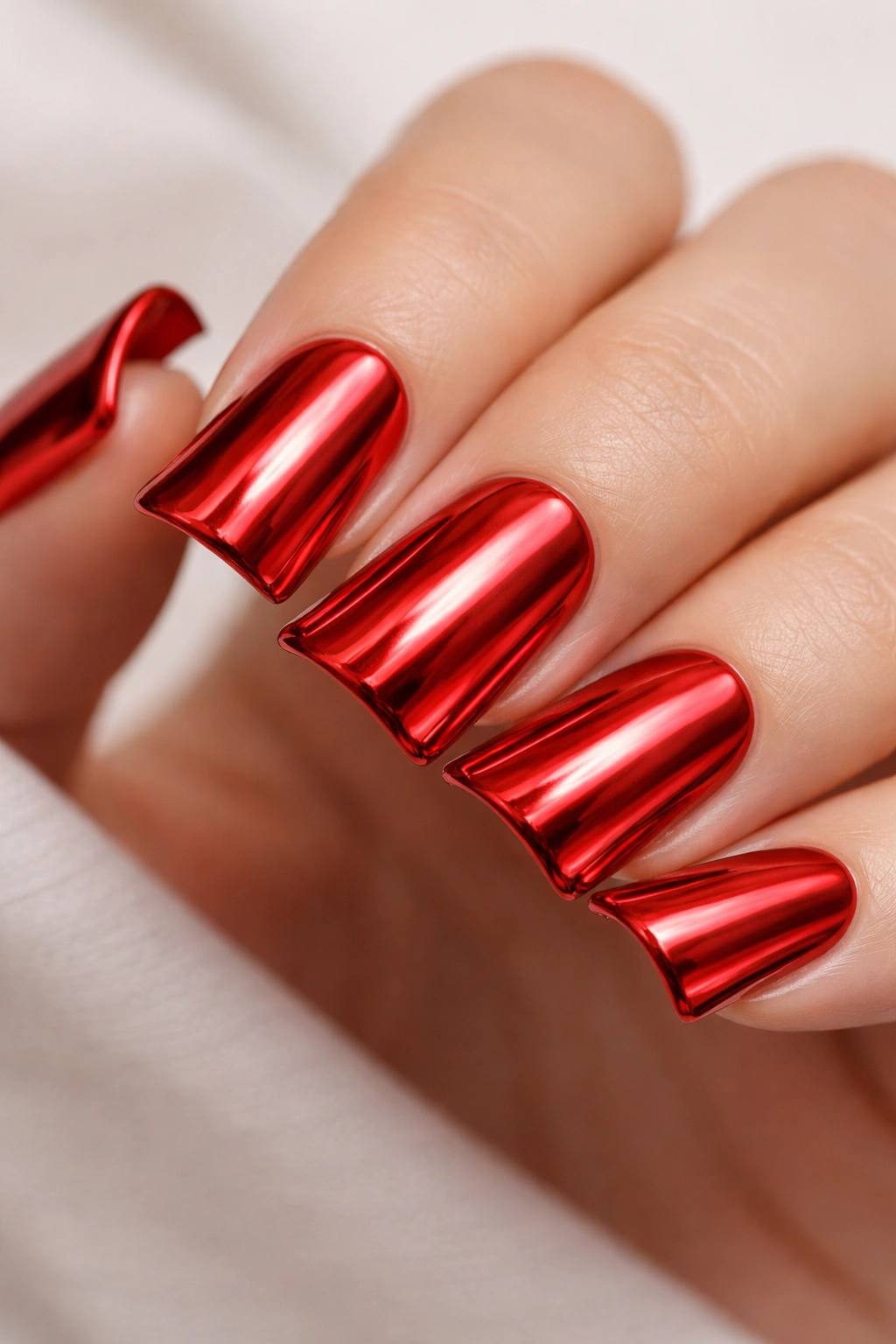
Red chrome duck nails take the modern nail trend of chrome finishes — that almost liquid mercury or mirror-like quality — and apply it to red. The result is a futuristic, almost impossible-looking finish that feels high-fashion and editorial. On short nails, chrome creates the most dramatic visual transformation of any finish because it’s so reflective and unusual.
What Chrome Finish Actually Is
Chrome powder or chrome foil is applied over a tacky nail polish base, creating a highly reflective, metallic surface. Red chrome isn’t just shiny — it’s more like a mirror that happens to be red. The effect is truly eye-catching and feels incredibly modern. On duck nails, the reflective nature of chrome emphasizes the three-dimensional shape even more dramatically.
Applying Chrome Finish
Chrome application requires a couple of steps. First, apply a base coat and two coats of your preferred red polish. While the final coat is still tacky, use a chrome powder applicator (usually a velvet-padded tool) to gently buff the powder onto your nail surface in circular motions. You’ll see the chrome effect appear almost magically as you work. Seal with a clear, non-wrinkling top coat. This is one finish where using a gel polish base can actually work better than traditional polish because the tackiness can be more easily controlled.
Chrome Color Variation
Red chrome powders vary in finish quality. Some have a more liquid, mirror-like quality, others a slightly more diffused chrome effect. Higher-quality chrome powders create the most dramatic, reflective finish. Look for professional-grade products — drugstore versions often don’t perform as well.
Important Care Note
Chrome finishes require more delicate handling than other finishes. They’re prone to smudging and can lose their reflective quality if touched too much before fully cured. Allow extra drying time and be careful during the curing process.
Final Thoughts
Red duck nails bring together two strong design elements — the bold, timeless color red and the modern, striking shape of duck nails — in a way that feels effortlessly sophisticated. Whether you gravitate toward classic crimson, rich burgundy, sparkly glitter, or futuristic chrome, there’s a red duck nail style that matches your aesthetic and your lifestyle. The beauty of short duck nails specifically is that they feel modern and fashion-forward without requiring you to commit to extreme length.
The key to pulling off any of these looks is quality products and proper application technique. Invest in good base coats, pigmented polishes, and professional-quality top coats — these make a visible difference in how polished and long-lasting your manicure looks. And remember, duck nails on shorter nails don’t require extensions to look amazing. If your natural nails are healthy, you can create a stunning duck nail shape entirely on your own nail bed, which often feels more comfortable and practical.
Red duck nails photograph beautifully, make a confident statement, and work across professional and casual settings depending on the finish and undertone you choose. Try one of these versions and see which resonates with you — whether that’s the timeless elegance of classic crimson, the luxury of velvet texture, or the futuristic drama of chrome. Your short duck nails are about to become your favorite accessory.
