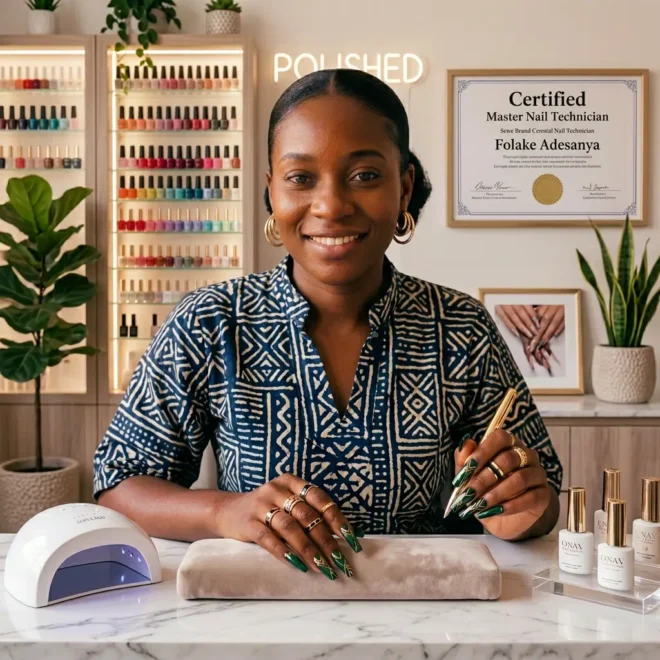


Soft square nails have become the go-to shape for anyone who wants a polished, modern look without the dramatic length and sharp edges of stilettos or almonds. They’re practical for everyday wear, they balance elegance with wearability, and they provide the perfect canvas for intricate nail art. Tortoiseshell designs—with their warm, organic blend of browns, golds, blacks, and amber tones—have become a perennial favorite precisely because they work with every season and every skin tone.
But tortoiseshell doesn’t have to look the same every time. The beauty of this design lies in its flexibility. You can lean into warm caramels and honey tones, play with cooler browns and blacks, incorporate metallic accents, add texture with matte finishes, or brighten things up with unexpected color pops. Whether you’re someone who loves a classic, understated aesthetic or you’re ready to push the boundaries of what tortoiseshell can be, there’s genuinely something here to suit your style.
The designs that follow aren’t generic duplicates of each other—each one approaches tortoiseshell from a different angle, with different color balances, techniques, and finishing touches. Some lean into the natural, organic quality that makes tortoiseshell so timeless. Others experiment with negative space, metallics, or complementary colors that freshen up the classic look. All of them work beautifully on soft square nails, where there’s just enough surface area to showcase detail without overwhelming the nail shape.
1. Warm Honey and Chocolate Classic
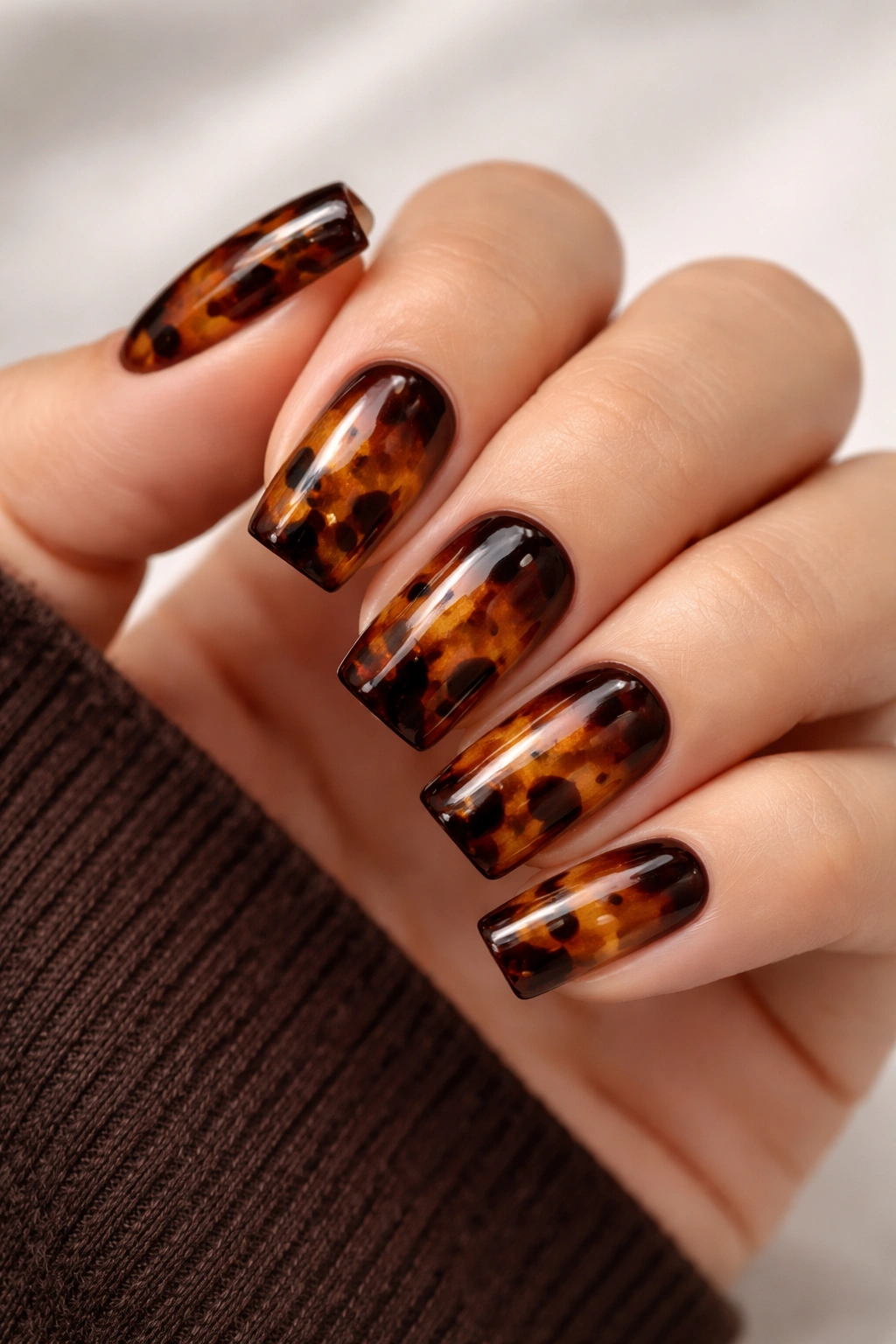
This is the tortoiseshell design that works every single time—a foundational look that proves you don’t need complexity to make an impact. Think warm, creamy honey tones layered over a deeper chocolate brown base, with random patches of burnt orange and black creating depth without feeling chaotic.
Why This Stays Timeless
The warm honey-and-chocolate combination feels inherently sophisticated because it mirrors natural patterns you see in nature—amber in sunlight, wood grain, even animal coats. There’s no jarring contrast, just a gentle flow of warm tones that feels organic and intentional at the same time. This version works for professional settings, casual days, or anywhere in between because it reads as “put-together” rather than trendy.
How to Wear It
- Pairs beautifully with warm metals like gold and rose gold jewelry
- Complements both warm and cool skin tones equally well
- Works year-round but feels especially perfect during warmer months
- The matte finish adds sophistication; glossy finish adds shine and dimension
- Looks stunning with minimal other accessories since the nails are the statement
Pro tip: Ask your nail artist to keep the black patches subtle and scattered—too much black reads as a different design entirely, while just a hint creates authentic tortoiseshell depth.
2. Butter Yellow and Caramel Swirl
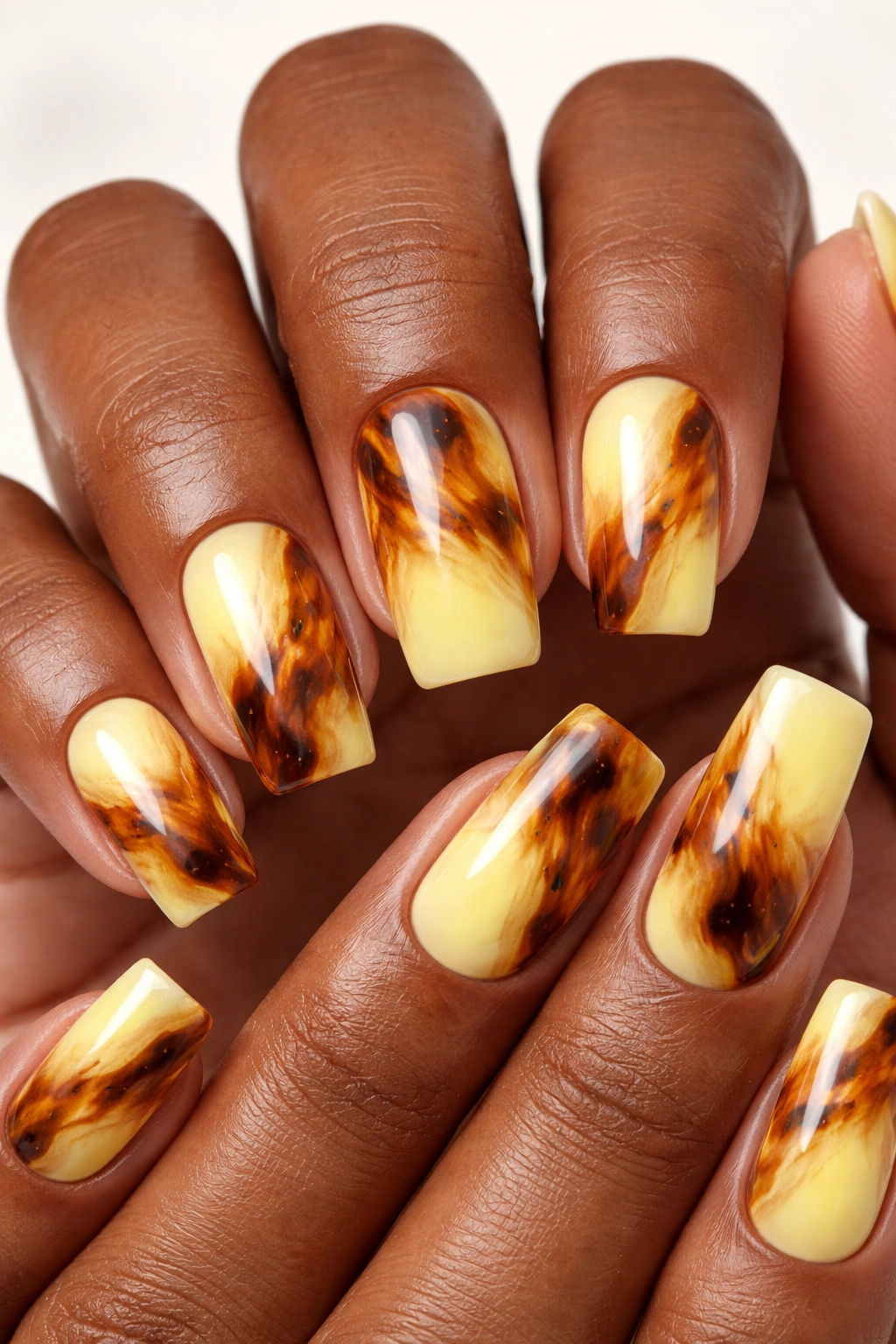
This design takes tortoiseshell in a cheerier direction by pushing the warm yellows to the foreground instead of burying them in the background. Soft butter yellow and creamy caramel swirl together with just touches of black for definition, creating a design that feels happy without being loud.
The Psychology of Warm Yellows
Yellow in nail design gets overlooked because people assume it’s difficult to wear, but on darker skin tones especially, warm butter yellows create stunning contrast and warmth. Mixed with caramel and touched with black, it becomes less “primary color nail art” and more “sophisticated warm-tone combination.” The soft square shape keeps it polished rather than playful.
Making It Work for You
- Best on medium to deep skin tones where the yellow really glows
- Pairs with warm earth-tone clothing beautifully
- The brightness makes it perfect for spring and summer but works year-round
- Looks richer with a matte topcoat than a glossy one
- Keep white or nude base colors off these nails—the design itself should be the whole story
Worth knowing: This design can chip more visibly if yellow is your primary color, so make sure your base coat and topcoat are solid to maximize wear time.
3. Minimalist Tortoiseshell with Negative Space
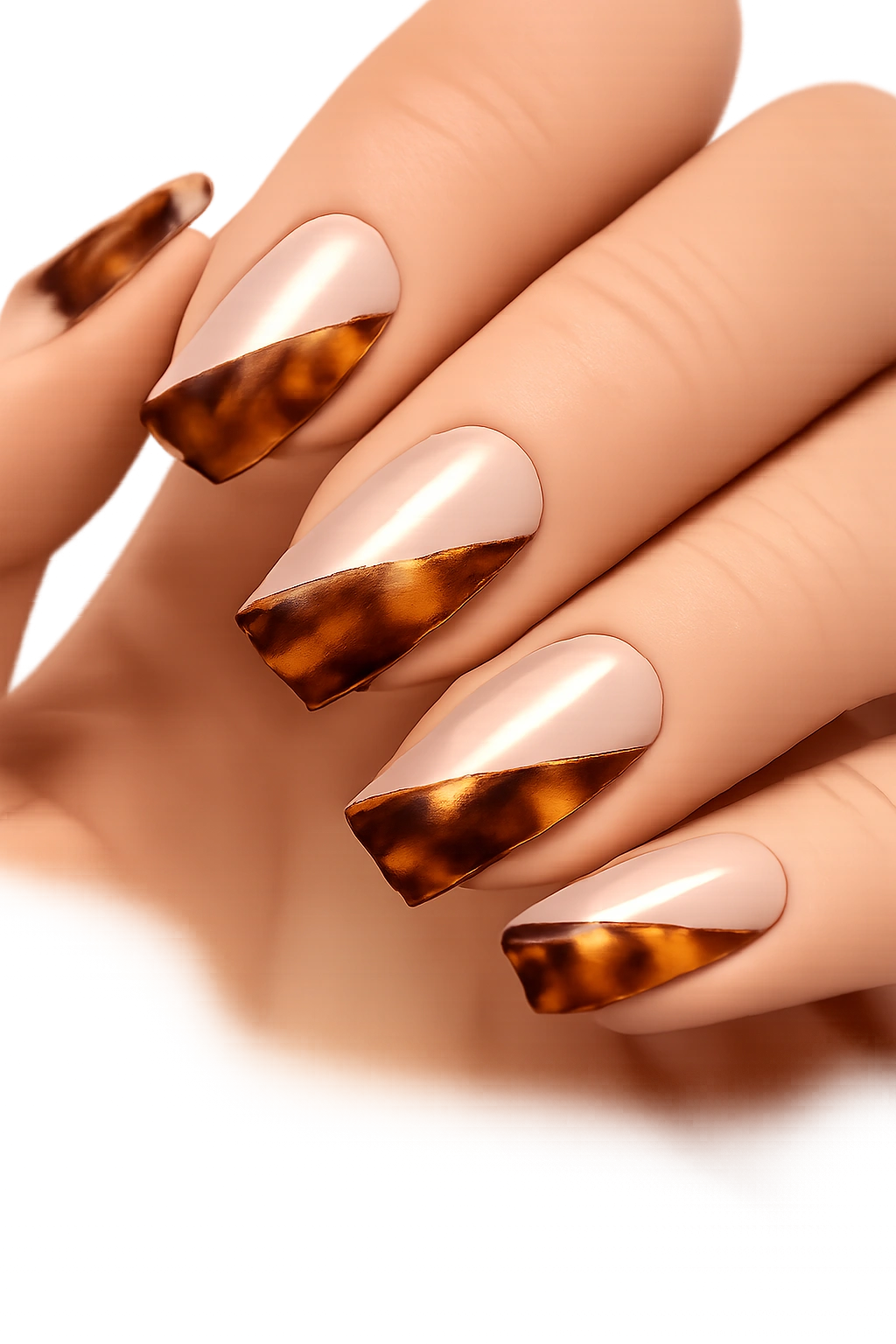
Negative space tortoiseshell strips away the “busy” feeling and leaves portions of the nail bare or in a neutral nude, creating a modern, architectural take on the classic design. Tortoiseshell colors appear in deliberate sections rather than a full coverage blend, giving the overall look clean lines and breathing room.
How Negative Space Changes the Feel
By leaving parts of the nail bare, you’re immediately making the design feel more contemporary and intentional. It’s less “traditional pattern” and more “thoughtful design composition.” The empty space actually makes your fingers look longer and the tortoiseshell patches more striking because they’re not competing for attention across the entire nail.
Design Considerations
- Typically features tortoiseshell on one side or corner, with nude or clear space on the other
- Works exceptionally well on longer soft squares because there’s more room to play with composition
- The nude/clear sections can be painted in a matching skin-tone nude or left completely bare
- Creates the illusion of a manicure that’s less “done” while still being very deliberate
- Requires confident nail art skills but results in a design that looks expensive and editorial
4. Deep Espresso and Gold Leaf
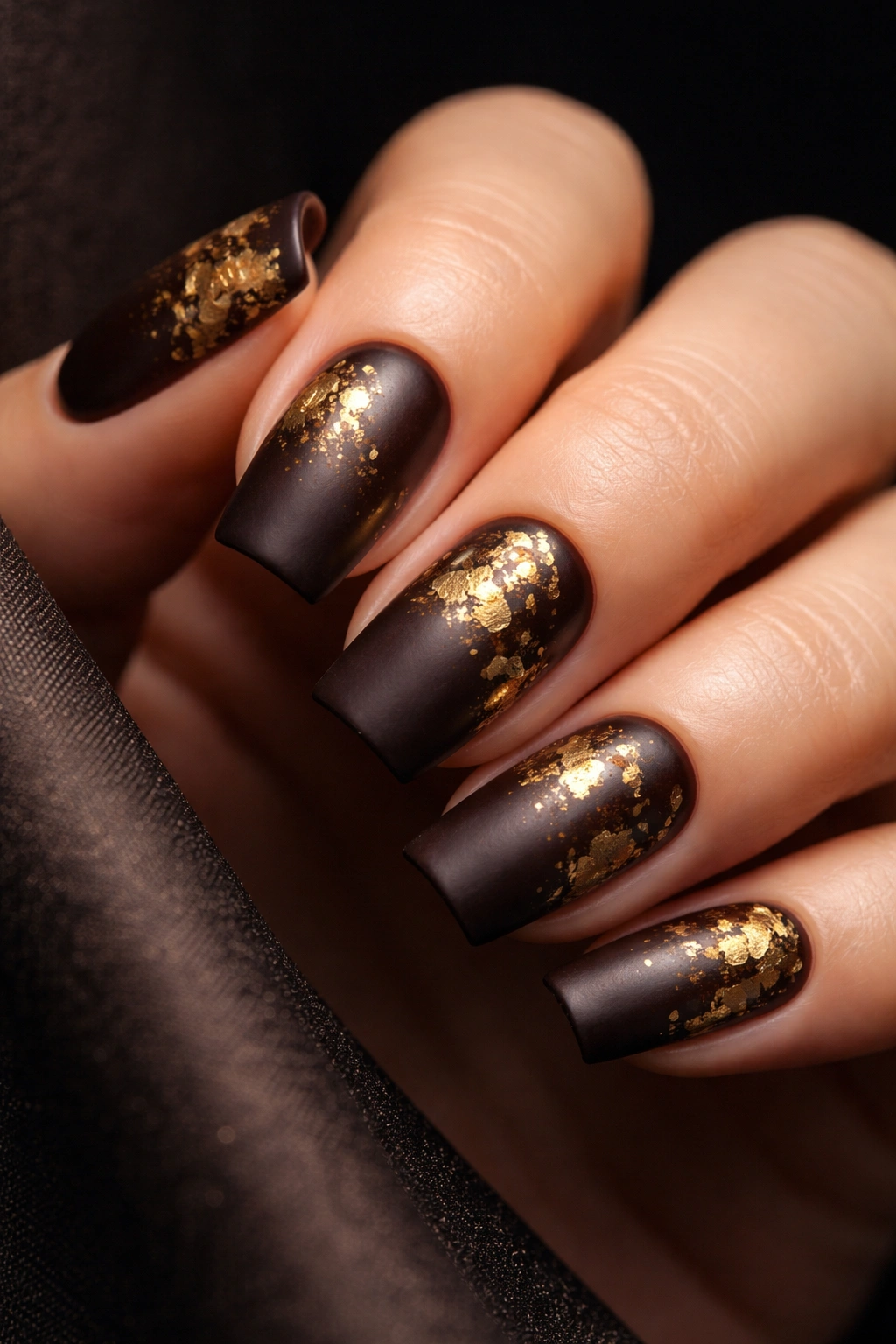
This design takes tortoiseshell into evening territory by deepening all the brown tones into rich espresso shades and adding actual gold leaf accents scattered across the design. The warmth of gold against the darkness of espresso creates a luxury aesthetic that works for special occasions or anytime you want nails that feel elevated.
The Gold Leaf Element
Real gold leaf (or high-quality faux gold) catches light differently than painted gold, creating dimension and movement across the nail. It’s not subtle, but it’s not garish either—it’s a design choice that signals intention and sophistication. The espresso background makes the gold feel precious rather than showy.
When and How to Wear It
- Perfect for evening events, dates, or anytime you want to feel extra
- The depth of color actually makes it work in professional settings if your workplace allows it
- Gold jewelry pairs naturally with this design
- Matte topcoat keeps the focus on the gold rather than shine
- The gold adds a slight texture you can feel—some people love this, some prefer perfectly smooth nails
5. Soft Brown and Rose Gold Fusion
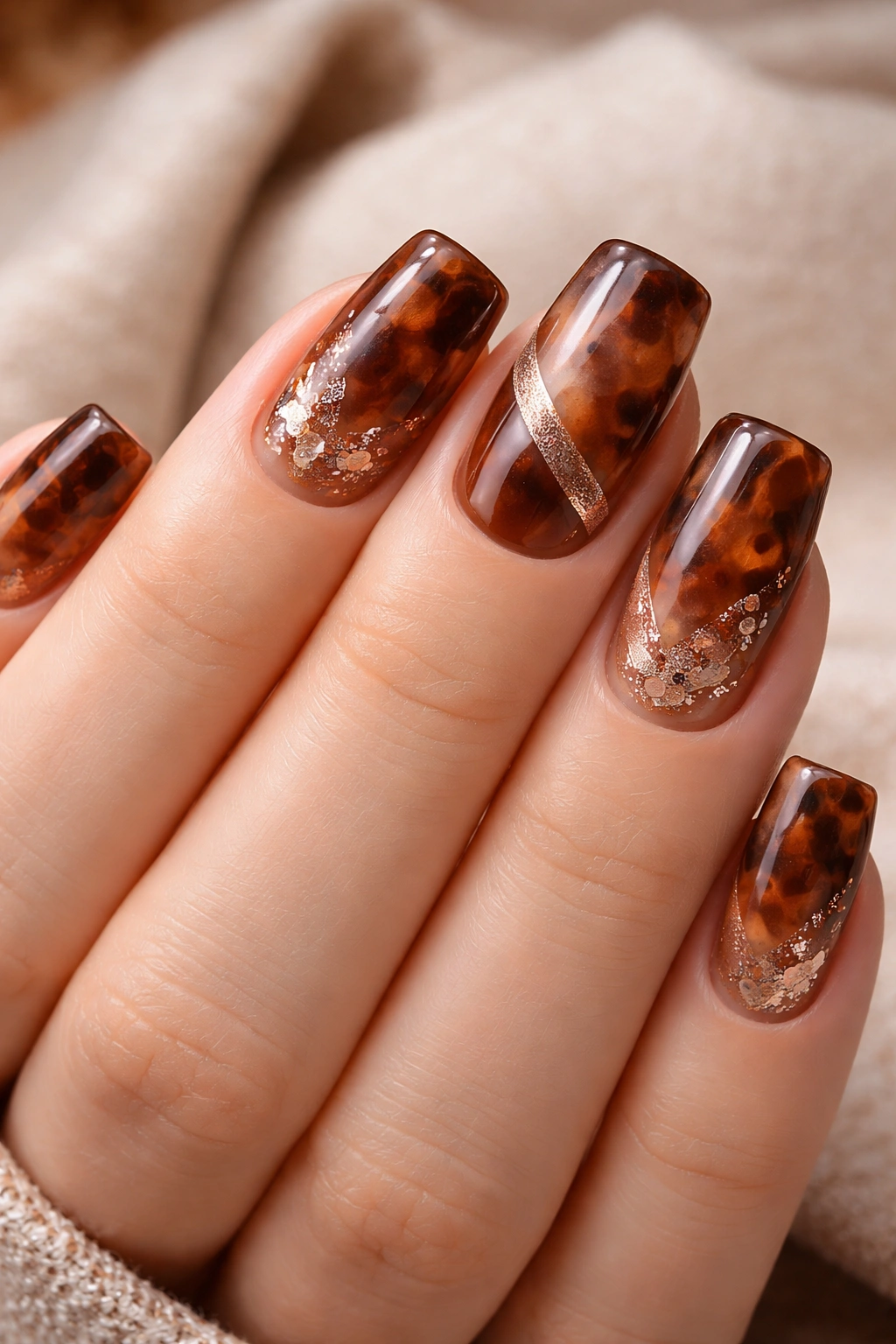
This design marries warm tortoiseshell with rose gold accents, creating a combination that feels distinctly feminine and current without veering into trendy territory. The soft browns and taupes of tortoiseshell pair with rose gold flakes or striping for a design that’s romantic but not over the top.
Why Rose Gold Changes the Game
Rose gold has warmer, more copper-toned undertones than traditional gold, which means it harmonizes with the warm browns of tortoiseshell rather than contrasting with them. This creates a cohesive, blended look where every element feels like it belongs together. It’s less “gold on tortoiseshell” and more “enhanced tortoiseshell.”
Styling This Look
- Rose gold jewelry pairs perfectly, creating a unified aesthetic
- Works beautifully on cooler skin tones that might not warm to traditional yellow gold as easily
- The softness of the design makes it appropriate for most professional environments
- Glossy finish emphasizes the rose gold’s shimmer; matte makes it feel more understated
- Works year-round but has a slightly romantic quality that suits spring and summer
6. Monochromatic Brown Ombré
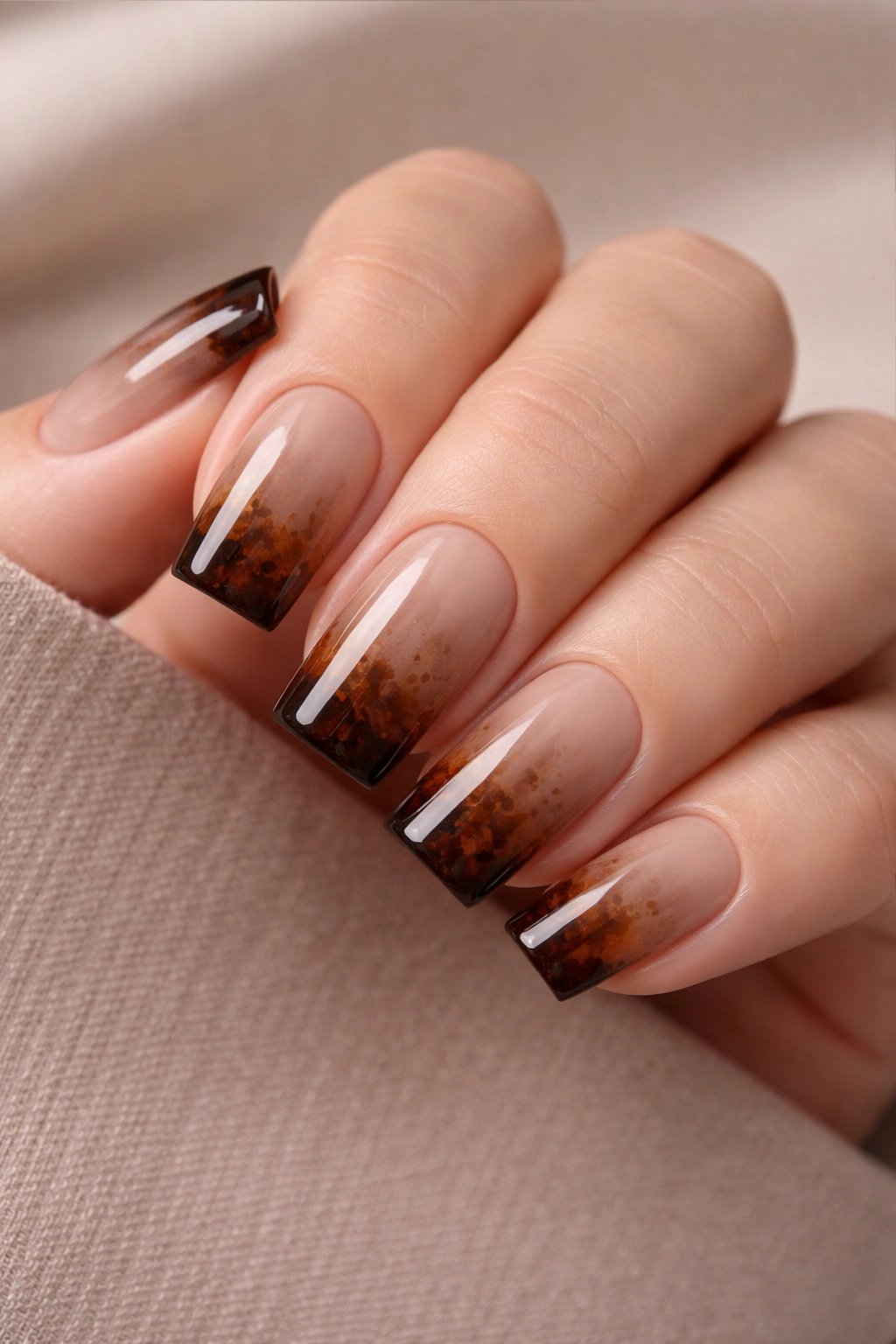
This design plays with depth entirely within the brown family, creating an ombré effect that transitions from pale taupe on the cuticle to rich espresso at the tip. The tortoiseshell texture is there—flecks of black, touches of amber—but it’s subtle enough to feel more like dimension than pattern.
The Appeal of Monochromatic Design
Staying within a single color family actually creates sophistication because it requires real technique to build depth without jumping to different colors. The transitions feel intentional and artistic rather than default. This is a design that makes people wonder if you got a professional manicure or if your nails just naturally look that good.
Why Soft Squares Excel Here
The soft square shape with its moderate length gives you enough canvas to create visible gradient, but not so much that it reads as an overly long nail. The curves of the soft square also diffuse the color gradient naturally, creating softer transitions than you’d see on angular shapes.
7. Tortoiseshell with Minimalist White Line
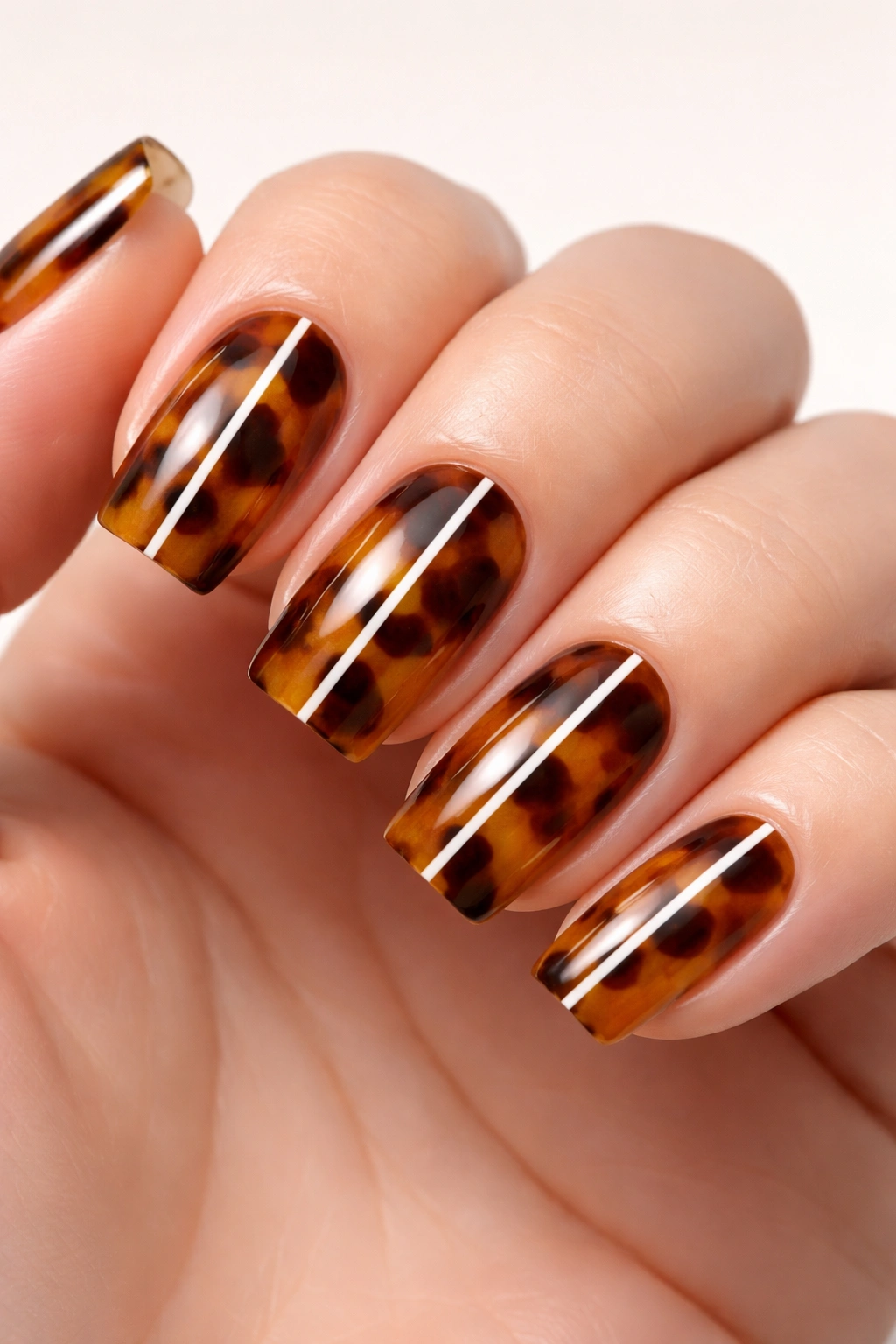
This design takes the classic tortoiseshell and adds a single, clean white line running down the center or along the outer edge of the nail. It’s graphic, modern, and instantly feels like a design rather than just a pattern—the white line gives the eye something to anchor to.
The Power of One Simple Addition
Sometimes the difference between “pattern” and “design” is just one deliberate element that feels intentional. A single white line (applied with a thin brush or striping tape) can transform the entire feel of tortoiseshell from organic-but-busy to purposeful-and-composed. It’s a tiny addition that changes everything.
Technical Execution
- The line can be painted freehand with a thin liner brush or applied with striping tape
- Thickness matters—too thin and it disappears; too thick and it overwhelms the tortoiseshell
- Works whether the line is dead center, off-center, or following the edge contour of the nail
- Can be matte or glossy (matching or contrasting with the tortoiseshell finish)
- Easier to execute than you might think, even at home
8. Tortoiseshell Base with Chrome Accents
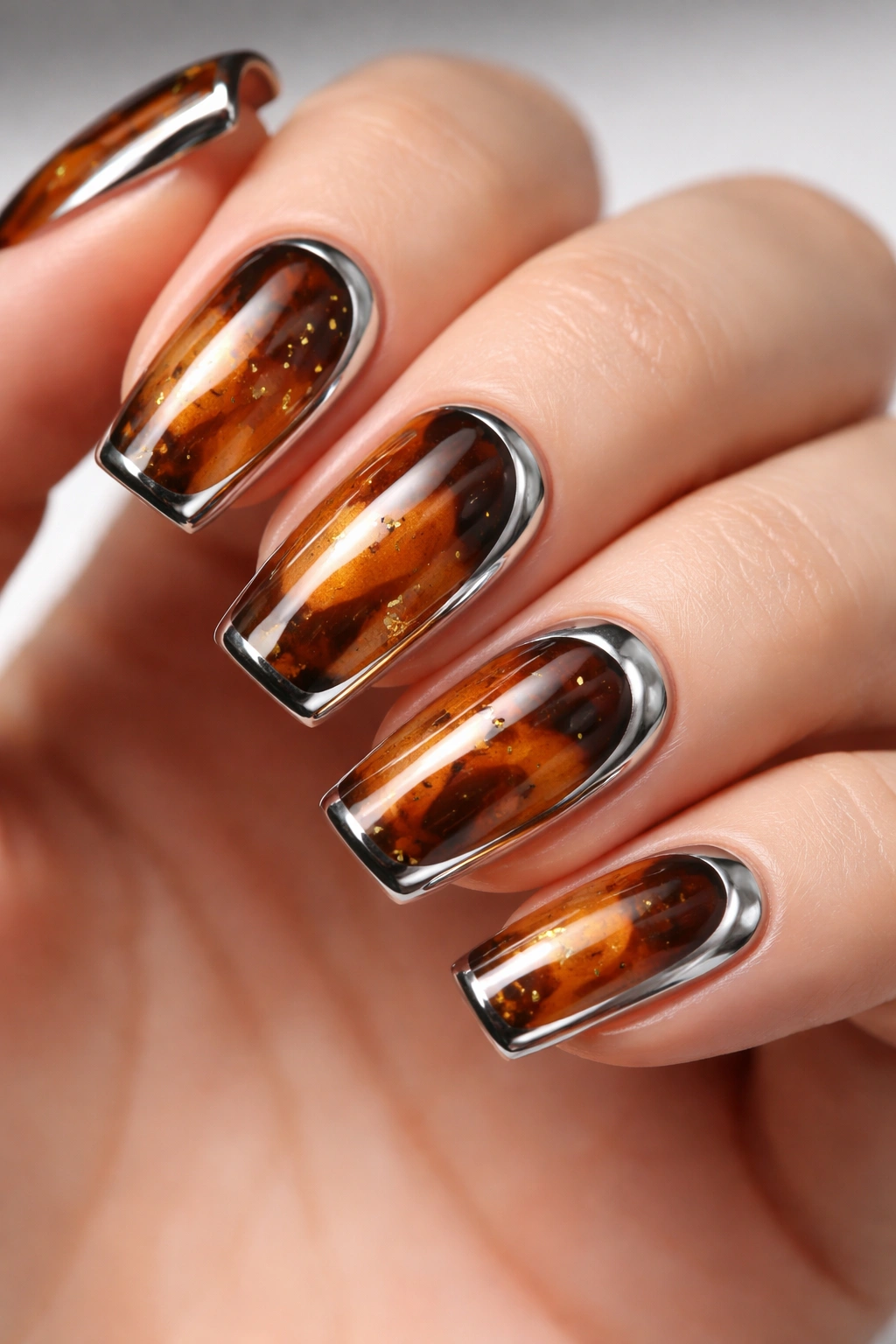
Chrome or mirror powder creates a reflective, almost holographic finish that catches light in unexpected ways. When applied as accents within or on top of tortoiseshell, it creates a design that feels futuristic while still being rooted in the warm, classic tortoiseshell palette.
The Wow Factor of Chrome
Chrome catches light differently depending on the angle and lighting, which means your nails look genuinely different in different settings—in natural light versus indoor light, versus the glow of a phone screen. This creates visual interest and a premium feel. It’s the kind of detail that makes people ask questions about your nails.
Making It Work Harmoniously
- Chrome works best as an accent rather than covering the entire nail
- Can be applied as a stripe, a corner patch, or scattered flecks
- Use a topcoat designed specifically for chrome to seal it properly (regular topcoat can dull the effect)
- Pairs best with glossy tortoiseshell rather than matte (matte can make chrome feel disconnected)
- Requires steady hands or professional application to look intentional rather than accidental
9. Tortoiseshell with Jewel Accents
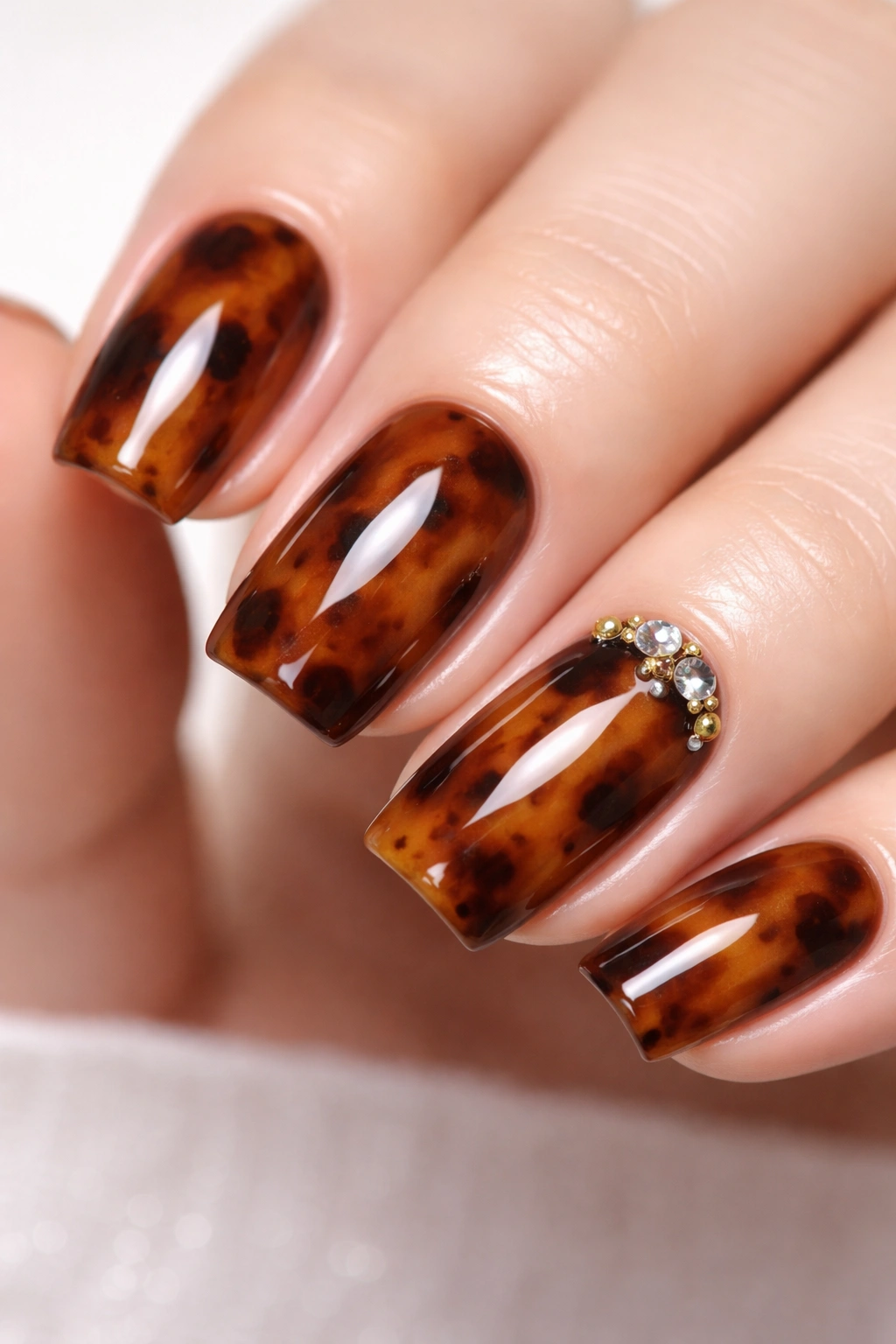
This design incorporates small rhinestones, crystals, or pre-made jewel decals placed strategically across the tortoiseshell base. A few gems placed on one or two nails in an off-center arrangement creates elegance; gems on every nail or all clustered in one spot reads as busy.
When Gems Enhance Rather Than Overwhelm
The key to making jewels work with tortoiseshell is restraint and intentional placement. Because tortoiseshell is already visually complex with its layered colors and patterns, adding too many gems fights for attention rather than enhancing the design. A single small crystal near the cuticle, or three small gems arranged asymmetrically, tells a story instead of creating visual noise.
Practical Considerations
- High-quality gems adhere better and catch light more beautifully than cheap alternatives
- Placement on the accent nail (usually ring finger) creates drama without overwhelming all five nails
- Gems add thickness to the nail, so ensure your topcoat completely covers them to prevent snagging
- Works for special occasions or as an everyday luxury if you’re willing to be gentle with your hands
- Pairs beautifully with tortoiseshell exactly because they’re both naturally “shiny” elements
10. Soft Tortoiseshell with Nude French
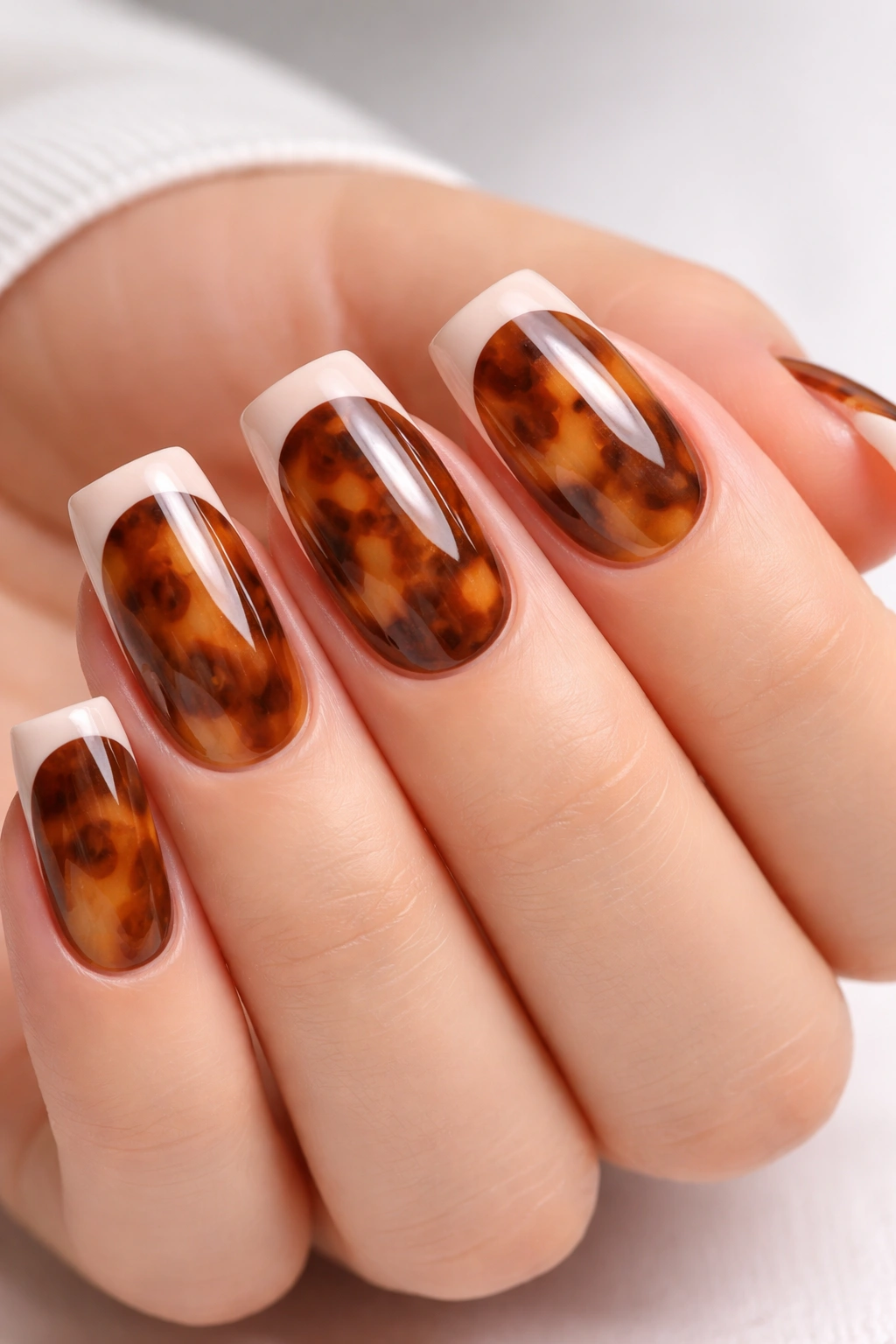
This hybrid design pairs a soft, muted tortoiseshell on the main nail bed with a subtle nude or beige French tip line. It feels like a French manicure that’s been given a warm, artistic makeover while keeping the classic French structure intact.
The French Manicure Evolution
French manicures are timeless, but they can read as plain or dated if you’re just doing white on pink. Pairing tortoiseshell with a nude French line keeps the elegance and wearability of French manicures while adding warmth and personality. It’s a design that works everywhere—office, casual, formal—without looking trendy.
Why This Works So Well
- The simplicity of the French structure makes the tortoiseshell feel less busy
- The nude line creates separation between the tortoiseshell and the nail tip, giving visual clarity
- Soft squares are the ideal shape for French tips, where the slight curve of the nail naturally complements the line
- Works on every skin tone because you’re using neutral tones throughout
- Looks equally good glossy or matte
11. Warm Tortoiseshell with Contrasting Nude Base
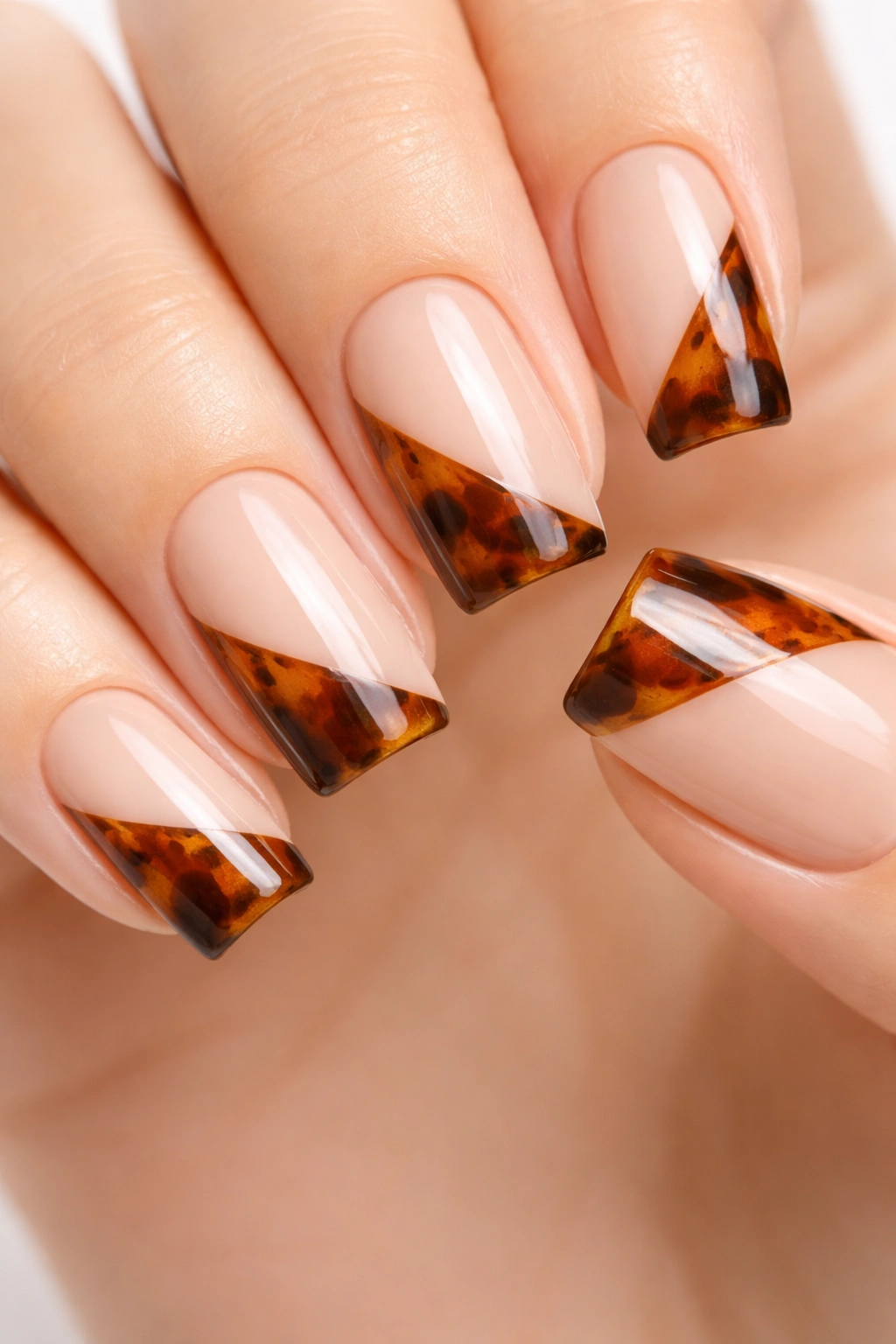
This design reverses the typical tortoiseshell application—instead of covering the whole nail with tortoiseshell, you paint a nude base and create tortoiseshell accents in a geometric shape: a triangle from the tip upward, a strip down one side, or a asymmetrical patch positioned off-center.
Geometric Arrangements of Tortoiseshell
When you apply tortoiseshell in a defined shape rather than all-over coverage, you’re treating it more like a decorative element than a base pattern. This makes the design feel intentional and artistic. It also allows the nude base to “breathe,” giving the overall aesthetic a calmer, more minimalist feeling while still showcasing tortoiseshell’s beauty.
Design Variations
- Triangle gradient (tortoiseshell gets more concentrated toward the tip)
- Vertical stripe on the outer third of the nail
- Asymmetrical patch positioned higher on one nail, lower on the next
- Half-and-half split (literally divided down the middle)
- “Window” shape where tortoiseshell forms a frame and the center is nude
12. Glazed Tortoiseshell with High Shine
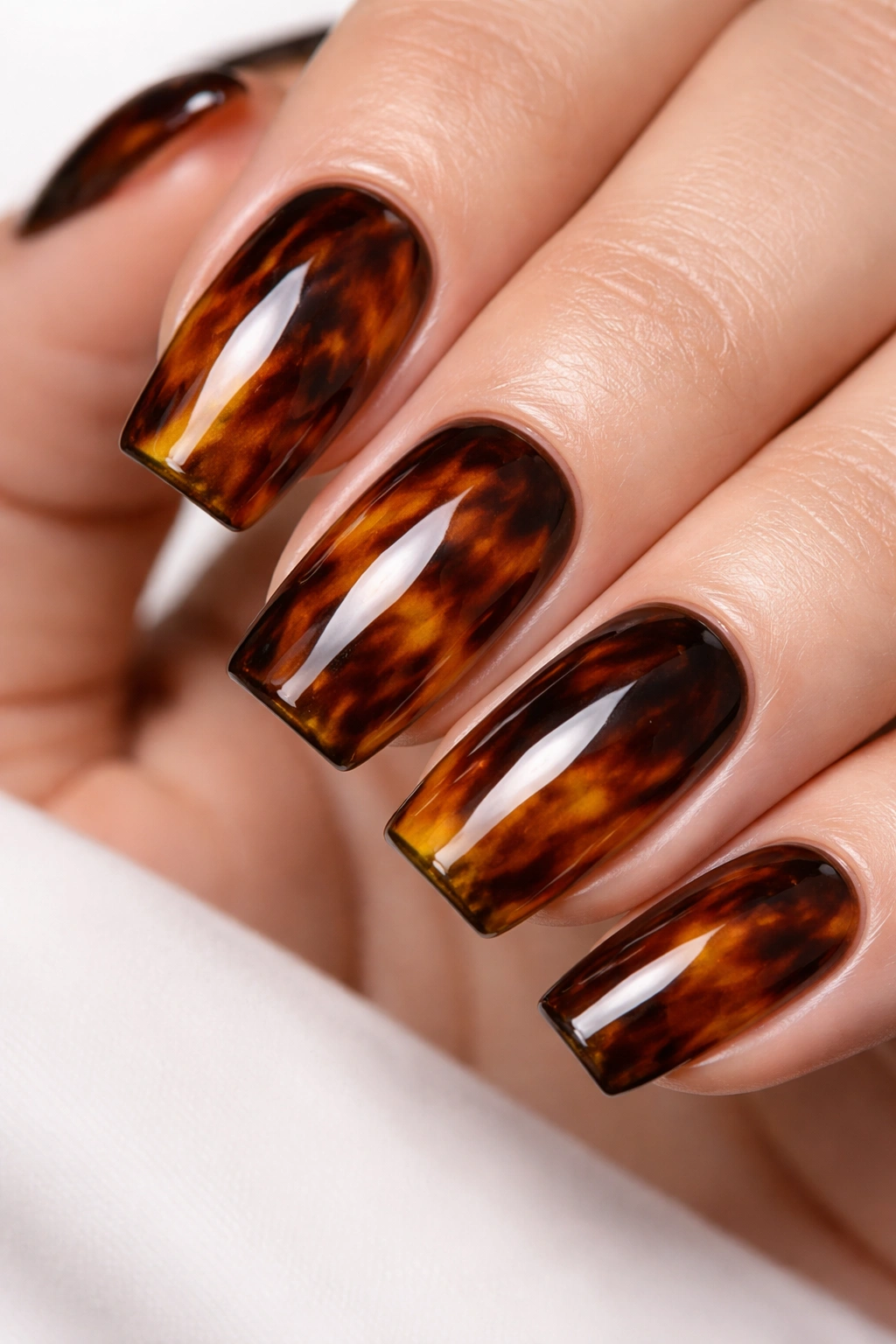
This version emphasizes the glossy, wet-looking finish—the kind that catches light and almost looks like glass or lacquer. Tortoiseshell colors are layered and swirled, then sealed with a thick, high-shine topcoat that creates genuine visual depth and reflection.
The Appeal of Ultra-Glossy Nails
There’s something undeniably luxurious about nails that look impossibly shiny. The gloss creates dimension that makes colors appear deeper and more complex. With tortoiseshell specifically, a glossy finish emphasizes the interplay of different browns, blacks, and golds, making the design feel richer and more carefully considered.
Getting the Gloss Right
- Use a quality gel topcoat if going professional; at-home, a thick layer of regular glossy topcoat works too
- The shine should be even across all nails—patches of dull areas break the sophisticated effect
- High gloss makes nails appear slightly shorter and wider than they actually are (good if you want that effect, something to know otherwise)
- Requires more frequent touch-ups because water and daily wear dull the shine faster than matte finishes
- Worth it for the luxury feeling, at least occasionally
13. Tortoiseshell with Metallic Outline
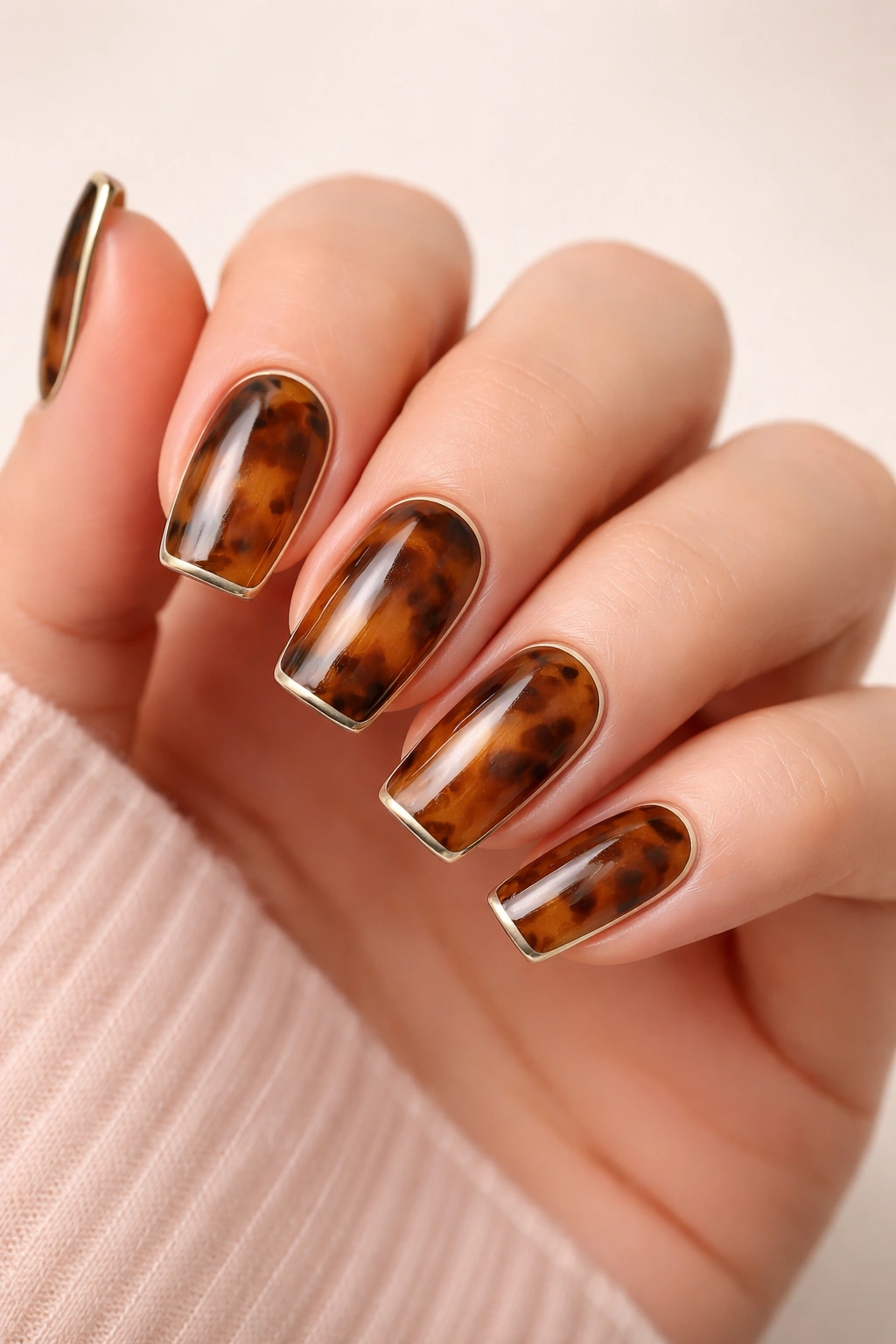
This design paints soft tortoiseshell across the whole nail, then uses a metallic pen or fine brush to draw a thin outline around the edge of the nail—framing the tortoiseshell like it’s a deliberate piece of art.
The Frame Effect
An outline creates a finished, polished feeling that reads as intentional and professional. It’s like putting a tiny frame around a work of art. The metallic (gold, rose gold, silver, or even holographic) catches light and draws the eye around the perimeter of the nail, which has the subtle effect of making nails appear larger and more defined.
Execution Tips
- The line should be thin enough to feel delicate but thick enough to be visible—test your brush first
- Metallic pens designed for nail art are easiest; metallic gel or polish applied with a fine liner brush also works
- Works better on longer nails where there’s enough space to see the outline clearly; on very short nails, it can look cramped
- Gold or rose gold feels warm and cohesive with tortoiseshell; silver or chrome creates contrast
14. Matte Tortoiseshell with Glossy Accent Nail
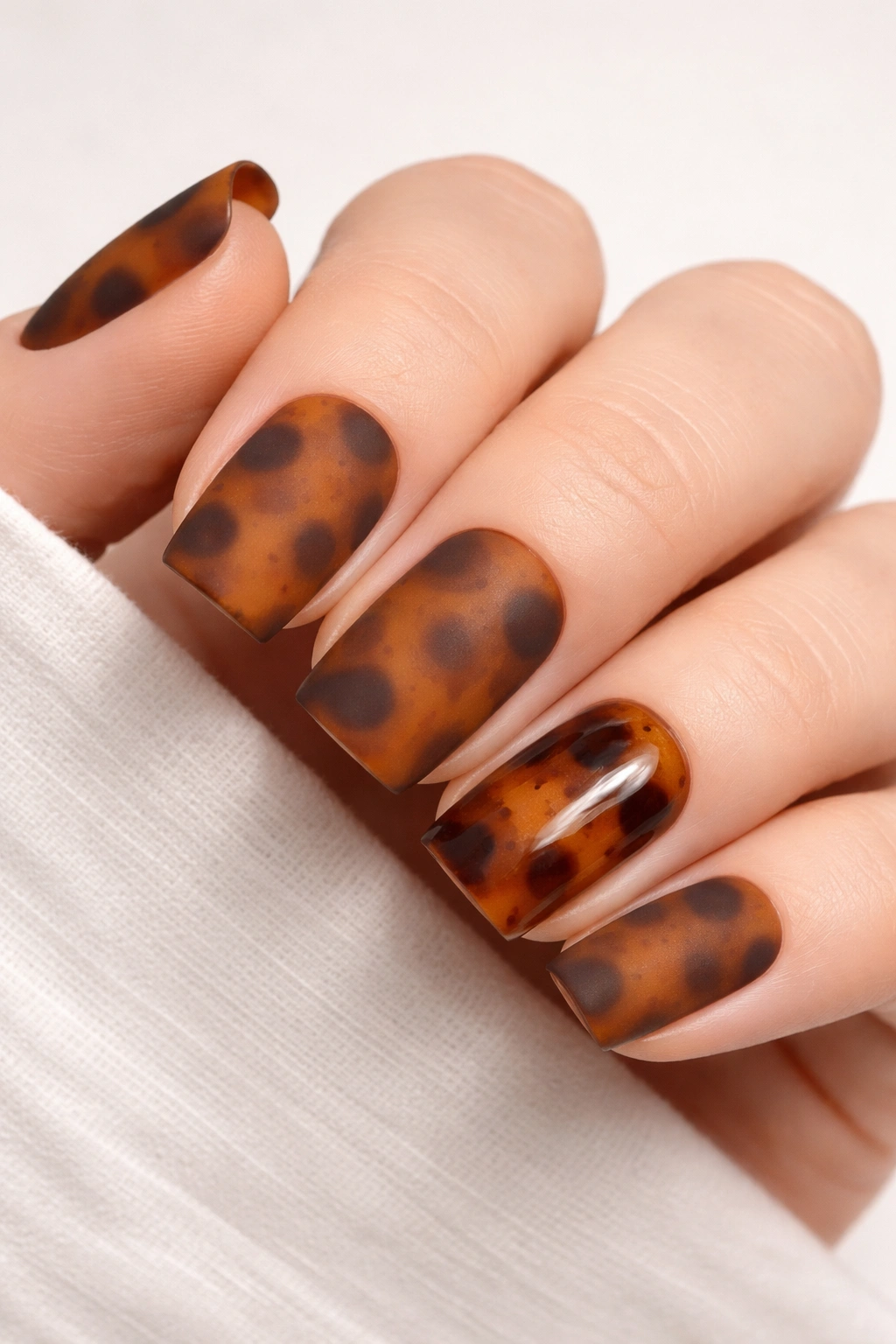
This design applies matte tortoiseshell to four nails and a glossy tortoiseshell (or solid glossy color) to the accent nail, usually the ring finger. The matte-versus-glossy contrast creates visual interest and hierarchy without needing a completely different design.
Why Texture Variation Matters
Most people think “different design” when they want to make one nail stand out, but actually, changing the finish can be equally effective. Matte reads as sophisticated and artistic; glossy reads as luxurious and finished. Using both on the same set of nails creates a designed, intentional look without overdoing it.
Practical Application
- Matte is easier to maintain at home (no special topcoats required)
- The glossy accent nail should either match the tortoiseshell colors or be a complementary solid shade
- This is an excellent design for people who like subtlety—it’s noticeable only if someone’s really looking
- Works beautifully in professional settings where you want polished nails that aren’t “too much”
- The matte finish can feel less precious than gloss, which is perfect if you prefer understated luxury
15. Blended Tortoiseshell Gradient Across All Five Nails
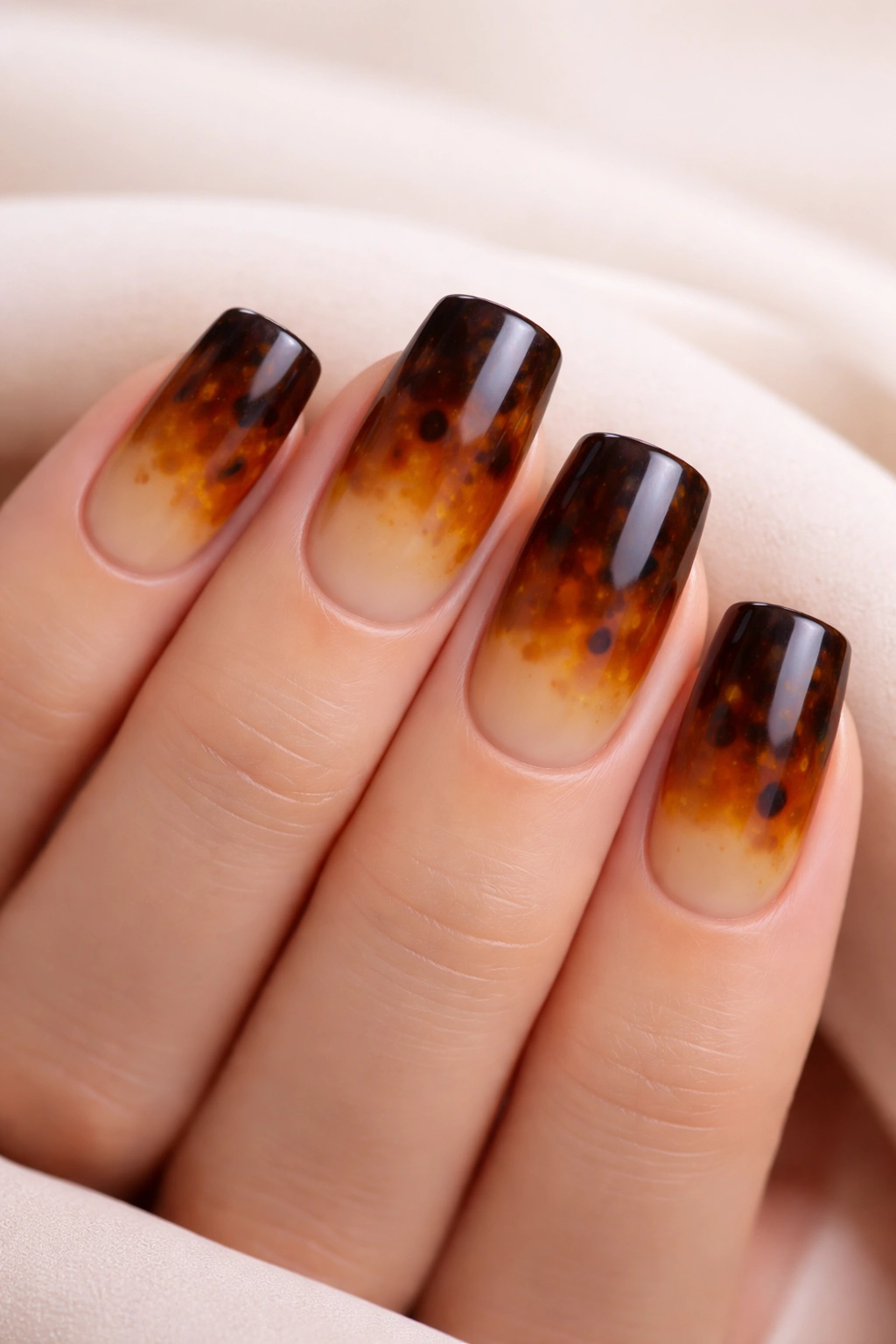
This design applies tortoiseshell to all five nails but varies the color balance on each one, creating a subtle gradient across the whole hand. The first nail might be lighter honey and caramel; by the pinky, it’s deepened into espresso and black with flecks of amber.
Creating Coherence Across Five Nails
When you vary colors across all five nails, you create a cohesive manicure that feels intentional rather than mismatched. It’s like creating an ombré but with a complex color (tortoiseshell) instead of a solid shade. Each nail is distinct, but the collection feels unified because every nail contains the same color family and pattern.
The Gradient Approach
- Typically flows from lighter on the thumb/index finger to deeper on the ring and pinky
- Creates the optical illusion of longer fingers because the darker shades on the tips create depth
- Requires confidence in color application or a skilled nail artist (it’s harder than it looks to make gradients look intentional)
- Works beautifully on soft squares because the moderate length showcases the gradient without overwhelming it
- Each nail looks individually interesting but the whole hand looks like one cohesive design
Final Thoughts
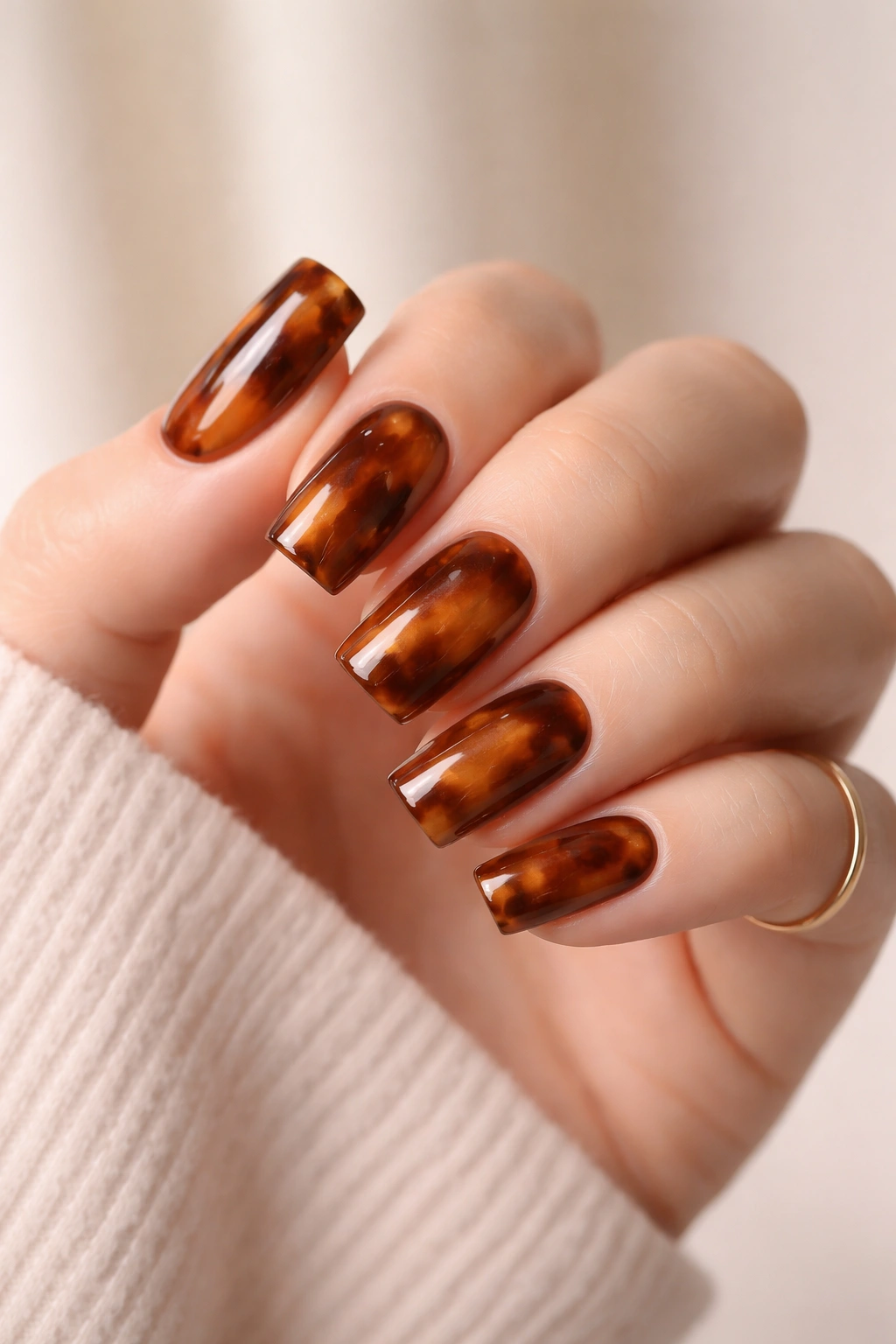
Soft square tortoiseshell nails are endlessly adaptable—there’s room for minimalism, glamour, artistic expression, and understated elegance, sometimes all in the same design. The beautiful part about tortoiseshell specifically is that it works on literally every skin tone, it pairs with almost any outfit or jewelry, and it looks intentional whether you’re going for a polished professional aesthetic or something more creative and expressive.
The designs above are starting points, not strict rules. Mix elements from multiple designs if something speaks to you—combine the negative space concept with metallic accents, or blend the French manicure structure with a chrome detail. The softness and versatility of the soft square shape means it can handle whatever combination you dream up.
Real talk: sometimes the perfect nail design isn’t about following someone else’s vision exactly. It’s about understanding what you love about these different approaches—the warmth, the shine, the minimalism, the detail—and asking your nail artist to create something that’s genuinely yours. That’s when your nails stop being a design and become an extension of who you are.