

Short squoval nails represent the sweet spot between practicality and polish—they’re not too long to interfere with daily life, yet they offer plenty of space for creative nail art that makes a real statement. If you’ve been scrolling through nail inspiration and wondering what actually looks good in a short length without feeling stubby or boring, you’re in the right place. The squoval shape (a square outline with soft, rounded corners) is the ideal canvas for gel designs because it photographs beautifully, feels comfortable to wear, and flatters most hand shapes way better than full-length acrylics or strictly squared-off nails ever could.
What makes squoval gel nails so appealing right now is their versatility—they work for literally any occasion, from office environments to nights out, and they hold color and design detail without the maintenance nightmare of long stiletto or coffin shapes. You get that satisfying nail length that makes your fingers look elegant without the daily inconvenience. The rounded corners prevent the sharp, angular feeling of pure square nails, while the wider nail bed compared to oval shapes gives gel polish room to cure evenly and show off intricate designs without looking cramped.
Below are fifteen genuine squoval gel nail designs worth trying, each one specific enough that you can show it directly to your nail technician and they’ll understand exactly what you’re asking for. Whether you’re into minimalist sophistication or bold graphic art, there’s something here that’s going to make you excited to book your next appointment.
1. Milky White Base with Minimalist Gold Line Art
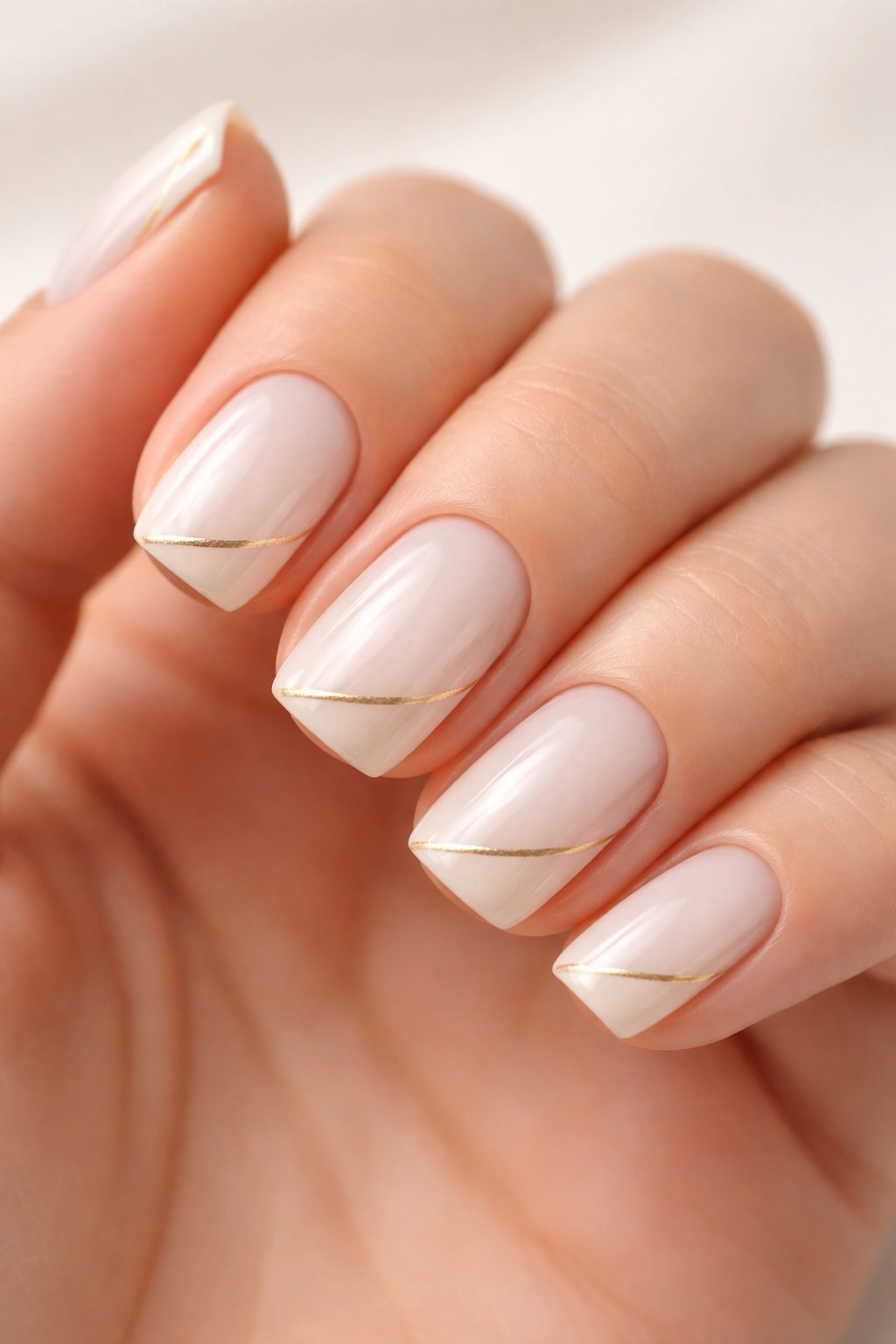
This is the design that works everywhere and never feels overdone, even though you see it everywhere. Start with a creamy, slightly translucent white gel that has a soft, almost porcelain quality—not blindingly opaque white, but something with just enough warmth that it looks like your natural nail but perfected. Then add a single, perfectly straight gold line that runs along the edge of the nail at a slight angle, maybe starting from the bottom corner and extending toward the opposite top edge. The beauty is in its geometric restraint.
Why It Works for Short Squoval Nails
A minimalist design like this actually gains impact on shorter nails because there’s less visual noise competing for attention. The negative space feels intentional and sophisticated rather than empty. Short squoval nails are the perfect stage for line art—the curved corners soften what could feel harsh, while the square-ish sides give the gold line something clean to anchor against. This design looks expensive and considered without requiring elaborate skill from your technician.
Design Details and Customization Options
- The gold line can be replaced with rose gold, silver, or even a deep burgundy depending on your skin tone and the season
- Try a double line with a tiny gap between them for added complexity
- Some people ask for the line to wrap around the side of the nail for a 3D effect
- If you want slightly more visual interest, add a microscopic gold dot at one or both ends of the line
- Works beautifully with a glossy top coat, but a soft matte finish makes it feel even more editorial
Pro tip: Request that your technician use a thin striping brush and cure the line art immediately after application rather than hand-painting it after the base is fully cured—this prevents smudging and gives you crisp, perfect lines every time.
2. Dusty Rose with Negative Space Geometric Shapes
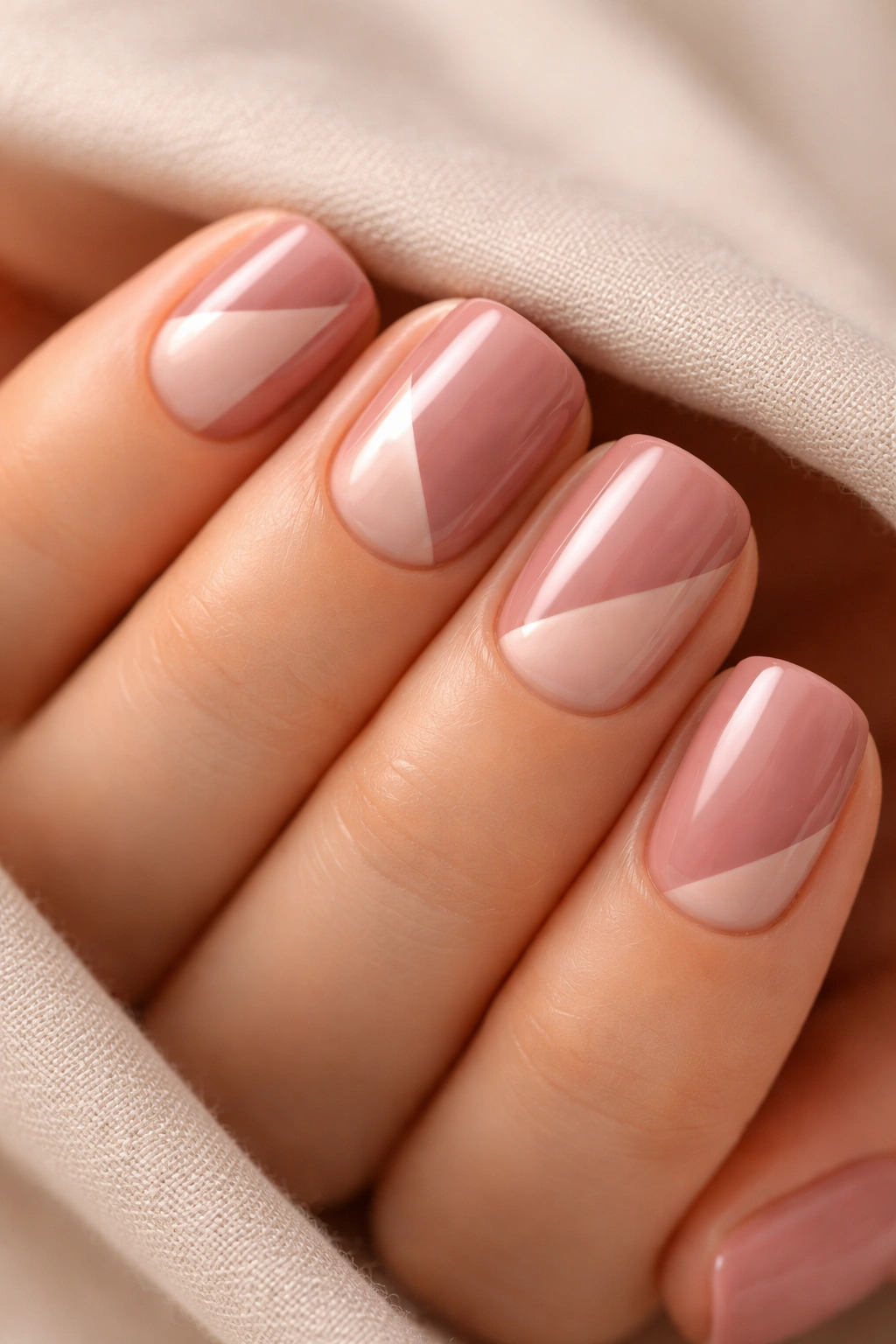
Dusty rose is a color that sits somewhere between mauve, taupe, and muted pink—it’s warm but not peachy, sophisticated but not cold. On short squoval nails, a solid dusty rose base provides the perfect backdrop for negative space art, where you leave portions of your nail bare (or paint them nude) to create geometric shapes that pop against the colored background. Think triangles, diamonds, or abstract asymmetrical shapes on alternating nails.
What Makes This Design Stand Out
Negative space design plays beautifully with the squoval shape because the rounded corners help soften angular negative space shapes, preventing them from feeling harsh or too geometric. The squoval width gives you room to create interesting asymmetrical designs without them looking cramped. Dusty rose specifically flatters a wide range of skin tones and doesn’t show every tiny smudge the way bright colors do, which means your nails will look fresh longer between appointments.
Application Tips and Variations
- Use a stamp plate or freehand design depending on your technician’s skill level
- The negative space can be pure nude base or painted with a contrasting matte top
- Try alternating nails with different negative space patterns—solid rose on some nails, rose with shapes on others
- A shimmer or very subtle sparkle in the base color adds depth without being loud
- Layer matte and glossy top coats (matte on the geometric shapes, glossy on the colored portions) for dimensional contrast
Keep it simple with one negative space design per nail rather than crowding all five nails with busy art. Short nails actually benefit from that strategic simplicity—one perfect focal point per nail beats scattered designs fighting for attention.
3. Classic French Manicure with Colored Tip
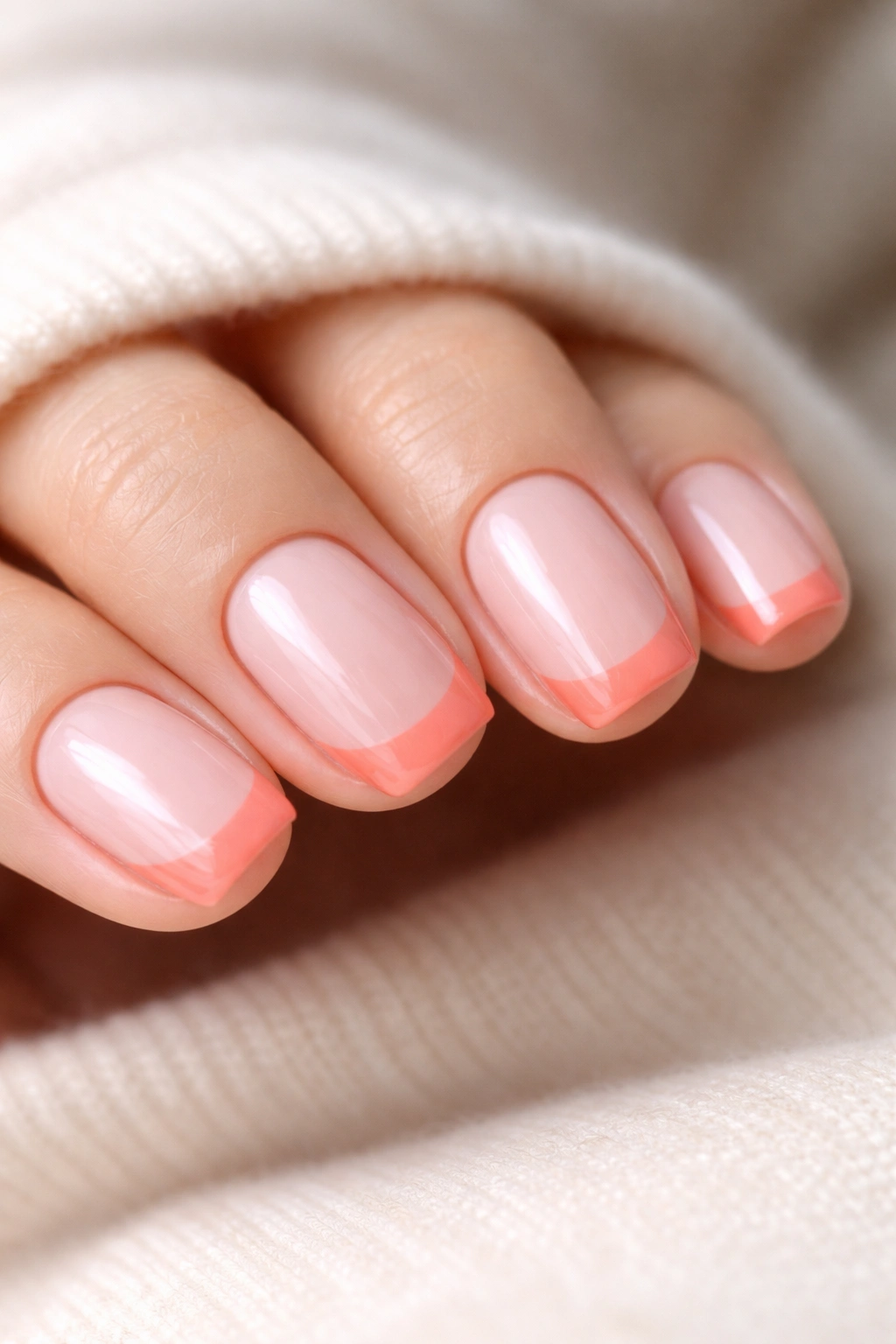
The French manicure is never going away, and for good reason—it’s the definition of timeless. But instead of the traditional white tip, try a colored version: a nude or light pink base with a tip in soft coral, muted sage green, warm terracotta, or even a barely-there champagne. The squoval shape makes this feel fresher and more modern than a traditional oval French, while still honoring the clean, elegant aesthetic that makes French manicures work across every setting.
Why Squoval Makes French Nails Feel New
A French manicure on true oval nails can feel dated if it’s not executed perfectly, but squoval’s slightly wider nail bed and rounded corners give you more visual flexibility. You can make the colored tip slightly thicker than a traditional French without it looking unbalanced, which actually shows off the color more effectively. The shape feels intentional and current while maintaining all the professional polish that French manicures are famous for. It’s the rare design that reads as both classic and fresh simultaneously.
Color Combinations Worth Trying
- Warm nude base with soft coral tip (timeless and flattering)
- Pale pink base with sage or muted olive tip (unexpectedly sophisticated)
- Ivory base with warm terracotta tip (works especially well in warmer months)
- Barely-there beige base with champagne or gold shimmer tip (ultra-refined)
- Cool taupe base with dusty mauve tip (cohesive and calming)
- Soft cream base with blush pink tip (romantic without being too sweet)
Worth knowing: Ask your technician to create a slightly curved or gradient transition between the base and tip color rather than a stark line. This modern take on the French manicure softens the design and prevents it from looking like a growth line.
4. Deep Emerald with Gold Foil Confetti Scatter
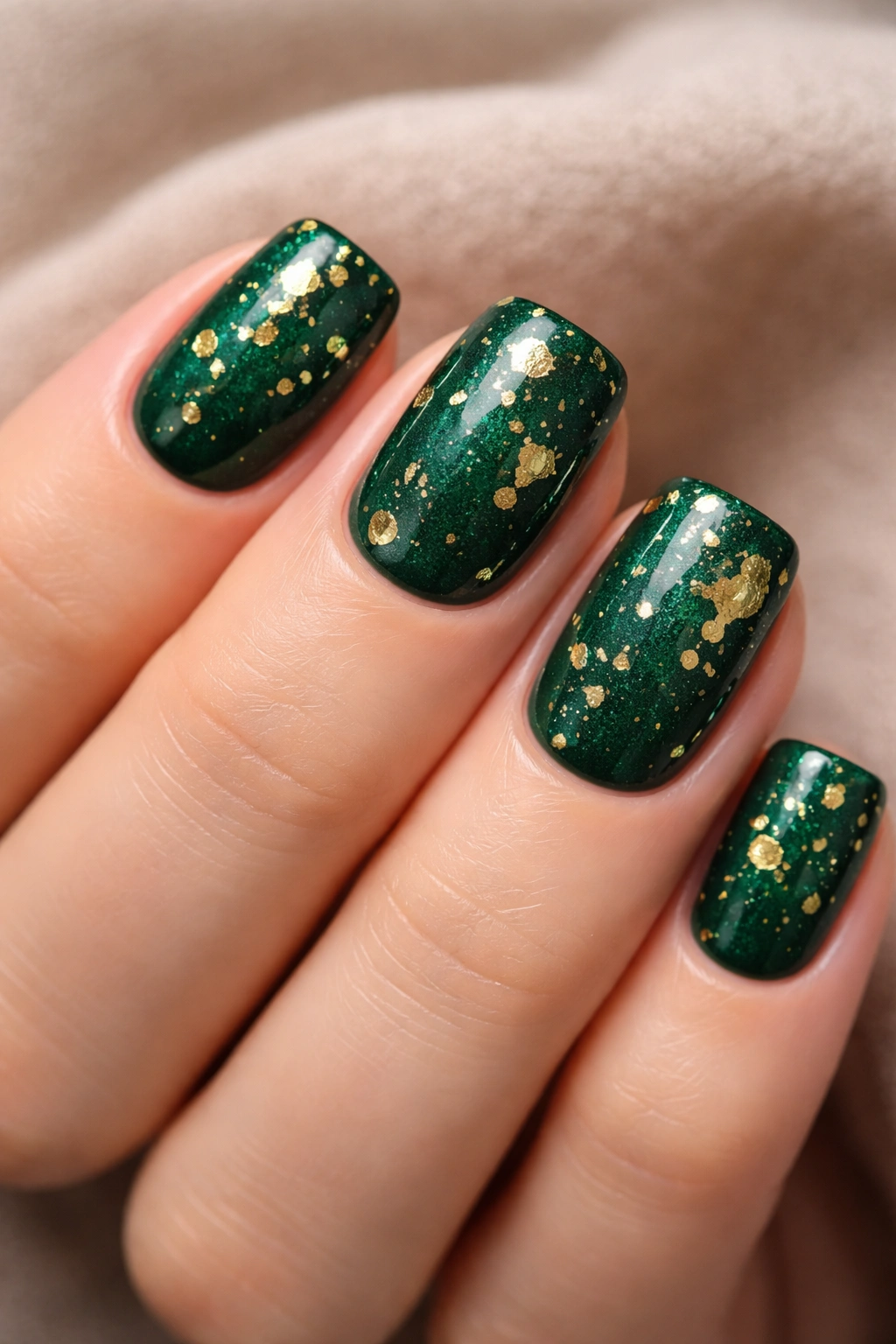
Deep emerald green is a color that photographs like a dream and carries serious sophistication on short nails. The trick is breaking up a solid color with flecks and fragments of gold foil scattered randomly across the nail—not forming a pattern or concentrated in one area, but genuinely scattered like confetti that’s just landed. The confetti should be irregular in size and placement, which creates visual interest without requiring perfect technical skill or repetitive stamping.
What Elevates This Design Beyond Basic Green
Solid color manicures can feel safe or even boring, but emerald is rich enough to carry on its own, and the scattered gold foil prevents it from reading as one-note. The foil catches light differently than regular polish, creating dimension and sparkle that you don’t necessarily see straight-on but absolutely notice when you move your hands. On short squoval nails, this design feels luxe and intentional rather than casual—the width of the nail bed is just right for the foil confetti to read clearly without overcrowding.
Achieving the Look and Variations
- Your technician can apply gold foil either randomly by hand or use a tacky base and foil fragments for consistent adhesion
- If solid foil feels too bold, try alternating nails—some with heavier foil, some with just light touches
- Emerald works with rose gold, champagne, or copper foil as well if you want to warm up the overall look
- A glossy top coat makes the foil pop; a matte top coat creates an unexpected sophisticated contrast
- Try the same scattered foil technique on navy blue, forest green, or even burgundy if emerald doesn’t speak to you
The beauty of confetti scatter is that imperfection actually enhances the design—it looks more intentional and organic the less symmetrical it is.
5. Ballet Pink with Delicate Floral Line Art
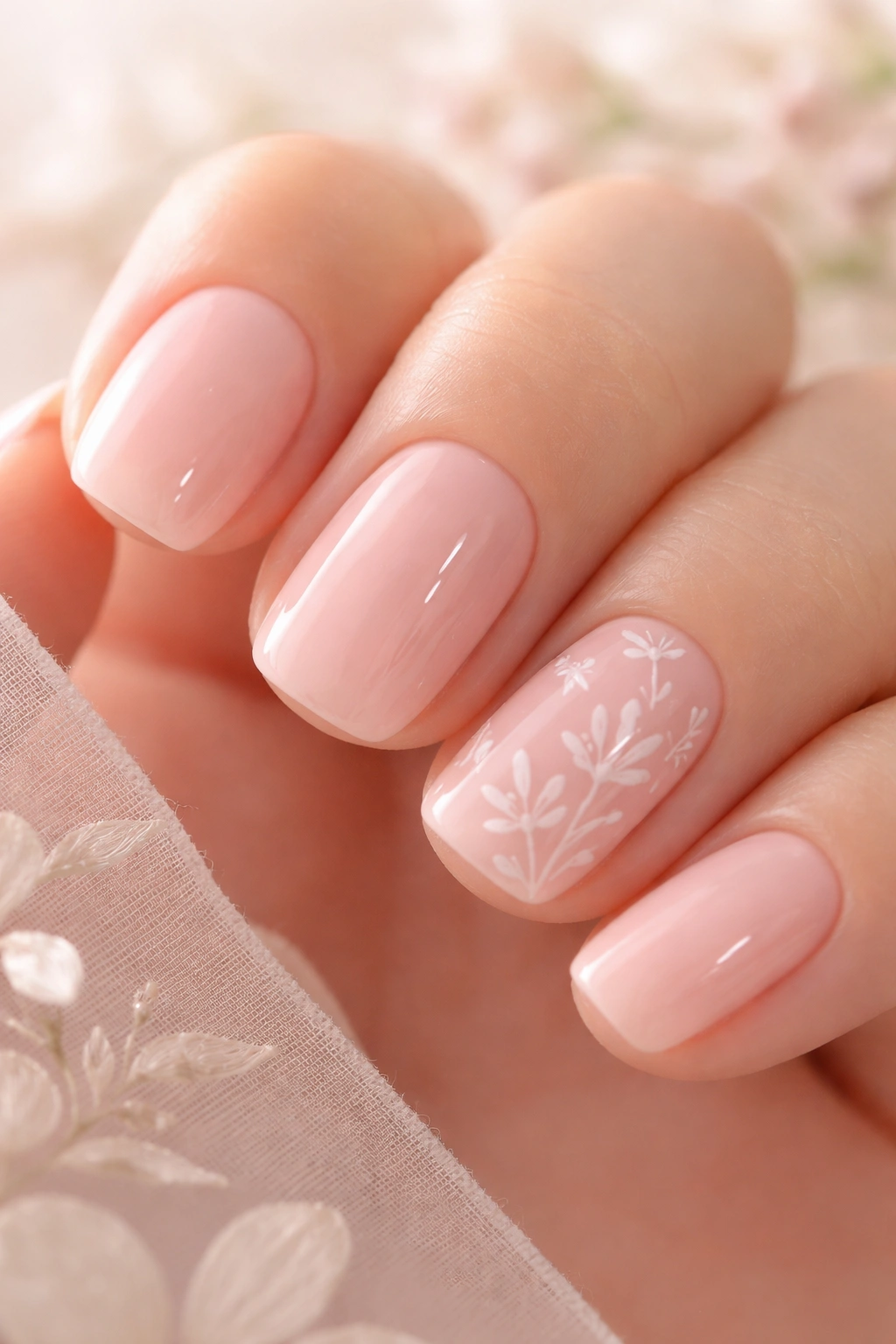
Ballet pink (that soft, warm, barely-there pink that looks like the inside of a seashell) pairs beautifully with hand-painted or stamped floral line art in white, pale gray, or soft green. We’re talking minimal, botanical-style flowers—not realistic roses or dense florals, but simple line drawings of wildflowers, daisies, or abstract botanical shapes. One or two flowers per nail, positioned asymmetrically so they feel organic rather than symmetrical.
Why This Design Reads as Refined on Short Squoval Nails
Florals can feel juvenile or overly romantic if they’re too detailed or densely packed, but line art florals have an editorial, grown-up quality. Short squoval nails actually benefit from delicate floral design because the curved corners echo the organic curves of flowers and plants. The design space isn’t so large that it demands bold, attention-grabbing art, so subtle botanical line work feels proportionate and intentional. Ballet pink specifically lifts the whole design into sophisticated territory—it’s not the pink of a child’s nails, it’s the pink of understated luxury.
Design Specifications and Customization
- Flowers can be positioned at the tip, scattered across the nail, or clustered asymmetrically
- White line art is the most dramatic; soft sage or gray is subtler and more muted
- Each flower should be simple—maybe four to six petals with a center dot, plus a thin stem or two
- Try alternating nails with different single flowers rather than putting the same flower on every nail
- A few nails with solid ballet pink and a few with the floral design creates balanced variety without visual chaos
Pro tip: Ask for the line art to be sealed under a clear layer of gel rather than hand-painted on top—this keeps the designs crisp and protected, and they’ll last the full two-week wear without chipping or fading.
6. Warm Caramel with Soft Ombre to Nude
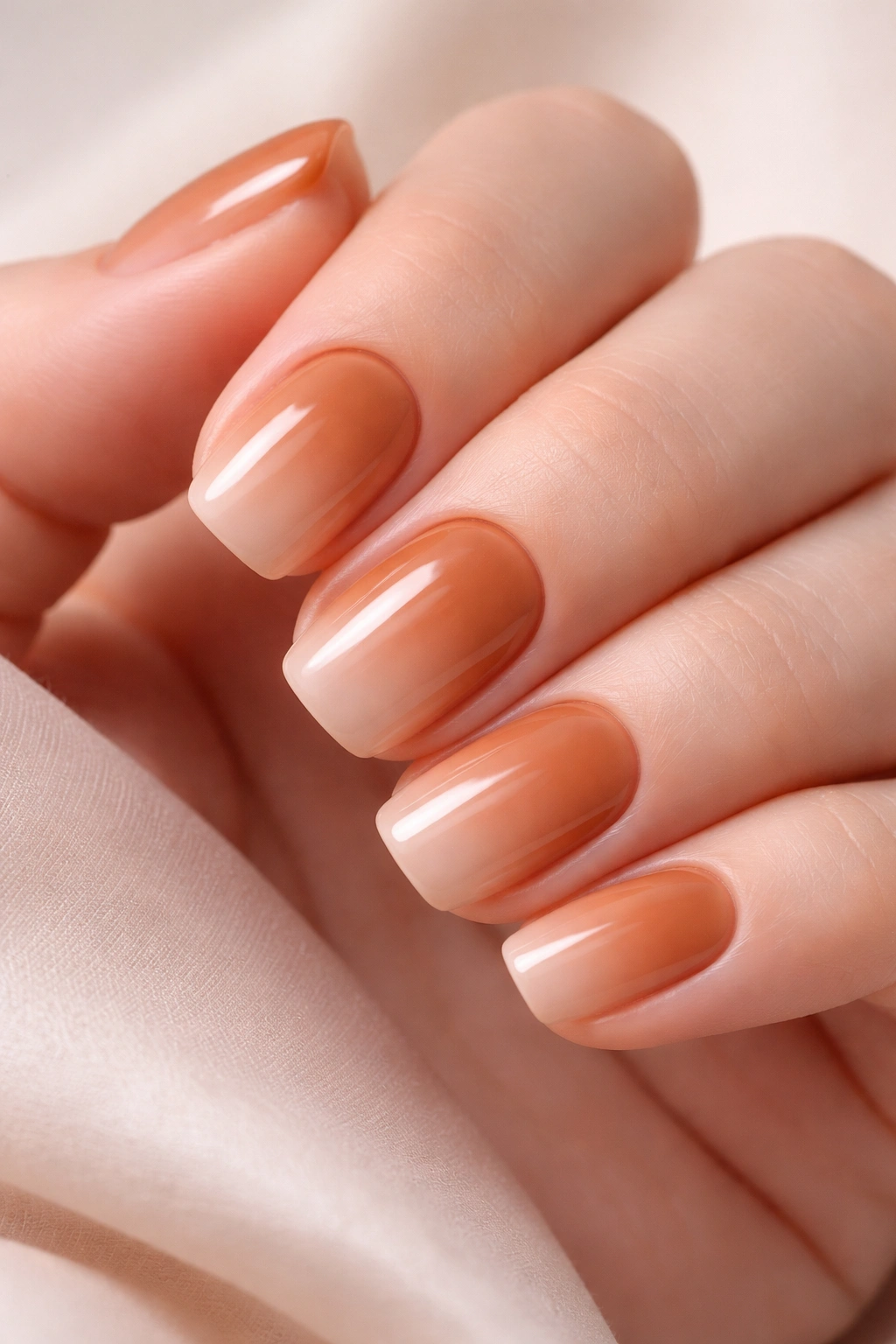
Warm caramel is a brown-based color with golden undertones that feels both approachable and elevated. The ombre effect should be subtle, not a dramatic gradient—start with caramel at the base of the nail and gradually fade to nude or a barely-there beige toward the tip. The transition should feel soft and blended, almost as though the color naturally fades out rather than being a designed effect. This creates depth and visual interest while maintaining a cohesive, polished appearance.
What Makes Ombre Work on Short Squoval Nails
An ombre design on shorter nails risks looking too busy or trying too hard, but when the color transition is truly subtle (more like a shadow than a gradient), it reads as intentional sophistication rather than fussy complexity. The squoval shape accommodates this gradual fade beautifully—the wider nail bed gives the gradient room to develop without cramping, while the rounded corners soften the effect. You’re getting dimension and visual interest without sacrifice the clean, uncluttered aesthetic that makes short nails so appealing.
Technical Details and Variations
- The ombre can be achieved with sponging or by layering different gel opacities
- The fade should take up the bottom two-thirds of the nail, with the tip area clearly lighter
- Try caramel to champagne for extra warmth, or caramel to cool beige for subtle contrast
- A glossy finish emphasizes the gradient; a satin finish makes it feel softer and more blended
- Some people prefer alternating solid caramel nails with ombre nails for balance
The beauty of a subtle ombre is that it’s sophisticated enough for professional settings while still feeling special—you’re wearing a design without broadcasting it loudly.
7. Cobalt Blue with Silver Geometric Patterns
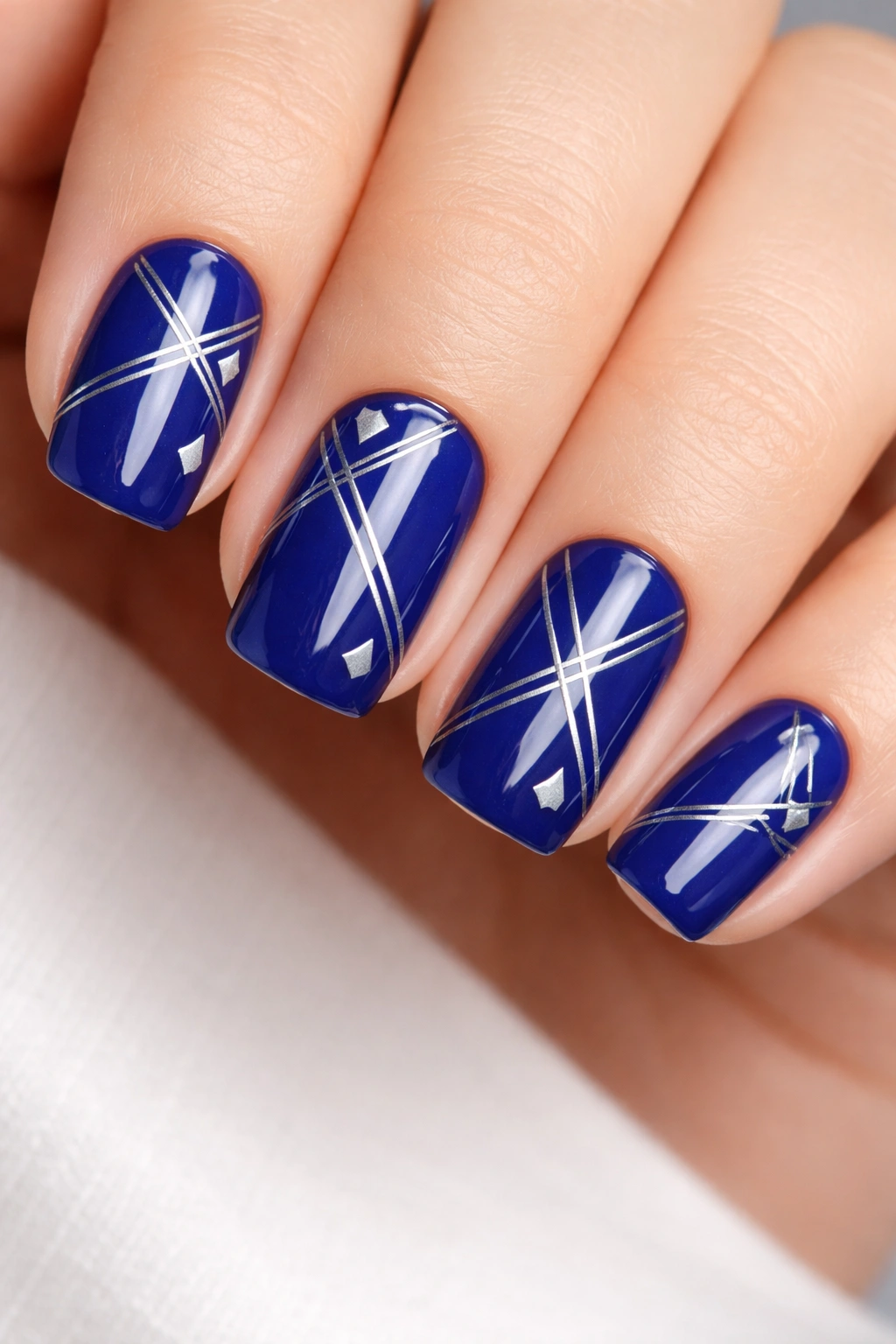
Cobalt blue is an unapologetic statement color—deep, rich, and impossibly blue. Pair it with silver geometric patterns (think small triangles, abstract lines, or tiny squares arranged intentionally across the nail) and you’ve got a design that feels bold without being chaotic. The silver patterns can be hand-painted or stamped, positioned with intention rather than randomly scattered. The key is the contrast between the deep blue base and the bright silver accents—that contrast is what makes the whole design sing.
Why This Works for Short Squoval Nails
Bright, solid colors on short nails can feel flat or one-dimensional unless they’re paired with something that adds depth and visual interest. Silver geometric patterns provide exactly that without requiring elaborate detail or overwhelming the design space. Short squoval nails are actually the ideal length for geometric patterns because the patterns remain clearly visible and well-proportioned without looking cramped. The rounded corners of the squoval soften the geometric shapes slightly, preventing the overall design from feeling too harsh or angular.
Pattern Ideas and Layout Strategies
- Small triangles in one corner, creating a focal point rather than covering the whole nail
- Thin, vertical lines that echo the height of the nail
- Scattered small squares in varying sizes for visual rhythm
- Negative space approach—paint silver geometric shapes leaving the blue base showing through
- Matte finish on the blue with glossy silver patterns for textural contrast
Consider doing the geometric pattern on just two or three nails (accent nails) rather than all five—this creates visual balance and actually makes the patterned nails feel more special and intentional.
8. Soft Mauve with Pearl Finish and Subtle Glitter
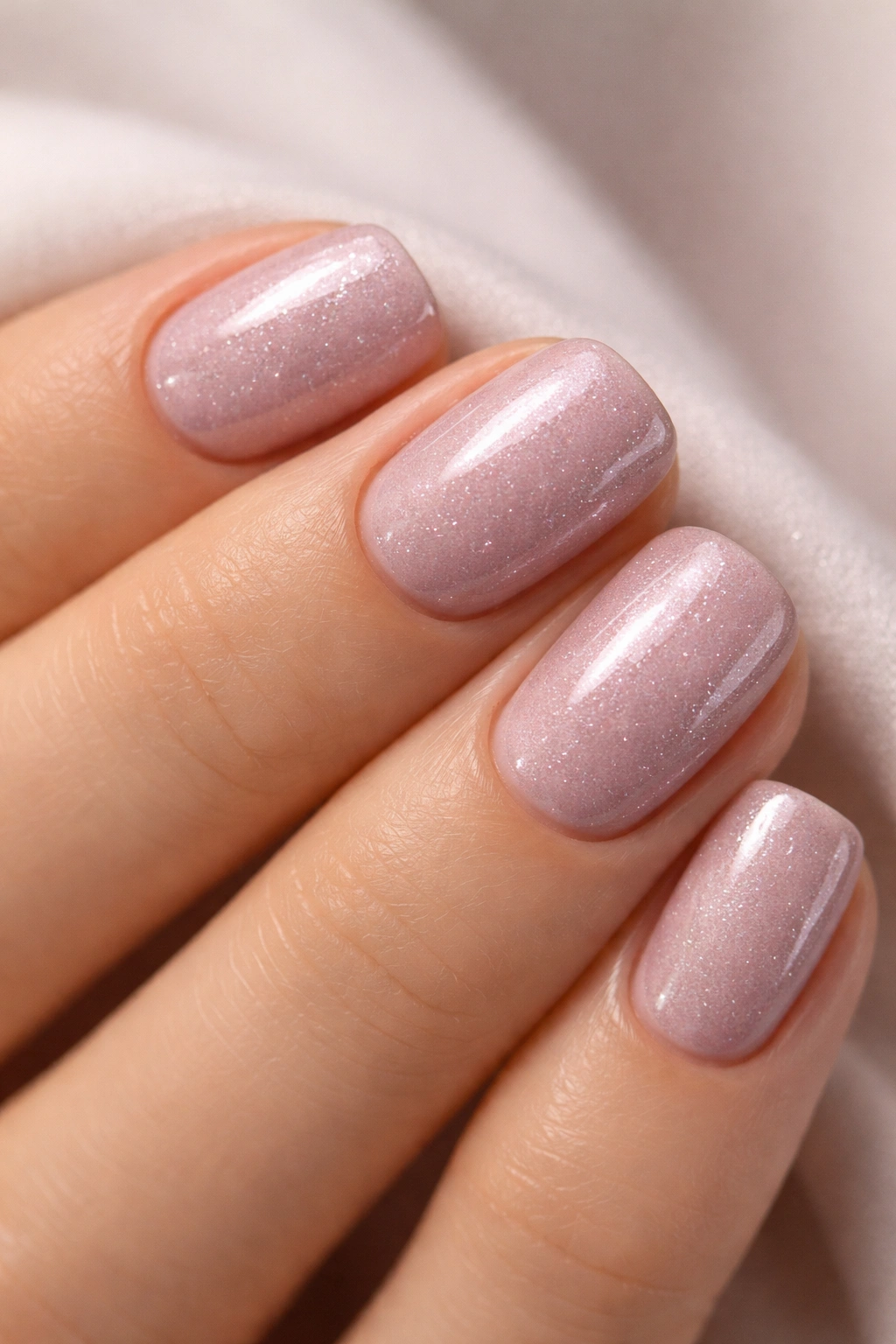
Mauve is that perfect middle ground between pink and purple—warm, sophisticated, and flattering across skin tones. A pearl finish gives the base a gentle shimmer that catches light subtly, while microscopic glitter (we’re talking tiny, barely-visible sparkle, not chunky glitter) is scattered sparsely across the nail surface. The overall effect is elegant and slightly sparkly without being loud or party-appropriate—this is a refined, everyday sparkle.
The Appeal of Pearl Finish on Short Squoval Nails
Pearl finish is genuinely the MVP of short nail design because it adds visual interest and dimension without requiring any actual nail art. The soft sheen makes your nails look healthy and cared-for, and the light-catching quality makes short nails appear slightly longer (an optical illusion that honestly works). Paired with barely-there glitter, you get enough sparkle to feel special without the design reading as costume-y or over-the-top. It’s the manicure that makes you look like you have your life together.
Getting the Pearl and Glitter Right
- Pearl finish should be subtle and creamy, not mirror-like or overly reflective
- The glitter should be truly micro-sized and sparse—more about catching light than creating visible sparkle
- Apply the glitter while the base gel is still tacky so it adheres properly
- Some people prefer glitter only on the tips; others want it scattered across the entire nail
- Works beautifully with a glossy finish that makes the pearl and glitter glow
Worth knowing: If you’re commuting to and from an office, this design reads as professional because the base color is muted and the sparkle is genuinely subtle. By evening light, it catches enough shimmer to feel special—it’s a design that works overtime.
9. Rich Burgundy with Negative Space Marble Effect
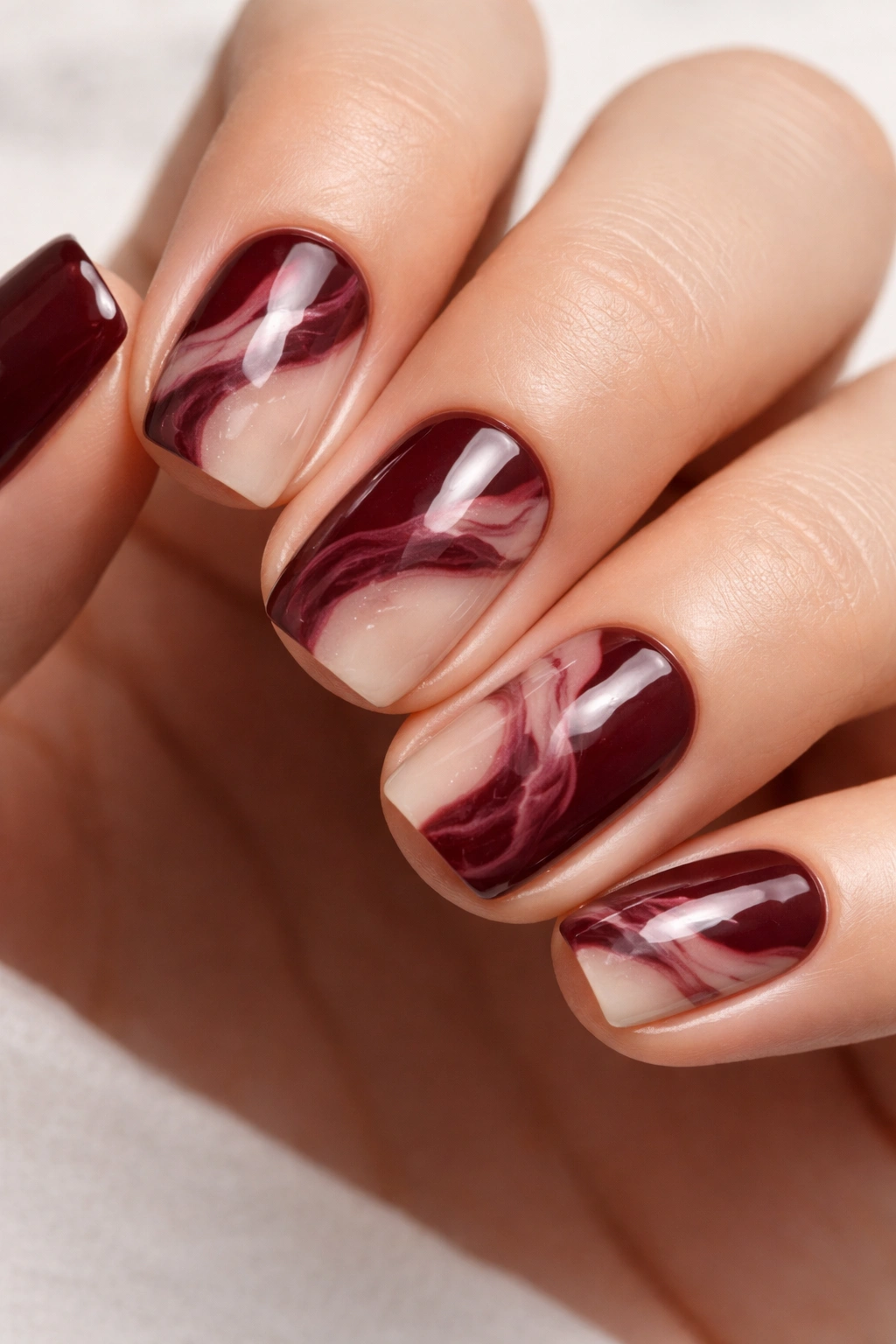
Burgundy is a color that screams sophistication on short nails—it’s deep, warm, and works against most skin tones. A negative space marble effect means you’re leaving portions of your nail unpainted (showing the nail bed color underneath, or painted nude) while the burgundy forms organic, marbled shapes around those negative spaces. The result feels almost like the opposite of typical marble design—instead of a marbled pattern on a solid base, you have a solid color with marbled negative space carved through it.
Why Negative Space Marble Works on Squoval
Negative space is always more flattering on shorter nails than on long ones because it prevents the design from feeling crowded or too busy. The marble effect—those organic, flowing negative spaces—echoes the natural curves of the squoval shape rather than fighting against it. You end up with a design that feels cohesive and intentional rather than accidental. The burgundy base is rich enough that the negative space reads clearly without needing a contrasting color, and the overall impression is editorial and thoughtfully designed.
Creating the Marble Negative Space Effect
- Your technician can freehand paint the negative spaces or use a design template
- The negative space shapes should be organic and flowing, not geometric or angular
- Keep the negative space to roughly 20-30% of the nail surface—enough to read clearly, not so much that it dominates
- Try it on just two or three nails rather than all five for a more wearable look
- A matte finish on the burgundy with a gloss finish on the negative space creates subtle contrast
The sophistication of this design is in its restraint—you’re creating visual interest through strategic emptiness rather than through added detail.
10. Nude Base with Holographic Accent Tips
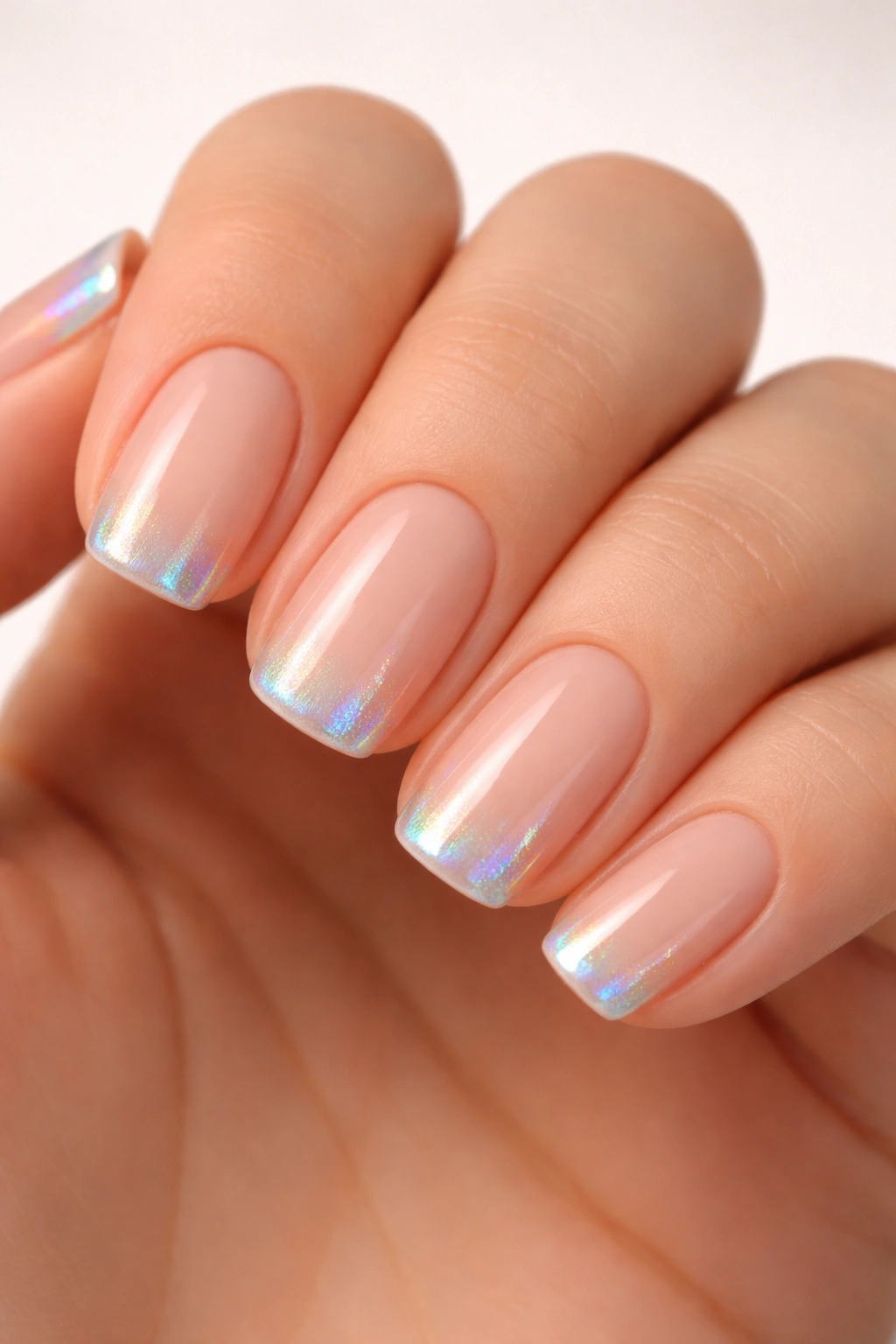
Nude gel provides the perfect neutral canvas for a modern twist: holographic tips that shift through rainbow colors as they catch light. The holographic effect should be concentrated on the tip portion of the nail (roughly the outer third to half), while the base remains soft, warm nude. The contrast between the warm neutral base and the shimmering, light-catching holographic tip creates a design that feels current and editorial without requiring bold color or complex nail art.
Why Holographic Tips Elevate Short Squoval Nails
Holographic finishes are genuinely futuristic-looking, but they work on short nails because they don’t compete with your overall aesthetic—they feel like an accent or detail rather than a statement piece. The squoval shape provides the perfect stage for holographic tips because the width of the tip area is substantial enough to show off the color-shifting effect without looking cramped. Paired with a neutral base, the holographic detail reads as intentionally modern rather than costume-y or over-the-top.
Application Technique and Variations
- Holographic effect can be achieved with specialized holographic gel or chrome powder
- The transition between nude base and holographic tip should be relatively clean rather than blended
- Try chrome powder in different finishes—mirror-like is bold; holographic is more subtle and multidimensional
- Some people prefer holographic tips on just two or three accent nails; others commit to all five
- A glossy finish is essential to make the holographic effect shine and color-shift properly
Pro tip: Holographic effects shift color throughout the day depending on lighting, which means people will literally notice your nails changing colors throughout their day. It’s a subtle flex that’s genuinely impressive.
11. Sage Green with White Half-Moon Accent
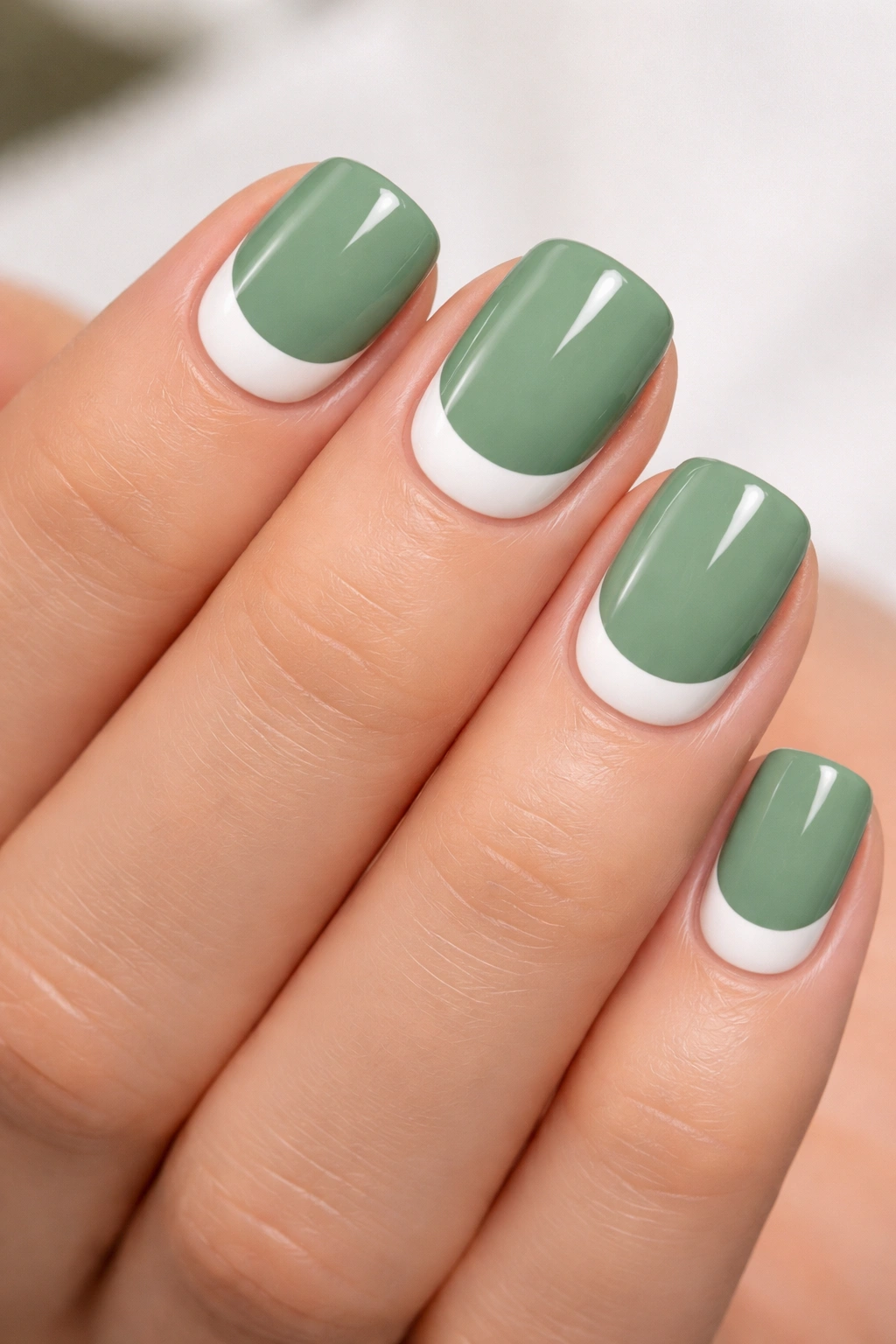
Sage green is the green that works everywhere—warm, natural, and sophisticated without feeling trendy or dated. A white half-moon accent (painted along the cuticle area, creating a reverse French manicure effect) provides clean contrast and a modern geometric element. The white should be crisp and clearly defined, creating a sense of intentional, designed contrast rather than anything accidental. This design feels particularly fresh on short squoval nails because the geometric shape echoes the nail shape itself.
The Modern Take on Half-Moon Design
Half-moon accents are having a real moment, and they work beautifully on short nails where traditional full-length nail art might feel overwhelming. The squoval shape is perfect for half-moon design because the rounded corners create a smooth curve for the white half-moon line, while the width of the nail bed makes the geometric accent clearly visible and well-proportioned. Sage green specifically is the ideal color pairing because it’s muted enough that the white accent doesn’t feel too stark or clinical.
Design Execution and Styling Options
- The white half-moon should start at the cuticle line and extend roughly one-quarter of the way up the nail
- The curve should be smooth and intentional, not rough or uneven
- Try the half-moon on all five nails or just on two or three accent nails
- The white can be replaced with nude, cream, or even a soft gold for variations
- A matte finish on the sage green with gloss white creates the sharpest contrast
This design works equally well in professional settings and on weekends—it reads as modern and considered without being loud or attention-grabbing.
12. Blush Pink with Micro Glitter Gradient
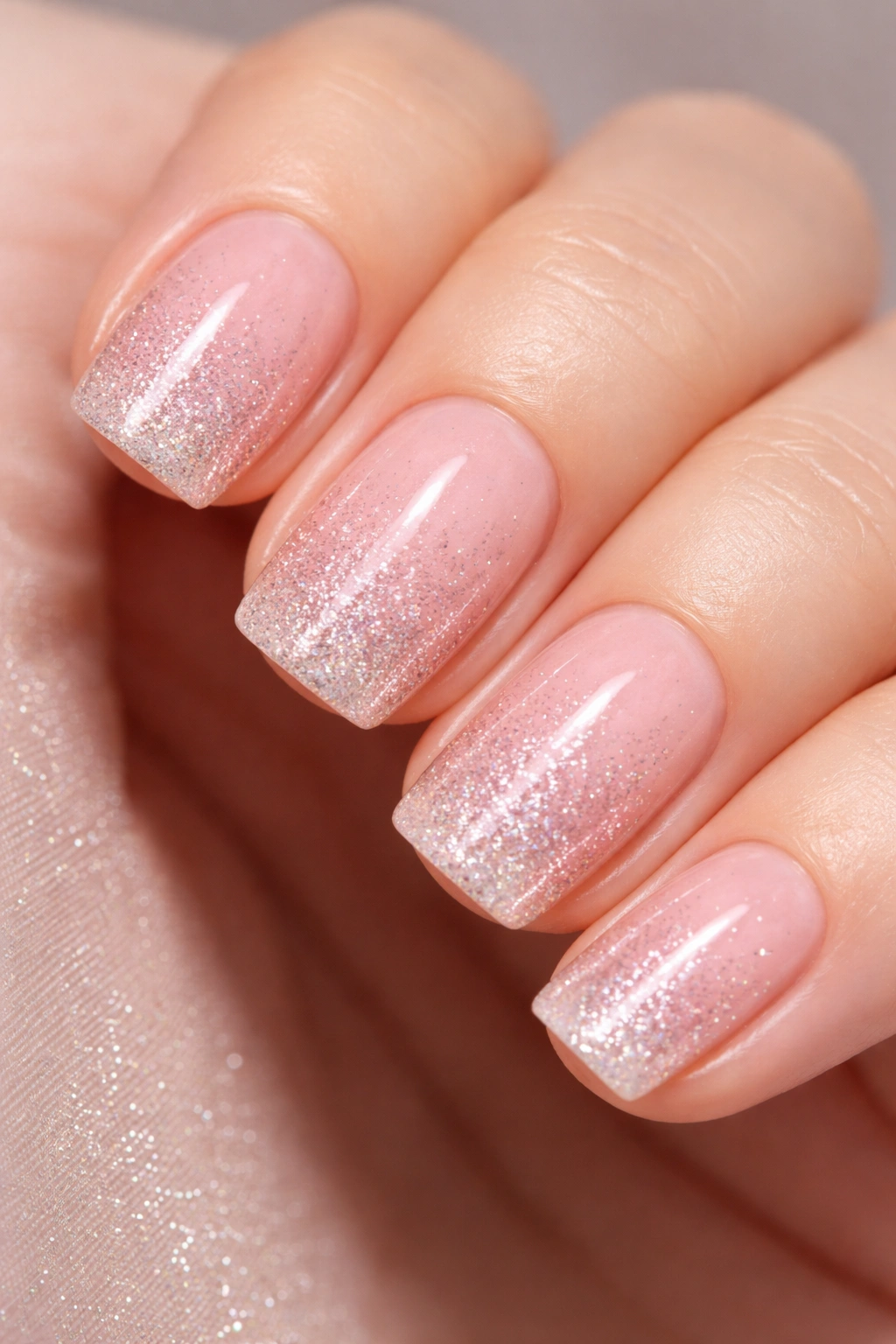
Blush pink is that warm, flattering pink that literally everyone looks good wearing. A micro glitter gradient means you’re starting with barely any glitter at the base and gradually increasing the glitter density toward the tip, so the tip is visibly sparkly while the base remains soft and muted. The overall effect is sophisticated sparkle—not in-your-face glitter, but enough shimmer that you notice it in different lighting.
Why Glitter Gradient Works on Short Squoval Nails
A glitter gradient is the perfect solution to the short-nail sparkle dilemma: you want shimmer and visual interest, but you don’t want your nails to look costume-y or over-the-top. By concentrating the glitter toward the tips, you create a focal point that draws the eye without overwhelming the nail. The squoval shape provides enough surface area for the gradient to develop naturally, while the rounded corners keep the overall look soft and approachable. It’s a design that reads as intentionally modern rather than accidentally glittery.
Creating the Gradient Effect
- Micro glitter should be truly tiny—think dust-sized, not chunky flakes
- Apply base gel first, then apply the glitter-infused gel increasingly densely toward the tip
- The gradient should be visible and intentional but feel natural rather than sharply demarcated
- Some people prefer using pre-made glitter gradient gels; others prefer hand-sprinkling glitter
- The base color can also shift slightly from a deeper blush toward a lighter pink to enhance the gradient effect
Worth knowing: Glitter gradient actually makes short nails appear slightly longer because the eye follows the gradient toward the tips—it’s a subtle visual trick that genuinely works.
13. Navy Base with Cream Striping and Dots
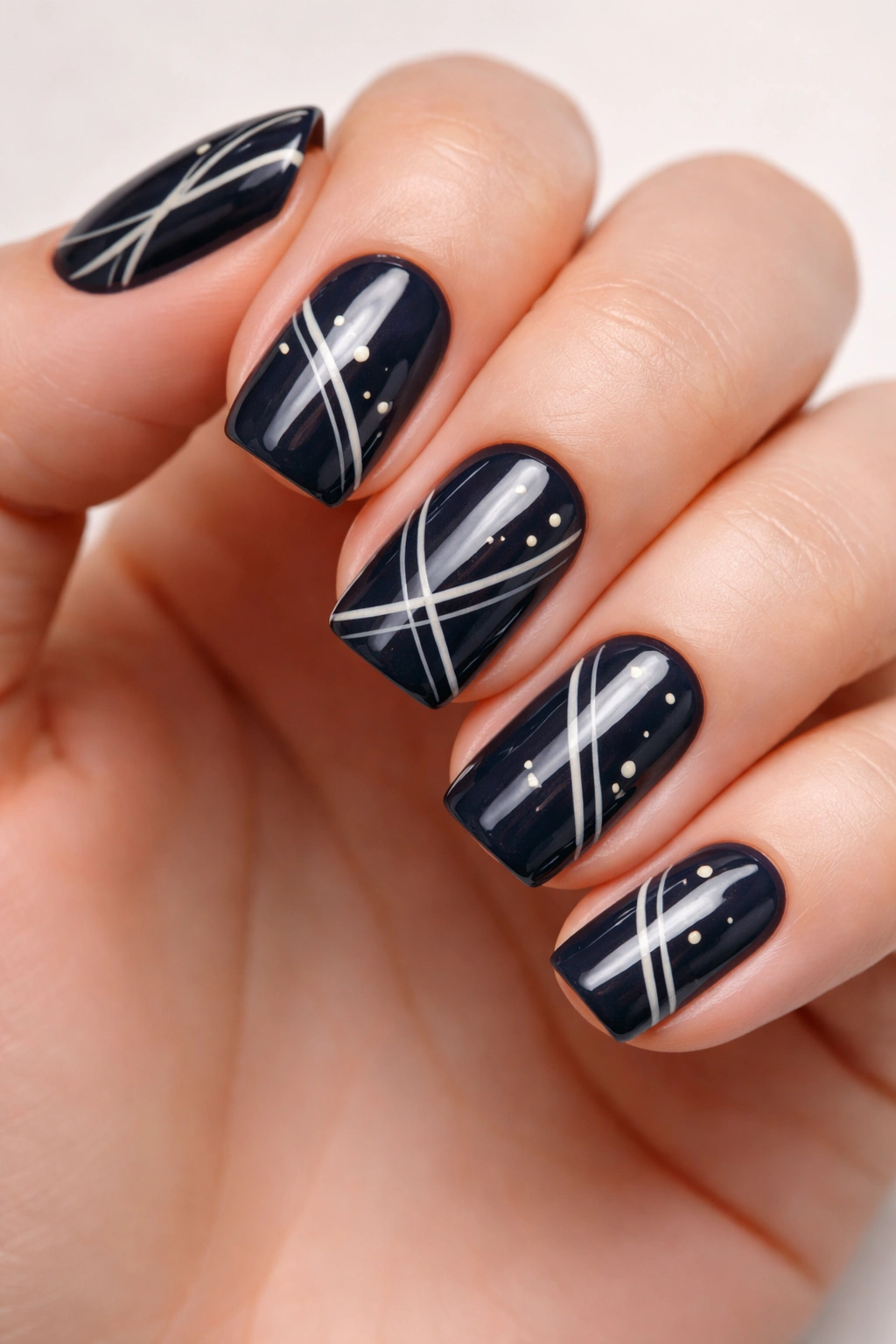
Navy is the most versatile dark color for short nails—it reads as professional in any setting while maintaining sophistication and depth. Layer in cream-colored striping (thin, hand-painted lines in varied directions creating an abstract linear pattern) and small cream dots scattered between the lines, and you’ve created a design that feels intricate without being overwrought. The cream against navy provides excellent contrast while remaining elegant rather than graphic.
What Makes This Design Perfect for Short Squoval Nails
Intricate designs on short nails risk looking too busy, but when the design elements are small and the base color is dark and grounding, you end up with something that reads as carefully considered rather than chaotic. The squoval shape accommodates the striping and dots beautifully—the width provides enough space for the design elements to be clearly visible, while the rounded corners prevent the lines from feeling too harsh or angular. Navy specifically is the ideal base because it’s dark enough to ground the design without feeling heavy or somber.
Line and Dot Placement Strategy
- Lines should vary in direction—some vertical, some diagonal, some with slight curves
- Dots should be scattered sparsely, not clustered densely
- The spacing should feel intentional rather than random, even though the pattern is abstract
- Try asymmetrical placement (heavier design on one side of the nail) for a more modern feel
- A glossy finish makes the cream pop against the navy; a matte navy with gloss cream adds textural contrast
This design rewards close-up looks without broadcasting itself from across a room—it’s sophisticated in the way that good design should be.
14. Warm Taupe with Negative Space Sunburst
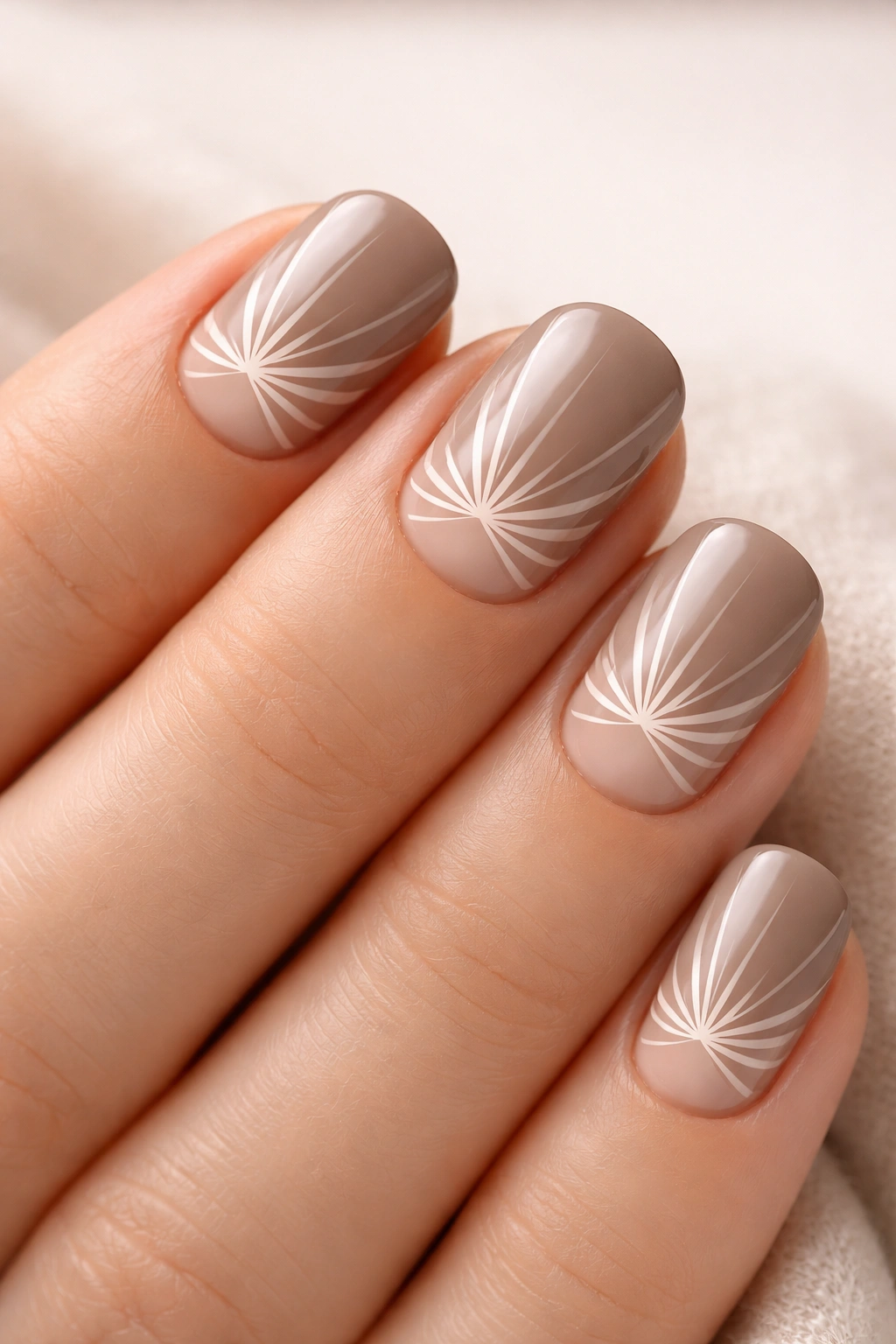
Warm taupe (that brown-beige-gray that’s somehow flattering on everyone) forms the perfect base for a negative space sunburst design. Imagine thin white or pale gold lines radiating outward from a central point, creating a sunburst or starburst pattern. The “negative space” means the lines themselves are unpainted (showing your nail bed or a nude base underneath), while the taupe surrounds them. The effect is geometric and modern without being harsh.
Why Sunburst Works on Squoval
Sunburst designs are naturally radiating and organic, which echoes the rounded corners and natural shape of squoval nails. The geometric nature of the design is softened by the squoval shape, preventing the overall aesthetic from feeling too angular or rigid. Warm taupe is the ideal base color because it’s neutral enough that the sunburst lines remain the focal point without competing for attention. The design reads as intentionally modern and editorial, like something you’d see in a high-fashion editorial rather than a typical nail salon offering.
Executing the Sunburst Effect
- Lines should radiate from a central point (typically near the center or slightly off-center of the nail)
- Spacing between lines should be even and intentional
- You can have anywhere from 6-12 rays depending on how dense you want the effect
- The lines can be pure white, pale gold, or even a soft green depending on your preference
- Try the sunburst on just one or two accent nails for maximum impact
Pro tip: Ask your technician to paint the negative space lines while the taupe base is still slightly tacky—this helps prevent the lines from lifting or peeling, and ensures they stay crisp throughout the two-week wear.
15. Classic Nude with Soft Chrome Tips
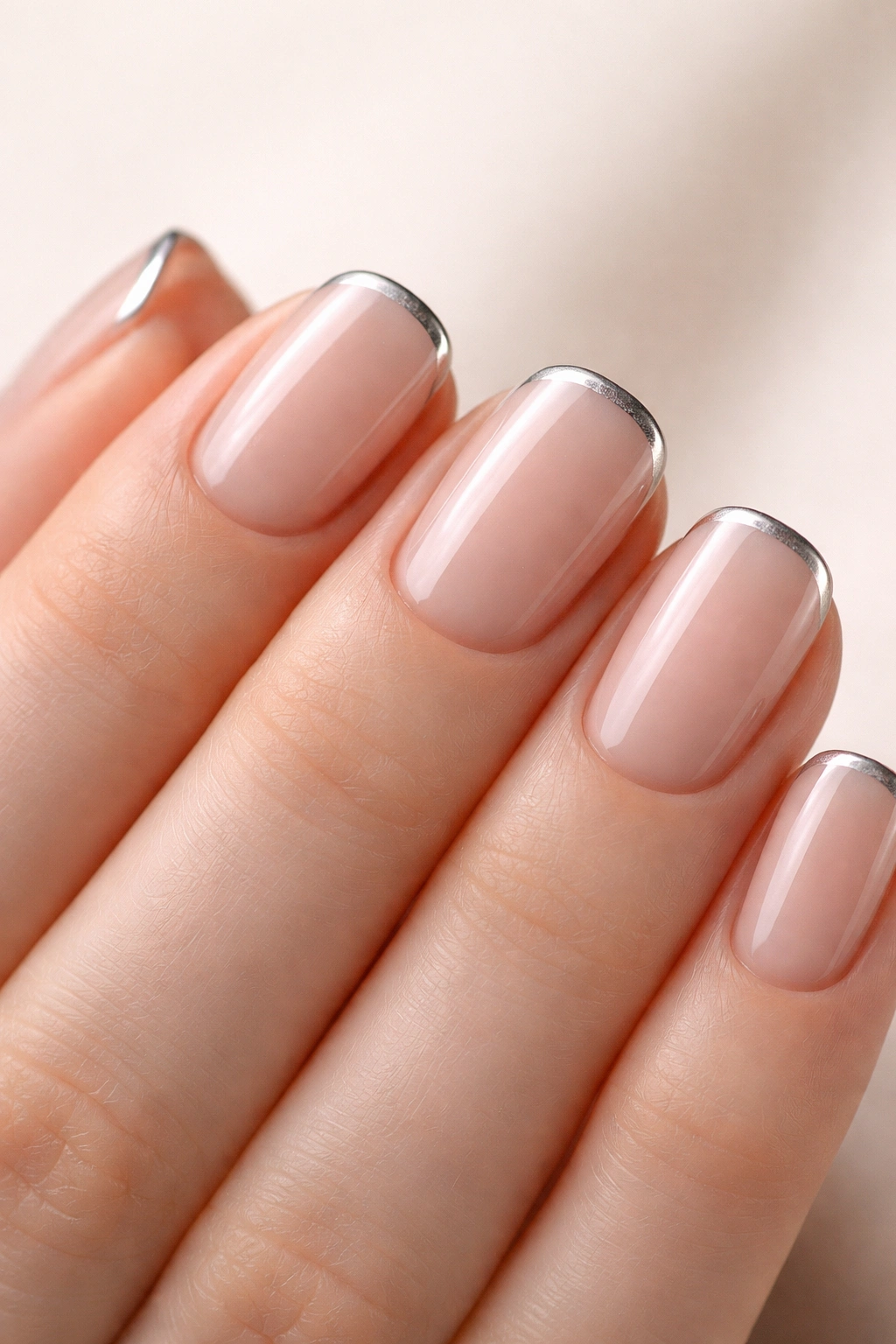
Nude gel is the foundation of a clean, professional aesthetic, and soft chrome tips elevate it into something more intentional and modern. Chrome creates a metallic, mirror-like effect concentrated on the tip portion of the nail, while the nude base provides contrast and sophistication. “Soft” chrome (as opposed to mirror-bright chrome) means the metallic effect is present but subtle—it catches light without being overwhelmingly reflective or bold.
Why This Design Works in Every Context
Nude with chrome tips is the rare design that works equally well in a corporate office, at a casual weekend gathering, or at a formal event. The nude base is universally flattering and professional, while the chrome tips feel modern and intentional without reading as loud or fashion-forward. On short squoval nails, this design is particularly effective because the chrome tips draw attention to the nail tips themselves, creating a subtle visual lengthening effect. The squoval shape provides enough surface area for the chrome effect to be visible and striking without looking cramped.
Chrome Finish Options and Variations
- Soft chrome can be achieved with chrome powder applied to a sticky base or with specialized chrome gel
- The transition between nude and chrome can be sharp and geometric or soft and blended
- Try rose gold chrome for warmth, champagne chrome for subtle sparkle, or gunmetal chrome for cool tones
- Some people prefer full chrome tips (the outer third of the nail); others prefer a thinner chrome accent
- A glossy finish is essential—chrome requires shine to properly reflect light
This design is the definition of effortless sophistication. You’re wearing intentional nail design without trying too hard, and that’s genuinely impressive.
Final Thoughts
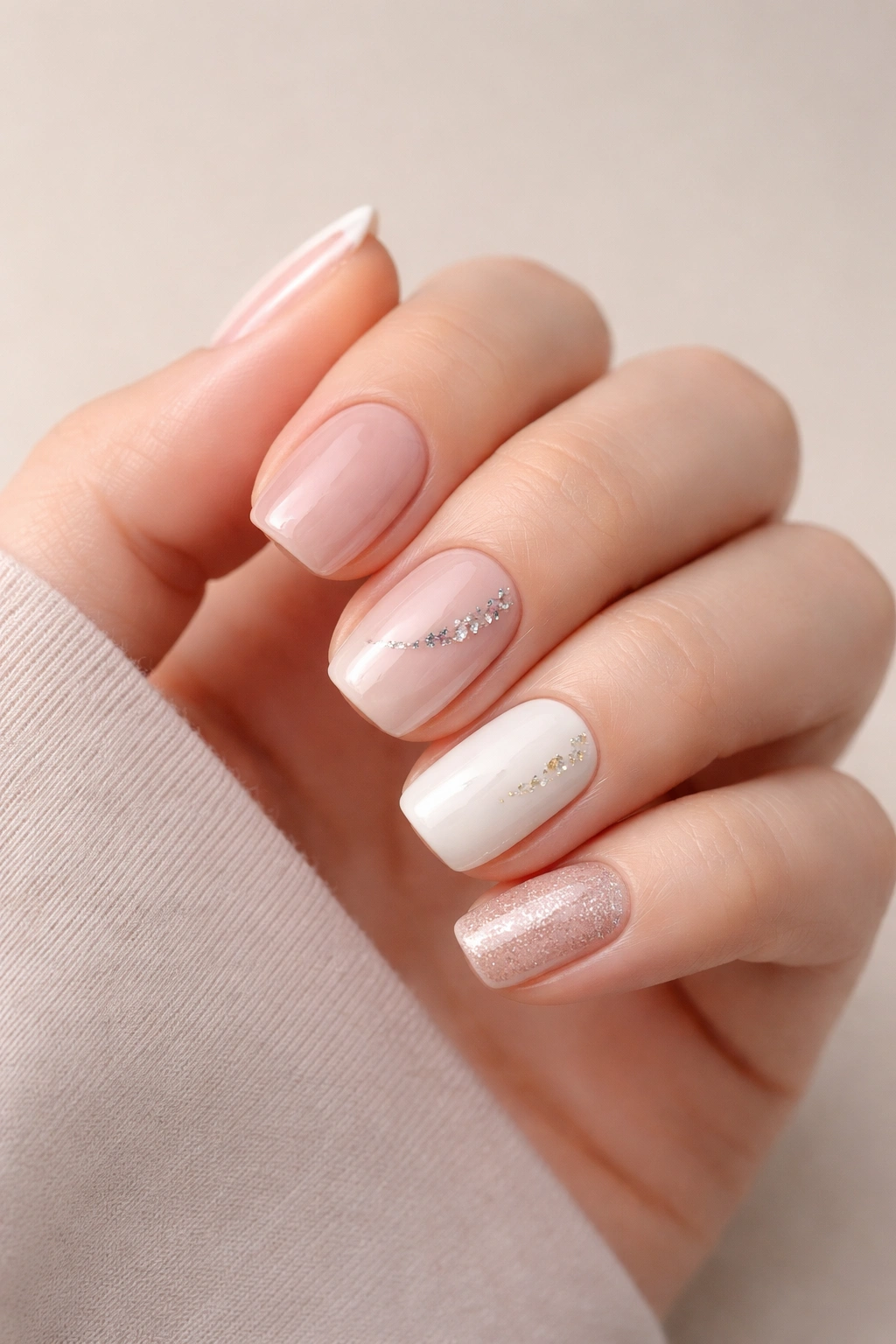
Choosing a gel nail design for short squoval nails is genuinely about finding something that feels like you—something that makes you excited when you catch your hands in certain lighting, something that looks intentional and considered without requiring constant maintenance or looking out of place in your everyday life. The fifteen designs above run the spectrum from minimalist and neutral to bold and graphic, from sparkly and playful to refined and serious.
The real beauty of short squoval nails is that they’re the Goldilocks of nail shapes. They’re long enough to accommodate interesting design work and nail art, but short enough to maintain for weeks without worrying about snagging or breaking. The squoval shape itself is flattering—it elongates your fingers slightly while avoiding the commitment and maintenance of true long nails. And gel finish means whatever design you choose will last, chip-free and glossy, for the full two weeks between appointments.
Your nail technician becomes your collaborator in this process. Show them one (or more) of these designs, talk through variations that might suit your lifestyle or aesthetic better, and trust their expertise in execution. The best nail designs are the ones that genuinely reflect who you are and how you spend your time, not the ones that look perfect in photos but feel out of place on your actual hands. Take time choosing, trust the process, and prepare to fall in love with your nails again.