




Short squoval nails have become the go-to shape for anyone who wants the best of both worlds — the practicality of a short nail with the flattering elongation of an oval silhouette. When you pair this elegant shape with delicate flower designs, you get nail art that’s polished enough for a professional setting yet creative enough to express your personality. The beauty of flower nail art on squovals is that the slightly squared-off edges give flowers more definition and keep intricate petals from feeling lost on your nail bed.
What makes short squoval flower designs so compelling is their versatility. Whether you’re drawn to botanical realism, whimsical watercolor florals, or minimalist line-drawn flowers, this shape accommodates every aesthetic without looking cramped or overwhelming. Short nails mean you can commit to more detailed work without the breakage risk, and the shape itself guides your design placement naturally. You don’t need special skills or expensive tools to pull off these looks — just steady hands, patience, and inspiration to get started.
If you’ve been scrolling through nail inspiration and keep coming back to flower designs but weren’t sure which ones would actually work on short nails, you’re in exactly the right place. Each design here has been chosen for its suitability for shorter lengths and its ability to create visual impact without requiring excessive surface area. Let’s explore 15 specific, saveable short squoval flower nail art ideas that range from subtle and sophisticated to bold and artistic.
1. Soft Watercolor Tulip Garden
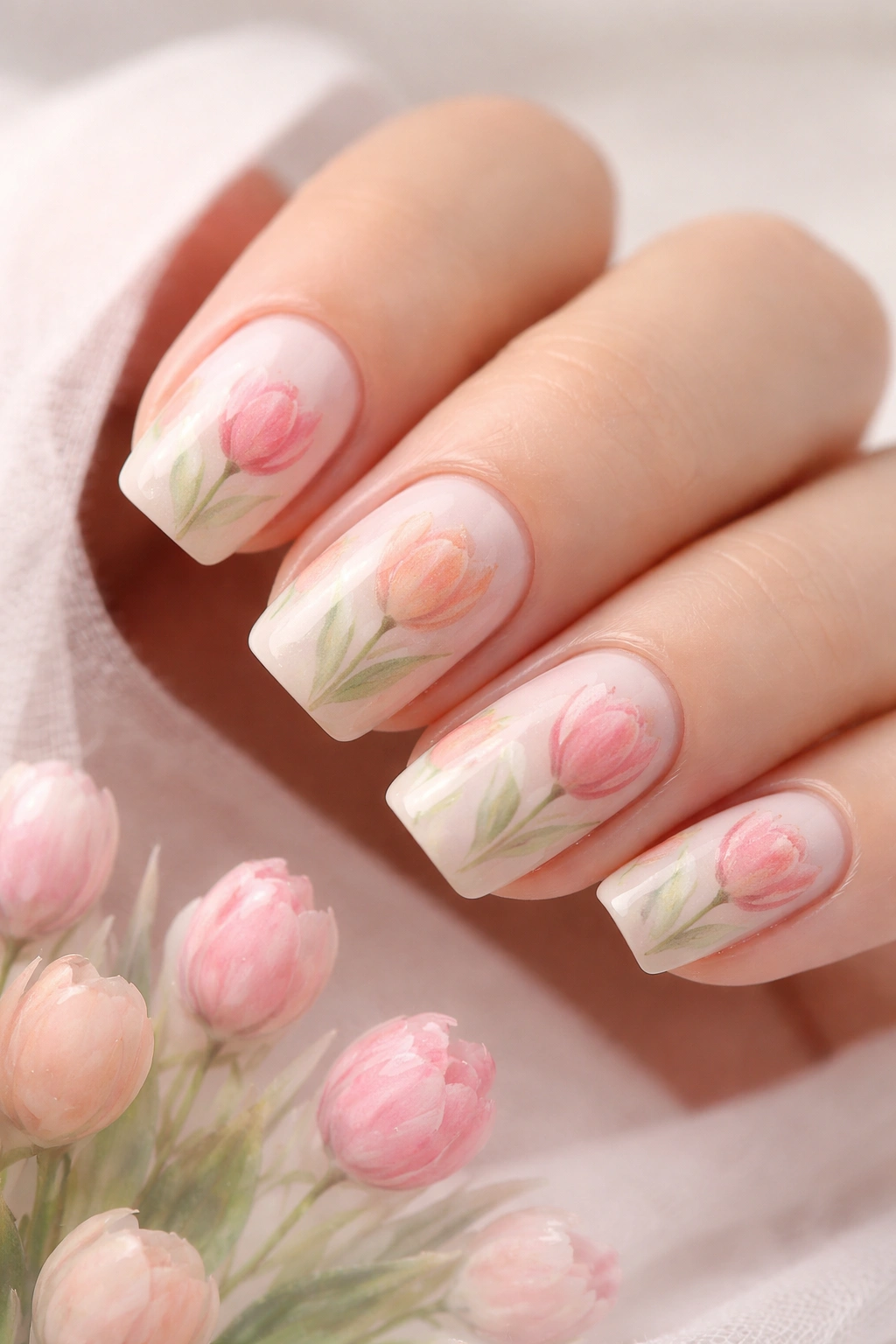
Watercolor tulips create an effortlessly romantic aesthetic that works beautifully on short squovals. The blurred, organic edges of watercolor technique don’t demand precision, which makes this design forgiving even if you’re working with shorter nail space. Soft pinks, peachy tones, and muted reds blend together to create depth and movement that draws the eye across your nail.
Why This Design Captures Attention
Watercolor flowers have an inherent softness that feels both sophisticated and approachable. Unlike graphic floral designs that require sharp lines, watercolor tulips look intentionally dreamy and artistic. The transparency of watercolor pigments creates layering effects that suggest three-dimensionality without needing extra detail work. Your nails appear longer and more refined because the color gradients flow upward naturally.
How to Achieve Watercolor Tulips
- Use a white or cream base coat to let translucent colors shine through
- Mix acrylic or gel polish with clear gel or mixing medium to create watercolor-like consistency
- Apply colors wet-on-wet by tapping blooms together before they dry completely
- Use a fine detail brush to suggest stem lines with muted green
- Seal with a glossy topcoat that enhances the translucent effect
Pro tip: Practice on a makeup sponge first to understand how your medium flows and blends — watercolor nails reward experimentation and look even better when slightly imperfect.
2. Minimalist Line-Drawn Daisy Chain
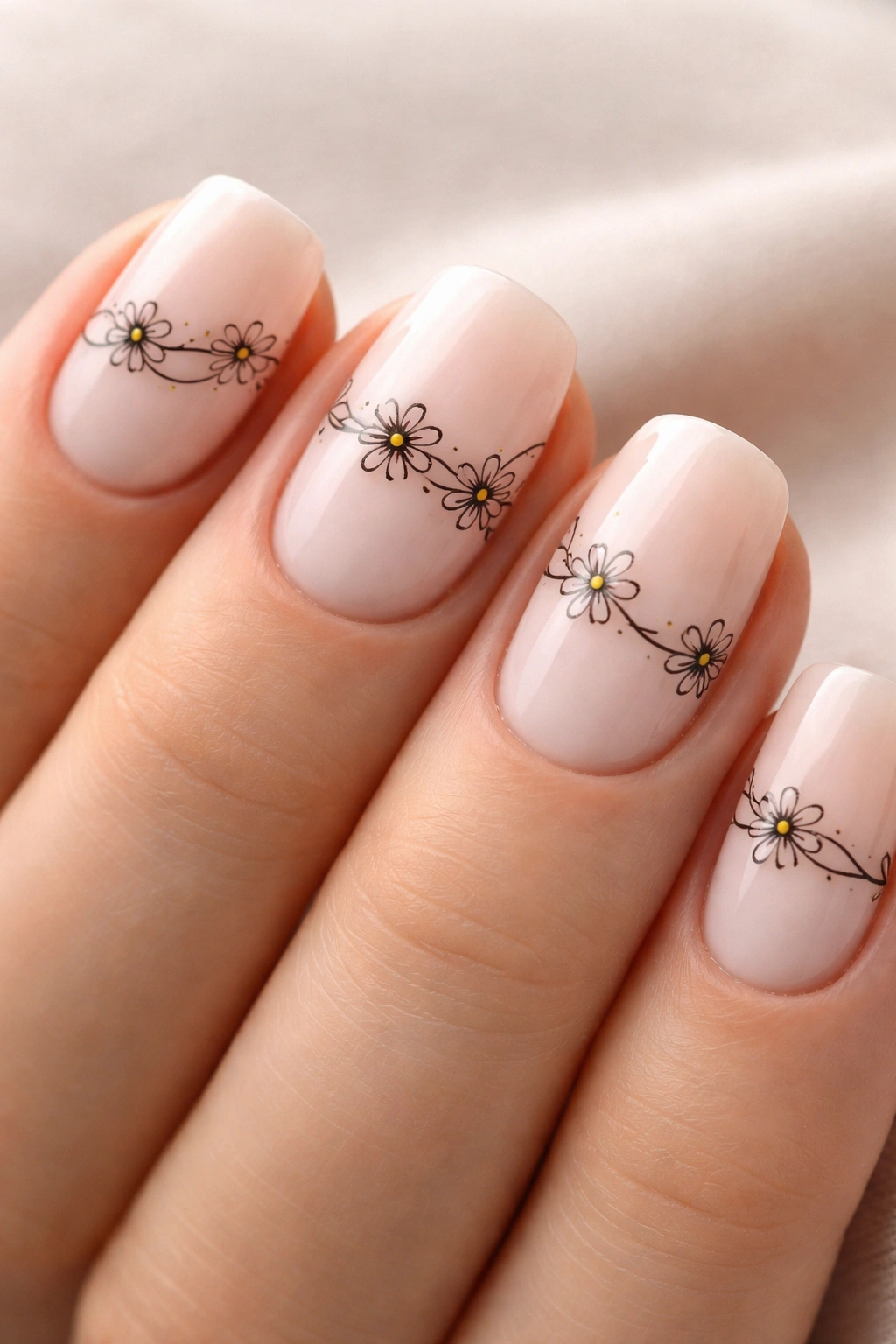
Minimalist florals are having a cultural moment, and for good reason — they’re sophisticated, modern, and incredibly forgiving on short nail beds. A thin single line in black or deep brown traces the outline of a daisy, creating elegance through simplicity. Multiple daisies linked together or scattered across the nail create a cohesive design without visual clutter.
The Appeal of Line Art Florals
Line-drawn flowers work exceptionally well on short squovals because they don’t fight for space. A single flowing line drawing of a daisy takes up minimal real estate while creating maximum visual interest. The negative space around the flower actually makes your nail look less crowded and more intentional. This approach suits both minimalist and maximalist personalities — you get the aesthetic of delicate florals without overwhelming detail.
Technical Approach for Perfect Line Work
- Start with a neutral nude or cream base that allows thin lines to pop
- Use a 0000 brush with gel or thin acrylic polish
- Work from the center outward when drawing petals for more control
- Layer daisies by overlapping stems slightly for dimension
- Consider adding a single leaf or two for natural, botanical feel
Worth knowing: Your hand steadiness matters here, but shaky lines often read as intentionally organic rather than mistakes — the beauty of line art is its forgiveness.
3. Pressed Flower Resin Effect
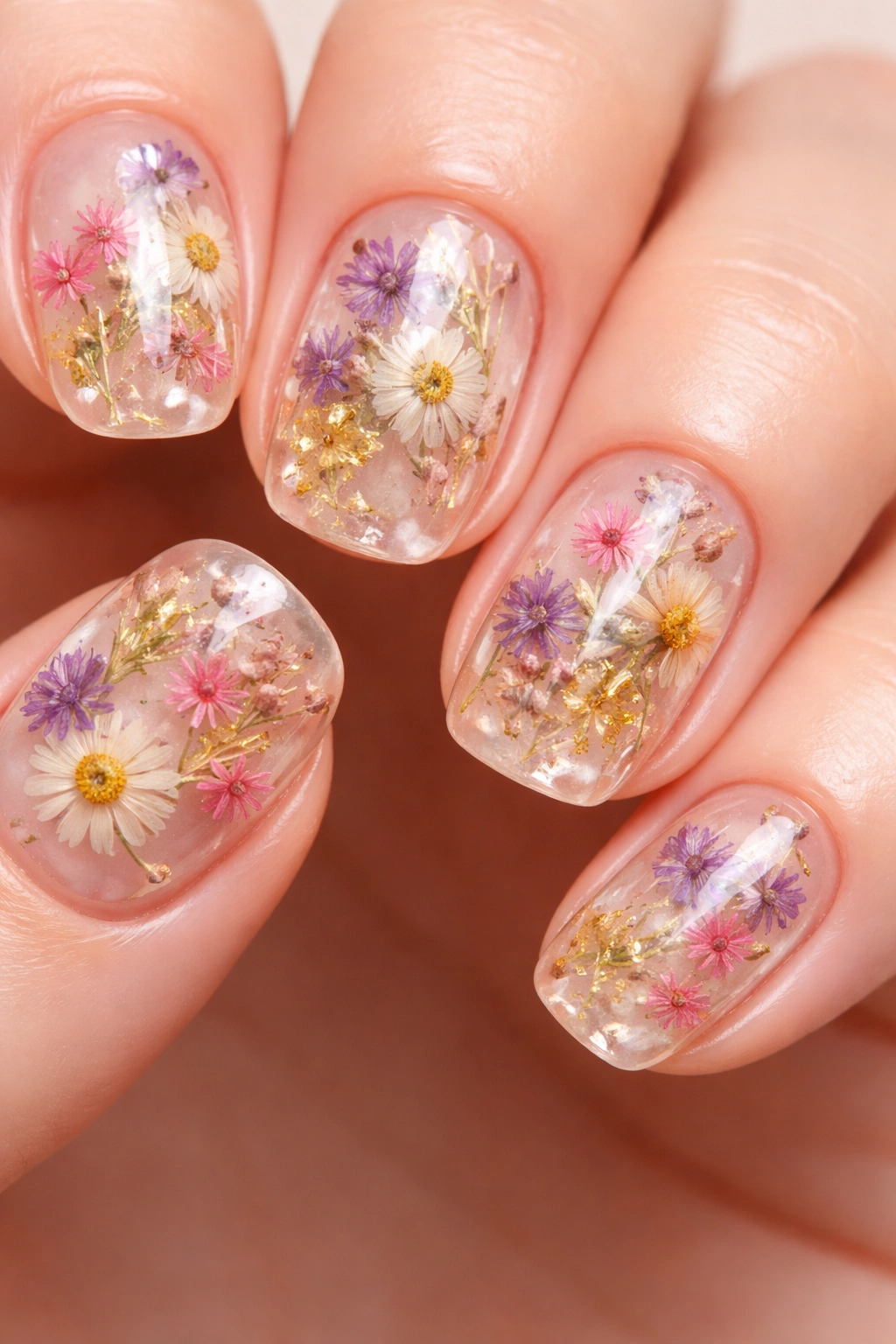
Pressed flower designs give the illusion of actual flowers encased in resin, creating a transparent, dimensional look that’s absolutely mesmerizing. Delicate petals appear preserved within your nail, creating an ethereal quality that translates surprisingly well to short squovals. The key is maintaining clarity so the “pressed” flower shows beautifully through the glossy surface.
Why Pressed Flowers Feel Elevated
There’s something inherently special about pressed flowers — they suggest care, intentionality, and an appreciation for natural beauty. On short squovals, this design creates a jewelry-like quality. The three-dimensional effect of resin work makes even modest nail length feel more dramatic and considered. People actually stop to look closely because the design has actual depth and light-play rather than being purely surface-level.
Creating the Pressed Flower Effect
- Paint a clear or milky base layer to represent the resin
- Carefully position tiny dried flowers or painted flower elements
- Use thick clear topcoat or builder gel to seal flowers securely
- Ensure complete encapsulation so nothing can snag or lift
- Consider adding subtle shimmer or metallic accents around flowers
Pro tip: Real pressed flowers work if you seal them correctly, but painted reproductions offer more control and durability for everyday wear.
4. Coral Pink Peony Accent Nails
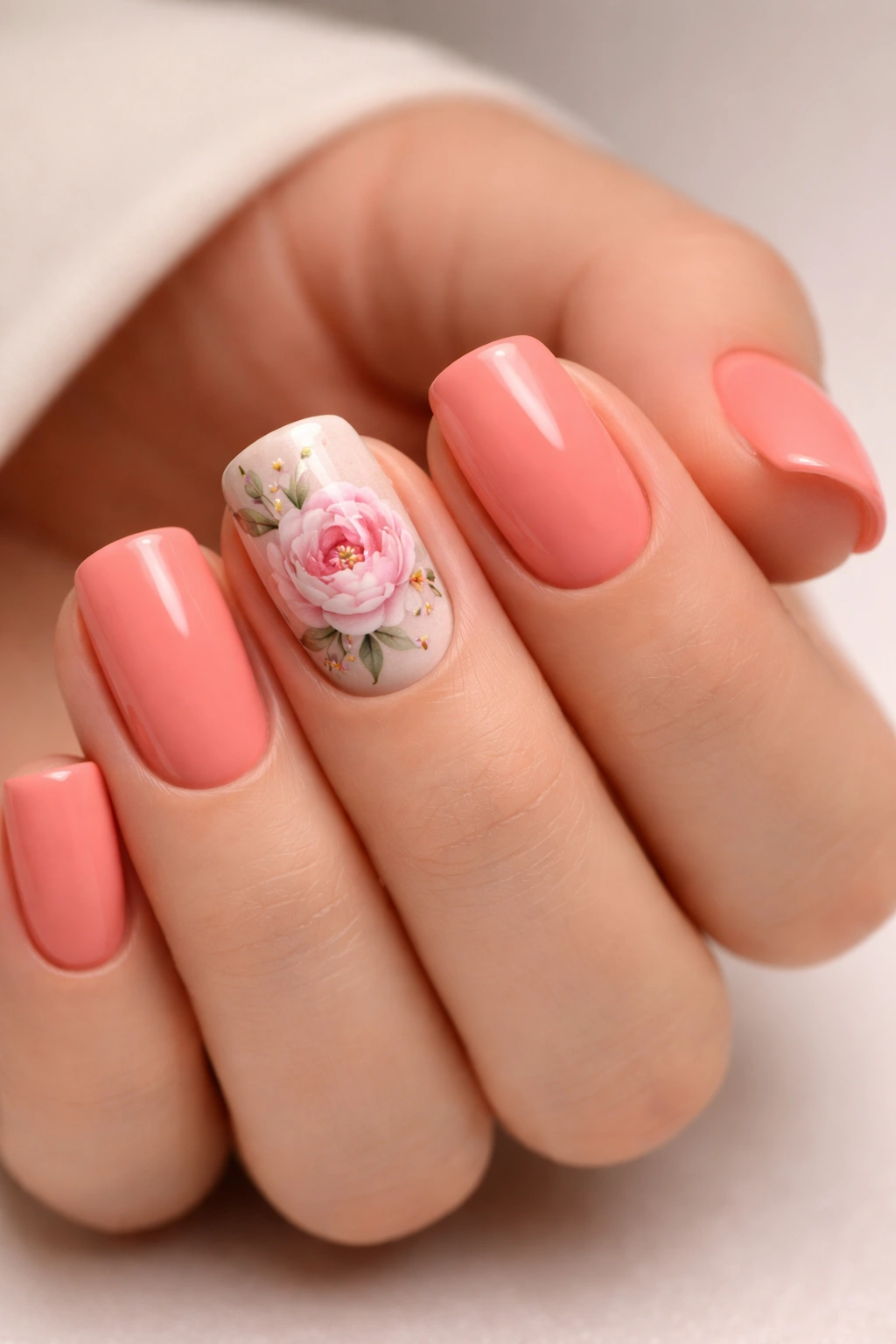
Peonies are volumetric, romantic flowers that create stunning accent nail designs on short squovals. Using a coral pink or blush tone as your main nail color, then hand-painting a detailed peony on one or two accent nails creates balanced visual interest. The remaining nails stay simple, letting the peony be the clear statement piece without overwhelming your entire manicure.
The Art of Strategic Accent Nails
Accent nail designs work perfectly on short lengths because you’re not committing the entire manicure to intricate work. Instead, you’re creating one focal point that anchors the whole look. Coral pink base colors are wonderfully flattering, warm, and modern — they read as intentional and current without being trendy. One stunning peony on a single accent nail is more impactful than scattered floral patterns everywhere.
Painting a Convincing Peony
- Start with a detailed reference image for petal structure
- Use varying shades of your base color (lighter and darker) for depth
- Layer petals from outer edges toward center, overlapping as you go
- Add fine white or cream highlights to suggest dimension
- Include a subtle stem and leaf for botanical authenticity
Insider note: Peonies look more realistic when you don’t make them perfectly symmetrical — real peonies are gloriously chaotic, so embrace slight imperfection.
5. Delicate Cherry Blossom French Hybrid
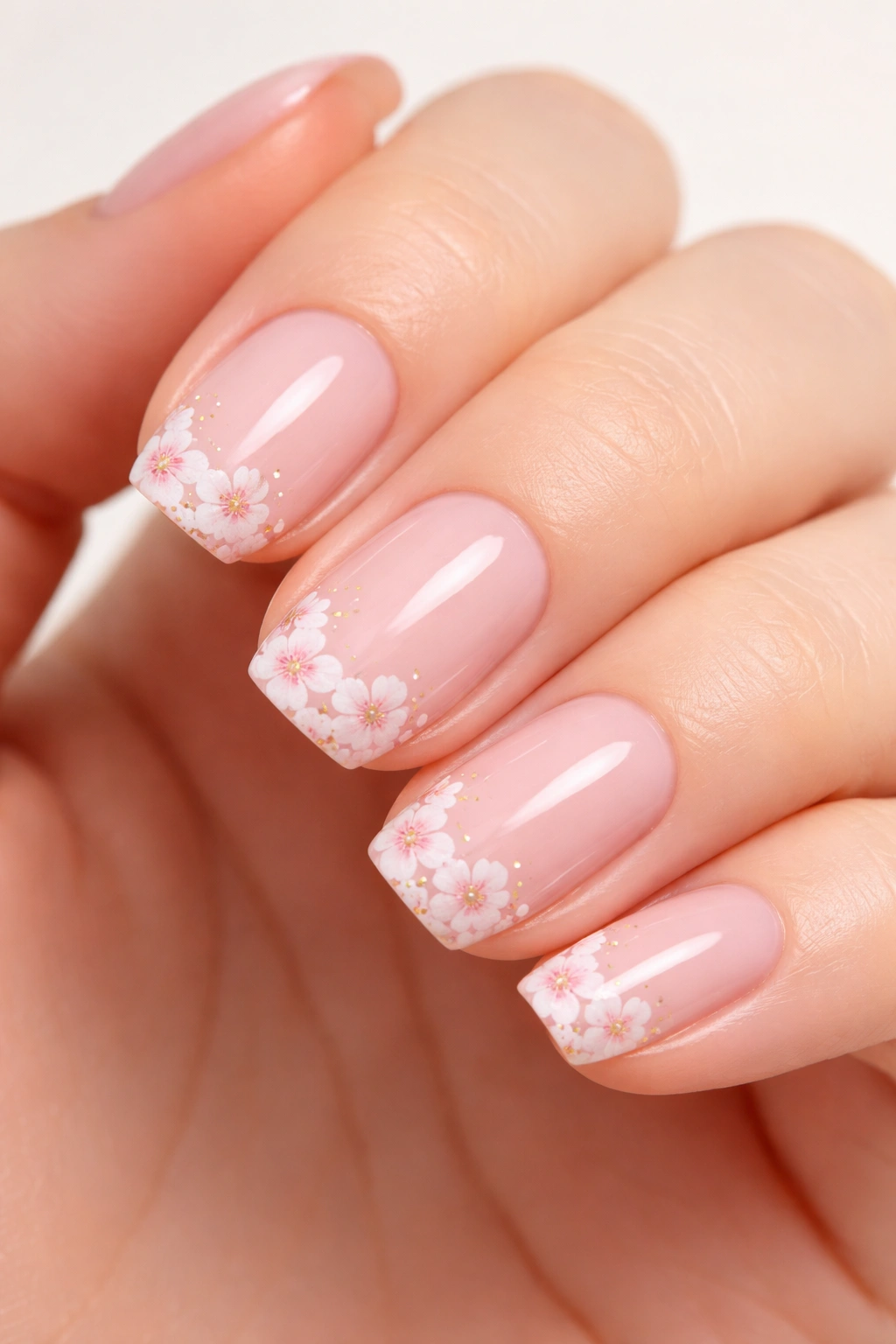
Cherry blossoms bring a distinctly elegant, almost whimsical quality to short squoval nails. Instead of traditional white French tips, paint delicate cherry blossom clusters along the free edge and upper nail bed. The soft pink and white color palette feels refined and seasonlessly beautiful, never looking dated or temporary.
Why Cherry Blossoms Transcend Seasons
Cherry blossoms carry cultural weight and romantic association that elevates any manicure beyond simple floral nail art. On short squovals, tiny cherry blossom clusters don’t look cramped — they look deliberate and carefully composed. The pale pink hues complement virtually every skin tone, and the design reads as “special occasion” without requiring an actual special occasion.
Painting Cherry Blossoms Realistically
- Use pale pink as your primary blossom color
- Paint five small rounded petals arranged in a circle
- Add a darker center point (usually tiny stamens) to ground the flower
- Create clusters by placing multiple blossoms close together
- Paint delicate branches in brown or green to connect flowers
Quick tip: Practice creating your five-petal structure on a paper swatch first — once you nail the basic shape, creating beautiful clusters becomes much faster.
6. Sunflower Nail Art in Gold and Yellow
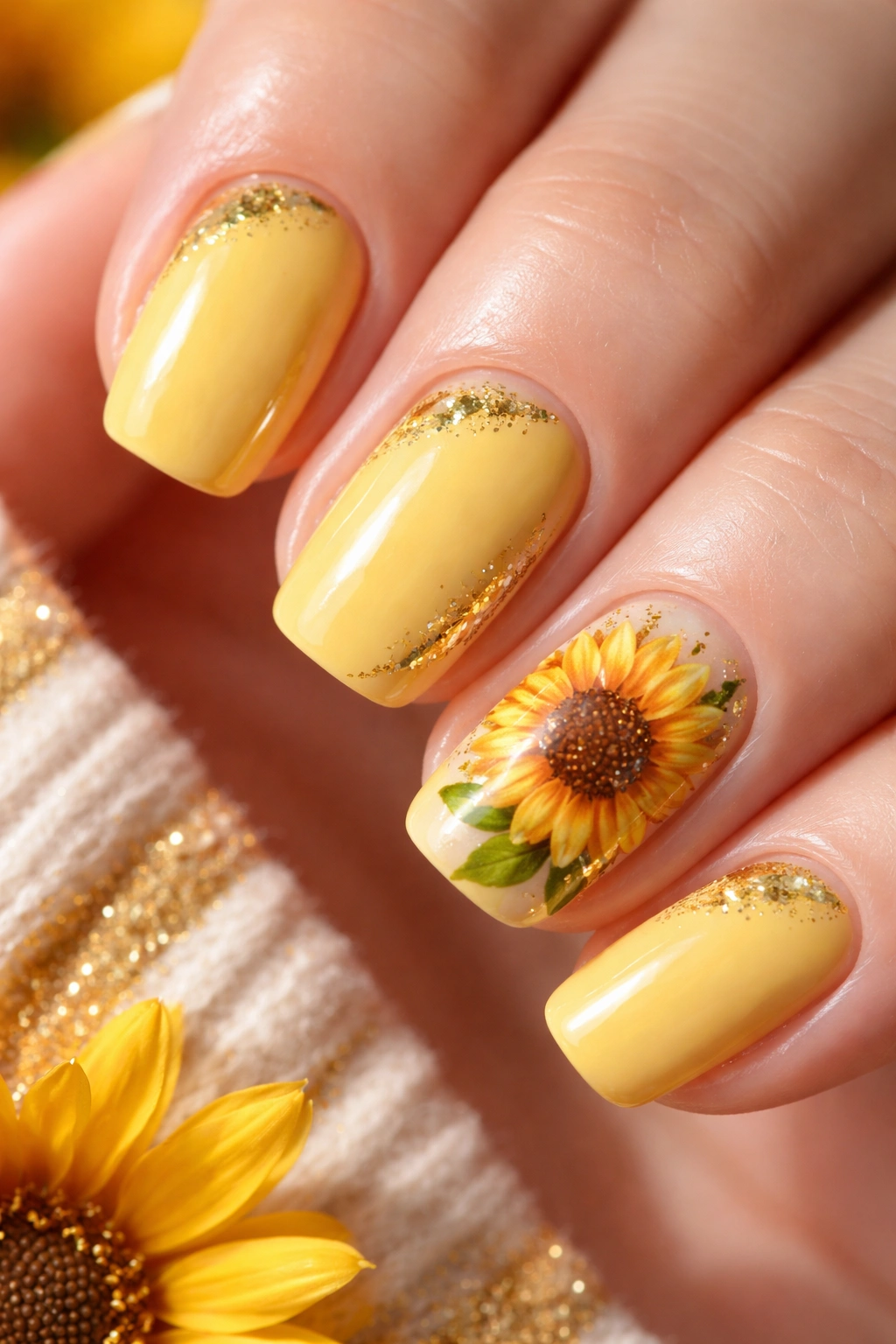
Sunflowers bring immediate warmth and cheerfulness to short squoval nails, and they’re surprisingly easy to paint compared to more delicate varieties. Using a sunny yellow base with gold accents creates richness without feeling heavy. The geometric petal arrangement of sunflowers works beautifully within the squoval shape’s natural boundaries, creating balance and visual harmony.
The Unexpected Sophistication of Sunflowers
Many people assume sunflower nail art reads as childish or overly casual, but that’s only true when they’re poorly executed. A well-painted sunflower with defined petals, thoughtful color gradients, and detailed center actually looks artistic and intentional. On short squovals, a large sunflower on one nail with smaller accent flowers creates a cohesive, statement-making look that photographs beautifully.
Creating Bold, Beautiful Sunflowers
- Start with a detailed yellow base layer
- Paint long, narrow petals radiating from center point
- Use darker gold or ochre to add shadow and depth to each petal
- Create the center with textured dots in brown and gold
- Add one simple green leaf for balance
Note: Sunflowers are most forgiving on short nails when you keep your palette warm and consistent — fighting against yellow tones will make the design feel muddy.
7. Iris Blooms in Purple and Lavender
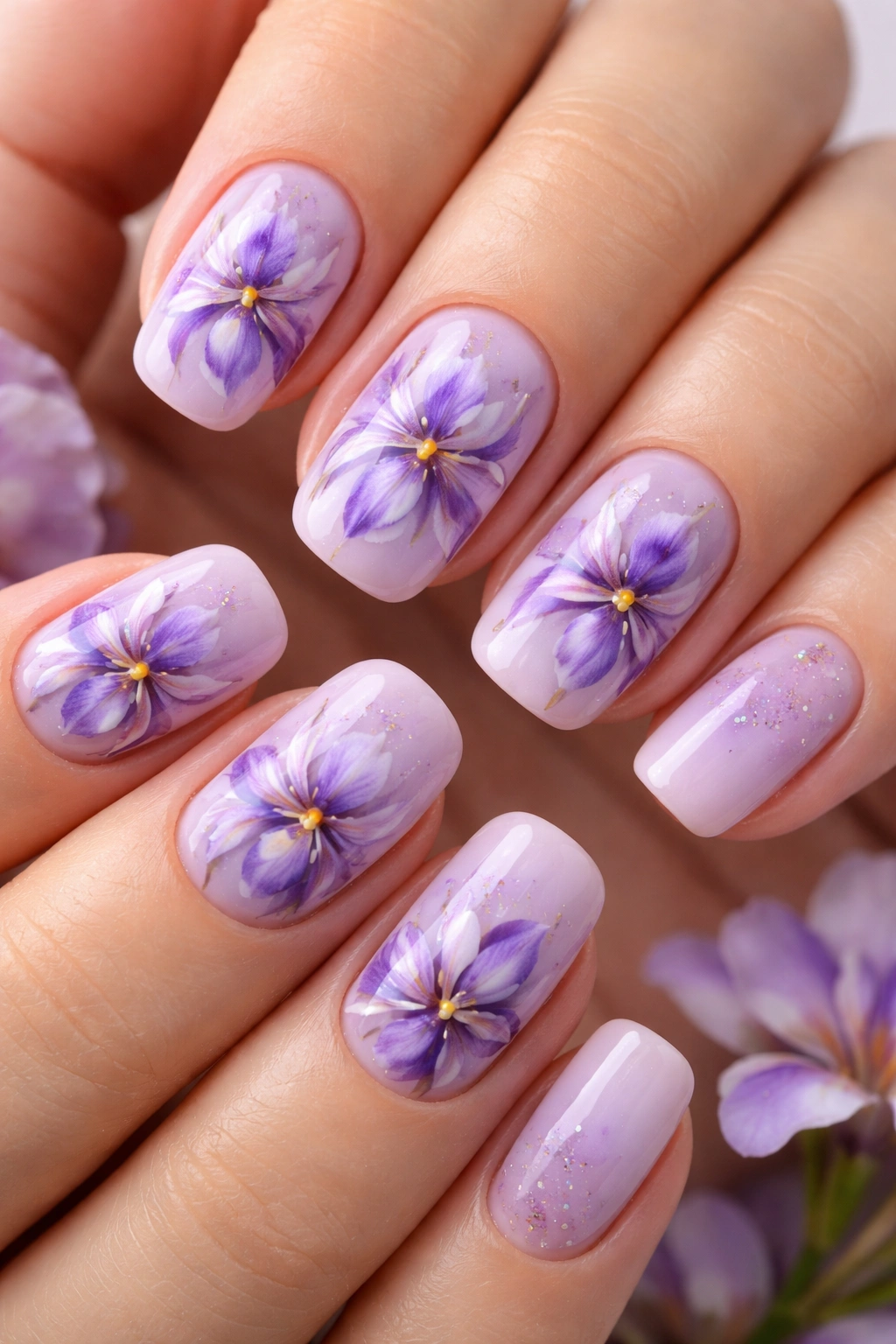
Iris flowers offer an advanced-looking, sophisticated aesthetic that works wonderfully on short squovals despite their delicate, complex structure. Purple and lavender tones convey elegance, creativity, and luxury — they’re favorites among people who want their nails to feel special without being overly feminine. Iris designs can range from realistic botanical illustrations to abstract interpretations.
Why Irises Appeal to Design-Conscious Nail Lovers
Irises have unusual petal arrangements with “falls” and “standards” that create visual intrigue and complexity. When painted on short squovals, this complexity actually serves the design well — the structured petal arrangement fills the nail space proportionally. Lavender and purple shades photograph gorgeously and photograph extremely well, making your nails look vibrant and dimensional.
Painting Irises Step-by-Step
- Research actual iris structure to understand petal placement
- Paint two upright “standard” petals at the top
- Add three drooping “fall” petals below, slightly forward
- Use multiple shades of purple for depth and shadow
- Include a small yellow or white accent line where petals overlap
Important note: Don’t stress about perfect realism — irises have enough natural variation that stylized versions read as more intentional and artistic than they do incorrect.
8. Negative Space Floral with Botanical Stems
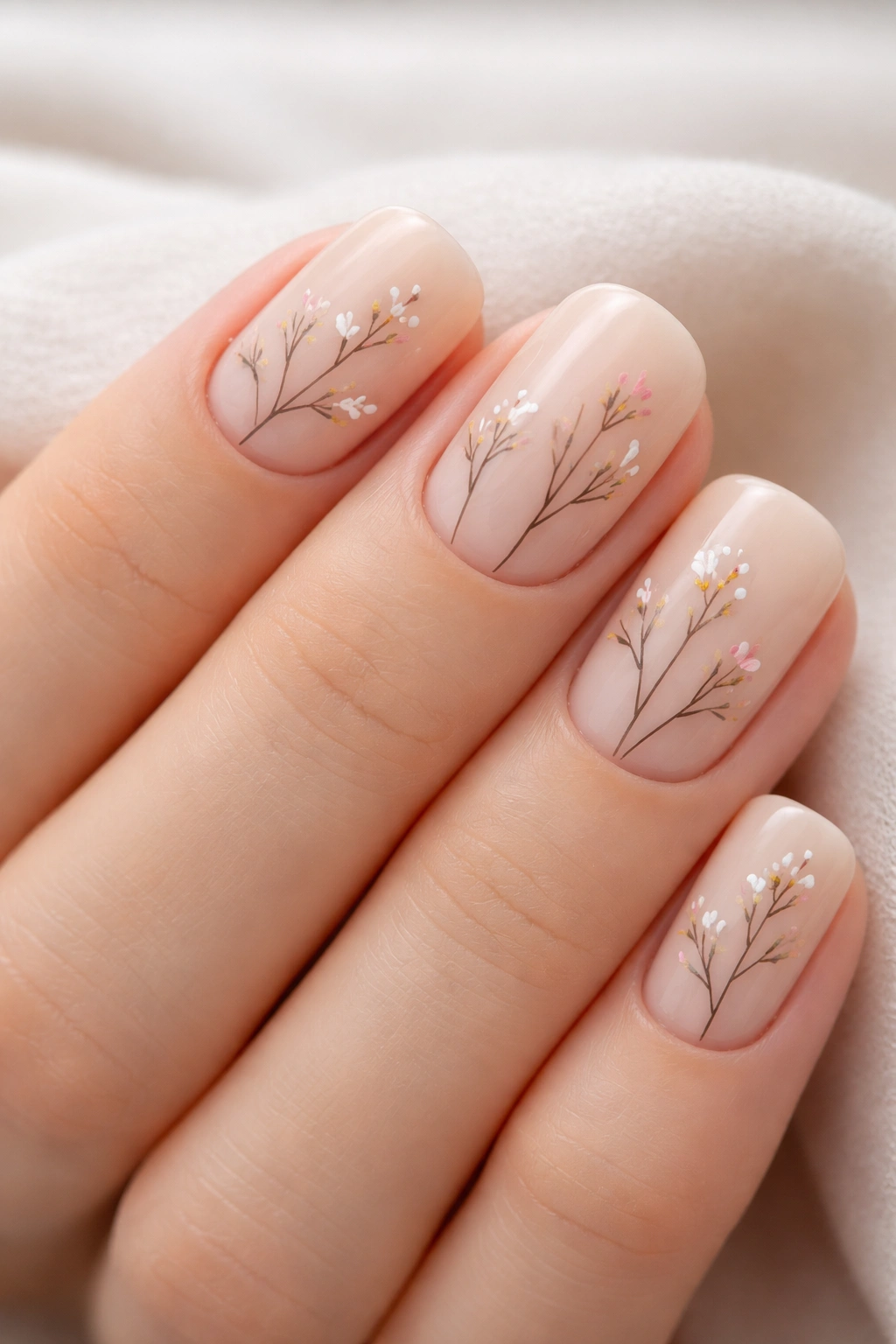
Negative space designs let your natural nail show through strategic areas of the design, creating visual breathing room that makes short nails feel less busy. Paint delicate botanical stems with small flower heads, leaving generous empty space that showcases your actual nail. This approach works beautifully with neutral base colors and feels contemporary and design-forward.
The Strategic Power of Negative Space
Negative space is the secret weapon for making short nails appear longer and more refined. When you don’t cover every millimeter with color, you create visual flow that guides the eye upward and outward. Botanical stem designs with sparse flowers feel artistic and intentional rather than unfinished. This approach also requires less painting time, making it perfect if you’re building confidence with hand-painted designs.
Designing Botanical Stems Effectively
- Choose a neutral nude, pale pink, or off-white base
- Paint thin brown or green stems curving across the nail
- Add single small flowers (tiny roses, daisies, or wildflowers) along stems
- Leave at least 40% of the nail unpainted for true negative space effect
- Consider adding a tiny leaf or two for botanical authenticity
Pro tip: Longer, thinner stems create more elegant proportions than short, stubby ones — let your stems breathe and curve naturally.
9. Ombre Gradient Rose Design
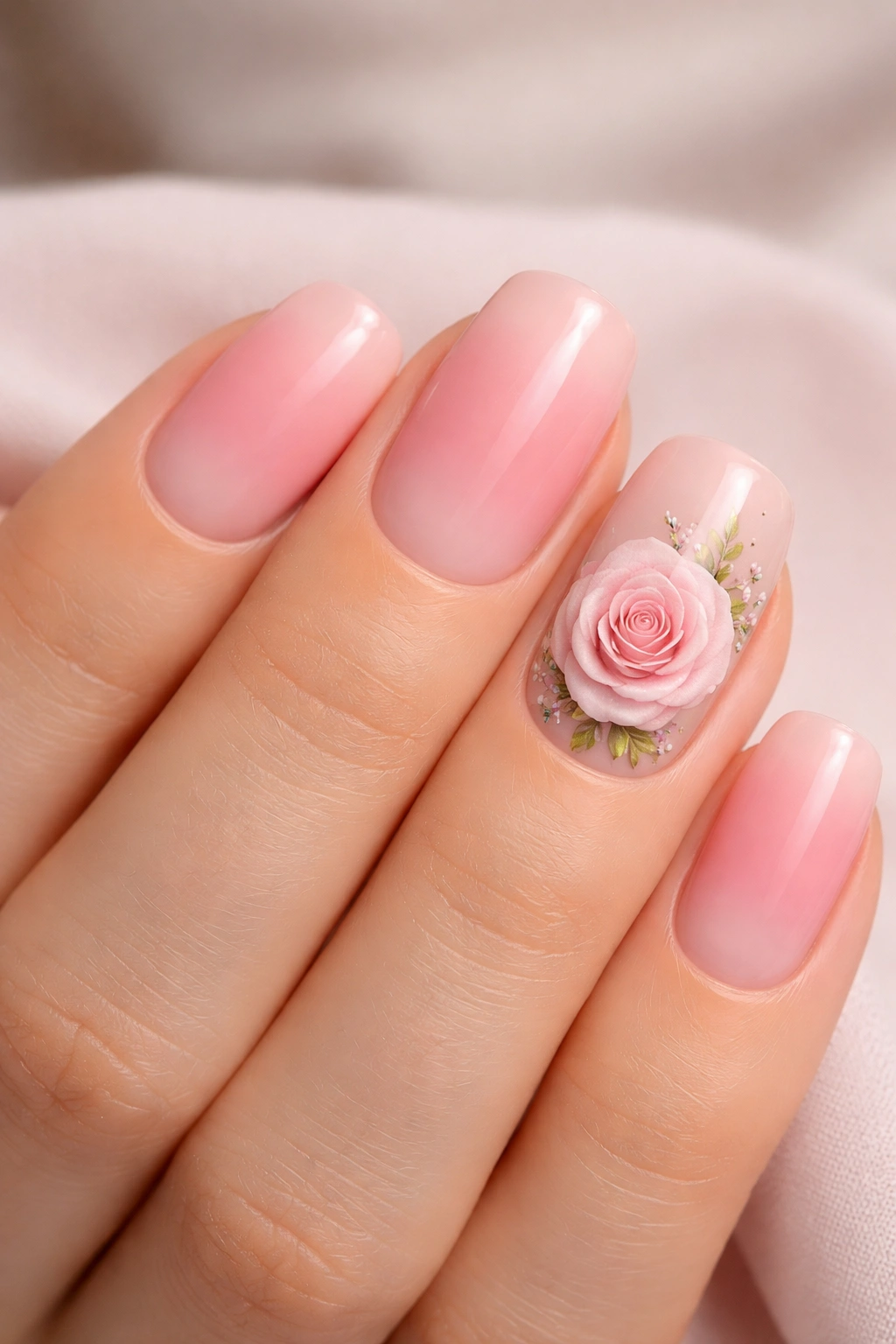
Ombre effects create dimension and depth that make short squoval nails look more substantial and artistic. Starting with a light pink gradient that deepens to rose or mauve creates a beautiful backdrop for a single detailed rose. The gradient itself becomes part of the design, providing color transition that a single solid shade cannot achieve. This look reads as both romantic and contemporary.
Why Gradients Enhance Short Nail Designs
Gradient backgrounds serve multiple purposes on short nails — they add visual interest to the base itself, create depth perception, and provide multiple color tones that a solid base cannot. When you place a rose design on top of a gradient, the colors interact and create subtle highlighting effects that make painting details easier and results look more professional. Your eye travels across the entire nail rather than fixating on a single color.
Creating Flawless Gradient Bases
- Use a makeup sponge to blend two to three coordinating polish shades
- Work from light (base of nail) to dark (tip)
- Build color gradually with multiple light applications
- Ensure smooth blending with no harsh lines between shades
- Let gradient fully cure before painting rose details
Quick fact: Sponging works better with slightly thinner polish consistency — if your polish is too thick, thin it with a drop of mixing medium.
10. Wildflower Meadow Scattered Design
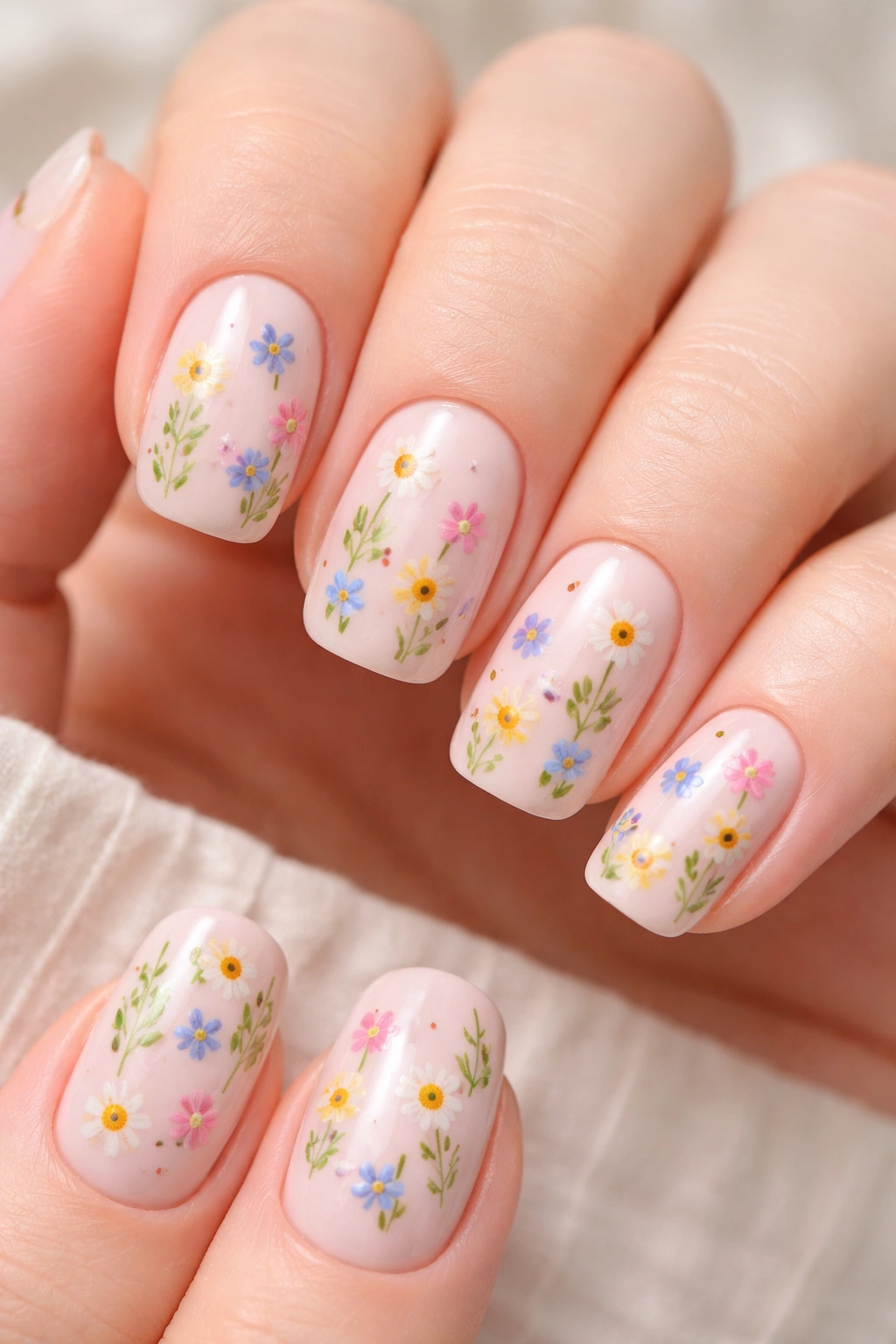
Wildflower designs embrace variety and organic randomness, creating a joyful, garden-like aesthetic on short squoval nails. Instead of one perfect flower, paint multiple small flowers in different colors, sizes, and styles across the nail. Tiny daisies, forget-me-nots, cornflowers, and poppies create visual richness that celebrates imperfection and natural variation. This approach is surprisingly forgiving because nothing needs to match perfectly.
The Freedom of Wildflower Designs
Wildflower meadow nail art removes the pressure of precision while creating something genuinely beautiful. Multiple small flowers in different styles scattered across a neutral background mimic the way wildflowers actually grow — untidy, overlapping, and charming. On short squovals, this abundance of small details creates visual interest without looking cramped. The variety of flower types means your eyes keep discovering new details.
Painting a Convincing Wildflower Meadow
- Start with a cream or soft pink base to let flowers show clearly
- Use different brush sizes and techniques for different flowers
- Include varied colors: coral, yellow, purple, white, and pink flowers
- Let flowers overlap and layer for natural depth
- Add thin green stems and leaves between flowers
Worth knowing: Wildflower designs are more forgiving of imperfect brushwork — slight inconsistencies actually enhance the natural, organic feel.
11. Monochromatic Blush Roses with Gold Leaf
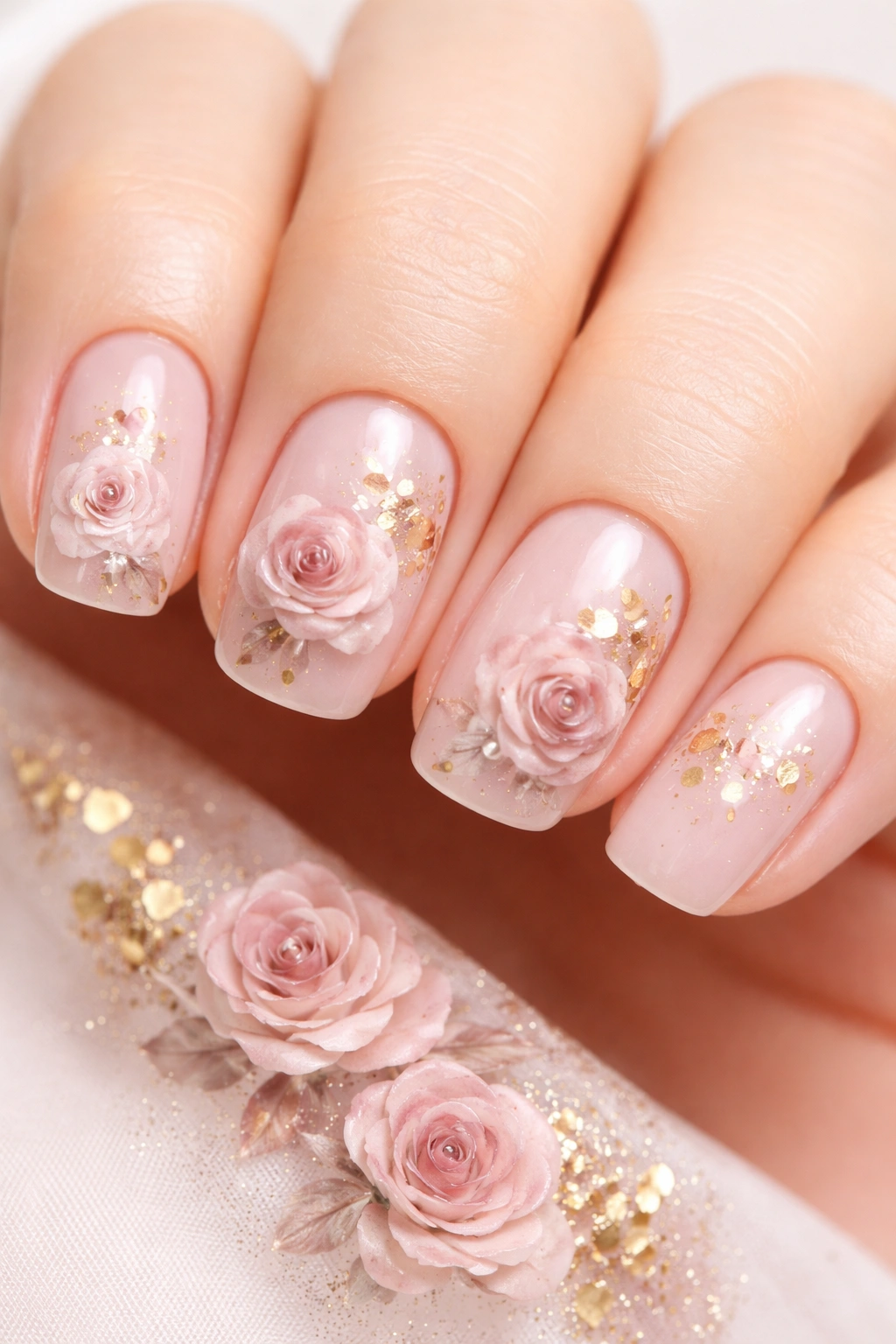
Monochromatic designs feel sophisticated and intentional, using varying shades of a single color family to create depth and dimension. Blush-toned roses painted in light pink, mauve, and deeper rose shades create romantic elegance, enhanced by delicate gold leaf accents. The monochromatic approach makes the design feel cohesive and curated rather than scattered, which works beautifully on shorter nail lengths.
Why Monochromatic Always Reads as High-End
Limiting your color palette to one hue actually creates more visual impact than using many colors. Monochromatic designs read as intentional, professional, and expensive-looking. Gold accents add luxury without complicating the design. On short squovals, monochromatic florals create visual harmony that makes nails appear more refined and carefully thought-through.
Creating Stunning Monochromatic Roses
- Choose a neutral or pale blush base shade
- Paint roses using three shades: light, medium, and dark of your chosen hue
- Layer petals using the darker shades for shadows and lighter shades for highlights
- Add gold leaf in small pieces around or inside flower centers
- Consider adding one delicate green leaf for subtle contrast
Pro tip: Monochromatic designs benefit from including actual texture variation like gold leaf — the different finishes (matte rose, glossy leaf) create visual interest.
12. Micro Botanical Illustration Nails
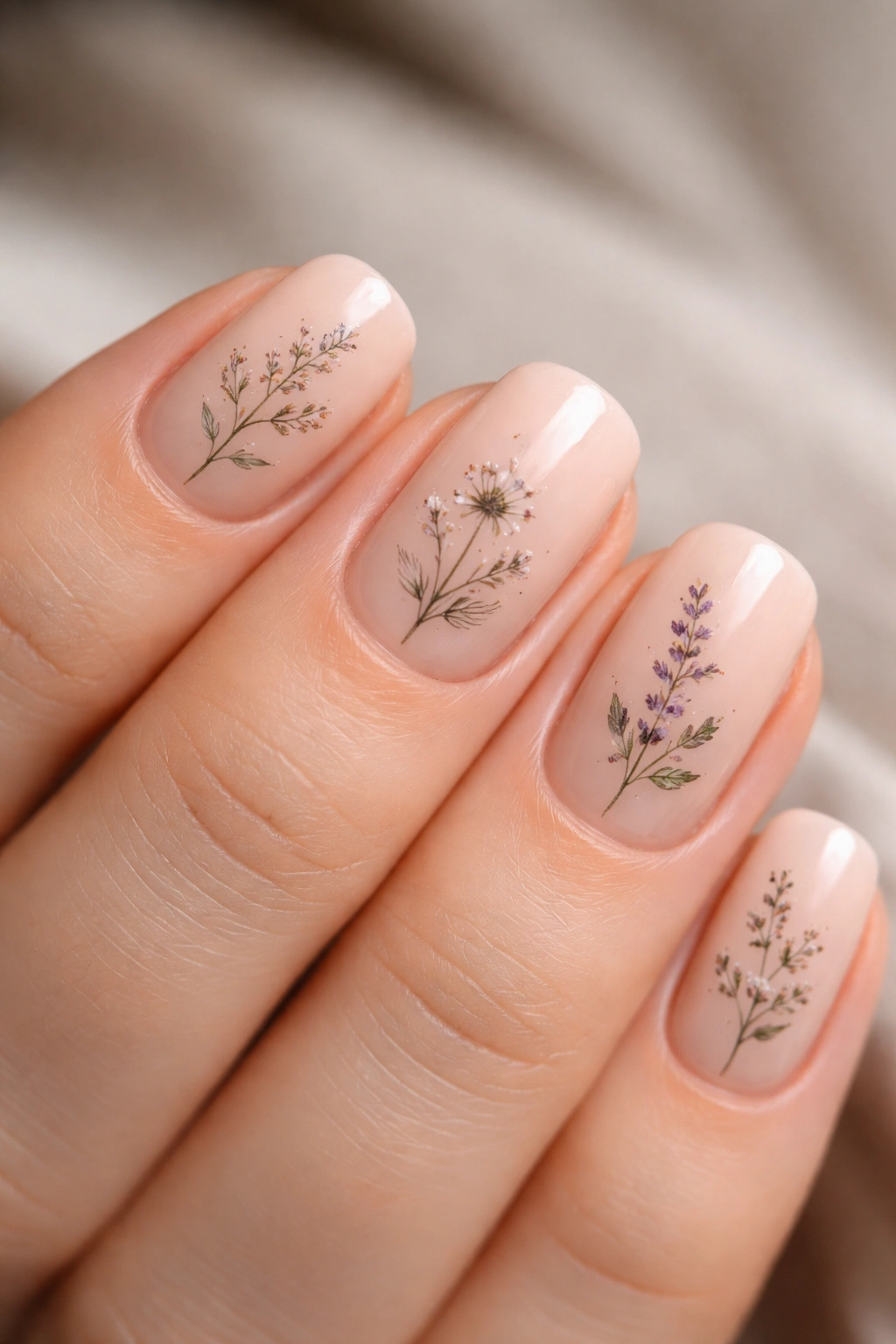
Micro botanical illustrations are tiny, detailed, scientific-looking flower drawings that create an understated sophisticated aesthetic. Rather than large florals, these nail designs feature small, precisely detailed flowers with labeled parts, creating the feel of a Victorian botanical journal. The intricate line work feels intellectually elegant and works surprisingly well on short nails because small-scale details feel proportionate.
The Intellectual Appeal of Botanical Illustrations
Botanical illustration nail art attracts people who appreciate nature, art history, and precision. These designs don’t scream “flowery nails” — instead, they whisper sophisticated interests and careful curation. On short squovals, tiny botanical drawings with delicate line work feel perfectly proportioned. The educational angle gives the design depth beyond pure aesthetics, making it feel more meaningful.
Executing Micro Botanical Details
- Use a 0000 or even smaller brush with very thin polish consistency
- Reference actual botanical illustration styles for authenticity
- Include detailed petal work, stamen, and leaf structures
- Consider adding handwritten labels in tiny script
- Keep your palette muted (browns, greens, creams) for authentic look
Important note: These designs reward patience and good lighting — take your time and don’t rush the detail work. The payoff in visual impact is worth the time investment.
13. Pastel Peach Blossom with Pearl Accents
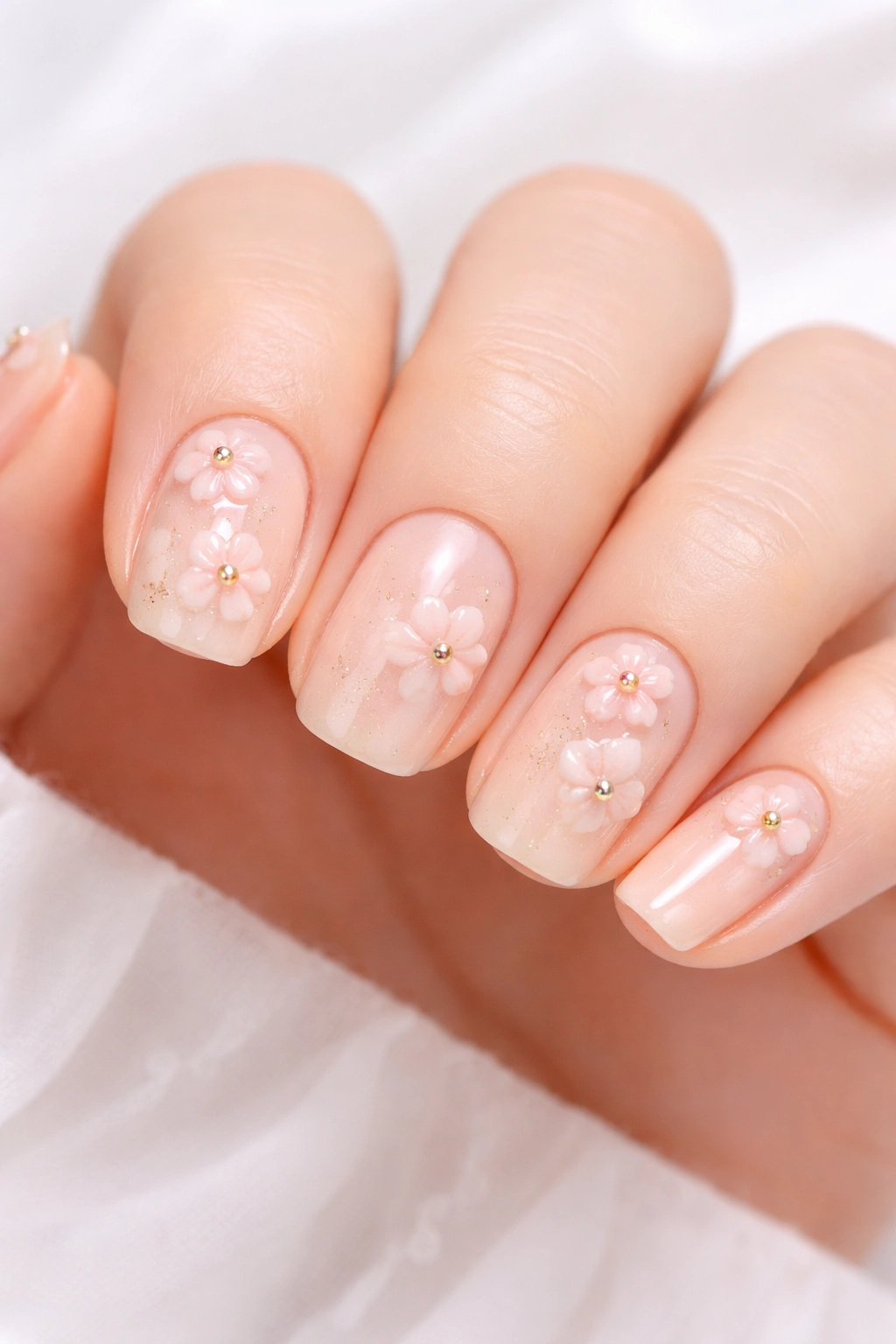
Peach blossoms offer delicate, feminine beauty without feeling overly precious or young. A soft pastel peach base with painted peach blossoms and pearl or opal accents creates luxurious, sophisticated femininity. Pearls add dimension and catch light in ways that flat color cannot, making nails feel more special and meticulously designed. This design works beautifully for special occasions or everyday elevated looks.
The Luxury of Pearl and Peach Combinations
Pearls inherently feel expensive and polished, and pairing them with delicate floral designs immediately elevates the entire manicure. Peach tones are universally flattering and suggest warmth, sophistication, and maturity. On short squovals, pearl accents create focal points that draw attention upward and outward, making nails appear less short. The combination reads as effortlessly expensive rather than trying too hard.
Incorporating Pearls Into Floral Designs
- Paint delicate peach blossoms in pale pink and white shades
- Apply pearl accents strategically inside flower centers
- Use pearl dust mixed into gel for subtle shimmer effect
- Place larger pearl beads at focal points (one per nail maximum)
- Ensure pearls are securely embedded in thick topcoat
Pro tip: One strategically placed pearl is more impactful than scattered small ones — think luxury restraint rather than embellishment abundance.
14. Art Deco Geometric Floral Hybrid
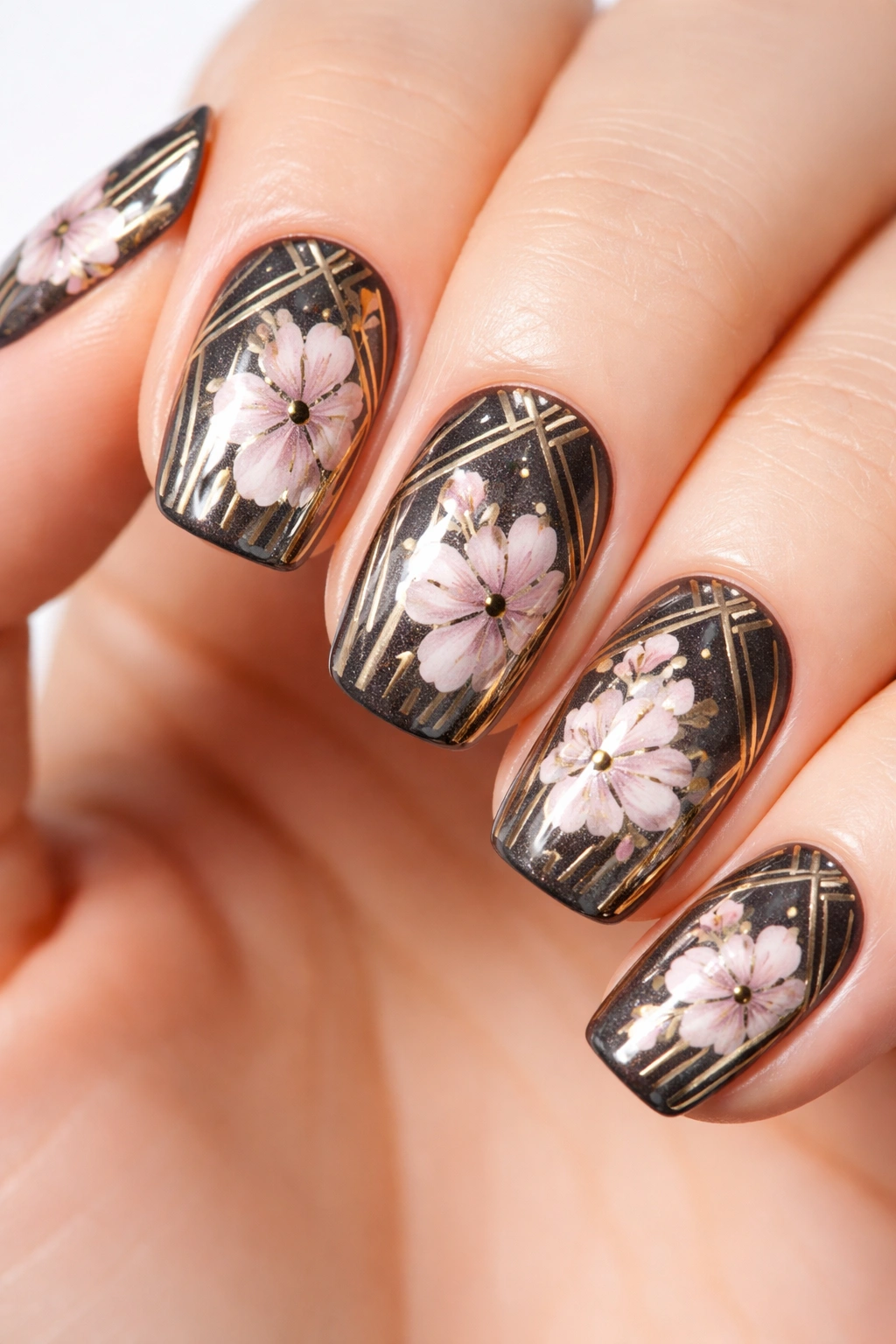
Art Deco florals blend geometric precision with botanical beauty, creating designs that feel both structured and organic. Clean lines, symmetrical arrangements, and metallic accents combine with delicate flowers to create something that feels retro-inspired yet modern. On short squovals, the geometric framework provides structure that helps floral elements feel intentional and balanced rather than chaotic.
Why Art Deco Florals Feel Timeless
Art Deco design movements never fall completely out of fashion because they balance opposing forces so elegantly — precision and nature, symmetry and organic shape, luxury and minimalism. Floral elements softened by geometric framing feel both romantic and intellectual. On short nails, this hybrid approach provides enough structure that complexity doesn’t overwhelm the available space. The style reads as curated and educated rather than simply decorative.
Creating Art Deco Floral Designs
- Start with geometric base shapes (half-circles, diamonds, or chevrons) in metallic or dark polish
- Paint delicate flowers within or around geometric boundaries
- Use gold, copper, or silver accents for authentic Art Deco feel
- Maintain symmetrical or semi-symmetrical arrangement
- Include fine lines connecting elements for cohesive composition
Worth knowing: Art Deco succeeds when geometric and organic elements balance equally — lean too far toward geometry and it reads as abstract; lean too far toward florals and the geometric elements feel random.
15. Sunrise Gradient with Wildflower Silhouettes
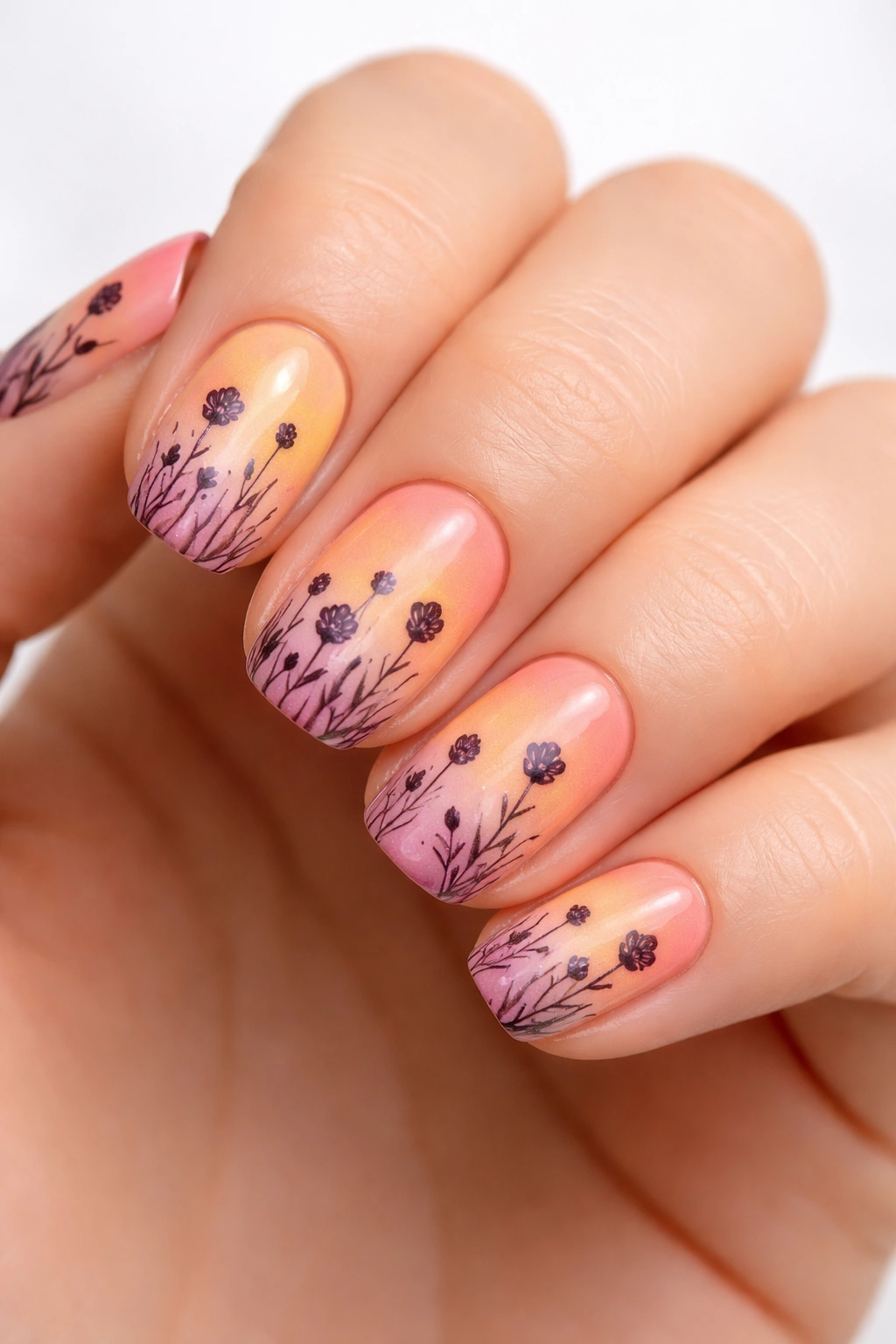
Sunrise gradients featuring warm yellows, peachy tones, and soft oranges create uplifting, optimistic backgrounds for wildflower silhouettes. Rather than detailed florals, painted flower silhouettes in dark colors create contrast against glowing gradients. This approach combines color photography with floral elements, creating something conceptually interesting beyond simple decoration. Short squovals showcase gradient work beautifully because color transitions remain visible and vibrant without requiring extensive nail surface.
The Conceptual Interest of Silhouette Designs
Silhouette florals work on a different visual principle than realistic or watercolor flowers — they’re about shape, contrast, and composition rather than detail. This approach appeals to people who appreciate graphic design and conceptual depth. On short nails, silhouettes don’t feel cramped because they’re intentionally simplified. The design reads as artistic interpretation rather than decorative floral pattern.
Painting Sunrise Gradients with Silhouettes
- Sponge gradient from pale yellow at base to peachy-orange to soft pink at tip
- Use dark purple, navy, or black for flower silhouettes
- Paint simple flower shapes (loose shapes suggesting flowers rather than realistic petals)
- Include thin silhouetted stems connecting flowers
- Seal with glossy topcoat that makes gradient colors glow
Pro tip: Silhouettes are most effective with strong contrast between background and foreground colors — the more dramatic the color difference, the more impactful the silhouettes appear.
Final Thoughts
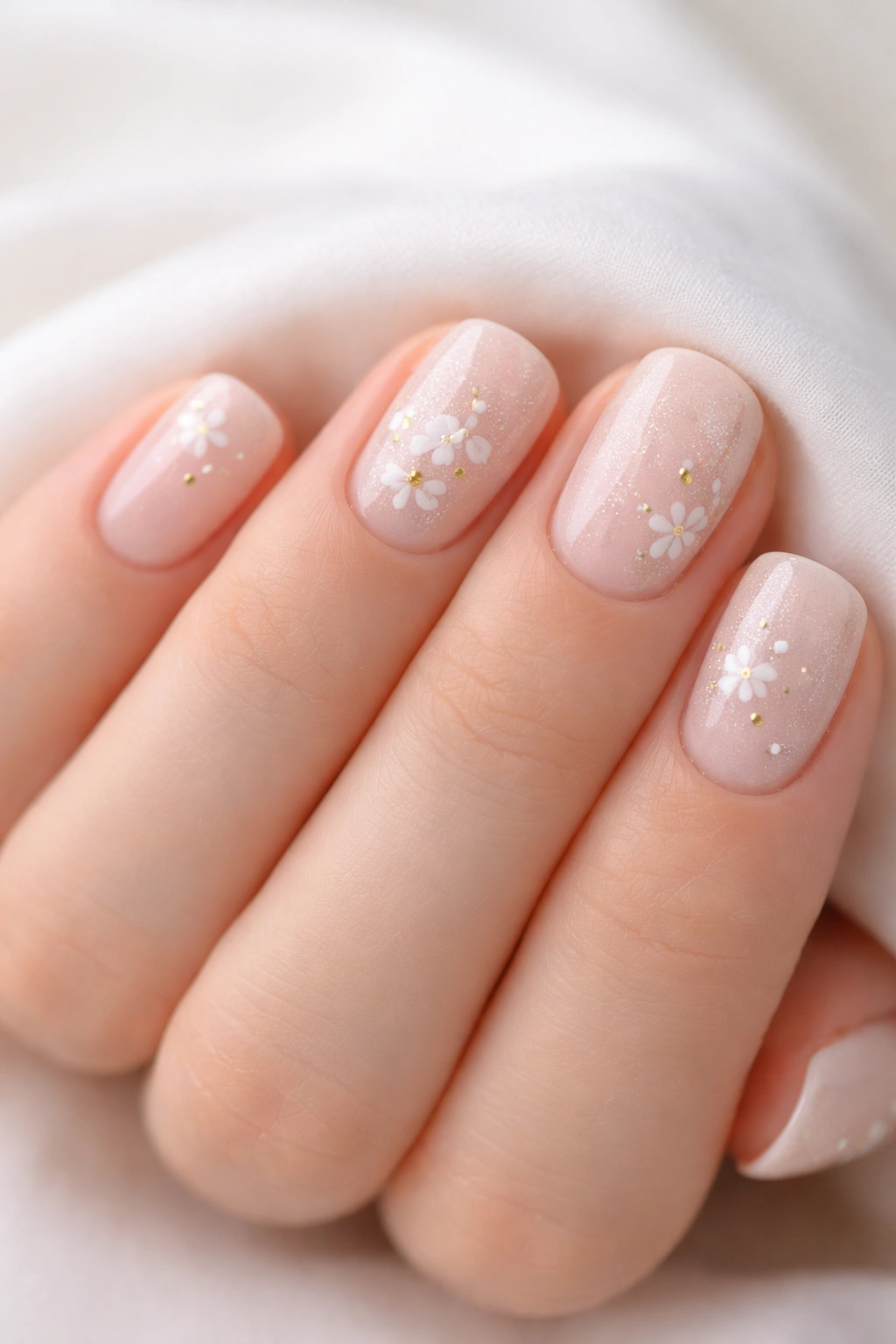
Short squoval flower nail art celebrates the idea that limitations actually inspire creativity. You don’t need long nails to wear beautiful, detailed, or statement-making designs — you need intention and the right style choice. Each of these 15 designs proves that short nails can be just as interesting, sophisticated, and expressive as their longer counterparts. The squoval shape provides the perfect balance between practicality and polish, creating a canvas that welcomes everything from delicate watercolors to bold botanical statements.
What draws people to these designs is less about the length of the nails and more about the care evident in the execution. Whether you’re hand-painting your own designs or working with a talented nail artist, these ideas translate beautifully across different skill levels. Start with designs that match your current comfort level — minimize line work if precision intimidates you, or lean into botanical themes if you love detail-oriented projects.
The real magic of short squoval flower nails is that they signal confidence and intentionality without announcing themselves loudly. You’re not trying to compensate for short length with elaborate decoration; instead, you’re celebrating what makes short nails beautiful — their practicality, their elegance, and their timeless appeal. Save the designs that call to you, experiment with color combinations that feel true to your aesthetic, and remember that even slightly imperfect hand-painted flowers carry charm that machine-perfect designs cannot match.
