




Harsh shine can ruin a soft manicure faster than a bad color choice. Pearl ballerina nails work because they bounce light in a blurred, creamy way instead of throwing back a hard mirror glare, and that difference changes the whole mood of a set.
The shape matters, too. A ballerina nail — the softer cousin of a coffin nail — gives you those long, clean sidewalls and the flat tip people want, but it does not have to look severe. Once you add a pearly finish over a milky or sheer base, the edges stop reading sharp and start reading polished, calm, and a little dreamy.
I keep coming back to pearl finishes for one reason: they do more than plain nude, yet they do not scream for attention from across the room. That balance is harder to get right than it sounds. Too much chrome, and the manicure turns icy and loud. Too much white, and the nail can look chalky. File the tip too blunt, and the shape loses that ballerina grace that makes the whole idea work.
Get those details right, though, and you end up with a manicure that feels dressed up without looking heavy. There’s far more range here than most inspiration boards show.
Why Pearl Ballerina Nails Blur Light Better Than Glossy Nude Coffin Sets
Pearl works best when the shine stays diffused. That is the whole appeal.
A standard glossy nude manicure reflects light in one clean sheet. Pearl does something softer. The finish scatters light through tiny reflective particles — often mica-based pigment, chrome dust, or pearlized gel — so the nail looks lit from within instead of coated in a hard glass shell.
The shape does half the work
Ballerina nails help because the sidewalls stay mostly straight, then taper into a flat tip. That geometry gives pearl finishes a smooth runway for light. Almond nails can look sweeter, square nails can look blunt, but a well-filed ballerina shape gives pearl enough length to glow without feeling sugary.
Shorter sets can still work.
You only need about 3 to 4 mm past the fingertip for a mini ballerina shape, though the glow reads better when the free edge lands closer to 6 to 10 mm. Past that, pearl starts to look more editorial, which can be lovely — but the soft finish gets a little more dramatic.
Fine pigment beats chunky shimmer every time
Chunky glitter ruins it. Pearl ballerina nails need ultra-fine shimmer, not visible sparkles.
If you can spot individual flecks from arm’s length, the effect turns frosty instead of pearly. The best sets use one of these:
- A sheer milky gel with pearl suspended inside it
- A no-wipe gel top coat rubbed with fine pearl chrome powder
- A translucent builder base topped with a satin pearl top coat
- A layered nude-and-white wash with a whisper of chrome over the top
That last method is still my favorite for salon sets because it gives depth, not flat color.
Nail Length and Base Colors That Give Pearl Ballerina Nails a Soft Glow
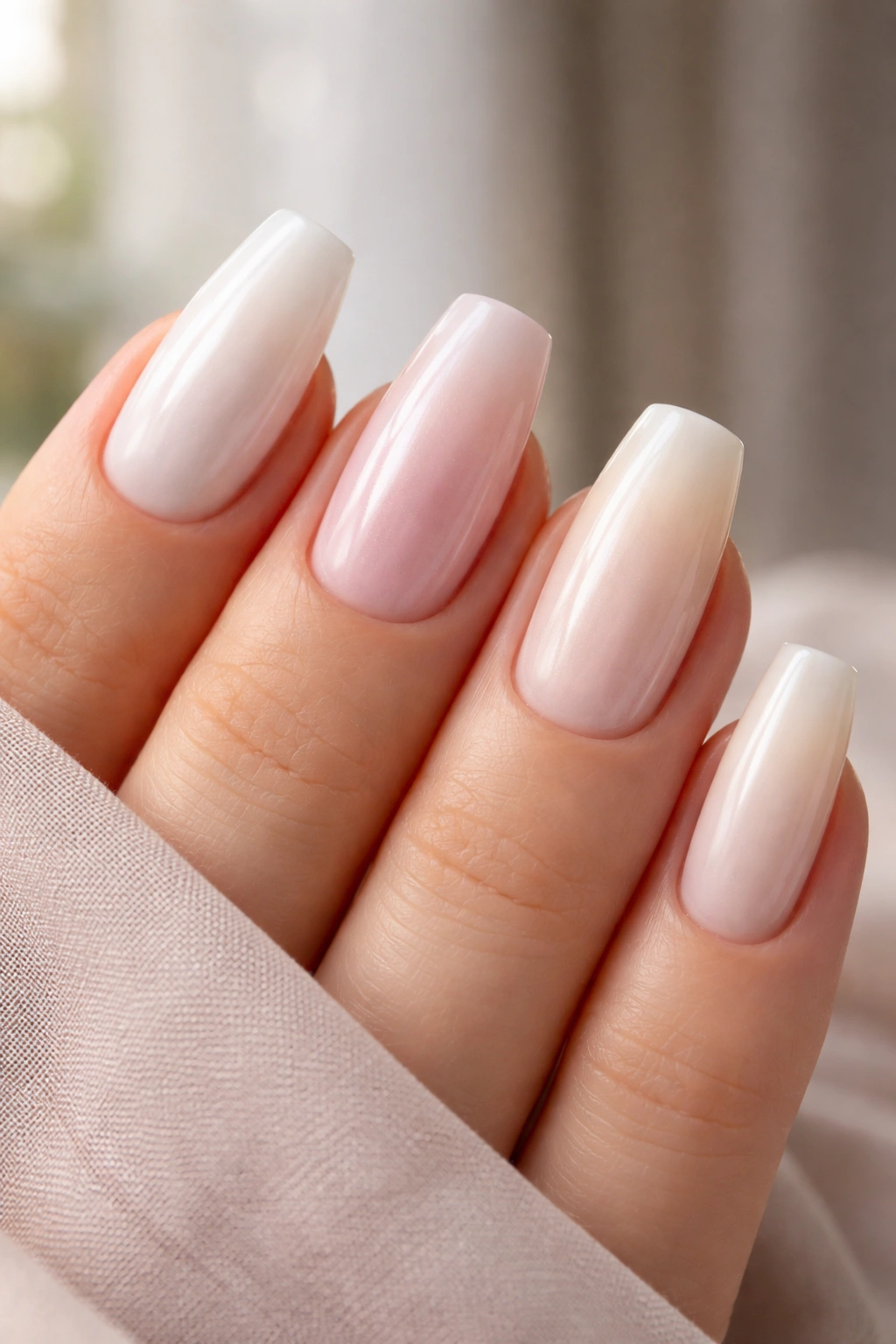
How long should a ballerina nail be before it stops looking like a square with ambition? A little longer than most people think.
For natural nails, the sweet spot sits around short-to-medium length, where the free edge extends enough to taper but not so much that the nail bends at the stress point. On extensions, medium length usually shows off pearl best because the shape has space to narrow and the finish has room to shift under light.
Base color matters more than the pearl itself. A pearly top over the wrong base can look grey, flat, or oddly yellow. I’d narrow the safest choices to five core families: milky white, sheer blush, oyster cream, pink-beige, and soft peach nude.
Undertone is where people get tripped up. Cool skin often looks cleaner in white pearl, blush, lavender pearl, or opal. Warmer skin can carry oyster, champagne, peach, and ivory without the set turning stark. Deeper skin tones can wear any of them, though a translucent base with enough warmth usually keeps the manicure from looking dusty.
A salon photo can hide that difference. Your hand in daylight will not.
If you want the pearl to read soft instead of metallic, ask for one sheer coat less than you think you need. Slight transparency at the nail bed makes the glow look alive. Full opacity can still work — especially with milky white — but sheer layers tend to give that expensive, airy finish people are usually chasing.
1. Milky White Pearl Ballerina Nails
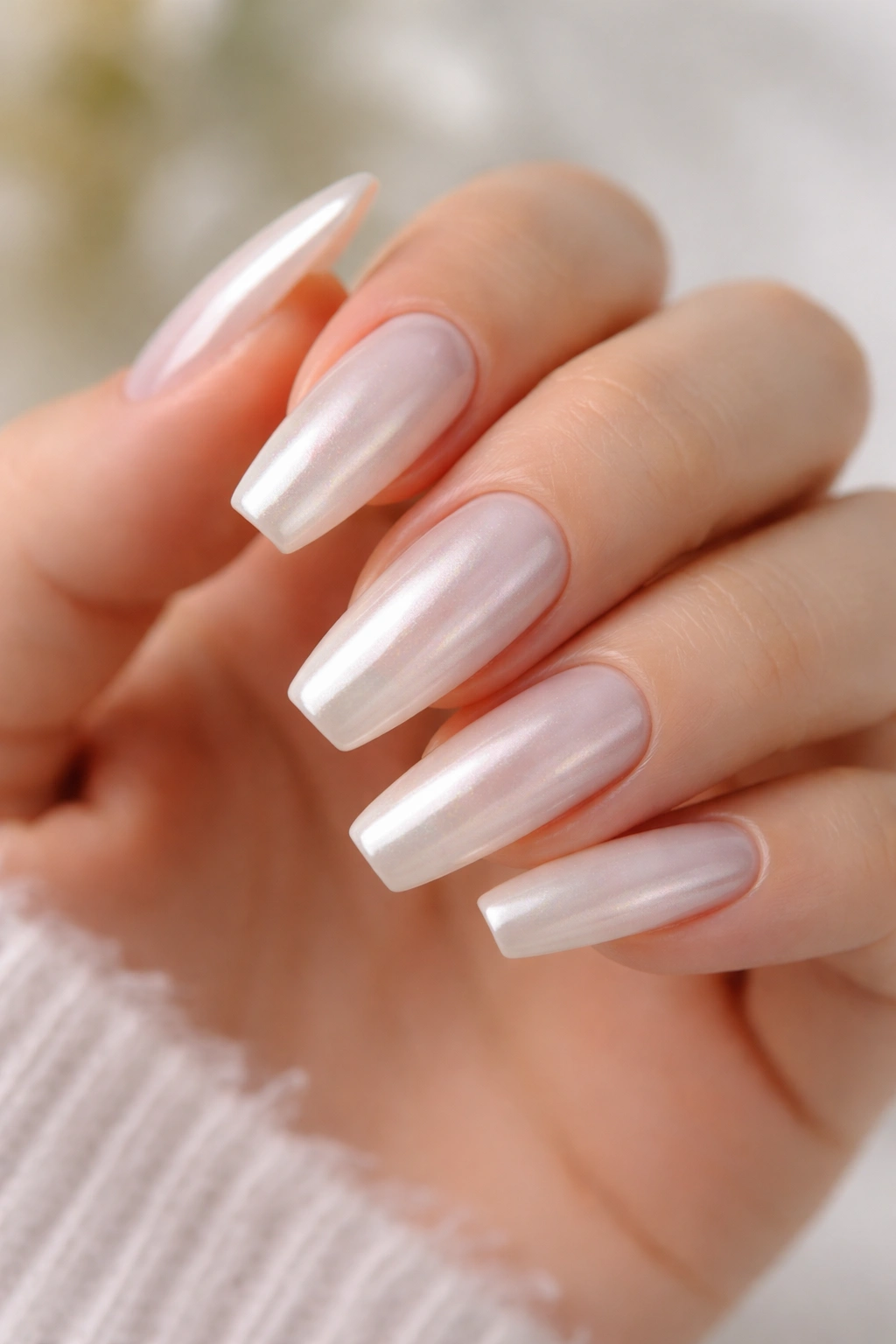
Milky white pearl ballerina nails are the cleanest version of the look, and when they are done well, they never feel cold. The base sits between translucent and opaque, so your nail bed still peeks through a little, while the pearl finish softens the white into something creamier and less bridal-cake harsh.
Why this version works so well
White polish on a ballerina shape can go wrong fast. File the tip too wide, or stack on two dense coats, and you get correction-fluid energy. A milky builder base with a thin pearl chrome layer fixes that by muting the brightness and adding depth. The nail looks cloudy, almost like glass with cream stirred through it.
It suits medium lengths best. At 8 to 12 mm past the fingertip, the shape looks crisp without turning theatrical.
Quick details that matter
- Best base: sheer white or milk-bath white
- Best finish: pearl chrome rubbed thinly over a no-wipe top coat
- Best length: medium ballerina rather than extra-long
- Best match: silver jewelry, cool neutrals, soft tailoring
One more detail: keep the cuticle line tucked and clean. White pearl makes regrowth show sooner than blush or beige.
My pick: if you want one pearl manicure that always looks fresh in photos and in person, start here.
2. Sheer Blush Pearl Ballerina Nails
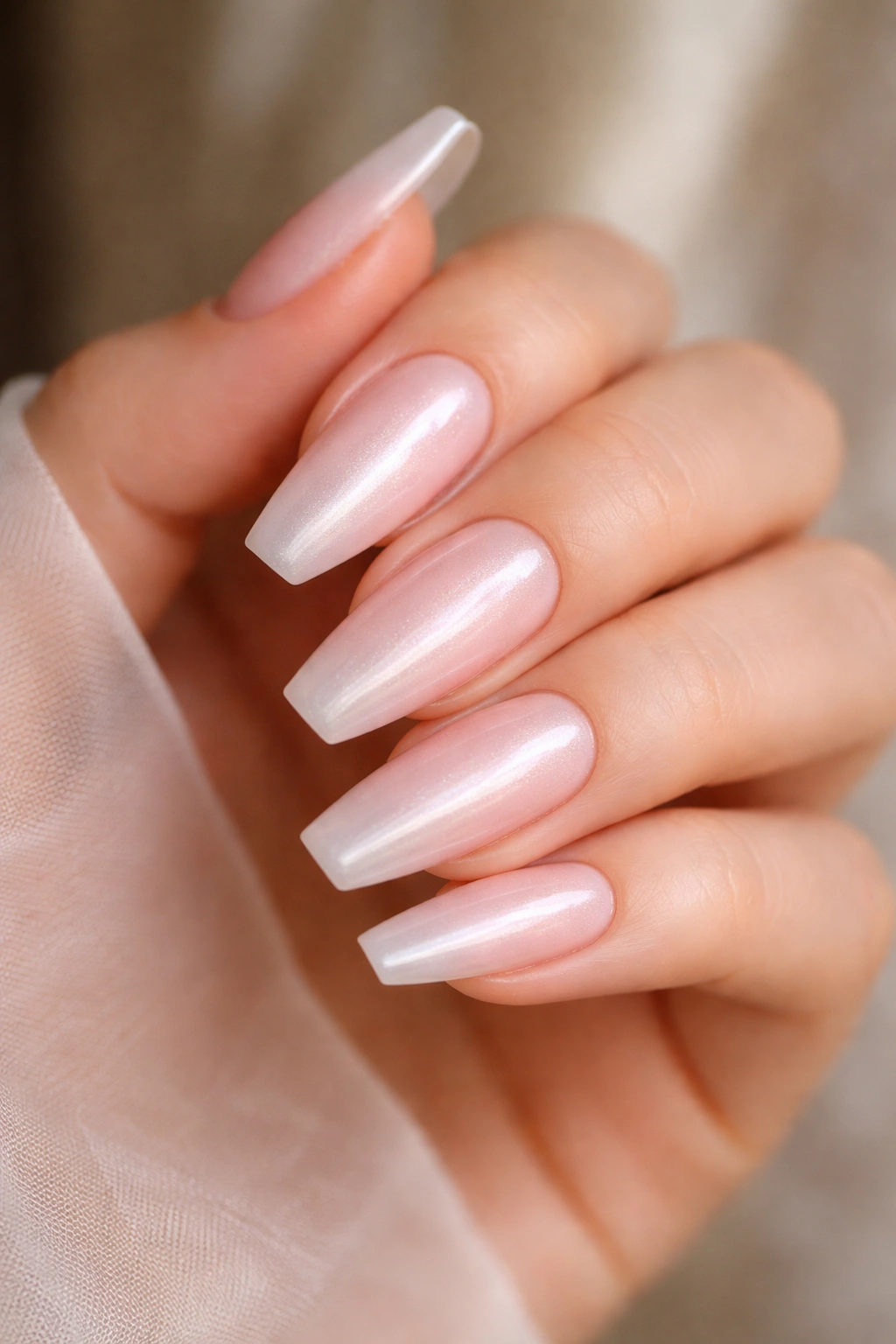
If you only try one wearable version, make it sheer blush. This is the set I point people toward when they want pearl ballerina nails but are nervous about looking too done.
A sheer blush base copies the natural pink in the nail bed, then the pearl top shifts it out of plain-nude territory. You get glow, shape, and polish without that stiff salon look some nude sets can have. Under indoor light, it reads clean. In daylight, the pink turns softer and almost wet-looking.
The reason it wears so well is simple: flaws hide better. Tiny scratches are less obvious on blush than on white. Regrowth blends in longer. Even if the chrome layer dulls after a week and a half, the set still looks intentional.
I also think this version flatters the widest range of skin tones. Pale skin gets warmth. Olive skin gets contrast without chalkiness. Deep skin gets a gentle, lit-from-under finish when the blush leans rose or tea-pink instead of beige.
Ask for two thin coats of jelly pink over a neutral builder base, then a light pearl rub rather than a full chrome buff. Heavy application kills the softness. A whisper does the job.
3. Oyster Cream Pearl Ballerina Nails
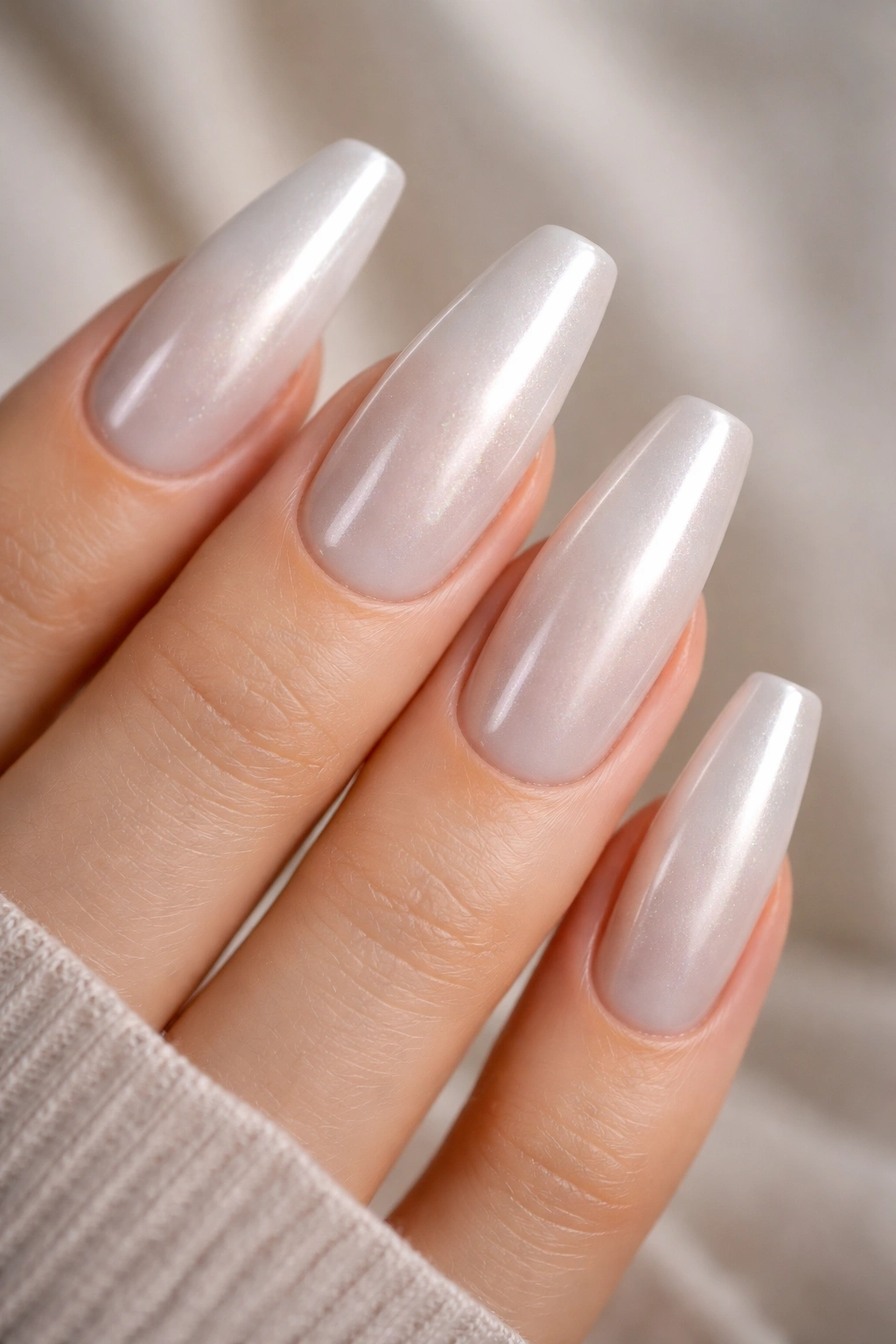
Why does oyster cream look richer than plain beige? Because it has that faint grey-ivory cast seashells have, and it changes with the light.
Beige can look flat on a ballerina shape, especially if the nail is long. Oyster cream brings more movement. The base sits somewhere between ivory, stone, and warm pearl, which gives the finish a quieter kind of depth. You notice it up close first — then the manicure keeps getting better the longer you stare at it.
There’s also a texture illusion at play. Oyster shades make the nail surface look smoother than it is. That can help if you wear builder gel overlays and want to hide tiny uneven spots around the apex without piling on more product.
How to wear it without losing the softness
Keep the pearl top cool-toned and the base slightly warm. That contrast is what gives oyster its shell-like look. If both layers lean cold, the set can turn grey. If both lean yellow, the manicure loses that marine, creamy feel and starts looking tan.
I like oyster cream most on medium-long ballerina nails with a slim sidewall taper. Add one slim pearl line near the tip if you want more detail, but skip glitter, foil, and chunky stones. Oyster is at its best when nothing interrupts the surface.
4. French Tip Pearl Ballerina Nails with a Satin Nude Base
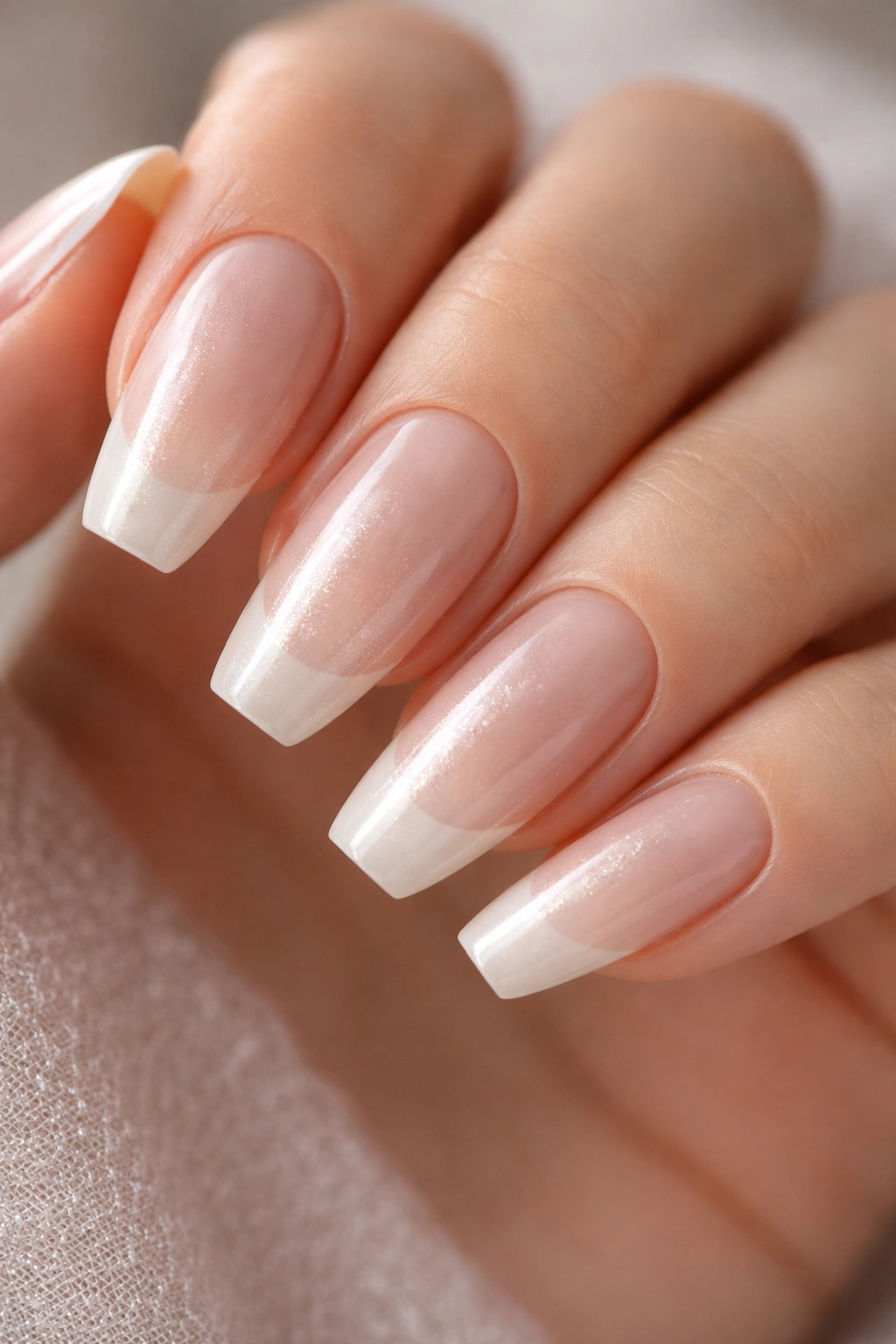
A lot of French tips look too crisp for a soft manicure. You get that bright white smile line, the sharp nude contrast, then a coffin shape on top of it all — and the whole thing starts feeling stricter than most people want.
Pearl changes the mood. Instead of a hard white tip, use a soft ivory or milk-white French edge, then cover the entire nail with a sheer pearl top. The smile line stays visible, though it blurs a little, which makes the set feel more expensive and less prom-night obvious.
Done right, this style keeps structure without looking stiff.
The details that make it land
- Base: satin nude, pink-beige, or sheer blush
- Tip width: keep it narrow on short sets, slightly deeper on long sets
- Pearl layer: over the whole nail, not only on the tip
- Best tools: liner brush for the smile line, sponge applicator for chrome dust
A deep French can be gorgeous on longer ballerina nails, though I still prefer the tip to stop short of one-third of the nail plate. Wider than that, and the white takes over.
There is a practical upside, too. French pearl ballerina nails grow out better than full white pearl because the nude base carries the set through that awkward second and third week without much drama.
5. Rosewater Glazed Pearl Ballerina Nails
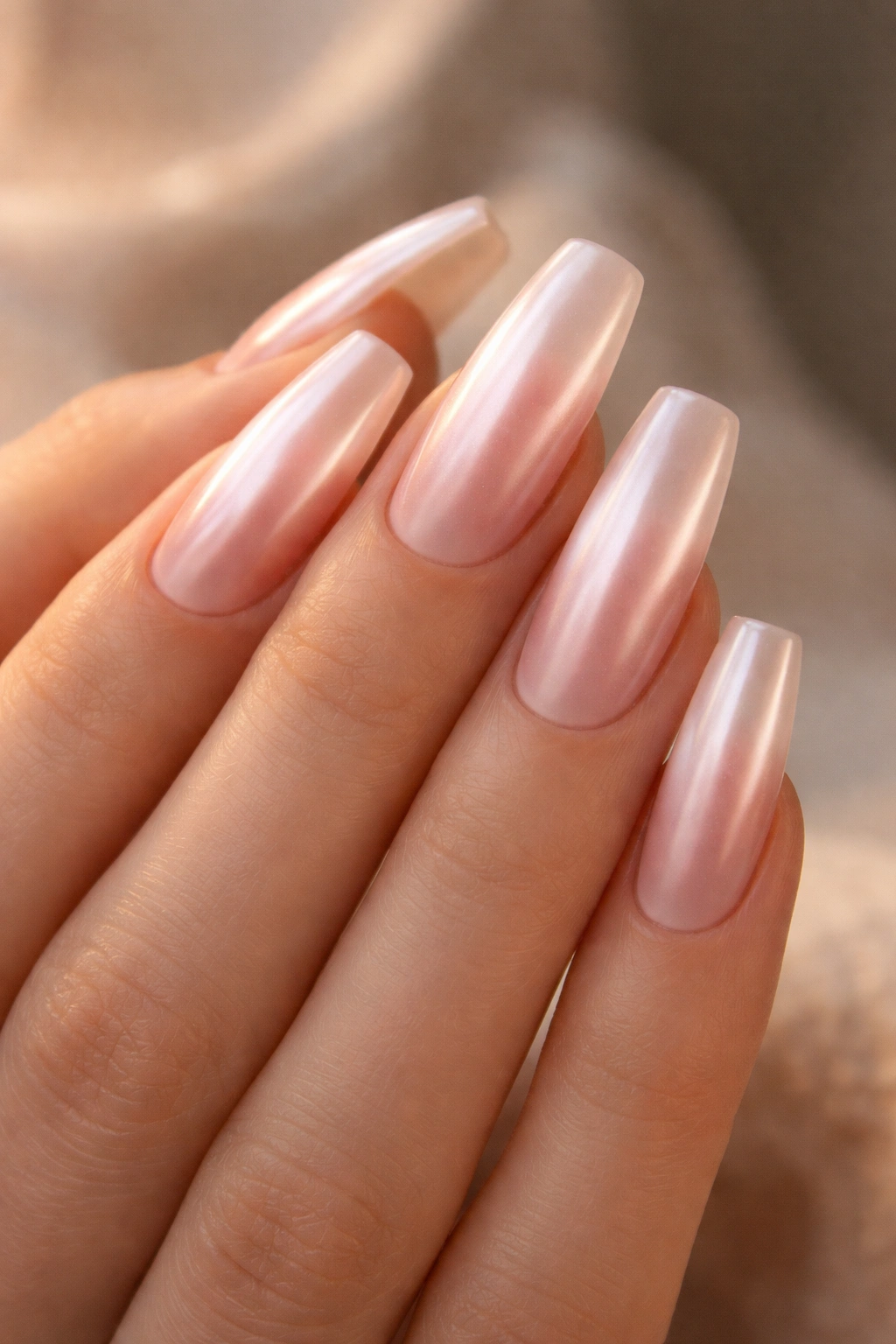
Rosewater pearl has a softness that white never quite reaches. There’s pink in it, though not candy pink, and there’s pearl, though not mirror chrome. The finish reminds me of the inside of a shell that caught a warm blush from sunset light.
That color shift matters. On some hands, milky white can feel bridal. Rosewater feels more personal, more lived-in. It still looks polished, though it has a little warmth under the shine that stops the manicure from reading formal.
I like this style best when the base is built in layers: one coat of sheer neutral pink, one coat of rose jelly, then a cool pearl glaze over the top. Skip the urge to make it fully opaque. Rosewater loses its charm when it gets dense. You want the nail bed to show through enough that the pink looks suspended, not painted on.
Longer ballerina nails suit this design, especially when the sidewalls are narrow and the tip is softened instead of cut dead flat. That tiny shape change makes the manicure look less rigid.
Rosewater also pairs well with makeup-free days, knitwear, cream blouses, satin slips, silver rings, and even beat-up denim. It has range. More importantly, it does not ask for much from the rest of your look, which is one reason I like it so much.
6. Ivory Pearl Ballerina Nails with Micro Crystals at the Cuticle
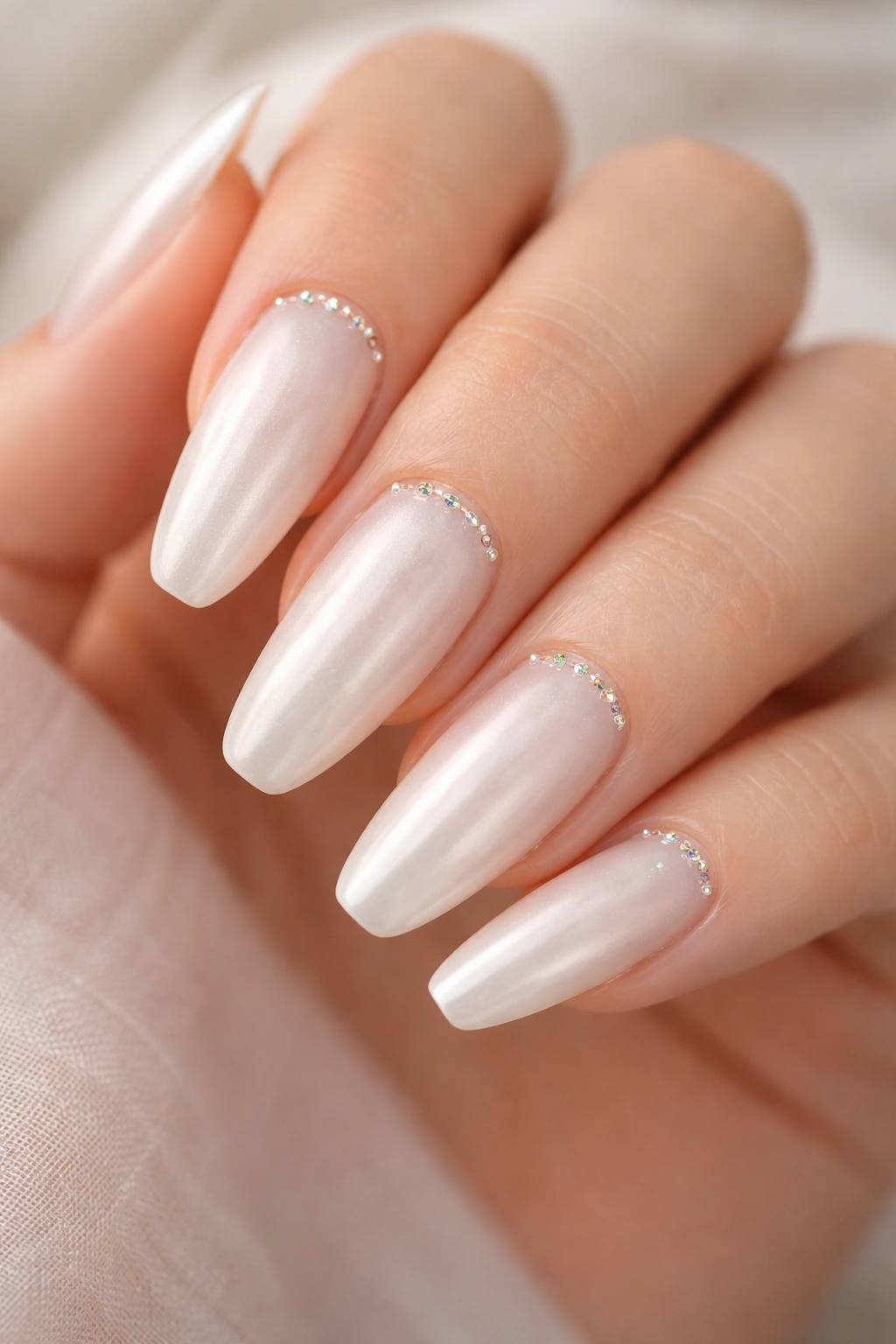
Unlike full crystal nails, which can drown a soft finish in decoration, micro crystals at the cuticle add light without dragging the set into pageant territory. The key word there is micro.
Ivory pearl already has more warmth than stark white, so the manicure feels softer from the start. Add one 2 mm crystal or two 1 mm stones at the base of each nail — or even only on the ring fingers — and you get a tiny point of sparkle that catches the eye before it bounces away again.
Placement matters more than color here. Stones should sit low, snug near the cuticle arc, not halfway up the nail. Higher placement looks random. Lower placement follows the natural shape of the nail and keeps the set tidy.
Who is this for? Someone who wants pearl ballerina nails with a small dressy detail but does not want charms, bows, or a full gem cluster. Bridal sets do this well. So do holiday-party nails. Daily wear can handle it too if the stones stay tiny and the base stays creamy.
My recommendation is blunt: keep the crystals off every nail unless you love maintenance. Even small stones can snag hair, sweaters, and tights when they start lifting. Two accent nails usually give you enough sparkle and half the annoyance.
7. Opal Pearl Ballerina Nails with a Cloudy Sheer Base
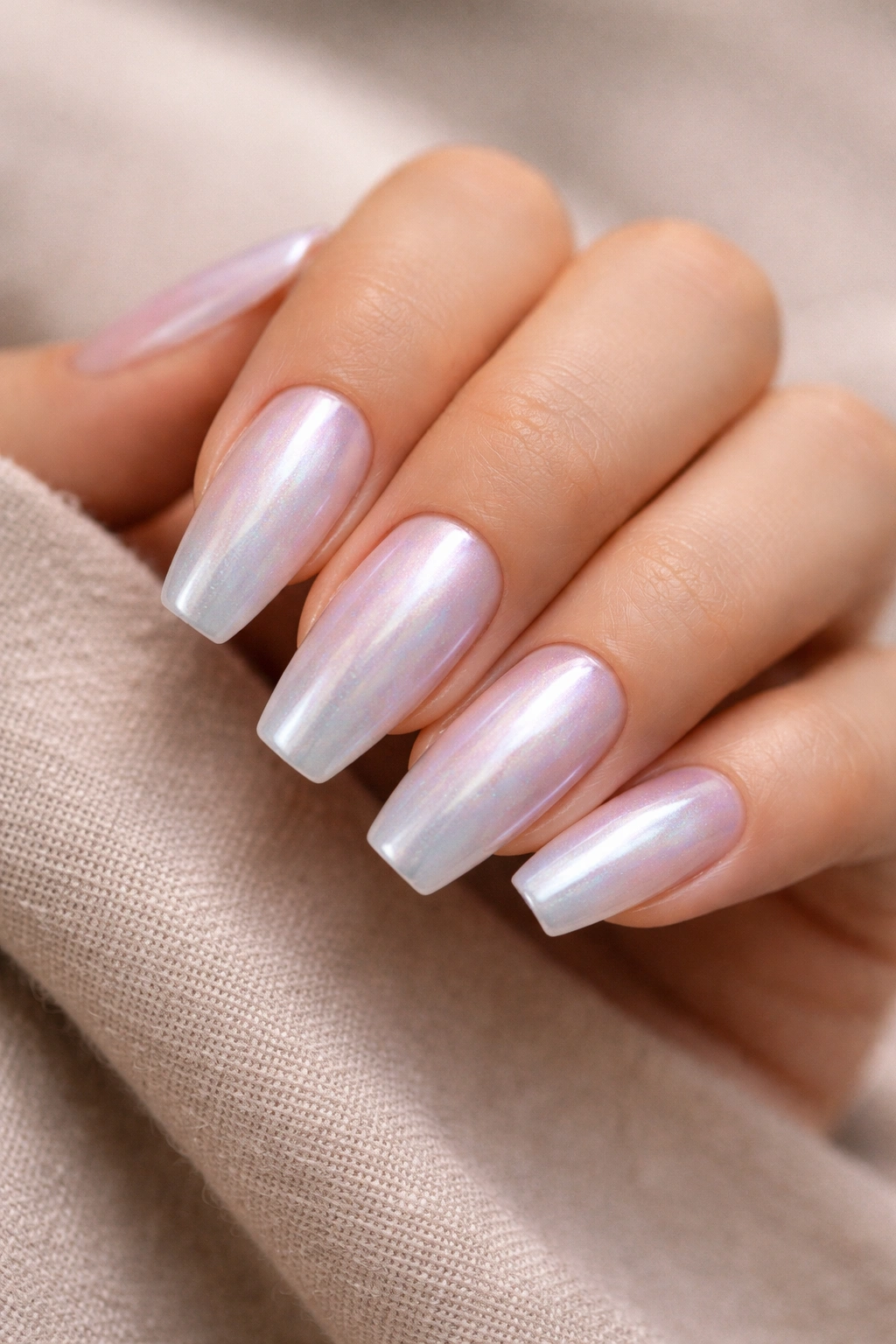
Opal pearl is what you choose when white pearl feels too plain but full color feels like too much. The shine shifts faintly — blue, pink, lilac, a breath of mint — though the base still reads neutral from across the room.
What makes opal feel softer than rainbow chrome
The answer is the base. A cloudy sheer base keeps the color shift trapped under a milky veil, so the manicure looks hazy instead of futuristic. Think diluted skim milk with a wash of shell color over the top. That small amount of blur is what makes opal wearable.
Short nails can wear it, though I think opal comes alive on a medium ballerina shape because the reflective shift has more room to travel.
Details worth asking for
- Use a translucent white or clear-pink base, not a flat opaque one
- Choose opal powder with pastel shift, not strong green-purple shift
- Keep the chrome layer thin, or the nail turns metallic
- Finish with a glossy top coat, not matte, so the depth stays visible
Opal is one of those finishes that can look cheap if the pigment is heavy. Fine powder only. Anything coarse will read costume, not pearl.
Best setting for this set: low light, candlelight, evening dinners, winter daylight — the little shifts show up in a way that feels almost private.
8. Beige Pearl Ballerina Nails with Tonal Marble Veins
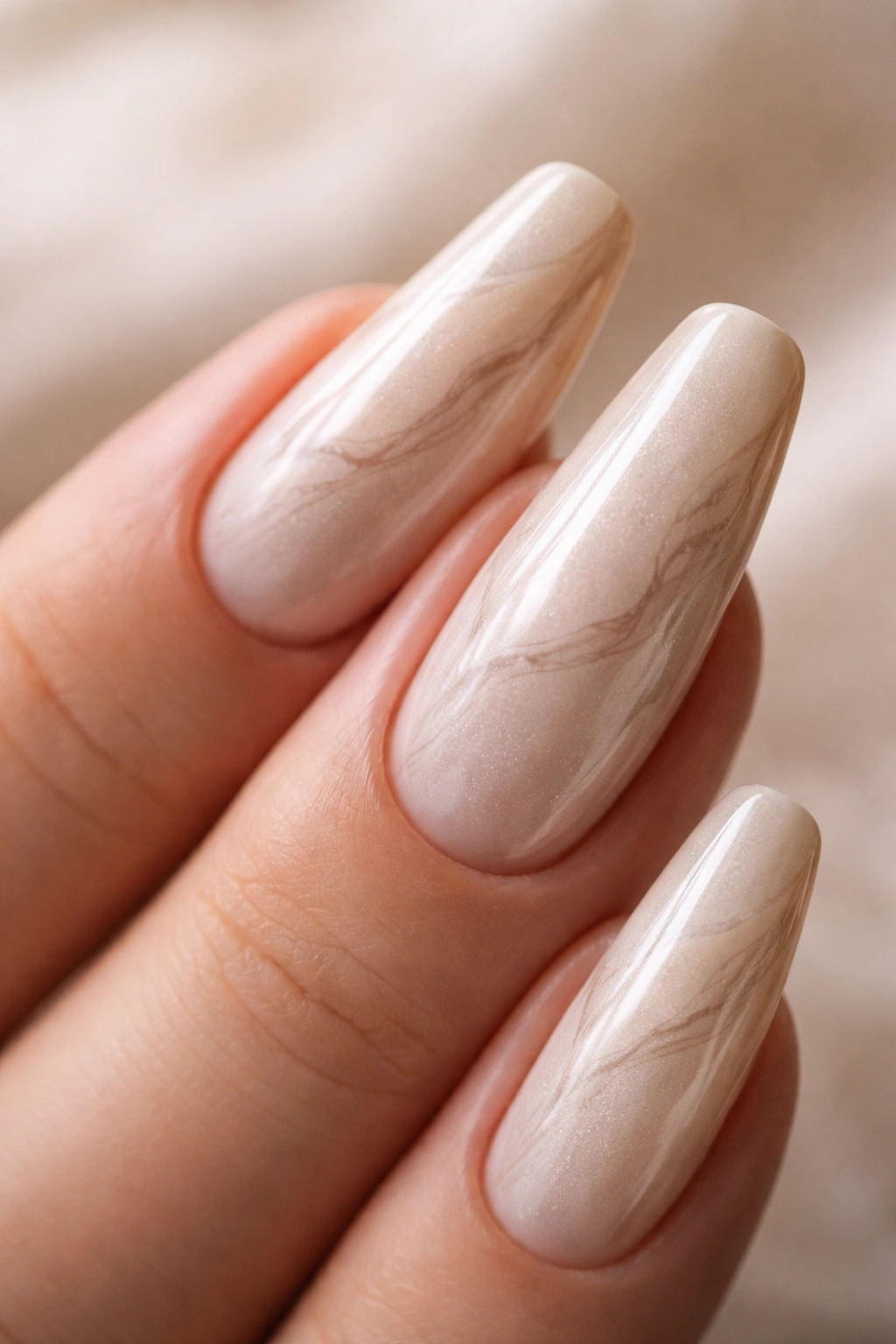
Marble can go tacky fast, but tonal marble is a different animal. When the vein color sits only a shade or two above the base, the design feels like part of the pearl rather than art laid on top of it.
Start with a beige or pink-beige builder base. Over that, use a liner brush to drag in thin cream, taupe, or warm ivory veins, then blur sections with a drop of clear gel or alcohol on the brush. The veins should look broken and irregular, not painted like stripes. One or two nails per hand are enough.
A pearl top coat ties it together. Suddenly the beige base gets movement, the marble softens, and the whole set looks like polished stone rather than bathroom tile. That distinction matters more than people admit.
This version suits hands that want a neutral manicure with some personality. If you wear mostly camel, black, grey, denim, or soft brown leather, tonal marble pearl nails sit right in that lane. They look considered but not fussy.
Choose this design when you want detail up close. From a distance, it still reads neutral ballerina pearl. Lean in, and the little veins start to show themselves.
9. Champagne Pearl Ballerina Nails with Soft Gold Lining
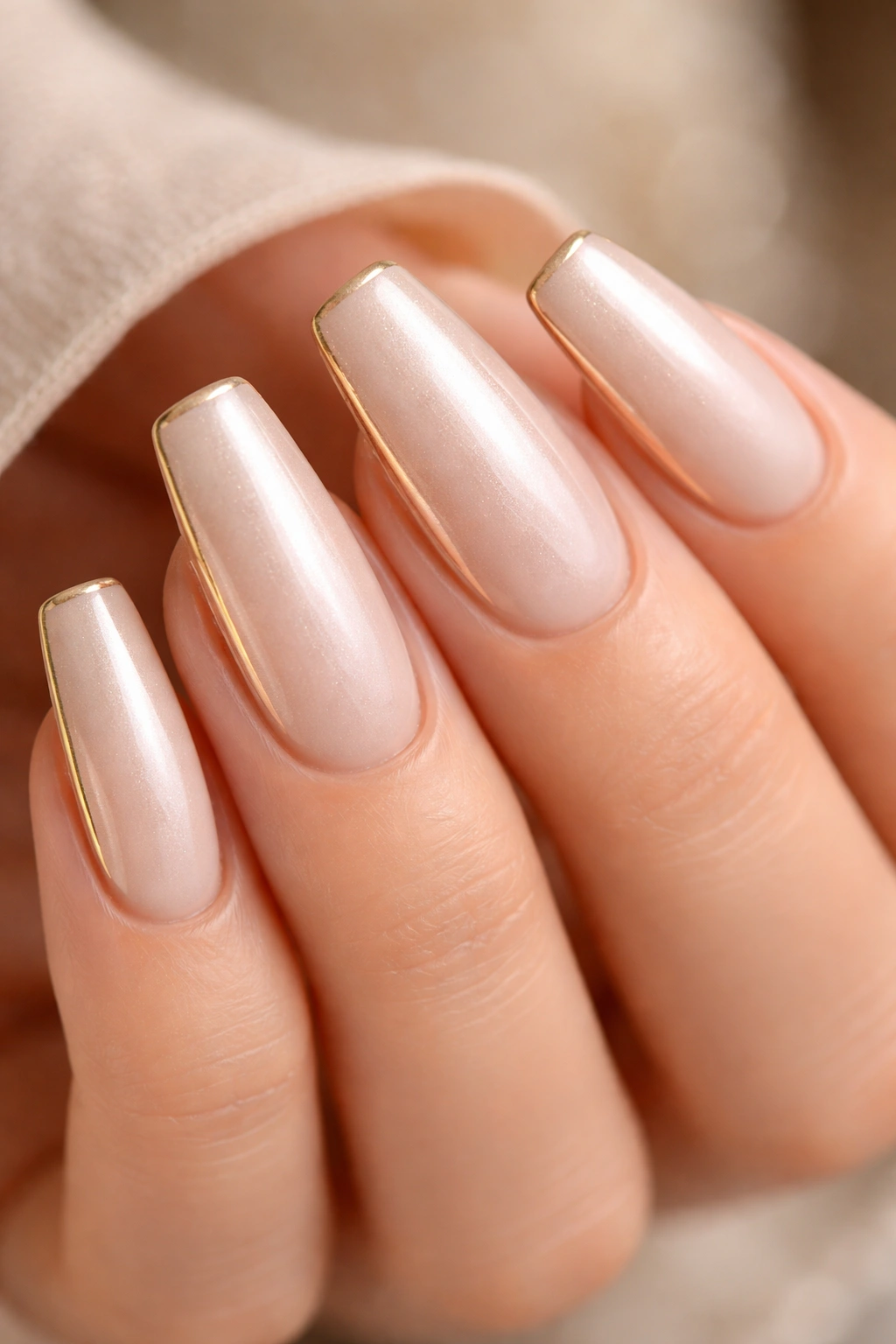
Why does champagne work when gold chrome often looks heavy? Because champagne carries beige and cream inside it, so the metallic warmth lands softer.
A champagne pearl base already has that candlelit tone built in. Add a soft gold liner — around 0.5 mm wide — tracing the sidewall, tip, or half-moon cuticle shape, and the set picks up structure without turning flashy. The line should whisper, not announce itself.
There’s a nice trick here for shorter fingers. A slim gold line running near one sidewall can create the illusion of length, especially on medium ballerina nails. Center lines can work too, though they feel more graphic. Side placement keeps the look gentler.
How to keep the gold from stealing the whole manicure
Use brushed gold, pale gold gel paint, or diluted metallic liner rather than dense foil. Foil flakes fight with pearl because both want to be the loudest texture on the nail. A painted line behaves better. It sits flatter, looks cleaner, and survives top coat without wrinkling.
Champagne pearl is a strong pick for warmer skin, though I have seen it look sharp on cool undertones when the base leans beige-pink instead of yellow. If you wear gold jewelry most days, this set tends to slot right in without effort.
10. Baby Pink Pearl Ballerina Nails with a Faded Aura Center
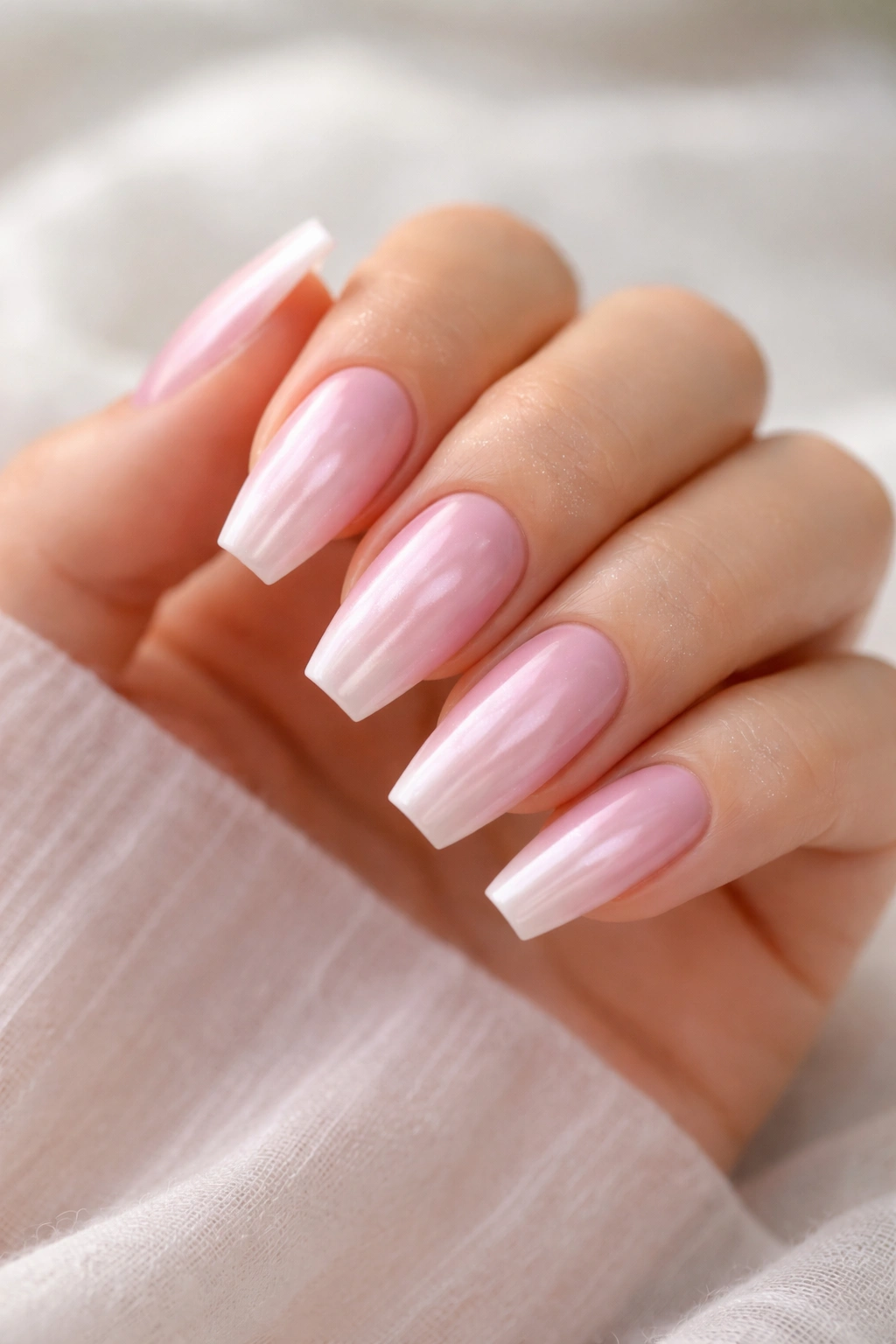
Picture a baby pink ballerina set in daylight. Nice enough. Add a faded aura center — a soft bloom of deeper pink or white misted into the middle — then cover it in pearl, and the nails start to look rounder, fuller, almost lit from inside.
That aura effect should stay subtle. You are not chasing neon airbrush nails here. The center needs only a small diffused halo about the size of a pea on each nail, blended until the edge disappears. White gives a cool glow. Rosier pink gives a flushed, healthy look.
The pearl layer pulls everything together. Without it, the aura can look unfinished. With it, the center glow sits under a creamy sheen and the whole nail looks smoother.
What to ask for
- Base: sheer baby pink, not opaque pastel
- Aura: airbrushed, sponged, or blooming-gel blended
- Placement: center or slightly above center, never too close to the cuticle
- Best length: medium to medium-long ballerina
This style has more personality than plain blush, though it still keeps the soft finish intact. If you want pearl ballerina nails that feel youthful without veering sugary, aura pink hits a sweet spot.
11. Lavender Pearl Ballerina Nails with Silver Pearl Dust
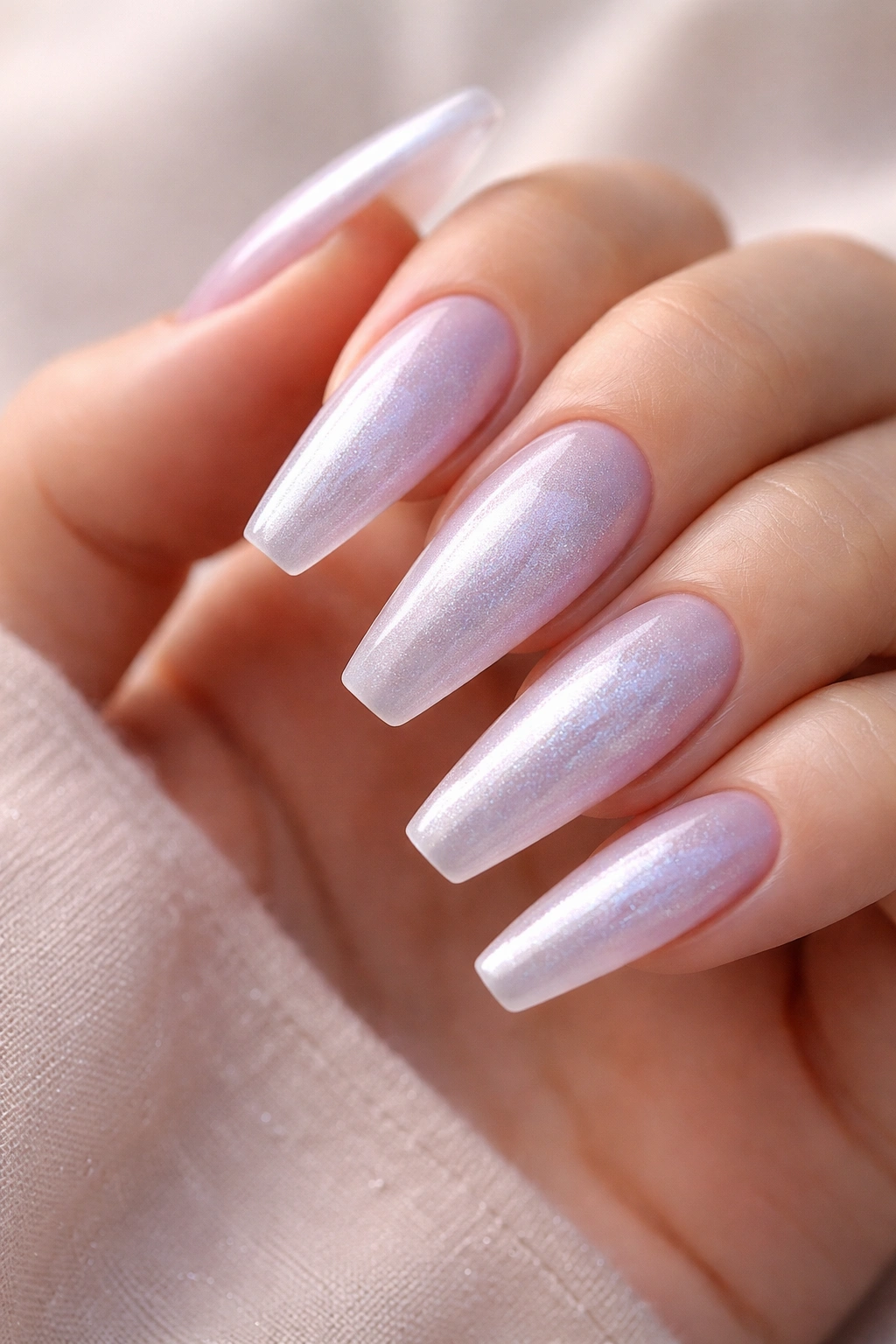
Lavender pearl can sound risky on paper. In practice, it is one of the smartest cool-toned options because the purple stays muted once pearl and silver dust soften it.
The best version uses grey-lavender jelly, not pastel crayon purple. You want a foggy flower tone, something closer to lilac shadow than candy. Over that, a wash of silver pearl dust gives the nail an icy veil that still feels soft rather than metallic.
This is one of the few pearl sets that changes personality depending on the light in a big way. Indoors, it can look silvery taupe. Outside, the lavender comes forward. Under warm evening bulbs, it turns smokier and more muted.
I like it on people who are tired of pink but do not want to jump straight into dark, moody nails. Lavender pearl gives you color, though it keeps the hush of a neutral. The ballerina shape helps there; on a short square nail, the same shade can read more playful than polished.
Pair it with silver rings, charcoal knits, crisp white shirts, soft blue denim, or dove-grey tailoring. It has a colder mood than champagne or peach, and that is exactly why it works.
12. Soap Pearl Ballerina Nails with an Ultra-Clean Short Length
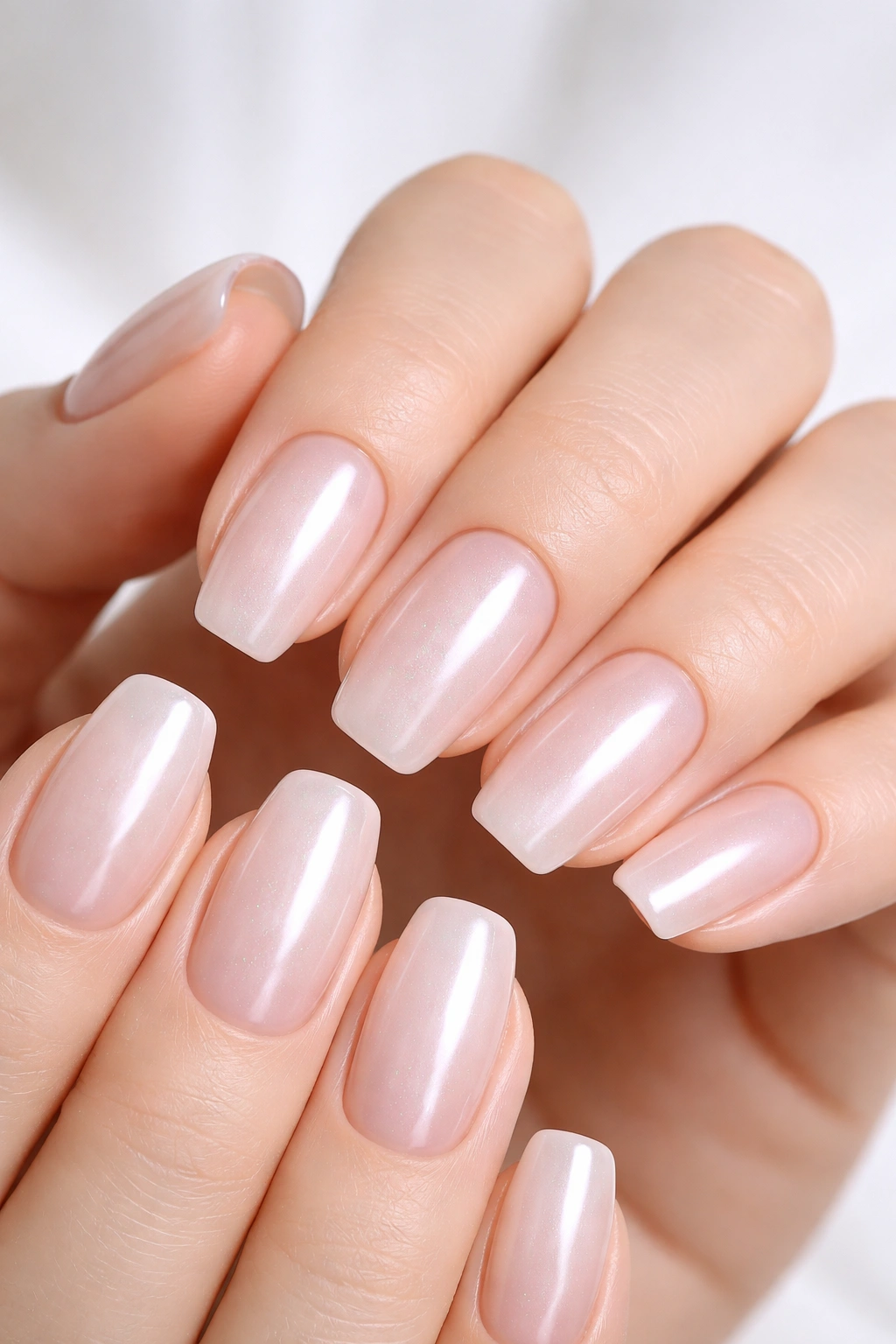
Compared with long glazed sets, soap pearl ballerina nails feel fresher, lighter, and easier to live with. They are the manicure version of a white button-down that actually fits.
The whole idea is restraint. Short ballerina length, translucent pink-beige base, tucked cuticle line, one thin layer of pearl, glossy finish. No art. No crystals. No marble. Nothing that breaks the clean surface.
This works best when the length is kept honest. Think mini ballerina, where the nail extends only a few millimeters past the fingertip and the tip is softened rather than sharply cut. On that shape, the pearl reads less decorative and more healthy-looking.
Who should get this? Anyone who types all day, cooks, wears contact lenses, changes sheets without fear, and still wants a manicure with a little glow. It is also a strong pick if your natural nails are sturdy enough for overlays but not long enough for a dramatic coffin.
My recommendation: ask for builder-in-a-bottle in a sheer pink-beige, then a light pearl powder sealed under top coat. Keep the layers thin. Thick soap nails lose the clean, almost bare effect that makes them good in the first place.
13. Peach Pearl Ballerina Nails with a Creamy Ombré Fade
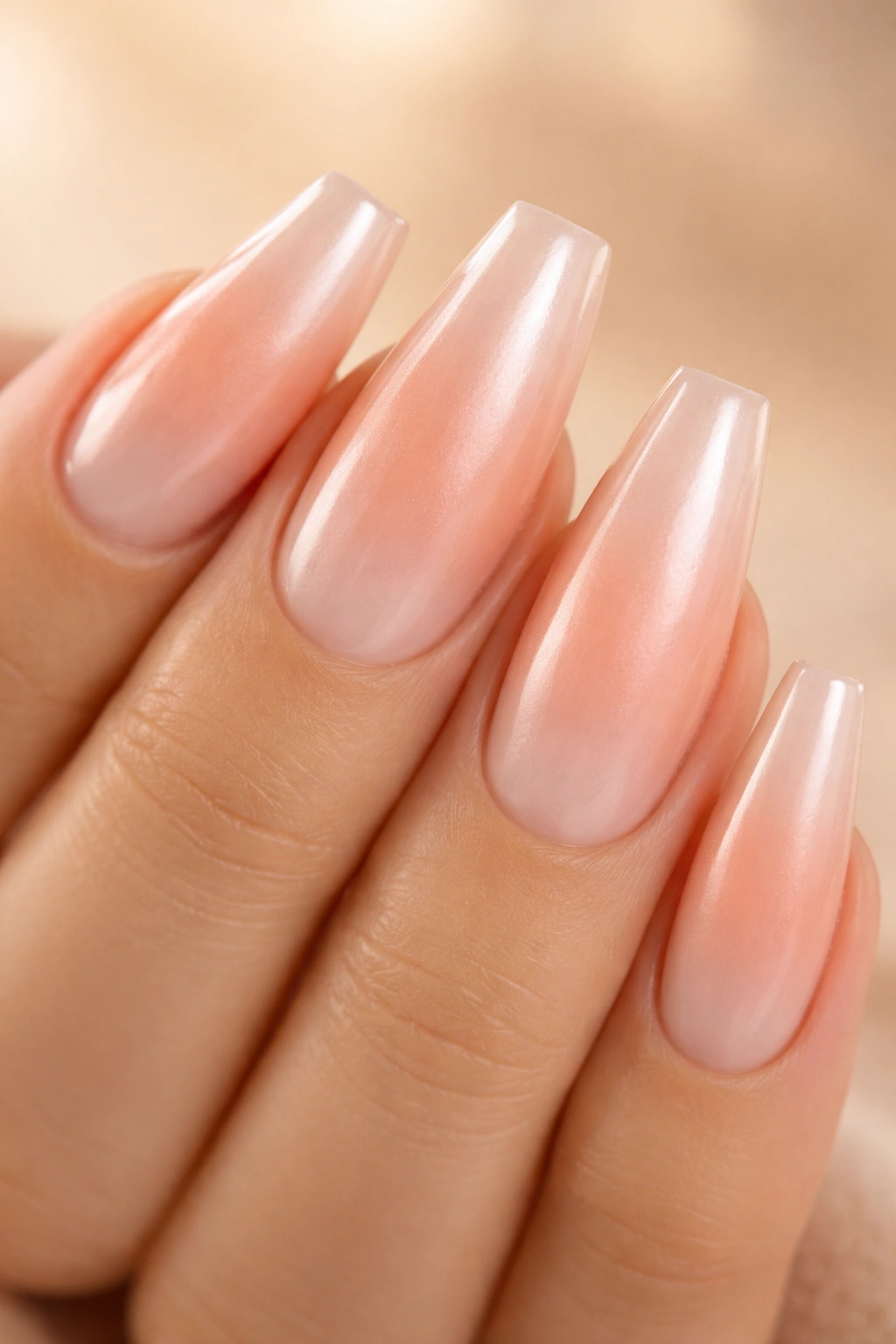
Peach does something white and pink cannot. It brings warmth to the hand without reading tan, and that makes it useful when your skin tone pulls golden, olive, or neutral-warm.
Why the ombré version feels smoother
A full peach nail can look flat. A creamy ombré fade from sheer nude at the cuticle into soft peach at the tip adds lift and shape, then pearl takes the edge off the color so it melts instead of sitting there like a block.
The fade should be blurry. You want no line, no band, no harsh transition. Airbrush does it well. So does a sponge blend between jelly nude and diluted peach gel.
Good ways to keep it refined
- Use pale peach, not coral
- Start the fade around the middle third of the nail
- Add pearl over the whole surface, not only the tip
- Choose a glossy top, because matte will flatten the blend
Peach pearl is underrated. It flatters warm undertones, brightens dull-looking hands, and has more life than beige without drifting into orange. If champagne feels metallic and blush feels too sweet, peach is often the answer.
One warning: keep the peach sheer enough that the ombré still breathes. Dense pigment can make the tip look heavy.
14. Vanilla Pearl Ballerina Nails with Matte-and-Pearl Contrast
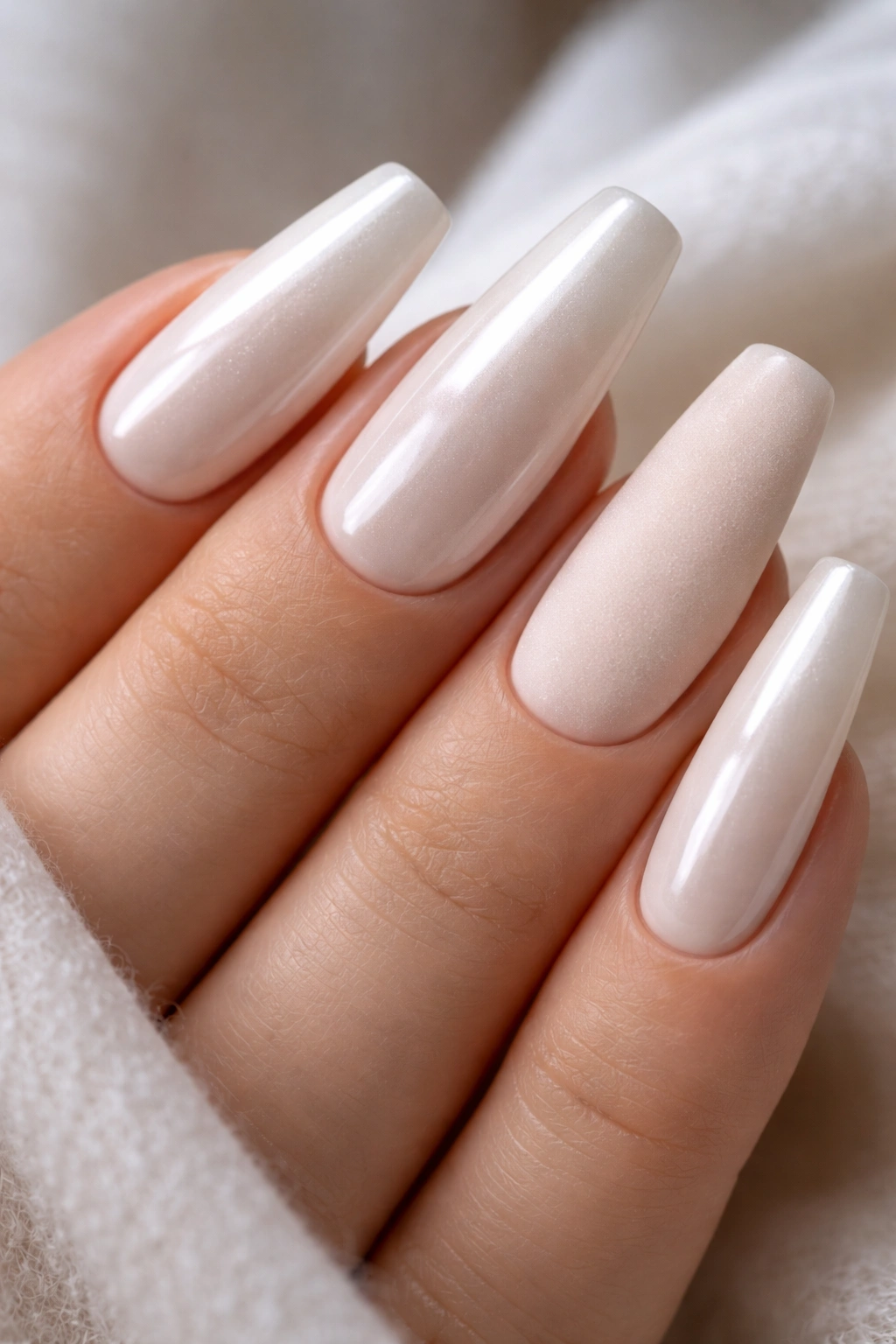
Contrast can still read soft if the textures stay close. That is why vanilla pearl with matte accents works.
Start with a vanilla cream base — softer than white, lighter than nude. Then choose one area to shift texture: a matte body with glossy pearl tips, matte side panels with a pearly center strip, or one matte accent nail beside glossy pearl companions. The colors stay nearly the same, so the eye reads shape before color.
I would not use this idea on every single nail in a complicated pattern. Too many texture switches make the set look busy. Keep it focused. A matte base with slim pearly French tips is probably the cleanest version, especially on medium ballerina nails.
There is a tactile side to this design that photos do not always show. Matte gives the nail a velvety, almost chalk-soft look, while the pearl sections glide light back at you. That push and pull makes the manicure feel edited, not plain.
Still, matte comes with upkeep. Hand cream, makeup, and even dark denim can mark matte top coat faster than glossy surfaces. If you hate maintenance, save this one for a shorter wear window or choose only one matte accent nail.
15. Mother-of-Pearl Shell Swirl Ballerina Nails
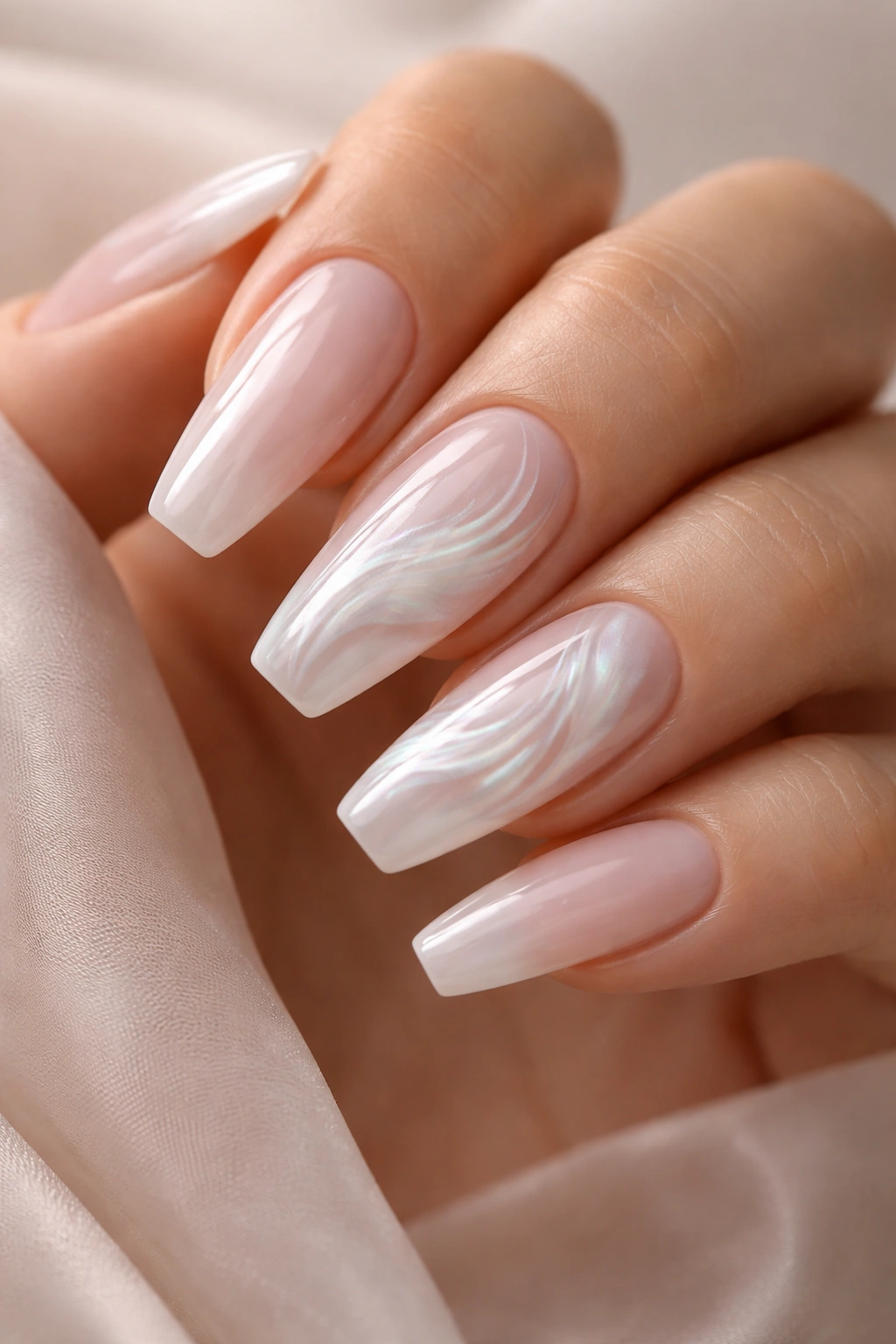
Why do shell swirls work when full shell decals often do not? Because they hint at mother-of-pearl without trying to recreate a literal seashell on your hand.
The base here should stay translucent — sheer nude, milky blush, or faint oyster. Over that, paint two or three irregular pearly arcs or broken swirls on each accent nail using white gel mixed with chrome or pearl pigment. The shapes should overlap a little and taper out at the ends, like fragments of shell lining. Add a glossy top coat and leave it alone.
That restraint is what keeps the design grown-up. Full shell art can look costume-y. Swirls feel abstract, and abstraction ages better.
How to keep shell swirls clean
Use them on two to four nails total, not all ten. Pair them with plain pearl ballerina nails on the remaining fingers so the set has room to breathe. Thicker lines can work on long extensions, though slim, irregular strokes usually look more polished.
I like this design most when the color palette stays close — ivory on blush, opal on milky white, soft champagne on beige. Big contrast makes the art louder than the pearl. Small contrast makes people lean in.
If you want nail art without leaving the soft-finish lane, shell swirls are one of the best ways to do it.
How to Ask for Pearl Ballerina Nails at the Salon
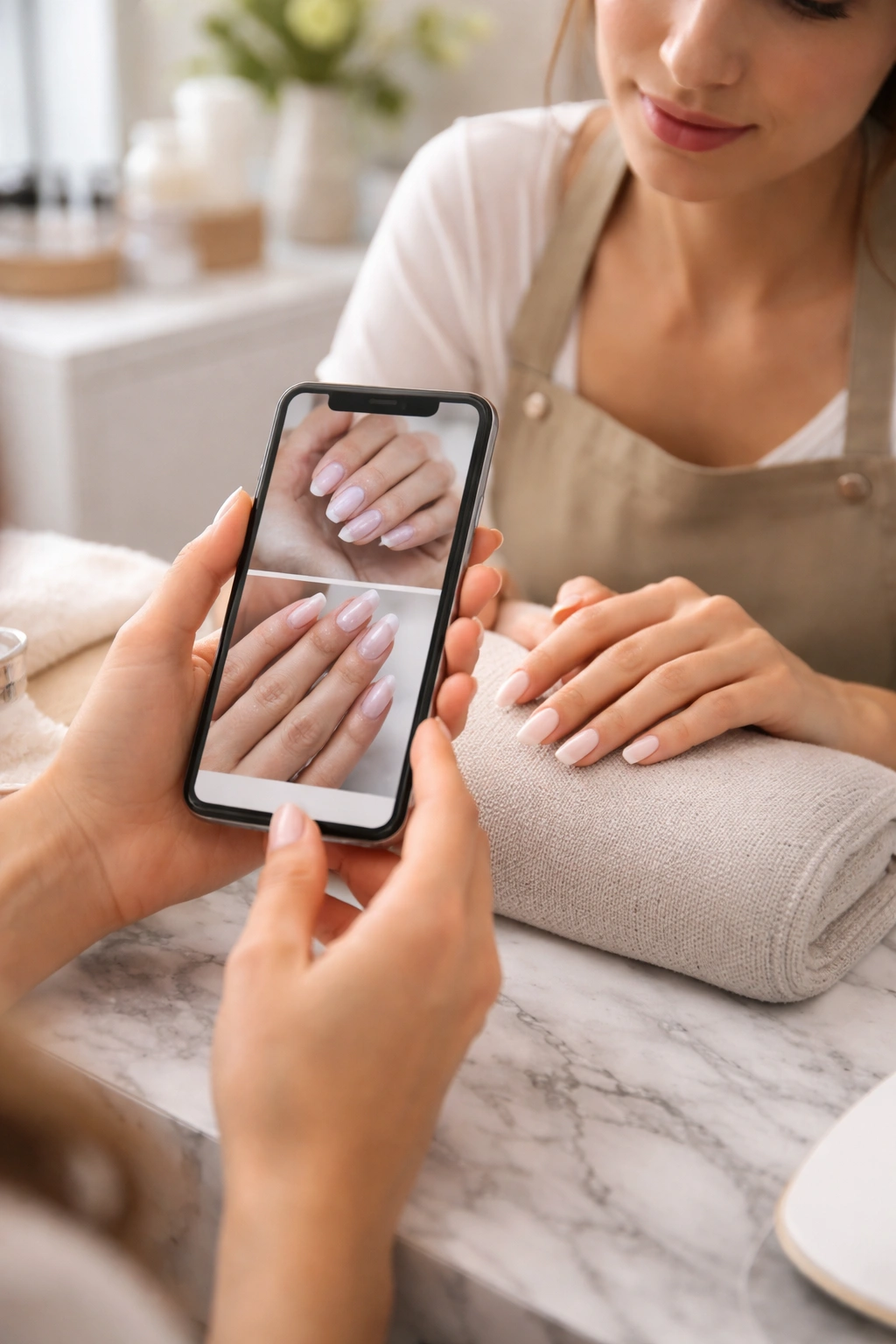
Bring two photos if you can: one for shape, one for finish. Clients often show a pearl photo with almond nails, then expect the salon to somehow translate that exact mood onto a long ballerina set. Shape changes the whole result.
Use direct language. Nail techs read specifics faster than mood words.
What to say out loud
- “I want a ballerina shape, not a sharp coffin.”
- “Keep the sidewalls slim and the tip soft, not wide.”
- “I want fine pearl or glazed chrome, not chunky shimmer.”
- “Use a sheer or milky base so the pearl stays soft.”
- “Please keep the layers thin.”
- “I want medium length — around 8 to 12 mm past the fingertip.”
If you want one of the dressier styles, mention the placement, not only the idea. Say “one small crystal at the cuticle on two nails” instead of “a little sparkle.” Say “a narrow gold liner near the sidewall” instead of “gold detail.” Nail art goes sideways when the request is vague.
Natural nails versus extensions should come up early. A true ballerina shape usually needs enough free edge to taper. If your nails are short or weak, builder gel overlays or short tips may give you a cleaner silhouette than trying to force a ballerina shape onto a nail plate that is not long enough yet.
One more thing. Check the pearl under normal light before you leave. Salon lighting can make chrome look softer than it will in daylight.
Keeping Pearl Ballerina Nails Smooth Between Appointments
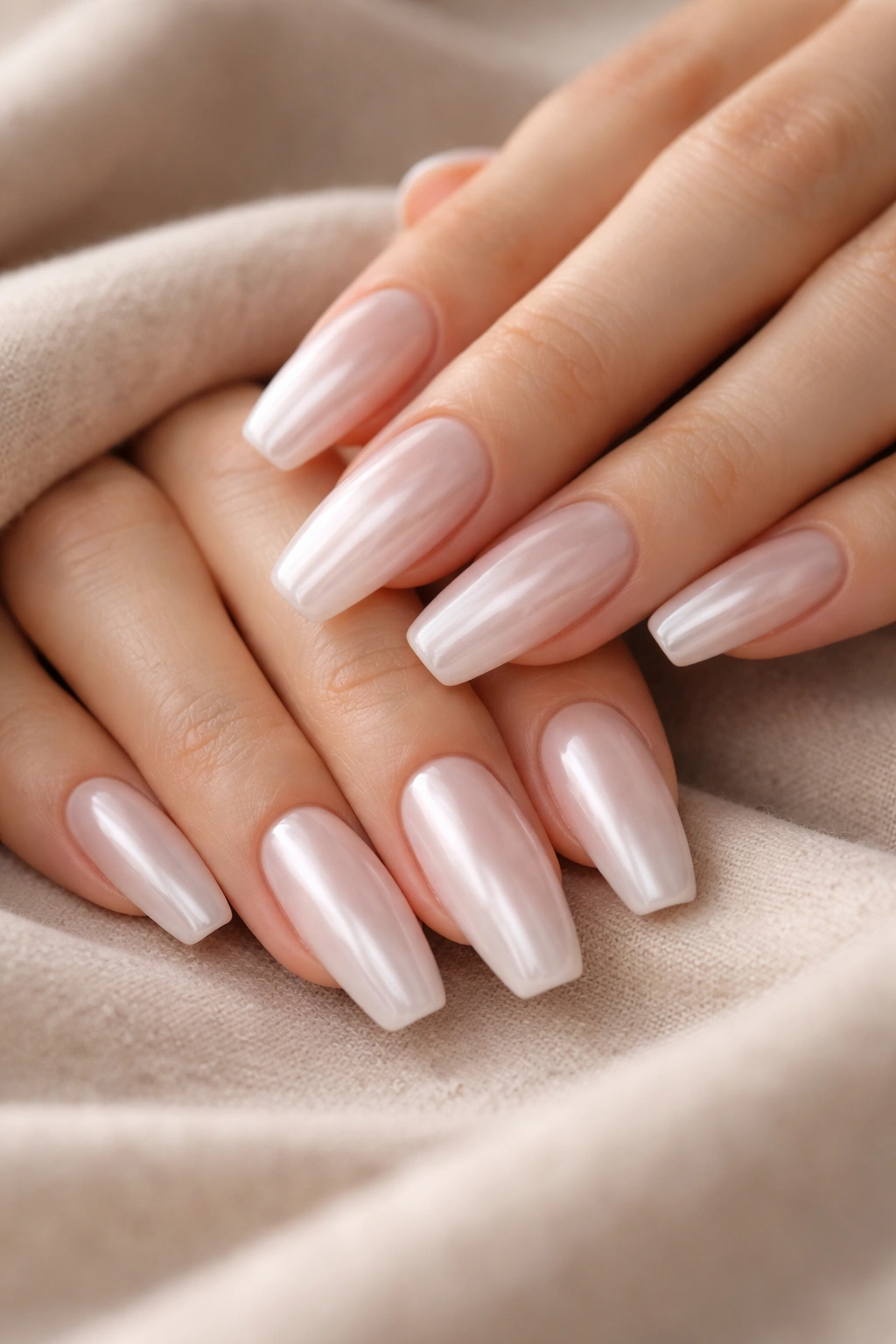
Pearl shows scratches faster than flat cream polish. Not because it chips more easily, but because the reflective surface makes every dull patch easier to spot.
Cuticle oil helps more than people think. Use one drop per hand twice a day, then rub it around the sidewalls and free edge. Dry skin makes even the nicest pearl set look rough. A hydrated cuticle line makes the manicure read cleaner, fuller, and newer.
A few habits make a real difference:
- Wear gloves for dishwashing and long cleaning sessions
- Do not use your nails to pry lids, peel labels, or scrape stickers
- File snags in one direction with a fine-grit file
- Avoid acetone soaking unless you are removing the set
- Book a refresh around the 2- to 3-week mark if you wear gel regularly
Matte sections need extra care. So do crystal accents.
If your top coat starts losing shine, ask for a top-coat refresh instead of waiting for a full replacement. That quick service can buy you another week of good wear, especially on simpler styles like milky white, blush pearl, and soap nails.
And if you are doing your own nails at home, thin layers win again. Pearl powders look smoother over a level, well-cured surface. Any bump under the chrome will show once the light hits.
Final Thoughts
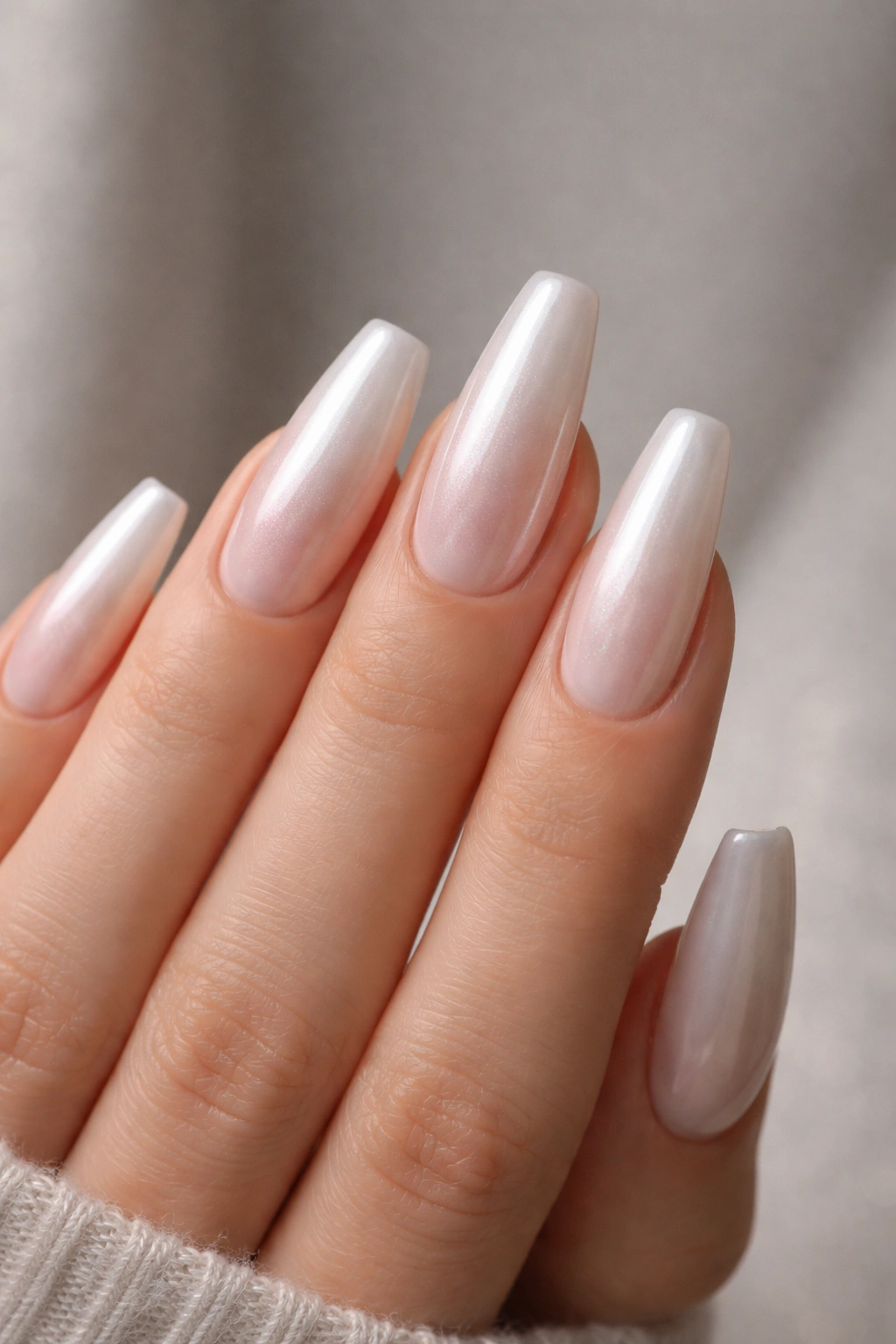
Pearl ballerina nails land in a sweet spot that a lot of manicures miss. They have shape, glow, and enough detail to feel dressed, though they still read soft from a few feet away. That mix is why they keep showing up on hands that want polish without noise.
If you like your nails clean and low-drama, start with sheer blush, milky white, or soap pearl. If you want more personality, move toward oyster cream, rosewater, shell swirls, or a faded aura center. Those sets still keep the soft finish, though they give your eyes a little more to do.
Save the shape photo. Save the finish photo. Getting both right is what turns a decent pearl manicure into one you keep staring at in traffic, at your desk, or halfway through your second coffee.
