

Light pink French tip ballerina nails do something few manicure styles can: they look polished from across the room and detailed up close. The shape gives you that long, tapered outline people love in coffin nails, but the soft pink base keeps the whole set from looking hard or severe. When the proportions are right, even a medium-length set can make your fingers look slimmer.
A lot of sets miss by a hair. The pink leans gray, the white tip is too thick, the sidewalls stay too wide, and suddenly the manicure reads bulky instead of sleek. That’s the difference between a set that looks clean for three weeks and one that starts bothering you the moment you leave the salon.
The nice thing about light pink French tip ballerina nails is that they leave room for personality. You can keep them crisp and classic, blur the base with a soft ombré, add a pearl sheen, tuck in a tiny crystal, or angle the smile line so the whole nail looks sharper. Small tweaks matter here—more than people think.
Start with shape first, because if the taper is off, no shade of pink or white tip is going to save the manicure.
Why the ballerina shape keeps French tips looking lean
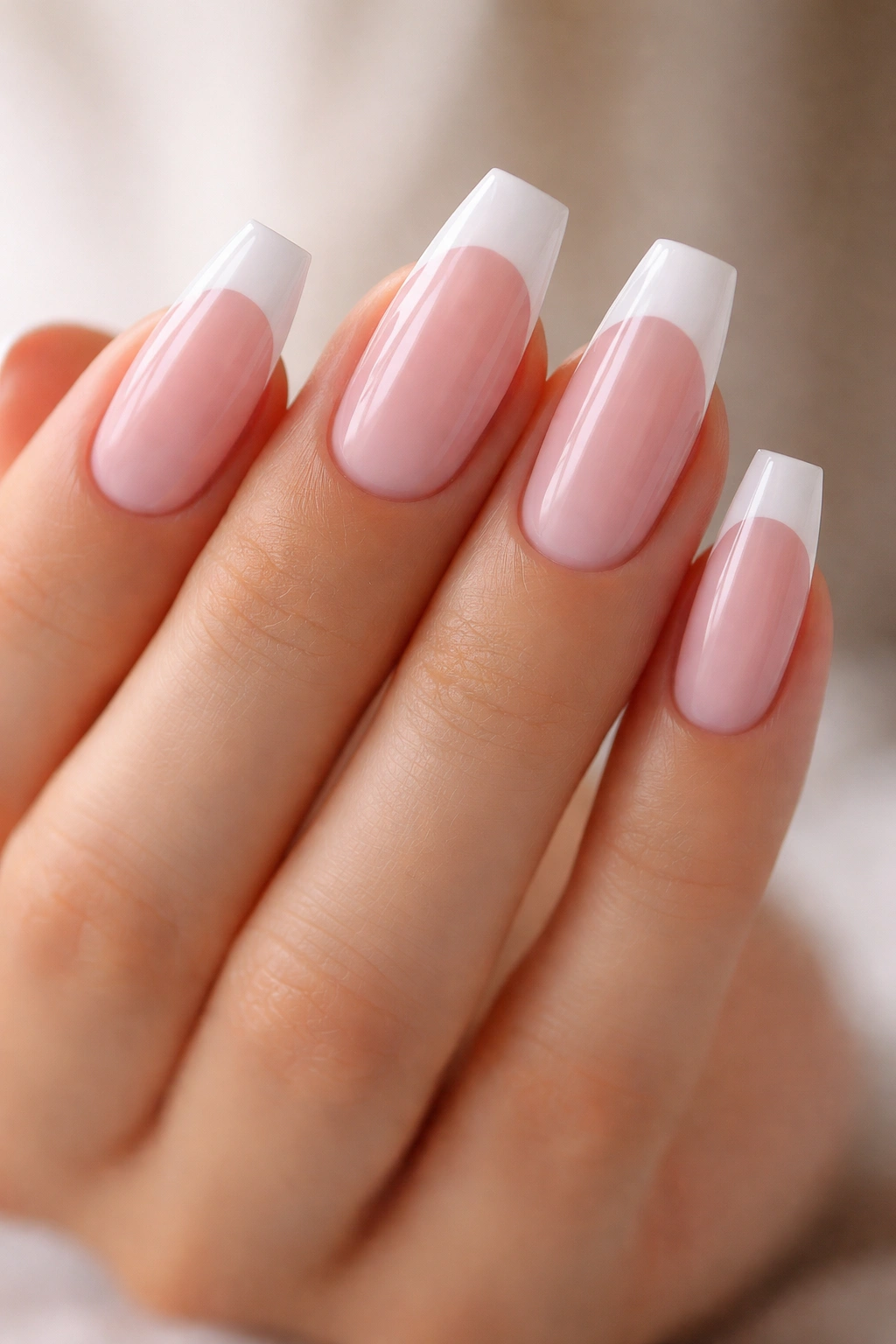
The shape does half the work.
A proper ballerina nail is tapered like a coffin nail but softened at the corners, with a flat tip that does not look boxy. That small difference matters more on a French manicure than it does on a solid-color set, because the white edge draws attention straight to the free edge. If the tip is too wide, the whole nail looks heavy.
Where the taper should start
The taper should begin gradually from the sidewalls, not all at once near the tip. When a nail tech leaves the width untouched until the last few millimeters, you get that blocky “square in disguise” look. A cleaner ballerina shape narrows from about the midpoint of the nail, then finishes in a flat edge that is slightly narrower than the widest part of the nail bed.
Look at the nail from the front, not just from above. If the sidewalls flare, you’ll see it right away.
The length sweet spot
For most light pink French tip ballerina nails, a medium length with about 8 to 12 mm of free edge gives the best balance. You get enough space to show the French line clearly, but not so much length that the set starts looking theatrical. If you type all day, shorter can still work—around 5 to 7 mm past the fingertip—though designs like V-cuts and double lines show up better with a little more room.
Short ballerina nails are trickier than long ones. Not impossible. Just less forgiving.
Picking a light pink that doesn’t turn gray on the hand
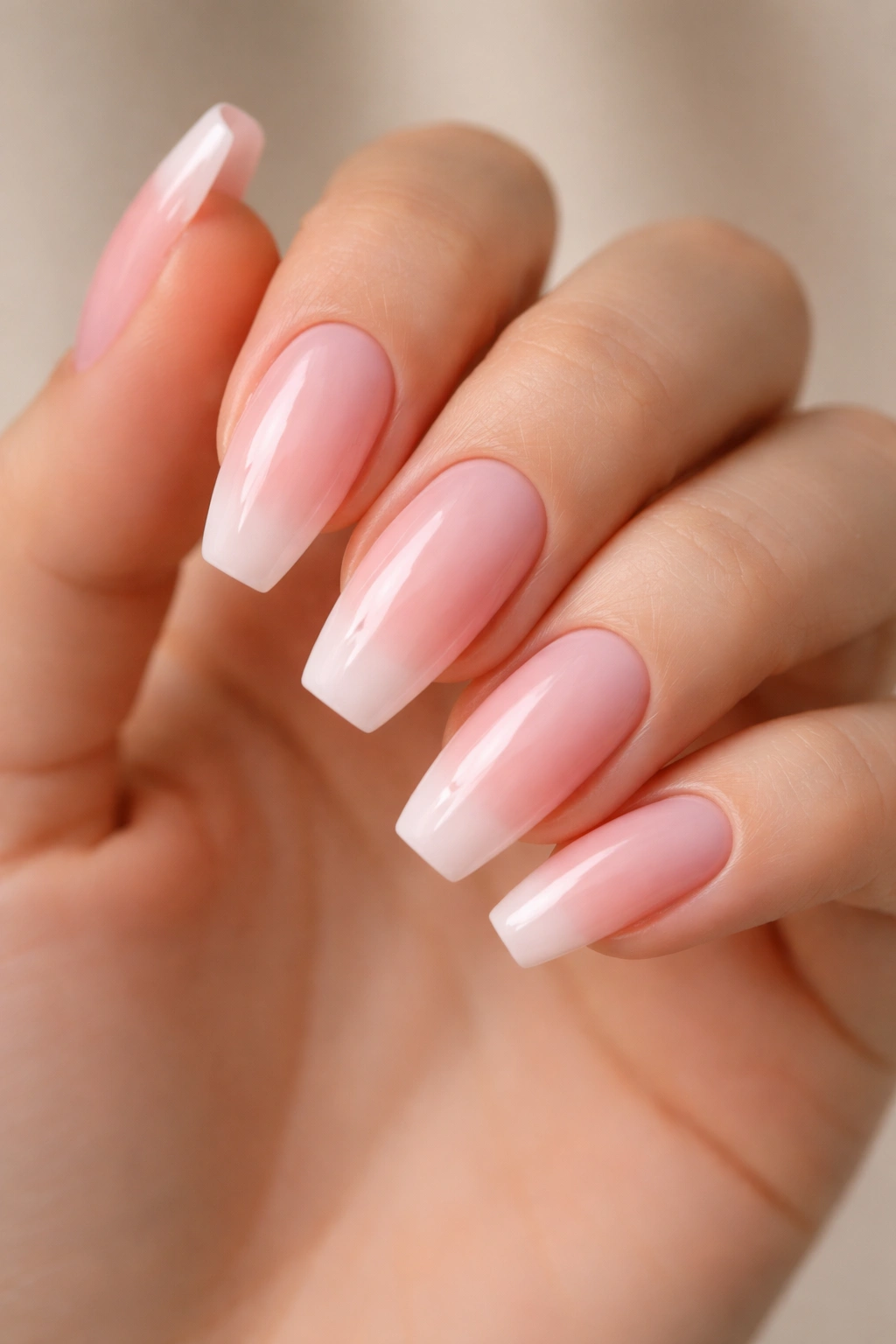
Pick the wrong pink, and even the cleanest French tip can fall flat.
Light pink sounds easy until you put it on actual skin. Some pinks pull beige and make the manicure look dull. Others lean icy and clash with warm or olive undertones. The best base usually sits in the middle: a milky petal pink, blush jelly, or soft neutral baby pink with enough translucency to let the nail bed show through.
Match the base to your undertone
A few quick rules help:
- Cool or rosy skin tones usually look best with blush pinks that have a faint blue undertone.
- Neutral skin tones can wear milky pinks that sit between peach and rose.
- Golden or olive skin tones often look cleaner with light pinks that have a touch of peach so the base does not read chalky.
- Deeper skin tones can wear light pink beautifully, but it often looks richer with a semi-sheer jelly finish instead of a fully opaque pastel.
Opacity matters too. A 60 to 75 percent opaque pink tends to look more expensive than a flat pastel because it lets the natural nail tone help with depth.
Choose your white with care
The white tip deserves the same attention. A paper-bright white has its place, especially on sharper or longer sets, but a soft milk white usually blends better with a delicate pink base. If you want the manicure to feel clean rather than stark, skip the correction-fluid white.
One more thing: salon lighting lies. Check the shade near a window if you can.
Salon wording that prevents thick, blocky French tips
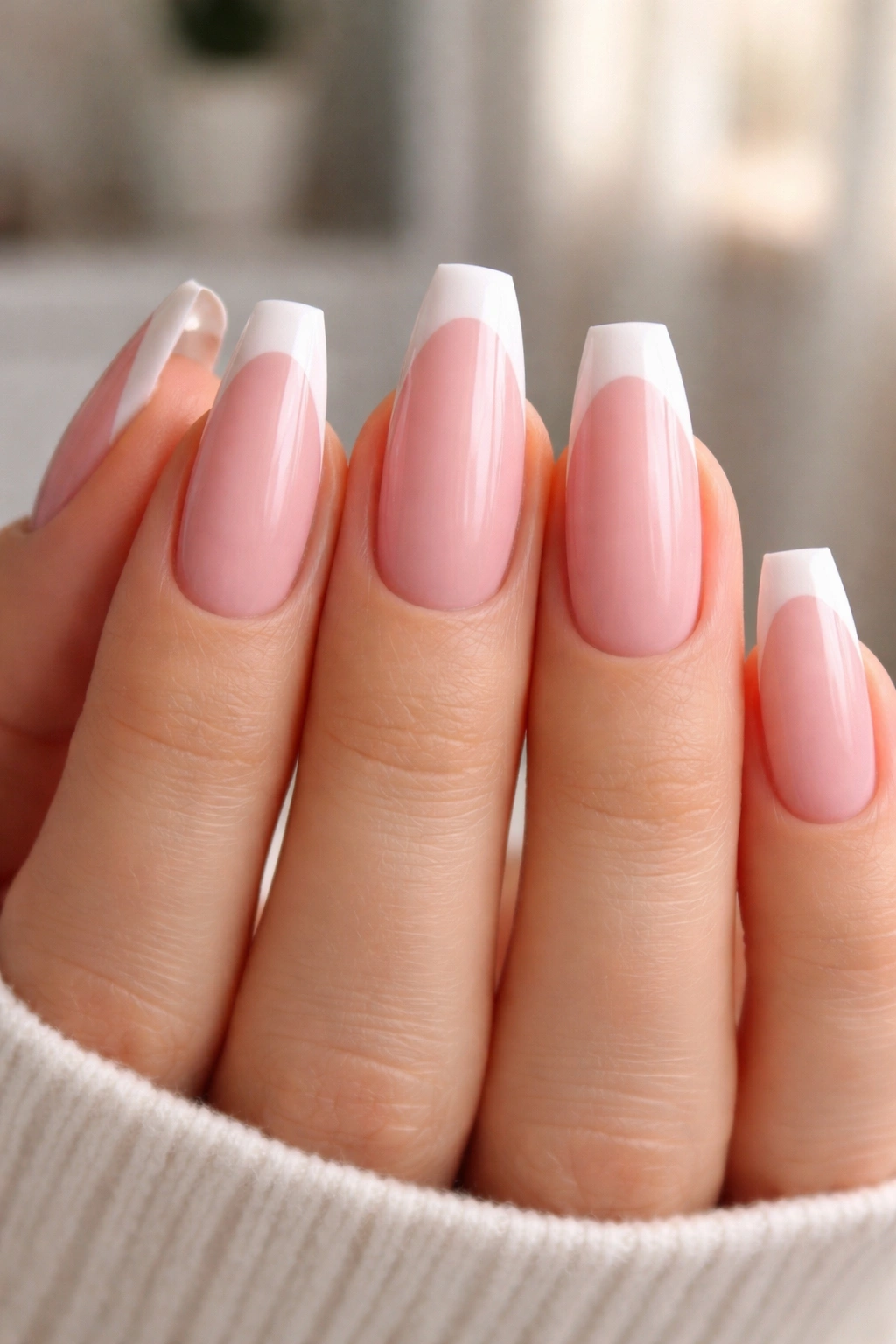
Ask for ballerina, and some salons will still hand you a square coffin set with bulky tips.
Being specific saves time, money, and that awful moment when you realize the shape is wrong halfway through filing. French tip ballerina nails look best when the structure is neat underneath the color—good apex placement, slim sidewalls, a refined tip, cuticles that are tidy but not overworked.
Use wording like this when you book or sit down:
- “Soft ballerina shape, not square coffin.”
- “Keep the sidewalls slim.”
- “I want a milky light pink base, semi-sheer.”
- “Make the French line thin to medium, not chunky.”
- “Please refine the tip from the front view too.”
- “Keep the cuticle area flush and thin.”
- “Use a soft white, unless I ask for bright white.”
If you’re getting gel or acrylic, ask about thickness. The apex needs strength, sure, but the free edge and cuticle area should stay fine. A French tip looks cleaner when the nail has a smooth arch instead of that rounded, puffy profile some rushed sets end up with.
Reference photos help. Side-view photos help even more.
1. Classic Light Pink French Tip Ballerina Nails with Crisp White Smile Line
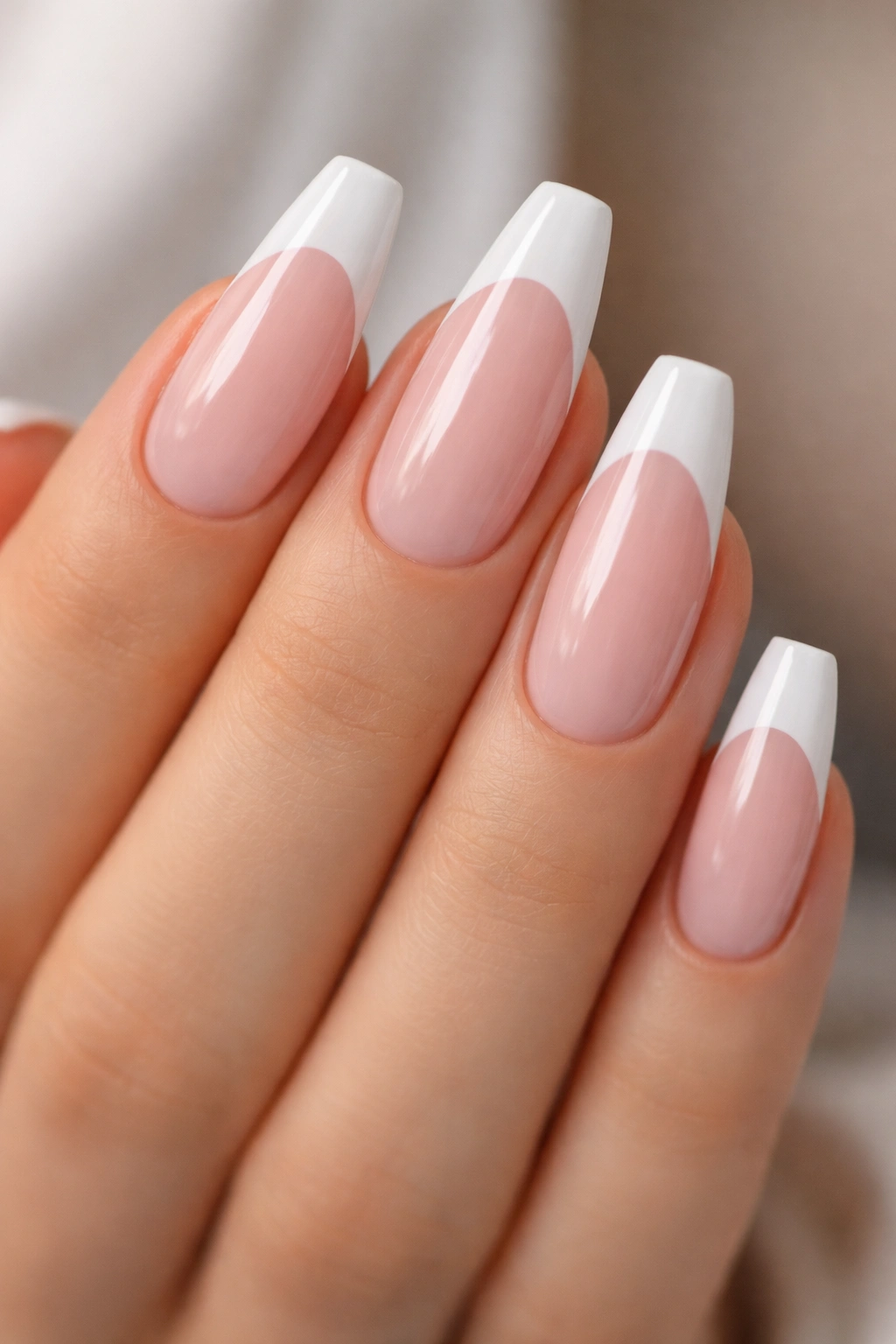
This is the set most people picture first, and for good reason. A sheer light pink base with a clean white smile line and a glossy finish hits that sweet spot between polished and understated. It works for weddings, office wear, dinner plans, and the random Tuesday when you want your hands to look pulled together.
The key is restraint. The base should not be opaque enough to hide every bit of the natural nail, and the smile line should follow the nail shape rather than sitting as a straight bar across the tip. On ballerina nails, a gentle curve with a slightly deeper center keeps the white edge from making the nail look shorter.
Why this version keeps its appeal
The classic version lasts because it relies on proportion, not gimmicks. A balanced French line makes the nail bed look longer, and the pink base softens any harsh contrast. If you like nail art but still want something you can wear for weeks without getting tired of it, this is the safe bet that doesn’t feel boring.
Quick design notes
- Best length: medium to medium-long, about 8 to 12 mm past the fingertip
- Base color: sheer baby pink or milky blush
- Tip width: around 1.5 to 2 mm on medium nails
- Finish: high-gloss gel top coat
- Best add-on: none, or one tiny crystal on a single accent nail if you want a touch of detail
Best salon note: ask for a white that looks like porcelain, not flat paint.
2. Milky Blush Base with Ultra-Thin French Edges
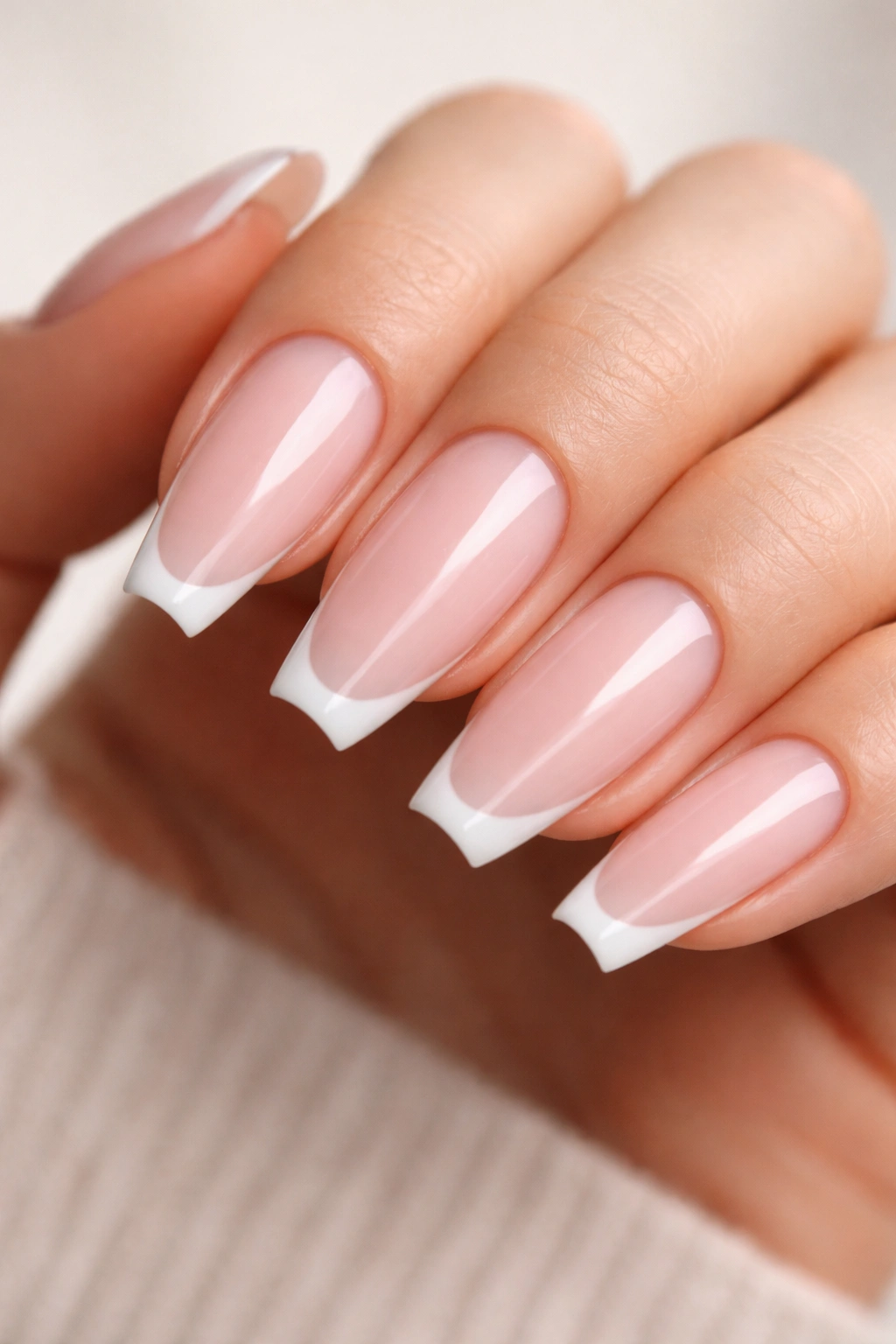
If you want the cleanest grow-out, start here.
A milky blush base paired with an ultra-thin French edge feels quieter than a standard French, but it often looks more refined in person. The white line sits right along the tip—sometimes less than 1 mm wide—so the pink base carries most of the look. That’s why it grows out so gracefully. Your eye keeps reading the manicure as soft pink, not as a sharp contrast design.
This version shines on medium or even shorter ballerina nails, where a thick French tip would eat up too much space. It also works well on hands with narrower nail beds because the fine line doesn’t crowd the shape. Picture the difference between eyeliner flicked on with a felt-tip pen and liner drawn with a tiny brush. Same idea.
There is a catch. Micro tips show uneven filing fast. If one free edge is slightly crooked, the thin white line will tell on it.
Ask for a semi-sheer builder base and a hand-painted tip line rather than a sticker guide. The hand-painted line follows the exact curve of the nail, which matters when the shape narrows toward the end. On the right set, this design looks almost bare until the light hits the white edge.
3. Baby Pink Ombré Base with Bright Micro Tips
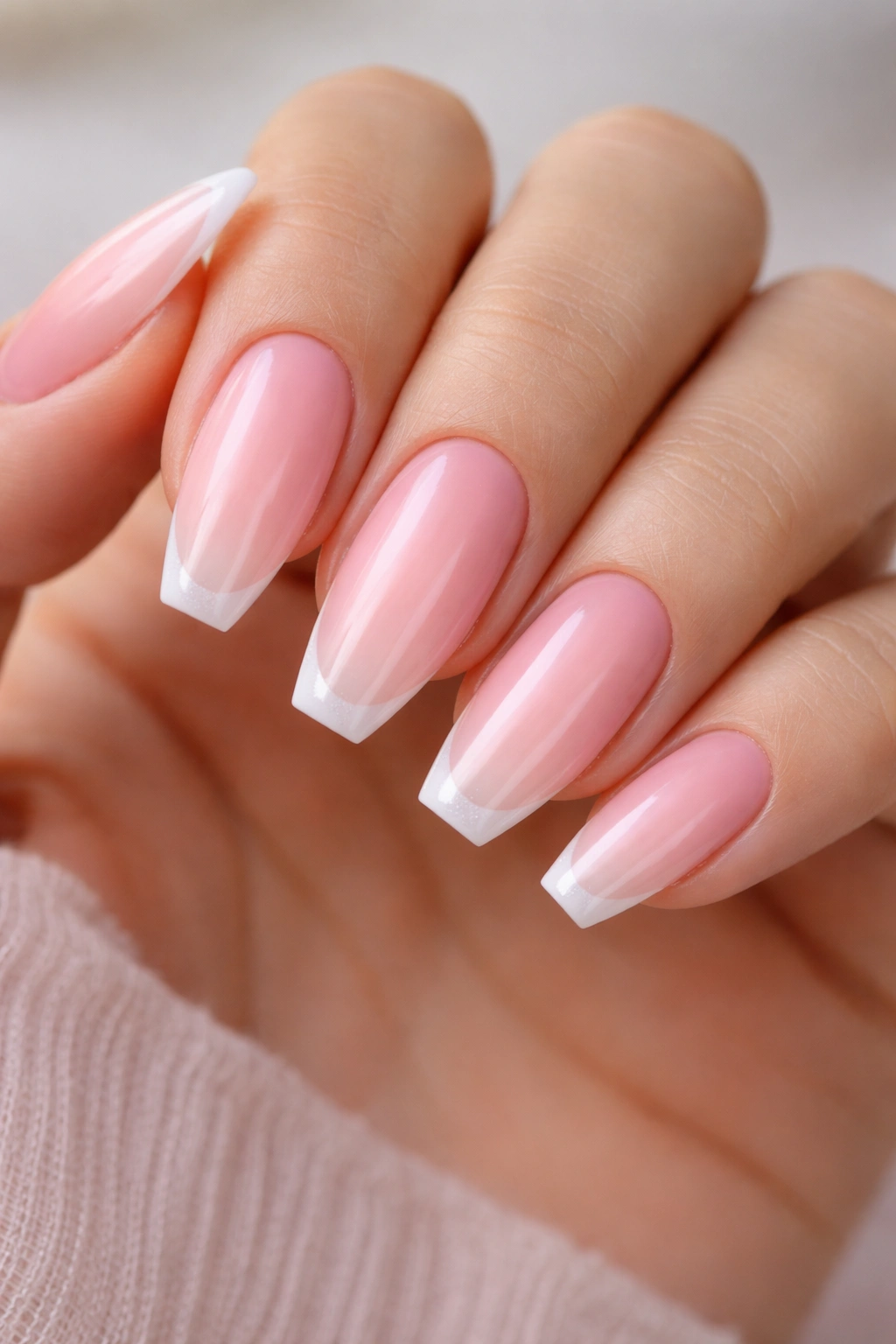
Why add an ombré under a French tip at all?
Because it softens the whole manicure. A baby pink fade at the base, moving into a lighter milky tone near the tip, creates a hazy backdrop that makes the French edge look less rigid. You still get the clean line of a French manicure, but the nail bed has a little blur to it, which helps if your natural nails have uneven color or visible ridges.
The trick is placement. You do not want the ombré swallowing the French tip. The fade should stop before the free edge so the white line still has room to read as a separate detail. Airbrushed fades do this best, though a sponge blend can work when done carefully.
Ask for a fade that stays subtle
Tell your nail tech you want a soft blush-to-milky transition, not a full baby boomer nail. Those are two different looks. A baby boomer ombré nearly replaces the French tip; this design uses the fade as support, then adds a fine white edge over it.
Done well, this style hides grow-out better than a classic French and flatters nail beds that are shorter or more rounded. It’s one of my favorite options when you want softness but still want the structure of a French tip to show.
4. Glossy High-Shine Light Pink French Tips
Under bright light, this set looks almost wet.
That isn’t an accident. Gloss is part of the design here, not an afterthought. A slick, glassy top coat makes the pink base look juicier and the white tips look sharper, which is why a plain French with a high-shine finish can beat a fussier set with crystals and charms. Surface quality shows. Every bump shows too.
This version works best when the nail has been refined properly before color goes on. If the apex is lumpy or the cuticle area is thick, shine will make that more obvious, not less. A smooth builder layer, crisp sidewalls, and careful buffing matter as much as the color choice.
A glossy set also plays nicely with light pink because the pink does not go chalky under shine the way a pale nude sometimes can.
Small details that make the gloss look clean
- Use a no-wipe top coat with a hard finish so the shine lasts longer than a soft, flexible top coat.
- Cap the free edge to cut down on early dulling.
- Keep the white tips thin enough that the shine doesn’t make them look bulky.
- Skip heavy charms if the goal is a slick, glass-like surface.
If you want one classic set that still feels dressed up, this is a strong pick.
5. Matte Velvet French Tip Ballerina Nails
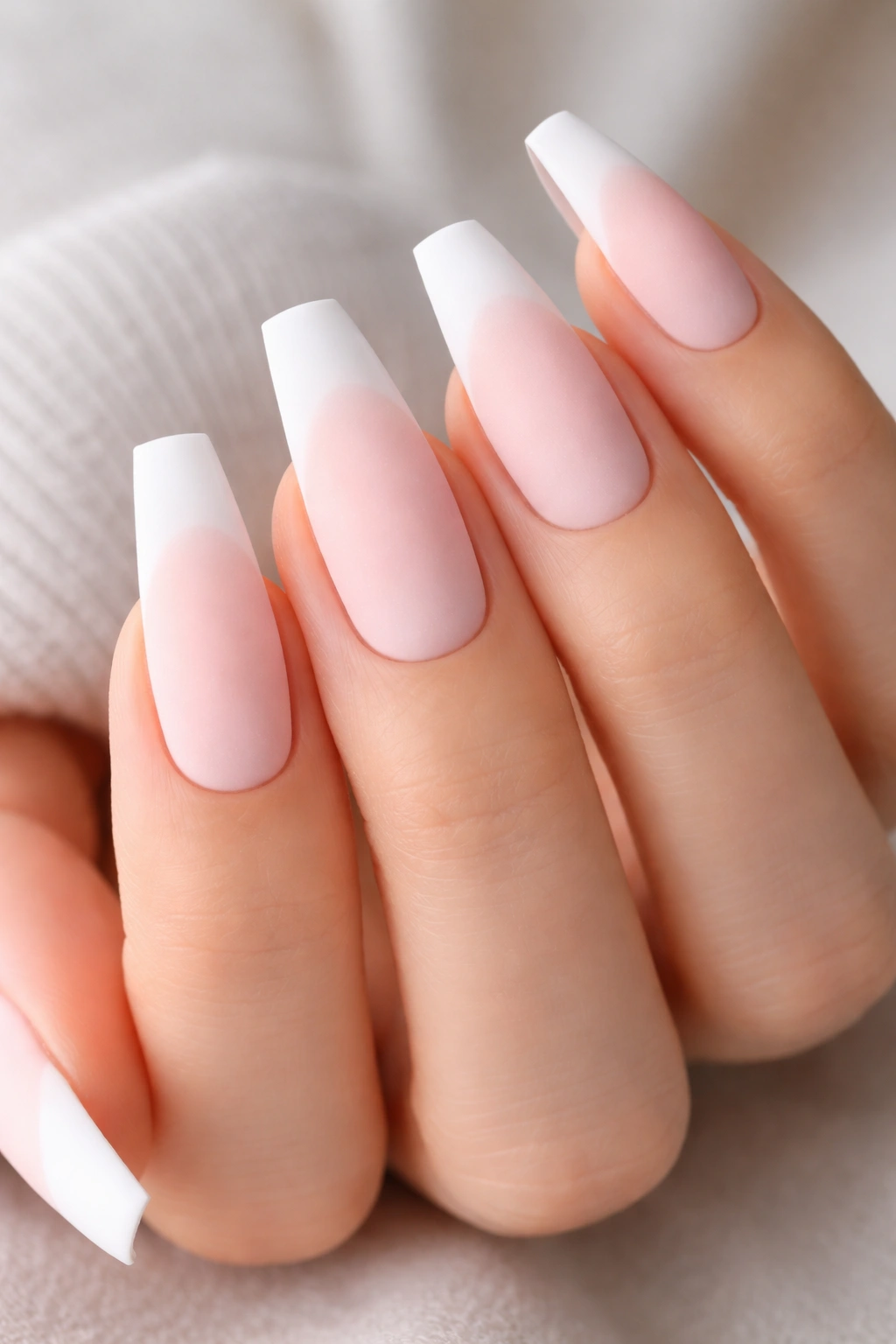
Matte can make French tips look sharper, not softer.
People assume matte automatically gives a cloudy, muted effect. On ballerina nails, the opposite often happens. Taking away the gloss strips the design down to shape, line, and color balance. A white French edge over a light pink matte base looks more graphic, more deliberate, and a little cooler in mood.
That shift can be gorgeous when the pink is chosen well. A pale pink with a touch of warmth usually holds up better under matte than an icy pink, which can go chalky fast. The same goes for white: soft white beats bright white here unless you want a stronger contrast.
Texture matters. Matte top coat highlights every dry patch around the cuticle and every uneven spot on the nail plate. If your hands run dry, use cuticle oil before photos and keep a hand cream nearby. Otherwise the manicure can look dusty, even when the design itself is clean.
This is one of those sets that looks more fashion-forward than bridal. Not louder. Just more styled.
I’d choose it for colder months, darker clothes, and a slightly longer ballerina shape where the flat tip has room to read.
6. Double French Lines on a Rosy Nude Base
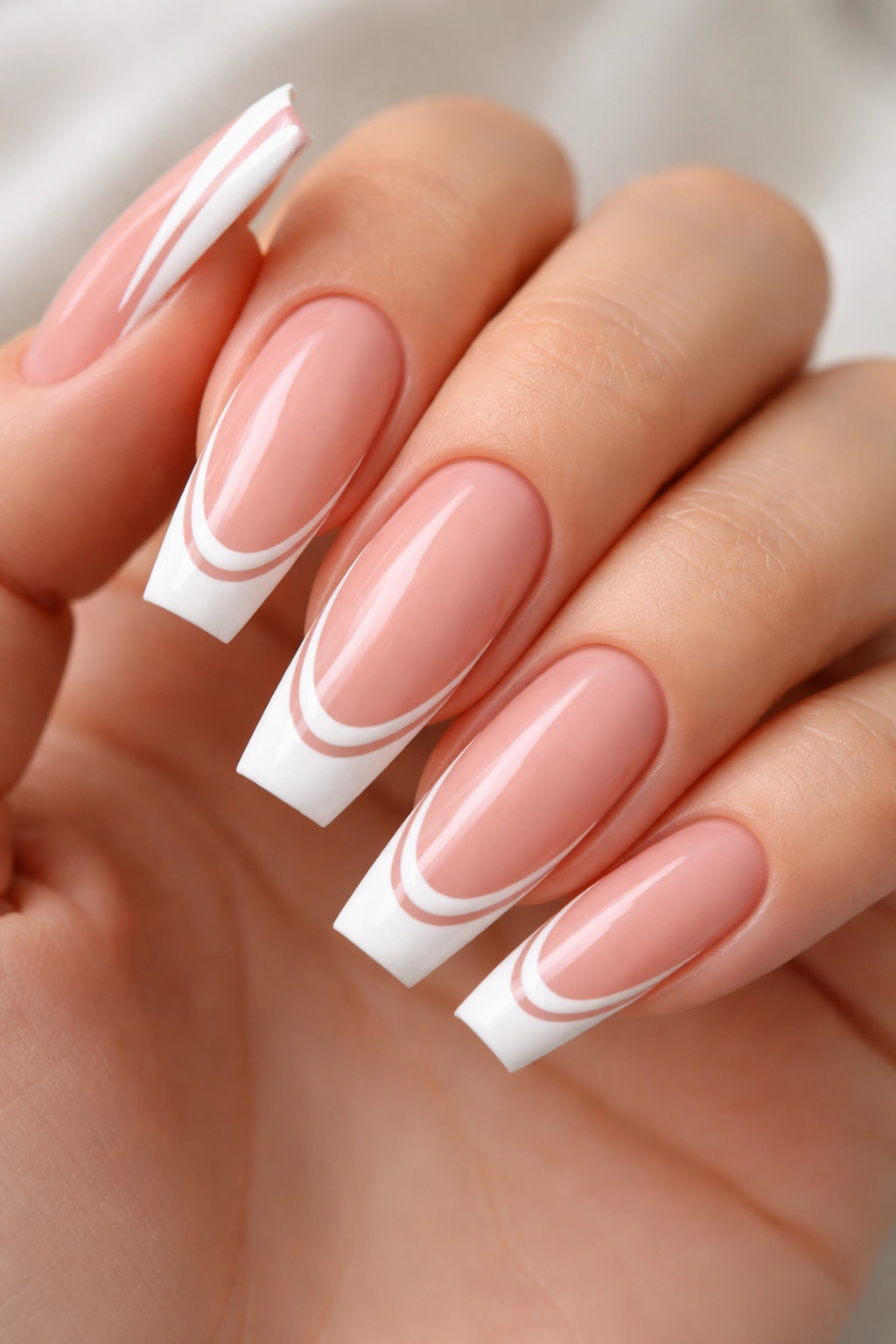
Unlike the standard French, a double-line version gives you detail without asking for gems, chrome, or hand-painted art.
The idea is simple: one white French tip, then a second thinner line floating just above it or tracing part of the smile line. On a rosy nude or soft pink base, that extra stripe makes the manicure feel more tailored. You notice it when the hand moves. Straight-on, it still reads clean.
Spacing is where people get this wrong. If the two lines sit too far apart, the design looks disconnected. If they’re too close, the second line disappears. About 1 mm of space on medium-length ballerina nails usually lands best, though long nails can handle a little more air.
This design suits people who like a neat manicure but want some edge. It also works if you wear a lot of simple jewelry—thin rings, small hoops, a watch with a clean dial—because the manicure has that same line-focused feel.
My pick for the second line? Soft silver if you want a cool finish, pale pink if you want the detail to stay quiet.
7. Side-Swept French Tips That Sharpen the Ballerina Shape
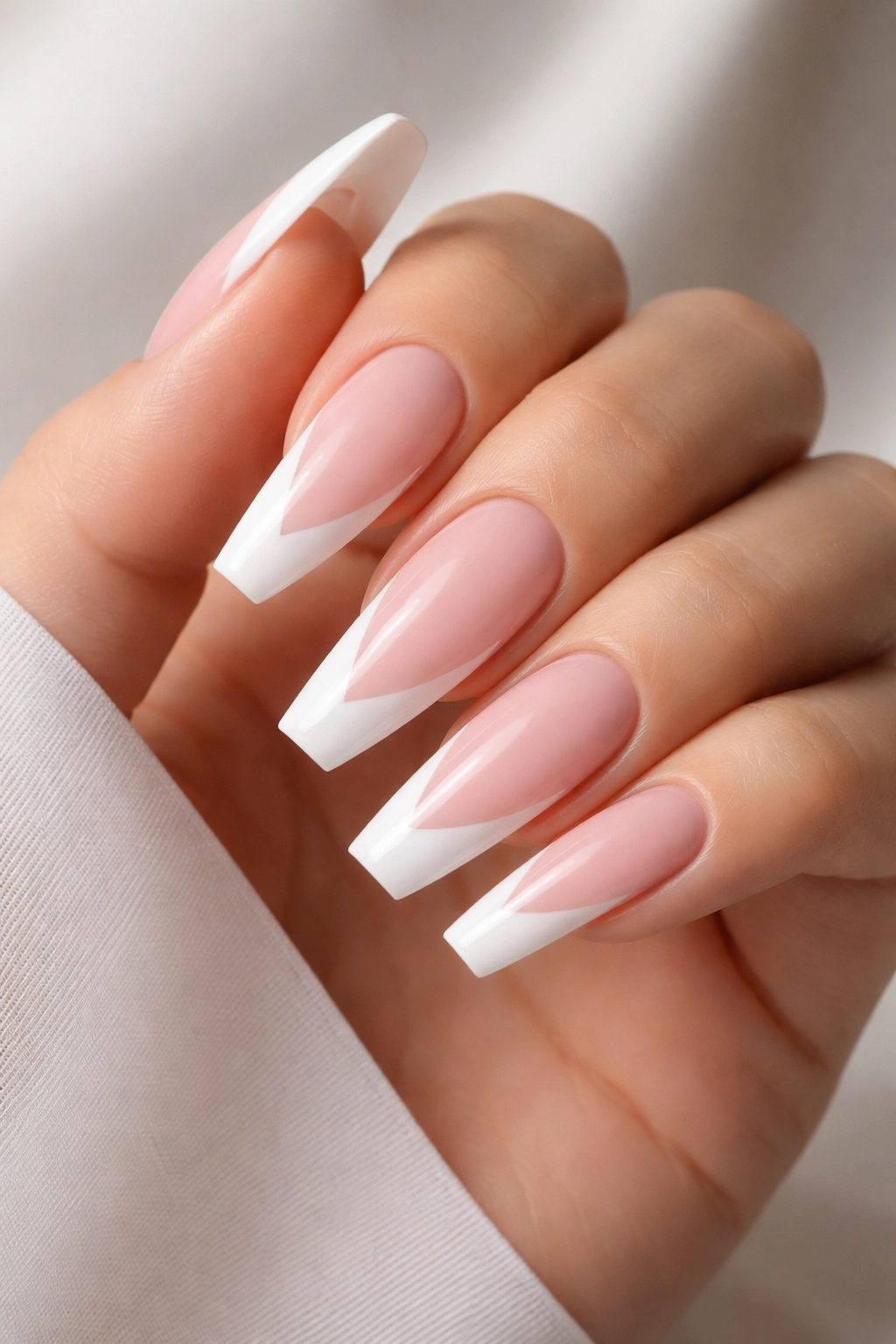
Tired of the standard smile line? A diagonal tip can make the whole nail look longer.
Instead of curving evenly across the tip, the white sweeps from one sidewall toward the opposite corner. The slant echoes the tapered sides of the ballerina shape, which makes the nail look leaner and more directional. It’s a small change, but one that people actually notice.
What makes the diagonal tip work
A side-swept French flatters the hand because it creates movement. Your eye follows the angle, which draws attention along the length of the nail rather than straight across the width. On medium-length nails, that can make the shape feel more elongated without adding literal length.
Design notes that help
- Keep the angle soft, not extreme, unless you want a sharper editorial feel.
- Use a fine liner brush so the diagonal edge stays crisp.
- Pair it with a semi-sheer light pink so the white line does most of the talking.
- Best nail length: medium to long, since very short nails may not show the slant clearly.
A diagonal French also hides tiny differences in smile-line depth better than a traditional curve does. Handy, because natural nails are rarely mirror images.
8. V-Cut White Tips Over a Sheer Pink Builder Gel
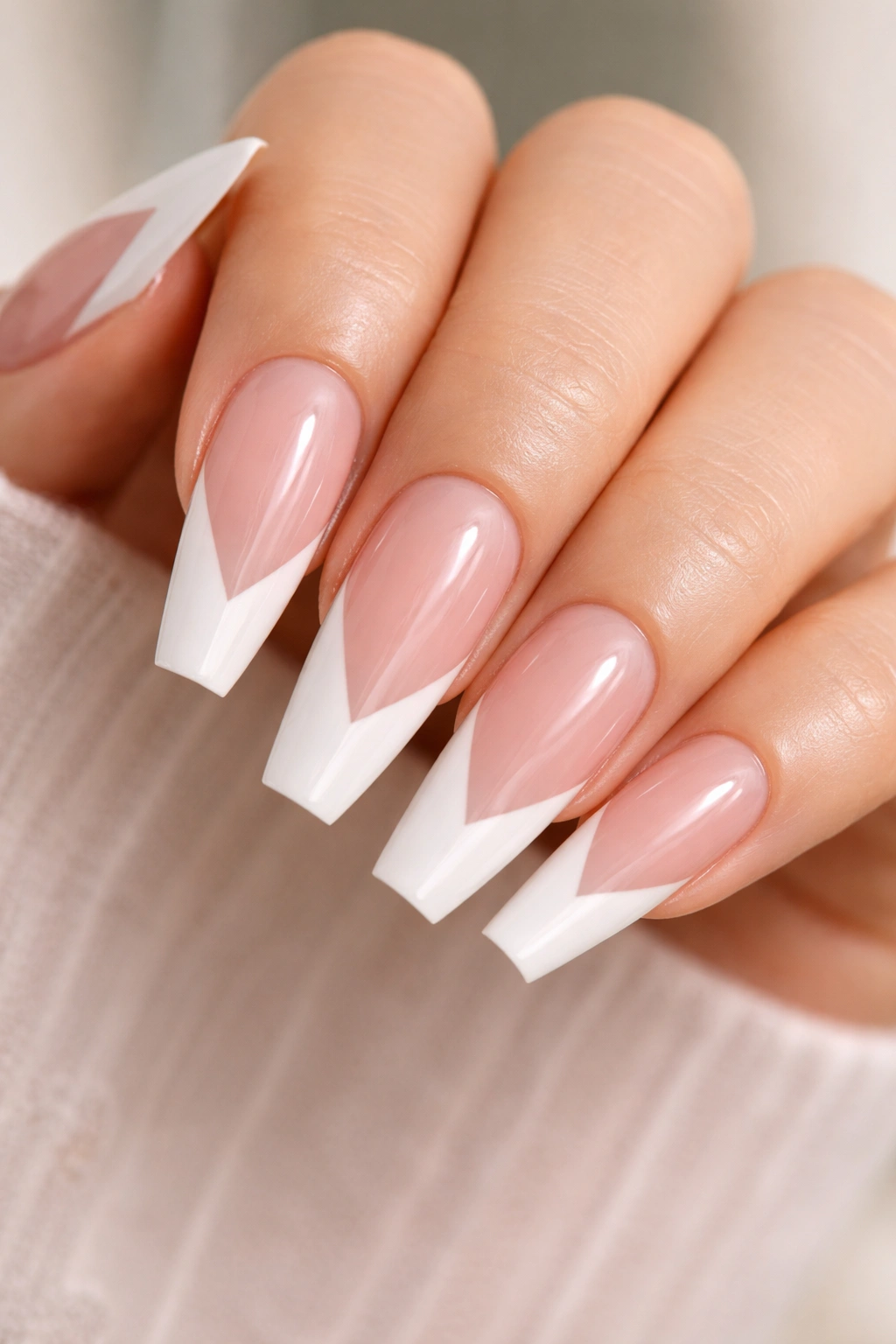
This is the crispest version in the whole lineup.
A V-cut French swaps the curved smile line for a pointed chevron at the center of the tip. On ballerina nails, that geometry makes sense. The taper already narrows toward the end, so the V shape feels like an extension of the structure instead of decoration piled on top.
It looks best on longer nails. Medium length can work, but the chevron needs enough room to read as intentional rather than cramped. A sheer pink builder gel base helps because it gives the nail strength and a smoother surface, and the slight translucency keeps the V-cut from feeling too stark.
Precision matters here more than with any curved French. If the point lands off-center by even a hair, you’ll see it. Same story if one side of the V is steeper than the other. This is not the set for a rushed appointment.
When it’s done well, though, it has a sharp, tailored look that a rounded French cannot match. Clean rings, a slim bracelet, a monochrome outfit—this design loves a tidy frame around it.
9. Pearly Chrome Light Pink French Tip Ballerina Nails
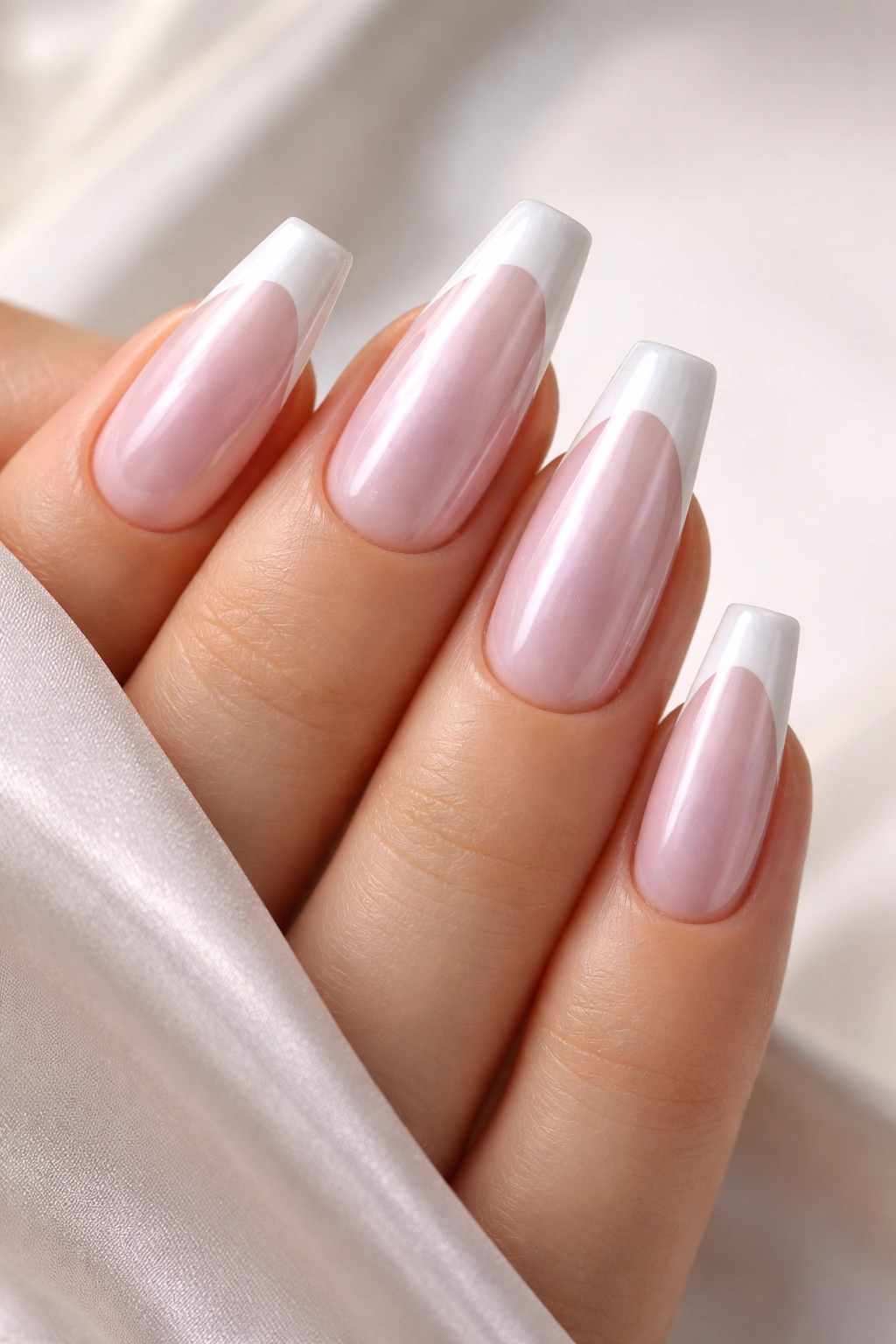
A soft pearl sheen can make a plain French tip feel more dressed up without dragging the set into full chrome territory.
The trick is keeping the effect light. You want a shell-like gleam over the pink base, not a mirror finish that overpowers the white tips. On a light pink French, pearl chrome works best as a fine dusting buffed over cured top coat, then sealed again so the surface stays smooth. Ivory pearl and pink pearl pigments tend to flatter this color story better than silver-heavy powders.
Keep the chrome soft, not mirror-bright
Apply the pearl effect over the whole nail if you want the manicure to catch light evenly. Or limit it to the pink base and leave the white tips plain for more contrast. Both approaches work; the second has more definition, while the first looks airier.
This is one of the nicest options for events because it shifts when your hands move. In low light, it still reads pink French. Under direct light, you get that faint nacre finish—more like the inside of a shell than polished metal. That restraint is what keeps it chic.
One warning: pearl powder highlights texture. If the nail surface is uneven, chrome will not hide it.
10. White French Tips with Tiny Cuticle Crystals
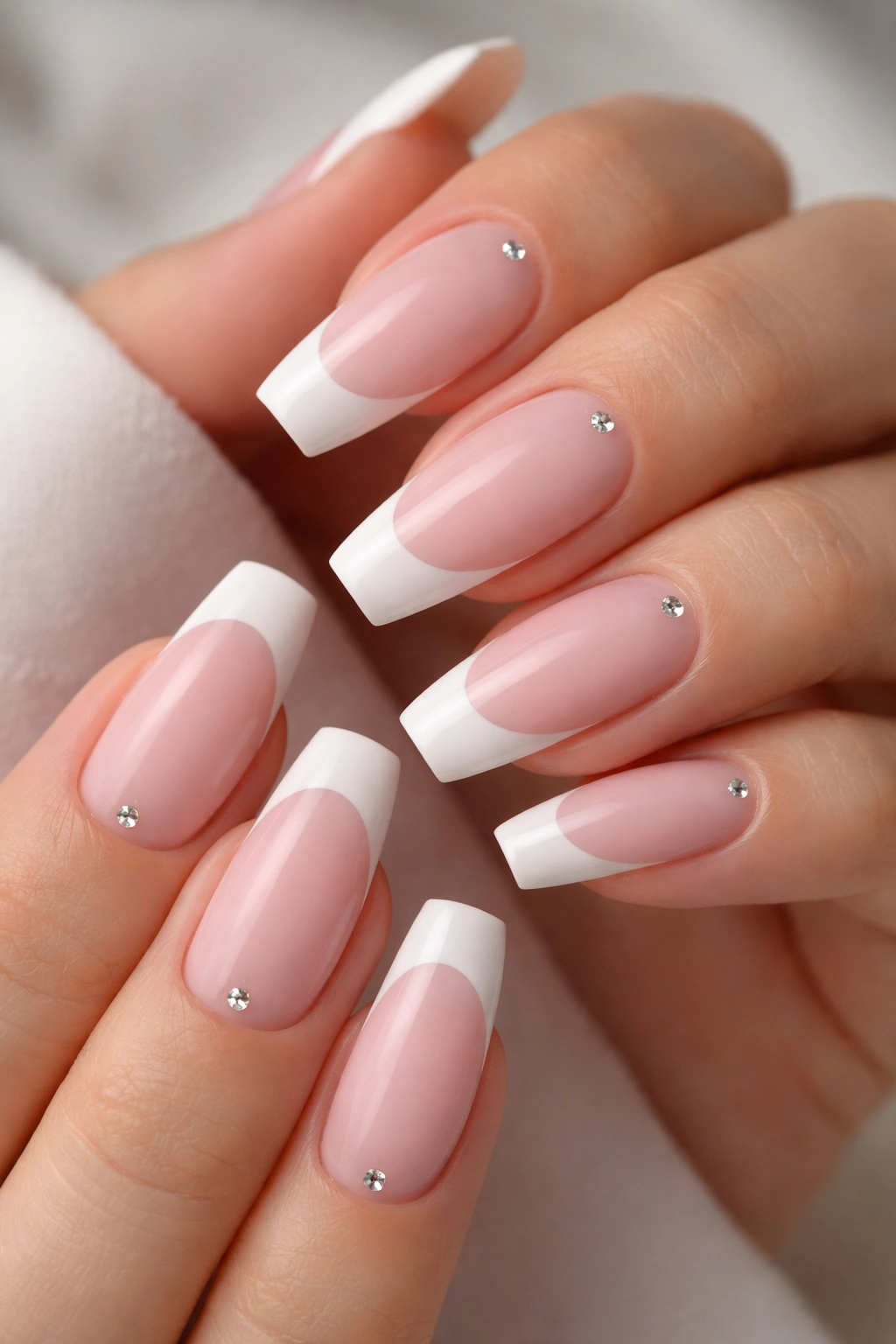
This is the manicure to choose when you want one accent and not a whole jewelry counter on your nails.
A tiny crystal tucked near the cuticle can add just enough sparkle to break up a plain French set. The nicest version uses one or two flat-back stones in the 1 to 2 mm range, placed low on the nail so they don’t compete with the white tips. Ring fingers are the usual choice, though a single stone on every nail can work if the rest of the manicure stays restrained.
Placement matters more than stone size. Too high, and the crystal crowds the center of the nail. Too many stones, and the light pink base starts to look busy instead of clean.
Crystal rules worth following
- Choose flat-back crystals, not bulky gems that sit high.
- Keep the count low—one stone, maybe two, on selected nails.
- Use builder gel or a strong gem adhesive gel so the crystal stays put through hand washing.
- Seal around the base, but do not flood the stone with top coat or you’ll lose the sparkle.
This detail works well on classic French lines, micro tips, and even outline French designs. It gives you a little shine without changing the whole manicure’s mood.
11. Light Pink French Tips with a Single Bow Accent
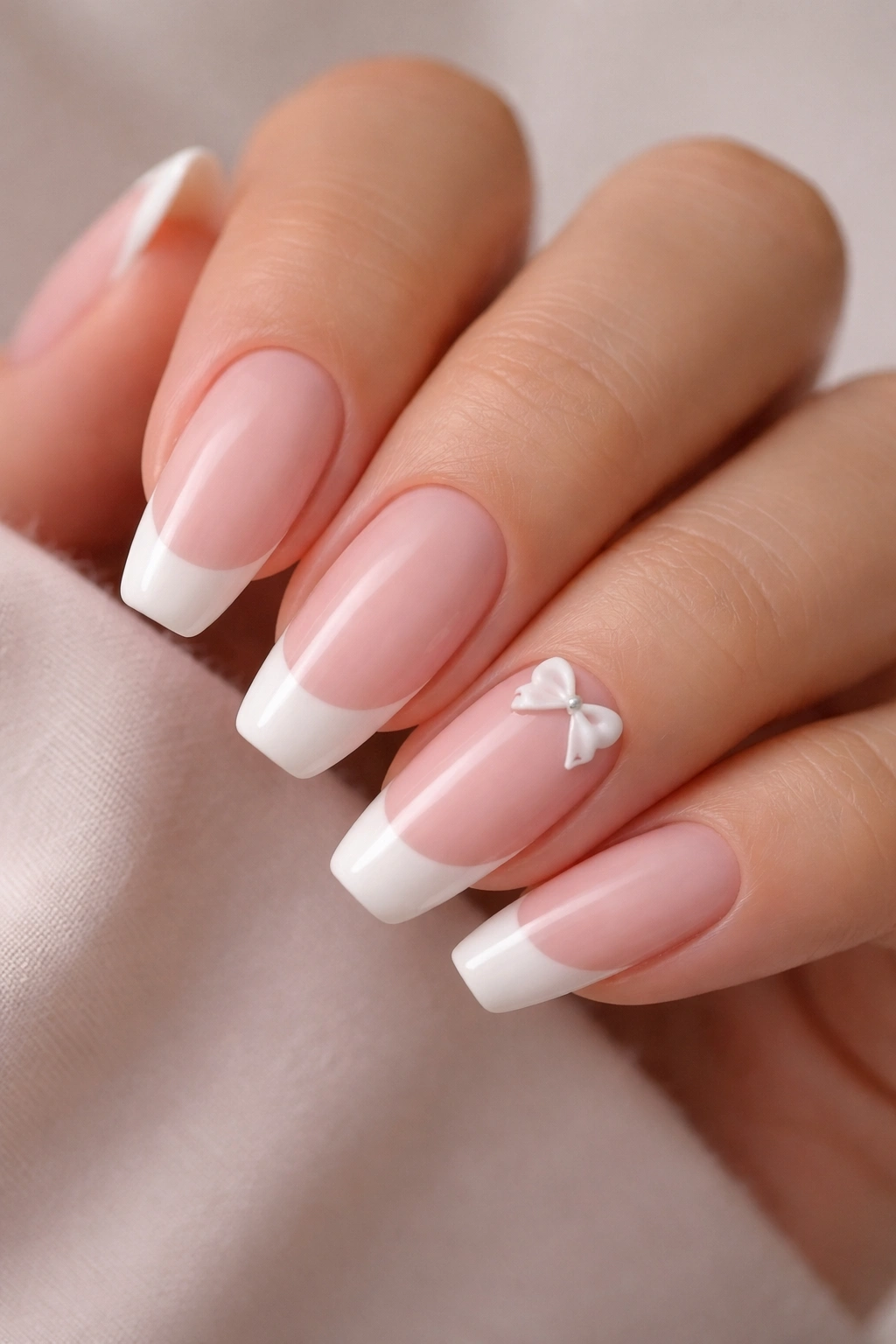
A single bow can be charming. Ten bows is where things usually go sideways.
The bow accent version works because it treats the bow like punctuation, not the main sentence. On a light pink French ballerina set, one tiny hand-painted bow or one small 3D bow on an accent nail adds a soft, feminine detail without making the manicure feel costume-like. White bows are the safest pick, though pale pink on pink can look sweet if there’s enough contrast to see it.
Placement changes the mood. A bow near the cuticle reads tidy and decorative. A bow set right over the smile line feels more playful. I lean toward the cuticle placement because it doesn’t interrupt the French tip itself, and the design keeps its clean structure from a distance.
Skip oversized resin bows unless your daily life is unusually gentle. They catch on sweaters, hair, gloves, bedding—everything. A tiny sculpted bow or a fine hand-painted outline gives you the same idea with fewer regrets.
This style makes sense when you want a hint of coquette energy but still want your hands to look polished, not overloaded.
12. Reverse French Detail with a Milky Pink Base
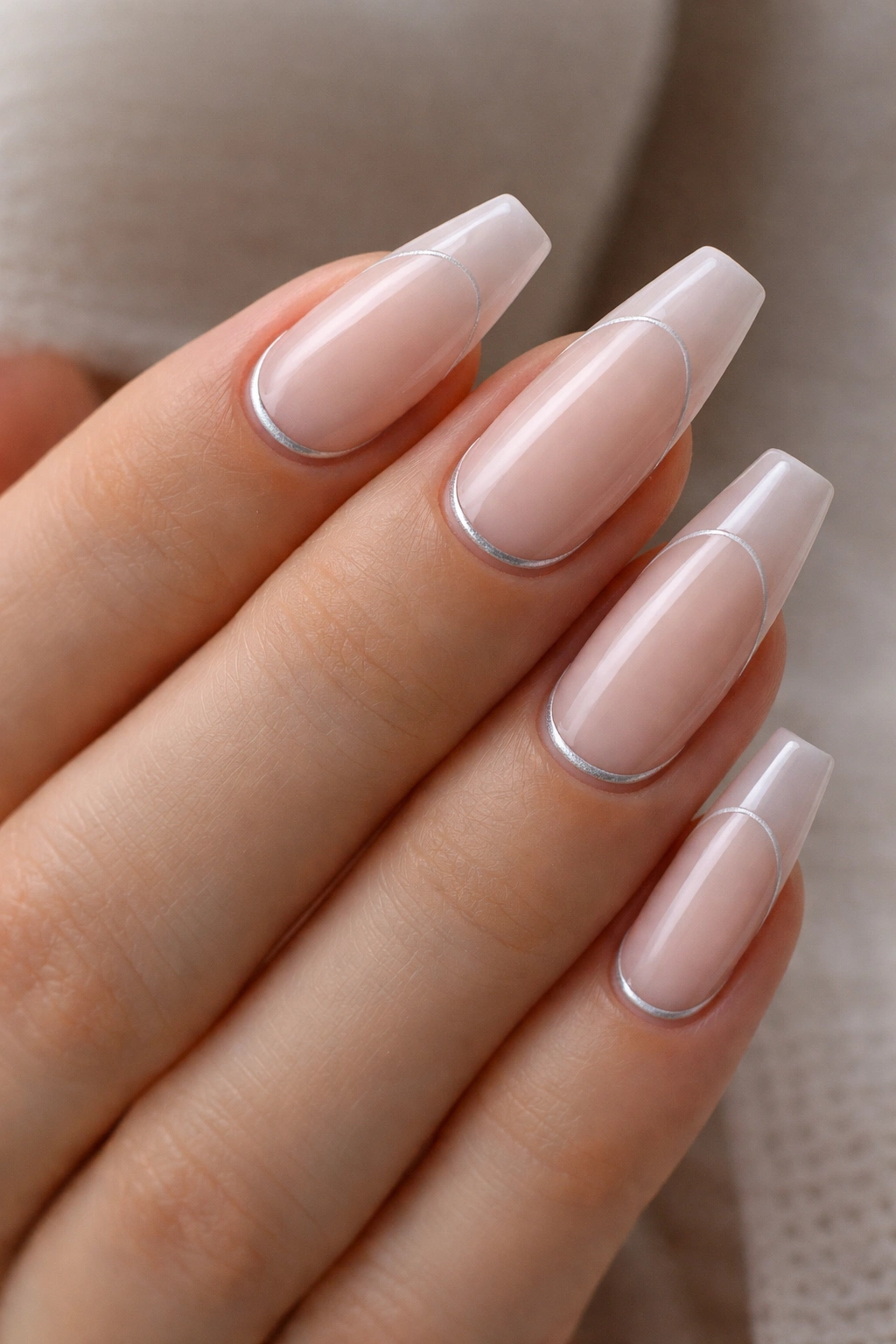
Compared with a standard French, a reverse French pulls attention to the cuticle area as well as the tip.
On ballerina nails, that can look striking. A milky pink base with a thin reverse line near the lunula—the half-moon shape at the base of the nail—creates balance at both ends of the nail. Think of it as framing the manicure rather than decorating one edge only.
The line at the cuticle should stay fine. Half a millimeter to 1 mm is plenty on most nails. White works, but soft silver or even a slightly brighter pink can look cleaner because the cuticle area already has enough visual activity from natural growth.
Who is this for? Someone who likes French manicures but wants more structure without stepping into heavy nail art. The reverse detail gives the set a more intentional, graphic look.
There’s one downside. Grow-out is easier to spot because the design starts right where new nail shows first.
Still, on a fresh set, the effect is smart and polished—especially when the rest of the nail stays quiet.
13. Floral Light Pink French Tip Ballerina Nails
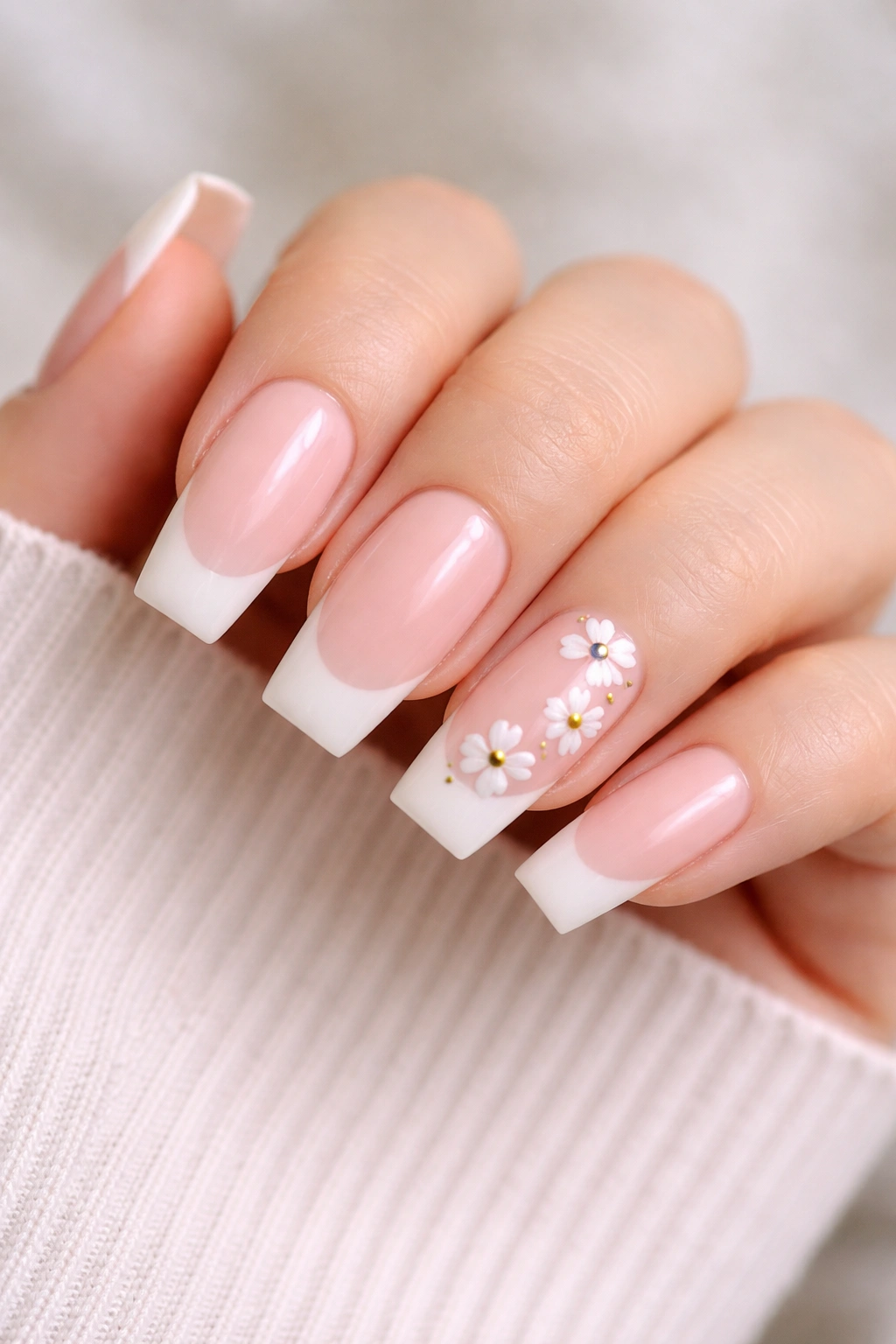
A few small flowers can soften a French manicure fast.
The word small is doing a lot of work there. Floral accents look best on light pink French ballerina nails when the petals stay delicate and the placement stays sparse. Two daisies on one accent nail, a tiny cluster near one corner, a slim white blossom over a milky base—those ideas keep the manicure airy. A whole bouquet across every nail usually drowns the shape.
Keep the petals tiny and the spacing loose
Because ballerina nails already have a defined silhouette, floral art should support the shape instead of fighting it. Petals that are 3 to 4 mm across tend to sit well on medium-length nails. Hand-painted line flowers often work better than chunky decals, especially if you want the pink base to keep showing through.
Floral ideas that suit this set
- Mini white daisies on two accent nails
- Line-drawn blossoms near the sidewall
- One floral corner detail paired with clean French tips on the remaining nails
- Pressed-flower look under a clear layer on one nail only
This style leans softer and more romantic than the sharper entries on this list. If that’s your lane, floral French tips are an easy yes.
14. White Outline Tips on Translucent Pink Ballerina Nails
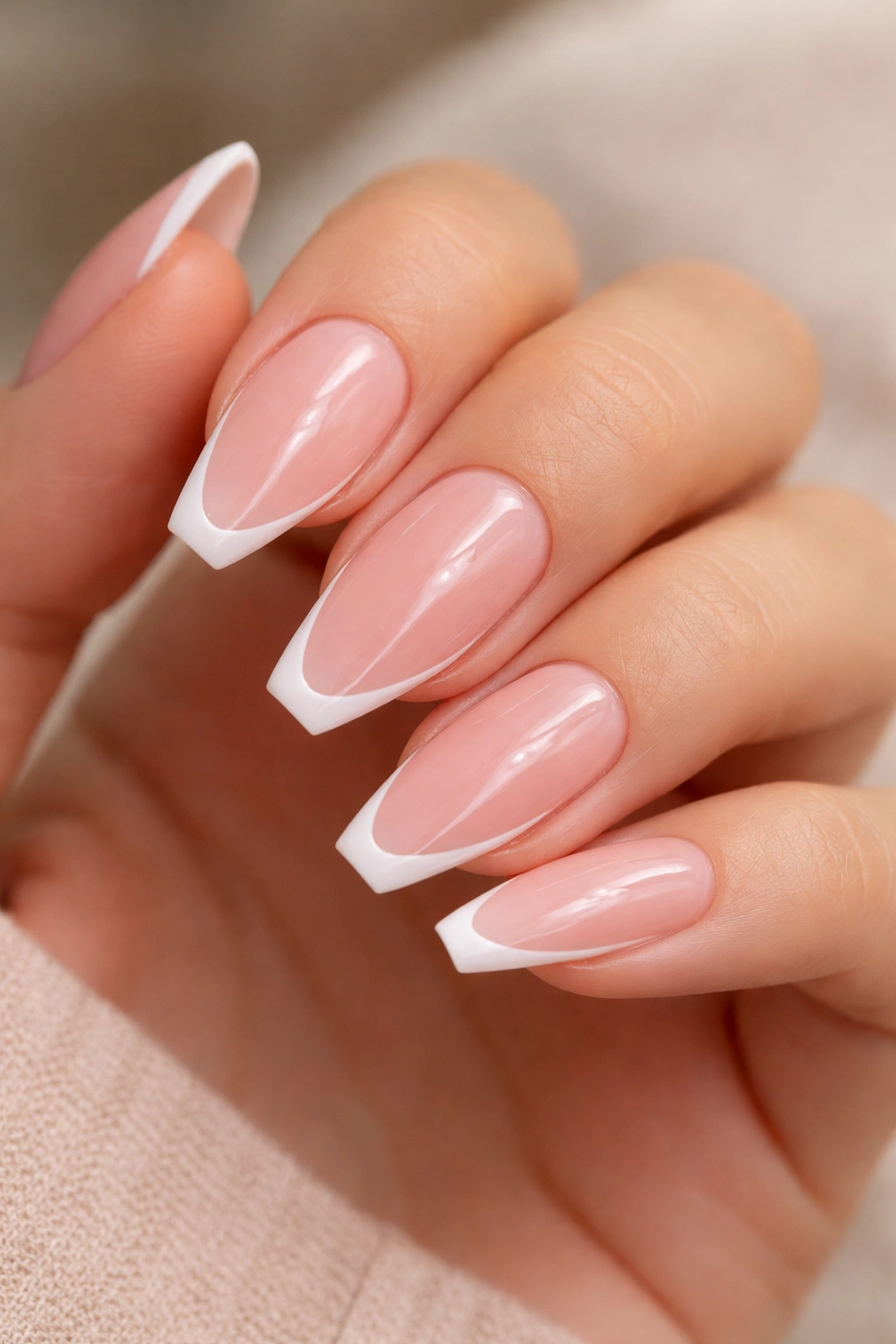
An outline French can make shorter ballerina nails look longer than a chunky tip ever will.
Instead of filling the entire free edge with white, the nail tech traces the tip—and sometimes part of the sidewalls—with a fine white line. That leaves more of the translucent pink base visible, which helps the nail look lighter and longer. You still get the French effect, but with more negative space and less visual weight.
This works especially well on medium-short ballerina shapes where a traditional French line might take over too much of the nail. It also flatters narrower fingers because the side outline can guide the eye upward. The line needs to stay thin, though. Once it gets too thick, the whole airy effect disappears.
A detail brush is non-negotiable here. So is patience. Outline French tips demand steadier line work than a standard filled tip because any wobble is obvious. That said, when the lines are sharp, the manicure has a clean, modern feel that still plays nicely with soft pink.
If you like minimalist sets but want more design than bare nails, this one earns its place.
15. Wedding-Ready Light Pink French Tip Ballerina Nails with Soft Glitter
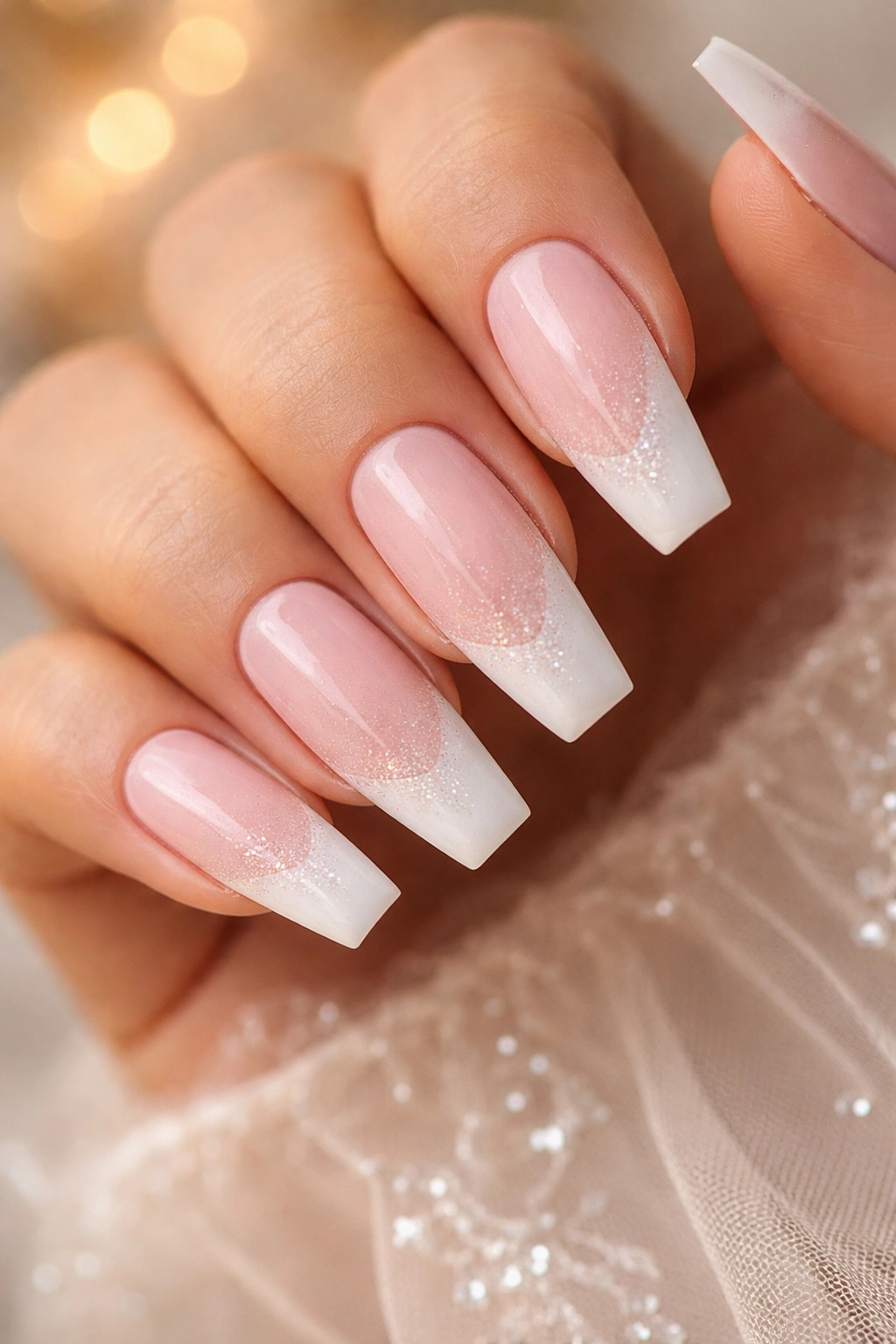
Need a little sparkle without turning your nails into disco balls? This is the answer.
Soft glitter French ballerina nails work best when the sparkle stays fine and controlled. A dusting of micro shimmer in the pink base, a thin glitter line hugging the smile line, or a sheer glitter veil over a classic French can lift the manicure without changing its bones. The base still needs to read as light pink. The French tip still needs to read white.
Keep the sparkle in one place
Pick one glitter zone and stop there. If the base shimmers, leave the tips plain. If the smile line gets a glitter accent, keep the pink base clean. Fine particles give a silkier finish than chunky hex glitter, which can make the surface look rough and can throw off the neatness that makes French tips so appealing in the first place.
Silver micro glitter suits cooler jewelry tones. Champagne shimmer feels warmer and softer. On bridal sets, a micro-fine reflective dust sealed under top coat tends to look richer than visible glitter pieces sitting on top.
This is a good choice for formal events, engagement photos, receptions, or any set where you want your nails to catch candlelight without stealing focus from everything else you’re wearing.
Final Thoughts
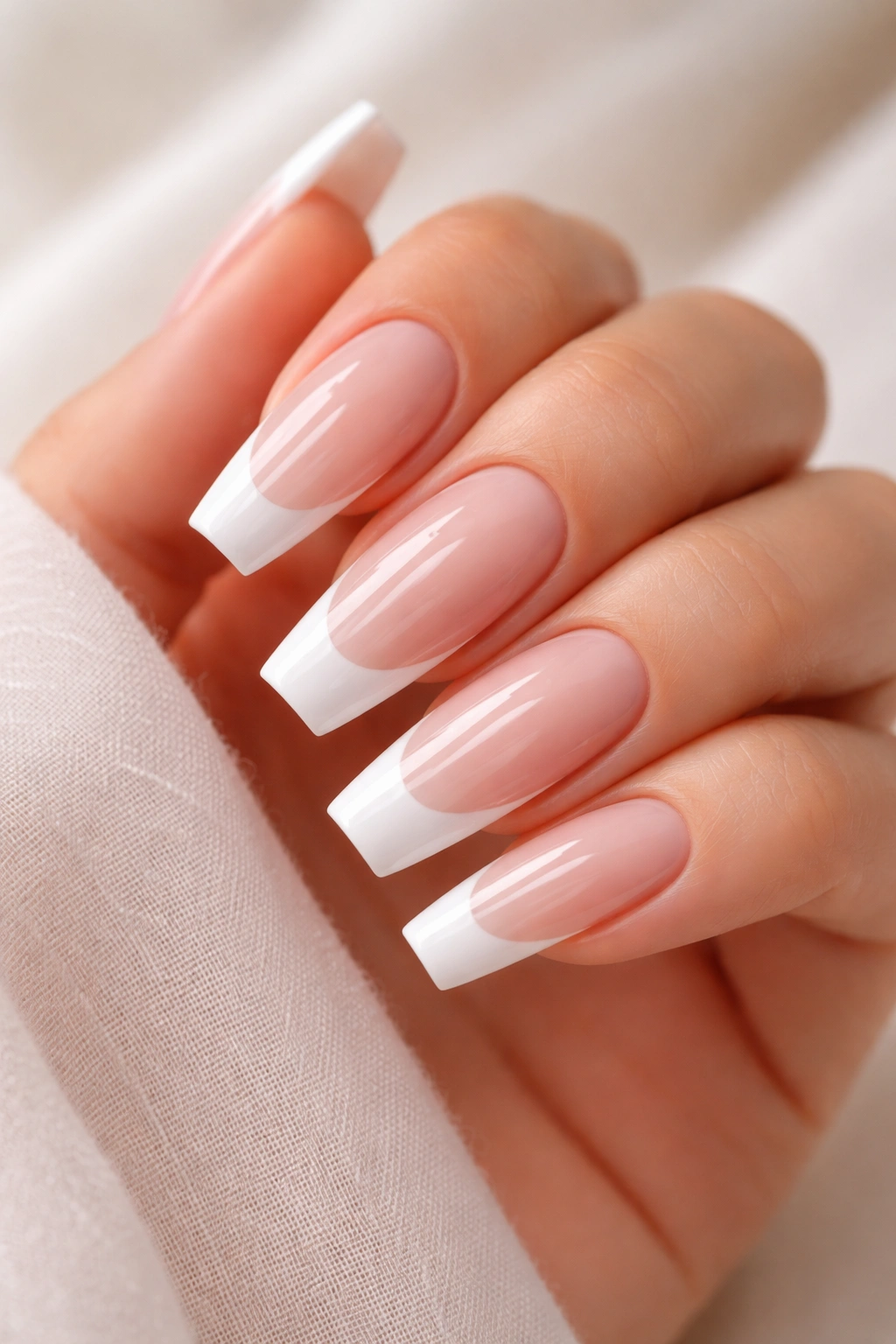
Light pink French tip ballerina nails live or die on proportion. Get the taper right, keep the pink flattering to your skin tone, and make the white tip suit the nail length instead of forcing the same thick line onto every set. Those three calls matter more than any add-on.
If you want the safest bet, go classic or choose the milky blush base with ultra-thin tips. If you want more personality, the side-swept French, pearl chrome finish, and outline tip versions give you room to play without losing the clean look that makes this style so reliable.
Bring more than one reference photo to your appointment—one from the top, one from the side, and one close enough to show the smile line thickness. Nail art gets all the attention online, but structure is what makes the manicure worth wearing for weeks.