


Grey coffin nails tend to win people over when nude starts to feel flat and black feels a bit too sharp. On a tapered coffin shape, grey changes character fast: matte polish turns into soft cement, gloss looks like wet slate, and chrome pushes the whole set toward brushed metal. Same color family. Wildly different mood.
If you want grey coffin nails for a cool look, the shape matters as much as the shade. Coffin nails give grey a clean frame. The sidewalls pull the eye inward, the squared tip adds structure, and the color sits there with more presence than it does on a round or oval nail. That balance is why some grey sets look expensive while others end up muddy or dull.
There’s also a practical side to it. Mid-tone grey tends to hide small chips better than jet black, and soft grey grow-out usually looks less harsh than a bright white set after ten days or so. Nail techs know this, even if they do not always say it out loud. The wrong undertone, though—too beige on cool skin, too blue on warm skin—can make your hands look tired.
And that’s where the fun starts, because grey is not one look. It can lean icy, smoky, stormy, silvery, taupe, or almost charcoal, and each one behaves differently once you put it on a coffin shape.
Why Grey Looks Strong on a Coffin Shape
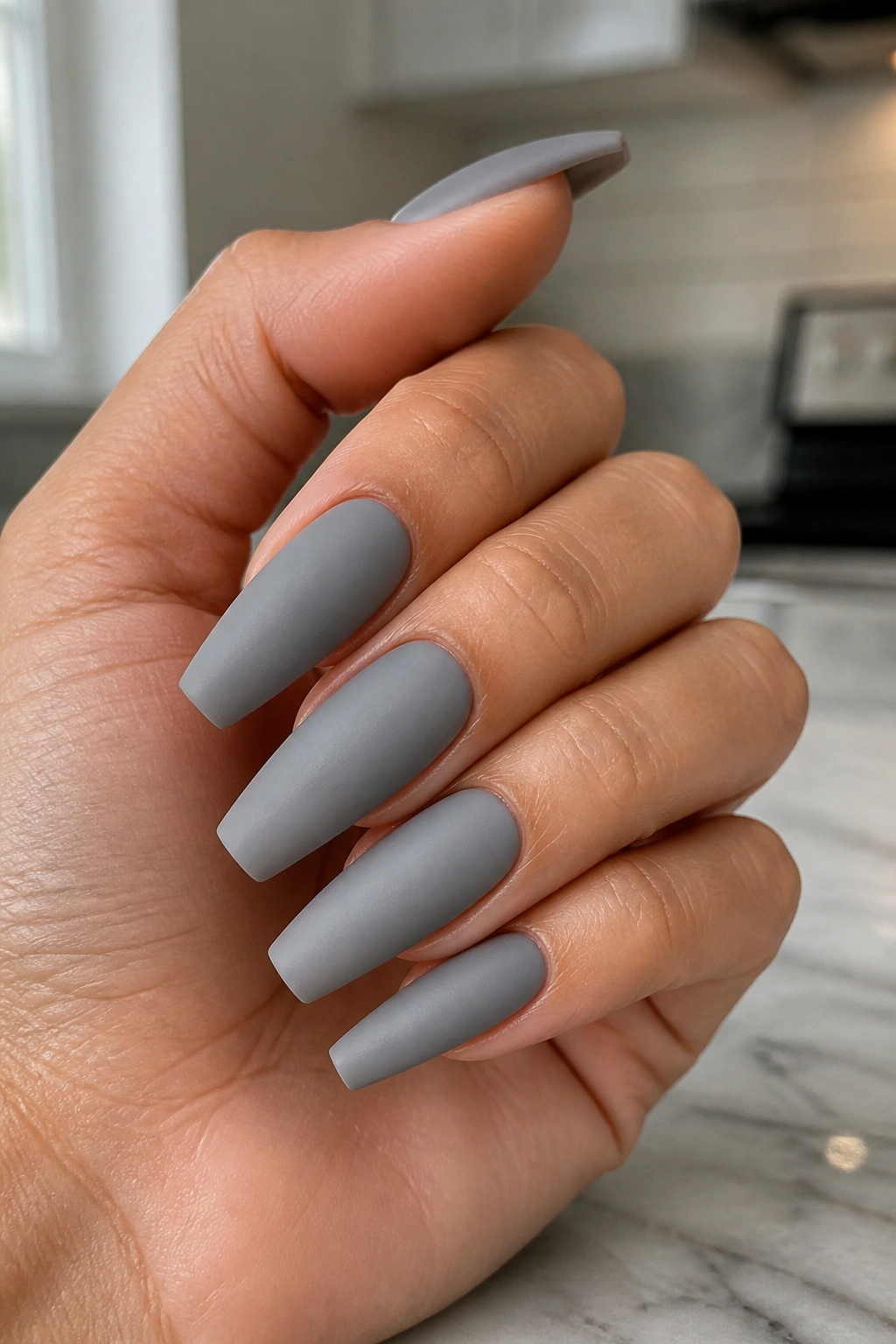
A coffin nail has built-in attitude. That sounds dramatic, but look at the shape closely and you’ll see why: narrow sides, blunt tip, longer visual line. Grey loves structure, and coffin nails give it structure.
Round shapes soften a color. Coffin shapes sharpen it. On a dove-grey set, that means the manicure reads clean instead of sweet. On charcoal, it looks deliberate rather than heavy. The shape does half the work before you add art, shimmer, foil, or a French edge.
Length changes the effect too. A short-to-medium coffin—about 4 to 7 mm past the fingertip—makes grey feel neat and urban. Push the free edge longer, closer to 10 to 14 mm past the fingertip, and the same polish starts looking moodier, more fashion-forward, a little colder in the best way.
One more detail matters here: the taper. Good coffin nails should narrow with control, not collapse inward. If the tip pinches too much, grey shades can make the nails look skinny and off-balance. A salon shape with soft side taper and a straight free edge usually wears better and photographs better too—though the bigger point is how it looks in person, when your hands are moving and catching light from all directions.
Picking the Right Grey Tone for Your Skin and Nail Length
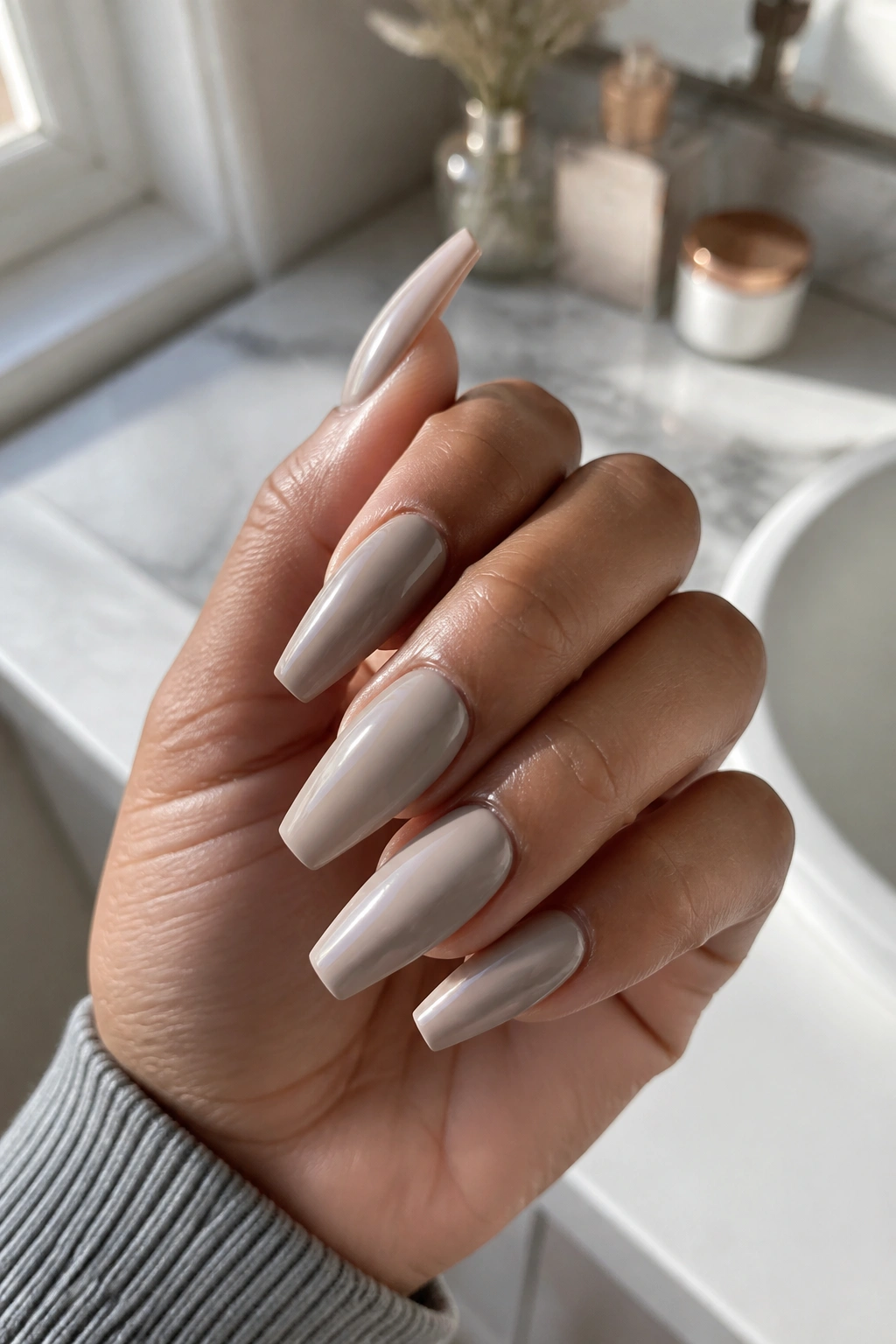
Not all greys flatter in the same way. That is why one person’s dream manicure ends up looking dusty on someone else.
Start with undertone. Cool skin often looks sharp with blue-grey, smoke, pewter, and steel. Warm or olive skin tends to hold greige, mushroom grey, stone, and deeper charcoal with less contrast. Neutral skin gets the broadest range—lucky you.
A few easy rules help:
- Light grey stands out more on deeper skin and reads airy on fair skin.
- Charcoal and slate bring out the shape of medium and long coffin nails better than pale shades do.
- Greige softens the look if plain grey feels too cold on your hands.
- Silver-heavy chrome can wash out very fair skin unless the base under it has some depth.
- Milky grey looks best when the nail surface is smooth, because sheer shades show every bump.
Length matters too, and people skip that part. A soft dove grey can look polished on short coffin nails, but the same shade on extra-long tips may feel unfinished unless you add gloss, art, or an accent. Darker greys have the opposite habit: they can crowd a short nail, then come alive on a longer coffin shape where the color has room to stretch out.
Nail photos online flatten all of this. Your hands do not.
What to Show Your Nail Tech Before You Commit
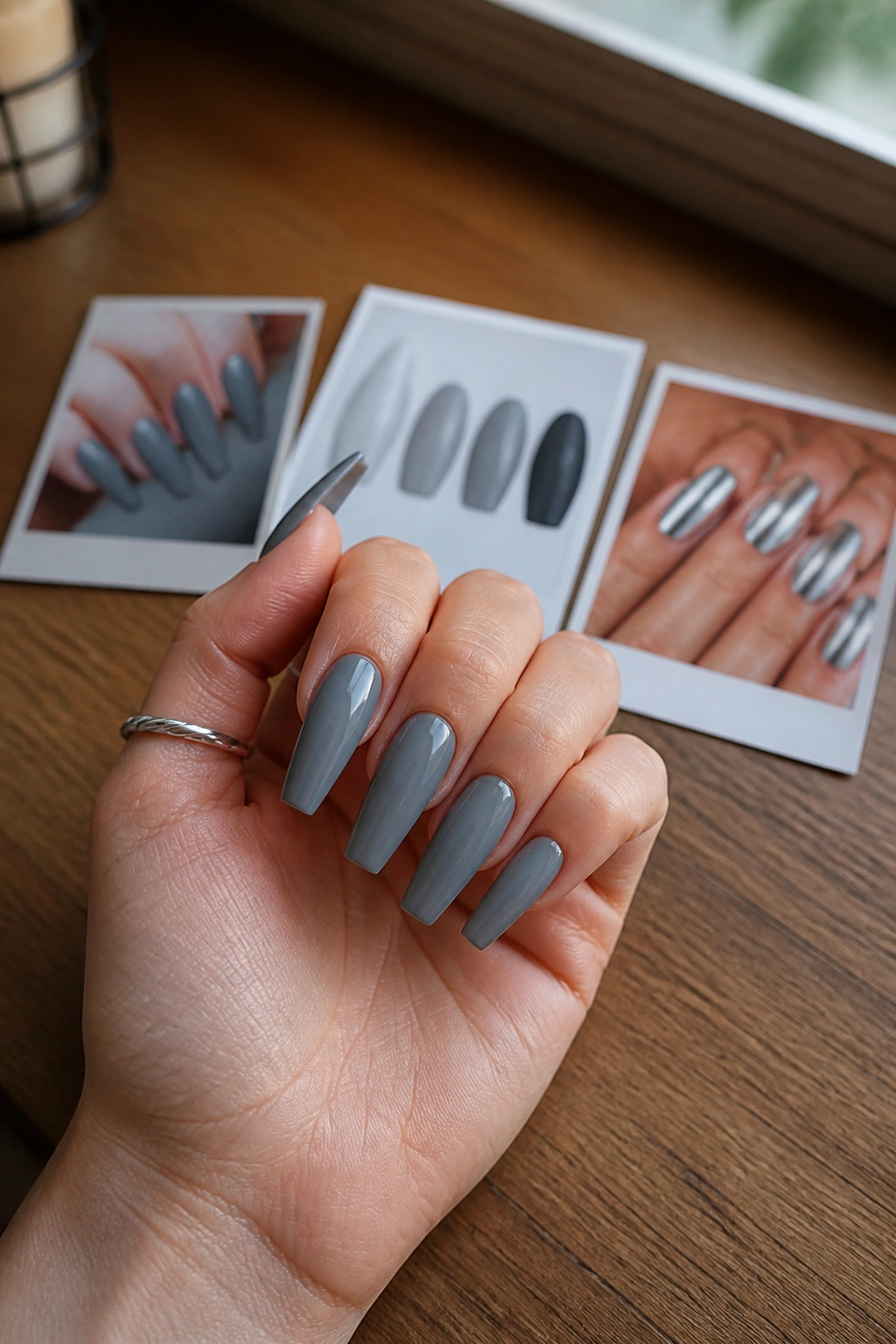
A good inspiration photo helps. Three good inspiration photos help more—if they show the same idea from different angles.
Bring one photo for the shape, one for the color family, and one for the finish or art detail. That keeps your appointment from turning into a guessing game where the tech is trying to decode whether you care more about the smoky ombré, the silver foil, or the sharp coffin tip.
It also helps to say these details out loud:
- Length: short, medium, long, or extra long
- Base system: gel polish on natural nails, hard gel overlay, or acrylic
- Finish: matte, gloss, velvet, chrome, jelly, or sheer
- Accent plan: all ten nails matching, two accent nails, or one statement nail per hand
- Maintenance level: low, medium, or high
Ask for the taper you want, not only the color. If you like a softer coffin, say you want the sides narrowed gently. If you want a crisp, sharper coffin, ask for more sidewall definition but not a pinched tip. And if the design includes lines, foil, aura airbrushing, or cat-eye work, expect the appointment to run longer than a plain color set—often by 20 to 45 minutes.
Photos help. Clear words help more.
1. Matte Dove Grey With Clean Coffin Edges
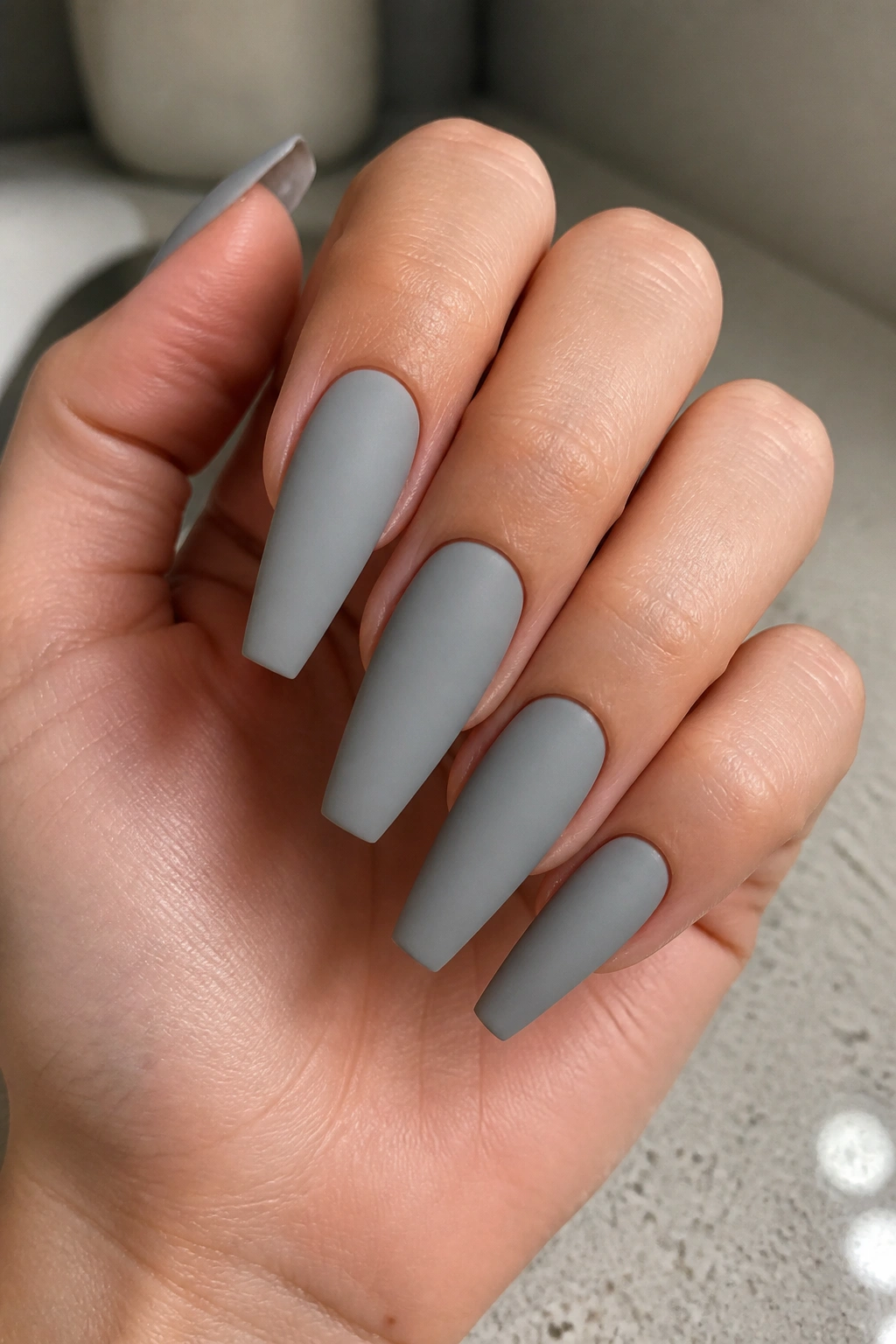
This is the set I point people toward when they want grey coffin nails that feel polished on day one and still look good in line at the grocery store ten days later. Matte dove grey has enough color to show the shape, but it does not shout.
Why this shade works so well
Dove grey sits in that useful middle ground between chalky pastel and smoky neutral. On a coffin nail, the matte finish pulls attention to the outline—the side taper, the straight tip, the symmetry. That is the whole charm here. No glitter. No foil. No rescue plan.
The best version uses a smooth, cool-toned light grey with full opacity in two coats. If the formula needs three thick coats, the surface can bunch near the sidewalls and ruin that clean coffin line.
Quick details to ask for
- Keep the length medium, around 5 to 8 mm past the fingertip.
- Ask for a velvet-matte top coat, not a flat dusty matte that can look dry.
- Make sure the tip stays blunt and straight, with no rounded corners.
- Skip chunky cuticle stones; they fight with the calm look of the color.
Tip: matte finishes show oil fast, so wipe the nails with a little alcohol on a lint-free pad before photos if you want that soft cement look back.
2. Glossy Slate Grey on Medium-Length Coffin Nails
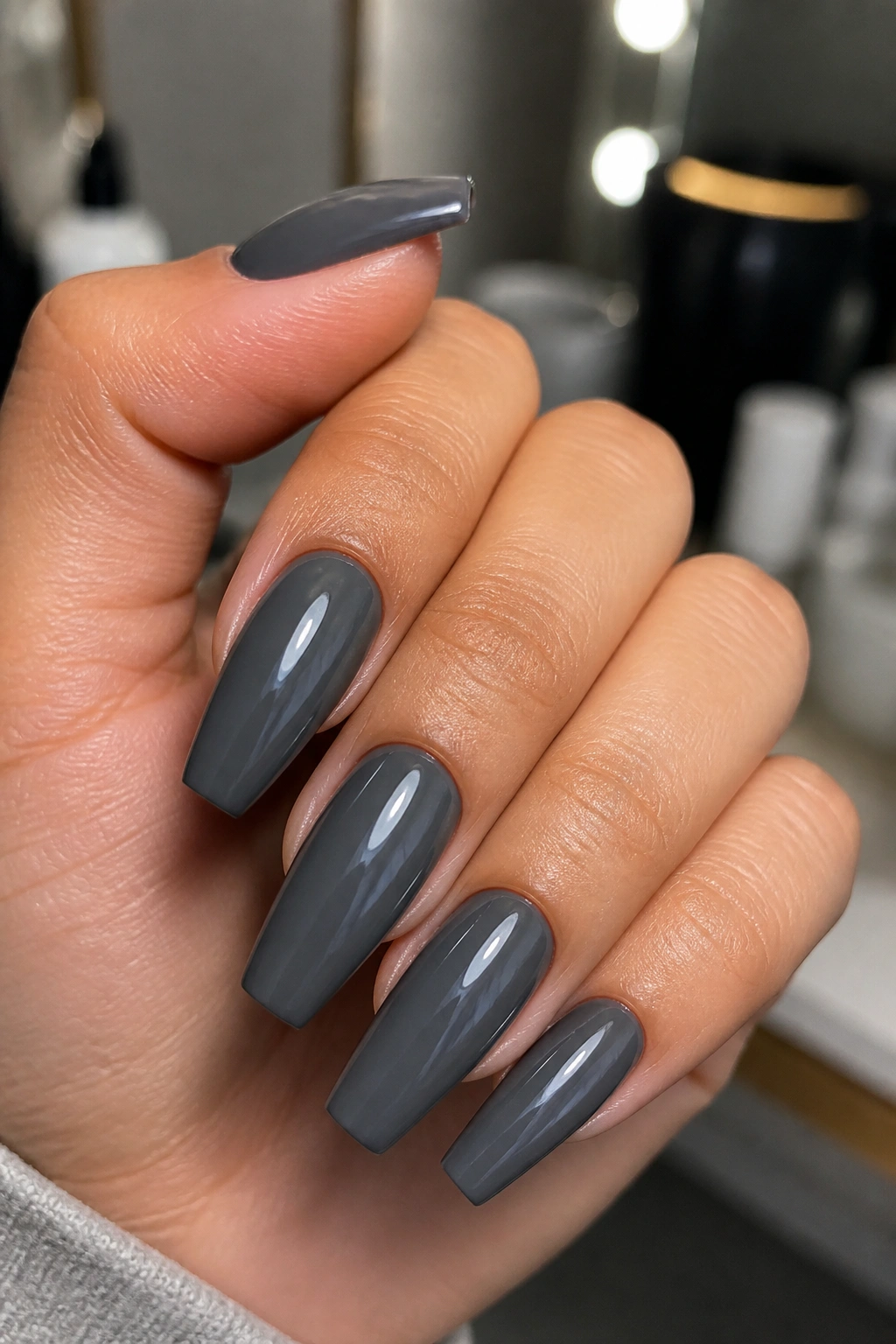
Glossy slate is the grown-up answer to plain grey. It has weight, depth, and enough shine to keep the color from looking sleepy.
The finish does most of the work. A medium-dark slate under a high-gloss top coat looks almost wet, especially under indoor light where the shine runs in a long stripe down the center of the nail. Coffin shape helps because it gives the reflection a straight path. Round nails break it up. Coffin nails stretch it.
I like this one best at medium length, where the color still feels wearable for daily life. Long slate nails can look striking, but they also start reading more dramatic than many people want. Medium length keeps the mood cool, not severe.
There is one catch. Slate grey needs a tidy application. Missed sidewalls, bulky apex placement, or a lumpy top coat stand out on this shade. If you are doing it at home, float the top coat in a thin, even layer and cap the free edge. At the salon, ask your tech to turn your hand side to side before curing the final coat. That tiny pause catches uneven shine lines before they set.
3. Smoky Grey Ombré That Fades From Nude to Storm
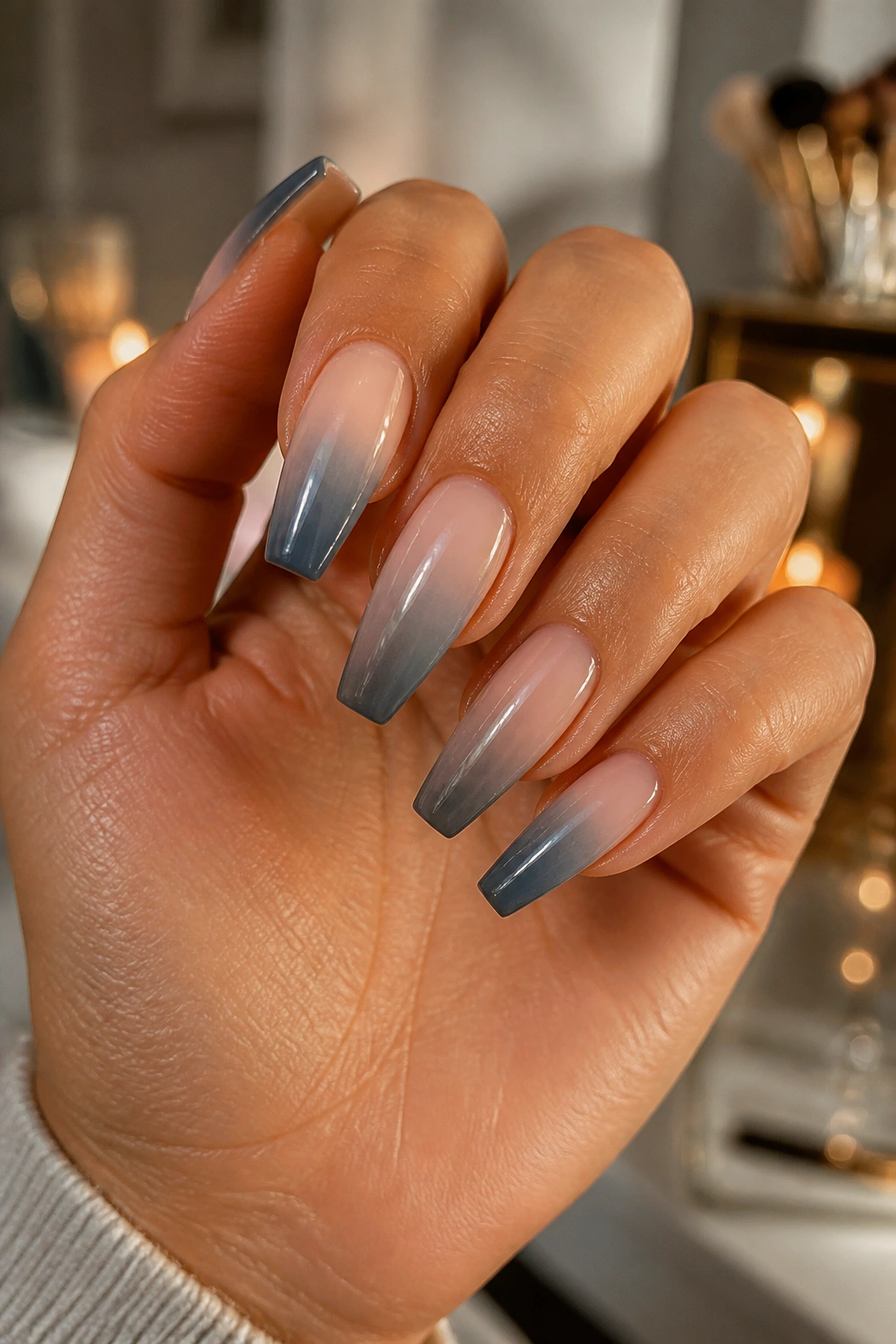
Why does this design keep showing up in saved nail folders? Because ombré softens the coffin shape without losing it.
A nude-to-grey fade works best when the transition starts around the lower third of the nail bed and deepens toward the tip. If the grey begins too high, the set can make fingers look shorter. If it begins too low, you lose the ombré and end up with a murky French look.
The prettiest versions use a sheer pink-beige or milky nude at the base, then a smoky storm grey dabbed or airbrushed upward. That little bit of transparency near the cuticle buys you extra wear time too. Grow-out looks less sharp than it would with a solid dark base.
How to wear it well
Keep the color blend soft. You want fog, not stripes. A sponge blend can work, though many nail techs get a cleaner fade with an airbrush or fine dusting technique. On medium and long coffin nails, the ombré has enough room to stretch. Short coffin shapes can still wear it, but the fade has to be tighter and more controlled.
If you want one extra detail, add micro silver shimmer inside the top coat on one or two nails only. Not every nail. The ombré already has movement.
4. Charcoal Grey With a Thin Silver Cuticle Line
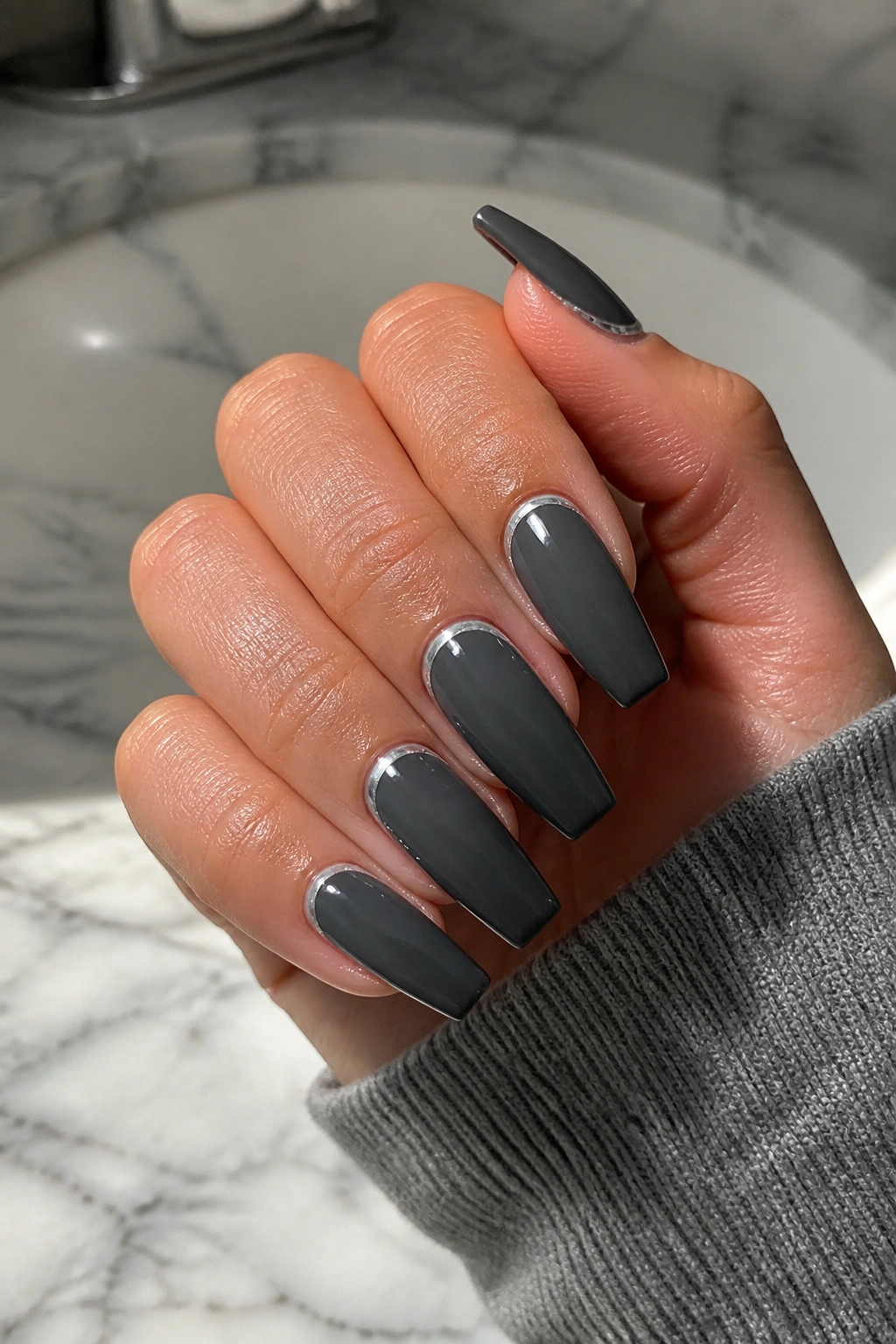
Picture a deep charcoal base—almost black in dim light—with a fine silver crescent tracing the cuticle. That tiny line changes the whole manicure. It gives the dark color a crisp edge and makes the nail bed look neater.
This design works because the silver sits in a place most nail art ignores. Instead of covering the middle of the nail, it frames the base. The result feels sharper and more architectural than glitter spread all over the surface.
A few details matter here:
- Keep the silver line thin, around 0.5 to 1 mm.
- Use a true charcoal, not flat black, so the contrast stays soft enough to read as grey.
- Choose gloss, not matte; the reflective line needs shine around it.
- Best on medium to long coffin nails where the cuticle detail has space to show.
The line can be painted, foiled, or made with striping gel. Painted usually lasts better because there is less bulk. And if you do not love art on every nail, make only the ring fingers and thumbs the accent nails. That gives you the look without crowding the set.
5. Grey Marble With Fine White Veining
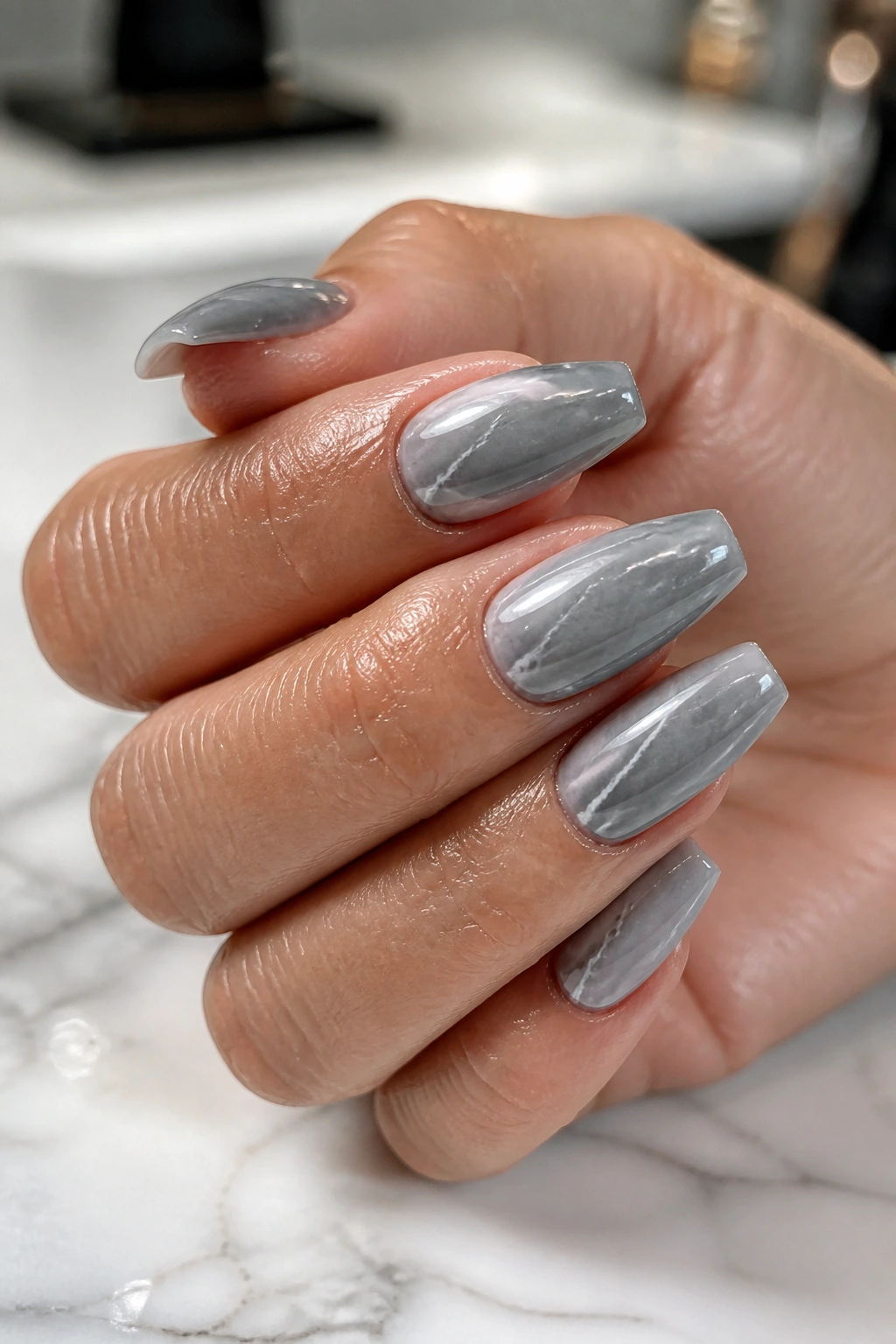
Marble nail art goes wrong in one of two ways: too little contrast, or too much mess. Grey marble avoids both when the base is soft and the lines stay thin.
A stone-grey base with hairline white veining looks best on coffin nails because the longer shape mimics a marble tile cut into neat strips. You get room for pattern, but the tip still keeps the design disciplined. That matters. On a shorter square nail, marble can turn blotchy fast.
The nicest version usually starts with a milky or medium grey base, then a detail brush drags white and deeper smoke tones through a half-wet layer. A touch of diluted black near one edge adds depth. Gold works with marble too, though on a grey set I tend to prefer silver or no metallic at all. Gold can push it warmer than the rest of the manicure wants to go.
Do not ask for marble on all ten nails unless you love a busy set. Two marble nails per hand—often the ring finger and middle finger—paired with solid grey on the rest looks cleaner. There’s more contrast between the art nails and the plain ones, which makes both parts stronger.
And yes, every marble nail will differ a little. That is the point.
6. Greige Nude-to-Grey Blend for a Softer Finish
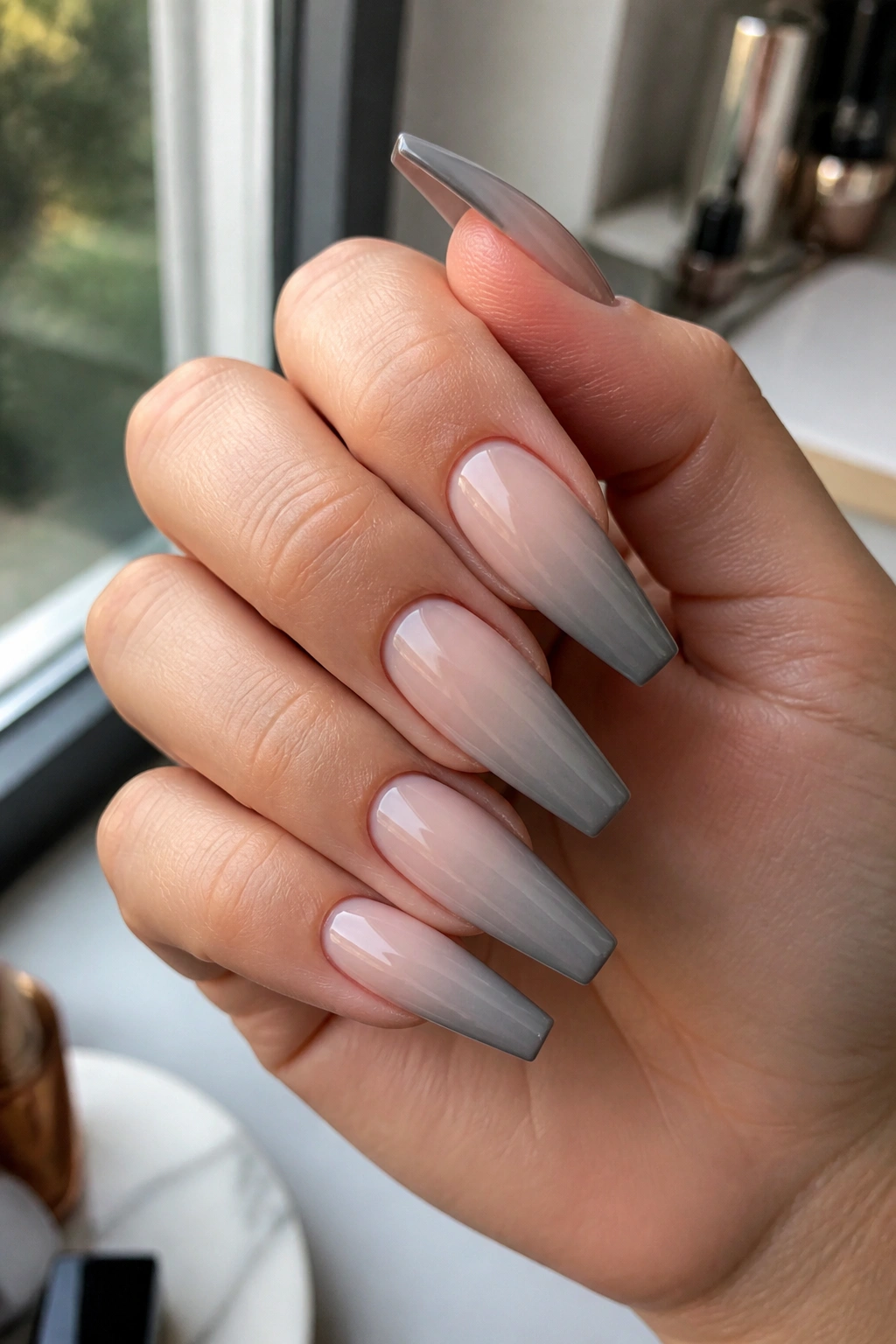
Unlike blue-grey shades, greige sits closer to the skin and gives coffin nails a quieter look. If plain grey feels too cold on your hands, this is usually the fix.
Greige is that in-between color where taupe, beige, and grey meet. On a coffin shape, it keeps the taper from feeling harsh. That makes it a smart pick for office wear, weddings, or anyone who wants a cool-toned manicure that still feels approachable.
It also does something useful for shorter fingers: the color does not cut as hard against the skin, so the nails can look a little longer. Not by magic. By contrast. Lower contrast means the eye reads the hand in a smoother line.
I like greige most in two forms. One is a full-coverage cream with glossy top coat. The other is a soft gradient from sheer nude at the cuticle into mushroom-grey at the tip. That second version wears beautifully between fills because the base stays lighter.
Skip big crystals here. They fight the whole point of the color, which is restraint and softness with shape still intact.
7. Cement Grey With One Black Vertical Stripe
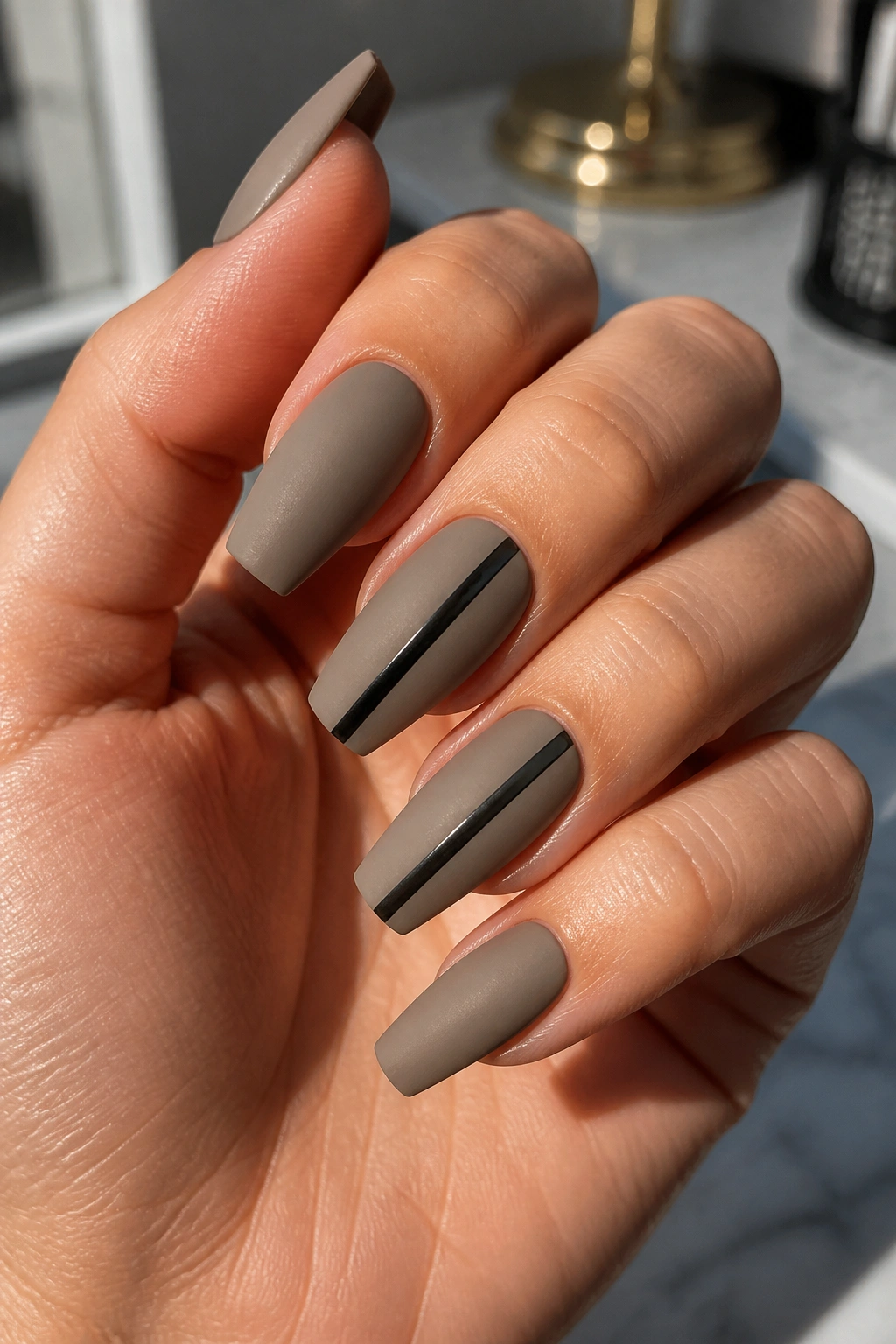
Minimal nail art can look flat if the base color has no character. Cement grey fixes that. It has a slightly raw, urban feel, and a single black stripe adds enough contrast to make the design feel intentional.
What gives it that clean graphic look
Placement. The stripe should not sit dead center on every nail. A narrow off-center line—about 1 mm wide—looks sharper and more modern. Put it slightly left or right, and let at least a few nails stay plain so the eye gets a break.
A matte top coat turns the design into something almost architectural. Gloss makes it sleeker. I tend to like matte on the cement base and gloss on the stripe itself, because that finish contrast gives the art an extra layer without adding more color.
Best ways to wear it
- Use the stripe on two or four nails, not all ten.
- Keep the coffin length short to medium so the design stays crisp.
- Ask for a cool cement grey, not a warm taupe-grey.
- Pair it with square jewelry—chunky silver rings look right with this set.
Small warning: if the stripe wobbles even a little, your eye will find it fast. This one rewards a steady hand.
8. Gunmetal Chrome That Looks Like Brushed Metal
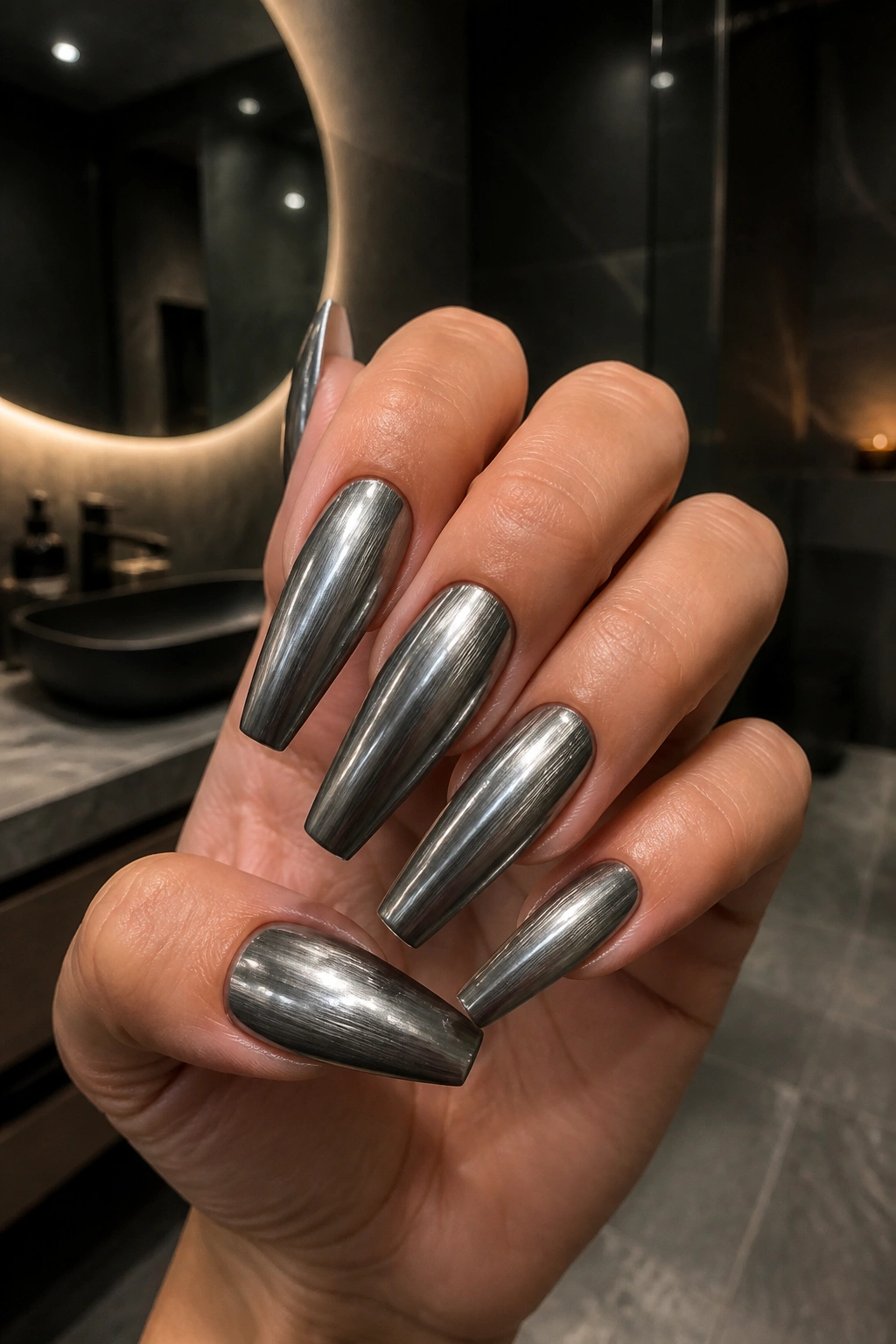
If you want drama, chrome is where grey stops behaving like plain polish. A gunmetal chrome finish turns the nail surface into metal—smooth, reflective, colder, sharper.
The trick is the base color underneath. Chrome powders shift depending on what they sit on. Over black, gunmetal can read almost mirror-dark. Over deep grey, it stays softer and more dimensional. I prefer a charcoal-grey base because it keeps the result in the grey family rather than drifting all the way into silver mirror territory.
Long coffin nails wear this design best. The extra length gives the reflection more runway, and the straight tip makes the finish look cleaner. Medium length still works, though I would avoid short coffin here. Chrome on a short nail can feel cramped.
Application matters more than people think. The surface needs to be glass-smooth before the powder goes on, or every dip and ridge shows. Nail techs usually buff the cured no-wipe top coat, rub in chrome powder with a sponge applicator, then seal carefully around the free edge. If the seal is weak, the tips lose their shine first—and once that starts, chrome looks tired fast.
9. Soft Grey French Tips on a Coffin Base
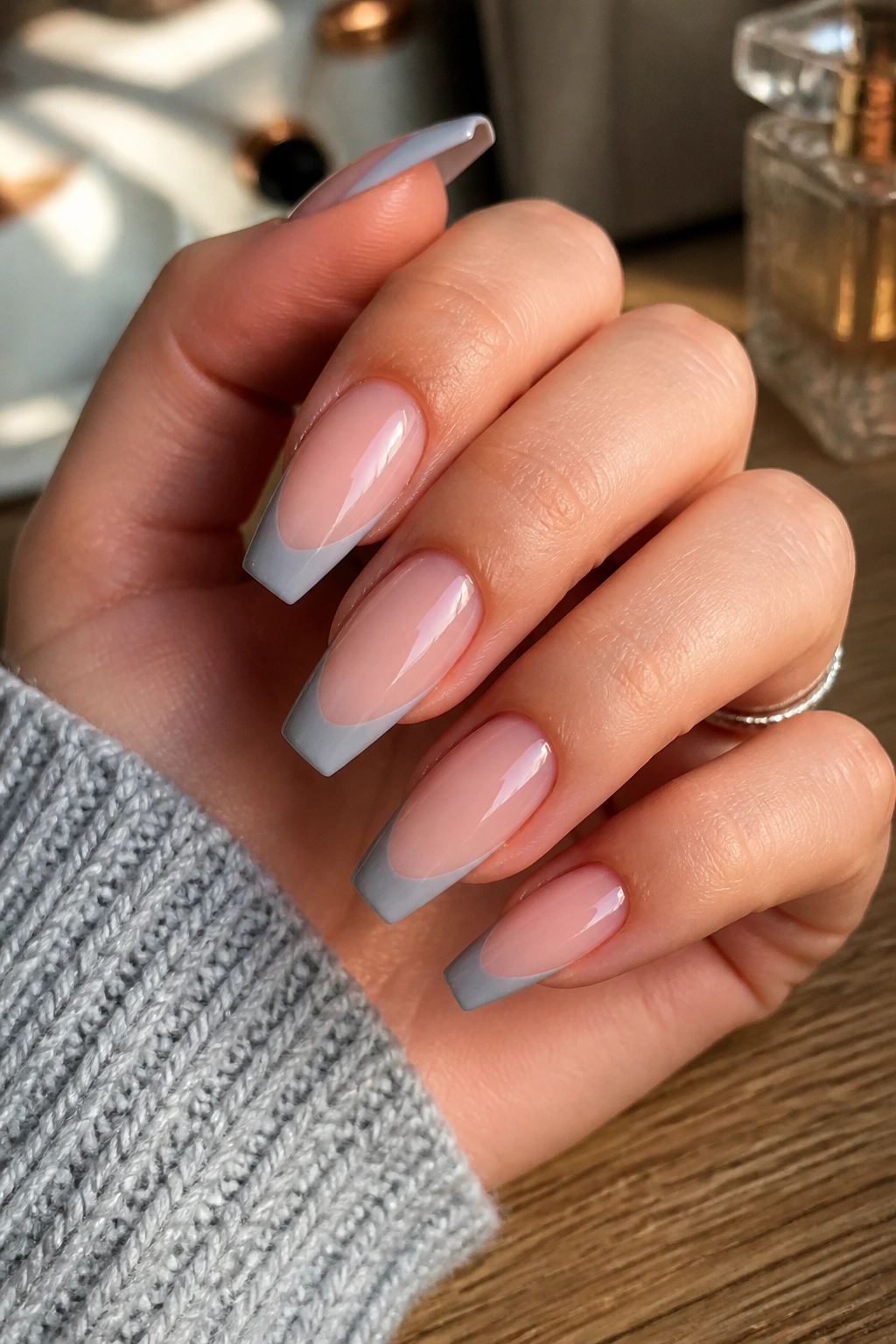
Can a French manicure still look cool instead of polite? Yes, if the tips are soft grey instead of bright white and the shape stays coffin rather than almond.
Grey French tips work because they keep the nail bed airy while giving the edge a cooler, more modern line. I like this design best with a sheer pink-nude or milky base and a tip depth around 3 to 4 mm on medium nails. Too skinny, and the grey disappears. Too deep, and it starts looking color-blocked.
How to keep it sharp
The smile line matters. A deep curved smile can get too sweet for a coffin nail. A straighter smile line or a softly squared French edge usually suits the shape better. It echoes the blunt tip.
This is also one of the easiest grey manicures to wear across different lengths. Short coffin nails get a neat little edge of color. Longer sets let you play with darker grey on the tip, maybe even a slate or storm tone. Add a thin silver outline if you want more detail—but use that on one or two nails only. French designs turn busy faster than people expect.
10. Dark Grey Jelly Nails With See-Through Depth
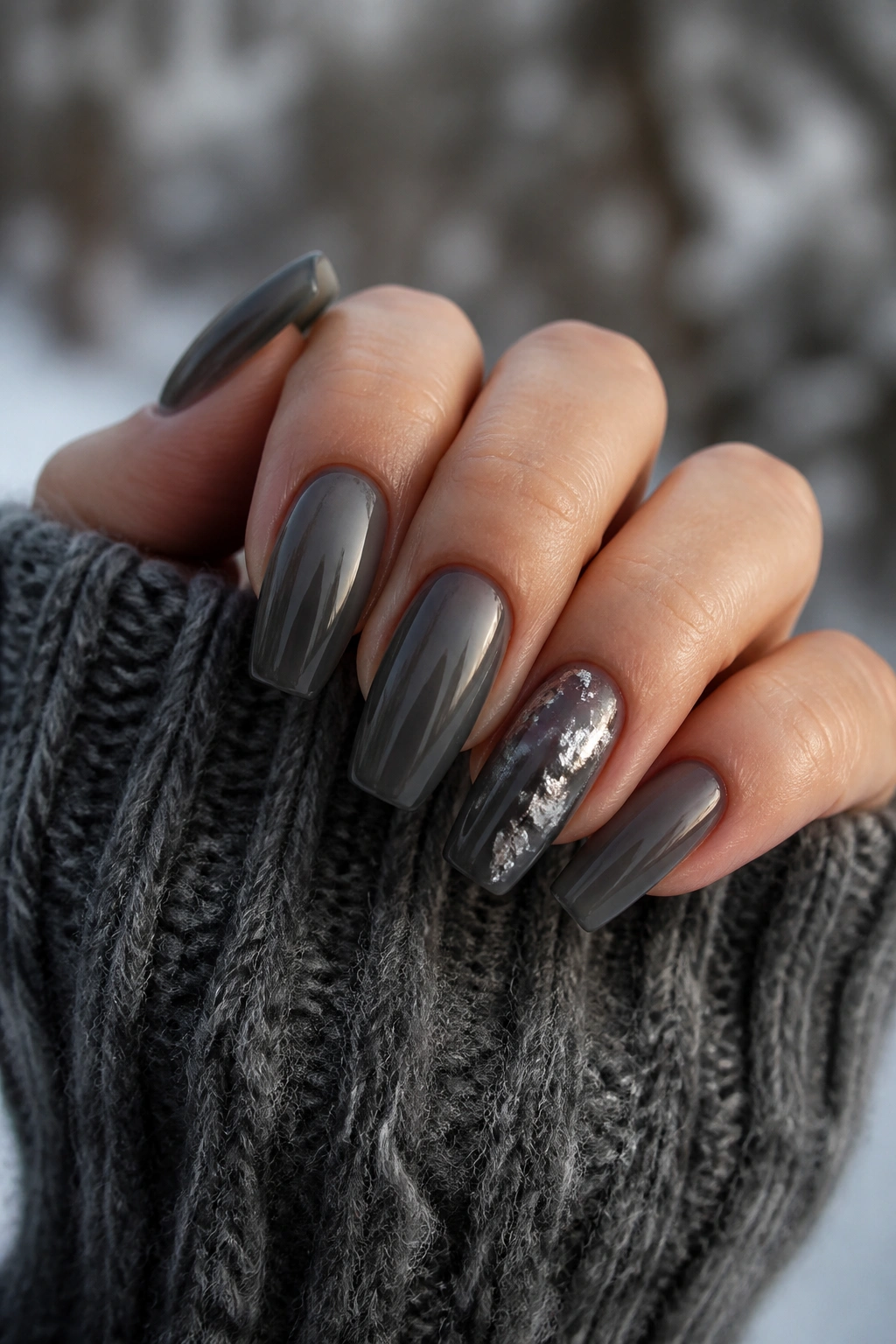
A jelly manicure has that glass-candy look, but in grey it reads moodier and a little futuristic. You still get transparency—just not the sugary color payoff you see with pinks and oranges.
The best dark grey jelly sets use two or three sheer coats over a smooth builder base. Each coat deepens the color while keeping light passing through the nail. On coffin tips, that layered see-through finish makes the ends look almost smoked.
Here’s where people get tripped up:
- Too many coats and the jelly turns into ordinary cream polish.
- A patchy first coat can make the whole nail look streaky.
- Extra-long coffin tips need stronger structure under jelly shades because transparency shows the build.
This design shines on clear extensions or on a translucent base over hard gel. Add a little silver foil trapped under one accent nail if you want depth, but keep it sparse. Jelly nails already have movement from the layers and light shift. Piling on more detail can muddy the effect.
I would wear this one in colder months with silver rings and dark knit sleeves, though it still works year-round if you like your manicure a bit moody.
11. Matte Ash Grey With Tiny Crystal Accents
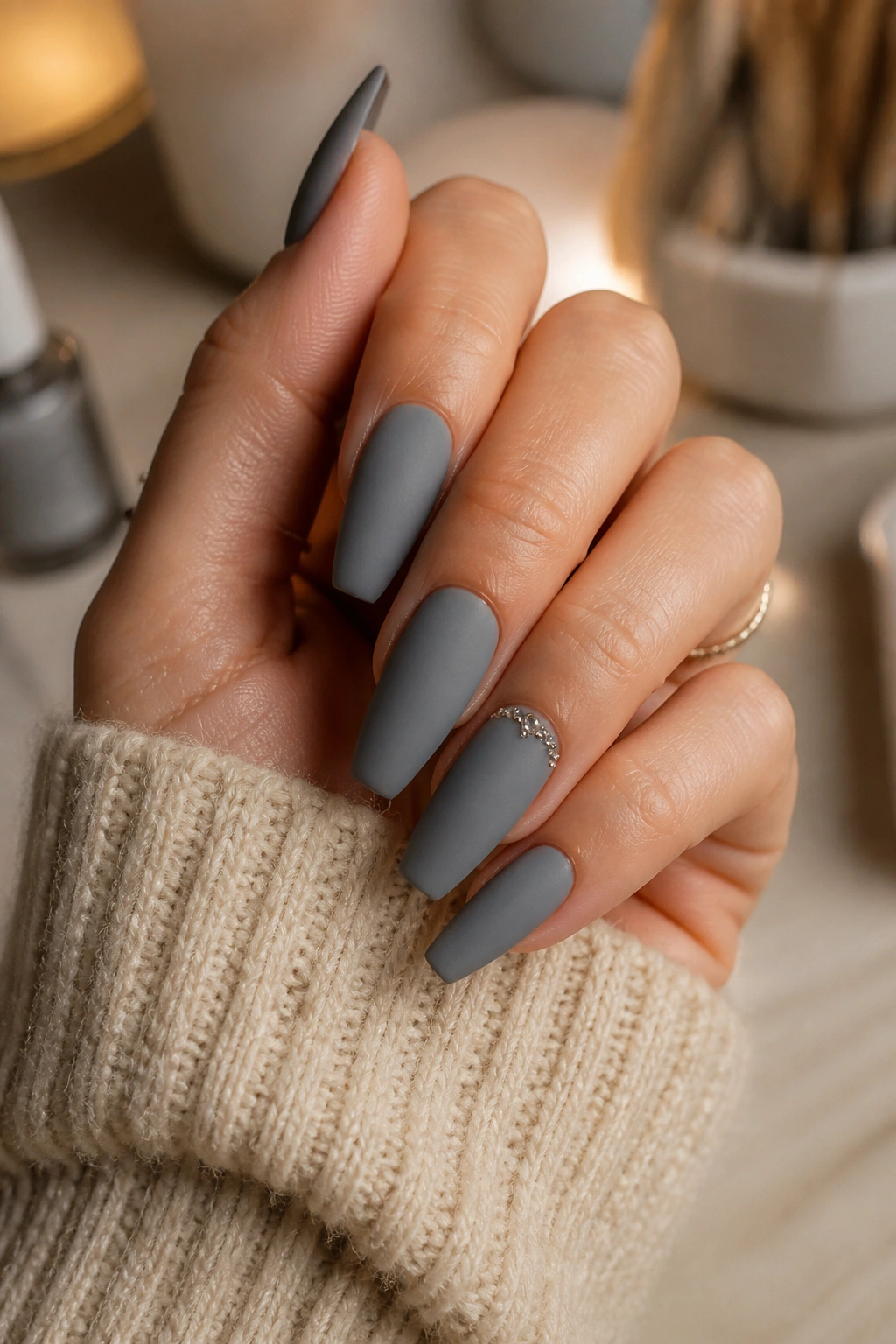
There’s a narrow line between tasteful crystal accents and a set that starts catching on sweaters. Matte ash grey with tiny stones lands on the safe side of that line.
Ash grey has a muted, dusty cast that looks clean under a matte top coat. Add one or two small crystals near the cuticle—think 1.5 to 2 mm, not chunky rhinestones—and the manicure gets a point of light without losing its cool tone. I like this best when the stones sit on only one nail per hand, usually the ring finger, or on two nails in an uneven pattern so the set does not look too matched.
The matte base keeps the crystals from looking sugary. That contrast is what makes the design work. Glossy grey plus stones can veer into a dressier look. Matte ash keeps it restrained.
Placement matters. A tight little cluster at the cuticle line usually lasts better than stones scattered across the middle of the nail, where your hands knock into things all day. Seal around them, not over them, or they lose their shape. And if you type a lot, keep the coffin length modest. Tiny crystals are easier to live with than big ones, but they still add texture.
12. Two-Tone Grey Color Blocking With Diagonal Panels
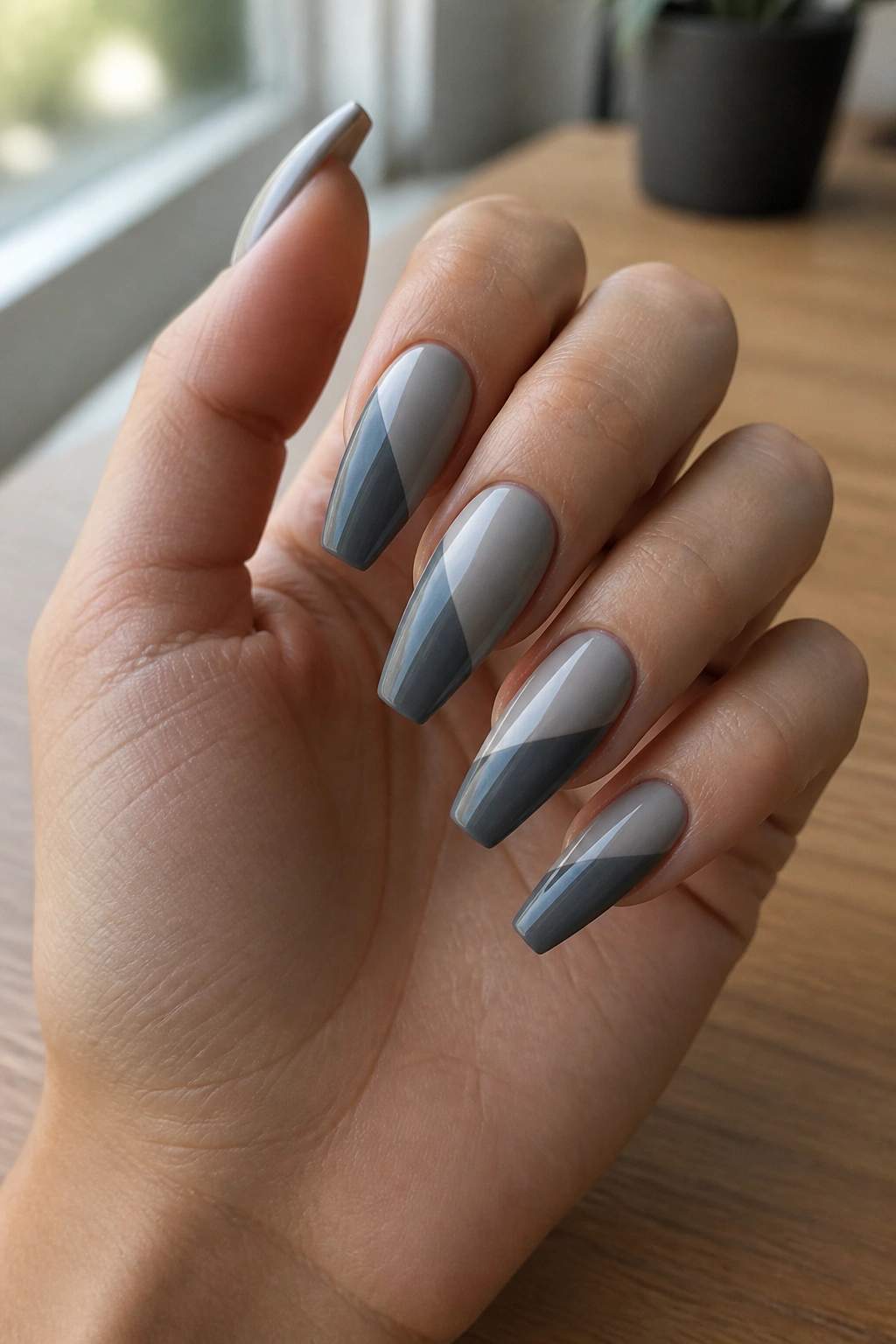
Unlike ombré, which blends one shade into another, color blocking lets each grey stay itself. That crisp division looks strong on coffin nails because the straight tip and tapered sides already feel graphic.
My favorite version uses two close greys rather than a harsh light-dark split. Think dove and slate, or mushroom and charcoal. A diagonal divide from one sidewall near the cuticle to the opposite side near the tip lengthens the nail more than a horizontal half-and-half line does. The eye follows the angle.
This design suits people who want art but do not want anything sparkly. It’s clean. A little fashion-y. Easy to pair with work clothes because the palette stays muted even though the layout has edge.
If you try this at home, striping tape can help mark the line, though hand-painting often looks cleaner once you know your brush control. At the salon, ask for ultra-thin separation lines if you want silver between the panels. Heavy metallic borders can make the design look busy. The whole point here is shape and shade doing the heavy lifting.
13. Soft Grey Cat-Eye Velvet Nails
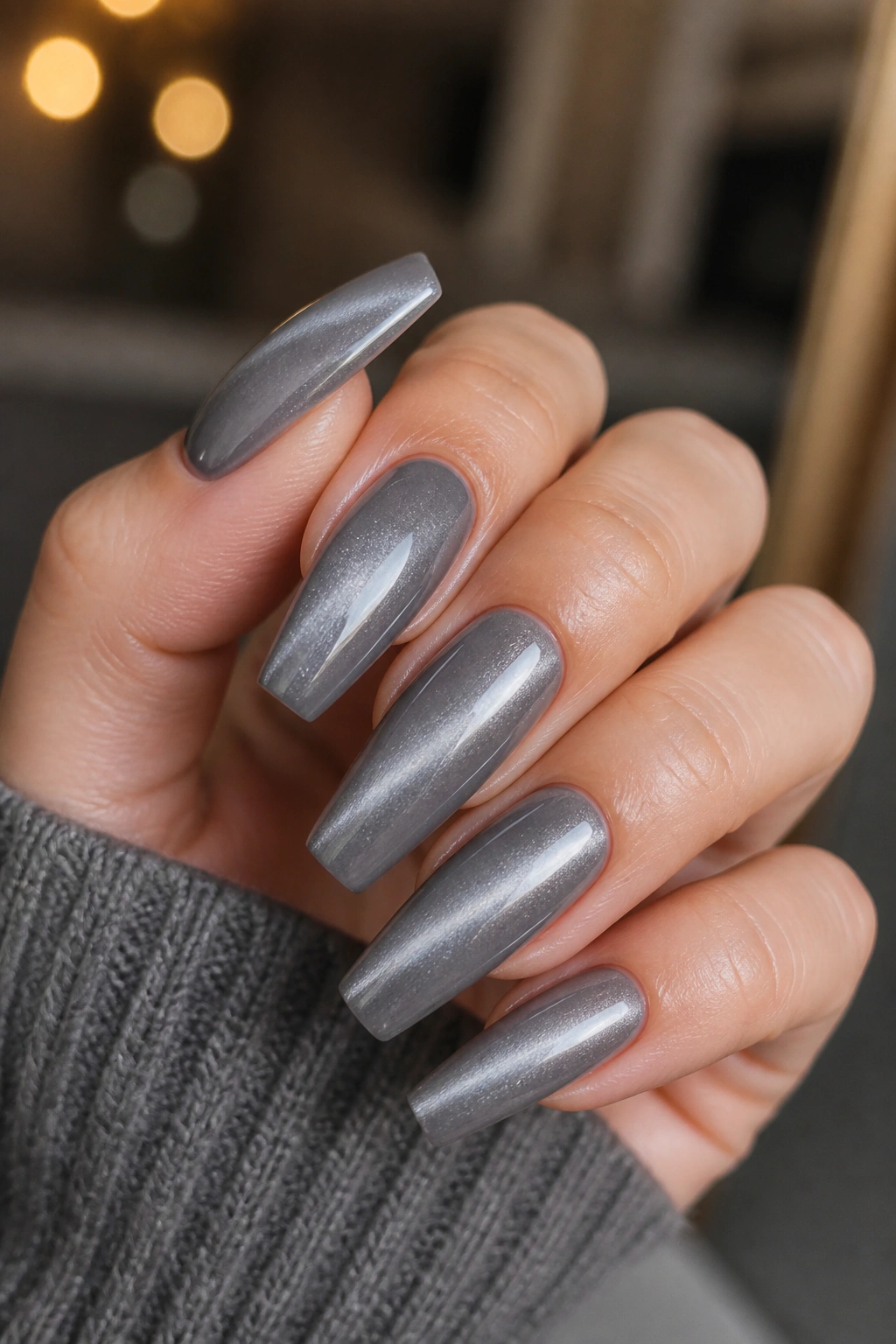
Cat-eye gel can look loud in bright jewel tones. In grey, it turns softer and more mysterious. You get that moving line of light, but it feels more like brushed velvet than nightclub glitter.
The effect that makes this set special
A magnet pulls metallic particles inside the gel into a concentrated band. On a grey base, that band can be centered, diagonal, or pushed toward one side for a side-glow effect. Coffin nails show the shift well because the wider surface gives the magnetic pattern room to travel.
The best grey cat-eye shades sit between pewter and smoke. Too silver, and the look becomes mirror-like. Too dark, and the magnetic movement gets lost unless you catch it in direct light.
Ask for these details
- Hold the magnet over each nail for 3 to 5 seconds before curing.
- Choose medium or long coffin nails for a fuller velvet effect.
- Use a glossy top coat; matte kills the movement.
- Keep other art off the set. Cat-eye is already the main event.
Good call for winter outfits, dinner nails, or anyone who wants texture without adding stones or foil.
14. Storm Grey With Scattered Silver Foil
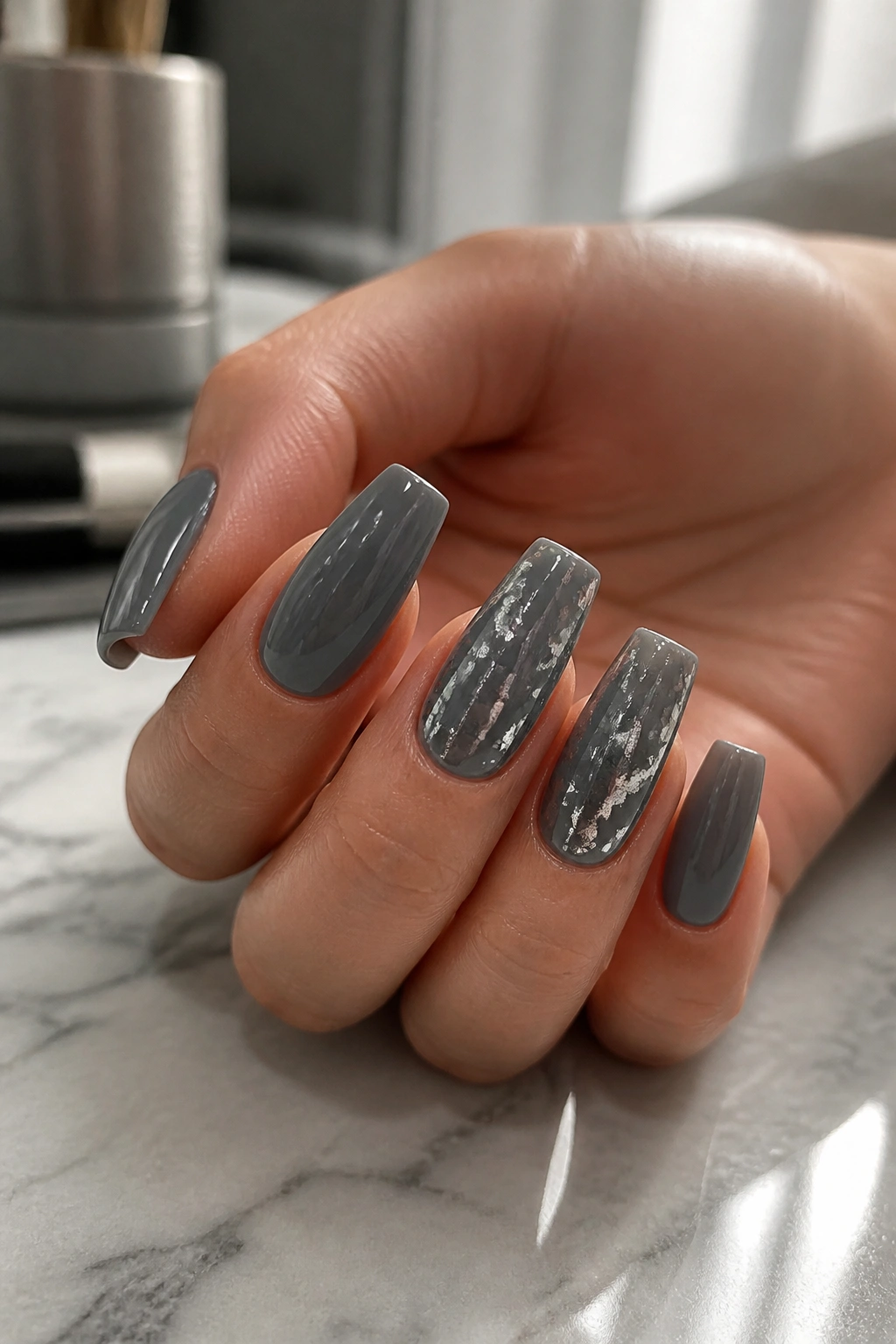
Foil looks best when it behaves like an accent, not confetti. Storm grey gives silver foil a dark sky to sit against, and the result can look rich without getting fussy.
Storm grey usually has a blue cast, deeper than slate but softer than charcoal. On that base, torn pieces of silver foil catch light in irregular flashes. That irregular shape matters. Straight foil pieces can look stiff. Broken edges look more natural and more interesting.
I prefer this design on glossy nails because the sealed top coat makes the foil seem buried under glass. Put foil on two or three nails and leave the rest solid storm grey. Full foil on every nail tends to crowd the color.
One practical note: foil needs a smooth seal. If you can feel raised edges after top coat, those edges may start lifting. A builder gel overlay can help if the foil pieces are larger. And keep the foil away from the very tip of the coffin nail unless you want to risk early wear there. The free edge takes enough hits as it is.
15. Milky Grey Aura Nails With a Smoky Center
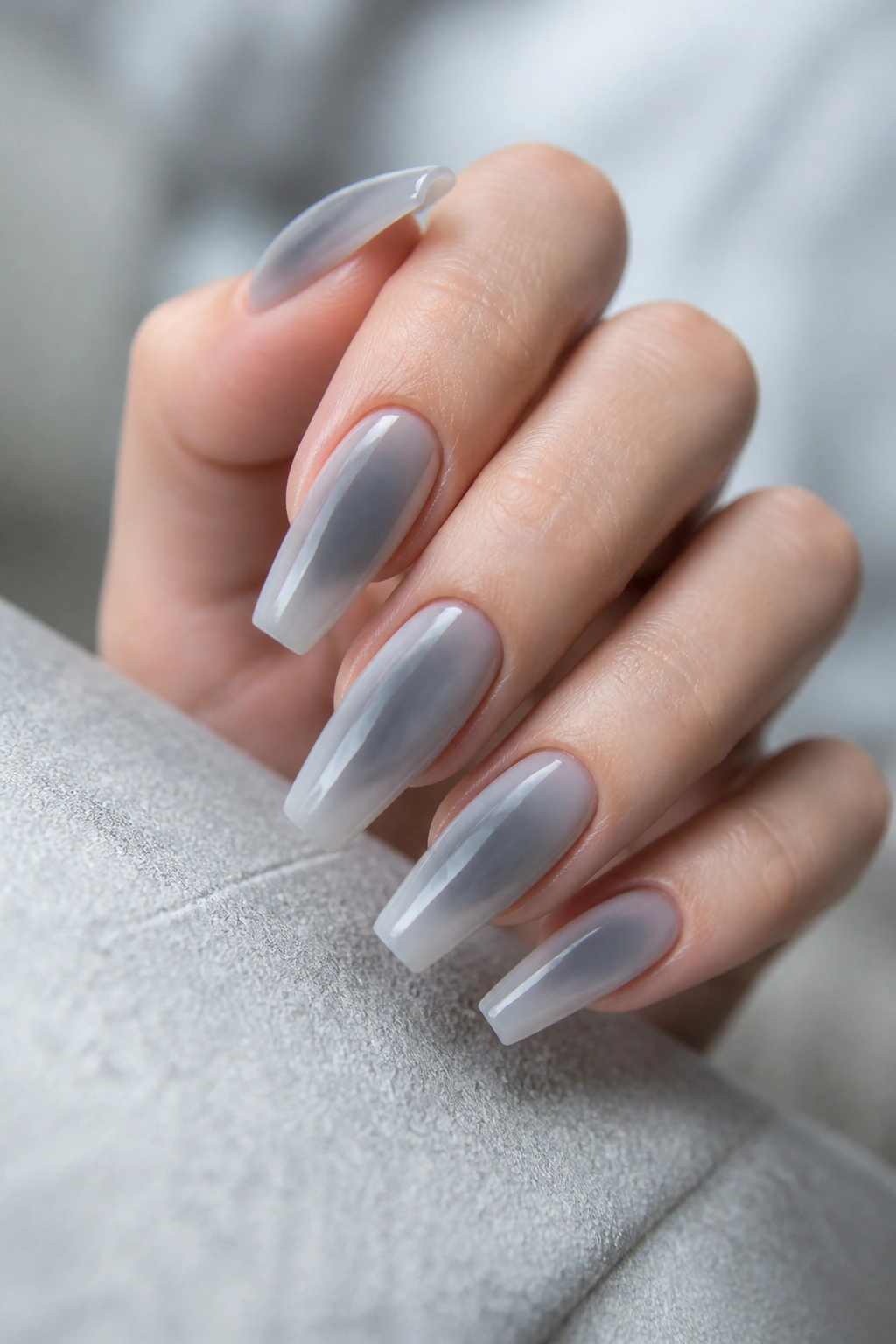
Aura nails can slide into neon territory fast, which is why I like them more in grey than in brighter colors. A milky grey base with a smoky center haze feels cooler, calmer, and far easier to wear.
The design works best when the center cloud sits inside the middle half of the nail rather than spreading all the way to the sidewalls. That little halo of lighter base around the edges keeps the coffin shape visible. If the smoky center gets too big, the whole nail starts looking bruised instead of intentional—blunt word, but accurate.
Airbrushing gives the softest aura effect, though a sponge can still work if the color is built up in thin layers. The center can be charcoal, slate, or even a soft steel grey. I like a slightly deeper center on medium and long nails, then a softer smoke on shorter lengths.
This is one of those designs that looks better with restraint. No crystals. No stripes. No foil. Maybe a glossy top coat, maybe a satin finish if you want the haze to feel more diffused. The color cloud does the talking, and the coffin shape frames it beautifully.
How to Keep Grey Coffin Nails Looking Fresh for Longer
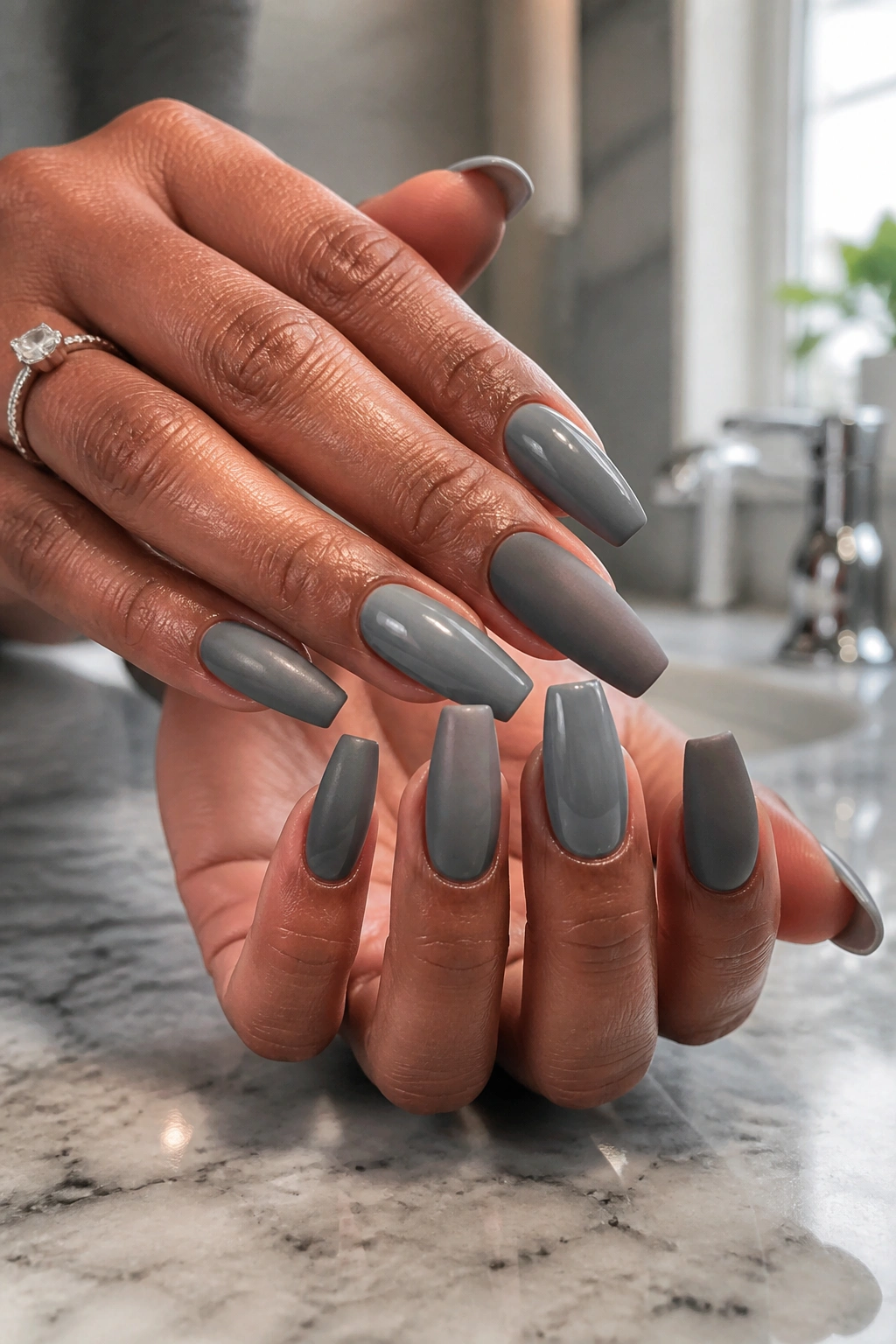
Grey manicures are forgiving in some ways and fussy in others. Mid-tone shades hide small wear marks better than white. Matte top coats, on the other hand, pick up oil and hand cream fast. Chrome tips can dull if the free edge was not sealed well. Jelly nails show structural flaws. Every finish has its own weak point.
A few habits make a difference:
Daily care that actually helps
Use cuticle oil twice a day, especially around acrylic or gel overlays. Grey shades look cleaner when the skin around them is hydrated. Dry, flaky cuticles make even the best set look older than it is.
Wear gloves for dishwashing and long cleaning sessions. Hot water, soap, and friction work against top coat, foil, chrome, and crystals. If your matte nails start getting shiny patches, a fresh layer of matte top coat can often buy you more time.
Fill timing and shape upkeep
Most coffin sets need a fill at around 2 to 3 weeks, depending on how fast your nails grow and how hard you are on your hands. Wait too long and the apex moves out of balance, which makes long coffin nails more likely to snap at the stress point.
If the tips start feeling too sharp, file the corners lightly with a fine-grit file—180 grit is a good place to start—but do not round the whole tip off unless you want to change the shape. Coffin nails lose their look fast once the free edge gets too soft.
Final Thoughts
Grey gives coffin nails room to be cool in more than one way. It can go soft and powdery, dark and glossy, metallic, sheer, marbled, graphic, or hazy. The best version for you depends less on trends and more on undertone, finish, and how much upkeep you will tolerate after day five.
If I had to narrow the field, matte dove grey, glossy slate, smoky ombré, and soft grey French tips are the easiest places to start. They wear well, they flatter the coffin shape, and they do not need ten extra details to feel finished.
Then again, if you want the manicure to carry more attitude, gunmetal chrome, cat-eye velvet, and storm grey foil have a lot more bite. Same color family. Different energy. That’s the charm of grey—it rarely runs out of ways to look sharp.