

A French manicure can make coffin nails look expensive—or oddly chunky. The difference is often 2 millimeters of white polish, the curve of the smile line, and whether the base has enough softness to keep the shape from turning stiff.
That’s why French tip coffin nails never come down to “white tip, nude base, done.” The coffin shape has straight sidewalls and a squared-off end, so every line you add becomes more obvious. A tip that looks balanced on an almond nail can look blunt on a coffin set. Shift the angle, thin the edge, soften the base, and the whole hand changes.
Watch a skilled nail tech file a coffin nail and you’ll notice where the eye goes first: not the cuticle, not the color, but the free edge and sidewalls. If those lines stay clean, a French design looks sharp before top coat even hits it. If the taper is off by a hair, the manicure can read heavy no matter how glossy it is.
That’s the fun part, honestly. Once you understand the shape, French tips stop feeling basic and start feeling precise.
Why French Tip Coffin Nails Flatter the Hand So Well
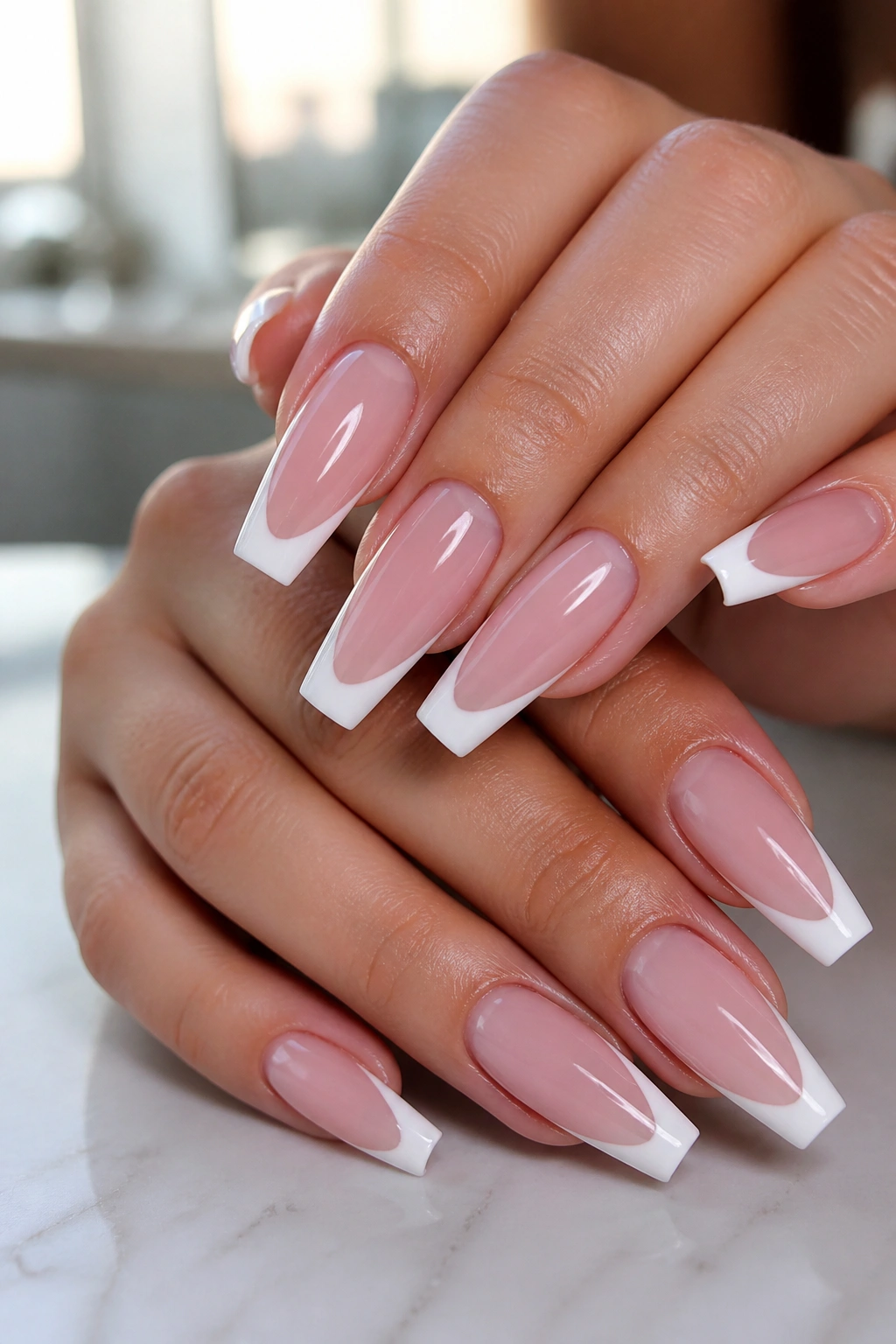
Straight edges do a lot of visual work. Coffin nails guide the eye forward, and a French tip adds one more clean line right at the end, which makes fingers look longer and the whole manicure look more pulled together.
A rounded French on a rounded nail gives you softness. A French on a coffin shape gives you structure. That’s the word I keep coming back to, because structure is what makes this style look polished even when the design stays minimal.
The ratio matters more than most people think.
The tip-to-length ratio that keeps the shape balanced
On a short or medium coffin set, the white edge usually looks best when it stays around 1 to 2.5 millimeters thick. Push it thicker than that and the nail can start to look shorter, especially if the bed itself is wide. Longer sets can handle a 3 to 4 millimeter tip because there’s more room for the line to breathe.
A deep smile line also changes the effect. Pull the curve lower at the center and higher at the sides, and the nail bed looks longer. Keep the smile line flat, and the style feels more graphic—sometimes that’s exactly the point.
Shape comes first, color second
No French tip can save a coffin shape that wasn’t filed cleanly. You want:
- Straight sidewalls with a gentle inward taper, not an aggressive pinch
- A flat end that still has slightly softened corners
- An apex placed around the stress zone, not slumped toward the cuticle
- A free edge that looks even when you turn the hand side to side
That last check matters. Tilt your hand under light and you’ll spot a crooked coffin shape in two seconds.
Picking the Right Nude Base, White Tone, and Finish
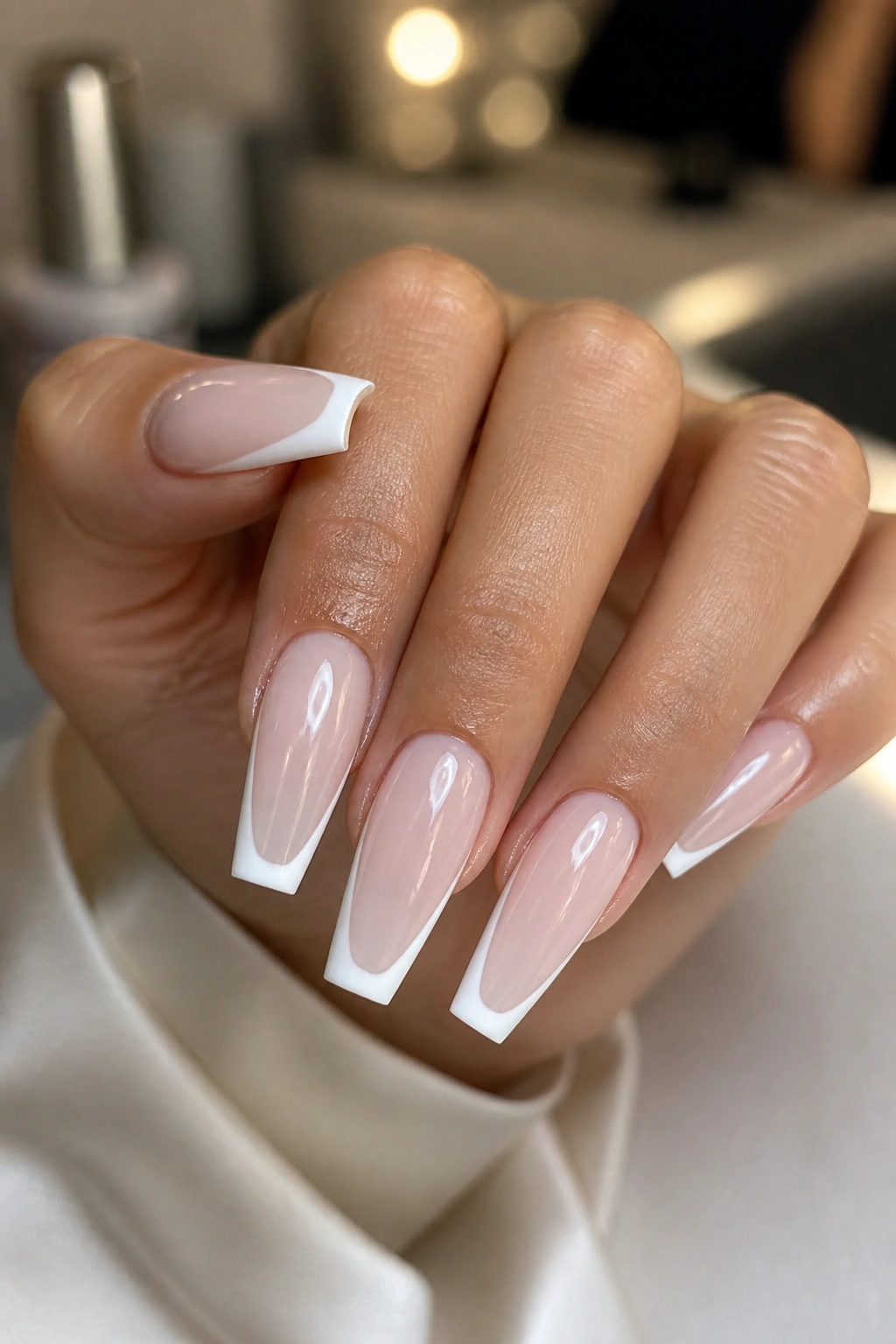
A French manicure lives or dies on contrast. Too little, and the tips disappear. Too much, and the design can look pasted on instead of built into the nail.
If your skin has warmer undertones, a milky peach, beige-pink, or soft caramel nude usually looks smoother than a cool gray-beige. Cooler undertones often suit rosy pinks, sheer mauves, and cleaner ivory whites. Deep skin tones can carry bright white beautifully, though a creamy white sometimes looks richer than a stark blue-white.
Opaque bases hide flaws, which is useful if the natural nail has ridges or discoloration. Sheer builder gel looks fresher and lighter, but it also shows every bump, every flood at the cuticle, every uneven patch of prep. No hiding there.
Finish matters too. Gloss top coat sharpens edges and makes the French line look crisper. Matte softens the base and turns the design more fashion-forward—though matte also shows lotion marks faster, which can annoy people who stare at their nails all day. I do. More than I should.
1. Classic Soft Pink Base With Crisp White Tips
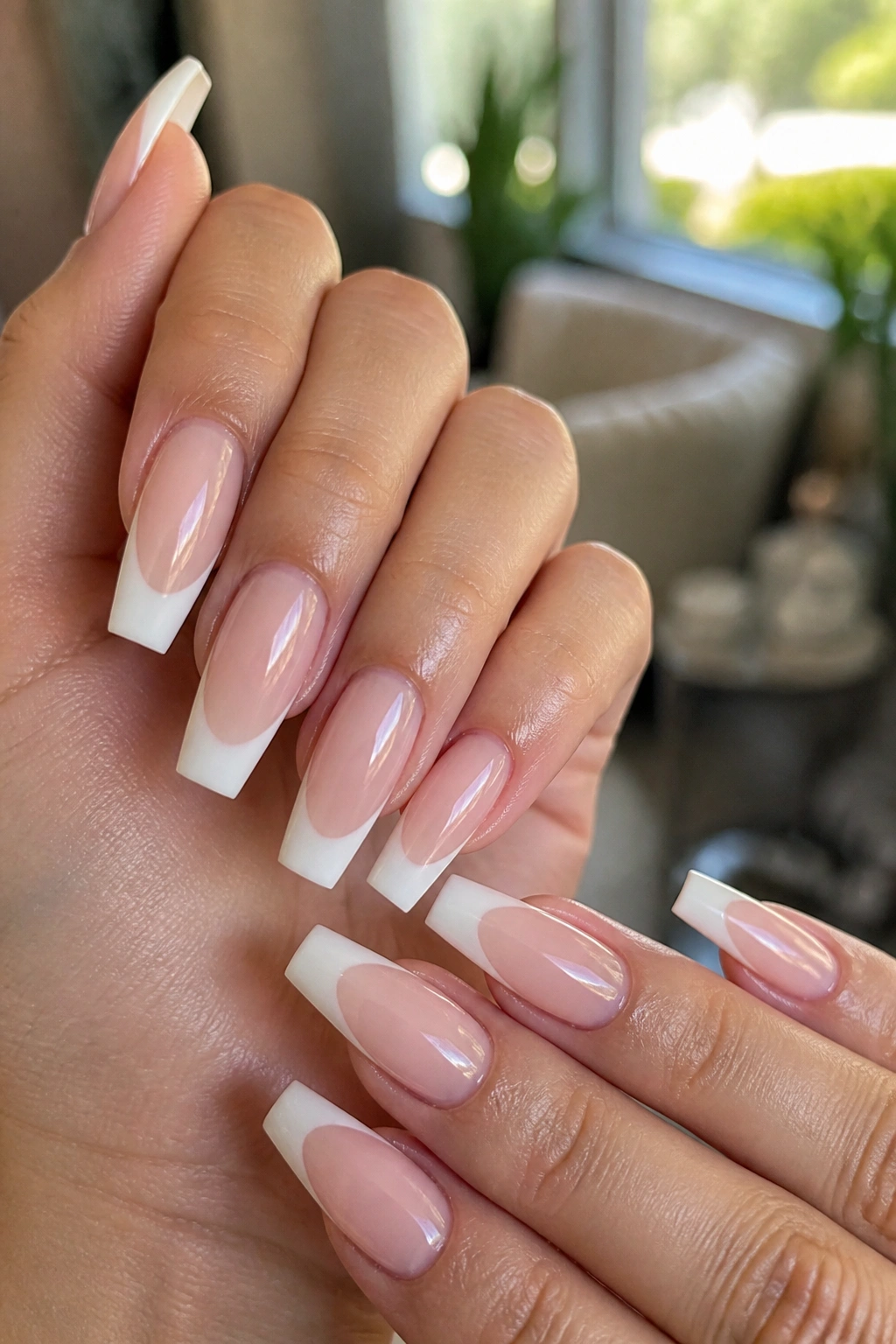
If you want the version that never seems underdressed, this is it. A soft pink base with a clean white smile line gives coffin nails enough contrast to stand out without asking for attention every second your hand moves.
The trick sits in the pink. Go too sheer and the manicure can look unfinished. Go too opaque and it starts leaning into old-school pink-and-white acrylic territory, which has its place, though it’s a different mood. The sweet spot is a semi-sheer pink that smooths the nail bed while still letting a little natural depth come through.
Why this one keeps working
The classic version flatters almost every coffin length because it respects the shape instead of fighting it. On medium nails, a 2-millimeter white tip feels balanced. On longer nails, you can widen the tip a touch and deepen the smile line so the set still looks elegant rather than blocky.
Quick notes to ask for at the salon
- Choose a milky pink builder base instead of flat bubblegum pink.
- Ask for a bright white gel paint rather than white polish if you want a sharper edge.
- Keep the smile line symmetrical across all ten nails; one crooked line throws off the whole set.
- Finish with a high-gloss top coat so the white looks clean, not chalky.
Smart move: if you wear silver or gold jewelry every day, this set plays nicely with both, which is rarer than people think.
2. Micro French Coffin Nails With Hairline White Edges
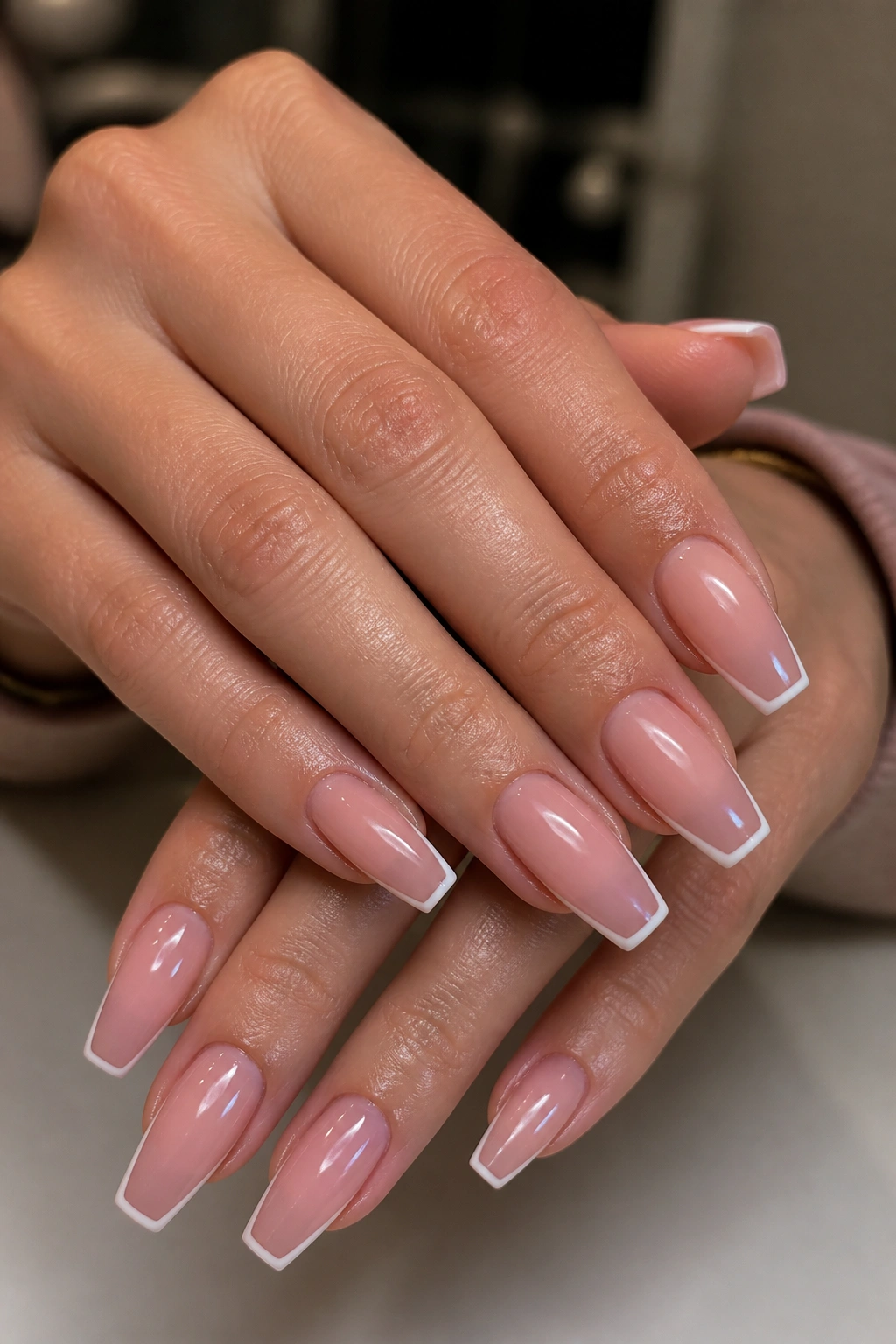
Thin tip lines can do more for a coffin shape than thick ones ever will. A micro French uses a whisper of white—usually 1 millimeter or less—and that tiny border makes the nail look neat, long, and expensive in the quietest way.
I like this style most on short to medium coffin nails. The smaller the free edge, the more a thick white band can crowd the shape. A hairline tip avoids that problem. You still get the clean frame of a French manicure, though the whole set feels lighter and less formal.
Shorter fingers benefit from this one. So do wider nail beds. Because the white strip takes up so little visual space, the nude base stays dominant, and the nails read longer. It’s a small optical trick, though it works.
Maintenance helps here too. When a micro tip chips, the damage tends to look less dramatic than a broken thick French line. The catch: your tech needs a steady hand. A line this fine shows wobble fast, and uneven thickness jumps out even more than on a traditional tip.
If you want nails that look polished in close-up, in office lighting, holding a coffee cup, typing on a laptop—this is the set I’d point to first.
3. Milky Nude Base With Deep Smile Lines
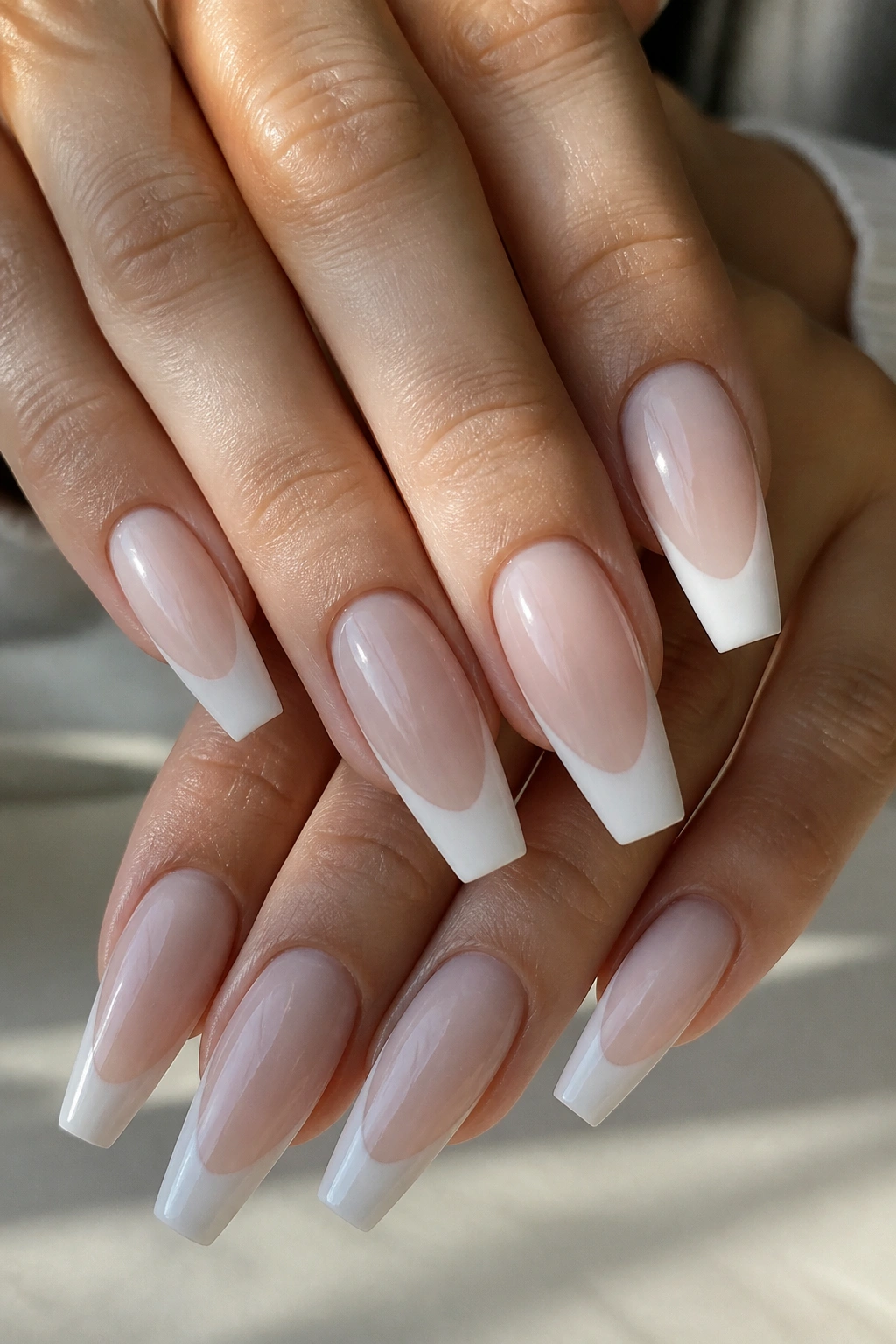
Why do some French manicures make the nail bed look longer? Most of the time, it comes down to the smile line depth.
A deep smile line curves lower toward the center of the nail, creating more vertical movement. On coffin nails, that matters because the flat tip can sometimes make the end look broad. Cut that white edge into a deeper U-shape and the whole set feels slimmer.
The base should stay soft for this design. A milky nude or jelly pink-beige keeps the contrast gentle, which lets the smile line do the work. If the base is too opaque and too pale, the design can lose that elegant stretched effect and lean stiff.
Ask for this shape detail
Tell your nail tech you want a pronounced smile line with narrow side corners, not a straight-across tip. That wording helps. So does showing one photo where the hand angle is straight, not twisted under studio lighting.
This design shines on medium and long coffin sets, especially if you wear almond or oval shapes most of the time and want coffin nails without the harshness people worry about. It still feels feminine, still feels clean, though the geometry is a touch sharper.
4. Short Coffin French Tips for Everyday Wear
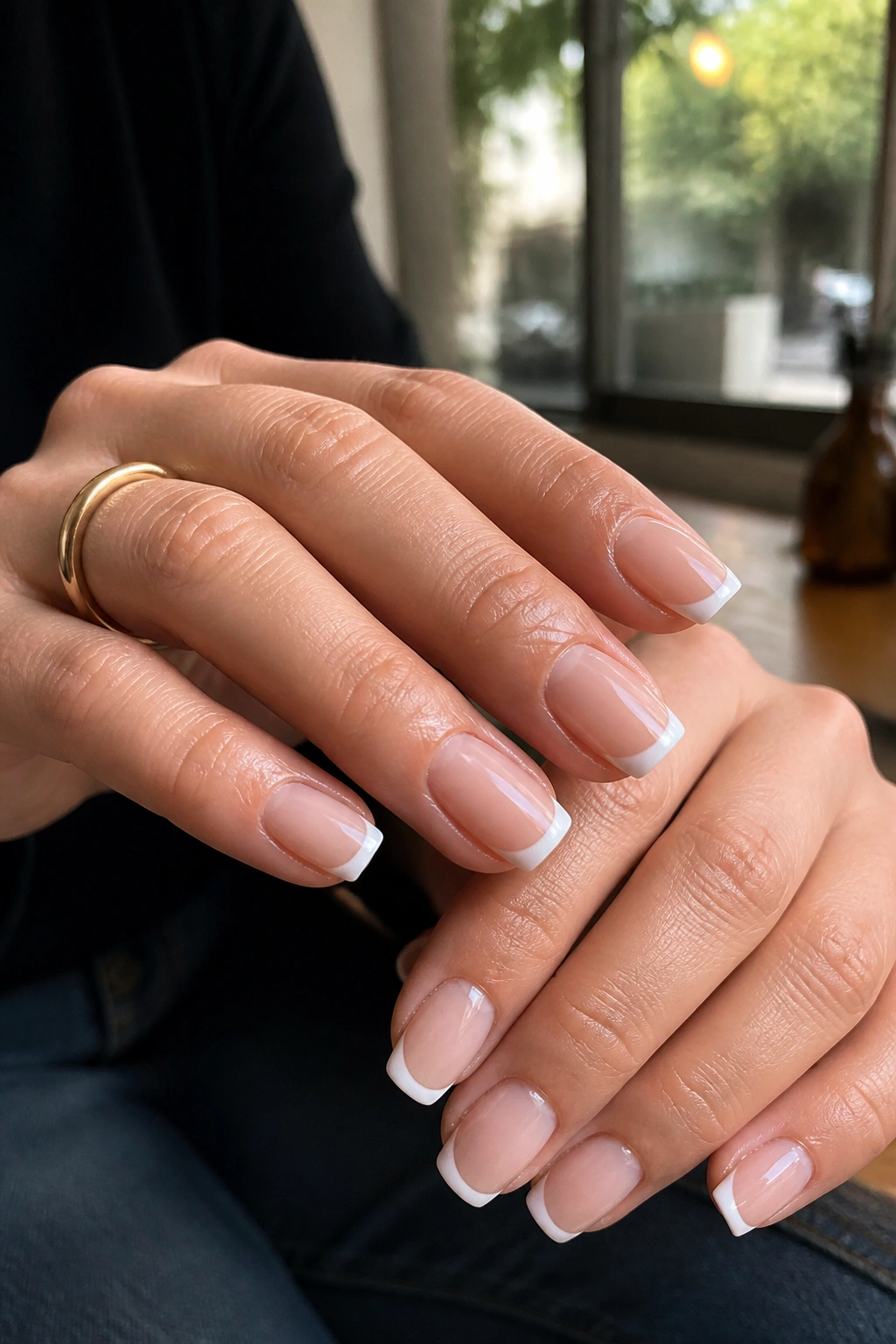
Short coffin nails catch people off guard because they sound impractical on paper and look polished once they’re done. The key is keeping the free edge modest—about 3 to 5 millimeters past the fingertip—so the shape still reads coffin instead of a cramped square.
Unlike longer sets, short coffin French tips rely on restraint. Thick white bands, chunky glitter, and overdone smile lines can swallow the nail. A narrow French line and a sheer neutral base keep the proportions right.
You also get a comfort bonus. Short coffin nails are easier for typing, buttoning jeans, cooking, opening cans, handling contact lenses—all the boring little tasks that decide whether you love a manicure or resent it by day three. Glamour has to survive real life.
A good tech will file the sidewalls straight enough to suggest the coffin shape without over-tapering. Too much taper on a short nail makes the tip look squeezed. Not enough taper leaves you with a square.
If you want a manicure that looks intentional from Monday through Sunday, this version earns its spot.
5. Long Coffin Nails With Bright White Tips
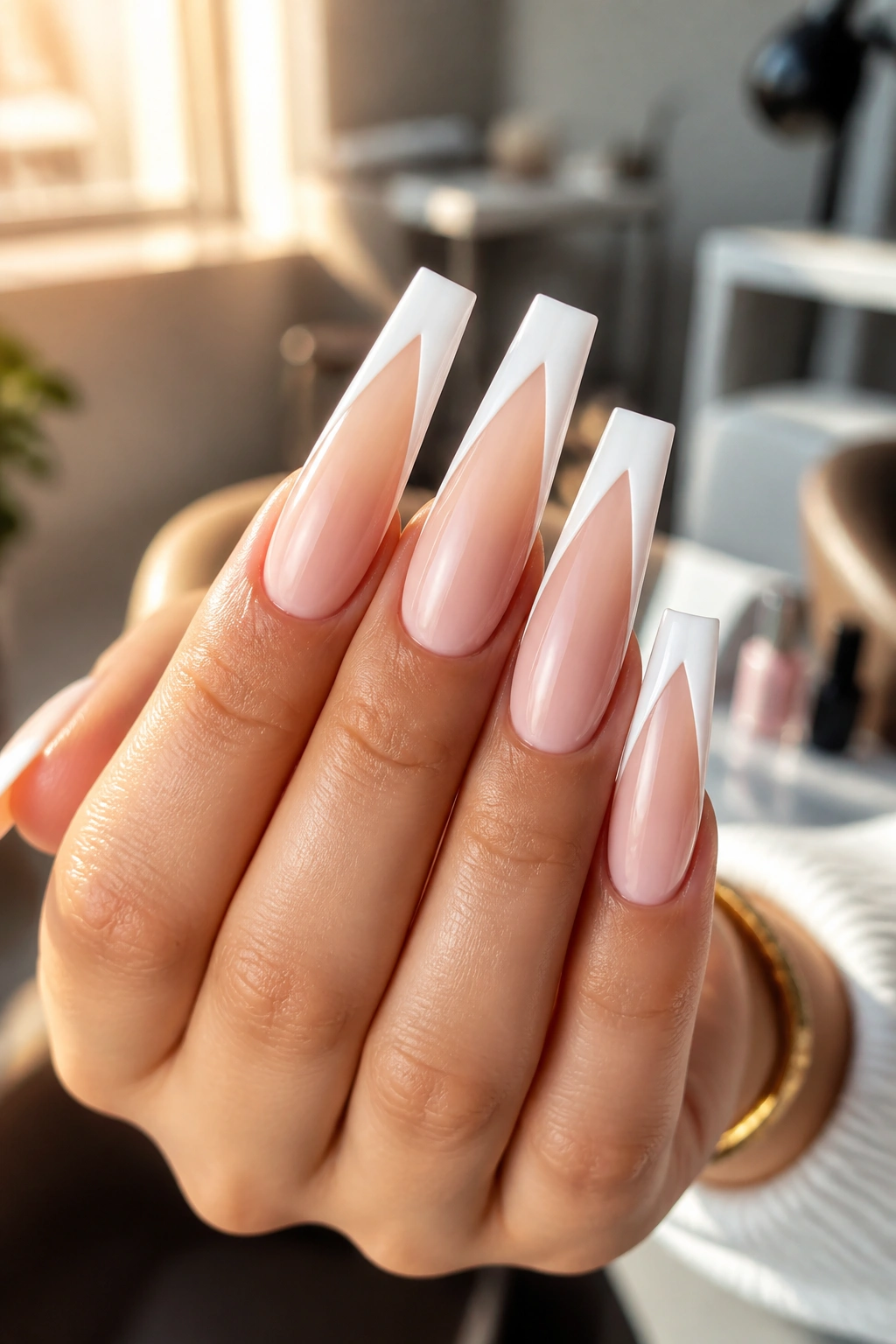
Long coffin nails can carry drama without looking messy—if the structure underneath is right. That’s the whole game.
A long set gives the French line room to show off. Bright white tips look crisp, deliberate, almost architectural on a longer coffin shape because the sidewalls stretch the design out. Keep the smile line clean, and the white edge looks like part of the build rather than an afterthought.
Length raises the technical stakes, though. The apex has to sit in the right place, usually around the lower third of the nail bed into the stress zone, so the extension doesn’t feel flimsy. Builder gel can work. Acrylic often gives extra strength on longer lengths, especially if you use your hands hard.
This is also one of those designs where bright white matters. Soft ivory can disappear on a long nail. A stronger white sharpens the silhouette and makes the shape read from across the room.
Skip this style if you hate maintenance. Long coffin French sets need more attention at fills, and any lifting near the sidewall becomes obvious fast. If you enjoy the look of an elongated hand and don’t mind the upkeep, though, few nail styles look cleaner.
6. V-Cut French Tips That Sharpen the Coffin Shape
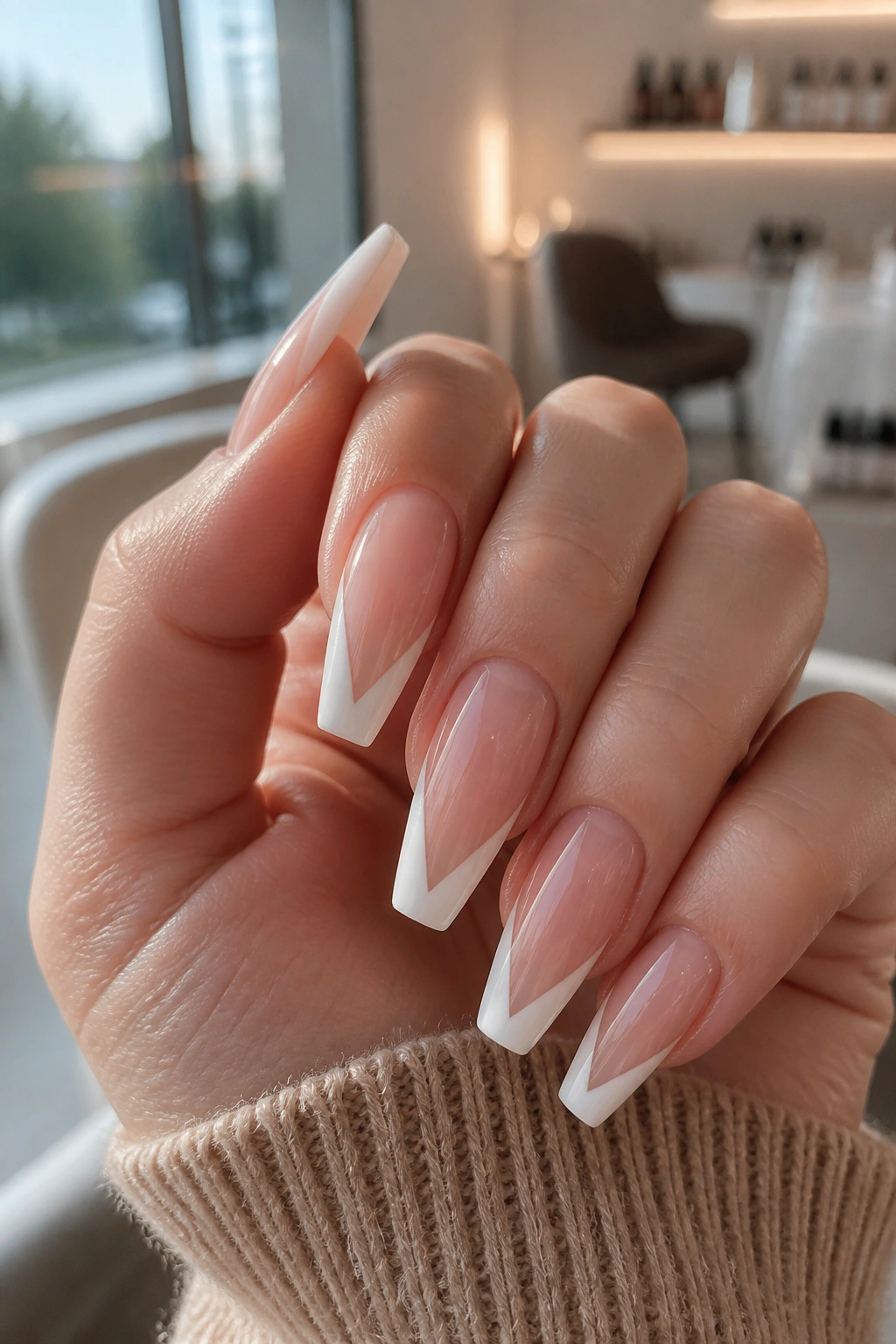
Picture the standard French line, then pull the center downward into a soft point. That’s the V-cut idea, and on a coffin nail it makes immediate sense because the shape already has those straight, narrowing sides.
I like this design when someone wants a French manicure with more edge but doesn’t want to jump straight to black tips, chrome, or stones. The V adds bite on its own.
What makes it different
Instead of a rounded smile line, the tip forms a clean central angle. On medium and long coffin nails, that angle echoes the taper and makes the set look sleeker. The visual effect is stronger than a traditional French, though the color story can stay classic.
A few details matter
- Keep the V soft enough to flatter the nail bed; a razor-sharp point can look costume-like.
- Use a fine liner brush so both sides of the V match.
- Leave enough nude space near the center so the shape doesn’t collapse into a solid triangle.
- Ask for consistent angle depth across the hand. One steep V next to one shallow V looks sloppy.
Small caution: if your natural nail beds are short, a deep V can exaggerate that. A shallower cut usually fixes it.
7. Double-Line French Tips With Negative Space
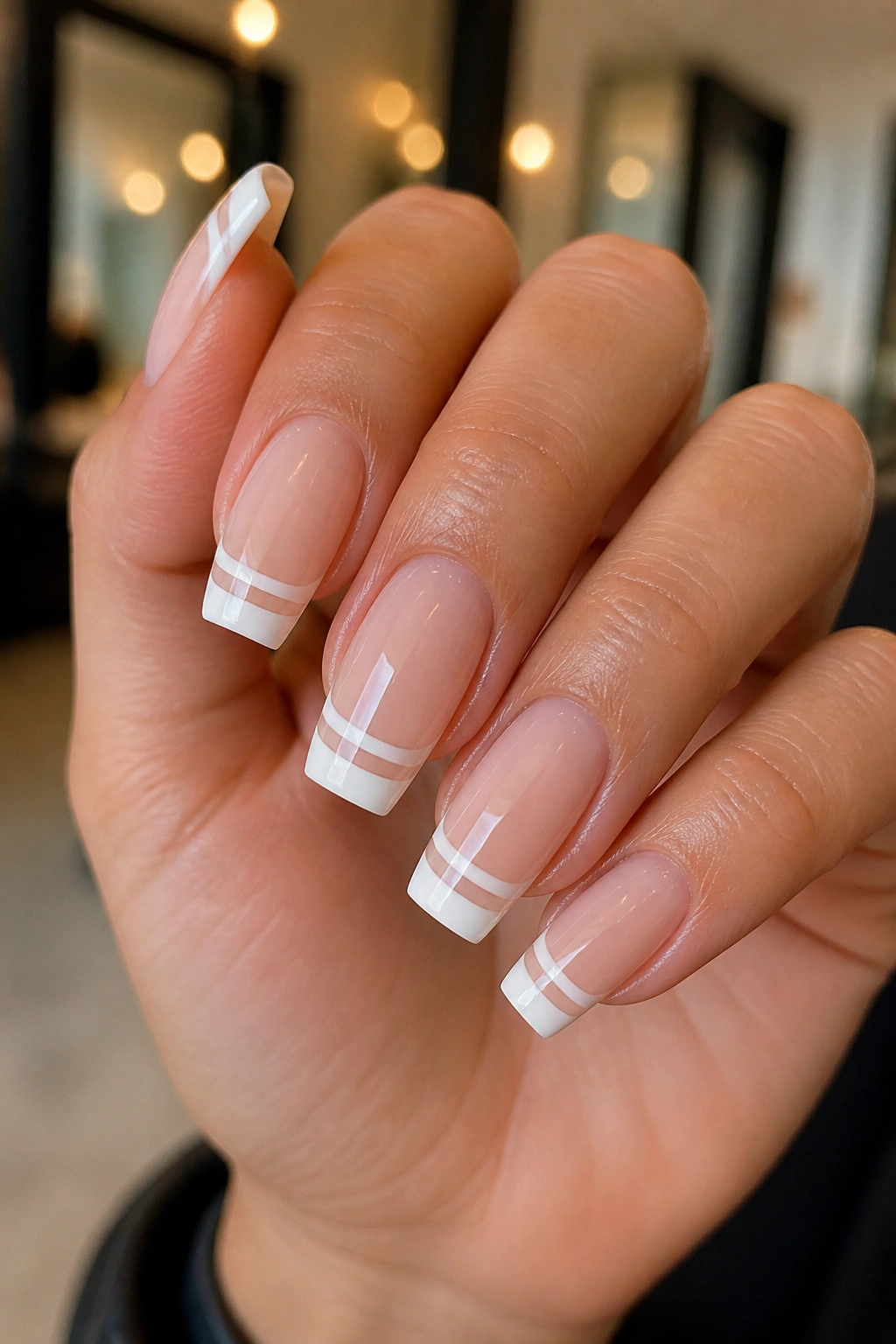
A single tip line looks clean. Two lines—with a sliver of nude between them—look deliberate in a more graphic way. That negative-space strip changes the whole manicure, especially on a coffin shape where straight edges already create a tailored effect.
You can do this with white and nude, white and silver, or even two shades of white, one bright and one soft pearl. The gap between the lines should stay narrow, often around 1 millimeter, so the design stays refined. Make it too wide and the set starts feeling busy.
There’s also a practical upside. A double-line French adds interest without forcing you into charms, decals, or heavy art. The manicure still reads polished from a distance, though up close it has more thought behind it than a standard tip.
This style suits medium lengths best. On short nails there isn’t always enough room for two clean lines unless your tech is meticulous. On extra-long nails, the design can work, though I’d keep the rest of the look spare—no giant crystals, no oversized 3D flowers, none of that. The French line should stay the focus.
A quiet design can still feel sharp. This one proves it.
8. Ombre French Tips With a Soft Blended Edge
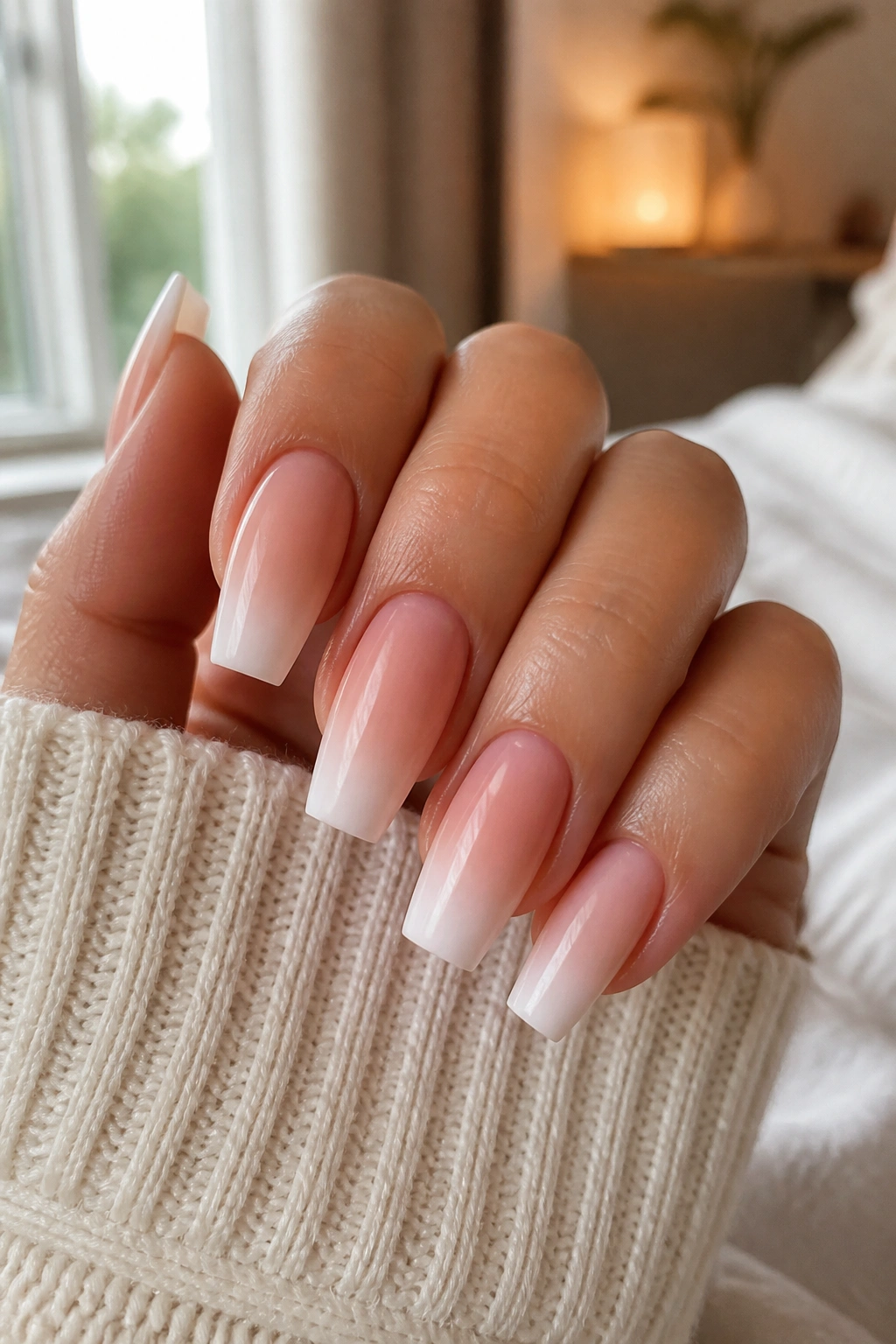
Not every French tip needs a hard line. A soft white fade from the free edge into a nude or blush base gives coffin nails a gentler finish and hides grow-out better than a crisp painted smile line.
The fade needs control. You want the white strongest at the edge, then diffused upward in a smooth gradient without turning cloudy in the center. Sponge techniques can work on natural nails, though gel ombré with a brush or airbrush tends to look cleaner on coffin sets.
Why this version earns repeat appointments
A blended French softens the flatness of the coffin tip. If you love the shape but don’t want the manicure to look stern, ombré is a smart middle ground. It’s also forgiving. Tiny chips at the edge and early regrowth are less obvious than with a hard white band.
Where people go wrong
The white fade often creeps too far down the nail. Once that happens, the nude base disappears and the set can look dull. Keep at least half to two-thirds of the nail bed free from heavy white so the design still has air in it.
This is one of my favorite options for weddings, formal events, or anyone who wants a French look that doesn’t announce itself from ten feet away.
9. Matte French Tip Coffin Nails With Glossy Tips
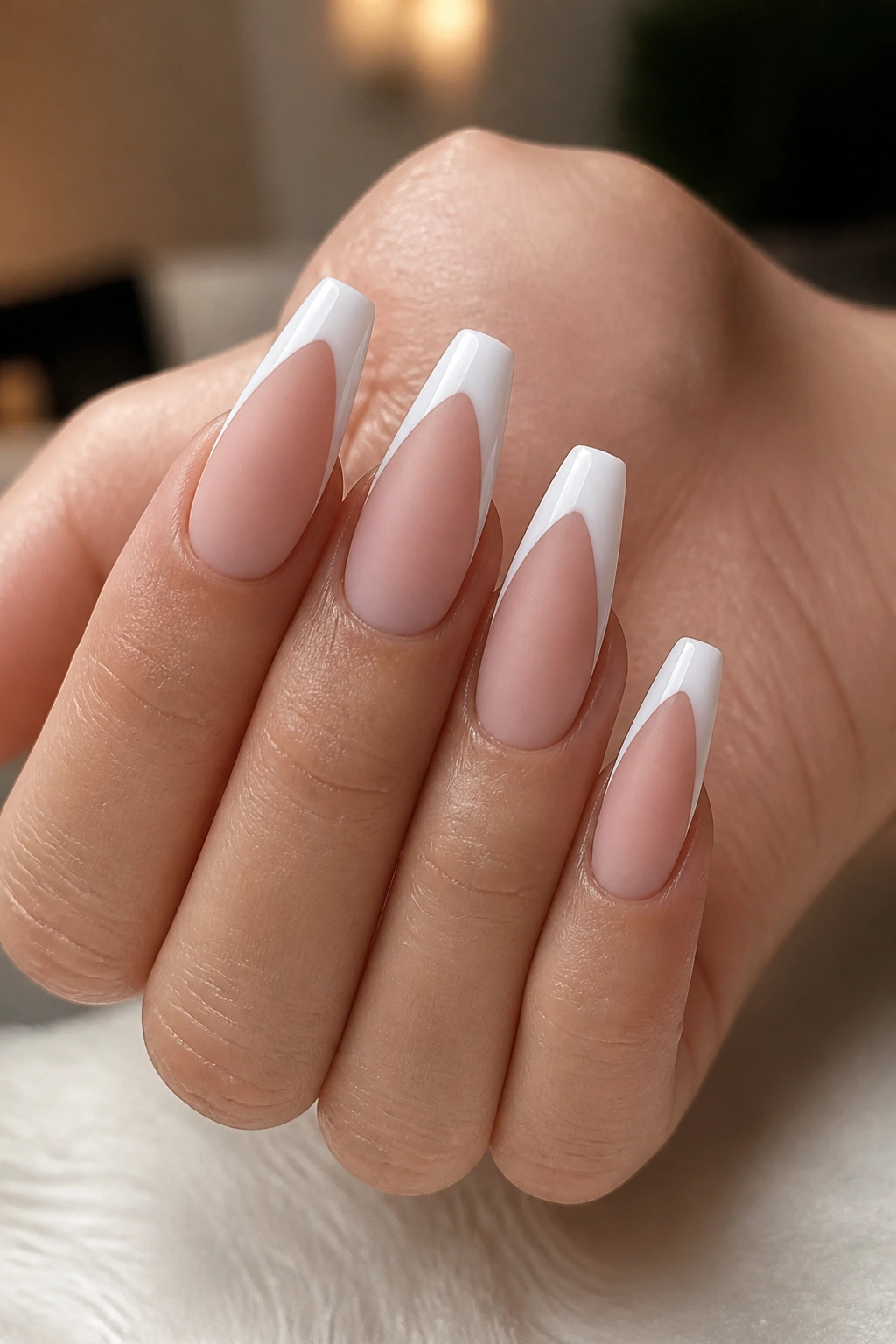
Touch a matte top coat and you feel the difference right away. It has that soft, almost velvety drag under the finger, which makes a glossy white tip stand out even more.
That texture contrast is what sells the look. Instead of relying on color contrast alone, you let finish do part of the design work. A nude matte base with a sealed glossy French edge feels modern on a coffin shape because the structure stays crisp while the surface stays muted.
You do need clean application. Matte top coat can show bumps, leftover dust, and uneven builder beneath it. Glossy tips also need sharp borders where the textures meet. If the line wobbles, the whole trick falls apart.
This style works best with minimal extras. No big stones, no chunky glitter, no overloaded accent nails. The point is contrast between surfaces: soft against slick, muted against glassy.
Wear cuticle oil with some care here. Oil brings life back to skin, though excess can temporarily darken matte top coat and make the finish patchy until you wipe it down. That doesn’t ruin the manicure, though it catches the eye.
For someone bored with plain glossy French tips, this version feels fresh without straying far from classic territory.
10. Chrome French Tips Over a Sheer Nude Base
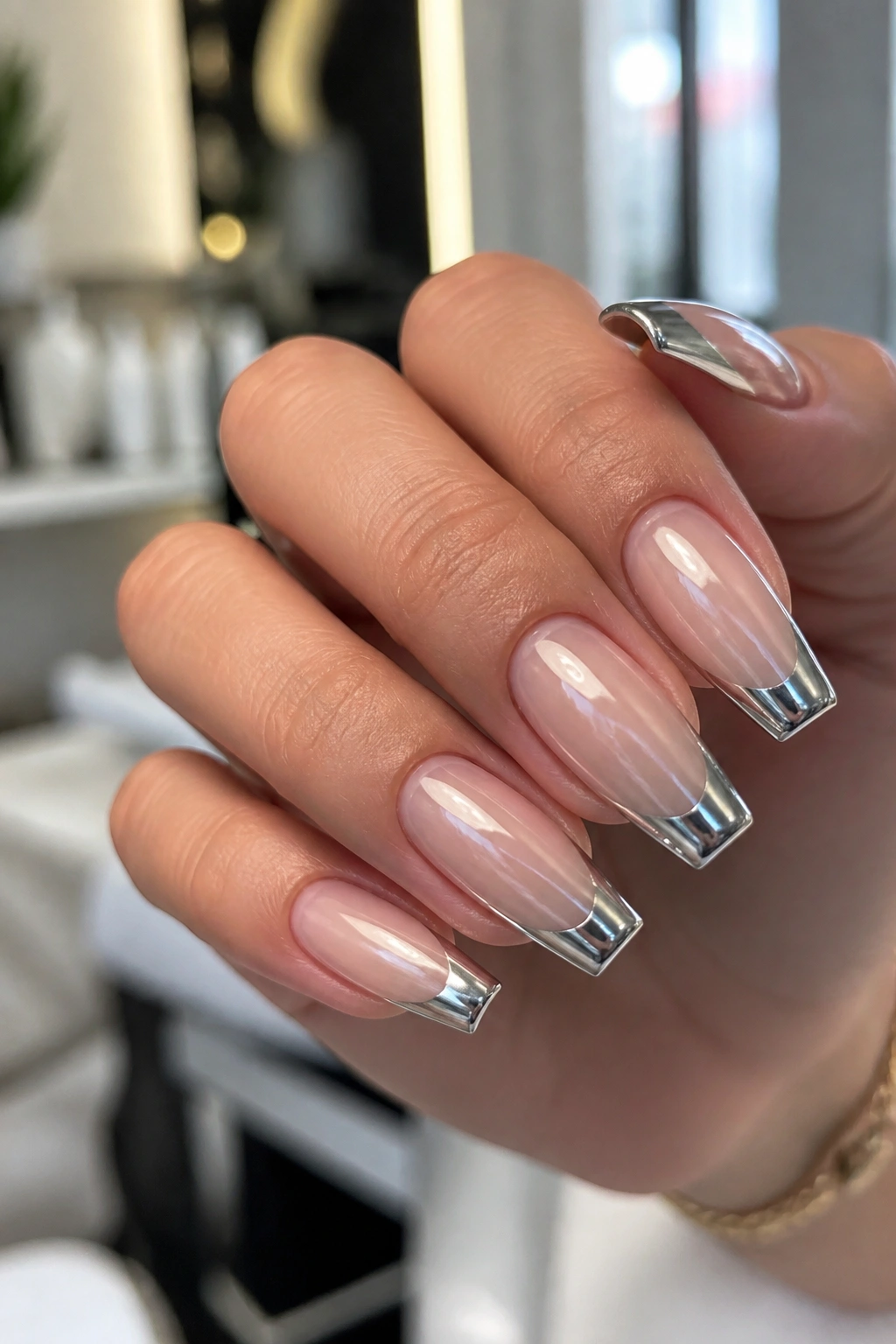
Chrome can go tacky fast. Used with restraint, though, it gives French tips a clean metallic edge that looks far more expensive than a full chrome nail.
The trick is limiting the effect to the tip. A pearlescent, silver, or champagne chrome rubbed over a cured no-wipe gel on the French section adds light without swallowing the nude base. On coffin nails, that metallic strip emphasizes the squared end in a way regular polish can’t.
I’d keep the base sheer and polished rather than milky and opaque. Sheer nude under chrome feels lighter and lets the reflective tip stand out without competing. The effect shifts depending on light—cooler indoors, warmer in sunlight, more mirror-like under direct flash.
This one works nicely for events, though it isn’t locked to event wear. A restrained chrome tip can still feel clean for daily life if the rest of the hand stays understated. Shorter lengths benefit from a thinner metallic edge. Longer lengths can handle a bolder chrome band or a deeper smile line.
One note from hard experience: chrome shows scratches earlier than plain white. Ask for a sturdy top coat and don’t treat your nails like screwdrivers. People do. They always regret it.
11. Side French Tips That Sweep Diagonally Across the Nail
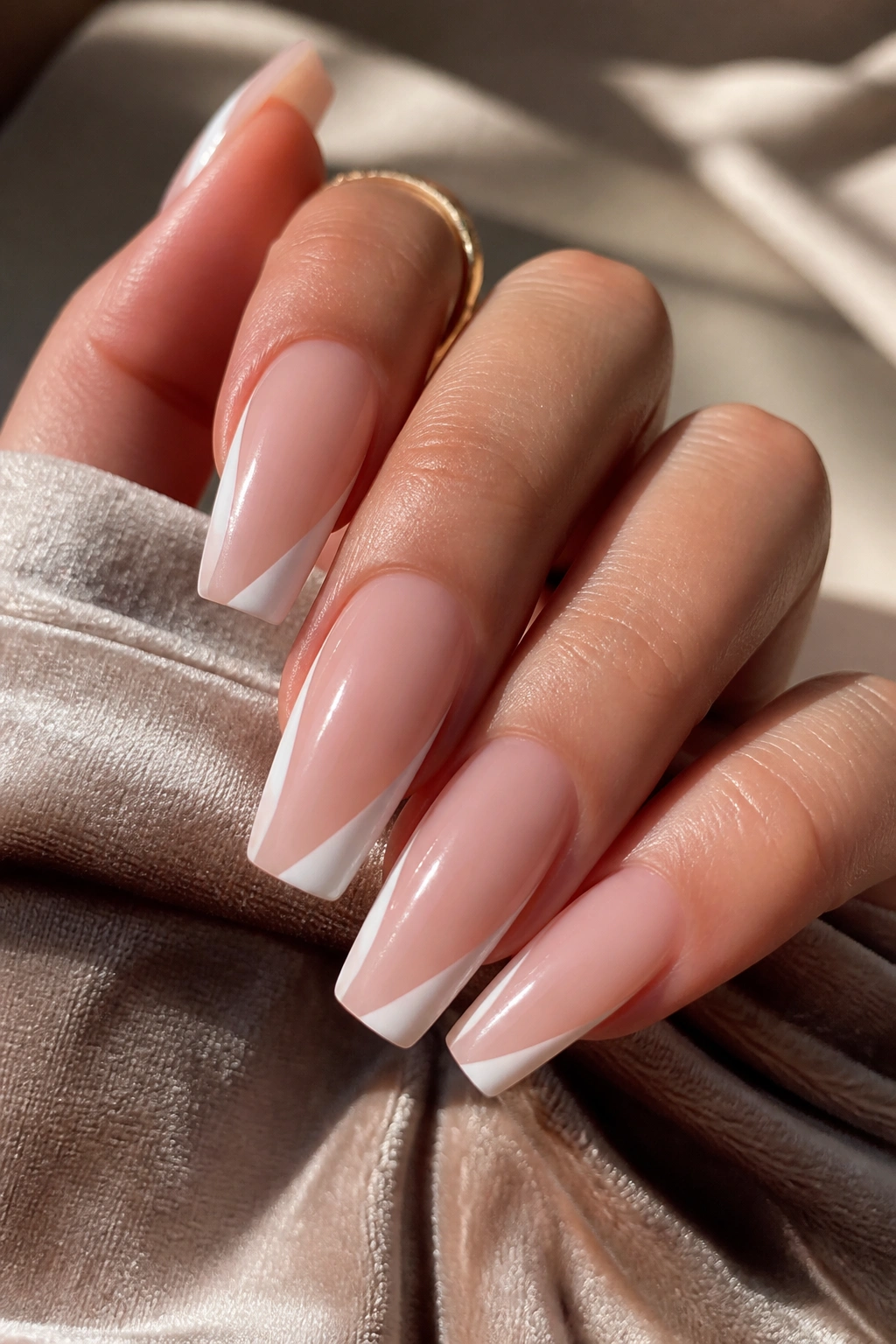
A side French shifts the tip line off-center so it sweeps diagonally across the nail instead of running straight from left to right. On coffin nails, that diagonal movement breaks up the flat edge and adds motion to a shape that can otherwise look strict.
This design helps wider nail beds because diagonal lines tend to slim what they cross. A standard horizontal tip can emphasize width; a side French redirects the eye and creates a longer, leaner look.
How the angle should sit
The sweep usually starts lower near one sidewall and rises toward the opposite corner, following the coffin taper instead of cutting against it. The line should look intentional, not accidental. If the diagonal is too shallow, people may read it as a crooked French rather than a design choice.
Strong ways to wear it
- White diagonal tip on a beige-pink jelly base
- Black side French on a sheer nude
- Pearl chrome diagonal line with a micro crystal near the high point
- Two thin diagonal whites instead of one thick sweep
This style feels a touch fashion-forward, though it still belongs in the French family. That balance is why I like it.
12. Reverse French Tips With a Clean Cuticle Crescent
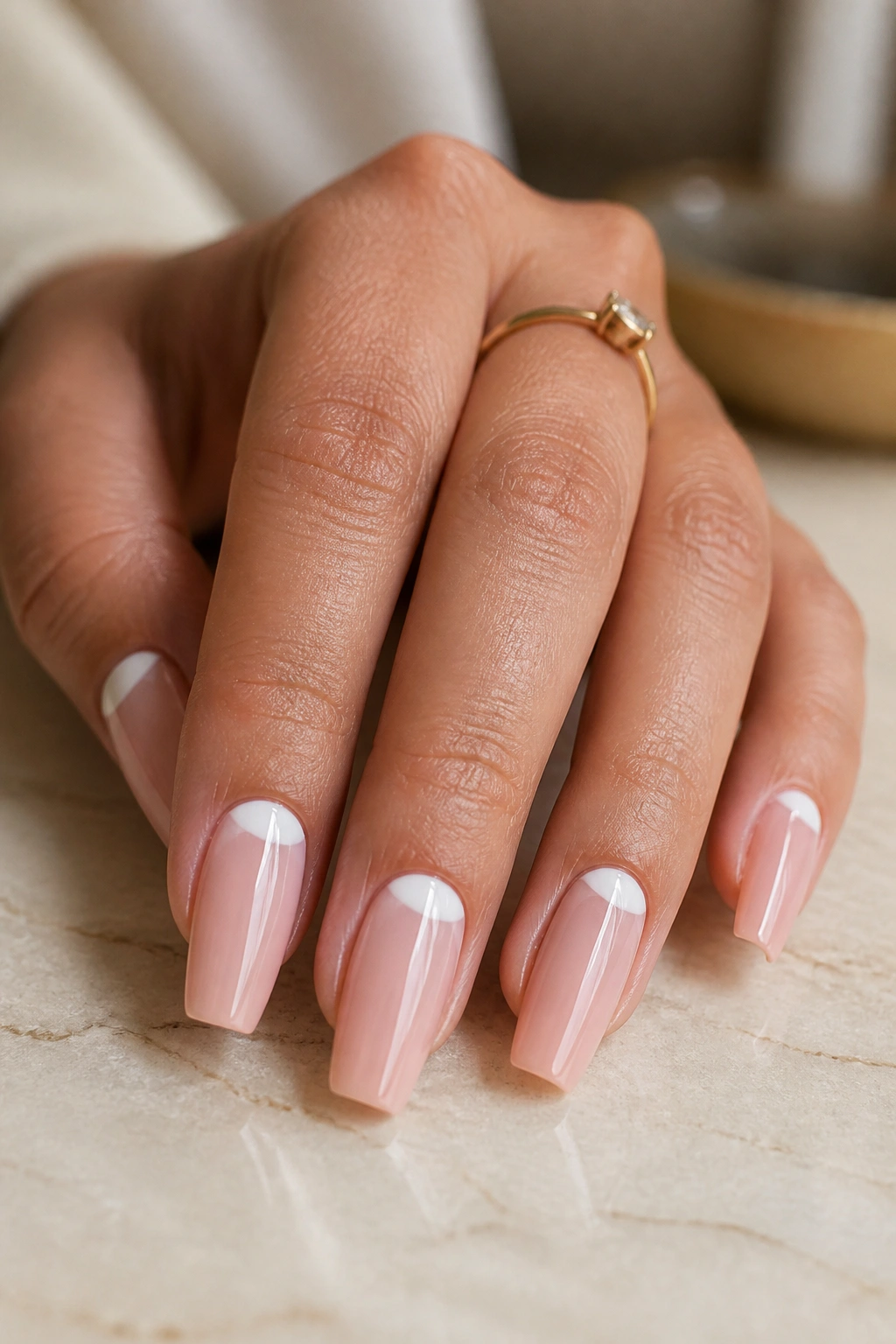
Not all French designs belong at the free edge. A reverse French puts the contrast at the base of the nail, tracing the cuticle line with a crescent of white, metallic, or glitter detail while the rest of the nail stays nude.
On a coffin shape, that cuticle framing can look striking because it draws the eye upward first, then lets the straight sidewalls finish the silhouette. The result feels tailored and a little unexpected.
This design needs precision near the cuticle. Flooding product there ruins the clean crescent effect and makes grow-out messier. A fine brush and a controlled gap—often less than 1 millimeter from the skin—matter more here than on many other French variations.
You can keep the rest of the nail plain and glossy, or pair the reverse line with a faint micro tip on the free edge for a double-French effect. If you try both, keep each line thin. Heavy top and bottom borders can crowd the nail and shrink the nude center.
Reverse French tips are a strong pick when you want something sleek but a little less expected than the standard white edge. Quiet from far away. Smarter up close.
13. Glitter French Tips With a Fine Shimmer Edge
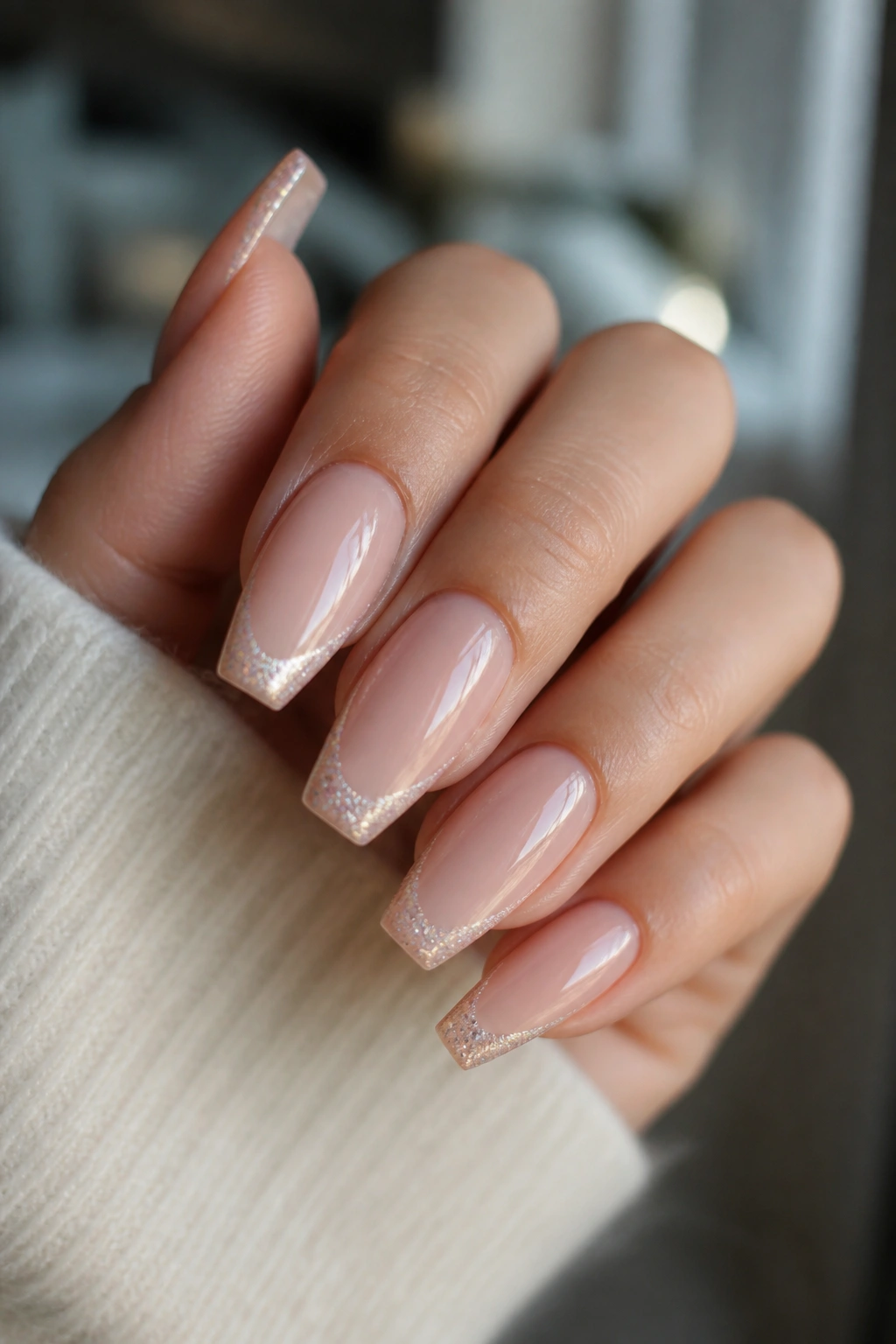
Glitter on French tips goes wrong when the particles are too big. Chunky glitter can make the tip look rough, uneven, almost gritty even when top coat smooths it out. A fine shimmer or micro-glitter edge gives you light without bulk.
That’s why I prefer a dust-like sparkle on coffin shapes. The nail stays clean, the outline stays visible, and the French line still reads as a French line rather than a full glitter dip. Silver, soft gold, champagne, and iridescent pearl all work, depending on the base color and jewelry you wear most often.
A thin glitter tip also grows out well. Tiny chips blend better than they do with a solid white or black tip, and the shimmer can disguise slight wear at the edge. Not forever. Nothing lasts forever on hands that wash dishes, type all day, or pry open soda cans.
Use this style when you want polish with a touch of light, not a full sparkle moment. One accent nail is plenty if you’re adding crystals too. More than that, and the design can lose its clean finish.
Subtle shine has more mileage than people give it credit for.
14. Black French Tip Coffin Nails for a Tailored Finish
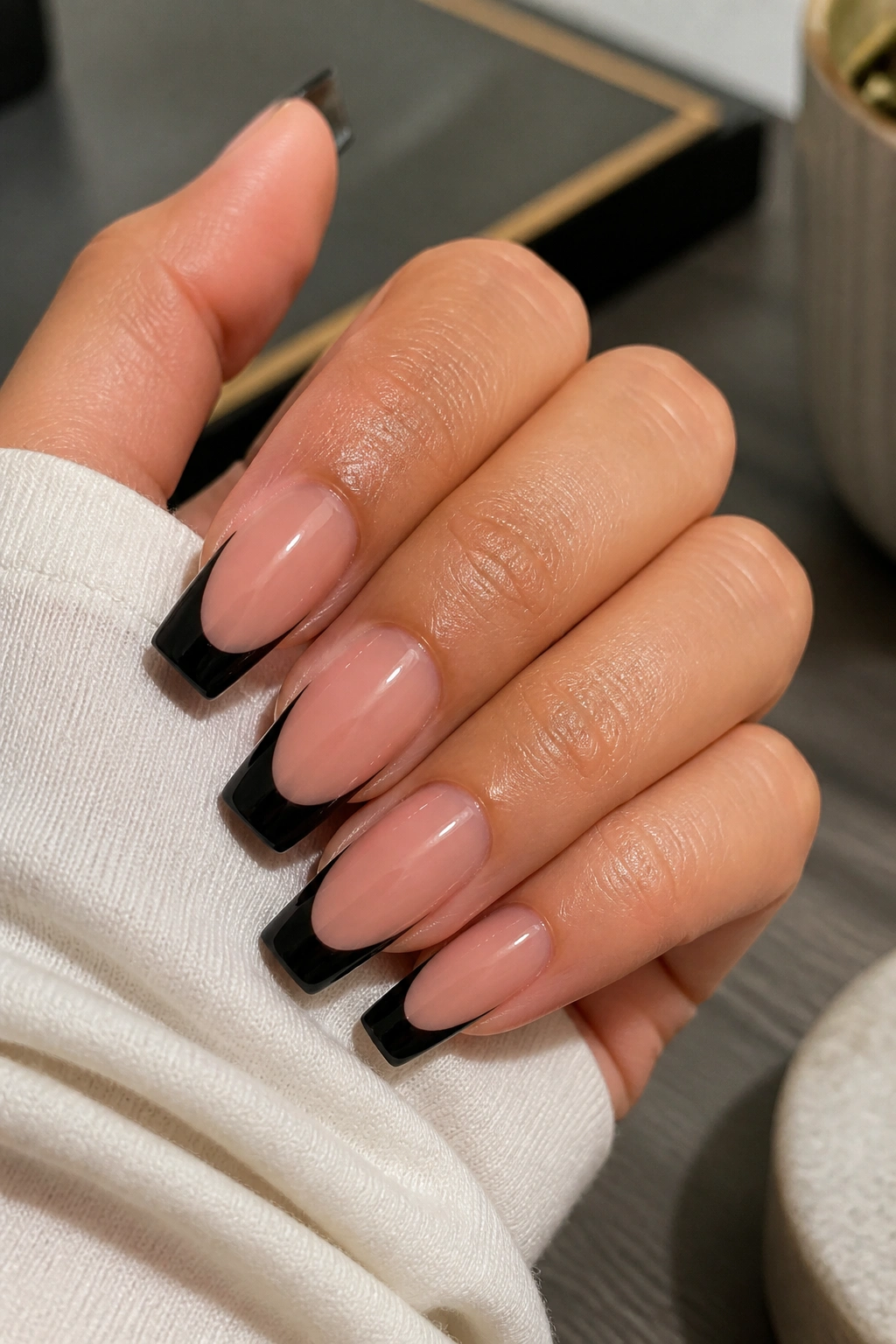
White gets all the attention, though black French tips can look sharper on coffin nails because the shape already has that straight, structured outline. A glossy black tip against a nude base feels clean, edited, and a little severe in the right way.
The base choice matters even more here. A warm beige nude under black can soften the contrast. A cool pink nude makes the look crisper and more graphic. Either can work; the mood changes. I lean toward a semi-sheer neutral because it keeps the manicure from looking too heavy.
What makes black feel different
Black doesn’t give you that traditional “fresh manicure” brightness white does. It gives definition. The edge looks stronger, the shape looks more intentional, and rings stand out more against it.
Who wears this well
- Anyone who likes minimalist clothing with sharp lines
- People who think white French tips feel too sweet
- Medium to long coffin lengths, where the black edge has room to breathe
- Clients willing to keep the perimeter clean, because black shows flaws fast
My take: if you want a French manicure with bite, black beats overload every time.
15. Pearl-White French Tips With Tiny Crystal Accents
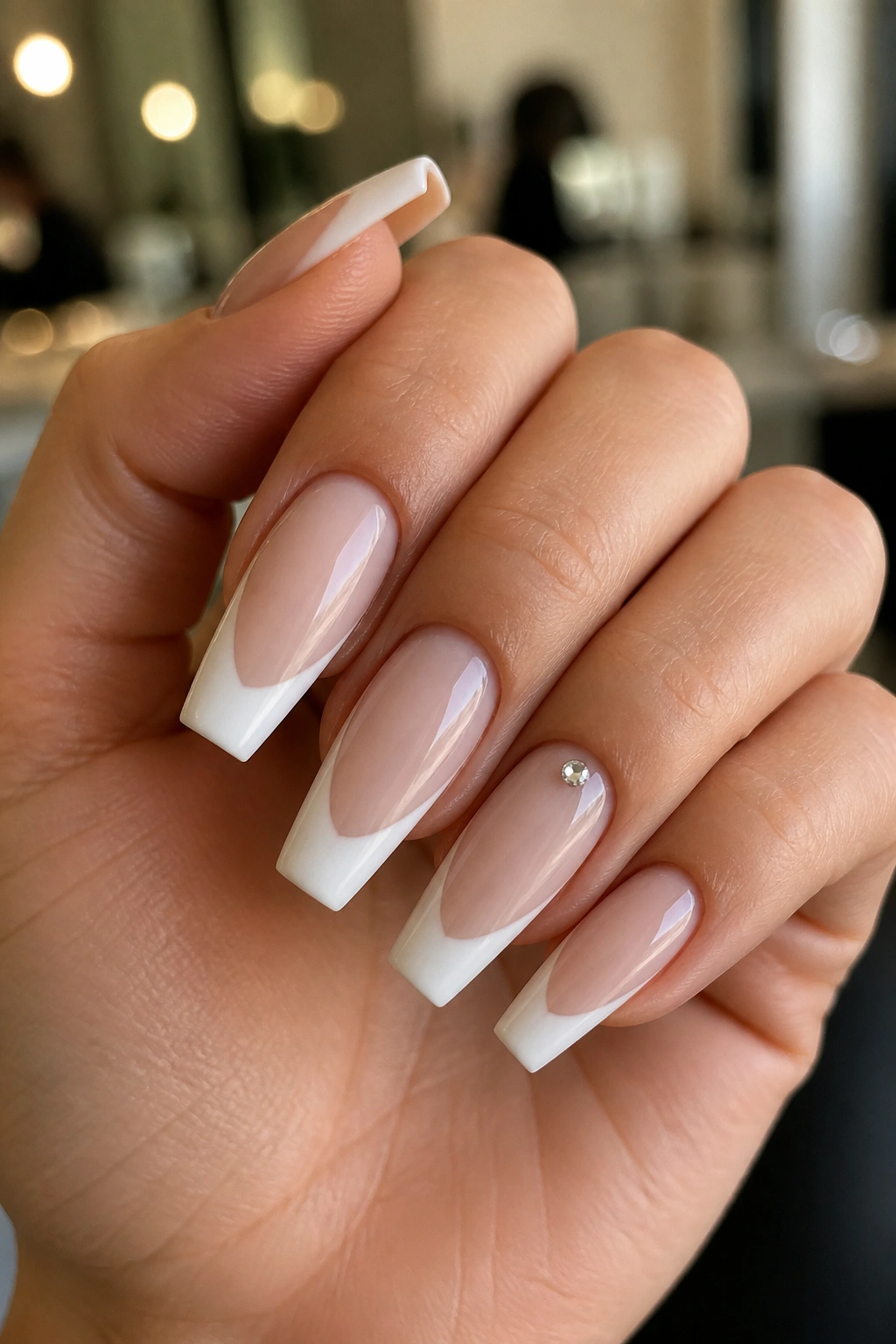
A plain pearl-white tip has a softer glow than stark white, and that softness looks beautiful on coffin nails when the goal is elegance without flatness. Add one or two tiny crystals, not a cluster, and the design gets a little lift without turning bridal in a predictable way.
Placement decides everything here. A single 1.5 to 2 millimeter crystal near the cuticle on the ring finger keeps the look restrained. A small crystal at the corner where the smile line meets the sidewall can also work, though symmetry needs to be exact or the set feels fussy.
I like pearl white on milky nude bases because both have a gentle luminosity. Bright white can clash with crystals if the stones have cooler reflection. Pearl sits more comfortably beside them.
This is also a smart option if you want something dressy that still makes sense after the event is over. Remove the crystal accents at fill time and the manicure drops back into a clean pearl French without needing a full redesign.
Tiny details carry more weight than people expect. On nails, a millimeter can change the whole mood.
What to Ask for at the Salon and How to Keep the Tip Line Crisp
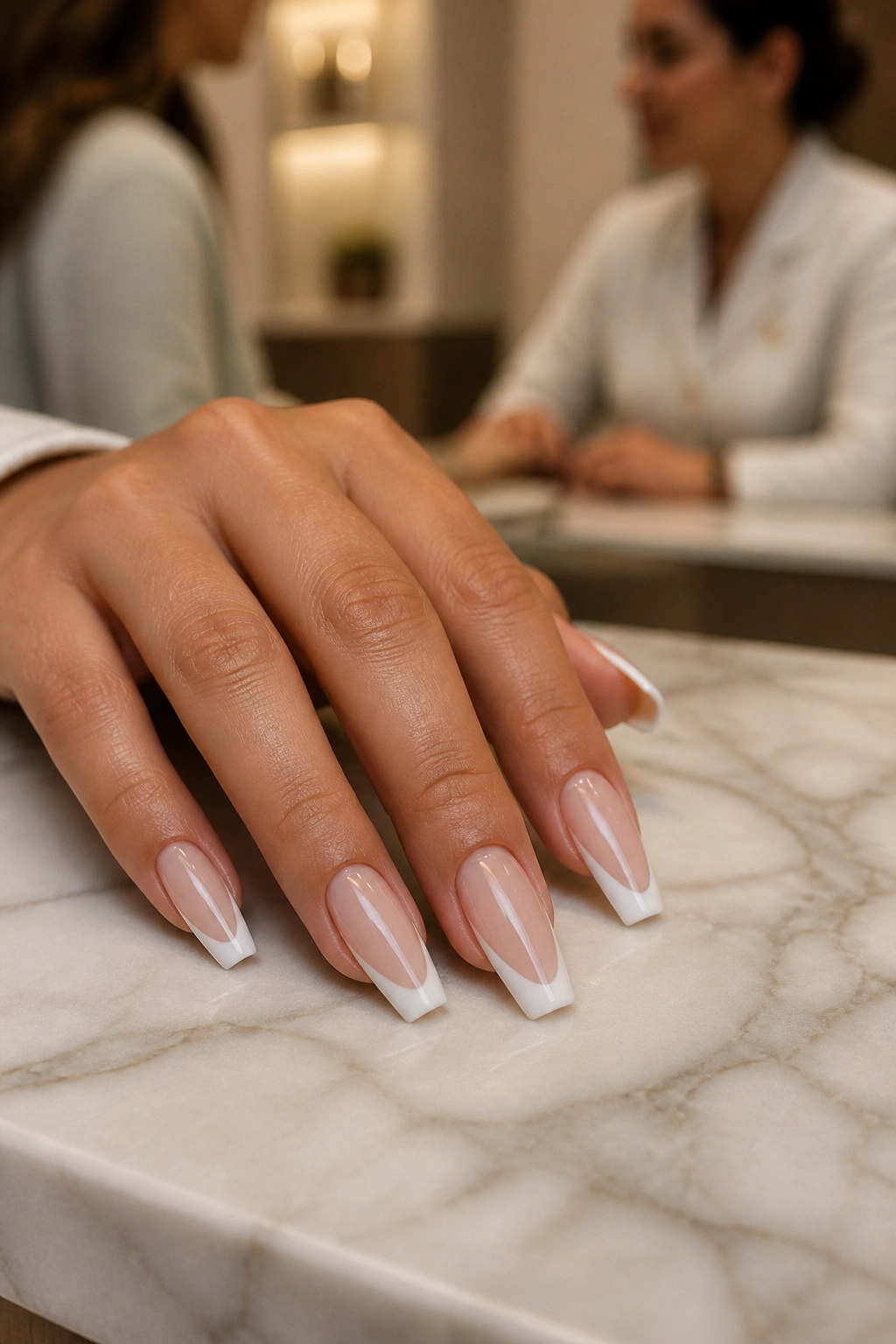
Walking into the salon with one blurry screenshot often leads to disappointment. Better language helps. Tell your tech the length, tip thickness, base opacity, and smile line shape you want. Say “short coffin with a 1-millimeter micro French on a sheer pink-beige base” and you’ll get closer to the result than if you say “I want classy French nails.”
If you’re booking acrylic or hard gel, ask how they build structure on the length you want. A long coffin set needs support through the apex and stress area. If the product is too flat, the nails may look fine on day one and feel unstable a week later.
A few salon phrases are worth keeping:
- “Please keep the sidewalls straight and don’t over-taper.”
- “I want the French line thin and even across every nail.”
- “Use a milky nude, not a flat opaque pink.”
- “Cap the free edge so the tip color holds longer.”
- “Show me one nail before you do all ten.”
Aftercare is less glamorous, though it’s what keeps the manicure looking sharp. Use cuticle oil once or twice a day. Wear gloves for long dishwashing sessions. Don’t peel at lifting edges. Book a fill before the balance goes off—often around 2 to 3 weeks, depending on growth and length.
French tips reward neatness. The cleaner your upkeep, the better they look.
Final Thoughts
The strongest French tip coffin nails all have the same backbone: clean shape, balanced tip width, and a base color that flatters the hand instead of fighting it. Once those three parts line up, you can go classic, sharp, soft, metallic, matte, or dark without losing that polished effect.
If you’re stuck between two designs, choose based on maintenance before mood. Micro French, ombré, and fine glitter tend to hide wear better than bright thick tips or heavy chrome. Long dramatic sets look striking, though they ask more from you and from the tech building them.
A French manicure does not need to be boring to look refined. It only needs a steady line, a good file, and enough restraint to let the coffin shape do what it does best.