

Most people assume coffin nails need length. They do not—at least not as much as salon photo feeds make it seem. Coffin nails for very short nails can look crisp, balanced, and flattering, but the trick is accepting that the best version is usually a soft coffin or micro coffin, not a dramatic taper with a sharp, wide tip.
That detail matters more than people think. When the free edge is only 1 to 3 millimeters long, every tiny filing choice shows: one heavy stroke on the sidewall can make the nail look pinched, and a tip filed too flat can make the whole hand look shorter. On extra-short nails, shape and design are tied together. You cannot treat them as two separate decisions.
I’m also going to say the quiet part out loud: some short coffin sets fail because the design was picked first and the nail architecture came second. A dark French line, a chunky gem cluster, a thick tip, a square-off that is too blunt—those things eat up visual space fast. Short nails do not give you room to waste.
Get the taper right, keep the proportions honest, and suddenly coffin works in places where people swear it can’t.
Why Soft Coffin Nails for Very Short Nails Need a Gentle Taper
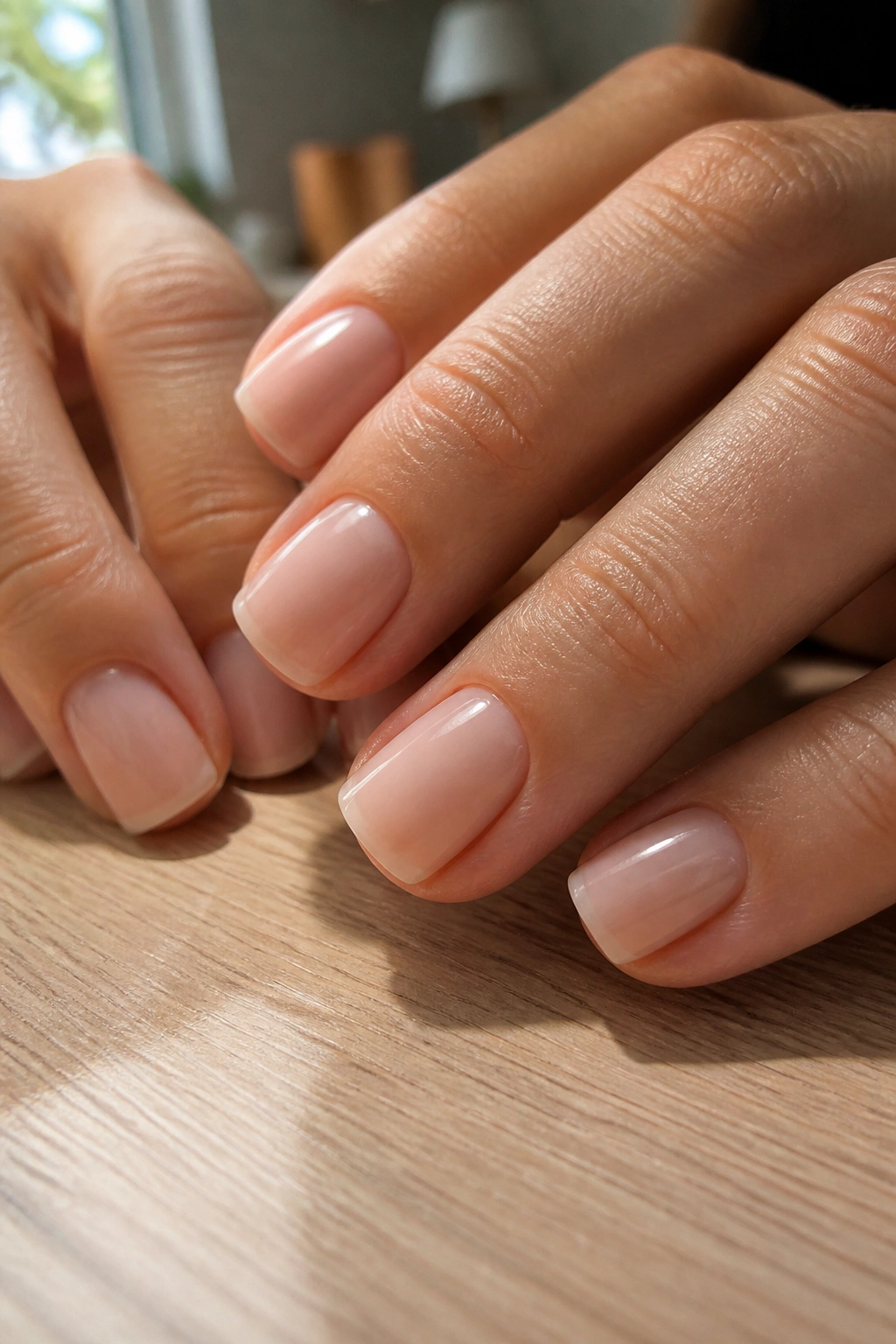
A true long coffin shape has enough length to narrow the sidewalls and still keep strength at the tip. Short nails do not have that luxury. On a very short nail, the prettiest coffin shape is almost always a softened version with a flat edge that is narrow by a hair, not by a mile.
Picture the difference between a pencil line and a thick marker line. That is what over-filing does here. If you taper too hard, the nail looks squeezed in the middle and flimsy near the free edge. If you leave it too square, it stops reading as coffin at all.
The sweet spot sits in the middle:
- a straight sidewall through most of the nail
- a small inward taper in the last third
- a flat tip that stays slightly narrower than the widest part of the nail plate
- corners softened with two light bevels instead of a deep clip
That last point is the one people miss.
A short coffin should not look like a square with the corners chopped off, and it should not look like a triangle with a blunt end. It needs both stability and a hint of narrowing. When a tech gets that balance right, the nail looks longer than it is.
If your natural nails are bitten down, fan outward, or peel at the corners, a bare natural-filed coffin may not hold. In those cases, a structured gel overlay or a short full-cover tip gives the shape enough support to stay sharp for more than a couple of days.
The Filing Pattern That Makes Coffin Nails for Very Short Nails Look Longer
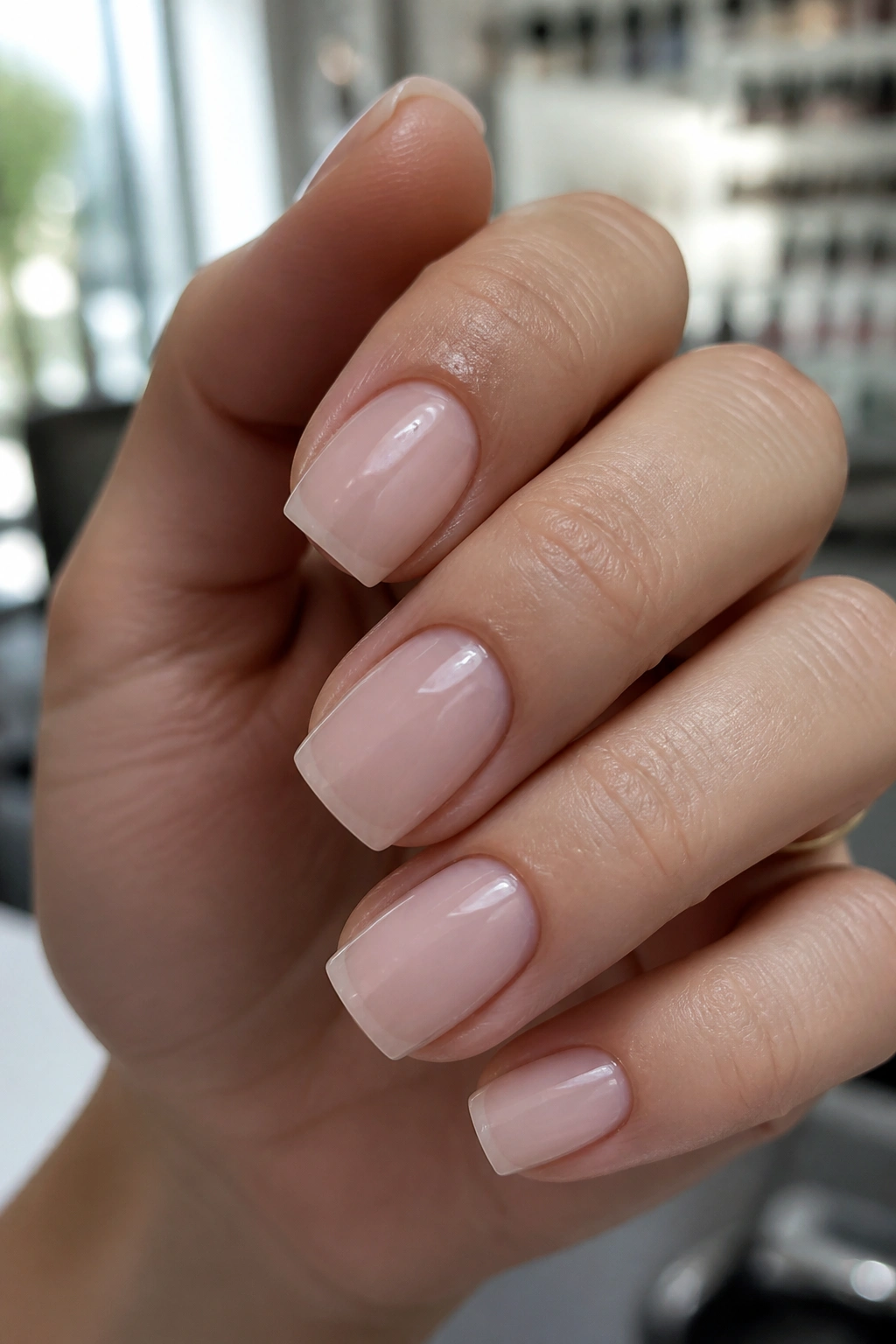
Ask ten people to explain short coffin shaping and half of them will talk only about the tip. The tip matters, sure. The sidewalls matter more.
On very short nails, the eye reads width before it reads length. That means the file should do most of its work along the lower sidewalls first, then the upper sidewalls, and only then the free edge. A 180-grit file is usually enough for shaping product; for natural nails, many techs switch to 240 grit to avoid shredding the edge.
The shape sequence that works
- Refine the sidewalls so they look clean and parallel from the cuticle down through most of the nail.
- Taper only the last third with tiny matching strokes on each side.
- Flatten the free edge with short, straight passes.
- Bevel the corners softly so the tip looks intentional, not blocky.
One uneven pass can throw off the whole look. I wish that were an exaggeration. On a long acrylic set, you can hide a small mistake. On a 2-millimeter free edge, you cannot.
What to watch in the mirror
Turn the hand palm-up for a second. If one sidewall looks steeper than the other, the coffin shape will read crooked from across the room. Also check the tip width against the cuticle area. A short coffin usually looks best when the tip is around 80 to 90 percent of the cuticle width, depending on the nail bed.
That tiny proportion shift changes everything.
Base Shades That Keep Coffin Nails for Very Short Nails from Looking Wide
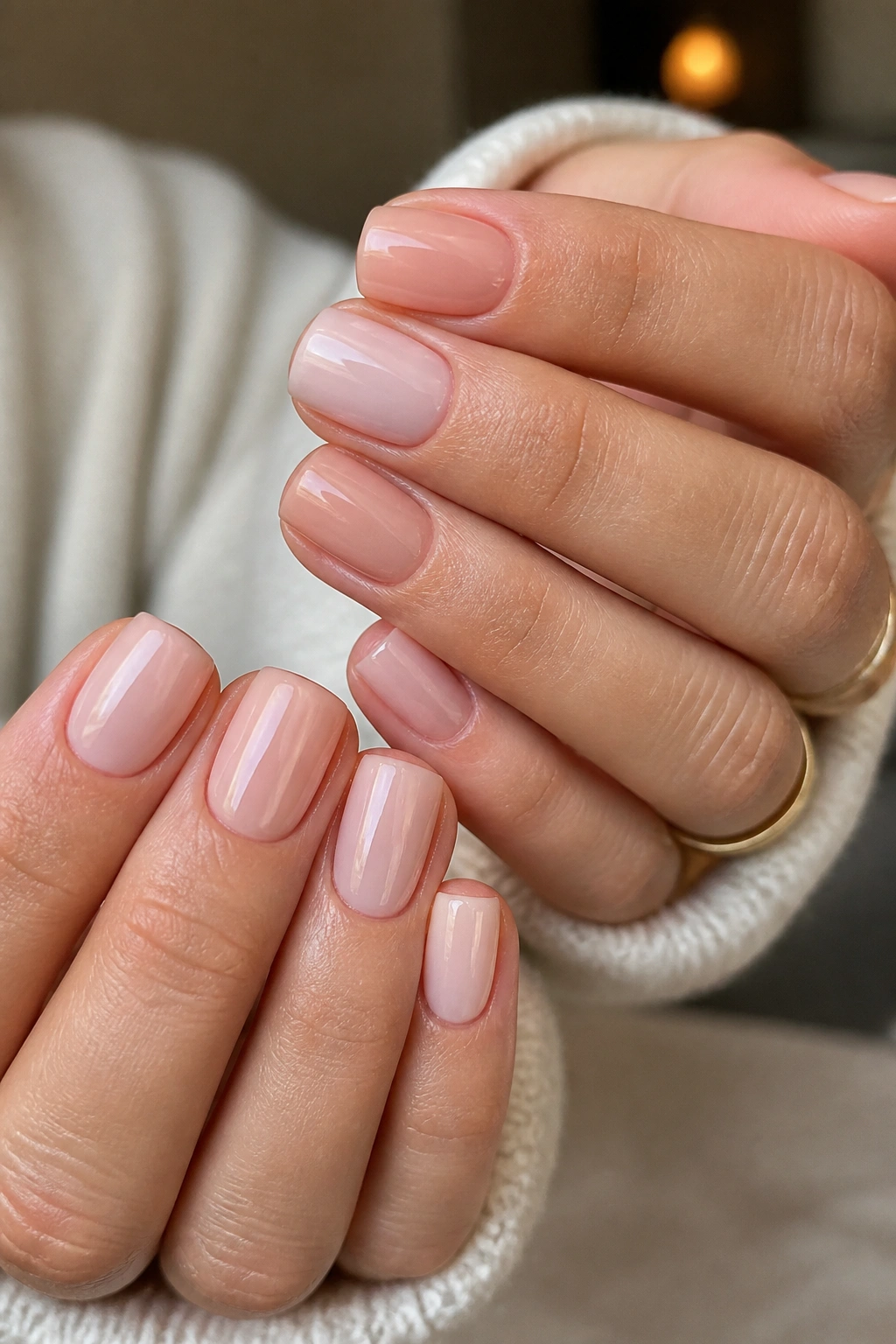
Color placement does half the shaping work on a short manicure. A shade that looks polished on almond nails can look squat on a micro coffin if it is too chalky, too flat, or too thickly applied.
The easiest win is a sheer or semi-sheer base with depth, not a heavy opaque block of color. Milky pink, rosy beige, sheer mocha, translucent berry, and soft jelly tones all let a little light pass through. That slight transparency makes the nail plate look less dense.
Opaque pastel can be rough on short coffin shapes. So can thick white. They flatten the nail visually and call attention to width. Matte finishes do that too unless the color underneath has enough contrast to slim the shape.
A few shades nearly always play nicely with short coffin:
- milky pink for a clean, natural look
- beige with a neutral undertone to lengthen the finger
- taupe or greige for a narrower-looking silhouette
- sheer espresso or cherry jelly when you want depth without a solid block of darkness
- soft pearl for light reflection that still shows the nail underneath
There is one more trick worth stealing: keep bolder art centered or angled. A centered line, a diagonal French, a vertical chrome accent—those placements pull the eye up and down. Side-heavy art does the opposite.
When a Structured Overlay Beats Bare Natural Nails
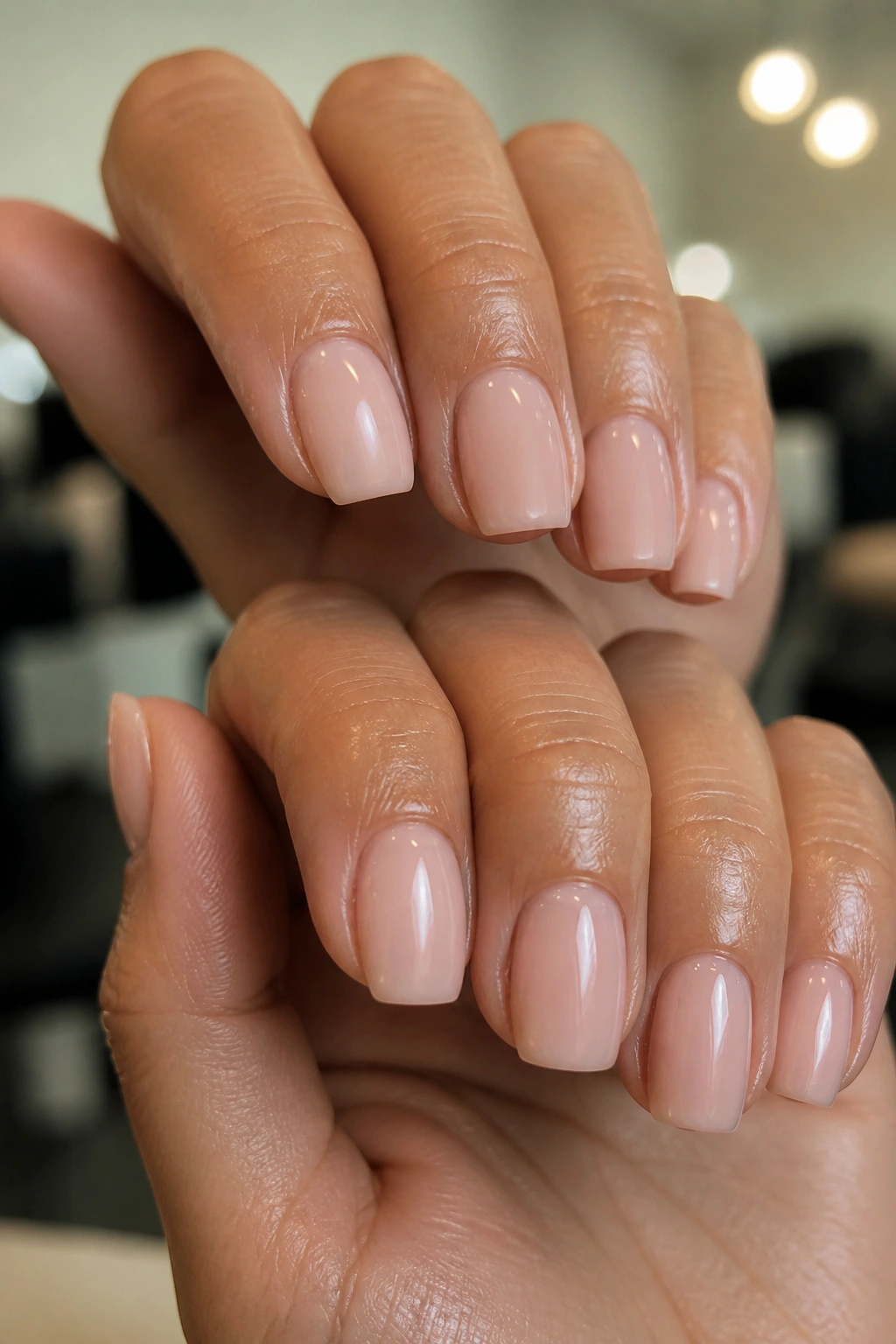
Here’s the part nail inspiration boards skip: a short coffin shape needs strength at the corners and the tip. If your natural nails bend when you press the free edge, the shape may last two days before one corner chips off and the whole set turns into uneven squares.
A structured overlay fixes that. Hard gel, builder gel, or acrylic laid in a thin apex through the center of the nail gives the file something solid to shape. You do not need a thick enhancement. You need a controlled one—thin near the cuticle, reinforced through the stress area, and crisp at the tip.
The American Academy of Dermatology has long advised simple habits for brittle nails: keep them moisturized, limit long wet-dry cycles, and avoid using nails as tools. That advice lands harder when you wear a short coffin shape, because filed-in sidewalls leave less room for sloppy wear.
Signs you should pick an overlay
- Your corners split before polish chips
- Your nail plate flares outward
- You peel gel off and take layers of nail with it
- Your free edge is under 1 millimeter and you still want a coffin outline
- Your job keeps your hands in water or gloves for hours
A good overlay should not feel bulky. Run your fingertip over it. You want a smooth rise from cuticle to apex and a clean, sealed tip—no ledge, no thick lump, no weird hump in the middle.
That shape is what makes the designs below actually work.
1. Micro French with a Razor-Thin White Tip
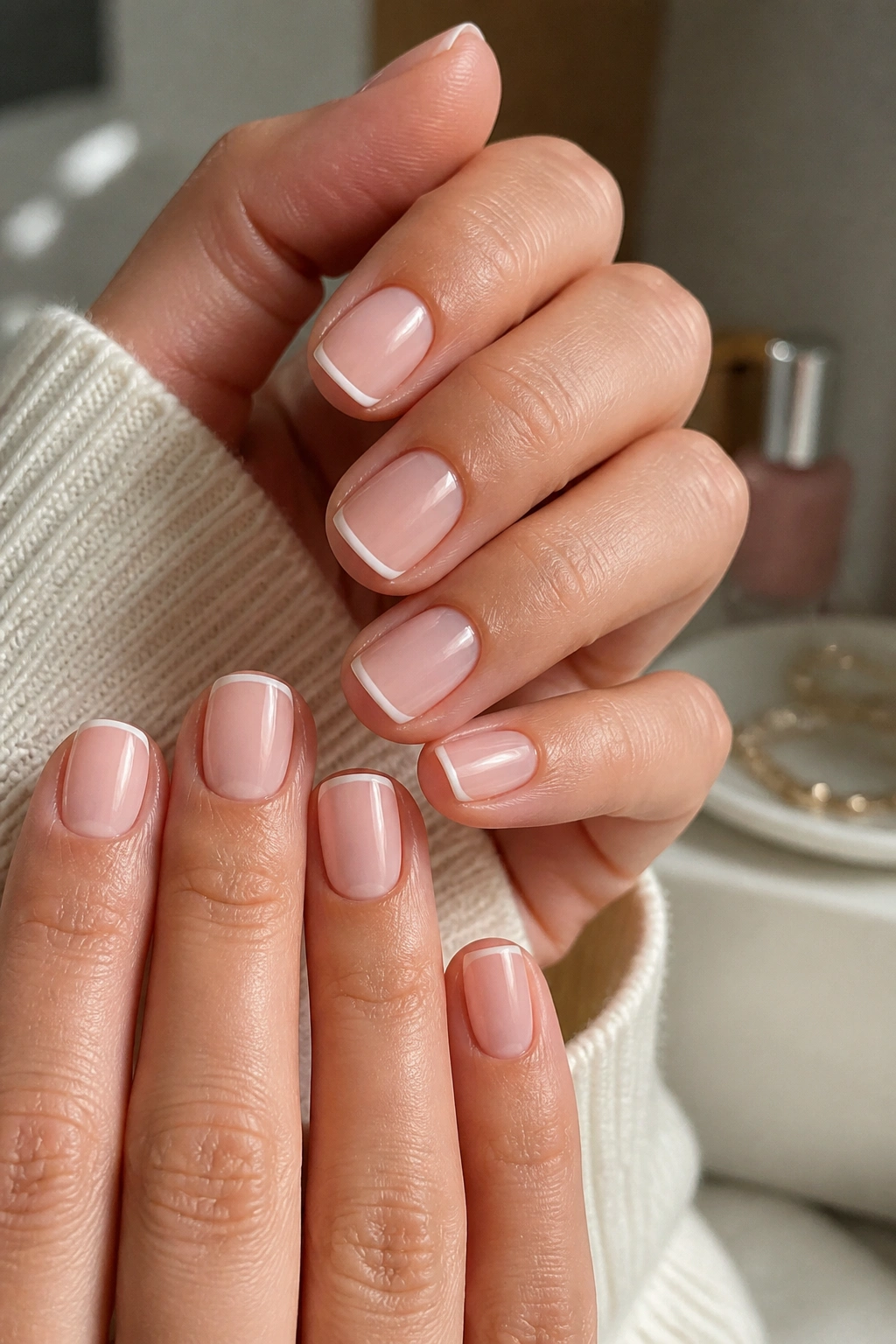
If you only try one short coffin design, start here. A micro French gives you the flat-tipped coffin look without eating half the nail in white polish.
Why it works on short length
The tip line should stay tiny—about 1 millimeter, maybe 1.5 if your nail bed is longer. Anything thicker starts to crowd the base and shorten the finger. On a short coffin shape, the white edge also needs a flatter line than a deep smile curve. Too much curve pulls the eye sideways.
That balance makes the shape look tidy and deliberate.
Ask for these details
- A sheer beige or pink base, not a chalky nude
- White gel paint applied with a liner brush, not a thick bottle brush stroke
- A tip that mirrors the flat free edge
- Softly beveled corners so the French line does not look boxed in
I like this set most on people with wider nail beds because it gives structure without adding bulk. It also grows out better than a thicker French, since the eye keeps landing on the bright tip.
Best pairing: glossy topcoat and short-to-medium cuticles left neat, not flooded with oil at photo time.
2. Milky Pink Builder Gel with a Soft Coffin Edge
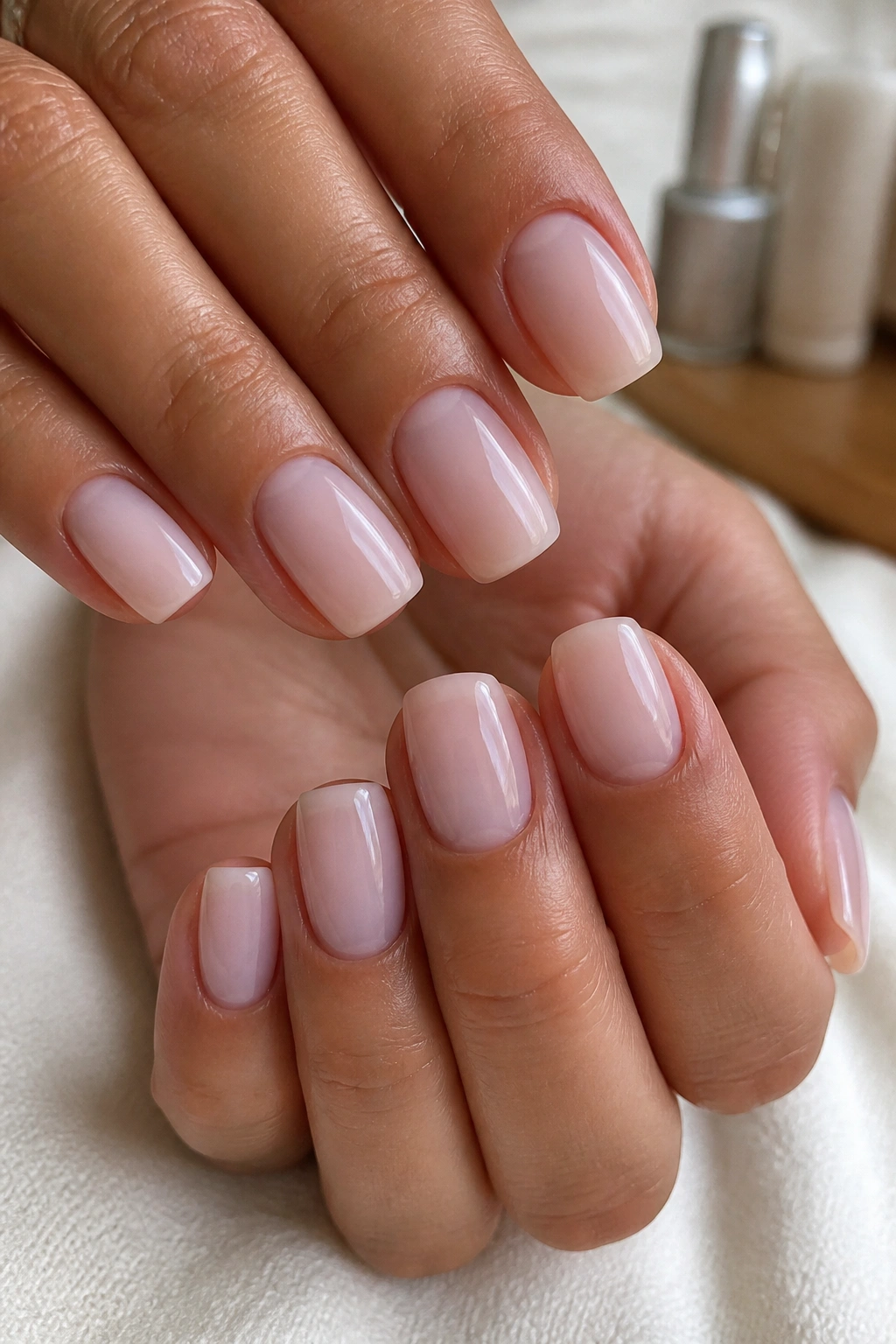
Some nail designs are all decoration. This one is more like architecture in a flattering color.
A milky pink builder gel set is one of the smartest choices for short coffin nails because the color and the structure do the same job. The semi-sheer pink hides little imperfections—uneven free edge, faint staining, minor ridges—while the builder layer gives the tip enough firmness to hold that narrow flat edge. You end up with a manicure that looks clean from a distance and polished up close.
What I like here is restraint. No French line. No glitter. No stones. The appeal is in the shape itself and that cloudy pink tone that softens the look of the hands. If your skin has peach or neutral undertones, a warm milk-pink looks smooth and healthy. If your skin runs cooler, ask for a pink with a hint of rose instead of beige.
This is also one of the few short coffin looks that can handle a slightly thicker apex without looking heavy, because the soft color blurs the structure. Keep the free edge thin, though. If the underside looks chunky, the whole set loses that clean little coffin outline.
For people who type all day, cook a lot, or knock their hands into everything, this is often the set that survives.
3. Matte Greige Coffin That Slims a Wide Nail Plate
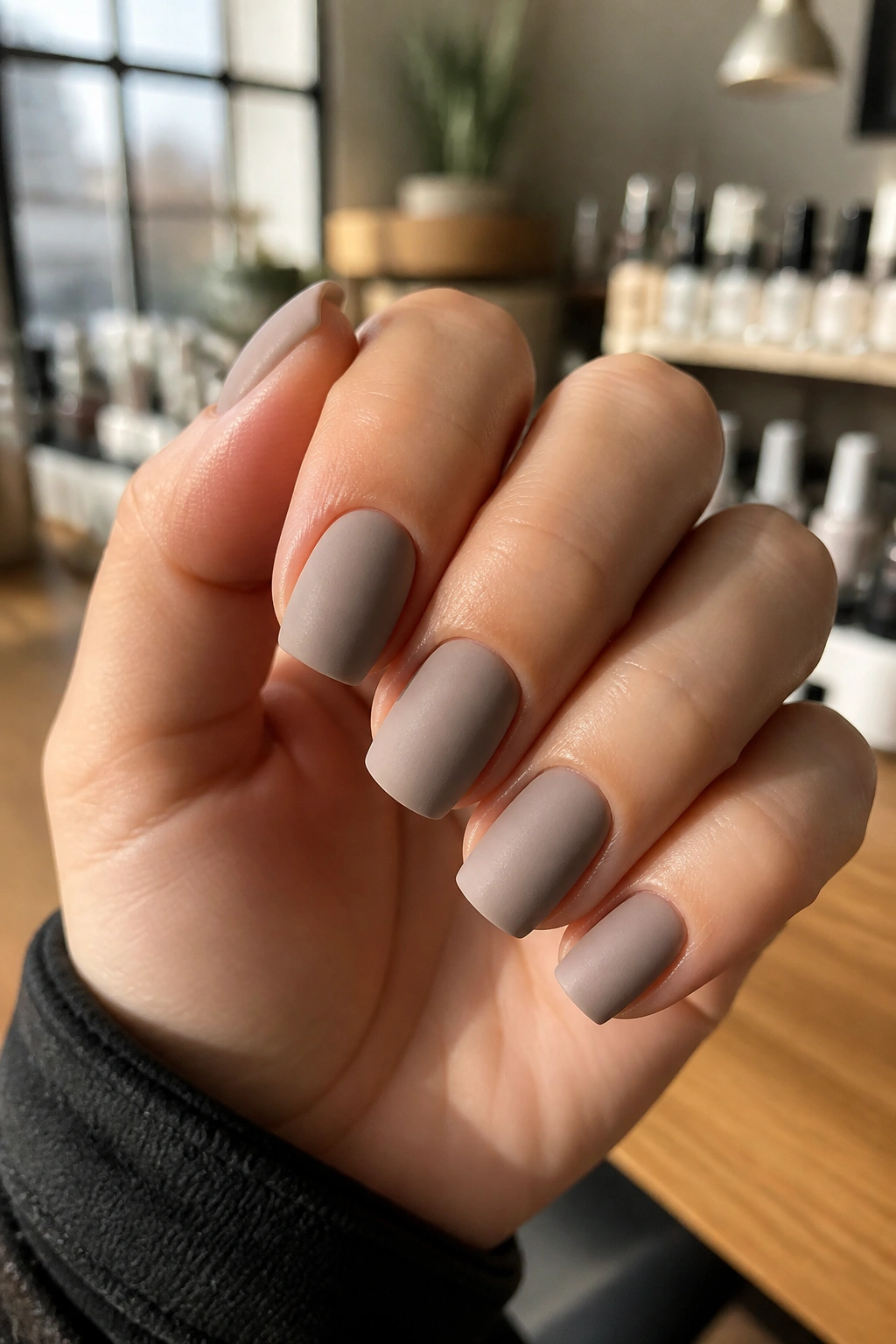
Want short nails to look narrower? Skip pale pastel and try matte greige—that gray-beige middle ground that has enough depth to shape the eye.
Why does this work? Because greige creates a firmer outline than blush nude, and the matte finish reduces glare across the width of the nail. When the sides are filed neatly and the tip stays compact, the whole nail reads longer and slimmer.
The color range that works best
Stay near the middle. Too light, and the nail looks flat. Too dark, and every tiny shaping flaw shows. The sweet spot is usually one to two shades deeper than your skin tone, with neither a strong yellow cast nor a strong lavender cast.
A matte topcoat needs a cleaner prep than gloss. Any lump, ripple, or dust speck will show. Ask your tech to smooth the surface with a fine buffer before topcoat, then seal the free edge carefully. Matte tips can wear shiny at the ends faster than glossy ones, especially on short nails where the tip takes all the abuse.
I would not put this one on every hand shape, but on broader nail beds? It earns its place.
4. Sheer Espresso Jelly for a Short Coffin with Depth
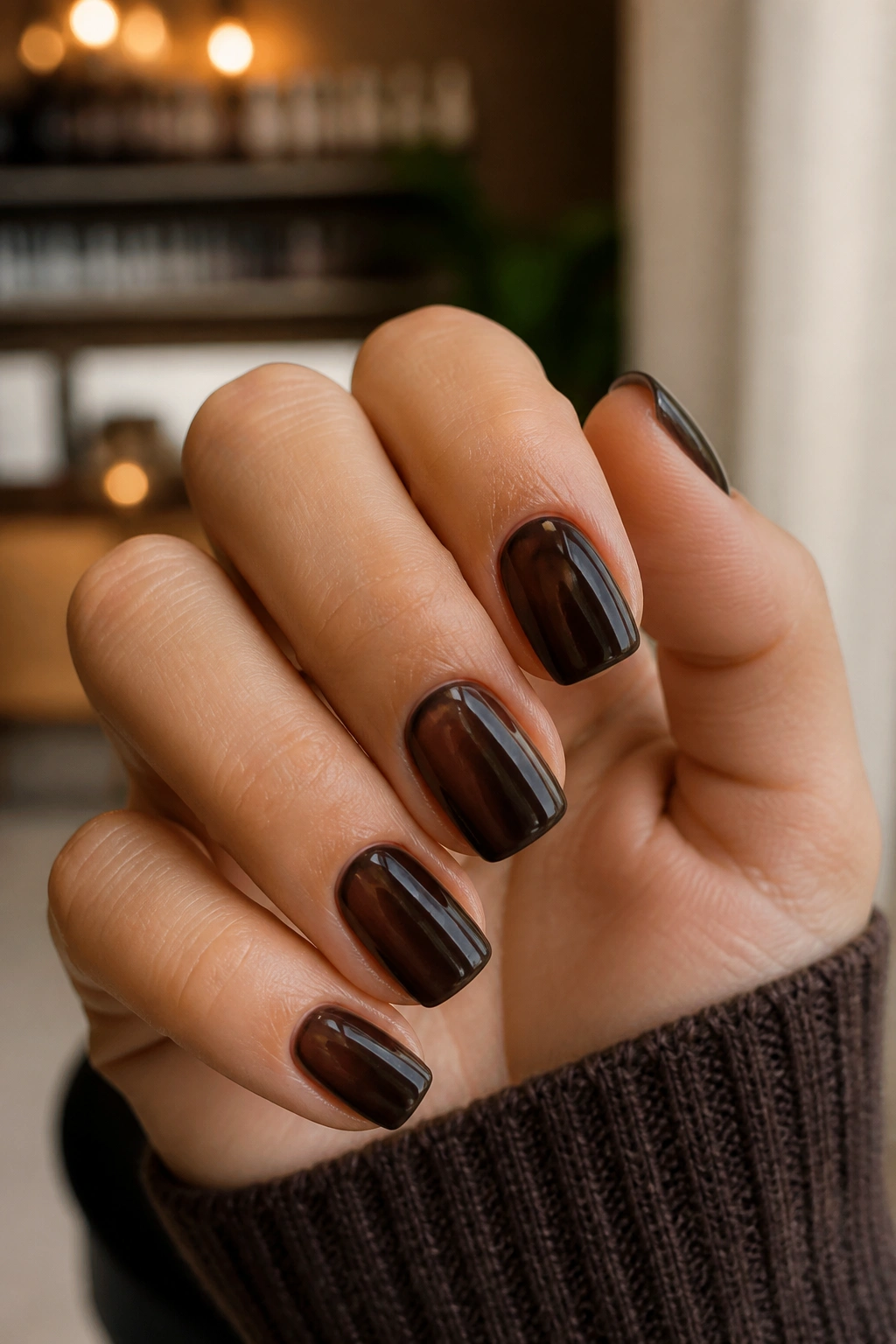
There is a difference between dark and heavy. Espresso jelly proves it.
I love this look on extra-short coffin nails because it gives that moody, polished vibe people chase with black polish, but it does it with light passing through the color. That transparency matters. A full opaque black on a tiny nail can read like a hard little tile. A jelly espresso still looks rich, yet you can see the curve of the nail underneath.
What makes it different
The color should be layered in two thin coats, sometimes three, until it looks like smoked glass. If it reaches full opacity in one coat, it is not the same look. You want depth, not a solid wall of pigment.
A short flat tip looks sharp in this shade, and the slight taper becomes more visible because the eye can still read the shape through the polish. It is also one of those colors that hides small grow-out better than pale polish does.
Quick notes worth saving:
- Ask for a brown-black, not a red-brown
- Keep the length compact; long espresso jelly drifts into a different mood
- Use gloss, never matte, unless you want a foggier finish
- Pair with warm jewelry if the brown undertone is strong
This one looks expensive even when the design is doing almost nothing.
5. A Vertical Chrome Line Down the Center
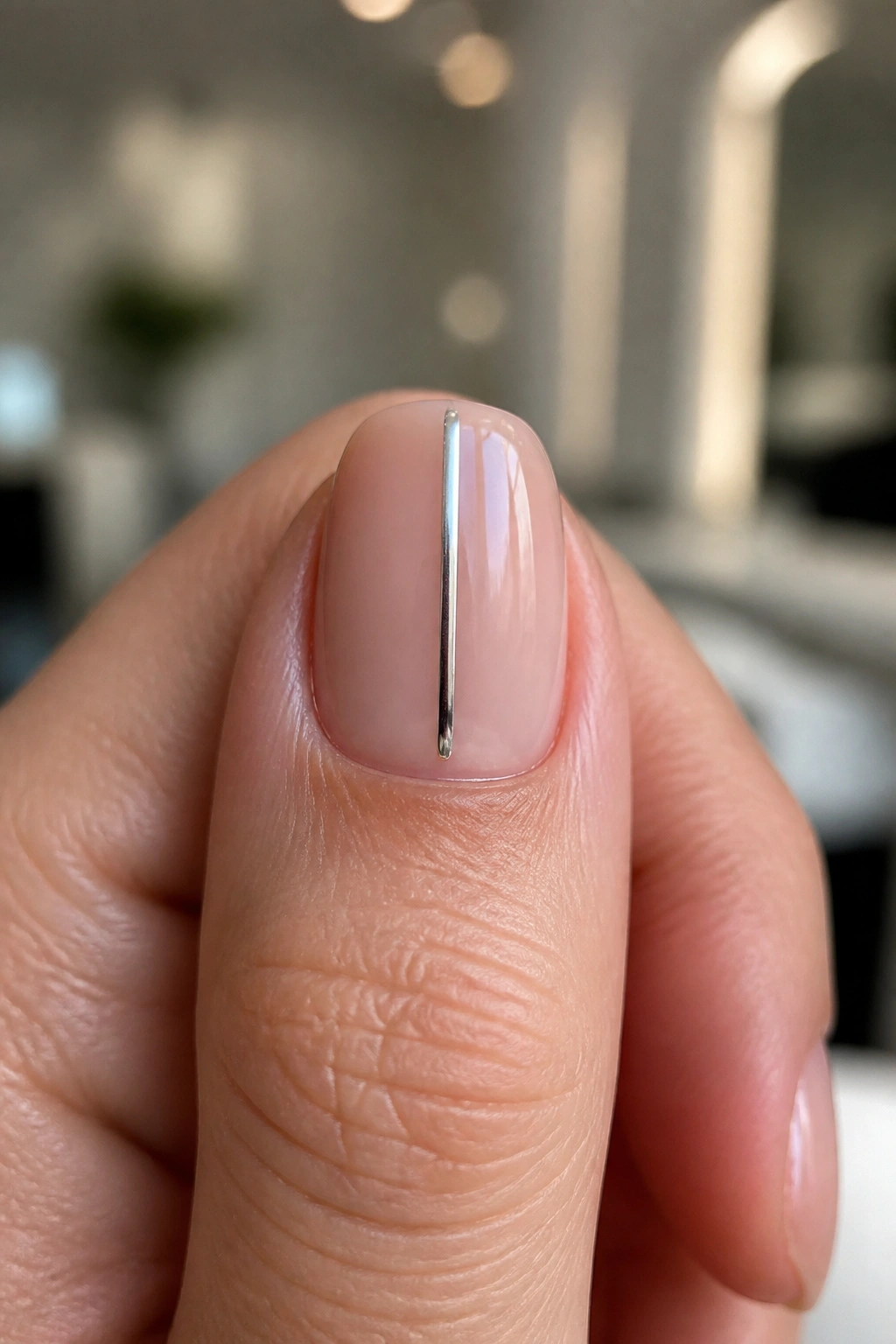
One thin vertical accent can rescue a short coffin shape faster than a full set of nail art. That is not me being dramatic. It is basic visual direction.
A narrow chrome stripe—silver, champagne, soft rose, or even gunmetal—drawn from near the cuticle toward the tip makes the nail look taller. The stripe should sit dead center or slightly off-center by a hair, never wide enough to become a panel. Think 1 millimeter or less on a short nail. More than that and it turns clunky.
The base matters here. My favorite versions use a sheer nude, beige-pink, or taupe underneath. Then the chrome goes on one or two accent nails per hand, not all ten. Full chrome lines on every nail can start to feel rigid, like graph paper for your fingers.
This is also a good design when your nail plates are not perfectly identical. The vertical line gives the set a common rhythm, so the eye notices the pattern before it notices that one ring-finger nail is a millimeter shorter than the rest. That sounds small. On short manicures, it is not small.
If you want something sharper than plain nude but still office-safe, this is one of the cleaner ways to do it.
6. Baby Boomer Ombré on a Tiny Flat Tip
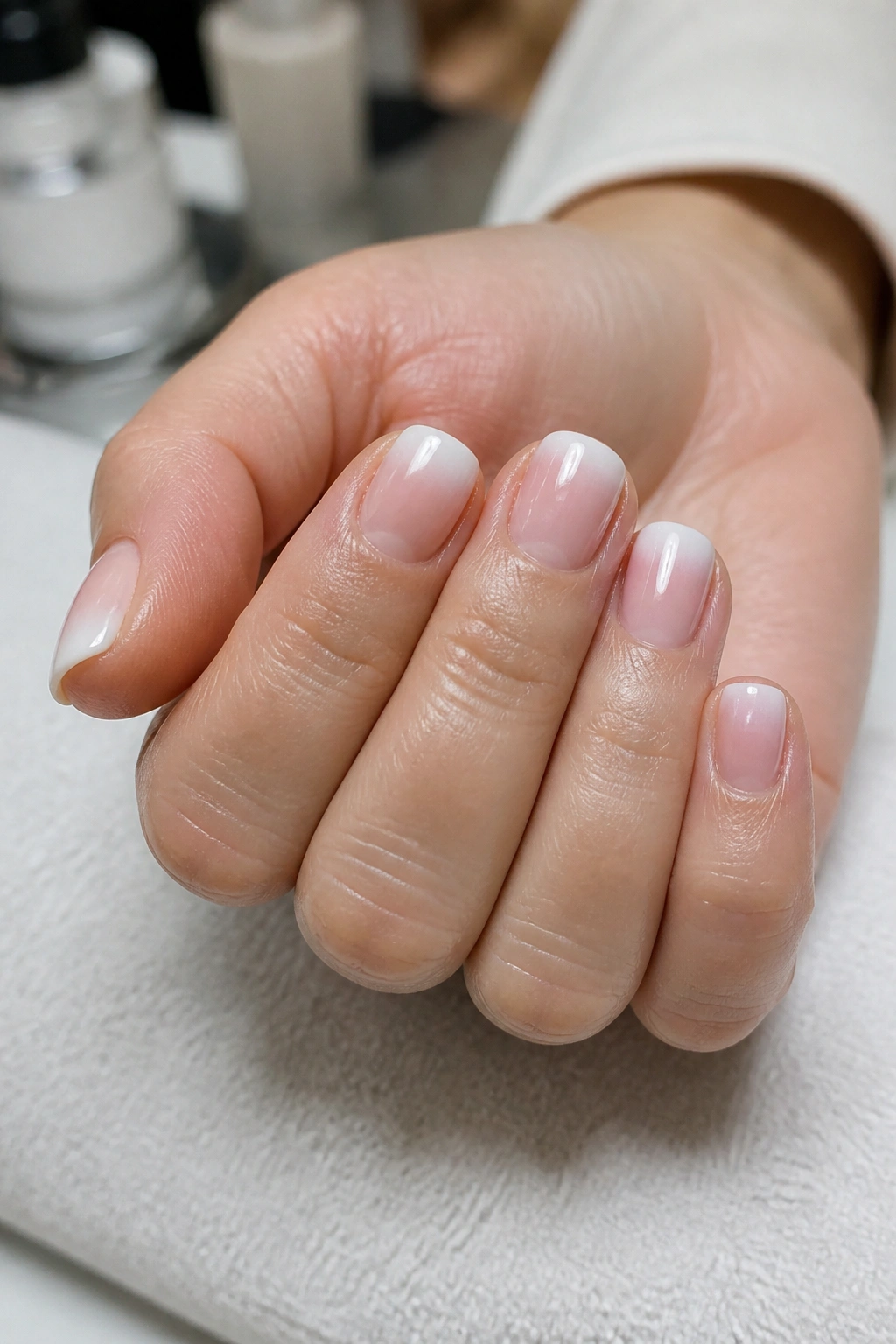
The baby boomer fade—pink into soft white—was made for people who want a French manicure mood but do not want the hard line. On a short coffin nail, that blur can be more flattering than a classic French because it stretches the eye across the whole nail instead of chopping it into sections.
The trick is scale. The white should start late, close to the tip, and fade upward with a sponge blend, airbrush, or soft ombré brush. If the white begins too low, the nail looks shorter. If the fade is muddy, the whole thing turns chalky and tired.
This design also hides regrowth well. Because there is no crisp border, you get a softer grow-out than you would with a painted French line. That makes it a smart pick if you stretch appointments a bit longer than your tech would love.
Keep the tip compact and the base pink sheer enough to let the natural nail tone help the blend. A baby boomer on a thick, opaque nude base loses the airy effect that makes it flattering in the first place.
One more note—because it matters: this design looks best when the cuticle prep is immaculate. Any rough skin around a soft fade stands out fast.
7. Side-Swept French That Pulls the Eye Diagonally
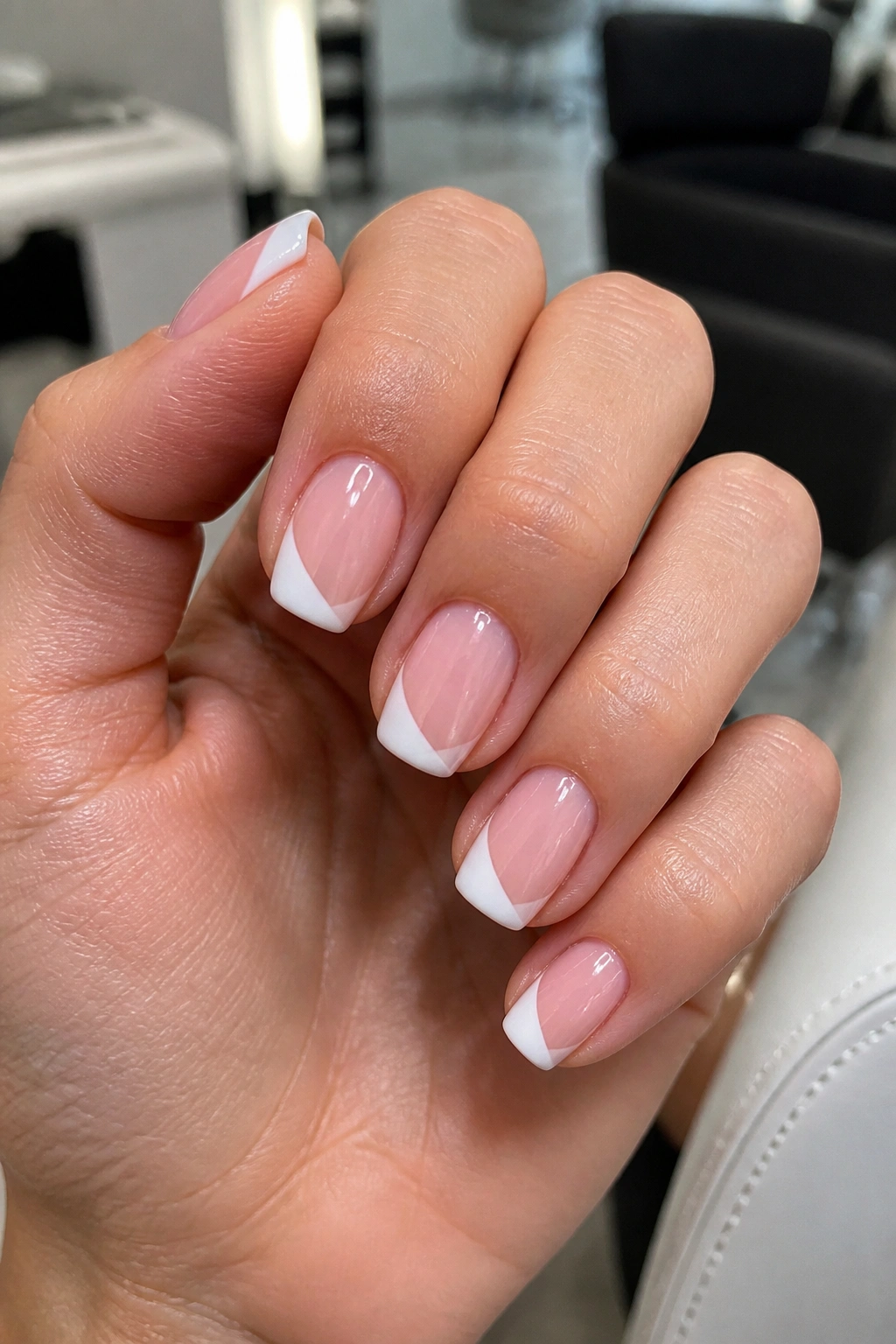
A diagonal French is one of my favorite little cheats on short nails. Instead of a straight tip line, the color sweeps from one side of the nail toward the other, creating motion across a tiny surface.
That movement helps on short coffin shapes because the design uses the flat tip but avoids a hard horizontal stop. Your eye travels along the slant, then out toward the tip. The nail seems longer than it is.
How to keep it from looking busy
Use only one color for the sweep and keep the rest of the nail quiet. White works. Soft black works. So do deep berry, navy, or metallic pewter if the base is sheer. I would skip multicolor blocks on extra-short nails; they chew up space fast.
Best placement
A side-swept French usually looks cleanest when the diagonal starts lower on the outer side of the nail and rises toward the center of the tip. That shape flatters the coffin outline and keeps the design from fighting the taper.
If your nail tech has a heavy hand with line thickness, ask for a sketch first or point to a thin-lined reference photo. This is one of those sets where 2 millimeters can look refined and 4 millimeters can look clumsy.
Small difference. Huge effect.
8. Glazed Pearl Chrome Over a Sheer Nude Base
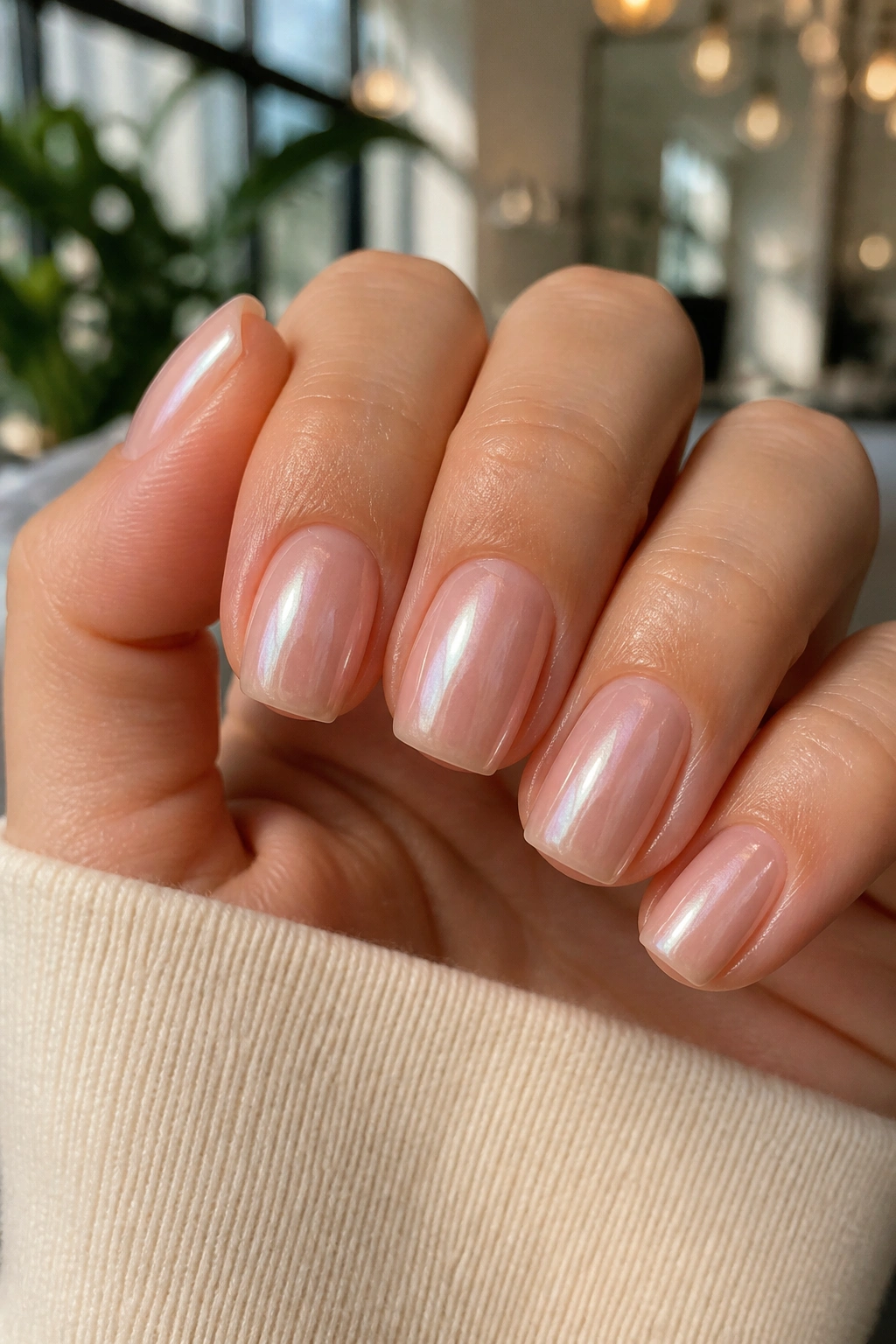
There is a reason people keep circling back to pearly glazed nails. On a short coffin shape, a fine pearl chrome layer can make the nail surface look smoother and slightly longer because the light reflection follows the curve from cuticle to tip.
The version that works here is not a heavy silver chrome mirror. It is a soft pearl powder rubbed over a translucent base, usually milky beige, pale pink, or a soap-nail nude. You want a candlelight sheen, not a foil finish.
What to ask for
- Sheer base, two thin coats
- Non-wipe topcoat cured fully before powder
- Fine pearl chrome buffed in lightly
- Final gloss topcoat to seal the edge
This design can look a little flat on nails with no structure under it, since shimmer shows every bump. A builder base helps. So does neat shaping, because chrome loves symmetry and punishes crooked tips.
I like glazed pearl most for people who want a clean manicure with a little more life than plain nude. It catches light when you move your hands, but it still reads polished in daylight, office light, restaurant light—everywhere you actually live.
9. Tortoiseshell Accent Nails on a Short Neutral Set
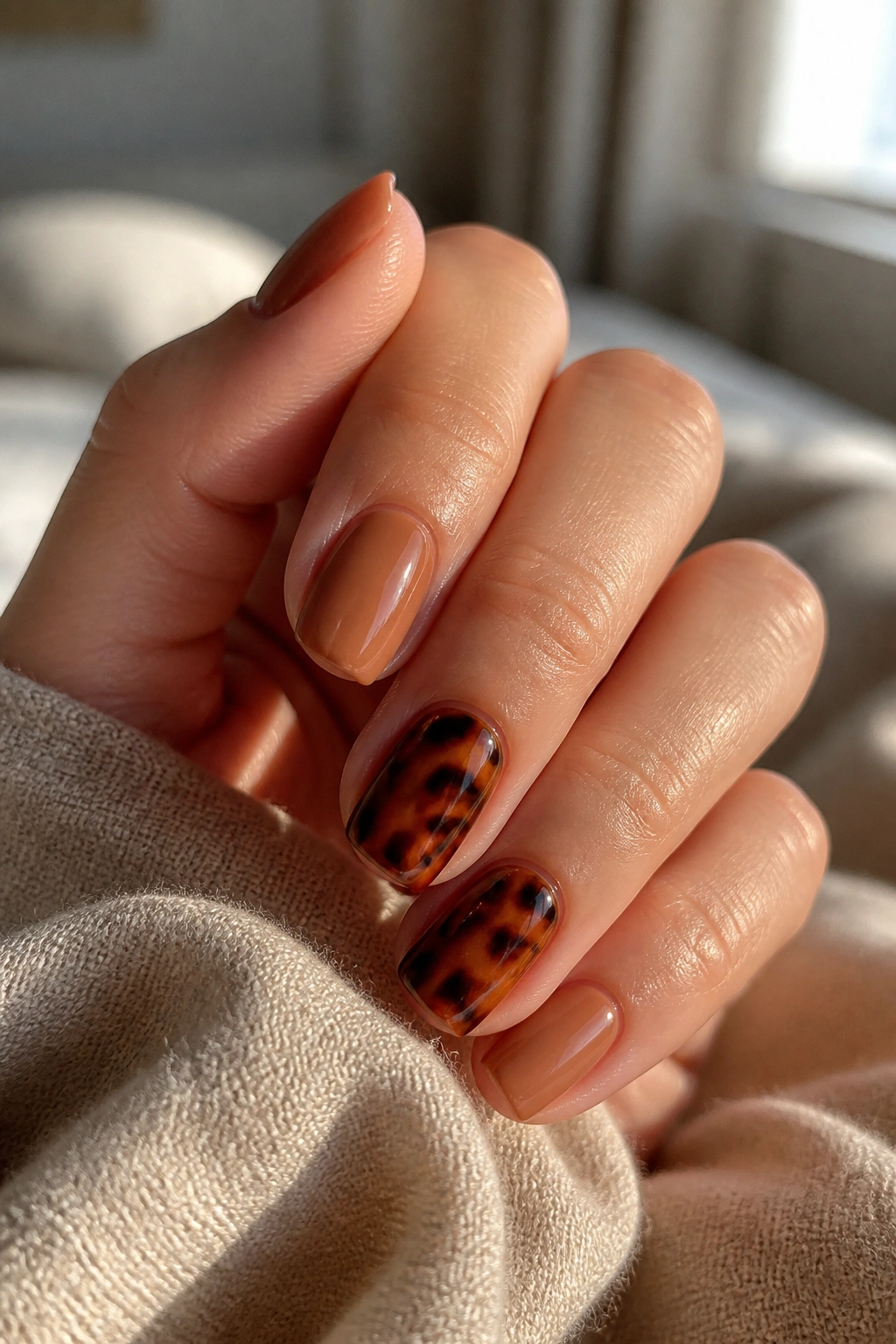
Here is where restraint matters. Tortoiseshell on all ten very short coffin nails can look crowded. Tortoiseshell on two accent nails, surrounded by a soft neutral set, looks smart.
You need room for those amber, honey, and brown layers to show up. On a tiny nail, that usually means using the art on the ring finger and maybe the thumb, then keeping the rest of the set in a caramel nude, warm beige, or sheer tan. The contrast gives the accents breathing room.
What makes good tortoiseshell on short nails
The spots should stay fine and translucent, almost like watercolor burned into glass. Thick black blobs ruin it. So does skipping the amber layer. The best short tortoiseshell nails have:
- a warm honey base
- soft brown patches
- a little black placed sparingly
- enough transparency that the layers still show through
This look has more personality than a plain nude set, but it still feels controlled. I’d pick it for autumn wardrobes, camel coats, gold rings, dark coffee cups—yes, that image in my head is specific, and yes, it works.
10. Glossy Black Micro Coffin with Perfect Sidewalls
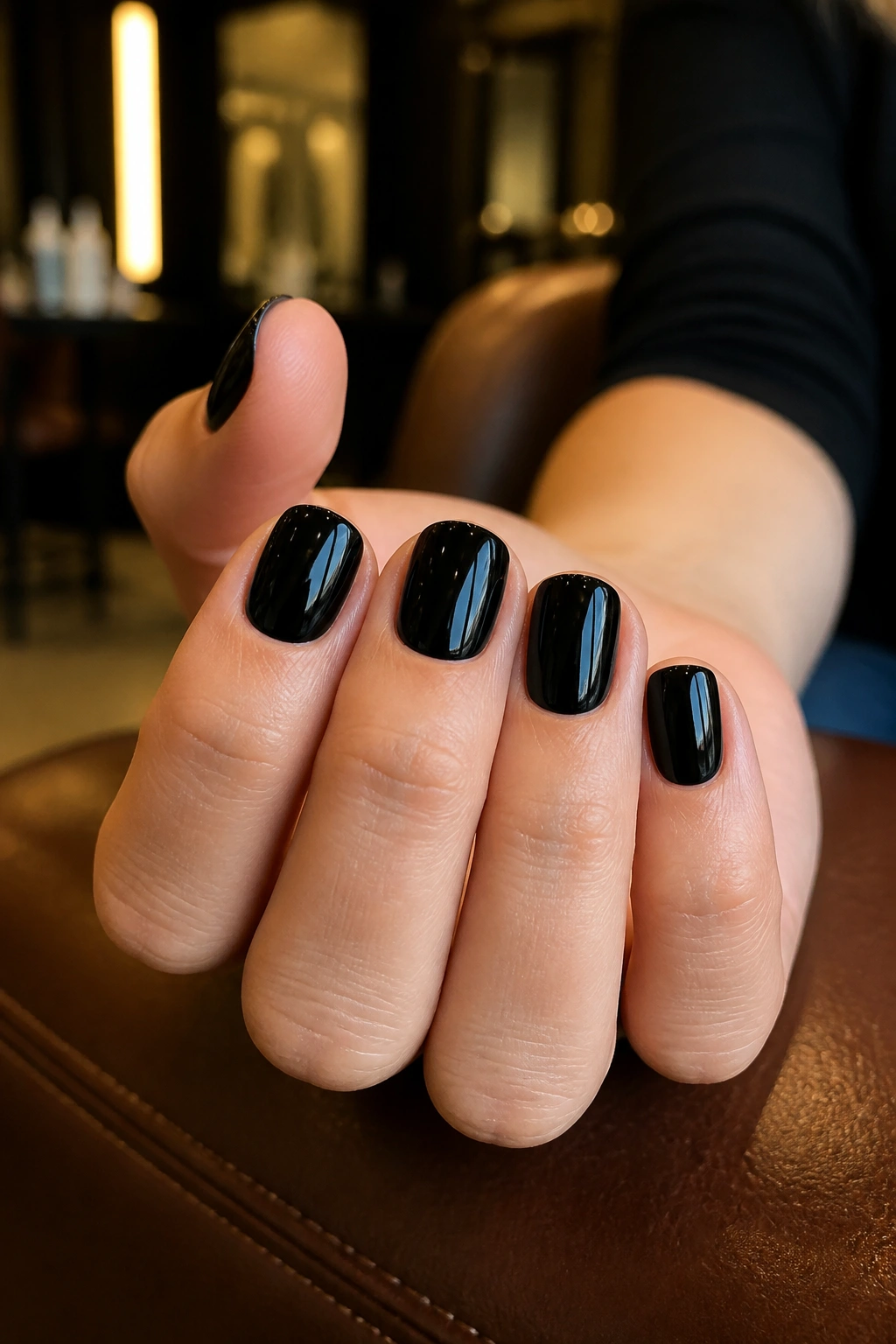
Black on short coffin nails is brutally honest. If the shape is off, black will expose it in three seconds.
That is exactly why I still like it.
A glossy black micro coffin looks sharp, direct, and a little severe in a good way when the sidewalls are even and the flat tip is thin. Gloss is the key here. Matte black on a short nail can make the shape look dense; high shine gives movement and keeps the finish from looking flat.
This set suits people who want the shape to do all the talking. No art. No accents. No apology. Because the color is so dark, the nail should not be overbuilt. Bulk at the tip makes black polish look heavy fast.
I would never hand this design to a beginner tech unless I had seen their shaping work first. The prep has to be clean, the cuticle line has to curve smoothly, and the free edge has to match nail to nail. When it is done right, though, it has that crisp little silhouette that makes short coffin nails feel intentional rather than like a compromise.
11. Negative-Space Cuticle Crescents for Cleaner Grow-Out
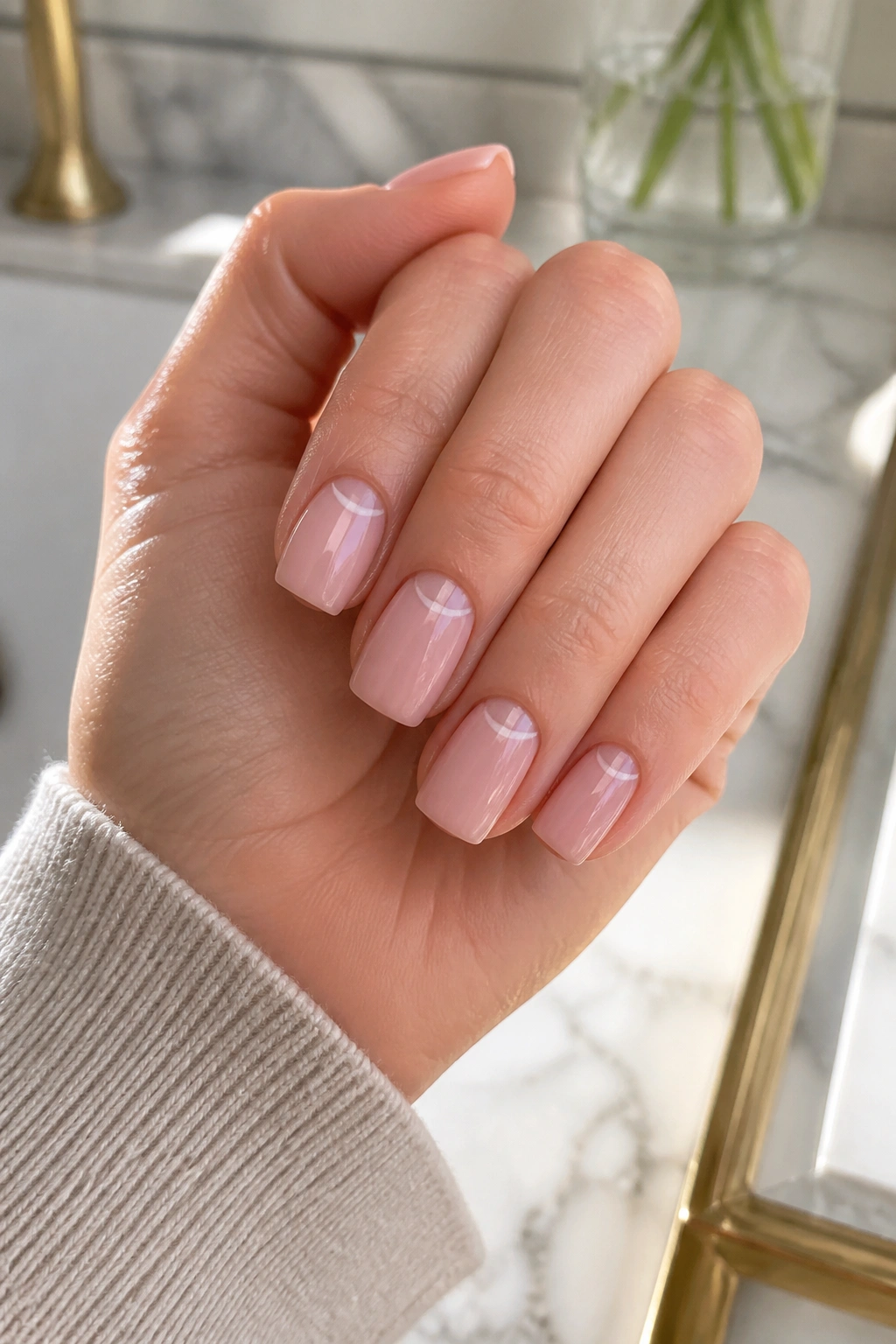
Need a design that buys you a little more time between fills? A cuticle crescent does the job neatly.
The idea is simple: leave a slim half-moon of negative space near the cuticle, then place color over the rest of the nail. On a short coffin shape, that gap keeps the manicure from looking jammed into the nail plate, and it makes grow-out less jarring because the base already has breathing room built in.
Why does it flatter short nails? Because the visible natural crescent near the cuticle acts like a soft frame, and the color block above it makes the nail plate seem longer. It works best with medium-depth shades—berry, plum, mocha, teal-black, smoky mauve. With pale shades, the contrast can disappear.
A cleaner way to wear it
Keep the crescent thin. About 2 millimeters is plenty on a short nail. Any wider and you lose too much color space. I also like this design better with glossy finishes than matte ones; the shine sharpens the edge between the empty crescent and the color field.
This is one of those ideas that sounds artsy but wears better than people expect.
12. Fine Glitter Fade That Starts at the Tip
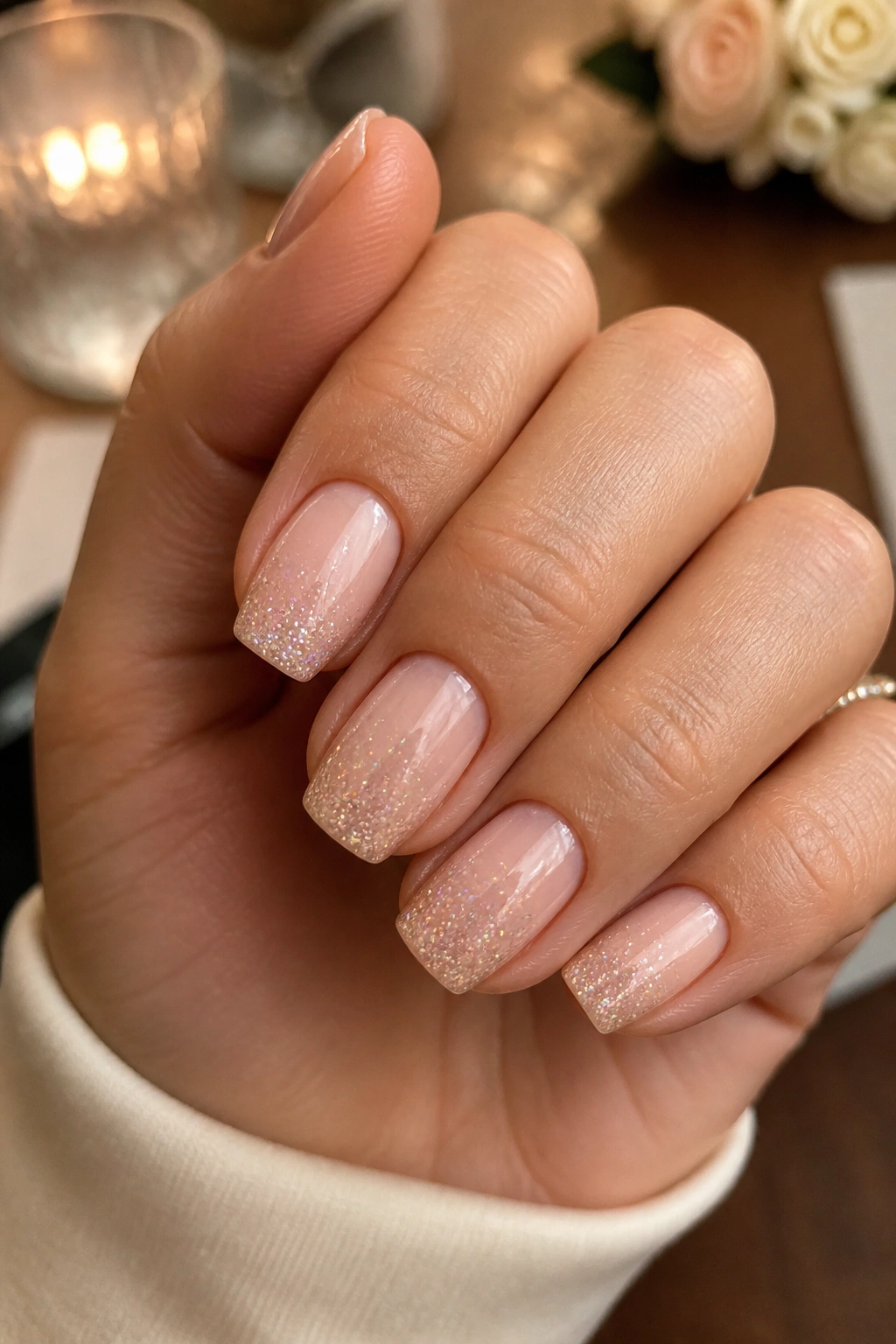
Glitter can ruin short nails. Fine glitter can save them.
The difference is particle size and placement. Chunky hex glitter sits on the nail like confetti. A fine glitter fade from the tip adds light, keeps the base open, and gives the coffin edge a little more presence.
The method that works
Use a sheer nude or pink base first. Then sponge or brush micro-fine glitter onto the free edge, packing it closest at the tip and diffusing it upward by the middle of the nail. The fade should disappear before it reaches the cuticle area.
Good shades for short coffin nails:
- champagne over beige nude
- silver over rosy pink
- rose gold over peach nude
- soft bronze over caramel base
I like this design for events because it reads festive without requiring rhinestones or 3D art. It also disguises tiny chips at the tip better than a solid polish does, which is useful if your nails take a beating.
Skip chunky glitter. I am repeating myself because people keep trying it.
13. Deep Cherry Jelly That Makes Short Nails Look Richer
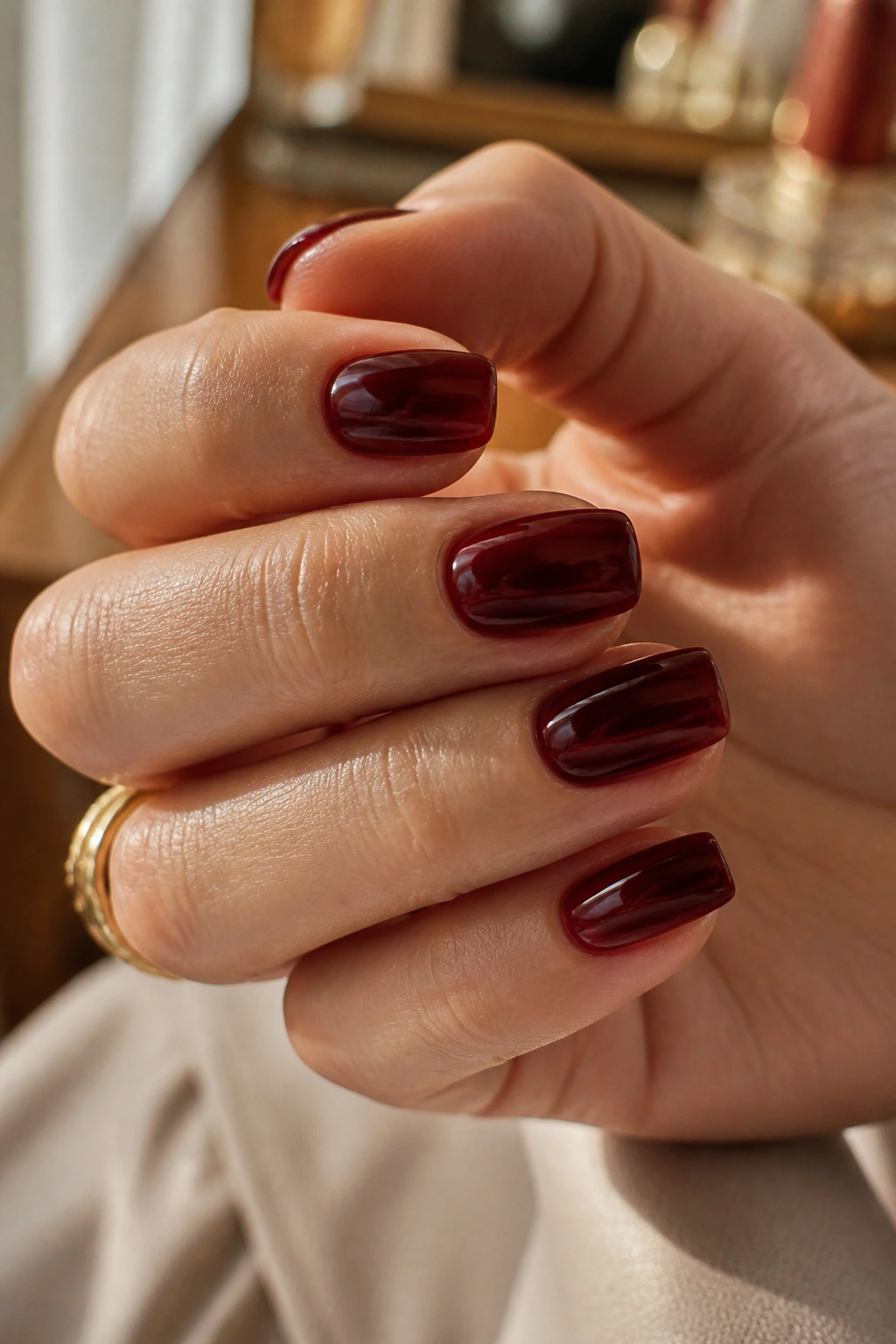
Cherry jelly sits in a sweet spot between nude safety and black drama. It gives you color, gloss, and depth, but because it is translucent, the manicure still feels lighter than a solid creme red.
On a short coffin nail, that matters. You get the mood of red without the blunt, stop-sign effect that some opaque scarlets can create on tiny nail plates. The finish should look like hard candy—glossy, layered, and a little glassy at the edge.
This color is also more forgiving than many reds. If one nail is slightly shorter, a jelly finish softens the difference because your eye sees the depth of the color before it measures the length. A solid bright red can be less kind.
Keep the shape small and precise. Cherry jelly does not need extra art. If you want something subtle, one thin gold line near the cuticle on the ring finger is enough. I would not add more. The color already has enough presence.
For cold skin tones, lean cherry. For warm skin tones, lean blackened berry-cherry. Tiny shift, better payoff.
14. Soap-Nail Nude with a High-Gloss Cushion Finish
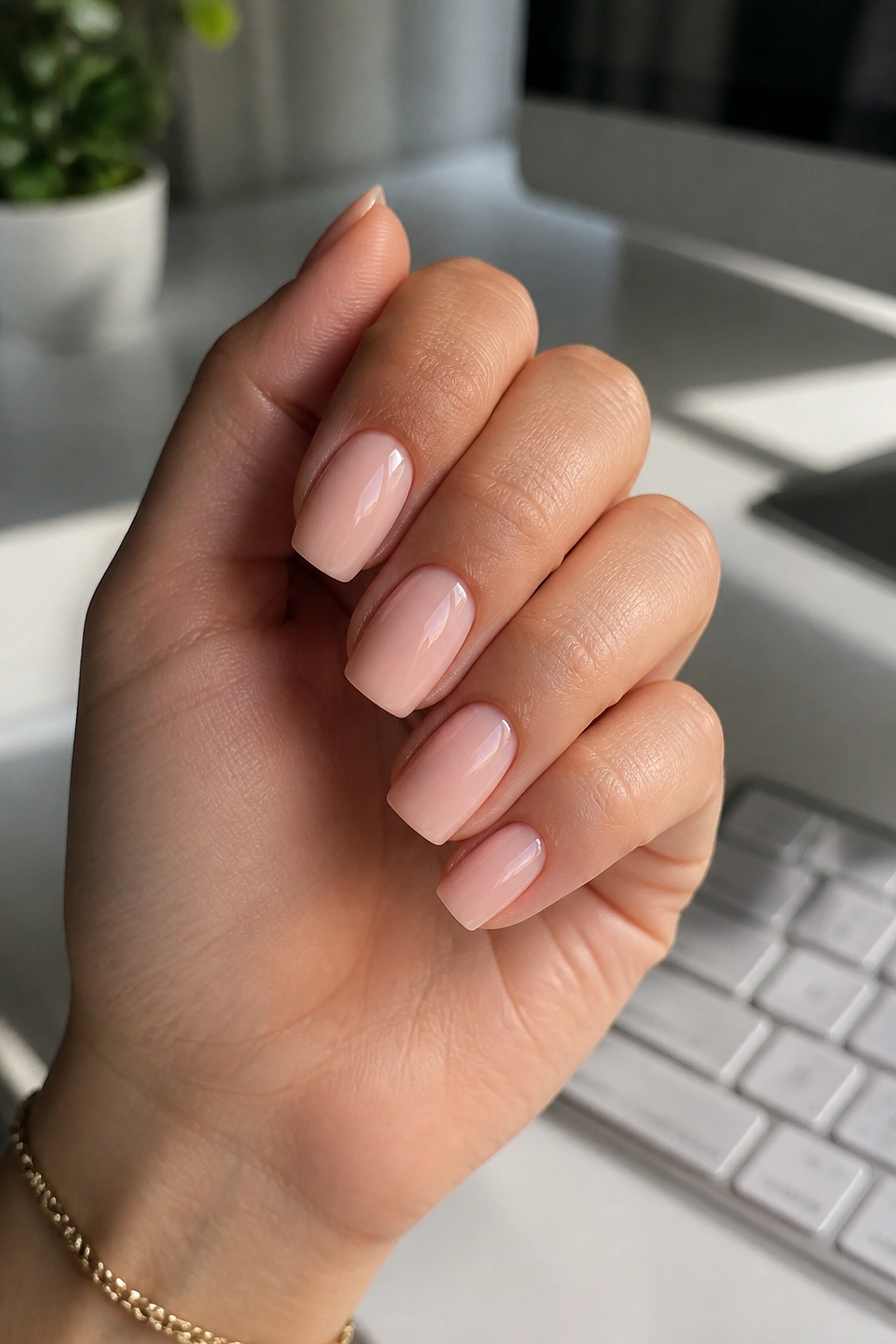
Some manicures are built for attention. Soap nails are built for polish in the old-school sense of the word: neat, healthy-looking, and expensive in a quiet way.
On short coffin nails, this look relies on a sheer nude-pink base with a glossy, almost plump surface. The color should look like your nail bed on its best day, only smoother and brighter. If the nude is too beige, the effect dies. If it is too pink, it turns babyish. The ideal tone usually matches the flush of your fingertip more than the color of your palm.
There is no art here to hide rough shaping, so the sidewalls and free edge have to be tidy. The topcoat also needs enough body to create that cushioned finish without making the tip bulky. Some techs use a thin builder layer under color for that reason, then finish with a glassy topcoat.
I like this set for people who want short coffin nails that look clean in every setting—meetings, dinners, errands, whatever else fills a normal week. It is not flashy. It does not need to be. When the shape is sharp and the surface looks smooth as hard candy, the manicure already did its job.
15. Mocha Nails with Tiny Cuticle Crystals
A little sparkle works on short coffin nails. A little. That word is doing the heavy lifting.
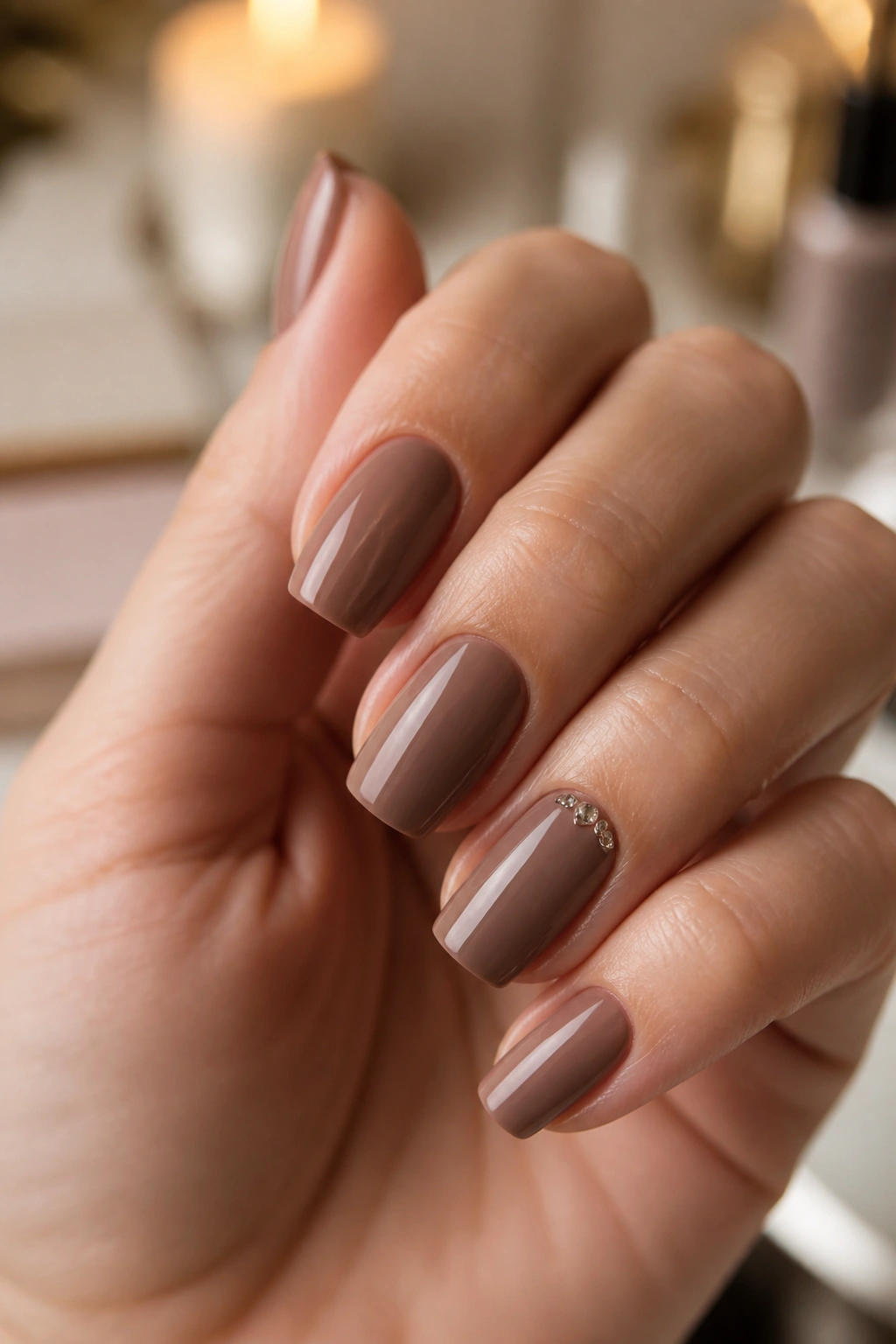
The prettiest way I’ve seen it done is a soft mocha or latte base with one or two tiny crystals placed at the cuticle line on accent nails. Not a cluster. Not a crown. One stone, maybe two, sized around 1.5 to 2 millimeters.
Why this placement works
Putting the crystal near the cuticle keeps the flat coffin tip clean, which preserves the shape. A gem placed in the center of a tiny nail can crowd the design. A gem at the cuticle acts more like jewelry than decoration.
The smart version
Use flat-back crystals sealed carefully around the edges, and limit them to the ring finger or ring finger plus thumb. If every nail gets a stone, the set turns fussy. Mocha is also a strong choice here because it has enough depth to make a clear crystal show up without the harshness of black.
This is a good wedding-guest set, date-night set, dinner-party set—anything where you want your nails to look considered but not overloaded. Clean shaping, warm neutral color, a pinpoint of light. Done.
Final Thoughts
Short coffin nails work when the design respects the length you actually have. A slight taper, a thin flat tip, and smart color placement beat extra decoration every time. That is the pattern behind all 15 looks above, whether you go for soap-nail nude, glossy black, or a tiny micro French.
If your natural nails are soft or the corners keep splitting, do not force the shape on bare nails out of principle. A structured overlay often makes the difference between a set that lasts ten days and one that starts chipping by the second morning.
Pick three designs from this list, not fifteen. Save the ones that match your nail width, your routine, and how much upkeep you will actually tolerate. The best short coffin manicure is the one that still looks sharp when you are using your hands like a normal person.