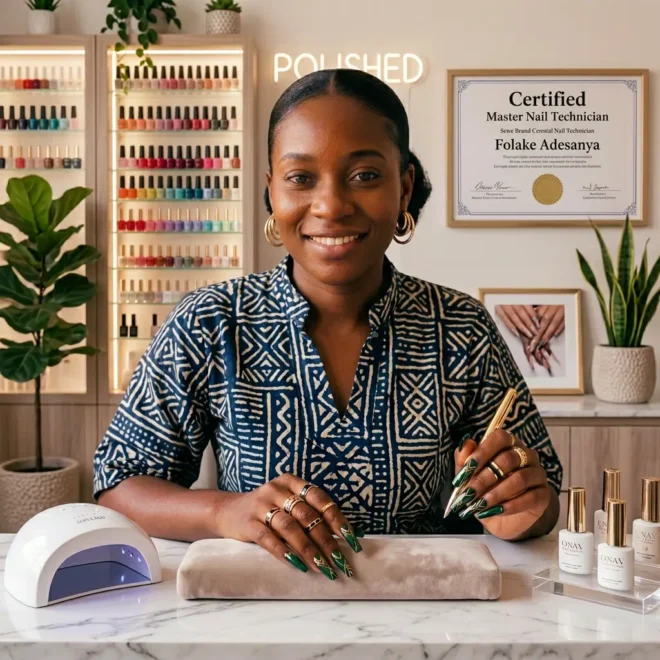


Neutral coffin nails have almost no place to hide. On a bright coral set, a tiny wobble in the sidewall or a bulky tip can disappear into the color. On a sheer beige, soft pink, or creamy taupe coffin set, every little detail shows—the taper, the cuticle line, the thickness at the free edge, even whether the top coat leveled out or pooled near the side.
That’s part of their appeal.
A clean neutral manicure can make your hands look tidier than a complicated design ever will, but only when the shape and shade are working together. The wrong nude turns peachy when you wanted beige. A chalky off-white can make the nail look thick. And coffin nails that flare too wide lose that sharp, flat-ended silhouette that makes the shape worth getting in the first place.
After enough salon visits and enough DIY sets at my own desk, I’ve gotten picky about what actually works here. Milky finishes blur small ridges better than flat opaque nudes. A French tip that’s 1 millimeter wide looks polished; a 3-millimeter tip can suddenly feel heavy. Daylight tells the truth, too. The taupe that looked soft under warm bulbs can look dull by the window.
When the color, opacity, and shape line up, though, neutral coffin nails stop looking plain and start looking intentional.
Why Neutral Coffin Nails Make Hands Look Tidier
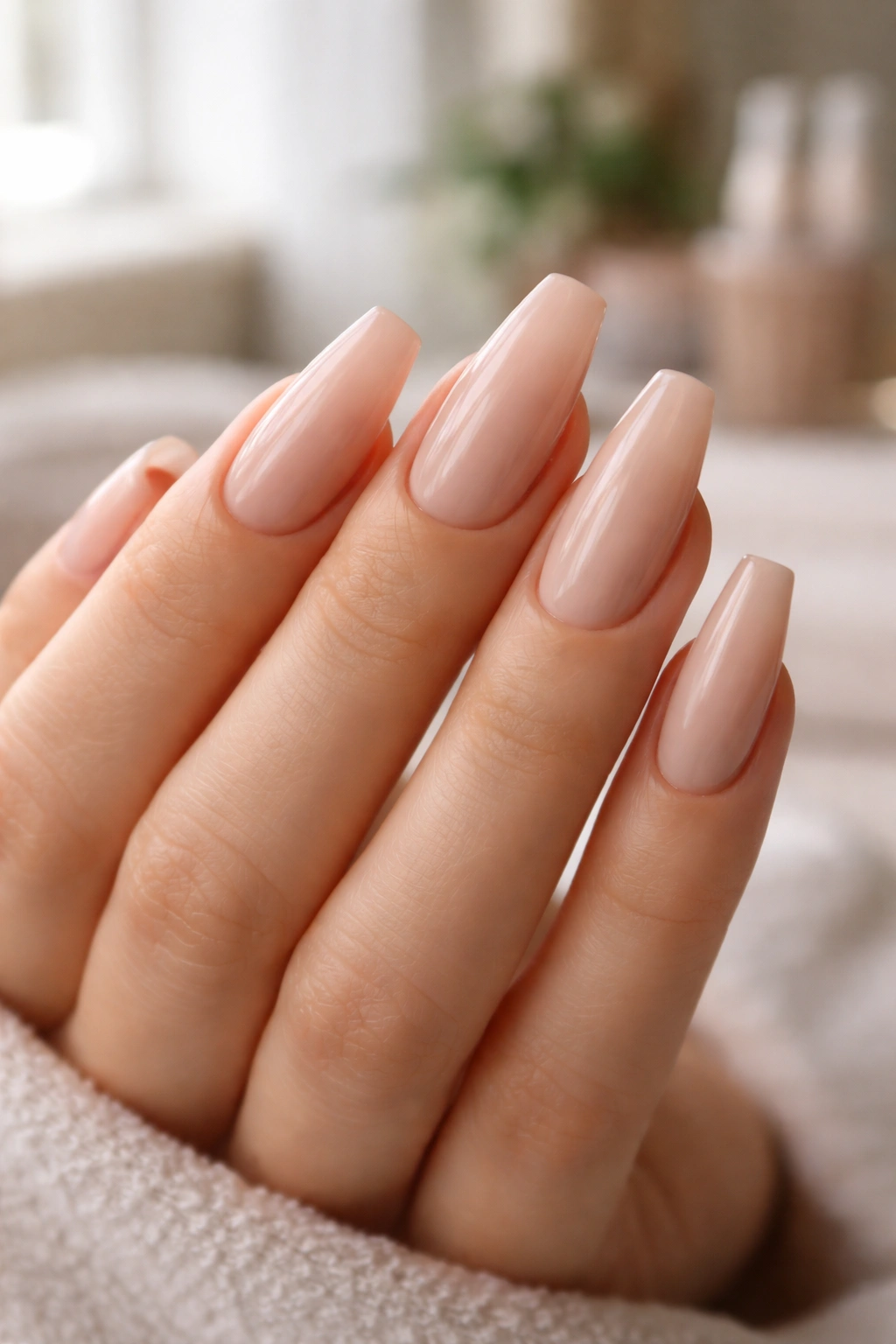
The coffin shape does something square nails don’t quite manage. Because the sidewalls taper inward before the straight tip, the nail looks longer and cleaner even in muted shades. You get structure without the sharpness of a stiletto and without the blunt, boxy feel of a square set.
Some salons use coffin and ballerina interchangeably, and for most clients that’s fine. What matters more is proportion. A medium coffin with a free edge of about 4 to 8 millimeters past the fingertip usually gives you that crisp, slim silhouette without turning everyday tasks into a wrestling match with your own hands.
Neutral shades make the shape look even more precise because there’s no loud color distracting from the lines. Beige, pink-nude, ivory, greige, oat milk white—those tones put all the attention on symmetry, surface smoothness, and cuticle work. That’s why a clean neutral set often looks more polished than a busy design with rhinestones, foil, and six things happening at once.
And yes, the opposite is also true.
If the apex is lumpy, the sidewalls are uneven, or the cuticle area is flooded with polish, neutrals expose it fast. That’s not a reason to skip them. It’s a reason to choose a design that respects the shape instead of burying it.
Choosing Undertone, Opacity, and Length Before You Pick a Shade
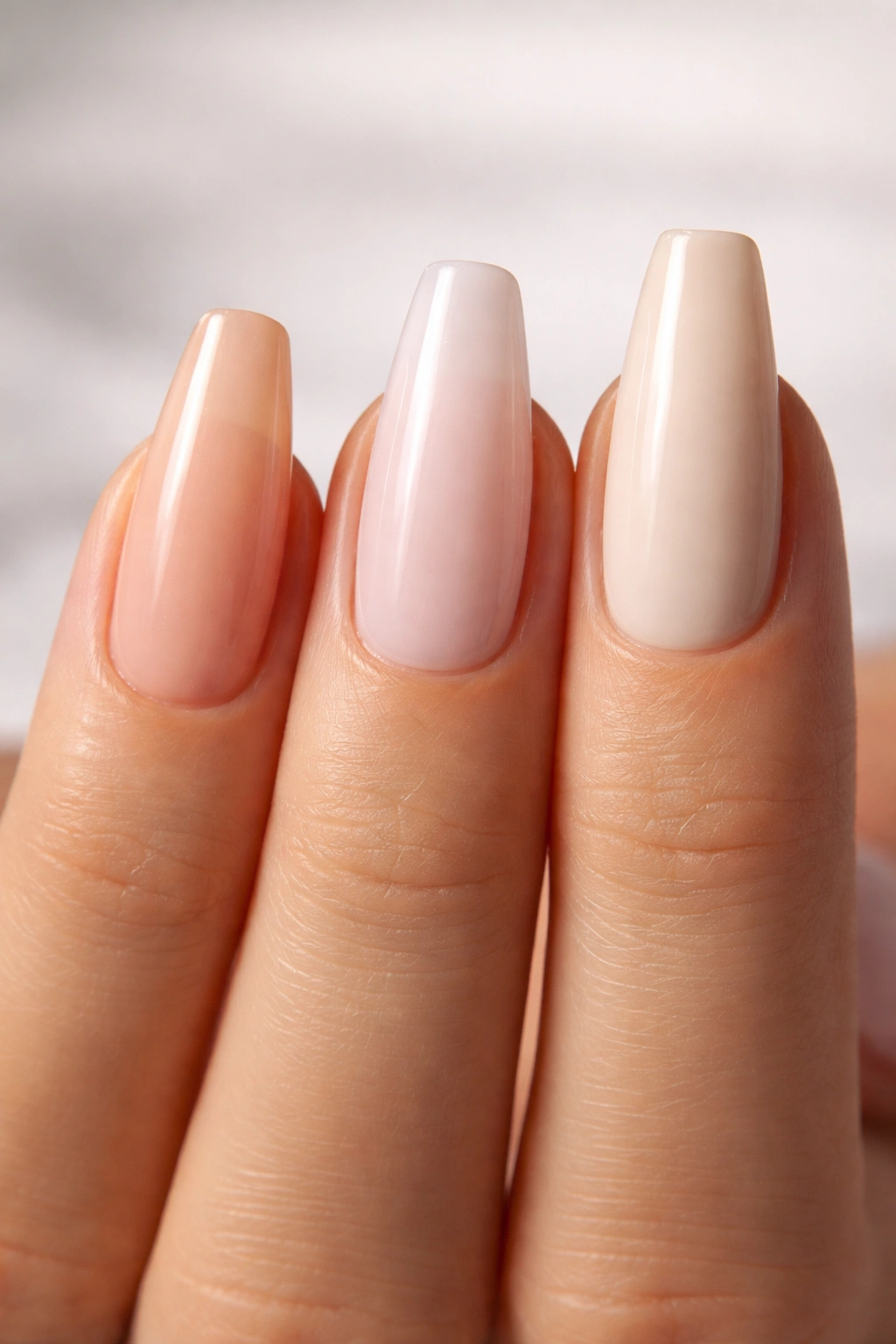
Most people start with color names. I think that’s backwards. Start with undertone, then opacity, then length. The exact beige or pink matters less than whether it leans warm, cool, or neutral against your skin.
Undertone makes the first cut
Warm skin usually sits well with caramel, honey beige, peach nude, and latte tones. Cool skin often looks sharper in rosy beige, putty, soft mauve-nude, and cooler taupes. Olive skin can wear both directions, though greige and mushroom tones often look cleaner than yellow-beige shades, which can turn sallow.
Opacity changes the mood
A sheer neutral shows the natural nail bed underneath, so it looks airy and low-maintenance. A full-coverage cream looks more graphic and more finished, but chips and grow-out show sooner. Milky formulas sit in the sweet spot: enough pigment to smooth the nail visually, enough translucence to keep the set from looking heavy.
Length controls how dramatic the same shade feels
A short coffin in milky pink feels quiet and tidy. The same color on a long acrylic set looks dressier because the shape itself carries more attitude.
A few practical rules make this easier:
- If your nude matches your skin too closely, go half a step deeper or lighter. Skin-tone camouflage can make the manicure disappear.
- If your hands run dry, skip flat beige mattes at first. They spotlight rough cuticles.
- If you’re new to coffin nails, start at medium length. You’ll see the shape without fighting with seat belts, cans, and keyboard corners.
- If you want less obvious grow-out, choose sheer, milky, or ombré finishes.
Photos on salon pages can fool you here. Ring-light glare cools down pinks and warms up beige. Hold swatches near a window if you can. It saves regret.
Nail Prep That Keeps Neutral Polish From Looking Cloudy
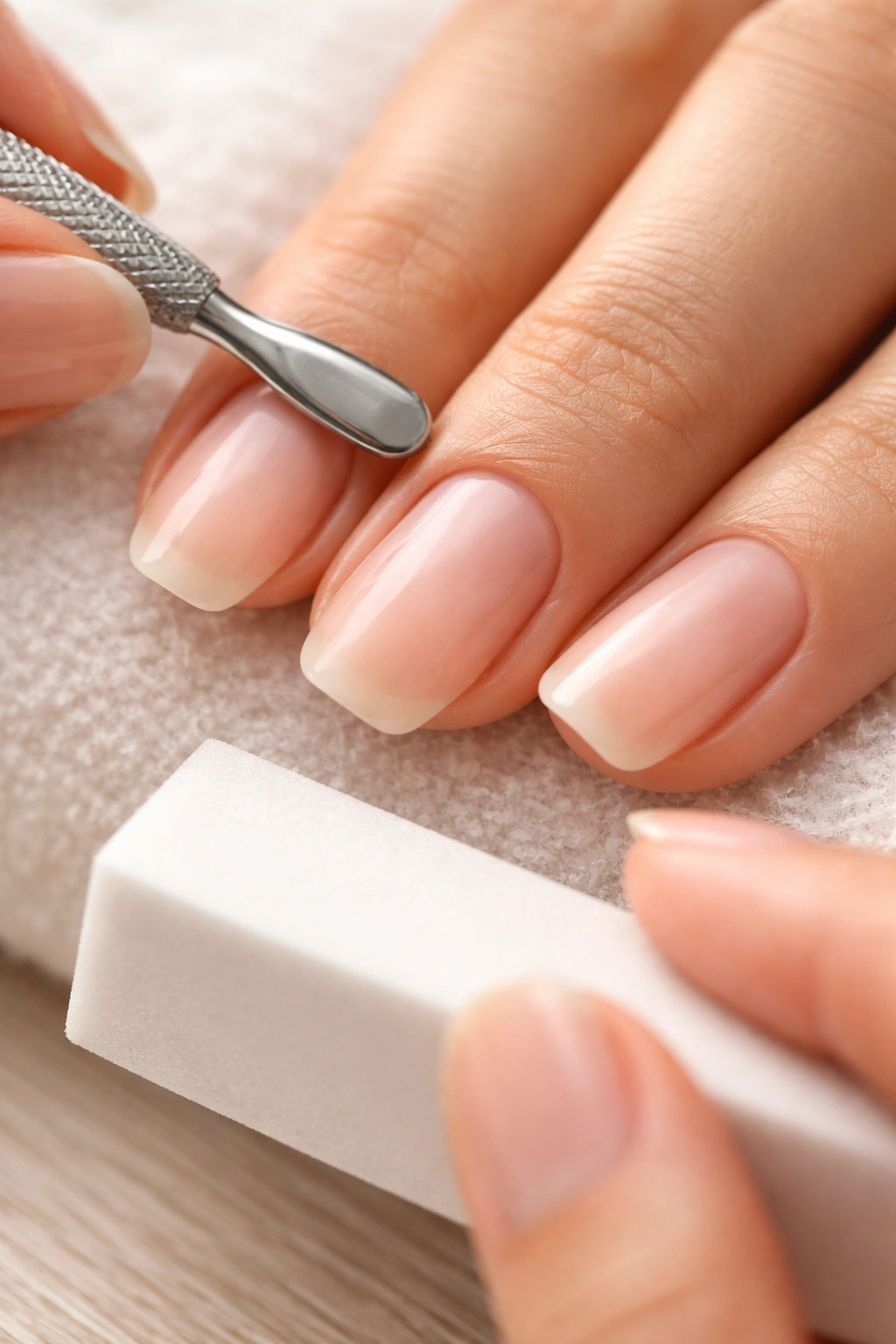
Neutral shades look clean only when the surface under them is clean. Sounds obvious. It’s also the part people rush.
The American Academy of Dermatology has long advised people not to cut cuticles aggressively, and that advice applies to manicures more than most clients realize. A raw cuticle line doesn’t look neat; it looks irritated. Push back softened cuticles gently, trim hangnails if you have them, and leave the healthy seal alone.
Buffing matters too, but not the way overzealous salons do it. You want a light pass with a 240-grit buffer to remove shine if you’re applying gel, not deep scratching that thins the nail plate. If you’re wearing enhancements, the nail tech should build a smooth apex so sheer shades don’t reveal dips and bumps.
Three other details separate a crisp neutral set from a cloudy one:
- Thin coats beat thick coats every time. Two or three thin layers self-level better than one heavy swipe.
- Cap the free edge. That small swipe across the tip helps stop early wear.
- Use cuticle oil twice a day. Dry skin makes even fresh polish look tired.
One more thing—maybe my most repeated nail opinion. If the shape is off, do not hope the color will save it. File first. Polish second.
1. Milky Beige Gloss
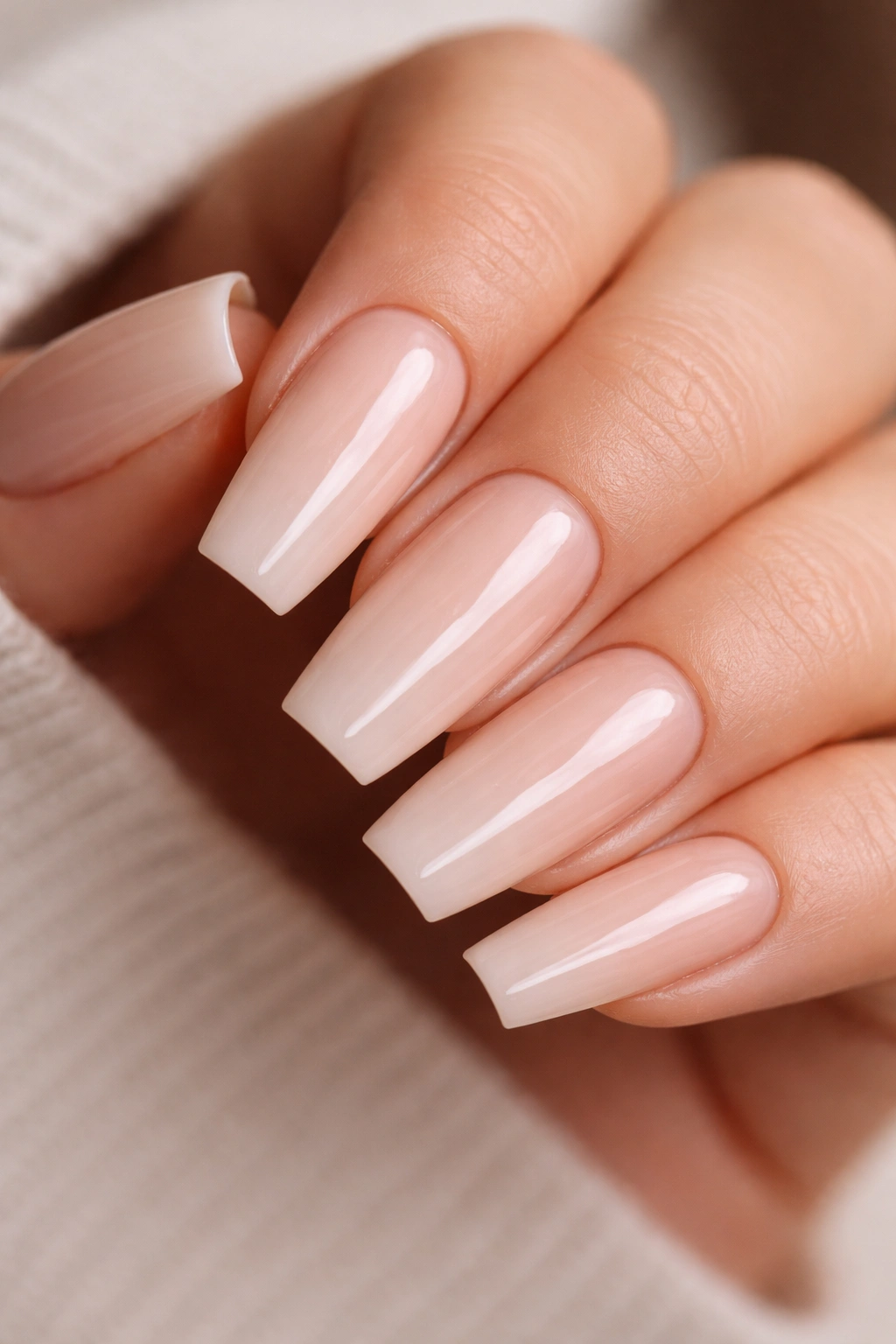
If you ask me, milky beige gloss is the safest first pick when you want neutral coffin nails that still look polished. It softens the coffin shape instead of making it look harsh, and it flatters more skin tones than flat nude cream ever does.
Why this shade works so well
The milky finish blurs the natural nail line, which helps coffin nails look smooth and even from cuticle to tip. On acrylic or builder gel, ask for a semi-sheer warm beige in two thin coats over a neutral base. The color should still let a little light pass through at the edge.
What to ask for at the salon
- A medium coffin shape with straight sidewalls and a flat, not flared, tip
- A beige that sits between ivory and latte, not yellow
- A high-gloss top coat, not matte
- Soft builder gel beneath the color if your natural nails have ridges
Pro tip: If the first swatch looks like concealer against your skin, it’s too flat. Pick a milkier shade with a touch more translucence.
2. Sheer Pink Nude
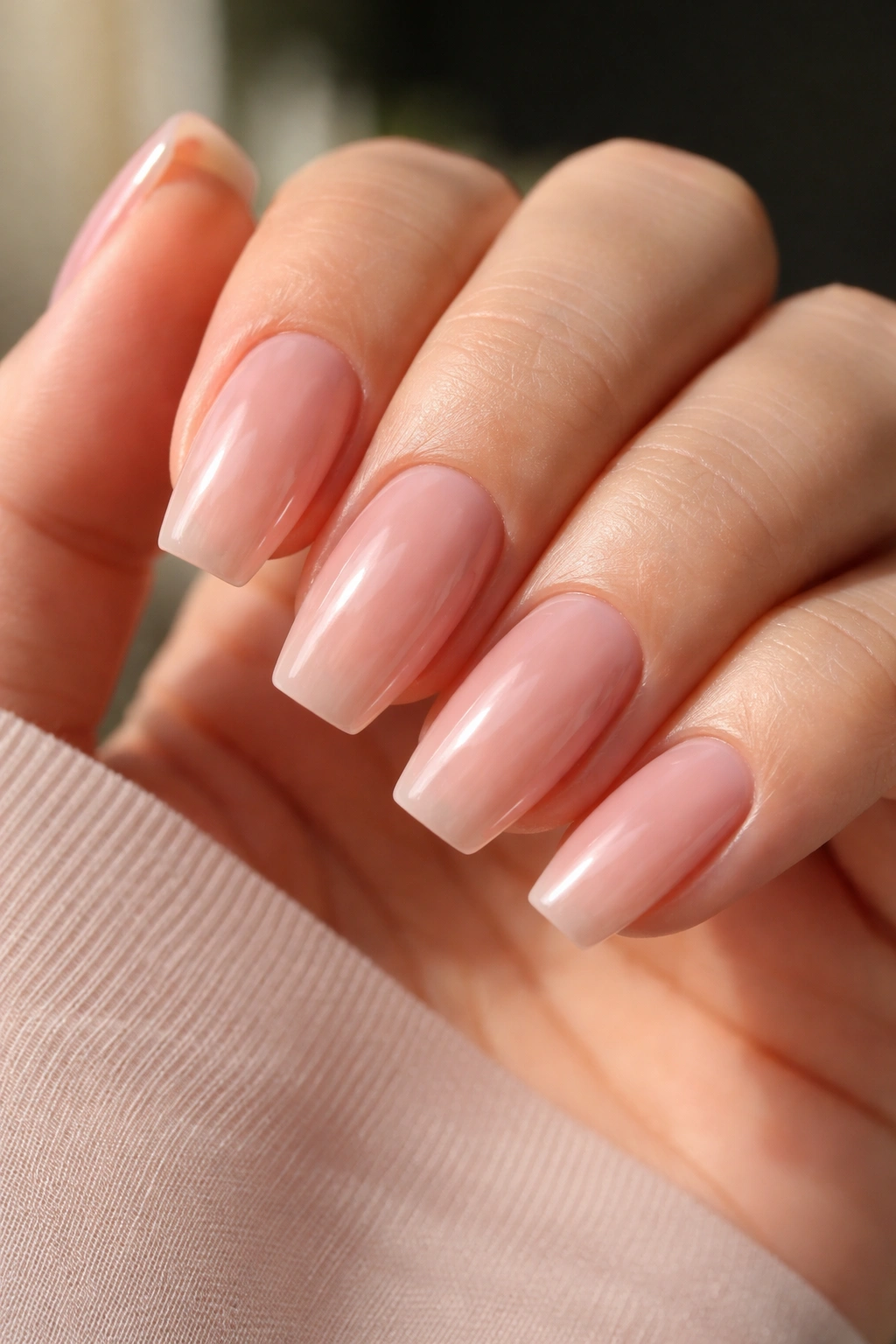
Not every nude needs to look opaque to look finished. A sheer pink nude does the opposite: it lets the natural nail bed show through a little, which gives the manicure that freshly groomed effect instead of a painted-block effect.
This one is especially good on short-to-medium coffin nails. Longer lengths can still wear it well, though the look turns a bit dressier because the shape does more of the talking. The shade itself should lean soft pink, not bubblegum and not mauve. Think clean nail bed, not candy.
I like this option for people who use their hands all day—typing, lifting boxes, washing dishes, grabbing keys—because small chips or a week of growth are less obvious than they are with dense cream polish. The color fades into the natural nail rather than stopping hard at the cuticle line.
There is a catch. Sheer pink can expose uneven prep if the enhancement underneath is bumpy. If your nail tech doesn’t smooth the base, you’ll see every ridge through the polish.
Pick a glassy top coat and skip chunky accents. This design wins by looking calm, not busy.
3. Warm Latte Ombré
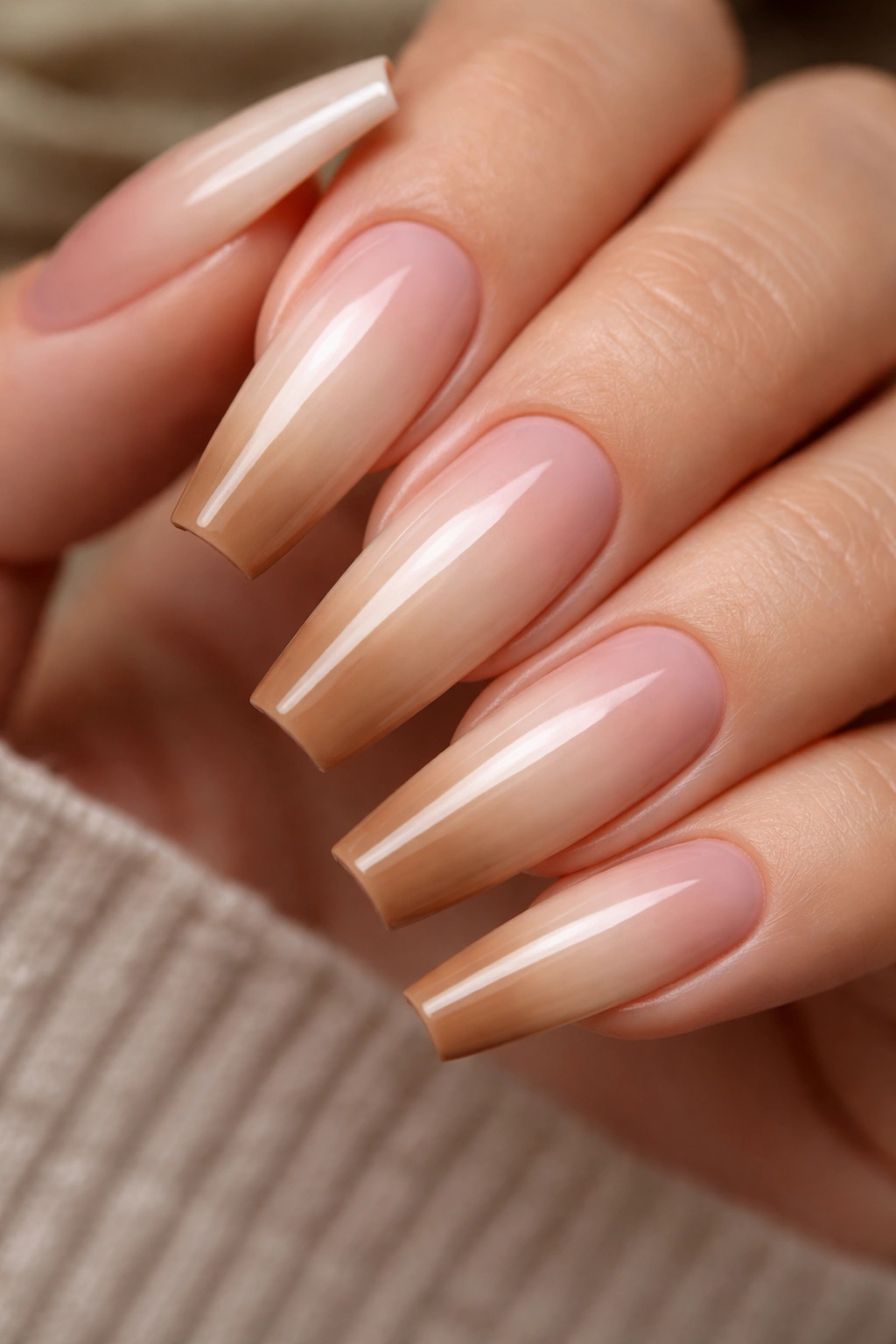
Why does a warm latte ombré work so well on coffin nails? Because the fade follows the shape. Darker color near the tip gives the flat end more definition, while the softer base keeps the cuticle area light and clean.
This isn’t the dramatic black-to-nude ombré you see on extra-long sets. Keep the blend close—sheer beige at the cuticle, creamy latte through the middle, soft caramel at the final third. The shift should feel gradual enough that you notice depth before you notice “design.”
The other reason I like this one: grow-out is forgiving. Hard lines at the cuticle are the first thing that make a manicure look old. A well-blended neutral ombré buys you more visual grace between fills.
How to ask for it without getting a muddy fade
Ask for a three-tone neutral blend rather than “brown ombré.” Those words matter. Brown can drift chocolate; latte keeps the tech in the beige family. On medium or long coffin nails, a sponge blend or airbrush finish gives the softest transition. Finish with gloss. Matte can flatten the fade.
4. Soft Taupe Matte
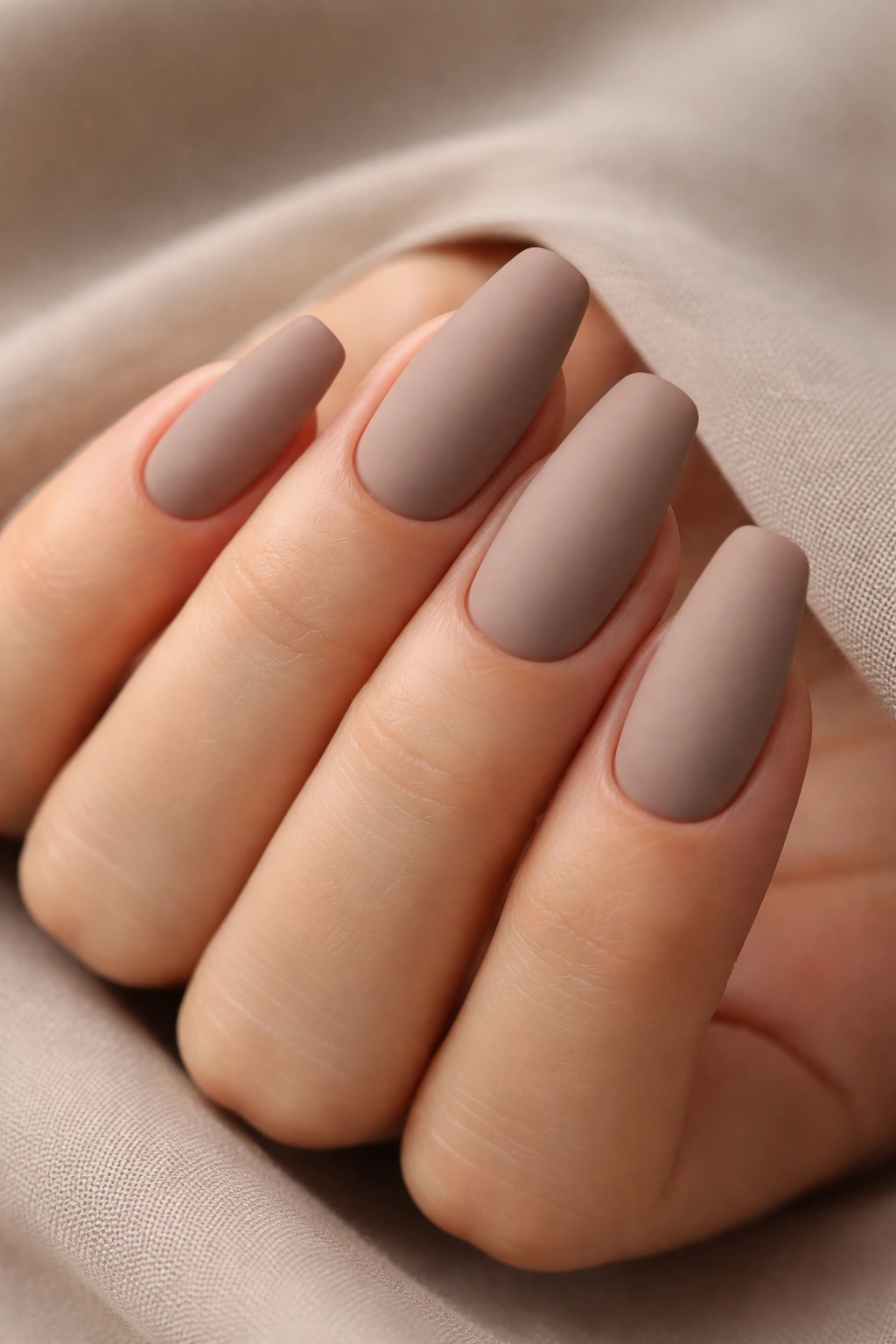
Picture a medium coffin set wrapped around a ceramic coffee cup: no shimmer, no white tip, no art, just a muted taupe with that velvety matte finish. When it’s done well, it looks crisp and grown-up. When it’s done badly, it looks dusty.
Taupe works because it sits between beige and gray. That middle ground gives the manicure structure. It also pairs well with silver jewelry, darker wardrobes, and cooler skin tones.
A few details make or break it:
- Keep the length short or medium, not extra long
- Choose taupe with a little warmth so it doesn’t turn cement-gray
- Prep the cuticle area carefully because matte top coat highlights rough skin
- Expect to wipe the surface now and then; matte shows makeup, lint, and hand cream faster than gloss
I would not make this your first neutral coffin set if your hands are dry or your nail tech loves bulky acrylic. Matte texture exposes everything. Still, on a slim coffin shape with a thin profile, soft taupe matte has a quiet precision that glossy beige can’t copy.
5. Nude Base With an Ivory Micro-French
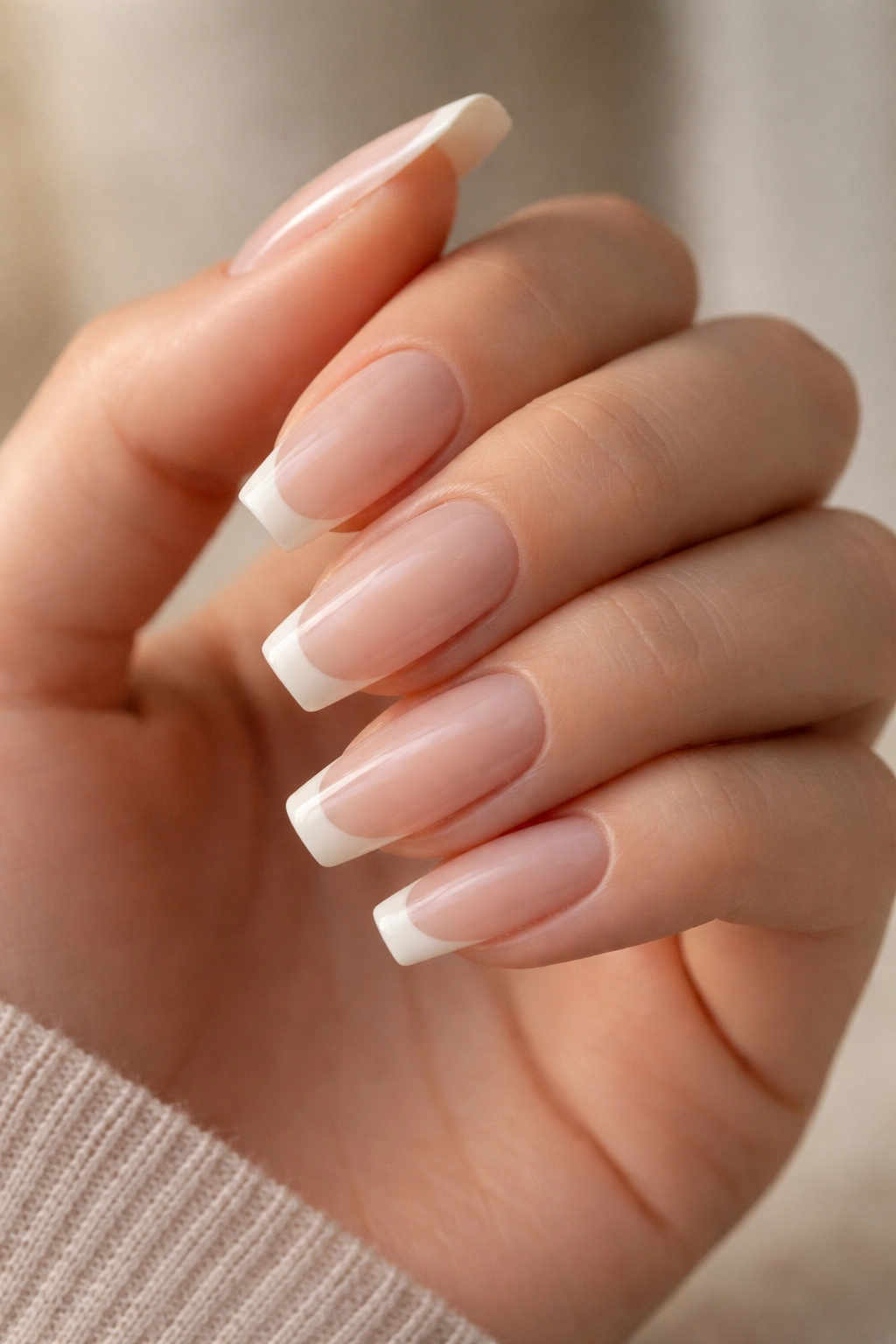
A chunky French tip can overpower coffin nails. A micro-French does the reverse. It sharpens the shape by tracing the free edge with a whisper-thin line of ivory, usually about 1 millimeter wide, sometimes even less on shorter sets.
The nude base matters more than the tip here. Pick a shade that still has life in it—milky pink-beige, rosy nude, soft neutral beige. If the base is too flat or too yellow, the tiny ivory edge starts to look accidental instead of crisp. I also prefer ivory over bright white on this style. Stark white can read hard against soft neutrals.
This design works on almost any coffin length, though medium is the sweet spot. On short coffin nails, the line gives shape without stealing space. On longer nails, it keeps the tip from looking blunt. Nail techs who are good at a French line will usually paint this by hand with a liner brush rather than using a sticker guide, because coffin tips need the line to sit straight across the end while still hugging the corners.
There’s one old salon habit I’d avoid: making the French tip thicker “so it shows.” It will show. That’s the problem. The strength of a micro-French is restraint.
I keep coming back to this one because it never asks for too much attention, yet the shape looks polished from across the room.
6. Sandstone Jelly Nude
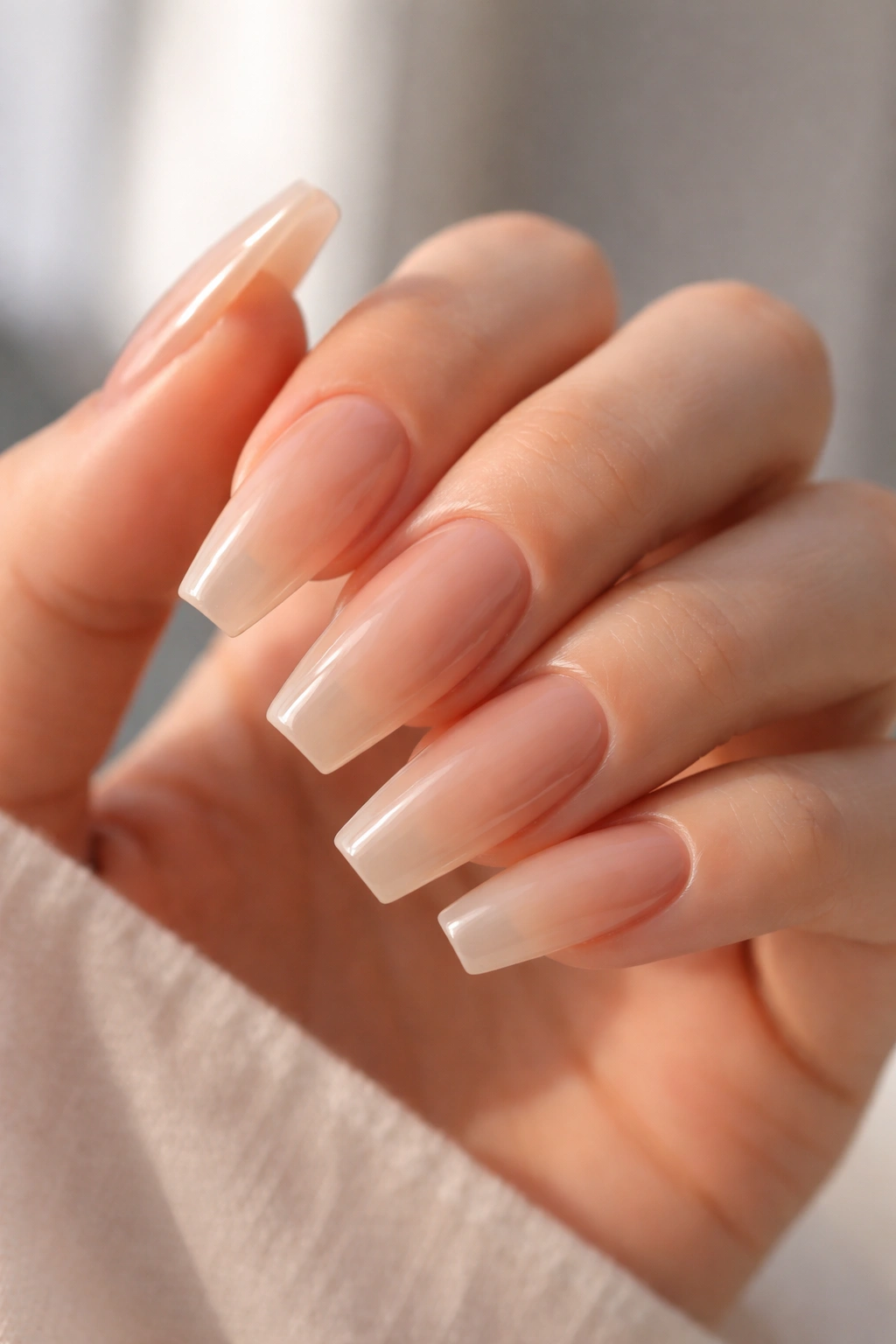
Unlike a full-coverage cream nude, a jelly sandstone shade has depth. Light moves through it. The color looks suspended instead of painted on top, which makes coffin nails feel lighter even when the set has length.
Sandstone sits in a useful middle zone—beige with a hint of warm sand, not peach, not gray, not pink. On clear extensions or soft gel tips, that translucence can look especially clean because the free edge keeps a little glow under the polish.
This one suits people who like neutral nails but hate that thick “wall of color” look some nude sets have. It’s also forgiving on regrowth, since the transparency blurs the line where your natural nail starts.
Who does it suit best?
People with warm or olive undertones, medium coffin lengths, and anyone who wants a neutral look that still has a bit of movement when the hand turns.
Ask for two sheer coats rather than one dense coat. Jelly shades lose their charm when they’re forced opaque.
7. Rosy Beige With a Glass Topcoat
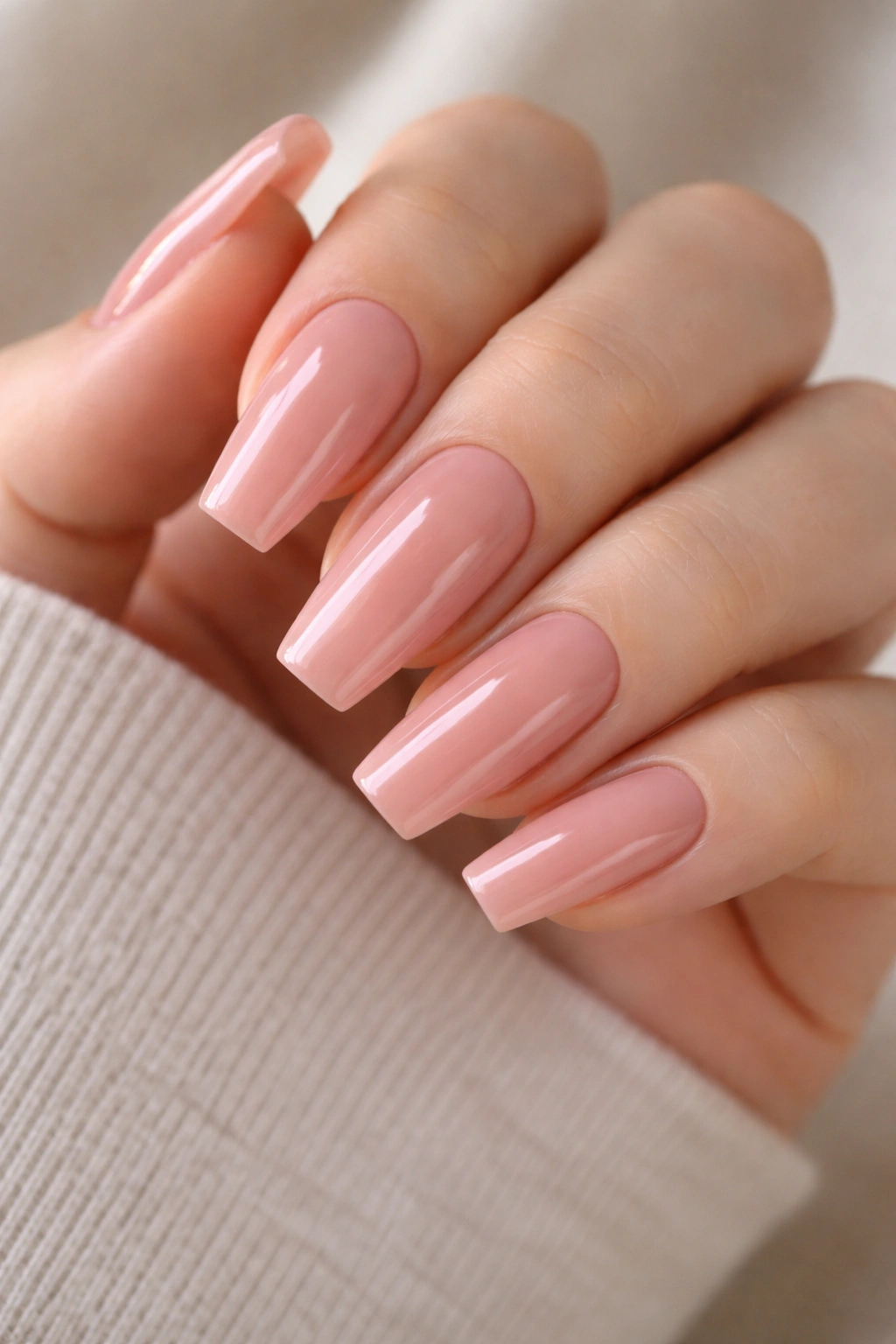
Some neutral shades lean too beige and make the hand look flat. Some lean too pink and turn sugary. Rosy beige lands in the middle, and on coffin nails that middle ground is useful.
What makes it different from plain nude
Rosy beige gives the nail bed a healthier look because it echoes the natural flush most people already have around the fingertips. That tiny bit of pink keeps the set from feeling chalky, especially in indoor light where cooler nudes can go dull.
When this design shines
- On cool or neutral undertones
- On medium coffin nails with a slim taper
- With a high-shine top coat that looks almost wet
- On builder gel overlays, where the base is already smooth and even
I like this one on clients who want a “done” manicure without any obvious design. It looks polished in close-up photos of hands, which is where some nudes fail—they look fine from a distance and dead up close.
Pro tip: Ask your tech to leave a hairline gap near the cuticle instead of flooding the color tight to the skin. Rosy beige looks cleaner with a crisp margin.
8. Greige Full-Coverage Cream
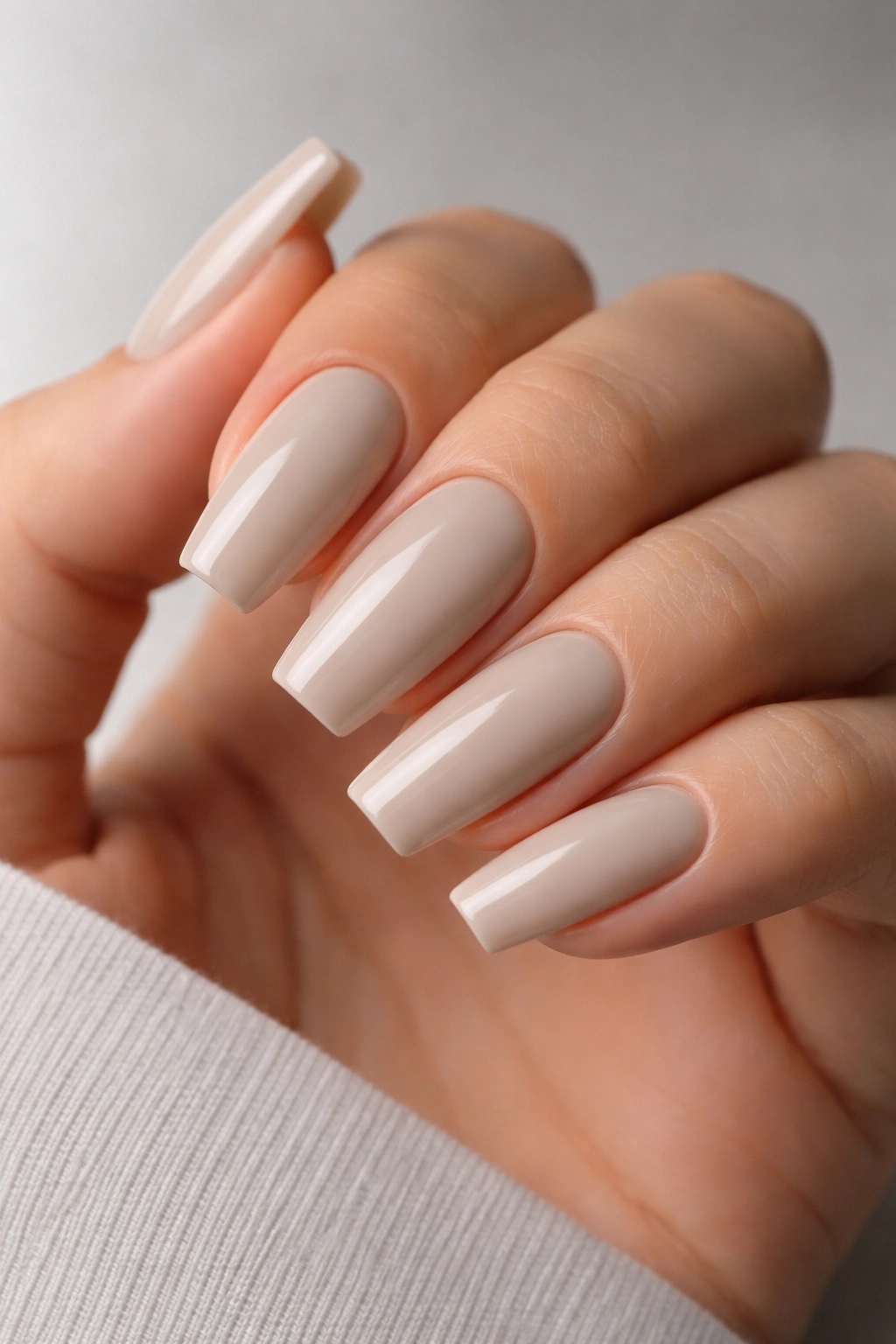
Greige is the neutral I recommend when beige keeps turning too warm on you. It borrows from gray without becoming cold and from beige without becoming orange. On olive skin, it can look especially clean because it doesn’t fight the undertone.
This is a more graphic neutral than a milky pink or jelly nude. You’re choosing coverage here. The color should be creamy and opaque by the second coat, with enough body to smooth the nail visually. That also means prep needs to be sharper. If the nail surface is lumpy, opaque greige will not hide it.
I prefer greige on medium coffin nails with a thin side profile. On extra-long, thick acrylics, the shade can start to feel heavy. Keep the shape sleek and the color earns its place. Pair it with gloss for a polished finish or with a satin top coat if you want less shine without going fully matte.
One warning: too-cool greige can drift into putty-gray and make the hands look drained. Hold the swatch next to your skin, not next to a white paper sample stick. Paper lies.
9. Peach Nude With a Soft Pearl Veil
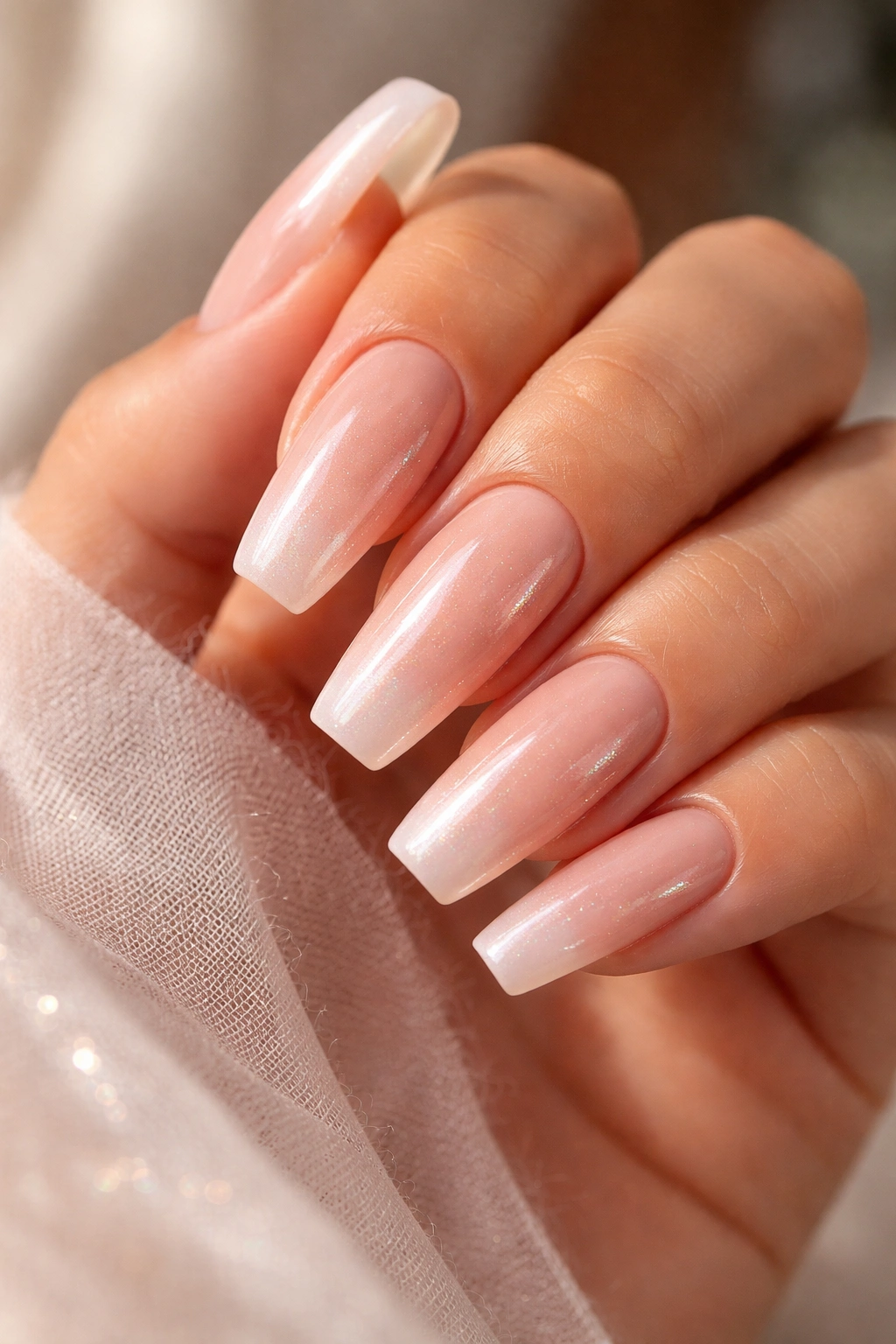
Can shimmer still count as clean? Yes—if it behaves itself.
A peach nude with a soft pearl veil gives neutral coffin nails a little light play without turning them into party nails. The trick is scale. You want a fine pearly finish or a lightly buffed chrome dust, not glitter pieces you can count from across the room.
This works well on warm skin because the peach undertone brings some warmth to the hand, and the pearl finish lifts it so the color doesn’t sit flat. In daylight, you get a smooth sheen. Under indoor light, it looks creamy with a faint glaze over the top.
How to keep it polished, not flashy
Use a nude base first, then add a thin pearl powder layer over cured gel before top coat. If the pearl is too silver, the peach turns frosty. If it’s too gold, the manicure can skew metallic. Soft champagne or neutral pearl sits closest to the clean look most people want.
I’d skip heavy accent nails here. The veil itself is the detail.
10. Oat Milk White
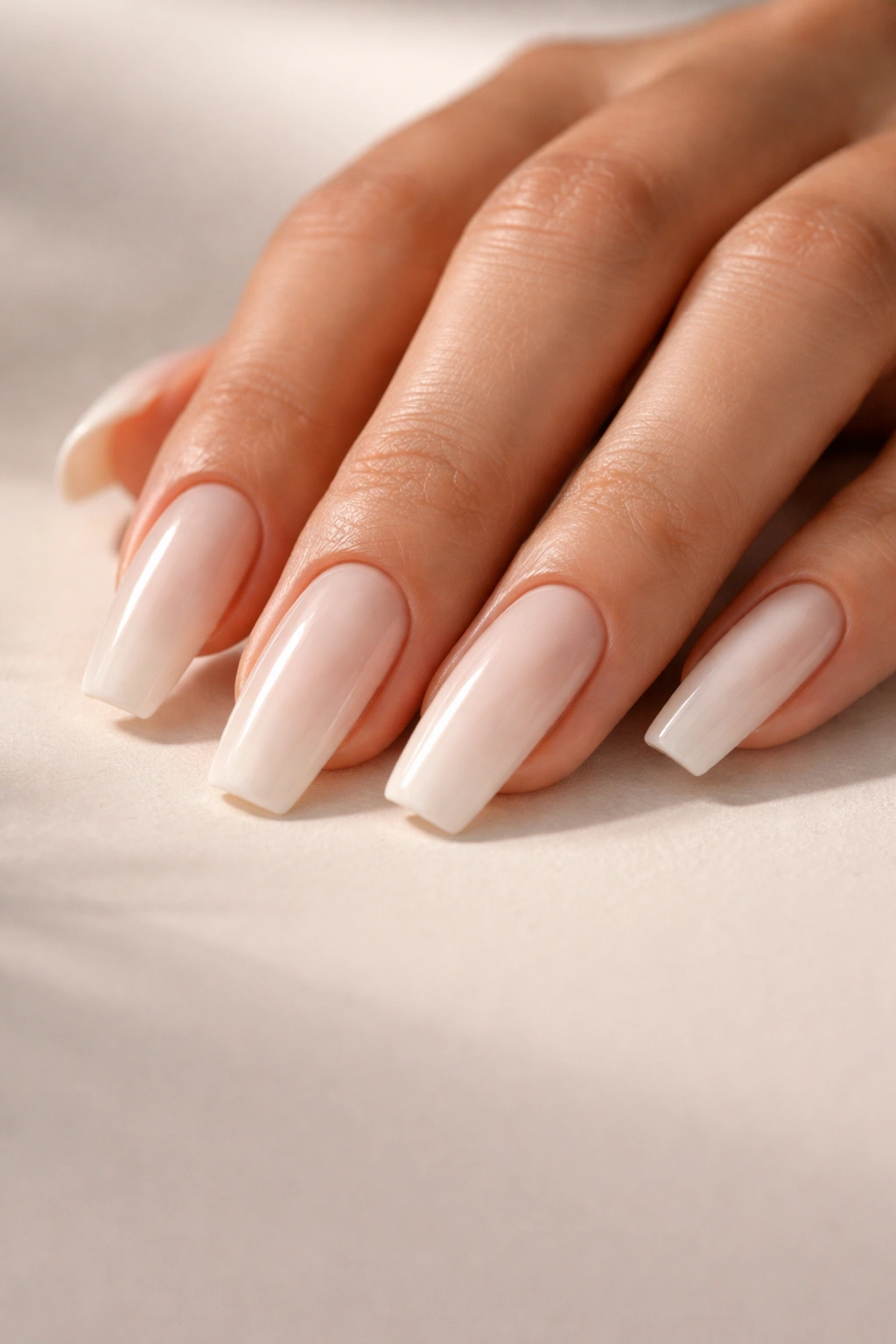
A stark white coffin set can look blunt. Oat milk white fixes that by softening the pigment with a drop of beige or cream. You still get that fresh, bright effect, but the nail doesn’t look like correction fluid.
I think this shade is underrated on coffin nails because people assume white has to be loud. It doesn’t. A milky off-white on a medium coffin shape feels neat and architectural, especially when the sidewalls are filed straight and the tip stays flat.
Key details matter with this one:
- Keep the polish slightly sheer or milky, not chalk-opaque
- Use a smoothing base so the white doesn’t highlight every dip
- Choose gloss unless you want the manicure to look more editorial than soft
- Leave enough room at the cuticle so grow-out stays clean instead of crowded
The first time I wore an oat milk shade, I expected it to feel too noticeable. It didn’t. It felt tidy. That’s the word I keep coming back to with this design. Tidy.
11. Caramel Side-French
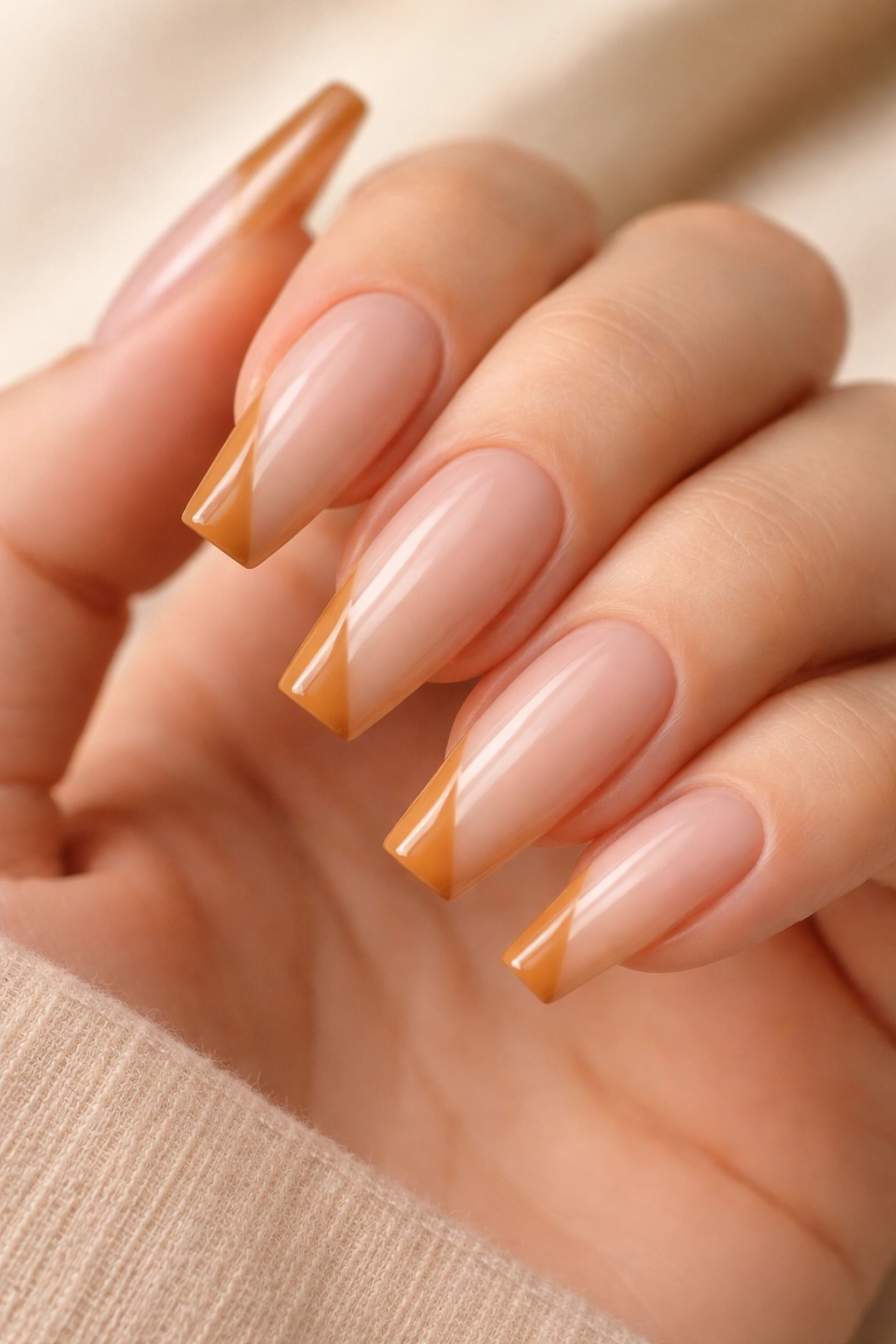
There’s something smart about a side-French on coffin nails. Because the line runs diagonally from one sidewall toward the tip, the shape looks longer without needing extra length.
For a clean neutral version, use a sheer nude or milky beige base and paint the side tip in caramel rather than deep brown. Caramel keeps the contrast soft. The diagonal should be thin and sharp, not wide like a color block. On a medium coffin, that line can start near the lower sidewall and angle upward toward the flat edge, creating a little movement while still staying restrained.
This style is handy if you want neutral nails that have more personality than a single-color set but still feel wearable every day. It also sidesteps one of the common French manicure problems on coffin nails: when the straight tip makes a classic smile line look too heavy. A side-French dodges that issue entirely.
I’d keep the rest plain—no crystals, no extra swirls, no glitter stripe trying to compete for space. The diagonal line already gives the eye somewhere to go.
12. Mushroom Nude With Matte-and-Gloss Contrast
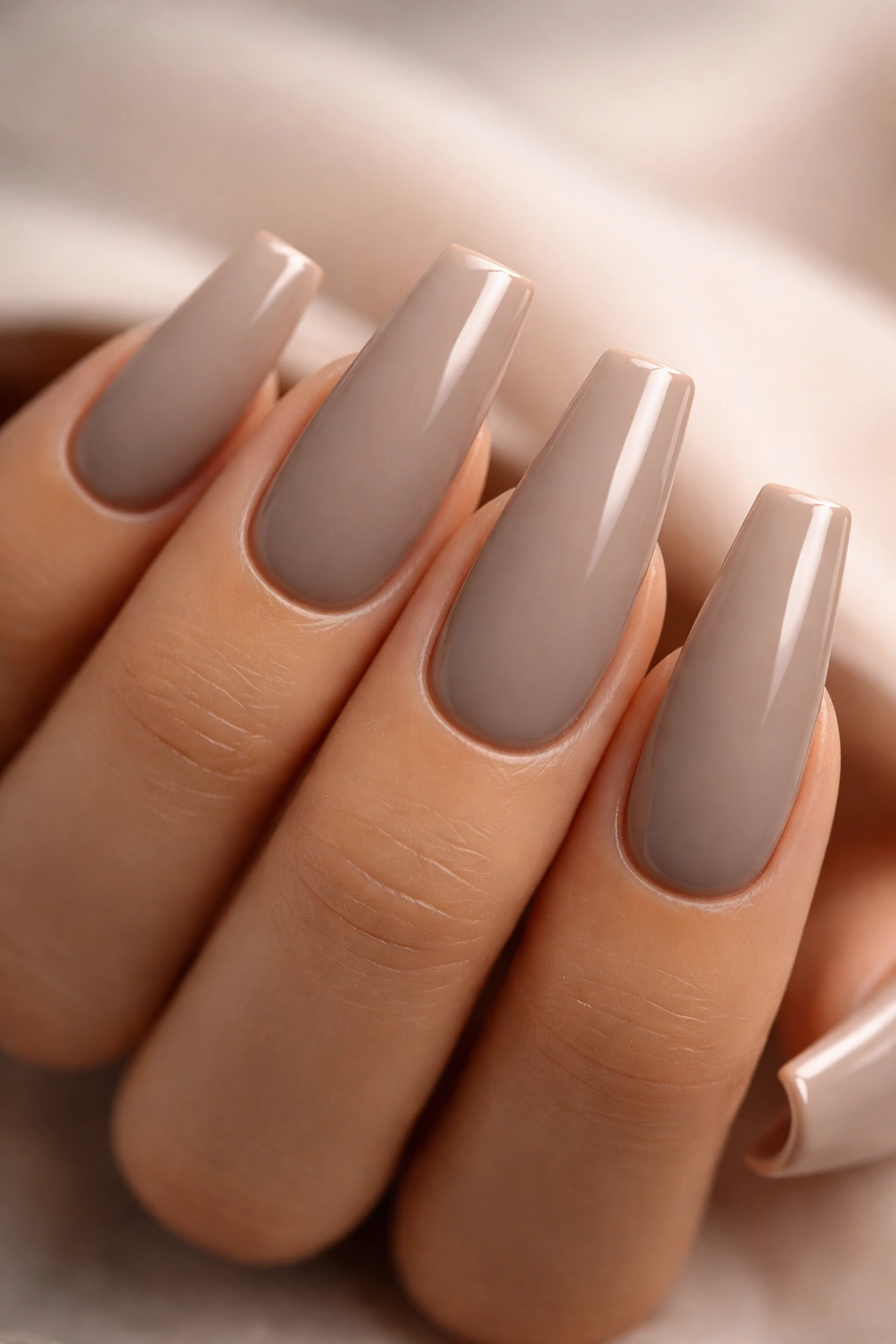
Unlike a standard solid-color set, matte-and-gloss contrast uses texture instead of color difference. That’s what keeps it clean. You’re not adding another shade; you’re changing how the same mushroom nude catches light across the nail.
Mushroom nude sits between taupe, beige, and soft mauve. It has enough gray to feel calm and enough warmth to keep skin from looking washed out. Paint the whole nail in that tone, cure it, then use matte top coat on the entire nail and trace a glossy French edge, glossy center stripe, or glossy half-moon on top. Same color. Different finish.
This works best on gel, since the contrast lasts longer and looks crisper. On regular polish, the effect can wear down fast once hand cream and dish soap enter the picture. Keep the design spare. One glossy tip or one vertical stripe is enough.
Who should wear it? Anyone who wants a neutral manicure with a little design language but zero sparkle. It feels thoughtful without leaning decorative, which is a narrow lane—and a good one.
13. Putty Nude With a Tiny Cuticle Crescent
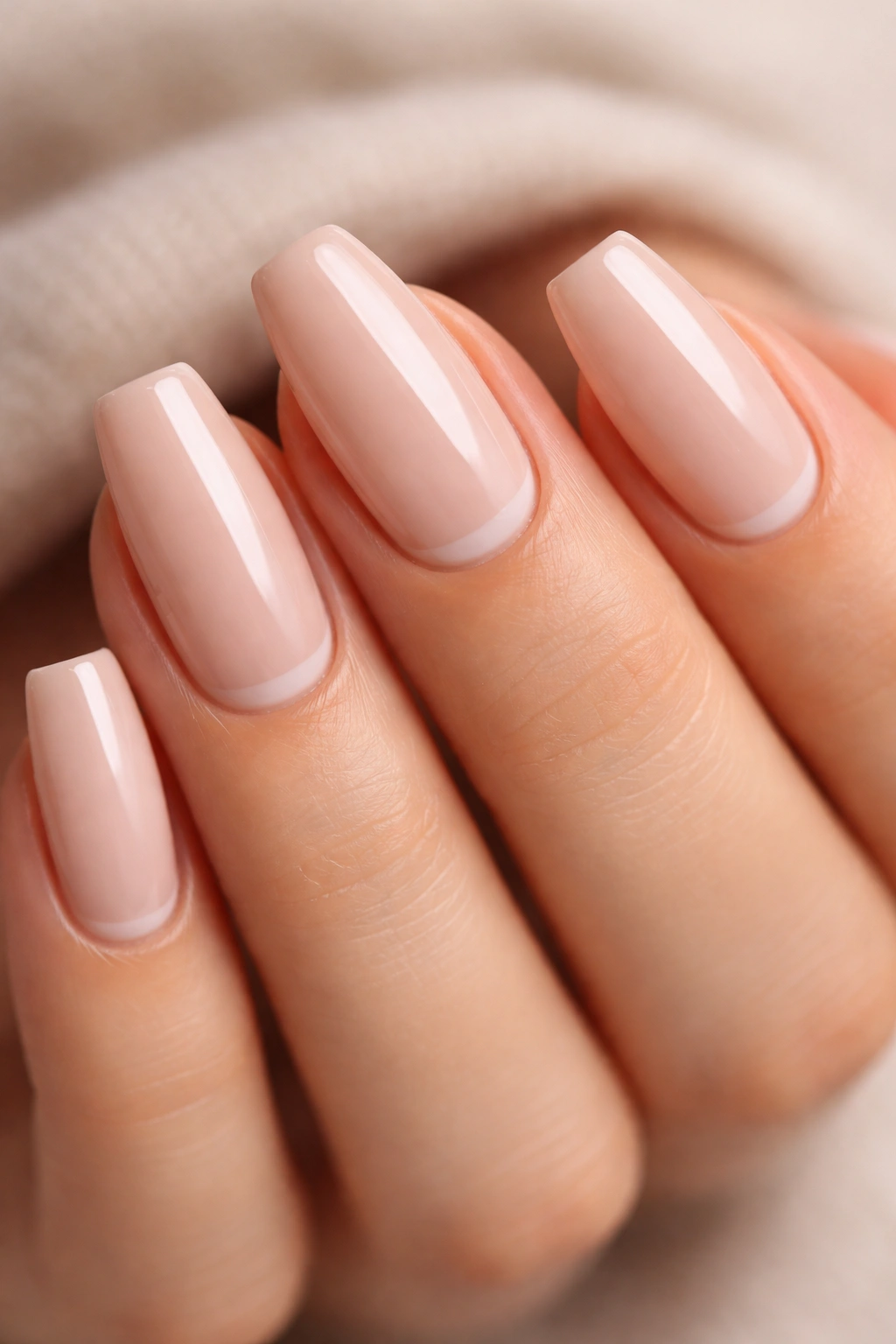
If your nail beds run short, this design can help more than a longer extension does. A tiny crescent left near the cuticle—or painted in a lighter neutral—opens the base of the nail visually, which makes the whole manicure look longer.
Why the half-moon detail works
Our eyes read that small curve as space. When the main shade is a putty nude and the crescent is kept narrow, the nail still looks neutral and tidy. The detail is subtle enough that people notice the manicure looks polished before they notice what changed.
Keep the proportions small
- Crescent width: about 1 to 2 millimeters
- Main color: cool beige, putty, or soft greige
- Nail length: short to medium coffin
- Finish: gloss, so the curve looks crisp
This is one of those designs where steadiness matters more than creativity. A wobbly half-moon looks messy fast. If you’re doing it yourself, use a fine detailing brush and brace your painting hand on the table. Slow beats fast here.
Pro tip: Pair this with a slightly sheer main shade if you want the cuticle area to stay softer between fills.
14. Mocha Outline Coffin
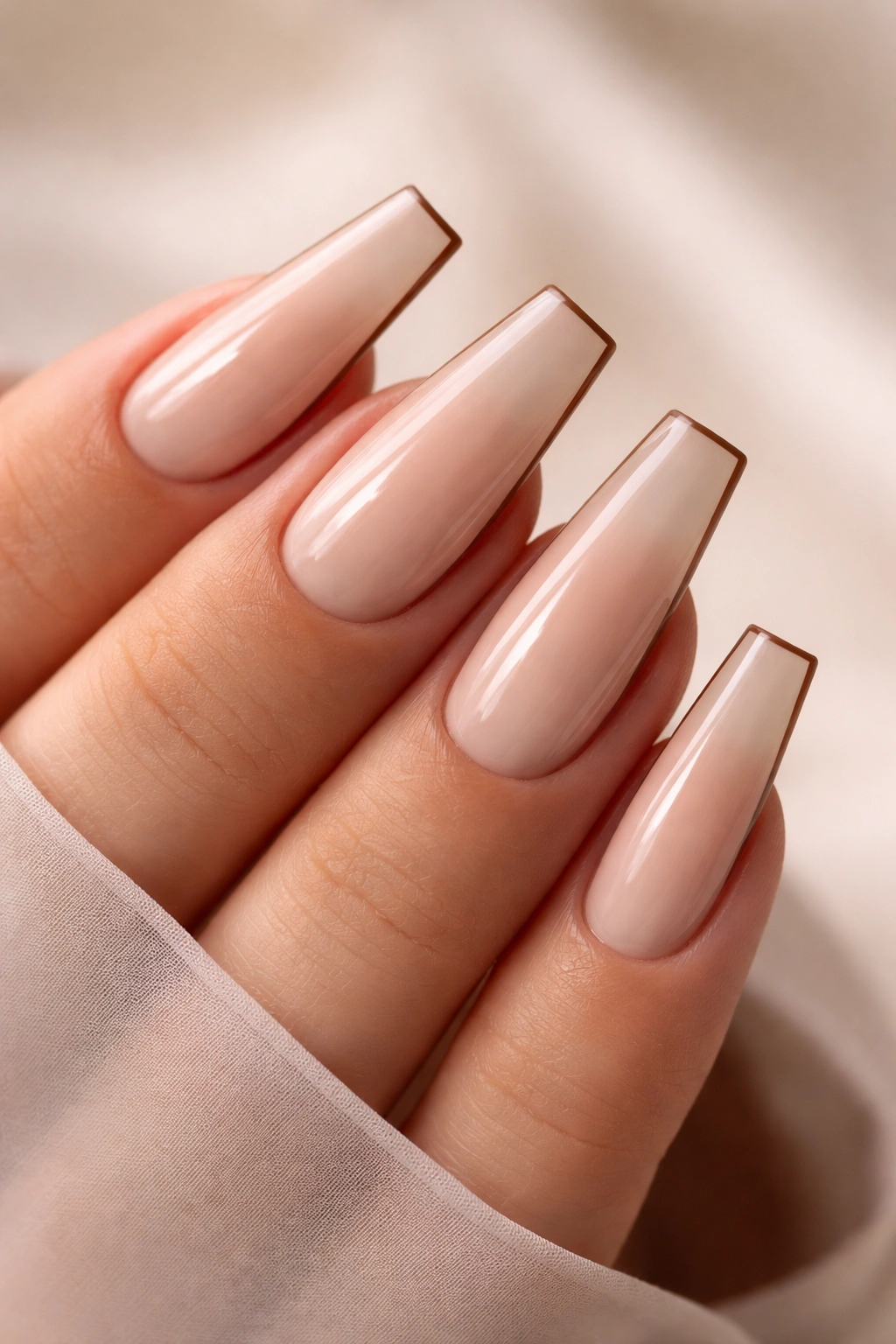
Outline nails sound louder than they look. In a neutral palette, a fine mocha line around the edge of a beige or blush-nude coffin nail can make the shape look custom-filed, almost like the nail is being underlined.
The trick is restraint. The liner should be thin—think a 5 to 7 millimeter detail brush, barely loaded with gel paint. Trace the sidewalls and the flat tip, then stop before the cuticle so the frame doesn’t close into a full border. That little opening keeps the design airy.
This style works because coffin nails already have strong geometry. You’re not adding a random pattern; you’re highlighting the silhouette that’s already there. On shorter nails, keep the line even finer. On longer nails, a cocoa or mocha outline gives enough contrast to show up without turning harsh the way black would.
I’d choose this if you like a clean look but still want someone to notice that your nails were done with care, not just painted beige and sent home.
15. Bare Blush Ombré to a Cream Tip
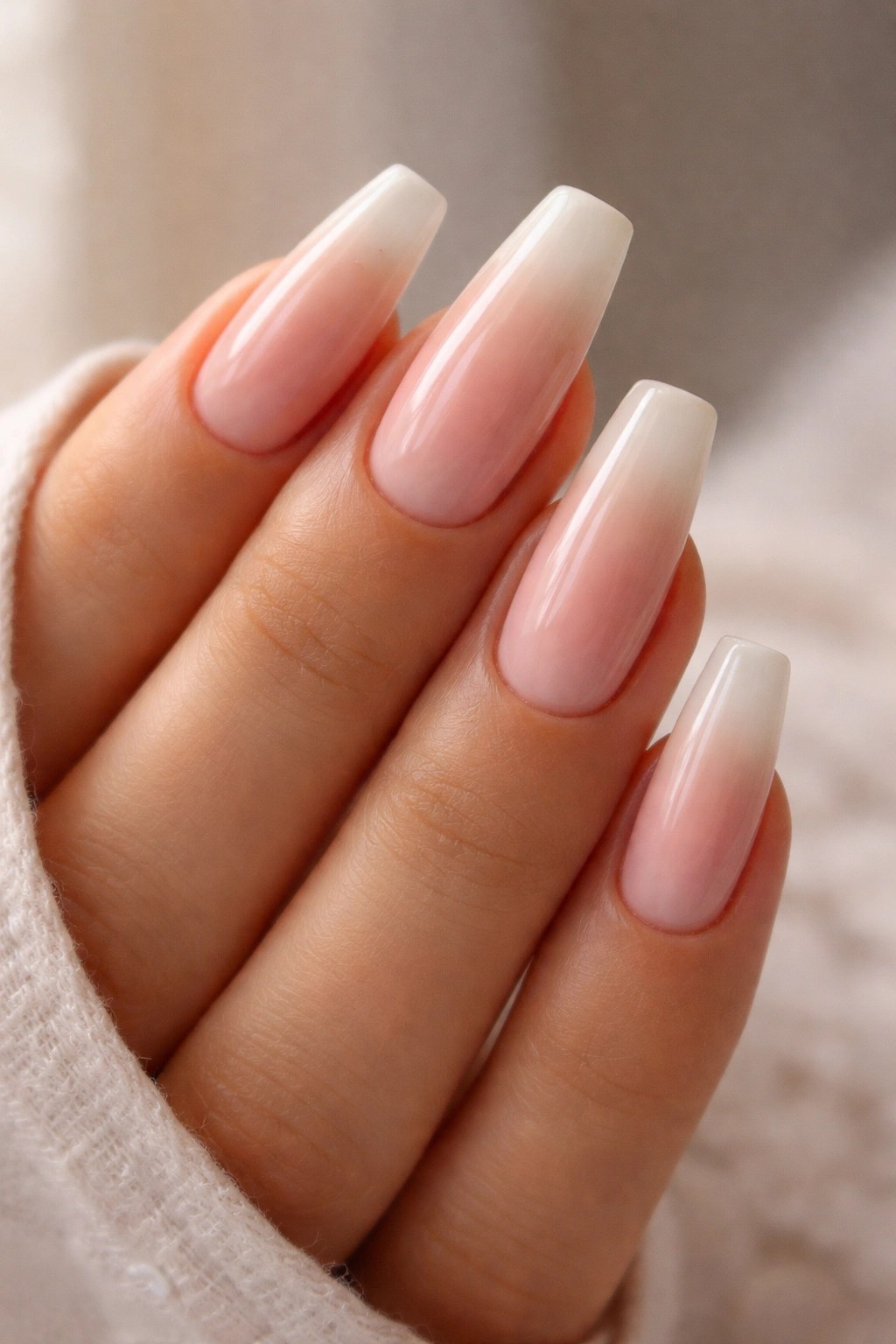
Some nail sets try too hard to look bridal and end up looking sugary. A bare blush ombré to a cream tip avoids that problem because the blend is soft, the colors stay neutral, and the coffin shape adds structure.
This style starts with a sheer blush or pink-beige at the cuticle and fades into a cream or oat-milk tip. It’s the gentler cousin of a bright French manicure. On medium or long coffin nails, the fade should begin around the middle third so the tip still has definition without looking like a hard stripe.
One reason this design lasts so well visually is that the cuticle area stays translucent. When your nails grow, the new growth doesn’t fight the design. That makes it a smart pick if you stretch appointments toward the longer side of the usual 2- to 3-week refill window.
Best way to request it
Ask for a soft baby-boomer blend in blush and cream, not a white ombré. White can turn stark on coffin nails. Cream stays cleaner. Finish with a glossy top coat and skip rhinestones. The fade has enough softness on its own.
How to Keep Neutral Coffin Nails Looking Fresh Between Fills
Neutral nails don’t need much to stay sharp, but they do need consistency. Cuticle oil morning and night is the fastest win. If the skin around the nail looks dry, even the cleanest beige polish starts to look tired.
Wear gloves for dishwashing and long cleaning sessions. Acetone, hot water, and harsh cleaners can dull top coat and dry the sidewalls faster than most people expect. If you wear makeup, self-tanner, or dark hair color, wash your hands after application. Creamy nudes and matte finishes pick up stains more easily than deeper shades.
A few habits help more than people think:
- File snags right away with a 180-grit file instead of peeling or biting
- Reapply a thin layer of clear top coat after about 7 days if you’re wearing regular polish
- Book fills before lifting starts, not after
- Keep hand cream away from the nail surface for 10 to 15 minutes after a fresh top coat
Also, take a quick look at your nails in daylight once in a while. Indoor lamps flatter almost everything. Windows are less forgiving.
Final Thoughts
The nicest neutral coffin nails aren’t always the fanciest ones. More often, they’re the sets with clean filing, the right undertone, and enough translucence to keep the shape from feeling heavy.
If you’re stuck between designs, start with one of the safest three: milky beige gloss, an ivory micro-French, or a bare blush ombré. Those give you room to see whether you prefer warm or cool neutrals, sheer or opaque finishes, and shorter or longer coffin proportions.
And if a salon photo has you second-guessing yourself, go back to the basics: look at the cuticle line, look at the sidewalls, look at the thickness at the tip. Neutral nails tell the truth. That’s why a good set looks so sharp.