


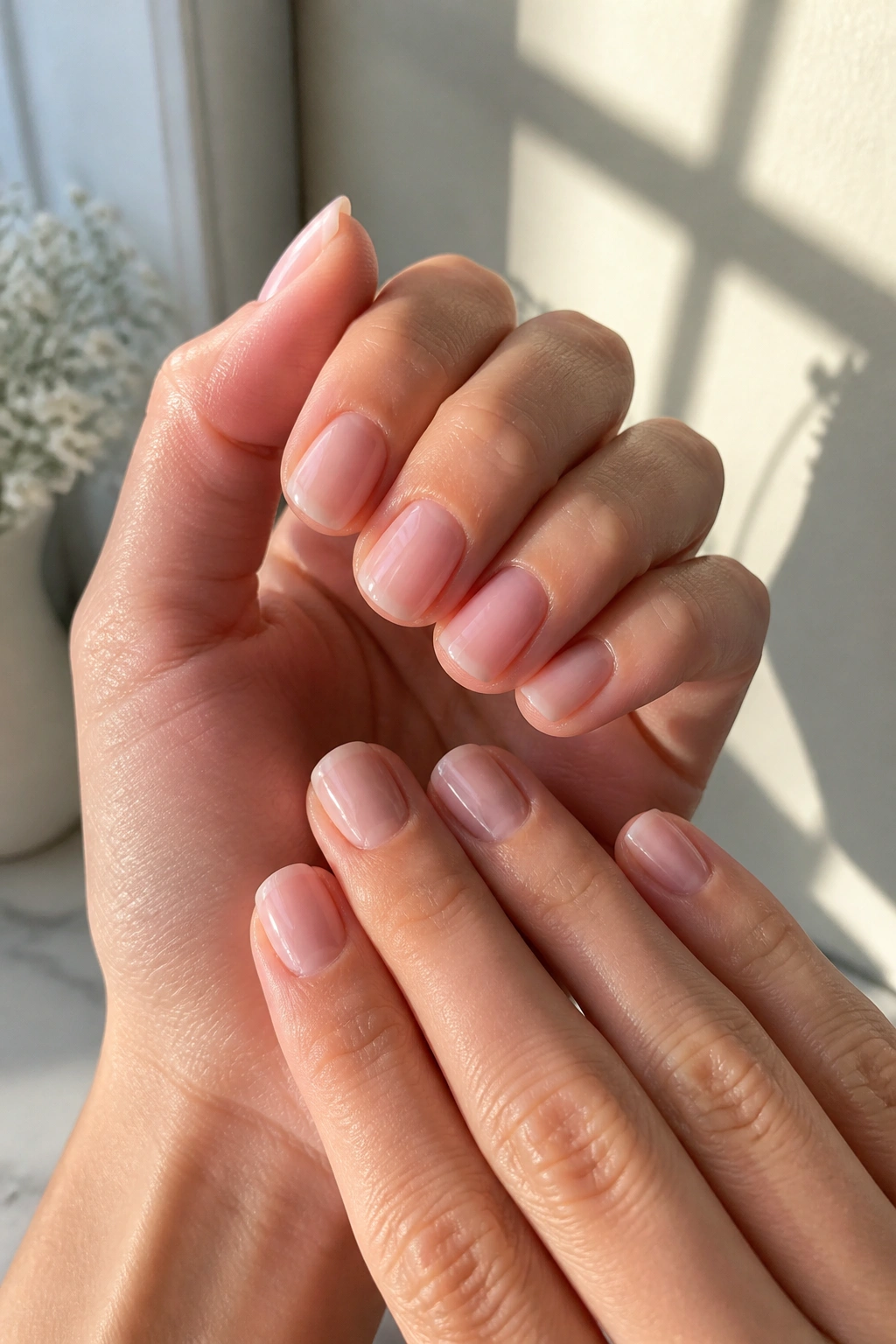
Short nails don’t have to look stubby or boring. For years, the beauty conversation revolved around long acrylics and dramatic shapes, leaving those of us who prefer short nails feeling like we were settling for less. The truth? Short squoval nails occupy this magical middle ground — they’re practical enough for daily life, but the subtle geometric blend of square and oval gives them a distinctly polished, intentional appearance that reads as entirely intentional rather than “I broke a nail and gave up.”
Squoval nails are genuinely harder to pull off at shorter lengths than longer ones. When you have extra nail real estate to work with, even a mediocre design becomes visually forgiving. But crop those nails down to practical length, and suddenly every decision — the color choice, the finish, the accent detail — carries more visual weight. A design that looks stunning on a 2-inch nail can feel cramped or poorly proportioned on a half-inch. That’s exactly why this matters: learning which styles, colors, and finishes actually work on very short squoval nails transforms what feels like a limitation into genuine creativity.
I’ve tested dozens of combinations over the years — soft pastels, bold jewel tones, chrome finishes, minimalist line work. Some designs I expected to work beautifully simply didn’t translate at smaller scale. Others surprised me by looking significantly better short than they ever did long. What separates the genuinely good short squoval designs from the ones that just sort of exist? Contrast, breathing room, and an understanding of how color and detail scale down. These twelve approaches consistently deliver that polished, intentional look that makes short nails feel like a choice rather than a compromise.
1. Soft Nude Cream With Minimal Gold Detail
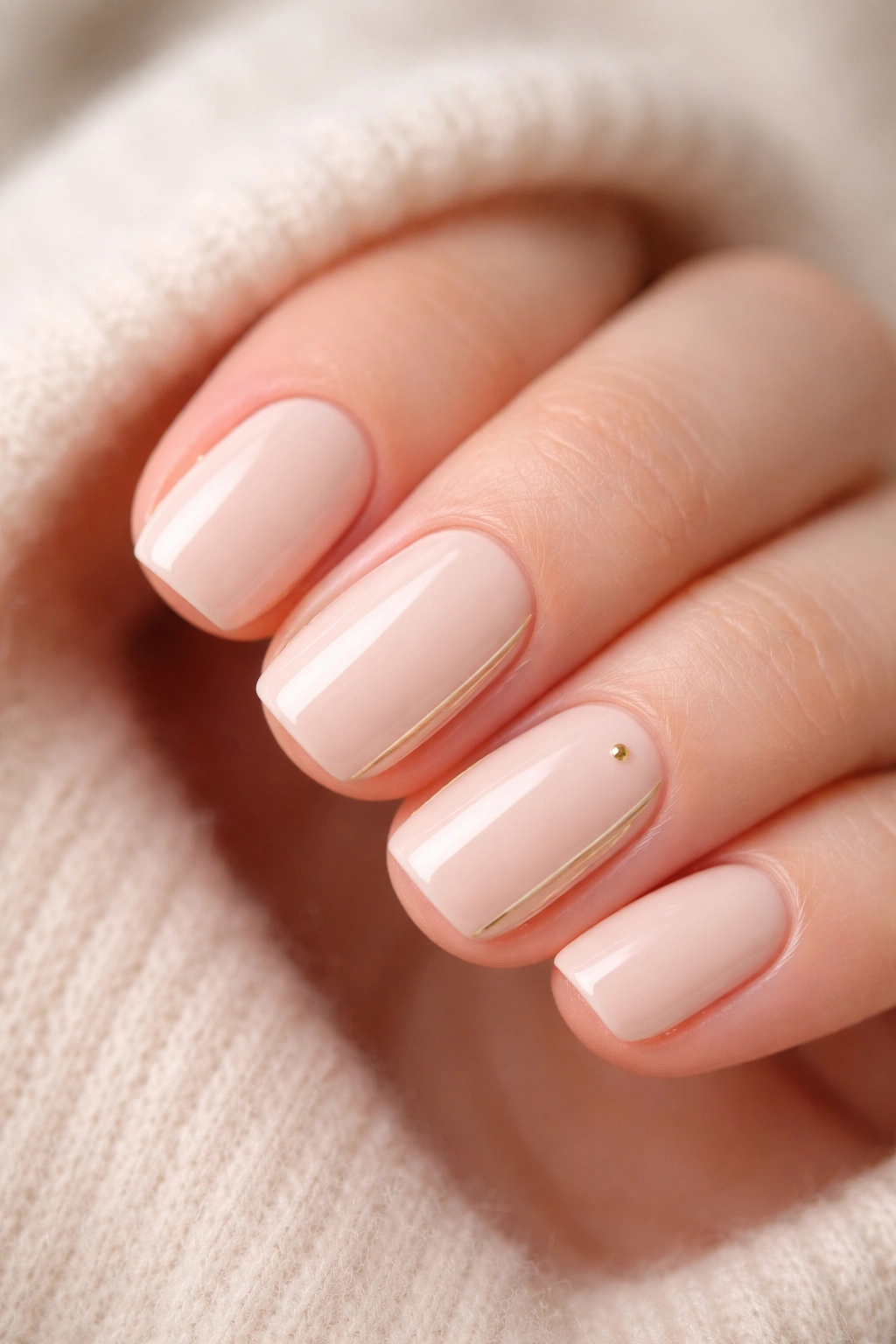
The foundation of short nail elegance is almost always a neutral base. Start with a creamy, warm nude that sits just barely warmer than your skin tone — think the kind of color that makes your fingertips look naturally elongated even though they’re objectively short.
Where this design truly succeeds is in the restraint. Instead of diving into elaborate art, add a single thin gold line along the side of two or three nails, or a minimal dot at the base of just one accent nail. The gold creates visual interest without overwhelming the limited canvas. You could also place a thin gold striping tape horizontally across the nail tip, creating a subtle separator between two nude tones.
Why This Works at Short Length
The cream nude reflects light softly and creates a flattering, unbroken line from cuticle to tip. There’s no visual competition happening — the eye reads it as one cohesive, intentional shape rather than a shortened version of something meant to be long.
Application Tips
Use a self-leveling formula so you get a smooth, glassy finish without pooling around the shorter perimeter. One thin coat of gold detailing is infinitely more sophisticated than a chunky, heavy-handed application. Less is absolutely the operative word here.
2. Are You Making Short Nails Look Disproportionate by Adding Too Much Design?
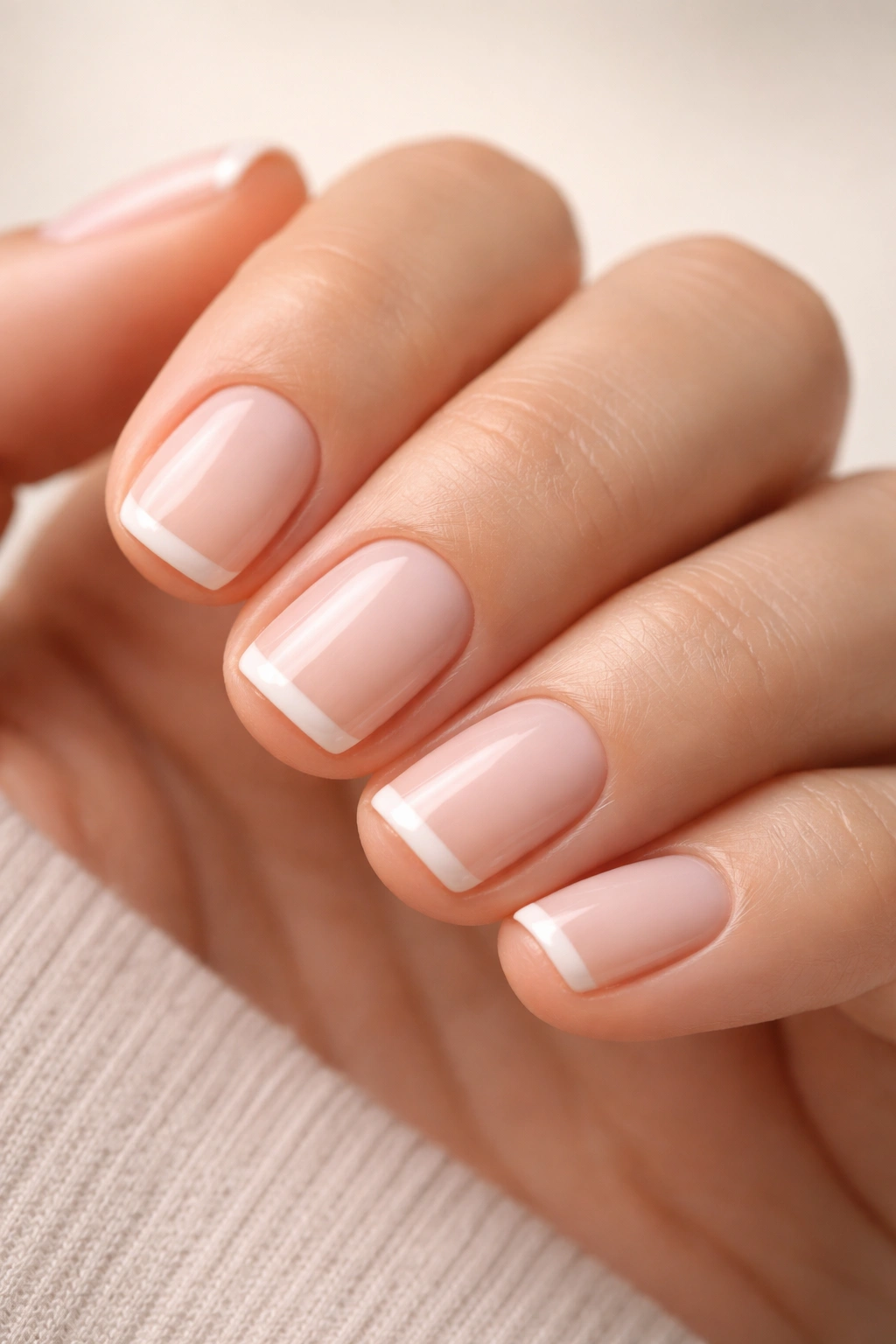
This might sound counterintuitive, but sometimes the most impactful choice you can make on very short squoval nails is conscious emptiness. When your canvas is genuinely small, negative space becomes an active design element rather than wasted real estate.
Consider a true French tip design with a creamy base and a white or soft cream tip, but stop right there. No glitter, no gemstones, no gradient. The geometry of the squoval shape — that square-ish base with the rounded tip — creates enough visual interest on its own. The classic French silhouette actually complements shorter nails because the contrast between base and tip provides automatic dimensionality without requiring any additional embellishment.
The psychological effect matters too. When someone sees a perfectly executed, intentionally minimal design on short nails, their brain registers that choice as deliberate and elevated. If those same nails were covered in accent details, the shortness might feel like a limitation that needed covering up.
3. Deep Burgundy or Chocolate Brown in a Metallic Finish
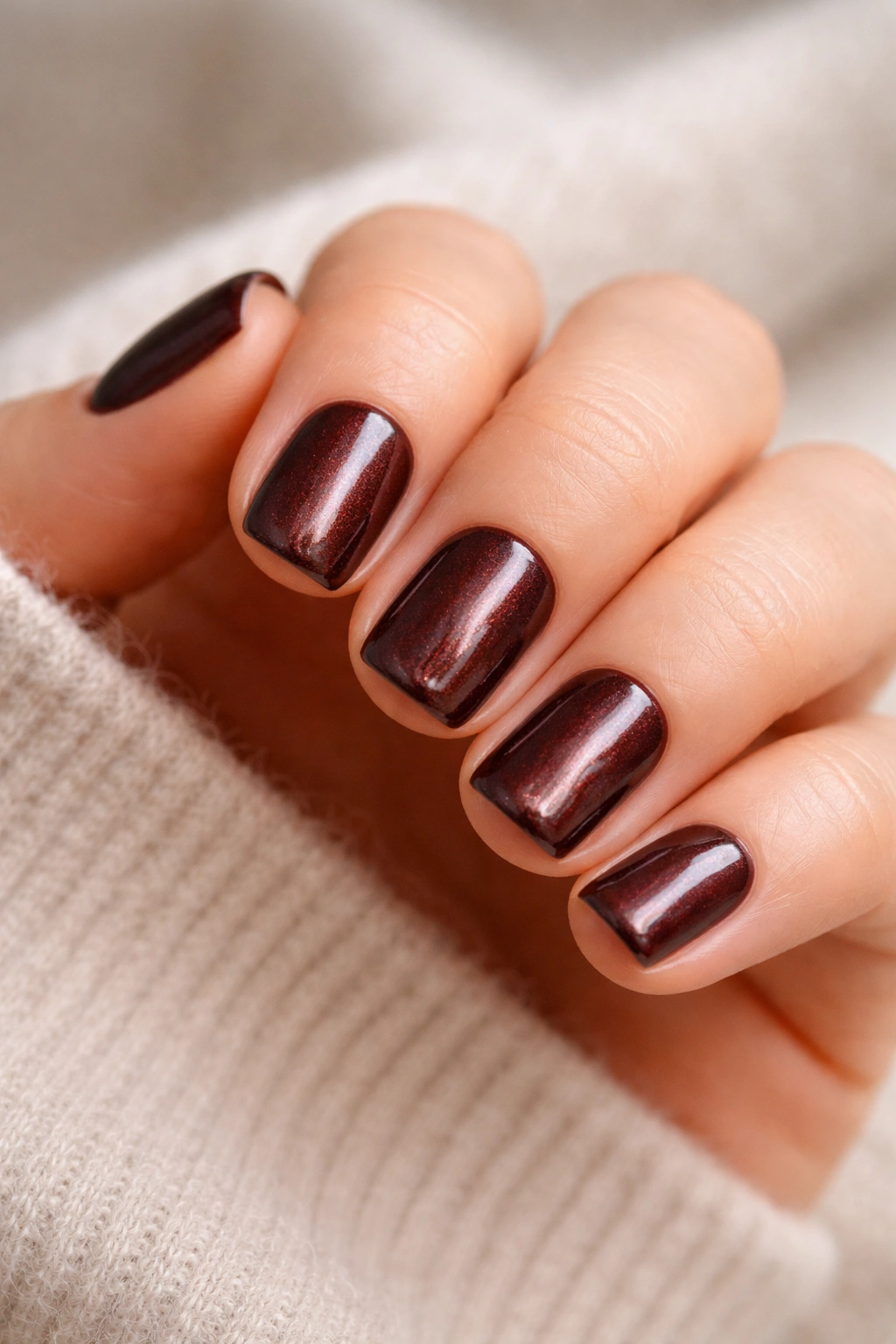
Short nails in rich, warm jewel tones actually photograph better than their longer counterparts. There’s something about the concentrated color saturation on a smaller surface area that intensifies the depth and richness of the shade.
Choose a burgundy or chocolate brown with subtle micro-shimmer built into the formula — not a full glitter explosion, just a fine shimmer that catches the light. On short nails, this creates a sophisticated gleam without the jarring effect that heavy glitter often produces. The result looks expensive, considered, and seasonless.
Apply in two thin coats for optimal color depth. The micro-shimmer will shift and catch differently depending on lighting and hand angle, creating subtle dimension that keeps the overall look from feeling flat or one-dimensional.
4. Minimalist Line Work in Complementary Contrast
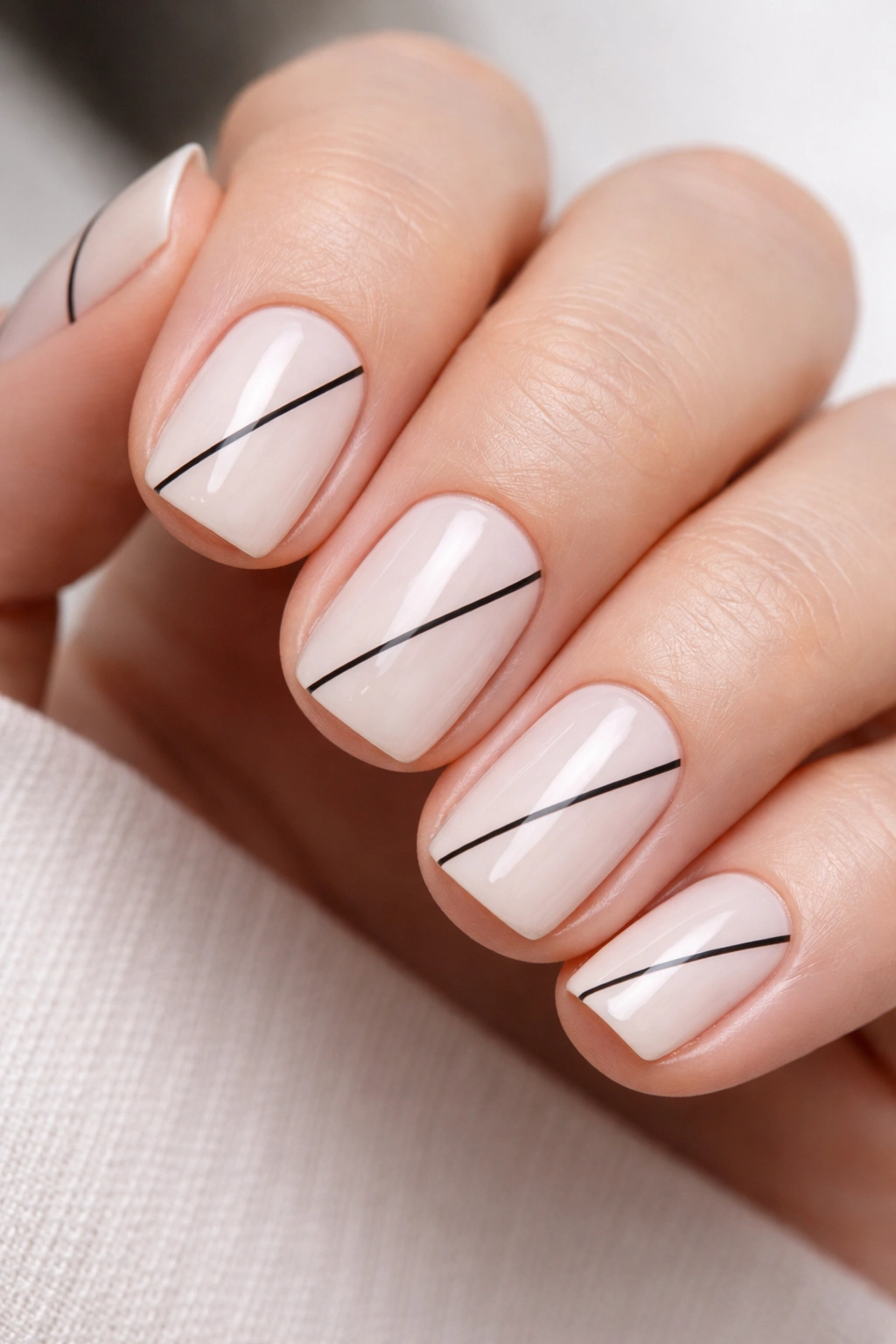
When you restrict your palette to exactly two colors and use one almost exclusively for fine line work, short nails suddenly feel like tiny canvases for wearable art.
The Color Pairing
Start with a pale, almost-white base — soft gray-white, pale dove, or true cream. Then choose one accent color in high contrast: true black, deep navy, burgundy, or even a bright teal. The contrast is crucial for readability at smaller scale.
The Line Work
Use a fine detailing brush to create minimal geometric designs: a single diagonal line from corner to tip, a small triangle at the nail corner, a half-moon at the base, or a subtle wave across three nails. The key is keeping each element small and intentional.
Why Simplicity Wins Here
Complex line work requires enough space to read properly. Short nails demand that you choose between detail density and clarity. One beautifully executed minimal design reads as intentional and artistic. Three overlapping complex designs read as crowded.
5. Translucent Blush Pink With Barely-There French Tips
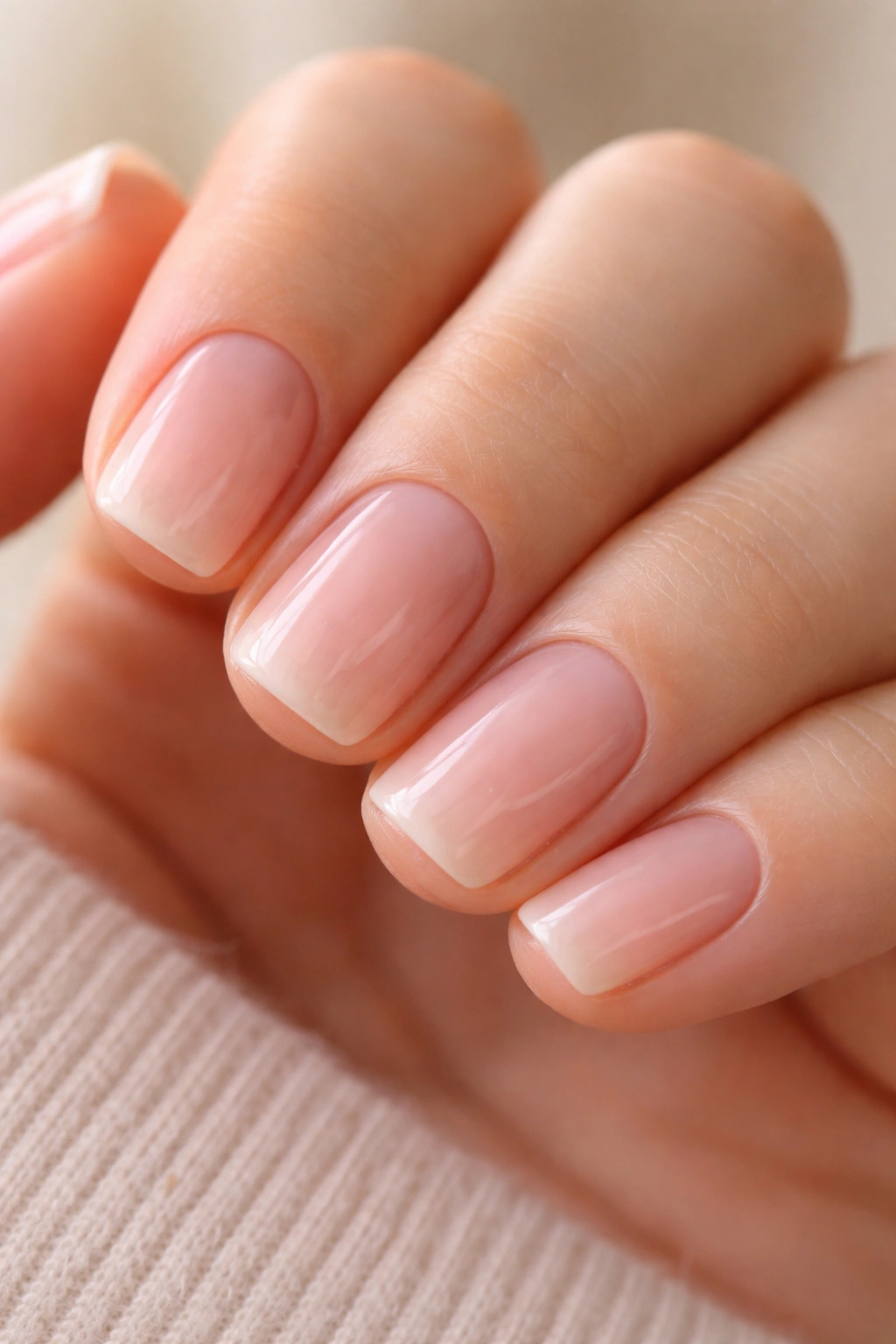
This design works beautifully on short nails because it plays with transparency and subtle color gradation rather than relying on a hard color block at the tip.
Use a thin, translucent peachy-pink or rose-nude base that’s genuinely sheer — something closer to a tint than an opaque color. Apply it in a single coat for a barely-there effect that lets your natural nail peek through slightly. At the tip, apply a slightly more saturated version of the same color, creating a soft gradient rather than a stark contrast. The squoval shape becomes even more apparent because the color shift follows the natural curve of your nail tip.
This is sophisticated without being obvious. It reads as effortlessly elegant rather than carefully constructed, which paradoxically requires careful construction. The translucency is what makes it work — opaque color in this direction often looks washed out on short nails, while transparency creates dimension and depth.
6. Black or Dark Charcoal With Negative-Space Geometry
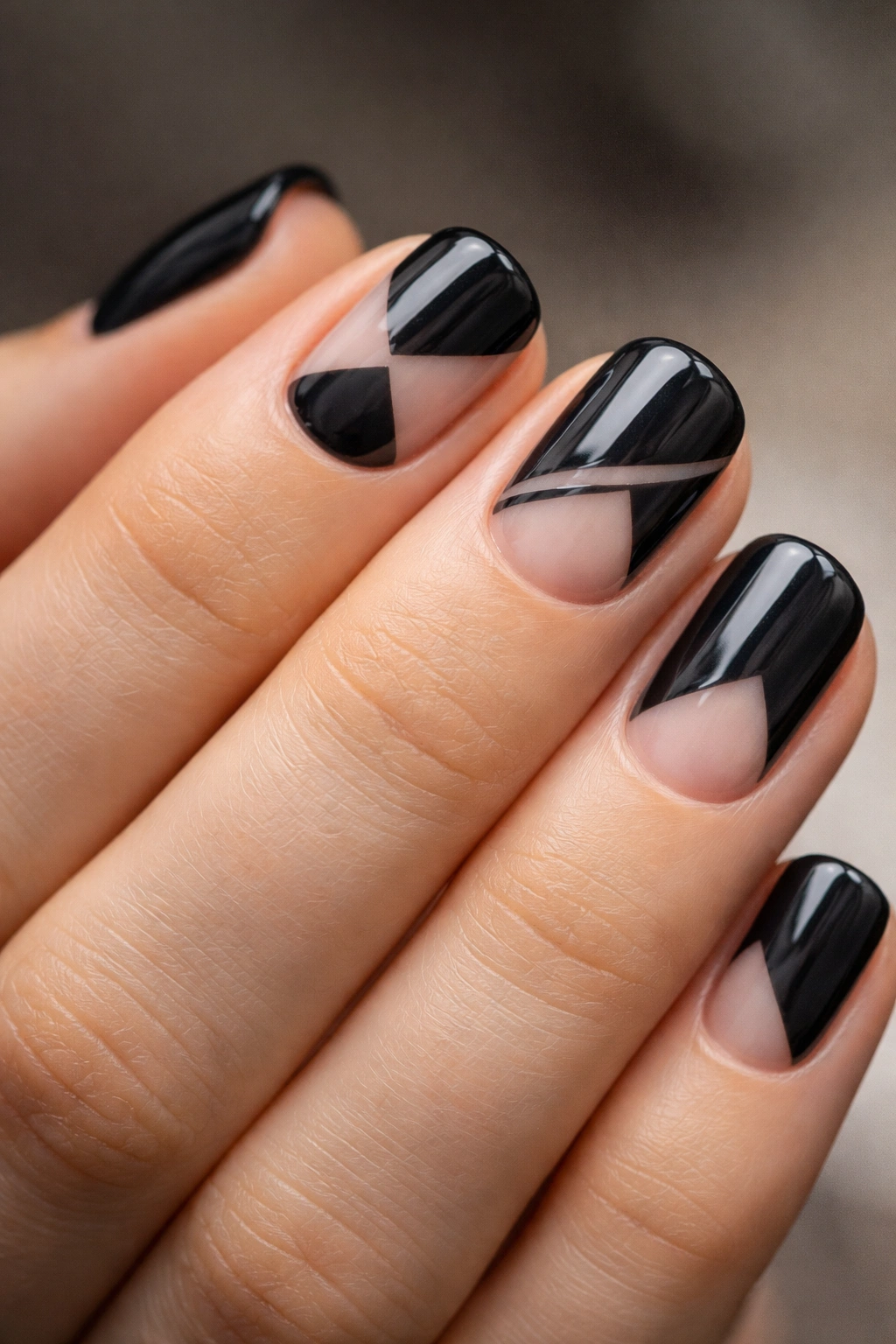
Here’s the counterintuitive truth: dark colors on short nails don’t have to feel heavy or gothic. In fact, when paired with negative space, they create striking visual impact precisely because they’re short.
Paint your nails a true black or dark charcoal. Then, using a fine detailing tool and your base coat or a white polish, create geometric shapes that leave portions of the dark color visible: a white stripe down the center, white triangles at the corners, a white semicircle at the base. The negative space — the uncovered dark — becomes the focal point rather than the light-colored detail.
This is the opposite of what most people instinctively do with dark polish on short nails. Most people try to lighten it with details. Instead, embrace the dark and use light to create strategic contrast. The effect is modern, slightly edgy, and surprisingly elegant.
7. Classic Red in a Formula Specifically Formulated for Short Nails
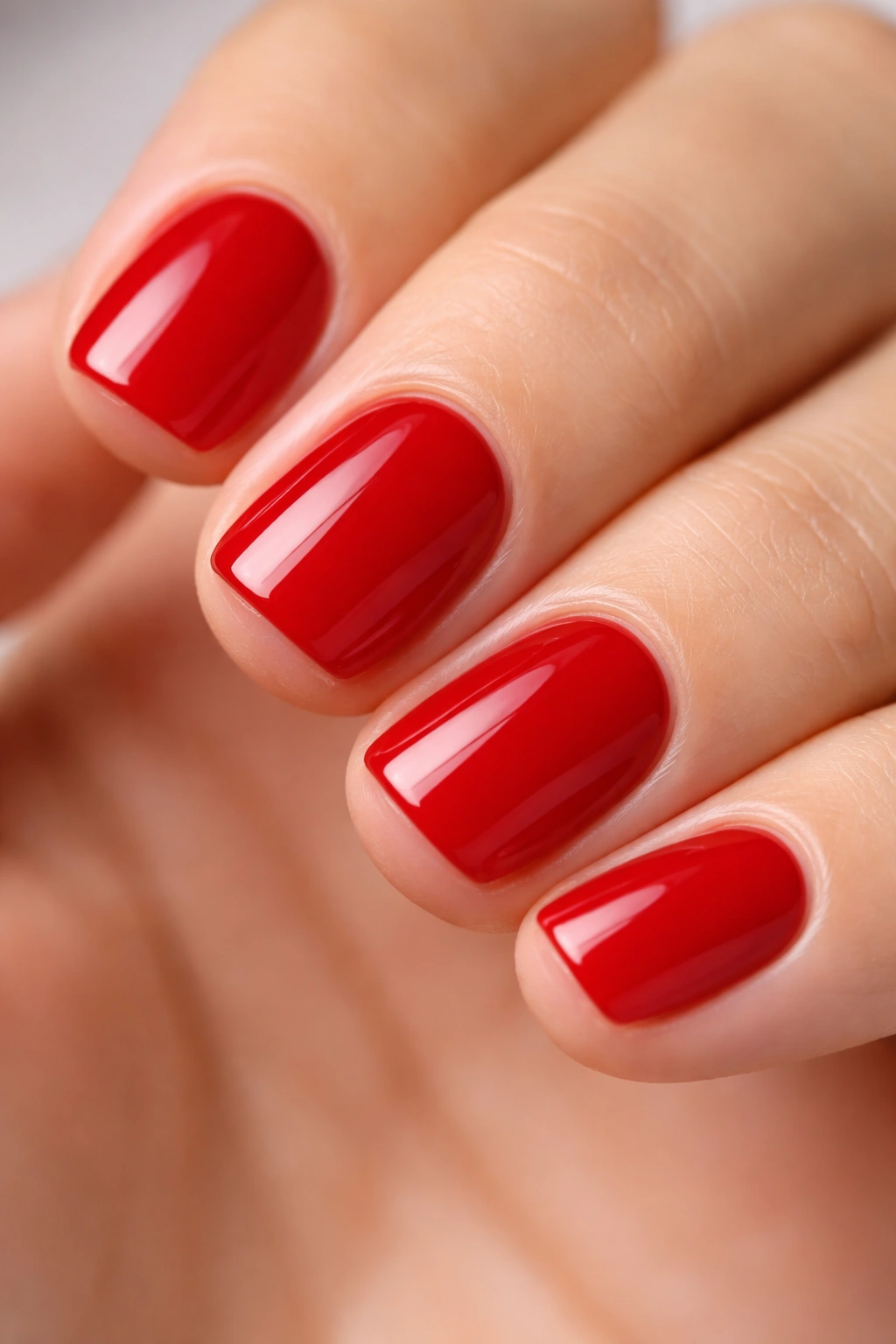
Red is a risk on short nails — everyone knows this. A poorly executed red can make fingers look stubby and nails look unfinished. But get the right shade and finish, and red on short nails conveys confidence and intention in a way that longer reds sometimes can’t.
- The Right Shade: Not a blue-toned or orange-toned red. Look for a true, neutral red that leans neither warm nor cool. It should be rich enough to have presence but not so dark it reads as burgundy.
- The Right Finish: Crème finish (no shimmer, no frost, pure solid color). Metallics and shimmers disperse across a smaller surface and can look thin or cheap on short nails. Pure, opaque crème shows confidence.
- The Application: Three thin coats rather than two thick ones. Build the color gradually so you get a glasslike finish with perfect opacity. The smoother and more professional the finish, the more “intentional” the short length reads.
- The Longevity Factor: Choose a long-wear formula specifically designed to resist chipping. Short nails make chips more visible because there’s less nail surface to hide imperfections.
A perfectly executed red on short squoval nails actually looks more polished than sloppy red on long nails. That’s the bar.
8. Soft White or Cream Base With Scattered Tiny Gemstone Accents
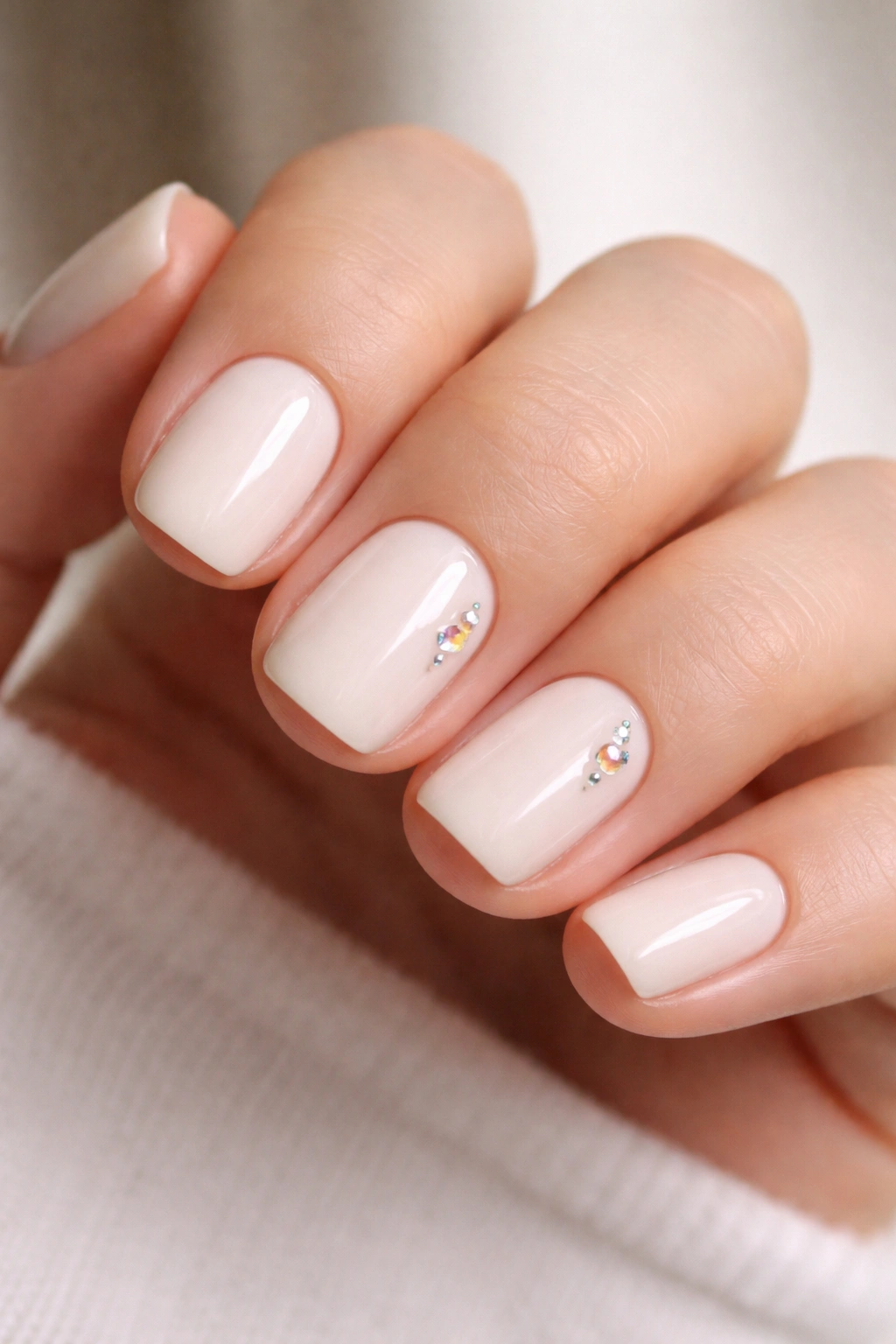
If you want dimension and sparkle without overwhelming the short nail surface, this is the approach.
Where to Place the Stones
Instead of covering the entire nail with rhinestones, place three or four tiny gems (think 1.5-2mm diameter) asymmetrically across two or three nails. The spacing is crucial — if they’re scattered too densely, it looks costume-y. If they’re properly spaced, they catch light and create focal points.
The Best Placement Strategy
Concentrate gems at the nail corner or along one side rather than down the center. This creates visual lift and makes the nail appear slightly more elongated than if you place them directly in the middle.
9. Comparing Matte and Glossy Finishes on Very Short Nails
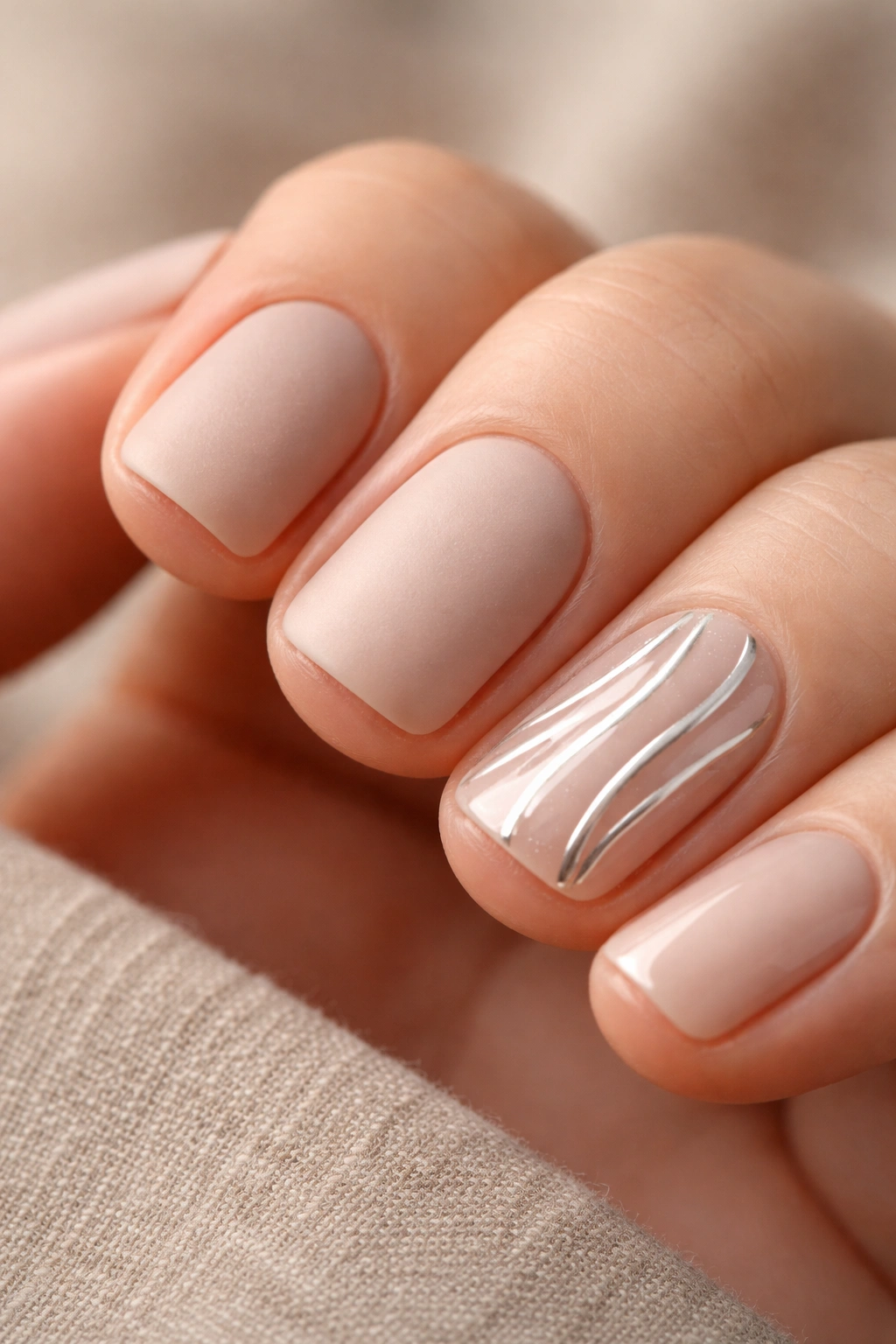
The finish you choose actually affects how short your nails appear. This is a detail most people overlook entirely.
A matte finish on short nails reads as slightly softer, less “finished,” more casual. It’s not bad — it’s genuinely beautiful on short nails. But it can make the length feel less intentional because matte finishes naturally have less visual presence than glossy ones.
A glossy finish with a thick, wet-looking topcoat actually creates a visual extension effect. The reflection of light off the gloss makes nails appear slightly shinier and slightly longer than matte versions of the same color. If your goal is to make short nails read as intentional and polished rather than stubby, glossy finish is your friend.
That said, the absolute best look often comes from combining both: a matte base with high-shine glossy accents or details. The contrast between matte and shine on short nails is genuinely striking. A matte nude base with glossy gold details, for example, creates immediate visual interest and dimension.
10. Soft Sage or Muted Teal Base With a Subtle Pearl Shimmer
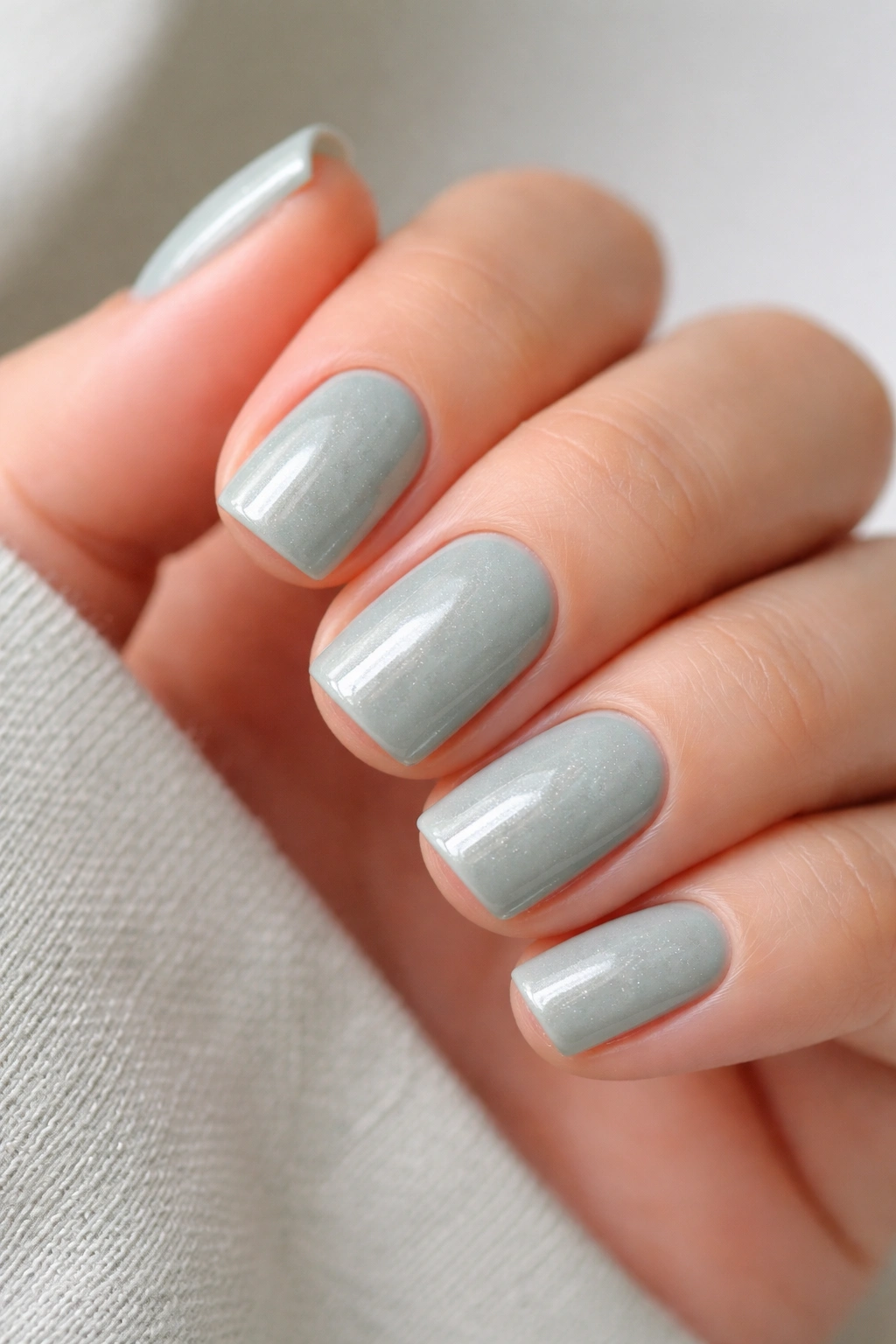
This is the design that surprises people with how sophisticated it reads on genuinely short nails. The color-to-finish ratio matters enormously here.
Choose a muted, desaturated sage green or soft teal — something that leans gray rather than bright. The color should feel calming rather than vibrant. Add a pearl shimmer that’s genuinely subtle; you should only see it when light hits the nail at certain angles. The pearl catches light without being obviously glittery.
Why This Combination Works
The muted base color reads as intentional and designer-like. The subtle shimmer adds dimension and visual interest without relying on overt details. The overall effect is polished and thoughtful, exactly the energy you want short nails to convey.
Apply two coats of the shimmer formula and seal with a glossy topcoat for maximum shine and dimension.
11. Solid Color Block Design With Two Complementary Shades
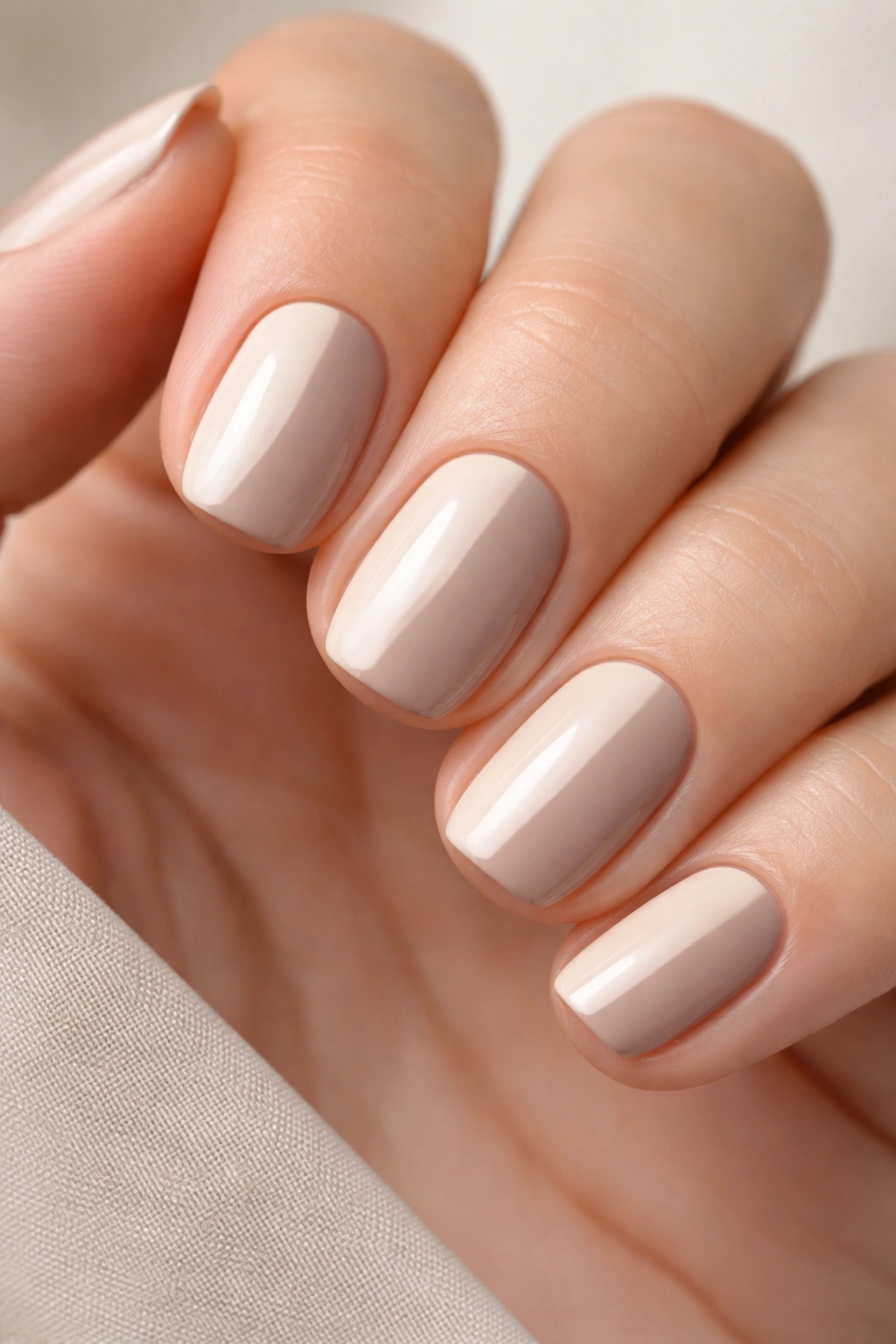
This is a technique that absolutely demands you understand the squoval shape and how to work with it deliberately rather than against it.
Paint half your nail one shade and half another shade — but not down the literal center. Instead, follow the natural geometry of the squoval shape. For instance, paint the rounder, more oval portion one color and the squarer base another color. Or create a diagonal split using the natural contours of your specific nail shape.
The Color Combination: Choose two shades that are close in tone but different in temperature. Soft cream and pale warm taupe. Soft gray and pale blue-gray. Deep navy and true black. The similarity in tone keeps it sophisticated rather than jarring.
The Execution: Use a thin brush or striping tape to create a clean, precise line between the two colors. Precision matters exponentially more on short nails because there’s no extra real estate to forgive a slightly wobbly edge.
12. The Contrarian Choice: All-Over Glitter on Short, Well-Maintained Nails
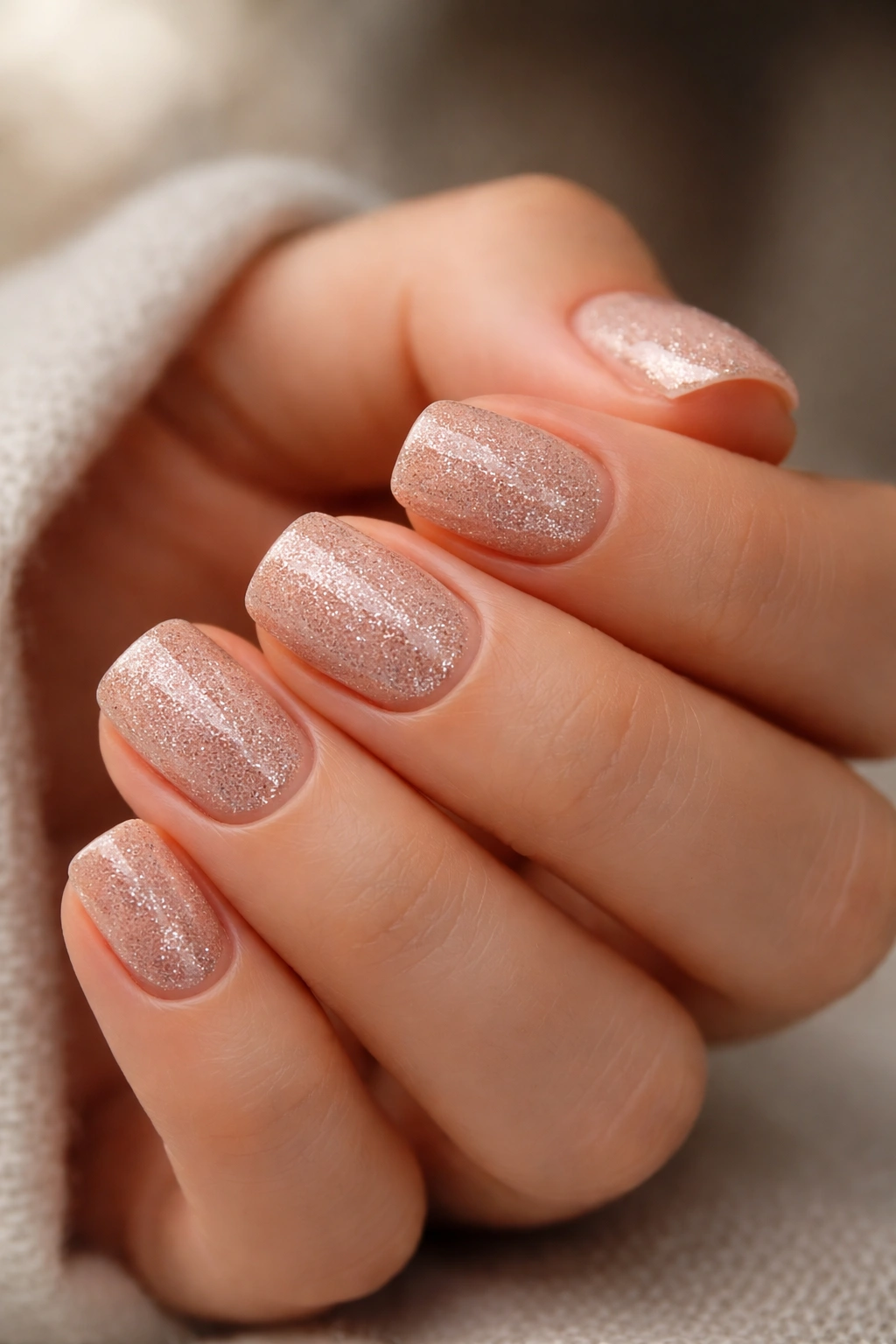
Everyone assumes glitter looks bad on short nails. Everyone’s wrong.
The assumption comes from glitter making nails look shorter, which is true if the nails are already poorly maintained or ragged. But on genuinely short, beautifully maintained squoval nails, all-over glitter reads as intentionally playful and polished rather than compensatory.
The secrets are:
- Use fine glitter, not chunky. Chunky glitter reads as costume jewelry on any short nail. Fine glitter, especially in metallics or subtle colors, reads as intentionally textured.
- Choose a glitter color that’s unexpected. Nude glitter, rose gold glitter, silver glitter — not rainbow glitter or black glitter. The subtlety is what makes it work.
- Seal it properly. Two coats of thick, high-shine topcoat transform glitter from looking gritty and cheap into looking like intentional texture.
- Maintain perfect nail shape and length consistency. Short nails with glitter absolutely cannot tolerate raggedness or inconsistent length. The glitter highlights every irregularity.
When executed well, this is genuinely one of the most visually interesting options for short squoval nails. It reads as confident and intentionally detailed rather than trying to hide the shortness.
The Confidence Factor
The most consistently successful short squoval nail designs share one thing: they’re executed with intention and confidence rather than apology. A perfectly executed short nail design will always read as more polished than a half-hearted attempt at length that didn’t quite work.
The squoval shape itself actually works to your advantage at shorter lengths. It’s more defined, more geometric, more intentional-looking than a pure oval would be. When you pair that shape with a design approach that embraces shortness rather than fights it, the result is genuinely compelling. Short squoval nails aren’t a compromise — they’re a different choice entirely. And when you treat them that way, everyone else will too.