

Short squoval nails might just be the perfect sweet spot in modern manicure design. They hit that magical intersection where you get the elegant elongation of an almond shape with the practical durability and ease of maintenance that comes with keeping your nails shorter. Whether you’re dealing with a hectic work schedule, frequent hand-washing, or you simply prefer the low-maintenance lifestyle, short nails don’t mean sacrificing style—especially when you go squoval.
The beauty of the squoval shape is that it’s forgiving. It flatters different hand shapes and nail beds in ways that pointier shapes sometimes can’t. Pair that geometry with the right design, and suddenly you’ve got manicures that work for boardroom meetings, date nights, casual weekends, and everything in between. The designs below showcase exactly how versatile short squoval nails can be, from minimalist elegance to bold statement pieces and everything in the middle.
Short nails actually open up some design possibilities that longer nails make trickier. You can go bolder with negative space because your nail isn’t as fragile at the edges. You can stack patterns and details without overwhelming the visual space. The shorter length means your designs work harder—each line, color choice, and detail becomes more prominent. That’s not a limitation; that’s an asset if you know how to use it.
1. Creamy Nude with Delicate Gold Geometric Lines
There’s something about a cream-colored base that just reads sophisticated instantly. This design pairs a soft, barely-there beige or warm ivory with thin gold striping in geometric patterns—maybe a few diagonal lines across the nail or a minimalist triangle near the cuticle. The restraint makes it work.
Why This Works for Everything
The neutral base means this design slides seamlessly from professional settings to weekend brunch. Your coworkers at a corporate job won’t bat an eye. Your friends won’t think you’re trying too hard. It’s one of those rare manicures that actually feels appropriate everywhere.
The gold geometry adds just enough visual interest that your nails don’t disappear on your hands. A few thin lines are all you need—you’re not looking for a busy design here. Thin lines also photograph well and look sharp in person without being loud.
- Works with any outfit color palette
- Gold never dates itself out
- Geometry keeps it modern even in a few years
- Low-maintenance between touch-ups
2. Soft Pink Baby Boomer With Ivory Tips
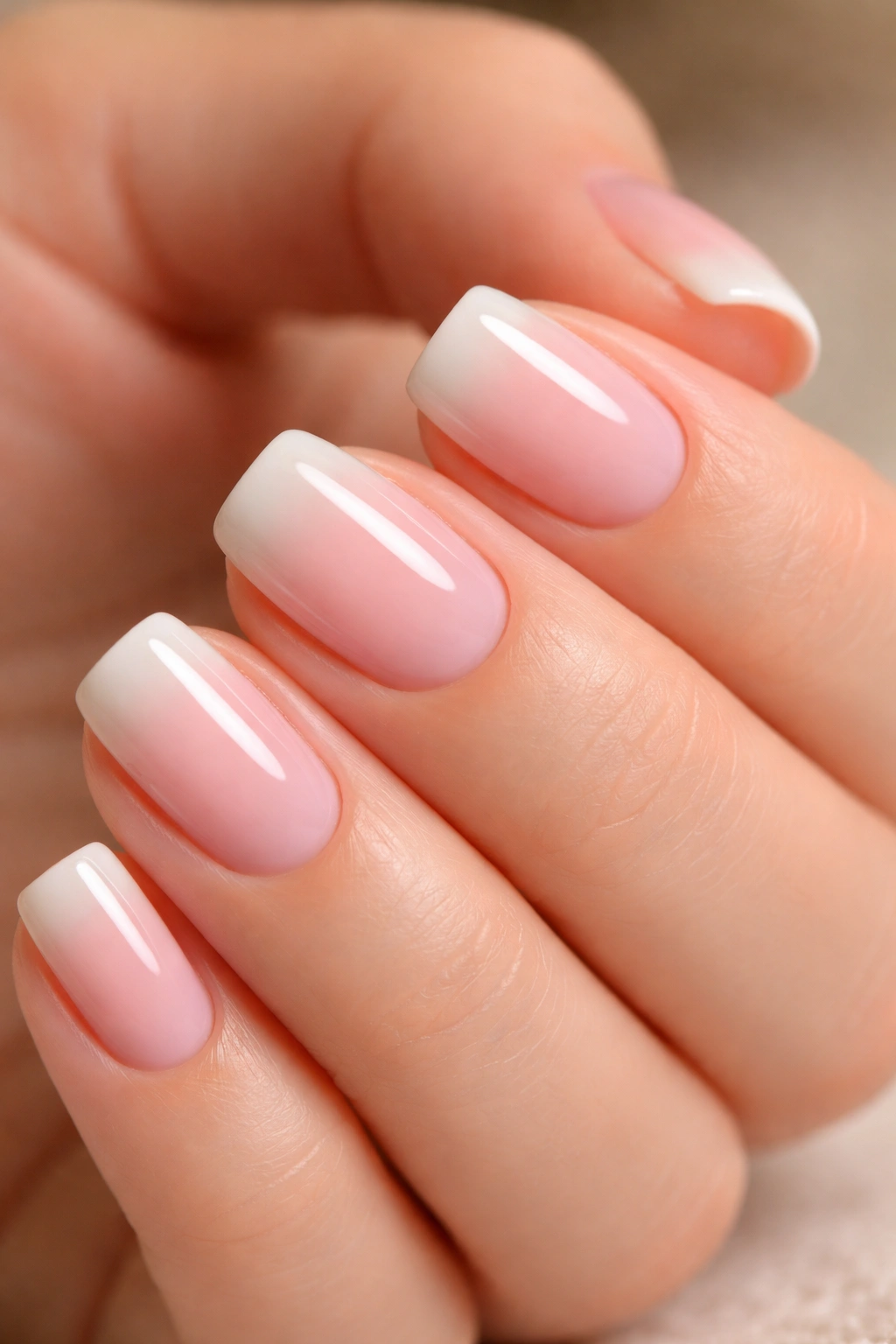
This one’s a true classic that never actually goes away. Your base is a rosy, warm peachy pink or dusty mauve—something that mimics what healthy, growing nail beds naturally look like. The tips are painted opaque ivory or soft white, creating that gradient where they blend slightly in the middle.
The whole appeal is how it elongates the finger and makes your hand look naturally elegant. You’re not trying to trick anyone; you’re enhancing what’s already there. Short squoval nails work exceptionally well with this technique because the proportions feel right—the white tip doesn’t overpower the nail, and the overall effect is balanced.
This style genuinely suits nearly every skin tone when you pick the right pink shade. Cooler skin tones lean toward mauve or rosy pinks. Warmer skin tones vibe with peachy or coral-leaning pinks. Olive skin tones can go either direction depending on your undertones.
The upkeep is real though. You’ll see the regrowth quickly, which means more frequent fills or touch-ups if you want perfection. But if you’re someone who enjoys a regular manicure routine, this is the design to justify that habit.
3. Forest Green Cream With Pressed Flowers
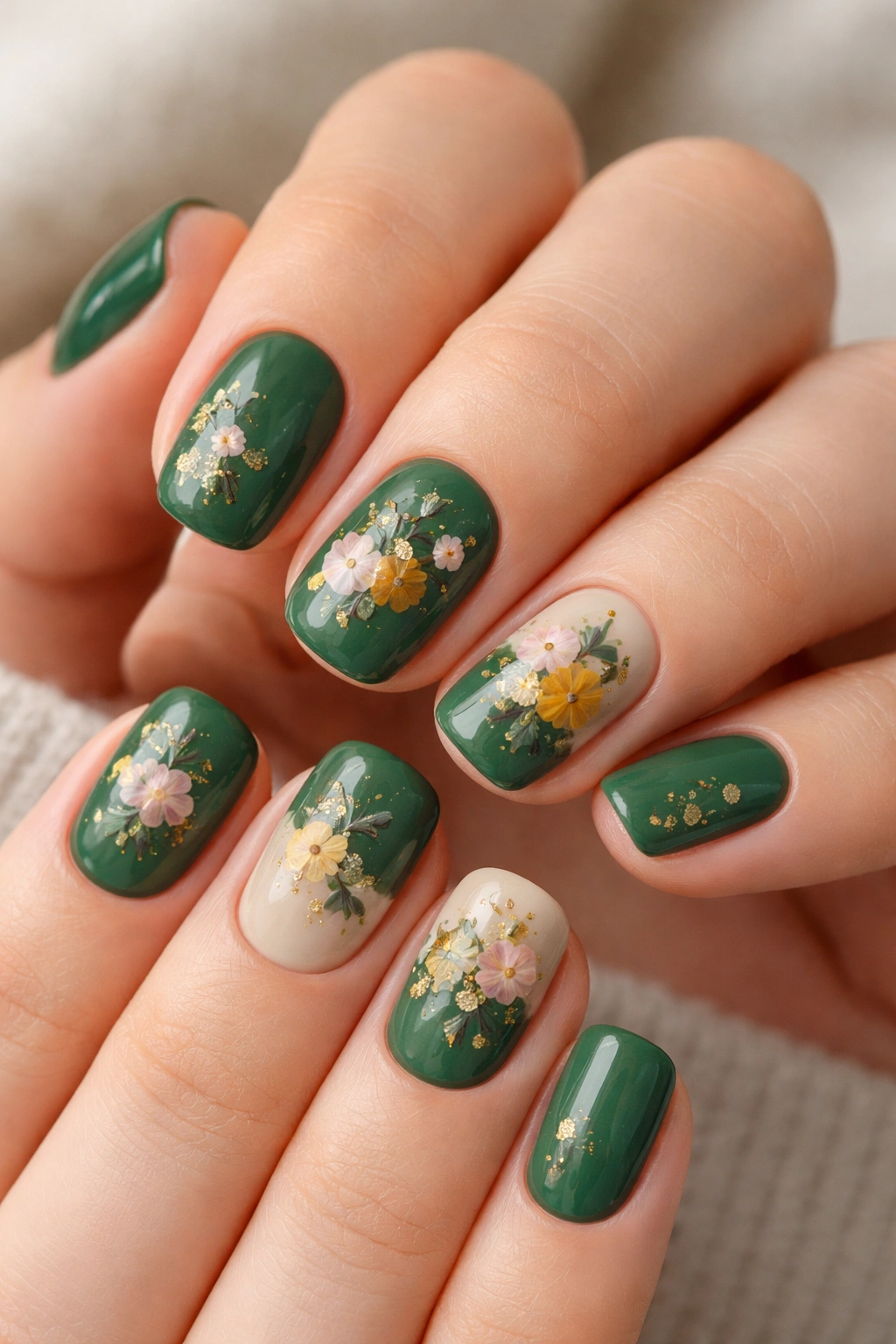
Imagine a creamy, buttery off-white base—the kind that looks like vanilla ice cream. Now scatter tiny pressed flowers across it in a random pattern. We’re talking genuine pressed flower pieces (or realistic botanical illustrations) in forest green, blush pink, and mustard tones. A few nails get more florals, a few get fewer. It’s deliberately asymmetrical.
The Romantic Without Being Overdone
This design walks a careful line. Some floral nail art feels too busy or too precious. This version works because the base is so calm and neutral that the flowers feel like an accent, not the main event. The color choices—forest green especially—ground it in something more sophisticated than typical flower designs.
The short squoval length actually makes the flowers more readable. You can see each petal and detail clearly because there’s adequate negative space. On longer nails, delicate flower details can get lost or make the whole nail feel cramped.
You’ll want this done at a professional salon. Real pressed flowers require skill to apply without them cracking or peeling immediately. Painted florals can work too if you go for something slightly more graphic rather than hyper-realistic.
4. Sheer Shimmer Base With Confetti Glitter Accent Nails
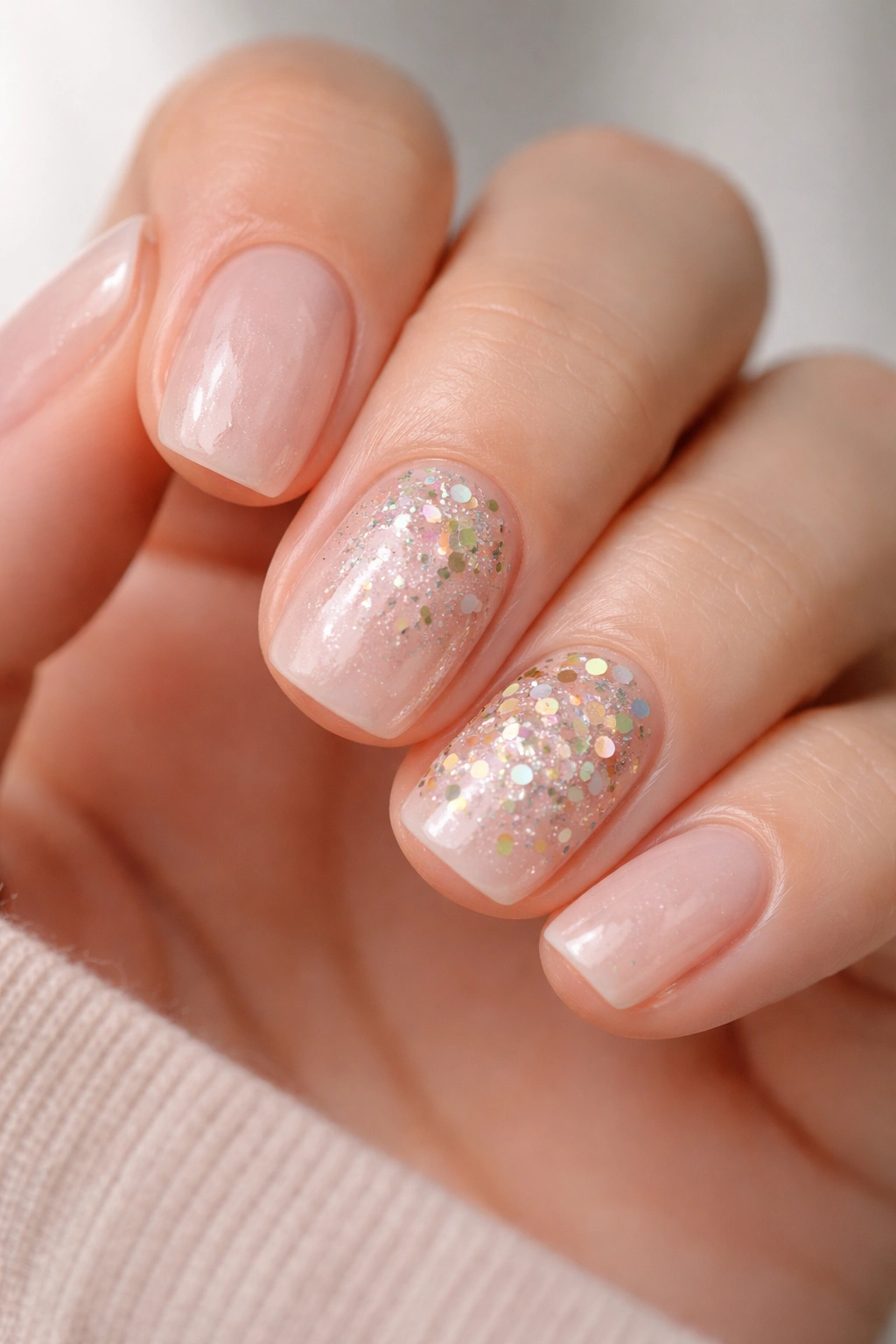
Here’s where restraint matters in a completely different way. Your base is a translucent, shimmery nude with a hint of sparkle built in—just enough to catch light without being a full glitter situation. Then pick two accent nails (usually ring finger and pinky, or the thumbs) and layer them with confetti glitter in multiple shapes and colors.
The confetti should look slightly chaotic. Gold, silver, holographic, and iridescent pieces all mixed together. Not in a messy way, but in a way that reads as intentionally eclectic. The trick is using bigger glitter pieces so they’re actually visible on short nails rather than disappearing into the surface.
The contrast between the calm shimmer base and the confetti party on your accent nails creates visual interest without requiring every single nail to be busy. It’s strategic maximalism. This design actually looks better on shorter nails because the proportions feel balanced—longer nails with this design can read as costume-y instead of elevated.
Paint the shimmer base in 2-3 coats, then layer the glitter on wet polish so it adheres properly. Seal everything with a quality top coat or you’ll be shedding glitter for a week.
5. Warm Chocolate Brown With Negative Space Lines
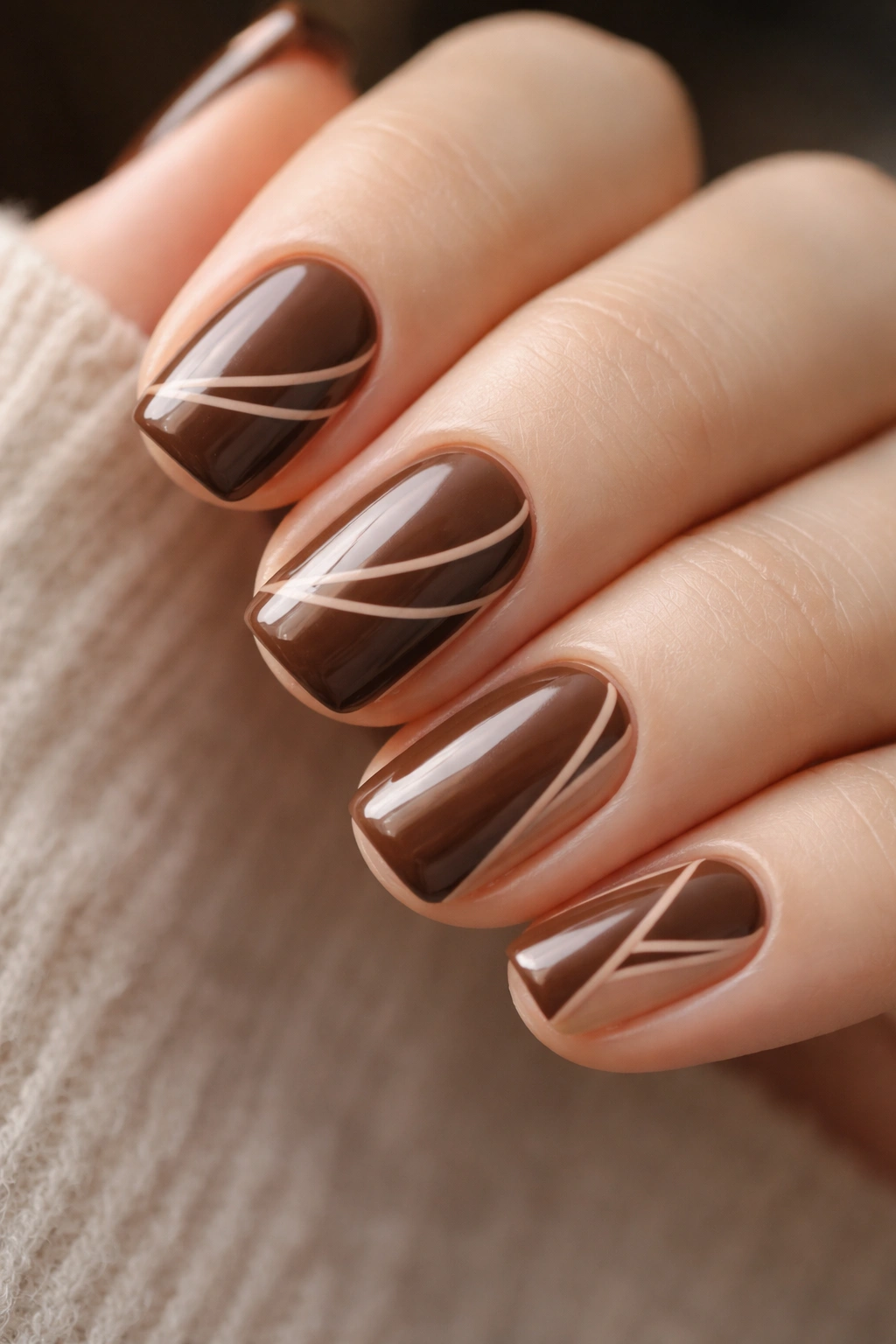
This is pure, minimal sophistication. Your entire nail is that warm chocolate brown color—rich but not overwhelming. Then you carve out negative space using thin curved or straight lines that let the natural nail (or a pale base coat) show through. Maybe a few curved lines that follow the squoval shape’s natural geometry. Maybe horizontal stripes. Maybe one graphic line across the middle.
The brown-on-nothing effect is striking because brown is an underrated nail color. It grounds your hand visually and complements more skin tones than you’d expect. The negative space design keeps it modern and prevents it from reading as plain or dated.
This design requires precision. You need clean lines, which means either incredible hand-eye coordination or an exceptionally skilled manicurist. One wobbly line and the whole sophisticated effect falls apart. But when it’s executed well? Chef’s kiss.
The beauty is that this works for literally any occasion. Professional meetings, date nights, casual hangouts, formal events—chocolate brown with negative space is endlessly appropriate. It never reads as boring because the geometric element keeps it intentional and contemporary.
6. Ballet Pink With Tiny Diamond Outline
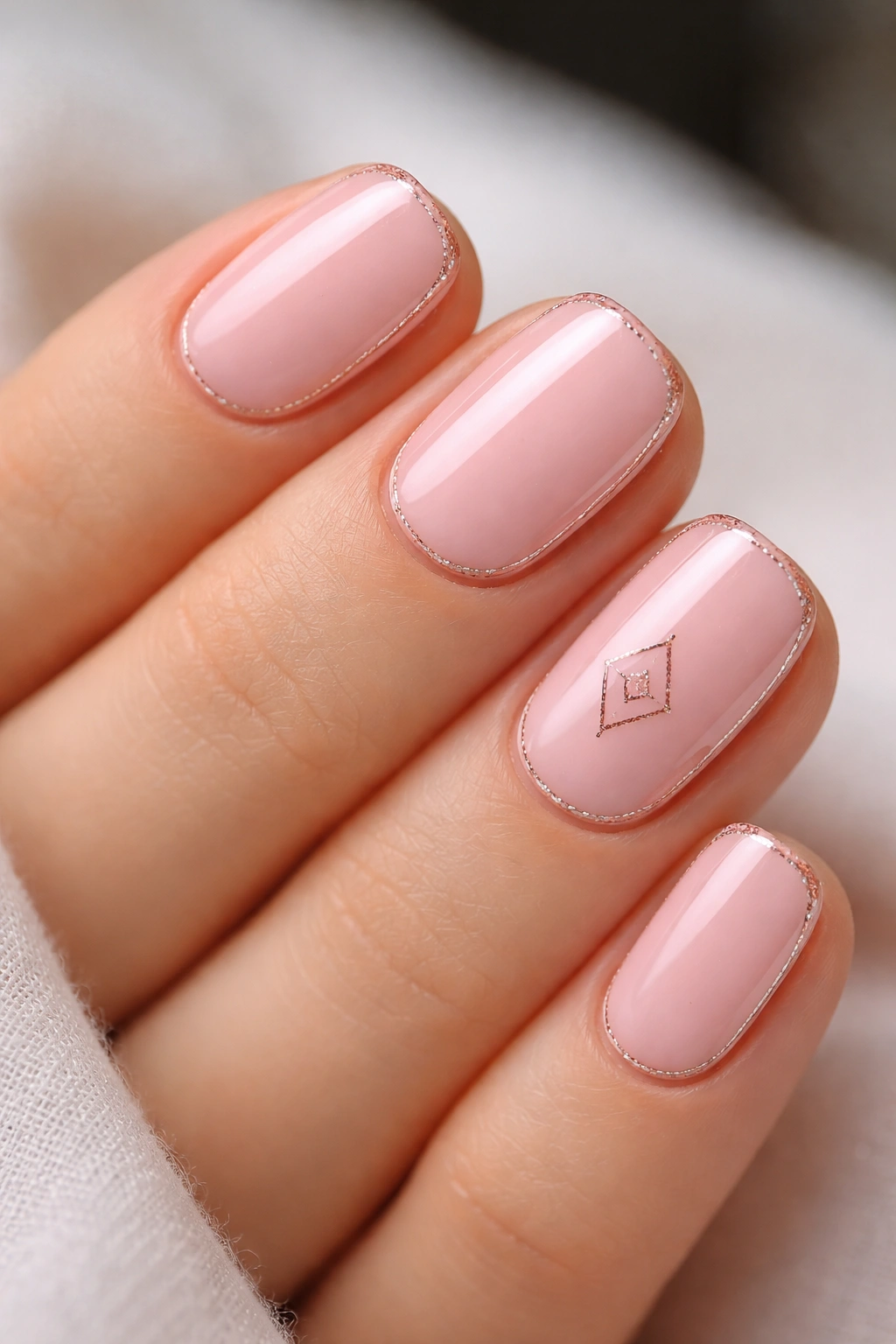
Ballet pink is softer than baby boomer pink—almost gray in its delicate quality. Your entire nail is painted in this understated color. Then comes the tiny detail: a thin outline in either rose gold or platinum that frames just the very edge of the nail or traces a minimalist geometric shape within the nail.
Why Diamonds Change Everything
The outline gives your eye something to follow. It makes the nail feel intentional rather than accidental. And because the outline is just that—an outline—it reads as elegant rather than heavy-handed. You’re not covering half the nail in rhinestones. You’re adding a whisper of detail.
Short squoval nails make this design shine because the proportions are perfect. You have enough real estate for the outline to register, but not so much that it feels sparse. This is actually one of the few designs where going much longer would make it look like you’re missing the rest of the decor.
The color combination of ballet pink and rose gold is inherently romantic without being juvenile. It suits formal events beautifully but works equally well for everyday wear if you want something that makes you feel a little more polished.
The outline requires a very fine brush and a steady hand, or it requires a skilled technician with specialized tools. Don’t DIY this one unless you’re genuinely confident with your fine-detail work.
7. Deep Burgundy With Metallic Gold Brushstrokes
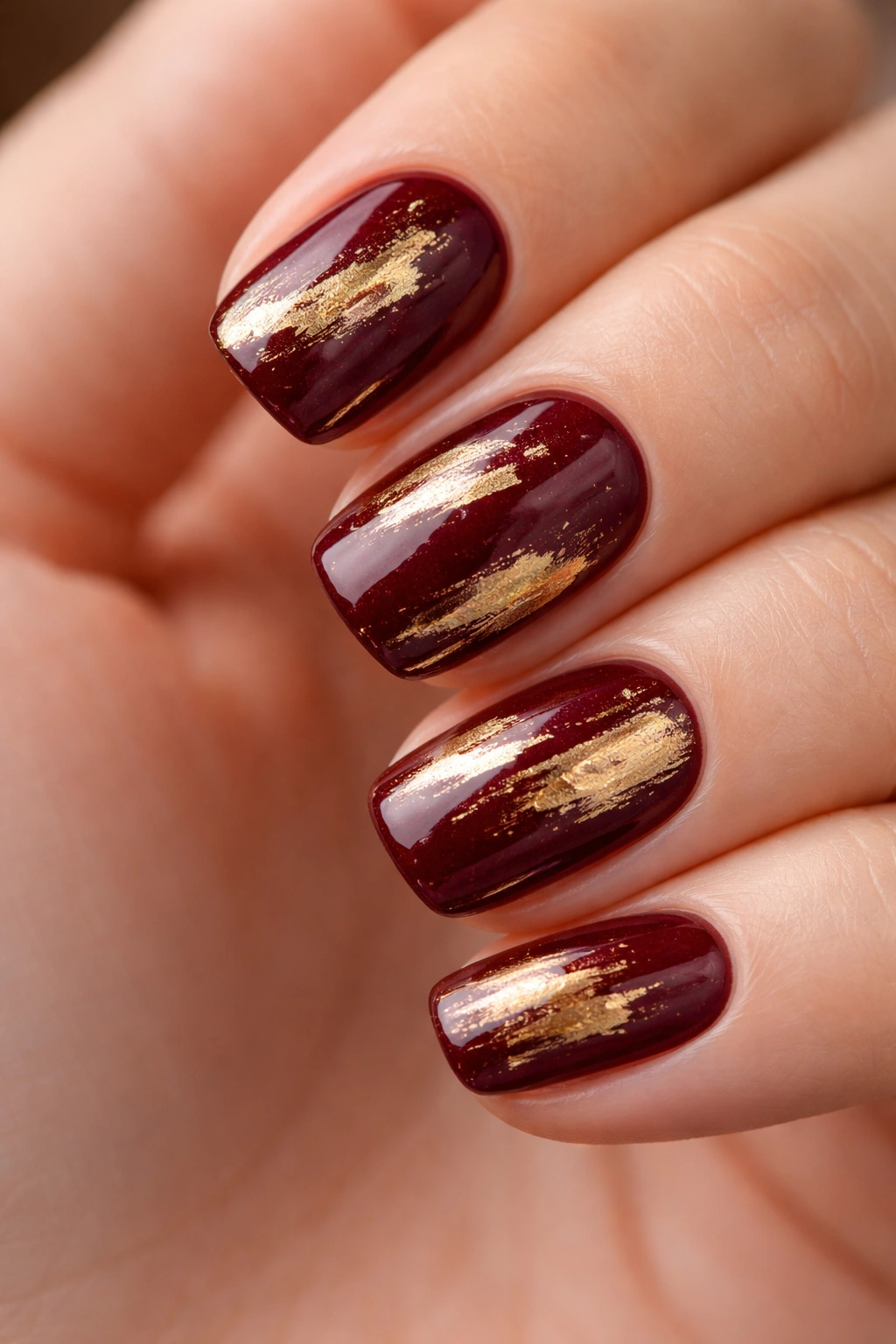
Burgundy is one of those colors that makes your entire hand look expensive. It’s wine-colored, elegant, and flatters virtually every skin tone when you get the right undertone. Now paint that on your short squoval nails as your base. Then add loose, organic brushstrokes in metallic gold that look almost like they were painted with a dry brush technique.
The brushstrokes shouldn’t be perfect. You want them to look slightly textured and intentionally imperfect—like you were going for an artist-hand vibe rather than a flawlessly executed design. Burgundy and gold together read automatically as luxe, which is why this combination shows up on runways and red carpets.
The Occasion Factor
This is your “I’m getting dressed up” design. It works for date nights, formal events, holiday parties, or any situation where you want your nails to feel like they’re part of an elevated overall look. That said, it’s also becoming common enough in everyday manicure culture that you could wear it casually if you wanted.
Short nails let the color saturation do most of the heavy lifting here. You don’t need as much surface area for the burgundy to make an impact. The metallic brushstrokes remain visible and intentional rather than getting lost across a longer nail surface.
8. Soft Lavender With White Scalloped Edge Design
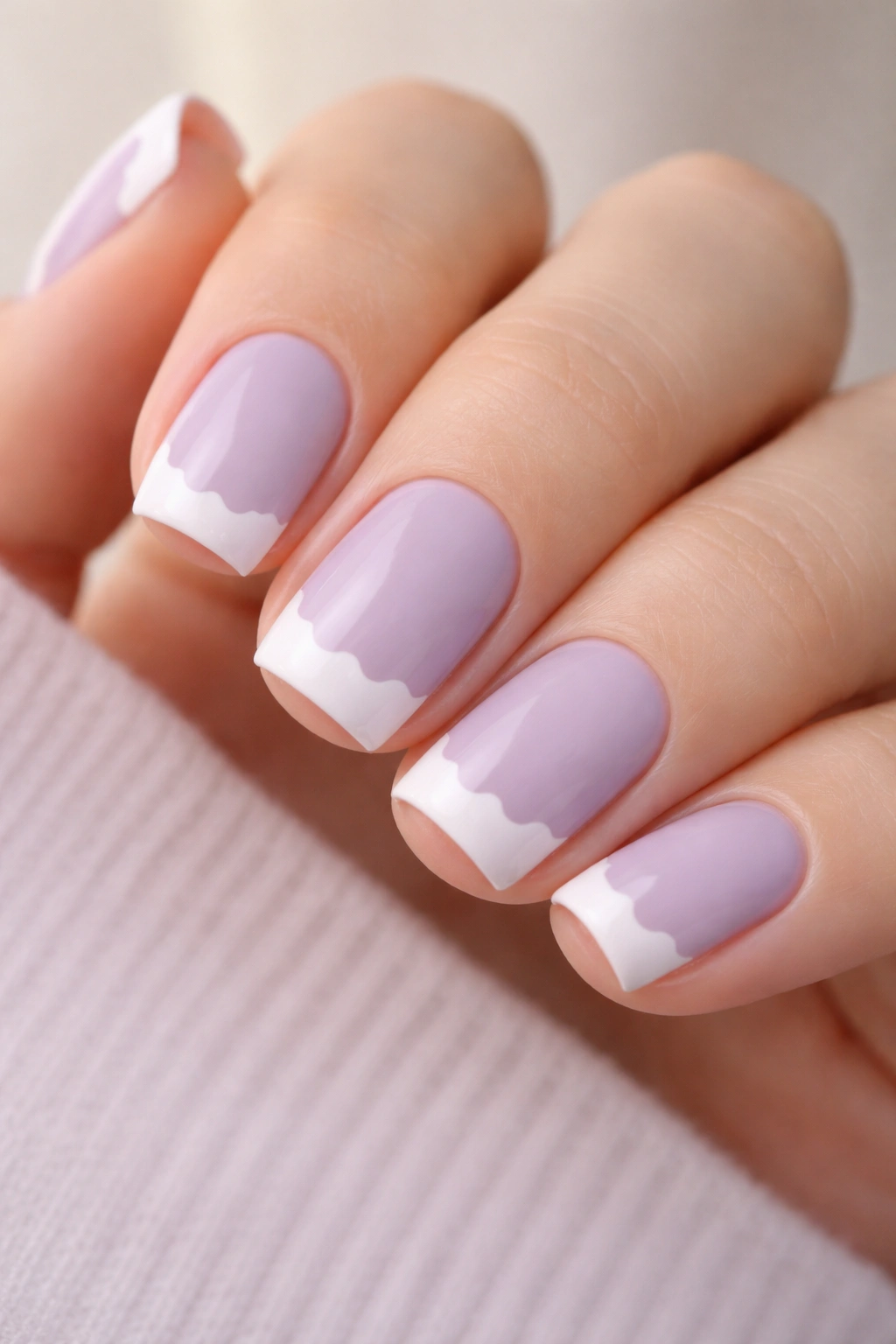
Imagine the gentleness of lavender—not purple, but that cool, slightly dusty lavender shade that feels calming just looking at it. Your entire nail in this shade becomes your base. Then add a white scalloped or curved pattern along the edge or across the middle, creating a repeating wave-like design.
The scalloped edge isn’t as literal as it sounds. You’re not cutting your nails into scallops. You’re painting a scalloped pattern that creates that curved, repeating rhythm. It’s geometric but soft. Structured but not rigid.
Lavender is having a genuine cultural moment, but it’s also a color that transcends trends because it’s simply pretty. It photographs beautifully, which matters in an age where your nails show up in every photo. The white pattern on top gives you the visual complexity that prevents the design from feeling too simple or too flat.
The scallop pattern requires either hand-painting skill or special tools. But if you’re getting this done professionally, most nail artists can execute this relatively quickly, which keeps the price reasonable compared to more involved designs.
9. Nude Base With Tiny Metallic Accents and Minimal Line Art
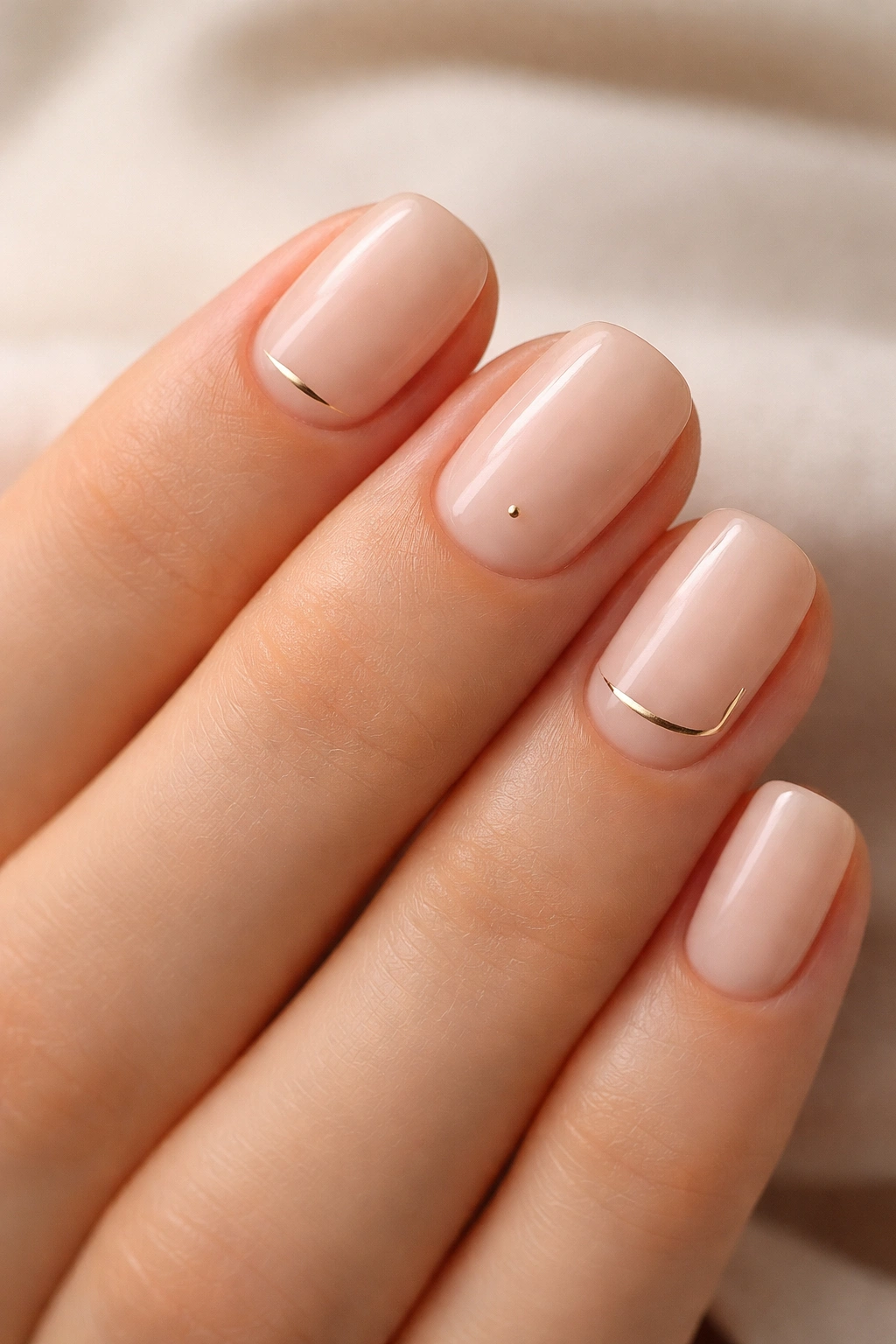
This one embraces the concept of less-is-more in the most sophisticated way. Your base is a neutral, skin-toned shade—something that’s barely there, almost like you’re wearing clear polish with a tint. Then add exactly three details: maybe a single metallic line on one nail, a tiny dot or dash on another, and perhaps a micro accent on your pinky.
The spacing is crucial. You’re leaving tons of negative space. Your eye moves across the nail and notices the intentional details rather than feeling overwhelmed by information. It’s the manicure equivalent of a capsule wardrobe—every element earns its place.
This design works exceptionally well on short squoval nails because the restraint and proportion feel perfectly balanced. Longer nails with this minimal approach can sometimes feel like you’re wearing something unfinished. Shorter nails with this design feel utterly intentional.
The metallic accents—whether gold, silver, or rose gold—should be thin and precise. You’re not going for visible shimmer; you’re going for clean lines and subtle sparkle. A fine-tipped brush or a nail art tool is essential for pulling this off correctly.
10. Cream With Vintage-Inspired Floral Motifs in Muted Tones
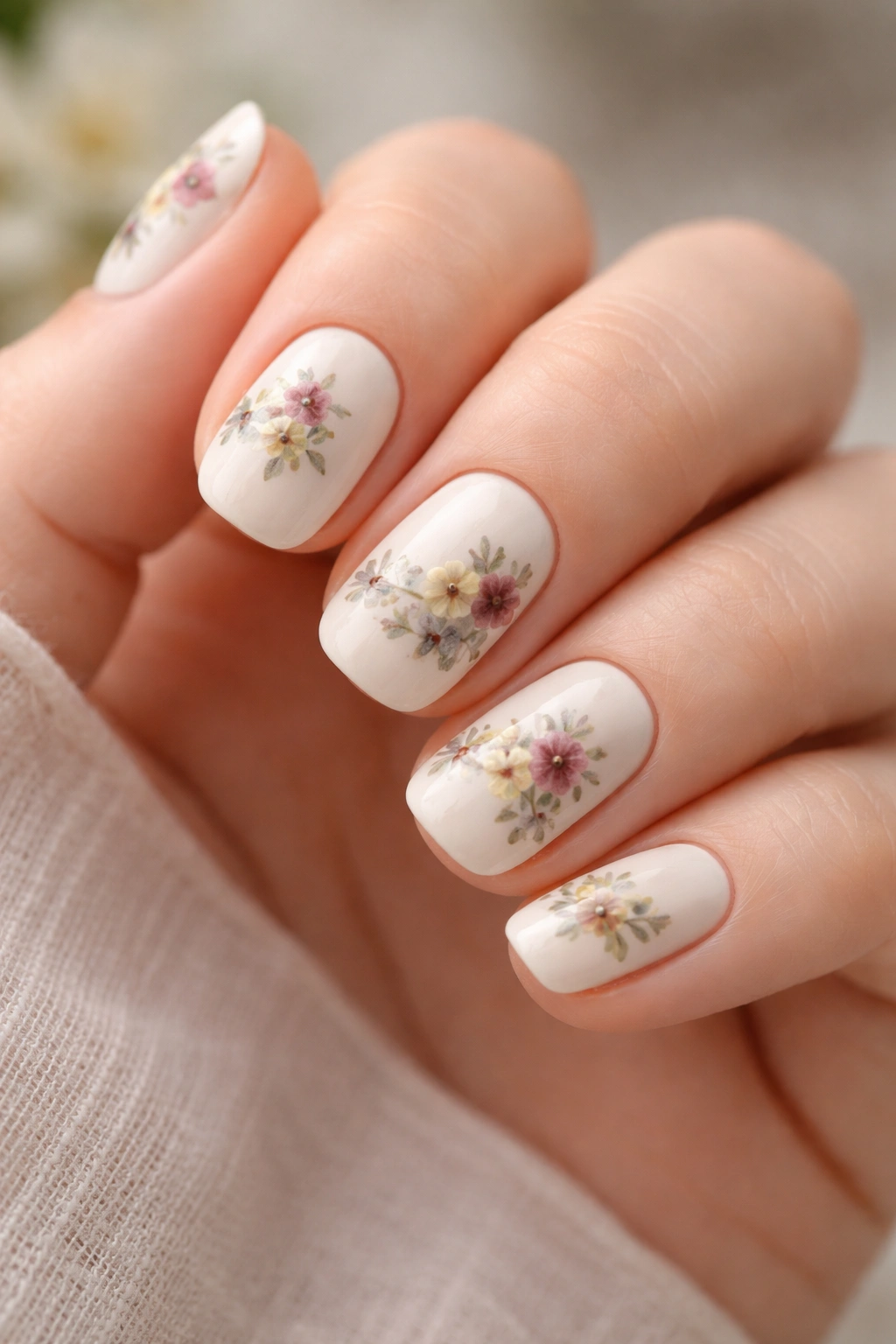
What makes this different from typical floral nail art is the color palette and the execution. Your base is soft cream or off-white. Then your florals come in genuinely vintage-inspired tones: dusty rose, sage green, soft mustard, weathered gray, and muted burgundy. Think 1970s botanical illustration rather than bright modern florals.
The Vintage Angle Grounds It
The muted color story makes this feel curated and intentional rather than cutesy. These are colors you’d actually see in vintage wallpaper or botanical textbooks. There’s something quietly sophisticated about designs that reference specific historical aesthetics.
On short squoval nails, you might have just two or three small flower clusters rather than an all-over floral pattern. That works perfectly. The flowers feel like accents rather than the dominant feature, which prevents the design from feeling too busy or too costume-like.
This is a design best executed by someone skilled at hand-painting detailed work. Nail decals exist for vintage florals, but printed decals often look flatter than hand-painted versions. If you’re getting this professionally, make sure your technician has a portfolio showing detailed botanical work.
11. Sheer Baby Pink With Glitter Ombré Fade on Accent Nails
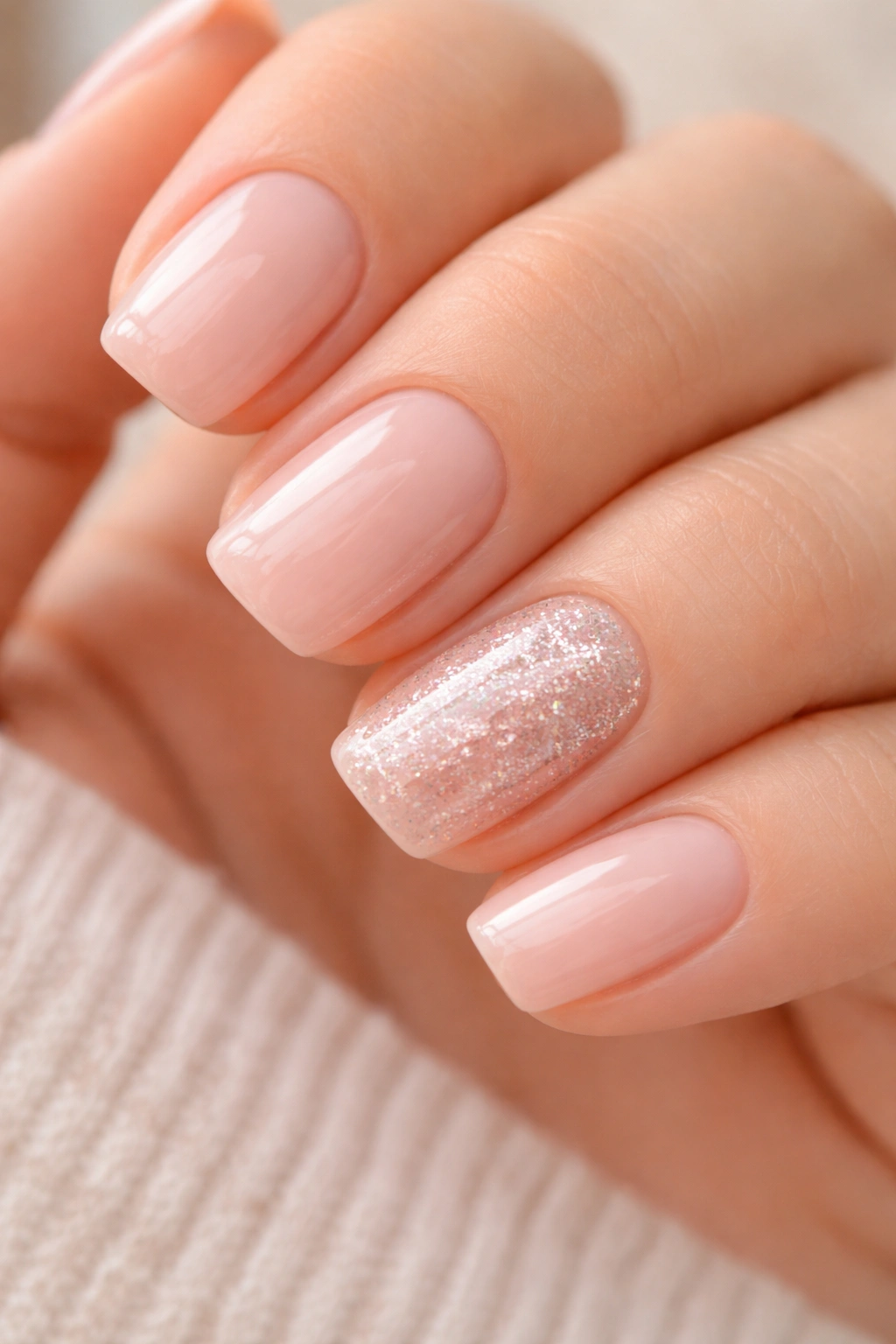
Start with a translucent, barely-there baby pink on all nails—just enough color to give you a subtle tint without looking opaque. Now take two or three accent nails and layer them with an ombré effect using glitter that fades from dense at the tip to sheer at the cuticle.
The glitter can be fine or chunky—both work. What matters is that you’re controlling the density so it gradually diminishes toward your cuticle. It should look like the sparkle is melting upward into the sheer base color.
The contrast between the calm translucent base on most nails and the glamorous glitter fade on a few nails creates that perfect balance of “elevated but not overdone.” You’re clearly put-together without being over-the-top.
Why Short Nails Make This Sing
On short squoval nails, the ombré transition happens faster, which means each gradient is more dramatic and readable. You can see the full effect clearly. Longer nails might spread the ombré across more space, making each individual glitter particle less visible.
Paint the sheer base first in at least two coats for evenness, then layer your glitter gradient on top while the previous layer is still slightly wet so everything adheres properly.
12. Deep Teal With Brushed Gold Metallic Horizontal Stripes
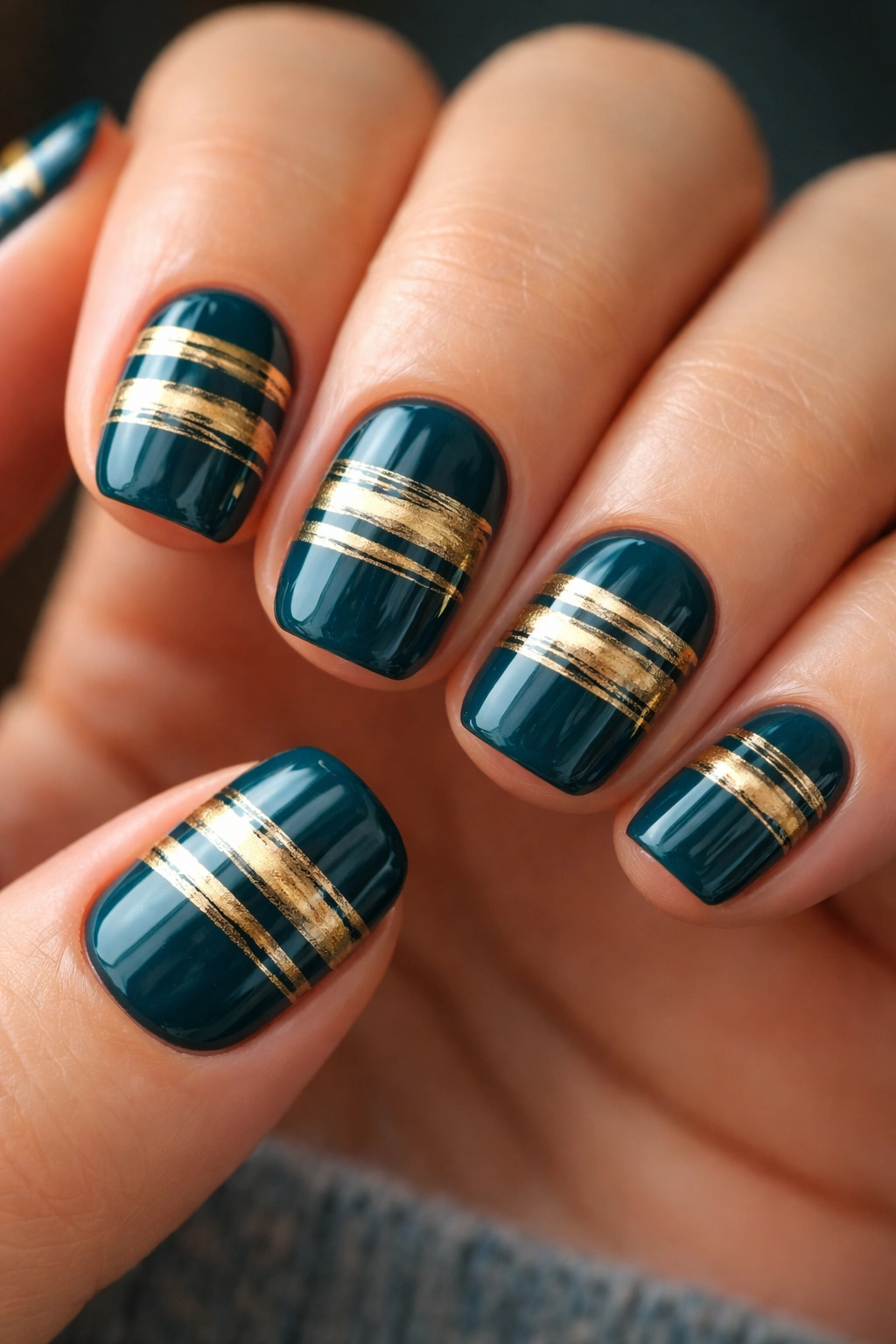
Teal is jewel-toned without being too dark or too trendy. Paint your entire nail in a rich, saturated teal. Then, using a thin metallic gold polish and a horizontal brushing technique, add parallel stripes across the nail. The stripes should be imperfectly spaced—not too rigid—so they look organic rather than technically precise.
The brushed-on (rather than drawn-on) gold gives this design movement and texture. It’s more visually interesting than thin lines would be. The teal and gold combination reads as inherently upscale and coordinated in a way that suggests you have your aesthetic together.
This works beautifully for professional settings where you want your nails to show personality without breaking any unspoken rules. Teal is interesting enough to be memorable. Gold is classic enough to never look out of place. The horizontal brushstrokes keep it modern rather than looking dated.
13. Warm Peachy Nude With Rose Gold Tips and Micro Rhinestones
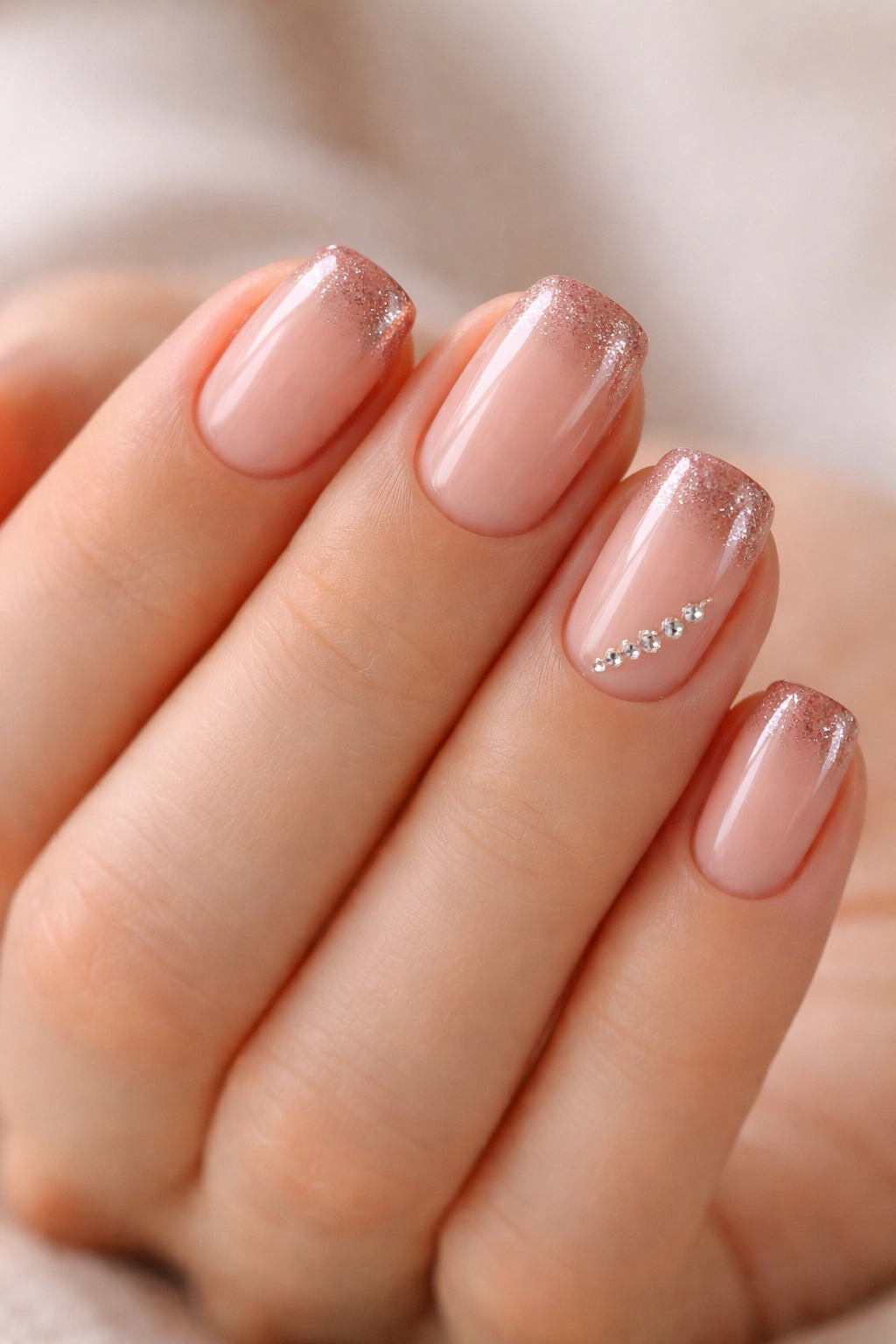
Think of a warm, barely-there nude in peachy or golden tones. Paint that as your base on all nails. Then add a subtle rose gold ombré along just the tips—not a full glitter tip, but a gradient that’s strongest at the very edge and fades into the peachy base. Finally, place 3-5 micro rhinestones on one or two accent nails in a diagonal line or scattered pattern.
The rhinestones should be genuinely tiny. You’re not looking for noticeable sparkle across the whole nail. A few small stones act as accents that catch light unexpectedly, adding a surprising touch of glamour.
The Balance is Everything
This design succeeds because nothing overwhelms anything else. The peachy base is calm. The rose gold tip is subtle. The rhinestones are restrained. Together, they create something that reads as polished and intentional without requiring your nails to be the loudest thing in the room.
Short squoval nails give you perfect proportions for this design. You have enough room for the rose gold gradient to register without stretching too far. The rhinestones read as deliberate accents rather than fillers.
Place rhinestones while your top coat is still slightly wet so they adhere firmly and won’t fall off prematurely.
14. Classic White Squoval With Tiny Colored French Tips
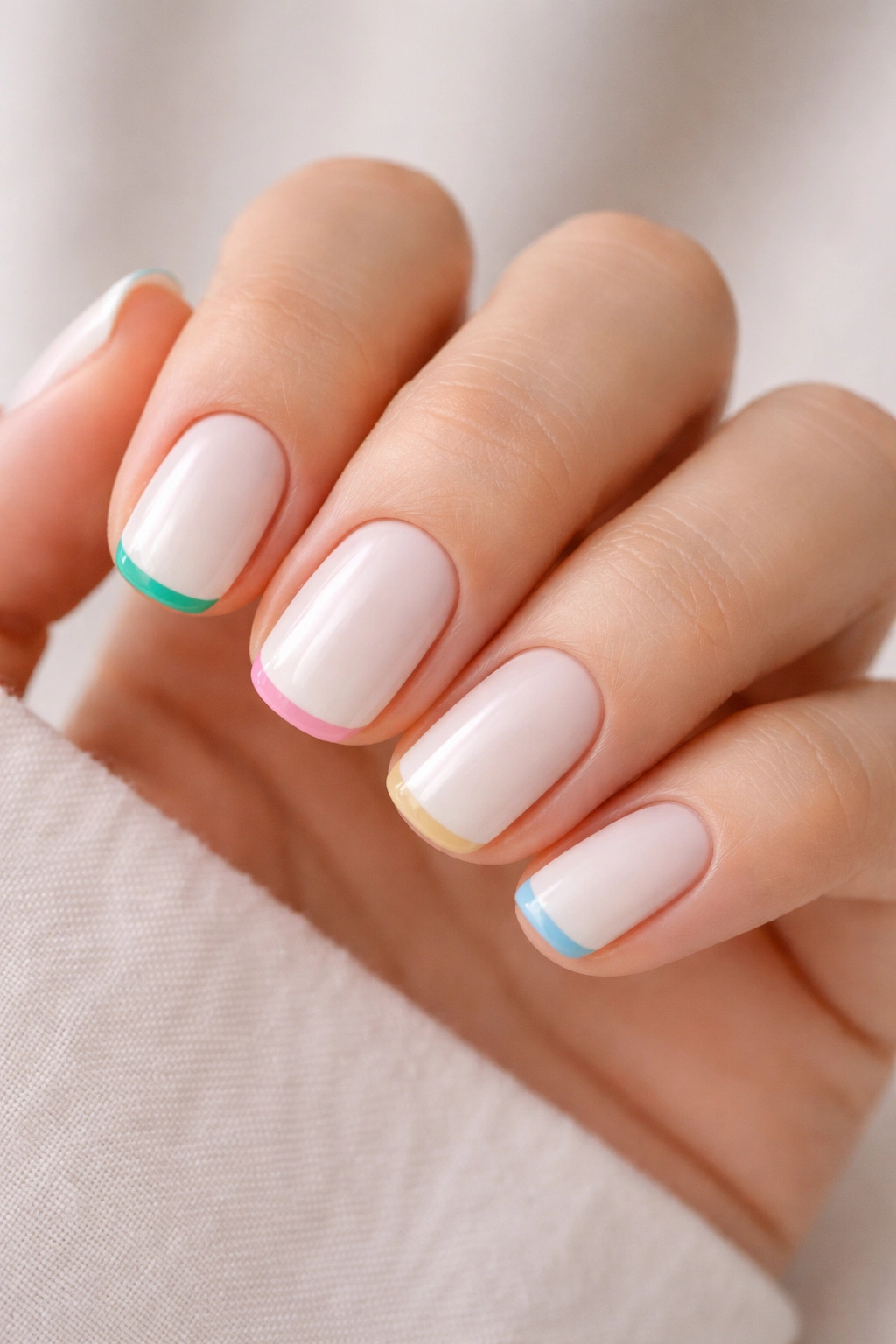
Here’s a modern take on the traditional French manicure. Your base is white or off-white. The tips are painted in white as well, but along the curve of your squoval tip, add a super thin line in a single accent color—maybe deep emerald, navy, burgundy, or sapphire.
The line should be barely visible if someone’s not looking closely, but unmistakably there once they do. It’s the kind of detail that makes someone say, “Oh, that’s nice—I like the little touch of color.” It’s sophisticated without being loud.
White on white reads as clean and minimal. The single colored line adds personality and interest. On short squoval nails, this line becomes proportionally more noticeable than it would on longer nails, which actually works in your favor. The accent is purposeful and visible.
The challenge here is getting that colored line perfectly thin and evenly placed. This is a design where precision really matters. If you’re not confident in your hand-painting abilities, get this done professionally.
15. Warm Bronze With Linear Negative Space Design
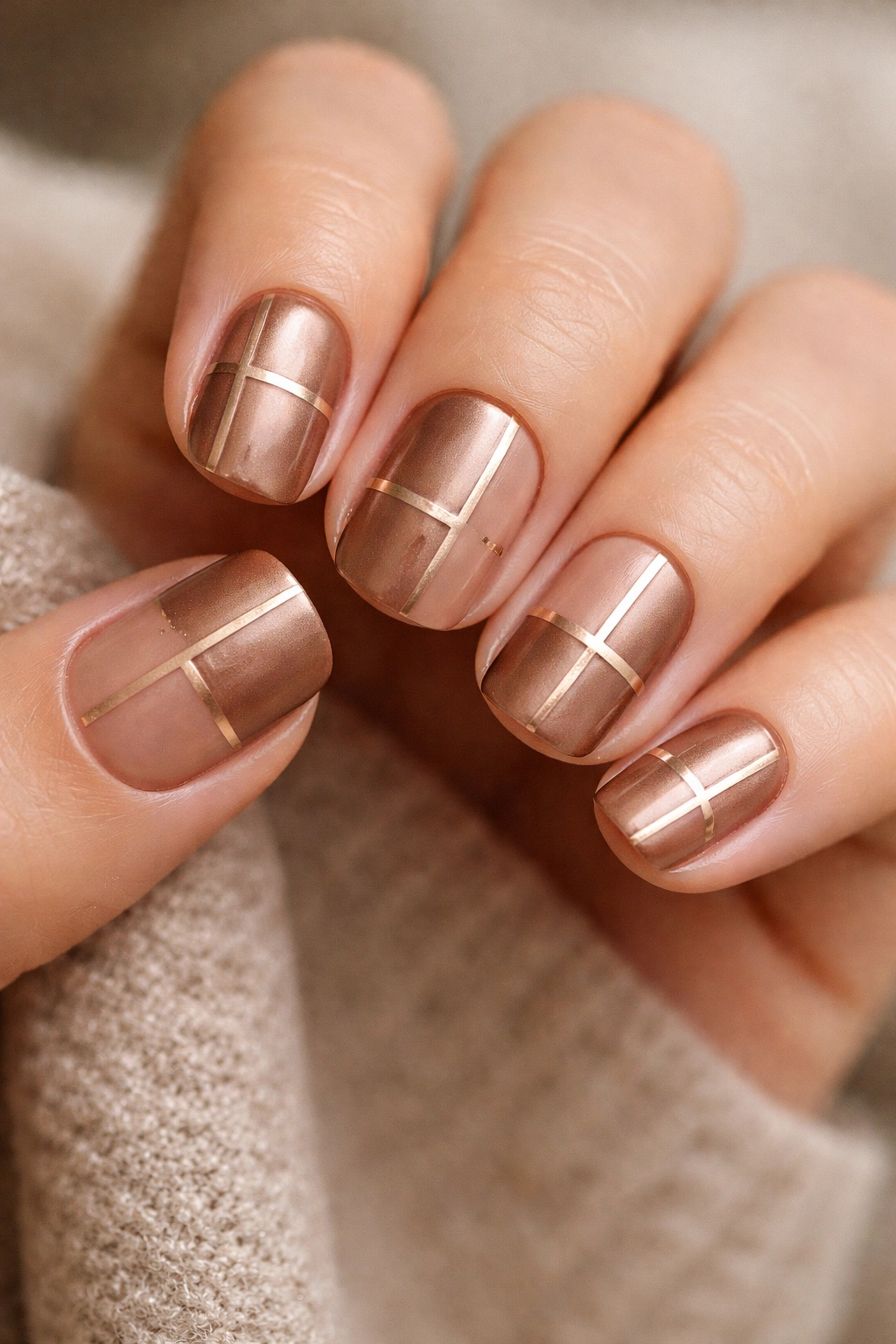
Finish with warm bronze—that rich, golden-brown shade that catches light beautifully. Your entire nail is painted in this color. Then create your negative space design using clean, straight lines or geometric shapes that let the natural nail show through.
You could do vertical lines, horizontal stripes, a geometric pattern, or abstract lines. The key is that they’re intentional and precise. The contrast between the opaque bronze and the naked nail creates visual interest and a contemporary aesthetic.
Bronze is a color that fewer people choose for their nails, which makes it feel special. It photographs beautifully, flatters various skin tones, and pairs well with gold jewelry. The negative space keeps it from feeling like a simple solid-color manicure—it becomes something more intentional.
Why This Closes Strong
This design celebrates precision and negative space, both concepts that appear throughout the best contemporary manicure design. It’s a sophisticated, modern choice that still reads as warm and wearable rather than experimental or edgy.
On short squoval nails, the geometric lines maintain clarity and readability. You can see exactly what you’re going for. That’s not always possible on longer nails where the design gets spread across more surface area.
Final Thoughts
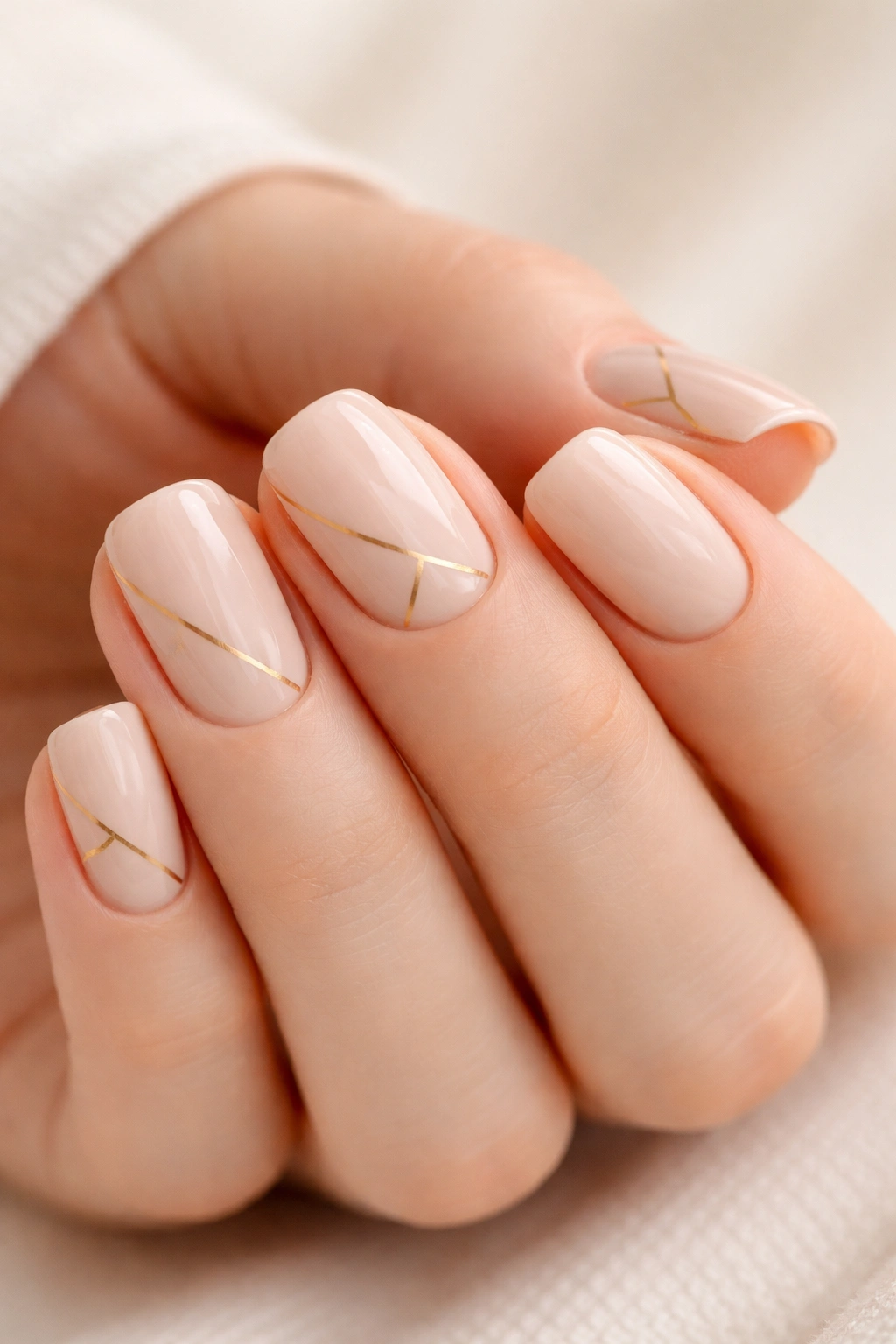
Short squoval nails aren’t a limitation on nail design—they’re actually a creative advantage if you know how to use them. The proportions work for both minimal designs that rely on color and negative space, and for more detailed work that benefits from a compact, readable canvas.
The designs above span a range of occasions, color preferences, and complexity levels. Some require professional application while others are DIY-friendly. Some read as everyday manicures while others are clearly reserved for special events. That’s precisely the point—short squoval nails are versatile enough to handle whatever you need them to handle.
What makes a manicure work isn’t the length of your nails. It’s the intentionality of your choices. Whether you’re going for creamy and minimal or bold and detailed, the key is committing fully to that vision and executing it with precision. These 15 designs do exactly that—they prove that short nails, when they’re shaped right and decorated thoughtfully, can be just as stunning as any other manicure choice you might make.