

A coffin nail can make a French tip look sharp or sloppy, and the gap between those two outcomes is smaller than most people think. French tip coffin nails only look clean when the taper, tip width, and smile line all agree with each other. If the white edge is too thick, the nail bed looks short. If the sidewalls pinch too hard, the whole set starts to look cheap.
That’s why this style keeps pulling people back in. A French manicure gives you structure; the coffin shape gives you attitude. Put them together and you get a set that can lean soft, graphic, glossy, dark, icy, or a little dramatic without losing that polished edge that makes French tips last.
I’ve always liked nail designs that do more with less, and this category does exactly that. A good tech can change the whole mood of a set by moving the smile line up 2 millimeters, swapping bright white for milky ivory, or choosing a sheer pink base that matches your skin instead of fighting it. Tiny choices. Big payoff.
And once you start looking closely, you realize there isn’t one French tip coffin nail look—there are at least a dozen worth saving.
Why French Tip Coffin Nails Work on a Tapered Square Shape
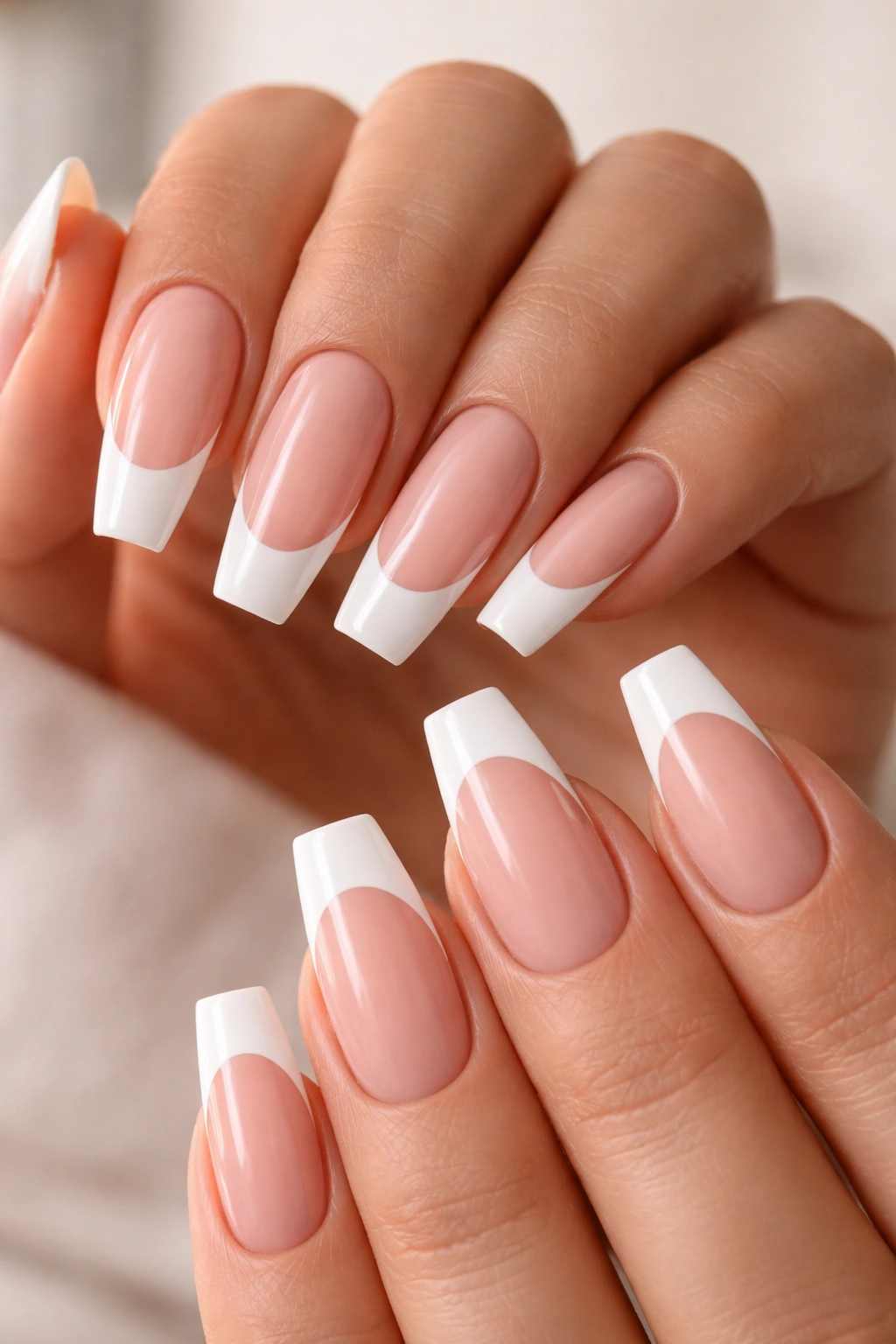
Coffin nails have a built-in advantage: the straight sidewalls and flat tip create a clean frame. French tips need structure, and coffin nails hand it to them. On round or soft square nails, the tip can blur into the shape. On a coffin set, the edge feels intentional from the first glance.
Length helps, too. Even a medium coffin shape gives the tip line more room to breathe, which means your nail tech can place the smile line higher or lower depending on what flatters your hands. A deeper curve can fake a longer nail bed. A flatter line can make a bold color feel more graphic.
Short coffin nails still work, though they need restraint. Go too wide with the tip and the free edge takes over. I see this all the time—someone asks for a classic French on a short set, and the tech paints half the nail white. The result looks blocky, not crisp.
One more thing matters more than people expect: the taper has to stay soft near the stress area. If the nail narrows too fast from the cuticle down, the French tip starts looking pinched. The best coffin shape is narrow enough to feel sleek, yet wide enough at the end to hold a straight, neat line.
How to Choose the Right Base Color, Length, and Tip Width
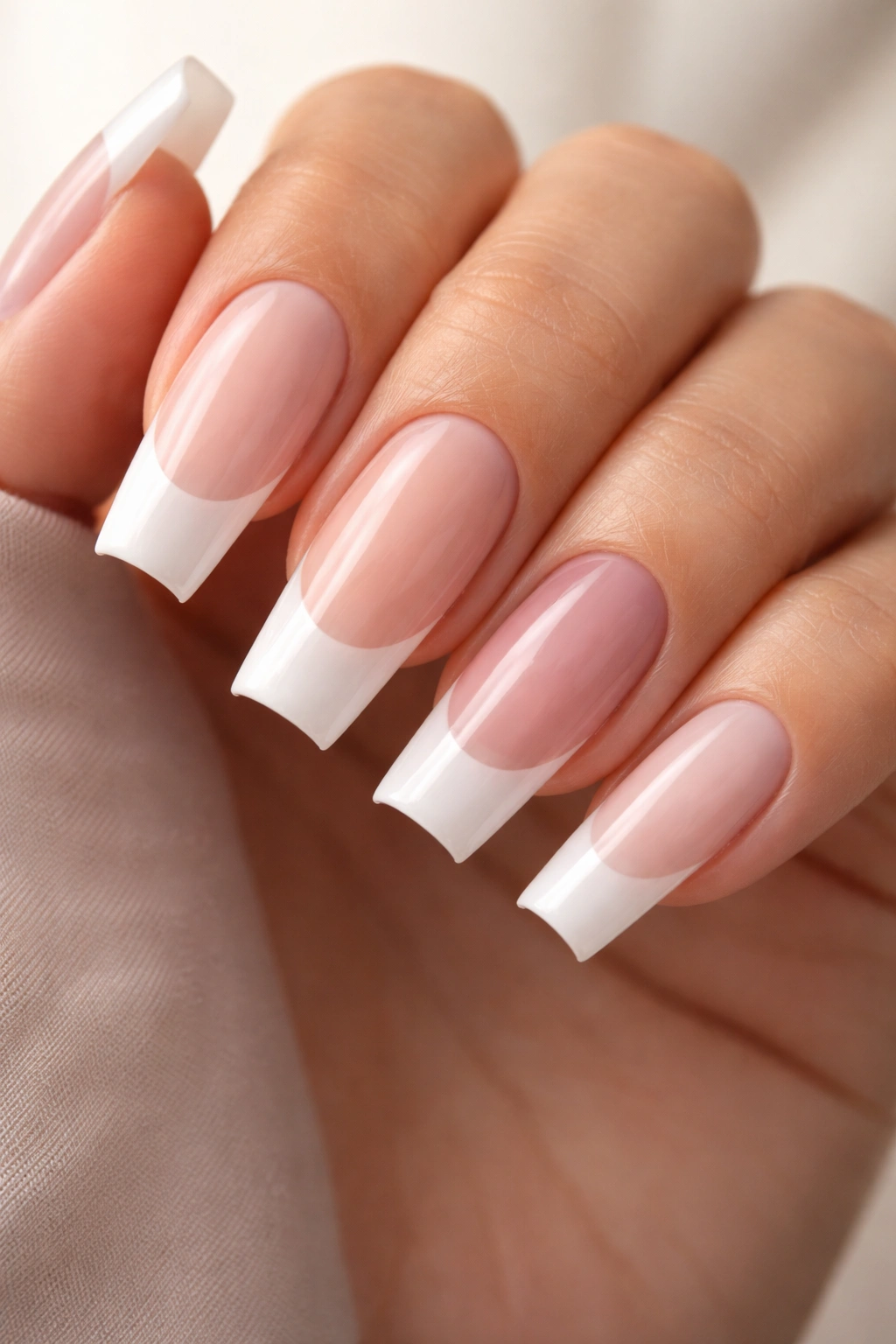
Start with the base. A French manicure lives or dies on the base shade, not the tip color. White gets all the attention, but the nude or pink underneath is what makes the set look expensive.
Here’s the quick version I’d use at the salon chair:
- Cool or fair skin often looks best with a soft pink, rose-beige, or milky blush base.
- Medium or olive skin usually suits peach nude, honey beige, or a neutral caramel-pink.
- Deep skin tones can carry richer beige, mocha pink, cocoa nude, or warm toffee bases with far more ease than pale pinks.
- Shorter coffin nails need a thin tip—about 2 to 3 millimeters is a smart place to start.
- Long coffin nails can handle a deeper smile line, a wider color edge, or layered art like double French lines.
Gloss matters. So does opacity. A sheer base hides grow-out better, while a fuller coverage nude makes the design look more graphic. If you want the French tip to stay soft and wearable for weeks, ask for a jelly nude or milky builder base instead of a flat, chalky pink.
And please do not ignore the top coat. A French set with a glassy finish always looks sharper than the same design under a dull seal. Nail art loves shine.
1. Classic White French Tip with a Soft Pink Base
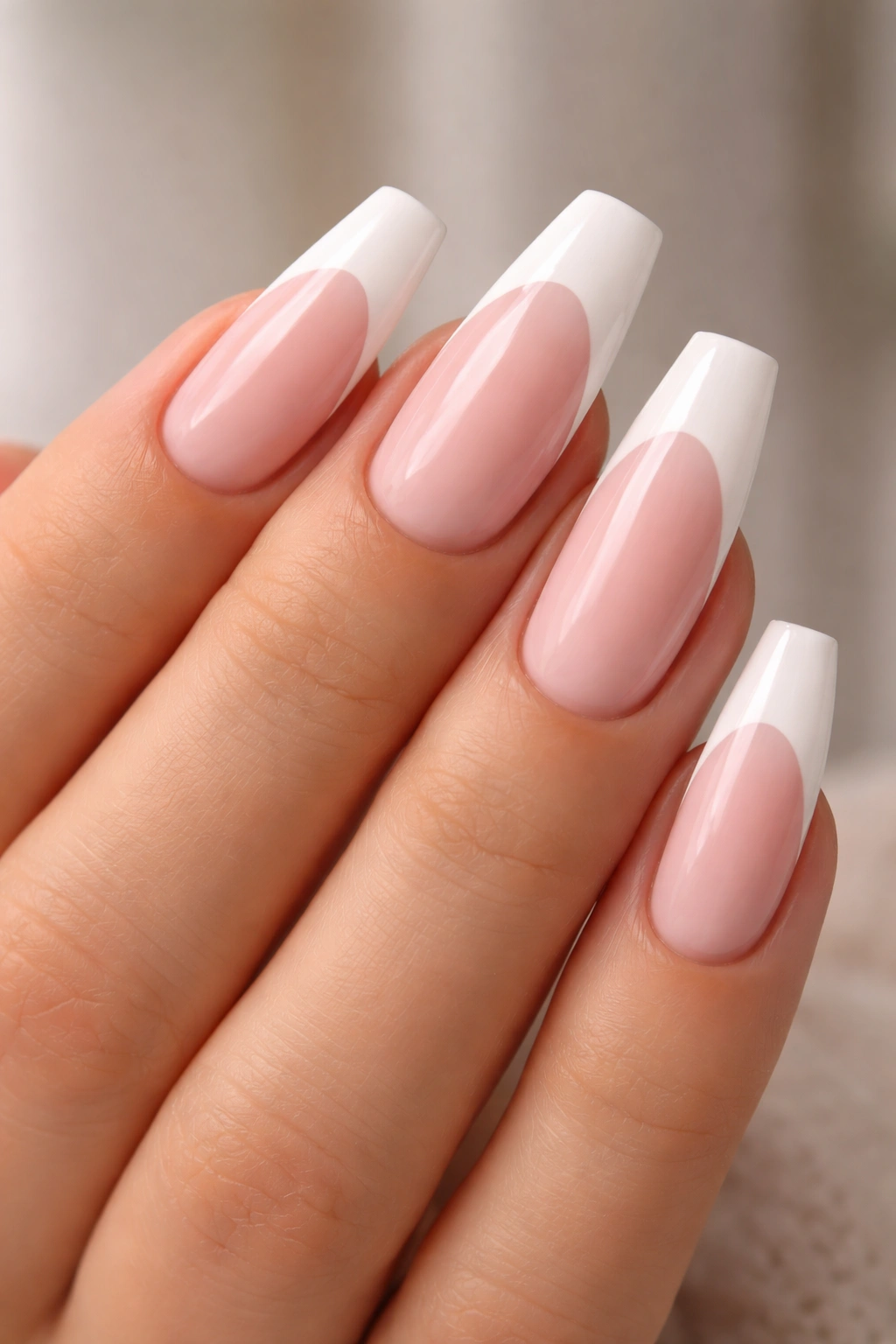
Some nail looks keep earning their spot, and this is one of them. A crisp white tip over a soft pink base still beats half the “creative” French sets people bring into salons because it knows when to stop. No clutter. No extra line work. No tiny gem that falls off by day three.
Why It Still Looks Fresh
The secret isn’t the white. It’s the pink. When the base has a faint rose tone—something sheer enough to let a little natural nail show through—the white tip looks brighter and the whole set looks cleaner. On coffin nails, that contrast gets even better because the straight edge makes the white line read as sharp instead of sweet.
Placement matters more than most people think. A good classic French on coffin nails usually has a smile line that dips slightly at the center, not a dead-straight stripe. That small curve makes the fingers look longer and keeps the tip from looking pasted on.
Quick Details That Make It Better
- Ask for an ivory white if bright paper-white feels harsh on your skin tone.
- Medium coffin length gives the cleanest classic shape without making the tip look heavy.
- A pink base with builder gel adds a smooth, plump finish that hides ridges.
- Gloss top coat beats matte here by a mile.
My take: if you are stuck between three designs and can’t decide, get this one. It almost never lets you down.
2. Deep V French Tip Coffin Nails
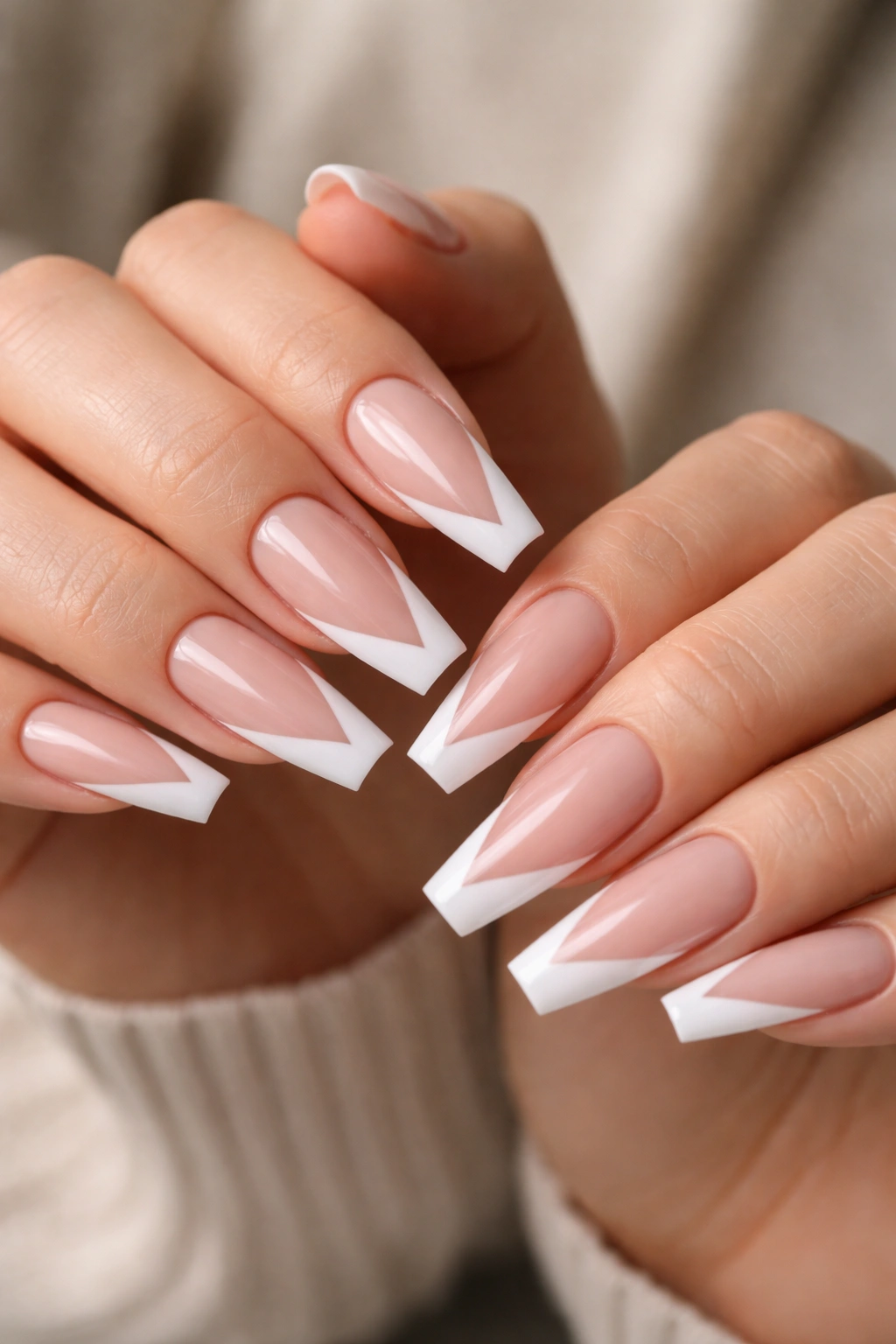
This is the set I reach for when someone wants their fingers to look longer without adding extra length. A deep V French pulls the eye inward and down, which stretches the nail bed in a way a standard curved tip cannot.
Picture the tip color starting near each sidewall and slanting toward the center in a narrow point. On a coffin nail, those two diagonal lines echo the taper of the shape, so the design feels built into the nail instead of painted on top. That harmony is why the look lands so well.
Color choice changes the whole mood. White keeps it sleek. Black makes it sharper. Chrome V tips feel almost architectural—clean edges, strong contrast, no softness at all. I like this design most on medium to long coffin nails because the point needs enough room to look crisp. On a short set, the V can eat up too much space and make the nails look cramped.
There is a catch. If the point drops too low, the nail starts to look like an arrowhead. Not flattering. Ask your tech to keep the V high enough that the center point sits in the top third of the nail, not halfway down. That one placement choice decides whether the set looks polished or gimmicky.
3. Milky Nude French Tips with a Whisper-Thin Line
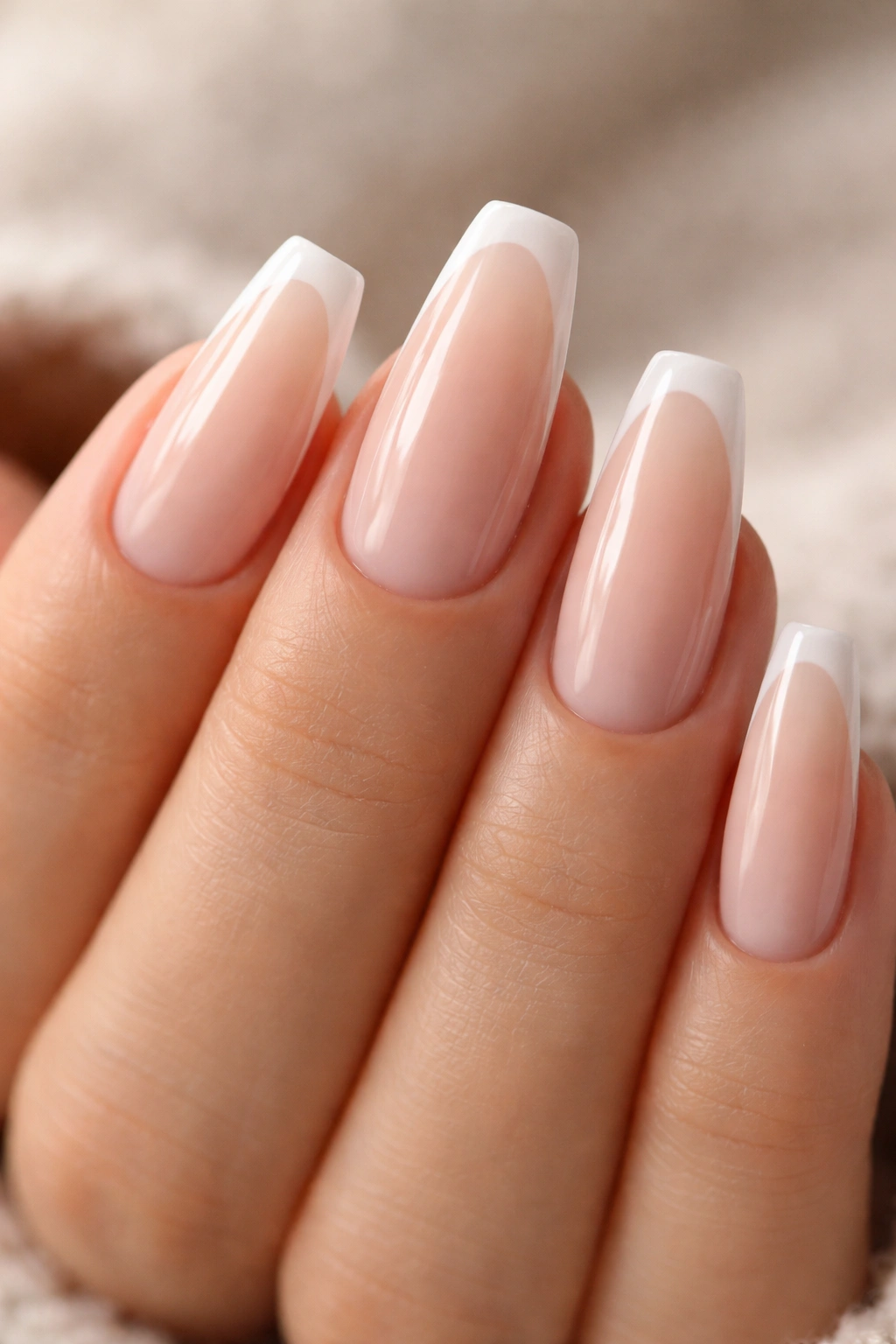
Why does this version look so expensive? Because contrast stays low, the shape does the talking. You still get the French manicure outline, though nothing screams for attention.
A milky nude base blurs the line between your natural nail and the product, which gives the whole set a softer edge. Then comes the thin tip—white, cream, soft taupe, maybe a faint pink-white if you want the design to stay airy. The line should be fine enough that it reads like a trim, not a block of color.
That thin border makes coffin nails look lighter. Long acrylics can feel heavy when the tips are thick. A whisper line fixes that. It also hides grow-out better than a bold French because the base and natural nail stay close in tone.
Where This One Shines
I’d pick this for anyone who wants quiet polish with a little structure. Office-friendly. Event-friendly. Still good after two weeks when your nails have lived a life.
Use a milky builder gel, not an opaque nude polish. Builder gives that cushioned, semi-sheer look that makes the manicure feel richer. Then ask for a tip line no thicker than a credit card edge. Small detail. Huge difference.
Skip chunky stones or loud decals here. They ruin the point.
4. Black French Tip Coffin Nails with a Wet-Look Gloss
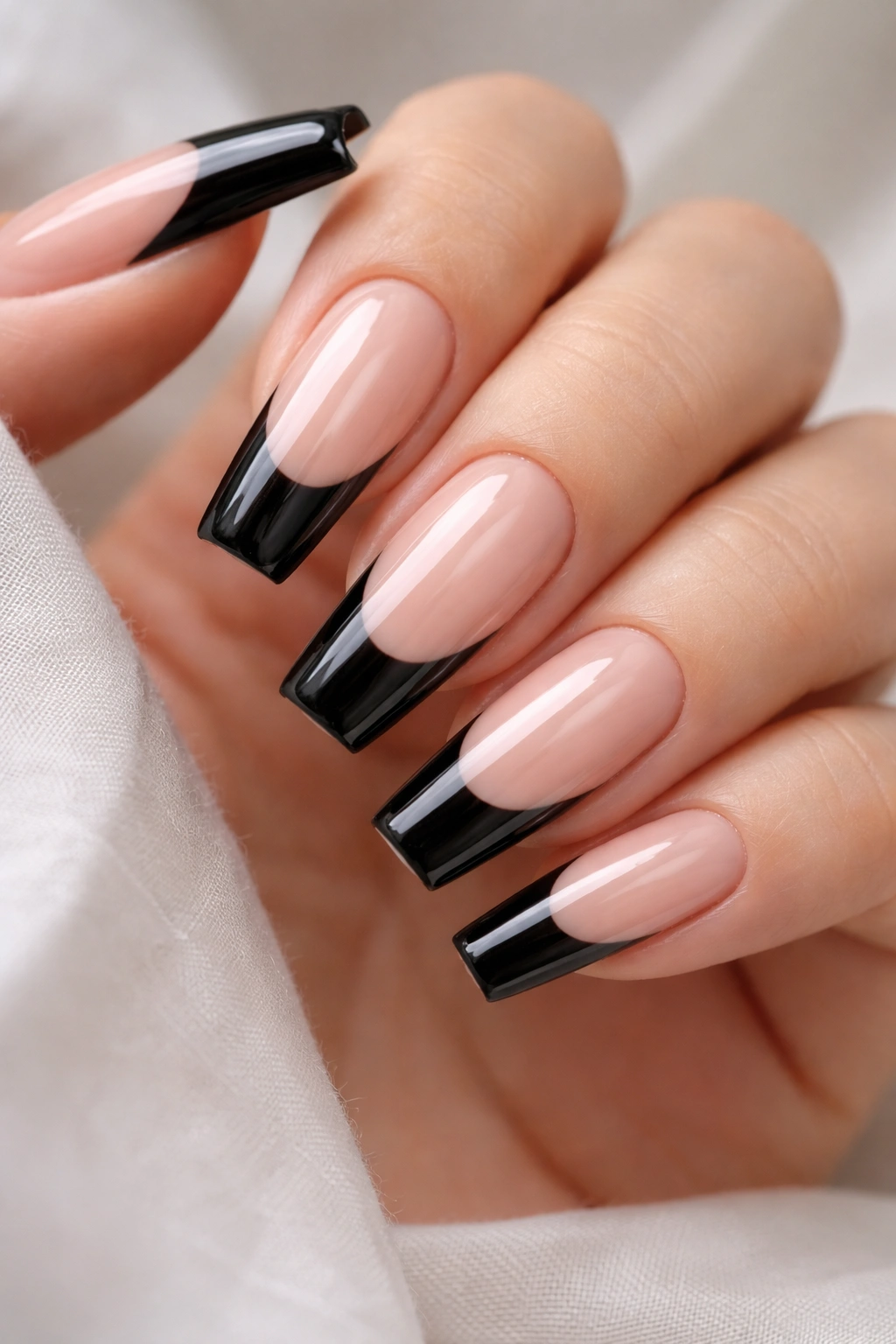
Maybe white French tips feel too bridal for your taste. Fair. Black tips fix that in one stroke. They keep the French structure and replace the sweetness with contrast.
On coffin nails, black French tips look strongest when the base stays sheer or pale nude. That gap between soft base and dark edge is what gives the design tension. Matte can work, though I think gloss wins every time with black because it makes the tip look like ink or patent leather rather than flat paint.
A few details matter more than people expect:
- Keep the black edge narrow on medium nails and slightly deeper on long coffin sets.
- Ask for a high-shine top coat that fully seals the free edge, since dark tips show chips fast.
- Pair black tips with a beige-pink or taupe base instead of a baby pink if you want the set to feel more grown.
- If you want extra detail, add a tiny silver line above the black tip on one or two nails—not every nail.
Black French coffin nails do not need much decoration. Once people start piling on stars, chains, and decals, the design loses its bite. Let the contrast carry the set.
5. Chrome French Tip Coffin Nails
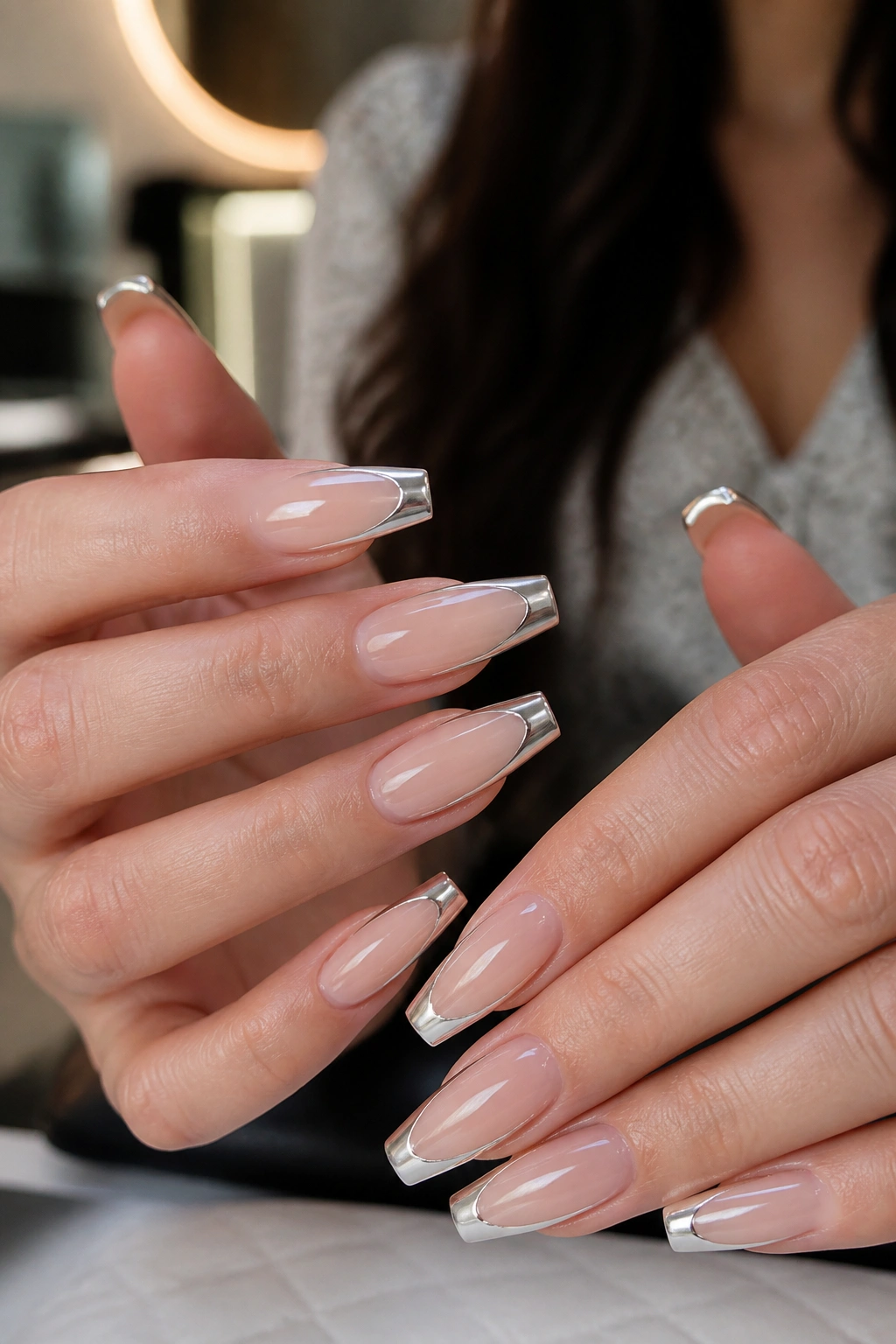
Metallic tips can go wrong fast. Too much chrome and the set starts looking costume-like. Used with restraint, chrome French tips on coffin nails look sleek, cold, and polished in the best way.
The reason chrome works here is shape. Coffin nails already have straight lines and a flat edge, so a reflective tip feels controlled. On almond nails, chrome can read softer. On coffin nails, it looks deliberate. Silver is the cleanest choice if you want that mirror-metal finish. Champagne chrome is warmer and easier to wear with gold jewelry. Rose chrome sits somewhere in the middle and reads softer on pink-toned bases.
Base color makes or breaks this set. A sheer beige, soft pink, or milky neutral gives the chrome room to stand out. Opaque nude can look heavy under a reflective tip, especially on long nails. I also like a thin chrome edge more than a thick one. The shine does enough on its own.
Application matters. A nail tech usually rubs chrome powder over a no-wipe gel layer, then seals it under top coat. If the surface underneath is lumpy, chrome will show every flaw. No mercy. Ask for a smooth builder layer first, then the chrome tip detail.
I keep coming back to this one for winter events, dinners, and dressy weekends because it feels dressed up without turning into full glitter. Still, it’s not my pick for someone rough on their hands. Once chrome starts wearing at the edge, you see it.
6. Double-Line French Tips with a Sliver of Negative Space
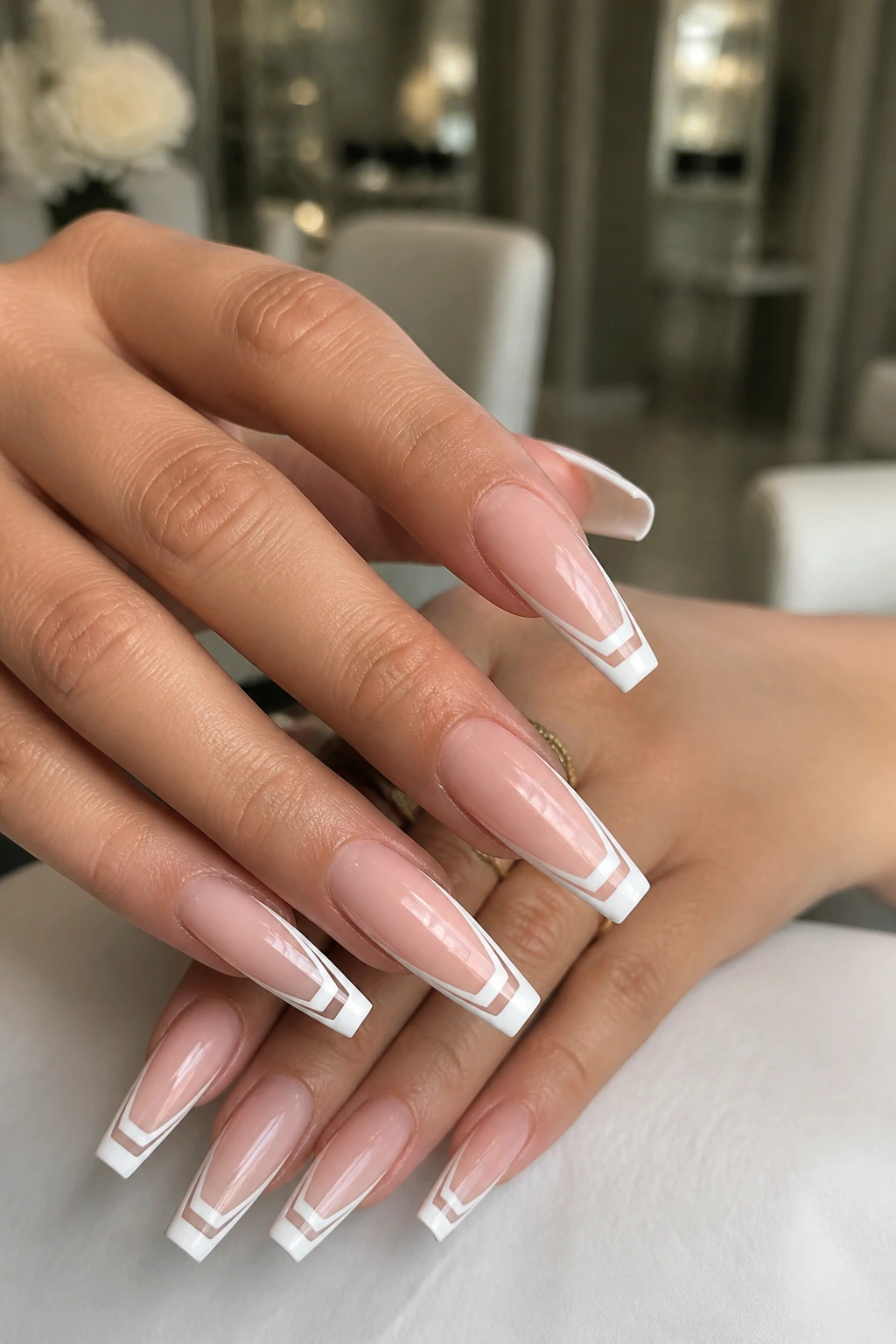
Unlike a standard French, this design uses two slim arcs instead of one solid block of color. You get a narrow tip line, a tiny strip of nude showing through, then another line sitting just beneath it. Graphic. Clean. A little more fashion-forward without drifting into chaos.
That strip of negative space is the whole point. It keeps the design light and stops the tip from taking over the nail. On coffin nails, the effect looks especially sharp because the flat edge makes the parallel lines easier to read.
Who is this best for? Someone who wants nail art that still behaves like a French manicure. You can do it in white and nude for a subtle look, black and clear for contrast, or nude and chrome for a softer metal effect. Long coffin nails show the spacing best, though medium length still works if the lines stay narrow.
My favorite version uses measurements close to these:
- Top tip line: about 1 millimeter thick
- Negative space gap: about 1 to 1.5 millimeters
- Lower accent line: even thinner than the tip line
Ask your tech to keep the spacing even across all nails. Uneven gaps throw the whole set off faster than a crooked smile line. This design needs precision. When it’s done well, it looks modern without trying too hard.
7. Side French Tip Coffin Nails with an Angled Edge
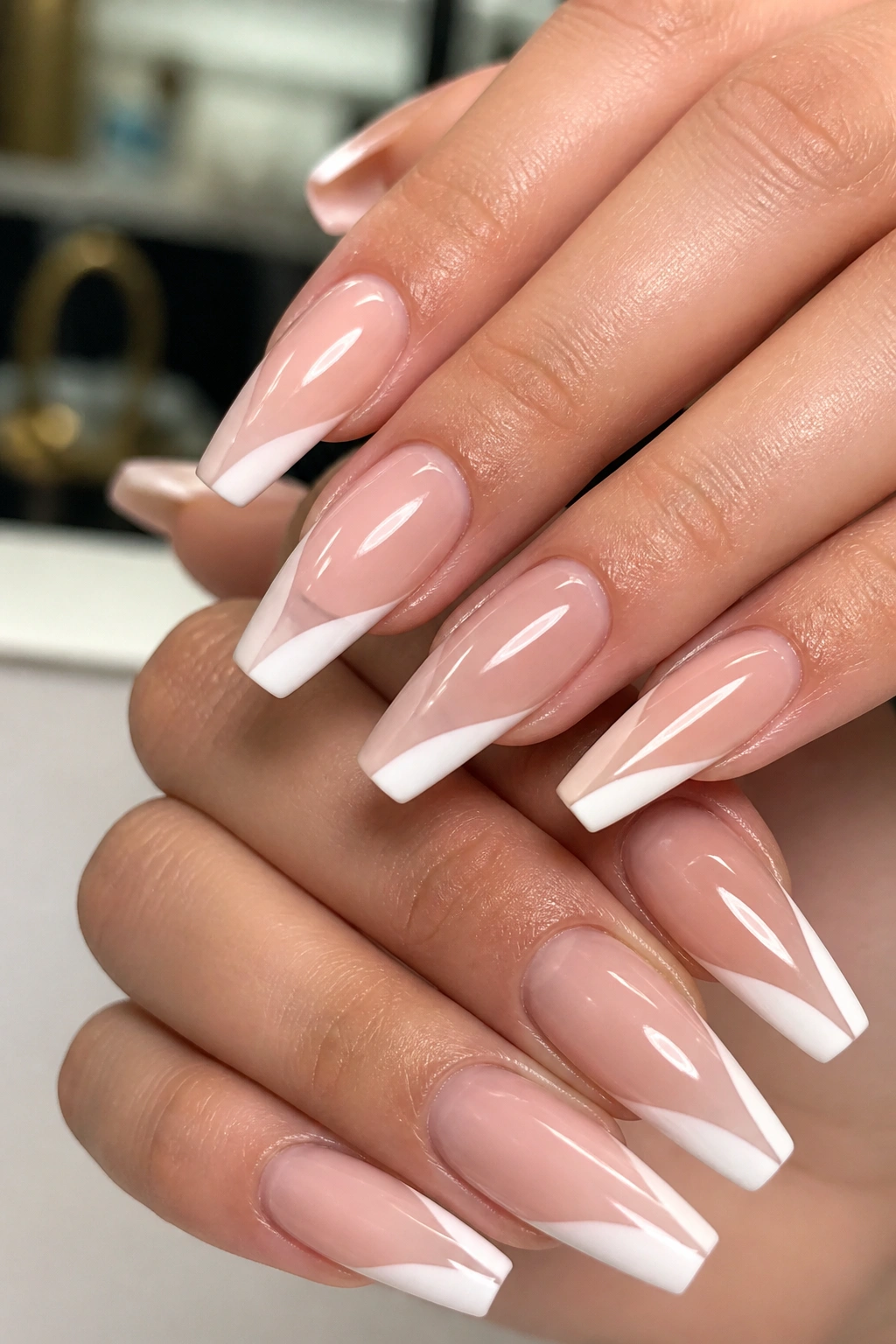
A side French tip changes the whole rhythm of the nail. Instead of following the free edge straight across, the color wraps from one sidewall and sweeps diagonally toward the center. It feels more playful, and on coffin nails that angle works with the taper in a way that looks sharp, not random.
Why Placement Matters
This design is all about direction. A left-leaning diagonal on every nail looks clean. Mixed angles on both hands can work, though they need intention. If half the tips slant one way and the rest another, the set starts to feel messy. Consistency saves it.
The diagonal should start high on one side and finish near the free edge, not cut across the middle of the nail. Too low, and the tip looks like a color block instead of a French variation.
Color Choices That Suit the Shape
White is crisp here, though I like side French tips most in color—espresso brown, navy, red, deep plum, or chrome silver. Coffin nails give those shades enough real estate to look clean at an angle. Add one tiny metallic line along the diagonal if you want the shape to pop more.
This one also suits people who talk with their hands. You see that slant from the side first, then from the front. It gives movement to the manicure without piling on extra details.
8. Glitter French Tips with a Sheer Nude Base
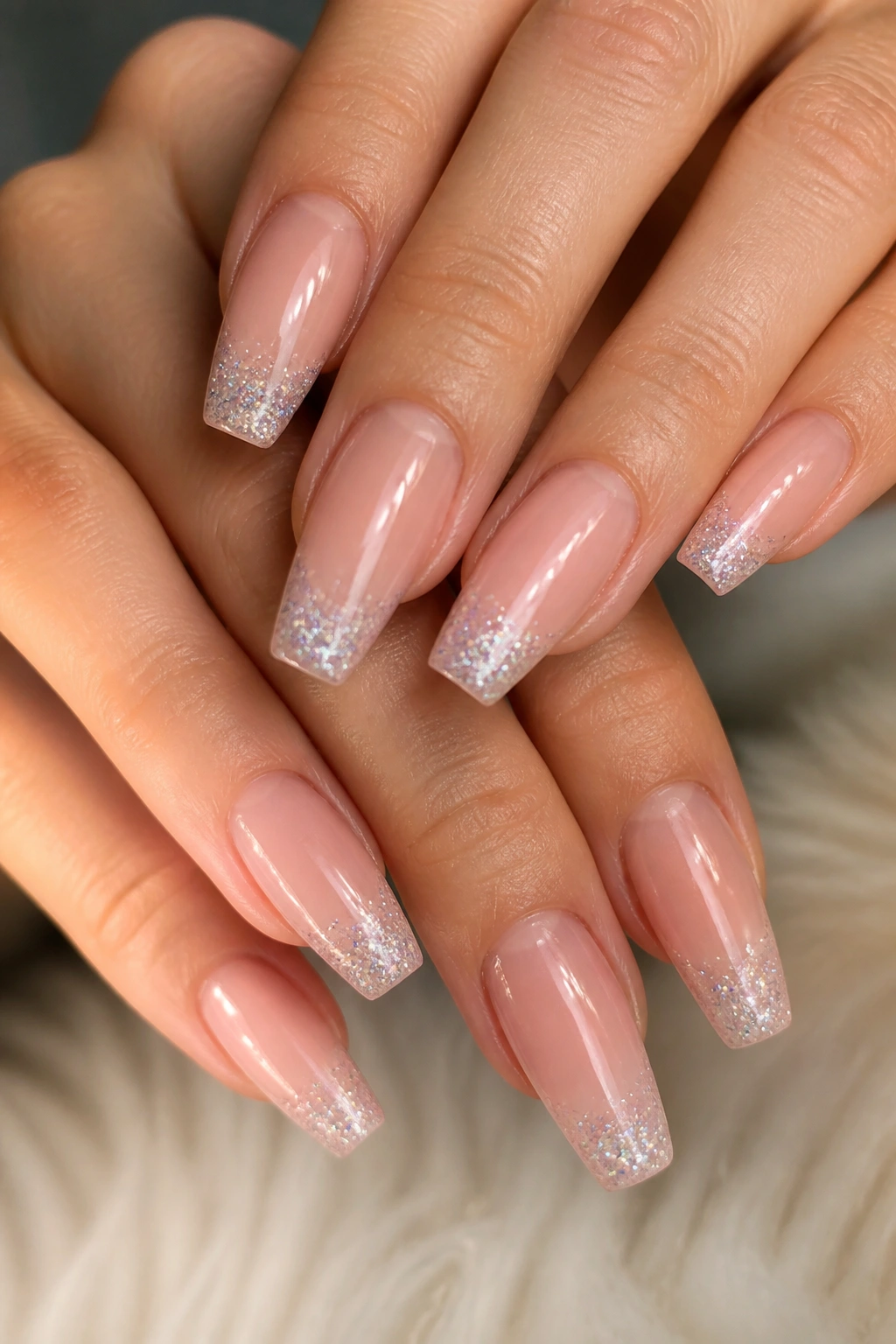
Glitter gets a bad reputation because salons often use chunky mixes that look rough and scratchy by day two. A good glitter French is far more controlled than that. Fine glitter packed at the tip can look rich, smooth, and far easier to wear than full glitter nails.
I like this design best when the glitter fades a little near the smile line instead of stopping in a hard stripe. That tiny soft edge keeps the set from looking heavy. Gold, silver, rose gold, icy white, and champagne all work, though the right base matters. Sheer nude keeps the glitter grounded. Milky pink turns it sweeter.
Here are the glitter finishes worth asking about:
- Fine reflective glitter for a dense, bright tip with a smooth surface
- Micro-shimmer gel for a softer flash that still reads polished in daylight
- Foil-like silver flecks if you want the tip to feel textured without actual bulk
- Champagne sparkle on beige bases for a warmer, less icy finish
I’d skip oversized hex glitter on coffin French tips. It catches on fabric, looks lumpy under top coat, and ages the set in the wrong direction.
For parties, dinners, birthdays, or any moment when you want a little extra shine, this one earns its place. Still polished. Less plain.
9. Ombre French Tip Coffin Nails
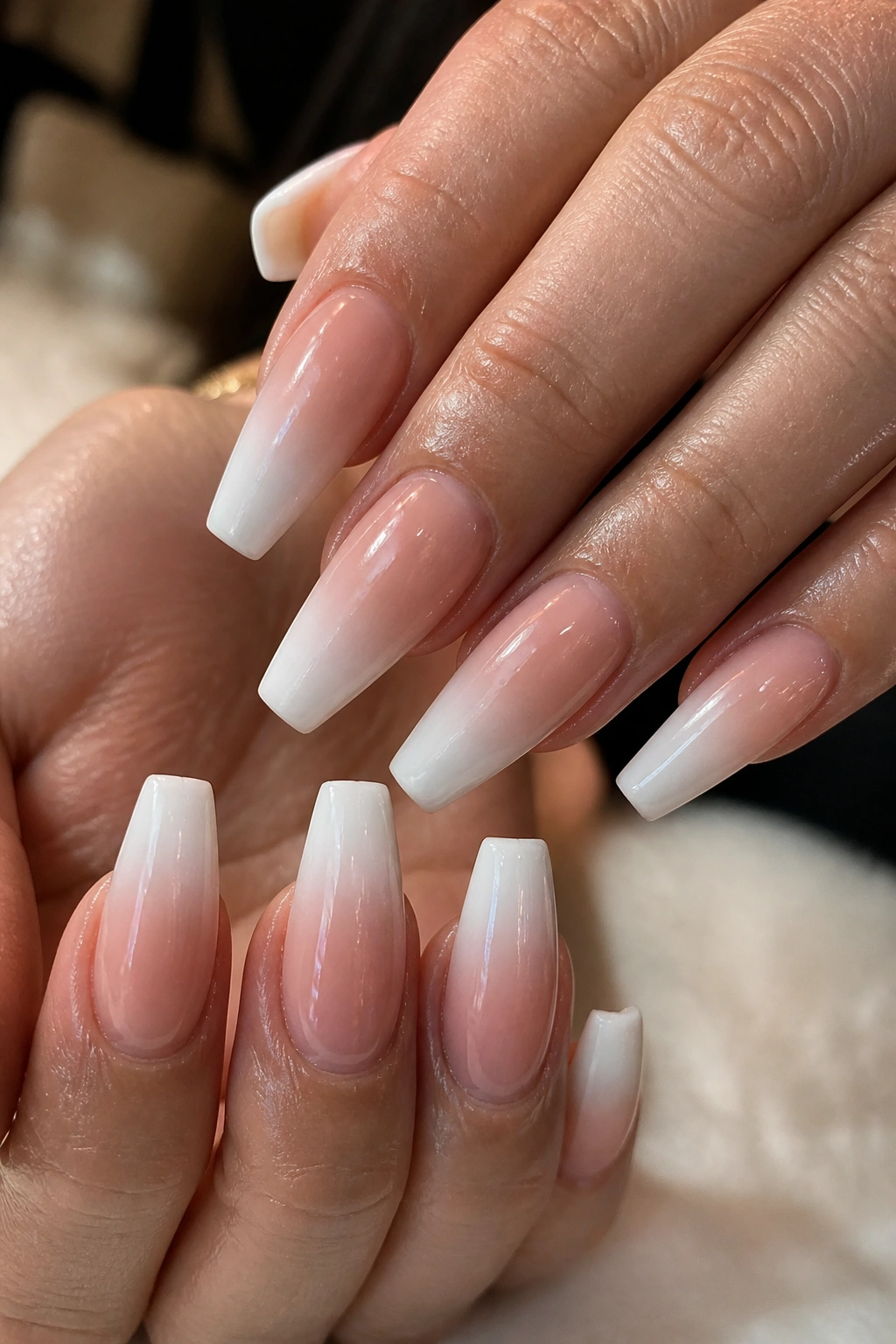
A true ombre French does not have a visible line. That’s the charm. White melts into nude instead of sitting on top of it, which gives the set a softer edge than a classic French while keeping the same clean mood.
People often call this a baby boomer manicure, and on coffin nails it can look almost airbrushed when the blend is done well. The white should start strongest at the free edge, then fade upward until it disappears into the base. No harsh band. No chalky patch. If you can spot where the blend starts, it needs more work.
I recommend this style to anyone who wants a bridal nail, a polished everyday set, or a manicure that handles grow-out with less fuss. Because the tip edge isn’t outlined, regrowth looks softer after two or three weeks. That’s a practical win, not a small one.
You do need the right tech for this. Ombre French sets can turn patchy if the white powder or gel isn’t blended with care. Acrylic techs often use a bead blending method, while gel artists may use a sponge or brush fade. Either route can look good. The finish should read smooth, foggy, and seamless.
One warning: on short coffin nails, the fade can eat up too much space and make the shape look squat. Medium or long length gives the blend room to breathe.
10. Red French Tip Coffin Nails
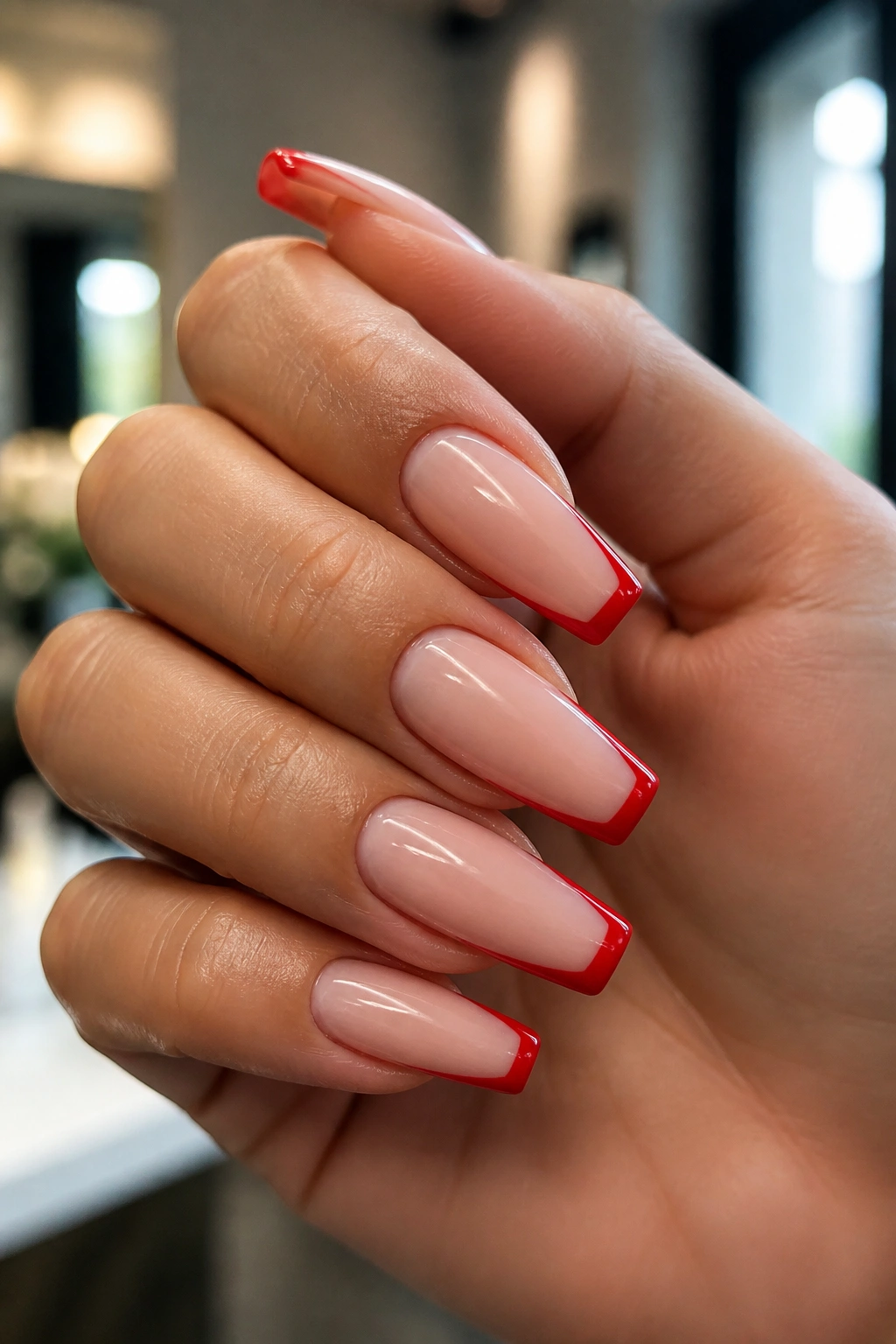
Does a red French on coffin nails feel like too much? Not if the red is chosen well and the tip stays clean. A slim red edge has more bite than white, though it still keeps the structure of a French manicure.
Red changes personality based on undertone. Blue-red feels crisp and dressy. Tomato red has more punch and looks lively on warm skin. Brick red feels grounded. Oxblood gives the set a darker, moodier edge without going full black. I would not put all of those in one category because they do different jobs on the hand.
Picking the Right Red
If your base is pink-beige, a blue-red tip usually looks sharper. If your base leans peach or caramel, warm red can sit more naturally against it. And if you wear mostly silver jewelry, cool reds often feel more in sync. Gold lovers usually carry warmer reds with more ease.
Tip thickness matters here more than with white. A chunky red French can start to look retro in a way you may not want. Keep it slim unless the nails are long and the whole brief is bold. On long coffin nails, I like a deeper smile line with a wine-red tip and a high-shine top coat. It feels dressy without tipping into costume.
One accent nail can work here, maybe a red outline French or a tiny gold stripe. More than that, and the set starts arguing with itself.
11. Micro French Tips on Long Coffin Nails
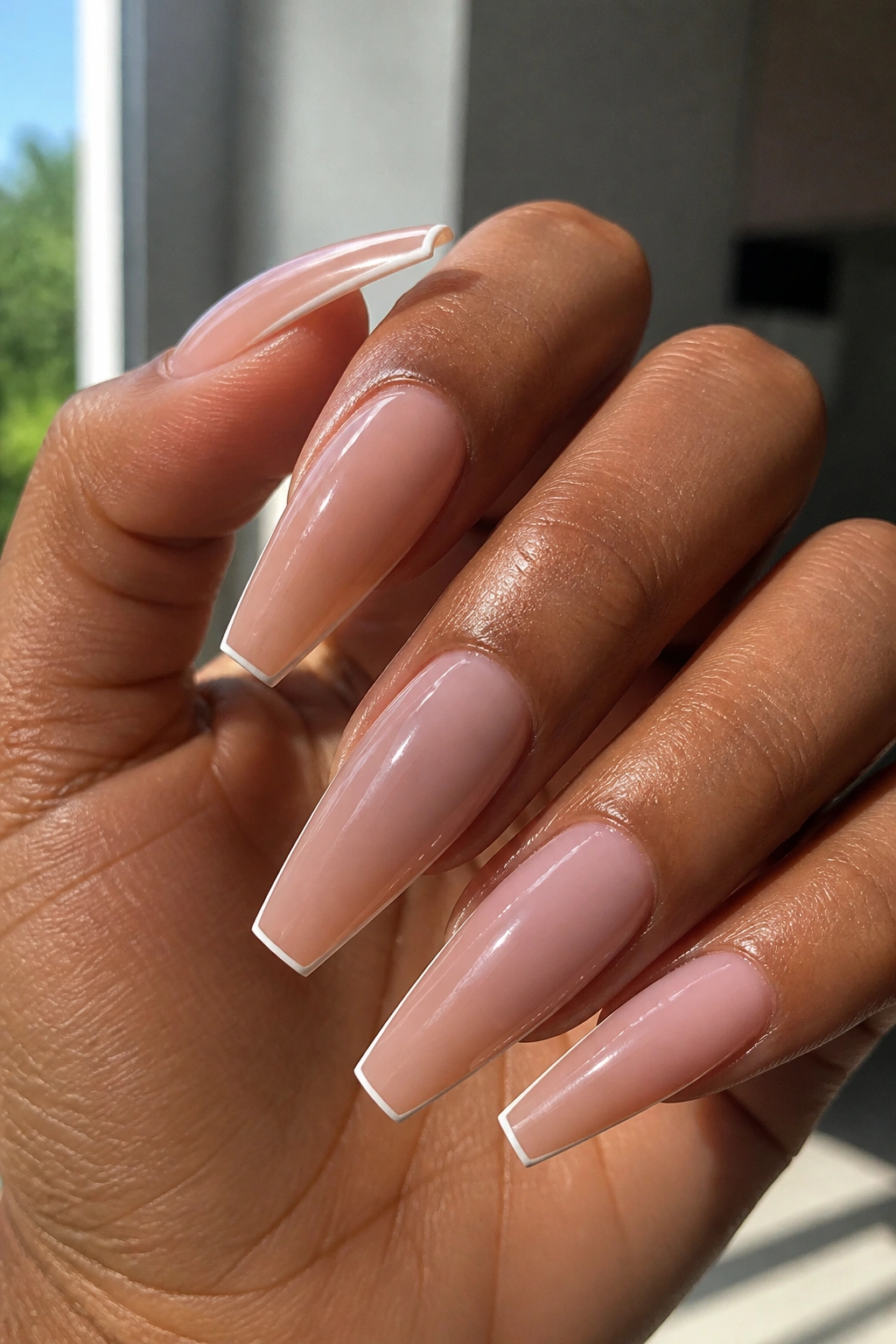
The thinnest tip in the room often looks the most expensive. Micro French tips prove it. On long coffin nails, that tiny line at the edge looks disciplined, sharp, and polished in a way thicker French tips cannot match.
This style depends on contrast between length and restraint. You have all that nail space, yet the tip line stays whisper-thin. That tension is what makes it land. A long coffin with a 1-millimeter white edge looks deliberate. A long coffin with a chunky French can start to feel dated.
A few things have to go right:
- The nail shape needs clean sidewalls and a straight free edge. Any wobble shows.
- The line should stay even across all ten nails. Micro French errors are easy to spot.
- Builder gel or hard gel helps create the smooth surface this design needs.
- Keep the base sheer or milky. Opaque cover pink can make the set look too dense.
I like this look most on neutral wardrobes, minimal jewelry, and hands that already have some length through the fingers. It’s not loud. It doesn’t need to be. Long coffin nails already carry enough presence. The tiny tip is there to sharpen them, not compete with them.
And yes, upkeep matters. Once the edge chips, the whole illusion goes with it.
12. Pearl French Tips with a Glazed Finish
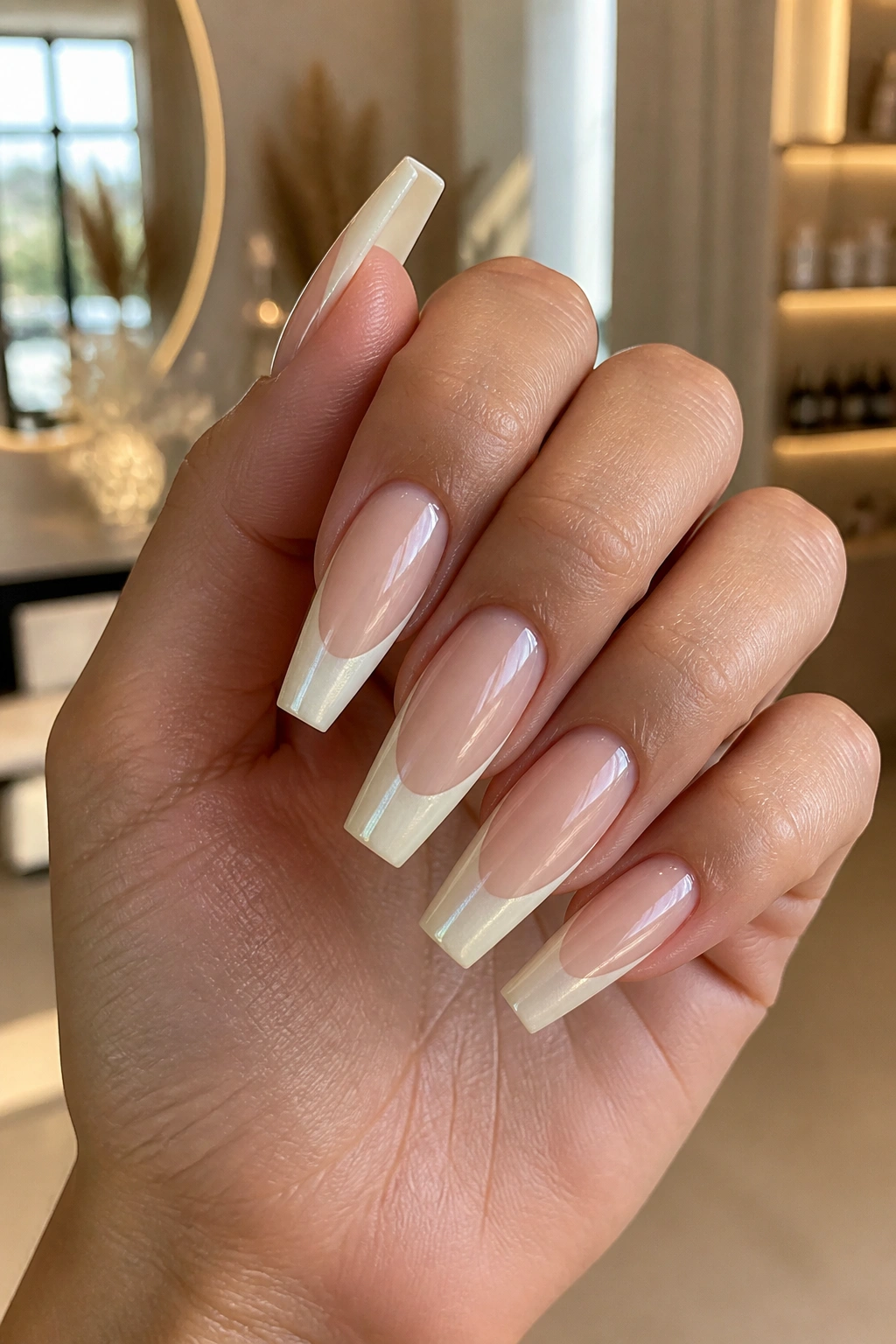
Pearl French tips feel softer than chrome and cooler than a plain white edge. The surface has that smooth shell-like sheen—less mirror, more glow—and coffin nails give it enough structure to keep it from looking sugary.
I’m fond of this one when someone wants a French manicure with a little atmosphere but not glitter. The tip can be ivory, pale pearl, or even a sheer opal tone. Then a glazed powder goes over the top to give the nail that silky, light-shifting finish. Not flat. Not metallic. Somewhere between.
What to Ask for at the Salon
A soft ivory or milky white tip works better than a sharp bright white under pearl powder. Bright white can turn the finish harsh. Ask for a translucent glazed top over a pink-nude or milky base so the effect stays smooth.
Long coffin nails show the pearl effect best, though medium length still looks good if the tips are narrow. I’d leave rhinestones out of this design. The sheen already does enough.
This style suits wedding nails, dressy weekends, date nights, and anyone who wants something polished with a touch of softness. It has mood. It has shine. It also grows out better than people expect because the pearl surface diffuses the edge a little.
Salon Details That Make or Break a French Tip Set
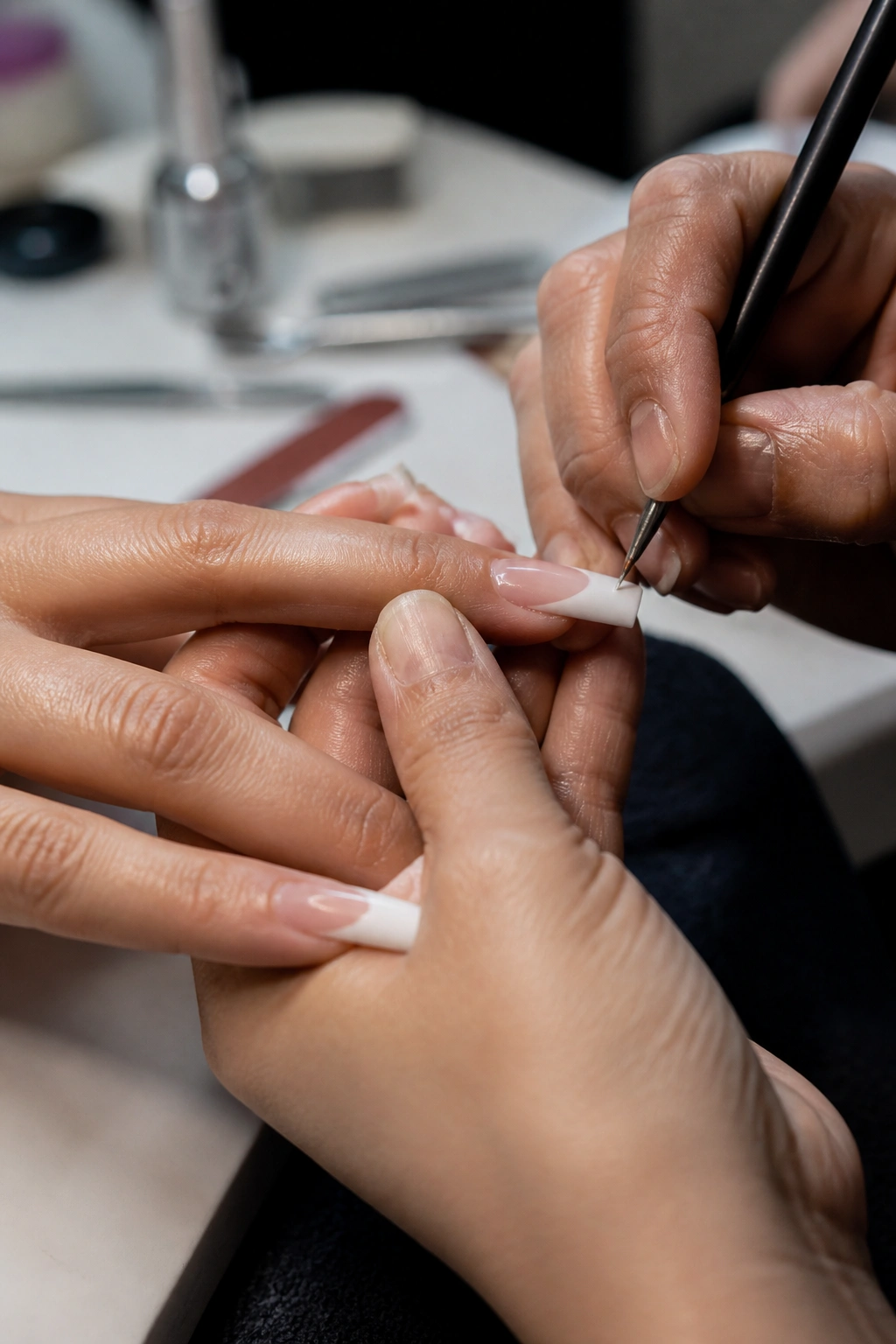
You can pick the best design on this list and still walk out with a bad manicure if the structure underneath is off. French tips are unforgiving. They show crooked shaping, bulky apex placement, uneven sidewalls, and messy cuticle work faster than full-color nails do.
Watch the Shape Before the Art Starts
A coffin nail should taper from the sidewalls into a flat, squared-off tip. Not pointy. Not flared. If the free edge looks wider than the middle of the nail, the set will read duck-shaped once the French line goes on. If the sidewalls narrow too hard, the tip loses that coffin feel and starts reading almond with a flat end.
Check the Thickness
French tips look best over a nail that has a smooth apex and a thin-looking free edge without being weak. That’s a tricky balance. Too thick, and the set looks blunt. Too thin, and the corners crack. Ask your tech to file the underside clean and refine the profile from the side view. You want strength near the stress area and a crisp finish at the edge.
Don’t Ignore the Smile Line
A hand-painted smile line should match across all nails, even if each one is adjusted a touch for finger shape. Some nail beds need a slightly deeper curve. Others need a flatter one. Matching does not mean copying the same line onto every finger with no thought.
Bad French tips are often not bad art. They’re bad prep.
How to Keep French Tip Coffin Nails Looking Sharp Between Appointments
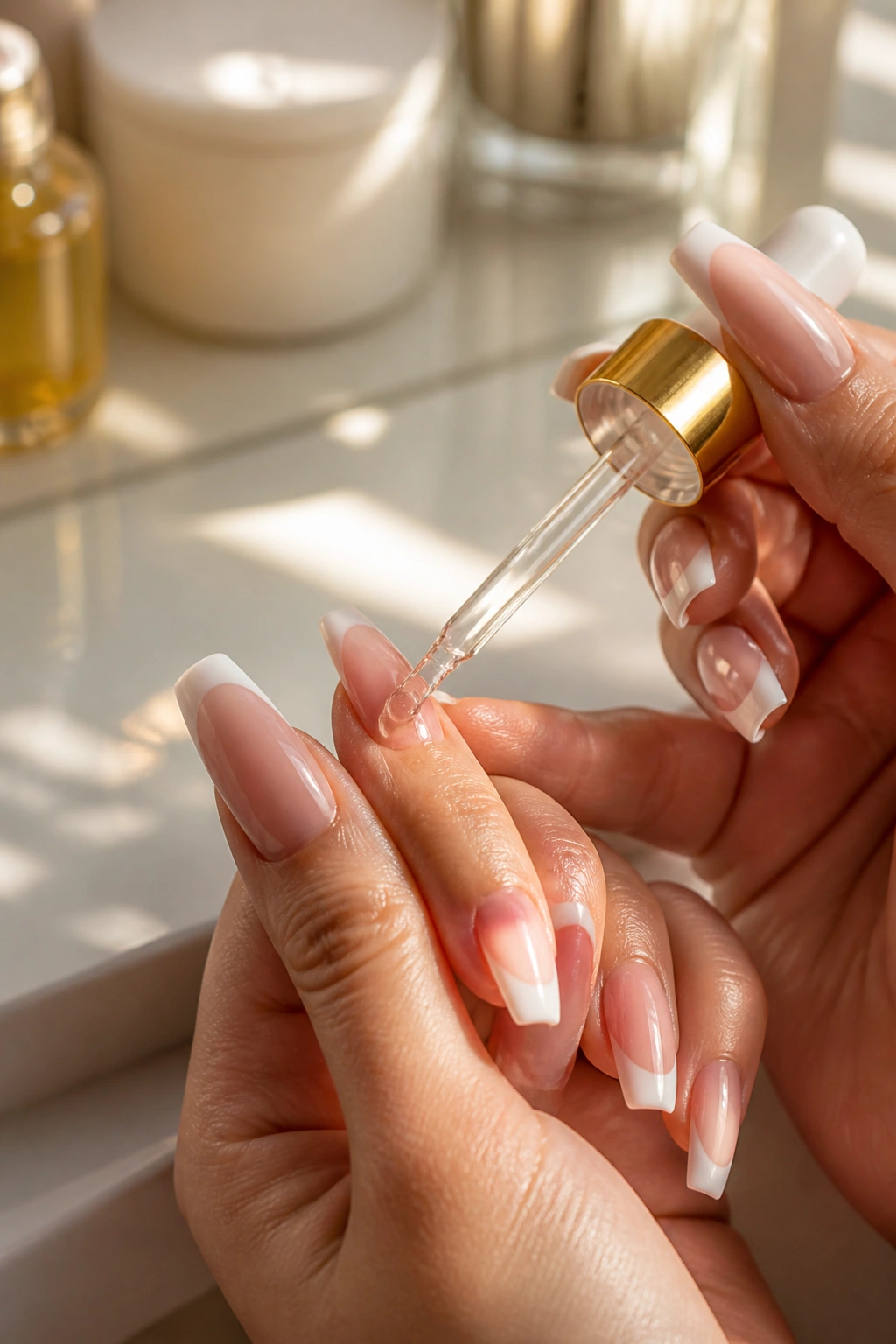
French manicures age differently than solid color sets. Chips show faster. Regrowth looks more obvious on high-contrast designs. You need a little maintenance if you want that crisp look to survive daily life.
A few habits make a bigger difference than any fancy product:
- Apply cuticle oil once or twice a day so the product stays flexible and the skin around the nails looks healthy.
- Wear gloves for dishwashing and cleaning, especially with black, red, chrome, or pearl tips that show wear along the edge.
- File snags in one direction with a fine grit file instead of picking at them.
- Book fills every 2 to 3 weeks if the set is long or the tip color is bold.
- Avoid using your nails as tools for cans, labels, boxes, or hard plastic lids. Coffin corners are not forgiving.
If you get chrome or pearl French tips, ask your tech which top coat they used. Some finishes hold their shine better with a fresh layer at a fill. Glitter and ombre designs usually hide wear a bit better. Classic white and micro French sets demand more discipline.
Worth it, though.
Final Thoughts
French tip coffin nails work because they give you structure without boxing you into one mood. You can keep them crisp with classic white, push them darker with black or red, go sleek with chrome, or soften the whole look with milky nudes and pearl glaze.
If I had to narrow the field, the soft pink classic French, the deep V, and the micro French are the three I’d recommend first. They flatter the most hands, they age well, and they leave less room for the design to go sideways.
Pick the set that matches how you live, not only what looks good in a saved photo. The best manicure is the one that still looks sharp when you’re texting, carrying coffee, opening doors, and catching sight of your hands three days later.