


There’s something undeniably luxurious about slipping on a fresh set of stiletto nails tipped in gold. The sharp, elongated shape commands attention, while the precious metal finish elevates even the simplest everyday look into something that feels expensive and intentional. Gold French tips strike that perfect balance between classic and contemporary—they honor the timeless elegance of the original French manicure while bringing bold metallic confidence that feels anything but safe or boring.
What makes gold French tip stilettos so compelling is their sheer versatility. Whether you’re drawn to warm, buttery yellow gold, cool champagne tones, or trendy rose gold, this color story works across skin tones and complements virtually every aesthetic. The contrast between the nude or white base and the rich gold tip creates visual drama without being overwhelming, making these nails work for professional settings, special occasions, or everyday wear that just happens to be exceptionally glamorous. The elongated stiletto shape amplifies this effect—the sharp point naturally draws the eye to the tip, making your gold accent work twice as hard.
The real magic happens when you start exploring variations. A simple gold stripe can transform into a glittering gradient, a geometric statement, or an intricate mosaic. You can layer nail art techniques—combining foil, rhinestones, negative space, and metallic finishes—to create designs that feel uniquely yours. Whether you prefer maximum drama or understated elegance, there’s a gold French tip stiletto concept waiting to become your next favorite manicure.
1. Classic Gold Ombre Gradient Stilettos
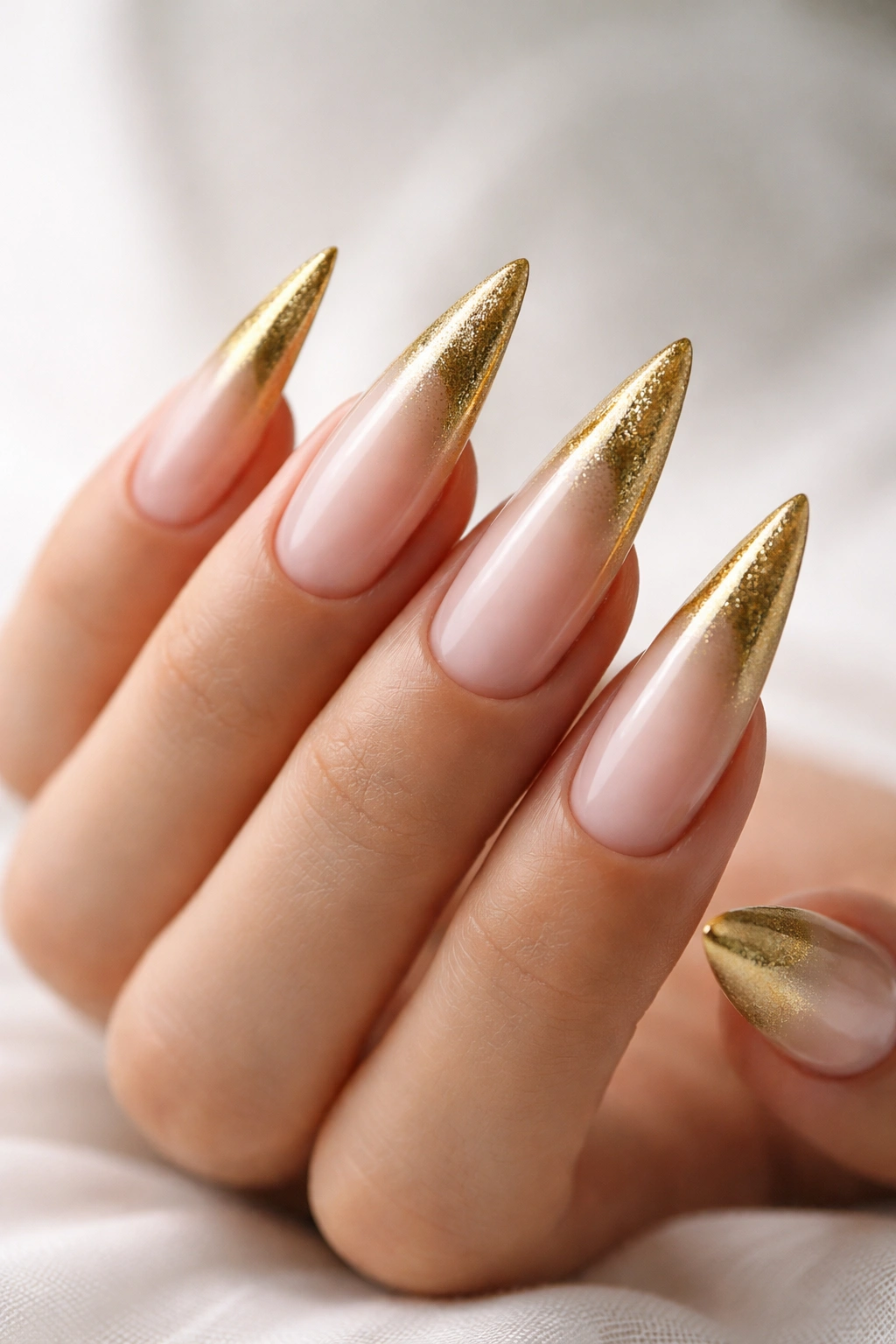
The ombre gradient version takes the fundamental French tip concept and adds dimension that makes it feel fresh and modern. Instead of a sharp line of gold at the tip, you’re creating a gentle fade that begins as pure white or nude at the very edge, gradually deepening into rich gold as it moves toward the nail’s center, eventually dissolving back into your base color. This softer approach feels less structured than a traditional French tip, which is precisely why it appeals to people who want elegance without rigidity.
How to Create the Ombre Effect
Start with a smooth white or pale nude base coat on your entire nail. Once it’s completely dry, apply a slightly deeper shade of gold to a makeup sponge or specialized nail sponge. Rather than creating a straight line, you’re going to stipple and blend—dab the sponge repeatedly over the tip area, working upward in a rolling motion. The sponge’s texture naturally creates that gorgeous gradient where the pigment is darkest at the edge and gradually fades as you move away from the tip. Layer this technique 2-3 times, allowing drying time between applications, until the gradient is as bold as you want it.
Why This Design Works So Well
The ombre effect is forgiving in ways a perfect gold line isn’t. Tiny imperfections actually add to the handcrafted, artistic quality rather than detracting from it. This design photographs beautifully—the gradient catches light differently across the nail, creating depth and movement even when your hands are still. On elongated stiletto shapes, the gradual fade draws focus to the entire tip section rather than just a thin line, maximizing visual impact.
Variations and Customization
You can manipulate the ombre’s intensity by adjusting your base shade and gold tone. Pair a pale pink base with rose gold for romantic softness, or use white with yellow gold for maximum contrast and drama. Some nail artists create a reverse ombre, starting dark gold at the cuticle and fading to a delicate whisper at the tip—this subtle approach works beautifully for professional environments while still delivering that gold glamour.
Pro tip: Use a gel or acrylic base for ombre stilettos. These mediums hold their shape better during the sponging process and give you time to perfect the gradient before everything sets.
2. Minimalist Gold Line French Tips
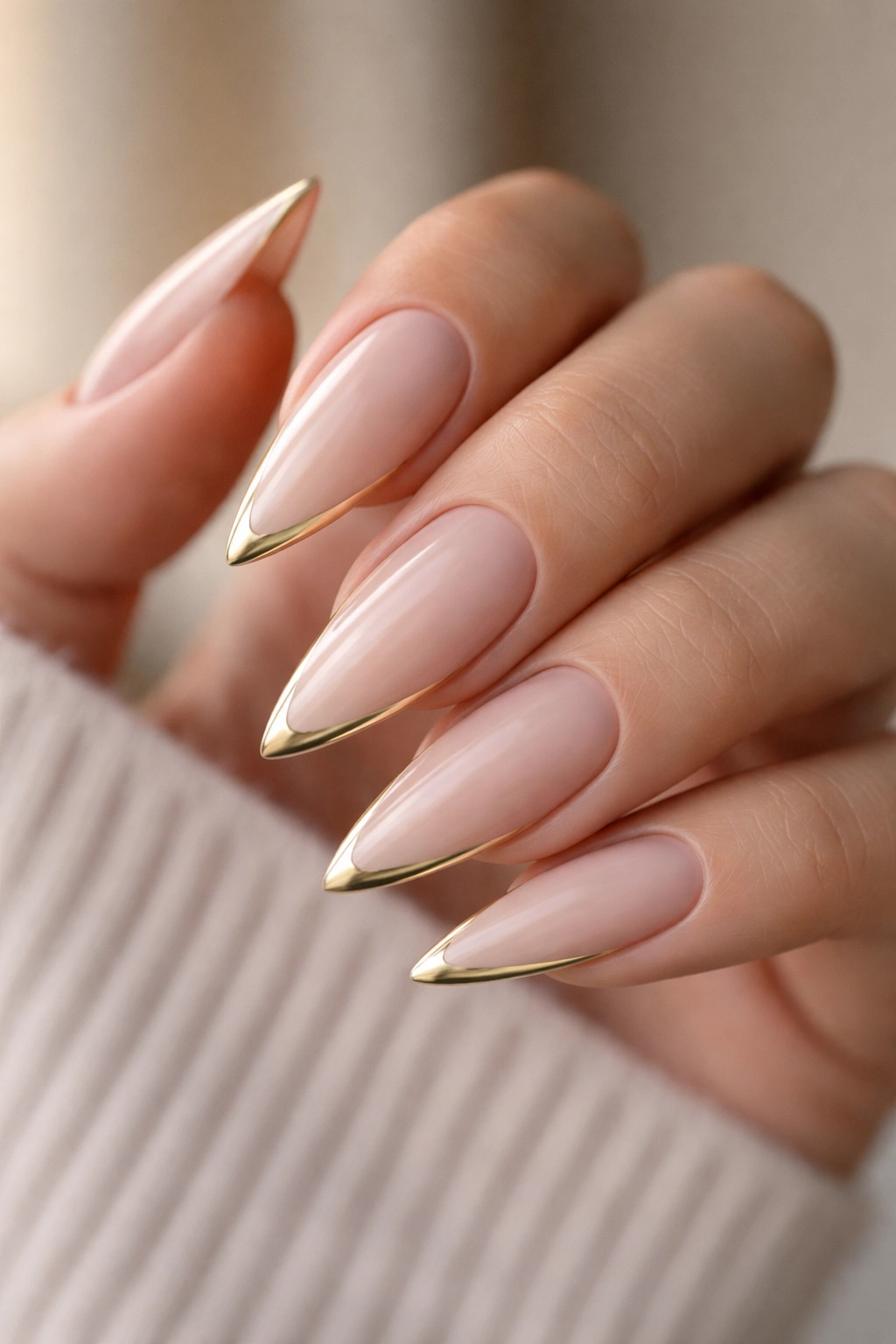
Sometimes the most sophisticated choice is also the simplest. A single, clean line of gold across the tip of your stiletto nail—nothing more—delivers pure elegance that never goes out of style. This interpretation honors the original French manicure’s minimalist roots while upgrading it with a precious metal that feels intentional and luxurious. The restraint is what makes it powerful.
The Precision Required
Creating a flawless gold line requires a steady hand and the right tools. A thin detail brush, typically used for nail art fine lines, is your best friend here. Load it with your chosen gold polish or gel, and maintain a consistent pressure as you glide across the tip’s edge. The line should be approximately 1-2mm thick—wide enough to be visible and register as intentional, but thin enough to feel refined rather than heavy. Many professionals use striping tape placed just above where they want the gold line to sit, allowing them to paint freely without worrying about precision.
Color Combinations That Amplify Impact
Your base color dramatically influences how bold this design feels. A stark white base with pure yellow gold creates high contrast and maximum visual pop—think of this as the “statement” version. Nude or pale pink bases with the same gold create a softer, more blended appearance that feels modern and sophisticated. Champagne or rose gold lines on a warm ivory base feel distinctly romantic, while the same gold on a cool, pale pink base shifts the energy to contemporary chic.
Maintenance and Longevity
The beauty of a thin gold line is that minor chips at the edges are barely noticeable and the design still reads as intentional rather than worn out. However, because it’s positioned at the most vulnerable area of your nail—the very tip where you’re most likely to catch on things—these stilettos will need touch-ups sooner than other designs. Keep your gold polish on hand for quick maintenance between manicure appointments.
Worth knowing: Gel polish typically lasts longer than traditional polish for this design because the gold line cures and hardens, making it more resistant to everyday wear and tear. If you’re wearing your nails for more than two weeks, gel is the smarter choice.
3. Glitter-Embedded Gold French Tips
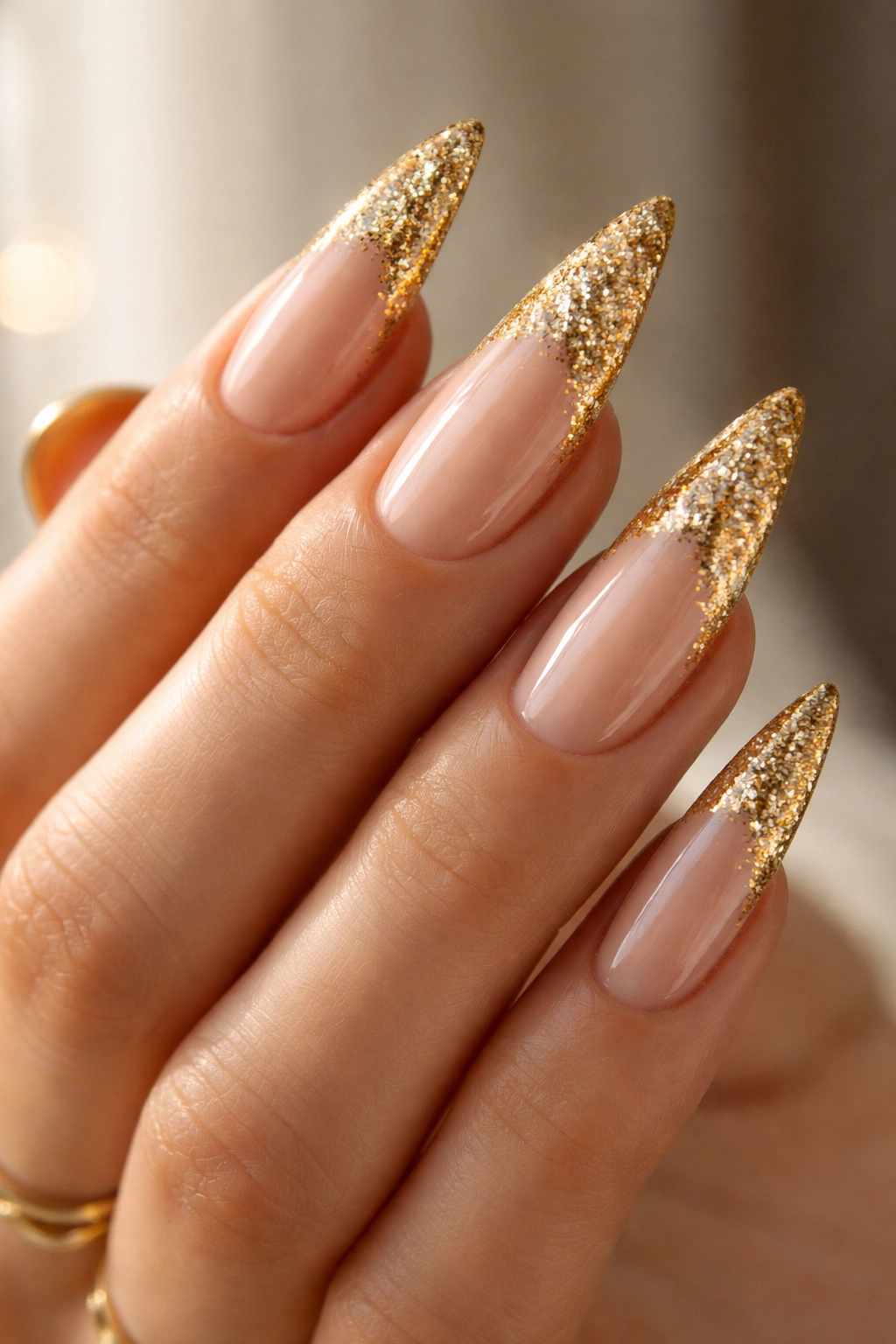
When you want your gold French tips to catch light and demand attention, embedding fine glitter into the gold creates a shimmer that reads as expensive and celebratory. This design works beautifully for special occasions—think weddings, galas, date nights, or anytime you want your nails to sparkle with the slightest movement. Even in everyday lighting, the glitter creates dimension that a flat metallic finish simply can’t achieve.
Application Techniques for Best Results
The technique depends on whether you’re working with traditional polish or gel. For traditional polish: apply your gold base polish to the tip area, and while it’s still tacky—roughly 30-45 seconds after application—press fine cosmetic-grade or nail-specific glitter into the wet polish using a thin brush or specialized glitter applicator. The tackiness of the wet polish acts as your adhesive. Once it dries completely, seal it with a clear topcoat to lock everything in place. For gel: apply your gold gel base, cure it, then apply a sticky topcoat layer without curing. Press glitter into this tacky gel layer, cure everything together, and finish with a final topcoat.
Choosing the Right Glitter
Not all glitter is created equal, especially when it comes to nails. Cosmetic-grade or nail-specific glitter is far safer and looks more refined than craft glitter. Cosmetic glitter is formulated to be non-toxic and has a finer particle size that looks elegant rather than chunky. You can choose all-over sparkle across the entire gold-tipped area, or create a gradient where the glitter is densest at the very tip and gradually thins toward the center of the nail—this hybrid approach merges the glitter concept with ombre sophistication.
Design Variations
Layer multiple glitter colors within your gold—combine yellow gold glitter with clear or iridescent glitter for a multidimensional effect. Create a gradient using finer glitter near the base of your tip and chunkier, more dramatic glitter at the very edge. Mix matte and shiny glitter in the same design for textural contrast. Some nail artists create a “glitter burst” pattern where glitter is dense at one corner of the tip and gradually disperses, creating the illusion of sparkly movement.
Pro tip: Ensure your nails are completely sealed with topcoat. Exposed glitter can shed during daily activities and potentially irritate eyes if you touch your face.
4. Gold Leaf Stiletto Nails
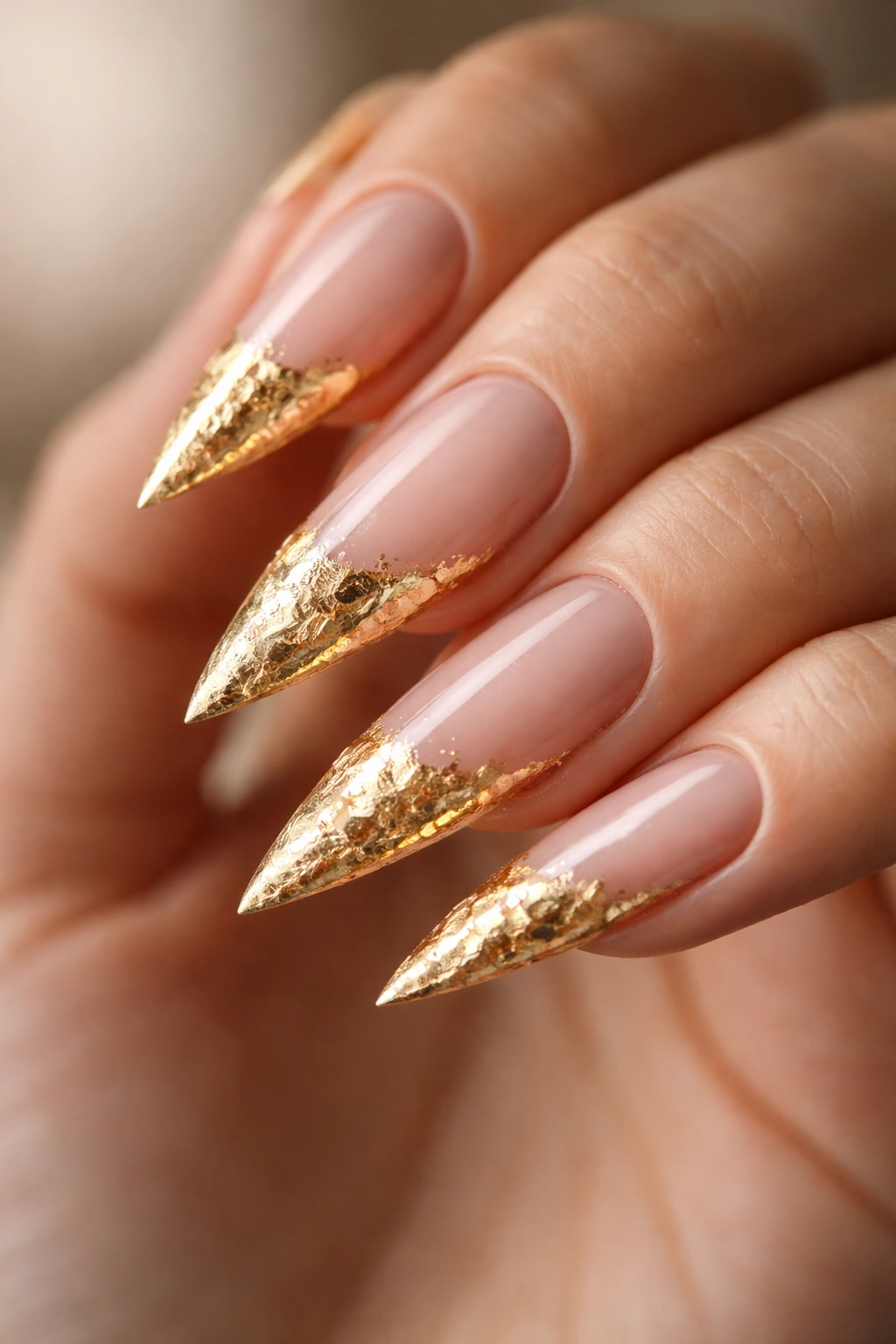
Gold leaf is a game-changer for nail art—it’s literally real 24-karat gold in paper-thin sheets that adheres to nail surfaces, creating an ultra-luxe finish that photographs like genuine precious metal. This technique elevates your stiletto nails from “beautiful manicure” to “actual luxury statement.” The organic, slightly irregular nature of applied gold leaf gives it an artisanal quality that feels intentional and high-end.
How to Apply Gold Leaf Correctly
Gold leaf requires a sticky medium to adhere. Work with either an adhesive formulated specifically for gold leaf application or a clear topcoat that hasn’t fully cured (in the gel world, your sticky layer). Apply this adhesive to the tip area where you want your gold leaf, then carefully tear or cut your gold leaf into appropriately sized pieces. Using a soft brush or specialized applicator, gently place the gold leaf onto the adhesive, pressing lightly to help it settle. The leaf will naturally wrinkle and create an organic texture—don’t try to smooth it perfectly flat. Seal everything with topcoat once the adhesive is set.
Design Approaches with Gold Leaf
You can create a classic French tip by applying gold leaf only in the tip area, leaving the center of your nail bare or tinted with a complementary shade. Or experiment with partial applications—apply gold leaf only to one corner of the tip for an asymmetrical accent. Create a “confetti” effect by tearing your gold leaf into various-sized pieces and applying them randomly across just the tip section. The irregular, slightly crinkled appearance of gold leaf actually works beautifully with the sharp geometry of stiletto nails, creating a contrast between the precise shape and the organic texture.
Maintenance Considerations
Gold leaf is durable when properly sealed but can catch on things more readily than a smooth polish finish. Be mindful of situations where your nails might scrape against rough surfaces. The metallic finish can fade slightly over time, particularly if exposed to intense sunlight regularly, but this subtle aging actually adds to the artisanal appeal for many people. When the gold leaf starts to show significant wear, a fresh manicure feels like a legitimate indulgence.
Worth knowing: Real gold leaf won’t tarnish like lesser metals, so you’re genuinely getting the luxury experience. The investment in a manicure featuring real gold leaf is absolutely justified for special occasions.
5. Metallic Gold with Negative Space Design
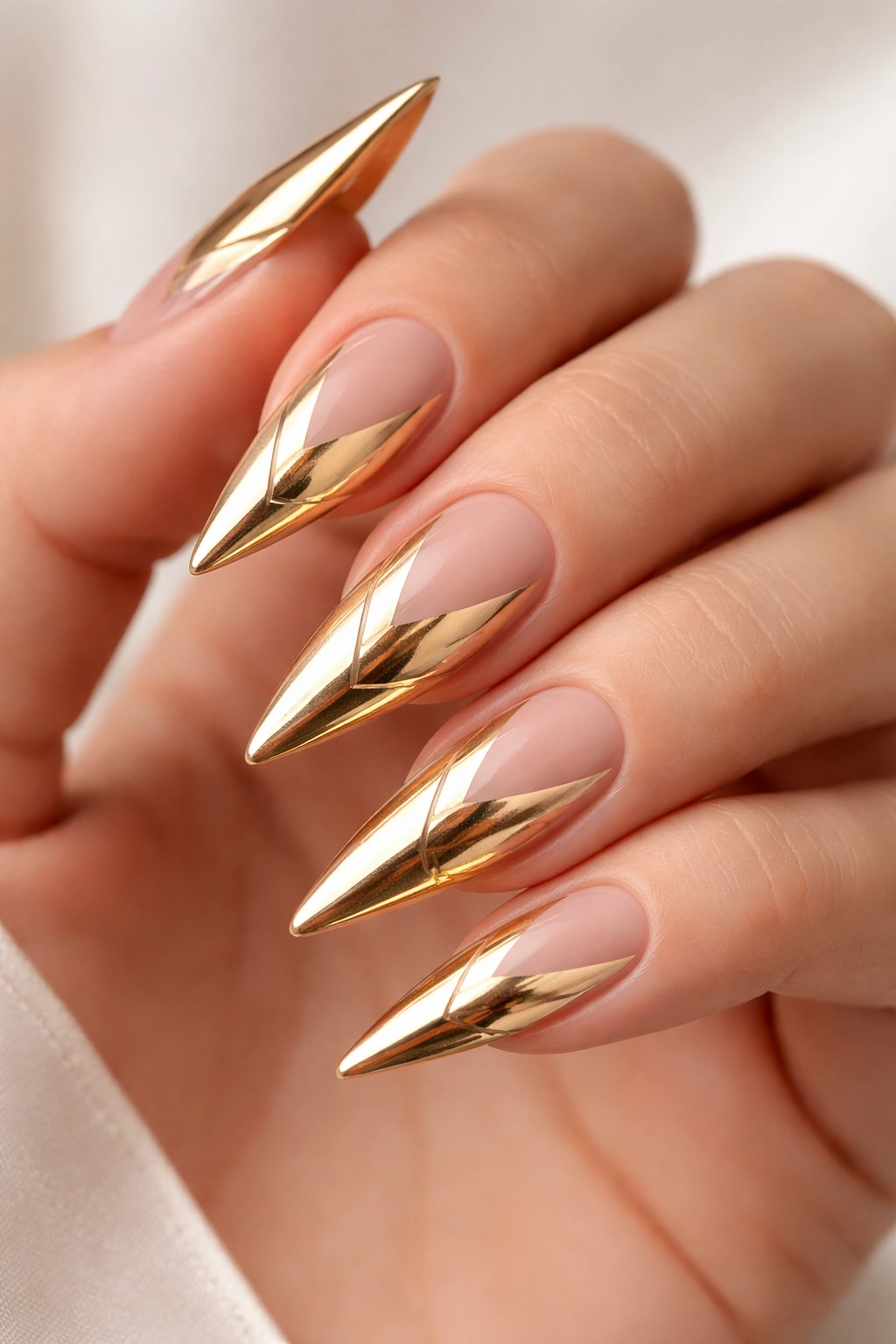
Negative space—strategically leaving areas of your natural nail visible—creates a striking visual effect when combined with metallic gold. This design concept merges multiple trends into something simultaneously modern and artistic. You’re not covering your entire nail with product; instead, you’re using the nude natural nail as an intentional design element alongside the gold.
Creating Strategic Gaps
The most common negative space approach with gold French tips involves leaving geometric gaps in your gold tip section. Paint your nail with a sheer nude or white base, then apply your gold only to specific areas of the tip—perhaps the outer edges while leaving a thin band of nude in the very center, or a diagonal block of gold across the tip corner. You could also create a series of thin gold lines with negative space between each line, building a striped pattern. The natural nail showing through provides visual relief and creates a more contemporary, fashion-forward aesthetic.
Geometric Variations
Try a triangular gold section at the very tip point, leaving the sides bare in a streamlined silhouette that emphasizes the stiletto’s natural sharpness. Create a half-moon gold section—the curve echoes the nail’s natural shape while the metallic finish adds drama. Build a grid pattern by painting thin gold lines horizontally and vertically but not filling in all the squares, leaving some gaps to show the nude base. Each approach tells a different story while maintaining that essential gold-meets-negative-space aesthetic.
Layering Negative Space with Other Details
Combine negative space with subtle embellishments for additional visual interest. Place a single rhinestone where your gold meets the negative space gap, creating a visual anchor point. Add soft nail art details like tiny dots or mini lines in the negative space areas using a contrasting shade. The restraint of the negative space actually allows these additional elements to feel more impactful because they’re not competing for attention on an already-busy nail.
Pro tip: Use painter’s tape to create clean, sharp lines between your metallic gold sections and negative space areas. The tape ensures precision that’s difficult to achieve freehand, and it’s worth the extra setup time for a polished final result.
6. Rose Gold and Yellow Gold Blend
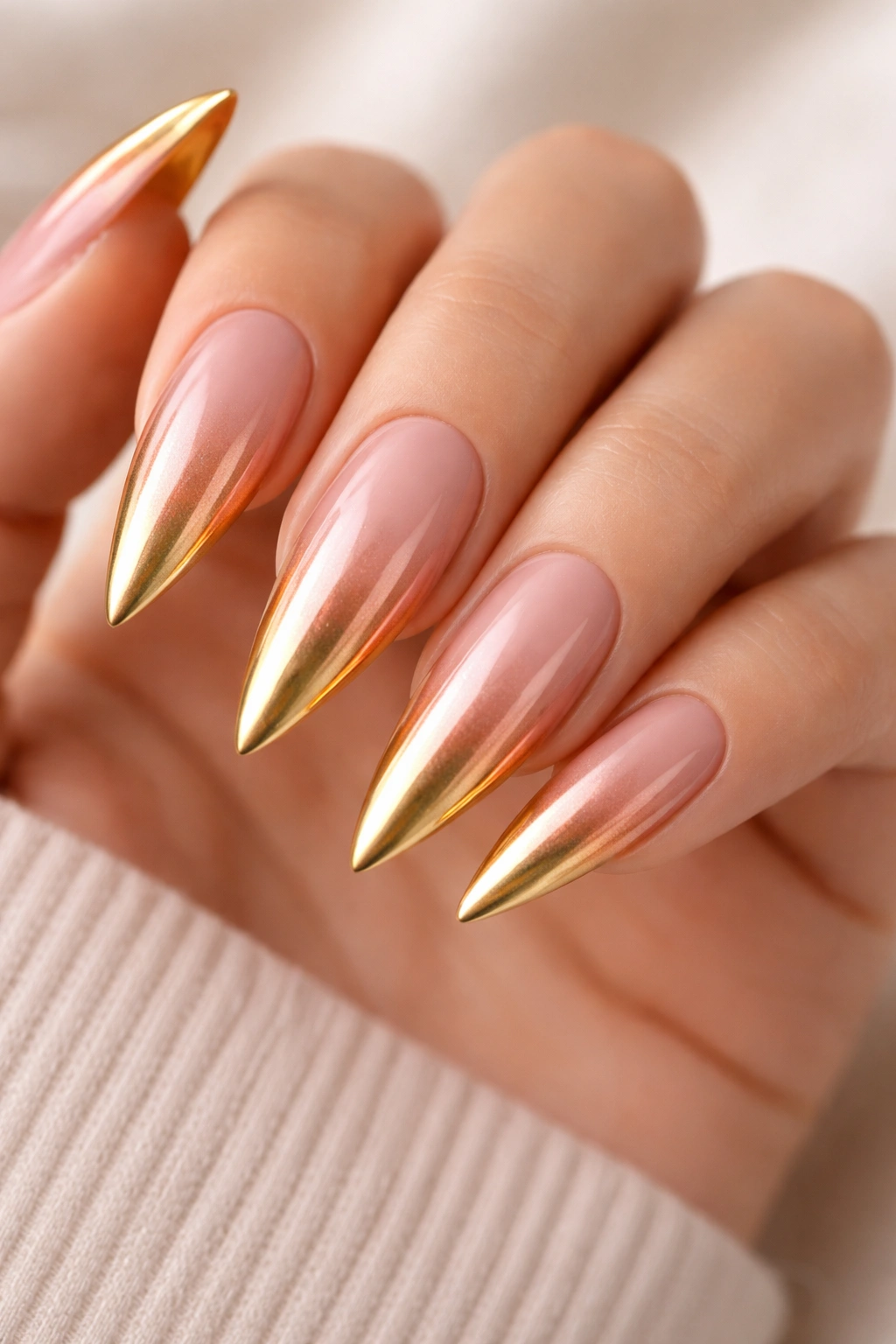
Why choose between rose gold and yellow gold when you can have both? Blending these two warm metallics creates a sophisticated ombre effect that’s distinctly different from a single-metal approach. The transition between rose gold’s romantic pinkish tone and yellow gold’s classic warmth feels inherently luxurious and contemporary. This design works beautifully on elongated stilettos because you have enough nail real estate to make the gradient truly shine.
Achieving the Perfect Blend
Start at the very tip of your nail with pure yellow gold, creating your traditional French tip line or wider gold section. As you move toward the center of the nail, begin introducing rose gold by either sponging or carefully blending the two shades together. The overlap zone—where yellow gold meets rose gold—creates the visual magic. Use a slightly damp brush to soften the transition, blending the colors where they meet to create a seamless gradation rather than an obvious line between two separate shades. This technique requires practice but yields stunning results.
Base Color Considerations
Your nude or white base dramatically influences how these two golds interact. A cool pale pink base emphasizes the rose gold and creates a cohesive, romantic color story. A neutral beige base allows both golds to shine equally, creating balance. A warm ivory base amplifies the yellow gold while the rose gold adds softness and femininity. Experiment to find the combination that resonates with your personal aesthetic and skin tone.
Alternative Blend Approaches
Instead of a traditional ombre, create a side-by-side blend where yellow gold occupies the center of your tip and rose gold frames the sides. This “spotlight” effect draws focus to the tip’s centerline. Create a diagonal blend where one shade dominates one corner and the other shade dominates the opposite corner, meeting in the middle. Alternate thin vertical stripes of rose and yellow gold across the tip section for a striped gradient effect.
Worth knowing: The success of this design depends heavily on polish or gel quality. Cheap metallics don’t blend smoothly and often look muddy when layered. Invest in high-quality metallic shades—they’ll blend more seamlessly and the final result will genuinely look more luxurious.
7. Gold Foil French Tips with Marble Accent
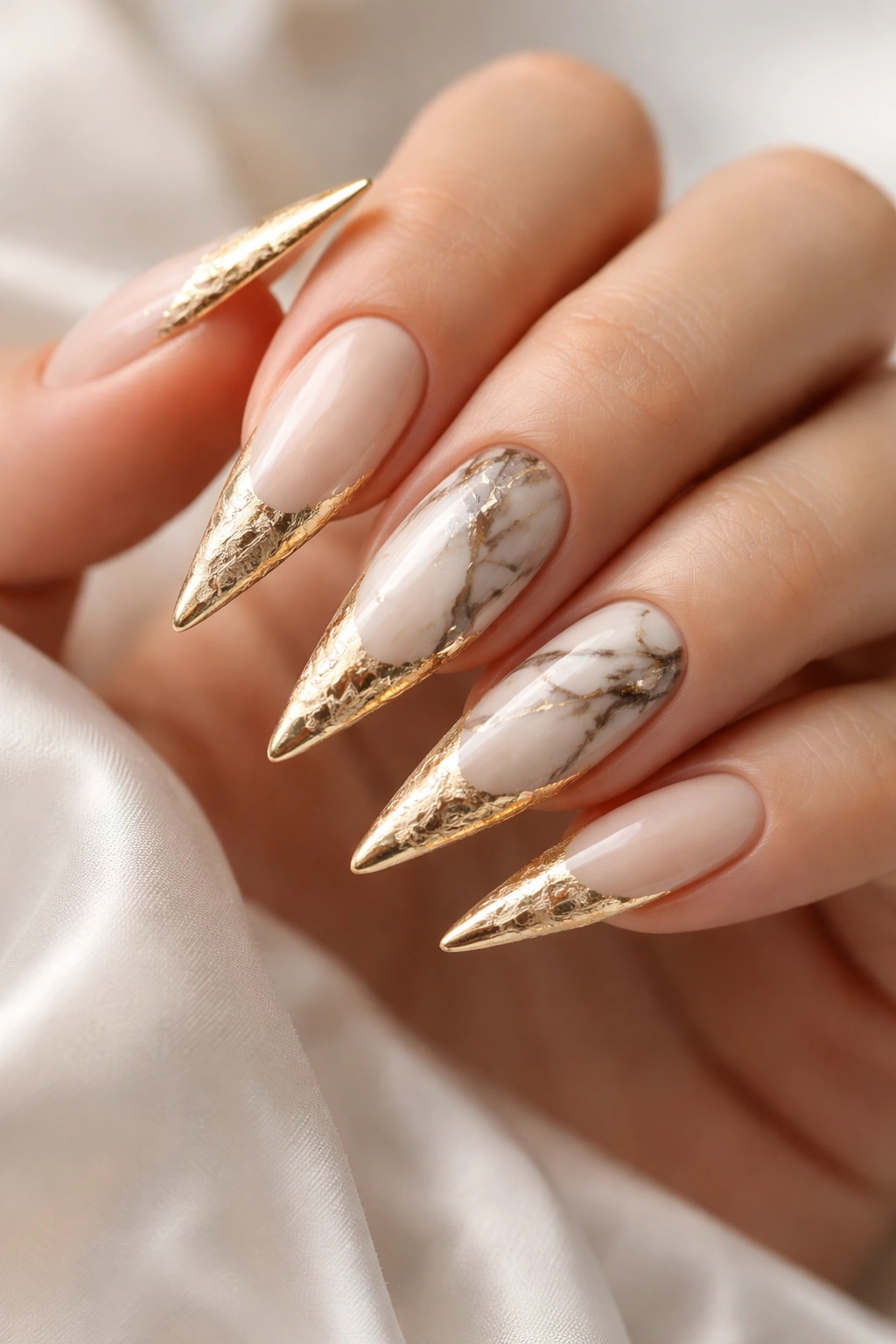
Gold foil adds texture and shine that feels more three-dimensional than traditional polish, and when paired with a marble accent, it becomes a sophisticated design that merges two distinct nail art techniques into something cohesive and visually striking. This combination appeals to people who love detail-oriented, artistic nail designs that reward close inspection.
Applying Gold Foil Successfully
Gold foil—which is different from gold leaf due to its slightly thicker, more textured composition—requires either a specialized foil adhesive or a sticky topcoat layer. Apply your gold foil to the tip area using the adhesive, pressing gently and working out any air bubbles. The foil will cling to the adhesive and create a crinkled, textured surface that catches light beautifully. You can apply foil to your entire gold tip section for maximum shimmer, or reserve it for just the very edge to create a graduated effect where the tip is foil-textured and the center base is smooth polished color.
Incorporating Marble into the Design
The marble accent works best on the center of your nail, in contrast to the gold foil tip. To create a marble effect, apply a white or cream base to your entire nail. Once dry, drop tiny amounts of black, gray, or gold gel onto your nail surface, then use a thin brush to drag these colors into organic, vein-like patterns that mimic natural stone. The randomness of marble complements the structured precision of the gold foil tip, creating visual balance. Some people create just a small marble accent near the tip’s edge, while others extend the marble pattern across most of the nail with the gold foil creating a metallic frame.
Marble Color Palettes
Go classic with black and white marble paired with yellow gold foil for timeless elegance. Try gray and white marble with rose gold foil for a softer, more contemporary feel. Incorporate tiny flecks of gold within your marble pattern, echoing your foil tip and creating visual continuity. Use navy and white marble for a nautical-inspired design that feels fresh and unexpected.
Sealing and Protection
This design has multiple layers and textures, so sealing becomes especially important. Use a thick, glossy topcoat to seal all elements and protect the texture from daily wear. The foil’s textured surface can be slightly more prone to catching on things, so be mindful of rough surfaces and consider an extra topcoat layer if you’re particularly active.
Pro tip: Marble is more impressive at smaller scales on nails. Don’t try to create photo-realistic, detailed marble patterns—keep it simple with just a few sweeping brush strokes of color. The abstract quality reads as intentional and artistic.
8. Geometric Gold French Tip Stilettos
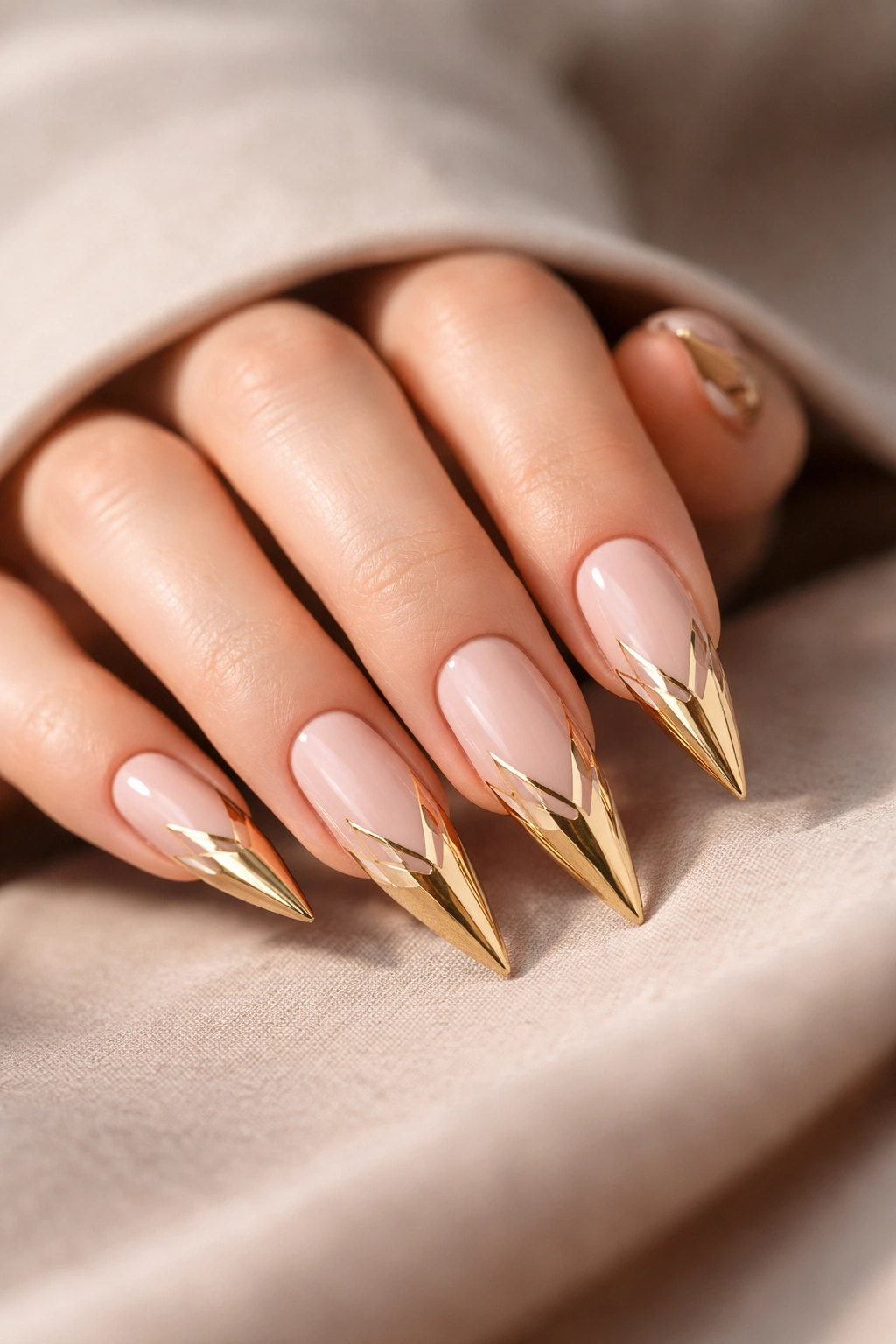
Geometry brings clean, modern structure to your gold French tips, creating designs that feel contemporary and fashion-forward. Think sharp lines, clean angles, and purposeful shapes—all rendered in or highlighted by your precious gold metallics. This approach appeals to people who appreciate minimalism, precision, and visual impact in equal measure.
Linear and Angular Designs
The simplest geometric approach involves straight lines. Create thin gold parallel lines across your tip, spacing them evenly for a striped effect. Layer these with lines in different directions—vertical stripes crossed with horizontal stripes create a grid pattern. Introduce angles by creating diagonal stripes that converge or diverge across your tip section. These linear designs feel modern and graphic while remaining elegant.
Shapes Within Gold Tips
Build three-dimensional visual interest by incorporating specific shapes into your gold tip. Create small triangles across the tip area, leaving negative space between each triangle. Build a series of small circles or semi-circles in descending size, creating a pattern that draws the eye downward. Create one large geometric shape—perhaps a diamond or hexagon—that spans the full width of your gold tip, creating a bold focal point.
Color Layering with Geometry
Use geometry as your framework for combining multiple colors. Create a gold French tip with geometric sections that alternate between gold and a contrasting shade—perhaps rose gold and yellow gold in alternating triangles, or gold and champagne in striped sections. This layered approach maximizes visual interest while maintaining the sophistication that gold brings to the design.
Creating Clean Edges
Geometric designs demand precision. Use striping tape or stencils to create sharp, clean edges rather than attempting freehand lines. The tape investment takes extra time during application but yields professional-looking results that make these designs feel truly intentional. Remove tape while your polish is still slightly tacky—roughly 30-45 seconds after application—so the edge stays perfectly crisp.
Worth knowing: Geometric designs photograph exceptionally well and tend to look more expensive and intentional than more organic, flowing designs. If you’re doing your nails for a special event or photo opportunity, geometric gold tips are an excellent choice.
9. Gold French Tips with Rhinestone Embellishment
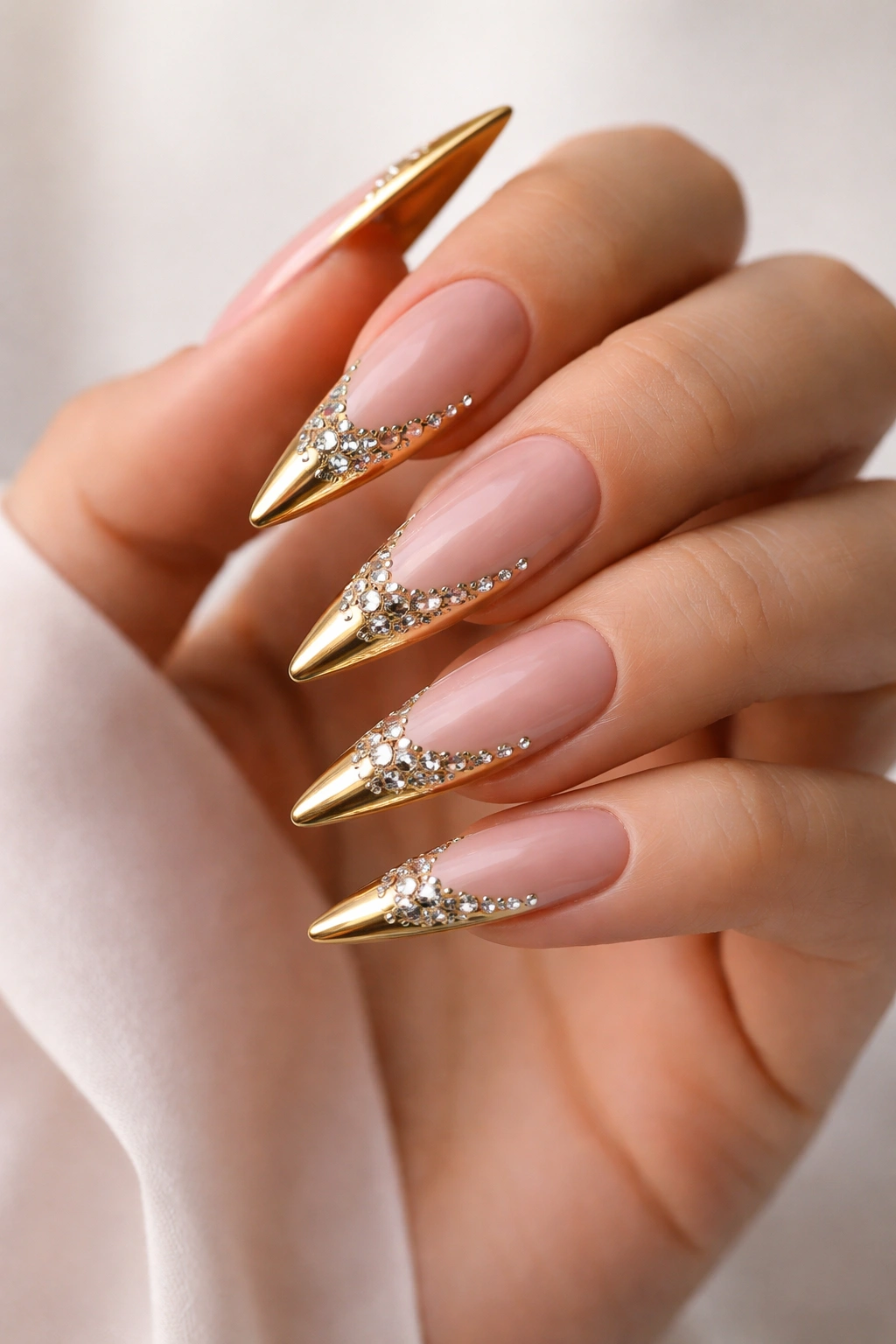
Rhinestones elevate gold French tip stilettos into genuinely glamorous territory. These crystal embellishments catch and reflect light, creating sparkle that’s simultaneously subtle (when placed strategically) and show-stopping (when used generously). The precision of rhinestones works beautifully with the geometric precision of stiletto nail shapes, creating a refined, luxe aesthetic.
Placement Strategies for Maximum Impact
The most sophisticated approach involves strategic rather than excessive placement. Position one or two larger rhinestones at the very tip point of your stiletto, letting the nail shape naturally frame them. Create a thin line of smaller rhinestones along the transition between your gold tip and your base color—this echoes the traditional French tip line while adding sparkle. Build a diagonal scatter where rhinestones are dense at one corner of the tip and gradually disperse toward the opposite corner, creating a subtle directional movement.
Rhinestone Size and Type
Nail-specific rhinestones come in various sizes, from tiny 1mm details to larger 5mm or bigger statement stones. Mixing sizes creates visual depth—use larger stones as focal points and smaller stones to fill areas and add detail. Crystal-clear rhinestones work beautifully with any gold shade. Consider champagne-toned rhinestones with rose gold for a color-coordinated look, or opal rhinestones that pick up hints of multiple colors depending on the light angle.
Securing Rhinestones Permanently
Use specialized nail adhesive or a UV-curing rhinestone glue designed specifically for nails. Place your rhinestone in the adhesive and press gently, holding for a few seconds until the adhesive begins to set. For gel nails, apply your topcoat layer, place rhinestones in the sticky layer, and cure everything together. Once rhinestones are set, seal everything with additional topcoat to lock them in place. Properly secured rhinestones should last the entire life of your manicure without popping off.
Combining Rhinestones with Other Design Elements
Layer rhinestones with other details for even more drama. Place rhinestones at the edges of geometric shapes. Add rhinestones to negative space areas, creating visual interest in otherwise bare sections. Combine rhinestones with subtle nail art details like tiny lines or dots in complementary shades.
Pro tip: Rhinestones show fingerprints and require regular cleaning to maintain their sparkle. Keep a soft cloth handy and wipe your nails regularly, especially after handling oily or dusty items.
10. Matte Gold French Tips with Satin Finish
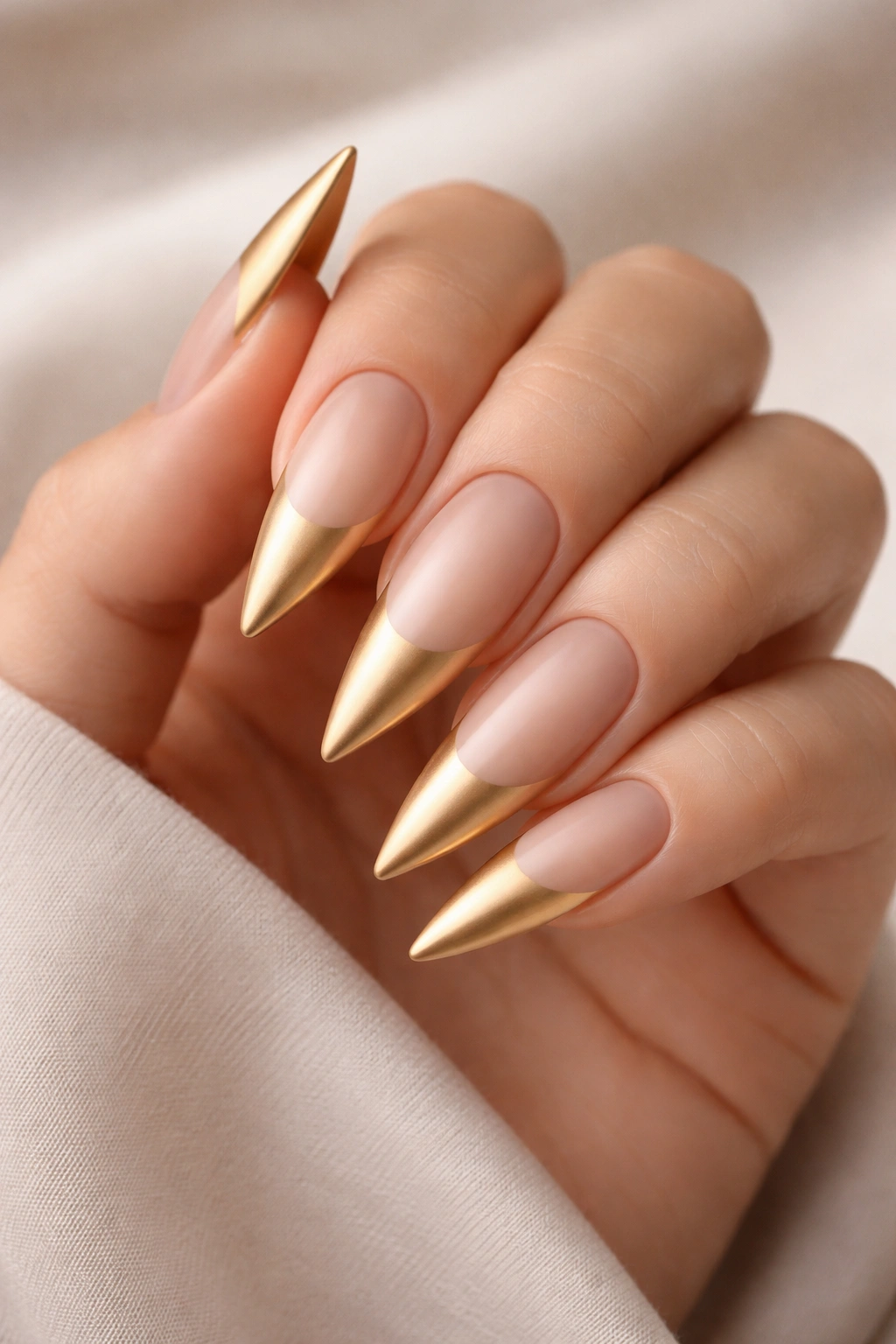
The matte and satin finish trend has transformed nail design across all categories, and gold French tip stilettos are no exception. A matte or satin gold creates a sophisticated, almost velvety appearance that feels contemporary and surprisingly luxurious. Unlike the reflective shine of traditional metallic gold, a matte finish reads as more subtle and understated—perfect for people who want elegance without maximum sparkle.
Understanding Matte vs. Satin Finishes
Matte gold has absolutely no shine—it’s completely flat and light-absorbing, creating a velvety, almost powdery appearance. Satin gold has just a hint of soft sheen, somewhere between matte and shiny, creating an understated glow rather than a reflective mirror finish. The difference is subtle but noticeable in person and even more apparent in photographs. Matte reads as edgier and more contemporary, while satin feels slightly more refined and elegant.
Application and Maintenance
Matte and satin finishes are typically achieved through specialized polishes or gels formulated with the appropriate light-diffusing ingredients. They apply similarly to traditional metallic shades but require careful attention during topcoat application—regular glossy topcoats will strip away the matte or satin effect. Use a matte topcoat designed specifically to preserve the finish, or ask your nail technician about gel systems that maintain matte or satin appearance when sealed. The good news: matte and satin finishes are extremely durable and resist chipping better than some traditional polishes.
Design Combinations That Amplify Matte Gold
Pair matte gold with a shiny base color for tonal contrast—a glossy white or nude base with matte gold tips creates visual depth through texture differences. Combine matte gold with shiny elements like rhinestones or metallic accents for hybrid designs that merge textures. Use matte gold foil for maximum texture and light-diffusing interest. The combination of matte and glossy elements creates more visual complexity than either finish alone.
Color Base Pairings
Matte gold looks stunning on cool, pale pink bases that create a subtle contrast through color temperature rather than shine level. Pair it with warm ivory bases for a cohesive, monochromatic aesthetic that feels modern and intentional. Use navy or deep charcoal bases for high contrast that makes your matte gold truly pop. The base color dramatically influences whether your manicure reads as romantic, professional, edgy, or artistic.
Worth knowing: Matte and satin finishes can feel slightly less “fancy” than glossy metallics to some people, but they’re actually trending upward in professional and high-fashion nail design. This finish choice signals modern sensibility and confidence—you don’t need obvious shine to demonstrate luxury.
Final Thoughts
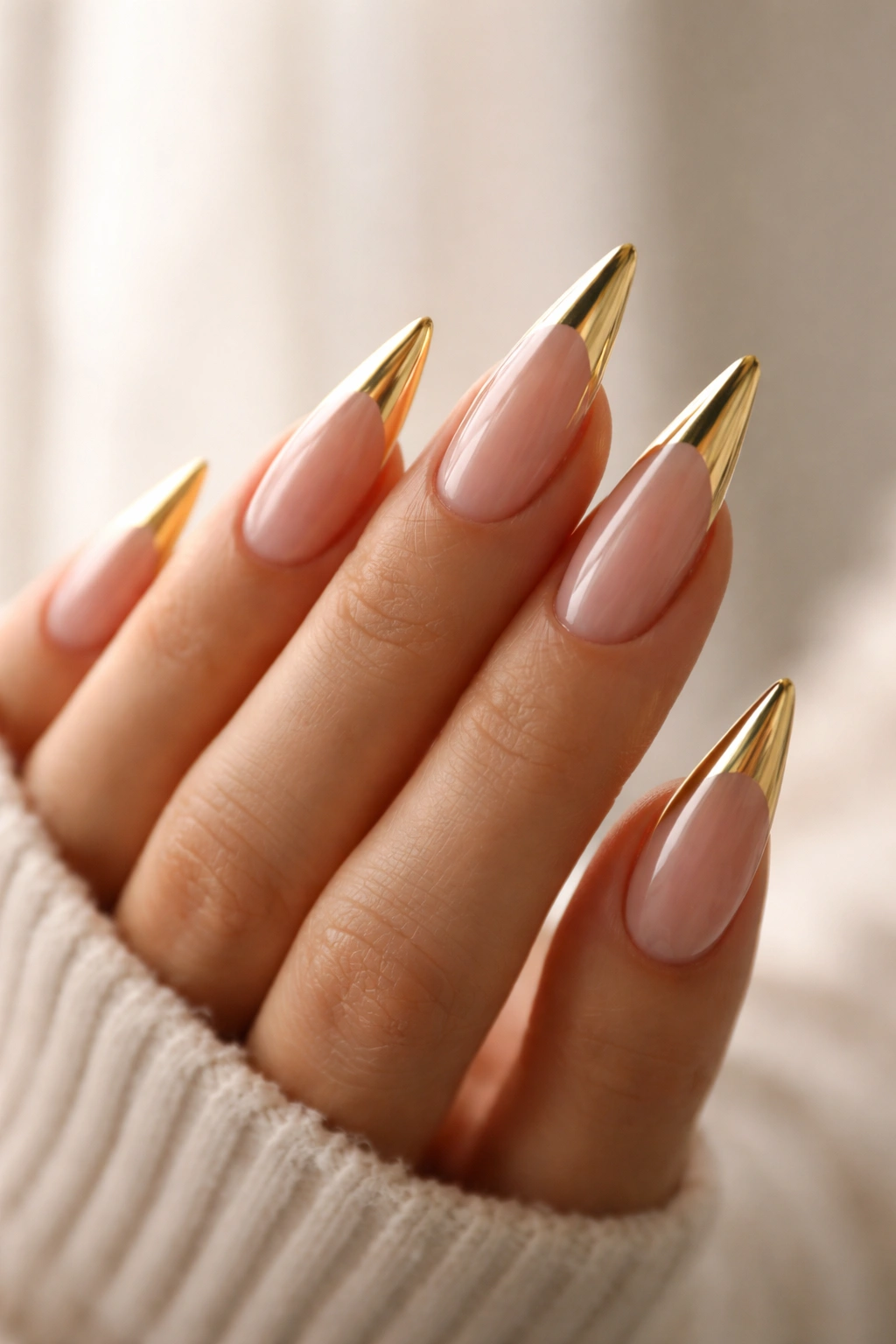
Gold French tip stiletto nails represent the perfect intersection of timeless elegance and contemporary style. Whether you choose a minimalist single gold line, an intricate blend of multiple metallic tones, or dramatic embellishments that catch every light in the room, you’re making a statement about your aesthetic and your commitment to personal style. The beauty of this particular nail design category is its flexibility—there’s genuinely a gold French tip variation for every occasion, every preference, and every expression of who you are.
The most successful manicure is one you’ll actually enjoy wearing for two to four weeks. If you’re drawn to simplicity and minimal maintenance, a classic gold line or soft ombre keeps things elegant and easy. If you love artistic detail and don’t mind showing off the intricacy of your design, geometric patterns, rhinestones, or mixed metallics deliver exactly that payoff. Consider your lifestyle, your personal style, and the occasions you’re dressing for—then choose the variation that makes you feel most authentically yourself when you catch a glimpse of your hands.
One final reality check: exceptional results require quality products and skilled application. Whether you’re doing your nails yourself or visiting a technician, invest in high-quality polishes, gels, and embellishments. The difference between a $15 and $40 manicure shows immediately in how the gold metallics reflect light, how smoothly blended elements appear, and how long everything lasts before needing touch-ups. Gold stiletto nails deserve the best tools and techniques you can access—that’s where the genuine luxury lives.