


African nail art is one of the most vibrant, culturally rich forms of self-expression available to anyone who wants to celebrate the continent’s incredible artistic heritage. Whether you’re drawn to traditional textile patterns, bold symbolic designs, or the stunning wildlife of the savanna, African-inspired nail art offers endless possibilities for creative personal style. The beauty of this aesthetic lies in how it transforms your fingertips into miniature canvases that tell stories of culture, identity, and creativity.
What makes African nail design so special is that it goes far beyond mere decoration—each pattern, color choice, and symbol carries genuine meaning rooted in centuries of tradition. From the intricate geometrics of Kente cloth to the striking simplicity of Mudcloth patterns, these designs allow you to wear your heritage with pride and introduce others to the artistic sophistication of African cultures. If you’ve been searching for nail inspiration that feels both meaningful and visually stunning, you’ve come to the right place.
This guide explores ten distinct African-inspired nail art ideas that range from beginner-friendly to more advanced designs. Each concept includes practical tips for achieving the look, whether you’re working with a professional nail technician or creating designs at home. Let’s dive into these incredible nail art ideas that celebrate the richness of African artistry.
1. Kente Cloth Geometric Patterns
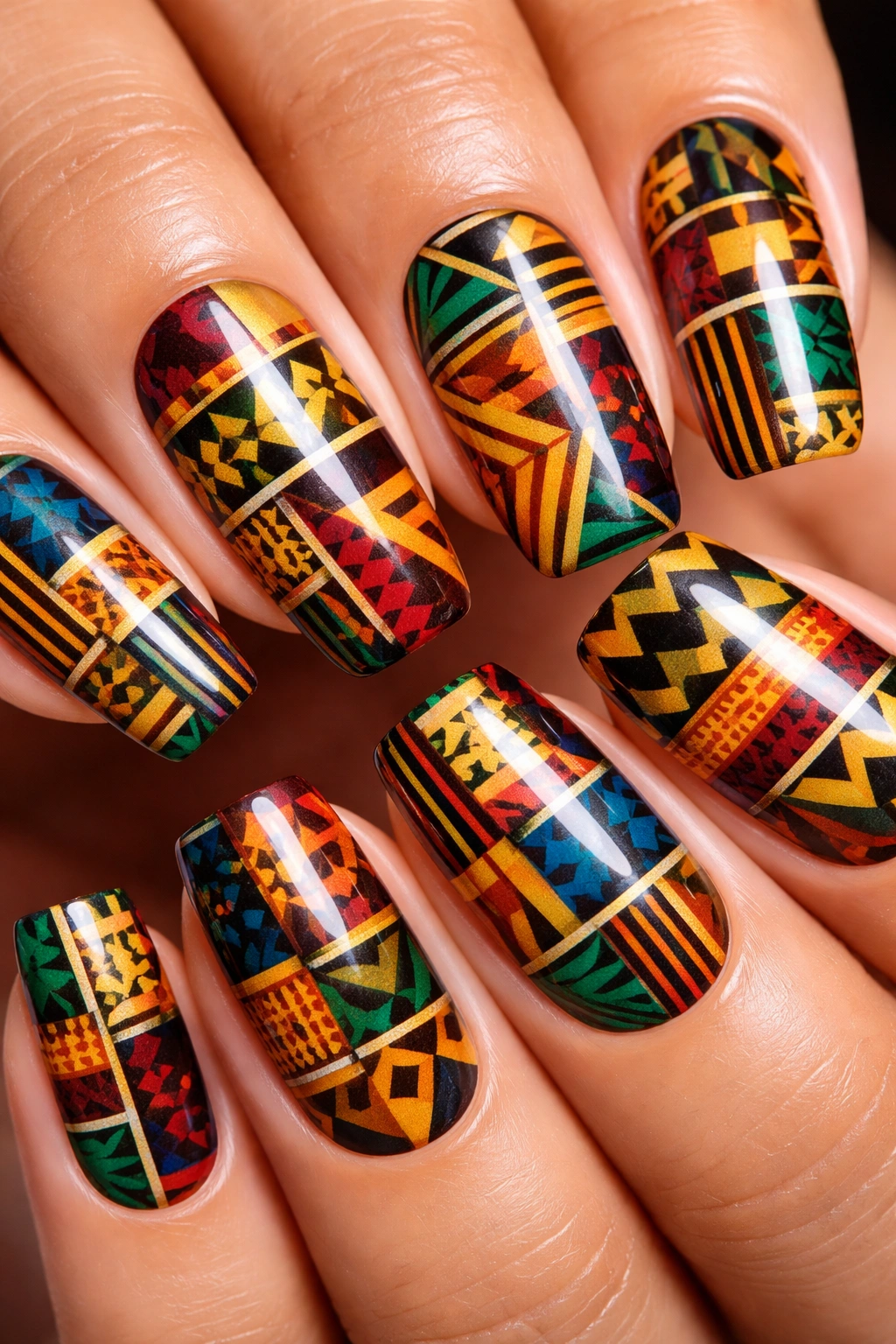
Kente cloth represents one of Africa’s most iconic textile traditions. Originating from Ghana among the Asante and Ewe ethnic groups, this fabric has been woven for centuries and carries deep cultural significance. Legend tells of a spider whose web was so beautifully intricate that two hunters decided to recreate its pattern by weaving silk—the result was Kente cloth, traditionally reserved for royalty and ceremonial occasions.
The Story Behind Kente
The beauty of Kente lies in its meaning. Each color carries symbolic weight—gold represents status and spiritual purity, green symbolizes growth and fertility, blue conveys harmony and peacefulness, and red speaks to vitality and life force. When you wear Kente patterns on your nails, you’re not just choosing a pretty design; you’re honoring a tradition that marked important life moments across West African cultures.
How to Create Kente Nails
- Use a base color like cream, white, or soft gold as your foundation
- Paint bold geometric lines using jewel-toned colors: emerald green, sapphire blue, deep purple, and ruby red
- Create patterns that mimic the woven strips of actual Kente cloth by layering lines at angles
- Add metallic gold accents along some lines to capture the luxurious feel of traditional Kente
- Seal with a glossy topcoat to make colors pop brilliantly
Pro tip: Don’t worry about perfect symmetry—traditional Kente celebrates the handmade, organic quality of weaving. Each nail can have its own unique pattern interpretation while maintaining the signature bold geometry and color blocking.
The glossy finish on Kente-inspired nails is essential because it enhances how the colors interact with light, just like the reflective quality of silk cloth. This design works beautifully for special occasions or anyone wanting to make a cultural statement with their manicure.
2. Mudcloth-Inspired Monochrome Designs
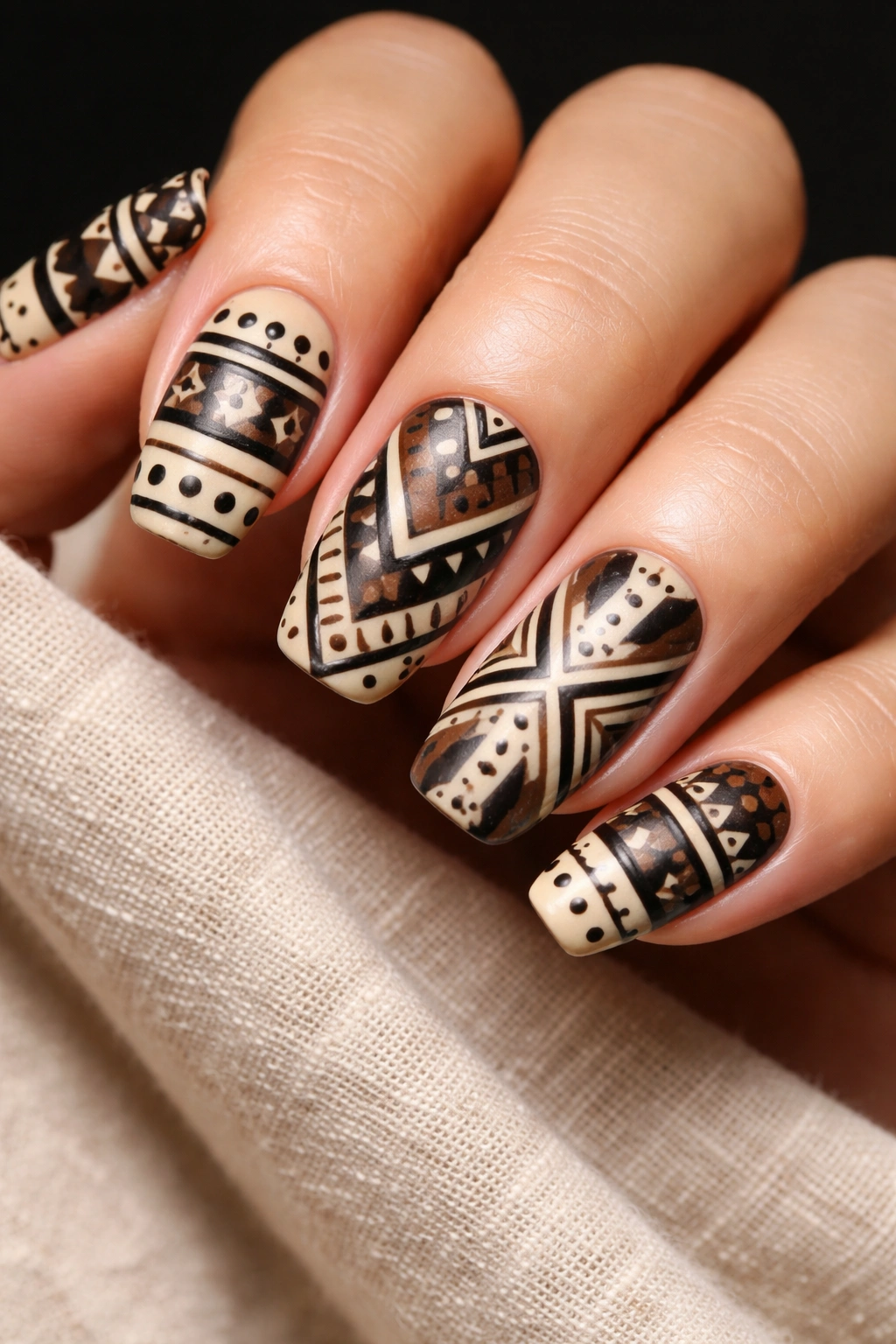
Mudcloth, known as Bogolanfini in its native Mali, represents a completely different aesthetic from Kente. Instead of vibrant rainbows, Mudcloth celebrates the elegance of simplicity with intricate patterns rendered in black, brown, and cream. This traditional fabric gets its distinctive look from fermented mud dye, creating earthy tones that feel sophisticated and timeless.
The Technique Behind Mudcloth
Mudcloth artisans spend hours creating precise patterns using resist techniques and natural dyes. The resulting designs are geometric, often featuring repeating motifs that tell stories about history, family, and identity. When translated to nail art, these patterns create a refined look that appeals to anyone who loves minimalist elegance with maximum cultural depth.
Creating Mudcloth Nails at Home
- Start with a neutral cream or light beige base across all nails
- Use black gel polish or a thin nail art brush to paint geometric patterns
- Focus on creating lines, dots, and angular shapes rather than curves
- Incorporate traditional mudcloth symbols like checkered patterns, parallel lines, and diamond shapes
- Add brown accents on some nails for subtle color variation while maintaining the earthy palette
- Finish with a matte topcoat to capture the authentic, organic feel of traditional mudcloth
This design works remarkably well as an everyday manicure because it’s sophisticated without being flashy. The monochromatic approach means you can easily pair it with any outfit, and the intricate patterns ensure your nails remain visually interesting.
Worth knowing: Mudcloth patterns often contain symbolic meaning—specific designs might represent wisdom, protection, or celebration. If you’re interested in incorporating authentic symbolism, research the stories behind traditional patterns before painting them on your nails.
3. Ndebele Art Bold Abstracts
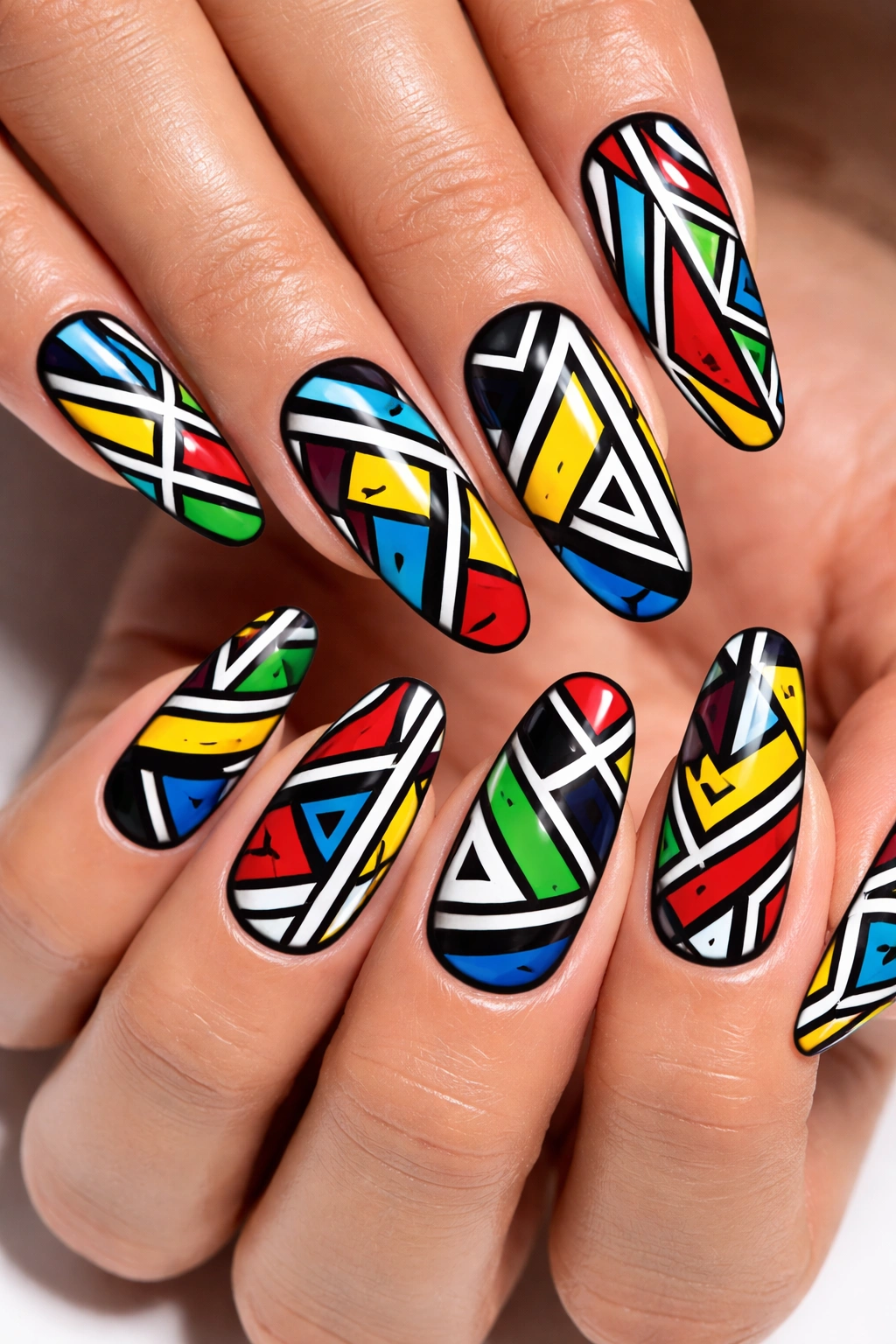
Ndebele art comes from Southern Africa and represents one of the most visually striking artistic traditions on the continent. Known for its bold geometric patterns, vibrant primary colors, and striking contrast created by black outlines, Ndebele design is impossible to ignore. What’s remarkable is that Ndebele artistic expression isn’t confined to galleries—it decorates homes, clothing, and traditional ceremonies across the communities that created it.
Understanding Ndebele Aesthetics
The power of Ndebele design lies in its visual boldness. Sharp angles, bright primary colors, and clean black lines create designs that practically vibrate with energy. These patterns often feature repeating geometric shapes—squares, triangles, and chevrons—arranged in ways that create both movement and balance. This makes Ndebele art exceptionally well-suited to nail design, where the small canvas actually benefits from bold, decisive patterns.
Painting Ndebele-Inspired Nails
- Select a bright base color like white, yellow, or a primary color
- Use a thin nail art brush to outline shapes in pure black
- Fill geometric shapes with contrasting colors: pair yellow with blue, red with green, or use all three primary colors together
- Create patterns that flow from one nail to the next, establishing visual continuity across your hand
- Use a white polish pen to add precise details and highlights
- Apply a glossy topcoat to enhance the vibrancy of colors
The key to successful Ndebele nails is embracing boldness. These designs don’t benefit from subtlety—the magic happens when colors are bright, contrasts are sharp, and patterns are unapologetically eye-catching. This design is perfect for someone who loves making a statement with their nails.
Insider note: If hand-painting feels intimidating, many nail artists offer Ndebele-inspired designs, and you can also find nail wraps featuring these patterns. Starting with wraps is a great way to see if you love the aesthetic before investing time in hand-painted versions.
4. Leopard and Animal Print Nail Art
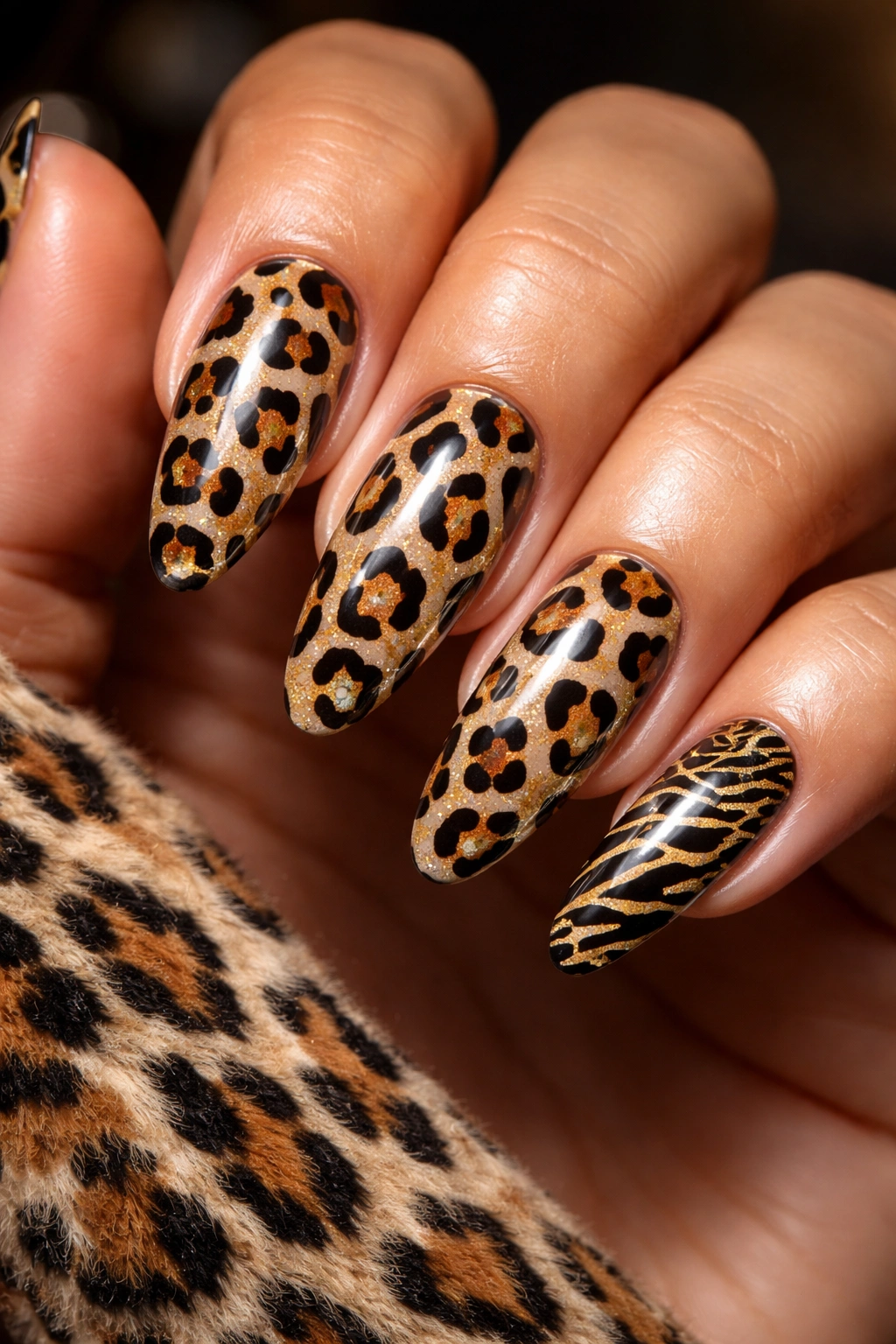
African wildlife provides endless inspiration for nail design, and animal prints represent some of the most accessible and wearable African-inspired nail art options. Leopard spots, zebra stripes, giraffe patterns, and cheetah print all celebrate the incredible biodiversity of the African continent while creating designs that feel both artistic and fashionable.
The Meaning of Animal Prints in African Culture
Animal prints aren’t just decorative in African contexts—they carry significance. Leopard spots symbolize strength, power, and grace. Zebra stripes represent individuality and distinctiveness. Each animal pattern holds cultural meaning, and wearing these prints is a way of channeling the qualities these animals represent. The high contrast and bold nature of animal prints also make them practically perfect for nail art.
Creating Realistic Animal Print Nails
- For leopard spots: Use a base color like nude, tan, or warm gold
- Paint irregular oval shapes in black or dark brown, then add smaller dots inside each spot
- Leave the center of some spots lighter to create dimension and depth
- For zebra stripes: Apply a neutral base, then paint bold black stripes that curve naturally across the nail
- For giraffe print: Use a tan base and create irregular polygon shapes outlined in brown
- Consider mixing prints on different nails for a cohesive, curated look
- Seal everything with a glossy topcoat for a polished, finished appearance
Animal print nails work beautifully with both casual and dressy outfits. You can keep them understated with one accent nail featuring detailed animal print, or go bolder with multiple nails showcasing different wildlife-inspired designs.
Pro tip: The most realistic animal prints come from studying actual reference photos. Leopards don’t have perfectly uniform spots, so embrace the organic, irregular nature of real animal patterns. This approach creates more authentic, visually interesting designs.
5. Maasai Beading Inspired Nails
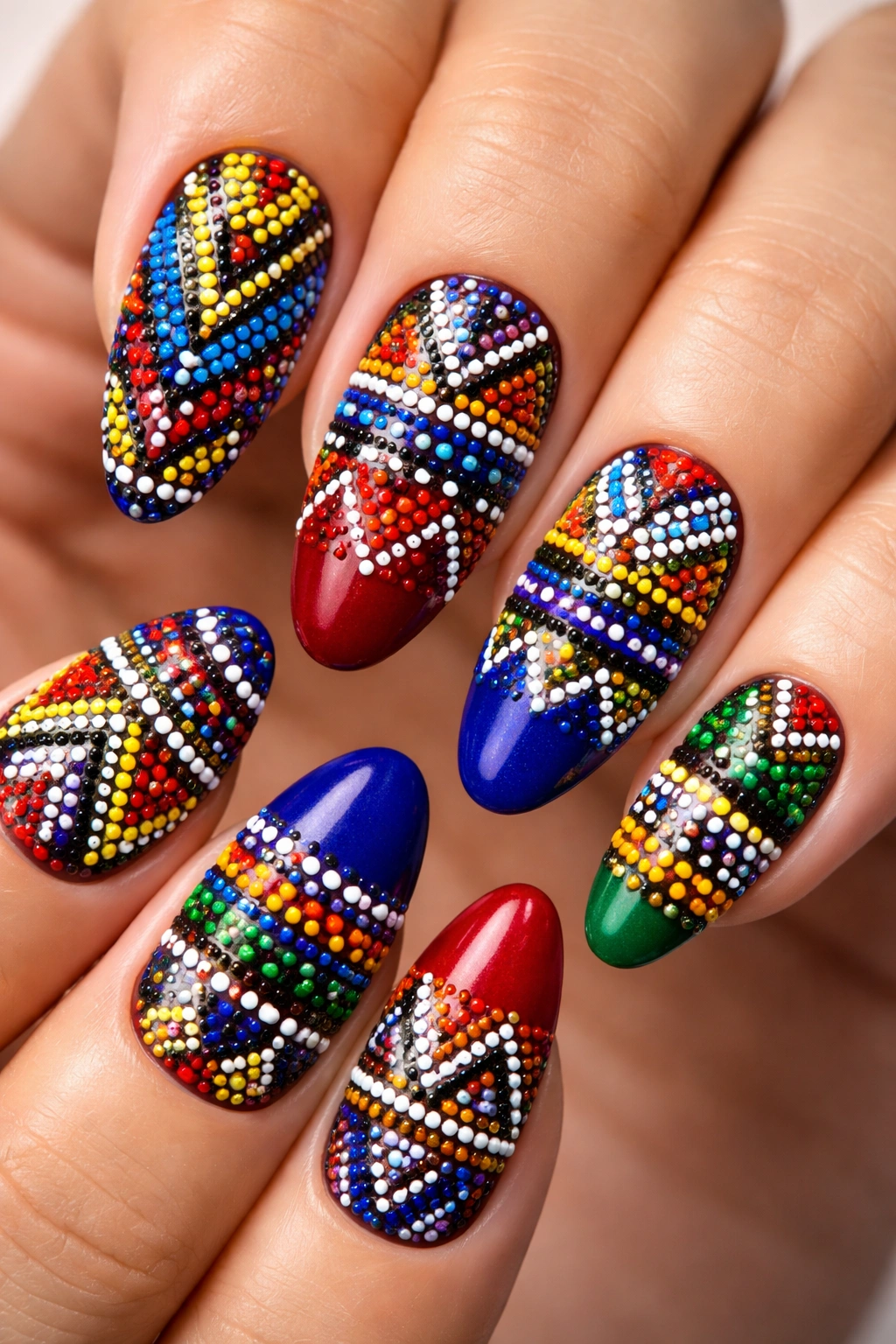
The Maasai people of East Africa are renowned for their intricate beadwork, which features in jewelry, clothing, and ceremonial garments. Maasai beading uses tiny colored beads arranged in complex patterns that often include geometric designs and symbolic representations. While you can’t actually bead your nails, you can recreate the visual effect of Maasai beadwork through clever nail art techniques.
The Craftsmanship of Maasai Beading
Maasai artisans spend hours creating beaded pieces that represent their identity, status, and cultural belonging. Each color in traditional Maasai beadwork carries meaning—red signifies strength and courage, blue represents energy and sky, green symbolizes land and fertility, and white stands for purity and spirituality. The patterns often tell stories or mark important life transitions.
Recreating Maasai Beadwork on Nails
- Start with a rich base color like deep red, royal blue, or emerald green
- Use a dotting tool or thin brush to create small circles representing individual beads
- Arrange beads in geometric patterns inspired by actual Maasai designs
- Combine multiple colors within the same pattern for authenticity
- Add small dots in metallic gold or silver to simulate the way light reflects off actual beads
- Consider using actual tiny rhinestones or 3D nail art elements for added dimension
- Finish with a glossy topcoat that highlights the beaded effect
This design requires patience and precision, making it ideal for people who enjoy detailed nail art work. The result is a manicure that looks like miniature wearable jewelry—exactly the effect Maasai beadwork evokes.
Worth knowing: If you’re not confident with the dotting tool, you can ask your nail technician to create these designs, or you can find nail art stickers and wraps featuring Maasai-inspired beadwork patterns that offer beautiful results with less effort.
6. Pan-African Flag Colors and Symbolism
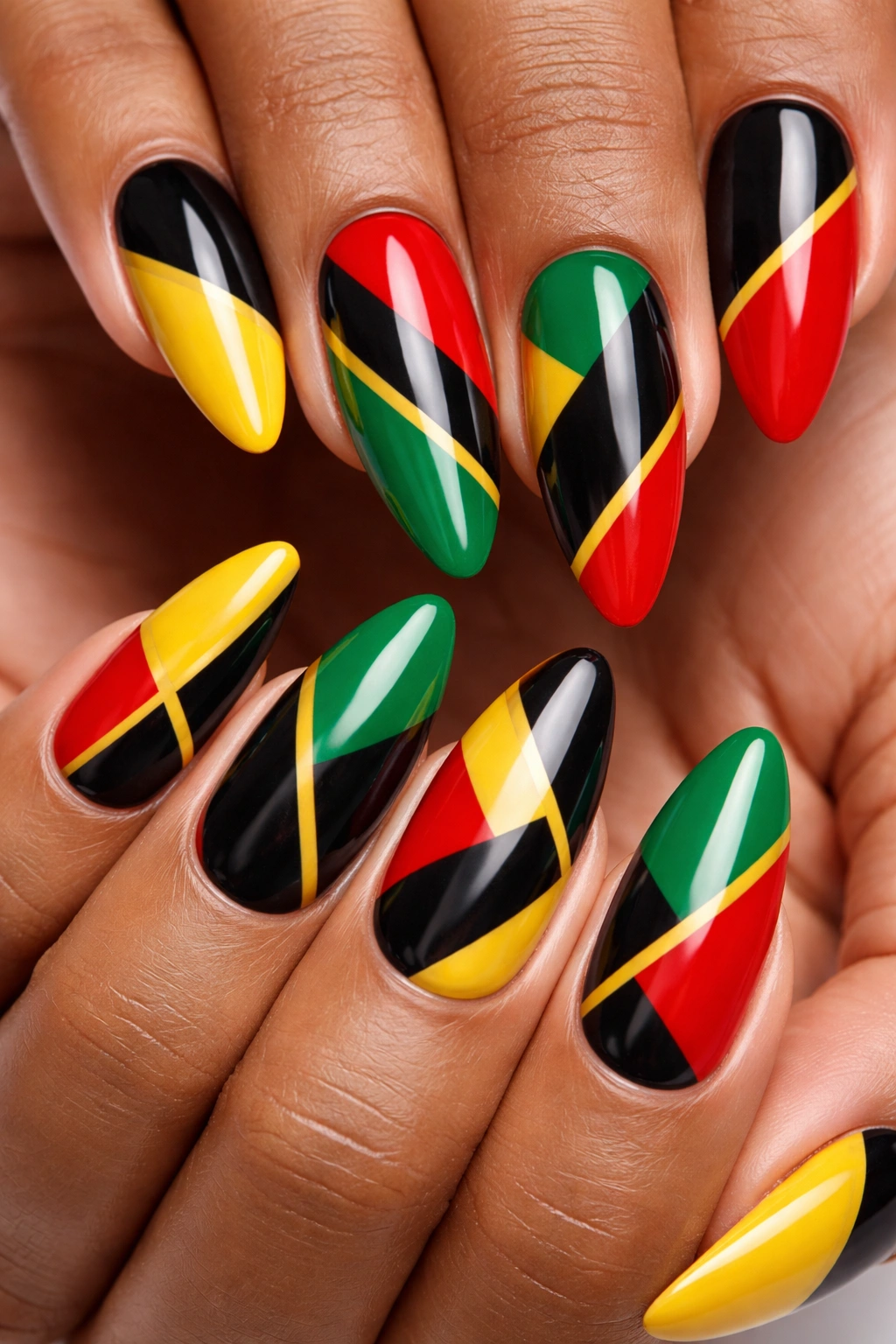
The Pan-African flag represents unity, pride, and shared identity across the African diaspora. Featuring red, yellow, green, and black, these colors appear in the flags of numerous African nations and carry profound meaning. Creating nail art using Pan-African colors is a powerful way to express cultural pride while creating a design that’s both meaningful and visually striking.
Understanding Pan-African Colors
Red represents the blood shed during struggles for independence and liberation across Africa. Yellow or gold symbolizes Africa’s vast wealth and natural resources, as well as prosperity and hope for the future. Green reflects the lush, fertile land of the African continent and stands for growth, renewal, and harmony with nature. Black represents the people of Africa—the strength, resilience, and cultural identity of African communities worldwide.
Creating Pan-African Flag Nails
- Paint each nail a different color from the Pan-African palette: one red, one yellow, one green, one black
- Create gradient transitions between colors for a more sophisticated look
- Add geometric patterns or stripes using contrasting colors within the Pan-African palette
- Incorporate gold accents alongside the traditional colors for extra visual interest
- Try horizontal stripes across all nails that transition from red through yellow and green to black
- Use the colors as a base and add additional design elements like geometric patterns or symbolic imagery
- Finish with a glossy topcoat to make colors vibrate
Pan-African nail designs work beautifully for everyday wear or special occasions, particularly during celebrations of African heritage and culture. They’re conversation starters that demonstrate cultural awareness and pride.
Pro tip: Pair Pan-African nails with complementary outfits to create a cohesive look. A solid-colored outfit in one of the Pan-African colors will create beautiful harmony with your manicure.
7. Tribal Adinkra Symbol Nails
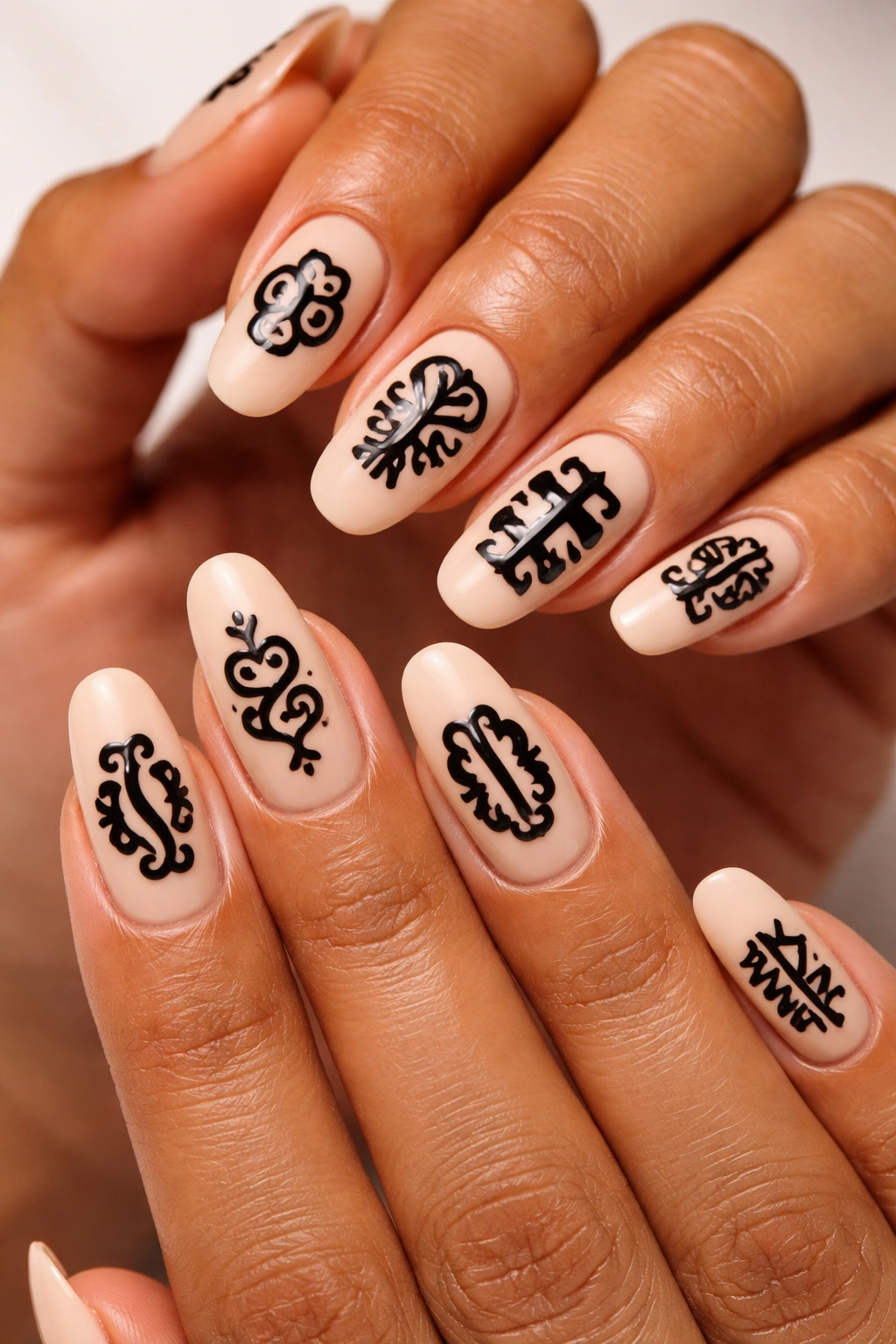
Adinkra symbols come from the Ashanti people of Ghana and represent concepts, wisdom, and proverbs through visual imagery. Each symbol carries specific meaning—”Gye Nyame” represents the supremacy of God, “Sankofa” symbolizes the importance of learning from the past, and “Duafe” represents beauty and grooming. Incorporating Adinkra symbols into your nail art creates designs that are both visually beautiful and deeply meaningful.
The Wisdom of Adinkra Symbols
What makes Adinkra symbols special is that they’re not just decorative—they’re educational. Each symbol tells a story rooted in African philosophy and wisdom. When you wear these symbols on your nails, you’re literally carrying messages of strength, unity, hope, and cultural connection. This transforms your manicure from a fashion statement into a personal manifesto.
Painting Adinkra Symbols on Nails
- Choose 1-3 symbols that resonate with your values or that you want to honor
- Use a neutral base color like cream, white, or soft gray to make symbols stand out
- Paint symbols in black or deep gold using a thin nail art brush
- Consider dedicating each nail to a different symbol, or create a focal point on 1-2 accent nails
- Add small gold accents around symbols for elegance and emphasis
- Research the meanings of symbols before painting to ensure you’re choosing ones aligned with your intentions
- Seal with a glossy or matte topcoat depending on your preferred finish
Adinkra symbol nails work wonderfully for anyone seeking deeper cultural connection. They’re particularly popular for special occasions like weddings, naming ceremonies, or cultural celebrations where meaning matters as much as aesthetics.
Worth knowing: If painting symbols feels challenging, many nail artists specialize in Adinkra designs. You can also commission custom work or find high-quality nail art stickers featuring authentic Adinkra imagery.
8. African Sunset Silhouette Designs
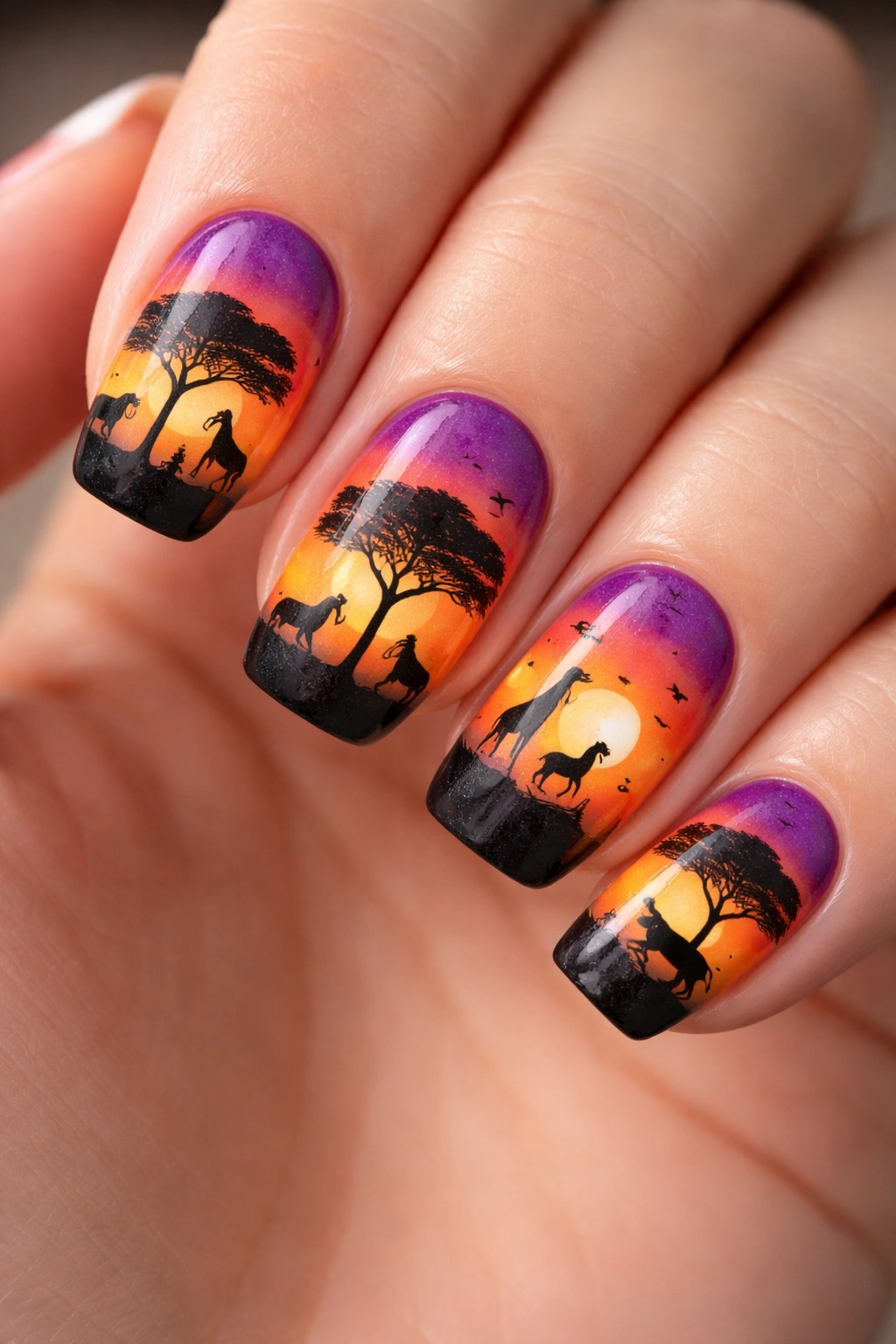
One of the most romantic and visually stunning African nail art ideas involves recreating the iconic African sunset. Picture warm yellows, deep oranges, brilliant reds, and rich purples blending across the sky, with silhouettes of acacia trees, elephants, giraffes, or other wildlife in the foreground. This design captures the breathtaking natural beauty of the African landscape in miniature form.
The Magic of African Sunsets
African sunsets are legendary for their intensity and beauty. The interplay of light, dust, and atmospheric conditions creates colors that seem almost unreal—vivid oranges, magenta purples, and golden yellows that appear nowhere else on Earth. Translating this natural phenomenon to nail art creates designs that feel both artistic and deeply connected to African geography.
Creating African Sunset Nails
- Paint a gradient base using warm sunset colors: start with pale yellow near the base, transition to orange in the middle, then deepen to red or purple toward the tip
- Use a makeup sponge to blend colors smoothly for an authentic ombré effect
- Once the gradient base is dry, paint silhouettes in black: acacia trees, elephants, giraffes, or mountains
- Create layers of silhouettes at different distances to add depth and perspective
- Add fine details like branches or grass using a thin brush for realism
- Consider adding metallic gold or bronze accents to capture the luminous quality of sunset light
- Finish with a glossy topcoat that enhances the glowing effect
These designs are particularly popular for special occasions because they’re visually dramatic and tell a complete story. They work beautifully as accent nails or across all ten fingers for a cohesive, artistic look.
Pro tip: Reference actual African sunset photos while creating these designs. Real sunsets are messy, asymmetrical, and complex—embrace that authenticity rather than trying to create perfectly uniform gradients.
9. Ankara Fabric Print Nail Wraps
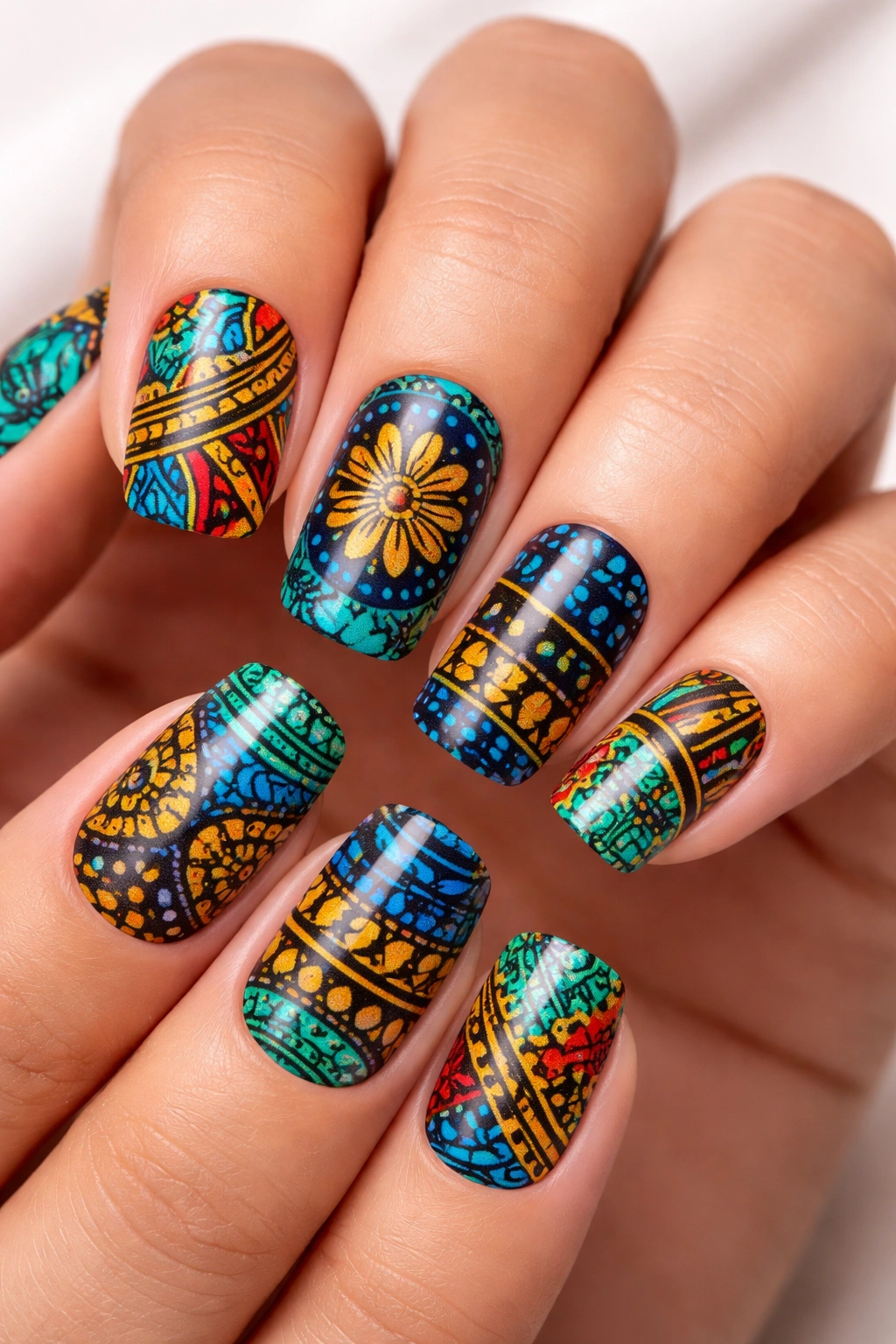
Ankara wax print fabric is instantly recognizable for its bold, colorful geometric and floral patterns. Unlike traditional textiles, Ankara fabric often features modern, graphic designs in bright combinations—turquoise with fuchsia, gold with cobalt, orange with purple. The patterns are complex and visually dynamic, making them perfect for nail art that makes a statement without requiring hand-painting skills.
The Contemporary Beauty of Ankara Patterns
Ankara fabric exploded into international fashion consciousness over the past couple of decades, but its roots in African textile traditions run deep. The patterns often reference traditional designs while incorporating modern sensibilities. Wearing Ankara-inspired nails connects you to both historical textile traditions and contemporary African fashion movements.
Using Ankara Nail Wraps and Designs
- Purchase pre-made Ankara-patterned nail wraps from beauty supply retailers
- Apply wraps carefully, smoothing out air bubbles from the center outward
- Trim excess wrap at the nail edge using a nail file
- Seal wraps with a clear topcoat for longevity and shine
- Mix and match different Ankara patterns across your nails for a curated, eclectic look
- Pair solid-colored nails with patterned accent nails for visual balance
- Consider hand-painting Ankara-inspired patterns if you’re comfortable with nail art
Ankara wraps make sophisticated African nail art accessible to anyone, regardless of artistic skill. They’re particularly convenient for people who want beautiful designs without the time investment of hand-painting.
Worth knowing: Quality matters when choosing nail wraps. Invest in wraps from reputable beauty brands—they’ll be thicker, more durable, and easier to apply than budget options.
10. Safari and Wildlife Themed Nails
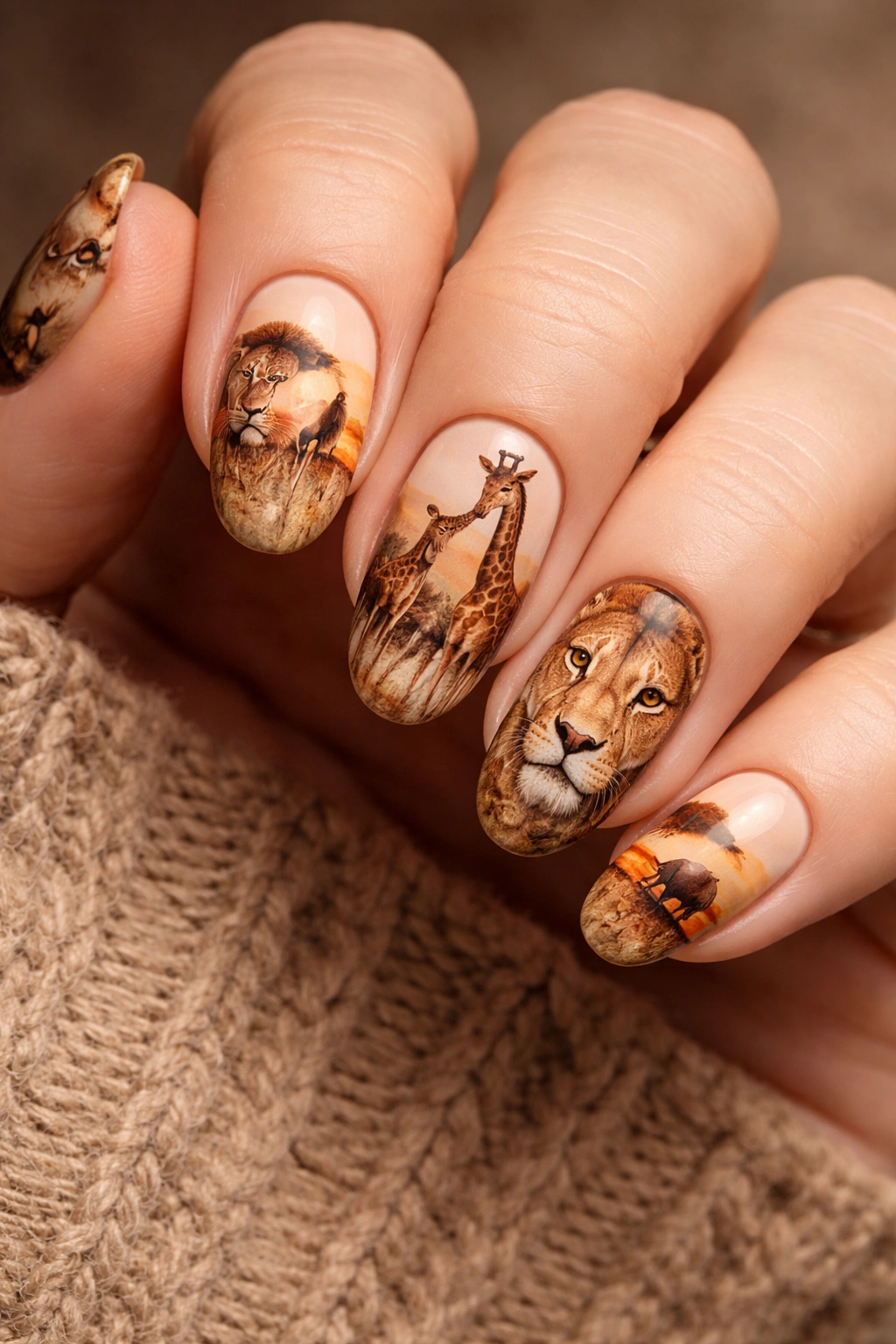
Safari nail art celebrates the incredible wildlife of Africa through designs featuring lions, zebras, giraffes, rhinos, and other iconic animals. Beyond realistic animal prints, safari nails can incorporate landscapes, safari vehicles, or abstract representations of the African bush. These designs appeal to anyone who loves nature and wants their nails to reflect that passion.
The Diversity of Safari Inspiration
African safari aesthetics offer remarkable variety. You can create hyper-realistic portraits of animals, abstract interpretations, minimalist silhouettes, or whimsical cartoon-style versions. Safari designs work in neutral earthy tones or bold, contrasting colors. This flexibility makes safari nails accessible to different artistic styles and preferences.
Designing Safari-Themed Nails
- Create a sandy, earthy base using nude, tan, or warm brown polish
- Paint realistic animal portraits on one or two accent nails: lions, elephants, giraffes
- Add landscape elements like acacia trees, grass, or rocky terrain
- Use neutral and earthy tones—tans, browns, greens, golds—for cohesive, natural-looking designs
- Consider adding small touches of wildlife you can see on safari: birds in flight, distant herds
- Create a focal point on one nail with a detailed animal, keeping other nails more subtle
- Finish with a glossy topcoat to enhance detail and create a polished appearance
Safari nails work beautifully for casual wear and travel-themed occasions. They appeal to both nature enthusiasts and anyone who simply loves the aesthetic of African landscapes.
Pro tip: If detailed animal painting feels challenging, start with one realistic animal on an accent nail and keep other nails simple. Alternatively, many nail artists offer safari designs, and high-quality nail stickers featuring wildlife are readily available.
Final Thoughts
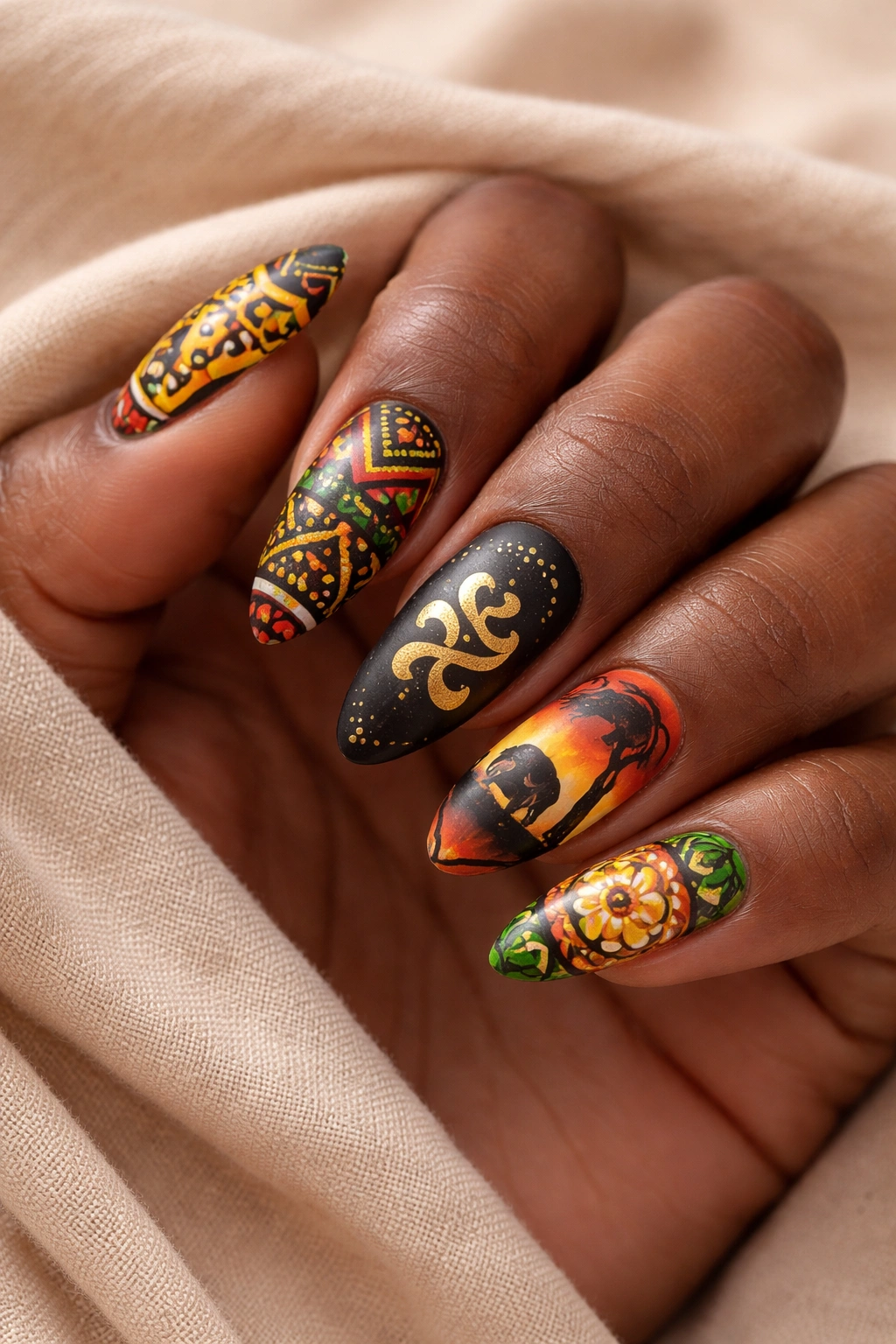
African-inspired nail art represents far more than a fashion trend—it’s a celebration of artistic heritage, cultural pride, and creative expression. Whether you choose the geometric sophistication of Kente cloth, the bold statement of Ndebele art, the symbolic depth of Adinkra symbols, or the natural beauty of safari designs, each option offers a way to honor African artistry while showcasing your personal style.
The wonderful truth about African nail design is its accessibility. You don’t need advanced artistic skills or expensive supplies to create beautiful, meaningful designs. Nail wraps, stickers, simple dotting tools, and thin brushes make it possible for anyone to wear these incredible designs. For more complex ideas, professional nail technicians can bring your vision to life with precision and artistry.
What matters most is the intention behind your designs. Whether you’re celebrating your own African heritage, appreciating cultures you admire, or simply drawn to the visual beauty of these artistic traditions, wearing African-inspired nail art is a form of cultural expression and respect. Each time you look at your nails, you’re carrying stories, symbols, and artistic traditions that span continents and generations.
The ten ideas explored here represent just a fraction of the possibilities within African nail art. The continent is impossibly diverse—with thousands of cultures, artistic traditions, textile patterns, and symbolic languages. Each region, ethnic group, and community has created its own visual language. This means your African-inspired nail art journey can be as deep and personal as you want it to be. Start with designs that call to you, research the cultural meanings behind them, and let your nails become a canvas for celebrating the incredible artistic traditions of Africa.